
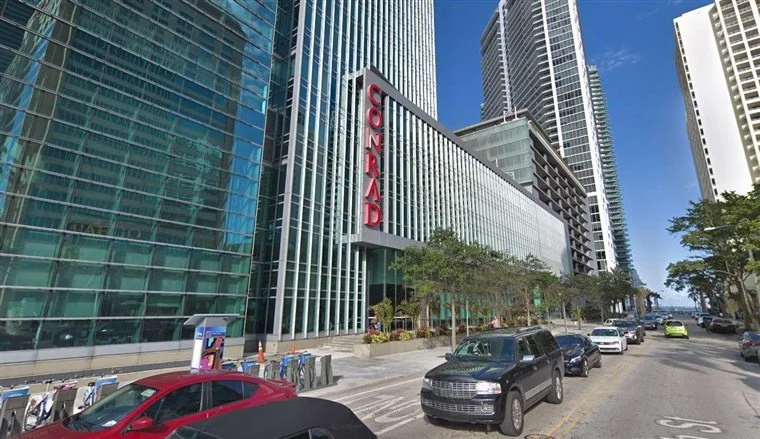
Hotel dishwasher awarded $21 million after boss made her work on Sundays
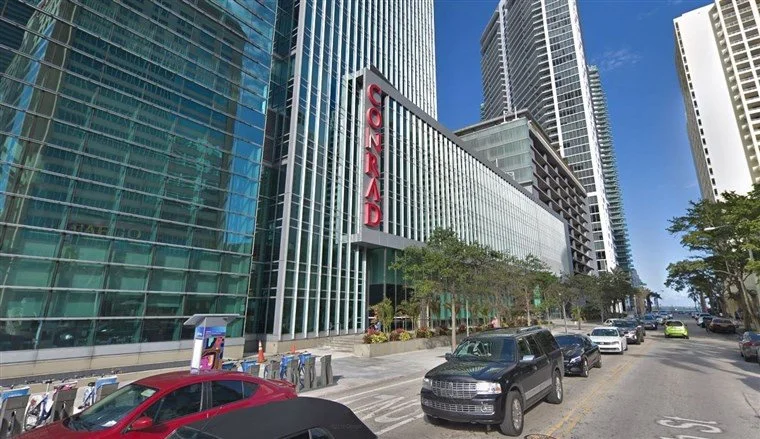
The jury also found she was due $35,000 in back wages and $500,000 for emotional pain and mental anguish.But a cap on punitive damages prevents her from receiving anywhere close to that amount.Marie Jean Pierre, who worked as a dishwasher at the Conrad Miami, sued Virginia-based Park Hotels & Resorts, formerly known as Hilton Worldwide, in 2017 for violations of the Civil Rights Act of 1964. The landmark law bans employment discrimination on the basis of race, color, religion, sex or national origin.The award was filed on Tuesday with the U.S. District Court in Miami. The jury also found she was due $35,000 in back wages and $500,000 for emotional pain and mental anguish.Pierre, 60, is a mother of six and a member of the Soldiers of Christ Church, a Catholic missionary group that helps the poor, her attorney Pierre said in the lawsuit that she informed the Conrad Miami from the beginning of her employment that she could not work Sundays because of her religious beliefs.Her lawyer, Marc Brumer, said Hilton argued in court that it was unaware Pierre was a missionary, and never knew why she always wanted Sundays off.In 2009, she alleges the hotel scheduled her to work on a Sunday, according to the lawsuit. She says she told her employer she would have to resign, but in an effort to persuade her not to quit, they accommodated her request until 2015.Sometime in 2015, the kitchen manager at the Conrad Miami, "demanded" Pierre work Sundays, the lawsuit states and for a short time allowed her to swap shifts with other coworkers to have the day off.On March 31, 2016, Pierre says she was fired for alleged misconduct, negligence and “unexcused absences,” according to the lawsuit.Although there is a cap on punitive damage awards in federal court, Pierre's attorney said he expects she will receive at least $500,000."I asked for $50 million, knowing that I was capped at $300,000," Brumer told NBC News on Wednesday. "I didn't do this for money. I did this to right the wrongs."The jury was unaware that the law caps the amount of punitive damages she could receive.Hilton said it was "very disappointed by the jury's verdict, and don't believe that it is supported by the facts of this case or the law.""During Ms. Pierre's ten years with the hotel, multiple concessions were made to accommodate her personal and religious commitments," a spokeswoman said. "We intend to appeal, and demonstrate that the Conrad Miami was and remains a welcoming place for all guests and employees."By: Janelle Griffith for NBCnews.com | January 16, 2019
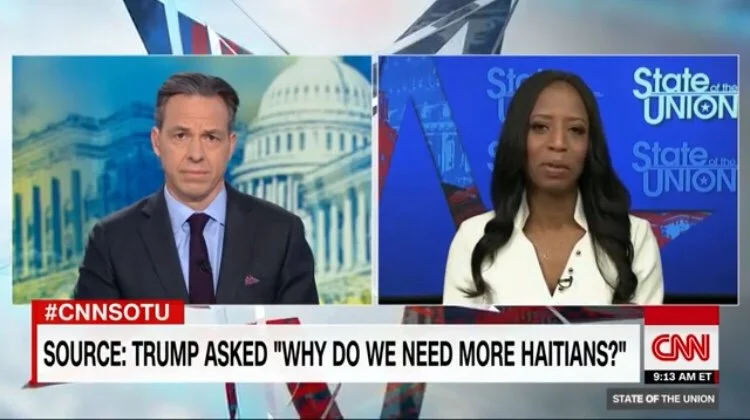
Trump meets with GOP Haitian-American congresswoman amid fallout from obscene remarks
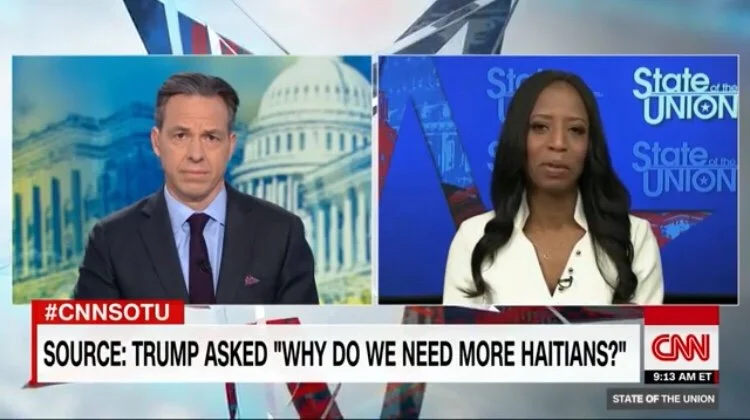
[embedyt] https://www.youtube.com/watch?v=-uvlvxiKec8[/embedyt] (CNN)Republican Rep. Mia Love discussed immigration with President Donald Trump in the Oval Office for half an hour Tuesday, just two days after she said she believed the President made racist remarks about Haitians during a meeting with lawmakers.
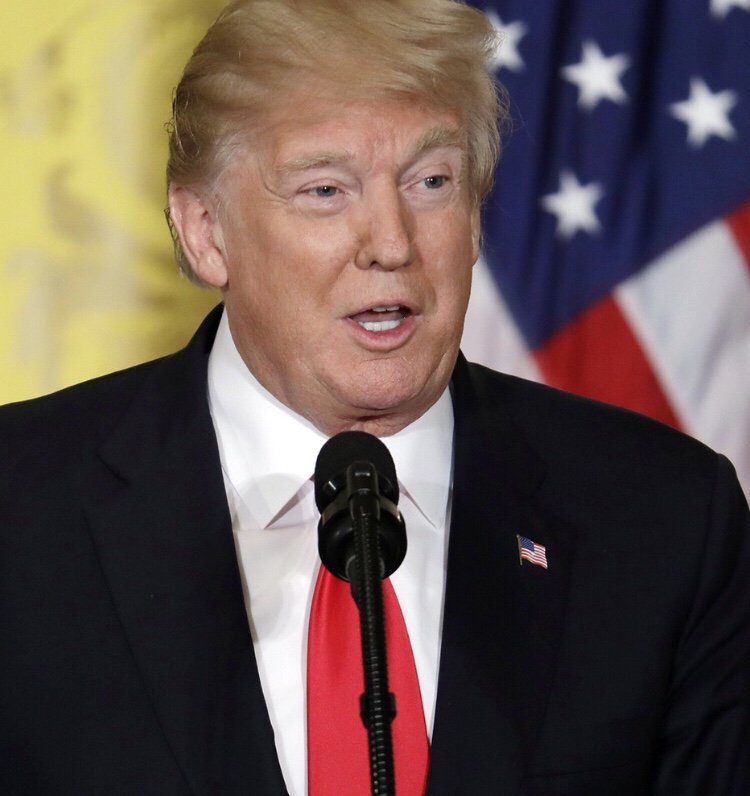
Trump referred to Haiti and African nations as 'shithole' countries
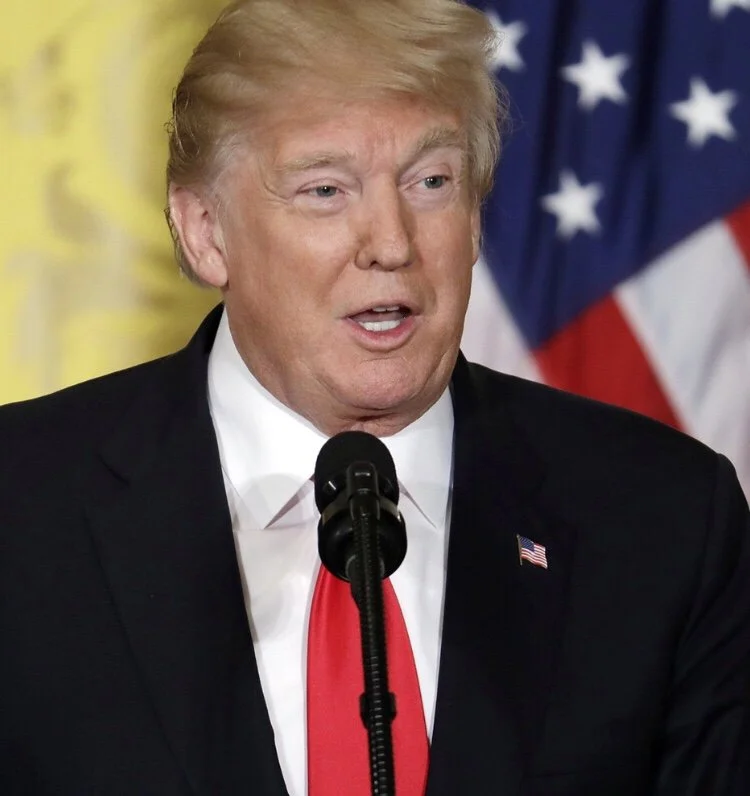
President Donald Trump referred to African countries, Haiti and El Salvador as "shithole" nations during a meeting Thursday and asked why the U.S. can't have more immigrants from Norway.
Trump referred to Haiti and African nations as 'shithole' countriesWASHINGTON — President Donald Trump on Thursday referred to Haiti and African nations as "shithole countries" during a meeting with a bipartisan group of senators at the White House, a Democratic aide briefed on the meeting told NBC News.Trump's comments were first reported by The Washington Post, which said the group of nations referred to also included El Salvador.The comments came as senators huddled in the Oval Office with the president to discuss a path forward on an immigration deal. Trump questioned why the United States would want people from nations such as Haiti while he was being briefed on changes to the visa lottery system.According to the aide, when the group came to discussing immigration from Africa, Trump asked why America would want immigrants from "all these shithole countries" and that the U.S. should have more people coming in from places like Norway. Thursday's meeting came one day after Trump met with Norwegian Prime Minister Erna Solberg at the White House.Ap source familiar with Thursday's meeting told NBC News the president was particularly frustrated during discussions about the visa lottery system — a program Trump has railed against repeatedly in recent months. Another White House source explained the language Trump used as his way of trying to emphasize his support for a merit-based immigration system.The White House issued a statement that did not deny the remarks."Certain Washington politicians choose to fight for foreign countries, but President Trump will always fight for the American people," White House Deputy Press Secretary Raj Shah told NBC Thursday, as part of a lengthy statement that did not directly dispute the language reportedly used in the meeting."He will always reject temporary, weak and dangerous stopgap measures that threaten the lives of hardworking Americans, and undercut immigrants who seek a better life in the United States through a legal pathway."Republican congressional reaction trickled in Thursday night, with some statements critical of the reported language calling on the White House to immediately provide an "explanation" or additional "context."But Republican Rep. Mia Love — the daughter of Haitian immigrants herself — released a tough statement calling Trump's comments "unkind, divisive, elitist, and fly in the face of our nation's values" and demanding an apology from the president.And Rep. Ileana Ros-Lehtinen (R-Fla.) said in a tweet that the reported remark "ignores the contributions thousands of Haitians have made to our #SoFla community and nation. Language like that shouldn't be heard in locker rooms and it shouldn't be heard in the White House".It’s not the first time reports have surfaced of Trump speaking unfavorably about immigrants, and Haitians in particular. The New York Times reported in December that Trump said Haitian immigrants "all have AIDS," during a summer 2017 meeting about immigration.According to the Times, Trump also targeted Nigerian immigrants during that meeting, complaining that once they came the United States they would never "go back to their huts." The White House vigorously denied the claims in the story at the time.By: Ali Vitali and Kasie Hunt for NBCnews.com | January 11, 2018
50,000 Haitians face being deported by Trump back to country still reeling from natural disasters
 More than 50,000 Haitians are at risk of being deported to a country still reeling from a series of natural disasters, after Donald Trump’s immigration agency recommended ending their temporary right to live in the US.Up to 55,000 Haitians are living in America under so-called temporary protected status (TPS), initially granted to them after the 2010 earthquake, that killed an estimated 150,000 people.The status has been updated every 18 months, as Haiti has confronted the challenges of a cholera epidemic triggered by UN peacekeepers, a sexual abuse scandal involving those peacekeepers and political uncertainty following the postponing of elections that eventually saw Jovenel Moïse become president.
 But James McCament, acting director of US Citizenship and Immigration Services, has recommended Mr Trump end their starus. He said there should be a temporary, six-month extension to allow a period of “orderly transition” but that people should then return.The revelation, first reported by the Miami Herald, has triggered intense concern among the Haitian community in the US, and their supporters.“Anxiety is extremely high. They are calling me and asking me what they should do,” Emmanuel Depas, a former president of the Haitian American Lawyers Association of New York, told The Independent.“The temporary status is not necessarily a path to a green card, but it gives people the right to work here.”Campaigners said the threat of deportation could result in the splitting up of families, if the parents of children born in the US were forced to leave. Others have questioned whether Haiti, where more than 1,000 people were killed last October by Hurricane Matthew, the most powerful storm to make landfall there since 1964, is able to handle the return of so many people.Hurricane Mathew leaves Haiti orphans homelessNana Brantuo of the Black Alliance for Just Immigration, said: “From what we’ve heard, they are going to terminate this status. Then these people will be undocumented, and likely to be deported.”She added: “As black immigrants, they are in a state of vulnerability.”The decision on whether or not to end the Haitians’ temporary protected status falls to with Secretary of Homeland Security Secretary, John Kelly. His department said in a statement: "Secretary Kelly hasn't yet made a decision and we don't discuss pre-decisional documents."In his letter to Mr Kelly, Mr McCament said a review of the situation in Haiti led his organisation to conclude the conditions “no longer support its designation for TPS”.“Although Hurricane Matthew recently caused a deterioration of conditions in Haiti’s south-west peninsula, overall conditions in the country have continued on an upward trajectory since the 2010 earthquake,” he wrote.
 Jovenel Moïse was elected Haiti's president last November (AP)“The institutional capacity of Haitian government to respond to the lingering effects of the earthquake remain weak, but the US government is actively working to strengthen the Haitian civil service and government service delivery.”Haiti is the poorest country in the Western Hemisphere, with an average per capita annual income of about $1,700 (£1,365). Educational and medical facilities are inadequate and overburdened. Around 3.2m people - approximately 30 per cent of the population - suffer from food insecurity.The US, the regional power, has long interfered politically in the country, less than a two-hour flight from its coastline. In 1991, the first democratically elected president, Jean Bertrand Aristide, was ousted in a coup backed by the CIA. He was returned, under a deal brokered by Bill Clinton, only to be forced into exile again in 2004, with his opponents once more receiving the backing of elements in Washington.In recent years, UN peacekeepers have been accused of indiscriminate killing of civilians. In the aftermath of the earthquake, UN peacekeepers from Nepal were almost certainly responsible for an outbreak of cholera that killed at least 10,000 people and made more than 700,000 ill.Indeed, Mr McCament’s letter pointed out the country is still facing problems in housing, health, the economy, sanitation services, gender-based violence and overall security.“Haiti is the poorest country in the hemisphere and it had enormous problems before the 2010 earthquake,” he wrote. “Even before the earthquake, the Haitian government could not, or would not, deliver core functions to the majority of its people.”Reaction to the proposal to end the TPS has met with criticism from both Republicans and Democrats.“Haiti is still struggling to recover from two major natural disasters that killed more than 200,000 people. Haiti is one of the poorest countries in the world and right now it’s unable to support the roughly 50,000 Haitians that are currently receiving protected status here in the US,” said Democratic senator Bill Nelson of Florida. “The US should be focused on helping Haiti recover, not sending people back to a country that can’t support them.”Republican senator Marco Rubio, also from Florida, was among a bipartisan group that has written to Mr Kelly urging him to extend TPS.By: Andrew Buncombe for independent.co.uk| May 1, 2017