
Ruling interests often saw it as a threat. It wasn’t just the French slave masters, who condemned practitioners to the whip and branding iron, and priests to death, as they sought to put down slave rebellions. The black military leaders and elites who led Haiti after they ejected the French in late 1803 also tried to suppress the faith, mandating imprisonment and fines for participating in Vodou ceremonies and working at times with the Catholic Church to eradicate “superstition.” As historian Kate Ramsey has written, these leaders felt they had to “assert Haiti’s ‘civilization’ and ‘progress’ in the face of the republic’s diplomatic isolation and exclusion following independence.”This sense of Vodou as a primitive practice also shaped American impressions of Haiti. The U.S. military occupied the country from 1915 to 1934, during a formative period in the U.S. empire-building in Latin America and Asia. Marines who served on the island, and journalists who covered them, returned with lurid tales of what they called “voodoo” and characterized as black magic. Pop-culture distortions, in both books and films, weren’t far behind. In 1932, the year after Bela Lugosi starred in Dracula, he played an evil sorcerer in Haiti named “Murder” Legendre in White Zombie.
80 years after the massacre that changed the Dominican-Haitian border, an effort to heal
Love, art and respect are the three words that Cynthia Carrion, 36, believes encompass the goal of the collective Border of Lights, a group that is looking reconcile relationships at the fraught border of the Dominican Republic and Haiti.
Earlier this month, Carrion boarded a plane to join dozens of organizers, educators, artists and locals on the northern side of the Haiti-Dominican Republic border to commemorate the 80th Anniversary of the 1937 massacre that targeted Haitians on the border of the Dominican Republic and Haiti. The acts were carried out under the orders of Dominican dictator Rafael L. Trujillo.
The number of victims as a result of “Masacre de Perejil,” is still unknown. Edward Paulino, a professor of global history at John Jay College in New York City and author of “Dividing Hispaniola: The Dominican Republic’s Border Campaign Against Haiti” estimates approximately 15,000 lives were lost.
And the effects went beyond the loss of life. It sought to end a culture of collaboration. The porousness among the border communities didn’t fit Trujillo’s ultranationalist views for the Dominican Republic.
“Since [the massacre] you had this stark difference of what side you were on and what that meant,” says Carrion.
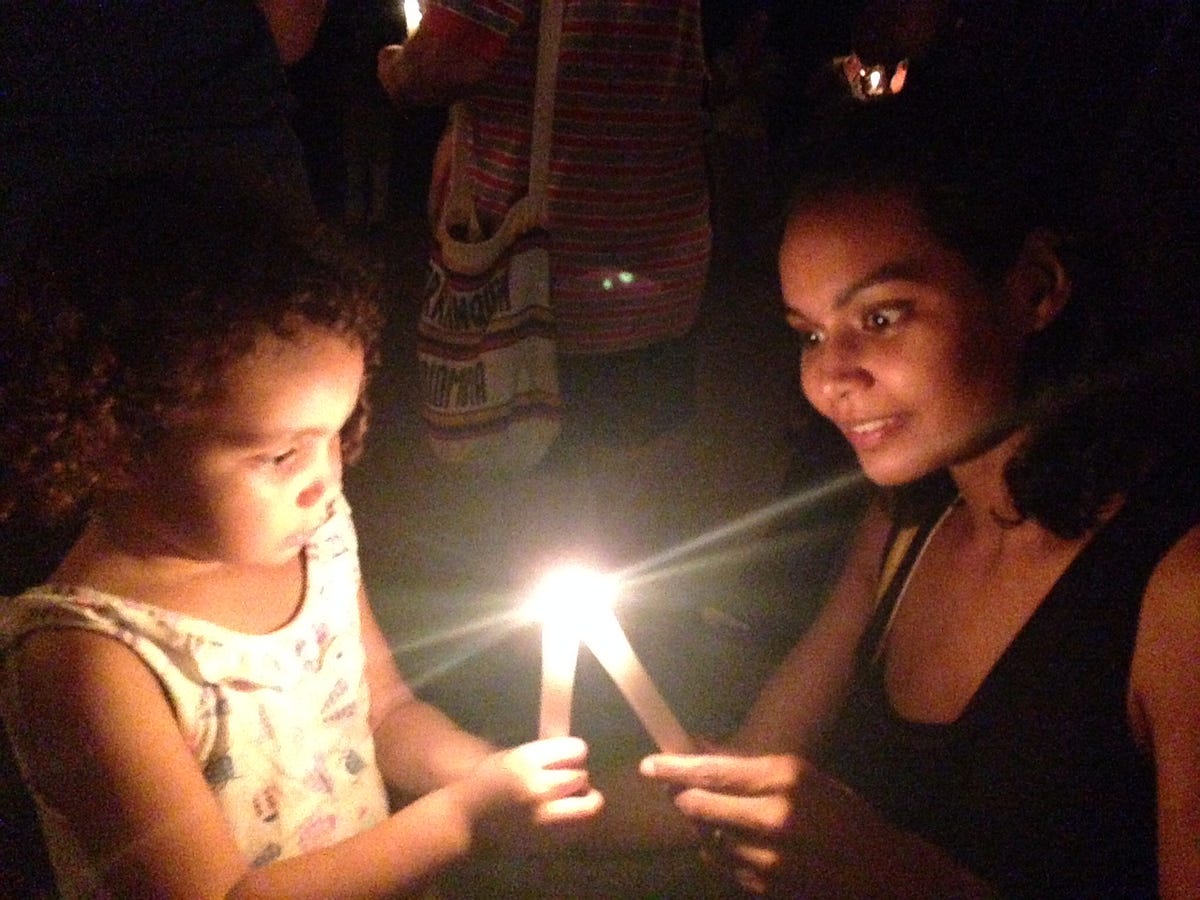
“What Border of Lights means to me now is this community of amazing and courageous people, both in the [Dominican Republic] and in Haiti, and around the world, but especially in the diaspora, who against all odds are still holding a light to this tragedy and this truth, which isn’t that easy,” she says.
The project started from a vision that renowned author Julia Alvarez shared at an event five years ago in New York City. Carrion approached Alvarez to get involved.
Every night for the next few months, organizers gathered by Carrion and Paulino would have conference calls to help plan an event surrounding the 75th anniversary.
At first, action around recognizing the anniversary was marked with skepticism.
“People would come up to us and say some of them would say ‘Why are you trying to unify the island?’ or this ultra-nationalistic kind of fear of what that meant, to be able to talk out loud, or to say that this occurred,” says Carrion.
As a mother of two and a proud Dominicana, it was important to Carrion to continue this work. “I want for [my daughters] to understand that they’re part of the shared struggle and shared beauty,”
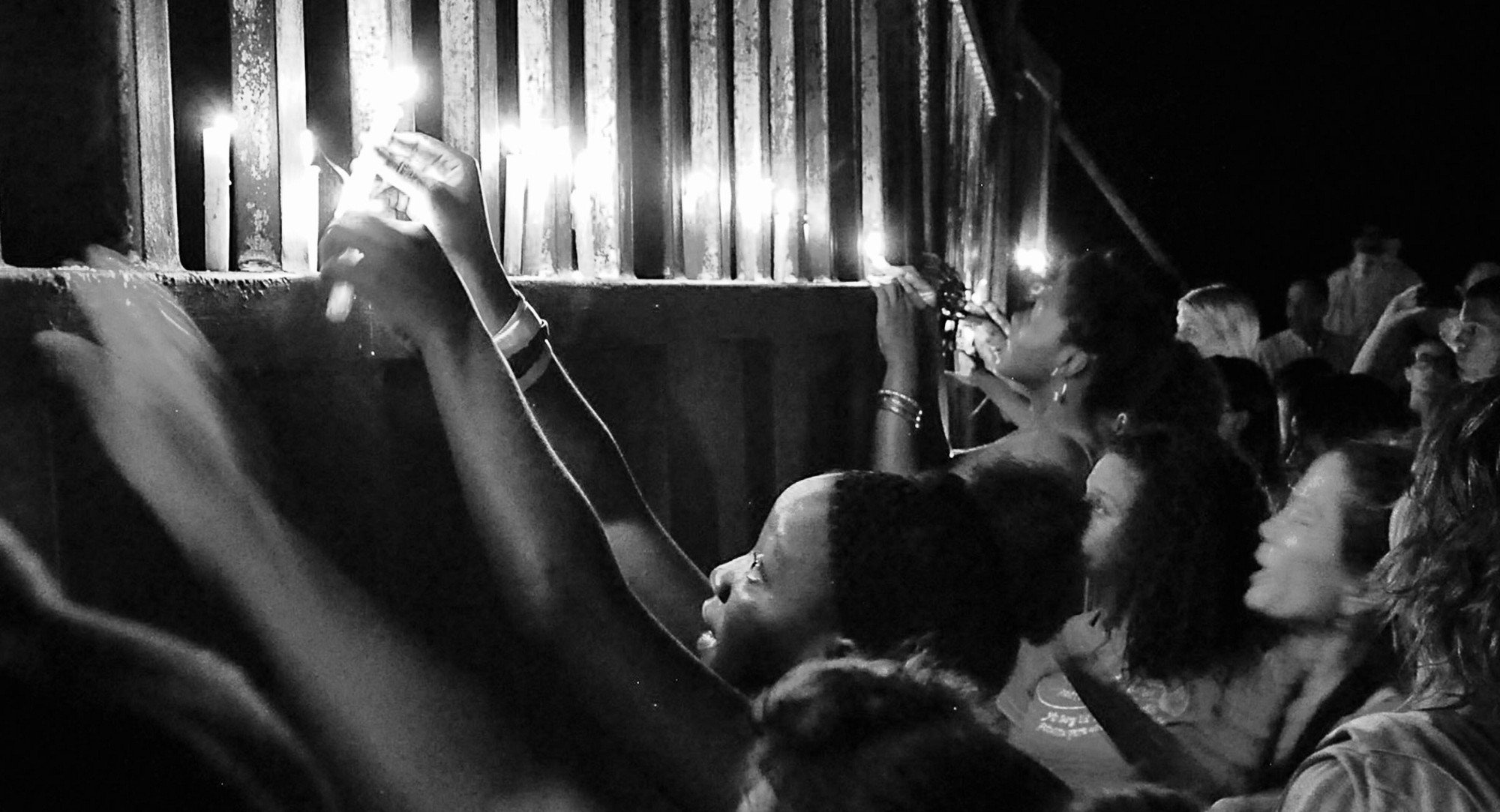
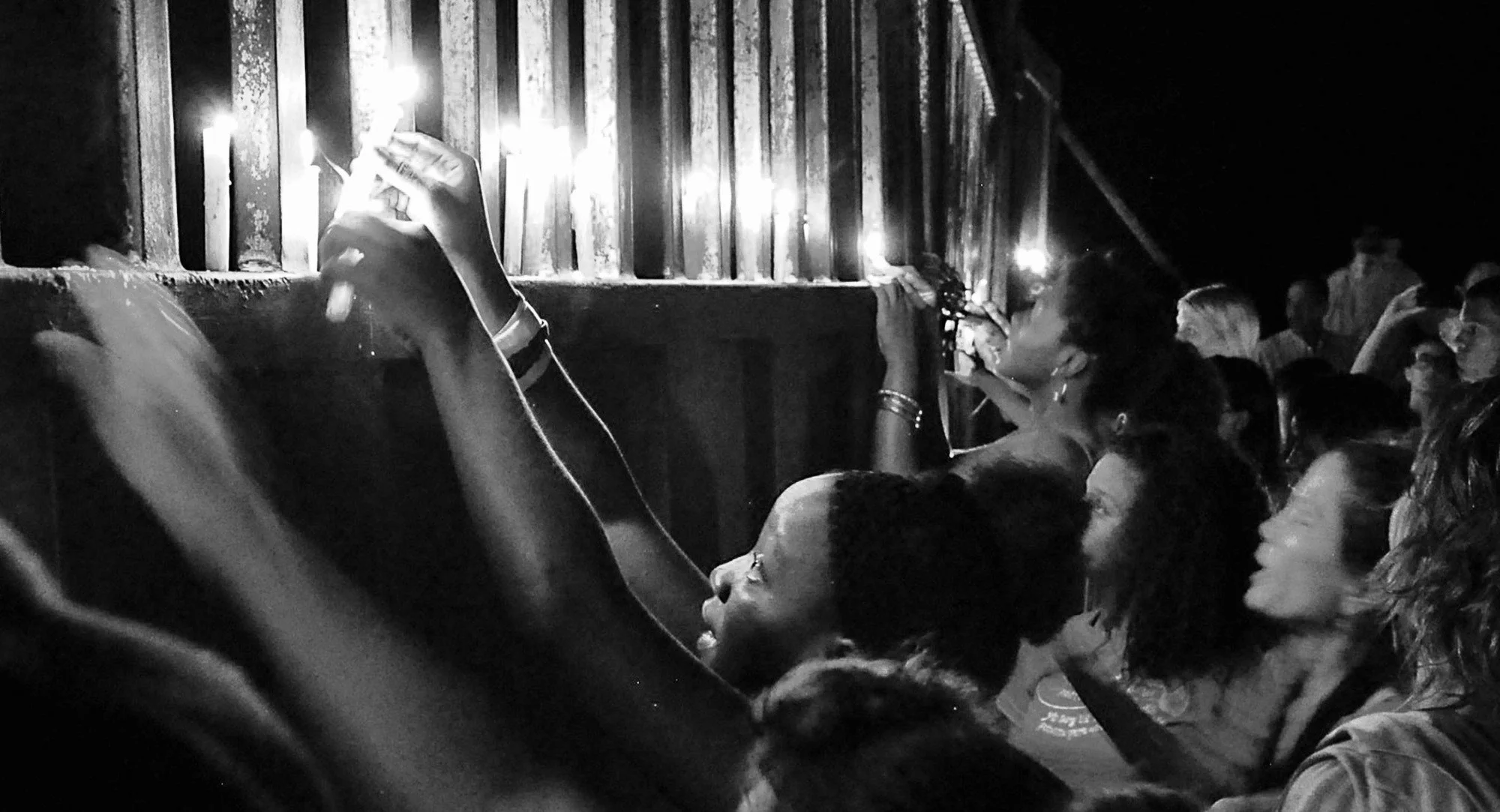
Border of Lights kicks off every year with two masses followed by two processions and candle lightings happening in two places at the same time: one in the Dominican town of Dajabon, the other in the Haitian town of Ouanaminthe.
During the vigils, participants stand across from another, divided by the river that is between the two countries. and view each other from the distance.
Carrion has been present during four of the past five years (the exception was when she gave birth to her youngest daughter, Maya Soleil, on the evening of the procession two years ago).
For the 80th Anniversary, the mission is expanding. The group is building a curriculum to be tested out in 10 schools and pushing for the date to be recognized on both the calendar of the Dominican Republic and Haiti as a Day of Remembrance. In Dajabon, there is a mural to commemorate the massacre.
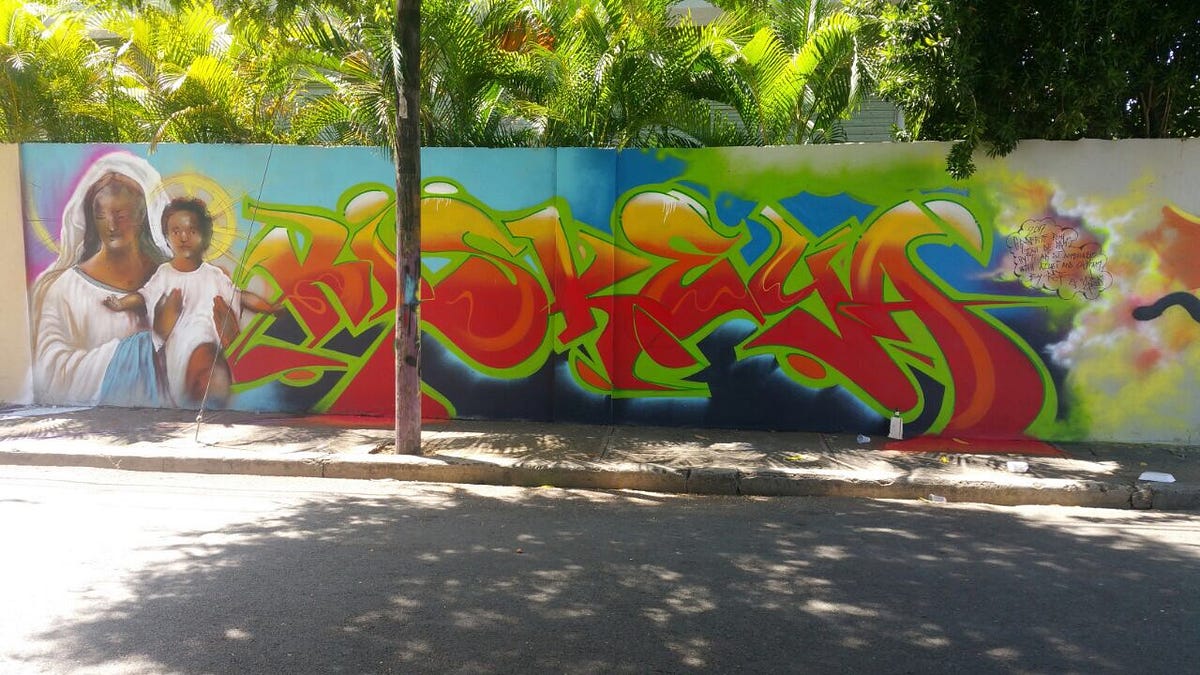
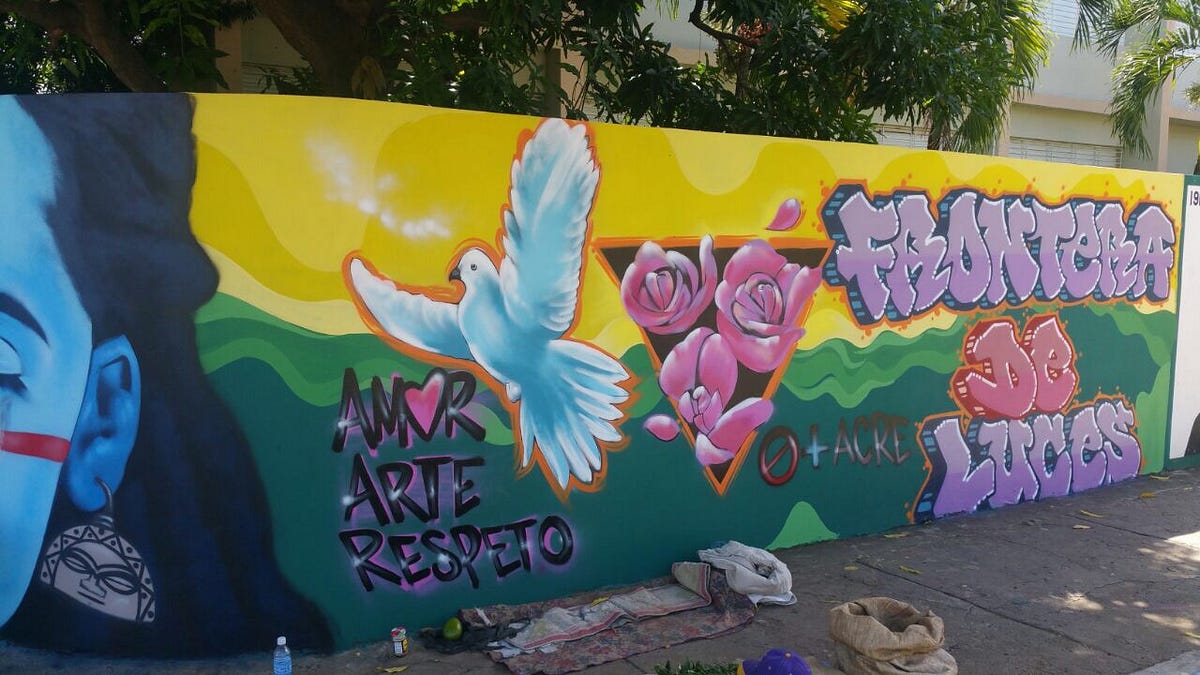
Organizing is made more difficult by strict border laws. This is in part due to sentences passed in 2015, one that stripped Dominicans of Haitian descent of their citizenship, followed by another sentence that sought to regulate immigration.
Carrion says she can’t help but find parallels between the struggle at the Haiti-Dominican Republic border and the politicization of the United States-Mexico border.
Borders have been regarded as a place for violence internationally, says Carrion, but she believes that can change.
We want “not just pay respect to [the massacre] but to also highlight collaboration among the [countries], you see it among the younger generation, people want to have stronger relationships with each other.”
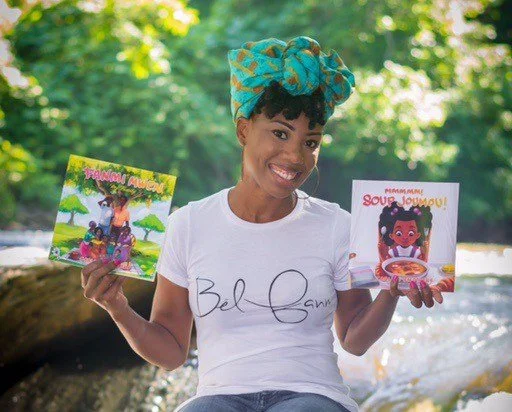
Carline Smothers creates Zoe Beautee and the Little Reader’s Collection
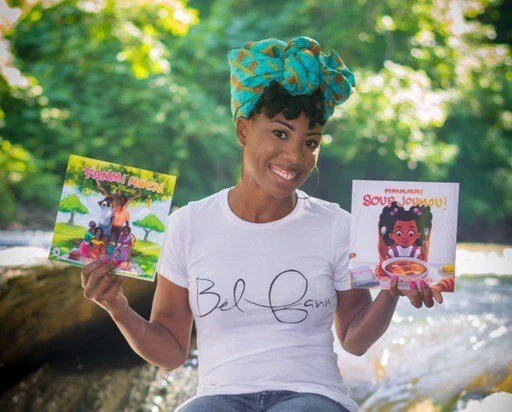
Multicultural children’s book series introduces children to the richness of the Haitian Culture“Necessity is the mother of invention” is an old English-language proverb which means, roughly, that the primary driving force for most new inventions is a need. That’s the energizing thought that drove Carline Smothers, the mother of three young Haitian American children (a nine-year-old son and two daughters, ages seven and three) to create and self-publish her two books: “Fanmi Mwen (My Family),” written in Haitian Creole and English, and “Mmmmm! Soup Joumou,” a children’s book series that highlights their Haitian heritage.A businesswoman with a higher purpose, Carline started Zoe Beautee in 2011, offering a line of t-shirts that sport the Creole phrase Bèl Fanm (Beautiful Woman) in order to celebrate the beauty of the Haitian language. “My goal is to help build confidence and self-love,” says Carline. All products are available for purchase at www.zoebeautee.comHere’s what Smothers, the children’s book author and owner of www.zoebeautee.com, had to share about the richness of her Haitian heritage and why she wrote “Fanmi Mwen (My Family)” (Haitian Creole and English) and “Mmmmm! Soup Joumou.”L.A. Sentinel (LAS): What are African-Americans missing about the Haitian culture? Carline Smothers: There are so many negative stereotypes about Haitians. When I was younger, my family and I were constantly teased for being Haitian in school. As I would look at the American children who teased us, their skin, eyes, and hair looked like ours. I did not understand why we were treated so cruel. Some kids would even fight and throw things at the Haitian students. They told us we ate cats and dogs. That all Haitians are dark-black, ugly, and dirty.I would get offended when I was told I did not look Haitian, which insinuated that Haitians are not beautiful people. Of course, everything stated above is completely false. We are beautiful people who come in all shades, as everyone else around the world. I had no idea where these kids were getting their information from, or if that is what was being taught in their homes.My parents are immigrants from Haiti and instilled in my siblings and me values, empathy, respect, and compassion. They came to America to give us a better opportunity to grow and prosper. I do not see it being any different from others who move from state-to-state, for such growth. My parents did not leave Haiti because they didn’t like it there; in fact, they told us all the time how beautiful Haiti is, with amazing beaches and mountains. Haitian culture is rich in food, language, music, art, and so much more. If we all took the time to learn about other cultures, this world would be a better place! LAS: How does your community incorporate its traditions into American ones?CS: Haiti is the first Black Republic to regain its independence [which took place] on January 1st, 1804. Haitians offered a helping hand and fought for the United States independence as well, which is something very few people know about. With all the natural disasters Haiti has had, there is no denying the strength of its people.America recognizes May as Haitian Heritage Month. We are proud of who we are and our African roots. I have noticed others embracing Haitian culture through the language, food, and displaying the flag. For an example, the Haitian flag is seen waving in the opening of DJ Khaled and Rihanna’s video. We have come a long way from how Haitians were viewed when I was growing up.LAS: Why did you feel the need to start www.zoebeautee.com and self-publish two children books that focus on the Haitian culture?CS: I started my Zoe Beautee brand to celebrate the beauty of the Haitian culture and its people. By first creating Bèl Fanm (Beautiful Woman) Fashion Tees. I was inspired by my three young children to create the children’s book series. My husband is African American and I did not want them to lose the culture.When we watch television shows, movies, and read books for children, we are open to learning other languages and cultures. However, I couldn’t help but noticed the lack of Haitians and my children need to be able to relate to the characters. This is why I am passionate about what I have created. Every child deserves to be represented and see a reflection of themselves. I saw a need and have been working tirelessly to bring my vision to life.To learn more go to: “Expressing Beauty Through Language”Founder and CEO Carline SmothersInstagram: zoe_beauteeFacebook: Zoe BeauteeTwitter Zoe Beauteewww.zoebeautee.comLos Angeles Sentinel - Published July 27, 2017
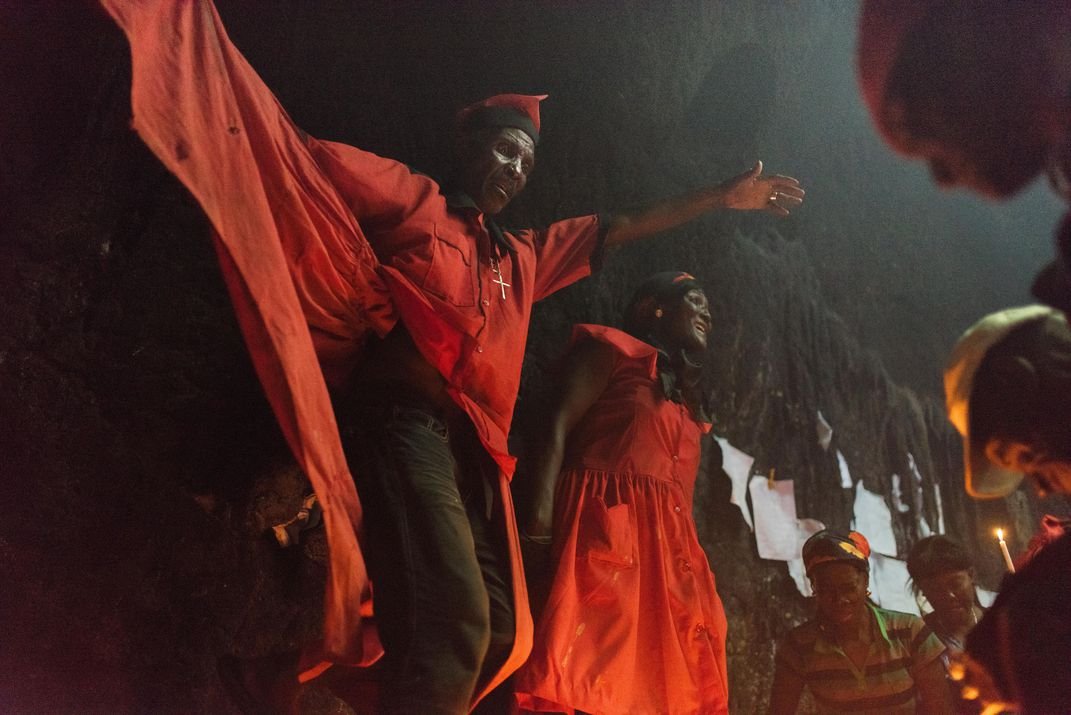
Explore the Timeless World of Vodou, Deep Within the Caves of Haiti
It was the height of the summer solstice, the brightest day of what had already been a long, hot year in Haiti. But deep within the caves outside Saint-Michel de l’Attalaye, beneath the mountain-ringed northern edge of the island nation’s central plateau, there was no light. Troi Anderson had to feel his way along the cool limestone walls and follow the worshipers’ singing to find his way to the Vodou ceremonies below. A photographer based in Oregon, he had come for the pilgrimage of St. John, an annual event that generally draws hundreds of participants.
Anderson had once worked with a major aid group on the island, and as he photographed people on Haiti’s streets, he noticed their suspicion and came to share their distrust of what he calls the “poverty industry,” or those aid efforts better at serving themselves than the people they’re supposed to help. So he left that work behind and focused instead on images of Haitian pride. That led him to the “sacred theater” of Vodou, a uniquely Haitian cultural force.
The religion honors a supreme creator god who is considered too remote to reach directly. Worshipers venerate intermediary spirits, such as the orisha gods of the Yoruba people who inhabit what is now Nigeria, Benin and Togo, and figures from Haitian history. The faith is decentralized. It is practiced creatively, not prescriptively, which helps to account for the differing forms practiced elsewhere, such as in New Orleans. Like many great religions, throughout its history Haitian Vodou has provided both solace and an intimate sense of community to the oppressed.
Those perceptions persist. In 2010, two days after the catastrophic earthquake that killed up to 316,000 people in and around Port-au-Prince, New York Times columnist David Brooks blamed “the influence of the voodoo religion” as first among a “web of progress-resistant cultural influences” that had made Haiti vulnerable and impoverished.
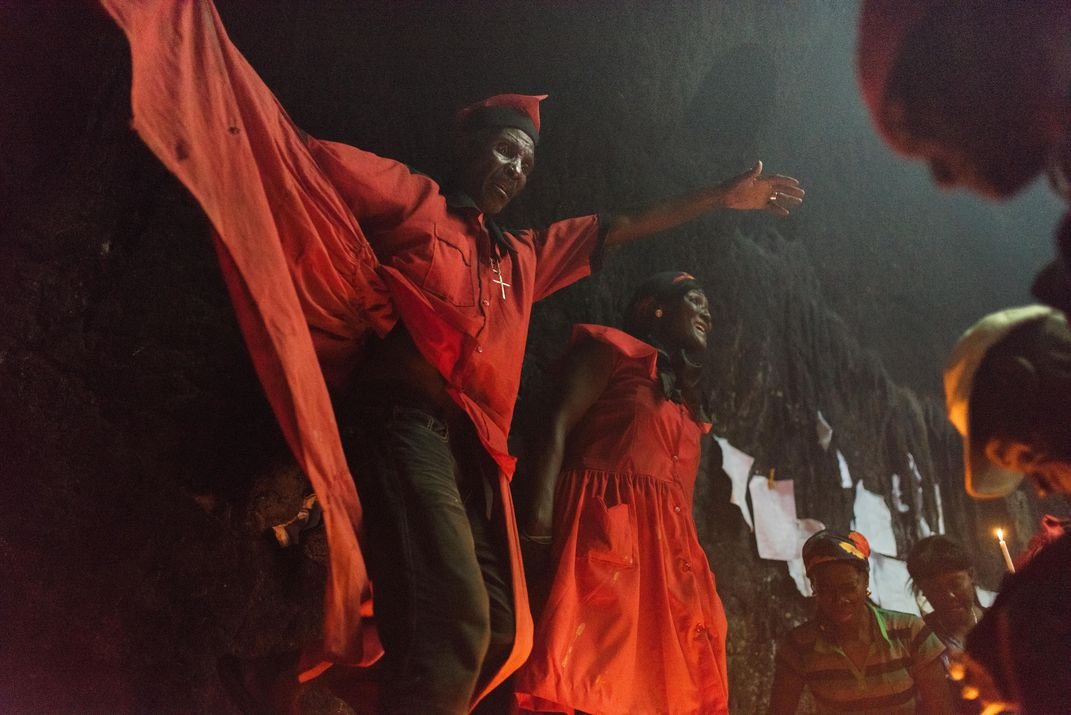
Many Vodouisants refer to their faith as sevis lwa, or “service to the spirits.” Ancestor worship is a bedrock element of the faith. So is trance possession by the spirits, which is aided by the complex, sacred rhythms of master drummers. The sacrifice of chickens, goats or cows is also widely practiced, with the animal intended to replenish the life-giving energy of the universe. The meat is usually distributed among family and friends.The Vodou calendar is filled with pilgrimages, often coinciding with Catholic saints’ feast days, to sites around the country. Around Easter, the faithful, robed in white, pay homage to the spirits near the sacred site of Souvenance. In summer, thousands flock to a towering waterfall where the Virgin Mary (also venerated as Ezili Danto, a goddess of love) is believed to have appeared. It was this pilgrimage tradition that attracted Troi Anderson to Saint-Michel de l’Attalaye last year.Inside the caves, the floors were slick with the blood of past sacrifices. Occasional beams of light streamed in through holes in the limestone roof. In the darkest recesses, candles cast orange light onto walls that fluttered with small papers bearing written prayers. A woman dressed in red held up a chicken—an offering to Ogou Feray, a god of iron and war, a divinity drawn directly from West African traditions and often represented by the icon of St. James the Greater.Some sang to spirits such as Damballah and Ayida Wedo—the snake and rainbow—and Baron Samedi, spirit of the dead. A woman’s voice rose to praise the spirit of the forest as a chorus chanted behind her. Other pilgrims sang of ritually cleansing themselves with river water. Some went into trances, their bodies providing a medium for lwa to dwell in the caves.Anderson trod lightly. He had come without a flashlight, to avoid disturbing the ceremonies, and he kept his silence as he worked and the worshipers prayed. “I tried to follow a request by one of the pilgrims,” he said. “He told me not to photograph the people here, but instead to photograph the spirits.” By Jonathan M. Katz, Photographs by Troi Anderson Smithsonian Magazine | Subscribe July 2017
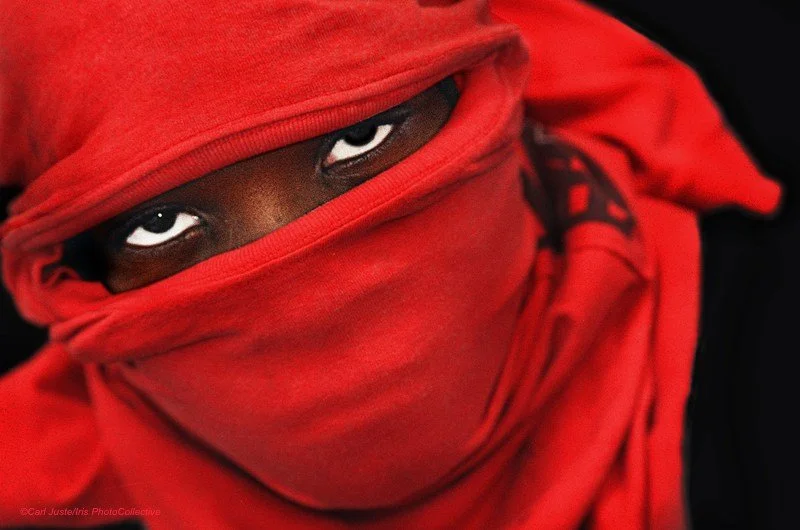
Haiti through Pulitzer Prize-winning photojournalist Carl Juste’s eyes
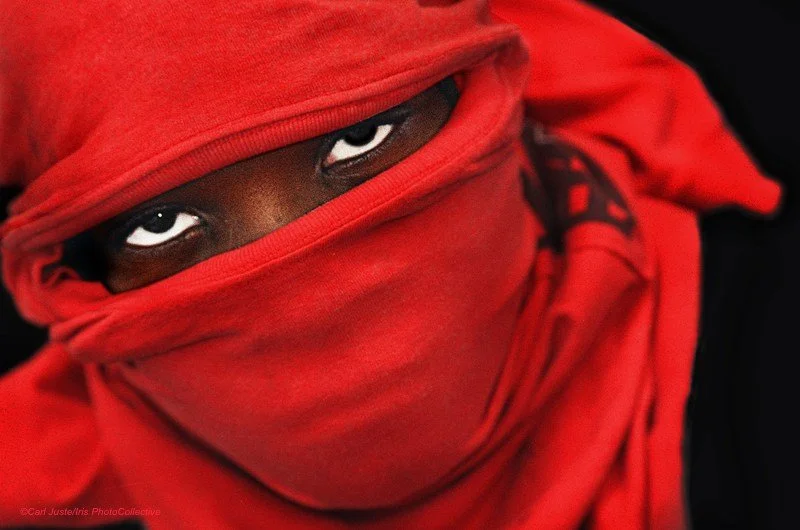
Carl Juste could not silence his inner voice calling him to become a photographer.For the past three decades, Juste has traveled the world using photography to tell meaningful stories and shed light on the struggles of Haitians in the United States and abroad.A Pulitzer Prize-winning Miami Herald photojournalist, Juste has been working diligently to advocate for the Haitian community’s diverse voices by capturing images that bridge the gap between opposing views and bridge gaps of understanding.“My camera is my weapon of choice,” Juste said. “When I make an image, people really stop and look at it. It allows me to amplify my voice and the voices of other people.”Juste recently spoke at FIU to discuss the struggles of Haitians experiencing racial, social, political and economic oppression.During his lecture, Juste showed a preview of his project, “Havana and Haiti: Two Cultures, One Community,” a visual narrative that concentrates on the common themes of both Cuban and Haitians through essays and photography, highlighting the two communities’ shared experiences.“My book is about celebrating these two cultures,” he said. “I stay as true to the message as much as I can. For me, it’s very important to communicate and expand the truth. Pictures have power to change the world but they aren’t responsible for the change.”After fleeing his homeland of Haiti under threat of persecution, Juste and his family settled in Miami’s Haitian community in the 1970s. From his experiences living in Miami, Juste, who was born to Cuban and Haitian parents, said that both communities have more in common than most people understand.“The story of Haiti and Cuba isn’t just for them but it’s for the world,” he said. “Both cultures have influences in art, dance and even science. You have this narrative that those identities are contained by boundaries, but they’re not. Their influences are global, and it’s about time that people understand that they’re not small and poor countries, but rich places.”Since becoming a photographer, Juste loves capturing Miami’s diversity.“A lot of my work stems from here,” Juste said. “I think what makes Miami so unique is the way all these cultures and various languages blend. It … also offers immigrants a place close to their birthplace.”Juste’s lecture, “Documenting Haiti: Realities and Representations,” was part of an annual lecture series, which this year celebrated the 20th anniversary of the Kimberly Green Latin American and Caribbean Center’s (LACC) Haitian Summer Institute.The Haitian Summer Institute is a six-week program designed for anyone interested in learning basic Haitian Creole and also for students who wish to continue their language training at the intermediate and advanced levels.“For over 20 years, LACC has been committed to investing in and promoting Haitian Studies and Haitian Creole language training,” said LACC Director Frank Mora. “The Haitian Summer Institute has been the center of that effort and is a cornerstone of the Haitian Studies Program of Excellence at FIU.”The institute offers students intensive language training courses, the lecture series and an optional two-week study abroad trip to Haiti, designed to expose students to its culture and allow them to experience Haitian Creole in Haiti.“The institute is the only one of its kind in the U.S., and we consistently attract a diverse group of students, scholars and professionals from across the globe,” Mora said.The final lecture of this year’s series, will feature Rodny Estéus, a founding member of the Haitian Creole Academy of the Republic of Haiti, and will be hosted on Monday, July 17.Juste hopes that students who participate in the Haitian Summer Institute and attend the lectures can be advocates for Haitians.“Become an ambassador and look beyond,” Juste said. “Be advocates for Haitians because they’re human and because they look like you and value the things you value. That’s what I’ve been trying to do for 30 years and it’s a beautiful struggle.”To learn more about the Haitian Summer Institute, click here.Posted by Melissa Burgess × 07/13/2017