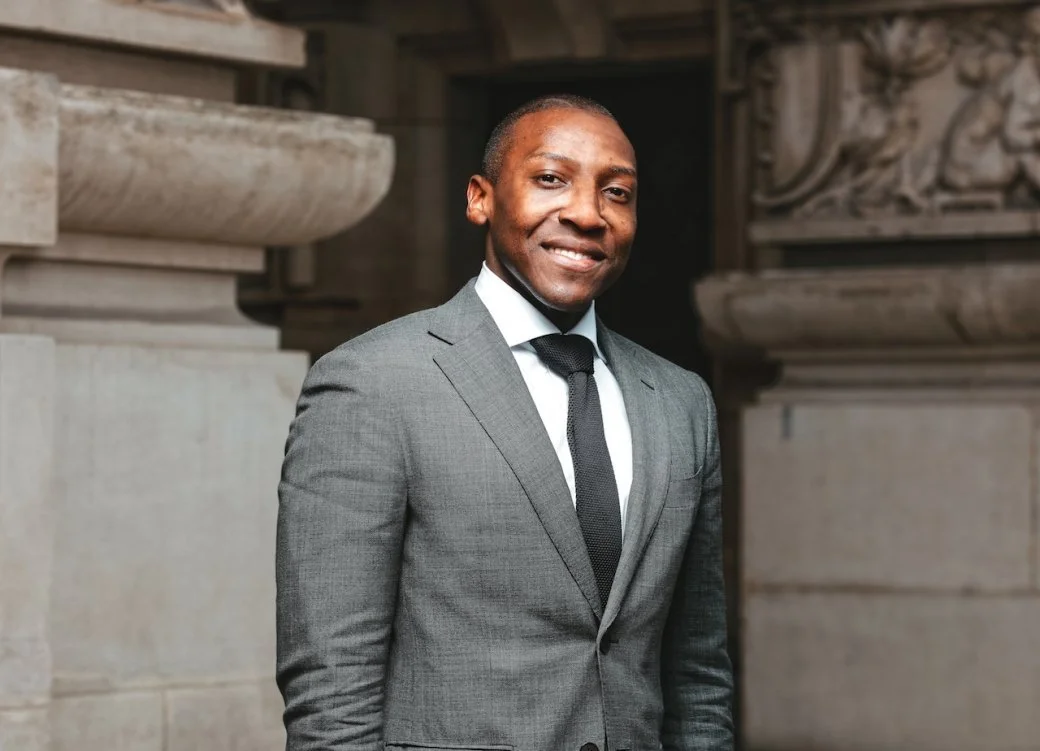
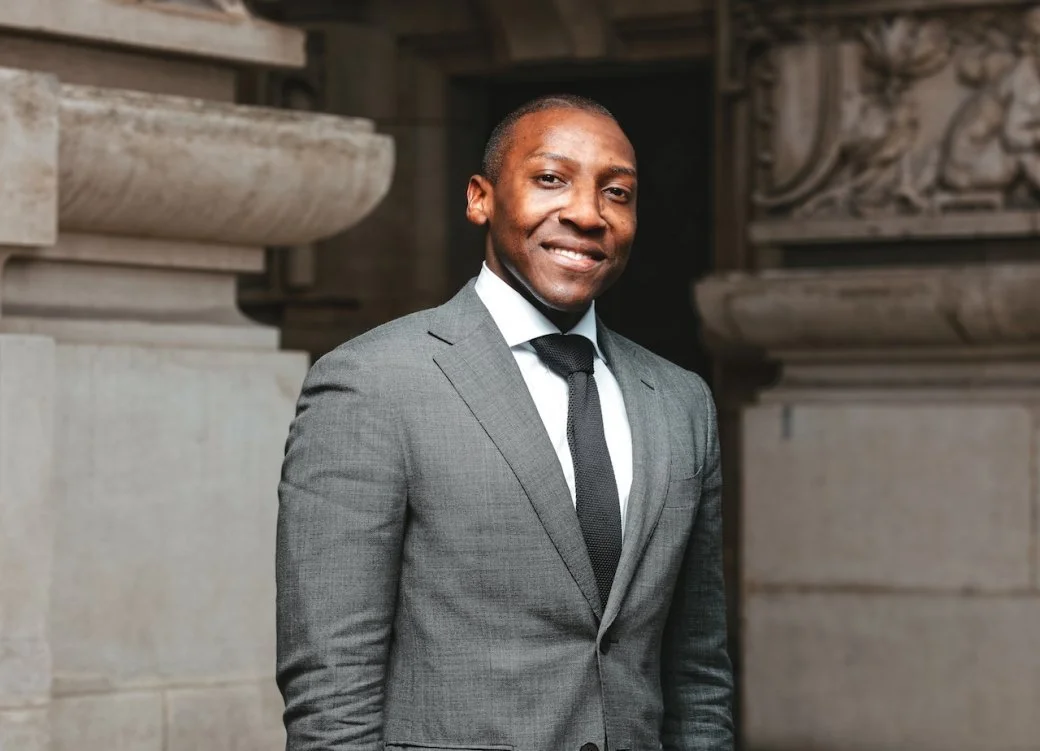
Wesley Laîné MAIPS ’14 has spoken at the Clinton Global Initiative, delivered the graduation speech at the Sciences Po Law School in Paris, and appeared on the front page of the New York Times with his classmates when he participated in Harvard’s first commencement for black graduate students. But if you are to ask him what place or moment in his life matters most, he will always return to his native Haiti.
In the fall of 2012, a student turned a class exercise about a love triangle and alligators into a passionate but playful debate on the morals of intervention and neutrality. The student was Wesley Laîné, and it was his very first day at the Institute; the exercise was a part of new student orientation. Despite the weighty direction of the conversation, the debate never got hostile or contentious, but felt meaningful and open.Laîné lived in Port-au-Prince, Haiti, until he was 12 years old and his family moved to Oklahoma City. His father, a minister who had put himself through law school in the evenings, had deep ties in the community, and the family decision to leave was not an easy one. “He bet on us,” Laîné says. “Like most parents in Haiti, my parents dreamed their kids would have it better than they did.” He says that his family had “crawled” its way to the middle class by the time they left, but violence was increasing, and going to school was a daily struggle, if there was school at all, because of frequent strikes. In many ways, he says, it was the typical immigrant story once they got to the United States: his dad worked lots of odd jobs to make ends meet and made ambitious plans for the children to get quality educations and make better lives for themselves. “My dad worked so much I used to hide his shoes so he wouldn’t have to go.”
Like most parents in Haiti, my parents dreamed their kids would have it better than they did.
Returning to Haiti after the devastating earthquake in 2010, Laîné worked there for two years before enrolling at the Institute. His foundation, Haiti Philanthropy, became heavily involved with clean water projects in the Southeast Department of Haiti as a response to the outbreak of cholera brought by UN peacekeepers from Nepal. The foundation has expanded to include a rainwater harvesting reservoir and projects to help women and children. Last summer he visited many villages where the foundation serves beneficiaries and spent time “bearing witness to the daily struggles.” He adds: “Anyone who aspires to political work has to be aware of what life is really like. It is so easy to get out of touch with what is happening on the ground.”He credits his love of history, politics, and historical figures such as James Baldwin for inspiring him to go to Paris through Middlebury Schools Abroad while he was a student at the Institute. Like the author, he felt the City of Light offered him the chance to “just be a person, anonymous. There is a degree of liberation in anonymity that I craved during this part of my journey.” In the U.S. most of the time, he says, the daily injustices that American society levies on black citizens does not allow for that. “The U.S. is also my home, and I love it, which is why I have strong feelings about the current state of American society. The sad fact is that many of the things Baldwin talked about are still true today.” He particularly hates when people use him as an example in order to turn a blind eye to the systemic injustice that exists today. “In many ways, I am the exception. I feel very fortunate. America’s promises are not available to everyone. If two or three things had gone differently, I would not be here. Many of my friends are stalked by the justice system.”
The U.S. is also my home, and I love it, which is why I have strong feelings about the current state of American society.
Laine lives in Paris now, where he is a lawyer with a top firm. The distance between his home and Oklahoma City, where his family still lives, can seem great, both literally (4,820 miles) and figuratively, the distance traveled reflected in his achievements. Laîné earned two law degrees; his classmates at Sciences Po elected him to give the commencement address, and he was part of the inaugural black commencement at Harvard.“It was truly an affirmation of everything we and our families had gone through to help us get there.” He feels strongly that the only way forward is to face the past.He says that every action, degree, career choice he takes is to lay the groundwork for a political career in Haiti, where he wants to shepherd transformative change for the impoverished country. All of the character traits that served him well that first day at the Institute—a quick wit, nimble intellect, and warm demeanor—are sure to be an asset to him as a politician promoting progress. “Like all Haitian parents, mine are strict and hard to please,” Laîné says with a chuckle, “but this visit my dad told me that I would probably accomplish what I want to do in Haiti.”
Timberland’s latest man-boots have an interesting backstory. Their canvas-like uppers are recycled from plastic bottles picked up from the beaches of Haiti.The outdoor apparel brand gets the material from a social impact startup named Thread, which works with about 1,300 bottle pickers in Haiti. Timberland’s four boots, which build on a previous set of Thread-infused products, range from the Men’s 6-inch Canvas (price $150) to the more sporty Newport Bay Thread Canvas Chukka Boots ($75).
Thread breaks down the bottles into flakes, heats up the mixture, then passes it through an extruder, like water passing through a showerhead. It then rolls and bales up the threads, so they can be spun into fabric. The material is like polyester–after all, PET plastic, like polyester, comes from oil.
Colleen Vien, Timberland’s sustainability director, says Thread’s material is a little more expensive than a comparable fabric. But the expense is worth it as it allows the brand to tell a compelling story about the product’s provenance (see the video above featuring three trash-pickers).Timberland has a long association with Haiti. Working with the Smallholder Farmers Alliance (SFA) and the Clinton Global Initiative, it’s planted millions of trees across the island, helping farmers increase incomes and lay down sustainable seed banks. Recently, it committed to buying organic cotton from Haiti in a unique blockchain-powered project.“It gives us an opportunity to have a conversation with our consumers that we definitely feel it’s well worth the price,” she says. “We are an outdoor company and customers expect us to do things that minimize our footprint and protect the environment. Improving people’s lives is beyond what’s expected–that’s what gets people’s attention.”BSBy: Ben Schiller for FastCompany.com| March 21, 2018