
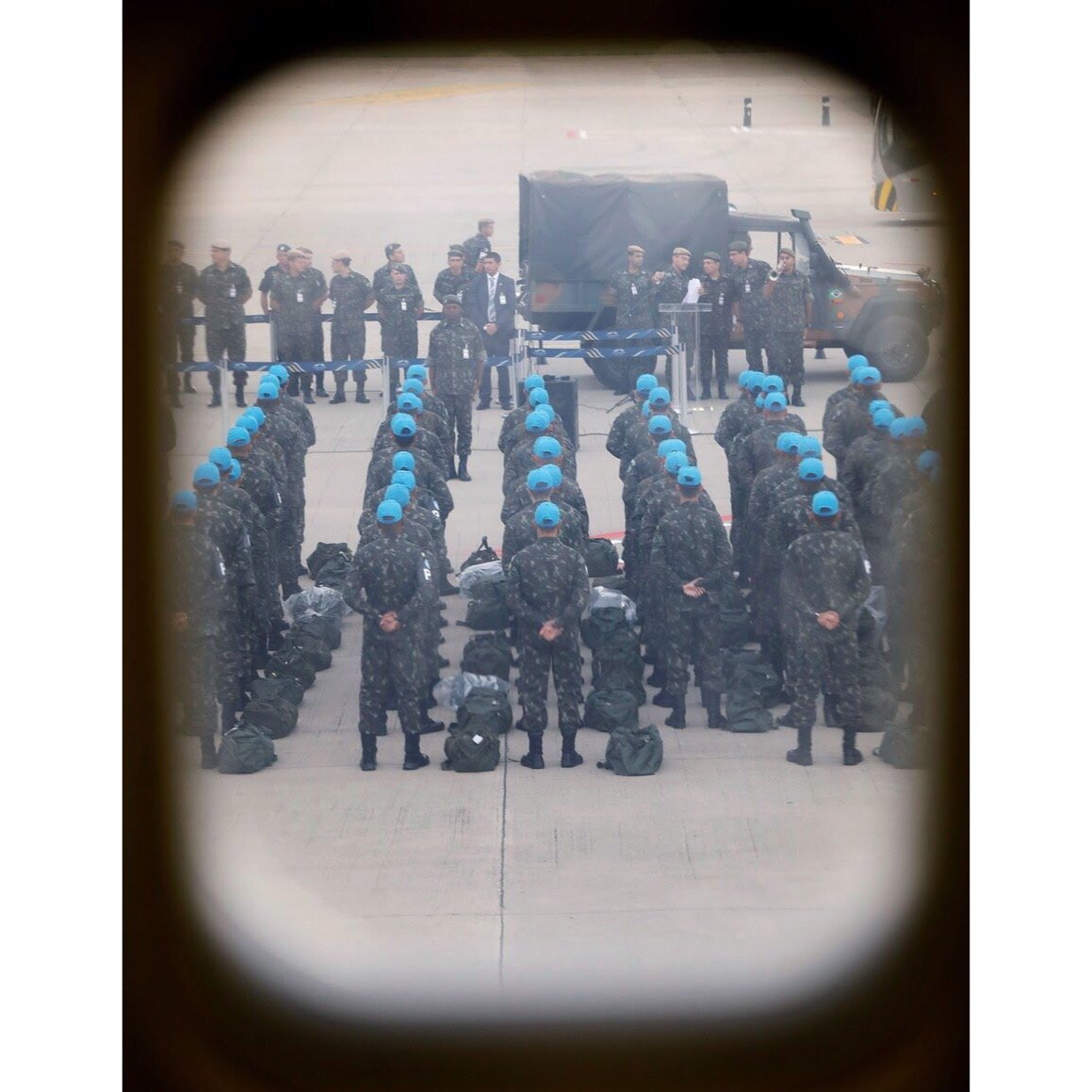
Haitian army general staff appointed amid tensions with the Dominican Republic
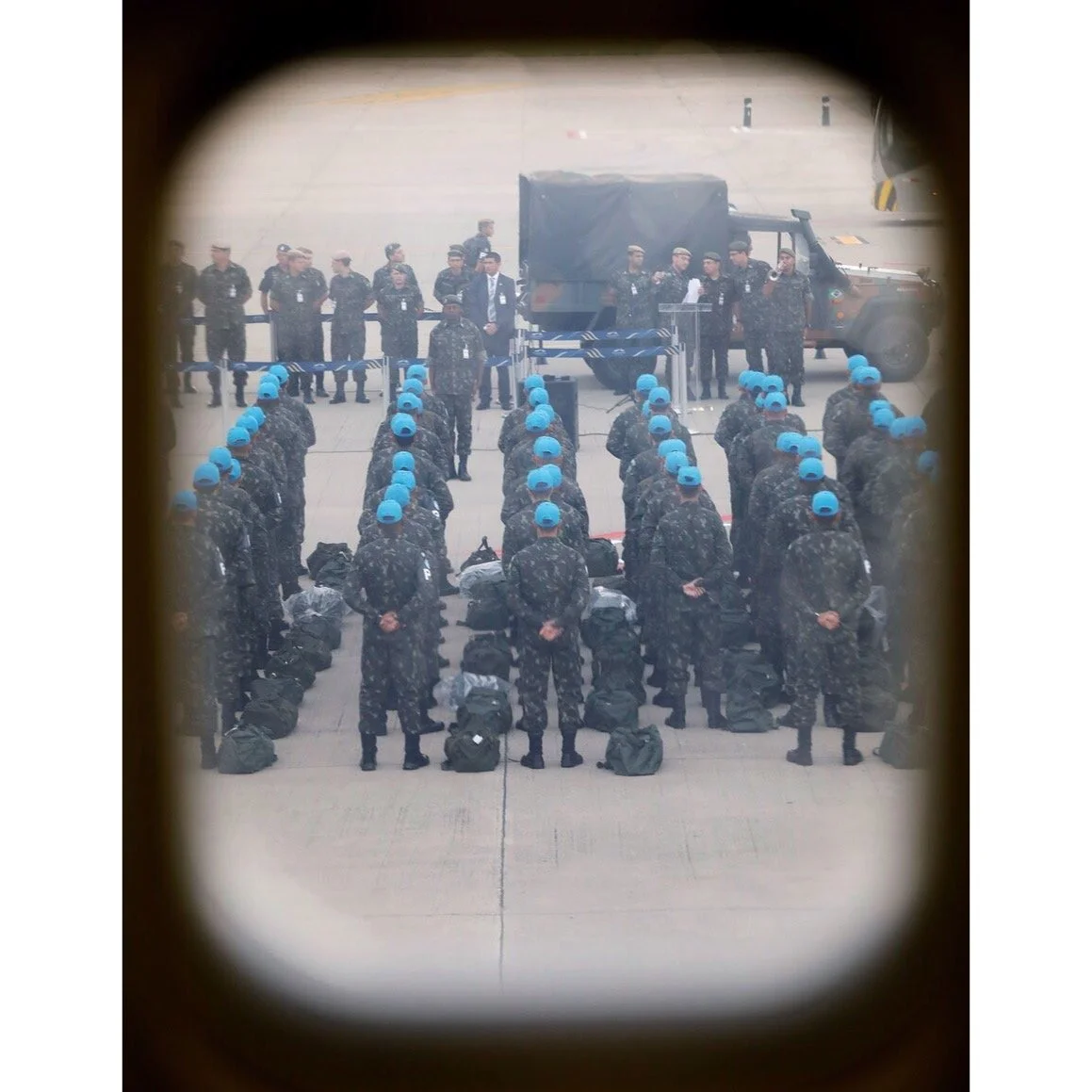
Recent events show that workers and peasants face grave dangers as the ruling elite on both sides of Hispaniola resurrect figures from their violent pasts.Haitian President Jovenel Moïse announced on March 13 the appointment of six general staff members for the reconstituted Forces Armées d’Haïti. All six held senior posts in the FAd’H before it was disbanded by President Jean-Bertrand Aristide in 1995. Three have blood on their hands from the period of the Raoul Cédras military dictatorship in the early 1990s.Colonel Jean-Robert Gabriel, a new assistant chief of staff, was convicted in absentia for his role in the April 1994 Raboteau Massacre under Cédras. After his appointment to the new general staff was announced, the Bureau des Avocats Internationaux, which had secured his conviction in connection with Raboteau in 2000, issued a press release noting that not only was he complicit in the massacre, but he also was a torturer under Cédras.A Haitian court overturned Gabriel’s conviction in 2006, using a technicality it had dredged up from a 1928 law passed during the American occupation.Brigade General Sadrac Saintil, the new army chief of staff, was a Lieutenant Colonel during the Cédras regime and participated in the official whitewash of the Raboteau Massacre.Another assistant chief of staff in the resurrected army, Derby Guerrier, had his assets frozen by the US Treasury in 1993 because of his role in the Cédras dictatorship. The current acting commander in chief of the FAd’H, Jodel Lesage, served in the military of Jean-Claude “Baby Doc” Duvalier and was trained by the US military as a member of the Leopard Corps.In announcing the appointments, Moïse claimed that the army will be used to manage responses to natural disasters and as a coast guard. He undoubtedly views it as a replacement for the United Nations’ hated forces and the US military, which deployed far fewer marines after Hurricane Matthew than after the 2010 earthquake.The US, France, and the UN view the Haitian National Police, which they helped build up to 15,000 members, as a more effective means of suppressing domestic unrest than military troops. US Senator Marco Rubio had this tactic in mind when he pretended last month to oppose Moïse’s military appointments, telling the Miami Herald, “I continue to question why, with so many other needs, Haiti would pursue creating an army.”While the reconstituted army has fewer than 200 troops at present, Haitian Defense Minister Hervé Denis plans to recruit 5,000.Despite his protestations about human rights, Moïse also sees the army as a means of addressing tensions along the border with the Dominican Republic. There is currently no criminal extradition treaty between the two countries, but in March the Dominican military demanded the extradition of a Haitian suspected in the murder of a Dominican husband and wife in Pedernales.In response, Haitian judge Françoise Morailles told Le Nouvelliste that “more than ever it is time for the FAd’H…to get to work on the violent situation with which Haitians find themselves confronted at the border.”Ramfis Domínguez Trujillo, the grandson of murderous dictator Rafael Leónidas Trujillo, has announced his candidacy for the upcoming presidential election in the Dominican Republic. According to a Gallup poll last month, 42 percent of Dominicans support his candidacy while 51 percent are opposed. In order to give his campaign a populist air, Trujillo is promising to institute anti-corruption measures that would include 30-year jail terms for guilty officials.More ominously, he is proposing to build a border wall between Haiti and the Dominican Republic. The Dominican Republic is already monitoring parts of the border with drones and cameras.On Sunday, according to the Providence Journal, Trujillo told a group of Dominican emigrants in Rhode Island that “we need to hold a tough and firm stance before the peaceful Haitian invasion. We need to remove all Haitians who are in the country illegally.”In the Pedernales case, a Haitian named Edner Noël is accused of murdering a couple on whose Dominican ranch he had worked. He was captured and jailed in Haiti after crossing the border.After the murders, vigilantes drove through Pedernales in a pickup truck with a loud speaker on March 13 and demanded that all Haitians leave within 24 hours. At least 250 families fled across the border to Anse-à-Pitres. Dominican President Danilo Medina ordered the deployment of 60 soldiers to Pedernales, along with 30 anti-riot police.There are conflicting reports of whether Haitians had been killed in retaliation, with the mayor of Anse-à-Pitres on the Haitian side of the border telling Le Nouvelliste that he had heard reports of deaths. Tensions continued to be high two weeks after the murders, with the international market still closed by Dominican authorities.In a second incident, a Dominican was murdered on March 19 in Barahona province, with a Haitian co-worker named Jacques Estimphil accused of the crime. The Haitian refugee support group GARR told Alterpresse that approximately 100 people had fled across the border to Haiti to avoid reprisals. Dominican soldiers stopped people who were trying to flee and demanded bribes of 150 pesos.By John Marion for World Socialist Web Site | April 6, 2018
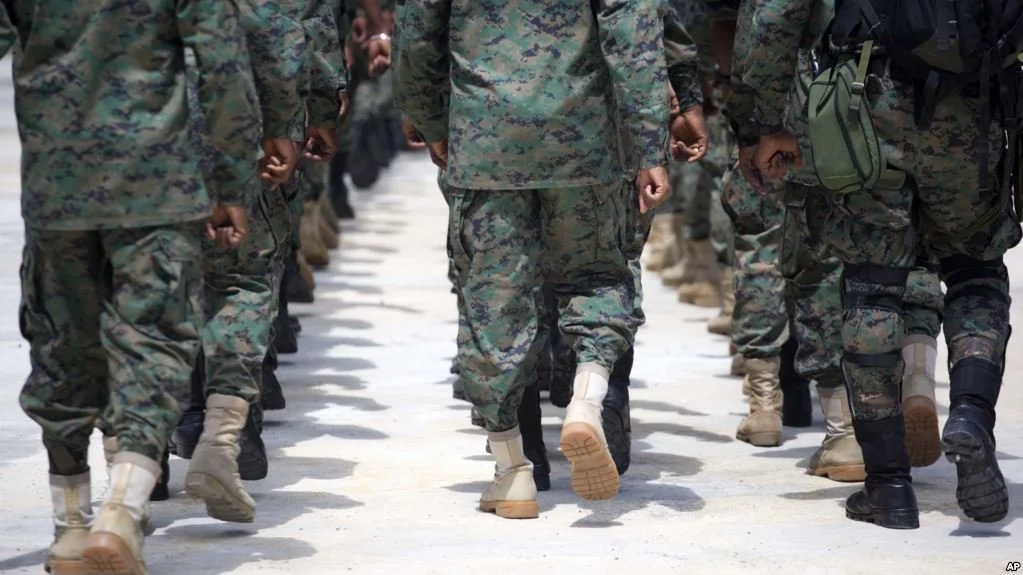
Haiti Prepares to Introduce Its Revived Military
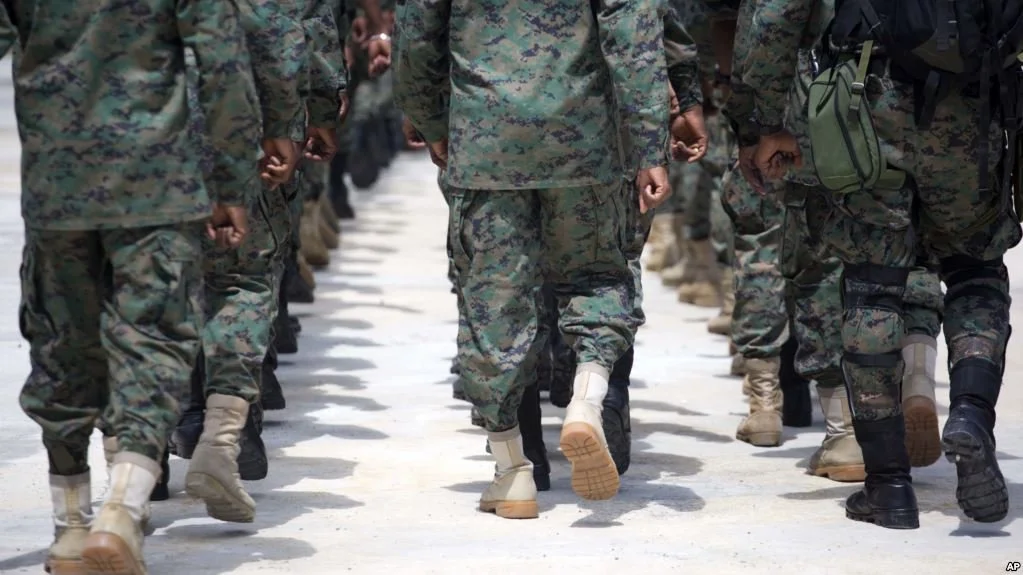
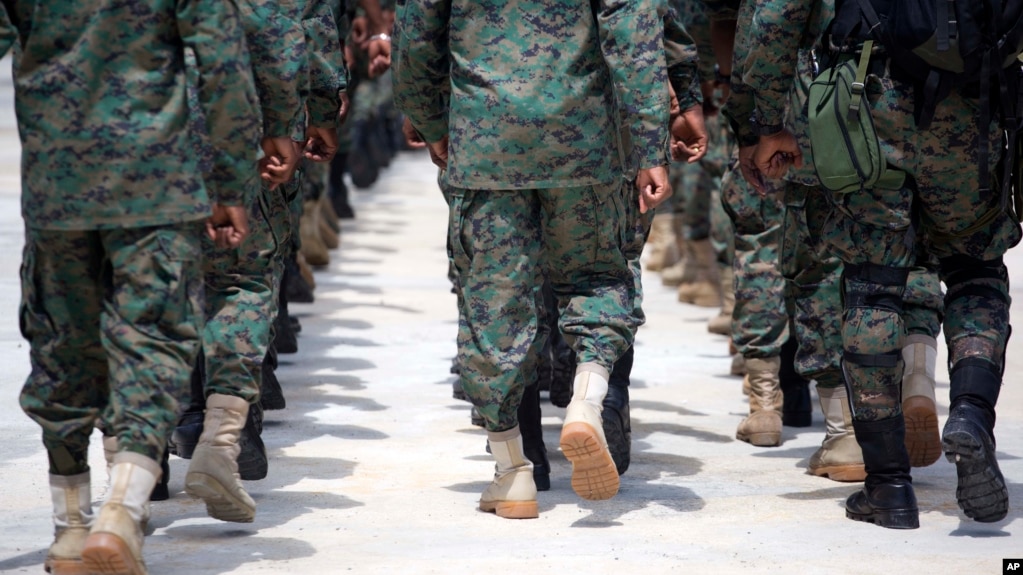 CAP-HAÏTIEN, HAITI — More than two decades after Haiti’s leader disbanded its army, with its history of violent coups, the Caribbean nation is about to unveil a reconstituted military.The Haitian National Army will be formally reintroduced with a parade in this northern port city on Saturday, the anniversary of a decisive 1803 battle [Battle of Vertières] nearby that secured Haiti’s independence from France.“The army I am reinstating for you is a professional one. It is a necessity for our country. It will not be an army of repression,” President Jovenel Moïse, who took office in February, said at a news conference last week. “It will be instead an army that will help out when a hurricane strikes our country. It will help repair roads. This is the army I have promised you.”
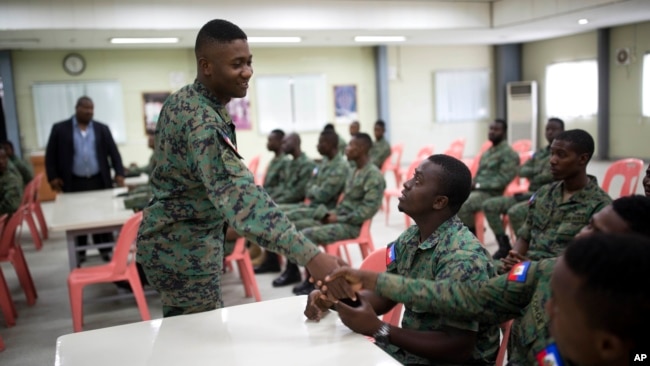
Civilian forceMoise aims to distinguish it from the military that overthrew Jean-Bertrand Aristide in 1991. When Aristide reclaimed the presidency in 1995, he dismantled the army and put security in the hands of the civilian Haitian National Police. That force now has roughly 15,000 officers.In contrast, the army has at least 150 recruits, young men and women mostly engaged in building up the impoverished country’s infrastructure, Defense Minister Hervé Denis said at news conference Monday. Since their selection in late summer, they have set up a medical clinic in central Haiti and begun fixing roads.Eventually, there could be 3,000 to 5,000 troops, Denis said.“But we know that we cannot have an army of that size the next day” because of budget constraints, he added.
Haiti’s government has allocated $8.5 million for defense spending in the 2018 fiscal year. Denis acknowledged funding challenges but, according to the Miami Herald, said the armed forces’ patrols could stem annual losses of $200 million to $500 million in contraband coming from neighboring Dominican Republic.The army’s restoration draws mixed reactions at home and abroad.The army offers precious jobs in a poor country whose unemployment rate tops 40 percent.But Wednesday marked the third consecutive day of street demonstrations in Cap-Haïtien, the country’s second-largest city, with hundreds of public high school students protesting spending on a new military when their teachers have gone unpaid for months.Their rallying cry: “We don’t want an army, we want an education!”“The country has other priorities that are more important than the army,” Edouard Innocent, the city’s former mayor, told VOA in a phone interview. He said Moise should “prioritize economic development, education, health. … I think this army is [a means] for the president to secure his power.”Right to an armyCiné Aneus Daneus, a lawyer in Cap-Haïtien, pointed out that Haiti has the constitutional and sovereign right to an army. He called for “a professional army” to protect the country’s borders and provide aid in case of natural disasters. He added, “This force must not be involved in politics.”Nenel Cassy, a Haitian senator, told VOA he worried that the army would strain the national budget and could be used to suppress political dissent. He said its reinstatement created “a chaotic situation.”
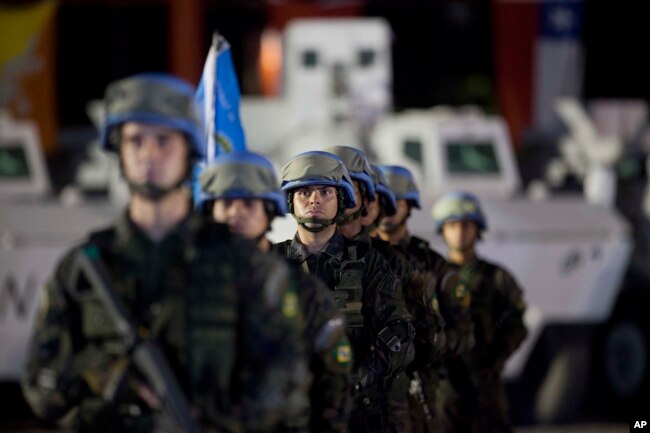
The army’s reinstatement comes a month after the end of the U.N. Stabilization Mission in Haiti (MINUSTAH), aimed at steadying the leadership after the 2004 military coup. That effort has given way to the U.N. Mission for Justice Support in Haiti (MINUJUSTH), meant to strengthen the justice system, policing and human rights protections.The United Nations and foreign governments, including the United States, discouraged Haiti from reviving its army. Instead, they supplied financial aid and training for the Haitian National Police.Kenneth Merten, the State Department’s special coordinator for Haiti, said the U.S. government disapproved of a reconstituted Haitian army because of that army’s history of coups d’etat. He told VOA’s Creole Service early this year that the U.S. has “spent a lot of money so Haiti could have a police force that is competent and transparent.”The United States, Haiti’s biggest benefactor, has disbursed at least $3.9 billion in post-2010 quake aid.‘Good reason to be nervous’Given the high degree of international involvement in Haiti, restoring the army brings “a sense of nationalistic pride with certain elements of the population,” Geoff Burt, executive director of the Canada-based Center for Security Governance, told VOA.But “there’s good reason to be nervous,” added Burt, who has explored the issue’s complexities in a report last year for the International Journal of Security & Development.One argument is that rebuilding the army could distract from the “more important priority of building a more effective, accountable police force.”“The big problem isn’t with the army per se, it’s the connection to the political process,” Burt said. “… Will the army become a player in Haitian politics? That’s what everyone would like to avoid.”By: Jacquelin Belizaire, Jean Philippe and Jean-Pierre Leroy for voanews.com | November 15, 2017.
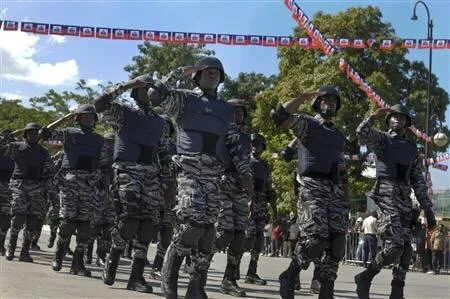
Haiti Plans Recruitment for Small Army
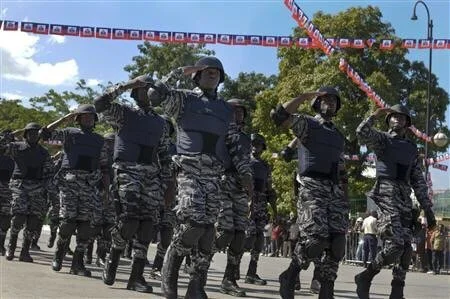
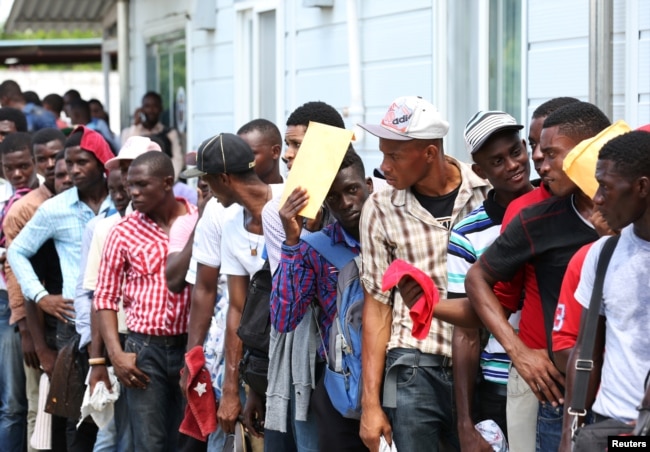
Haiti plans to start recruiting for a small, newly reformed army, the defense minister said on Tuesday, while critics questioned the need for such a force in a poor country with a history of military coups.The government expects to recruit fewer than 500 soldiers, whose duties will include rebuilding after natural disasters and monitoring borders for smuggled contraband, Defense Minister Herve Denis told Reuters in an interview."I was planning to recruit 500 in the first recruitment but now, because of budget problems, we have to reduce the numbers," he said. "We are waiting on the vote on the budget to determine how many we will eventually recruit."The vote is expected in the next few months.Former president Jean-Bertrand Aristide disbanded Haiti's army in 1995 following a military coup.Previous president Michel Martelly drafted a plan for a small military force in 2011. Calls from politicians for an expanded army have grown with the looming departure in October of a 13-year United Nations mission in Haiti intended to restore stability after a second coup against Aristide in 2004.However, Haiti's budget is tight and critics say the government should focus its resources on the two decade-old national police force, which has roughly 15,000 officers."Haiti does not need an army," said Mario Joseph, a human rights attorney and one of Aristide's lawyers. "We must use what little money Haiti has rationally. ... Haiti cannot even take care of the police with the national budget."By Joseph Guyler Delva | Reuters