Art, Culture, People Art, Culture, People

Artist finds ‘calling’ after 2010 earthquake in Haiti
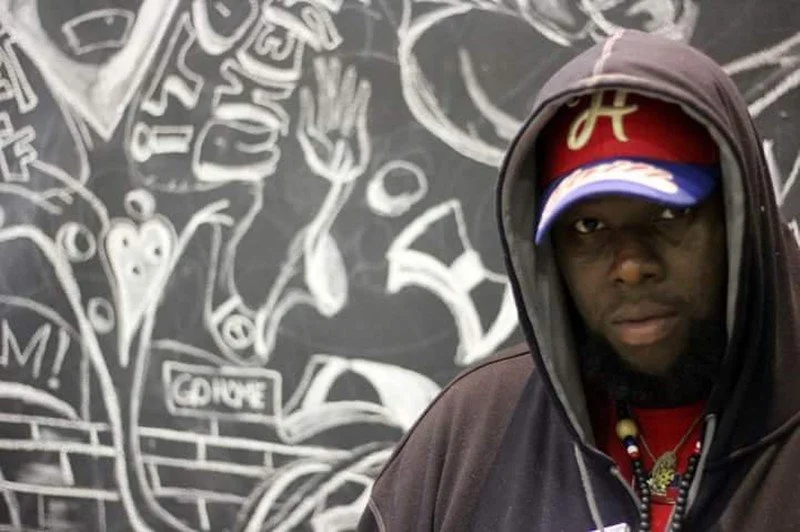
West Palm Beach artist Jason “JaFleu” Fleurant was so profoundly affected by the 7.0 magnitude earthquake in Haiti, which left an estimated 200,000 to 300,000 dead and many more displaced on Jan. 12, 2010, that he had to do something to channel his emotions. So, Fleurant started to create.
“When the earthquake happened in Haiti back in 2010, something just took over me,” he said. “I couldn’t stop creating and in that, I found my calling or maybe my calling ended up finding me.”
Fleurant, 33, is a self-taught painter, but thinks his gift is greater than what he has learned so far.
“It started with me drawing what I was seeing on TV and then my friend Yanatha recommended I try painting on canvas, and the moment I did, everything changed,” Fleurant said.
“My family is from Haiti. So that feeling of knowing I had family and friends in the midst of it, that powerless feeling devastated me,” he said.
Fleurant believes it was a spiritual and artistic awakening. “That’s nothing but God,” he said. “The ancestors and spirits, whenever I create. I’m just the vessel.”
“I’d say the universe (had a plan). I didn’t go to school for it,” he said. “It’s all been from trial and error. Practice makes perfect, so I just kept doing it and doing it and in the process developed all my own unique styles.”
Although he explores imagery and an array of colors in his paintings, no image or color really excites Fleurant in particular. “I tell people all the time I have no earthly idea what I’m doing,” he said. “I just kind of go with the flow and whatever happens, happens.”
Fleurant, however, admits that color has always played an important role in his life. “I’ve always loved color, and that may be tied to being Haitian because in Haitian art there is often (many colors),” he said. “The only real conscious decision I make when it comes (down) to it is always trying to use blue and red somewhere in honor of Haiti.”
Fleurant has had celebrity encounters and is slowly gathering a following for his artwork. “My brother Jamaal ‘Visualist’ Clark and I (believe) if there’s a door cracked, we’re going in,” he said. “That mentality has led us to meet and give artwork to the likes of Dr. Michael Eric Dyson, U.S. Sen. Cory Booker, Jill Scott, Swizz (Beatz) and more.”
Fleurant and Clark were at the Drink Champs Podcast where they got to meet Hip Hop star Noreaga and DJ EFN, which led to a meeting with music producer Swizz Beatz, Fleurant said.
“One minute I’m just chilling in the back and next I look up to see Swizz walking directly towards me. He didn’t even, at the time, know I had art,” he said. “For whatever reason he just walked directly to me and started talking. So then I told him I had this painting I wanted him to see. We unrolled it and he digged it.”
Fleurant said he envisions himself becoming a version of Walt Disney, Dr. Suess and Stan Lee. “Art is cool, but I don’t really care for the art world or just making paintings,” he said. “I’ve come to use all my artistic skills now to be able to create my own books — be it family books, graphic novels or more. I’ve created and fallen (in) love with my own characters and I want to bring them to life.”
For more information about Fleurant, visit jafleutheartist.com.
Q & AWhat are your hobbies? Honestly, I don’t have any hobbies. I think some would view art to be, but that’s my career and therapy, too.What would you do if you were invisible for a day? I’d have an exhibit of my works and wander around and listen to people’s true thoughts on it. That was always a dream that nowadays seems even more less than likely.If you could have dinner with anyone in history, who would it be? Stevie Wonder — he’s hands down my favorite artist in all genres. I’d love to pick his brain.What’s the best advice you ever received?Paul Fisher once told me “Never wait to get your (expletive) together.” Too often we say ‘I’m going to do this or want to do this, but first I must do this.’ But, life is too short and the universe conspires for you when you move towards your dreams.What event in history would you have liked to have witnessed?Not so much an event but the whole movement of the Harlem Renaissance. From the artists going to Paris to get their props and coming home and banning together. I’d love to have been amongst that.What is your favorite childhood memory? Being at the kitchen table while my mom cooked and drawing ninja turtles and other cartoons that she too loved. Those were awesome memories that still stay in my head. Even when I quit art as a teen well into my adult years.Who is your hero, someone who inspires you?I’ll take that back to Stevie Wonder and the reason being, for someone to have no sight but see the world so clearly and create art that means so much. It’s inspiring and a reminder anything is possible.What is something that most people don’t know about you? How heavily I battle depression and mental illness. I used to be ashamed to say it. In fact, this is definitely the first time in any interview I have. But it’s important to address that, particularly in the black community. The arts have been very helpful with it and speaking to someone (about it) (with similar issues).What three things would you bring with you if you were stuck on a desert island? Music, art supplies and books and I’m good to go. I spend a lot of time outdoors, so I’ve grown accustomed to that. 

By: Kyoto Walker Special to The Palm Beach Post for the Palmbeachpost.com | November 29, 2017
Read More
People People

Haitian artist Didier William conveys current events, life in homeland through painting
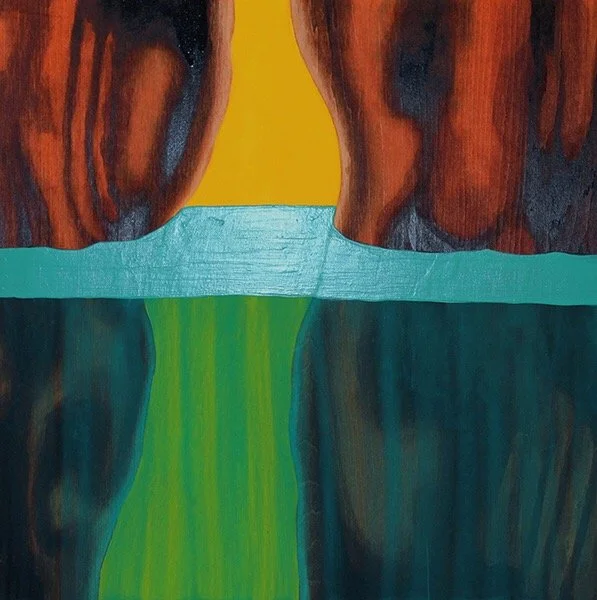
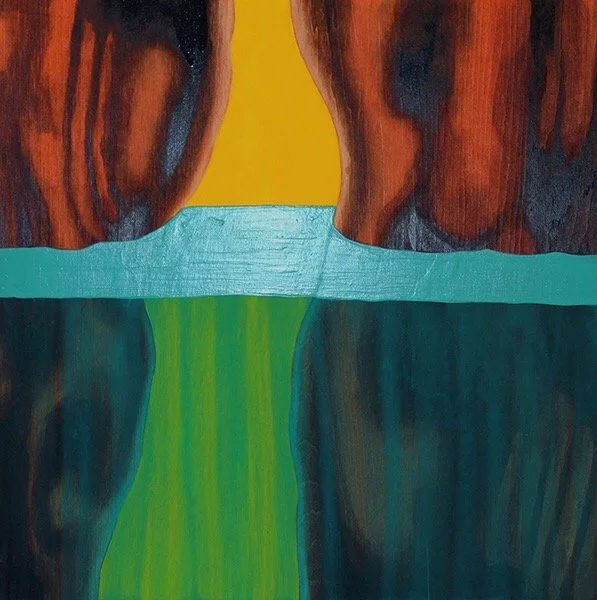
Artist Didier William visited the college Monday to discuss his career and present several of his works to students. William, who is currently the Chair of the Masters and Fine Arts Program at the Pennsylvania Academy of Fine Arts, was born in Haiti and moved to Boston, Mass. at six years old.Several of the pieces William presented focus on his own gender and sexuality, his Haitian heritage and the nation’s history and military. During the talk, William presented his painting “His Life Depends on Spotted Lies” and said his inspiration for the piece came from the Trayvon Martin case, in which unarmed teenager Trayvon Martin was killed by neighborhood watchman George Zimmerman, an act for which Zimmerman was acquitted.William said that his art comes from a small idea that expands and that he wants his artwork to reflect how difficult the process is. William is interested in a painting’s ability to “amaze and offend,” he said.William said his painting “Erzuile Toujours Konnen” focuses on his life in Haiti. His piece “This Pig is Heavy” focuses on an outbreak of swine flu that occurred in his homeland of Haiti. William also said that his painting “I Remember When I Was A Little Girl” is meant to tell a story about life in poverty.In his time as an artist, William has also taught at numerous prestigious schools, including Yale University. William shows his work in galleries and is currently based in Philadelphia, Pa.The paintings William presented to audience members included “Tumble,” “Sanitizing Sanity,” “Keyhole,” “I Remember When I Was A Little Girl” and several more. William also presented his most recent work titled “Camouflage.”William discussed his artistic background with the audience, explaining that as a young man he took numerous art classes. William started out as a sculptor and spent his time in graduate school digging through material. After a hesitant start, he ended up being successful in his craft, he explained.Many of William’s paintings also focus on the use of space and color, frequently including eyes. According to William, he has been inspired by artists like Robert Colescott, Helen Frankenthaler, Sigmar Polke, Carroll Dunham, Belkis Ayón and Azil Politik. He said that print has changed the way he has thought about painting. William explained that he didn’t choose to be an artist, but that art found him and he was always compelled to make art.According to art professor Nestor Gil, he invited William to the college for a variety of reasons, saying that William is an artist from whom “we can learn a great deal.” Gil knows William from collaborative work at the Experimental Printmaking Institute at Lafayette.“[William] treats themes and subjects that are current and urgent in our culture and society,” Gil said.William will exhibit his work in Miami this December and will return to the college in January to show his work in a collaborative effort called “Swarm” with Professor Gil. “Swarm” will be on display in the Grossman Gallery.By Anthony Orlando | October 20, 217
Read More
Art, Culture Art, Culture

Pièce De Résistance: Haitian Artist’s Work Explores Life
091917bp-monnin-pascale-MAIN

WATERLOO -- Pascale Monnin doesn’t have to search for artistic inspiration. She finds it in the simple act of living.
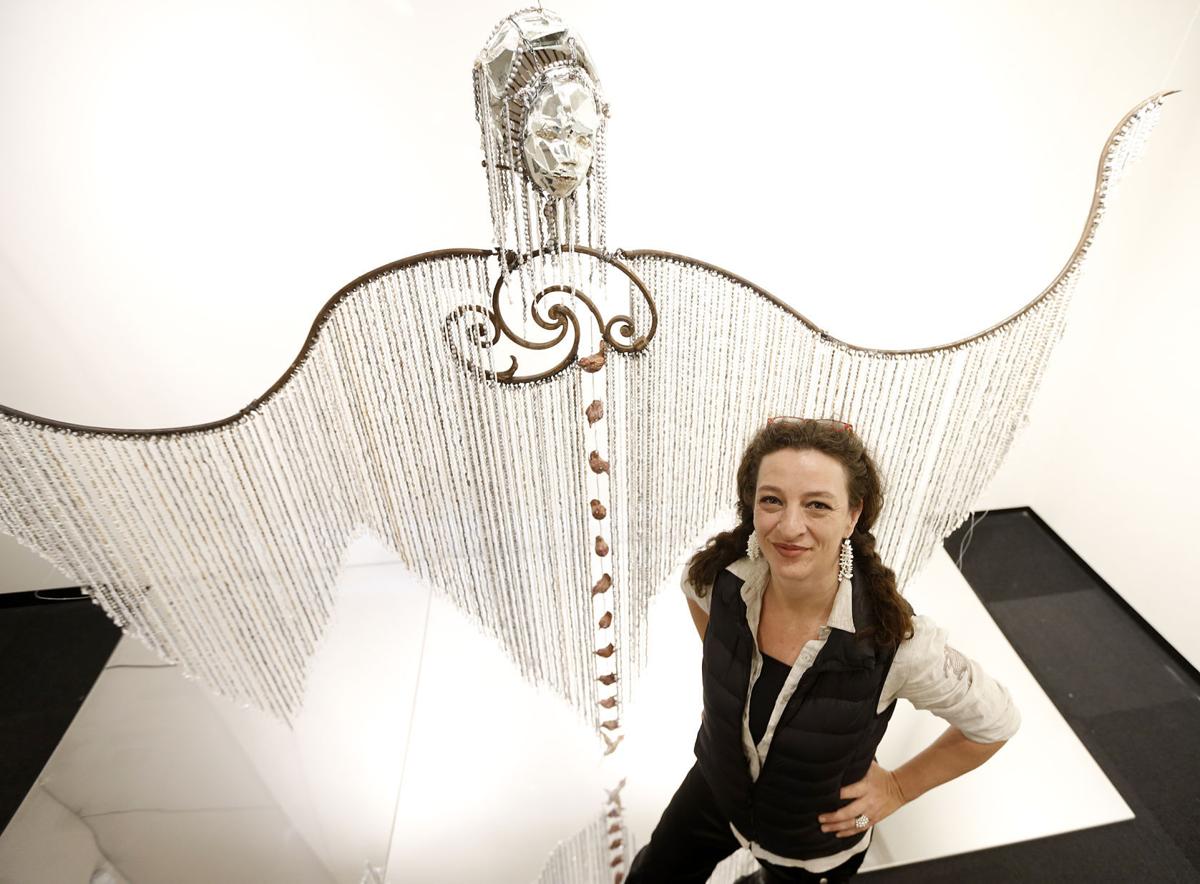
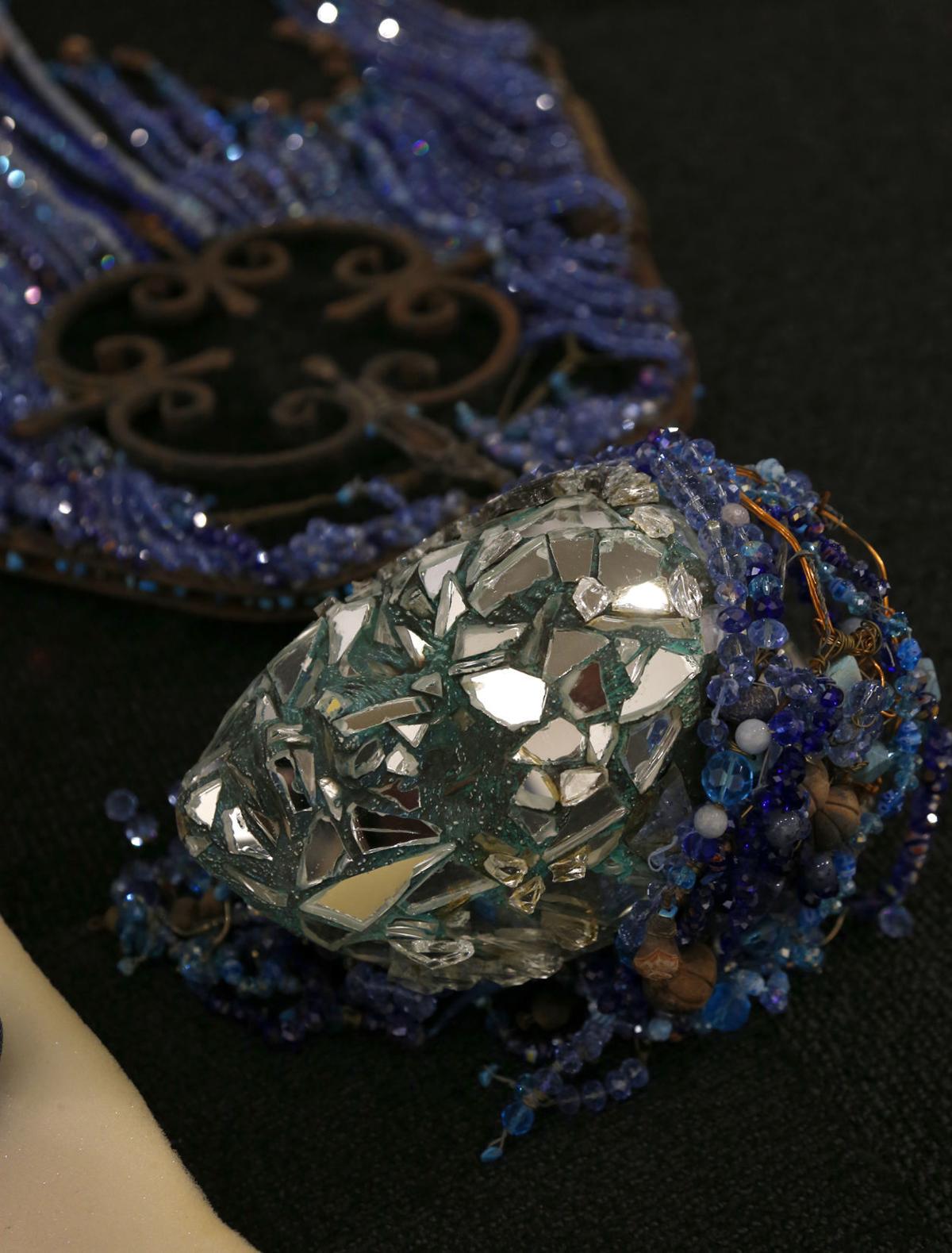
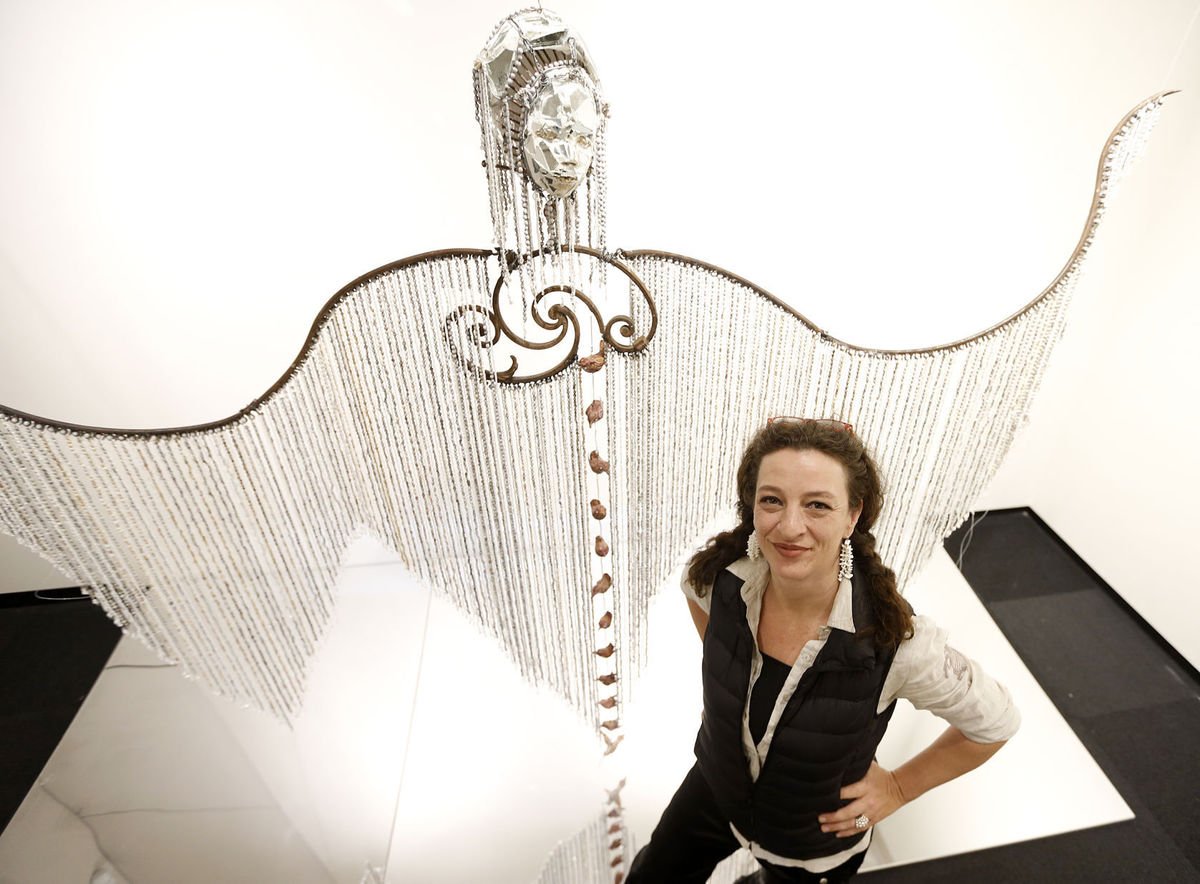
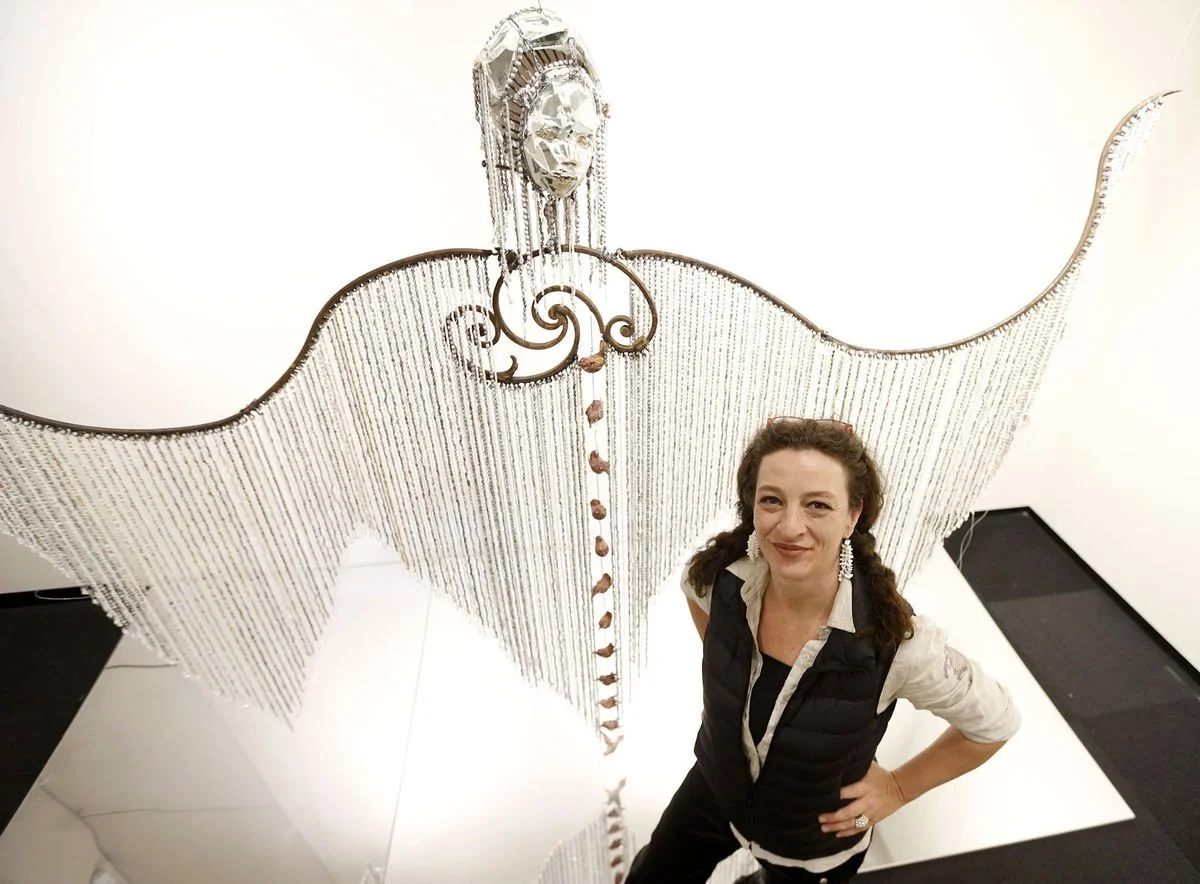
With eyes wide open to gaze with wonder at life’s ebb and flow, Monnin’s curiosity is boundless. In her soul, she believes life is endlessly fascinating and worth documenting through ethereal kinetic sculptures she calls L’Ange or angels, made of raku-glazed pottery, pearls and crystals strung on wires, and other sculptures, installations and colorful paintings that explore Haitian culture, faith and life in the island nation.
091917bp-monnin-pascale-4091917bp-monnin-pascale-2Monnin is one of the best-known contemporary female artists in Haiti, and her artwork has been exhibited in one-woman shows and exhibitions at art centers, museums and galleries around the world.
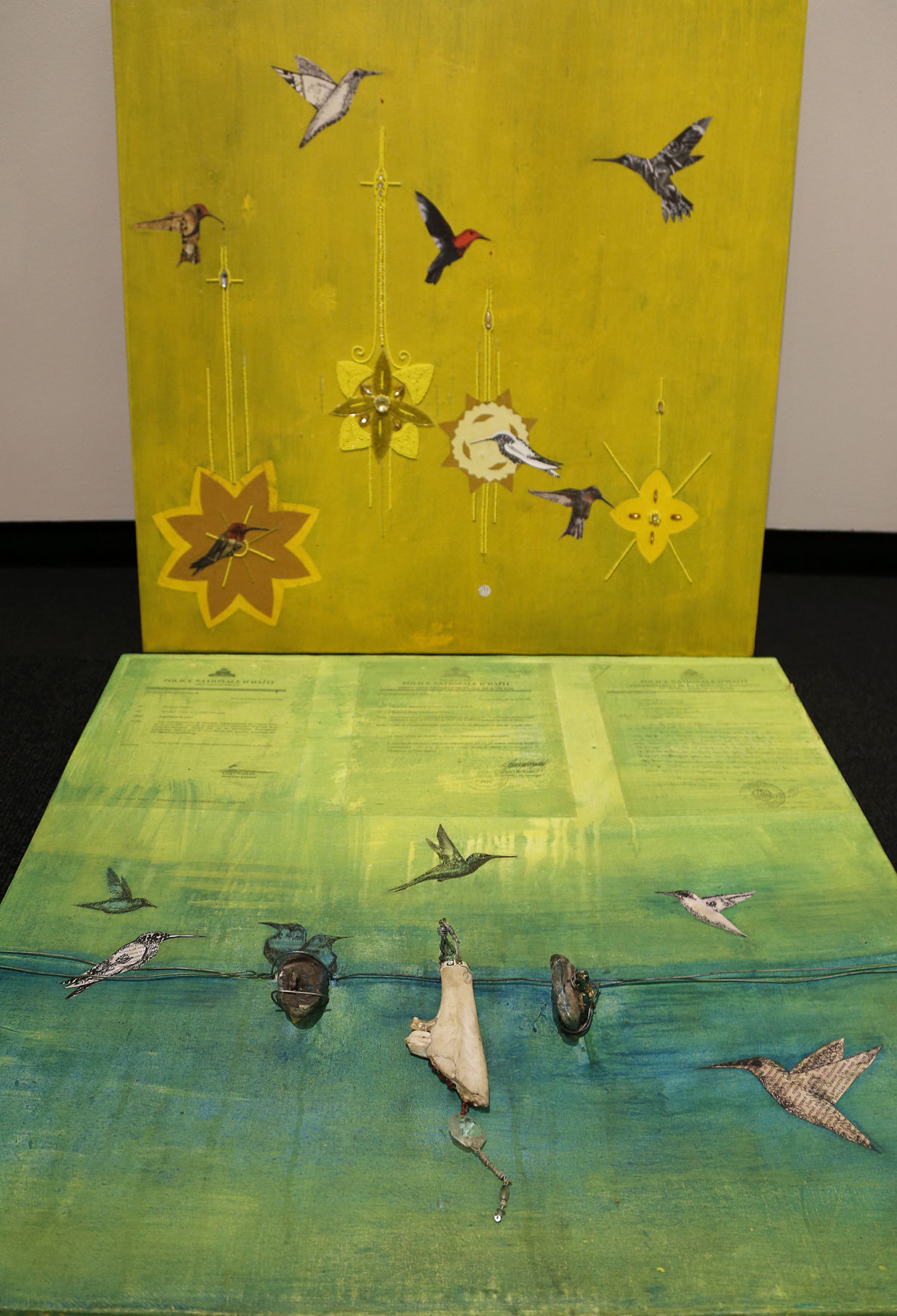
Now her work is being featured at the Waterloo Center for the Arts. “Birth of the Hummingbird and Other Marvels” opened Friday with a reception and gallery talk by the artist.
“I like going with the flow of life, and I never do anything by half-measure. Even as a child, I liked putting things together, and I loved to go to the hardware store. Take me to a clothing store, and I don’t know what to do. I feel my femininity, and I will fight for it, but I prefer tools over shoes,” Monnin says, laughing.
She has been described as “a prominent member of the newest school of Haitian artists, a group of sophisticated young moderns who are hip and well-traveled, and are energized by the ethos of Haiti, but present it in a contemporary manner,” according to one gallery description.
Born in Port-au-Prince in 1974, Monnin grew up in Geneva, Switzerland with her mother and spent school breaks and summers in Haiti. Her father, Michel, owns the noted Galerie Monnin.
091917bp-monnin-pascale-3She studied art education, including painting, printmaking and sculpture in Geneva, and returned to Haiti to live in the 1990s. Recently, she moved to Paris.
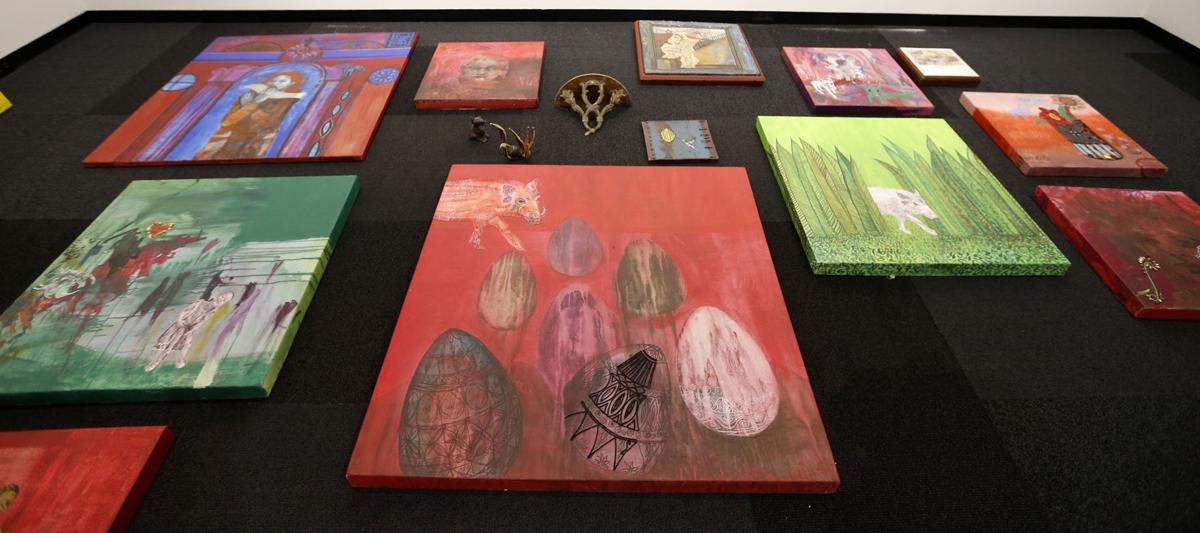
Her artwork is informed by considerable research, composed through personal reflection and guided by experience and instinct. “The Birth of the Hummingbird and Other Marvels” brings together different aspects of her work, according to the WCA, and features installations, paintings, drawings, mobiles and sculptures.
“I don’t believe in borders between different art forms. It’s sometimes sad to think that people put art on one side, music on the other, architecture over here, but it is all art, and if we all hold hands, we can fit the puzzle together,” Monnin explains.
The artist also is participating in the annual Haitian Art Society Conference, hosted by the WCA now through Thursday. The event features special presentations, exhibition gallery talks and tours of museums, art centers and private collections in the Cedar Valley, Dubuque, Davenport, Milwaukee and Chicago.
As the repository for the world’s largest and most significant public collection of Haitian art, “it’s important to celebrate and show how we’re interpreting the works and paying respect to the artists and work,” says curator Chawne Paige.
This is the second time the international conference has taken place in Waterloo.
The Monnin exhibition will continue through Jan. 8 in the Forsberg Riverside Galleries. Pieces by additional Haitian artists represented in the WCA collection are on display in other gallery spaces. 


Read More