
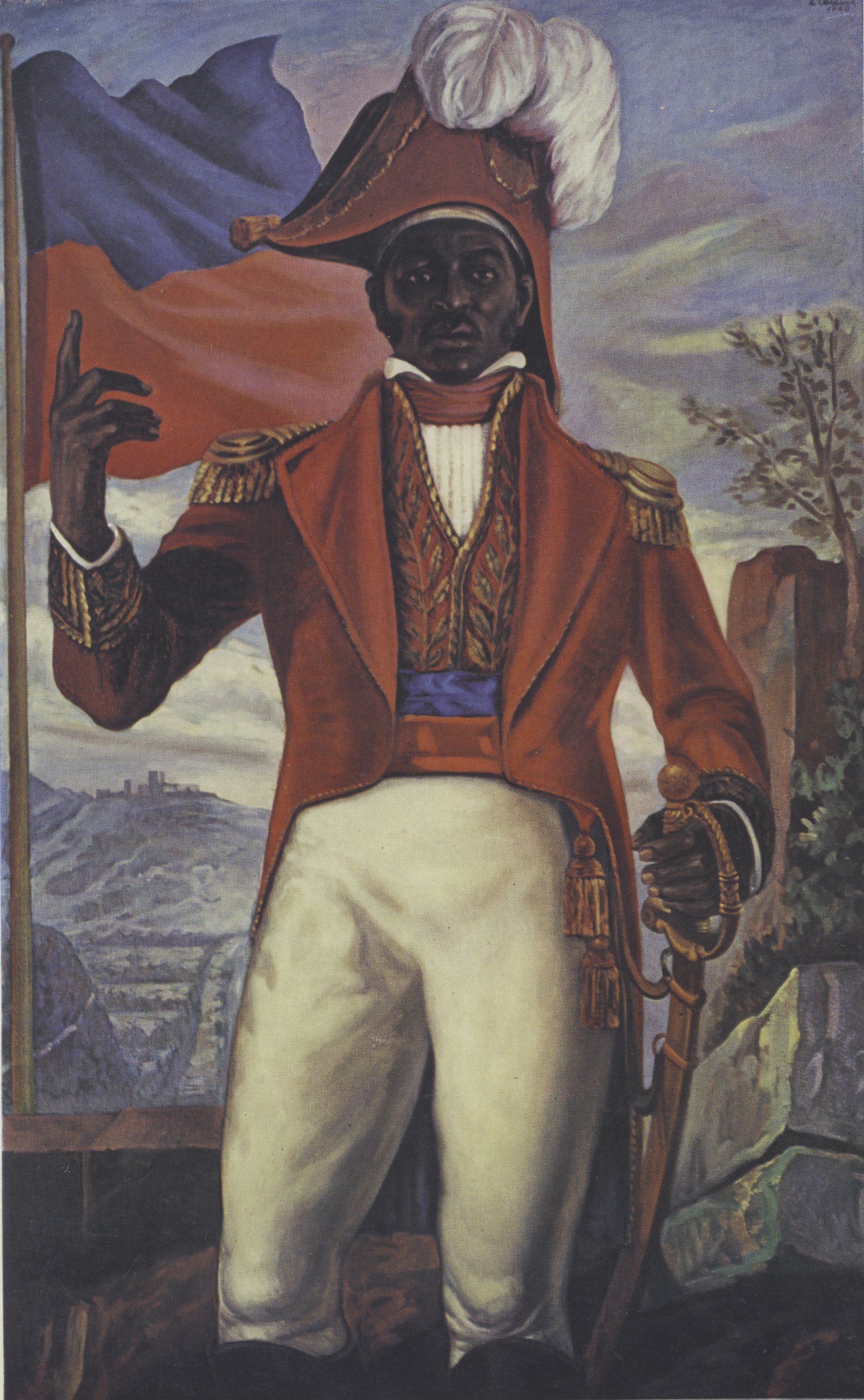
Haitian National Holiday: October 17th -Death of Jean-Jacques Dessaline
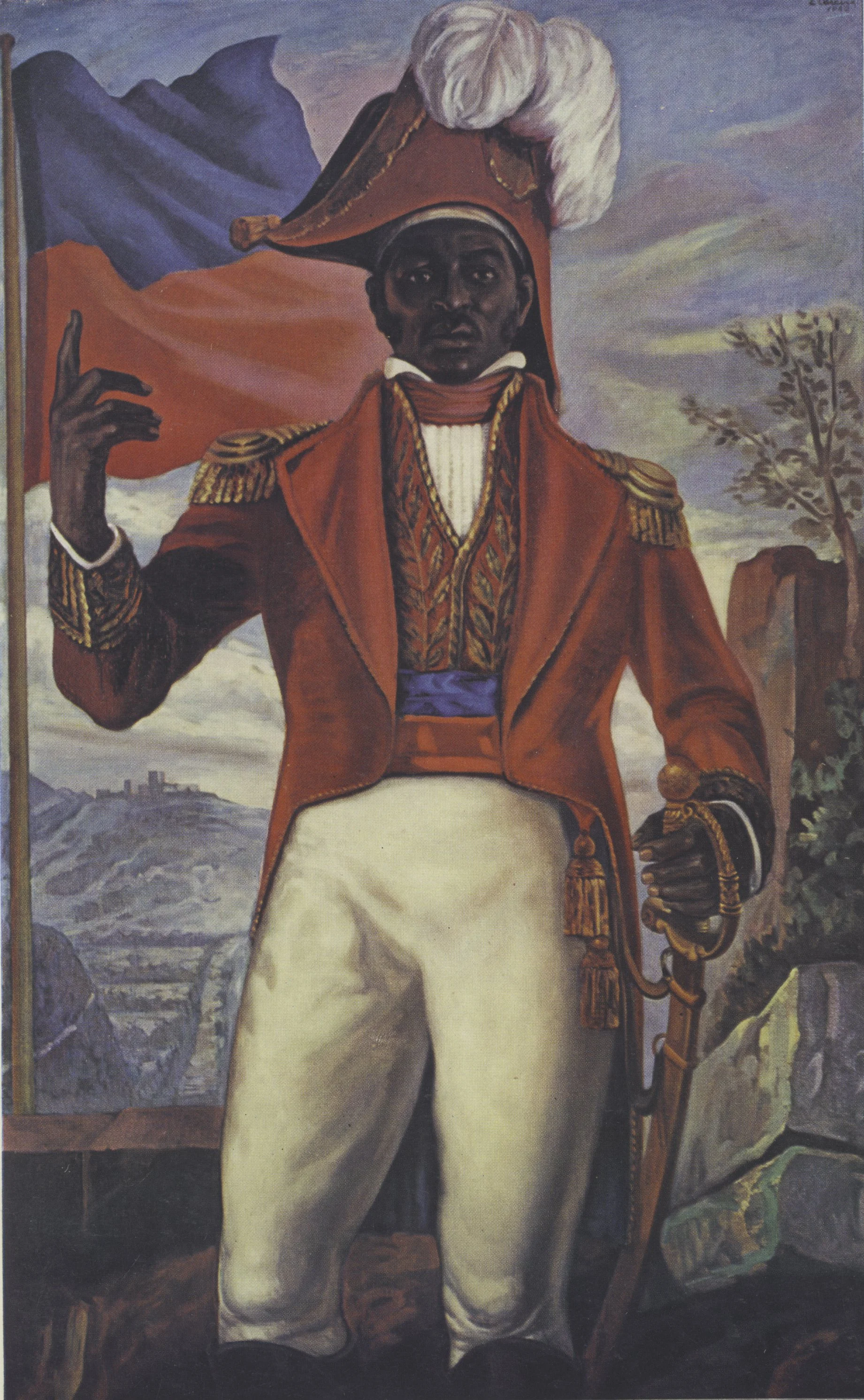
"We have dared to be free. Let us dare to be so by ourselves and for ourselves."— Jean-Jacques Dessalines
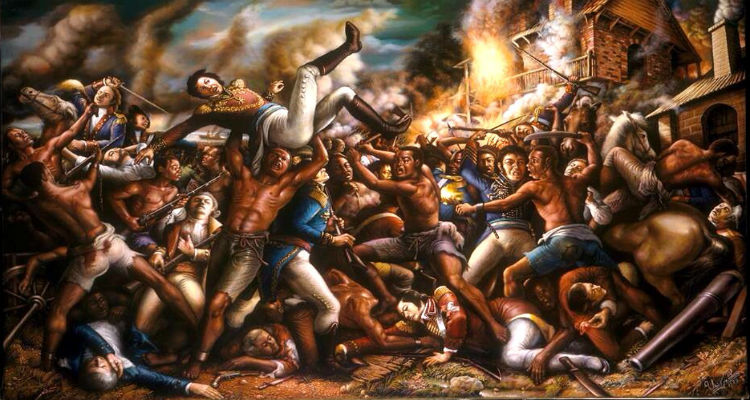
The death of Jean-Jacques Dessaline is a public holiday in Haiti. Haiti dignifies no other individual with an official national holiday. He is considered the “Père de la Patrie.”Born to Congolese parents, Dessalines was born on a plantation in an area called Cormiers, (today, Cormier), in the hills near the town of Grande Rivière du Nord 25 kms from Cap-Haitien. That plantation belonged to a French man named Duclos. The young man was ultimately given the name of Jacques Duclos. There isn’t much history about his parents, but there have been mentions of a beloved aunt, Victoria Montou, that he affectionately called “Toya.” At the age of 30 or so, he would be sold off on the market and be bought by a free black man named Dessalines, at which point he changed his name from Jacques Duclos to Jean Jacques Dessalines. He worked as a field hand for the black master until 1791, when he joined the slave rebellion that broke out in the colony amid the turmoil caused by the French Revolution.Upon joining the slave revolt that would ultimately lead to independence, Jean-Jacques followed the example of early band leaders, Boukman, Jean François and Biassou. He became a lieutenant in the Army of Jean François. He followed Jean François when he lent his services to the Royal majesty of Spain. There, he met Toussaint Bréda, who we would later come to know as Toussaint L' Ouverture who himself, was climbing the ranks and gaining notoriety for his successive brilliant victories against forces far superior to his. When the French Republic proclaimed freedom for all slaves, Dessalines followed Toussaint who rallied to the French flag in order to fight the armies of the Spanish and British crowns.Unable to read or write, Dessalines was nonetheless a quick study under L’Overture earning the nickname “the Tiger” for his fury in battle. In 1794 Dessalines’s military skill and leadership was vital to L’Overture’s success in capturing the Spanish-controlled eastern half of the island, and in return, L’Overture made him governor of the south.For a brief period of time after L’Overture’s capture in 1802 Dessalines appeared to be siding with the French, but the move was nothing more than a ruse designed to trick the French into trusting Dessalines so that he could regroup the insurgents and continue the fight for independence. It was successful. They expelled the French from Saint-Domingue, and on January 1, 1804, Dessalines, as governor-general, proclaimed the entire island of Hispaniola an independent country under the Arawak-derived name Haiti.Independence, however, did not bring peace, and from January 1804 until his death two years later, Dessalines “governed with terror.” Like L’Overture, Dessalines had himself appointed governor “for life.” The following September , emulating Napoleon, he adopted the title of emperor as Jacques I—and crowning his wife, Claire-Heureuse, empress. Fearing a French resurgence and the reinstatement of slavery that would accompany it, he ordered the massacre of approximately 5,000 of the island’s white men, women, and children declaring “I have saved my country. I have avenged America.” It was a move that two of Dessalines most influential generals, Alexandre Pétion and Henri Christophe, could not countenance and one that spoke to the growing political instability of the new government.On October 17, 1806, Dessalines met a violent death at the hands of his own lieutenants when he was ambushed; his body dragged through the streets before it was dismembered.Jean Jacques Dessalines was by all accounts a fearless soldier, a formidable general, great strategist, ruthless leader and unforgiving commander. However, most importantly, he was a man who fought for something he believed in. He fought for something bigger than just him. He fought for freedom.Sources: (1) "Jean-Jacques Dessalines: Demon, Demigod, and Everything in Between" by Lindsay J. Twa; (2) Blackpast.org "Dessalines, Jean-Jacques (1758-1806)" by Deborah McNally; (3) "Death of Dessalines Remembered in Haiti" by Aglobalworld.com; (4) "Jean Jacques Dessaline Emperor of Haiti by the Editors of the Encyclopedia Britannica
Haiti may have been in the avant-garde of the good, the bad and the worst in the world!
Historians have revealed that Christopher Columbus, when he stumbled upon Haiti on December 5, 1492, exclaimed: “But this is marvelous!” He was so enchanted by the view in the island that he decided this should be his last stop. He would wander around the tropical basin but would make the island of Hispaniola his home base to discover other places in the Caribbean. On his return to Spain to show to the Queen Isabella his prized acquisitions, indigenous Indians and other tropical products, his sailors profited from his absence to massacre and decimate in one generation more than one million Indians through imported disease, alcohol, beatings and all other types of cruelty.Las Casas, a defrocked priest, used the fate of the Indians to suggest and obtain from the queen the rights to import blacks from Africa to replace the declining population of aborigines, for mining the land for gold and later toiling in the plantations to produce coffee, sugar and cocoa for the traders in Europe.For some 300 years, Haiti was the place to receive, brutalize for submission and dispatch black slaves to all parts of the Caribbean, the United States and Latin America, in particular Brazil. During that period, Spain, England, France and Portugal combined together to write and enforce laws policies and practices that would define the black race as an inferior category of the human species.It was also from Haiti that the revolution in November 1803 put a final blow to the world order of slavery as it was institutionalized by the church, the philosophers and the current global practice. From there, the concept that slavery is repugnant to human dignity spread to Latin America and later to the United States.Meanwhile in Haiti, slavery returned in new clothes, the forced borrowing on the state to impede any prospect of nation building. By imposing an international embargo against Haiti lifted only through international exaction and extortion, the fate of the daring nation was doomed from the start. Since only education could create a critical mass of individuals who would take their destiny on hand, Haiti and all other countries similarly situated were condemned to live in permanent poverty, internal dissent and environmental disaster.The occupation of Haiti by the Americans in 1915 followed by several others throughout the world to bring internal order and civilization did not ensure either of them. As in the Middle East today, throngs of Haitian citizens then left the country for Cuba, the Dominican Republic and Panama.The Revolution of 1946 that could be compared to the struggle for identity politics complicates the situation. Dumarsais Estime ones of the most cherished Haitian presidents could in the end be the one who caused the most harm to the future of the nation. In adopting the policy that black skinned Haitians should also have their time as the light skinned ones (mulattoes) in captivating the national legacy “he atomized Haitian politics, undermined civic culture and destroyed the possibility of the ethos of appurtenance the glue for true nation building”.The politics of common good that could revolutionize the world in offering to share the national legacy with all the citizens of the land is put aside for a politics of liberalism where all types of ingredients such as racial preference, gender equality, sexual identity, disguised human rights values have the high hand leading the bigots and the racists to also ask for their fair share in the national cake.That policy opened the way for the Western world to disrobe the nationalists of the new nations of Africa or old ones like Haiti and impose dictators like Ida Amin in Uganda or Duvalier in Haiti. They lasted for years and, when they left, the shadow of democracy under the disguise of liberalism or human rights made you wish you could revert back to the dictatorial era. Because at least there was a governing state.This long introduction was to lead us to a new book written by a professor of history at Columbia University, Mark Lilla, The Once and Future of Liberal after Identity Politics. He argued that the Democrats in general and Hillary Clinton in particular lost the recent American elections because of their espousal of the concept of liberalism that slipped into a kind of moral panic about all types of causes going from gender to sexual orientation, missing the real fight, which should be the sentiment of appurtenance for all.Said Lilla: “We need no more marchers, we need better mayors.” Observing American politics from afar, I am looking at a war of tweets. Who could gain the more followers through their tweets, Trump, Obama or Hillary! The business of pacifying America and creating the one and un-divisive nation under the same banner as prescribed by Abraham Lincoln, rebranded by Dr Martin Luther King and pursued by Lyndon Johnson, is distorted into a clan politics where there is no end in pulling the sheets to one’s side.A whole city is in riot because the N word has been used by an official or a renowned business entity. Yet leaving a large part of the population squatting or living in squalor is a scheme design accepted by all.While the N word is popular and widely used in Haiti, there is a niggardly way in the way Haiti treats its citizens. It seems there is a national plot to mistreat the women and the rural world while there is an international plot to mistreat Haiti. The MINUSTHA is leaving the country in a worse state than it found it, yet it was sent to Haiti to stabilize the nation. You could see the members of the Corps from small nations like Senegal or big ones like Brazil or Chile using their soldiers for a dolce vita in Haiti with big pay and no positive impact for the country.“We need no more marchers but better mayors!”A three-day strike has been proposed in Haiti this week to protest the 2017-2018 national budgets. Whether the budgets will be amended or remain the same as it has been signed by the president, nothing will be changed for the average Haitian citizen. I have formulated a classic national budget roadmap in my essays that has attracted little traction in the Caribbean except maybe in the Dominican Republic and there again the Haitian Dominicans are not part of the inclusion.It included funds to create:1. The sentiment of appurtenance amongst all citizens with the support for the creation of wealth for all.2. Excellent infrastructure and sane institutions everywhere so the citizens will cease to be nomads in their own country and abroad.3. Extend a helping hand to those who have been left behind; in the case of Haiti, the women and the rural world.4. Reach for the divine and international mission set by God for your nation. In the case of Haiti it is an emancipator mission.5. Teach the youths they must see the nation as a continued creation fulfilling the dreams of the ancestors.This is not on the agenda of neither the government nor the opposition.Cape-Haitian has sensed this dichotomy? The city was immune to the strike. The citizens went to their usual occupation, children went to school and business was hot as in a bee’s nest.I must anyway express my deception with the new mayor. Magistrate Mondé, as he is fondly called by everybody, was supposed to be the alter ego of another mayor of another era: Cléomain Jean Pierre. It was around the 60s before the dictatorial period. Mayor Cléomain kept the city in a state so clean and beautiful it was the pride of the Caribbean and of the nation.Sixty years later we thought we have another Cléomain but Mayor Mondé is no Mayor Cléomain. There are no excuses for the amount of detritus left uncollected every day by the sanitation department. The public market Hyppolite is in a state so deplorable that any well functioning government would have closed the structure because it is unfit for public safety and public hygiene.While we are at it! Is it not time for the son of the city, Councilman Eugene Mathieu from New York, to step in and bring help that would do much good to Cape Haitian, particularly in this period when the hurricanes are coming by waves, it was Irma now Maria preparing to create havoc in a city that is overwhelmed by overpopulation and governmental neglect?Maybe after all Haiti might show it is in the avant garde for the good, not the bad and the worst!By: Jean H Charles LLB, MSW, JD - September 25, 2017
Chronicles of a Chronic Caribbean Chronicler: Europe and US dodging demands for slavery reparations
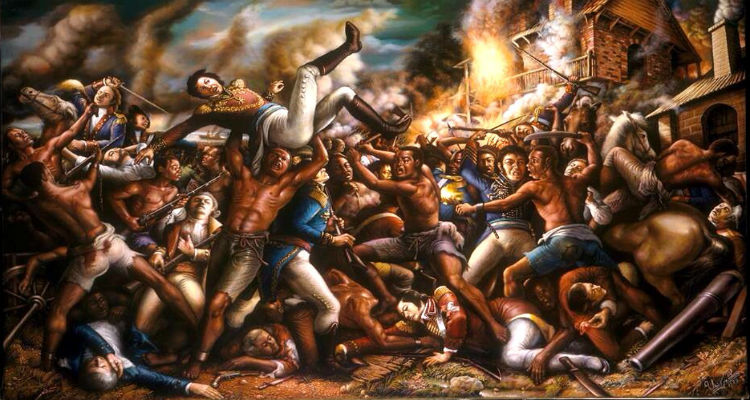
Today, over 180 years after abolition, descendants of African slaves in the Caribbean, North and South America are demanding reparations for slavery from Europe – and the United States.
 |
| Earl Bousquet is Editor-at-Large of The Diplomatic Courierand author of the regional newspaper column entitledChronicles of a Chronic Caribbean Chronicler |
In the Caribbean, the demands include apology and atonement for 400 years of both slavery and native genocide; in the USA it’s about compensation for African American descendants of slaves; and in South America, today’s descendants of Africans (who arrived both as shipwrecked mariners and slaves) are demanding their fair share of recognition, equality and atonement.Africa and the Caribbean experienced the brunt of the brutal slave trade that saw Europeans sail to West Africa, kidnap millions of men and women and ship them like animal cargo to the newly colonized ‘West Indies’ captured through wars of extermination against the original native ‘Caribs’ and ‘Arawaks’.While the focus of British and French slavery was mainly concentrated on the Antillean (Caribbean) islands and mainland territories (including Haiti) that they claimed to own, the Portuguese and Spanish concentrated on South American mainland territories such as Argentina, Brazil, Colombia, Costa Rica, Chile, Ecuador, Peru and Venezuela, as well as the larger islands of Cuba and Puerto Rico.In the case of the USA and South America (except in Brazil), African descendants form small minorities, unlike the 15 Caribbean Community (CARICOM) member-states, where they form an absolute majority, in each case.CARICOM governments have thus easily and collectively agreed to a joint approach to the European Union (EU) member-states that benefited from slavery, inviting them to discuss reparations by way of acknowledgement and atonement.The EU countries have so far resisted engaging the Caribbean in any discussions whatsoever on reparations, the likes of former British PM David Cameron saying during an official visit to Jamaica that traditional aid and assistance given by Britain since independence to the former colonies has sufficed.But the response by the Britain, Denmark, France, The Netherlands, Portugal and Spain, thus far, (or lack thereof) is very much unlike when France demanded reparations after the first African slaves in the Caribbean – and the world -- successfully revolted.Haitian slaves, led by Toussaint L’Ouverture, rebelled in 1791 and declared their independence in 1804. Not even in Africa had a free nation yet been born and the humiliated slave masters enlisted the support of the French government to make the former slaves pay dearly for their freedom.In 1825, France demanded 90 million gold francs to recognize Haiti’s independence -- the same amount demanded in compensation by the former slave masters.Historians and economists agree that this high cost paid by Haiti to France over 122 years (payments continued until 1947) is largely responsible for the country having been almost eternally anchored in poverty.In 2003, Haitian President Jean Bertrand Aristide called on Paris to return the 90 million gold francs, by then estimated at US $21 billion. Soon after, however, he was swiftly and secretly taken hostage by US and French forces and exiled to South Africa.French President Francois Hollande, in May 2015, ahead of a visit to Port au Prince, said Paris “will repay its debt” to Haiti – only to later retract, saying he only meant repaying France’s “moral debt”.The Hollande disappointment notwithstanding, no other concerned EU member-state has even mentioned the possibility of considering paying reparations for slavery – in the Caribbean or North or South America.Same in the USA, where not even President Barack Obama accommodated calls to initiate reparations moves and to pay to survivors the wages of the slaves who built the White House.In 1865, Union General William Sherman set aside thousands of acres of land for newly-freed American slaves, by way of a special field order. But President Andrew Johnson soon returned the titles to the original white owners. Freed slaves were also each promised “40 acres and mule” to start their own lives. But here too they were disappointed.The US Congressional Black Caucus has for the past 28 years backed a bill called HR-40, submitted annually by Michigan Rep. John Conyers, calling for a commission to study “the Reparations Proposals for African Americans Act”. Designed to examine the negative effects of slavery, it also seeks to “recommend appropriate remedies”. But HR-40 has long been referred to the House Judiciary Committee, where it has since remained...US blacks are somewhat divided over what mechanism to use to assess the real costs and value of slave wages and related rates of conversion over the centuries slavery lasted.Likewise, white Americans largely reject calls by blacks for reparations, some seriously arguing that ‘slaves were freed by the Civil War’ and ‘blacks benefited from affirmative action’ government policies over the years.The reparations movement is however gaining traction across the hemispheric horizon.The momentum has just begun in South America, with an International Reparations Conference held in Cali, Colombia in March 2017, essentially to outline a road map for the movement for recognition and inclusion of the African-descended minority across the continent.The African Americans are encouraged by a 2016 report by the Geneva-based United Nations Working Group on People of African Descent, urging US lawmakers to implement reparations, citing “a legacy of colonial history, enslavement, racial subordination and segregation, racial terrorism and racial inequality.”Also, according to an exclusive poll released in March 2017 in conjunction with a new PBS Series ‘Point Taken’, 40 percent of US ‘millennials’ think there should be reparations for African American descendants of enslaved people.Indeed, some of the leaders of the revived reparations movement in the USA are confident enough of the momentum gained thus far to conclude that ‘this could be reparations’ best chance since 1865.’In the Caribbean, the governments’ approach is naturally quite different from North and South America – more diplomatic than agitational, seeking dialogue over confrontation.In March 2014, the CARICOM governments unanimously adopted the ten-point plan to demand “Reparatory Justice for the victims of Crimes against Humanity in the forms of genocide, slavery, slave trading and racial apartheid.” The EU member-states that built their imperial wealth on slavery were also duly informed.A CARICOM Regional Reparations Commission was also appointed (chaired by the vice chancellor of the University of the West Indies Sir Hilary Beckles), with national reparations committees also established in member-states.The Caribbean hasn’t put a price tag on slavery, even though a sum of US $17 trillion is often mentioned. Instead, it’s seeking a mutually agreed CARICOM-EU approach to what forms the atonement will take, to the common and mutual benefit of all the CARICOM states and peoples.Failing this negotiated approach, the Caribbean countries reserve the right to file formal criminal charges against the culprit EU member-states at the International Criminal Court (ICC)).Citing the will of the Western world to proudly acknowledge and atone for the Jewish Holocaust, reparations paid by the US government to Japanese interned during World War II, reparations made to US native peoples and Britain recently being ordered by its own courts to pay reparations to tribal Kenyan ‘Mau -Mau’ independence fighters, CARICOM feels it has a very good case.Those demanding reparations for slavery everywhere are also buoyed by the UN’s declaration of 2015 to 2024 as the Decade for People of African Descent.The CARICOM Prime Ministerial Subcommittee on Reparations (led by Barbados Prime Minister Freundel Stuart) met in late April 2017 to review European responses to their request for a negotiated settlement.In the meantime, the 15 member-states, including Haiti, are preparing their individual legal cases for collective submission to the ICC, should the culprit EU member-states continue to dodge and dither to duck their individual and collective responsibilities for the greatest ‘crime against humanity’ known to mankind.The reparations demands by African descendants in CARICOM, US and South American states do have the backing of regional and international entities, including similar non-governmental Europe-based movements and an increasing level of interest and support from African states and entities, including the African Union (AU) and the Pan African Congress (PAC).The European and American governments today may continue to duck their responsibilities. But the results of the strong reparations demands on them, whether achieved today or tomorrow, also offer added hope to the likes of the Australian Aborigines and New Zealand’s Maori first peoples, who may have received formal apologies, but continue to feel treated less than equal in the lands they first inhabited.Meanwhile, the Grenada ‘slavery and tourism’ discussion is an interesting starting point to revive earlier discussions on the establishment of a national reparations committee (NRC) for Grenada, Carriacou and Petit Martinique.That will not only be in line with the reality of the vast majority of CARICOM member-states (where NRCs exist), but will also facilitate ongoing discussion across the three-island state on reparations and related issues during the UN Decade for People of African Descent, which continues until December 31, 2024.Caribbean News Now