

Raiders Safety Joseph Hopes to Use Football to Help Native Haiti

A large tattoo from Karl Joseph's left shoulder through the center of his back, a detailed emblem also featured on the Haitian flag.
Joseph was born in the impoverished island nation and raised there 11 years before moving to Orlando, Fla. with his mother. That formative period helped define the Raiders safety's work ethic, commitment to family and his roots.
Joseph hasn't forgotten it. Haiti remains a part of him, bonded by a connection expressed well beyond body art.
That's where he spent one of life's biggest moments, shunning the spotlight to be with relatives in Haiti when the Raiders selected him No. 14 overall in the 2016 NFL4. That was celebration of where he came from on the day he became wealthy beyond childhood dreams.
"It keeps me grounded," Joseph said on NBC Sports Bay Area's Raiders Insider Podcast. "That's one of the reasons I went back for my draft party. Anytime I get a chance to go back, I take it. It makes you appreciate the little things you have, the luxuries you often take for granted. It also makes me hungrier to work hard, play well and give back. Every time I go the memories come flooding back, which hits the reset button for me. It gets ready to come back here, ready to work."
Joseph frequently visits family in his native Jacmel, a port town off Haiti's southern coast. He went back again this spring, but not on holiday.
He joined former Seahawks defensive lineman Cliff Avril's annual pilgrimage to Haiti, which is more than a fundraiser and photo opp. This group goes to work.
They helped build a school, supply a health clinic and run a football camp. They met with Haiti president Jovenel Moise, discussing issue pressing a beautiful in need of help for its poorest people.
"That's one of the main reasons I was excited to go on this trip," Joseph said of the weeklong charitable venture. "I've seen some of the work he had done out there, and I was ready to get involved. A lot of people go out there and put their name on stuff, but few want to interact with the people and get their hands dirty."
Joseph broke from the pack late in the trip to visit family still living in Jacmel. They toured the now rundown house Joseph grew up in, a moment, among others, chronicled on his Instagram page.
Joseph plans to join Avril's trip each year, and eventually start his own foundation focused on helping bring awareness, funds and infrastructure to Haiti.
He understands that performing well will help that cause.
"I have to continue to do my part on the field," Joseph said. "The better I play, the more I contribute to Raiders victories, the more people will pay attention. I need to use that to shine a light on issues in the country I grew up in."
Joseph believes he can reach new heights working with new head coach Jon Gruden and staff. The safety has played well in spurts, but doesn't believe vast potential has been reached.
"I don't even feel like I've scratched the surface yet," Joseph said. "I feel like I have so much room for improvement in every aspect of my game. I've improved my mental game this offseason, and fit into this new defense. We've come a long way as a group, and that I've made strides personally. I'm going to keep pushing, even during the down period. I have such high expectations for myself. I'm excited about the season. People haven't even seen the real Karl Joseph yet."
The real Karl Joseph is a thumper, someone who can play deep and aggressive near the line of scrimmage. He's part of a safety group that also features Marcus Gilchrist and Reggie Nelson, and will have a chance to thrive in Paul Guenther's defense.
That would help the Raiders win and bring attention to Joseph and the place he's commitment to helping.
"Football is my platform to give back there," Joseph said. "That's my purpose in life, to be able to make this an opportunity to shine light on issues (in Haiti) and give back. I cherish the chance to go back and see the place where I was born and family that was around during a critical time in my life. It's a special place to me."
By: Scott Bair for nbcbayrea.com | June 11, 2018
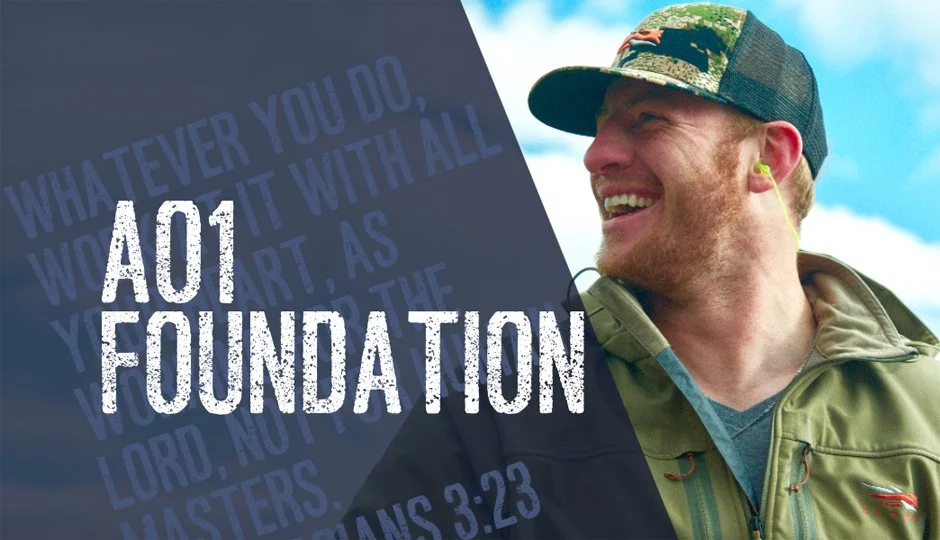
Eagles' Carson Wentz pledges up to $500,000 to bring lights, Wi-Fi and sports fields to Haiti
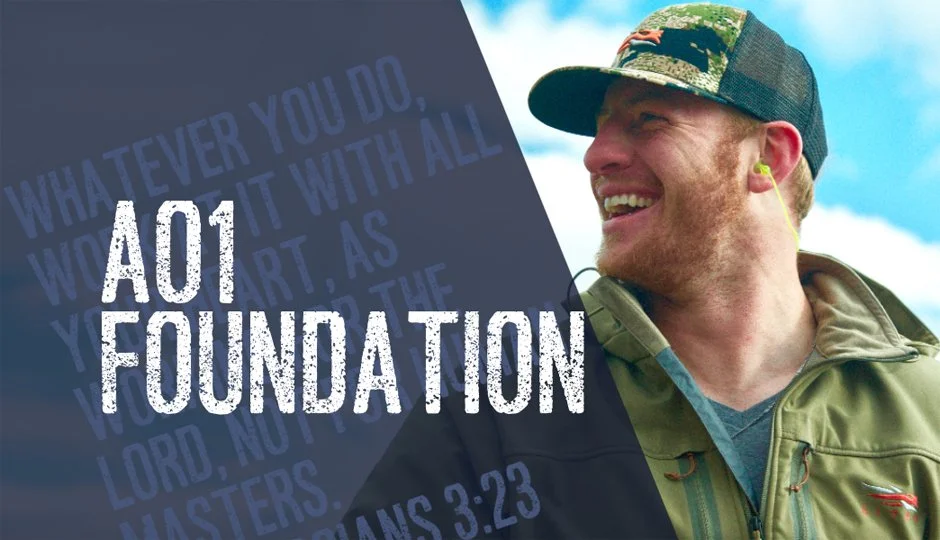
(Photo courtesy of Phillymag.com)
The Pro Bowl quarterback visited the country for the second time in as many years this offseason
After his second trip to Haiti in as many years, Carson Wentz is putting his own imprint on the country, and he's doing it by donating up to $500,000 for the construction of a sports complex that will bring ball fields, dormitories, lights and Internet access to hundreds of local residents.The Philadelphia Eagles' third-year quarterback first paid a visit to underprivileged areas of the Caribbean country in the 2017 offseason, when his AO1 Foundation announced a $500,000 commitment to a multipurpose complex. Now, having recently joined teammates Zach Ertz, Nate Sudfeld and Rashard Davis in starting work on the facility back in Haiti, Wentz has announced via Twitter that he'll match every dollar -- up to an additional $500,000 -- pledged to his foundation for the completion of the complex.
The sports complex is a product of Wentz's partnership with Mission of Hope Haiti, a nonprofit that "seeks to bring life transformation to every man, woman, and child in Haiti" through everything from orphan care and nutrition programs to leadership training and Christian church advancement.As reported by NBC Sports Philadelphia, it's set to feature "10 soccer fields, two indoor basketball courts, six outdoor basketball courts, (a) 5,000-shaded-seat track and field, dormitories for 200 people, locker rooms and a community park with Wi-Fi, a play space and lighting" -- most of which area residents do not currently have at their disposal.by: Cody Benjamin for CBSSports.com | May 1, 2018
U17 Football: Haiti Defeat Bermuda 4 – 1
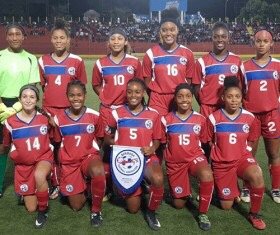
Bermuda’s Under 17 Women’s National — who have already secured a spot in the CONCACAF Finals in Nicaragua — matched up against the host Haiti for their final match of this round.Bermuda’s starting line-up was Za’khari Turner, Koa Goodchild, Delia Ebbin, Danni Watson, Zekiah Lewis, Trinae Edwards, Jadae Steede Hill, Emily Cabral, Nia Christopher, and Leilanni Nesbeth. Bermuda was up against the host in the Final, both teams already assured of a spot in the CONCACAF Women’s Under 17 Final in Nicaragua.In front of a large crowd, Haiti were able to win 4 – 1, with Bermuda’s lone goal coming from Nia Christopher in the first half.By Bernews | October 23, 2017
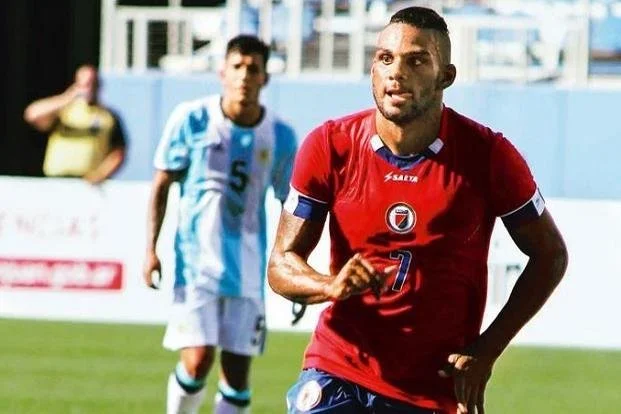
Under-17 World Cup: When Fabien Vorbe gave Haiti a reason to smile
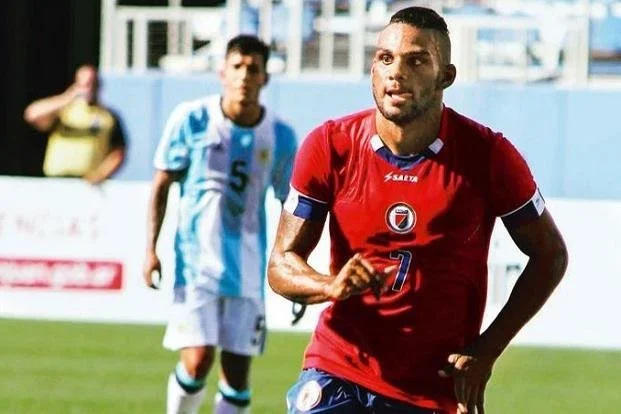
Turbulent times and Haiti have gone hand-in-hand over the years. From inclement weather to internal strife, it’s a way of life for the island nation, which just survived hurricane Irma.
Football then is a lifeline in these parts, giving Haitians a reason to celebrate each time the boys take to the field, whether in a local game or during competition. The distraction is both welcome and needed, bringing relief to a nation and its hopeful youngsters, who dream of alleviating their misery through the beautiful game. When it’s the World Cup, Haiti comes to a standstill.Fabien Vorbe, 27, who signed for I-League club Neroca FC this season, is all too familiar with it, given that he was instrumental in helping Haiti qualify for the Fifa Under-17 World Cup in 2007. While growing up in the capital, Port-au-Prince, it didn’t take him long to catch the football bug that had long infected the Vorbe family.
“In Haiti, if you say my last name, the first thing that comes to anyone’s mind is football. All my uncles and cousins play football, whether professionally or as a hobby. Even the women in our family are football addicts. My uncle (Philippe Vorbe) started it all when he played in Haiti’s only Fifa World Cup in 1974,” Vorbe says.Haiti had stunned competition in the region by clinching the CONCACAF Championship, an association football tournament, in 1973. It helped them qualify for the World Cup in (West) Germany the following year.
Philippe, was an integral part of the squad, which was drawn in a tough group alongside Italy, Argentina and Poland. The Haitians lost all three matches, but the tournament produced an epic moment in World Cup history when Emmanuel Sanon scored against the Italians in the opener. The assist was a perfect through ball in space from Philippe, as Sanon outran his marker, cut past a diving Dino Zoff and slotted the ball in an empty net.
It wasn’t like Haiti registered an upset win through that goal; Italy were 3-1 winners eventually. However, the striker had wrecked an Italian defence, which had not conceded in 12 games that stretched back to September 1972. In goal was the legendary Zoff, who had also been a part of a stubborn Juventus side that had gone without conceding a goal in the league for an incredible 903 minutes.The rest of the tournament was rather forgettable, but for Haiti and its people, just qualifying for a World Cup, clubbed with Sanon’s heroics, meant the world.“It is obvious why from such a young age I started playing the sport. In fact, my mother and godmother founded the team FC Shana just for the purpose of pushing my cousin and me into football and trying to make our dream a reality. It is today the biggest youth football academy in Haiti,” says Vorbe.Under the watchful eye of his mentors, Vorbe learnt the tricks of the trade. All that changed in 2004 when Haiti was rocked by a revolt that disrupted daily life in general, let alone football. One moment, 14-year-old Vorbe was at school studying, the next, they would hear of violence erupting in the streets and had to rush home as soon as possible.Even as the political situation improved, Haiti was constantly rocked by torrential rains, hurricanes and heavy flooding that brought devastation time and again between 2004 and 2007. At a time the nation needed relief, yet again, it was football that was the saviour, this time through the exploits of the Under-17 team.In Honduras in April 2007, Haiti got their qualifying campaign underway for the Under-17 World Cup that would be played in South Korea later that year. Haiti started with a draw against Honduras (1-1) and Mexico (0-0), followed by a win over El Salvador (3-0), with Vorbe scoring in both games. As Group A toppers, they booked their berth for the World Cup, sending Haiti, across the Caribbean Sea, into raptures.“We stunned the world by finishing toppers, even eliminating mighty Mexico. They were favourites, having lifted the trophy two years earlier in Peru,” Vorbe says.“We couldn’t really come to terms with what had happened until we landed in Haiti. There we realized the enormity of what we had just accomplished.”It was yet another moment in Haiti’s history that had given people hope, similar to what the 1974 team had done. The airport was packed with well-wishers when the team arrived, as well as when they left for Korea.
But there was more drama on hand even before the team flew out. Haiti had been drawn in a group featuring Japan, Nigeria and France.
This was about an old grudge that dated back to the 17th century, when France colonized Haiti and started an era of slavery and oppression in the nation’s history. St Dominique, as Haiti was called back then, eventually became one of their most profitable colonies. The Haitian Revolution began in 1791, and lasted for another 13 years after which the colonial rulers were defeated. Haiti earned its independence in 1804 and became the first independent black republic in the process.However, the French slave owners demanded compensation from independent Haiti. A huge sum was eventually paid, which remains a bone of contention to this day.“Ever since we saw the draw, we knew that if there was one game we had to make sure we played well, it was against France. Everyone in Haiti felt the same and made sure we knew it too. You can only imagine what the game represented for us,” Vorbe says.The 1-3 opening loss to Japan then didn’t matter, as all eyes were on the France fixture three days later. The French team comprised players such as Yann M’Vila and Mamadou Sakho, who went on to play for the senior team. As if to answer the prayers of an entire country, Haiti played a game to remember, holding the European giants to a 1-1 draw.“We actually should have won the game, having scored a late goal which was pulled back by the referee for no reason. It prompted Fifa officials to formally apologize to us at our hotel, after having reviewed the footage. We did our job though and left it all behind on the field. Our countrymen applauded it, so we were all happy at the end of the day,” he says.A 1-4 loss to Nigeria, who went on to win the tournament, brought an end to Haiti’s campaign.“But at the end of the day, we left with our heads held up high. I can never forget the moment we stepped out on the pitch against France, and sang our national anthem, soaking it all in,” he says.
The 2007 edition is the only time Haiti has appeared at the Under-17 World Cup. It gave Vorbe the experience of playing at the top level and boosted his confidence in the years to come.
After the tournament, he joined the reserve squad of French club Bordeaux, then coached by World Cup and Euro winner Laurent Blanc. He went on to ply his trade in the US, Haiti and last played in Peru.
On the advice of old buddy, Sony Norde, a Haitian who turns out for Mohun Bagan, Vorbe made his way to India and will play for Neroca this season, who qualified for the I-League after winning the second division last year.
Back home, Vorbe supports FC Shana in every way that he can, as they continue to churn out more Vorbes, who give the nation of Haiti a reason to smile every once in a while.By Bill Cooke |
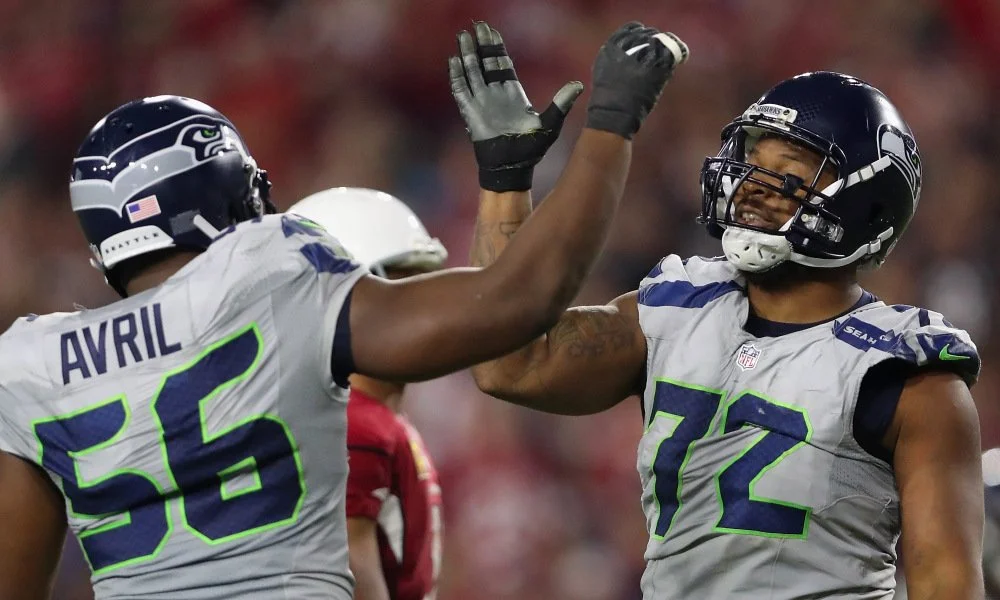
Cliff Avril, Michael Bennett and Marshawn Lynch give back in Haiti
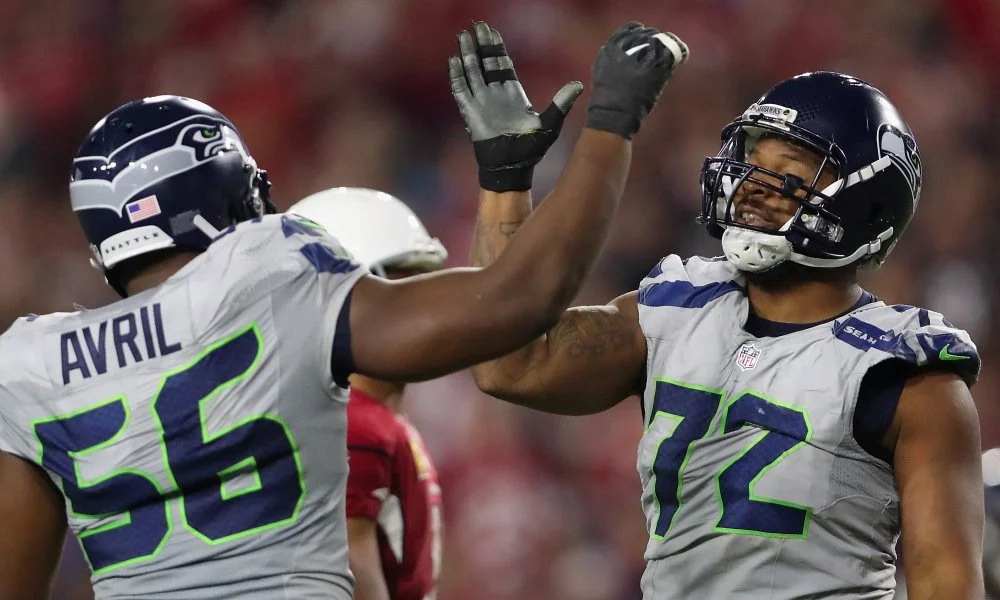
Seattle Seahawks defensive end Cliff Avril is carrying on a tradition he began last season.Avril, along with defensive end Michael Bennett and retired running back Marshawn Lynch, are in Haiti this week building schools for at-risk youth, hosting a camp and creating homes to endure natural disasters.Following the catastrophe of Hurricane Matthew in 2016, Avril pledged to build a home in Haiti for every sack he recorded. He tallied 11.5 with the team last year.This is Avril’s second trip to Haiti with his Seahawks teammates. Avril’s family emigrated from Haiti in the 1980s and prior to last year’s visit, it had been over a decade since Avril returned to the country.He has been active on both Twitter and Instagram detailing his travels for #AvrilHaiti2017, including one today where he and teammate Bennett visited God’s Plan Orphanage.Bennett was one of the Seahawks starters who was noted as absent during yesterday’s offseason program workouts. His whereabouts are now known.
By: Lindsey Wisniewski | April 19, 2017