
In a city cut off from the world, guns and drugs keep flowing
Port-au-PrinceCNN —
On the rare days that the hills surrounding Port-au-Prince fall silent, people notice.
“If you can’t hear shooting somewhere, the gangs are probably running low on ammunition,” a police source in the Haitian capital told CNN. “But when there’s a lot of shooting, they’ve definitely received a fresh shipment.”
For over two months, Port-au-Prince has been cut off from the world, its international seaport and airport shuttered following an explosion of gang attacks in late February. All major roads are blocked by gang checkpoints. For most people living here, there is no way out – and no way to bring in desperately needed food and medicine.
Encircling the Caribbean nation is another closed perimeter, this one created by Haiti’s neighbors. The Dominican Republic has sealed the island’s shared border and airspace. The Bahamas has launched a naval blockade to keep Haitians from fleeing the crisis by boat; the UK has sent a warship to ward off anyone seeking refuge in Turks and Caicos, a British overseas territory; and the US state of Florida has increased marine and aviation patrols.
And yet guns, bullets and drugs keep pouring in, crossing international waters and airspace to reach the embattled country – most of the firepower originating from the US.
“Haiti doesn’t produce guns and ammunition, yet the gang members don’t seem to have any trouble accessing those things,” says Pierre Esperance, executive director of Haiti’s National Human Rights Defense Network.
Since the start of the year, thousands of people have been killed in gang-related violence and hundreds kidnapped, including at least 21 children, UN figures show. Stopping the flow of guns to Haiti would likely have an immediate impact on the bloodshed, according to police and human rights experts.
“We have to cut the gangs’ weapons supply lines. This is absolutely the most important thing now,” the police source told CNN. “Because when they don’t have bullets, their machine guns become nothing more than clubs.”
And as a Kenyan-led multinational security support force (MSS) prepares to deploy to Haiti, starving the gangs of ammunition should be a top priority for the US, says William O’Neill, the UN Designated Expert of the High Commissioner on the situation of Human Rights in Haiti.
“All of these countries that are contributing their young men and women (to the MSS), how can we make it safer for them to do their job? One way the US could help immediately and directly would be to really seriously crack down on the flow of illegal weapons,” he said.
“The gangs have literally nothing else; their only currency is intimidation and fear.”
Defying a global arms embargo
Eighteen months ago, the UN Security Council imposed an arms embargo on Haiti, which bans the export of weapons to anyone in the country other than the government. The US has also taken independent steps to crack down on illicit exports, appointing a regional coordinator for firearms prosecution in the Caribbean and a special unit to investigate transnational crimes in Haiti.
Yet the guns keep coming. In January, the UN Office on Drugs and Crime (UNODC) warned that Haiti-bound firearms and ammunition were being “routinely incorporated into outbound shipments at warehouses near seaports and airports” in Florida, citing interviews with US customs officials.
The following month, Haiti’s gangs put their weapons to devastating use, taking the country hostage in an explosion of coordinated violence that forced then-Prime Minister Ariel Henry to resign, and led to the creation of a transitional governing council that has so far been mired in disagreement.
“The planes have not stopped flying. There continue to be exchanges of both ammunition and arms across the border,” Sylvie Bertrand, the UNODC regional representative, told CNN recently, urging the global community to enforce the arms embargo.
But amid today’s chaos, experts say it is likely becoming easier than ever for the gangs to resupply, as they now control major routes and infrastructure to bypass official controls.
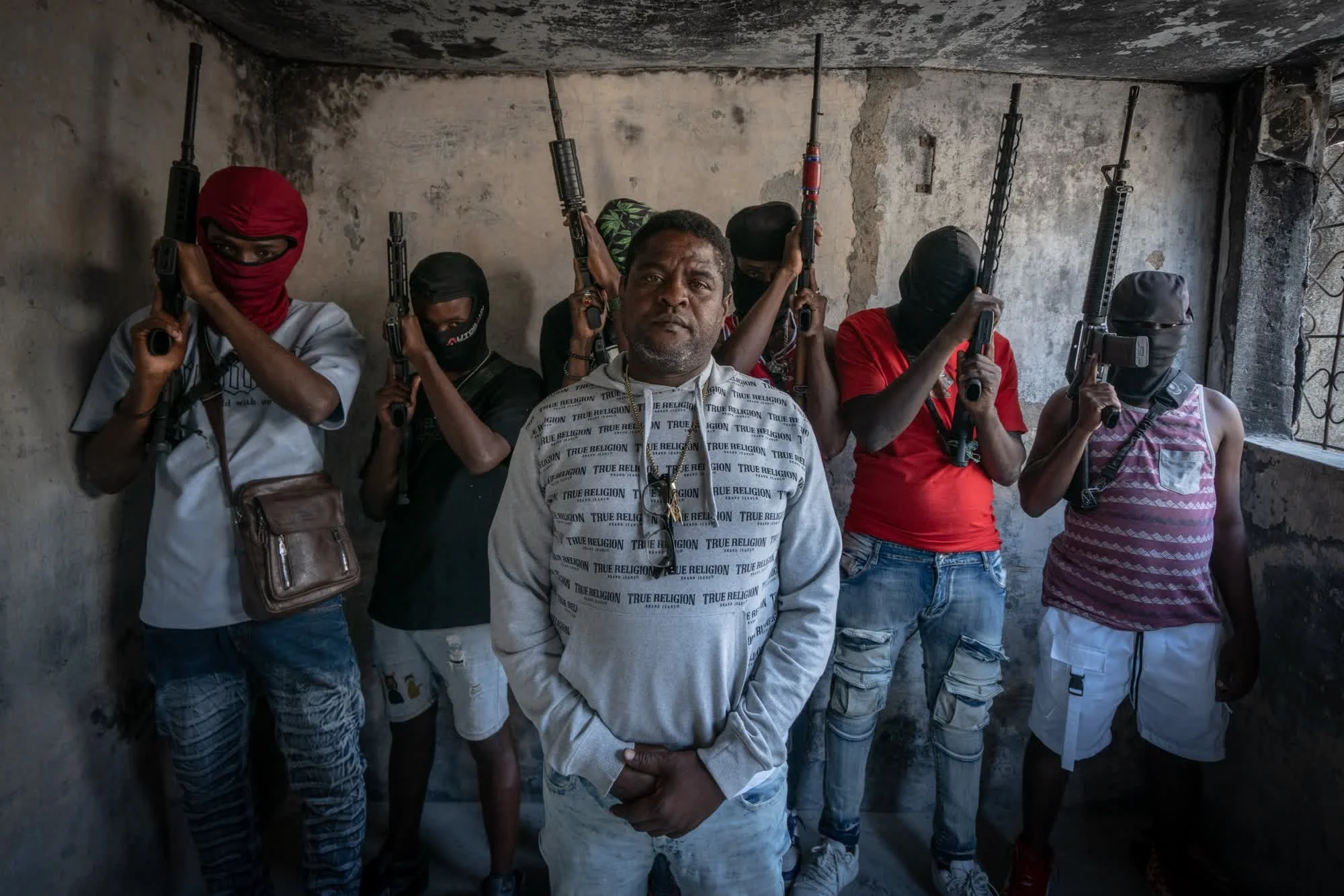
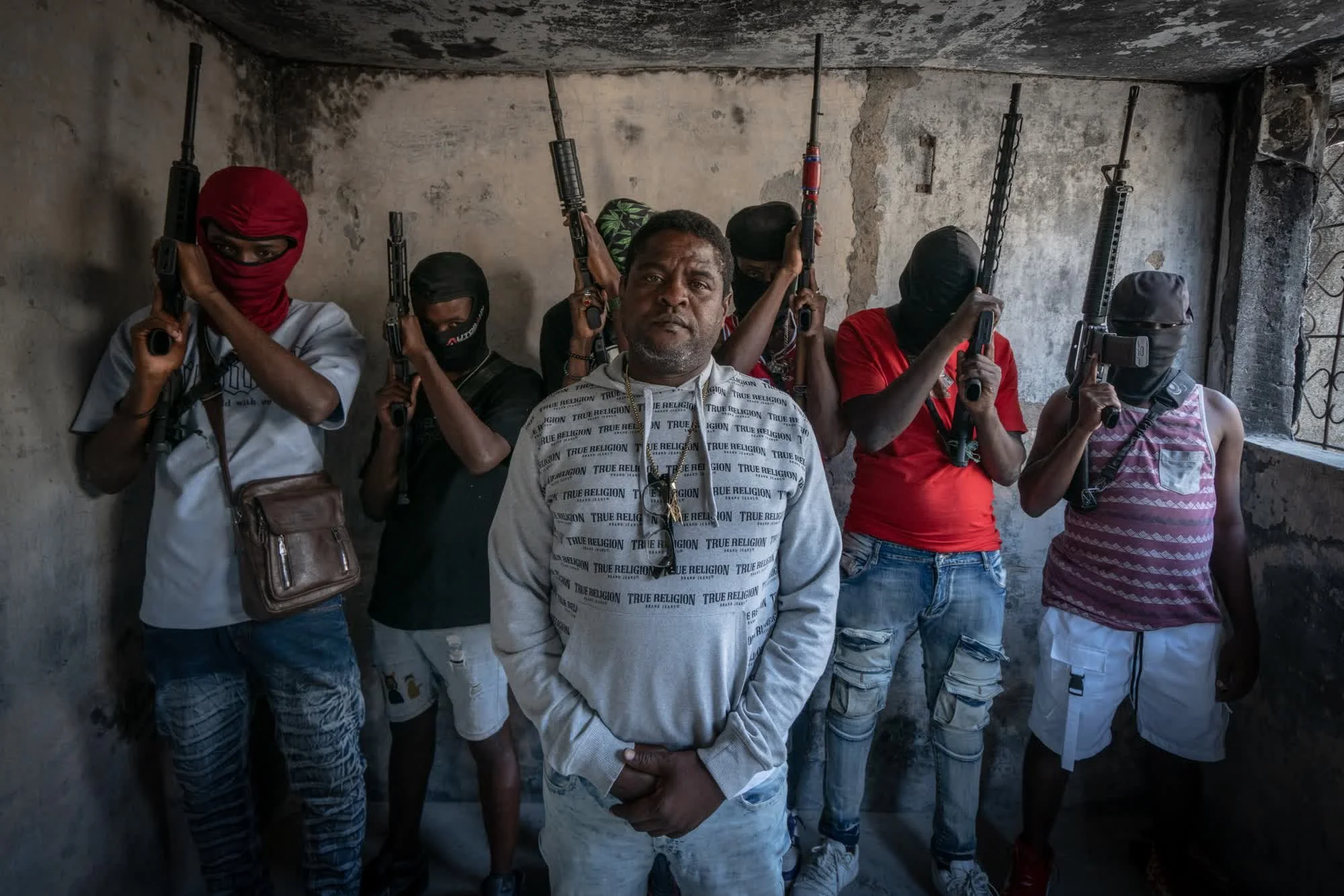
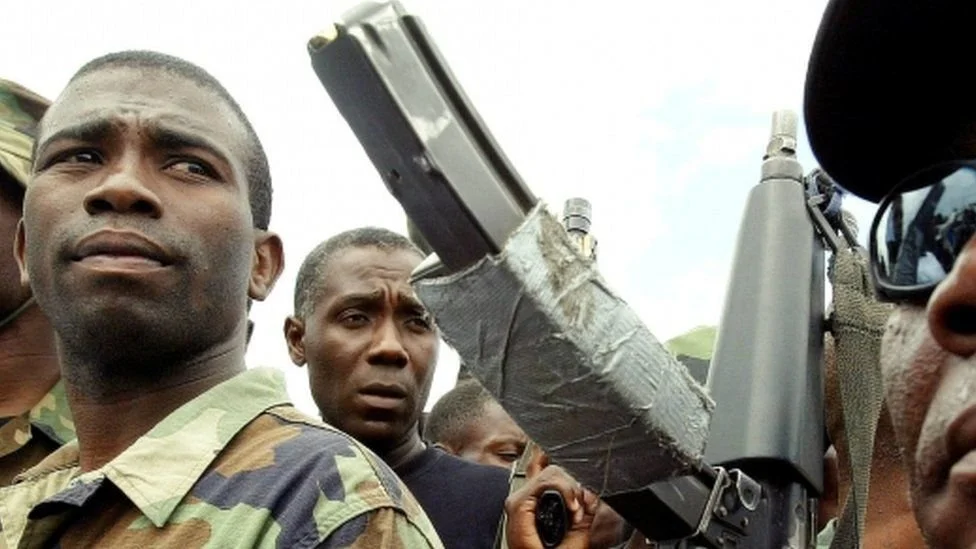
“There are always weapons coming in. There are always bullets,” Vitel’homme Innocent, leader of the Kraze Baryé gang, told CNN in April, his masked entourage bristling with a globally manufactured assortment of firepower.
Weapons experts who later analyzed some of CNN’s images from the encounter said they could spot weapons and accessory parts originating from Israel, Turkey, the Czech Republic, probably Brazil – and, overwhelmingly, from the United States.
An ‘iron river’ from the United States
The guns Haiti’s gangs wield are a mix of stolen and smuggled, and the United States is by far the main source of the latter, according to UN experts.
From 2020 to 2022, over 80% of the weapons seized in Haiti and submitted to US authorities for tracing were manufactured in or imported from the United States, UNODC reported in January, citing the most-recent available tracing data. They are typically purchased in the US from federally licensed retail outlets, gun shows or pawn shops through “straw man” intermediaries, the agency also found.
It’s all part of a phenomenon that experts in Latin America and the Caribbean call the “iron river” – a flood of guns bought in US states with lax gun laws, and then shipped across the region to criminal groups. The Mexican government, which has been outspoken about the issue, currently has a $10 billion lawsuit pending against several US gun manufacturers whose products, it says, arm powerful cartels.
A senior agent at the US Bureau of Alcohol, Tobacco, Firearms and Explosives (ATF), which investigates the diversion of lawfully purchased guns to illegal ends, told CNN that Miami is a significant source of weapons sent to Haiti, which have historically been trafficked in small freighters by family networks.
“Those are difficult to enforce because they’re not your typical commercial freighter… it’s relatively easy to conceal a small number of firearms in those shipments,” he said. Texas, Louisiana, and Georgia are also sources of weapons trafficked to the Caribbean, where the ATF has a specialized gun intelligence unit to track and stop such flows, he added.
Asked whether the US was doing enough, he emphasized that combatting gun trafficking was a top priority. “It is a very high priority of the United States government and ATF’s role in that, to stem the flow of illegal firearms, whether domestic or international, and particularly places like Haiti where the rule of law is under extreme threat.”
In January, Joly Germine – leader of the gang 400 Mawozo – pleaded guilty to US charges over a gunrunning scheme that saw dozens of rifles, handguns and a shotgun purchased legally in Florida under false pretenses, and smuggled into Haiti.
Land of mountains
From above, traces of Haiti’s extensive smuggling networks come into focus: the scars of a clandestine airstrip in its sun-bleached Central Plateau, a dock jutting from gang-held territory into the still waters of the Gulf of Gonave.
Sea and air are the main means of transport for the guns and the drugs trans-shipments that fund more weapons purchases, experts say. And while Haitian authorities have seen some successes in seizing illicit cargo over the years, the dramatic peaks and plains of this “land of mountains” add difficulty for an already understaffed police force and customs agency.
Haiti’s secluded and sparsely populated rural areas are ideal for landings and take-offs by small planes aiming to avoid observation. There are at least 11 known informal or clandestine airstrips in the country, according to UNODC, many originally built for humanitarian purposes following the country’s devastating 2010 earthquake.
“Here, you don’t have anything around you. So, you just go, probably in the middle of the night, with a couple vehicles parked on each side of the improvised runway so the pilot can identify the area. They land, drop off or pick up stuff, and take off again all outside of Haitian jurisdiction,” a security expert in Port-au-Prince told CNN.
The sea is the preferred option for arms smugglers given the weight of their cargo. Haiti’s roughly horseshoe shape offers over 1,100 miles of coastline, a challenging distance to comprehensively patrol for Haiti’s coast guard.
Haiti’s south in particular has emerged as a strategic location for smugglers, the UNODC reported in April, offering entry points for cocaine from South America, cannabis from Jamaica and firearms from across the region.
“One popular method of moving illegal products involves “banana boats,” go-fast vessels that arrive at night, beach on coastal banana plantations, and are subsequently destroyed after unloading their cargo,” the UNODC report details.
Guns and ammunition that arrive in the south are frequently sent onward to Port-au-Prince via the gang-controlled Route National 3, it also said, identifying the Mariani gang, Grand Ravine gang, and 5 Segond gang as “major players in the organization and distribution of arms, munitions and drugs.”
In 2022, 5 Segond group attacked Haiti’s largest flour mill. It would have been an incongruous target if not for its location, positioned right next to Port-au-Prince Bay with a large jetty to accept deliveries. Just about a mile inland lies a major highway, and in between the two is a massive warehouse; a perfect distribution set-up for any import entrepreneur.
Today, the entire area is controlled by 5 Segond, with security sources telling CNN that they believe the mill has been taken over and no longer functions.
“Izo has the jetty, so he has access to the sea. And boats keep coming in and out of that area, which again is completely controlled by his gang… and is kept under tight control, with barricades in the surroundings,” the same security expert said, referring to 5 Segond’s rapper frontman Andre Johnson, who often posts videos of gang members flashing guns and paramilitary gear set to music on social media.
Containers and corruption
Contraband arriving via secretive small boats and planes is just part of the picture. Last month, Haitian National Police and Customs agents seized more than two dozen firearms, including 12 assault rifles, and nearly a thousand cartridges from a shipping container that had arrived in Haiti’s northern city of Cap Haitien.
Drugs and arms smuggling has a long history in Haiti, much of it facilitated through official channels by government agents and even, in one 2022 case, by a rogue Episcopal church staffer who allegedly hid guns and thousands of rounds in a shipping container reportedly labeled as church donations, before it was seized by customs agents in Port-au-Prince.
Customs officials trying to do their job on the front lines in Haiti can face threats to their lives. In 2018, local press reported that several customs agents at the Malpasse border crossing between the Dominican Republic and Haiti were burned alive after an argument erupted in the course of a cargo inspection.
Allegations of smuggling and gang affiliations have also been made at the highest levels of Haiti’s government. Four former Haitian senators have been sanctioned by the US for alleged drug trafficking, as have multiple past presidents and prime ministers of Haiti for allegedly financing the country’s gangs. They’re part of what gang leader Innocent refers to as the country’s “oligarchs,” who historically created and armed local gangs to become their enforcers-for-hire as they profited from white-collar crime schemes.
“As a Haitian human rights defender, I can’t say that all the responsibility for these guns is on the US – I think it’s the Haitian government too. They need to regain control of the port, they need to control customs. The problem is corruption,” says Esperance, the human rights advocate.
That’s why, he says, the planned deployment of an international police force to restore calm to Haiti is destined to fail unless the US and global community also commit to fighting corruption, building frameworks for good governance, and closing legal loopholes abused by the country’s elite.
“Now, of course, the government is completely destabilized, it’s easy for the gangs to smuggle weapons themselves. But how did they begin? Just two years ago, smuggling was going through official channels, and it happened that way because everyone was corrupt,” Esperance said.
Bertrand, the UNODC representative, also emphasized the importance of building up Haiti’s institutions as its new government takes shape. Her agency is working to strengthen the country’s customs authority and coast guard, for example, including providing much-needed equipment from protective gear to cargo scanners.
“It’s time for people in Haiti to live peacefully – for their kids to go back to school, for them to be able to eat every day.” And that means, she says, ensuring that “national authorities are well-trained, well-equipped, and ready to face and curb down the level of violence.”

A portrait of Haitians trying to survive without a government
CAP-HAÏTIEN, Haiti — Most of northern Haiti has escaped the violence and anarchy that has engulfed much of the country's capital, Port-au-Prince.
But ever since President Jovenel Moïse was assassinated in 2021, this region has felt the slow crumbling of the Haitian state. These days, government offices are mostly closed and government services, including electricity, don't exist. It has left Haitians to fend for themselves.
These are some of their stories.
Moncher Metina
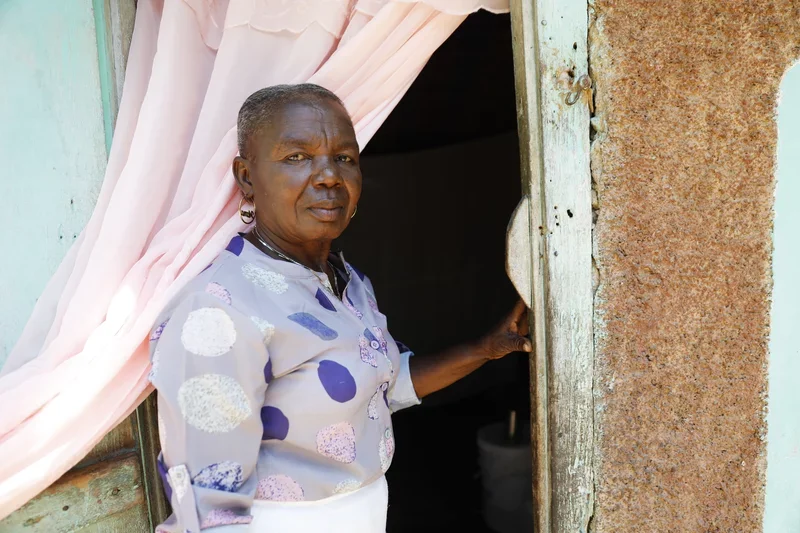
Moncher Metina has spent her whole 65 years of life in a rural part of Limonade in northern Haiti.
She remembers when she was a kid, she would swim in the rivers that have now dried up. She remembers this was fertile land. In truth, she says, back in the day, the people in Limonade didn't even think about the government. They always had sufficient rain, always sufficient food. This place was full of lush rice fields.
But over the past decade or so, the climate has changed and the rains have become unpredictable.
"We've missed the harvest for pistachios, beans and yam," she says.
When she was young, they produced everything they ate right here. But these days, she says, they have to eat imported rice. In Haiti, rice is a staple, and about 80% of it is now imported from the United States.

Moncher Metina walks in her hometown of Limonade, Haiti, on March 17, 2024.
Octavio Jones for NPR

Louisiana Francilo (left) and Wilky Deranci pump water from a public well in Limonade, Haiti, on March 17, 2024.
Octavio Jones for NPR
Metina shakes her head. The only thing they need to change that is a few wells and a few pumps from the government, and this land could be lush again.
"But we don't have a government to do these kind of things," she says. "Even if there was a local authority, they don't do anything."
She points to the dirt roads, full of potholes, some parts of them washed out by water long ago. "The government did nothing," she says. "They do nothing for us."
Metina walks across a field. She looks small in the middle of its vastness. This is her land, but planting anything here would be risky.
Her neighbor, Antoine Jean Bellami, says he just planted 1,000 plantain trees, but they're all starting to yellow because it has not yet rained.
"When people work here, they realize it's worthless," he says. "And facing that discouragement, young people just up and leave. They go to the Dominican Republic to get humiliated."
Metina's own son left for neighboring Dominican Republic about a year ago, and that was the last time she heard from him. It's the story of this region. Metina's smile fades from her face. She lowers her gaze. She lowers her voice.
"I just hope that he's around," she says. "I would have known if he was dead. If he had died, I would have felt it."
Emmanuel Desir
Cables of all kinds drape across Emmanuel Desir's living room.
"When people come in here, they say, 'Wow, you're an engineer!' and I say, 'No, I am Haitian,'" he says laughing.
The 41-year-old is actually an electrician. But here in Cap-Haïtien, electricians have become lifesavers. Cap-Haïtien is Haiti's second-largest city, but for more than two years now, it has been living off the grid. Electricity was always patchy, but following the 2021 assassination of President Moïse the state electricity company collapsed and stopped providing power.

Emmanuel Desir, who works as an electrician, poses for a photo at his home on the outskirts of Limonade, Haiti, on March 17, 2024.
Octavio Jones for NPR
Desir says, now, he spends every day installing solar panels. He installs little systems that run about $150 and can charge a cellphone, a laptop and run a few lights. And he also installs systems that cost hundreds of thousands of dollars. They harness the power of the sun to run refrigerators and air conditioners.
There are some charity groups helping to install solar panels in Cap-Haïtien, but most of the work is done by private companies like Desir's.
A big problem, he says, is that $150 is a lot of money in Haiti, a country where more than 60% of the population lives with less than $4 a day, according to a World Bank estimate.

A charging station for cellphones and laptop devices is seen at a bar in downtown Cap-Haïtien, Haiti, on March 17, 2024.
Octavio Jones for NPR

Rod Augustin measures dimensions for solar installation at a bar in Limonade, Haiti, on March 17, 2024.
Octavio Jones for NPR
On a practical level, that means if you don't have a solar panel, you can't charge the essentials, including a cellphone. So, across Cap-Haïtien there are charging stations for phones and laptops. Desir set up a charging center for his neighbors at his home. The lone street light in the neighborhood takes power from his solar inverter.
"Everyone always says, electricity is the base of development; it's the first stage of development," he says.
He's proud that he is helping Haitians power their homes. But sometimes, he says, Haitians end up wasting a day simply trying to charge a cellphone.
Commander Minis Derius
Just along Haiti's northern coast, in Ouanaminthe, Haitians have decided to take matters into their own hands.
About a year ago, private citizens decided to move forward with a long-planned canal that would divert some water from a shared river with the Dominican Republic to a canal designed to irrigate vast farmlands in northern Haiti.

The canal near completion in the border city of Ouanaminthe, Haiti. The Dominican Republic protested over the project, which would divert water from a river shared by the neighboring countries.
Octavio Jones for NPR
Thousands of Haitians volunteered their time to complete the canal, and members of an armed environmental police force decided to defect from the government to patrol the project.
Minis Derius, a member of the Brigade for the Security of Protected Areas, or B-SAP, carries an assault rifle as he walks along the canal's concrete retention walls.
"The government didn't do anything," he says. "If this was being done by the Haitian state, it probably would have never gotten done."

Construction workers are in finishing the canal project in the border city of Ouanaminthe, Haiti. Once completed, the nearby farming community hopes to benefit from the canal's water, aiding in the cultivation and yield of their crops.
Octavio Jones for NPR

The canal near completion in the border city of Ouanaminthe, Haiti, where construction workers are diligently working to finish the project. Once completed, the nearby farming community will benefit from the canal's water, aiding in the cultivation and yield of their crops.
Octavio Jones for NPR
This project has been controversial. The Dominican Republic shut down its border in protest, and then Haiti's de facto prime minister, Ariel Henry, ordered the environmental police force to leave the construction site. Henry fired their leader, but the B-SAP simply ignored him and the construction kept moving forward.
"We will stand with the people," Derius says. "Although we are a part of the state — we're a legal body, a legal force, we come from the government — we cannot abandon the people."
To Derius, this project speaks to two realities in Haiti: first, of a dysfunctional government that can't seem to provide the basics for its people; and second, how the Haitian people always find ways to survive despite their government.
He says that in some ways, Haitians have found hope in projects like the canal.
"It shows that if we put our heads together, we unite, there's a lot we can do," Derius says.
Haiti transition council to be installed on Thursday, says PM office
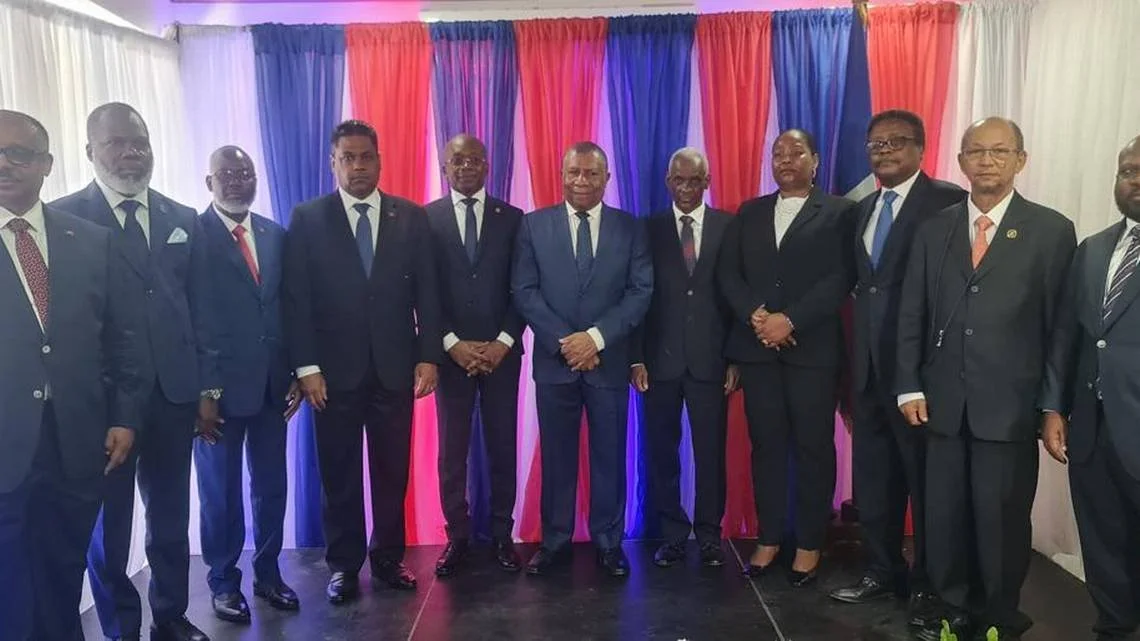
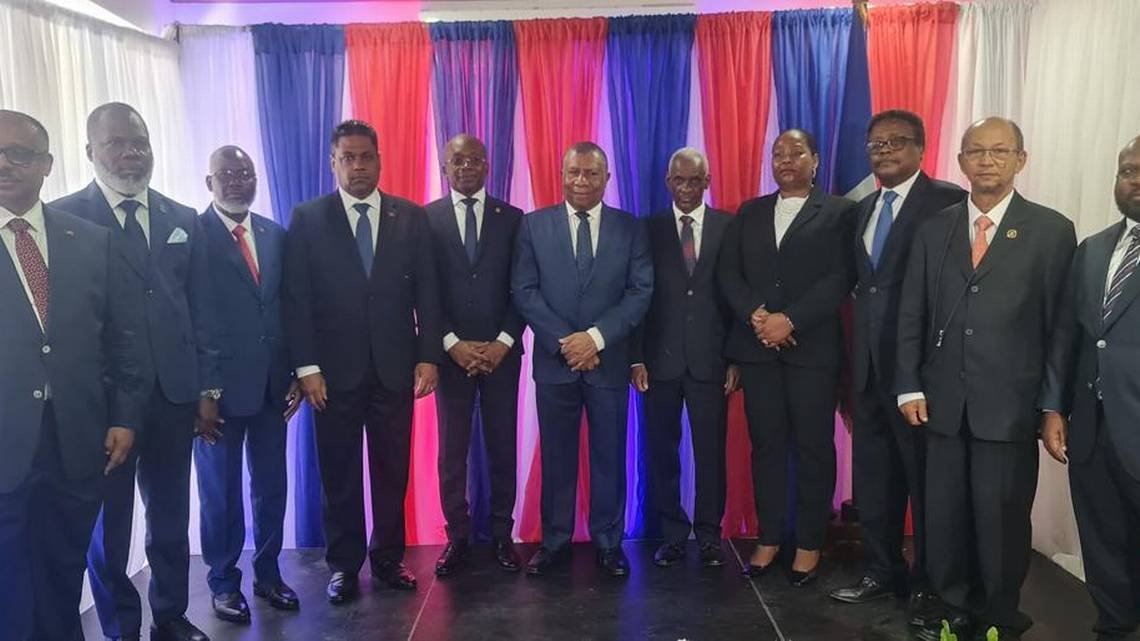
PORT-AU-PRINCE, April 24 (Reuters) - A ceremony to install a stalled presidential transition council in Haiti will take place Thursday morning on the outskirts of the capital Port-au-Prince, the office of outgoing Prime Minister Ariel Henry announced in a statement on Wednesday.
The statement noted that the ceremony will be hosted at the prime minister's official office, known as Villa d'Accueil, not the downtown National Palace, which has come under repeated fire from armed gangs in recent days.
Earlier on Wednesday, powerful gang leader Jimmy "Barbeque" Cherizier insisted that talks over Haiti's political future must include the gangs.
The installation of the nine-member presidential transition council that will take over from Henry has been delayed for weeks amid intense behind-the-scenes jockeying for control among various political factions.
The establishment of the council is seen as a key first step toward ending the chaos that has engulfed the Caribbean nation, largely blamed on rival gangs fighting over turf, especially in the capital, as well as mostly absent state institutions.
The council is expected to name an interim prime minister and help set up a government that will eventually organize national elections.

Haiti’s prime minister resigns as council sworn in to lead political transition in violence-ravaged nation
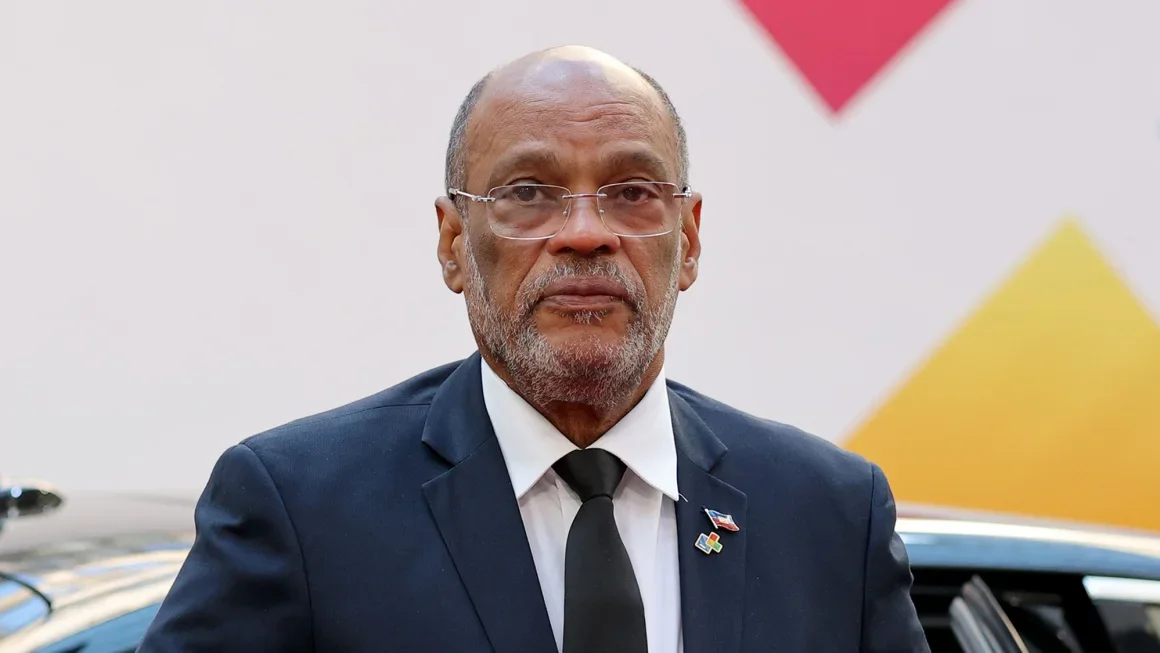
Haiti’s Prime Minister Ariel Henry announced his resignation on Thursday, handing power over to a transitional council that will seek to gain control of the violence-ravaged nation.
Henry wrote in his resignation letter dated Wednesday that, “given the current state of affairs,” the time was right for him to step down. “We have served the nation in difficult times. I thank everyone who had the courage to face such challenges with me,” he said.
Haiti has been overrun by chaos and gang violence in recent weeks, with criminal groups attacking government structures and social order on the brink of collapse.
The Caribbean nation’s finance minister Michael Patrick Boisvert has been appointed as interim prime minister until a new government is formed, according to an X post from Henry’s office on Thursday.
“Haiti, our country, is at a crossroads in the search for solutions to overcome this multidimensional political crisis, that has lasted for so long, and the consequences of which are detrimental to the population, to property, and both public and private infrastructures,” Boisvert said at the swearing-in ceremony at the Prime Minister’s office, Villa d’Accueil.
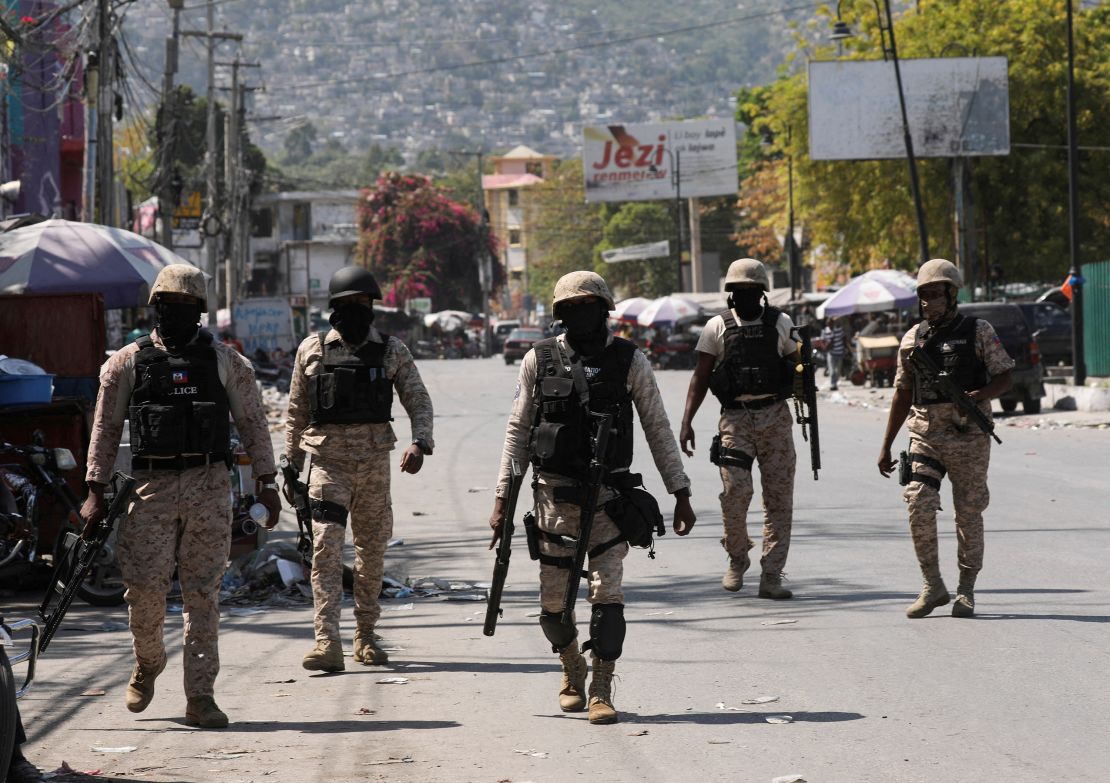
Police patrolling a street in Port-au-Prince in March. The city has been essentially cut off from the outside world, amid months of gang violence and a worsening humanitarian crisis. Ralph Tedy Ero/Reuters/File
A transitional council, composed of seven voting members and two non-voting observers, has been tasked with the responsibility of naming a new prime minister and cabinet. The committee will exercise certain presidential powers until a new president-elect is inaugurated, which must take place no later than February 7, 2026.
Henry announced in March his plans to step down once a decision on the country’s future leadership was made, and the transitional council was set up soon after.
The Caribbean Community and Common Market (CARICOM) welcomed the council’s formation in a statement earlier this month, hoping it would mark “a new beginning for Haiti.”
The United Nations Secretary General’s spokesperson Stephane Dujarric also welcomed the news and called for the swift deployment of a multinational security mission to support Haiti’s police.
Since February, attacks by an insurgent alliance of gangs in the capital Port-au-Prince mean the city’s international airport and seaport have ceased to function, breaking vital supply lines of food and aid and triggering an exodus of evacuation flights for foreign nationals.
With the city virtually cut off from the outside world, hospitals have been vandalized while warehouses and containers storing food and essential supplies have been broken into as the social fabric frays.
According to the UN, nearly 5 million people in Haiti are suffering from acute food insecurity – defined as when a person’s inability to consume adequate food poses immediate danger to their lives or livelihoods.
“This is the worst humanitarian crisis in Haiti since the 2010 earthquake. I don’t think that’s sunk in,” Jean-Martin Bauer, the World Food Programme’s country director for Haiti, told CNN last month.
The UN human rights office meanwhile described sexual violence in Haiti as “severely underreported and largely unpunished,” in a harrowing report that documented cases of rape and forced sexual relations with gang members, as well surging levels of gang violence in the country.
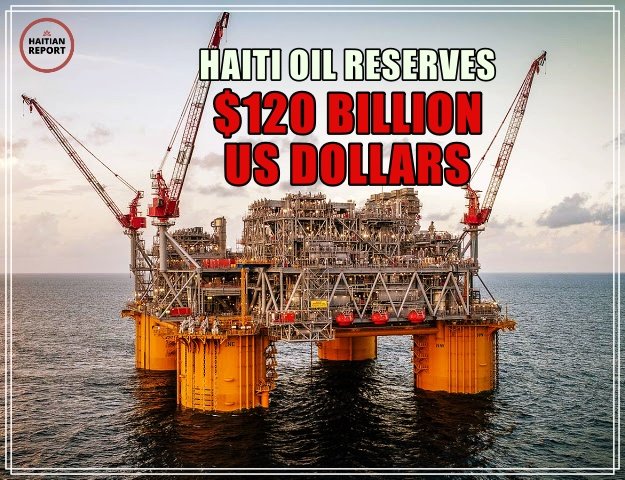
Haiti's oil reserves are now worth $120 billion US dollars
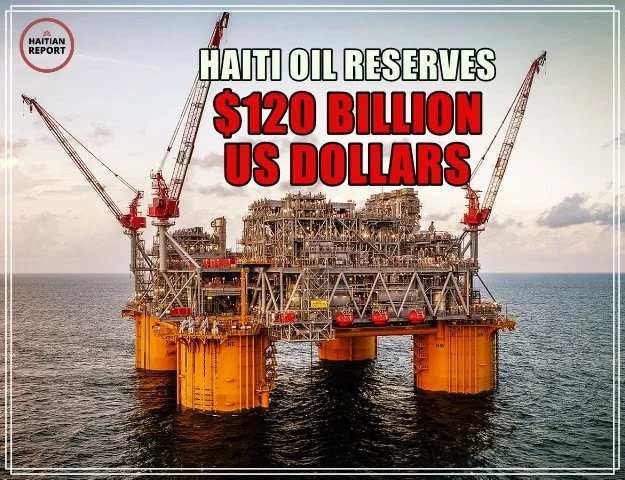
They say “Haiti is the poorest nation in the western hemisphere.” Is that true? No. That is a boatload of BS. Here is why. Haitians are poor, but the land of Haiti is rich with natural resources.
Folks here is the truth Haiti’s oil reserves are now worth $120 billion US dollars. That means the country Haiti is among the one percent wealthiest nations on earth. Mind blown...!
Let me assure you that no one wants to talk about this. But I have to confess, when I first heard about the discovery of oil in Haiti, I was quite skeptical. After all, why haven’t we heard about this before? I ask myself. Why Haitians are so poor?
Friends, let’s get to the truth.
Haiti oil reserves and the big multinational oil companies
Well, the reality is there are still many untapped oil reserves in many areas around the world, and Haiti is one of them. According to a report from radio Metropole, scientists Daniel and Ginette Mathurin say that Haiti’s oil reserves are larger than those of Venezuela. In fact, Daniel Mathurin says Haiti’s oil reserves are so much larger than they are not even worth comparing to others.
“An Olympic pool size compared to a glass of water" that is to compare Haiti's oil to that of Venezuela. It's just that important.
That is an amazing statement considering the fact that Venezuela is one of the world’s major oil producers. But Daniel and Ginette Mathurin are not the only ones making these claims about oil in Haiti.
In a paper dated March 27, 2004, Dr. Georges Michel detailed the history of oil discoveries in Haiti and explained why they have not been exploited yet. According to Michel, the big oil companies know about the massive reserves of oil in Haiti but in the 50s and 60s, there was almost too much oil to go around so they decided that those reserves were not needed at the time and that they would be kept in reserve until later.
You see, the attitude of these big multinational oil companies was, “we shall keep the Haitian deposits and other such layers of deposits in reserve for the 21st century until the Middle Eastern jackpot oil fields are completely depleted.”
In fact, it was apparently known as far back as 1908 that Haiti has substantial reserves of oil. But those poor people have been kept in abject poverty all this time when they could have been benefiting from all of this oil.
Haiti’s massive gold deposit and other natural resources
Not only we have oil, but Haiti also possesses a great deal of gold as well.
A United Nations study in the 70s indicated Haiti could be littered with gold and copper deposits. However, planned political violence and recurring coup d’état have kept the oil in Haiti from being exploited and the gold from being mined.
So how much gold does Haiti have? Well, the former president of Dominican Petroleum Refinery recently said that Haiti has vast untapped reserves of gold and iridium (a little known and rare mineral that is vital for the construction of spacecraft) and that these resources should be used to pay off the Haitian foreign fake debt. I don’t think he is alone in this assessment.
Scientific evidence of Haiti’s oil & gold deposit
Back in 2007, a geologist with 27 years of experience hunting for gold was asked what he thought the chances of discovering huge amounts of gold in Haiti were. This is how he responded….
“I don’t think there’s a question of whether there’s a good deposit here. It’s a question of whether we can develop it here in Haiti.”
In fact, analysts are predicting “a stampede into Haiti” if the existence of large gold deposits there can be confirmed.
So the so-called poorest nation in the western hemisphere turns out to be just brimming with oil and gold…. Do you think that those resources will be used to rebuild Haiti and to give Haitian a truly bright future?
Don’t count on it because Washington considers Haiti’s natural resources as “strategic reserves” of the United States.
You see, for decades Haiti has been viewed by many as being essentially “owned” by the United States. The U.S. government has done little to actually help the nation of Haiti get on the right path, but they maintain a huge presence there. In fact, the U.S. fifth-largest embassy is in Haiti.
What will happen to Haiti's oil and gold?
Now the question we need to ask is when will all of the gold and oil be used to help the people of Haiti, or will the gold and oil be exploited by ruthless foreigners and continue to keep us in abject poverty?
The price of oil in Haiti is expensive. Let’s tap into those massive reserves and deposits right now.

The men fighting gang leader Barbecue for power in Haiti
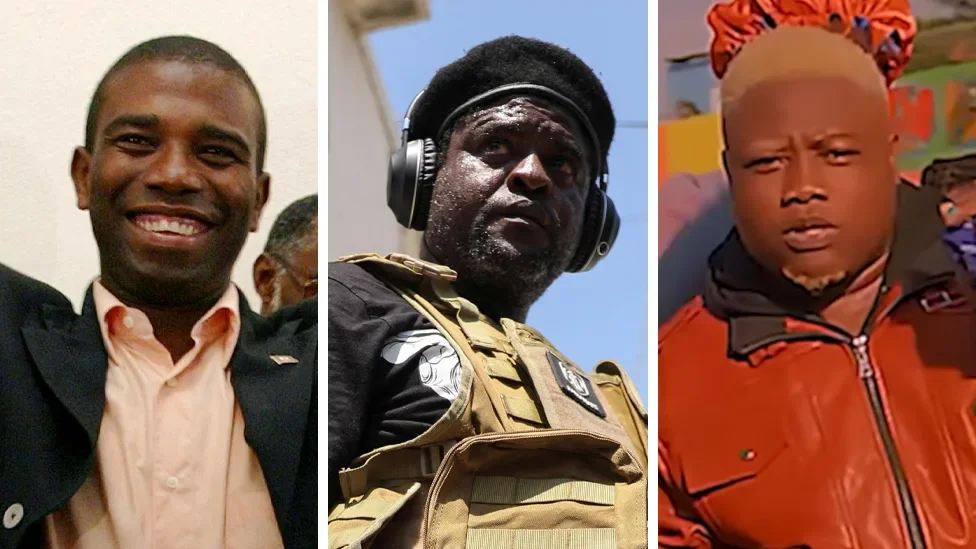
An ex-cop who likes to give news conferences while wielding a high-powered rifle and a young criminal as fond of starring in rap videos as he is of trafficking arms and drugs.
These are just two of the gang leaders blamed for the surge in violence which has engulfed the Haitian capital, Port-au-Prince, and led to the resignation of Haiti's Prime Minister Ariel Henry.
Add a former rebel fresh out of jail in the US who plans on becoming president and you get an explosive mix.
With the country in limbo awaiting the creation of a transition government, we take a closer look at some of those jostling for power in Haiti.
Gang leader Jimmy 'Barbecue' Chérizier
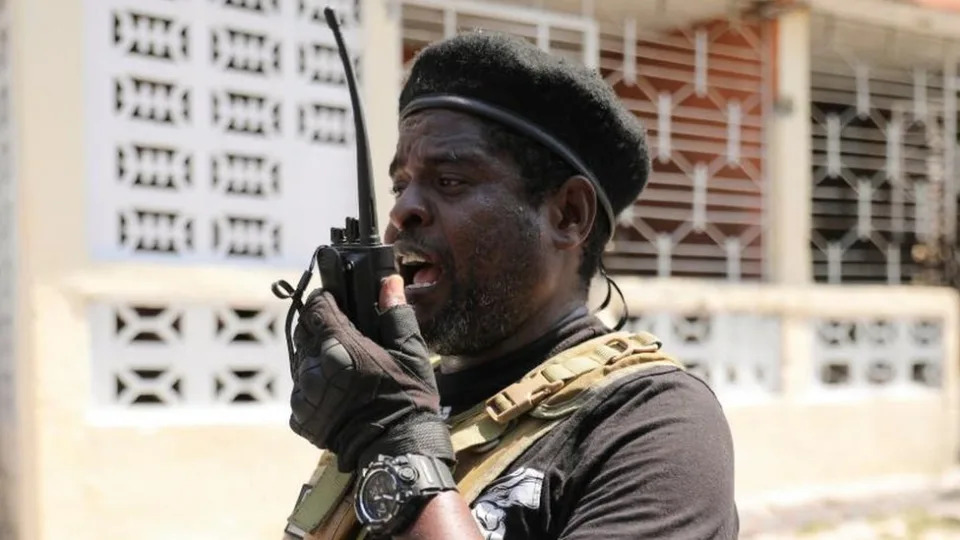
The 47-year-old former police officer may not be the most powerful gang leader in Haiti, but Jimmy Chérizier has emerged as the most visible face of the recent unrest.
Fond of speaking to journalists while clad in his trademark bullet-proof vest, the man widely known as Barbecue leads an alliance of gangs called G9.
Barbecue has been one of the most outspoken enemies of Ariel Henry, demanding his resignation ever since the latter was sworn in as prime minister.
The G9 leader likes to portray himself as someone who fights for the common people and against the oligarchy.
But not only has he been accused of leading a massacre in 2018 in which scores of people where killed, he was also behind the 2021 blockade of the Varreux fuel terminal.
G9's attacks on water and food deliveries caused severe shortages among Haiti's poorest. The lack of fuel caused by the blockade meant hospitals struggled to keep their generators running to provide crucial care.
"Barbecue has made vague demands of a more just and equitable system, but of course the irony of this whole situation is that the armed groups in the capital and around are creating the hell that people are living through," explains Haiti expert Michael Deibert.
Barbecue claims to have united Port-au-Prince's notoriously quarrelsome gangs in a coalition called Viv Ansanm (Live Together).
It is hard to verify that claim. But while so far no rival gang leader has denied it, any alliance is likely to be short-lived, according to Michael Deibert.
"These groups feud mercilessly with one another all the time," the journalist, author and researcher at the University Institute of Lisbon (ISCTE) explains.
Mr Deibert says that the gangs appear to have found a "modus vivendi" while they try to tear down the pillars of the state. "To what end I'm not exactly clear," he adds.
Chillingly, Barbecue warned last week that a "civil war" could erupt should Mr Henry return to Haiti. The leader of the G9 has not yet spoken since Mr Henry said he would step down as soon as a transition council has been created.
But judging by his previous warnings that Haitians should be left to decide Haitian affairs without any outside interference, the planned deployment of a multi-national security force to Haiti will not go down well with him.
Romain Le Cour, an expert at the Global Initiative against Transnational Organized Crime (GI-TOC), says that Barbecue derives a lot of his power from controlling the capital's port and fuel terminal.
Should international police forces be deployed to retake these key installations, Barbecue could see his influence diminish, Mr Le Cour argues.
Both Mr Le Cour and Mr Deibert warn that Barbecue is not even remotely the most powerful gang leader in Haiti, just the one who is most accessible to the media.
"A lot of the most powerful characters are people who don't give interviews to journalists," Mr Deibert points out.
Gang leader Johnson André, aka Izo

One of the gang leaders thought to wield more power than Barbecue is a 26-year-old known as Izo.
Izo differs from Barbecue, a former police officer, in that he came up through the gang hierarchy to lead the Vilaj de Dye - 5 Segonn gang, explains Romain Le Cour.
The two gang leaders share a love of the limelight, but Izo tends to use social media to publish music videos rather than to air his political views.
The young gangster has released a number of rap videos and was even awarded a prize by YouTube for getting 100,000 followers.
But behind the gangster bling façade is a ruthless criminal whose gang engages in rape, kidnappings, drug and arms trafficking, according to the United Nations.
He is also accused of obstructing the delivery of humanitarian assistance.
Romain Le Cour, who has been studying Haiti's gangs for years, says what makes Izo stands out is the fact that he has managed to gain control of maritime routes in Port-au-Prince Bay.
That allows him to circumvent territory held by other gangs and lets him to move weapons quickly.
According to the UN, Izo has also exploited Haiti's "fragile security environment" to make money through drug trafficking with some shipments reportedly arriving directly from South America in the Vilaj de Dye neighbourhood he controls.
In its report on Haiti's gang crisis, the Global Initiative against Transnational Organized Crime (GI-TOC) traces Izo's attempts to expand his territorial control beyond the capital.
His gang's incursion into Mirebalais, 35km north of the capital, triggered deadly clashes between members of his 5 Segonn gang and vigilantes in which 30 people were killed. According to the report, at least 800 families fled their homes in the resulting violence.
Mr Le Cour points out that Izo's drug trafficking and arms smuggling network will be particularly tough to break down as it is very diverse, so much so that he does not even flinch from selling weapons to his rivals.
Former rebel Guy Philippe
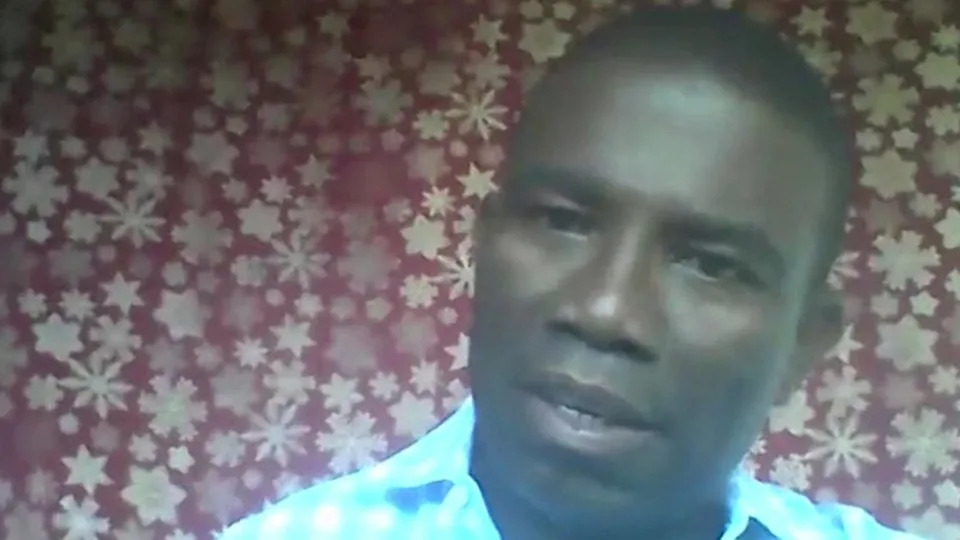
Guy Philippe is another former police officer gone rogue. The 56-year-old helped lead the coup against President Bertrand Aristide in 2004.
In 2016, he ran for the Senate in Haiti and won. But days before he was sworn into office - which would have given him immunity from prosecution - he was arrested on drug-trafficking charges and extradited to the US.
He admitted taking bribes to protect narcotics shipments to the US while he was working as a senior police officer.
Philippe was repatriated to Haiti in November after serving his sentence, a move Michael Deibert describes as "pouring gasoline on an already raging fire".
It did not take Philippe long to share video messages on social media in which he called for a "rebellion" against Mr Henry.
Guy Philippe has openly expressed his desire to be Haiti's next president.
Asked whether his jail term could prove a stumbling block on the way to the presidential palace, he said: "[Former South African President Nelson] Mandela was in prison. [Former Venezuelan President] Hugo Chávez was in prison. [Brazilian President Luiz Inácio Lula da Silva] Lula was in prison... And so if my people believe and trust me, I will be their leader. It's up to my people, no-one else."
Mr Deibert points out that Philippe is not the only one to have expressed his presidential ambitions amid the chaos that the gang violence has created.
"The group that seems to be forgotten in this is the people of Haiti," he says, drawing attention to the humanitarian crisis which has left an estimated five million out of Haiti's 11 million people facing acute hunger.
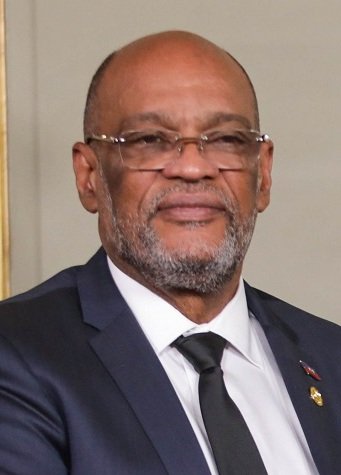
Haiti's prime minister Ariel Henry resigns as law and order collapses
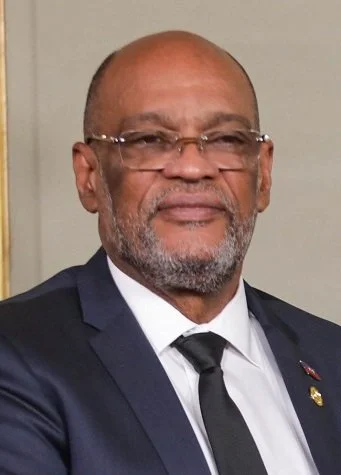
Haiti's Prime Minister Ariel Henry has agreed to resign following weeks of mounting pressure and increasing violence in the impoverished country.
It comes after regional leaders met in Jamaica on Monday to discuss a political transition in the country.
Mr Henry is currently stranded in Puerto Rico after being prevented by armed gangs from returning home.
He said his government would resign following the "installation of [a transition] council."
"I'm asking all Haitians to remain calm and do everything they can for peace and stability to come back as fast as possible," Mr Henry said in a video address announcing his resignation.
He has not been allowed back into Haiti after leaving in late January for visits to Guyana and Kenya, where he signed a deal on the deployment of an international security force to help tackle violence.
Mr Henry had led the country on a supposedly interim basis since July 2021, following former President Jovenel Moïse's assassination, but had repeatedly postponed elections - saying security had to be restored first.
Many Haitians questioned the length of his unelected governance and Mr Henry's resignation had been one of the key demands of the heavily armed gangs that have recently tighten their grip on the capital, Port-au-Prince.
These gangs have attacked the main prison to help thousands of inmates escape, as well as targeting police stations, the capital's international airport and its port.
Port-au-Prince and the surrounding region is under a month-long state of emergency, while a curfew has been extended.
The head of the UN's World Food Programme in Haiti, Jean-Martin Bauer, said on Monday that more than 360,000 people had now been displaced.
"We're also seeing an interruption in the flow of goods, and this has huge impacts on food markets in Port-au-Prince," said Mr Bauer, adding that goods were currently unable to get into Haiti by land, sea or air.
The country was already dealing with malnutrition and there are serious concerns that the problem will soon become significantly worse.
Matthias Pierre, a former elections minister in Haiti, described the current situation in the country as "very precarious" with an army and police force that is unequipped to deal with the unrest.
Mr Pierre, who broke the news of Mr Henry's resignation to the BBC's Newsday programme before it was publicly confirmed, said the gangs were now pushing to be part of any new power-sharing deal.
He added that such a political settlement was impossible without the "support" of an international armed force.
There are now questions over what will happen to the 1,000-strong UN-backed security force Kenya is expected to lead in Haiti to try and restore order there.
The top civil servant in Kenya's foreign affairs ministry has told the BBC that its deployment of police to Haiti has been put on hold following Mr Henry's resignation.
Korir Sing'oei added that Kenya would wait for the installation of a new constitutional authority before further decisions were made.
The US said it saw no need to delay the mission.
Its proposed contribution to this security force now stands at $300m (£234m) after Secretary of State Antony Blinken pledged a further $100m to it.
Another $33m has been allocated for humanitarian aid.
The Caricom group of Caribbean nations, which has been meeting in Jamaica to discuss the crisis in Haiti, has outlined what it wants a transitional council to look like.
It would be made up of seven voting members and two observers and include representatives from several coalitions, the private sector and civil society, and one religious leader.
Anyone intending to run in Haiti's next elections will not be able to participate.
The US said it expects the council will be appointed within the next two days, which will then appoint an interim prime minister.
It is hoped the council will pave the way for the first elections in Haiti since 2016.
Haiti: The basics
- The Caribbean country shares a border with the Dominican Republic and has an estimated population of 11.5 million
- It has a land area of 27,800 sq km, which is slightly smaller than Belgium and about the same size as the US state of Maryland
- Chronic instability, dictatorships and natural disasters in recent decades have left Haiti the poorest nation in the Americas
- An earthquake in 2010 killed more than 200,000 people and caused extensive damage to infrastructure and the economy
- A UN peacekeeping force was put in place in 2004 to help stabilise the country and only withdrew in 2017
- In July 2021, President Jovenel Moïse was assassinated by unidentified gunmen in Port-au-Prince. Amid political stalemate, the country continues to be wracked by unrest and gang violence

Kenya, Haiti sign agreement allowing police deployment
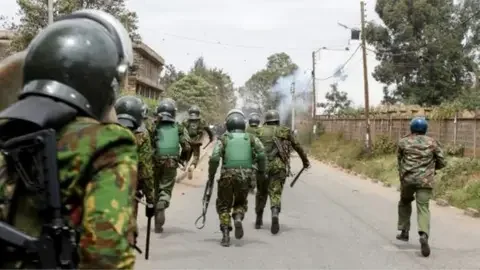
NAIROBI, March 1 (Reuters) - Kenya and Haiti signed a security deal on Friday that Nairobi hopes will satisfy a domestic court's objections to its plan to send 1,000 police officers to lead a U.N.-approved mission aimed at tackling gang violence in the Caribbean nation.
Kenya announced plans in July last year to lead the mission to Haiti, where gangs control most of the capital and nearly 5,000 people were killed in the violence last year.
But Kenya's High Court ruled the deployment, initially expected by January, unconstitutional in the absence of a "reciprocal arrangement" with the host government.
That has effectively placed the entire mission on hold, even as the United States and Canada have pledged hundreds of millions of dollars to it, and some countries have committed armed personnel.
On Friday, Kenyan President William Ruto said an agreement had been signed with Haiti.
"I am pleased to inform that (Haiti) Prime Minister Ariel Henry and I have witnessed the signing of this instrument. We have also discussed the next steps to enable the fast-tracking
of the deployment," Ruto said at the signing ceremony.
Haiti requested help in 2022 as the violence surged but could not find a country willing to lead a mission.
Many governments have been wary of intervening to support Henry's unelected administration in a nation where previous missions have been dogged by human rights abuses.
Besides Kenya, the Bahamas has committed 150 people, and Jamaica and Antigua and Barbuda said they were willing to help. Earlier this week, Benin offered 2,000 troops.
Armed clashes involving gangs, police and vigilantes rocked Haiti's capital Port-au-Prince on Thursday in what a gang leader said was a demonstration against the authorities.
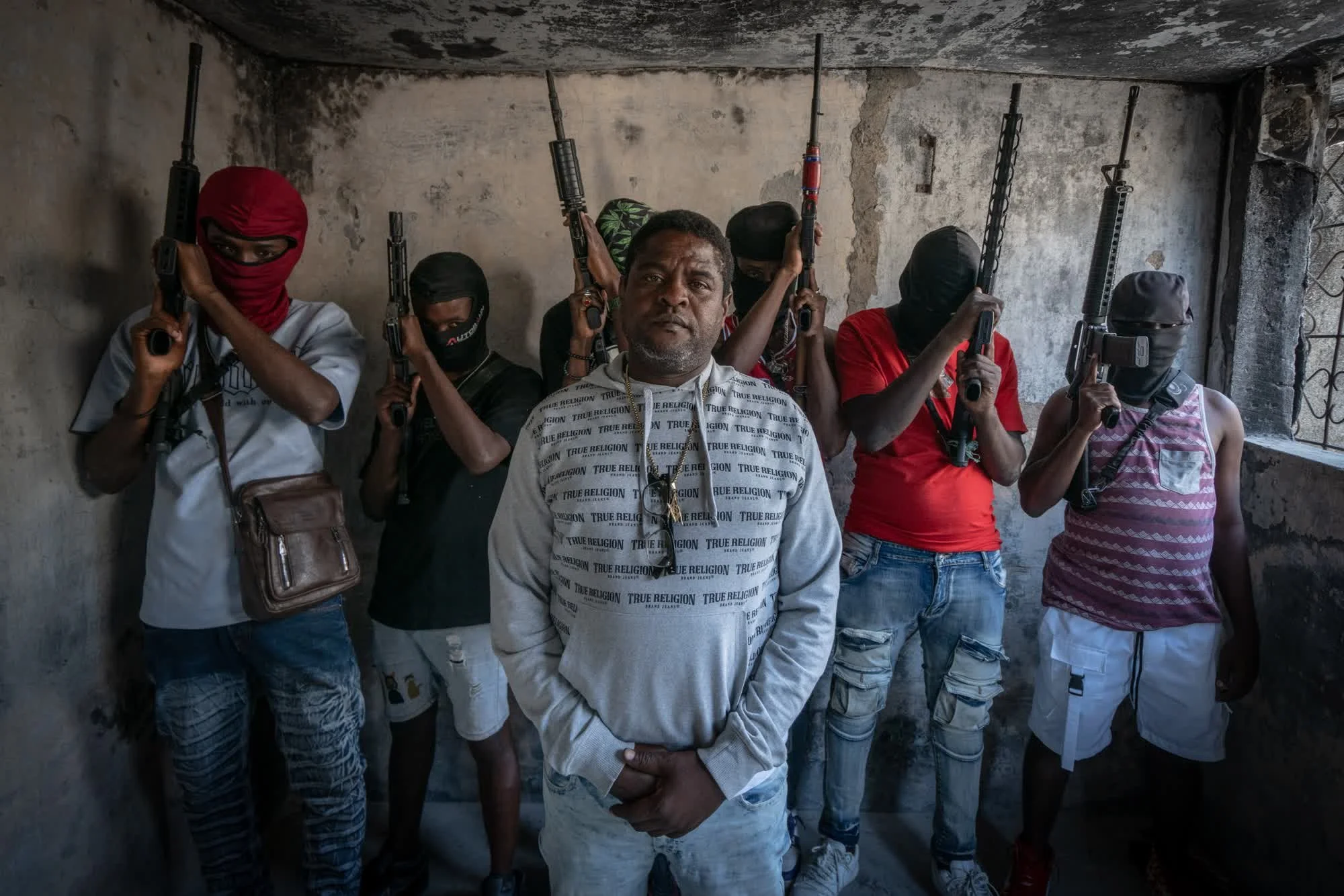
Coming face to face with Haiti’s most notorious gang leader
While he was in the Haitian capital of Port-au-Prince, waiting for the chance to interview its most notorious gang leader — Jimmy “Barbecue” Cherizier — Giles Clarke heard semi-automatic gunfire from what felt like just two or three blocks away.
“I looked over at the group of locals, wondering if they might respond, but they barely moved a muscle,” the photojournalist recalled. “It was just another day in (the neighborhood of) Delmas 6, and the constant volley of bullets flying over the nearby building were seemingly nothing unusual.”
Every few minutes, there would be another burst, followed by return fire.
This is life now in Port-au-Prince, where gangs control 80% of the city, the UN estimates, and continue to fight for the rest.


A gang member affiliated with Jimmy “Barbecue” Cherizier’s G9 alliance holds a rifle in Port-au-Prince. Gangs control 80% of the capital, the UN estimates.

Haitian police inspect documents at a checkpoint on a street leading from the city center to the port. It is one of the rare places controlled by police, photojournalist Giles Clarke said.
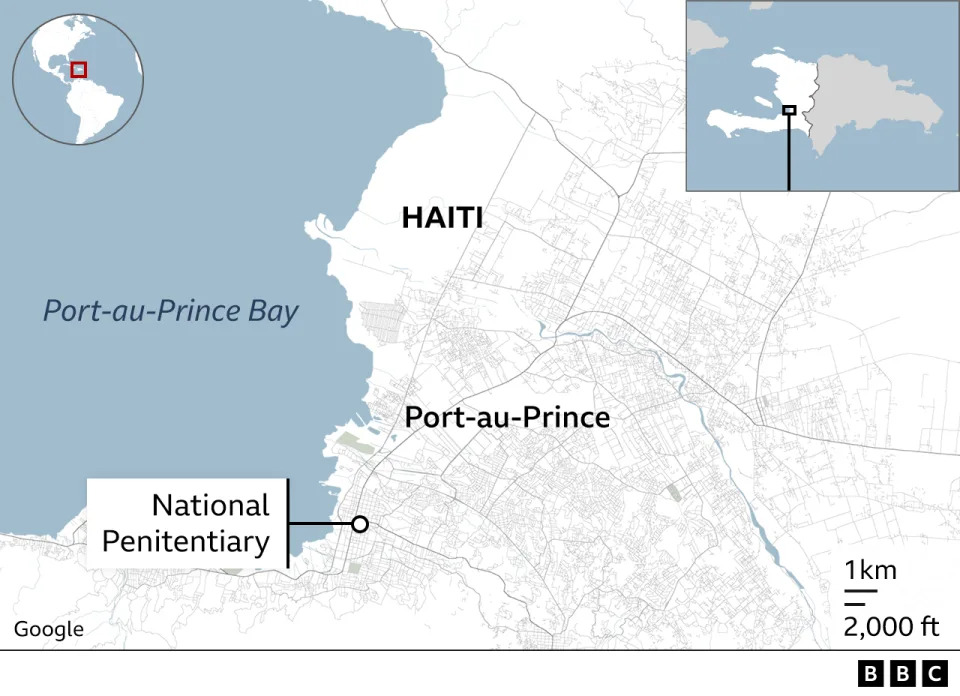
Haiti has been in a state of unrest for years now, but multiple security sources in the capital have told CNN that the most recent surge of gang violence — which has targeted police stations, the international airport and the national penitentiary — is unprecedented.
Haiti’s government declared a state of emergency Sunday, citing the “deterioration of security” and “increasingly violent criminal acts perpetrated by armed gangs,” including kidnappings and killings of citizens, violence against women and children and looting.
Armed groups attacked the country’s two largest prisons on Saturday, and a United Nations source said around 3,500 prisoners are believed to have escaped the National Penitentiary in Port-au-Prince over the weekend.


Meanwhile, more than 300,000 Haitian civilians have been forced to flee their homes because of the gang violence, according to the United Nations.
“All the displacement sites that I went to back in September have probably doubled in capacity now,” said Clarke, a New York-based photojournalist who has been visiting the Caribbean country on and off since 2011.
Clarke went back last month to document the unrest in Port-au-Prince. He witnessed more distressing scenes, including a hospital where he saw countless people suffering from gunshot wounds.
“Many of them were civilians hit in gang crossfire, and most of them near the markets. It’s people just going about their day,” Clarke said. “Doctors were overwhelmed. There were a lack of supplies.”

Morgues were also overflowing in the city.
“You could smell it on the street,” Clarke said. “I remember I asked (my guide) Joe, ‘What is that?’ And he said: ‘Dead people.’”
Clarke said many of them were victims of gang violence whose bodies hadn’t been claimed by families.
“If you don’t claim them or nobody pays, these bodies are just going to sort of rot,” he said. “There’s very little refrigeration.”


While he was in Haiti, Clarke also managed to come face to face with Cherizier, a former police officer who leads an alliance of gangs in Port-au-Prince.
Cherizier has made it clear that his goal is to bring down the government of Prime Minister Ariel Henry.
He told Clarke the gangs want to change the current system and come up with a new Haiti. While Cherizier’s men wore balaclavas to protect their identities, he did not.
“He’s often the only one not wearing a mask — a defiant face of Haitian resistance,” Clarke said.


Gherisse, 42, recovers at the General Hospital two days after she was caught in gang crossfire and shot in the neck. She was working as a food vendor downtown.

Violet, 63, lies on the floor at the General Hospital after being shot twice in the arm. She says her 34-year-old daughter was killed as two warring gangs swept through their neighborhood just an hour earlier.
Henry, who took leadership of the country after President Jovenel Moise was assassinated in 2021, was supposed to hold elections and transfer power by February 7. But last month he said he couldn’t step down because conditions in the country weren’t safe enough to stage an election.
“My interim government is working hand-in-hand with the police to restore normal life in the country,” he said in an address to the nation. “We are aware that many thing have to change, but we need to make those changes together and calmly.”
That isn’t acceptable to Cherizier, who on Friday reiterated his demand that Henry be arrested.
“We ask the Haitian National Police and the military to take responsibility and arrest Ariel Henry,” he said. “Once again, the population is not our enemy; the armed groups are not your enemy. You arrest Ariel Henry for the country’s liberation. … With these weapons, we will liberate the country, and these weapons will change the country.”


Cherizier has faced sanctions from both the UN and the United States Treasury Department. The UN has accused Cherizier of human rights abuses including the orchestration of deadly attacks against civilians over the years, saying his actions “have directly contributed to the economic paralysis and humanitarian crisis in Haiti.”
Clarke visited him in late February at his somewhat unassuming house on the top of a hill in Delmas 6.
“We actually did the interview in the abandoned building opposite him,” Clarke said. “Word is that he didn’t want lots of people living so close around him.”
After a very brief interview where Cherizier laid out his vision for Haiti, Clarke walked with him through the streets. Clarke remembers how much quieter it was when he was with Cherizier. “There was no shooting because (the men) were all with Jimmy,” he said.


To try to restore order in his country, Henry has called for military assistance. The deployment of a Kenyan-led multinational security force was greenlit by the UN Security Council last fall and Henry recently visited Kenya to finalize the details, but it’s not clear when those troops might arrive.
The United States has agreed to provide $200 million to the mission, with Secretary of State Antony Blinken calling the situation in Haiti “one of the most urgent challenges we face as an international community.”
Henry adviser Jean Junior Joseph told CNN that the government has limited options right now.
“The gangs have more ammunition than us,” he said.

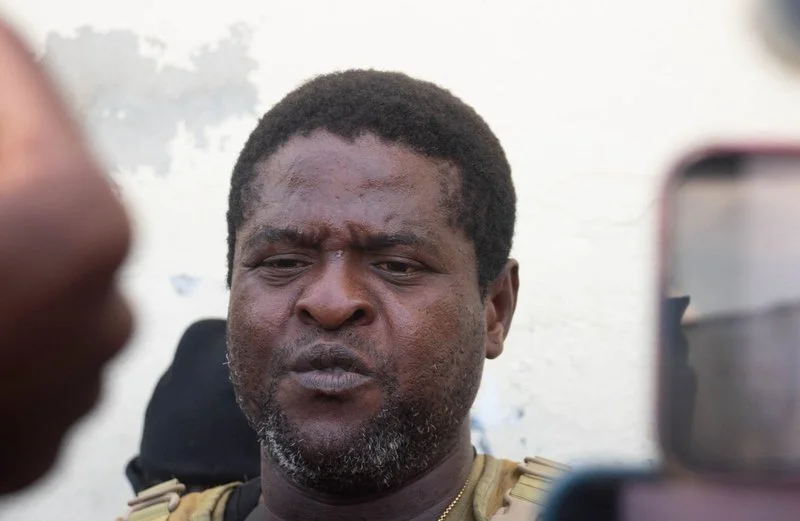
Haiti gang boss tells absent prime minister to quit or face civil war
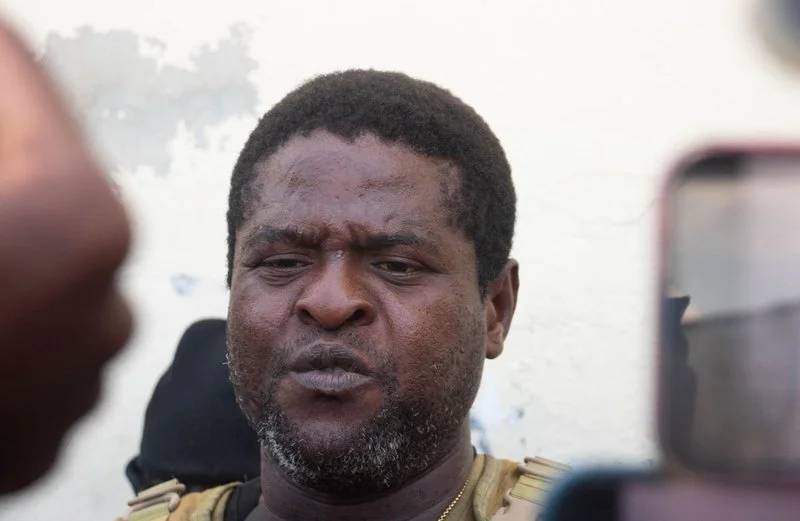
Silence from Ariel Henry, who remains abroad, as Jimmy Chérizier, AKA ‘Barbecue’, warns country will ‘become a paradise or a hell’
The crime lord behind a six-day gang mutiny against Haiti’s prime minister, Ariel Henry, has claimed the Caribbean country could be plunged into civil war unless its temporarily exiled leader steps down.
Wearing an olive green tactical vest and flanked by armed foot soldiers in balaclavas, the gang boss Jimmy Chérizier told reporters his country was staring into the abyss. “Either Haiti becomes a paradise or a hell for all of us,” declared Chérizier, a police officer turned gang leader whose nom de guerre is Barbecue.
“If Ariel Henry doesn’t resign, if the international community continues to support him, we’ll be heading straight for a civil war that will lead to genocide,” added Chérizier.
Over the last six days gang fighters have released thousands of inmates from prisons stormed and laid siege to strategic locations in the capital, Port-au-Prince, including two airports, police stations and a port. Nearly all flights in and out of the country’s main international airport have been cancelled, with gangs launching a renewed assault on the compound on Tuesday.
“Who is in control? I think nobody is in control,” said Jean-Marc Biquet, the head of the Médecins Sans Frontières mission in Haiti. “And my personal fear is that the policemen are going to [give up fighting and say]: ‘It’s a lost battle.’ “Then what can happen? Well I guess, total chaos.”
US officials say there would no pressure on Henry to leave, but Washington is asking him to quickly come up with some form of plan for transition to a democratic government, adding to pressure coming from the Caribbean regional organisation, Caricom.
Chérizier’s courting of the cameras stands in stark contrast to the almost total silence from Henry and members of his debilitated administration.
“It is horrifying. It is heartbreaking what is going on. And what is worse is that you don’t hear a word from the government,” said Monique Clesca, a Port-au-Prince-based writer and political activist, blaming the unrest on the inaction and incompetence of Henry’s administration.
Haiti’s prime minister, a septuagenarian neurosurgeon who became acting president after the 2021 assassination of President Jovenel Moïse, has hardly been seen since the gang rebellion began while he was in Kenya attempting to speed up the deployment of a multinational security force.
US officials say that Henry’s visit helped resolve the constitutional issues that were blocking the Kenyan deployment, and that the police officers were on standby to fly in at short notice. It is unclear whether they would be flown to Haiti by US military transport, and also far from clear when the airport would be declare sufficiently secure for them to land.
On Tuesday, after days of speculation about his whereabouts, Henry reportedly attempted to return to Haiti, flying from the United States to the international airport in Port-au-Prince. However, according to a report in Puerto Rico’s largest newspaper, El Nuevo Día, Henry’s private jet was not given clearance to land. The plane was also prevented from landing in neighbouring Dominican Republic, which shares the Caribbean island of Hispaniola with Haiti. Instead, Henry was forced to retreat to Puerto Rico’s capital, San Juan. It is unclear what he plans to do next.
“We will let the Prime Minister speak to his travel plans,” a US state department spokesperson told El Nuevo Día when asked about Henry’s intentions. “The United States is not providing military assistance to help the Prime Minister return to Haiti,” they added.
On Wednesday, the UN security council will hold a private emergency meeting about Haiti’s intensifying security crisis which is aggravating an already dire humanitarian emergency that has exposed almost half of its 11.7 million citizens to acute hunger, according to the World Food Programme.
Asked about Chérizier’s call for Henry to step down, the state department spokesperson, Matthew Miller, told reporters: “[We] urge all actors to put the people of Haiti first, stop the violence – that would of course include these gangs that are responsible for the recent violence – and make the necessary concessions to allow for inclusive governance, free and fair elections, and the restoration of democracy.”
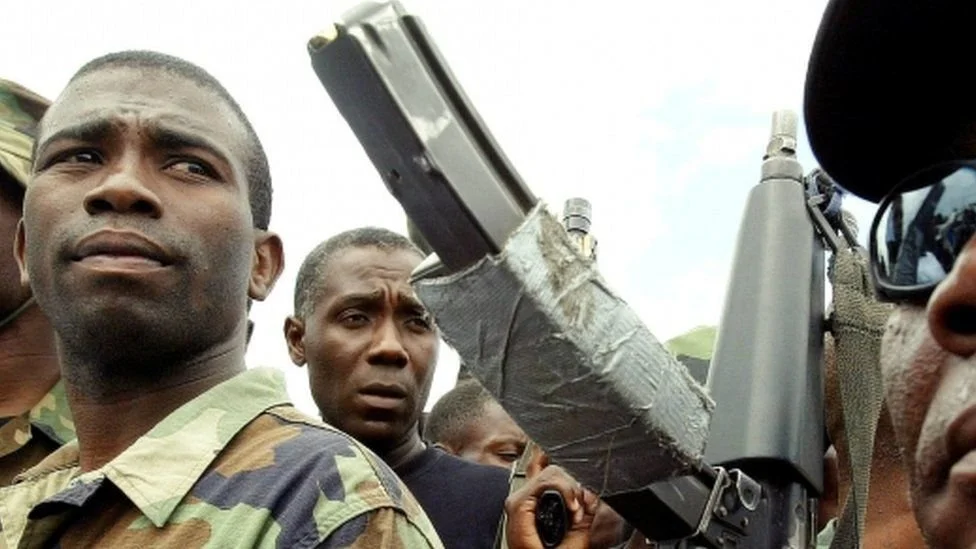
Former rebel leader arrives in Haiti's capital as protests against prime minister gain momentum
A former rebel leader has made a surprise appearance in Haiti’s capital amid large protests across the country for the second consecutive day, demanding the ouster of Prime Minister Ariel Henry.
PORT-AU-PRINCE, Haiti -- A former rebel leader made a surprise appearance in Haiti’s capital on Tuesday amid large protests across the country for the second consecutive day, demanding the ouster of Prime Minister Ariel Henry.
Guy Philippe — who played a key role in the 2004 rebellion against former President Jean-Bertrand Aristide — was briefly spotted in the upscale community of Pétionville in Port-au-Prince, where he shook hands with Haitians at a park in front of a police station before he left. It wasn’t immediately clear where Philippe was going, but dozens of motorcycle drivers, clearly his supporters, tried to track him down across streets blocked by burning tires.
His appearance caused a great commotion because of a video he released Monday, calling for a rebellion to oust the prime minister on Wednesday, or Feb. 7, the date Haitian leaders are traditionally sworn into office.
A growing number of Haitians accuse the prime minister of holding on to power and failing to organize general elections. Henry assumed the leadership of Haiti, with the backing of the international community, shortly after President Jovenel Moïse was killed in July 2021. Since then, he has pledged to hold elections but has noted, as has the international community, that it is currently too unsafe to do so.
Shortly after appearing in Pétionville on Tuesday, Philippe called Radio Télé Éclair in the middle of a live show.
“Tomorrow, I will be out on the streets with my people,” he said, adding that he would be surrounded by security. “The fight is just the beginning.”
Philippe said on the radio show that he has spoken to different political parties, including ones headed by former Prime Minister Claude Joseph and former presidential candidate Moïse Jean Charles, to try to find a way forward for Haiti.
Philippe was believed to have been living far from Port-au-Prince ever since he was repatriated to Haiti in late November.
A few miles away from where Philippe was spotted, nearly a couple thousand protesters gathered in the capital, preparing to march to the prime minister’s office.
“Ariel has to go! Ariel is the leader of the gangs of this country!” the crowd yelled.
As they began marching, police fired tear gas, temporarily breaking up the crowd as protesters — ranging from teenagers to older adults — vowed that they would reach Henry’s office one way or another. About an hour later, they reached the office, prompting police to barricade the area and fire tear gas and live bullets.
Among those protesting was Carl Henry Joseph, a 40-year-old moto driver who said he wants to see Henry dead.
“This is how much hatred I have for him,” he said as he vowed to rejoin protests planned for Wednesday. “Tomorrow we will do whatever it takes to get him out. I’m willing to die if it means he will leave office.”
Fellow protester Jean-Marc Antoine, 35, said he wants to see Henry resign but wonders what a future leader might bring.
“We are tired of this situation,” he said. “Too many people are dying and the country is just going backwards.”
Another protest organized by Moïse Jean Charles, the former presidential candidate, was taking place nearby as a handful of armed environmental protection agents with Haiti's Security Brigade for Protected Areas, which recently clashed with police in northern Haiti, arrived amid cheers from supporters.
Other demonstrations were reported in Haiti’s southern and northern regions on Tuesday, with the biggest protests expected on Wednesday, the date demonstrators have set for Henry to resign.
“If Ariel doesn’t leave office by midnight on Feb. 7, we are not responsible for what happens to him,” said Joseph, Haiti's former prime minister, to a crowd of thousands who cheered in the southern coastal city of Saint-Louis-du-Sud.
Feb. 7 is considered a key date in Haiti. On that date in 1986, former dictator Jean-Claude Duvalier fled for France, and in 1991, Jean-Bertrand Aristide, Haiti’s first democratically-elected president, was sworn in.
The growing number of protests comes as Haiti struggles with a spike in gang violence and deepening poverty, awaiting a U.N.-backed deployment of Kenyan police officers that a court in the east African country recently blocked.

Haitian judge seeks to interview widow of slain president in leaked arrest warrant obtained by AP
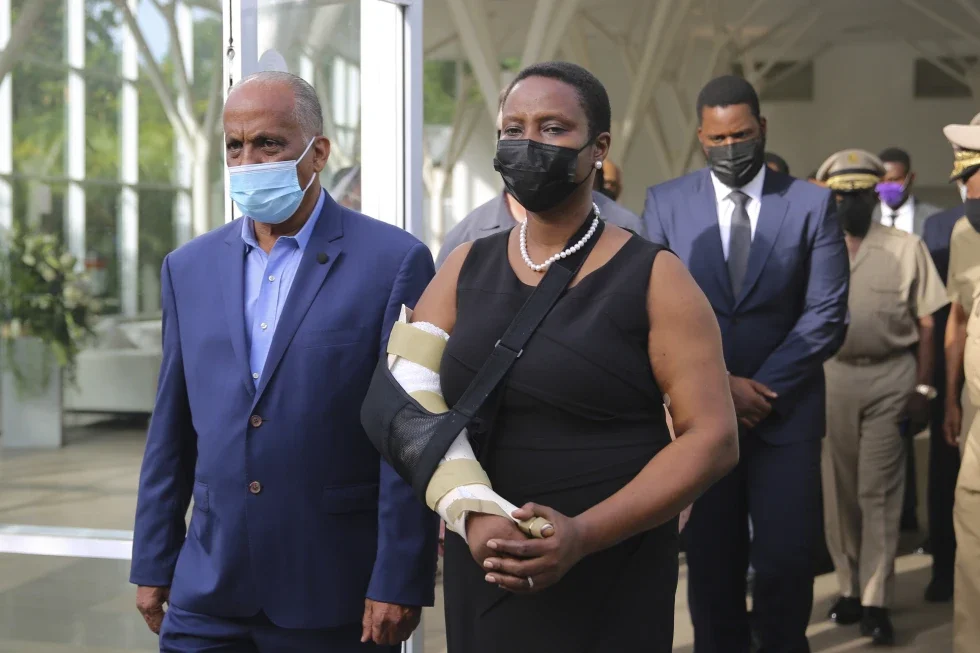
PORT-AU-PRINCE, Haiti (AP) — A Haitian judge investigating the July 2021 assassination of President Jovenel Moïse issued an arrest warrant for his wife late last year for failing to meet with him so he could interrogate her about the case, according to a legal document leaked late Monday that The Associated Press obtained.
The warrant is dated Oct. 25 and signed by Judge Walther Voltaire, who is overseeing an ongoing investigation into the killing that occurred at Moïse’s private residence, where authorities say a group of heavily armed men shot him a dozen times and injured his wife, Martine Moïse.
The one-page warrant contains little detail except to say that authorities are seeking to interview Martine Moïse about the case. It does not state nor suggest any involvement.
Martine Moïse could not be immediately reached for comment, and a spokesman for an attorney of hers based in Florida said he was trying to reach the attorney.
Messages sent to people close to her went unanswered.
After the July 7, 2021 assassination, Martine Moïse was airlifted to a hospital in Florida for treatment. She returned unannounced to Haiti less than two weeks later, surprising many. Since then, she is believed to be residing in the U.S. and has on occasion posted about the assassination on X, the platform formally known as Twitter.
In December, she wrote that the “assassins…feel that their reign of impunity and untouchability seems to be coming to an end.”
This month, she repeated her call for an international tribunal to investigate the case, writing, “Haiti stand up, so that the social injustice done to the people can be repaired.”
In June last year, attorneys for Martine Moïse filed a lawsuit against those accused in the killing seeking unspecified damages and a trial by jury.
Voltaire, the judge investigating the case, did not immediately respond to calls for comment.
He was appointed in May 2022 to oversee the case, becoming the fifth judge to do so. Previous judges have stepped down, including one who said he feared for his life and another who left a day after one of his assistants died under unclear circumstances.
The case has largely stalled in Haiti, where more than 40 suspects were arrested in the killing, including 18 Colombian soldiers and at least 20 Haitian police officers.
Meanwhile, U.S. authorities have prosecuted several extradited suspects in the case. Four of 11 suspects in Miami have pleaded guilty, including a retired Colombian army officer and a former Haitian senator.

Kenyan President Ruto says Haiti mission to go ahead soon despite court ruling
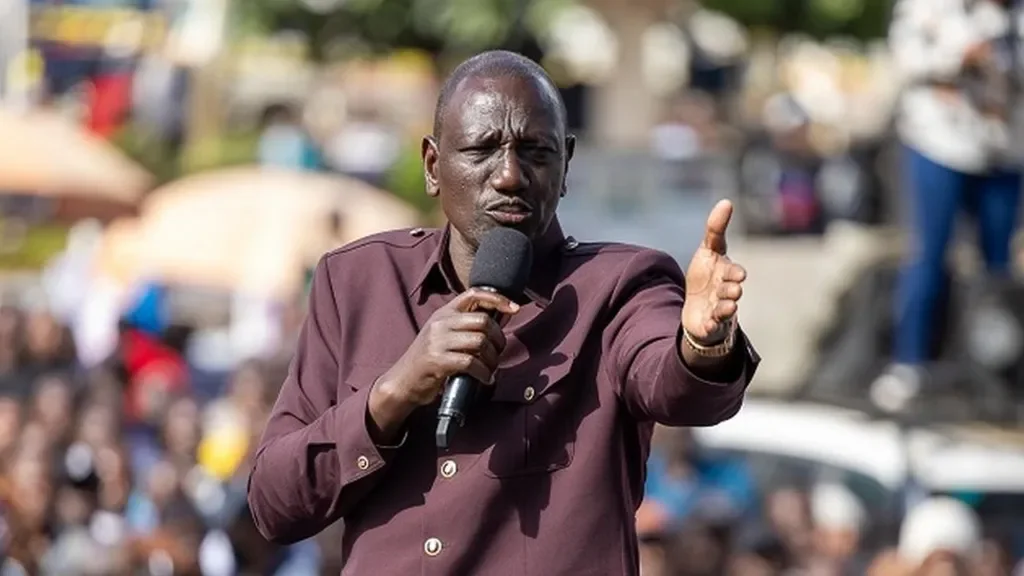
A Kenyan opposition leader has accused President William Ruto of planning to defy a court ruling against the deployment of police to Haiti.
Ekuru Aukot, who last week successfully challenged the planned deployment in court, says the president can only deploy the army and not the police.
The court said the mission was illegal.
Mr Ruto said on Tuesday the mission could go ahead "as soon as next week" if all the paperwork was done to satisfy the demands of the court.
Last November, the Kenyan parliament ratified the deployment of 1,000 officers to lead a multinational force in Haiti, where gangs are attempting to expand their territorial control.
But last week, a judge said Kenya's National Security Council, which is led by the president, does not have the authority to deploy regular police outside the country.
It added that the council can only deploy military, not police, for peacekeeping missions such as Haiti.
The court also said there must be a reciprocal agreement between the two countries before the deployment.
Delivering the ruling, Justice Chacha Mwita praised Kenya's offer to deploy police to Haiti, but said it needed to be carried out within the law.
Speaking on the sidelines of the Italy-Africa summit in Rome, Mr Ruto on Tuesday told Reuters news agency that he expected a request would come soon that would satisfy the demands of the Kenyan court.
"The mission is on course. The mission is a bigger calling to humanity," he added.
Asked if there were efforts for Haiti to get the necessary request, Mr Ruto said: "Absolutely."
"Haiti have actually written formally, not today, several months ago," he added.
Korir Sing'oei, a senior official in Kenya's foreign ministry, in a series of posts on X, said that the deployment of the police abroad would not be unconstitutional if conducted under a bilateral reciprocal arrangement.
But Mr Aukot says the deployment requires more than just the bilateral agreement between the two countries.
"Appreciate the wisdom of Justice Mwita on a 'service' and a 'force'. As per law and the constitution, you can not deploy a police service outside Kenya," Mr Aukot posted on X, accusing the foreign affairs official of misleading the president.
During the Tuesday interview, Mr Ruto stressed that it was a police rather than a military operation.
The Kenyan government said it would appeal against the court ruling.
The US said last week that it supports the Kenyan government's intention to challenge the ruling.
But the Kenyan opposition on Tuesday warned the US against meddling in Kenya's internal affairs.
It is unclear when the Kenyan government would launch the appeal in court and whether other countries who pledged to send smaller forces to boost the multinational mission would consider going it alone.
Among those who planned to send forces were the Bahamas, Antigua and Barbuda, with the US pledging $200m (£158m) to support the deployment.
A UN envoy said last week that the Haiti gang violence had reached "a critical point", with nearly 5,000 deaths reported last year.

‘Kidnapping Inc.’ Review: Haitian Crime Comedy Blends Politics and Thrills to Middling Effect

The abduction of a presidential candidate’s son in Port-au-Prince prompts a series of violent incidents in Bruno Mourral’s ambitious but underwritten effort.
Political unrest, economic instability and rampant insecurity have plagued the Caribbean nation of Haiti for decades. That the small percentage of mixed-race (mulatto) population holds a disproportionate portion of the wealth and power over the 95% Black majority fuels the anger and distrust of the masses. That’s the harsh reality where Haitian-born director Bruno Mourral locates his brash and muddled crime comedy “Kidnapping Inc.”
Devoted fans of rival squads in the Spanish soccer league, Doc (Jasmuel Andri, also a co-writer) and Zoe (Rolapthon Mercure), have abducted the son of presidential candidate Benjamin Perralt (Ashley Laraque) just days before the 2017 election. We don’t know how many times, if any, they’ve done this before, but their ineptitude quickly becomes evident. The pair drives around Port-au-Prince, the country’s capital, with their victim’s dead body in the drunk after Zoe accidentally killed him. Their ridiculous solutions to this unfortunate incident only escalate the irritation of the corrupt police officer at the helm of the mission.
Nearly a dozen thinly written characters, some of them not more than basic archetypes, make up the ensemble cast of this ambitious, if scattered-brained saga. There’s Audrey (Anabel Lopez), the victim’s wife, desperate to cobble together the large ransom sum with the help of her lover, Eddie (Marcus Boereau), who in turn has plans to flee to the neighboring Dominican Republic. The constant shifting between the different parties affected or benefiting from the kidnapping would be less disjointed if buoyed on the friendship of the two main buddies. But their loud and cartoonish banter, featuring a couple of homophobic jokes that are not so much offensive as they are boring, doesn’t let us into any deeper layers of them as people to keep us invested in their individual plights nor their ordeal as a team. It all hinges on their likability, limited mostly to broad fronting.
Mourral’s direction earns commendation not so much for the handling of interpersonal conflicts but the deftly executed shootouts and car chases that never once show any signs of subpar production value. The spontaneous quality that Martin Levent’s camerawork brings to those fast-paced moments of tension and sometimes unnecessarily shocking violence (namely a dog’s death) immerse us long enough to momentarily dismiss the less polished parts.
Any film from a country with as scarce an output as Haiti is cause for curiosity, especially since it’s not a subdued, social realist drama of the kind typically sourced from developing countries to pad festival lineups. On paper, the idea to address social inequality and the corrosion of institutions by way of a potentially crowd-pleasing work of entertainment is sound, even daring, and that’s why the fact that the film’s many elements don’t amalgamate is a shame.
For all the pitfalls it fails to avoid, the film’s strongest narrative virtue is adapting situations pertinent to productions with similar concepts to this specific cultural and national context, remixing the familiar to appear authentic to the daily struggles of Haitians. A chase on foot, for example, unfolds in the narrow streets of a low-income community, where the two inept kidnappers encounter not only difficult-to-navigate alleyways but locals hostile to their presence there. During another chapter in Zoe and Doc’s misadventures, after crashing their own car in attempt to evade responsibility for their precious cargo’s passing, they take a resolute pregnant woman, Laura (Gessica Geneus), and her cowardly husband, Pat (Patrick Joseph), hostage.
The inefficient criminals intercept the couple as they are about to head to the airport. Zoe and Doc need their car, but a headstrong Laura won’t surrender it unless they take her to the airport. She refuses to give birth in Haiti and wants her child to be born in the United States. Such disgust-filled rejection for her poverty-stricken homeland, as well as her privilege to leave it behind, exemplify a wide divide between classes. Even within the same vehicle, their captors don’t have access to simply start fresh elsewhere. The most compelling piece in this jumbled up puzzle of a movie are Laura’s strongly negative sentiments about Haiti, to the point that she would risk gun shots to make sure she can achieve her goal.
When Mourral and co-writers Andri and Gilbert Mirambeau Jr. steer away from trying to make overt statements, “Kidnapping Inc.” falls back on in-your-face distasteful humor, most notably a sequence turning a child’s delivery into a communal spectacle. As the plot concentrates more intently on the dirty politics at play behind the scenes of Perralt’s campaign, the balance between social commentary and bombastic fun feels increasingly off. Aside from the tonal miscalculations, the many threads spun in the early minutes lose relevance toward the abruptly wrapped ending. It’s in the final moments that Mourral reaches for heartfelt emotion through the image of Haitian migrants risking their lives at sea, which ultimately makes logical sense in the story, like few other things do.
‘Kidnapping Inc.’ Review: Haitian Crime Comedy Blends Politics and Thrills to Middling Effect
Reviewed at the Egyptian Theater, Jan. 22, 2024. In Sundance Film Festival (Midnight). Running time: 105 MIN.
- Production: (Haiti-France-Canada) A Promenades Films, BHM Films, Peripheria, Muska Films production. Producers: Samuel Chauvin, Yanick Létourneau, Gilbert Mirambeau Jr., Gaethan Chancy, Bruno Mourral. Executive producers: Julia Woolley Chatwin, Kareem Mortimer, Trevite Willis.
- Crew: Director: Bruno Mourral. Screenplay: Mourral, Jasmuel Andri, Gilbert Mirambeau Jr. Camera: Martin Levent. Editor: Bruno Mourral, Arthur Tarnowski. Music: Olivier Alary.
- With: Jasmuel Andri, Rolapthon Mercure, Ashley Laraque, Marcus Boereau, Gessica Geneus, Patrick Joseph. (Creole, French dialogue)
Pèpè, the disposable garms subculture in Haiti
In Haiti, fast fashion meets its end game with pèpè, an accidental style made from cast-off clothing from the west - but what does it reveal about our addiction to disposable garms?
“We Haitians, despite the misery, love beauty, love to get dressed up, to smell and look good,” says fashion designer David André. “So many people tend to believe that fashion doesn’t affect a society. They are so wrong. Human beings always seek change. They yearn for new tastes and new styles, and this desire is adequately fulfilled by fashion.”
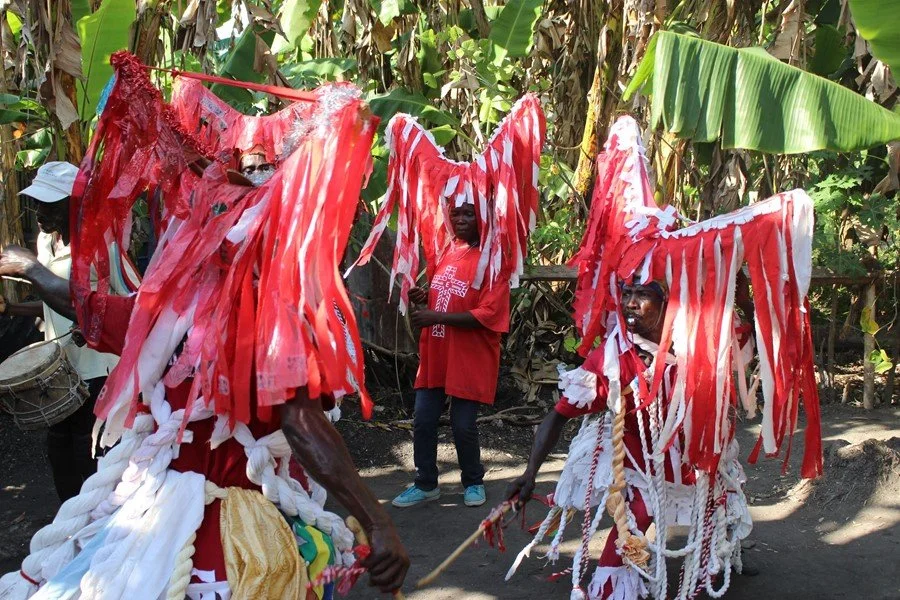
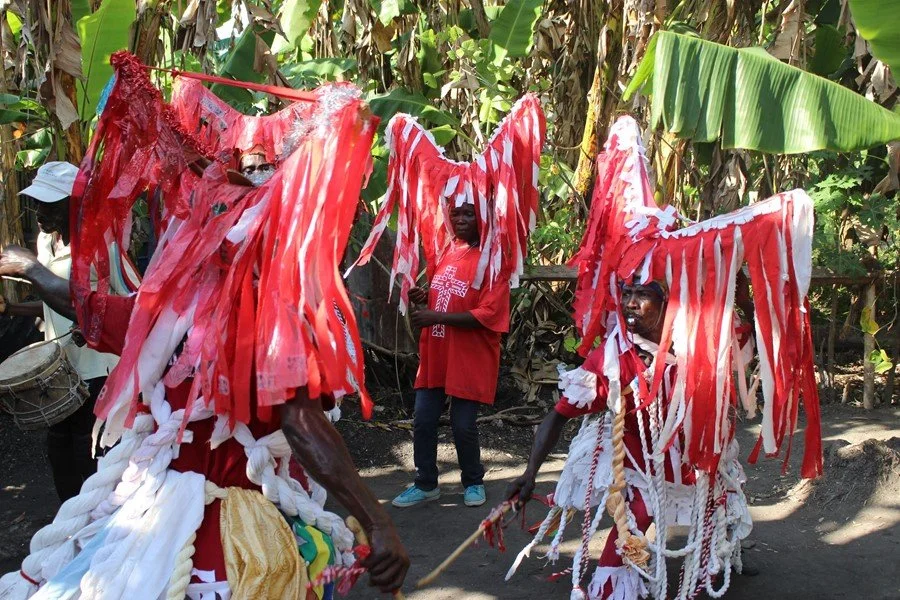
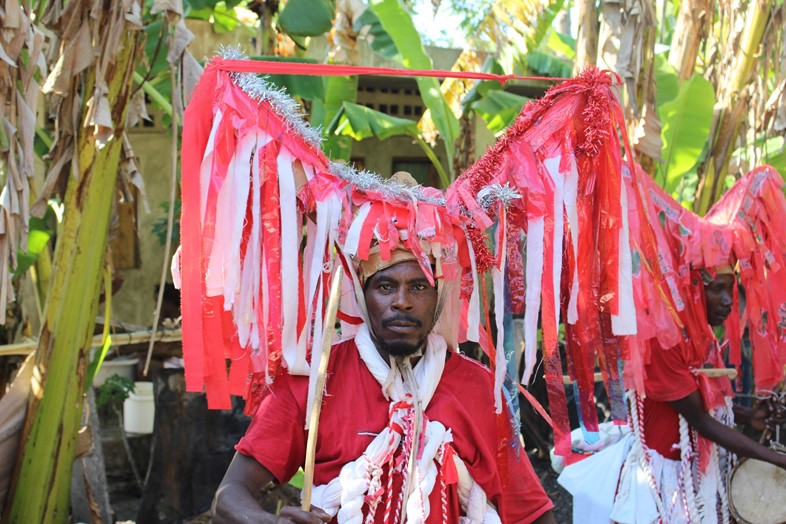
André's comments reflect my own experiences travelling in Haiti over the last few years, researching a book about the country's music scene. I remember churchgoers in their Sunday best and streets full of schoolkids in pin-sharp navy uniforms, proud Mardi Gras Indians in headdresses hung with tinsel, and Vodou worshippers in paper-white dresses and head-scarves gleaming in the early morning light. In my sweat-stained t-shirts and jeans thick with road dust, I always felt like a terrible scruff. Once I even got heckled at a bus station: “Look at the state of you, mon chè. Your clothes are filthy!” Rad pa janm fè moun (clothes do not make a person), or so the Haitian proverb goes, but I guess they’re somewhere to start.
Day to day in Haiti, a lot of what people are wearing is pèpè – secondhand clothing, the majority of it from charity shops and collection centre in North America, which arrives at Haitian ports plastic-wrapped in giant bails. It's sold on street markets from the frenetic capital Port-au-Prince to the remote villages of Grand'Anse in the west. Machann (traders) sit fanning themselves under beach umbrellas sorting through mounds of coloured fabric, dried by the Caribbean sun.
Imports of pèpè began under the Kennedy administration in the 1960s (they're sometimes referred to as 'Kennedy clothes'). Since then, thousands of tonnes of unwanted clothing have found their way to Haiti. With the rise of fast fashion, the flow has increased exponentially, flooding the Haitian market. For many locals, pèpè is a godsend. In recent years the cost of living has spiralled. Civil unrest, some of it fallout from the assassination of President Jovenel Moïse in 2021, and an explosion in gang violence have made life even more precarious. “I wear a lot of pèpè,” says Gilles, a musician from the town of Léogâne. “We all do, because it's a lot less expensive than buying new things.” Pèpè also gives Haitians access to brands they’ve heard about online, Gilles says, reeling off a list of labels he looks out for: “Nike, Adidas, Reebok, Lacoste. People here love it.”
But pèpè is both a blessing and a curse. As photographer Paolo Woods observed in his Pèpè series, it can exemplify many of the cruellest and most condescending aspects of the global fashion industry. Bundled in with the good-quality garments you also find the dregs – “the worst t-shirts, those that would barely be sold in the cheap gift shops of Times Square, those with the dumbest slogans”, writes Woods on his website – which end up being worn by Haitians who are often unaware of their meaning. Sometimes this can be surreal and vaguely humorous, like the time I passed an elderly woman in the mountains near Seguin wearing a t-shirt that read, “It’s not you, it's your eyebrows”. Mostly, though, it feels like an affront to the wearer's dignity, particularly when the slogan is lewd or bitterly ironic (“I Pee In Pools” and “Winning A Million Dollars Won’t Change Me” are just two examples in Woods' series). In this sense, pèpè is just another way in which the neocolonialist global economy kicks people when they’re down – particularly when you consider that some of these t-shirts will originally have been produced in Haitian sweatshops.
“So many people tend to believe that fashion doesn’t affect a society. They are so wrong. Human beings always seek change. They yearn for new tastes and new styles, and this desire is adequately fulfilled by fashion.” – David André, Haitian fashion designer
Just as imports of cheap rice and other staple foods have damaged Haitian agriculture, pèpè has had a disastrous effect on the country’s fashion industry, putting hundreds of tailors out of business. There has been talk of banning pèpè imports in the past, but powerful figures in Haitian society make big money out of it, so legislation seems unlikely.
André is a vocal critic of pèpè. He remembers how different things were when he was growing up in the 80s. “My dad used to take my brother and me to the tailor’s workshop in Port-au-Prince to have our school uniforms made, suits for special occasions, formal Sunday attire to go to church, and I remember his atelier used to be full of work. Back in the day each family in Haiti had their seamstress and tailor to create the latest fashion. We used to have lots of tailors, seamstresses, shoemakers and embroiderers who worked for export, factories that made shoes for local and international brands, fancy boutiques that sold clothes made in Haiti...” Now, all that has changed. “It's complicated to have a fashion industry in Haiti where, for a big percentage of the population, it’s a daily struggle to eat, or find water to drink,” says André. “[With] political instability, the fact that we have stopped producing locally, and the cost of living [which] has increased so much so many people have no choice but to turn to pèpè.”
With his own work, André is fighting back. In spite of the challenges, he produces all of his fashion lines in Haiti, employing local workers. He has a deep love for Kreyòl tradition: the puffed sleeves and skirts decorated with lace, the famous headscarf (the maré tèt), an indigo fabric known as karabela blue and chambray cotton, used to make costumes for dances and Vodou ceremonies. “A few years ago I created some pieces in karabela called Choucoune, that paid tribute to the elegance and beauty of the Haitian woman,” says André. “When I create costumes for a Haitian folkloric dance performance, inevitably I have to go back to the source, the roots, in order to be inspired and let the magic of creativity shine.”
“With political instability, the fact that we have stopped producing locally, and the cost of living which has increased so much so many people have no choice but to turn to pèpè.” – David André
That same magic might be the key to rethinking pèpè. One of the many inspiring things about Haiti is the culture of upcycling. You only need to look at the tricked-out tap taps (trucks) and hand-me-down American school buses rattling through the streets of Port-au-Prince to see what I mean. Some of them are like trundling art exhibits, with peacock-fans of decorative wing mirrors, luggage racks shaped like aeroplanes and custom paint jobs jostling with saints and celebrities. You have collectives like the artisans of Noailles, who turn discarded oil drums into decorative metalwork, and the sculptors of Atis Rezistans, who make art from splintered wood, rusting car parts and even a few bones.
“The best thing for me is the creativity inside recycling,” says André Eugène, a sculptor and founding member of Atis Rezistans. “You can find something good in the street, someone puts something in the garbage, and you can use it to create whatever you want, whatever’s in your mind.” The same goes forclothing. David André has noticed a trend for skinny jeans among fashion-conscious young Haitians who buy baggy pèpè jeans and modify them – a reminder that clothes can be a source of escapism, fun, self-care and self-respect.
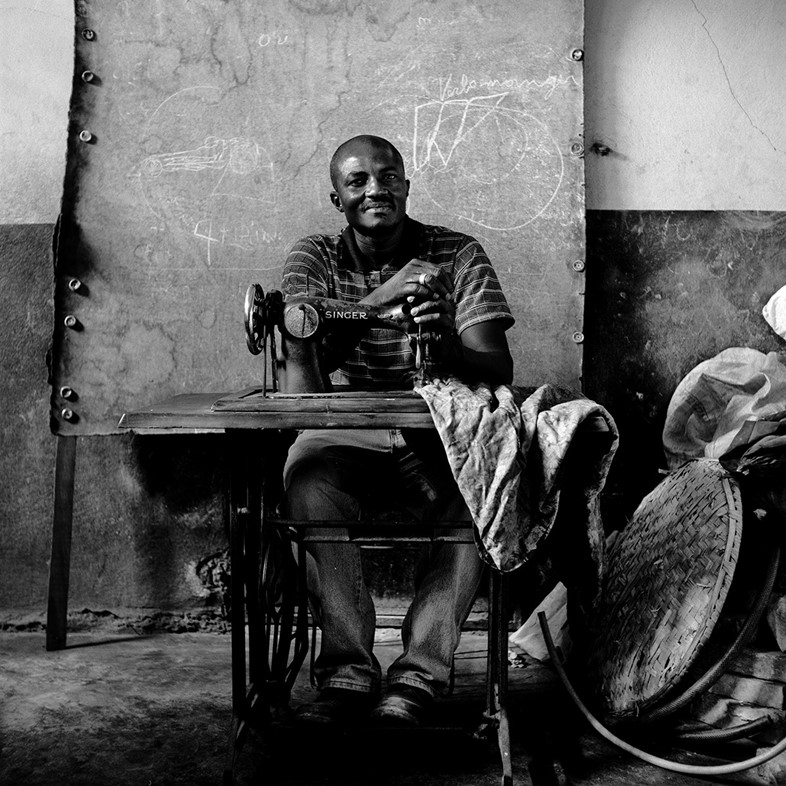
La Baze featured in Leah Gordon's series about the surviving tailors of Port-au-Prince (there's a beautiful portrait of him sitting at his turn-of-the-century Singer sewing machine). He also worked with Gordon on her project exploring caste in Haiti, making detailed historical costumes for her models, including richly embroidered robes and a Phrygian cap worn by Eugène. Like most Haitian tailors, he finds the majority of his work making school uniforms, one of the few garments still produced locally. But he continues to reimagine pèpè, creating artistic pieces to sell overseas when he can. He enjoys the process of transformation – of turning something old into something new.
“It’s hard to be an artist in a developing country,” says La Baze over the phone. “There are lots of difficulties. Nowadays people don’t appreciate artistic clothing, and even if they do they can’t afford it. But it's an artform I love. Since the day we were put on the Earth we’ve made clothes – from the leaves of trees, from animal skins. It’s the earliest craft that we have.”
In a world in which vast quantities of clothing end up in landfill, pèpè presents an opportunity. Recycling fabric from pèpè or transforming it into high-value garments for the international market could be a boon to the Haitian economy, but to unlock its potential, the country needs change.
La Baze looks back fondly on the Made in Haiti project. “We worked a lot! But it didn’t last,” he says. “In Haiti, projects like that are handicapped. The truth is, things aren’t working here. Tourists can’t come. There's no work, no money. Art is sleeping.” He hopes there will be more collaborations in the future. “That’s the thing about fashion: you can’t do it alone.”
Georgetown couple giving Haiti's orphans a safe place to call home
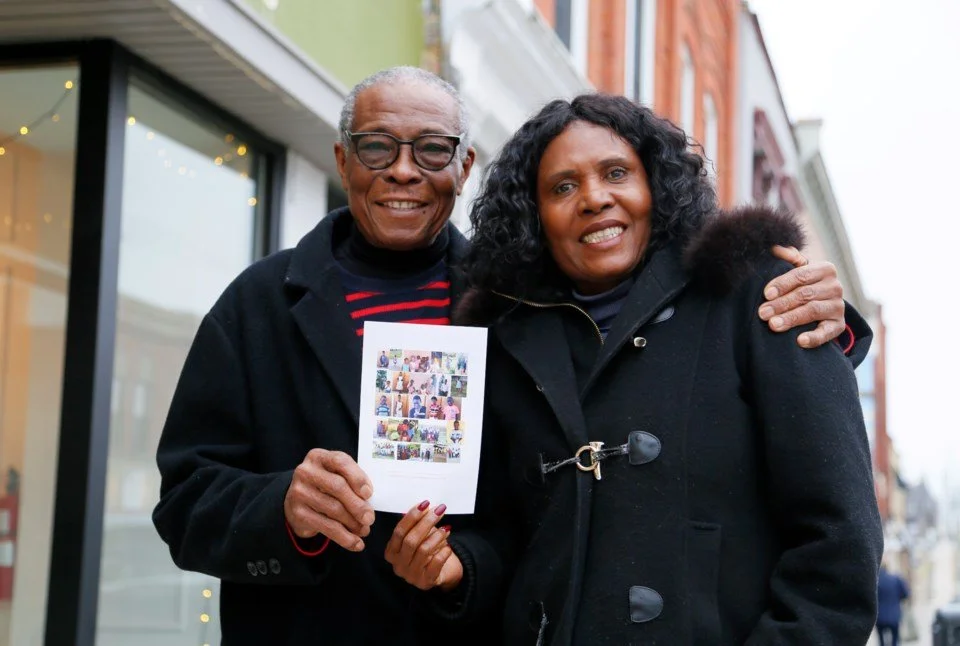
Local woman Camille Otum founded a charitable organization that runs an orphanage in Haiti after a visit to her hometown left her appalled by the conditions.
A Georgetown couple is making a difference in the lives of children thousands of miles away.
Camille and Sam Otum are the faces behind Welcome Home Children’s Centre Inc. (WHCC), which operates an orphanage in Cabaret, Haiti, a municipality about 25 km northwest of the capital Port-au-Prince.
The services the WHCC provides may appear mundane to Canadian eyes, but they are life-changing to the orphans. Their mission is to give abandoned and exploited children housing, schooling, healthcare, access to hygiene and recreation, among many other things.
The end goal of the volunteer-run, donation-funded organization is to provide the children what they've been denied: self-confidence and education.
Camille moved to Canada from Haiti when she was 19 years old. She has lived in Georgetown for over 30 years now. When she went back to her hometown of Cabaret in 2006, she was appalled by what she saw. It wasn’t the Cabaret that she remembered.
“I saw children eating from the garbage. I saw girls younger than my daughter with older white ‘friends,’” she said, explaining the latter is a situation commonly seen when a child is being exploited.
After coming back to Canada, she was determined to make a difference. The ball began to roll on what would become WHCC.
“When my wife wants to do something, she doesn’t stop,” said Sam Otum, president of WHCC.
This determination, with help from her husband, birthed the organization.

It was registered as a charity in 2008, with doors opening to orphans the following year. But the orphanage of today took a little while longer to take shape.
As a temporary measure to start, they used an ordinary home in Cabaret, but it didn't have electricity or indoor plumbing. The Otums were determined to have their kids experience these amenities, which are luxuries in Haiti.
In 2011, they acquired a two-acre property and built the orphanage of today.
The pair envisions developing the orphanage further into a campus of sorely-needed buildings like separate boys' and girls’ housing, a library, a central common gathering place, an administrative building and a kitchen. This second phase had to be postponed due to the pandemic.
Currently, the complex consists of a guest house - where the orphans live - a guard house and solar panels. A wall also surrounds the property to protect the children from the unsafe environment around them.
The situation in Haiti means the children are only safely able to be in three locations: the WHCC property, school and church.
“Even to school, they need a driver. We are a Canadian organization. We have to keep them safe,” Camille said.
The United Nations recently announced a Kenya-led peacekeeping mission to Haiti. The couple is hoping this will create a safe environment for them to return to the country and continue their work.
For further details or to support WHCC, visit WelcomeChildren.org.

Haiti Needs the U.S. and the U.S Needs a Stable Haiti
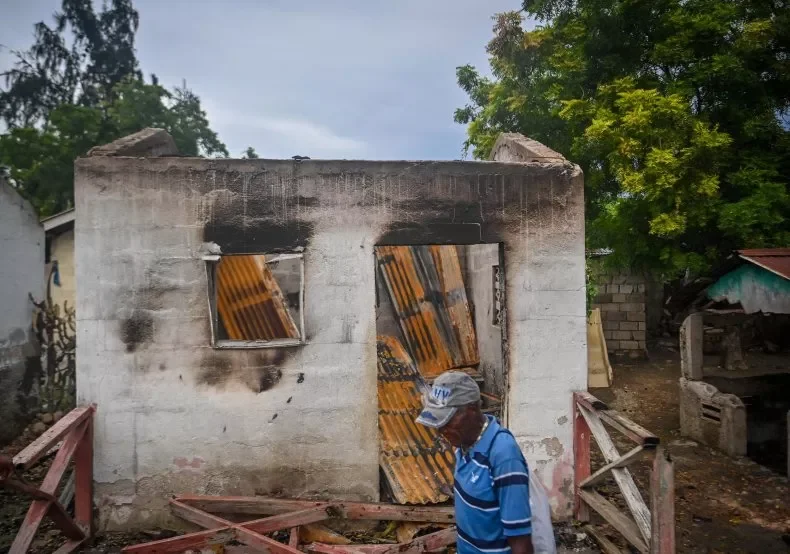
Haiti continues to devolve further into lawlessness. Over 75 percent of the capital, Port-au-Prince, is controlled by gangs. Haitians continue to see their living situation and access to food, water, and health services deteriorate. The desperation is now leading to a significant increase in movement of people into the interior of Haiti, overwhelming the already minimal support services in these areas. The United States and other well-resourced countries have a responsibility to step up and provide Haiti with humanitarian support and diplomatic engagement during these challenging times. This is not only essential for Haiti's survival, peace, and effective governance; it's essential for our U.S. and global security.
Criminal gangs are forming alliances and have extended their reach into rural areas that were once safe havens, which is likely a reactionary response to the impending deployment of the Multinational Security Support (MSS) Mission endorsed by the United Nations. In the Grand Sud area in southwest Haiti—where my organization, Project HOPE has been running health programs whenever possible since 1984—we now regularly observe and treat people who have migrated in large numbers from Port-au-Prince to Les Cayes. Haitians are seeking safety and better conditions for themselves and their families, even if that means they are leaving their homes to sleep in makeshift camps. We are doing what we can to provide primary and mental health support through mobile medical units that see over 500 patients a day, but this is far from enough.
Despite everyone's best efforts, gang control over vital ports and access routes continues to disrupt the flow of goods, including humanitarian aid. Project HOPE has already seen a 25 percent increase in our operating costs over the last 12 months, including higher costs for security, infrastructure, fuel, transport, goods, and services. One of our fuel drivers was fired upon recently in an attempted hijacking, but thankfully he was not injured.
The deplorable conditions are leaving Haitians with little choice but to consider extreme and risky migration decisions, including the treacherous journey through the Darien Gap in Central America toward the U.S. and Mexico border. In September and October alone, an estimated 31,000 Haitians migrated to Nicaragua with hopes of continuing north.
In the face of this escalating crisis, the time for action is now. A comprehensive and balanced approach is needed to address the issue of violence. Some actions can be taken immediately, such as confirming the U.S. ambassador to Haiti and opening additional ports outside of Port-au-Prince to ensure the safe delivery of humanitarian aid.
The success of any action will require working closely with Haitians in country and within the diaspora. The severity of a situation so close to the U.S. border calls for a comprehensive strategy that recognizes the interconnected nature of the challenges faced by the country. The U.S. must continue to play a leading role with Haitian and global leaders and much more seriously engage in long-term efforts to promote stability, security, and resilience. For instance, bipartisan House Resolution 471, introduced by Representative Michael Lawler (R-N.Y.), would go a long way to facilitate U.S. diplomatic efforts to promote stability, security, and resilience in Haiti.
The resolution is "calling for the redoubling of diplomatic efforts by the United States and its international partners to help achieve a negotiated, Haitian-led solution to the current impasse in Haiti that paves the way for broadly representative interim government to oversee the return to constitutional rule through free and fair elections."
The U.S cannot and should not remain in this weak position to forge progress in a country so close and vital to our interests—which also further delays security and stability for the people of Haiti and the region. Although the road ahead may be difficult, by joining forces and taking decisive diplomatic action, we can help to prevent Haiti from devolving further and save countless lives in the process.

For The D.C. Region’s Haitian Community, Soup Joumou Is More Than A Meal

For many Haitians, soup joumou is more than just a food dish, it’s a symbol and embodiment of freedom from enslavement.
Typically, it can be prepared with onions, peppers, celery, herbs, and lots of other ingredients, depending on who’s making it. But it’s centered on winter squash – a crop that Africans were forced to grow during the rule of French colonialism.
Back then, they not only had to work the land but also prepare soup joumou, which they were prohibited from eating, for their French oppressors.
“They could lose their life if they were caught eating those types of food,” says chef Roberto Massillon, who was born in Haiti and now owns Port-au-Prince Haitian Cuisine in Silver Spring, Md.
On Jan. 1, 1804, Haiti declared its independence from French colonialism following a successful uprising that was led by former slaves, including Toussaint Louverture. As a result, Haitians were able to eat soup joumou and celebrate their freedom. Today, many Haitians around the world and in the D.C. region eat the soup every year to honor their ancestors and culture.
“Every time we are celebrating our independence, we have to have this soup. It’s really something very – it’s holy for us,” says Massillon.
On Wednesday, dozens of people gathered as a community at Port-au-Prince restaurant to not just commemorate their history but to fundraise for Hope for Haiti, a nonprofit based in Florida that has a presence in the D.C. region. It partnered with Chef Massillon to prepare more than 100 bowls of soup joumou – the funds from their sale would be used to support health care, education, and business grants in southern Haiti.
Maritza Dietrich, an events manager for Hope for Haiti, says she wanted the event to create a space for the local Haitian community to come together and also to welcome people of different cultures – especially, those who’ve never had soup joumou before.
 Chef Roberto Massillon, who is also a U.S. Army veteran and a linguist in the U.S. State Department, says he feels like a kind of "ambassador" who gets to represent his culture and cuisine within the D.C. region.Héctor Alejandro Arzate / DCist/WAMU
 Marcel Pean, left, who describes himself as first generation Haitian-American, sits next to Roddy Denor, right, who was born and raised in Haiti.Héctor Alejandro Arzate / DCist/WAMU
 According to Chef Roberto Massillon, Port-au-Prince Haitian Cuisine in Silver Spring, Md., is one of the few Haitian restaurants in the region and offers soup joumou on most Sundays.Héctor Alejandro Arzate / DCist/WAMU
“That’s such a great way to connect with the people in the DMV community,” says Dietrich, who was born in Haiti and lives in Silver Spring. “It’s very important for us Haitians to find our community because we draw strength from togetherness and being united.”
Like Massillon, Dietrich says she feels honored to be able to eat and share the hard-won Haitian dish with others. “What was once forbidden is now ours because we’ve worked hard for it. And so in drinking soup joumou or eating soup joumou, we’re reminded of the sacrifices that brave men and women made for us so we could be who we are now.”
According to Dietrich, the soup is truly meant to be shared with others. She recalls that when she was growing up, it was tradition to prepare it at home and then go from neighbor to neighbor to try their version.
“It’s that sense of community that we’re finding here,” says Dietrich. “And it’s like a pillar.”
Among those who stopped by the restaurant was Dietrich’s neighbor, David Blay. He says he wanted to come to support the fundraiser and the community, and it was also his first time having soup joumou.
“You know what? It tastes very good,” says Blay, who was born in the Ivory Coast. “Like a hint of ginger with some carrots. Very different I would say, but good.”
Silver Spring and the surrounding area are home to a diverse array of businesses representing African and Caribbean cultures – including Port-au-Prince Haitian Cuisine and nearby Ethiopian restaurants and cafes. For Blay, that calls for celebrating twofold.
“It shows to me how much of a community downtown Silver Spring is. You meet people from all different countries, all over Africa, the diaspora. And it’s a beautiful thing to see,” says Blay.
 Loide Jorge, who is married to Massillon, helps serve soup joumou to customers.Héctor Alejandro Arzate / DCist/WAMU
 “It's very important for us Haitians to find our community because we draw strength from togetherness and being united," says Maritza Dietrich, an events manager for Hope For Haiti.Héctor Alejandro Arzate / DCist/WAMU
 “It shows to me how much of a community downtown Silver Spring is. You meet people from all different countries, all over Africa, the diaspora. And it's a beautiful thing to see,” says David Blay, who was born on the Ivory Coast.Héctor Alejandro Arzate / DCist/WAMU
Marcel Pean, who describes himself as first generation Haitian-American, says he grew up speaking Creole and eating his grandma’s soup joumou back in Memphis, Tenn. But it wasn’t until he got older that he began to better understand the history and politics of Haiti.
He says he’s glad he stopped by for more than just a familiar bite.
“That’s really inspiring for me to see how many people are actually connected and involved in the Haitian community,” says Pean, who lives in D.C. “It’s not just Haitians that are here. There are people from all over the place.”
Chef Massillon, who is also a U.S. Army veteran and a linguist in the U.S. State Department, says he feels like a kind of “ambassador” who gets to represent his culture and cuisine within the D.C. region. For him, that’s especially important because, he says, Haiti is oftentimes overlooked and reduced to a single image.
“It’s not always like the poor country. The poorest country in the Western Hemisphere. Because if you look at Haiti, it’s a rich country. It is rich in culture. It is rich in history. There’s so much people can learn about Haiti.”
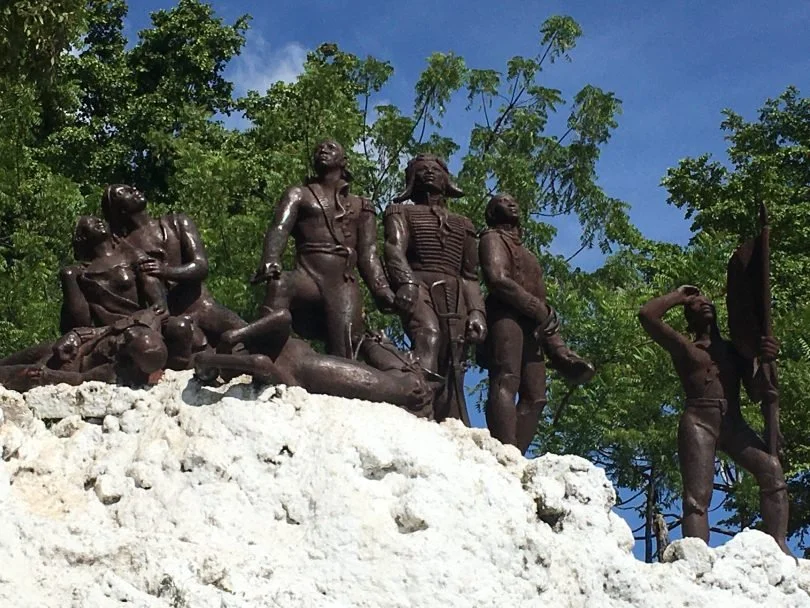
HOW HAITI DESTROYED SLAVERY AND LED THE WAY TO FREEDOM THROUGHOUT THE ATLANTIC WORLD
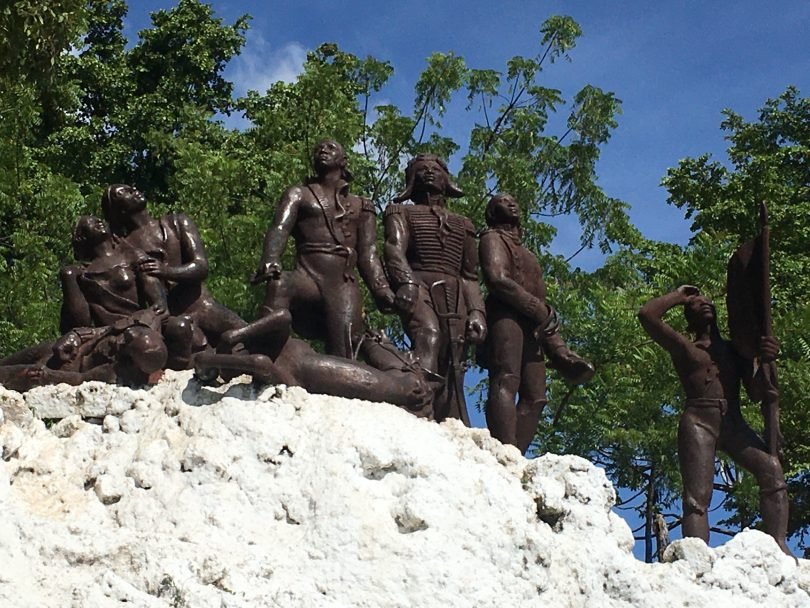
In this series commissioned by Marlene L. Daut, scholars reveal what 220 years of Haitian independence means for how we tell the story of abolition and the development of human rights around the world.
The first land to be colonized in the Americas was Haiti. Europeans first enslaved native Americans and captive Africans there, too. But the first permanent abolition of slavery also happened on Haiti, in 1804: 220 years ago this month. Such abolition only occurred in the rest of the Americas later, much, much later.
Haiti’s radical defeat of French colonizers and enslavers—which opened the door for slavery to be outlawed everywhere in the Atlantic World—is not how abolition is remembered today. Instead, conventional accounts of the end of slavery in the Americas typically center ideas about human rights from the United States, Great Britain, and France. The popular narrative of slavery and abolition usually begins with white Europeans from Spain and Portugal colonizing the Caribbean and the Americas, replacing native populations with captive Africans whom they forced into harsh labor as slaves. It continues with the rise of the plantation supported by the English, French, and Dutch and their advent of scientific racism. In these accounts, it was only after abolitionist pamphlets and lectures culminated in bans on the international slave trade in Great Britain and the United States that the age of abolition opened, eventually leading to the US Civil War, which ultimately ended slavery.
This conventional (and terrifically flawed) story of abolition is circular (white Europeans and their US descendants established slavery only to destroy it); almost magical (with the stroke of a pen a few white men upended 400 years of slavery); preordained (abolition could not have happened any other way); evangelical (thank God and Abraham Lincoln); and warrants gratitude, not reparation (descendants of the enslaved are lucky to be free). Yet this narrative oversimplifies and distorts the reality. Yes, there were abolitionists, revolutionaries, lawmakers, and philanthropists involved in abolition, but Haiti and Haitians are most often left out of the story of who the abolitionists were, where they first emerged, and how we got from slavery to abolition in the first place.1
Haiti was founded by formerly enslaved Africans from the French colony of Saint-Domingue (indigenous name: Ayiti), who threw off the yoke of French rule during the Haitian Revolution (1791–1804). Haiti then became the first nation to permanently abolish slavery, three decades before Great Britain, over four decades before France, and more than six decades before the US. Now, let’s take a look at some examples of how this history is ignored, if not outright dismissed, in standard accounts of how the world went from slavery to abolition.
In a recent article published in the New York Review of Books, Sean Wilentz characterized antislavery sentiment in the period leading up to US independence as an “antislavery revolution inside the American Revolution.” At that time, the Africans vastly outnumbered the white Europeans that enslaved them across the Americas. Even so, Wilentz matter-of-factly declared that “prior to the mid-eighteenth century” slavery stood “almost unquestioned anywhere in the world,” except, he acknowledged, “by the enslaved.” Referring to some meager antislavery pamphleteering in the era, Wilentz further pronounced that it was the American Revolution that “challenged ancient assumptions about human bondage” and “created the first antislavery political campaigns and movements in modern history.” With this wave of the hand, Wilentz erased much earlier antislavery resistance (and divested it of import) on the part of American natives and the first captive Africans Europeans brought to the Americas.
The bare truth is that the American Revolution did nothing to advance global abolition. Instead, it was the constant resistance of the people they were enslaving that led any of the North American colonists to challenge the “ancient idea” that human beings should ever enslave other human beings. It is only through suggesting that the ideas, feelings, and actions of Black Africans and American natives do not matter that the mere existence of antislavery opinion among white early Americans can be said to have “prove[d] to be the beginning of slavery’s destruction, not just in the newborn United States but throughout the Atlantic World.”2 In reality, drastic, effective changes in white public opinion about slavery in western Europe and the United States only occurred after the Black apotheosis in Haiti that inaugurated the age of abolition in 1804.
Similar ignorance about the Haitian Revolution’s material, rather than uniquely aspirational, destruction of slavery is precisely what has allowed the country’s former colonizer, France, to proclaim another related, and similarly blatant, falsehood: that France became the first country, in 2001, to declare slavery a “crime against humanity.” Because the metropolitan French school system does not include teaching about the Haitian Revolution, France’s most prominent newspaper, Le Monde, recently trumpeted this inaccuracy when its reporter Julien Vincent announced, “For the first time, in a solemn law, a nation described the slave trade and slavery as ‘crimes against humanity.’” Vincent was clearly unaware that Haiti had already declared slavery to be a crime against humanity in 1807, nearly two centuries before.3
Such long-standing errors and misrepresentations have ricocheting and ever-expanding consequences. On August 21, 2023, Manchester mayoral candidate Nick Buckley tweeted an image of the Union Jack stamped in all caps with the words, “Great Britain ended the international slave trade. No one else did it. We did it. Some gratitude is overdue.”4 Buckley has been tweeting, YouTube-ing, and blogging this lie since at least November 10, 2021, when he infamously declared in an article titled “Britain & Slavery: A Forgotten History,” “The more I read about slavery, the more I realise I know nothing.” Buckley then went on to state, “The British have an amazing and proud history in fighting slavery. Not just in the UK, but outlawing the practice in most of the world.”5 If Buckley had intellectual rather than ideological interest in the history of slavery, he would have learned that Great Britain only abolished the slave trade in 1807, three years after Haiti—whose existence as an independent and slavery-free state was a huge factor in parliament’s decision to legislate the ban—and that the British did not go on to abolish slavery itself until 1833/1834.
Despite their belated willingness to join the age of abolition, the United States, France, and Great Britain have historically credited themselves with the eventual destruction of the transatlantic slave trade and the elimination of slavery—in the name of love for human rights, of all things—that they instantiated in the first place. The Trinidadian historian Eric Williams complained about this way back in 1944, in his groundbreaking Capitalism and Slavery, when he wrote of the “humanitarians” who helped “spearhead the onslaught which destroyed the West Indian system and freed the Negro”: “their importance has been seriously misunderstood and grossly exaggerated by men who have sacrificed scholarship to sentimentality and, like the scholastics of old, placed faith before reason and evidence.”6 In the Haitian case, we must stress that the revolutionaries spearheaded the end of slavery with their physical acts and deeds before they turned to legislating abolition in the new state they proclaimed in 1804. The “humanitarians” who helped make Great Britain the first European country to legislate abolition of the slave trade in 1807, thus followed in the stead of the Haitian revolutionaries.
To fully understand the momentousness of Haiti’s inaugural and largely silenced role in defining the modern freedoms the world now takes for granted—by outlawing slavery and declaring it and the slave trade crimes against humanity—we must dispense with the idea that New World Africans were mere hitchhikers on a highway of historical progress, inordinately moving forward along with the one-way traffic that took the world from slavery to freedom. The Haitian Revolution, long excluded from traditional accounts of the age of abolition, was in fact its heart.
A new history lesson is in order.
Let us start by glancing backward, to the moment of Columbus’s 1492 arrival on the island of Ayiti (renamed La Española, or Hispaniola, by the Spanish crown). Before the Spanish arrived, Ayiti’s original inhabitants lived in five main principalities spanning more than 75,000 square kilometers: Magua, Marien, Maguana, Xaragua, and Higuey.7 There was never a peaceful coexistence between the Spanish and the Ayitians, as Columbus and his European invaders made immediate war against the natives for resisting their domination.
A Cacique leader named Caonabo, who ruled over Maguana, led one of the most ardent oppositions. But, in 1496, the Spanish captured Caonabo and attempted to deport him to Spain. Though Caonabo died on the ship before he reached Europe, the spirit of Ayitian freedom did not perish with him. A few years later, the Spanish arrested his wife, the Cacique queen of Xaragua, Anacaona. She had refused to become the concubine of a Spanish official. In response, the Spanish executed her with several hundred Xaraguans.8 Still, resistance continued.
In 1519, Anacaona’s nephew Enriquillo escaped into the mountains. After amassing arms, he convinced hundreds of other Ayitians, as well as dozens of enslaved Africans, to follow him. Enriquillo subsequently waged a 14-year war against the Spaniards, establishing a maroon state in the mountains of Bahoruco (present-day Dominican Republic). Enriquillo’s rebellion only ended when he agreed to a dubious “peace treaty.” Although Enriquillo’s brief submission in 1533 (he died one year later) marked the symbolic end of indigenous opposition, his defeat was hardly the end of the story of antislavery and anticolonial resistance on the island of Ayiti.
In fact, it was only the beginning. There was always coterminous enslaved African rebellion too.
In 1501, the Spanish king and queen passed a law authorizing the transportation of captive Africans to La Española for slavery. The newly arrived Africans tried to escape or wage war nearly as fast as the Spanish could force them onto the island.9
The largest armed revolt of some of the first Africans on the island happened in 1521 on a plantation owned by then governor of the colony Diego Colón, son of Christopher Columbus. The day after Christmas, in what became known as the Christmastime Rebellion, Africans enslaved by Diego joined together with those from a neighboring plantation and took up arms. They attacked their “masters” and set fire to several plantations. When their actions did not spark general rebellion, these enslaved freedom fighters retreated to the mountains. When Diego learned of their attempt at freedom, he gathered his troops and led them in pursuit of the “rebels.” Diego’s troops subsequently beat and killed most of the freedom fighters.10
The key point is that Europeans were only able to severely reduce the native populations of the Americas through violent warfare; and they were only able to institute and maintain the transatlantic slave trade and chattel slavery by outright dismissing and viciously suppressing blatant protest of their actions. Still, European violence against native Americans and captive Africans is only one side of the story.
The other, less popularly discussed side reveals that enslaved individuals acted persistently to free themselves. We could talk about captive Africans who threw themselves en masse, and sometimes holding hands, into the sea from aboard slave ships, for example, or that marronnage, or fugitivity from slavery, was rampant, leading to large maroon communities across the Americas. The earliest rebellions and other attempts to resist slavery and colonialism on Ayiti (as well as on Cuba, Jamaica, and elsewhere) demonstrate that opposition to colonialism and the transatlantic slave trade on the part of the people Europeans enslaved was far more complicated, nuanced, and complex than is usually portrayed in European accounts of their “settlement” of the so-called New World.
IT WAS THE CONSTANT RESISTANCE OF THE PEOPLE THEY WERE ENSLAVING THAT LED ANY OF THE NORTH AMERICAN COLONISTS TO CHALLENGE THE “ANCIENT IDEA” THAT HUMAN BEINGS SHOULD EVER ENSLAVE OTHER HUMAN BEINGS.
We can carry this perspective forward into the age of the Haitian Revolution.
In 1697, the French took over the western side of La Española, renamed it Saint-Domingue, and in only one century’s time, forcibly transported 900,000 captive Africans to toil as their slaves. Sugar was king in Saint-Domingue and earned the colony the dubious reputation of being the “pearl of the Antilles.” The white French colonists of Saint-Domingue subjected the Africans they enslaved to some of the cruelest tortures in the Atlantic World. The enslavers burned and buried their captives alive; severed their limbs, ears, and other body parts; bled them to death; and nailed them to walls and trees, while also subjecting them to routine branding with hot irons and other mutilations meant to signify ownership.11
One of the most famous early accounts of enslaved resistance to French colonial repressions is that of a fugitive enslaved man named François Makandal. The white colonists accused him of using poison, as well as a vast network of runaway slaves (or maroons), to sow the seeds of rebellion in Saint-Domingue in the 1750s. Upon his capture in January 1758, French colonial officials ordered Makandal burned alive at the stake, an act that was only one of a series of high-profile executions of maroon leaders in the eighteenth century. However, just as colonial officials set the fire, local storytellers insist that Makandal transformed himself into a mosquito and flew away. The escape of a slave in marronnage was the ultimate counterslavery power move, whether in life or in death.
Even without violent rebellion, enslaved Africans in the colony resisted slavery in countless ways. The island’s maroons, for example, had been raiding and devastating crops since 1719, particularly in the Sud-de-Cap region.12 Their attempts to resist and disrupt slavery cumulatively challenge the notion (repeated in many textbooks and by many journalists) that enslavers were merely “men of their time,” who should not be subjected to “that righteous mode of judging yesterday according to the ideological framing of today.”13 Captive Africans and American natives were people of their time, too. In their own day, long before any white abolitionists or European lawmakers came on the scene, native American and African men, women, and children—victims of white European violence—very clearly denounced, resisted, and ended slavery and colonialism for themselves.
This unquenched and constant opposition to slavery smoldered on the island of Saint-Domingue for nearly three centuries. Finally, a larger flame alighted on August 14, 1791, in a forest in the north called Morne Rouge, when a group of enslaved people clandestinely plotted the revolution. Their plot exploded into literal fire less than two weeks later, on August 23, when the enslaved began burning down plantations and cane fields all over the northern plain. By the middle of September 1791, over 1,500 coffee and sugar plantations had been destroyed; and by the end of the year, between 40,000 and 80,000 of the enslaved were in open rebellion.
In 1793, the famous Toussaint Louverture had risen to prominence and his army successfully forced the formal liberation of all Saint-Domingue’s enslaved people. At the turn of the century Louverture even established the island as a semiautonomous colony. Yet in 1799, a French general named Napoléon Bonaparte assumed power in France and made it his mission to get rid of Louverture so he could bring back slavery.
In late 1801, Bonaparte sent his brother-in-law, General Charles Victor Emmanuel Leclerc, with 30,000 French soldiers to the shores of Saint-Domingue. Arriving at the end of January 1802, this was the largest military expedition to ever set sail from France. Leclerc and his army, which eventually comprised more than 60,000 soldiers, proceeded to rain down a murderous and genocidal campaign upon the island’s Black inhabitants. The French used, alongside more conventional weapons, floating gas chambers, hangings, drownings, and dog attacks.
Yet French attempts to reinstate slavery met fierce resistance. General Henry Christophe, the future king of Haiti, even burned the colony’s principal port city of Cap-Français to prevent French military occupation.
Things took a dramatic turn in June 1802, when the French army tricked General Louverture into a meeting. The French subsequently arrested and deported him to France. In April 1803, Louverture’s French jailers reported they found him dead in the cell where they had denied him medical care and starved him to death.14 The news of Louverture’s terrible demise only encouraged the revolutionaries, now led by the formerly enslaved General Jean-Jacques Dessalines, to fight for “Independence or Death!” The Haitian revolutionaries, who adopted the title of the armée indigène, or indigenous army, defeated French forces at the famous Battles of Vertières on November 18, 1803. They declared their preliminary independence from France about ten days later, on November 29.
On January 1, 1804, the Haitian revolutionaries made their independence official and changed the name of the island from Saint-Domingue back to its indigenous appellation Ayiti (Haïti in modern French spelling). “It is not enough to have expelled the barbarians who have bloodied our land for two centuries,” Dessalines announced in the famous speech he gave while presenting the Haitian Declaration of Independence on New Year’s Day. “It is not enough to have restrained those ever-evolving factions that one after another mocked the specter of liberty that France dangled before you. We must, with one last act of national authority, forever assure the empire of liberty in the country of our birth; we must take any hope of re-enslaving us away from the inhumane government that for so long kept us in the most humiliating torpor. In the end we must live independent or die.”15
One year later, in May 1805, Haiti (which had become an empire under Dessalines, who adopted the title Jacques I) saw its first constitution ratified. Articles 2 and 3 solidified into constitutional law the founding prohibition against slavery and the slave trade: “Slavery is forever abolished” and “Equality in the eyes of the law is incontestably acknowledged.”16
Although Dessalines was assassinated by members of his own army in October 1806, all subsequent constitutions in early Haiti repeated the interdiction against slavery. And in May 1807, the Haitian statesman and journalist Juste Chanlatte changed the trajectory of global political thought when he declared slavery a “crime against humanity.” In an article he penned for northern Haiti’s official newspaper, the Official Gazette of the State of Hayti, Chanlatte wrote of the Spanish and Portuguese inventors of the transatlantic slave trade, “They were a fierce people who dared to teach others to tolerate such a crime of lèse-humanité!”17
TO IGNORE OR DISMISS THE MOMENTOUSNESS OF HOW HAITIANS OPENED THE AGE OF ABOLITION WITH THEIR WAR FOR INDEPENDENCE, A NOT AT ALL INEVITABLE HISTORICAL EVENT, IS TO SHRUG OFF HISTORY.
Today, it is established that slavery is wrong and inhumane. It is so well-established, in fact, that it is easy to forget that the Europeans who enriched themselves from enslaving Africans in the Americas did everything they could to prolong slavery, despite African and native American resistance to their domination. The fact that the state of Vermont took patently incomplete steps toward abolishing slavery in 1777, and that in an earlier draft of the US Declaration of Independence, Thomas Jefferson railed against the evils of slavery while hardly proposing its abolition, demonstrates the utter determination of the US founders to preserve chattel slavery.18 Indeed, in the 1780s, while creating the US Constitution, congress claimed not to have the authority to act to abolish or limit slavery until 1808, the year of the proposed ban on the international slave trade.19 The US republic was founded on principles designed to preserve slavery for as long as possible. This contrasted greatly with Haiti, founded on principles designed to uphold and spread freedom.
Haitian independence forced those across the hemisphere not simply to espouse antislavery ideals, but to take material steps to bring about immediate emancipation. In 1816, Venezuelan freedom fighter Simón Bolívar requested support from Haiti in his war of independence from Spain. In response, Haiti’s then president Alexandre Pétion offered material and economic aid—money, ammunition, weapons, and soldiers—but only if Bolívar agreed to abolish slavery. In 1819, Bolívar founded the short-lived state of Gran Colombia (comprising today’s Venezuela, Bolivia, Colombia, Ecuador, Peru, and Panama). By 1821, enslaved people in Bolívar’s Gran Columbia achieved their liberty, thanks to the insistence and assistance of the Haitian government.
After that, the tide of abolition unleashed by the Haitian Revolution persistently rose, until it grew into an unstoppable swell. Mexico began to gradually abolish slavery in 1821, immediately following its own war of independence from Spain, achieving full emancipation by 1829. In 1833—one year after the Great Jamaican Slave Revolt of 1831–32, also known as the Baptist War—Great Britain abolished slavery (with full implementation in 1838). France definitively abolished slavery as a part of the French Revolution of 1848. Most of South America then saw slavery’s end by 1850, with the Netherlands declaring abolition in 1863. The United States most directly followed the path of the Haitian Revolution, achieving unilateral emancipation only after a long and bloody war from 1861 to 1865. Never again would the fight to end (or preserve) slavery reach the same intensity. In the wake of Haiti’s tsunami, the abolition of slavery emerged more like coastal erosion on the shores of Puerto Rico (1873), Cuba (1886), and Brazil (1888).
This long interval does not demonstrate that the Haitian Revolution’s message of freedom for all, regardless of skin color, was ineffective. Instead, it showcases the stubborn, racist, and violent determination of the rest of the Atlantic World—people and their national governments—to preserve slavery for an embarrassing amount of time, given the profound example set by Haiti.
Other rulers in the Atlantic World could have followed in Haiti’s stead to end slavery right after the Haitian Revolution. Instead, most held out, until the contradiction of a free Black nation in the Western Hemisphere overwhelmed their own colonies and nation-states with slave rebellions, threatening to split them open with revolution and civil war. To ignore or dismiss the momentousness of how Haitians opened the age of abolition with their war for independence, a not at all inevitable historical event, is to shrug off history.
In 1998 UNESCO designated August 23 as the International Day for the Remembrance of the Slave Trade and Its Abolition, in honor of the Haitian Revolution, which formally began on that day in 1791.20 But the occasion usually comes and goes, as it did in 2023 and 2022, and all the years before, with only a passing mention, if it is noticed at all, by mainstream media outlets.
This lack of recognition is sadly not surprising. While the contemporary world stands in near universal agreement that slavery is morally wrong and abhorrent, how that consensus came about remains filled with convenient silences about Haiti.
In 1945, the Nuremberg Charter, whose creators did not acknowledge the precedent set by Haiti, declared slavery a “crime against humanity.” That declaration was repeated by the International Court of Justice in 2001, the same year that France belatedly passed the Taubira Law recognizing the same.21 Neither charter referenced nor referred to Haiti, either. Now—with some politicians in the United States fighting to prevent honest discussions of race and racism in the classroom—how we teach the history of slavery and abolition has become more of a hot button election issue than perhaps ever before.22 This is not the time for further distortion. What we need are more, not less, honest discussions.
My hope for 2024, and every year hereafter, is that those who write about slavery’s abolition for the public sphere will not elide or skip over the Haitian Revolution and its precursors in early modern Ayitian and enslaved African resistance. It was not the United States, Great Britain, or France that first ended slavery. It was Ayiti/Haiti. This bare fact puts Haiti at the vanguard of one of largest and most extensive human rights movements in the world, something that should be taught in every classroom. The first abolitionists were the enslaved themselves.

Judge in Haiti issues arrest warrants accusing former presidents and prime ministers of corruption
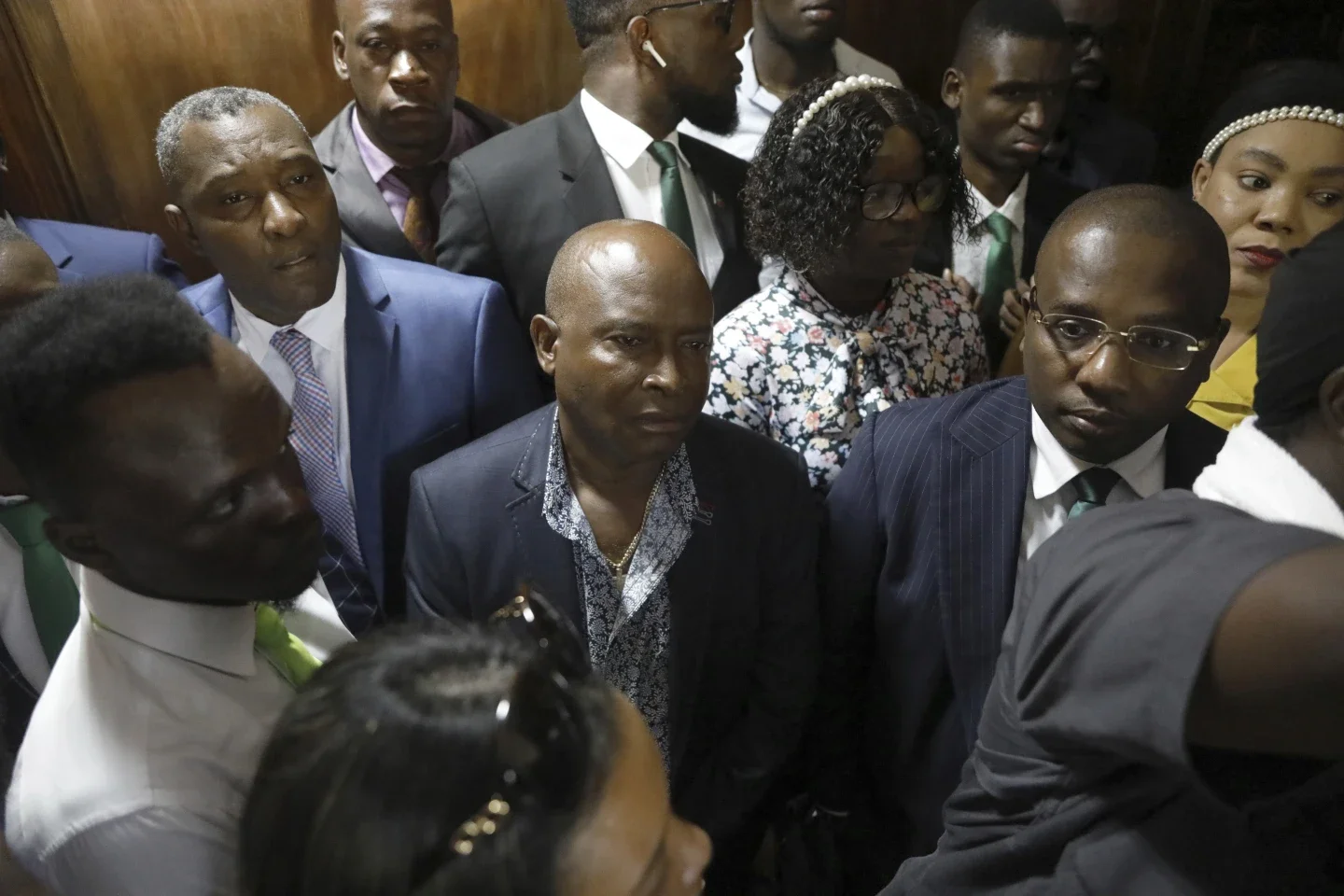
PORT-AU-PRINCE, Haiti (AP) — A judge in Haiti has issued arrest warrants for more than 30 high-ranking officials accused of government corruption, including numerous former presidents and prime ministers.
The warrants, issued Friday and leaked on social media over the weekend, accuse the officials of misappropriation of funds or equipment related to Haiti’s National Equipment Center. The center is responsible for using heavy machinery for tasks such as building roads or clearing rubble, especially after earthquakes.
Among those named are former presidents Michel Martelly and Jocelerme Privert, as well as former prime ministers Laurent Lamothe, Jean-Michel Lapin, Evans Paul and Jean-Henry Céant.
None of those named in the arrest warrant could be immediately reached for comment, although Privert and Lapin issued statements denying the allegations.
No one has been arrested in the case. No further details about the investigation were immediately available.
Judge Al Duniel Dimanche has requested that those accused meet with him for questioning as the investigation continues. The judge could not be immediately reached for comment.
It is common for Haitian government officials accused in a criminal or civil case to ignore arrest warrants or requests for questioning and face no punishment as they accuse judges of political persecution. It is also rare for any high-ranking Haitian official to be charged with corruption, let alone face trial.
Local newspaper Le Nouvelliste obtained a copy of a statement issued by Lapin in which he says that he was never officially notified of the arrest warrant. He also said that at no time during his 32-year political career did he ever become involved with the National Equipment Center.
“I have also never requisitioned or requested the use of any equipment from this institution for my personal needs or for loved ones,” he said.
Privert issued a statement accusing the judge of acting maliciously and thoughtlessly. He also asserted that the Court of First Instance in the capital of Port-au-Prince “has no jurisdiction over the actions taken by presidents, prime ministers and ministers in the exercise of their functions.”
Former prime minister Claude Joseph, who is not named in the arrest warrant, said he met with the judge on Monday in case he could help with the case.
“No one, regardless of the position you held in the state, is above the law,” he wrote on X, formerly known as Twitter, ahead of the meeting. “If a judge decides to abuse his office by abusing justice, that is his business. I will not despise the justice of my country. I will be present.”