


Excited to announce my partnership with @jphro Join us in helping the people of Haiti

Evanston, New Trier collect hundreds of soccer cleats for Haitian kids
Evanston and New Trier may be rivals on the soccer field, but the two boys programs teamed up recently to donate hundreds of pairs of shoes, many of them soccer cleats, to orphans in Haiti.“Cleats for Haiti,” as Evanston boys soccer coach Franz Calixte called the first-time effort, began this past summer when Calixte and his family were visiting the Caribbean country. Both of Calixte’s parents are from Haiti and many of his cousins still live.One cousin, Kako Bourjolly, is a Haitian comedian with a charity called Kako’s Kids, which renovates orphanages, builds sports facilities, hosts summer camps and runs toy, clothing, book and back-to-school drives.Calixte and two of his children, 13-year-old daughter Gabriella and 12-year-old son Zizou, spent time with Bourjolly visiting youth summer camps in Port-au-Prince, Pétion-Ville and Cité Soleil, and saw how happy children in soccer-mad Haiti were to receive a pair of cleats.
“I said: ‘I have 120 kids in the (Evanston soccer) program, and I can put it out there and we can battle to see which (level) can bring the most shoes,’” said Calixte, who said the Freshman B team ended up being most generous. “Our players, their feet grow so much and they always have to get the next thing (in soccer cleats). So, I know they all have these shoes that they don’t wear, but are not bad enough to just throw out.”Calixte spread word of the effort to the Evanston girls soccer program, promoted the cleat drive around the high school and informed New Trier Freshman B assistant coach Jude Eliacin, a good friend. Eliacin got athletes in his program on board ahead of the Sept. 19 game between the Wildkits and Trevians.The results even exceeded Calixte’s expectations.
The end of the shoe drive coincided with Bourjolly’s scheduled visit to Evanston on business. Calixte said Bourjolly sorted through the donated shoes and chose about 200 pairs to bring back to Haiti.Initially, Bourjolly had planned to transport the shoes in his carry-on luggage. But the footwear filled four large duffle bags. So, Bourjolly took two bags back to Haiti with him from this trip, and plans to take the other two next month after another scheduled visit to the Chicagoland area.Calixte said Bourjolly plans to send photos of the children in Haiti receiving the shoes, and Calixte said he will pass those photos on to his players.“I want my boys to be able to see what they did,” Calixte said.By: Dan Shalin | September 28, 2017
NCAA Connection Takes Irish Golfer to Haiti
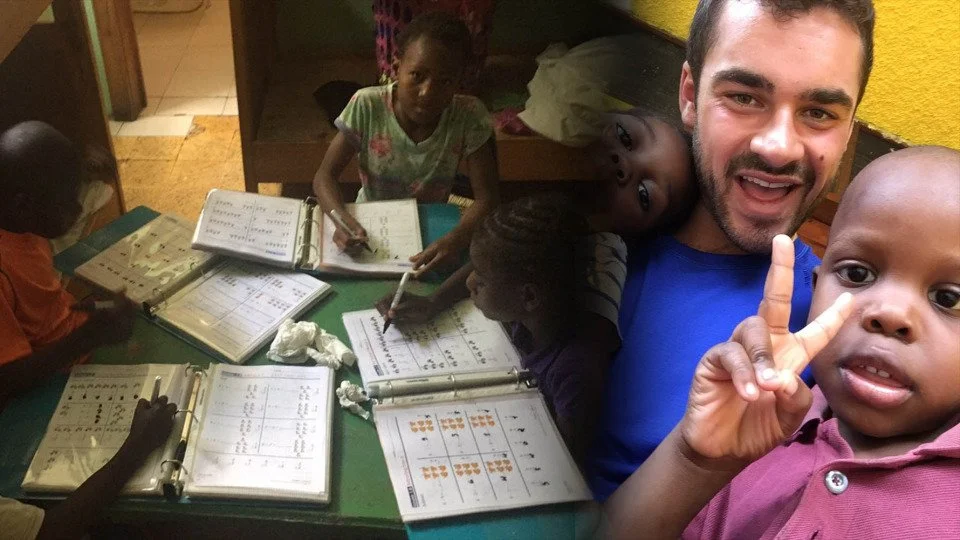
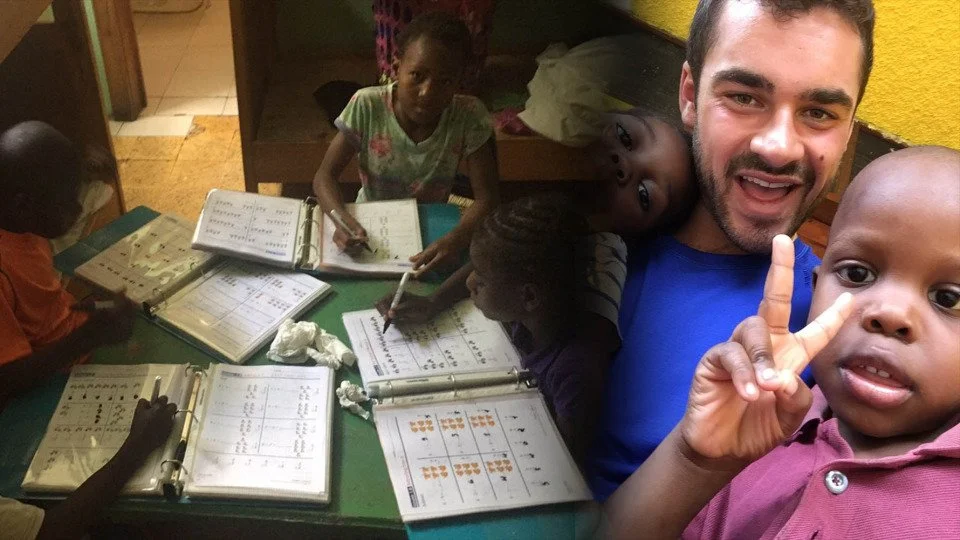
NOTRE DAME, Ind. – When Miguel Delgado decided to volunteer in a poverty-stricken area, he knew he wanted more than just a tourist trip. He wanted an opportunity to give his time to those who needed it, particularly children in a third-world country.That is exactly what the Notre Dame men’s golf junior got this summer when he spent 10 days volunteering at La Maison de nos Petite Enfants (The Home of Our Little Children), a Haitian orphanage that has provided shelter for children in Haiti since the 7.0 magnitude earthquake in 2010.After volunteering in the mentoring program at Darden Elementary School in South Bend during his sophomore year at the University of Notre Dame, Delgado became increasingly interested in the role poverty plays in education. His time working with the children in South Bend led Delgado to declare a poverty studies minor in addition to his finance major within the Mendoza College of Business.In the spring of 2017, the Novato, California, native began searching for a mission or service trip that would allow him to focus on providing help to those living in poverty. Delgado looked for opportunities outside of well-known organizations to ensure he would receive the experience he desired.“Those types of trips are more about having fun and sightseeing than they are about really delving into the community,” explained Delgado. “I didn’t want to waste my time on a socialization type of trip. I wanted to be out there making a difference and getting the full experience. If I do it, I want to go the full nine yards.”In spite of his efforts, Delgado had no leads on where he could take such a trip until he had the good fortune to be matched up with Utah golfer Nate Wunderli at the National Invitational Tournament in Tucson, Arizona, last February. The athletes were randomly paired together for the tournament, which gave their parents a chance to get to know each other. Unbeknownst to Delgado at the time, Wunderli’s parents, John and Deborah, advise and fund an orphanage in Haiti that would provide Delgado the opportunity he craved.“I was watching Nate, and Miguel’s mom was watching Miguel,” said John Wunderli, Nate’s father. “The two of us were really the only two people following, so over the course of four-and-a-half hours we talked about a lot, including how our family had adopted children from Haiti, and how there was still this orphanage there. Miguel’s mom then told me about how Miguel was interested in taking part in a more hands-on, intense service experience.”At the conclusion of the tournament, Delgado had the chance to speak with John Wunderli about the orphanage and his interest in traveling to Haiti to assist the children. In the brief conversation, the two exchanged contact information and, throughout the next three months, Delgado was in constant contact with the Wunderlis.“That’s what was the really impressive thing about Miguel. He was very persistent in wanting to go and do something, which was really surprising,” admired Wunderli “My expectation of kids that age is that they are a lot of talk, they want to do a lot of things, but you don’t see a lot of action. With Miguel, he was persistent until we did something and put a trip together.”After their months of preparations, Delgado, the eldest Wunderli daughter, Rachel and her adopted brother, Makendy, traveled to Haiti in late June to assist at the orphanage for 10 days. Deborah Wunderli had put together a pilot educational program for Delgado and her two children to follow for the duration of the trip.The group had a six-page list with 150 mathematical concepts to test the children on. After splitting into groups, Makendy, who speaks Creole, translated the English textbooks while Delgado and Rachel taught the assignments.Rachel and Delgado had only a short, one-page list of English to Creole translations, so much of their connection with the children was based on their presence in the orphanage and the affection they were able to give the kids during their time there. Even with Makendy translating and relaying instructions for the school day and for after-class activities, the best way to conquer the language barrier was to focus on physically showing the children that they were there to help them and love them.“From the instant we got there, there was never a second when you didn’t have five kids climbing on you,” said Rachel. “You are already really hot and dirty and trying to getting things down, and then there are five little ones wanting to play with you or touch your face or feel your hair.”While many of the children were orphans, a large subset of the Haitian children at the orphanage were dropped off by parents who no longer had the means to take care of them. These kids not only needed an education and the opportunity to find a new family or life in another country, but also the affection that they have been missing after being separated from their families.“Most of them came from rough backgrounds, so they never really had someone who cared or loved them. They just want affection and someone to hold their hand and play with them. It was really cool to be able to excite those kids and make them feel loved for the time I was there,” said Delgado.Since he was living in the orphanage, the only time Delgado wasn’t interacting with the kids was when he turned in for the night. He and the Wunderlis slept on thin pads that were drenched with sweat from the constant heat in Haiti. Every night they went under mosquito nets and hoped that the electricity would turn on so that they could use fans to cool down. They had little to no access to clean water, and there was no running water at all. All three volunteers were on the same meal schedule as the children in the orphanage, which meant they only had one meal per day.It was the grueling, intense, hands-on service experience that Delgado had asked for, and thanks to his skills and the opportunities he has had as a Division I athlete, Delgado was primed for success despite the difficulties of the experience.“You have two things that are relevant to NCAA athletics in play here,” John Wunderli said. “The most important one is the discipline that it takes to even be an NCAA-level athlete. It is reflected in Miguel, and he is able to put those skills to good use in an environment like this orphanage. It takes a lot of patience and a lot of discipline and practice. Those things were foundational and really helped him during the trip.The next thing it does is create opportunities to meet people all over the country when you travel. Especially golf, because it’s a unique sport in which you spend so much time on the course getting to meet people and talk. This obviously wouldn’t have happened if it weren’t for the NCAA event.”Being a Division I athlete is a full-time commitment. It both takes and teaches a strength and determination that is necessary for success outside the world of NCAA athletics. Delgado and his summer service in Haiti is a shining example of a student-athlete bringing these qualities into the real world where he can make a substantial difference and help those in need.By: University of Notre Dame | Sept. 19, 2017
Under-17 World Cup: When Fabien Vorbe gave Haiti a reason to smile
Turbulent times and Haiti have gone hand-in-hand over the years. From inclement weather to internal strife, it’s a way of life for the island nation, which just survived hurricane Irma.
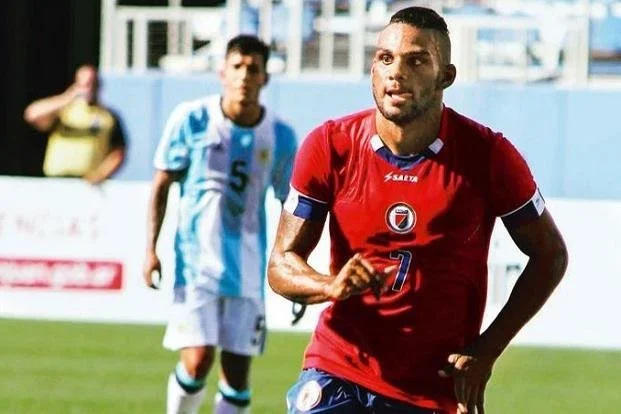
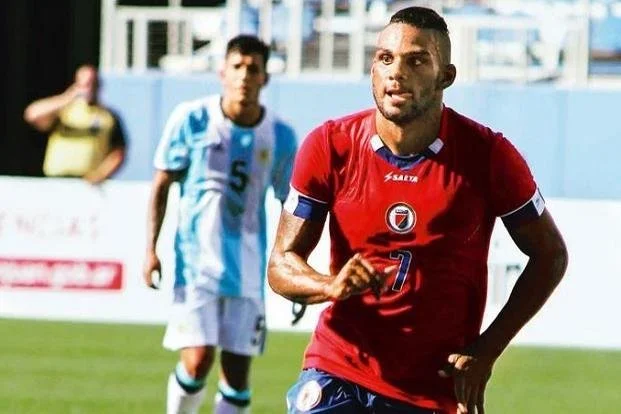
Football then is a lifeline in these parts, giving Haitians a reason to celebrate each time the boys take to the field, whether in a local game or during competition. The distraction is both welcome and needed, bringing relief to a nation and its hopeful youngsters, who dream of alleviating their misery through the beautiful game. When it’s the World Cup, Haiti comes to a standstill.Fabien Vorbe, 27, who signed for I-League club Neroca FC this season, is all too familiar with it, given that he was instrumental in helping Haiti qualify for the Fifa Under-17 World Cup in 2007. While growing up in the capital, Port-au-Prince, it didn’t take him long to catch the football bug that had long infected the Vorbe family.
“In Haiti, if you say my last name, the first thing that comes to anyone’s mind is football. All my uncles and cousins play football, whether professionally or as a hobby. Even the women in our family are football addicts. My uncle (Philippe Vorbe) started it all when he played in Haiti’s only Fifa World Cup in 1974,” Vorbe says.Haiti had stunned competition in the region by clinching the CONCACAF Championship, an association football tournament, in 1973. It helped them qualify for the World Cup in (West) Germany the following year.
Philippe, was an integral part of the squad, which was drawn in a tough group alongside Italy, Argentina and Poland. The Haitians lost all three matches, but the tournament produced an epic moment in World Cup history when Emmanuel Sanon scored against the Italians in the opener. The assist was a perfect through ball in space from Philippe, as Sanon outran his marker, cut past a diving Dino Zoff and slotted the ball in an empty net.
It wasn’t like Haiti registered an upset win through that goal; Italy were 3-1 winners eventually. However, the striker had wrecked an Italian defence, which had not conceded in 12 games that stretched back to September 1972. In goal was the legendary Zoff, who had also been a part of a stubborn Juventus side that had gone without conceding a goal in the league for an incredible 903 minutes.The rest of the tournament was rather forgettable, but for Haiti and its people, just qualifying for a World Cup, clubbed with Sanon’s heroics, meant the world.“It is obvious why from such a young age I started playing the sport. In fact, my mother and godmother founded the team FC Shana just for the purpose of pushing my cousin and me into football and trying to make our dream a reality. It is today the biggest youth football academy in Haiti,” says Vorbe.Under the watchful eye of his mentors, Vorbe learnt the tricks of the trade. All that changed in 2004 when Haiti was rocked by a revolt that disrupted daily life in general, let alone football. One moment, 14-year-old Vorbe was at school studying, the next, they would hear of violence erupting in the streets and had to rush home as soon as possible.Even as the political situation improved, Haiti was constantly rocked by torrential rains, hurricanes and heavy flooding that brought devastation time and again between 2004 and 2007. At a time the nation needed relief, yet again, it was football that was the saviour, this time through the exploits of the Under-17 team.In Honduras in April 2007, Haiti got their qualifying campaign underway for the Under-17 World Cup that would be played in South Korea later that year. Haiti started with a draw against Honduras (1-1) and Mexico (0-0), followed by a win over El Salvador (3-0), with Vorbe scoring in both games. As Group A toppers, they booked their berth for the World Cup, sending Haiti, across the Caribbean Sea, into raptures.“We stunned the world by finishing toppers, even eliminating mighty Mexico. They were favourites, having lifted the trophy two years earlier in Peru,” Vorbe says.“We couldn’t really come to terms with what had happened until we landed in Haiti. There we realized the enormity of what we had just accomplished.”It was yet another moment in Haiti’s history that had given people hope, similar to what the 1974 team had done. The airport was packed with well-wishers when the team arrived, as well as when they left for Korea.
But there was more drama on hand even before the team flew out. Haiti had been drawn in a group featuring Japan, Nigeria and France.
This was about an old grudge that dated back to the 17th century, when France colonized Haiti and started an era of slavery and oppression in the nation’s history. St Dominique, as Haiti was called back then, eventually became one of their most profitable colonies. The Haitian Revolution began in 1791, and lasted for another 13 years after which the colonial rulers were defeated. Haiti earned its independence in 1804 and became the first independent black republic in the process.However, the French slave owners demanded compensation from independent Haiti. A huge sum was eventually paid, which remains a bone of contention to this day.“Ever since we saw the draw, we knew that if there was one game we had to make sure we played well, it was against France. Everyone in Haiti felt the same and made sure we knew it too. You can only imagine what the game represented for us,” Vorbe says.The 1-3 opening loss to Japan then didn’t matter, as all eyes were on the France fixture three days later. The French team comprised players such as Yann M’Vila and Mamadou Sakho, who went on to play for the senior team. As if to answer the prayers of an entire country, Haiti played a game to remember, holding the European giants to a 1-1 draw.“We actually should have won the game, having scored a late goal which was pulled back by the referee for no reason. It prompted Fifa officials to formally apologize to us at our hotel, after having reviewed the footage. We did our job though and left it all behind on the field. Our countrymen applauded it, so we were all happy at the end of the day,” he says.A 1-4 loss to Nigeria, who went on to win the tournament, brought an end to Haiti’s campaign.“But at the end of the day, we left with our heads held up high. I can never forget the moment we stepped out on the pitch against France, and sang our national anthem, soaking it all in,” he says.
The 2007 edition is the only time Haiti has appeared at the Under-17 World Cup. It gave Vorbe the experience of playing at the top level and boosted his confidence in the years to come.
After the tournament, he joined the reserve squad of French club Bordeaux, then coached by World Cup and Euro winner Laurent Blanc. He went on to ply his trade in the US, Haiti and last played in Peru.
On the advice of old buddy, Sony Norde, a Haitian who turns out for Mohun Bagan, Vorbe made his way to India and will play for Neroca this season, who qualified for the I-League after winning the second division last year.
Back home, Vorbe supports FC Shana in every way that he can, as they continue to churn out more Vorbes, who give the nation of Haiti a reason to smile every once in a while.By Bill Cooke |
Cliff Avril's annual party for Haiti draws a crowd
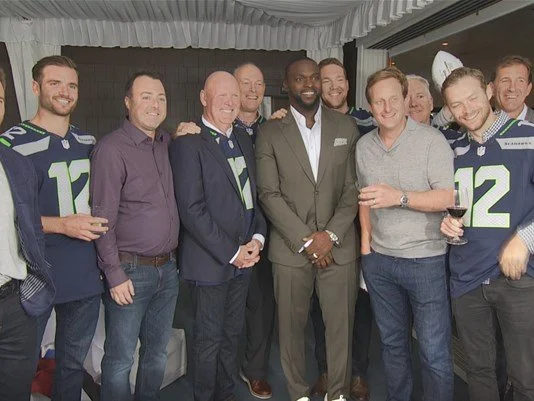
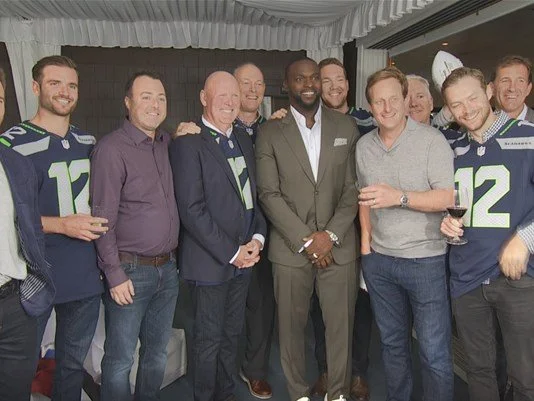
It's called "Dining to Make a Difference," and Seahawk Cliff Avril's annual event does just that for thousands a world away in Haiti.Cliff and teammates Richard Sherman, Kam Chancellor, K.J. Wright, Earl Thomas, Jimmy Graham, and others gathered at Palisade in Magnolia to serve dinner to a restaurant full of guests.The benefit for the Cliff Avril Family Foundation raisef funds for Cliff's homeland, Haiti. His parents are from the island nation."I'm fortunate that I'm in a situation that I can give back," Cliff said. "And I'm trying to use my platform to do that."Dominican Nelson Cruz was also in attendance. The Mariner superstar says he and Cliff are "island brothers.""We know where we're coming from," Nelson said. "We know the needs. And we appreciate everything we have so far. And we can help."Like last year, Cliff also pledges to build a home for each sack he bags this season."And then there's people around the city of Seattle who pledged to do the same thing," Cliff said. "So last year we actually got to build 25 homes."By: Michael King | September 19, 2017
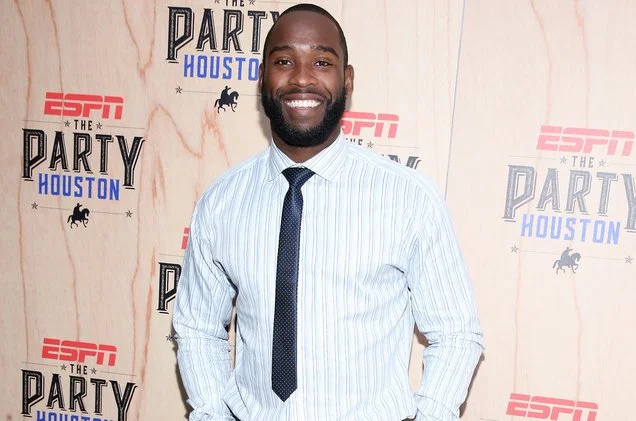
NFL Star Pierre Garcon Talks Giving Back to Haiti and His Favorite Rap Albums
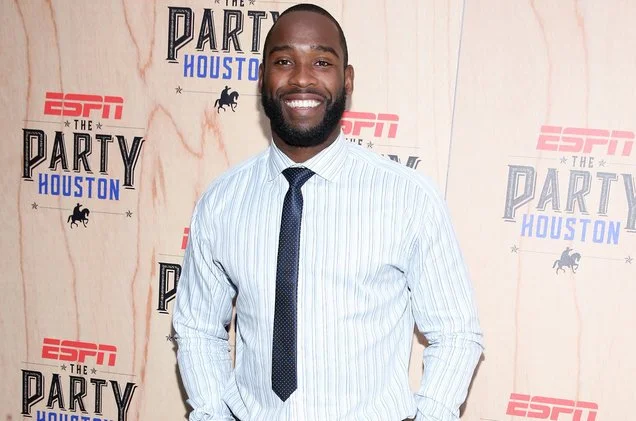
Pierre Garçon has been an underdog for much of his life. Playing college football for a division III school in Mount Union, then becoming a sixth-round pick of the Indianapolis Colts in 2008, the 31-year-old has defied the odds overcoming every obstacle thrown his way. Fast forward to 2017, Pierre is entering his tenth campaign in the NFL after inking a fresh five-year contract to go out West and reunite with old coach Kyle Shanahan, this time as a San Francisco 49er.After being born to Haitian immigrant parents on the corn farms of rural Carmel, New York, work ethic was instilled in Pierre at a young age -- before moving to Palm Beach, Florida, where he would graduate from John I. Leonard Community High School. Garçon has made it a point to never forget about his upbringing, and give back to the communities who are less fortunate.His Helping Hands Foundation donates supplies and facilities to provide support for Haiti, as well as Florida, “We try to provide whatever facilities they need to make life a little easier for the people down there, giving back from the blessings that we have,” says the star NFL wideout.Billboard caught up with Garçon, who leads the Niners in receiving yards through two games this year, to get his thoughts on moving to the Bay, his favorite Haitian artists, and Colin Kaepernick not being in the league, in addition to much more.What's the transition to the Bay area been like for you?Pierre Garçon: It's been cool. I'm getting used to it and learning a lot about the Bay Area culture. It's been great weather, so I definitely love that so far.Why did you switch from number 88 to 15 this season?I wanted something different and out of the ordinary. It's somewhat of a reincarnation [Laughs].As you enter your 10th year, what's it like taking a leadership role with younger guys behind you in the receiving core?It's fun, helping and teaching those guys. I had help when I was young. Going out every day working and keep proving how to get it done in this league, as well as practicing the right way making it all come together on Sundays.
Your Helping Hands Foundation does a lot of good work in Florida and in the Haitian communities. What do you have going on with that at the moment?We do a lot of stuff, especially with Haiti right now. Helping out in the community with whatever they need. We try to provide whatever facilities they need to make life a little easier for the people down there, giving back from the blessings that we have. In West Palm Beach we help out in the community as well, from my local high school to everything that we can come up with, ranging from back-to-school giveaways, Thanksgiving and different times of the year.When was the last time you visited Haiti?October of 2016 with the Redskins, Dan Snyder sent us down for a day to give out medical supplies at a hospital from our training room. Anything from IVs, bandages and supplies we have at our disposal to help. They could use as many free supplies as we could give them.Who are some of your favorite Haitian music artists?Of course, Wyclef Jean. Young Thug and DJ Sam Sneak in there as well. There's a lot of guys down in Miami as well, like Billy Blue. It goes without saying for Kodak Black. They all do a good job representing Haiti, and we're proud and going to support them.What's on your pre-game playlist when you're getting ready for a game?Kodak Black and a lot of Florida music. Turn-up music for sure. I listen to a lot of southern music as well. I like Future and Jeezy. When you're going out on that field on Sundays, you need something that gets you going.Going off of that, what are a few of your favorite albums of all-time?Jeezy's TM:103 Hustlerz Ambition is a good one I listen to a lot. JAY Z and Kanye West's Watch the Throne. Putting me on the spot [Laughs]. Drake's Take Care, too. I don't want to go with the typical albums everyone is saying.Do you still feel the effects of Colin Kaepernick in San Francisco, and do you believe he's being blackballed from the league?I don't think the team is suffering from anything he did last year, but everyone supports him and wants him to be in the league. There's a lot of things that come with him. We know he's a good player and want him to be on a team, he definitely jas the talent to be in the league. But it sucks the way things are playing out.
How often do you hear from fans about having you on their fantasy football team?We hear that a lot. If it's not the first thing, it's the second people talk to us about. It's cool though, it keeps the fans excited and tuned in. It's a great thing for the league and one of those things everyone talks about.It's insane you haven't made a Pro Bowl in your career. Is that something that is still a goal for yourself?I don't really pay attention to those things. That game has really turned into a popularity contest more than anything. As long as my teammates and organization is happy with my play, that's the only thing I could really focus on and worry about.Do you have any post-career aspirations once your playing days are over?I know I'll definitely help high-school football as a coach, just to be in position to keep the competitive spirit going.Billboard.com - 9/18/2017 by Michael Saponara

MHAVE receives leaders of the Haitian Sports Foundation

Wednesday, September 13, the Cabinet of the Minister of Haitians Living Abroad (MHAVE) received the leaders of the Haitian Sports Foundation (HSF), an NGO based in the US and Haiti.Turnier Espérance, President and Georges Aschkar Jr. Vice-President of this organization resident in the United States and Fritz Saintiné Coordinators of the activities of the NGO in Haiti, presented the activities of HSF in Haiti, currently concentrated in the Nippes.This diaspora organization, which focuses on children and adolescents, is channeling this segment of the population into the practice of sport, which it considers to be a real channel for self-fulfillment. Thus, it offered the young people of Anse-à-Veaux the opportunity to shine in the martial arts or football among other disciplines. HSF has provided them with a well-equipped computer center and the construction of a small vocational school and a health clinic for sportsmen and women are projects in progress.At the end of the meeting, Minister Auguste received in her office these compatriots of the diaspora. She congratulated them on their achievements and promised that the Ministry in its role as a cross-cutting governmental body would support their efforts.HaitiLibre - 14/09/2017
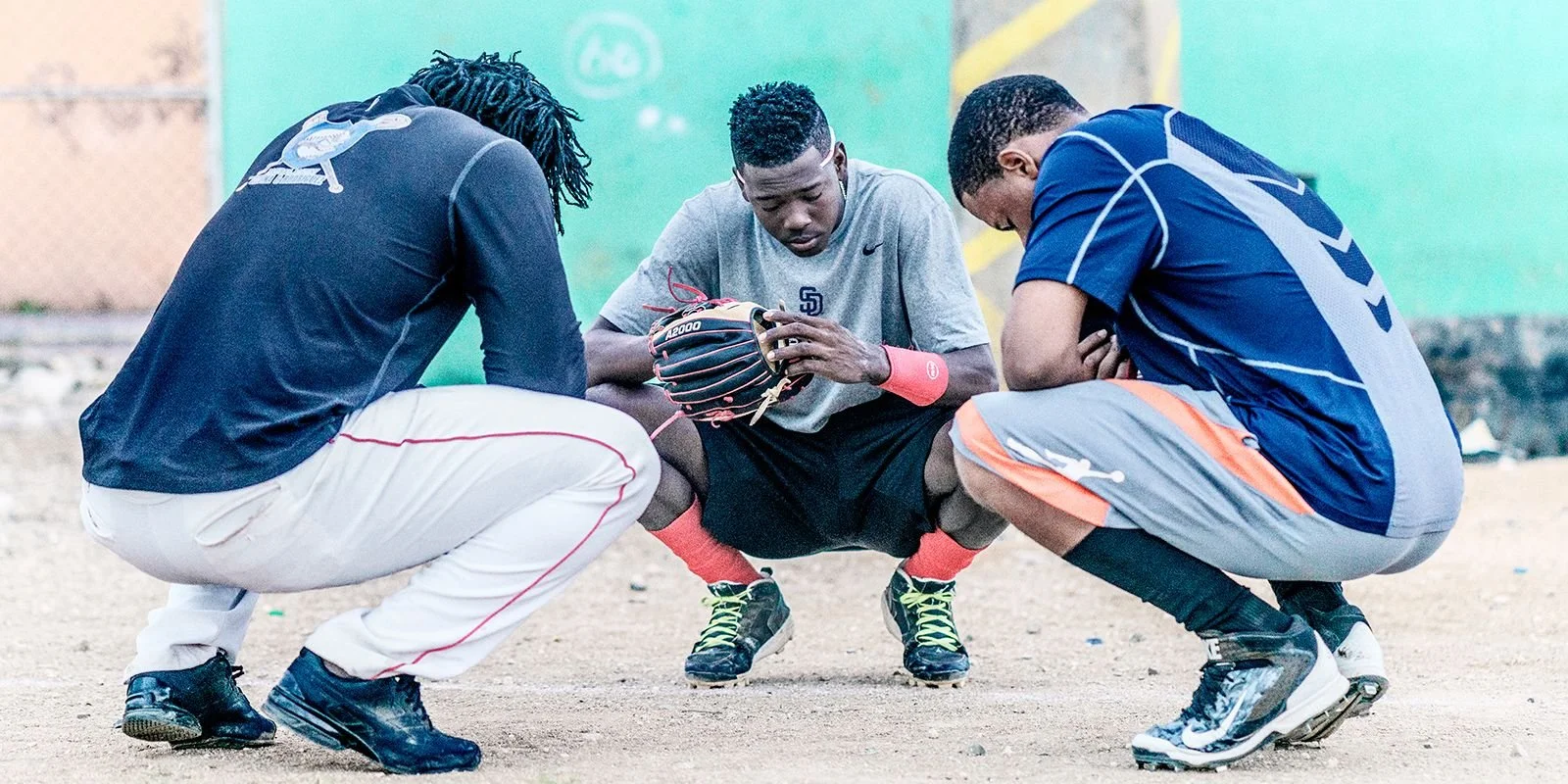
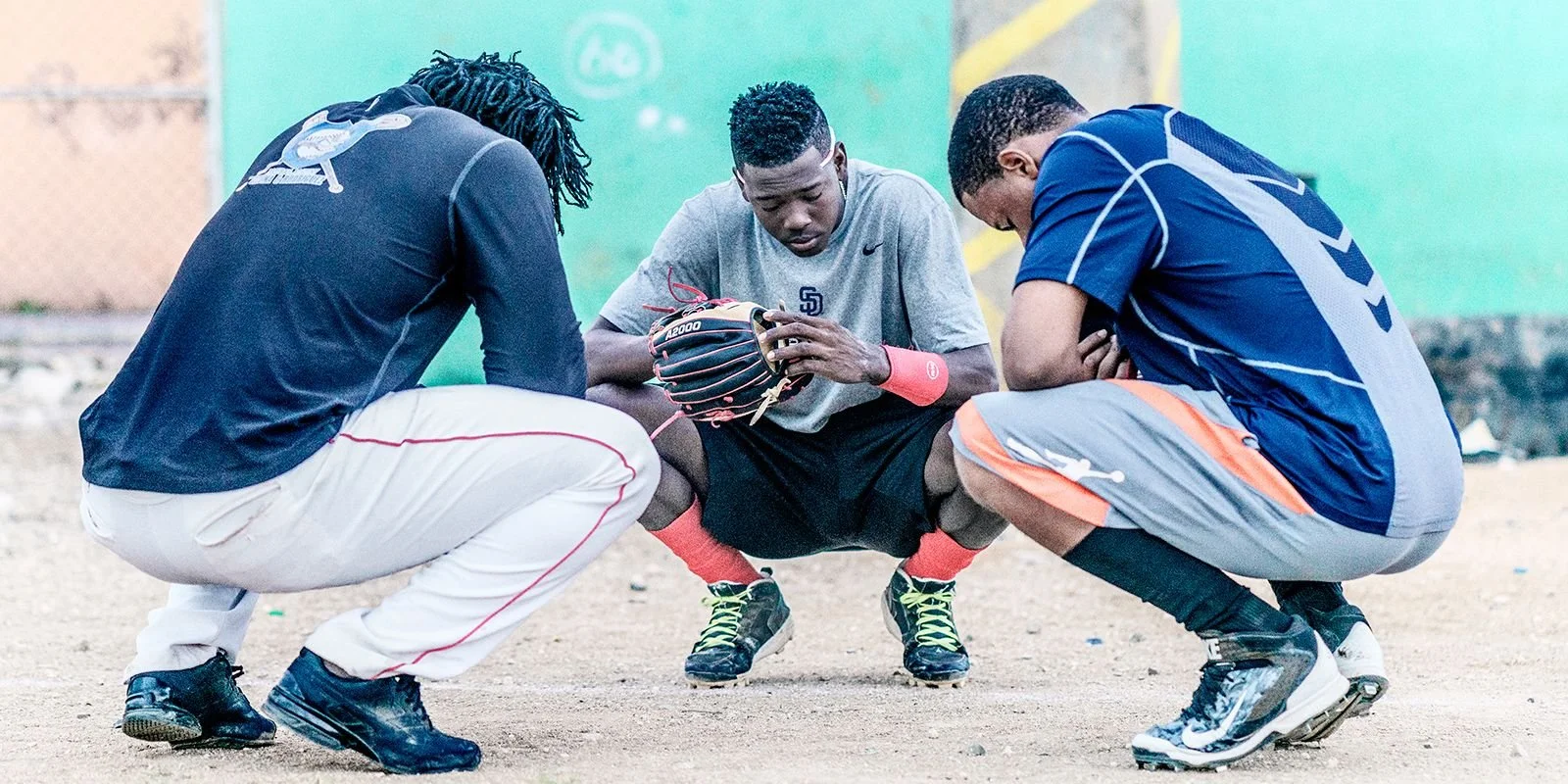
Out At Home As many as 1 in 10 Dominicans are of Haitian descent. So why do we know of virtually no Haitian Dominicans in the major leagues?
Arroz con pollo waits on the table at Miguel Sano's duplex condo, not far from Target Field. Sano's sister is visiting from the Dominican Republic, and her husband has made the Twins slugger's favorite dish -- mounds of it, enough to feed a baseball team. "Don't worry," Sano tells me. "I eat a lot." The aroma is seductive, an anamnesis of the Caribbean. It fills the top floor of the apartment where Sano spends the major league season, more than 2,000 miles from San Pedro de Macoris, where he was raised. The coastal city is renowned for turning out big league talent, an important source for the country's baseball pipeline -- 82 Dominicans made last year's Opening Day rosters from a population of 10.6 million.
Sano stands apart from the other 81 Dominicans in one significant way: He has publicly identified as an ethnic Haitian.Baseball is not popular in Haiti itself, but as many as a million ethnic Haitians live in the neighboring Dominican Republic, where the game is ubiquitous. As the chicken waits on the table, Sano and Franklin Johnson Mateo, who serves as Sano's adviser and facilitator, shout out examples of former and current MLB players who likely share their Haitian ancestry. They rattle off seven or eight names. The total number, Sano and Mateo agree, would shock most observers.Many big leaguers from the Dominican, including some who are being mentioned in Sano's living room, choose to keep their backgrounds a secret. Some ethnic Haitians go so far as to actually alter their identities on the way to the majors."I didn't have to change my name, but there are so many that do," Felix Pie, a former big league outfielder and Haitian Dominican, had told me.Players need birth certificates to sign with a major league team and obtain a visa. Haitians in the Dominican Republic often lack them, so a player might change his identity to get the necessary documentation. Others do it to make themselves appear younger, or simply to avoid the rampant prejudice against Haitians in the country. "Dominicans make fun of Haitians," Mateo says. "Some people feel ashamed about being Haitian."The Caribbean's second-largest island, Hispaniola, is divided in two: French- and Creole-speaking Haiti to the west, the Spanish-speaking Dominican Republic to the east. For generations, Haitians, mostly descended from African slaves, have been denigrated by lighter-skinned Dominicans descended from colonial Europeans. The Dominican dictator Rafael Trujillo, who used makeup to whiten his own face, murdered an estimated 20,000 émigrés during a 1937 massacre. Recent administrations have favored deportations.The situation has lately become a human rights crisis. In 2013, a court ruling retroactively stripped some 200,000 Haitian Dominicans of their citizenship, even if they were born in the country. Those born there today are considered aliens. Tens of thousands have been deported or driven from the country by fear. Generations of Dominicans with Haitian blood are at risk. "I have a lot of friends who are scared that the government is going to send them back to Haiti," shortstop Orlando Calixte told me in November. A Haitian Dominican, he signed with the Giants this winter after seven seasons in the Royals' minor league system.Until recently, changing an identity was easy enough to do. "If you were Haitian, you could go back and get papers from somebody," Mateo says. "'This is my mom and dad, I'm Dominican.' But really it's a fake mom and dad." Mateo himself used an assumed name to play for several years in the A's organization, though he won't say what it was. Somewhere on the island, there's a man with that name who has a minor league entry on the Baseball Reference website and probably a few thousand dollars for his trouble.And Sano? His birth certificate reads "Miguel Jean,'' as does his listing on MLB's official Twins roster. But he goes by Sano, and that's what it says on his jersey. When we finally sit down to lunch, Sano explains why his names don't match. The story is murky, and he tells it quickly, without much detail. His mother, Melania Jean, was born in San Pedro de Macoris to legally settled Haitian parents. His father, who had the name Aponte, would come and go. So Melania put her last name on her son's birth certificate.Later, a man named Sano started living with the family. As the young ballplayer's talent grew, that name became identified with him. "They'd call out to me in the street, 'Sano, Sano,'" he says. He shrugs. "So that's the name I started using." Now that he's famous, Sano takes pride in his ancestry, though he has never seen Haiti and can't speak more than a few words of Creole. He denies that he changed his name to help his career, but when he was a teenage prospect in the Dominican Republic, it certainly wouldn't have hurt.Sano was lucky. When he was born, his mother insisted that the hospital provide papers. He still had to spend months fighting with Major League Baseball over their legitimacy, but in the end, they were enough. In 2009, he signed with the Twins.But since then, a Haitian Dominican's journey from talented adolescent to big leaguer has become increasingly difficult. In fact, young Haitians these days have trouble even finding a place on competitive Dominican youth teams. "Long before you get to Major League Baseball, there's a selection process that discriminates against Haitians," says Sandy Alderson, who worked for MLB in the Dominican and now serves as GM of the Mets.Whatever he calls himself, the next Miguel Sano is far less likely to ever get off the island. Miguel Sano (right) is one of the few players to embrace his Haitian roots. JESSE JOHNSON/USA AFTER THE 2016 season, I flew to the Dominican Republic to try to understand why some of the most talented baseball players anywhere don't play in the majors. I'd heard that Onil Joseph, a Haitian Dominican who works as an instructor at the Royals' complex near Boca Chica, had a brother who was good enough. But nobody in baseball had seen him in years.On a November afternoon, Joseph and I rumble over the packed dirt in his SUV, headed for the village of Angelina. The one-lane road is framed by walls of sugarcane. Though it's only a 15-minute drive from the chaotic bustle of San Pedro de Macoris, it feels like a different country. It might as well be. The shantytown where Joseph was born and raised is half Haitian, he guesses.Life is hard in Haiti. Even before the damage done by a devastating earthquake in 2010 and last year's Hurricane Matthew, which killed more than 1,000 people and left cholera in its wake, mere subsistence was difficult for many to sustain. In North America, we perceive the Dominican Republic to be poor -- and indeed, 32 percent of Dominicans live in poverty. But in Haiti, the poorest country in the Americas, that number is near 60 percent. For decades, Haitians have crossed Hispaniola's porous border in search of fertile fields, decent employment, a better life. To them, the Dominican represents a promised land.Many Haitian Dominicans live in shantytowns like Angelina, called bateyes, near the cane fields. Rico Carty, a lifetime .299 hitter who signed with the Milwaukee Braves in 1959, emerged from a batey. Plenty more players, including George Bell, Mariano Duncan and Julio Franco, have followed. Many of them, it must be assumed, have Haitian lineage.Decades of oppression have pushed this Haitian subculture into the margins of society. Children are often born at home, with no government representative to record their existence. Hospitals can be far away -- and expensive. And for Haitians, there is risk in being exposed to an official system that already has deported thousands of longtime residents. Sometimes the church gets involved, jotting down rudimentary details of a childbirth or a baptism, usually in French. "It's just the way it happens here," Joseph explains.One MLB executive told me the story of a contract offer his team recently made to a young Haitian Dominican. The player had a birth certificate that seemed legitimate, except that it wasn't issued until he was 10 years old. "In the U.S., you can't leave a hospital without registering your child," the executive said. "That's not the case down there." It also happened that, for unexplained reasons, the 10-year-old had been registered as the son of his aunt. That left him unable to pass a DNA test, when matched against the genes of his alleged parents. "He's a talented player," the executive said. "We're trying to figure out what to do."Joseph's SUV bounces to a stop, and he jumps out to show me where he and plenty of others learned to play baseball. It's a rock-strewn dirt infield with a stretch of tall grass beyond. If you can field a grounder here, it seems to me, you can field one anywhere.
 Onil Joseph works as an instructor at the Royals' complex in the Dominican Republic. BENEDICT EVANS FOR ESPNAccording to MLB rules, Dominican prospects are free agents, not subject to an entry draft. They can sign with teams any time after their 16th birthday. Notoriously, many prospects lie about their age, as Mateo did: Younger players are more valuable, and an 18-year-old posing as 16 will look more impressive to scouts. Fraud is a legitimate problem. But fraudulent documents can also serve as the only lifeline to players born without a birth certificate.When Joseph signed with the Braves in 2000, he showed papers from somewhere. They were enough. He spent five years in the Atlanta farm system, then one with the Royals. Most of that was in Double-A or below, but it earned him enough to get food, clothes and medicine back to Angelina.Now he drives down the village's only street. It has rained, and pools of standing water glisten in the sunshine. The smell of something burning is in the air. People of all ages are sitting in front of the shacks on folding chairs. The idea that their birth certificates are filed away somewhere inside is a fantastical one.Onil was playing in Wichita in 2007 when his brother signed a contract with the Giants that included a $350,000 bonus. That wasn't close to the $3.15 million that Sano would get from the Twins two years later, but it was large enough to rank among the 20 biggest international signing bonuses of that season. When we arrive, Angel Joseph fills the doorway of his family's two-room shack. Now 27, he is 6-foot-2 and a muscular 170 pounds. Beside him on the bare wall is a carving of a mermaid. "I was a complete ballplayer," he says quietly. "I hit well. I ran well. I played center field."At the time, Angel was being compared with Alfonso Soriano. A switch-hitter, he had power from the right side and a graceful swing from the left. "Of all the outfielders we saw, he was one of the top three as far as having well-rounded tools," Rick Ragazzo, who then ran the Giants' international scouting division, said after the signing.But unlike his brother, Angel Joseph didn't have a birth certificate. There was no reason one brother had it and one didn't, other than happenstance -- who happened to be passing through that morning, perhaps, or how aggressive the parents had been in filling out a form. "I basically didn't have any documents," Angel says. "None. We looked and looked for a way to find them, but they weren't there. It isn't that they were missing, I never had them."Ultimately, his contract with the Giants was annulled. As he tells the story now, Angel grows silent. Onil picks up the thread. "He kept playing for the talent scouts," he says. "He waited for years to have another opportunity. He kept saying he believed it would work out. He could play."Several years later, an Indians scout offered a contract. Because Angel was older and hadn't improved as he might have with professional coaching and competition, the offer was $100,000. Again, he was asked to prove his identity. With the money Onil had earned, the family hired a lawyer. "It didn't help," Onil says.Angel was in his early 20s by then. "I kept playing, kept trying," he says. A Rays scout approached and said he believed he could solve the problem. They had a lawyer on retainer, he boasted, for exactly that circumstance. "He came down to see me, tried to get me a visa," Angel says. But that failed too.Angel lives in the shack with five other family members. He is the pastor of a local church and, as he approaches 30, resembles Lorenzo Cain. But he isn't a center fielder anymore. "I've stopped playing," he says. "I've lost the ambition. My life is different." He stares out at the dirt road. "Sure, I could have played in the majors," he says. "They compared me to Felix Pie."Both brothers are silent now as thunder rumbles overhead. A woman yells something in Creole to two kids playing in the street. Angel lowers his head to lean out from the undersized doorway and looks up at the sky. The rain is coming again.AT THE TIME that the Joseph brothers were trying to get off the island, each team had its own way of verifying the identities of the players it wanted to sign. The U.S. government had tightened visa restrictions after the 9/11 terrorist attacks in 2001, so some form of valid identification became more important. But players could still slide through, especially if they were good enough. "Something needed to be done," says Kim Ng, MLB's senior vice president who is responsible for international affairs.As Onil drives me back to San Pedro de Macoris, where I'm headed to see a Dominican winter league game that night, I can't help thinking that I could be going to watch his brother play. Instead, we're planning to meet another player Onil knows, Calixte. The former Royals farmhand joined the Estrellas Orientales winter league team earlier in the week. His story is similar to Angel's. But after a mysterious trip to Haiti made by his father, it turned in the other direction.We pull up to the stadium, which is painted a tidy green and white. The sky shows clouds pierced by shafts of light. The stadium is small, like something out of the Texas League, except with pork and rice at the concession stand. A steady thwack emanates from a batting cage down the first-base line. That's Calixte, trying to get up to speed with extra hitting.When Calixte signed a contract with Kansas City in 2010, the path to the major leagues was narrowing for Haitians. He made it out, but barely. Now 25, he played at Triple-A Omaha and Double-A Northwest Arkansas last season. On Nov. 7, he was granted his free agency. Four days later, he signed a minor league contract with the Giants. He is likely to spend this season in the major leagues, a Giants executive says. On this night, he looks the part, rapping out four hits.The next day, he pulls up to a shopping mall in his hometown of Santo Domingo. He's driving a white Toyota 4Runner, the only gift he bought for himself when he signed with the Royals. As we drive, he tells me what it means to be a Haitian in a country that is at once utterly familiar and entirely strange. He was born and raised in the heart of the city, yet he has a Haitian passport and a Dominican identity card that identifies him as a Haitian citizen. "Nobody says anything to me because I speak Spanish," he says. "But a lot of the Haitians here don't. There's prejudice against them. That's why players don't want to come out and say 'I'm Haitian,' even if they were born here and their parents were born here. They don't want to have to deal with all that."Calixte's father, Dieudonne, crossed legally into the Dominican Republic in 1977. Once there, he stayed and had several sons. At one point, one of them tried to play professional baseball. He was 18 but knew he'd have a better chance if he were younger. So he adopted the identity of his little brother, Orlando, who was 15.If that faux Orlando Calixte had been good enough, the ruse would have worked. He wasn't. But the little brother, the one who'd been born Orlando Pierre Paul Calixte on Feb. 3, 1992, was better: a line-drive hitter and dependable shortstop with a great arm. The Red Sox planned to offer him a contract when he turned 16 early in 2008. One principal involved remembers the figure as $3 million. Another says it was $2 million. "But I had a problem," Calixte says.Before the Red Sox would sign him, they wanted to investigate. "They have to make sure it's my real name, my real age," he says. "That everything I'm saying is correct." In Calixte's case, it wasn't. "I put my name as Wilson Calixte," he says, "because my brother had already used Orlando." The Red Sox didn't understand the reason behind the discrepancy or why a family might have two sons and name them both Orlando, but they sensed trouble. They withdrew the offer.Stunned, Calixte admitted to MLB that his brother had lied. He went to get his birth certificate as proof but discovered that the local government wouldn't provide it. "They told me, 'We can't give you one because both your mother and your father are from Haiti,'" he says. More than a year passed with Calixte in limbo.The Royals had scouted Calixte. They believed his story. More important, perhaps, they liked his bat and the way he handled himself at shortstop. They envisioned him playing in Kansas City. But he needed that piece of paper, that proof of his existence, to get him there.
 "I've stopped playing. I've lost the ambition," Angel Joseph says. "Sure, I could have played in the majors. They compared me to Felix Pie." BENEDICT EVANS FOR ESPNCalixte had just turned 18 when the Royals offered $1.3 million in early 2010, provided he could produce a birth certificate. Months passed. Eventually, he says, his father drove from Santo Domingo to Port-au-Prince, the Haitian capital. When I met Dieudonne Calixte, he told me a story that involved clerks and offices and meetings and research and left me understanding less than when he'd started. Somehow, though, he returned with a document. His son got his deal but at a lower price. "We'd agreed to a number," says Rene Francisco, who runs the Royals' international operations. "But we ended up giving him a little bit less because it went on for so long."That August, Calixte officially signed with the Royals for $1 million. Those few months of enforced idleness cost him $300,000. The two previous years had cost him as much as $2 million more. "My brother apologized," he says now.Any more delay might have been disastrous. Calixte's signing came just as MLB was starting to enact a new policy for verifying identities. Commissioner Bud Selig had appointed a committee to research solutions to the rampant age fraud, and one of its main recommendations was that the league establish a far stronger presence on the island. Sandy Alderson, who'd been running the Padres but left in 2009 when the franchise was sold, had chaired the committee. He agreed to lead the new effort.The Harvard Law grad and career baseball man arrived in the Dominican in early 2010 and stayed for about 10 months before becoming the Mets' GM. He set in motion practices that, though controversial for their invasiveness, have gone a long way toward eliminating fraud. Top prospects were forced to register with MLB and agree to an age and identity investigation. If the investigation came back inconclusive, the next step could be a DNA test to confirm parentage. "What was widespread fraud in 2010 has become far less," Alderson says.But that, he acknowledges, has come at a price for Haitian Dominicans. "I wouldn't say that intended consequences were to leave a specific group of people outside the benefits of that process," he says. "But in essence that's what has happened."Few of the buscones, coach/agents who prepare talented Dominican teenagers to be seen by scouts, will now take chances on kids with little hope of getting a contract validated, let alone a U.S. visa. "Everybody here has sympathy for the issue," says Ng, the MLB senior VP. "For the Haitians, it's just happening earlier than for anyone else because they're known as not being able to get documentation."MLB has no plans to address the problem.
 If Puason makes it, Ozuna will earn a percentage of his contract. BENEDICT EVANS FOR ESPNAFTER SPENDING ALMOST a week on the island, it is clear to me that MLB policy has combined with the Dominican government's recent suppression to create a nearly impossible situation.In 2013, the Constitutional Court of the Dominican Republic ruled that children born to undocumented parents in the country since 1929 -- the year Haiti and the Dominican Republic formalized their border -- never had been entitled to citizenship. The government set a deadline of June 17, 2015, for these newly categorized aliens to leave on their own or register with authorities. When that date passed, the government began mass deportations. Amnesty International has reported the existence of spot checks on city streets. There have been reports of violence, even lynchings. In addition to the tens of thousands who have been deported -- nobody knows exactly how many -- thousands have fled on their own.With so much upheaval, baseball might seem like an afterthought. Still, the game offers rare economic hope for Haitian Dominicans. Since the 2013 ruling, there is even more fear of registering with authorities. Documentation has also become harder to obtain.There is an irony to this: Baseball was introduced to the Dominican Republic in the late 19th century by Cuban laborers who had fled war at home to come harvest sugarcane, as Haitians do now. Gradually, baseball became part of the culture. Now it serves to define the country perhaps more than any other aspect of Dominican life.With a couple of days left in the country, I head into Boca Chica, about halfway between Santo Domingo and San Pedro de Macoris, to meet the buscon, JD Ozuna. He is one of the few still willing to take a chance on Haitians. I find him sitting inside his mother's law office, Guzman Peña & Asociados, shaking his head at the lousy weather. The two-story stucco building is located directly behind home plate of the baseball field where Ozuna runs his own academy. Out the open door of the office is a wire backstop, a dirt infield and grass gone to weeds in the outfield.Ozuna makes his living training players who have a chance to sign with a big league organization. The word "buscon" is a neologism, formed from the Spanish verb buscar, meaning "to look for." Ozuna will get a tip from a coach about a young player. Perhaps he'll offer a spot. If so, the coach will expect a payment.Ozuna will provide equipment, training and competition until the player is eligible to be signed. In return, he'll get a hefty cut of the first contract. Most buscones won't deal with Haitians anymore, but Ozuna has a strong sense of social justice. He believes talent is talent. "I remember Sano," he says.But he's careful. The stakes are high. If you don't have a birth certificate, there's nothing he can do. "The first questions are always, 'How old are you?' and 'Do you have documents?'" he says. "In many cases, a player will use a false name. So we open our own investigation to make sure that the name is real."Ozuna tells me that a little more than a year ago he became aware of "the next great Dominican superstar": a 12-year-old with unusual skills living in La Romana, down the coast from San Pedro de Macoris. A coach brought the young shortstop to him, Ozuna says, wanting a small percentage of his first contract. The player's name was Robert Puason, and he happened to have Haitian roots.Ozuna watched Puason play and couldn't believe what he was seeing. Before he let himself get excited, he hired an investigator. "It took 30 days," he says. "We learned that Puason is Puason. He has documents, gracias a dios. All perfect."La Romana is best known in the United States for the Casa de Campo resort. Puason's family's neighborhood was at the far end of the spectrum from such luxury. His house had no walls and an earthen floor. "It's called a casa de sin," Ozuna says, "sin" meaning "without" in Spanish. "Four, five brothers and sisters living together."Soon after he started with Ozuna, Puason became morose. He'd been a happy kid, with a goofy smile. Now he shuffled through workouts like a robot. When Ozuna inquired, Puason confessed that he was worried. "My family isn't eating," Puason told him. "My family went two days and only ate once." Ozuna considered the money he'd already paid for Puason, weighed it against his potential and decided to spend more. "He's a ballplayer who is very, very special," he says. He gave Puason's family money for food. Then he moved them into a better house. He brought Puason to live with him in Boca Chica.The following morning, my last in the country, I come back to meet Puason. At 14, he is 6-3 and wiry. He hits the ball with ferocity. When Puason was 10, Ozuna notes, he was already playing alongside former pro players in an open men's league in the Dominican countryside. "He was a boy, and they put him in right field, but OK, he played," he says. "And he wasn't scared. Pitchers throwing 95, 96. And he learned to hit that kind of pitching." Asked how much Puason has progressed since he started teaching him, Ozuna laughs. "We didn't teach him anything," he says.Ozuna believes Puason already has the size and skills of Sano at 16. "If the system allowed it, they'd sign him right now," Ozuna says. "There are three or four teams that would give him $4 million, $6 million. But the rules don't permit it. So you have to keep working to keep the value up."Ozuna leaves to pick up Puason at school. By the time they return, raindrops are drumming on the concrete. Pools of water have formed in the infield. Puason seems devastated. He's clearly still a child, with a high voice that cracks when he gets excited. Baseball is his passion, he tells me. His favorite player is Bryce Harper, so he likes the Nationals. But his dream is just to play in the majors. When I ask him which teams he has spoken to, he answers shyly, "Almost all of them."But no matter how good he is at 14, no matter how much the scouts like him, nothing about Puason's future is secure. "He has papers," Ozuna insists. But Sano had papers too, and getting his contract validated was still a drawn-out and precarious process. And that was before the MLB crackdown.Even when you think you're sure, Ozuna admits, you can never be sure. Not until organized baseball makes its ruling, after conducting its investigation. And during that process, the burden of proof is on the player to validate his existence. "You have to present a record," the Royals' Francisco explains. "Present a case that you are that person. And hope that baseball accepts it."Millions of dollars for the buscon and the teenager might depend on how assiduous some civic functionary was at recording Puason's birth. If this were almost anywhere else in the baseball-playing world, he would control his destiny. Not here. Not as a Haitian.Ozuna makes a gesture like tossing a ball in the air, as if to say that the situation is out of their hands. All they can do, he tells me, is wait.by Bruce Schoenfeld - ESPN 03/14/17
Behind-The-Scenes Footage From Cliff Avril's Humanitarian Trip To Haiti
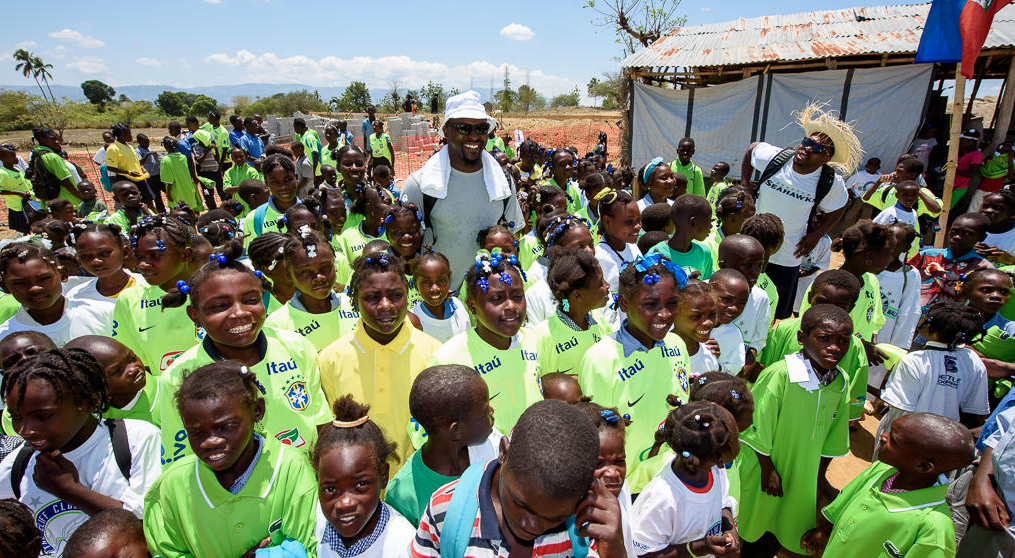
Avril Making A Difference
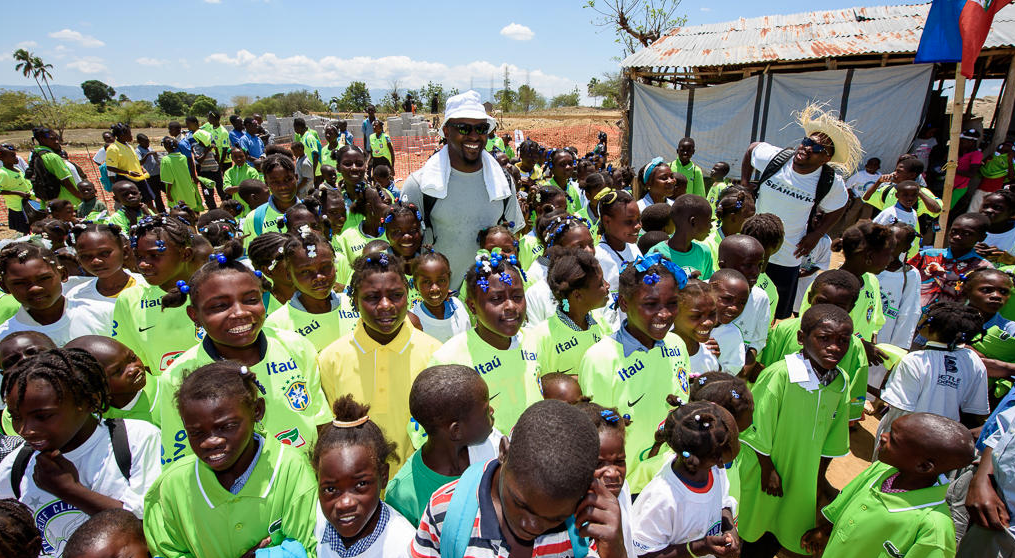
https://youtu.be/DWTmFA5m5BM This past April, Seahawks defensive end Cliff Avril, who is of Haitian descent and embraces the nickname 'Haitian Creation,' embarked on his second consecutive offseason trip to the country of Haiti, where he and his foundation - The Cliff Avril Family Foundation - began the groundbreaking of a new school building, created homes built to withstand natural disasters, hosted health clinics, youth football camps, and more.
Avril recently shared a bit of behind-the-scenes footage from his journey on YouTube, which showcases his travels from Miami, Florida to Haiti and back with teammate Michael Bennett as well as current and former NFL players Marshawn Lynch, Stephen Tulloch, and more.Prior to the 2016 season and in the wake of Hurricane Matthew, Avril pledged to build a home in Haiti for every sack he recorded. He finished with a career-high 11.5 sacks and rounded up to pledge to build 12 homes in the country.You can check out behind-the-scenes footage from Avril's trip in the video embedded above.Seahawks.com - Wednesday, August 09, 2017

Inauguration of the Baseball Academy in Haiti

Following the bilateral initiative of the project of development of the Baseball in Haiti initiated last June http://www.haitilibre.com/en/news-21266-haiti-dr-bilateral-development-project-for-baseball-in-haiti.html , Friday 27 July will take place at the Hotel Orix (Ouanaminthe), the inauguration ceremony of the International Baseball Academy, in the presence of the highest sports authorities of Haiti and the Dominican Republic and businessmen of the Diaspora Haitian, confirmed Dr. Seymour Coffy, Director of the Academy.Saturday, starting at 3:00 pm a baseball demonstration match will be held between young Dominicans. Ten young Haitians will benefit at the beginning of this important project, which aims to promote this sport in Haiti.Dr Coffy said that several Haitian businessmen from Florida, New York and Canada will be present, as well as the Directors of the Roberto Clemente Foundation of Puerto Rico.BF/ HaitiLibre 27/07/2017
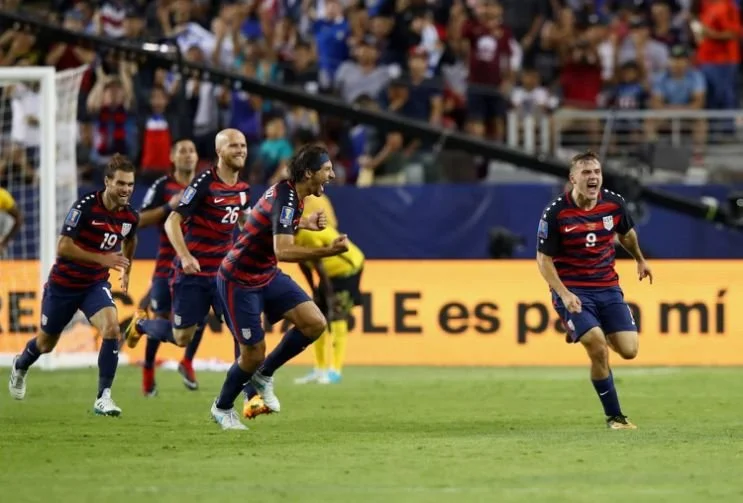
USMNT lifts Gold Cup after late victory over Jamaica
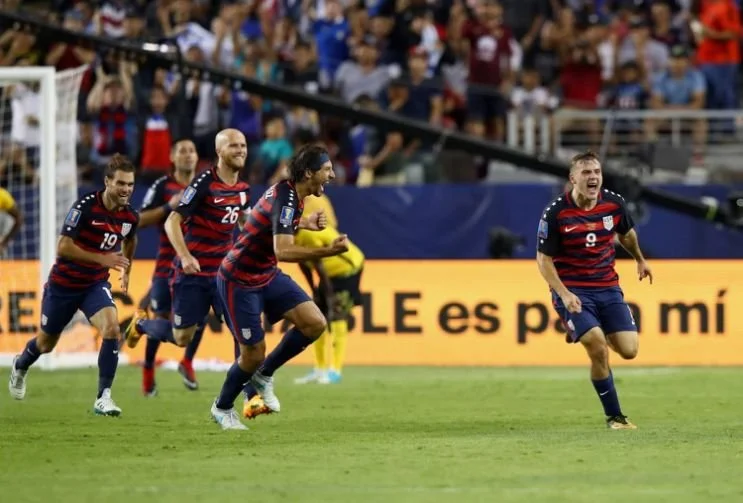
The guy who almost cost the United States the 2017 CONCACAF Gold Cup for the regional champions was also the one whose goal won it.
Just after halftime, Jordan Morris let Jamaica’s Je-Vaughn Watson slip away from him at the second post on a corner, and Watson scored with his header. But in the 88th minute, Morris latched onto a ball in the other box and fired it home to win the match 2-1 and make the Americans champions of the region for a sixth time overall and a second time in three editions — dethroning a Mexican side that had been knocked out in the semifinals by the Reggae Boyz.
Granted, this was a so-called off-year Gold Cup, meaning the full A-teams didn’t participate because of World Cup qualifying priorities. And both of the aforementioned American triumphs, in 2013 and 2017, came during off-year competitions, which many argue shouldn’t even be played.
Jozy Altidore had put the U.S. ahead before halftime on a stunning free kick to break a lamentable deadlock before Jamaica equalized just after the break.
It was a largely ponderous and sluggish game. Jamaica clogged the central spaces well in the first half. And the U.S. was clean enough on the ball that it didn’t create any chances on the break for its opponent. That basically meant the sides negated each other.
The seminal moment, then, came on an injury in the 19th minute. Jamaica’s captain and star goalkeeper Andre Blake made a marvelous save on swerving Altidore shot. Then he bravely closed down Kellyn Acosta on the rebound, but got badly hurt in the process, finding himself left with a clearly beat-up hand, all trembling and bloody.
…
Finally, in the late going, Gyasi Zardes’s cross wasn’t cleared and was settled for Morris by Dempsey. The young forward’s finish took a very minor deflection on its way into the net.
Working out how to celebrate this trophy for the U.S. is tricky. On the one hand, it doesn’t count nearly as heavily as when all the big teams bring their best players. (The U.S. cycled in a handful of A-team stars before the knockout stage to shore up the campaign. Arch-rival Mexico didn’t.) On the other hand, the Americans nevertheless don’t win this thing very often. And this is just the sixth trophy of any kind in the United States Soccer Federation’s more than 100 years of history.
Meanwhile, any kind of momentum builder at all is useful as the clock ticks down to another World Cup — presuming the Americans wrap up qualification. Even if this tournament is a diminished version of itself in every other edition of it, you still can do worse than to win it. And that’s worth letting out a little cheer for. Especially when late last year, the national team program appeared to be in a rather sorry state, before Bruce Arena was brought back to succeed the ousted manager Jurgen Klinsmann. Arena is yet to lose in 14 games.
“This is what it’s all about,” Bradley said after the game. “It’s a final. Each team is going to give everything until the end. The only thing that matters is we’re the ones with the trophy.”
That’s the thing about this tournament. Even if it comes with asterisk, winning it can’t possibly hurt.
It may yet prove useful down the line. As a confidence-builder. As another few competitive knockout round games won, to build further experience in that area. And perhaps as the foundation upon which an even bigger achievement can be built.
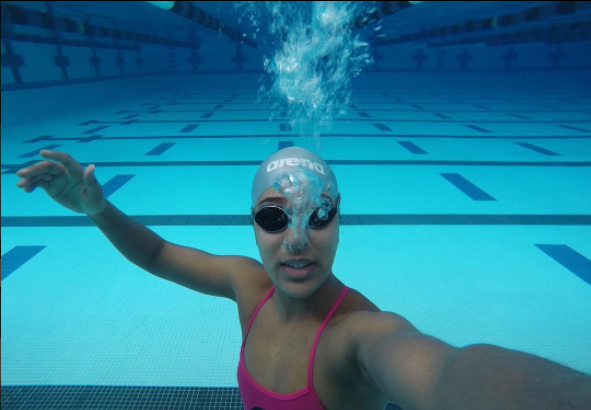
her sweat story: olympian naomy grand’pierre talks training & swimming for haiti
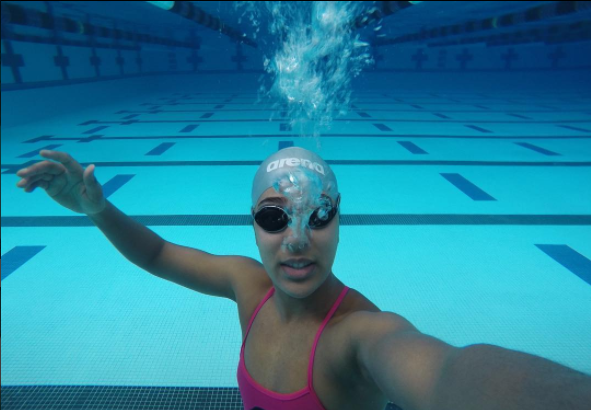
It was a simple question asked by Naomy Grand’Pierre’s parents after watching Michael Phelps and Collen Jones swim their 2008 Olympic relay.“Wouldn’t it be cool if you guys started a Haitian swim team?”With Haiti’s recent controversial presidential election, lack of governance and soccer being the country’s national sport, the 19-year-old Canadian didn’t think it was possible to swim for her parents’ homeland, Haiti. But she did. Reaching out to organizations like the Haitian Swimming Federation, the Atlanta-bred athlete became Haiti’s first female Olympic swimmer. Yet, Grand’Pierre knew that there was more work to be done to help Haiti’s small swim community. Her next game plan was to bring their resources to the masses.“I talked to the Federation and realized that we have a 50-meter pool sitting here,” Grand’Pierre told her sweat. “It would be great to see what it takes to get it renovated and really have a project where we could open some pools in Haiti, where not only I can come back and train but other people can join me and learn how to swim.”For the young go-getter, her eyes aren’t only on 2020 Olympic Games in Tokyo. Grand’Pierre is training for the Federation Internationale De Natation (FINA) World Champs in Budapest by representing Haiti along with two other swimmers in the international swim competition. Grand’Pierre will compete on Saturday (July 29) in the 50-meters breaststroke and 50 meters freestyle while the championships will run from July 23 – 30.In between her training for FINA, school and work, Grand’Pierre discussed the most valuable lessons she learned in the 2016 Olympic Games, her advice to young swimmers and her favorite Haitian delicacies to eat on cheat days.What I learned from Rio 2016: The most valuable lesson is that dreams do come true. It’s super cliché, but when I was 10 years old, I really wanted to go to the Olympics. I would tell everybody and would always get negative feedback. People would say ‘You know how hard it is to do that? You’re not fast enough.’ So I learned very early on, dreams are super fragile and you only share it with people who are there to encourage you and share that journey with you.My pre-game routine: Most of the time before a big race, I have a lot of nerves, so I [listen to my] go-to album, Wiped Out by The Neighborhood. It’s a very California chill, vibes-y album. I listen to the entire album and that’s kind of what really calms me down and gets me in my element to focus on nothing else but what I need to do.What my coach has taught me: The main thing he told me was to trust my training. When you train for anything, you have very intense practices and weight sessions, and right before a championship, you start tapering down the amount of practices. It’s actually a very scary and mental aspect of training because you have to hold everything that you have been training. Trust your training and [don’t let] the small details psych you out.My workout regimen: I work out every single day except Sundays. I go to the weight room three times a week for about an hour session. I have two dry land practices, where I can do anything from sit-ups to running, then I’m swimming from six to 10 times a week. Obviously, when I’m in school, I’m swimming less outside of school. Swim practice is about two hours, dry land is about an hour and weight room is an hour. I’ll lift in the morning and swim in the afternoon. On Friday, I’ll just swim in the morning.On my cheat days: I definitely sleep in. I don’t really eat processed foods that aren’t good for you. If I go to a restaurant and I’m getting a really nice dessert then I’ll do that. I love Haitian food. My favorite is legume with diri (rice and legume), banan pezé (fried plantains) is my favorite. I love Haitian hot chocolate because nothing is as ever as thick and sweet as hot chocolate. I love Haitian macaroni gratin. Whenever I go to Haiti, I get lambi and lobster.My least favorite workouts: They’re called croggle reps because you’re crying in your goggles. It’s a best average set— high intensity, high threshold, not a lot of reps [but] very hard grueling reps. Those sets are very painful and to get the best out of those sets, you need to stay at that pain threshold so you can increase your pain tolerance. You’re pushing your body to the limit.My meals during training season: Strictly protein and only healthy food. In the morning, I’ll eat three scrambled eggs, ham, cheese and tomatoes. For lunch, I’ll have a salad with two pieces of chicken and for dinner, it’ll be pasta or another salad with hard boiled eggs. I’ll add fruit or orange juice but the centerpiece of each meal is having as much protein as I can.My advice to young swimmers: One: get things in perspective. For me, there were a lot of days when I would wake up at 5 in the morning so exhausted from staying up late from the night before doing homework. I’m sore from lifting and I just want to snooze my alarm, but keep things in perspective. I’m getting up because I’m training. I’m trying to make a difference in Haiti. I’m trying to qualify in the next Olympic games. Keeping things in perspective helps you for the days you lose motivation, you feel like giving up and quitting. Having that perspective really helps you have the will to continue.My second piece of advice is to never give up on your dreams. There’s this quote that really spoke to me, “If your dreams don’t scare you, then you’re not dreaming big enough.” There’s nothing that’s too big that I can’t do. It’s just a matter of writing your goals down and figuring out the baby steps you need to take in order to achieve what you need to do. It’s funny because for a long time, I really wanted to go to the Olympics and everyone told me that it wasn’t possible and it was something that I couldn’t do and I was able to do the impossible. It’s just a matter of having that mindset and realizing that anything you want to do is definitely doable. Naomie Grand'Pierre

Skal Labissiere has heartwarming return to Haiti

Skal Labissiere has long expressed his desire to return to his native country, Haiti.
The former Wildcat and now Sacramento King left Haiti after surviving the devastating earthquake of 2010, and now has returned for the first time since before he entered high school.
Labissiere returned to Haiti to set up a basketball camp for high schoolers in Port-Au-Prince, the nation’s capital. According to Chris Fisher at 247 Sports, the camp is for 50 of the country’s best high school basketball players and coaches.
The first Camp S.K.A.L. clinic runs from July 19-21.
The camp is made possible through the Reach Your Dream organization, the same organization that helped Labissiere relocate to the U.S. to further his education and play basketball.
The non-profit promotes spiritual awareness, self-confidence, and innovative thinking for future generations in communities throughout the world.
The Sacramento Kings Twitter account posted this video of Labissiere visiting his childhood neighborhood.
![Women's Football U-20 : Cuba defeated by our Grenadières [3-1]](https://images.squarespace-cdn.com/content/v1/68e70239ce60bd21b04f1e3f/1765740153131-K12YUMA22N9Z9GL9B89B/image-asset.jpeg)
Women's Football U-20 : Cuba defeated by our Grenadières [3-1]
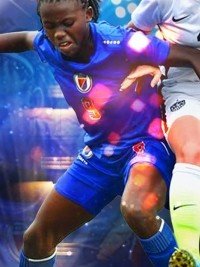
On Sunday, as part of the first phase of the CONCACAF U-20 qualifiers for the U-20 Women's World Cup (FIFA), which will take place in France from 7 to 26 August 2018, our Grenadières in Group A, led by Nerilia Mondésir, faced on the lawn of the national stadium Sylvio Cator the Cuban team, only major opponent for our National Selection.After two easy wins [16-0] against Anguilla http://www.haitilibre.com/en/news-21576-haiti-women-s-football-u-20-grenadieres-without-mercy-crush-anguilla-[16-0].html then [7-0] against Dominica http://www.haitilibre.com/en/news-21594-haiti-news-zapping.html our Grenadières defeated the Cubans [3-1]. For Haiti the goals were scored by Nerilia Mondésir [27 ', 56'] and Sherly Jeudy [45 ']. For Cubans the goal was scored by Lilian Perez [11 ']Our Grenadiers with their ticket in their pocket, now continue their way to France with the next elimination phase that will be played in Trinidad in January 2018.Also Saturday evening in Abidjan (Ivory Coast) national U-20 men's team taking part in the football tournament of the VIIIth games of the Francophonie, did Draw [1-1] against France. While the French led [1-0] Stevenson Guillaume of the Racing des Gonaives equalized for Haiti. The Grenadiers will play this Monday 2:00 pm (10:00 am Haiti) during their match against the Democratic Republic of Congo at the Abidjan Sports Palace.In Haiti, the Camp-Nou Academy of the Haitian Football Federation shone in Minnesota by winning the U-17 category of the USA CUP 2017 after sweeping everyone in its path !Finally, note that it is this week that will begin the Presidency Cup, which will take place in 63 regions and cities of the country With the participation of 80 clubs, from the D3 to the elite via the D2.BF/ HaitiLibre 24/07/2017

Skal Labissiere went to Haiti. Why the Kings forward says it was important to go home

Traveling is not allowed in basketball. However, for some Kings players this offseason, that word has taken on a much different meaning.Days after Sacramento center Willie Cauley-Stein visited Vietnam to work on his painting skills, another Kings player got on a plane and traveled to his homeland.In a feature he wrote on the team’s website, Kings forward Skal Labissiere discussed his first trip to Haiti in almost seven years.He recalls the massive earthquake in Haiti that killed more than 200,000 people in January 2010. He also talks about family and friends, his faith and starting a youth basketball camp.
“I was one of those kids growing up who always wanted some guidance, wanted to talk to people in the NBA,” Labissiere said in a video posted on the Kings’ YouTube page. “For me to go back and help the kids ... I just want to be an inspiration to them.”He said that although he’d teach skills on the court, he wanted to do more with the children.“After all, it wasn’t so long ago that I was in their position – roaming the streets of Haiti looking to make my dreams come true,” he wrote. “Whether future basketball stars or not, these kids are going to make Haiti proud. It’s bigger than basketball.”Labissiere left for Haiti after playing with the Kings in the NBA Summer League, which ended Monday in Las Vegas. The forward who will begin his second NBA season in 2017-18 averaged 10 points, five rebounds and 1.5 blocks in six summer league games.Another Kings player had an opportunity to travel to his native country this offseason, but decided that work comes first.Kings guard Buddy Hield was invited to the Bahamas to participate in the Basketball without Borders Camp but opted to stay stateside to play in the summer league.“This is my job,” Hield told The Bee before summer league began. “I’ve got to be here. This is more important.”BY NOEL HARRIS JULY 20, 2017

1st edition of the Haiti Bodybuilding Classic competition

Sunday, July 23, at the Hotel Marriott will be held for the first time a friendly bodybuilding competition between Haiti and the Dominican Republic, Haiti Bodybuilding Classic (HBC). This competition is open only to Haitian and Dominican amateur athletes who will be able to participate in the following categories: Bodybuilding (welter, medium and light weight); Men's Physics; Bikini and Bodyfitness.One of the main objectives of this competition is to relaunch the strength training industry in Haiti and to allow the Haitian Federation to better supervise the Haitian athletes. With the support of the International Federation of Bodybuilding (IFBB), HBC organizers hope to eventually host a professional competition in Haiti where Haitian athletes could obtain their professional cards.For its First Edition, HBC will feature athletes from the Haitian diaspora and of course the Haitian pioneers who will come to support the event.Notes for Athletes :This competition will follow the IFBB standards and will be approved by the Federations of Haiti and the Dominican Republic. This competition is reserved only for Haitian and Dominican athletesAthlete Registration: 10 US DollarsRegistration and weight: from 7am to 9am a.m.Opening and competition: from 10.30 amNotes for the public :Sunday at the Marriott Hotel Port-au-Prince from 10:30 amAdmission: 10 US dollars or 650 GourdesVIP entry: 15 US dollars or 1,000 GourdesMusical entertainment during the show: DJ Olse.BF/ HaitiLibre 20/07/2017
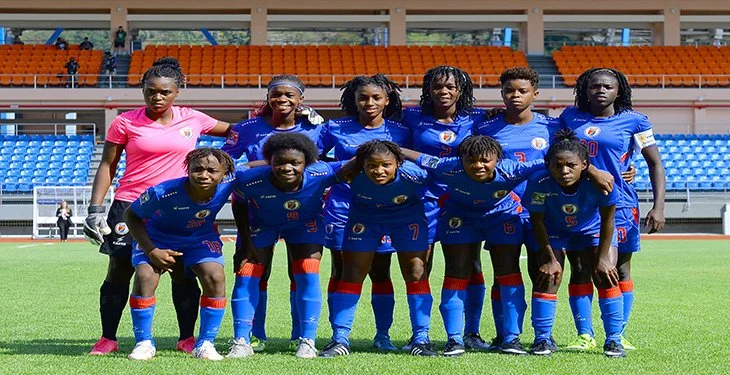
Haiti - Football : U-17 women's team in training to Minnesota
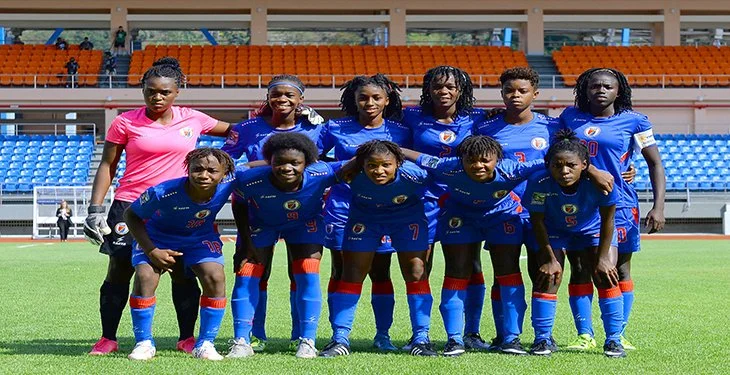
The U-17 women's team left Haiti on Monday afternoon to Minnesota where they will play 3 matches (Tuesday, Wednesday and Thursday).They will remain in the United States for a week longer to train with the courtesy of the US Government, which offers a stay from 23 to 29 July. This is a very expensive trip for the Haitian Football Federation (FHF) which financed all the airfares and hotel fees of the first week.The Haitian delegation is composed of 6 people, 14 players and two coaches Fiorda Charles and Esther Milord. Our Grenadières U-17 will be back on July 30th.Our Grenadieres are determined to take advantage of this course and they have great ambitions for the FIFA U-17 Women's World Cup, whose the third elimination phase will be played in Haiti from 16 to 23 October.During their stay in Minnesota our players will be supported by former Haitian international Ricardo Pierre Louis, who will bring football equipment.1,278 teams from 19 countries from more than 20 US states participate this year at the USA CUP in Minnesota. The teams from Manchester and Bayern will also compete as well as other top-level women's teams.BF/ HaitiLibre 19/07/2017 09:35:50
New Jersey Family Collects 1,000 Soccer Cleats For Needy Kids In Haiti
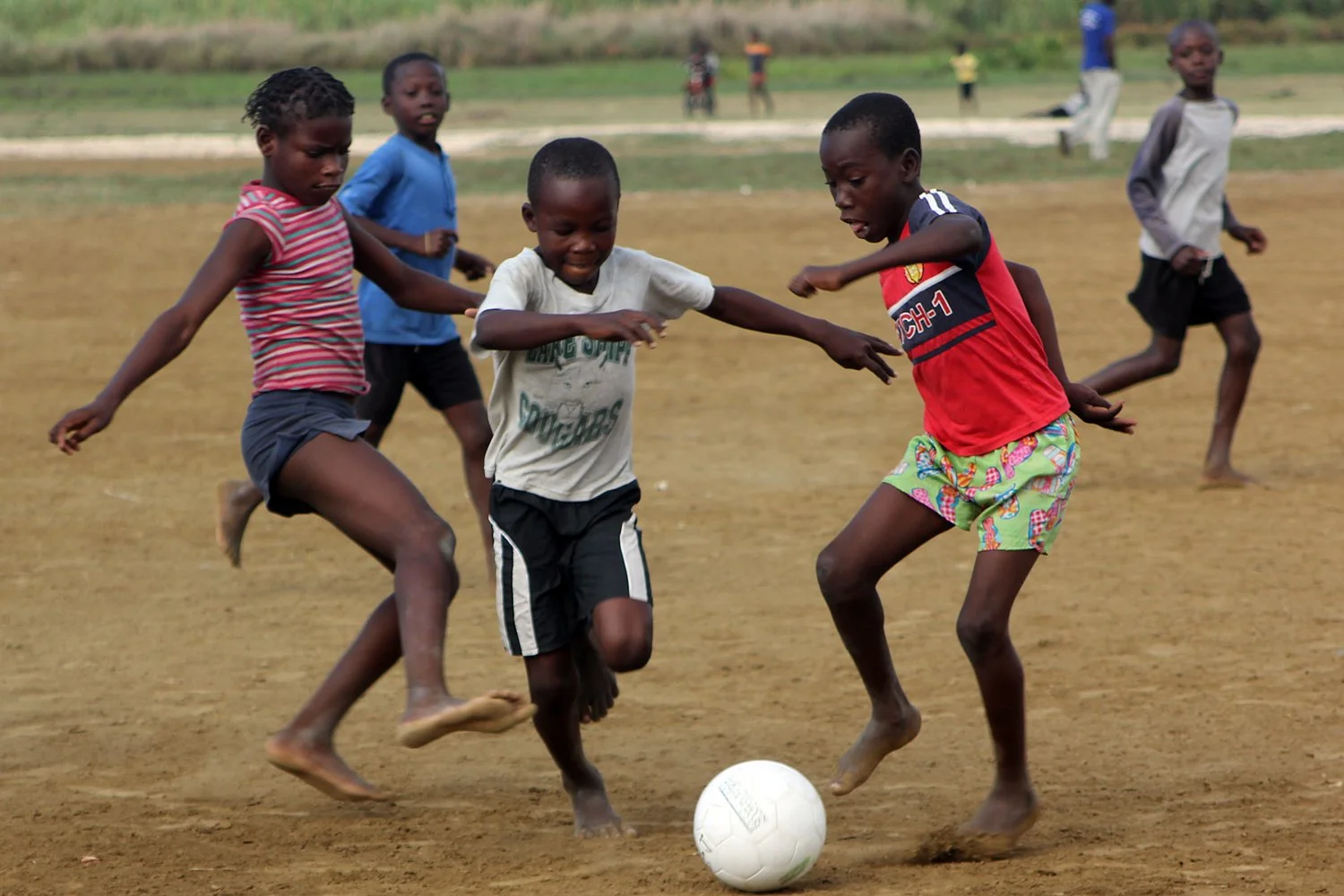
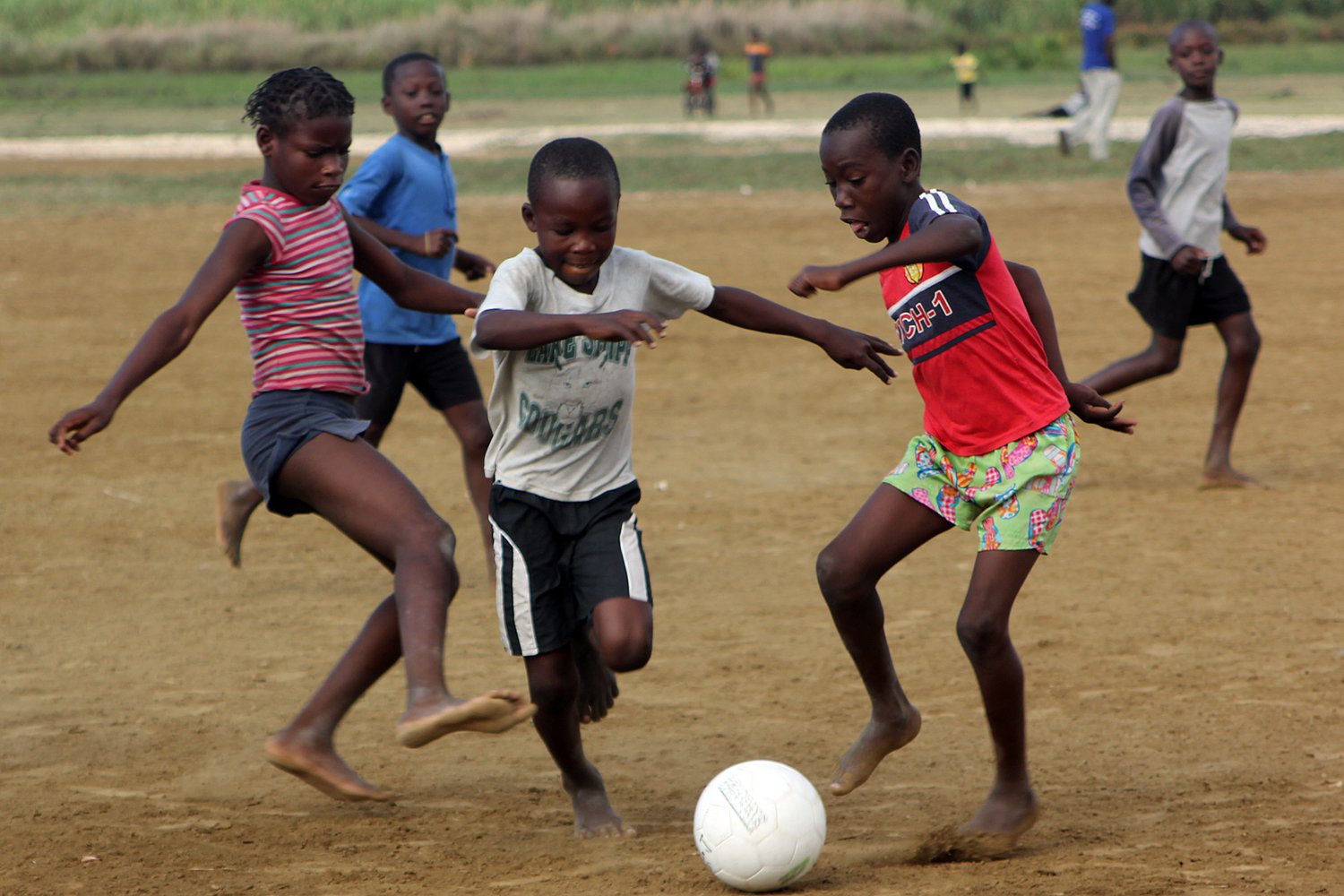
WEST WINDSOR, N.J. (CBSNewYork) — Imagine playing soccer with no shoes.As CBS News’ Meg Oliver reported, it happens in poor countries all over the world. But a soccer-loving family in West Windsor, New Jersey decided to do something about it.For kids in Haiti, soccer is a way of life. Erick Noel, 18, had played for a decade barefoot in gravel and grass until this summer.Boxes full of 1,000 used cleats arrived from America, giving kids in Haiti their first chance to play in shoes.The generous idea came to light more than 1,000 miles away in New Jersey. Every week, the Grescek family holds board meetings with cheese pizza around their kitchen table.Fourteen hardworking cousins – ages 8 to 17 – started a charity collecting used cleats for needy kids a year ago.To set themselves apart, 1KCleats4Kids set a lofty goal of 1,000 pairs of cleats for kids in Haiti.“We wanted to push the kids, and said, if we’re going to do this, we’re going to go for something really big,” said Jerry Grescek of 1KCleats4Kids.It did not take long before the colorful cleats poured in. Social media sparked interest from across the country.“We were just collecting cleats by the day, and it started to grow every day,” said Gavin Grescek of 1KCleats4Kids.Then, two nonprofits volunteered to pack up and ship all the cleats to Haiti.“It’s all about kids helping kids,” said Jerry Grescek. “I tell my kids all the time, just imagine when you see their smiles – because for us, that’s going to be our closing moment.”It was moment that Erick Noel summed up thusly in French: “I think it’s a beautiful gesture and I think God is happy and will bless them.”The family has set a new goal of collecting 2,000 pairs of cleats. They plan to distribute them to needy children within the U.S.CBS New York July 6, 2017 7:29 PM
Aggie athletes headed to Haiti on mission trip this weekend
A year ago, at the suggestion of graduate transfer quarterback Trevor Knight, who had made the trip multiple times before, several Texas A&M athletes went on a mission trip to Haiti over the summer.A year ago, Director of Player Development Mikado Henson talked about how the trip came to be.“When Trevor Knight transferred from Oklahoma, I told him about the trip and it is the same organization that takes OU. He’s been there three times and he told me, ‘Mikado, I’m an Aggie, but I’m going back to Haiti whether it is with A&M or OU. I’m going back.’ Jake Hubenak is going back and I don’t care whether you are scholarship or not, offense or defense, black or white. We’ve got 15 football players signed up and we’ve all had to raise money."Fifteen football players, 12 volleyball players and one soccer player made the trip. The football players included the likes of Knight, Hubenak, Myles Garrett, Daeshon Hall, Josh Reynolds, Otaro Alaka and Koda Martin.Now, a year later, there will be 67 athletes from A&M making the same trip."About ten percent of our student athlete population is going with us this year," Hinson recently told KBTX. "We'll do a lot of painting of homes, delivering goats as a form of income and stewardship. Building, painting, planting... We told them we'll bring plenty of manpower."It's amazing to see what we get to do there, but it's even more amazing to see what happens in us," Hinson said. He remarked that students returned last year with a renewed since of humility and brotherhood. "It's an eye opener."The group will be leaving on Sat., May 13 and will return a week later on May 20. With most athletes having to take summer school in order to work out with their sports over the summer, the group going on the Haiti trip will be giving up almost all of their summer vacation.Brian Perroni - May 10, 2017
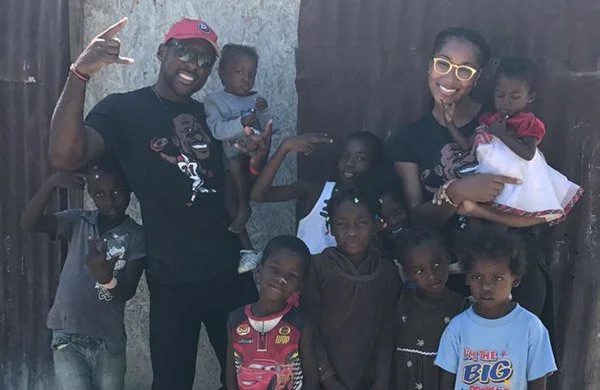
Patrick Peterson Makes Trip To Haiti
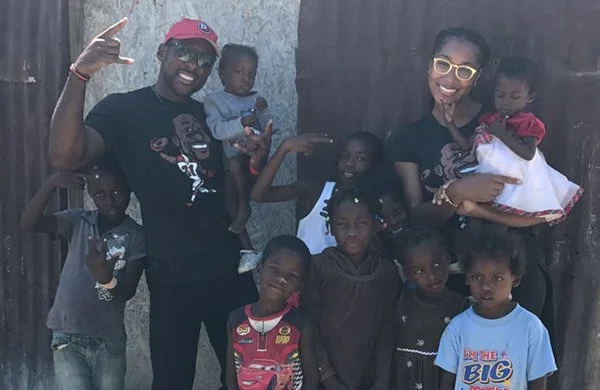
Patrick Peterson knew that Larry Fitzgerald had been a part of more than a couple aid missions to needy countries, and when the cornerback was returning from his first – time in Haiti this weekend – he shot a text to his teammate.“This,” Peterson wrote, “was a great, eye-opening experience.”Peterson and his wife, Antonique, left last Wednesday night on a red eye to the country, guests of Mission of Hope. There, Antonique – who will finish her schooling to become a doctor a year from now -- visited and helped at medical centers. Patrick visited schools and helped teach children how to read and build things, and played soccer and kickball with the students.The two also visited villages without clean water, so they took part in trips to local spring wells to collect fresh water to bring back to affected areas.There, Patrick Peterson is not a Pro Bowl cornerback but just a humanitarian looking to give back.“Just to see how resilient those people are was unbelievable,” Peterson said. “People in the U.S., we can complain about some of the smallest things, and these people, sometimes their kids are running around with no bottoms on, they have no fresh water, no power. No AC. Sleeping in tents. But when you go speak with them, they have a smile on their face. They have high energy. They have hope.”That encouraged Peterson, an offset of some of the “heartbreaking” things he saw. In particular, there was a family with seven children, with twins around 8 years old. The parents underfed the well-underweight twins, Peterson said, in part to convince strangers in the street to provide the family money to help feed all of them.Mission of Hope convinced the parents to let them take in the kids for a time so they could get the right nourishment. Still, Peterson said, “it was devastating to see.”The visit made a deep impression on Peterson. He said he will pay for three of the houses that are being built for needy families in the village they visited. He will also send items down from his own home, and asked teammates if they had anything to donate to do the same.He added that he and his wife plan on going back next year, and Peterson wants to involve his young daughter Paityn when she is old enough to take part some years down the road.“It really touched home,” Peterson said. “I want to make sure I can do whatever I can to make their lives better.”ArizonaCardinals/Peterson May 8, 2017
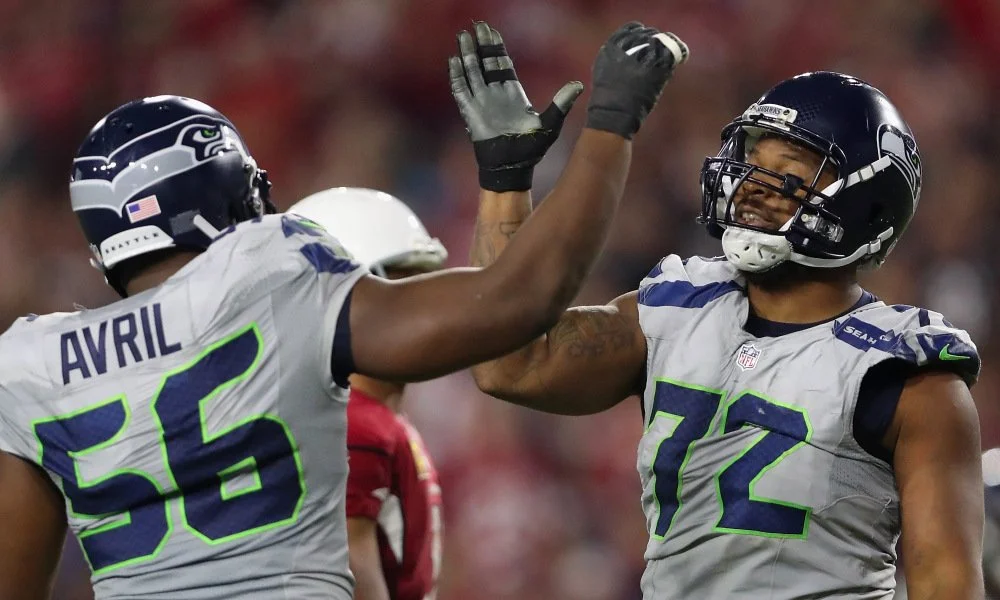
Cliff Avril, Michael Bennett and Marshawn Lynch give back in Haiti
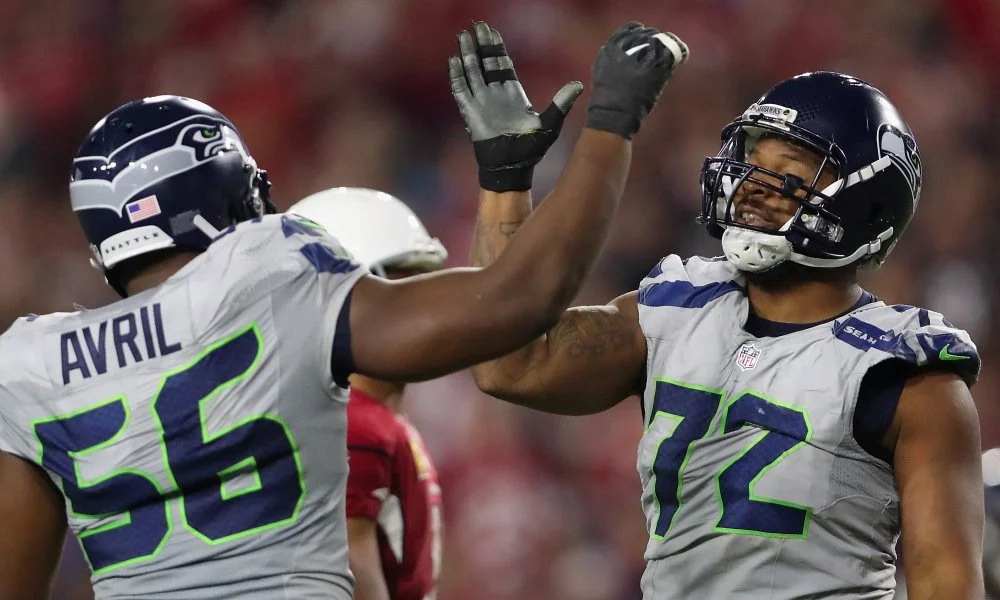
Seattle Seahawks defensive end Cliff Avril is carrying on a tradition he began last season.Avril, along with defensive end Michael Bennett and retired running back Marshawn Lynch, are in Haiti this week building schools for at-risk youth, hosting a camp and creating homes to endure natural disasters.Following the catastrophe of Hurricane Matthew in 2016, Avril pledged to build a home in Haiti for every sack he recorded. He tallied 11.5 with the team last year.This is Avril’s second trip to Haiti with his Seahawks teammates. Avril’s family emigrated from Haiti in the 1980s and prior to last year’s visit, it had been over a decade since Avril returned to the country.He has been active on both Twitter and Instagram detailing his travels for #AvrilHaiti2017, including one today where he and teammate Bennett visited God’s Plan Orphanage.Bennett was one of the Seahawks starters who was noted as absent during yesterday’s offseason program workouts. His whereabouts are now known.
By: Lindsey Wisniewski | April 19, 2017