

Raiders Safety Joseph Hopes to Use Football to Help Native Haiti

A large tattoo from Karl Joseph's left shoulder through the center of his back, a detailed emblem also featured on the Haitian flag.
Joseph was born in the impoverished island nation and raised there 11 years before moving to Orlando, Fla. with his mother. That formative period helped define the Raiders safety's work ethic, commitment to family and his roots.
Joseph hasn't forgotten it. Haiti remains a part of him, bonded by a connection expressed well beyond body art.
That's where he spent one of life's biggest moments, shunning the spotlight to be with relatives in Haiti when the Raiders selected him No. 14 overall in the 2016 NFL4. That was celebration of where he came from on the day he became wealthy beyond childhood dreams.
"It keeps me grounded," Joseph said on NBC Sports Bay Area's Raiders Insider Podcast. "That's one of the reasons I went back for my draft party. Anytime I get a chance to go back, I take it. It makes you appreciate the little things you have, the luxuries you often take for granted. It also makes me hungrier to work hard, play well and give back. Every time I go the memories come flooding back, which hits the reset button for me. It gets ready to come back here, ready to work."
Joseph frequently visits family in his native Jacmel, a port town off Haiti's southern coast. He went back again this spring, but not on holiday.
He joined former Seahawks defensive lineman Cliff Avril's annual pilgrimage to Haiti, which is more than a fundraiser and photo opp. This group goes to work.
They helped build a school, supply a health clinic and run a football camp. They met with Haiti president Jovenel Moise, discussing issue pressing a beautiful in need of help for its poorest people.
"That's one of the main reasons I was excited to go on this trip," Joseph said of the weeklong charitable venture. "I've seen some of the work he had done out there, and I was ready to get involved. A lot of people go out there and put their name on stuff, but few want to interact with the people and get their hands dirty."
Joseph broke from the pack late in the trip to visit family still living in Jacmel. They toured the now rundown house Joseph grew up in, a moment, among others, chronicled on his Instagram page.
Joseph plans to join Avril's trip each year, and eventually start his own foundation focused on helping bring awareness, funds and infrastructure to Haiti.
He understands that performing well will help that cause.
"I have to continue to do my part on the field," Joseph said. "The better I play, the more I contribute to Raiders victories, the more people will pay attention. I need to use that to shine a light on issues in the country I grew up in."
Joseph believes he can reach new heights working with new head coach Jon Gruden and staff. The safety has played well in spurts, but doesn't believe vast potential has been reached.
"I don't even feel like I've scratched the surface yet," Joseph said. "I feel like I have so much room for improvement in every aspect of my game. I've improved my mental game this offseason, and fit into this new defense. We've come a long way as a group, and that I've made strides personally. I'm going to keep pushing, even during the down period. I have such high expectations for myself. I'm excited about the season. People haven't even seen the real Karl Joseph yet."
The real Karl Joseph is a thumper, someone who can play deep and aggressive near the line of scrimmage. He's part of a safety group that also features Marcus Gilchrist and Reggie Nelson, and will have a chance to thrive in Paul Guenther's defense.
That would help the Raiders win and bring attention to Joseph and the place he's commitment to helping.
"Football is my platform to give back there," Joseph said. "That's my purpose in life, to be able to make this an opportunity to shine light on issues (in Haiti) and give back. I cherish the chance to go back and see the place where I was born and family that was around during a critical time in my life. It's a special place to me."
By: Scott Bair for nbcbayrea.com | June 11, 2018
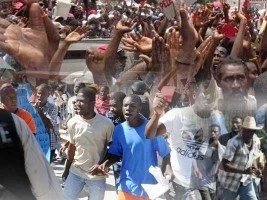
The opposition announces 3 days of national demonstrations
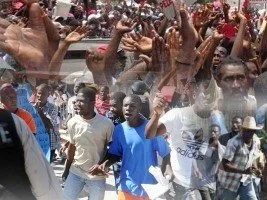
Monday, the coalition of opposition democratic organizations, including Pont, VERITE, "Pitit Dessain", "INITE démocratique", "PALMIS", "Kore N", Rally of Arcahaie, Lavalas and the opposition senators, announced 3 days of demonstration, on 28, 29 and 30 September, against the controversial budget 2017-2018 in order to force the Head of State to reverse his budgetary decisions.Me André Michel, one of the spokespersons for the Rally of Arcahaie, announces that the "battle is underway" and a vast mobilization movement in Port-au-Prince, in the Central Plateau, in Jacmel, Petit-Goâve, in Cap-Haitien, Saint marc and Léogâne, "the whole population will stand to denounce this budget which will further impoverish the Haitian population."For his part, the former President of the Senate and former Minister of the Environment, Dieuseul Simon Desras, urges the population not to be manipulated by speeches suggesting that the government will revise the budget, referring to Article 35 of the a universal declaration of human rights which states that "when a government violates the laws of its country, the only way out of the people is insurrection." He also denounced a plan aimed at assassinating opposition leaders, reminding members of the Government who would act "that they will be liable to the International Criminal Court."By: TB/ HaitiLibre - 26/09/2017

Earthquake fosters the next rocking chapter in Haiti's musical culture

You wouldn’t expect great music to come out of a disaster but that’s the story of Haiti’s Lakou Mizik a collective experiment that’s still reaching its peak, some five years on.Between ongoing political and economic disorder and intermittent challenges from nature, the level of poverty in the Caribbean island nation was already about the worst in the western world when a decimating magnitude 7.0 earthquake struck on Jan. 12, 2010, further trashing living conditions for many of its 10 million inhabitants.In the ensuing months, American music manager-producer Zach Niles was part of an international relief effort, directed more specifically at aiding the country’s cultural footing. A decade earlier he had been part of the effort that created Sierra Leone’s Refugee All Stars in West Africa. Now it was time to preserve and encourage what was left of Haiti’s musical culture.Niles first made it down to Haiti about a month after the earthquake to help at the new Artist Institute (built with help from the We Are The World Foundation) in the city of Jacmel. It was soon apparent to him that music was really at the core of Haiti’s cultural identity and he remains Lakou Mizik’s international manager-spokesman today.“It made sense to use music as a way to connect people positively to a place that seems to only get negative coverage. I returned in October to kick start the project and that when I first met Steeve and Jonas.”That’s a reference to his chief collaborators, Steeve Valcourt (guitar, vocals) and Jonas Attis (vocals) who wound up being unofficial leaders of a new multi-ethnic, cross-generational collective. They hatched the idea one night in Valcourt’s basement in Haiti’s capitol Port-au-Prince.“Lakou Mizik really started as a project, an idea to work with different types of musicians from around Haiti and record them while doing a short documentary portrait of their lives. At some point we were invited to play a concert and at first I said ‘we’re not really a band’. Then Steeve and Jonas said ‘why not?’, so we played that first show in November of 2011 and there was no going back. We all felt like there was something special there and Lakou Mizik the band was born.”That name translates roughly as “town music” in the language of Haitian Kreyol but “lakou” also denotes a holy place in the context of Haiti’s ancient Vodou religious rights.Before the group could be introduced to the world Niles was hired to oversee building an audio studio at the Artists Institute in Jacmel. After honing their sounds in live performance Lakou Mizik became the first band to record there in February, 2015, with the album Wa Di Yo, a reference to the phrase “You Tell Them (we’re still here)”. Produced by Montreal guitarist Chris Velan (who also adds guitar) and released in April, 2016 on the worldbeat label Cumbancha, it went on to garner wide critical acclaim and spots in many best-of lists from last year.Eight-member Lakou Mizik is really a melange of styles and influences reflecting the age range and backgrounds of musicians who run from their twenties to sixties. Along with multiple singers and percussionists they tackle guitars, bass, accordion and the traditional cornets or fixed-pitch horns (originally of bamboo) that add a unique dash of Carnival fanfare.Hybrid as it may be, the music is all about Haiti as Niles explains:“Haiti is truly a melting pot of influences with a singular history, from the French-descent accordion we highlight to the West African vodou rhymes, American soul and Jamaican dancehall.“It starts with traditional folk songs and chants that helped found the nation after it became the first outpost of freedom for African slaves in the new world in the early 1800s. A key part of that involves the influence of Vodou religion, rooted in Africa, mixed with echoes of American gospel, rhythm and blues and other Caribbean grooves. Finally, there’s the rocking sound of rara from Haiti’s carnival culture.“Each musician has really brought their own flavor to the band. Sanba Zao is the vodou music legend who the whole band looks up to, who helps to keep them grounded in traditions. He knows all the cultural rhymes and teaches the younger members. But Jonas Attis and Steeve Valcourt, as younger songwriters, bring their own styles, and Nadine Remy and Lamarre Junior coming from the Church background bring a harmonic arrangement that’s unique. Under it all is the rara rhythm.”Wa Di Yo offers a mix of traditional songs adapted and expanded alongside new original works.“The idea was to bring these songs into the modern era and re-popularize them before they’re lost, a type of cultural preservation in our eyes. The originals are written by Sanba Zao, Steeve Valcourt and Jonas Attis. Most of the songs are in Haitian Kreyol, but the more traditional ones like the prayers have Kreyol mixed with older words from African languages brought over by the slaves.”The group’s latest singles and video releases (precursors to the next album) speak well for the way that live touring has helped Lakou Mizik’s sound to evolve. While basic issues like maintaining the band’s instruments continue to be a problem but they have managed to tour abroad extensively since the debut album, serving as cultural ambassadors for a rich culture.“Haiti has such a universal mystique surrounding it. In some ways it has served well, but in other ways there is a negative perception of the country that goes back decades before many of Lakou Mizik’s musicians were born, representations of Vodou, ideas about political instability, even the AIDS epidemic. These have all been painted in false, broad strokes that affect the way people see the and interact with Haiti. I always feel that connecting people through music and dance has a positive effect. It peels back the mystery a bit and connects us all in a common language.”
PREVIEW
Lakou Mizik (Haiti)Where: Edmonton Folk Music Festival, Gallagher ParkWhen: Main Stage, Thursday, Aug. 10, 7:10 p.m.,andSessions: Friday, Aug. 11 7:30 p.m. Stage 1, and Saturday, Aug. 12 5:45 p.m. Stage 6Tickets: Single-day passes still available from the box office (780-429-1999)For complete details see edmontonfolkfest.org ROGER LEVESQUE/Edmonton journal - August 10, 2017