






 Steve Baboun

Shaggy - Time for Caribbean-styled Grammy awards
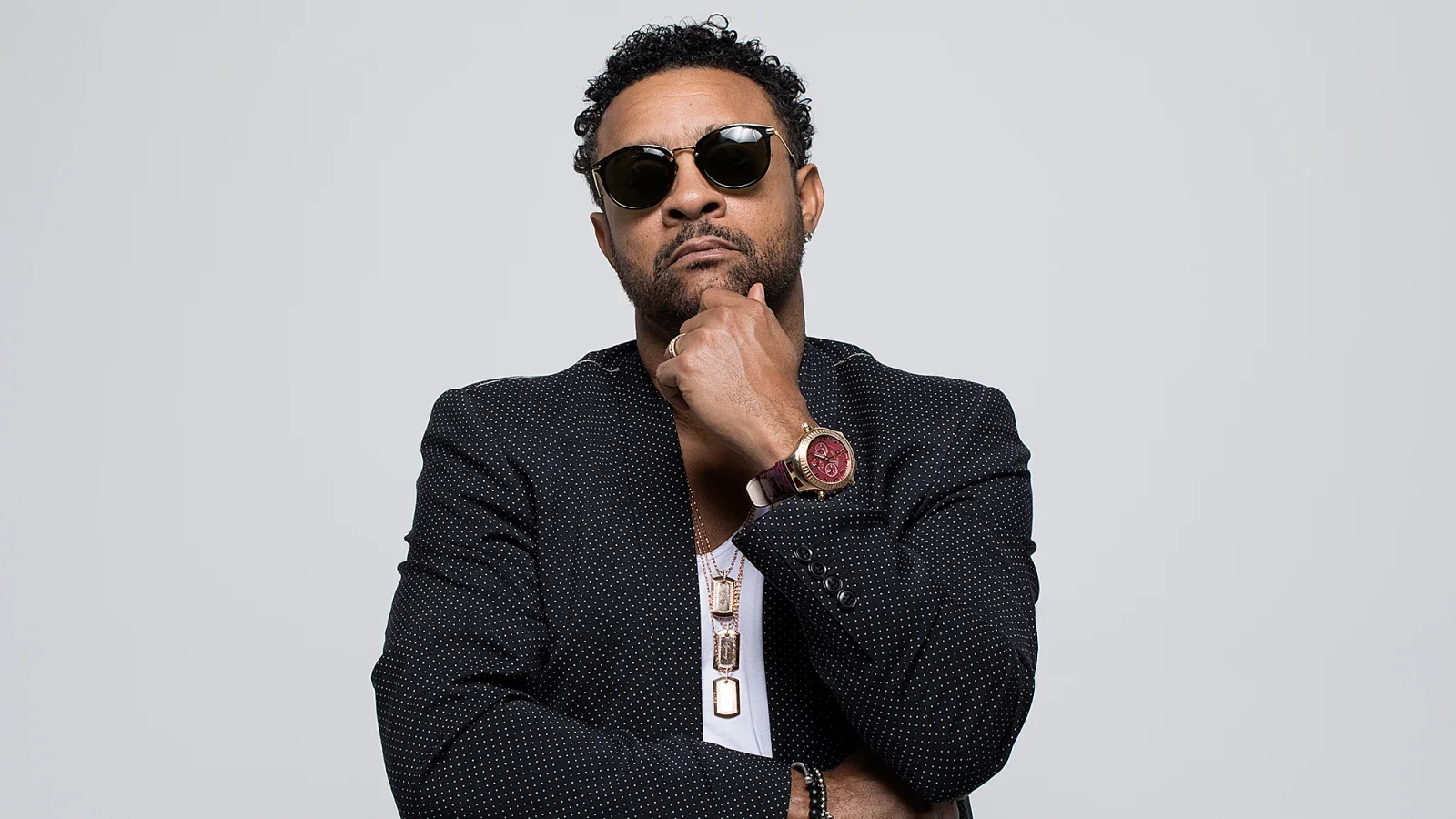
Jamaican reggae and rap star, Shaggy, believes the Caribbean must build its own Grammy awards to honour and recognise regional artistes. In a one-on-one interview with Guardian Media yesterday, Orville Richard Burrell, who is popularly known by his stage name, Shaggy, also said the time has come for soca to no longer be a seasonal genre of music.
Last week, soca artiste Machel Montano said he believes he has the key to taking soca to the Grammys and other international award shows. When asked about the potential of such an undertaking, Shaggy told Guardian Media it is certainly not impossible but pushed the idea of the Caribbean honouring its own artistes.
He said, "We should get to a point where we start doing our own Caribbean-type Grammy following in the same footsteps as the Latin guys where they created what is known as a Latin Grammy. Within the Latin culture, there are different styles. There is reggaeton, bachata and all these different styles of music. I think if we come with a Caribbean-style Grammy instead of a dancehall Grammy, reggae Grammy or soca Grammy and instead just create a Caribbean Grammy where our music will be able to compete instead of just one style of music."
As soca returned in scintillating style this year following two years of no carnival activities due to the COVID-19 pandemic, Shaggy warned the local industry the genre must transform from something that is right now too seasonal.
Shaggy, who was awarded the Order of Distinction in Jamaica in 2007, said, "I think one of the big things that has become a ceiling for soca music is that seasonal type of thing where they feel it's only in a season. So when we did Mood with me and Kes, I was in that feel good mood cause this is the land and the culture of feel good and that should not be a season, it should be year-round. You don't have to feel good just for a season, and the minute we move that whole seasonal thing from soca, I think you definitely have a shot of doing crossover success."
He emphasised that Caribbean artistes have to work harder than those in developed countries to make it internationally and that is something not to be underestimated.
Shaggy explained, "These majors are spending around $100k or $5m, so to speak, on a roll out on any one particular act. We don't have that privilege so we have to make up our mind as Jamaican and Caribbean artistes to really realise if we really want our music to go we have to work 10 times harder with 10 times less and get 10 times less sleep and make music 10 times better, just to even have a shot. And once we have that mindset then we're certainly on our way."
Shaggy featured as part of Kes' IzWE concert that took place on Tuesday night at the Brian Lara Cricket Academy. Having enjoyed his performance in the southlands, Shaggy is now looking forward to relaxing in the twin-island a bit before leaving.
Fugees Kick Off Reunion Tour at Global Citizen Live as Group Performs Together for First Time in 15 Years
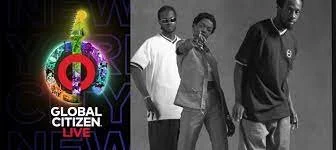
"Respect the miracle of this union," Lauryn Hill said as she, Wyclef Jean, and Pras Michel took the stage in New York City for Global Citizen Live, kicking off the Fugees' international tour
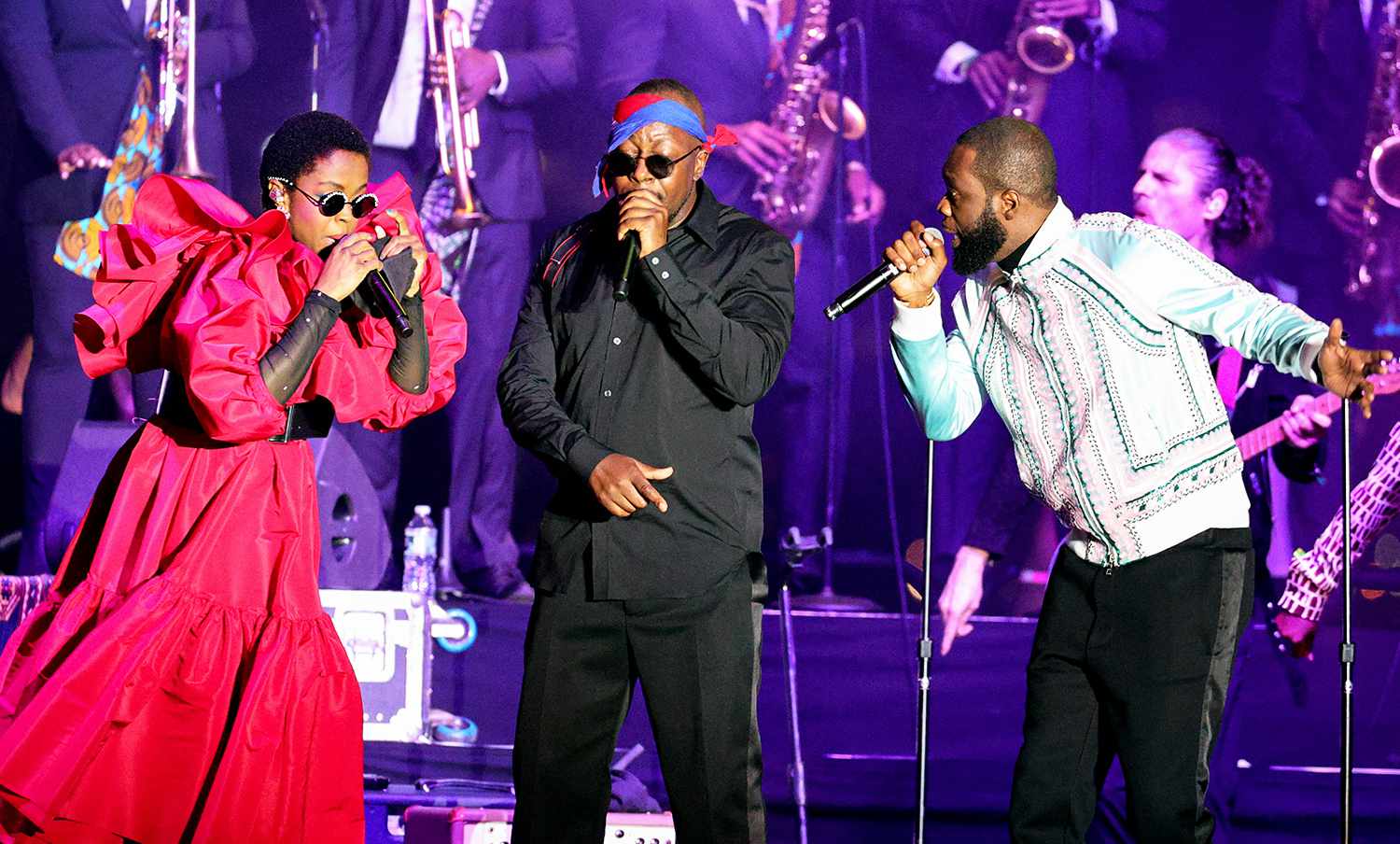
The Fugees are officially back after announcing their first world tour in 25 years, celebrating the milestone anniversary of their 1996 album The Score.
Lauryn Hill, Wyclef Jean, and Pras Michel reunited Wednesday in New York City for their first performance together in 15 years, which was taped as part of Saturday's 24-hour livestream for Global Citizen Live 2021.
The group performed their single "Ready or Not" for the enthusiastic audience, which was later streamed as part of the Global Citizen event, teasing what's to come for their 12-city international tour.
Global Citizen's 24-hour broadcast from cities around the world called on G7 countries and the European Union to share at least 1 billion COVID-19 vaccine doses with those most in need and to support calls for a waiver on COVID-19 vaccine intellectual property rights. The campaign also called on vaccine providers to share mRNA technology with the new World Health Organization-backed transfer hub based in South Africa.
"Respect the miracle. Respect the miracle of this union," Hill, 46, told the crowd, according to The Guardian. The group finally kicked off their secret show at Pier 17's rooftop venue after a delay of more than three hours, during which the audience had to surrender their phones.
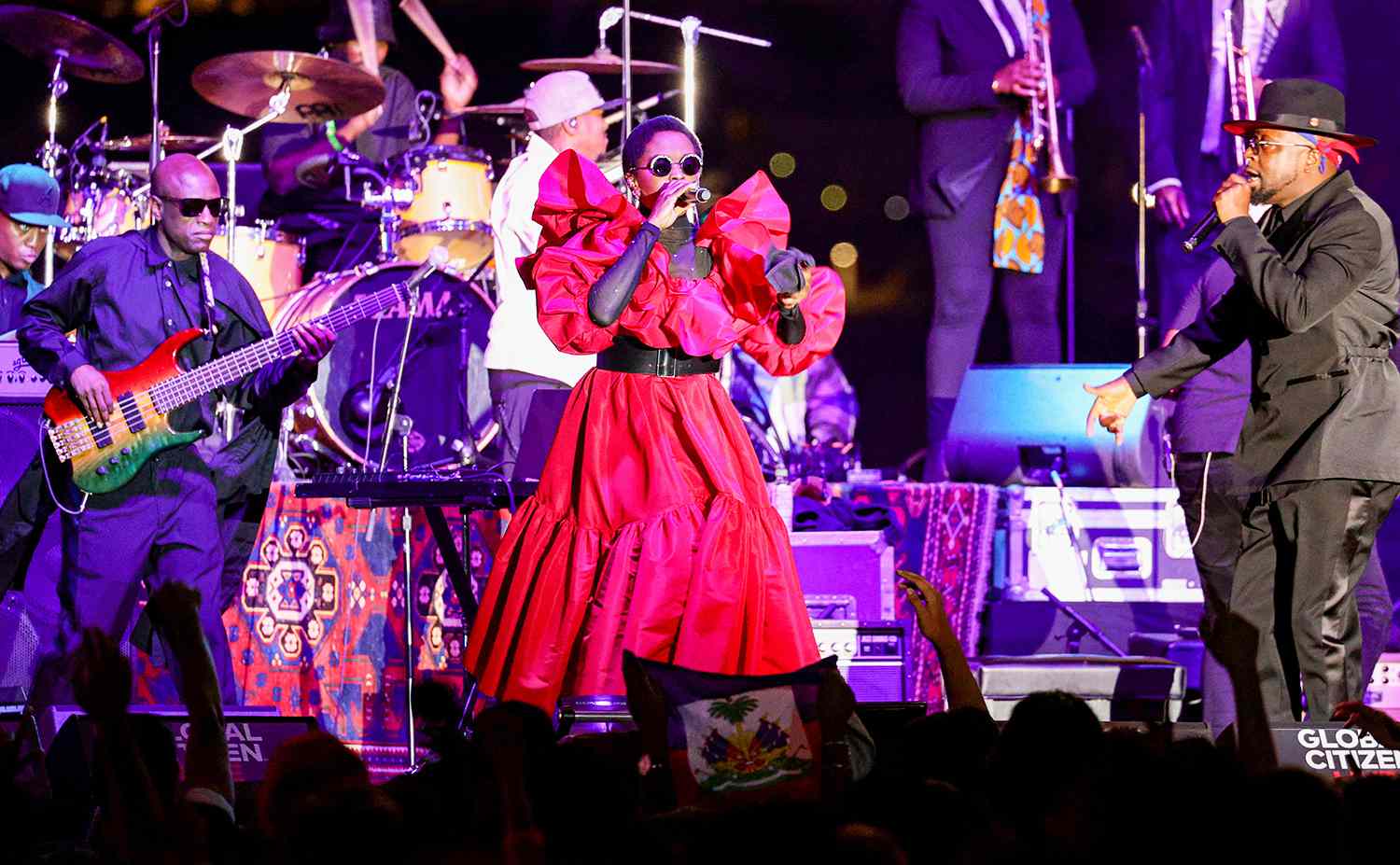
They also treated the audience to their songs "Killing Me Softly" and "Fu-Gee-La," and Jean, 51, performed his rendition of Bob Marley's "No Woman, No Cry."
The Fugees will continue the U.S. leg of their tour on November 2 in Chicago, before wrapping up with shows in Paris, London, Nigeria, and Ghana throughout December. They announced the reunion tour on Tuesday, just a day before the pop-up show at a previously undisclosed location in New York.
"The Fugees have a complex but impactful history. I wasn't even aware the 25th anniversary had arrived until someone brought it to my attention," Hill said in a statement. "I decided to honor this significant project, its anniversary, and the fans who appreciated the music by creating a peaceful platform where we could unite, perform the music we loved, and set an example of reconciliation for the world."
Jean added, "As I celebrate 25 years with the Fugees, my first memory was that we vowed, from the gate, we would not just do music, we would be a movement. We would be a voice for the unheard, and in these challenging times, I am grateful once again, that God has brought us together."
Formerly known as the Tranzlator Crew, the Fugees debuted in the early '90s and went on to release their debut album Blunted on Reality in 1994. The Score was their second and final album, going seven-time platinum as one of the best-selling albums in the world with two Grammy Awards.
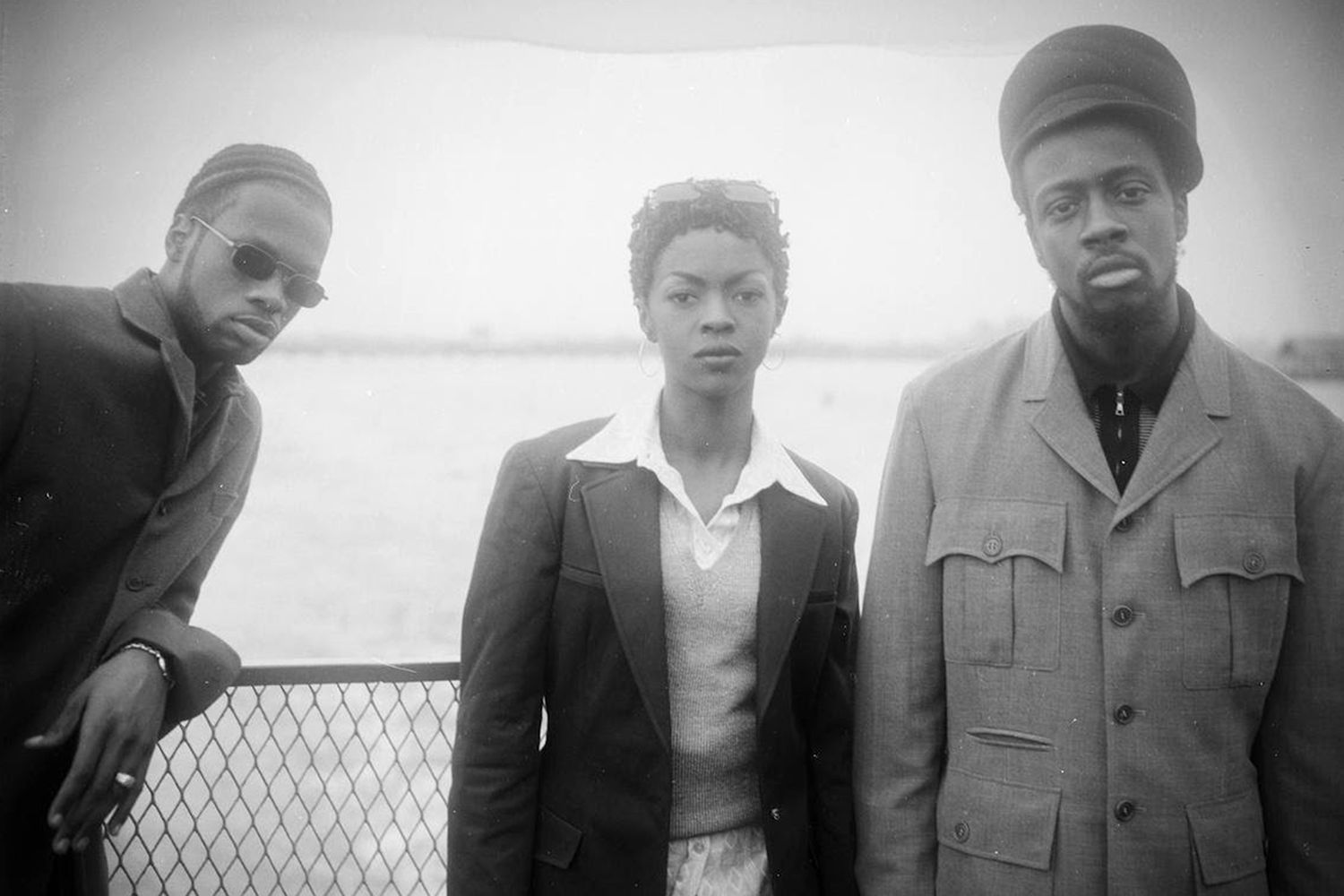
Although the group was initially only together for five years, their status as one of the world's most influential hip-hop acts has long been solidified. They last reunited in 2005 for their single, "Take It Easy."
See all tour dates and buy tickets for the Fugees' international tour at LiveNation.com.

If You Know H.E.R., You Should Know Him: Oscar & Grammy Winning Producer D'Mile
D'Mile was born to make music. The 36-year-old producer, born Dernst Emile II, grew up in a studio-ready household -- his mother a vocalist and father an instrumentalist and producer. "I was like two or three, banging on the piano," he explains. "It was a part of me."
In the last few months, D'Mile has established himself as a force in the award show circuit. "I Can't Breathe" was named song of the year at the Grammys, and about a month later, "Fight For You" from Shaka King's Judas and the Black Messiah took home best original song at the Oscars. Both tracks, brought to life by power team D'Mile, H.E.R. and singer-songwriter Tiara Thomas, center on the relentless racial injustice of the past and present.
While D'Mile's introduction to music was mostly centered in Caribbean and jazz songs, by age 10 he became immersed in R&B/hip-hop by way of The Notorious B.I.G. and Junior M.A.F.I.A. As a burgeoning producer, he began working alongside Rodney Jerkins (a.k.a. Darkchild) for two years, and later collaborated with the likes of Mary J. Blige, J. Lo, Janet Jackson and Justin Bieber. It was during this time with Jerkins that D'Mile met 11-year-old Gabriella Sarmiento Wilson, now known as R&B star H.E.R.
D'Mile was at the studio with Jerkins when H.E.R. arrived, along with her parents and longtime manager, Jeff Robinson. They all spent the weekend together, even attending church, where Jerkins got the young H.E.R. to perform during offering time. "She's on stage killing it on the bass and singing at the same time, and I'm just like, 'Yo, she's a prodigy,'" D'Mile says.
Around that time, D'Mile was noticing a trend in R&B. He says many notable R&B acts like Chris Brown and Rihanna were moving into pop, as R&B's mainstream appeal began to fade. Because pop was in demand, the Brooklyn-raised producer shifted his own focus. "I was doing [pop] so much at one point that I felt like I couldn't even go back to R&B," he explains.
In a matter of a few years, D'Mile found his way back to R&B, and began collaborating with H.E.R., around the time of her 2014 deal with RCA Records. Since his return to R&B, the award-winning producer has also worked with Ty Dolla $ign, The Carters, Charlie Wilson, Lucky Daye and most recently, Silk Sonic, expanding on his already star-studded resume.
Now, as R&B continues its resurgence, D'Mile finds himself at the forefront. Billboard caught up with the Grammy and Oscar award winner to discuss his big wins, the historical importance of "Fight For You" and "I Can't Breathe," and his advice on cultivating the right studio environment to create timeless music.
Less than 24 hours have passed since you won your first Oscar. How’s the day been?
It’s [been] crazy, my phone is hot from everybody just calling and texting and DM'ing me. I still don't know if it's hit me. I have to look at the award and be like, “Yo, that is really here at my house.” Right now, it's just on my dining room table.
What does this Oscar win mean to you?
It means everything. [Judas & the Black Messiah] took place in the '60s, but it still weighs [heavily on] today. Outside of that, to know that my mom and dad are over there watching, and my team, all my friends. I did not think that they were going to call our names, all of it was moving fast. All I heard was when Zendaya said “H.E.R." -- I don’t even think I heard when she said my name.
It means everything to me. I didn't come in expecting to get to the Oscars or the Grammys before that. And for everything to turn out the way it did, it was definitely God's plan.
“Fight For You” is attached to such a monumental historic moment that a lot of people weren’t fully aware of before watching Judas and the Black Messiah. What do you think is the significance of the song today?
I actually was one of those people. I knew about the Black Panthers, but I didn’t know anything about Fred Hampton himself. As the movie was going along and I'm learning this stuff, I'm just like, "Man, this is this is very, very important." It still hits home for a lot of people because we're dealing with some of the same fight. It's not over, so it will always be relevant -- until we get to that place of finally overcoming all the stuff that’s still happening in the world.
How did the song come together?
We were blessed enough to be able to watch [Judas and the Black Messiah] while we were in the studio. I don’t think we had popcorn, but we had M&Ms. Right after we finished watching, we had to come up with something on the spot. H.E.R. had a conversation with the directors and the only direction they gave us was that they wanted something upbeat, uplifting and hopeful. We had to cater to the time of it -- the '60s and '70s -- which is up our alley. Then we just took it from there.
How long have you been working with H.E.R.?
I've known H.E.R. since she was 11. I was at a studio working with Rodney Jerkins (Darkchild) and [H.E.R.] came to see him [with] her mom and dad. She spent that whole weekend with us. At this church, Rodney got her to do a couple of numbers during offering time. She's the on the stage killing it on the bass and singing at the same time, and I'm just like, "Yo, she's a prodigy." We reconnected when she was 16 and did one or two songs around that time. Then we connected four years later and we've been working ever since.
That's my sister. I always was looking out for her. Just seeing her grow up, with the talent that she has, and to become the woman that she is today, and what she stands for and everything, it’s just an amazing thing to see.
After spending 15 years making R&B music, what are the transformations that you’ve seen?
Growing up, the people I used to look up to were the Timberlands and the Pharrells, Quincy Jones, Darkchild. It started shifting around 2008, where Chris Brown’s “Forever” came out and Rihanna’s “Disturbia.” All of the black artists were going pop. I was doing [pop] so much at one point that I felt like I couldn't even go back to R&B. I would get calls to work with certain people and I was just like, "I don't even know how to do R&B music anymore."
Shortly after I was just like, I just want to do what I want to do. If it works, it works. Then Drake comes around. He is responsible for a certain kind of R&B [coming] back and for it to be cool. Childish Gambino for me, with “Redbone” and [Awaken, My Love!] also helped me feel like it was okay to do [R&B] again. History repeats itself. So, everything always comes back one way or another, in a new way.
What is it that always brings you back to R&B music?
To me, [this is] the way I look at it now: When you leave your hometown, let's say you find beautiful places that you love and you may even move. But you always have your hometown to come back to. I feel like R&B is my hometown.
How did your work with Silk Sonic come about?
I met Bruno first, through a mutual friend of ours, James Fauntleroy. It was a mix of Bruno finding me on Instagram and hearing what I did on the Lucky Daye album. Then I get a call from James and he was like, “What are you doing on Friday?” and I’m like, “Nothing.” He said, "Come over to the studio. Bruno wants to meet you and he wants to work with you." Then during that time, Anderson .Paak came in.
Were Bruno and Anderson .Paak already established as Silk Sonic at the time?
[Silk Sonic] wasn’t planned from the beginning -- until one day Bruno called and was like, “Yo, come to the studio and let’s just vibe.” We all worked on one song, it turned into more and turned into Silk Sonic down the line, organically.
As a producer, how do you create an environment where great music happens?
I hate meeting somebody for the first time and getting straight into work. I always get nervous. If we start a conversation, that's very helpful. Plenty of times, I've been in a room with people, and we'll just be talking, then I'll get quiet because now I'm reading the personalities in the room and building something based off of that. That's why I like just creating from scratch, instead of like coming in with tracks already made.
Do you have any advice to rookie producers?
Listen to yourself. Know who you are. If you're in the middle of learning who you are, explore different things. Hone in on whatever it is [you like] and just start. That's how you sharpen your skills -- that's how you find yourself and what gravitates to you. If you’re a religious person, pray. But just don't ever stop.
Playlist: Haitian Rhythms And The Music Of New Orleans
'Kanaval,' a three-part audio documentary, explores Haiti's influence on NOLA
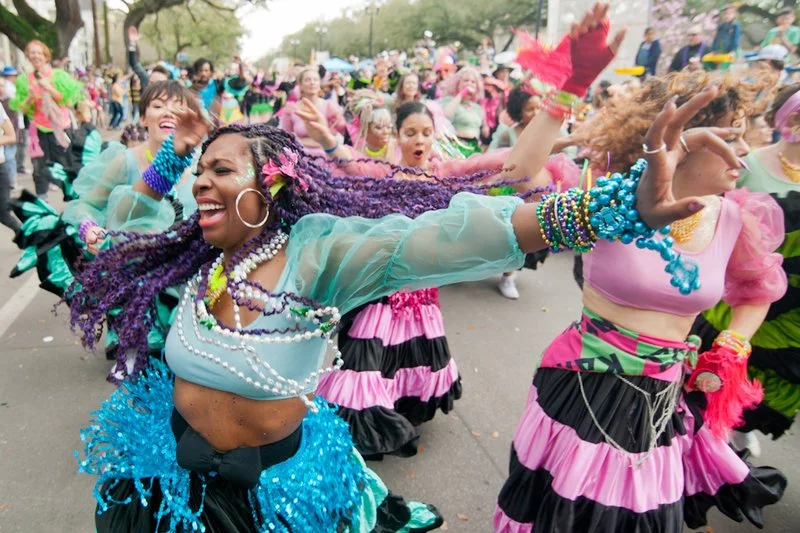
Much of what distinguishes New Orleans today from other American cities can be traced back to French and African influences from Haiti. The cultural ties go back more than 200 years, when 10,000 free and enslaved people left what was then the French colony of Saint Domingue during the country's revolution. NOLA's multi-cultural DNA is its calling card, and it's reflected in the food, architecture, art, and most notably, music. Kanaval: Haitian Rhythms & the Music of New Orleans is a new three-part documentary, hosted by Grammy-winning musician Leyla McCalla, that explores the history of Haiti, and its continuing impact on the music of New Orleans.
Kanaval celebrates the origins, history and influence of Haitian culture, and features interviews and music from Boukman Eksperyans, Paul Beaubrun, RAM, Lakou Mizik, Chico Boyer, Win Butler & Regine Chassagne of Arcade Fire, Bruce "Sunpie" Barnes, Ben Jaffe of the Preservation Hall Jazz Band, and others. Throughout the documentary, historical insights and interviews are provided by Ned Sublette, Duke University professor Laurent DuBois, Loyola University New Orleans professor Angel Adams Parham, award-winning author Edwidge Danticat, Linda Reno and Lori Martineau of the organization Haitianola, and Wesleyan professor Elizabeth McAlister.
"For people who know Haiti and New Orleans, the similarities are endless," says McCalla. "The deep connections between these places really comes alive in the music."
The documentary, premiering on NPR member stations this month, is part of a year-long project including live performances in Philadelphia and virtual events. One of these performances will be McCalla's current project, Breaking the Thermometer to Hide the Fever, that tells the legacy of Radio Haiti, the country's first privately owned Creole-speaking radio station, and the assassination of its owner through McCalla's own Haitian-American lens. The multi-disciplinary performance, featuring original compositions and arrangements of traditional Haitian songs, premiered in March 2020 at Duke University and will be presented in Philadelphia as part of the Kanaval project.
Kanaval: Haitian Rhythms & the Music of New Orleans is supported by The Pew Center for Arts & Heritage with additional funding from the Wyncote Foundation.
HAITI BABII | NEW ALBUM ‘TRAP ART’ & COMPETITION WITH HIMSELF
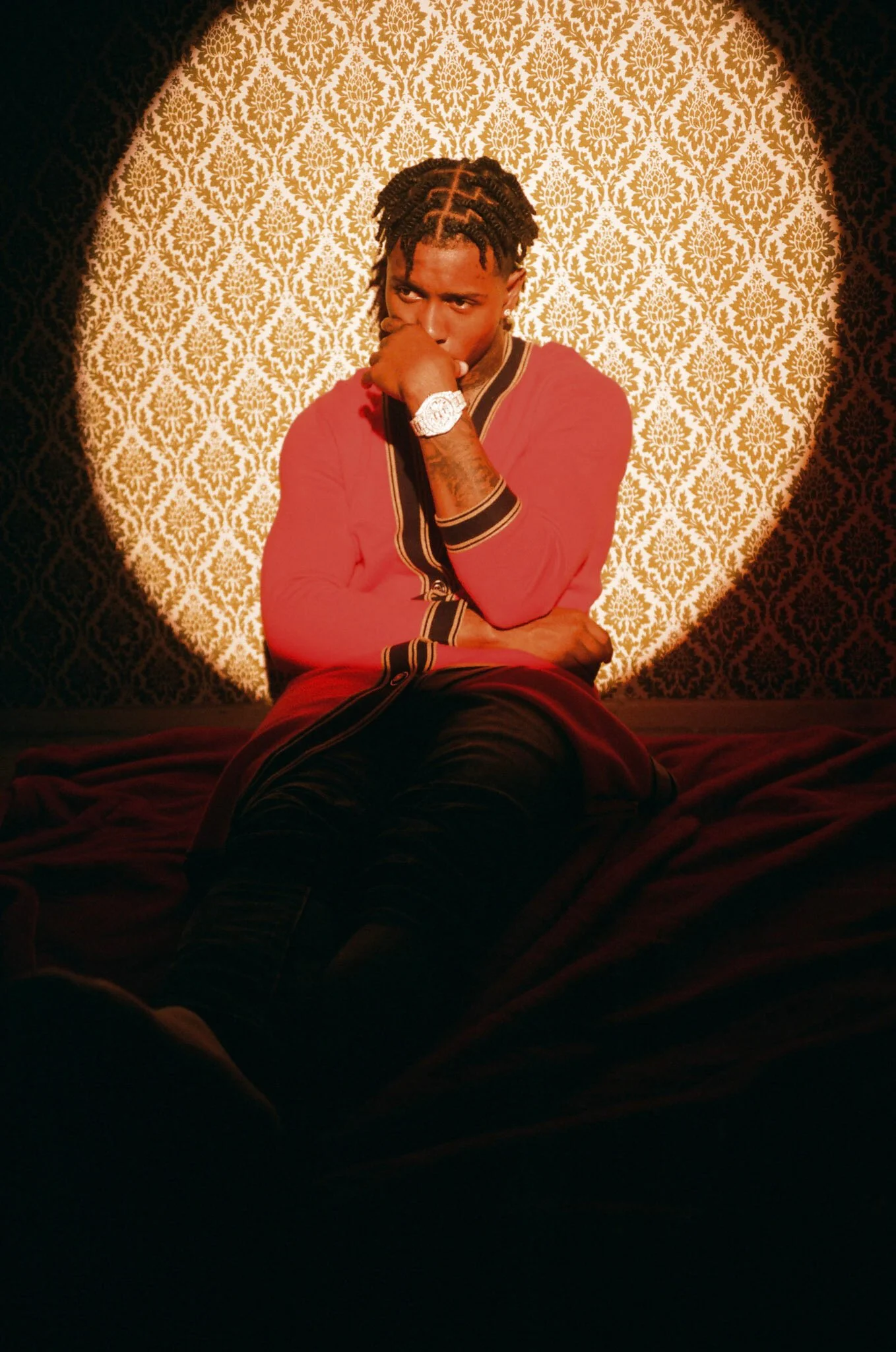
Haiti Babii is a go-getter in every aspect of the word. Aside from his double workouts in one day and playing the father figure to his newborn, the remaining hours are spent in the studio perfecting his craft. With his Instagram name reading “Trap Art,” the Guyanese and Haitian rapper, producer, and songwriter embodies the definition of someone who’s in their own lane, carving their own unique sound and style in today’s generation of music.
When it comes to his work ethic, he sets the bar. He states, “You may have better music than me, you may look better than me, you may be taller than me, but I’ll die before I let you outwork me. That's my mindset.”
You may have seen Haiti’s name from his viral moment freestyle on Real 92.3 (which caught the attention of Chrissy Tiegen), or maybe from his breakout single “Change Ya Life.” Either way, Haiti is proud to put Stockton, California on the map, serving as one of the first known artists to come out of his city. Beyond that, he’s followed by the likes of Rihanna and Meek Mill.
Flaunt caught up with Haiti via FaceTime, who was located in Las Vegas preparing for his lady’s birthday. He jokes, “I’m a ladies man.” Read below as we discuss fatherhood, inspo behind “Red Lights,” moving to Los Angeles, learning how to produce, a day in the life, studio essentials, going Gold, Rihanna and Meek Mill cosigns, his new album Trap Art, and more!
How are you holding up during the COVID-19 pandemic?
I’ve been doing great actually, it hasn't stopped nothing. I’ve been having time to myself, to my daughter, understand my baby. Quarantine’s giving me time to focus on me, working, and focus on my family.
How’s fatherhood treating you?
It’s great, it's an experience. Before the baby even was here, I was already motivated to go harder in everything.
What's the best part of fatherhood?
That feeling in your heart you get when you look at her smile. When I see my daughter smile… the worst thing is blown away. I don't see how professional athletes do it when they be on on the road for games. I see how they do it because they get the money but damn, the best thing is being around this person. This little human being laughing and giggling all the time.
“Red Lights” video out now, who or what inspired this one?
I always experiment with my voice and flows, I knew it was the time to give the fans what they wanted. I mastered my craft and realized it's a sample of that. It’s West Coast in it, but I'm singing in melodic ways. When I made “Red Lights,” first off shout out to my producer, Hitamadethebeat, he killed it. Shoutout to my engineer Darrius up at EMPIRE studios in Frisco. I really went home, wrote to the beat, went to the studio and laid it down.
You live in Los Angeles now, when did you leave Stockton?
I left Stockton 2 or 3 months ago. Stockton’s only 5 to 6 hours away from LA, LA’s a second home anyway so it’s not like I’m too far. It's an easy move. I got a lot of family, a lot of people in LA anyway. It's where everything is at so you have to be in LA if you're from the West Coast.
How was it shooting with the snakes in the music video?
Shoutout to DezGreat, she directed the video. She really sat with me one on one and asked me a bunch of questions about what's my ideas, what do I see, what do I want in the video? She really brought it to life, but she put her own oomph into it. The snake part, I love stuff like that because it's stepping outside my comfort zone. I'm comfortable being uncomfortable.
Were the snakes scary at all?
It was my first time with snakes. As a kid, I always told myself I'm scared of snakes. But when I got in front of one, I wasn't scared at all. If it bites me, it bites me. I don't really care. I’ma do this video, that's what my mindset was. When I step into a character, I can do whatever I want. I'm Tom Cruise! I’m Haiti Babii, I step into that mode.
What is it you want fans to get from your story?
Honestly with “Red Lights” usually I don't care what people think but this song, I really was checking out the comments on YouTube. I got a lot of positive reviews. A lot of people said “I found out because of the Riri situation. Yo, Wyclef shouted you out so this is how I found out about you and I realized you make dope ass songs.” People are respecting my songwriting skills now, so I got a lot of good reviews from fans.
What’s your creative process in the studio? (writing & producing)
I literally freestyled one song my whole life. I’ve never freestyled a song, I write everything down. I always go home, find a bunch of beats, I’ll spend hours or days coming up with the best verse, best hook. Erasing, rewriting. I go to the studio and I lay it down. I’m one on one with my producers. You know how somebody work with a lot of writers? I don't have that. I don't work with writers, I work with a bunch of producers and engineers in one room. The best thing to me is the mixing. I co-produce a lot of my tracks, most of my tracks you hear I co-pro.
Have you always known how to produce?
I started when I made “Change Ya Life,” I co-produced my hit record. I've been doing it more so because listening to people like Travis Scott and Kanye, they always say you get the best of your music. That inspires me, I gotta start co-producing so it can sound 100% me. I gotta give it my all.
How’d it feel to go Gold off “Change Ya Life”?
It feels great. I always looked at myself as a superstar artist, a person who’s looking for longevity and not success for a moment. It blew up through TikTok on a fluke. When that blew up, okay the world knows my name. Now I got a reason to keep going, I got my plaque. It’s like getting your first little trophy. Going Gold to me, the feeling was almost as equal as getting a Grammy. Only reason I say that is because I come from so much. I'm from a little city, so going Gold was huge. That’s why I can say stuff like “I’m a king where I'm from,” talk my little shit and get cocky because I'm from a little town. Only people you know from my town outside of artists are Nate Diaz, Nick Diaz, a few NFL players, but the world doesn't know then. For me to make my own name, now I have graffiti of my faces up on the walls in Stockton, it’s dope.
You say “the dream is free the hustle isn’t,” what’s the reality of the grind?
Really when I had my daughter 5 months ago, even before she was born, it’s an extra oomph in my life in general. I was less lackadaisical, I was more intuitive, more on point with everything I'm doing in life. Now I wake up at 4 in the morning to go work out. I wake up at 4 AM, I eat, I get to the gym at 5:30 AM. I go back home, I shower, eat again, play the game for a little bit and go back to the gym about 10 AM. Look I’m going crazy, nobody can stop me. [laughs]
After I go home from my second workout, I eat again but I make sure I don't eat too big. I like to snack so while I'm snacking, I’m writing. I limit my gaming time. I pick a beat or I look for a beat, and I write. I don't even have to like the beat but the fact I can make a whole song to it, I can use those lyrics and adjust them to another track I got. Always making my brain work. I call my writing time my homework. After my homework, I plan a studio session whatever day it is. If we’re talking a non-studio session day, I'm down spending time with my family. I use the whole rest of the day spending time with my babygirl. If you’re talking a studio day, I do all I just said. I leave for Frisco, get to Frisco, record. I’ll be in until 2 AM or 3 AM.
What drives your double workouts? One workout is a lot!
I'm 23 but I’m already an athlete already. I’m an artist, I look at my life like other artists. What’re they doing? Why aren't you getting up at this time? Why are people in New York getting up at this time and we’re not? What are you doing that's that special? Me waking up early makes me feel like I'm outworking the people who they call talented. You may have better music than me, you may look better than me, you may be taller than me, but I’ll die before I let you outwork me. That's my mindset.
Who are you bumping when you work out?
Travis Scott, I listen to that. Young Thug, I listen to that. Drake, listen to him. Kanye. Lately I've been slapping Jay-Z, a lot of Jay-Z on my Spotify playlist. Of course, me. When I slap my music, I critique myself. I'm listening to my old songs like “oh, I coulda said this. Oh, I coulda switched this. Oh, I shoulda turned that down.” Other than that, my workout playlist consists of those artists
Favorite Travis Scott song?
I got so many. I have a new one, it’s brand new. It’s called “WHO? WHAT!” When I first heard it, nah I’ma skip it. I kept skipping it when I’m listening to the album. When I finally played it, this shit slaps! That's my new favorite song by him, period in general. Then “Mamacita” with him, Young Thug, and Rich Homie.
Is Travis your dream collab then?
For sure, I’d call it a dream collab. Anybody who meshes well with me and my craft... I look at the game like this: if you're an artist out there and fans feel we have similarities together, we got the name game and the same flow, I don't want to work with you. You know why, because it’d be a repetitive track. I’d rather build a relationship with you and tell you “yo, your shit’s dope.” If I work with someone like Travis, he’s going to test me. I want to work with somebody who’s going to test my abilities, not just “you’re a rapper, I’m a rapper.” Because that can happen anytime. For instance Sada Baby can come out of anywhere and say “let’s work.” We both go rap on here. With someone like Travis, I have to step my game up. I’m might have to come hard, I might have to sing a little bit. It always differs. I’m a hardworking artist so I like working with everybody at the end of the day.
3 things you need in the studio?
I workout while I’m in the studio, which is crazy. No one knows that unless you’re in my session. I get these 2 little weight bags, nothing but sand in it basically. Use those to hold down light stands or microphone stands. I pick those out to put a piano room, I’ll be in the room listening. I’ll get resistance bands so I need those. As far as food, we can have some Skittles in there. And some Fiji water, need the Fiji water.
Talk about bringing your Haitian culture into your music.
It started like this: California Hatian, I call it an album but it's more of a mixtape. If people listened to it, that really showed the world okay, this is me showing you my Guyanese side. Not just Haitian because I'm more Guyanese than I am Haitan. I'm showing them that side, I can step outside my comfort zone. Stepping into this new album, Trap Art is more for my dominant fans. My original fanbase, the fans that were listening to me when I was dropping those hood tracks, those ratchet tracks. Trap Art, I’m giving them what they want. I'm giving them that street, that hood. I'm not really experimenting with new sounds. Plain and simple: I'm here, this is my year. I’ma talk my shit, I'm still a gangsta. You know what it is. That's how I'm stepping into Trap Art, 2021. Get rich or die trappin’!
Is your sound considered trap?
It’s not trap because trap to the industry is a whole different sound. The trap is where you come from. In an instance, you come from it too because trap is a mindset. Trap doesn't have to be where drugs are sold out of. If you’re trapped once in your mind, you could be in college and feeling like damn what's the next step? You’re trapped. The reason I put art is because art itself is artistic. Whenever you're feeling trapped, draw out a pros and cons list and be artistic with the shit. Be artistic with your life. Sit down and think for yourself, set goals and eliminate boundaries. Do different shit. I named it Trap Art because it's different.
What's crazy about this Trap Art album, I went back to my inspirations when I was a kid. I grew up listening to a lot of 50 Cent, that first Get Rich or Die Tryin' album. That's why I cosign the name Get Rich or Die Trappin’. A lot of Usher for sure, you can hear both of those artists in that album. You can see where I got my inspirations and my ideas. Some Thug in there. Not to disrespect but Thug got it from Wayne, like how I say I got it from some artists. You go here, gotta respect Wayne too. That Hot Boys era.
Talk about Rihanna & Meek following you on Instagram, that’s huge.
Riri found out about me through the radio, she’s like “yo this kid has the look, he has the sound. He’s going to be big one day.” That's riri’s whole impression on me. I have a track with her that's going to be on her album, called “Real High” that I co-produced. Meek found out about me through girls and other people posting me, he’s like “Ima check his music out.” He was trying to sign me, I said I still got a deal with EMPIRE. He said “it’s all good, I’ma support you from the backend. I’m watching, I’ma fuck with you. That's how Meek’s hype was, it's all love. But Wyclef’s been the biggest for me, because I can hit Wyclef right now. I can talk to him anytime, that's unc right there. He’s cool.
What’re you most excited about in the new year?
If everything opens back up, I’m excited to compete. This is a competition to me. I'm not in competition with people in a negative way, I'm using my competition in a positive way to better myself . I can't wait to perform, to shine. I can't wait for the world to see who I am, and hear my music. It’s always going to be about the money for everybody and me too, but it's about respect for me. I want respect, give me my respect because I’m working hard. Y’all see me, that’s where I’m coming from.
Anything else you’d like to let us know?
Let the world know the Trap Art album is going to be the best thing they’ve heard from me and from the West Coast in a long time.
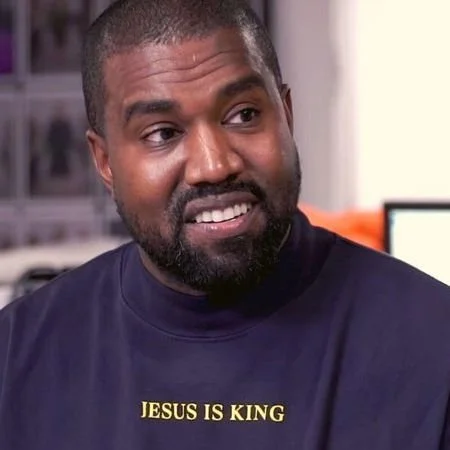
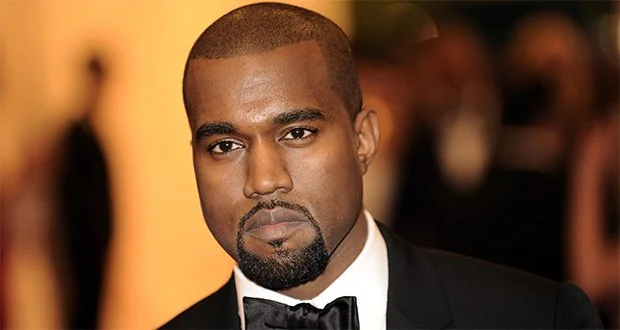
Kanye West Planning To Build A 'City Of The Future' In Haiti
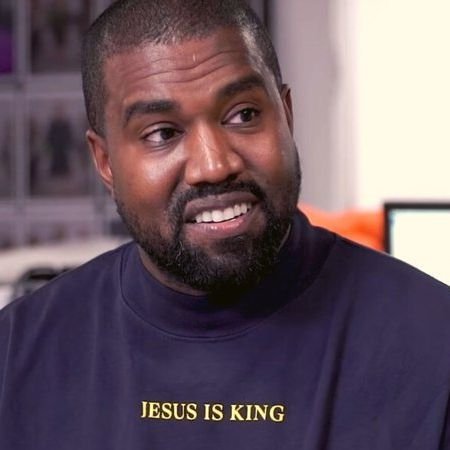
Last month,Kanye West visited Haiti to meet up with its president, Jovenel Moïse. The two then went to visit Tortuga Island and Labadee to see a plant breeding center, according to the Haitian Tourism Board.
When West initially landed in the airport, he also met up with tennis superstar, Naomi Osaka. This trip came after criticism a week before for being in Jamaica without a mask on. At the time, no one knew why West wanted to see this breeding center but now, there are some answers.
Kanye To Boost Different Sector's Of Haiti's Economy With New City

Kanye West- 'Follow God' music video
West took to Twitter this morning to share his plans of building a "city of the future in Haiti." This is after discussions with the government in the country to help boost different sectors of its economy such as farming and fishing.
"Just to be CLEAR: WE ARE IN ENGAGED WITH HAITI’s GOVERNMENT to make a transformational INVESTMENT to bring JOBS, DEVELOPMENT, HELP SUPPORT LOCAL FARMERS and FISHERMEN and Build a new « CITY OF THE FUTURE » in a very beautiful country.
Latest Move In Haiti Comes After Building Yeezy Christian Academy
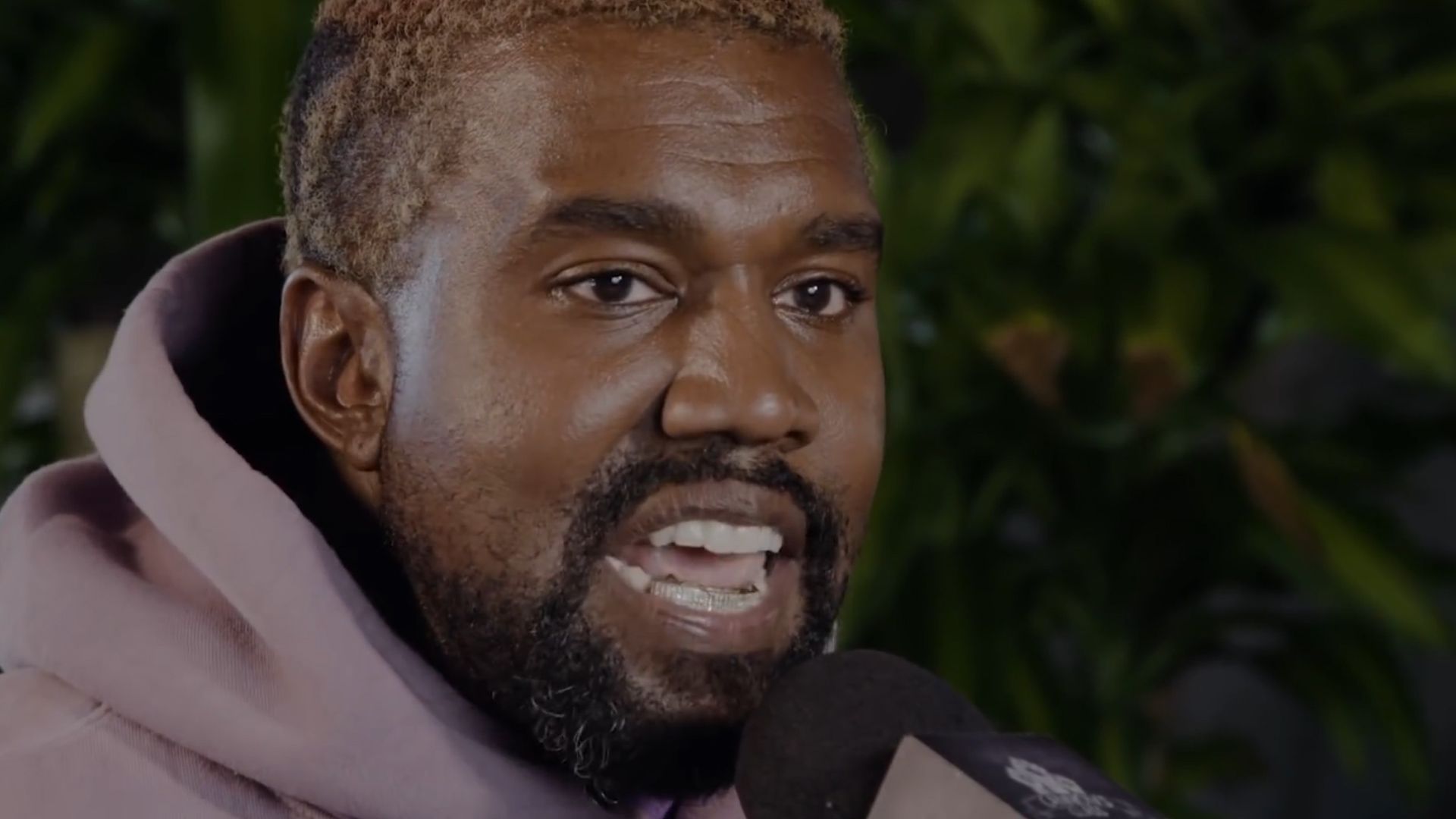
Nick Cannon's 'Cannon's Class' podcast
West also recently build a Yeezy Christian Academy as its goal is to teach the "five founding pillars." The school also displays the message of "everything in the school exudes Christianity. All faculty share the faith and walk the walk. Bring Jesus to the world through our students."
Additional pillars being taught are music, communication, collaboration, and creativity. That came after Ye said on Twitter that he wants to start educating people about Jesus on TikTok through an alternative app called "Jesus Tok."
Kanye West Still Encourages People To Vote For Him As President In 2020 Election
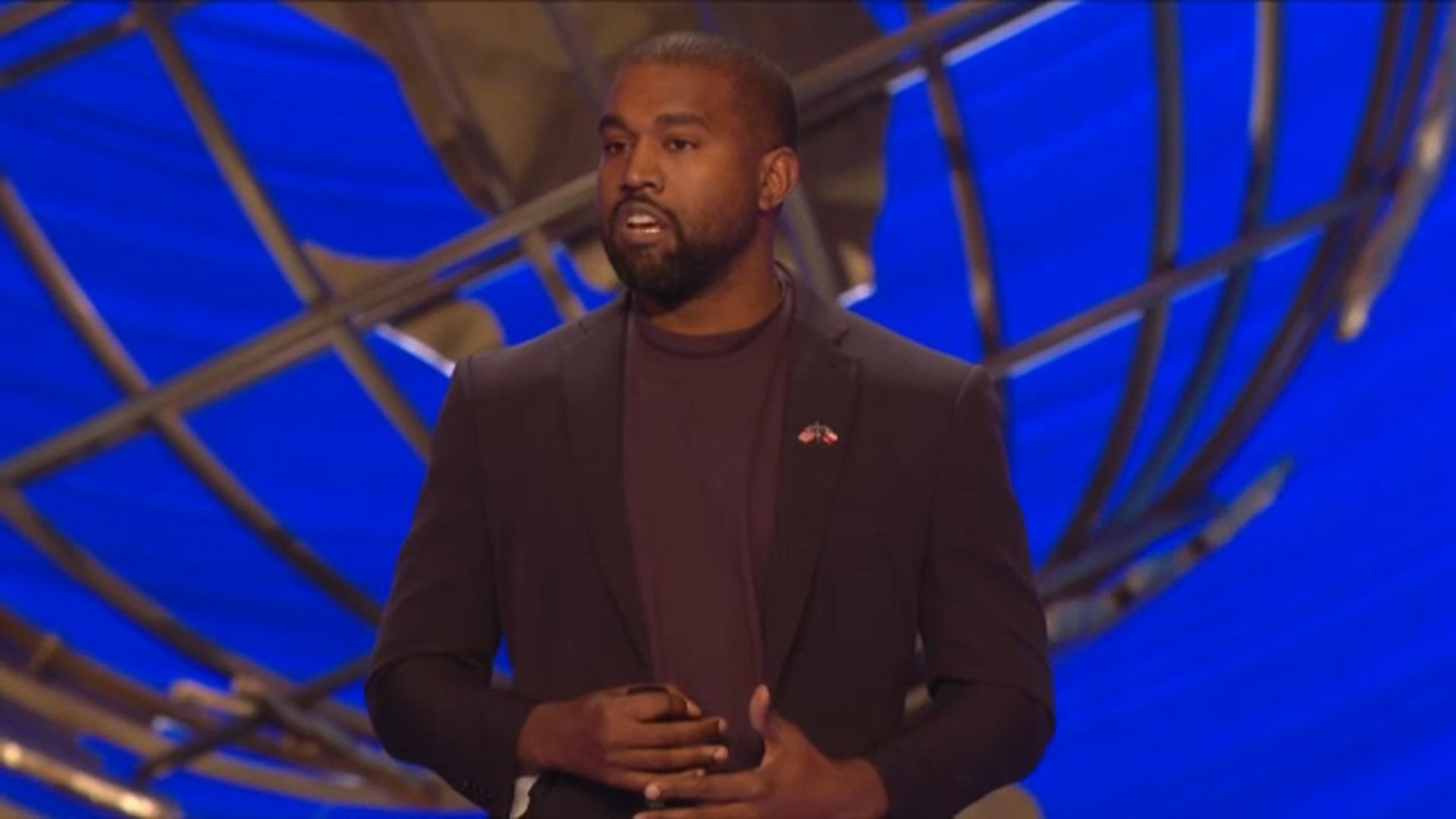
Joel Osteen- Twitter
Meanwhile, West is also sticking to his plans of running for president despite him not having any chances to win the presidency. This is after failing to appear on states' ballots after missing deadlines and or sending invalid signatures. In states such as California where he is on the ballot, he isn't listed as a presidential candidate but instead, is listed as a VP candidate that is running with Roque "Rocky" De La Fuente. Both men didn't even agree to run together.
Kanye Also Made Claims He Wants To Buy Universal Music Group For $33 Billion
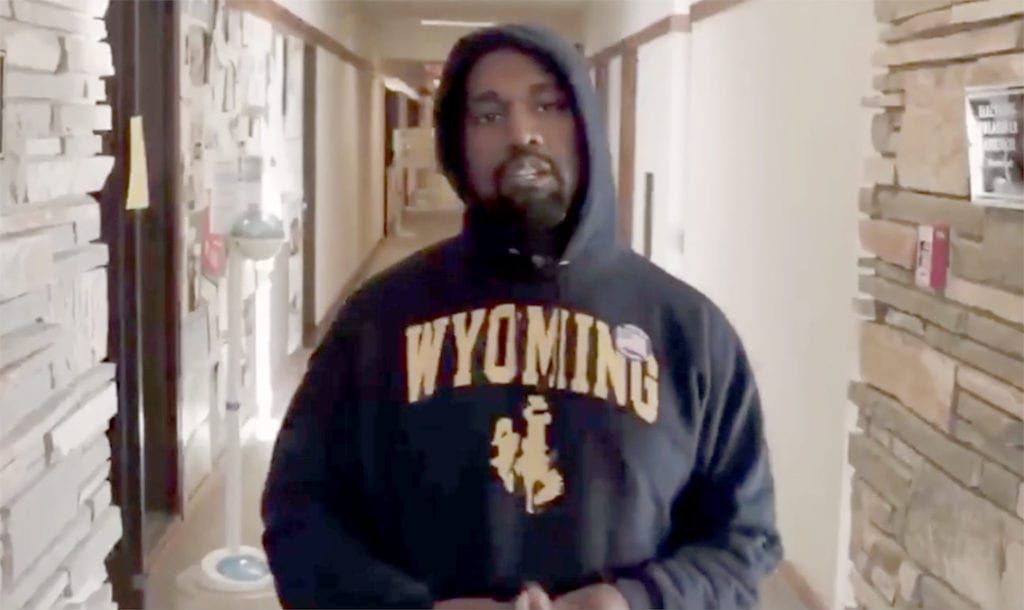
Kanye West- Twitter
West said on Twitter last month that he wouldn't release any new music until his contracts at Sony and Universal were up. He also recently appeared on Joe Rogan's podcast where he explained how he wanted to buy his masters from Universal. He is thinking bigger though as he wants to buy the record label for $33 billion.
“I was thinking about buying my masters [but] I realized that was too small of a thought. I’m going to buy Universal. [Universal is] only a $33bn organization. I’m one of the greatest product producers that ever existed. And I’m a child; I’m 43 years old. I was $53m in debt four years ago. Now it’s proven that I’m the new Michael Jordan of products.”
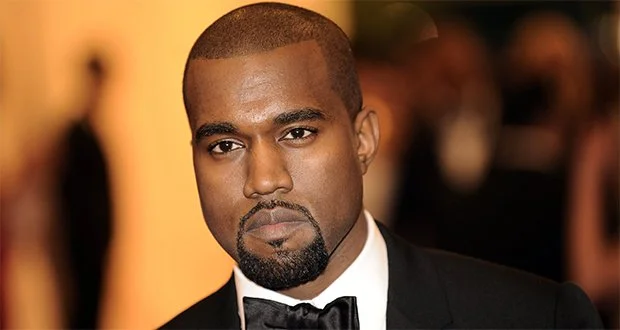
American rapper and billionaire Kanye West lands in Haiti
American rap star Kanye West landed in Cap-Haitien (Haiti) this Friday, September 25, to everyone's surprise.
Another big surprise for Haiti this week. Rapper and billionaire Kanye West, 43, has landed at Cap-Haitien international airport on Friday morning. Le Nouvelliste's Gérard Maxineau shared the news on Facebook, first via a post, then in a live video showing West entering the diplomatic lounge.
The President of the Republic, Jovenel Moïse, should meet the rapper and candidate for the American presidential election, in the country's second city, in the coming hours, according to Maxineau, reached by phone by Loop Haiti's newsroom.
https://www.loophaiti.com/content/american-rapper-and-billionaire-kanye-west-lands-haiti
For now, the journalist can not give us more details about the objective of this meeting or what will be the subjects of debate between the two characters.
But after their meeting, West and Moise should go to Labadee, one of the most known and visited beaches in the Nord department, then to Ile de La Tortue (Northwest), Maxineau told us.
After Naomi Osaka, who has come by surprise Monday for the filming of a Netflix documentary dedicated to her career, Kanye West is the second international star to visit Haiti in less than a week.
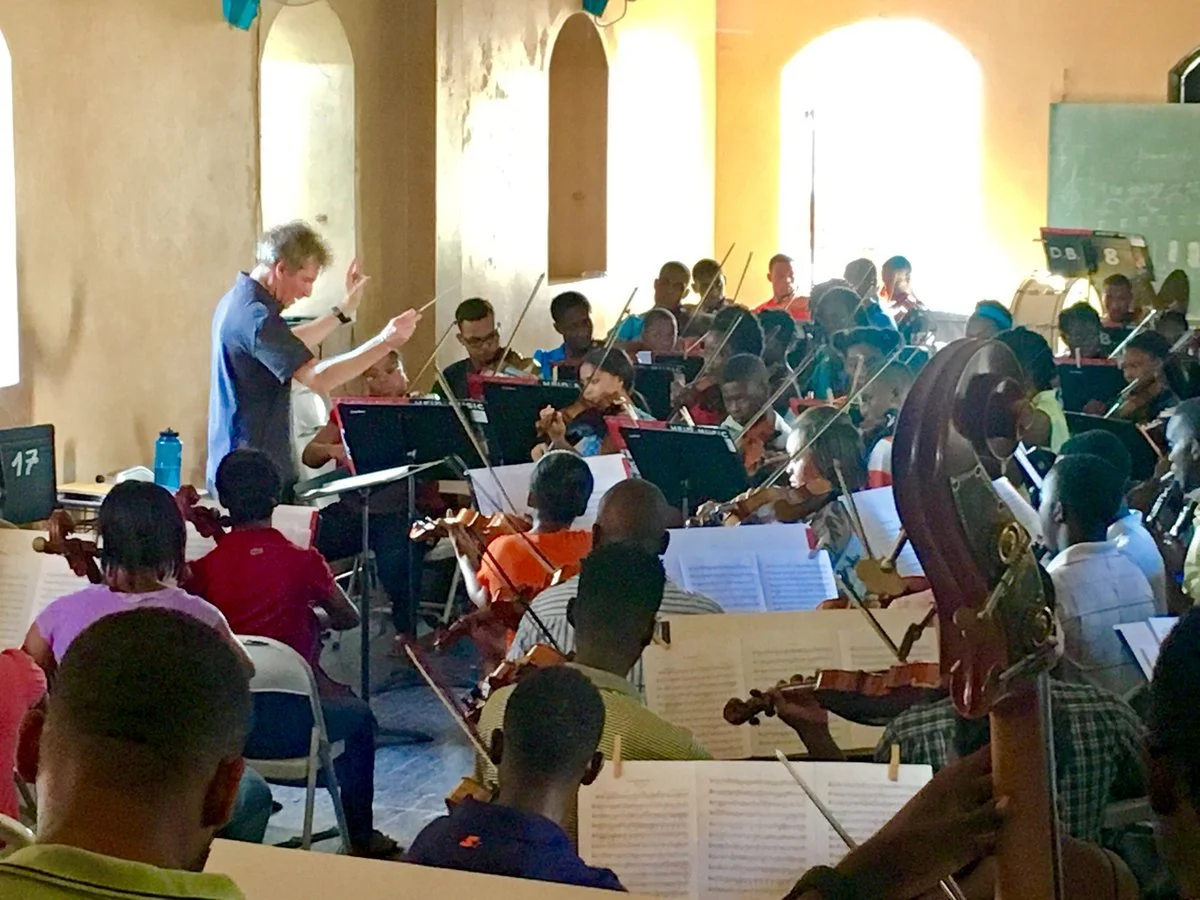
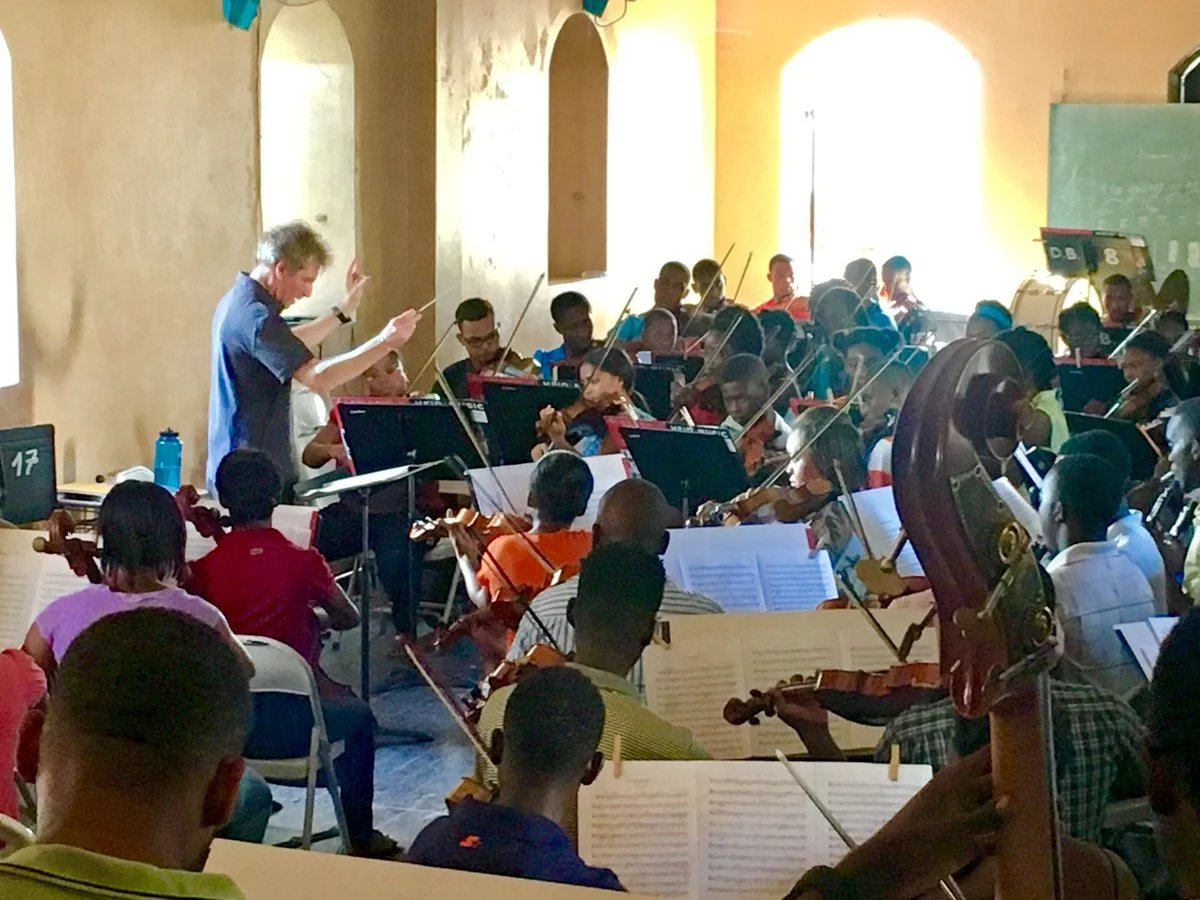
Utah Symphony performs virtual duets with Haitian youth
SALT LAKE CITY, Utah – Musicians all over the world have continued to make music together, using click tracks and editing apps, during the pandemic. Chances are, few of those performances, though, have been as meaningful as a series of duets with two members of the Utah Symphony and a group of young musicians in Haiti.
Four years ago, Utah violinist Yuki McQueen and cellist John Eckstein traveled to the island nation – the poorest in the Western Hemisphere – to teach at a music camp sponsored by the non-profit BLUME Haiti.
With the help of their Symphony colleagues, they eventually started the Haitian Orchestra Institute – an annual workshop for young Haitian musicians.
“What the program has done for music in Haiti is extraordinary,” said Janet Anthony of BLUME Haiti, who helps organize HOI. “It creates another image of Haiti that’s very, very positive.”
“Our goal has never been to create virtuoso musicians,” Anthony said. “It’s more to play a small part in helping to develop their civil and civic society.”
The year 2020 marked a series of anniversaries for the island – the 10th anniversary of the 2010 earthquake among them – and it was going to be a big year for HOI. It was to include the workshop and a music festival.
Salt Lake’s Baldassin Pianos restored a donated 1932 Beckstein grand piano for the event.
But in March, with the festivities less than two weeks away, they were forced to postpone their plans.
McQueen was heartbroken, but not as disappointed as Haitian cellist Emantero Valbrun.

The 20-year-old musician taught himself to play the cello by watching YouTube videos, something which mystifies Eckstein.
“It’d be like looking at a baseball player and deciding I want to be in the MLB,” Eckstein said. “You just don’t do that.”
Valbrun is now so passionate about the instrument that he practices 10 hours a day, and last year, didn’t let a three-hour motorcycle ride with a cello strapped to his back and an armed holdup keep him from attending the workshop.
Because of poverty, political instability and physical isolation, Valbrun and other Haitians just don’t have other musical opportunities like HOI.
Isolated by the pandemic, Valbrun posted a series of solos on Facebook.
“It was like he was crying out in the wilderness by himself with his cello,” McQueen said. “I could just feel his isolation and his loneliness just looking at those videos.”
She thought maybe Valbrun and the other Haitian musician didn’t have to play alone.

McQueen arranged a series of duets – “duets at a distance” – Eckstein and herself performing with Valbrun and students John Karly Fils Menard, Jericho Pierre Noel, Berlande Alexis, Sarah Colimon, Alexandre Santya, and Getro Joseph.
Playing side-by-side with professionals, even if doing it virtually, meant a lot.
Emantero Valbrun, speaking through an interpreter, said he was hopeful.
“Yes, we still have hope. It is this hope that gives us life. Corona, the virus, is not eternal,” said Valbrun. “If we always work at home and have contact with international teachers, it will be ok.”
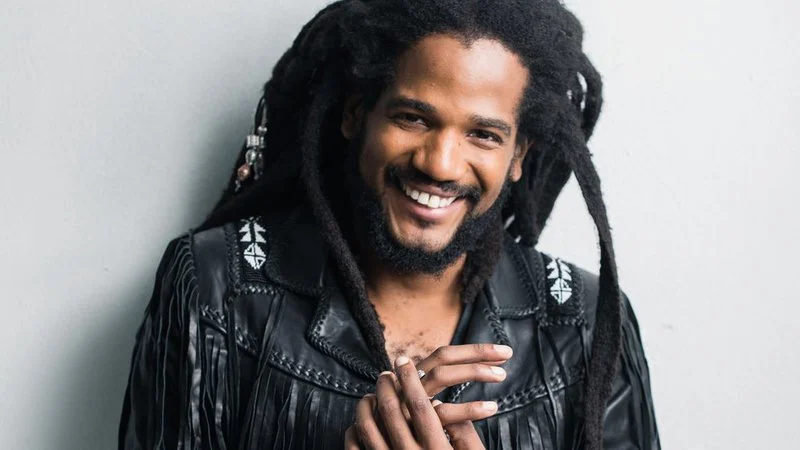
Paul Beaubrun's Album 'Rasanbleman (Red Moon)' Is A Celebration Of Haitian Music
New York-based singer-songwriter Paul Beaubrun was born into the legendary musical family behind Boukman Eksperyans, one of Haiti's most famous bands. But in recent years, Paul has also made a name for himself as a solo artist thanks in part to two stellar albums under his own name and through collaborations with artists like Jackson Browne, the Preservation Hall Jazz Band, Jenny Lewis and Arcade Fire.
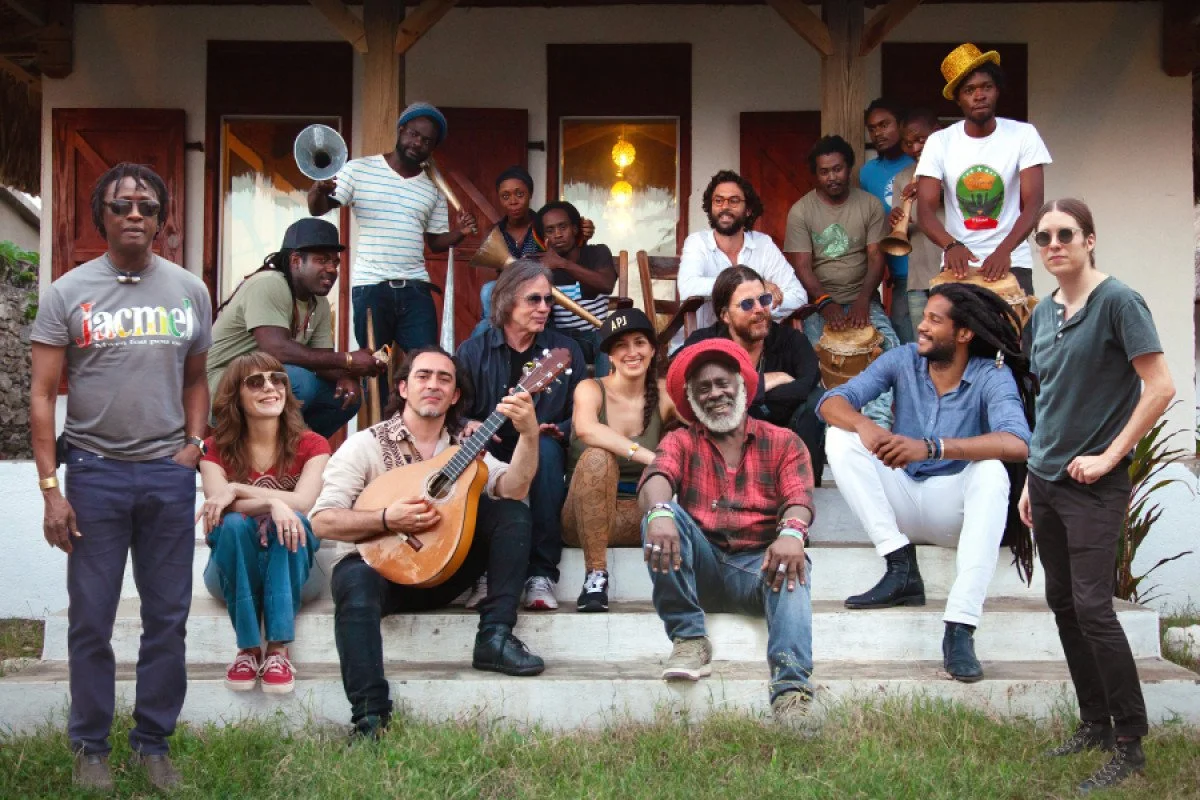
Paul Beaubrun's latest record, released in April, is called Rasanbleman (Red Moon). That's Haitian creole for "a large gathering." It's a reference to the group of nearly 30 musicians and artists who got together for the album's recording sessions in Jacmel, a picturesque beach city on the southern coast of Haiti. The group included some of Paul's family members and other celebrated Haitian artists like DJ Michael Brun, pop star J Perry and up-and-coming MCs TROUBLEBOY HITMAKER and Kanis.
The 10 joyful and ecstatic studio recordings on Rasanbleman are steeped in the sounds of rock and reggae and punctuated with Haitian drums and rhythms. For the World Cafe, Paul tells the cosmic story behind the album's parenthetical subtitle, Red Moon, talks about the Haitian musical terms he wants listeners to learn and suggests that the current period of crisis and self-isolation is actually a time for gathering together.
"You can rasanble," Paul says. "You can get together spiritually. You can get together mentally. This is the time to get together actually, this is the time to look at the real relationship we have with ourselves and the relationship we have with others, with people that we love, people that we appreciate. Let's look at these relationships and try to make them better."
KANAVAL: Haitian Rhythms and the Music of New Orleans has been supported by The Pew Center for Arts & Heritage.
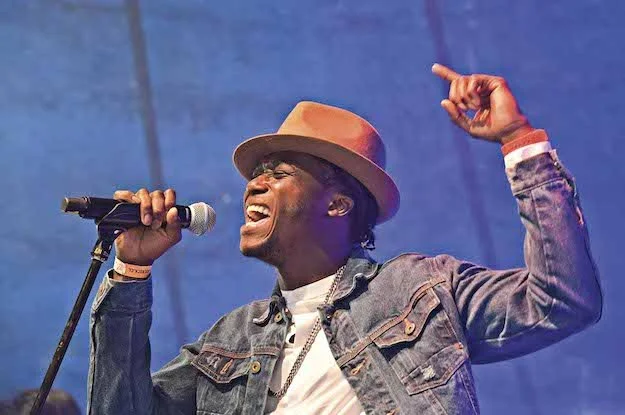
From Haiti to Chile, a Singer Bridges Styles – and Cultures
With Haitian rhythms and Spanish lyrics, Ralph Jean Baptiste shows integration is possible for other migrants.
SANTIAGO, CHILE — Escápate conmigo otra vez, sings Ralph Jean Baptiste in his Santiago apartment, over a demo track of slow R&B beats. His rhythmic Haitian accent deepens the melody of the Spanish lyrics.
Although born and raised speaking French Creole in Haiti’s capital, Port-au-Prince, Baptiste, 29, writes all his songs in Spanish. He moved to Chile after Haiti’s devastating earthquake in 2010, with dreams of a music career in tow.
“To get to audiences in Chile you have to sing in Spanish. They’ve never heard anything in French or Creole. I had to adapt,” he said.
Adapt—he says the word as if it is inherently natural to him. Baptiste has had to adapt daily to be accepted in his new homeland. Beat by beat, over nine years of performances, he built a name for himself, and in 2019, Baptiste was finally able to release his first album, Rafa.
Musicians have always been a nomadic sort, and Baptiste is no different. He had spent time in the Dominican Republic, where he learned Spanish, so after the earthquake struck, Baptiste chose to pursue his music in Latin America — unlike the 46,000 displaced Haitians who sought asylum in the United States He settled in Chile after short stints in Peru and Argentina.
Baptiste was among the first in what would become a surge of Haitian migrants in Chile. The country had granted fewer than a 1,000 visas to Haitians between 2005 and 2009, and when Baptiste arrived in 2010, only 713 Haitians received Chilean working visas — a marked difference from 2018, when 126,000 were granted.
Haitians were the first black, non-Spanish-speaking migrant group to arrive in Chile. They stood out. “When I arrived people looked at me strangely. They hadn’t seen Afros before. They touched my skin for luck,” Baptiste told AQ. “I have faced a lot of discrimination and rejection.”
When pressed to explain, Baptiste breaks into a broad smile and laughs. “I don’t like to remember the bad times.”
Beyond discrimination, being a migrant compounds the economic challenges that already exist for aspiring artists, said Dr. Marisol Facuse, who researches migration and music at the University of Chile.
“It is very hard for migrants to live off music, especially for migrants who don’t have networks, and Haitians are a community in Chile that isn’t very integrated culturally,” Facuse told AQ. “The question of survival is the biggest barrier.”
 Baptiste performs at a special show for migrants at a Valparaiso music festival in 2018.
But survive Baptiste has, and his positive outlook provides a model of the kind of integration possible for migrants with the right support and attitude. His song “Aguante” (Endurance) sums up his experience living in a foreign land:
I had to leave everything and go far / to start from zero on a long road. / It has not been easy, but you have to move forward / cry and laugh / life has to be lived.
“I’m inspired by his character and strength,” said Charlie Checkz, who produced several of Baptiste’s songs, including “Aguante.” Checkz values the Haitian musician’s unique contribution to Chile’s musical scene.
“We combine rhythms — us as Chileans, and his Haitian music and culture. We put that in the music.”
Baptiste describes his music as worldly, priding himself on the unique fusion of styles he creates, mixing Chilean urban and cumbia sounds with African rhythms and North American soul. In his music videos, he celebrates Chilean traditions — such as performing the country’s national dance, Cueca — reflecting his embrace of Chile’s culture.
And in spite of the challenges, Baptiste notes that things are changing for the better. “Around three years ago there started to be more inclusion for migrants,” he said. In 2018, he performed at an annual festival for migrant artists, organized by Chile’s cultural ministry. Last year, he won a state-funded grant to support migrants in music, which enabled him to record and produce two music videos. Things were starting to look up.
However, the momentum he was building came to an abrupt halt when the mass protests broke out in Chile last October. The following months were tense and violent — people died in clashes with the police, festivals were canceled, and few people went out to concerts.
“I had to cancel all my shows. I haven’t been able to perform since November,” Baptiste said.
However, he is sympathetic to the struggle of the Chileans. It’s a frustration shared by the migrant community, he explained. In August 2018, Chile’s president, Sebastián Piñera, claimed to be “putting the house in order” when he signed a reform outlining stricter migration policies. Three months later, the government began flying some Haitians back to their country in what it called a “humanitarian return plan.”
“People who needed help, he just sent them back,” Baptiste said.
“Chile is a complicated country,” Baptiste added. “And Chileans are fighting for a fairer life. They should include migrants in that too.”
Baptiste believes his role as a musician is important in giving voice to his community.
“A lot of Haitians would like to say something, but they can’t because they don’t speak Spanish or they just aren’t heard,” he said.
“In my songs, I can pass on the message of what they feel.”
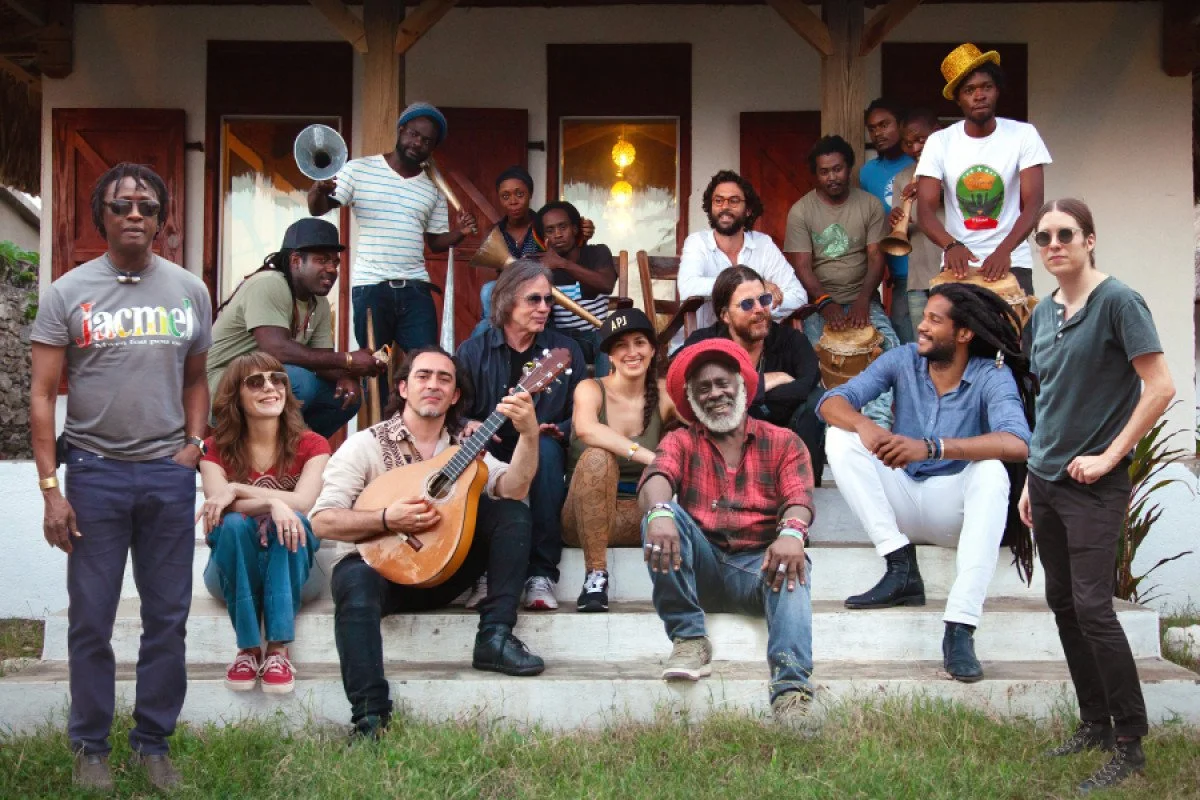
Voodoo Ceremonies and Cross-Cultural Jams: Inside Jackson Browne’s All-Star Haiti Benefit LP
With help from Jenny Lewis, a member of the Head and the Heart, and others, the singer-songwriter forged new musical alliances, documented on ‘Let the Rhythm Lead’
Over the decades, Browne has found himself in some unusual situations linked to his music: singing in a jail cell after being arrested while protesting the opening of a nuclear power plant, or recording an album (Running on Empty) on tour buses and in hotel rooms. To that list, Browne can now add witnessing a voodoo ceremony in Haiti.
“People would go into this kind of trance,” the singer-songwriter recalls of one evening in that country, during the making of his latest project. “Then they began to hurl themselves backwards into the crowd, and the crowd helped them up and then pushed them back into the center, and they kept dancing. It’s this rhythm- and music-induced state, a high.”
That memorable night stemmed from one of the most ambitious projects of Browne’s career. During two separate trips to Haiti in 2016, he gathered together a musically and ethnically diverse group of collaborators: American musicians (Jenny Lewis, singer and multi-instrumentalist Jonathan Wilson, Head and the Heart singer-songwriter Jonathan Russell), members of the Haitian roots band Lakou Mizik, Haitian singer-songwriter Paul Beaubrun, and international talents like Mali-based singer and musician Habib Koité and Spanish flamenco guitarist Raúl Rodríguez. In various combinations, the artists wrote and recorded songs that blended all their musical backgrounds, swapping lead vocals and sometimes instruments, and singing in English, Creole, Khassonké (the language of western Mali), Manding (of West Africa), and Spanish.
Next week, the results of those sessions — a sort of multi-culti version of the Traveling Wilburys — will finally be released on a new benefit album, Let the Rhythm Lead: Haiti Song Summit Vol. 1.
“It was the most excited I’d seen Jackson in the six or seven years I’ve known him,” says Wilson, who sang and played various instruments and also co-produced the record with Browne. “Every aspect of the project was important to him, from the person singing the song to the person who played the shaker. He would go through songs with folks and scribble down the words and go through it. He was extremely focused.”
Browne’s earlier visits to the country paved the way for Let the Rhythm Lead. He’d found himself in Haiti in 2014, when he visited the Artists Institute, a recording school and studio set up by the non-profit group Artists for Peace and Justice in the wake of the devastating 2010 earthquake in that country. (APJ also established the Academy for Peace and Justice, a new middle and high school in Haiti.) The title track of Browne’s subsequent album, Standing in the Breach, was inspired by that visit and the ravaged country in general. In 2015, Browne ended up in Haiti again; there he met Russell, who happened to be visiting the country for the first time during a work break. Both were asked to pop into a class and sing songs for the students. “They were like, ‘This is Jackson — you’re going to be in a classroom with him,’” says Russell, who’d never met Browne before. “I’m like ‘OK!’”(Proceeds from the upcoming album will go toward both the Academy for Peace and Justice and the Artists Institute of Jacmel.)
One night, the two men were dining with locals — Browne talking about Bernie Sanders at one end of a table, Russell listening along to percussionists who’d gathered at the other end. Russell began singing impromptu lyrics to accompany the rhythm patterns. “At some point, Jackson leaned in and said, ‘What is happening over there?’” recalls Russell, who told Browne he’d made up the words on the spot. The spontaneity of that moment made Browne think about recording the song at the studio, in the town of Jacmel on the island’s out-of-the-way southern coast. “The goal was quite modest,” says Browne. “It was just to show these students how we work and maybe make up some songs. I thought this could result in some really great music. The idea was to come with a song, or come down there and make up a song.”
But it didn’t end there; soon, Browne corralled Russell and Wilson for the first of two creative expeditions to Haiti, and an album began taking shape. Together with the other players, they started writing and shaping material that built on all their influences. “Love Is Love,” a song Browne had started before the expedition, embodied the musical mind meld that eventually took place. “I thought I wanted essentially a Bo Diddley beat,” he says. “I didn’t imagine playing it with two hand drummers. It took some getting used to and we played it it too fast for a while, but eventually we settled into it.”
In what sounds like a homage to the Laurel Canyon neighborhood where he lives, Wilson wrote and sang “Goddess at the Wheel,” inspired by recording engineer Vira Byramji, who worked on the album. A version of the traditional Malian Griot song “Koulandian” combines Koité’s graceful electric nylon-string guitar and singing with Browne’s harmony. “I thought it would be harder to blend,” says Lakou Mizik’s Steeve Valcourt. ”But when we talk music we’re in the same vibration, we all understand. Everyone speaks the same language.”
The song Russell began singing over that meal became “I Found Out,” which would also appear, in a different recording, on the latest Head and the Heart album, Living Mirage. As Russell recalls with a bemused laugh, that moment was almost lost to history thanks to local alcohol. “We enjoyed our rum to the point of waking up the next morning and saying, ‘Did anyone record that? Because I have no idea what we did.’” Thankfully, filmmaker and APJ board member David Belle was filming the proceedings, so everyone was able to remember the nascent tune. (“Rum is no drink to work with,” Browne chuckles. “I get so drunk on rum. You’d be a mess if you were drinking that. We needed to bring tequila. That’s another secret ingredient to this music.”)
For the second expedition, the band of players was joined by Lewis, who was invited down by her friend Wilson. (Browne found out she was participating when the two ran into each other backstage at a Bon Iver concert and she broke the news to him.) Lewis flew to Haiti with Browne, and when she popped into the school, the singer-songwriter was met with a reception she’d never quite experienced before. “I walked in and kids immediately grabbed me and hugged me,” she recalls. “I had three kids on my right leg and they’re stroking my hair and holding my hand. It was just such a beautiful and really intense experience.”
Lewis had brought along fragments of several songs she hoped to contribute but soon realized none were quite right. “So I found a little classroom off the studio while they were recording Jonathan Wilson’s song and just sat and had some weed,” she says with a laugh. She wound up with the gently lulling “Under the Supermoon,” which details her reaction to Trump’s election (“I never had such a fright /I gasped on election night/ The whole world thinks we’re insane/ I didn’t sleep a wink that night”) and her arrival in the country with Browne.
“That’s another case of me just being so knocked out by someone’s ability to sing about what’s happening in the moment,” Browne says.
Lewis also arrived in time for the voodoo service that all the musicians were invited to attend. Coincidentally, Lewis wore clothes with the same colors (red and white) as the participants and was briefly pulled into the ceremony, where one of the male participants looked at her and said, solemnly, “You will come back to Haiti.” Then, as part of the ceremony, he spit rum into her eyes. “It burnt like hell!” she says. “I was like, ‘Oh, my God!’” But Lewis says the voodoo ceremony overall wasn’t as strange or frightening as pop culture has made them out to be. “There were a couple of Hollywood movies that portrayed it as this really scary thing,” she says, “but you learn it’s incredibly spiritual, just a way to communicate what was going on with the different tribes.”
“Now I feel I can take my guitar anywhere and play music with people all over the world.” — Jenny Lewis on ‘Let the Rhythm Lead’
Once the work on the album was done, each of the musicians took different lessons from it. “The goal was to help out down there, but a lot of what ended up happening was inward,” admits Russell. “It was culture shock going in, and it was even more culture shock coming home to see how much apathy exists here. The amount of things we complain about is pretty mind-boggling. Then you come back from a country that’s gone through what it’s been through, and everyone is spirited and proud.”
For her part, Lewis left Haiti with a newfound sense of collaboration. “I feel like it really opened a little piece of my brain,” she says. “Now I feel I can take my guitar anywhere and play music with people all over the world.”
The recordings sat in the can for more than two years as Browne attempted to find a home for them. At least one major label passed, he says, but he finally reached a deal with Arts Music, a Warners subsidiary. Ideally, Browne would love to reunite many or most of the players for at least one live performance, but logistics may rule it out, at least for a while. (He’s also envisioning a dream second volume, where he’d invite down the French-speaking likes of Daft Punk, artist and producer Daniel Lanois, and Canadian singer-songwriter Bruce Cockburn.)
In the meantime, Browne is hoping that the album will at least help call attention to Haiti — which, thanks to civil unrest and claims of election fraud, is enduring an even more turbulent period, marked by school and hospital closings, gas shortages, and deadly riots. The country is currently operating without a parliament, under the one-man rule of controversial president Jovenel Moïse.
“I don’t kid myself that we’re going to create like a huge change with this record,” Browne says, “but it’s a window into Haiti.”
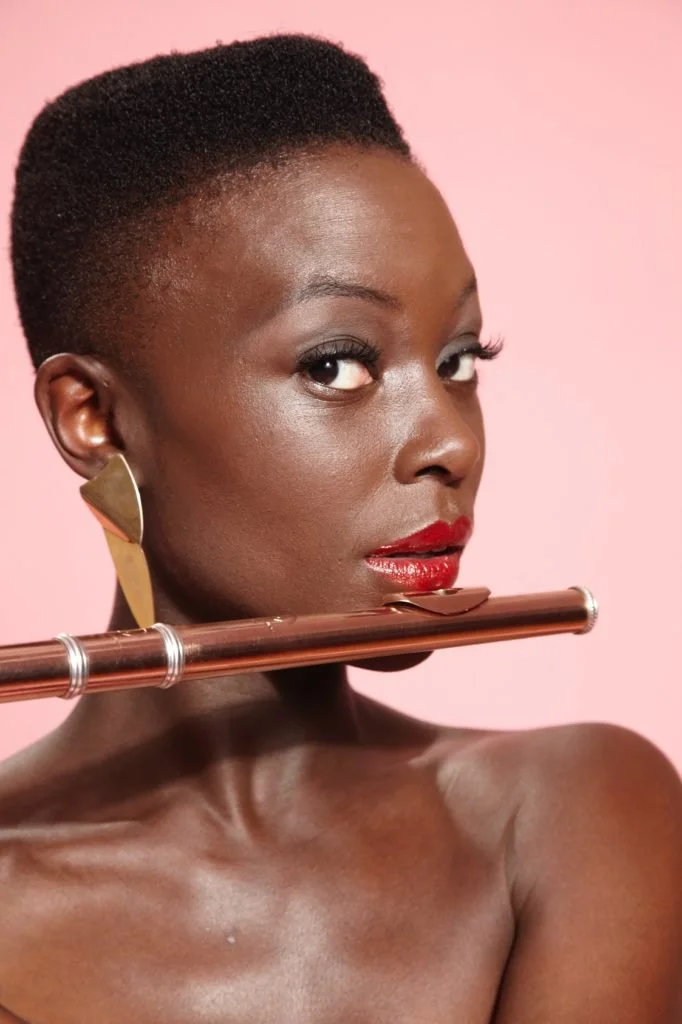
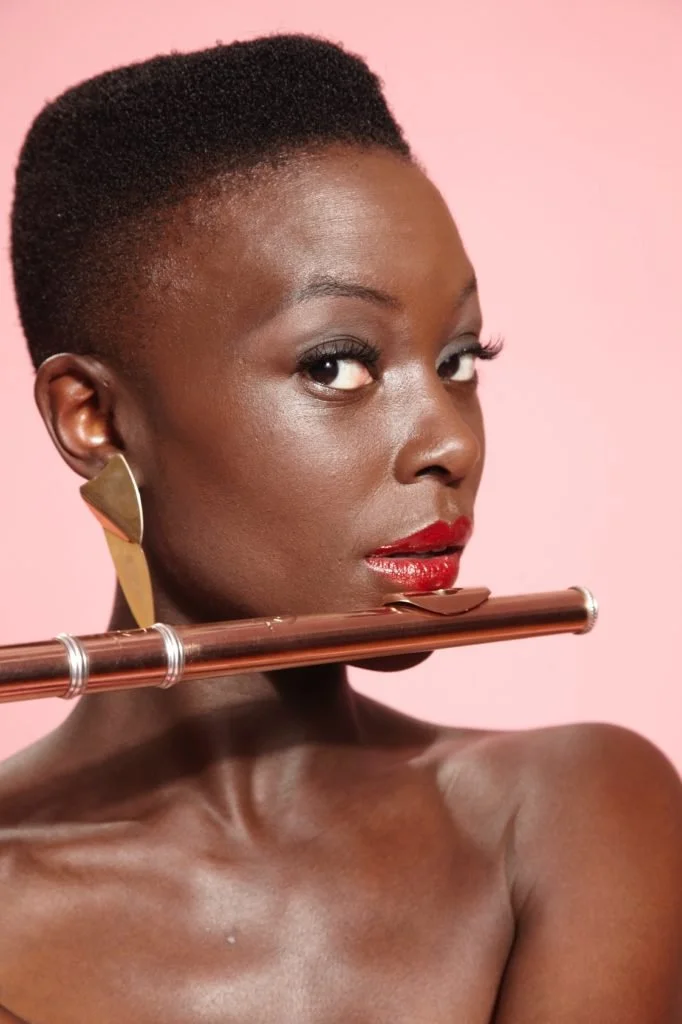
Haitian American musician Nathalie Joachim pays tribute to underrepresented women of Haiti
Flutist and composer Nathalie Joachim first came up with the idea for her debut album in late 2015. She was in Haiti, exploring her Haitian heritage and wanted to know about female artists from the island. Together with her parents, she could only come up with a dozen or so.
"I was really inspired to make an album centered around the voices of female artist from Haiti largely because they're left out of Haiti's musical history."
"I was really inspired to make an album centered around the voices of female artists from Haiti largely because they're left out of Haiti's musical history," she said.
Some women on the list included singer Emerante de Pradines, Milena Sandler (daughter of Toto Bissainthe), and vodou revolutionary Carole Demesmin.
Joachim's Grammy-nominated album, "Fanm d'Ayiti," sets out to correct some of the omissions of women underrepresented in Haitian history. She thinks this is "a beautiful way to represent the women of Haiti."
"Fanm d'Ayiti" translates into "Women of Haiti." On the album, Joachim features new song arrangements and snippets from recorded interviews with some of the women. One voice heard is that of Joachim's own musical hero and maternal grandmother, Ipheta Bellegarde, because "her voice was one that was quite important to me throughout the course of her life."
The song featuring Bellegarde's voice is also one her grandmother wrote. It's called "Madan Bellegarde." Bellegarde died in 2015. Joachim says her grandmother was "criticized her whole life because she became a widow when my mother was still an infant, quite young, and never remarried. She really chose to live a life independently of her own design."
Joachim would often hear her grandmother share stories about what life was like as a single mom in Haiti in the late 1940s and early '50s. She says her grandmother wrote the song because she was being "judged by all of the sinners around her, people who committed much grander sins than being an unmarried woman, but that she knew at the end of the day she would not be judged by God. And so she wrote this song and would sing it." Now, Joachim sings it.
Joachim also recorded with a girls' choir in her family's farming village Dantan. "[It's] a very small place with just one street that has a church and a school and that's it," she said. "And I hope that any one of them, if not all of them, are inspired by how we've been able to spread their voices from this small spot in Haiti across the world."
Joachim says she hopes her album touches young women everywhere and that they will "take away the strength and the power and continue to lift each other up ... [and to] look to your elders and find strength in their stories and to be sure to leave a pathway for those coming up behind you. We're all connected."
Haitian Band Performs, Teaches Dance and African Drumming Students
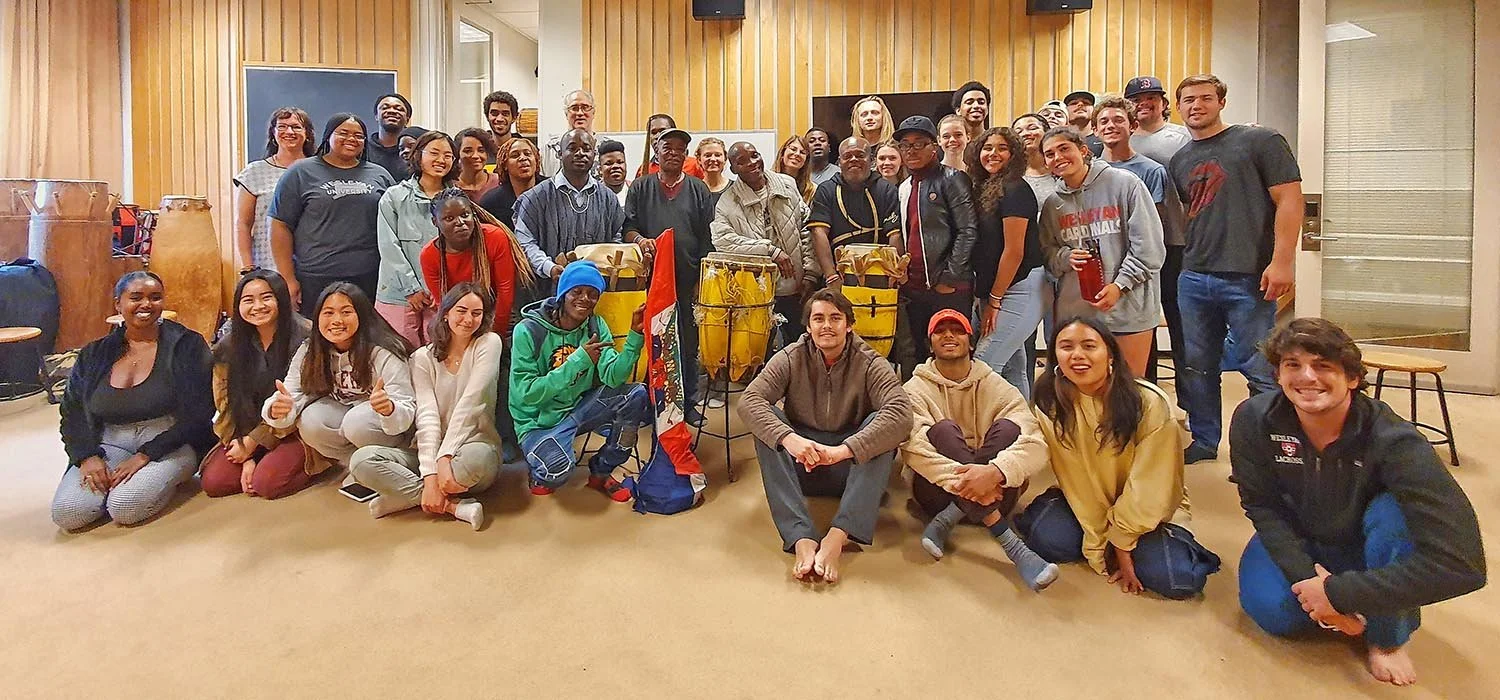
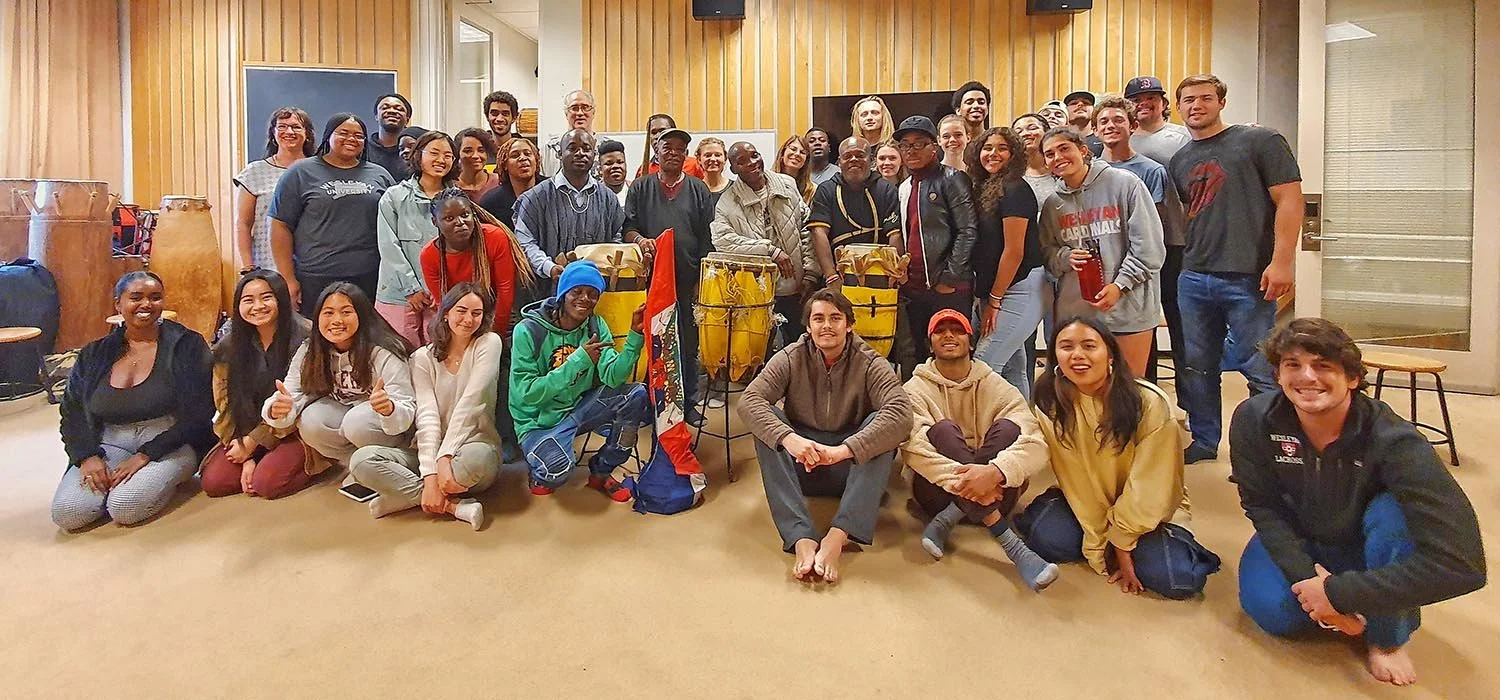
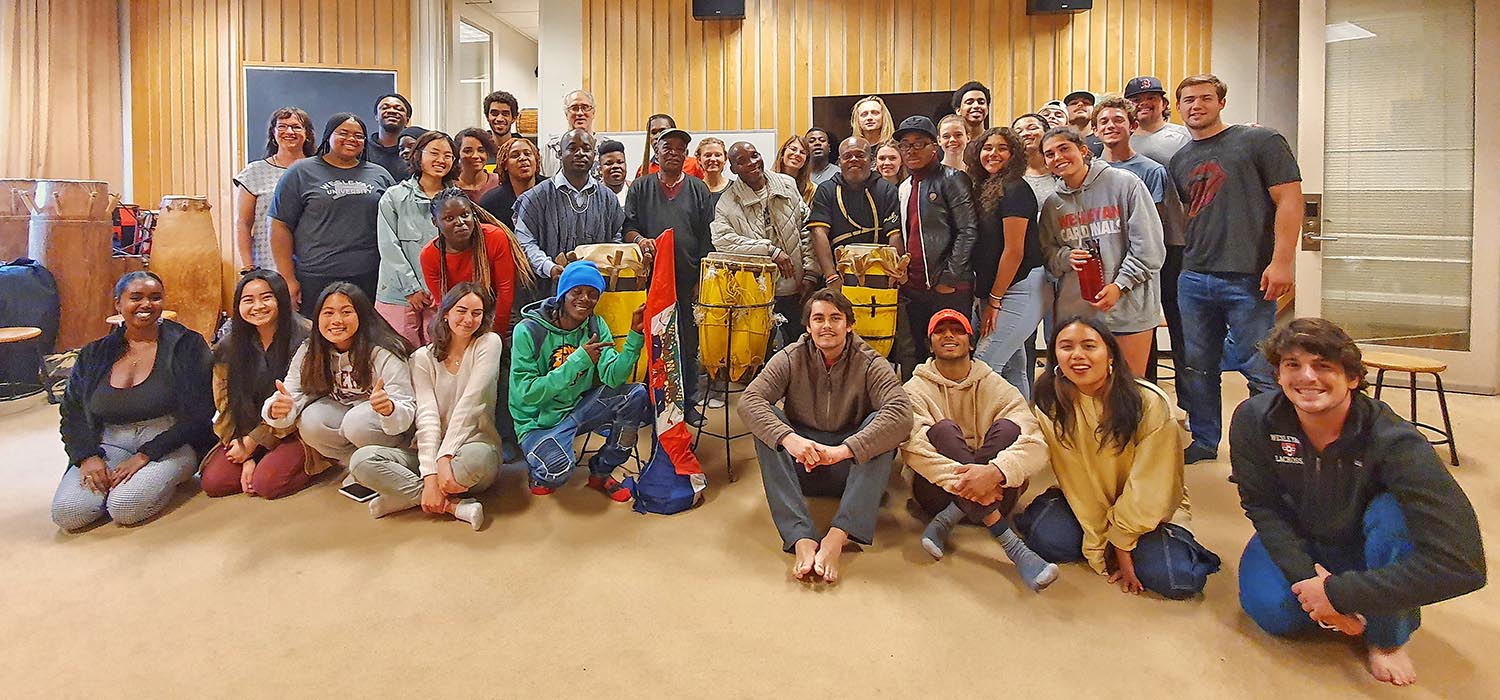
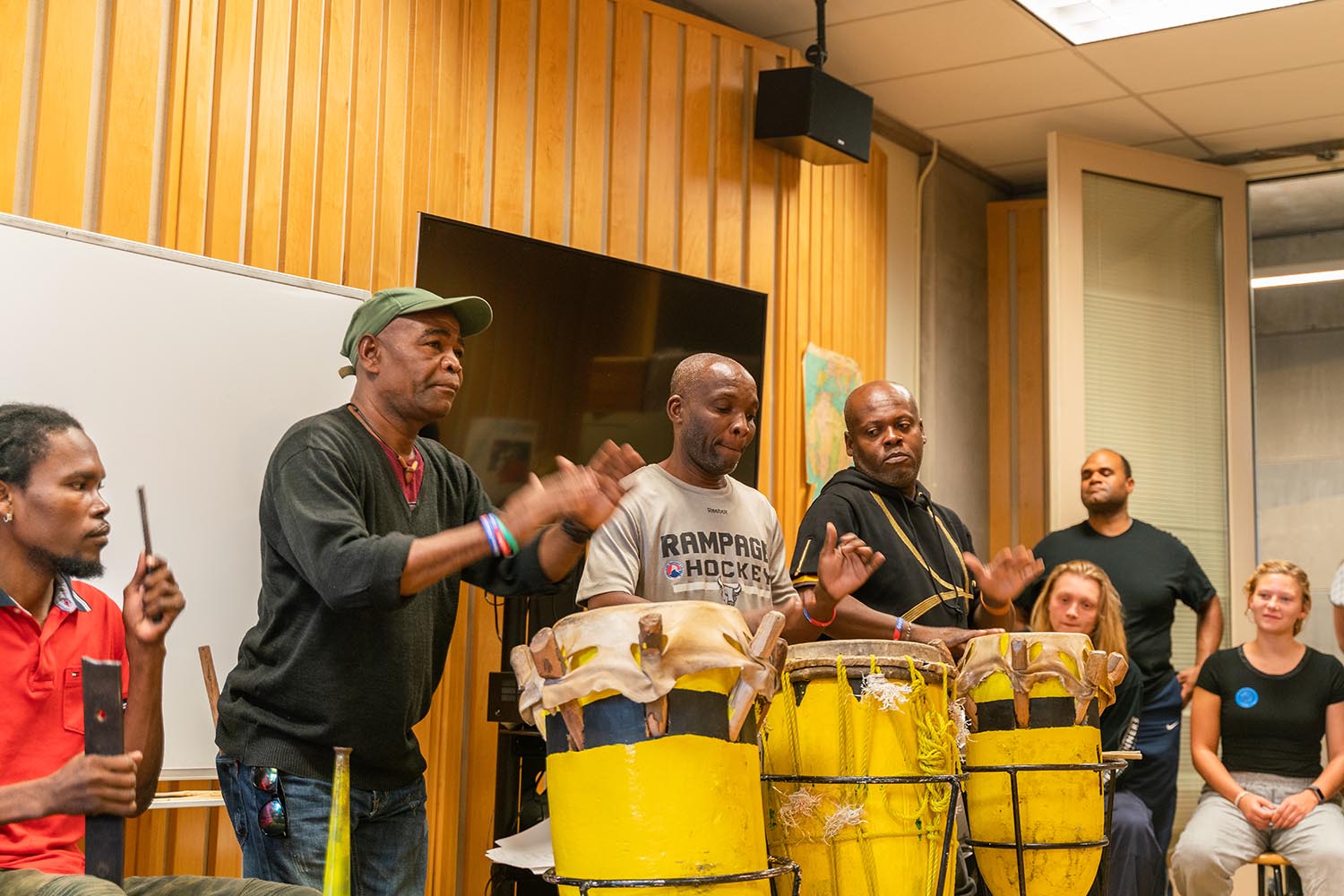
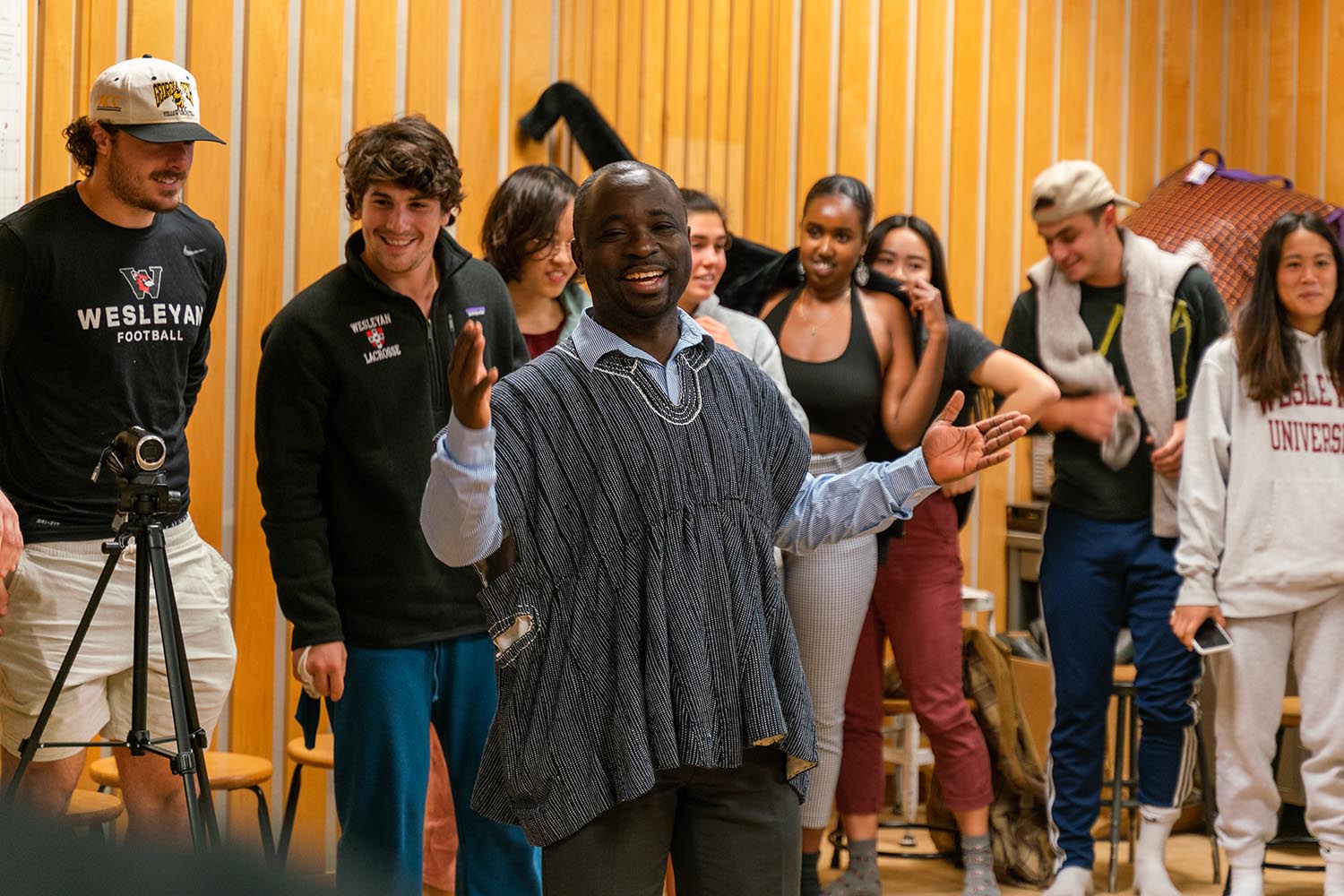
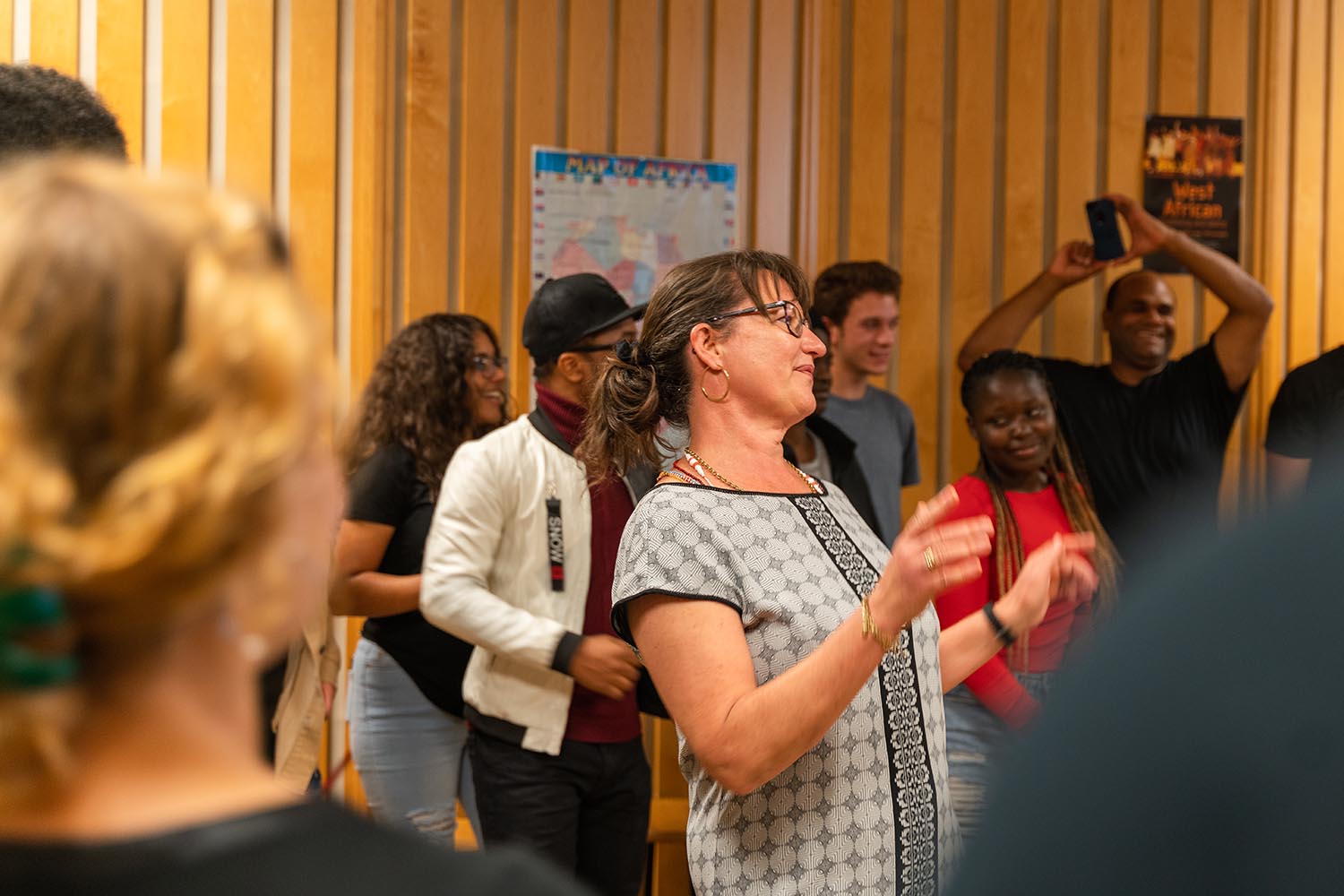
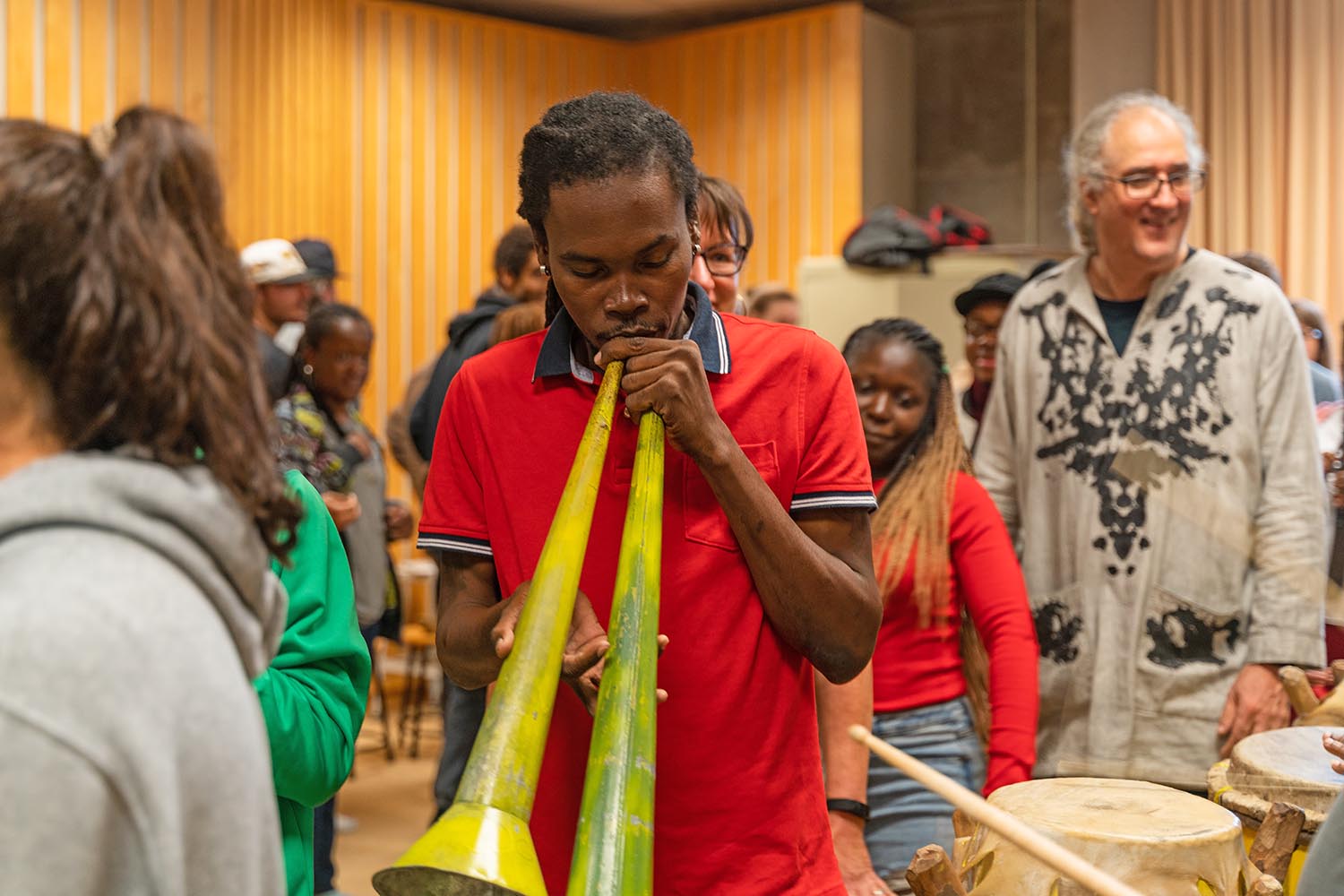
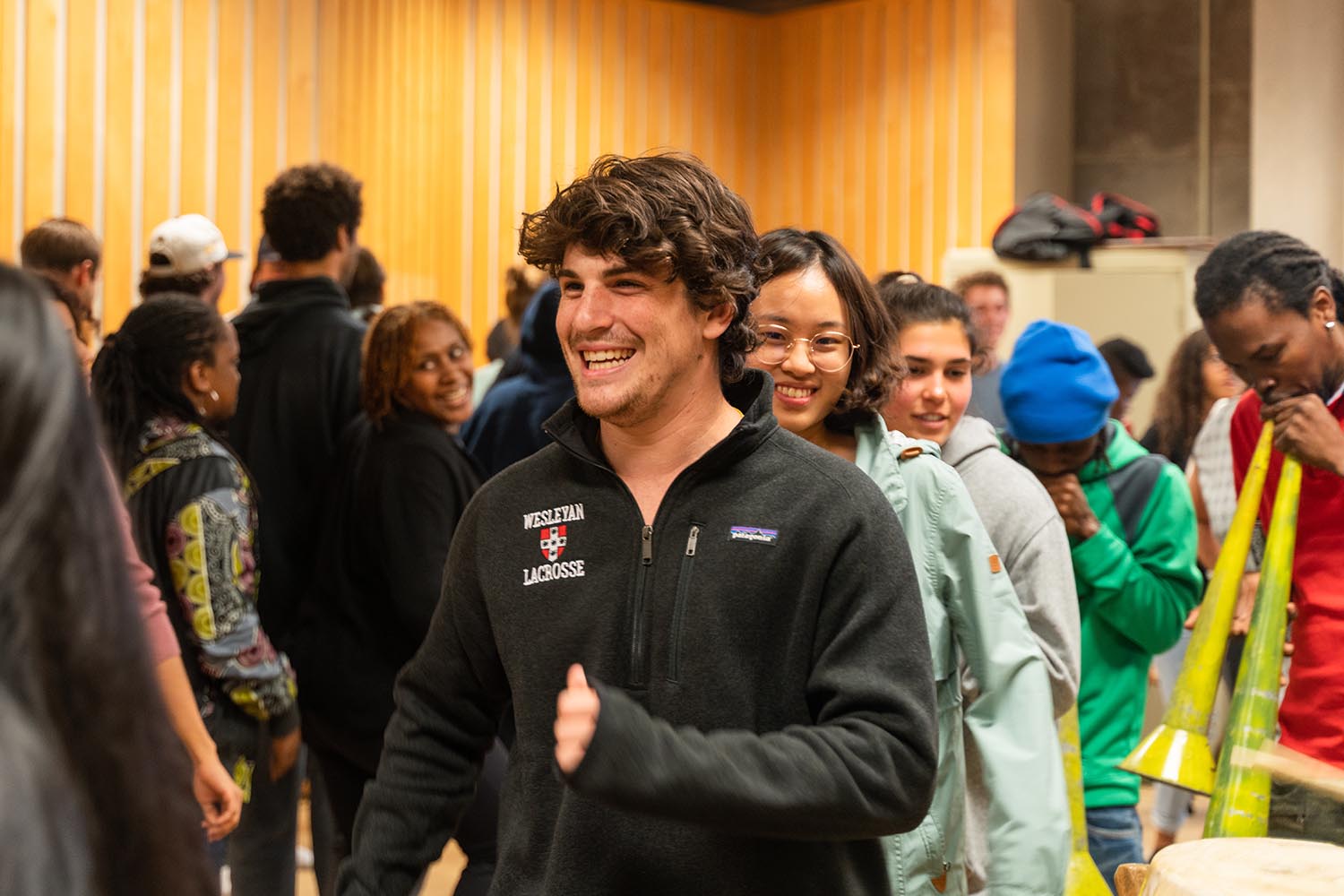
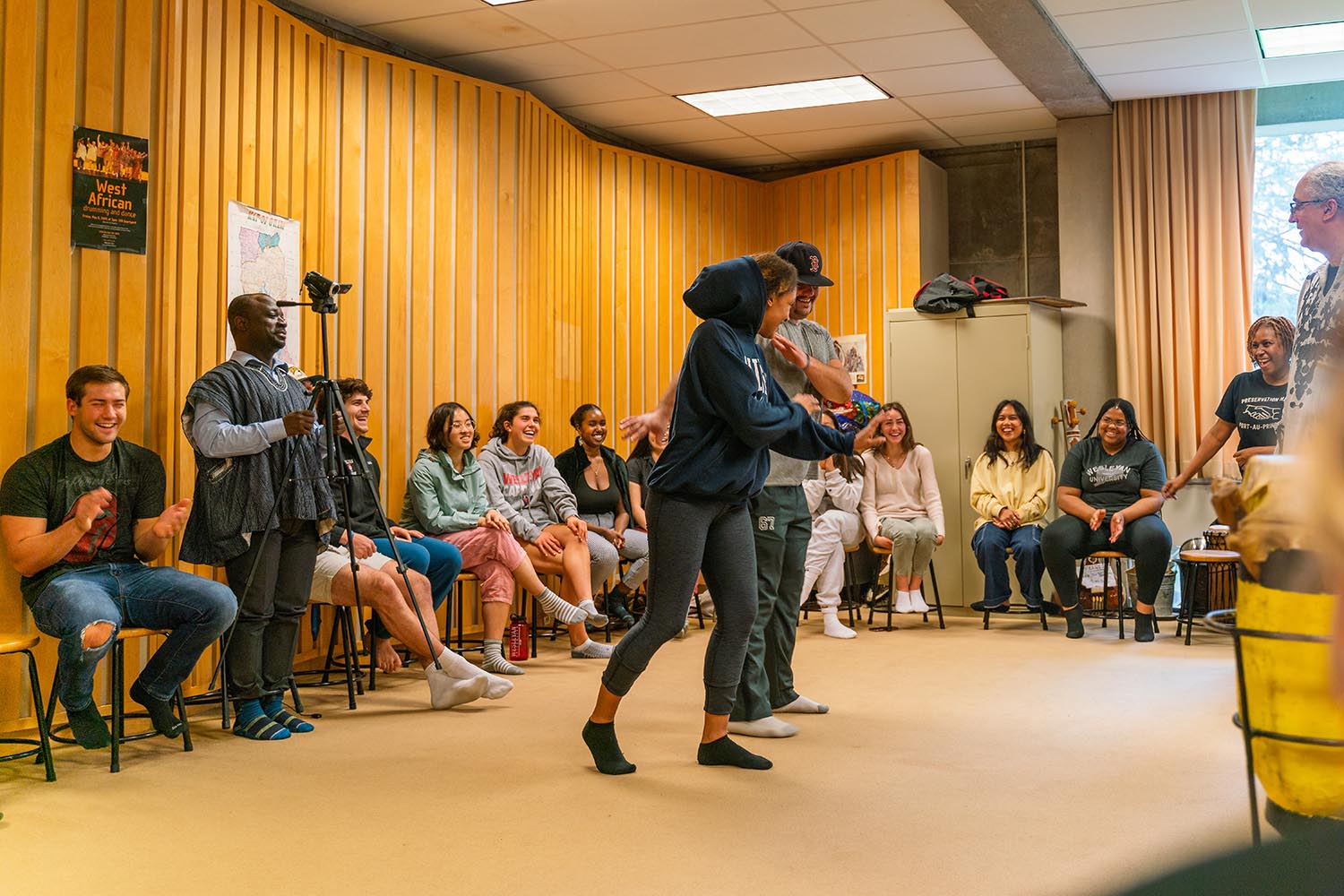
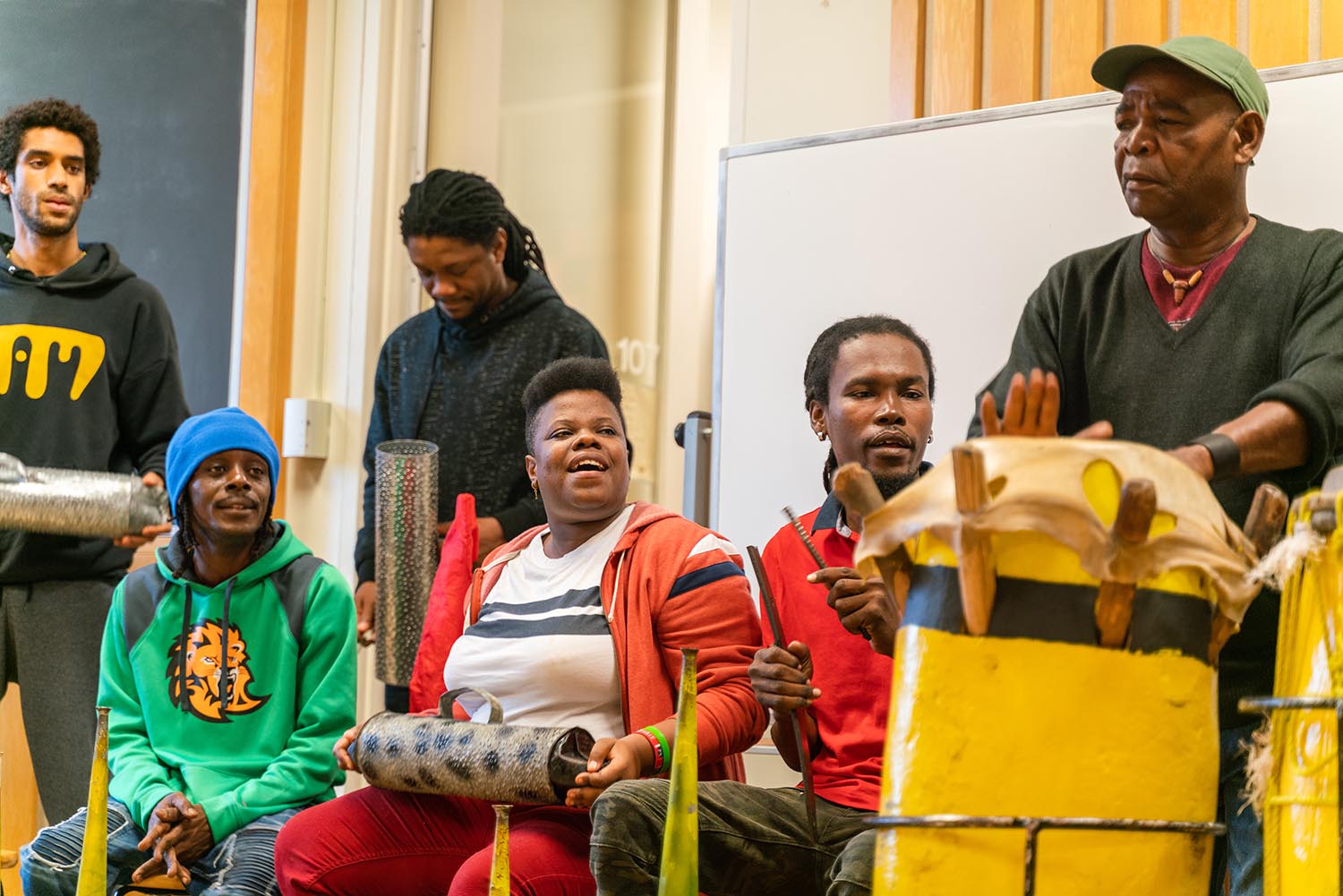
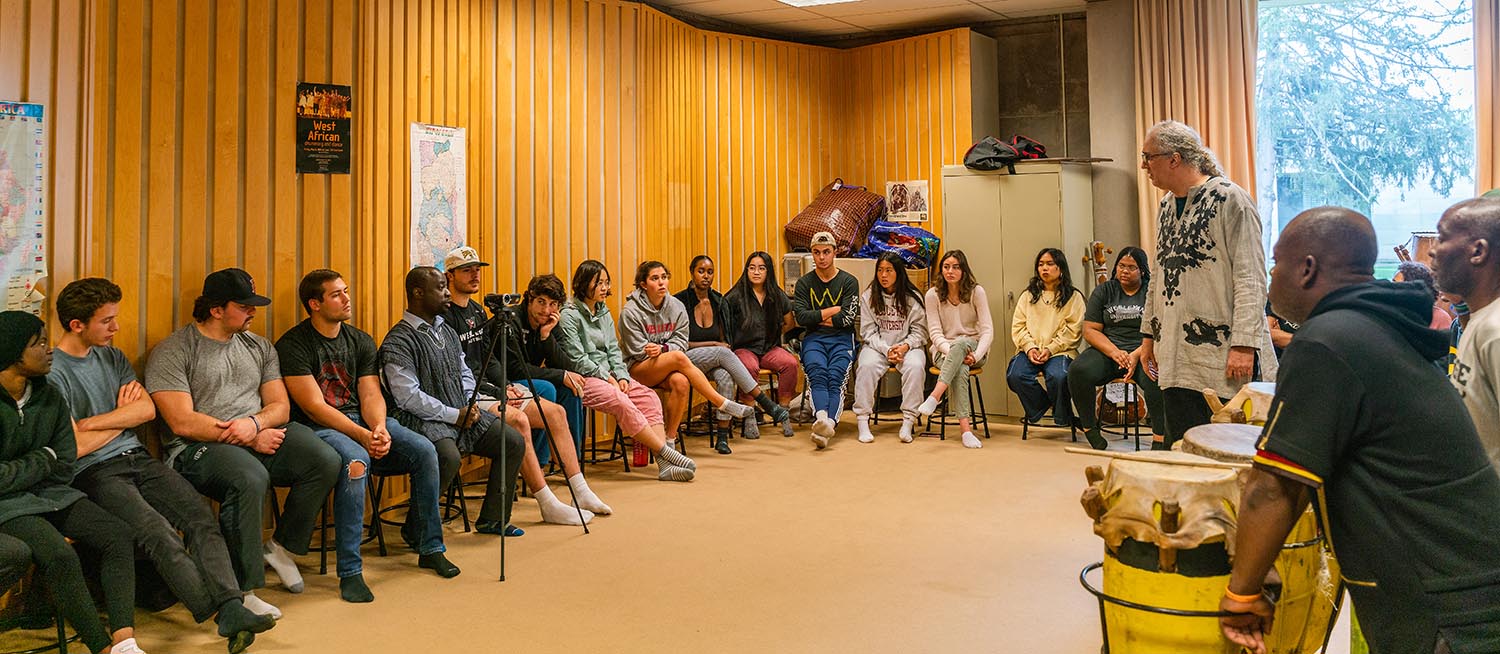
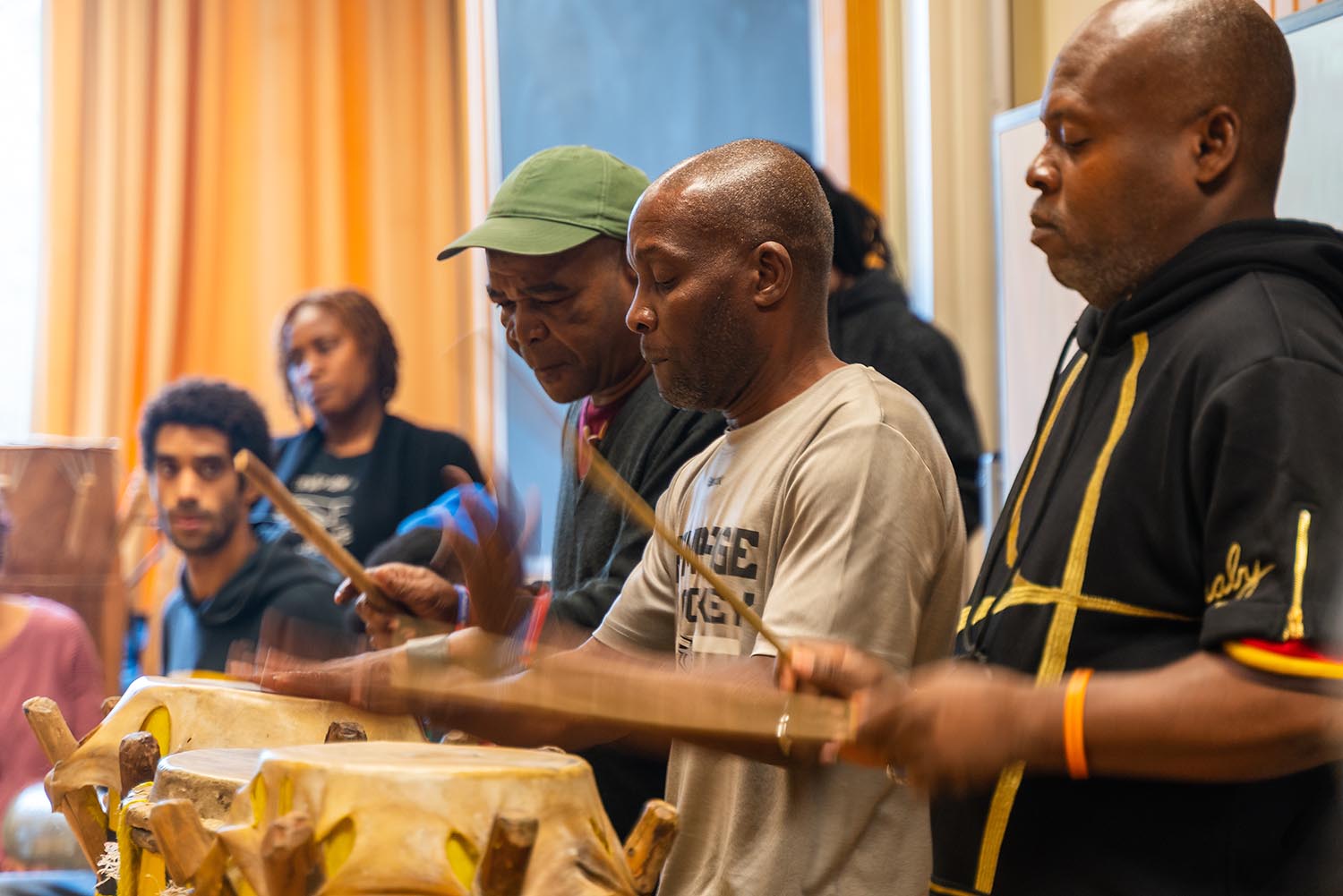
Haiti’s “Roots” band RAM came to campus for a one-day artists’ residency and led drumming and dance workshops for Wesleyan students. They met with students in two classes on Oct. 8.
The group, led by Richard Morse, has produced music for more than 25 years. They recently released their seventh album, August 1791.
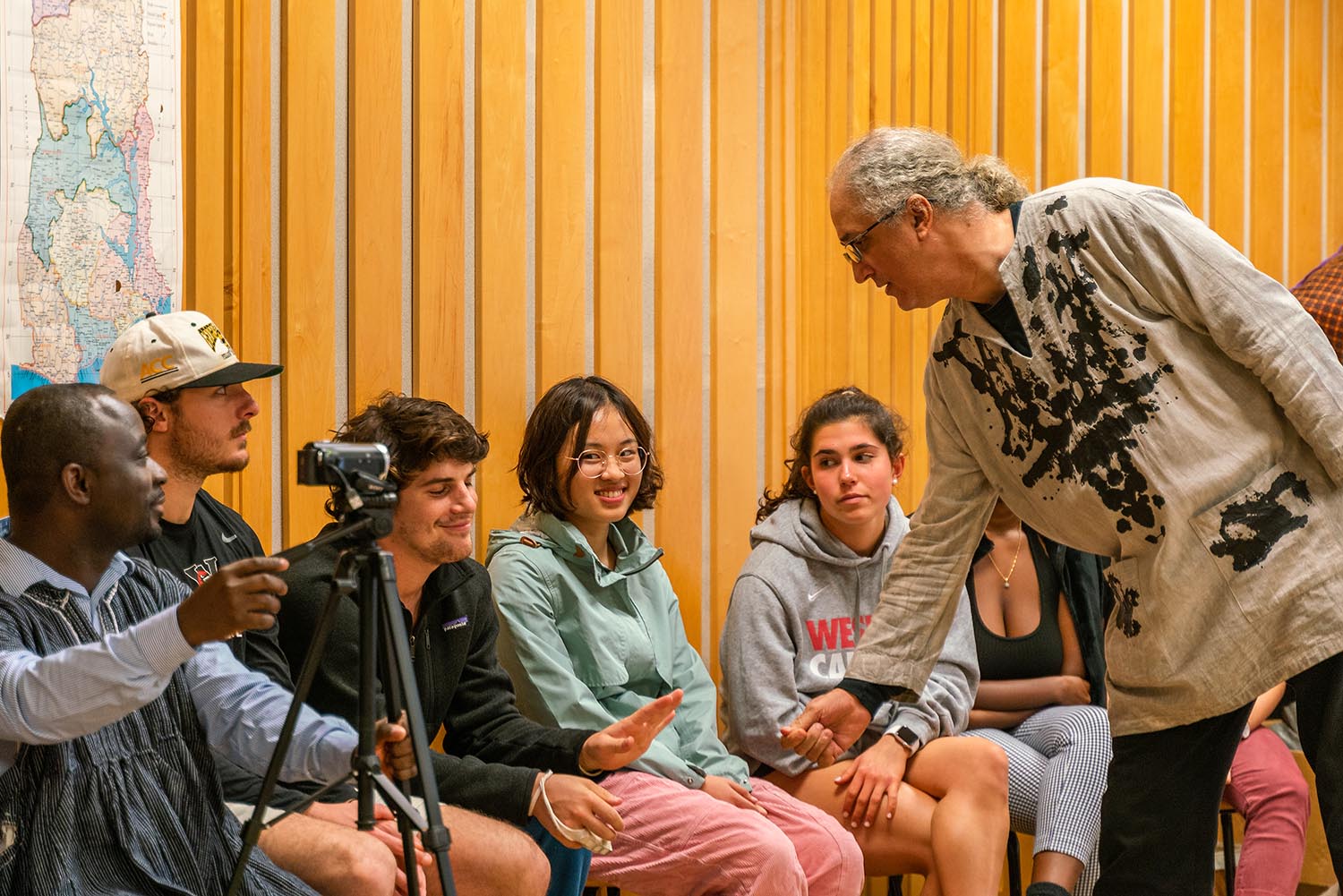
In the morning, RAM led a dance workshop for two combined classes: Afro-Brazilian Dance taught by Joya Powell, visiting assistant professor of dance, and Contemporary Dance Technique II/III taught by Katja Kolcio, chair and associate professor of dance. And in the afternoon, they led a workshop for the West African Music and Culture class, taught by John Wesley Dankwa, assistant professor of music.
RAM led students in the traditional Afro-Haitian dance and rhythms, and spoke to students about how these art forms had their source in West Africa, were brought with enslaved Africans to Haiti, were part of the 1791 slave uprising, and have been passed on through the generations since Haiti won its freedom and abolished slavery in 1804.
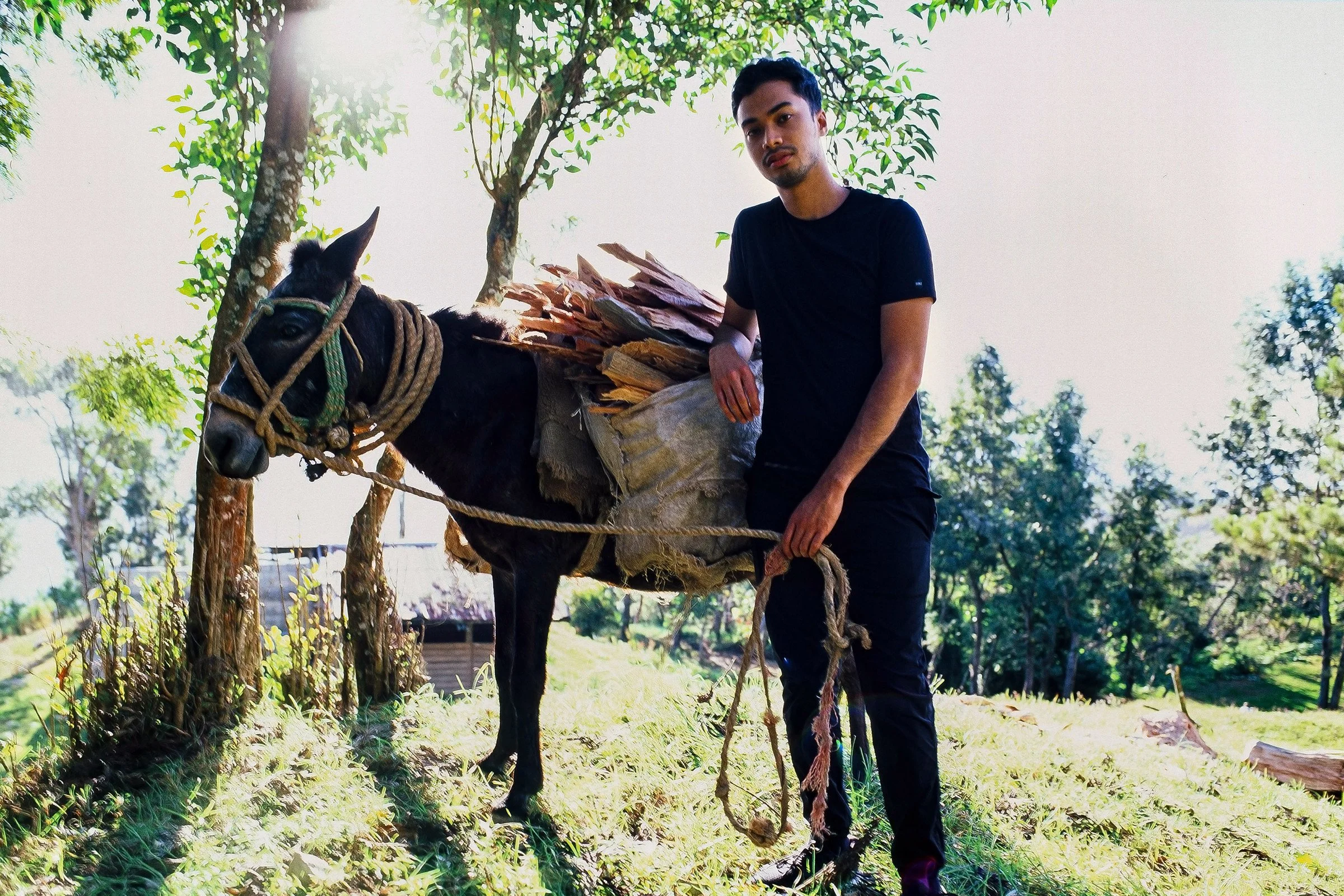
Photos of the workshop with the West African Music and Culture class are below: (Photos by Nick Sng ’23)
Michael Brun Is Taking Haitian Rhythms Global
Brun became famous on the EDM circuit, but his upcoming album ‘Lokal’ channels traditional forms like konpa and rara
In the early 2010s, during the heady days when EDM was clobbering its way into the global pop mainstream, you could have found Michael Brun holding down a set at any number of rave-centric festivals. But when he toured the U.S. in 2017, he was pedaling a very different kind of propulsion: Brun’s Bayo tour brought block-party flair and homegrown talent from his native Haiti to American listeners.
These shows were a creative reintroduction of sorts — the stony dance music that fills Anglo arenas receded, giving way to the more complicated, syncopated rhythms that can be found in the musical traditions of Haiti. These shows also served as the root of Brun’s debut album, Lokal. “[During the initial dates of the Bayo tour] I was playing a lot of afrobeats [from Nigeria], and I was also playing a lot of Haitian music,” the producer recalls. “I was like, what will bridge the gap in my set? I’m gonna make that track.”
The first of these transatlantic bridge songs is “Akwaaba Ayiti,” a motoring rework of a song by the Nigerian star Mr. Eazi, out today; Lokal will follow on the 28th. The album’s arrival coincides with a wave of new attention for Brun: He has been working with the Colombian reggaeton superstar J Balvin and also gained the support of YouTube, which picked him for its Foundry program, an initiative dedicated to elevating international independent artists. Taken together, this marks an emphatic transformation for Brun, from one-time four-on-the-floor maven to transatlantic polymath aiding the spread of Caribbean hybrids throughout the U.S. and Africa.
Brun’s metamorphosis began when he started returning to Haiti regularly to work at the Audio Institute, a non-profit that offers two years of audio education. Brun is on the board — as are Arcade Fire and Paul Oakenfold — but he found himself absorbing new musical language as if he were a student. “Working with rara bands, traditional voodoo rhythms that people would play in big street processions, and a lot of different types of Haitian artists, learning the history of the sounds, it started making a lot more sense,” he says. With familiarity came a new interest.
Between 2016 and 2018, Brun released three songs that captured his gradual immersion in the sounds of his homeland: “Wherever I Go,” “Gaya” and “Bayo.” “After three years in a row trying to mix Haitian music and international music, I was like, ‘I’ve gotta run with this,'” the producer adds. He was encouraged by the enthusiastic responses of artists from both camps — not only the Haitian singer Lakou Muzik but also the international dabbler Diplo.
Brun’s re-immersion in the styles of Haiti came against a backdrop of shifting tastes in the market for pop around the world. “What you considered for years the dominant American pop music style suddenly is not that cool anymore,” the Lisbon-based producer Branko explained last year. “People are looking for other perspectives on pop music that are more interesting, more vibrant, less of a creation of a bunch of A&Rs in a room talking about very abstract concepts. They want something that actually happened in the street and gathered a proper following and then developed into a YouTube hit.” As a result, styles like Brazilian baile funk and Nigerian afrobeats have enjoyed new recognition far from their countries of origin.
That could bode well for Lokal, which achieves moments of poised synthesis. There are traces of house music in “Ede’m Chante” — it samples the Chicago legend Mr. Fingers — and “Peze Kafe,” where keyboards pulse with the comforting tones of Nineties pop-dance cuts. These threads sit easily next to rara horns, which add a thick, blurting energy but require a particular sort of precision. “You play a single tone, and you can only go up and down an octave,” Brun explains. “If you want to play a melody, you have to play it in unison with the person next to you. It’s like trying to play piano with different people on each key.”
Brun also leans on the sound of konpa, a Caribbean hybrid that became popular in the 1950s. “It was really musically advanced, merging jazz, big band and Calypso all into a Haitian sound,” he says. The distinctive metallic guitar sound in “Kale” is sampled from Les Difficiles de Petion-Ville, one of Brun’s favorite konpa acts. “Those guitars are very iconic for Haiti,” he notes.
But the riffs point in other directions as well. “Sometimes when I hear his guitars, it feels like something I might have heard my dad or grandfather play — some traditional Nigerian music,” Mr. Eazi says. And the lean, drubbing beat in “Kale” points in many directions: “It has elements of baile funk; it has elements of dancehall [from Jamaica],” Brun adds.
That’s part of the pleasure of this music: While Brun’s early big-tent tracks had the single-minded appeal that grabs young ravers, Lokal is furthering multiple traditions simultaneously. To hear Mr. Eazi tell it, there’s more of this on the way. “He’s got me singing in French, got me singing in Spanish, got me singing with some creole, got me on soca riddims,” Mr. Eazi says of Brun. “I thought I had good knowledge of music from across the world, but Michael blew that out of the park.”

Michael Brun Delivers A Message From Haiti — One Summer Block Party At A Time
Michael Brun held his microphone out toward the crowd at Miami’s Little Haiti Cultural Complex as they erupted in cheers and some waved Haitian flags. The venue was packed, the cocktail bar did a roaring trade and the smells of fried pork griot and spiced pickled cabbage, or pikliz, and fried plantains were in the air.Brun hoped his Bayo Block Party, which he hosted in Little Haiti in March, would bring a sense of unity. From the stage, the New York-based music producer and DJ encouraged people to shout out the Creole word "bayo." That’s the title of his newest track, too. “Bayo” means "to give.”“It also means give your heart and soul to what you do,” says Brun. “When you put everything into your work, people can tell.”In a call-and-response, the audience sang along while the mix of hip-hop and Caribbean rhythms pushed the PA system to the brink. It is here in Miami that he decided to take the Bayo Block Party on the road and bring the festive spirit of Port-au-Prince to both Haitians and non-Haitians.
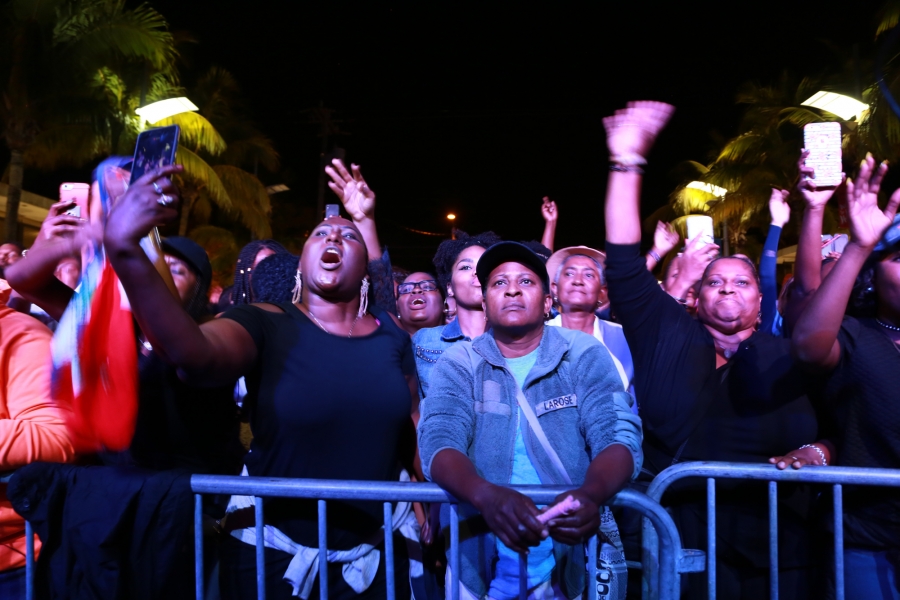
“I want people to know how much of a strength Haitian culture is. Don’t forget the history of the country’s accomplishments,” says Brun.About 1,000 people were treated to live guests and a finale led by an ensemble of drummers and horns. The Bayo Block Party goes on tour during the month of June.Brun is attempting to cultivate an alternative narrative to combat misconceptions of Haitians by speaking out publicly any chance he gets. In January, President Donald Trump allegedly included Haiti on a list of “shithole” countries. Earlier, officials told the New York Times, he said that people in Haiti “all have AIDS.”Brun says he has heard the same things all his life.“Empowering the youth, empowering the people that are most vulnerable — you have to get strength from within,” Brun says. “These words aren’t going to hurt me. But for a young kid hearing every day that Haiti is this and Haiti is that, that you're basically trash, it is going to have an effect.”He reminds people about his country’s proud history and resilience. In 1804, Haiti became the first black republic in the Western Hemisphere, after winning independence from French colonial rule and abolishing slavery.
Dj Michael Brun wants to change the narrative on Haiti
“Haitians have taken every type of hit imaginable over the course of their history, from natural disasters to political and economic instability," says Brun. “We're still standing and we're still smiling and we're still fighting.”Brun remembers hearing Haitian rhythms when he was a kid on his walks through the streets of Port-au-Prince on the way to visit his grandparents. He grew up in Port-au-Prince where street processions were led by rara. Nothing wakes up a neighborhood like a rara street procession, with its goat-skinned drums, bamboo horns, tin trumpets and exuberant chanting and clapping. A small group can turn into thousands, carrying on for miles, especially during Haiti’s annual carnival held in February.You’ll hear rara often in Brun’s latest music.“It is a really raw, primal sound, but very infectious,” Brun says. “It is fast-paced, but it's also very soulful. I find it is a combo that I haven't really seen in many other countries around the world.”
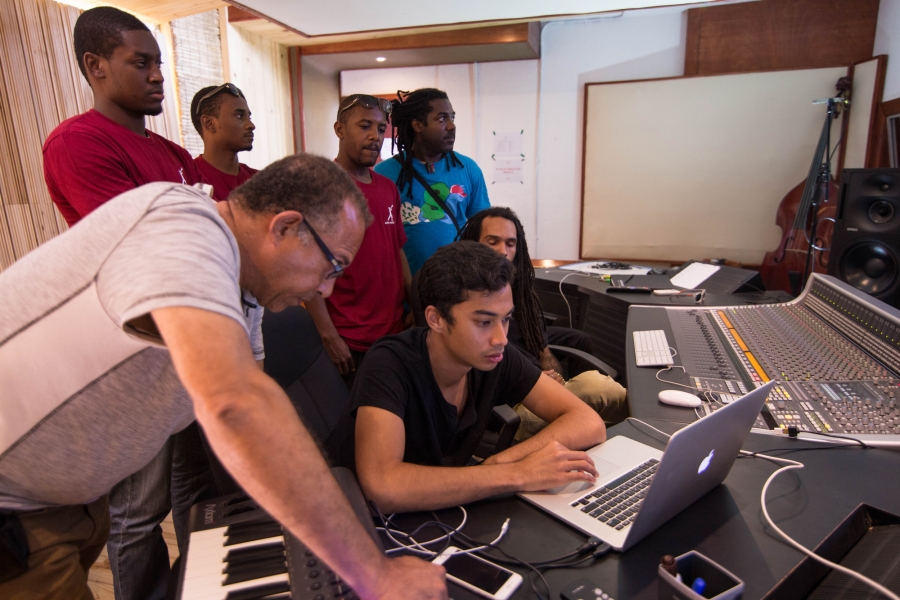
Brun, 26, was already playing piano, guitar and violin by the age of six. In the age of music production software, Brun got into playing around with beats as a teenager. After high school, he enrolled in the pre-medicine program at Davidson College in North Carolina and was on track to become a pediatrician. But he decided to take a hiatus from medical school to pursue his other passion: Electronic Dance Music, or EDM. As a young EDM producer and DJ, he quickly became popular and performed at Coachella and Miami’s Ultra Music Festival. In 2013, he released “Gravity,” his debut EP, and in 2014 he founded the Kid Coconut label and released music by Basement Jaxx and Dirty Twist, among others.As yet, Haitian music has not enjoyed the international success of other Caribbean styles. Miami-based music promoter Farah Larrieux says it’s because Haitian music is not as visible in the international market as soca, calypso, reggaeton and reggae. There is a “language barrier and lack of organization, leadership and professionalism in the Haitian music industry,” she says. That’s what Brun wants to change.“I am going to take the Bayo live show around the US and around the world,” Brun says. “Really giving a snapshot of Haiti from my point of view.”“It’s a party that I would invite anyone who wanted to hear the hottest Haitian music, and also to hear new upcoming artists,” says Jonathan Perry, better known as J. Perry. He joined Brun onstage in Miami. “For Haitians in the US and in the world, I want them to know that they have a connection with Haiti. Even if they don’t live there, they should know that we appreciate them. We’re all one, we’re united."
It’s a mix that has paid off. Spanish-language broadcasting company Telemundo recently revealed their anthem for the 2018 FIFA World Cup in Russia. The song, “Positivo,” teams up Colombian reggaeton star J. Balvin singing in Spanish over the beats from Brun’s song “Bayo,” taking Haitians rhythms global.“Using Haitian music as the backbone of what I'm creating now is also a way to show how far Haitian music can really go,” says Brun. “That’s my journey as a producer, an artist and DJ — to take those sounds in new directions, in new contexts."
J-Perry, Paul Beaubrun, Gardy Girault, Niska, Rutshelle, Mikaben, Anie Alerte and Sandro “Dro” Martelly will make guest appearances on stage. Michael Brun’s Bayo Block Party, now on tour with stops in New York City, Washington, DC, Montreal and Boston.By: Maria Bakkalapulo and Niall Macaulay for PRI.org | June 13, 2018

Michael Brun's New Music Will Make You Forget The Negative Things You've Heard About Haiti
"Bayo" is what Haitian born artist Michael Brun's new music is all about. In Haitian Creole, the term is associated with generosity and a responsibility the country's contemporary musicians have to give back and represent their culture on a global level.
With his latest music video drop last Friday of the same title as his musical concept, that's exactly what the 25-year-old rising star is on his way to do. He's switching gears from his EDM background and is focusing on tracks he has a greater personal connection to. Through his music, he hopes to combat all the consistent negative misrepresentation of his native country and it's safe to say, Brun is off to an impressive start.
From the colorful dancing to the infectious melodies influenced by Haiti's traditional Rara music, you'll instantly be hooked on the video's visuals and unique sound. Brun also collaborated with Haitian pop star J. Perry along with the king of Haitian hip-hop Baky, and rapper Strong G who came through with strong verses in Haitian Creole.
It's his specialty to bring all kinds of people together, which made him the perfect first non-jazz performer to close out this year's 12th annual Port-au-Prince International Jazz Festival, also known as PAPJAZZ. Right before his set last month, we chatted with Brun about the inspiration that resulted in his one-of-a-kind sound and what we can expect from him next.
[embedyt] https://www.youtube.com/watch?v=q8g86tUC-_A[/embedyt]
Isis Briones: How does it feel to be back in Haiti performing at PAPJAZZ?
Michael Brun: "It's actually my first time taking part in it and I'm so excited. My family and girlfriend are here with me, and I'm super happy to be back home."
IB: Of course, this is where it all started, right? What led you to take inspiration from your background?
MB: "I've been working for about a year and a half, almost two years on my new album. It's an all-encompassing project that shows music and visuals that come from the same place. It's Haitian music as a base, but it's in combination with electronic music, pop, and more — all of that with a Michael Brun twist."
IB: Can you elaborate on what Haitian influences will be incorporated in your upcoming tracks?
MB: "I would say a lot of the sounds that I'm working with now were things that I grew up hearing. Some of that was Rara music, which is parade type tunes based on drums, horns, and a lot of people with high energy. That was a big part of my life as a kid every Sunday and it was awesome. My dad had a band, too, and my mom played the piano. It was a natural progression of everything I was hearing internationally and the local classics I was around, all I ever wanted to do was mix the two together."
IB: Got it, so you always wanted to be a musician?
MB: "Kind of. I always really liked it. First, I was a fan and as a producer, it was a hobby. I never really approached music as a job because I wanted to be a doctor since I was a little kid. I hoped to be a pediatrician. Music was something I enjoyed a lot, but I didn't start making it until I was around 14 or 15.
Then I went to college and had a few songs that started picking up online, which set off this whole Pandora's box of really amazing things that came up. As I was working with more music, I was reaching the same people I wanted to reach through medicine on a larger scale. I felt the core thing about being a doctor that I always gravitated towards was to help people and give back what I received in my life. Music let me do that. I could see all these different opportunities come up where I could use things what I learned from my family and growing up here."
IB: Who would you say have been your biggest musical influences?
MB: I would say, people that influenced this upcoming album is a combination of classic 70's and 80's Haitian artists. What I did was use a bit of what they had in mind of taking local sounds and merging them with influential international genres of their time like rock. For me, electronic and hip-hop are big right now. On one end, it's learning from great artists in the past along with modern stars who are transforming the industry.
I'm also a fan of the development of Latin music. To hear a Spanish song on the radio in the U.S. that's kept as is, I think that's a testament of how the world has evolved. I've been working with Maxwell, so that's a cool collaboration because we've known each other for a while and we've worked on a few projects together before. There's more, too, because I'm in the process of finishing some things up. I can say that I'm teaming up with some Latin and Afrobeat artists, too. The sound is really exciting for me, some of these musicians are are accomplished in their own right, so I think it's interesting for them to come into this new world of Haitian music. It seems like it's kind of getting them out of their comfort zones as well, but in a really good way."
Steve BabounMichael Brun on set of his music video "Bayo."
IB: Since you're so comfortable experimenting with different genres, were you intimated at all being a non-jazz musician performing at a jazz festival?
MB: "I've always loved jazz. Those are the chords and progressions that make you aware of music. There are so many different forms and ways to express it though and that's the point of view I'm taking with my set. I believe the music I'm working on is truly a combination of many different genres and that's what I want to do with all my performances."
IB: What's one message you hope people will take away from your work?
MB: "My music is about working hard and putting the best possible sounds out. That's something I heard my whole life from my family. They've been a huge support system for me. Even if I failed, my parents taught me everything happens for a reason and what matters is what I learn from it. You learn from experience and if you do your best, you won't live with regret.
There's so much beauty and potential in Haiti that has been around since the foundation of the country, but it's really coming back in the youth today. I see so many artists and business owners thinking outside of the box to tackle problems that have been present for many years along with making the country a better place. You only get to that by giving it your all."
IB: Now that you found your inspiration, released your newfound sound, what's next?
MB: "I'm planning a U.S. tour that we're going to be doing in the next few months. It's going to be in a few cities I'm excited to go back to. We just did this New York show in the Music Hall of Williamsburg that sold out. The album is going to be called Bayo and all of the tracks are going to be coming out as singles, but they're interconnected, so the shows as well is going to be the same concept.
These shows are going to be exciting because it's going to be a block party feel. I guess a big part of it is the Haitian street sound mixed with something that you would find at something like Diplo's Mad Decent show. It's going to have a unique flavor and I can't wait for people to experience it."
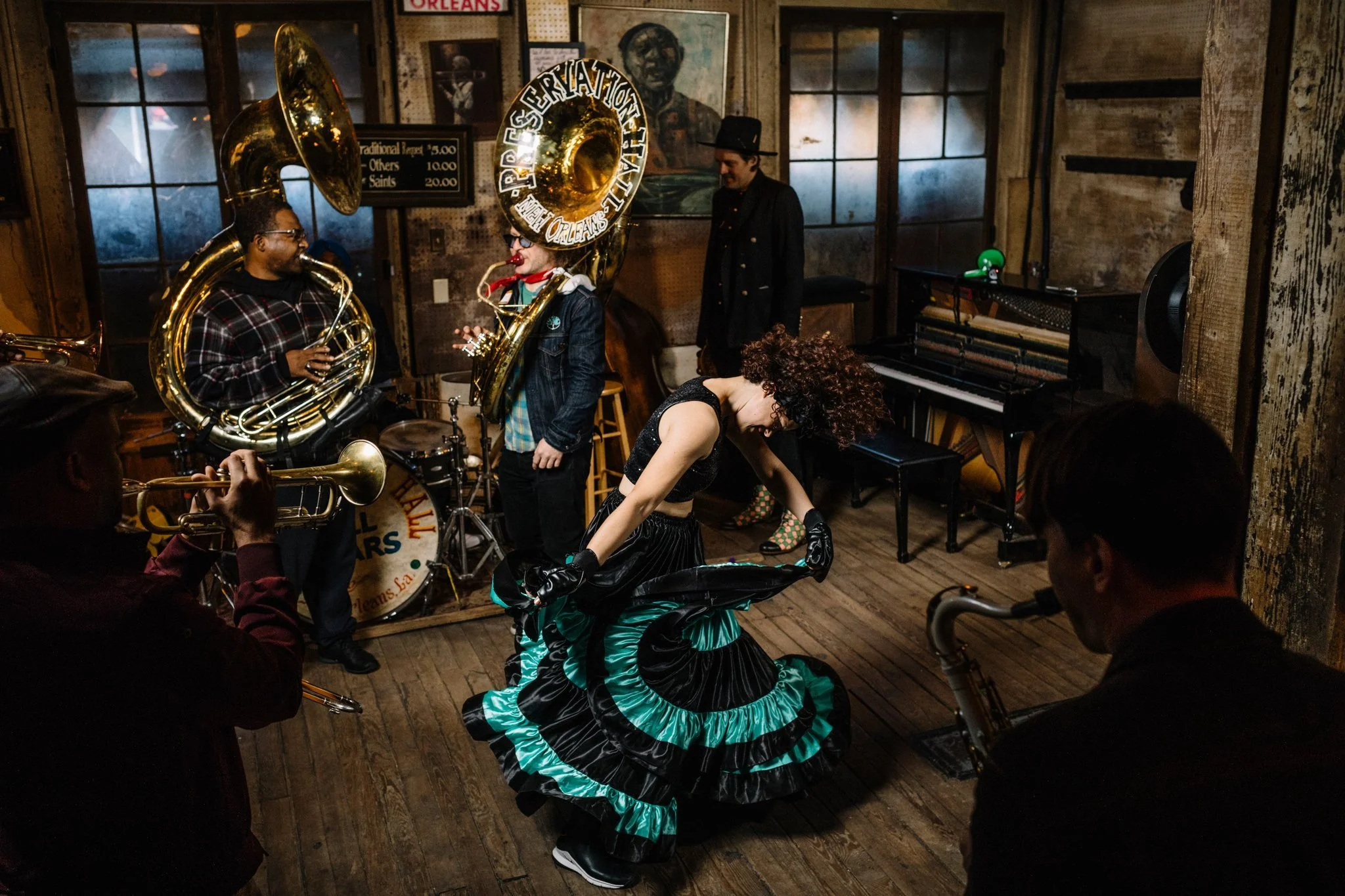
In New Orleans, Whispers of Haiti Become a Brassy Mardi Gras Shout
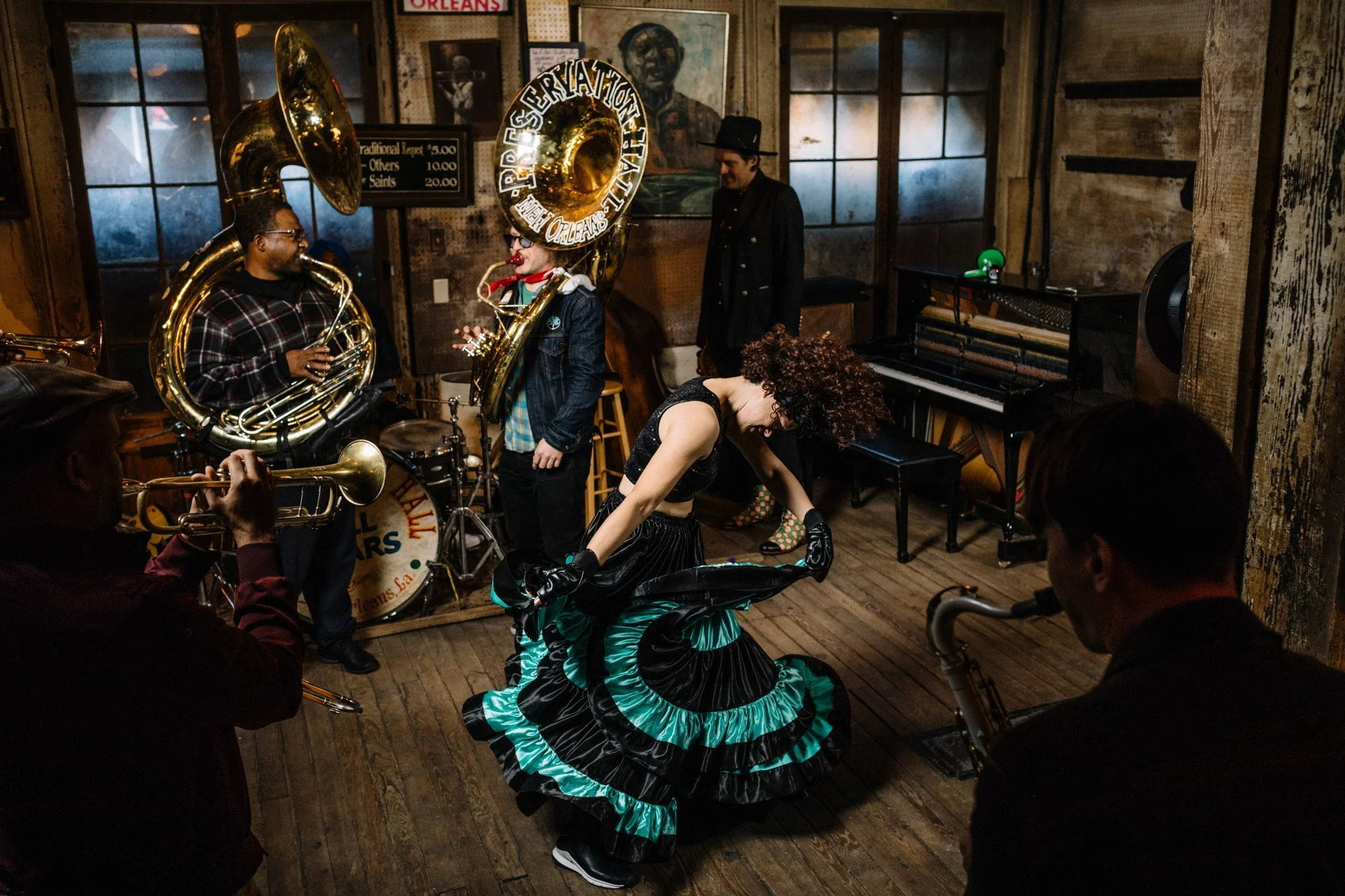
NEW ORLEANS — Régine Chassagne was standing barefoot in her rambling New Orleans home on a recent weekday, showing members of the Preservation Hall Jazz Band how to play the horn parts for her latest musical project.
It was a galloping Carnival anthem played in the Haitian style and sung largely in Haitian Creole, a language the jazz players did not understand. Ms. Chassagne, a Canadian-born daughter of Haitian exiles, described their parts with swooping hand gestures. At one point, she told them to play “like fireworks — poof!”
The jazzmen, masters of translating emotion into sound, nodded along, unfazed.
Ms. Chassagne, 41, is a founder of the rock group Arcade Fire, a French speaker of mixed racial heritage who grew up in Montreal playing the piano to old Louis Armstrong recordings. More recently, she has become a prominent advocate for the Haitian people and for a Haitian culture that has had an outsize, if not always recognizable, influence on New Orleans, where she and her husband, Win Butler, have lived for about three years.
For this year’s Carnival season, the period of revelry before Lent, Ms. Chassagne and Mr. Butler, the Arcade Fire frontman, will highlight their adopted city’s Haitian connections with the kind of primer its residents readily understand: a raucous procession by the couple’s Haitian-themed Mardi Gras troupe, the Krewe du Kanaval. Founded in collaboration with the New Orleans jazz hub Preservation Hall and rounded out by local and Haitian musicians, the krewe plans to parade through the streets of the French Quarter and Treme on Tuesday, a week before Mardi Gras, and put on a free street party.
It is likely to be the loudest love song to Haiti to emanate from New Orleans in many decades, at a time when many are still stinging from a coarse insult from the president and the end of a humanitarian program that allowed more than 45,000 Haitians to live and work in the United States.
“I’m the one pushing for it,” Ms. Chassagne said of the band’s focus on Haiti, “and I’m pushing for it because it’s the story of my parents, and the culture. Their culture is what made me who I am.”
Some in New Orleans say the same could be said for the city.
“There’s this huge connection between the cultures that hasn’t really been explored,” said Branden Lewis, 30, a trumpeter with the Preservation Hall Jazz Band. “My existence is testament to that fact, and I don’t really know anything about Haiti.”
Mr. Lewis grew up in Southern California, but his family members are Louisiana Creoles who trace their roots to people of African descent who came to Louisiana from Haiti in the 19th century.
It is a common New Orleans story. In 1809 and 1810, the population of the city roughly doubled when more than 10,000 French speakers from the colony of St. Domingue — whites, slaves and free people of color — arrived from eastern Cuba, according to Ned Sublette, the author of the 2008 book “The World That Made New Orleans.” They had gone to Cuba from what is now Haiti amid the tumult of the Haitian revolution, but were subsequently expelled by the Spanish.
The new arrivals made a profound mark on New Orleans, influencing its legal profession, cuisine, journalism, politics and music. In the book, Mr. Sublette argues that they delayed the Americanization of the city “for perhaps two generations.”
But Americanization eventually won out, and the French language faded. And while family names familiar to any Haitian — Dumas, Toussaint, Barthelemy — remain common in New Orleans, the Haitian influence has become so prevalent, so deeply mixed into the city’s complex cultural stew, that it can be difficult to pick out.
“Haiti definitely had an influence on New Orleans, but it’s hard to see if you’re not looking,” said Donald Link, a local chef who has been researching the city’s culinary ties to the Caribbean world.
The idea of outsider rock stars making a mark on Mardi Gras has prompted some grumbling in a city that fiercely guards its cultural traditions. Mr. Lewis said some locals had criticized the Krewe du Kanaval as an act of cultural appropriation. It would not be the first time such charges have been made against Ms. Chassagne or her band, whose other members are white and which has come under fire before for adopting Haitian influences and iconography.
In 2016, they set off an intense online debate among New Orleanians when they joined with the Preservation Hall Jazz Band for a New Orleans-style parade for David Bowie, who died in January of that year.

Ms. Chassagne and her husband, Win Butler, Arcade Fire’s frontman, have lived in New Orleans for about three years. Credit: William Widmer for The New York Times
“Shouldn’t you have at least some tie to New Orleans to get a second line?”one commenter said, referring to the city’s tradition of jazz funeral parades.
Mr. Butler shrugged off the complaints on a recent evening while sipping rum on his back porch with Ben Jaffe, Preservation Hall’s creative director. Thousands turned out for the Bowie parade, Mr. Butler said. Thousands were moved.
“There’s not even one part of me that’s like, that was a bad idea — like, ‘Oh no, we’ve ruined New Orleans,’” he said.
Mr. Jaffe, a New Orleans native, agreed, arguing that the city has always made room for respectful newcomers looking to make a mark on the culture. His parents, Allan and Sandra Jaffe, were music fans from Philadelphia who stumbled into New Orleans’s traditional jazz scene while on their honeymoon in 1960. The next year, they opened Preservation Hall, playing a major role in the traditional jazz revival in the city.
“That was one of the reasons they came down here — to sort of absorb that thing that they were attracted to,” he said. “Isn’t that what New Orleans has always been, though?”
Ms. Chassagne’s attraction to the Caribbean world feels like an effort to reclaim a heritage that history tried to rob from her. Her parents fled, separately, from Haiti in the 1960s, amid the violence imposed by supporters of the Haitian dictator François Duvalier. Several of her mother’s relatives were killed in a 1964 massacre in the town of Jérémie, and her mother, traumatized, never returned.
Ms. Chassagne would not visit the island until after the band became famous. She describes a Montreal childhood absorbing wisps of Haiti: her parents chatting in Creole, the way her mother danced in the kitchen, the Christmas parties with kompa music on the stereo.
A fair-skinned member of a family of many hues, Ms. Chassagne also remembers listening as darker-skinned relatives talked about the way white people would treat them.
Now, she and Mr. Butler stand out in other ways. New Orleans is still adapting to having the famous indie-rock couple in its midst: One city government official recalled seeing the pair on the street at Halloween, and mistaking them for local residents in really convincing Arcade Fire costumes.
In the past few days, Ms. Chassagne and Mr. Butler have been scrambling with last-minute details. They have corralled into their Carnival project Haitian-Americans including Leyla McCalla, an unclassifiable multi-instrumentalist who performs some songs in Creole, and Charly Pierre, a chef and a winner of the Food Network’s “Chopped” contest, who will be providing some of the food.
The couple has also been reaching out to the Haitian immigrant community. On Jan. 11, Ms. Chassagne and Mr. Jaffe promoted the festivities on Radio Gonbo Kreyol, a New Orleans internet radio station that serves Creole speakers, as stories began to circulate that President Trump had crudely disparaged Haiti in a White House meeting.
The Census Bureau estimates that fewer than 500 people in metropolitan New Orleans claim Haitian ancestry, but Barthelemy Jolly, a Haitian native and vice president of the radio station, believes the Haitian immigrant community is thousands strong. Many of them are taxi drivers and hotel maids, he said, and they have tended, over the years, to keep a low profile.
But Mr. Trump’s comments prompted scores of Haitians to march together at the Women’s March on Jan. 20, which passed through the city’s central business district and the French Quarter, bearing Haitian flags. Mr. Jolly said that he expected many more to come to the Krewe du Kanaval party.
“The Haitian community, they’re going to be out there,” he said.
So the possibility looms of a party where second-line rhythms bleed into Haitian mizik rasin, where the vestiges of Caribbean roots mingle with the new.
If nothing else, it will probably be a good time, though Ms. Chassagne hopes it will be something more. “If we want things to move forward we need to experience each other’s company,” she said. “You can’t just retract in your corner.”
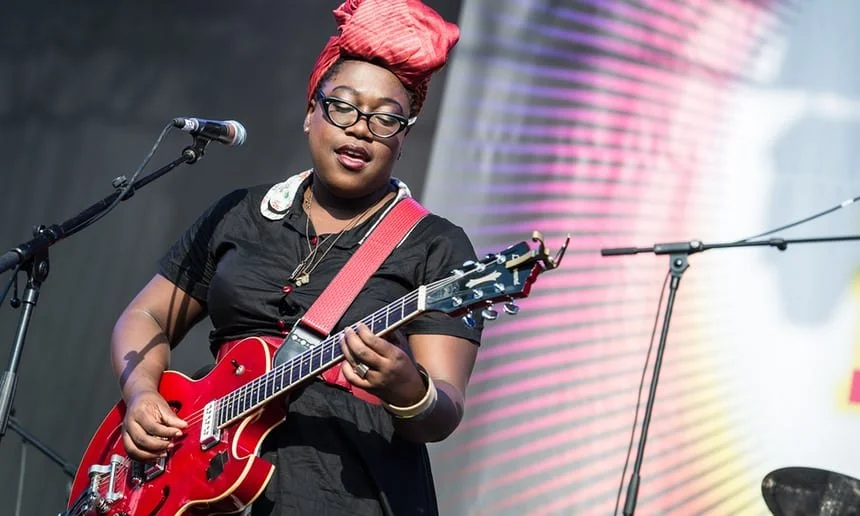
Queen Creole: Mélissa Laveaux on telling Haiti's story through folksong, spirituals and Vodou
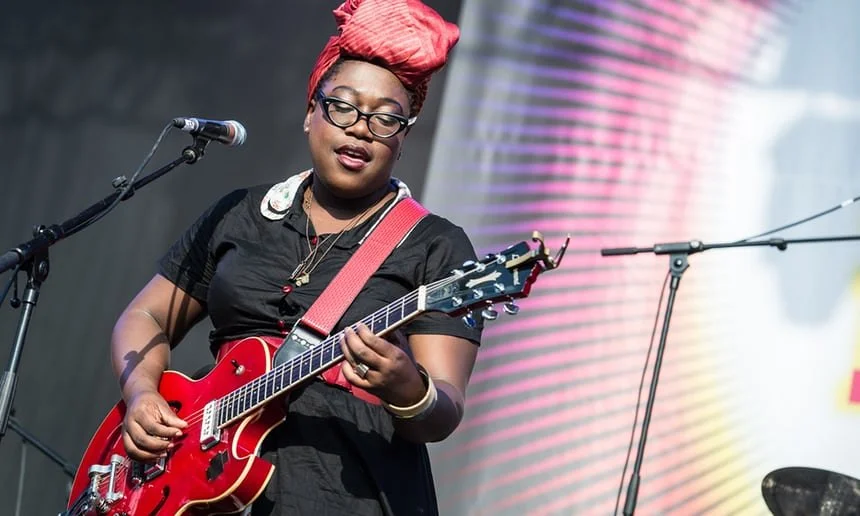
The Canadian singer’s striking new album is themed around the US occupation of her parents’ homeland – but is a lilting, joyful record about omens, civil treachery and sexuality
On a dull January afternoon, Mélissa Laveaux arrives at her record label’s Paris office apologising for her lateness. Disorganisation is, she says, a lifelong affliction.But the 33-year-old is in the middle of so many self-directed projects that it’s hard to take her claims too seriously. It takes a polymath to simultaneously mastermind a play about Haitian spirits, a multimedia project about a 19th-century sculptor and an album about the American occupation of Haiti in the early 20th century.The album is Radyo Siwèl, Laveaux’s third: a lilting, burnished, joyful full-band collection that combines Haitian kompa guitar with calypso and soca, courtesy of Toronto-based Trinidadian guitarist Drew Gonsalves.Laveaux moved to France 10 years ago when Paris-based label No Format offered to release her music. Born to Haitian parents in Ottawa, she describes her childhood as traditional, though with one missing aspect – her parents wanted Laveaux and her sister to assimilate and speak perfect English and French, so refused to teach them Creole. “All the cool Haitian kids spoke Creole. It felt like a sorority we didn’t have access to,” says Laveaux. “It felt like something was missing.”Immersion in Creole culture was one of the prompts to make this album. The other was a childhood love that Laveaux’s parents did foster, of the Haitian singer and activist Martha Jean-Claude. Laveaux first heard her aged six, and started playing her songs after she got her first guitar following her first trip to Haiti, aged 12. “When I moved to Paris, one of the artists that still carried me was Martha Jean-Claude,” she says. An invitation to perform her songs at a benefit for the 2010 Haitian earthquake didn’t pan out, but it did turn into an obsessive research project.But the more she learned about Jean-Claude, the bigger the project got. She hadn’t known that the country was under American occupation between 1915 and 1934. “Nobody had told me!” Laveaux says. “I felt very cheated by my parents.” She decided to make her second trip to Haiti, researching at institutions including the Centre d’Art, still in a state of disrepair following the earthquake. “I was afraid I wouldn’t be claimed by other Haitians, but people kept thinking I was somebody’s daughter, and urging me to speak Creole. I felt claimed,” she says. She took pride in finding that her music had been bootlegged, distributed and stored in the National Archives.Laveaux returned to Paris overwhelmed with books and CDs of traditional songs: voudou spirituals such as Legba Na Konsole, and folk songs, including Kouzen, which Jean-Claude recorded during her exile in Cuba. She decided to parse the “chaos”, as she calls it, by taking inspiration from sci-fi and refashioning her own narrative of the US occupation from the songs she found, referencing omens, civil treachery and voudou’s exuberant, complex depiction of sexuality, which the occupiers had tried to suppress. The album contains one track of her own, Jolibwa, about the population protesting the imprisonment of journalist Joseph Jolibois by dancing outside his cell (Jolibois died in jail in 1936). She was pleased by recent footage from New York that saw a group of Haitians protesting outside Trump Tower by dancing in the streets after news emerged that the President had allegedly called Haiti a “shithole”.Despite its heavy historical themes, Radyo Siwèl is a beautifully light record. Levity is key to sustaining the energy to fight, says Laveaux, who calls France “a super-sexist country” and says she wasn’t at all surprised by the recent backlash against #MeToo by certain French actresses. “This meme keeps going around online, ‘I am my ancestors’ wildest dreams’ – and I’m like, I hope I am! They couldn’t have gone through all that sacrifice without thinking something better’s gonna come.”Laveaux struggles with her place in an industry where she doesn’t see herself represented. “There’s not a lot of visibility for black women with guitars unless you’re playing blues or singing gospel. And if I wasn’t playing guitar, then people are like: ‘Cool, R&B!’ If I don’t make R&B, do I have any longevity in my career?” But she keeps the faith that “if I just make really good work, people will listen to it”.In the absence of contemporary peers, Laveaux is looking to history for inspiration. She recalls as a child seeing an image of Sister Rosetta Tharpe. “Without that, I wouldn’t have thought I could play music.”Last summer, she participated in a Rome residency to pursue a project related to Italian culture. She chose as her subject Edmonia Lewis, a black, queer, Ojibwe sculptor who moved from New York to Rome in 1866 and became a noted artist, despite being fetishised and tokenised by the locals. “That resonated with me so much,” says Laveaux, who interviewed other black artists working in Italy for a film that will accompany an eventual record. “They had similar hurdles to what I read in Edmonia Lewis’ diary. In 150 years, nothing had changed.”She laughs as she says this, more bemused than crushed. On her right arm is a tattoo of Cleopatra in tribute to a Lewis sculpture, surrounded by a Kara Walker image of a young girl setting herself on fire, and Tina Turner astride Ike, inspired by the tarot card for strength. “That card is about taming your demons and having guidance from the spiritual world to overcome a great fear,” says Laveaux.Until the gods stage a divine intervention, she has another idea of how to challenge racism and cultural imperialism. “One of my dreams is to write a song for Eurovision.” she says. “You can influence millions of people’s ways of listening to music.” If anyone can fit it in, she can.An EP featuring the first three tracks of Radyo Siwèl is released today. The album is out on 23 March on No Format. Mélissa Laveaux plays Richmix, London, on 13 April.[embedyt] https://www.youtube.com/watch?v=ZZl7GwhanaY[/embedyt]By: Laura Snapes | Thu 1 Feb 2018

New Music! "Promise" by Josh X Feat. T-Micky (DRO)

[embedyt] https://www.youtube.com/watch?v=3rMCU_pmBps[/embedyt](we do not own the rights to this video)