
Tijuana's 'Little Haiti' Stalled But Migrants Planting Roots
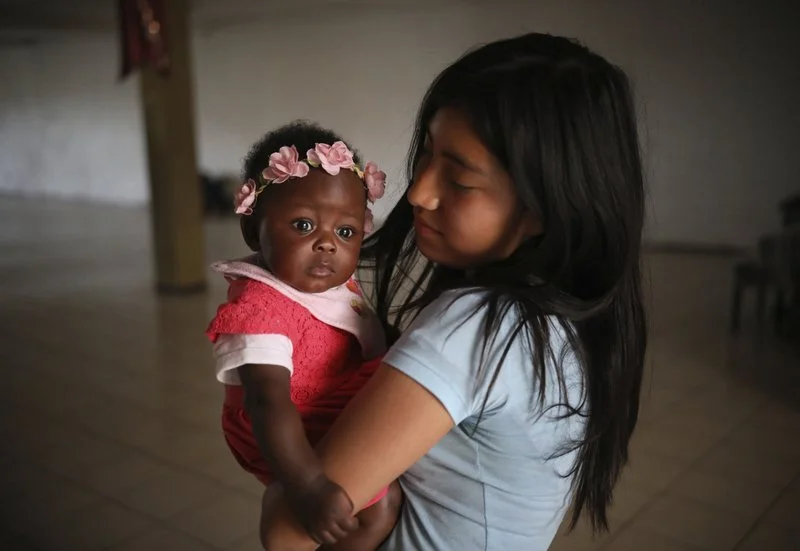
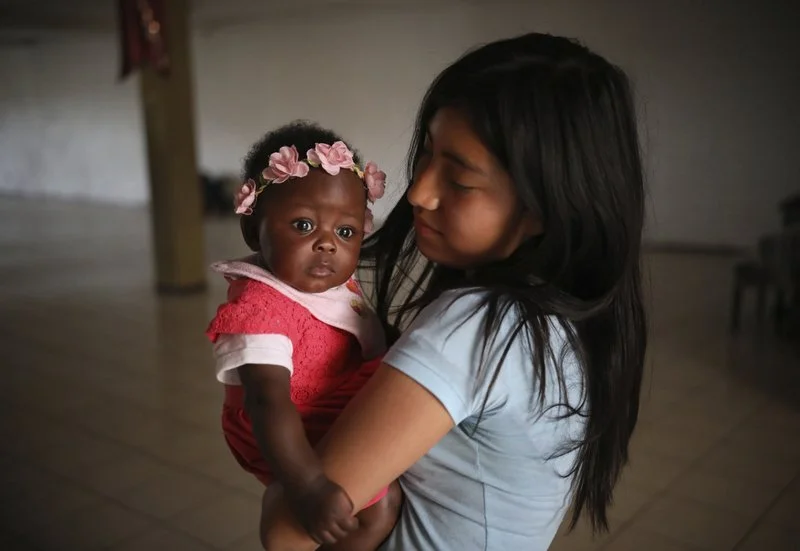
 Brightly colored clothes air from lines strung between rudimentary plywood-sided homes. Cinderblocks stacked chest-high form the skeletons of unfinished houses, anda pile of unused rebar lies in the dirt patio.A billboard puts a name to what has become something of a neighborhood interrupted: "Little Haiti. City of God."
 The arid hillside barrio, on property belonging to the Ambassadors of Jesus evangelical church, made headlines last year when nearly 3,000 Haitians ended up in this city bordering San Diego on a failed bid to get to the United States. About 200 were taken in by the church.But the church's plans to build a community for Haitians hit a roadblock when civil defense officials said there was a flood risk and barred further construction. A year later, just eight of the 100 homes envisioned are in place, with another 50 people or so living in similar conditions in nearby Scorpion Canyon."The neighborhood was not built, and the Haitians who were here went to rent elsewhere and became part of the work life," Tijuana Mayor Juan Manuel Gastelum Buenrostro said.Indeed, the denizens of Little Haiti represent a small portion of the local migrants from the impoverished Caribbean nation, many of whom are putting down roots just across the border from what was once their destination.Most of the Haitians had gone to Brazil after a 2010 earthquake devastated their own country and found jobs during the Olympics and World Cup. When Brazil's economy slumped and work dried up, they headed north. Some decided to stay in Tijuana because they had found decent work and were eager to settle down. Others said they feared the U.S. would be unwelcoming.
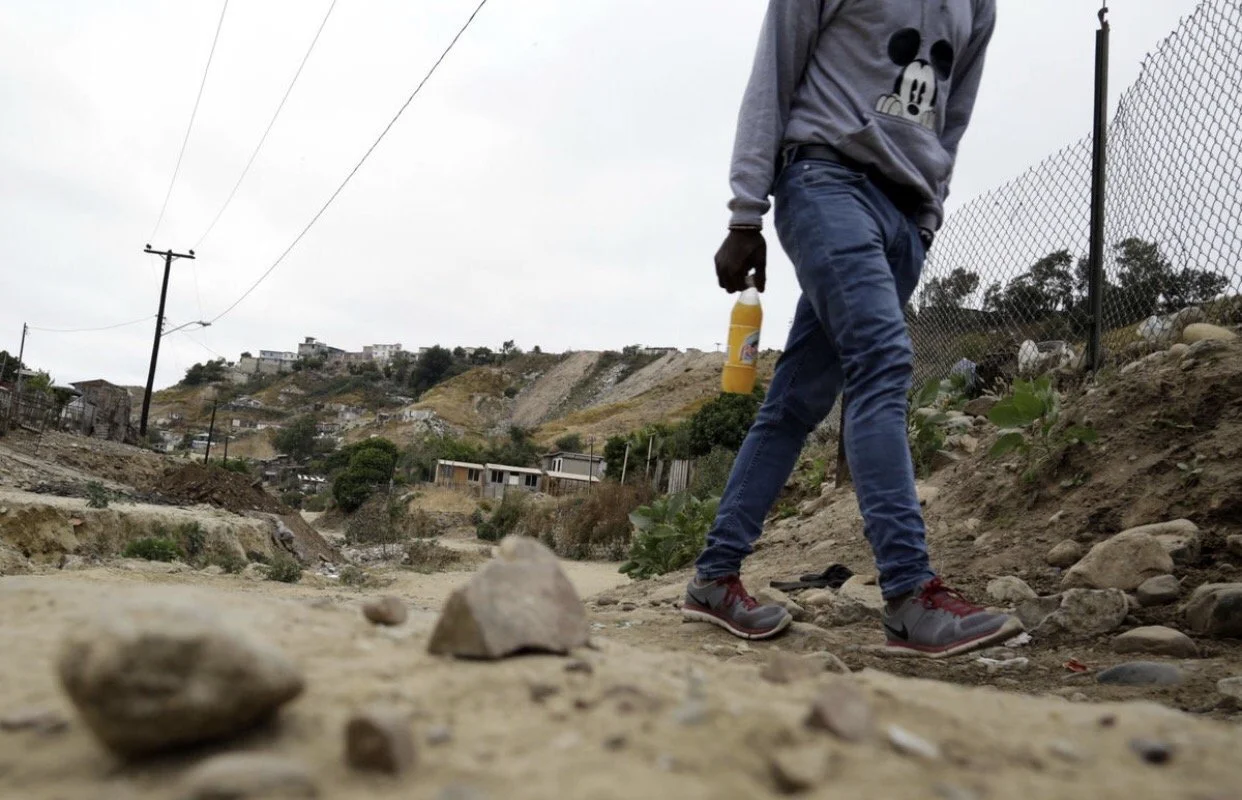
 Across the city, Haitians have found employment as welders and factory workers, and have become part of the urban landscape, seen boarding buses, pumping gas or wading into traffic selling flavored waters to motorists."With this job plus what my wife earns selling tamales ... it gives us enough to pay the rent and the monthly expenses," said Thony Mersion, a 34-year-old working as a security guard at the Tijuana airport.On Sundays, many attend a special service at Ambassadors of Jesus. Recently the Haitian ambassador flew up from Mexico City to officiate at a mass wedding of his compatriots. Some have now had Mexican-born children, which makes it easier to qualify for residency.
 One of the most successful, commercially, is Marie Toussaint, 30, who this year opened a beauty salon with money loaned from an uncle in Los Angeles."With how well it's going, I can hire Mexican employees to attend to my clients who come from San Diego," Toussaint said.The Haitians also got a high-profile shout-out last week when, during a presidential debate, candidate Ricardo Anaya praised Tijuana for taking them in."I get goose bumps. ... That is the Mexico I want, a generous Mexico, a Mexico with arms open," Anaya said.However, an estimated 500 to 800 arrived after authorities stopped issuing humanitarian visas for Haitians in April 2017, and they are living on society's fringes, unable to work legally.
 Pierre Franzzy, 26, said he goes almost every week to the migration office, trying to legalize his status. But when a high-profile caravan of Central American migrants that had attracted the ire of U.S. President Donald Trump arrived in the city recently, he was told his case was no longer a priority."For that reason I have made the decision to return to Haiti voluntarily before they file a complaint or deport me," Franzzy said.Back in Little Haiti, pastor Gustavo Banda said about $20,000 has been spent on the existing homes and he's hopeful — optimistic, even — that he'll be able to put up more, despite the opposition from civil defense officials."Here the property tax is paid and the government does not do anything for the improvement of the homes ... or even basic services such as trash collection, paving and drainage," Banda said. "We have been dealing with this problem for 12 years, and this will not stop us.""The Haitians wish to stay here, and with the government authorizing them in two years to bring close relatives who currently live in Haiti, I am sure that Little Haiti is going to become a community with Creole as its main language," he added.Not all envision a permanent stay in the neighborhood, which is next to a pungent wastewater channel at the bottom of Scorpion Canyon.
 Saintanier Jeune, 40, has a stable factory job and said he is comfortable in Little Haiti. But he hasn't lost sight of the U.S., visible from a nearby high point in the form of San Diego's bay and gleaming office towers."I have the possibility to become a permanent Mexican resident since my daughter was born in this country," Jeune said. "Still, I want to leave ... because I do think I could have a better quality of life on the other side."
Haitians blocked at US border find 'Mexican dream'
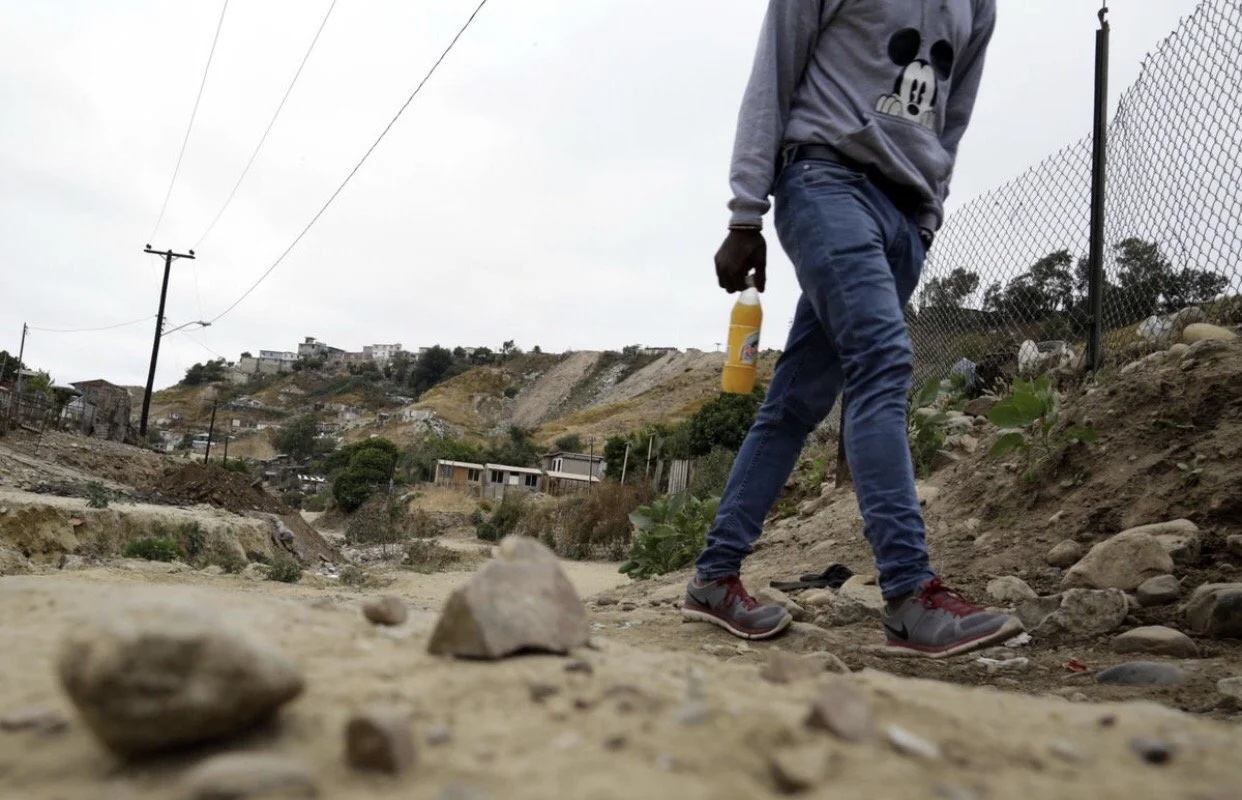
TIJUANA, Mexico (AP) — Jose Luis Millan found a new crop of star employees at an upscale Tijuana car wash where customers cross the border from the U.S. to pay up to $950 to have their prized possessions steamed and scrubbed for hours. They're never late, always hustle and come in on days off to learn new skills, traits that he says make them a model for their Mexican counterparts.They are among several thousand Haitians who came to Mexico's northwest corner hoping to cross the border before the U.S. abruptly closed its doors last year. The Mexican government has welcomed them, with a visa program that helps them fill the need for labor in Tijuana's growing economy.In a country whose population is 1 percent black, Tijuana's Haitians stand out. They share tight living quarters, sending much of their meager wages to support family in Haiti. Haitians earn far less than they would in the United States but enough to forsake the risk of getting deported by heading north.Two new Haitian restaurants downtown serve dishes with mangoes and mashed plantains. Dozens of Haitian children attend public schools. Factories that export to the U.S. recruit Haitians, who can also be found waiting tables and worshipping at congregations that added services in Creole."It's the Mexican dream for many of them, a sense that they belong," Millan said. "Mexico has given them opportunity. Mexico has opened up and let them achieve their dreams."Millan, who lived in the Los Angeles area for two decades until he was forced to leave last year for employing dozens of people illegally at his party planning company, sees parallels to Mexicans in the U.S. Their teamwork sets an example. Some customers ask for them.Haitians, he says, "fight hard, fight strong, and they don't stop." The Haitians took an accidental route from their impoverished Caribbean homeland to Tijuana, a city of about 2 million that borders San Diego and also has large pockets of Chinese and Korean immigrants.Brazil and its neighbors took in the Haitians after that country's 2010 earthquake. As construction jobs for the 2016 Summer Olympics ended and Brazil descended into political turmoil, they crossed 10 countries by plane, boat, bus and on foot to San Diego, where U.S. authorities let them in on humanitarian grounds.Then President Barack Obama shifted course in September and started deporting Haitian arrivals. Many decided to call Mexico home.After struggling as a schoolteacher in Haiti, Abelson Etienne moved to Brazil in 2014 to work at a factory that made cable for lighting products. He arrived in Tijuana in December after a harrowing journey with his wife who, despite the U.S. policy shift, was allowed in on humanitarian grounds, presumably because she was seven months' pregnant.Etienne, a 27-year-old who studied chemistry in college in Haiti, settled into a routine of six-day weeks and three double shifts, earning him 1,900 pesos (a little over $100), mostly for his wife in New York City and the infant son he hasn't seen. On Sundays, he sleeps until the afternoon and goes to church.
 "There's so much work in Tijuana," he said while a pot of fish stew with mangoes and tomatoes simmered on an electric burner in the two-room apartment that he rents with three other Haitians. "I've been treated very well in Mexico."The Mexican government is giving Haitians one-year, renewable visas that allow them to work but not bring family. Rodulfo Figueroa, the region's top immigration official, says Mexico is practicing what it asks of the U.S. and other countries."We believe that there's a humanitarian case to be made for these people to find better lives in Mexico," said Figueroa, the National Migration Institute's delegate in Baja California state, which includes Tijuana. "Our policy is to have the Haitian population do what they need to do to have status in Mexico."The new arrivals, currently numbering around 3,000, are manageable in a country of 122 million. Central Americans, who come illegally in much larger numbers, are typically deported, although Mexico is granting asylum more often.Rodin St. Surin, 36, is among hundreds of Haitians who found work at Tijuana's export-oriented factories. CCL Industries Inc., a Toronto-based company that makes Avery office products for retailers including Staples, Wal-Mart, Target and others, needed help after moving manufacturing from Meridian, Mississippi, last year.The plant hired St. Surin and 15 other Haitians in May for its workforce of 1,700 during peak back-to-school season. They inspected and packaged binders at the back of a giant, spotless floor where machines also churn out labels, folders and markers around-the-clock."I'm very comfortable with these people," said Mario Aguirre, the plant's operations director and a 43-year industry veteran. "They have given us very good results. They don't miss work, they always arrive on time. We'd like to see the same attitude in everyone."The factory offered 1,500 pesos (about $85) for a six-day week, with health coverage, paid vacation and a free shuttle to work. St. Surin, who left Brazil with hopes of joining a cousin in Miami, sends earnings to a caretaker for his three children in Haiti, whom he hopes to bring to Tijuana."Mexico could become my home," he said outside a crowded, graffiti-covered building where a nun allows about 50 Haitians to live rent-free on a street shared by cars and stray dogs. They tap a neighbor's hose for water to bathe, and cook meals on a campfire under a large canopy.The Ambassadors of Jesus Church, which sits on a rugged dirt road lined by agave and used tires, housed up to 500 Haitians last year on floors strewn with mattresses, making it perhaps the largest religious or civic aid group. Its pastor, Jeccene Thimote, wants to build a "Little Haiti" of 100 houses nearby at the bottom of a canyon where the sound of peacocks and roosters and smell of pigs permeate the air. He built three houses before the city halted construction for lack of flood controls.Thimote, 32, survives on two hours' sleep, rising to pray at 5 a.m., serving as foreman for a crew of 10 Haitians building a house in one of Tijuana's wealthiest neighborhoods, and working the night shift at RSI Home Products Inc., a California-based company that makes cabinetry for The Home Depot and Lowe's.Thimote, who was among 160 Haitians still living rent-free at the church this summer, sends his earnings to Haiti to settle family debts and support a 3-year-old daughter. He hoped to join a cousin in New York when he left Ecuador last year, but considers Mexico better than Haiti, saying, "There's more poverty there than here."The church has adapted. Every Wednesday night, Haitians gather for a rousing sermon in Creole. Mexicans attend a Sunday service in Spanish. A Haitian and Mexican recently announced plans to marry at the church.By Elliot Spagat, Associated Press | Sep 19, 2017
Copyright 2017 The Associated Press. All rights reserved. This material may not be published, broadcast, rewritten or redistributed.

MHAVE seeks to strengthen cooperation with Mexico

Stéphanie Auguste, Minister of Haitians living Abroad, received the visit of the Mexican Ambassador Jose Luis Alvaro, who was accompanied by his assistant, Georgina Marina. Discussions focused on identifying cooperation projects involving the Haitian Diaspora in their design and/or implementation and on migration issues. During this meeting, Minister Auguste expressed the will to see the realization of the project relating to the initiatives of the diaspora in a form updated according to the realities of the moment and by insisting on investment. To this end, she has requested Mexico's assistance in a "Diaspora Support Initiatives Project for Local and Regional Authorities", whose mission will be, among other things, to identify and support the initiatives already undertaken, to define with the uthorities of the communities the needs according to their plan of communal development, to define the mechanisms of support to the diaspora through the investment in the niches identified in the development plans of the communes. The Minister wished Mexico's cooperation in establishing a network of information centers on migration as well as establishing a communication network with migrants in Mexico, especially those whose situation was recently regularized. Such assistance will facilitate the establishment of a federation or confederation of Haitian diaspora organizations in Mexico. Ambassador Alvaro assured that he would follow up on these requests and told Minister Auguste that the process of regularization of Haitians in Tijuana and Mexicali was still under way for Haitian nationals with an official document, particularly a passport. HL | August 17,2017