

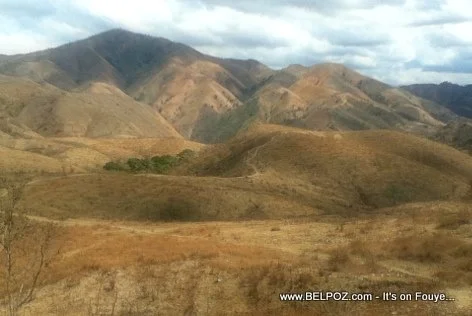
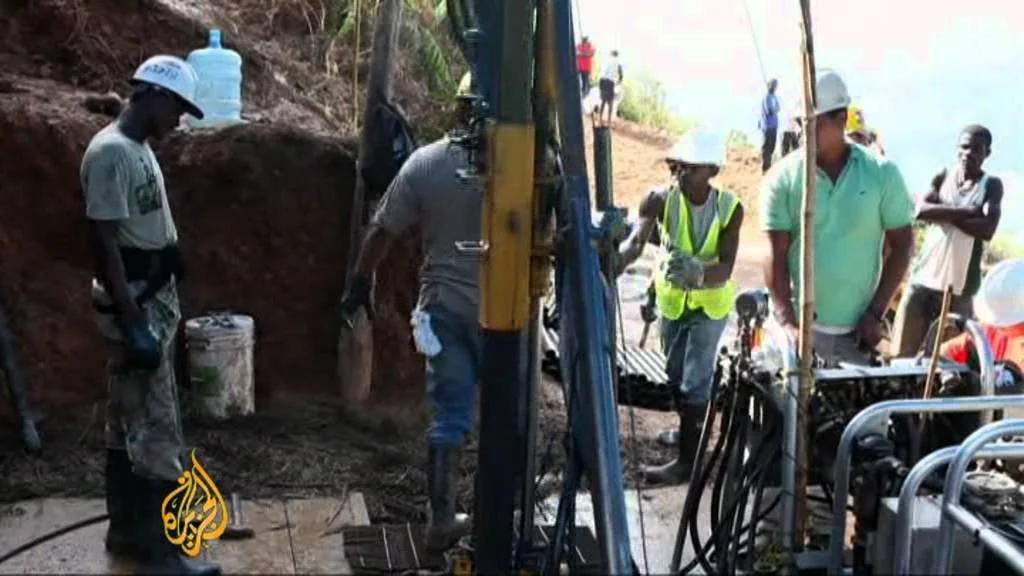
It's a Haitian Gold Rush - that's the rumour we were hearing as we made our way to Trup du Nord in the northern part of the country.After an eight hour car ride on mainly dirt roads, we finally arrived at our destination.Or at least that's what we thought. Once we got to the small town we realised that few locals were willing to take us to the rivers where people panned for gold. It turns out that over the past year dozens of foreigners - mostly Canadians and Americans had been poking around the same area trying to convince Haitians to allow them to drill on their land to take samples.For centuries, Haitians in these parts have panned for gold and it's a secret they don't want to get out. One local woman told us that she's worried the white people will steal her gold. "Since I was a kid I have been panning for gold. I don’t want any company to come here and take our gold away. Gold is my life!"It took about an hour to convince her to show us the river where she pans, so worried was she that we would reveal the location to a mining company.According to an investigative report by Haitian Grassroots Watch - a Haitian organisation which works with journalism students from the University of Haiti - foreign mining companies have already invested more than $30 million dollars collecting samples, building roads and digging.Nearly 15 per cent of Haiti’s territory is now under license to North American mining firms and their partners.In the neighbouring Dominican Republic, mining companies believe they’ve found the largest gold reserve in the Americas: 24 million ounces.They are hoping the gold rush extends to Haiti – a country where the average person earns about a dollar a day.Laurent Lamothe, the country's prime minister, is hopeful that a gold rush could help his country, which is still struggling to recover from the devastating earthquake in 2010."It gives us the opportunity to have our financial independence with programmes against extreme poverty and programmes to create jobs. "Keeping those potential profits in the country, however, will be a challenge - Haiti has one of the lowest royalty rates in the western hemisphere — only 2.5 percent of the value of each ounce of gold extracted.The question of who will benefit from a potential windfall of profits if large quantities of gold are found is one that worries Jane Regan, a professor of journalism who is involved with Haiti Grassroots Watch."There is absolutely no transparency and in the meantime Canadian and American companies now control more than 1,100 square miles (2,849 sq. km) of Haitian territory and I think that would make anybody nervous. "Environmental impact from possible future open pit mining projects is also a major concern.It's still a question whether or not a country which ranks in the bottom ten of Transparency International’s Corruption Perceptions Index can provide the necessary oversight to ensure that both profits and the environment can be preserved.Many Haitians we spoke to are divided on the issue. Some locals like Jean Igo, who has been unemployed for months, says he would welcome a job working in a mine. However, after he allowed a Canadian company to drill on his land he is now having second thoughts about doing business with foreigners."I don’t trust doing business with them. They did not give us a good guarantee. They gave us a little cash but it was nothing. They promised they would give people jobs operating the machines and they did not fulfill any of their promises."The reality, however, is that big companies will most likely create thousands of jobs for locals. A fact that might just convince many that it's worth taking the risk.By: Rachel Levin for Al-Jazeera.com |July 31, 2012
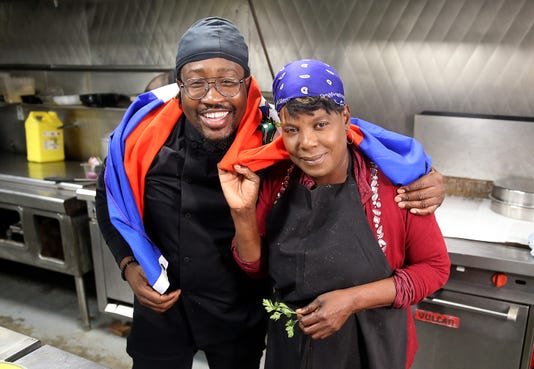
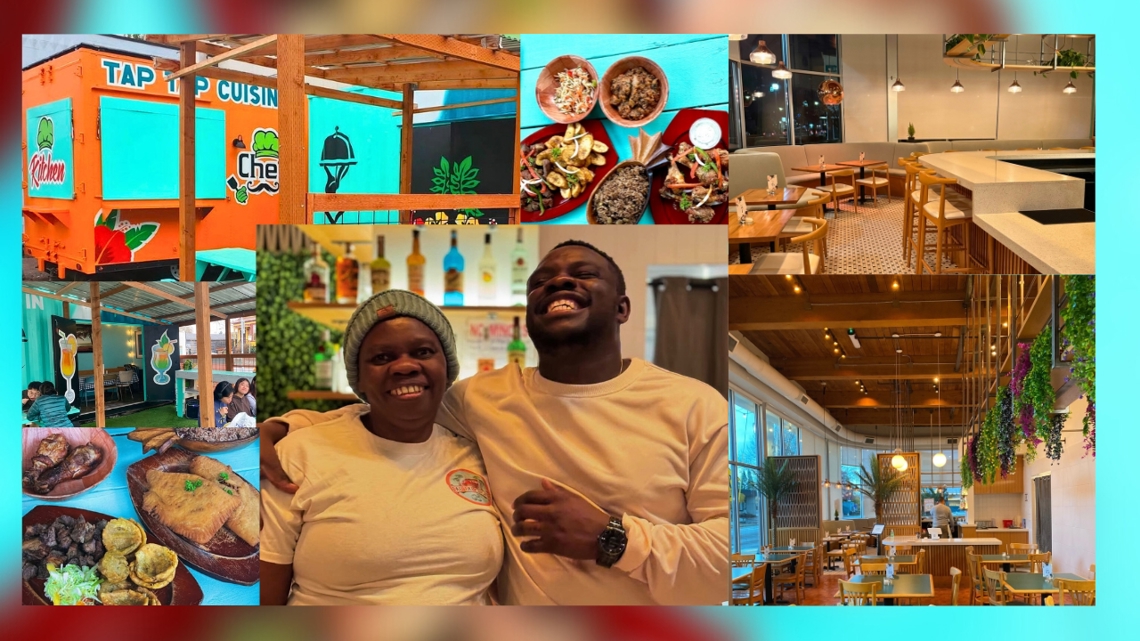
Mother-son duo brings authentic Haitian cuisine to Rose City: 'Put Haiti on the map'
Portland restaurant TapTap Cuisine, operated by Dieuson Alix and his mother, is sharing Haitian culture, one serving at a time.
While many celebrated New Year's Day with champagne toasts, Portland's newest Haitian restaurant marked the occasion by serving up a dish that symbolizes freedom and independence. Jan. 1, Haiti's Independence Day, marks the birth of the world's first free Black republic.
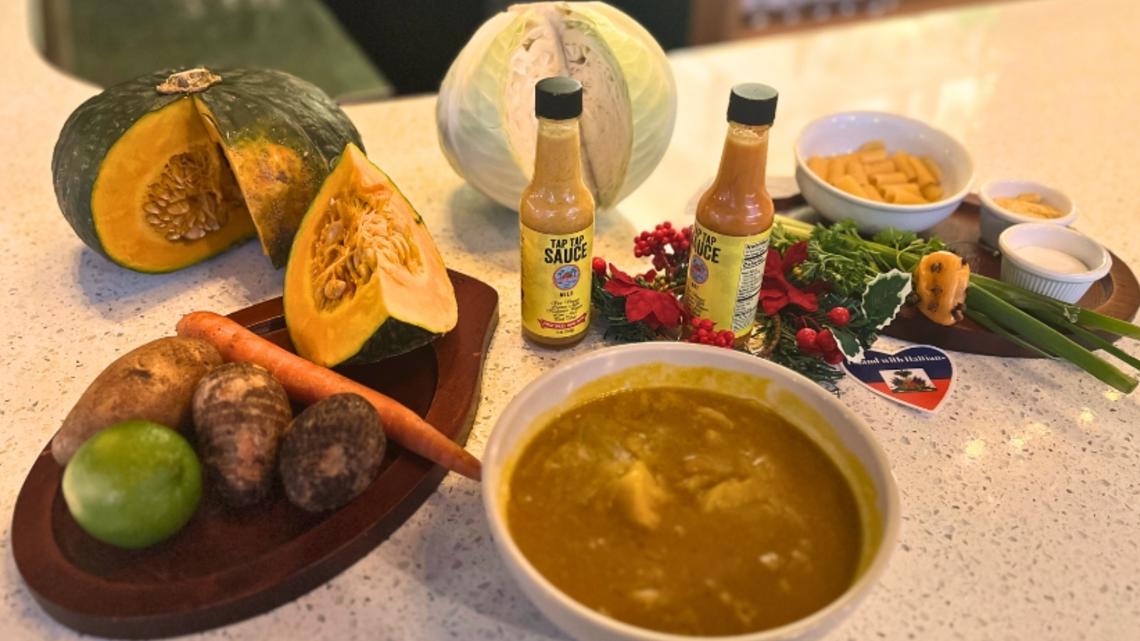
At TapTap Cuisine in Northeast Portland, owner Dieuson Alix and his mother Daniella celebrated the historic day by serving Soup Joumou, a traditional squash soup that carries centuries of meaning.
"When slavery began in Haiti, we weren't allowed to eat pumpkin. The masters were the only ones who could enjoy it," Alix said. "But when we gained independence on Jan. 1, 1804, the best way to celebrate was by making Joumou. It symbolizes freedom, liberty and unity for Haitians."

Credit: KGW
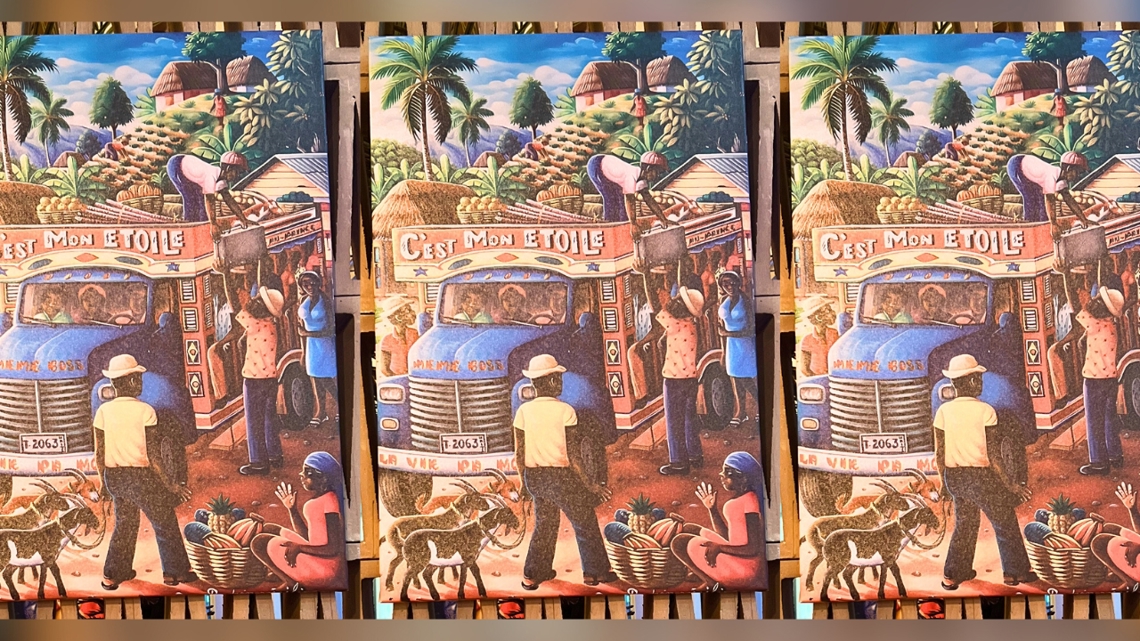
The restaurant's name comes from one of Haiti's transportation systems.
"In Haiti, we have a traditional taxi, a little bus or pickup truck we call Tap Tap," Alix said. "The name comes from passengers tapping the back of the vehicle to signal the driver to stop."

Credit: KGW
Painting of a Haitian TapTap bus: The restaurant's name comes from one of Haiti's iconic transportation system called "TapTap."
After arriving in America in 2016 on a student visa, Alix balanced learning English, working and playing soccer while earning a psychology degree at Bushnell University in Eugene.
In 2023, he opened a food cart on North Williams Avenue. Following months of planning and support from family and friends, he expanded to a brick-and-mortar location on Northeast Sandy Boulevard in October 2024.
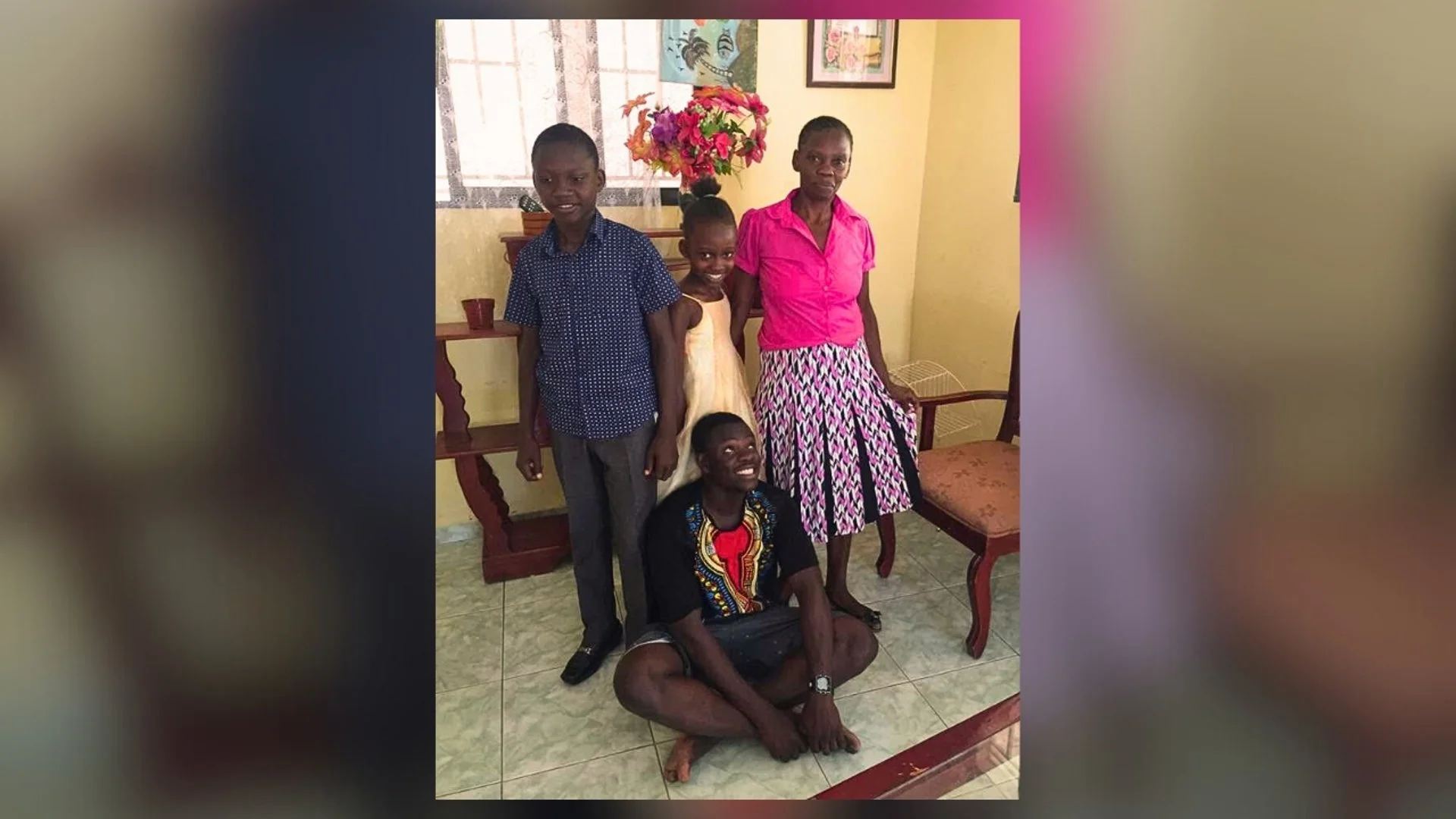
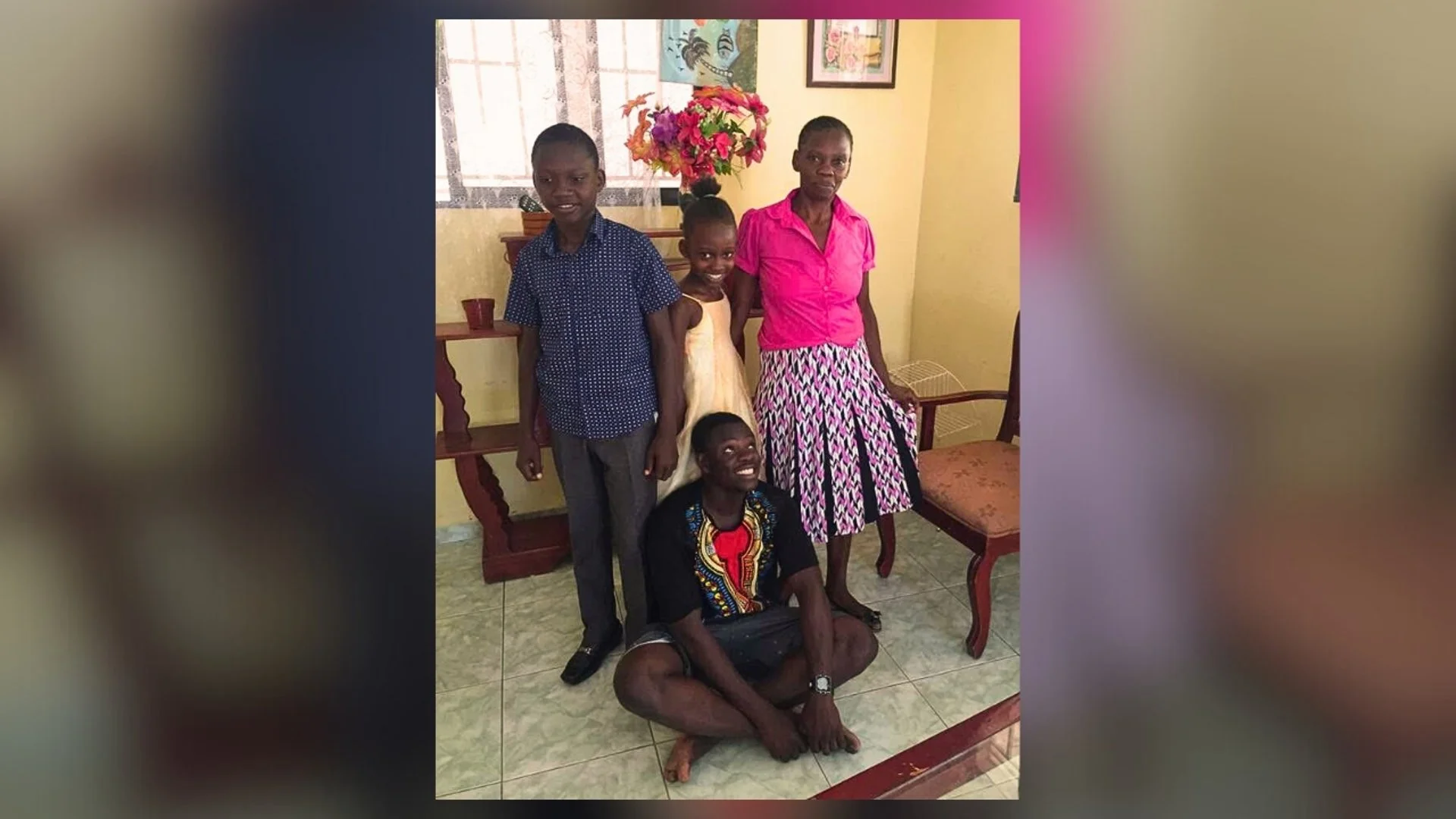
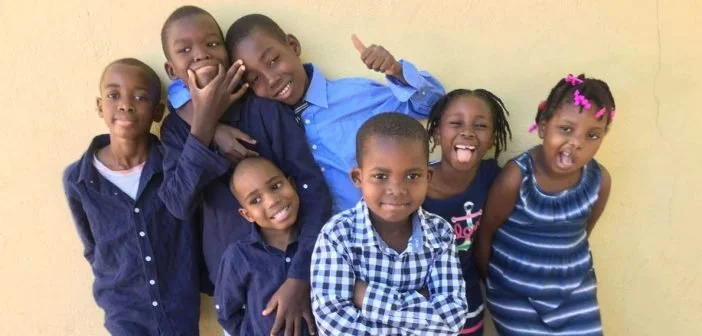
For Alix, the venture is a tribute to his mother's sacrifices in their hometown of Jacmel, Haiti, where he helped his single mother prepare meals that she would sell to support him and his two siblings.
"I saw the struggles my mom faced," he said. "She would cook in big pots, then walk 60 to 70 miles a day to sell her food in the market. She worked tirelessly to provide for us."

Credit: Dieuson Alix
Dieuson Alix alongside his mother and two other siblings back in Haiti.
Despite the success of his restaurant, Alix continues to face challenges, including stereotypes perpetuated on social media. The comments, often offensive and rooted in misinformation, have deeply affected him.
"It hurts me to my soul," Alix said. "As a migrant, as a Black man, you have to work harder than anyone else to make a seat for yourself. But one thing about us Haitians — we are resilient. We have tough skin."
He recently deleted several offensive comments falsely claiming Haitians eat dogs and cats.
"Not too long ago, I had to delete up to 10 comments where people were saying, 'Stop eating dogs, stop eating cats, save the cats,'" he said. "This is not a part of our culture. This is not who we are. We don't eat dog. We don't eat cat."
Alix said Haitian immigrants contribute significantly to American society.
"We are nurses, doctors, journalists, business owners," he said. "It's very disturbing, but we have tough skin."
His mother Daniella, who joined him in Oregon in February after immigration delays, spoke proudly in Haitian Creole: "I'm extremely proud of him choosing to share Haitian food with the Portland community and being proud of his culture."
For Alix and his mother, it's not just about building a restaurant, it's about keeping Haiti's spirit alive, one serving at a time. He said they're committed to making the Haitian restaurant a welcoming space for both Portland's Haitian community and those seeking to learn about the culture.
"Tap Tap means we're moving forward," Alix said. "We're on a journey to a brighter future — not just for us, but for our community. For our culture. We want to put Haiti on the map."
Both locations are open Tuesday through Sunday at various times available on Tap Tap's social media pages.

Credit: Dieuson AlixClose Ad
Mitch Albom’s Orphanage in Haiti is Improving Children’s Lives
TACOMA, Washington — As the most poverty-stricken country in the Western Hemisphere, Haiti is an island with a troubled history. When a 7.0-magnitude earthquake hit on January 12, 2010, about 16 miles away from the capital of Port-au-Prince, the consequences were devastating. The island had not experienced an earthquake of this size since the 18th century. Every hospital in Port-au-Prince was seriously damaged and almost 300,000 buildings, many of them homes, were destroyed. An estimated 316,000 people died as a result with close to one million displaced. An orphanage in Haiti was one of the many facilities severely impacted by the earthquake.
Have Faith Haiti Mission
The Caring and Sharing Mission in Port-au-Prince was founded in the 1980s. However, with the 2010 earthquake, the orphanage struggled to maintain its operations. Later that same year, operations were taken over by internationally renowned author, Mitch Albom, who wrote “Tuesdays with Morrie” as well as “The Five People You Meet in Heaven” and “Finding Chika.”
Originally, Albom flew to Haiti several weeks after the earthquake with a pastor who founded the orphanage. Seeing its dilapidated condition, Albom began returning every month, bringing volunteers to repair the structure. In mid-2010, Albom began running the orphanage.
Albom had written a bestselling book called “Have a Little Faith” that inspired a new name for the orphanage: Have Faith Haiti Mission. The book’s message is about people’s ability to come together, regardless of their faith. “I felt that my being there in Haiti, coming from America and with such a different religious background, was pretty much the embodiment of what I had written, thus the name.”
Poverty in Haiti
Haiti ranked a low 169 out of 189 countries on the 2019 Human Development Index. The most recent official poverty estimate, made in 2012, states that more than six million individuals in Haiti lived below the poverty level of $2.41 per day. Additionally, more than 2.5 million people fell below the extreme poverty level of $1.12 per day.
Helping Haitian Orphans
These conditions mean that even a decade after taking over the orphanage’s administration, there are ongoing challenges such as ensuring the children’s health, safety and education, hiring teachers and funding the entire operation. The maximum capacity of the orphanage is 54 children. Albom makes the orphanage a top priority, returning every month for three or four days. He also commits to extended stays on holidays and in the summer. “I have made more than 130 trips to Haiti,” he says, adding, “I plan to continue to do so for the rest of my life.”
The educational staff includes 14 paid teachers, many of whom are Haitian and some are American or British. In addition, there are a few volunteer teachers. The children are taught in both French and English with the goal of achieving a college or vocational degree. Additionally, there is a music room with instruments. Especially rewarding to Albom is seeing the older teenagers attend college. Three are currently attending college in the United States. One young man plans to attend medical school and eventually return to Haiti as a doctor.
Caring for Chika
Chika was a 5-year-old girl with who Albom and his wife, Janine Sabino, shared a close bond from the moment she arrived at the orphanage. But, when Chika turned 5, she began exhibiting symptoms that indicated a rare brain tumor. Albom and his wife decided to take Chika with them to their home in Detroit. She had the surgery and they cared for her until she passed away at age 7. The author, who wrote a moving book about the experience, states that “Chika gave us the blessing of having a family, even late in life. Her courage was an inspiration and continues to motivate us to take care of all the other kids.”
Changing Children’s Lives
Albom spends much of his time raising funds to keep the orphanage in Haiti running smoothly. This involves providing the best education, medical care and nourishment to the children. Donating to the orphanage “literally will change a life,” he says. He further explains that donations enable kids to have meals that they otherwise would not have. It also enables the kids to receive an education that serves as a stepping stone for their futures. Albom believes that it is a moral obligation to help such children who had no choice in the circumstances they were born into. “These kids are just as bright and just as talented and just as deserving as kids born into more fortunate countries. People with the means or time to help out would want to do so if they just knew about the need.”
The Road Ahead
With the COVID-19 pandemic exacerbating conditions in Haiti, the Have Faith Haiti Mission needs support now more than ever. This orphanage in Haiti is committed to providing a means for vulnerable Haitian children to reach their full potential and rise out of poverty.

52 Places To Love in 2021
We asked readers to tell us about the spots that have delighted, inspired and comforted them in a dark year. Here, 52 of the more than 2,000 suggestions we received, to remind us that the world still awaits.
South Wales, Wales
“You’re in a place set apart.”


Over the last 20 years I’ve traveled to South Wales about seven or eight times with my wife, and later our children, to visit family in a town near Swansea called Mumbles. (The name is a corruption of the French word for “breasts.”) It sits at the edge of the Gower Peninsula — a beautiful wild place that offers expansive beaches, medieval castles, hilltop trails, horses that graze near Stone Age ruins and picture-book villages with friendly pubs serving Sunday roasts and local ales in dark-wood booths.
Mumbles is homey and welcoming, yet we never saw tourists there. The roads are so small and narrow that getting from one place to another feels like it’s much farther than you actually travel.
Punctuated by weddings, births, graduations, anniversaries and deaths, our trips represented different stages in our lives. But each trip also seemed less like a visit to relatives in the old country than an escape to a secret, beautiful place that only we knew.—OWEN MARTIKAN

Saipan, Northern
Mariana Islands
“An island of hidden caves,
covered in untamed jungle.”


The Saipan Hash House Harriers running club meets every Saturday and full moon, with a designated person — the “hare” — bushwhacking a trail for the rest of the runners.
Saipan is only five miles wide and 12 miles long, but runners showed me parts of the island I never would have found myself. We saw a beautiful B-29 engine from a plane crash in the mountains. Also a staircase cut into a cliff, from the last Japanese command post.
Runners took me boating, diving, hiking, camping, spelunking and golfing. Swimming in a lagoon that dropped toward the Mariana Trench, we marked how far we’d swum with the top halves of three submerged Sherman tanks — a door open, guns sticking out. I was never the hare, but I’m coming back to set a trail.—MEGHAN WEST

SAIPAN, NORTHERN MARIANA ISLANDS

ABOUT THE AUTHOR
Meghan West of Denver, a geophysicist working with the Army Corps of Engineers, traveled to Saipan looking for unexploded ordnance from World War II.
Kaliya Dhrow, India
“If you go, you will get lost and you
will recover something of your own.”


I’m always on the lookout for roads that don’t exist on maps. I talk to locals, get their directions. When the pandemic hit, I kept hearing whispers over cups of chai: Nomadic herders had found kotaro, a Kutchi word for rock formations sculpted by wind and water.
I pinned it down to several villages. Riding along a dirt road, we passed a hill split by nature. On both sides you have water, craggy peaks. This one huge mountain has six peaks, which I named Mahabharata, after the ancient poem in which five brothers share one wife. It was around noon, the sun was beating down and we had been riding for two hours when the road ended. We parked our bikes.
From the rim of a crater, I looked inside this marvelous, endless landscape of red: streaks of crimson, saffron — orange, also. I started climbing down, through the different shades of the setting sun, and I came to a waterfall with fish flying upstream.—VARUN SUCHDAY

KALIYA DHROW, INDIA

ABOUT THE AUTHOR
Varun Suchday, of Bhuj, India, rode a motorcycle to tour the remote landscape near the village of Bhadli with his father and uncles in 2020.
PHOTO CREDITS
Two bottom photographs taken by Kaushik Gor.
Isfahan, Iran
“People see Iran as politically
charged and oppressive. But there
is a lot of beauty and innocence.”


My memories of Isfahan come in snippets: The hiss of the nan panjereh, an intricate funnel-cake dessert, as my grandmother shows me how to dip it into hot oil; the smiling, chattering taxi drivers with their endless questions about America and their playful jabs at my accent; the winding alleyways that reveal hidden nooks and crannies in the Grand Bazaar.
There’s a difference between the people and the government. I wish Americans could see the vibrant curiosity of the people who live here. I used to visit Isfahan every year. I spent long mornings lifting weights in the women-only gyms, and afternoons with my grandfather, watching him lovingly watering the plants in his garden and shooing away stray cats. But divisive politics, and now Covid-19, have made it harder. My grandfather died two years ago. I wasn’t there. I feel my Farsi growing rusty on my tongue.—NEEKNAZ ABARI

ISFAHAN, IRAN

ABOUT THE AUTHOR
Neeknaz Abari was raised in Washington, D.C., and works at a consulting firm in Dallas.
The Llanos, Colombia
“You can kiss your cell service goodbye.”


Beyond Cartagena’s tourist plazas and Bogotá’s urban hubbub, Colombia’s dramatic Andean peaks dissolve into vast, wild eastern grasslands — the Llanos.
Tropical rhythms are replaced by the twangy harp of joropo, and the smell of the sea gives way to that of tallgrass, cattle and smoky barbecue.
As Colombia has attracted more international visitors in recent years, the Llanos have remained relatively untraversed. The Llanos host an alluring combination of pristine biodiversity and traditional ranching culture seemingly lost in time. Anacondas, howler monkeys, capybaras and crocodiles live alongside ranchers, farmers and thousands of cattle. The grasslands once featured some of the wildest battles of the Independence era, and have witnessed the 20th-century horrors of guerrilla violence and drug trafficking. Today, though, like the rest of Colombia, the Llanos are emerging, if unsteadily, as a place of tranquillity.—SAMUEL DULIK

THE LLANOS, COLOMBIA

ABOUT THE AUTHOR
Samuel Dulik, a native of the San Francisco Bay Area, is a management consultant in Bogotá.
Siwa Oasis, Egypt
“This place touches the
deep pools of your soul.”

Siwa haunts my dreams. This oasis, far into the Great Sand Sea of western Egypt, nearly 400 miles from Cairo on lonely desert roads, is a place of infinite vistas and intimate conversations. Only one road goes to Siwa; it’s a valley of figs and palms, hot and cold springs.
Inhabited since Paleolithic times, Siwa is where the past, present and future seem to exist at once. There you’ll find a mountain filled with Ptolemaic tombs and the Temple of the Oracle, both thousands of years old.
When I say it haunts my dreams, I mean it. I frequently find myself in my dreams walking through date orchards at night past the lakes, into the desert, nearly feeling the cool sand in my tired feet as I wonder at the stars. I always awake with a sense of calm and clarity.—CATHERINE LITTEN

SIWA OASIS, EGYPT

ABOUT THE AUTHOR
Catherine Litten of Hyattsville, Md., works as a director of scholarships for an education nonprofit.
Montana’s
‘Golden Triangle’
“Everyone talks about Big Sky Country,
but it’s the land. You could see forever.”

I grew up on a farm 14 miles west of Big Sandy, Mont.
The plowed land closest to our farm held an old buffalo wallow, and there used to be tepee rings in the front pasture. This part of Montana, Lewis and Clark country, is flat and implacable with swells, coulees and hills. Ancient volcanic ranges — the Bears Paw Mountains, the Highwoods, the Little Rockies — sprawl in the middle of enormous wheat fields and acres of rangeland. Every morning when I was a kid, I saw the land first and the world second. It’s astonishingly severe and beautiful.
Light lasts a very long time there, in the summer evenings. There is sort of a constant background of big winds. And so we had a shelter belt, which was rows of trees that are around one corner of the main farm stand. And I would go down there as a kid and make my little world out of the clods of earth that were, and are, part of my soul.
You’re small in that part of the country.—DOREEN STEVENS

MONTANA’S ‘GOLDEN TRIANGLE’

ABOUT THE AUTHOR
Doreen Stevens is retired from nonprofit work and lives with her husband in Arlington, Mass.
The Camino de
Santiago, Spain
“An experience that is more
about the self than the selfie.”

My grandfather and I have walked four routes together on the Camino de Santiago. He is 80 and Catholic; I am 35 and skeptical. Our walks were undistracted opportunities for him to transmit family history and a lifetime of wisdom to me, punctuated by bullfights and tapas.
Our first walk was in 2007 after two of his brothers died. I was not expecting to enjoy it; the idea was that we were offering up our sufferings for our ancestors. Instead, I found myself appreciating both the forced meditation and the fellow travelers we met on the way. We’ve gone back multiple times and brought different members of our family with us. I’ve rethought jobs, relationships and life direction over hundreds of kilometers. When you walk into a town, you really smell, hear and see the gradual changes from rural to urban and back again. My father died recently. My grandfather and I are hoping to go back to the Camino next year, and walk the last 100 kilometers on the French route on his behalf. For my grandfather, completing the Camino would release my father’s soul from purgatory. For me, it would be a chance to reflect, in gratitude, with and for the family I have left.—SAM MICHAUX

THE CAMINO DE SANTIAGO, SPAIN

ABOUT THE AUTHOR
Sam Michaux is from Minnesota and moved to Los Angeles to write novels.
Malpaís, Costa Rica
“The colors of the ocean
were always changing, and
the sunsets were gorgeous.”

I studied abroad in San Jose, Costa Rica in 2005. Every weekend, we’d go explore the country. One of those trips was to Malpaís, a beach on the Pacific Coast. It took so long to get there — a bus to a ferry to a taxi — I remember wondering, “Is this going to be worth it?”
It was so beautiful. At night, everything closed, and it was really dark. I remember being on the beach, looking up, and really seeing the stars. I saw a satellite for the first time. I felt small and big at the same time, like I was connected to everything. When you travel, you’re able to become a different version of yourself. In Malpaís, we slept on hammocks on the beach for a dollar. I felt so free. I’m from New Jersey, where there were always lights and people around. This time in Costa Rica felt like an introduction to me stepping into myself and finding my independence.—KARA HOHOLIK

MALPAÍS, COSTA RICA

ABOUT THE AUTHOR
Kara Hoholik is the chief executive of Social for Good Co., a content marketing agency. She lives on a farm in Western Michigan.
Dakar, Senegal
“The city that refuses to
be like anywhere else.”


I landed in Dakar to the bluest sky I’ve seen, hundreds of sprawling baobab trees, sandy dust and angelic light.
Dakar is a city whose stability has centered me during my shakiest times. It is a place where tradition runs through every corner: the Wolof language, the sharing of meals — especially thieboudienne, or red rice with fish.
Along the Corniche, you’d think the whole city is working out.
I turned 25 in Dakar, a city with such a clear sense of self, ideals and history, a city that refuses to be like anywhere else, a city that taught me the importance of being my own person, a city that made me question what I want to bring to the world, and what I stand for. I felt empowered by Dakar. It stood up for me. I’ve never felt unsafe there — and, as a Black woman anywhere, that’s an amazing thing.—FARIDAH FOLAWIYO

DAKAR, SENEGAL

ABOUT THE AUTHOR
Faridah Folawiyo is an art historian and independent curator from Lagos, Nigeria. She spent two months in Dakar for an artist residency in 2018.
London’s St. James the
Less Church, England
“I yearn to explore again.”


I studied abroad in London in 2000 when I was a junior at New York University, and it was in a class called “The City and Green Spaces” that I discovered this church, St. James the Less. It’s been 20 years but I still vividly remember that from the first time I walked in the building, I immediately felt at home. There are humble brick arches, elaborately painted tilework, and warm, worn wood. There were stars carved into the walls above the windows, and patterns that reminded me of quilts that my grandmother had made. I wrote in my journal that it reminded me of hot cider and fresh bread.
It’s been so important to find those things that feel warm and cozy; to have a place to go in our minds that’s inviting, even if our reality is not. St. James the Less is in that space in my mind, along with endless cups of tea, candles and good books.—SARAH BEST

LONDON’S ST. JAMES THE LESS CHURCH, ENGLAND

ABOUT THE AUTHOR
Sarah Best is a small-business owner and a poet. She lives in Madison, Wis., with her husband.
PHOTO CREDITS
Photograph of the church taken by Rii Schroer/eyevine/Redux.
The Marrakesh
Medina, Morocco
“It’s a place you can’t really
understand until you live in it.”


I left the Marrakesh medina two years ago, and this love letter has been in my heart ever since. I was teaching at a university in Marrakesh, and in my second year I found an apartment that met all my needs: It was deep in the medina, the old city, with a rooftop terrace.
Inside the medina, there’s always this background noise — drumming and dancing and the sound of thousands of people passing through. There were, I think, seven mosques within sight of my terrace, and five times a day the call to prayer would start from each of them a few seconds apart, like a battle of the voices. I learned about the cold of the desert — my house was open, so when it would go down to 40 degrees, I’d basically be camping in my bedroom with sleeping bags. I have a ticket to Morocco in February — I’m not sure I’ll be able to use it yet, but I’m holding onto that ticket with all of my heart.—JENNIFER BORCH

THE MARRAKESH MEDINA, MOROCCO

ABOUT THE AUTHOR
Jennifer Borch lives in Jericho, Vt., where she is the education program coordinator at the U.S. Committee for Refugees and Immigrants.
Nanda Devi
Mountain, India
“I can’t help but long
for its comfort again.”

When I think of Nanda Devi — one of the world’s most storied mountains, worshiped by locals as a living goddess — a sense of comfort comes in the form of a memory: My wife and I are sitting on the steps of a bungalow, spending a quiet moment together watching the sunset.
In front of us is a wide panorama of 23,000-foot peaks, with Nanda Devi dominating the landscape. It was a doomed romance. A few months after we were married, Shoma was diagnosed with cancer. We’d have three years together. I had this fear after my wife passed away: Will I remember Shoma going forward? How she spoke, how she felt, what she said, how she looked? The next time I saw the mountain, I was alone. The first memory that came to my head was of that earlier evening: a golden glow on her face. She looked at peace.—PRAYASH GIRIA

NANDA DEVI MOUNTAIN, INDIA

ABOUT THE AUTHOR
Prayash Giria and his wife, Shoma, visited Nanda Devi, India’s second-tallest mountain, in 2016. Mr. Giria, of New Delhi, returned in 2019.
Laugavegur
Trail, Iceland
“The terrain is so diverse,
every mile is remarkable.”


In 2019, I hiked this 34-mile trek in southern Iceland with my friend Meredith and her mom. This was the first time any of us had planned a trek like this overseas. We definitely did some practice packing sessions beforehand!
We climbed a glacier using crampons, spikes attached to shoes for traction, and hiked through six miles of volcanic ash. On the last day, we climbed over this bridge by a huge waterfall. The mountains were covered in moss and there was a perfect, bluebird sky. I felt privileged that I got to see something so special and beautiful. I’m a plus-sized Chinese woman, and I’ve been told I can’t do things like this. But guess what: I did it, and I did it really well! I’ve climbed an ice wall. I’ve done double-digit river crossings with my pack over my head. This trail taught me how strong and powerful I can be.—STACEY MEI YAN FONG

LAUGAVEGUR TRAIL, ICELAND

ABOUT THE AUTHOR
Stacey Mei Yan Fong is a part-time baker in Brooklyn.
PHOTO CREDITS
Photographs by Meredith Passaro, a friend of the contributor.
Wadi Rum, Jordan
“It’s the silence that really strikes you.”


You should always arrive in Wadi Rum at sunset. The sand will be red, and as the sun slips behind ancient rocks, it will turn a dozen shades of pink and gold. In the light, the mountains do tricks, too, shape-shifting into whales or mystical paintings or the image of Mother Nature herself.
It’s a place untouched for centuries. Your schedule is dictated by sunset and sunrise. In the vastness, you feel close to the center of the universe.
I came back to Wadi Rum as an adult after many hiking trips there as a schoolchild. I had been living in New York and had grown used to so much noise. I realized I had been to these sands so many times before, but had never appreciated their majesty. It needs to be the right moment — both in the sunset, and in your life. But if you arrive on time, Wadi Rum will change you forever.—HASHEM SABBAGH

WADI RUM, JORDAN

ABOUT THE AUTHOR
Hashem Sabbagh, a lawyer turned filmmaker, was born and raised in Amman, Jordan.
Aruba
“San Nicolas is, in my humble
opinion, the most beautiful town
in the world to walk around.”


My mom is from Aruba, and two of my aunts are still there. One aunt bought my grandparents’ house, so we drink wine on the same back porch where I used to play.
While I’m there, I might wake up early one day and go to Arikok National Park, or visit the Guadirikiri and Fontein caves. I go to the beach every day. But one of my favorite things is spending time in San Nicolas, where my family is from. I’ve seen the town shift from a bustling oil refinery-anchored town to a somewhat depressed village when the refinery closed. Now, it’s been reborn thanks to the Aruba Art Fair.
I did 23andMe, the DNA test, and my roots run really deep there. My great-grandmother is descended from the Arawak tribe. Now, so much of the island is built for tourists, but there’s even more to explore on the other side.—ELISE THOMPSON

ARUBA

ABOUT THE AUTHOR
Elise Thompson is a marketing manager who has lived in New York City for 16 years.
Kaohsiung, Taiwan
“This city has a laid-back,
almost island vibe versus the
hustle and bustle of Taipei.”


I spent a year in Kaohsiung as a Fulbright English Teaching Assistant from 2017 to 2018. I had never been to Taiwan; I didn’t even know how to pronounce Kaohsiung before I arrived! The city is truly Taiwan — you don’t hear Mandarin as often as you hear the local Taiwanese dialect. People spend hours at meals; after they eat, they’ll walk to the night market and eat some more and then they’ll take more drinks down to the beach. It’s very easy to access nature, too — there are mountains and beaches right in the middle of the city limits.
My boyfriend came to Taiwan with me, and we weren’t really sure how to navigate queerness in Asia. My only frame of reference was mainland China, which is not exactly welcoming. This was before gay marriage was legalized in Taiwan — but I think that, generally, Taiwanese culture is super accommodating and welcoming. Now, we’ll come across something, usually food, that makes us miss Kaohsiung almost daily.—ANDREW LIU

KAOHSIUNG, TAIWAN

ABOUT THE AUTHOR
Andrew Liu was born in China and raised in the Hudson Valley. He works in immigration law and is currently based in Berlin.
The Scottish
Highlands, Scotland
“Just absolutely magical. I can’t use
that word enough to describe them.”


The Scottish Highlands changed my perception of my own country. I grew up in West Sussex, on the south coast of England, but didn’t really get a chance to explore the region until 2017.
During that trip, we were driving on the NC500 and came upon this vista of snow-capped mountains perfectly reflected in the loch. There are those moments when you’re traveling — I call them 100-percent moments — and this was one of them. As soon as we’re able to safely travel again, the Highlands will be one of the first places I’ll go. I’ll catch the Caledonian Sleeper to Inverness, visit Cairngorms National Park and stay at The Fife Arms. I’ll go to the Isle of Jura’s whisky distilleries, and go on long, blustery walks in the rain. This has been a distressing time, but I hope that we can all learn to really love and appreciate where we’re from.—MORGAN CHARLES

THE SCOTTISH HIGHLANDS, SCOTLAND

ABOUT THE AUTHOR
Morgan Charles lives in Somerset, England, and works in the corporate security department of United Airlines.
Lake Michigan
“The first time we visited, it felt
like we were looking at the ocean.”


When I left Vancouver to study for a Ph.D. in South Bend, Indiana, I thought I had lost the sea, sky and mountains. No one had told me about Lake Michigan.
During my first fall break, my husband and I drove out to see it. The wild dunes, roaring waves and endless horizon stunned me. The next summer, I swam lap after lap in it. Visits to Lake Michigan have gradually taken on increasing seasonal regularity: marveling at ice waves in winter, enjoying April wildflowers, swimming late into autumn. We spent the summer quarantining with family in the Poconos in Pennsylvania so we could have help caring for our son, Jem. Our first week back, I took him up to the lake. He was around three months old at the time. I walked down to the water with him in my arms. I wanted him to experience this thing that has been so profound in my own life.—JILLIAN SNYDER

LAKE MICHIGAN

ABOUT THE AUTHOR
Jillian Snyder is a humanities and English lecturer in Valparaiso, Ind.
Niansogoni,
Burkina Faso
“Trapped between the dry grassland
of the Sahel and the lush Ivory Coast.”


Burkina Faso is a West African country of desert and baobab trees, where over 60 languages are spoken.
I had heard rumors of an abandoned cliff village, like Mesa Verde in the United States, not far from my host community. When a friend came to visit, we set off on a three-day bike tour to visit and view the Niansogoni Cliffs and the Sindou Peaks. While Niansogoni was only around 20 miles away, the road was rough, and, in the middle of the hot season, we arrived dusty and dehydrated. After a change of clothes and a surprisingly cold Brakina beer, our guide led us on a hike up the cliffs. We viewed this abandoned troglodyte village of the Wara people, who in the 14th century fled into the hills to escape the neighboring Senufo tribes. Up top, in the quiet among the baobab trees, at the ends of the earth.—TERESA GOTLIN-SHEEHAN

NIANSOGONI, BURKINA FASO

ABOUT THE AUTHOR
Teresa Gotlin-Sheehan is a high school social studies teacher in Denver. She joined the Peace Corps and lived in Burkina Faso from 2012 to 2014.
Asunción, Paraguay
“It’s a place to go if you believe
the most meaningful part
of travel is meeting people.”

Stepping off the plane in Asunción, the Paraguayan capital, is like opening an oven: The heat fogs up your glasses and the air smells of diesel smoke and grilled meats.
The colorful buses racing through the city, where I lived for two years, inevitably have to slow down for the mango and lapacho trees in the roads — the custom is to pave around them, rather than cut them down.
Paraguay is sometimes seen as a transitional place between the rain forests of Brazil and the Bolivian salt flats. Backpackers tend to skip it for its flashier neighbors. But for me, travel is not about taking pictures of famous things: It’s about the people. And Paraguay is the sort of place where multiple people will offer — if not beg — to drop you off or pick you up from the airport. That embrace can be felt even among visitors.—ABIGAIL WILLIAMSON

ASUNCIÓN, PARAGUAY

ABOUT THE AUTHOR
Abigail Williamson is an English language teacher on Martha’s Vineyard in Massachusetts.
South London
Parks, England
“Most visitors know Hyde Park,
St. James Park or Regent's
Park, but in my opinion, the
true gems lie south of the river.”


In London, the parks have always been a common social gathering place, but they’ve come into their own for me during lockdown. I live in South London, and our local parks are true gems. Clapham Common is the spot for many big, boozy birthday gatherings over the years. We can walk through the rhododendrons in Dulwich Park, and we can get a glimpse of the city from the hills in Brockwell Park.
Early on in the first lockdown, my boyfriend and I went to Battersea Park, which is also where we went on one of our first dates (and where we had one of our first fights). The sun was shining, the flowers were blooming and it almost felt like it was going to be OK. When restrictions started easing, the first thing we did was call some friends and meet in Myatt’s Field Park. We sat six feet apart, and it felt momentous.—SAGE ERSKINE

SOUTH LONDON PARKS, ENGLAND

ABOUT THE AUTHOR
Sage Erskine has lived in London for five years and is originally from Maine. She is a project manager at a creative agency.
Beirut, Lebanon
“It’s the warmth of the
people that will change you.”


Lebanon is often depicted as a country plagued by tragedy — war, corruption, economic collapse. But for me, Beirut, Lebanon’s cosmopolitan capital, is where I have spent nights of dazzling fun, and the mountains and coastline captivate with enigmatic beauty.
When I was six months old, my father, who was born in the village of Sahel Alma, took me to his homeland to be baptized. A generation later, I returned with my own six-month-old daughter in my arms. In the same little church in the coastal town of Jounieh, she received the same sacrament; I wrote her name in the same baptismal book. In the Lebanon I know, my aunts prepare mezze plates that stretch the length of the dining room table while we snack on green almonds. The air is scented with orange blossoms and gardenias from my Teta’s garden. The sun dips into the Mediterranean, and I am offered the ultimate luxury: the embrace of family.—CAROLINNE GRIFFIN

BEIRUT, LEBANON

ABOUT THE AUTHOR
Carolinne Griffin, a writer and editor, lives in Vermont with her husband, two children and dogs.
PHOTO CREDITS
Photographs by Dylan Griffin, the contributor's husband.
Siberia, Russia
“I was curious to see the actual Russia.”


After passing the bar exam to become an attorney, I was craving adventure. The train is such a famous way to travel through Siberia. We spent five weeks getting on and off at little towns. Siberia, in summertime, is bright and blossoming, and so are the people — they were really curious about us, and we were really curious about them.
Our trip unfolded in spontaneous vignettes: A group of off-duty soldiers beckoned us into their compartment, sharing horseradish-infused vodka and communicating via mime and Google Translate. Assigned to the bunk next to me for an overnight leg, a chattering 6-year-old excitedly taught me the Russian words for colors. On the banks of the Kama River, we stumbled upon an outdoor disco party, and at a synagogue in Novosibirsk, a rabbi shared a conversation in bits of broken Hebrew. Siberia is not cold and barren. I found warmth, shared meals and endless points of connection.—BETSY FEUERSTEIN

SIBERIA, RUSSIA

ABOUT THE AUTHOR
Betsy Feuerstein, a lawyer in Washington, D.C., has lived on four continents.
Andros, Greece
“Philoxenia, or hospitality, is at the
heart of everything on this island.”

I first went to Andros, the island where my family is from, in 1992, the summer before I started high school. It was magical. My cousin Yanni and I were just gone, all day and night. We’d wake up in the morning and go swimming, and be out dancing all night with the new friends we’d made. The island was full of life.
I went back in 1996, and Yanni had cancer. And while I remember 1992 like it was yesterday — what I wore, where we went — I can’t really remember that second trip. Yanni was in and out of the hospital, getting chemo. He died a year later.
In 2017, I went back with my children and was relieved to see it mostly unchanged, though there were things I hadn’t noticed before, like a modern art museum and a cinema showing vintage films. It’s this warm, welcoming place, and the air smells like flowers. Now, my kids can’t wait to go back.—MARIA DAL PAN

ANDROS, GREECE

ABOUT THE AUTHOR
Maria Dal Pan is a writer and a founder of Erwin Park Communications. She lives in Montclair, N.J.https://50ab578a6c28702a038e61eb923b1d7f.safeframe.googlesyndication.com/safeframe/1-0-37/html/container.html
Romania
“The sheer beauty of the
land was astonishing.”


Growing up in a Bessarabian Jewish family, I had heard of the Old Country. What we discussed was never anything good. I never heard one thing about the sheer magnificence of the landscape or the bounties it serves up.
We traveled in Bukovina and Maramureș, hard on the border of Ukraine. The muddy back roads, undulating hills, farmsteads, haystacks and horse-drawn wagons showed a vanishing way of life. Romani on the side of the road were selling some brass stills to make plum tuica.
Driving just outside the city of Piatra Neamt, a wrought-iron fence with a Magen David (Star of David) caught my eye. I jammed on the brakes. We walked uphill to a cemetery — no sign. The caretaker, 80 if he was a day, showed us around. Maybe 10, 15 people in town are still Jewish. It was heartwarming to see someone caring for the place. I knew I was going to ask my wife to marry me. Driving from Bukovina — known for its beech trees and painted monasteries — to Maramures, we followed a zigzag mountain path: a place of transition. We reached a lookout. I said, “This is the place.”—IVAN STOLER

ROMANIA

ABOUT THE AUTHOR
Ivan Stoler lives in New York with his wife and works at a manufacturing company. (His family is from Moldova, which once belonged to Greater Romania.)
East Haddam, Conn.
“It’s as if I had to be a tourist
to appreciate this place.”


I never liked being from a small town. Even when I was a kid, I wanted to get away as quickly as I could. As soon as I got a driver’s license, I was zooming to other places.
But last year — a year when the world felt smaller than ever — I felt a connection and longing for my hometown, East Haddam: its rolling hillsides along the Connecticut River; the beautiful Swing Bridge, which opens for boats; the Goodspeed Opera House, where I worked as an usher in high school.
Although I’ve known East Haddam all my life, I finally fell in love with it last summer, when I visited with my boyfriend. We jumped into the waterfall at Devil’s Hopyard State Park; I found myself marveling at the quaint farm stands and picturesque New England churches. It may be small, but it’s home.—CALEY MILLEN-PIGLIUCCI

EAST HADDAM, CONN.

ABOUT THE AUTHOR
Caley Millen-Pigliucci is a graduate student in journalism in New York.
Yarra Ranges National
Park, Australia
“An hour and 20 minutes from
Melbourne you can be surrounded
by mountains and valleys and mist.”


There are few places that I love as deeply as the Yarra Ranges, particularly the old-growth mountain ash. It’s popular in the summer, but it comes into its own in the winter, when it’s covered in snow.
My favorite time to go is when there’s been a heavy snowfall, and the road is closed. I can get around that — it’s about a two-hour trip by public transport, then you walk straight up. Nobody else wants to do that, other than the occasional crazy local. I’ll get this beautiful place to myself, along with the wombats, wallabies and lyrebirds, who mimic everything around them. I’ll literally hear 20 bird calls from one bird who’s doing a little dance to attract a mate.
The first time I went, I couldn’t believe a place like this existed so close to where I live. I’ve gone back almost every winter since.—EDEN ALLEY-PORTER

YARRA RANGES NATIONAL PARK, AUSTRALIA

ABOUT THE AUTHOR
Eden Alley-Porter is a mariner, archaeologist and adventurer who lives in Melbourne.
Bryce Canyon
National Park, Utah
“You can truly feel like you’re
hiking on a different planet.”


I arrived in the afternoon, as part of a solo road trip during quarantine through Utah. I drove the main park road all the way to the top, and then stopped at every lookout on the way down, getting different vistas of the famous hoodoos. The deep red-orange spires of rock look like the castles you would make as a child with wet sand at the beach.
But it was during my two long hikes the next day that I fell in love. The afternoon sun warm, the air clean. I heard only my feet walking through sand, along with an occasional bird, horsefly, or scurrying chipmunk. This year has been wildly lonely and isolating. But at the canyon’s base, the path aggressively inclines, and I stopped. My brain got quiet. For the first time in months, my thoughts weren’t racing. Hiking, I realized, turned forced isolation into chosen solitude. Bryce is the perfect place to be with yourself.—NORA LEWIS

BRYCE CANYON NATIONAL PARK, UTAH

ABOUT THE AUTHOR
Nora Lewis, an assistant public defender, left Miami where she was quarantined alone for a trip through Utah.
Huanchaco, Peru
“A place to lay low for a bit, just relax
and not worry about having to move on.”


Huanchaco was a place that was never on the map for me as I made my way traveling down South America.
I decided to stay for two weeks, three weeks, then that became four months.
As you walk down the main road, you have miles of beach on one side and a small, yet still bustling town on the other. You always hear people: vendors selling jewelry, or people selling different types of food. There’s a meaty, smoky smell in the air. I still smell the picarones (fried doughnuts) and papas rellenas (fried stuffed potatoes). And every single day has an amazing sunset.
Locals and tourists alike have a look at the waves to decide if a sunset surf is in the cards. (It’s good surf every day.) They believe Huanchaco was where surfing was born.
They have these reed canoes they use for fishing called “caballitos de totora.” It’s a symbol of Huanchaco. They say it was the original surfboard.—WILL LOPEZ FLORES

HUANCHACO, PERU

ABOUT THE AUTHOR
Will Lopez Flores is an educational-technology professional and photographer in San Francisco.
Jimmy’s Beach, New
South Wales, Australia
“Where river and sand flow.”

There is a section of Jimmy’s Beach north of Barnes Rocks where the bay loops gently around to a point where the river and sand flow into Port Stephens.
In late afternoon, the light sits on the lapping waves, making beautiful patterns in the soft beige sand.
This is my favorite place for walking my dog: We stop to examine the sea grass and shells (some like long fingernails), while a flock of small terns delight me with their fluttering nose-dives into the water. When I started visiting, submerged trees, now gone, stuck up from the sand — a strange sculpture forest that grew from the evolving landscape of the beach. I also found middens, the piles of shells from ancient Aboriginal feasts. This summer, walking with Diesel, I saw a dingo trotting behind us. With a frisson of anxiety, we hastened our pace until he padded into the bush, and we plunged into the icy water.—SUZIE SHAW

JIMMY’S BEACH, NEW SOUTH WALES, AUSTRALIA

ABOUT THE AUTHOR
Suzie Shaw is a retired high school teacher in Sydney, Australia, where she spent a pandemic lockdown last year.
The University of
Cambridge, England
“I’ve found myself guarding
my memories like a fairy tale.”

I had no specific idea of what Cambridge looked like before I moved there, just an amalgam of images from watching Harry Potter movies and hearing about famous alumni like Isaac Newton.
It was very grand and Gothic, but beyond that, I was struck by the sheer, ritualized extravagance that goes into the substance of life in Cambridge; we had formals every Friday with a three-course dinner and wine pairings, and wine tastings tucked behind massive clocks reminiscent of “The Invention of Hugo Cabret.” I was also lucky to find a community of close friends from around the world. Both made my year at the university’s Trinity College feel like an almost surreal, pristine experience. I’ve found that during times of stress or grief, Cambridge will come to mind as a kind of counterpoint. I feel transported back to that safe, cocooned existence. I have a profound sense of gratitude for my year there; what a privileged time to have had.—PEGGY XU

THE UNIVERSITY OF CAMBRIDGE, ENGLAND

ABOUT THE AUTHOR
Peggy Xu is from Johns Creek, Ga., and is studying law.
Lahore, Pakistan
“Especially in winter, this city nourishes
you. It opens its arms to you, then
feeds you and wraps you in a hug.”


I was 18, and I hadn’t been back to Lahore for 12 years. It was winter. At the open-air Liberty Market, my mother and I wandered the stalls as cloth vendors unfurled bright bolts of fabric, beckoning us to come look. At dusk, with pashmina shawls wrapped around our shoulders, we devoured a bowl of spicy chicken karahi, using piping hot khamiri roti bread to wipe the bowl clean. The food practically sang as it made its way into our mouths.
Pakistan has a bad reputation, and is often overlooked by travelers who come to South Asia. But Lahoris are some of the kindest, most hospitable people. They love to take care of you and feed you. Lahore’s hot summers can feel oppressive, but in winter, in the cool dusk, lights twinkle in the fog. Androon Lahore, the city’s historic core, is studded with monuments from the Mughal era. I love to watch the Punjab locals feasting on terraces of restaurants overlooking the grand Badshahi Mosque — they are just regular people living their regular lives, and they are so alive in the present, while always connected to their past.—HANEEN IQBAL

LAHORE, PAKISTAN

ABOUT THE AUTHOR
Haneen Iqbal is a 29-year-old freelance writer in Toronto, Canada.
Svalbard, Norway
“It’s like you’ve left Earth, hovering
above it in this magical place.”


The Arctic Circle is a world above our world: wrinkles of rock and ice, rare wildlife and vast white swaths stretching out forever into an ice-dotted sea.
The sun would cast rose-colored light over the glaciers, turning them pink, orange and gold. One night a full moon illuminated these mountains across the inlet from where we were anchored. The mountains — glowing white, absolutely phosphorescent — seemed to tumble down to meet inky-black sea.
When I went to Svalbard, I felt as if I’d been told an intimate secret by the Earth in a language that only I and the others on the ship could understand: hearing the loud crack of a glacier calving, ice dust flying, ice chunks splashing into the ocean, ripples getting larger and larger, turning into waves breaking along the shores of the fjord. When we were there, it became a part of us and we became a part of it. And as it shrinks, that part of me also shrinks.—KRYSTEN KOEHN

SVALBARD, NORWAY

ABOUT THE AUTHOR
Krysten Koehn, an art teacher who lives in Hamburg, Germany, spent an artist residency in Svalbard in 2014.
Alberta, Canada
“The mountains feel so close — it’s as
if you can reach out and touch them.”


I immigrated to Alberta, a province in western Canada, as a 9-year-old Kurdish refugee who didn’t quite know where she belonged in the world.
When we first landed in the city of Calgary as a family of six, we weren’t used to the cold, dry climate. Growing up in Iraq, I had only seen snow on TV. But after moving to Canada, I learned what it looked and felt like; I watched the landscape change with the seasons. I could hardly believe that these beautiful mountains and lakes existed in my backyard. I didn’t have any formal schooling back home, but my parents always instilled in me and my siblings the value of education. Alberta is where I earned my bachelor’s degree, which ultimately allowed me to pursue a master’s degree. Alberta is where I learned how hard my parents worked to provide for us, and where I learned how free I could be as a woman.—MAROKH YOUSIFSHAHI

ALBERTA, CANADA

ABOUT THE AUTHOR
Marokh Yousifshahi is a policy analyst in Calgary, Canada.
Santa Rosa, Calif.
“In winter, electric-green grass
crops up beside the native oaks.”


Santa Rosa is full of majesty. Everything is within reach, including the rough, beautiful Sonoma County coastline. The region brings together so many different experiences: manicured vineyards, a wonderful downtown with breweries and coffee shops, dark-green forests and snaking rivers, mountains and big agricultural valleys.
One of my favorite places in Santa Rosa is Trione-Annadel State Park, which, along with other parts of the region, has suffered from wildfires in the last couple of years. People in this agricultural community see the seasons of destruction and renewal up close. They see how the fires hurt the economy and the land. I think of myself as a resilient person; I’ve gone through failures, traumas and upheaval. And I think that’s the ethos for Santa Rosa, too: resilience.—RIA D’AVERSA

SANTA ROSA, CALIF.

ABOUT THE AUTHOR
Ria D’Aversa lives in Santa Rosa, Calif., and is the co-founder of a small natural wine company.
Haiti
“There’s a saying Haitians always
use: ‘We are waiting for you here.’”


I’ve learned so many lessons from people here: lessons in optimism, lessons in Plan B. (Haitians are experts in Plans B and C. Things never go to plan.) Grâce à Dieu — “Thanks to God” — is an expression that fits in every conversation.
Artwork is the pulse of Haiti: Caribbean Craft’s extraordinary papier-mâché, Pascale Théard’s beaded veve work, the beat of RAM’s Haitian drums, the adored songs of BélO, the PAPJAZZ festival every January. I go to Hôtel Montana Haiti from time to time for a drink at the end of the day. It has a beautiful sprawling terrace that overlooks Port-au-Prince. There’s something about the view: the palm trees as the light goes down, the airport’s small landing strip, and, behind that, the mountains.
The mountains are Haiti for me. When the sun starts to set, a slight breeze picks up and the leaves of the palm trees blow, and I just exhale. Everything goes quiet there. I close my eyes — a moment to be grateful: I’m here.—NADIA TODRES

HAITI

ABOUT THE AUTHOR
Nadia Todres, a New York photographer, runs Center for the Arts, a nonprofit organization in Port-au-Prince that brings art and education to adolescent girls.
Ladakh, India
“No one told me ‘the love
of my life’ could be a place.”


When I first flew over the Ladakh region, cradled between the Himalayas and the Karakoram, my heart gave itself to Ladakh.
There’s intimacy at the top of the world. That at-homeness is peculiar for a nonbinary American to feel, but something about me is recognizable to people here. Once, we sat on the cold floor in a shaft of sunlight inside the Mangyu temple complex and felt the continuity of practice held every day for 1,000 years.
Ladakh is my understanding of what heaven would be — grounded in this earth. Every year, I visit Tso Moriri Lake, climbing to 15,000 feet in the dark morning to watch the sunrise. I hear army trucks beginning to move and old prayer flags flapping.
Before Ladakh, I thought being a traveler meant going to new places every year. This region has taught me what can deepen and mature when you return and return, and let a place remake you.—JODY GREENE

LADAKH, INDIA

ABOUT THE AUTHOR
Jody Greene is a Zen Buddhist and literature professor at the University of California, Santa Cruz.
Hokkaido, Japan
“A whole weather forecast is
devoted to the changing leaves —
vivid reds, oranges and golds.”


As the cold winter takes hold, I find myself dreaming of hot baths and nature at Nutapukaushipe Lodge, a remote onsen in the woods, five hours by bullet train from Tokyo, another eight hours by car.
Japan is awash with these geothermal bath houses that many people use in their daily routine. They act as part bath and part social club, where the elderly crowds gather to gossip about local life. Our wooden guesthouse was built into a rocky outcrop, underneath a looming volcano in Hokkaido’s Daisetsuzan National Park. The lodge was cozy: a warm wooden smell, handmade carvings, rugs everywhere, low tables, skiing paraphernalia, books and handmade furniture. In Japan you go in completely naked. (Brits feel horrendously awkward at the thought.) We weren’t ready to get naked in front of each other’s wives — here it’s mixed-sex — we messaged the group to warn of our onsen visit. I will forever think of sliding into the bubbling hot water with cold cans of Sapporo beer, engulfed in steam.—MICHAEL SHERIDAN

HOKKAIDO, JAPAN

ABOUT THE AUTHOR
Michael Sheridan, an engineering consultant from London, traveled with university friends to Hokkaido in October 2019.
The Hudson River’s
Tappan Zee, New York
“Take the time to stop at your
local park or the local bridge
and appreciate the beauty.”

I must have crossed the old Tappan Zee Bridge hundreds of times. The bridge itself always offered a sense of adventure, a glimpse of New York City 25 miles south, the bastion of West Point just north, and always a sense of returning home.
As a kid, the bridge over the Hudson River was always a point of travel. It is a connection point in New York. On a Sunday night in September, I found myself sitting at Pierson Park in Tarrytown, watching the sunset over the Tappan Zee. I thought, “This is a nice moment in time when I get to be here and be peaceful and not worry about what’s next.” I was able to look at things with a new adult eye. The bridge, now called the Governor Mario M. Cuomo Bridge, is brand-new. It’s not the same bridge that was crumbling and falling over from when I was growing up.
I was preparing to move to California after finishing Zoom graduate school, and I became overwhelmed with a feeling that no matter where my life takes me, this three-mile river crossing will always bear a sense of home.—ALEXIS SABOL

THE HUDSON RIVER’S TAPPAN ZEE, NEW YORK

ABOUT THE AUTHOR
Alexis Sabol, a nurse, was born and raised in White Plains, N.Y.
Northern Arkansas
“There’s everything you imagine when
you think of an untouched paradise.”


There’s this little place tucked away in Northern Arkansas called Ponca. Really, it’s the whole region around the Buffalo River that has been my Eden and my escape during the pandemic. Untouched, rolling mountains. The foliage is so lush and densely packed that my family has nicknamed it “the broccoli.” Even in winter, there’s still so much green.
The Buffalo River is less than two hours from Bentonville, and I can’t believe I didn’t know about it until recently. I’m sad that I missed out on the opportunity to share it with my father, who died two years ago. He loved the outdoors, and I feel like I’m in the right place — and at the right time — when I’m there. It’s a place that has allowed me to strengthen my connection to him.—SHAYE ANDERSON

NORTHERN ARKANSAS

ABOUT THE AUTHOR
Shaye Anderson is the director of content strategy at a creative agency. She lives in Bentonville, Ark.
Tagaytay, Philippines
“The peak of Taal was almost
a spiritual experience, like
we were on sacred ground.”


My family has a home in Tagaytay, a town outside of Manila. In January 2018, my cousin, uncle and I decided to climb Taal, a volcano that I’d only seen from a distance but never visited.
We started in the morning, taking a bamboo boat across a tumultuous lake. Our guide, who lived on the island, was hiking in flip-flops. When we reached the top, I felt like I was on Mars — there was this beautiful red rock, and, suddenly, a crater with a lake in it. You could smell the sulfur. I remember feeling so thankful. Taal erupted in January 2020. My memories of this place are peaceful and full of color. Afterward, everything was covered in gray ash, including my family’s home. I want people to know what it looks like underneath the ash. Someday, I’d love to do that hike again.—SELENA PONIO

TAGAYTAY, PHILIPPINES

ABOUT THE AUTHOR
Selena Ponio is a legal analyst who lives in New York City.
Milford Sound,
New Zealand
“I’m not sure what’s the best: the
glorious mountains, the beautiful
water, our joy at the view — or my
relief that we got there and back.”


Milford Sound, a fjord in New Zealand’s South Island, has always been on my “bucket list.” I finally saw it in May 2019 on a trip to the country organized through the University of Alaska, Fairbanks.
One afternoon, I boarded a 12-seater plane and sailed over three snow-capped mountain ranges. When our group descended toward the tiny airport, we couldn’t see the landing strip — all we saw was the water. As we cruised around the fjord on the boat, the crew lined up a rack of water glasses and drove under an enormous waterfall. The glasses filled; the water tasted cold and refreshing. Milford Sound is so far from civilization — from cities, from the built environment — that nothing about it is polluted. It was so soothing to be on the water and watch the world go by.—LAURA LYNN WALSH

MILFORD SOUND, NEW ZEALAND

ABOUT THE AUTHOR
Laura Lynn Walsh is a retired teacher who lives in Fairbanks, Alaska.
PHOTO CREDITS
Top photograph by Kathryn Eidson, the contributor's sister.
Córdoba, Spain
“You can touch history
in this ancient city.”


I was born in Córdoba but was eating hummus in Jerusalem, another city where Jews, Muslims and Christians are bound together, when I finally understood its uniqueness. Tasting a chickpea purée, I recognized the techniques of salmorejo, the garlicky Cordoban purée of tomato and bread.
There is a magical coexistence of Arab, Jewish and Christian culture in Córdoba, and the city has more UNESCO World Heritage Sites than any other. But it’s not just the beautiful buildings that bewitch you. The narrow streets in springtime have the smell of jasmine and orange blossoms, and once a year the city’s residents throw open their home’s inner courtyards, revealing intricate gardens and intimate glimpses of their private lives.
Travelers to Spain often forget to pause here. Tourists go to Barcelona, or Seville to see flamenco. People don’t know the history of Córdoba. For me, the city is a dream come true.—FERNANDO MORENO REYES

CÓRDOBA, SPAIN

ABOUT THE AUTHOR
Fernando Moreno Reyes is a marketing manager who lives in Madrid.
PHOTO CREDITS
Photographs by Irene Sanchez, a friend of the contributor.
Gates of the Arctic
National Park and
Preserve, Alaska
“It’s intense, exhausting and mind-
boggling — the vastness of that space.”


Gates of the Arctic National Park and Preserve, which covers over 8 million acres, is one of the least-visited parks in the National Park Service system. One can only visit the park by taking a small bush plane — traveling over the Arctic Circle — from Fairbanks.
Traversing the tundra, you feel like you’re going to fall into quicksand. And the palette of the landscape in summer — all blues and greens mixed with wildflowers — is also blinding, because it’s the same colors that you see everywhere. Each summer around the solstice, when there is 24 hours of daylight, my family spends time in Anaktuvuk Pass, the Native Alaskan village located entirely in the park. We look forward to the slow pace of life. My son will play with the kids there. It’s really important for me that my son understands what it means to grow up in an Indigenous culture. I want him to understand this place where we are just visitors.—BREE KESSLER

GATES OF THE ARCTIC NATIONAL PARK AND PRESERVE, ALASKA

ABOUT THE AUTHOR
Bree Kessler is a public-space researcher, designer and activist who lives in Alaska with her husband, a law enforcement park ranger, and 4-year-old son.
Con Dao, Vietnam
“A tropical paradise with a terrible past.”


My dad was a journalist, and he was imprisoned on Con Dao, an archipelago off Vietnam’s southeastern coast, from 1961 to 1963. He was in an activist group that was a part of the first coup against South Vietnam’s then-president, Ngo Dinh Diem. He was held in a “tiger cage,” a five-by-nine foot space, with five or six other people. Conditions were terrible. My mom later told me that he survived by doing meditation, and by telling stories.
My father never went back to Vietnam. He died in 2006, and now, when I travel there, I bring his journalist card with me to return his spirit, in some way. Having a refugee background means I have an urgent need to love this place because Dad could not.
I spent three days on Con Dao. I visited a cemetery, where relatives of people who died or suffered in the prison can bring offerings. There’s a marine conservatory, where baby turtles are being raised. On the last day, I was on the beach. As I swam out in the warm, turquoise water, I burst into tears. It’s important that we have these places where we can remember the people we’ve lost. Someday, I’d like to take my children there so they can learn more about their grandfather.—THANG DAC LUONG

CON DAO, VIETNAM

ABOUT THE AUTHOR
Thang Dac Luong is a lawyer and a writer in Sydney.
Northern Kyrgyzstan
“Mountains, grasslands
and crystal-clear lakes.”


I traveled to northern Kyrgyzstan in August 2018. If you grew up in India in the 1970s and 80s, as I did, the presence of the Soviet Union was pretty big. We visited the city of Bishkek, which was an interesting mix of Soviet-era architecture with a liberal, open society. But the city was just a pit stop before we headed off into the hills.
Within a few hours in the mountains, the weather turned bad and it started sleeting. I’m 48 years old, and it was the first time in my life I’d seen something like snow. We would drive three, four hours and not come across another person. We spent four nights in a yurt camp, and the hospitality was mind-boggling. And this was just the northern part of the country! I’d like to go back to explore the rest of it, hopefully soon.—YOGESH MOKASHI

NORTHERN KYRGYZSTAN

ABOUT THE AUTHOR
Yogesh Mokashi is the founder of The Egg Factory, a chain of restaurants in Bangalore, India.
Table Mountain, Cape
Town, South Africa
“It was a moment to pause
and appreciate our
surroundings and one another.”


We were all in transition: breakups, leaving jobs. The trip felt serendipitous — the remedy to all that.
It was a whirlwind: a 14-hour layover in Paris, three days in Cape Town. We did not have a chance to plan anything, and everything we did was right at the moment, adding to the adventure. We took the last cable car to the top of Table Mountain at sunset — the whole mountain glowing with soft light. White Arum lilies were everywhere. It felt like the perfect way to introduce ourselves to South Africa. Enveloped in clouds, we could see just a hint of the city, its lights twinkling in the distance. I love the mountain for how it made me feel: the rush of emotion, the gratitude to share that experience with my siblings. A picture of them looking over the horizon brings me back to how much joy I felt.—DANIELA RADPAY

TABLE MOUNTAIN, CAPE TOWN, SOUTH AFRICA

ABOUT THE AUTHOR
Daniela Radpay, a high school Spanish teacher and university lecturer from Austin, Texas, traveled to Cape Town with two of her siblings.
Turku, Finland
“A lot of life here convenes
around the river.”


I came to Turku in 2016 on a Fulbright scholarship, and I fell in love with the city on my first day. I was walking across a bridge over the Aura River — it was sunny, and the schools hadn’t quite started yet so there were people all along the grassy areas on the riverbank. I remember thinking, “I want to live here forever.”
Nature is so accessible here; there are these tall trees everywhere. It seems like the earth and the sky can almost touch. The river is really my thing. When I’m biking, I’ll go out of my way to ride on the river path. I moved back to Turku this August to be with my now-husband. We haven’t really been going out into the city because of the pandemic, and I almost feel like I’m not really back because I haven’t seen the river yet.—AVANTI CHAJED

TURKU, FINLAND

ABOUT THE AUTHOR
Avanti Chajed is from Illinois and lives in Turku. She is a doctoral student doing work on immigrant family experiences.
The Rawah
Wilderness, Colorado
“Just out of sight sat an entire
world of silent creatures
building unrivaled beauty.”


My fiancé and I have backpacked the West Branch and Rawah Creek trails multiple times. This June, we discovered vibrant microhabitats of mushrooms, fungi, flowers and moss along the melted edges of winter snowbanks.
We marveled together along the creek bed and absorbed the lushness of early summer. And it was all hidden, off the main trail. If we hadn’t stopped, we wouldn’t have noticed it. Unfortunately, the largest forest fire in Colorado’s recorded history, Cameron Peak Fire, which was finally contained in early December, has consumed the Rawah Wilderness. Downed trees from beetle kill fueled the fire, and the smoke clouds exist as harbingers for the West’s desolate future.
The area is still closed and no one’s been up there besides the forest service. But I think we’ll be able to return. The Rawah Wilderness captures the fragility of nature. It’s taught me to say goodbye to the Colorado of my childhood and prepare for an uncertain future.—MICHALA WHITMORE

THE RAWAH WILDERNESS, COLORADO

ABOUT THE AUTHOR
Michala Whitmore, an amateur historian living in Boulder, Colo., loves to hike.
The Methow
Valley, Washington
“Every day there are micro-scale
changes. It’s like a little piece of heaven.”


I spent five years coming to the Methow Valley for cross-country skiing before I saw her in bloom. North Cascades National Park was all blue and green peaks; the valley below was blanketed in yellow arrowleaf balsamroot flowers. I knew then I wanted to stay and watch her colors turn forever.
I closed on my home a few months later, thinking I was a trailblazer with a remote job who was leaving the city behind. That was September 2019. Now I’ve come to know the Methow Valley in all four seasons, and she’s become my refuge in the pandemic. Others have followed, and now this secret spot is something of a Zoom Town. But there is space for all of us: It’s conducive to social distancing here.
The Valley is three towns woven together: Mazama, Winthrop and Twisp, where I head in summer to buy 25 pounds of Roma tomatoes and Dapple Dandy pluots. In fall I hike to the Goat Peak lookout and admire the golden larches.
Methow Valley is small — it’s not like Sun Valley or Park City. But I know it intimately now, and the rhythm of her landscape is a salve. It’s a precious place.—ROSE THOMPSON

THE METHOW VALLEY, WASHINGTON

ABOUT THE AUTHOR
Rose Thompson, 32, lives in Mazama, Wash., with her partner and two dogs.
The World
“Every vacation turned into a
lesson in history, art, language,
culture, food, geography and
geology — whether I liked it or not.”


I was only a few years old in 1965 when my father’s partners at his Brooklyn gas station decided to sell. His next job would change my life.
He was an aircraft mechanic for Pan American World Airways. My middle-class Queens family, whose big vacation meant going to Vermont in the summer, suddenly was taking vacations to places like Mexico City, Moscow, Marrakesh and Kyoto. Doesn’t everyone go to Tokyo for the weekend?
I took my first around-the-world flight alone at 18. All of a sudden this new world just opened up to me. Am I inquisitive by nature or by temperament? Or was it the traveling that really completed that mix? Where everyone else is sitting in a plane, watching a movie, I’m at my window, looking at geologic glacial features that are just so unbelievably beautiful to me. I remember flying over the States and it was just a beautiful day. There was a light layer of snow over a lot of the country as I flew. And I just remember looking down at these open spaces, in these little towns, just thinking to myself about how we’re such little ants on this planet. There are many times when I have even spoken to the person sitting in back of me, saying, “Oh, look at that!”—CARRIE DOVZAK

THE WORLD

ABOUT THE AUTHOR
Carrie Dovzak is a retired geologist living in Berkeley, Calif. She dreams of traveling post-Covid.
N.J. restaurant doesn’t stop at authentic Haitian fare. It also sends love back home.
In 2013, five friends came together to create something new in Midtown Elizabeth, something that reminded them of the place they called home — the small Caribbean country of Haiti.
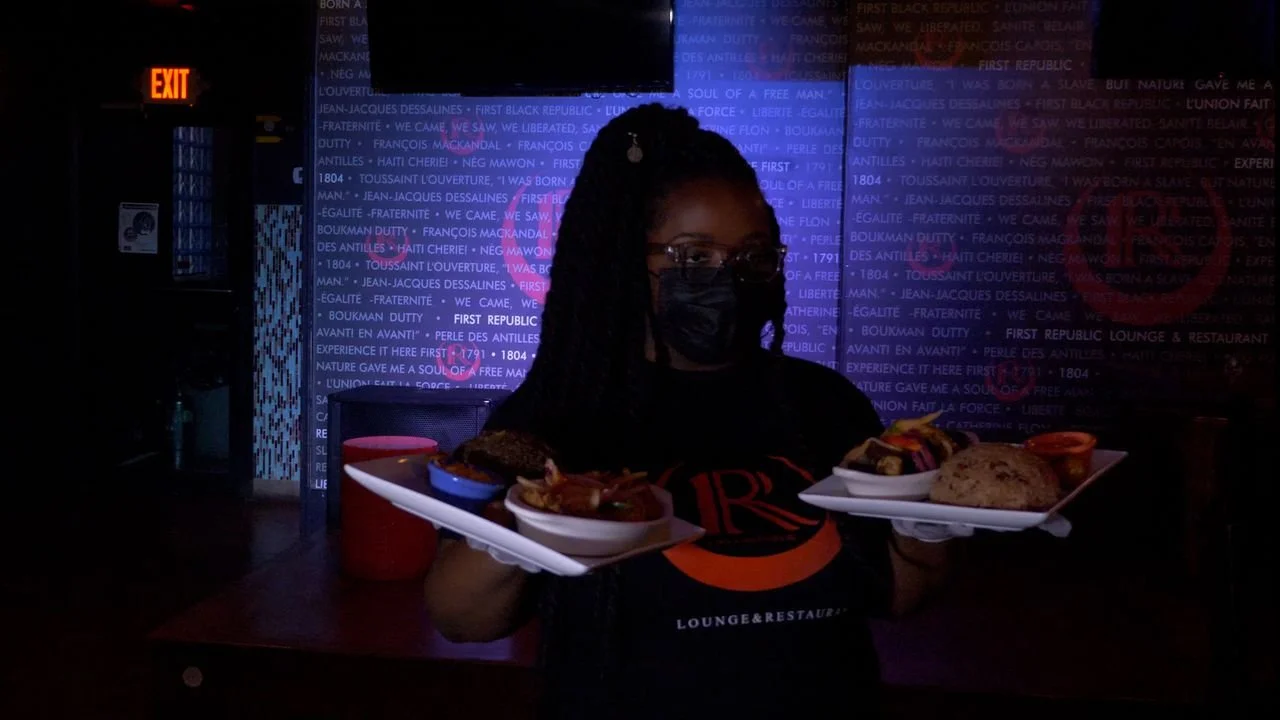
The result: First Republic Restaurant and Lounge, where Haitian-Americans, and anyone familiar with the distinctly West Indian cuisine, can score authentic meals that taste like some “good home-cooking,” the owners said.
On weekends — pre-pandemic — the joint doubled as a small-scale Haitian nightclub, sometimes packed wall-to-wall, as patrons danced to traditional konpa music or American hip-hop. Some evenings, it played host to comedy shows and open mic nights, akin to the atmosphere on an episode of “Def Comedy Jam.”
But First Republic Lounge is as much a deliberate statement as it is a vibe. Haiti is a country with a rich history, full of resilience.
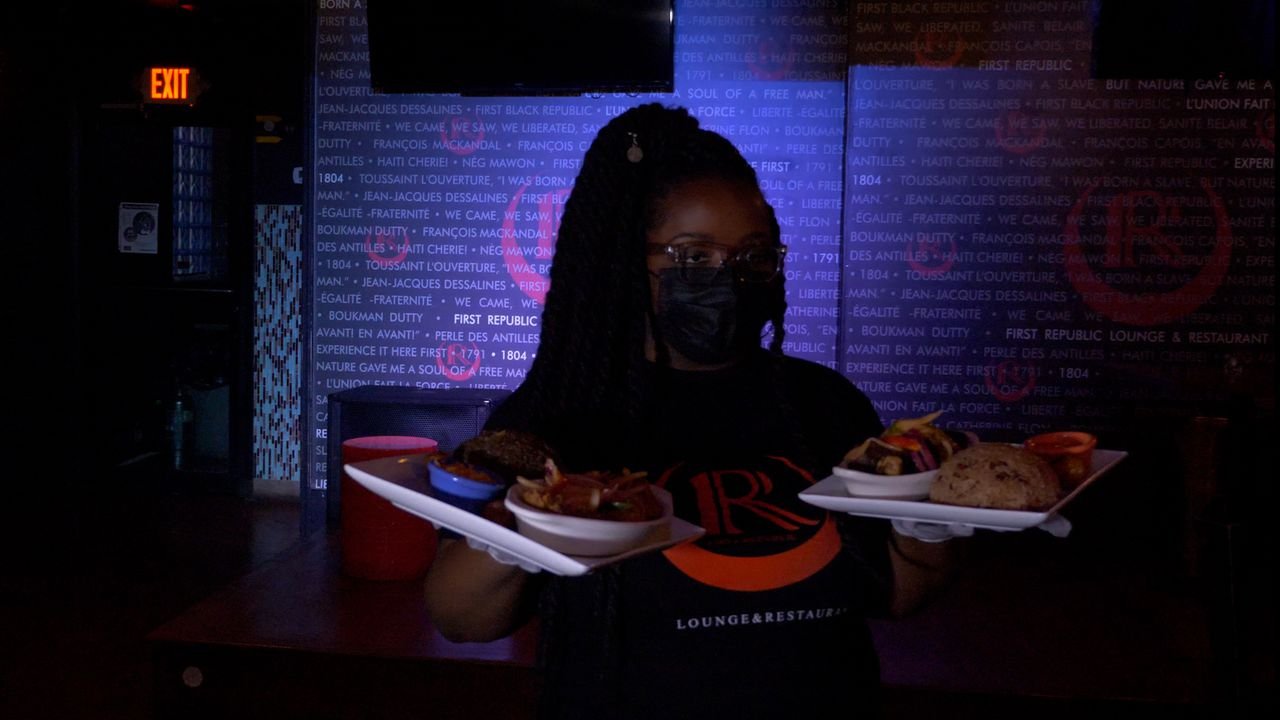
The establishment’s moniker is a direct reference to the Haitian Revolution, lasting from 1791 to 1804. It’s a moment in history which defined its fighting spirit. The former French colony became the first country in the Americas to be founded by formerly enslaved people.
Paintings by Haitian artist Kervin Andre trace the walls of this dimly-lit spot, giving off the feeling of dining in an art gallery. Each composition depicts the story of Haitian independence. Names of Haitian revolutionaries and some of their famous quotes are printed on a wall next to the restaurant’s stage.Keep up with the latest stories on race, diversity and inclusion in New Jersey. Sign up with your email:
The culture is served on a platter every day, each time someone orders black mushroom rice, creole shrimp or tasso kabrit (fried goat), along with a host of other staples found across the island.
Some dishes have historically symbolic origins, like the popular soup joumou (pumpkin soup). For Haitians around the globe, it’s part of an important New Year’s Day tradition.
“When we were enslaved...we were not allowed to drink it,” co-owner Donald Dulorie told NJ Advance Media. “We’d make it for the master, for them to drink, but we were not allowed to even touch it. After we got our freedom, our independence, the first thing we did is make it for ourselves. That’s the reason (for the New Year’s custom).”
It’s one that resonates with everyone who works at First Republic. Each of the restaurant’s owners, a group of five friends who met at Kean University in Union, hails from Haiti or is of Haitian descent.
“We always want to showcase the culture in a way that people have never seen before...or to inspire the younger generation of Haitian descent (to show) that they, themselves, could own an establishment,” said co-owner Colomb Thomas-Petit.


The restaurant’s mission extends far beyond the walls of its brick-and-mortar edifice, beyond New Jersey state lines and even beyond U.S. borders. The idea for the establishment was born out of a genuine desire to help Haiti rebuild after a 2010 earthquake that devastated the island, and killed nearly 250,000 people.
“One of the things we were wondering was how to really help Haiti. And how to rejuvenate Haiti’s image and culture,” said one founder and owner, Stanley Neron. “We wanted to showcase it and put it on a silver platter.”
The proprietors also formed NJ 4 Haiti, a partnership with United Way of Greater Union County. Through the organization, some of First Republic’s proceeds go toward an annual service trip to the partners’ homeland — flanked by doctors, engineers, mental health specialists and social services professionals, according to its website.
“We’ve been in Haiti now for the past 10 years, working on water purification, working on mobile clinics, supporting education, supporting schools, and orphanages, and making sure that there’s hope,” Neron said.
The trip can be a grounding experience, the owners said.
“It’s a wake up call in terms of the needs that are in demand in Haiti. The things we all take for granted here, people would die to have,” said Thomas-Petit. “When we do go, what we see is how resilient people are in Haiti.”

In Elizabeth, First Republic has become a Midtown pillar and a vital cog in the machine for economic development in the Garden State’s fourth most populous city, according to officials.
“It’s more than a restaurant. It’s a place where art meets culture,” said Jennifer Costa, President and CEO of the Greater Elizabeth Chamber of Commerce.
Costa called First Republic Restaurant and Lounge a “cornerstone” in the community. The business has stepped up to help first responders during the coronavirus pandemic and hosted a socially-distanced Juneteenth event earlier this year. First Republic is active on social media promoting events at the location and causes around town.
“It’s all in their programming and their approach. There hasn’t been a time I haven’t picked up the phone...calling them to do a collaborative partnership, or (something) innovative,” Costa said.
“They really are a community leader.”
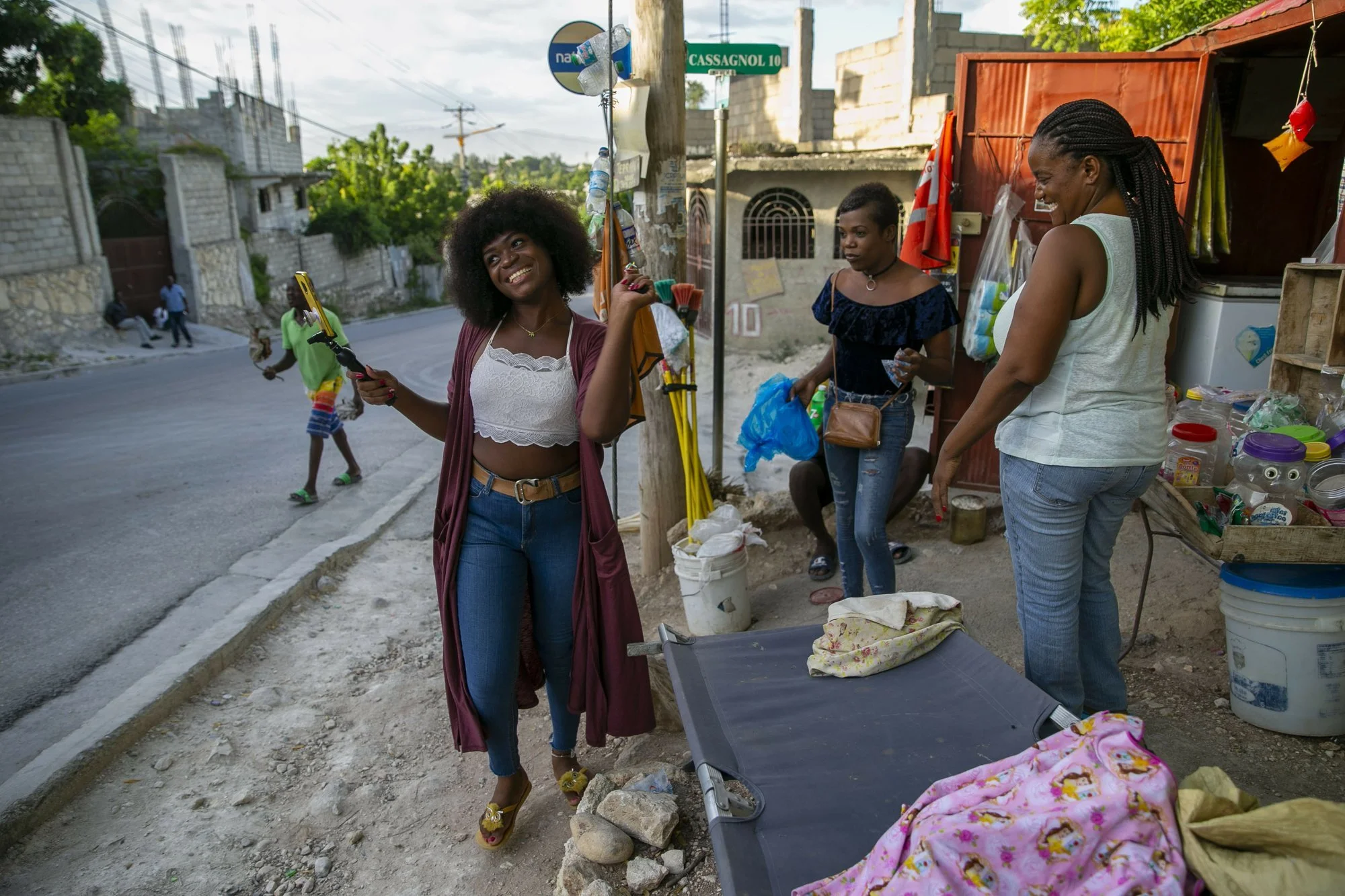
Haitian center a refuge for transgender people
PORT-AU-PRINCE, Haiti (AP) — Prejudice and discrimination against transgender people is common in Haiti, but at least one organization is providing a haven where they can feel welcome.
The Kay Trans Haiti center in the capital, Port-au-Prince, provides lodging and care for up to 10 transgender people. Funded by a Spanish healthcare company and the United Nations Development Program, Kay Trans Haiti is open to transgender people who have been victims of verbal or physical abuse. It provides services including a psychologist free of charge, and allows residents to stay for up to a year.

Transgender Laurent Voltus braids the hair of her roommate Vlajimy Cesar as they sit on the porch of the Kay Trans Haiti center where they live, in Port-au-Prince, Haiti, Saturday, Aug. 15, 2020. (AP Photo/Dieu Nalio Chery)
Once people graduate from the center, the program pays their rent for up to a year, after which they must become self-sufficient.
Residents say the neighborhood surrounding the center has gradually become more accepting of them, creating a safe island in a city where they can often feel vulnerable and subject to abuse at any moment.
Haiti’s LGBT community continues to experience social stigma. Thousands of people in July marched against gay and transgender rights in a rally organized by some churches demanding that President Jovenel Moise rescind a decree that rewrites the 185-year-old penal code recognizing same-sex unions and tacitly allowing homosexuality.
In 2016, an LGBT cultural festival in Port-au-Prince was canceled after organizers received threats and a local official, calling it a violation of moral values, sought to ban it.
In 2017, Haiti’s Senate passed two bills targeting LGBT Haitians. One would formalize a ban on same-sex marriage, and prohibit public demonstrations in favor of LGBT rights.
Residents of the Kay Trans center can bring their partners there, go out to clubs, and shop without fear of mistreatment from neighborhood shopkeepers, who have become increasing friendly and welcoming.
One of the residents, Semi Kaefra Alisha Fermond, 24, said she had a traumatic childhood because neighbors didn’t want her to play with their children.
“I am proud of myself now because I can wear women’s clothes and go everywhere,” she said. ‘’At my mother’s home I can’t be like that.’’


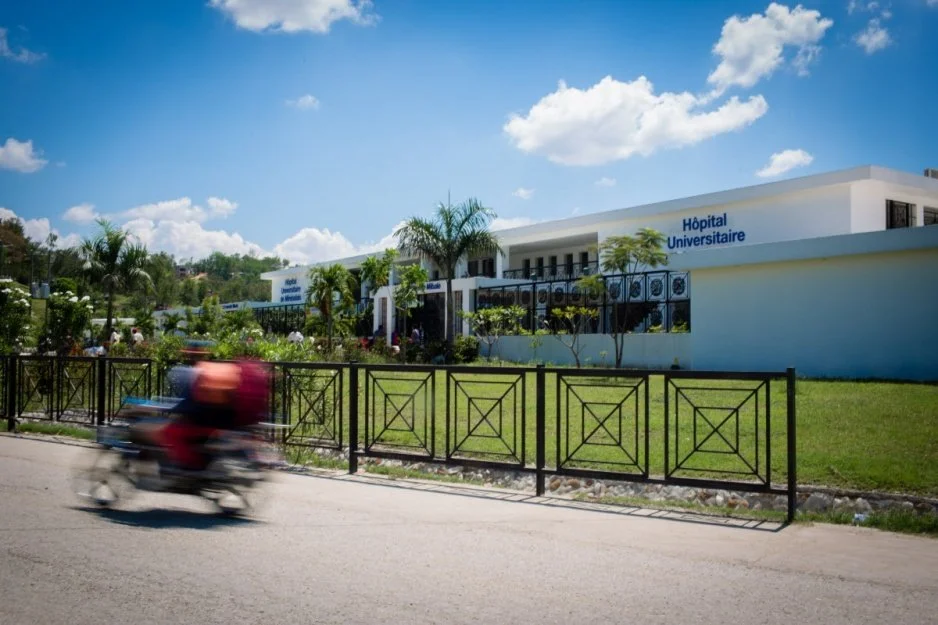
Celebrating Game-Changing Accomplishments at University Hospital in Haiti
Nearly seven years have passed since University Hospital in Mirebalais opened its doors and began transforming health care for more than one million people across Haiti's Central Plateau. Since March 2013, thousands of patients have had access to specialized care provided by clinicians working with Zanmi Lasante, as Partners In Health is known locally.
University Hospital has also been home to a growing medical education program, which has graduated 123 residents from a variety of specialties, including emergency medicine, surgery, and pediatrics, to add to the growing health care workforce in Haiti.
For a deeper dive into University Hospital's many accomplishments, check out the below image, a bird’s eye view of the campus. Hover over various sections to learn more about how hospital staff save lives every day by providing high-quality care to all patients, regardless of their income.

A Safe Haven for Mothers and Babies
When University Hospital opened in 2013, staff frequently saw full-term pregnant women sleeping overnight on cement sidewalks waiting for labor to begin. Many of them lived far from care and wanted to be near the hospital as their due date approached. Mothers of babies in the neonatal intensive care unit also slept outside to be available for feedings. These everyday scenes were a testament to the mothers’ determination to receive high-quality care for themselves and their newborns. They also were the inspiration for Kay Manmito, the maternal waiting home PIH built on the grounds of University Hospital.
Kay Manmito, or “Mother’s Home” in Haitian Creole, hosts women with complicated pregnancies and mothers of premature and NICU infants, guaranteeing them a facility-based birth and providing them with free prenatal care, meals, psychosocial support, and health education. In 2019, Kay Manmito housed 378 women so that they could receive the lifesaving, dignified care they needed, from blood pressure monitoring to C-sections. These patients were among the 15 women, on average, who delivered each day in the neighboring hospital’s maternity ward. For expectant mothers like Natacha Jean Paul, whose risky pregnancy brought her to the facility, “the care found here is priceless.”
Training Haiti’s Next Generation of Clinicians
Brain drain has long stymied Haiti’s health care system. Doctors and nurses have historically had few options for specialized training within the country, and 80 percent of those who do train in Haiti leave within five years of graduation to practice abroad. The few clinicians with specialized training who remain in Haiti typically work in the capital of Port-au-Prince, far from where most patients—particularly the rural poor—can access care.
Medical education is integral to University Hospital, which was built as a teaching facility where Haitian clinicians could train in advanced specialties. Since opening, the hospital has begun offering residency programs in pediatrics, surgery, obstetrics and gynecology, neurology, nurse anesthesiology, and family, internal, and emergency medicine. To date, 123 clinicians have graduated from these programs, including the family medicine residency at PIH-supported St. Nicholas Hospital in St. Marc. Nearly 98 percent have chosen to work in Haiti and 60 percent with PIH-supported facilities, strengthening local health systems and caring for the most vulnerable patients.
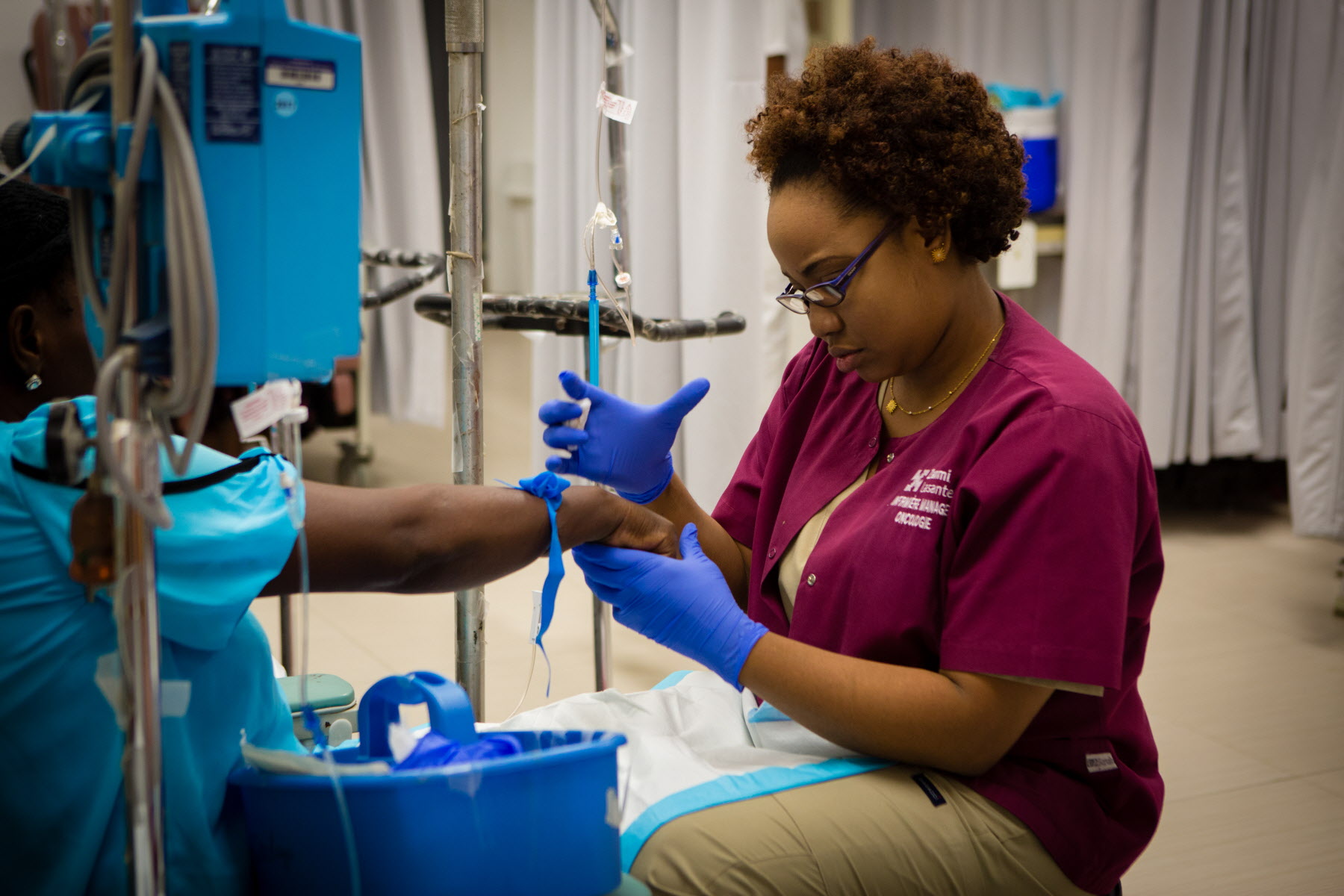
Cancer Care for All
Cancer affects people around the world proportionately, yet access to treatment is disproportionate, as lifesaving chemotherapy and surgeries are often unavailable or inaccessible in poor countries. University Hospital’s oncology department is changing this reality. There, patients from across Haiti receive the diagnoses, specialized care, and psychosocial support they need to survive.
Last year, University Hospital provided cancer treatment to 652 patients, the majority of them women with breast cancer. Cita Cherie* is one such patient: She has been receiving palliative chemotherapy for an advanced stage of breast cancer since the hospital opened. “If it were not for the Mirebalais hospital, I would not be alive today,” Cherie says. “I get all my medication for free, and when I come to the hospital, the doctors take really good care of me. They welcome me and they really value me.”
*Name has been changed at patient’s request.
A Lifesaving Laboratory
The Stephen Robert and Pilar Crespi Robert Regional Reference Laboratory, which PIH opened in 2016 across from University Hospital, has transformed health care for more than 1 million people. The 15,800-square-foot facility contains a clinical lab, a pathology lab, and Biosafety Level 2 and 3 laboratories, allowing staff to quickly and confidently diagnose and monitor infectious diseases and noncommunicable diseases like cancer. Highly trained technicians use advanced tools to improve the quality and timeliness of diagnostic services, meaning more patients receive better care in less time.
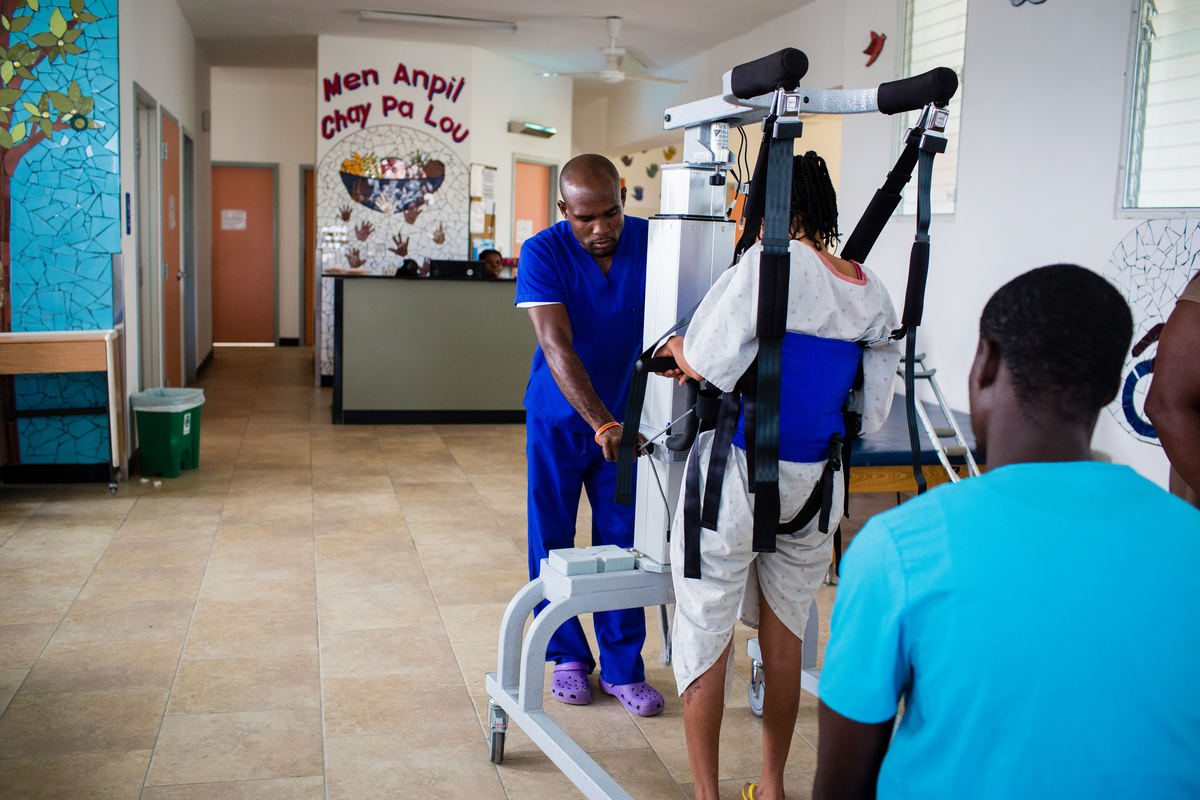
Rehab for the Body, Mind, and Spirit
The Center of Excellence in Rehab and Education is the first public facility of its kind in Haiti. Here, patients from all walks of life come for outpatient physical therapy sessions, and a select few remain for extended stays to recover from trauma. They are stroke survivors and amputees, accident victims and people living with various forms of disability. They come for physical transformation, and often leave with a mental and emotional lift as well.
Staff and patients interact in one of the most pleasant spaces on the University Hospital campus. The L-shaped facility fills with natural light and bright tile mosaics decorate the walls, some with Haitian proverbs worked into the design. One, appropriately, says: “Piti pitizwazo fè nich li,” or “Little by little the bird builds its nest.”
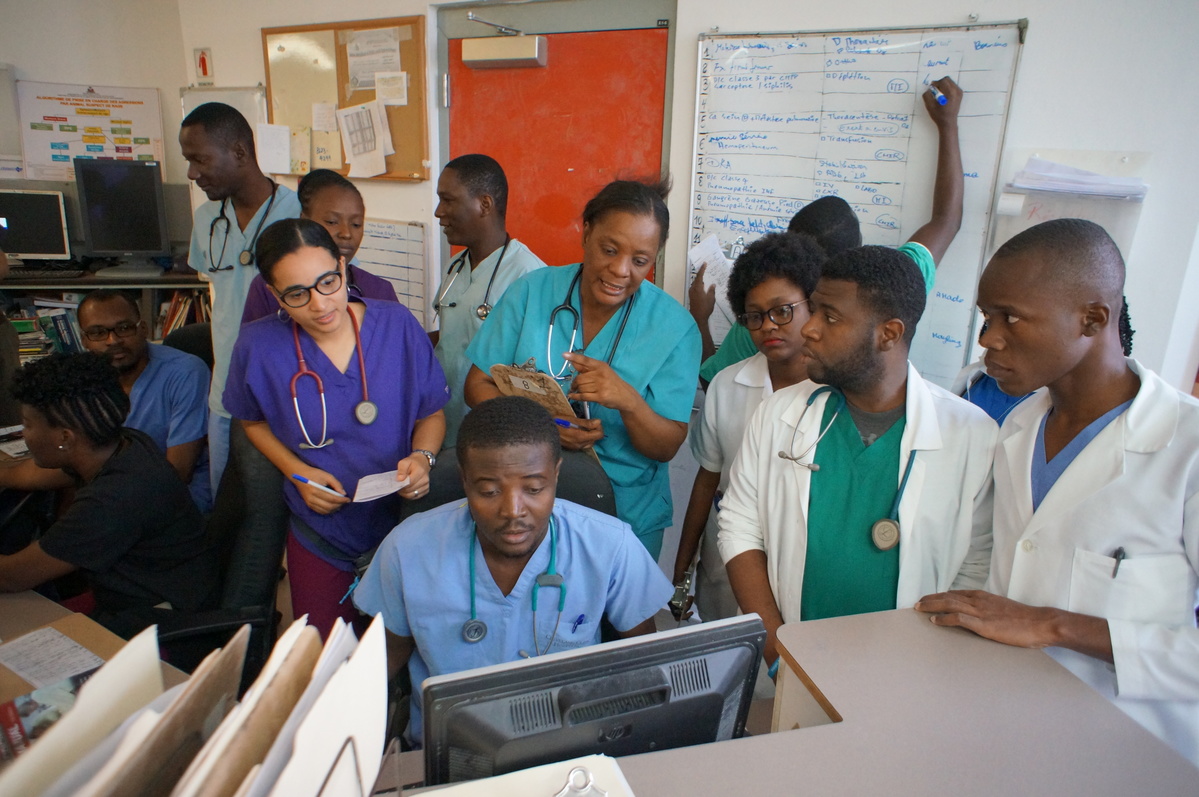
A Hub of Activity
University Hospital’s emergency department buzzes with activity. The suite of rooms rarely has an opening in its 16 beds, and two rows of chairs regularly fill with awaiting patients. Renovations are currently underway to expand the space to 36 beds and add on bathroom and shower facilities for patients on longer stays.
There are the typical emergencies, from broken bones and lacerations to heart attacks and motorcycle accidents. But there are just as many patients who come following acute episodes spurred from chronic illnesses, such as diabetes and heart failure.
The emergency department is often the first stop for University Hospital patients, who come from across the country at all times of day. They are greeted by seasoned clinicians and medical residents on rotation through the ward. So far, 16 emergency medicine residents have graduated from the program since its launch in 2013.
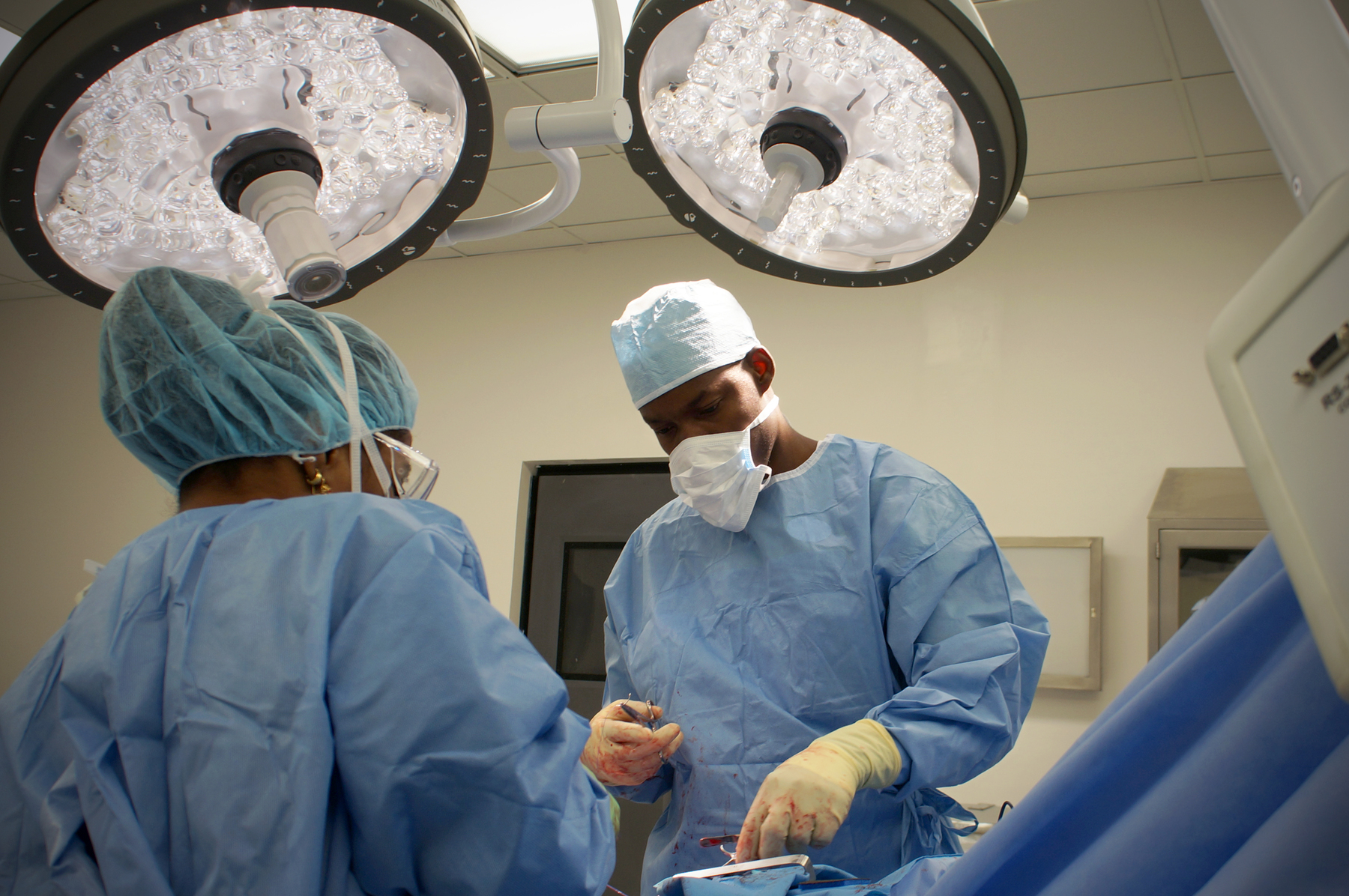
A Cut Above the Rest
University Hospital is home to six state-of-the-art operating rooms, tucked away in the heart of the facility. In 2018 alone, surgeons performed 1,666 lifesaving cesarean sections and more than 600 other women's health-related procedures, such as hysterectomies.
The operating theater hosts routine surgeries, such as appendectomies and the removal of tumors. It has also hosted teams of international surgeons who, in collaboration with PIH clinicians, have conducted cleft palate repairs and—most impressive of all—the separation of conjoined twins.
So far, 19 surgical residents have entered University Hospital’s medical education program, six of whom have graduated so far.
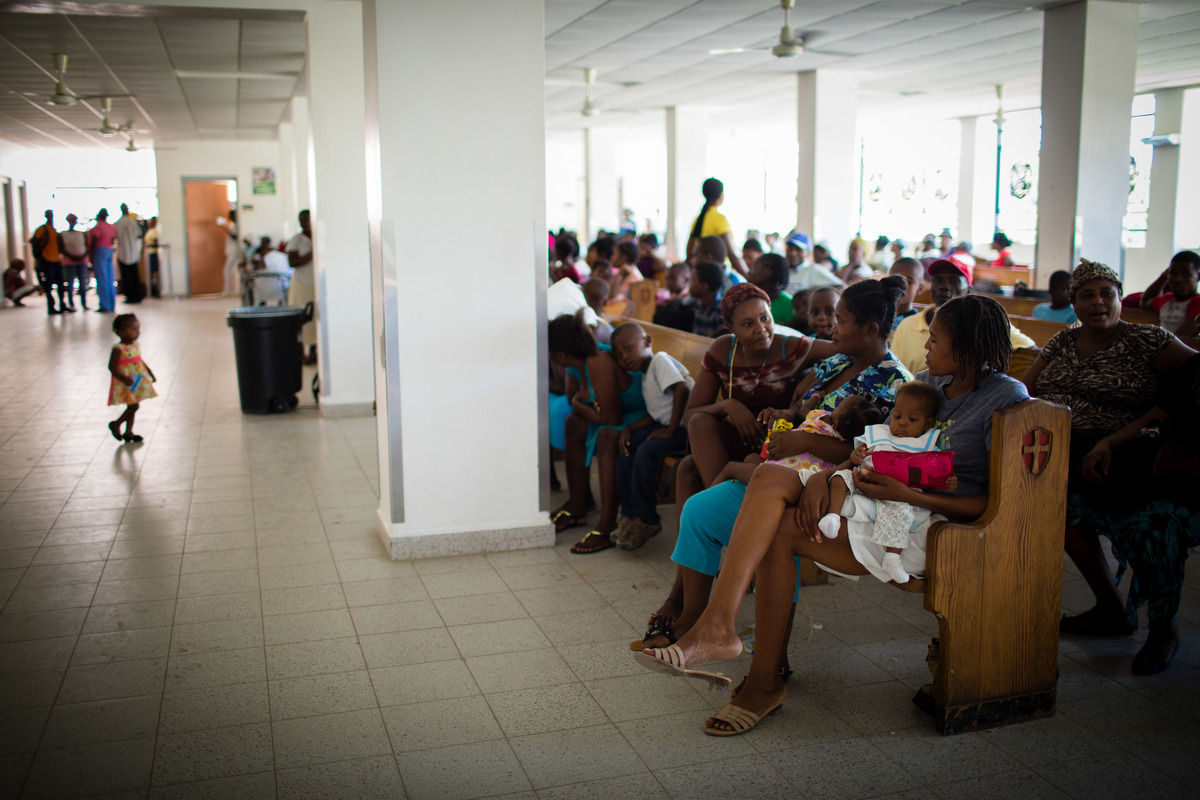
Always a Full House
In the pre-dawn hours, dozens of patients begin arriving at University Hospital’s main entrance to await their turn for high-quality care, at little or no cost. Last year, clinicians conducted nearly 182,290 outpatient visits and admitted close to 4,320 patients, many of whom had traveled hours to be seen by the facility’s top-notch doctors and nurses.
Once patients have registered and had their vitals taken, they sit in one of several waiting rooms for their name to be called. They come for consultations with maternal and mental health, dental services and radiology, oncology and chronic diseases. Those who are admitted may end up in a number of departments, such as labor and delivery, pediatrics, or isolation—should they be diagnosed with an infectious disease, such as multidrug-resistant tuberculosis.
Regardless of why they come, they will receive care within specialties that would otherwise be out of reach for the rural poor across Haiti.
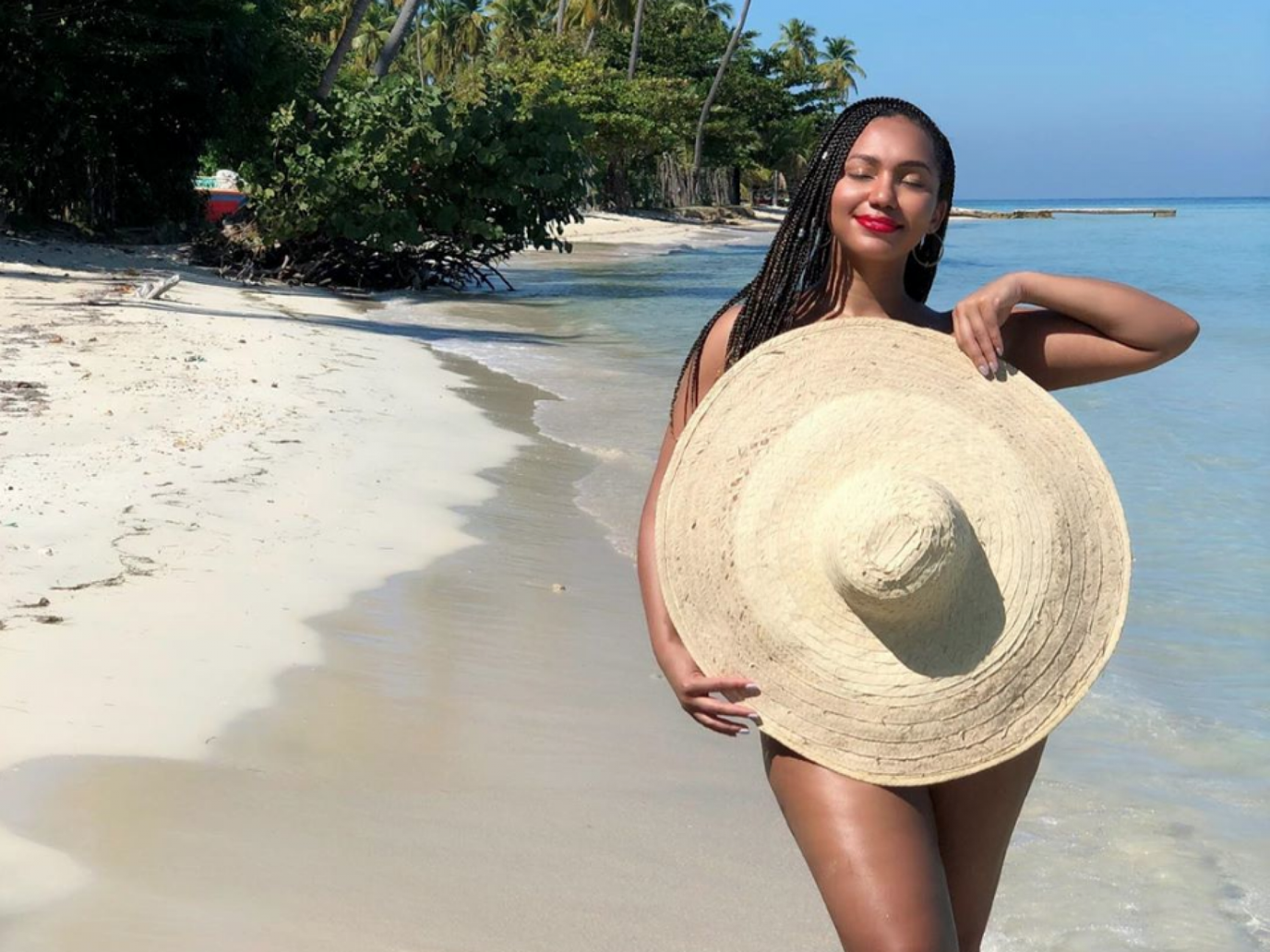
Black Travel Vibes: Soak Up The Sun And Culture Of Haiti
Contrary to popular belief, there’s more to the island of Haiti than its well-documented struggles. Tranquil beaches, roaring waterfalls, and breathtaking landscapes are just some of the beauty features that many overlook when it comes to the Caribbean gem.
Add to that a rich history and culture that dates all the way back to January 1, 1804 when Jean-Jacques Dessalines proclaimed the island of Saint-Domingue free and independent from French rule following a successful revolution and created the world’s first free Black republic, and Haiti becomes a destination that should be at the top of everyone’s travel wish list.
For Jamaican Brooklyn girl and London ex-pat Rondette Amoy (@whatdettedoes) visiting Haiti with a close friend opened her eyes to a place she didn’t truly know and couldn’t wait to soak up. Check out a few of Rondette’s photos and take notes from our exclusive guide to discover why Haiti is more than just your average tropical getaway.
01Welcome to HaitiLocated in the Caribbean, the island nation of Haiti is full of natural beauty that will rival any of the other nearby islands. Haiti remains a relatively budget-friendly island getaway (though daily transportation can add up) with 1 Haitian Gourde equaling less than one U.S. dollar. Visit from November through March for the best weather.
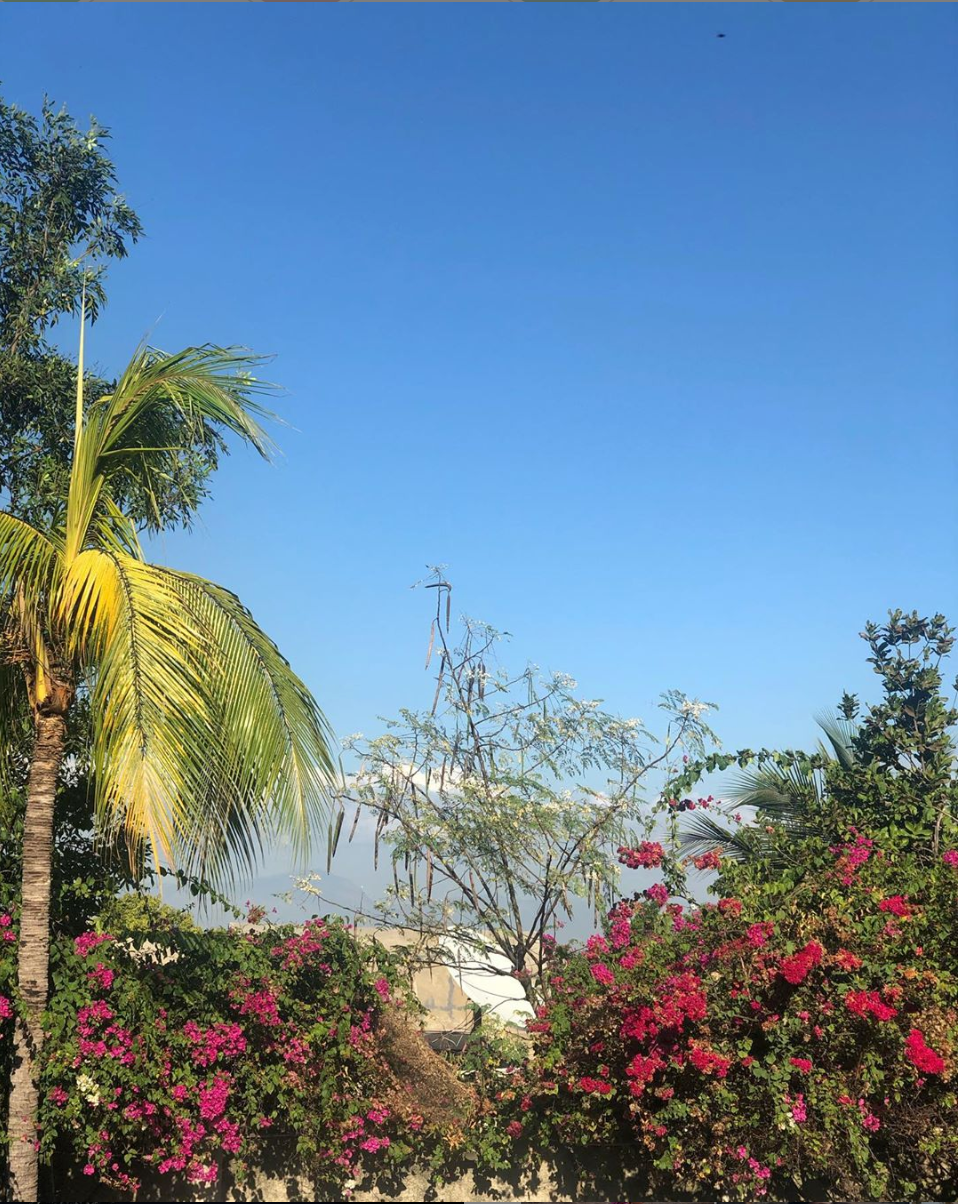
PHOTO CREDIT: @WHATDETTEDOES02Local VibesTypically big brand hotels can come across as cookie-cutter, however, at the Marriott Port-au-Prince, local businesses like Ayiti Natives bath products fill the rooms and Haitian artists such as Peter Satyr Jacmel line the walls to create a unique vibe.
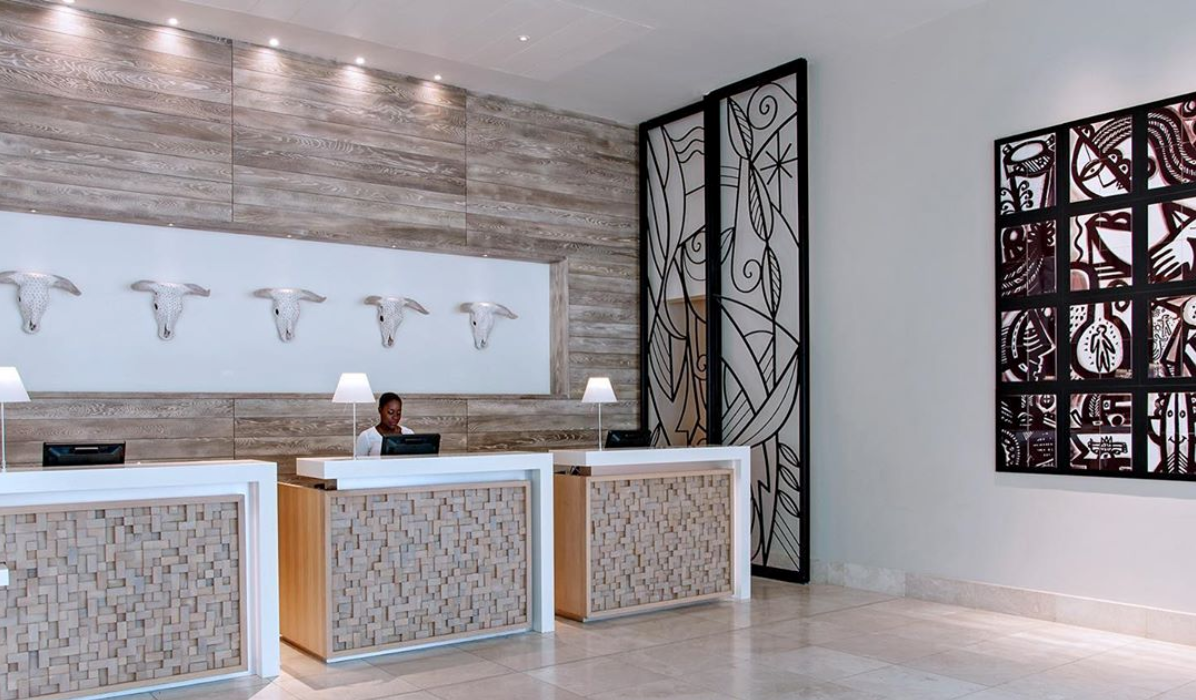
PHOTO CREDIT: MARRIOTT PORT AU PRINCE03Unique FlavorsIf you thought that the food throughout the Caribbean is all the same - you thought wrong! One of the things that makes Haiti unique is its flavorful cuisine. Don't leave without treating your tastebuds to local eats like griot and kabice.
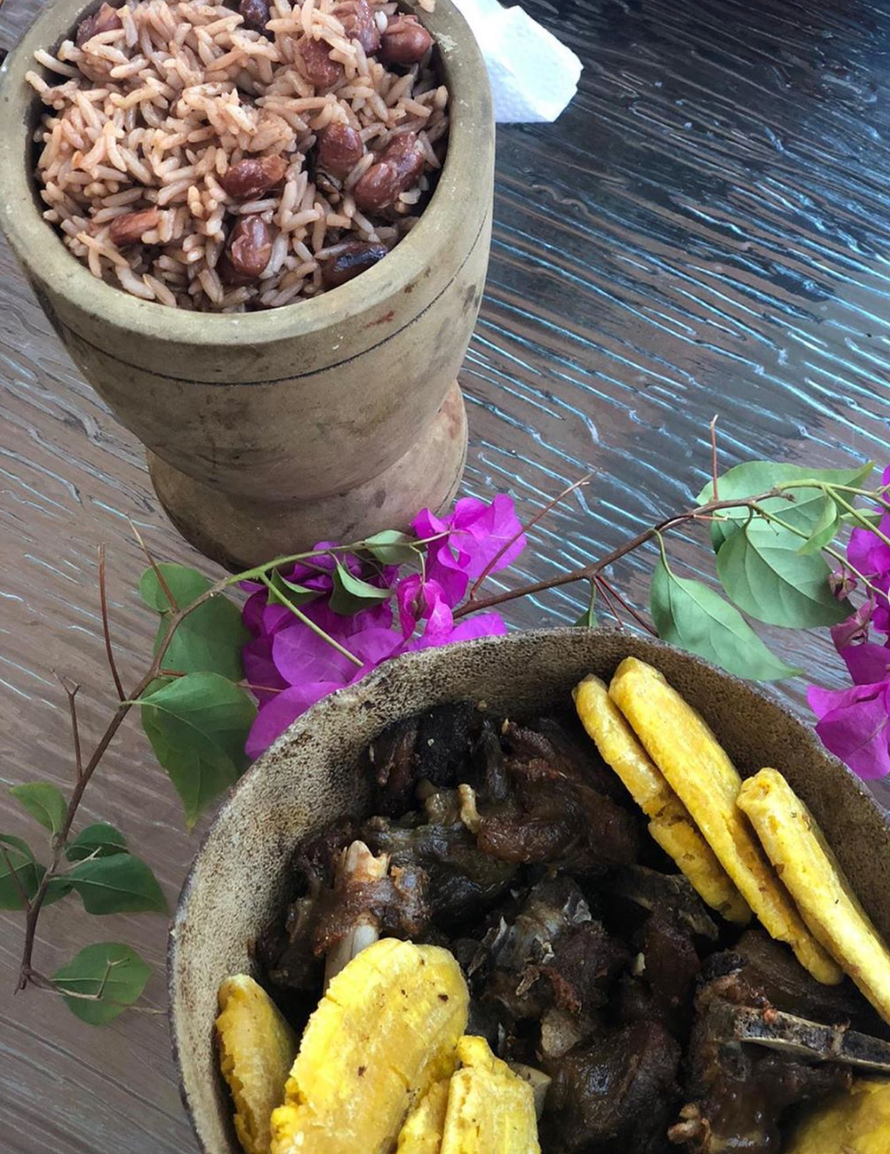
04Independence DayA proud symbol of the world's first Black republic, Citadelle Laferrière is a large mountaintop fortress that played a significant role in Haiti's fight for freedom. It is a must-see on any visit to the island.
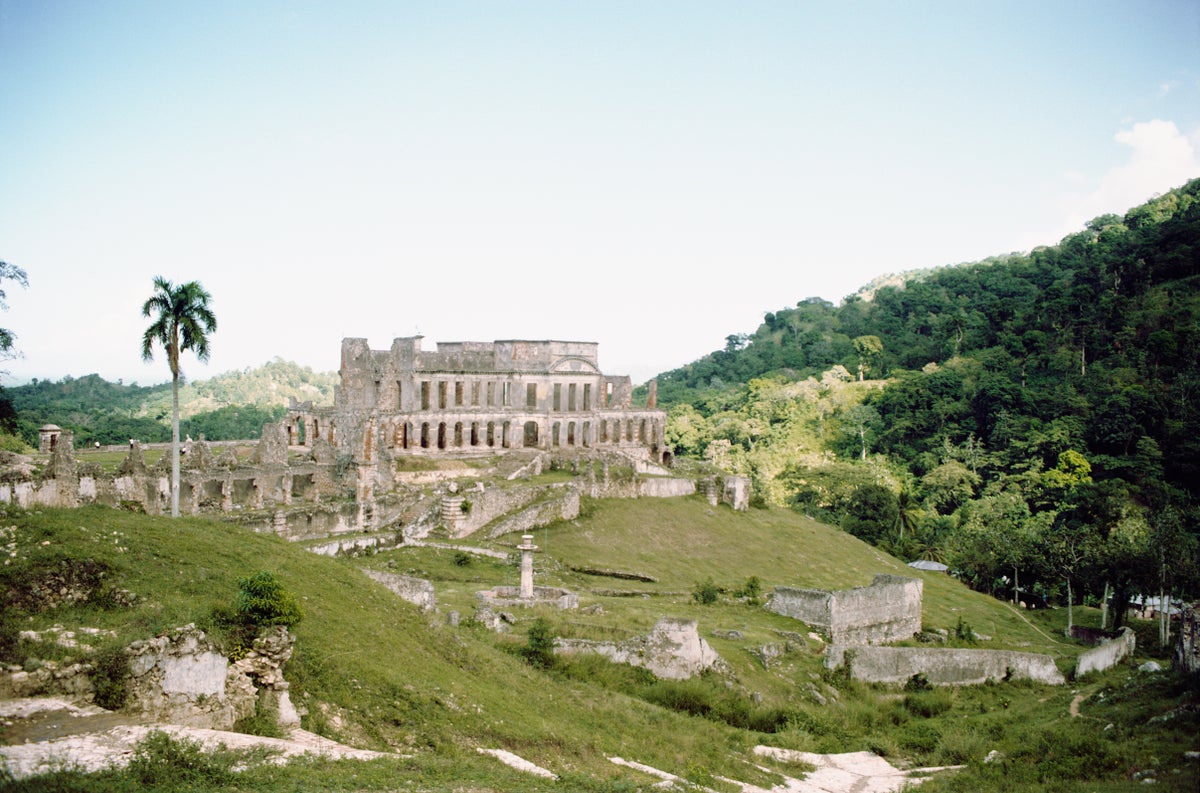
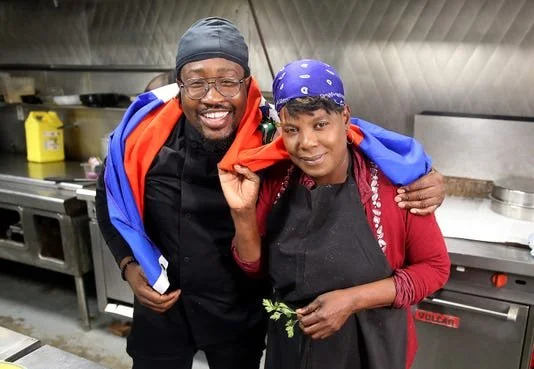
Rooted in history: The Haitian influence on New Orleans cuisine
Ricardo Jean-Baptiste was born in Haiti. In the United States, he became a chef. He moved to New Orleans in 2015 for a job at a large hotel that caters to tourists and conventioneers.
“When I came here the first day, I’m almost crying because everything looks similar,” Jean-Baptiste said. “It was like memories, memories running through my head.”
The shotgun houses, those narrow blocks that form many New Orleans neighborhoods, were just like houses in Haiti, down to the exact dimensions. The bright colors on buildings edged with Victorian frills were reminiscent of the vivid hues that decorate Caribbean homes. The second line parades through New Orleans streets were like the rara. And the food of New Orleans took Jean-Baptiste back to his childhood in Haiti.
“The gumbo, so flavorful. Reminds me of home,” he said. “We do something similar to gumbo, except we don’t use roux.”
Before he first ate in the city, Jean-Baptiste was already familiar with the taste of New Orleans’ Monday staple of red beans and rice, the starchy but bland mirlitons, also called chayotes, and the many ways Louisianans cook okra (except for pickled okra, that was new for him). Each dish had an analog in his native Haiti.
The city of New Orleans, citing the latest census data, puts the local Haitian population at 1,500. Members of that community, however, think it might be as large as 6,000 or 7,000, having grown since the massive earthquake in 2010 that devastated Haiti.
Since New Orleans was founded three centuries ago many people have added layers to its culture. But the wave of immigrants at the turn of the 19th century, fleeing the revolution that created Haiti, transformed New Orleans from a minor outpost to a major city. That influence has not always been recognized.
Those refugees doubled New Orleans’ population. They found a place where French was spoken, and as Americans poured in after the Louisiana Purchase in 1803, they bolstered the city’s French identity. They came to a land that, like the colony they left, had free people of color. In the United States, they also found a place, like Haiti before its revolution, where enslaved blacks still worked the land.
They brought their experience and skills farming lucrative sugarcane to Louisiana and “helped reduce the risk of failure in a nascent industry that required large capital outlays and production on a massive scale,” according to Alfred N. Hunt’s “Haiti’s Influence on Antebellum America: Slumbering Volcano in the Caribbean.” Here, white people and free black people from the colony the French called Saint-Dominique succeeded as bakers, shop owners, musicians, cabinet makers and engineers. They added sidewalks and installed streetlights in New Orleans. They founded newspapers, opened schools and created theaters.
The flavors they introduced to New Orleans are harder to trace than their businesses that left behind buildings and logs of taxes paid and profits made. And cooking, in the time before global transportation, was forced to adapt to different ingredients when the cooks moved to new lands. Two centuries later, though, the familiar flavors that Jean-Baptiste and other recent Haitian immigrants taste in New Orleans prove the depth of that influence.
Chef Donald Link, who grew up in Cajun Country and runs the celebrated New Orleans restaurants Herbsaint, Cochon, Gianna and Pêche Seafood Grill, noticed the same culinary kinship. The more he traveled across the Caribbean, the more he found “mirror dishes” for what he knew from Louisiana and the South.
"In looking at the history of this food and the Caribbean, this food really exists solely in the Caribbean for 200, 300 years before it ever shows its face in the United States of America," Link said.
Stewed beans. Collard greens. Thick stews like gumbo. Rice dishes that looked like the ancestor of Louisiana's jambalaya.
"That's the one thing I can say throughout the Caribbean with compared to here," he said, "is the salt level and the heat level are almost identical between Creole, Cajun, soul food and Southern food."
The arrival of the refugees from Saint-Domingue kept those flavors strong at the moment when Americans brought blander palates to Louisiana.
"When we talk about the influence of the islands in general, especially Haiti, we cannot help but think that they've formed the cooking styles of the Africans that eventually made their way into the kitchens of New Orleans," said John Folse, chef and culinary historian.
Folse said the "black pot cooking" of Louisiana, where gumbos, gravies and vegetables simmer slowly in cast iron, has its roots in the Caribbean and before that in West Africa.
"Everything we start with, we nearly burn it before we get to the next thing," said Charly Pierre, who runs the Haitian stall Fritai inside New Orleans' St. Roch Market. "We really pull out the flavors."
Pierre, who was born in Massachusetts to parents from Haiti, clearly sees the influence of the island nation in New Orleans, even if that connection at times gets concealed.
"The food and all, it's still here. It's just that people don't know about it," he said. "The history, New Orleans has never allowed us to speak for it. I always think about how come there's no Haitian plaque? Well, because it's a Confederate statue in the place of that."
This summer, Jean-Baptiste partnered with other New Orleanians from Haiti to opened Rendez-Vous Creole on the West Bank, across the Mississippi River from downtown New Orleans. It's the neighborhood where most Haitians now live.
Decorated in a bold patchwork of colorful murals, Rendez-Vous Creole restaurant houses a pool table, DJ booth and a small stage. It's somewhat the unofficial clubhouse for the Haitian-American community. It is also a place to teach New Orleans about a cuisine that may be foreign but not unfamiliar.
Jean-Baptiste wants the city to know about epis, the blend of garlic, peppers and herbs at the foundation of so many Haitian dishes. He wants them to taste conch simmered in Creole sauce, the sharply spicy slaw pikliz, the starchy, smashed plantains called bannan fri and gratine, a mac and cheese he makes with ground beef.
Jean-Baptiste hopes the city will come to crave griot, the chunks of pork washed with lime, braised until tender and then fried crisp. It's the national dish of Haiti, he said. He will serve it at Rendez-Vous Creole on a plate with rice and fried plantains or, in a nod to his new home, on a loaf of soft French bread as a po-boy, the local sandwich of New Orleans. He is building new bridges between the two cuisines.
Rendez-Vous Creole: 3402 Gen. Collins Ave., New Orleans, 954.934.4055
Fritai at St. Roch Market: 2381 St. Claude Ave., New Orleans
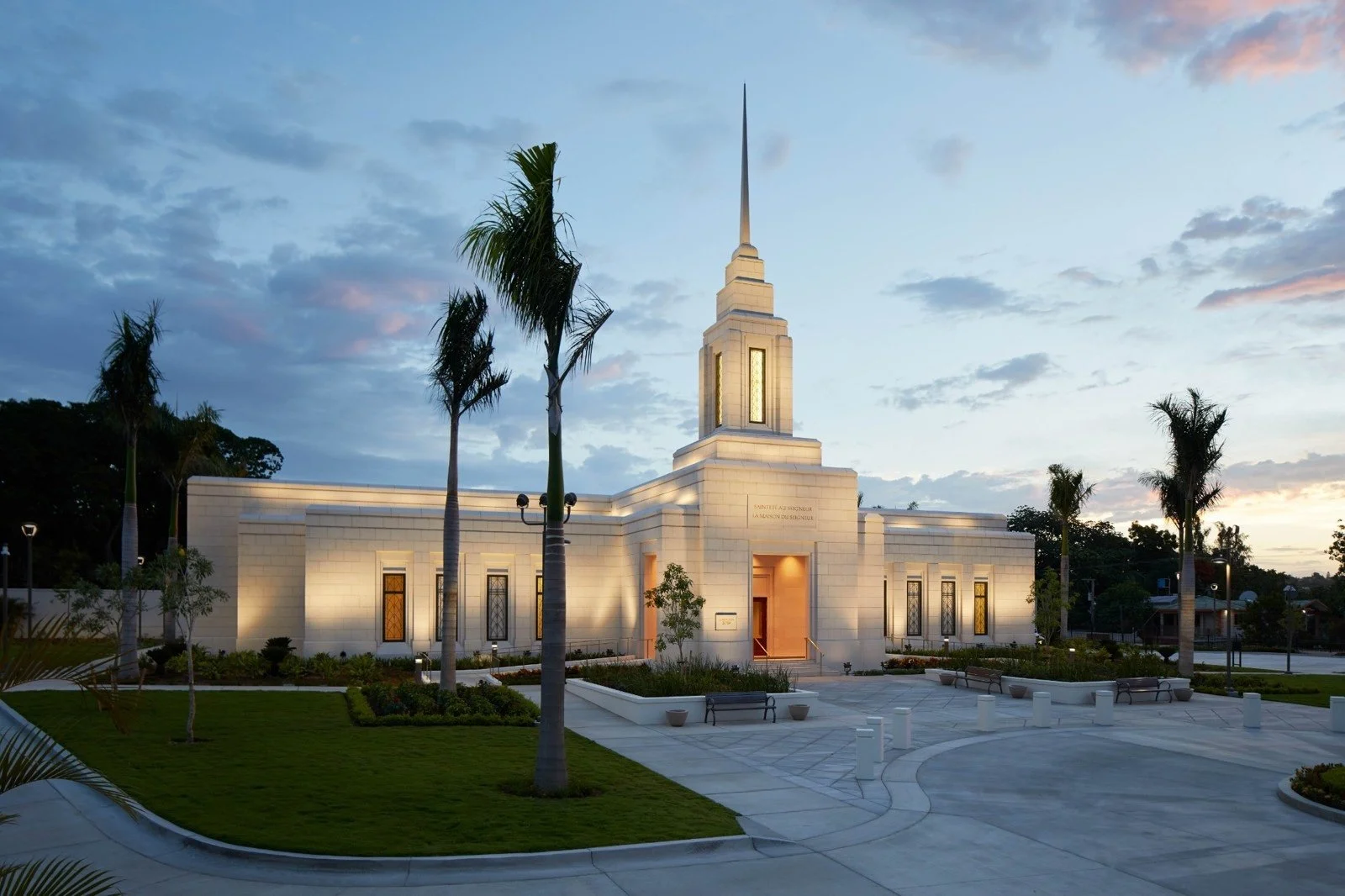
10 years after devastating earthquake, Haitian Latter-day Saints welcome friends to nation's first temple
Unimaginable horror fell upon Haiti in the opening month of 2010 when a massive earthquake claimed hundreds of thousands of lives and displaced legions more.
The disaster prompted a world-wide humanitarian response — including tens of millions of dollars from the Church to help fund food, clean water and other disaster aid efforts.
Almost a decade later, the quake recovery continues. But Haitian Latter-day Saints are celebrating this week as they welcome their friends and neighbors to their nation’s first temple.
The Port-au-Prince Haiti Temple public open house officially begins on Tuesday, Aug. 6 — although a few visitors have already toured the new edifice, surrounded by lush gardens reflective of Caribbean flora.
“I can’t believe my eyes,” said Michael Paquette, a Canadian who was one of the first international missionaries to serve in Haiti in the 1980s. “I used to walk up and down this road outside the temple, Route de Freres. (That) was in the early days of missionary work; now there are (several) stakes here in Port-au-Prince. Now the temple is here.”
The building’s beauty is amazing, he added. “It is very special for the saints in Haiti.”

Counted among the first visitors to the Port-au-Prince temple was a delegation from the U.S. Embassy. They were hosted by Caribbean Area President Elder José Alonso, a General Authority Seventy, and Elder Bien Aimé Huberman, an Area Seventy and chairman of the temple’s organizing committee.
Elder Huberman noted the historic significance of having a temple operating in his homeland.
"The temple is, first and foremost, important because the members will be able to do their sacred ordinances,” he said.
In the past, the high cost of travel and passports prevented many Haitian Latter-day Saints from worshipping regularly inside temples in neighboring Dominican Republic and other nearby nations.
“(Now) we will also be able to go to the temple in our own country with our friends, family and our own people,” he said. “It is a new day for us, a new program. We are very satisfied. Everyone is excited and we are ready now for the open house to begin."
The Port-au-Prince temple is distinctly Haitian.
Turquoise blue and lime green carpets throughout the interior mimic the neighboring sea and the island’s fecund plant life. It’s patterned after an array of local vegetation — including palm leaves, tropical flowers and the hibiscus, Haiti’s national flower, according to a Church-provided facts report.

Palm leaf motifs are found in several areas of the temple such as the celestial room, sealing room, baptistry and foyer. Palm leaves, of course, were used to celebrate Christ’s triumphant entry into Jerusalem.
Temple visitors will also spot hibiscus-inspired wall plaster patterns in the brides’ room.
Artwork adorning the Port-au-Prince temple includes two original works: “Haiti Palm Trees by the Sea” and “Mountains near Port-au-Prince,” both by Russian artist Emin Zulfugarov, the report noted.
The public open house will continue through Saturday, Aug. 17 — except for Sunday, Aug. 11.
A youth devotional in Haiti will be held on the eve of the Sept. 1 dedication of the Port-au-Prince Haiti Temple. The temple will open for ordinances on Sept. 10.
Haiti is home to more than 23,000 Latter-day Saints.
By: Jason Swensen for churchnews.com | August 5, 2019
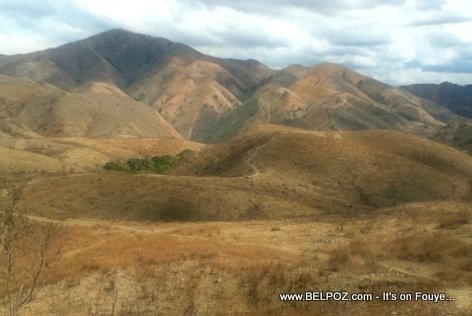
Has Haiti Lost Nearly All of Its Forest? It's Complicated
The cloud forests of Haiti’s Macaya National Park are believed to carry the world’s largest concentration of endemic amphibians. Island ecosystems are hotspots for biodiversity, and historically, Haiti was no different.But a dire new study published Monday in the Proceedings of the National Academy of Sciences claims the Caribbean country has less than 1 percent of its original primary forest left. By around 2035, all that forest is estimated to be gone, leaving Haiti’s wildlife—from endemic orchids to the Mozart’s frog—with no safe place to go.Or so, that’s the story the study tells. Other researchers who’ve spent time in Haiti studying its forests aren’t sold on the methodology or the narrative around the need for untouched forests to support biodiversity.The study authors, who work with the Haiti Audubon Society, Temple University, the U.S. Forest Service, and Oregon State University, expect Haiti to lose up to 83 percent of its species by 2036. By their estimates, the country is in the throes of a mass extinction event.The researchers examined satellite images of the country’s forest cover from 1984 to 2016. In 1988, their analysis showed primary (aka undisturbed) forest made up 4.4 percent of Haiti’s total land cover. By 2016, that number had dipped to 0.32 percent. Only eight mountains in Haiti contain primary forest now, compared with 43 of the island’s 50 mountains in 1988.
The data shows that the secondary growth that’s largely replaced Haiti’s original forestland supports a fraction of the biodiversity. The team checked out the 10 highest mountains firsthand between 2009 and 2015, and they found “significantly more” endemic species and species, in general, in primary forests. When looking at specific sites on these mountains, the average total species richness per site dropped 66 percent without primary forest. For endemics, that number stood at 88 percent.Why has primary forest become nearly non-existent in Haiti? It’s complicated.The nation’s deforestation woes trace back to the 17th century when French colonizers invaded the land and cleared forests for slave plantations, per VICE. Since colonial times, modern agriculture and charcoal production have only exacerbated the loss of primary forest. The major 2010 earthquake didn’t make anything better.While many environmentalists have historically blamed poverty and the people of Haiti people for the loss of trees—in 2016, a meteorologist even made the wild (and false) claim that starving Haitian children eat them—some researchers who have spent time on the ground in Haiti have called claims of dramatic deforestation, including those made by the new study, overblown.Peter Wampler, a geology professor at Grand Valley State University, is one of them. He’s spent time in Haiti since 2007 and has seen firsthand the way community members take care in handling and protecting their trees. He knows that tree cover and biological diversity have decreased in the study period the authors examine, but Wampler also found the methodology “subjective and biased to ensure that Haiti will eventually reach 0 [percent] primary forest cover,” he wrote to Earther in an email.That, in turn, creates a hopeless situation for the people in Haiti who are the ones actually impacted by a loss of biodiversity and trees, he said.“This article’s use of a new forest cover definition, ‘primary forest,’ makes it virtually impossible for Haitians to restore Haiti’s forests,” Wampler said, “as it seems by the definition applied, one cannot restore a ‘primary forest.’”Wampler also pointed out that the study used a very strict definition of forest cover that only included primary growth and areas with 70 percent tree cover—much higher than standards the United Nations uses. Other studies that have used 10 percent as a threshold, for example, peg the country-wide forest cover at 32 percent.Andrew Tarter, an anthropologist who’s studied the relationships people in Haiti have to trees, said in an email to Earther that this strict threshold represents a “conservationist” viewpoint. And he emphasized secondary tropical forest that’s regrown should still support biodiversity.“Thirty years of regrowth in the tropics represent trees of significant stature,” he wrote to Earther. “Even 10 years does.”In response to these criticisms, author S. Blair Hedges, the director of Temple University’s Center for Biodiversity, said the “paper is only about facts (science), which should always be the basis of policy.”No one disagrees that deforestation is a problem in Haiti. That doesn’t make it any less complicated, though, especially in a place wrought with the scars of colonization and slavery. And many would argue hopeless numbers and expiration dates solve nothing. What Haitians need is an opportunity to restore the land they live and depend on every single day.By: Yessenia Funes | Gizmodo | November 1, 2018
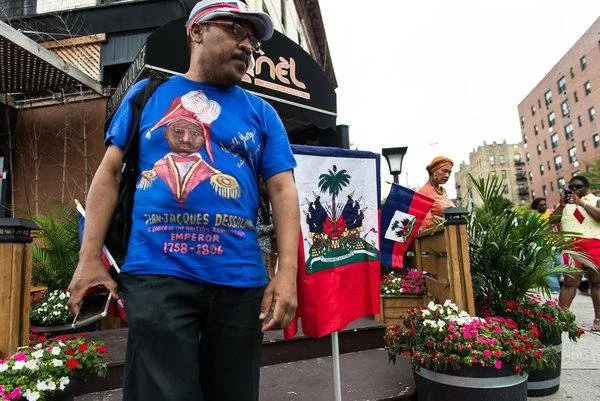
Street Is Renamed in Flatbush, to Joy and Controversy
Stephania Casimir, a first-generation Haitian-American, remembers her parents talking about Jean-Jacques Dessalines, a former slave who became one of Haiti’s founding fathers, but not all of the details.
They came flooding back on Saturday on a street corner in the Flatbush neighborhood of Brooklyn as speakers explained why a stretch of Rogers Avenue was being co-named in honor of Dessalines, who declared Haiti’s independence after helping lead the revolt against France.
“This moment means so much to the Haitian community,” said Ms. Casimir, 26, a social worker. “It shows we are strong and powerful.”
As the paper bag covering the new street sign was removed by Assemblywoman Rodneyse Bichotte, the crowd began singing the Haitian national anthem. Those gathered said the decision, along with the recent ceremonial City Council resolution that designated Flatbush Little Haiti, meant that Haitians’ contributions to New York will not be forgotten.
“These street co-namings are the equivalent of placing your flag in the neighborhood,” said Laurie Cumbo, the City Council majority leader. “We have placed a Haitian flag in this neighborhood today for people here and the future to always know that this is a Haitian community.”
But the naming of Jean-Jacques Dessalines Boulevard — along Rogers Avenue between Farragut Road and Eastern Parkway — and the neighborhood designation were not without complications.
Some felt Little Haiti was redundant because the area had previously been christened Little Caribbean by another group. And the street co-naming was delayed because of Dessalines’s controversial history.
After Haiti’s victory against France, Dessalines became Haiti’s first emperor in 1804. Aware that the French wanted to re-enslave the country, Dessalines called for the slaughter of all remaining white Frenchmen. Thousands of white people were killed in the massacre, historians believe.
Historical figures are being re-evaluated across the United States, with several Southern cities removing Confederate monuments in recent years, and Mayor Bill de Blasio establishing a commission to examine statues in New York. In that climate, the City Council committee that vets street co-namings flagged the Dessalines name as possibly offensive.
“Everything is political,” Councilwoman Inez Barron of Brooklyn said. “This was not something that was done in the usual manner and passed with ease. This was a fight and a struggle.”
After a hearing, more research and behind-the-scenes pressure, the City Council approved the co-naming.
“The Council leadership team moved forward with the street renaming after a review of the issue and engaging with the community,” said Jennifer Fermino, a spokeswoman for Corey Johnson, the City Council speaker.
Ms. Bichotte, the assemblywoman, noted Dessalines’s contributions to world history: He helped Haiti become the second country in the Western Hemisphere to free itself from colonial rule and inspired other nations to pursue freedom. The Constitution that Dessalines created advocated equality and more equal distribution of wealth.
The massacre, supporters say, must be viewed in the context of war and is no different than historical acts that the leaders of other countries committed that would now be considered differently.
“As narrators, we get to define the narrative,” said Ms. Bichotte, the first Haitian-American woman elected to office in New York City. “No longer will the Haitian Revolution be a fluke, a historical accident or a nonevent. No longer will Jean-Jacques Dessalines be disregarded or portrayed merely as a tyrant.”
Not everyone supported honoring Dessalines. Street co-namings should be limited to local people who affected life in New York City, said Seth Barron, associate editor of City Journal and project director of the NYC Initiative at the Manhattan Institute.
“It seems like at a time when we are being careful about who we celebrate and commemorate, the question remains of why him?” Mr. Barron said. “I don’t know why New York City has to name a street for someone who is obscure to most Americans.”
Organizers say they hope the street will help educate the public. Flatbush is a center for Haitian culture in the United States, and Brooklyn has 90,000 Haitians, the third-highest concentration in the country, only after two counties in South Florida, according to an analysis by the Migration Policy Institute, a Washington-based think tank.
But gentrification is changing Little Haiti, which is bounded by Avenue H, Brooklyn Avenue, Parkside Avenue and East 16th Street. It is still full of restaurants and retailers that cater to Haitians, but many Haitian business owners and residents are facing the pressures of rising rent.
In 2000, 30 percent of the country’s Haitian population lived in New York State, many of them in Flatbush. That number fell to 20 percent in 2016.
Little Haiti BK, the group that organized Little Haiti, wants to use the designation to help small businesses remain in the neighborhood, erect a monument and build a cultural center.
The designation means more than ever, speakers said on Saturday, given recent slights by President Trump against Haitians and his decision to end a temporary program that allowed Haitians to live and work in the United States following the devastating 2010 earthquake.
“Our human dignity is under assault,” Representative Yvette Clarke said.
Marie Prosper, 35, a security analyst, saw the street co-naming as a chance to come together in spite of recent political developments.
“This corner is where the history of Haiti and the history of the United States meet,” Ms. Prosper said. “It represents the power of our ancestors and their strength.”
By: Jeffery C. Mays for nytimes.com| August 18, 2018
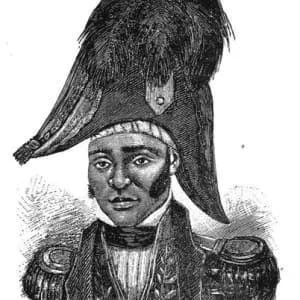
New York City Council Approves Co-Naming Street In Honor Of Former Haitian Leader
NEW YORK, Aug. 9, CMC – New York City Council on Wednesday approved a proposal from Caribbean American Council Member Jumaane D. Williams for the co-naming of a street in Brooklyn in honor of Jean-Jacques Dessalines, the first leader of independent Haiti.Williams – the son of Grenadian immigrants, who represents the 45th Council District in Brooklyn, said a section of Rogers Avenue in Brooklyn will be co-named Jean-Jacques Dessalines Boulevard.He said Jean-Jacques Dessalines Boulevard will span along Rogers Avenue, from Farragut Road to Eastern Parkway, within the Little Haiti Business and Cultural District.Last month, the New York City Council ceremonially designated a section of Flatbush, Brooklyn as “Little Haiti” “in recognition of the profound impact and continued presence of Haitian culture in the area,” said Williams, who is also a candidate for New York State Lieutenant Governor.He said “Jean-Jacques Dessalines Boulevard will be set just a few blocks from Toussaint L’Overture Boulevard,” which is located on Nostrand Avenue between Glenwood Road and Flatbush Avenue in Brooklyn.“The two Haitian leaders are celebrated in Haitian-American culture for their roles in establishing a free and independent Haiti,” Williams said.On May 18, Haitian Flag Day, Williams joined New York State Assembly Member Rodneyse Bichotte, the daughter of Haitian immigrants, and other elected officials and advocates in unveiling a new sign for Toussaint L’Overture Boulevard. They also announced the proposed co-naming for Dessalines.L’Overture and Dessalines are two celebrated leaders of the Haitian Revolution.“Jean-Jacques Dessalines is one of the founding fathers of Haiti, having taken charge of the Haitian Revolution and leading them to victory in defeating the French Napoleon Army in 1804,” the legislation states. “The Haitian Revolution became the first slave revolt in modern history to result in an independent nation.”Williams said Dessalines was declared “Emperor of Haiti” in 1804 and “advocated many progressive policies during his time leading Haiti.”He said Dessalines today “remains a very popular symbol of Haitian nationalism.”Brooklyn is home to the largest percentage of foreign-born Haitian residents in New York State, with more than 40 percent of the foreign-born population residing in Flatbush, Williams said.According to 2015 data by the Migration Policy Institute, Brooklyn had the second highest concentration of Haitians in the United States, with an estimated 156,000 Haitian Americans residing in New York City.“Jean-Jacques Dessalines was a revolutionary who fought for his people and overthrew an oppressive regime who brutally enslaved and persecuted the Haitian people.” Williams said. “This revolutionary spirit, to fight for independence and against oppression, burns bright in Haitian Culture today.“Haiti and its proud people are an intrinsic part of my district, and it is only right to honor that spirit with this co-naming,” he added. “I thank Assembly Member Bichotte for her fierce advocacy on this issue, as well as Little Haiti BK [Brooklyn] and the Haitian community I am proud to represent.”“Jean-Jacques Dessalines is one of the greatest heroes of the modern world,” said Bichotte, who represents the 42nd Assembly District in Brooklyn.“As one of the leaders of the first successful slave rebellion to result in the first Black republic and second country after the United States in the Western Hemisphere, Jean-Jacques Dessalines’ remarkable leadership impacted countries around the world in gaining their independence, and strengthened the United States by leading to the Louisiana Purchase, which doubled its size,” she added.“We are grateful that the City Council has recognized Dessalines’ contributions not only to the Haitian community but to all of New York City and the United States,” Bichotte continued.She said the City Council’s passage of the Jean-Jacques Dessalines Boulevard “will allow the community to proudly acknowledge and remember Jean-Jacques Dessalines’ contributions to Haitian and American history, as well as spark interest in learning about his influence as a leader."By: trinidadexpress.com | August 9, 2018
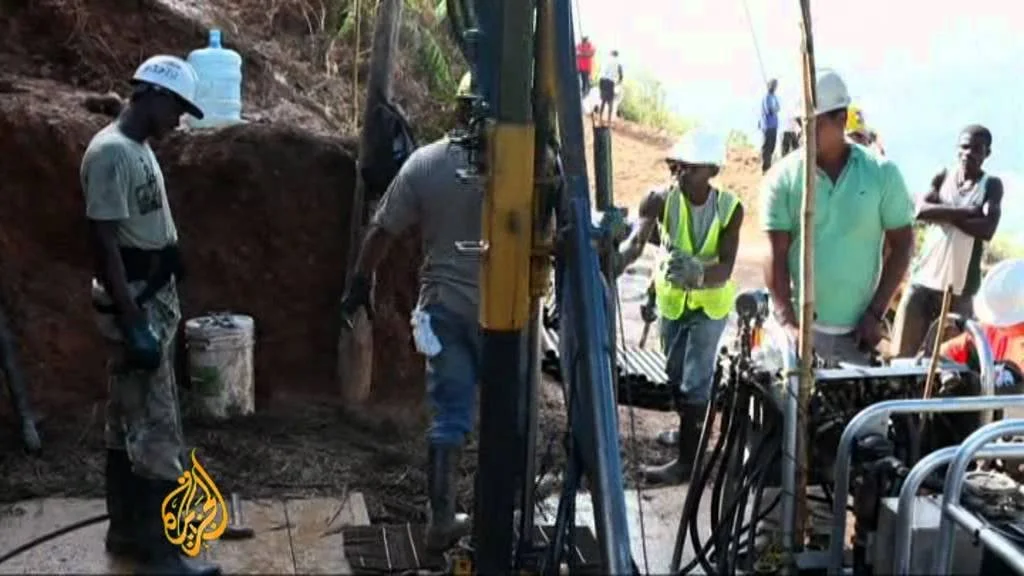
In Haiti, Concern Over Gold Rush
In country still struggling to recover from 2010 earthquake, citizens are hesitant to trust foreign mining companies.

Moscow : A look at the Haitian community in Russia

"Are there Haitians in Moscow? The answer is "yes" since the Haitian community is made up of 54 students, most of them studying at the University of Peoples' Friendship in Moscow. Four of them are enrolled in other universities, still in Moscow.Less than a dozen other Haitians live in Russia. Most are children of former compatriots who lived in the communist era or students who married Russian women. It is even said that one of the first Haitian immigrants, René Théodore (Unified Party of Haitian Communists, PUCH) have children living in Russia.Haitian academics study economics, public relations, international relations, agronomy, computer science, engineering and medicine. With few exceptions, Haitian academics score very well in exams.The biggest difficulty faced by our compatriots is learning the Russian language and adapting to the climate. Before starting regular classes, at least 12 to 18 months are necessary to become familiar with Russian, a difficult language, since even after four years, some can not speak it well.The climate in Russia is hard to bear: summer lasts only 2 months, with temperature drops from 30 ° to 16 ° in the space of a few hours. In winter, temperatures of up to 40 ° are scary, breathing becomes difficult and the cold is very intense.While most of the students are past fellows in Cuba, some have applied as 'contractual' with the help of a Boston-based Association and pay only $ 2,000 to $ 2,500 a year. Next year, some twenty young Haitians under the age of 23 must arrive in Moscow to continue their university studies.Although small, the Haitian community is not isolated, as students live on the same campus of the University of Peoples' Friendship and gather to celebrate special occasions, including Haiti's Independence Day. January 1st, or that of the flag on May 18th and sometimes constitute prayer cells.An association has even been created with a view to bringing the two peoples closer together. Although there is still no diplomatic relations between Russia and Haiti, the President of the "Association of the Haitian Community in Russia" the medical student Fabiola Dalvius, said to work towards the establishment of a Haitian Consulate in Moscow and also hopes that more Haitians, like her, will have the opportunity to study in Russia.When one considers the quality of the State University of Haiti which does not even have a real campus and the exorbitant cost of the treatment of the private faculties, it would be necessary to salute the craze of the Haitians to study in Russia.Haitian students do not intend to stay in Russia after graduation. In addition to those who plan to work in other foreign countries, many are planning to return home ; one way, they say, to contribute to the development of Haiti and to renew intellectual and professional resources at a time when many of our brains are being recovered by other nations, Canada in particular."By: Joël Lorquet | HaitiLibre | June 20, 2018
Tijuana's 'Little Haiti' Stalled But Migrants Planting Roots
 Brightly colored clothes air from lines strung between rudimentary plywood-sided homes. Cinderblocks stacked chest-high form the skeletons of unfinished houses, anda pile of unused rebar lies in the dirt patio.A billboard puts a name to what has become something of a neighborhood interrupted: "Little Haiti. City of God."
 The arid hillside barrio, on property belonging to the Ambassadors of Jesus evangelical church, made headlines last year when nearly 3,000 Haitians ended up in this city bordering San Diego on a failed bid to get to the United States. About 200 were taken in by the church.But the church's plans to build a community for Haitians hit a roadblock when civil defense officials said there was a flood risk and barred further construction. A year later, just eight of the 100 homes envisioned are in place, with another 50 people or so living in similar conditions in nearby Scorpion Canyon."The neighborhood was not built, and the Haitians who were here went to rent elsewhere and became part of the work life," Tijuana Mayor Juan Manuel Gastelum Buenrostro said.Indeed, the denizens of Little Haiti represent a small portion of the local migrants from the impoverished Caribbean nation, many of whom are putting down roots just across the border from what was once their destination.Most of the Haitians had gone to Brazil after a 2010 earthquake devastated their own country and found jobs during the Olympics and World Cup. When Brazil's economy slumped and work dried up, they headed north. Some decided to stay in Tijuana because they had found decent work and were eager to settle down. Others said they feared the U.S. would be unwelcoming.
 Across the city, Haitians have found employment as welders and factory workers, and have become part of the urban landscape, seen boarding buses, pumping gas or wading into traffic selling flavored waters to motorists."With this job plus what my wife earns selling tamales ... it gives us enough to pay the rent and the monthly expenses," said Thony Mersion, a 34-year-old working as a security guard at the Tijuana airport.On Sundays, many attend a special service at Ambassadors of Jesus. Recently the Haitian ambassador flew up from Mexico City to officiate at a mass wedding of his compatriots. Some have now had Mexican-born children, which makes it easier to qualify for residency.
 One of the most successful, commercially, is Marie Toussaint, 30, who this year opened a beauty salon with money loaned from an uncle in Los Angeles."With how well it's going, I can hire Mexican employees to attend to my clients who come from San Diego," Toussaint said.The Haitians also got a high-profile shout-out last week when, during a presidential debate, candidate Ricardo Anaya praised Tijuana for taking them in."I get goose bumps. ... That is the Mexico I want, a generous Mexico, a Mexico with arms open," Anaya said.However, an estimated 500 to 800 arrived after authorities stopped issuing humanitarian visas for Haitians in April 2017, and they are living on society's fringes, unable to work legally.
 Pierre Franzzy, 26, said he goes almost every week to the migration office, trying to legalize his status. But when a high-profile caravan of Central American migrants that had attracted the ire of U.S. President Donald Trump arrived in the city recently, he was told his case was no longer a priority."For that reason I have made the decision to return to Haiti voluntarily before they file a complaint or deport me," Franzzy said.Back in Little Haiti, pastor Gustavo Banda said about $20,000 has been spent on the existing homes and he's hopeful — optimistic, even — that he'll be able to put up more, despite the opposition from civil defense officials."Here the property tax is paid and the government does not do anything for the improvement of the homes ... or even basic services such as trash collection, paving and drainage," Banda said. "We have been dealing with this problem for 12 years, and this will not stop us.""The Haitians wish to stay here, and with the government authorizing them in two years to bring close relatives who currently live in Haiti, I am sure that Little Haiti is going to become a community with Creole as its main language," he added.Not all envision a permanent stay in the neighborhood, which is next to a pungent wastewater channel at the bottom of Scorpion Canyon.
 Saintanier Jeune, 40, has a stable factory job and said he is comfortable in Little Haiti. But he hasn't lost sight of the U.S., visible from a nearby high point in the form of San Diego's bay and gleaming office towers."I have the possibility to become a permanent Mexican resident since my daughter was born in this country," Jeune said. "Still, I want to leave ... because I do think I could have a better quality of life on the other side."
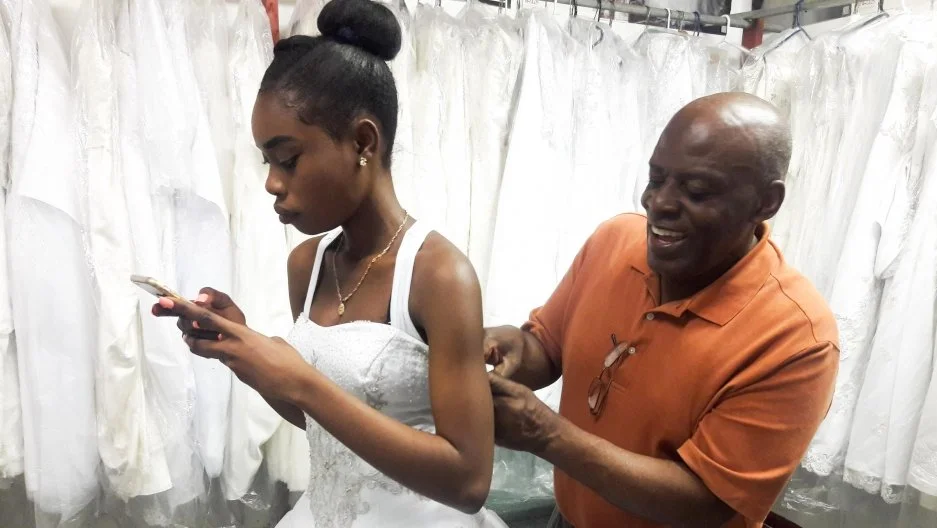
In Miami's Little Haiti, one of the largest waves of evictions is currently underway
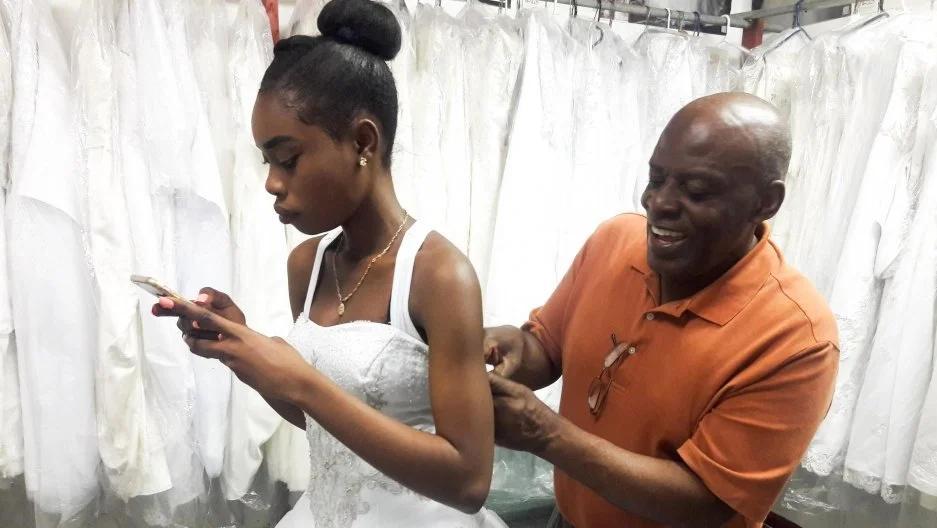
Rollin Virgile adjusts a dress for a young woman who drove from Key West to visit his store. Photo Credit: Nadege Green
Rollin Virgile walks through his store amid dozens of weddings dresses, white floral crowns, men’s tuxedo vests and baptism gowns. He greets customers in Creole: "Bonswa, koman nou ye?" (Good afternoon, how are you all?) Virgile has been in the same location, at Northeast 82nd street and Second Avenue — the heart of Miami's Little Haiti neighborhood — for 32 years. His store, Virgile's Tuxedo & Formal Wear, is a go-to for Miami's Haitian community, where customers can rent a tuxedo, robe bridesmaids or find first communion accoutrements.
But now the store must move. The commercial building and another across the street were recently sold to developer Thomas Conway, who also owns a nearby food hall and a co-working space. Conway has asked most of the businesses, nearly a dozen, to move so that he can transform the two strip malls. The business owners said Conway has given them about 30 days to leave.On a recent afternoon, Virgile shared the news with customer Daniella Eugene, who drove up from Key West to show here.“There’s a new owner,” he said. “And they want us out. It’s a shock to us all.”Little Haiti, a once predominantly Haitian enclave, has seen a burst of new development and interest from real estate investors and developers because of its central location in Miami. New projects are underway in the neighborhood, rent prices are soaring and Haitian business owners, such as those in the two buildings Conway plans to rehab, said that they are being pushed out. Some residents also believe that the threat of climate change is a factor as well.Conway did not respond to several requests for comment.Many of the businesses were operating with month-to-month leases and, in Florida, a landlord is allowed to give a 15-day notice to terminate a lease.
Pierre-Richard Maximilien, who runs a travel agency in one of the complexes, said he wrote Conway a rent check, only to have it returned a few days later with no explanation. Then he got court papers saying he was facing eviction for not paying rent. “He’s just killing the Haitian businesses and what we’re doing for the community because we’re serving the community,” said Maximilien, who has been renting his space for nine years.Maximilien said he asked Conway about returning after the mall rehab is complete and was told his rent would increase significantly. "I said, 'How much higher?' He couldn't tell me exactly."Jorge Isaac, an attorney representing Conway, said his client denies claims that he did not accept rent payments from the tenants.Several other business owners at the complex raised the same issue at a press conference in April, where they denounced one of the largest evictions of Haitian-owned businesses in Little Haiti.One of the signs in Creole read: "We want to pay. Thomas Conway doesn't want to collect."“To me, this is gentrification at its worst right now,” said Cartine Vilson, a community organizer with Family Action Network Movement, a nonprofit that works with Haitian businesses and homeowners in the area.Vilson said Miami must decide how to save small businesses from commercial gentrification to preserve neighborhood identity and the financial livelihood of business owners who invested in communities before they became trendy. “Do we count or do we not count?” she asked at the press conference. “We count and we need to be heard. We matter.”A few blocks south, a Little Haiti thrift store also called a press conference when it shuttered its doors late last year. Schiller Sanon owned the Little Haiti Thrift and Gift Store at Northeast 59th Street and Second Avenue for six years. He blamed a lack of foot traffic in the area coupled with ballooning rent costs for bringing down his business. “We wanted to be part of the well-being of the Haitian community, and it didn’t happen," Sanon-Jules said.At the strip mall on 82nd street that was recently purchased, Jean Luca is sweeping in front of the storefronts. He does odd jobs for several of the Haitian businesses. Sometimes he gets picked up as a dishwasher in one of the restaurants. He said he knows in a month or two the Haitian businesses he relies on to eke out a day-to-day living will be gone. “I don’t think the new businesses will hire me,” he said. “A person like me won’t get any work here anymore.”Some of the business owners said that they are struggling to find new commercial space to relocate.Marie-Janine Desir owns a variety store that sells clothes, lotion, pots and produce. "I can't find anything in this area," said Desir, who lives in Little Haiti and doesn't have a car. She said that she walks to work; at lunch she leaves to check on her disabled daughter, who is in the care of an in-home nurse. She said if she doesn't find a place to rent she'll have to put her inventory in storage. "That will kill my business," she said. "I won't be making any money. How am I supposed to live?"Virgile, the tuxedo and formal wear store owner, said it is heartbreaking to leave Little Haiti, the only place he has worked for 32 years. The most affordable space he could find was in North Miami, about 15 minutes away. He expects to lose some of his customer base in the move, he said.“It’s a lot to deal with as a business owner, but I have to pack up and go,” said Virgile. “I won’t be in Little Haiti anymore.”This piece originally appeared on WLRN.
By Nadege Green for PRI.org | May 23, 2018
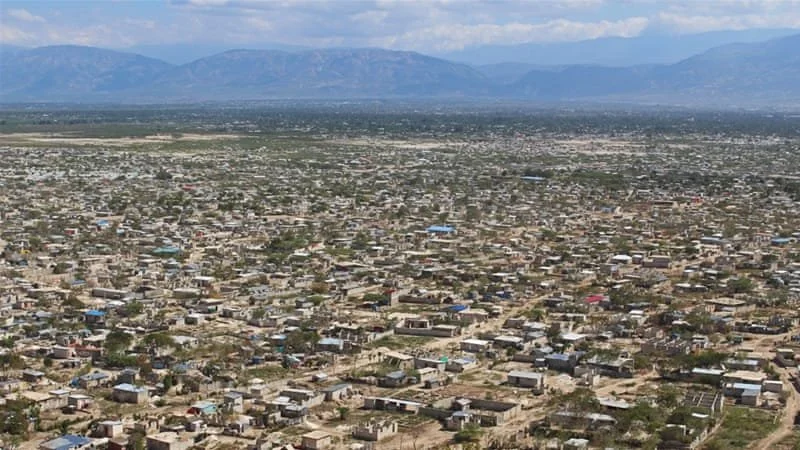
This Ungoverned Haitian City Is Fighting to Stay Alive
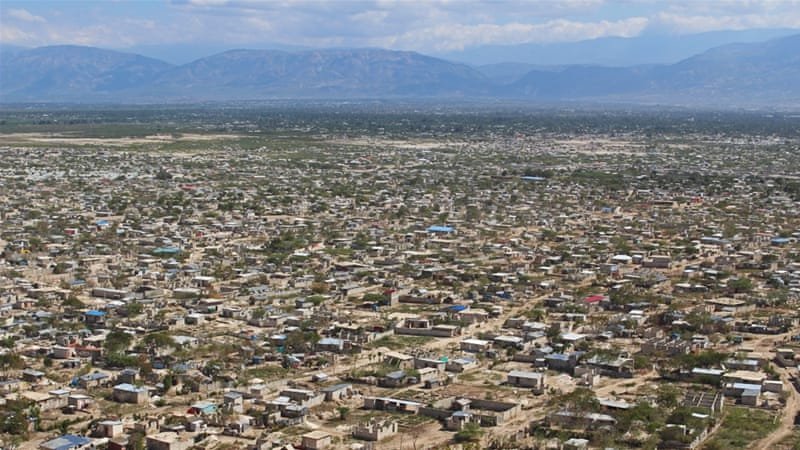
A short drive north from Haiti’s overcrowded capital of Port-au-Prince, a metropolis is rising from a previously desolate landscape. Some 250,000 people have flocked to Canaan in the eight years since an earthquake ravaged Haiti, destroying 100,000 homes. Born out of a disaster, it’s a city without a government, and for many, it’s an experiment in self-determination. But its future is increasingly uncertain.
A man works to level a plot of land in order to begin building a home in the Canaansettlement. Image by Allison Shelley. Haiti, 2018.
Absent any authority, Canaan’s residents must settle disputes on their own. They form committees and negotiate with NGOs to solicit water wells, public plazas and schools. They’ve built houses, shops and small businesses from scratch. Without formal jobs, they work as part-time masons, motorcycle taxi drivers, midwives, handymen and street vendors. In one neighborhood, they’ve set aside space for a cemetery—indicating plans to reside here the rest of their lives, and then some.
Elias Jean Oriel (left) and Regala Laisse Moi turn sand and cement intocinderblocks in the Canaan 2 section of Canaan, Haiti. "There are four types ofblock for different building needs," says Oriel, who is making wall block, known as"type 15," which sells for 25 gourds each (about 50 cents). This particular batchwill go to expand Oriel's own house nearby, which he's been building for the pastfour years. Image by Allison Shelley. Haiti, 2018.
But without roads, transporting goods across the city is a long, expensive trek. The American Red Cross and its partners are preparing to build 2.5 kilometers of paved road that will connect Canaan to the national highway at its perimeter, but Haiti’s government isn’t funding it. In fact, Haiti’s government hasn’t even identified and paid the owner of the land on which the city stands, meaning its appropriation may be legally void. The hundreds of thousands of people living there could someday be evicted.
Residents of the former Mozayik tent camp protest at an event attended by HaitianPresident Michel Martelly commemorating the five-year anniversary of the 2010earthquake, at the St. Christophe memorial, in Canaan, Haiti. The group of 126families has been evicted from a tent camp and now from land they bought title toin Canaan. Their signs ask the president to arrest the men who sold them thequestionable title. Image by Allison Shelley. Haiti, 2018.
After the earthquake, then–President René Préval declared the land public, setting the exodus into motion. Since then, Haiti’s national leaders have allowed the city to exist, but otherwise ignored it. Meanwhile, the three local municipalities over which the city now spans have been fighting with one another for control, while the residents of Canaan form tenuous committees in an attempt to bring order to their communities.
The failure of Haiti’s federal government to recognize Canaan as an independent municipality and dish out land titles is at the heart of the uncertainty over Canaan’s future.“If the state cannot give you the land, it will be very difficult for a bank to finance a house on that land, because the bank cannot recuperate the land,” says Leslie Voltaire, an urban planner who consults for Haiti’s post-earthquake housing and reconstruction agency. “The problem is security of tenure. To know that If I build on this land, nobody will come and put me out. We need a guarantee that no one will take it from you.”


 They came from all walks of life. Some were working-class families with hopes of building their first home. Back in Port-au-Prince, 36-year-old Raphael Philippe paid $130 a month in rent for an apartment that came crashing down in the earthquake. For three years, he and his family lived in a tent before moving to Canaan. “There are nicer places to live. But you take what God gives you, and here we are content,” says Philippe. Six days a week, he and his wife wake up at 5 a.m. to make the two-hour journey on a series of tap-taps — colorfully painted pick-up trucks that ferry commuters—to a grocery store in Port-au-Prince, where they work as cashiers. “It’s far. But it’s better to have a house that is your own.”Other early settlers included religious leaders who saw an opportunity not just to live, but to worship. “First I came to find my own land. And since I’m a pastor, I wanted a church,” says Nazerene Pastor Marc Loumette. He opened a primary school, offering scholarships to kids whose families couldn’t afford the $70-a-year tuition. He teaches his students civics and stresses the importance of a government, planning field trips to Haiti’s National Museum and palace to offer inspiration.


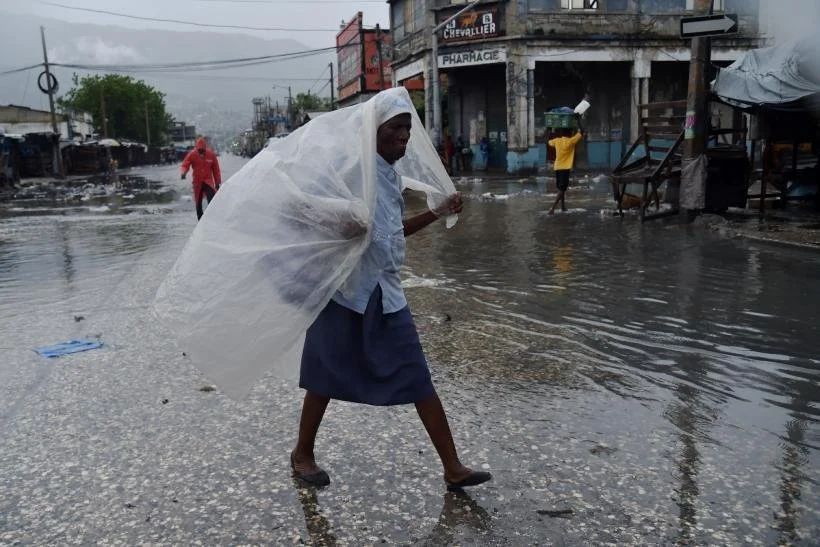
Heavy Rains Leave at Least One Dead in Haiti
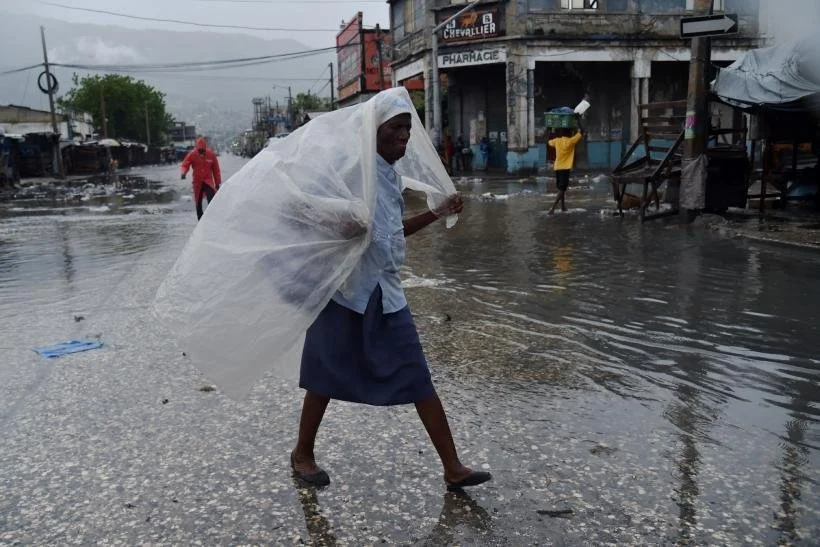
(Featured image from Getty Images)
The Civil Protection Office (CPO) today reported that the heavy rains that hit the Haitian capital caused the death of at least one person.
The tragedy occurred the day before when a landslide took place in Canape-Vert neighborhood, killing a 31-year-old woman.The CPO urged the population to take all measures indicated by the authorities, especially in the current rainy season and the hurricane season that begins next June.In 2017 five people died, while another 19 are still missing, after torrential rains and floods that hit the country.According to specialists, Haiti is more vulnerable to floods and landslides due to the effects of uncontrolled tree cutting and deforestation.
rly/oda/ane
By: Prensa Latina | Apr 25, 2018
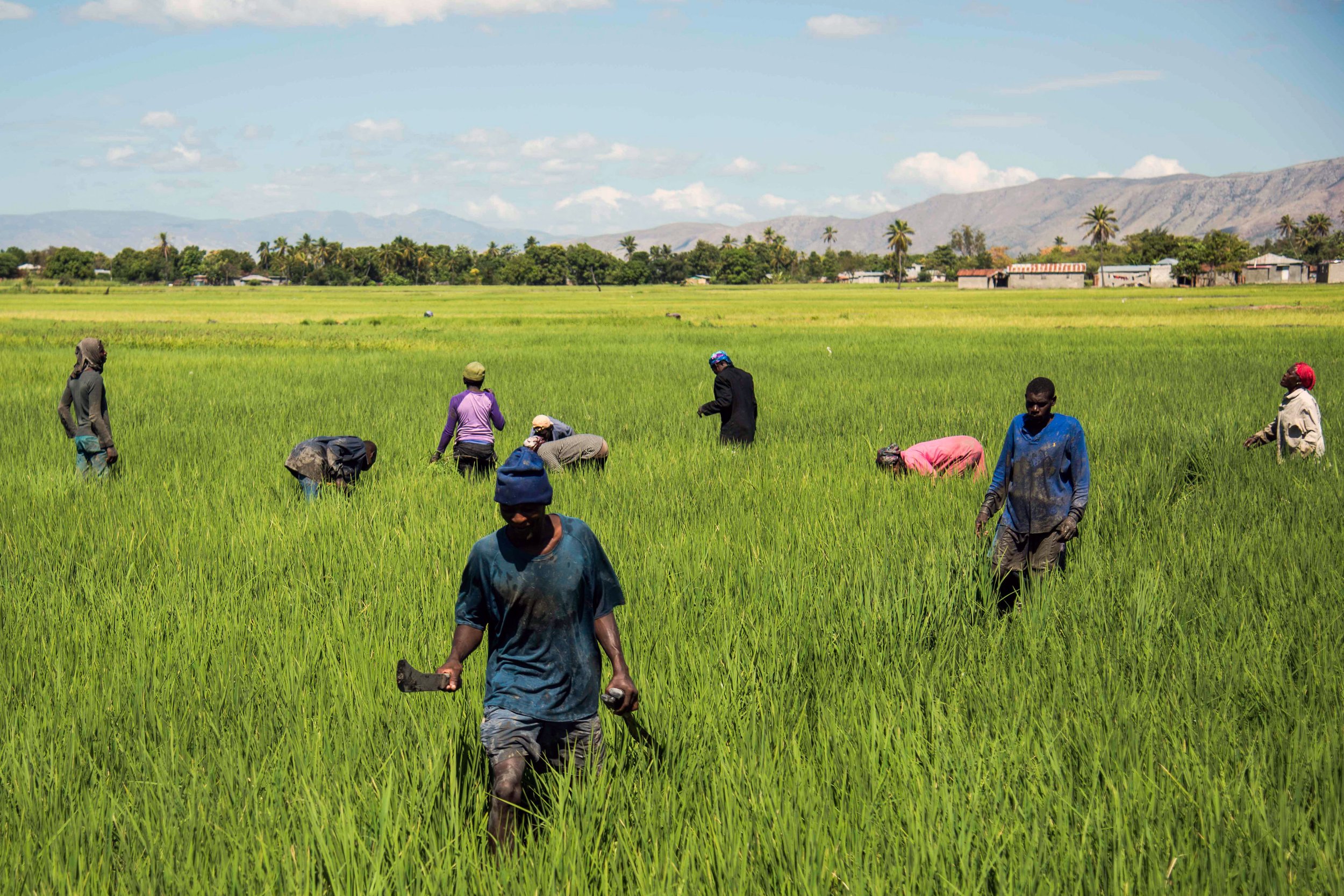
In Haiti, Golden Hopes in a Yellow Grain
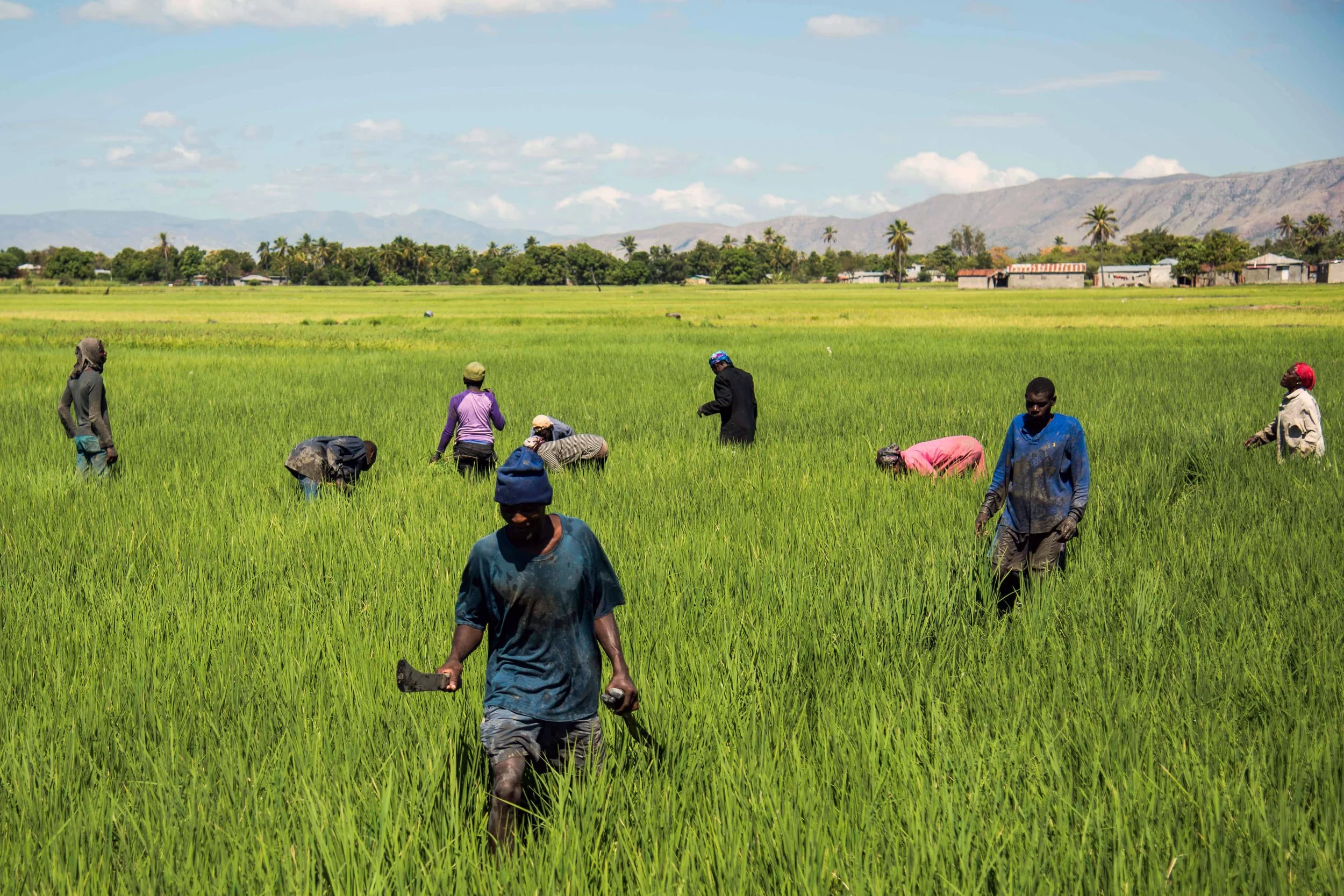
(Featured image by Jean Marc Hervé Abélard/Round Earth Media)
Some entrepreneurs in the Caribbean nation are finding that there is money to be made growing rice.
GONAIVES, Haiti – As the sun starts to set on Haiti's most fertile valley, a silent group of women sweeps grains of newly harvested rice into large, yellow mounds, unfazed by the acrid smoke of nearby wood fires.From there, the rice is placed in barrels, where it will be cleaned over those fires. Then, in a small back room on a winter afternoon, it will be packed in bags and shipped from this mill in west-central Haiti's Artibonite Valley, ending up in the kitchens of Haitian expatriates and other discriminating cooks across the United States.This was once a common scene in Haiti. Now it's a rarity. A few decades ago, Haiti was self-sufficient in rice, a crop so important here that the U.N. estimates it makes up about a quarter of people's daily diet. It even grew enough to export. But production collapsed after the U.S. and international lenders forced the country to dramatically lower tariffs that protected local farmers, from 50 percent to 3 percent in the last three decades.A quarter-century later, about 80 percent of Haiti's rice is imported, and the country is a major market for U.S. exporters. Faced with cheap imports, the country's dire poverty, natural disasters, lack of investment and collapsing infrastructure, production is still dropping in Haiti despite government efforts to halt the slide. Last year, the government reported a rise and a subsequent drop because of bad weather.Some Haitian entrepreneurs say there is money to be made growing rice. Skeptics, however, say hopes to resurrect the rice industry are misplaced and, with too few resources and little international support, represent the challenges that many poor, underdeveloped countries face in turning their economies around.Fabias Voltaire, 37, one Haitian trying to boost rice production, was able to reach an agreement to process his rice at a cooperative that is funded by the aid group Oxfam. He said there is a strong foreign demand for high-quality organic rice. It may cost more, but many regard it as healthier and better-tasting than American varieties. Plus, Haitian émigrés in the States love it, he says: "Haitians are … very sentimental about eating rice from home."In 2015, Voltaire and two cousins launched Caribbean Grains LLC. Three years later, they are shipping to Florida, Alabama and other U.S. states.Haiti is the poorest country in the Western Hemisphere. About three-quarters of its 11 million people live on less than $2 a day and about half the population lives in rural settings. In 2010, following a magnitude 7.0 earthquake that devastated the country, former U.S. President Bill Clinton publicly apologized for forcing Haiti to drop its import tariffs and damaging the economy.

A worker at the Caribbean Grains production facility shows off the production of Haiti’s most fertile region, the Artibonite Valley. Experts say the government could dramatically improve yields by fixing the area’s irrigation canals. (Jean Marc Hervé Abélard/Round Earth Media)
"It may have been good for some of my farmers in Arkansas, but it has not worked," said Clinton at the time, according to news reports. "It was a mistake."Since then, hurricanes Sandy in 2012 and Matthew in 2016 cost Haiti hundreds of millions in agricultural losses, making it even harder to recover.Jovenel Moise, who became Haiti's president in February 2017, has an agricultural background and pledged to relaunch the industry by fixing irrigation canals, financing infrastructure projects and other initiatives. By May 2017, the government had unveiled its program "La Caravane du Changement" – The Caravan of Change – to fund such infrastructure repairs. Although government estimates of the program's cost are difficult to obtain, Haitian news media reports say $55 million was spent in 2017 to repair the country's agriculture infrastructure.
Still, the challenges to boosting the country's rice industry are great. Production costs are high, and farmers have almost no access to loans or insurance to protect them from the ravages of insects and plant diseases.The facts on the ground keep skepticism high that the initiatives will substantially boost rice production. Thousands of acres in the Artibonite Valley are waterlogged, making them prone to disease, especially around the time of harvests. Other parts of the valley aren't getting enough water.Travis J. Lybbert, an economist and professor at the University of California-Davis who has done extensive research in the region, says the government's focus on better irrigation could make a big impact on rice production.
"It is relatively easy to make this happen," he says, adding that it would be much harder to provide access to inputs such as seed and fertilizer or create a better market for farm products.The government can prioritize spending on agriculture without a lot of scrutiny, shortchanging other sectors of the economy in a country that is in desperate need of just about everything."These are very important and heavy costs that are easy to sweep under the rug as many other projects get delayed," Lybbert adds. "That could be a real drag on development in other parts of the country."Looking out over a nearly dry river and irrigation canals that need to be cleaned and rebuilt, Agriculture Ministry representative Renaud Gene says Haiti has the political will to fix the problem, but not the means."There is a serious problem of water management, and it requires a lot of investments," he says.
The government has been fixing roads and canals but doesn't have the resources to make dramatic improvements. Instead of feeding Haitians in need with their own excess production, Gene says rich countries could assist Haiti more by helping develop its infrastructure, and then buying the rice from Haitian farmers to distribute.
In contrast with Voltaire, many in the region say a long history of failure leaves them pessimistic that anything will change. They regard the government initiative as at best populist and naïve. While not questioning the president's intentions, many simply aren't optimistic about the feasibility of breaking through the obstacles that exist.
"Jovenel is struggling like a poor devil but I am not sure where he's going," says Franklin Benjamin, an engineer and rice producer who has dedicated his career to finding ways to supply Haitians with locally produced rice.For decades, attempts to develop the sector have failed, he says, because farmers never get the incentives and solid support system they need."Haiti doesn't interest Haitians. They are all looking to get a visa to go somewhere where they are despised," he adds. "There is still a hope, but we will be disappointed like always."In the midst of such pessimism, Voltaire hopes that his success might inspire the next entrepreneur. And he has even bigger dreams."I want to create an agricultural bank for farmers," he says. "The objective is to make Haiti the economic capital of the Caribbean."He splits his time between West Palm Beach, Florida, and Haiti and still plans to continue growing his business despite the challenges. He says he spent $10,000 to fix the irrigation canals he needed for his own production.
On his farm, Voltaire's workers take a pause to laugh and joke a bit around a broken-down tractor. The fact that the rice mill exists at all is a small miracle.Additional reporting by Jean Pharès Jérôme. This story was produced in collaboration with Round Earth Media.By Aida Alami, Contributor for USNews.com | April 9, 2018
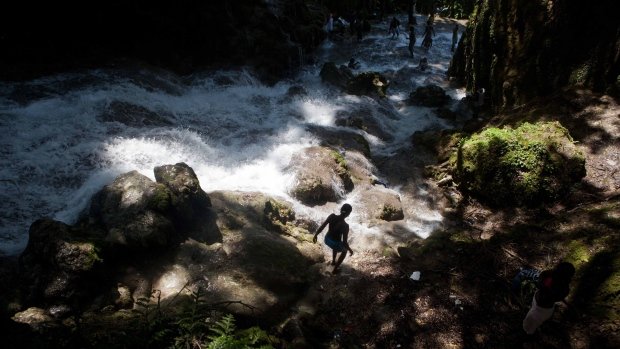
'Voodoo' tour of Haiti launched to raise development money
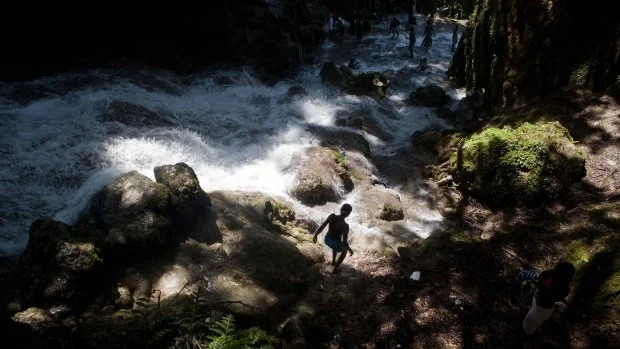
Vodou 'a very healing religion,' organizing says, but 'has its negative sides, too'
A P.E.I. tour company is offering Islanders an opportunity this spring to learn more about the religious culture of Haiti, while helping with economic development in the country at the same time.Sagrado Tours has partnered with locals to produce the Sacred Vodou Tour."I lot of people, I think, in North America, mistakenly have a negative view of sacred Vodou," said David MacKay of Sagrado Tours."I've found it, through my study and my experience, a very healing religion, a very positive religion. It's like a lot of religions, I guess, it has its negative sides, too."MacKay said many of the modern negative views of Vodou, commonly known as voodoo in Canada, date from the dictatorships of the Duvaliers in the 1960s and 1970s."Museums, Vodou temples, the waterfall at Saut d' Eau. There's so many nice places that you can visit," he said.
Sustainable development
Guyere Theodore of Léogâne, just south of Port au Prince, will act as cultural interpreter on the tour.Some of the proceeds from the seven-day tour will go toward development in Léogâne. MacKay has been working on development projects in the area for several years."We focus on sustainable development," MacKay said."The backyard poultry is going ahead and they're making money, somewhere around $400 or $500 American a year, which sounds small, but that doubles people's income."
Travel advisory
The tour is scheduled for March 28 to April 4. It is all-inclusive at about $3,500, which does not include airfare to Port au Prince.Haiti is under a travel advisory from the government of Canada. The advisory includes a warning about high crime rates in parts of the country and political tensions, and says Canadians should exercise a high degree of caution.MacKay said he has never felt threatened during his visits to Haiti.Sagrado has plans to offer more culturally themed tours of Haiti in the future.By: Kevin Yarr | CBC News | Feb 05, 2018