

Biden Campaign Adds Karine Jean-Pierre As Senior Adviser

Joe Biden has hired Karine Jean-Pierre, a veteran African American political strategist, as a senior adviser to his presidential campaign as the presumptive Democratic nominee pivots to the general election campaign.
Jean-Pierre will advise on strategy, communications and engaging with key communities, including African Americans, women and progressives.
“This really is the most important general election in generations,” Jean-Pierre told The 19th, a nonprofit newsroom, in an exclusive interview Monday night. “I’ve known Joe Biden for 10 years now. I believe he’s a man of integrity, he’s a man who knows how to lead, he’s a man who knows how to use the levers of government to help people and he’s the man who could beat Donald Trump in November. For me, as a black woman, I just could not sit this out.”
Jean-Pierre, 43, will begin her role with the Biden campaign next week. She gained prominence in 2008 as the southeast regional political director for then-candidate Barack Obama’s history-making presidential campaign.
She served in the Obama White House as regional political director before working as deputy battleground states director on his 2012 reelection. In the latter role, Jean-Pierre handled political engagement in key states including Ohio, North Carolina, Pennsylvania and Florida.
Born in Martinique to Haitian parents and raised in New York, Jean-Pierre worked on former Maryland governor Martin O’Malley’s 2016 Democratic presidential bid before joining liberal group MoveOn as chief public affairs officer. She is also an MSNBC political analyst.ADnull
Separately, the Biden campaign announced Tuesday that it hired Obama campaign alum Julie Chavez Rodriguez — who previously worked as co-national political director for Sen. Kamala D. Harris’s presidential campaign — as a senior adviser, making her the highest-profile Latina to join the team as Biden struggles to shore up his support with Hispanic voters headed into November.
Biden’s swift rise this spring was fueled largely by black voters — particularly black women, who are regarded as the backbone of the party and seen as key to a winning general election coalition in the fall. Energizing these voters will be crucial to the record turnout needed to topple Trump. Black turnout was down in 2016 from historic highs in 2012 and 2008, when the country elected its first African American president.
Jean-Pierre said her hiring signals that Biden “understands how he became the presumptive nominee.”
“Black voters, black women, have helped him get to this point,” she said. “When everybody was counting him out, black voters spoke out. I am so proud and excited as a black woman watching how black women have exerted their power … we had to say loud and clear this (the actions of the Trump administration) is not okay.”
Valerie Jarrett, former senior adviser to Obama, called Jean-Pierre “a superstar” who shares Biden’s values of equality, fairness and justice.
“She will be able to communicate his agenda in an authentic way that I think will resonate importantly with African American women, but also with the entire country,” Jarrett said in a telephone interview. “It’s a coup for vice president Biden and his campaign.”
By Errin Haines | The 19th and The Washington Post May 20, 2020
This story is part of a collaboration between The Washington Post and The 19th, a nonprofit newsroom covering gender, politics and policy.
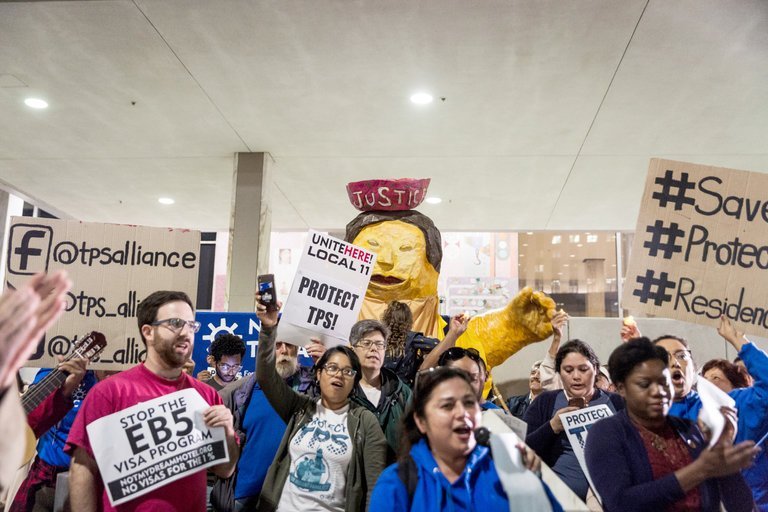
Trump Administration Ends Temporary Protection for Haitians

Haitians with what is known as Temporary Protected Status will be expected to leave the United States by July 2019 or face deportation.
The decision set off immediate dismay among Haitian communities in South Florida, New York and beyond, and was a signal to other foreigners with temporary protections that they, too, could soon be asked to leave.
About 320,000 people now benefit from the Temporary Protected Status program, which was signed into law by President George Bush in 1990, and the decision on Monday followed another one last month that ended protections for 2,500 Nicaraguans.
Haiti, the poorest country in the Western Hemisphere, is still struggling to recover from the earthquake and relies heavily on money its expatriates send to relatives back home. The Haitian government had asked the Trump administration to extend the protected status.
“I received a shock right now,” Gerald Michaud, 45, a Haitian who lives in Brooklyn, said when he heard the news. He has been working at La Guardia Airport as a wheelchair attendant, sending money to family and friends back home. He said he feared for his welfare and safety back in Haiti now that his permission to remain in the United States was ending.
“The situation is not good in my country,” he said. “I don’t know where I am able to go.”
Haitians are the second-largest group of foreigners with temporary status. The protection is extended to people already in the United States who have come from countries crippled by natural disasters or armed conflict that prevents their citizens from returning or prevents their country from adequately receiving them. The government periodically reviews each group’s status and decides whether to continue the protections.
The Obama administration renewed the protections for Haitians several times, after determining that conditions in Haiti remained precarious. But the Trump administration, which has sought greater controls on immigration, has said that the program, which was intended to provide only temporary relief, has turned into a permanent benefit for tens of thousands of people.
In a statement, the Department of Homeland Security said that after meeting with Haitian government officials and Haitian communities in the United States, it had decided to let the protections end.
“Since the 2010 earthquake, the number of displaced people in Haiti has decreased by 97 percent,” the statement said. “Significant steps have been taken to improve the stability and quality of life for Haitian citizens, and Haiti is able to safely receive traditional levels of returned citizens.”
The protection for Haitians was most recently extended in May, by John F. Kelly, the Homeland Security secretary at the time. He allowed only a six-month extension, a shorter one than is typical, saying that the Haitians “need to start thinking about returning.”
The decision on Monday by Elaine Duke, the acting secretary, set a termination date of July 2019 to give people time to make arrangements to leave.
The largest group of Temporary Protected Status beneficiaries, nearly 200,000 people, are from El Salvador. The Department of Homeland Security is scheduled to announce next month whether it will rescind or renew protection for that country, which is plagued with gang violence and high unemployment. The protection applies to Salvadorans who were in the United States without permission on Feb. 13, 2001, and was granted after deadly earthquakes in their home country.
Though Ms. Duke ended protections for Nicaraguans last month, she continued, at least for now, protections for Hondurans despite pressure from Mr. Kelly, now President Trump’s chief of staff, to end them.
Others who now benefit include people from Nepal, Somalia, Sudan, South Sudan, Syria and Yemen. In 2016, the Obama administration decided to end temporary protection for citizens from three West African countries that had been devastated by the Ebola virus several years ago.
The United States offered the protection to Haitians after the earthquake in January 2010 that killed hundreds of thousands of people, displaced more than a million and led to a cholera outbreak. Haitians who entered the United States within a year of the disaster qualified for the status.
A variety of American groups, including the Congressional Black Caucus, the United States Chamber of Commerce and immigrant advocacy organizations had urged the Trump administration to extend the protections again. On Monday, Senator Bill Nelson, Democrat of Florida, called the decision “unconscionable.”
“There is no reason to send 60,000 Haitians back to a country that cannot provide for them,” he wrote on Twitter. “I am strongly urging the administration to reconsider.”
There is no reason to send 60,000 Haitians back to a country that cannot provide for them. This decision today by DHS is unconscionable. And I am strongly urging the administration to reconsider. Ultimately, we need a permanent legislative solution. https://t.co/Ft0bE0itf6— Bill Nelson (@SenBillNelson) Nov. 21, 2017
Ileana Ros-Lehtinen, a Republican congresswoman from South Florida, said on Twitter that she had traveled to Haiti after the earthquake in 2010 and after Hurricane Matthew in 2015. “So I can personally attest that Haiti is not prepared to take back nearly 60,000 TPS recipients under these difficult and harsh conditions,” she said.
I travelled to #Haiti after the earthquake in 2010 and after hurricane Matthew in 2016. So I can personally attest that #Haiti is not prepared to take back nearly 60,000 #TPS recipients under these difficult and harsh conditions.— Ileana Ros-Lehtinen (@RosLehtinen) Nov. 21, 2017
Those with temporary protection constitute about half of the estimated 110,000 Haitians living in the United States without permanent permission, according to the Pew Research Center. Since Mr. Kelly signaled that Haiti might lose its special designation, thousands of Haitians have crossed the border between the United States and Canada to apply for asylum in Quebec.
Nearly 30,000 children have been born in the United States to Haitians with protected status. Those children are citizens and entitled to stay. Some of their parents may seek to avoid deportation by claiming it would cause extreme hardship to a United States-born child, but that option is limited.
Most will soon have to make a wrenching decision: take their children back to Haiti; leave them with relatives or guardians in the United States; or remain in the country illegally and risk arrest and deportation.
Mark Silverman, an attorney and director of policy at the Immigrant Legal Resource Center in San Francisco, said that if they are arrested, they would be entitled to deportation hearings. And contesting their cases “gives them at least seven to 10 years,” he said, because of the long backlogs in the immigration courts.
The decision is sure to be felt in Haiti, where remittances from the Haitian diaspora totaled $2.36 billion in 2016, an increase of 7 percent over the previous year, according to the World Bank. That money represented more than one-fourth of the country’s national income.
But Dan Stein, president of the Federation for American Immigration Reform, which lobbies for restrictions on immigration, said the cancellation of temporary protections for Haitians was “long overdue.”
“The notion that this would be reflexively renewed again and again is a corruption of the entire concept,” said Mr. Stein, adding, “it’s not a refugee program or an immigration program.”
“It’s supposed to be reviewed and it’s supposed to be temporary,” he said.
One of the younger beneficiaries of the program, Peterson Exais, barely survived the earthquake. He arrived in the United States when he was 9 years old to receive emergency medical care after surviving for days under the rubble. He endured more than a dozen surgeries and has become a promising dancer at a magnet school in Miami.
Now 17 years old, he dreams of pursuing studies at the Juilliard School.
“This is very devastating for me,” he said on Monday. “I might not be able to give all that I could give back if I went back to Haiti.”
By: Mariam Jordan for Nytimes.com | November 20,2017
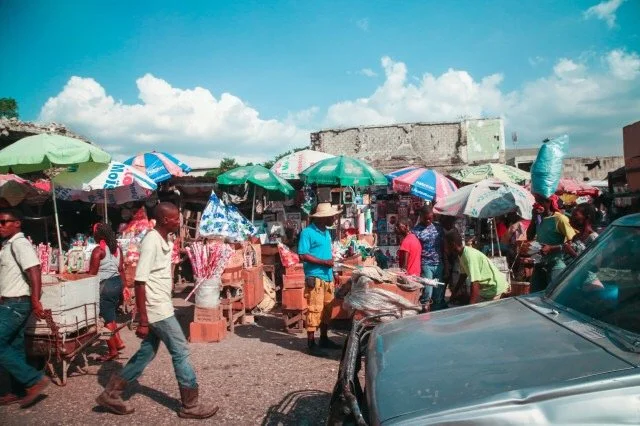
We Want To Stay': Haitian Immigrants In U.S. Fear End Of Temporary Protected Status
For decades, the United States has provided immigrants from 10 countries, mostly in Central America, what’s known as Temporary Protected Status. Under this status, temporary visas allow them to stay and work in the U.S. and prevent them from being forced to return to home countries at war or devastated by natural disasters.The Trump administration says it plans to end the special status. For 50,000 or so Haitians in the U.S. under the program, that means their Temporary Protected Status would expire Jan. 22.Joana Desir is one of those Haitians. On a recent day in Manhattan, the 32-year-old home health care provider is racing between patient visits.By midday, she already has helped transport one of her regular patients, a young girl with a severe respiratory disease, to school, and visited two senior patients in their homes. Soon she’ll head back to the girl’s school and make sure she gets home safely.“It’s a hard job, but rewarding,” says Desir.On weekends she picks up a few extra patients — just for fun, she says with a laugh.“Most of immigrants that I know, they have a busy life like me,” she says. “I leave home like 5:45 [a.m.] and sometimes I get home by like 9 p.m.”Desir came to the U.S. in 2008 to help out her aging parents, both legal residents. She overstayed her visa and was still in the U.S. when a powerful earthquake struck Haiti in 2010.Hundreds of thousands were killed, and the Obama administration granted Haitians temporary protected status. They were shielded from deportation and given work permits.Critics say the temporary program for Haiti and for others from countries where disasters and wars took place decades ago has become permanent and amounts to a backdoor immigration policy.During her years in the U.S., Desir put herself through nursing school, got a job and rose to supervisor. But she hasn’t forgotten those back home, who she says are still hurting.“We have that connection in Haitian families,” she says. “Since you succeed, you have to help others — it is a must.”It’s estimated by the think tank Inter-American Dialogue that all Haitians abroad this year will send home $2 billion. That’s nearly equal to Haiti’s annual operating budget.In May, citing improved conditions in Haiti, the Trump administration signaled it no longer would extend the temporary visas. It warned Haitians to prepare to go home in January, when the program expires.Desir is devastated — and as the news gets back to Haiti, concern is growing there too. Desir has 19 relatives who depend on her for financial support.In a hillside neighborhood above downtown Port-au-Prince, Desir’s cousin Daniele Joseph shows me around her three-room home. Seven people live here, including her husband, son and four of her sisters — all Desir’s relatives.Joseph says all but the youngest cousin remember Desir. Last month, Desir paid for the young cousin’s First Communion.As two of the girls cook dinner — spaghetti with a few onions and chiles — Joseph ticks off everything Desir helps with. After the earthquake, there was money sent to rebuild their home, preschool tuition for Joseph’s two-year-old son, multiple shipments of clothes — and the list goes on.Joseph says it will very difficult if Desir is sent home.In the same neighborhood Desir’s godmother, Margaret Estefan Altas, paints a much more dire prediction of what will happen to her family without assistance from abroad.“I call Joana and tell her I have a problem, we have no food — and she’ll say, ‘I’ll do what I can,’ ” says Altas. “She always comes through.”Her husband, who hasn’t worked since the earthquake and now has cancer, says it’s clear to him the family would starve without Desir’s help. Desir pays their annual rent, about $1,300 dollars, and tuition for the youngest son’s high school.Altas says she helped raise Desir and considers her a daughter. “These days, I feel more like she is the mother and father,” says Altas.Haitian officials have appealed to the Department of Homeland Security to extend TPS. Several U.S. lawmakers, including a bipartisan group from south Florida, have introduced legislation that would let the immigrants stay permanently.Haiti’s president, Jovenel Moise, told NPR in an interview that he is worried about stability in the region if 50,000 Haitians are sent home.“If they have to return, we have no other choice — they are our brothers and sister and we will receive them,” says Moise — but he is concerned about the loss of U.S. remittance dollars sent to families in Haiti, and the effect of that on the stability of the economy. He said that 25 percent of Haiti’s GDP comes from those remittances.Back in New York, Joana Desir says she can’t imagine giving up the life she’s built there.“I will always be grateful for America,” she says, “but please, we are professional — we want to stay.”For now, Desir has been giving away most of her possessions and reducing her belongings to what will fit in two big suitcases. She says she doesn’t want to leave — and if the U.S. tells her to go, then they’ll have to come get her and drive her to the airport.By Carrie Kahn | Nov. 5, 2017
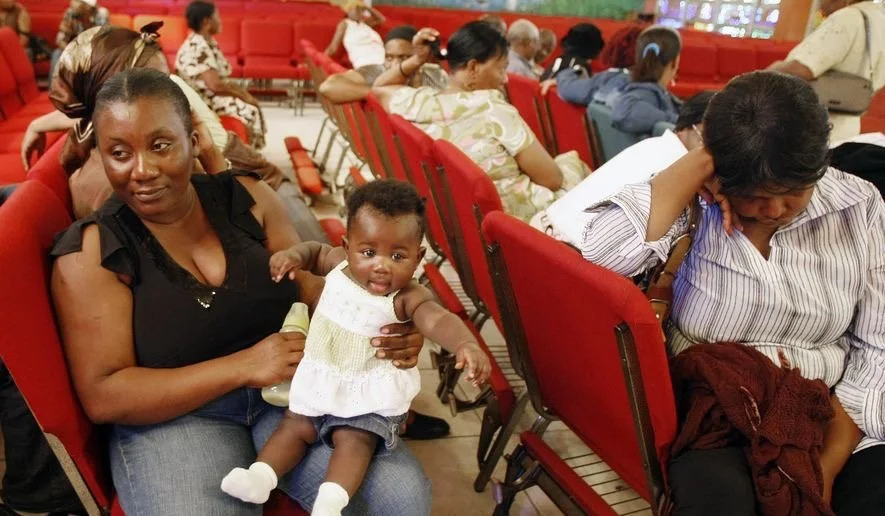
Haiti begs for 18-month stay of deportation for Haitians in U.S. after 2010 earthquake
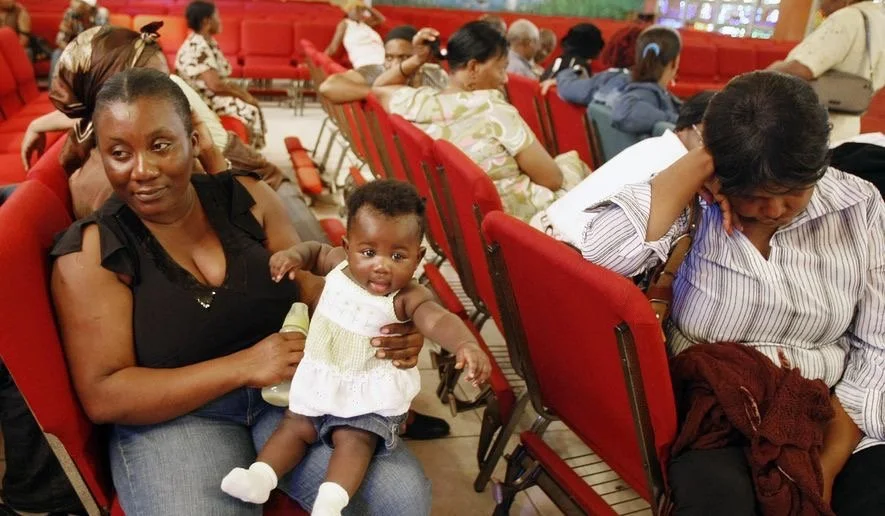
Haiti has asked the Trump administration to grant an 18-month deportation amnesty to its citizens who are already in the U.S., saying the island nation is still struggling to recover from the 2010 earthquake and can’t handle return of tens of thousands of people.Haitian Ambassador Paul G. Altidor, in a letter first reported by the Miami Herald, invited acting Homeland Security Secretary Elaine Duke to visit Haiti to see the continued struggles first-hand, saying she would conclude that another 18-month reprieve “is a necessity.”He said an ongoing cholera epidemic and new pressure from last year’s Hurricane Matthew have created new disruptions beyond the earthquake, that have made the country’s recovery tougher.Homeland Security is in the midst of making a decision, but has signaled it won’t simply renew protections, as previous administrations sometimes did.“This is the choice that’s being made is they aren’t going to continue to treat this program in ways that aren’t intended,” said department spokesman David Lapan.The Trump administration earlier this year granted a six-month extension but then-Secretary John F. Kelly — now the White House chief of staff — had signaled that Haitians should be prepared for an end to Temporary Protected Status (TPS), which they’ve enjoyed since the earthquake.Mr. Kelly said the law governing TPS says it is supposed to be a temporary status that’s in place only as long as the conditions from the original disaster remain.The current six-month protection runs out in late January, but a decision must come two months before that.Homeland Security also has to decide on TPS renewals for several Central American countries that have been under protected status since the turn of the century, meaning a pool of illegal immigrants has been shielded from deportation to those countries for more than 15 years.Some 46,000 Haitians are protected by TPS, while 86,000 people from Honduras and 263,000 people from El Salvador are protected.TPS beneficiaries are granted work permits, allowing them to hold jobs, get driver’s licenses and social security numbers and some taxpayer benefits.Mr. Kelly earlier this year said that abuse of TPS by past administrations had created a situation where some of those people who’ve been protected for nearly two decades have put down roots, and may need to be granted full legal status — a move that would have to come from Congress.By Stephen Dinan | October 19, 2017
'It's Not Fair': Haitian Teens In Everett Worry About U.S. Residency Decision
It's been a year since Hurricane Matthew slammed into Haiti, taking hundreds of lives and sending thousands fleeing to the United States.The anniversary comes as Haitians and Haitian-Americans in the Boston area look with apprehension at a decision by the Trump administration next month.That's when the administration has said it would decide whether to end Temporary Protected Status for 58,000 Haitians living and working in the U.S. The status provides legal residency for victims of natural disasters. Many first arrived after a devastating earthquake in 2010.Everett has become a home to a large number of Haitians and Haitian-Americans in recent years. Many are here on TPS. Others are here without the required documents. Many others are permanent residents and citizens, but know people whose legal status is precarious.Every week, high school students from the Haitian community in Everett gather to talk about what's on their minds. These days, the fear of having to leave, or seeing loved ones having to leave, is foremost."I feel sad, because I don't know where I'm going in the future," says one of the students.He is from Port au Prince. He came here when American missionaries got him a scholarship to play basketball in the U.S. He stayed and is now here without legal papers. Because of that, WBUR has agreed not to use his name. He is a senior at Everett High School."It hurts when I'm getting out of school where they're using me for the basketball, which I'm good at, and then I'm walking down the street, but I have fear that somebody might stop me, that I can be deported, not only myself, but a lot of my friends, a lot of youth, a lot of families," he says in Haitian Creole. "It's not fair."Tears come to his eyes."I have had people that have died in my family," he says. "I have never cried. This is the very first time tears have come out of my eyes."Another Everett High senior, Jean-Gandhy Medard, says in French, "Since the new administration, there is conflict, and we are beginning to worry, because not everyone has the right documents."Switching to English, he talks about how, increasingly, he feels judged by the color of his skin."You can't just stop someone because of the way he looks and then to tell: 'Where you come from?' The thing that really affects me is they said: 'Why don't you speak good English? If you don't speak good English, how come you have been here?' "Medard is also from Port au Prince. He came here in 2015 to live with his aunt, who sponsored him for a green card. He's not worried about himself, because he is here as a legal permanent resident, but he is worried about people he knows. He says friends of his have left because police have asked them for documents they don't have. Most, he says, have fled for Canada or the Antilles."For me, it's a catastrophe," he says in French. "It's a disarrangement. It's really something terrible compared to how we used to live, how we used to relate to one another, and how life was before, and now, all of a sudden, because of problems with papers or social pressures, all of that has disappeared. It's really sad."Medard says he knows people who have been here for a long time."And have fortune and they are about to lose everything," he says. "People who have been in this country 30, 40 years, and then they heard they have to leave. It's already their home."To be forced to leave now, he says, is to be forced to make a move you will regret for the rest of your life.By: Fred Thys | October 4, 2017
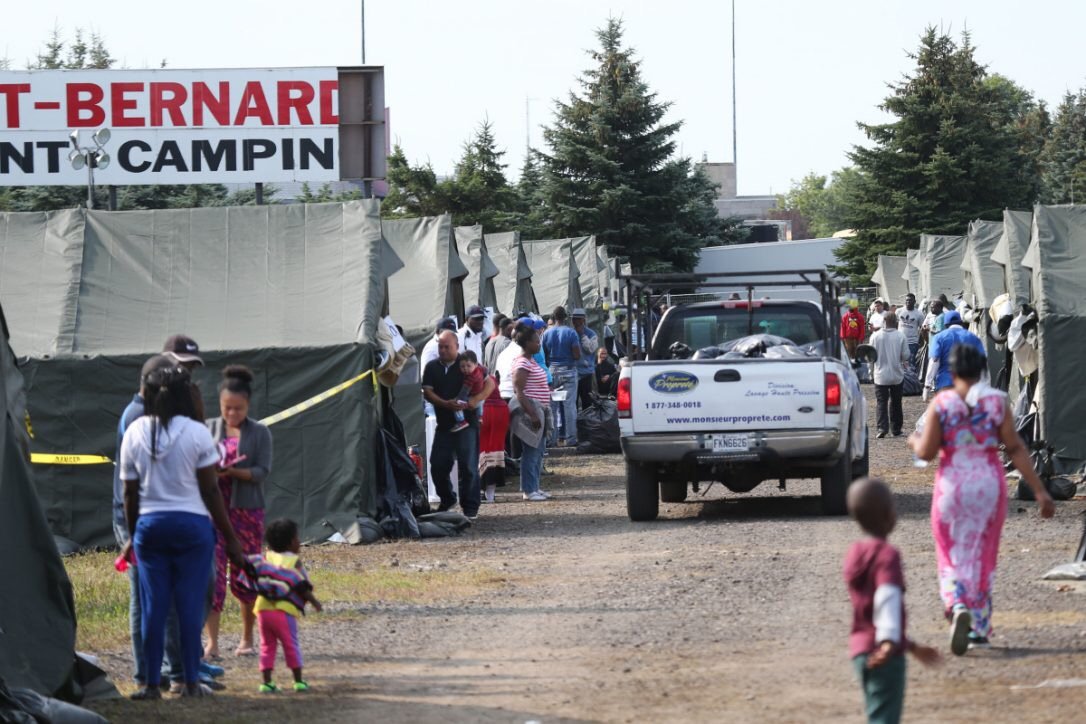
Cornwall councillors seek answers as hundreds of Haitian refugee claimants arrive in Ontario
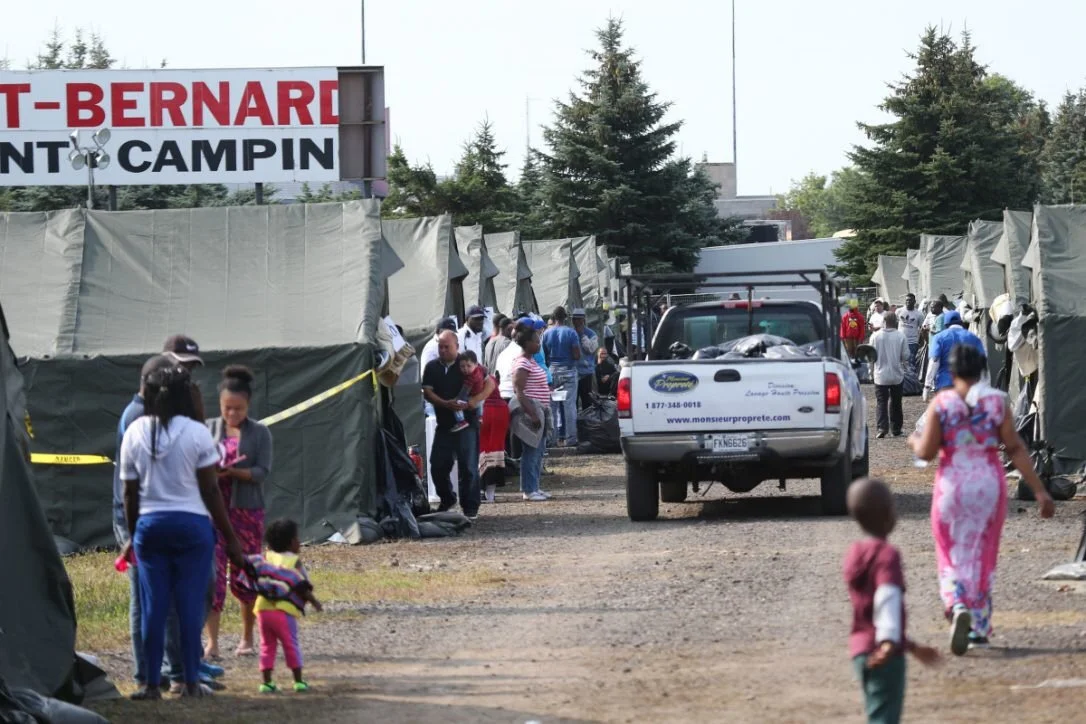
OTTAWA—As the surge of migrants pouring into Quebec hit 4,500 people — mostly Haitians — in the first three weeks of August, the federal government scrambled Monday to stem the tide with a sterner message to would-be asylum seekers and to accommodate hundreds more in the nearby Ontario border town of Cornwall. The office of Public Safety Minister Ralph Goodale acknowledged the RCMP had intercepted and arrested 4,500 irregular border crossers in Quebec so far this month — on top of 3,000 that crossed in July. They are mostly Haitian and found eligible to file a refugee claim. On Monday evening, Cornwall city councillors held a special meeting to demand answers of federal, provincial and municipal officials, saying citizens are worried about the impact of all the new arrivals, while many others want to help. At the Nav Centre conference and hotel facility now hosting 300 people — all Haitian families — is full, and manager Kim Coe-Turner said that with upcoming conferences it cannot accommodate more immediately. So the Canadian Forces are setting up a tent city on the Nav Centre grounds that will be an “interim lodging site” for up to 500 Haitians asylum seekers who will be directed there by border services authorities at Lacolle, Que., because Montreal’s shelters and services are overwhelmed, said Cornwall’s emergency management coordinator Bradley Nuttley. Nuttley assured councillors that the families can be well accommodated in tents with plywood flooring, electricity and heating, while nearby residents’ concerns will be met by low-noise electrical generators, and privacy fences up to 12 feet high to be erected on three sides. In part, he said, that’s to protect children — over 40 per cent of the refugee claimants now there are children under 7 — from “noxious weeds” on nearby land. Mayor Leslie O’Shaughnessy complained there is no lead federal agency to answer council’s or the public’s enquiries and that information “was changing by the hour.” He pressed federal officials to hold a public information meeting because “it is a federal project.” “Whoever the lead is, hopefully they’ll get the bills,” Councillor André Rivette said. He asked if Ottawa planned to set up a field hospital so that local residents wouldn’t find themselves waiting for health services. Stressing that no declaration of emergency had been issued because there are enough resources to meet the needs, Nuttley said almost all newcomers were quite healthy. There’d even been one birth of a “new Canadian citizen,” and a few more pregnant women are at the centre, he said, though officials see no need for anything more than a temporary clinic on the Nav Centre grounds. “I’ve not been requested to provide any services in this emergency – ‘er this event, sorry, a little Freudian slip there,” said Nuttley. Still, Louis Dumas, a senior federal immigration official, acknowledged “the current situation is a difficult one, we are seeing a spike” at Lacolle, Que. Refugee claimants are “entitled to due process” and the federal government’s goal “is to process people quickly,” he said. The hope is refugee claimants will within a week complete their applications and submit them for an assessment at a joint federal-provincial processing centre also set up at Cornwall’s Nav Centre before their claims are sent to the Immigration and Refugee Board for adjudication. But once their claims are submitted, the migrants are free to leave and most are expected to head back to Montreal where a large Haitian diaspora lives. Dumas said about 10 per cent will likely head elsewhere in Canada, mostly in Ontario. Haitians are flooding across the border because the United States administration under President Donald Trump has indicated it will revoke a temporary protected status for Haitians, issued after the 2010 earthquake, starting in January. Dumas said Haitians should not expect Canada will automatically allow permanent entry. He noted that last year, the independent IRB turned down 50 per cent of asylum claims by Haitians, who were then ordered deported back to Haiti. Earlier Monday Immigration Minister Ahmad Hussen and Public Safety Minister Ralph Goodale went before cameras at Lacolle earlier to say there is “no fast track” to refugee status for those who cross illegally and to warn against “border-hopping.” “Trying to cross the border in an irregular fashion is not a free ticket to Canada,” Goodale said, sounding a frustrated note. “We have been making this point over and over and over again since last January and February when the, the circumstances began.” That line is to be echoed by Haitian-Canadian MP Emmanuel Dubourg who Canadian Press reports is being dispatched to Florida to do Creole-language interviews and meet community leaders among Miami's Haitian diaspora and to speak to a slew of influential media outlets. By TONDA MACCHARLES | August 21, 2017

After 12 years in U.S., Stamford student may be ordered back to Haiti

STAMFORD — Mary was 8 years old when she stepped off a plane from Haiti with her older sister to visit their ailing grandmother in Stamford.
What was meant to be a short trip with their mother was unexpectedly extended after Mary’s 10-year-old sister wound up hospitalized for four months with a bacterial infection. After the girl’s recovery, doctors advised the family that she not return to Haiti.
That was the summer of 2005, six years before a magnitude 7.0 earthquake would devastate the island nation, killing 220,000 people and displacing 1.5 million.
The disaster prompted the U.S. government to extend what’s known as Temporary Protected Status (TPS) to Haitians without permanent legal residency. The designation is afforded to immigrants who are unable to return to their home countries because of humanitarian emergencies.
Along with her family, Mary, who did not want her real name used because of her immigration status, ended up staying in Stamford while her mother petitioned for legal status. They were ultimately denied, but then came TPS, which has enabled them to remain in the U.S. for the past six years.
This may change under new orders from the Trump administration that could put an end to TPS for Haitians and send 58,000 immigrants — including up to 150 in Stamford and 750 statewide, according to one attorney’s estimate — back to an impoverished country still reeling from one of the worst natural disasters in recent memory. The move is yet another example of the immigration upheaval set into motion under President Donald Trump.
For someone like Mary, a lot has changed since leaving Haiti, a country the 21-year-old can now barely recall. She went on to enroll in Stamford public schools and excelled academically, landing a scholarship to study civil engineering at a Manhattan college. Her sister became a registered nurse.
With a year left in school, Mary worries about being ordered back to Haiti before she can graduate. At this point, she has no family there — her father disappeared after they left for the U.S. — and says she wouldn’t know where to stay or how to navigate life there.
“All I remember is that it wasn’t particularly safe,” said Mary, who lived an hour outside the Haitian capital of Port-au-Prince. “We stayed inside our house and went to school and came back.”
Mary and her family could be ordered to leave the country as soon as Jan. 22, when the most recent extension of Haitian TPS expires. TPS for Haiti and 12 other nations, including El Salvador, Honduras, Syria, Somalia, Yemen and Nepal, is re-evaluated for continuation every 18 months.
In May, U.S. Citizenship and Immigration Services announced it would extend Haitian TPS for just six months, and encouraged recipients like Mary to prepare for their return. At the time, then-Secretary of Homeland Security John Kelly said the agency would announce 60 days before the January deadline whether it may extend Haitian TPS again. Thousands of Haitians are anxiously awaiting the decision.
Activists like Angelucci Manigat, editor and publisher of The Haitian Voice, a monthly newspaper once based in Stamford, have called for TPS to be extended for the standard 18-month period. Meanwhile, he said, Haitians have begun fleeing over the Canadian border to seek asylum in anticipation of a canceled TPS.
Manigat said Haitians, who make up at least 4 percent of Stamford’s population, are frightened of attracting attention. They are avoiding churches and community centers that were once well attended, and fear doing everyday things like picking up their children from day care or paying a parking fine, he said.
“People are really, really scared,” said Manigat, who now runs his publication out of Bridgeport. “Community leaders are trying to prepare them for the worst. It doesn’t look good, but we’re waiting to see what happens. A lot of people are in denial.”
Mayor David Martin in May joined a coalition of city leaders from across the country who signed a letter to Kelly and Secretary of State Rex Tillerson urging a longer extension of Haitian TPS, which would have ended on July 22 without the six-month continuation.
Philip Berns, a Stamford immigration attorney who has about 30 clients with Haitian TPS — and estimates there could be up to 150 impacted citywide — said he is preparing clients for what comes next.
For many TPS Haitians who have lived peaceful and productive lives in the U.S., “what it will feel like is not deportation, but exile,” said Berns, who added that Haiti has still not recovered from the 2010 earthquake. Many say Hurricane Matthew last year undid much of the progress made since the earthquake.
“Things have not seriously changed in Haiti,” Manigat said. “The government still doesn’t do much for the people.”
People like Mary have been in the U.S. for so long they don’t know a life back in Haiti, Berns said.
“This young lady is basically, in her heart and soul, an American,” he said. “She would be sent a to a country where she’s barely familiar with the culture and language, and completely out of her element.”
Mary said she understands the challenge the U.S. government faces managing a program like TPS, and deciding which undocumented immigrants out of many get a reprieve from deportation.
“It’s a temporary solution,” she said. “It’s not a status that’s made for assimilation.”
In the meantime, life for people like Mary is a high-stakes game of wait-and-see.
“The thing that makes me worry is that I don’t know will happen,” she said. “But it’s also my calming factor — that I don’t know what will happen.”
By Liz Skalka | August 5, 2017