
Haiti football gets gov’t support for World Cup push

PORT-AU-PRINCE, Haiti (CMC):
THE HAITIAN Football Federation (FHF) has received a boost of 100 million gourdes [US$764, 000] from the government to support the preparation and participation of its national teams.
The FHF received the timely donation on Monday during a ceremony at the Prime Minister’s Office.
Present at the ceremony were Prime Minister Alix Didier Fils-Aimé, Minister of Youth and Sports Niola Lynn Sarah Octavius, Minister of Economy and Finance Alfred Fils Métellus, along with under-17 men’s coach Eddy César and other senior government officials.
The prime minister said he was heartened to see the under-17 team qualify for the Qatar 2025 World Cup.
“Every step on the field will be a step for the dignity, unity, and greatness of our nation,” Fils-Aimé said.
The prime minister maintained that supporting youth and sports remains a sacred duty of the Haitian state and that the entire population would stand behind their Grenadiers as they seek to promote Haiti beyond its borders.
In her speech, Octavius reaffirmed the government’s determination to continuously support Haitian sport, describing it as “a true lever of unity, discipline, and national pride”.
Gally Amazan, a member of the FHF, welcomed the historic gesture by the Haitian government, calling it tangible proof of its commitment to the development of football and youth as part of the recently signed three-year partnership.
The financial support will enable the FHF to partially finance the budgets necessary for the organization and support of the year’s major international events, including the under-17 national team, which qualified for the final phase of the FIFA Under-17 World Cup; the senior men’s national team, which is scheduled to compete in the final phase of the 2026 World Cup qualifiers; and the senior women’s national team, which is competing in the preliminary round of the Concacaf W Championship.
First Blood Drive at Adventist University Helps Ailing Student in Haiti
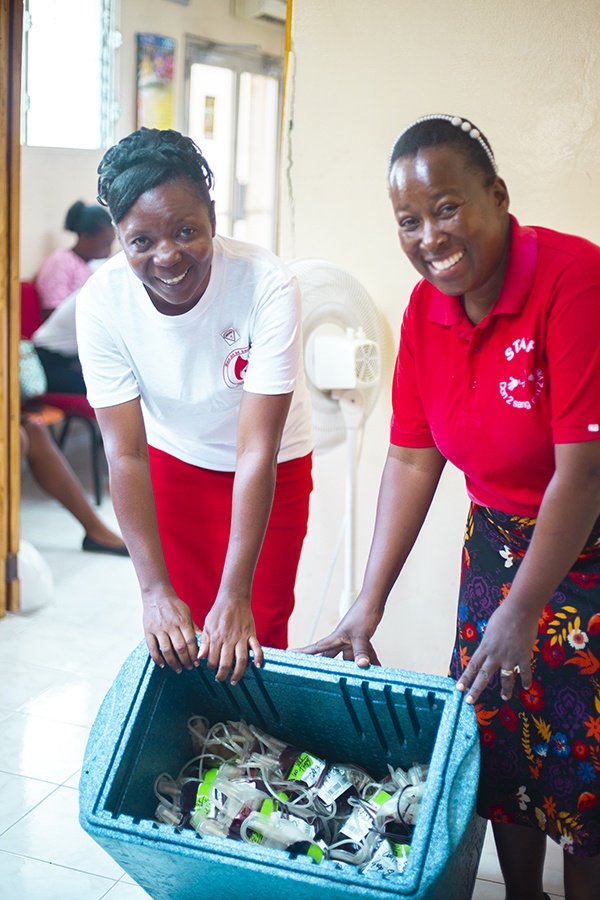
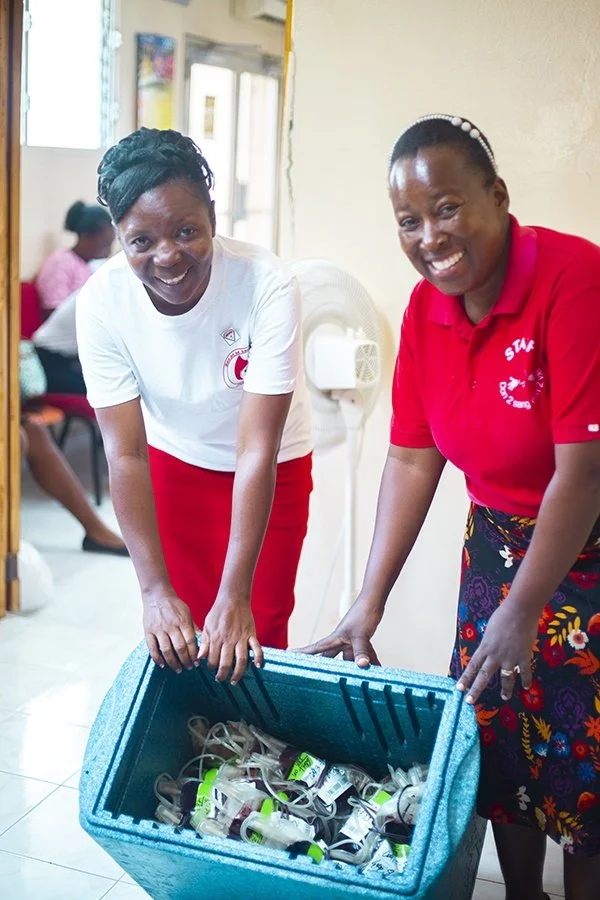
The fast turnaround of the event makes the generous response even more impressivse.
Dozens of people recently showed up at Adventist University of Haiti (UNAH) to donate blood for a student who was hospitalized with a serious blood condition. Sanderva Judeline Joseph, age 24, a fourth-year business administration student, had recently been diagnosed with aplastic anemia, a rare and serious blood condition that occurs when the bone marrow cannot make enough new blood cells for the body to work normally.
In a matter of days, university officials organized a blood drive in coordination with the Ministry of Public Health, the National Blood Safety Program, and a local blood collection organization called Korbit 100%. The few dorm students remaining on campus, plus faculty, family, and friends, lined up to donate 30 units of blood on August 3, 2023.
![Students from the Adventist University of Haiti, wait their turn to donate blood during the blood drive on Aug. 3, 2023. In less than a week’s notice students and faculty and others donated 30 units of blood to help Sanderva Judeline Joseph. [Photo: Jean Judelin and Jean Judenel Isaac]](https://cdn.adventistcontent.org/images/5df200974469ba078555eb4c/902c5b58722186ad8764b02279fd1b92769d196d/300x/Xzc1692455332267.jpg)
“I would like to thank and congratulate the Adventist University of Haiti family for their love, wisdom, and understanding,” said Jean Gracieuse, assistant to the vice president of Student Affairs at UNAH. “By joyfully donating blood for the speedy recovery of Sanderva, each of you has demonstrated that every drop of blood counts, and every drop will turn into blessings for those donating.”
The blood drive was the first one organized on campus and one that left many baffled by how quickly blood units were collected.
“The Red Cross official told me that it is the first time that a blood drive that was launched in less than a week has drawn so many people and collected so many units of blood,” said Dr. Senèque Edmond, president of UNAH. “‘It took us six months of promoting to collect 40 units of blood, and while in UNAH, you collected near that much quicker,’ she told me,” Edmond said.
![Two medical technicians from the blood drive initiative smiles as they show the units of blood collected to help Sanderva Judeline Joseph on the campus of the university on Aug. 3, 2023. [Photo: Jean Judelin and Jean Judenel Isaac]](https://cdn.adventistcontent.org/images/5df200974469ba078555eb4c/1e7f0155db3cf90dd2a49a074d5a14934953c951/300x/Rh81692455375967.jpg)
Thanks to the faculty of the School of Nursing who helped with vital signs of those donating, the faculty of the School of Theology who provided promotional material, and the many students and faculty who donated their blood, the initiative was a success, organizers said.
Roger’s Heandel Syleverin, a fourth-year theology student, said he had to take a test that same day but was glad to donate because he sees donating blood as a tangible manifestation of the “love thy neighbor” command. “Giving my blood is a concrete way of expressing my compassion for the humanity for which Christ died.”
![Roger’s Heandel Syleverin, a fourth-year theology student, took a few minutes to donate blood before taking an exam to close the school year at the Adventist University of Haiti, Aug. 3, 2023.[Photo: Jean Judelin and Jean Judenel Isaac]](https://cdn.adventistcontent.org/images/5df200974469ba078555eb4c/25e8c70278fac0cd610291116e20aa8a8d19b13f/300x/QBc1692455404173.png)
Despite the strong desire from many participants to donate blood, only 30 persons were able to do so, said Clara O. Sanon Jérémie, dean of the School of Nursing at UNAH. “Ms. Joseph never knew she had that medical condition.” Jérémie explained that Joseph had begun to feel weak and had been hesitant to see a doctor. “When she saw a doctor, she was told to go to the hospital, but she delayed in going, and unfortunately, it was after another illness that Ms. Joseph went to see the doctor again, and her anemia had worsened, going from 3 to 2 grams of blood.”
Moved by so many who showed up to bless her, Joseph, whose mother died of the same blood condition, thanked everyone. “I don’t feel alone. I feel part of a big family that loves me,” she said. “Thank you for showing me your deep love. Thank you to the Lord for putting that in your heart. I will continue to fight and rely on Jesus, who can intervene according to His will.”
![Clara O. Sanon Jérémie, dean of the School of Nursing Sciences at the Adventist University of Haiti smiles at students and teacher waiting in line to donate blood as she assist the coordination of the blood drive on campus for Saderva Judeline Joseph. [Photo: Jean Judelin and Jean Judenel Isaac]](https://cdn.adventistcontent.org/images/5df200974469ba078555eb4c/7b40be7d59fcbe0f2c74c6fda4c963431a6e1b85/300x/ngW1692455482059.jpg)
Because the blood condition has weakened her immune system, Joseph indicated that she requires intensive medical treatment and other medical interventions that are not accessible in Haiti at this time. She will continue to receive blood transfusions as she rests at home.
Students and faculty continue to pray for her condition and for ways that may open for her to receive the appropriate treatments outside the country soon.
Fritz Noel, vice president of academic affairs at UNAH, thanked donors and said he was motivated to propose to the university administration to create a blood donor club on campus. As a thank-you gesture, each donor received a T-shirt, a pin with the word “Hero” on it, as well as a special dinner for their contribution during the blood drive.

Naomi Osaka Expanding Tennis Academy to Haiti and Los Angeles: 'All Kids Deserve a Chance to Play'

Play Academy, which Naomi Osaka created with Nike and Laureus Sport for Good, originally launched in Japan last summer.
Naomi Osaka is lending a helping hand to even more aspiring athletes.
The tennis superstar's Play Academy with Nike and Laureus Sport for Good — which first launched in Japan last summer — is expanding to two new locations: Los Angeles, California, and Haiti. Play Academy provides grants and capacity-building training for community organizations in order to boost girls' access to and participation in sport.
"We believe that all kids — especially girls — deserve a chance to play, no matter where they come from or what they look like," Osaka tells PEOPLE. "The more we provide girls with opportunities to get active, the more opportunities we are giving them to become leaders in their communities."
In Haiti, Play Academy will be partnering with GOALS Haiti to reach underrepresented youth. Osaka says they're hoping to "hire more female coaches, and provide girls with education to help build up their confidence, self-esteem and leadership skills."
Play Academy is still seeking community partners in Los Angeles, and aiming to focus on girl athletes from Black, Asian and Latino communities. Osaka notes that interested partners can apply at http://laureus.com/playacademyla.
Both locations have special meaning to the athlete: Los Angeles is where Osaka currently lives and trains, and Haiti is where her father is from.
Osaka's own tennis journey is, of course, part of the inspiration for Play Academy. "Growing up I dreamed about winning Grand Slams and becoming number one in the world," she recounts. "While it was not easy, my family was dedicated to helping me get the access I needed to reach my goals. But unfortunately, not all girls have the same opportunities that I did."
Continues Osaka, "There are huge barriers that girls face in getting active. Some girls, especially those from marginalized communities, never even get the chance to play. The more I learned about these barriers — through my work with Nike and Laureus Sport for Good — the more I felt determined to do something about it."
"It started with conversations and it became this incredible program working with community partners that are committed to leveling the playing field for girls."
And Osaka sees how much sports impact youth in all areas of their lives. She notes that research shows active kids are not only healthier, but happier and more confident. She hopes to be a role model for youth to see all those things are achievable.
"Growing up, I saw my mother work incredibly hard to support me and my passion for play," says Osaka. "She always put others first and encouraged me to embrace my diversity. Every role model I've had has inspired me to dream big. To level up in every way. And while I'm still working on how to be the best role model I can be, I want to show them that I stick to my beliefs and love who I am. Then maybe one day it will help them feel confident that it's okay to be different and create their own lane – as long as they remain true to themselves."
The first group of the new Play Academy partners will be announced summer 2021.
Haiti Calls for Dialogue Over China’s New Law Regarding Hong Kong
PORT AU PRINCE – Haiti has joined the United States and other western countries in condemning the decision by China to enact the National Security Law aimed at curbing protest in Hong Kong.
Last month, China passed the wide-ranging new security law for Hong Kong which makes it easier to punish protesters and reduces the city’s autonomy. Critics have called it “the end of Hong Kong” and the new law came into effect on June 30, an hour before the 23rd anniversary of the city’s handover to China from British rule.
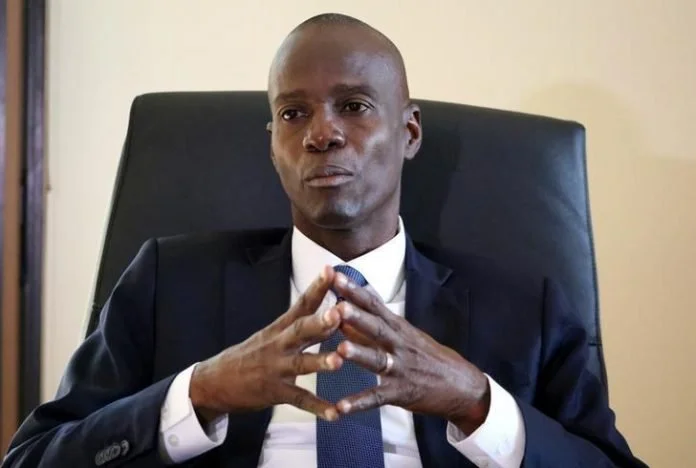
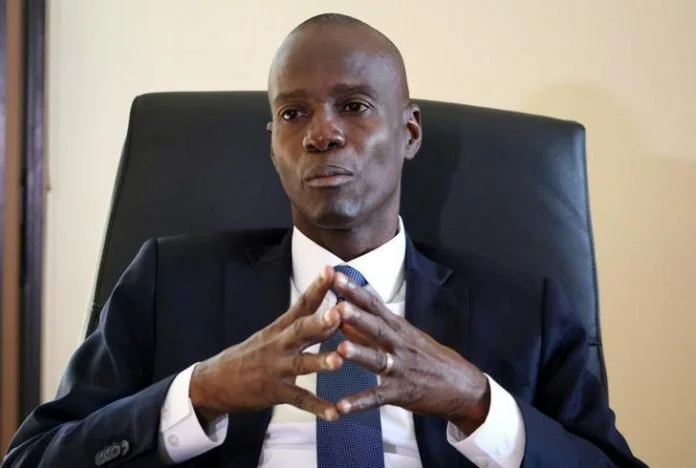
“The Haitian government is concerned about the possible consequences of this legal instrument on the fundamental rights and freedoms enjoyed so far by the Hong Kong people. After an in-depth analysis of this text, the Haitian government realizes that this law systematically violates the fundamental provisions of the Sino-British retrocession agreement as concluded in 1984,” the Jovenel Moise administration said in a statement.
It said it is important to emphasize that the agreement had provided that from the year of handover, in 1997, “the region would enjoy broad autonomy for half a century and that the sacramental principle ‘one country, two systems’, should in any event characterize the relations between the People’s Republic of China and the special administrative region of Hong Kong.
“However, the National Security Law seems to call into question this principle, which the Chinese authorities had nevertheless promised to guarantee at the time of the conclusion of the Retrocession Agreement.
“It should also be added that this law intervenes in a context where the inhabitants of Hong Kong demonstrated massively for the respect and the defense of their fundamental rights, in particular their civil and political rights, recognized under the British administration and maintained in the Retrocession agreement.”
The government said that it “deplores the fact that this law will inevitably lead to a significant, even irreversible, decline in the fundamental freedoms that have ensured the prosperity of Hong Kong and its people for several decades.
“Based on the opacity characterizing the definition of the offenses that this law would punish, such as secession, collusion with foreigners, terrorism and subversion and the heavy penalties that their alleged perpetrators face, the Haitian government urges the Chinese authorities to bring back this controversial legal instrument which will only push back the prospect of establishing the atmosphere of harmony essential between the Hong Kong people and the Chinese mainland authorities.
“In short, the Haitian Government maintains that dialogue remains the royal road by which a solution can be found between the various protagonists involved directly or indirectly in this file,” the statement added.
Last week, Dominica, which like Haiti belongs to the 15-member regional integration movement, said supports the legal efforts by China to maintain law and order in “all of China including that of Hong Kong” even as Roseau indicated it does not get involved in the internal affairs of countries.
Prime Minister Roosevelt Skerrit speaking at the handing over of three bridges funded by Beijing, said while his island does not interfere in the internal affairs of countries, it has nonetheless “recognised that in the international press and in some countries they have attempted to attempt to interfere in the internal affairs of countries.
“And sometimes they do it with impunity and I want to say to you, your Excellency, as I have conveyed to your President and to your government that Dominica stands in total solidarity with all of the legal actions which China has had to take to maintain law and order in the whole of China, including that of Hong Kong and we stand in solidarity with the government of the People’s Republic of China in this regard”, he added.
Dominica enjoys diplomatic relations with China, while Haiti has diplomatic relations with Taiwan, which Beijing considers a renegade province.
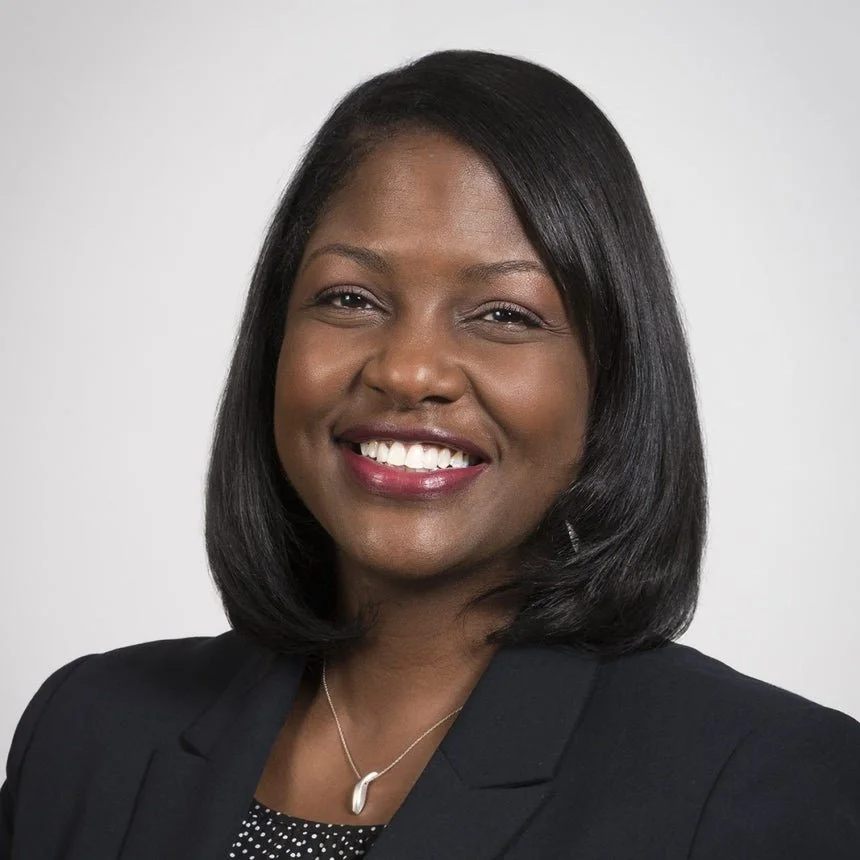
NJ Gov. Phil Murphy Nominates Fabiana Pierre-Louis To The State’s Highest Court
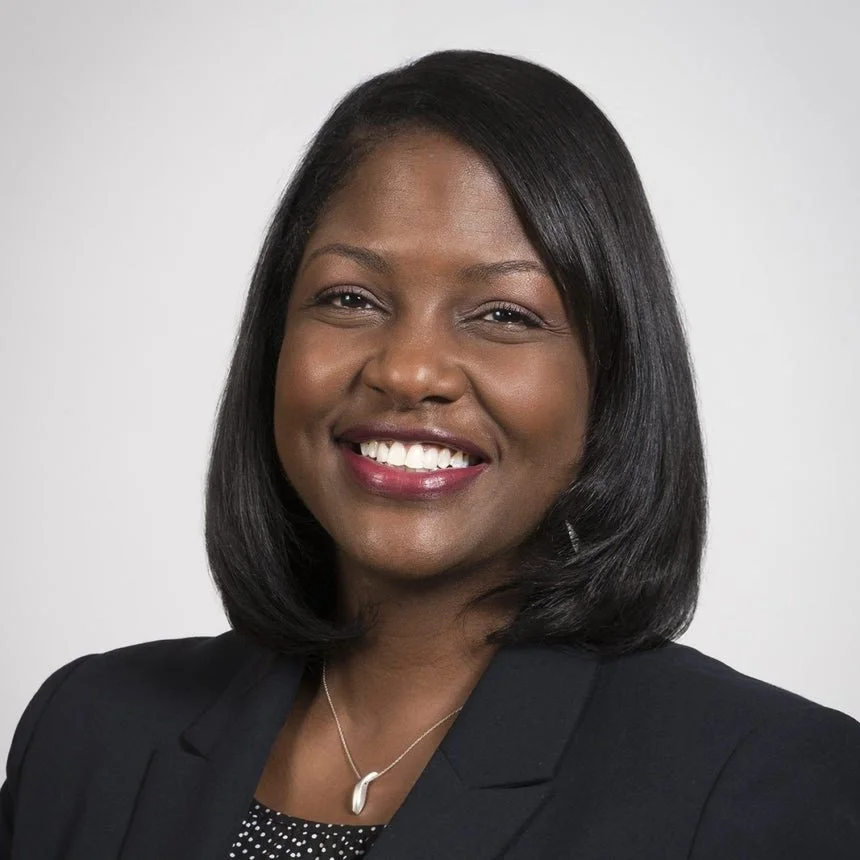
On Friday, NJ Gov. Phil Murphy will announce his first pick for the state’s Supreme Court since taking office, and it will be a historic one.
Murphy will nominate Fabiana Pierre-Louis, a partner at Montgomery McCracken Walker & Rhoads, to be the next associate justice of the state’s highest court. If the state Senate confirms the nomination, Pierre-Louis will be the first Black woman to ever sit on the court.
Pierre-Louis, 39, has not only worked in private practice, but has also worked as a federal prosecutor with the Department of Justice for years.
“It’s hard to put into words the honor that it is to be nominated to the highest court in the state of New Jersey,” Pierre-Louis told ESSENCE. “My goal, particularly as a prosecutor, was always to pursue justice and fairness in the law…It’s just a remarkable opportunity to continue in the very proud tradition of this state’s Supreme Court.”
The daughter of immigrants from Haiti, and a first-generation American, Pierre-Louis believes she will bring a unique perspective to the court if confirmed.
“I am a Black woman. I am the child of immigrants from Haiti. I am someone who is a first generation American citizen here in this country, [the] first person in my family to attend law school, to become a lawyer, someone who’s also lived in a variety of inner cities throughout my life, beginning with my early childhood in Brooklyn, then followed by the remainder of my childhood in Irvington, New Jersey,” she said. “All those experiences bring a unique perspective to the Court that currently is not there.”
To the governor, the nomination was a no-brainer, given his own belief that a judiciary should reflect the diversity in the state.
“A core tenet of my Administration is a commitment to an independent, fair-minded judiciary that reflects the immense diversity of our great state,” Murphy told ESSENCE. “As a first-generation American, Fabiana brings both a sharp legal acumen and the perspective of her own past that will greatly benefit the proceedings of our state’s highest court.”
“New Jersey is a very diverse state,” Pierre-Louis echoing the governor’s statements. “It is extremely important for the judiciary and other government bodies to be a reflection of the community that they serve. So, having people of diverse backgrounds and diverse perspectives sitting on the highest court in these states certainly inspires confidence that the court will rule and have these diverse perspectives in ruling on extremely important cases.”
Pierre-Louis’ own work speaks volumes for her. She graduated from Rutgers Law School with High Honors before going on to clerk for Justice John Wallace Jr. during the 2006-2007 Supreme Court term. From there she went to Montgomery McCracken for about three years, before moving to the U.S. Attorney’s Office for the District of New Jersey in 2010. In 2012, she moved to the Trenton office, and four years later she would be the first woman of color to be Attorney-in-Charge. In that role, she supervised all aspects of criminal matters handled by the office, while also investigating and prosecuting her own caseload, inclusive of matters from child exploitation offenses, to national security matters, to public corruption matters and more.
While in Trenton, Pierre-Louis helped to create the Trenton Reentry Court, which provides assistance to returning citizens to help reacclimating to society.
In 2018, she became the first woman of color to serve as Attorney-in-Charge of U.S. Attorney’s Office in Camden, later returning to private practice in 2019.
“My experience speaks volumes with regard to my ability to take on this position and to successfully execute the duties of an associate justice of the Supreme Court of New Jersey. I’ve practiced in private practice at a law firm doing civil work. I’ve also been a federal prosecutor,” Pierre-Louis said. “I’ve supervised a wide variety of cases and gained the respect of not only the judiciary but of my colleagues and even defense attorneys that I have worked on cases with. And I think my integrity, my open-mindedness, and my ability to communicate well with others is something that has helped me succeed throughout my career.”
If confirmed, Pierre-Louis will be the first Black judge to sit on the court since 2010, when then-Gov. Chris Christie stirred controversy and outrage in the state after failing to renominate then-Justice John Wallace Jr. to a tenured term.
In the New Jersey State Supreme Court, a justice is initially confirmed for seven years. After those seven years, once a justice has served with good behavior and made sound decisions (regardless of who may or may not agree with said decisions), they are typically renominated and reconfirmed for a tenured term, which automatically expires once the justice turns 70, regardless of if that justice was initially chosen by a governor of a different party.
Wallace has been the only justice that has been denied tenure since the state Constitution was adopted in 1947. At the time, he was the court’s only Black justice (and only the second Black person to ever sit on the court), and his tenured term would have automatically expired when he had reached 70 in less than two years.
The fallout was swift, and Christie’s Judiciary Advisory Panel all resigned en masse to protest the then-governor’s decision to replace Wallace. Democrats balked, with the Democrat-led senauntil Justice Walter Timpone was confirmed and sworn in 2016.
It is Timpone’s seat that Pierre-Louis will fill if confirmed, as the justice will reach the mandatory age of retirement in November.
Pierre-Louis’ nomination comes at a time when the nation is in turmoil and many have flooded to the streets demanding justice for Black Lives and accountability from the police, but Murphy stressed that his selection did not come as a result of the current national discourse.
“In addition to her esteemed legal career, Fabiana’s humility, empathy, and character are all traits that make her well-suited to become the first Black woman and the next Associate Justice to serve on New Jersey’s Supreme Court,” Murphy said in a statement.
“I have not chosen to nominate Fabiana because of the current national discussion around race. However, given the challenges which are being brought to the forefront of our society, and the questions which will undoubtedly rise to reach our Supreme Court – core issues of socioeconomic equality and equity – there is no better meeting of an individual and the times,” he added.
Pierre-Louis told ESSENCE that she seeks to be a “fair, open-minded” justice, if nominated.
“I certainly believe that I would…have the ability to listen to all arguments from all sides and make a determination after having done so and looked at the facts and the law before me to make determinations about whether I believe there was an error on the lower court below or not,” she said.
“I think the New Jersey Supreme Court is a perfect model of a very strong court in this country that has historically been very independent,” she added. “I think the role of a Supreme Court justice is to review the cases and ensure that fairness and justice results no matter what the political atmosphere is at the time.”
By: BY BREANNA EDWARDS for Essence.com | June 5, 2020


The 22-year-old Japanese tennis player racked up $37 million in earnings in the past year, more than any other female athlete in history.
Naomi Osaka was only a year old when Serena Williams won her first Grand Slam title in 1999. Nineteen years later, Osaka beat Williams at the U.S. Open final to win her first Grand Slam. It was one of the most controversial matches in Open history, involving three code violations called against Williams. Now the 22-year-old ace has beaten her legendary rival once again, this time for bragging rights as the highest-paid female athlete in the world.
Osaka earned $37.4 million the last 12 months from prize money and endorsements, $1.4 million more than Serena, setting an all-time earnings record for a female athlete in a single year; Maria Sharapova previously held the record with $29.7 million in 2015.
Osaka ranks No. 29 among the 100 highest-paid athletes while Williams is No. 33. It’s the first time since 2016 that two women have made the ranks of the 100 highest-paid athletes, with the full 2020 list set for release next week.
“To those outside the tennis world, Osaka is a relatively fresh face with a great back story,” says David Carter, a sports business professor at USC’s Marshall School of Business. “Combine that with being youthful and bicultural, two attributes that help her resonate with younger, global audiences, and the result is the emergence of a global sports marketing icon.”
The ascension puts an end to a decisive winning streak for Williams, who has been the world’s highest-paid female athlete each of the past four years, with annual pre-tax income ranging from $18 million to $29 million. The 23-time Grand Slam champion has collected almost $300 million during her career from endorsers that have swarmed the 38-year-old star.

Osaka’s rise to the head of the charts was a perfect convergence of several factors. She first proved herself on the court, with back-to-back Grand Slam titles at the 2018 U.S. Open and the 2019 Australian Open. That plus her heritage—a Japanese mother and a Haitian-American father—helped separate her from the pack; at only 20 when she won her Open title, she had a cool factor and an engaging personality.
Osaka’s roots are crucial to her endorsement stardom. She was born in Japan. When she was 3, she and her family moved to the U.S., settling on Long Island and then heading to Florida; her older sister, Mari, also plays on the pro circuit.
She turned pro in 2014, a month before her 16th birthday. She cracked the WTA’s top 40 in 2016 and won her first title in March 2018 at Indian Wells. In the 12 months that followed, she became the first Japanese player to win a Slam, and the first Asian tennis player ever to be ranked No. 1 in the world.
Osaka held dual citizenship growing up but made the wise choice to represent Japan ahead of the Tokyo 2020 Summer Olympics, now postponed to 2021. The decision made her an even hotter commodity for Olympic sponsors, like Procter & Gamble, All Nippon Airways and Nissin, which signed endorsement deals with Osaka to use her around marketing for the Games. She is expected to be one of the faces of the Olympics, which had triggered unprecedented levels of excitement among the Japanese public before the coronavirus outbreak.
A Decade Of Highest-Paid Female Athletes
Tennis has been a winning strategy for the highest-paid female athletes. Before Naomi Osaka arrived on the scene, Maria Sharapova and Serena Williams were the top-earning women of the decade, holding the top spot for five and four years, respectively.
The last top-earning female athlete outside of Williams and Sharapova was Serena’s sister Venus in 2003. Tennis remains the only route for women to rank alongside the top-paid male sports stars. Sharapova, Li Na, Serena Williams and now Osaka are the only women to rank among the 100 top earners in sports since 2012. The highest-paid female athlete every year since Forbes started tracking the data in 1990 has been a tennis player, with Steffi Graf and Martina Hingis the top earners for most of the 1990s.
Tennis players are walking billboards in the only major global sport where men and women have some level of equality in their paychecks, thanks to similarly sized audiences tuning in to watch tournaments. Prize money at the four Grand Slam events has been even since 2007, although men still earn more at lower-level tourneys.
The demographics of the tennis fan make sponsoring top players attractive for brands. At the U.S. Open last year, attendance skewed in favor of women by a ratio of 56 to 44, a rarity at big-time sporting events; 78% held at least a bachelor’s degree versus 35% for the U.S. overall; the average household income was $216,000. This is a group with significant disposable income, ready to buy apparel, sporting equipment, cars, watches and financial services.
Steering Osaka’s brand is powerhouse tennis agency IMG, which leaned on its history with breakout female tennis stars when Osaka started blowing up, having represented Sharapova and Li. Stuart Duguid is her lead agent at IMG.
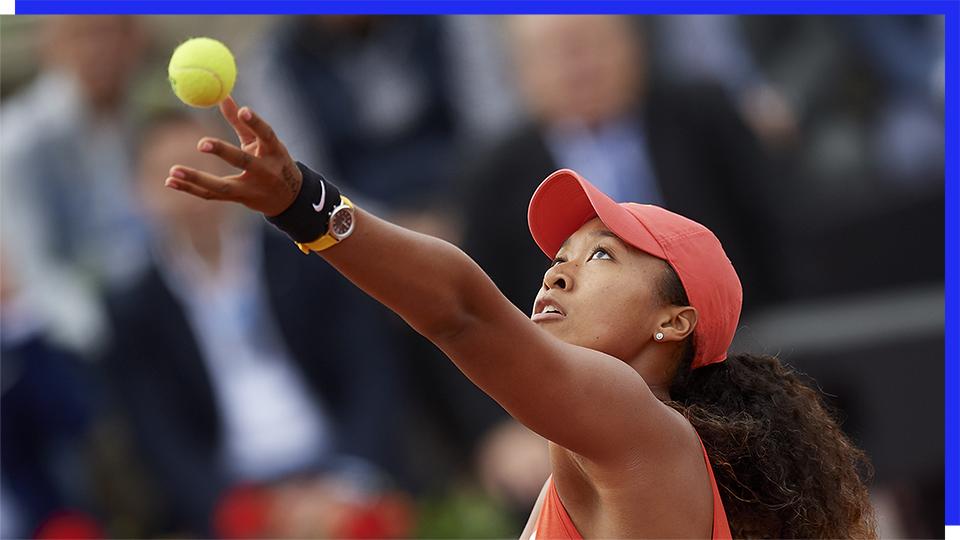
The apparel deal is almost always the biggest endorsement for tennis stars, and Osaka’s timing was perfect there as well as she hit the open market just after winning two Grand Slams. It triggered a free agency bidding war between Nike and Adidas—her previous apparel sponsor. The Swoosh emerged on top and paid her more than $10 million last year in an agreement that runs through 2025.
Osaka secured an extremely rare but lucrative provision in her Nike contract. The sportswear giant always requires its tennis players to be clad in Nike gear from head to toe, without any other logos on their shirts or hats. This is lucrative real estate for marketers because cameras focus closely on the player as they serve or get set to return serve.
Nike never made an exemption for Williams, Sharapova, John McEnroe, Andre Agassi or any of the other marketable tennis stars in its stable. The only exception until last year was China’s Li; Osaka became the second, thanks to massive leverage with Sharapova headed for retirement and Williams turning 39 this year. Her “patch” deals are with All Nippon Airways, MasterCard and ramen noodle maker Nissin Foods.
Nike plans to launch an Osaka streetwear line in Japan in the fourth quarter, featuring hoodies, leggings and shirts, as well as a new collection each season. There will not be any tennis apparel.
Osaka now has 15 endorsement partners, including global brands like Nissan Motor, Shiseido and Yonex, whose tennis racquets she has used for more than a decade; almost all are worth seven figures annually.
Sharapova was 17 when she defeated Williams to win the 2004 Wimbledon crown. IMG quickly mobilized to lock up lucrative long-term deals for the Russian, who ranked as the highest-paid female athlete for 11 years before injuries and a suspension for taking a banned substance dented her earnings.
IMG got an education on marketing a female Asian tennis star with China’s Li. She became the first Grand Slam singles champion from Asia, man or woman, when she captured the 2011 French Open at age 29. IMG quickly secured seven multimillion-dollar deals, pushing her off-court earnings from $2 million to $20 million. She challenged Sharapova as the sport’s top earner until her retirement in 2014.
IMG used its expertise in Japan with Kei Nishikori, who has never won a Grand Slam but is the most successful Japanese male player ever, resulting in an endorsement portfolio worth $30 million a year.

Sharapova, Li and Nishikori paved the way for Osaka’s marketing breakthrough. “We were fortunate to have a very sophisticated office in Tokyo that already had the experience with Kei,” IMG’s head of tennis Max Eisenbud told Forbes last year. “The relationships in that region are important.”
With plenty of endorsement cash, Osaka partnered with several brands last year, with significant equity components, including emerging sports drink BodyArmor and Hyperice, which makes recovery and movement products.
BodyArmor marketing exec Mike Fedele says Osaka was one of the inspirations for its “Only You” ad campaign launched this week. “Naomi is fiercely dedicated to perfecting her game on the court and a huge part of that is what she does off the court with her training, nutrition and hydration,”he says.
“I’m really interested in seeing a young business grow and adding value to that process,” Osaka told Forbes last year. “I tasked my team with finding brands that align with my personality and my interests.”
Brands are lining up to get into the Naomi Osaka business.

Biden Campaign Adds Karine Jean-Pierre As Senior Adviser

Joe Biden has hired Karine Jean-Pierre, a veteran African American political strategist, as a senior adviser to his presidential campaign as the presumptive Democratic nominee pivots to the general election campaign.
Jean-Pierre will advise on strategy, communications and engaging with key communities, including African Americans, women and progressives.
“This really is the most important general election in generations,” Jean-Pierre told The 19th, a nonprofit newsroom, in an exclusive interview Monday night. “I’ve known Joe Biden for 10 years now. I believe he’s a man of integrity, he’s a man who knows how to lead, he’s a man who knows how to use the levers of government to help people and he’s the man who could beat Donald Trump in November. For me, as a black woman, I just could not sit this out.”
Jean-Pierre, 43, will begin her role with the Biden campaign next week. She gained prominence in 2008 as the southeast regional political director for then-candidate Barack Obama’s history-making presidential campaign.
She served in the Obama White House as regional political director before working as deputy battleground states director on his 2012 reelection. In the latter role, Jean-Pierre handled political engagement in key states including Ohio, North Carolina, Pennsylvania and Florida.
Born in Martinique to Haitian parents and raised in New York, Jean-Pierre worked on former Maryland governor Martin O’Malley’s 2016 Democratic presidential bid before joining liberal group MoveOn as chief public affairs officer. She is also an MSNBC political analyst.ADnull
Separately, the Biden campaign announced Tuesday that it hired Obama campaign alum Julie Chavez Rodriguez — who previously worked as co-national political director for Sen. Kamala D. Harris’s presidential campaign — as a senior adviser, making her the highest-profile Latina to join the team as Biden struggles to shore up his support with Hispanic voters headed into November.
Biden’s swift rise this spring was fueled largely by black voters — particularly black women, who are regarded as the backbone of the party and seen as key to a winning general election coalition in the fall. Energizing these voters will be crucial to the record turnout needed to topple Trump. Black turnout was down in 2016 from historic highs in 2012 and 2008, when the country elected its first African American president.
Jean-Pierre said her hiring signals that Biden “understands how he became the presumptive nominee.”
“Black voters, black women, have helped him get to this point,” she said. “When everybody was counting him out, black voters spoke out. I am so proud and excited as a black woman watching how black women have exerted their power … we had to say loud and clear this (the actions of the Trump administration) is not okay.”
Valerie Jarrett, former senior adviser to Obama, called Jean-Pierre “a superstar” who shares Biden’s values of equality, fairness and justice.
“She will be able to communicate his agenda in an authentic way that I think will resonate importantly with African American women, but also with the entire country,” Jarrett said in a telephone interview. “It’s a coup for vice president Biden and his campaign.”
By Errin Haines | The 19th and The Washington Post May 20, 2020
This story is part of a collaboration between The Washington Post and The 19th, a nonprofit newsroom covering gender, politics and policy.
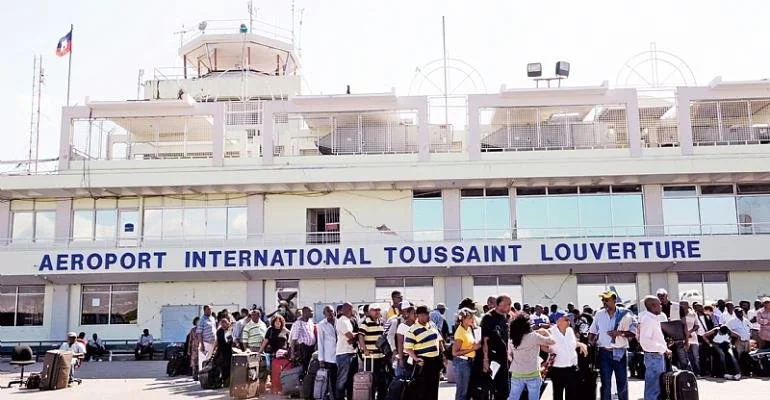
Coronavirus: Haitian Leaders Urging Authorities To Secure Airports And Bus Stations As Virus Hit The Dominican Republic
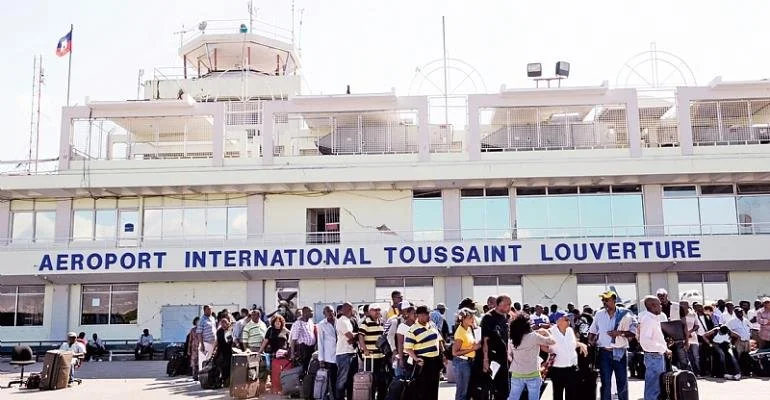
According to reports from local media like Bon Déjeuner! Radio (BDR! Live), VOA, and Radio Television Caraibes, the opposition leaders, health leaders, and other political leaders across Haiti are asking the Haitian Government officials and other agencies officials across Haiti to keep their eyes on the tourists from the U.S. and other countries who are entering the country due to Coronavirus fear as death are growing overseas.
The opposition leaders and other political leaders across Haiti are afraid that the Coronavirus hit Haiti when the country doesn't have good hospitals and types of equipment to solve the problem. That virus is from China and it is reportedly in the Dominican Republic now, so this is why the leaders in Haiti are making sure that the virus stays overseas because Haitian authorities are not ready for cases in a poor country like Haiti. Unfortunately, President Jovenel Moise and the new Prime Minister Jouthe Joseph are quiet about how to secure the security and the safety of Haiti Citizens.
As the Coronavirus death toll going up in Asia countries, Italy, the United States, and others, the leaders in Haiti are making sure there are no cases in Haiti because the health leaders said Haiti doesn't have the proper equipment for such a thing.
"It's sad that the Coronavirus is already in the Dominican Republic, and I hope the Dominican Republic leaders do their best to protect their Citizens like we are doing our best to protect our Citizens in Haiti.", said Mr. Werley Nortreus and other political leaders across Haiti.
As the virus is growing overseas, even the employees at the government-run, General Hospital in Haiti’s capital, Port-au-Prince, fear the day when the first coronavirus patient checks in.
Dr. Jacques Mackenzie told VOA that no measures have been taken to protect the staff at the nation’s largest health facility if Coronavirus hit the country.
“It’s sad to say this but the hospital receives a lot of patients daily and we are not — I repeat — we are not ready, as far as I know, to diagnose a person who has the coronavirus,” he said, adding that they don’t even have the test to determine if someone is infected.
According to reports, the Dominican Republic health officials are now reporting five cases, including a 56-year-old Dominican woman who lives in Italy, and a 12-year-old who recently returned from a European vacation with his family. Both are in quarantine at home. There are now a total of 15 confirmed COVID-19 cases in the Caribbean, and that's why Haiti leaders are making sure that Haiti stays clean without Coronavirus in the country.
"I am calling the Government officials and other agencies officials to keep their eyes on the tourists from the U.S. and other countries entering the country to make sure that they are not infected because Haiti is not ready for this mess.", said Mr. Werley Nortreus, a political leader and founder of Vanyan Sòlda Ayiti and A New Haiti Before 2045 (ANHB 2045).
The number of people in the Caribbean who have contracted the novel coronavirus continues to grow with the Pan American Health Organization confirming Friday an additional positive case in the Dominican Republic and eight new ones in the French overseas territories, bringing the total to 12.
“The diagnosis is biological so the laboratory has to confirm the diagnosis. We don’t have the test. We, the medical personnel, have not received any instructions at all with regards to detecting coronavirus cases, nor how to protect ourselves. We are seeing (in the news) all the equipment other countries have to deal with the coronavirus, their doctors, their technicians are well equipped. We, on the other hand, have never received anything that would allow us to face the possible arrival of coronavirus in the country.”, said health officials and Doctors in Haiti.
French Guiana is reporting five cases of COVID-19 while Martinique confirmed two cases. The cases are in addition to three previous cases — two in St. Martin and one in Saint Barthelemy — that had been previously reported along with a previously confirmed case in the Dominican Republic. No information was released on whether any of the 12 patients have died.
As the Coronavirus death toll going up in Asia countries, Italy, the United States, and others, some leaders in Haiti, including Mr. Werley Nortreus are making sure there are no Coronavirus cases in Haiti and the Caribbean.
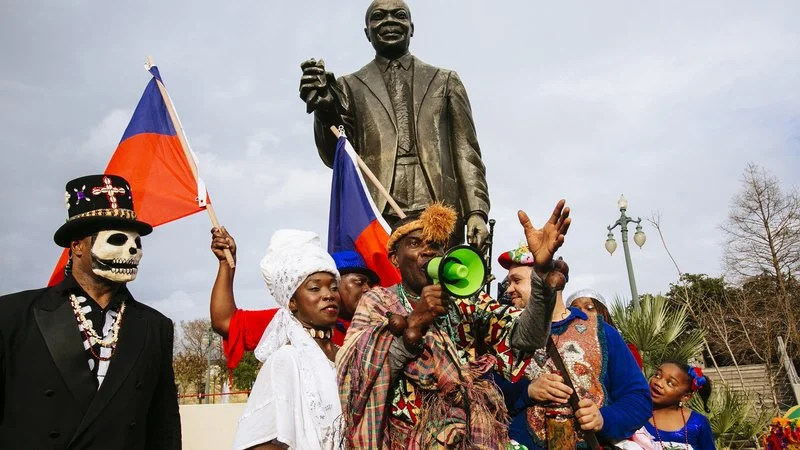
Krewe Du Kanaval Honors The Haitian Roots Of New Orleans
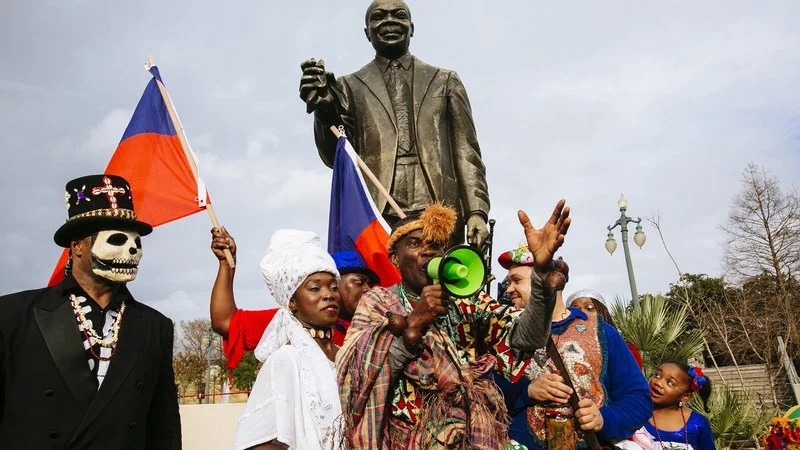
It's Mardi Gras season and in North America, no celebration is more famous than the one put on by the people of New Orleans. For two weeks, local groups called Krewes organize balls, parades and dance parties. Colorful plastic beads are everywhere.
A few years ago, a new krewe sprung up with the aim of celebrating the Haitian roots that run deep through the city's cultural identity. Krewe Du Kanaval was co-founded by Win Butler and Régine Chassagne, best known as the husband-and-wife duo who front the Grammy award-winning rock band, Arcade Fire. These days, the Canadian musicians are residents of New Orleans and good friends with Ben Jaffe of the storied Preservation Hall Jazz Band.
Butler says the idea to start the Krewe stemmed from a trip he took with Jaffe to Haiti. It was Jaffe's first time in the country.
"I remember when we first got to the central plateau [of Haiti]," Butler said. "There was a brass band that played for us when we got there. Ben's almost crying. It sounded like if you got in a time machine and went to New Orleans — pre-swing, pre-jazz New Orleans — and it's pretty powerful."
And it wasn't just the music: the architecture, the food and the people reminded Jaffe of home.
Thousands of Haitians landed in Louisiana in the early 19th century after fleeing their home country's revolution. By 1809, more than 10,000 Haitians had arrived in New Orleans, doubling the population of the city.
Along with the Haitian people came their culture, establishing a deep relationship between the two places. Many locals refer to New Orleans as the northernmost Caribbean city. Celebrating this connection was the guiding principle for Butler, Chassagne and Jaffe when they founded Krewe du Kanaval in 2017.
"That was sort of the idea," says Butler. "What if we did this thing that everyone wants to do anyway, for a party? And we actually did something good with it. [We're] just paying tribute to the root of it."

Krewe Du Kanaval founders Ben Jaffe, Regine Chassagne and Win Butler.Kanaval/Courtesy of the artist
For Chassagne, the connections are also personal. Her parents are native Haitians who fled the country in the 1960s during the 13-year rule of dictator Francois "Papa Doc" Duvalier. Her family first landed in the US, but eventually ended up in Montreal, where Chassagne grew up. And it wasn't until 2008, when she was in her 30s, that she visited Haiti for the first time.
But Chassagne says she inherited the Haitian culture through her parents.
"You just absorb it. You absorb the inflections, you absorb the humor, certain reactions to certain events," she says. It had always felt like an insular experience to her, but she says, "When I went to Haiti, I really realized this is why! This is all why."
Chassange has been publicly thinking about her relationship to her parents' home country at least since 2004; the first Arcade Fire album, Funeral, came out that year and included the semi-autobiographical song, "Haiti."
"And then when we realized that we were going to starting selling out venues," says Chassagne, "I was like, okay, maybe I will not work at the bakery anymore. Then I started to think about how to raise money, and how to be efficient in the gifts that I've been given and how to make them useful."
The answer came to her in 2010, when Chassagne co-founded Kanpe, a foundation that supports an array of health education and agriculture programs in Haiti. The Krewe Du Kanaval celebrations raise funds for the foundation.

The inaugural appearance of Krewe du Kanaval in February 2018.Erika Goldring/Courtesy of the artist
Paul Beaubrun, a Haitian singer-songwriter based in New York and a member of Krewe du Kanaval, says Carnival is like therapy for Haitians.
"You scream. Some people you curse, if you want, because you have to let your frustrations out," Beaubrun says. "So it's a very important tradition for us. And at the same time, it's that time where you almost begin your year. We call that "N'ap boule" — that means you're burning everything and then you start anew. So it's a very important tradition for Haitians and it's a lot of fun, you know, so it's like a win-win."
Beaubrun says at Carnival in Haiti, music hits you from all directions. It's at the center of the celebrations.
"There's this part where you put a band on the float and people are dancing, singing too, and then they have stands. And then it's like millions of people everywhere! Dancing, screaming ... so many things happening!"
Like Butler and Chassagne, Beaubrun says you can just feel the connections between the music of Haiti and New Orleans. And he should know: Beaubrun is a member of the prominent Haitian fusion band, Boukman Eksperyans, which rose to fame playing Carnival in Haiti in the early 1990s. The group brought their music to the Krewe Du Kanaval ball last year.
"It's just to that exchange between New Orleans and Haiti," Beaubrun says, "to really show that similarity, the influences. That's what Krewe Du Kanaval is. We just bring it together."
Butler says the theme of the Krewe Du Kanaval parade this year is "Merci Haiti" — simply, "thank you, Haiti."
"We're just trying to pay respect to all that we have [been] grateful for — that Haiti has contributed — and just to give back. I think that's the idea of the whole thing," he says.
This year's Krewe Du Kanaval features Arcade Fire, the Preservation Hall Jazz Band, DJ Michael Brun, Jillionaire, Pierre Kwenders and Lakou Mizik. The parade, ball and party all go down this weekend.

Win Butler at Krewe Du Kanaval.Courtesy of the artist

How HP is funneling plastic from Haiti into laptops and printer supplies

The company is one of several working together to reduce plastic waste.
- Every year, some 8 million tons of plastic end up in the world’s oceans.
- HP is working to help collect some of that plastic and use it to make a range of products, from ink cartridges to laptops.
- HP is part of a consortium of companies working with the nonprofit Lonely Whale to reduce and recycle plastic.
The next ink cartridge or computer gear you buy might have an invisible but noteworthy history: Some part of it may once have been an empty soda bottle plucked from a distant shoreline.
Last fall, HP unveiled a laptop line made partly from recycled plastic, and at this year's CES technology show, it introduced all-recycled accessories such as totes and backpacks. Most of the Palo Alto, Calif.-based company's ink cartridges are already 45 percent or more recycled plastic, and it aims to use 30 percent recycled plastic in all of its printing and personal computing products within the next five years. Such initiatives contributed to the company's No. 1 spot on the America's Most Responsible Companies ranking Newsweek recently published.
Every year, some 8 million tons of plastic end up in the world's oceans, harming marine life and contaminating food supplies. As the problem becomes painfully visible in pictures of floating debris and ensnared animals, some companies are recognizing the imperative to act. In 2016, HP announced it would use plastic collected in Haiti to make ink cartridges, and since then it has diverted more than 35 million polyethylene terephthalate (PET) bottles — the kind often used for water and sodas — into its products.
Ellen Jackowski, HP's head of sustainability strategy and innovation, says she often gets asked about whether the company is using renewable energy. The answer is yes, but only 1 percent of the company's carbon footprint is its own operations. The majority, she says, is in the energy people use when they plug in the products and in the materials used to make those products.
A multi-tiered approach
The company takes a multi-pronged approach to managing plastic. First, it tries to reduce its plastic use by making products lighter and slimmer or by using alternative materials such as molded pulp for protective packaging. But sometimes plastic is unavoidable, and that's where recycling comes in.
Some of the recycled material comes from its own devices and ink cartridges, which customers can bring to stores or, in some cases, ship directly to the company. But HP is trying to build a bigger supply chain that begins with waste plastic processed in Haiti and elsewhere.
As an island nation with no municipal garbage collection and uneven access to clean water, leading to reliance on bottles, Haiti has abundant waste plastic.
"If we don't create a collection community for that plastic, the plastic ends up on the beaches and flowing into the ocean," Jackowski says. "Instead of those plastic bottles being waste, they can be a job or an income opportunity."
Individual collectors harvest plastic and sell it to HP's recycling partner in Haiti. Currently, the plastic is shipped to a washing facility in South Carolina then processed further in Montreal. A new $2 million washing line is in the works.
"By investing in that recycling infrastructure in Haiti, it takes costs out of the supply chain, Jackowski says, "but it also elevates the capabilities of what we're building."
Working together
Other companies are moving in a similar direction. A consortium called NextWave, which includes HP, Dell, IKEA, GM, Herman Miller and five other companies, fosters collaboration on how to integrate more recycled plastic in supply chains. Dune Ives, executive director of the environmental campaign group Lonely Whale, launched NextWave to engage corporations on the issue.
"There are a lot of recycled plastics for which there are no buyers. We can send them to recycling centers, but it doesn't mean they're going to get recycled," Ives says.
NextWave members share ideas and lessons learned on sourcing and reusing plastic. Ives shares the story of one unnamed company, for example, that had to shut down a processing plant because the plastic it was recycling smelled bad. The material wasn't being dried properly, they learned from another NextWave member that was already using the same type. The group helped the company solve the problem, and now its recycling facility is back online with plans to scale up.
NextWave began with HP rival Dell's effort to integrate plastic material into packaging. But a driving idea behind the consortium is to have even competitors working together.
"Having HP join was really important to us, because they have so much experience in this area and we all really needed to benefit from that," Ives says. The company's progress in rolling out new products featuring recycled plastic, she adds, "absolutely exceeds all expectations that we had for them at this stage."
Other examples of recycled products from NextWave members include bike company Trek's mountable water bottle cage made from fishing nets recovered off the coast of Chile and carpet tiles from Interface made out of dumped fishing gear. Of course, these efforts are capturing only a tiny fraction of the waste plastic heading into the world's waters, but the hope is that they can provide a model for others to follow.
"These companies, by themselves, might not have continued to move forward if they didn't have their peers supporting them," Ives says. "They push and drive each other to go further than they thought they could."
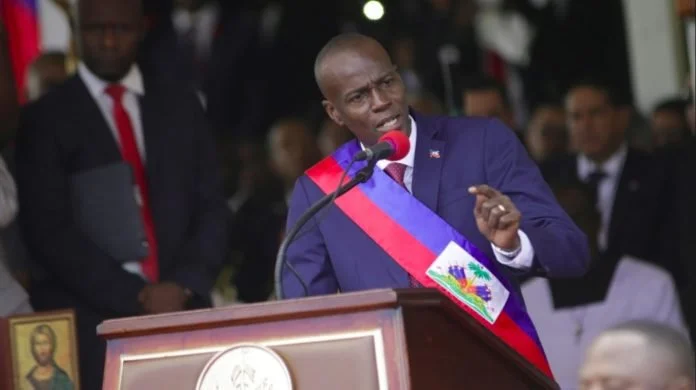
Moise Calls for Solidarity in Building a New Haiti
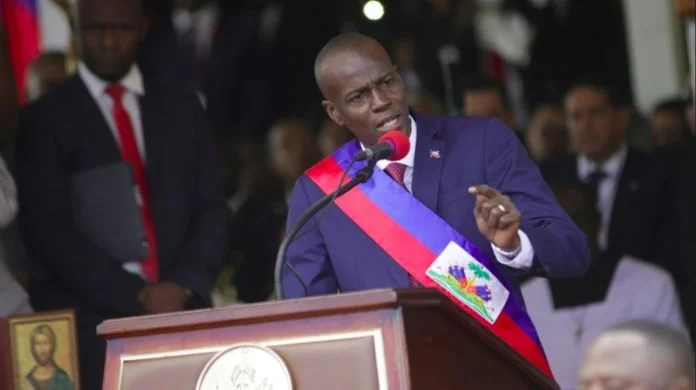
PORT AU PRINCE, Haiti (CMC) – President Jovenel Moise says 10 years after an earthquake devastated Haiti and forced the country into an unprecedented state of cooperation, the country is now offering “another image” to the world.
Moise had joined Haitians and the international community on Sunday in observing the 10th anniversary of the earthquake that killed an estimated 300,000 people and caused widespread damage in the country.
Moise, who came to office in 2017, is facing pressure from the opposition political parties to step down from office over allegations of corruption and other charges. The opposition parties have been staging violent street demonstrations in support of their calls.
Moise has denied the allegations and is moving towards forming a government of national unity despite the opposition boycotting the talks on the matter.
But Moise said that the “great inter-Haitian solidarity where compatriots, with their bare hands, freed our brothers and sisters from the masses of reinforced concrete,’ has been replaced with anger and hatred.
“We have seen people risking their lives to save the life of someone whose only voice they know is the trickle of voices filtering through the rubble. We have seen traders empty their stores to offer drinks and food to children on their own. We have seen women carrying men twice their weight on their backs, for miles and miles so that they can receive treatment.”
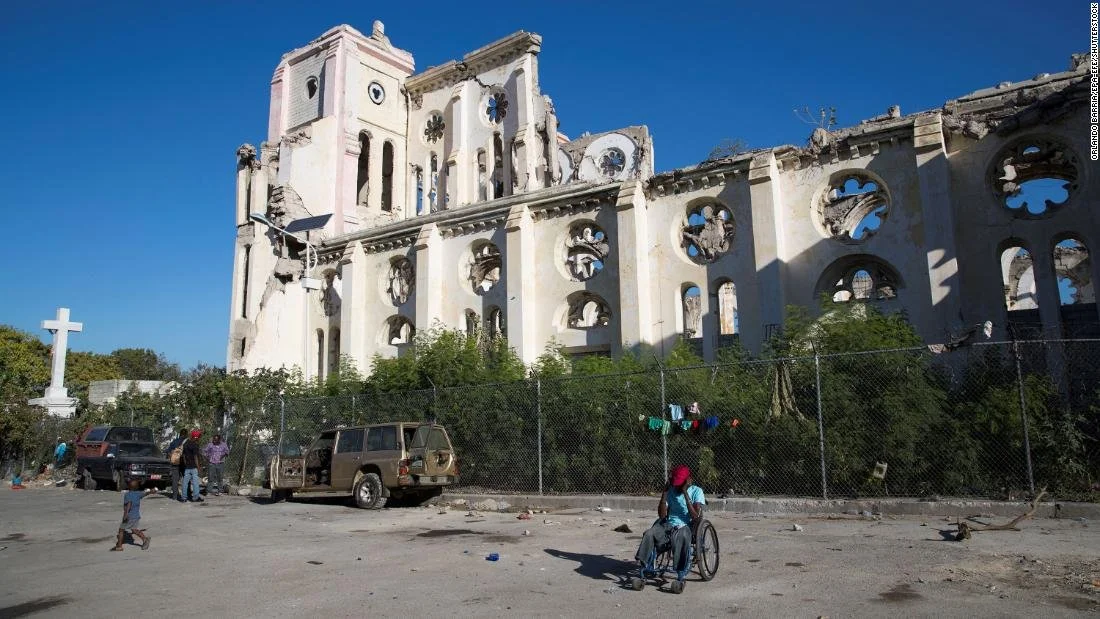
Ten years after a devastating earthquake, some Haitians say they're losing hope
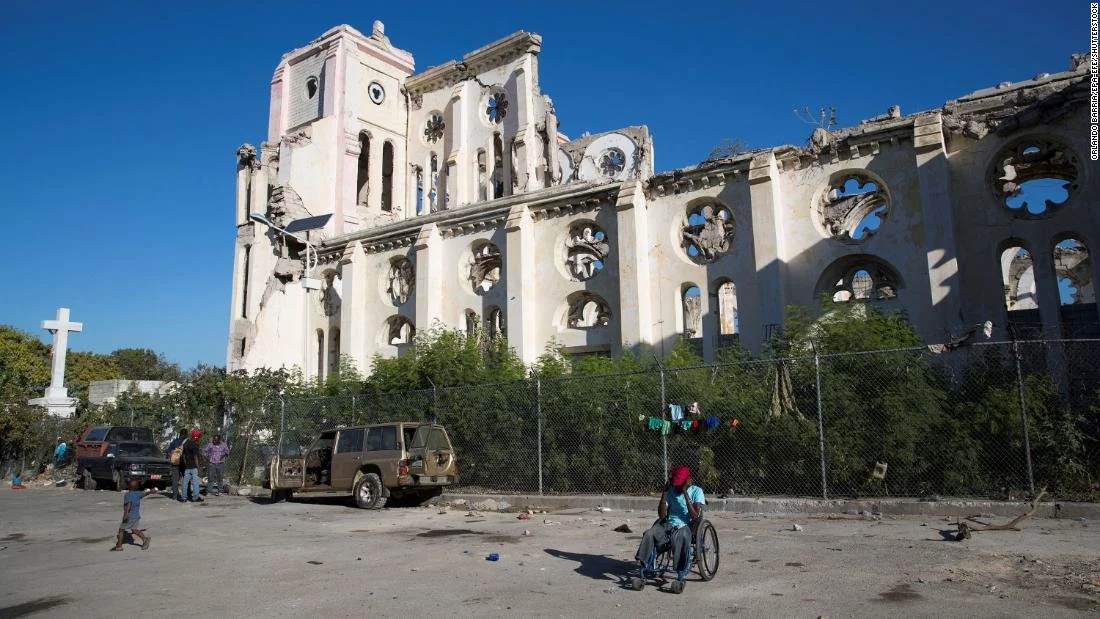
Ten years ago today a massive earthquake struck Haiti, transforming capital city Port-au-Prince into a nightmare in seconds. Some 70,000 people would be buried within a week's time. Hundreds of thousands more would follow them to the grave.The devastating force of the 7.0 quake on January 12, 2010, split the country's history into a before, and an after. Before had been a long, tangled history of dictatorship, occupation and resistance, shot through with the pride of a slave revolution that defeated Napoleon Bonaparte's army. After was unimaginable -- a blank slate."I think they just dropped a bomb on Port-au-Prince," is what Francoise Chandler, a local UNICEF communications officer, told her daughter after the first tremor struck. She had just picked her up from school."Everything was shaking, and there was a lot of noise. I thought it was like September 11 in New York, because I had been in New York in that period," Chandler says. Thick dust rose in the air around their car."Are we going die?" she remembers her daughter asking. Chandler replied, "I don't have the answer to that, but if we're going to die, we'll die together."
Her daughter stopped asking questions then, she says.
Hope and hopelessness
According to the US Geological Survey, the earthquake itself lasted less than 30 seconds. The immediate aftermath was horrifying. But an outpouring of solidarity within the country, and between Haiti and the rest of the world, gave many Haitians hope."The world really did come together around Haiti," says CNN's Sanjay Gutpa, who covered the aftermath extensively and even treated injuries while on the ground. "Not every part of the world, but I think if you were to turn on your televisions, if you were to read the newspaper, if you were to talk to your friends, colleagues at work, there was this collective outpouring of support and compassion for Haiti."
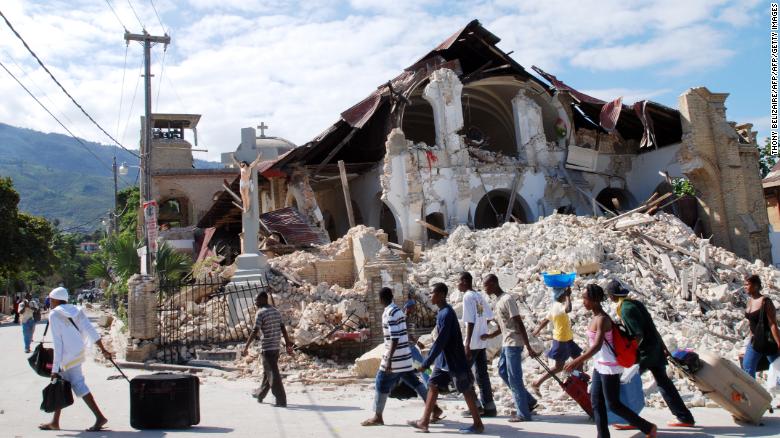
People walk by the collapsed Sacre Coeur Church in Port-au-Prince two days after the earthquake that devastated Haiti on January 12, 2010.The world sent firemen from New York City, rescue workers from Iceland, hospital tents from Israel, sniffer dogs from China, oil from Venezuela. NGOs that were already in the country leaped into action. Chandler recalls working out of an open-air tent in the days after the quake because the organization's offices had crumbled.International donors pledged millions, which eventually tallied up to more than $10 billion for reconstruction. The earthquake had been particularly lethal due to the fragile construction of Haiti's buildings, which crashed down upon their inhabitants."Right after the earthquake I felt a lot of hope, because I thought emerging from the catastrophe would make everyone a better person in the service of this country," says Harold Prévil, an obstetrician and head of Sacre Coeur hospital in Haiti's northern city of Milot.But a decade later, he and many others tell CNN they are now disillusioned and have far less hope for their country than they did in the gory aftermath of the earthquake.
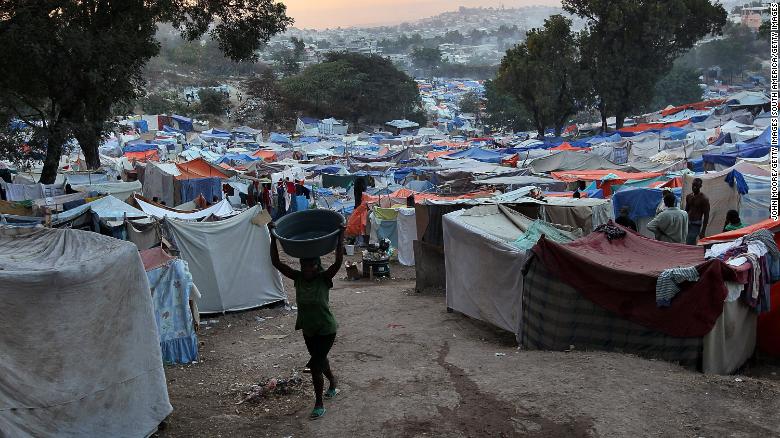
The earthquake left many thousands homeless and turned large parts of Port-au-Prince into refugee camps."A lot of money was spent after the earthquake, but the results are meager," Haitian President Jovenel Moise told CNN in an interview Sunday.Moise has publicly acknowledged how little Haiti had had moved forward in the past decade. "Despite our best efforts to rebuild after the earthquake, the scars of this tragic event remain," he said in a statement on Saturday. "Ten years on, we still lack the basic infrastructure and services to support the people of our country."
Haitians are 'living with permanent stress'
Parts of Haiti that were destroyed in 2010 still have not been rebuilt, including the seat of government, the National Palace. And there is little sign that buildings which have been reconstructed are structurally sound enough to keep inhabitants safe through the next earthquake.Whiplashed between disasters both natural and political over the past decade, many Haitians have not had a chance to rebuild mentally or emotionally either, says Marline Naromie Joseph, a Haitian psychologist who has worked with Medecins sans Frontieres (Doctors Without Borders) for 12 years. She was on the frontlines of emergency medicine in the aftermath of the quake, working with patients who had lost limbs, children who had lost their parents and colleagues who had borne witness to the quake's horrors.Joseph recalls witnessing the first bodies being collected in a city street on the day after the earthquake."The sound that the bodies made falling into the truck was nauseating," she says. Further along that same road, workers were separating the dead into piles of children and adults, she recalls -- an image which would return to her every time she walked on that street for years and which she eventually realized was evidence of her own trauma.Haiti Earthquake Fast Facts"Even though there were no longer the children, no longer the dead, it was as if it were the first day that I was seeing them," she says. "My brain had saved this image and became stuck on it."Some patients still have flashbacks to the sensation of the earth moving beneath their feet when revisiting certain settings -- like the hospital's operating room, she says.According to Joseph's diagnosis, the country's misfortunes over the past decade have piled stress upon trauma. In the years since the earthquake, the country has been pounded with hurricanes, floods and drought. It's also been betrayed by human error -- tied to a devastating cholera epidemic, for example -- and government corruption that has sparked Haiti's current political unrest."We can live with stress, but living with permanent stress will not leave the body without consequence. Eventually, you fall directly into exhaustion," says Joseph, who notes she has observed more mentally ill people living on the streets than before the earthquake.
The country is crippled by hunger, inflation and fuel shortages
One particularly bitter frustration on the earthquake's 10-year anniversary is how weakened the country's economy and infrastructure seem to be."Ten years after, I am a physician, I am the chief executive officer of a 210-bed facility, but believe me, I am hopeless," says Prévil, the doctor. "Haitians have not had the opportunity to do things differently and better."Some things are better. Haiti's medical system has widened since the quake, and UNICEF reports that no new cholera cases have been diagnosed since February last year.
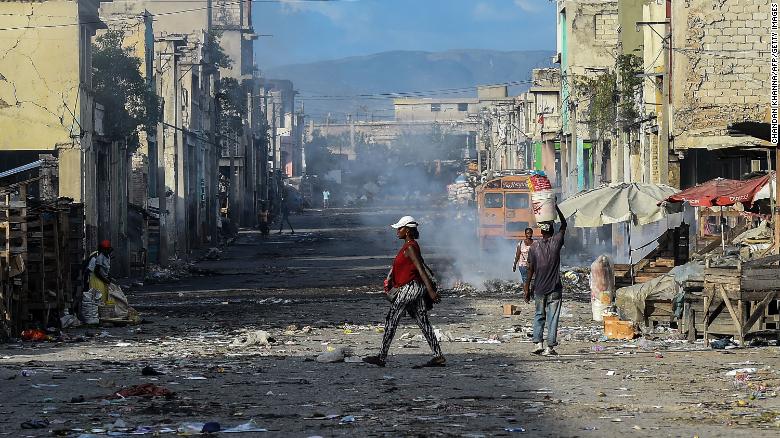
People walk in downtown Port-au-Prince on December 20, 2019. The country's infrastructure remains in dire need of repair.But Prévil and Joseph both say that the country's medical and mental health resources would nevertheless be insufficient for another disaster on the scale of the 2010 earthquake."I would not say we have an institution capable of dealing with all the psychological trauma of another catastrophe like that," Joseph says.The country is currently gripped by skyrocketing inflation, while fuel shortages slow the gears of industry and government. According to a new report by the UN's disaster relief agency OCHA, rising prices mean even basic supplies are now out of reach for the poor.Hunger also threatens Haiti now. Forty percent of Haitians will face food insecurity by March, the agency predicts. For least 1 in 10, food insecurity will reach "emergency levels."In his Saturday statement, Moise rebuked the rest of the world for failing to follow through on its promises."The initial flurry of attention received from the international community quickly quieted down, with many of the financial pledges not delivered -- causing devastating consequences for our recovery," he said."Little of the aid that was received ended up in Haitian hands and much of the money that was so generously given was not spent on the right projects and places," Moise added, echoing a common criticism that aid money focused on short-term relief rather than sustainable, long-term systems.By 2012, $6.4 billion of the more than $10 billion pledged had been disbursed, according to a report by Paul Farmer, a Harvard medical anthropologist who served as the UN's Deputy Special Envoy for Haiti.And while there is little consensus over how much more of the money has been spent, the report on the first two years of spending supports Moise's point. It noted that "less than 10 percent was disbursed directly to the [Government of Haiti] using its systems; less than 0.6 percent was disbursed directly to Haitian organizations and businesses as program grants."
Claims of corruption have fueled mistrust
What Haiti's government has done with the funds it had at its disposal is also a cause for complaint for many citizens.
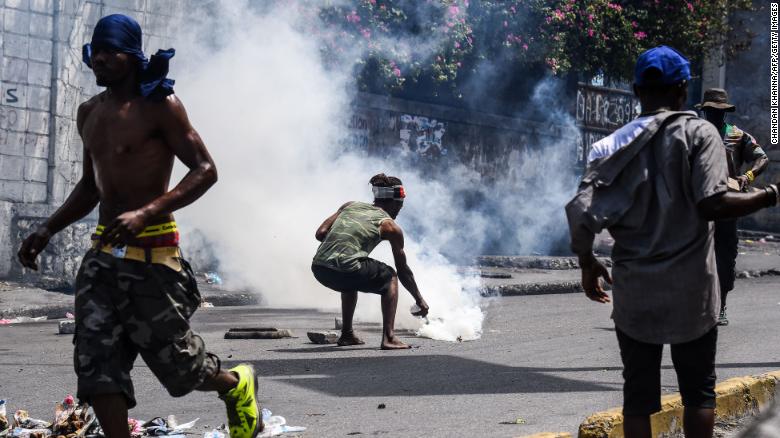
A demonstrator douses a tear gas canister with water during a protest demanding the resignation of President Jovenel Moise in Port-au-Prince on September 27, 2019.For nearly two years now, Haiti has been in political crisis -- sometimes punctuated with country-wide lockdowns -- over dissatisfaction with the government and how it has dealt with allegations of extraordinary corruption.The protests were sparked by a fuel price hike and an official report alleging that past administrations had wasted millions of dollars intended for critical infrastructure projects, paying through the nose for contracts on new roads and buildings that went entirely unbuilt, in some cases. That money, stemming from a pre-earthquake deal with Venezuela known as PetroCaribe, will eventually have to be repaid by Haiti's next generation."What frustrated me a lot and made me feel really sad and sick was that I thought that the Haitian people and the Haitians who were in charge of the country would have taken [the earthquake] as an opportunity to make the country better," says Prévil."But it has not happened. My leaders have become more selfish, they have been robbing more. So instead of taking the opportunity to change the country, they've made it worse."Haiti has never come out of the darkness of the 2010 earthquake, says Etzer Emile, a Haitian economics researcher and entrepreneur in Port-au-Prince who identifies himself as one of the activists calling for change. He credits the PetroCaribe scandal with drawing local corruption into focus and creating a movement for change, disruptive as it is.
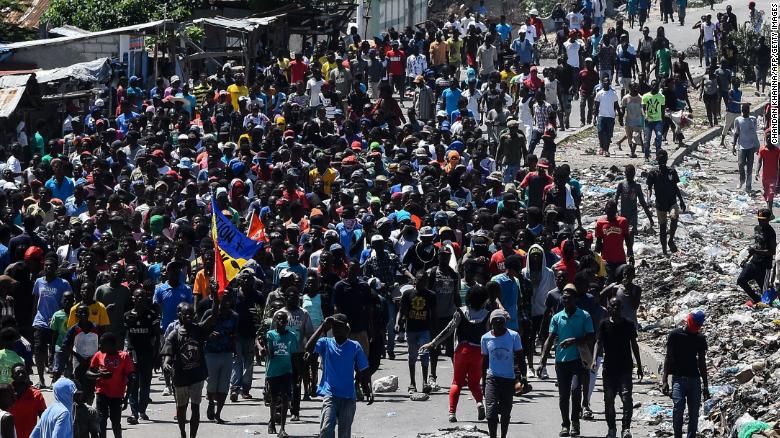
People march in Cite Soleil during the anti-government protest on September 27, 2019."You know, that can make us feel (like) ... there's something actually we had, and we didn't really take advantage of it."Now that the government has publicly documented funds lost or disappeared, Emile says the numbers are accessible in a way that they weren't before. They also can be shared easily thanks to social media, which has fanned outrage and calls for change -- including for Moise's resignation -- as anti-corruption activists accuse the President of turning a blind eye to the PetroCaribe allegations.Moise told CNN that fighting corruption is still a priority of his administration and said that the past months of political unrest have exacerbated Haiti's economic problems."We need the same solidarity we had after the earthquake," he said, emphasizing this time he means solidarity with "the actors who are putting the country on a path to change, to economic growth, and development."
What will happen next
Haiti is considered one of the most vulnerable countries to climate change, and its location in the Caribbean lies squarely in the middle of a hurricane belt. As it looks toward the future, how Haiti can prepare for the next great disaster -- and what kind of help it might receive -- are urgent questions.Emile believes Haiti no longer commands the same interest and compassion that it did in 2010."If Haiti's reconstruction had been a success, maybe we could have been interesting to people as a case study. But it was a failure, so people feel fed up ... they don't even want to talk about it that much," he says. "The further we go from the earthquake, the less interested people are in Haiti."The drop in interest is, in fact, measurable: A 2019 UN plan for humanitarian aid to Haiti only managed to raise a third of the funding it needed.Vania André, publisher of the Haitian Times, a paper of record for the Haitian diaspora, says that the earthquake galvanized the loyalty -- and a certain defiance -- of generations of Haitian Americans.
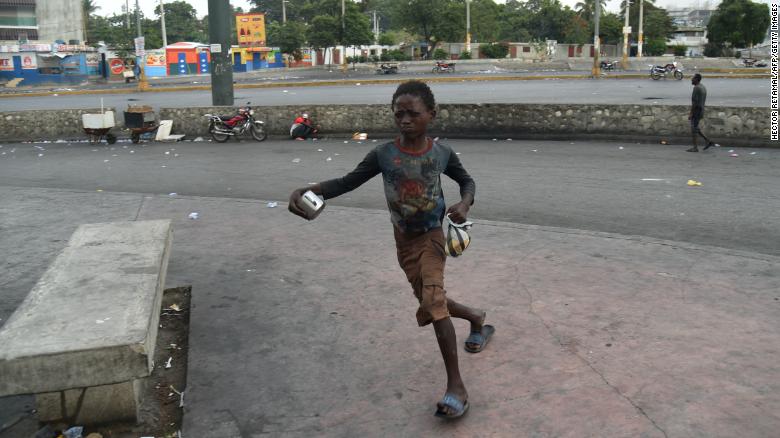
A boy flees from tear gas during clashes with Haitian police in Port-au-Prince on February 15, 2019.It became common to hear stories of Haitian-Americans "leaving their corporate jobs in DC or Florida and moving to Haiti to create a nonprofit," she says. "They wanted people to see that Haiti is much more than the devastation that happened with the earthquake, that Haiti is much more than this republic of NGOs."But she also notes that many of those same foreign-born idealists did not stay long, discouraged by the skepticism they encountered and the difficulties of doing business.As the flow of foreign aid money ebbs and Haitians lose faith in their government, some say they only thing they can rely on is their own experience.Prévil, the obstetrician, says another earthquake would be Haiti's "worst nightmare" and that he still gets flashbacks to the feeling of the ground moving under his feet. But at least he now knows how to react."If there is another earthquake, I have a good strong desk. I will go under the desk," he says. "And then I will call for my contingency plan and start right away to take care of as many people as I can. Because I know what to do now."

Haiti Is in the Eye of the Storm

Port-au-Prince—My friends in Haiti told me not to come—too much chaos, too much violence. if i insisted on coming, they advised, I had to find a bodyguard, a driver, and an armored car. They said: Bring expired credit cards to give to armed robbers; don’t bring cash. Dress down (as if I ever dress any other way) and don’t wear jewelry. And of course, don’t visit any ATMs or banks. Don’t go near the shantytowns, where I previously spent hours talking to people, hanging out. Don’t drive late at night. Don’t go downtown.
It all seemed a little extreme. But then, a week and a half before I arrived, a French couple who had never been to Haiti before were killed shortly after they flew in to adopt a kid—gunned down in front of their hotel, in an area you pass all the time, no matter where you’re going.
For more than a year, the country has been rocked by protests against its corrupt president, Jovenel Moïse, a former banana dealer known in Haiti as Neg Banann, and against the corrupt political system more broadly. Peaceful sit-ins came together outside government buildings in the capital, and large, stirring marches took place throughout the country. The system responded: Well-armed police in battle gear fired on many of the protests, and at least 187 people were killed, some execution style. Journalists were assassinated.
By the time I was planning my trip, Haiti seemed on the edge of a crisis or breakdown. I’d seen such moments there before. Sometimes they would swing in favor of the people, more often in favor of the ruling elites and the status quo.
Haiti was cornered—exhausted, hungry, exasperated with the old, afraid of the new. To make matters worse, in mid-January, the 10th anniversary of the earthquake that killed more than 100,000 people would arrive, and so would the international media, to show Haitians and the rest of the world how little the country has changed for the better during the past decade, how deeply it has sunk back into the old, bad ways. Yet new threads of hope were gleaming and glittering through this dark material, new ideas coming from young people who feel that without change, they have no future in this country. Older opposition figures—some valuable, some not—are also trying to figure things out, a fractious but united group whose breadth hasn’t been seen here recently.
By the time I was planning my trip, Haiti seemed on the edge of a crisis or breakdown. I’d seen such moments there before. Sometimes they would swing in favor of the people, more often in favor of the ruling elites and the status quo.
Haiti was cornered—exhausted, hungry, exasperated with the old, afraid of the new. To make matters worse, in mid-January, the 10th anniversary of the earthquake that killed more than 100,000 people would arrive, and so would the international media, to show Haitians and the rest of the world how little the country has changed for the better during the past decade, how deeply it has sunk back into the old, bad ways. Yet new threads of hope were gleaming and glittering through this dark material, new ideas coming from young people who feel that without change, they have no future in this country. Older opposition figures—some valuable, some not—are also trying to figure things out, a fractious but united group whose breadth hasn’t been seen here recently.
Meanwhile, Haitians continue to face what Pierre Esperance, executive director of the Haitian National Human Rights Defense Network (RNDDH), has called “the ongoing gangsterization of the state.” Armed gangs—estimated to number in the dozens—regularly receive funding, automatic weapons, and ammunition, although as Esperance points out, Haiti doesn’t make weapons or ammo, and the country has been under an on-and-off arms embargo for many years. These gangs have carried out five massacres during the Moïse administration, the worst of them in a shantytown known as La Saline, a hotbed of anti-government protest that borders one of Port-au-Prince’s best-known open-air markets; at least 71 people were brutally murdered there.
All the protests have posed a question central to national sovereignty: Who owns the nation—the people or the government and business class? “Kot kob PetwoKaribe?” (Where’s the PetroCaribe money?) has been the protesters’ cry, a reference to the late Venezuelan president Hugo Chávez’s aid program for Haiti, whose funds have been ruthlessly plundered by government officials and their friends. The plunderers include Moïse, according to a damning 656-page report by the Haitian government’s own auditors. The PetroCaribe funds were meant to develop housing, sanitation, roads, health care—things that Haitians need desperately. But most of the money is gone, vanished into political pockets and, through various kinds of nepotistic zombie contracts, into the wallets of good friends of the current administration and its predecessor.
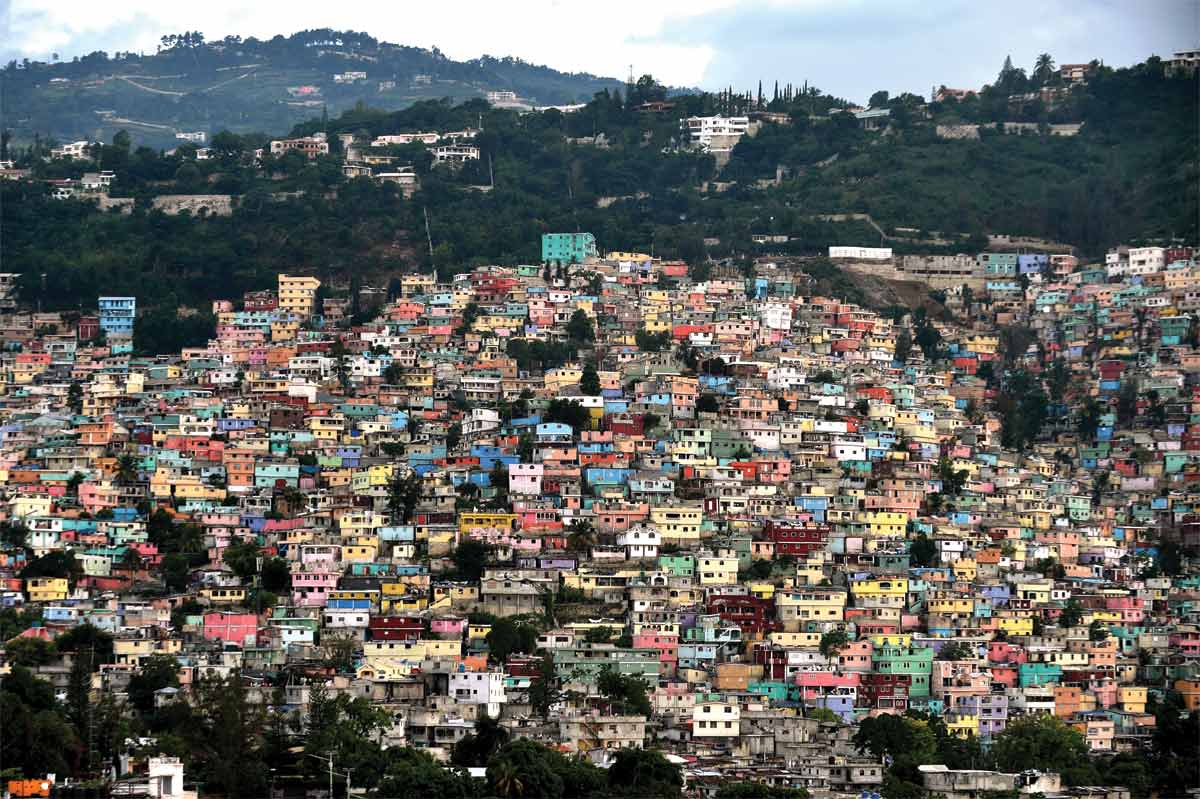
(Hector Retamal / AFP via Getty Images)
More damningly, in February 2019 supporters of Moïse (and possibly the president himself) sent a band of US mercenaries to protect an official who went to the central bank downtown to transfer $80 million from the PetroCaribe fund to an account controlled exclusively by the president.
For three months this fall, the opposition put the country on repeated lockdowns. No one violated peyilok, as it is called. People starved but didn’t (or couldn’t) go out to buy food; people were sick but couldn’t get to the doctor. You couldn’t work. By the time I arrived in December, kids hadn’t been able to go to school since the term began in September. The dead couldn’t be taken to the morgue. During these days and weeks of peyilok, the opposition called on various sectors of society to march in protest—labor, clergy, artists and musicians, medical workers, students, and others. But meanwhile, armed gangs of no clear provenance roved the streets, shooting at will.
Still, Moïse says he is committed to serving his full term, which ends in 2022. Late last month he moved from virtual silence into neo-Duvalierist mode, saying there were a number of people whose heads he intends to “cut off.” He threatened that there will be “accidents” if people get in his way. Silent regarding the massive opposition against him, Moïse focused his rage on an energy provider that sells electricity to the state-run Electricité d’Haiti, another trough of possible corruption that he has long desired to control.
“What happens when the unstoppable force meets the immovable object?” asked Kim Ives, a veteran Haiti observer, referring to the protests and the president. “In Haiti, the answer seems to be: You form a commission.”
There are now several commissions militating for Moïse’s orderly departure, the resignation of the useless Parliament, and the installation of a replacement government in some form. They range ideologically from fairly far left to pretty far right. What is unprecedented is that they’ve been trying to work together. Still, for the young, who make up the majority of the country’s population and have been crucial to the protests, the results have been less than spectacular.
“We are against corruption and impunity, and we are for social justice,” said Pascale Solages, a young leader of the group Nou Pap Dòmi (We Will Not Sleep). NPD is part of the enormous Petrochallenger opposition, which mostly consists of young people who have come out repeatedly to protest the government’s impunity over its plunder of the PetroCaribe funds. Solages and I sat at a long table at a restaurant NPD often uses as a headquarters. Surveying the various groups clamoring for Moïse’s ouster, Solages added, “I don’t have a single view of the opposition. But for the most part, it is run by a political class that the population does not trust. For the last 30 years they’ve been destroying Haitian institutions, which are now on their knees. We need a new political class and a profound change.”
After months of peyilok—and amid concerns about further instability in this “shithole” country—the Trump administration, previously indifferent to Haitian affairs, sent down three US officials in turn for brief visits and photo ops with Moïse. The meetings changed the tenor of the national conversation. Each American bureaucrat advised the Haitian president to meet with the opposition, but none suggested that he depart. Then they left. It was clear the US government was not going to whisk Moïse away; he was its obedient friend. At the United States’ behest a year earlier, Haiti’s ambassador to the Organization of American States (OAS) voted against recognizing the legitimacy of Nicolas Maduro’s election in Venezuela. Maduro is the successor of Chávez, who had provided all the PetroCaribe money for Haiti.
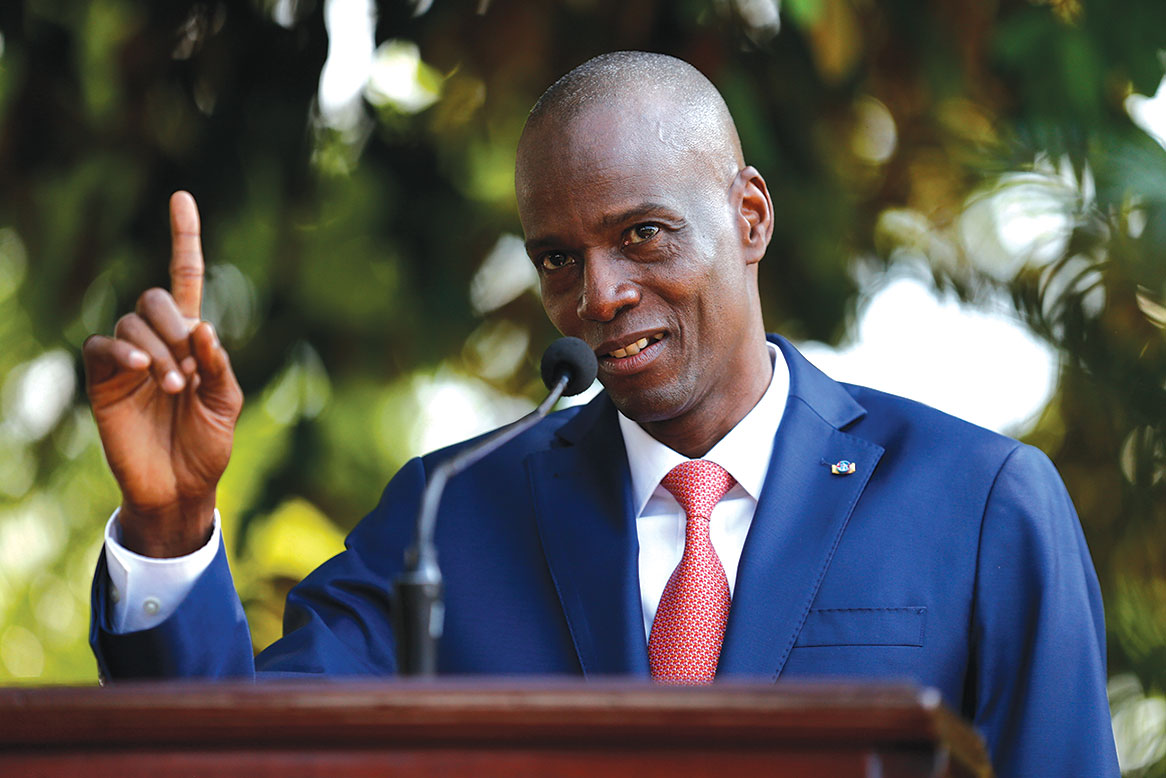
Not going: Haitian President Jovenel Moïse has defied repeated calls to resign—warning that there will be “accidents” if people get in his way. (Rebecca Blackwell / AP)
After the visits, Moïse reached out to the opposition, as recommended by his American friends, always with the understanding that he was not going to leave. The opposition initially refused his invitation. That’s when I arrived, expecting peyilok, armed gangs, paralysis. I took an armored car to my hotel with two big bodyguards in the front seat. In spite of all the dire warnings, everything was calm. Feeling ridiculous—even foolish—and extremely white, I quickly abandoned the security detail. From then on, my stay was in many ways like every other time I’ve spent in Haiti. Although we drove high up into the hills above town and then far downtown into the poorest and most crowded areas and then over to the shantytown where I’d been told I absolutely could not go, we had no problem.
What accounted for this relative peace? It was the opposition unlocking the country. Haitians were growing restive and resentful under the strictures of peyilok. “People are tired of it,” Solages said. Also, the opposition did not want to seem unaware of the US position; they needed a space from which to negotiate that didn’t appear intransigent.
Interestingly, Haiti has now gone from peyilok, which exerted real pressure for a change of government, to a political paralysis from which it’s hard to see an escape route. Moïse’s position remains precarious. On one side, he faces an angry, organized, and militant population trying to push him out. On the other, his friends need him to remain in power so the plunder can continue. Moïse is no doubt worried about both the people and his friends. In French they call his position coincé, or cornered.
In the midst of all this, no one but the current president believes in the value of future elections. Elections brought Haitians the corrupt Moïse—even though it took 14 months from the initial ballot to the final result, with all sorts of shenanigans in the process. An earlier, questionable election, the results fudged with the connivance of OAS personnel, brought them the corrupt Michel Martelly, whose sole qualification for the presidency was his fame as a singer and entertainer.
Most Haitians simply don’t believe in elections as they are currently run. To quote the former president Jean-Bertrand Aristide, who was elected in a 1990 landslide that no one has yet questioned (or duplicated), elections in Haiti have since turned into “selections.” Aristide, by the way, was ousted in a coup green-lit by George H.W. Bush’s administration just nine months after that landslide. So much for the legitimately elected.
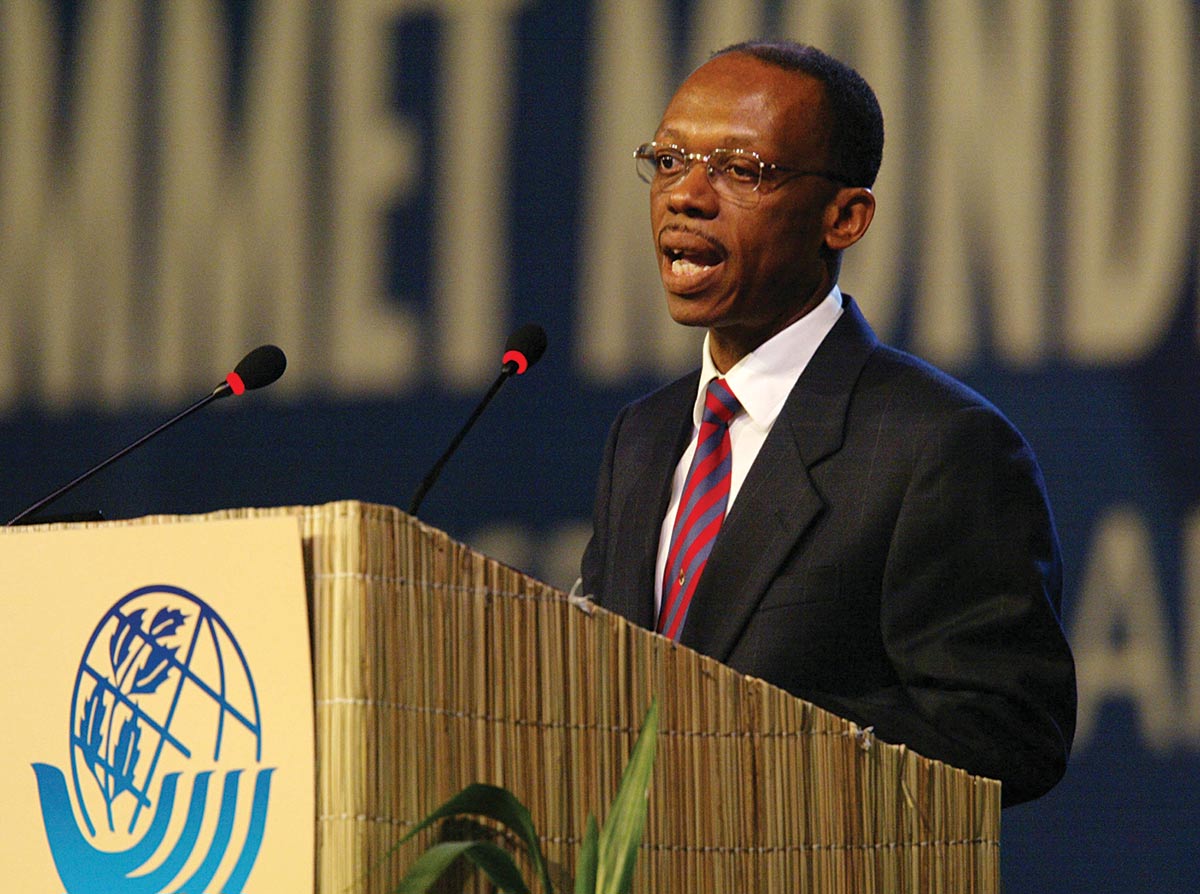
Yesterday’s man? Jean-Bertrand Aristide was elected president in a 1990 landslide that none of his successors have matched—which didn’t protect him from a US-sponsored coup. (Anna Zieminski / AFP via Getty Images)
Today Aristide lives in a large white house in Tabarre, a suburb of the capital that was farmland when he built his home there some 30 years ago but is now part of the growing Port-au-Prince metropolitan area. There are peacocks and peahens roaming his front lawn.
Aristide seems to have retired from political life after the presidential candidate he backed lost the contested election that Moïse eventually won. But in Haiti, tou sa w we, se pa sa, as the expression goes: All that you see is not what it seems. And many think Aristide is still working behind the scenes.
He greets me in his very presidential office: huge desk in the center, white walls, white tile floors, bookshelves, the Haitian flag. He is wearing a formal white guayabera and pressed pants and doesn’t seem substantially changed from the person I first met back in 1986, when Jean-Claude Duvalier (aka Baby Doc, the son of François “Papa Doc” Duvalier, the country’s notorious longtime strongman) had just fallen. Back then, Aristide was a firebrand priest from the poorest parish in town. His break with the church, his two presidencies (or three, depending on how you count them), the two coups d’état against him, his two forced exiles, marriage, fatherhood, projects of all kinds—nothing seems to have changed him. He remains the kind of person who would love a peyilok movement. No doubt he’d like to lead it.
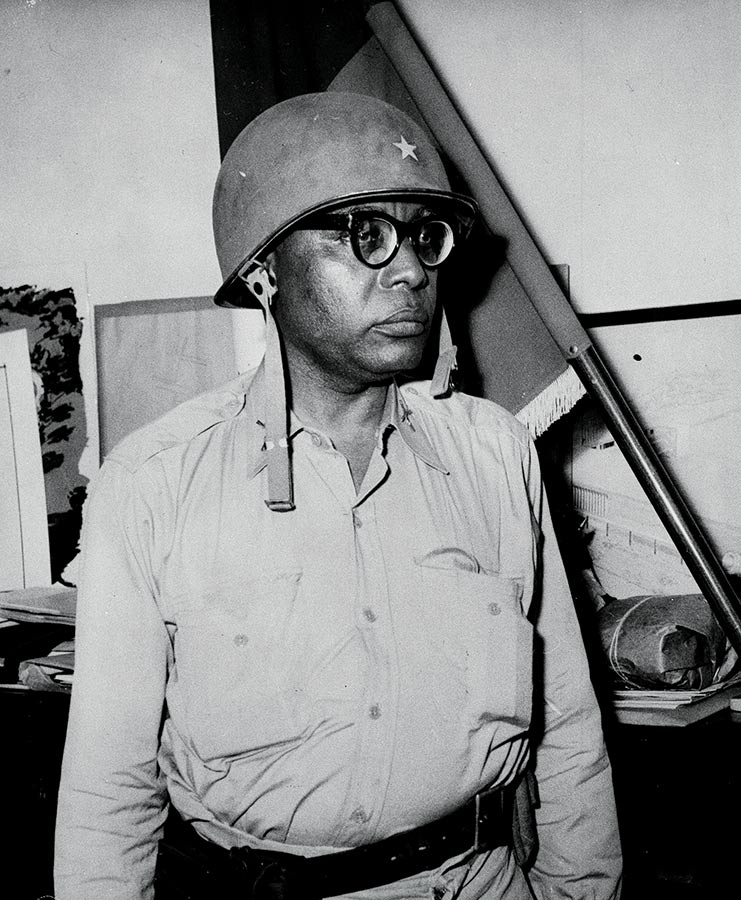
Papa Doc at war: President for Life François Duvalier fighting off a military coup in 1958. He led his despotic regime for 13 more years, until his death. (AP)
Aristide’s radicalism in the mid-1980s, which grew out of liberation theology, seemed unacceptable to the moderates then running the world. It might be more acceptable now, especially since it has been embraced by the new generation, both in Haiti and elsewhere. In 2003, long before Ta-Nehisi Coates’s famous piece in The Atlantic, Aristide presented France with a $21 billion bill for the 90 million gold francs in reparations that Haiti (the victor, remember) was forced to cough up to France (the loser) after the Haitian Revolution in 1804. (France cavalierly rejected Aristide’s payback demand and promptly collaborated with the United States to remove him from the presidency—for the second time.) Still, in spite of Aristide’s historic feats, it seems unlikely that a person with his vexed history, in Haiti and the hemisphere, can carry the banner for a new way forward.
But Aristide is not the only name from the past that gets mentioned in discussions of Haiti’s future. As a toddler, Nicolas Duvalier fled the country with his family when his father, Baby Doc, was overthrown by a popular uprising in 1986. Though Nicolas Duvalier grew up mostly in France, he’s been toying recently with a future in Haitian politics. “We are not there yet,” he said when asked if he’ll run for president. But there’s a saying in Haitian Creole (there’s one for every occasion): Ptit tig, se tig. The son of a tiger is a tiger.
Haitians are thinking about the earthquake as its anniversary approaches. They’re always thinking about the earthquake, actually, because everyone lost someone in it and because the rebuilding effort has been such a massive disappointment. Most of the money promised to Haiti for reconstruction has been squandered or stolen or lost—or was never delivered in the first place. Bill Clinton’s Build Back Better campaign for post-earthquake Haiti has been a total failure, despite the campaign’s declaration amid the rubble that the country was “ready for business.”
Clinton was appointed the United Nations special envoy for Haiti eight months before the quake struck. (He and Hillary Clinton spent part of their honeymoon there in 1975.) Much of the funding that came in after the earthquake went to US contractors for projects, fees, housing, food, and security. Less than a penny on every dollar ended up with Haitian groups.
A few banks downtown have been rebuilt, but there is still earthquake rubble in the area behind them, topped with burning garbage, through which the poorest of the poor are scavenging. Even on Grande Rue downtown, once the city’s business center, you can see 19th century buildings ready to collapse. People live and work precariously amid the rubble or are constructing concrete buildings that don’t abide by any seismic code. A few shantytowns were created during reconstruction, but they are now overrun with gangs and drugs.
There are some new hotels, most functioning at a reduced level because of peyilok and because the post-quake international relief caravan has moved on to more fruitful fields. Interestingly, the most lucrative clients the hotels have attracted recently have been the opposition factions that met to produce what are known as the Marriott Accord, which seeks the replacement of the entire Moïse government, and the Kinam Agreement (at the Hotel Kinam), which calls for the replacement of the entire government—except for Moïse.
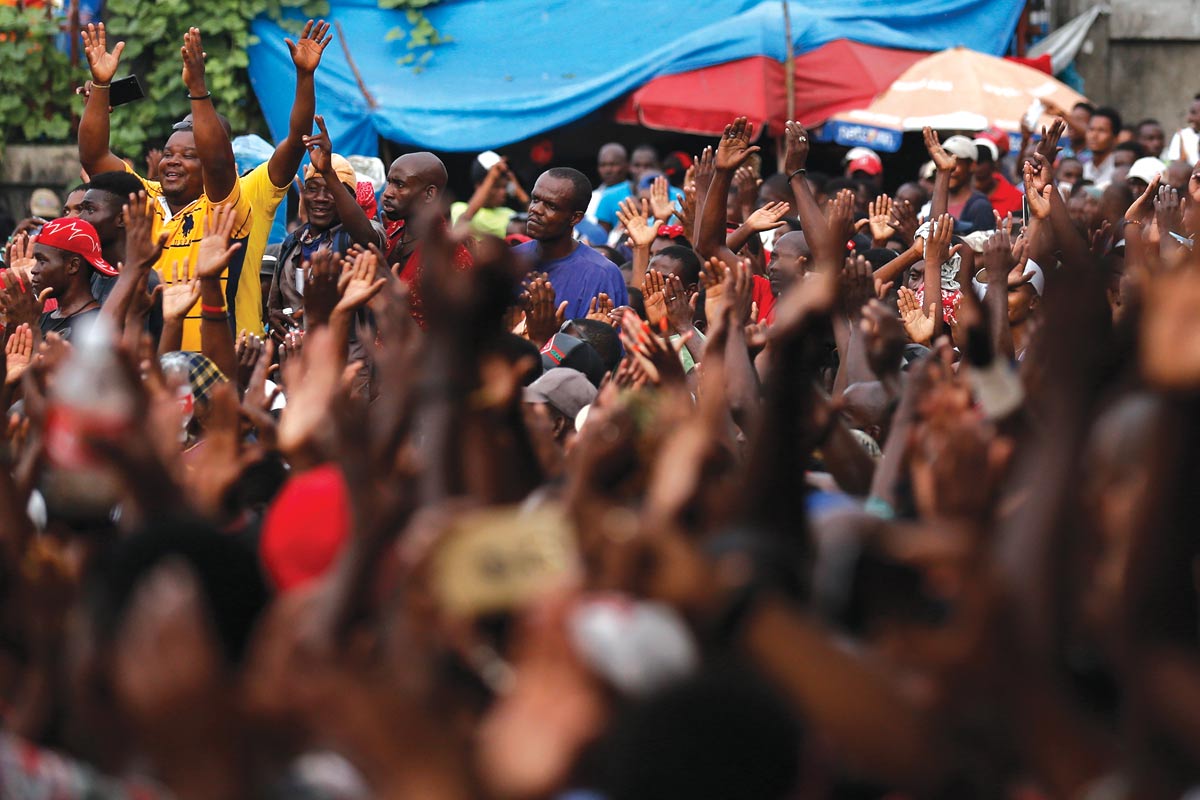
A country in lockdown: During the months of peyilok, different sectors of society each marched. Here, artists from Port-au-Prince take to the streets. (Rebecca Blackwell / AP)
“Haiti is a little machine that produces gigantic amounts of corruption,” said Frantz Duval, the editor of Le Nouvelliste, the French-language daily in Port-au-Prince. “The earthquake was like PetroCaribe. All that money suddenly turning up was an opportunity for thievery. And there’s kind of an entente cordiale among the thieves splitting up the booty. There was a period of enjoyment after the earthquake when everyone was in the game—just like PetroCaribe.”
This is why Petrochallengers like Solages don’t just want to displace Moïse; they want to get rid of the whole damn system. Most people here don’t go into government for the love of statecraft or out of a desire to serve the public. They do it to enrich themselves as much and as quickly as possible before they’re ousted by the next batch of thieves. Periodic elections do little to intrude on this musical-chairs mechanism; they simply offer an illusory authenticity to each successive wake of vultures.
By the middle of December 2019, the opposition began to send out feelers to Moïse. The message that the United States wanted him to stay had been received. This doesn’t always play out, though. At the end of January 1986, President for Life Jean-Claude Duvalier stood before the Haitian people and told them, “I am here, stronger than a monkey’s tail.” A week later, he was on a US C-141 transport plane bound for Paris.
It turned out the Reagan administration had other ideas about who could run Haiti. The State Department put together a claque of Haitian political figures and army officers known officially as the National Council of Government but called by Haitians what it was: the junta. The Trump administration, au contraire, apparently can’t imagine an alternative to its pliant Haitian banana dealer.
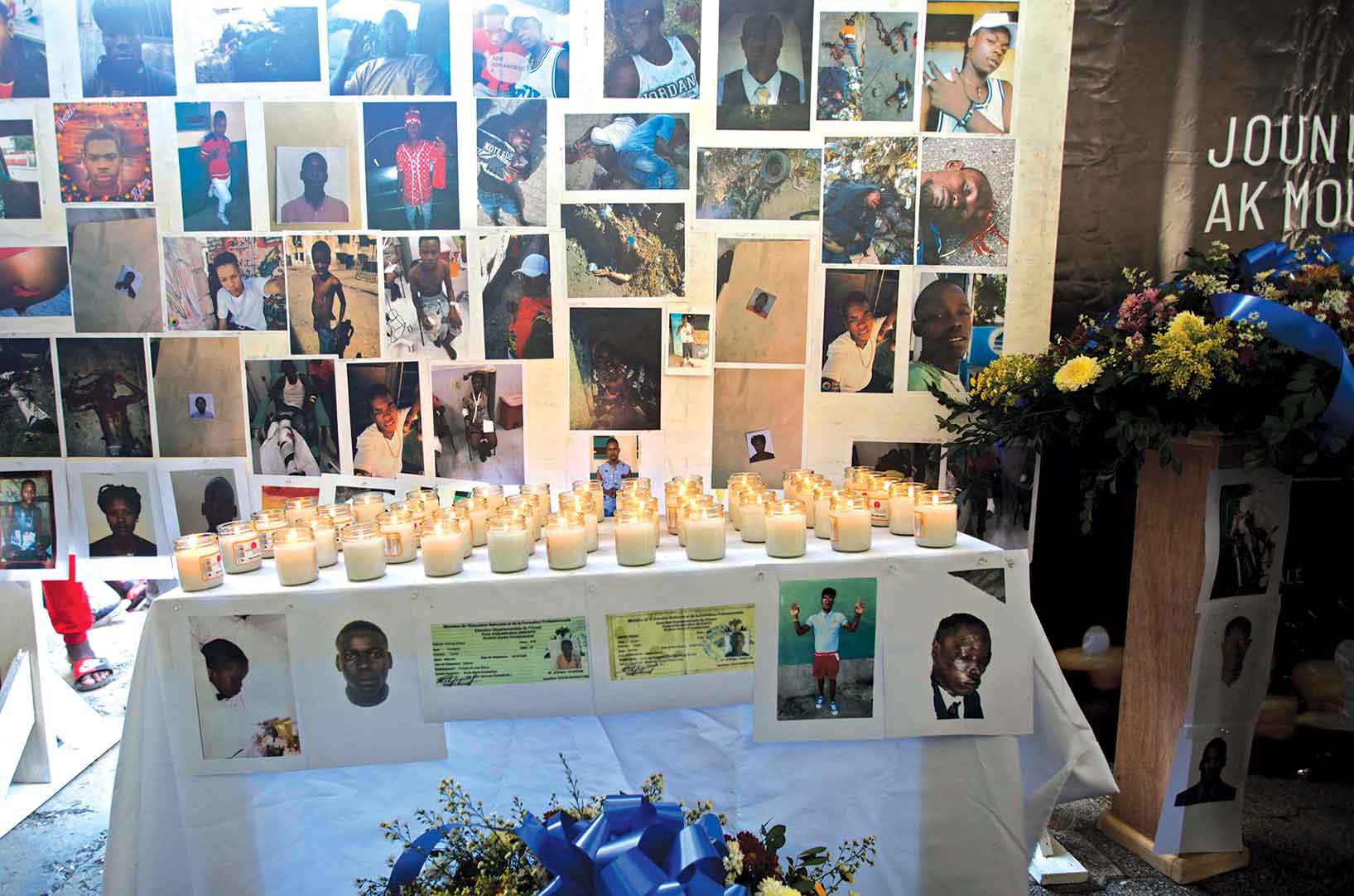
Not forgotten: An altar commemorating the victims of La Saline massacre. (Dieu Nalio Chery / AP)
Idrive to an end-of-the-year picnic in the mountains above Port-au-Prince in a convoy with a group of businesspeople, diplomats, and their families. On the way up, the city falls away, and then you’re in the Haitian countryside. The hills are steep, and terraced emerald farms climb the sides of the canyon. Strong, thin farmers—kiltivatè, as they’re called—walk by the side of the road carrying their machetes. Women walk there too, carrying produce to market in baskets or black garbage bags, a more modern accessory, on their heads. Roadside shacks and little stalls sell fruit and water in the smallest to-go plastic bags.
At the picnic, a beautiful little blond girl is swinging from a hammock and talking about her grandparents’ house in Palm Beach—“not on the beach, though.” But where do you live? “In Haiti, of course, but we’re moving.” Where to? “I don’t know. Bahamas, Croatia….”
“We are all moving out of the country,” says one glamorous matron from an old and wealthy family. “We’re all selling our houses. Except, of course, no one is buying. Because the people who could buy are all selling, obviously. The situation in the country is unacceptable. We can’t sit through another one of these episodes. We have to go. And the thing is, what these people don’t understand is, we are the state.”
The implication is clear: When they go, Haiti fails. Though from what I’ve been told, the elite moved most of their money out of the country a long time ago.
Richard Widmaier runs Radio Metropole, which in one form or another has been in his family for four generations. He’s not a big enthusiast of Moïse (“He has a passion for two things: agriculture and himself”) but still thinks he should remain in office. “OK, he really should have just been minister of agriculture, which maybe he could have handled,” Widmaier says. “But a president who’s elected for five years should serve for five years.” It’s a point of view held mostly by people with connections to the present government—or who understandably fear the chaos that might ensue if Moïse steps down.
Later that day, I’m with a businessman up in Pétion-Ville, which used to be a safe haven from the craziness of downtown until the earthquake came and downtown moved uptown. We’ re having a lovely dinner on a covered terrace, palm fronds shaking in the breeze, pretty little sconces and chandeliers over the tables. My friend is eating the biggest crab I have ever seen. We’re chatting in a preliminary way when he gets a call.
“Another kidnapping,” he says as he takes the phone out of the restaurant. “I can fix this,” I hear him say to the person on the other end. Four minutes later, he comes back to the table, and we finish our meal almost as if nothing out of the ordinary had happened. Two days later, the victim is released. A ransom was paid. Kidnapping is a business in Haiti now.
Ihave an old friend in Haiti who has worked in difficult political situations there for pretty much her whole life. She has moved up and down through nongovernmental organizations, and she’s Haitian, so she understands the lay of the land—and doesn’t want me to use her name. After Duvalier fell, she says, Haitian civil society burst into activity. There were all sorts of meetings—tet ansanm (heads together) is the term in Creole—of intellectuals, artists, professionals thinking about ways to jump-start the country. “And the thing is, they were all doing it on their own,” she says, “without start-up funds or not-for-profit status or money from foreign groups.” Farmers were still managing to grow and survive on their small plots of land. Back then, Haiti still had food self-sufficiency.
Now, she points out, Haiti is the second-largest importer of US rice, after Mexico. I hear this fact mentioned everywhere I go, because it is astonishing to Haitians. The country’s fertile Artibonite Valley once provided more than enough rice to feed Haiti. The story of how rice production failed is long, but it includes subsidized US rice being dumped on the Haitian market during the Clinton administration, with much of the grain coming from Arkansas farms. As cheap US rice undersold locally produced rice, farms in Haiti collapsed, and people from the countryside moved to the capital, where they eventually lived in shacks and shanties and ended up eating US rice. When Duvalier left, my friend continues, the Haitian poor were still fit and healthy. Now they eat “really scary” imported stuff, and illnesses that used to be rare—like heart disease, diabetes, and cancer—are increasingly common.
She paints a picture of the pastoral Haiti that I remember. There were ideas and activism and a lot of energy. Living was cheap. Professionals could reside in leafy neighborhoods, and even though they earned only $600 or $800 a month, rent was just $50. But in 1991, when the first UN observers arrived (after the initial coup against Aristide), some were earning $6,000 a month, and rents rose.
“Every natural disaster here brought with it new outsiders,” my friend says. “The value of things is no longer measured by the national but by the international market. Haitians are priced out of everything, including food. To put together a group, you have to rely on outsiders to fund you, and your innate Haitianness gets lost or muddled.”

Book by book: In Cité Soleil, where armed gangs roam the streets, a library is being built by the community. (Hector Retamal / AFP via Getty Images)
“Haitians aren’t the same as they were in 1986,” says Marcus Garcia, a longtime editor and radio host. “There’s not much hope. And the politicians are not the same. There are no éminences grises. All the communists are dead. The intellectuals are dead. The objective press is finished. The diaspora is desperate and disappointed. There’s just a big void everywhere.”
What is new and good in the country, he adds, are the young. For a while, after the earthquake, they fled; there were two planes a day to Chile and Brazil. “With the changes in those countries’ governments, that’s no longer an option,” Garcia says, “and so the kids have nowhere to go. They have to fight for their lives here, and that’s what we’re seeing.”
My old Haitian friend from the NGO world agrees that there is healthy protest right now, and she’s cheered by this. But she also has ideas for Haiti’s long-term future. Like many, she believes that it would be healthier for Haiti to avoid the global economy than to participate in it. There is a nostalgia for decent poverty these days, for what Aristide called sitting at the table, not under it.
This same idea was proposed by the Haitian geographer Georges Anglade in his 1983 book Elegy for Poverty. Anglade—who died in the earthquake—argued for the brilliance and know-how of the Haitian peasantry against a global economy that, at best, provides assembly jobs for the poor and the loss of all tradition. Nearly 40 years after the book’s publication, his Haiti has been almost eradicated.
In Haiti there was once something called the konbit, a cooperative handed down from the early days of the colony, when the enslaved population was responsible for any improvement in their lives. Roof raising was a particular activity of the konbit, and the tradition continued long after the revolution. During a konbit, the community would assemble. Food was cooked, songs were sung, stories were told, and children frolicked; meanwhile, a roof was raised for a neighbor. Or a path to a field was built. Or a community garden was planted. The konbit would be repaid with later good deeds for other members of the group.
What my friend is mourning and what Anglade worried about decades earlier is the loss of such communal effort and competence as cash—in the form of international aid—enters the economy. After the earthquake, for example, people didn’t form groups to protect women in the camps from rape. Instead, victims went from one foreign relief organization to another, seeking funds and rape kits. This didn’t protect them from more attacks, but it did bring in cash, and the aid organizations could add another rape to their fundraising lists. The konbit builds solidarity on the ground that can be sustained, unlike a cash influx.
In the old days, a big konbit could have gotten rid of the earthquake rubble near the port downtown within a month and without pay, because it had to be done. Today, with no one paying and the big yellow trucks from the international relief organizations gone, the rubble remains. When your country is no longer your own, you wait for others to fix it for you or pay you to fix it. Pride of ownership has faded in Haiti, which used to be one of the country’s signal characteristics, since it was precisely ownership of themselves—their bodies and their land—for which Haitians fought a revolution.
There is a realism in Haiti-pessimism, but Haitians’ struggle for the soul of their country is not yet entirely lost. In Cité Soleil, one of the most battered shantytowns, where armed gangs roam and people live near a much-photographed river of sewage, there is a library being constructed opposite the police station where shantytown residents can go to borrow books; study for tests; learn to use computers; record in the recording studio; work in the language lab on their Creole, French, Spanish, English, or Arabic; rent a room as an office or workspace; or just hang out at the cafeteria or play in the playground, and it’s being built mostly with small contributions from the community and from visitors. (Everything described above is still en train but visibly underway.) It’s a form of konbit.
Downtown there is the Ghetto Biennale on Grand Rue, where foreign artists come and meet Haitian artists and work for a week. (Despite the current unrest, more than 30 foreign artists turned up for this great tradition, which begins in mid-December.) There’s the annual jazz festival, during which musicians play all over town. There’s Grande Plaine, the tiny peasant community outside the town of Gros Morne that has reforested its area with the help of family members living abroad. There’s the park in Martissant that neighbors—including gang members—cultivate and use for recreation and craft markets. Little shoots of possibility everywhere.
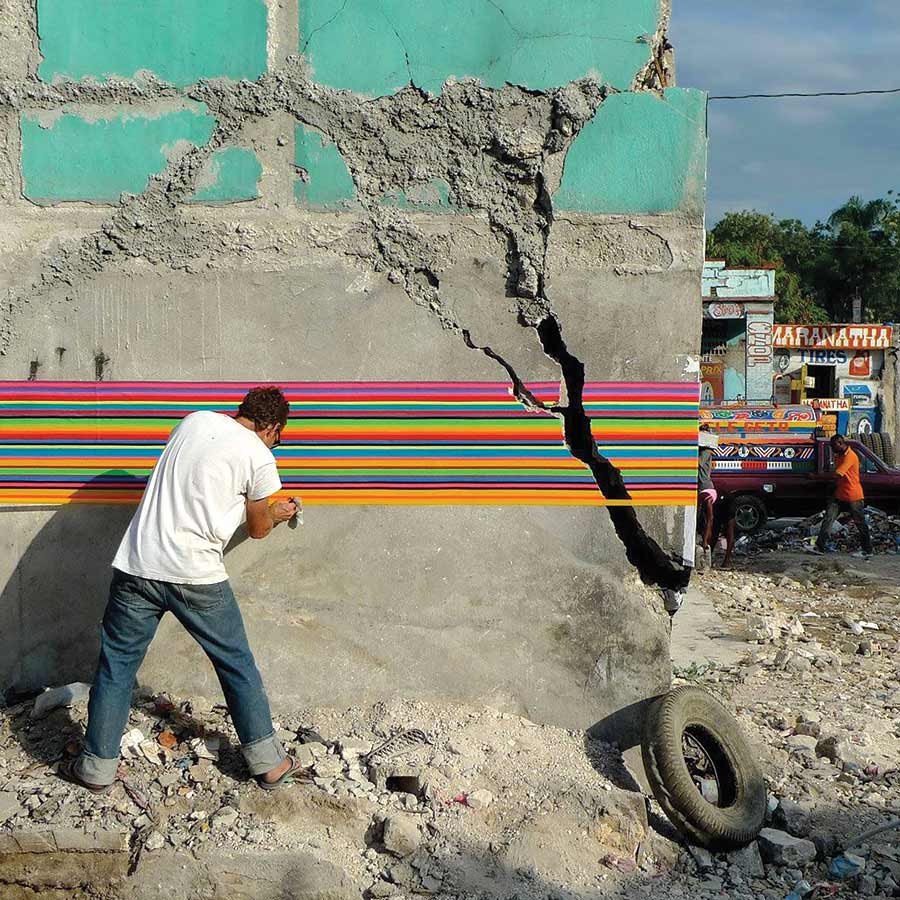
The Ghetto Biennale: This December, more than 30 foreign artists arrived for a week of work and conversation with their Haitian counterparts. (Fungus Collective)
Later, I’m driving up a hill to get away from downtown and look at art, but really I’m already in a Haitian tableau. Sky blue. Puff of bright white cloud. Strange wisps of smoke along the roadside: garbage burning, corn grilling. Small businesses dot the landscape, everything terraced, shacks topped with corrugated tin and stairways leading to nowhere (a Haitian architectural specialty). Rebar sprouts in bunches from concrete like some strange heliotropic plant, awaiting further building instructions that may or may not come. Small cardboard churches with colored cellophane windows hang from trees. These are the annual fanales, for sale as Christmas decorations, because everyone is hoping things will stay quiet and Haiti will have its beloved Christmas this hard year. Beyond the road hides the countryside as we limp up the hill.
Finally we arrive.
And now I’m having lunch with a member of the country’s 1 percent, in a rambling stone house that once belonged to a Haitian president. We (a Swiss artist-intern, a young Haitian assistant, and me) sit down at the table. We’re waiting for the master of the house; the rest of his family has left Haiti because of peyilok. He walks in with a certain measured gait and looks at life with an infinite, patient condescension. A dark-skinned Haitian girl brings in lunch. Now we’re in France: two poussins surrounded by perfectly cooked boiled potatoes with parsley. A bottle of French malbec is the table’s centerpiece. More bottles sit on the sideboard.
The master of the house is definitely a Haiti-pessimist. Of course, he loves Haiti as well, but he would never say so. At the end of the meal, he gathers all our bones on one plate and calls in his eight big dogs—six recently purchased for security. Each dog gets some bones; favorites get a little more. They don’t fight because they know that if they do, they’ll get kicked out. One cocks her head, waiting.
When I get back to Los Angeles, I tear the brown wrapper off the painting I bought that day. Here it is on my desk, a tiny thing with all of Haiti in it: blue sky and sea, mountains behind mountains, canyons and ridges in the foreground, palms blowing, dirt roads going down the hillsides, a strip of pale diamond beach, and everything flecked with a shimmering green, gold, and purple. All that’s missing are the people. Even though, of course, they are the ones who hold the future of this country in their hands. They have two terrible disadvantages: a low caloric intake and no money. Yet their protests have brought Jovenel Moïse to the brink and forced a nervous US to send envoys to protect him. It’s cruel to wish the hardships of peyilok on anyone, and it’s not a strategy that can work indefinitely. But expect the protests, in some new form, to start up again after Christmas—or after Carnival in late February.
Haitians are not going to give up on this konbit. Or their country.
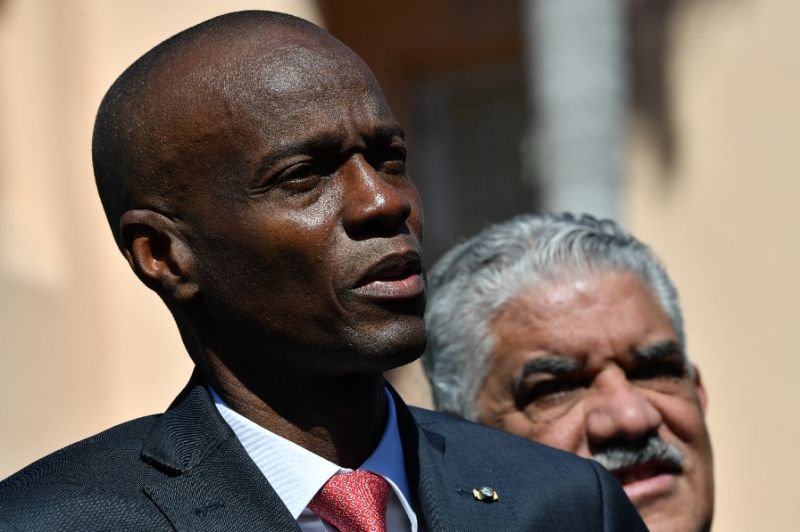
Haiti's president warns of humanitarian crisis, calls for support
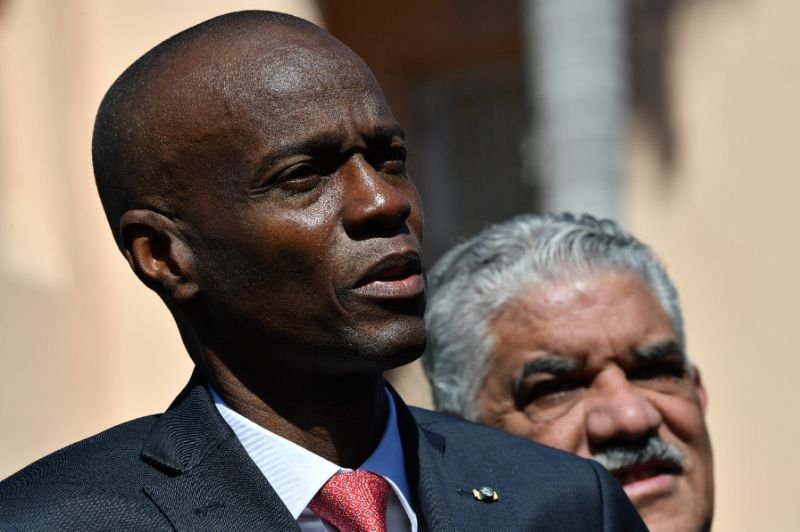
PORT-AU-PRINCE (Reuters) - Haiti needs international support to tackle an unfolding humanitarian crisis, President Jovenel Moise said in an interview, two months into anti-government protests that have exacerbated food insecurity in the Americas’ poorest nation.
Moise also told Reuters he was holding closed-door talks with civil society groups and the private sector, as well as radical and moderate members of the opposition in a bid to break political gridlock by creating a government of unity.
However the 51-year-old president - who faces widespread anger over galloping inflation, rampant insecurity and allegations of corruption - would not say with whom he was talking. Haiti’s leading opposition parties have for months said the time for dialogue is over.
“We are in the midst of a humanitarian crisis,” Moise said in the interview on Friday in the garden of his home in the hillside suburb of Petionville, overlooking Port-au-Prince and the Caribbean sea. “We need international support to get through this crisis.”
More than one-in-three Haitians need urgent assistance to meet their daily food requirements, meaning nearly 3.7 million people, the U.N. World Food Program (WFP) said earlier this month.
But aid organizations are struggling to provide relief due to protester barricades blocking roads, as well as gang violence and other crime. The WFP has said it is ready to launch air and maritime transport operations but needs to raise $2.9 million to do so.
Moise said his acting government had written to the Trump administration requesting aid last month and the U.S. Agency for International Development agreed to provide 2,000 tonnes of food aid to address urgent needs.
The opposition accuses the United States, which has frequently determined the fate of Haitian politics, of propping up Moise and ignoring the people.
The U.S. government has urged all stakeholders to work toward an inclusive dialogue without pre-conditions.
Fuel shortages in August sparked protests that have morphed into a fierce campaign against Moise that has shuttered businesses and schools and galvanized the political opposition.
While turnout in what has become Haiti’s longest wave of demonstrations for years has weakened somewhat over the last two weeks, the opposition is calling for a nationwide protest on Monday, a bank holiday that commemorates a major battle of Haiti’s independence war. [L5N26V5CF]
Moise said he started meeting “lots of people” behind closed doors a week and a half ago, rather than continuing to meet in public.
Two of the most prominent opposition leaders, Andre Michel and Moise Jean Charles, as well as the spokesman of the Episcopal Conference Father Loudeger Mazile, told Reuters they were not participating in the conversations and did not know of any significant figure or group that was.
DEMOCRATIC VOID
Haiti has not had a government since March as parliament is required to ratify the president’s choice of prime minister and the minority opposition has blocked such a vote from taking place.
The opposition accuses Moise’s ruling alliance of seeking to replace the previous prime minister because he was too keen on investigating the embezzlement of Venezuelan aid funds that could have sullied its members, including the president himself. Moise denies any wrongdoing.Slideshow (4 Images)
The lack of a government in turn is preventing Haiti from accessing hundreds of millions of dollars in international aid funds as well as loans from the World Bank, Inter-American Bank and others earmarked for it.
From next year, it will no longer have a parliament either. The mandates of deputies and most senators ends in January and Haiti failed to hold legislative elections in October as required by the constitution.
“We don’t want to govern the country without democratic institutions,” said Moise. “But unfortunately it looks like we are headed in that direction and that’s why today we are working on finding a political accord.”
He reiterated that he had no intention of resigning or holding early elections.
Instead, he said, he wanted to carry out reforms including changing the constitution to strengthen the president’s powers so he is not held hostage by parliament.
The presidency is weak under Haiti’s current constitution as it was written in the wake of the dynastic dictatorships of Francois “Papa Doc” Duvalier and his son Jean-Claude “Baby Doc” Duvalier.
On the economic front, Moise said he hopes to implement stronger mechanisms to avoid tax and customs evasion to help reduce the ballooning budgetary deficit. This could in turn help bring down inflation of around 20 percent.
On the investigation into the alleged embezzlement of Venezuelan aid funds, the president said his acting government was pressing for an update.
Moise’s opponents, who say he disappeared from public sight at the start of the current crisis, criticize it as too little too late, nearly three years into his five-year mandate.
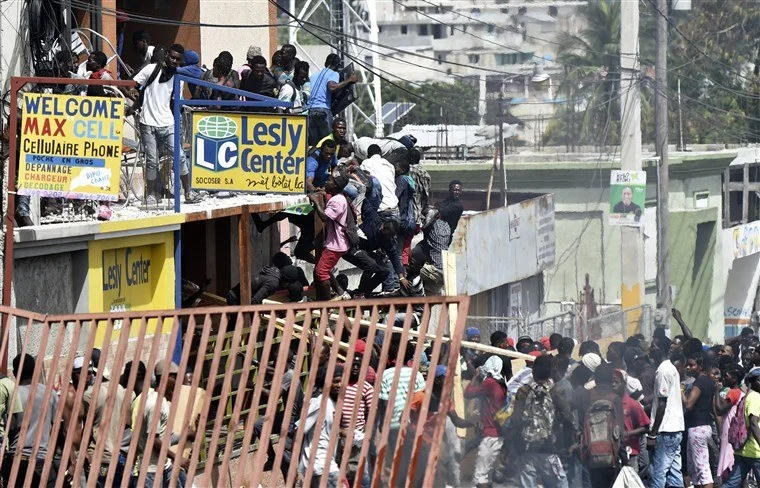
Haiti protests escalate as streets barricaded, police cars set on fire
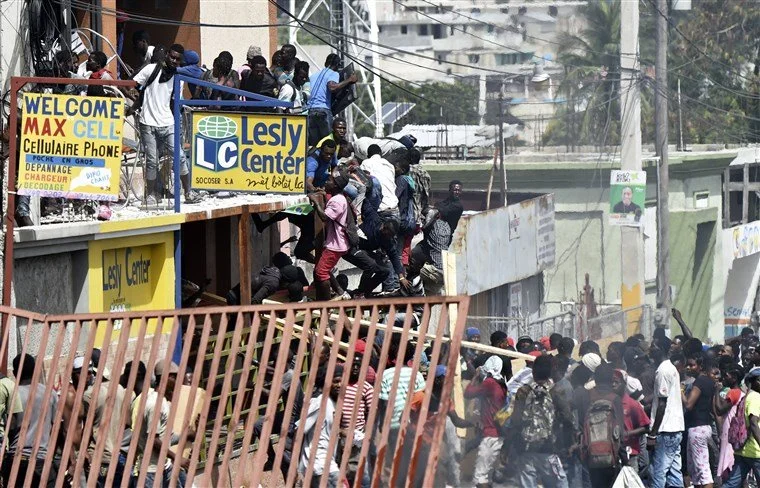
PORT-AU-PRINCE (Reuters) - Haitians erected street barricades and set police cars ablaze on Friday as protests intensified in the impoverished Caribbean nation, after four people were killed in clashes in recent days.
Some protesters around the capital of Port-au-Prince wielded weapons while a special unit of the Haitian National Police was looted and patrol cars set on fire, witnesses reported.
Residents have been incensed for months at widespread fuel and food shortages, a weakening currency, double-digit inflation and graft accusations lodged against public officials, and many are calling for President Jovenel Moise to stand down.
Moise canceled his speech at the United Nations General Assembly this week and made a rare address to the nation.
He suggested a unity government in the hope of calming tempers after a ruling-party senator fired a pistol to disperse a crowd, injuring a photo-journalist.
In an another apparent attempt to lessen tensions, the government replaced several security officials on Thursday.
Police spokesman Gary Desrosiers said four people were shot to death in demonstrations between Sept. 16 and Sept. 25.

Artists struggle to save Haiti museum after 2010 earthquake
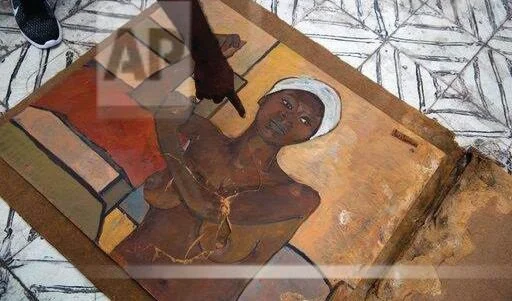
PORT-AU-PRINCE, Haiti—Franck Louissaint sighed and frowned as he stepped onto his patio and flung aside shower curtains protecting a painting by a former voodoo priest who became a renowned Haitian artist.
The painting from the 1960s once depicted a seemingly joyous voodoo spirit known as a loa, but it warped into something that looked like a three-dimensional satellite image of mountains after it was damaged by rubble and waterlogged when a 2010 earthquake hit the museum where it was displayed.
“It’s like the skin of a crocodile!” exclaimed Mr. Louissaint, an artist who expects seven more months of work to fully restore the painting by Robert Saint-Brice.
It is one of dozens of well-known paintings that artists are still trying to rescue nearly a decade after the magnitude 7.0 quake killed an estimated 300,000 people or more and struck countless buildings, including the Museum of Haitian Art of St. Pierre College—one of the country’s top institutions. More than 600 other watercolors and paintings by prominent artists are still in storage and in danger of decaying as a small group of artists struggles to restore the damaged works.
While life has begun anew for much of Haiti since the quake, the museum has been shuttered for nine years and only recently opened a tiny room to display a small quantity of art.
On a recent day, 91-year-old museum president Louis DuBois walked briskly through the building, pointing out the damaged roof and walls as he occasionally put on his glasses to inspect certain paintings.
“We have to reopen to the public,” he said. “All the great artists are here.”
The quake also devastated other public spaces dedicated to art across Haiti, with $30 million in losses reported at the Museum d’Art Nader, which had one of the world’s most extensive collections of Haitian art.
But the Museum of Haitian Art is one of the few worldwide to host Haitian paintings from the 20th century. The museum, which previously drew 9,000 visitors a year, was established in the 1970s by art lovers to commemorate U.S. painter DeWitt Peters and is tucked into the southeast corner of Port-au-Prince’s historic area. It features mostly donated artwork.
Fewer than a dozen paintings are currently on display, including one titled “Marriage of Interest” by Rigaud Benoit, who is considered a master of Haitian painting, and “Tower of Babel” by Prefete Duffaut, whose work was collected by Jacqueline Kennedy Onassis. Both men also painted murals inside a cathedral in Port-au-Prince that was flattened by the earthquake.
The museum’s oldest painting dates to 1945 and is by seminal Haitian artist Hector Hyppolite.
The Smithsonian Institution has helped the museum restore some paintings, as has the Louvre, which also donated 1,000 copies of a catalog illustrating all of Mr. Hyppolite’s paintings so local officials could sell them to help generate money.
But the museum still has blank, white walls, with hundreds of works stacked in a narrow storage area exposed to heat, humidity and other dangers. They are taken out only for the occasional cleaning while the more than 30 earth-quake-damaged works are being restored.
Among those needing attention is a 1960s lush jungle scene by Jean-Claude Toussaint, which is nearly ripped in half and also slashed diagonally. The painting remains rolled up with yellowed masking tape that has lost its stickiness.
Mr. DuBois estimates that the museum needs $50,000 to reopen, noting the roof must be fixed and the electricity repaired before additional paintings can be displayed.
For now, he and others are relying solely on the restoration efforts of artists such as Erntz Jeudy of nearby Quisqueya University.
Mr. Jeudy recently sat in front of a 71-by-79-inch painting by Miami-based artist Edouard Duval Carrie titled “The Republican Army of Santo Domingo,” which was stripped down to blank canvas in certain areas.
“This means a lot to me because it’s the restoration of a very rich heritage,” he said. “It’s great to be able to work and transmit this to future generations.”
It’s a feeling familiar for Mr. Louissaint, who works up to 10 hours at a time to restore Mr. Brice’s painting. He said it makes him proud to have permission to touch such artwork.
“It’s the story of the old Haiti,” he said. “It starts to live again.” (AP)
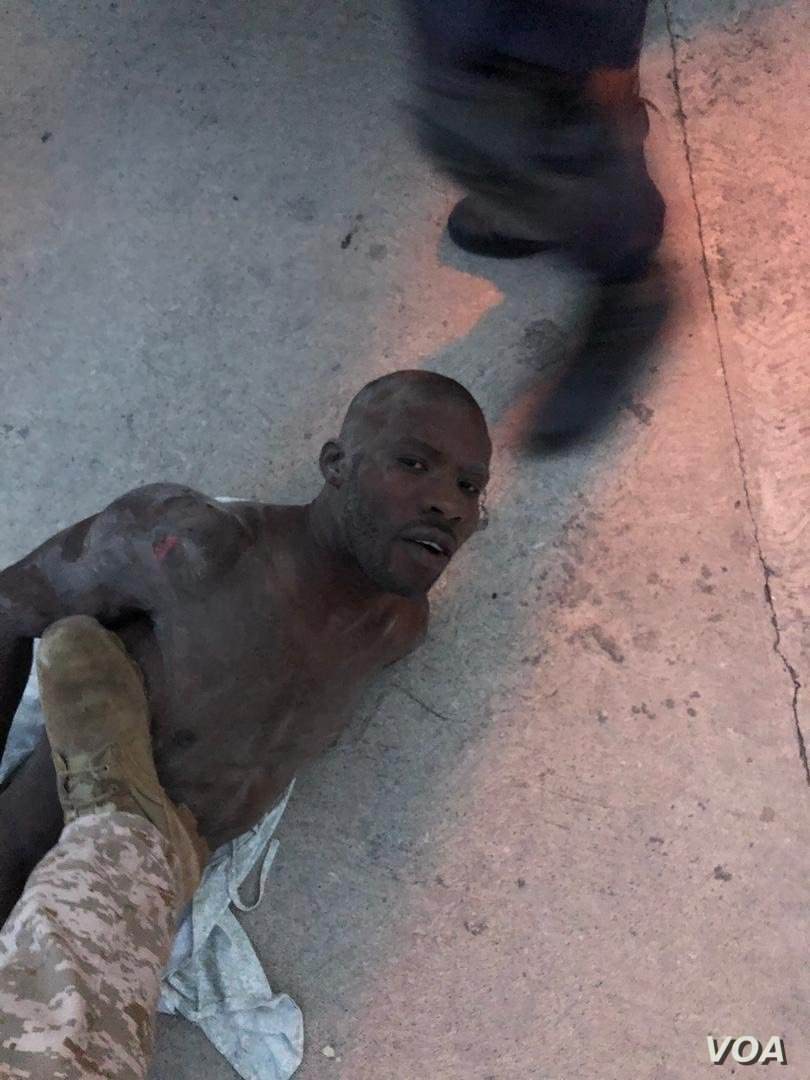
Haiti's Notorious Gang Leader Arnel Joseph Arrested
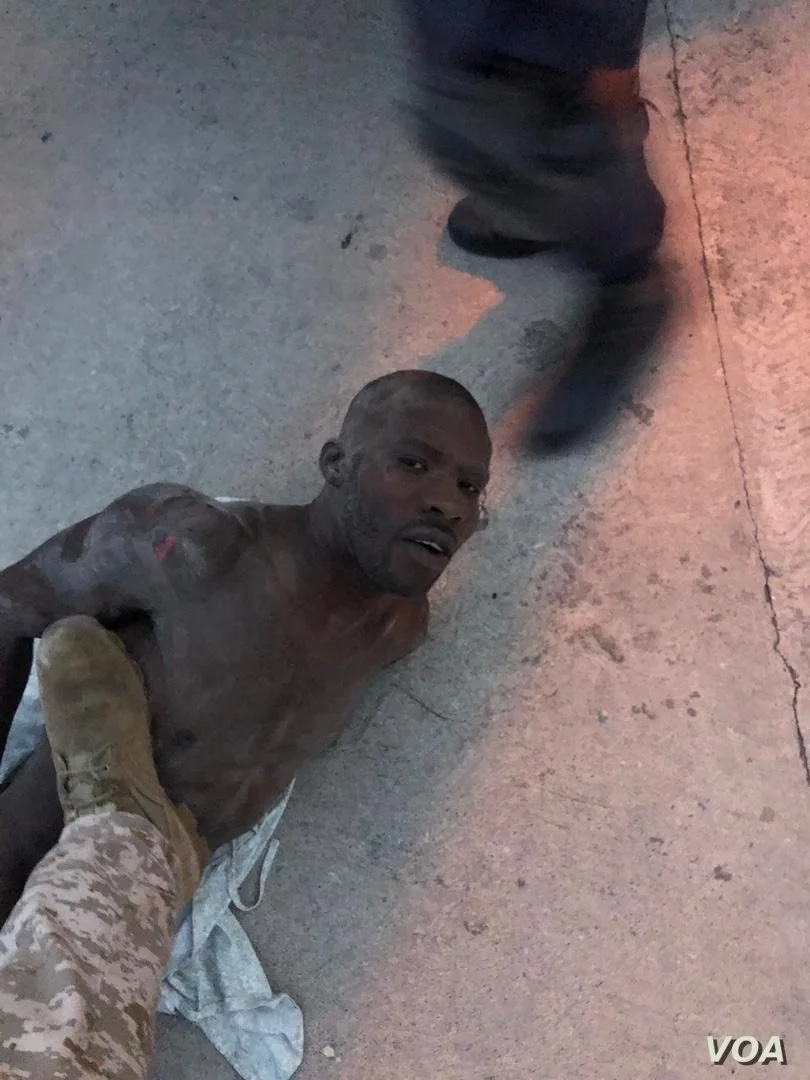

WASHINGTON/PORT-AU-PRINCE - A wounded Arnel Joseph was lying on a stretcher, ready to be wheeled into an operating room at the Bonne Fin hospital of Les Cayes, a Caribbean seaport located in Haiti's southern region, when members of a special unit of the National Police Force's (PNH) swooped in to arrest him.
"We've captured Arnel!" the officers shouted angrily, then they fired their weapons into the air, in a video seen by VOA Creole.
The alleged gang leader, considered to be one of the country's most dangerous and wanted fugitives, was awaiting surgery on his wounded leg, when he was found and captured, according to National Police Chief Michel Ange Gedeon. The leg was wounded during a fire fight with rival gang leader Ti Sourit, Arnel told reporters as they snapped photos and recorded video of him after his arrest.
Police Chief Gédeon tweeted the news to a stunned nation.


Le chef de gang Arnel Joseph très recherché depuis des mois par la @pnh_officiel a été appréhendé ce lundi à l’Hôpital Bonne Fin (Cayes). Remerciements à nos policiers et à la population haïtienne.#PNH #ArnelJoseph

6568:42 PM - Jul 22, 2019Twitter Ads info and privacy317 people are talking about this
"The gang leader Arnel Joseph (who) the national police force spent months trying to locate has been apprehended Monday at the Hopital Bonne Fin (Cayes). Thank you to our police officers and to the people of Haiti."
The police had been tracking him for months and suspected he was hiding out in the lush seaside of Artibonite in the agricultural region of the country.
Gedeon said the arrest "had been an obsession for the 15,000 police officers of the institution," during an interview with radio station Magik9 Tuesday morning.
In 2018, PNH had offered a $27,000 reward (2 million gourdes) for any information leading to Arnel's arrest.
Post arrest photos go viral
Photos of the tall, thin young man in his 20s, lying naked on a dirt surface as people shouted questions at him quickly went viral on Haitian social media Monday night. In one photo obtained by VOA Creole, the tan Timberland-style boot of a police officer wearing camouflage pants can be seen pressing down on his chest. Arnel looks up in bewilderment.
The image sparked questions about whether human rights activists and MINUJUSTH, The United Nations Mission for Justice Support in Haiti would investigate the circumstances of Arnel's arrest and his treatment by police afterward. The special unit had decided to move in on Arnel before the surgical procedure, rather than waiting until after it was over to swoop in.
MINUJUSTH's stated mission is "strengthening Haiti's rule of law institutions, developing the Haitian National Police, and promoting and protecting human rights."
Who is Arnel Joseph?
The 20-something Arnel had been arrested and sentenced to six years in jail in 2011 for the murder of several policemen. He was released in May of 2017. Haiti's penal code is based on the French judicial system. It is unclear how his sentence was determined.
Arnel is accused of terrorizing residents of the Village de Dieu slum of the capital, and more recently of robbing trucks loaded with merchandise, raping, kidnapping and attacking motorists on National Highway #1, which links the capital and cities to the north.
In a conversation with journalists posted on YouTube, he said he considers himself to be a "representative" of the Village de Dieu slum of the capital, Port-au-Prince. "Our revolution is the Haitian people's revolution," he said.
Links to lawmakers
In April, the discovery of of 24 mobile calls between Arnel and Senator Garcia Delva roiled the nation. Senator Delva, who represents the Artibonite agricultural department of the country where the alleged gang leader had been hiding out, denied any wrongdoing.
"I only have one position on this," he told reporters. "If the commission finds that I, in my conversations with Arnel, ever agreed to associate myself with his (illegal) activities then I agree and accept to pay the consequences. For once, this country needs justice."
When journalists pressed him about why he was in contact with the gang leader in the first place, Delva responded that he "talks to everyone."
"Everyone knows my number, I've never changed it - so everyone calls me - anyone can call me. Anyway, I don't think I'm the only one who converses with him," Delva said. The senator refused to divulge what they discussed and alleged that prominent Haitian businessman and opposition leader Reginald Boulos recognizes Arnel as a community leader. He said Boulos confirmed that in a conversation with a local radio station.
How the phone calls were tracked remains unclear.
Senator Senatus told reporters the commission (Senate Commission for Justice, Security and Defense) had received information that led to them asking the National Telecommunications Council (CONATEL) to provide information about the calls made to and from Senator Delva's phone. But Jean David Rodney, the institution's executive director, denied ever receiving such a request in an interview with Haiti Libre newspaper. He said CONATEL has "no direct relationship with the Senate."
Former Senate leader Youri Latortue, who also represents the Artibonite region in the Senate, echoed his colleague Delva's claims about other prominent politicians being linked to the gang leader.
"I think there are a lot of other names on the list of connections to Arnel," Latortue told VOA Creole. "For example there's Vladimir Jean-Louis "Ti Vlad" who does security work for (former president Michel) Martelly - he's on the list too. We have to investigate the links between what they said exists (between) - the president and the thugs - because some people say it was the president who brought Arnel to Port au Prince.
Those allegations remain unsubstantiated.

Conditions to turn himself in to law enforcement
Prior to his arrest on Monday, Arnel expressed a willingness to turn himself in if the government met certain conditions.
His conditions were: finishing potable water projects, building roads, boosting agriculture and providing electricity to the population.
What's next?
Arnel's capture put an end to years of living on the lam, but the police investigation into his criminal activities continues, according to Carl-Henry Boucher, the administrative director of the national police force.
On social media, reaction to the arrest was mixed.
"Good Job" @michaljoseph9341 commented on VOA Creole's Instagram page.
User @albandywedson questioned why the police waited until he sought treatment to arrest him.
And @benaldo_paul was skeptical of justice really being served, commenting "jomo (President Jovenel Moise) and the honorable garcia delva will have him released."

This Beauty Queen Builds Schools in Haiti

Christie Desir is more than meets the eye. She's a fashion model -- and a role model. She won Miss Universe Haiti in 2014, but she's much more than a beauty queen. The self-described "entrepreneurial hustler" is building her career as an actress, model and host. She's also helping build schools in Haiti."I'm Haitian, and I'm an American. And I'm chasing my dreams in both countries," Desir said.

Desir grew up in what she calls a tough neighborhood in the south end of Stamford, Connecticut. Her childhood home, now dilapidated and surrounded by a chain link fence, is a relic from a bygone area as other parts of the neighborhood are being rapidly revitalized. But Desir has always had perspective on the challenging circumstances of her childhood."I spent summers in Haiti," she recalled, "where other children had it much worse."That motivated her. She worked hard in school, fondly recalling her mother's insistence on a perfect attendance record. She would eventually go on to to be the first person in her family to graduate with a bachelor's degree. She landed an internship with music mogul Sean "Diddy" Combs and then got a full-time job at a record company in New York City. She was chasing her dreams -- and catching them."But something was always calling me back to Haiti," Desir said.
In 2014, she left everything behind and moved back to Haiti, with a primary focus on volunteering and teaching English, although she said in the back of her mind she had considered competing in Miss Universe Haiti. Both the volunteer work and the competition were demanding. For the pageant, she trained and competed in a series of local contests nearly every day for three months, but she says everything was worth it when she won."I truly wanted to show the world a different side of Haiti," Desir said. "And that's what kept me pushing."The accolades brought Desir newfound attention and opportunities. She partnered with the nonprofit Haiti Health Initiative on a mission trip to the small village of Timo. When she asked the people of the community what they needed most, the resounding answer was a school. At the time, the town's school and church were both housed in a small shed-like structure.Desir noted with pride that the school is now under construction, will be built to withstand a hurricane and is scheduled to be completed by September 2019. "The ultimate dream is to continue to open schools throughout Haiti," she said.Another of Desir's dreams was to become an actress, something she put on hold while living full-time in Haiti. So she recently decided to move back to New York City and chase that goal."I go from waitressing to hosting events to fundraising to auditioning to modeling," Desir said. "That's how women entrepreneurs like me hustle to get things done."

If her past is any indication, Desir will find success in her current pursuits. Her website boasts a calendar full of upcoming events and creative endeavors, and she has an Instagram following of more than 22,000. When asked what she wanted to share with contemporaries and fans, she said: "My message to all the little girls and women entrepreneurs out there is stay true to yourself, be nice, work hard, write your own narrative. And if one door shuts, kick the next door open."By: -MoneyWatch -for CBSnews.com | October 30, 2018

Venice Plane Company Makes Weekly Service Trips to Haiti

From earthquakes to hurricanes, disasters like those only exemplify the need Agape Flights tries to offer.
VENICE, Fla. -- Allen Speer looked up at his red, white, and blue plane and smiled. It was ready to be loaded again for another life-saving flight to Haiti.“It’s more than a job. It’s a calling,” said the pastor-turned-CEO at Agape Flights in Venice.The plane’s tail tag reads “N316AF,” which Speer explained stands for John 3:16 – one of the world’s most quoted Bible verses.“For God so loved the world that He gave His only begotten son that whosoever believeth in Him should not perish but have everlasting life,” he said.Everything Agape Flights does operates on faith. It’s a company that supports missionaries all over the Caribbean in places like Haiti, Cuba and the Dominican Republic. In all, 375 missionaries are supported by Agape Flights, which has operated in Florida for 39 years.“For me, there is no better feeling than to be able to help somebody else who can’t help themselves,” said Rod Aldrich, who sold his cows and retired as a dairy farmer in order to move to Florida to begin working for Agape Flights. “God drew us here.”"Agape" means "unconditional love" in Greek. It costs $5,000 per week just to fuel the planes that Agape Flights sends to and from the Caribbean. The supplies, mostly mail and non-perishable food, helps sustain the men and women ministering to nationals all over Hispaniola.“We’re supplying the supplies that enables them to continue reaching out and, like you said, show the people of Haiti, Bahamas, Dominican Republic, that we care about them,” said pilot Jeff Yannucciello. “They’re not forgotten. We’re doing a flight a week usually, sometimes up to 65 flights a year.”Haiti is considered the poorest country in the western hemisphere. Agape Flights is fewer than 800 miles away. A 5.9 magnitude earthquake shook Haiti Saturday night and at least ten people died. A disaster like that and devastating hurricanes only exemplify the need Agape Flights tries to offer.“When they see that plane coming, they say, ‘Hope is Life,’ and they’re so thankful for this red, white, and blue plane when they see it coming in,” Speer said.The company's motto is "Serving Christ by Serving His Missionaries."By: Bobby Lewis for wtsp.com (10 News) | October 8, 2018
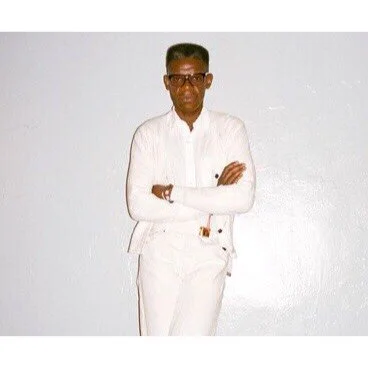
Fashion Designer Victor Glemaud Wants You to Know the Real Haiti
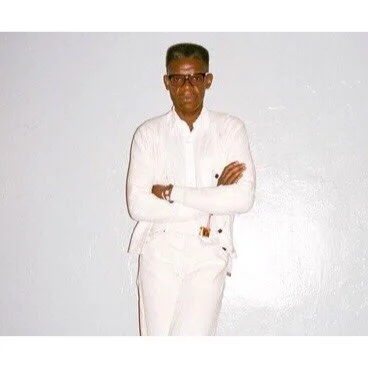
The knitwear designer shares his plans for a summer trip to Haiti and some memories from a recent Nile cruise.

By: Andrea Whittle for Cntraveler.com | April 3, 2018