
Artists struggle to save Haiti museum after 2010 earthquake
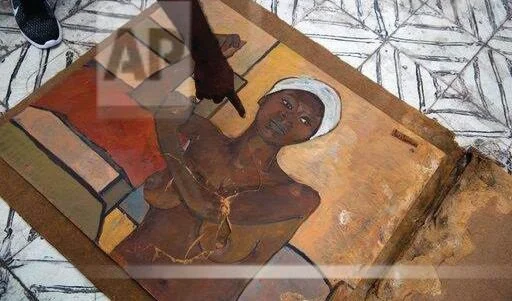
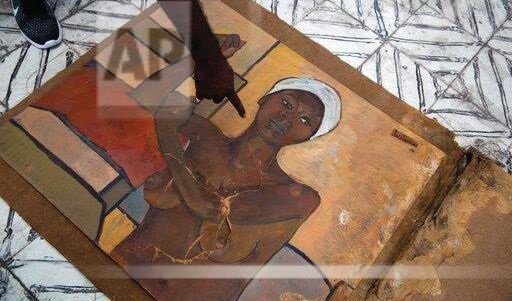
PORT-AU-PRINCE, Haiti—Franck Louissaint sighed and frowned as he stepped onto his patio and flung aside shower curtains protecting a painting by a former voodoo priest who became a renowned Haitian artist.
The painting from the 1960s once depicted a seemingly joyous voodoo spirit known as a loa, but it warped into something that looked like a three-dimensional satellite image of mountains after it was damaged by rubble and waterlogged when a 2010 earthquake hit the museum where it was displayed.
“It’s like the skin of a crocodile!” exclaimed Mr. Louissaint, an artist who expects seven more months of work to fully restore the painting by Robert Saint-Brice.
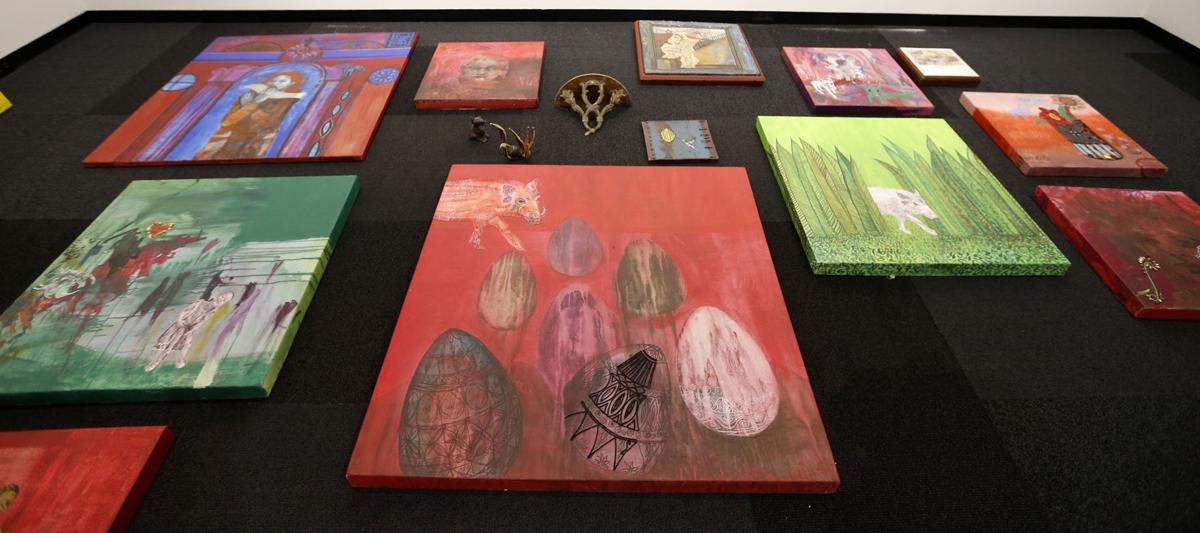
It is one of dozens of well-known paintings that artists are still trying to rescue nearly a decade after the magnitude 7.0 quake killed an estimated 300,000 people or more and struck countless buildings, including the Museum of Haitian Art of St. Pierre College—one of the country’s top institutions. More than 600 other watercolors and paintings by prominent artists are still in storage and in danger of decaying as a small group of artists struggles to restore the damaged works.
While life has begun anew for much of Haiti since the quake, the museum has been shuttered for nine years and only recently opened a tiny room to display a small quantity of art.
On a recent day, 91-year-old museum president Louis DuBois walked briskly through the building, pointing out the damaged roof and walls as he occasionally put on his glasses to inspect certain paintings.
“We have to reopen to the public,” he said. “All the great artists are here.”
The quake also devastated other public spaces dedicated to art across Haiti, with $30 million in losses reported at the Museum d’Art Nader, which had one of the world’s most extensive collections of Haitian art.
But the Museum of Haitian Art is one of the few worldwide to host Haitian paintings from the 20th century. The museum, which previously drew 9,000 visitors a year, was established in the 1970s by art lovers to commemorate U.S. painter DeWitt Peters and is tucked into the southeast corner of Port-au-Prince’s historic area. It features mostly donated artwork.
Fewer than a dozen paintings are currently on display, including one titled “Marriage of Interest” by Rigaud Benoit, who is considered a master of Haitian painting, and “Tower of Babel” by Prefete Duffaut, whose work was collected by Jacqueline Kennedy Onassis. Both men also painted murals inside a cathedral in Port-au-Prince that was flattened by the earthquake.
The museum’s oldest painting dates to 1945 and is by seminal Haitian artist Hector Hyppolite.
The Smithsonian Institution has helped the museum restore some paintings, as has the Louvre, which also donated 1,000 copies of a catalog illustrating all of Mr. Hyppolite’s paintings so local officials could sell them to help generate money.
But the museum still has blank, white walls, with hundreds of works stacked in a narrow storage area exposed to heat, humidity and other dangers. They are taken out only for the occasional cleaning while the more than 30 earth-quake-damaged works are being restored.
Among those needing attention is a 1960s lush jungle scene by Jean-Claude Toussaint, which is nearly ripped in half and also slashed diagonally. The painting remains rolled up with yellowed masking tape that has lost its stickiness.
Mr. DuBois estimates that the museum needs $50,000 to reopen, noting the roof must be fixed and the electricity repaired before additional paintings can be displayed.
For now, he and others are relying solely on the restoration efforts of artists such as Erntz Jeudy of nearby Quisqueya University.
Mr. Jeudy recently sat in front of a 71-by-79-inch painting by Miami-based artist Edouard Duval Carrie titled “The Republican Army of Santo Domingo,” which was stripped down to blank canvas in certain areas.
“This means a lot to me because it’s the restoration of a very rich heritage,” he said. “It’s great to be able to work and transmit this to future generations.”
It’s a feeling familiar for Mr. Louissaint, who works up to 10 hours at a time to restore Mr. Brice’s painting. He said it makes him proud to have permission to touch such artwork.
“It’s the story of the old Haiti,” he said. “It starts to live again.” (AP)
Haiti hotel promotes ‘urban mural’ culture
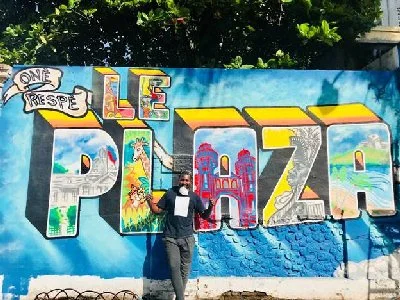
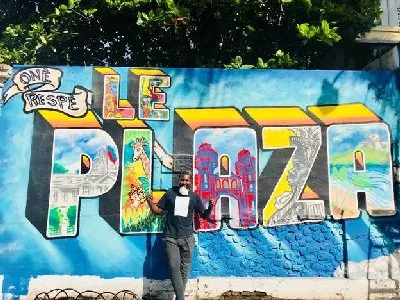
PORT-AU-PRINCE, Haiti--An historic Caribbean hotel is beautifying the streets of downtown Port-au-Prince with a stunning mural of Haitian art.Commissioned last summer by the hotel’s management team and created by renowned Haitian graffiti artist Jerry Rosembert Moise, the mural wraps around the popular Le Plaza hotel to feature the globally-famed creativity of Haitian artisans.
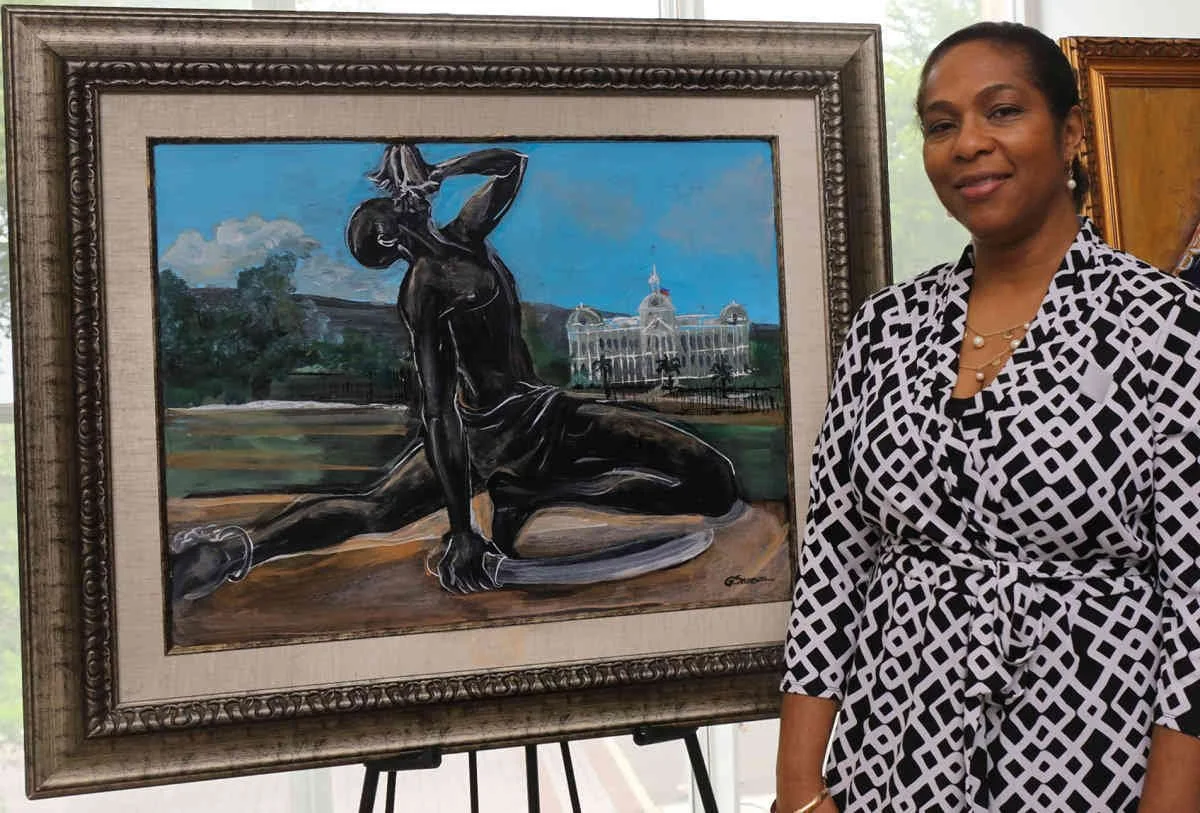
Queens Museum annual symposium on Haiti
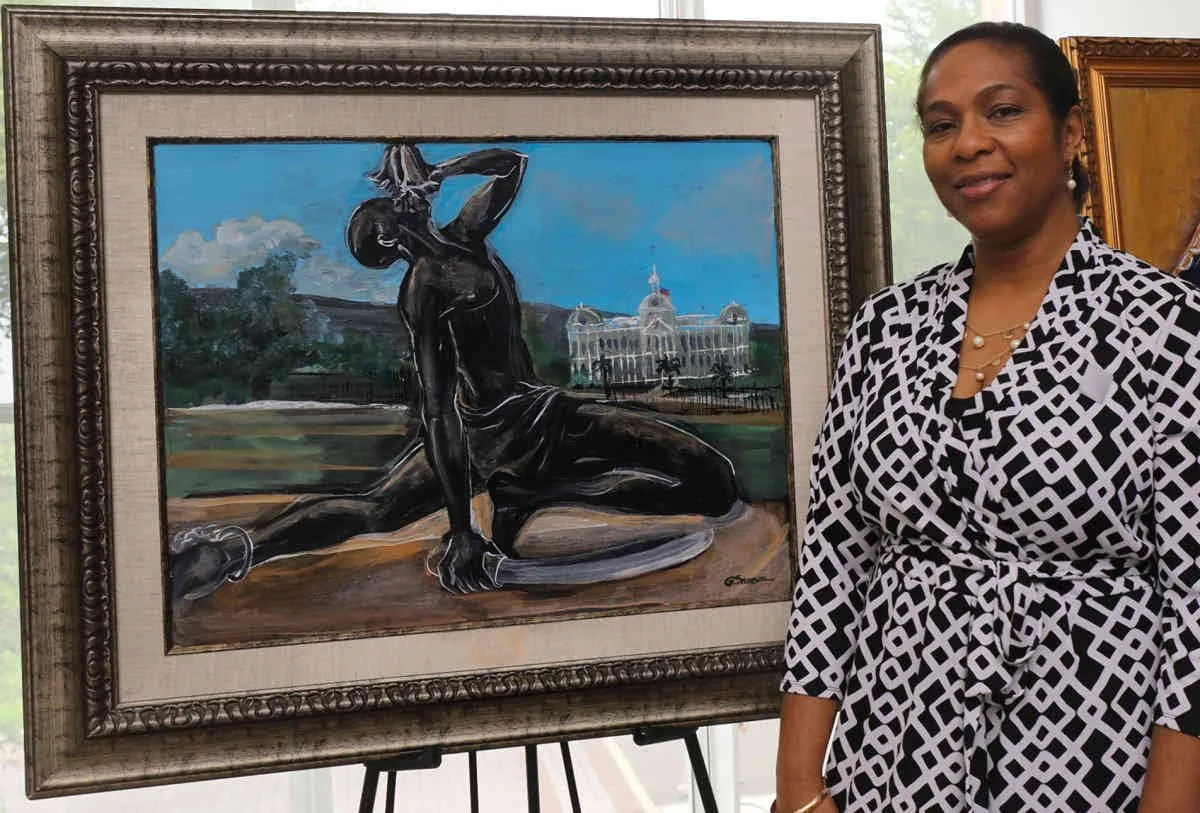
The Queens Museum is a vital partner with the Haitian community and hosting topical symposiums is a good example.Last week’s L’Education du Regard (Educating for Deeper Understanding), an annual event has been held at the museum for more than a decade, initiated by architect and urban planner Etienne Telemaque and later joined in planning by artist Patricia Brintle.“I handle art and architecture and Etienne handles other content,” says Whitestone resident and painter Brintle, who wrangles other artists to participate, so a mini-exhibition is also part of the symposium.Brintle expounded on the topics of years’ past — water systems, electricity, transportation, and sanitation. Historic gingerbread houses with World Monument experts participating were a topic one year. The symposiums all add breadth to understanding the issues.One year, there was a heated discussion on the importance of parks with the focus on Martissant Park; the issue raised: Why put a park in the middle of a slum?Experts reiterated how putting a park in a “terrible area” breathes air (and life) both literally and metaphorically into its neighborhood. It’s also about saving the environment.In the case of Martissant Park, situated in the poor, crowded neighborhood of Martissant, there is a medicinal garden, an educational environment center on the premises, and people can get cuttings from the gardeners there.Peaceful and a conducive environment in the middle of noisy, hectic day-to-day Port-au-Prince streets is where students are also seen on benches and along the paths, books open, intently studying.“Our audience of Haitians and friends are happy that people care and that there are symposiums about these subjects,” says Brintle as she admits, “For a lot, they’re hearing about a particular issue for the first time.”This year’s “Le Champs-de-Mars: A Public Sector to be Preserved Absolutely” focused on an area of Port-au-Prince that is a series of downtown parks split by wide boulevards, almost like the Washington Mall in function.There are also statues of Haiti’s founding fathers: Toussaint Louverture, Jean-Jacques Dessalines on horseback, Alexander Petion, and Henri Christophe, collectively known as Place des Héros de l’Independence (Place of the Heroes of Independence). It is also where the wonderful history museum Musee du Pantheon National Haitien is located and the site of the destroyed-by-earthquake demolished National Palace.Artist and author George Patrick Gaspard spoke of how in his growing-up years Le Champs de Mars (Chanmas, in Haitian Creole) existed as a Sunday park of walking, congregating, children riding bicycles and breathing fresh air.Patrick Durandis, Haiti’s Director General of the Institute of Saving the National Patrimony (ISPAN), cancelled at the last minute so the program became a general discussion with attendees of what needs to be done to restore the area to its former stature in Haiti’s urban life. Preservation is not fostered in the population of Haiti, says Brintle, on the need for education in this regard.Also, during the afternoon, Haitian authors George Patrick Gaspard and Eddy Mesidor, caricaturist Castro Desroches, and poet Janie Bogart sold and signed their books.By: Caribbean Life | June 15, 2018
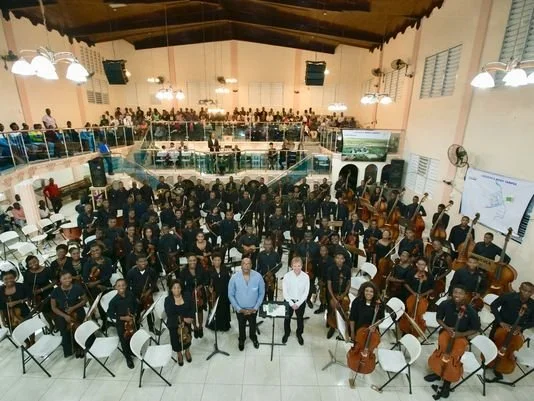
Utah Symphony Message to Haiti Musicians: We Are With You and Your Country
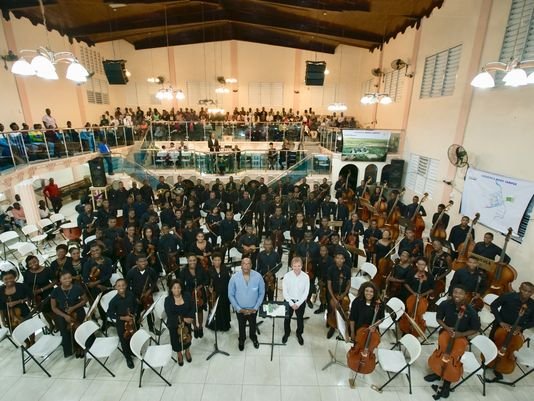
(Utah Symphony music director Thierry Fischer (right) and Haitian conductor Pierre Leroy with participants in the National Orchestra Institute, March 30, 2018, Cap-Haitien, Haiti.(Photo: Colby Bryson)
We are one orchestra, one American organization in Utah, sharing our music to show support for Haiti. We hope our actions will inspire U.S. political leaders.
About 20 of us from the Utah Symphony recently spent a week in Cap-Haitien, in the north of Haiti. It’s about an hour-and-a-half flight from Miami. Close and yet so very, very far.
We were there for the National Orchestra Institute, a partnership with Building Leaders Using Music Education. For the second year in a row, BLUME had brought together about 100 Haitian musicians for a week of intensive training.
I’m the conductor of the Utah Symphony and I first learned about the institute last year when John Eckstein, one of our cellists, told me in an email that “we just want you to know that 17 of us are going to Haiti on our week off to teach music.” The musicians were volunteers raising their own funds for the trip from private donors, he explained, and added, “you might want to think about supporting this institute…” But I didn’t even get that far. I was already thinking to myself, “Am I free that week? I want to join them.”
This year, I was even more determined to go after recent unfortunate comments attributed to our president about Haiti and other parts of the world. I was thinking that if we can show our Haitian counterparts that we are with them and not against them, or worse, ignoring them, then we have made a difference. Even if we are just a drop of water in an ocean.
So there we were, professional musicians prepared to talk about technique and intonation to people (some of them with no electricity, very little clean water) who are taking care of sick parents and struggling to have access to education.
Their instruments were often in disrepair. We had brought many with us, violins, violas, bows, a horn, trombones, music books and scores to give them. We also brought a luthier and bow maker so they could be instructed on how to repair their own stringed instruments.
My initial reaction was to go easy — to take into consideration the way they live and the obstacles they face. But then very quickly I realized, absolutely not. They didn’t need to feel apologetic because of their current level of playing, and I didn’t need to feel sorry because some of them don’t have a proper house. Art is not just about perfection, it’s about the experience and what that experience can bring. Art can create solidarity and fraternity, as opposed to divisiveness.
I was very demanding (in French, since I'm Swiss!) but also very patient. They have said they want to create a National Orchestra of Haiti one day, so they deserved to know what it means to be an orchestra. They were so hungry to learn. For many of them, this week is the highlight of the year.
They worked hard. They had four hours of lessons with Utah Symphony musicians in the morning and three more in the afternoon with me. Our musicians instructed them on their own playing and on how to teach their instruments to others. They also led section rehearsals to prepare them for the concert that would cap our week.
As a conductor, I had much to tell them. Nobody had ever shown them how to tune as an orchestra, so that took a few minutes. And in an ensemble, you have to listen to each other so precisely — with this idea that playing exactly together, they can create a wave of beauty. You have to give them encouragement and be very patient. But they are so committed, it is beautiful to watch. Honestly, when you see them achieve the right tone, it’s breathtaking. You know that you have opened doors, and that these doors will lead them to even more discoveries. They don’t need to tell you — you see it in their eyes, in their smiles, in their body language.
They just want to work, to learn, to be better.
The last evening they performed Tchaikovsky's Symphony No. 5, and after the concert we had a celebratory meal together. I made a little speech at the end. They kept telling us how grateful they were. But I told them they absolutely don’t realize how much we receive and learn from them with their genuine desire just to know more — about everything. Our commitment is our way to show them we love them.
It’s one thing to make yourself feel collaborative by making a donation, but it’s a completely different thing to give your time. To take the initiative and be prepared to be confronted by a different world and to give of yourself. The minimum we can do as artists is to share what drives us every day. A week a year to share and to translate what the notion of art can bring to life in general, it’s not too much.
I am so proud of the musicians of the Utah Symphony for bringing us there in the first place. We are an orchestra — just one American organization, committed to both our work in America and in developing countries like Haiti, and to the notion of sharing what sounds can bring. We hope to inspire our leaders through our actions.
Thierry Fisher is the music director of the Utah Symphony, principal guest conductor of the Seoul Philharmonic, and a frequent guest on international podiums.
By: Thierry Fisher for USAToday.com | April 30, 2018

Luka Sabbat Partners With Related Garments for Collection to Benefit 'Help Haiti'

Sabbat x Related in Haiti-Building Connections That Go Beyond Bloodlineshttps://youtu.be/tw1gfEPhMBoVideo via https://youtu.be/tw1gfEPhMBoAmerican fashion designer Luka Sabbat has teamed up with the Los Angeles–based luxury men's undergarment brand Related Garments for a collection to benefit the charitable organization Help Haiti.Luka's father, Clark Sabbat, is a first generation American, born in Haiti, and the father-son duo decided to use this 12-piece collection as an ode to their heritage. The collaboration was inspired by a seven-day trip to Haiti, where they met and interacted with local people. The culture and warm nature of Haiti's residents prompted the collective to seek out Help Haiti as the beneficiary for the project's revenue.The collection contains both men's and women's undergarment pieces, as well as men's socks. On the retail site where the collection is available for purchase, the "Sabbat x Related" line is described as "more than marketing, or the casual exchange of design ideas. For Clark, it means nostalgia and the unbreakable bonds of family. For Luka, it means paying homage. For Mike and David, it means extending the brotherhood of their brand beyond bloodlines."Mike and David, the brother duo behind Related Garments, have looked to create a line of stylish basics for men, and now women as well. The team sought out a charity that would give opportunities to local Haitians, and allow them to find success, and keep that positive momentum going. They eventually decided to partner with Help Haiti, whose mission is to "create, through merit and needs based scholarships, a community of young professionals and leaders who will promote a more just society in Haiti."The collection is available for pre-sale now on Related Garment's website, and 12 percent of the net proceeds will go to Help Haiti.By: Nora-Grayce Orosz for Complex.com | April 23, 2018
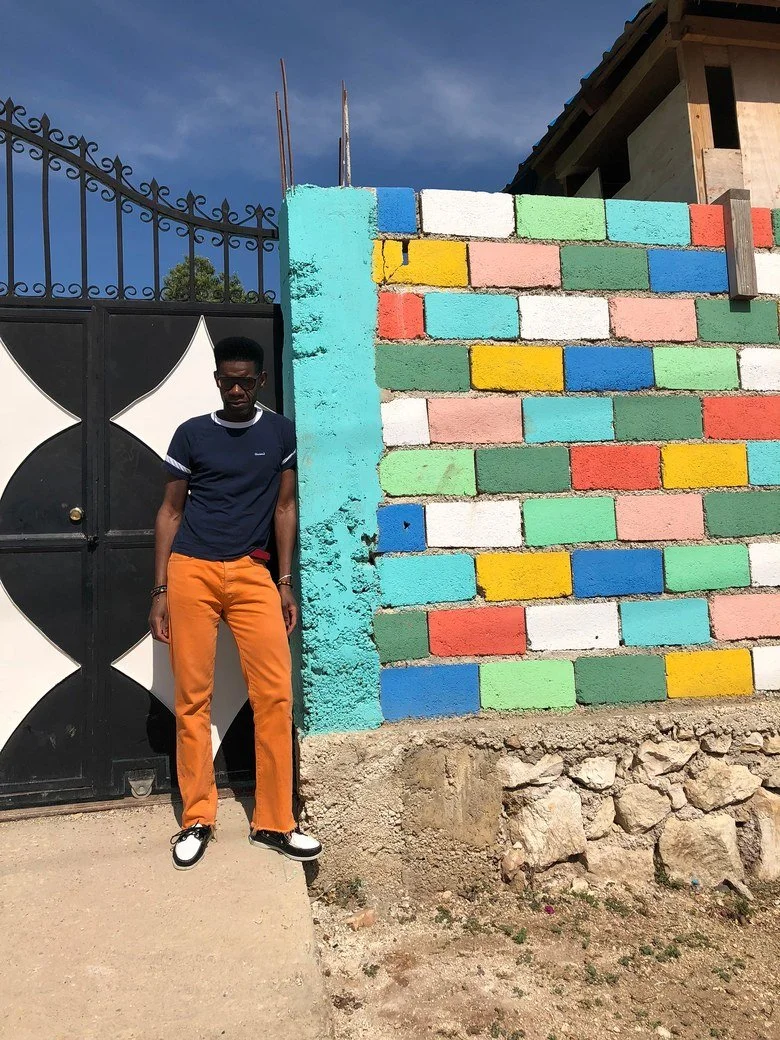
Designer Victor Glemaud Returned Home to Haiti With the Clinton Foundation—And Photographed the Trip for Vogue
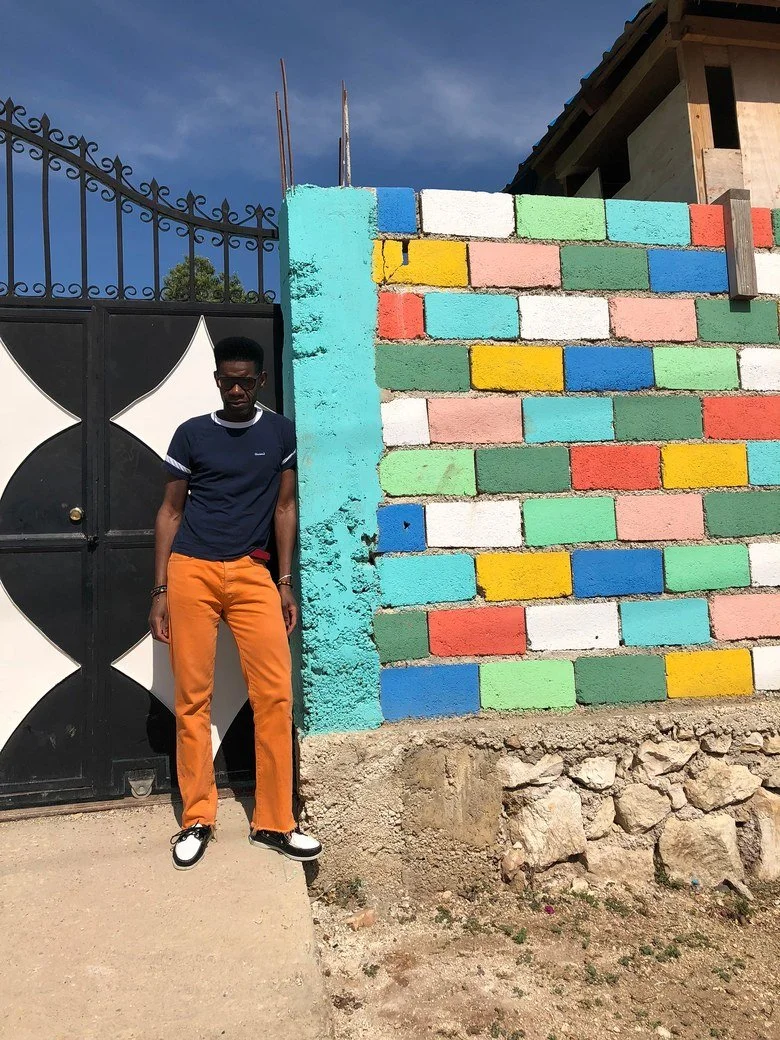
Going back home might crop up in every form of cultural expression—you’ve read the books, watched the movies, karaoked the songs. Yet Victor Glemaud, a 2017 CFDA/Vogue Fashion Fund finalist, who’s a pretty nifty designer of inventive, colorful knits, is going to use his trip for his next presentation, currently envisaged for this coming June. Glemaud, who was born in the island’s capital, Port-au-Prince, and moved to the U.S. when he was 3 years old, visited at the invitation of the Clinton Foundation, to attend an event produced by the Haitian Action Network, an organization focused on women’s empowerment and enterprise initiatives. The opportunity came through a series of interconnected events. One minute he was showing his work to Condé Nast executive David ibnAle, before another, Gina Sanders, passed by. She noticed Glemaud was Haitian. Before long, Sanders reached out to him, and everything was set in motion.


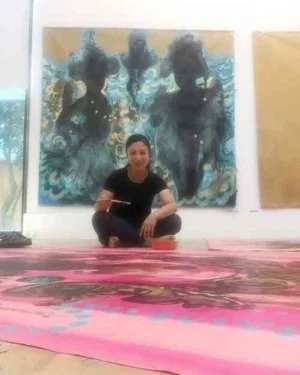
Over the Line: Haitian and Dominican Artists Team Up for Exhibit
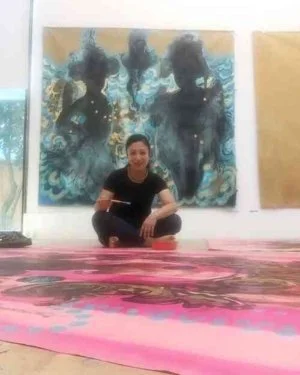
Call them artists without borders.More than a dozen Dominican and Haitian artists will come together to showcase artwork depicting the relationship between the two neighboring Caribbean countries. At the exhibit “Bordering the Imaginary,” opening at Bric House on March 14, artists from both countries will explore the history of the island they share. The show was inspired by a controversial 2013 ruling that stripped Dominican citizenship from children of Haitian descent, and the ignorance that its curator saw displayed at panels and protests about the ruling. . . .The exhibit features 40 pieces from 19 artists, and is split into three sections. The first examines the history of the island, the second looks at the border area between the two nations, and the last is a joint multimedia project by Dominican-American artist Scherezade Garcia and Haitian-American artist Vladimir Cybil Charlier. Their section, titled “Memories of a Utopian Island and the Future,” features an animated video and an installation exploring resistance and race.
. . .The exhibit features 40 pieces from 19 artists, and is split into three sections. The first examines the history of the island, the second looks at the border area between the two nations, and the last is a joint multimedia project by Dominican-American artist Scherezade Garcia and Haitian-American artist Vladimir Cybil Charlier. Their section, titled “Memories of a Utopian Island and the Future,” features an animated video and an installation exploring resistance and race.
On March 17, both artists will join a panel discussion about the island’s shared history in art. The countries have much in commmon, said Garcia.THE EVENT:“Bordering the Imaginary” at Bric House:647 Fulton St. at Rockwell Places Brooklyn, NY -Fort Greene Neighborhood(718) 855–7882www.brica

Haitian Designers Trump Politics At DC Fashion Week

WASHINGTON, D.C – During this year’s DC Fashion Week, the Haitian embassy showcased Haitian-American fashion designers’ collection lines for their first “Diplomacy by Design” event. Four renowned designers of Haitian descent, Prajjé Oscar Jean-Baptiste,Kerby Jean-Raymond, Victor Glemaud and Azède Jean-Pierre, used the occasion to illustrate their creative talent to a diverse audience of dignitaries and fashion insiders.The first of its kind, the event aimed to provide a window into some of Haiti’s finest couture and overall beauty. As models strutted their way through the opulent grand ballroom of the Haitian embassy, a crowd of onlookers admired the individual styles and techniques of the night’s fashionistas.Haiti’s ambassador to the United States, Paul Altidor, who has been on a mission to show a different side of his country since President Donald Trump’s disparaging comments, used this event to once again put Haiti on the center stage.“Most of the world has a singular view of our country that we are looking to reshape,” he said. “By showcasing our art and culture through events like these, most notable our fashion design talent, we are changing the narrative with artistry, innovation, and glamour.” Glemaud, a fashion industry veteran, opened the show with his colorful knitwear line. Prior to launching his own label, Glemaud worked in New York and Paris for popular fashion houses like Versace, Marc Jacobs, and Helmut Lang.Jean-Baptiste, a New York-based womenswear designer introduced his “EZILI” collection, named after the Vodou goddess of love and beauty, and handmade by Haitian artisan women. He uses original prints “Maitresse,” embroidery and beading for his designs.Independent womenswear designer Jean-Pierre, known for dressing former First Lady Michelle Obama, exhibited her personal line in a special display room. Jean-Raymond of Pyer Moss, whose politically-charged runway shows have taken social issues to the forefront of the fashion industry also displayed his signature line.
 Altidor’s latest affair brought out some of D.C.’s biggest names like former D.C. First lady Michelle Cross-Fenty, NFL star Pierre Garcon, and Miss Black America’s Brittany Lewis. Also in attendance was two-time former welterweight world champion Andre Berto, and the first Haitian-American appointed to municipal court in New Jersey, Judge Sibby Elias. For one glamorous night in the nation’s capital, Haiti was once again the talk of the town.By: Tarah-Lynn Saint-Elien | The Haitian Times | March 7, 2018
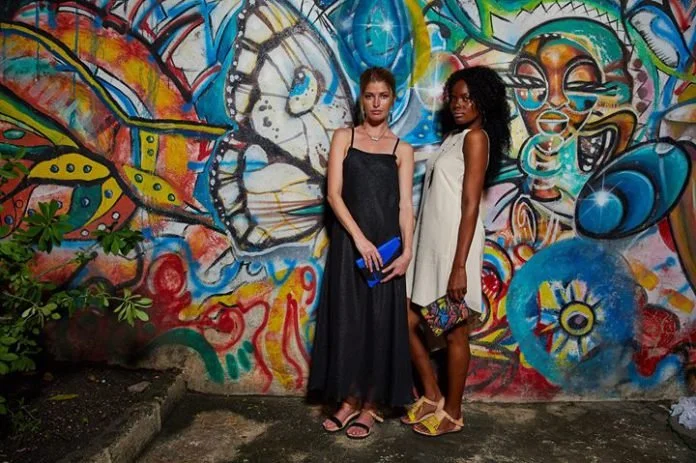
REBUILD GLOBALLY HOSTING RUNWAY TO HAITI FASHION SHOW ON MARCH 8
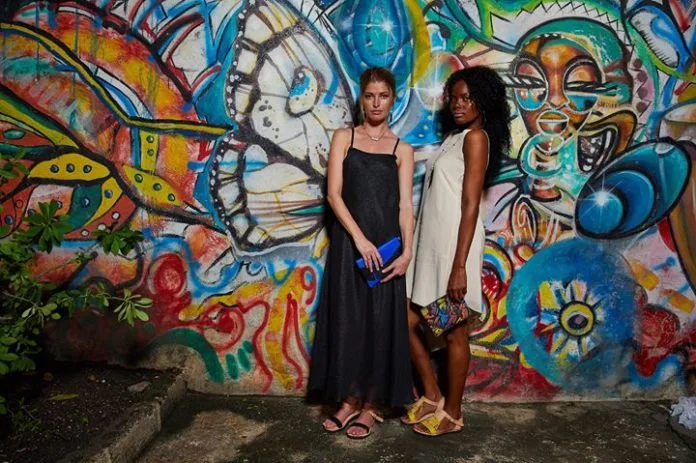
Rebuild Globally is an Orlando-based non-profit focused on alleviating poverty in Haiti via education and providing a more sustainable, entrepreneurial solution for survivors of the 2010 earthquake.Rebuild Globally job training programs are based on a social enterprise model that incubates locally-grown makers and businesses.[embedyt] https://www.youtube.com/watch?v=NW2fO-S2Fq4[/embedyt]Runway to Haiti: A Night of Impact and Ethical Fashion will take place on Thursday, March 8 from 6-8 p.m. at Country Club of Orlando, located at 1601 Country Club Drive. The runway show will highlight the launch of the Spring/Summer 2018 Deux Mains Designs collection, and will feature clothing from Haitian designers.Side Note: March 8 happens to be International Women’s Day.Rebuild Globally and Macbeth Studio will host a pre-event for the upcoming fundraiser on Thursday, February 15 from 3-7:30 p.m. at Macbeth Studio in the Angebilt building, located at 37 N. Orange Avenue, suite 900. Guests will be able to have their photos taken in front of a custom-designed backdrop, created by Haitian artist, Patrick Noze.Tickets are on sale now and can be purchased HERE.By: Brendan O'Connor | Bungalower | February 5, 2018

Luxe Event Aims to Change Haiti's Image Through Fashion

[video width="480" height="270" mp4="http://haitiville.com/wp-content/uploads/2018/02/eb825c9a-745a-4539-bbc2-7b131cc12850_mobile.mp4"][/video]A model showcases a dress featuring colors of Haiti's flag by Haitian fashion designer Immacula Pericles.WASHINGTON/PETIONVILLE — Dozens of designers from Haiti and around the world showcased their spring-summer collections against a lush tropical background during the recent Haiti Fashion Week.The January 28-31 event in Petionville focused on the theme “Innovation” and “haute couture” this year. Event founder Maguy Durce said her main goal was to show Haiti in a positive light, as opposed to negative images usually portrayed by the international media.“Haiti Fashion Week is a cultural event. But we want to use it to respond to President [Donald] Trump — to his negative comments [about Haiti] — because we think if he saw what was happening this week at El Rancho [hotel], he would say, 'Hey, I lied,' or, 'Hey, I was wrong,' or, 'I was misinformed,' " Durce said. Fashion Week founder Maguy Durce. (Photo: Matiado Vilme for VOA)Trump's reported use of a vulgar term to describe Haiti and African nations angered the Haitian-American community and sparked rallies in Port-au-Prince, New York, Palm Beach and Boston to denounce racism. Haiti's ambassador to the United States said the comments about Haiti "hurt the country."The fifth edition of Haiti Fashion Week had been scheduled for November 2017, but was rescheduled after some of the designers said their collections would not be ready in time.
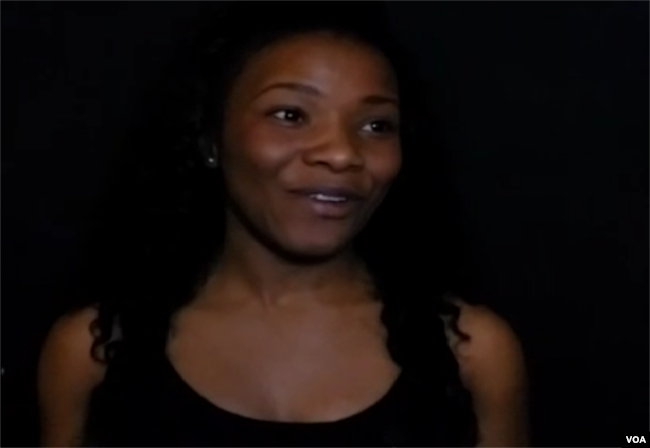
Young Haitian fashion designer Maille Timothee was a first-time participant in Haiti Fashion Week. (Photo: Matiado Vilme for VOA)
Young fashion designer Maille Timothee, whose fashion line is called MAE, presented her designs for the first time this year. She won applause for her colorful dresses made with unconventional textiles.“I wanted to do something unconventional. Something unexpected. So I mixed different fabrics that people would not expect, and even what I’m wearing is an example of that," she explained.Timothee is the daughter of seasoned Haitian designer Immacula Pericles, who runs a highly acclaimed fashion school called Academie Verona. She also participated in Haiti Fashion Week, showcasing a collection of dresses made in the colors of the national flag and representing the natural beauty of the Caribbean country. Her collection wowed the audience.“Well, I’ve been doing these designs for a long time now, so it’s new to some people, but we’ve been around a while," Pericles noted. "The theme of our fashion school is Haiti will survive - so my goal is first to incorporate sustainable materials and second to make the clothing using the same international standards the big fashion houses use so that we can sell our line anywhere in the world.”
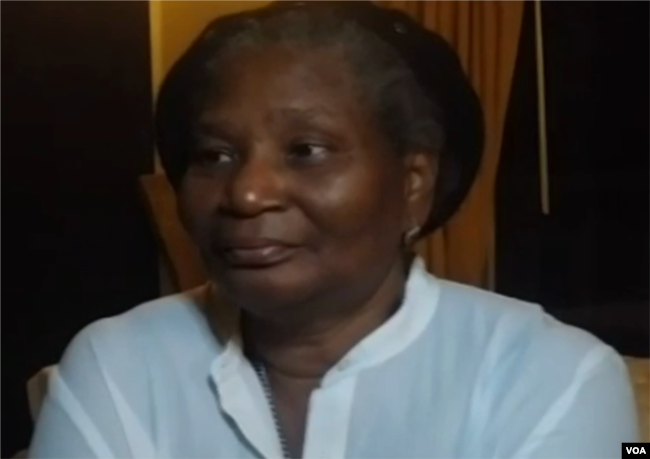
Seasoned designer Immacula Pericles also owns a fashion school called Academie Verona. (Photo: Matiado Vilme for VOA)
Pericles said Haiti has huge potential to excel in the fashion world.French designer Marie-Caroline Behue flew from Paris to Port-au-Prince and went straight to work on her collection. A first-time participant in the event, she admitted to being awed by the quality and intricacy of the designs.“I knew nothing about Haiti Fashion Week and I was amazed by the level of detail in the designs," she admitted. "I’ve worked in the French haute couture design houses and I can tell you the designs I saw here meet the bar - and to be honest, what really piqued my interest was the men’s haute couture, because when one thinks of haute couture, they naturally think of women’s fashion, but here in Haiti, I was like, 'Wow! They’re got couture men’s clothing.'”

French designer does a live haute couture demonstration on the runway during Haiti Fashion Week. (Photo: Matiado Vilme for VOA)
Haitian-American designer Marcia Roseme, whose collection features bright colored separates matched with muted tones, traveled from New York to show her first collection at Haiti Fashion Week.“It was a great event; there were a lot of different styles that represented many markets. There was a lot of innovation, a lot of creativity and unique styles - I really like that,” she told VOA.
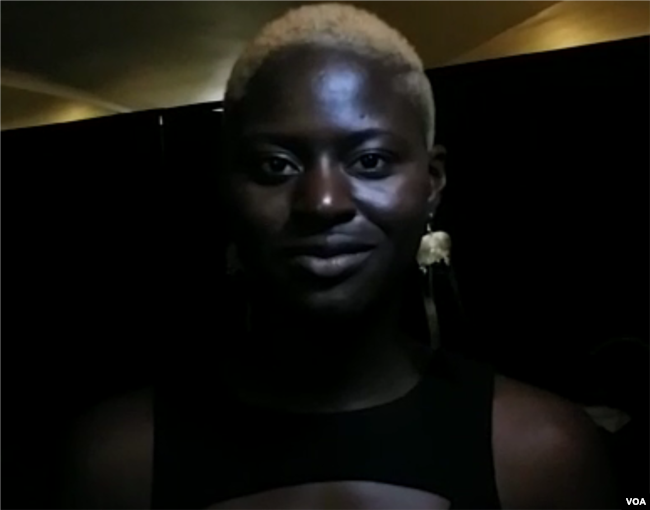
Haitian American designer Marcie Roseme traveled from New York to show her collection at Haiti Fashion Week. (Photo: Matiado Vilme for VOA)
Organizer Durce, who put in many long hours to pull off a culturally rich and diverse showcase of Haitian and international artistry, was pleased with the turnout and the positive reviews from the national and international press.“Africa Fashion TV has been here all four days, broadcasting our fashion shows live, so what we’re doing here in Haiti is being seen in 29 African countries and all over the world. Each time a person tweets or posts something about Fashion Week to Facebook, it raises Haiti's image to a higher level.”Durce said she’s looking forward to the sixth edition of Haiti Fashion Week - to be held in 2019.

This year, Haiti Fashion Week focused on Innovation and haute couture. (Photo: Matiado Vilme for VOA)

Little Haiti Takes Center Stage for Art Beat Miami during Art Basel Miami

Art Beat Miami opens December 6th with the unveiling of works of emerging and renowned local, international and celebrity artists in the art mecca of Little Haiti.
MIAMI – Little Haiti once again becomes the heartbeat of all things art and Caribbean during the 2017 Art Basel season with Art Beat Miami.Art Beat Miami is the must attend art fair event taking place at the Caribbean Marketplace from December 6th – 10th.Art Beat Miami is a collaboration of local galleries, businesses, community and civic arts organizations which includes the Little Haiti Optimist Club, the Northeast Second Avenue Project (NE2P), MJ Diversity Consulting Group and Chefs of the Caribbean.From the Little Haiti Cultural Center and stretching the length of the NE 2nd Avenue corridor, the 2017 season again features the critically acclaimed Mural Mile public art walk, showcasing a collection of murals draped across 20 buildings.This world-famous walk of art showcases murals on buildings spanning the 2nd Ave Corridor from NE 54th Street to NE 62nd Street and 54th Street between NE 2nd Avenue and NW 6th Avenue, by some of South Florida’s best muralists.
Art Beat Miami Preview Party
Art Beat Miami opens with a free Preview Party on Wednesday, December 6th at 7PM with a special performance by musician Michael Benjamin, known as Mikaben.Art Beat Miami has again partnered with Haiti’s Minister of Culture and Communication, who is sponsoring these visiting artists from Haiti who are exhibiting at this year’s Art Basel/Miami Art Week: Francois Hazel, Levoy Exil, Payas and Valerie Noisette.For the art and culture aficionado, the wealth of offerings at Art Beat Miami has something for everyone.Attendees will be able to submerge themselves in the flavor that is Little Haiti. Art Beat Miami features art curated by Pulitzer Prize Winning Photojournalist Carl Juste, from artists, painters, sculptors and craftspeople from around the world, but all with a unique strain of Caribbean DNA.Guests will view art of celebrity notables such as Slip and Slide Records’ Ted Lucas, lead vocalist and guitarist Roberto Martino of famed Kompa band T-Vice, Theo of the Kompa band Kreyol La, Haitian-American best-selling novelist Edwidge Danticat, the reigning queen of Haitian music and one of the premier Haitian song writers of her generation Emeline Michel, Musician and lead singer of the dynamic Haitian band Harmonik, Mac D and Grammy nominated Blues and R&B artist and painter Valerie Woods. Art beyond musicians and other celebs features the great works of Master Haitian Vodou Painter Levoy Exil; Trinidadian born artist to the stars Stuart McClean; and representing multiple and multinational artists, private collector Lobey Art & Travel.One hundred percent of the proceeds from the work of the celebrity artists will benefit Hurricane relief efforts and a portion of the exhibiting artists’ work sold will also support hurricane recovery efforts.
Art Beat Miami will Spice It Up! Miami
Art Beat Miami will also highlight the “Art of Food” with Spice It Up! Miami on Friday, December 8th and the Chefs of the Caribbean Celebrity Brunch on Saturday, December 9th honoring world-renowned Spanish-American James Beard Award recipient Chef Jose Andres, best known for bringing the small plate dining concept to America.Chef Andres will be honored for his philanthropic work in disaster recovery efforts around the world. Chef Andres served over 3 million hurricane survivors in Puerto Rico and has worked in Haiti and other countries after natural disasters.He will be presented with an award commissioned by the Little Haiti Optimist Club from renowned national artist CJ Latimore as well as a proclamation and special recognitions from the City of Miami Commissioner Keon Hardemon and Miami-Dade County Commissioner Jean Monestime.
The Art Beat Miami Schedule
- Wednesday, Dec. 6th – Preview Party featuring musical artist Mikaben | Caribbean Marketplace – 5925 NE 2nd Ave 7PM – 10PM. The Beat kicks off with a free opening night mingle of music, art, food and fun. For more info – call: 305-492-7868|email: info@artbeatmiami.com
- Wednesday, Dec. 7th – Sunday, Dec. 10th – Little Haiti Mural Art Project | 8PM – Noon. Painting murals throughout the corridors of Little Haiti by local and international muralists.
- Thursday, Dec. 8th – Sunday, Dec. 10th – Art Beat Miami Art Fair | Noon – 8PM. Daily free art fair showcasing emerging, local and international artists and celebrities.
- Friday, Dec 8th – Spice it Up! Miami | Caribbean Marketplace – 5925 NE 2nd Ave 7PM – 10PM. Celebrity Chefs and restaurants show guests how to create appetizing bites and mix tropical drinks featuring: Chef Malcolm Prude of Southern Spice, Chef Alejandro of Ales Paella, vegan Chef Drigo the Culinary Alchemist, Chef Jenny Risonne of Pastry Is Art and Brand Ambassador/Mixologist Michael Ring of Coopers Craft. Learn to dance salsa, reggae, Kompas, network the night away and so much more. $65 More info: 305-492-7868 – RSVP for tickets : www.spiceitupmiami.eventbrite.com
- Sunday, Dec 10th – Art Beat Miami Art Fair concludes | Noon – 8PM.Sponsors of Art Beat Miami: Little Haiti Optimist Club, Northeast Second Avenue Partnership (NE2P), Art of Black Miami and Miami Heritage Month organized by the Greater Miami Conventions and Visitors Bureau, Eastside Ridge, MJ Diversity Consultant Group, Barefoot Wine & Bubbly, Miami Urban Contemporary Experience, Chefs of the Caribbean, Haiti’s Minister of Culture and Communication, the City of Miami Commissioner Keon Hardemon, Haitian American Chamber of Commerce of Florida and Little Haiti Cultural Complex.
Getting to Art Beat Miami
For guests’ convenience, the City of Miami will extend the Midtown trolleys to various locations throughout Little Haiti including the Art Beat Miami art fair.The route will start in Midtown and will offer free transportation between the Design District and Little Haiti.By: South Florida Caribbean News December 5, 2017

Artist finds ‘calling’ after 2010 earthquake in Haiti


West Palm Beach artist Jason “JaFleu” Fleurant was so profoundly affected by the 7.0 magnitude earthquake in Haiti, which left an estimated 200,000 to 300,000 dead and many more displaced on Jan. 12, 2010, that he had to do something to channel his emotions. So, Fleurant started to create.
“When the earthquake happened in Haiti back in 2010, something just took over me,” he said. “I couldn’t stop creating and in that, I found my calling or maybe my calling ended up finding me.”
Fleurant, 33, is a self-taught painter, but thinks his gift is greater than what he has learned so far.
“It started with me drawing what I was seeing on TV and then my friend Yanatha recommended I try painting on canvas, and the moment I did, everything changed,” Fleurant said.
“My family is from Haiti. So that feeling of knowing I had family and friends in the midst of it, that powerless feeling devastated me,” he said.
Fleurant believes it was a spiritual and artistic awakening. “That’s nothing but God,” he said. “The ancestors and spirits, whenever I create. I’m just the vessel.”
“I’d say the universe (had a plan). I didn’t go to school for it,” he said. “It’s all been from trial and error. Practice makes perfect, so I just kept doing it and doing it and in the process developed all my own unique styles.”
Although he explores imagery and an array of colors in his paintings, no image or color really excites Fleurant in particular. “I tell people all the time I have no earthly idea what I’m doing,” he said. “I just kind of go with the flow and whatever happens, happens.”
Fleurant, however, admits that color has always played an important role in his life. “I’ve always loved color, and that may be tied to being Haitian because in Haitian art there is often (many colors),” he said. “The only real conscious decision I make when it comes (down) to it is always trying to use blue and red somewhere in honor of Haiti.”
Fleurant has had celebrity encounters and is slowly gathering a following for his artwork. “My brother Jamaal ‘Visualist’ Clark and I (believe) if there’s a door cracked, we’re going in,” he said. “That mentality has led us to meet and give artwork to the likes of Dr. Michael Eric Dyson, U.S. Sen. Cory Booker, Jill Scott, Swizz (Beatz) and more.”
Fleurant and Clark were at the Drink Champs Podcast where they got to meet Hip Hop star Noreaga and DJ EFN, which led to a meeting with music producer Swizz Beatz, Fleurant said.
“One minute I’m just chilling in the back and next I look up to see Swizz walking directly towards me. He didn’t even, at the time, know I had art,” he said. “For whatever reason he just walked directly to me and started talking. So then I told him I had this painting I wanted him to see. We unrolled it and he digged it.”
Fleurant said he envisions himself becoming a version of Walt Disney, Dr. Suess and Stan Lee. “Art is cool, but I don’t really care for the art world or just making paintings,” he said. “I’ve come to use all my artistic skills now to be able to create my own books — be it family books, graphic novels or more. I’ve created and fallen (in) love with my own characters and I want to bring them to life.”
For more information about Fleurant, visit jafleutheartist.com.
Q & AWhat are your hobbies? Honestly, I don’t have any hobbies. I think some would view art to be, but that’s my career and therapy, too.What would you do if you were invisible for a day? I’d have an exhibit of my works and wander around and listen to people’s true thoughts on it. That was always a dream that nowadays seems even more less than likely.If you could have dinner with anyone in history, who would it be? Stevie Wonder — he’s hands down my favorite artist in all genres. I’d love to pick his brain.What’s the best advice you ever received?Paul Fisher once told me “Never wait to get your (expletive) together.” Too often we say ‘I’m going to do this or want to do this, but first I must do this.’ But, life is too short and the universe conspires for you when you move towards your dreams.What event in history would you have liked to have witnessed?Not so much an event but the whole movement of the Harlem Renaissance. From the artists going to Paris to get their props and coming home and banning together. I’d love to have been amongst that.What is your favorite childhood memory? Being at the kitchen table while my mom cooked and drawing ninja turtles and other cartoons that she too loved. Those were awesome memories that still stay in my head. Even when I quit art as a teen well into my adult years.Who is your hero, someone who inspires you?I’ll take that back to Stevie Wonder and the reason being, for someone to have no sight but see the world so clearly and create art that means so much. It’s inspiring and a reminder anything is possible.What is something that most people don’t know about you? How heavily I battle depression and mental illness. I used to be ashamed to say it. In fact, this is definitely the first time in any interview I have. But it’s important to address that, particularly in the black community. The arts have been very helpful with it and speaking to someone (about it) (with similar issues).What three things would you bring with you if you were stuck on a desert island? Music, art supplies and books and I’m good to go. I spend a lot of time outdoors, so I’ve grown accustomed to that.
By: Kyoto Walker Special to The Palm Beach Post for the Palmbeachpost.com | November 29, 2017
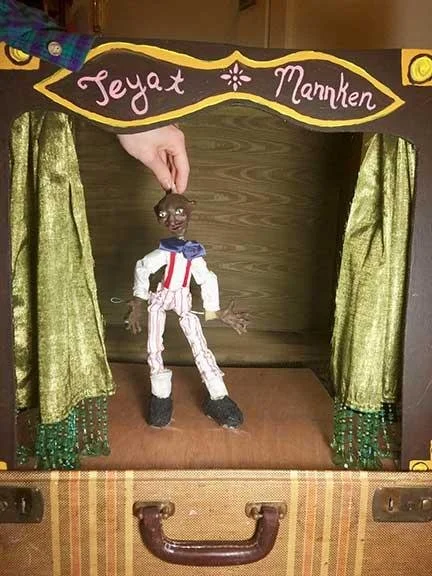
Damascus native daughter plans puppet show in Haiti
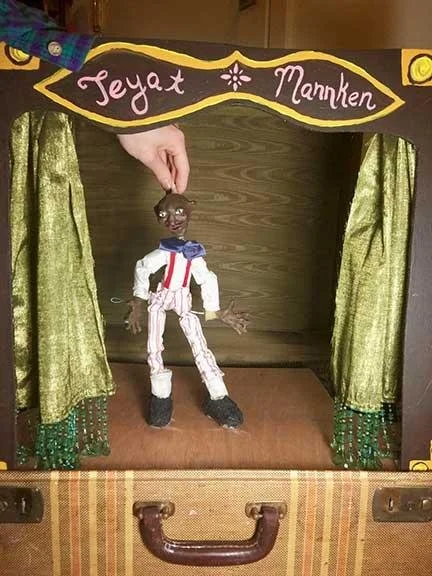
NEW YORK CITY, NY — Lucille Jan-Turan, the daughter of frequent River Reporter contributor Ramona Jan, grew up in Damascus, PA and holds a bachelor’s degree in human ecology from College of the Atlantic. But this winter, she’s utilizing a long history in theatre to stage a puppet show for the children of L’orphelinat de Providence, an orphanage in St. Rock, Haiti.“I’m going out this Christmas and New Year’s; I’m only going to be there for eight days,” says Jan-Turan. “I have a lot of experience working with kids of all ages. I was a preschool teacher in Williamsburg for a summer, I taught ages one through four, and I’m a puppeteer, like my mother. So what I’ve done is, I have built a stage that pops out of a suitcase, and I’ve written and translated an original Creole puppet show. It’s sort of a fairy tale—it’s called ‘Tifi a ak Lalin lan,’ which is ‘The Girl and the Moon’… I’m going to do that show [at the orphanage] for them on Christmas.”Jan-Turan has been working hard to connect with her audience; the other half of her program will include theatrical movement exercises “to help stimulate creative expression and mental health.”“Originally, I thought, ‘Well, I’ll just do movement exercises with them because I can’t actually speak Creole,’” Jan-Turan explains. “But I’ve actually made a lot of [headway], I can actually speak quite a bit of Creole now. I don’t know how well that’s going to translate when I get there, and I’m actually trying to talk to people. But I’m really excited to immerse myself in the language… I’m like a four-month-old Haitian Creole speaker. I study every day—you actually caught me right in the middle of my lesson… I’ve translated the whole puppet show, I’m still working on the puppets—I’ve just got a couple to finish up—and then I have to memorize the script, and then I have to practice the puppet show itself as much as possible.”Assessing the reasons why she got involved in this project, Jan-Turan credits her college roommate Nicole Moss, with whom she is developing ALLWAYS, a “nonprofit connector” in St. Rock. “We’re social entrepreneurs, I guess, in the sense that we’re ultimately trying to start… a community based startup—[Nicole] is going out to live there for four months, to become a part of the community, to get to know these women even more closely. They already have a bunch of sewing machines, and the dream, ultimately, is to start a fanny-pack factory, where it will profit the women 100%. Then she’s going to give them the English skills they need to sell their change purses, fanny packs, to the local American tourists, of which there are many. And then our dream is to eventually bring these fanny packs and change purses back to the United States, and sell them at music festivals on the East and West coasts—and then online, worldwide. It’s kind of funny talking about this, because it’s something that’s going to be years in development. It’s not something that happens in a year; it’s not something that happens in two years—it’s something that really happens in five to 10 years.”To finance the puppet show next month, however, Jan-Turan is conducting an Indiegogo fundraising campaign, which promises that she will “deliver joy.” To view the campaign video and contribute to her cause, visit https://igg.me/at/puppetsforhaiti.By: IAN PUGH - Wed, 11/08/2017
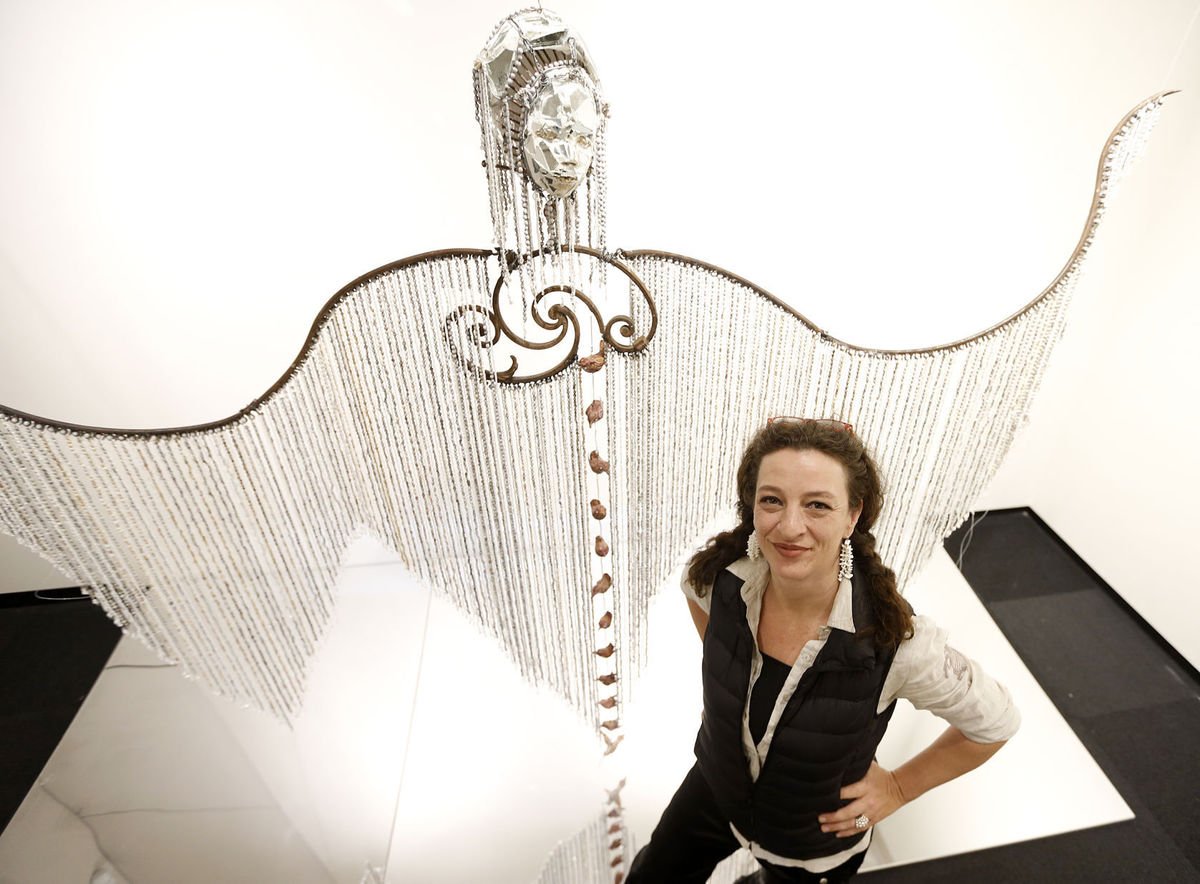
Pièce De Résistance: Haitian Artist’s Work Explores Life
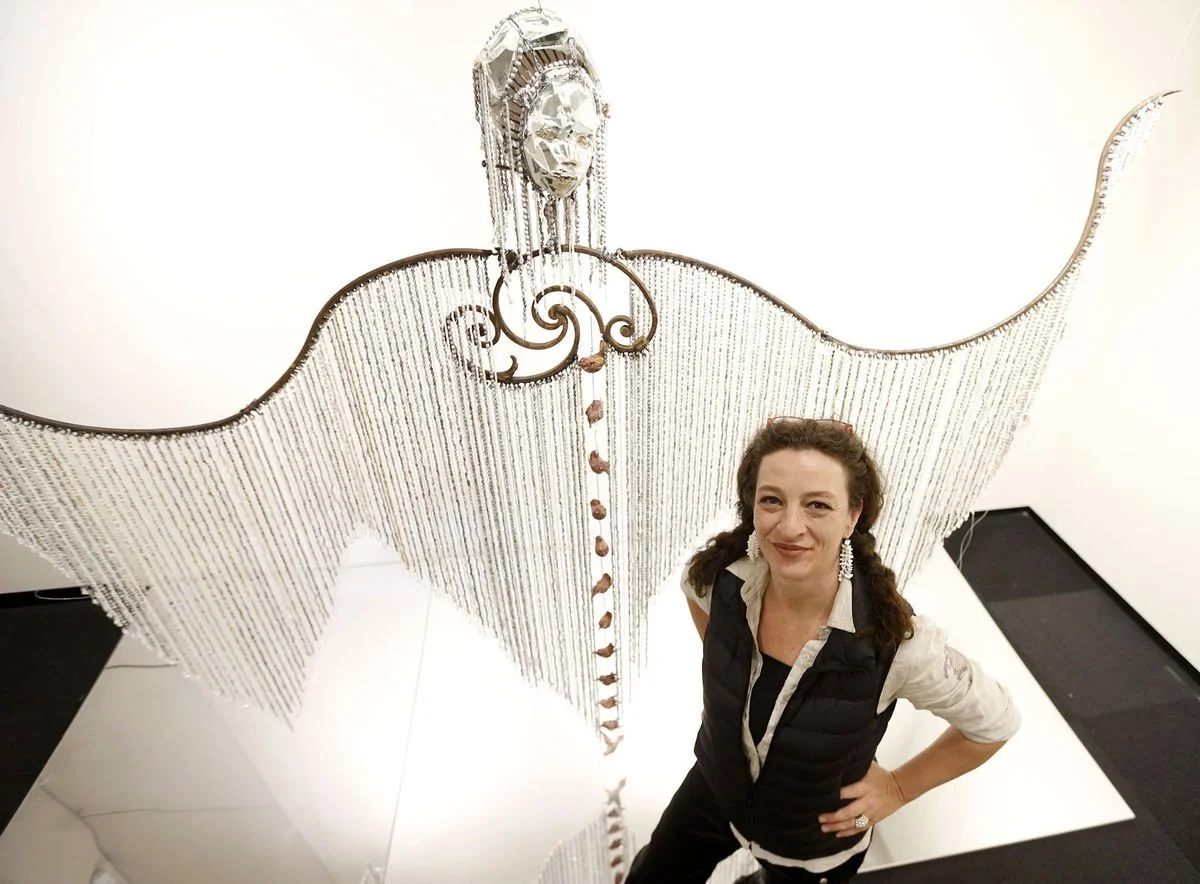
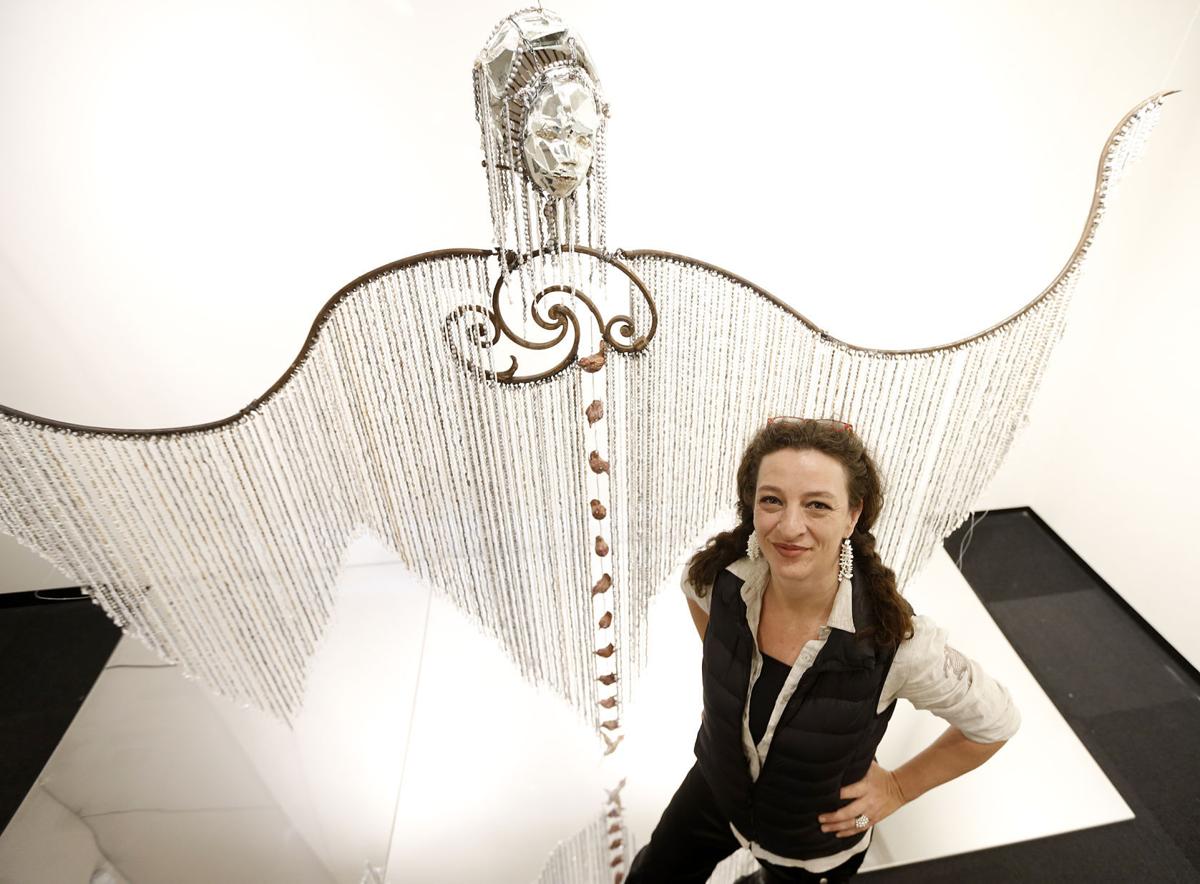
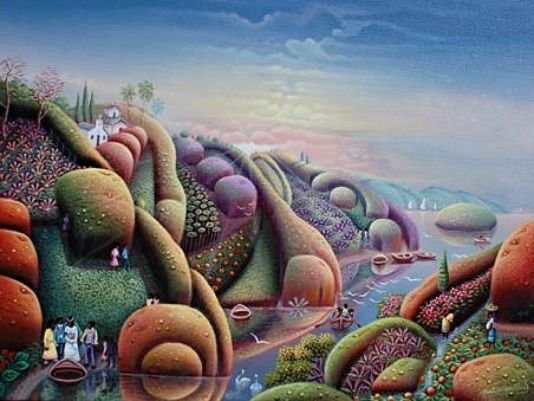
With eyes wide open to gaze with wonder at life’s ebb and flow, Monnin’s curiosity is boundless. In her soul, she believes life is endlessly fascinating and worth documenting through ethereal kinetic sculptures she calls L’Ange or angels, made of raku-glazed pottery, pearls and crystals strung on wires, and other sculptures, installations and colorful paintings that explore Haitian culture, faith and life in the island nation.
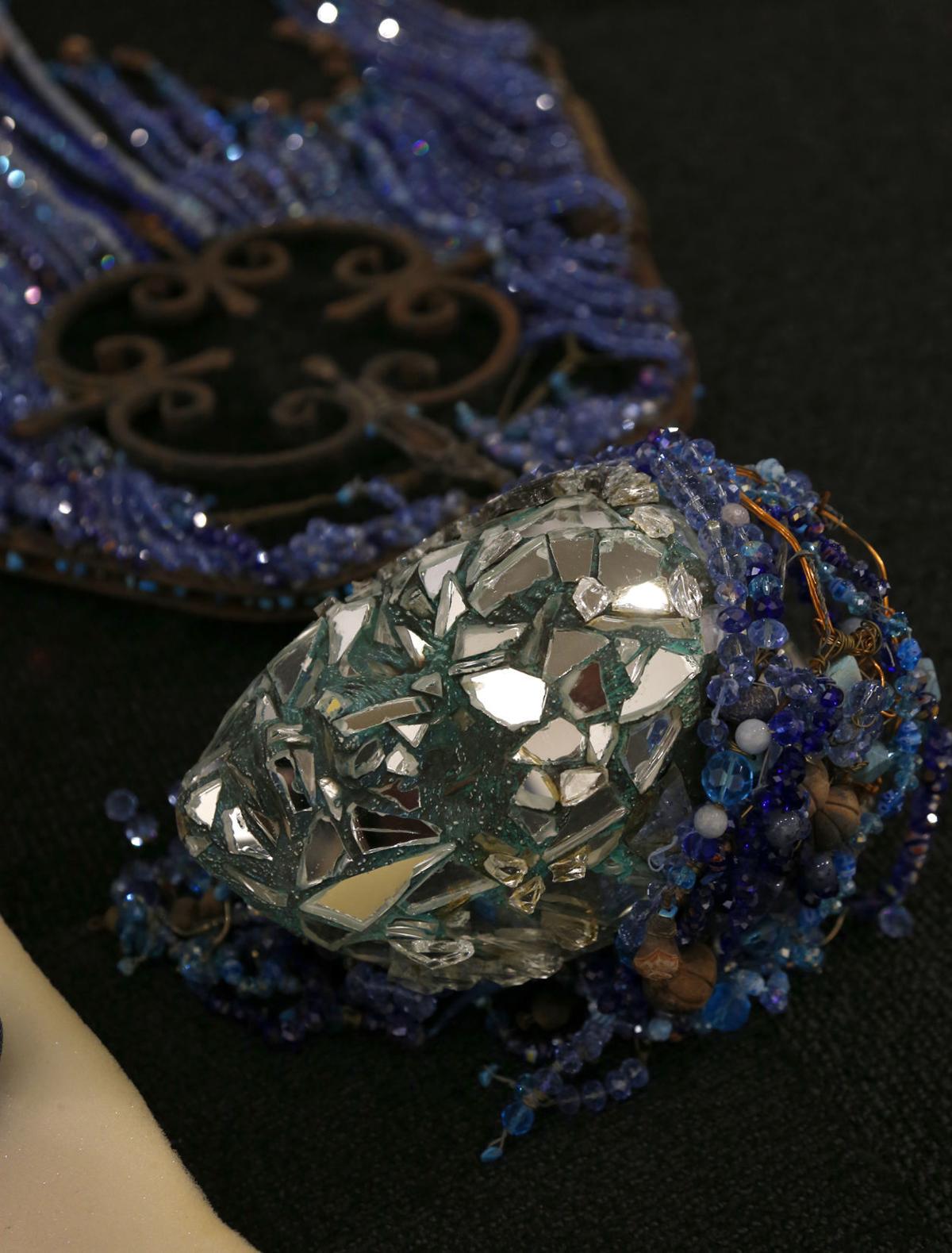
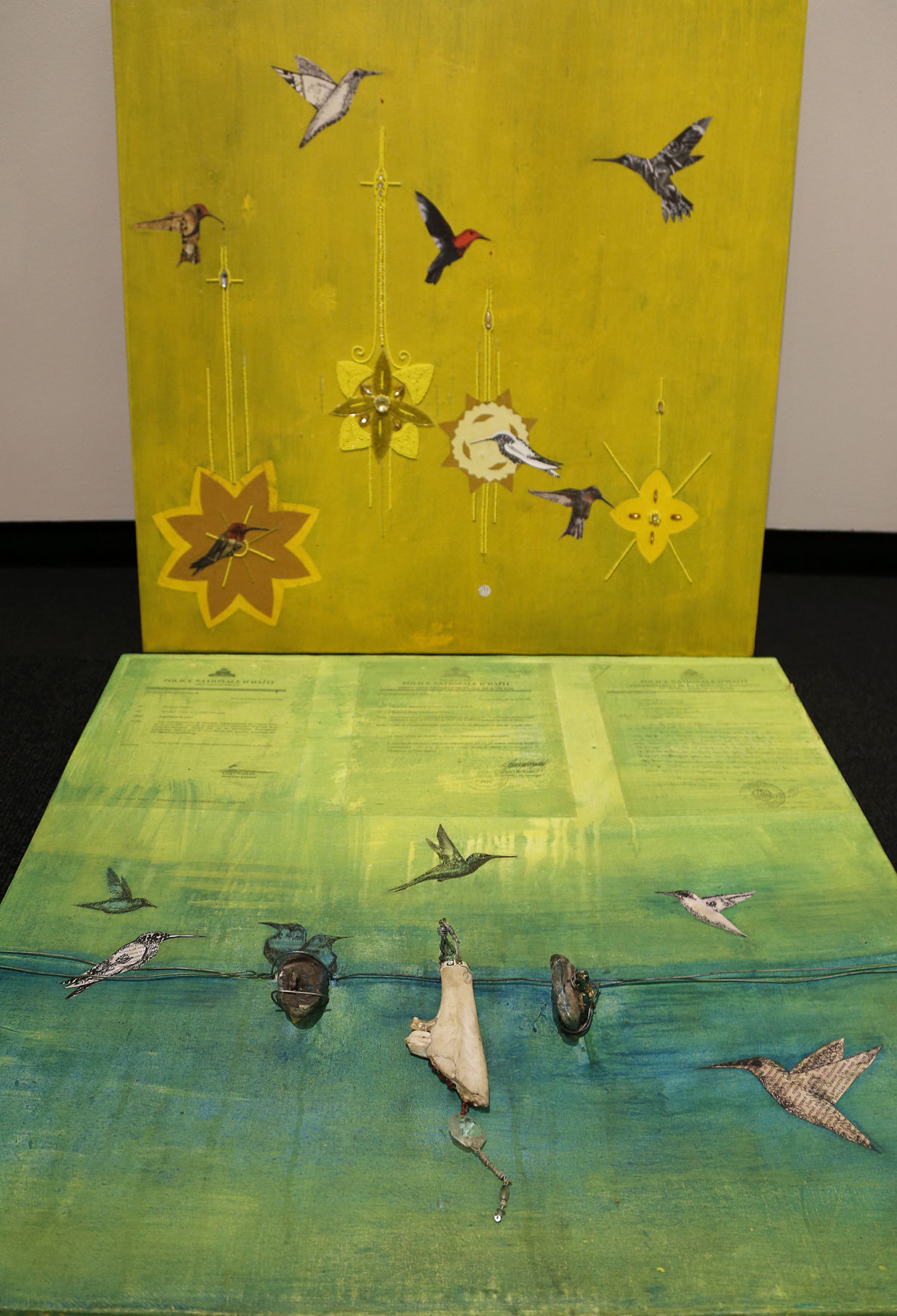 Monnin is one of the best-known contemporary female artists in Haiti, and her artwork has been exhibited in one-woman shows and exhibitions at art centers, museums and galleries around the world.
Now her work is being featured at the Waterloo Center for the Arts. “Birth of the Hummingbird and Other Marvels” opened Friday with a reception and gallery talk by the artist.
“I like going with the flow of life, and I never do anything by half-measure. Even as a child, I liked putting things together, and I loved to go to the hardware store. Take me to a clothing store, and I don’t know what to do. I feel my femininity, and I will fight for it, but I prefer tools over shoes,” Monnin says, laughing.
She has been described as “a prominent member of the newest school of Haitian artists, a group of sophisticated young moderns who are hip and well-traveled, and are energized by the ethos of Haiti, but present it in a contemporary manner,” according to one gallery description.
Born in Port-au-Prince in 1974, Monnin grew up in Geneva, Switzerland with her mother and spent school breaks and summers in Haiti. Her father, Michel, owns the noted Galerie Monnin.
 She studied art education, including painting, printmaking and sculpture in Geneva, and returned to Haiti to live in the 1990s. Recently, she moved to Paris.
Her artwork is informed by considerable research, composed through personal reflection and guided by experience and instinct. “The Birth of the Hummingbird and Other Marvels” brings together different aspects of her work, according to the WCA, and features installations, paintings, drawings, mobiles and sculptures.
“I don’t believe in borders between different art forms. It’s sometimes sad to think that people put art on one side, music on the other, architecture over here, but it is all art, and if we all hold hands, we can fit the puzzle together,” Monnin explains.
The artist also is participating in the annual Haitian Art Society Conference, hosted by the WCA now through Thursday. The event features special presentations, exhibition gallery talks and tours of museums, art centers and private collections in the Cedar Valley, Dubuque, Davenport, Milwaukee and Chicago.
As the repository for the world’s largest and most significant public collection of Haitian art, “it’s important to celebrate and show how we’re interpreting the works and paying respect to the artists and work,” says curator Chawne Paige.
This is the second time the international conference has taken place in Waterloo.
The Monnin exhibition will continue through Jan. 8 in the Forsberg Riverside Galleries. Pieces by additional Haitian artists represented in the WCA collection are on display in other gallery spaces.

Restored Gala to help raise funds for sexual violence victims in Haiti

A charity event in Kokomo this weekend will help restore hope to victims of sexual violence in Haiti.Local nonprofit Nadege Inc. will be hosting its second annual Restored Gala Saturday.In 2012, Nadege co-founder Emily Hays and a group of others took a trip to Haiti with Project 117, founded by Kokomo native Curtis Stout. The nonprofit organization, of which Hays' husband Stuart Hays served as chairman, worked to help the left-behind children of Haiti by building schools.
“We were tasked with the responsibility of coming up with surveys and going out into the community to find out who was and wasn’t attending school. It was there that we met Nadege,” Hays said. “Through hearing her story, it became a little suspect that she may have been a victim of sexual violence.”After talking with Stout, Hays said they discovered that sexual violence was the most prevalent form of violence in Haiti. Other organizations that were on the ground in Haiti weren’t specifically coming up with a way to keep these women safe, so in late February of 2015, Hays, Stuart, Beth Waterman and Melissa Kidwell decided to start their own.“I woke up in the middle of the night and had Nadege’s name on my mind and just sensed that I should look up her name to see what it meant,” Hays said. “It said ‘Nadege – noun: hope’ and it was in that moment that we knew we had to form an organization and God would use it to restore hope to survivors of sexual violence in Haiti.”Nadege Inc. was officially founded in March 2015 and the organization set off on an ambitious mission: to build a safe house for Haitian women who are survivors of sexual violence and to educate men on the negative effects of violence against women. To achieve their goal, members of the organization worked to come up with fundraising ideas.During the holiday season in 2015, the nonprofit hosted their first annual breakfast with Santa at Oakbrook Church. The event has been really popular, but something was still missing.“A group of us were trying to figure out what is an event that will really connect the people of Kokomo to the women of Haiti, because most people that we talk to on a daily basis will never go to Haiti,” Hays said. “It was through a lot of prayer and brainstorming that this whole ‘Restored Gala’ idea came to be.”Kidwell was one of the big inspirations for the whole idea because her house is full of restored, decorative items that she created herself.
“Nothing captures the vision of what we want to see happen in the life of each woman we serve like seeing something broken and abandoned being restored,” Hays said.About 25 people restored items for the first year of the Restored Gala, which raised around $45,000. That money was used to build a security wall around Nadege’s property in Haiti where the safe house will soon be built.Twenty-five local artists have created items for this year’s event, ranging from a birdcage to a bed swing and dresser. While restoring the items, each artist has raised $1,000 in the process that will be matched by a generous donor by up to $25,000.One of the restorers, Kevin Sprinkle, has participated in the event since its inception. Last year he restored a 1960s kids’ pedal car. With the help of his friend Kenny Gingrich, Sprinkle worked to restore an antique tricycle for this year’s gala.“I have enjoyed combining some of the things that I like with being able to help such a great organization,” Sprinkle said. “The tricycle just fit my personality and who I am.”
The tricycle took about 25 hours to complete, Sprinkle said, and everything has remained original although they did custom make a few parts.“The concept of connecting hoped restored to take something abandoned or discarded and restoring it to something beautiful is really great,” he said.
A few of the restored items have even came from Haiti, including bags recycled from old tires and metal art that was handmade out of 55-gallon oil drums.“That’s kind of the heart behind this event. Haiti has a really creative culture, and we plant to use art therapy in the safe house,” Hays said.After Saturday’s event, Hays said they are hopeful that construction can begin on the safe house. It may be completed as early as November of next year.The Restored Gala will be held from 7 to 9 p.m. at Oakbrook Church, 3409 S. 200 W. Tickets at the door are $30 per person or $50 per couple.Last year the organization just did a paper bidding system during the gala, but this year it will also feature an online bidding option for people who can’t make it. For more information or to purchase tickets, visit www.nadegehaiti.org/restored.By: Haley Church Kokomo Tribune | September 21, 2017
Leyla McCalla to bring Creole folk to Center Theater
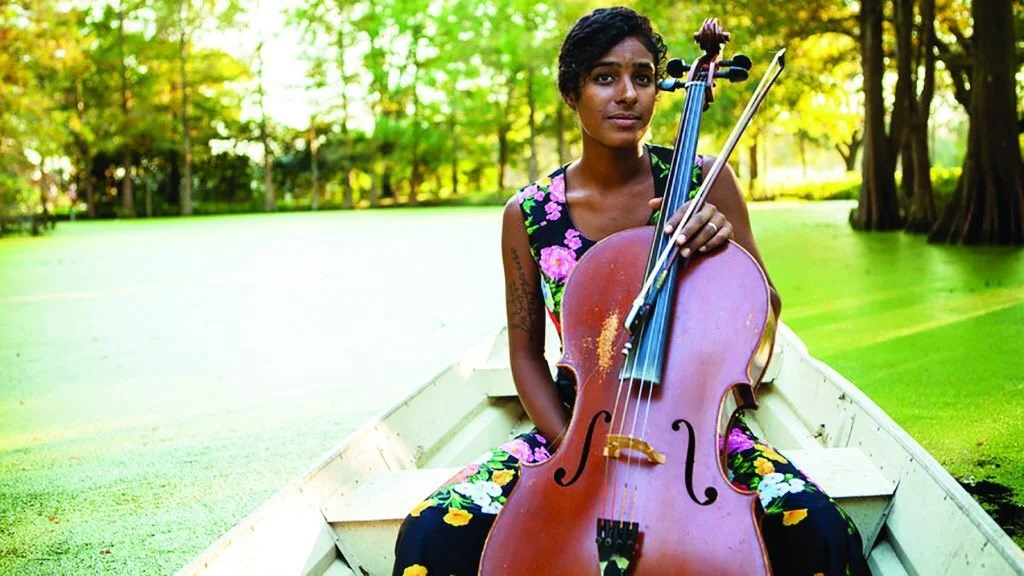
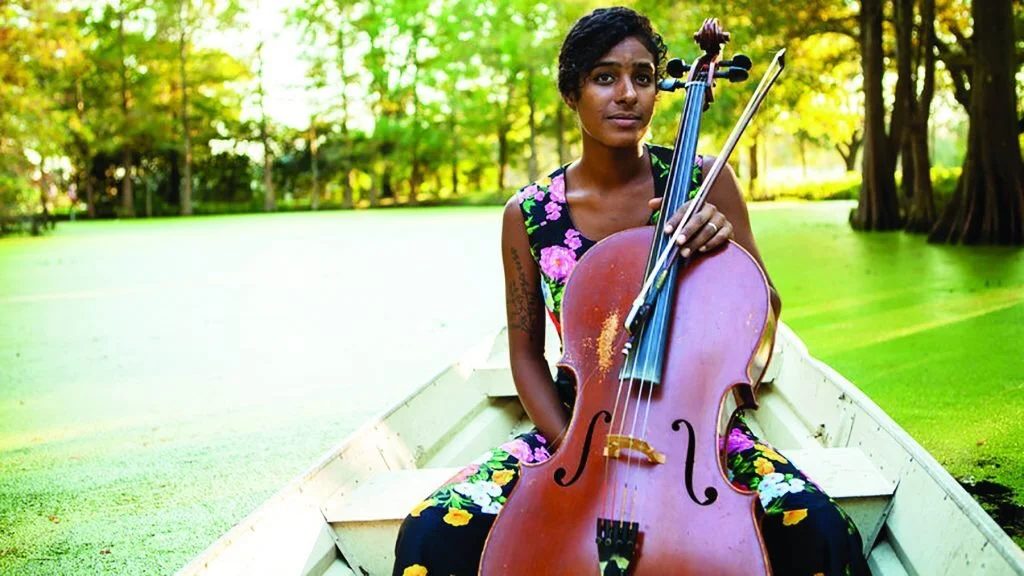
Leyla McCalla takes over downtown Escondido’s Center Theater at the California Center for the Arts, Escondido in support of her new critically acclaimed album “A Day for the Hunter, A Day for the Prey.” The concert will be Sunday, October 1, at 7:30 p.m.McCalla is a former member of the Grammy-winning Carolina Chocolate Drops, a renowned cellist and moving performer whose poetic lyrics are only matched by her elegant compositions. NPR hails McCalla as a “virtuoso”, and The Guardian calls her latest album “powerful”, while PopMatters gives her the title of an “innovator” that can “transport those who listen intently to another place and another time.”Whether McCalla is singing in English or singing in French, playing the cello or playing the banjo, creating new Creole jazz standards or plucking classical strings, the one thing she always does is inspire. Born in New York then taking up roots in Louisiana, where she still resides, Leyla has always stayed close to her Haitian heritage, while seamlessly connecting it to the vibrant culture that surrounds her.The Center is located at 340 N. Escondido Blvd. in Escondido. The Ticket Office can be reached at 800-988-4253. Tickets can also be purchased online. To learn more, including performance dates, times and ticket information, visit artcenter.org.News Desk | September 15, 2017
Haitian art sale, auction fuels work of Vassar Haiti Project

Original works of art, handcrafts and accessories by Haitian artists and artisans will be featured at an annual art sale and auction this weekend at Vassar College.
The Vassar Haiti Project's annual event will be held Friday thrugh Sunday on the second floor of the Main Building. Proceeds from the event support a number of programs in Chermaitre — a mountain village in Haiti unreachable by road.
Handcrafts start at $5, and paintings at $50. All sales are 50-percent tax deductible.
VASSAR HAITI PROJECT: Volunteers monitor water purification progress in Haiti
Founded by Andrew Meade, director of International Services at Vassar College, and his wife, Lila, the Vassar Haiti Project has raised more than $1.5 million since 2001, according to a statement from organizers. The organization engages college students in a global citizenship curriculum and its fundraising sales directly support the livelihood of hundreds of Haitian artists and artisans.
“VHP taught me the most useful skill of all, which is always to give of yourself to others," Vassar alumna Anna Brashear said in the statement. "By giving my time, energy and passion to VHP, I became part of a family and dedicated community which strives to work together with a village in Haiti to make a positive difference.”
The organization counts on the success of its art sales to fund numerous life-sustaining projects, including a three-room medical clinic, a 75-member cooperative formed by village women looking to further support their families and the village, Chermaitre’s primary school that serves 300 children in kindergarten through sixth grade, reforestation, and water access and purification efforts.
The group makes trips twice a year to Haiti, taking with them Vassar students and other volunteers from the Hudson Valley.
“Going to Haiti with VHP during spring break of my sophomore year was unlike anything I had ever experienced," said Jenna Amlani, a 2016 Vassar graduate. "I came out of that trip knowing that I wanted to devote my career to building a more just and equitable world.”
If you go
What: 17th annual Vassar Haiti Project benefit art sale and auction
When: Noon-7 p.m. Friday; 10 a.m. to 5 p.m. (live auction starts at 2 p.m.) Saturday; 10 a.m. to 2 p.m. Sunday
Where: Main Building, second floor, Vassar College, 124 Raymond Ave., Poughkeepsie
Admission: Free
 "For Your Eyes Only," by Gabriel Coutard, an example of the artwork that will be for sale during the annual Vassar Haiti Project art sale and auction this weekend at Vassar .Poughkeepsie Journal - Published 3:40 p.m. ET Sept. 12, 2017

VIII Games of La Francophonie : Between medals hope and disappointment

As part of the cultural component of the 8th Games of La Francophonie, held in Abidjan (the capital of Ivory Coast) until July 30, 2017, our 10 Haitian artists in competition (5 Hip Hop dancers, 2 Puppeteers, 1 Photographer , 1 Painter and 1 sculptor) try to get medals against high-level opponents...After the first few days, Haiti swings between hope for medals and disappointment...Update on our artists :Hip-Hop Dance :After two days of intensive repetitions, the Hip-Hop dancers of the UNISTEP group entered the final round at Canal aux Bois on Tuesday to face 17 other competitors. Despite a good performance more or less appreciated by some spectators, they did not manage to qualify among the 8 countries retained for the final phase (Battle) of the contest. Rendez-vous in 2021 for our Haitian dancers...Photography :Tara E. Levros, the Haitian photographer, is awaiting deliberation of the Jury of the Museum of Civilizations. Tara has been subjected since the beginning of the Games to practical exercises which have led her to various sites in the Ivory Coast. She will be judged on the basis of the works she had already sent to the organizers and the photos she has just produced during the competition.Sculpture:Yvens Orélien is one of our great medal hopes for the moment as his work exhibited at the Museum of Civilizations has aroused admiration. Yvens has already realized a Sculpture on the spot on the subject of immigration and awaits the verdict of the Jury.Giant Puppets:Wednesday, July 26, the band of Ernst Saint-Rome, jumped into the competition with 9 other nations. Unfortunately the performance of the puppets of Mackendy and Steeve Marcéus did not convince the members of the Jury to grant them the right to move to the last phase of the five qualified countries.Painting :Jaboin Darthon, always focused on his work, is determined to return in Haiti with a medal. As part of his practical work, he has already painted in two days, two paintings on the theme of Love. And awaits the decision of the Jury.HL/ HaitiLibre 27/07/2017
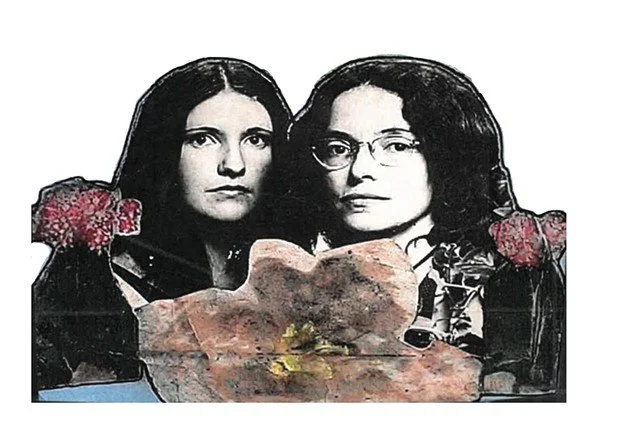
New Exhibit Chronicles Haiti Films of Two VT Artist-Activists
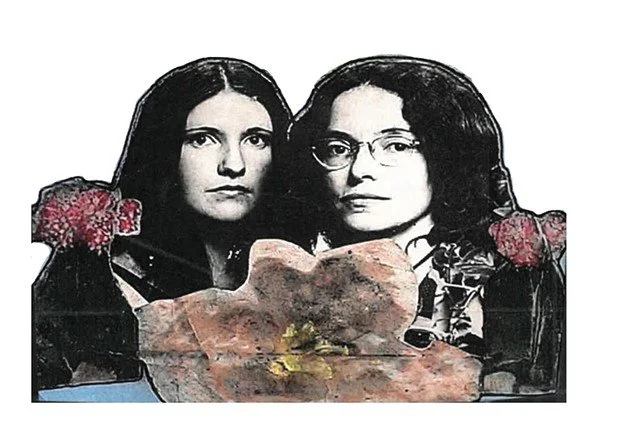
Independent curator Margaret Coleman first met longtime Burlington activist and filmmaker Robin Lloyd in December 2015, when they were seated side by side at a women's dinner hosted by a local artist. Today, Lloyd is perhaps best known for her work with the city's Peace & Justice Center. But as they talked, Coleman realized Lloyd had a rich past in the arts, too, encompassing local history, global activism, the anthropology of religion, experimental film and 1970s feminism.
That chance meeting evolved into an exhibition, "'Black Dawn' to 'Medusa': A Retrospective of 1970s Art & Film by Robin Lloyd & Doreen Kraft," curated by Burlington-based Coleman and on view at the Champlain College Art Gallery through September 9.At last Thursday's opening, guests gathered around a borrowed 16mm projector to watch a time-worn print of Kraft and Lloyd's 1978 collaborative work "Black Dawn." The 20-minute short tells, in broad strokes, the story of Haiti's successful struggle for liberation from French rule. Like all stop-motion animations, it is essentially a handmade film. After two trips to Haiti (out of four total together), the artists employed scissors, tweezers and patience to bring to life narrative paintings commissioned from 13 Haitian artists. In a 1977 Burlington Free Press article, Lloyd observed that theirs was "the only animation stand between Boston and Montréal."Artifacts from the film's production hang on the walls surrounding the projection. Among these are several paintings, an original rotoscope drawing from the film's vodou possession scene and a colorful, hand-painted panel depicting the MGM lion by late Burlington artist Kathleen De Simone. ("Vodou" is more commonly spelled "voodoo" in the United States.) "Black Dawn," said Coleman in a recent interview, represents the "crux of [Kraft and Lloyd's] career and collaboration together."The snapshot that she has assembled offers a glimpse into much more than Haitian history. It pays tribute to the personal and political creative work of two women who have become pillars of the Burlington community: Kraft as the longtime director of Burlington City Arts and Lloyd as an untiring activist and founding member of the Peace & Justice Center."Both women are such strong leaders in the community," Coleman said. "The show [and] their work in the early 1970s point to the path that they ended up following in their involvement [with] and commitment to the community."In her show, artworks used in the making of "Black Dawn" are accompanied by a selection of looping experimental shorts and a series of handmade fliers for community screenings. Offerings ran the gamut, from the multiday Take the Bull by the Horns women's film festival to Jean Cocteau's The Blood of a Poet.Admission generally ran from a suggested donation of 75 cents to $2.Kraft and Lloyd first met in the early '70s, when they worked as high school art teachers in the Rochester, Vt., area. They lived as roommates for a winter at Wing Farm, a property owned by Lloyd's family. In a recent interview, the pair recalled organizing a collaborative effort to make seasonally themed interpretive banners for a local church, which "may have been a little too pagan for them," Kraft mused.In 1973, the women sought a more urban environment and moved to Burlington. Kraft was 21 years old, Lloyd 35.Exhibition text for "'Black Dawn' to 'Medusa'" declares, "Lloyd and Kraft worked to bring the essence of the feminist art movement to Burlington." In 1974, as part of a group of women artists, they collectively opened the Delighted Eye gallery on Church Street. The space would host the "Vermont Women Group Show," an exhibition that included sculpture by Kraft and Lloyd along with works by 12 other local artists. It was here that the pair debuted their short film "Medusa," an interpretation of polarized female archetypes. Around this time, Kraft and Lloyd's interest in experimental film led them to a fascination with filmmaker Maya Deren (1917-61). In addition to creating celebrated and groundbreaking surrealist works, Deren had traveled to Haiti in the 1940s and '50s to study the dance components of vodou ceremonies. Ultimately, the filmmaker would become entranced by the religion and reportedly possessed by the goddess Erzulie. She recounts her journey in the 1953 volume Divine Horsemen: The Living Gods of Haiti."[Divine Horsemen] was like our bible," Kraft said. She and Lloyd took their first trip to Haiti in 1974. Their resulting 1975 short "Moving Pictures" documented the colorful scenes painted on the "tap-tap" buses in the country's capital, Port-au-Prince.The following year, Kraft and Lloyd returned to the island nation, their trip funded in part by small grants. In one proposal they wrote, "Our contact with Haitians has deepened our interest not only in this historical period [of the revolution], but also in mythological imagination and the collective unconscious, areas explored in our previous films."To provide the artists they would commission with proper materials, Kraft and Lloyd shipped seven hefty boxes of supplies to Haiti — specifically, to the island's American embassy, without permission. Despite the ambassador's scolding, they were later invited back to discuss their film.Fortuitous circumstances found the pair in a vodou temple in the capital's Carrefour neighborhood — in a room dedicated to Erzulie, no less. By night, they attended ceremonies, where they were participant observers but never became possessed. By day, the women wrote in their journals, read Divine Horsemenand wondered, Is this how Maya saw it?, they recalled. "Our hosts thought we were from an obscure order of nuns," reads the filmmakers' statement.Vodou is an integral aspect of the story of Haitian liberation recounted in "Black Dawn." The 1791 uprising that eventually led to independence from the French in 1804 was sparked by a vodou ceremony that took place at Bois Caïman. At the exhibit opening, Kraft quoted the saying that, in Haiti, 90 percent of the population is Catholic and 100 percent is vodoun.Indeed, the filmmakers purport to have used the proliferation of animist beliefs to their advantage. They wrote in their statement, "The involvement of the artists with Vodoun — wherein objects are 'animated' by spiritual forces — made them all the more receptive to the creative concepts of animation that permeate 'Black Dawn.'"Lloyd in particular repeatedly emphasized, both at the opening and during her interview, the significance of the Haitian revolution (and, by extension, of "Black Dawn") as a stark example of enslaved black people successfully overthrowing their white rulers. The film debuted in 1978 as part of the first-ever American survey of Haitian art, held at the Brooklyn Museum. In 1988, it was included in the Smithsonian Institution traveling exhibition "Haiti: The First Black Republic and Its Monuments to Freedom," which toured for more than three years. As an educational film, "Black Dawn" remains the best-selling title of Green Valley Media, a production and distribution company that Kraft and Lloyd founded in 1974.After "Black Dawn," Lloyd went on to make the short documentaries "Haitian Pilgrimage" and "Haiti's Piggy Bank." The latter recounts the destruction of the rural Haitian economy by American economic meddling.In conjunction with "'Black Dawn' to 'Medusa,'" the Champlain College gallery will host a panel discussion titled "Hopes for Haiti" on August 23, led by Saint Michael's College associate dean Moise St. Louis. On September 5, Kraft and Lloyd will offer a dialogue on "Reflections on the Feminist Art of the 1970s.""[Doreen and Robin have] dedicated their lives to art, community and social justice," Coleman said, "and I think this is a nice way to recognize the amazing body of work that they made."You can look at both women and their lives as integral parts of their artwork," she continued. "There's no separation."By RACHEL ELIZABETH JONES

Haiti through Pulitzer Prize-winning photojournalist Carl Juste’s eyes

Carl Juste could not silence his inner voice calling him to become a photographer.For the past three decades, Juste has traveled the world using photography to tell meaningful stories and shed light on the struggles of Haitians in the United States and abroad.A Pulitzer Prize-winning Miami Herald photojournalist, Juste has been working diligently to advocate for the Haitian community’s diverse voices by capturing images that bridge the gap between opposing views and bridge gaps of understanding.“My camera is my weapon of choice,” Juste said. “When I make an image, people really stop and look at it. It allows me to amplify my voice and the voices of other people.”Juste recently spoke at FIU to discuss the struggles of Haitians experiencing racial, social, political and economic oppression.During his lecture, Juste showed a preview of his project, “Havana and Haiti: Two Cultures, One Community,” a visual narrative that concentrates on the common themes of both Cuban and Haitians through essays and photography, highlighting the two communities’ shared experiences.“My book is about celebrating these two cultures,” he said. “I stay as true to the message as much as I can. For me, it’s very important to communicate and expand the truth. Pictures have power to change the world but they aren’t responsible for the change.”After fleeing his homeland of Haiti under threat of persecution, Juste and his family settled in Miami’s Haitian community in the 1970s. From his experiences living in Miami, Juste, who was born to Cuban and Haitian parents, said that both communities have more in common than most people understand.“The story of Haiti and Cuba isn’t just for them but it’s for the world,” he said. “Both cultures have influences in art, dance and even science. You have this narrative that those identities are contained by boundaries, but they’re not. Their influences are global, and it’s about time that people understand that they’re not small and poor countries, but rich places.”Since becoming a photographer, Juste loves capturing Miami’s diversity.“A lot of my work stems from here,” Juste said. “I think what makes Miami so unique is the way all these cultures and various languages blend. It … also offers immigrants a place close to their birthplace.”Juste’s lecture, “Documenting Haiti: Realities and Representations,” was part of an annual lecture series, which this year celebrated the 20th anniversary of the Kimberly Green Latin American and Caribbean Center’s (LACC) Haitian Summer Institute.The Haitian Summer Institute is a six-week program designed for anyone interested in learning basic Haitian Creole and also for students who wish to continue their language training at the intermediate and advanced levels.“For over 20 years, LACC has been committed to investing in and promoting Haitian Studies and Haitian Creole language training,” said LACC Director Frank Mora. “The Haitian Summer Institute has been the center of that effort and is a cornerstone of the Haitian Studies Program of Excellence at FIU.”The institute offers students intensive language training courses, the lecture series and an optional two-week study abroad trip to Haiti, designed to expose students to its culture and allow them to experience Haitian Creole in Haiti.“The institute is the only one of its kind in the U.S., and we consistently attract a diverse group of students, scholars and professionals from across the globe,” Mora said.The final lecture of this year’s series, will feature Rodny Estéus, a founding member of the Haitian Creole Academy of the Republic of Haiti, and will be hosted on Monday, July 17.Juste hopes that students who participate in the Haitian Summer Institute and attend the lectures can be advocates for Haitians.“Become an ambassador and look beyond,” Juste said. “Be advocates for Haitians because they’re human and because they look like you and value the things you value. That’s what I’ve been trying to do for 30 years and it’s a beautiful struggle.”To learn more about the Haitian Summer Institute, click here.Posted by Melissa Burgess × 07/13/2017