
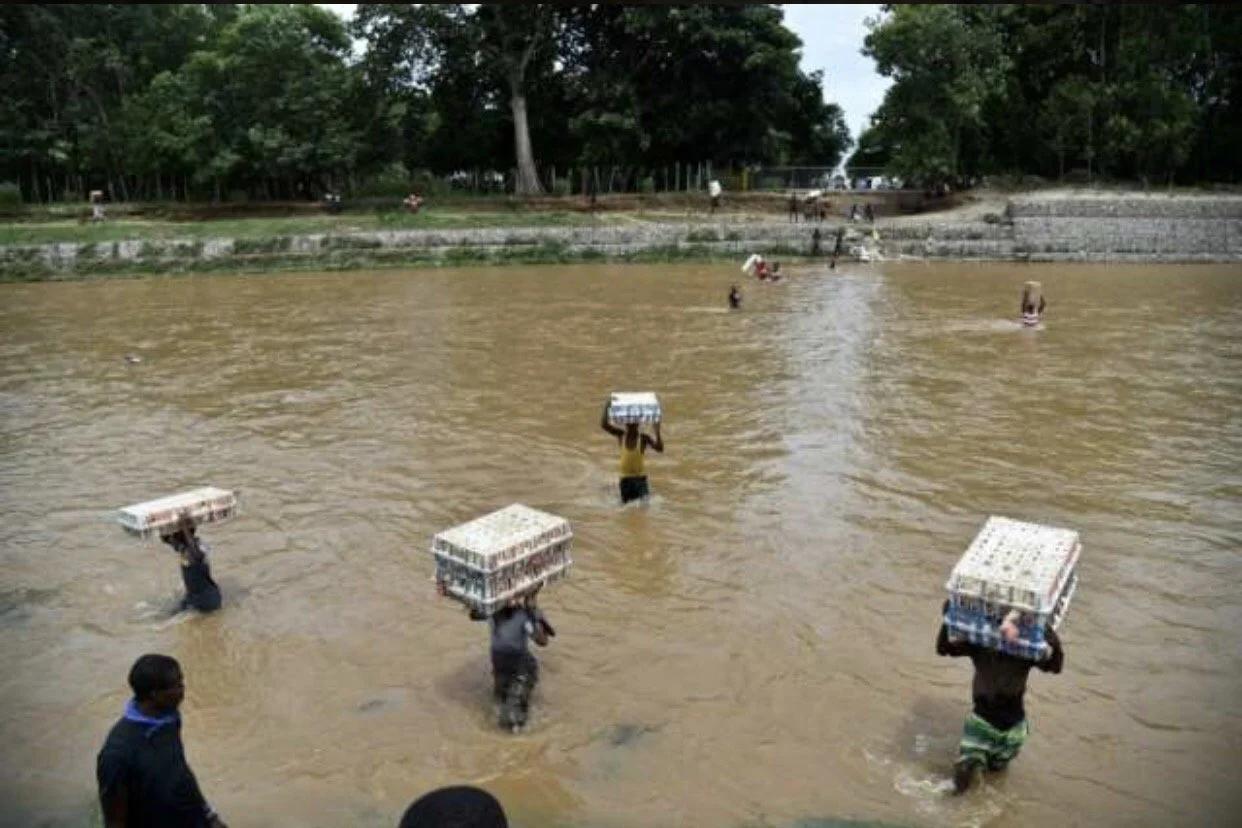
One dead and another missing in Haiti after hurricane hit
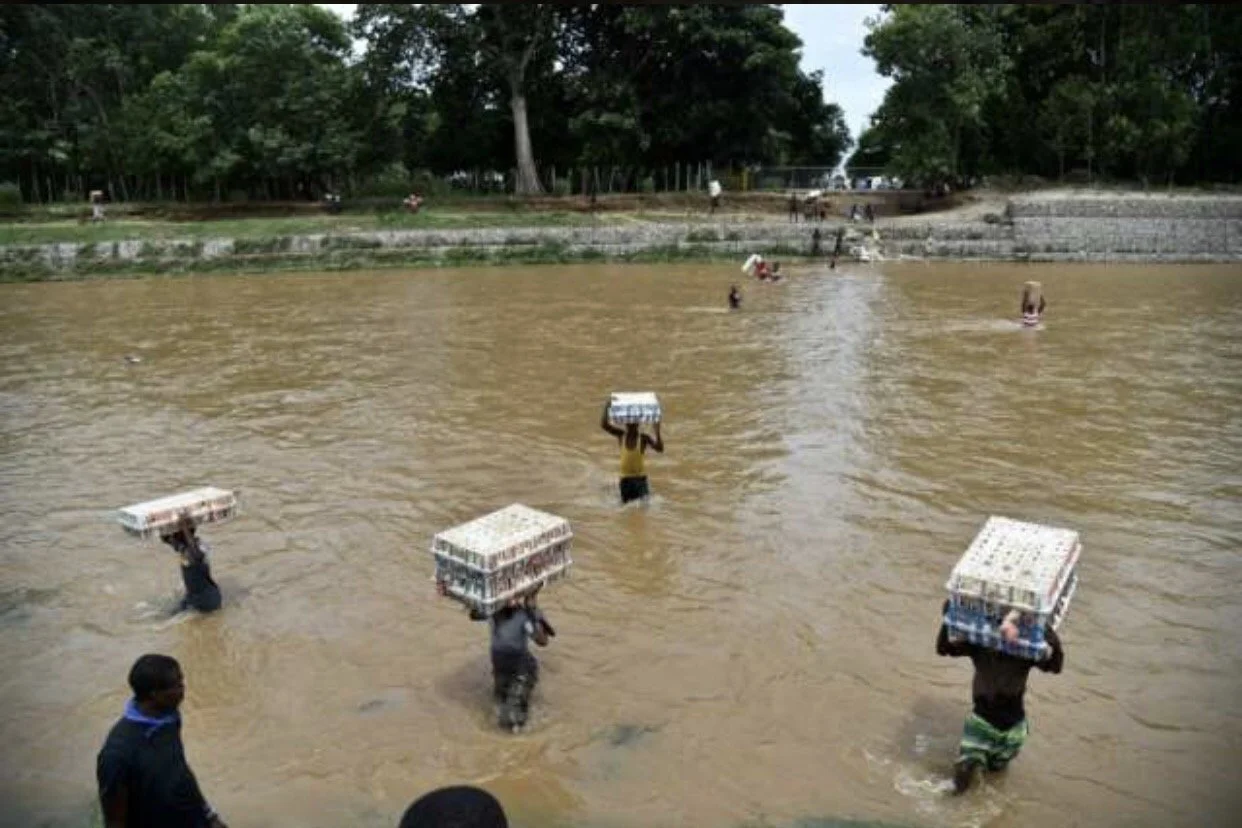
A man has died and another is missing in Haiti following flooding caused by Hurricane Irma, authorities said Monday.
An elderly man who tried to cross a river in the town of Mirebalais, central Haiti, Saturday was swept away by floodwaters. Four other people survived the crossing, according to the Haitian interior ministry.The body of a 35-year-old motorcyclist who was swept away in another river in the same region has not been found.Six of Haiti's 10 departments were affected by the severe weather, and emergency services reported only 17 people were injured there.Hurricane Irma's path moved slightly northward on Thursday, away from Haiti's coast, limiting the effects on the Caribbean's poorest island.But flooding and strong winds still hit the country, particularly in the impoverished northeast region.Authorities said 5,000 houses flooded, while 8,000 families were declared disaster victims after their homes were severely damaged or destroyed.Prime Minister Jack Guy Lafontant traveled to the hardest-hit areas Saturday, before announcing the creation of a commission to evaluate the extent of damage Monday.By AFP | September 12, 2017
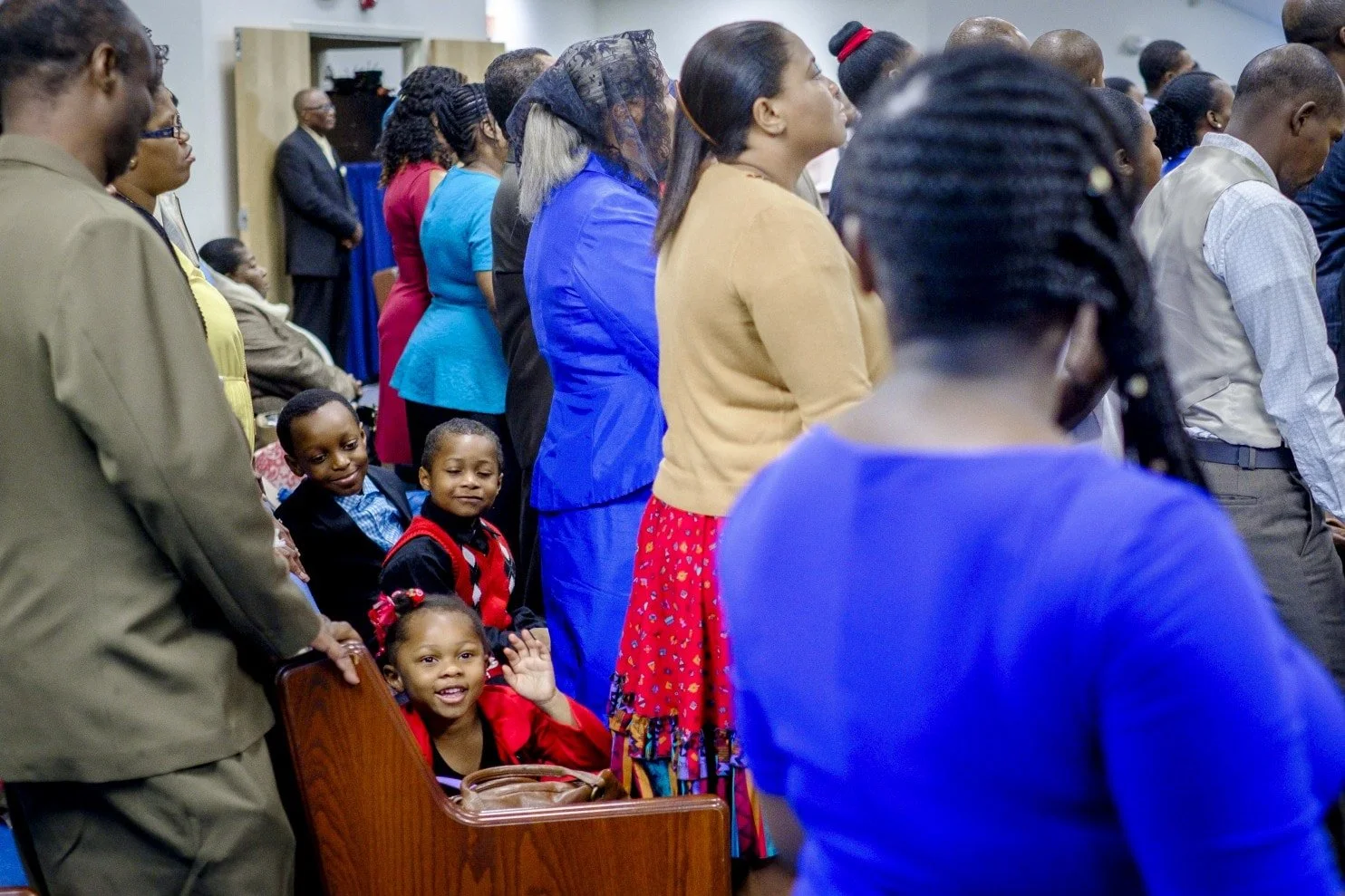
‘How Would I Survive Going Back There?’
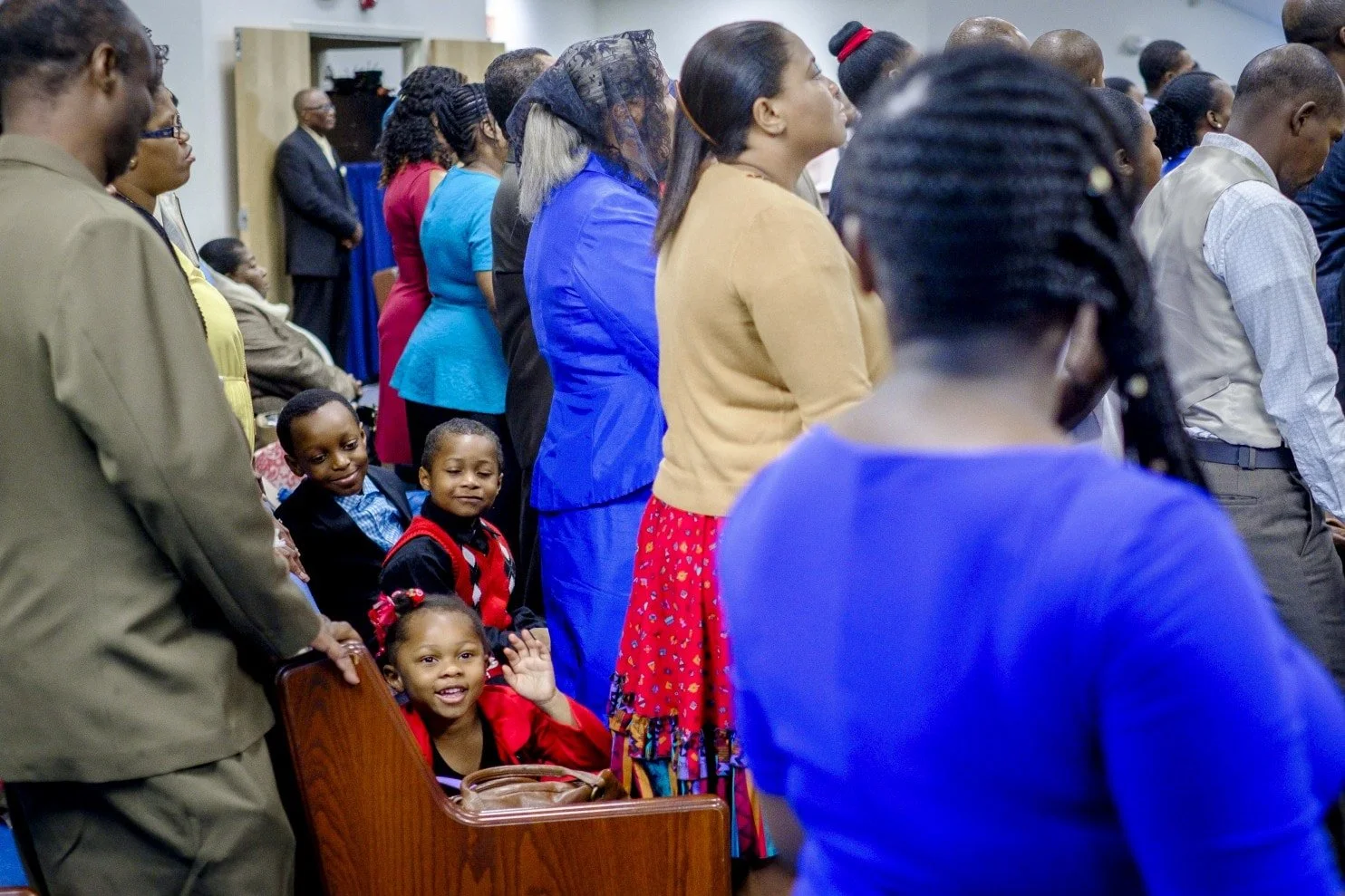
The woman wearing a mint-green dress with tiny pink flowers is trying not to cry.She is explaining that she has Temporary Protected Status, which was granted to 58,000 Haitians after the 2010 earthquake that devastated the country. She had been living in the United States for more than a decade when the quake struck, but found herself a beneficiary of the program that allowed Haitians to stay.So every 18 months, she renewed her status without much thought. Then came May, and an announcement from then-Homeland Security Secretary John F. Kelly. He told Haitian TPS holders that the program may soon come to an end. That they would be given a six-month extension, but they should prepare to leave the United States and return to Haiti by January 2018.His reasoning: Things were improving in Haiti since the quake killed more than 230,000 people and did an estimated $14 billion in damage to buildings and roads.Critics called the decision shortsighted. The effects of the earthquake are still visible. Many people still reside in tents and makeshift homes. A cholera outbreak followed in 2010, infecting at least 770,000 people and killing more than 9,200. And on Saturday, Hurricane Irma brought more heartache to the already devastated Caribbean island nation as reports of flooding began to surface.But for the woman in the mint-green dress, struggling not to cry, her reasons for wanting to stay are much more personal.The Washington area, where she has lived for more than two decades, is her home — and home to an estimated 800 Haitians with TPS. Her husband and 2-year-old daughter are there. Her job as a nurse is there. And her church, with its majority Haitian congregation, is there. So despite pleas from family and friends that she should follow the exodus of Haitians afraid of a return to Haiti and instead head to Canada, she will not.“I think it’s lack of faith for me to get up and leave,” said the woman, who spoke on the condition of anonymity because she feared she would become an easy target for deportation. “I have two sisters and a brother in Montreal. They ask me to come every time. ‘People are coming,’ they say. I say, ‘Is it easy to pack up and come?’ It is not. I don’t want to hear people tell me that kind of stuff.”
An estimated 11 million people live in Haiti, the poorest country in the western hemisphere. A Category 5 hurricane like Irma could cause flooded roads and mudslides, which could destroy houses built on hillsides — a repeat of the devastation caused by the earthquake in 2010 and when Hurricane Matthew hit the country in October 2016.It is for that reason that many Haitians with TPS in the United States say returning to Haiti is not an option. In August, Canadian officials reported a surge in Haitians crossing the border from the United States. According to the Quebec immigration ministry, as many as 150 Haitian asylum seekers are arriving in Canada each day after making border crossings from New York into Quebec. According to the Canadian Broadcasting Corp., about 700 Haitians were waiting to be processed for claims of asylum from the United States this year.Canadian soldiers are building tent villages near U.S. borders to house Haitian asylum seekers. Olympic Stadium in Montreal is being used to house refugees, the CBC reported.The growing panic can be seen across the country. Haitian radio stations and other media outlets talk about the issue almost nonstop. Marleine Bastien, executive director of the Haitian Women of Miami, said that more than 32,000 Haitians with temporary status live in Florida. Many have been living in the United States for up to 20 years.“We are talking about people who have deep roots in the community,” Bastien said. “These are people who own homes, who have reached the American Dream to own a home, and started business. Eighty-five percent of them are working.”“I receive calls every day,” Bastien added. “ ‘Marleine, what should I do? Should I put my house to sale? Do I take my children to a country still reeling under remnants of an earthquake, a country where the entire south peninsula has been destroyed? Where people are dealing with food scarcity because Hurricane Matthew destroyed crops?’ ”“The heart-wrenching questions the families are asking are difficult to answer,” she said. “How do you tell a parent what to do with U.S.-born children? How do you answer a mom sitting in front of you with tears in their eyes?”Jean St. Ulmé, senior pastor at Eglise Baptiste Du Calvaire in Adelphi, Md., said he is also dealing with similar questions.“It is a sad situation. They don’t know what will happen,” St. Ulmé said. “ They don’t have anything in Haiti. They come here for a better life. They are afraid to go back.”
The woman in the mint-green dress is a member of St. Ulmé’s congregation. She and her husband, who is also in the country on temporary status, pray every morning before the sun comes up and again at night before midnight. It is the same prayer: That the U.S. government will not return to Haiti the more than 58,000 Haitians living here.She was 18 when she left Haiti in 1995 on a visitor’s visa. “Since then, I’ve never been back. I have no house there,” said the woman, who is now 40. “I wouldn’t know how to live there. How would I survive going back there?”She rubs her swollen belly. Her second child is due in three weeks.Now she can no longer hold back her tears.“My child is a U.S. citizen,” she says. “Would you take my child from me? Would you send me back and take my child? What would she become? Would you break a family?”The health-care system in Haiti is terrible, she says. Patients wait on hospital beds with no sheets, clutching brown paper bags of medicine they brought with them, hoping doctors not stopped by strikes will see them. In Haiti, she said, “You call 911, the ambulance has no gas to come help you. There is no security. There is no place to render justice.”Rony Ponthieux doesn’t want to go to Canada either, but the prospect of returning to Haiti is not one he can see. He has lived in the United States since 1999, and he and his wife were granted TPS after the 2010 earthquake.
While here, he has gone to school and become a registered nurse. Since 2015, he has worked at Jackson Memorial Hospital in Miami.“I have two children born here,” Ponthieux said. “The eldest son is 16, going on 17. I have a girl who . . . spoke at Washington in Congress. She was giving some speeches. She is gifted. She just turned 10. She was champion spelling bee for her school.”Moving to Canada would be a last option. “I heard the news. I see the borders. I don’t think it’s a good idea.”On the other hand: “If I go to Haiti, I would struggle to live. To take care of children will be hard. If I leave children here, it will be family separation. It is not good to leave children here.”But, he added, “Imagine children born here and go to a place with no pure water. No shelter. No food. No house in Haiti. It would be a bad situation.”
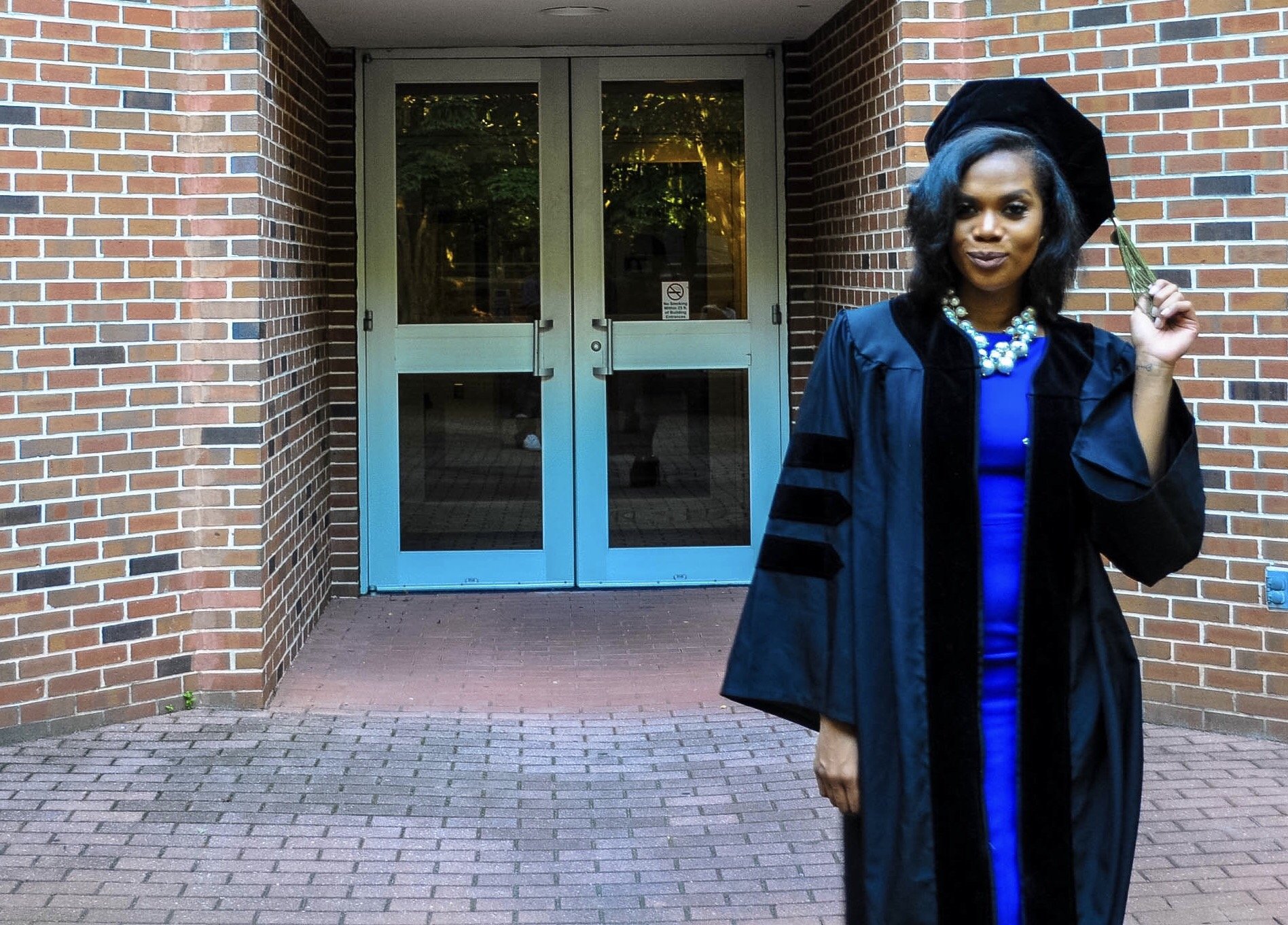
Dr. Lesly Samedy: Double Doctor
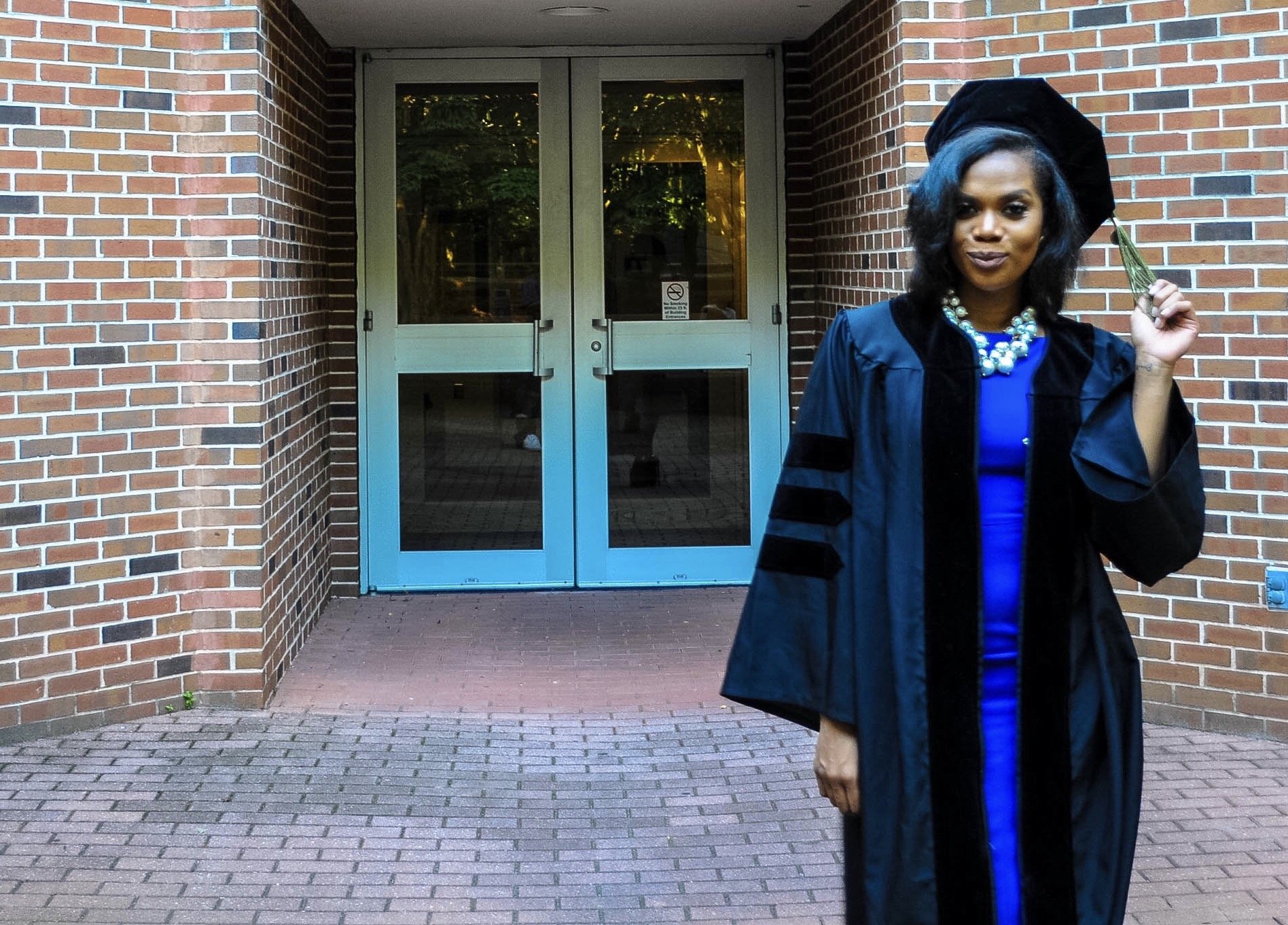
 At a time when women are greatly under represented in the areas of science and math, it's refreshing to speak to a young lady breaking glass ceilings in the sciences. Moreover, she is a pathfinder for African American women in her field. This Haitian-American woman epitomizes the millennial phrase “Black Girl Magic.”Dr. Lesly Samedy is the first African American student, at Mercer University, to procure both a Doctor of Pharmacy and a Doctor of Philosophy (PharmD/PhD) degree. She is the first to successfully complete their dual degree program. A recent (2017) graduate of Mercer’s College of Pharmacy, she is a member of the Rho Chi Pharmaceutical Honor Society, a member of Delta Sigma Theta Sorority and the proud daughter of Haitian immigrants.Dr. Samedy, a three time published clinical research enthusiast, currently resides in San Francisco. In July, she began her postdoctoral research fellowship at University of California, San Francisco (UCSF). Her experiments will focus on pharmacogenetics and personalized medicine. Through her analysis, Dr. Samedy is committed to bridging the health care divide that exists for marginalized minority populations and, in turn, improving their quality of life. Her research is concentrated, in particular, on African Americans with chronic cardiovascular and pulmonary diseases.
 Haitiville: Who are your role models?Dr. Samedy: My role models are women who have overcome obstacles and have not let their circumstances define them. I admire Mrs. Michelle Obama, the only First Lady to attend two Ivy League schools and holds a law degree from Harvard! Secondly, Raquel Pelissier, Ms. Haiti 2017. She is a 2010 Haiti earthquake survivor and an optometrist by trade. In spite of her circumstance she went on to become a runner up in the 2017 Miss Universe Pageant, a first for Haiti since 1975. I also look up to Sadie Mossell Alexander, one of the first three African American women to receive a PhD degree. She was also the first national president of my sorority, Delta Sigma Theta Sorority, Inc. These are just a few I consider role models. It is women like them that inspire me to defy the odds and try to surpass expectations everyday.Haitiville: As a Haitian American woman, did you have to overcome gender/racial stereotypes on your path? If so, how did you deal with it?Dr. Samedy: There is considerable stigma associated with first-generation status as well as being a minority woman. My academic ability, achievements and performances were often underestimated and discredited by others. My background was often viewed as a deficit rather than a strength. For that reason, I chose to remain invisible for a long time throughout my life, second guessing my goals and aspirations. It was the strength of my parents and my family whom helped me to not only deal with these adversities but overcome them. They provided continual guidance and unwavering support.Haitiville: Where would you say your passion for Science stems from?Dr. Samedy: As a member of the African American community, I was exposed to the lack of public health care and the health disparity of chronic conditions. I became aware of the need for more diverse representation in the sciences. Current research and health care initiatives fail to address chronic health conditions in minorities, whom bear a disproportionate burden of disease, injury and death.My passion for pursuing and continuing in STEM [science, technology, engineering and math] was realizing the lack of diversity. In a room of 50 people, 10 might be women and of those 5 might be minorities. I was tired of not seeing myself being represented in STEM careers. My career goal is to become a presence for women, especially minority women, interested in STEM but intimidated by the lack of diversity.
 Haitiville: Your thesis is dedicated to your Haitian immigrant parents. What does growing up Haitian mean to you?Dr. Samedy: Being Haitian has taught me to be mentally strong. I see what my parents sacrificed to pursue a better life for themselves and their families. Being Haitian has taught me to push boundaries and reach for success. In our society today, people are afraid to step out of their comfort zones. Our [Haitian] people literally leave every comfort they know, simply to be great. I am proud of it and want nothing more than to emulate it.Haitiville: What is the best advice your family gave you?Dr. Samedy: The best advice given to me was to simply be the best. My dad has always told me that I could be anything I wanted, even if it was a garbage man. His only expectation is that I be the “best” garbage man I could be.Haitiville: What advice would you give a young lady making her way in your field?Dr. Samedy: My best advice that can be offered to young women looking to flourish in a male-dominated STEM field: (1) Find a mentor, someone who can provide you with guidance and advice. (2) Join a support group, a circle of women that can relate to personal and professional experiences and provide advice. (3) Don’t be afraid to be assertive! Ask questions, have opinions, speak your mind (respectfully, of course). (4) Put yourself first!!! As women, we have a tendency to want to help others before helping ourselves. And (5) Let it roll off your back - Avoid taking healthy criticism or a scientific debate personally!
 My advice to young women in general, is to work hard and not settle. If you want something, claim it. Don’t let anyone tell you what you are capable of accomplishing. Do not dim your light for anyone, “Let your light shine so brightly that others can see their way out of the dark.” Be humble. Be willing to learn. Be receptive to different ways of thinking. Above all, stay true to yourself.Haitiville: If you saw your 16 year old self reflected back at you in the mirror, what would you tell her? Dr. Samedy: Everyone's journey is different, don't get discouraged if you see someone making more progress than you are, your time is coming! And that's with everything, life, love, work..."In speaking to Dr. Samedy her passion, drive and dedication are evident. She is truly humble beyond her scholastic and professional achievements. Dr. Lesly Samedy we wish you every success in the world.
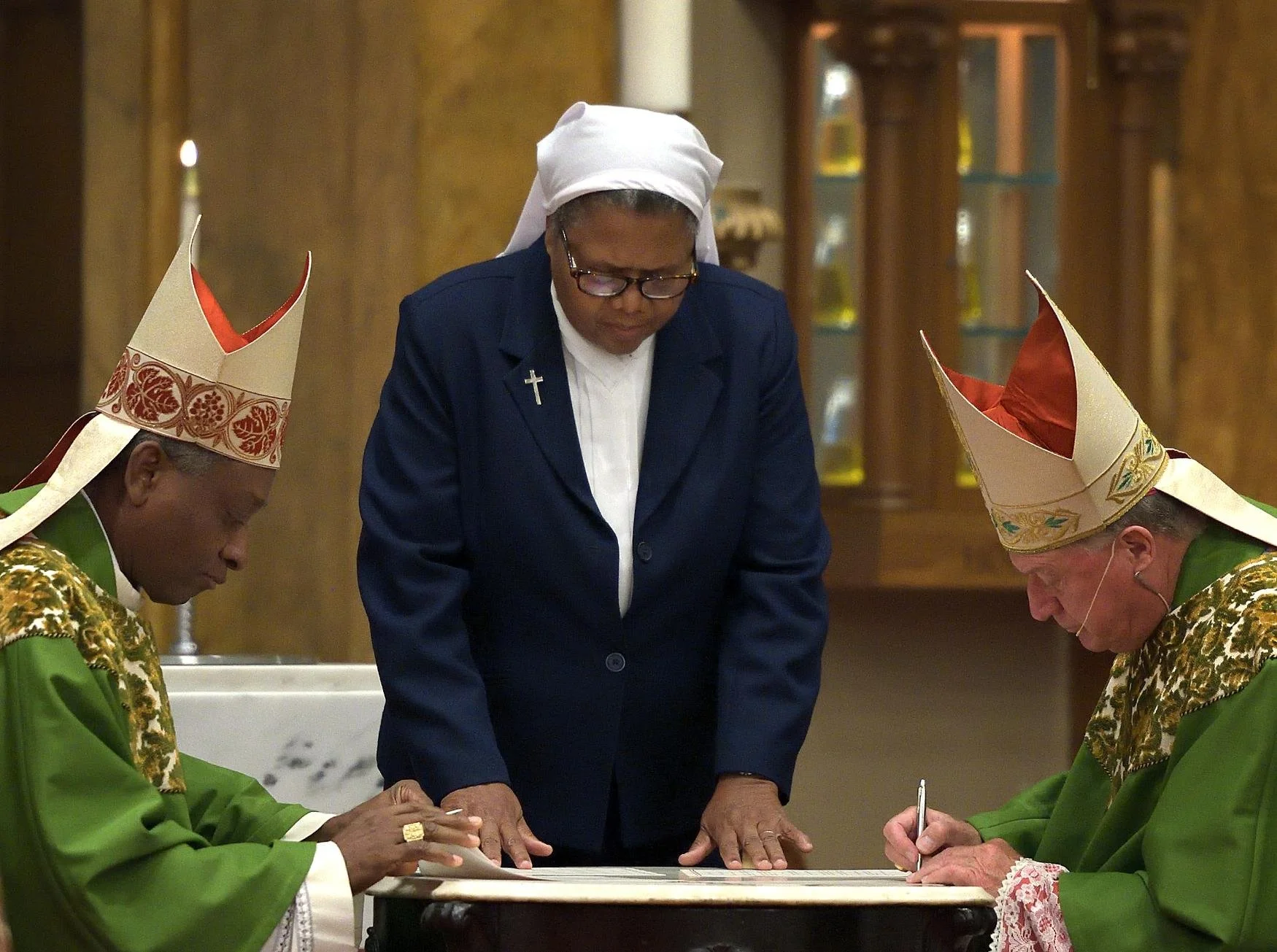
Bond sealed between Worcester, Haiti Catholics
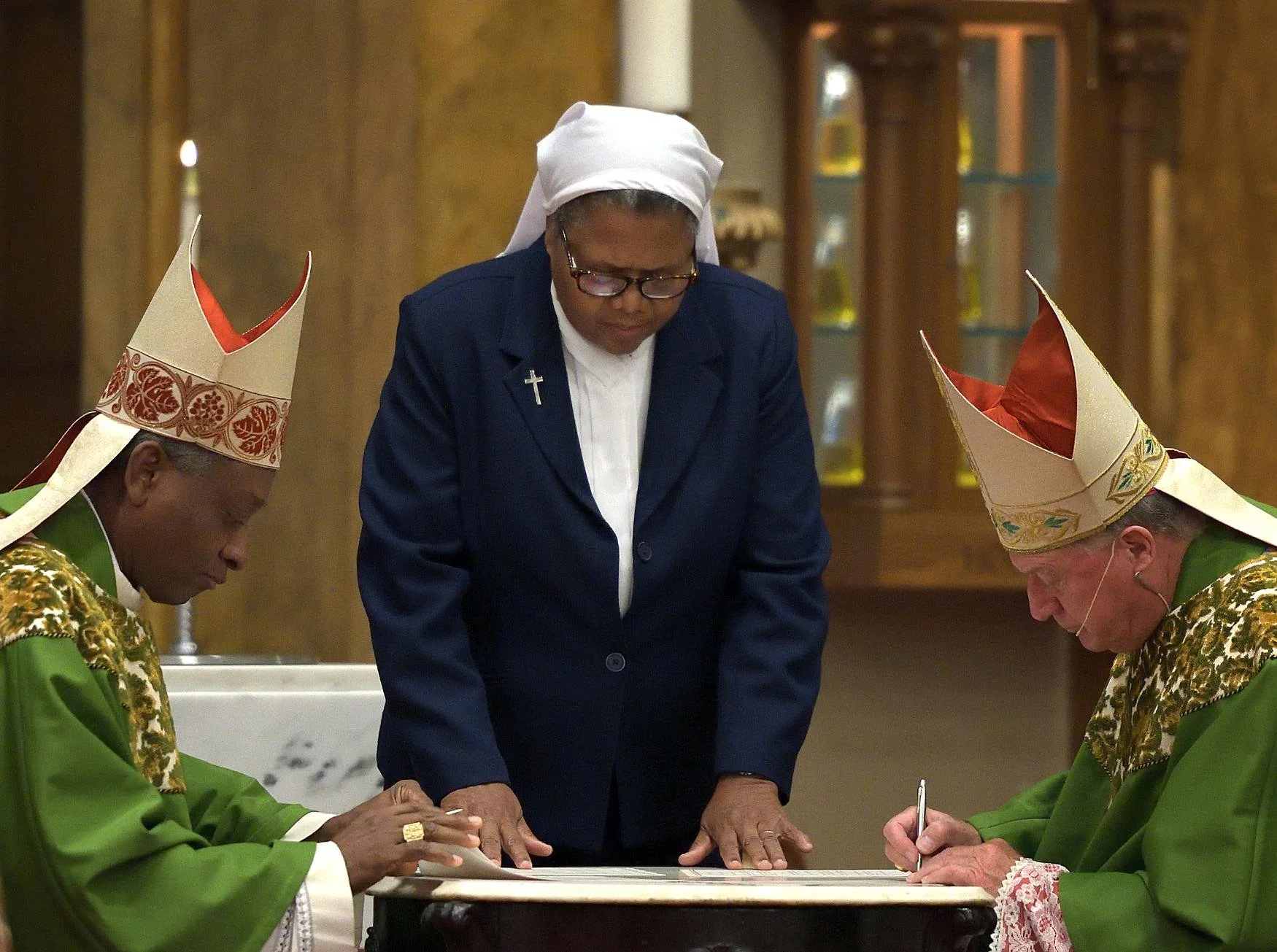
 WORCESTER - Haiti’s first-ever cardinal was greeted in Worcester on Sunday by the tail end of a hurricane.But Harvey’s rains, dousing New England on Labor Day weekend, didn’t dampen spirits on Grafton Hill as Cardinal Chibly Langlois of Haiti joined Bishop Robert McManus in celebrating Mass at St. Joseph’s Church, then attended a dinner at St. Stephen’s across the street.Cardinal Langlois, awarded the red hat in 2014 by Pope Francis, was in Worcester to renew a covenant of support and prayer between the dioceses of Les Cayes and Worcester.More than 1,000 Haitians live in Worcester and about 200 attend the French-language Mass at St. Joseph’s on Hamilton Street, said Sister Judith Dupuy, a Sister of St. Anne who is director of the Haitian Apostolate in the Worcester Diocese.“For me to be here in the Diocese of Worcester is to build the communion between our two dioceses, Les Cayes and Worcester, and try to reinforce the twinning between parish and parish and diocese and diocese,” Cardinal Langlois said after the Mass.“That’s very important for us in Haiti,” he said. “You have heard about the many needs we have.”
One of the world’s most impoverished nations, Haiti is still recovering from the battering it took from Hurricane Matthew in 2016. Storm-watchers this weekend were eyeing a new hurricane, Irma, that may be headed for Haiti in the coming week.The covenant of support and prayer between the dioceses was signed during the Mass at St. Joseph’s, which was founded as a parish to serve Worcester’s once-large French-Canadian Catholic community, and now welcomes new immigrants from Haiti to its French-language Mass.The “twinning” program between parishes in Worcester and Haiti is “a reminder to our people that we’re a universal church,” the Bishop McManus said. “Pope Francis has called the whole church to be a church in mission.“Anyone who has visited the church in Haiti realizes they cannot help themselves - it’s a dire situation,” he said. “In the sense of the fraternity and the solidarity of the faith, we and other dioceses in the United States are reaching out to other parts of Haiti. It’s a joy to have His Eminence with us.”By: Mark Sullivan | September 3, 2017

Cassandra Chéry crowned Miss Haiti 2017

 Cassandra Chéry crowned Miss Haiti 2017 On Saturday evening at the Marriott Hotel in Port-au-Prince, the Grand Final of Miss Haiti 2017 was held. After deliberation, the Jury announced its winners in front of a very large audience and the 10 finalists...Miss Haiti 2017 results :"Miss Friendship" : Alexandra Eloisier"Miss Popularity" : Marie Gerline Moreau5th runner-up : Weendy Legerme;4th runner-up : Chrystel Dufour;3rd runner-up : Alexandra Eloisier;2nd runner-up : Marie Gerline Moreau;1st runner-up: Caroline BeigenCassandra Chéry (21 years old) was crowned Miss Haiti 2017.Born in Port-au-Prince, Cassandra is a model and student in communication. She succeeds Raquel Pelissier Miss Haiti 2016.Very moved to have been crowned Miss Haiti 2017, Haiti's new beauty queen said "Young, keep hope and believe that you can accomplish whatever you want. Life is like a bicycle, advancing not to lose balance, pedaling to your final destination."HaitiLibre | September 3, 2017

School Games at the Horizon

School Games at the Horizon Thanks to the valuable assistance of the Ministry of Youth, Sports and Civic Action (MJSAC), thousands of young people from Thomassin and the surrounding area entertained during the summer holidays 2017 by participating as actors or spectators at the Football Championship organized at the Sport Park of Thomassin from July 16 to August 27, won by the team "Tèt Chaje" of Fermathe at the expense of FC Malik.After the organization of these summer activities, Minister Régine Lamur already has her head turned towards the School Games because, according to her, the return of sport to school is a convinced imperative that "It is the basis of any national selection competitive. None of the sporting disciplines practiced in Haiti can be excluded because a discipline with little or no media coverage can create a prestigious place among the major sports nations."In addition, she also emphasized the brain games that promote concentration and reflection, key factors in the process of creation and development."A better framing of our youth and the exploitation of our sports talents can be a new departure for our country in search of a new image on the international level. However, recognizing that resources are modest and needs unlimited, the Minister wants to build on cooperation and calls on all sectors of national life to unite with the Ministry of Youth, in order to build a new Haiti around of young people.HaitiLibre| September 1, 2017

Brazilian peacekeepers to leave Haiti after 13 years

Port-Au-Prince, Sep 1 The last Brazilian peacekeeping soldiers to Haiti have officially wrapped up their 13-year UN military mission to the Caribbean country.The UN Stabilisation Mission in Haiti (MINUSTAH) was deployed in 2004 to help stem political violence after the departure of president Jean-Bertrand Aristide -- but it has not endeared itself to Haitians."We arrived in June 2004 when Haiti was experiencing instability and violence," Brazilian Defense Minister Raul Jungmann said Thursday at a ceremony held in Port-au-Prince to mark the official end of the battalion's mission.Many Aristide supporters have long perceived the mission as something of an occupying army.The mission's reputation was further tarnished in 2010, when Nepalese UN peacekeepers introduced cholera, leading to an outbreak that killed more than 9,000 Haitians.Thursday's ceremony marked an important step in closing MINUSTAH, which according to a unanimous UN Security Council resolution reached in April will fully shut down October 15.The UN will deploy a successor operation, the United Nations Mission for Justice Support in Haiti (MINUJUSTH).That two-year mission involves training Haiti's national police and working to help the country bolster the rule of law.Outlook | September 1, 2017

Haitian musician Jimmy Belabre tells Glasgow pupils how charity meals kept him from life of crime

IT was a simple home-cooked daily meal but it encouraged him to stay on at school rather than join the lawless armed gangs that blighted his neighbourhood.Yesterday, Haitian musician Jimmy Belabre, 28, was in Glasgow to personally thank volunteers at global school feeding charity Mary’s Meals, which provided his daily food.He grew up in the violent slum of Cite Soleil and Mary’s Meals helped him to access the education that went on to change his life.Jimmy met school pupils at St Aloysius Junior School who have been fundraising for Mary’s Meals’ global school feeding programme for years.He was given the chance to share some of his music with the youngsters during a special assembly, where he also talked about his life and took questions from fascinated pupils.Jimmy’s home of Cite Soleil has around 500,000 people who live in houses made from rusting corrugated iron on a rubbish dump by the sea.He witnessed nightly gun battles there when lawlessness was at its peak, from 2004 to 2007, and remembers the night a bullet struck the wall just above his mother’s bed while she slept.But he resisted offers of money and guns from local gangs and stayed in school.His resolve was, he says, was fuelled by the daily meal he received in school and the kindness of the people from far away who made that possible. For many years, the daily school meal was all he had to eat.Jimmy is now the principal of the school he attended (St Francis De Sales Becky DeWine School) in Cite Soleil.During his three-week stay, Jimmy will meet supporter groups and volunteers in Glasgow, London, Manchester, Leeds and Edinburgh. Hewill also spend time in Dalmally, Argyll, where the work of Mary’s Meals began, in a small tin shed that still serves as the charity’s global HQ.He said: “When there is not enough food to eat, every morning you wake up asking: ‘What am I going to eat today?’ It makes it so hard to keep yourself positive, because you’re hungry and you need to feed your family. And you see people with extra food and money through negative activities. If I wasn’t being fed in school, it would have been very easy for me to become a gangster.”The Herald | August 2017
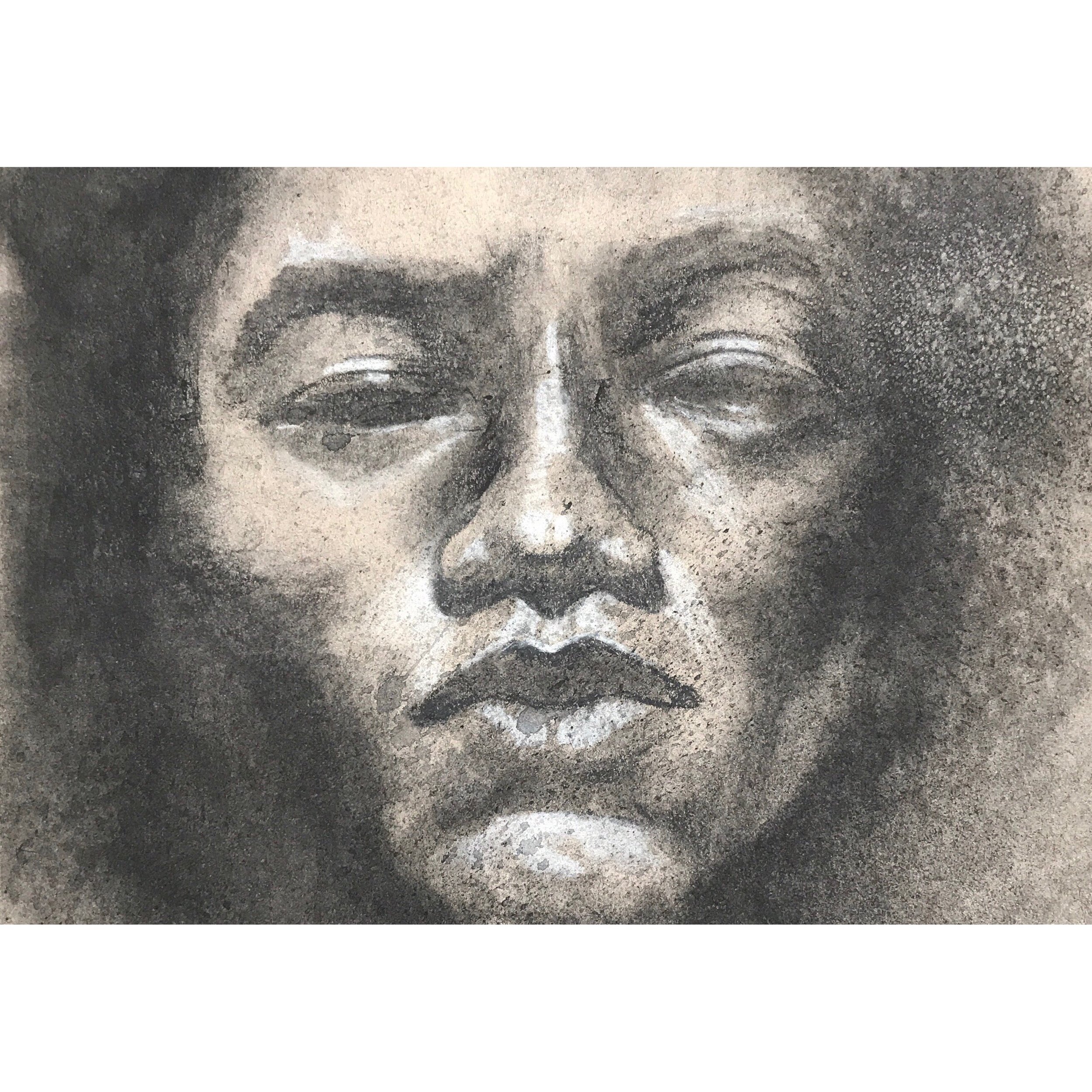
Have You Met Local Haitian American Artist Angie B.?
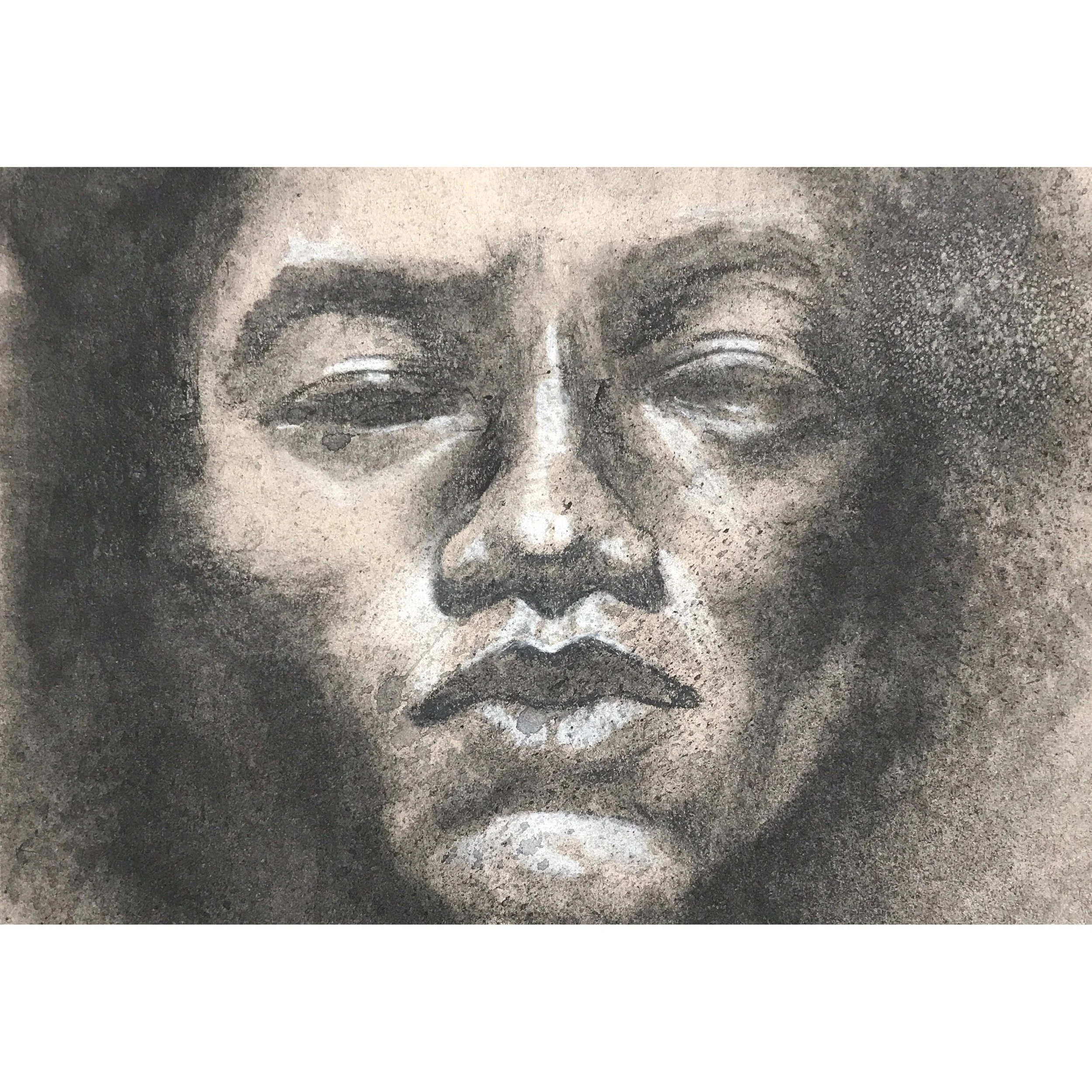
 “Let your passion be your guide,” was the biggest takeaway from an inspiring conversation with Haitian-American artist, Angie B. This amazing, multi talented artist has fearlessly combined her love of art and design into a multitude of mediums - paper, canvas and even t-shirts. She's an artistic force to be reckoned with.Angie B. is a Long Island native who grew up driven by creativity in all forms. From pencil to photography, there weren’t many forms of media that she hasn't explored. While earning her visual arts degree at Fordham University, she discovered her love for both the classical and abstract arts. She mused at how line and form had the power to create lasting connections and emotions.Currently, Angie continues to build her body of work and experiment with various mediums including ink, paint, wood, and various canvas. She also works as a graphic designer.
 Haitiville: What drives/motivates you?Angie B: My primary motivation is the drive to always be better than I was yesterday.Haitiville: How has your culture influenced your work?Angie B: One thing that always stands out to me about my culture is the vibrancy in the art, the nation, and the people. I try to reflect a colorful and vibrant feel to a lot of my pieces.
 Haitiville: What does growing up Haitian mean to you?Angie B: To me, growing up Haitian means pride, richness in culture, family, laughing, community, tradition, and resiliency.
 Haitiville: Who are your artistic idols? Who do you look up to?Angie B: I’m a fan of Da Vinci, Picasso, Gaugain, Jackson Pollock, Frida Kahlo, and many other figurative and abstract artists. There are so many amazing artists past and present that have effectively transferred their emotions onto canvas. It is easy to become inspired by them all.
 Haitiville: Where do you see yourself in 5 years?Angie B: Art wise, I actually have no real idea and I don’t mind that. [It] helps keep my mind free to create my art based on my current emotions. I’ll definitely continue to aggressively build up my portfolio and see where it takes me. The next few years are my blank canvas, creating as the days come. That’s the most exciting thing to me.Haitiville: Tell us about your upcoming November 4th event?Angie B: Oh, it's my first solo art show. Super excited.Angie B., we can't wait to see what the future holds for you. Wishing you the very best!!Interested in seeing more of Angie B.’s artistic talents and learning more about her art show? Visit her beautiful INSTAGRAM account. Her t-shirt designs can be found at hypd. Apparel.

Rainn Wilson might play an irredeemable scamp on Star Trek: Discovery, but he’s showing his charitable side with a contest benefiting girls in rural Haiti.

Rainn Wilson’s character on Star Trek: Discovery, Harry Mudd, may be an irredeemable con man whose devious past lives on through the history of the franchise, but the man himself is showing his charitable side as we near the upcoming show’s premiere.Wilson and his wife Holiday Reinhorn founded LIDE Haiti, an educational initiative using arts and literacy to aid in the development of adolescent girls in rural Haiti. According to their website, LIDE serves over 500 girls with a staff of 13 teachers in 12 locations in remote, rural Haiti. Considering that there are few people further removed from the arts, literacy and education than young people in rural Haiti, this is a noble endeavor indeed.Wilson is putting his appearance in Discovery to good use in benefit of LIDE. He and Reinhorn are holding a contest with a grand prize of attending the premiere and cast party in Los Angeles on September 19th as his guest with accomodatations and flights on the man himself. With a $10 donation, you can be eligible to win.For those of us not lucky enough to make the premiere and cast party and thus see it days early, Star Trek: Discovery will air on September 24th on CBS at 8:30 p.m. EST. It will be on CBS All Access, a subscription service, each week thereafter for the first half of the first season which wraps up on the first Sunday of November.by Duncan Smith
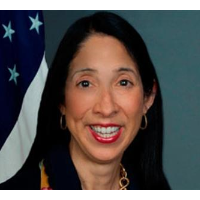
Ambassador to Haiti: Who Is Michele Sison?
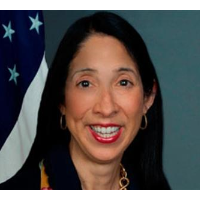
 Michele Sison was nominated to be U.S. ambassador to Haiti by President Donald Trump on July 20, 2017. Sison, who has been deputy permanent representative to the United Nations since December 2014, succeeds Peter Mulrean, who served in Port-au-Prince from October 2015 to February 2017.In her role at the United Nations, just a month before her nomination, Sison made it clear that the Trump administration did not intend to contribute to a UN trust fund to fight Haiti’s cholera epidemic because the U.S. had already contributed more than $100 million to the anti-cholera effort. It is widely believed that cholera was inadvertently introduced into Haiti by UN peacekeepers from Nepal in October 2010.Born May 27, 1959, in Arlington, Virginia, Michele Jeanne Sison is the first Filipino-American ambassador from the United States. Her mother is Veronica Travers Sison. Her father, Pastor Bravo Sison, originally from the province of Pangasinan in the Philippines, earned a master's degree from Harvard Law School and eventually spent 25 years with the World Bank, retiring as director for public affairs in its Asia Division. She has two sisters, Victoria and Cynthia. Sison earned her BA in Political Science from Wellesley College in 1981 and also studied at the London School of Economics.Sison joined the State Department in 1982 and served early career postings as a consular official in Port-au-Prince, Haiti, from 1982 to 1984; Lomé, Togo, from 1984 to 1988; Cotonou, Benin, from 1988 to 1991; Douala, Cameroon, from 1991 to 1993; and Abidjan, Côte d’Ivoire, from 1993 to 1996. Sison served as consul general at the U.S. consulate in Chennai, India, from 1996 to 1999.She was deputy chief of mission and chargé d’affaires at the U.S. embassy in Islamabad, Pakistan, from 1999 to 2002. Just one month before the terrorist attacks of September 11, 2001, Sison met with Taliban officials to try to secure the release of American aid workers who had been arrested in Afghanistan for allegedly showing a Christian video to an Afghan family. The following March, Sison was out jogging and waved to embassy employee Barbara Green and her 17-year-old daughter, Kristen Wormsley, who drove by on their way to church. Shortly thereafter, the two were killed in a grenade attack on the church.In Washington, Sison served as principal deputy assistant secretary in the Bureau of South Asian Affairs from 2002 to 2004, after which she was appointed ambassador to the United Arab Emirates (UAE), where she served from July 2004 to January 2008, putting a strong emphasis on promoting trade with the Dubai dictatorship, a strategy she referred to as “massive corporate diplomacy.”From the UAE she went to Lebanon, serving in Beirut as chargé d’affaires ad interim starting in February and as ambassador from June 2008 to August 2010. Her tour in Lebanon was a demanding one right from the start, as she had to deal with numerous controversial issues. For example, in April 2008, she sent a cable to the State Department explaining that Lebanon’s telecommunications minister, Marwan Hamadeh, had complained that Hezbollah (which held elected seats in the national legislature and a cabinet position) had set up its own fiber optic telecom network, which, in Sison’s words, “covers the Palestinian camps, and the Hezbollah training camps in the Bekaa, and is penetrating deep into the Christian Metn and Kesrwan areas.” On June 18, 2008, she was involved in a particularly unpleasant incident, when her motorcade in the southern Lebanon town of Nabatiyah was stoned by anti-American pro-Hezbollah militants.After her tour in Lebanon, Sison served as assistant chief of mission for Law Enforcement and Rule of Law Assistance in Baghdad, Iraq. She also served stateside as director of Career Development and Assignments in the Bureau of Human Resources from 2010 to 2011.Sison returned to South Asia to serve as U.S. Ambassador to Sri Lanka and Maldives from September 2012 to December 2014.As U.S. deputy representative to the United Nations, Sison again found herself in the thick of the action, particularly in 2016 when the Obama administration clashed with the Russian government over the war in Syria. In March 2017, she accused the government of South Sudan of conducting a “scorched earth campaign” that used man-made famine as a tactic in that country’s civil war.Sison has two daughters, Alexandra and Jessica; she and their father, Jeffrey J. Hawkins, are divorced. She speaks fluent French, basic Haitian Creole, and Arabic.By: David Wallechinsky, Matt Bewig | August 23,2017
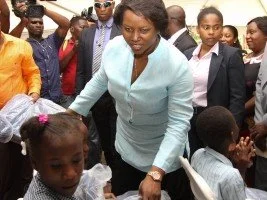
Martine Moïse Distributes School Kits
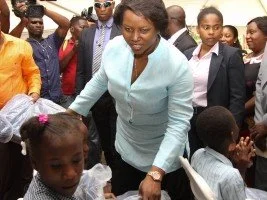
 Tuesday, at the Municipal Palace of Delmas, in order to help the most disadvantaged parents to prepare in better conditions, the back to school, the First Lady, Martine Moïse, accompanied by Régine Lamur the Minister of Youth, participated in a distribution of school kits and shoes to more than 2,000 students from national schools Canada and Pierre Labritie.In her speech, Martine Moïse insisted on the importance of education as a tool to build new citizens capable of participating in the project of national reconstruction. While reiterating her will to accompany the needy children, the First Lady has called on all players in the system to play their score in order to make the academic year coming, a total success.The First Lady promised to be with the children throughout the school year and insisted on a set of measures adopted to relieve parents and students during the year including free transportation of students and provision of a daily hot meal to students as part of the National School Canteen Program (PNCS).She also referred to the strengthening of the programs "Tout pou ti moun yo" and "Konte m, mwen konte", recalling that these programs aim, respectively, to increase the number of childcare centers in the country for children from 0 to 5 years and allow children from birth to have identification documents.Speaking to parents, Minister Régine Lamur stressed that the collective development of society and personal fulfillment, promote schooling and the need to work to provide children with a healthy learning environment. Considering teachers as essential actors in the development of the country, the Minister took the opportunity to congratulate them and encourage them to work to improve the level of education in Haiti.By: HaitiLibre | August 23, 2017
JCE investigates on a network of false identities of Haitian children
Haiti - DR : JCE investigates on a network of false identities of Haitian children Sunday Castillo Pantaleón Member of the Dominican Committee for International Solidarity with Haiti, denounced the existence of a mafia network, which makes false identities from the data of the Dominicans who died in the hospitals "Luis Eduardo Aybar" and "Francisco Moscoso Puello" to document illegally against finance, Haitian children born on the Dominican soil.
He said that this network "demanded the certifications of deceased persons in the legal services of these two hospitals and with this data, they document for money, Haitian children with late birth declarations, which makes them appear as children of the deceased in the Civil Registry of the JCE."
Juan César Castaños Guzmán, the President of the JCE ("Junta Central Electoral") instructed Dolores Fernández, the National Director of Civil Registration, to carry out a thorough investigation of these two hospitals and to the Late Reporting Unit, on all cases that match these characteristics.
Guzmán assured that "the investigation will be conducted with the levels of promptness that circumstances deserve and in a timely manner we will take all necessary legal steps." Recalling that foreign mothers, irrespective of their nationality and not legally resident in the Dominican Republic, must register the birth of their child in the JCE Book of Aliens in accordance with the provisions of the Dominican Constitution.
HL/HaitiLibre
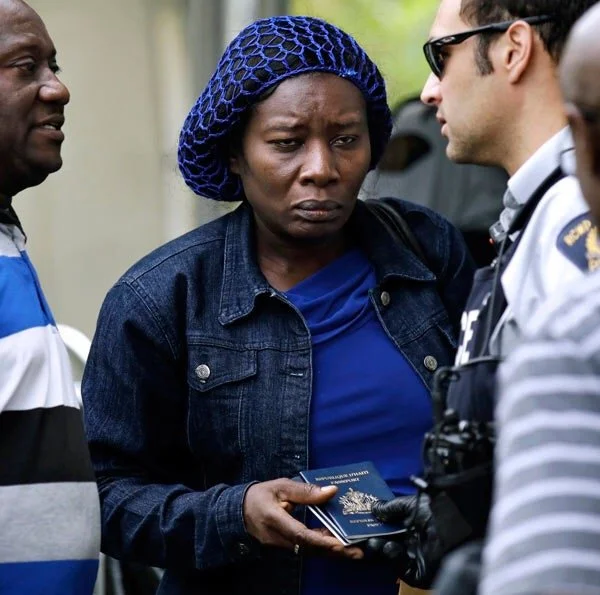
Haitians risk arrest in Canada for a better life
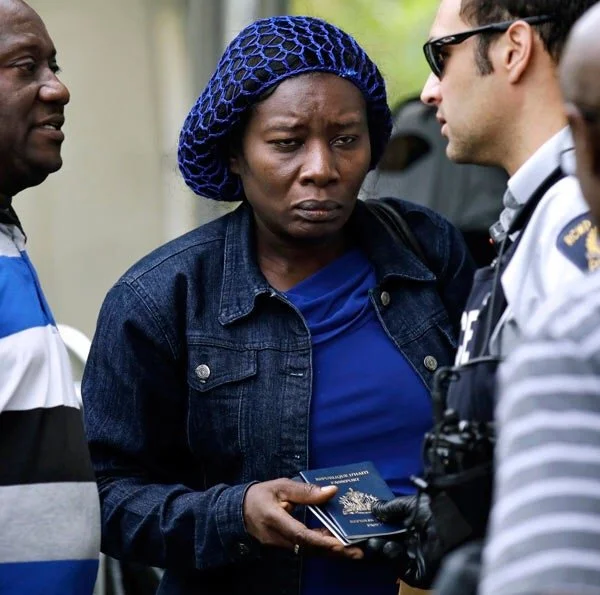
While United States President Donald J. Trump is clamping down on illegal immigration, thousands of Haitians with Temporary Protected Status (TPS) in the United States are rushing to the border crossing in Champlain, upstate New York, willing to face arrest in their pursuit of a better life, according to reports here. The popular stop near the border station at Lacolle, Quebec, Canada is quickly becoming a path to a new life for immigrants — and something of a tourist attraction, reported the Miami Herald. It said the migrant surge has overwhelmed Canadian officials who, after opening Olympic Stadium in Montreal to asylum seekers, recently reopened a shuttered hospital to accommodate the growing numbers, and deployed the military to construct a tent city near the official border crossing at St. Bernard-de-Lacolle. The refugees have decided that getting arrested with an uncertain future in Canada is better than risking deportation under Trump, the Herald said. Responding to the influx of refugees in his province, Quebec’s Prime Minister Philippe Couillard told the Canadian press that “it’s unfortunate” that asylum seekers have been led to believe that being admitted into Canada was “a done deal.” He and other officials stressed that, despite the warm reception and treatment refugees have received, there is an immigration process, adding that arriving migrants will have to demonstrate why they should not be returned to their home countries, according to the Herald. “We have the notion here people are being told, ‘Go to Canada, it’s welcoming. Just walk right in, the streets are paved gold and get a job,’” said Paul Clarke, the executive director of Action Réfugiés Montréal, which works with refugees seeking asylum in Canada. “But it’s not like that,” he added. “People have to make a refugee claim. They have to state why they are being persecuted or fear persecution in their home country for their race, religion. “The statistics in Canada for the last couple of years show that only 50 percent of Haitians meet that test,” Clarke continued. “Only 50 percent are accepted as refugees in Canada. But we kind of get the sense that’s not what’s being told in the States.” While the wave of Haitians crossing into Canada has been fueled by fears that the United States will send them back to Haiti early next year, when Haiti’s TPS is set to end, the community has been bombarded with misleading and false messages on WhatsApp, social media and Creole-language radio saying that Canada is offering free residency, the Herald said. The paper said that, in one message, a man claiming to be an attorney says the Canadian Consul in the United States is inviting “and even encourages all Haitians with or without TPS to apply for Canadian residency.” More than 6,500 asylum-seekers have crossed into Quebec province since the beginning of the year, and most estimates say about half are Haitians, according to the Herald. “Right now, the question is how can the governments, the municipal, the provincial government of Quebec and federal in Ottawa manage this?” said Donald Cuccioletta, a historian and senior research associate at the Université du Québec à Montréal’s Raoul Dandurand Center for Strategic and Diplomatic Studies. “It’s approaching a crisis. How do we handle these people once they come across?” The steady stream of Haitian migrants began in May when the Trump administration announced it was granting Haitians living in the United States only six months extension on their TPS — awarded after the 2010 earthquake that devastated Haiti — which would mean the status would end in January, the Herald said. In July, when the 180-day countdown for January began, the flow of people picked up again, it said. Migrant families are told they will be arrested by the Royal Canadian Mounted Police before crossing the United States to Canada at the border along Roxham Road, the Herald said. It said thousands of people have crossed over into Canada from an irregular crossing near the Champlain–St. Bernard de Lacolle border in hopes of finding residency in Canada. Among them are Haitians who worry that TPS in the US could soon end under the Trump administration, the Herald said. Nelson A. King | August 17, 2017
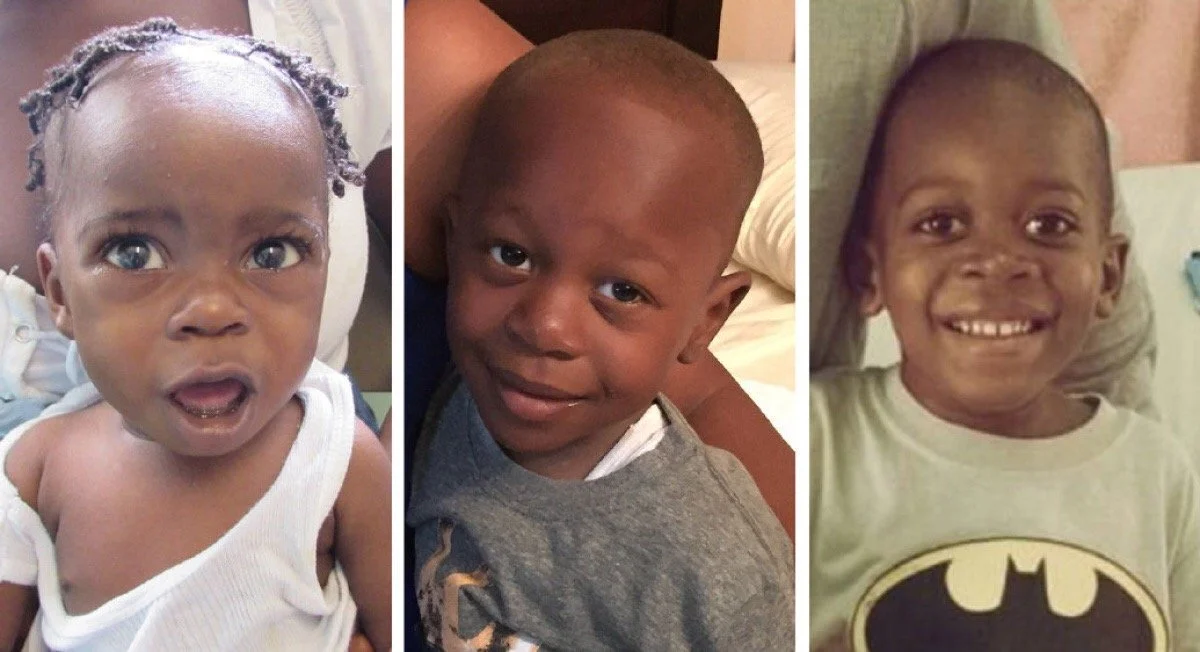
Three Haitian boys needing life-saving heart surgery require host families in Toronto
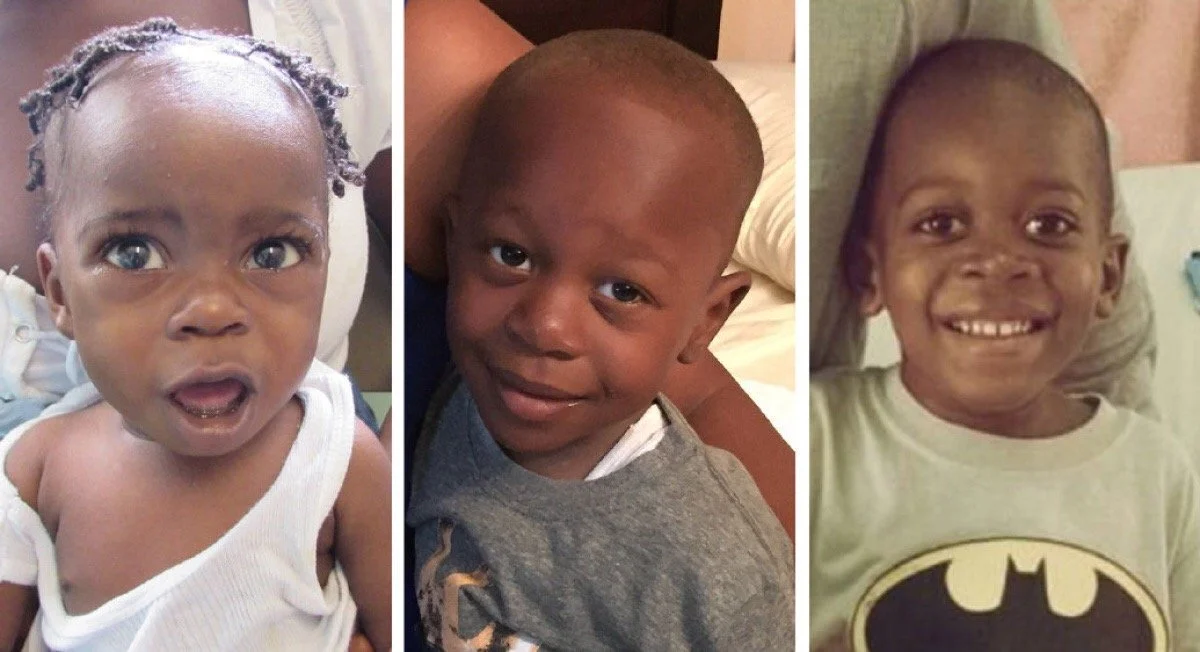
Haiti Cardiac Alliance is searching for people to take in three preschoolers as they recover from complex heart surgeries at SickKids hospital. Owen Robinson is desperate to find host families in Toronto for three Haitian boys with congenital heart defects who need life-saving surgery. Robinson’s organization, Haiti Cardiac Alliance, is helping the children, aged three to four years old, find treatment outside Haiti. The group has helped 300 Haitian kids get heart surgeries at hospitals all over the U.S. and the Caribbean since it began in July 2013. But the operations for these three boys, who all have holes in their hearts, are difficult and no hospital the group normally goes to has been willing to take the cases on. That’s when Sick Kids Hospital agreed to step in and do the surgeries with the help of the Herbie Fund, which offers financial support to children worldwide who require specialized care. “If these kids don’t get treatment in Toronto, I can say with a fair degree of confidence they’re not going to be able to access treatment at all,” Robinson said. “It would very literally be life-saving.” But Sick Kids can only do the operations as long as the kids have a place to recover once they are discharged from the hospital. And finding the boys a place to stay has proven to be tricky. “In the United States we have some solid connections with organizations and they help us welcome these families into their community, but in Toronto we don’t have that,” Robinson said. In July, he asked for help from Mark Brender, an old friend and the national director of Partners in Health Canada. Brender recently contacted the Haitian consulate in Toronto in the hopes that someone from the community would be willing to help the boys: Roobens Thelusma, David Smith Millien and Kervens Jeannot. But they are still waiting for responses. “If there’s care available it shouldn’t be limited to where you are born and if you have the funds,” Brender said. He’s hoping a Haitian family will offer to help, to make communicating with the visitors easier, but said that “anybody could step up.” Robinson is searching for people to take in one child and one parent at a time. A social worker would accompany the family for the first week to help them get settled and translate for them. The family would need to stay in Toronto for one or two months during the recovery period. The surgery would take place about a week after their arrival, and they would spend the next week or two at the hospital, he said. The families only speak French and Haitian Creole. Robinson said that while it would be helpful, the host family and volunteers don’t have to speak the language. Tools like Google translate, phrasebooks, or social workers who are available by phone could help bridge the language gap. The hosts and volunteers would be expected to provide the family with transportation to and from the hospital, food, or the means for the parent to cook, and a warm and supportive environment. The child’s parent would take care of the medical aspects of caring for the child. “If the child had been born in the U.S. or Canada, (the heart problem) would have been repaired in the first few months of the child’s life but these kids are three- or four-years-old now,” Robinson said. “We have situations all the time where a child’s been selected somewhere and they die before they can go, it just takes too long.” Anyone interested in helping can contact Robinson at orobinson@haiticardiac.org ALINA BYKOVA | Aug. 16, 2017
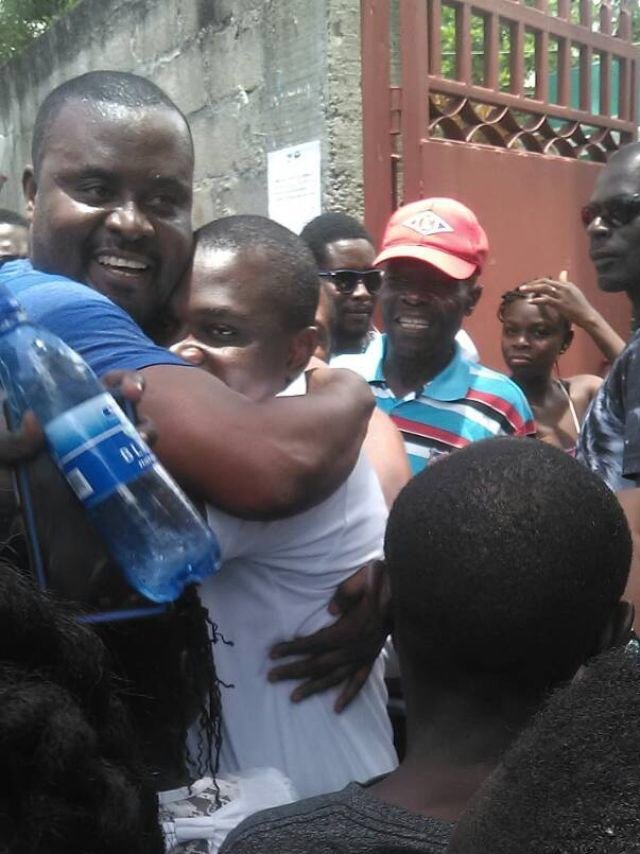
A year in a Haitian jail won't deter this leader from his humanitarian work in Borgne, Haiti
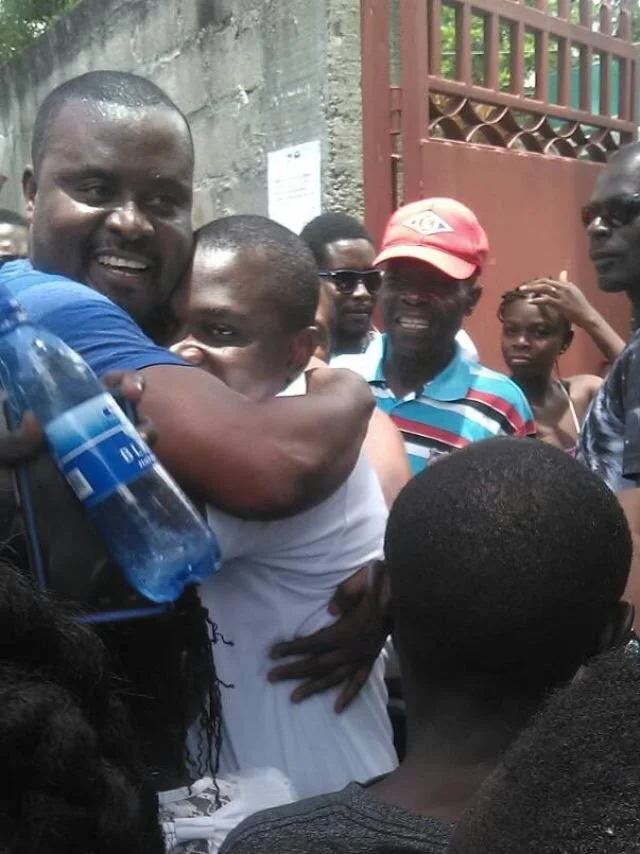
Forty five people were held in the jail cell, which had one window and one row of bunk beds. Men without a bed would sleep under the bottom bunks on the floor, says Estimable Francius Dauphin. He spent almost one year in this jail cell in Cap Hatien, Haiti, despite having never been convicted of a crime.During his ordeal, many Rochestarians tried to get him released, believing his detention was politically motivated. They consider him a close friend and partner. They wrote letters to their congressional representatives, human rights groups and emissaries of the Vatican. They paid for lawyers, visited the prison and prayed.When he was freed on June, 20, they rejoiced. On Aug. 20 they will host an event in Rochester so that he can share his story.Estimable's connections to Rochester stretch back more than a decade, to days when he worked as a teacher and spearheaded many community projects in Borgne, a pretty little town on the coast of northern Haiti. He was eventually elected assistant mayor of Borgne and took office in 2006.His efforts were admired by Rochesterians like Sarah Brownell, a Rochester Institute of Technology lecturer who lived in Haiti and worked on water and sanitation projects. They began to work together and connections between Borgne and the Rochester area flourished. There is now a Sister Cities relationship between Borgne and Honeoye Falls. A local nonprofit organization Friends of Borgne was founded to support schools, food programs, a traveling library and a marching band. St. Joseph's House of Hospitality took on a soup kitchen program for the elderly of Borgne called Pan Ak Pwason.After the devastating earthquake of 2010, regular elections were canceled and the government of Haitian President Michel Martelly installed local leaders of its choosing. Estimable stepped aside until elections were held again in 2015, when he decided to run for mayor.Several Rochesterians supported his candidacy, including James Murphy, a St. Joseph's House of Hospitality Catholic Worker who went down to Borgne to serve as a driver for Estimable's campaign. After the election, he was hopeful. "There was a lot of joy," Murphy said. "The people who tallied the votes locally were talking about a landside for Johnny."The paper ballots were kept at the police station. Concerned citizens stayed up all night, keeping a vigil outside the station to try to ensure that no one entered to tamper with the votes. U.N. Peacekeepers were all over the country due to concerns about voter fraud, corruption and unrest.Corruption seems to have struck Borgne's election, say Brownell and Estimable. When votes were counted, many polling stations that had been won by Estimable in unofficial counts had their results annulled. Estimable spent a month and a half contesting the results in Port au Prince. After he had exhausted all avenues, he returned home to Borgne. Not long after, police came to his house and told him to appear before a judge, who accused him of burning down houses and threw him in jail.Estimable said he provided the judge proof that he was in Port au Prince when the alleged crimes took place, in the form of hotel receipts, bank statements and hotel video. The hotel owner testified that Estimable had indeed been staying at his establishment during the time he was accused of burning down houses.Justice moved slowly and Estimable was forced to wait for a trial. He was allowed out of the jail cell, twice a day, for about 10 minutes. He was never allowed outside. Friends at home and in Rochester tried to help, contacting anyone they thought might be able to intervene."We believe his arrest, extended imprisonment, and failure to be given a court date arepolitically motivated retributions for his successful community development work on behalf of youth, farmers and the elderly," Sarah Brownell and James Murphy wrote to the Apostolic nuncio to Haiti, a representative of the Vatican. "We also suspect his run for mayor of Borgne, and his court contestation of seemingly fraudulent election results are other contributing factors to his imprisonment."Eventually, Estimable got his day in court and the charges against him were dismissed. Just as he was supposed to be released, another person from the opposing political party accused him of having burned a house and car in 2015. He had to stay in jail longer until inconsistencies in the accuser's testimony led to the new charges being dismissed as well.He was finally released on June 20, having spent almost a year in prison. Huge crowds gathered to meet him when he returned to Borgne, including a youth band that plays with instruments shipped from Rochester. This month Estimable is visiting his friends in Rochester. He could apply for political asylum in the United States but he wants to return to Borgne to continue his humanitarian work. "He still is going to work for his community," said Murphy. "That is a message of courage."Estimable said he remains committed to the motto to "leave the world better than you found it." He is sad for the state of the justice system and the electoral system in Haiti but says that his experience will not force him to abandon his home or deter him from his work in Borgne. "I am not going to leave the community I was born in," he said. "That is where Jesus put me and I am there to help it advance."Estimable will speak about his experience and Rochester-Haiti connections at an event titled "Haiti, Ice Cream and Sloppy Joes at St. Joseph’s House of Hospitality, 402 South Ave., on Sunday, Aug. 20 from 5 to 7 p.m. There is a $5 suggested donation.Erica Bryant | August 13, 2017

Carline Smothers creates Zoe Beautee and the Little Reader’s Collection

Multicultural children’s book series introduces children to the richness of the Haitian Culture“Necessity is the mother of invention” is an old English-language proverb which means, roughly, that the primary driving force for most new inventions is a need. That’s the energizing thought that drove Carline Smothers, the mother of three young Haitian American children (a nine-year-old son and two daughters, ages seven and three) to create and self-publish her two books: “Fanmi Mwen (My Family),” written in Haitian Creole and English, and “Mmmmm! Soup Joumou,” a children’s book series that highlights their Haitian heritage.A businesswoman with a higher purpose, Carline started Zoe Beautee in 2011, offering a line of t-shirts that sport the Creole phrase Bèl Fanm (Beautiful Woman) in order to celebrate the beauty of the Haitian language. “My goal is to help build confidence and self-love,” says Carline. All products are available for purchase at www.zoebeautee.comHere’s what Smothers, the children’s book author and owner of www.zoebeautee.com, had to share about the richness of her Haitian heritage and why she wrote “Fanmi Mwen (My Family)” (Haitian Creole and English) and “Mmmmm! Soup Joumou.”L.A. Sentinel (LAS): What are African-Americans missing about the Haitian culture? Carline Smothers: There are so many negative stereotypes about Haitians. When I was younger, my family and I were constantly teased for being Haitian in school. As I would look at the American children who teased us, their skin, eyes, and hair looked like ours. I did not understand why we were treated so cruel. Some kids would even fight and throw things at the Haitian students. They told us we ate cats and dogs. That all Haitians are dark-black, ugly, and dirty.I would get offended when I was told I did not look Haitian, which insinuated that Haitians are not beautiful people. Of course, everything stated above is completely false. We are beautiful people who come in all shades, as everyone else around the world. I had no idea where these kids were getting their information from, or if that is what was being taught in their homes.My parents are immigrants from Haiti and instilled in my siblings and me values, empathy, respect, and compassion. They came to America to give us a better opportunity to grow and prosper. I do not see it being any different from others who move from state-to-state, for such growth. My parents did not leave Haiti because they didn’t like it there; in fact, they told us all the time how beautiful Haiti is, with amazing beaches and mountains. Haitian culture is rich in food, language, music, art, and so much more. If we all took the time to learn about other cultures, this world would be a better place! LAS: How does your community incorporate its traditions into American ones?CS: Haiti is the first Black Republic to regain its independence [which took place] on January 1st, 1804. Haitians offered a helping hand and fought for the United States independence as well, which is something very few people know about. With all the natural disasters Haiti has had, there is no denying the strength of its people.America recognizes May as Haitian Heritage Month. We are proud of who we are and our African roots. I have noticed others embracing Haitian culture through the language, food, and displaying the flag. For an example, the Haitian flag is seen waving in the opening of DJ Khaled and Rihanna’s video. We have come a long way from how Haitians were viewed when I was growing up.LAS: Why did you feel the need to start www.zoebeautee.com and self-publish two children books that focus on the Haitian culture?CS: I started my Zoe Beautee brand to celebrate the beauty of the Haitian culture and its people. By first creating Bèl Fanm (Beautiful Woman) Fashion Tees. I was inspired by my three young children to create the children’s book series. My husband is African American and I did not want them to lose the culture.When we watch television shows, movies, and read books for children, we are open to learning other languages and cultures. However, I couldn’t help but noticed the lack of Haitians and my children need to be able to relate to the characters. This is why I am passionate about what I have created. Every child deserves to be represented and see a reflection of themselves. I saw a need and have been working tirelessly to bring my vision to life.To learn more go to: “Expressing Beauty Through Language”Founder and CEO Carline SmothersInstagram: zoe_beauteeFacebook: Zoe BeauteeTwitter Zoe Beauteewww.zoebeautee.comLos Angeles Sentinel - Published July 27, 2017

After 12 years in U.S., Stamford student may be ordered back to Haiti

STAMFORD — Mary was 8 years old when she stepped off a plane from Haiti with her older sister to visit their ailing grandmother in Stamford.
What was meant to be a short trip with their mother was unexpectedly extended after Mary’s 10-year-old sister wound up hospitalized for four months with a bacterial infection. After the girl’s recovery, doctors advised the family that she not return to Haiti.
That was the summer of 2005, six years before a magnitude 7.0 earthquake would devastate the island nation, killing 220,000 people and displacing 1.5 million.
The disaster prompted the U.S. government to extend what’s known as Temporary Protected Status (TPS) to Haitians without permanent legal residency. The designation is afforded to immigrants who are unable to return to their home countries because of humanitarian emergencies.
Along with her family, Mary, who did not want her real name used because of her immigration status, ended up staying in Stamford while her mother petitioned for legal status. They were ultimately denied, but then came TPS, which has enabled them to remain in the U.S. for the past six years.
This may change under new orders from the Trump administration that could put an end to TPS for Haitians and send 58,000 immigrants — including up to 150 in Stamford and 750 statewide, according to one attorney’s estimate — back to an impoverished country still reeling from one of the worst natural disasters in recent memory. The move is yet another example of the immigration upheaval set into motion under President Donald Trump.
For someone like Mary, a lot has changed since leaving Haiti, a country the 21-year-old can now barely recall. She went on to enroll in Stamford public schools and excelled academically, landing a scholarship to study civil engineering at a Manhattan college. Her sister became a registered nurse.
With a year left in school, Mary worries about being ordered back to Haiti before she can graduate. At this point, she has no family there — her father disappeared after they left for the U.S. — and says she wouldn’t know where to stay or how to navigate life there.
“All I remember is that it wasn’t particularly safe,” said Mary, who lived an hour outside the Haitian capital of Port-au-Prince. “We stayed inside our house and went to school and came back.”
Mary and her family could be ordered to leave the country as soon as Jan. 22, when the most recent extension of Haitian TPS expires. TPS for Haiti and 12 other nations, including El Salvador, Honduras, Syria, Somalia, Yemen and Nepal, is re-evaluated for continuation every 18 months.
In May, U.S. Citizenship and Immigration Services announced it would extend Haitian TPS for just six months, and encouraged recipients like Mary to prepare for their return. At the time, then-Secretary of Homeland Security John Kelly said the agency would announce 60 days before the January deadline whether it may extend Haitian TPS again. Thousands of Haitians are anxiously awaiting the decision.
Activists like Angelucci Manigat, editor and publisher of The Haitian Voice, a monthly newspaper once based in Stamford, have called for TPS to be extended for the standard 18-month period. Meanwhile, he said, Haitians have begun fleeing over the Canadian border to seek asylum in anticipation of a canceled TPS.
Manigat said Haitians, who make up at least 4 percent of Stamford’s population, are frightened of attracting attention. They are avoiding churches and community centers that were once well attended, and fear doing everyday things like picking up their children from day care or paying a parking fine, he said.
“People are really, really scared,” said Manigat, who now runs his publication out of Bridgeport. “Community leaders are trying to prepare them for the worst. It doesn’t look good, but we’re waiting to see what happens. A lot of people are in denial.”
Mayor David Martin in May joined a coalition of city leaders from across the country who signed a letter to Kelly and Secretary of State Rex Tillerson urging a longer extension of Haitian TPS, which would have ended on July 22 without the six-month continuation.
Philip Berns, a Stamford immigration attorney who has about 30 clients with Haitian TPS — and estimates there could be up to 150 impacted citywide — said he is preparing clients for what comes next.
For many TPS Haitians who have lived peaceful and productive lives in the U.S., “what it will feel like is not deportation, but exile,” said Berns, who added that Haiti has still not recovered from the 2010 earthquake. Many say Hurricane Matthew last year undid much of the progress made since the earthquake.
“Things have not seriously changed in Haiti,” Manigat said. “The government still doesn’t do much for the people.”
People like Mary have been in the U.S. for so long they don’t know a life back in Haiti, Berns said.
“This young lady is basically, in her heart and soul, an American,” he said. “She would be sent a to a country where she’s barely familiar with the culture and language, and completely out of her element.”
Mary said she understands the challenge the U.S. government faces managing a program like TPS, and deciding which undocumented immigrants out of many get a reprieve from deportation.
“It’s a temporary solution,” she said. “It’s not a status that’s made for assimilation.”
In the meantime, life for people like Mary is a high-stakes game of wait-and-see.
“The thing that makes me worry is that I don’t know will happen,” she said. “But it’s also my calming factor — that I don’t know what will happen.”
By Liz Skalka | August 5, 2017
The literary world loses a major poet
President Jovenel Moïse, is profoundly saddened by the death Saturday in Canada, of the poet and Haitian of talent Claude C. Pierre (born in Corail) author of numerous collections of poetry and texts in magazines and collectives."By saluting his memory the Head of State recalled of Claude Pierre as a man who has helped advance the linguistic and literary work on Creole languages and cultures, thus enabling the sharing of solidarity and respect values.In these painful circumstances the Head of State presents his sincere condolences to his family and the great literary community of Haiti and the Diaspora.The memory and the work of the poet Claude Pierre, will live long in the heart of all"Prime Minister Jack Guy Lafontant :The Prime Minister learned with emotion the death this morning of Claude C. Pierre, poet, linguist, teacher and academician [the Haitian Creole Academy]"The poetic work of Claude C. Pierre is characterized by a real work on language and bias for social and existential problems. He is both a major poet of Haitian literature, a literary critic, a linguist specializing in semiotics, a discipline he has taught for more than 30 years at the State University of Haiti.He was one of the strong advocates of the Creole language and will have been a coordinator of the Office of the Secretary of State for Literacy from 2004 to 2006 and a member of the Haitian Creole Academy.The Head of Government salutes the memory of this important figure of Haitian culture. He takes this opportunity to express his condolences to his family, his relatives, the literary and academic worlds and the members of the Haitian Creole Academy saddened by this departure."HL
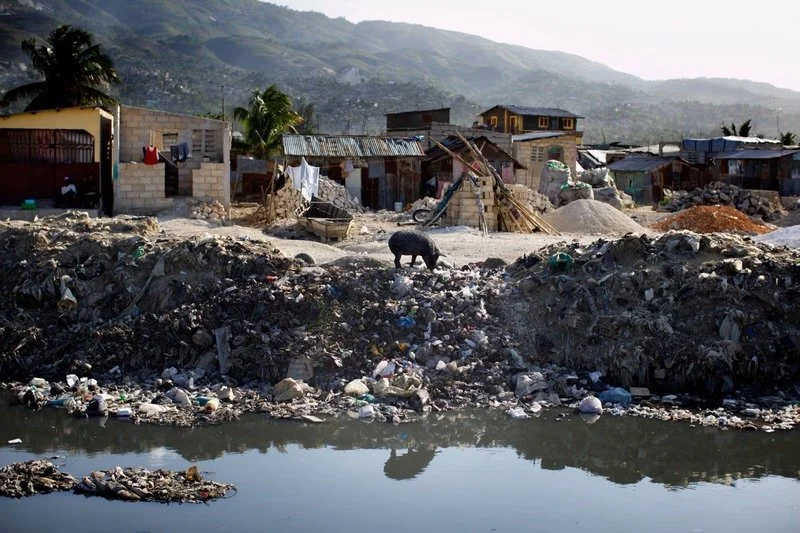
You Probably Don't Want To Know About Haiti's Sewage Problems
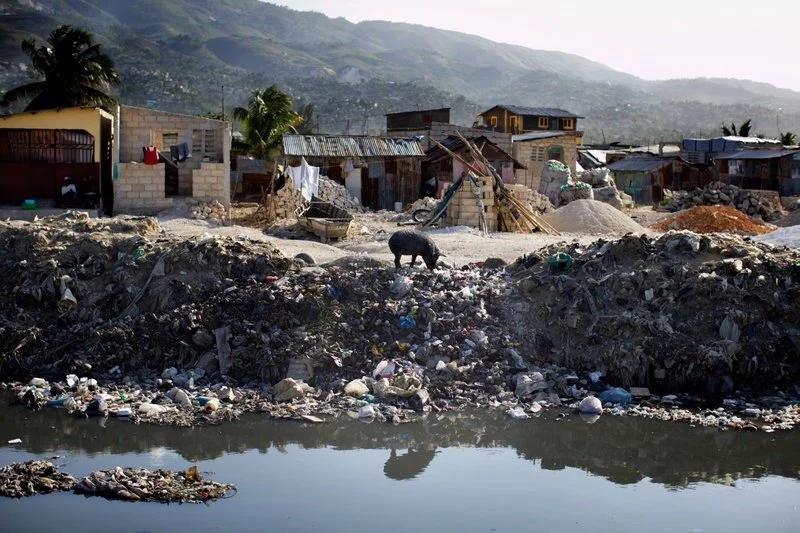
The rain began on Good Friday. It fell into the roofless ruins of Port-au-Prince's Catholic cathedral. It swirled through stalls in the market downtown. In the hills above Haiti's capital, the rain ran off the clay roof tiles of upscale homes.No matter where the rain fell, it was all destined for the same place: the system of concrete canals that cut through the city and down to the sea.At the edge of the city next to the shore, the rain pounded on the zinc roof of Jean Claude Derlia's single-story cinder block home. His neighborhood, Project Drouillard, is dense with families packed into homes like his. Most people who grew up in Project Drouillard have stayed, as he has. The community is close-knit, poor and socially isolated from downtown Port-au-Prince.It is also extremely vulnerable to flooding from the canal full of trash and raw sewage that bordered it on one side. After a rainstorm a few years ago, Derlia had been swept away by a wave of sludge and nearly died before neighbors fished him out. He was sick for weeks after it happened, but he survived.Now, over the sound of the rain, Derlia heard people shouting, "The water is coming!" There was nothing he could do but wait and pray that the water, or the things the water carried with it, wouldn't kill him this time.A city without a systemPort-au-Prince, Haiti, is one of the largest cities in the world without a central sewage system. There are no sewers connecting sinks, showers and toilets to hulking wastewater treatment plants. Most of the more than 3 million people in the metro area use outhouses, and much of that waste ends up in canals, ditches and other unsanitary dumping grounds where it can contaminate drinking water and spread disease.It's a problem that has attracted international donors, some of whom have acted to do what the Haitian government cannot afford to: build a sewage treatment system. Since 2010, international groups have spent millions of dollars on a plan to build open-air sewage treatment plants across Haiti. In 2012, the first facility opened at a site called Morne a Cabrit, about an hour from downtown Port-au-Prince. At the time, a government official told NPR that funds were in place for facilities in seven other cities.But five years later, that construction plan has stalled. Morne a Cabrit is still the only operational sewage treatment plant in the country, another $2.1 million facility is all but abandoned and the volume of sewage being disposed of safely in Port-au-Prince is actually decreasing.At its core, the floundering sewage treatment strategy is about money and power. Haitian economist Kesner Pharel, who has advised both the Haitian government and international nongovernmental organizations on investment and development in the country, says the stalled plan reflects a fundamental flaw with how infrastructure projects are funded and implemented in Haiti.Because the Haitian government is so dependent on outside money for infrastructure, "it is very easy for [international donors] to come in and say, 'I'm going to do this, I'm going to do that,' " he explains. The result is that the country's leaders become more responsive to funders than to Haitian voters. "Where is the accountability?" he says, "not to international donors, but to your people?"In the past five years, the story of one failed sewage treatment plant project offers the clearest example of the good intentions, poor governance and bad luck that contributed to Haiti's current sanitation crisis. It began with a young woman and a huge earthquake.How not to build a sewage treatment plantEdwige Petit has been called Haiti's "sanitation champion." Trained as a civil engineer, Petit, the current director of sanitation at the Haitian water and sanitation agency DINEPA, has also been called less laudatory names because of her expertise. "Sewage wife, trash wife, lots of names," she says, laughing.Her first experience with sewage treatment came a few months after the 2010 earthquake that destroyed much of Port-au-Prince. Aid groups provided clean water and toilets to hundreds of thousands of people in displaced-person camps. The groups needed somewhere to dump the more than 10,000 gallons of human waste the camps generated each day. Initially, the government directed them to an unlined pit at the edge of the landfill.Petit was an expert on the landfill and immediately knew dumping there was not a good solution. The pit was unlined and right next to the sea, so the sewage could easily contaminate fishing areas and sources of drinking water. But for months after the quake, with the economy in shambles and the city in ruins, large-scale sanitation projects were never a political priority."People don't have enough money. What can you say when people cannot even eat? You're talking about waste?" she says, channeling her detractors. "They cannot eat, they cannot s***! So that's the deal. Too much poverty."Then that fall, U.N. soldiers from Nepal brought cholera to Haiti. "Only the cholera could make us have [the first sewage treatment facility]," Petit says. "Only cholera. Because we were afraid, totally afraid of cholera. For this reason, everyone agreed."In October 2010, the government of then-President Rene Preval announced it had found a location for the country's first sewage treatment plant, on land formerly leased by the Haitian American Sugar Company and left empty for years. The site was named for the nearby area of Titanyen, where thousands of people had been buried in mass graves after the earthquake.The initial budget inscribed on a now-faded sign at the entrance was $1.9 million — it would later grow to $2.1 million — to be paid by the Spanish government, which would also fund a public education campaign about cholera prevention. Construction began immediately, but just three months later, it stopped.Powerful people had leveraged their connections to the president, alleging that they owned the land under the sewage plant and demanding compensation under eminent domain before construction could go forward."For each [piece of] land, we had not one, but two or three people who said they were owners!" Petit remembers, still fuming more than six years later. "They went directly to president."For nine months, nothing was built at the Titanyen sewage treatment plant. In that time, disease surveillance data suggests more than 2,500 people died of cholera in Haiti. Without a safe dumping site open, DINEPA data suggests more than 100,000 cubic meters of raw sewage was dumped elsewhere in and around the city.In the end, the Haitian government had little choice but to pay the alleged landowners, since the rest of the Spanish funds were unavailable as long as construction was stalled. In the meantime, funding the plant appeared to be a point of pride for the Spanish government. Queen Sofia of Spain even traveled to see it.When the sewage treatment plant finally opened in May 2012, after the cholera epidemic had peaked, a press release from the Spanish aid agency AECID said nothing about the construction delay. It pointed to the project as an example of "strengthening of Haitian institutions" and said it would "contribute significantly to the health of the population and halt outbreaks of diseases such as cholera."The facility operated for just 18 months before a technical problem — huge bubbles in the lining of the second waste treatment pool — forced it to close. Since then, it has remained closed. DINEPA says the aid agency plans to spend an additional $617,000 to repair it beginning this fall.A spokesperson for AECID declined to comment on its sewage treatment plant projects in Haiti, citing turnover in its staff in the region.Haiti's sewage champion, Petit, still believes that sewage treatment plants are a good investment for Haiti. She is using the agency's investment funds, 96 percent of which came from international sources last fiscal year, to build at least 30 waste treatment facilities across the country. Three, including the still-shuttered site at Titanyen, are under construction or repair."The government has a duty to build the plants we should need," she says. "I can say I am doing my part."Meanwhile, the one sewage treatment plant that is already open is below capacity and struggling to cover its operating costs. International money covered its construction, but domestic funding and customer fees are insufficient to cover long-term maintenance and payroll. Inadvertently or otherwise, the availability of international money for infrastructure appears to have motivated the construction of sewage treatment plants in Haiti, whether or not there is local demand for the facilities.The Easter floodWithout a sewage system to divert waste out of clogged canals, the Good Friday rainstorm filled the streets and alleys of Project Drouillard with 3 feet of raw sewage. Seven people drowned in the canal. Jean Claude Derlia got an infection that still hasn't gone away.Residents blamed the flood on poorly excavated canals and on the waste dumped by rich people who live on higher ground. Both are undoubtedly true, but the waste clogging the canal also came from right there in Project Drouillard. Scattered throughout the neighborhood are sets of cinder block pit latrines, most of which are filled to the top with waste."We can't use these," says 27-year-old Bernard Paulemon, gesturing to a set of six stalls near the headquarters of his neighborhood group, Foundation Alovie. "The people here, they can't pay."He is referring to the cost of maintenance. When a latrine fills up, residents see two options: They can padlock it and leave it, at which point some people resort to relieving themselves in an open field near the canal, or they can pool money to hire someone to clean out the pit.Magdala Simeone lives a few houses away from a block of six pit latrines, each with a padlock on the door. Four of the six stalls are too full to use. Kids come and go with the keys for the other two. A few weeks ago, Simeone and her neighbors raised money to hire someone to clean one of them out.The total cost: $75. Her share: about $8. She never saw who cleaned out the latrine and doesn't know where they dumped the contents. A trip across the waste-strewn field adjacent to the canal holds a hint — the canal is completely filled with muddy excrement.She would prefer to have a company clean out the latrine. "The company will clean it better" than the informal latrine cleaners known as bayakou, she says, but "a private company will ask you for a lot of money."Sanitation companies in Port-au-Prince see the potential for big profits in neighborhoods like this one. "There are lots more people who could pay us, but they haven't heard of the company. They don't know what we do or why they should give us money," says Marguerite Jean Louis, the CEO of the Port-au-Prince-based sanitation company Sanco.She is banking her new company's future growth on educating middle- and low-income Haitians about the importance of paying for sewage pickup and disposal.This is the "market first" model of sanitation reform in Port-au-Prince. Simply put, it's the belief that the limited cash available for sanitation should be invested in increasing the demand for sewage removal rather than in large-scale infrastructure projects like sewage treatment plants.Flaure Dubois, the financial director at Jedco, the largest sanitation company in the country, says the government's focus on sewage treatment plants is frustrating because there is so much public education work to be done around sanitation. She sees her company as more aligned with aid groups doing sanitation campaigns than with DINEPA and its construction plans."We need to change the culture," says Polyanna Domond, Jedco's marketing director, showing off a Jedco sign that explains in Creole how to use a portable toilet (Sit on it, don't hover above it!). "We are investing in public education, so people know that waste can make them sick. The government should ask us for help."The worst job in the worldEveryone in the neighborhood could smell it; a heavy, earthy stench, like rotten eggs and feces.In the back corner of a neat courtyard surrounded by single-story houses, four men were getting ready to empty out a pit latrine. The leader, a 35-year-old who said his name was Gabriel Toto, was standing over a 15-foot pit filled with human excrement, his pants rolled up to his knees, shirtless with yellow rubber gloves and a cigarette dangling from his lips.He explained that Toto is a nickname he used when he discusses his job, to minimize the stigma and ostracization he and his family face because of his occupation.For the same reason, he and his men work only at night."I am a working man," he said, just trying to make a living without getting caught up in the organized crime that dominates the economy in his neighborhood near Project Drouillard. "I don't want to do anything bad. So, whatever I need to do — whatever I have to do — I will do it. Anything."For the last decade, doing "anything" has meant working as a bayakou. The job is dangerous, disgusting and difficult. To watch Toto work is to see an expert perform his craft, moving confidently and carefully to remove about 400 gallons of human waste from an underground, candlelit hole in less than three hours, using only his gloved hands, a bucket and a rope.Even for a pro, the work is risky. "I have had stitches on my legs, my feet," Toto says. "I even lost one of my toenails one day when I was working." Another bayakou, Derisma Merisier, says an infection is responsible for his red and puss-filled eyes. He has been living with it for years.And the latrines are full of hidden dangers as well. People throw all sorts of things in the hole. Sticks, rocks, trash and razor blades are nightly hazards. On this night, an excrement-covered handgun shows up in one of the buckets.The owner of the outhouse paid Jedco about $170 for the cleaning service. As subcontractors, Toto and his men will each take home about $3.90 for the night's work. They make eight to ten times more working for themselves, but as the companies have moved into the market, many bayakou feel forced to work as contractors.Working for a company could theoretically offer perks. On this night, Jedco provides five pairs of coveralls (in plastic packaging), rubber gloves, boots, goggles and even blue Jedco baseball caps (new with the tags still on). The men laugh wryly when they see the protective gear."They usually don't give us these things," says Toto. The clear implication was that the protective gear is related to the presence of journalists. Usually, the men work in little or no clothing. By the end of the night, the goggles are fogged up and useless, gloves are ripped and most of the men have discarded some or all of the gear.As it is, Toto says he doesn't make enough to support himself and his three children. After a night's work, he spends the day looking for hourly labor jobs, although a lot of people won't work with him or even touch him."You've seen what I have done," he says, standing in the parking lot of the sewage treatment plant at 2:30 a.m., his hair still wet from a bucket bath. "Some people will never stand close to me, talking to me the way you are talking to me, as close as you are. They'll stay away from me because they see what I'm doing with my own hands."The Haitian government and private sanitation companies talk about public education campaigns and sanitation market development and infrastructure. But as the person who does the work of bringing human waste from the city to the dumping site, Toto feels ignored and abused."The first people in the community who should give value to the work we're doing are the companies," he says. "When they sit behind a desk in the air conditioning, they don't care. If they don't give value to what we're doing, who else will give value to that?"Rebecca Hersher | July 29, 2019