

How The Clintons Robbed and Destroyed Haiti

The Clintons became masters of debilitatingly empty promises when it comes to Haiti.
The imprint of Bill Clinton and Hillary Clinton is indelible. The couple’s presence and impact on the Caribbean island have brought nothing but prolonged despair for the Haitians. Their elusive and opaque deals in the country have not done anything to alleviate the country out of poverty depths. The purported interests of helping Haiti from its myriad of problems have only caused stagnation in Haiti.
The presence of Bill Clinton, who also served as the president of the United States together with his wife who served as the Secretary of State during Obama’s tenure can be traced back to the 90s. Their interests in Haiti are not a new phenomenon. If not, their interests in Haiti have almost become irrevocably entrenched and have had far-reaching consequences in the lives of ordinary Haitian citizens.
Their history with the country dates back to 1975 when they had their honeymoon there. If there is an unpopular couple in Haiti, it definitely has to be the Clintons; for they are held in contempt and in despicable terms. What the Clintons did is unforgivable to the Haitians.
The devastating 2010 earthquake left Haiti in tatters. The country’s economy reeled under the biting and excruciating effects of the earthquake. Because of their history with Haiti, the Clintons seized this chance in the interests of “assisting” Haiti in its times of unparalleled difficulty. But their involvement with the earthquake relief programs was the final proof Haitians needed to show that the Clintons’ true intentions with the country were to rob it for their own parochial interests.
Bill Clinton’s influence in Haiti ranges from the 1990s agricultural policies in Haiti that destroyed the country’s rice industry to the meddling in internal affairs and finally to the earthquake. There is a sense of permanency attached to the Clintons’ name as regards their activities in Haiti, particularly the Clinton Foundation.
When the earthquake struck, the global response was to send in donations to Haiti. But of course, that needed a commission that would be designed to have an oversight role as regards the disbursement of the various relief packages pouring through. The Clintons stepped up to lead the global response. The Interim Haiti Recovery Commission (IHRC) was brought into life and Bill Clinton was selected to be its co-chair. At that time, Hillary Clinton was still the Secretary of State and thus responsible for channeling USAID relief spending to Haiti.
One could not have found an escape from their influence. Bill Clinton co-chaired the commission alongside Haitian Prime Minister Jean-Max Bellerive. Some $13.3 billion was pledged by international donors so that Haiti could be rebuilt and the lives of Haitians uplifted.
The IHRC was comprised of two parts: one that had the foreigners and one led by the Haitian Prime Minister. Bill Clinton chaired the foreign part and it had all the donors; they had to the IHRC $0.10 billion over two years or forgive $0.20 billion of Haitian debt. Each and every decision made by the Haiti section of the commission had to be endorsed by the foreign section. And Clinton was at the helm of the foreign part of that commission.
As the money found its way into the possession of the IHRC, it increasingly became arrogant and opaque. The only thing that came out of the post-earthquake relief plans was the construction of an industrial park called Caracol, which cost $300 million. The US was also amenable to financing a power plant. The belief held by the Clintons and their allies in terms of rebuilding Haiti was premised on employing short-term plans espoused in the foreign aid industry that the US had imposed on Haiti all these years.
They hoped that Caracol would sizeably attract foreign businesses for the reconstruction of the country’s badly fractured economy. It was the same old policy that did not care about the pertinent issue of creating long-lasting projects that would eventually help the poverty-stricken Haitians. The foreign-aid industry plans are concerned with benefiting the international players, the private contractors.
The industrial park is considered a very big flop by the US. Worse still, several hundred farmers were evicted from there in order to make way for the 600-acre park. Too much emphasis was placed on “outside players” instead of the Haitian government to effect change.
As such, the jobs that Caracol was expected to make fall far below the reality on the ground. The post-earthquake efforts by the Clintons, particularly Caracol, was a damning failure that did nothing to lift the Haitians out of their misery but only lined the pockets of big firms. South Korean textile giant Sae-A Trading Co, which is the main employer at Caracol, gifted the Clinton Foundation with donations between $50,000 and $100,000.
The IHRC had little to show for all the money that came through except the Caracol industrial park. Not much reconstruction in Haiti was done. Where did all the money go? The Clinton Foundation has refuted claims that it had influence in the running of the IHRC, saying, “Since 2010, the Foundation has worked on the ground in Haiti with a range of partners - helping more than 7,500 farmers lift themselves out of poverty; improving the Haitian environment by planting more than 5 million trees and installing more than 400 KW of clean energy; and supporting women through literacy training and job skills for over 2,000 women,” when responding to the BBC.
It has been speculated some of the money that came through the commission found its way towards sponsoring Hillary Clinton’s presidential campaign which she lost to the incumbent Donald Trump in 2016 but this is an area she has always been evasive about when probed. They become allegations without proof but to Haitians the more she dodges the question, the more she becomes suspicious and pernicious to the interests of Haitians.
It is estimated that the IHRC collected over $5.3 billion over two years and $9.9 billion in three years but Haitians still find themselves mired in abject poverty. A US Government Accountability Office report circumvented the issue by deciding not to find any iota of wrongdoing, but the gravity of the failure made them mention that the plans by the IHRC, co-chaired by Bill Clinton, “did not align with the Haitian priorities.”
The failure by the IHRC to rebuild Haiti is still haunting Haiti. The failed agricultural policies by the US made sure Haiti, a country that produced its own rice, would be reliant on US food to the extent that Haiti imports food from the US. Foreign aid is continuously pumped into Haiti, and no plan is made to bolster the country’s own capacity to rebuild and produce.
Haiti is still run on which business finds favor with the US, and while the Clintons were in charge of the US, they presided over all these failed policies. It is high time the onus to build Haiti shifts back to the government.
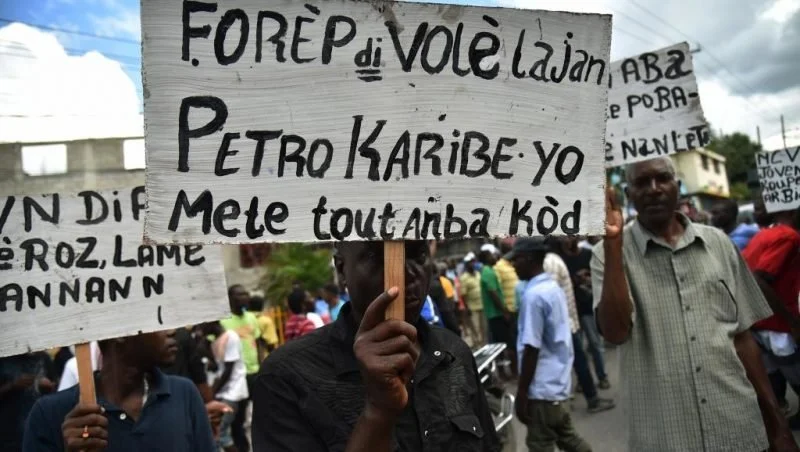
Will Venezuela exclude Haiti from the PetroCaribe relaunch?
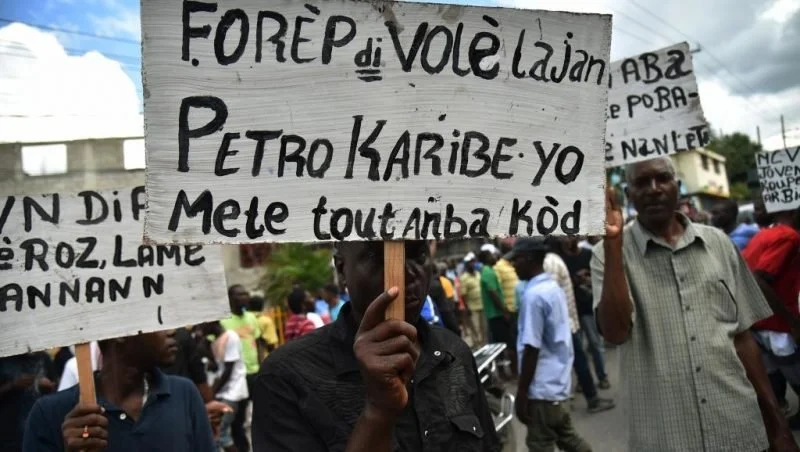
“Haiti has excluded itself' said a Venezuelan official
According to multiple reports, Venezuela will relaunch its PetroCaribe energy cooperation agreement with Caribbean nations sometime in 2020, prompting Haitians to wonder if Haiti stands a chance to get included this time around.
PetroCaribe, a generous deal with long-term payment plans meant to benefit the Haitian people, was suspended in 2018 following Venezuela's presidential crisis. When Venezuela's President Nicolás Maduro announced the PetroCaribe relaunch, he warned that the deal would not be “extended to countries that are ‘at war’ with Venezuela,” which could include Haiti, according to Haiti Liberte media.
That's because, at a January 2019 vote at the Organization of American States (OAS), the Haitian government, under President Jovenel Moïse, sided with the United States in rejecting the legitimacy of Maduro as president. Instead, Haiti endorsed Juan Guaidó, an opposition politician who continues to contest Maduro's presidency.
“Haiti doesn’t recognize us, so we haven’t excluded Haiti,” a high-ranking Venezuelan government told Haïti Liberté. “Haiti has excluded itself,” he said.
Interestingly, former senator Jean-Charles Moïse, who chairs the opposition party Pitit Desalin, recently met with President Maduro to apologize for Haiti's vote at the OAS, hoping to smooth things over so that Haiti may actually benefit from the PetroCaribe deal.
But Haitians wonder if the apology will be enough.
Haiti's PetroCaribe controversy
PetroCaribe has been a hugely contentious issue in Haiti, thanks to a corruption scandal that sparked violent street protests nearly a year ago on February 7, 2019, and continued for months.
The Haitian government allegedly squandered PetroCaribe funds meant to develop its economy and aid social programs. More than $3 billion United States dollars were embezzled by government officials through opaque contracts — including one with a company called Agritrans, owned by President Moïse.
As a result, few Haitians saw any benefits promised from the PetroCaribe deal and demonstrations calling for Moïse's resignation have plagued the president's term of office.
Meanwhile, Haitian taxpayers are stuck with at least a $2 billion USD debt to Venezuela, which was siphoned off the PetroCaribe endowment.
According to Haiti Liberte:
Jovenel Moïse’s betrayal of Venezuela has been one of the motive forces behind the massive nationwide insurrection calling for his resignation since July 2018, when his government tried to raise fuel prices following PetroCaribe’s cut-off.
The first incarnation of PetroCaribe happened in 2005, under then-Venezuelan president Hugo Chavez. The regional energy program was intended to provide petroleum products to member states under preferential terms.
Haiti did not join right away — it was only after Chavez “actively courted” newly elected, then-president René Préval, that the country was included in the deal — which further complicated Venezuela's already strained relationship with the United States.
The United States and Haiti have had a complicated history that includes, among other things, occupation and US interventions, questionable humanitarian initiatives and the United States President Donald Trump's dismissal of it as a “shithole country.”
Yet, on January 30, 2020, Haiti joined the US-backed Lima Group, comprised of 12 Latin American countries, aimed at seeking an end to the Venezuela crisis, who have urged global pressure on Maduro to “re-establish democracy” since 2017, when the presidential crisis began.
Today, the questions remain — with Preident Moïse still holding onto power, will Venezuela ultimately include Haiti in the relaunch of PetroCaribe? If so, would it have to be under a new government in order to win the trust of both Maduro and Haitian citizens? Or will Haiti lose a second chance to benefit?
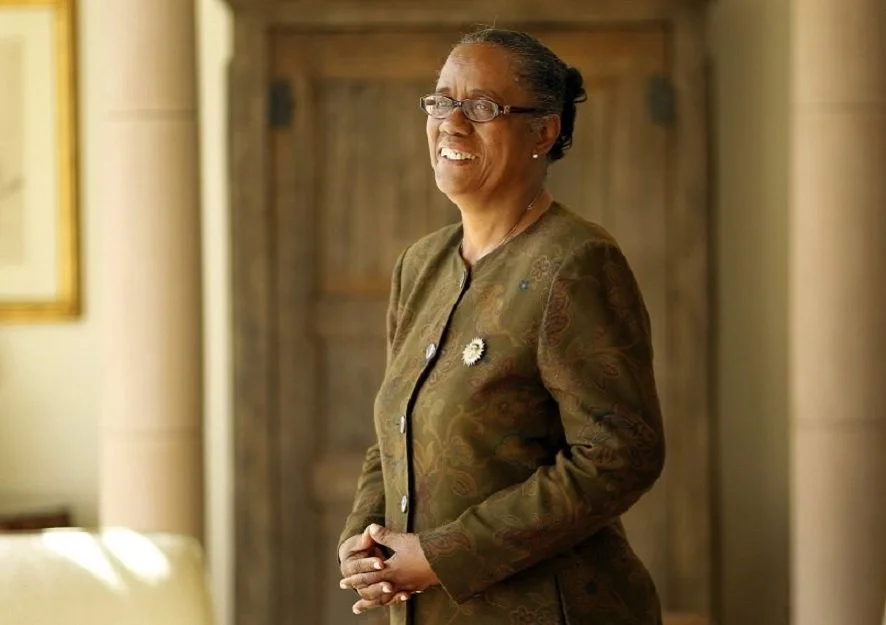
The little-known first female prime minister of Haiti sworn in for 100 days
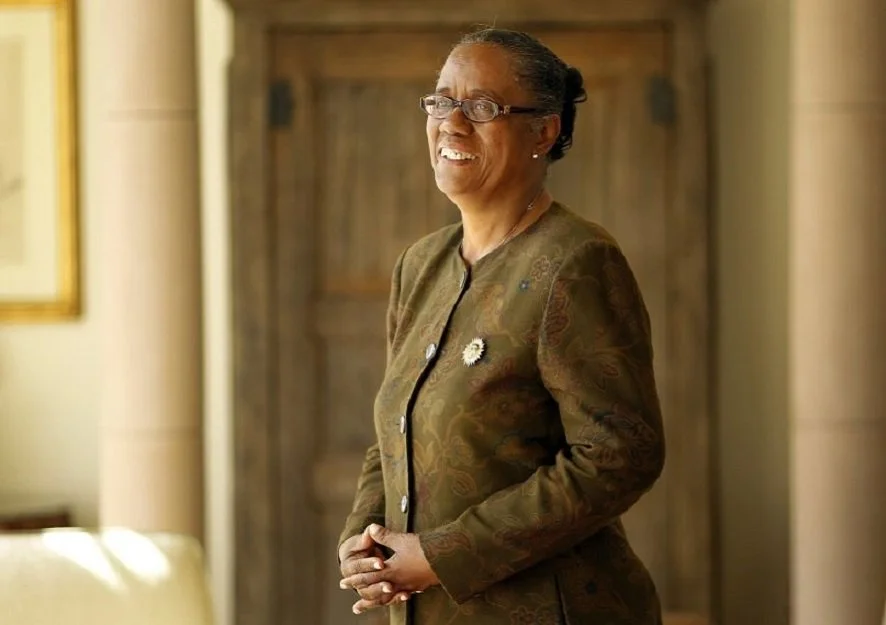
Claudette Werleigh has served in various capacities in Haiti and across the world.
She has been a politician, development and peace campaigner but what she became widely known for were her achievements within just 100 days of being Haiti’s first female prime minister.
Then a foreign minister, a 49-year-old Werleigh was picked by President Jean-Bertrand Aristide in 1995 to be the prime minister.
She replaced Smarck Michel, who resigned in October that year over widespread opposition to his economic reforms.
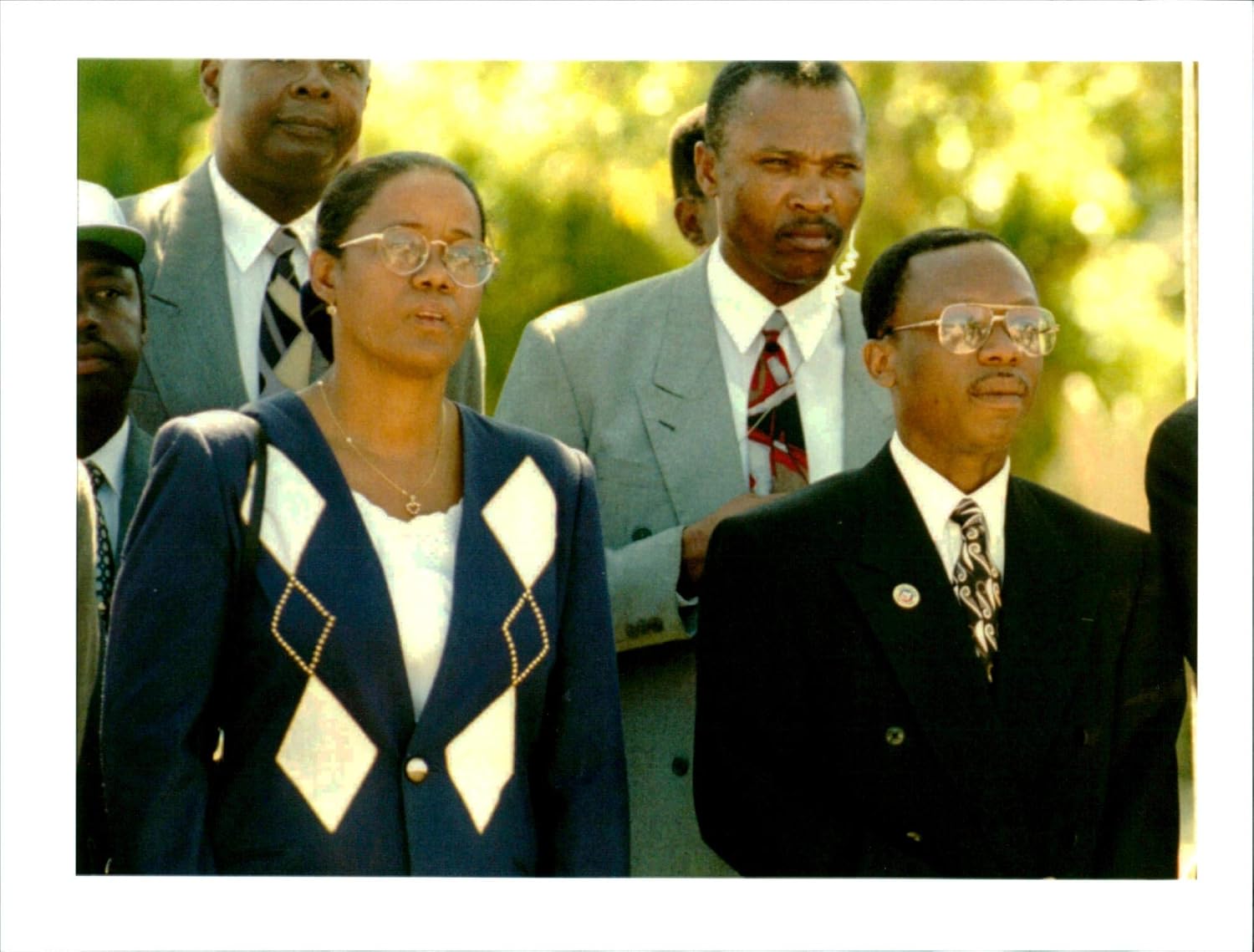
Werleigh, not facing any opposition from lawmakers of both houses of parliament in Haiti, served as prime minister from November 7, 1995, to March 6, 1996.
Though she served for a short period, she did not fail in what was expected of her – to strengthen the leadership of the country and organize democratic presidential elections.
In what is the African diaspora’s oldest country, instability has been rearing its head in Haiti, with street protests recently reported in the capital Port-au-Prince.
For about half a century, the Caribbean nation has struggled to overcome the problems of poverty and inequality. It is a country that has also seen the worst of brutal dictatorships in the hands of the Duvalier family.
Though born in a well-to-do family in Cap-Haitien in 1946, Werleigh was able to witness the disparities in the system while growing up in Haiti.
The widening gap between classes in the country and later conflicts would directly influence her life’s work as a development campaigner, a peacemaker and an advocate for people at the grassroots level.
Later becoming active in politics and public administration, Werleigh trained and studied medicine in the U.S. and Switzerland before coming back to Haiti to take a degree course in law and economics at the State University in Port-au-Prince.
She subsequently worked for various non-governmental organizations focusing on humanitarian relief and adult literacy.
With her passion for education, particularly adult literacy, Werleigh started a school for adults and farmers in rural Haiti. Despite pockets of violence, natural and Western-ensured tragedies, the school remained open and was community-owned.

Werleigh subsequently served as secretary general of Caritas Haiti for 10 years, “coordinating relief assistance, civic education and respect for human rights” under the dictatorial rule of Jean-Claude Duvalier.
She would help found the League for Women’s Empowerment, an organization to promote the participation of women in politics in the 1990s.
This was after the fall of the brutal dictatorship of Doc Duvalier, and Jean Bertrand Aristide was now president.
Werleigh, having entered into full-time politics and public administration, would serve as Aristide’s Foreign Minister and Social Affairs Minister from 1990 to 1995, before briefly becoming Prime Minister in 1995 to 1996 – the first female to do so.
Picked by Aristide who was ousted in a September 1991 coup but later restored to power, Werleigh knew that her role was to keep the country’s leadership intact ahead of the democratic presidential elections.
As prime minister, she appointed a cabinet with 17 ministers, including four women. In agriculture, energy and road construction, she received a lot of financial support even though she later tried to reduce Haiti’s economic dependence, among other policies that compelled the IMF to hold back loans.
Nevertheless, it was during Werleigh’s period as prime minister that Haiti witnessed its first peaceful change of government since it became independent.
When the 1995 democratic elections were held, Rene Preval, an ally of Aristide and a former prime minister, won, making him the first elected head of state in Haitian history to peacefully receive power from a predecessor in office.
Preval would eventually become the first since independence to serve a full term in office, the first to be elected to non-successive full terms in office, and the first to peacefully hand over power.
Having worked with Aristide, he would have loved to have Werleigh continue as prime minister but reports say the majority in parliament, which needed to approve her as prime minister, had changed. Werleigh, therefore, withdrew and left the country.
Outside of Haiti, she ventured into issues of international peace and conflict, working as the director of conflict transformation programs at the Life and Peace Institute in Sweden until 2007, according to writer Bijoyeta Das.
She later worked with Pax Christi, a nongovernmental catholic peace movement with a mission “to transform a world shaken by violence, terrorism, deepening inequalities, and global insecurity.” There, Werleigh served as secretary general until the end of 2010.
She now remains a peacemaker who continues to advocate for policies that will cater to the needs of people of the grassroots.
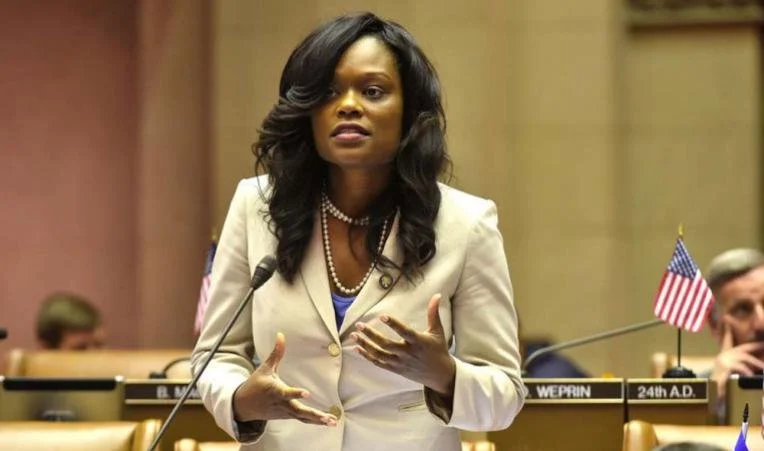
5 things to know about Rodneyse Bichotte
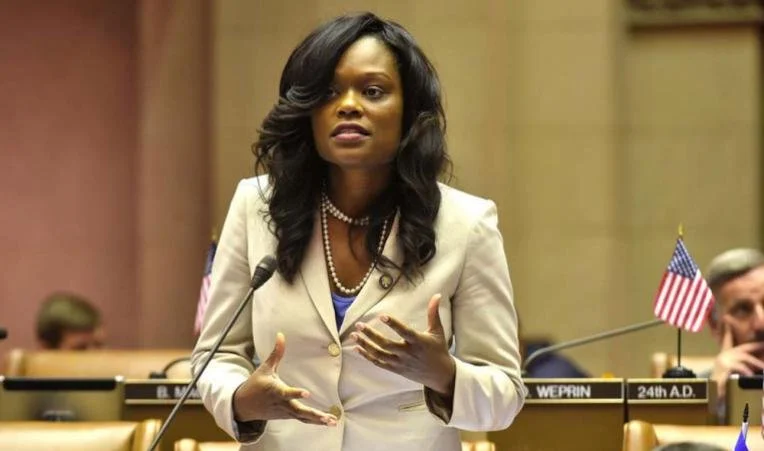
Meet Brooklyn’s new boss.
Assemblywoman Rodneyse Bichotte seems poised to become Brooklyn’s next Democratic county leader – aka party boss – after the current boss, Frank Seddio, who has led the state’s largest local Democratic organization since 2012, announced his abrupt retirement on Monday. The party’s executive committee, made up of the borough’s 42 district leaders, plans to vote to approve Bichotte on Monday.
Here are five things to know about the city’s newest boss.
She’s the establishment pick
Seddio endorsed Bichotte at the same time he announced his retirement, calling her “the one that I believe best serves the party.” She’s on the Brooklyn Dems’ executive committee, and chairs the party’s finance committee. Seddio told City & State that she never asked to be the next leader, but rather he asked her. Seddio’s term wasn’t up until September, so it looks like his early retirement was a way for him to handpick a successor who would be less likely to face a challenge, given the short timeline.
Other Democratic district leaders like Assemblyman and City Councilwoman Charles and Inez Barron have criticized the process and Assemblyman Walter Mosley even considered mounting a challenge, but as of Wednesday, it looked like Bichotte would stand alone for election on Monday.
A history-making choice
If elected, it’s believed that Bichotte, a native Brooklynite of Haitian descent, would be the first black woman to lead a county committee in New York City, and the first woman to lead the Brooklyn Democrats. At 47, Bichotte’s election would represent generational change from the 73-year-old Seddio. It would also represent a shift in political power in the borough, away from so-called white ethics like the Italian-American Seddio and toward the growing Caribbean-American population. The West Indian Day Parade, which fills Eastern Parkway in Crown Heights every Labor Day, is likely Brooklyn’s biggest political event.
She has five college degrees
Growing up in Flatbush, Bichotte studied music at the prestigious Fiorello H. LaGuardia High School of Music & Art and Performing Arts in Manhattan, but she veered away from the arts for her higher education. According to Bichotte’s official biography, she has bachelor’s degrees in electrical engineering and mathematics in secondary education from Buffalo State, a bachelor’s in electrical engineering from University at Buffalo, a master’s in electrical engineering from Illinois Tech and an MBA from Northwestern’s Kellogg School of Management.
Before entering politics, the assemblywoman worked as a math teacher in New York City public schools, an engineer in the telecommunications industry, and an investment banker at Bank of America and JP Morgan. Bichotte challenged the long-serving Assemblywoman Rhoda Jacobs in the 2012 Democratic primary and lost. Jacobs declined to seek re-election for the next term, and Bichotte won the open seat in 2014. She now chairs the Assembly Subcommittee on Oversight of Minority and Women-Owned Business Enterprises.
She’s been wheeling and dealing
Bichotte hasn’t been shy about her political ambitions, running candidates and gaining power in her Flatbush district since soon after she took office. Most recently, Bichotte was a chairwoman of Jumaane Williams’ successful 2019 public advocate campaign, and helped lead City Councilwoman Farah Louis to victory in filling Williams' open seat. While she had to apologize for flippant remarks about the Jewish community in 2015, Bichotte has nurtured a deep political alliance with Orthodox Jewish leaders in Central Brooklyn in recent years, most recently with Louis’ win.
Bichotte is also a close ally of New York City Mayor Bill de Blasio, often writing op-eds in support of him, and was one of the (very) few leaders to endorse him for president last year.
She wields a mean pair of nunchucks
Bichotte has a junior black belt in taekwondo – something she was proud to advertise while pushing to legalize professional mixed martial arts matches in the state in 2016. She studied for six years, she told the New York Post, so “people know not to mess with me.
Bill Clinton once enjoyed a bright legacy in Haiti. Then the 2010 earthquake struck
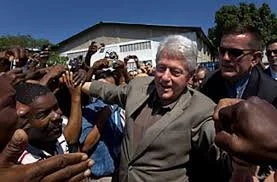
A decade after a devastating earthquake hit Haiti, former President Bill Clinton and his wife, Hillary, the former U.S. secretary of state, are routinely portrayed in some quarters as the prime villains in the Caribbean nation’s continuing struggles to recover and the failed promise of donor assistance to help lift the ravaged country out of poverty.
It’s almost an article of faith among many Haitians that the Clintons somehow siphoned off billions of dollars meant to help clean up and rebuild.
The narrative — coupled with claims that the Clinton Foundation cashed in off development projects in the aftermath of the Jan. 12, 2010, disaster — has been peddled by anti-corruption lawyers in Haiti demanding an audit by government auditors, and even found its way into the 2016 U.S. presidential election: Republican presidential candidate Donald Trump promoted the unfounded claim as he tried to sway frustrated Haitian-American voters to choose him over Hillary Clinton, the Democratic nominee.
Now, as the world marks the 10th anniversary, Bill Clinton for the first time opened up about the setbacks in Haiti — a stain on the bright legacy of a former president who had championed democracy there and was the face of the international recovery efforts as he pledged to help Haiti “build back better.”
In an expansive interview with the Miami Herald at the Manhattan office of his Clinton Foundation, a mystified Clinton shot down accusations of stolen donations and reflected on his complicated relationship with Haiti, both as the U.N. special envoy-turned-reconstruction czar, and through the charitable works of his Clinton Global Initiative, Clinton Foundation and the Clinton Bush Haiti Fund that he and former President George W. Bush co-chaired to raise money after the quake.
“A lot of people seem to think that our group, the reconstruction commission, was getting money. We didn’t,” said Clinton, who served as co-chair of the Interim Haiti Recovery Commission, along with Haiti Prime Minister Jean-Max Bellerive. “We never took any donations.”
An advisory group with an 18-month mandate, the U.S.-backed panel was established by the Haitian government to accelerate rebuilding by ensuring that the efforts of foreign government donors, non-governmental organizations and businesses were aligned with the Haitian government’s development plan. Members included all donors who pledged $100 million or more to the recovery, plus Cuba and Venezuela with observer status, and 12 Haitians representing various sectors of society.
It was the first time, Clinton said, that Haitians from every major sector of society “had the first chance they ever really had to work with the international community.”
“It was a big cumbersome process, but it was totally transparent and we kept up with who funded what, who got the money, and did an after-action audit on all of them,” Clinton said about the commission, which ended its mandate on Oct. 21, 2011. “That’s a matter of record.”
Over the years, however, the commission’s failure to fulfill the international community’s promise of better construction and free public housing for Haitians has become a lightning rod in the debate over what happened to all the promised aid.
In Haiti, some blame the commission and the man at the head of it — Clinton.
The fact is that 10 years after the quake, there is no clear accounting of how much of the $13.3 billion that donors promised over 10 years remains uncollected.
One recent United Nations update underlined part of the problem. The World Bank, for example, had hoped to oversee a big chunk in its Haiti Reconstruction Fund but wound up collecting just $411.40 million from donors, roughly a quarter of its original target of $1.5 billion to $2 billion.
With the commission no longer active after its mandate expired under Haitian President Michel Martelly in 2011, it is unclear how much remains outstanding, given that no one has been pushing donors to pay up.
“I knew what would happen, and what happened happened,” Clinton said about Haiti’s decision to not renew the commission’s role and allow it to transition to a fully country-led Haitian Development Agency. “It slowed the willingness of the donors to honor their commitments and probably made them even more determined to control how the money was spent. That’s after I was done.”
The only money he did control was scrupulously tracked and documented, Clinton said. His Clinton Foundation and its Haiti Action Network, spearheaded by Irish billionaire Denis O’Brien, raised more than $500 million.
“All that money has been documented; 100% of it went to Haiti, and what we did with that was build new businesses,” Clinton said. “We never even took any administrative overhead for anything we did for it. I funded it all out of the foundation.”
The Clinton Foundation said commitments by members provided access to markets for more than 65,000 Haitian farmers; $19.2 million was invested in small and medium enterprises; and thousands of Haitians found employment thanks to investments by Timberland, NRG Energy and international retailers like West Elm, Urban Zen and TOMS.
Other investments include 150 schools constructed across Haiti by O’Brien, founder and CEO of one of the Caribbean’s largest mobile phone networks, Digicel. Challenged by Clinton to help him revive the country’s stagnant tourism sector, O’Brien built a $45 million, 175-room Marriott in Port-au-Prince and also put $12 million of his own money into restoring the 119-year-old Iron Market, the landmark bazaar and major tourist attraction ravaged by the quake.
The government-owned market, it turned out, wasn’t insured by the Haitian government, and a fire partially destroyed it in early 2018.
“Along the way, we’ve had some setbacks,” Clinton said. “The Iron Market burned and was never properly insured. And now because of all of the domestic unrest … we don’t know yet if we can save the Marriott. But in terms of what we did, I think we ran up a pretty good score, raised a lot of money, created a lot of jobs, helped a lot of existing Haitian businesses to expand and supported a lot of (non-governmental organizations) that were Haitian and doing well.”
All of his efforts, including his role as co-chair of the Clinton Bush Haiti Fund, which raised an additional $50 million to help businesses, had one goal in mind, Clinton said.
“We were trying to build Haiti through the Haitians. I didn’t want it to be an outside job. I wanted it to be an inside job,” he said. “And a huge number of people helped, but it couldn’t overcome the self-inflicted wounds of all this political dysfunction in the news.”
HAITI’S RECONSTRUCTION CZAR
When the earthquake struck shortly before 5 p.m. on a Tuesday afternoon, there was no template in Haiti to ensure that foreign donors and international NGOs, notorious for doing their own thing, would work within the Haitian government’s priorities for reconstructing a country that had suffered an estimated $7.9 billion in damage, according to a post-disaster needs assessment by the United Nations.
Then-President René Préval understood that if he wanted the U.S. to remain committed to the rebuilding, he had to adopt a mechanism for receiving aid that the White House would be comfortable with. Modeled after a similar post-tsunami group in Indonesia where Clinton had served as U.N. envoy, the Interim Haiti Recovery Commission became that blueprint and Clinton was asked to spearhead it.
The 42nd president of the United States, Clinton was no stranger to coming to Haiti’s rescue. As president, he sent 20,000 American troops to Haiti in 1994 to restore its first democratically elected president, Jean-Bertrand Aristide, after he had been deposed by a military junta.
In May 2009, less than a year before the earthquake, Clinton was asked by U.N. Secretary-General Ban Ki-moon to serve as U.N. special envoy. Haiti had been struck by two tropical storms and two hurricanes in less than 30 days and was struggling to raise $1 billion on the international market. Ban thought Clinton, with his profile and track record in Haiti, could inspire donor confidence and attract private investments.
Clinton agreed to the U.N.’s request just as he agreed to co-chair the quake recovery panel. He believed, he said, that the commission was the best mechanism for avoiding duplication of projects by donors and convincing them that their quake money would not be squandered.
“We needed donations on a scale that we had never achieved before and I thought in order to get that we had to do what was done in Indonesia,” he said. “They reported duly, every amount that came to the reconstruction effort. What the source was; how the money was spent, that is who got it; and after it was spent, was it spent well. Those three things were publicly available for all the world to see. That’s what I wanted to do.”
But while the commission had approval power over projects, it had no control over donors’ dollars.
That control lay with donors and the World Bank’s multi-donor trust fund, which could only be disbursed to one of three international agencies: the U.N., the World Bank and the Inter-American Development Bank.
Clinton and his co-chair Bellerive became so frustrated with the process six months into the commission’s existence that they co-wrote an op-ed in The New York Times admonishing the World Bank and calling on everyone in the recovery effort to do better.
In contrast to the commission, the World Bank fund included only one Haitian — the country’s minister of finance — and had a hard time convincing donors to pour their money into the Haiti Reconstruction Fund to pay for projects like removal of the 10 million cubic meters of debris that blanketed the quake-affected areas.
In addition to billions pledged by governments, international NGOs like the American Red Cross also raised an additional $3.06 billion for humanitarian relief. There was also more than $800 million in debt relief to Haiti by Venezuela and Washington-based financial institutions such as the IDB and the International Monetary Fund.
Recently, the United Nations Office of Dr. Paul Farmer, who served as special adviser to the Secretary-General of the United Nations and Clinton’s deputy special representative for Haiti, asked donors to provide up-to-date information on their pledges.
Of the top 10 donors contacted, six, including the U.S. Agency for International Development, which Hillary Clinton oversaw as U.S. secretary of state during the quake, did not respond.
When looking at disbursements two years after the quake, Farmer’s office found that donors disbursed more than half of the $10.37 billion that had been promised in recovery and humanitarian aid for 2010-12, or $6.43 billion. But of that amount, less than 10% went to the Haitian government, and even less, 0.6%, went to Haitian businesses and Haitian non-governmental organizations.
Most of the money went to international aid agencies, international NGOs and for-profit businesses.
Even so, Clinton believes that the recovery commission was the best chance Haiti had at changing the way foreign assistance was provided after what has been described as the hemisphere’s worst modern disaster.
Observers say that Haiti’s decision to do away with the commission came at a critical juncture and left the struggling recovery effort without a comprehensive policy to address issues like land titling, forced evictions or housing for the thousands of Haitians who remain internally displaced even today.
“That was a loss,” Luis Alberto Moreno, the head of the Inter-American Development Bank, said. “That basically began the un-coordination between donors that existed.”
Moreno, who got a seat on the commission after the IDB pledged $2 billion in recovery assistance and debt relief to Haiti, said he believes the criticism of both Clintons over their Haiti involvement is unfair.
“I saw them with a huge amount of commitment and honest dedication. I know that in Haiti politics are complex,” he said. As chair of the IHRC, Bill Clinton “put people to task,” Moreno added.
THE ‘BUILD BACK BETTER’ PROMISE
The earthquake was a catastrophe of epic proportions. All but one government ministry building toppled, 17% of the government’s workforce was killed, and millions were left homeless or injured in addition to the more than 300,000 dead.
But the response to get Haitians shelter, water and other basic services was chaotic and scattered, and donors were slow to make good on their commitments.
The most complex problem by far was the lack of permanent housing for the 1.5 million who were left homeless. It was the biggest problem Clinton wanted to solve and the one he could not in a country where land titles remain a sensitive and controversial topic.
“I thought one of the best things we could do in Haiti would be to build a domestic housing industry,” said Clinton, who had promoted a housing expo that was key to his “build back better” promise but flopped after it didn’t receive support from donors or the Haitian government. “What I wanted to do was to develop energy-efficient, water-efficient, sanitary housing, in a range of costs, anywhere from tiny houses, you know, small houses of $2,000, up to what were quite comfortable houses at about $30,000.”
Some saw Préval’s refusal to put land expropriation decisions in the hands of foreigners to build houses for quake victims as the problem. Leslie Voltaire, who was in charge of housing initiatives early in the recovery, said the problem was the Haitian constitution.
“You cannot give land to anybody” under the constitution. “You can donate it, but by donating the land, (the recipient) cannot sell it,” Voltaire said.
Clinton says he doesn’t regret his “build back better” campaign, but he regrets “that the political system didn’t embrace building all of these new businesses and creating all of these new jobs that would have come out of home construction.”
“I still believe that if you’re going to build a modern society, you have to have a land titling system,” he said. “If I had known that it would have proven intransigent and how many people thought they were supposed to receive the benefits of construction projects, when they had nothing to do with it, I might have spent my energy somewhere else, not, in another country.”
THE ELECTIONS PUSH
As Clinton was trying to hold donors accountable for their promises, his wife and others in the international community were pushing Haiti to hold legislative and presidential elections in the midst of the recovery and a deadly cholera outbreak introduced by Nepalese soldiers with the U.N. peacekeeping mission.
For Haitians, Clinton soon went from being the hero who helped restore democracy to being suspected, along with his wife, of manipulating the disputed 2010 presidential vote that brought Martelly to power.
“I have to say at the time it was not clear to me what the choice was between Martelly … and Mrs. Manigat,” Clinton said, referring to the second round runoff between Martelly and former first lady Mirlande Manigat. He did not back a candidate in the elections, he added.
As for whether the U.S. should have forced Haiti to hold elections as outlined in its constitution, he said: “I leave that to others to figure out whether we should have (had the elections). It’s a very hard thing, if you’re the country outside looking in, to say, ‘Well, it’s OK for you not to have this election (at this time) because we know it’s a mess.’ “
Following the earthquake, many Haitians had become frustrated with Préval, who was often slow to make decisions and was, along with other Haitian politicians, uncomfortable with the recovery commission’s potential power and scope.
Préval’s inability to act decisively and his vacillation concerning the handover to the Clinton-controlled commission of certain governmental powers such as land expropriation for reconstruction projects may well have dampened the enthusiasm of the international community and hampered certain recovery efforts.
Préval has said he always believed that his refusal to give the commission authority on land titles caused him to lose the support of the U.S. Others also believe that his failure to cope with the earthquake crisis condemned anyone he supported to failure.
“I think if President Préval had used the power the Haitian Parliament had given him, basically to do whatever he wanted to do as long as he didn’t violate the constitution … I think he would have found a more willing ear to allow a different time frame,” Clinton said, referring to holding the election and Préval’s refusal to expropriate land.
The quake occurred in an electoral year, delaying legislative elections and raising questions about the presidential vote. When the balloting finally occurred that November, it triggered a political crisis. Martelly, Manigat and other presidential candidates alleged fraud and disrupted the voting before it was completed. The Organization of American States was called in and Hillary Clinton personally flew to Haiti to force Préval to accept the OAS’ recommendation to remove his candidate, Jude Célestin, from the runoff and replace him with Martelly, a popular singer.
The OAS recommendation was based on a sample of ballots in the first round and proposed that Manigat and Martelly — and not Célestin — advance to the runoff. But an independent analysis of first-round ballots by the Center for Economic and Policy Research concluded that the OAS report was statistically flawed, and that the first round of elections should be redone. The U.S. and other parties rejected that proposal.
“The scandal isn’t that the Clintons stole money for themselves, it’s that they played an outsized role in determining Haiti’s path forward after the election — and that that path has been paved with failures,” said Jake Johnston, a senior researcher with the Washington-based Center for Economic and Policy Research, whose Relief and Reconstruction Watch blog tracked Haiti’s earthquake relief efforts.
“After the earthquake, the priority was stability — as it has been the priority of international actors for decades. But Haiti didn’t need stability as much as it needed change,” Johnston said. “Change from the aid habits of old, change from the politics of old, change from the failed development models of old, change from the massive inequality that had steadily eroded the nation’s democracy.”
Despite having twice been elected president, Clinton said he never advised his wife on her job as secretary of state — nor did she advise him on his role.
“We had distinctly different roles,” he said. “I know that might be hard for people to believe, but she didn’t advise me on my U.N. job. I mean, once you take these jobs, you have to do them as you see fit. And based on what you think you gotta do.”
Hillary, he said, did the best she could at the time. He recalled that, even in terms of aid, she had a Republican Congress that wasn’t sympathetic toward Haiti. Unlike a nation like Brazil, which was the first to make a contribution to the World Bank’s Haiti’s Reconstruction Fund, the U.S. Congress “expected the United States to get and control its money directly.”
“That’s what they did. But that wasn’t so much Hillary,” Clinton said. “I thought Hillary did about as much as she could, given the pressure she was under, from people who were not sympathetic.”
‘I WOULD DO IT AGAIN TOMORROW’
For his part, Clinton said his wish for Haiti is the same today as it was in 1994 when he returned Aristide to office, but the U.S. Congress didn’t give him any development dollars to help shore up the country and the best he could do was leave the U.S. Army Corps of Engineers there for a year.
“I would like for Haiti to be a democracy,” he said. “There’s a fundamental goodness and energy about the people and an almost unlimited capacity. And they’ve been worked over for 200 years by outsiders and then by their own people who got ahold of political power and used it very often the way outsiders have.
“And I don’t think that this country will ever realize its full potential until it builds systems that bring everybody together and make good decisions in an open and honest way,” he added. “But I would do it again tomorrow.”
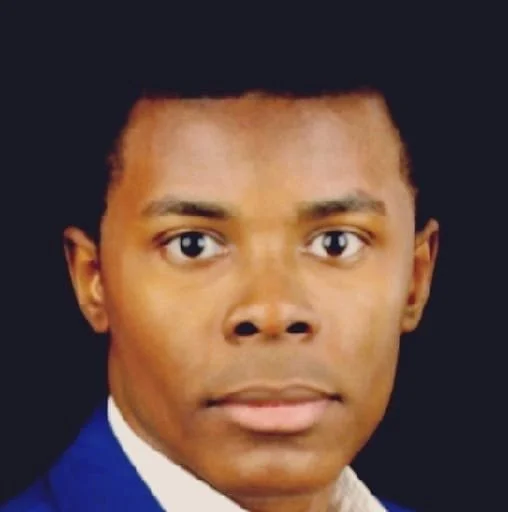
Musician Werley Nortreus Announced Presidential Bid Nomination In Haiti
26 years old, Werley Nortreus is known as a Musical Artist, Author, Entrepreneur, Politician, and the CEO of Ceraphin Corporation, a mass media company that he founded. He was born in Limbé but he was raised in Port-au-Prince, the Capital of Haiti. He believes in Humanism and he wants to be a contributor for a better Haiti before the year 2045.
He studied business administration and political science because he wanted to become an Entrepreneur and a Politician to serve his home country, which is Haiti.
The 26 years old musician believes that the youth in Haiti and the upcoming generations should see him as a role model so they can have the same mindset and behave exactly like him. He uses his music and books to speak positive messages so the world can become a better place. Hopefully, the future Leader of Haiti believes that Haiti will get on its feet before the year 2045 once he takes offices.
For years, Werley Nortreus has contributed towards political movements and activism, include 'Haitians Lives Matter' and 'Black Lives Matter' movements. Those movements have contributed strong messages about discrimination and racism, especially towards black people in America and around the world. Werley Nortreus hopes to inspire many people along his journey to make the world a happier and healthier place to live.
One of his greatest goals is to help his homeland earn the respect and position in the global community as viewed through his own eyes. His love and admiration for his home country are evident when you speak with him. Nortreus is proud to have been born and raised in the Caribbean, and the culture and its ethnicity mean everything to him.
According to a few interviews, Werley Nortreus has a deep passion to involve in politic and for the right reasons. He wishes one day to become the President of Haiti in order to help Haiti get its respect and dignity back from those who stole it years ago. Through his organizations as well as in his personal capacity, Werley has helped when natural calamities destroyed many human lives in Haiti. He believes in unity and he believes Haiti will change one day.
"As a human being, I believe that I was created in order to value and love other humans like me. Humanism is the reason that I want to become the President of Haiti one day, in order to serve my country and serve other countries around the world.", said Werley Nortreus.
"The first wish should be named "A New Haiti" because I've always wanted to see Haiti become a significant country in the world. The second wish should be named "Werley Nortreus to become President of Haiti" because I love Haiti so much and I will take all the risks and everything it takes to change the country. The last wish should be named "Haiti is the most powerful and respected country in the world", because the country has suffered so much, and I believe it's time for the country to get its power and respect back.", said Werley Nortreus during an interview with Kreol Magazine in the UK.
"As we all know that there are a lot of Chaos and Riots in Haiti from 2016 until today and the current Leader 'Jovenel Moise' and 'PHTK' Leaders refused to step down, which is not good for the country because the protesters won't give up the streets until they step down. Honestly, I, Werley Nortreus want to involve in politic in Haiti so I can put the country in the right path so the country can get its respect and dignity back from the elites who stole it.", said Werley Nortreus.
He believes that the youth in Haiti and the upcoming generations should see him as a role model so they can have the same mindset and behave exactly like him. He uses his music and books to speak positive messages so the world can become a better place. Hopefully, the future Leader of Haiti believes that Haiti will get on its feet before the year 2045 once he takes offices.
"I would like to debate with Jovenel Moise". Said the musician.
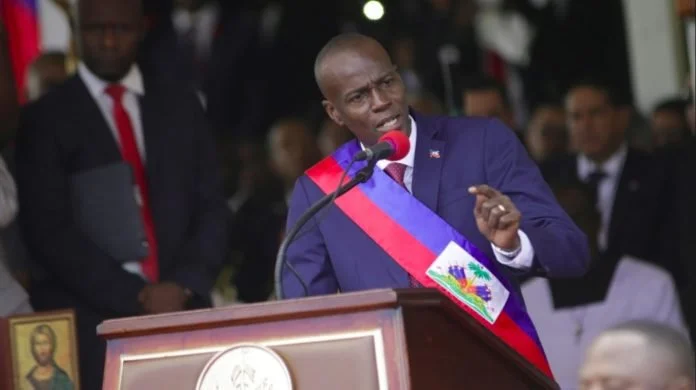
Moise Calls for Solidarity in Building a New Haiti
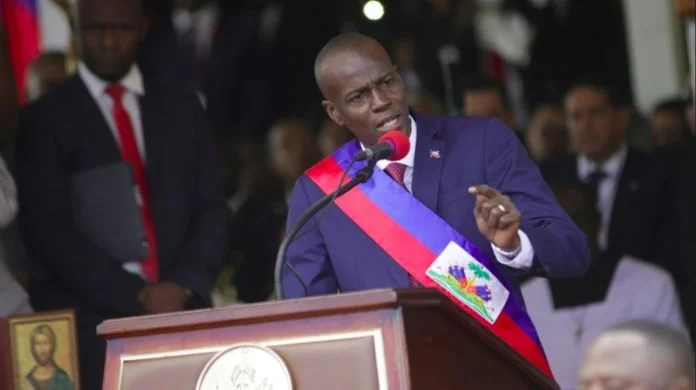
PORT AU PRINCE, Haiti (CMC) – President Jovenel Moise says 10 years after an earthquake devastated Haiti and forced the country into an unprecedented state of cooperation, the country is now offering “another image” to the world.
Moise had joined Haitians and the international community on Sunday in observing the 10th anniversary of the earthquake that killed an estimated 300,000 people and caused widespread damage in the country.
Moise, who came to office in 2017, is facing pressure from the opposition political parties to step down from office over allegations of corruption and other charges. The opposition parties have been staging violent street demonstrations in support of their calls.
Moise has denied the allegations and is moving towards forming a government of national unity despite the opposition boycotting the talks on the matter.
But Moise said that the “great inter-Haitian solidarity where compatriots, with their bare hands, freed our brothers and sisters from the masses of reinforced concrete,’ has been replaced with anger and hatred.
“We have seen people risking their lives to save the life of someone whose only voice they know is the trickle of voices filtering through the rubble. We have seen traders empty their stores to offer drinks and food to children on their own. We have seen women carrying men twice their weight on their backs, for miles and miles so that they can receive treatment.”
Haiti farmers eager to receive compensation after 'groundbreaking' land deal
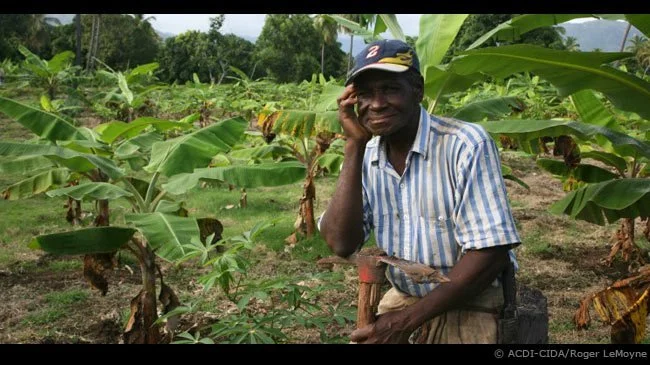
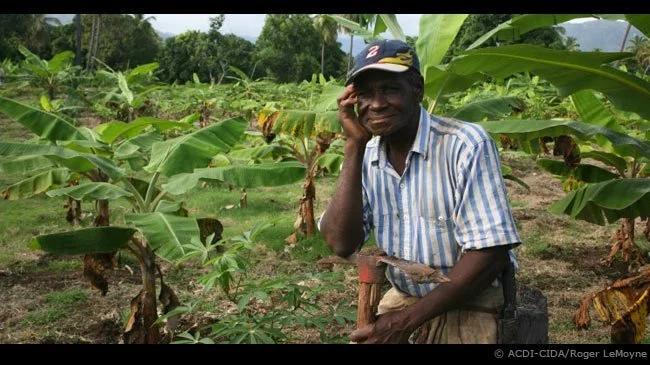
CARACOL, Haiti (Thomson Reuters Foundation) - On a hot morning in December, Haitian farmer Remy Augustin lifted a pickaxe that was taller than him and began digging holes in a small plot of land. In each hole he dropped a few kernels of maize, which he covered with loose dirt.
“I don’t have money to pay for a tractor, so we’re aerating the land ourselves,” said Augustin, 55, lamenting the days when the land he tilled was his own.
“The land I had was better — it gave me so many bananas, peas, beans.”
Nine years ago, the father of five was working on government land he rented when “a tractor destroyed everything”.
The land was earmarked for the Caracol industrial park, a venture led by South Korean textile firm Sae-A Trading Co Ltd and financed by international donors to spur development following Haiti’s devastating 2010 earthquake.
Located in Haiti’s northern region, the $300 million park opened in 2012 and now employs approximately 15,000 people, most of whom work in clothing factories there, according to the Inter-American Development Bank (IDB), one of the park’s main financial backers.
In 2018 farmers like Augustin who had been evicted from their land in 2011 struck a rare deal with the IDB to provide Caracol’s 100 most vulnerable families with new, titled land.
But 10 years after the earthquake that killed more than 200,000 people and made 1.5 million homeless, the farmers are still waiting to receive compensation for their land used to build the Caracol park.
Augustin now works as a laborer on a plot owned by his niece, struggling to pay his children’s school fees for the coming year.
“I have to share this land with my whole family,” Augustin told the Thomson Reuters Foundation. “I don’t have anything of my own.”
DRIVEN FROM LAND
International donors pledged nearly $10 billion to help Haiti recover after the 2010 earthquake, which destroyed or damaged 300,000 homes in the capital Port-au-Prince and surrounding cities, said the International Organization for Migration.
To make space for the park, in 2011, 366 Haitian families - including 720 farmers - were evicted from their land, according to charity ActionAid Haiti.
Neither the government, the IDB, nor USAID - another of the park’s main funders - responded to requests to verify those figures.
A spokeswoman for Sae-A Trading Co Ltd described the textile firm as a “tenant of the park”, adding it had been involved neither in its construction nor in the 2018 land deal.
Local farmer and activist Milostene Castin said that from 2011 to 2013 the IDB gave the farmers an annual living stipend of $80 per family member, and paid $1,450 for each hectare of land, well below the land’s value.
“The cash compensation that was received by the vast majority of the farmers was not sufficient to purchase new land or to establish new livelihoods,” said Lani Inverarity, a lawyer at San Francisco-based charity Accountability Counsel, which promotes human rights.
The IDB later promised the farmers new plots of land, but “year after year the land never came”, said Castin, who works for local organization Action for Reforestation and Environmental Defense (AREDE).
Families that once lived off of the food they grew “were struggling just to eat”, he said.
Eventually, the IDB identified a swath of replacement land, but when Castin went to inspect it, other farmers were there already, he said.
COLLECTIVE ACTION
Fed up with waiting, hundreds of farmers formed a collective in 2014 to fight for land.
In 2017, with the help of ActionAid Haiti and AREDE, the farmers filed a complaint against the IDB, demanding new land with legal titles to prove ownership so they could resume farming.
Their self-organizing paid off: After more than a year of meetings, the IDB agreed to purchase new, titled land for 100 of the most vulnerable families.
Others were offered alternative compensation such as irrigation schemes or money to invest in personal businesses. One member of each family will also be offered employment at the industrial park, according to the IDB.
“The farmers’ story is a really incredible one of persistence in the face of incredible power imbalances,” said Inverarity of the Accountability Counsel, which supported the farmers throughout the complaints procedure.
“Typically, IFIs (international financial institutions) try their best to stay out of these disputes, leaving it to the company or government entity to respond. However, here the IDB genuinely turned up,” said Inverarity.
Andy White, coordinator of Washington-based advocacy group Rights and Resources Initiative, agreed, calling the land agreement “groundbreaking for Haiti”.
“We are seeing more and more cases like this around the world where communities have fought back against international investors to demand respect for their land rights,” he added.
“But this is the first case I’m aware of this scale and this nature.”
COMPLEX PROCESS
Implementation of the agreement is behind schedule due to logistical challenges in identifying the most vulnerable families - among other hurdles - who are still waiting to receive compensation, according to the Accountability Counsel.
It is meeting with all farmers to figure out how they would like to receive financing to obtain title deeds to a parcel of land.
Assuming the IDB disburses the funds soon, Accountability Counsel said what happened in Haiti’s north could be seen as a successful model of how communities displaced by development projects can self-organize to demand new, titled land.
The group is currently monitoring more than 1,200 cases in which local communities are facing similar issues in 129 countries across the world.
“About 13% of concluded cases have gone through a dispute resolution process like in Haiti,” resulting in 90 agreements globally, said Sarah Singh, the Accountability Counsel’s global communities director.
‘JUST WAITING’
Meanwhile, the farmers are trying to eke out a living with what they have got.
Ever since her father’s land was taken over to build the Caracol park, Seliana Marcelus leaves her home at 5am to sell breakfast to the factory workers as they enter the industrial park gates.
All night long she fries potatoes, breadfruit and other produce, things that her family once grew on that same land but that she now must purchase at the local market.
“I don’t even go to bed. I work all night,” said Marcelus. “It’s the only work I have.”
Since losing his plot, Rony Comper has been doing odd jobs, from temping as a motorcycle taxi driver to crossing the border into the Dominican Republic to work as a mason.
Like Augustin, he found a titled plot he will buy once IDB releases the funds - which is expected to happen this year. “We’re just waiting.”
(This story was supported by the Pulitzer Center.)
Political vacuum in Haiti could let president rule by decree
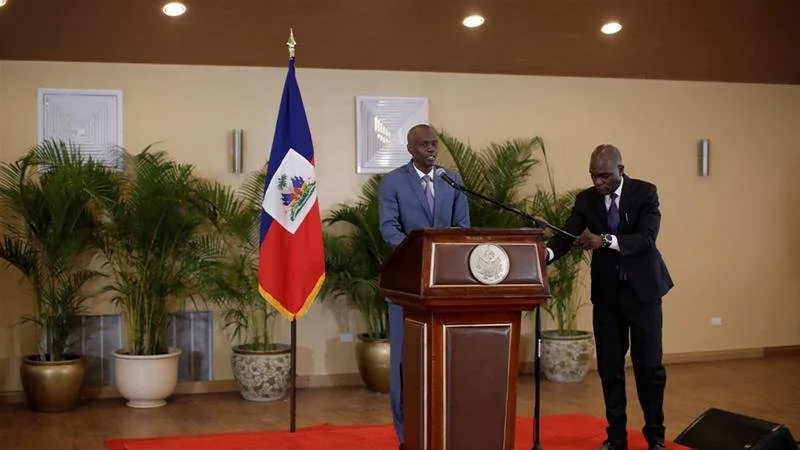
Protesters have vowed to return to the streets to demand President Jovenel Moise step down.
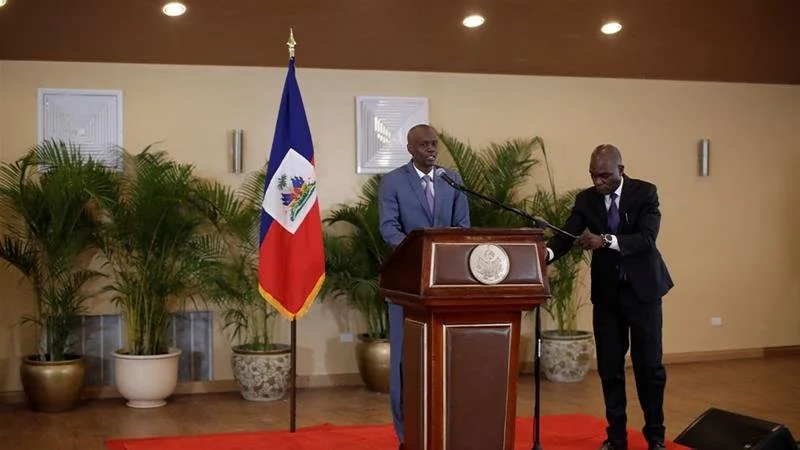
Haitian President Jovenel Moise could be ruling by decree later this week, a scenario he said would help break the Caribbean nation's political deadlock, but one in which critics fear will undermine its fragile democracy.
In the early hours of Monday, the president said the mandates of lower house deputies and most senators formally expired because no successors were elected in October after the troubled country failed to hold elections.
The power vacuum could deal a significant blow to democratic governance in the poorest country in the Americas, three decades since the end of the Duvalier family dictatorship.
Moise, however, sees the side-lining of Haitian legislators as a positive.
"The current situation is an opportunity to stop the permanent crisis," said Moise, who has come under pressure from months-long street protests and opposition groups to resign or hold early elections.
"The biggest problem Haiti has is the weakness of its public institutions," Moise told Reuters News Agency in an interview.
Moise has faced widespread anger over inflation, rampant insecurity and allegations of corruption. Moise has denied any wrongdoing related to the accusations of corruption, but waves of street protests have gripped the country in recent months, with calls for Moise to step down.
Haiti has had 15 presidents in the past 33 years.
Under his predecessor, Michel Martelly, the Haitian Parliament was dissolved in January 2015 when last-ditch negotiations for a deal that would have extended legislators' mandates failed.
Martelly ruled by decree until the end of his term.
"Without the opposition, the government seems less legitimate," said Jake Johnston, a senior research associate at the Center for Economic and Policy Research in Washington, DC. "Will he make efforts to work for the whole or will he just pursue his own agenda without checks and balances?"
A former banana exporter, Moise is nearly three years into his five-year term. He won an October 2015 election that was later scrapped over fraud allegations; in January 2017, he was declared president after a repeat election in November 2016.
Moise's political base has been weak from the start. Electoral turnout for the 2016 election was low and 10 percent of sheets tallying votes were thrown out because of irregularities. In a country of 10 million people, he received just 600,000 votes.
"He won an election, but there's a question around how much of a credible and legitimate mandate that provided him given the extremely low turnout and the lack of faith in the democratic process to begin with," Johnston said.
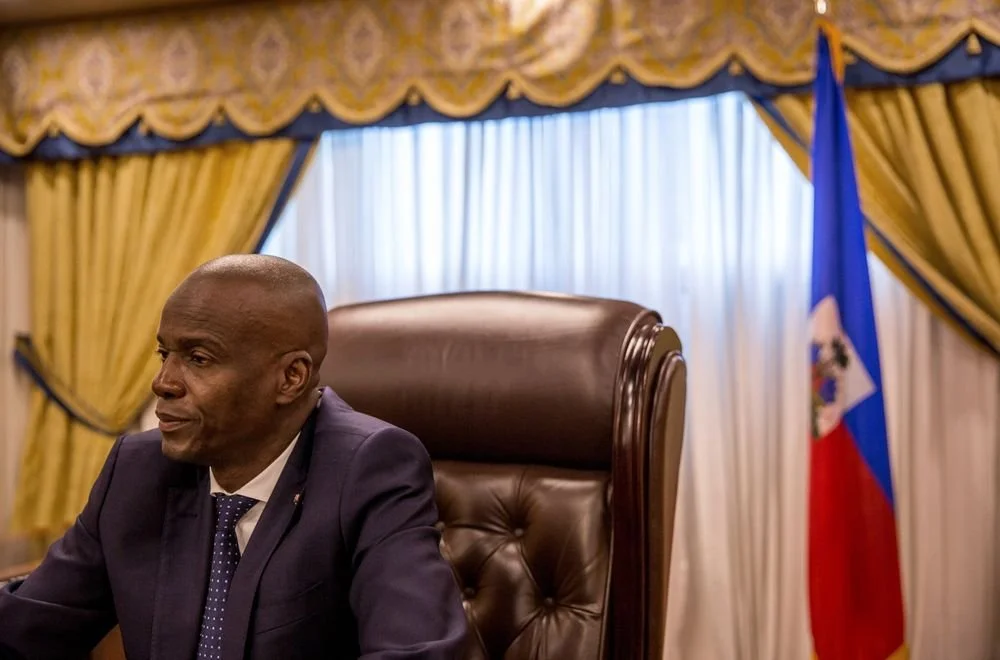
Haiti Seeks IMF Deal to Revive Worst Economy Since 2010 Quake
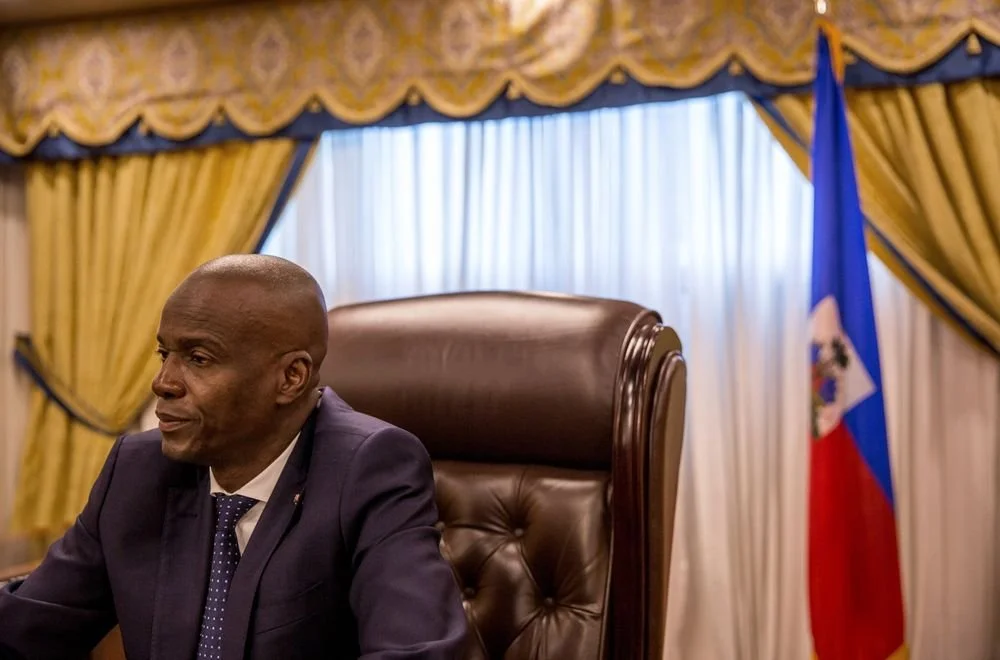
Haiti’s embattled president Jovenel Moise is seeking to reactivate a deal with the International Monetary Fund to revive the weakest economy since the nation was devastated by an earthquake in 2010.
Speaking on the 10th anniversary of the disaster, Moise said he is seeking an agreement to end political deadlock and unblock the IMF deal, which was shelved in March after Haiti’s parliament dismissed the government.
The legislature has since rejected his choice for prime minister. During an October vote, lawmakers threw furniture and pushed and shoved each other. Meanwhile, protesters calling for Moise’s ouster unleashed social unrest the IMF described as “without precedent.” In a November review, the Fund estimated Haiti’s economy would contract about 1.2% in the 2019 fiscal year.
“The year 2020 cannot, in any way, be the same as 2019. There has to be permanent dialog,” Moise said in a phone interview from Port-au-Prince. “We are working to find a political agreement so that we can put in place a government of national unity.”
The IMF didn’t immediately reply to an email seeking comment.
Protests initially erupted in July 2018 against fuel price hikes and evolved into anti-government demonstrations over graft allegations, misuse of funds from a Venezuela oil aid program, high inflation and poor living conditions. Haiti is the poorest country in the Western Hemisphere with more than half of its 11 million citizens living on less than $2.41 per day, according to the World Bank.
Social Turmoil
Moise, who was sworn in to a five-year term in February 2017, said he’ll seek to calm social turmoil this year and ramp up rebuilding efforts. An IMF deal would also facilitate additional loans from the World Bank and the Inter-American Development Bank and help the country rebuild, he said.
The government has a history of swiftly sacking prime ministers ever since the role was created in the 1980s, with few making it a full two years in office. Lawmakers removed former Prime Minister Jean-Henry Ceant in March with a 93-6 no-confidence vote following protests. He served 185 days. The IMF suspended implementation of a $229 million, zero-interest, three-year loan after the move.
The crisis hampered the government’s ability to boost revenues and enact economic reforms, Moise said. A deal with political opponents would help put the country back on track to growth and help the government fight tax fraud and evasion, he said.
“We need stability, we need solidarity and we have to live together so we can begin the necessary reforms,” Moise said.
National Palace
The government unveiled designs on Sunday to rebuild the country’s National Palace, which was partly destroyed in the earthquake that killed some 220,000 people and left more than a million homeless, according to the United Nations. Moise said construction on the palace could begin this year.
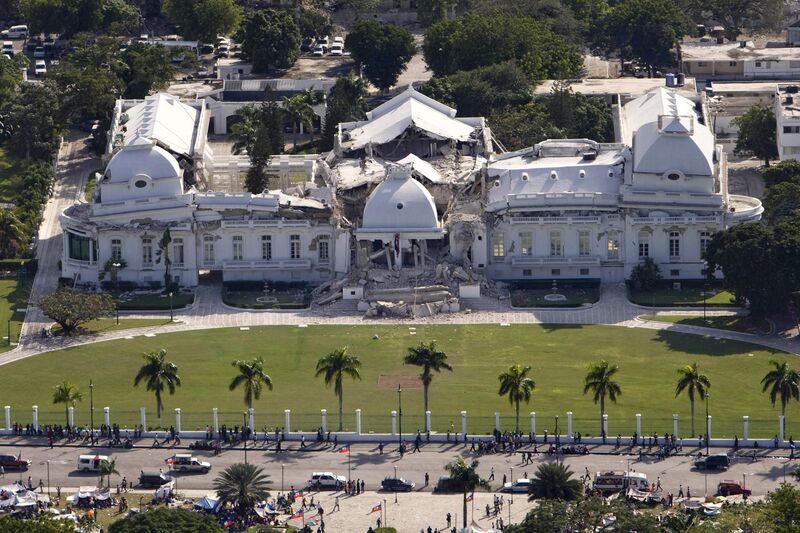
The government is also pushing to finish building the finance ministry and an “administrative city” which will house government offices, he said.
Haiti’s capital Port-au-Prince, which was cluttered with tent cities for years following the quake, is still in need of social housing developments, Moise said, adding that schools that remain in areas prone to disaster must be relocated.
“I sincerely believe the beginning of this year to be a decisive beginning,” he said. Political and economic actors “will find good solutions to finally put the country on the path to development.”
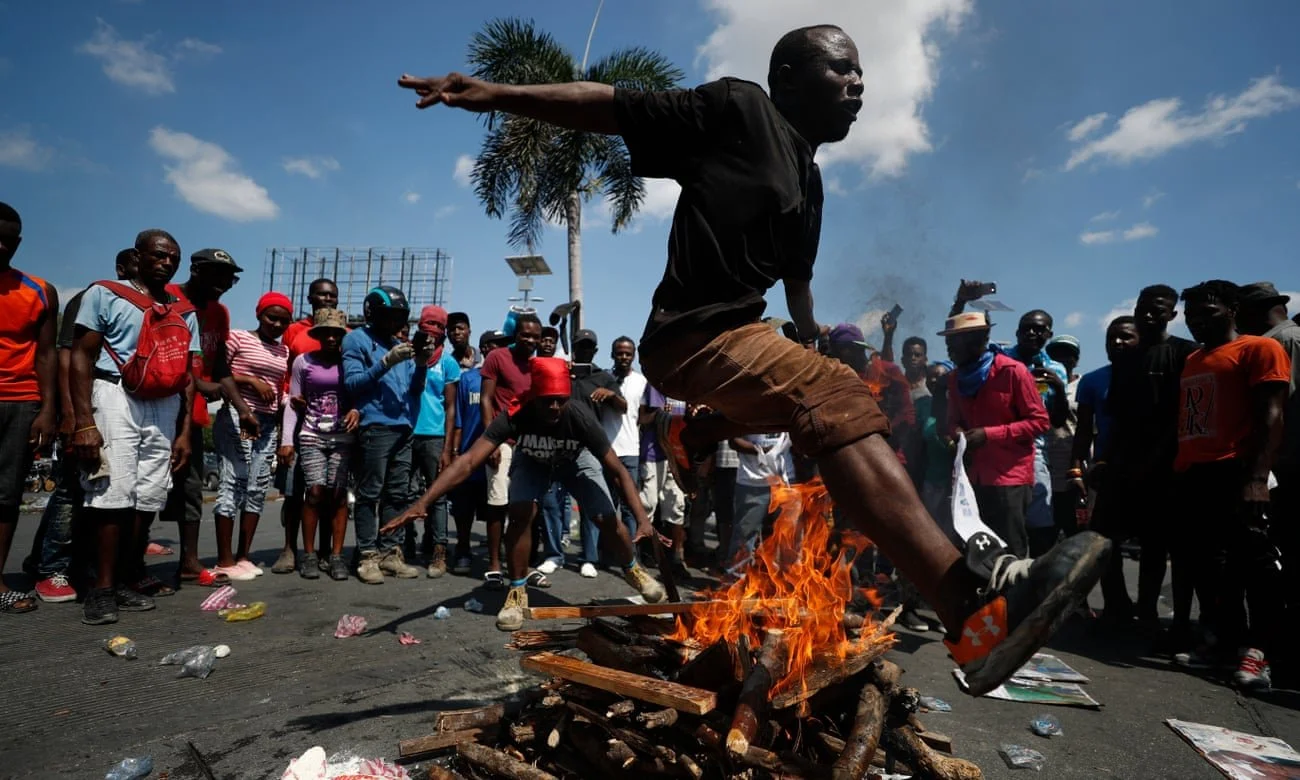
Sick of corruption, Haiti looks back to its revolutionary hero for hope
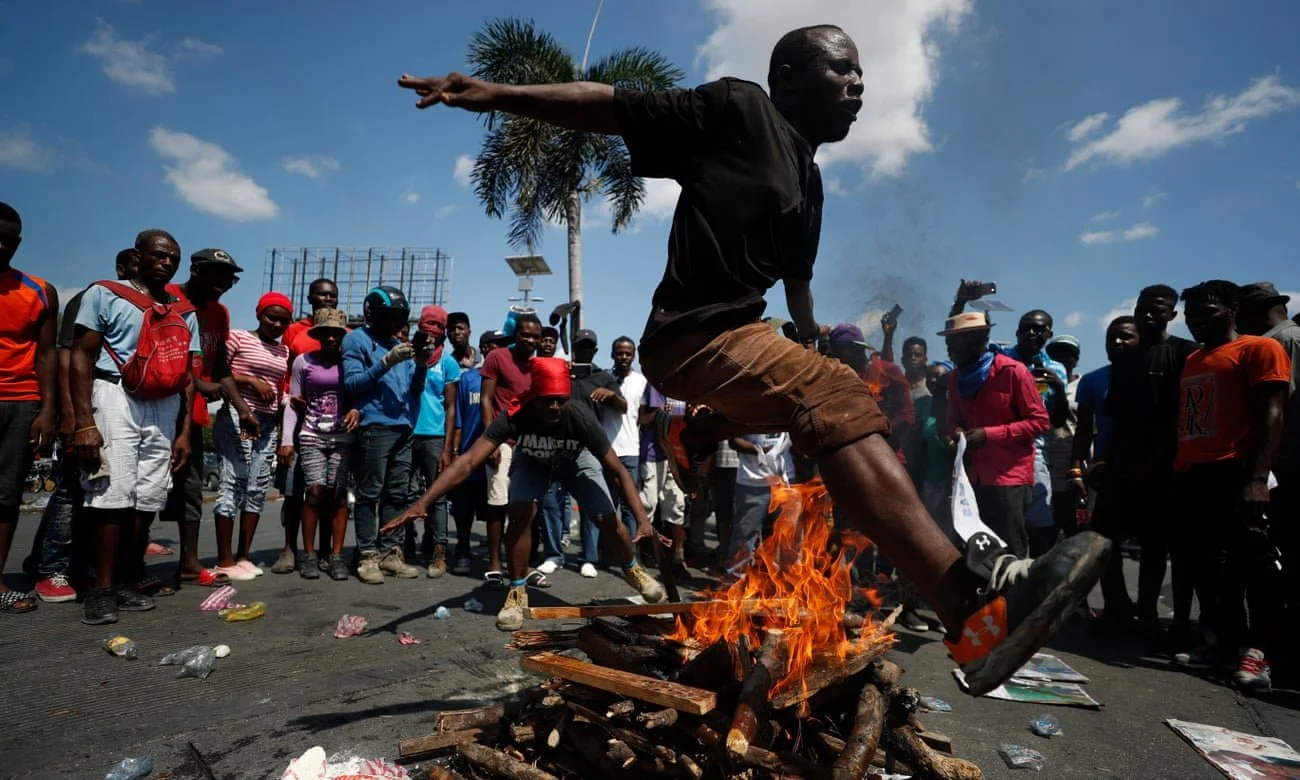
As conflict racks the nation and anger at a political scandal grows, Haitians are rallying to the country’s founding father more than 200 years after his assassination.
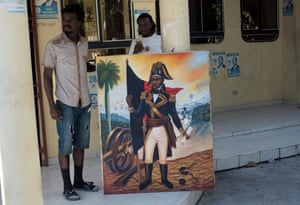
On the walls across Haiti’s capital, Port-au-Prince, a stencilled image can be found. Depicting a figure in a Napoleonic-era cocked hat and military frock coat, it first emerged amid the country’s long-running political and security crisis that began last year.
The man portrayed is Jean-Jacques Dessalines – Emperor Jacques I of Haiti – the rebel general who defeated French forces at the battle of Vertières to found the state of Haiti in 1804. And it is not only in graffiti that Dessalines’s two centuries-old legacy has been seen in the recent months of political turmoil that has gripped the country.
At the mass street protests that have flared intermittently throughout this year against the government of president Jovenel Moïse, roiled by allegations of a multibillion-dollar corruption scandal, Haitians have appeared in the streets dressed as Dessalines – not least during the huge demonstrations on 17 October that coincided with the national day marking the anniversary of his assassination in 1806.
That commemoration saw Moïse forced to mark the usually public events at the National Pantheon Museum in private as hundreds of armed police officers closed down the surrounding area. Protesters demanding his resignation were gathered nearby.
But above all, it is in the national conversation around the continuing crisis that the spirit of Dessalines has been most starkly in evidence.
In the almost endless and sometimes heated exchanges on the country’s news and talk radio stations, discussion will inevitably turn to the modèle Dessalines – the ideal Dessalines model – a nostalgic idea of the different path Haiti might have taken but for his assassination.
The reality is that the current evocation of Dessalines is one that speaks to Haiti’s myriad social woes and is a powerful critique of the failure of its political system over generations and centuries through dictatorship, chronic inequality and grinding poverty.
And the intractability of Haiti’s current crisis – which has rumbled on since Moïse’s contested election two years ago – appears custom-made for an appeal to an almost mythological figure amid widespread popular distrust of the political elite.
Implicated in the loss of about $2bn to corruption in a controversial scheme to buy cheap energy on credit from Venezuela, a deal that would free up funds for social development, the security forces in Moïse’s government have responded by firing on demonstrators, even as he has refused repeatedly to resign.
Opposition figures, too, have been implicated in political violence, often involving the arming of criminal gangs, some touched by the same scandal as Moïse. All of this has elevated the status of a figure from the distant past who appears untainted by the current failure of Haiti’s political system.
Sitting on the lawn of a cultural centre in Port-au-Prince’s Delmas neighbourhood, Lyonel Trouillot, one of Haiti’s most celebrated novelists, considers the importance of Dessalines – not least in comparison with Toussaint Louverture, the anti-colonial leader who is far better known elsewhere in the world through his depiction in CLR James’s 1938 account of rebellion in Haiti, The Black Jacobins.
“For Haitians, Dessalines is practically the only figure in our history who has attained this mystical status,” he says. As he points out, Dessalines’ standing is such that he is the only figure to have been incorporated into the vodou pantheon as Ogou Desalin, a warrior associated with defending liberty.
“He was a slave from the fields originally. And he was the leader who founded the state. He wanted a society that was based on equality and a common sphere of citizenship.”
Central to all this is the radical constitution of 1805, signed by Dessalines, which held up the equality of both the newly emancipated nouveaux libres, slaves of direct African heritage, and the anciens libres caste of mixed heritage [called mulattos] who would come to dominate Haiti’s political and economic system.
“The modèle Dessalines was the idea of a country for all of us, based on a common destiny in which everyone had the same chance. The murder of Dessalines in 1806 put an end to that process,” says Trouillot.
“Since then,” he adds, “there has been an informal alliance between the mulatto bourgeoisie and those occupying political power.
“The meaning of Dessalines in the current context is the desire in Haitian society for a new beginning. That’s what people in the streets are fighting for. It is a response to domination, exploitation and exclusion.”
And Dessalines has meant very different things at different times.
He was written out of Haiti’s history for four decades after his murder amid the country’s early diplomatic isolation. For its centenary in 1904, however, an anthem commemorating him was commissioned, La Dessalinienne, popularised during the two decades of US occupation that began in 1915.
The close association with the Duvaliers’ rule (1957-1986) was followed by another period when Dessalines and his red-and-black flag became seen as difficult. Anyone flying the flag was suspected of supporting the former dictatorship. And Dessalines, the historical figure, as historians point out, is not without problems. He ordered the massacre of between 1,000 and 5,000 French citizens, including women and children in the “Haiti massacre” – prompted by fears of a French plot against the new republic – although he notably protected other non-French white people living in Haiti.
And while Dessalines abolished slavery, he supported a restrictive labour system that tied workers to plantations even if they were paid for their efforts.
Julia Gaffield, an academic at Georgia State University who is writing a book on Dessalines, sees appeals to his memory in Haitian politics as a reaction to both anxiety over the country’s sovereignty, faced with perceptions of foreign interference including from the US, and in appeals to a fairer society.
“When the memory and legacy of Dessalines is called upon it is to serve contemporary needs, often when a very radical shift happens. When a revolution needs to happen. When there needs to be a complete overhaul of the system.”
In his home, high in the hills above Port-au-Prince, the Haitian historian Pierre Buteau cautions against elevating the myth of Dessalines above the reality of a complex historical figure.
“Every time we have difficulties,” he explains, “Haitians think of Dessalines. During the period of the US occupation. During the Aristides era. Now in the 21st century that emotion is becoming stronger and more intense amid all the political battles.
“I think what is surprising for us as historians is how the myth has become mixed with the truth.” He adds that the problem confronting Jovenel Moïse is that he cannot talk about or ally himself with the historical figure because he is viewed as having abandoned many of the things Dessalines stood for.
But perhaps the last word should go to Félix Morisseau-Leroy, whose 1979 Creole poem Mèsi Papa Desalin [“Thank you Father Dessalines”] long prefigured the current mood, not least his almost messianic assertion of the founding father’s legacy and transformative return . “The day will come when Dessalines will rise [again],” wrote Morisseau-Leroy. “That day everyone will know.”
‘I’m in pain’: Boston-area community leaders urge Congresswoman Ayanna Pressley to respond to Haitian political crisis

While most people are tuning into the impeachment inquiry or the 2020 election coverage, Haitians in Greater Boston are glued to news updates about the unrest back home.
The latest wave of protests has waged on for two months, calling for the resignation of President Jovenel Moïse over corruption allegations and soaring inflation. The conflict has shut down roads, schools and hospitals, bringing the country to the brink of collapse.
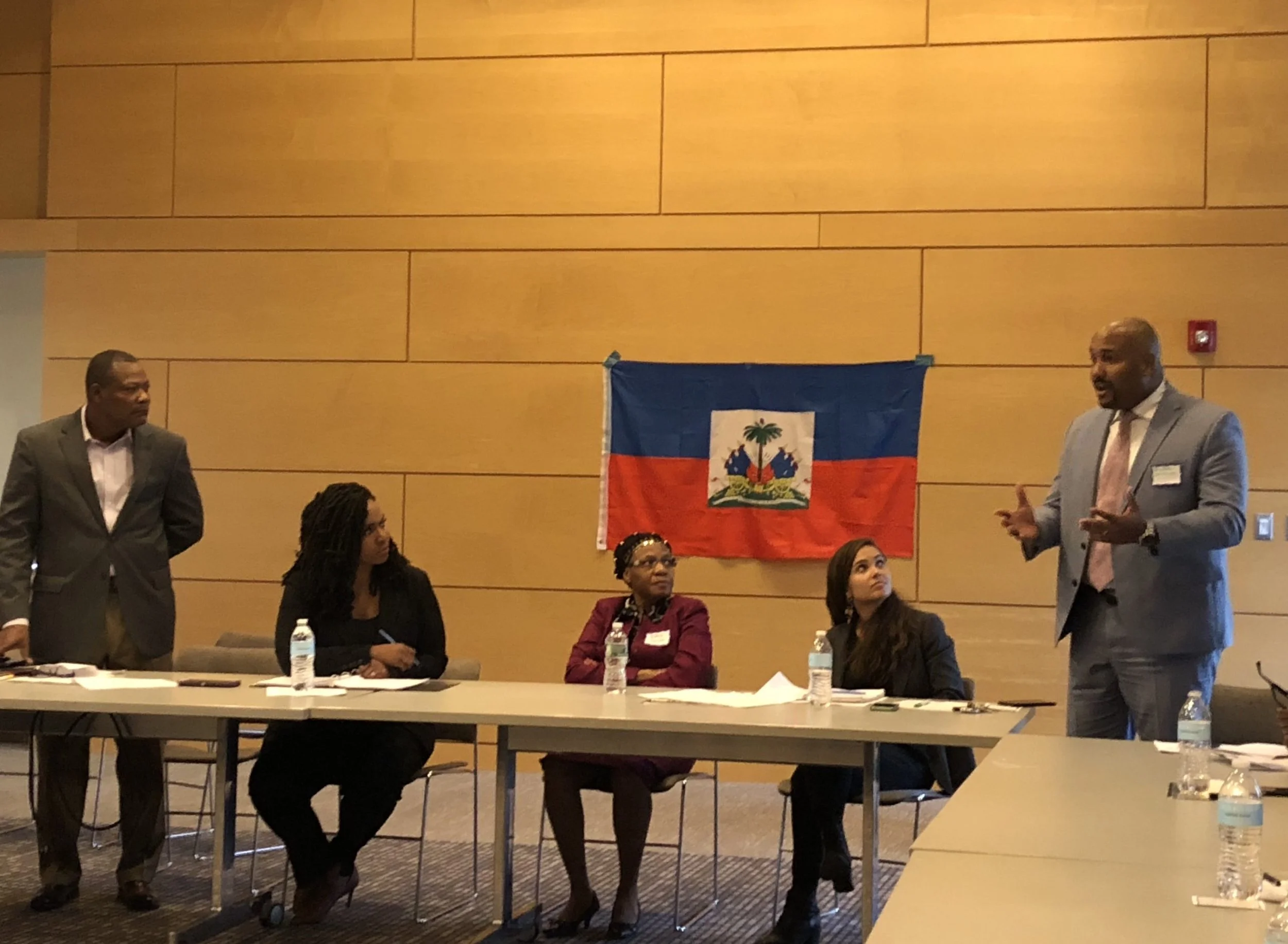
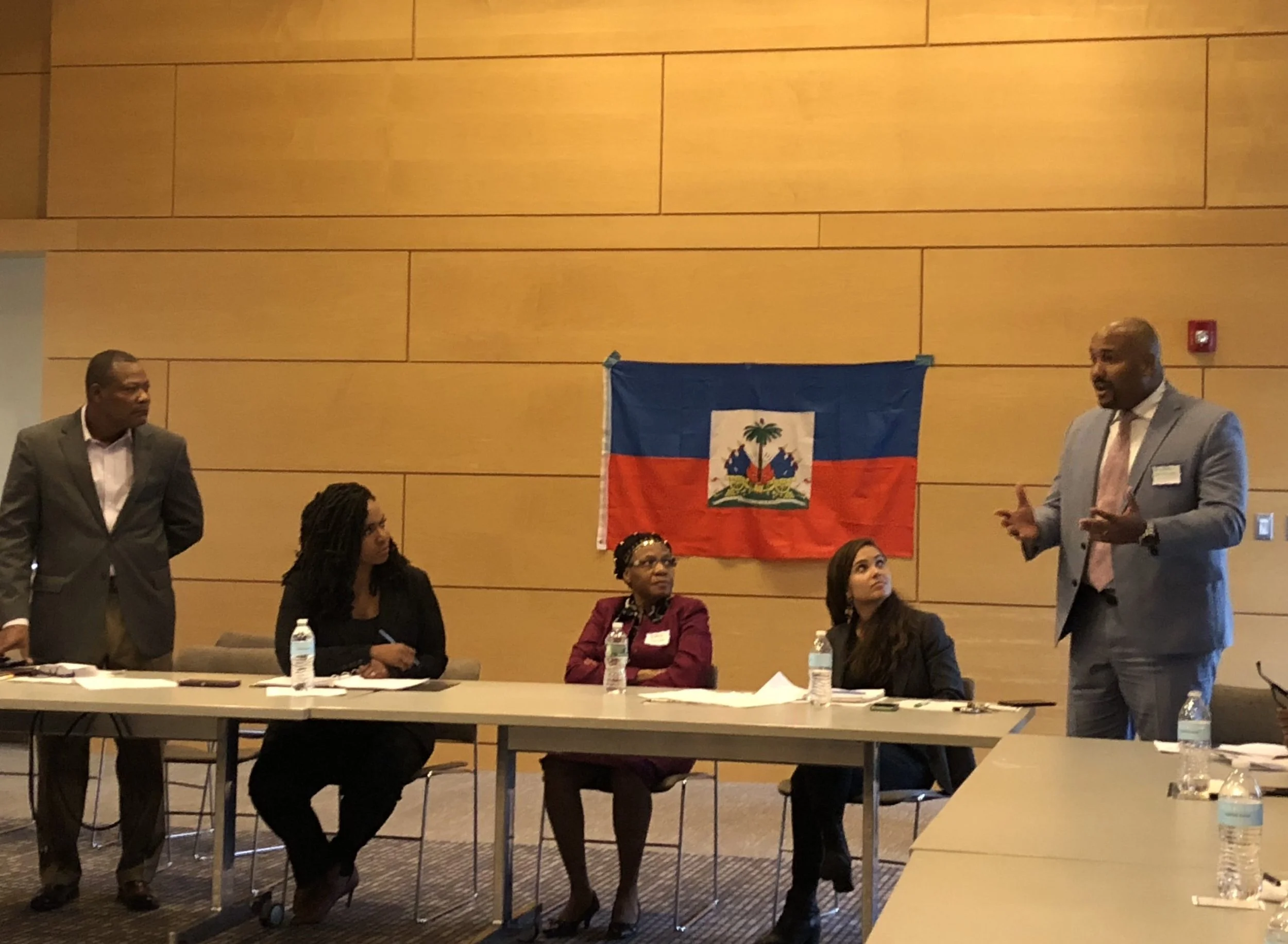
Haitian community leaders on Saturday relayed their fears and frustrations Saturday in a meeting with Congresswoman Ayanna Pressley at the Mattapan Branch of the Boston Public Library.
Some missed funerals because relatives told them it was too dangerous for them to return to the Caribbean nation. Others have children there who can no longer attend school. Many say they fear for their relatives and hurt to see their country in turmoil.
“I’m in pain … even in my bones,” Joujou Myrtil told Pressley, a Boston Democrat. “It hurts me because what’s happening in my country is so painful.”
Myrtil said she lost her cousin six months ago. As she went into labor, Myrtil’s cousin and aunt took a taxi to the hospital. They were confronted by armed men as they reached their destination, and the pregnant woman’s blood pressure shot up. She collapsed.
Myrtil didn’t get a chance to say goodbye to her cousin. She was told it wasn’t safe to return for the funeral.

At the center of the protests are allegations of corruption and misappropriation of funds under the Petrocaribe program, an oil distribution agreement between Haiti and Venezuela that started in 2008.
Under the program, Haiti had to pay only a portion of its oil bills in the short term and put the rest into a fund allocated for infrastructure improvements and social projects, Reuters reported. A Haitian Senate investigation released in late 2017 found that nearly $2 billion had been embezzled and stolen by Haitian leaders, primarily under President Michel Martelly’s tenure between 2011 and 2016.
Moïse, who was elected amid historically low voter turnout, was implicated in a January 2019 report by Haiti’s court of auditors. The report found that his company had been paid hundreds of thousands of dollars to reconstruct a road — and it never happened, according to the Miami Herald.
Protests broke out in July 2018 after Venezuela stopped sending oil and fuel prices soared. The demonstrations grew into a groundswell of opposition to Moïse, calling for his removal.
Sienna Merope-Synge, legal director at the Institute of Justice and Democracy for Haiti, noted that dozens have been killed in the protests or in gang violence, including at least one attack believed to have had state involvement.

While the unrest is unfolding more than 1,600 miles away, the conflict has Boston-area families stressed. Massachusetts is home to the third-largest Haitian diaspora in the U.S., behind Florida and Michigan.
Pressley said about 86,000 people of Haitian descent live in Massachusetts, citing census data. More than 25,000 of them live in the 7th District, which she represents. That includes most of Boston, Somerville, Randolph, Everett, Chelsea, Milton and part of Cambridge.
Haitian immigrants with Temporary Protected Status, which offers protections and work permits every two years to eligible foreigners fleeing natural disasters or political crises, fear being deported as the Trump administration pushes for an end to the protections.
Joelle Gamere, director of the Toussaint L’Ouverture Academy at Boston’s Mattahunt Early Elementary School, said some Haitian American students are stressed about the Haitian political crisis and fear that their parents with TPS or with no legal status may be deported.
Carline Desire, executive director of the Association for Haitian Women, said some Haitian mothers sent their young children back to Haiti to stay with relatives because the cost of living in Boston was too high. Now they fear their children are in danger.
“They don’t have the necessary means to provide proper housing and supervision because of the high cost of living in the Boston area, yet they are afraid that their children will not only be not going to school today, but they might get hurt," Desire said.

A handful of business leaders, pastors and activists raised questions about the U.S. foreign policy stance toward Haiti.
The second oldest democracy in the Western Hemisphere, Haiti has faced periods of unrest for decades. The U.S. has often played a role in the nation’s politics, from its 1915 invasion of Haiti after the assassination of the country’s president, to the country’s backing of dictators François Duvalier and Jean-Claude Duvalier because of their anti-communist stances.
The U.S. maintains that Moïse was democratically elected president and that the government officials and the opposition need to sit down and open dialogue about resolving the political crisis, VOA Creole reported last month.
But Americans have come under scrutiny in the past year as former military officers have been accused of helping the embattled Haitian president. Two weeks ago, a former U.S. Marine who took a flight from Miami to Haiti was arrested after police said they found him carrying three cases of guns and ammunition, the Miami Herald reported.
Pressley said whatever the U.S. foreign policy stance on Haiti is, it wasn’t working for the Caribbean nation and loved ones in the United States.
In the meantime, she said, the American Dream and Promise Act that she co-sponsored could offer a path to legal status to various immigrants with temporary protections, including TPS holders. The bill passed the U.S. House but has yet to be taken up by the Senate. Pressley also co-sponsored the Global Fragility Act, which would create initiatives and funds to stabilize conflict-stricken areas with help from grassroots organizations.
Pressley said she did not have an immediate solution to propose. Instead, she said she would confer with colleagues who represent other Haitian American communities — namely Democrats Andy Levin of Michigan and Frederica Wilson of Florida — to figure out their next steps.
“I do not want to create false promises and expectations here because there’s too much hurt,” she said. “There are already broken hearts because of broken promises, because of systems that have already failed you and I do not want to be one more person on that list.”
“Now I can leave here with a charge, but I needed the education,” she added.
Desire said she was grateful for having Pressley meet with them, calling her leadership phenomenal, but she worried the political crisis in Haiti would end up drowned out by the political clashes in Washington, D.C.
She said, “My interpretation of what she understands is, ‘We have a lot of challenges. We hear you. We’ll bring it back, but there’s so much going on right now in D.C.'"
Understanding the turmoil in Haiti
Haiti has experienced many protests this year. The protests have primarily focused on a myriad of economic concerns and were initially sparked by a fuel crisis within the country. The underlying impetus of these protests, however, are allegations that many senior officials in the Haitian government, including President Jovenel Moïse, have been implicated in the misappropriation of 2 billion USD in profits from an oil deal between Venezuela and Haiti.
The intensity of these protests has been exacerbated in recent weeks by a series of domestic and international catalysts.
1. Shortages
The protestors were initially spurred by a national shortage of fuel earlier this year. Haiti’s primary fuel source for many years has been imports from Venezuela. As Venezuela’s political stability started to deteriorate, Haiti began to rely on imports from other international sources. The US-based company Novum Energy Trading Corp, soon became the primary fuel source for the country, supplying 80 percent of Haiti’s fuel last year.
As the western hemisphere’s poorest country, Haiti has fallen behind on its payments to Novum. In February, Novum anchored a vessel containing 150,000 barrels of gasoline, half of Haiti’s monthly usage, outside of Port-au-Prince, and refused to deliver the cargo until the Haitian government made payment. The Haitian government stated that “fuel distribution companies in Haiti had not paid the government for gasoline and diesel it purchased on their behalf from Novum.” As a result, the government could not make their payments, and Novum held the fuel for over a month before diverting the shipment to Jamaica on April 4th.
The cost of fuel in Haiti skyrocketed and caused many other necessities to rise with it. As the nation’s fuel supply diminished, electrical blackouts increasingly occurred throughout the country. Many Haitians frustrated with their inability to access basic necessities, and the apparent lack of government response to the problem took to the streets in protest. These continuing energy shortages are also accompanied by deficiencies of other vital resources, including food and medicine throughout the country.
2. International Aid:
There has been international support seeking to provide aid and relief to Haiti. The World Food Programme recently conducted a study in Haiti that found “more than one in three people need urgent food assistance,” or nearly 3.7 million people. The US has therefore pledged “$20 million in emergency food assistance from USAID” as well as releasing “2,000 metric tons of emergency food stocks prepositioned in Haiti for distribution via the United Nations World Food Programme.” Despite this increased aid, many of the suppliers have had issues in their distribution to the Haitian people. “Fuel shortages, roadblocks, protests, and violent incidents are severely restricting the movement of USAID staff and implementing partners” and preventing them from adequately disseminating supplies.
The recent chaos has also effected many domestic and international medical programs. Several Hospitals have closed, many have surpassed capacity, and many more are running low on or out of critical medical supplies. The USNS Comfort arrived in Haiti, on November 4th, to carry out a ten-day medical mission in the country. This stop is part of the “U.S. Navy’s Enduring Promise operation,” in which “Medical teams from USNS Comfort will be working alongside host nation medical professionals in providing a variety of medical services to adults and children.” This mission appears to have been well received by those who were able to attain access, but the presence of a single ship cannot abate the increasing need for medical supplies.
Despite widespread issues in getting aid to where it is needed most, there has also been a domestic backlash against the current role of the international community as a whole. One area of concern derives from what many Haitians believe is a tacit endorsement of the Haitian government. Many protestors feel that the US not condemning the Haitian government is tantamount to an endorsement of their actions. The US supply of aid is also seen as merely treating the symptoms rather than the sickness itself. Additionally, the US calls for a dialogue between the two sides is viewed by many protestors to undermine the validity of the protests themselves and the long history behind them. Finally, although the aid provided by foreign powers is needed by many, there are concerns that this aid will over saturate the Haitian market and destroy local markets as it did after the earthquake in 2010.
3. End of UN Peacekeeping Mission:
Amid Haiti’s current instability, the UN has ended its 15-year peacekeeping mission to Haiti and withdrawn. The last of the UN peacekeeping forces departed at the end of September. This departure turned the sole control of the military forces and their oversight back into the hands of the Haitian government. There has been sharp criticism that this move was timed poorly, and that considering the pressure the government is currently facing this new lack of oversight may allow the government to revert to other tactics.
UN troops in Haiti have faced several legal challenges since their arrival in 2004. These include allegations that the UN brought cholera to Haiti and that some troops sexually abused Haitians. The cholera outbreak, which started in 2010, killed thousands of people and is widely believed to have been brought by peacekeepers from Nepal. Despite this belief, international courts have widely refused to hear the issue over jurisdictional concerns. Many of the allegations of sexual abuse by peacekeepers remain unresolved, and several paternity cases are pending in international courts.
Haiti’s UN peacekeeping mission has been replaced by the United Nations Integrated Office in Haiti (BINUH), which was established by the UN security council on October 16th. BINUH is tasked “with advising the Government of Haiti on strengthening political stability and good governance through support for an inclusive inter-Haitian national dialogue.”
4. Excessive use of force:
Amnesty International has recently verified evidence that Haitian police have used excessive force against protesters in Haiti since the departure of UN peacekeepers. Amnesty alleges that police have fired live ammunition at protesters and indiscriminately used less-lethal weapons in violation of international law.
The evidence takes the form of several videos from October, showing a series of incidents in the Haitian capital of Port-au-Prince. Amnesty published three videos that it believes prove the indiscriminate use of less-lethal weapons by Haitian police. The videos show police firing tear gas from a moving vehicle into a crowd, firing rubber bullets a close range, and an officer beating a fleeing protestor in the stomach.
Amnesty also alleges that Haitian police have used live ammunition in their attempts to break up protests. The first video shows presidential guards firing combat rifles into the air towards protesters in an attempt to force them to disperse. At least two protesters are believed to have been injured during this incident. However, attempts to verify how they were injured have been unsuccessful. The second incident shows a police officer firing a handgun directly at fleeing protesters. Amnesty believes that the protest was peaceful and that the video shows there was “no evident or immediate risk to the officer.” It should, however, also be noted that not all of the Haitian protests have been entirely peaceful and there have been many violent actions by groups within the demonstrations.
Under international law, “the use of less-lethal weapons – such as tear gas, water cannon, or rubber bullets – should be limited to specific situations after careful consideration and only when it is necessary and proportionate to a legitimate police objective.” Additionally, “live ammunition is only [to be] used as a last resort and when strictly necessary to protect against an imminent threat to life or serious injury,” and, “if the use of force is required to disperse violent public assemblies, it must conform to the principles of strict necessity and proportionality.”
The Haitian government has yet to comment on Amnesty’s allegations.
5. The threat to Journalists:
The Office of the United Nations High Commissioner for Human Rights (OHCHR) recently published a statement on the unrest in Haiti. It found that “at least 42 people have died and 86 have been injured” in the most recent round of protests. OHCHR has attributed at least 19 of the 42 deaths to government security forces. It also found that at least one journalist had died, and many others had been injured. OHCHR has urged all actors not to endanger journalists in the country further. “We urge all actors to refrain from targeting journalists and respect the freedom of the media to report on the situation.” The growing danger to journalists in Haiti has diminished the ability of the media to cover the country. Additionally, the murder of Nehemie Joseph, a prominent Haitian journalist and critic of the government has further served to galvanize the momentum of the protestors.
In its statement, OHCHR also acknowledged the recent allegations made against the government forces.
We welcome the launching of investigations by the General Inspectorate of the Haitian National Police into allegations of human rights violations by police and stress the need for investigations to be thorough, transparent and independent, with a view to ensuring accountability, justice and truth for victims and their families – including through judicial action.
The US Embassy in Haiti recognized the International Day to End Impunity for Crimes against Journalists in a press release. The statement said that “the United States remembers those reporters killed while doing their jobs, and calls for an immediate end to all threats, intimidation, and violence against journalists and other media professionals for their work.”
Other Concerns:
There also many other seemingly “smaller” concerns in this sea of political upheaval that in less muddied water might be front-page news.
- Doctors without Borders has declared that Haiti is facing a medical emergency as new “Antibiotic-resistant infections are a growing problem for burn patients.” As violence grows throughout the country, these far more difficult to treat infections could have deadly implications for those wounded.
- The USCIS field office in Haiti has announced that it will permanently close its doors on November 29th. This decision was made under a wider Department of Homeland Security (DHS) effort to close 13 offices globally. However, it will restrict access to some immigration services for many Haitians.
- The future of Temporary Protected Status (TPS) for many Haitians living in the US continues to be uncertain. Many are concerned that the end of TPS could result in their deportation back to Haiti despite the current danger inherent in such deportation.
Many other concerns are facing Haiti that its government and people will have to overcome if the country is going to experience stability.
An Uncertain Future:
The protests in Haiti are currently ongoing. Neither side has given significant ground to the other, and tensions have continued to build over the last few months. With no clear path forward and an ever-lengthening political stalemate, the continuation of the protests is seemingly limited only by the willpower of the two sides.
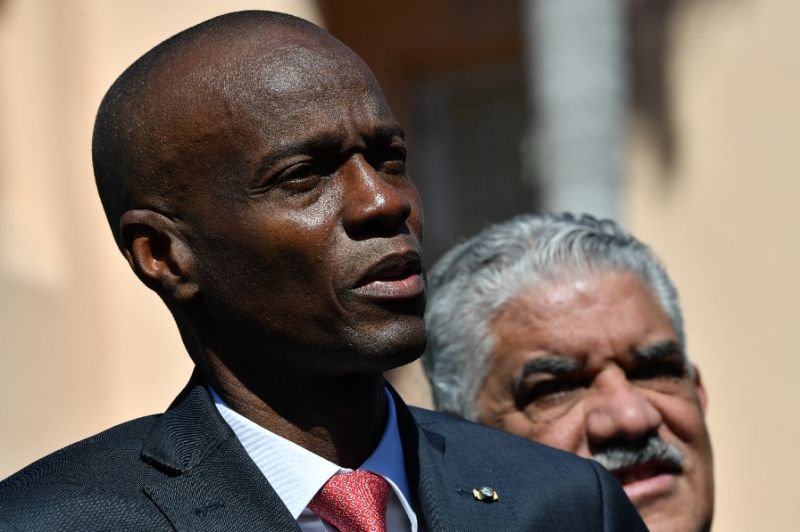
Haiti's president warns of humanitarian crisis, calls for support
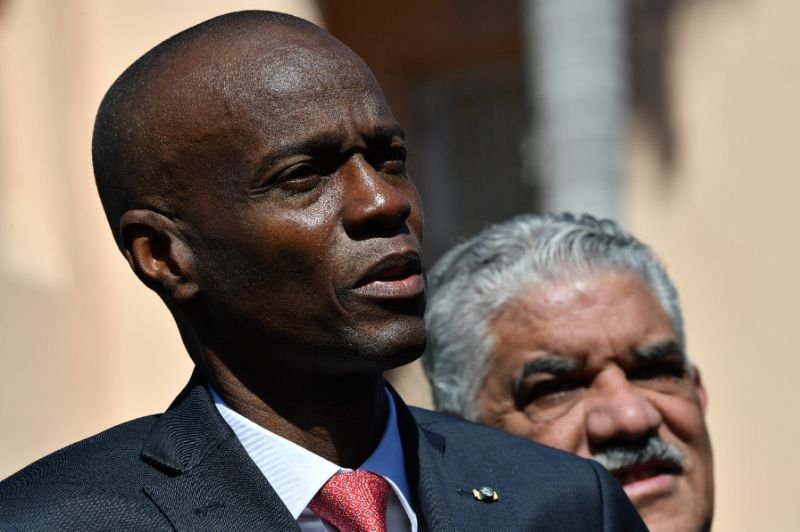
PORT-AU-PRINCE (Reuters) - Haiti needs international support to tackle an unfolding humanitarian crisis, President Jovenel Moise said in an interview, two months into anti-government protests that have exacerbated food insecurity in the Americas’ poorest nation.
Moise also told Reuters he was holding closed-door talks with civil society groups and the private sector, as well as radical and moderate members of the opposition in a bid to break political gridlock by creating a government of unity.
However the 51-year-old president - who faces widespread anger over galloping inflation, rampant insecurity and allegations of corruption - would not say with whom he was talking. Haiti’s leading opposition parties have for months said the time for dialogue is over.
“We are in the midst of a humanitarian crisis,” Moise said in the interview on Friday in the garden of his home in the hillside suburb of Petionville, overlooking Port-au-Prince and the Caribbean sea. “We need international support to get through this crisis.”
More than one-in-three Haitians need urgent assistance to meet their daily food requirements, meaning nearly 3.7 million people, the U.N. World Food Program (WFP) said earlier this month.
But aid organizations are struggling to provide relief due to protester barricades blocking roads, as well as gang violence and other crime. The WFP has said it is ready to launch air and maritime transport operations but needs to raise $2.9 million to do so.
Moise said his acting government had written to the Trump administration requesting aid last month and the U.S. Agency for International Development agreed to provide 2,000 tonnes of food aid to address urgent needs.
The opposition accuses the United States, which has frequently determined the fate of Haitian politics, of propping up Moise and ignoring the people.
The U.S. government has urged all stakeholders to work toward an inclusive dialogue without pre-conditions.
Fuel shortages in August sparked protests that have morphed into a fierce campaign against Moise that has shuttered businesses and schools and galvanized the political opposition.
While turnout in what has become Haiti’s longest wave of demonstrations for years has weakened somewhat over the last two weeks, the opposition is calling for a nationwide protest on Monday, a bank holiday that commemorates a major battle of Haiti’s independence war. [L5N26V5CF]
Moise said he started meeting “lots of people” behind closed doors a week and a half ago, rather than continuing to meet in public.
Two of the most prominent opposition leaders, Andre Michel and Moise Jean Charles, as well as the spokesman of the Episcopal Conference Father Loudeger Mazile, told Reuters they were not participating in the conversations and did not know of any significant figure or group that was.
DEMOCRATIC VOID
Haiti has not had a government since March as parliament is required to ratify the president’s choice of prime minister and the minority opposition has blocked such a vote from taking place.
The opposition accuses Moise’s ruling alliance of seeking to replace the previous prime minister because he was too keen on investigating the embezzlement of Venezuelan aid funds that could have sullied its members, including the president himself. Moise denies any wrongdoing.Slideshow (4 Images)
The lack of a government in turn is preventing Haiti from accessing hundreds of millions of dollars in international aid funds as well as loans from the World Bank, Inter-American Bank and others earmarked for it.
From next year, it will no longer have a parliament either. The mandates of deputies and most senators ends in January and Haiti failed to hold legislative elections in October as required by the constitution.
“We don’t want to govern the country without democratic institutions,” said Moise. “But unfortunately it looks like we are headed in that direction and that’s why today we are working on finding a political accord.”
He reiterated that he had no intention of resigning or holding early elections.
Instead, he said, he wanted to carry out reforms including changing the constitution to strengthen the president’s powers so he is not held hostage by parliament.
The presidency is weak under Haiti’s current constitution as it was written in the wake of the dynastic dictatorships of Francois “Papa Doc” Duvalier and his son Jean-Claude “Baby Doc” Duvalier.
On the economic front, Moise said he hopes to implement stronger mechanisms to avoid tax and customs evasion to help reduce the ballooning budgetary deficit. This could in turn help bring down inflation of around 20 percent.
On the investigation into the alleged embezzlement of Venezuelan aid funds, the president said his acting government was pressing for an update.
Moise’s opponents, who say he disappeared from public sight at the start of the current crisis, criticize it as too little too late, nearly three years into his five-year mandate.
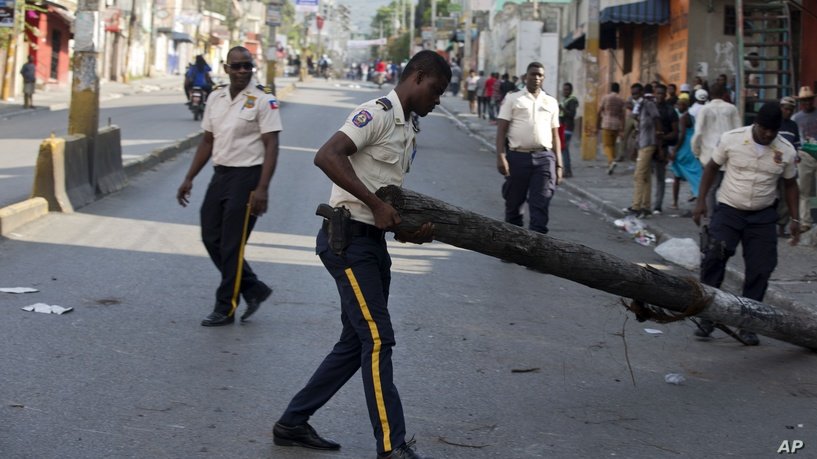
Haiti Anti-Government Protests Lose Momentum
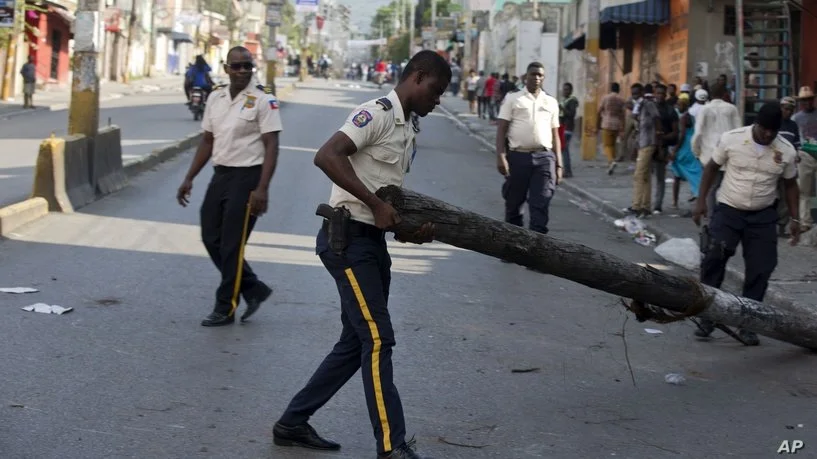
WASHINGTON/PORT AU PRINCE, HAITI - Only a few hundred people responded to the opposition's call Sunday to protest in the streets of Haiti's capital to continue pressuring President Jovenel Moise to step down.
On previous Sundays, tens of thousands have filled Port-au-Prince streets from morning to sundown.
Have the protests lost momentum? VOA Creole put the question to opposition leaders marching on Sunday.
Sen. Ricard Pierre said he thinks bribes and fear were partly to blame for the small crowd.
"A significant number of Bel Air residents have died — an area that heavily supports the efforts of the Alternative (opposition group). We have people hiding out in the poor neighborhoods because the government has threatened to kill them," the senator told VOA Creole. "There have been efforts to distribute weapons to residents of the slums. They've been offered money, offered food. But despite the massacres endured by the poor people, there are some of them in the streets today fighting (for a better life)."
VOA could not confirm the senator's allegations.
Downtown, evangelical pastor Prophete Mackenson Dorilas, who, perched atop a carnival-style truck had been surrounded by thousands of followers during October protests, was seen marching in the street with only a handful of protesters. He blamed fear and the absence of his truck for the low turnout.
"The first truck we were offered, I turned down because it wasn't what I requested. So, they said they would bring me another truck, and I'm still waiting. Some members of my church had intended to join the protest, but they heard the police was targeting protesters, so they ran away," Dorilas told VOA Creole, adding that the people also need motivation.
"The churchgoers don't like to see me walking on the street. They like to see me up high," he said.
Also marching with about a dozen protesters was former Haitian Army Col. Himmler Rebu, who described his participation as the right thing to do.
"There are two efforts happening simultaneously. There are those (members of the opposition) who are in offices working on plans and strategy, and there are those who are accompanying the people marching in the streets. So today, that's my job, " he said.
Up north
Early Sunday, tires were seen burning in the middle of a main road in the northern city of Cape Haitian. There were also roadblocks made of tree branches, rocks, metal and debris.
"These roadblocks are here because President Jovenel still refuses to resign. We will keep blocking the streets, and we will keep protesting until the president leaves," a protester told VOA Creole.
Opposition summit
Back in the capital, members of the opposition spent the weekend meeting at the Marriott Hotel to discuss the transition process that would be activated if Moise were to resign.
"We are in agreement on four aspects of the transition: governance, control, steps forward and duration," announced opposition Sen. Youri Latortue, who heads the Haitian Senate's Ethics and Anti-Corruption Committee. No further details were given.

On the subject of who would replace Moise, the group decided that the choice would be made by a five-member committee comprised of a representative of each opposition group. The transitional president would be chosen among the Supreme Court judges. The committee would also choose a prime minister.
"This is a historic event," prominent businessman Gregory Brandt, who represented the private sector at the meeting, told VOA Creole. "The country has been suffering through a complicated situation for two months now. We aren't selling merchandise, we aren't receiving merchandise. Port-au-Prince is beginning to face a scarcity of basic goods. We're facing an unprecedented humanitarian crisis, so we must sit down in all seriousness to discuss how we can resolve this crisis."
US aid
Last week, Rob Thayer, director of USAID's “Food for Peace” program, told VOA Creole the agency has earmarked 3,500 metric tons of emergency food aid for Haiti, which will be distributed to those in need.
In addition to the food aid, the U.S. Navy hospital ship USNS Comfort has been docked off Haiti's shores since Nov. 6 for a seven-day medical and humanitarian mission. According to the U.S. Embassy in Haiti, the ship's staff has seen more patients per day in Haiti than on any other stop of their five-nation tour.

U.S. Embassy Haiti✔@USEmbassyHaiti
What a week-end! We’re proud of the Comfort crew & their HAITIAN partners’ effort as they are seeing more patients at the clinic per day than they have on any other stop of the 5 months #EnduringPromise mission. - #AmbSison
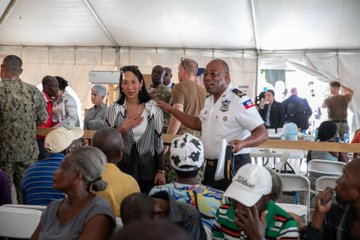
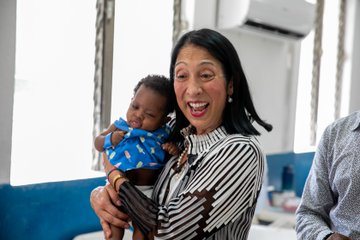
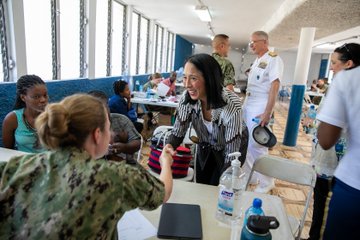
625:40 PM - Nov 9, 2019Twitter Ads info and privacy16 people are talking about this
U.S. Secretary of State Mike Pompeo expressed concern about the situation in Haiti last week on Twitter.

The #USNSComfort has arrived to provide much-needed medical services in Haiti. We call on all of Haiti's leaders to come together to solve the ongoing political & economic gridlock through dialogue & institutions. We stand with all Haitians who peacefully call for accountability.

1,5882:16 PM - Nov 7, 2019Twitter Ads info and privacy658 people are talking about this
"The #USNSComfort has arrived to provide much needed medical services in Haiti. We call on all of Haiti's leaders to come together to solve the ongoing political & economic gridlock through dialogue & institutions. We stand with all Haitians who peacefully call for accountability," Pompeo tweeted.
President Moise
Meanwhile, Moise has been busy naming new cabinet ministers, meeting with members of the diplomatic corps, and giving interviews to the foreign press. He has also increased his visibility on the streets, in the national press and on social media.
"Since my first day in office, I have always preached the same thing — togetherness, unity — because the country is tired," Moise said during a Nov. 7 speech. "Our (nation's) motto is Unity is Power. But unfortunately, this system (of government), the system that uses people, gives us a different motto which is, Divide and Conquer. Whenever a person wants to enrich himself, he pits us against each other. And when we've taken the bait and died in battle, who benefits? Not us."

Early Sunday morning, before the anti-government protest began, Moise visited police stations in Carrefour and Petionville, his press secretary announced. According to a press statement received by VOA Creole early Monday morning, Moise sought to see the working conditions for the policemen and asked for a detailed report on the current status of affairs that will be used to "better address the needs of the agents of the PNH (National Police of Haiti)."
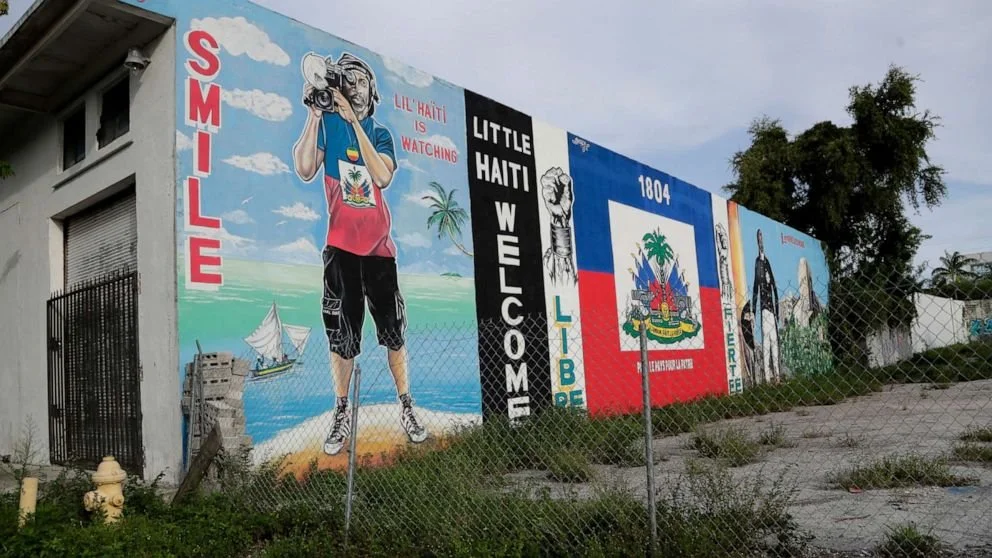
Disillusioned Haitian American voters not sure about Trump
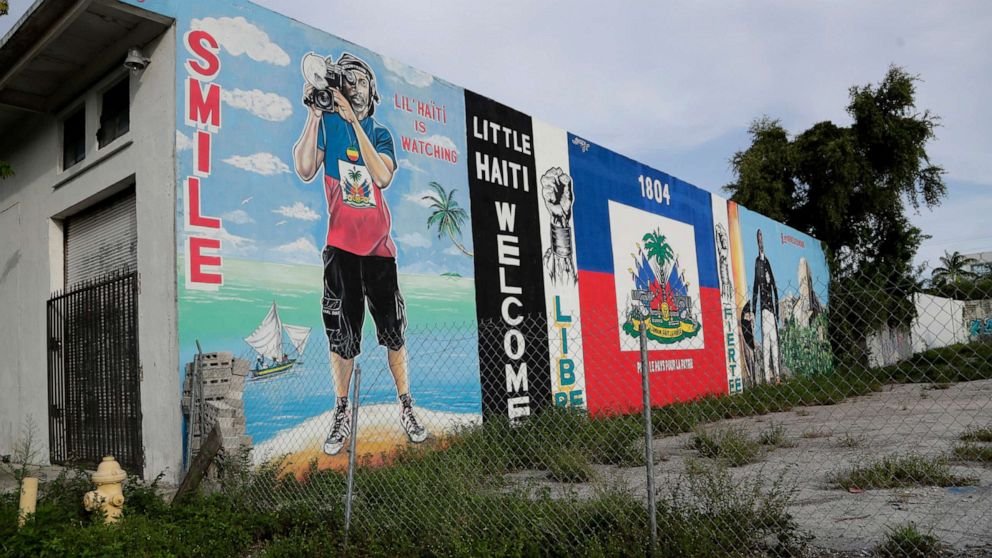
For Bernard Sansaricq, voting for Donald Trump in the 2016 presidential election was a clear choice.
The Haitian-born Republican activist was president of the Haitian Senate in 1994. Officially obtaining U.S. citizenship in 2006, Sansaricq was dedicated to establishing democracy in his native country. He said he was hopeful in 2016 when Trump, as a Republican nominee, visited Miami's Little Haiti. Trump claimed then that he would be their "greatest champion" and hold former Secretary of State Hillary Clinton accountable for what he saw as her failures in the aftermath of a deadly earthquake impacting at least 3 million people in the island nation.
Sansaricq had taken Trump at his word when the promise was made, but now he feels that it has fallen short.
"My understanding was that Trump would be a better man; he would do something for Haiti," he told ABC News. "We all put our chances on Trump. But my heart can no longer tell me to support him. He has done absolutely nothing for Haiti," he says. "I might just sit this election out."
Fort Lauderdale Vice Mayor Samson Borgelin echoed those worries. He said Haitian American support of President Trump in South Florida is spotty when it comes to the upcoming 2020 election. Borgelin said Trump could even be at risk of losing these voters due to a growing divide within the minority group.
"In Palm Beach County, they [Haitians] are one of the largest ethnic minorities in the area. We want to make sure they have equal representation; we want to increase our voter base, and Haitian Americans are a strong, growing and influential part of the larger Palm Beach County community," said Michael Barnett, chairman of the Republican Party of the county.
A University of Florida study by Daniel Smith, chairman of the political science department, showed out of the 50,000 Haitian Americans who cast ballots in South Florida in 2016, the majority of that group's votes actually went to Clinton. In select Palm Beach and Broward County precincts, almost 20% went to Trump, according to Smith's research.
Barnett said the percentage of support from black voters for Trump in 2016 was higher than what 2012 presidential Republican nominee Mitt Romney was able to pull in from the state. Trump received at least 8% of the black vote in 2016, according to an NBC News exit poll. In 2012, Romney only received 4%, according to the Washington Post.
"Twenty percent seems like a small number, but it's really strong," he said. "Donald Trump worked really hard to make his presence known in the Haitian and black community."
Borgelin told ABC News that many Haitian Americans in his community feel alienated by Trump's immigration stance and even regret voting for him. The main concern centered on the end to the minority group's top priority: Temporary Protected Status, a program that offers temporary relief to people within the United States when conditions in their home country prevent them from returning safely.
Temporary Protected Status "is a big concern here," Borgelin said. "People are worried about their families being divided."
The program was opened up to Haitians in 2010 under the Obama administration following a massive earthquake. The Trump administration has indicated that the conditions in the country had improved, and the program could have been terminated on July 22, ending the protection of at least 58,600 Haitians. However, the Department of Homeland Security, extended it until Jan. 2, 2020.
Maria Landry, a local activist, said those under Temporary Protected Status are more anxious about what to do when protections run out than anything else. Their angst is only exacerbated by the president's comments last year during a bipartisan meeting in the Oval Office. Trump asked the group why anyone would want people from Haiti, Africa or other "s---hole countries" coming into the United States, according to multiple sources either briefed on or familiar with the discussion.
"I don't think he's going to have the same support as he did before," Borgelin said.
The earthquake in 2010, which left over 310,000 Haitians dead, prompted the creation of the Clinton-Bush Haiti Fund, a nonprofit organization that sought to reconstruct and improve economic conditions within the island.
In combination with non-governmental organizations, U.S. tax dollars and charities around the world, the United Nations reported over $13 billion dollars were raised for relief efforts. Yet, for many Haitian Americans such as activist zili Dant, the allocation of this fund to the poverty ridden country still remains to be seen.
"He [Trump] was the lesser evil. We didn't want a third Obama or a third Clinton," Borgelin said.
As founder of the FreeHaiti Movement, Dant welcomed Trump's presidency and hoped to use it to tell a new story about Haiti, one shifted away from the "disaster narrative."
But she now feels that "just like he continued [Temporary Protected Status] elimination, Trump continued the imperialistic and geopolitical policies of the United States in Haiti."
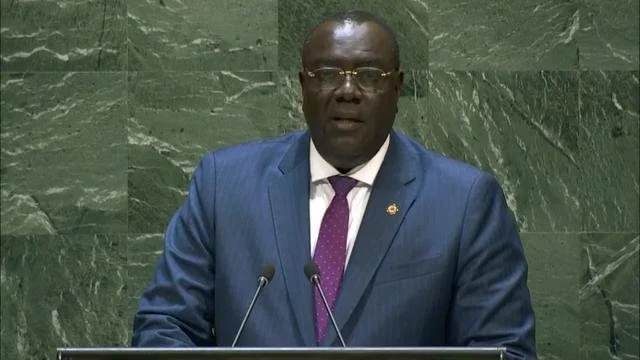
Haitian Foreign Minister calls for development reboot to close ‘striking gap’ between promises and action on ending poverty
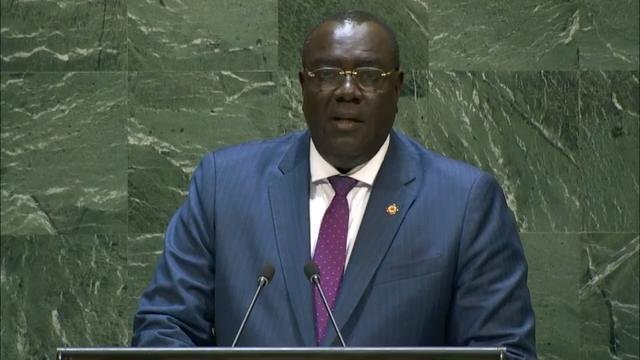
The future of humanity hinges on full implementation of the 2030 Agenda, if we don't get there, “we may never see the world that ‘we the peoples of the United Nations’ have long been calling for,” Bocchit Edmond, the Minister for Foreign Affairs of Haiti, told the General Assembly, the Organization’s top deliberative body.
“It is absolutely essential to reboot out collective responsibility… and remain mobilized around the Sustainable Development Agenda, as well as the objectives of the UN Charter, Mr. Edmond said on Saturday, welcoming the fact that the Assembly’s current session would be focused on multilateralism, thus pointing to the way forward for achieving sustainable development and peace.
“I hope we all understand the need to move from solemn declarations to concrete actions and initiatives that are commensurate to the level of present and future challenges,” he added, referring to the UN-drafted blueprint to tackle climate change and reduce global poverty and hunger by 2030.
After expressing concern over the number and magnitude of forest fires in recent years and recalling the recent damage “closer to home” caused by Hurricane Dorian in the Bahamas, Mr. Edmond also mentioned the floods that hit his country and asked that special attention be paid to small island developing States that lack adequate means to combat natural disasters and preserve the environment.
The Minister expressed concern over the delays in the combat to end poverty, saying that efforts made thus far were not up to the real needs and that there is "striking gap" between the commitments made, particularly in the context in the 2030 Agenda and other global accords, and what had been achieved.
He also emphasized the importance of quality education as the only way to concretely guarantee respect for human rights, and economic and social progress. Mr. Edmond then cited Haiti’s “immense" needs, saying the pursuit of sustainable development objectives remains “a major challenge”.
The Haitian Government is fully aware of its responsibility to ensure the security, stability and long-term development of the country, said Mr. Edmond, recalling that Haiti had for several months been confronted with “complex political crisis,” compounded by decades-old economic precariousness.
He noted the efforts of President, Jovenel Moïse, to pursue a Haitian national dialogue towards resolving the crisis. However, he cautioned that “Haiti will not be able to recover without substantial, sustained, sustainable, coherent, well-coordinated and effective support from the international community.”
The UN and Haiti
To that end, Mr. Edmond noted the mandate of the UN Integrated Office in Haiti, which will succeed October 16 to the UN Mission in support of justice in Haiti (MINUJUSTH). Recalling that this mandate will be "essentially to advise the Government on the means to promote and strengthen political stability and good governance", the Minister hoped that the Office will be given the necessary resources.
He called for “Better coordination of the UN presence” in the country, and asked that all its actions “fit well" within the framework of the priorities established by the Government.
Mr. Edmond also advocated for a “new paradigm of international cooperation,” believing that it necessarily entailed an in-depth reform of UN structures and their functioning.
The United Nations must be more flexible, more open and more pragmatic, he said, explaining that “responsible and timely action by the United Nations could have helped to limit the damage and avoid suffering for the affected population by the cholera epidemic.”
He acknowledged “encouraging progress” in the fight against the disease through the efforts of the Special Envoy of the Secretary-General and all relevant actors, but nevertheless urged t United Nations to redouble its efforts to secure funding for the cholera control strategy in the country.
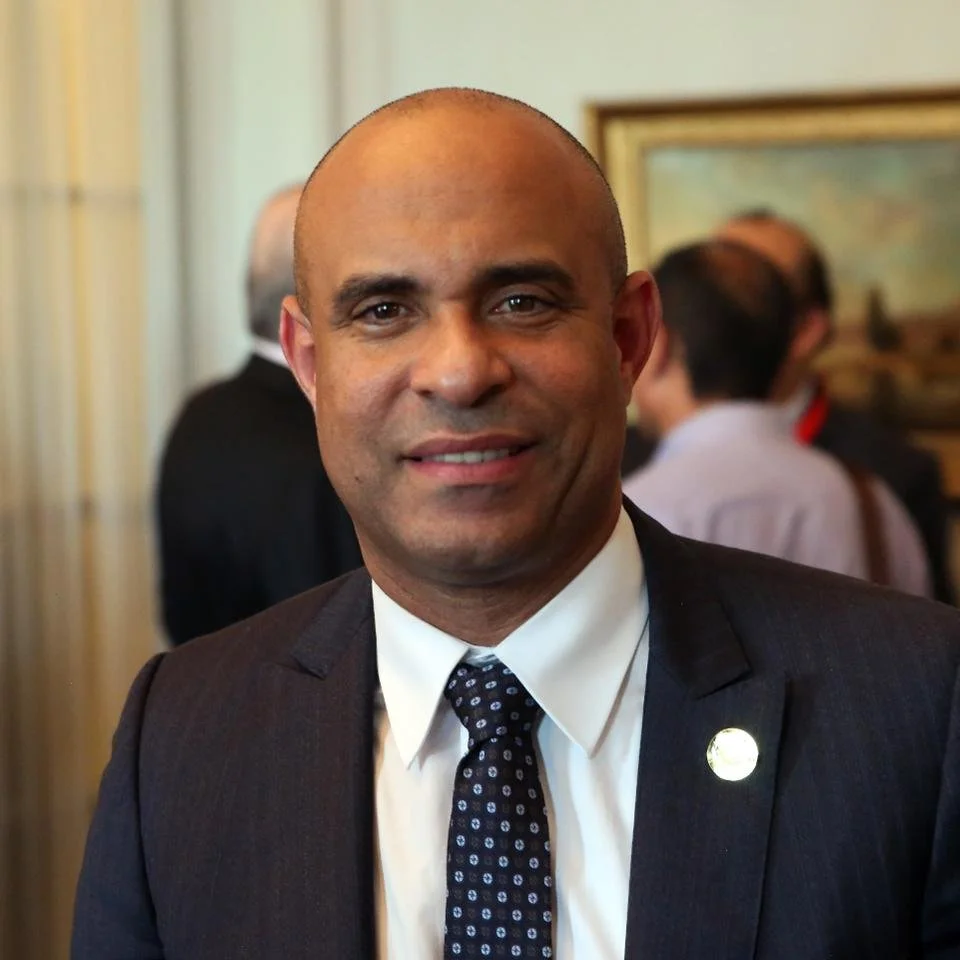
Is It Possible For Haiti To Thrive? Former PM Lamothe Says Yes
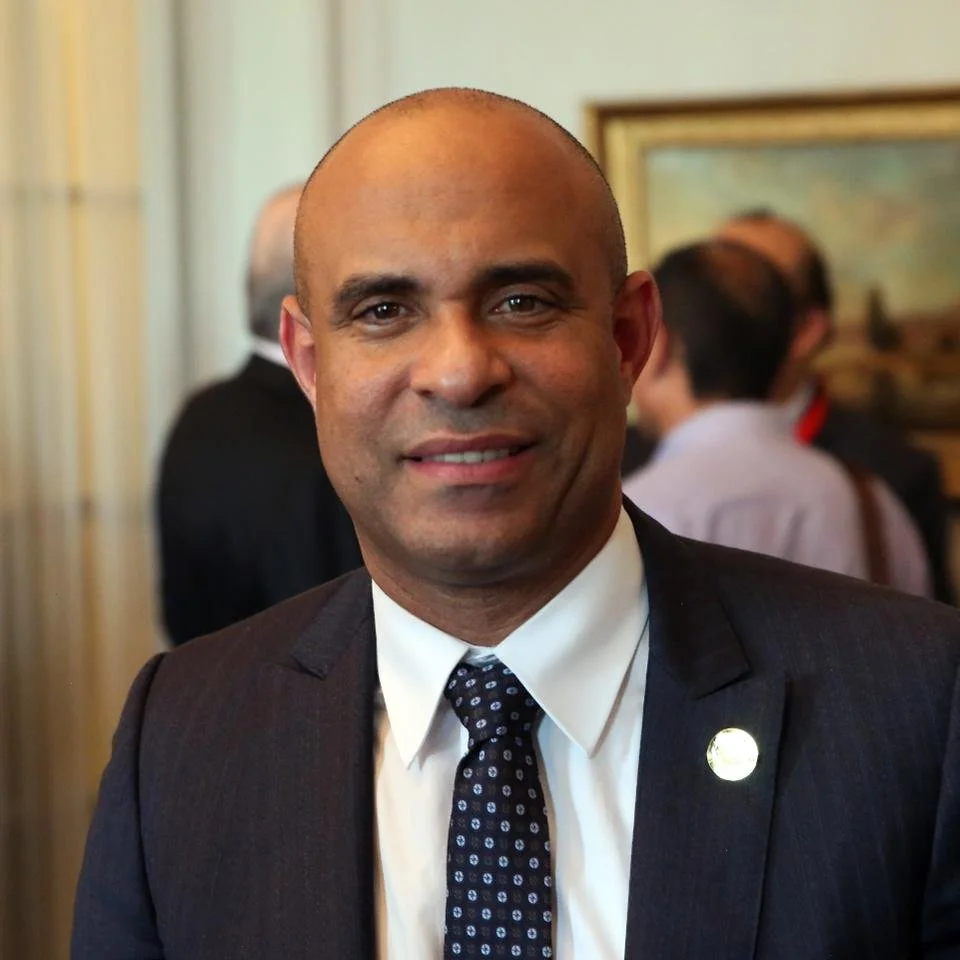
Laurent Lamothe, 47, former Prime Minister of Haiti, says Haiti—and other low-income countries—can thrive by implementing new taxes on telecom and banking transactions.
Lamothe, who resigned as the PM in December of 2014 after serving two and a half years—longer than any PM since the Haiti earthquake in 2010—says micro levies on small transactions provide an opportunity for countries like Haiti to begin collecting revenues and investing them in infrastructure and projects that will help their people lift themselves from poverty.
Today, Lamothe operates LSL Worldwide Initiative, advising low- and moderate-income countries. He points to Singapore and Estonia as countries that have successfully accelerated their economies through digitization.
“Emerging countries especially have very little means to finance their development,” Lamothe says. “With a solution called Innovative Financing for Development—applied within not only the telecoms industry, but also the financial services industry—governments are able to leverage millions of transactions, apply a micro-levy onto those transactions, and bring in millions of additional dollars for development.”
One entrepreneur in Haiti, who agreed to share some thoughts with me on condition of anonymity, says, “Haiti has a lot of challenges but the top three are:”
1. Job creation to break the circle of poverty and inequality.
2. Access to basic infrastructure like roads, water, sanitation, decent home, and internet connectivity to improve conditions of living nationwide.
3. Access to quality health and education systems to build a more competitive population better prepared for the challenges of the 21st century and to create a its own prosperous future.
He adds, “For this LSL program to succeed it should first and for most empower the government to truly own public policy, create a real vision, promote sustainable government investment planning and not encourage corruption. Those innovative financing solutions should not tax poor people or endebt future generations.”
He also notes that solutions require innovation and a participatory process that is lacking in Haiti.
Lamothe observes that in Haiti, about 70% of the economy is informal. He says, it takes six months to start a formal business, effectively forcing people to operate informally, without business registration and without paying taxes.
“The private sector, merchants, entrepreneurs, small shops, they all digitized because they're all using their phones to do business,” he says. This reality creates an opportunity for the country to begin collecting revenue from the informal sector of the economy, allowing the government to function better and deliver on its obligations to the people.
Lamothe’s hope is to see new government revenues deployed to help the people. “You want to do it in a way that helps, you know, basically the poor to graduate them out of poverty by being able to leverage the innovative development in order to give back to them, whether it whether it's to provide better schools in order to provide scholarships or children, whether it's providing opportunities in healthcare to have a broad coverage in health.”
Lamothe is frequently asked about a return to politics but has no plans to return to public life. Still, he brings the optimism of a stump speech to his work.
“Haiti share something very deep with the US that Haiti and the US are the first two independent nations out there,” Lamothe says. “So, imagine the culture that brings to us. But now it's a question of taking it forward. We cannot be stuck in the past. We need to be focusing on the future. And the future has to start today.”
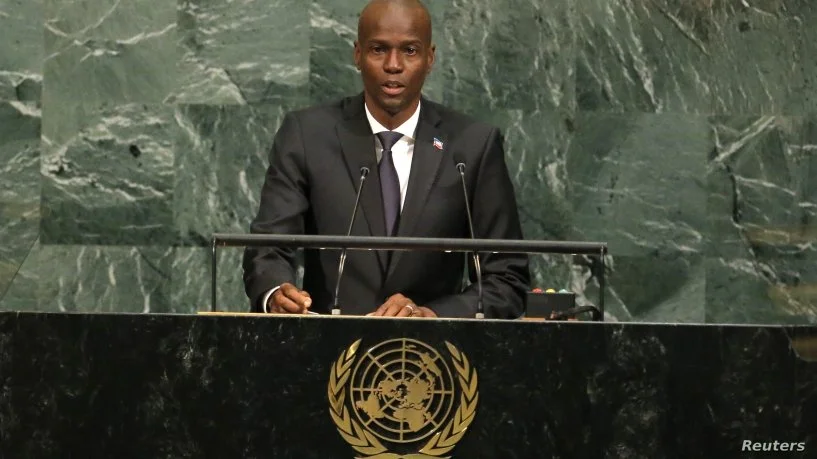
Haiti's President Cancels UN Speech
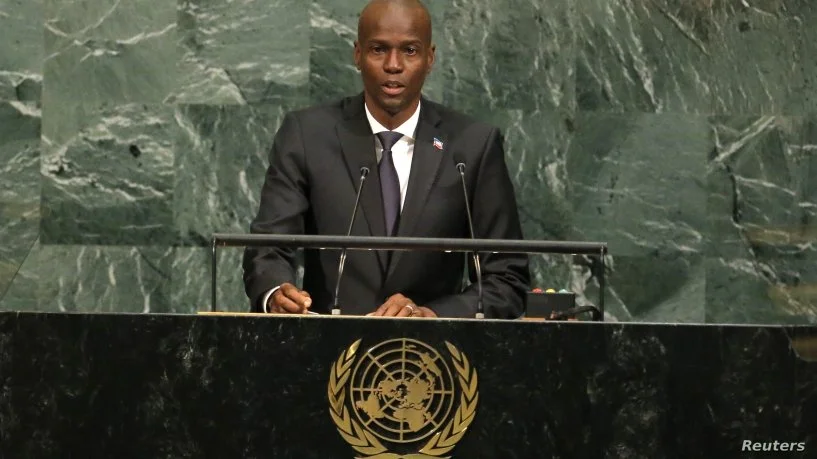
WASHINGTON / NEW YORK / PORT-AU-PRINCE - Haiti's President, Jovenel Moise, will not travel to the United States as planned Tuesday, to speak before the United Nations General Assembly. The president issued a statement late Monday announcing that Foreign Minister Bocchit Edmond would lead Haiti's delegation to the U.N. and speak before the general assembly on behalf of the nation.
The cancellation comes after news of a postponement of his departure for New York, and on the heels of a chaotic, violent day at the Haitian Senate that saw two people wounded when a Senator fired his gun ahead of a vote to confirm the prime minister designate. An AP photojournalist and a parliament security guard were wounded during the incident.

Corruption allegations
President Moise and some members of his government are mired in controversy and corruption allegations.
On Sunday, opposition Senator Youri Latortue accused him of "misappropriating" Haitian passport revenue collected by the Embassy in Washington to finance his trip to the U.N.
"Minister Bocchit withdrew $298,000 US dollars from a government bank account for President Jovenel's trip. He took an additional $60,000 from the New York Consulate account. That's a total of $348,000 U.S. dollars. Plus the Haitian money they withdrew," the senator alleged.
Senator Latortue said that money should have been used instead to help the victims of a mass flood in the southern town of Petit Goave on Saturday, which killed several people including children and damaged homes.
He also alleged that the large sum of money was not needed because the U.N. finances the trips of the leaders of member countries and their hotel stays for U.N. General Assembly.
But Foreign Minister Bocchit Edmond refuted the allegation in an exclusive interview with VOA Creole at the United Nations.
"If Senator Latortue felt there were irregularities, he knows there are institutions in place which can deal with such matters. In addition, Senator Latortue was an advisor to a president of the republic, he is well aware of the rules and regulations the chief of state must abide by. So he therefor knows that the Haitian Embassy in Washington is in charge of planning the President's visit to speak at the UNGA. And since he was also adviser to the former prime minister of Haiti - he knows these rules well," Edmond said.
Responding to the assertion that the U.N. finances leaders' trips to speak at the UNGA, the foreign minister said " This is false. There are 193 member nations, each delegation is responsible for the expenses of its members."
Edmond quipped that the senator should verify his information before making such accusations.

Mass protests
During mass protests on September 20, where thousands took to the streets of Port-au-Prince to demand the president's resignation, several protesters told VOA Creole that President Jovenel Moise shouldn't be making any speeches at the U.N.
"Jovenel will not represent us at the United Nations!" a protester from the Cite Soleil slum of the capital who was in the streets after the shooting incident at the parliament said. "International community, United States, please take him off our hands."
That sentiment has been echoed by members of the opostion as well.
A group of protesters blocked a road near the national palace Monday with a white box truck, then painted red graffiti saying "Jovenel we're waiting for the keys".
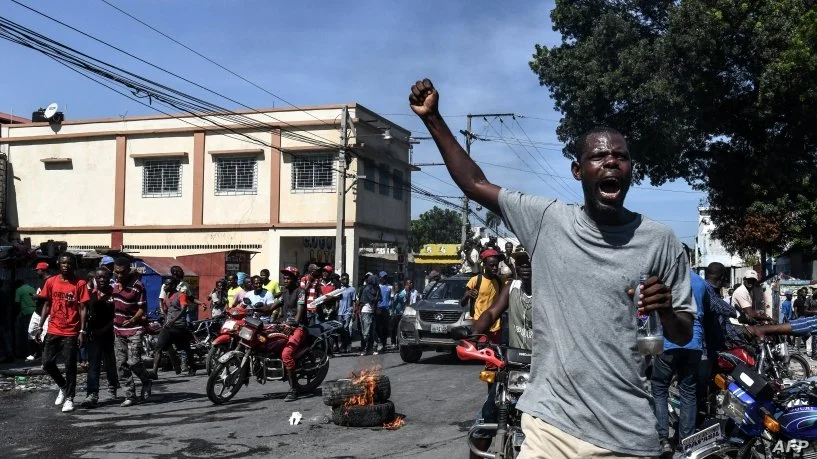
Businesses, Schools Closed as Haiti's Capital Reels from Political Chaos
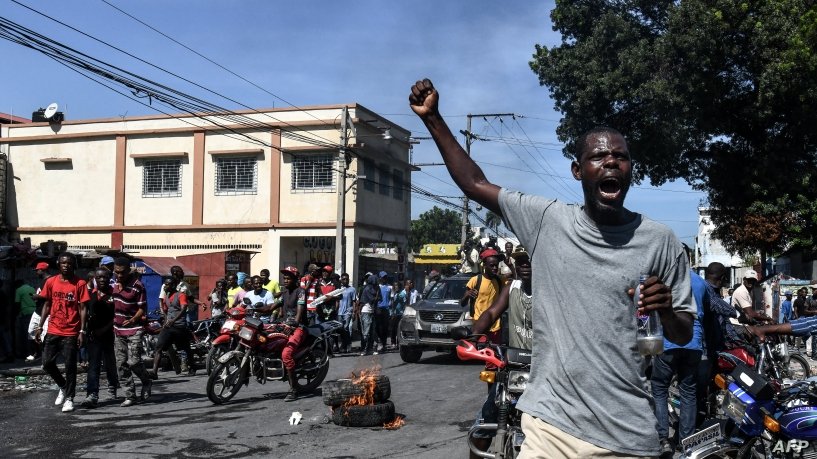
WASHINGTON / PORT-AU-PRINCE - Businesses and schools were closed Tuesday in Port-au-Prince as Haiti's private sector protests the insecurity and chaos that has overwhelmed the nation.
Meanwhile, AP photojournalist Dieu Nalio Chery is recovering from a bullet wound in his jaw that he sustained when a Haitian ruling party senator fired his gun in the parliament yard. A parliament security guard also sustained a bullet wound in the stomach. He is recovering after being treated at a nearby hospital.
Senator Ralph Fethiere pulled out his gun and fired when opposition supporters began yelling at him and approached him aggressively as he was getting into his vehicle.

The senator, one of two ruling party lawmakers who were photographed with guns in hand Monday as members of the Senate gathered for a confirmation vote on Prime Minister designate Fritz William Michel, was not arrested. He issued a statement condemning the incident and defended his actions, claiming he was the victim.
"(I) vehemently blame certain ill-intentioned armed individuals who did not hesitate to open the door of (my) vehicle to physically aggress (me). The impact of the bullets on (my) car were duly noted by an officer of justice," the statement said.
In an interview with local radio station Scoop FM, Senate Leader Carl Murat Cantave said he too was hit by supporters of opposition lawmakers at the parliament.
"Violence has no place in Haiti's political process," a spokesperson with the State Department Bureau of Western Hemisphere Affairs told VOA, "even as we recognize the importance of forming a government to address Haiti's urgent priorities."
Looting, attacks
The condemnation follows a day of looting and attacks after angry protesters took to the streets, reacting to news of the Senate shooting. The Banque de L'Union Haitienne (BUH) in the upscale suburb of Juvena was looted of rice, corn meal and other items stored on its upper level floors, then later set on fire.
Haiti's sports minister-designate told reporters she was carjacked as she left the Karibe hotel, also in Juvena, where Michel and members of his cabinet gathered to await news about the Senate vote. She was unharmed after leaving her car to the assailants and returning to the hotel.
Haiti has struggled to end chaos since March of this year, when Prime Minister Jean Henry Ceant was forced to resign in a no-confidence vote.
President Jovenel Moise's current choice for the prime minister position is accused of corruption, prompting attempts by the opposition to block his confirmation vote by vandalizing parliament. While the lower chamber of deputies approved Michel's nomination on Sept. 3, the Senate has tried and failed five times to approve him.
UNGA
Some observers question if the country's current leaders are fit to lead.
Moise, who at first delayed a trip to New York to speak at the United Nations General Assembly, canceled his visit late Monday. He said Foreign Minister Bocchit Edmond would represent Haiti at the UNGA and deliver the speech in his stead.
The president has remained silent about protester demands and criticism, as well as the chaos and violence at the parliament.