
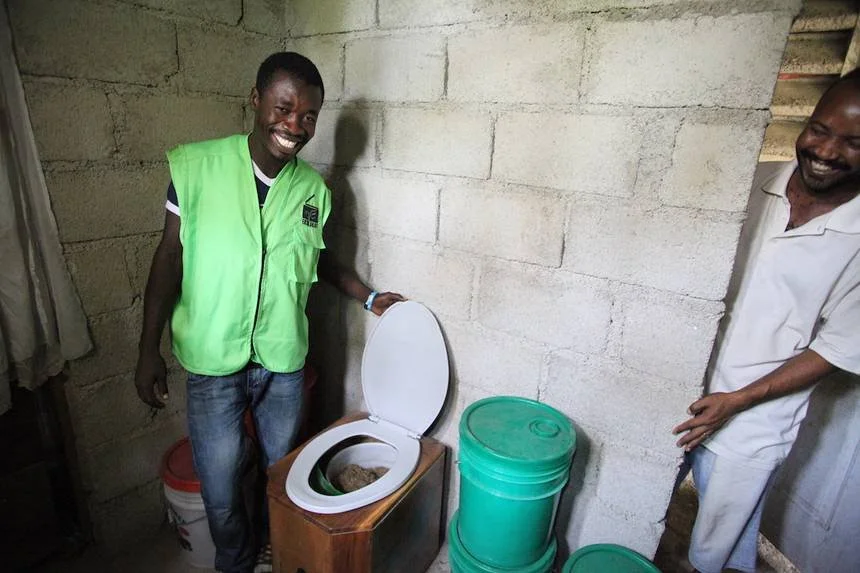
The Humble Toilet Is Bringing Health And Hope To Haiti
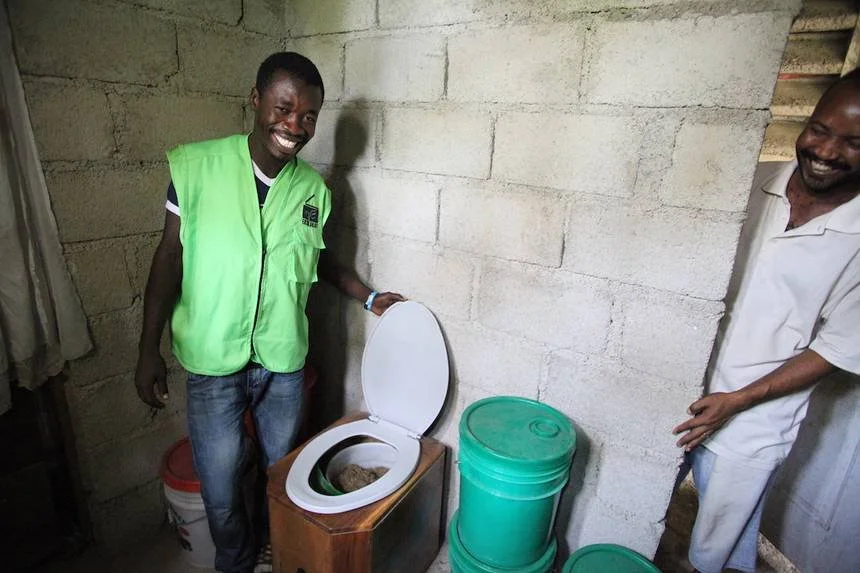
A group called SOIL installs waterless toilets in hard-to-reach, impoverished communities and then transforms the waste into compost, improving food security.Last week, TreeHugger was invited to attend the second annual Spring Prize for Social and Environmental Regeneration, hosted by Lush Cosmetics in the UK (read overview here). The amazing people behind these projects are all fighting to create a world that's more resilient, self-sustaining, and nourishing, and thanks to the Lush Spring Prize, that fight has become a little bit easier.There was a time when Haiti was known as "the Pearl of the Antilles" for its fertile, beautiful land. Sadly, that is no longer the case. While it is still beautiful, much of the island has been deforested, the soil has been degraded, and its citizens suffer from endemic poverty. It has the highest childhood diarrhea mortality rate in the world, one of the worst cholera epidemics in modern history, and does not have enough food to feed its population. Annual hurricanes and occasional earthquakes make the situation worse. To top it off, Haiti was just named the most vulnerable nation in the world to climate change.Haiti's situation is deeply complex, making it a challenge for charities and NGOs to have a lasting effect. Monetary handouts offer temporary relief, but what Haitians need and want is what every other person in the world wants -- a job, a safe and clean space in which to live, a healthy family, and a sense of dignity.Enter SOIL, an organization founded in 2006 that is managing to offer all of these benefits to Haitians with an astonishingly simple solution -- the installation of a toilet in their homes. But this isn't just any toilet: it is a dry, waterless toilet, also known as container-based sanitation (CBS), that allows for human waste to be collected hygienically in sealable, removable containers, without relying on an expensive urban sewer system.
 © SOIL -- Waste is collected in sealed buckets in Cap-Haitien
Participating families pay a small monthly fee (US$3-4) in exchange for toilet installation, maintenance, and weekly waste pickups. The waste is diverted into a bucket and the family adds a carbon cover layer made from sugarcane bagasse and crushed peanut shells to keep flies at bay and odors down. Once a week, SOIL's employees drive three-wheeled motorcycles along the narrow mountain roads to collect the waste buckets and deliver them to a central depot, where they're trucked out to the countryside for composting.The composting process takes nine months, during which all pathogens are killed and the final result is rich organic soil that is bagged and sold to gardeners, farmers, larger companies growing plantains, beans, and mangoes, and groups doing targeted reforestation across the island. Various studies have found it to be a powerful natural fertilizer, boosting crop yields by as much as 400 percent in the case of green peppers.
 © SOIL (used with permission) -- Compost produced at the end of the 9-month process
Last week I spoke with Natalie Miller, SOIL's communications and development associate, and Wisner Jean Louis, director of human resources. Both were in the UK to collect a £25,000 Spring Prize award, in recognition of SOIL's work toward social and environmental regeneration.Miller, who bubbles with enthusiasm about her work and delivers facts at dizzying speed, referred to SOIL as a rare success story, in light of so many other charities' struggles to effect lasting change in Haiti. She explained that SOIL's first attempt to build public toilets failed, despite communities having identified the need and saying they would maintain them. She told me:
"Just as would happen in Minnesota, where I'm from, or New York or London, people don't want to manage a public toilet for free, especially people who live in some of the most vulnerable, resource-poor communities in the world. They don't actually have more time to do that because they're working so much harder to help their families survive."
Fortunately SOIL did not give up, but reassessed where the real need lay -- in building toilets in people's homes. Since then, it has provided sanitation services to more than 6,000 people, made over 250 metric tons of compost, and employed 92 Haitians. Currently, it composts 40 metric tons of human waste every month, and that's set to grow. Thanks to the award from Lush, SOIL will be able to expand its composting facilities and further its research and development work.
 © Lush Spring Prize (used with permission) -- Natalie Miller and Wisner Jean Louis at Emerson College, UK
I came away from the interview feeling amazed at the idea that something as humble as a toilet can combat cholera, create employment, boost crop yields to feed a hungry population, sequester carbon, and increase resilience to climate change by allowing the ground to retain more water during periods of drought and stay stable in times of flooding. It all makes sense, of course, that these things are interrelated, but it's such a beautifully simple solution to a problem that can appear extremely complicated.As Miller and Jean Louis told me, their work is about returning to technology that humans have used for thousands of years. "Since water and energy become so cheap and accessible, we went a little crazy with flush toilets," Miller said with a laugh. Container-based sanitation, by contrast, makes much more sense in dense urban settings like Haiti, and prove Miller's words: "Human poop is where it's at!"You can learn more about SOIL's work by visiting its website or Facebook page, or reading their bio on the Spring Prize website.By: Katherine Martinko for The TreeHugger.com | May 21, 2018
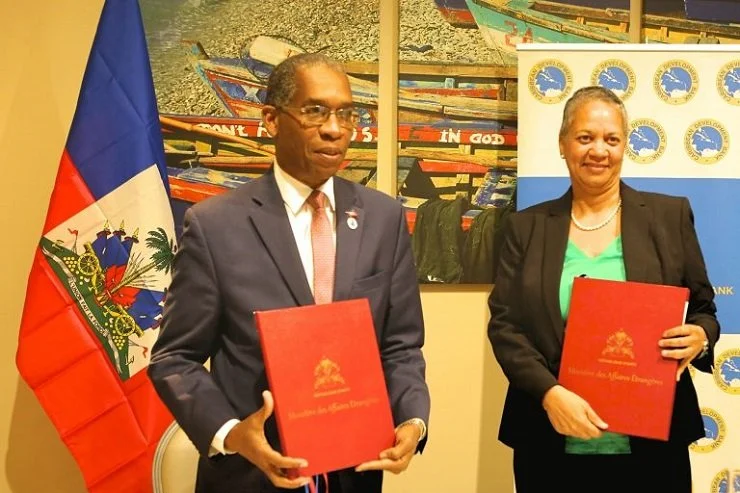
Caribbean Development Bank to Establish First Country Office in Haiti This Year
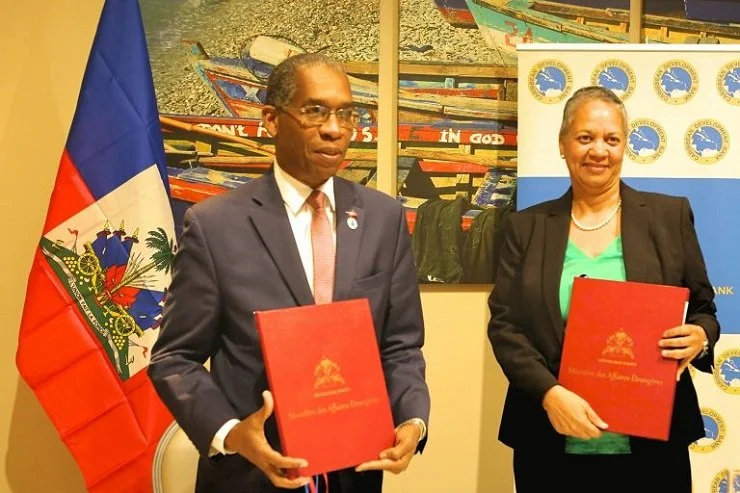
BRIDGETOWN, Barbados, Thursday March 15, 2018 – The Barbados-based Caribbean Development Bank (CDB) will establish its first country office in the Republic of Haiti later this year.Minister of Foreign Affairs Antonio Rodrigue and the Bank’s Vice-President (Operations), Monica La Bennett, recently signed the Country Agreement to pave the way for that to become reality.La Bennett said the signing of the agreement further cements the strong partnership between CDB and Haiti.“Last year, CDB, in collaboration with the Government of Haiti, developed a country strategy plan for the period 2017 to 2021, with an indicative resource envelope of US$100 million to help Haiti meet its development priorities. The strategy focuses on three main themes: agriculture and community development, sustainable energy development and education and training. It is this deepening engagement between CDB and the Government of Haiti that has led us to conclude that there is a need for a country office,” she said.“We expect that this will lead to the development of closer relationships with the Government and the people of this country, enabling CDB to be a more proactive, responsive development partner.”Haiti became a member of CDB in 2007. Since joining the Bank, the country has been allocated grant resources from CDB’s most concessional resource pool, the Special Development Fund (Unified). In 2017, an allocation of US$45 million was approved under the ninth cycle of the Fund.To date, a total of US$133 million has been committed to Haiti. Projects supported included the Education for All Phase II Project; the Technical and Vocational Education and Training Project II; interventions in agriculture and rural development; technical assistance for micro, small and medium enterprise development, and improving the quality of, and access to basic education.CDB’s ongoing work in Haiti includes projects in education, including technical and vocational education and training; climate resilience; and community-based agriculture and rural development. In addition, since May 2013, the Bank has paid the country’s insurance premiums to CCRIF SPC. The payments cover Haiti’s earthquake, tropical cyclone and excess rainfall policies. Under this arrangement, the country has received three major payouts, most recently following the passage of Hurricane Matthew in October 2016.By: Carribean360.com | March 15, 2018