
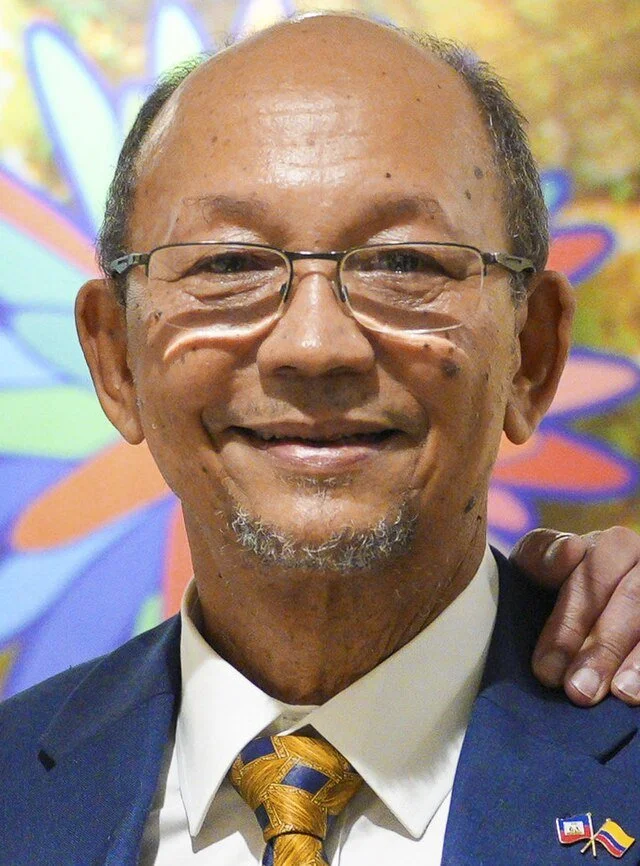
Haiti's 221st Independence Day: Voltaire Asks France to Repay Haiti's Independence Debt
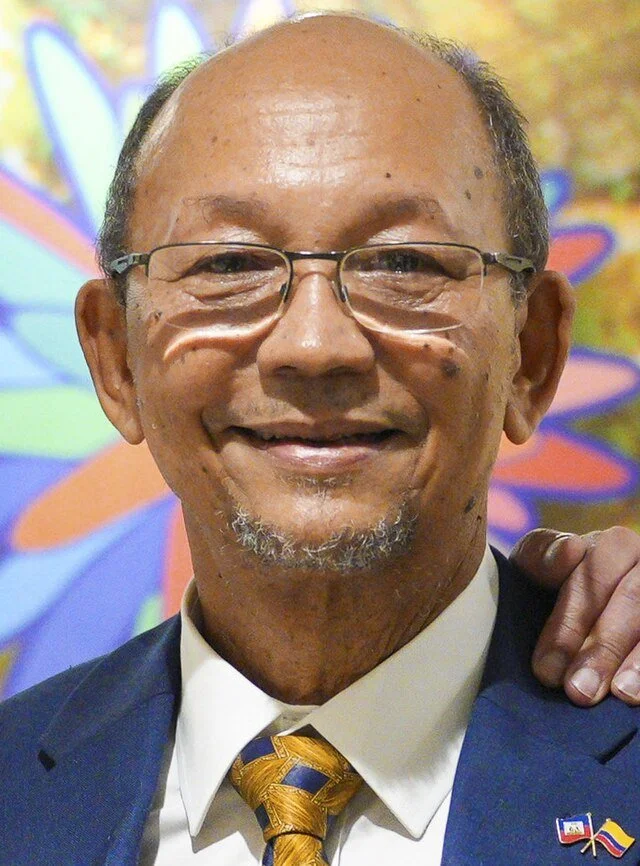
The Haitian government celebrated yesterday, Monday, January 1, 2025, the 221st anniversary of the country's independence.
In a ceremony held in the presence of senior government officials, including Prime Minister Alix Didier Fils-Aimé and the coordinator of the Presidential Transition Council, Leslie Voltaire, Haitian authorities commemorated Haiti's independence day in the capital.
In his speech, architect Leslie Voltaire called for peace to be established in the country so that the people can breathe a sigh of relief from the acts of brigandage that are taking place in the country.
Leslie Voltaire reports that the state is at war with gangs that are wreaking havoc in the country and forcing thousands of people to flee their homes.
The KPT coordinator says his patience is running out.
On the other hand, Leslie Voltaire took the opportunity to ask France to repay the debt of independence and reparations for slavery.
We would like to emphasize that the government did not make the trip to the independence site, Gonaives, for the ceremony of honoring ancestors and commemorating independence.
The ceremony took place in Vilacadey, in the capital, Port-au-Prince.

Dominican Republic deported more than 276,000 Haitians in 2024
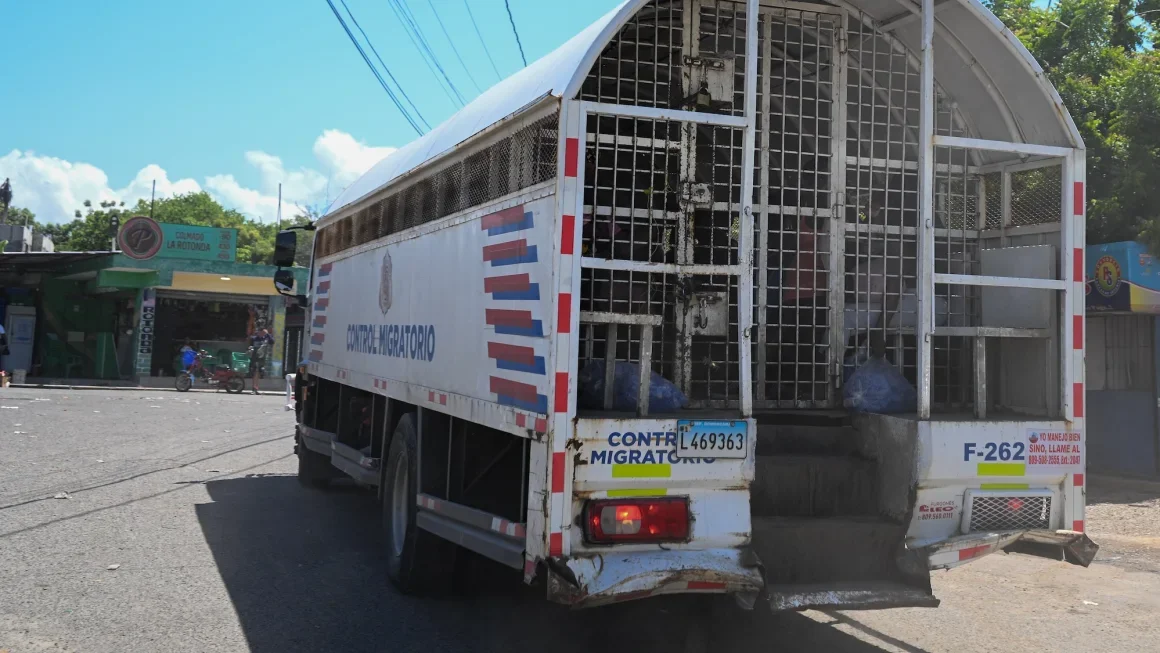
The Dominican Republic deported more than 276,000 Haitians in 2024, the country’s Immigration Directorate said Wednesday.
In the last three months of the year alone, over 94,000 people were deported under a new operation aiming to remove up to 10,000 undocumented Haitians per week, ordered by the Dominican Republic’s National Security and Defense Council headed by President Luis Abinader.
Dominican authorities also deported 48,344 Haitians during the January-March quarter, 62,446 between April-June, and 71,414 from July to September, according to the statement.
Government spokesman Homero Figueroa told reporters in October that the government ramped up deportations to address an “excess” of Haitian migrants in the Dominican Republic, which shares an island with Haiti. The two countries have long seen an informal flow of people across their shared border.
Haiti’s then-Foreign Minister Dominique Dupuy condemned “brutal scenes of raids and deportations,” and demanded justice for “dehumanizing acts” against her compatriots. Dominican authorities maintain that the deportations are carried out in compliance with human rights.
In October, Reuters footage captured dozens of migrants crammed into caged Dominican Republic law enforcement trucks heading to Haiti. Aid organizations have rushed assistance to the Haitian side of the border to assist the thousands of deportees.
The mass deportations come amid a worsening political and social crisis in Haiti; gangs are estimated to control more than 80% of the country’s capital, Port-au-Prince.
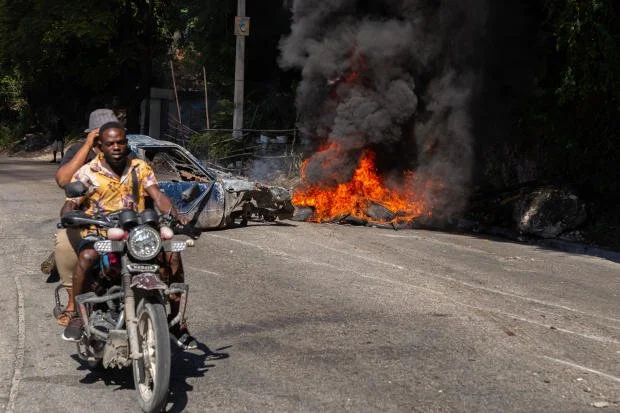
184 killed in Haiti, U.N. says, as gang leader allegedly orders massacre of elderly on voodoo priest's advice
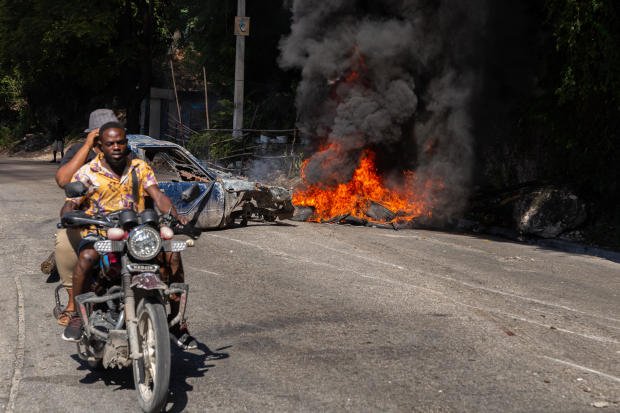
The United Nations human rights chief said Monday that 184 people were killed over the weekend in the Haitian capital, as Port-au-Prince was rocked by a spike in gang violence that pushed the death toll from Haiti's spiraling security crisis to at least 5,000.
"Just this past weekend, at least 184 people were killed in violence orchestrated by the leader of a powerful gang in the Haitian capital of Port-au-Prince, in the Cite Soleil area," Volker Turk told reporters in Geneva. "These latest killings bring the death toll just this year in Haiti to a staggering 5,000 people."
Volker appeared to be referring to a reported massacre carried out by a gang leader in the impoverished Cite Soleil neighborhood who targeted elderly people he suspected of sickening his own child by witchcraft.
The Reuters news agency quoted the National Human Rights Defense Network (RNDDH) as saying on Sunday that Monel "Mikano" Felix, leader of the Wharf Jeremie gang, had ordered the murders in Cite Soleil, and that all the victims of the attack were over 60 years old.
RNDDH said Felix had sought advice from a voodoo priest who told him elderly people in the area had harmed his child, who died on Saturday, leading to members of his gang killing at least 100 people Friday and Saturday with machetes and knives.
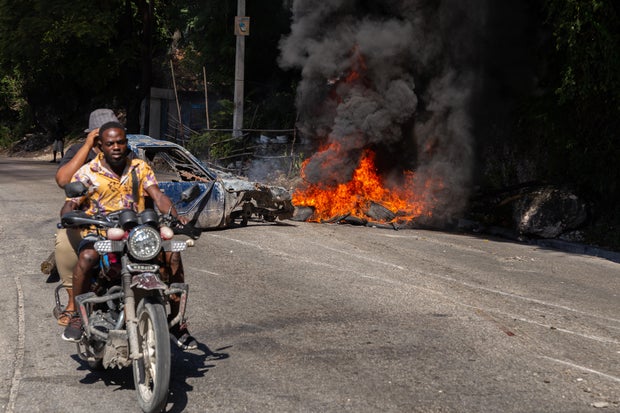
Cite Soleil is a densely populated neighborhood near the port in Port-au-Prince. It's among the most impoverished and violent areas in the small country.
Haiti has been gripped by political chaos for years, leaving room for heavily-armed criminal gangs to seize huge swaths of territory in Port-au-Prince and elsewhere. Much of the capital remains lawless despite hundreds of police from Kenya being sent in to help reassert law and order.
International airlines have largely stopped flying in and out of Haiti amid the chaos and bloodshed, with several U.S. carriers halting flights entirely after planes were hit by gunfire in November. American Airlines said over the weekend that it no longer planned to resume flights from February as previously stated, joining Spirit Airlines and JetBlue Airways in postponing all Haiti routes indefinitely.

FAA prohibits US airlines from flying to Haiti and UN suspends flights after plane was shot by gangs

PORT-AU-PRINCE, Haiti (AP) — The Federal Aviation Administration announced Tuesday that it will prohibit U.S. airlines from flying to Haiti for 30 days after gangs shot a Spirit Airlines flight and the United Nations said it will suspend flights, “obviously limiting the flow of humanitarian aid and humanitarian personnel into the country.”
The bullets hit the plane when it was about to land Monday in the country’s capital Port-au-Prince, injuring a flight attendant. It was part of a wave of violence that erupted in Haiti as the country swore in its new prime minister after a politically tumultuous process.
Life in much of Haiti’s capital was frozen after the wave of violence, which came to a head when gangs shot a Spirit Airlines airplane Monday, forcing the airport to shut down. Photos and videos obtained by The Associated Press show bullet holes dotting the interior of a plane. A number of airlines suspended flights to Haiti through Thursday, but it was unclear how long closures could drag on.
Neither the former interim prime minister, Garry Conille, nor the newly inaugurated Alix Didier Fils-Aimé commented on the violence.
But Luis Abinader, who as president of the neighboring Dominican Republic has cracked down on Haitian migration, called firing on the airplane terrorism.
“This was a terrorist act; the countries that are following and helping Haiti should declare these armed gangs as terrorist groups,” Abinader said in a news conference.
On Tuesday, heavily armed police in armored cars outside the airport checked trucks used for public transportation passing by.
Schools were closed, as were banks and government offices. Streets, where just a day before gangs and police were locked in a fierce firefight, were eerily empty, with few driving by other than a motorcycle with a man who had been shot clinging to the back.
The sounds of heavy gunfire still echoed through the streets in the afternoon — a reminder that despite political maneuvering by Haiti’s elites and a strong push by the international community to restore peace, the country’s toxic slate of gangs kept its firm hold on much of the Caribbean nation.
The United Nations estimates that gangs control 85% of the capital, Port-au-Prince. A U.N.-backed mission led by Kenyan police to quell gang violence struggles with a lack of funding and personnel, prompting calls for a U.N. peacekeeping mission.
The violence comes after a transitional council, tasked with restoring democratic order to Haiti, which hasn’t held elections since 2016, decided to fire Conille, who often was at odds with the council during his six months in office. The council rapidly swore in businessman Fils-Aimé as the new interim prime minister.
Conille originally called the move illegal, but on Tuesday acknowledged Fils-Aimé's appointment in a post on the social media platform X.
“(I) wish him success in fulfilling this mission. At this crucial moment, unity and solidarity are essential for our country. Long live Haiti!” he wrote.
Fils-Aimé promised to work with international partners to restore peace and hold long awaited elections, a vow also made by his predecessor.
But many Haitians, like 43-year-old Martha Jean-Pierre, have little taste for the political fighting, which experts say only give gangs more freedom to continue expanding their control as Haiti teeters on the brink of famine.
Jean-Pierre was among those to brave the streets of Port-au-Prince on Tuesday to sell the plantains, carrots, cabbage and potatoes she carried in a basket on her head. She had no choice, she said — selling was the only way she could feed her children.
“What good is a new prime minister if there’s no security, if I can’t move freely and sell my goods,” she said, nodding to her basket of vegetables. “This is my bank account, this is what my family depend on.”
It was a frustration that appeared to be international players that have pushed for a peaceful resolution in Haiti like the U.N. and the U.S.
On Tuesday, the U.S. State Department lamented that Conille and the council “were unable to move forward in a constructive manner” and called on Fils-Aimé and the council to provide a clear action plan outlining a joint vision on how to decrease violence and pave the path for elections to be held to “prevent further gridlock.”
“The acute and immediate needs of the Haitian people mandate that the transitional government prioritize governance over the competing personal interests of political actors,” it wrote in a statement.

Haiti's prime minister ousted after six months
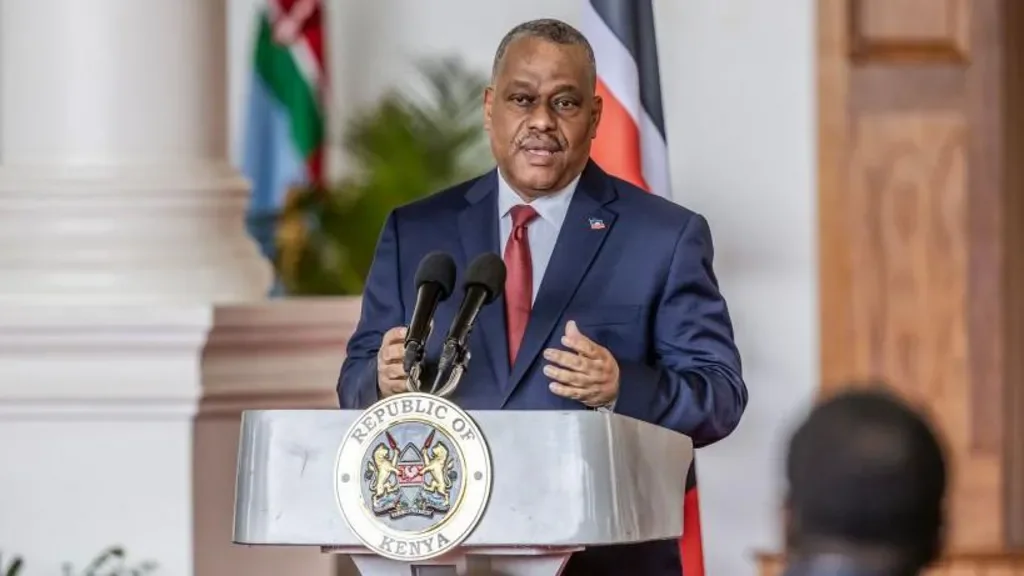
Haitian Prime Minister Garry Conille has been fired by the country's ruling council less than six months after he took office.
An executive order, signed by eight of the council's nine members, named businessman and former Haiti Senate candidate Alix Didier Fils-Aimé as Conille's replacement.
Conille, a former United Nations official, was brought in to lead Haiti through an ongoing, gang-led security crisis and had been expected to help pave the way for the country's first presidential elections since 2016.
He described his ousting as illegal, saying in a letter - seen by Reuters news agency - that it raised "serious concerns" about Haiti's future.
Haiti currently has neither a president nor parliament and, according to its constitution, only the latter can sack a sitting prime minister.
"This resolution, taken outside any legal and constitutional framework, raises serious concerns about its legitimacy," Conille's letter was quoted as saying.
Haiti's transitional presidential council (TPC) was created in April after Ariel Henry, Conille's predecessor, was forced from office by a network of gangs that had taken over parts of the capital Port-au-Prince.
Henry left Haiti to attend a summit in Guyana on 25 February 2024, and gang members subsequently seized the city's international airport, preventing him from returning.
The TPC was tasked with restoring democratic order to the Caribbean country, where such violence is rife.
More than 3,600 people have been killed in Haiti since January and more than 500,000 have had to leave their homes, according to the UN, which describes Haiti as being one of the poorest countries in the world.
Two million Haitians currently face emergency levels of hunger, UN data shows, while almost half the population "do not have enough to eat".
One of the country's most powerful gang leaders, Jimmy Chérizier, also known as Barbecue, previously said he would be prepared to end the violence if armed groups were allowed to be involved in talks to establish a new government.
Presidential elections were last held in Haiti eight years ago, when Jovenel Moïse of the Tèt Kale party was elected.
Since his murder in July 2021, the post of president has been vacant.
Gangs in Haiti have capitalised on the power vacuum and expanded their control over swathes of the country, which has effectively been rendered lawless in places.
Last month, it was reported that hundreds of police officers had been deployed to Haiti from Kenya, with more set to join them in November.
Haiti edges towards holding first elections since 2016

New York man deported to Haiti, though he's not a Haitian citizen, tells his story

- Since his deportation in 2021, Pierrilus has been working to get back home to Spring Valley, the New York village where he'd lived since he was 5.
- Pierrilus is stateless. He was born in Saint Martin, a French territory, but wasn't made a citizen because his parents weren’t French nationals. He also doesn't have Haitian citizenship.
- Will Pierrilus finally be able to come home to Spring Valley? "As somebody of faith, I believe the right thing is going to happen," he said during a phone call from somewhere in Haiti.
Paul Pierrilus has moved about a half dozen times in the three-plus years since he was deported to Haiti, even though he's not a Haitian citizen and had never been there before his forced removal.
"Some neighborhoods are worse than others. Gangs literally taking over neighborhoods," Pierrilus said via a Zoom call from an undisclosed location. "I try to avoid the danger."
Pierrilus said he knows it's time to move on when the nightly gunfire gets closer.

Kidnappings are "not something that's rare," he said.
"A huge target’s on my back," said Pierrilus, who has witnessed violence and kidnappings. "They can tell you're Americanized. I stick out like a sore thumb."
Since his deportation in 2021, Pierrilus has been working to get back home to Spring Valley, the New York village where he'd lived since he was 5 and worked as a financial planner. He's had support from human rights organizations like Robert F. Kennedy Human Rights, the National Immigrant Justice Center and the Haitian Bridge Alliance, as well as from his family and his home church, the French Speaking Baptist Church of Spring Valley.
Former U.S. Rep. Mondaire Jones, a Democrat, has pled Pierrilus' case in and out of office, including during a recent interview with lohud. A spokesman for U.S. Rep. Mike Lawler said in 2023 that the Republican had not received a request from RFK Human Rights for assistance, but would be willing to help. Jones is challenging Lawler in the November election for the 17th District seat.
There have been developments in Pierrilus' case: Gov. Kathy Hochul in May granted him a pardon for a 2003 conviction of criminal sale of a controlled substance in the third degree. It's a charge Pierrilus said he pleaded guilty to in his early 20s. He's now 43. Pierrilus describes the incident as a one-time mistake for which he took responsibility and served his time.
Hochul's pardon ‒ the product of a detailed investigation by her team ‒ basically provides relief from the criminal record that is cited as the reason for his deportation.
The pardon could help open a pathway for Pierrilus to receive humanitarian parole because his current situation is so precarious, said Sarah Decker, staff attorney at Robert F. Kennedy Human Rights. Pierrilus does not qualify for other special immigration programs that pertain to Haiti.
"He's a person deported from the United States of America, forced to live in hiding," stuck in a country that's not his own, with limited family and network ties, and easily identifiable as American, making him a target for kidnapping and worse, Decker said.
Neither Pierrilus, nor the agencies championing his cause, are anywhere near giving up.
"As somebody of faith," Pierrilus said during a Sept. 19 interview, "I believe the right thing is going to happen."
Stateless and stuck
Pierrilus is literally a man without a country.
He was born in Saint Martin, a French territory in the Leeward Islands. He wasn't automatically a citizen because his parents weren’t French nationals, but were citizens of Haiti at the time. He also didn’t automatically inherit Haitian citizenship through his parents.
He moved with his family to the U.S. when he was 5. They settled in Spring Valley, which has the second-largest Haitian population, per capita, in the country. When his parents eventually earned U.S. citizenship, Paul didn't. But his family had been confused by a complex system and Paul didn't realize he had no status in the U.S. until he filed the standard FAFSA form when ready to attend SUNY Rockland Community College.
Pierrilus, though, didn't have status in any nation.
Being stateless is an unusual situation, but one that didn't really impact Pierrilus for years.
Even when he neared deportation, Pierrilus had repeatedly received documentation from both the French consulate and the Haitian government that confirmed he was not a national of either country. He also visited both consulates, at the behest of U.S. immigration officials, who asked for updated documents. Both countries' paperwork confirmed he was not a citizen of either.
Even on the plane bound for Haiti, he tried showing documents that confirmed his stateless status.
Pierrilus was in the system for years with no issues
After Pierrilus' 2003 guilty plea, he spent six months at Lakeview Shock Incarceration Facility in Chautauqua County, a minimum security "boot camp" that excludes violent or repeat offenders and focuses on treatment and skill-building.
"I did what I did," Pierrilus said. "I did my time."
After his release, Pierrilus was under a federal "Order of Supervision," which is often assigned to non-citizens who have violated U.S. immigration law, or have committed certain criminal acts, even fairly minor ones. OSUP status allows immigration officials to keep track of an individual, who is supposed to check in at certain intervals.
For the next 15 years, Pierrilus said he followed every rule, jumped through every hoop, make every check-in at the offices in downtown Manhattan, waiting hours. He likened the process to going to the DMV. You line up, then you sit. Then you wait. And wait.
"I don’t think somebody making a mistake one time in their life," Pierrilus said, justifies what happened next.
'I'm not from Haiti'
Paul Pierrilus' deportation saga began on Jan. 11, 2021.
But even before that, he had an inkling something was happening. "I got a phone call. I was told I could go a local police station" for his OSUP check-in. He also kept getting a random call from someone with a blocked number. "It felt like something wasn't right," he said.
Since he already had an appointment at the ICE field office in Federal Plaza in New York City, Pierrilus decided just to stick to the normal routine. "I went early in the morning," he recalled. People were being called in for their appointments, but he was left sitting, waiting. By the end of the day, "I was last person in the waiting room."
Finally, Pierrilus was called into the office. The door was closed and locked. Then the officer said to him: “You're no longer on supervision. You’re going home.”
What home, Pierrilus asked? "They said Haiti."
Pierrilus recounted telling the officer, "I’m not from Haiti."
The response: “Well that’s what your file says.”
He was taken to a side room with a cell.
At every step, Pierrilus showed documents from Haiti stating he was not a citizen and would not be accepted. He added that he now believes that Haiti has been used as a dumping ground by U.S. immigration officials, and people of color are the refuse. "There are people from Jamaica, sent to Haiti," he said. "They have no ties, no nothing. It might sound crazy, but what they did is not a one-off situation."
Pierrilus was given the option of being taken to JFK airport and self-deporting. He said no.
Pierrilus said he believes U.S. immigration officials knew the French government would reject his transfer to a French territory and figured that Haiti was unstable and could be persuaded to just accept another deportee.
On Jan. 19, in the dwindling hours of the Trump administration, Pierrilus was being walked to a plane on the tarmac, shackled and surrounded by agents. Then, with no explanation, he was then led back, away from the plane.
The Haitian ambassador lauded the move on Twitter, now X.
Pierrilus was sent to a holding center in Louisiana.
On Feb. 2, with the Biden administration now in office, the deportation again commenced. Was he surprised? Pierrilus, in a reflection that summed up his entire experience, responded: "What they’re supposed to do and what they will do, two separate things."
Pierrilus remembers being placed, shackled, in a van by himself. He said it was stifling and smelly and he was there for hours.
He was placed on a plane with others, including families and babies, being sent to Haiti. Pierrilus again tried to show his travel documents. No one cared.
When he protested, he said, an immigration officer gestured to a straitjacket on the floor and told Pierrilus, "We can do this the hard way or the easy way."
His experience in Haiti
Pierrilus was the last to get off the plane.
He recalled resisting disembarking. He demanded to see the travel documents that authorized him to be sent to Haiti.
Armed with his paperwork that showed he was not a Haitian national, Pierrilus said he was resistant and tried to get back on the plane. Surrounded by Haitian officers, he recalled, "I fall on my face."
"They put a knee on my back, literally choking me. I can't breathe," Pierrilus said. "This is my first experience of getting Haiti."
He said a woman in the crowd yelled "no, no!" for him to stop resisting and calm down. "I have no wins in this situation," he realized.

Everyone was loaded on a trolley. When they got to their destination, a guy on a motorcycle told Pierrilus that he knew his family and was there to help him. "I didn't trust he really knew my family," Pierrilus said. "I’m like questioning and skeptical of everything cuz I don’t know nobody and have been lied to so many times."
His sister, Neomie, was on the phone assuring him that the man was really a family acquaintance sent to help. With the acquaintance was the first place he stayed.
Soon, though, the neighborhood became unstable. He moved. And moved several times more.
Pierrilus said that as a financial planner, he's always advised his clients to keep enough money in savings to get them through six months worth of expenses. He said he had a little more than that. But three years and eight months into his exile, his savings are depleted.
When Pierrilus arrived, he knew very limited Haitian Creole, and he does not speak French.
He relies on family and friends to get by. It would be unsafe to work, so he doesn't spend much time outside his home. Besides, there are no jobs for him in Haiti.
He has faith he'll find a way home
Pierrilus makes clear that Haiti remains dangerous and he's constantly at risk.
Since he's been there, a president was assassinated. Gang violence has spread. Cholera remains a threat. A current informal Kenya-led peacekeeping mission has moved into Haiti, but the United Nations, so far, has failed to establish a full peacekeeping mission.
With a pardon, does Pierrilus see hope that he will be able to return home? Does he believe the outcome of the 2024 presidential election would make a difference?
Pierrilus said it may be a "tougher fight with the Trump administration," citing his deportation saga began during Trump's first administration. But, he noted, he was still "targeted" and his deportation process continued two weeks after Biden took office.
He also takes into account ongoing racism against Haitians in the U.S. "The fearmongering, we see it," said Pierrilus, referring to other residents of Haiti, mentioning the wild fabrication that Haitians are taking people's pets in Ohio and eating them.
'Déjà vu':Haitian immigrants say long history of blame can't curb their success in US
It's ginned up for political purposes now, but history shows it is not new.
Pierrilus recalled marching across the Brooklyn Bridge with his father in 1990 when he was 10 years old to protest the exclusion of Haitians as blood donors in the U.S. under the claim they were a high risk for AIDS. The government reversed the policy.
"Right now what’s going in in Ohio ... that kind of narrative. It’s the same thing," he said. "Using Haitians for scapegoats."
Meanwhile, Pierrilus waits, works with nonprofits and gains strength from knowing "I’ve got a lot of support everywhere, people praying for me."
"As somebody of faith, I believe the right thing is going to happen," Pierrilus said. "One side or the other side, I just hope they do the right thing."

Haiti expands state of emergency to whole country
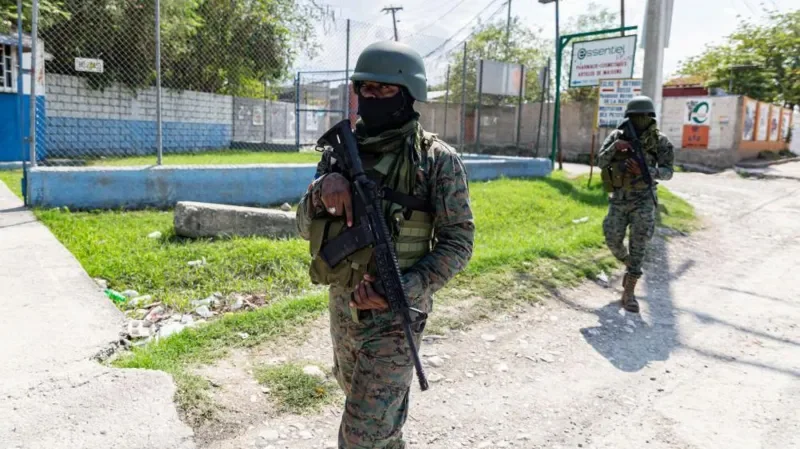
The Haitian authorities have expanded a state of emergency to the whole country as the government battles violent gangs that have taken control of large parts of the capital - and are attempting to move into other regions.
The move comes as the US Secretary of State Antony Blinken prepares to visit the Caribbean nation, where he will meet Prime Minister Garry Conille to discuss “forthcoming steps in Haiti’s democratic transition”.
Mr Conille has been attempting to restore order since the new government was formed three months ago.
Nearly 580,000 people have been internally displaced by conflict, with close to five million facing severe hunger, the United Nations has said.
Mr Blinken's visit comes as more than a million people remain without electricity in the capital Port-au-Prince, after protesters stormed and vandalised a power plant.
The state electricity company said the incident happened on Monday, when a group of people attacked the compound to protest against frequent power cuts in previous days.
The US is the largest funder of a UN-backed security mission aimed at combating gang violence.
In March, armed gangs stormed Haiti’s two biggest prisons, freeing around 3,700 inmates.
The Ouest Department - a region including the nation's capital, Port-au-Prince - was originally put under a state of emergency on 3 March, after escalating violence gripped the capital.
In June and July, a group of 400 Kenyan police officers arrived in Haiti to help combat the violence, the first tranche of a UN-approved international force that will be made up of 2,500 officers from various countries.

Boca Raton swimmer, 14, will represent Haitian heritage at Paris Olympics

By the time she was six years old, Mayah Chouloute was already used to teammates and family chanting her name at swimming pools across South Florida.
But this summer, the 14-year-old from Boca Raton will be cheered from all over the world as she competes at the biggest meet of her life — the Paris Olympics.
Mayah will represent Haiti in the Olympic Games' fastest pool event, the 50-meter freestyle sprint. She told WLRN she is ready to make her family and heritage proud, and introduce her talents to the world stage.
“I think doing that '50 free' will be an opportunity to show how fast I can go in such a short [distance],” she said.
The confident teen, who was born in Palm Beach County to Haitian parents, credits her inspiration to celebrated U.S. athlete Simone Manuel, the first African-American to win a solo gold medal in swimming.
But even she will admit her first Olympic slot came sooner than she expected.
“Let me tell you, it was a big shocker for me. I didn’t think it was going to happen, especially since I’m only 14,” said Mayah, an 8th grader at Boca Raton Middle School.
Her mother, Marjorie Hilaire Chouloute, told WLRN Mayah's quick development in the sport also came as a surprise to the family.
Unbeknownst to Marjorie and her husband, when Mayah was six, she was already practicing her backstroke, breaststroke and butterfly swimming techniques during aftercare swimming classes.
So they were shocked when she told them about an upcoming relay race where she would be taking the butterfly leg.
"I'm like, 'You don't know how to do that! What?' And me and daddy were freaking out," Marjorie said. "And then the relay started and there comes her turn. And I saw her little back coming, flying out," she said. "I had a moment. That's one of the best moments of my life."
Very quickly, a simple hobby turned into Olympic aspirations.
“She wanted to be part of a team. She advocated for that at six-years-old," Marjorie said. “It's really her journey. She started it. She loves swimming. She kind of calls the shot and we're following along.”
Mayah now trains under coach Quinn Cassidy, at Saint Andrews Aquatics in Boca Raton. She flew to Paris this week to prepare for the Olympic Games, which officially open on July 26.
Seven athletes in Haitian delegation

She is one of just seven athletes in the Haitian delegation, selected by the Haitian Amateur Athletic Federation after successfully completing the Olympic standard.
Donning uniforms designed by renowned Haitian-Italian designer Stella Jean and Haitian painter Philippe Dodard, the athletes will compete in five events: judo, boxing, track and field, swimming and artistic gymnastics.
Also joining Team Haiti is Miami-native Emelia Chatfield who attended St. Thomas Aquinas High School in Hollywood. The 22-year-old will be taking part in track and field.
Like Chatfield and Lynnzee Brown, who will be the the first-ever woman gymnast to represent Haiti, Mayah qualified through a Universality Place. These are spots given to Olympic-level athletes to represent countries that have had eight or fewer athletes in the last two Olympics.
Under International Olympic Committee (IOC) rules, after meeting certain criteria, an Olympic athlete is allowed to compete for a country other than the one they were born in.
The Summer Olympic Games in Paris runs July 26 - Aug. 11, hosting more than 10,000 athletes from nearly 200 countries. Mayah Chouloute is set to compete on Aug. 3.

US ambassador announces $60 million in aid and new resources for police during visit to Haiti
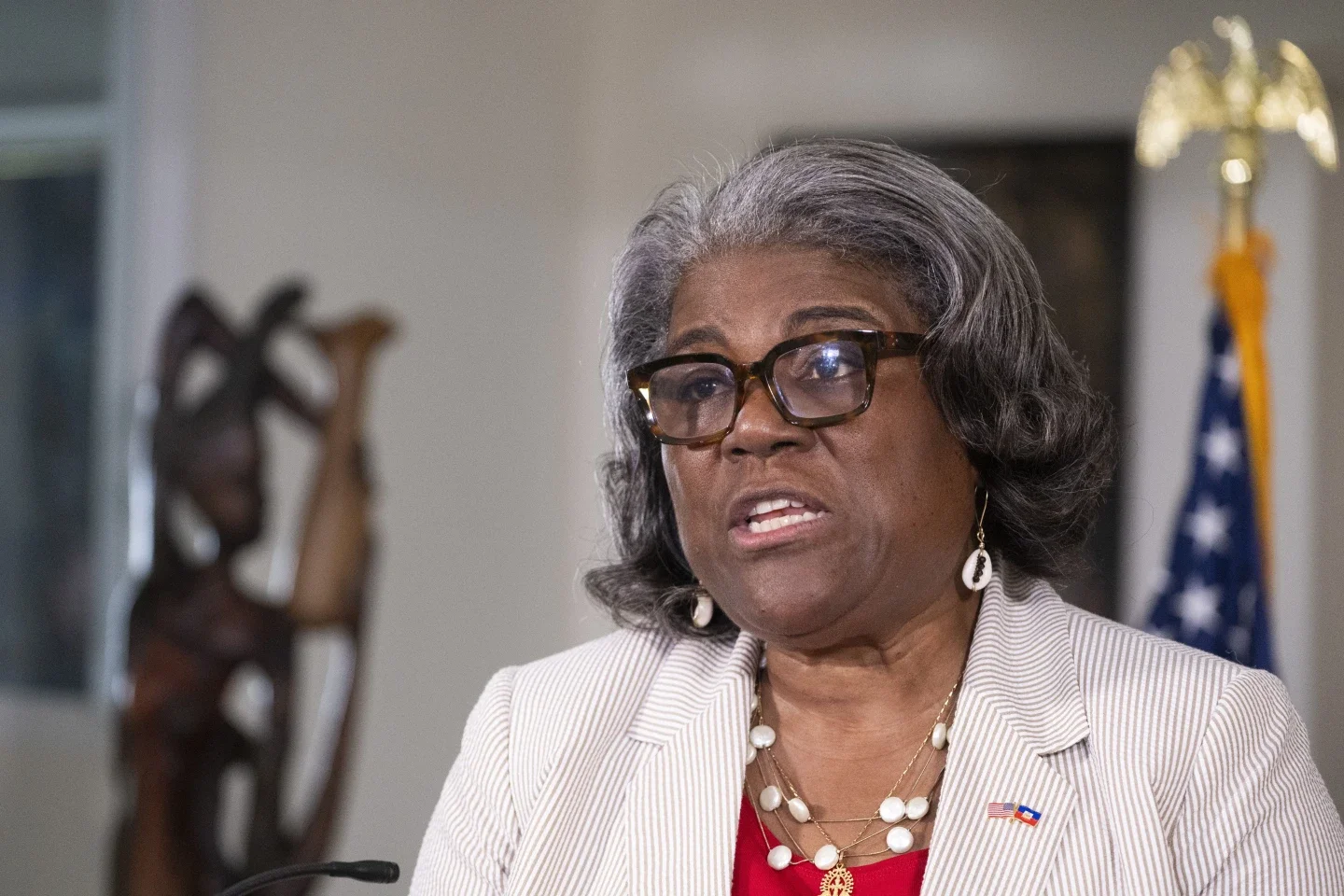
PORT-AU-PRINCE, Haiti (AP) — The U.S. ambassador to the United Nations announced $60 million in additional humanitarian assistance to Haiti during a trip Monday to the troubled Caribbean country.
Ambassador Linda Thomas-Greenfield also said the U.S. Defense Department would provide a “substantial increase” in mine-resistant vehicles to a U.N.-backed, multinational security mission led by Kenya to help Haiti’s national police combat widespread gang violence.
The announcement came nearly a week after a second Kenyan contingent of 200 police officers arrived in Haiti, following the first contingent of 200 officers last month.
“We know that progress isn’t lineal. There will be inevitable setbacks and stumbling blocks, and yet this mission has opened a door to progress,” Thomas-Greenfield said.
She said the USAID assistance, which now totals more than $165 million this fiscal year, would fill gaps in nutrition, food security and shelter; improve water and sanitation services; and provide Haitians with cash to buy basic goods.
Earlier Monday, Thomas-Greenfield met with Kenyan police and leaders of Haiti’s new transitional government as part of a one-day visit to encourage action on Haiti’s humanitarian crisis and political reform leading to democratic elections that have yet to be scheduled.
“This isn’t a naïve sense of hope, but I do have a sense of hope. This has been a remarkable day on the ground,” she said.
There has been wide international support for the new transitional government led by Prime Minister Garry Conille, a former U.N. development specialist who assumed the post in early June. Earlier this month, he told the U.N. Security Council that the Kenyan police will be crucial to helping control the country’s gangs and moving toward democratic elections.
Gangs have grown in power since the July 7, 2021, assassination of President Jovenel Moïse and are now estimated to control up to 80% of the capital and surrounding areas. A surge in killings, rapes and kidnappings has led to a violent uprising by civilian vigilante groups.
According to U.N. agencies, the violence has displaced 580,000 people, more than half of whom are children, and resulted in 4 million people facing food insecurity.
Haiti had asked for the immediate deployment of a foreign armed force to fight gangs in late 2022, and U.N. Secretary-General Antonio Guterres appealed for months for a country to lead the force before the Kenyans came forward.
The multinational force will eventually total 2,500 personnel from Kenya, the Bahamas, Bangladesh, Barbados, Benin, Chad and Jamaica. They will be deployed in phases at a cost of some $600 million a year, according to the U.N. Security Council.
The U.S. has provided over $300 million to the force, whose formation was supported by a U.N. resolution.
The Kenyan police will train the Haitian national police for joint security operations that have not yet begun, the official said.

US judge sentences Germine Joly, former leader of a powerful gang in Haiti, to 35 years in prison
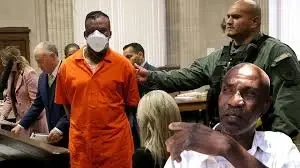
SAN JUAN, Puerto Rico (AP) — A man who once described himself as “king” of a notoriously violent gang in Haiti and is linked to the kidnapping of 16 U.S. citizens was sentenced to 35 years in prison Monday in a federal court in Washington, D.C.
Germine Joly, best known as “Yonyon,” had pleaded guilty in late January to weapons smuggling and the laundering of ransoms related to the U.S. citizens kidnapped in October 2021, bringing his trial to a halt.
The case against Joly is part of an ongoing push by U.S. authorities to stem the smuggling of weapons from the U.S. to Haiti, where gangs control 80% of the capital and have left more than 580,000 people homeless as they continue to pillage neighborhoods in a quest to seize more territory. U.S. officials also are trying to crack down on the kidnapping of U.S. citizens in Haiti, whose ransoms finance the purchase of illegal arms and ammunition.
“The leaders of violent gangs in Haiti that terrorize Americans citizens in order to fuel their criminal activity will be met with the full force of the Justice Department,” U.S. Attorney General Merrick B. Garland said in a statement.
Joly, 31, had asked the judge for leniency and forgiveness, with his attorneys requesting that he receive no more than 17.5 years in prison. The attorneys did not immediately return messages for comment.
Joly was co-leader of the 400 Mawozo, which translates roughly to “400 Simpletons,” one of Haiti’s most powerful gangs. It controls part of Croix-des-Bouquets, a neighborhood in the eastern region of the Port-au-Prince capital and surrounding areas. It also operates along a route that connects the capital with the border city of Jimaní in the Dominican Republic, which shares the island of Hispaniola with Haiti.
The gang is known for its high record of kidnappings as well as trafficking of drugs and weapons, killings, rapes and armed robberies, among other things, according to a U.N. report.
“The 400 Mawazo gang not only wreaks havoc in its own communities but targets innocent Americans living and traveling in Haiti,” FBI Director Christopher Wray said in a statement.
Three shipments containing smuggled weapons and ammunition arrived in Haiti in 2021, shortly before the gang kidnapped 17 missionaries, including 16 U.S. citizens, the U.N. report noted. The weapons alone were estimated to cost roughly $28,000, it added.
“This single case indicates that 400 Mawozo is able to mobilize significant amounts of money to acquire firearms and ammunition,” the report stated.
The gang is still led by Joseph Wilson, best known as “Lanmò San Jou,” which means “Death has no date,” and it is an ally of G-Pep, a powerful gang federation.
Haitian authorities announced a warrant for Wilson in late 2020, but he has yet to be detained.
Meanwhile, Haitian police arrested Joly in 2014, and in 2018, a local judge sentenced him to life in prison, from where authorities said he still directed gang operations, including the October 2021 kidnapping of 12 adults and five minors after they visited an orphanage in the Croix-des-Bouquets area. The group included 16 Americans and one Canadian who worked with Ohio-based Christian Aid Ministries.
The organization said 12 of the captive missionaries escaped, with five others previously freed, although it’s unclear if any ransom was paid.
In 2022, the U.S. government extradited Joly.
Joly’s former girlfriend, Eliande Tunis of Pompano Beach, Florida, had been sentenced earlier this month to 12.5 years in prison. Tunis, 46, had pleaded guilty in late January to the same charges Joly faced.
U.S. federal prosecutors had accused Joly, Tunis and two other suspects of buying and supplying weapons to the 400 Mawozo gang from at least March through November 2021. The weapons included those designed for “military and close-quarters combat” such as AK-47s, AR-15s and a .50 caliber rifle, according to the U.S. Justice Department.
The agency said that Joly, who was in prison in Haiti at the time, directed operations using unmonitored cell phones. He still faces separate charges in another case related to the kidnappings of the U.S. citizens.

Haiti receives first Kenyan officers to battle gang violence
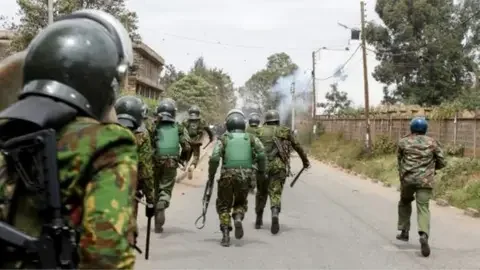
African country will lead coalition aiming to bolster police force overwhelmed by fierce fighting in the Caribbean nation.
The first planeload of Kenyan police officers landed in Haiti on Tuesday morning, marking the beginning of a long-stalled international task force intended to wrest control of the Caribbean country from violent gangs. Kenya had volunteered to lead the UN-authorised operation, known as the Multinational Security Support Mission in Haiti last July, with 1,000 officers. But the rollout was delayed by legal obstacles in the east African nation amid political and humanitarian crises in Haiti. Dozens of officers, carrying rifles and wearing military fatigues, disembarked from a Kenya Airlines jet on the tarmac of the country’s main international airport in Port-au-Prince, according to videos shared by witnesses. On Monday, Kenyan President William Ruto had addressed the 400 departing officers in Nairobi. “Our police officers’ presence in Haiti will give relief to the men, women and children whose lives have been broken by gang violence. We will work with the international community to bring lasting stability in Haiti,” Ruto said. Haiti’s national police force, with approximately 9,000 officers, has struggled to contain about 200 gangs that have grown in power since the assassination of President Jovenel Moïse in July 2021. Gang violence led to the collapse in April of the interim government of Ariel Henry. He was replaced by a transitional presidential council tasked with convening Haiti’s first elections since 2016. Amid the escalating violence, Haiti’s displaced population jumped 60 per cent between March and June, from 360,000 to 580,000, according to the UN. Hospitals have been forced to close due to gang activity, while schools are being used as shelters for refugees. Gangs are estimated to control more than 80 per cent of the capital, Port-au-Prince. The much-anticipated Kenya-led mission is expected to bolster Haiti’s outmatched police force with about 2,500 additional officers, with Caribbean and African nations, including Barbados, Jamaica and Chad, as well as Bangladesh, agreeing to provide personnel. The US state department welcomed news of the deployment at a briefing on Monday. “With the arrival of MSS mission personnel, we hope to see further measurable improvements in security, particularly with respect to access to humanitarian aid and core economic activity,” said state department spokesman Matthew Miller. Ruto is one of the US’s staunchest allies in Africa. Washington is the main backer of the Haiti mission, pledging about $300mn in support, though it has stopped short of sending troops. The deployment had faced legal challenges, and Kenya’s high court blocked it in January. But Ruto managed to push it through after signing a bilateral agreement with Haitian officials in Port-au-Prince in March.
Last month, Ruto — recalling Africa’s ties with Haiti, which is part of the African Union diaspora region — told the FT his country’s forces “have requisite experience to deal with this”, having been part of more than 40 peacekeeping missions, including neighbouring Somalia, the Democratic Republic of Congo and the former Yugoslavia. The deployment to Haiti comes amid turmoil in Kenya, where several people were killed and injured by police gunfire on Tuesday during anti-tax protests, as demonstrators stormed the country’s parliament. Analysts and diplomats say the mission in Haiti is risky. Previous interventions in the country have done little to prevent the resurgence of violence, especially after the 2010 earthquake which devastated the capital. “Everyone knows that in the international co-operation world, people like to repeat what was done before, no matter how bad it was, because it’s convenient,” said Emmanuela Douyon, who runs the Haitian think-tank Policité.

Hundreds mourn gang killings of a Haitian mission director and a young American couple
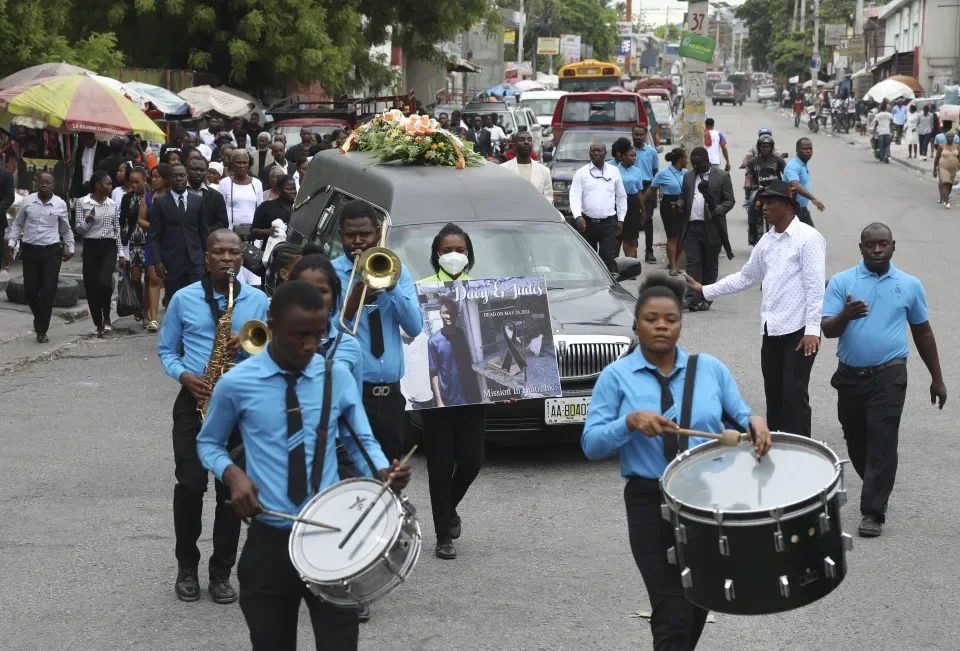
PORT-AU-PRINCE, Haiti (AP) — Hundreds of people packed into a sweltering church in Haiti's capital on Tuesday to mourn Judes Montis, a mission director killed by gang members who also fatally shot an American couple that worked with him.
Wails filled the crowded church during the early morning service as tears streamed down the face of Montis’ wife. The service also honored the lives of Davy and Natalie Lloyd, a married couple in their early 20s who were with Montis when gunmen ambushed them on Thursday night as they left a youth group activity held at a local church.
Montis, 47, leaves behind a wife, two children, ages 2 and 6, and a brother who was present the night that the killings occurred.
“We’ll never forget you or the path you created for others!” cried out one mourner as the crowd dressed in black and white made its way from the church to the cemetery.
The service was held just days after the three were killed in a gang-controlled area in a northern part of Port-au-Prince where Montis worked as the local director of the Oklahoma-based Missions in Haiti, a religious organization founded by David and Alicia Lloyd, Davy Lloyd’s parents.
“We are facing the most difficult time of our life,” Missions in Haiti said in a recent Facebook post. “Thank you for all your prayers and support.”
Montis’ brother, Esuaue Montis, a 43-year-old Spanish teacher with the mission, told The Associated Press that he was nearby during the shootings. He said that he saw the gunmen arrive and he used a truck to block the gate before he started running with several orphans and employees in tow.
The group got separated, and when Esuaue Montis jumped over one wall, he encountered a group of armed men. They pushed him to the ground and stepped on him as one gunman asked people in the area if they recognized him while another said, “He works at the orphanage. Kill him.”
In that moment, his phone rang. It was a friend whom he had called earlier in a frenzy to tell him about the situation.
“This call is going to save you or going to kill you,” he recalled one gunman telling him as he ordered Montis to answer the phone.
His friend lied and told the men that Esuaue Montis didn't work at the orphanage.
“He gave me back the phone and left,” Montis said of the gunman.
He hasn't returned to the organization’s school where he worked and is now looking to flee Haiti.
“How will I be able to continue working in the orphanage, not seeing Jude next to me?” Esuaue Montis said between tears. “My brother checked on me all the time. If I went out in the afternoon, he would call and say, ‘Brother, where are you?’”
Montis said the mission had never been threatened before, adding that gang members in the area had only asked for small handouts on occasion.
While Jude Montis was buried in Port-au-Prince, Missions in Haiti said that the U.S. Embassy is working on obtaining the documents needed for the bodies of the Lloyds to be flown to the U.S., adding that it has relocated its staff and others to a safer location.
A Facebook post from Cassidy Anderson, a spokesperson for the family, on Tuesday stated that “transport has been completely secured,” but that no information would be released because of security concerns.
Natalie Lloyd, 21, is the daughter of Missouri state Rep. Ben Baker. He wrote on Facebook that he spoke by phone Monday with former U.S. President Donald Trump, who called to express his condolences.
“He mentioned how sorry he was that this evil happened to our kids and how beautiful their devotion was to their calling and to the people of Haiti,” Baker wrote.
In a recent interview with the AP, Davy Lloyd’s sister, Hannah Cornett, recalled how they grew up in Haiti because their parents are full-time missionaries, and that her brother learned Creole before he spoke English.
She said her parents run an orphanage, school and church in Haiti, and that she and her brothers grew up with the orphans.
Cornett said that the night of the killings, three vehicles carrying gang members had stopped the Lloyds and Montis, hitting her 23-year-old brother with the barrel of a gun and tying him up at his home as they stole their belongings. As people helped untie Davy Lloyd, another group of gunmen appeared and an unidentified person got shot, she said.
The gunmen then opened fire as the Lloyds and Montis tried to take cover in the house where her parents live, she said, adding that their bodies were set on fire.
Haiti’s National Police condemned the killings in a rare statement, and extended its condolences to the families of the victims, vowing to arrest those responsible.
However, it’s rare for Haitian gangs involved in high-profile kidnappings or killings to be arrested, since the police department is chronically under-resourced and understaffed. Gangs control at least 80% of Haiti’s capital, and violence continues unabated as the country awaits the U.N.-backed deployment of a Kenyan police force that once again has been delayed.
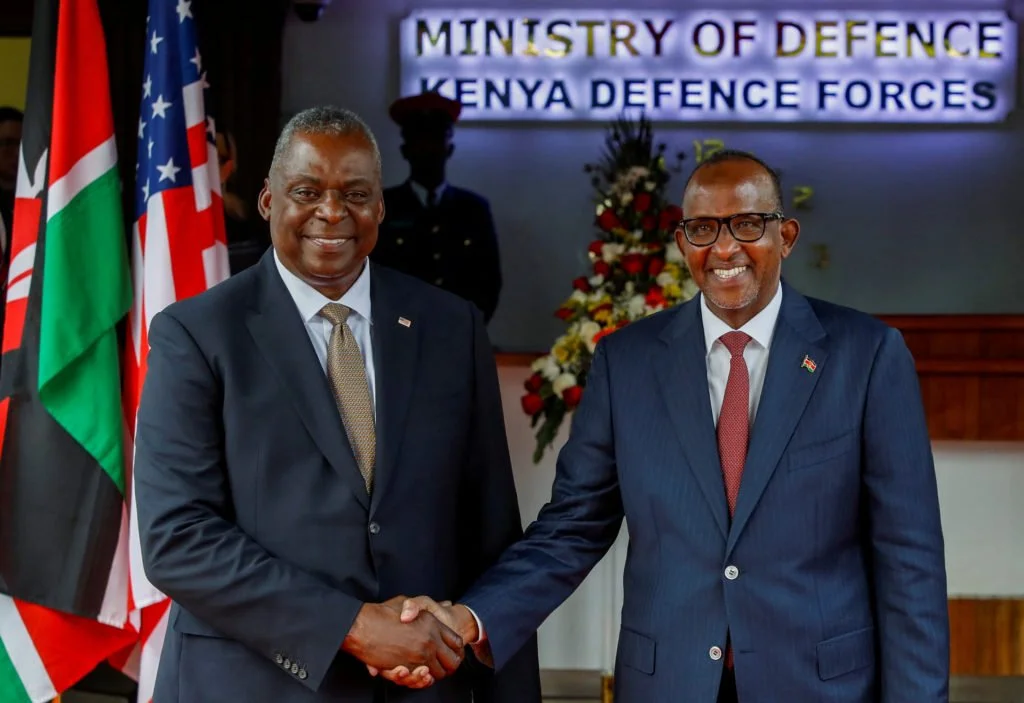
Kenyan special forces police to arrive in Haiti to help combat gang violence
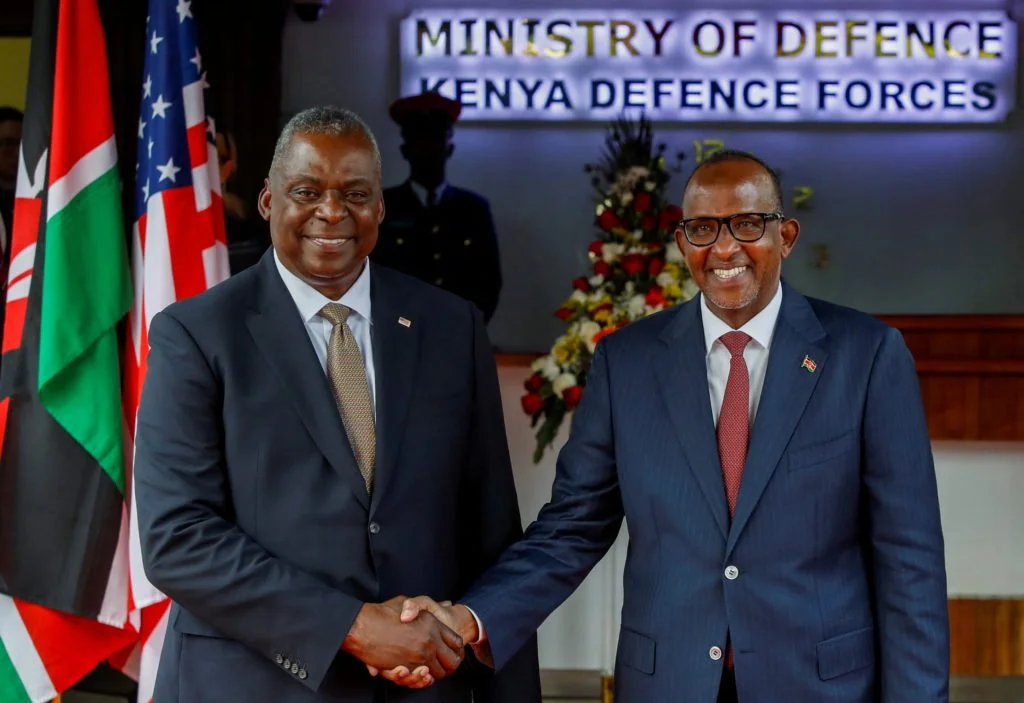
An advance group of Kenyan officers, part of a larger UN-backed ‘support mission’ to stabilize Haiti, landed in Port-au-Prince.
Kenyan special forces police who have spent time battling al-Shabaab fighters in east Africa are expected to arrive in Haiti in the coming days, as the US secretary of state, Antony Blinken, warned the Caribbean country was “on the precipice of becoming an all-out failed state”.
A small advance group of Kenyan officers – part of a larger UN-backed “multinational security support mission” designed to stabilize Haiti after months of mayhem – landed in the capital, Port-au-Prince, late on Monday as the city’s airport reopened nearly three months after a gang uprising forced it to close.
Kenyan media reports said another 200 officers were due to arrive later this week with their deployment coinciding with a state visit the country’s president, William Ruto, is making to the US. A total of about 1,000 Kenyan agents are expected to join the mission, as well as officers from Chile, Jamaica, Grenada, Paraguay, Burundi, Chad, Nigeria and Mauritius.
A senior official from Kenya’s interior ministry told the Geneva-based civil society group Global Initiative Against Transnational Organized Crime that “the first boots [would] hit the ground” in the coming days. “This time we are serious,” the official was quoted as saying.
Appearing in Washington DC before the Senate foreign affairs committee on Tuesday, Blinken claimed there was an “opportunity now” to achieve enduring stability after decades of turmoil.
Blinken said the reopening of Haiti’s main international airport was a clear sign of progress and anticipated US carriers would resume flights there “in the days ahead”.
The first Kenyan officers to arrive will reportedly come from an elite paramilitary unit called the recce squad, the rapid deployment force and members of a police special operation group who have spent time fighting Islamist insurgents on Kenya’s eastern border with Somalia. “They are no strangers to violent armed actors,” reported the Global Initiative Against Transnational Organized Crime.
Some observers have welcomed the long-delayed deployment as a major step towards bringing peace to a country that has lurched deeper into violence since the 2021 assassination of its then president, Jovenel Moïse. Blinken said US support for the multinational mission was critical to restore order and reduce the power of the gangs.
In a recent interview, the UN’s top expert on human rights in Haiti, William O’Neill, said he hoped many of the young gang combatants who have been sowing terror in Port-au-Prince would stand down once a superior fighting force arrived. “A lot of them are teenagers. You’re talking about 15-year-olds, 16-year-olds – and there’s no ideology. It’s not like the Taliban or al-Shabaab,” O’Neill said.
Top gang leaders might resist but their poorly trained foot soldiers were unlikely to resist, O’Neill predicted: “They’re not gonna commit suicide defending the turf. They’re gonna drop the gun and run … The one thing the gangs respect is a bigger force.”
But others are doubtful that yet another foreign intervention will bring lasting peace and point to a succession of botched operations in the century since US president Woodrow Wilson sent in the marines after the 1915 assassination of the Haitian president Jean Vilbrun Guillaume Sam. The most recent such intervention was the 2004-2017 UN stabilization force Minustah.
The Brazil-led mission initially wrested back control from armed groups that hold sway in many of Haiti’s impoverished seaside slums but UN troops later became embroiled in accusations of human rights violations, sexual abuse and importing a devastating cholera outbreak.
Blinken said he understood why some in Congress had concerns about the mission in Haiti, but said US aid was critical and urged Republican leaders to lift their holds on the funding.
“I know some people have concerns about the United States being the ‘policeman of the world’. Well, here’s a situation where Kenya and a number of other countries have stepped up and are willing to take this on but they need support,” he added.
Members of Haiti’s embattled national police force voice frustration that the resources being used to bankroll the latest security mission are not being used to bolster their own perilous efforts to reclaim the 80% of the capital now controlled by gangs.
“Buy ammunition, give us helmets … give us assistance. We can do it,” one police officer said in a recent interview with the Guardian, noting that the Haitian national police didn’t have a single helicopter.
In Kenya, opposition politicians have also attacked sending the country’s police officers into such a dangerous situation. “This mission is a death trap,” Millie Odhiambo told the New York Times.

Haiti’s main airport reopens nearly 3 months after gang violence forced it closed
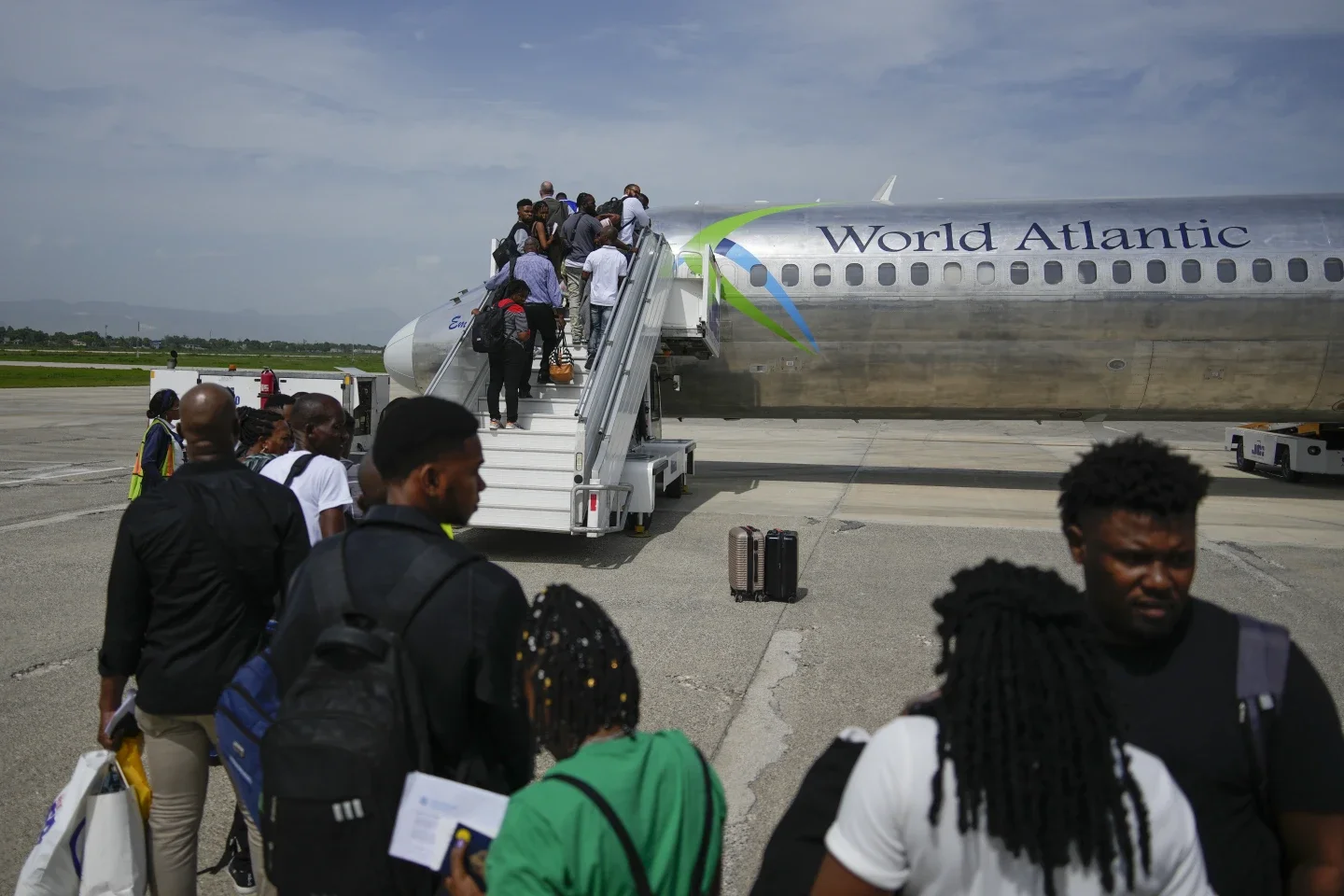
PORT-AU-PRINCE, Haiti (AP) — Haiti’s main international airport reopened Monday for the first time in nearly three months after relentless gang violence forced authorities to close it.
The reopening of the Toussaint-Louverture airport in the capital of Port-au-Prince is expected to help ease a critical shortage of medications and other basic supplies. The country’s main seaport remains paralyzed. Gangs control 80% of the capital.
U.S.-based airlines are not expected to start using the airport until late May or early June.
The first commercial passenger flight since March left for Miami nearly two hours behind schedule, with sweating passengers complaining about the lack of air conditioning until takeoff. Although the flight was organized by local carrier Sunrise Airways, it contracted Florida-based charter airline World Atlantic, which distributed paper towels to drenched passengers.
As the plane hurtled down the runway and took off, one passenger said in a soft voice, “Yes. Yes.”
Before Monday, the sole airport operating in Haiti was located in the north coastal city of Cap-Haitien. It was out of reach for many seeking to flee the country, with roads leading from Port-au-Prince controlled by gangs that have opened fire on cars and buses passing through.
The U.S. government had evacuated hundreds of citizens by helicopter out of a hilly neighborhood in Port-au-Prince, as did nonprofit organizations, as gangs laid siege to parts of the capital.
The attacks began on Feb. 29, with gunmen seizing control of police stations, opening fire on the Port-au-Prince airport and storming Haiti’s two biggest prisons, freeing more than 4,000 inmates.
Gangs since then have directed their attacks on previously peaceful communities, leaving thousands homeless.
More than 2,500 people have been killed or injured in Haiti from January to March, a more than 50% increase compared to the same period last year, according to the United Nations.
At the Couronne Bar near the sole airport gate operating on Monday, 43-year-old manager Klav-Dja Raphael welcomed her first clients. But her smile belied her fear.
“We are scared because they can still attack us here,” she said. “We must come in. It’s our job, but we’re afraid.” She recalled how bullets ricocheted through the airport the day it was attacked.
While the airport provided workers at that bar a month’s wages, she was left unemployed for the rest of the time, relying on friends and family. She is anxious to join her 13-year-old son who lives in Florida with his father.
Other workers, including those at immigration, were all smiles, content to be finally back at work. “That was a long vacation!” one immigration agent said.
Dozens of people lined up hours before the flight.
“I’m very happy, but it hurts that I’m leaving my husband and my son,” said Darling Antoine as her eyes began to water.
She received a visa allowing her to live in the U.S., but the rest of her family is still waiting. They applied because gangs kept encroaching on their neighborhood. “There are heavy gunshots every day,” she said. “Sometimes we have to hide under the bed.”
Jean Doovenskey, a 31-year-old accountant, left unemployed by the violence, said he was notified in early April that he was authorized to live in the U.S. He will live with his aunt in Florida but hopes to return to Haiti one day and live. “I believe in a new Haiti,” he said.
The attack on the airport also left former Prime Minister Ariel Henry locked out of Haiti since he was on an official trip to Kenya. He has since resigned, and a transitional presidential council is seeking a new prime minister. It is also tasked with selecting a new Cabinet and organizing general elections.
In recent weeks, U.S. military planes have landed at the Port-au-Prince airport with supplies as well as civilian contractors to help Haiti prepare for the arrival of foreign forces expected to help quell the gang violence.
On Sunday, Kenya’s foreign affairs principal secretary, Korir Sing’oei, said a plan to deploy police officers from the East African country was in final stages.
“I can tell you for sure that deployment will happen in the next few days, few weeks,” he said.
In March, Kenya and Haiti signed agreements to try to salvage a plan for the country to deploy 1,000 police officers to the troubled Caribbean nation. Other countries expected to back up Kenyan forces include the Bahamas, Barbados, Benin, Chad and Bangladesh. It wasn’t immediately clear when those would arrive.
In a city cut off from the world, guns and drugs keep flowing
Port-au-PrinceCNN —
On the rare days that the hills surrounding Port-au-Prince fall silent, people notice.
“If you can’t hear shooting somewhere, the gangs are probably running low on ammunition,” a police source in the Haitian capital told CNN. “But when there’s a lot of shooting, they’ve definitely received a fresh shipment.”
For over two months, Port-au-Prince has been cut off from the world, its international seaport and airport shuttered following an explosion of gang attacks in late February. All major roads are blocked by gang checkpoints. For most people living here, there is no way out – and no way to bring in desperately needed food and medicine.
Encircling the Caribbean nation is another closed perimeter, this one created by Haiti’s neighbors. The Dominican Republic has sealed the island’s shared border and airspace. The Bahamas has launched a naval blockade to keep Haitians from fleeing the crisis by boat; the UK has sent a warship to ward off anyone seeking refuge in Turks and Caicos, a British overseas territory; and the US state of Florida has increased marine and aviation patrols.
And yet guns, bullets and drugs keep pouring in, crossing international waters and airspace to reach the embattled country – most of the firepower originating from the US.
“Haiti doesn’t produce guns and ammunition, yet the gang members don’t seem to have any trouble accessing those things,” says Pierre Esperance, executive director of Haiti’s National Human Rights Defense Network.
Since the start of the year, thousands of people have been killed in gang-related violence and hundreds kidnapped, including at least 21 children, UN figures show. Stopping the flow of guns to Haiti would likely have an immediate impact on the bloodshed, according to police and human rights experts.
“We have to cut the gangs’ weapons supply lines. This is absolutely the most important thing now,” the police source told CNN. “Because when they don’t have bullets, their machine guns become nothing more than clubs.”
And as a Kenyan-led multinational security support force (MSS) prepares to deploy to Haiti, starving the gangs of ammunition should be a top priority for the US, says William O’Neill, the UN Designated Expert of the High Commissioner on the situation of Human Rights in Haiti.
“All of these countries that are contributing their young men and women (to the MSS), how can we make it safer for them to do their job? One way the US could help immediately and directly would be to really seriously crack down on the flow of illegal weapons,” he said.
“The gangs have literally nothing else; their only currency is intimidation and fear.”
Defying a global arms embargo
Eighteen months ago, the UN Security Council imposed an arms embargo on Haiti, which bans the export of weapons to anyone in the country other than the government. The US has also taken independent steps to crack down on illicit exports, appointing a regional coordinator for firearms prosecution in the Caribbean and a special unit to investigate transnational crimes in Haiti.
Yet the guns keep coming. In January, the UN Office on Drugs and Crime (UNODC) warned that Haiti-bound firearms and ammunition were being “routinely incorporated into outbound shipments at warehouses near seaports and airports” in Florida, citing interviews with US customs officials.
The following month, Haiti’s gangs put their weapons to devastating use, taking the country hostage in an explosion of coordinated violence that forced then-Prime Minister Ariel Henry to resign, and led to the creation of a transitional governing council that has so far been mired in disagreement.
“The planes have not stopped flying. There continue to be exchanges of both ammunition and arms across the border,” Sylvie Bertrand, the UNODC regional representative, told CNN recently, urging the global community to enforce the arms embargo.
But amid today’s chaos, experts say it is likely becoming easier than ever for the gangs to resupply, as they now control major routes and infrastructure to bypass official controls.
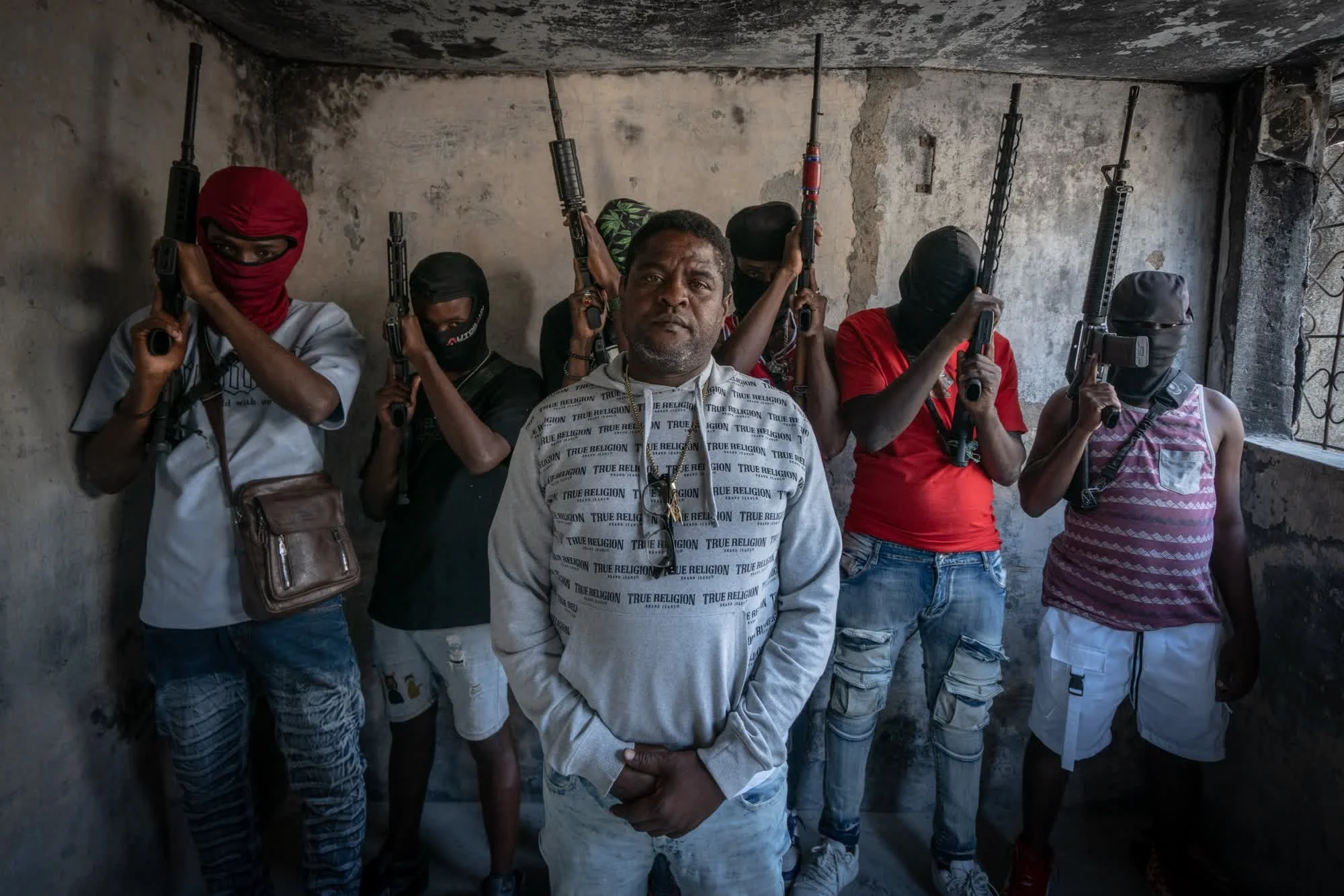
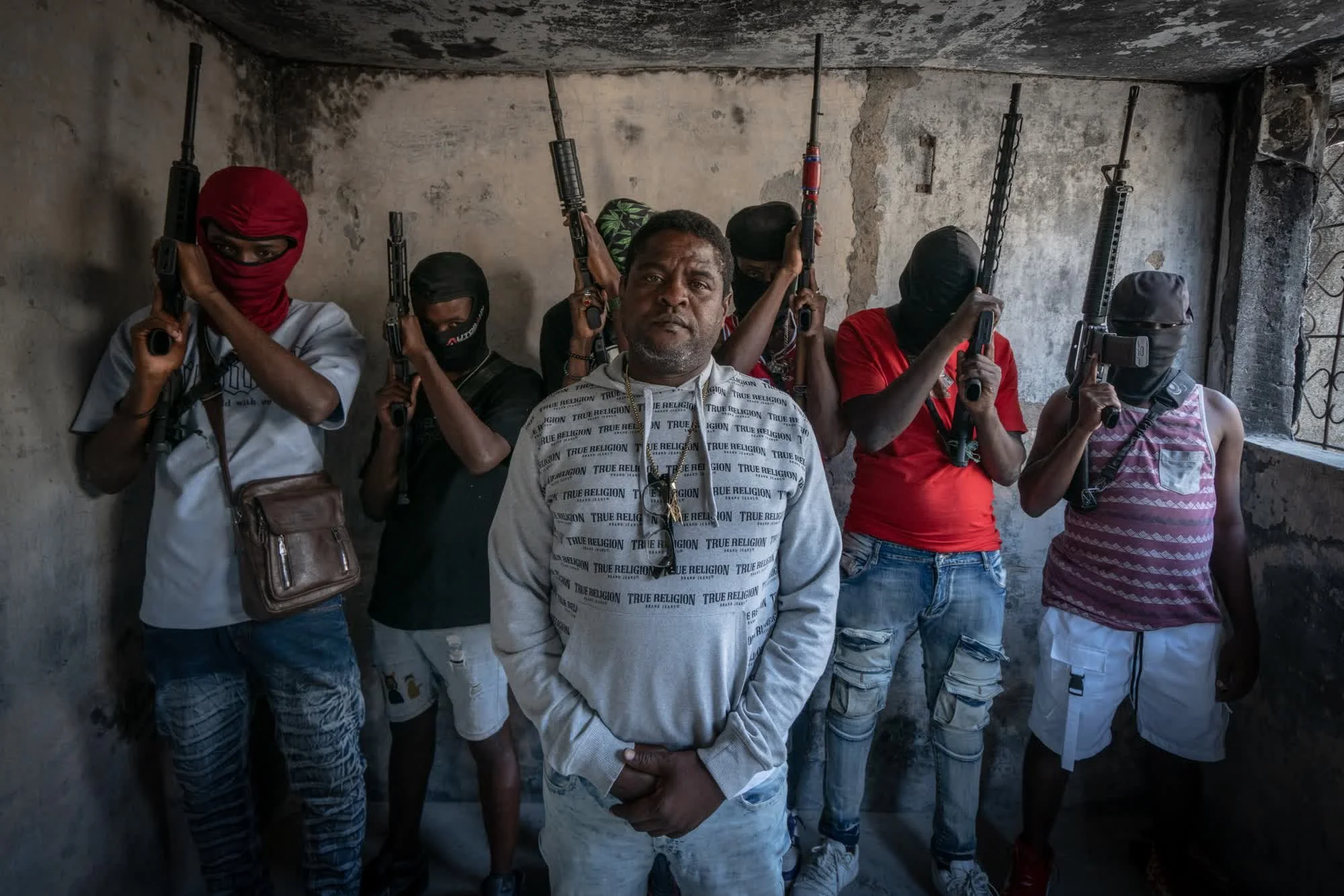
“There are always weapons coming in. There are always bullets,” Vitel’homme Innocent, leader of the Kraze Baryé gang, told CNN in April, his masked entourage bristling with a globally manufactured assortment of firepower.
Weapons experts who later analyzed some of CNN’s images from the encounter said they could spot weapons and accessory parts originating from Israel, Turkey, the Czech Republic, probably Brazil – and, overwhelmingly, from the United States.
An ‘iron river’ from the United States
The guns Haiti’s gangs wield are a mix of stolen and smuggled, and the United States is by far the main source of the latter, according to UN experts.
From 2020 to 2022, over 80% of the weapons seized in Haiti and submitted to US authorities for tracing were manufactured in or imported from the United States, UNODC reported in January, citing the most-recent available tracing data. They are typically purchased in the US from federally licensed retail outlets, gun shows or pawn shops through “straw man” intermediaries, the agency also found.
It’s all part of a phenomenon that experts in Latin America and the Caribbean call the “iron river” – a flood of guns bought in US states with lax gun laws, and then shipped across the region to criminal groups. The Mexican government, which has been outspoken about the issue, currently has a $10 billion lawsuit pending against several US gun manufacturers whose products, it says, arm powerful cartels.
A senior agent at the US Bureau of Alcohol, Tobacco, Firearms and Explosives (ATF), which investigates the diversion of lawfully purchased guns to illegal ends, told CNN that Miami is a significant source of weapons sent to Haiti, which have historically been trafficked in small freighters by family networks.
“Those are difficult to enforce because they’re not your typical commercial freighter… it’s relatively easy to conceal a small number of firearms in those shipments,” he said. Texas, Louisiana, and Georgia are also sources of weapons trafficked to the Caribbean, where the ATF has a specialized gun intelligence unit to track and stop such flows, he added.
Asked whether the US was doing enough, he emphasized that combatting gun trafficking was a top priority. “It is a very high priority of the United States government and ATF’s role in that, to stem the flow of illegal firearms, whether domestic or international, and particularly places like Haiti where the rule of law is under extreme threat.”
In January, Joly Germine – leader of the gang 400 Mawozo – pleaded guilty to US charges over a gunrunning scheme that saw dozens of rifles, handguns and a shotgun purchased legally in Florida under false pretenses, and smuggled into Haiti.
Land of mountains
From above, traces of Haiti’s extensive smuggling networks come into focus: the scars of a clandestine airstrip in its sun-bleached Central Plateau, a dock jutting from gang-held territory into the still waters of the Gulf of Gonave.
Sea and air are the main means of transport for the guns and the drugs trans-shipments that fund more weapons purchases, experts say. And while Haitian authorities have seen some successes in seizing illicit cargo over the years, the dramatic peaks and plains of this “land of mountains” add difficulty for an already understaffed police force and customs agency.
Haiti’s secluded and sparsely populated rural areas are ideal for landings and take-offs by small planes aiming to avoid observation. There are at least 11 known informal or clandestine airstrips in the country, according to UNODC, many originally built for humanitarian purposes following the country’s devastating 2010 earthquake.
“Here, you don’t have anything around you. So, you just go, probably in the middle of the night, with a couple vehicles parked on each side of the improvised runway so the pilot can identify the area. They land, drop off or pick up stuff, and take off again all outside of Haitian jurisdiction,” a security expert in Port-au-Prince told CNN.
The sea is the preferred option for arms smugglers given the weight of their cargo. Haiti’s roughly horseshoe shape offers over 1,100 miles of coastline, a challenging distance to comprehensively patrol for Haiti’s coast guard.
Haiti’s south in particular has emerged as a strategic location for smugglers, the UNODC reported in April, offering entry points for cocaine from South America, cannabis from Jamaica and firearms from across the region.
“One popular method of moving illegal products involves “banana boats,” go-fast vessels that arrive at night, beach on coastal banana plantations, and are subsequently destroyed after unloading their cargo,” the UNODC report details.
Guns and ammunition that arrive in the south are frequently sent onward to Port-au-Prince via the gang-controlled Route National 3, it also said, identifying the Mariani gang, Grand Ravine gang, and 5 Segond gang as “major players in the organization and distribution of arms, munitions and drugs.”
In 2022, 5 Segond group attacked Haiti’s largest flour mill. It would have been an incongruous target if not for its location, positioned right next to Port-au-Prince Bay with a large jetty to accept deliveries. Just about a mile inland lies a major highway, and in between the two is a massive warehouse; a perfect distribution set-up for any import entrepreneur.
Today, the entire area is controlled by 5 Segond, with security sources telling CNN that they believe the mill has been taken over and no longer functions.
“Izo has the jetty, so he has access to the sea. And boats keep coming in and out of that area, which again is completely controlled by his gang… and is kept under tight control, with barricades in the surroundings,” the same security expert said, referring to 5 Segond’s rapper frontman Andre Johnson, who often posts videos of gang members flashing guns and paramilitary gear set to music on social media.
Containers and corruption
Contraband arriving via secretive small boats and planes is just part of the picture. Last month, Haitian National Police and Customs agents seized more than two dozen firearms, including 12 assault rifles, and nearly a thousand cartridges from a shipping container that had arrived in Haiti’s northern city of Cap Haitien.
Drugs and arms smuggling has a long history in Haiti, much of it facilitated through official channels by government agents and even, in one 2022 case, by a rogue Episcopal church staffer who allegedly hid guns and thousands of rounds in a shipping container reportedly labeled as church donations, before it was seized by customs agents in Port-au-Prince.
Customs officials trying to do their job on the front lines in Haiti can face threats to their lives. In 2018, local press reported that several customs agents at the Malpasse border crossing between the Dominican Republic and Haiti were burned alive after an argument erupted in the course of a cargo inspection.
Allegations of smuggling and gang affiliations have also been made at the highest levels of Haiti’s government. Four former Haitian senators have been sanctioned by the US for alleged drug trafficking, as have multiple past presidents and prime ministers of Haiti for allegedly financing the country’s gangs. They’re part of what gang leader Innocent refers to as the country’s “oligarchs,” who historically created and armed local gangs to become their enforcers-for-hire as they profited from white-collar crime schemes.
“As a Haitian human rights defender, I can’t say that all the responsibility for these guns is on the US – I think it’s the Haitian government too. They need to regain control of the port, they need to control customs. The problem is corruption,” says Esperance, the human rights advocate.
That’s why, he says, the planned deployment of an international police force to restore calm to Haiti is destined to fail unless the US and global community also commit to fighting corruption, building frameworks for good governance, and closing legal loopholes abused by the country’s elite.
“Now, of course, the government is completely destabilized, it’s easy for the gangs to smuggle weapons themselves. But how did they begin? Just two years ago, smuggling was going through official channels, and it happened that way because everyone was corrupt,” Esperance said.
Bertrand, the UNODC representative, also emphasized the importance of building up Haiti’s institutions as its new government takes shape. Her agency is working to strengthen the country’s customs authority and coast guard, for example, including providing much-needed equipment from protective gear to cargo scanners.
“It’s time for people in Haiti to live peacefully – for their kids to go back to school, for them to be able to eat every day.” And that means, she says, ensuring that “national authorities are well-trained, well-equipped, and ready to face and curb down the level of violence.”

A portrait of Haitians trying to survive without a government
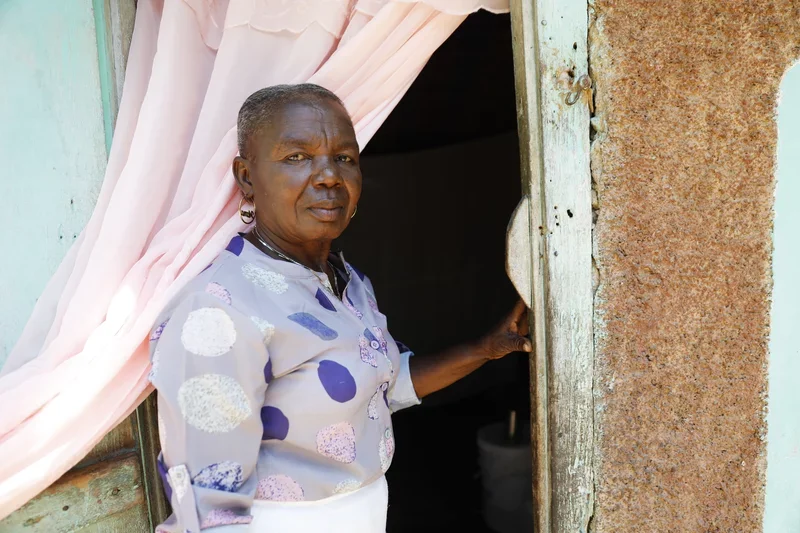
CAP-HAÏTIEN, Haiti — Most of northern Haiti has escaped the violence and anarchy that has engulfed much of the country's capital, Port-au-Prince.
But ever since President Jovenel Moïse was assassinated in 2021, this region has felt the slow crumbling of the Haitian state. These days, government offices are mostly closed and government services, including electricity, don't exist. It has left Haitians to fend for themselves.
These are some of their stories.
Moncher Metina
Moncher Metina has spent her whole 65 years of life in a rural part of Limonade in northern Haiti.
She remembers when she was a kid, she would swim in the rivers that have now dried up. She remembers this was fertile land. In truth, she says, back in the day, the people in Limonade didn't even think about the government. They always had sufficient rain, always sufficient food. This place was full of lush rice fields.
But over the past decade or so, the climate has changed and the rains have become unpredictable.
"We've missed the harvest for pistachios, beans and yam," she says.
When she was young, they produced everything they ate right here. But these days, she says, they have to eat imported rice. In Haiti, rice is a staple, and about 80% of it is now imported from the United States.

Moncher Metina walks in her hometown of Limonade, Haiti, on March 17, 2024.
Octavio Jones for NPR

Louisiana Francilo (left) and Wilky Deranci pump water from a public well in Limonade, Haiti, on March 17, 2024.
Octavio Jones for NPR
Metina shakes her head. The only thing they need to change that is a few wells and a few pumps from the government, and this land could be lush again.
"But we don't have a government to do these kind of things," she says. "Even if there was a local authority, they don't do anything."
She points to the dirt roads, full of potholes, some parts of them washed out by water long ago. "The government did nothing," she says. "They do nothing for us."
Metina walks across a field. She looks small in the middle of its vastness. This is her land, but planting anything here would be risky.
Her neighbor, Antoine Jean Bellami, says he just planted 1,000 plantain trees, but they're all starting to yellow because it has not yet rained.
"When people work here, they realize it's worthless," he says. "And facing that discouragement, young people just up and leave. They go to the Dominican Republic to get humiliated."
Metina's own son left for neighboring Dominican Republic about a year ago, and that was the last time she heard from him. It's the story of this region. Metina's smile fades from her face. She lowers her gaze. She lowers her voice.
"I just hope that he's around," she says. "I would have known if he was dead. If he had died, I would have felt it."
Emmanuel Desir
Cables of all kinds drape across Emmanuel Desir's living room.
"When people come in here, they say, 'Wow, you're an engineer!' and I say, 'No, I am Haitian,'" he says laughing.
The 41-year-old is actually an electrician. But here in Cap-Haïtien, electricians have become lifesavers. Cap-Haïtien is Haiti's second-largest city, but for more than two years now, it has been living off the grid. Electricity was always patchy, but following the 2021 assassination of President Moïse the state electricity company collapsed and stopped providing power.

Emmanuel Desir, who works as an electrician, poses for a photo at his home on the outskirts of Limonade, Haiti, on March 17, 2024.
Octavio Jones for NPR
Desir says, now, he spends every day installing solar panels. He installs little systems that run about $150 and can charge a cellphone, a laptop and run a few lights. And he also installs systems that cost hundreds of thousands of dollars. They harness the power of the sun to run refrigerators and air conditioners.
There are some charity groups helping to install solar panels in Cap-Haïtien, but most of the work is done by private companies like Desir's.
A big problem, he says, is that $150 is a lot of money in Haiti, a country where more than 60% of the population lives with less than $4 a day, according to a World Bank estimate.

A charging station for cellphones and laptop devices is seen at a bar in downtown Cap-Haïtien, Haiti, on March 17, 2024.
Octavio Jones for NPR

Rod Augustin measures dimensions for solar installation at a bar in Limonade, Haiti, on March 17, 2024.
Octavio Jones for NPR
On a practical level, that means if you don't have a solar panel, you can't charge the essentials, including a cellphone. So, across Cap-Haïtien there are charging stations for phones and laptops. Desir set up a charging center for his neighbors at his home. The lone street light in the neighborhood takes power from his solar inverter.
"Everyone always says, electricity is the base of development; it's the first stage of development," he says.
He's proud that he is helping Haitians power their homes. But sometimes, he says, Haitians end up wasting a day simply trying to charge a cellphone.
Commander Minis Derius
Just along Haiti's northern coast, in Ouanaminthe, Haitians have decided to take matters into their own hands.
About a year ago, private citizens decided to move forward with a long-planned canal that would divert some water from a shared river with the Dominican Republic to a canal designed to irrigate vast farmlands in northern Haiti.

The canal near completion in the border city of Ouanaminthe, Haiti. The Dominican Republic protested over the project, which would divert water from a river shared by the neighboring countries.
Octavio Jones for NPR
Thousands of Haitians volunteered their time to complete the canal, and members of an armed environmental police force decided to defect from the government to patrol the project.
Minis Derius, a member of the Brigade for the Security of Protected Areas, or B-SAP, carries an assault rifle as he walks along the canal's concrete retention walls.
"The government didn't do anything," he says. "If this was being done by the Haitian state, it probably would have never gotten done."

Construction workers are in finishing the canal project in the border city of Ouanaminthe, Haiti. Once completed, the nearby farming community hopes to benefit from the canal's water, aiding in the cultivation and yield of their crops.
Octavio Jones for NPR

The canal near completion in the border city of Ouanaminthe, Haiti, where construction workers are diligently working to finish the project. Once completed, the nearby farming community will benefit from the canal's water, aiding in the cultivation and yield of their crops.
Octavio Jones for NPR
This project has been controversial. The Dominican Republic shut down its border in protest, and then Haiti's de facto prime minister, Ariel Henry, ordered the environmental police force to leave the construction site. Henry fired their leader, but the B-SAP simply ignored him and the construction kept moving forward.
"We will stand with the people," Derius says. "Although we are a part of the state — we're a legal body, a legal force, we come from the government — we cannot abandon the people."
To Derius, this project speaks to two realities in Haiti: first, of a dysfunctional government that can't seem to provide the basics for its people; and second, how the Haitian people always find ways to survive despite their government.
He says that in some ways, Haitians have found hope in projects like the canal.
"It shows that if we put our heads together, we unite, there's a lot we can do," Derius says.
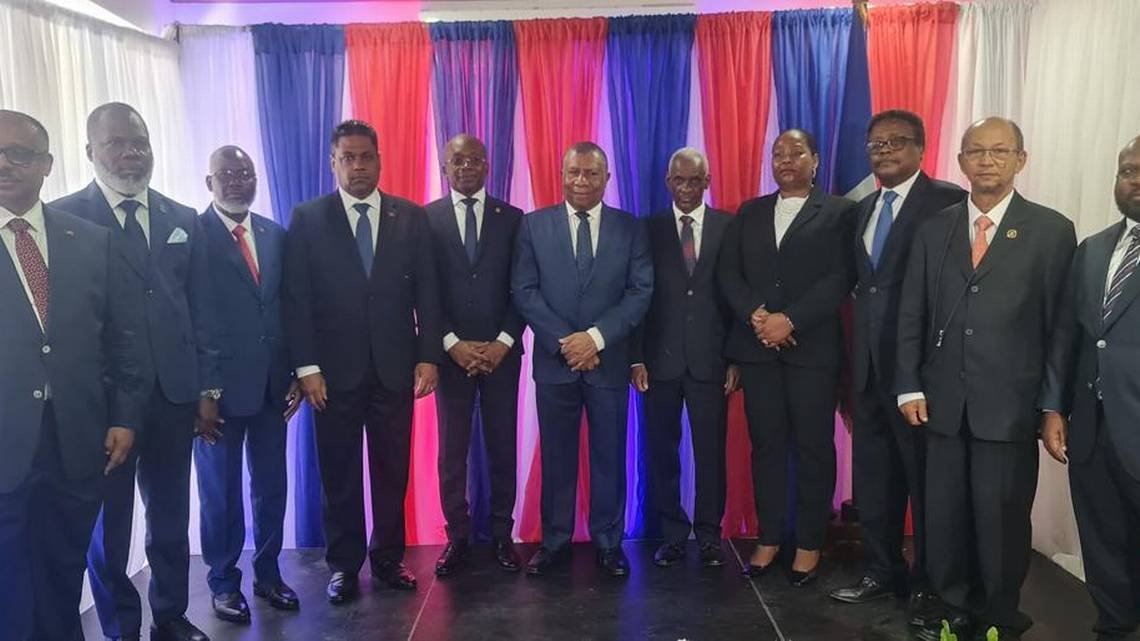
Haiti transition council to be installed on Thursday, says PM office
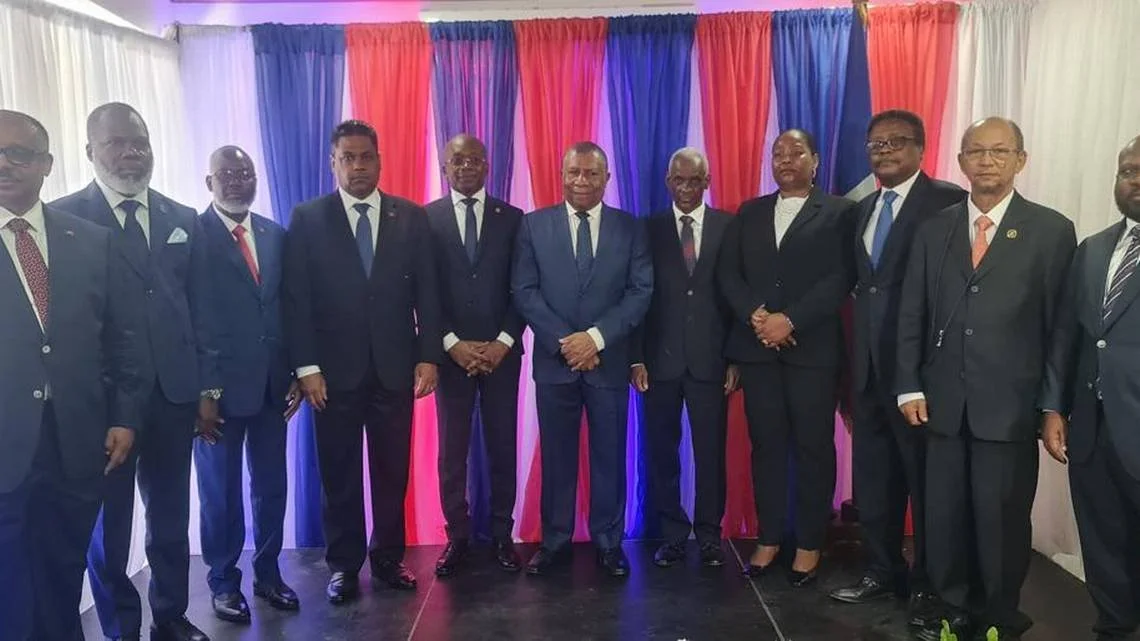
PORT-AU-PRINCE, April 24 (Reuters) - A ceremony to install a stalled presidential transition council in Haiti will take place Thursday morning on the outskirts of the capital Port-au-Prince, the office of outgoing Prime Minister Ariel Henry announced in a statement on Wednesday.
The statement noted that the ceremony will be hosted at the prime minister's official office, known as Villa d'Accueil, not the downtown National Palace, which has come under repeated fire from armed gangs in recent days.
Earlier on Wednesday, powerful gang leader Jimmy "Barbeque" Cherizier insisted that talks over Haiti's political future must include the gangs.
The installation of the nine-member presidential transition council that will take over from Henry has been delayed for weeks amid intense behind-the-scenes jockeying for control among various political factions.
The establishment of the council is seen as a key first step toward ending the chaos that has engulfed the Caribbean nation, largely blamed on rival gangs fighting over turf, especially in the capital, as well as mostly absent state institutions.
The council is expected to name an interim prime minister and help set up a government that will eventually organize national elections.

Haiti’s prime minister resigns as council sworn in to lead political transition in violence-ravaged nation
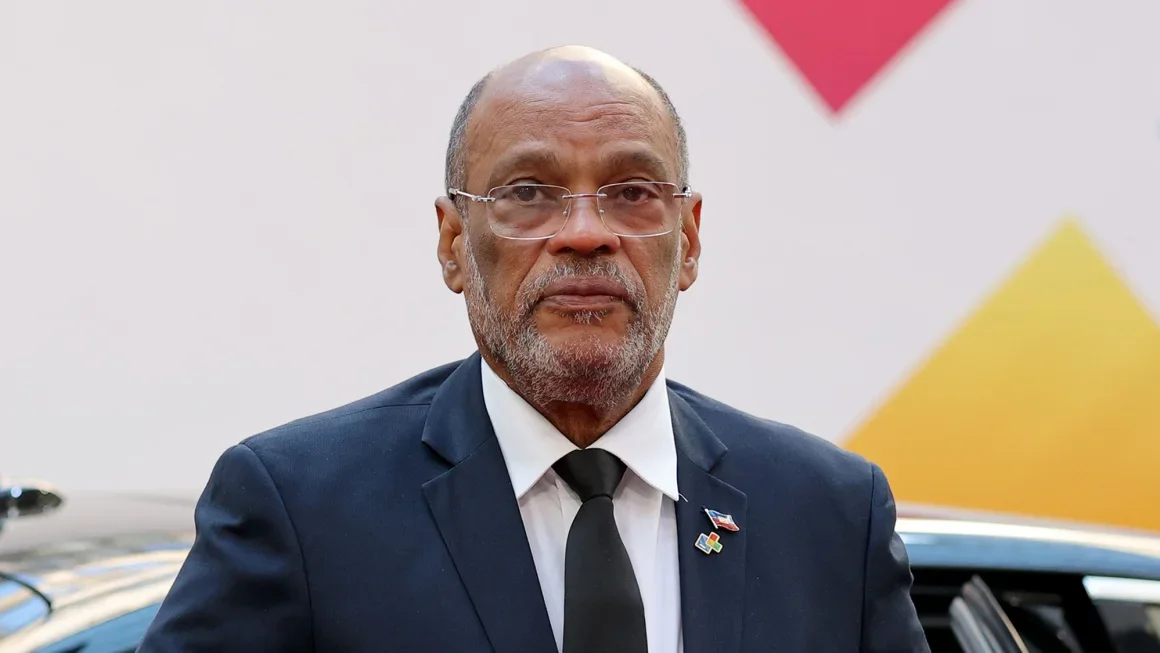
Haiti’s Prime Minister Ariel Henry announced his resignation on Thursday, handing power over to a transitional council that will seek to gain control of the violence-ravaged nation.
Henry wrote in his resignation letter dated Wednesday that, “given the current state of affairs,” the time was right for him to step down. “We have served the nation in difficult times. I thank everyone who had the courage to face such challenges with me,” he said.
Haiti has been overrun by chaos and gang violence in recent weeks, with criminal groups attacking government structures and social order on the brink of collapse.
The Caribbean nation’s finance minister Michael Patrick Boisvert has been appointed as interim prime minister until a new government is formed, according to an X post from Henry’s office on Thursday.
“Haiti, our country, is at a crossroads in the search for solutions to overcome this multidimensional political crisis, that has lasted for so long, and the consequences of which are detrimental to the population, to property, and both public and private infrastructures,” Boisvert said at the swearing-in ceremony at the Prime Minister’s office, Villa d’Accueil.
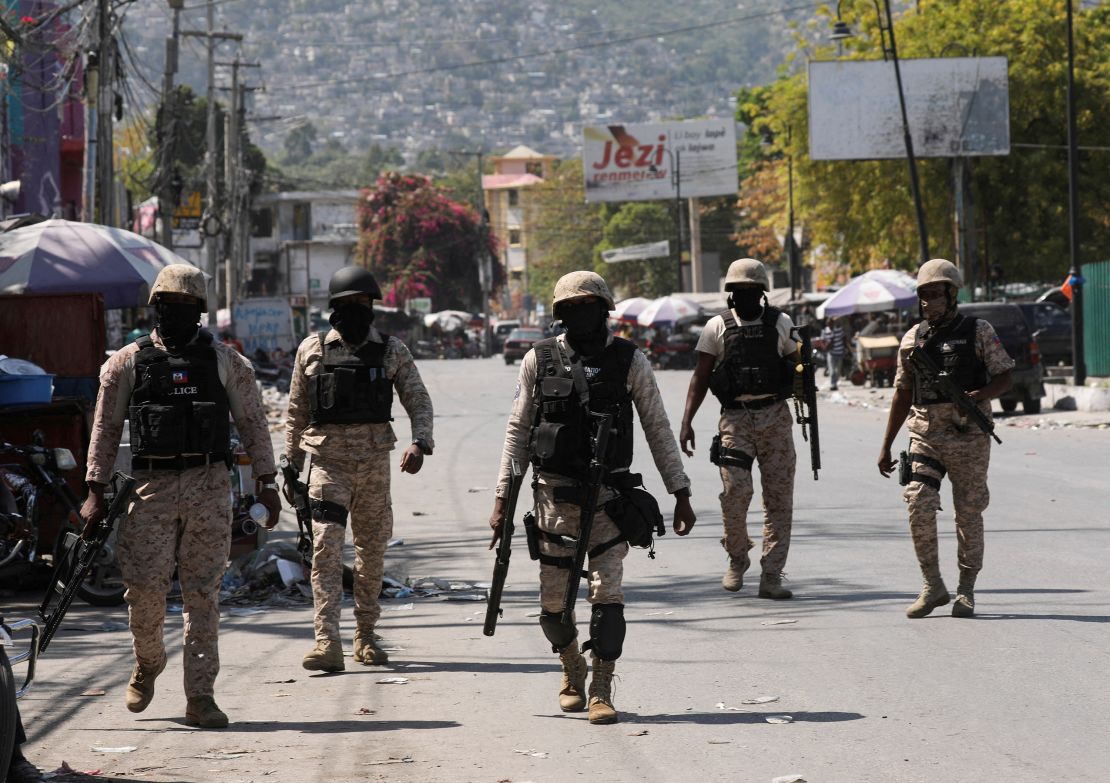
Police patrolling a street in Port-au-Prince in March. The city has been essentially cut off from the outside world, amid months of gang violence and a worsening humanitarian crisis. Ralph Tedy Ero/Reuters/File
A transitional council, composed of seven voting members and two non-voting observers, has been tasked with the responsibility of naming a new prime minister and cabinet. The committee will exercise certain presidential powers until a new president-elect is inaugurated, which must take place no later than February 7, 2026.
Henry announced in March his plans to step down once a decision on the country’s future leadership was made, and the transitional council was set up soon after.
The Caribbean Community and Common Market (CARICOM) welcomed the council’s formation in a statement earlier this month, hoping it would mark “a new beginning for Haiti.”
The United Nations Secretary General’s spokesperson Stephane Dujarric also welcomed the news and called for the swift deployment of a multinational security mission to support Haiti’s police.
Since February, attacks by an insurgent alliance of gangs in the capital Port-au-Prince mean the city’s international airport and seaport have ceased to function, breaking vital supply lines of food and aid and triggering an exodus of evacuation flights for foreign nationals.
With the city virtually cut off from the outside world, hospitals have been vandalized while warehouses and containers storing food and essential supplies have been broken into as the social fabric frays.
According to the UN, nearly 5 million people in Haiti are suffering from acute food insecurity – defined as when a person’s inability to consume adequate food poses immediate danger to their lives or livelihoods.
“This is the worst humanitarian crisis in Haiti since the 2010 earthquake. I don’t think that’s sunk in,” Jean-Martin Bauer, the World Food Programme’s country director for Haiti, told CNN last month.
The UN human rights office meanwhile described sexual violence in Haiti as “severely underreported and largely unpunished,” in a harrowing report that documented cases of rape and forced sexual relations with gang members, as well surging levels of gang violence in the country.
Haiti's oil reserves are now worth $120 billion US dollars
They say “Haiti is the poorest nation in the western hemisphere.” Is that true? No. That is a boatload of BS. Here is why. Haitians are poor, but the land of Haiti is rich with natural resources.
Folks here is the truth Haiti’s oil reserves are now worth $120 billion US dollars. That means the country Haiti is among the one percent wealthiest nations on earth. Mind blown...!
Let me assure you that no one wants to talk about this. But I have to confess, when I first heard about the discovery of oil in Haiti, I was quite skeptical. After all, why haven’t we heard about this before? I ask myself. Why Haitians are so poor?
Friends, let’s get to the truth.
Haiti oil reserves and the big multinational oil companies
Well, the reality is there are still many untapped oil reserves in many areas around the world, and Haiti is one of them. According to a report from radio Metropole, scientists Daniel and Ginette Mathurin say that Haiti’s oil reserves are larger than those of Venezuela. In fact, Daniel Mathurin says Haiti’s oil reserves are so much larger than they are not even worth comparing to others.
“An Olympic pool size compared to a glass of water" that is to compare Haiti's oil to that of Venezuela. It's just that important.
That is an amazing statement considering the fact that Venezuela is one of the world’s major oil producers. But Daniel and Ginette Mathurin are not the only ones making these claims about oil in Haiti.
In a paper dated March 27, 2004, Dr. Georges Michel detailed the history of oil discoveries in Haiti and explained why they have not been exploited yet. According to Michel, the big oil companies know about the massive reserves of oil in Haiti but in the 50s and 60s, there was almost too much oil to go around so they decided that those reserves were not needed at the time and that they would be kept in reserve until later.
You see, the attitude of these big multinational oil companies was, “we shall keep the Haitian deposits and other such layers of deposits in reserve for the 21st century until the Middle Eastern jackpot oil fields are completely depleted.”
In fact, it was apparently known as far back as 1908 that Haiti has substantial reserves of oil. But those poor people have been kept in abject poverty all this time when they could have been benefiting from all of this oil.
Haiti’s massive gold deposit and other natural resources
Not only we have oil, but Haiti also possesses a great deal of gold as well.
A United Nations study in the 70s indicated Haiti could be littered with gold and copper deposits. However, planned political violence and recurring coup d’état have kept the oil in Haiti from being exploited and the gold from being mined.
So how much gold does Haiti have? Well, the former president of Dominican Petroleum Refinery recently said that Haiti has vast untapped reserves of gold and iridium (a little known and rare mineral that is vital for the construction of spacecraft) and that these resources should be used to pay off the Haitian foreign fake debt. I don’t think he is alone in this assessment.
Scientific evidence of Haiti’s oil & gold deposit
Back in 2007, a geologist with 27 years of experience hunting for gold was asked what he thought the chances of discovering huge amounts of gold in Haiti were. This is how he responded….
“I don’t think there’s a question of whether there’s a good deposit here. It’s a question of whether we can develop it here in Haiti.”
In fact, analysts are predicting “a stampede into Haiti” if the existence of large gold deposits there can be confirmed.
So the so-called poorest nation in the western hemisphere turns out to be just brimming with oil and gold…. Do you think that those resources will be used to rebuild Haiti and to give Haitian a truly bright future?
Don’t count on it because Washington considers Haiti’s natural resources as “strategic reserves” of the United States.
You see, for decades Haiti has been viewed by many as being essentially “owned” by the United States. The U.S. government has done little to actually help the nation of Haiti get on the right path, but they maintain a huge presence there. In fact, the U.S. fifth-largest embassy is in Haiti.
What will happen to Haiti's oil and gold?
Now the question we need to ask is when will all of the gold and oil be used to help the people of Haiti, or will the gold and oil be exploited by ruthless foreigners and continue to keep us in abject poverty?
The price of oil in Haiti is expensive. Let’s tap into those massive reserves and deposits right now.

The men fighting gang leader Barbecue for power in Haiti
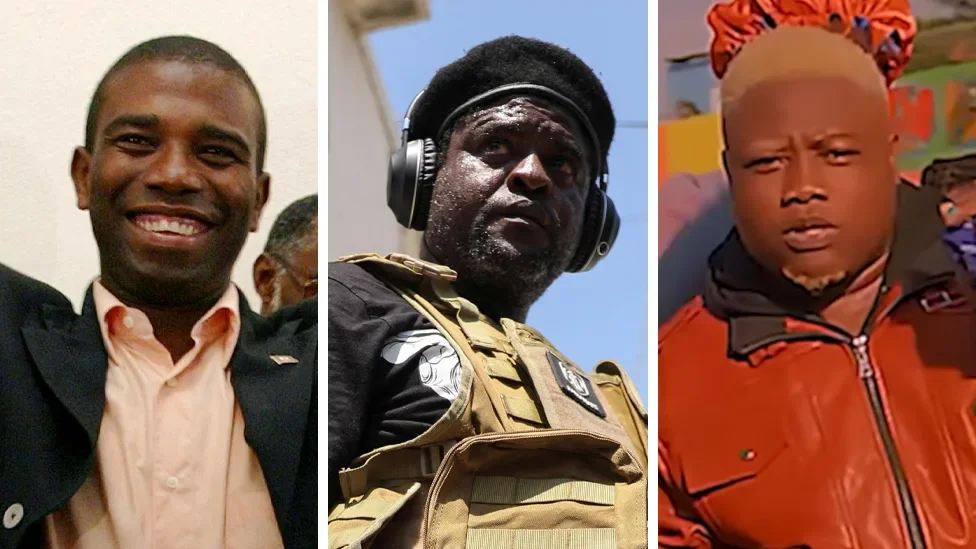
An ex-cop who likes to give news conferences while wielding a high-powered rifle and a young criminal as fond of starring in rap videos as he is of trafficking arms and drugs.
These are just two of the gang leaders blamed for the surge in violence which has engulfed the Haitian capital, Port-au-Prince, and led to the resignation of Haiti's Prime Minister Ariel Henry.
Add a former rebel fresh out of jail in the US who plans on becoming president and you get an explosive mix.
With the country in limbo awaiting the creation of a transition government, we take a closer look at some of those jostling for power in Haiti.
Gang leader Jimmy 'Barbecue' Chérizier
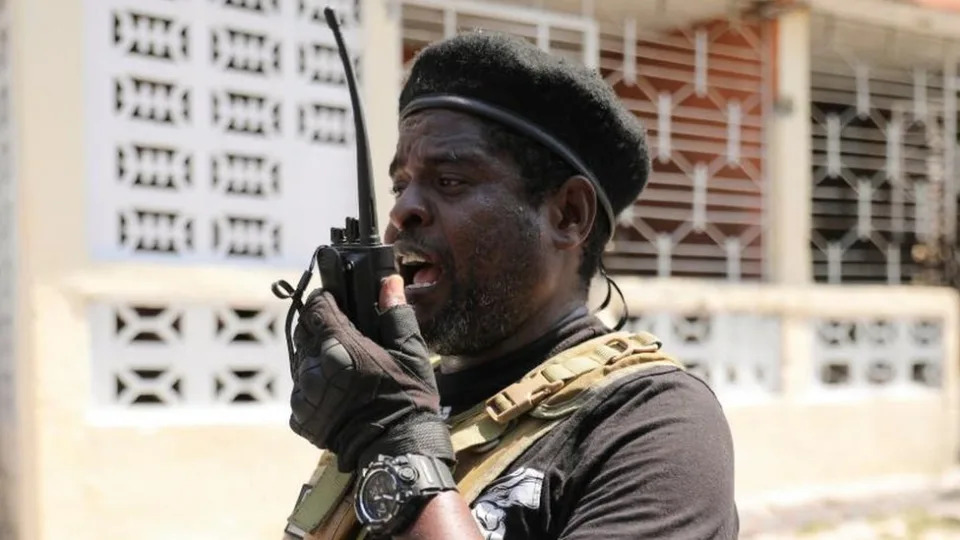
The 47-year-old former police officer may not be the most powerful gang leader in Haiti, but Jimmy Chérizier has emerged as the most visible face of the recent unrest.
Fond of speaking to journalists while clad in his trademark bullet-proof vest, the man widely known as Barbecue leads an alliance of gangs called G9.
Barbecue has been one of the most outspoken enemies of Ariel Henry, demanding his resignation ever since the latter was sworn in as prime minister.
The G9 leader likes to portray himself as someone who fights for the common people and against the oligarchy.
But not only has he been accused of leading a massacre in 2018 in which scores of people where killed, he was also behind the 2021 blockade of the Varreux fuel terminal.
G9's attacks on water and food deliveries caused severe shortages among Haiti's poorest. The lack of fuel caused by the blockade meant hospitals struggled to keep their generators running to provide crucial care.
"Barbecue has made vague demands of a more just and equitable system, but of course the irony of this whole situation is that the armed groups in the capital and around are creating the hell that people are living through," explains Haiti expert Michael Deibert.
Barbecue claims to have united Port-au-Prince's notoriously quarrelsome gangs in a coalition called Viv Ansanm (Live Together).
It is hard to verify that claim. But while so far no rival gang leader has denied it, any alliance is likely to be short-lived, according to Michael Deibert.
"These groups feud mercilessly with one another all the time," the journalist, author and researcher at the University Institute of Lisbon (ISCTE) explains.
Mr Deibert says that the gangs appear to have found a "modus vivendi" while they try to tear down the pillars of the state. "To what end I'm not exactly clear," he adds.
Chillingly, Barbecue warned last week that a "civil war" could erupt should Mr Henry return to Haiti. The leader of the G9 has not yet spoken since Mr Henry said he would step down as soon as a transition council has been created.
But judging by his previous warnings that Haitians should be left to decide Haitian affairs without any outside interference, the planned deployment of a multi-national security force to Haiti will not go down well with him.
Romain Le Cour, an expert at the Global Initiative against Transnational Organized Crime (GI-TOC), says that Barbecue derives a lot of his power from controlling the capital's port and fuel terminal.
Should international police forces be deployed to retake these key installations, Barbecue could see his influence diminish, Mr Le Cour argues.
Both Mr Le Cour and Mr Deibert warn that Barbecue is not even remotely the most powerful gang leader in Haiti, just the one who is most accessible to the media.
"A lot of the most powerful characters are people who don't give interviews to journalists," Mr Deibert points out.
Gang leader Johnson André, aka Izo

One of the gang leaders thought to wield more power than Barbecue is a 26-year-old known as Izo.
Izo differs from Barbecue, a former police officer, in that he came up through the gang hierarchy to lead the Vilaj de Dye - 5 Segonn gang, explains Romain Le Cour.
The two gang leaders share a love of the limelight, but Izo tends to use social media to publish music videos rather than to air his political views.
The young gangster has released a number of rap videos and was even awarded a prize by YouTube for getting 100,000 followers.
But behind the gangster bling façade is a ruthless criminal whose gang engages in rape, kidnappings, drug and arms trafficking, according to the United Nations.
He is also accused of obstructing the delivery of humanitarian assistance.
Romain Le Cour, who has been studying Haiti's gangs for years, says what makes Izo stands out is the fact that he has managed to gain control of maritime routes in Port-au-Prince Bay.
That allows him to circumvent territory held by other gangs and lets him to move weapons quickly.
According to the UN, Izo has also exploited Haiti's "fragile security environment" to make money through drug trafficking with some shipments reportedly arriving directly from South America in the Vilaj de Dye neighbourhood he controls.
In its report on Haiti's gang crisis, the Global Initiative against Transnational Organized Crime (GI-TOC) traces Izo's attempts to expand his territorial control beyond the capital.
His gang's incursion into Mirebalais, 35km north of the capital, triggered deadly clashes between members of his 5 Segonn gang and vigilantes in which 30 people were killed. According to the report, at least 800 families fled their homes in the resulting violence.
Mr Le Cour points out that Izo's drug trafficking and arms smuggling network will be particularly tough to break down as it is very diverse, so much so that he does not even flinch from selling weapons to his rivals.
Former rebel Guy Philippe
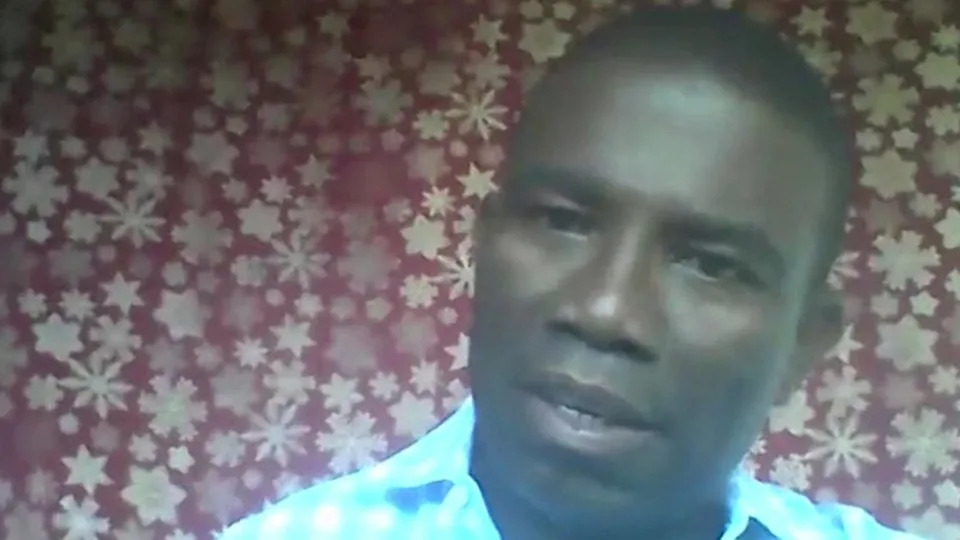
Guy Philippe is another former police officer gone rogue. The 56-year-old helped lead the coup against President Bertrand Aristide in 2004.
In 2016, he ran for the Senate in Haiti and won. But days before he was sworn into office - which would have given him immunity from prosecution - he was arrested on drug-trafficking charges and extradited to the US.
He admitted taking bribes to protect narcotics shipments to the US while he was working as a senior police officer.
Philippe was repatriated to Haiti in November after serving his sentence, a move Michael Deibert describes as "pouring gasoline on an already raging fire".
It did not take Philippe long to share video messages on social media in which he called for a "rebellion" against Mr Henry.
Guy Philippe has openly expressed his desire to be Haiti's next president.
Asked whether his jail term could prove a stumbling block on the way to the presidential palace, he said: "[Former South African President Nelson] Mandela was in prison. [Former Venezuelan President] Hugo Chávez was in prison. [Brazilian President Luiz Inácio Lula da Silva] Lula was in prison... And so if my people believe and trust me, I will be their leader. It's up to my people, no-one else."
Mr Deibert points out that Philippe is not the only one to have expressed his presidential ambitions amid the chaos that the gang violence has created.
"The group that seems to be forgotten in this is the people of Haiti," he says, drawing attention to the humanitarian crisis which has left an estimated five million out of Haiti's 11 million people facing acute hunger.