
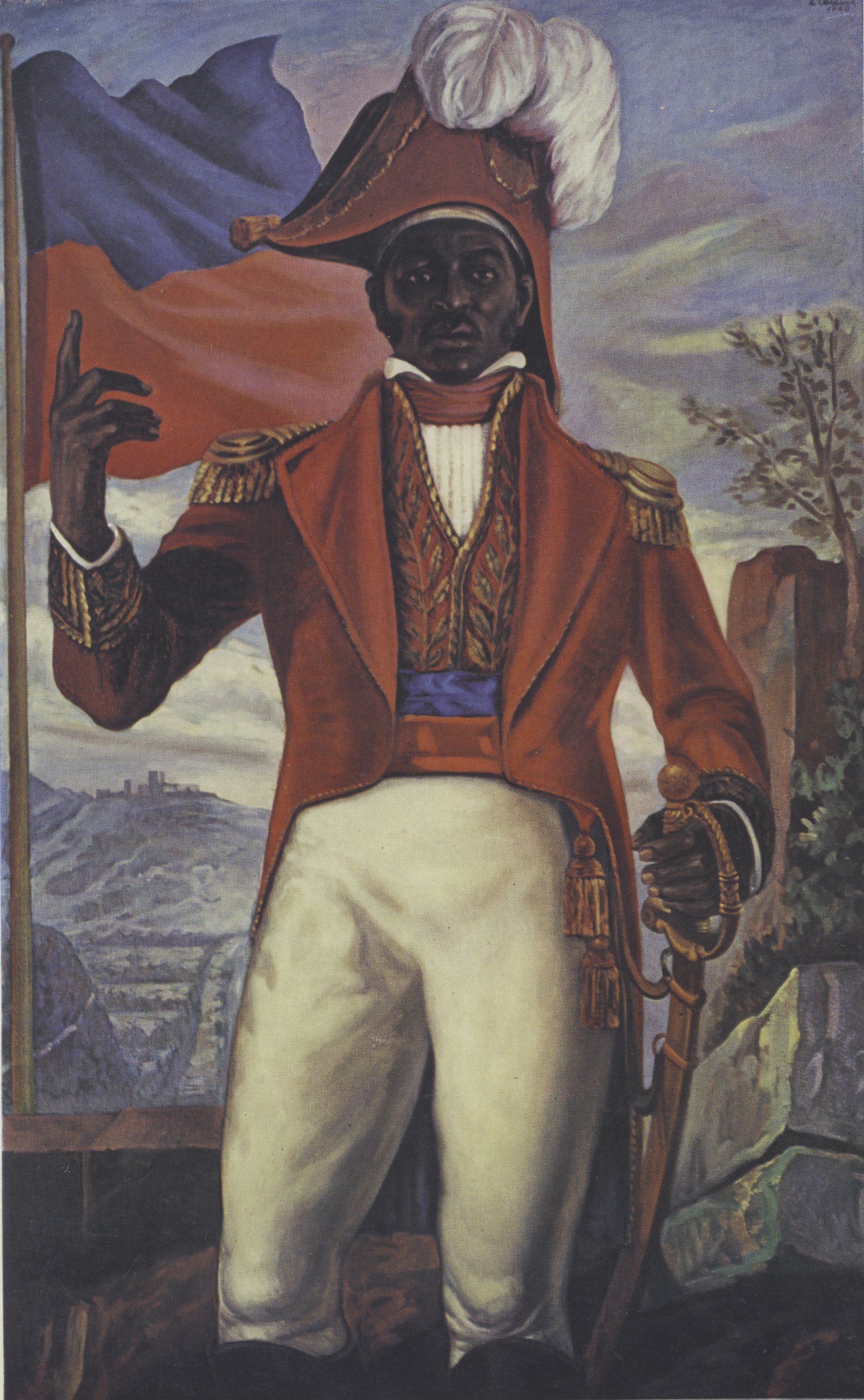
Haitian National Holiday: October 17th -Death of Jean-Jacques Dessaline
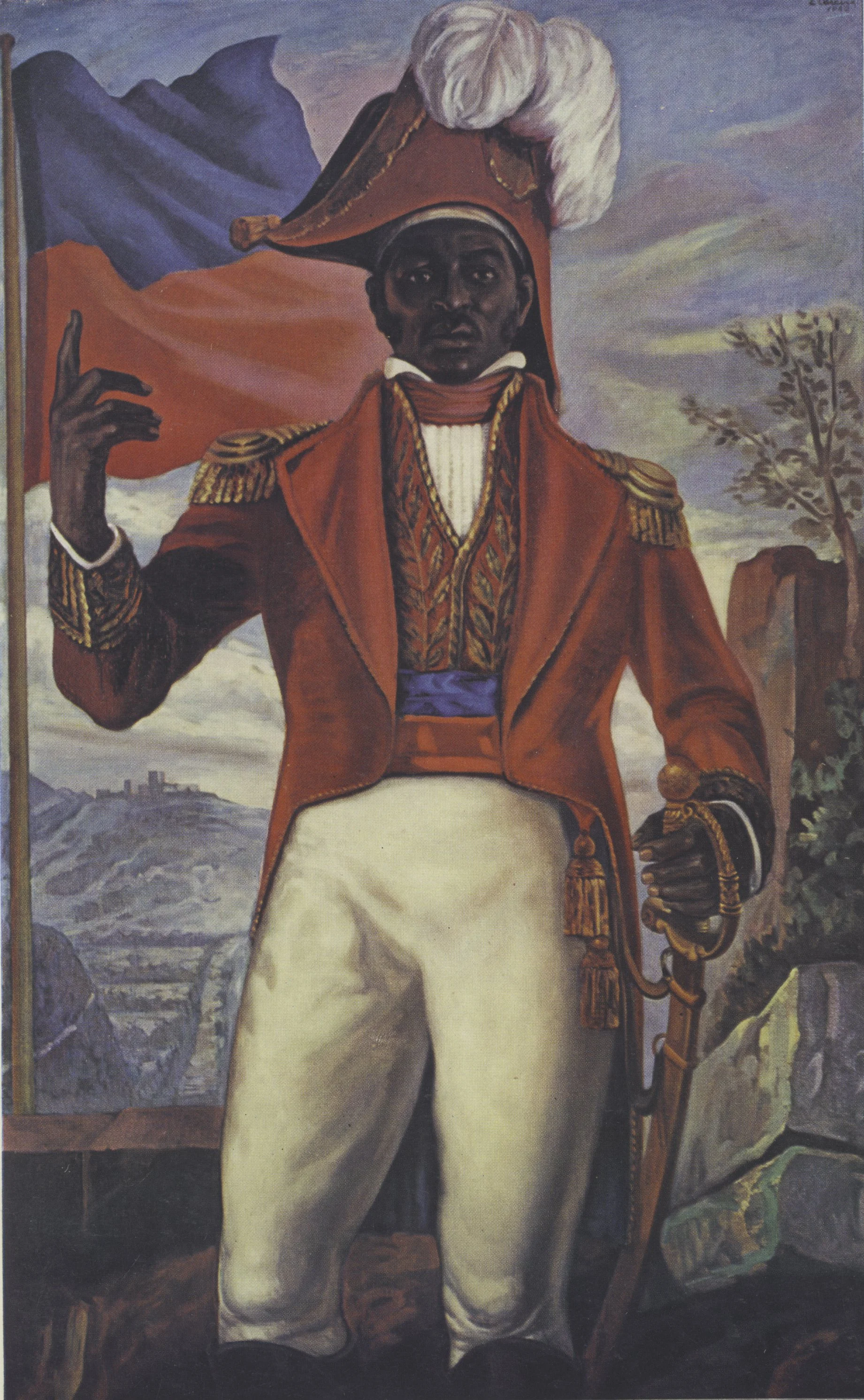
"We have dared to be free. Let us dare to be so by ourselves and for ourselves."— Jean-Jacques Dessalines
The death of Jean-Jacques Dessaline is a public holiday in Haiti. Haiti dignifies no other individual with an official national holiday. He is considered the “Père de la Patrie.”Born to Congolese parents, Dessalines was born on a plantation in an area called Cormiers, (today, Cormier), in the hills near the town of Grande Rivière du Nord 25 kms from Cap-Haitien. That plantation belonged to a French man named Duclos. The young man was ultimately given the name of Jacques Duclos. There isn’t much history about his parents, but there have been mentions of a beloved aunt, Victoria Montou, that he affectionately called “Toya.” At the age of 30 or so, he would be sold off on the market and be bought by a free black man named Dessalines, at which point he changed his name from Jacques Duclos to Jean Jacques Dessalines. He worked as a field hand for the black master until 1791, when he joined the slave rebellion that broke out in the colony amid the turmoil caused by the French Revolution.Upon joining the slave revolt that would ultimately lead to independence, Jean-Jacques followed the example of early band leaders, Boukman, Jean François and Biassou. He became a lieutenant in the Army of Jean François. He followed Jean François when he lent his services to the Royal majesty of Spain. There, he met Toussaint Bréda, who we would later come to know as Toussaint L' Ouverture who himself, was climbing the ranks and gaining notoriety for his successive brilliant victories against forces far superior to his. When the French Republic proclaimed freedom for all slaves, Dessalines followed Toussaint who rallied to the French flag in order to fight the armies of the Spanish and British crowns.Unable to read or write, Dessalines was nonetheless a quick study under L’Overture earning the nickname “the Tiger” for his fury in battle. In 1794 Dessalines’s military skill and leadership was vital to L’Overture’s success in capturing the Spanish-controlled eastern half of the island, and in return, L’Overture made him governor of the south.For a brief period of time after L’Overture’s capture in 1802 Dessalines appeared to be siding with the French, but the move was nothing more than a ruse designed to trick the French into trusting Dessalines so that he could regroup the insurgents and continue the fight for independence. It was successful. They expelled the French from Saint-Domingue, and on January 1, 1804, Dessalines, as governor-general, proclaimed the entire island of Hispaniola an independent country under the Arawak-derived name Haiti.Independence, however, did not bring peace, and from January 1804 until his death two years later, Dessalines “governed with terror.” Like L’Overture, Dessalines had himself appointed governor “for life.” The following September , emulating Napoleon, he adopted the title of emperor as Jacques I—and crowning his wife, Claire-Heureuse, empress. Fearing a French resurgence and the reinstatement of slavery that would accompany it, he ordered the massacre of approximately 5,000 of the island’s white men, women, and children declaring “I have saved my country. I have avenged America.” It was a move that two of Dessalines most influential generals, Alexandre Pétion and Henri Christophe, could not countenance and one that spoke to the growing political instability of the new government.On October 17, 1806, Dessalines met a violent death at the hands of his own lieutenants when he was ambushed; his body dragged through the streets before it was dismembered.Jean Jacques Dessalines was by all accounts a fearless soldier, a formidable general, great strategist, ruthless leader and unforgiving commander. However, most importantly, he was a man who fought for something he believed in. He fought for something bigger than just him. He fought for freedom.Sources: (1) "Jean-Jacques Dessalines: Demon, Demigod, and Everything in Between" by Lindsay J. Twa; (2) Blackpast.org "Dessalines, Jean-Jacques (1758-1806)" by Deborah McNally; (3) "Death of Dessalines Remembered in Haiti" by Aglobalworld.com; (4) "Jean Jacques Dessaline Emperor of Haiti by the Editors of the Encyclopedia Britannica
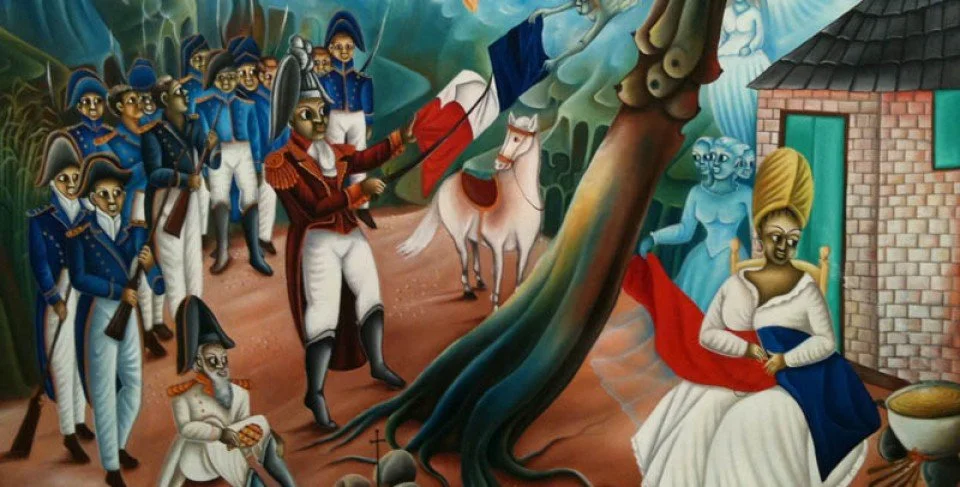
Biography of Haitian Revolution Leader Toussaint Louverture
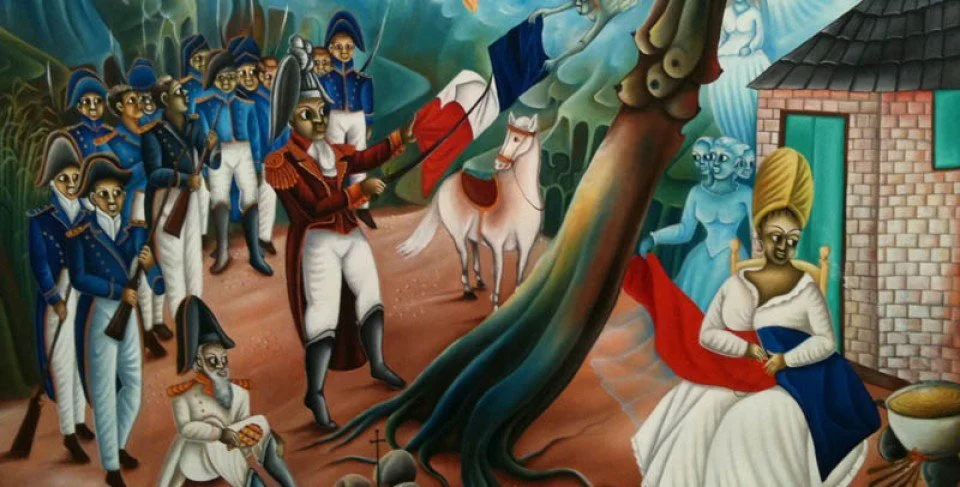
Toussaint Louverture led what is known as the only triumphant mass slave revolt in history. Thanks largely to his efforts, Haiti won its independence in 1804. But the island-nation didn't live happily ever after. Institutional racism, political corruption, poverty and even natural disasters have left Haiti a nation in crisis. Still, Louverture remains a hero to the Haitian people and those throughout the African diaspora. With this biography, learn about his rise, fall and the political prowess that resulted in him leaving an indelible mark on the island-nation once known as Saint Domingue.EARLY YEARSLittle is known about François-Dominique Toussaint Louverture before his role in the Haitian Revolution. According to Philippe Girard, author of 2016's "Toussaint Louverture: A Revolutionary Life," his family came from the Allada kingdom of West Africa. His father, Hippolyte, or Gaou Guinou, had been an aristocrat. Around 1740, however, members of the Dahomey Empire captured his family and sold them as slaves to the Europeans. Hippolyte specifically was sold for 300 pounds of cowrie shells.His once aristocratic family now the property of European colonists, Louverture was not born in West Africa but likely on May 20, 1743, in the city of Cap on the Bréda plantation in Saint Domingue, a French territory. Louverture displayed a giftedness with horses and mules that impressed his overseer, Bayon de Libertat.He also received training in veterinary medicine. His godfather, Pierre Baptiste Simon, likely played a large role in educating him. He may have also received training from Jesuit missionaries and from West African medicinal traditions.Eventually Libertat freed Louverture, although he had no authority to do so, as the absentee slaveholders the Brédas owned Louverture. It is unclear exactly which circumstances led Libertat to free him. The overseer reportedly had him drive his coach and then released him. Louverture was about 33 years old at the time.Biographer Girard points out that it was highly unusual that Louverture was freed. The slave mothers of mixed-race children were most often freed, with men making up fewer than 11 percent of liberated slaves.In 1777, Louverture married Suzanne Simone Baptiste, born in Agen, France. She is believed to have been his godfather's daughter, but she may have been Louverture's cousin. He and Suzanne had two sons, Issac and Saint-Jean. Each also had children from other relationships.Biographers describe Louverture as a man filled with contradictions. He led a slave insurrection but never took part in smaller revolts that occurred in Haiti prior to the revolution. In addition, he wasn't partial to any religious faith. He was a Freemason, who practiced Catholicism devoutly but also engaged in voodoo (in secret). His embrace of Catholicism may have factored into his decision not to participate in voodoo-inspired insurrections that took place in Saint Domingue before the revolution.After Louverture won his freedom, he went on to own slaves himself.Some historians have criticized him for this, but he may have owned slaves to free his family members from bondage. As the New Republic explains:To free slaves required money, and money on Saint Domingue required slaves. As a free man, Toussaint leased a coffee estate from his son-in-law, including the slaves. True success navigating the slave system meant joining the other side. The revelation that the 'Black Spartacus' drove slaves spurred some modern historians to over-correct, speculating that Toussaint was a well-heeled bourgeois by the time of the revolution. But his position was more precarious. The coffee estate failed, and a slave register unearthed in 2013 records his tragic next move: Toussaint resumed his place on the Bréda plantation.In short, Touissant remained a victim of the same exploitative system he'd joined to free his family.But as he returned to the Bréda plantation, abolitionists begin to gain ground, even convincing King Louis the XVI to give slaves the right to appeal if their overlords subjected them to brutality.HAITI BEFORE AND AFTER THE REVOLUTIONBefore the slaves rose up in revolt, Haiti was one of the most profitable slave colonies in the world. About 500,000 slaves worked on its sugar and coffee plantations which produced a significant percentage of the world's crops. The colonists had a reputation for being cruel and engaging in debauchery. The planter Jean-Baptiste de Caradeux, for example, is said to have entertained guests by letting them shoot oranges off the tops of slaves' heads. Prostitution was reportedly rampant on the island as well.After widespread discontent, slaves mobilized for liberty in November 1791, seeing an opportunity to rebel against colonial rule during the throes of the French Revolution. Toussaint’s comrade Georges Biassou became the self-appointed Viceroy and named him general of the royal army-in-exile. Louverture taught himself about military strategies and used his newfound knowledge to organize the Haitians into troops. He also enlisted deserters of the French military to help train his men. His army included radical whites and mixed-race Haitians as well as blacks.As Adam Hochschild described in the New York Times, Louverture "used his legendary horsemanship to rush from one corner of the colony to another, cajoling, threatening, making and breaking alliances with a bewildering array of factions and warlords, and commanding his troops in one brilliant assault, feint or ambush after another."The slaves successfully fought the British, who wanted control over the crop-rich colony, and the French colonizers who'd subjected them to bondage. Both French and British soldiers left detailed journals expressing their surprise that the rebel slaves were so skilled. The rebels had dealings with agents of the Spanish Empire as well. Haitians also had to confront internal conflicts that sprang up from mixed-race islanders, who were known as gens de couleur, and black insurgents.Louverture has been accused of engaging in the very practices for which he criticized the Europeans. He needed weapons to defend Saint Domingue and implemented a forced labor system on the island that was virtually the same as slavery to ensure that the nation had sufficient crops to exchange for military supplies. Historians say he held onto his abolitionist principles while doing what was necessary to keep Haiti secure. Moreover, he intended to free the laborers and wanted them to profit from Haiti's achievements.“In France, everyone is free but everyone works,” he said.Louverture has not only been criticized for reintroducing slavery to Saint Domingue but also for writing a constitution that gave him the power to be a lifelong leader (much like the European monarchs he despised), who could choose his own successor. During the revolution, he took on the name "Louverture," which means "the opening" to emphasize his role in the uprising.But Louverture's life was cut short. In 1802, he was lured into talks with one of Napoleon’s generals, which resulted in his capture and removal from Haiti to France. His immediate family members, including his wife, were captured as well. Abroad, tragedy would befall him. Louverture was isolated and starved in a fortress in the Jura mountains, where he died in April 1803. His wife survived him, living until 1816.Despite his demise, Louverture biographers describe him as a leader who was far savvier than either Napoleon, who completely ignored his attempts at diplomacy, or Thomas Jefferson, a slave owner who sought to see Louverture fail by alienating him economically.“If I were white I would receive only praise,” Louverture said of how he'd been slighted in world politics, “But I actually deserve even more as a black man.”After his death, Haitian revolutionaries, including Louverture's lieutenant, Jean-Jacques Dessalines, continued to fight for independence. They won freedom in January 1804, when Haiti became a sovereign nation. Two-thirds of the French army died in their bid to squash the revolution, most from yellow fever rather than armed conflict.LOUVERTURE'S LEGACYLouverture has been the subject of numerous biographies, including 2007's “Toussaint Louverture” by Madison Smartt Bell as well as biographies by Ralph Korngold, published in 1944; and Pierre Pluchon, published in 1989. He was also the subject of 1938's "The Black Jacobins” by C.L.R. James, which the New York Times has called a masterpiece.The revolution Louverture led is said to have been a source of inspiration to abolitionists such as John Brown as well as the many African nations that won independence in the mid-20th century.by Nadra Kareem Nittle