
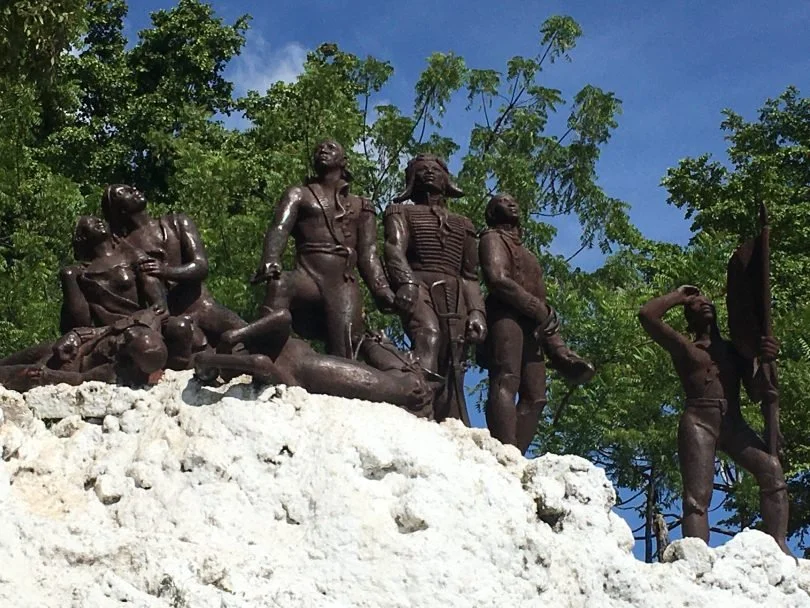
HOW HAITI DESTROYED SLAVERY AND LED THE WAY TO FREEDOM THROUGHOUT THE ATLANTIC WORLD
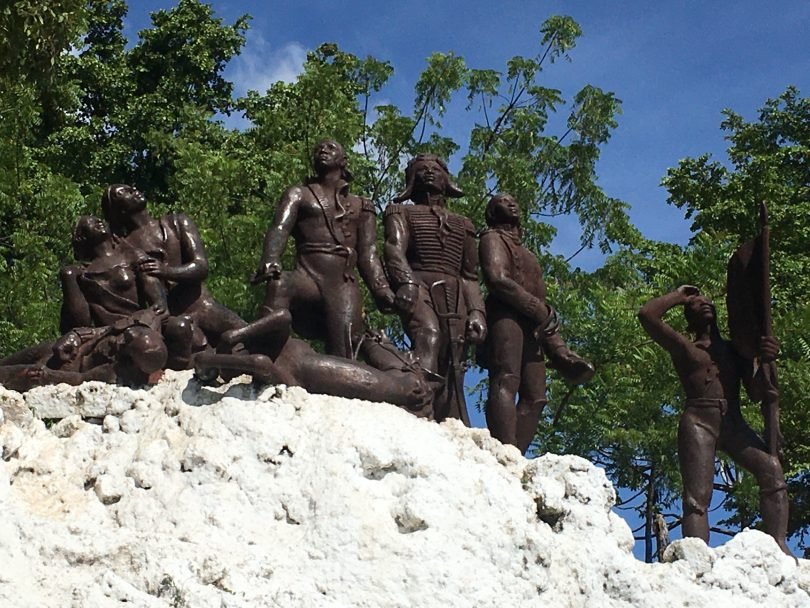
In this series commissioned by Marlene L. Daut, scholars reveal what 220 years of Haitian independence means for how we tell the story of abolition and the development of human rights around the world.
The first land to be colonized in the Americas was Haiti. Europeans first enslaved native Americans and captive Africans there, too. But the first permanent abolition of slavery also happened on Haiti, in 1804: 220 years ago this month. Such abolition only occurred in the rest of the Americas later, much, much later.
Haiti’s radical defeat of French colonizers and enslavers—which opened the door for slavery to be outlawed everywhere in the Atlantic World—is not how abolition is remembered today. Instead, conventional accounts of the end of slavery in the Americas typically center ideas about human rights from the United States, Great Britain, and France. The popular narrative of slavery and abolition usually begins with white Europeans from Spain and Portugal colonizing the Caribbean and the Americas, replacing native populations with captive Africans whom they forced into harsh labor as slaves. It continues with the rise of the plantation supported by the English, French, and Dutch and their advent of scientific racism. In these accounts, it was only after abolitionist pamphlets and lectures culminated in bans on the international slave trade in Great Britain and the United States that the age of abolition opened, eventually leading to the US Civil War, which ultimately ended slavery.
This conventional (and terrifically flawed) story of abolition is circular (white Europeans and their US descendants established slavery only to destroy it); almost magical (with the stroke of a pen a few white men upended 400 years of slavery); preordained (abolition could not have happened any other way); evangelical (thank God and Abraham Lincoln); and warrants gratitude, not reparation (descendants of the enslaved are lucky to be free). Yet this narrative oversimplifies and distorts the reality. Yes, there were abolitionists, revolutionaries, lawmakers, and philanthropists involved in abolition, but Haiti and Haitians are most often left out of the story of who the abolitionists were, where they first emerged, and how we got from slavery to abolition in the first place.1
Haiti was founded by formerly enslaved Africans from the French colony of Saint-Domingue (indigenous name: Ayiti), who threw off the yoke of French rule during the Haitian Revolution (1791–1804). Haiti then became the first nation to permanently abolish slavery, three decades before Great Britain, over four decades before France, and more than six decades before the US. Now, let’s take a look at some examples of how this history is ignored, if not outright dismissed, in standard accounts of how the world went from slavery to abolition.
In a recent article published in the New York Review of Books, Sean Wilentz characterized antislavery sentiment in the period leading up to US independence as an “antislavery revolution inside the American Revolution.” At that time, the Africans vastly outnumbered the white Europeans that enslaved them across the Americas. Even so, Wilentz matter-of-factly declared that “prior to the mid-eighteenth century” slavery stood “almost unquestioned anywhere in the world,” except, he acknowledged, “by the enslaved.” Referring to some meager antislavery pamphleteering in the era, Wilentz further pronounced that it was the American Revolution that “challenged ancient assumptions about human bondage” and “created the first antislavery political campaigns and movements in modern history.” With this wave of the hand, Wilentz erased much earlier antislavery resistance (and divested it of import) on the part of American natives and the first captive Africans Europeans brought to the Americas.
The bare truth is that the American Revolution did nothing to advance global abolition. Instead, it was the constant resistance of the people they were enslaving that led any of the North American colonists to challenge the “ancient idea” that human beings should ever enslave other human beings. It is only through suggesting that the ideas, feelings, and actions of Black Africans and American natives do not matter that the mere existence of antislavery opinion among white early Americans can be said to have “prove[d] to be the beginning of slavery’s destruction, not just in the newborn United States but throughout the Atlantic World.”2 In reality, drastic, effective changes in white public opinion about slavery in western Europe and the United States only occurred after the Black apotheosis in Haiti that inaugurated the age of abolition in 1804.
Similar ignorance about the Haitian Revolution’s material, rather than uniquely aspirational, destruction of slavery is precisely what has allowed the country’s former colonizer, France, to proclaim another related, and similarly blatant, falsehood: that France became the first country, in 2001, to declare slavery a “crime against humanity.” Because the metropolitan French school system does not include teaching about the Haitian Revolution, France’s most prominent newspaper, Le Monde, recently trumpeted this inaccuracy when its reporter Julien Vincent announced, “For the first time, in a solemn law, a nation described the slave trade and slavery as ‘crimes against humanity.’” Vincent was clearly unaware that Haiti had already declared slavery to be a crime against humanity in 1807, nearly two centuries before.3
Such long-standing errors and misrepresentations have ricocheting and ever-expanding consequences. On August 21, 2023, Manchester mayoral candidate Nick Buckley tweeted an image of the Union Jack stamped in all caps with the words, “Great Britain ended the international slave trade. No one else did it. We did it. Some gratitude is overdue.”4 Buckley has been tweeting, YouTube-ing, and blogging this lie since at least November 10, 2021, when he infamously declared in an article titled “Britain & Slavery: A Forgotten History,” “The more I read about slavery, the more I realise I know nothing.” Buckley then went on to state, “The British have an amazing and proud history in fighting slavery. Not just in the UK, but outlawing the practice in most of the world.”5 If Buckley had intellectual rather than ideological interest in the history of slavery, he would have learned that Great Britain only abolished the slave trade in 1807, three years after Haiti—whose existence as an independent and slavery-free state was a huge factor in parliament’s decision to legislate the ban—and that the British did not go on to abolish slavery itself until 1833/1834.
Despite their belated willingness to join the age of abolition, the United States, France, and Great Britain have historically credited themselves with the eventual destruction of the transatlantic slave trade and the elimination of slavery—in the name of love for human rights, of all things—that they instantiated in the first place. The Trinidadian historian Eric Williams complained about this way back in 1944, in his groundbreaking Capitalism and Slavery, when he wrote of the “humanitarians” who helped “spearhead the onslaught which destroyed the West Indian system and freed the Negro”: “their importance has been seriously misunderstood and grossly exaggerated by men who have sacrificed scholarship to sentimentality and, like the scholastics of old, placed faith before reason and evidence.”6 In the Haitian case, we must stress that the revolutionaries spearheaded the end of slavery with their physical acts and deeds before they turned to legislating abolition in the new state they proclaimed in 1804. The “humanitarians” who helped make Great Britain the first European country to legislate abolition of the slave trade in 1807, thus followed in the stead of the Haitian revolutionaries.
To fully understand the momentousness of Haiti’s inaugural and largely silenced role in defining the modern freedoms the world now takes for granted—by outlawing slavery and declaring it and the slave trade crimes against humanity—we must dispense with the idea that New World Africans were mere hitchhikers on a highway of historical progress, inordinately moving forward along with the one-way traffic that took the world from slavery to freedom. The Haitian Revolution, long excluded from traditional accounts of the age of abolition, was in fact its heart.
A new history lesson is in order.
Let us start by glancing backward, to the moment of Columbus’s 1492 arrival on the island of Ayiti (renamed La Española, or Hispaniola, by the Spanish crown). Before the Spanish arrived, Ayiti’s original inhabitants lived in five main principalities spanning more than 75,000 square kilometers: Magua, Marien, Maguana, Xaragua, and Higuey.7 There was never a peaceful coexistence between the Spanish and the Ayitians, as Columbus and his European invaders made immediate war against the natives for resisting their domination.
A Cacique leader named Caonabo, who ruled over Maguana, led one of the most ardent oppositions. But, in 1496, the Spanish captured Caonabo and attempted to deport him to Spain. Though Caonabo died on the ship before he reached Europe, the spirit of Ayitian freedom did not perish with him. A few years later, the Spanish arrested his wife, the Cacique queen of Xaragua, Anacaona. She had refused to become the concubine of a Spanish official. In response, the Spanish executed her with several hundred Xaraguans.8 Still, resistance continued.
In 1519, Anacaona’s nephew Enriquillo escaped into the mountains. After amassing arms, he convinced hundreds of other Ayitians, as well as dozens of enslaved Africans, to follow him. Enriquillo subsequently waged a 14-year war against the Spaniards, establishing a maroon state in the mountains of Bahoruco (present-day Dominican Republic). Enriquillo’s rebellion only ended when he agreed to a dubious “peace treaty.” Although Enriquillo’s brief submission in 1533 (he died one year later) marked the symbolic end of indigenous opposition, his defeat was hardly the end of the story of antislavery and anticolonial resistance on the island of Ayiti.
In fact, it was only the beginning. There was always coterminous enslaved African rebellion too.
In 1501, the Spanish king and queen passed a law authorizing the transportation of captive Africans to La Española for slavery. The newly arrived Africans tried to escape or wage war nearly as fast as the Spanish could force them onto the island.9
The largest armed revolt of some of the first Africans on the island happened in 1521 on a plantation owned by then governor of the colony Diego Colón, son of Christopher Columbus. The day after Christmas, in what became known as the Christmastime Rebellion, Africans enslaved by Diego joined together with those from a neighboring plantation and took up arms. They attacked their “masters” and set fire to several plantations. When their actions did not spark general rebellion, these enslaved freedom fighters retreated to the mountains. When Diego learned of their attempt at freedom, he gathered his troops and led them in pursuit of the “rebels.” Diego’s troops subsequently beat and killed most of the freedom fighters.10
The key point is that Europeans were only able to severely reduce the native populations of the Americas through violent warfare; and they were only able to institute and maintain the transatlantic slave trade and chattel slavery by outright dismissing and viciously suppressing blatant protest of their actions. Still, European violence against native Americans and captive Africans is only one side of the story.
The other, less popularly discussed side reveals that enslaved individuals acted persistently to free themselves. We could talk about captive Africans who threw themselves en masse, and sometimes holding hands, into the sea from aboard slave ships, for example, or that marronnage, or fugitivity from slavery, was rampant, leading to large maroon communities across the Americas. The earliest rebellions and other attempts to resist slavery and colonialism on Ayiti (as well as on Cuba, Jamaica, and elsewhere) demonstrate that opposition to colonialism and the transatlantic slave trade on the part of the people Europeans enslaved was far more complicated, nuanced, and complex than is usually portrayed in European accounts of their “settlement” of the so-called New World.
IT WAS THE CONSTANT RESISTANCE OF THE PEOPLE THEY WERE ENSLAVING THAT LED ANY OF THE NORTH AMERICAN COLONISTS TO CHALLENGE THE “ANCIENT IDEA” THAT HUMAN BEINGS SHOULD EVER ENSLAVE OTHER HUMAN BEINGS.
We can carry this perspective forward into the age of the Haitian Revolution.
In 1697, the French took over the western side of La Española, renamed it Saint-Domingue, and in only one century’s time, forcibly transported 900,000 captive Africans to toil as their slaves. Sugar was king in Saint-Domingue and earned the colony the dubious reputation of being the “pearl of the Antilles.” The white French colonists of Saint-Domingue subjected the Africans they enslaved to some of the cruelest tortures in the Atlantic World. The enslavers burned and buried their captives alive; severed their limbs, ears, and other body parts; bled them to death; and nailed them to walls and trees, while also subjecting them to routine branding with hot irons and other mutilations meant to signify ownership.11
One of the most famous early accounts of enslaved resistance to French colonial repressions is that of a fugitive enslaved man named François Makandal. The white colonists accused him of using poison, as well as a vast network of runaway slaves (or maroons), to sow the seeds of rebellion in Saint-Domingue in the 1750s. Upon his capture in January 1758, French colonial officials ordered Makandal burned alive at the stake, an act that was only one of a series of high-profile executions of maroon leaders in the eighteenth century. However, just as colonial officials set the fire, local storytellers insist that Makandal transformed himself into a mosquito and flew away. The escape of a slave in marronnage was the ultimate counterslavery power move, whether in life or in death.
Even without violent rebellion, enslaved Africans in the colony resisted slavery in countless ways. The island’s maroons, for example, had been raiding and devastating crops since 1719, particularly in the Sud-de-Cap region.12 Their attempts to resist and disrupt slavery cumulatively challenge the notion (repeated in many textbooks and by many journalists) that enslavers were merely “men of their time,” who should not be subjected to “that righteous mode of judging yesterday according to the ideological framing of today.”13 Captive Africans and American natives were people of their time, too. In their own day, long before any white abolitionists or European lawmakers came on the scene, native American and African men, women, and children—victims of white European violence—very clearly denounced, resisted, and ended slavery and colonialism for themselves.
This unquenched and constant opposition to slavery smoldered on the island of Saint-Domingue for nearly three centuries. Finally, a larger flame alighted on August 14, 1791, in a forest in the north called Morne Rouge, when a group of enslaved people clandestinely plotted the revolution. Their plot exploded into literal fire less than two weeks later, on August 23, when the enslaved began burning down plantations and cane fields all over the northern plain. By the middle of September 1791, over 1,500 coffee and sugar plantations had been destroyed; and by the end of the year, between 40,000 and 80,000 of the enslaved were in open rebellion.
In 1793, the famous Toussaint Louverture had risen to prominence and his army successfully forced the formal liberation of all Saint-Domingue’s enslaved people. At the turn of the century Louverture even established the island as a semiautonomous colony. Yet in 1799, a French general named Napoléon Bonaparte assumed power in France and made it his mission to get rid of Louverture so he could bring back slavery.
In late 1801, Bonaparte sent his brother-in-law, General Charles Victor Emmanuel Leclerc, with 30,000 French soldiers to the shores of Saint-Domingue. Arriving at the end of January 1802, this was the largest military expedition to ever set sail from France. Leclerc and his army, which eventually comprised more than 60,000 soldiers, proceeded to rain down a murderous and genocidal campaign upon the island’s Black inhabitants. The French used, alongside more conventional weapons, floating gas chambers, hangings, drownings, and dog attacks.
Yet French attempts to reinstate slavery met fierce resistance. General Henry Christophe, the future king of Haiti, even burned the colony’s principal port city of Cap-Français to prevent French military occupation.
Things took a dramatic turn in June 1802, when the French army tricked General Louverture into a meeting. The French subsequently arrested and deported him to France. In April 1803, Louverture’s French jailers reported they found him dead in the cell where they had denied him medical care and starved him to death.14 The news of Louverture’s terrible demise only encouraged the revolutionaries, now led by the formerly enslaved General Jean-Jacques Dessalines, to fight for “Independence or Death!” The Haitian revolutionaries, who adopted the title of the armée indigène, or indigenous army, defeated French forces at the famous Battles of Vertières on November 18, 1803. They declared their preliminary independence from France about ten days later, on November 29.
On January 1, 1804, the Haitian revolutionaries made their independence official and changed the name of the island from Saint-Domingue back to its indigenous appellation Ayiti (Haïti in modern French spelling). “It is not enough to have expelled the barbarians who have bloodied our land for two centuries,” Dessalines announced in the famous speech he gave while presenting the Haitian Declaration of Independence on New Year’s Day. “It is not enough to have restrained those ever-evolving factions that one after another mocked the specter of liberty that France dangled before you. We must, with one last act of national authority, forever assure the empire of liberty in the country of our birth; we must take any hope of re-enslaving us away from the inhumane government that for so long kept us in the most humiliating torpor. In the end we must live independent or die.”15
One year later, in May 1805, Haiti (which had become an empire under Dessalines, who adopted the title Jacques I) saw its first constitution ratified. Articles 2 and 3 solidified into constitutional law the founding prohibition against slavery and the slave trade: “Slavery is forever abolished” and “Equality in the eyes of the law is incontestably acknowledged.”16
Although Dessalines was assassinated by members of his own army in October 1806, all subsequent constitutions in early Haiti repeated the interdiction against slavery. And in May 1807, the Haitian statesman and journalist Juste Chanlatte changed the trajectory of global political thought when he declared slavery a “crime against humanity.” In an article he penned for northern Haiti’s official newspaper, the Official Gazette of the State of Hayti, Chanlatte wrote of the Spanish and Portuguese inventors of the transatlantic slave trade, “They were a fierce people who dared to teach others to tolerate such a crime of lèse-humanité!”17
TO IGNORE OR DISMISS THE MOMENTOUSNESS OF HOW HAITIANS OPENED THE AGE OF ABOLITION WITH THEIR WAR FOR INDEPENDENCE, A NOT AT ALL INEVITABLE HISTORICAL EVENT, IS TO SHRUG OFF HISTORY.
Today, it is established that slavery is wrong and inhumane. It is so well-established, in fact, that it is easy to forget that the Europeans who enriched themselves from enslaving Africans in the Americas did everything they could to prolong slavery, despite African and native American resistance to their domination. The fact that the state of Vermont took patently incomplete steps toward abolishing slavery in 1777, and that in an earlier draft of the US Declaration of Independence, Thomas Jefferson railed against the evils of slavery while hardly proposing its abolition, demonstrates the utter determination of the US founders to preserve chattel slavery.18 Indeed, in the 1780s, while creating the US Constitution, congress claimed not to have the authority to act to abolish or limit slavery until 1808, the year of the proposed ban on the international slave trade.19 The US republic was founded on principles designed to preserve slavery for as long as possible. This contrasted greatly with Haiti, founded on principles designed to uphold and spread freedom.
Haitian independence forced those across the hemisphere not simply to espouse antislavery ideals, but to take material steps to bring about immediate emancipation. In 1816, Venezuelan freedom fighter Simón Bolívar requested support from Haiti in his war of independence from Spain. In response, Haiti’s then president Alexandre Pétion offered material and economic aid—money, ammunition, weapons, and soldiers—but only if Bolívar agreed to abolish slavery. In 1819, Bolívar founded the short-lived state of Gran Colombia (comprising today’s Venezuela, Bolivia, Colombia, Ecuador, Peru, and Panama). By 1821, enslaved people in Bolívar’s Gran Columbia achieved their liberty, thanks to the insistence and assistance of the Haitian government.
After that, the tide of abolition unleashed by the Haitian Revolution persistently rose, until it grew into an unstoppable swell. Mexico began to gradually abolish slavery in 1821, immediately following its own war of independence from Spain, achieving full emancipation by 1829. In 1833—one year after the Great Jamaican Slave Revolt of 1831–32, also known as the Baptist War—Great Britain abolished slavery (with full implementation in 1838). France definitively abolished slavery as a part of the French Revolution of 1848. Most of South America then saw slavery’s end by 1850, with the Netherlands declaring abolition in 1863. The United States most directly followed the path of the Haitian Revolution, achieving unilateral emancipation only after a long and bloody war from 1861 to 1865. Never again would the fight to end (or preserve) slavery reach the same intensity. In the wake of Haiti’s tsunami, the abolition of slavery emerged more like coastal erosion on the shores of Puerto Rico (1873), Cuba (1886), and Brazil (1888).
This long interval does not demonstrate that the Haitian Revolution’s message of freedom for all, regardless of skin color, was ineffective. Instead, it showcases the stubborn, racist, and violent determination of the rest of the Atlantic World—people and their national governments—to preserve slavery for an embarrassing amount of time, given the profound example set by Haiti.
Other rulers in the Atlantic World could have followed in Haiti’s stead to end slavery right after the Haitian Revolution. Instead, most held out, until the contradiction of a free Black nation in the Western Hemisphere overwhelmed their own colonies and nation-states with slave rebellions, threatening to split them open with revolution and civil war. To ignore or dismiss the momentousness of how Haitians opened the age of abolition with their war for independence, a not at all inevitable historical event, is to shrug off history.
In 1998 UNESCO designated August 23 as the International Day for the Remembrance of the Slave Trade and Its Abolition, in honor of the Haitian Revolution, which formally began on that day in 1791.20 But the occasion usually comes and goes, as it did in 2023 and 2022, and all the years before, with only a passing mention, if it is noticed at all, by mainstream media outlets.
This lack of recognition is sadly not surprising. While the contemporary world stands in near universal agreement that slavery is morally wrong and abhorrent, how that consensus came about remains filled with convenient silences about Haiti.
In 1945, the Nuremberg Charter, whose creators did not acknowledge the precedent set by Haiti, declared slavery a “crime against humanity.” That declaration was repeated by the International Court of Justice in 2001, the same year that France belatedly passed the Taubira Law recognizing the same.21 Neither charter referenced nor referred to Haiti, either. Now—with some politicians in the United States fighting to prevent honest discussions of race and racism in the classroom—how we teach the history of slavery and abolition has become more of a hot button election issue than perhaps ever before.22 This is not the time for further distortion. What we need are more, not less, honest discussions.
My hope for 2024, and every year hereafter, is that those who write about slavery’s abolition for the public sphere will not elide or skip over the Haitian Revolution and its precursors in early modern Ayitian and enslaved African resistance. It was not the United States, Great Britain, or France that first ended slavery. It was Ayiti/Haiti. This bare fact puts Haiti at the vanguard of one of largest and most extensive human rights movements in the world, something that should be taught in every classroom. The first abolitionists were the enslaved themselves.
'The Greatest Heist In History': How Haiti Was Forced To Pay Reparations For Freedom
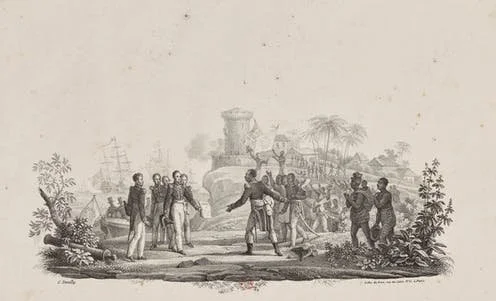
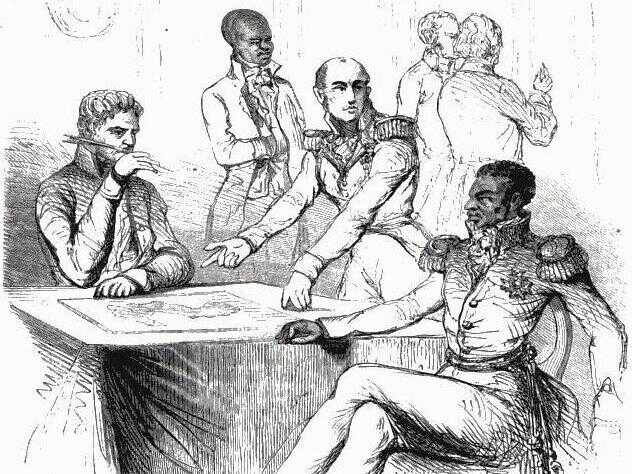
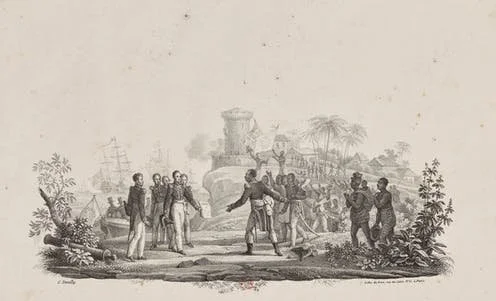
The Baron de Mackau of France presenting demands to Jean-Pierre Boyer, President of Haiti, in 1825Wikipedia
In recent weeks, thousands of refugees from Haiti have arrived at the U.S.-Mexico border, desperate for a better life. Most left Haiti years ago, after a 2010 earthquake ravaged what was already one of the most dismal economies in the world. They had originally settled in places like Chile, but the politics of the region have made them feel unwelcome, discriminated against, and fearful of the future.
The Haitian refugees hoped the United States, under President Biden, would offer them a lifeline. They were wrong. The Biden administration has been sending thousands back to Haiti, even though Haiti is a disaster zone, and many of the refugees fled it years ago. Some of those the U.S. government forcibly sent to Haiti are kids who have never lived there.
Ambassador Daniel Foote, who was appointed by President Biden as the U.S. special envoy to Haiti in July, resigned in protest against his administration's policy. "I will not be associated with the United States' inhumane, counterproductive decision to deport thousands of Haitian refugees," Foote wrote in his resignation letter.
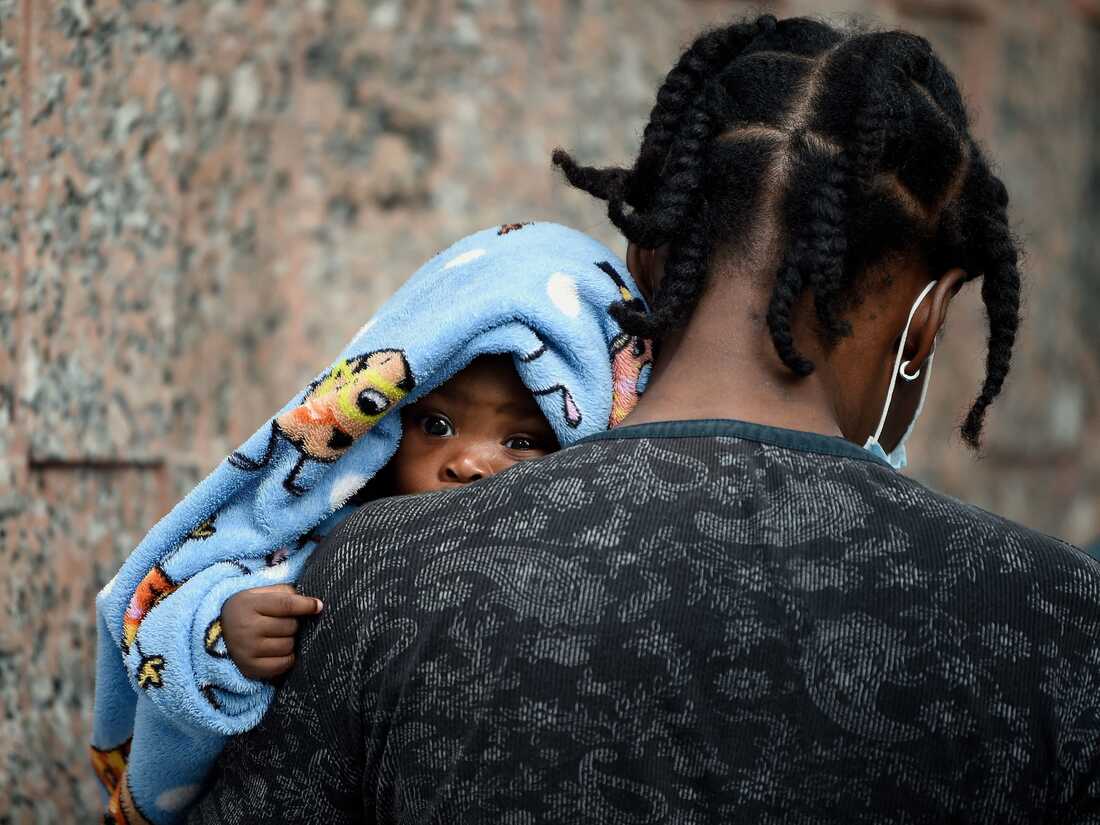
Tens of thousands of migrants, many of them Haitians previously living in South America, have arrived in recent weeks in Mexico hoping to enter the United States.ALFREDO ESTRELLA/AFP via Getty Images
The Haiti that refugees are being sent back to is a nation in crisis. With its unlucky coordinates on the map and its poor infrastructure, Haiti has been devastated by multiple hurricanes and earthquakes in recent years, including a 7.2 magnitude earthquake in August. In July, Haiti's president, Jovenel Moïse, was assassinated by Colombian mercenaries, some of whom had received U.S. military training. A Florida-based security company reportedly connected whoever wanted Moïse killed with the mercenaries, but the details of why Moïse was killed and who directed the mercenaries are still murky.
What is clear, however, is that Moïse's assassination continues Haiti's centuries-long political instability. In 2015, the World Bank concluded that Haiti's biggest political problem is that "a social contract is missing between the state and its citizens." Ambassador Foote, in his resignation letter, blasted the United States and other nations for contributing to this problem for the umpteenth time by unabashedly backing Moïse's unelected replacement, Ariel Henry. Henry was appointed Prime Minister by Moïse in July, and took on the additional role of President after Moïse's assassination. Haiti's chief prosecutor said he found evidence linking Henry to the president's killing, and Henry promptly fired him. Some Haitian authorities have asked Henry to step down and pleaded with the international community to stop supporting him. "This cycle of international political interventions in Haiti has consistently produced catastrophic results," Foote wrote.
Haiti is one of the poorest nations in the world, and rich countries have their fingerprints all over the nation's stunted development. The United States worked to isolate a newly independent Haiti during the early 19th century and violently occupied the island nation for 19 years in the early 20th century. While the U.S. officially left Haiti in 1934, it continued to control Haiti's public finances until 1947, siphoning away around 40% of Haiti's national income to service debt repayments to the U.S. and France.
Much of this debt to France was the legacy of what the University of Virginia scholar Marlene Daut calls "the greatest heist in history": surrounded by French gunboats, a newly independent Haiti was forced to pay its slaveholders reparations. You read that correctly. It was the former slaves of Haiti, not the French slaveholders, who were forced to pay reparations. Haitians compensated their oppressors and their oppressors' descendants for the privilege of being free. It took Haiti more than a century to pay the reparation debts off.
The Tragic Hope of Revolutionary Haiti
Haiti won its independence from France in 1804, and it was almost immediately made a pariah state by world powers. It was an independent, black-led nation — created by slaves who had cast aside their chains and fought their oppressors for their freedom — during a time when white-led nations were enforcing brutal, racist systems of exploitation around the world.
Haiti, then known as Saint-Domingue, had been the crown jewel of the French empire. It was the most lucrative colony in the whole world. French planters forced African slaves to produce sugar, coffee, and other cash crops for the global market. The system seemed to work well. That is, until the French and American revolutions helped to inspire, in 1791, what became the world's largest and most successful slave revolt. Against all odds, the slaves won. Former slaves sent slaveholders scurrying to France and America — and Haitians successfully fought back subsequent efforts to re-enslave them. Haiti was the first nation to permanently ban slavery.
But as a nation of freed black slaves, Haiti was a threat to the existing world order. President Thomas Jefferson worked to isolate Haiti diplomatically and strangle it economically, fearing that the success of Haiti would inspire slave revolts back home. With the invention and spread of the cotton gin, slavery was becoming much more lucrative at the very same time a free Haiti was coming into existence, and slaveholders in the United States and other countries clung to and expanded the inhumane means of production. Haitian success was perceived as a threat to this system for decades, and the United States didn't officially recognize Haiti until 1862, as slavery began being abolished.
During Haiti's critical period of development, France intervened even more directly than the U.S. to thwart its success. In July 1825, the French King, Charles X, sent an armed flotilla of warships to Haiti with the message that the young nation would have to pay France 150 million francs to secure its independence, or suffer the consequences. That sum was 10 times the amount the United States had paid France in the Louisiana Purchase, which had doubled the size of the U.S.
Almost literally at gunpoint, Haiti caved to France's demands in order to secure its independence. The amount was too much for the young nation to pay outright, and so it had to take out loans with hefty interest rates from a French bank. Over the next century, Haiti paid French slaveholders and their descendants the equivalent of between $20 and $30 billion in today's dollars. It took Haiti 122 years to pay it off. Professor Marlene Daut writes it "severely damaged the newly independent country's ability to prosper."
Righting The Wrongs
After the 2010 earthquake completely devastated Haiti, scholars and journalists wrote a letter to the French president demanding that France pay back Haiti. The French economist Thomas Piketty resurrected the idea in 2020, arguing that France owes Haiti at least $28 billion. The French government, under multiple presidents, has balked at the idea, and it is unlikely to pay Haiti back anytime soon.
But if the rich world wants to help right the wrongs done to Haiti in the past, perhaps the most effective policy right now would be to accept more Haitian refugees. This wouldn't only be a humane policy that would improve their and their future families' lives. It would also likely be a boost to the Haitian economy. According to the World Bank, Haitian expatriates sent $3 billion in remittances back home to Haiti in 2018, which was almost one-third of the island nation's entire GDP.
4 Haitian novels that beautifully blend history, memory and reality
Following the July 7, 2021 assassination of Haiti’s President Jovenel Moïse and after one Haitian official requested that the U.N. and U.S. send troops to help stabilize the nation, many Haitian activists and artists recoiled at the prospect of yet another outside intervention.
The Haitian-American novelist Edwidge Danticat is one artist who has repeatedly railed against past U.S. occupations of Haiti. In her foreword to Jan J. Dominique’s “Memoir of an Amnesiac,” she highlights a tension that exists in Haiti’s collective memory – pride over the revolution for freedom and independence from France in 1804, and frustration over continuous foreign meddling, brought to a new height with a 20-year occupation by the U.S. military starting in 1915.
“Never again will foreigners trample Haitian soil, the founders…declared in 1804,” Danticat writes. “Yet in 1915, the ‘boots’ invaded,” which meant that Haitians like the father of the narrator in Dominique’s tale would “never truly know a fully free and sovereign life, having had not just his country but his imagination invaded and occupied by the Americans.”
A specialist in Haitian literary and historical studies from the University of Virginia, Marlene L. Daut has selected four Haitian-authored novels that sit with this contradiction, along with many others.
By guiding readers through Haiti over the past century, she shows how these contemporary writers magnificently paint the entanglements of memory, history and imagination that make Haitian art, from all times, so enduring and brilliant.
1. Évelyne Trouillot, “Memory at Bay” (2010)
In “Memory at Bay,” Trouillot explores the ruthless juxtaposition that exists between Haitian President-turned-dictator François “Papa Doc” Duvalier, called “the Deceased” in her novel, and Haiti’s subjugated position in the Western world.
Many years after the death of Duvalier and the fall of his successor and son, “Baby Doc,” the Deceased’s bedridden wife tries to cast her husband as both a protector of the Haitian people and a target of the West’s quest for revenge.
“After all, how could the Western countries ever forgive or forget Napoleon’s debacle, the sorry defeat of the French army … and the rout of the French colonizers at the hands of an army of former slaves?” the Deceased’s wife thinks. The widow attempts to paint her husband as having been the only one to stand up to the “former colonialists, the one-time occupying power, and all those who wanted to use the country as a springboard for their ambitions.”

The attendant caring for her in a nursing home in France has a different memory of the Deceased and his legacy. Coming from a family devastated by the Tonton Makouts – Duvalier’s murderous henchmen responsible for the deaths of tens of thousands of Haitians – the nurse finds herself disgusted at having to care for an integral culprit in her country’s devastation.
“So many overlooked stories of men and women just guilty of having been alive at the wrong moment, in the wrong place,” she thinks, as she briefly contemplates whether to kill the widow. “My father, my uncle, the resister whose grandchildren will never know him, Madame So-and-So’s husband, the grocer’s cousin, his friend’s godfather, the mother of the little girl who will not be born, the boy who should have been born.”
2. Dany Laferrière, “Down Among the Dead Men” (1996)
Set in 1996, after the fall of the Duvalier regime and during the United Nations’ occupation of Haiti, this partly autobiographical tale tells the story of a never-named protagonist – a stand-in for Laferrière – who decides to come home to Haiti for the first time in 20 years.
Haiti has changed a lot during his exile in Montreal, where he was making his living as a writer. He no longer recognizes the capital, Port-au-Prince, which has seen massive migration from the countryside into the city. The result is overcrowding, famine and generalized misery.
In a chance encounter with a shoeshine man, the narrator is told that these changes mean “All the people you see in the street, walking and talking, most of them died a long time ago and they don’t even know it. This country has turned into the world’s largest cemetery.”
Such commentary encourages the narrator to write a book about “the other world.” He wonders “[i]s it here or elsewhere?” After unwittingly accepting from a powerful Vodou priest “the most terrifying offer anyone could make a writer: to take him to the kingdom of dead,” the narrator meets in succession the Vodou god Papa Legba, master of the crossroads, and Ogou Feraille, the god of war.
Ultimately, the narrator ends up as disappointed with the spirit world as he is with the mortal one. “This was hardly Dante’s inferno,” he remarks. “I’d been expecting…a universe so powerful and rich in symbols, so complex that it would have helped me… Instead, I ended up with a giggling adolescent goddess and the complaints of her father, the supposedly fearsome Ogou Feraille.”
All of this happens parallel to searing political commentary about the punitive and insulting measures forced upon Haiti by the world powers after the 1991 military coup that unseated President Jean-Bertrand Aristide. For example, along with U.N. “peacekeepers,” a comical cast of foreign investigators arrive to study why the people of the northwestern town of Bombardopolis do not need to eat for months at a time. The foreigners conclude that it is because they are all plants, and not human beings.
The irony of course is that foreign meddlers are the ones who have caused the starvation. “Hunger remains the most effective weapon,” one character wryly remarks.
Sometimes the sardonic humor stings a little too much: “When everyone starts joking in a country, you know that all hope is gone,” the narrator’s friend Manu complains. “Humor is the weapon of desperate people.”
3. Edwidge Danticat, “The Farming of Bones” (1999)
In this work of historical fiction, Danticat transports readers to the Dominican Republic, to the border town of Alegría. There, Haitian workers are living “a cane life” – engaged in the brutal work of planting and cutting sugar cane, “travay tè pou zo, the farming of bones.”
Hewing closely to the historical record, Danticat captures the horrors of Dominican dictator General Rafael Trujillo’s massacre in 1937 of tens of thousands of Haitians living and working along the border. The more fictional sections follow the escape of Amabelle Désir, who had many years before witnessed the death by drowning of her parents, both migrant herbal healers, as they tried to cross the Dajabón River separating Haiti and the Dominican Republic.
Amabelle will eventually lose her lover, Sebastien Onius, to the troops of the “Generalissimo,” after Trujillo gives orders “to have all Haitians killed.”

As Haitian characters are tortured or executed because they cannot trill their Rs to pronounce “perejil,” the Spanish word for parsley, Haiti’s glorious revolutionary past seems to fade into the background of the torturous present.
“When Dessalines, Toussaint, Henry, when those men walked the earth, we were a strong nation,” one man who escaped the massacre states. “Those men would go to war to defend our blood. In all this, our so-called president says nothing…nothing at all to this affront to the children of Dessalines, the children of Toussaint, the children of Henry; he shouts nothing across this river of our blood.”
4. René Depestre, “Hadriana in All My Dreams” (1988)
Near the end of “The Farming of Bones,” a guide taking visitors to King Henry’s famous Citadelle says, “Famous men never truly die…It is only those nameless and faceless who vanish like smoke into the early morning air.”
Beginning in 1938, just one year after Trujillo’s massacre, Depestre’s “Hadriana” trails the life, death and reemergence of a white French woman born in Haiti named Hadriana Siloé, who appears to mysteriously die while saying her wedding vows. She is then suspected of having been transformed into a zombie when her body goes missing from its grave.
During her funeral-turned-carnival, historical figures from different eras join the masked wake, as “historical memory” has gotten “mixed up to the point of ridiculousness.”
And so readers are treated to scenes of the Haitian emperor Jacques the First, who ruled Haiti from 1804 to 1806, playing table tennis with his partner, Joseph Stalin, while Venezuelan freedom fighter Simón Bolívar dances alongside King Henry Christophe, who became king of northern Haiti in 1811.
“This masked occasion had convoked three centuries of human history to [Hadriana’s] wake,” her childhood friend Patrick says. They “had come together to dance, sing, drink rum, and refuse death, kicking up the dust on my village square, which, in the midst of this general masquerade, took itself for the cosmic stage of the universe.”
In the end, it is not just history but all of life that appears to be one large carnival as the contours of death come alive on the streets of the living.
This tale has a happy ending, though. Decades later, Hadriana is revealed to be alive after all and describes how she miraculously escaped from the botched attempt to turn her into a zombie. She even gets married, not to her original fiancé but to Patrick, who has chronicled all that took place in her absence.
The true romance here may be that unlike so many of those who have disappeared in yesterday’s and today’s Haiti, Hadriana and Patrick live to tell their story.
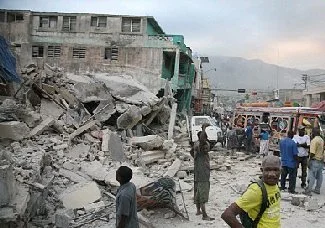
FANM to Commemorate the 11th Anniversary of Haiti’s 2010 Earthquake
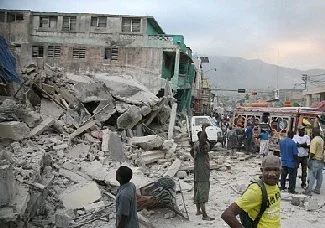
[MIAMI] – Family Action Network Movement (FANM) will host an online memorial event on Tuesday, January 12th, 2021 at 7:00 pm to commemorate the 11th Anniversary of the devastating earthquake in Haiti.
The earthquake killed over 250,000 people and left thousands more wounded and displaced.
Eleven (11) years later, Haiti has yet to recover and the political situation has deteriorated.
After the earthquake, President Obama designated Haiti for Temporary Protected Status (TPS) to protect Haitian nationals in the U.S., allow them to work to provide remittances to their homeland, and to help Haiti recover.
Unfortunately, TPS for Haiti and other nations has been terminated by the Trump administration which triggered a multitude of lawsuits including Saget vs Trump. Now, Haitians hope that President Elect Biden will keep his promise to re-designate TPS and work in tandem with Congress to find a permanent solution.
Today, over 55,000 Haitians have TPS.
Earthquake survivors, elected officials/community leaders, and artists will share inspiring stories of resilience, strength, and courage through songs and prayers while calling for change in Haiti.
Marleine Bastien, Executive Director of Family Action Network Movement (FANM) stated, “We are gathering in solidarity with our brothers and sisters in Haiti to remember one of the worst crises in modern history and to honor those who were killed and wounded as a result. We encourage all to join us to pray for the people of Haiti as they continue to face serious problems including a crippling infrastructure and grave human rights abuses. Let us come together to remember, reflect, and pray for a strong, just, and thriving Haiti!”
This solemn gathering will take place via Zoom, https://us02web.zoom.us/j/86091357635
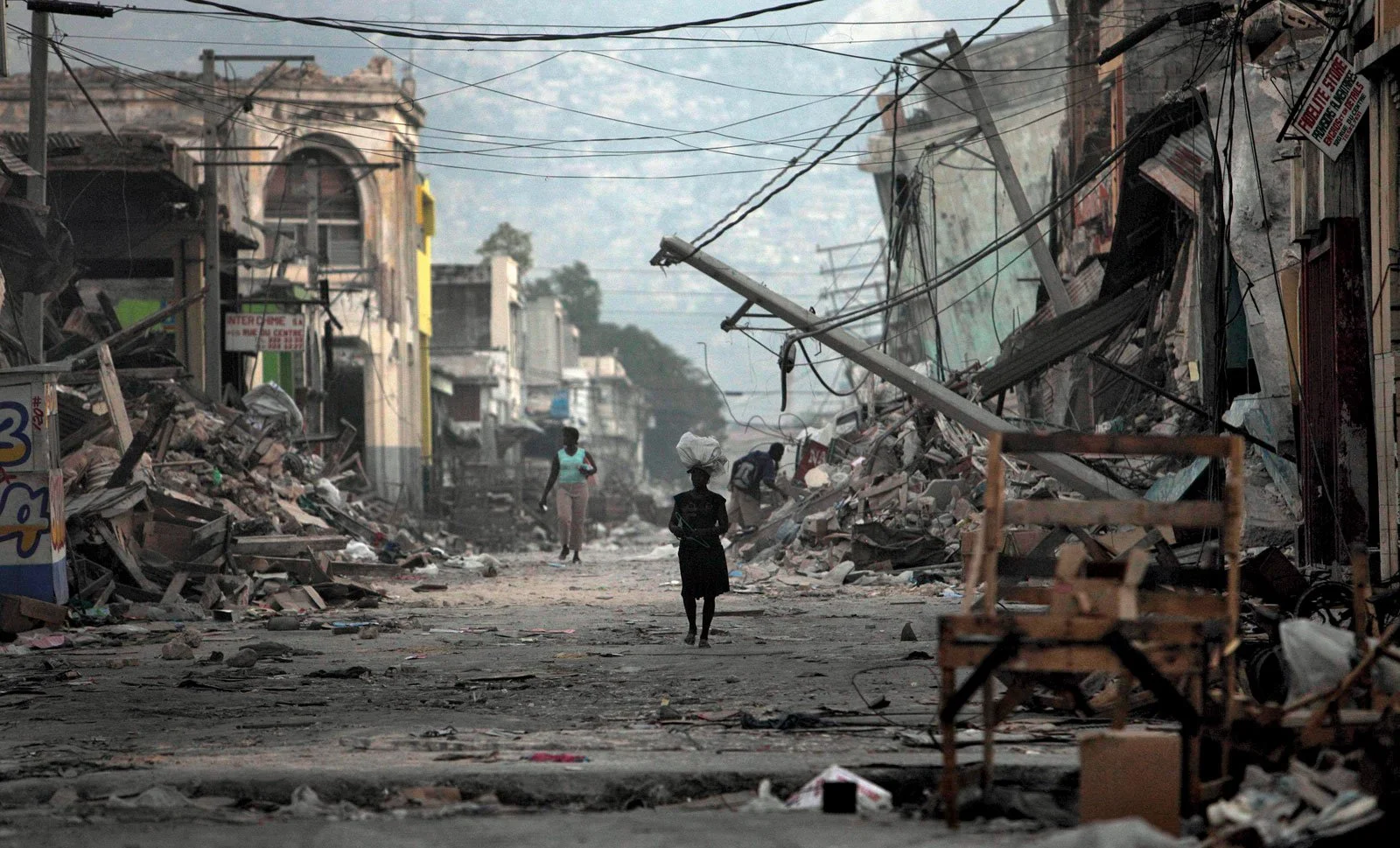
Haiti: 11 years after the earthquake, work continues
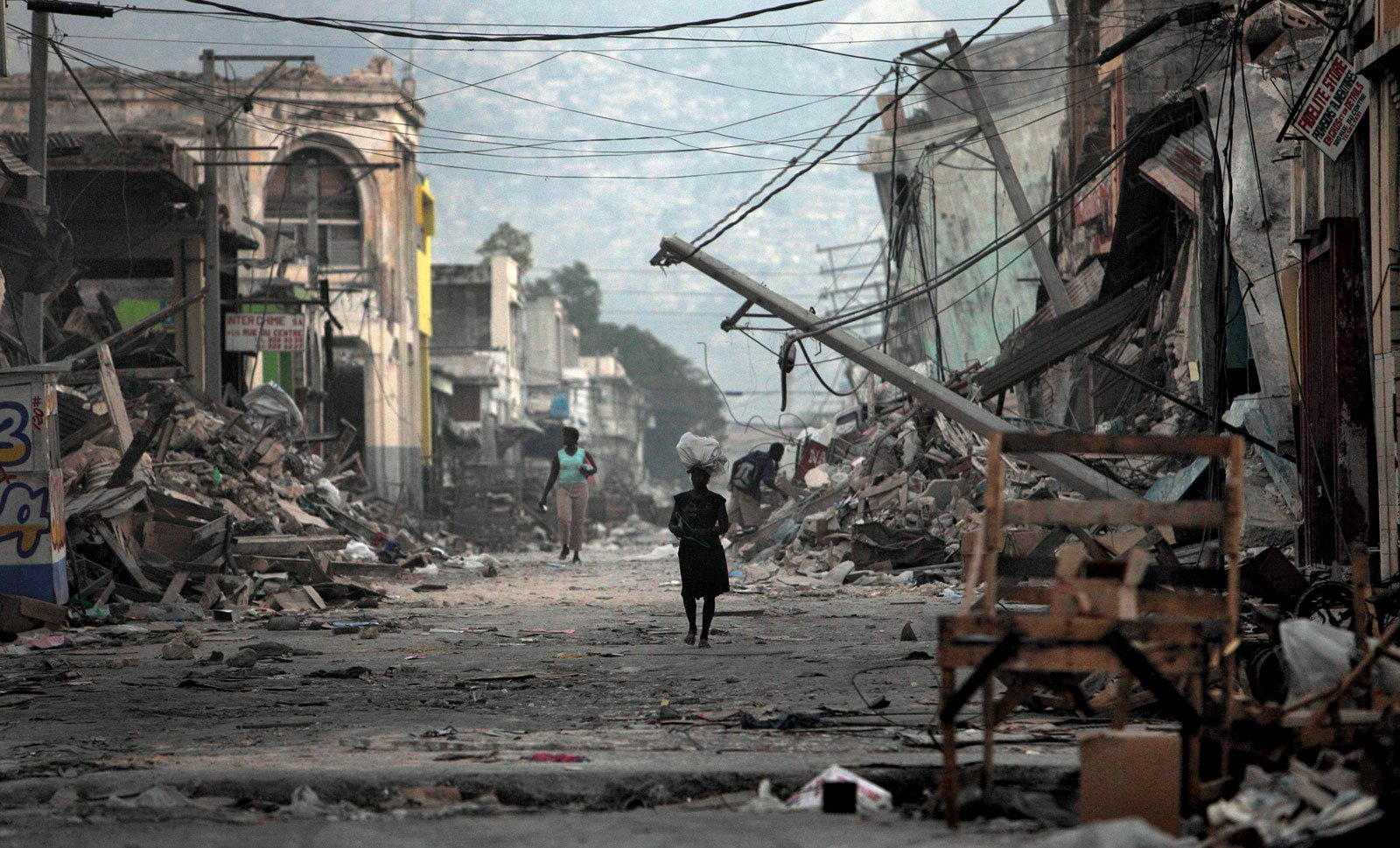
After the earthquake that struck Haiti on January 12, 2010, Humanity & Inclusion (known then as Handicap International) deployed one of the largest emergency response operations in its history. Eleven years later, its work with the most vulnerable people continues.
Haiti was devastated by the earthquake that killed more than 230,000 people and injured more than 300,000. "In 2010, when the earthquake struck Haiti, there was almost no rehabilitation service in the country," explains Sylvia Sommella, Humanity & Inclusion's director in Haiti.
Humanity & Inclusion mobilized hundreds of people and with record levels of donor support deployed unprecedented means to help those affected. In the earthquake's wake, Humanity & Inclusion:
- provided rehabilitation care to 90,000 people;
- equipped more than 1,400 people with assistive devices;
- distributed more than 5,000 wheelchairs, crutches and walkers;
- extended psychosocial support to more than 25,000 people;
- built more than 1,000 temporary homes;
- and delivered more than 20,000 tons of humanitarian aid.
Building capacity in Haiti
Today, Humanity & Inclusion continues to help the Haitian population in executing a long-term disaster response.
"Thanks to the support of Humanity & Inclusion, which launched the first training of rehabilitation technicians following the earthquake, it is now possible to benefit from rehabilitation sessions in different infrastructures," Sommella explains. "Humanity & Inclusion continues to support health structures, strives to make rehabilitation centers accessible to all, and ensures qualified medical staff."
In the first six years following the disaster, Humanity & Inclusion trained 86 new medical experts, who are still working Haiti today. This training was supported by USAID. Training is ongoing for rehabilitation technicians and physical therapists continue to develop their skills through virtual coaching.
Preparing for future disasters
Humanity & Inclusion has made it a priority to work with people living in remote areas, so they can be prepared and protected should disaster strike again. That work includes providing partner organizations with shipping and storage services to ensure humanitarian supplies are available to the most vulnerable families for future natural disasters and emergencies.
In addition to disaster preparedness, Humanity & Inclusion is also working alongside Haitians to create economic and employment opportunities and fight Covid-19.
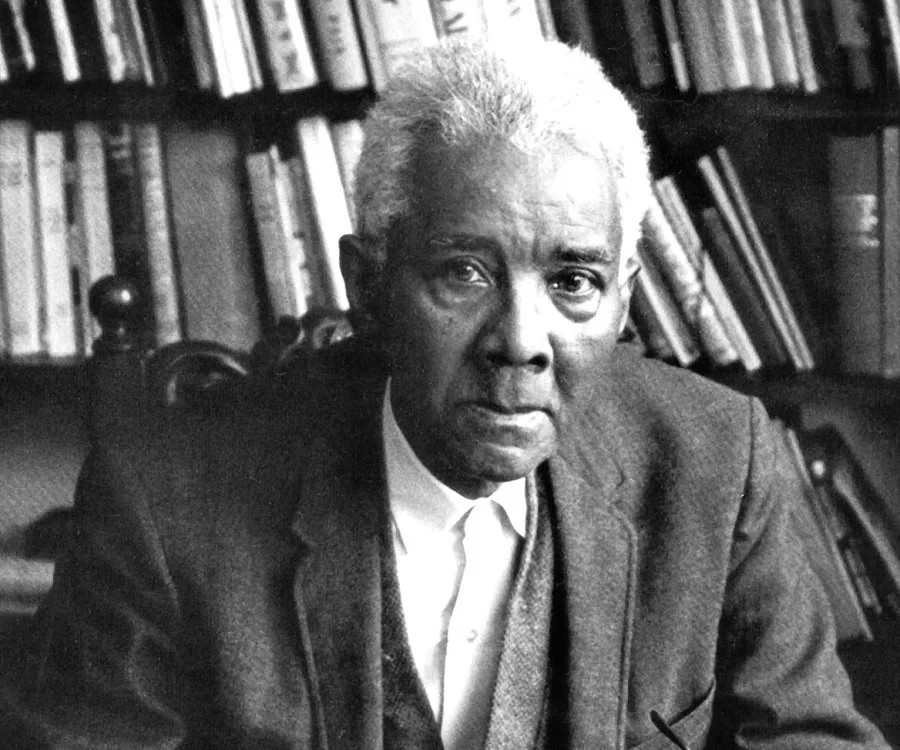
How C. L. R. James Wrote the Definitive History of the Haitian Revolution
AN INTERVIEW WITHRACHEL DOUGLAS
The socialist historian C. L. R. James was born 120 years ago today. His landmark text, The Black Jacobins, is a majestic account of the Haitian Revolution and is still the authoritative history of a heroic struggle for freedom and dignity.
n a 1980 interview, C. L. R. James stated that he wanted to be remembered above all for his serious contributions to Marxism. In Making the Black Jacobins: C. L. R. James and the Drama of History, Rachel Douglas explores the many facets of the Trinidadian author and offers a fresh interpretation of his unique brand of Marxism.
Douglas’s book traces the development of James’s thought over more than thirty years, from his intellectual activities as a Pan-Africanist in London and Paris in the 1930s to his political militancy as one of the founders in the 1940s of the Johnson–Forest Tendency (born from a split with the American Trotskyist organization, the Workers Party). Douglas also revisits James’s engagement with the Black Power and Civil Rights movements of the 1960s and gives special consideration to his work as a playwright. James’s constantly transforming thought is fruitfully explored through Douglas’s masterly use of archival sources — his main works, manuscripts, notes, as well as interviews and secondary sources are all woven into the author’s rich intellectual portrait.
At the center of Douglas’s book is James’s most renowned work, The Black Jacobins. As the author shows, the evolution of James’s political thought and militancy is deeply bound up with a six-decade-long process of writing and rewriting that classic work of Marxist historical analysis. In tracing the book’s evolution, Douglas also highlights the connections between James’s texts and the emancipatory history of the West Indies and Africa.
To reveal the making of The Black Jacobins, Douglas offers a unique reading that connects James’s Haitian Revolution–inspired plays (1934 and 1967) and successive editions of The Black Jacobins (1938 and 1963). At every point, Douglas carefully reconstructs the dialogue taking place between James’s texts and their surrounding political and social context.
The central argument advanced by Douglas is that Black Jacobins should be understood as a palimpsest — a text that, in the words of the author, consists of “layered repositories of embedded vestiges, meaning that earlier inscriptions remain and are never erased, because ‘these narrative inscriptions become part of the whole.’” In the case of James, this meant that the story of the Haitian Revolution was rewritten through multiple mediums: as articles, histories, and, perhaps most strikingly, through plays. As Douglas argues, by retelling the history of the Haitian Revolution through theatrical representation, James was able to dramatize political conflicts and bring them into sharper focus.
In a masterful stroke, Douglas applies the very historical method pioneered by James to the study of the Trinidadian himself. As the author explains, that approach offered a unique criticism of imperialist historiography, reinvigorated Marxist categories of analysis, and provided a compelling interpretation of twentieth-century anti-colonial struggles.
To commemorate the 120th anniversary of James’s birth, Viviane Magno spoke with the author of Making the Black Jacobins to recall the legacy of C. L. R. James — not just the author of The Black Jacobins, but a giant of twentieth-century Marxism.
VM
Let me begin by saying how much I loved Making the Black Jacobins. In some way, your book helps James’s readers to better understand certain questions that he left open-ended or that seemed a bit enigmatic.
For example, in the preface to the 1938 edition, when James writes, “Yet Toussaint did not make the revolution. It was the revolution that made Toussaint. And even that is not the whole truth.” Not the whole truth?RD
This sentence you quote is a typical James sentence. His sentences often double back on themselves like this. Another example is “Great men make history, but only such history as it is possible for them to make.” Here James echoes the introduction to Karl Marx’s Eighteenth Brumaire of Louis Bonaparte about individuals making history, but only in certain circumstances. What James does is take the correlation of the individual and the circumstances to his biographical model. Yet James shows that we cannot understand history through the personality of one great man, despite the vivid pen portraits he draws of Toussaint Louverture. The twists in James’s preface signal that The Black Jacobins will mainly be a portrait of the revolution through Louverture’s personality, but that the evolving circumstances are also crucial to historical developments outlined by James.

I think you are right to point out that open-endedness is important. He keeps the book of his Haitian Revolution writings open, like the always-open book that is his tombstone in Tunapuna. In Notes on Dialectics, James commented that “a closed book” is “a vile phrase.” James’s rewriting repeatedly acts against fixed, static, and finite forms — qualities he associated with negative Stalinist categories and falsification. Instead, James’s rewriting turns back upon itself like a circle, which has neither beginning nor end. A pattern emerges: James’s writing on the Haitian Revolution can be thought of — following his commentary in Notes on Dialectics — as continually enlarging circles.
On the importance of openness, I was influenced by Umberto Eco’s notion of “the Open Work.” Of particular relevance to James was Brazilian dramatist and political activist Augusto Boal’s ideas about reading unfinished open drafts of a play as the radical opposite of bourgeois finished theater. We can apply this perspective about unfinished openness to James’s writings about the Haitian Revolution as a whole. James’s work on this subject — like the Haitian Revolution itself — can never end neatly and complacently like an image of the complete, finished bourgeois world. Instead, it is always turning back on itself and always in a state of becoming.https://70c16ede5cac237bea7376519d89da2c.safeframe.googlesyndication.com/safeframe/1-0-37/html/container.htmlVM
Staying on the topic of James’s writing process: apart from being a scholar, James was a lifelong Marxist militant. How do you think this influenced his approach to writing history?RD
Only a tiny fraction of what C. L. R. James actually wrote has been published, and James’s working methods were often collaborative. James would have documents typed, annotate them, and then dispatch them to comrades around the world for political discussion and feedback. Notes on Dialectics — which James would later (in 1980) declare his most important work — was originally worked out in 1948 in letter form between James and his Johnson–Forest Tendency comrades Raya Dunayevskaya and Grace Lee [Boggs]. This type of work also led The Black Jacobins to become an “underground textbook” [Marty Glaberman] in the context of apartheid South Africa. There, the book was clandestinely copied and distributed in installments to the next readers. Grant Farred has told of how he first came across the history in just this manner when Richard Owen Dudley — one of the leaders of the Non-European Unity Movement (NEUM) for which James was an important figure — gave him one of those mimeographed chapters for comment.VM
Can you talk a little bit about your own making-of process for Making the Black Jacobins? What drew you to the particular method you chose? What theoretical influences were you drawing on?RD
It all started in Trinidad in 2007 when I was at a seminar, “Haiti Now! Art, Film, Literature,” organized by Elizabeth Walcott-Hackshaw and Martin Munro. While I was at the University of the West Indies – St. Augustine campus, I made a couple of visits to the West Indiana and Special Collections archives at the Alma Jordan library there. I came across a typescript of James’s first Toussaint Louverture 1936 play, which had been annotated. What caught my attention was that a new character had been added in James’s shaky handwriting. This character was Moïse, Toussaint Louverture’s adopted nephew.
From the program of the 1936 London production and other scripts of that play, we know that Moïse did not feature as a character in James’s first play. In the handwritten changes, Moïse went from being completely absent to being Louverture’s main interlocutor. This major change caught my attention, and I wanted to find out why James had changed some of the main characters. I also wanted to find out more about the history of The Black Jacobins. It’s a very famous book and is still considered the classic history of the Haitian Revolution to this day, which is quite a feat considering that it is over eighty years old! I wanted to get to know it better and in particular to find out more about the two plays which bookend the better-known history. It was fascinating to find out more about Paul Robeson’s role and contributions to the first play, which was only performed twice in London in 1936.

What I found was that James’s writings on the Haitian Revolution are in a state of constant motion and change, and this influenced my own process in making the book. Rewriting for James is a dialectical method. James’s own comments about Marx’s writing of Capital can be adapted to James’s Haitian Revolution–related writing. We see how James wrote a draft, then reorganized it completely, and then reorganized that. I tried to follow the process of The Black Jacobins’ own development and its essential dialectical movement as reflected in the form. Rewriting links James’s theory and practice.
In order to approach the history of The Black Jacobins, I drew on the method of genetic criticism, which is a youngish, mainly French methodology for reading and ordering all drafts of a literary work intelligibly. This was a useful model for approaching the dynamics of the long genesis and evolution of James’s plays and history based on the Haitian Revolution. Genetic criticism gave me a how-to guide with which to document the handling of archive boxes, folders, and their dusty contents, fragile manuscript and onionskin typescript pages, the examination of blots and marks.
Some aspects of genetic criticism seemed rather alien to James’s Black Jacobins project, including the method’s usually narrow French-Francophone application — a way of approaching textual genetics that has not traveled so well to other countries outside France. The French-Francophone genetic criticism model needs to be decolonized and politicized in order to confront works like The Black Jacobins. My approach had to take into account that James’s Haitian Revolution–related writings are written from a strongly Marxist viewpoint and guided by clear political ideas and James’s own political struggles and responses to the twentieth century’s most significant events.VM
Speaking of James’s process of rewriting, you draw on the concept of the palimpsest throughout your book. What is the relevance of that method in terms of writing about revolutionary processes? As James says about the new Appendix to The Black Jacobins in a letter quoted in your book: “I intend to show what all previous commentators have ignored, that the past and future of the islands can only be seriously studied in the light of the Haitian development during the revolution and after. . . . the West Indies are a territory that cannot be considered merely as to what extent they approximate or depart from Western patterns. They are territories with a unique history of their own, a West Indian history.”RD
Yes, I think the idea of palimpsests and layers of writing is key because the book tries to look at how James weaves together the multiple relations between past, present, and future. The Black Jacobins can be seen as a palimpsestic, messy editorial object, which is how Marx’s Capital has been described. We can use the model of the palimpsest to connect the multiple versions of The Black Jacobins in play and history form with the memorial sites associated with James. Postcolonial sites of memory can be thought of as palimpsests embedded in physical sites.
James’s writing about the Haitian Revolution can be seen as a palimpsest, with new layers added on top of the vestiges of the previous written traces. James said that its 1938 “foundation would remain imperishable” with the history remaining substantially the same for subsequent editions and the embedded vestiges becoming parts of the new whole. New writing is placed over previous writing, leaving visible traces of the rewriting and transforming the work as a whole. These successive layers of rewriting and the original vestiges can be seen as a palimpsest or layered repository of the Caribbean pasts, presents, and futures that James built up over a period of almost sixty years, as he was writing about the Haitian Revolution. What he produced was a multilayered text network that can be reactivated to change according to the new “future in the present.”
I think this method was a useful tool for James to write about revolutionary processes and independence histories, in relation to the national history of postcolonial countries. This quotation is always what James would say about the West Indians: that they were uniquely “sui generis” and “with no parallel anywhere else.” In fact, when James was chasing this “peculiar” quality of Caribbean identity, he even coined his own doubled expression “of the West Indies West Indian.” James’s The Black Jacobins, particularly in the 1963 version, rewrites the history through a Caribbean lens where the emphasis is on transforming the passive objects of other people’s history and travel writing into the subject and active agent of the Caribbean’s own history and culture by focusing on the Caribbean’s own heroes, history, and culture. That is why the focus on self-fashioning and becoming visible in the Caribbean’s own image is so crucial for the reassembling of The Black Jacobins.VM
Historians have a notoriously difficult time dealing with sources in postcolonial countries. Do you think C. L. R. James developed a method for writing history more adequate to the realities of these countries?RD
Yes, I think James developed a method for writing history more adequate to the realities of postcolonial countries. He reads many sources against the colonial grain and writes back to denigratory accounts of the Haitian Revolution. He also had a Haitian living source who was very important for his interwar research in black Paris in the 1930s: Alfred Auguste Nemours (1883–1955) who was a Haitian general, diplomat, and military historian. James recalled in the 1980 foreword of the Allison and Busby edition of The Black Jacobins that Nemours used coffee cups and books in Paris cafés to bring to life the military skills of revolutionary Haitians. As Stuart Hall reminds us, James’s French linguistic skills were unusual at this time for someone educated in the Anglophone Caribbean. James’s history refers to the French-language pillars of Haitian Revolution historiography. Léon-Gontran Damas, one of the trio of Negritude writers, showed James around the sites of black Paris.
Between the 1930s and 1960s to 1970s, James had a major rethink about the type of sources he wanted to use. In a 1971 lecture with a tantalizing title, “How I Would Rewrite The Black Jacobins,” delivered at the Institute of the Black World in Atlanta, James indicated that if he were to rewrite his history again from scratch, he would focus on different types of archival sources closer to the majority of the ex-slaves, instead of outsider sources. James said about these alternative sources: “I know they are there if you look hard enough.”VM
I think one of the elements you explore so well in your book is the imperialist method of historiography that James also struggled against. Hegel after all once said that Africa is not a historical continent. . .
Could you talk a little bit more about this anti-imperialist historiographic method and the use of sources that James, in a certain way, inaugurates?RD
Yes, writing back to imperialist historians is a major prong of The Black Jacobins. James writes in his bibliography about “suppressio veri” and “suggestio falsi,” and James’s history is written to counter deliberate acts of manipulation, suppression, and falsification in some historical narratives of the Haitian Revolution. Countering historical misrepresentations is a major aim of James’s history writing in The Black Jacobins, where James directly counters the “professional white-washers” of history and “Tory historians, regius professors and sentimentalists.”
One target is T. Lothrop Stoddard’s racialist history The French Revolution in San Domingo (1914). Another is James Anthony Froude’s notorious travelogue The English in the West Indies: Or, the Bow of Ulysses (1888). One crucial source was clearly the famous book-length rebuttal by black Trinidadian schoolmaster John Jacob Thomas, aptly titled Froudacity: West Indian Fables Explained (1889) of English historian Froude’s notorious 1888 travelogue. Indeed, James himself would later in 1969 pen an introduction to Thomas’s Froudacity, correcting at length “Froudacious” Froude. There James would literally rewrite every single racist sentence about Haiti from a single page of Froude, transforming each one from passive to active voice.
Already in 1938, James’s history is writing back to the likes of Froude and Stoddard. Not only this, James’s first publication deploying Haitian Revolutionary leader Toussaint Louverture was his early 1931 article “The Intelligence of the Negro: A Few Words with Dr Harland.” This article was a response to Dr Sidney C. Harland, an English scientist based at the Imperial College of Tropical Agriculture in Trinidad, and his article “Race Admixture.” Here James already sketches out a biographical portrait of Toussaint to show that there is nothing innately inferior about West Indians.VM
One issue present throughout your book is that of the “subject of the history.” At one point in Chapter 1, you state: “Action is therefore not only the subject of the biographical passage, it is also a key constitutive feature of the means of representation.”
Following this argument, you seem to be suggesting that James developed an innovative theory of agency. . .RD
Yes, I argue that the protagonist of The Black Jacobins in its different guises is not a subject, so much as action. James’s early 1931 biographical sketch presents Louverture as the active subject of nearly every single active verb. Toussaint Louverture is here action personified: the ultimate action man.
James lists his hero’s many achievements in the 1931 article, piling actions breathlessly through quick-fire parataxis in short sentences. Strings of active verbs represent the revolutionary springing from one action to the next at a breakneck speed. Action is the subject of the biographical passage, but it is also a key constitutive feature of the means of representation when sketching out the bare bones of Toussaint’s biography. From James’s earliest texts, we see this clear focus on action and agency, as in the capacity to exercise power and struggle.VM
Agency seems like a suitable transition point to discuss James’s Marxism. Obviously, speaking of James’s method is already to talk about his historical-materialist method. More specifically, The Black Jacobins is credited with pioneering the history-from-below approach. You claim: “Already in the 1930s, James envisioned black ex-slaves functioning as a Greek chorus in his 1936 Toussaint Louverture play, and his 1938 history already constitutes a pioneering Marxist history from below avant la lettre of 1960s work by Albert Soboul, George Rudé, E. P. Thompson, Eric Hobsbawm, and others.”
Accepting that James’s history-from-below approach was pioneering, do you not think that it also has its own unique peculiarities?RD
Yes, I would agree with that: his history-from-below approach was not only pioneering but also had its own peculiarities. He focuses on crowds in the Haitian Revolution, although he represents only several faces in the crowd. He also draws attention to alternative protagonists including Moïse (Louverture’s nephew). His protégée Carolyn Fick, whose dissertation James supervised alongside the expert on French revolutionary crowds George Rudé, would drill down even further into alternative popular leaders. James’s history-from-below approach is stamped with his key Johnson–Forest Tendency ideas which include: the rejection of the orthodox Marxist-Leninist concept of the vanguard party, and a focus on the self-activity, self-organization, and mobilization from below of the masses. What James’s second play in particular shows us is that there were Haitian revolutions inside the revolution.VM
Speaking of internal divisions within the colony, there are two questions that seem interrelated: James’s denunciation of authoritarian “black revolutionaries” behaving like white rulers, and the question of Haiti’s real independence.
In other words, do you feel that by thinking in the colonial context, James arrives at a more complex theory of a class division of society?RD
Yes, I think James arrives at a more complex theory of a Marxist dialectical social division. In the colonial context, James shows us that class relations are important, but so are power relations between the colonizer/colonized to do with race. James is also doing this long before Albert Memmi, Frantz Fanon, and Jean-Paul Sartre.VM
Eric Williams is famously credited with drawing the connection between capitalism and slavery in his Capitalism and Slavery (1944). Your book shows that James — Williams’s unofficial mentor — was already drawing out that idea in The Black Jacobins.
Would you agree that James’s hypothesis was pioneering not only in showing that the slave trade was the economic basis for the rise of capitalism, but that the plantation mode of production was a quintessentially modern institution of capitalist exploitation? I’m reminded here of W. E. B. Du Bois, in Black Reconstruction in America (1935): “Black slaves in America experienced the worst and lowest conditions among all modern workers. . .”RD
Yes, those words of Du Bois are very apt. In June 1971, James gave another lecture at the Institute of the Black World which was a comparative analysis of The Black Jacobins and Du Bois’s Black Reconstruction. Both works were born out of almost the same moment.
I agree that James’s hypothesis was pioneering because he made it clear that the Caribbean plantation slavery mode of production was a quintessentially modern institution of capitalist exploitation. James drew the connection between capitalism and slavery earlier than his protégé Eric Williams, who would publish Capitalism and Slavery in 1944. According to James, his research for The Black Jacobins directly spawned the central thesis of Williams’s PhD dissertation and subsequent history book. In his unpublished autobiography, James presents himself “[writing] with [his] hands,” and “[writing] down in 2/3 pages” the subject of Williams’s doctoral thesis.
James’s recollections are clearly colored by his subsequent sharp split with Williams who is presented as a faithful scribe who copies out word for word his mentor’s thesis plan. Williams accompanied James on some of the 1930s’ research trips to Paris, and James discusses how Williams wrote certain footnotes that appeared in The Black Jacobins, whereas James wrote certain lines in Capitalism and Slavery. Both published works fit together. Yet we could also talk about a case of The Black Jacobins versus Capitalism and Slavery. Chapter 12 “The Slaves and Slavery” of Williams’s book is where the two works clearly overlap. But questions have been raised about whether that Chapter 12 even fits into the rest of Capitalism and Slavery, especially by Michael Craton. On the genesis of Williams’s Chapter 12, Selwyn Ryan notes that after being sent the proofs, James told Williams that he had left out the slaves completely. What is clear is that Williams owes a particular debt to James for the formulation of his central thesis. Two Trinidadian calypso masters — Black Sage (Phillip Murray) and Short Pants (Llewellyn McIntosh) — are known for their extempo riffing on the subject of C. L. R. James versus Eric Williams.VM
You point out that one important model for James’s Marxist historical narrative is The Eighteenth Brumaire of Louis Bonaparte. You also signal that James derives much of his method and style from Trotsky’s History of the Russian Revolution and his two main theories — uneven and combined development and permanent revolution. Nevertheless, you show how in the 1960s James began working with new sources that led him to refashion his own Marxism, emphasizing the masses over leadership.
Can you talk about these changes, particularly in reference to Henri Lefebvre’s influential book on the French Revolution? You claim that with that shift in emphasis — from leadership to masses — James’s book would be better titled “Black Sansculottes.”RD
Yes, Trotsky’s History of the Russian Revolution and Marx’s Eighteenth Brumaire of Louis Bonaparte are both key models for James. As for the linked ideas — permanent revolution and uneven and combined development — they are also pivotal to James’s 1938 history where they travel to the colonial contexts of San Domingo plantation slave society and anti-colonial revolution in Africa and the Caribbean, beyond the Russia and China of Trotsky’s examples. Permanent revolution is used in The Black Jacobins as a model for explaining the development of the Haitian Revolution as the only successful slave revolt in history. In the more distant past of the Haitian Revolution, these slaves suffered, according to James, from the “concentrated oppressions of slavery” and responded as “[r]evolutionaries through and through [. . .] brothers of the Cordeliers in Paris and the Vyborg workers in Petrograd.”
Later, after his split with Trotsky, James would fiercely attack the notion of permanent revolution, making it one of his targets in Notes on Dialectics (1948), where he described it as “precisely lacking in life, spirit, colour, content,” and as the idea that always propelled Trotsky toward the Mensheviks and against Leninism (this is quoted in Paul Le Blanc’s introduction to his 1994 book with Scott McLemee titled: CLR James and Revolutionary Marxism). James’s criticism of permanent revolution is less harsh in some later works. However, James would even go so far as to criticize Trotsky’s theory of the revolutionary party as “permanent blunder” or “a fiction,” as noted by Martin Glaberman’s collection of C. L. R. James speeches, Marxism for Our Time (1999).
In the 1950s, ’60s, and ’70s, James started working with new sources, especially where French Revolution historiography was concerned. James purchased Lefebvre’s mimeographed lectures in 1956 from one of the bouquinistes along the banks of the Seine. The Black Jacobins is not only a text of the 1930s, it becomes an active text again in the 1960s. James builds on work by Lefebvre who was one of the forefathers and pioneers of the approach to the French Revolution from below. The revised edition of The Black Jacobins was published in 1963 when the defining histories from below were starting to be published by E. P. Thompson, Albert Soboul, and George Rudé, among others.
In the new footnotes, James roughly sketches out what a history of the Haitian Revolution from below might look like. The two mammoth footnotes of the revised The Black Jacobins history concern Lefebvre’s analysis of the sansculottes. In my book, I suggest that James updates his 1938/1963 statement about Haiti and The Black Jacobins with his 1964 essay, “Black Sansculottes”: “This is now,” James writes in 1964. In his 1971 lectures on The Black Jacobins delivered in Atlanta at the Institute of the Black World, James gives a commentary on the Lefebvre footnotes, indicating: “If I were writing this book again, I would have something to say about those two thousand leaders. I have mentioned a few here and there, but I didn’t do it with that in mind.” In those lectures, James verbally adds Albert Soboul — leading historian of the sansculottes — further indicating the downward shift of James’s own attention toward the black sansculottes.VM
One of the central issues in your book is representation and drama. As you quote James: “There is no drama like the drama of history,” and as you add: “If there is no drama like the drama of history, according to C. L. R. James himself, what was the role of actual drama in shaping his own accounts of the Haitian Revolution across versions of The Black Jacobins?”
One response you offer is: “Drama is used as a means of giving voice to those who have none, or next to none, in the imperial archive, and of making crowds of slaves more audible and visible.” As your book shows, the ex-slaves and their voices of opposition and discontent are represented as “fundamental principles of the chorus in radical theater: conflict, contradiction, clash and combat.”
Thinking about the relationship between politics, history, and drama, how do you understand the vocation of theater in dramatizing politics?RD
James is a fundamentally political person who even introduces himself as “no playwright” in the program notes to his second The Black Jacobins play first performed in 1967. The reason he turns to theater is to bring politics to life on the stage. Relatively few people realize that The Black Jacobins both started and ended life as two very different plays. Toussaint Louverture: The Story of the Only Successful Slave Revolt in History was only ever performed twice at the Westminster Theatre in March 1936, with Paul Robeson in the leading role.
These two performances were notable for the sizable presence of black cast members. In both of his plays, James exploits the resources of drama to show the past of the Haitian Revolution. He was clearly influenced by theaters of the Left and theater movements across Britain and America. As for The Black Jacobins history in both its 1938 and 1963 incarnations, there is page after page of dramatic dialogue, which gives the impression of reading a play. It was interesting to think about the special qualities of theater. David Scott has brilliantly invoked some of James’s history revisions to contrast two modes of historical emplotment: the romance of the 1938 first edition versus the tragedy of the 1963 second edition. Tragedy is, however, also there in the first edition, and the second edition is not devoid of hope. Several commentators refer to the literary feel of The Black Jacobins. What I try to do is analyze the work’s trajectory as actual drama and work of literature.
So close is the relationship between theater and politics that they are often presented as going together hand in hand as second cousins. Theater has been described as the “most public of the arts” and as one of the arts of presentation/representation that, like photography, has a privileged access to truth. This intrinsically political role of theater as a representing machine also strongly connects it with action, as long-dead characters and historical events from long ago can be brought to life by flesh-and-blood actors who perform these deeds in the present tense of theater’s liveness, as if they were happening now.
With pieces of political theater like Toussaint Louverture (1936) and The Black Jacobins (1967), the purpose is both to enact politics and revolution (with the play depicting as it does the plight of the slaves/oppressed who fuel the capitalist economy and their revolution for changing the world) and to provoke the audience to do politics and revolution in their turn by resisting a state of affairs similar to the one resisted in the play. In the history versus the play, it is a case of telling versus showing. Turning the past back into drama allows James to show peoples of African descent “taking action on a grand scale” — a key motivation for James, as he discussed in his 1980 foreword to the history.VM
About the Appendix section “From Toussaint Louverture to Fidel Castro,” you write, “through the addition of the Appendix, The Black Jacobins text-network becomes more than the sum of all its parts (…) the creative dialectical development of the Black Jacobins as a whole — the total changing process of its rewriting — is enacted in the Appendix.”
Can you speak more broadly about this section? At one point you highlight that James felt that what links Louverture with Castro is not the most obvious — that both led revolutions in the West Indies — but, as you say, “he uses these bookends to chart the quest for a national identity…”RD
The appendix is only thirty pages long, but this telescopic essay manages to straddle the style of James’s political pamphlets, composite social commentary and journalism style, literary criticism of West Indian literature, and an account of West Indian political developments, including the breakup of the West Indies Federation and independence movements. Hybridity really marks the form and content of the composite finale to The Black Jacobins that is the Appendix.
This hybridity is appropriate for presenting James’s ideal amalgamated vision of Caribbean federation. This would be far more inclusive than the short-lived political union of the actual Federation of the British West Indies, which lasted from January 3, 1958 to May 31, 1962. James’s ideal Caribbean federation would encompass Martinique, Guadeloupe, Haiti, Cuba, and the former Dutch Caribbean territories, as well as the Anglophone islands of the region. It is really in the Appendix that James shifts the space-time coordinates of The Black Jacobins, as we move from the Africa of the 1930s towards the West Indies of the 1960s in search of an identity. Ultimately, James underlines the hybridity of West Indian identity, which has an unfinished and provisional quality, like The Black Jacobins history project itself.VM
One of the great passages from your book deals with James’s translation, in the Appendix, of Aimé Césaire’s famous poem Cahier d’un retour au pays natal (1939). In closing, can you say a few words about that translation?RD
Césaire’s Cahier and James’s The Black Jacobins were both published on the eve of World War II, and both were subsequently rewritten many times. Little attention has been given to the fundamental importance of James’s Cahier translation published in 1963. At the very centre of the appendix is James’s own translation and extended analysis of Césaire’s Cahier. James’s creative translation makes the poem his own. He rephrases the title as “Statement of a Return to the Country Where I Was Born.”
In large part, the Appendix provides us with James’s own statement on, and perspectives from, his own return to Trinidad to participate in politics there. ‘Statement’ brings to mind a political communication or pamphlet, such as James’s own political pamphlet Party Politics in the West Indies (1962) dealing with his sharp split from Williams and his People’s National Movement, as well as James’s acute sense of disappointment about the break-up of the West Indies Federation. These are, as well as Césaire’s Cahier, the signposts that mark the Appendix. The Appendix incorporates part of the poem, so that the Cahier literally becomes part of The Black Jacobins in the 1960s.
When we compare James’s version of the poem with Césaire’s own, it is then that the extent of James’s creative mis/reading and mis/translation emerges strongly as creative rewriting of the original. What James completely transforms is the sense of the original poem, creating new meaning. To make the poem his own, James starts and ends his translation in different places from Césaire. James initiates a dialogue with Césaire in the Appendix. Speaker pronouns often change as James presents everyone meeting at the ‘rendezvous of victory’, which James presents as the climax of Césaire’s poem. James’s rewriting involves breaking up Césaire’s long lines of prose into a more traditional poetic verse arrangement. In this way, the Cahier is reframed so that the shorter lines now look more verse-like, making the poem’s form stand out more against James’s prose in the rest of the Appendix. When James recenters the poem, what he identifies as being at its center and where he finishes his translation is, in fact, right in the middle of a line in the middle of a stanza.
James ends by translating ‘et il est place pour tous au rendez-vous de la conquête’ as ‘and there is a place for all at the rendezvous of victory’. In French and English, the equivalent words are ‘conquête’ = conquest and ‘victoire’ = victory. If James had sought to translate this more closely, he could have proposed ‘at the rendezvous of conquest’. This change of just one word is very significant. While ‘conquest’ is linked with more negative connotations, ‘victory’ is more positive: it refers to the winners, while conquest refers to the losers. Thus, James changes his ending of Césaire’s poem, which is not the actual ending of the Cahier at all, by rewriting it. This — James’s own rewriting of Césaire — would later become an important landmark in James’s own work. Subsequently, At the Rendezvous of Victory would become the title of a whole 1984 volume of James’s own selected writings. James always quoted from his own Cahier translation, saying “I prefer that to any others, merely because I did it.”

Haïti a été la première nation à interdire définitivement l'esclavage

Les manifestations mondiales en faveur de Black Lives Matter ont systématiquement mis à nu l'héritage de l'esclavage et du colonialisme aujourd'hui.
Ce mouvement a mis beaucoup de monde sur la défensive. Les Blancs n'hésitent pas à vanter des histoires d'abolition, soulignant la voie tracée courageusement par les puissances impériales comme la Grande-Bretagne et la France. Ils diminuent les réalités et les conséquences de l'esclavage et du colonialisme en exigeant leur gratitude pour avoir mis fin aux mêmes systèmes violents qu'ils avaient précédemment mis en place.
Ces récits sont historiquement inexacts. Ni les Français ni les Britanniques n'ont été les premiers à abolir l'esclavage. Cet honneur revient plutôt à Haïti, la première nation à interdire définitivement l'esclavage et la traite des esclaves dès le premier jour de l'existence de cette Nation. Les actes audacieux des Haïtiens pour renverser l'esclavage et le colonialisme se sont répercutés dans le monde entier, forçant les pays esclavagistes comme la Grande-Bretagne et la France à se retrouver face à face avec les contradictions de leur propre «illumination». Beaucoup aimeraient maintenant oublier ce calcul.
À partir de 1697, Haïti était une colonie française avec le nom de Saint Domingue. Dans la seconde moitié du XVIIIe siècle, c'était la colonie la plus riche du monde, exportant du sucre, du café et de l'indigo vers la France. Les hommes, femmes et enfants réduits en esclavage ont produit cette richesse sous un système d’esclavage incroyablement violent, réglementé et légitimé par le Code Noir de Louis XIV . Le taux de mortalité parmi les esclaves était si élevé que les Français importaient constamment de nouveaux captifs pour travailler dans les plantations. Pendant toute cette période, environ les deux tiers de la population asservie étaient nés en Afrique.
En 1791, les esclaves des plaines sucrières du nord de Saint Domingue se sont soulevés dans une rébellion coordonnée pour détruire l'esclavage français. Cela enclenché l'événement ayant duré 13 ans qui est connu sous le nom de Révolution haïtienne. En 1793 , les rebelles se sont libérés en forçant les commissaires coloniaux à abolir l'esclavage dans toute la colonie. La colonie a ensuite envoyé une délégation à l'Assemblée nationale française pour convaincre le gouvernement français d'abolir l'esclavage dans tout l'Empire. «La Convention nationale déclare que l'esclavage des nègres dans toutes les colonies est aboli, en conséquence, il décrète que tous les hommes, sans distinction de couleur, vivant dans les colonies sont citoyens français et jouiront des droits garantis par la constitution », a écrit l'Assemblée. C'était la première abolition de l'esclavage en France, une concession offerte pour conserver la précieuse colonie au sein de l'Empire. Mais ça ne durerait pas.
En 1799, Napoléon Bonaparte s'établit comme Premier Consul de France et se décida à freiner l'autonomie croissante de Saint Domingue sous l'autorité du chef révolutionnaire et gouverneur colonial Toussaint L'Ouverture, qui publia la constitution coloniale de 1801 qui «abolit à jamais» l'esclavage.
Bonaparte envoie une armée pour remettre Saint Domingue à l'ordre colonial. Son beau-frère, Charles Leclerc, a dirigé l'effort d'expulsion de L'Ouverture et a mené une «guerre d'extermination».
«Voici mon opinion sur ce pays», écrivait Leclerc dans une lettre à Bonaparte le 7 octobre 1802 «nous devons détruire tous les Noirs des montagnes - hommes et femmes - et n'épargner que les enfants de moins de douze ans. Nous devons détruire la moitié de ceux des plaines et ne pas laisser une seule personne de couleur dans la colonie qui a porté une épaulette.
Et ainsi la première abolition française s'est terminée rapidement. Le retour de Bonaparte à l'ordre colonial inclut l'esclavage et, en 1802, il rétablit l'esclavage dans les autres colonies françaises des Caraïbes. Mais les rumeurs selon lesquelles la France rétablirait l'esclavage à Saint Domingue ont déclenché la guerre pour l'indépendance haïtienne en octobre 1802.
Un peu plus d'un an plus tard et sous le slogan «Liberté ou la mort», Jean-Jacques Dessalines a mené l'armée révolutionnaire à la victoire. Le 1er janvier 1804, Dessalines a proclamé l'indépendance haïtienne , promettant que les Haïtiens «assureraient à jamais l'empire de la liberté dans le pays qui nous a donné naissance; nous devons nous emparer du gouvernement inhumain qui nous a longtemps maintenus dans la torpeur la plus humiliante, tout espoir de nous rendre en esclavage; il faut alors vivre indépendant ou mourir. »
Dès le premier jour de son existence, Haïti a interdit l'esclavage. C'était le premier pays à le faire. L'année suivante, Haïti a publié sa première constitution. L'article 2 stipulait: «L'esclavage est aboli à jamais.» En abolissant l'esclavage dans son intégralité, Haïti a également aboli la traite des esclaves, contrairement à l'approche en deux étapes des nations européennes et des États-Unis.
Lors de l'initiation des révolutionnaires à Saint Domingue, la France avait aboli l'esclavage, mais elle l'a rapidement rétabli et relancé la traite des esclaves en 1802. Les Britanniques, dont beaucoup vantent leur rôle de premier plan dans l'abolition, ont aboli la traite des esclaves en 1807, mais n'en ont publié la Loi sur l'abolition en 1833 et a continué à asservir les gens dans les Caraïbes jusqu'en 1838. Et même alors, la Loi sur l'abolition a été également stimulée par une rébellion majeure en Jamaïque en 1831-1832.
Les Haïtiens, en revanche, ont forcé l'un des empires européens les plus puissants du XVIIIe siècle à abolir l'esclavage, puis ont protégé cette abolition en déclarant leur indépendance. Les révolutionnaires haïtiens ont été les architectes de l'abolition de la France en 1793 et 94 et ils ont fondé un État abolitionniste dans les Amériques en 1804.
Un soutien global de Black Lives Matter doit reconnaître et célébrer l'histoire des Noirs et son rôle fondamental dans le façonnement du monde moderne, y compris l'abolition de l'esclavage. En faisant taire Haïti et en effaçant son rôle critique dans l'histoire moderne, les nations euro-américaines ont été en mesure de revendiquer le droit de se vanter des abolitionnistes plutôt que de compter avec leur participation séculaire à l'esclavage atlantique et seulement des décisions lentes et réticentes pour y mettre fin, suite aux demandes de les noirs.
C'est pourquoi Haïti doit être au centre de toute conversation sur l'abolition de l'esclavage. Les Haïtiens ont défié toute attente et se sont battus courageusement pour leur liberté; personne ne le leur a donné.
Julia Gaffield, PhD (she/her)
Associate Professor
Department of History
Georgia State University
Traduit de l'anglais par Patrick SAINT-PRÉ
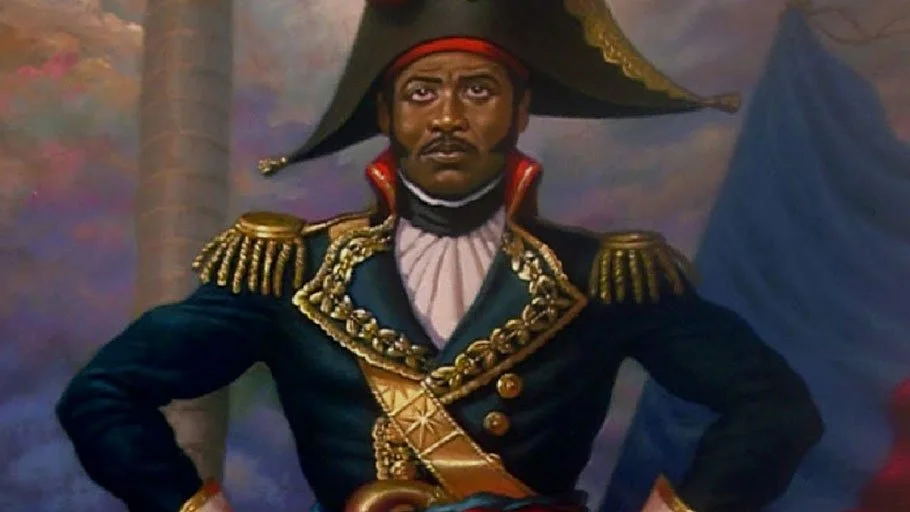
Haiti was the first nation to permanently ban slavery
Why this matters today
Global protests in support of Black Lives Matter have systematically exposed the legacies of slavery and colonialism today.
This has put many on the defensive. White people are quick to tout stories of abolition, emphasizing the path bravely forged by imperial powers like Britain and France. They diminish the realities and consequences of slavery and colonialism by demanding gratitude for ending the same violent systems they had previously implemented.
These narratives are historically inaccurate. Neither the French nor the British were the first to abolish slavery. That honor instead goes to Haiti, the first nation to permanently ban slavery and the slave trade from the first day of its existence. The bold acts of Haitians to overthrow slavery and colonialism reverberated around the world, forcing slaveholding nations like Britain and France to come face to face with the contradictions of their own “enlightenment.” Many would now like to forget this reckoning.
Beginning in 1697, Haiti was a French colony with the name Saint Domingue. By the second half of the 18th century, it was the most wealth-producing colony in the world, exporting sugar, coffee and indigo to France. Enslaved men, women and children produced this wealth under an incredibly violent system of slavery, regulated and legitimated under Louis XIV’s Code Noir. The death rate among the enslaved was so high that the French constantly imported new captives to work the plantations. At any one time, about two-thirds of the enslaved population had been born in Africa.
In 1791, enslaved people on the northern sugar plains of Saint Domingue rose up in a coordinated rebellion to destroy French slavery. This started the 13-year event that has come to be known as the Haitian Revolution. In 1793, the rebels freed themselves by forcing the colonial commissioners to abolish slavery throughout the colony. The colony then sent a delegation to the French National Assembly to convince the French government to abolish slavery in the entire Empire. “The National Convention declares that negro slavery in all of the colonies is abolished, in consequence, it decrees that all men, without distinction of color, living in the colonies are French citizens and will enjoy the rights guaranteed by the constitution,” the Assembly wrote. This was France’s first abolition of slavery, a concession offered to retain the valuable colony within the Empire. But it wouldn’t last.
In 1799, Napoleon Bonaparte established himself as First Consul of France and became determined to rein in the growing autonomy of Saint Domingue under the revolutionary leader and colonial governor Toussaint L'Ouverture, who published the 1801 colonial constitution that “forever abolished” slavery.
Bonaparte sent an army to restore Saint Domingue to colonial order. His brother-in-law, Charles Leclerc, led the effort to deport L’Ouverture and waged a “war of extermination.”
“Here is my opinion on this country,” Leclerc wrote in a letter to Bonaparte on Oct. 7, 1802 “we must destroy all of the black people in the mountains — men and women — and spare only children under twelve years of age. We must destroy half of those in the plains and must not leave a single person of color in the colony who has worn an epaulette.”
And so the first French abolition ended quickly. Bonaparte’s return to colonial order included slavery and, in 1802, he reinstated slavery in France’s other Caribbean colonies. But the rumors that France would reinstitute slavery in Saint Domingue sparked the war for Haitian independence in October 1802.
Just over a year later and under the slogan “Freedom or Death,” Jean-Jacques Dessalines led the revolutionary army to victory. On Jan. 1, 1804, Dessalines declared Haitian independence, promising Haitians would “forever ensure the empire of liberty in the country that gave us birth; we must seize from the inhuman government that has for a long time kept us in the most humiliating torpor, all hope of re-enslaving us; we must then live independent or die.”
From the first day of its existence, Haiti banned slavery. It was the first country to do so. The next year, Haiti published its first constitution. Article 2 stated: “Slavery is forever abolished.” By abolishing slavery in its entirety, Haiti also abolished the slave trade, unlike the two-step approach of the European nations and the United States.
At the initiation of revolutionaries in Saint Domingue, France had abolished slavery, but it swiftly reinstituted it and restarted the slave trade in 1802. The British, many of whom tout their leading role in abolition, abolished the slave trade in 1807, but only passed the Abolition Act in 1833 and continued enslaving people in the Caribbean until 1838. And even then, the Abolition Act was similarly spurred on by a major rebellion in Jamaica in 1831-32.
Haitians, by contrast, forced one of the most powerful European empires in the 18th century to abolish slavery and then protected that abolition by declaring independence. Haitian revolutionaries were the architects of France’s 1793 and ’94 abolition and they founded an abolitionist state in the Americas in 1804.
A comprehensive support of Black Lives Matter must acknowledge and celebrate black history and its foundational role in shaping the modern world, including the abolition of slavery. By silencing Haiti and erasing its critical role in modern history, Euro-American nations have been able to claim abolitionist bragging rights rather than reckoning with their centuries-long participation in Atlantic slavery and only slow and grudging decisions to end it, following the demands of black people.
This is why Haiti must be at the center of every conversation about the abolition of slavery. Haitians defied all odds and fought courageously for their freedom; no one gave it to them.
Frederick Douglass was named Minister to Haiti on this day in 1889
hen Frederick Douglass was appointed by Republican President Benjamin Harrison as the next U.S. Minister Resident and Consul General to the Republic of Haiti in 1889, the well-known abolitionist, author and orator was 72 years old. Born Frederick Augustus Washington Bailey, Douglass, a former slave, had escaped to freedom in 1838, marking the beginning of a journey that still astounds to this day.
His appointment as Minister in 1889 was not a first for African Americans as Republican Presidential administrations had previously appointed African Americans to serve at Port-au-Prince, Haiti, as a reward for black political support.
Douglass was the fourth black American to hold the position, however, his appointment came at a time when Haiti was “more than a diplomatic prize in the political spoils system,” wrote Douglass’ biographer William McFeeley.
Essentially, while African Americans viewed Haiti as a symbol of the liberation and autonomy of black people, for the U.S., the island nation “remained of crucial strategic importance in the time of coal-fired, steam-powered warships,” according to a report by the National Archives History Office.
Thus, the Harrison administration believed that Douglass moving to Haiti was “an intelligent and a liberal move.” Douglass arrived in Haiti at a time the island nation had just emerged from a revolution in which the government of President François Deny Légitime, who had been considered a political pawn of the French in the Caribbean, was overthrown.
During the unrest, the U.S. supported Légitime’s opponent, a former military general known as Florvil Hyppolite, by supplying his insurgents with arms shipments and naval support. In return, the Harrison administration expected Hyppolite to give his full backing to the lease of Haitian territory at Môle St. Nicolas for a future American naval facility.
A report by Black Perspectives of the AAIHS said Haiti’s Môle St. Nicolas “was a desirable prize because of its location at the northern entrance to the Windward Passage, its ample harbors, and its defensible geographic features.” Helping Hyppolite come to power, the Harrison administration expected talks to begin on plans to give the Haitian port town to it.
Douglass’ mission in Haiti was to obtain approval of this plan from Hyppolite and his government. U.S. Navy Rear Admiral Bancroft Gherardi joined the abolitionist as co-negotiator but things didn’t go as Douglass expected when the Harrison administration attempted to use force to acquire the Môle.
Douglass, within two months of assuming office, got to know that American naval officers had begun “scouting the conditions at Môle” and news soon spread in Haiti and the U.S. that Hyppolite planned to cede part of Haitian territory to the U.S. as a reward for helping bring him to power.
Amid criticisms from Hyppolite’s political enemies, Black Perspectives reports that on New Year’s Day, 1891, Haiti’s foreign minister Anténor Firmin visited Douglass, where he condemned a U.S. newspaper for stating that Hyppolite had promised the Môle to the U.S.
Douglass thought the newspaper report was “baseless”, nevertheless, he stressed the U.S. government’s willingness to lease, rent, or purchase the Môle according to “proper means . . . consistent with the peace and welfare of Hayti.”
With that same stance, Douglass and Gherardi, in late January of 1891, met with Hyppolite and Firmin and convinced them to approve the lease pending the approval of the legislative body. Douglass, during the meeting, promised that “the concession asked for was in the line of good neighborhood and advanced civilization, and in every way consistent with the autonomy of Haiti.”
On February 2, a formal written application for the lease was submitted yet political opposition and the arrival of five more American warships ruined the likelihood of having an agreement, according to the report by the National Archives History Office. In April, Douglass alerted the State Department that Haiti has declined lease of the Môle, the report added.
Douglass, accepting that his mission did not yield the desired result, applied for leave but remained in Port-au-Prince for a while to help in protecting refugees fleeing violence arising out of Hyppolite’s military actions.
Douglass later returned to the U.S., resigning on July 31, 1891. White critics and U.S. newspapers soon blamed him for the failed negotiations for the Môle, claiming that Douglass was too sympathetic to Haitians. Douglass responded.
According to Black Perspectives, “first, Douglass pointed out, the United States had given Gherardi a role for which he had no preparation solely because he was white and Haitians were supposed to be more willing to defer to a white man. That assumption was laughable, Douglass suggested.
“It showed a stunning ignorance of Haitian history. Besides…even if a white diplomat could have exploited Haitians, a supposedly great country like the United States should ‘ask nothing of Haïti on grounds less just and reasonable than those upon which they would ask anything of France or England.’”
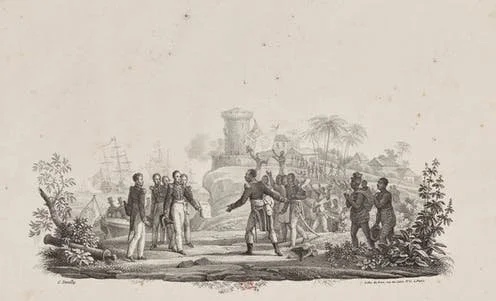
When France extorted Haiti – the greatest heist in history
In the wake of George Floyd’s killing, there have been calls for defunding police departments and demands for the removal of statues. The issue of reparations for slavery has also resurfaced.
Much of the reparations debate has revolved around whether the United States and the United Kingdom should finally compensate some of their citizens for the economic and social costs of slavery that still linger today.
But to me, there’s never been a more clear-cut case for reparations than that of Haiti.
I’m a specialist on colonialism and slavery, and what France did to the Haitian people after the Haitian Revolution is a particularly notorious examples of colonial theft. France instituted slavery on the island in the 17th century, but, in the late 18th century, the enslaved population rebelled and eventually declared independence. Yet, somehow, in the 19th century, the thinking went that the former enslavers of the Haitian people needed to be compensated, rather than the other way around.
Just as the legacy of slavery in the United States has created a gross economic disparity between Black and white Americans, the tax on its freedom that France forced Haiti to pay – referred to as an “indemnity” at the time – severely damaged the newly independent country’s ability to prosper.
The cost of independence
Haiti officially declared its independence from France in 1804. In October 1806, the country was split into two, with Alexandre Pétion ruling in the south and Henry Christophe ruling in the north.
Despite the fact that both of Haiti’s rulers were veterans of the Haitian Revolution, the French had never quite given up on reconquering their former colony.
In 1814 King Louis XVIII, who had helped overthrow Napoléon earlier that year, sent three commissioners to Haiti to assess the willingness of the country’s rulers to surrender. Christophe, having made himself a king in 1811, remained obstinate in the face of France’s exposed plan to bring back slavery. Threatening war, the most prominent member of Christophe’s cabinet, Baron de Vastey, insisted,“ Our independence will be guaranteed by the tips of our bayonets!”
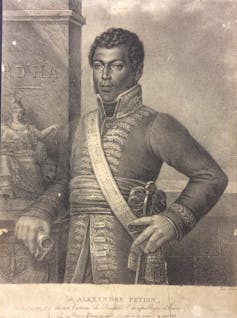
In contrast, Pétion, the ruler of the south, was willing to negotiate, hoping that the country might be able to pay France for recognition of its independence.
In 1803, Napoléon had sold Louisiana to the United States for 15 million francs. Using this number as his compass, Pétion proposed paying the same amount. Unwilling to compromise with those he viewed as “runaway slaves,” Louis XVIII rejected the offer.
Pétion died suddenly in 1818, but Jean-Pierre Boyer, his successor, kept up the negotiations. Talks, however, continued to stall due to Christophe’s stubborn opposition.
[Deep knowledge, daily. Sign up for The Conversation’s newsletter.]
“Any indemnification of the ex-colonists,” Christophe’s government stated, was “inadmissible.”
Once Christophe died in October 1820, Boyer was able to reunify the two sides of the country. However, even with the obstacle of Christophe gone, Boyer repeatedly failed to successfully negotiate France’s recognition of independence. Determined to gain at least suzerainty over the island – which would have made Haiti a protectorate of France – Louis XVIII’s successor, Charles X, rebuked the two commissioners Boyer sent to Paris in 1824 to try to negotiate an indemnity in exchange for recognition.
On April 17, 1825, the French king suddenly changed his mind. He issued a decree stating France would recognize Haitian independence but only at the price of 150 million francs – or 10 times the amount the U.S. had paid for the Louisiana territory. The sum was meant to compensate the French colonists for their lost revenues from slavery.
Baron de Mackau, whom Charles X sent to deliver the ordinance, arrived in Haiti in July, accompanied by a squadron of 14 brigs of war carrying more than 500 cannons.
Rejection of the ordinance almost certainly meant war. This was not diplomacy. It was extortion.
With the threat of violence looming, on July 11, 1825, Boyer signed the fatal document, which stated, “The present inhabitants of the French part of St. Domingue shall pay … in five equal installments … the sum of 150,000,000 francs, destined to indemnify the former colonists.”
French prosperity built on Haitian poverty
Newspaper articles from the period reveal that the French king knew the Haitian government was hardly capable of making these payments, as the total was more than 10 times Haiti’s annual budget. The rest of the world seemed to agree that the amount was absurd. One British journalist noted that the “enormous price” constituted a “sum which few states in Europe could bear to sacrifice.”
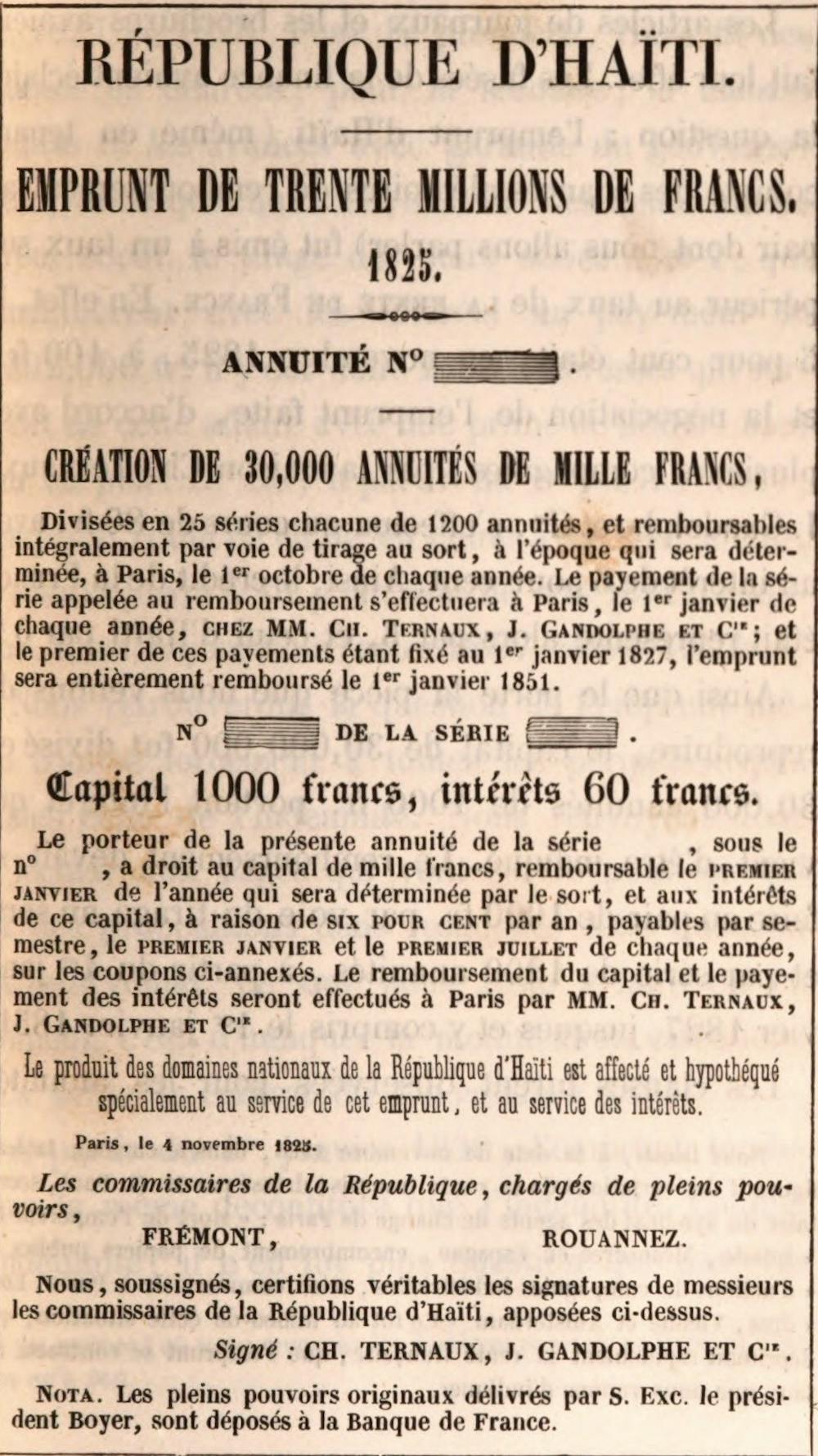
Forced to borrow 30 million francs from French banks to make the first two payments, it was hardly a surprise to anyone when Haiti defaulted soon thereafter. Still, the new French king sent another expedition in 1838 with 12 warships to force the Haitian president’s hand. The 1838 revision, inaccurately labeled “Traité d’Amitié” – or “Treaty of Friendship” – reduced the outstanding amount owed to 60 million francs, but the Haitian government was once again ordered to take out crushing loans to pay the balance.
Although the colonists claimed that the indemnity would only cover one-twelfth the value of their lost properties, including the people they claimed as their slaves, the total amount of 90 million francs was actually five times France’s annual budget.
The Haitian people suffered the brunt of the consequences of France’s theft. Boyer levied draconian taxes in order to pay back the loans. And while Christophe had been busy developing a national school system during his reign, under Boyer, and all subsequent presidents, such projects had to be put on hold. Moreover, researchers have found that the independence debt and the resulting drain on the Haitian treasury were directly responsible not only for the underfunding of education in 20th-century Haiti, but also lack of health care and the country’s inability to develop public infrastructure.
Contemporary assessments, furthermore, reveal that with the interest from all the loans, which were not completely paid off until 1947, Haitians ended up paying more than twice the value of the colonists’ claims. Recognizing the gravity of this scandal, French economist Thomas Piketty acknowledged that France should repay at least US$28 billion to Haiti in restitution.
A debt that’s both moral and material
Former French presidents, from Jacques Chirac, to Nicolas Sarkozy, to François Hollande, have a history of punishing, skirting or downplaying Haitian demands for recompense.
In May 2015, when French President François Hollande became only France’s second head of state to visit Haiti, he admitted that his country needed to “settle the debt.” Later, realizing he had unwittingly provided fuel for the legal claims already prepared by attorney Ira Kurzban on behalf of the Haitian people – former Haitian President Jean-Bertrand Aristide had demanded formal recompense in 2002 – Hollande clarified that he meant France’s debt was merely “moral.”
To deny that the consequences of slavery were also material is to deny French history itself. France belatedly abolished slavery in 1848 in its remaining colonies of Martinique, Guadeloupe, Réunion and French Guyana, which are still territories of France today. Afterwards, the French government demonstrated once again its understanding of slavery’s relationship to economics when it took it upon itself to financially compensate the former “owners” of enslaved people.
The resulting racial wealth gap is no metaphor. In metropolitan France 14.1% of the population lives below the poverty line. In Martinique and Guadeloupe, in contrast, where more than 80% of the population is of African descent, the poverty rates are 38% and 46%, respectively. The poverty rate in Haiti is even more dire at 59%. And whereas the median annual income of a French family is $31,112, it’s only $450 for a Haitian family.
These discrepancies are the concrete consequence of stolen labor from generations of Africans and their descendants. And because the indemnity Haiti paid to France is the first and only time a formerly enslaved people were forced to compensate those who had once enslaved them, Haiti should be at the center of the global movement for reparations.
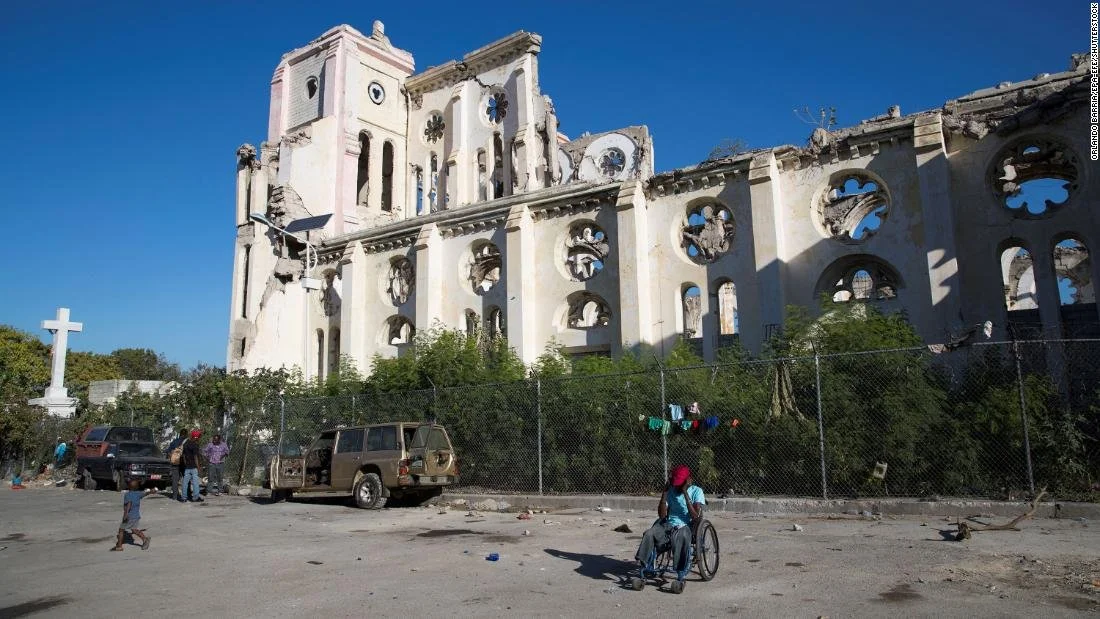
Ten years after a devastating earthquake, some Haitians say they're losing hope
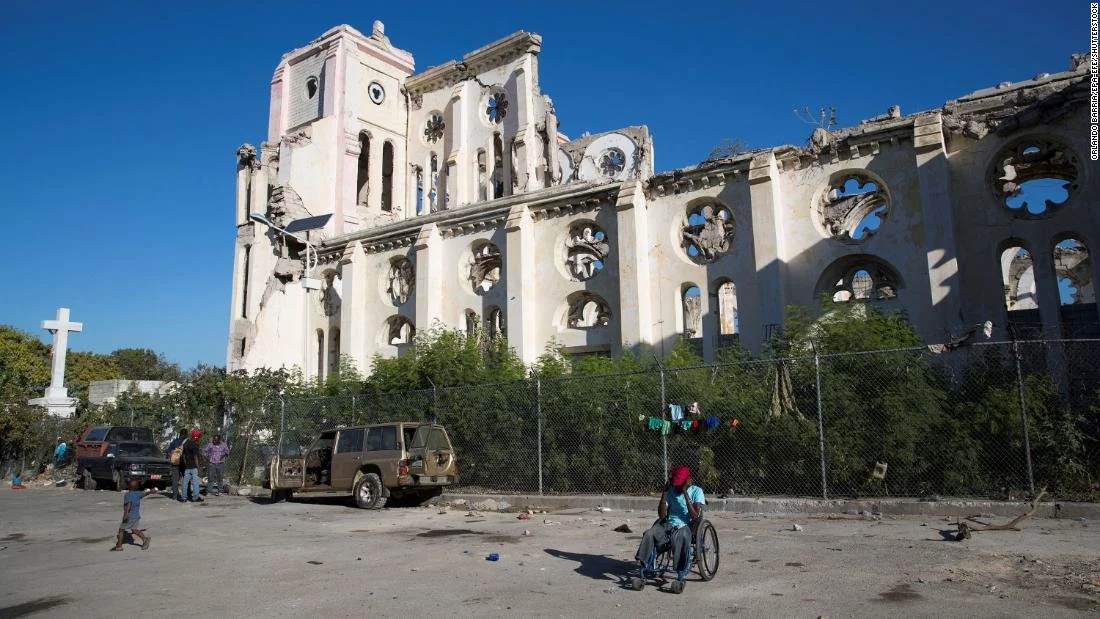
Ten years ago today a massive earthquake struck Haiti, transforming capital city Port-au-Prince into a nightmare in seconds. Some 70,000 people would be buried within a week's time. Hundreds of thousands more would follow them to the grave.The devastating force of the 7.0 quake on January 12, 2010, split the country's history into a before, and an after. Before had been a long, tangled history of dictatorship, occupation and resistance, shot through with the pride of a slave revolution that defeated Napoleon Bonaparte's army. After was unimaginable -- a blank slate."I think they just dropped a bomb on Port-au-Prince," is what Francoise Chandler, a local UNICEF communications officer, told her daughter after the first tremor struck. She had just picked her up from school."Everything was shaking, and there was a lot of noise. I thought it was like September 11 in New York, because I had been in New York in that period," Chandler says. Thick dust rose in the air around their car."Are we going die?" she remembers her daughter asking. Chandler replied, "I don't have the answer to that, but if we're going to die, we'll die together."
Her daughter stopped asking questions then, she says.
Hope and hopelessness
According to the US Geological Survey, the earthquake itself lasted less than 30 seconds. The immediate aftermath was horrifying. But an outpouring of solidarity within the country, and between Haiti and the rest of the world, gave many Haitians hope."The world really did come together around Haiti," says CNN's Sanjay Gutpa, who covered the aftermath extensively and even treated injuries while on the ground. "Not every part of the world, but I think if you were to turn on your televisions, if you were to read the newspaper, if you were to talk to your friends, colleagues at work, there was this collective outpouring of support and compassion for Haiti."
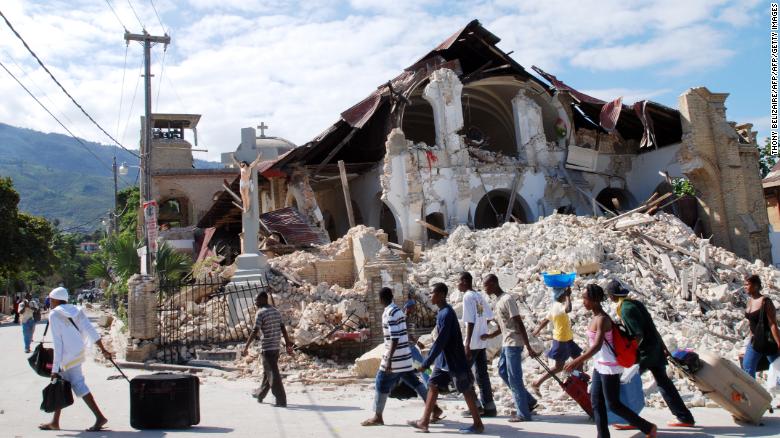
People walk by the collapsed Sacre Coeur Church in Port-au-Prince two days after the earthquake that devastated Haiti on January 12, 2010.The world sent firemen from New York City, rescue workers from Iceland, hospital tents from Israel, sniffer dogs from China, oil from Venezuela. NGOs that were already in the country leaped into action. Chandler recalls working out of an open-air tent in the days after the quake because the organization's offices had crumbled.International donors pledged millions, which eventually tallied up to more than $10 billion for reconstruction. The earthquake had been particularly lethal due to the fragile construction of Haiti's buildings, which crashed down upon their inhabitants."Right after the earthquake I felt a lot of hope, because I thought emerging from the catastrophe would make everyone a better person in the service of this country," says Harold Prévil, an obstetrician and head of Sacre Coeur hospital in Haiti's northern city of Milot.But a decade later, he and many others tell CNN they are now disillusioned and have far less hope for their country than they did in the gory aftermath of the earthquake.
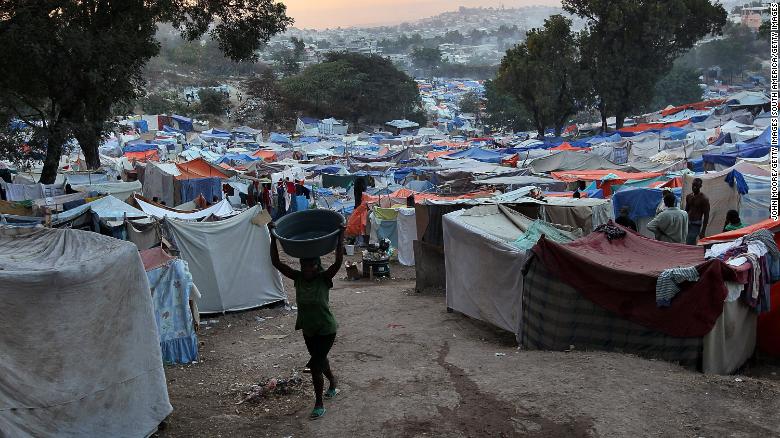
The earthquake left many thousands homeless and turned large parts of Port-au-Prince into refugee camps."A lot of money was spent after the earthquake, but the results are meager," Haitian President Jovenel Moise told CNN in an interview Sunday.Moise has publicly acknowledged how little Haiti had had moved forward in the past decade. "Despite our best efforts to rebuild after the earthquake, the scars of this tragic event remain," he said in a statement on Saturday. "Ten years on, we still lack the basic infrastructure and services to support the people of our country."
Haitians are 'living with permanent stress'
Parts of Haiti that were destroyed in 2010 still have not been rebuilt, including the seat of government, the National Palace. And there is little sign that buildings which have been reconstructed are structurally sound enough to keep inhabitants safe through the next earthquake.Whiplashed between disasters both natural and political over the past decade, many Haitians have not had a chance to rebuild mentally or emotionally either, says Marline Naromie Joseph, a Haitian psychologist who has worked with Medecins sans Frontieres (Doctors Without Borders) for 12 years. She was on the frontlines of emergency medicine in the aftermath of the quake, working with patients who had lost limbs, children who had lost their parents and colleagues who had borne witness to the quake's horrors.Joseph recalls witnessing the first bodies being collected in a city street on the day after the earthquake."The sound that the bodies made falling into the truck was nauseating," she says. Further along that same road, workers were separating the dead into piles of children and adults, she recalls -- an image which would return to her every time she walked on that street for years and which she eventually realized was evidence of her own trauma.Haiti Earthquake Fast Facts"Even though there were no longer the children, no longer the dead, it was as if it were the first day that I was seeing them," she says. "My brain had saved this image and became stuck on it."Some patients still have flashbacks to the sensation of the earth moving beneath their feet when revisiting certain settings -- like the hospital's operating room, she says.According to Joseph's diagnosis, the country's misfortunes over the past decade have piled stress upon trauma. In the years since the earthquake, the country has been pounded with hurricanes, floods and drought. It's also been betrayed by human error -- tied to a devastating cholera epidemic, for example -- and government corruption that has sparked Haiti's current political unrest."We can live with stress, but living with permanent stress will not leave the body without consequence. Eventually, you fall directly into exhaustion," says Joseph, who notes she has observed more mentally ill people living on the streets than before the earthquake.
The country is crippled by hunger, inflation and fuel shortages
One particularly bitter frustration on the earthquake's 10-year anniversary is how weakened the country's economy and infrastructure seem to be."Ten years after, I am a physician, I am the chief executive officer of a 210-bed facility, but believe me, I am hopeless," says Prévil, the doctor. "Haitians have not had the opportunity to do things differently and better."Some things are better. Haiti's medical system has widened since the quake, and UNICEF reports that no new cholera cases have been diagnosed since February last year.
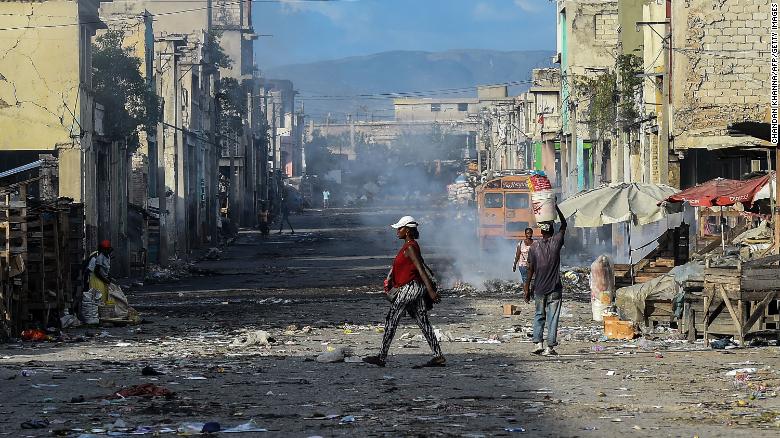
People walk in downtown Port-au-Prince on December 20, 2019. The country's infrastructure remains in dire need of repair.But Prévil and Joseph both say that the country's medical and mental health resources would nevertheless be insufficient for another disaster on the scale of the 2010 earthquake."I would not say we have an institution capable of dealing with all the psychological trauma of another catastrophe like that," Joseph says.The country is currently gripped by skyrocketing inflation, while fuel shortages slow the gears of industry and government. According to a new report by the UN's disaster relief agency OCHA, rising prices mean even basic supplies are now out of reach for the poor.Hunger also threatens Haiti now. Forty percent of Haitians will face food insecurity by March, the agency predicts. For least 1 in 10, food insecurity will reach "emergency levels."In his Saturday statement, Moise rebuked the rest of the world for failing to follow through on its promises."The initial flurry of attention received from the international community quickly quieted down, with many of the financial pledges not delivered -- causing devastating consequences for our recovery," he said."Little of the aid that was received ended up in Haitian hands and much of the money that was so generously given was not spent on the right projects and places," Moise added, echoing a common criticism that aid money focused on short-term relief rather than sustainable, long-term systems.By 2012, $6.4 billion of the more than $10 billion pledged had been disbursed, according to a report by Paul Farmer, a Harvard medical anthropologist who served as the UN's Deputy Special Envoy for Haiti.And while there is little consensus over how much more of the money has been spent, the report on the first two years of spending supports Moise's point. It noted that "less than 10 percent was disbursed directly to the [Government of Haiti] using its systems; less than 0.6 percent was disbursed directly to Haitian organizations and businesses as program grants."
Claims of corruption have fueled mistrust
What Haiti's government has done with the funds it had at its disposal is also a cause for complaint for many citizens.
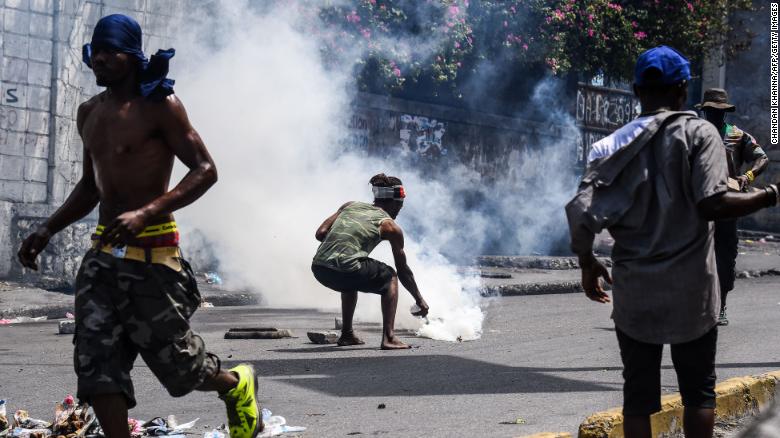
A demonstrator douses a tear gas canister with water during a protest demanding the resignation of President Jovenel Moise in Port-au-Prince on September 27, 2019.For nearly two years now, Haiti has been in political crisis -- sometimes punctuated with country-wide lockdowns -- over dissatisfaction with the government and how it has dealt with allegations of extraordinary corruption.The protests were sparked by a fuel price hike and an official report alleging that past administrations had wasted millions of dollars intended for critical infrastructure projects, paying through the nose for contracts on new roads and buildings that went entirely unbuilt, in some cases. That money, stemming from a pre-earthquake deal with Venezuela known as PetroCaribe, will eventually have to be repaid by Haiti's next generation."What frustrated me a lot and made me feel really sad and sick was that I thought that the Haitian people and the Haitians who were in charge of the country would have taken [the earthquake] as an opportunity to make the country better," says Prévil."But it has not happened. My leaders have become more selfish, they have been robbing more. So instead of taking the opportunity to change the country, they've made it worse."Haiti has never come out of the darkness of the 2010 earthquake, says Etzer Emile, a Haitian economics researcher and entrepreneur in Port-au-Prince who identifies himself as one of the activists calling for change. He credits the PetroCaribe scandal with drawing local corruption into focus and creating a movement for change, disruptive as it is.
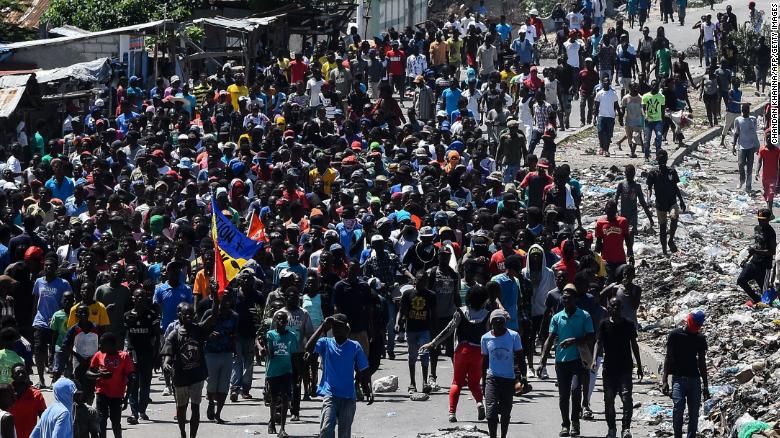
People march in Cite Soleil during the anti-government protest on September 27, 2019."You know, that can make us feel (like) ... there's something actually we had, and we didn't really take advantage of it."Now that the government has publicly documented funds lost or disappeared, Emile says the numbers are accessible in a way that they weren't before. They also can be shared easily thanks to social media, which has fanned outrage and calls for change -- including for Moise's resignation -- as anti-corruption activists accuse the President of turning a blind eye to the PetroCaribe allegations.Moise told CNN that fighting corruption is still a priority of his administration and said that the past months of political unrest have exacerbated Haiti's economic problems."We need the same solidarity we had after the earthquake," he said, emphasizing this time he means solidarity with "the actors who are putting the country on a path to change, to economic growth, and development."
What will happen next
Haiti is considered one of the most vulnerable countries to climate change, and its location in the Caribbean lies squarely in the middle of a hurricane belt. As it looks toward the future, how Haiti can prepare for the next great disaster -- and what kind of help it might receive -- are urgent questions.Emile believes Haiti no longer commands the same interest and compassion that it did in 2010."If Haiti's reconstruction had been a success, maybe we could have been interesting to people as a case study. But it was a failure, so people feel fed up ... they don't even want to talk about it that much," he says. "The further we go from the earthquake, the less interested people are in Haiti."The drop in interest is, in fact, measurable: A 2019 UN plan for humanitarian aid to Haiti only managed to raise a third of the funding it needed.Vania André, publisher of the Haitian Times, a paper of record for the Haitian diaspora, says that the earthquake galvanized the loyalty -- and a certain defiance -- of generations of Haitian Americans.
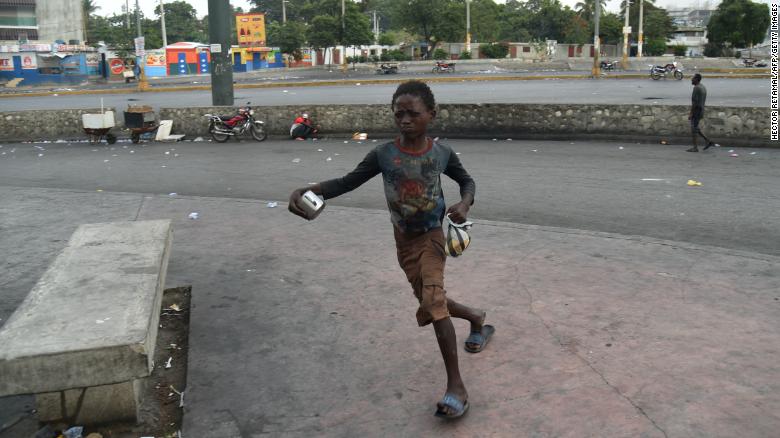
A boy flees from tear gas during clashes with Haitian police in Port-au-Prince on February 15, 2019.It became common to hear stories of Haitian-Americans "leaving their corporate jobs in DC or Florida and moving to Haiti to create a nonprofit," she says. "They wanted people to see that Haiti is much more than the devastation that happened with the earthquake, that Haiti is much more than this republic of NGOs."But she also notes that many of those same foreign-born idealists did not stay long, discouraged by the skepticism they encountered and the difficulties of doing business.As the flow of foreign aid money ebbs and Haitians lose faith in their government, some say they only thing they can rely on is their own experience.Prévil, the obstetrician, says another earthquake would be Haiti's "worst nightmare" and that he still gets flashbacks to the feeling of the ground moving under his feet. But at least he now knows how to react."If there is another earthquake, I have a good strong desk. I will go under the desk," he says. "And then I will call for my contingency plan and start right away to take care of as many people as I can. Because I know what to do now."
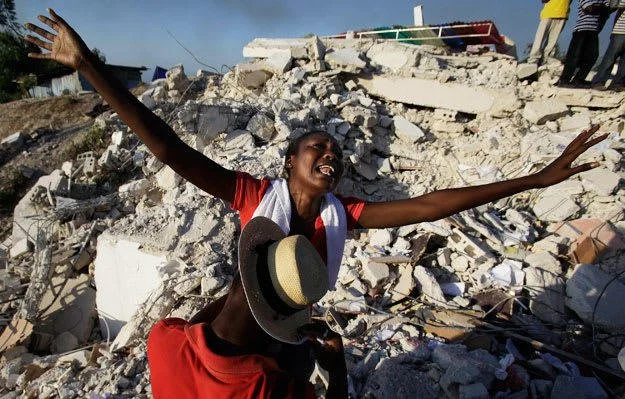
Haiti 10 Years After The Earthquake: Why So Little Recovery Progress In A Decade?
Port-au-Prince was a canyon of crushed concrete and horrified screams as Jean Samson Edouard ran panicked and barefoot through the capital’s Carrefour-Feuilles district.
It was shortly before 5 p.m. on Tuesday, Jan. 12, 2010 — a decade ago this Sunday. A magnitude 7 earthquake had just destroyed much of Haiti — and killed anywhere between 100,000 and 200,000 people, according to most estimates (although the Haitian government had put the toll as high as 300,000).
“The longest night in my life,” Edouard says.
He was 23, a communications student and engaged to Joselene Saint Phard, a nursing student at the Université Saint Gérard.
The school had collapsed; Saint Phard was inside the rubble.
After racing through the streets, stumbling over people killed by falling walls, “I reached the university building and I asked someone, ‘Where is Saint Gerard?’” Edouard remembers. “And he said, ‘There.’ No building anymore. Now I lose all hope to see my fiancée again.”
Edouard says he felt especially hopeless as he scanned corpses crushed in Saint Gerard’s wreckage.
“Horrible,” he recalls. “Body on body, literally broken. Arms, feet – God, it’s undescribable.
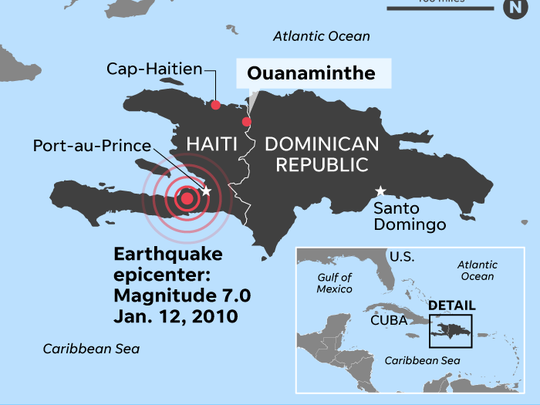
CREDIT AP
“So I — I go under the concrete. ‘Joselene, Joselene, where are you?!’ And … when I’m calling her,” he says, choking back tears, “it be for one hour … I hear some voice.”
It was Joselene. Her legs badly injured. But alive.
Today, Jean Samson and Joselene are married and have two daughters. They also have a deeper sense of purpose — in no small part, he says, because he also called out to someone else while searching the rubble that night.
“I said, ‘God, if you give me my fiancée back, I will serve you for the rest of my life.'”
To him, that meant: serve Haiti. I spoke with Edouard in a restaurant in West Palm Beach, where he was visiting relatives. Like so many Haitians after the earthquake, he could have come to live in South Florida.
“But I can’t,” he insists, “because I have Haiti. I need, when I pass away, my children can say, ‘Hey, my father struggled to change something in Haiti.’”
Jean Samson Edouard, right, and his wife Joselene today in Arcahaie, Haiti.CREDIT COURTESY JEAN SAMSON EDOUARD
So Edouard returned to his hometown of Arcahaie, Haiti, just northwest of Port-au-Prince, and became a schoolteacher. Today, he’s a principal; Joselene is a nurse. Edouard also began studying economic development — and he helps run a nonprofit called ECODA whose “sustainable village” project promotes local economic opportunities.
But Edouard realizes that kind of effort remains rare in Haiti, even after all these years — and he concedes the larger effort to rebuild the impoverished Caribbean nation has mostly failed.
“The earthquake gave Haiti an opportunity to take off, to learn development,” he says. “Unfortunately, nothing [has] happened. No planning. No leadership. No project.”
It’s hard to argue with him. It took a year after the quake just to get real debris removal started. It took seven years to reopen Haiti’s major hospital. Today, Haiti is facing one of the worst food shortages in the Americas. That’s not to mention the country’s endless political upheaval — and protesters now demanding the ouster of President Jovenel Moïse, who is accused of involvement in a $2 billion corruption scandal involving infrastructure project funds (which he denies).
So why, after a decade, has Haiti made so little recovery progress?
Many Haitians say one big reason is that the country’s spirit itself has yet to recover.
“When you need to be psychologically healed first, then it’s hard for you to think about development,” says Marie Guerda Nicolas, a Haitian American and a psychology professor at the University of Miami.
Nicolas was in Haiti during the earthquake, and she says it’s hard to exaggerate how brutally traumatic it truly was.
DEEPENED DESPAIR
For one thing, modern Haiti had never dealt with earthquakes: This was the first there since the 1700s. That’s a big reason so much caved in: Haiti’s building codes were some of the world’s most lax.
But the quake dealt another gut punch to Haiti's psyche: At that time, before the earthquake, Haiti was finally looking up after decades of dictatorship and dysfunction.
“We had more stability in terms of the political situation,” Nicolas says. “Economically, there was more exporting; infrastructure being built. We were moving in the right direction.”
To then have that optimism so suddenly and violently shattered only deepened Haitians’ despair. So Nicolas threw herself into creating clinical networks like Rebâti Santé Mentale (Rebuilding Mental Health) to help Haitians pull through.
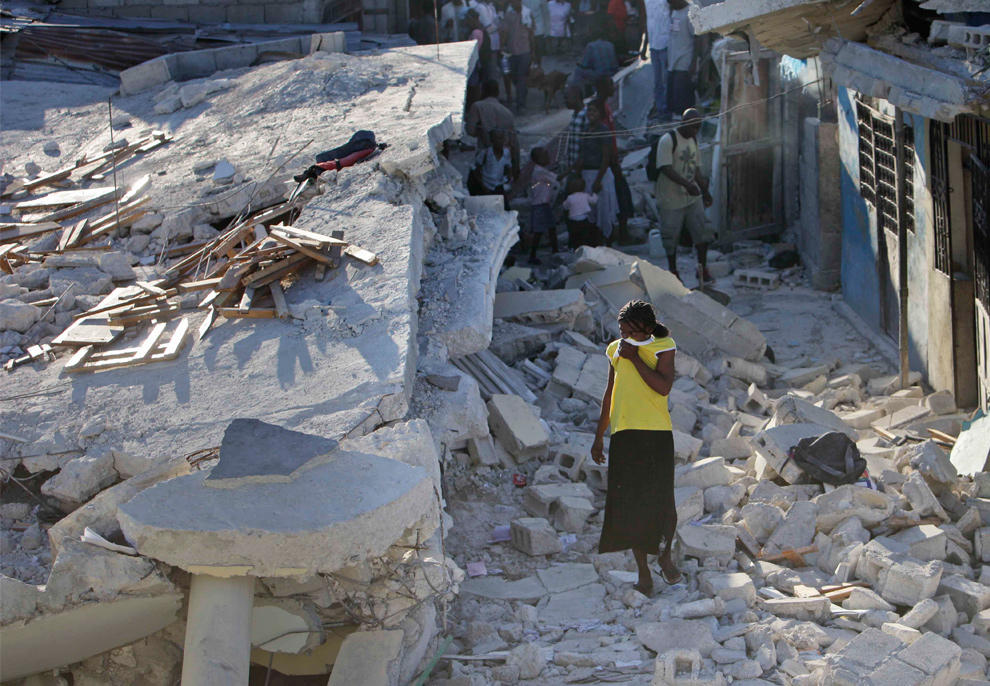
A Haitian woman wanders the rubble of her neighborhood in Port-au-Prince after the 2010 earthquake.CREDIT GREGORY BULL / AP
Among her tougher cases was a woman in Léogâne, near the earthquake’s epicenter. She’d lost her 8-year-old daughter in the disaster. But she found one of the girl’s legs — by identifying her sock and shoe.
“She went home, she washed the leg and she put it in the daughter’s bed and she kept it there,” Nicolas recalls.
Neighbors, fearing the woman had gone mad, plotted to take the leg away. But Nicolas told them: “It’s a normal response for her to have. The incredibly abnormal is the earthquake.”
She ultimately persuaded the woman to have a burial ceremony for the leg. Like that mother, tens of thousands of Haitians weren’t able to bury loved ones after the earthquake.
Nicolas points to one other circumstance that made recovery more difficult: The earthquake, which destroyed the National Palace in Port-au-Prince, effectively crushed Haiti’s government, too. In fact, then President René Préval (who died in 2017) seemed to disappear.
"I think he was traumatized himself," says Nicolas.
The international community had to fill the vacuum — and its performance was controversial at best. More than $10 billion pledged by governments never fully materialized. Worse, U.N. troops were responsible for a cholera outbreak that killed thousands more people, prompting months of angry Haitian street protests against the U.N. and, in some cases, global NGOs in general.
Critics argue that many of those NGOs that flooded into Haiti, many well intentioned but others with what Nicolas calls arrogant “savior complexes,” had scant oversight — and effectively shut Haitians in Haiti out of their own recovery effort.
“The people with the skills and the abilities to do good in their own country weren’t being utilized,” Nicolas says. “That fuels the sense of helplessness.”
Haitians protesting the U.N. and international NGOs in Port-au-Prince in 2010.CREDIT AP/YOUTUBE
But on this side of the Caribbean, especially in South Florida, the earthquake fueled a heightened sense of purpose in the Haitian expat community.
“The diaspora that always wanted to step up and be engaged self-organized and mobilized in record proportions,” says Karen Andre, a Haitian-American attorney and political consultant in Miami.
Andre says her grandmother spent the night of the earthquake outside in Port-au-Prince’s Delmas district, singing psalms to neighbors trapped in rubble to help locate them. During those same moments, in Miami, Andre heard about the disaster driving home after work on Biscayne Boulevard.
“I immediately just made a U-turn,” she recalls, “and went straight to Little Haiti, went to 54th Street.” There she helped coordinate an expat relief effort that eventually grew into an NGO: Konbit for Haiti, or Cooperative for Haiti, which steered funds to Haitian development projects run by Haitians.
Political and business elites in Haiti had always kept the Haitian diaspora at arm’s length. But Andre says the aid work emboldened expats to demand a larger role in Haiti’s affairs. And to a certain extent they got it, including the granting of dual citizenship to Haitian expats.
“The earthquake knocked a lot of dominoes down,” Andre says, “so that in Haiti we can go in and move the needle.”
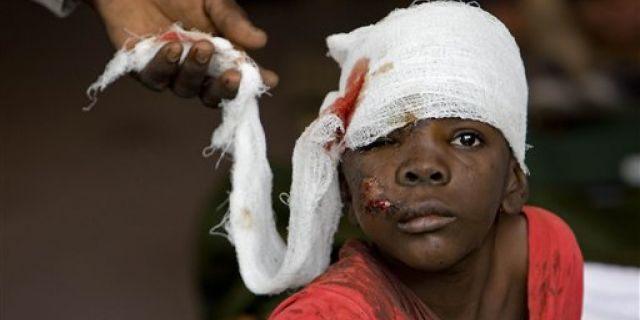
A Haitian boy injured in the 2010 earthquake.CREDIT LOGAN ABASSI / AP
Since then, critics say that diaspora commitment has waned. But one Haitian expat — and earthquake survivor — who wants to help move the needle is South Florida college student Arielle François.
“Haiti’s a part of me,” says François, who studies criminal law at Florida Atlantic University in Boca Raton. “I feel like it’s my responsibility to [go] back.”
François was a schoolgirl when the earthquake hit, traveling in her parents’ car in Port-au-Prince’s Pétion-Ville suburb.
“I remember seeing a pink house literally crumble down on this man, and you just see … a line of blood,” she says. “And I saw this woman who fell on her knees and started praying. I was just 11, seeing people die in front of me is, like, even to this day I’m traumatized by it.”
Arielle Francois as an elementary school student in Petionville, Haiti, a decade ago, before the 2010 earthquake.CREDIT COURTESY ARIELLE FRANCOIS
François’ best friend Paula also died in the earthquake. Soon after, François and her family moved to South Florida — and she, admits, a better life. Now a U.S. citizen, she feels conflicted about the good fortune she’s had since the earthquake.

Arielle Francois today, a junior at Florida Atlantic University.CREDIT TIM PADGETT / WLRN.ORG
“I could have died like my best friend,” she says. “And the fact that we were blessed enough to come here, alive, and pursue education, I feel like I have no choice but to help my country where I was born. I can only give back now.”
François says the earthquake anniversary reminds her how urgent that is. Haitians like her hope that 10 years later, Haiti’s leaders start feeling more of that urgency too.
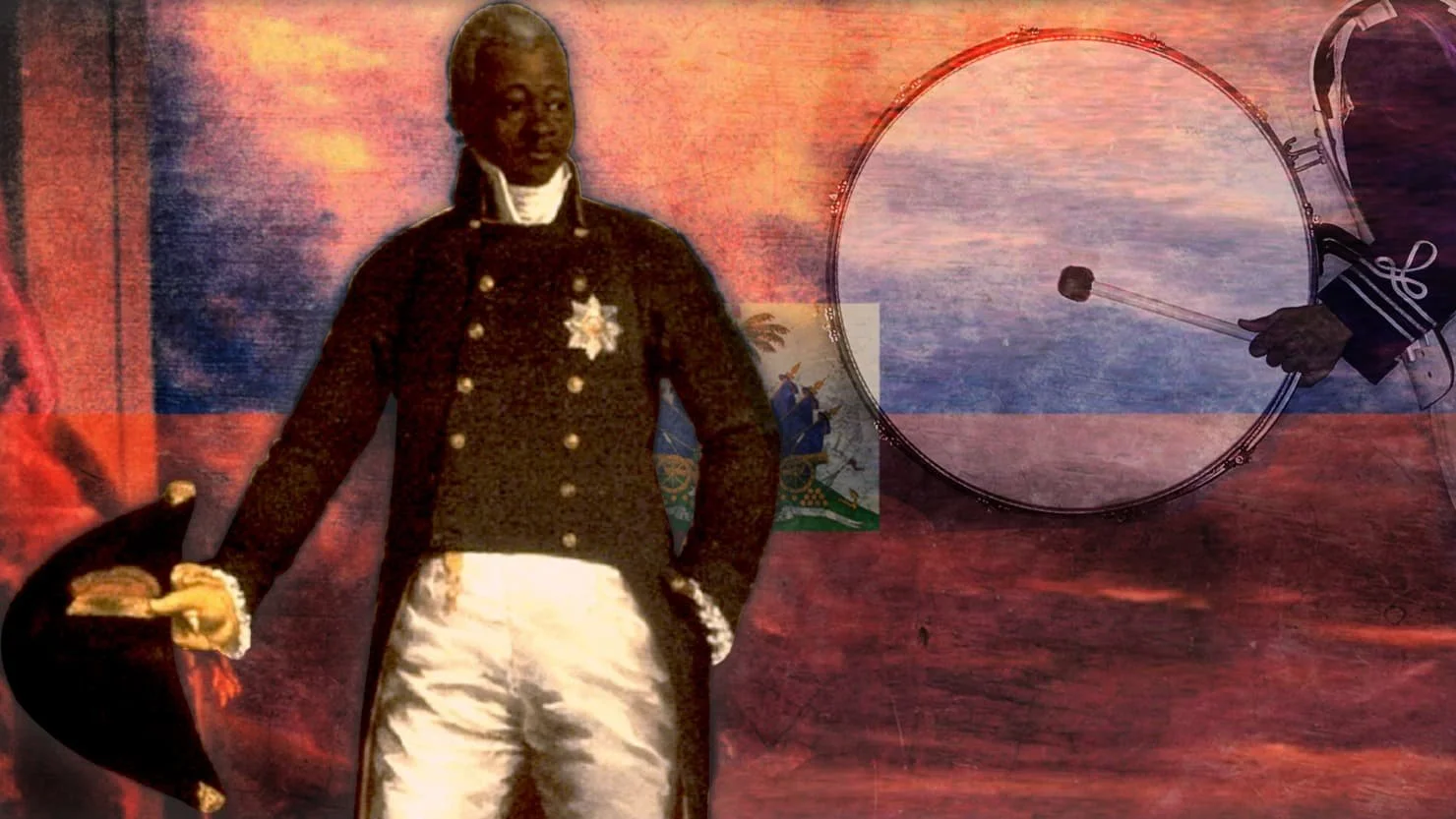
The Revolutionary Drummer Boy Turned Haitian King
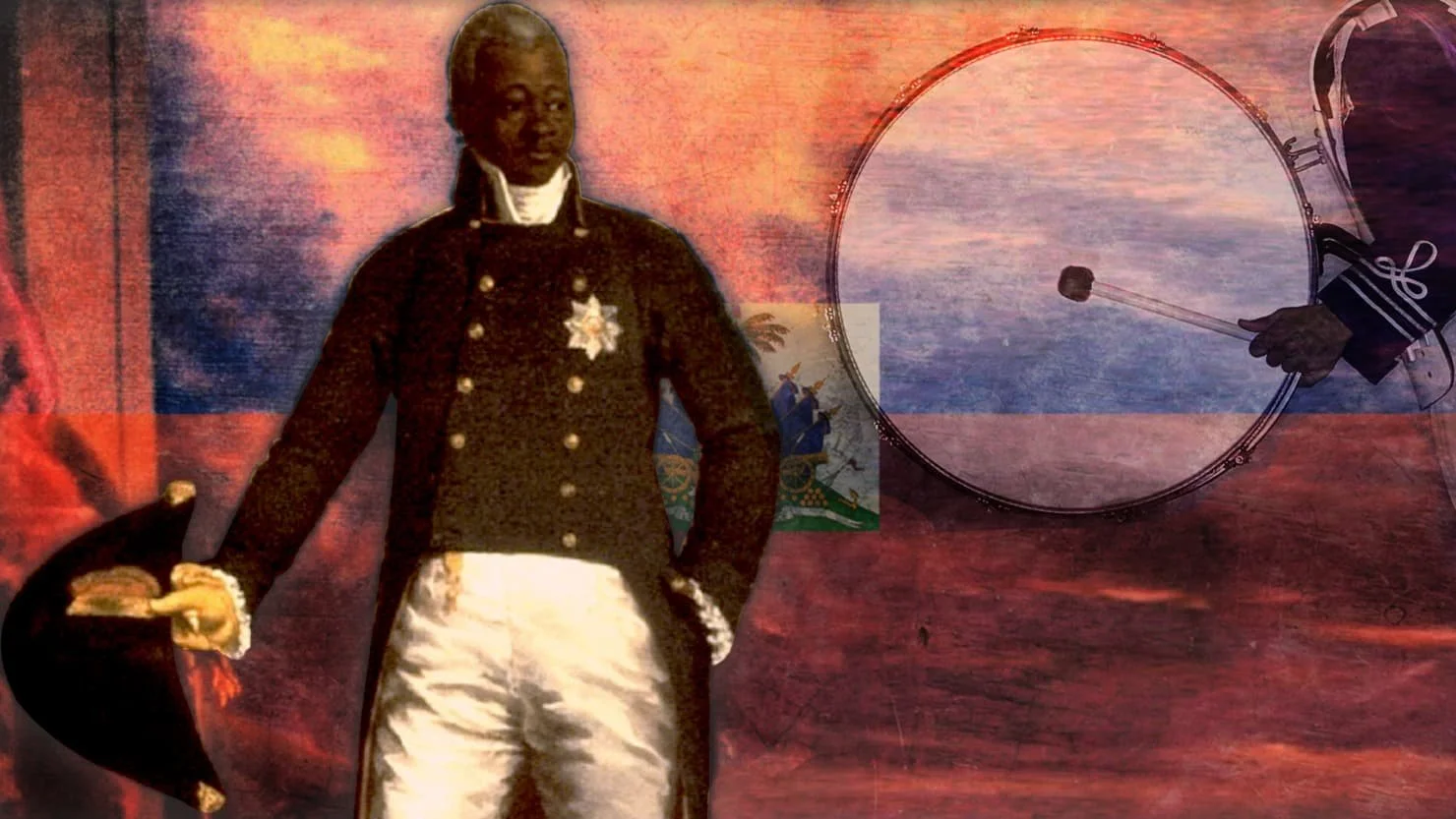
The wild story of a 12-year-old American Revolutionary drummer boy who went on to rule Haiti.
Once upon a time, even the wild story of a 12-year-old American Revolutionary drummer boy becoming King of Haiti couldn’t interest Americans because he – along with his fellow soldiers – was black.As with America in Vietnam, the British Army dominated militarily during the Revolution—until it lost. And like Vietnam, a local fight for independence from colonial rule became a global war.In 1778, the British surprised American troops in Savannah and captured the city. Georgia was important enough strategically that French forces joined with their American allies to try liberating Savannah. On September 23, 1779, Admiral Charles-Hector Theodat d’Estaing, fresh from failing to dislodge the British from Newport, Rhode Island, demanded Savannah surrender. Four thousand French troops from the West Indies on 37 ships backed up his demand. Foolishly but nobly, he gave the British 24 hours to consider. The British fortified the ramparts and deployed reinforcements.Among D’Estaing’s men were gens de couleur, French for people of color. On March 12, 1779, Laurent Francois Le Noir de Rouvray had organized ten companies of 79 light infantry soldiers apiece, divided into two battalions, consisting mostly of, free Haitians of African descent. Some slaves who would earn their freedom through service joined too.This black marquis, born in the French-controlled island of Saint-Dominigue, fought his way up to becoming a Colonel during the Seven Years War in Canada. He knew that most blacks sided with the British against the American slaveholders.Still, calling his unit the Chasseurs-Volontaires de Saint-Dominigue, the Volunteer Hunters, the Marquis rallied his troops. “I must make whites blush for the scorn they have heaped on me,” he proclaimed, “and for the injustices and tyrannies they have continually exercised over me with impunity. I must prove to them that as a soldier I am capable of at least as much honor and courage and of even more loyalty.”
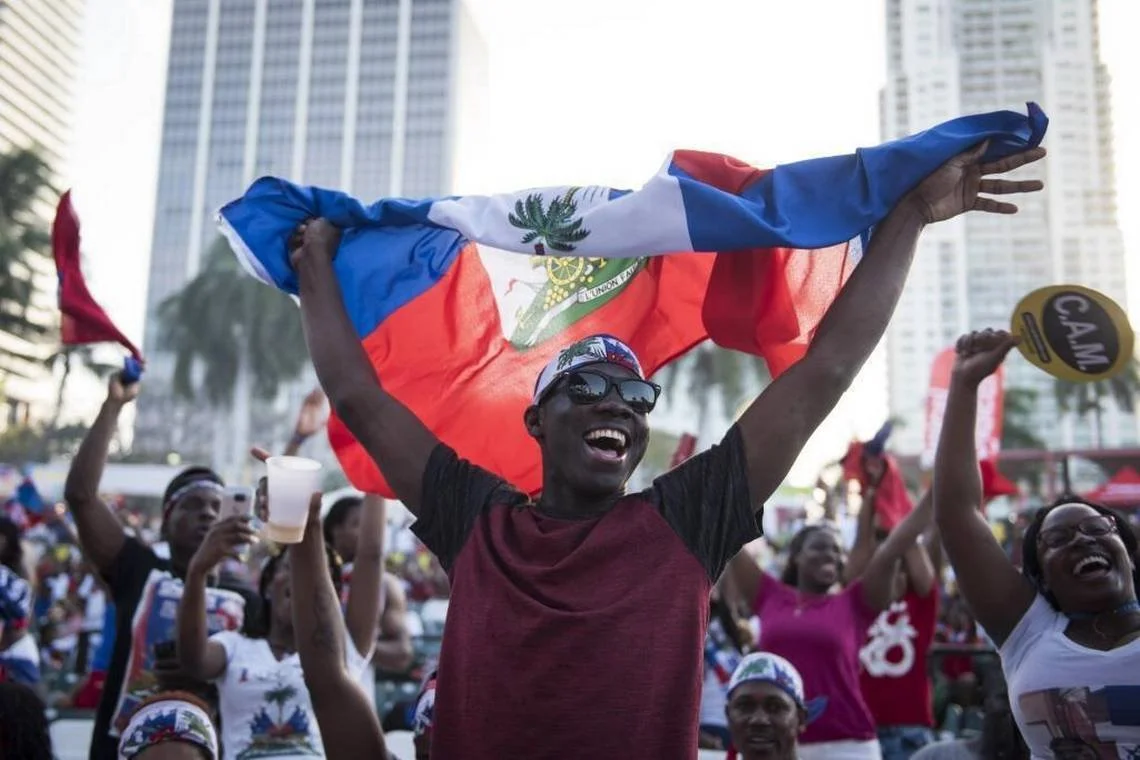
Without Haiti, the United States Would, in Fact, Be a Shithole - And some other things about the country that Donald Trump doesn’t know and doesn’t care to know.
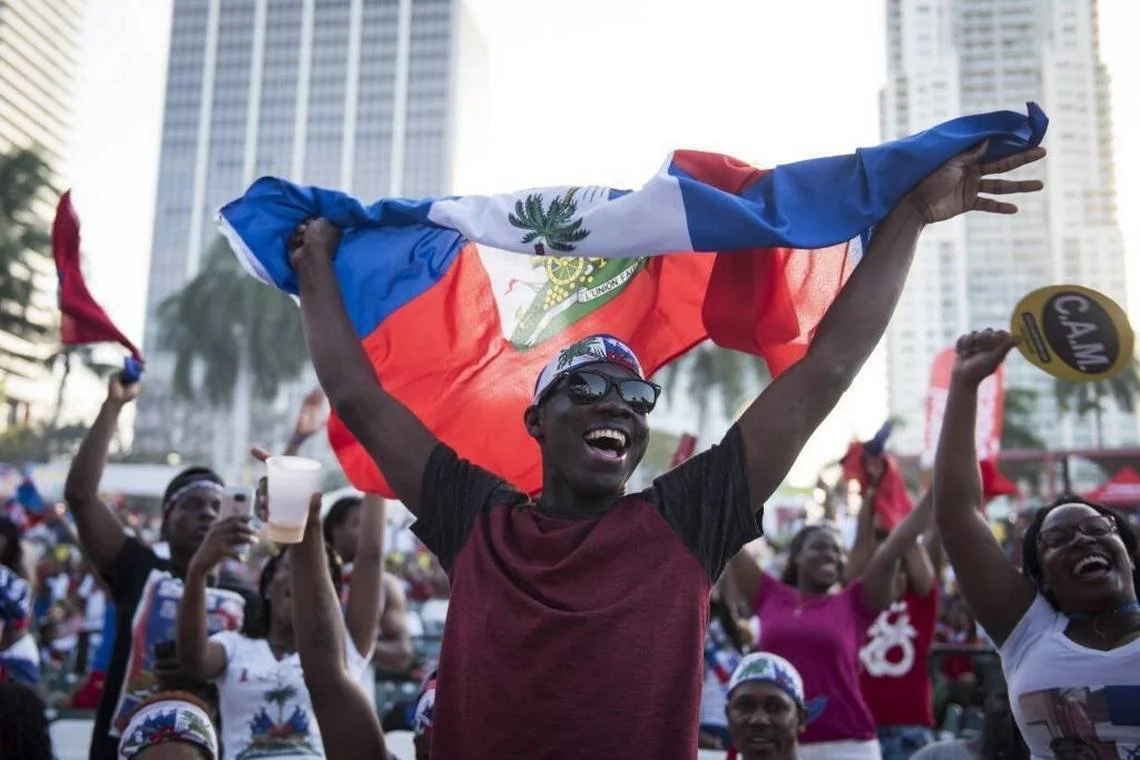
It feels strange to me after so many years of thinking and writing about Haiti, to say nothing of simply being there, to have to rise to the country’s defense against a fool. But that fool is the president of the United States, so let’s start with first things first.It goes without saying that Donald Trump knows nothing about history. But those who do have heard of the Louisiana Purchase, the incredible deal President Jefferson struck with France to buy the giant piece of land, 828,000 square miles of river and breadbasket, that stretches from what is now the Canadian border down to New Orleans and the delta. Without this territory, the United States would never have become a continental power nor, subsequently, a great global power. Jefferson got it at a bargain-basement price: $250 million, in current dollars, doubling the size of the country for less than 3 cents per acre.You may ask what this has to do with Haiti (although any president with a competent staff would have this information at his fingertips). Here’s the answer, White House staff: Napoleon wanted to sell this fabulously valuable piece of New World real estate because for more than a decade he had failed to put down the startling slave revolution in the French colony of Haiti, losing two-thirds of French forces there in the process.The First Consul (that’s Napoleon, Mr. President) could see the writing on the wall. France was pushed to the limit of its military and financial means by the Haitian uprising, and the future emperor (NB: also Napoleon) had lost his taste for further involvement in the Americas. He sold us Louisiana. Then on January 1, 1804, Haiti declared its independence from France, and by extension, from white men like Donald Trump.So it is the courage and tenacity of the rebellious slaves of Haiti that created the United States as we know it. Score one for the shithole.Haitian history is full of many other amazing facts, not least that it can claim to have spawned the Americas’ first successful freedom fighters, the Cacos, who waged a sporadic but unstoppable guerilla war against the US Marine Occupation that began in 1915. Along with popular opinion in the US, they finally forced the Americans out in 1934.Nonetheless, the Marines had done their damage. While improving Haiti’s infrastructure, the occupation opened the country up for “foreign investment,” which meant, essentially, the severe exploitation (including chain gangs) of Haitian labor, the appropriation of lands by US groups, the manipulation (which continues) of Haitian elections, the takeover of the lucrative Haitian sugar industry and of Haitian banks, and a national move away from self-sufficient subsistence agriculture into a cash economy that continues to be responsible for repeated food shortages and economic decline. How to become a shithole: the Americans will help.I could go on in this vein, but I won’t. I’m pointing a finger at the United States because I’m responding to the US president. France, after Napoleon, also had a hand in Haiti’s decline. Emmanuel Macron, however, has yet to call the country un trou de merde—and I doubt he ever will.Finally, I want to write personally about Haiti, the experience of Haiti as a place to visit, to see, be in, live in.Haiti is what Ronald Reagan was dreaming of when he suggested that shrinking the state would allow the business sector to move in and replace government functions in a market economy. Haiti has a vestigial state. There is no national health care, no social security, no pensions, very little taxation, very few labor regulations, a tiny national coffer. This is the direction in which Reagan pushed us and which Trump and his people continue to move us. There is very little organized sanitation, unemployment is the norm, housing is less than substandard, and electricity is delivered in a capricious and severely limited fashion. Poverty means that people have to live day by day, earning a goud here and a goud there. It means that individual and family plans for the future are nearly impossible to make. Many of the ablest Haitians have immigrated to the United States and Canada, though Trump apparently does not appreciate their many contributions to our economy as doctors, engineers, attorneys, academics, dentists, accountants, etc.Haitians feel the lack of a state every day and night, but they still rise indomitably to the task of living full lives. It’s rare to see a Haitian hanging around, at least in Port-au-Prince. Everyone is constantly on the move, trying to find work and make a buck. There is poetry being written and music being played. At night, students go out and sit under the light of street lamps to study for tests. Haitians are huge into basketball and ecstatic when one of their players makes it to the NBA, as several have. Haitian literature over the centuries is full of masterpieces. Dany Laferrière, a novelist of Haitian descent, was recently admitted to the elite Académie Française. Alexandre Dumas, author of The Three Musketeers, was Haitian, as was the naturalist John James Audubon.In the camps set up by Haitians after the earthquake that struck exactly eight years ago today, I sat around with teenage boys eager to play tapes for me of the music they’d recorded. During a tropical storm, I had a camp dinner of sardines and tomatoes cooked outside a tent over a charcoal fire. I’ve watched cockfights in small stadiums, and Vodou ceremonies in the earthquake rubble. I’ve seen the dazzling paintings by Haitian masters on the walls of museums (now crumbled) and churches (also now crumbled). I’ve seen a young boy who lost both his hands and both his forearms in the earthquake learn to use prostheses and also learn to accept the care of his extended family in the countryside. I’ve seen countless examples of Haitian solidarity and community, and of course of the human hunger to learn and grow and better one’s fortunes.The island itself is physically beautiful, with pure white beaches and majestic mountains, and a capital city and provincial metropolis that are both captivating, each in its own way. Trump might not think so, because in every way, Haiti does not resemble his universe of Trump Tower and Mar-a-Lago. The country is almost entirely lacking in gilt and gold-plate.But it still shines.By: Amy Wilentz | The Nation | JANUARY 12, 2018
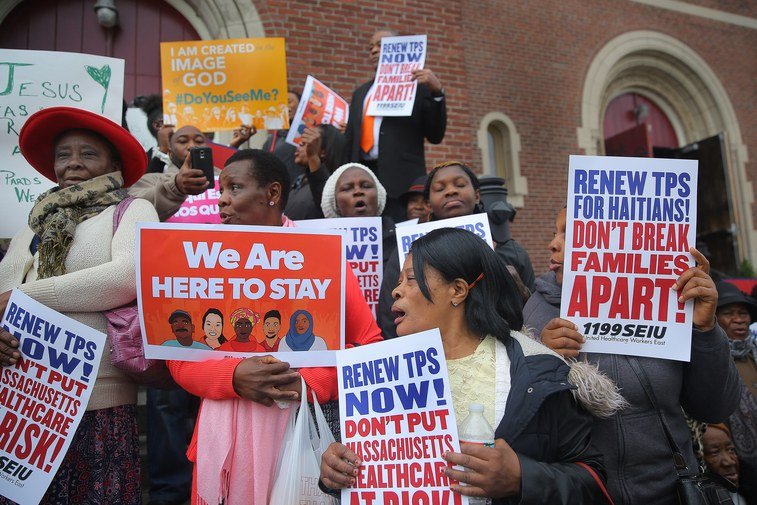
Haiti Has Been Mistreated By Politicians Like Donald Trump for Centuries
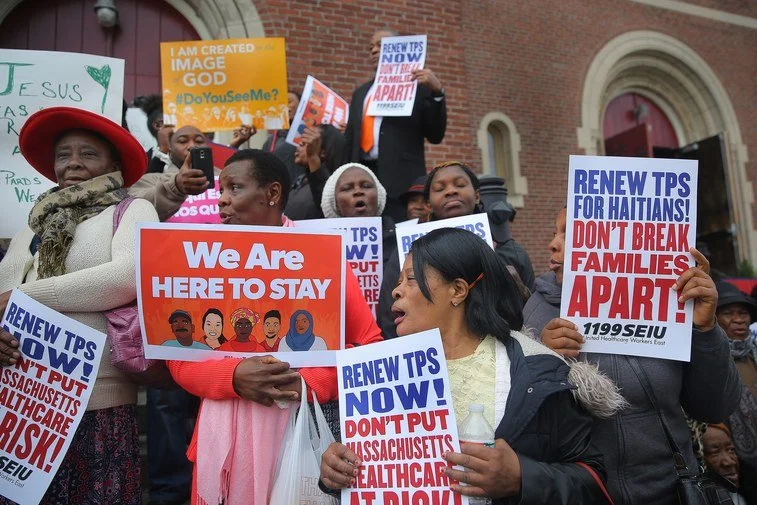
 In this op-ed, writer Fabienne Josaphat explains the history of Haiti, and how it has been mistreated by politicians long before President Donald Trump's recent remarks.President Donald Trump’s ignorance of Haitian contributions and history continues to mislead the American people. On January 11, the President of the United States met with officials on immigration and allegedly said, regarding Haitians and Africans, “Why do we want all these people from shithole countries coming here?” The Washington Post first reported the news.These statements made on the eve of the anniversary of the January 12, 2010 earthquake that killed up to 300,000 Haitians. As a Haitian immigrant living in South Florida — where, in 2015, an estimated 127,189 people of Haitian ancestry lived in Miami-Dade County alone — I could feel the indignation broiling beneath my people’s skin. Locally, councilman Alix Desulme, who represents District 4 in the City of North Miami, called the alleged comments “divisive and racist,” and demanded an apology.“Sadly, we have a president who continues to show America how great we can become through his destructive selfishness,” the councilman said. The mayor of North Miami himself, Dr. Smith Joseph, chimed in with his own statement, saying, “Our nation should not tolerate this overt racism from a president who is sworn to protect us.” Haitian-American Congresswoman Mia Love, a Republican from the state of Utah, said, “The President must apologize to both the American people and the nations he so wantonly maligned.”Instead, what came hours after the news of the reported comments broke, was a tweet from the president in which he denied making the comments, calling Haiti “poor and troubled.” He claimed to have wonderful relationships with Haitians, but failed to acknowledge a single one by name. None of this, again, is surprising.Fox News host Tucker Carlson affirmed that the president was merely voicing what his base was already thinking, casually asking, “Why can’t you say that?” on air. Many Trump supporters disagree with the notion that Trump is a racist, despite his allegedly saying “We should have more people from Norway” after his “sh*thole” comment was made.Describing a person’s country as a “sh*thole” shows an absence of critical thinking, and is a display of ignorance. It echoes an existing sentiment of xenophobia in this country from Trump voters, most of them white, now referred to as “the forgotten men and women.” They are being misled by a man who knows nothing about the Haitian people and their history. Yes, the U.S. should respect the Haitian people simply because of their humanity. But Haiti also deserves respect because it spent its entire existence as a nation contributing to the enrichment and greatness of superpowers like America.Historically, Haiti has always offered its best to the world and is proud of its accomplishments. It was the first to lead a successful slave-led rebellion to topple French slave owners, claiming its freedom in 1804. Without Haiti, there would be no Louisiana Purchase, a treaty that earned the United States the entire Louisiana territory and more than doubled the country’s size. New Orleans’ vibrant culture would not be the same without the influence of integrated Haitians. In Illinois, what would later become the city of Chicago was founded by a Haitian-born pioneer named Jean-Baptiste Point du Sable. In addition to liberating slaves in other countries, Haitians helped America fight its Revolutionary War, and when World War II drove countries to form urgent alliances, Haitian pilots joined the Tuskeegee Airmen as part of the U.S. Army Air Force.Our decision in 1804 to live free or to die was heroic, but the U.S. did not officially recognize this independence until 1862. France put the nation in the humiliating position of having to pay reparations at an annual rate for the slaves they lost, so Haiti was forced to borrow money to repay their oppressors, and borrowed from banks in France and the U.S.. Several initiatives have been launched to cancel Haiti’s debt, but pressure to repay debtors initiated further borrowing, keeping Haiti in constant crushing debt.The U.S. profited off Haiti during the American occupation of Haiti from 1915 to 1934, suppressing riots and killing rebels. Initially led by then-President Woodrow Wilson, the U.S. military imposed racist soldiers onto the Haitian people, introducing a new strain of cruelty that led to the decapitation and dehumanization of insurgents.The dictatorship of François “Papa Doc” Duvalier, which lasted in Haiti from 1957 to 1971, was able to endure because of American complicity. Specifically, as Duvalier murdered and brutally oppressed Haitians, the U.S. looked the other way because Duvalier was effective at staving off communism, which the U.S. saw as a threat. When that regime was toppled when Duvalier’s son was overthrown in 1986, the nation was completely impoverished, its funds depleted to line the pockets of tyrants like the Duvaliers. In addition, because of its debts to the U.S., Haiti has been by default constantly subjected to American intervention.Despite our contributions to America, Trump’s language doesn’t necessarily come as a surprise to Haitians, as we too often face this type of disregard from so many in power. Yet, during his presidential campaign, Trump made sure to draw attention to Hillary Clinton’s actions regarding Haiti to discredit the Democratic candidate. In 2009, when she was Secretary of State, Clinton suppressed Haitian minimum wage, at the behest of manufacturers, then after the 2010 earthquake, Bill Clinton became head of the Interim Haiti Recovery Commission. He enlisted the Clinton Foundation to build shelters, a relief effort considered to be a disaster, called out even by the likes of Oxfam.With more than one million people displaced after the 2010 earthquake, the U.S. poured aid money into Haiti, but years later, investigations have found that very little money actually reached Haitian citizens. Haitians still lack shelter that was promised by the American Red Cross after the humanitarian organization raised almost half a billion dollars from helpful donors. The Clinton Foundation, again, is also implicated in failing in their recovery efforts to aid Haiti with reconstruction projects after the earthquake despite raising more than $30 million.Then, Haiti suffered a devastating cholera outbreak that started at a United Nations peacekeeping camp, and as of November 2017, the Trump administration has refused to assign unspent UN peacekeeping money to help combat the epidemic. Instead, his administration chose to end Temporary Protective Status for 60,000 Haitians sheltered in America as a result of the earthquake.This sent a clear message to Haiti and its diaspora, and now, his comments about them speak volumes. In Trump’s world, there is no room for black and brown people to thrive. Yet, he shows an acceptance of white nationalists, identifying as “very fine people” some of the those protesting to keep Confederate monuments after the deadly Charlottesville rallies.He does not know the history of Haiti, and he doesn’t comprehend the significance of Haiti’s contributions, because he doesn’t care to. His wealth and privilege have allowed him to erase others to the point of invisibility.But Haitians exist as a reminder that the damages of racism and oppression cannot sway self-determination. We are not going anywhere. In fact, Haitians continue to thrive despite adversity. Our ancestry and culture empower and enable us to bounce back and carry on. If the whip of slavery did not break us, the words of an inveterate racist will not kill us. Haitians sacrifice for others even when others don’t sacrifice for them. I see this as the definition of love: the continuous devotion to others with no expectation of reciprocity.As a Haitian immigrant, I am tired of always asking for apologies, so I’m not personally interested in one from Trump. I’m interested in active and constructive repairs to our dignity in the American media, demonstrating an intent to rebrand and respect Haiti, rather than baiting audiences into buying into images of poverty and misery, because one narrative does not define us. Apologies, to me, are futile unless they are backed up by action and determination for change. Until then, we are planting our feet in the ground and waiting for the next insult to fly.By: Fabienne Josaphat for TeenVogue.com | January 16, 2018
In 1825, Haiti Gained Independence From France For $21 Billion -- It's Time For France To Pay It Back
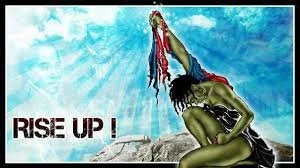
The devastation wreaked on Haiti by Hurricane Matthew last fall was just the latest in a seemingly endless string of misfortunes that have befallen that country, which in March concluded a year-long interlude of caretaker governance by installing banana exporter Jovenel Moïse as its 58thpresident. Moïse faces a daunting task; Haiti’s chronic status as the Western hemisphere’s poorest nation is due to a litany of afflictions that range from widespread illiteracy, to endemic corruption, to woefully inadequate infrastructure. But while these would be hard enough for any country to overcome, for more than a century of its existence Haiti carried an additional but little-known millstone, the effects of which are still being felt.In 1825, barely two decades after winning its independence against all odds, Haiti was forced to begin paying enormous “reparations” to the French slaveholders it had overthrown. Those payments would have been a staggering burden for any fledgling nation, but Haiti wasn’t just any fledgling nation; it was a republic formed and led by blacks who’d risen up against the institution of slavery. As such, Haiti’s independence was viewed as a threat by all slave-owning countries – the United States included – and its very existence rankled racist sensibilities globally. Thus Haiti – tiny, impoverished and all alone in a hostile world – had little choice but to accede to France’s reparation demands, which were delivered to Port-au-Prince by a fleet of heavily armed warships in 1825.By complying with an ultimatum that amounted to extortion, Haiti gained immunity from French military invasion, relief from political and economic isolation – and a crippling debt that took 122 years to pay off. My father-in-law still recalls the patriotic song he was taught as a Haitian schoolboy, its poignant lyrics urging all Haitians to reach into their own pockets to help their government raise the amount that was still “owed” to France. Thanks to voluntary contributions from Haiti’s citizens, most of whom were desperately poor, that debt was finally settled in 1947. But decades of making regular payments had rendered the Haitian government chronically insolvent, helping to create a pervasive climate of instability from which the country still hasn’t recovered.France’s demand for reparations from Haiti seems comically outrageous today – equivalent to a kidnapper suing his escaped hostage for the cost of fixing a window that had been broken during the escape. And though the present French government can’t be blamed for the gall of King Charles X (France’s ruler in 1825), a modicum of historical accountability sure would be nice. While France still ranks among the world’s wealthiest nations, Haiti – with a per-capita annual income of $350, a power grid that fails on a regular basis and a network of roads that’s more than 50-percent unpaved – is plagued by drought, food shortages and a struggling economy. For the “crime” of shaking off the yoke of involuntary servitude, Haiti dutifully paid France reparations over the course of nearly six generations – with interest. France should now do the right thing and return those payments, estimated to total $21 billion in today’s dollars. What would be a relative pittance in the French national budget is desperately needed by Haiti and could help it begin a broad-based recovery that would seem like manna from heaven to its long-suffering people.By: Dan Sperling/Forbes/December 6, 2017
How Haiti helps us think differently about history
MIT historian Malick Ghachem gets readers and students to look anew at the Atlantic world.Back in the 18th century, Haiti was the most lucrative sugar-growing territory in the world, a key hub in the transatlantic economy, and, like the United States and France, the site of a democratic revolution. Battles over modern rights, slavery, and global commerce all figure prominently in Haiti’s history, though relatively few people know it.To MIT historian Malick Ghachem, this is both an oversight and an opportunity. Ghachem, a Haiti expert, thinks we too often treat the country as a blank spot on the historical map. Then again, his teaching and writing help fill this void by connecting Haiti to the larger historical currents that have shaped our world.“The fundamental responsibility of the historian is to uncover a story, put it in a new perspective, and show why it was important,” Ghachem says.Indeed, Haiti, once a French colony called Saint-Domingue, became the first country with universal legal equality, after its slave rebellion. But its path toward this breakthrough was complex. As Ghachem chronicled in his first book, the French feared such a possibility for years and instituted a legal regime that sought to keep slavery intact by controlling manumission — the freeing of slaves by their owners — while only occasionally punishing planters for their brutality.And there was both planter and slave unrest during the 1720s in Haiti, as Ghachem chronicles in a second book he is now completing. Back then the colony, like others in the Atlantic, was controlled by a monopoly trading company — in this case, the French Indies Company — and it was a white rebellion against the company’s slave-trading monopoly that helped produce Haiti’s large-scale sugar plantations. Studying Haiti as an integral part of this transatlantic world adds depth and nuance to our knowledge about democracy and globalization — for readers and MIT undergraduates alike.“Our students want to learn something that’s going to make them think differently,” Ghachem says. “And Haiti is good for that. It’s an unfamiliar place to a lot of people, a place that doesn’t figure in the calculus of a lot of disciplines. If you want to think about economic history or international law or human rights and you bring Haiti into the picture, it disturbs the conversation and upsets the terms of the debate.”Ghachem’s career has not followed the calculus of a lot of disciplines, either. He received his PhD in history from Stanford University at the same time he earned a law degree from Harvard University, and began a career in academia only after several years as a litigator. But today, when people act “as if the Haitian revolution did not exist,” Ghachem says, it reminds him why he is a historian: “We still have a long way to go. That’s why I think it’s important to be doing this work in the humanities.”Reading from morning to nightGhachem was born in Tulsa, Oklahoma, where his father was studying to be a petroleum engineer. The family moved to Chicago — Ghachem grew up a Cubs fan — and then to Saudi Arabia for several years, following a job opportunity for his father. Ghachem lived in Jeddah and attended an American school. When he wasn’t in the classroom, he played sports — “It’s always been a way that I’ve felt at home somewhere,” he says — and read. And read. And read some more.“I really became very bookish and would just for days and days read books from morning to night,” Ghachem recalls. “I think that’s why I became an academic. My parents and siblings were dismayed by my reclusiveness. I’ve never read more in my life.”Ghachem returned to the U.S. when he was of high school age, and started college at Georgetown University before transferring to Harvard. He got a BA in history, and in many of his classes realized that his professors were essentially “studying the history of revolution,” from France to Russia and beyond. The subject of revolution soon gripped Ghachem’s intellectual imagination — and it still does today, at MIT, where he helps teach 21H.001 (How to Stage a Revolution), a long-running history course.“It forces you to think about a subject, a nation, from the ground up,” Ghachem says. “As [political philosopher] Hannah Arendt put it, what makes a revolution a revolution is that the participants in it are gripped by the sense they are doing something new under the sun. … They’re inventing something new, which is kind of the ethos of this place [MIT] right here. At a human level, that’s a very contagious feeling.”Some parts of Ghachem’s career progression are easy to trace: Having entered graduate school in history at Stanford, he wrote a seminar paper about Haiti, which became the basis for his PhD dissertation, which became the basis for his first book. Even so, he also decided to study law while working toward his history doctorate.“I started reading about the law of slavery, so that became my interest in law,” Ghachem says. “That was the link.”Acquiring a history doctorate and a law degree is not a rare move for scholars, but pursuing the two degrees simultaneously on opposite coasts was a bit unusual. Eventually, in 2002, Ghachem emerged with his dual degrees — and promptly entered the legal profession. He clerked at the U.S. Court of Appeals for the Eleventh Circuit, in Miami, then became a lawyer in Boston, first at a small practice, then at a larger firm, Weil, Gotshal, and Manges LLP.As a lawyer Ghachem worked on criminal defense cases, First Amendment issues, and U.S.-mandated travel restrictions, among other matters. But he still wanted to pursue his academic research, and he liked the idea of teaching.“If you have cases like this, it’s very hard to leave,” Ghachem says. “They’re very engaging and you get very involved. But … at a certain point in time, I decided, if I’m not going to became an academic soon, I’m going to be in the law practice world forever. So I decided, let me try now.”Ghachem had served as a lecturer for two years at MIT and in 2010 took a full-time faculty position at the University of Maine’s law school. In 2013, he joined the MIT faculty, where he was awarded tenure earlier this year.Haiti and the global revoltWhile Ghachem’s first book explores the long run-up to the Haitian revolution, the one he is now completing allows him to look more extensively at commerce and “the earlier part of the story,” as he puts it. Like other countries, debt-ridden France had given license to private companies to develop colonial holdings, and in the 1720s, this led to revolts in multiple places, including Louisiana, after some companies went bankrupt. (The South Seas Bubble is the best-known such implosion.)“There is a global revolt against these companies that begins with financial crisis and spreads to other dimensions,” Ghachem says. “Saint-Domingue is I think the best example of this, but a little-known one.”In a sense, the new work parallels Ghachem’s first book, but with a larger focus on the economic forces driving Haiti’s exploitation and unrest. Either way — in finance and economics, as in politics and law — Ghachem believes we can know the past better by not thinking of Haiti as an isolated territory, but putting it squarely in the mainstream of issues we still grapple with now.“It’s not that I enjoy working on marginal subjects,” Ghachem says. “I enjoy working on subjects that only seem marginal. Haiti wasn’t marginal in the 18th century, and it’s not marginal today.”By: Peter Dizikes | MIT News Office December 5, 2017
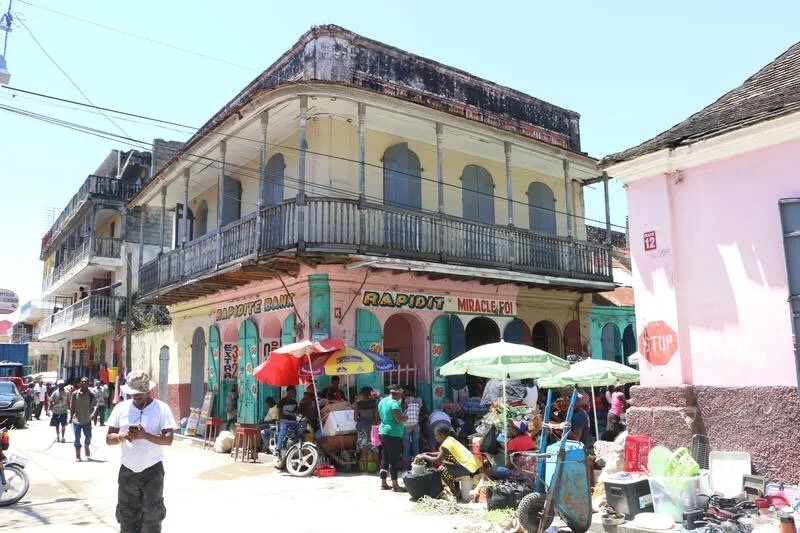
Haiti & New Orleans: Is The Feeling Mutual?
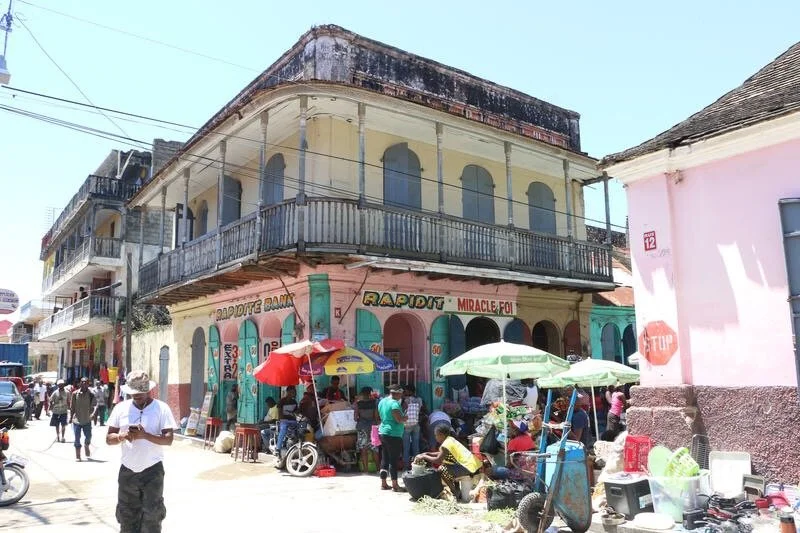
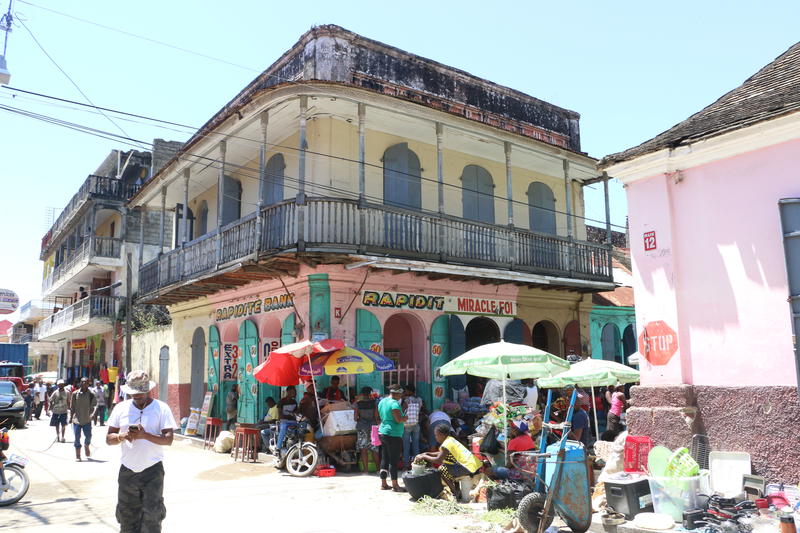
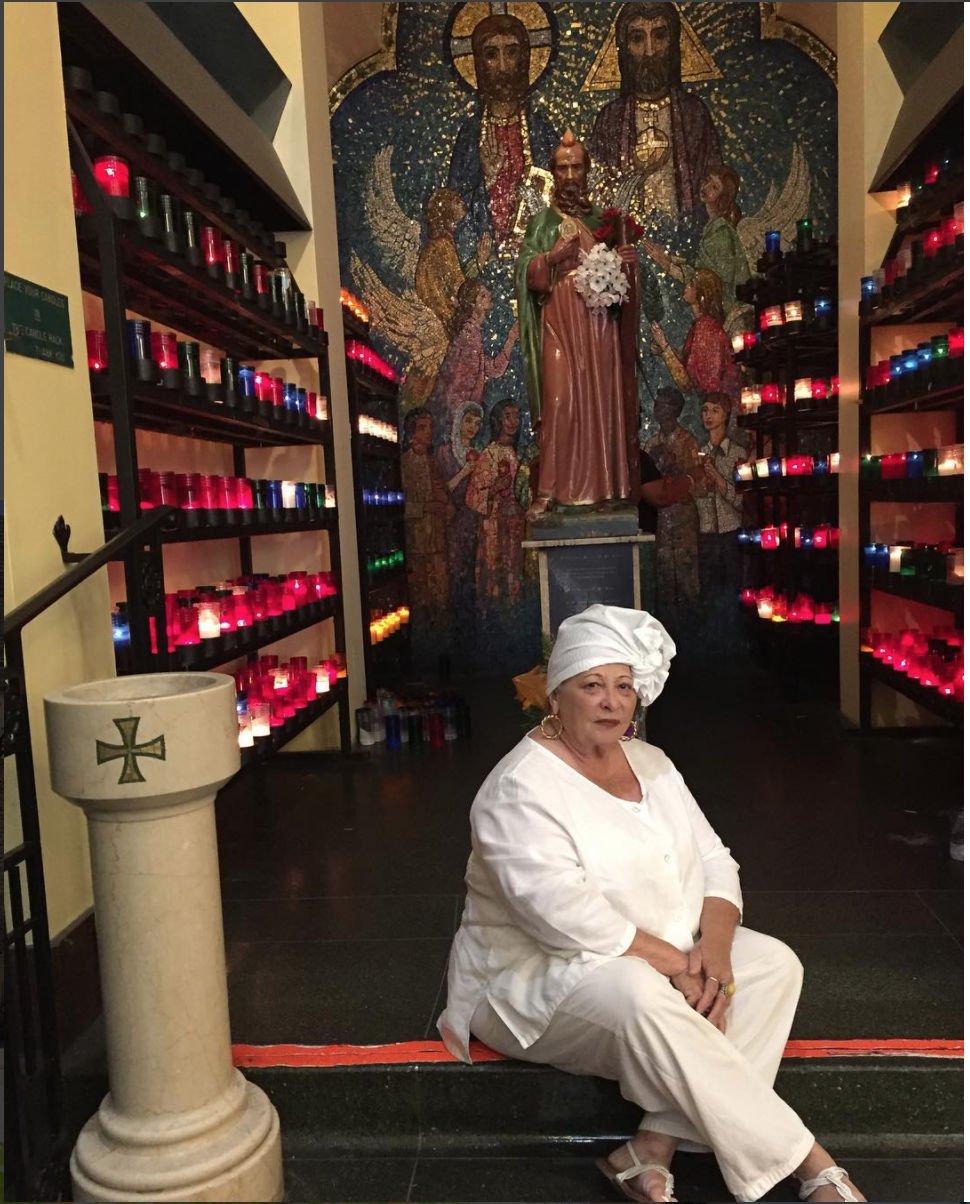
By "we," Barbara means native New Orleanians. And then, as if it was a setup, Barbara turns to a woman sitting a few pews behind her, and asks, "You have ancestors from Haiti?"The woman replies that she does not, but has friends that do. "Do you know the Burns? Or the Dumas?" responds the woman. "Yeah!" said Barbara. Those families come from Haiti, the woman responds. Barbara smiles and says "Ha! Same tribe, Same tribe."Barbara’s relatives leaving Haiti and making their way to New Orleans, is part of a larger migration of people fleeing Haiti during its revolution at the turn of the 19th century. The Haitian Revolution is the only successful rebellion by enslaved people in the Americas. And when it ended, and Haiti became independent, thousands of white, free black, and enslaved people -- fled or were forced from the island. Most went to New Orleans and Cuba. Then, a few years later, those same Haitian refugees that went to Cuba were expelled from Cuba, so they also came to New Orleans. This was 1809, when 10,000 Haitians arrived, and doubled the population of the city. This is partly why so many New Orleans families today are people of Haitian descent. And why a creole culture, born from African and European ancestry, define both places, and bind them together.They’re these similarities in heritage and homelands, and there’s also the architecture, religion, music, dance, food, carnival, and vulnerability to natural disaster. For all these reasons, Barbara believes Haiti is part of her city’s identity, and says other New Orleanians do, too. I’m not a native New Orleanian, but a lot of locals associate this connection with who they are as people. Even all these generations later. There’s this saying that New Orleans is "the northernmost point of the Caribbean," that basically comes from the city’s relationship with Haiti, and is one reason why New Orleans fancies itself part of the Caribbean, and Haiti, in particular, something of a sister city. But is New Orleans just fancying itself? Do Haitians think of New Orleans this way? Do they think of New Orleans at all? These two places were tied at the hip 200 years ago, But where does their relationship stand today?This story is told in three parts: The history of the original connection between these two places, what happened over time, and what the future can hold.PART I: The One-Way TripAndre Paultre belts his brains out behind the wheel of his forest green 4runner as it shakily bumps down a dirt road. Andre’s what’s called a fixer, he works with reporters when they travel to Haiti. We’re driving to a city called Jacmel, about three hours south of Port-au-Prince.
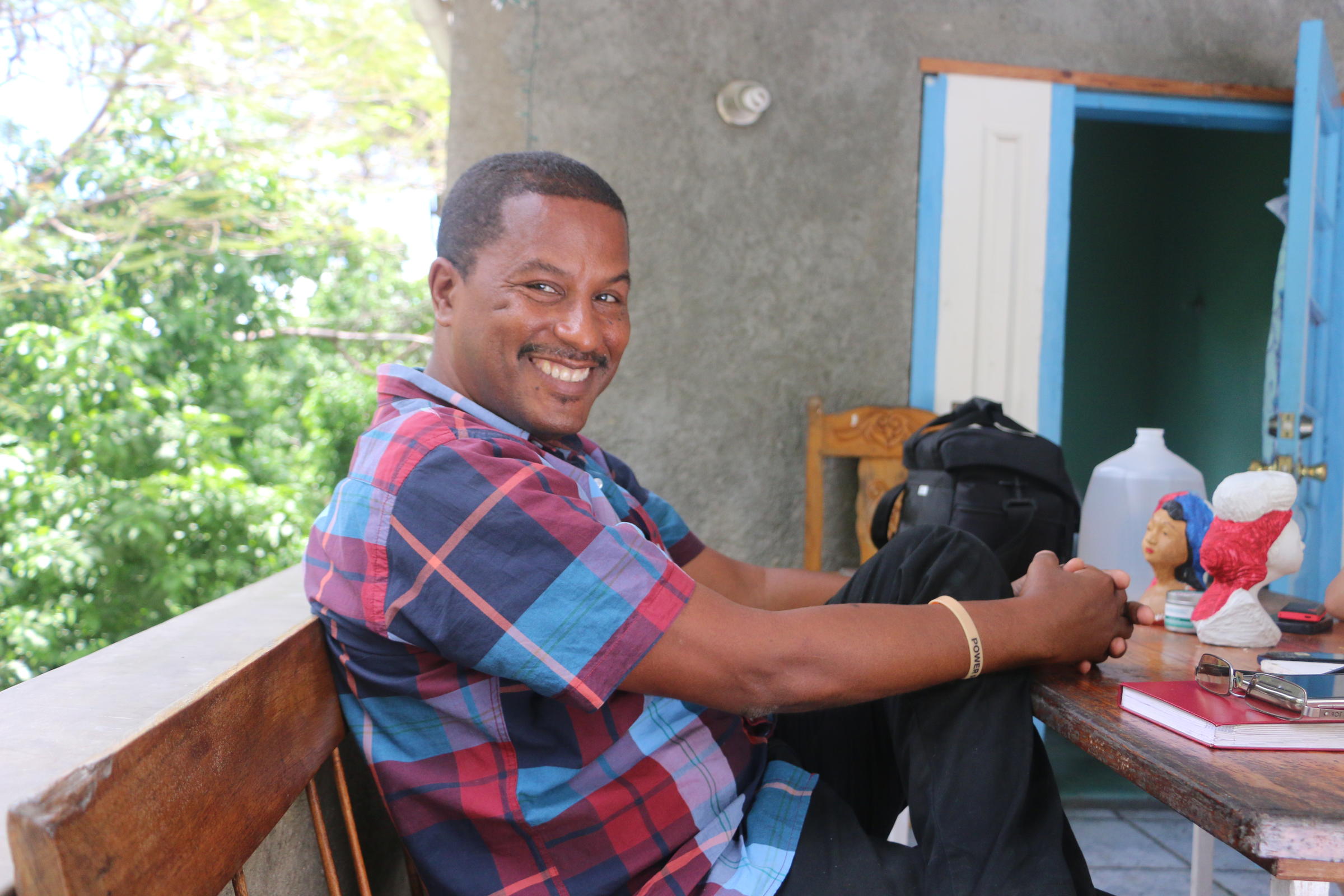
Jacmel is right on the coast, and feels like a beach town, surrounded by lush, green mountains. It gets more tourists than Port-au-Prince these days, not only because there are beautiful beaches, but because Jacmel is known for its Carnival celebration. The city is famous for its paper maché Carnival masks that people collect year round, and no matter when you visit, you’ll find artists painting them as you walk through the streets.We arrive at our first stop, and meet our tour guide for the day, Jean-Elie Gilles. He’s an opera singer, a professor, and the author of many books about Jacmel. He leads us towards the Florita Hotel, where he orders a round of drinks.
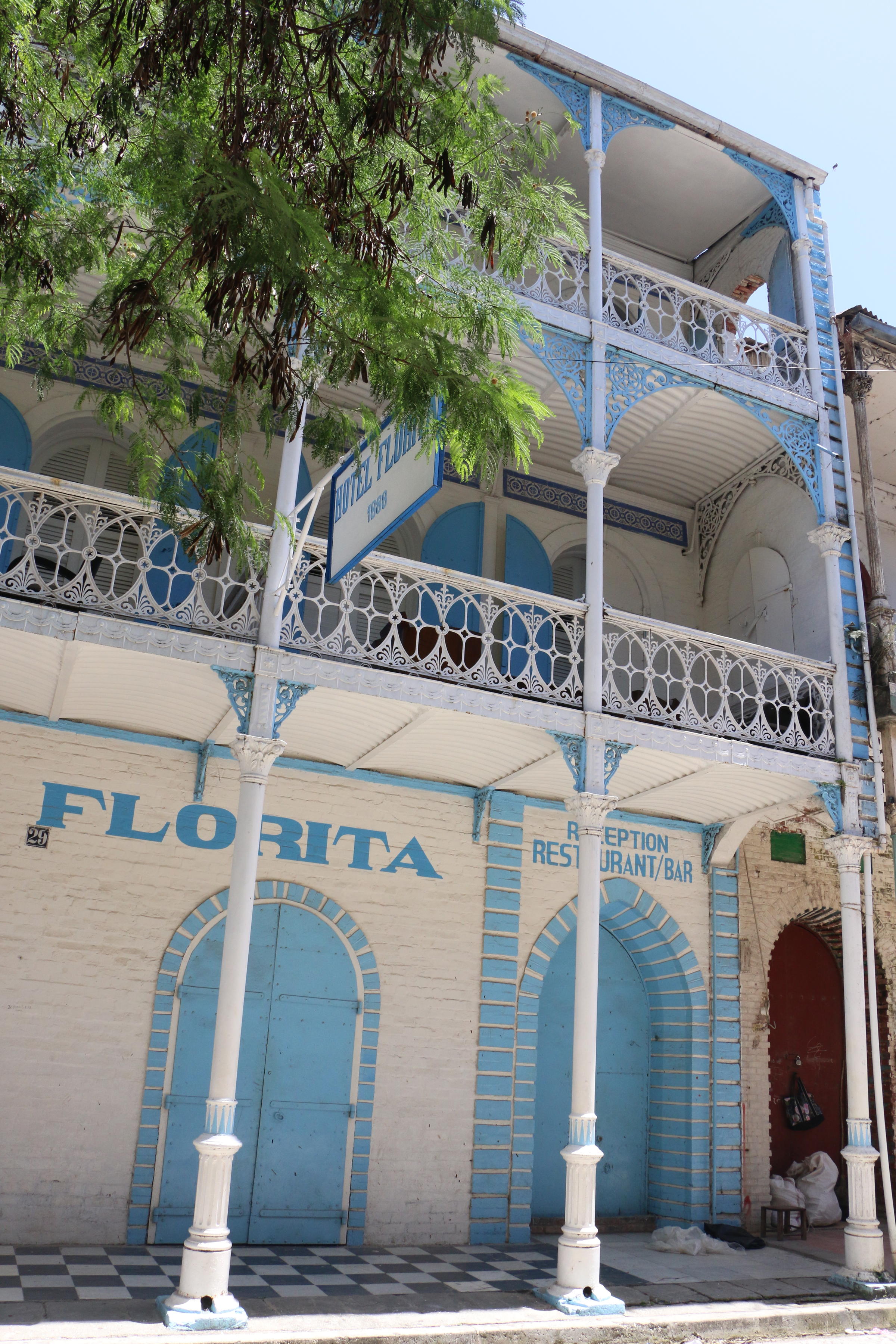
"The best rum sour is here in Jacmel, in Florita hotel," Jean-Elie says. It’s the best rum sour in Haiti, because this guy has a secret of doing something, I don’t know what! But it is good."That rum sour wasn’t the only reason Jean Elie brought us to the Florita Hotel. First of all, it’s beautiful -- the exterior is painted a cream-colored brick, the doors sky blue. Slim columns support an iron-lace balcony off the second floor that have huge ferns with water dripping through the bottom of their planters down to the curb. Everything about it looks exactly like what you would find in the French Quarter.It’s not just the Florita Hotel. Most of Jacmel is built in the same colonial style seen in the French Quarter, the Treme, the Marigny, and all over New Orleans. Two story buildings with wrought iron railings stuffed with hanging ferns. Bright colored shotgun houses, creole cottages. It was like a spitting image. To literally see the connection through this architecture was almost dizzying."This is what remains from that connection with Jacmel, and New Orleans, and Louisiana," says Andre, meaning this is what remains of that connection. Which makes it seem like something happened to this connection, something’s changed. But when did this connection start in the first place? Where does this shared history begin?Let’s start with the Haitian Revolution, says Henry Robert-Jolibois, an architect and historian who lives in Pétion-Ville, a wealthy suburb about 20 minutes -- or two hours -- south of Port-au-Prince, depending on the traffic. Most people who can afford it, choose to live in Pétion-Ville over Port-au-Prince. Unlike most towns in

Haiti, Pétion-Ville’s got sushi restaurants, yoga studios, iced coffee, and has its own private trash pickup service. It’s a stark contrast from Port-au-Prince, where poorer residents often get rid of their trash by burning it on the side of the road. This type of disparity is not new to the island."Well, everybody wanted their freedom," says Henry. Before Haiti was Haiti, it was a French colony called St. Domingue. Sugar and coffee ruled, and made the colony wealthy, on the backs of thousands of enslaved Africans. By the 1760s, St. Domingue was the most profitable colony in the Americas. This prosperity came at the expense of brutal, often fatal labor in the fields. Large numbers of enslaved people fled the plantations for the mountains, where they established maroon colonies. And started planning a revolution."The revolution started with the French Revolution," Henry says. When the French Revolution began in 1789, there was lots of division, to put it mildly. Some whites in St. Domingue opposed the Revolution in France, while others supported it in hopes of gaining the colony's independence. The free people of color, or gens de couleur, pressed for the equal rights that French Revolution seemed to promise. Then there were the enslaved and maroon populations -- which by the way, outnumbered whites on the island 10 to one -- they saw this political crisis as an opportunity to strike for their freedom. Which led to The Boukman Eksperyans, what’s widely considered the start of the Haitian Revolution. This happened in 1791, when a vodou priest named Dutty Boukman led a religious ceremony to kick off the first successful slave rebellion in the northern part of the colony.
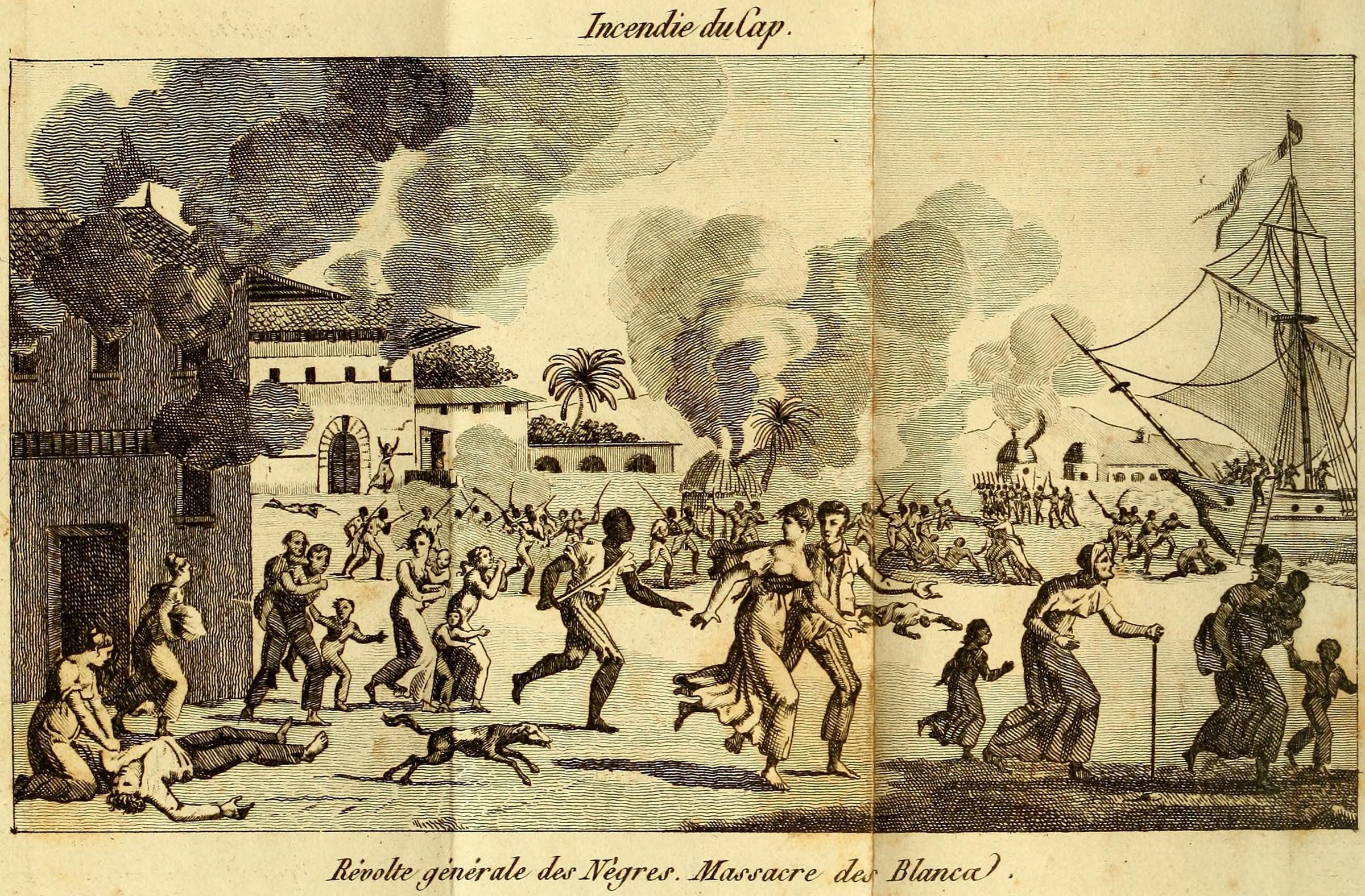
"The revolutionaries, their idea was simple: at the end of it all, we will be able to better negotiate agreements, and freedom for all," says Henry. "When finally we stopped fighting, the Haitians had won, and they had created one nation."It was 1804. Thirteen years after the Boukman Eksperyans, the enslaved population liberated itself, and their victory remains the largest and most successful slave uprising in the Americas. This uprising shed the colonial name St. Domingue, and the new black nation was called Haiti. The name Haiti comes from the indigenous language of the Taíno people who were native to the island. It means "land of high mountains." So they ditch the French name, and all the French are like, we should probably go."They went to Louisiana because it was another colony of France," says Henry. "It was part of the French network."Now, people had been fleeing Haiti over the course of this 13-year revolution to go live in other French colonies. Some went to Caribbean islands like Guadeloupe and Martinique, a lot went to Cuba, and many went to Louisiana. And it wasn’t just white people who fled -- a lot of enslaved and free people of color went with white Haitians to New Orleans, either with their master, or to escape the violence and turmoil that was happening on the island. When the revolution finally ends, Napoleon realizes he’s spread too thin. He decides to forget about Haiti, and double down on Europe. This led to the Louisiana Purchase.When you put the last battle of the Haitian Revolution and the signing of the Louisiana Purchase on a timeline, they happened just months apart in 1803. Now fast forward to 1809. Spain's at war with France -- and all that bad blood seeps into the Caribbean. Cuba is a Spanish colony, but it's full of French emigres that left Haiti during the revolution. So during this war, Spain up and kicks out all the French. Which means that all the people who had fled to Cuba from Haiti need to leave again. Where do they know a guy? Louisiana.Jean Marie Theodat is a geographer who lives in a town also called Theodat. "A part of our society just went to reproduce itself there. Like a chemical process. A lot of slaves, a lot of masters, escaped from St. Domingue, went to Louisiana and created a creole culture."
Almost overnight, 10,000 people of Haitian descent, ⅓ white, ⅓ enslaved, and ⅓ free people of color arrived at the port of New Orleans, and straight up doubled the size of the city. And it shows, Jean Marie says, "I mean, when I listen to your music, and sometimes taste your cook -- the dish, I think, this is ours!"This is how Jean Marie sees it: the St. Domingue colony didn’t disappear, parts of it just kind of picked up and started over again somewhere else. Which had a big impact on both economies. The Revolution devastated Haiti’s economy, leaving the new nation with almost nothing but burnt sugarcane fields. But when all these refugees, many of them planters, came to Louisiana, they started new plantations along the Mississippi river. The sugar industry exploded, and brought a lot of wealth to Louisiana, and New Orleans. This influx of Haitian refugees also came at an oddly convenient time to reshape the city. Even though New Orleans had been around for almost a century when they arrive, in a lot of ways the city was also a blank slate at that moment. The refugees pull up to this little frontier town that’s recovering from two massive fires that almost entirely wiped out New Orleans in the late 1700s. The first fire happened in 1788 and destroyed roughly 80 percent of the city. And then six years later another fire wiped out another 212 buildings.
New Orleans was rebuilding itself, and at the same time had just become an American city. It was a prime time for all of these Haitians to come and develop this old and new town. This is the root of the connection between Haiti and New Orleans: These major migrations transformed the future of the city during such a pivotal time, influencing its culture in every aspect -- food music, art, dance, language -- but with all that was brought to New Orleans, was there a reciprocal influence happening back in the new country of Haiti?Again, Jean Marie Theodat. "I mean, I personally, as a geographer, I know about it. I’ve heard and I’ve read about it. But still I think, that the average Haitian don’t know about that."For him, it’s simple: "I look to Louisiana, it’s like another island, far away. It was a one-way trip."PART II: Two IslandsMy field producer Wynne Muscatine Graham and I are walking around one of the main public squares in Port-au-Prince called the Champs de Mars. It’s a series of public parks that are separated by large boulevards congested with cars, motorbikes, and colorfully painted public transportation buses called Tap Taps. It’s late afternoon, and street vendors push carts offering freshly chopped coconut, candy, beer, ice cream. Others ring bells as they call out the service they’re offering, like a shoe shine, or a small bag of drinking water. People walk through the park and pass us in business attire, on their way home from work. Others sprawl out under a shady tree and watch a pickup game of soccer on an open patch of dirt.We wonder how many of these people know about the connection between New Orleans and Haiti? How many people walking past us in the heart of Port-au-Prince, have ever heard of New Orleans, period? We ask people as they pass by, if they’ve heard of New Orleans. And we did this in a few different cities in Haiti. Port au-Prince and Jacmel in the south, and up north in cities like Gonaïves, Cap-Haïtien, and villages in between. Everywhere we went we got mostly the same response: No.

The average person on the street had never heard of New Orleans. With a few exceptions. Some high school students had heard of Hurricane Katrina, through hearing it on the news. Others knew that New Orleans celebrates carnival, just like they do in Haiti. And then someone who knows New Orleans because he’s an NBA fan. "Because there’s a good basketball team from there," he says. Maybe he’s talking about The Pelicans?Wynne asks him if he knows any people who live in Louisiana. "Well, I’ve heard Haitians live there, but me personally, I don’t have family living in Louisiana. My family lives in Florida or New York City, if they live in the United States."Florida, and New York. That’s where you’ll find much of the Haitian diaspora today, the man tells us. So, if thousands of Haitians moved to New Orleans 200 years ago, why’d they stop coming? What happened?"Louisiana has largely forgotten Haiti, and Haiti has largely forgotten Louisiana exists," says historian George Michel. "Louisiana has sunk into oblivion." George Michel is knowledgeable and dramatic. He started to list links that once existed between New Orleans and Haiti. Links that are now gone."When I was a boy, you had a thrice a week direct flight by Delta Airlines from Port-au-Prince to New Orleans. No more. So that was a link," he says. This direct flight he mentions was active in the mid 20th Century. He adds that there used to be a Haitian consulate in New Orleans. That’s also gone. George Michel continues: "We used to have shipping lines between New Orleans and the Haitian ports. This is long gone, as New Orleans dropped as an important port in the United States."New Orleans still has an active port. But it’s not what it used to be. The port employs a lot fewer people. Haitians looking for a better life in the United States can find more prospects in other cities. Like Miami, the city with the highest Haitian population (by a lot), followed by New York and then Boston. There is still an active Haitian community here, but it’s also not what it used to be. New Orleans doesn’t even crack the top 10 for Haitian populations in the United States.So to explain why Haitians stopped migrating to New Orleans, we arrive at factor #1: Jobs.Vladimir Laborde, a Haitian businessman who lives and works in Port-au-Prince. "New Orleans is not the most prosperous place." He says when Haitians think of the United States, "You don’t think of New Orleans. And then the proximity, as far as logistics, people go to Miami. Miami is less than an hour in the air."Factor #2: Geography. Michele Pierre Louis is a former Prime Minister of Haiti who now teaches the history of the Caribbean at a University in Port-au-Prince. "Getting into the Gulf was too difficult, whereas the tides take you to Miami," he says. Plus, Miami’s population exploded in the 20th Century. In 1910, Miami was brand spanking new. Only 5,000 people lived there. Ten years later, there were 30,000. And people just kept on coming. As Miami grew, so did the economy. So why go to New Orleans, when you can get to a faster growing city, even faster?Michele says Haitians went to cities in the United States, even though they might have felt more at home in a city like New Orleans. "But I don’t think it was in their mindset. They didn’t travel with an idea that that particular state had a connection to Haiti."Why not?"History is not well taught, at all, in Haiti," he says. Factor #3 to explain why Haitians stopped coming to New Orleans: Education."I’m telling you, I’m teaching at the University and I can see the ignorance of our students with so little knowledge of our own history which is so incredible," Michele says. "The dictatorship killed a lot of things here. There was a big darkness, in a way."The Duvalier dictatorship started when Haiti elected Francois Duvalier, aka Papa Doc, on a populist platform in 1957. He ruled the country with his own militia called the Tonton Macout. When he died in 1971, his son Jean-Claude, aka "Baby Doc" took over.
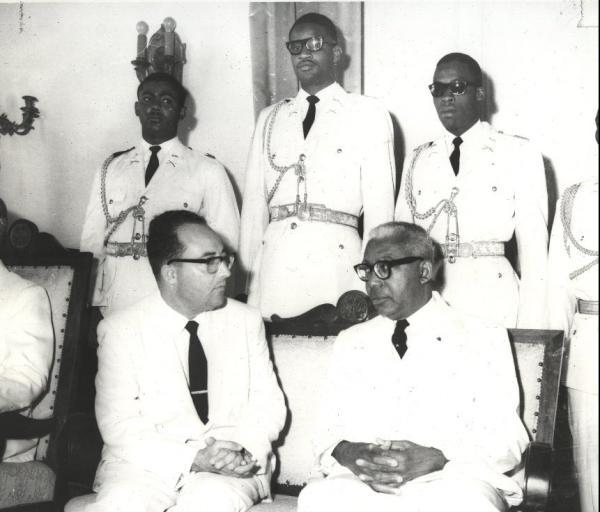
"Duvalier had changed the curriculum of teaching history at the primary and secondary level. Our heroes were the most important," he says. Michele’s point here is that Haitians are mostly unaware of the connection that they have to New Orleans, because that’s just one of many gaps in their history curriculum. But it goes both ways- there’s a parallel gap going on here in the United States. Did you learn about the Haitian Revolution in high school?There’s a big silence on this end.Dennis Kelly has been doing business with Haiti for the past 30 years, and splits his time between New Orleans and Port-au-Prince. "Many Haitians, or people of Haitian heritage who live here, have never been to Haiti."New Orleanians talk about Haiti. But they don’t actually go to Haiti. Factor #4: Not going to Haiti. Which explains why these two islands are no longer close. And they’re being referred to as two islands, but it’s important to remember that one is a small country, one of the poorest in the world, and the other a small city, that’s part of the wealthiest country in the world.So these "two islands" are no longer close. Vladimir Laborde, the Haitian businessman you heard from earlier (who actually moved to New Orleans from Haiti with his family when he was a kid, and went to high school here), he has a phrase for this kind of unconsummated love: "Affinity diaspora." New Orleans, he says, "don’t know how they’re related to Haitians. They really can’t put their finger on it. They just feel a connection. Sometimes I’m uncomfortable because they haven’t been here yet, and they’re talking about something they don’t know."Loyola University professor Angel Parham agrees. She wrote a book called American Routes, that traces the experience of Haitian descendants in Louisiana. She interviewed a lot of folks in New Orleans for the book. And how many of those people had actually visited Haiti?Angel says, "I don’t think any of them have visited Haiti. I do not recall anyone making a real trip to Haiti, and really being there for any length of time. No."Remember Barbara Trevigne, the woman in the beginning, wearing all white and praying at the St. Jude Shrine? We met at that shrine because it’s a place in New Orleans that reminds Barbara of Haiti. But Barbara has yet to visit Haiti. She wants to, but hasn’t made Haiti happen -- yet.
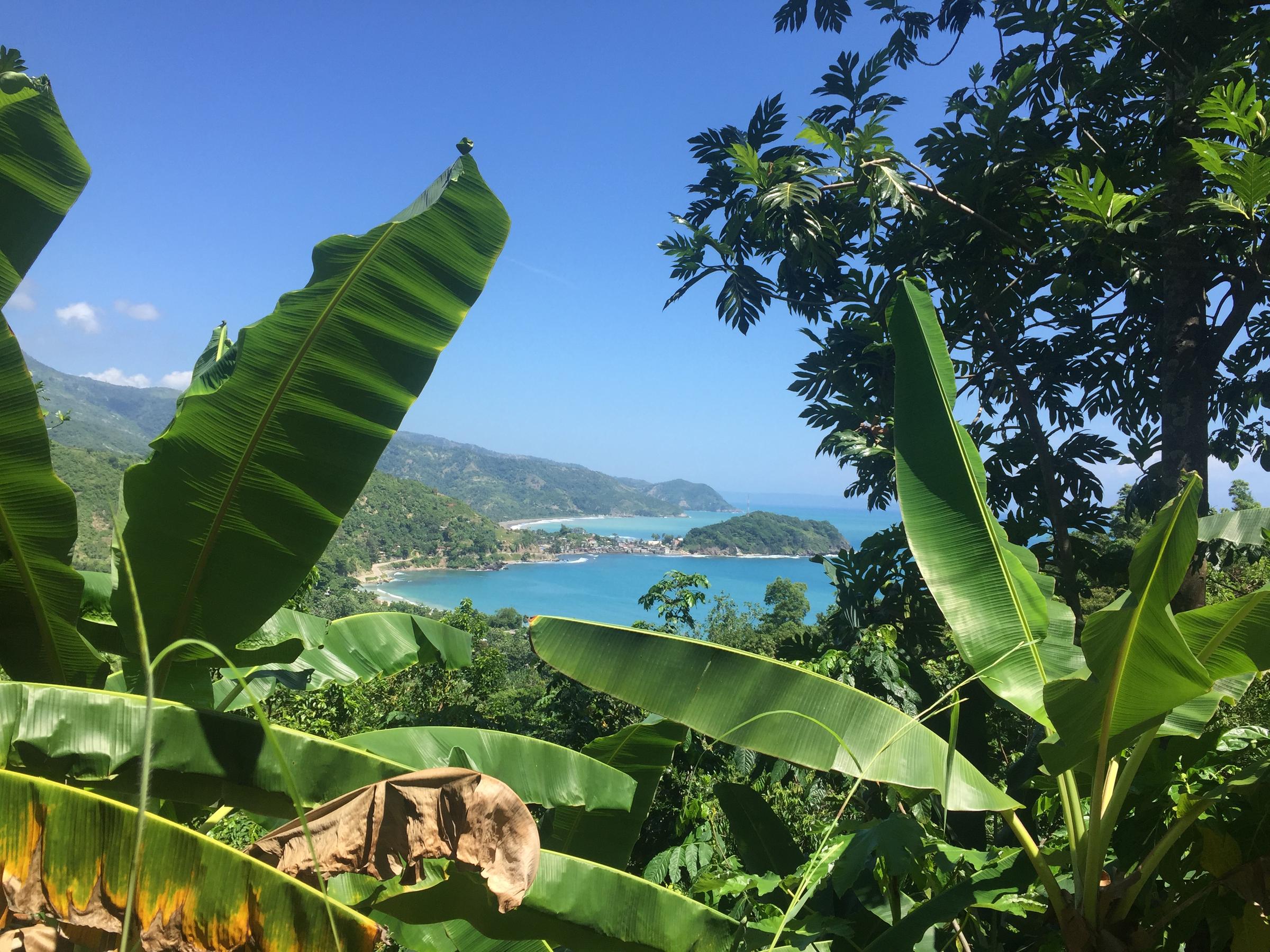
"People may be interested in talking about it," Angel suggests, "but how interested are they in actually traveling to Haiti? Are they going to feel that it’s a place that they will be safe? Haiti does not have this image as much of the Caribbean as a tourist destination that everyone wants to go to." A lot of the people Angel interviewed feel this nostalgic affinity towards the Haiti they have in their minds, but it’s almost like they want to keep it that way."It’s one thing to kind of claim this Caribbean heritage and memory, but then to not be supportive of it, I think is problematic," she says.Some of this could be financial. As Vlad Laborde said, New Orleans is not the most prosperous place. There may be plenty of folks who would love to travel to Haiti, but simply can’t afford it. That’s real. But there are other reasons why New Orleanians, and others, don’t visit."We have bad press," says Vladimir Laborde. "The perception is this is a no man's land. People think of Haiti and they say, 'dude, I need security you know? My insurance won’t let me go down there.'" And this negative image of Haiti, has been broadcast to the world since day one."We paid a dear price for that revolution," said Gigi Dupuis, a Haitian woman now living in New Orleans. It all goes back to the Haitian Revolution. It’s like what brought New Orleans and Haiti together, is the exact same thing that was used to keep them apart. "For doing away with the slave system. And we were isolated because of that," Gigi says. Architect Henry Robert- Jolibois agrees, "We were punished many times, and many times over, for daring to free ourselves. And we have been paying for it a long time."Ron Bluntschli is an American who lives with his wife, Carla, in the mountains outside Port-au-Prince. They run an organization called NASONJ, which in Creole means "We Will Remember.""They could not accept that a group of black people could win a battle against France and establish their own country and have it work. Because that would destroy the whole ideology of racism. Europe, France, and the United States were determined to see Haiti fail from the start. So they set the course in motion to destroy this country, and they never let up," Ron said.In the 1820s, South Carolina Sen. Robert V. Hayne made the U.S. position absolutely clear when he stated: "Our policy with regard to Haiti is plain. We never can acknowledge her independence." It took the United States until 1862 to recognize Haiti as an independent country. Almost 60 years after the revolution.

Now fast forward to 1893, the Chicago World Fair. Frederick Douglass is the U.S. ambassador to Haiti, and in a speech at that world fair Douglas says: "Haiti is black, and we have not yet forgiven Haiti for being black."Dennis Kelly is the businessman who lives in New Orleans and Port au Prince. He says the revolution remained unthinkable into the 20th century, because it overturned white power. "Haiti was still viewed as a slave colony that was insurrectionist and just didn't affirm any values of the power elite in the South, shall we say. I think that sums it up right there," he says.Dennis says that that can likely be traced back to the events of the beginning of the 19th century of the successful revolution. "Absolutely. That's directly traced to that."Haiti’s been painted as a dangerous place since the beginning, and people are still not encouraged to visit there. The poverty, the threat of natural disaster, the political instability, all of this dominates what we hear on the news about Haiti, and has done permanent damage to the country’s reputation, economy, and tourism industry. Americans are not eager to go over there. So while many New Orleanians may appreciate all the cultural ties they share with Haiti -- the music, the food, the architecture -- they’ve never actually seen it for themselves. This is the complicated nature of the current relationship: New Orleans might love Haiti, but at arms’ length.Andre Paultre, our driver in Haiti, has a cousin named Lionel Pressoir. He’s a tour guide outside Port-au-Prince. Some of their ancestors actually left Haiti for New Orleans during the Revolution. And Lionel says both places were neck-and-neck back then. But now, he says, they’ve gone in different directions. "There is not the connection that I thought that there was between Haiti and New Orleans. But we are looking for it. We need it."Pressoir says it’s not enough just to say that Haiti and New Orleans are "Sister Cities.""You know, we can talk about it. But let’s see what we can do as far as bringing something positive," he says.PART III: More Than A FeelingGigi Dupuy was born in Haiti, but her family moved to the states when she was a kid. Now her kids are all grown up, and they live in New Orleans. They urged her to move here, and said she would feel at home. So, she did.
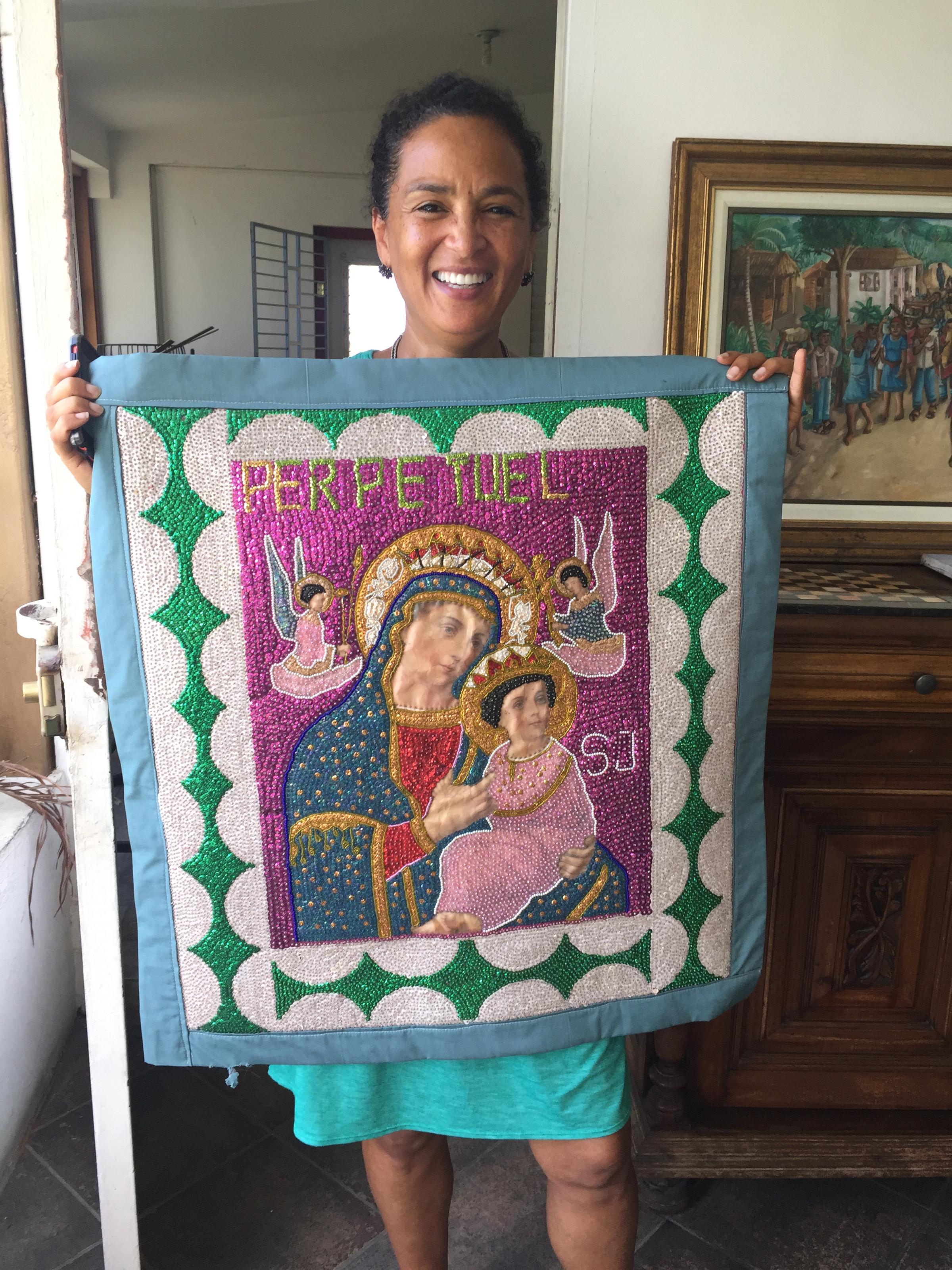
"Leyla, my daughter called me, and she said, 'Mom, you need to move to New Orleans. It's so much like Haiti, you're gonna love it. There's corruption, there's potholes. It's just an incredible place,'" says Gigi. "Of course that's not what I love about Haiti but…"With a last name like Dupuy, a lot of people assume Gigi is from New Orleans. "But it took me a while to realize that," she says. "Until I went to yoga class. The woman registering participants said to me, ‘What's your first name?’ And I said, 'well, I'm sure there's only one Dupuy,’ because there never was more than one Dupuy! And she said, ‘no, actually I have six.’ And I was like what?!""You go into the phone book in New Orleans, and it’s like you’re looking in the phone book in Haiti," says Vladimir Laborde, the Haitian businessman who went to High School in New Orleans, and then moved back to Haiti. "You find Labordes, you find Toussaints, you know. All those people have my family’s last name.When Gigi goes back to Haiti to visit her cousins, she talks about New Orleans. "I say it's very similar. The most similar."No matter what’s happened to this relationship over time, New Orleans and Haiti still have so much in common.

"Not only do we have historical and cultural ties, but we have a traumatic experience that almost wiped us out," he says.New Orleans has Hurricane Katrina, which ravaged the city in 2005, and Haiti has its earthquake that hit in 2010. The quake devastated most of the country, leveling cities and destroying major landmarks, that, as of 2017, are still piles of rubble. The degree of blight reminded me of some of the largest buildings in New Orleans that have been left virtually untouched since Katrina. Like Charity Hospital in the center of downtown. And, like in New Orleans, the aftermath of disaster isn’t just seen. It’s heard.
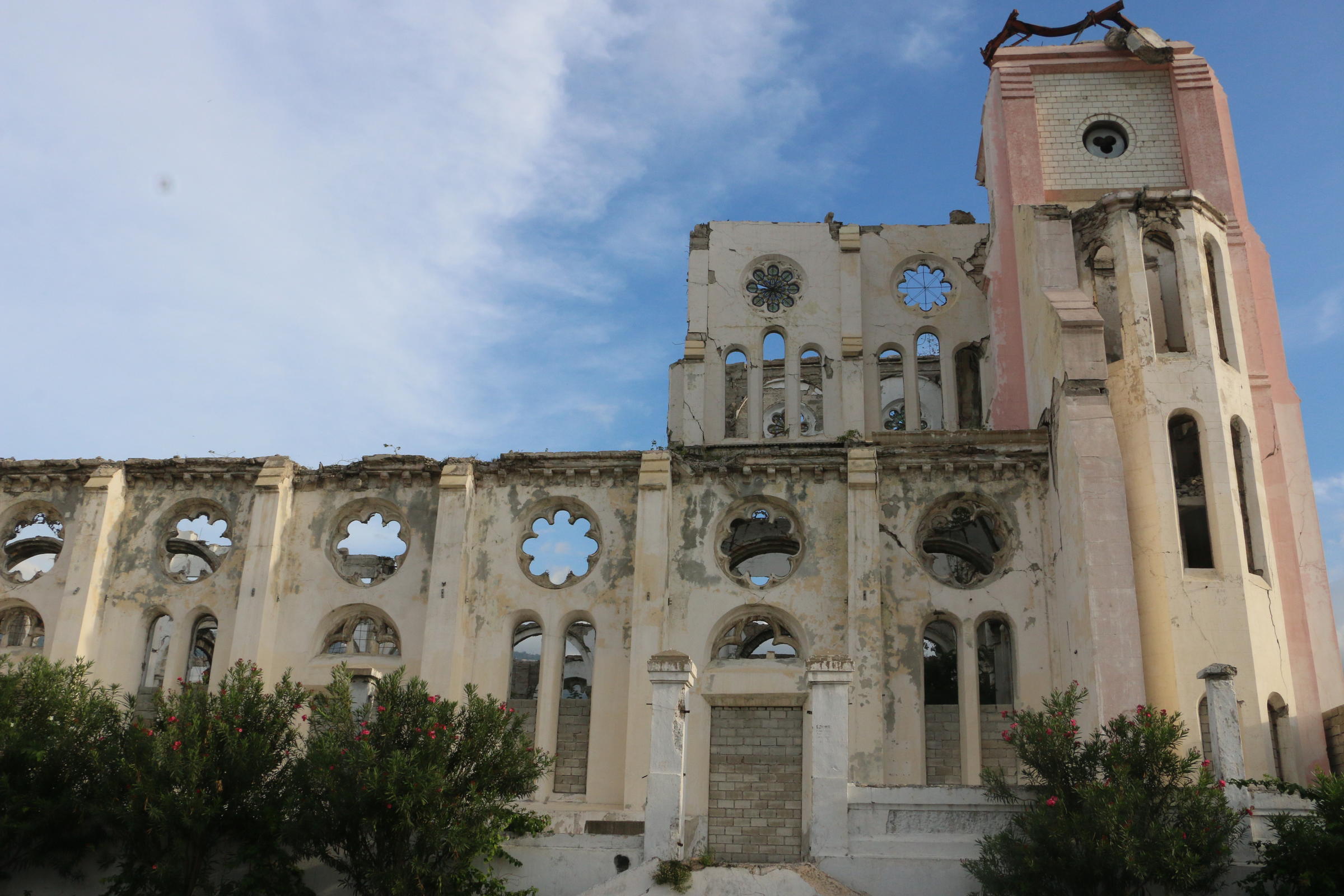
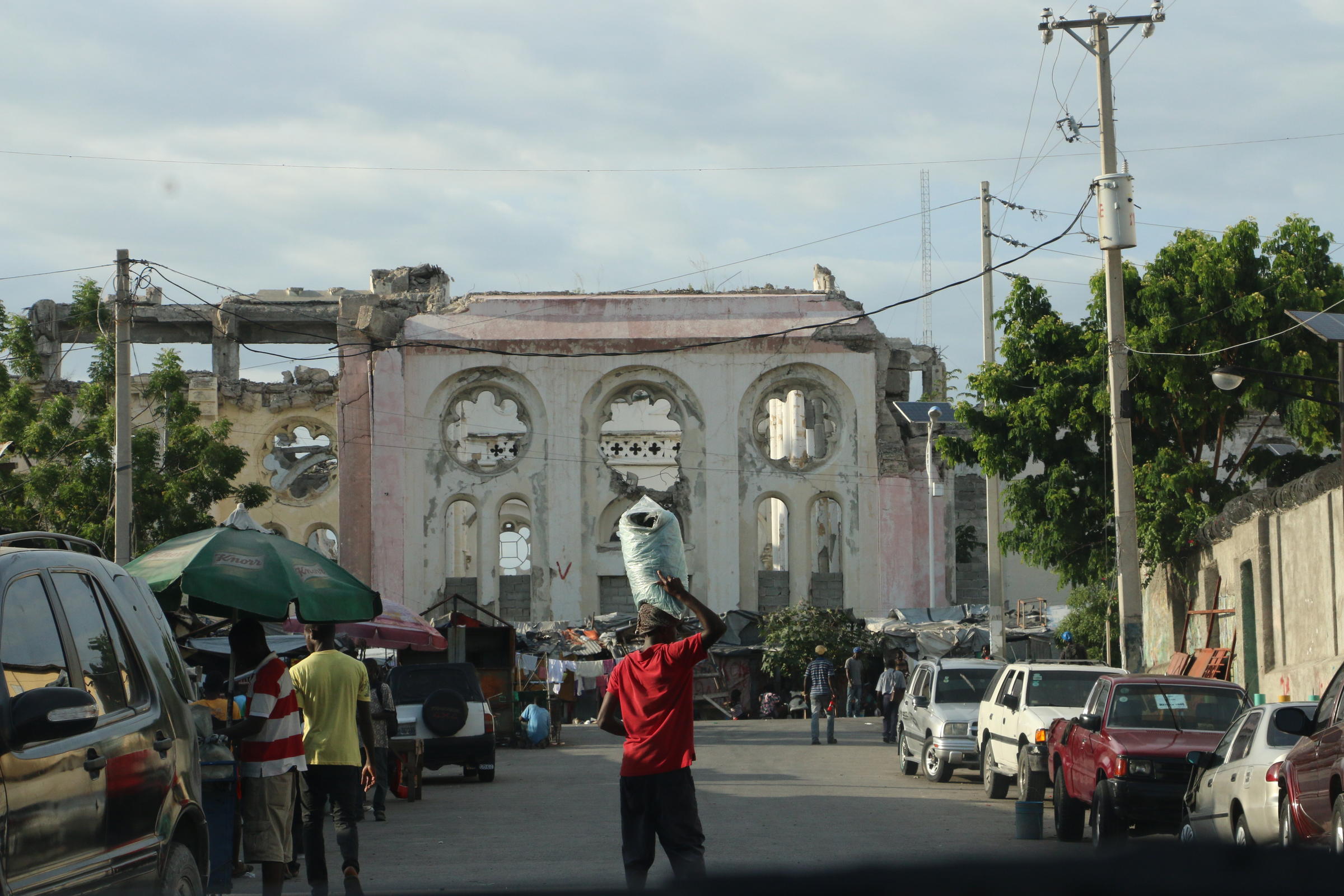
Jean-Elie Gilles, the tour guide in Jacmel, gave us a long tour of his house that day, because he has a large collection of Haitian art and antique furniture he wanted to show off. He started talking to us about a coffee table in his living room. There must have been something about that table, because before we knew it, Jean-Elie was back in 2010.
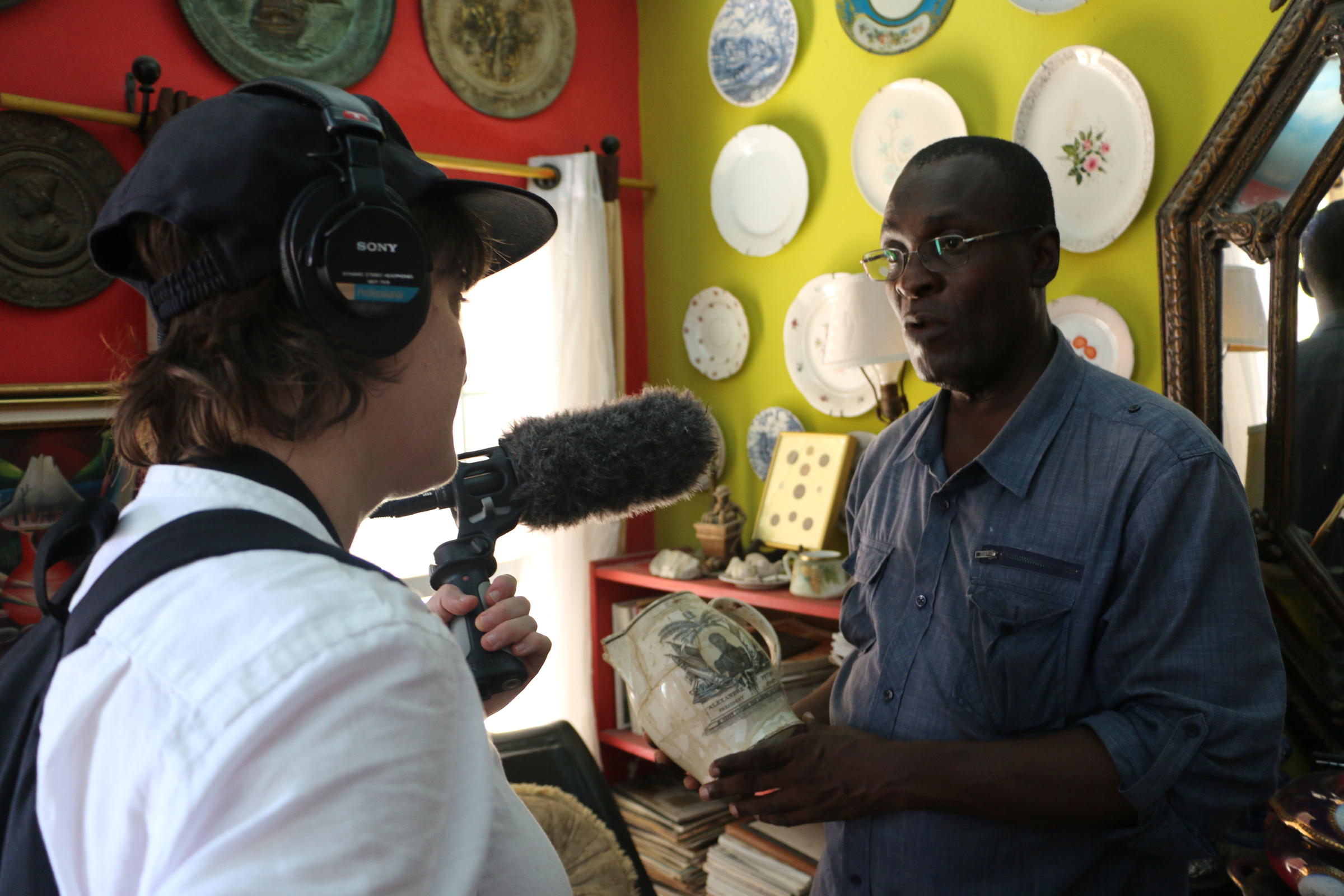
"I was living on the 6th floor and the house went down. I was inside. I was all the way living upstairs, and then I fell. And then I look up outside and I saw the house that was beside me, that was taller, didn’t exist anymore. That house became a pile of crap. And then pretty soon, the house just went down like that. It was like a pile of cards, you know? Like nothing," he says.He went on, with no idea how long ago he had stopped at the top of his staircase, looking beyond all of us, past the house we were all standing in, at the house he lost. "Now I am telling you, I am swearing that I could hear the sound of the earth crying. It’s worse than anything that you have ever heard. It’s like the sound of 10,000 women screaming from the womb. Oh it’s scary. I heard it, and I was not the only one! Very painful, painful. OK let’s go." And then, just like that, he turned on his heels and flew down the stairs.This kind of time travel, this relived trauma, still happens in New Orleans, too. "New Orleans went through Katrina, so they know a lot about disaster," Vlad recalls.And they know what it’s like to see a city full of holes. When our driver Andre gave us a tour of Port-au-Prince, most of what he stopped to show us were things that used to be there. Things that aren’t there anymore. "And that's why after the quake we felt like we were lost. Because all the landmarks that we could use to indicate a place...like we say, 'near the Cathedral,' 'near the national palace,' most of them were gone. Same as after Katrina, I guess."After the earthquake slammed Haiti in 2010, and again after Hurricane Matthew in 2014, people around the world asked themselves what their obligations are to this country. A country that, throughout history, has been cast aside, and treated as "other." Well, Vlad Laborde says, New Orleans knows what that’s like, too.

"New Orleans, Louisiana, often times feels apart from the rest of the United States. Haiti often times feels itself apart from the rest of the Caribbean," says Laborde.After Katrina, people threw around the idea of not rebuilding the city, period. Like New Orleans was an expendable part of the United States. Or not part of it at all. The same way Haiti has been punished for its blackness, New Orleans was shunned, many say, for that same reason. Still, thousands of people did rush in to try to help. Haiti and New Orleans have both been on the receiving end of countless recovery projects, and NGO missions. And both places have felt exploited, seeing too many of these fail, over and over again. This shared experience and the mutual understanding it creates might put Haiti and New Orleans in a position to work together.There’s a fear in Haiti that things are disappearing. Literally. Much of Haiti’s built environment is deteriorating. Whether it’s an earthquake that swiftly wipes huge landmarks off the map, or the slow crumbling of a 300-year-old shotgun house. Because New Orleans shares this distinct architecture, it knows how to restore -- and preserve -- Haiti’s historic buildings. John Williams runs Williams Architects in New Orleans. He’s done over 500 projects in the French Quarter and has also done a lot work in the Lower 9th Ward since Katrina.
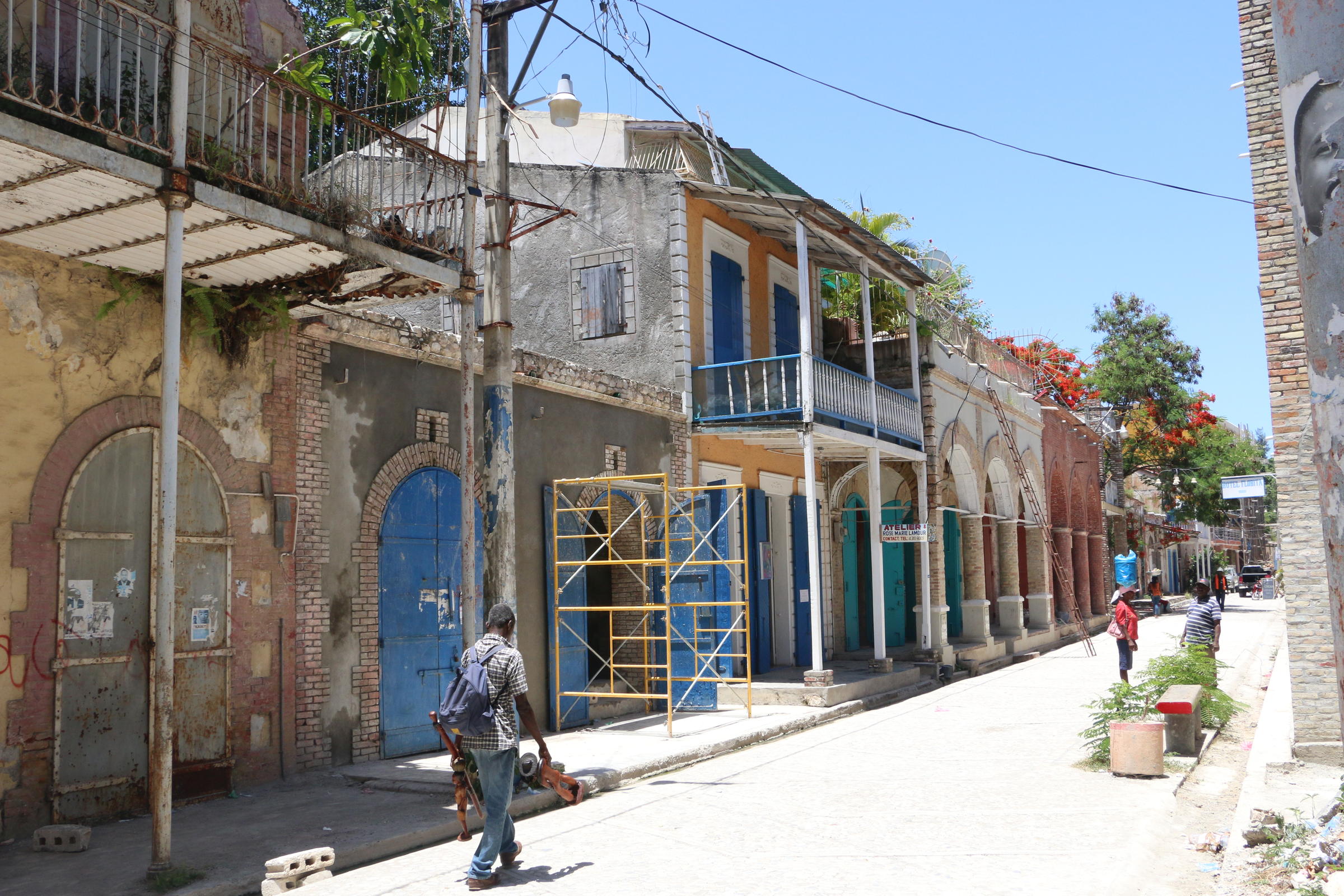
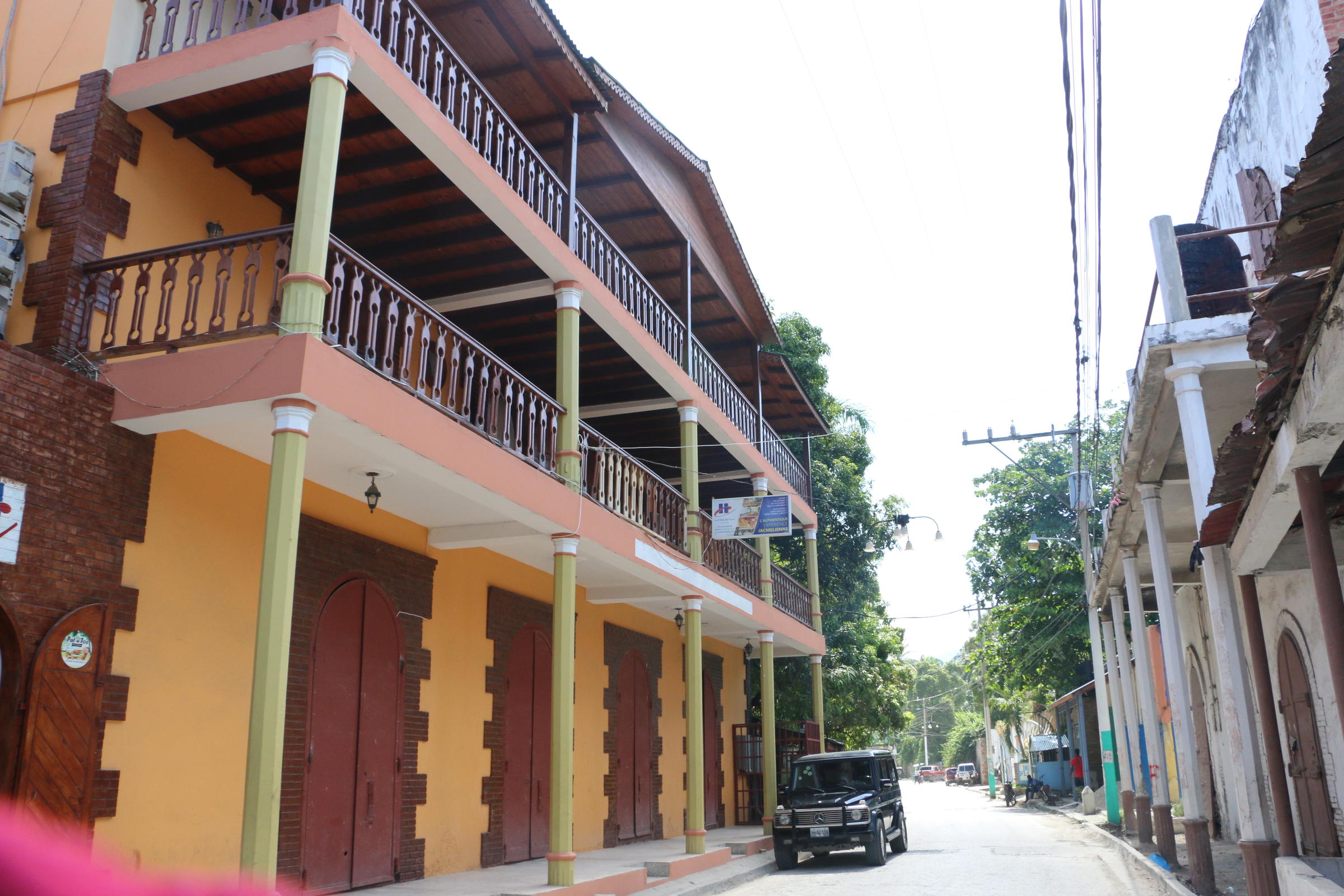
"I didn't ever intend to go to Haiti," he said. Nor did he want to. But after the earthquake, Vlad Laborde came a knocking."Well he brought me two bottles of Barbancourt," he said. (Barbancourt is Haitian rum.) "So it was over then, you know? And I said OK."Since then, John’s been to Haiti more than 10 times, visiting cities devastated by earthquakes and hurricanes."I know little teeny hardware details and woodwork details that I saw in Cap Haitian that are exactly copied in the French Quarter," he says. "Which means, he knows how to repair those details."
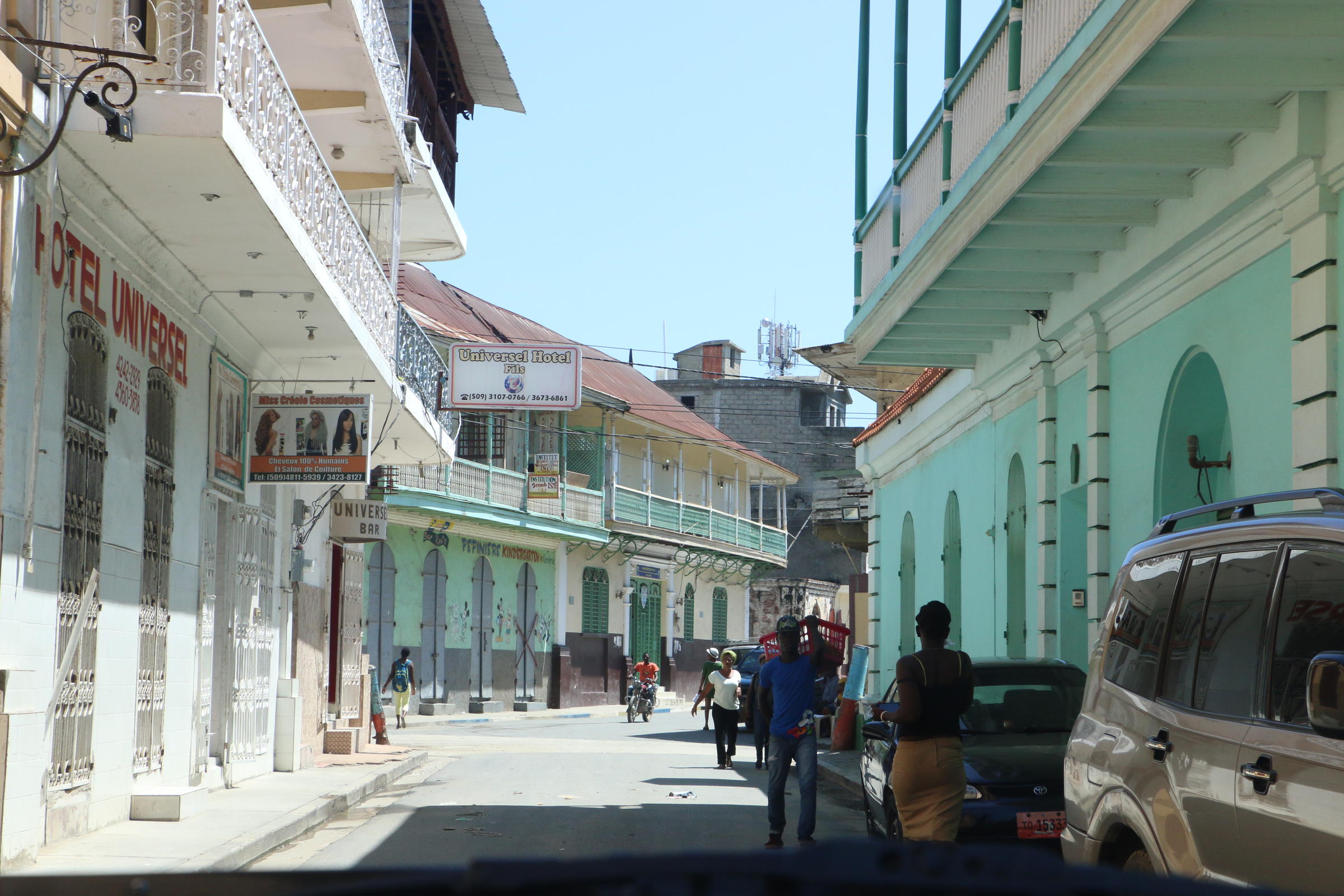
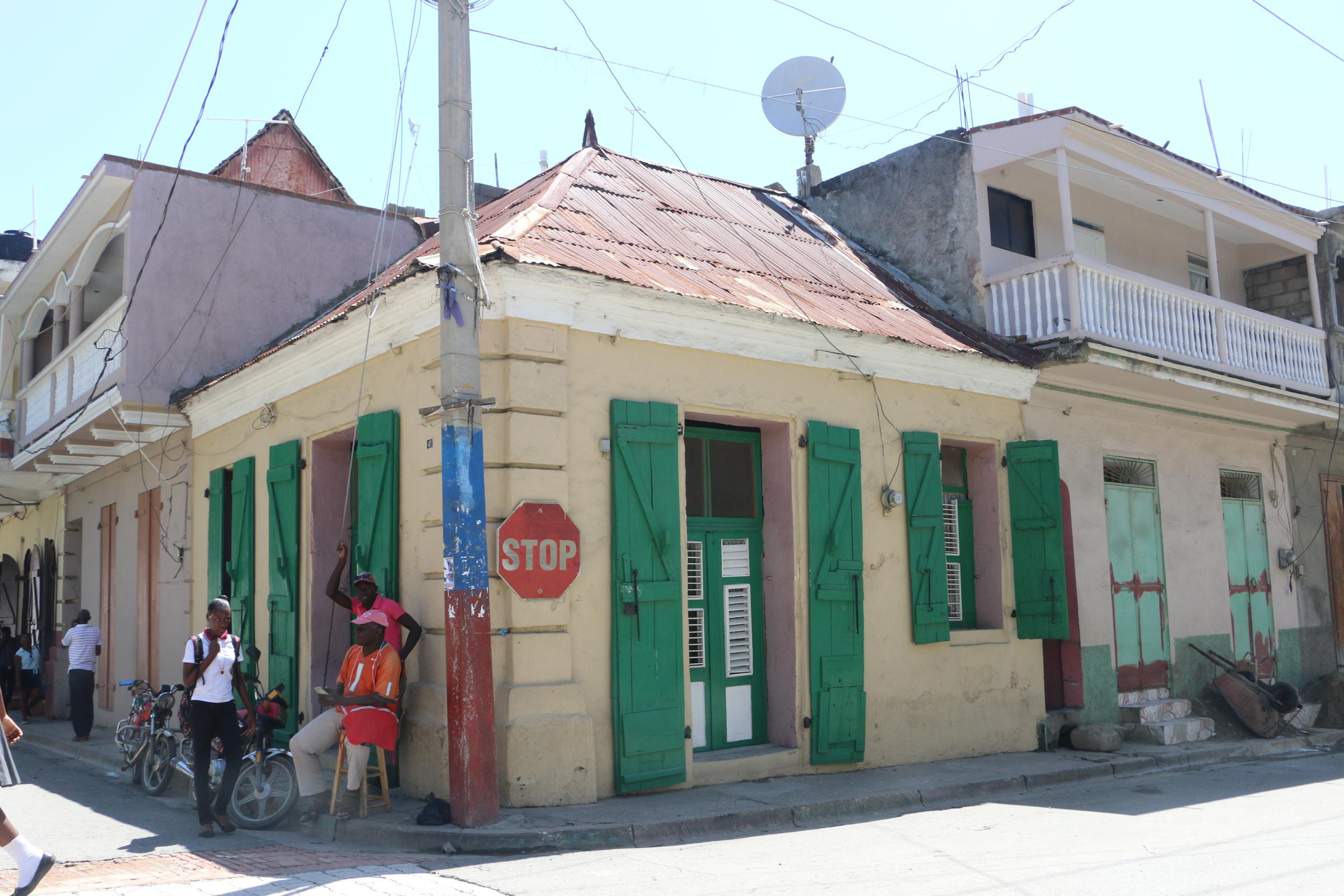
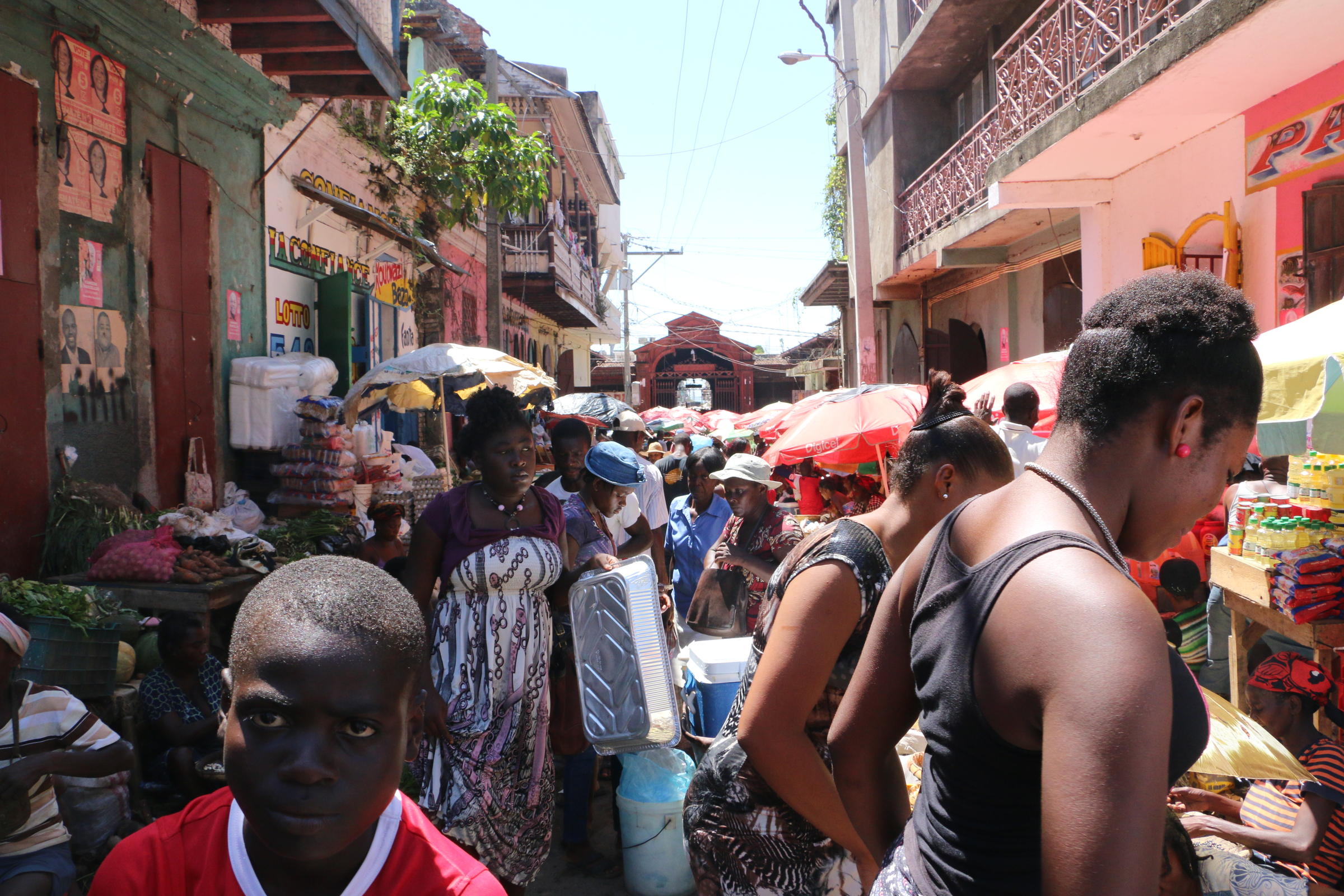
This is crucial, says Pierre Chauvin. He’s the former minister of tourism in Haiti, and says architecture in New Orleans is a huge attraction for tourists. Those walking tours of the Garden District, they’re all about ‘oohing and aahhing’ at old buildings. An artist named Paul Baruk knows this. "This is what I want Jacmel to look like. Nouvelle Orleans."Paul runs one of the many Carnival themed art galleries in Jacmel. When I told Paul where I was visiting from, that’s when she said she wished Jacmel looked like New Orleans. Or, even more like it.
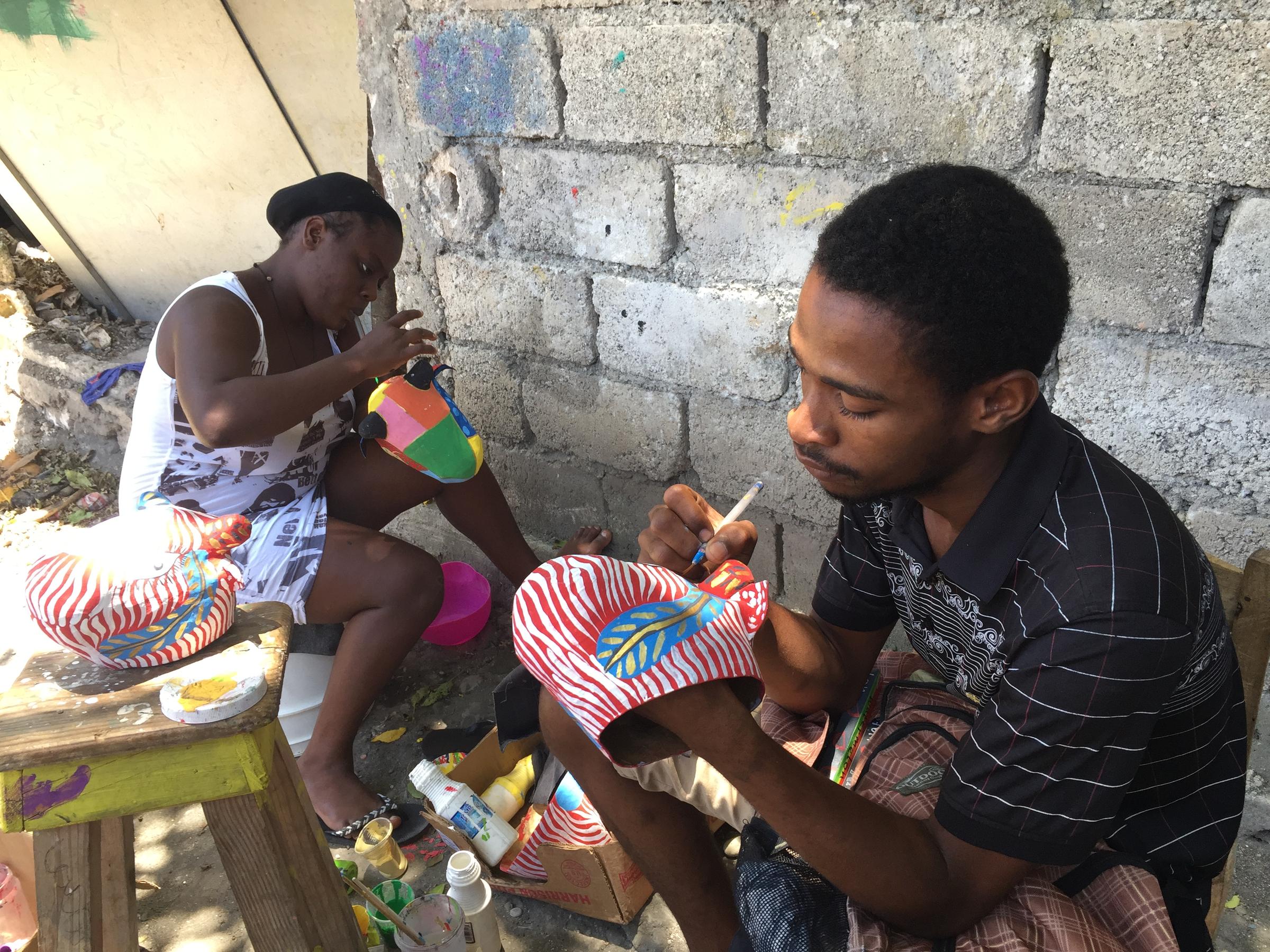
"Because New Orleans looks like Jacmel, but Jacmel is not well taken care of. New Orleans is well taken care of, you see. And that would bring tourism. That would bring a new life for the people here. And it’s really what we need. Why don’t you send us some tourism?" She laughed too, but she was serious. Like she was egging us on to share the wealth. Which is an interesting thought. Just because New Orleans can do this stuff, does that mean it should?Dennis Kelly, the American businessman who works part-time in Haiti. Says there’s no way New Orleans can be responsible for Haiti or Haiti responsible for New Orleans, "but what you can do is look at what's coming down the road and say what opportunities are there that I want to take advantage? So I would say that there are many opportunities for the city of New Orleans and the city of Jacmel, and others, to mutually benefit one another."Vladimir Laborde is all about the mutual benefit, and says an obvious opportunity here, is Mardi Gras. "Imagine the Miami Herald, the Times Picayune, and The New York Times: ‘New Orleans and Jacmel, Haiti, Share Carnival 2018.’"

He sees Mardi Gras as an overlapping tradition that could raise the big bucks to revitalize cities like Jacmel. And that these revenue streams will make communities more livable for Haitians, and more hospitable for tourists. But these are tricky words in New Orleans. There’s endless debate surrounding who’s actually benefitting from preservation and tourism efforts. There’s skepticism towards these projects; are they actually improving the quality of life for the New Orleanian, or the quality of experience for the visitor?These are some of the questions Haiti has to reckon with as it grows its tourism industry and preservation program. And both those things are important, not only for the economic boost, but that more existential fear of disappearing.Pierre Chauvin, the former minister of tourism, will never forget a conversation he once had with a European colleague. "He came to visit Haiti and after one week, we ask him how do you find the country? And he said ‘you know, I have come to realize that in Haiti, you are full of diamonds. The whole country is full of diamonds. But you know, diamonds are stones. They have to be polished. Yet in Haiti, you don't polish them at all.’ And he was talking about these old houses, and you know our nature, and everything else that we have...And certain things are really crumbling. And you cannot re-create them."Haiti’s former prime minister Michele Pierre Louis says it’s not just about tourism dollars, or physical structures. It’s about Haiti reclaiming its image. "It’s extremely important that little students, little pupils know that the country is not deductible to violence and misery and poverty. Because we don’t have just drug dealers and bad politicians! We have Haitians that are great, that are artists, that are creative, that live with dignity."
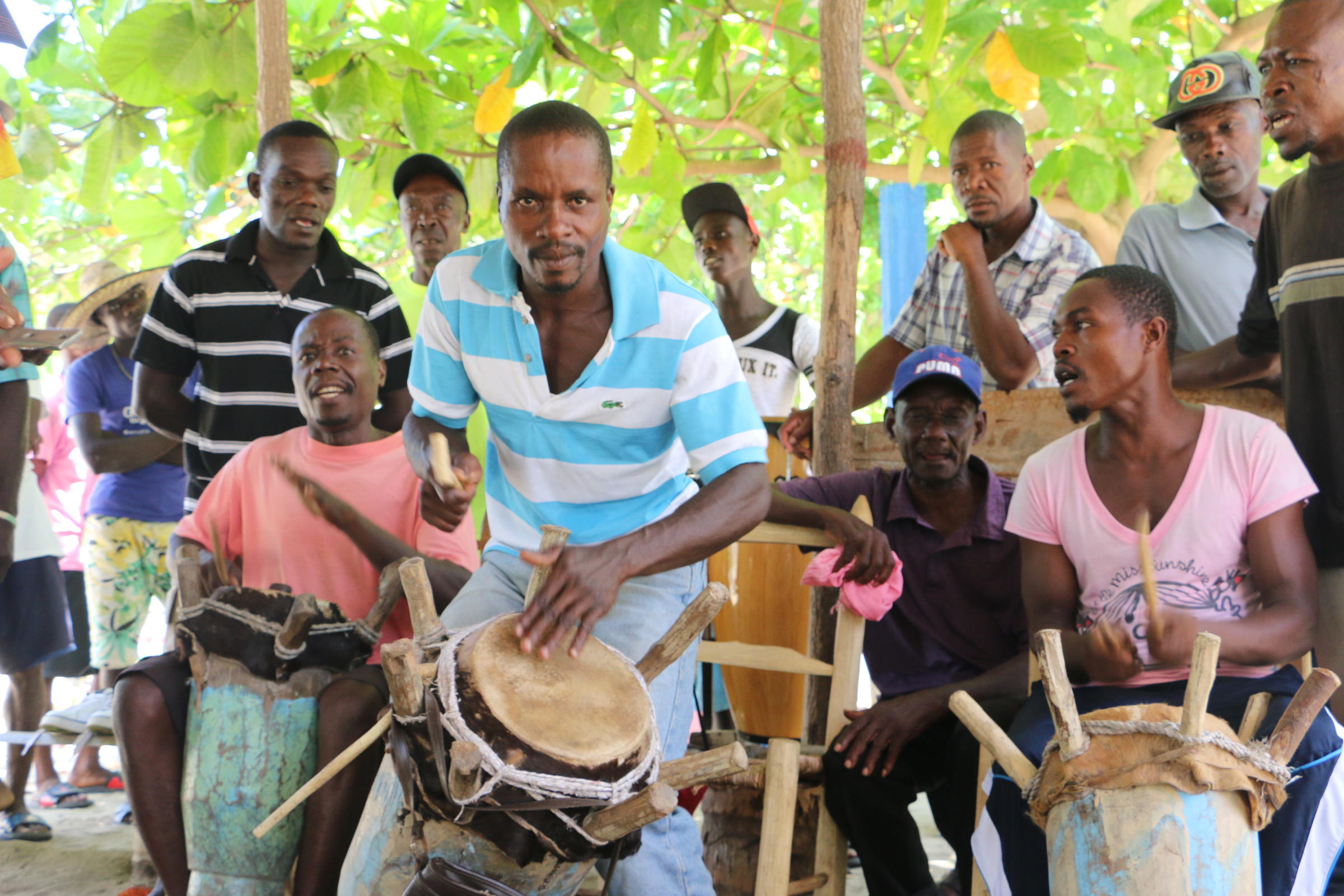
It’s a reminder that so much of what we love about New Orleans, the culture we package to the outside world, and profit off of, a lot of that we got from Haiti. So what can New Orleans do in return? Michele says stop looking backwards 200 years when you think of Haiti, and make some new memories. "That would be great! That a new generation creates a momentum for, I wouldn't say reconciliation, but creating a connection back! That’s a good utopia."When I got back to New Orleans, I took a walk in my own neighborhood in Midcity. It was a Sunday afternoon, and I saw a group of people standing around this now empty pedestal where a statue of Jefferson Davis once stood. The city removed this and three other confederate monuments in the spring of 2017. People took turns passing around a crappy PA system and climbing up onto the empty pedestal, sharing their visions of replacement statues. This is where I met Nic Aziz. "Looking forward I think we need to have monuments that reflect the true identity of the city. For me I think that identity is Haiti."

Nic is 26. His mom was born in Haiti, and he’s a first generation New Orleanian. "Many people do not realize all the contributions that Haiti has to this city. I think a lot of the issues that we see, whether it's violence or you know economic opportunity or whatever some of that is rooted in identity issues. And I think if you show people who they are and like where they come from, that can have an impact on where they go."We’ve heard about folks not visiting Haiti. But Nic is one New Orleanian that did, back in 2011. He was 20. "As soon as I got there I felt something like you just felt...it was one of the most unique feelings of my life."But it became more than that. He met family members he had previously only known on facebook. He played soccer and talked about Kobe Bryant with kids in the neighborhood he was staying in. He got made fun of for not speaking Kreyol...and that’s when Nic was like, yeah, you’re right, I wanna know Kreyol. "I had this very deep desire that like I want to find that side of myself more. Because like I said I don't speak Kreyol but like I have a Haitian mother and my grandfather is from Haiti but still at the same time I don't feel enough of that side of me."In a lot of ways he embodies the utopia the former prime minister Michelle Pierre Louis talked about -- the young generation returning to Haiti to dig further into their roots, and reignite an exchange. When Nic goes to Haiti and talks to Haitians about New Orleans, they learn how they’re tied to the States. That forms them, the way it forms him, Nic says. It’s about shaping his home. Both of his homes.
"There should definitely be like, so much more cultural connecting going between two cities," says Nic. "Just creating that channel to share that knowledge will allow both places, you know, really seeing the sides of its identity that you know really doesn't see and know yet."That’s why he sees the New Orleans Tricentennial as a perfect opportunity to move beyond the warm and fuzzy feelings the city has for Haiti, and formally acknowledge it as a key part of the city’s identity, past and present. And he’s got an idea for a new monument to replace the white confederate statues. Nic envisions a sculpture that celebrates one of the most iconic and meaningful traditions that Haiti gave to New Orleans: people second lining. Second lining has roots in West Africa, but in Haiti it became a celebration called Rara. It came to New Orleans from Haiti during the migration following the Revolution."Put a scene that people can obviously identify and resonate with because everybody in New Orleans knows a second second line, everybody loves second lining, that part of our culture," he says. "But then have a historical blurb by it that shows like, 'Oh wow, like I didn't know this came from Haiti. Wow.'"Epilogue: Same Same, But Different
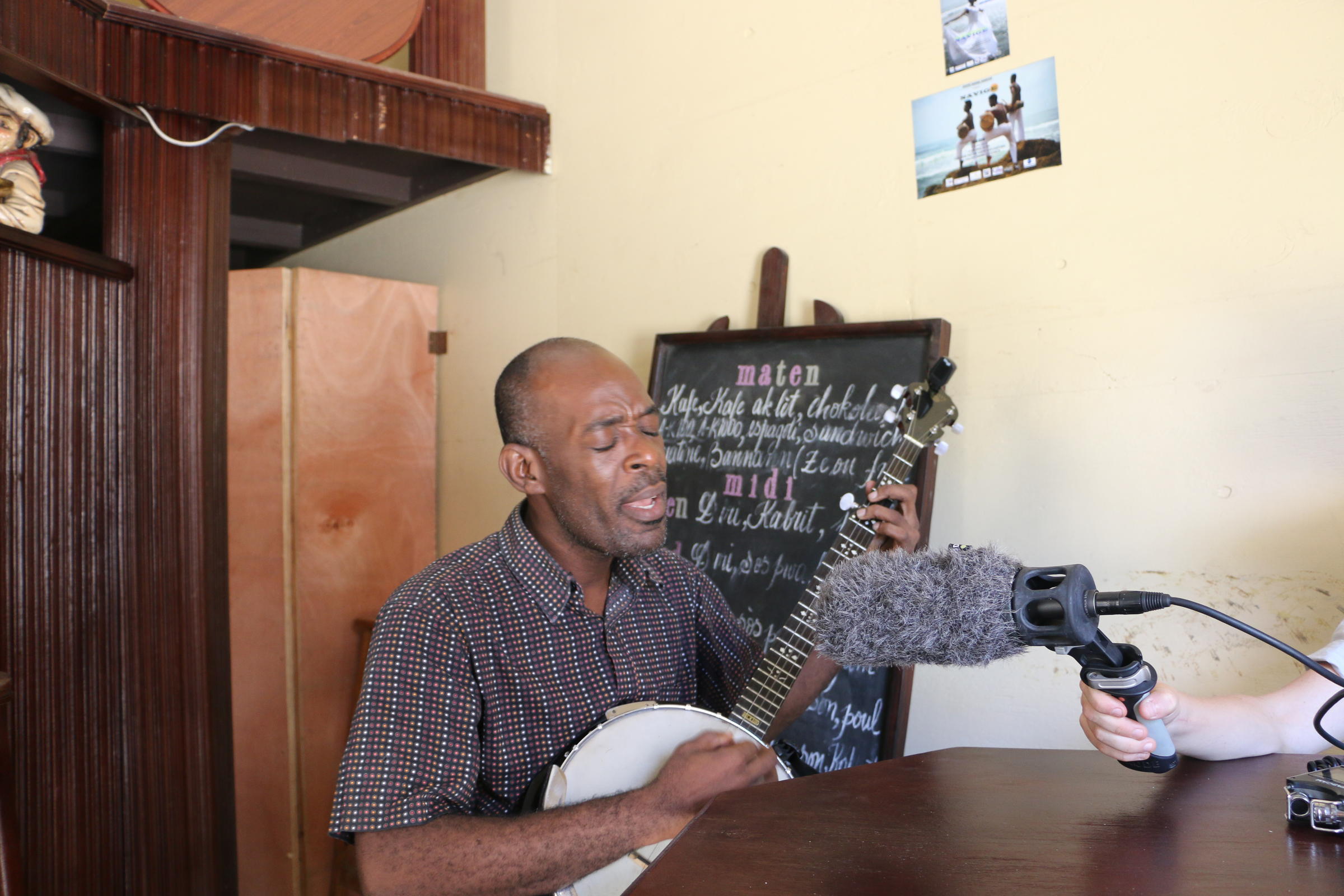
A banjo player named Pierre Ronnel Antoine sits in a little coffee shop around the corner from his apartment in Cap Haitien, with floor to ceiling shuttered doors that open out onto the busy street. He talks about his life as a musician in Haiti, about Jazz, and why he chose the banjo. He plays one of his favorite songs, a children’s song called "Panama M Tombe." It’s based on the Haitian proverb that says: When one’s hat falls, trouble is coming.The song reminded me of a a classic New Orleans tune called "Iko Iko" about two Mardi Gras Indian tribes that have a confrontation in the street. I play him the version by the Dixie Cups to play for Ronnel. "It sounds like Haitian music," he says and he starts humming along. "I thought it was a traditional Haitian song when I heard it. It’s the rhythm that does that. It’s almost the same music."It’s almost the same he says, not exactly, but almost. TriPod is a production of WWNO New Orleans Public Radio in collaboration with the Historic New Orleans Collection and the Midlo Center for New Orleans studies at UNO. This TriPod special was made possible with support from the New Orleans Center for the Gulf South at Tulane University through the Global South Fellowship program. Thanks to Evan Christopher for our theme music, and a special thanks to Bruce ‘Sunpie" Barnes for providing us with some of his original music that you heard in the program. Eve Abrams is the editor of TriPod. Molly Mitchell and Jess Dorman are TriPod's senior advisers, along with the rest of the Tripod editorial board Kevin Harrell, Connie Atkinson, Lee Leumas, Karen Leathem, Charles Chamberlain, Christina Bryant, and Christopher Harter. Special thanks to field Producer Wynne Muscatine Graham, fixer Andre Paultre, sound engineers Thomas Walsh and Peter Klingelhofer, and TriPod interns Ann Hackett, Tori Bush, and Michael Ceraso. Additional thanks to Alexis Erkert and Ben Depp, Nicole Phillips, Jacques Bartoli, Maryse Dejean, Mehdi Chalmers, Ned Sublette, Elektra Carras, Zach Niles, Rolando Bunster, Gregory Mevs, The ASB Hospital in Borgne, Haiti, The George Family in Cap Haitien, Viki Merrik, Maggie Herrman, Sanga Tabb, and Marina Magloire.By: Laine Kaplan-Levenson for wwno.org | October 27, 2017
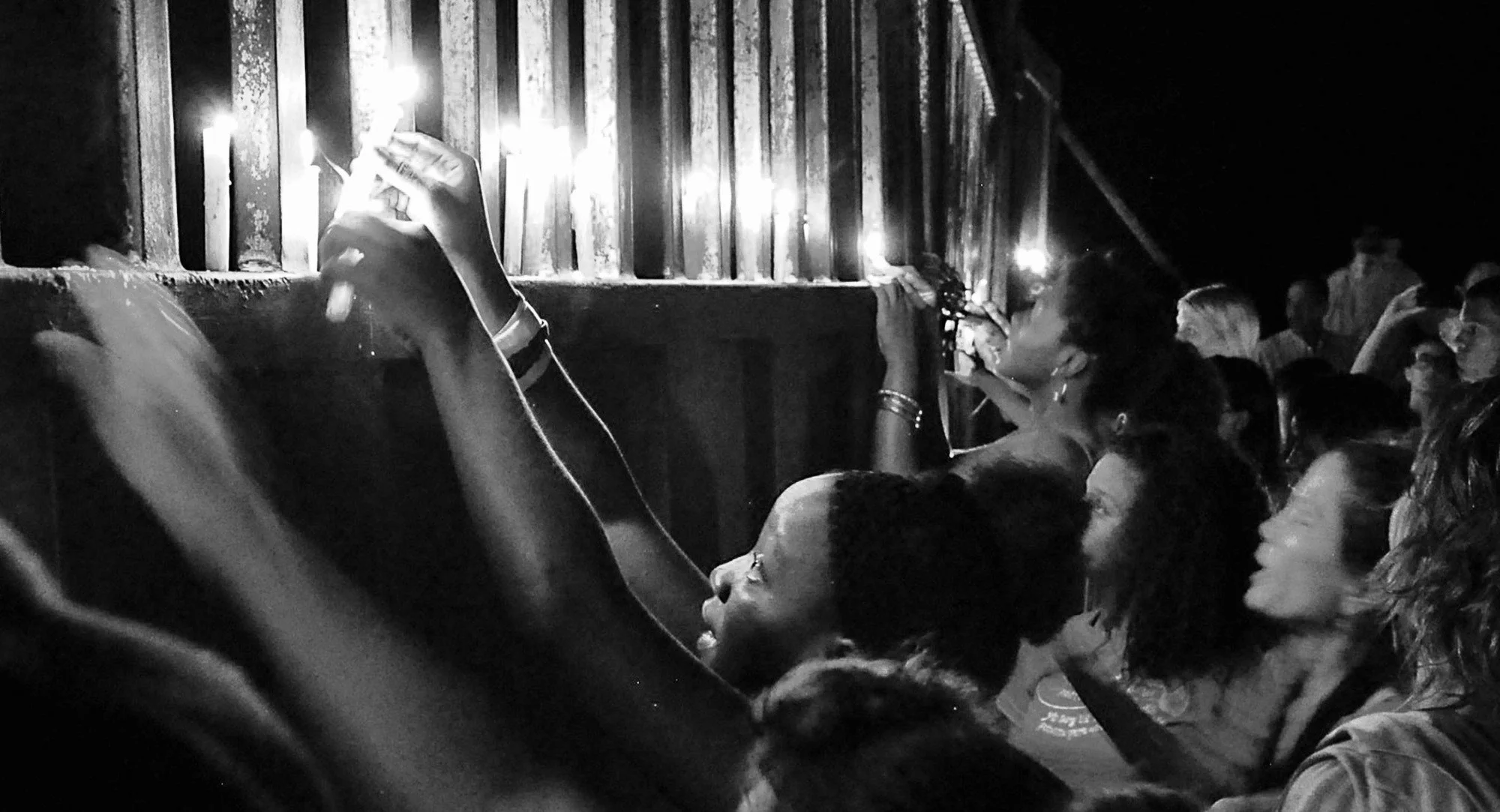
80 years after the massacre that changed the Dominican-Haitian border, an effort to heal
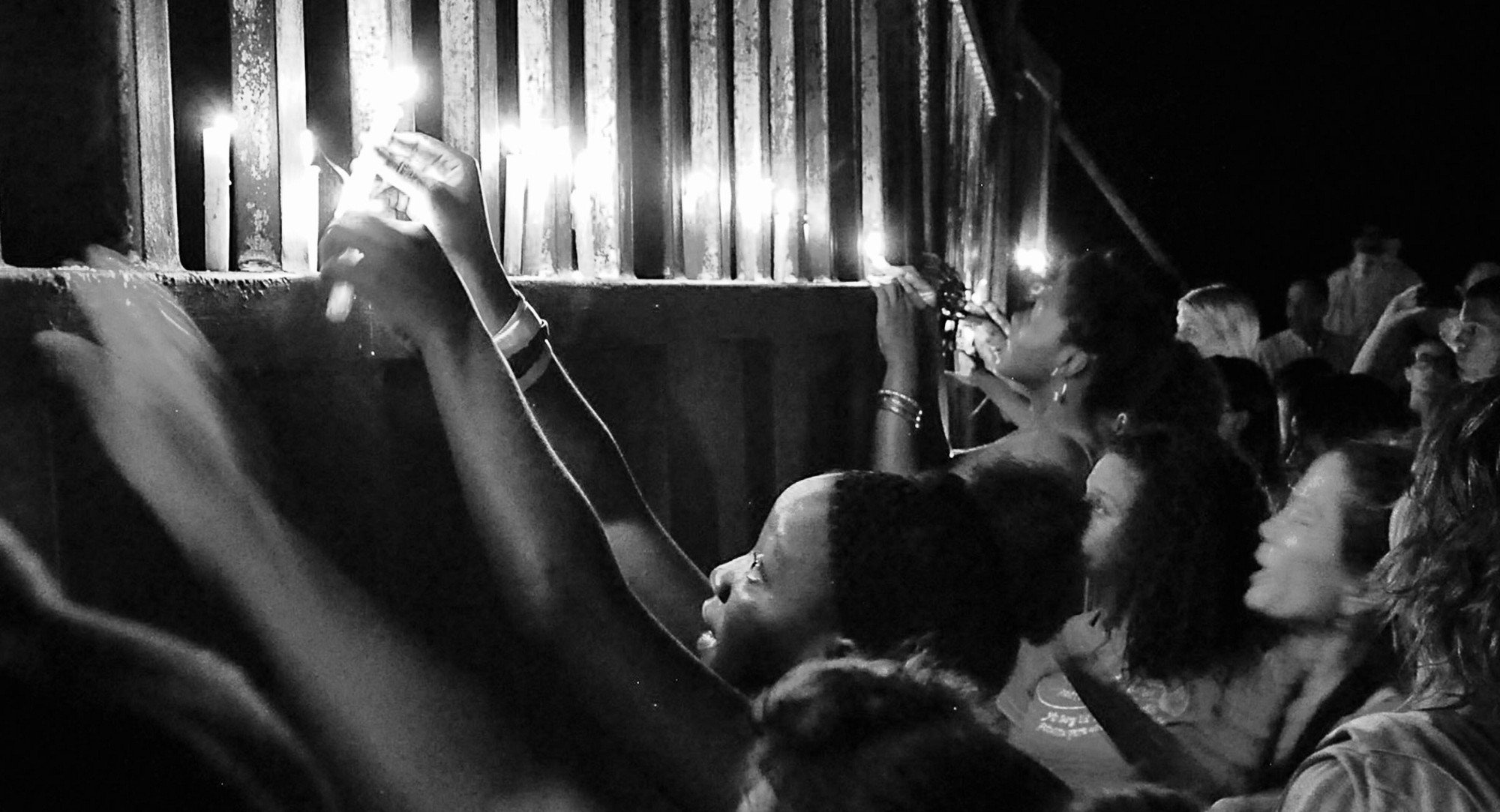
Love, art and respect are the three words that Cynthia Carrion, 36, believes encompass the goal of the collective Border of Lights, a group that is looking reconcile relationships at the fraught border of the Dominican Republic and Haiti.
Earlier this month, Carrion boarded a plane to join dozens of organizers, educators, artists and locals on the northern side of the Haiti-Dominican Republic border to commemorate the 80th Anniversary of the 1937 massacre that targeted Haitians on the border of the Dominican Republic and Haiti. The acts were carried out under the orders of Dominican dictator Rafael L. Trujillo.
The number of victims as a result of “Masacre de Perejil,” is still unknown. Edward Paulino, a professor of global history at John Jay College in New York City and author of “Dividing Hispaniola: The Dominican Republic’s Border Campaign Against Haiti” estimates approximately 15,000 lives were lost.
And the effects went beyond the loss of life. It sought to end a culture of collaboration. The porousness among the border communities didn’t fit Trujillo’s ultranationalist views for the Dominican Republic.
“Since [the massacre] you had this stark difference of what side you were on and what that meant,” says Carrion.
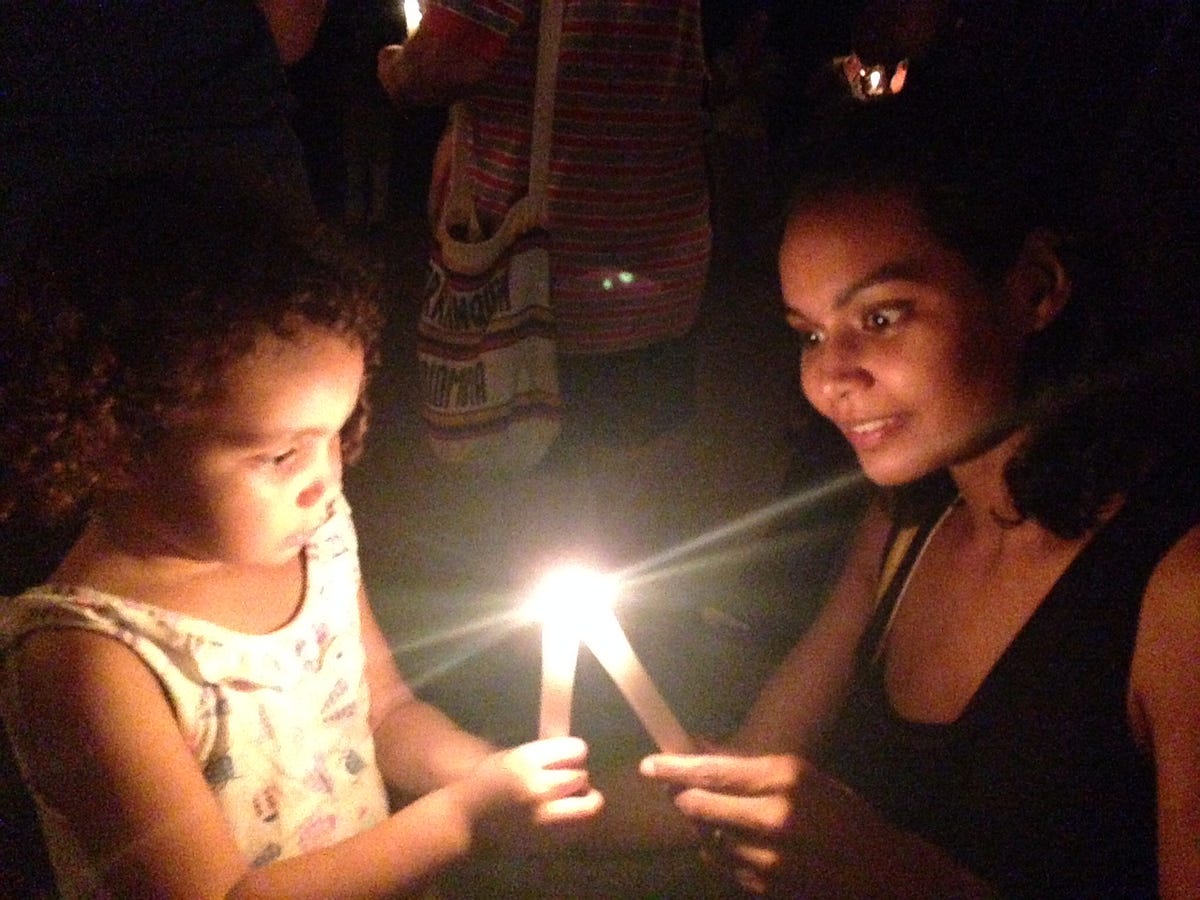
“What Border of Lights means to me now is this community of amazing and courageous people, both in the [Dominican Republic] and in Haiti, and around the world, but especially in the diaspora, who against all odds are still holding a light to this tragedy and this truth, which isn’t that easy,” she says.
The project started from a vision that renowned author Julia Alvarez shared at an event five years ago in New York City. Carrion approached Alvarez to get involved.
Every night for the next few months, organizers gathered by Carrion and Paulino would have conference calls to help plan an event surrounding the 75th anniversary.
At first, action around recognizing the anniversary was marked with skepticism.
“People would come up to us and say some of them would say ‘Why are you trying to unify the island?’ or this ultra-nationalistic kind of fear of what that meant, to be able to talk out loud, or to say that this occurred,” says Carrion.
As a mother of two and a proud Dominicana, it was important to Carrion to continue this work. “I want for [my daughters] to understand that they’re part of the shared struggle and shared beauty,”
Border of Lights kicks off every year with two masses followed by two processions and candle lightings happening in two places at the same time: one in the Dominican town of Dajabon, the other in the Haitian town of Ouanaminthe.
During the vigils, participants stand across from another, divided by the river that is between the two countries. and view each other from the distance.
Carrion has been present during four of the past five years (the exception was when she gave birth to her youngest daughter, Maya Soleil, on the evening of the procession two years ago).
For the 80th Anniversary, the mission is expanding. The group is building a curriculum to be tested out in 10 schools and pushing for the date to be recognized on both the calendar of the Dominican Republic and Haiti as a Day of Remembrance. In Dajabon, there is a mural to commemorate the massacre.
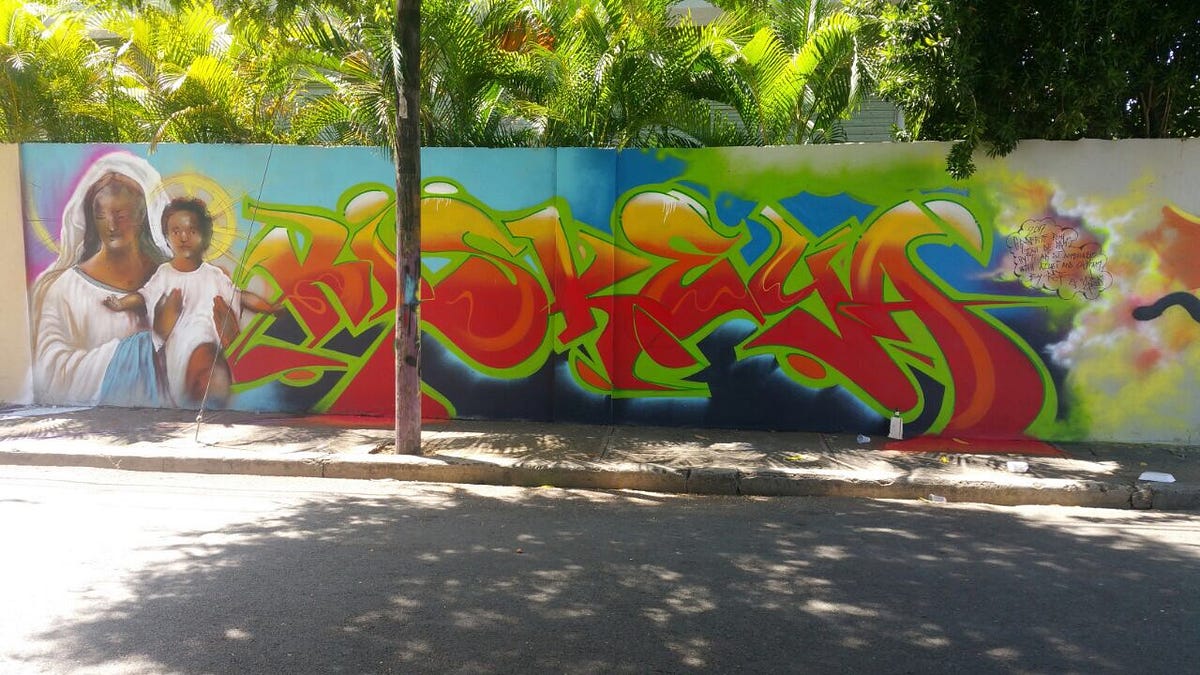
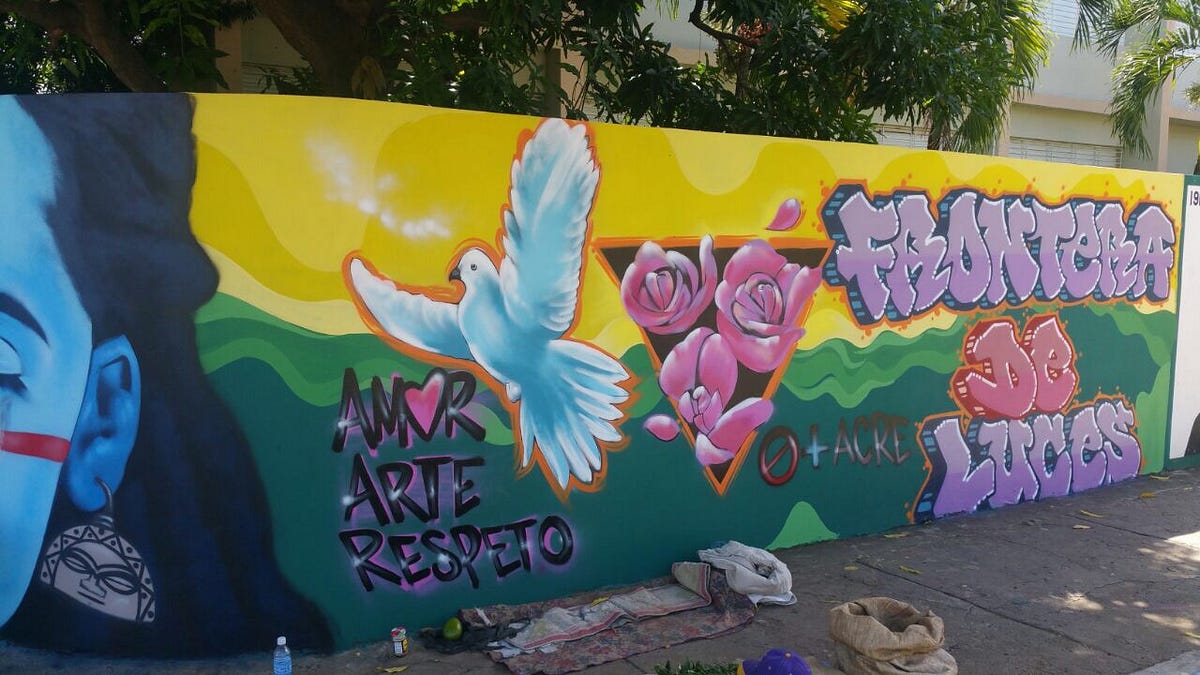
Organizing is made more difficult by strict border laws. This is in part due to sentences passed in 2015, one that stripped Dominicans of Haitian descent of their citizenship, followed by another sentence that sought to regulate immigration.
Carrion says she can’t help but find parallels between the struggle at the Haiti-Dominican Republic border and the politicization of the United States-Mexico border.
Borders have been regarded as a place for violence internationally, says Carrion, but she believes that can change.
We want “not just pay respect to [the massacre] but to also highlight collaboration among the [countries], you see it among the younger generation, people want to have stronger relationships with each other.”
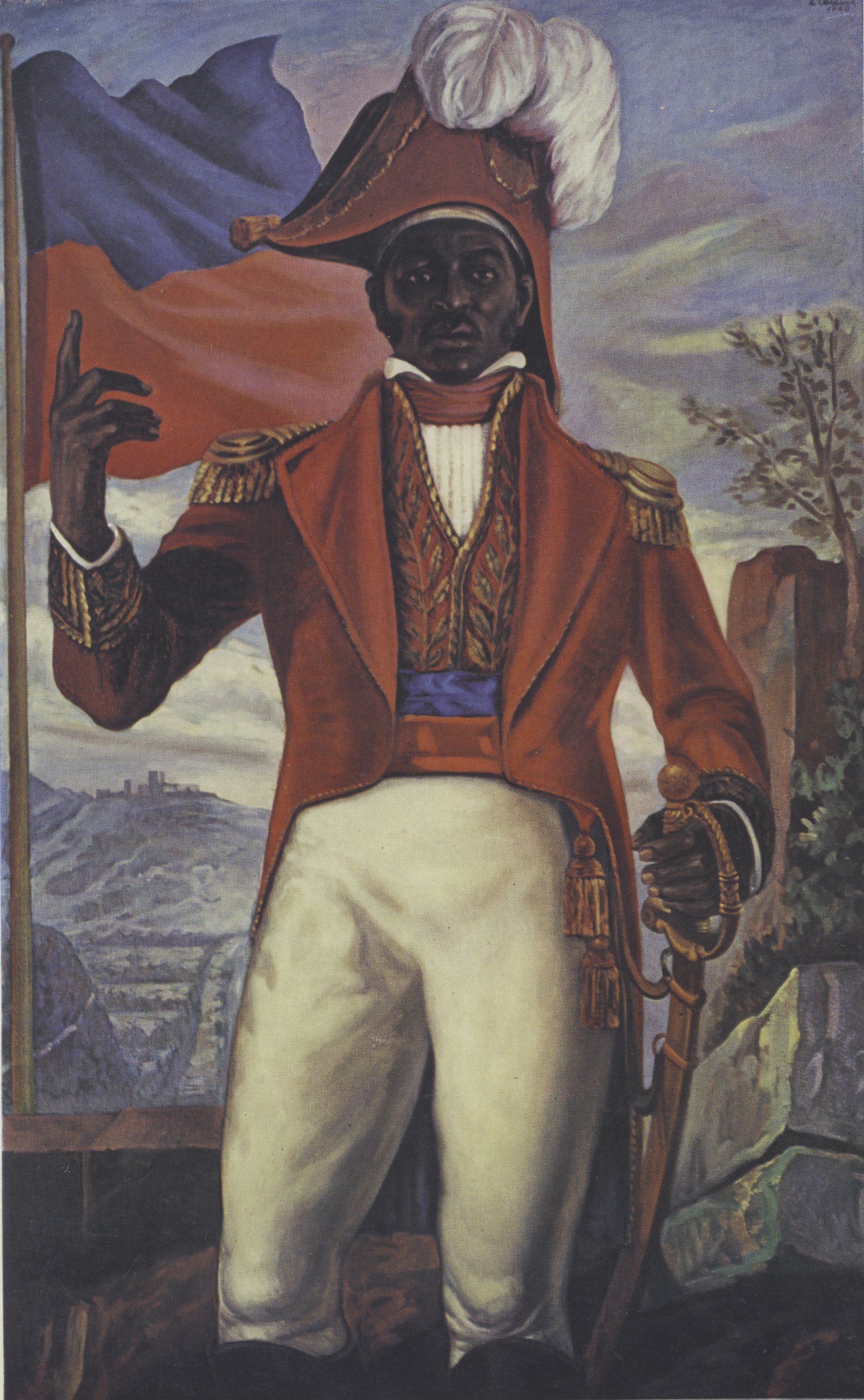
Haitian National Holiday: October 17th -Death of Jean-Jacques Dessaline
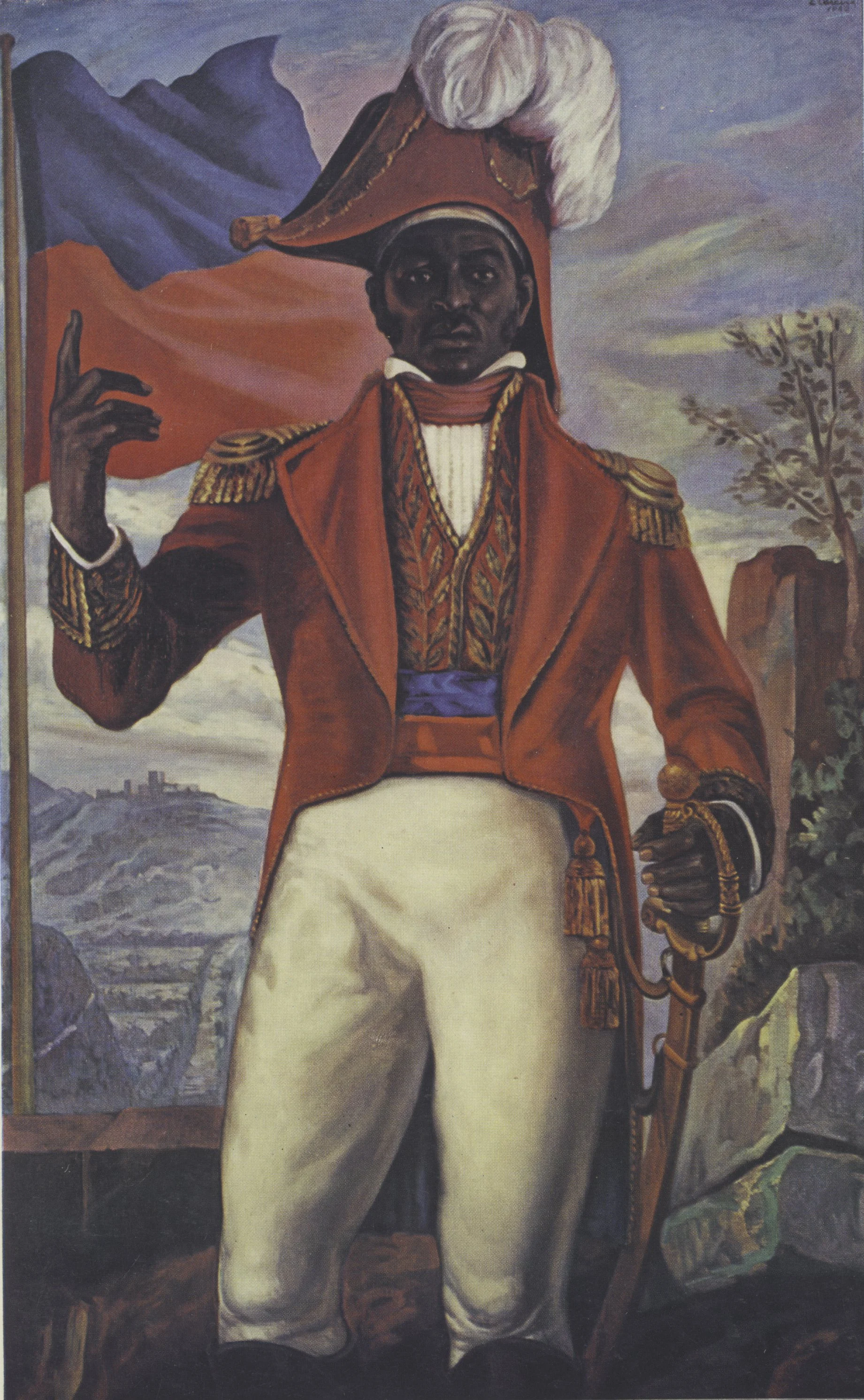
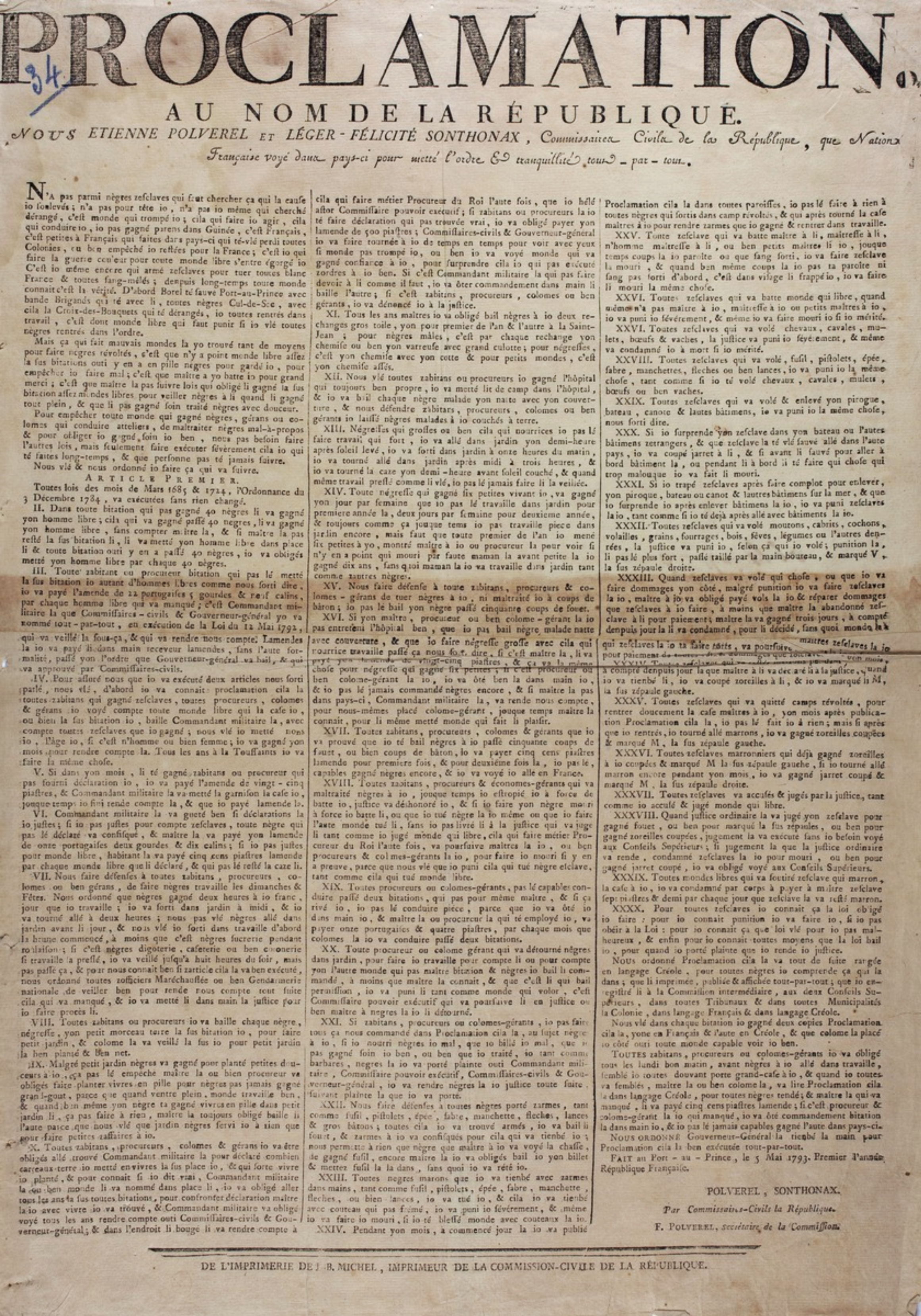

"We have dared to be free. Let us dare to be so by ourselves and for ourselves."— Jean-Jacques Dessalines
The death of Jean-Jacques Dessaline is a public holiday in Haiti. Haiti dignifies no other individual with an official national holiday. He is considered the “Père de la Patrie.”Born to Congolese parents, Dessalines was born on a plantation in an area called Cormiers, (today, Cormier), in the hills near the town of Grande Rivière du Nord 25 kms from Cap-Haitien. That plantation belonged to a French man named Duclos. The young man was ultimately given the name of Jacques Duclos. There isn’t much history about his parents, but there have been mentions of a beloved aunt, Victoria Montou, that he affectionately called “Toya.” At the age of 30 or so, he would be sold off on the market and be bought by a free black man named Dessalines, at which point he changed his name from Jacques Duclos to Jean Jacques Dessalines. He worked as a field hand for the black master until 1791, when he joined the slave rebellion that broke out in the colony amid the turmoil caused by the French Revolution.Upon joining the slave revolt that would ultimately lead to independence, Jean-Jacques followed the example of early band leaders, Boukman, Jean François and Biassou. He became a lieutenant in the Army of Jean François. He followed Jean François when he lent his services to the Royal majesty of Spain. There, he met Toussaint Bréda, who we would later come to know as Toussaint L' Ouverture who himself, was climbing the ranks and gaining notoriety for his successive brilliant victories against forces far superior to his. When the French Republic proclaimed freedom for all slaves, Dessalines followed Toussaint who rallied to the French flag in order to fight the armies of the Spanish and British crowns.Unable to read or write, Dessalines was nonetheless a quick study under L’Overture earning the nickname “the Tiger” for his fury in battle. In 1794 Dessalines’s military skill and leadership was vital to L’Overture’s success in capturing the Spanish-controlled eastern half of the island, and in return, L’Overture made him governor of the south.For a brief period of time after L’Overture’s capture in 1802 Dessalines appeared to be siding with the French, but the move was nothing more than a ruse designed to trick the French into trusting Dessalines so that he could regroup the insurgents and continue the fight for independence. It was successful. They expelled the French from Saint-Domingue, and on January 1, 1804, Dessalines, as governor-general, proclaimed the entire island of Hispaniola an independent country under the Arawak-derived name Haiti.Independence, however, did not bring peace, and from January 1804 until his death two years later, Dessalines “governed with terror.” Like L’Overture, Dessalines had himself appointed governor “for life.” The following September , emulating Napoleon, he adopted the title of emperor as Jacques I—and crowning his wife, Claire-Heureuse, empress. Fearing a French resurgence and the reinstatement of slavery that would accompany it, he ordered the massacre of approximately 5,000 of the island’s white men, women, and children declaring “I have saved my country. I have avenged America.” It was a move that two of Dessalines most influential generals, Alexandre Pétion and Henri Christophe, could not countenance and one that spoke to the growing political instability of the new government.On October 17, 1806, Dessalines met a violent death at the hands of his own lieutenants when he was ambushed; his body dragged through the streets before it was dismembered.Jean Jacques Dessalines was by all accounts a fearless soldier, a formidable general, great strategist, ruthless leader and unforgiving commander. However, most importantly, he was a man who fought for something he believed in. He fought for something bigger than just him. He fought for freedom.Sources: (1) "Jean-Jacques Dessalines: Demon, Demigod, and Everything in Between" by Lindsay J. Twa; (2) Blackpast.org "Dessalines, Jean-Jacques (1758-1806)" by Deborah McNally; (3) "Death of Dessalines Remembered in Haiti" by Aglobalworld.com; (4) "Jean Jacques Dessaline Emperor of Haiti by the Editors of the Encyclopedia Britannica