


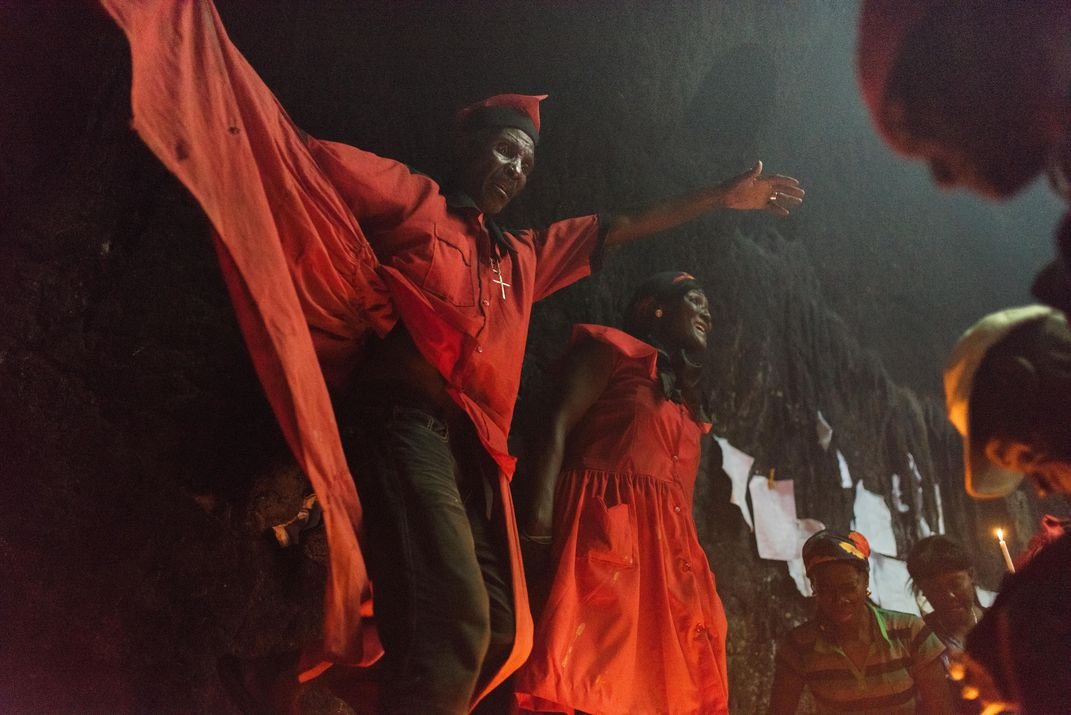
Ruling interests often saw it as a threat. It wasn’t just the French slave masters, who condemned practitioners to the whip and branding iron, and priests to death, as they sought to put down slave rebellions. The black military leaders and elites who led Haiti after they ejected the French in late 1803 also tried to suppress the faith, mandating imprisonment and fines for participating in Vodou ceremonies and working at times with the Catholic Church to eradicate “superstition.” As historian Kate Ramsey has written, these leaders felt they had to “assert Haiti’s ‘civilization’ and ‘progress’ in the face of the republic’s diplomatic isolation and exclusion following independence.”This sense of Vodou as a primitive practice also shaped American impressions of Haiti. The U.S. military occupied the country from 1915 to 1934, during a formative period in the U.S. empire-building in Latin America and Asia. Marines who served on the island, and journalists who covered them, returned with lurid tales of what they called “voodoo” and characterized as black magic. Pop-culture distortions, in both books and films, weren’t far behind. In 1932, the year after Bela Lugosi starred in Dracula, he played an evil sorcerer in Haiti named “Murder” Legendre in White Zombie.
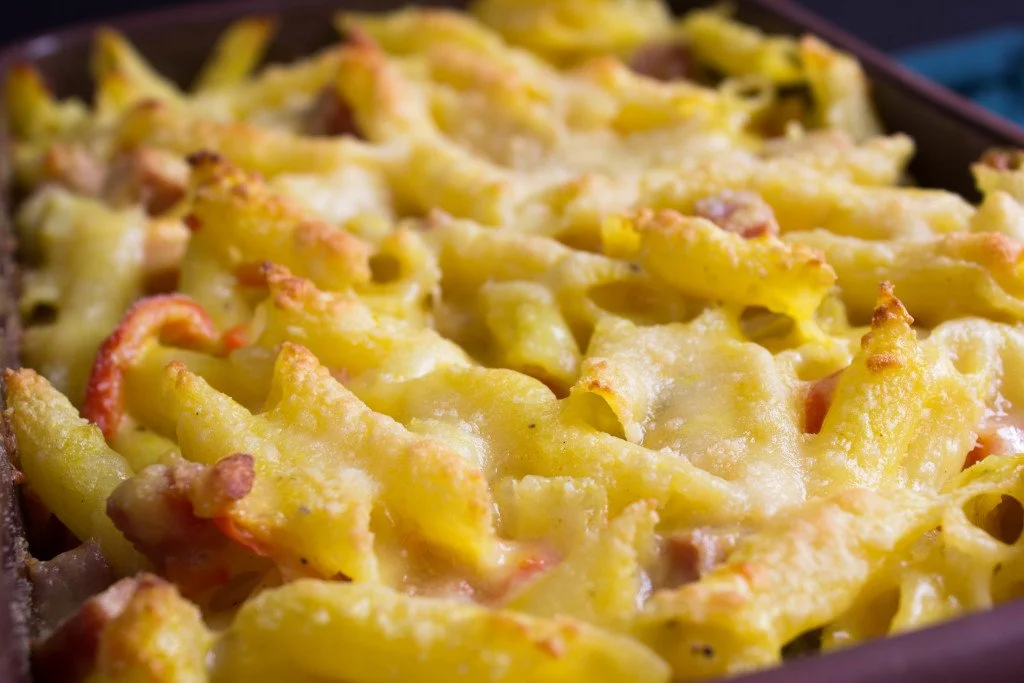
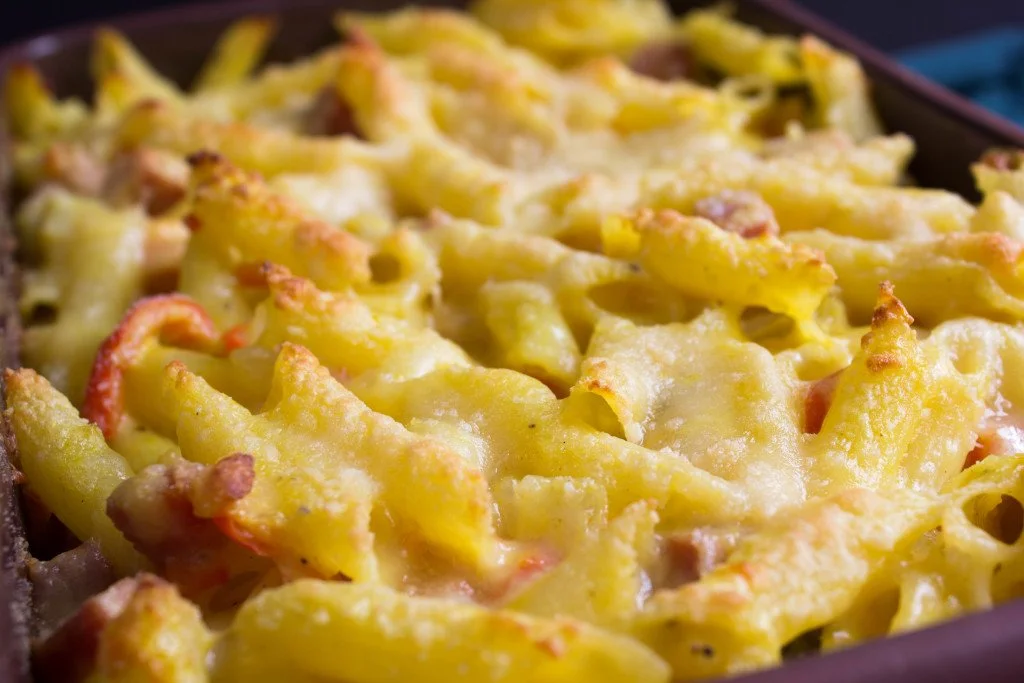
Macaroni Au Gratin

INGREDIENTS:
DIRECTIONS:
Bring a large pot of water to boil over high heat. Add the macaroni and let it cook until soft yet firm. 1. Add the onions and Maggi chicken broth. 2. Reduce heat and keep stirring occasionally. 3. Stir in the Velveeta cheese, until melted. 4. Keep stirring constantly to avoid the cheese from sticking to the bottom. 5. Add butter and Parmesan cheese. 6. Pour in the carnation milk and stir. 7. Remove from heat and pour into a greased baking sheet. 8. Preheat oven to 300 degrees. 9. Place in oven and bake for an hour and 20mins
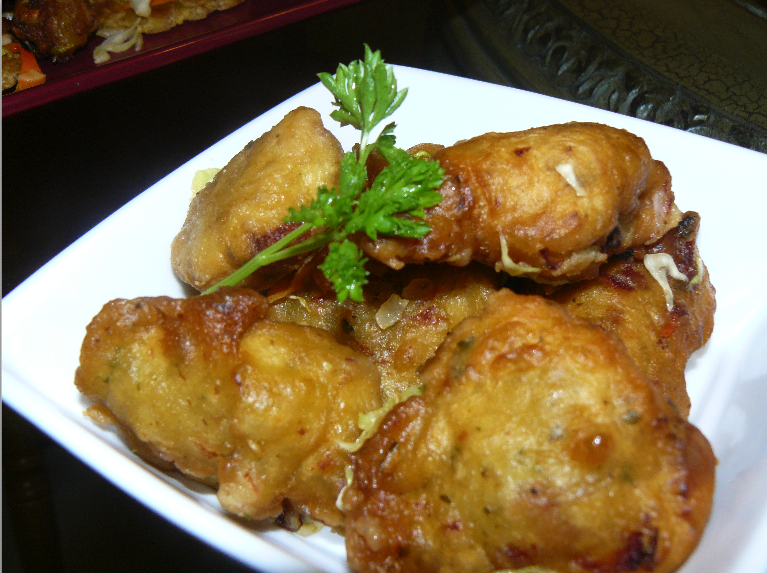
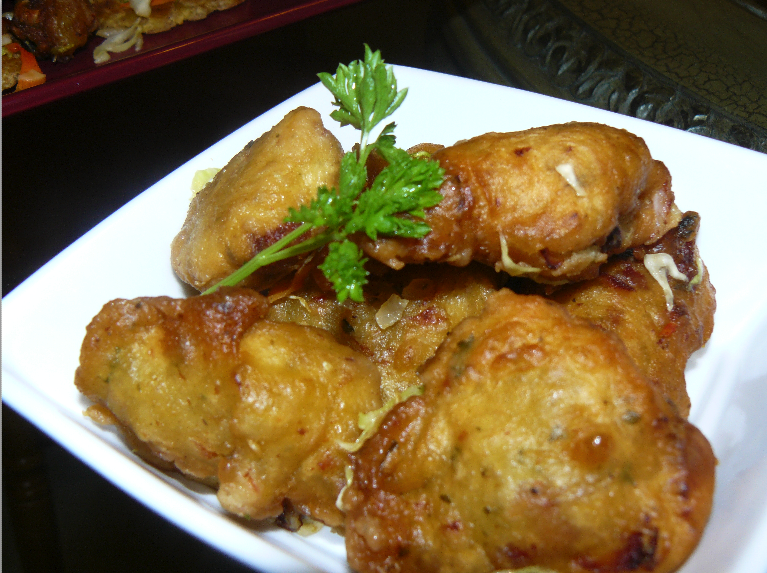
Marinade (Fritters)
 INGREDIENTS: 1 shallot, minced 1/2 onion, chopped 1 garlic clove, crushed 1 scallion, chopped 2 cups of water 1 tbsp of Adobo 1 tsp of black pepper 2 tsp of hot sauce 1 tsp of parsley 2 eggs 2 tbsp of baking soda 1 cup of flour 1/2 cup of olive oil
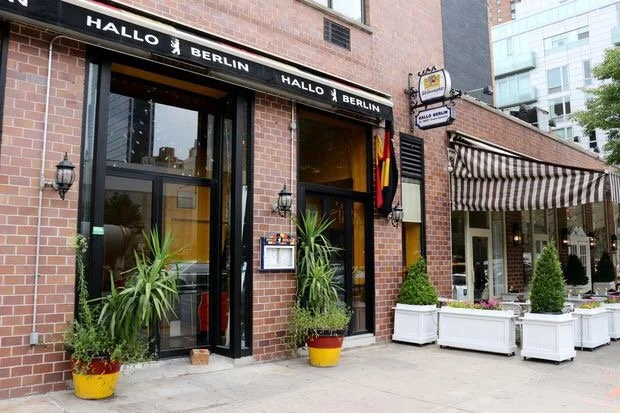
Manhattan's First French-Creole Restaurant Opening on 10th Ave., Owner Says
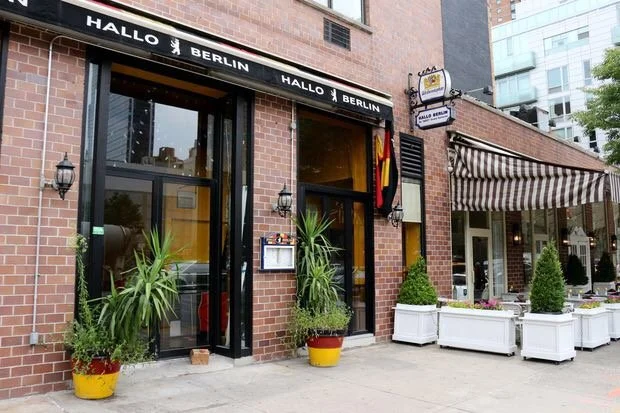
HELL'S KITCHEN — An upscale French-Creole restaurant being touted as the first of its kind in Manhattan is coming to 10th Avenue later this year.Le Privé will open its doors at 626 10th Ave., between West 44th and 45th streets, this fall, owner and operator Sanjay Laforest told DNAinfo New York.“We’re basically trying to do something that’s never been done,” said Laforest, whose father hails from Haiti and used to work as a chef. “There are Haitian restaurants, there are Guadeloupan restaurants… but they’re not offering food in the way I’m going to offer [it].”Laforest, who runs a marketing and consulting company called Privé Group, said he researched French and Creole-influenced restaurants in New York City and in France and discovered there was “no [French-Creole] concept” like the one he plans to open on 10th Avenue.“Le Privé honors the savory blends of Creole cuisine; it articulates its French colonial backdrop through reimagined dishes,” read a draft of a write-up he plans to circulate about his eatery.A tentative menu filed with Community Board 4 includes dishes like a conch stew with artichokes, sundried wild mushrooms and saffron basmati called Lambi à la Créole; slow-roasted pork shoulder with fava bean risotto and Bordelaise sauce called Conchon Rôti; and squid ink linguine with sauteed shrimp, mussels, clams, spicy salami calabrese and red chilies.Laforest flew in a chef from France to devise the menu, which is still in the works, he noted.The space was formerly home to the German restaurant Hallo Berlin, which announced in June that it had permanently closed.Its owners didn’t respond to requests for comment.Le Privé is expected to open in November, Laforest said.By Maya Rajamani | August 2017
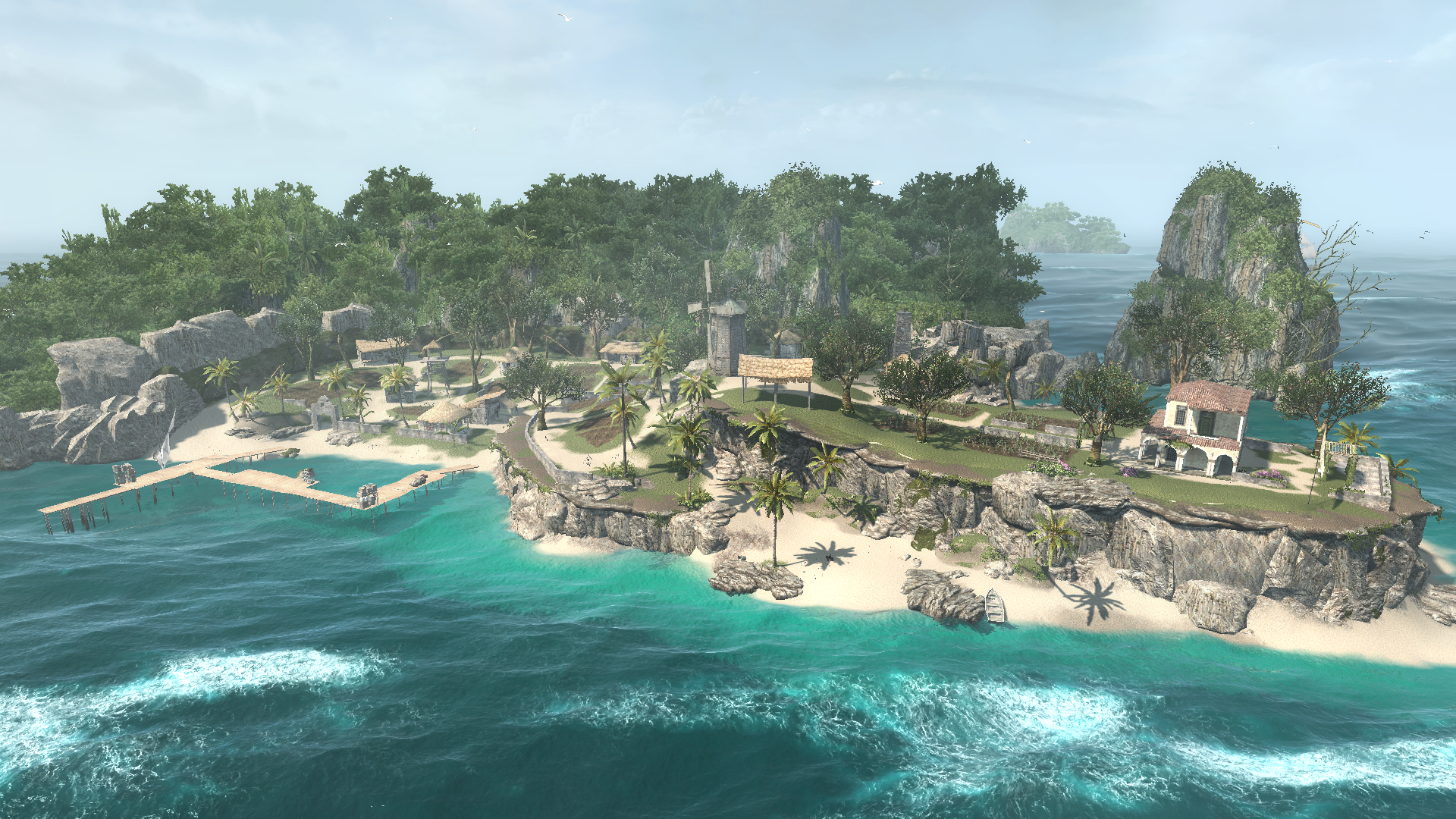
DID YOU KNOW: THAT ÎLE DE LA TORTUE IS ALSO FEATURED IN THE ASSASSIN'S CREED VIDEO GAME SERIES?
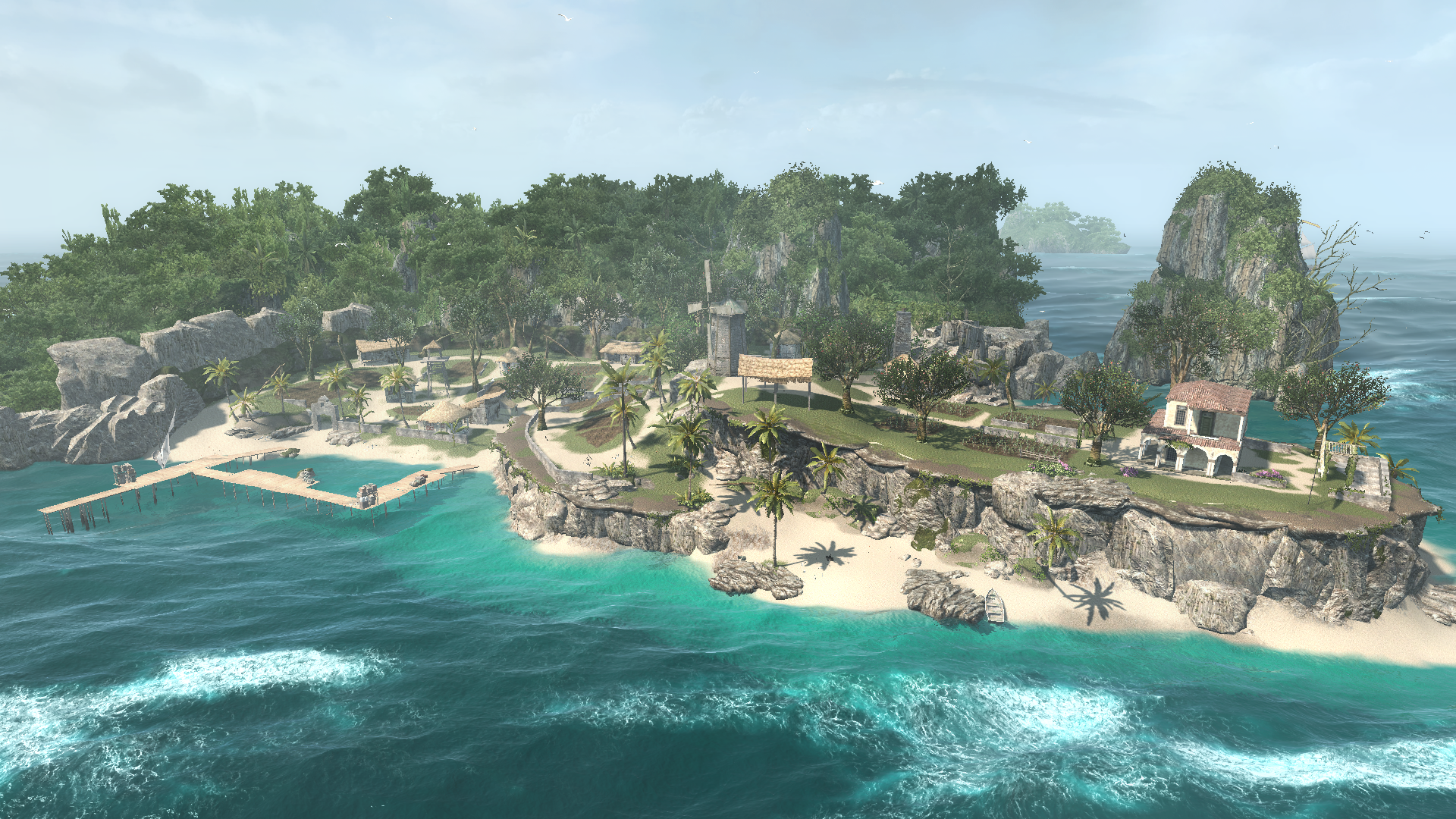
Tortuga (a/k/a Île de la Tortue)
Tortuga is an island in the Caribbean, north of Hispaniola. During the early 18th century, it was the site of a sizable sugar plantation owned by the Beckford Estate.Sometime during the 1710s it was raided by the pirate Edward Kenway, who claimed the contents of its warehouse. Later, the island's manor was used as a base by the head of a brutal slave trafficking network, until Kenway eliminated him as part of an assassination contract.[1] Two decades later, in the mid-1730s, the plantation was raided once again, this time by Adéwalé, an Assassin and Kenway's former quartermaster, who had come to free the plantation's slaves.[2]
References
- ↑ Assassin's Creed IV: Black Flag
- ↑ Assassin's Creed IV: Black Flag - Freedom Cry

DID YOU KNOW: ÎLE-A-VACHE IS FEATURED IN THE ASSASSIN'S CREED VIDEO GAME SERIES
Île à Vache
Île à Vache is a Caribbean island located in the Baie de Cayes, just south of Haiti. During the Golden Age of Piracy, it served as a French trading post.During his time in the West Indies, the pirate Edward Kenway visited the island to accept two assassination contracts via pigeon coop. He later returned to the island in 1721 with the Assassin Mentor Ah Tabai, Adéwalé, and his new quartermaster Anne Bonny, to begin his search for his first major assassination target, Woodes Rogers. Besides a harbormaster's station, the island was also home to a tavern, named "Vino A Vache".
Trivia
- Île á Vache translates to Cow Island. True to the name, several cows can be seen freely roaming about the island.
Reference
- Assassin's Creed IV: Black Flag
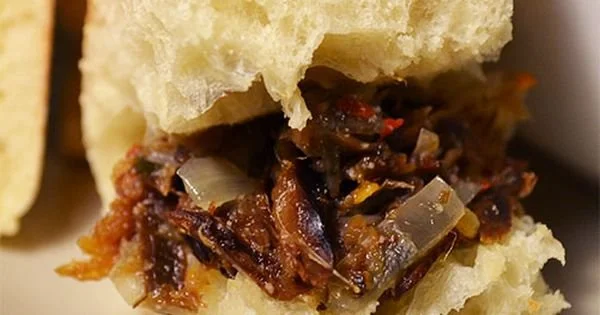
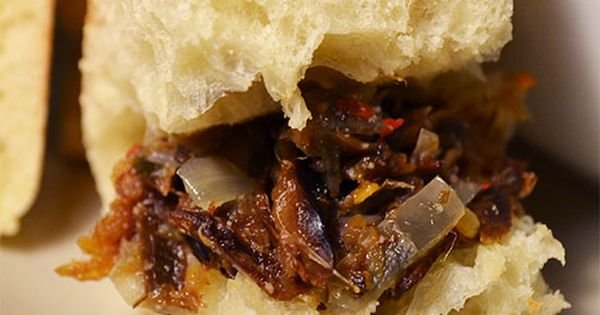
Chiktay Aran So (Smoked Herring Chiquetaille)

This dish needs to start being prepared at least one day in advance.Serves : 3
Ingredients:
- 1/2 cup of oil
- 1 Purple onion cut into cubes
- 2 -3 Caribbean Pepper (Scotch Bonnet Peppers)
- 1/2 cup shallots (chopped)
- Black Pepper to taste
- NO SALT
- 4-5 smoked herrings
- 1/4 cup white vinegar
Directions:Because the smoked herring is very salted and dry (this is done to preserve the fish so that it doesn’t perish ), the first process will be to desalt the fish.
- Fill a pot with water at room temperature. Let your herring soak inside the bowl for 10 to 12 hours or simply overnight. Change the water as often as you think you should. Check for saltiness.
- Fill another pot with water, just enough to cover the fish. Let it boil for 10-15 mn. You will notice that the fish will slowly open up, exposing its bone.
- Once you’re done boiling, drain the water out and start ” fishing” for bones. Take out all the very hard bones. You don’t have to worry about the soft ones, they’re edible. Tear the fish into small little pieces
- In a pan, whisk your oil and vinegar together, then add your herring to the mixture.
- Wash your Caribbean Peppers, throw out the seeds and cut into small pieces (using gloves)
- Add peppers to the oil-vinegar-herring mixture. Add the remaining seasonings (shallots, onions, black pepper)
- Mix well for about 5 min, stirring regularly.
It is possible that while boiling the herrings, you may remove all the salt, if that happens, you may add some salt. Chiktay is usually served with Haitian bread.
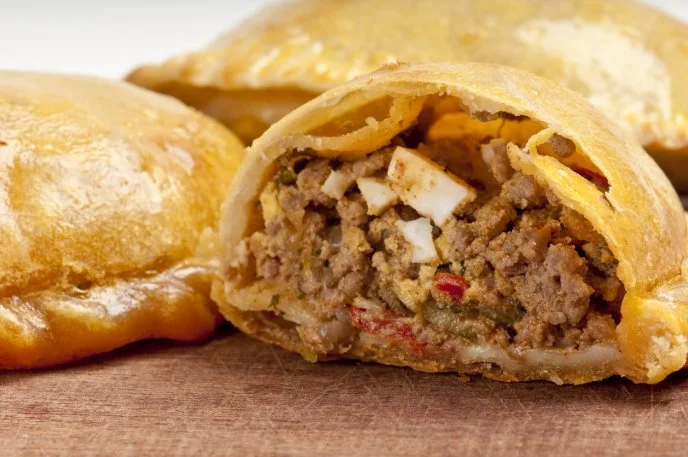
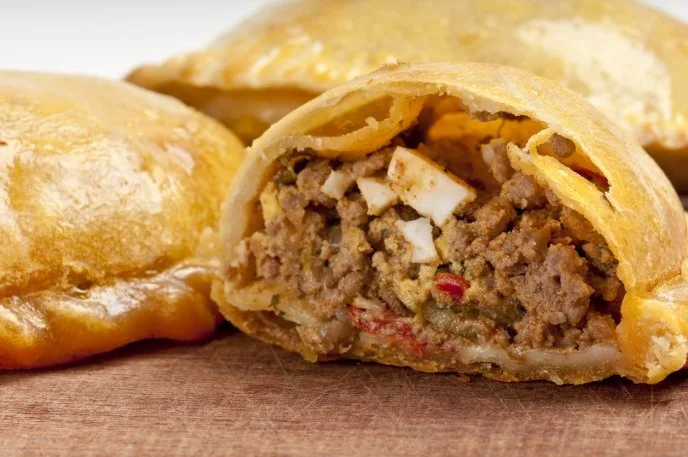
Pate Kode

Ingredients
- 2 cups of all-purpose flour
- 1 tsp. of salt
- 1 cup of cold water
- 2 cups of oil
for the filling: Anything of your choice, here is a list of what you can usually find in the Haitian pate kode
- Aran So (Smoked Herring)
- Morue ( Cod fish)
- Hot Dog (Cut in dices or rondelle- slice-)
- Zeu Bouyi ( Boiled egg- cut in half)
- Pikiliz
- Ground beef
- Or you can mix any two of the above together. Sautéed onions really add to the fillings.
Directions
- Prepare your filling
- Pour your flour and salt in a large bowl
- Gradually pour in your water as you mix with a large spoon.
- Then, use your hands to knead the dough. If your mix is too dry, add some more water. If your mix is too sticky, feel free to add a little bit more flour. Only you can tell how consistent your dough is. So if you feel that you must keep going back and forth with your water and flour, do so!
- Sprinkle some flour on your counter. Use a rolling pin to roll out your dough. Make sure that it is not too flat and definitely not too thick.
- Use a knife and cut out about 2″x 4″ pieces. Quite frankly it could be of the size of your choice. However, in Haiti we like to make them a bit big, that way you have enough room for a lot of filling.
- Using a fork, put some filling on one half of your cut out pieces then, fold the other half over your filling. Use the end of your fork to seal in your filling by pressing on the ends of the dough.
- In a deep frying pan, heat your oil. Deep fry your patties. This shouldn’t take long since your filling is already cooked. One way to know that your patties are ready is if your dough has browned.
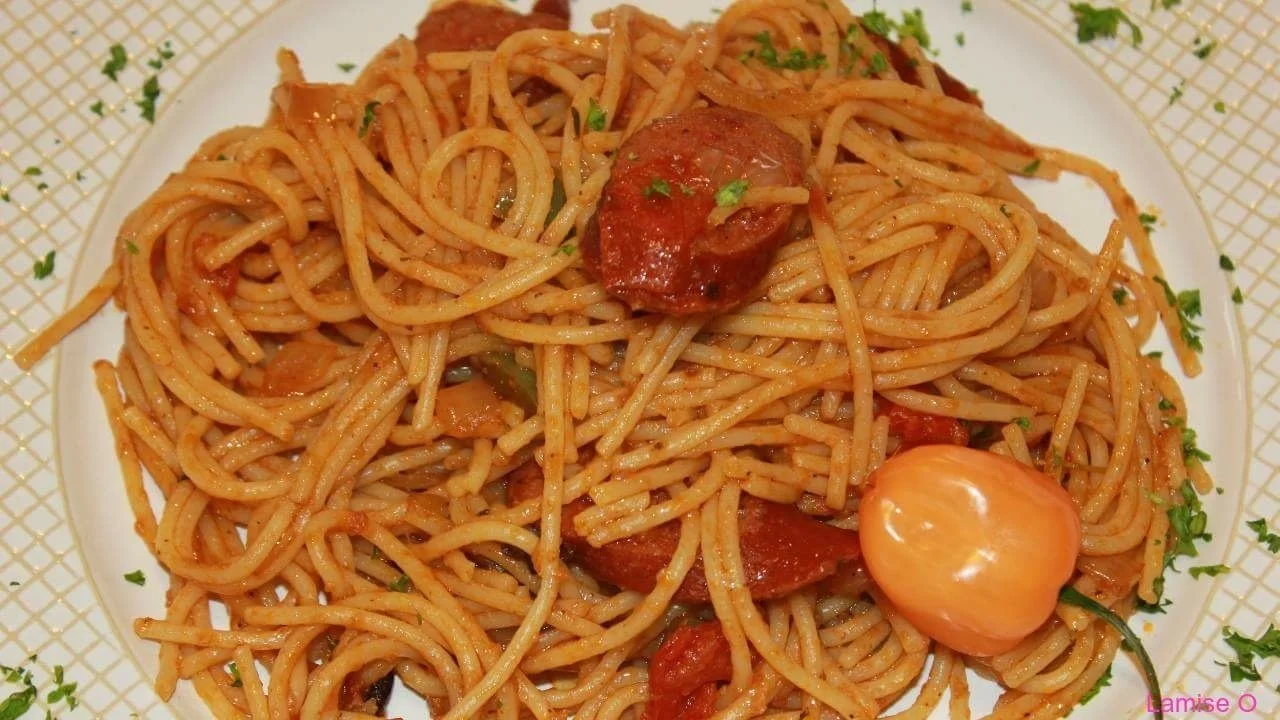
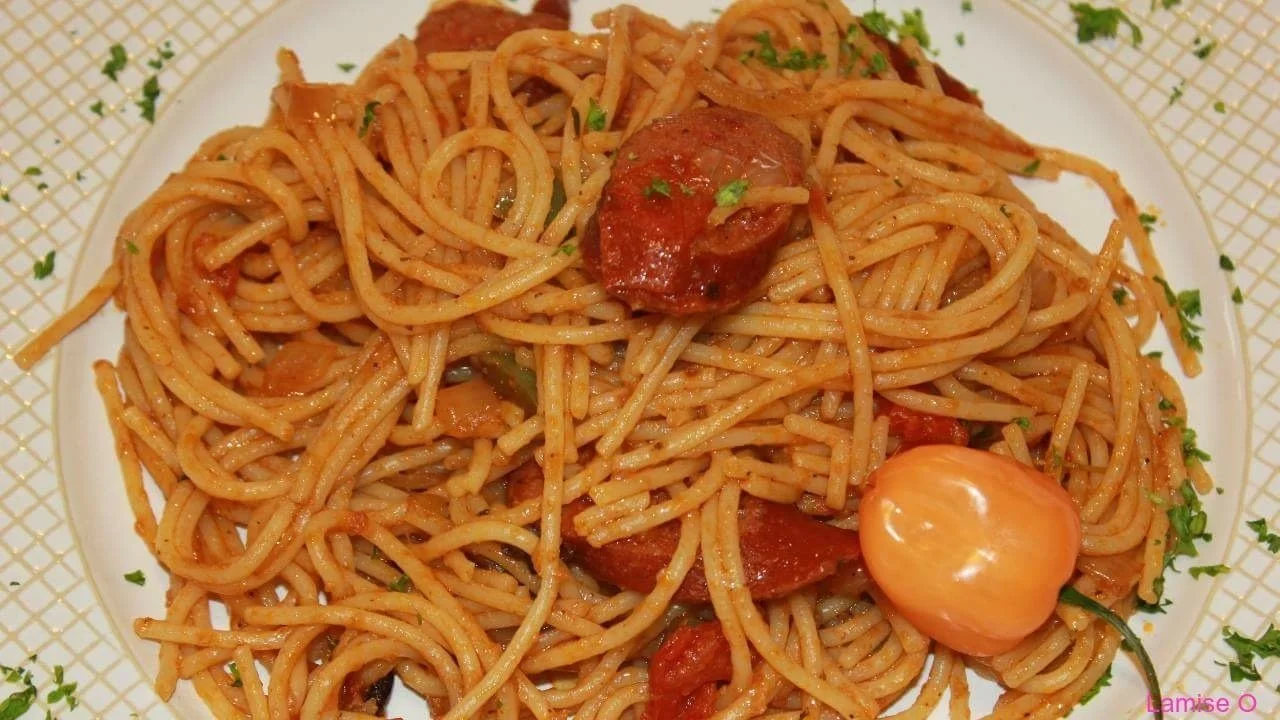
Haitian Spaghetti

Ingredients
- 1 lb thin spaghetti
- 1/2 lb spicy pork sausage (Can also use hot dogs or Turkey sausage)
- 1 small onion sliced
- 1/2 green bell pepper diced
- 2 Tbs tomato paste
- 1/2 Scotch Bonnet Pepper minced (Optional)
- 1 Tsp all purpose seasoning
- 2 sprigs of thyme
- 1Tbs of Haitian Epis (or 1 Chicken bouillon Cube)
- 2 Tbs of olive oil
- 4 cups of water
- 3 tsp of salt (or to taste)
Method
Step 1
In a large pot bring 4 cups of water, 1 tbs of olive oil, and 2 tsp on to boil.
Step 2
Add 4 lbs of thin spaghetti to the water and cook (10-12 min).
Step 3
Drain the spaghetti and set aside.
Step 4
In the large post add 1 tbs of olive oil and saute' the sausage for 2-3 min.
Step 5
Add the tomato paste, peppers, thyme, Haitian Epis (or 1 Chicken bouillon Cube), scotch bonnet pepper, onions, and saute for 2-3 min.
Step 6
Add 1 cup of water and bring to boil.
Step 7
Add the cooked spaghetti and mix thoroughly.
Step 8
Reduce the heat and let simmer for 4 min and serve

Earthquake fosters the next rocking chapter in Haiti's musical culture
You wouldn’t expect great music to come out of a disaster but that’s the story of Haiti’s Lakou Mizik a collective experiment that’s still reaching its peak, some five years on.Between ongoing political and economic disorder and intermittent challenges from nature, the level of poverty in the Caribbean island nation was already about the worst in the western world when a decimating magnitude 7.0 earthquake struck on Jan. 12, 2010, further trashing living conditions for many of its 10 million inhabitants.In the ensuing months, American music manager-producer Zach Niles was part of an international relief effort, directed more specifically at aiding the country’s cultural footing. A decade earlier he had been part of the effort that created Sierra Leone’s Refugee All Stars in West Africa. Now it was time to preserve and encourage what was left of Haiti’s musical culture.Niles first made it down to Haiti about a month after the earthquake to help at the new Artist Institute (built with help from the We Are The World Foundation) in the city of Jacmel. It was soon apparent to him that music was really at the core of Haiti’s cultural identity and he remains Lakou Mizik’s international manager-spokesman today.“It made sense to use music as a way to connect people positively to a place that seems to only get negative coverage. I returned in October to kick start the project and that when I first met Steeve and Jonas.”That’s a reference to his chief collaborators, Steeve Valcourt (guitar, vocals) and Jonas Attis (vocals) who wound up being unofficial leaders of a new multi-ethnic, cross-generational collective. They hatched the idea one night in Valcourt’s basement in Haiti’s capitol Port-au-Prince.“Lakou Mizik really started as a project, an idea to work with different types of musicians from around Haiti and record them while doing a short documentary portrait of their lives. At some point we were invited to play a concert and at first I said ‘we’re not really a band’. Then Steeve and Jonas said ‘why not?’, so we played that first show in November of 2011 and there was no going back. We all felt like there was something special there and Lakou Mizik the band was born.”That name translates roughly as “town music” in the language of Haitian Kreyol but “lakou” also denotes a holy place in the context of Haiti’s ancient Vodou religious rights.Before the group could be introduced to the world Niles was hired to oversee building an audio studio at the Artists Institute in Jacmel. After honing their sounds in live performance Lakou Mizik became the first band to record there in February, 2015, with the album Wa Di Yo, a reference to the phrase “You Tell Them (we’re still here)”. Produced by Montreal guitarist Chris Velan (who also adds guitar) and released in April, 2016 on the worldbeat label Cumbancha, it went on to garner wide critical acclaim and spots in many best-of lists from last year.Eight-member Lakou Mizik is really a melange of styles and influences reflecting the age range and backgrounds of musicians who run from their twenties to sixties. Along with multiple singers and percussionists they tackle guitars, bass, accordion and the traditional cornets or fixed-pitch horns (originally of bamboo) that add a unique dash of Carnival fanfare.Hybrid as it may be, the music is all about Haiti as Niles explains:“Haiti is truly a melting pot of influences with a singular history, from the French-descent accordion we highlight to the West African vodou rhymes, American soul and Jamaican dancehall.“It starts with traditional folk songs and chants that helped found the nation after it became the first outpost of freedom for African slaves in the new world in the early 1800s. A key part of that involves the influence of Vodou religion, rooted in Africa, mixed with echoes of American gospel, rhythm and blues and other Caribbean grooves. Finally, there’s the rocking sound of rara from Haiti’s carnival culture.“Each musician has really brought their own flavor to the band. Sanba Zao is the vodou music legend who the whole band looks up to, who helps to keep them grounded in traditions. He knows all the cultural rhymes and teaches the younger members. But Jonas Attis and Steeve Valcourt, as younger songwriters, bring their own styles, and Nadine Remy and Lamarre Junior coming from the Church background bring a harmonic arrangement that’s unique. Under it all is the rara rhythm.”Wa Di Yo offers a mix of traditional songs adapted and expanded alongside new original works.“The idea was to bring these songs into the modern era and re-popularize them before they’re lost, a type of cultural preservation in our eyes. The originals are written by Sanba Zao, Steeve Valcourt and Jonas Attis. Most of the songs are in Haitian Kreyol, but the more traditional ones like the prayers have Kreyol mixed with older words from African languages brought over by the slaves.”The group’s latest singles and video releases (precursors to the next album) speak well for the way that live touring has helped Lakou Mizik’s sound to evolve. While basic issues like maintaining the band’s instruments continue to be a problem but they have managed to tour abroad extensively since the debut album, serving as cultural ambassadors for a rich culture.“Haiti has such a universal mystique surrounding it. In some ways it has served well, but in other ways there is a negative perception of the country that goes back decades before many of Lakou Mizik’s musicians were born, representations of Vodou, ideas about political instability, even the AIDS epidemic. These have all been painted in false, broad strokes that affect the way people see the and interact with Haiti. I always feel that connecting people through music and dance has a positive effect. It peels back the mystery a bit and connects us all in a common language.”
PREVIEW
Lakou Mizik (Haiti)Where: Edmonton Folk Music Festival, Gallagher ParkWhen: Main Stage, Thursday, Aug. 10, 7:10 p.m.,andSessions: Friday, Aug. 11 7:30 p.m. Stage 1, and Saturday, Aug. 12 5:45 p.m. Stage 6Tickets: Single-day passes still available from the box office (780-429-1999)For complete details see edmontonfolkfest.org ROGER LEVESQUE/Edmonton journal - August 10, 2017
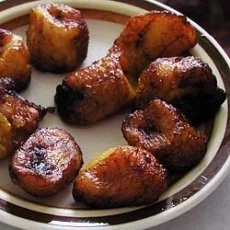
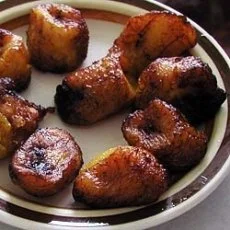
Bannann Douce (Sweet Plantain)

INGREDIENTS:
3 large ripe yellow plantains. Plantains must be (very) black skinned! 2/3 cup vegetable oil, or lard (to cover half the thickness of plantains in the pan)
DIRECTIONS:
Peel and bias cut (diagonal) plantains into one-inch thick slices.
Heat the oil until medium hot -- a drop of water will sizzle.
Fry the pieces briefly, about a minute or two per side. Reduce heat to low and continue cooking, turning occasionally until they are brown and caramelized.
VARIATION: Some people like to lightly roll the plantains in white or brown sugar before frying.
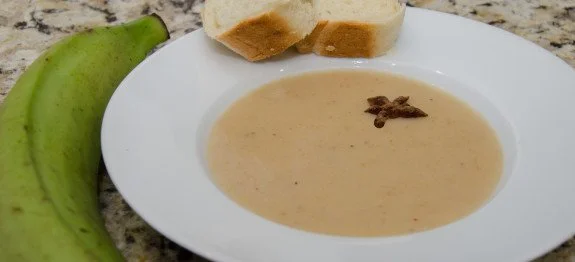
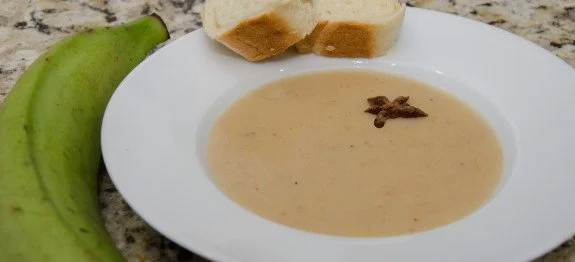
Labouyi Bannann (Plantain Porridge)

One of the many foods Haitians eat for breakfast is Labouyi Bannann (Plantain Porridge). If you have never had Labouyi for breakfast than you are missing out. Porridges have long been an integral part of Caribbean cuisine.
Ingredients
1 Green Plantain (Washed)
3 cups of water
1 Star Anise
1/2 cup of Evaporated Milk
1/2 cup of Coconut Milk
1/2 tsp cinnamon Powder of 1 stick
1/4 cup of sugar
1 Tbs butter
1 tsp vanilla extract
1 tsp salt (or to taste)
Direction
Step 1
Peel the skin of the plantain and cut into small 4-8 small pieces. It is ok to leave some of the skin for extra nutrients.
Step 2
In a blender, puree the plantain and 2 cups of water.
Step 3
In a 1 quart saucepan, add 1 cup of water, evaporated milk, coconut milk, cinnamon, star anise and bring to boil.
Step 4
Once the pot is boiling, add the plantain puree to the pot and bring to a boil while stirring continuously for 5 min. The porridge will thicken slightly.
Step 5
Add the salt, sugar, vanilla and keep stirring for 10 min.
Step 6
Reduce the heat to medium and keep stirring for another 10 min while tasting porridge to ensure the plantain is thoroughly cooked. The porridge is ready when the texture is creamy.
Step 7
Serve warm with some Haitian Bread
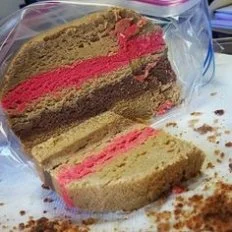
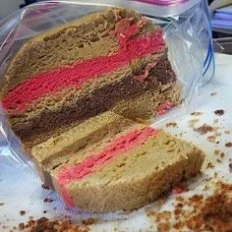
Dous Makos (Haitian Fudge)

Ingredients
-
2 Cups of sugar
-
1/2 Cups of Whole Milk
-
1 Can of sweetened condensed milk (14 ounces)
-
8 Tbs of butter
-
1 tsp vanilla extract
-
1/4 tsp of Anise star extract
-
1/4 tsp of nutmeg
-
1/4 tsp of cinnamon
-
Red Food Coloring (Optional red layer)
-
1/4 tsp of cocoa powder (Optional Dark brown layer)
-
wax paper
-
mini loaf pans
Directions
- In a 3 quart non-stick pot, add all ingredients (except food coloring and cocoa power) and cook on medium heat until sugar dissolves while constantly stirring.
- Once sugar dissolves, raise heat to high and continue stirring for 20 - 25 min or until mix has a lava consistency. If you have a candy thermometer it will be around 115 °C/ 239 °F
- Remove the pot off the heat and continue stirring for another 10-15 min. The mix will start to lose its shinny color as it cools.
- * OPTIONAL - If you want to make the signature stripes, take half the mix and separate the half into 2 containers. Add 2 drops of food coloring in the first and a 1/4 tsp of coca powder in the second. Mix the thoroughly. *
- Place wax paper in the mini loaf pans and fill it with the mix.
- Allow the mix to cool and harden for about an hour.
- Remove the mix from the pan and slice vertically.
- Store in a cool place.
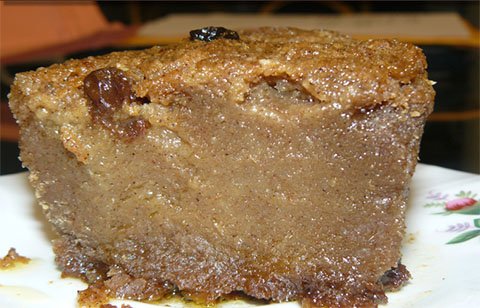
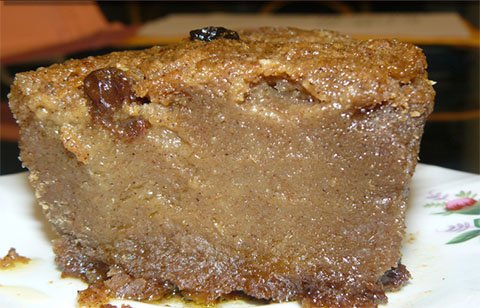
Pen Patat (Sweet Potato Pudding)

INGREDIENTS: 2 lbs. white sweet potatoes (batata), peeled and cut 1 large banana, peeled and cut in 1 inch pieces 1 cup brown sugar 1/2 cup seedless raisins 1 tsp grated ginger 1/4 tspn salt 12 oz evaporated milk 1 tsp vanilla extract 1/2 tsp grated nutmeg 1 tsp ground cinnamon Rind of 1 lemon, grated 1 1/2 cups coconut cream 3 tsp butter 1/2 cup of Crisco shortening (I only used 1/4)
DIRECTIONS: 1. Preheat oven to 375 degrees. 2. Cut the sweet potatoes into 1 in cubes then grate them using a blender. 3. Place them into a mixing bowl. Peel and mash the banana into the sweet potatoes. 4. Add the remaining ingredients. Mixed all until well blended. 5. Transfer onto a pot and cook over medium heat, stirring constantly with a spoon for about 30-35 minutes until brown. 6. Place in a baking pan and bake for 1.5 hours or until toothpick inserted into the center comes out clean
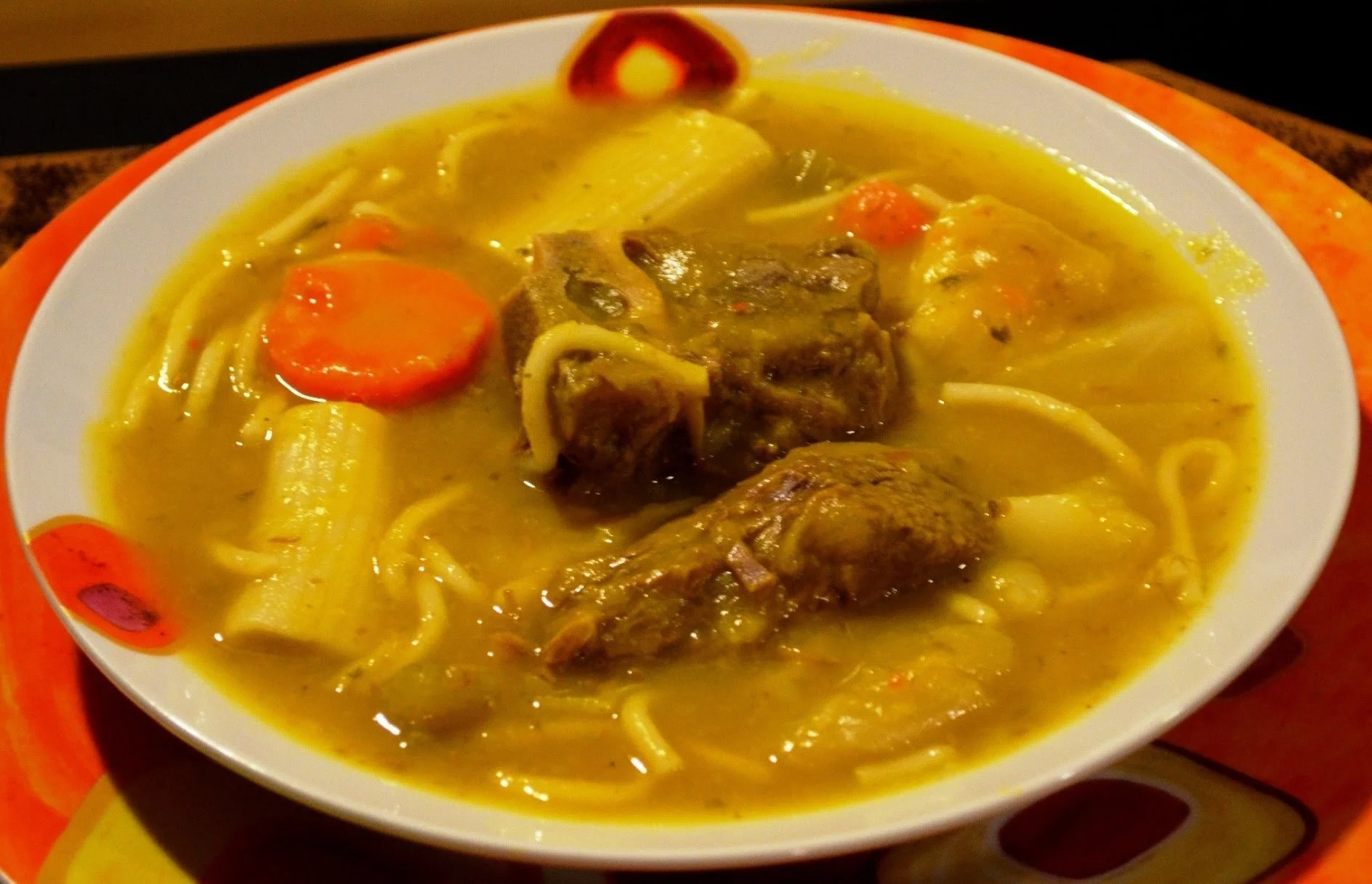
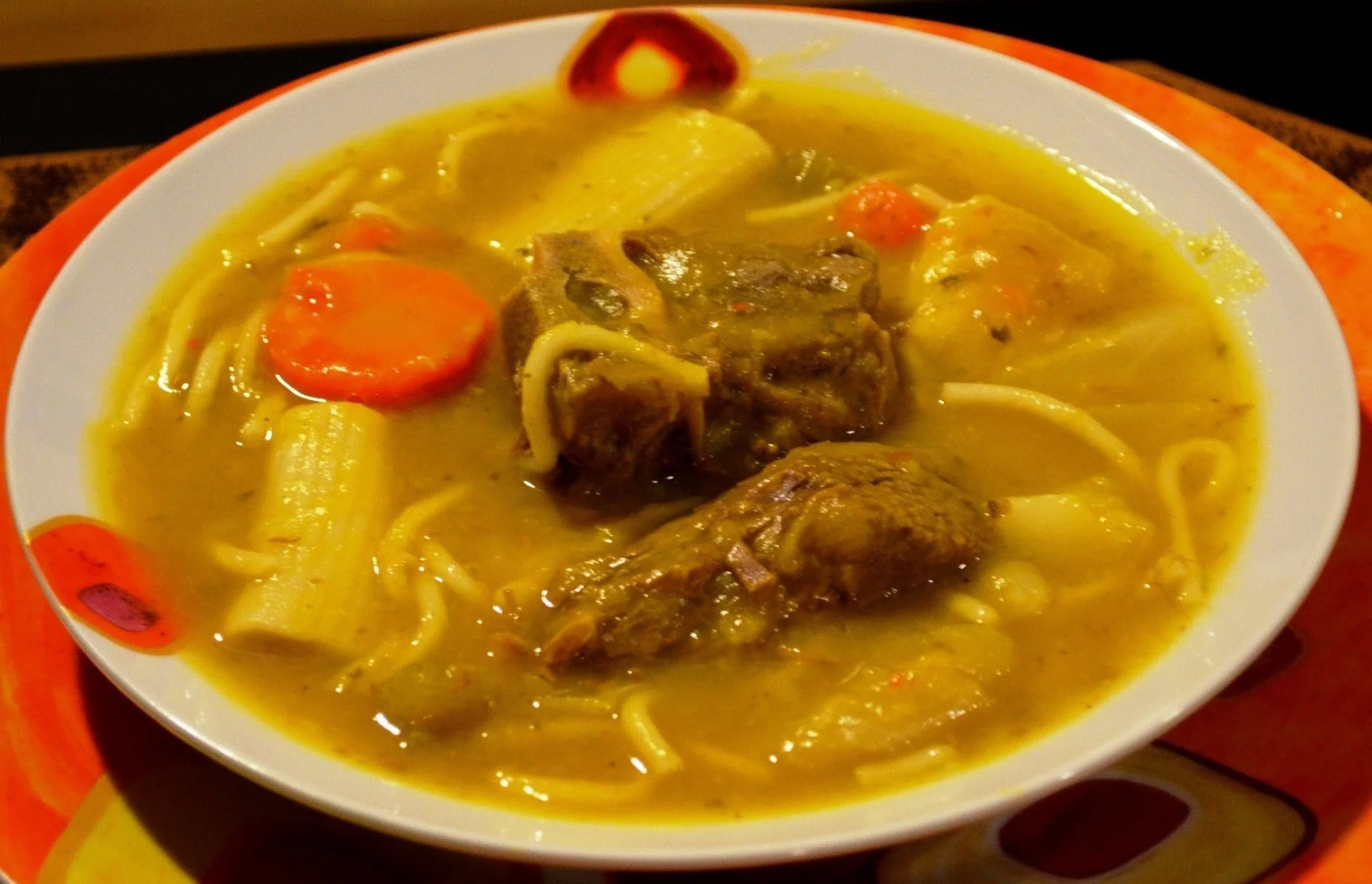
Soup Joumou (Butternut Squash Soup)

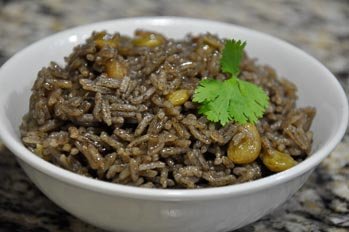
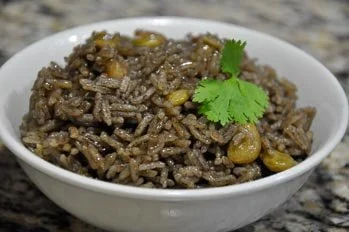
Diri djion djion (black mushroom rice)

Ingredients
- 2 Cups of Dried Black Mushrooms (djon djon)**
- 3 garlic cloves minced
- 2 tablespoons olive oil
- 1 small onion chopped
- 2 cups long-grain rice
- 2 teaspoons salt
- 1 tsp Ground cloves
- 1 (12-ounce) can lima beans (or green peas)
- 1 to 2 thyme sprigs
- 1 green Scotch bonnet pepper

** If you don't have the dried djion djion, some super market sales the GOYA cube djion djion. Skip the first 3 steps. Boil the cubes in the water until it dissolve before adding the rice**
Method
- In small pot, soak mushrooms in 4 cups water for 10 minutes.
- Boil mushrooms on low heat for 10 minutes.
- Strain the mushroom water into another container for later use. The mushrooms in the strainer will no longer needed.
- In a large pot, sauté the garlic and onions on medium heat for 2 minutes.
- Next, add the mushroom water, salt, cloves
- Add the rice
- Bring the water to a boil and reduce the hear when most of the water evaporates (approximately 10-15 min) then add the lima beans- Stir the rice, set the temperature to low.
- (optional) Add Scotch bonnet pepper and thyme.
- Cover the pot and steam the rice for 15 min.
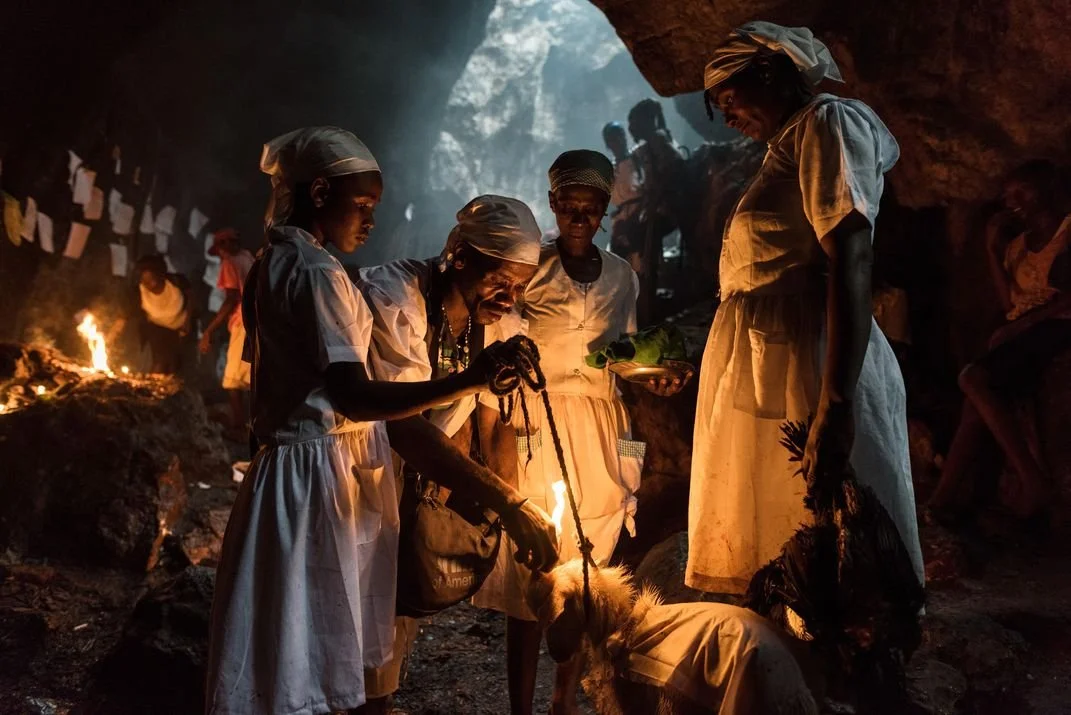
Explore the Timeless World of Vodou, Deep Within the Caves of Haiti
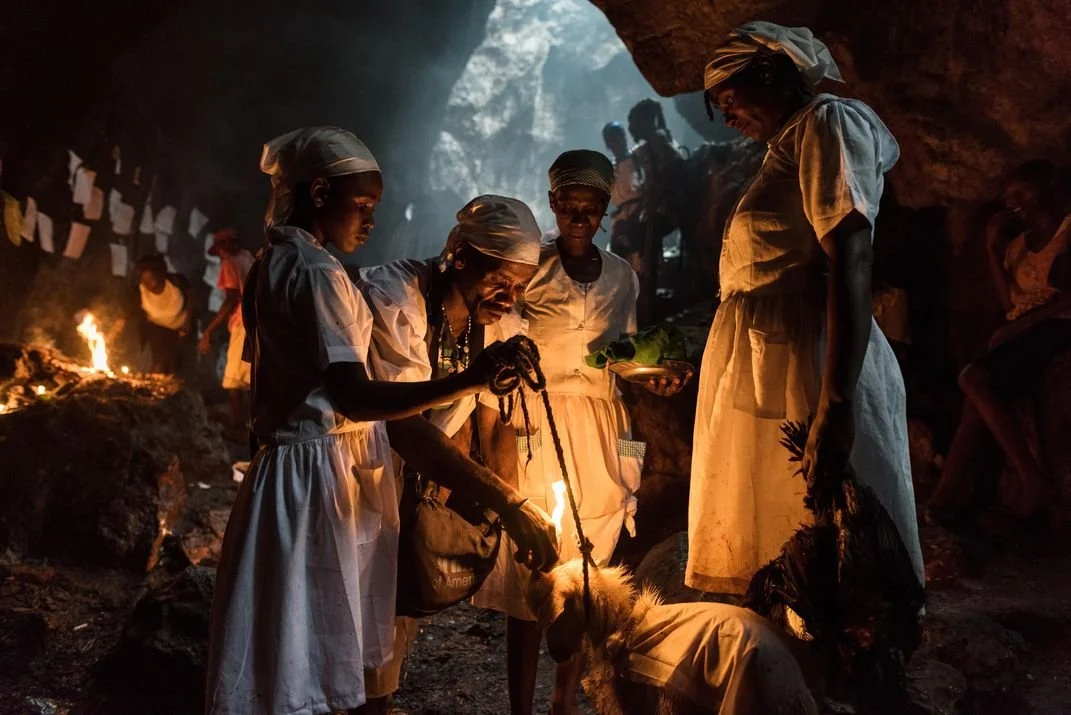
Written by: Jonathan M. Katz Dressed in white, symbolic of their purity, Voduisants begin a ceremony by reading prayers of thanks aloud with a priest. (Photo by: Troi Anderson)It was the height of the summer solstice, the brightest day of what had already been a long, hot year in Haiti. But deep within the caves outside Saint-Michel de l’Attalaye, beneath the mountain-ringed northern edge of the island nation’s central plateau, there was no light. Troi Anderson had to feel his way along the cool limestone walls and follow the worshipers’ singing to find his way to the Vodou ceremonies below. A photographer based in Oregon, he had come for the pilgrimage of St. John, an annual event that generally draws hundreds of participants.
Vodou has roots in the religious traditions of West and Central Africa, where most Haitians’ ancestors were born, and in the Roman Catholicism of European colonizers in Africa and the French who colonized the western third of the island of Hispaniola in the 17th and 18th centuries. Its beliefs and practices were forged in one of the most brutal slave regimes the world has known.The religion honors a supreme creator god who is considered too remote to reach directly. Worshipers venerate intermediary spirits, such as the orisha gods of the Yoruba people who inhabit what is now Nigeria, Benin and Togo, and figures from Haitian history. The faith is decentralized. It is practiced creatively, not prescriptively, which helps to account for the differing forms practiced elsewhere, such as in New Orleans. Like many great religions, throughout its history Haitian Vodou has provided both solace and an intimate sense of community to the oppressed.
This sense of Vodou as a primitive practice also shaped American impressions of Haiti. The U.S. military occupied the country from 1915 to 1934, during a formative period in the U.S. empire-building in Latin America and Asia. Marines who served on the island, and journalists who covered them, returned with lurid tales of what they called “voodoo” and characterized as black magic. Pop-culture distortions, in both books and films, weren’t far behind. In 1932, the year after Bela Lugosi starred in Dracula, he played an evil sorcerer in Haiti named “Murder” Legendre in White Zombie.Read more: http://www.smithsonianmag.com/arts-culture/explore-timeless-world-vodou-haiti-180963673
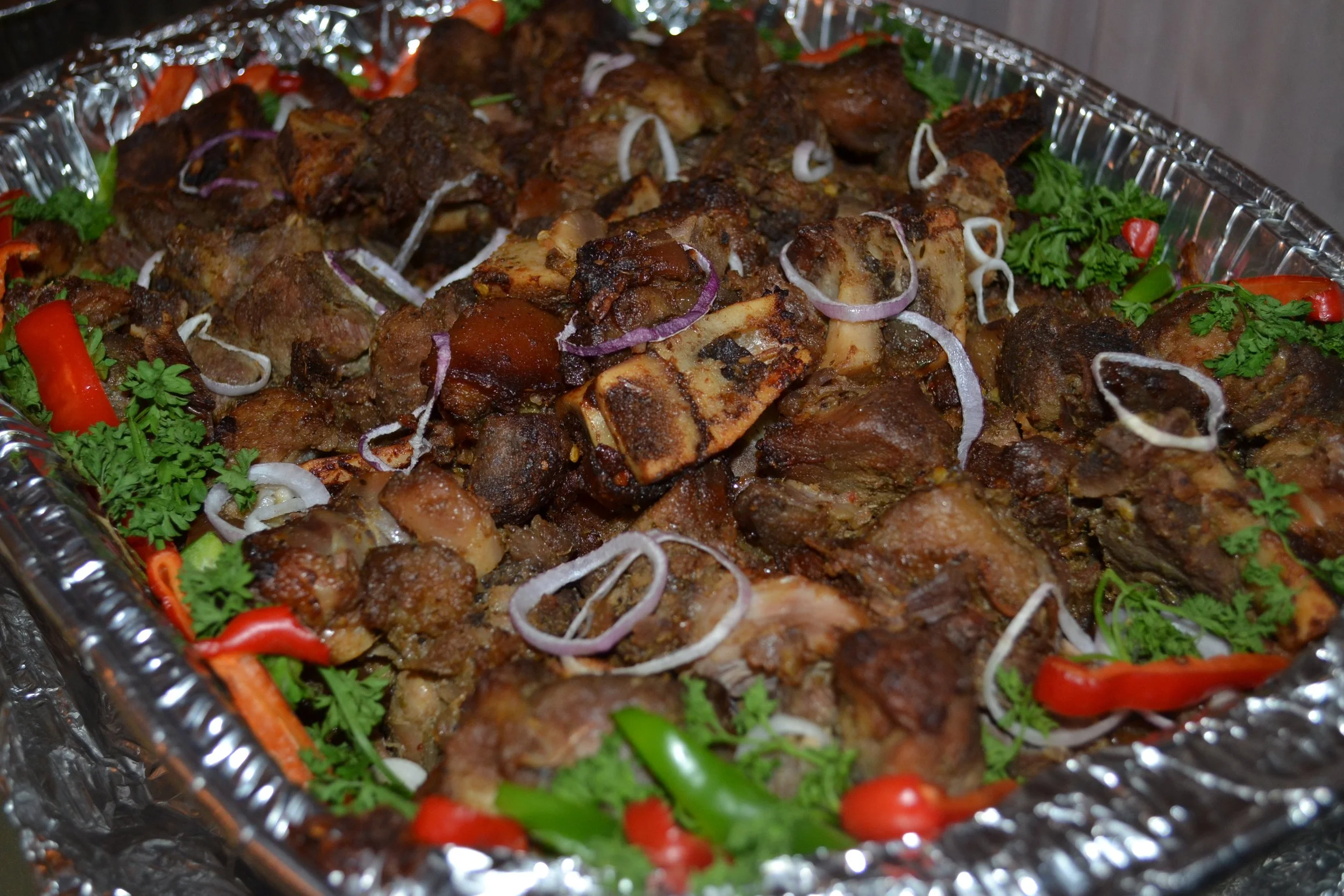
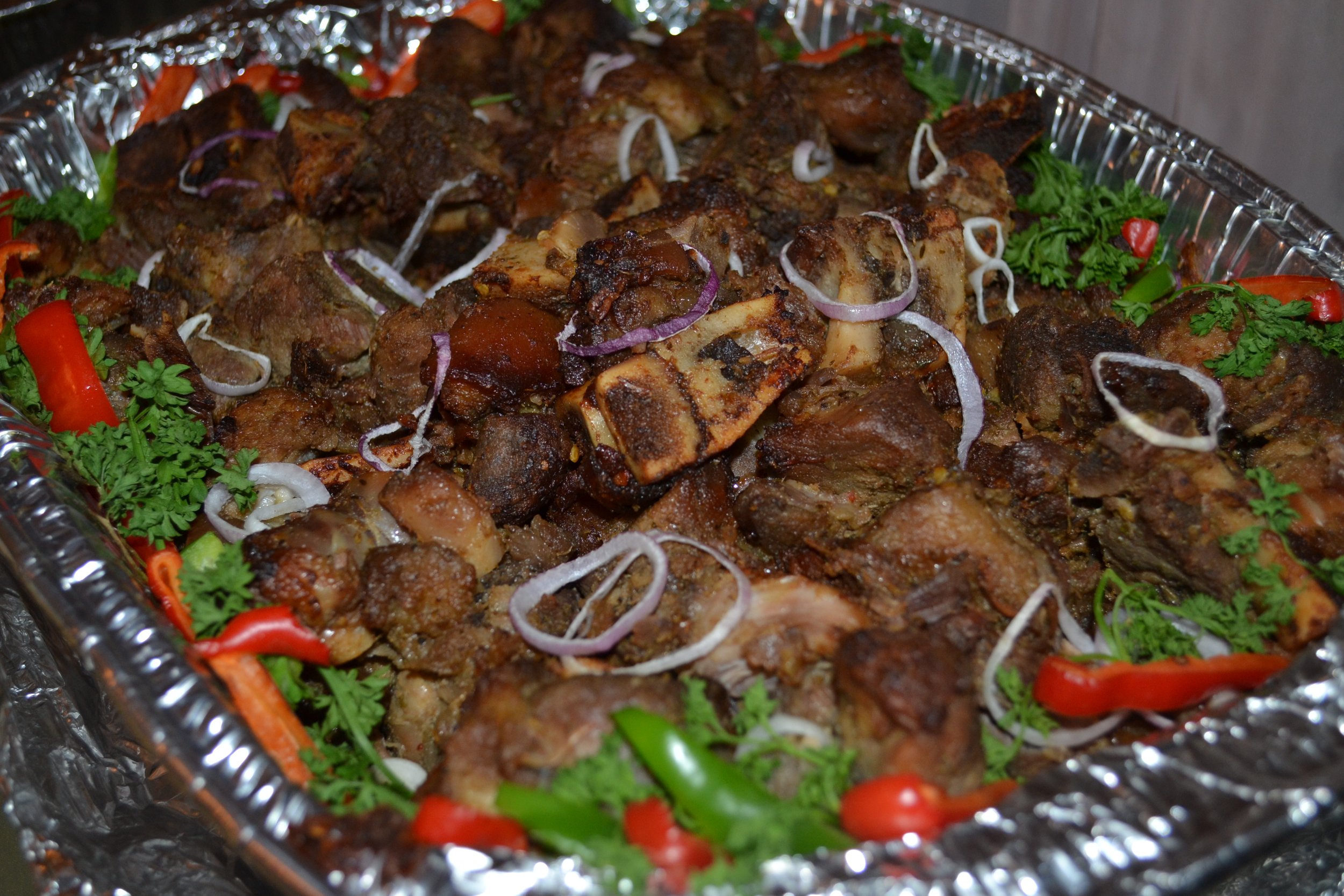
Griot (Fried pork)

Ingredients
3 lbs of pork shoulder (cut into cubes/pieces)3 cloves2 garlic cloves1/4 cup of parsley1/2 cup onions2 teaspoons salt2 teaspoons black pepper1/4 cup green pepperpaprika2 lime (cut in half & juiced)1 or 2 habanero peppers3 to 4 cups of water4 to 5 cups of vegetable oildeep fryer2 sheets of paper towel
How to clean and Marinate Pork
Blend habanero pepper, parsley, onion, cloves, garlic and paprika into a paste with about 1 tablespoon of lime juice, then set aside. In the sink, rub pork with limes rinse with cold water. In a medium sized bowl, add pork, lime juice, paste of ingredients and mix with hands. Cover and refrigerate for 45 minutes to 24 hours.
Directions
In a saucer pan, add water, marinated pork and boil until tender, probably 30-45 minutes. Heat oil in deep fryer. Separate pork for liquid and set pork aside, do not discard liquid. Separate pork into batches for frying and fry until a light dark brown color. Set aside on paper towel. Once all the batches are completed you can used liquid as sauce for the rice or fried plantain.
Garnish with pikliz!
Enjoy
(Pikliz recipe is up)
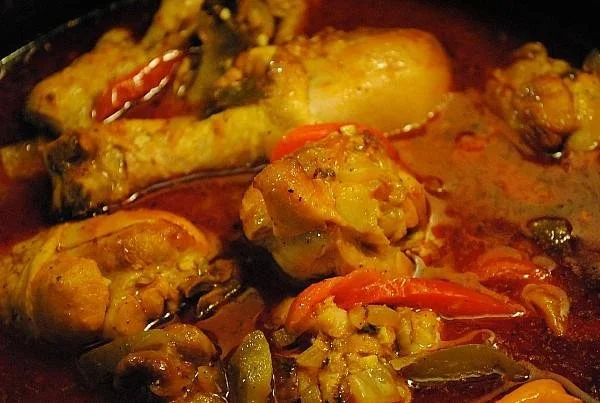
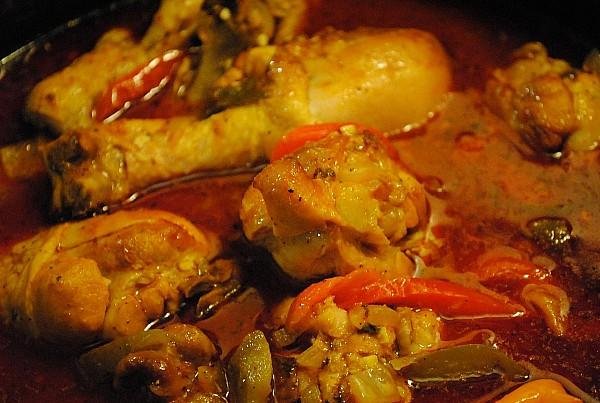
Poule an sauce (Chicken and gravy)
 Ingredients:1 lbs of chicken1/2 onion (sliced)1/2 green pepper (sliced)1 tablespoon of Lowry seasoning salt1 tablespoon of butter1 habanero pepper1/2 chicken bouillon cube3 cups of chicken broth1 tablespoon of pepper2 tablespoon of epis3 limes (sliced in half and juice)3 1/2 cups of boiling hot water8x8 baking dishaluminum foil1/2 cup olive oil1 garlic (crush)1 tablespoon of tomato paste1 tablespoon of flour Directions:Clean chicken and remove any access fat, rub each individual chicken pieces with limes. Discard limes and drown in hot water for 30 seconds. Rinse with cool water and place chicken in a medium sized bowl. Add lime juice, epis, bouillon cube, salt and pepper. Mix thoroughly with hands, cover with saran wrap and let marinade in refrigerator for 1 to 24 hours.Preheat oven to 415 degrees. Completely cover baking dish with aluminum foil (TIP: this makes it easier for cleaning), drizzle with 1/4 cup of oil and place chicken pieces inside dish then in pour marinade. Place in oven and turn the meat over once it has achieved a golden brown color. Once golden brown on both sides remove from oven. In a preheated saucepan on medium heat and add remaining oil and fry crushed garlic and tomato paste for 2 minutes, pour in 1/4 cup of chicken broth and add flour. Make sure flour and tomato paste has completely dissolved and then add remainder of chicken broth, habanero pepper, green pepper, chicken and remaining sauce from baking pan. Let cook for 5 minutes, add onions, pepper and stir in butter. Lower temperature and cook until onions are clear.
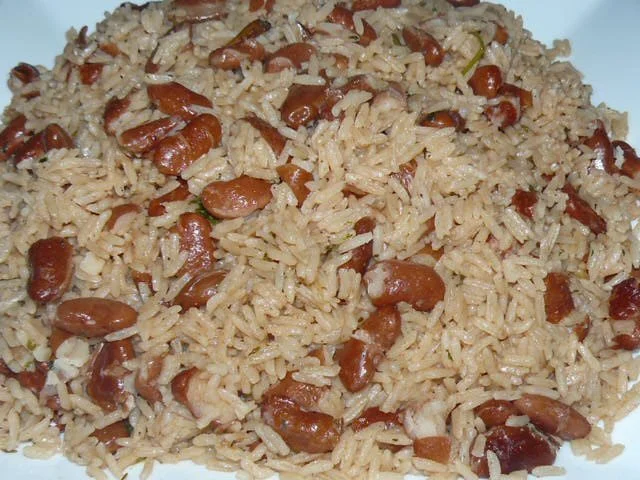
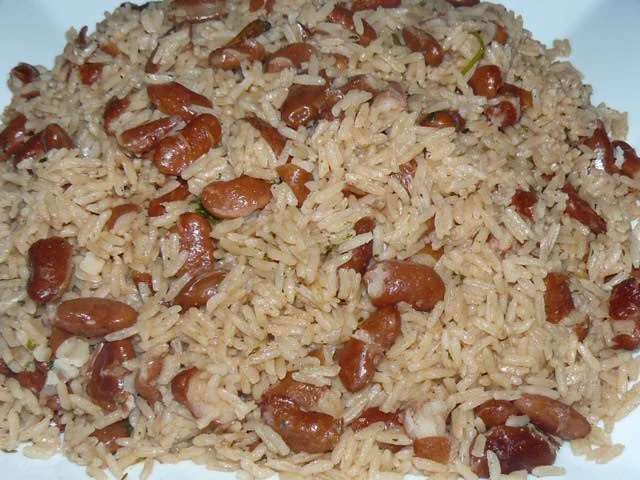
Diri kole ak pois rouge (Haitian brown rice and beans)

INGREDIENTS
1.5 cups dried red beans2 cups of white long grain ricesalt1 teaspoon of pepper1/2 bouillon cube1/4 cup of rough chopped onions or less2 garlic cloves, crushed5 cloves2.5 tablespoon canola oil (any oil with due)
Directions
Rinse and soak beans overnight (or a few hours) in bowl in filled with water. Be sure to discard any broken, bruised or discolored beans. In the morning, drain beans and set aside to cook.
Put beans to boil in a medium sized saucepan, 1 teaspoon of salt and allow to cook/boil for 45 minutes to an hour. Be sure to watch the water, if the water reduces and the beans are not yet edible add in more water. Once the beans are soft and edible they are ready. Strain, but do not discard the water (you will need that for later).
On medium high heat add 2 tablespoons oil and fry the onions, garlic and chicken bouillon cube for 4 minutes. Make sure the bouillon cube is completely crushed. Then add in 3/4 cup of drain beans and fry for 3 to 4 minutes. Once the beans start to get darker but not burned add in remaining beans, pepper, cloves and the water you boiled the beans in. If you need more water add in 1 cup of water. Cover the pan and allow water to come to a boil.
Taste to see if any salt is needed (This is what your rice will taste like). At this point, I like to add a pinch of salt. If it's too salty just add in more water. Add in your rinsed rice. Once the water has reduced to the point where you can see the rice, stir in 1 teaspoon of oil and 1 tablespoon of butter. A quick stir then cover your pot and reduce temperature to medium low. After 15 mins, reduce temperature to low and rice should be ready in 10 to 15 minutes.
End result should be soft, tasty rice and beans.
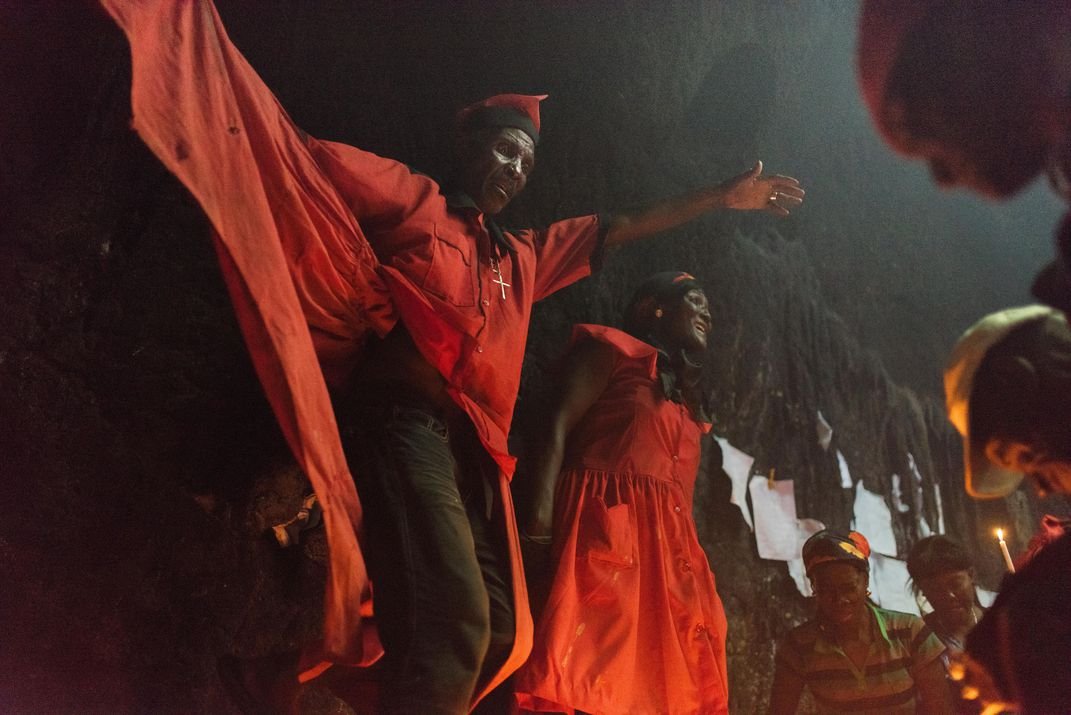
Explore the Timeless World of Vodou, Deep Within the Caves of Haiti
It was the height of the summer solstice, the brightest day of what had already been a long, hot year in Haiti. But deep within the caves outside Saint-Michel de l’Attalaye, beneath the mountain-ringed northern edge of the island nation’s central plateau, there was no light. Troi Anderson had to feel his way along the cool limestone walls and follow the worshipers’ singing to find his way to the Vodou ceremonies below. A photographer based in Oregon, he had come for the pilgrimage of St. John, an annual event that generally draws hundreds of participants.
Anderson had once worked with a major aid group on the island, and as he photographed people on Haiti’s streets, he noticed their suspicion and came to share their distrust of what he calls the “poverty industry,” or those aid efforts better at serving themselves than the people they’re supposed to help. So he left that work behind and focused instead on images of Haitian pride. That led him to the “sacred theater” of Vodou, a uniquely Haitian cultural force.
The religion honors a supreme creator god who is considered too remote to reach directly. Worshipers venerate intermediary spirits, such as the orisha gods of the Yoruba people who inhabit what is now Nigeria, Benin and Togo, and figures from Haitian history. The faith is decentralized. It is practiced creatively, not prescriptively, which helps to account for the differing forms practiced elsewhere, such as in New Orleans. Like many great religions, throughout its history Haitian Vodou has provided both solace and an intimate sense of community to the oppressed.
Those perceptions persist. In 2010, two days after the catastrophic earthquake that killed up to 316,000 people in and around Port-au-Prince, New York Times columnist David Brooks blamed “the influence of the voodoo religion” as first among a “web of progress-resistant cultural influences” that had made Haiti vulnerable and impoverished.
Many Vodouisants refer to their faith as sevis lwa, or “service to the spirits.” Ancestor worship is a bedrock element of the faith. So is trance possession by the spirits, which is aided by the complex, sacred rhythms of master drummers. The sacrifice of chickens, goats or cows is also widely practiced, with the animal intended to replenish the life-giving energy of the universe. The meat is usually distributed among family and friends.The Vodou calendar is filled with pilgrimages, often coinciding with Catholic saints’ feast days, to sites around the country. Around Easter, the faithful, robed in white, pay homage to the spirits near the sacred site of Souvenance. In summer, thousands flock to a towering waterfall where the Virgin Mary (also venerated as Ezili Danto, a goddess of love) is believed to have appeared. It was this pilgrimage tradition that attracted Troi Anderson to Saint-Michel de l’Attalaye last year.Inside the caves, the floors were slick with the blood of past sacrifices. Occasional beams of light streamed in through holes in the limestone roof. In the darkest recesses, candles cast orange light onto walls that fluttered with small papers bearing written prayers. A woman dressed in red held up a chicken—an offering to Ogou Feray, a god of iron and war, a divinity drawn directly from West African traditions and often represented by the icon of St. James the Greater.Some sang to spirits such as Damballah and Ayida Wedo—the snake and rainbow—and Baron Samedi, spirit of the dead. A woman’s voice rose to praise the spirit of the forest as a chorus chanted behind her. Other pilgrims sang of ritually cleansing themselves with river water. Some went into trances, their bodies providing a medium for lwa to dwell in the caves.Anderson trod lightly. He had come without a flashlight, to avoid disturbing the ceremonies, and he kept his silence as he worked and the worshipers prayed. “I tried to follow a request by one of the pilgrims,” he said. “He told me not to photograph the people here, but instead to photograph the spirits.” By Jonathan M. Katz, Photographs by Troi Anderson Smithsonian Magazine | Subscribe July 2017