
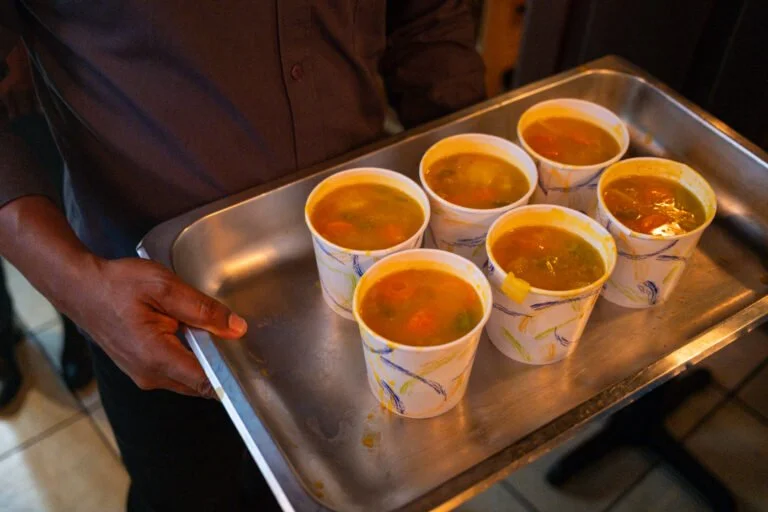
For The D.C. Region’s Haitian Community, Soup Joumou Is More Than A Meal
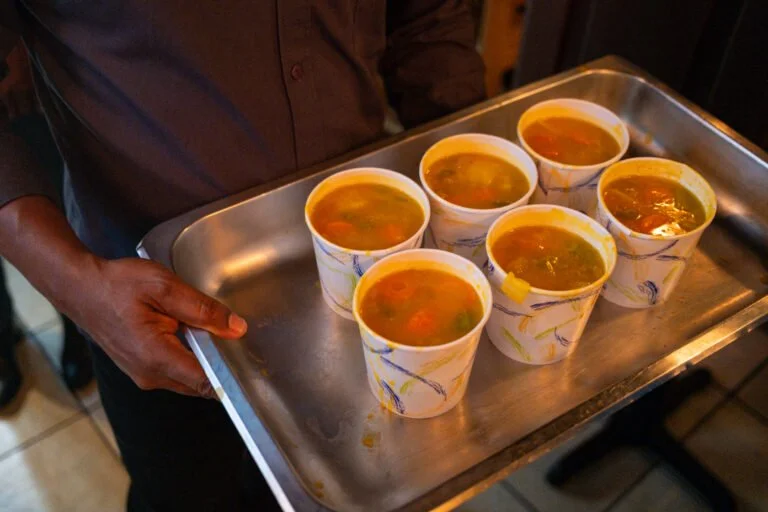
For many Haitians, soup joumou is more than just a food dish, it’s a symbol and embodiment of freedom from enslavement.
Typically, it can be prepared with onions, peppers, celery, herbs, and lots of other ingredients, depending on who’s making it. But it’s centered on winter squash – a crop that Africans were forced to grow during the rule of French colonialism.
Back then, they not only had to work the land but also prepare soup joumou, which they were prohibited from eating, for their French oppressors.
“They could lose their life if they were caught eating those types of food,” says chef Roberto Massillon, who was born in Haiti and now owns Port-au-Prince Haitian Cuisine in Silver Spring, Md.
On Jan. 1, 1804, Haiti declared its independence from French colonialism following a successful uprising that was led by former slaves, including Toussaint Louverture. As a result, Haitians were able to eat soup joumou and celebrate their freedom. Today, many Haitians around the world and in the D.C. region eat the soup every year to honor their ancestors and culture.
“Every time we are celebrating our independence, we have to have this soup. It’s really something very – it’s holy for us,” says Massillon.
On Wednesday, dozens of people gathered as a community at Port-au-Prince restaurant to not just commemorate their history but to fundraise for Hope for Haiti, a nonprofit based in Florida that has a presence in the D.C. region. It partnered with Chef Massillon to prepare more than 100 bowls of soup joumou – the funds from their sale would be used to support health care, education, and business grants in southern Haiti.
Maritza Dietrich, an events manager for Hope for Haiti, says she wanted the event to create a space for the local Haitian community to come together and also to welcome people of different cultures – especially, those who’ve never had soup joumou before.
 Chef Roberto Massillon, who is also a U.S. Army veteran and a linguist in the U.S. State Department, says he feels like a kind of "ambassador" who gets to represent his culture and cuisine within the D.C. region.Héctor Alejandro Arzate / DCist/WAMU
 Marcel Pean, left, who describes himself as first generation Haitian-American, sits next to Roddy Denor, right, who was born and raised in Haiti.Héctor Alejandro Arzate / DCist/WAMU
 According to Chef Roberto Massillon, Port-au-Prince Haitian Cuisine in Silver Spring, Md., is one of the few Haitian restaurants in the region and offers soup joumou on most Sundays.Héctor Alejandro Arzate / DCist/WAMU
“That’s such a great way to connect with the people in the DMV community,” says Dietrich, who was born in Haiti and lives in Silver Spring. “It’s very important for us Haitians to find our community because we draw strength from togetherness and being united.”
Like Massillon, Dietrich says she feels honored to be able to eat and share the hard-won Haitian dish with others. “What was once forbidden is now ours because we’ve worked hard for it. And so in drinking soup joumou or eating soup joumou, we’re reminded of the sacrifices that brave men and women made for us so we could be who we are now.”
According to Dietrich, the soup is truly meant to be shared with others. She recalls that when she was growing up, it was tradition to prepare it at home and then go from neighbor to neighbor to try their version.
“It’s that sense of community that we’re finding here,” says Dietrich. “And it’s like a pillar.”
Among those who stopped by the restaurant was Dietrich’s neighbor, David Blay. He says he wanted to come to support the fundraiser and the community, and it was also his first time having soup joumou.
“You know what? It tastes very good,” says Blay, who was born in the Ivory Coast. “Like a hint of ginger with some carrots. Very different I would say, but good.”
Silver Spring and the surrounding area are home to a diverse array of businesses representing African and Caribbean cultures – including Port-au-Prince Haitian Cuisine and nearby Ethiopian restaurants and cafes. For Blay, that calls for celebrating twofold.
“It shows to me how much of a community downtown Silver Spring is. You meet people from all different countries, all over Africa, the diaspora. And it’s a beautiful thing to see,” says Blay.
 Loide Jorge, who is married to Massillon, helps serve soup joumou to customers.Héctor Alejandro Arzate / DCist/WAMU
 “It's very important for us Haitians to find our community because we draw strength from togetherness and being united," says Maritza Dietrich, an events manager for Hope For Haiti.Héctor Alejandro Arzate / DCist/WAMU
 “It shows to me how much of a community downtown Silver Spring is. You meet people from all different countries, all over Africa, the diaspora. And it's a beautiful thing to see,” says David Blay, who was born on the Ivory Coast.Héctor Alejandro Arzate / DCist/WAMU
Marcel Pean, who describes himself as first generation Haitian-American, says he grew up speaking Creole and eating his grandma’s soup joumou back in Memphis, Tenn. But it wasn’t until he got older that he began to better understand the history and politics of Haiti.
He says he’s glad he stopped by for more than just a familiar bite.
“That’s really inspiring for me to see how many people are actually connected and involved in the Haitian community,” says Pean, who lives in D.C. “It’s not just Haitians that are here. There are people from all over the place.”
Chef Massillon, who is also a U.S. Army veteran and a linguist in the U.S. State Department, says he feels like a kind of “ambassador” who gets to represent his culture and cuisine within the D.C. region. For him, that’s especially important because, he says, Haiti is oftentimes overlooked and reduced to a single image.
“It’s not always like the poor country. The poorest country in the Western Hemisphere. Because if you look at Haiti, it’s a rich country. It is rich in culture. It is rich in history. There’s so much people can learn about Haiti.”

Haitian cuisine highlighted in South Shore as a part of Haitian Heritage Month

CHICAGO — The sounds of a good time floated through the streets of South Shore Sunday, as the community came out to enjoy the sunshine at South Merrill Community Garden (SMCG).
“It’s really important for us to feel, taste, eat other people’s culture to generate understanding,” said Iyonna Rivers, cultural coordinator for the SMCG.
Rivers is one of many operating behind the scenes at the SMCG, helping coordinate events like the one seen today, centered around Haitian cuisine as a part of Haitian Heritage Month.
“There’s about thirty-to-forty thousand Haitian Americans in the city,” said Carlos Bossard, director of programs at the Haitian American Museum of Chicago. “And the huge connection is Jean Baptiste [Point] DuSable, the founder [of Chicago] and a Haitian man.”
The Haitian American Museum of Chicago’s goal is to promote Haitian culture throughout the City, which leads then to organize events with ‘walk-through exhibits’ where folks can learn at their own pace, while enjoying food and music like the one held at the SMCG Sunday.
“It’s important how we bridge these various these pieces together,” Rivers said. “So children understand, and Chicago at-large.”
If you would like to learn more about the Haitian American Museum of Chicago’s events, or what’s on the agenda for the South Merrill Community Garden this summer, you can visit their websites below.
Museum: https://linktr.ee/hamoc
Garden: http://southmerrillgarden.org/

Tastes of Haiti found just outside Burlington

For those looking for a taste of the Caribbean, the culinary delights of Haiti are available just past the Burlington city limit sign in Whitsett.
“We are living the American Dream,” said Djosen Vilnor, who owns King Queen Caribbean Bar & Grill along with her brother, the chef, Hilder Vilnor.
After immigrating from a war-torn and hostile political environment in Haiti, the Vilnors came to North Carolina in 1993, Hilder Vilnor said.
“Where we came from was tough, but we are grateful for our lives here in the US,” he said.
His sister added: “A bag of rice at a store here may cost around $20, but back in Haiti, it will cost around a thousand dollars — and people can’t afford it because there is no work. There is also no threat of roving gangs here. We are lucky to be in America.”
Their family had to learn a new language and learn about a new country, but Djosen Vilnor said, “We wouldn’t be here without God and the community around us here. We are grateful for all of the help that we have gotten.”
Family is an important theme running through King Queen.
“Most days, my sister and I are the only ones here working,” Hilder Vilnor said. “I’m cooking, and coming out to talk to customers, and my sister is taking orders and running food. I even clean the tables.”
They opened the restaurant in 2020 after 10 years of running a food truck, Djosen Vilnor said.
“Unfortunately, it was just a week before North Carolina closed in-person dining. That was tough, but here we are. We are blessed,” she said.
Haitian cuisine may be foreign to some diners, but Djosen Vilnor urges people to give it a try.
“All Haitian food isn’t spicy, but we use spice. It’s called Epis, and it’s just seasoning, but every family’s is different and special,” she said. “I truly love educating diners and getting to know them and learn about them. It is really exciting to me.”
Epis blends fresh herbs, onions, garlic and peppers and is similar to the traditional Caribbean green seasoning as well as Dominican sofrito, according to Simply Recipes.
The restaurant is known for its oxtails, jerk chicken, pineapple bowls and red snapper dishes, she said.
“We spend a lot of time with our food — stewing and roasting. That’s where the love comes in,” she said. “You can really get a taste of our homeland in our cooking.”
King Queen Bar & Grill is at 90 Cape Fear Dr., Suite D, Whitsett. It is open Tuesday-Sunday for lunch and dinner.
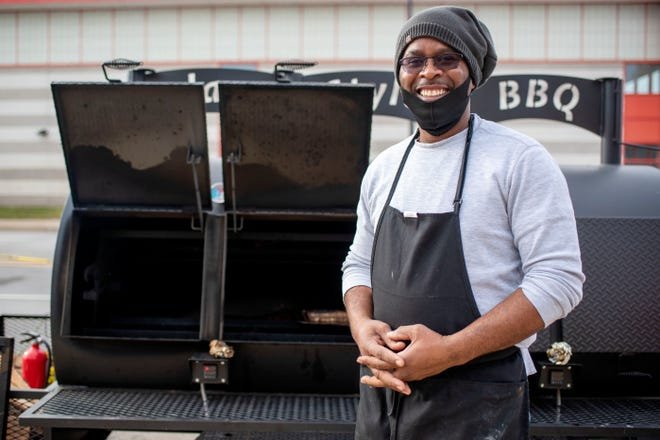
Haitian refugee becomes Battle Creek restaurateur, realizes his American dream
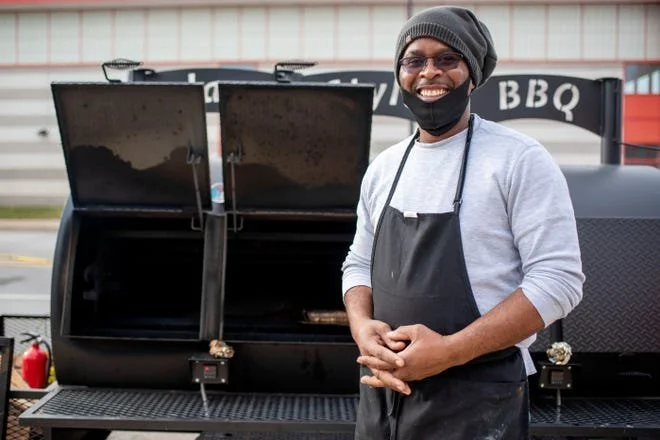
Battle Creek – On a cold Tuesday afternoon, Juliano Jean-Jules was outside Kellogg Arena, where he tended to some cherry wood-smoked brisket and jerk chicken wings on his rotisserie grill.
His sleeves were rolled up and he wore an apron and a knit cap. His mask only partly obscured the joy on his face as he readied the meats before darting inside to a commissary kitchen where he cooked and assembled dishes for curbside pickup.
“I put my heart into it,” Jean-Jules told the Battle Creek Enquirer. “I love doing the cooking. When people come and say it’s good, that pushes me. I do it from scratch. I take my time. If I have to get up early, I will do it, no problem. I have to make sure they get their food. I want my customer to have my food hot and the way they wanted it. If people are happy, I’m happy.”
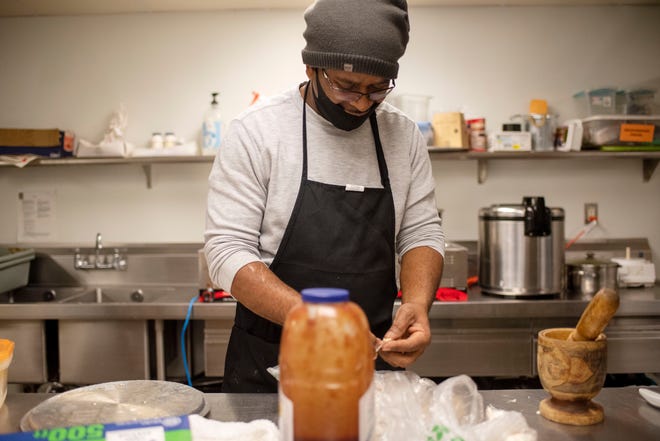
It’s been quite a journey for Jean-Jules to bring his one-of-a-kind blend of Caribbean- and American-style food to Battle Creek. A refugee from Haiti, his opening of Island Style BBQ represents a realization of both his personal dream and the American dream.
Jean-Jules and his wife, Daleth, have lived in Battle Creek for 12 years, where the couple raised their three adult children. His story begins in the port city of Saint-Marc, Haiti, as one of nine children.
“I was the older one in the house. My daddy was a fisherman with my mom. When they would go fishing, after school I would come home to prepare dinner for my sisters and brothers,” Juliano said. “That’s how I know I can cook. When they come home from fishing, I always tried my best for them.”
Jean-Jules said that as a teenager in 1990, he was making money by helping people into boats to flee the island nation after Jean-Bertrand Aristide, the democratically elected president of Haiti, was overthrown in a coup d’état and the military government was persecuting his followers.
One day, Jean-Jules said he “jumped on the boat and came.”
His boat was picked up by U.S. authorities and Jean-Jules subsequently spent over a year at a refugee camp at Guantanamo Bay, where some 50,000 Haitian and Cuban refugees would eventually be held. The naval base known as “Gitmo” has been used as a military prison for alleged enemy combatants since 2002.
“It was tough, but wasn’t locked down,” he said of the camp. “We would play soccer and go to the beach, go fishing. It wasn’t too bad.”
Jean-Jules’ first stop in the United States was in Lansing. He had relatives in Michigan but he did not know them yet, so he said he was homeless for weeks, living at the Lansing Capital Airport until an uncle in Brooklyn, New York sent for him.
Daleth had moved to Brooklyn from her native Guyana in South America when she was 13 and became neighbors with Juliano’s uncle. The couple met at a block party in 1994 and married six months later.
“He’s a charming fellow and there is something about the connection that was made,” Daleth said. “What drew me in was this smile that he’s got. That’s a nice looking guy who can cook and clean and do all this stuff.”
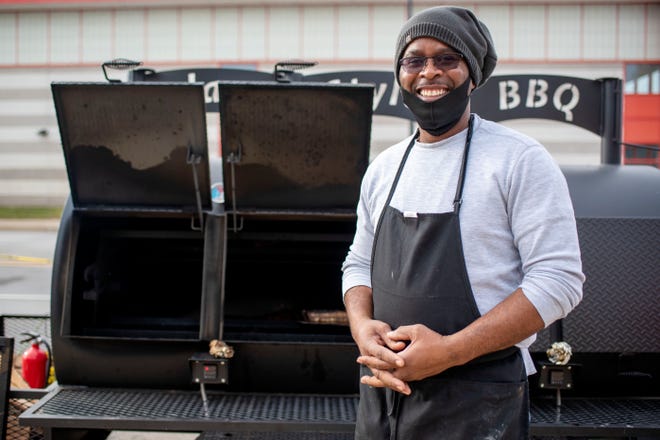
In 1997, the couple moved from New York to Lansing, where they opened a clothing store “that didn’t go very well,” Daleth said. Juliano partnered to open Lil’ BBQ Shack in 2016 before stepping out on his own.
The Jean-Jules family moved to Battle Creek in 2006 after Daleth took a job with the Battle Creek VA Medical Center, where she continues to work as the Homeless Program Manager while helping her husband with Island Style BBQ when possible.
Juliano made a name for himself locally after taking home the Judge’s Choice Award for 2020 Best Startup Pitmaster at the Que the Creek Festival at Kellogg Arena in February.
The genesis for Island Style BBQ began at the family dinner table, according to Daleth.
“He is from Haiti, I am from Guyana, we’ve got some adult kids that are American, first generation. The idea was born out trying to put all three cultures together in this nice collective,” she said. “You have Haitian, Guyanese and American culture in the same household. My husband loves cooking food and has always wanted to do that, so here was this unique opportunity to bring this to Battle Creek. This is my husband’s dream and vision.”
Island Style BBQ is targeting a spring opening of its brick and mortar location. It is operating as a pop-up restaurant during the holiday season, and is available for delivery through Eats BC.
The startup has been aided in its launch by the Battle Creek Small Business Development Office and through its membership in the Second Muse/Morning Light cohort, a six-month entrepreneurship incubator program supported by the city of Battle Creek, the W.K. Kellogg Foundation and other community partners.
While a pop-up restaurant isn’t how Juliano envisioned starting his own business, he’s grateful to be serving his food to a community that has embraced him and his family.
“I appreciate everything I have because life is tough,” Juliano said. “When I come to America, I thought America wasn’t going to be tough like that. But America is tough. The stuff I make, there’s not too many people who have it here. Some people say they have to go to Ann Arbor or Detroit. I can make the same thing as in Ann Arbor or Detroit, maybe even better.”
From Bean to Bar, Haiti's Cocoa Wants International Recognition
PORT-AU-PRINCE, HAITI - Although small in the face of South America's giants, Haiti is slowly developing its cocoa industry, earning better incomes for thousands of farmers and refuting the stereotype that culinary art is the preserve of wealthy countries.
Haiti's annual production of 5,000 metric tons of cocoa pales in comparison to the 70,000 metric tons produced per year by neighboring Dominican Republic, but the sector's development is recent in the island nation.
Feccano, a federation of cocoa cooperatives in northern Haiti, became the first group to organize exchanges in 2001 by prioritizing farmers' profits.
"Before, there was the systematic destruction of cocoa trees because the market price wasn't interesting for farmers who preferred very short-cycle crops," said Guito Gilot, Feccano's commercial director.
The cooperative now works with more than 4,000 farmers in northern Haiti.
By fermenting its members' beans before export, Feccano has been able to target the market for fine and aromatic cocoa.
"Feccano's customers pay for quality: they don't have the New York Stock Exchange as a reference," Gilot said.
Just-in-time collection
Smelling potential, Haiti's private sector began investing in the cocoa industry, which until then had been supported solely by non-governmental organizations and humanitarian efforts.
By setting up its fermentation setter in 2014 in Acul-du-Nord, the company Produit des iles (PISA) entered the market. But the logistical challenges are many.
"The producers we work with farm less than a hectare, often divided into several plots, whereas, in Latin America, a small producer already owns four or five hectares," said Aline Etlicher, who developed the industry at PISA.
"We buy fresh cocoa, the same day as the harvest so the farmer no longer has the problems of drying and storing that they would have if they sold it to an intermediary," the French agronomist said.
In recent months, this just-in-time bean collection from all sites has been more challenging because many roads were regularly blocked because of socio-political unrest.
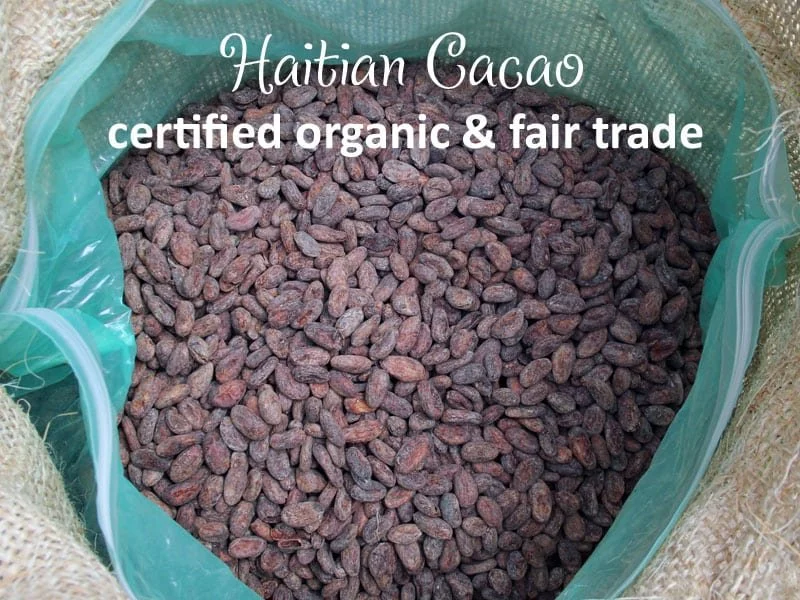
Maintaining organic and fair-trade certifications for the cocoa is delicate, but the Haitian style has made its mark abroad.
"Today there are bars sold in the United States that are called Acul-du-Nord," Etlicher said.
"With our customers, we are part of the 'bean to bar' movement of chocolate makers who transform the cocoa bean into the chocolate bar," she said, adding that by cutting out the middleman, Haitian producers' revenues have doubled.
And on the other end of the chain, bean processing remains local.
'Plant your cocoa'
For master chocolatier Ralph Leroy, making a rum ganache — Haitian, just like all the products he uses — was not an obvious choice.
After years in Montreal, he returned home to Haiti as a haute-couture stylist.
His shift to cocoa began when he made clothes out of chocolate for a culinary trade show. The training he then underwent for a year in Italy fueled his passion as much as his pride.
"The first week, I think I was insulted when the professor said, 'Chocolate is made for Europe. You there, plant your cocoa, we buy the cocoa and do the work,'" he recalled.
Today, Leroy runs the chocolate company he founded in 2016, Makaya, and the edible sculptures that come out of his workshop are a huge sensation at parties. His company now has about 20 employees who share his passion.
"Even in cooking schools, we don't learn this. I learned everything here and I am very, very proud," said Duasmine Paul, 22, head of Makaya's laboratory.
Echoes of car horns reach the ears of Makaya employees carefully sorting cocoa beans, a side effect of the chaotic traffic that paralyzes Haitian capital Port-au-Prince at the end of the year.
From his workshop, where he also concocts chocolate-based cocktails, Leroy sees as sweet revenge the great marketing of his bars.
"The greatest pleasure is when, before traveling, Haitians come here to buy a lot to offer abroad. It's become their pride. And also when Europeans come and buy all the stock. … I tell myself that I am doing a good job," he says with a burst of laughter.
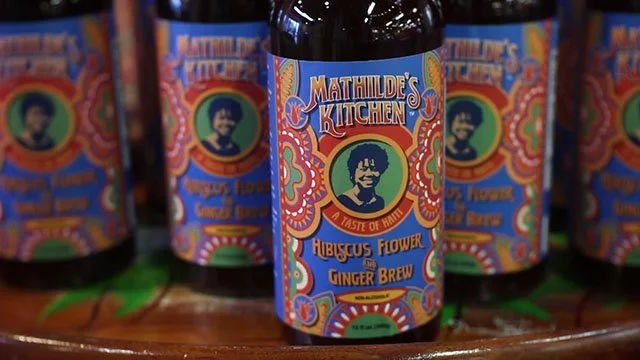
From Haiti with love: Caribbean cooking in Portland
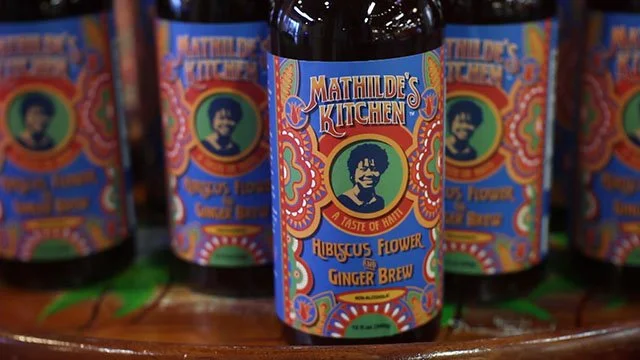
Local programs helped entrepreneur Mathilde Aurélien-Wilson scale up her business
PORTLAND, Ore. (KOIN) — When Mathilde Aurélien-Wilson first arrived in Portland, she noticed something missing: the great food of her home country, Haiti.
“When I arrive here, I was looking for some food, Haitian food, Caribbean food, and I couldn’t find anything. So I find there is an opportunity to do something part of the community, it’s a diverse community,” she told KOIN 6 News.

Aurélien-Wilson was able to find her path to establish and grow her food-centered small business thanks to Portland Mercado, a Southeast Portland food cart pod and non-profit that assists Latino businesses.
Originally Aurélien-Wilson sold her products at local farmer’s markets, then she opened her own food cart. With Portland Mercado’s help, she opened a second location at their food cart pod.
The non-profit was then able to secure her a scholarship to attend a Portland Community College program called Getting Your Recipe to Market.
“That help me boost my knowledge about how to package. So I realize instead of selling my food and my beverage at the food cart, I can package and have it available for a bigger audience,” Aurélien-Wilson explained.

Mathilde’s Kitchen has since done away with the food cart format and is now a wholesaler of a pre-packaged ginger hibiscus drink for local grocery stores and a catering service. Offerings include dishes such as roasted pork, chicken pumpkin soup and fried plantains. She still uses Portland Mercado’s shared commercial kitchen space for her business.
Aurélien-Wilson and her husband Bruce Wilson previously started the first school at her home village in Haiti before moving to Portland in 2013.
Called La Renaissance Elementary School in the hillside village of Au Cenre, the school started as nothing more than a shack but has since grown to a prominent building of the village.
“It wasn’t that easy because with nothing available, no running water, no electricity,” it was difficult to get teachers to come in, Aurélien-Wilson said.

Eventually, they worked out a system where professional teachers would come in to train the local villagers to teach.
The school now partners with the Haitian government to help run it.
“We have them taking over the school. We still oversee what’s going on. But at least they’re taking on with the curriculum, with the teacher, the daily supervising, I cannot do it,” Aurelian-Wilson said.
Previously to moving to Portland, the entrepreneur lived in St. Croix in the U.S. Virgin Islands.
However, when the devastating 2010 earthquake struck Haiti, where many of Aurélien-Wilson’s friends and family still lived, she took a plane over there the next day.
She helped set up a camp in her sister’s backyard to facilitate emergency medical attention with 30 volunteers.

“We were right there where people couldn’t reach the bigger hospital, the bigger care and we were trying our best,” Aurélien-Wilson recalled.
She says in the future for her business she wants to produce more flavors for her beverage line and become a Farm to School food provider for public schools in Oregon.
“Amazingly, not only Caribbean people like the food, I find people that from many other sides of the world, when they taste it, they tell me it reminds me of their home food, their mom’s food,” Aurélien-Wilson said.

Haitian and Jamaican Patties, Traditional and Not, in Brooklyn

If you took a slow-motion video of yourself biting into a Haitian patty at Kafe Louverture in Bedford-Stuyvesant, Brooklyn, it would look like this: The outer layer of pastry would shatter dramatically, like powdery snow blasting off a pair of skis. Then your teeth would sink into the gently simmered filling — beef or lamb, maybe, punctuated with sprightly flecks of pepper.
For the dough, thank Joanne Saget’s grandmother Andrea Remy. When a 7-year-old Ms. Saget moved to Brooklyn from Haiti with half of her family, they lived with her grandmother in Midwood. The matriarch made patties daily, and eventually taught Ms. Saget her technique.

Ms. Saget updated the recipe, swapping in butter for shortening, and adding a dash of whole-wheat flour for a whisper of nuttiness. At Kafe Louverture, which she opened in 2015 with her husband, Anthony Cunningham, she is carrying on a larger family tradition than she originally thought.
“Two years ago my aunt told me that my grandmother owned the biggest bakery back in Haiti,” Ms. Saget said. “I thought she just owned a market — but my aunt said no, she made patties and she made bread.”
Patties and excellent Haitian coffee are the main draw here, and you’ll often see neighbors popping a head in to ask which fillings are currently available. The chicken and beef are prepared identically, marinated in what Ms. Saget calls “green seasoning” before their eventual sauté. The seasoning’s green and Scotch bonnet peppers are the loudest ingredients, punctuating an otherwise sultry filling with bitter, fruity and spicy outbursts.
Under Ms. Saget’s watch, dried fish are resurrected into softness, then packed into her handmade puff pastry. Dried herring soaks overnight before its time in the pan with green seasoning; in patty form, it’s smoky and salty, its toughness turned into something sturdy but delicate.
Kafe Louverture has the look of an artsy-industrial coffee shop, with exposed brick and a warm wooden counter that overlooks the street. Haitian art — portraits, woodwork — hangs on one wall, opposite a row of shelves offering hot sauce, handicrafts and coffee from Haiti.
The couple have pledged to import $250,000 worth of products this year. “We want to keep the Haitians working,” Mr. Cunningham said, considering the political turmoil that has disrupted the economy since 2018. “We want to make sure that when the country slows down, the money is still funneling to the people — the farmers, the artists.”Jamaican Patties With a Twist8 PhotosView Slide Show›John Kernick for The New York Times
Just across the borough, another husband-and-wife team is reimagining traditional Caribbean patties. At Branch Patty, which pops up each weekend at Artists & Fleas Williamsburg, Sam Branch and Lisa Lloyd-Branch serve Jamaican patties with crusts that skew more colorful than their Haitian counterparts, shaped into half-moons rather than rectangles.
When the couple were first dating, they would visit Christie’s Jamaican Patties on Flatbush Avenue. The restaurant, which has since closed, had been a childhood favorite of Mr. Branch, who grew up in New York and whose family is from Barbados. Its patties were the ideal on which he modeled his own.

Christie’s and its competitors often used food coloring for their crusts’ signature ocher hue, but Mr. Branch wanted to go all natural. His chicken curry and squash curry patties — two of his best — glow with a crust made yellow from turmeric; the beef patty’s red exterior comes from paprika. He is careful about his meat, and eager to note that the beef is pasture-raised, the chicken freshly ground by a local butcher.
And while Jamaican patties are Mr. Branch’s favorite style, he is not too beholden to tradition. He uses Guyanese curry powder instead of Jamaican, for its stronger punch. And his fillings are generous, each patty a full meal, almost all of them electrified by Scotch bonnets.
People have teased the couple for their flavor combinations, Mr. Branch said. “People say, ‘Oh, that’s so … different.’ But you have to push boundaries.”
He fills one of his vegan patties with jerk-flavored mushrooms, less a meat replacement than a replacement for boring veggie patties. (The only downside of Branch Patty’s thoughtful vegan offerings is a crust that can at times be dry and chewy.)
But the Branches don’t want to stray too far from where they began. “Now, when people come to Artists & Fleas, they’ll say, ‘Do you know a spot called Christie’s?’” Mr. Branch said proudly. “They say, ‘This reminds me of a patty that used to be around.’”
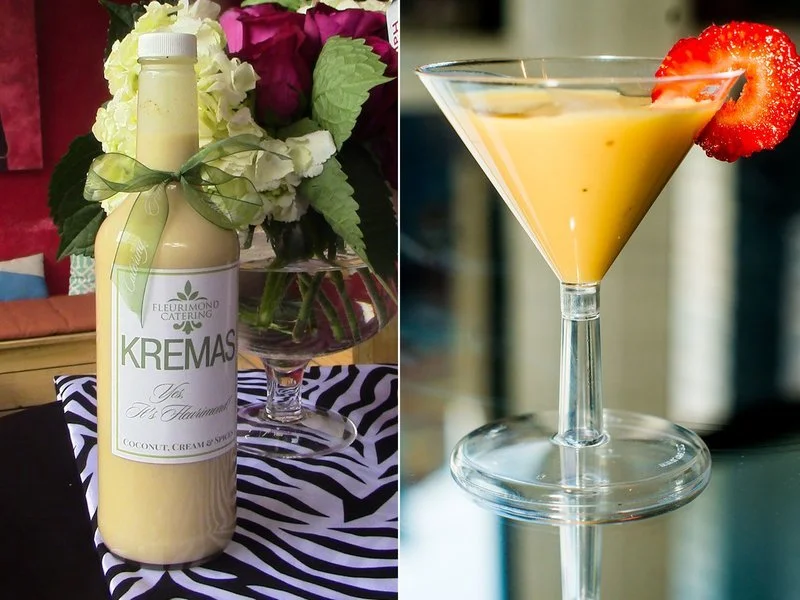
Cremas Is Haiti's Beloved Holiday Beverage That You Should Drink All Season
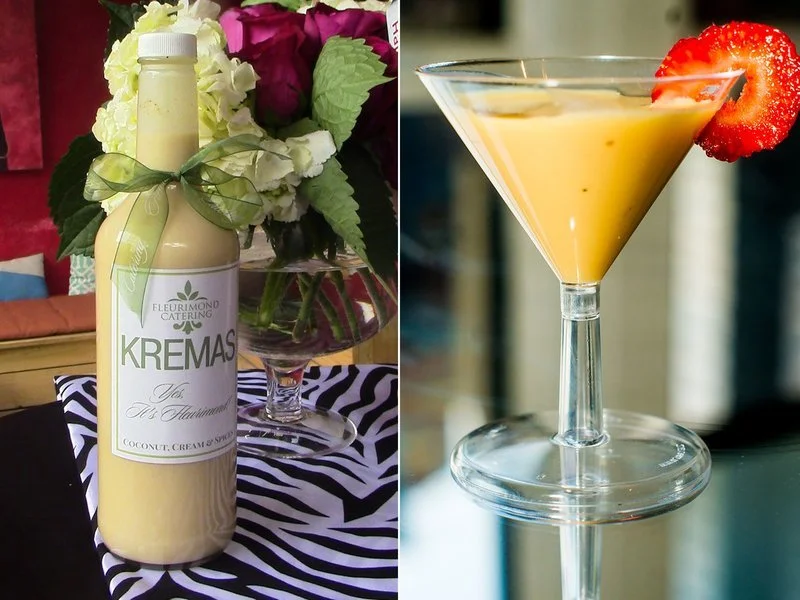

"We associate cremas with the best parts of growing up: communions, weddings, and the holidays. It’s a celebration drink.”
When I asked Nadege Fleurimond, chef and author of Haiti Uncovered, to describe cremas, she paused. Breaking into a wide smile, she said, “It’s like eggnog, but a million times better and without eggs. Think coquito, but creamier, flavorful, bold, and robust.”
Cremas, also spelled kremas, is the celebration drink of Haiti. Its foundation is a mix of condensed and evaporated milk, which is enhanced with cream of coconut, nutmeg, cinnamon, vanilla, and lime. Other variations include almond extract or raisins. Traditionally, the spirit that makes cremas so festive—i.e., boozy—is clairin, a clear liquor that Fleurimond says is akin to moonshine. It's derived from the juice of Haiti’s organic, native sugarcane varieties, which is then fermented by wild yeast. Made in rural areas untouched by industrial farming practices, clairin’s flavor is complex and varies by region, time of year, and producer.
“This is what the everyday Haitian drinks as their liquor, and this is what we use to make our cremas traditionally,” Fleurimond says. However, clairin is not readily available in the States, so other spirits are used. “In the States, people make it with rum since clairin is not common here and with Haitians, the choice of rum is almost always Barbancourt.”
The regional differences among varietals of cremas are not insignificant, as Fleurimond discovered traveling throughout the island for her cookbook, Haiti Uncovered.
“In the north of Haiti, coconut is typically not used in cremas. Southern Haitians tend to use coconut in a lot of foods, and cremas is no exception,” Fleurimond says. However, recent decades have seen some fusion of regional styles. “With the internet and more communication between towns, there is more of a culinary exchange, and you’ll see some people selling cremas made with coconut milk in the north.”
This culinary exchange is not just isolated within the island nation, but across the Atlantic to many Haitians of the diaspora. Charlene Absalon, owner of Queens-based Cremas Absalon, is part of a collective of Haitian-American entrepreneurs looking to educate others on the richness of Haiti’s food and culture. What started as a way for Absalon to learn more about Haitian cuisine turned into a business, and she created Cremas Absalon in 2013. Her cremas uses dark rum and omits the coconut for a more fluid consistency.
Absalon is not afraid to challenge tradition with flavors such as coffee, cinnamon, creme brûlée, and hazelnut, an ingredient not found in Haitian cuisine. “I’m taking these American recipes I collected as a child and incorporating them into Haitian flavors,” she says.
Despite initial pushback from some members of her community for not being “authentic” enough, Absalon is on a mission to redefine cremas. “I wanted to evolve what cremas should be. I call my cremas ‘new age’ because I wanted to create different flavors that pair well with the creaminess, and something that is versatile,” she says. Her version of cremas has found local and national success, so she plans to expand her home-based business to a retail location next year.

While opinions abound on how to make great cremas, both Fleurimond and Absalon agree that cremas should be full of flavor, and well-balanced. Great cremas should leave you guessing — and wanting more.
“You need that smooth, creamy texture first. For me, having coconut is crucial, because it’s what most of us know,” Fleurimond explains. “You also need a nice balance of flavor. Cremas is an alcoholic beverage, so it should be sweet but have a little kick to put you in the holiday mood.” Absalon echoed Fluerimond’s sentiment: “It’s a very rich product that is time-consuming and you have to make it right — having good cremas is a delicacy.”
And if there’s a right way of making it, there’s a right way of drinking it, too. “I tell people to drink cremas like you would drink scotch: you pour a little bit in a cup, with or without ice, savor, and enjoy,” Absalon says.
Like many treasured holiday recipes, cremas is firmly embedded in memories, and its cultural significance is not to be downplayed. “We associate cremas with the best part of growing up: communions, weddings, and the holidays. It’s a celebration drink,” Fleurimond says.
For Absalon, creating cremas is not only a way to introduce the celebratory drink to the masses; it also serves as a tool to educate others beyond the one-sided narrative of Haiti portrayed in the media. “People see Haiti and they think about poverty and corruption, and I want to show that we have great food and culture, too,” she says.
Below, find Fleurimond's recipe for ten servings of cremas:
Mix two cans of cream of coconut (sweetened); two cans of sweetened condensed milk; one can of evaporated milk; one teaspoon of nutmeg; one teaspoon of cinnamon; two cups Rhum Barbancourt, Wrey and Nephew Overproof Rum, or grain alcohol; one tablespoon vanilla extract; one tablespoon almond extract; one teaspoon of lime juice; and the zest of one lime; and a pinch of salt. Chill for at least four hours (preferably overnight), and serve with ice.
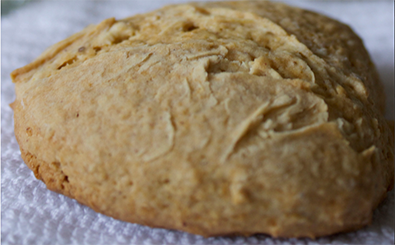
Konparet
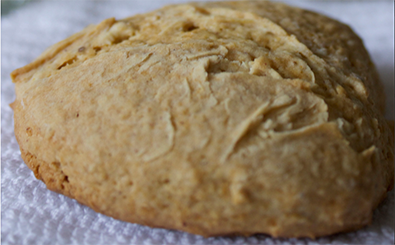

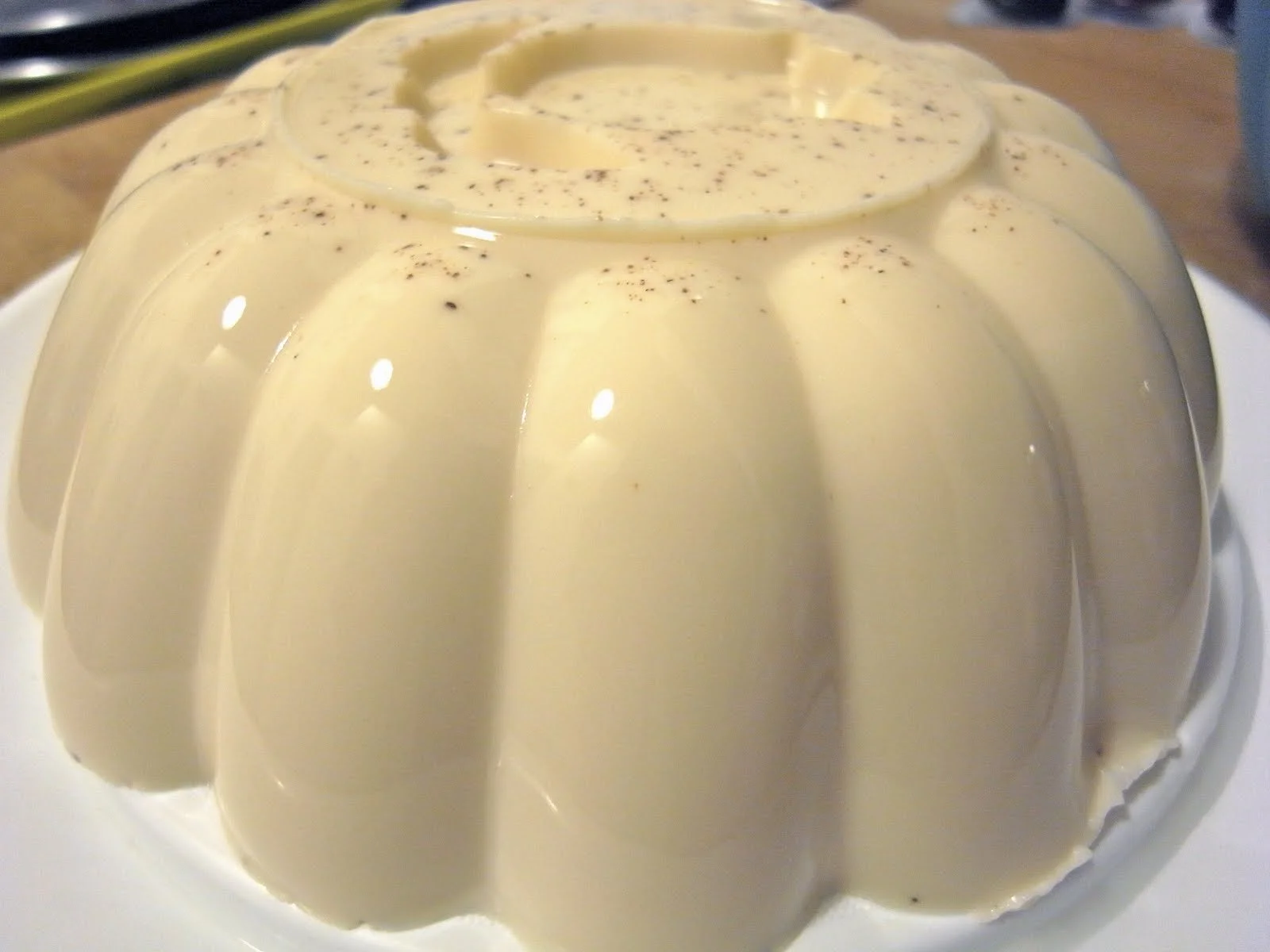
Blanc Manger (Custard pudding)
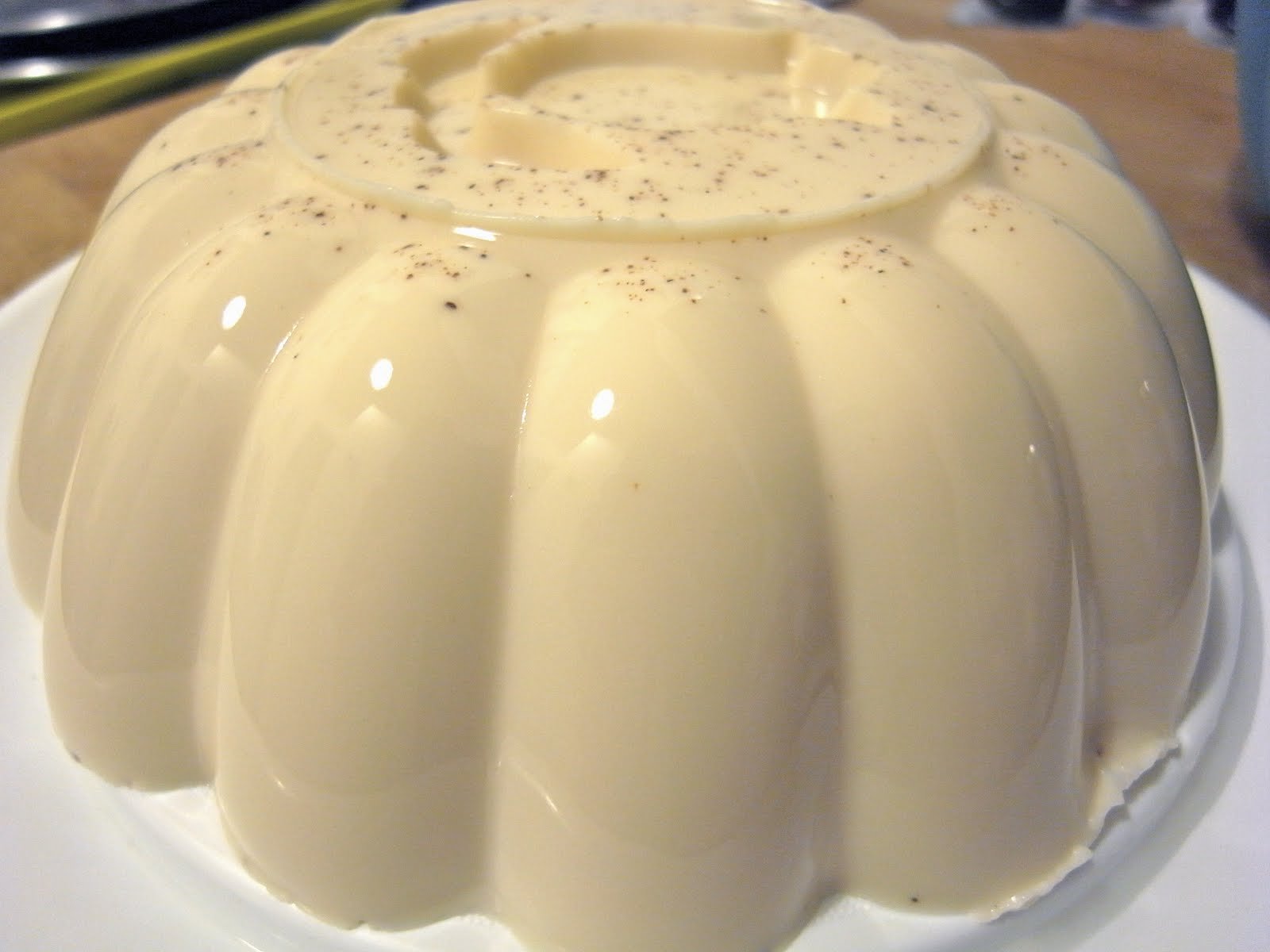
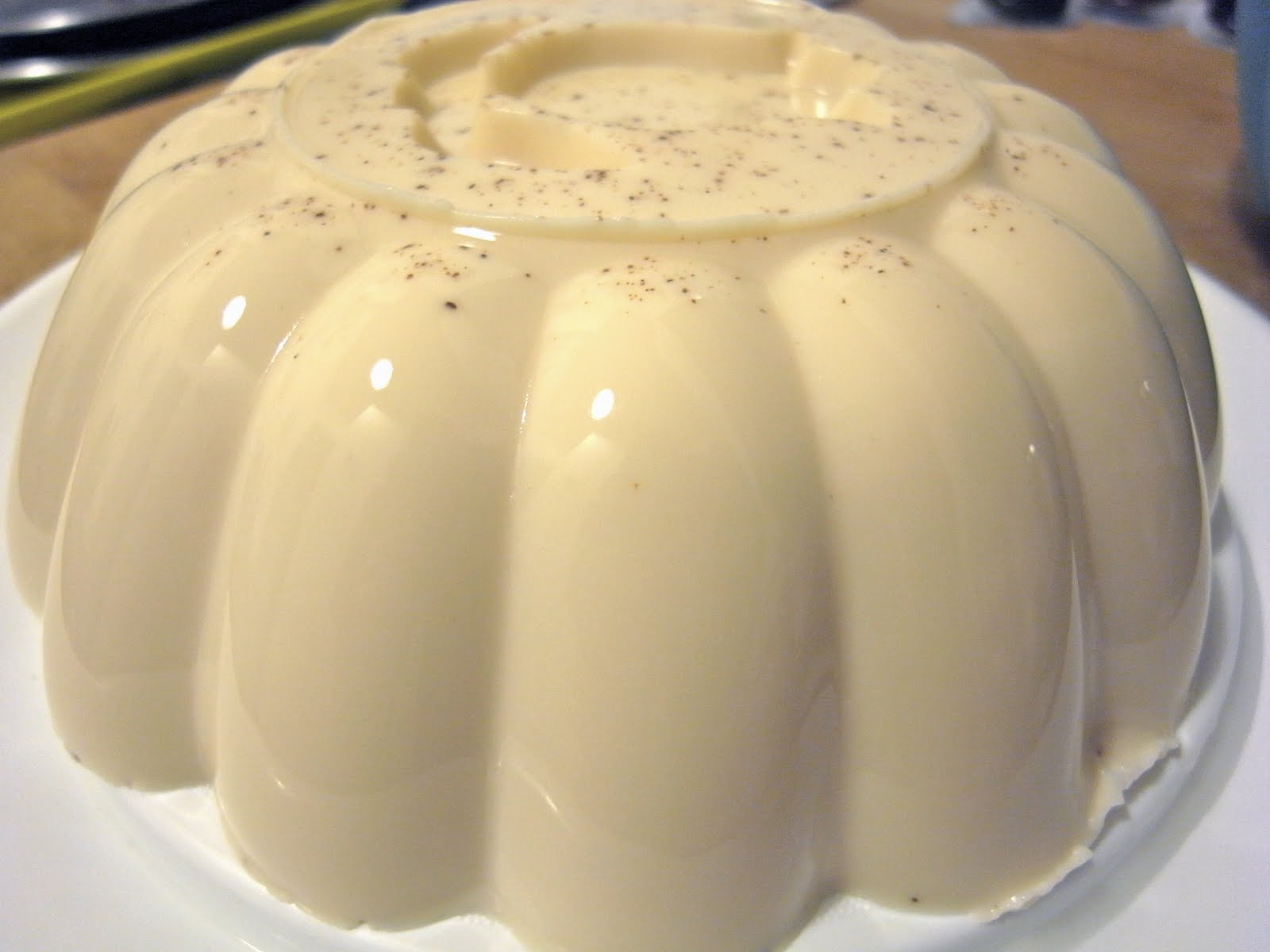

Akasan/ Ak100



Jus Papaye (Papaya Juice)


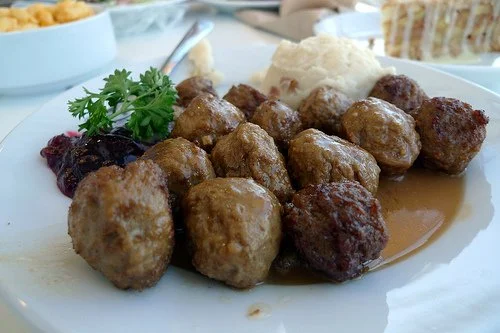
Boulette (Meatballs)
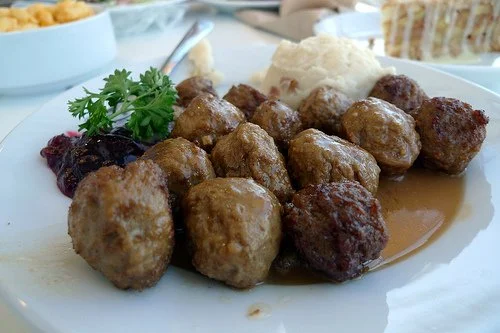


Ginger and Cinnamon Tea


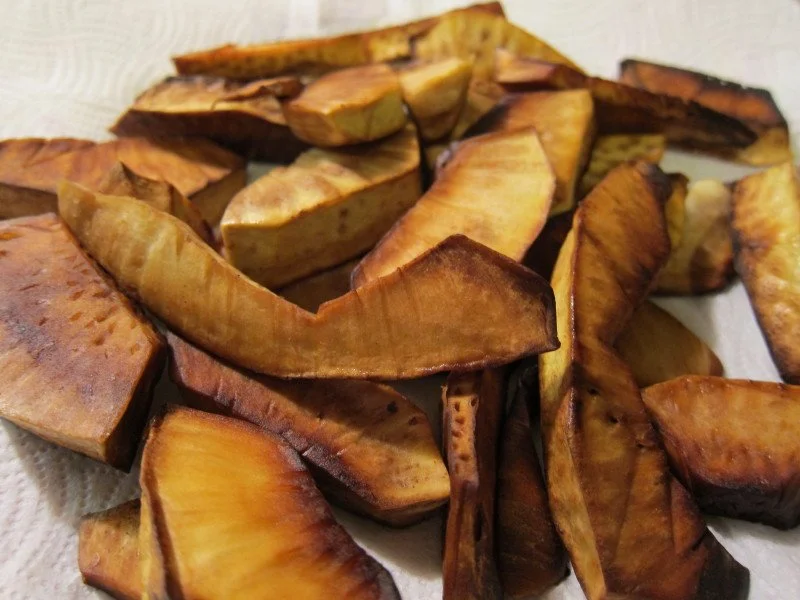
Veritab Fri (Fried Breadfruit)
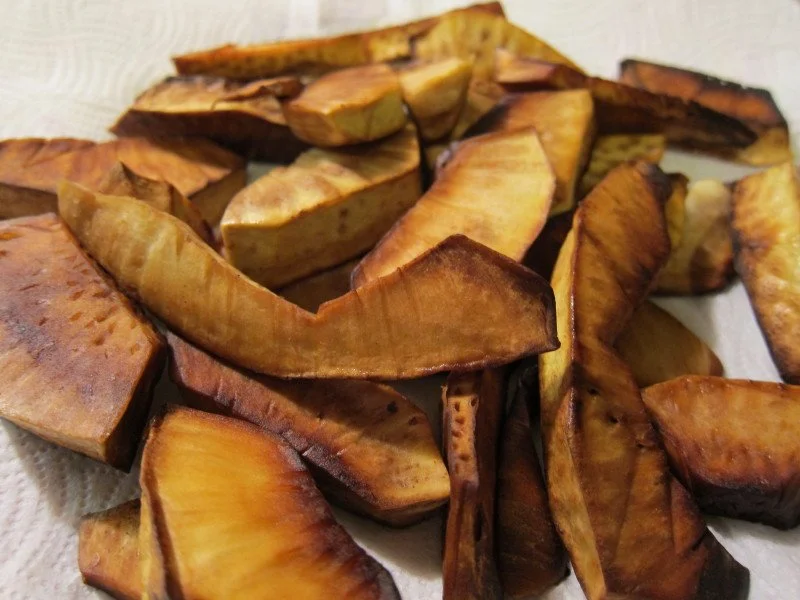

Ingredients:
1 breadfruit, peeled and cut2 cups of oilsalt to taste
Directions:
1. Preheat oil in a deep-fryer or saucepan over high heat.2. Peel, core, and cut the breadfruit into medium-size chunks.3. Reduce to medium-high and deep-fry the breadfruit chunks.4. Cook in the oil for 25 mins.5. Remove from the oil and press the breadfruit pieces flat.6. Deep-fry the pieces over high heat until golden brown for 2-3 mins.7. Salt to taste.
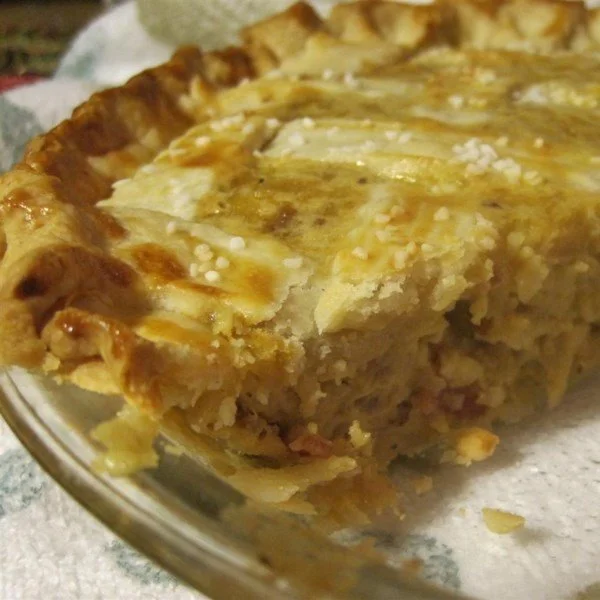
Tarte a l’ oignon (Onion pie)

Bechamel sauce ingredients1 cup of evaporated milk2 tbsp of flour1 tbsp 1/2 of solid, cold butter
Onion preparation ingredients4 white onions7-8 tbsp of oil1 tbsp of butter
Directions
Cut your onions into cubes. Don’t worry about the quantity since they will eventually decrease in size as they cook.Take a deep pan and put it onto a low fire. Pour in your olive oil and add butter . This part is very important, DO NOT LET YOUR OIL AND BUTTER FRY! You should not hear the sizzling sound.Add your onions into the mix and use a wooden spoon to stir the onions.Keep stirring gently without stopping.Your onions should have a translucent appearance and should not stick to the pan. At this point you’ll start realizing that they have started decreasing in size. This should take no more than 30 mins.
To prepare your bechamel sauce, you need a small pot. Pour your milk into the pot and stir it for about 5 mins on low heat.Add your butter, gradually, you will add your flour into the butter and milk mixture, It will thicken. Make sure you mix well. You will obtain a thick bechamel sauce. You can now add maggie cube and the onions to the sauce
Pour the onion mixture into a prepared pie dish. Bake in 350 degree for 30mins
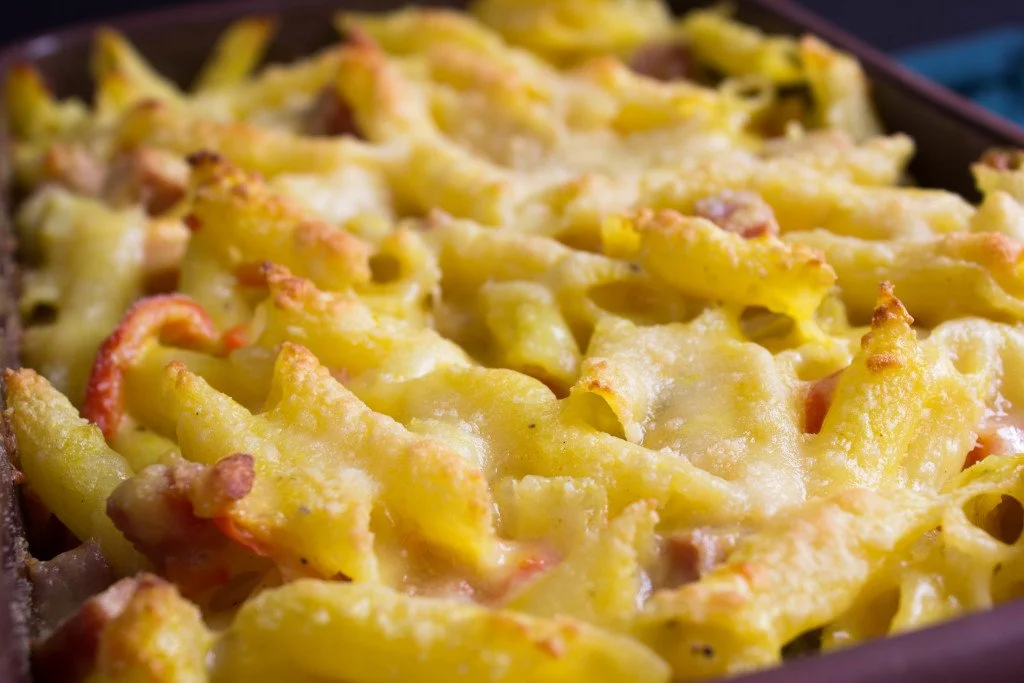
Macaroni Au Gratin
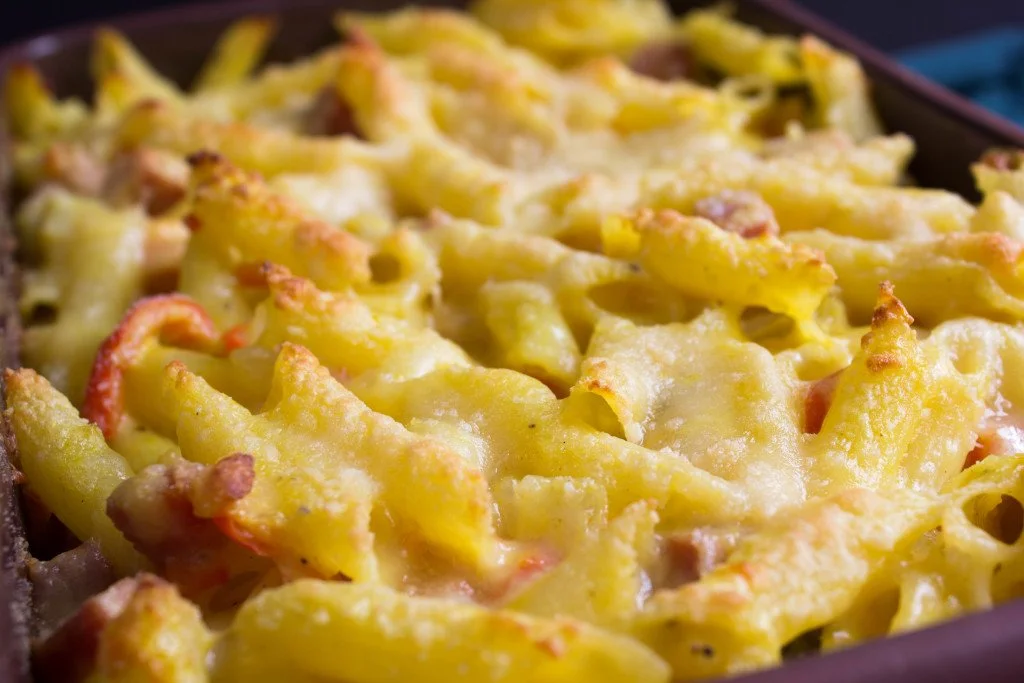

INGREDIENTS:
DIRECTIONS:
Bring a large pot of water to boil over high heat. Add the macaroni and let it cook until soft yet firm. 1. Add the onions and Maggi chicken broth. 2. Reduce heat and keep stirring occasionally. 3. Stir in the Velveeta cheese, until melted. 4. Keep stirring constantly to avoid the cheese from sticking to the bottom. 5. Add butter and Parmesan cheese. 6. Pour in the carnation milk and stir. 7. Remove from heat and pour into a greased baking sheet. 8. Preheat oven to 300 degrees. 9. Place in oven and bake for an hour and 20mins
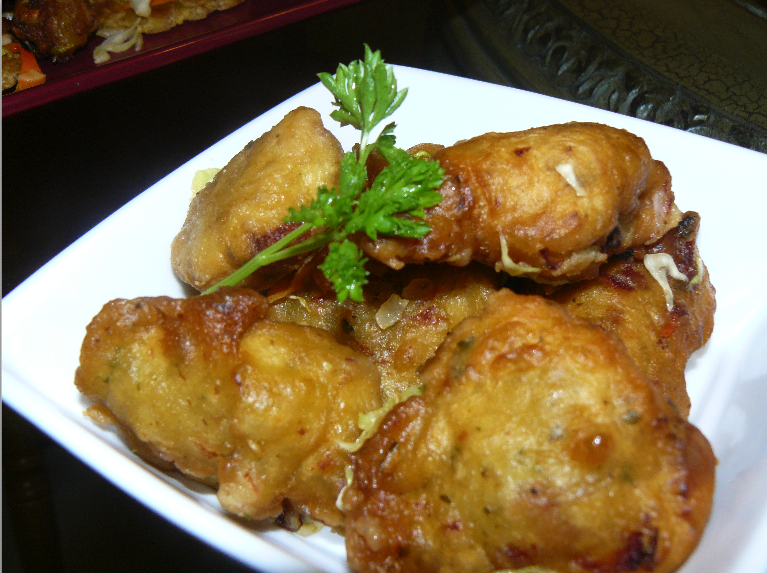
Marinade (Fritters)
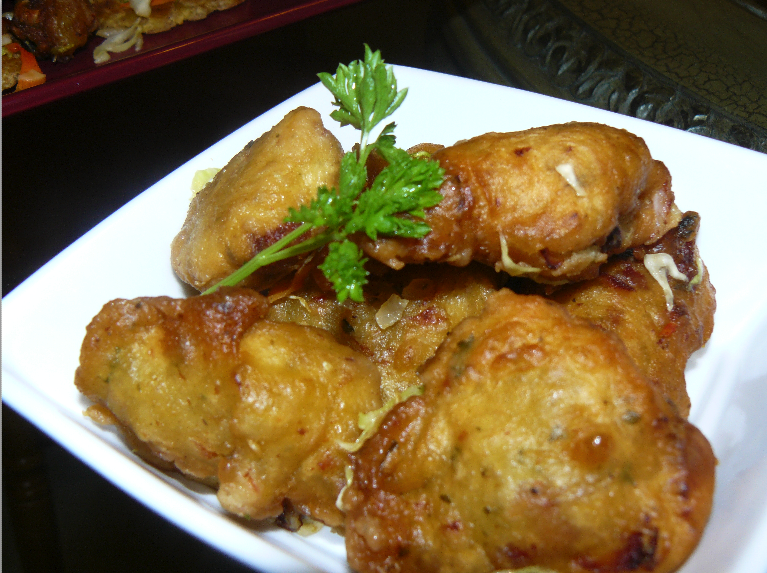
 INGREDIENTS: 1 shallot, minced 1/2 onion, chopped 1 garlic clove, crushed 1 scallion, chopped 2 cups of water 1 tbsp of Adobo 1 tsp of black pepper 2 tsp of hot sauce 1 tsp of parsley 2 eggs 2 tbsp of baking soda 1 cup of flour 1/2 cup of olive oil
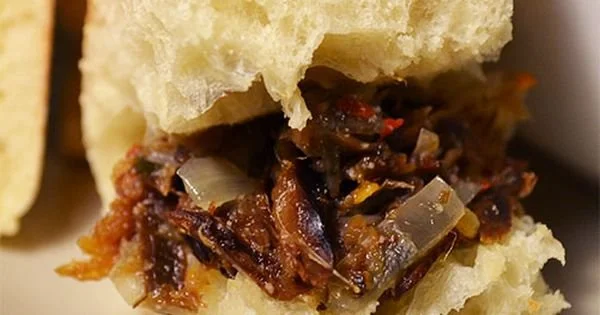
Chiktay Aran So (Smoked Herring Chiquetaille)
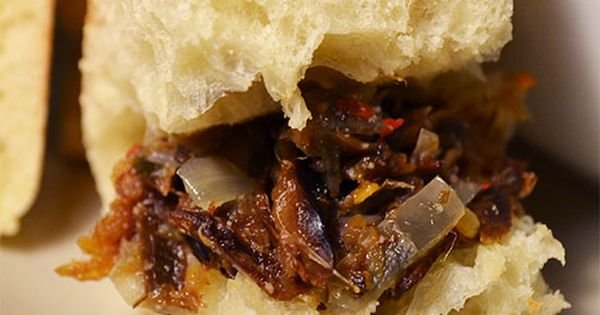

This dish needs to start being prepared at least one day in advance.Serves : 3
Ingredients:
- 1/2 cup of oil
- 1 Purple onion cut into cubes
- 2 -3 Caribbean Pepper (Scotch Bonnet Peppers)
- 1/2 cup shallots (chopped)
- Black Pepper to taste
- NO SALT
- 4-5 smoked herrings
- 1/4 cup white vinegar
Directions:Because the smoked herring is very salted and dry (this is done to preserve the fish so that it doesn’t perish ), the first process will be to desalt the fish.
- Fill a pot with water at room temperature. Let your herring soak inside the bowl for 10 to 12 hours or simply overnight. Change the water as often as you think you should. Check for saltiness.
- Fill another pot with water, just enough to cover the fish. Let it boil for 10-15 mn. You will notice that the fish will slowly open up, exposing its bone.
- Once you’re done boiling, drain the water out and start ” fishing” for bones. Take out all the very hard bones. You don’t have to worry about the soft ones, they’re edible. Tear the fish into small little pieces
- In a pan, whisk your oil and vinegar together, then add your herring to the mixture.
- Wash your Caribbean Peppers, throw out the seeds and cut into small pieces (using gloves)
- Add peppers to the oil-vinegar-herring mixture. Add the remaining seasonings (shallots, onions, black pepper)
- Mix well for about 5 min, stirring regularly.
It is possible that while boiling the herrings, you may remove all the salt, if that happens, you may add some salt. Chiktay is usually served with Haitian bread.
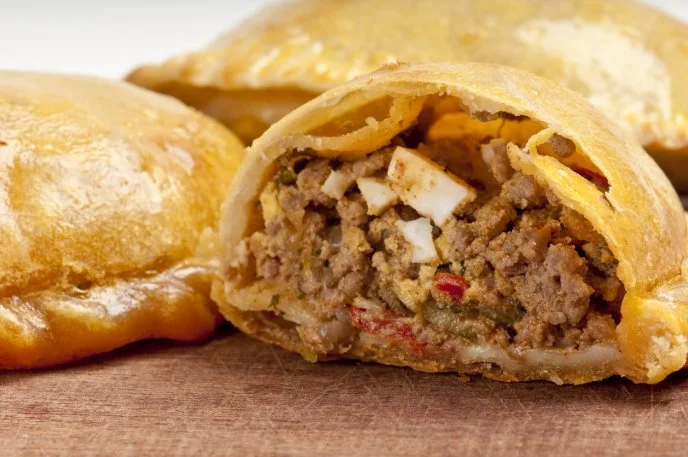
Pate Kode


Ingredients
- 2 cups of all-purpose flour
- 1 tsp. of salt
- 1 cup of cold water
- 2 cups of oil
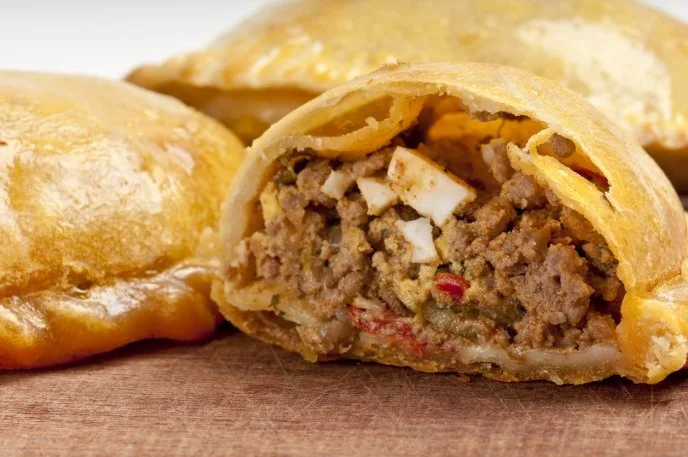
for the filling: Anything of your choice, here is a list of what you can usually find in the Haitian pate kode
- Aran So (Smoked Herring)
- Morue ( Cod fish)
- Hot Dog (Cut in dices or rondelle- slice-)
- Zeu Bouyi ( Boiled egg- cut in half)
- Pikiliz
- Ground beef
- Or you can mix any two of the above together. Sautéed onions really add to the fillings.
Directions
- Prepare your filling
- Pour your flour and salt in a large bowl
- Gradually pour in your water as you mix with a large spoon.
- Then, use your hands to knead the dough. If your mix is too dry, add some more water. If your mix is too sticky, feel free to add a little bit more flour. Only you can tell how consistent your dough is. So if you feel that you must keep going back and forth with your water and flour, do so!
- Sprinkle some flour on your counter. Use a rolling pin to roll out your dough. Make sure that it is not too flat and definitely not too thick.
- Use a knife and cut out about 2″x 4″ pieces. Quite frankly it could be of the size of your choice. However, in Haiti we like to make them a bit big, that way you have enough room for a lot of filling.
- Using a fork, put some filling on one half of your cut out pieces then, fold the other half over your filling. Use the end of your fork to seal in your filling by pressing on the ends of the dough.
- In a deep frying pan, heat your oil. Deep fry your patties. This shouldn’t take long since your filling is already cooked. One way to know that your patties are ready is if your dough has browned.