
Haitian Student in Taiwan Invents Solar-Powered Backpack for Reading
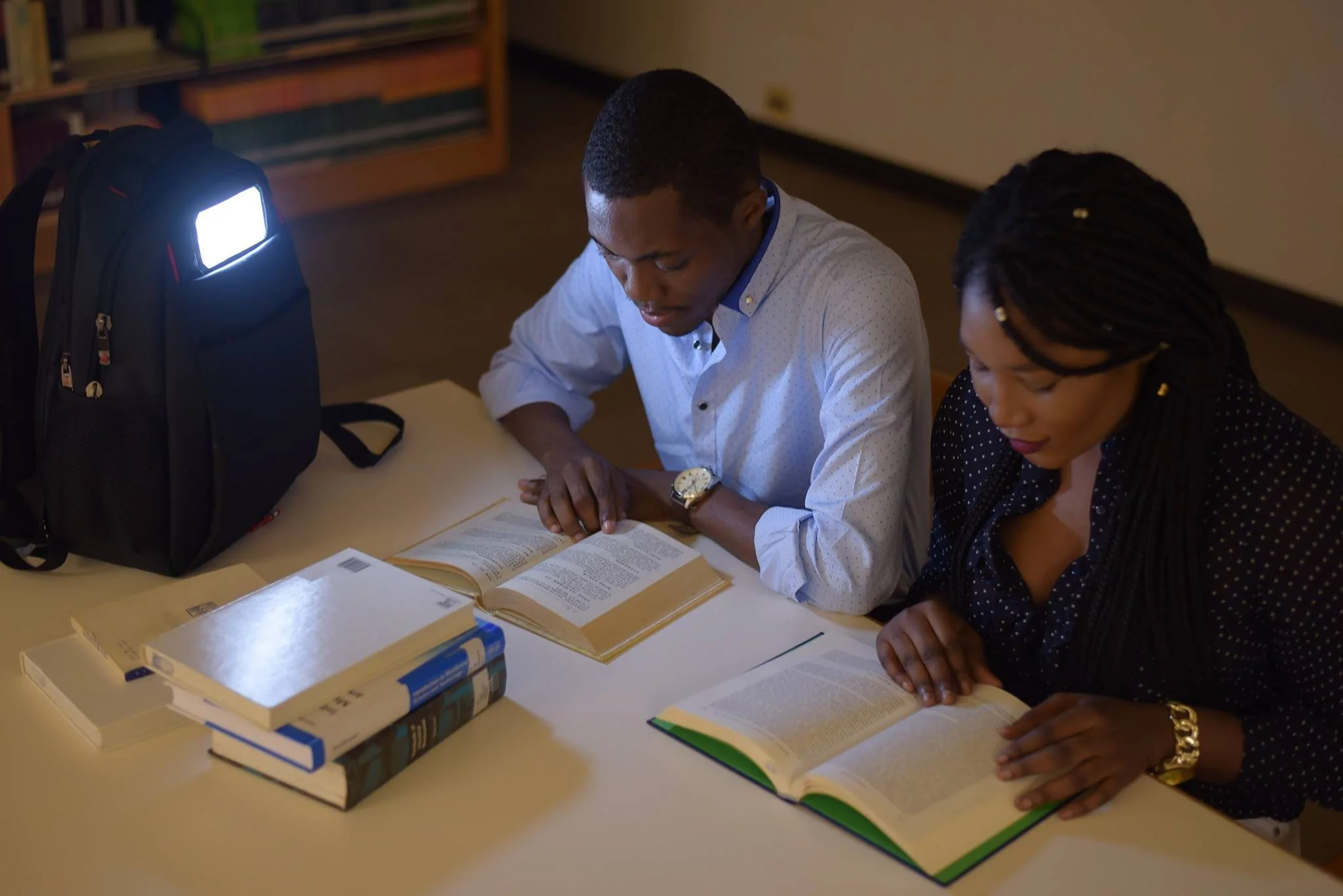
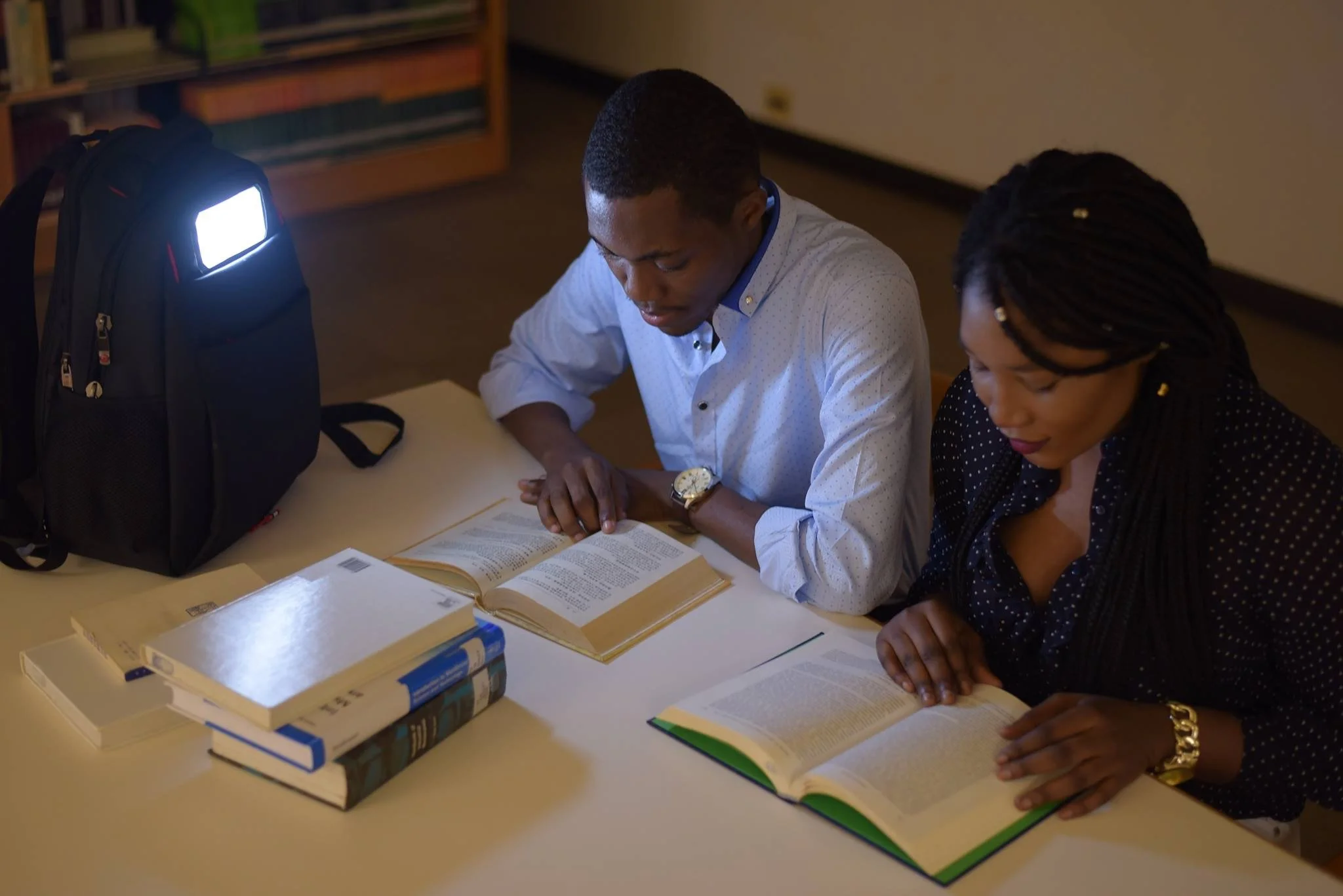
TAIPEI (Taiwan News) -- A Haitian man who is currently studying in Taiwan has invented a school bag which can provide light for reading and power to charge mobile phones generated from a built-in solar panel.
Mike Bellot, 26, who came to Taiwan four years ago to study global politics and international trade at Tamkang University, is set to launch what he calls "Solo Bag," a bag powered by solar energy that he believes will affect the lives and the future of 1.2 billion people who are living without access to electricity in developing countries.
Bellot and fellow Haitian Torcel Wendianne were inspired to invent the bag after the tragic death of his close cousin due to a fire caused by a candle used for light in his native Haiti. His cousin had been studying to be a doctor, but like 63 percent of the population in Haiti who lack regular access to electricity, he was forced to read by candle light, and after having nodded off during a late study session, the untended candle started a massive fire which consumed the home and killed his cousin in the process.
Because the tragedy hit so close to home, Bellot is very passionate about not only bringing this product to his native Haiti, but also to the 1.2 billion people or 16 percent of the world's population who do not have access to electricity, according to the International Energy Agency in 2016.

According to Bellot, Solo Bag comes with a solar panel, integrated battery, USB port, GPS tag for tracking, and an integrated LED lamp, enabling students who do not have access to electricity to safely and cost-effectively study and do homework during the night. The bag also provides enough energy for a family to charge mobile phones, tablets, and other electronic devices. The bag can store enough energy from one hour of exposure to the sun for six hours of light and charge two mobile phone
To launch the product, he plans to launch a startup company called Solo Haiti and display the Solo Bags in an independent showroom during an event in Haiti and get immediate feedback from the buyers and retailers. After showcasing it, he will begin to take pre-orders and make it available also online for buyers outside the country.
If you would like to help crowdfund this innovative product, please visit their gofundme page.
By Keoni Everington | June 2017
Sickle-Cell Patients See Hope in CRISPR
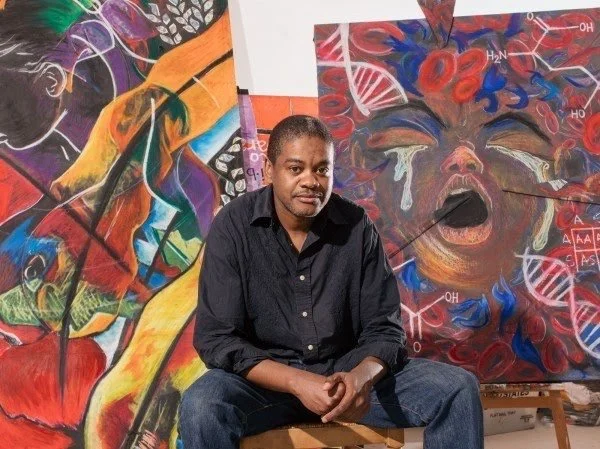
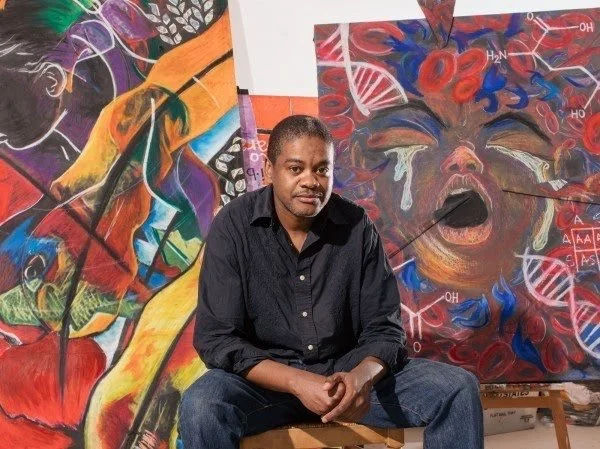
Hertz Nazaire is a soft-spoken artist who likes to paint in bright colors, with subjects like rainbow palm leaves and dancing women in twirling skirts. But one series of paintings he’s created is darker. Here, deep-red discs contrast with misshapen, bluish-purple ones against a black background. One canvas shows an African face drowning in the red and blue shapes, eyes streaming with tears, mouth agape in pain. The work reflects his lifelong struggle with sickle-cell disease.Nazaire, a 43-year-old Haitian-American, figures he’s been hospitalized more than 300 times since he was a child. He and other sickle-cell patients will tell you that the worst part of the disease is the debilitating pain. “It’s a horrifying thing to have, because it’s extremely painful. It’s a major fight all the time,” he says.Roughly 100,000 people in the U.S. have sickle-cell disease, most of them African-Americans and Latinos but also people of Middle Eastern, Asian, Indian, and Mediterranean descent. Compared with the average American, they live much shorter lives—about 40 to 60 years.The cause of sickle-cell has been known for a century, but the disease has long been underserved by the medical establishment and the pharmaceutical industry. That may be about to change. Its genetic origin—a single, well-studied mutation—makes it an attractive candidate for treatment with the gene-editing tool CRISPR. The idea is that CRISPR could correct the genetic mutation responsible for sickle-cell so that patients’ bodies could make normal red blood cells, alleviating the pain and other severe symptoms associated with the disease. Researchers have already tested the gene-editing tool on human sickle cells in the lab and are now working on getting the technique to clinical trials. Early results hint that sickle-cell could be among the first diseases that CRISPR essentially cures.Despite the lingering safety concerns about using CRISPR in people, some sickle-cell patients and their doctors are already embracing it. “I would be one of the first people to volunteer and say, ‘I want to take part in a study,’” Nazaire says. He first heard about CRISPR two years ago, when he came across a YouTube video featuring Jennifer Doudna and Emmanuelle Charpentier, two of the inventors of the technology. He’s been enthusiastic about the idea of using CRISPR to treat sickle-cell ever since.Sickle-cell disease is one of the most common genetic disorders, affecting millions of people around the world. It’s caused by a mutation in a gene known as HBB, which makes hemoglobin, a protein that transports oxygen throughout the body. Blood cells with healthy hemoglobin are red and disc-shaped. Cells with abnormal hemoglobin are shaped like sickles used to cut wheat, the characteristic that gives the disease its name.These misshapen cells are sticky and clump together. When too many of them build up, they create blockages in blood vessels and cut off oxygen to nearby parts of the body, causing severe episodes of pain. The disease can also cause frequent infections, eye problems, and organ damage.CRISPR Therapeutics is one of a handful of gene-editing startups pursuing new treatments for sickle-cell. The company's approach involves isolating stem cells from samples of patients’ blood. Scientists would use CRISPR to activate a genetic switch that would raise the levels of a fetal form of hemoglobin in red blood cells, turning them healthy. This fetal hemoglobin effectively counteracts the effects of the sickle mutation. The modified cells would then be infused back into the patients.Samarth Kulkarni, president of CRISPR Therapeutics, says this is safer than injecting the gene-editing mechanism directly into the patient. That’s risky because CRISPR can cause unintentional or off-target edits, meaning it may cut DNA it isn’t supposed to. Editing cells outside the body will allow scientists to make sure the technique works before reintroducing the cells, he says.Testing the method in lab experiments using stem cells taken from sickle-cell patients, researchers at CRISPR Therapeutics found that 85 percent of the cells were successfully edited, which means they were able to make healthy red blood cells. Kulkarni says when the stem cells are reintroduced back into the patient, they should be able to ameliorate all symptoms of sickle-cell. These stem cells are able to travel to the bone marrow, where they make more healthy blood cells for the rest of the body. The healthy cells will proliferate, and eventually, he says, they will outnumber the sickled ones. St. Jude Children’s Research Hospital, Editas Medicine, and Intellia Therapeutics are working on similar approaches.“Our hope is that it’s one-time and curative for life,” Kulkarni says. However, he wouldn’t say when the company plans to begin clinical trials of the technique.Meanwhile, researchers at Stanford University School of Medicine are working on a different method that aims to directly modify the mutated HBB gene itself using CRISPR. Researchers would do that outside the body as well. Matthew Porteus, an associate professor of pediatrics at Stanford, says his team is aiming to begin a clinical trial by the end of 2018 or the beginning of 2019.  One of Nazaire’s sickle-cell-inspired paintings Porteus says not all of a patient’s original sickle cells need to be replaced with edited ones to effectively cure the disease. He says if the proportion of sickle cells is below 30 percent, patients don’t have any symptoms. So far, his team has been able to achieve correction rates between 40 and 70 percent. He expects corrected blood cells to eventually surpass sickled ones in a patient’s body. Sickle cells live only 10 to 20 days, but normal red blood cells last from 90 to 120 days.The first clinical trials using CRISPR haven’t started in the U.S. yet, but researchers are already taking steps to educate patients about the technology. The National Institutes of Health is launching a story this month to examine opinions on the technology among up to 150 sickle-cell patients, parents of patients, and health-care providers.Vence Bonham, a researcher on genomics and health disparities at the National Human Genome Research Institute who is leading the study, says it’s important that scientists designing clinical trials consider patients' beliefs and concerns. Gauging the views of people who are most likely to be affected by a new scientific advance seems like a no-brainer, but it’s something that’s rarely been done in medical research. “This technology has been moving very quickly, but the disease and advocacy communities have not really been part of the conversation,” Bonham says.Participants in the NIH study will first be asked about their knowledge of CRISPR. Then they’ll watch an educational video about the technology and answer a second set of questions to see how the video may have influenced their knowledge or beliefs. After that, they’ll participate in focus groups with other patients, parents of patients, or health-care providers to talk about using CRISPR for sickle-cell disease. Bonham hopes the study will “inform the development of clinical trials to make them more appropriate and respectful of the concerns of the community.”Biree Andemariam, director of the New England Sickle Cell Institute at the University of Connecticut Health Center, has started talking to her adult patients within the past few months about CRISPR’s potential for treating sickle-cell disease. “Patients are very intrigued by it. They think it sounds wonderful,” she says.But Andemariam says there can also be trust issues between sickle-cell patients and their health-care providers. Black patients may be suspicious of signing up for clinical trials, particularly given historical examples of medical experimentation on African-Americans without their consent. The infamous Tuskegee study, for example, left African-American men with syphilis deliberately untreated in an experiment that ran from 1932 to 1972.“The Tuskegee experiment is fresh in lot of people’s minds even though that was decades ago,” says Andemariam, who is also chief medical officer for the Sickle Cell Disease Association of America.If a CRISPR cure for sickle-cell eventually reaches the market, one major question is who will have access to it. Isaac Odame, a Ghana-born physician at the Hospital for Sick Children in Toronto, who specializes in sickle-cell disease, says patients in Africa already have trouble paying for hydroxyurea, a common medication used to treat the disease. The drug costs one to two dollars per day, but even that is too expensive for many, he says. He worries the cost of CRISPR will put a cure out of reach for most of the world’s patients.“For 90 percent of people with sickle-cell disease who live in this world, this will still be something far too expensive for them to have access to,” he says.Until CRISPR is available, sickle-cell patients will have to cope with other treatments. To manage his disease, Nazaire recently underwent apheresis, a transfusion procedure that removed and replaced some of his red blood cells in an attempt to decrease the proportion of sickled ones. He’s in less pain than before, but the benefits could wear off over time.To Nazaire and others, CRISPR represents the promise for a better, longer life. That hope might not be far off, with both academic and commercial labs racing to develop CRISPR-based therapies. “When you’re faced with something that’s desperate and life-threatening, you want to see something done about it,” he says. “I think this is something that needs to be used. It could be beneficial for the world.” By Emily Mullin | August 23, 2017
Haitian Energy Entrepreneurs Call For Investment Security
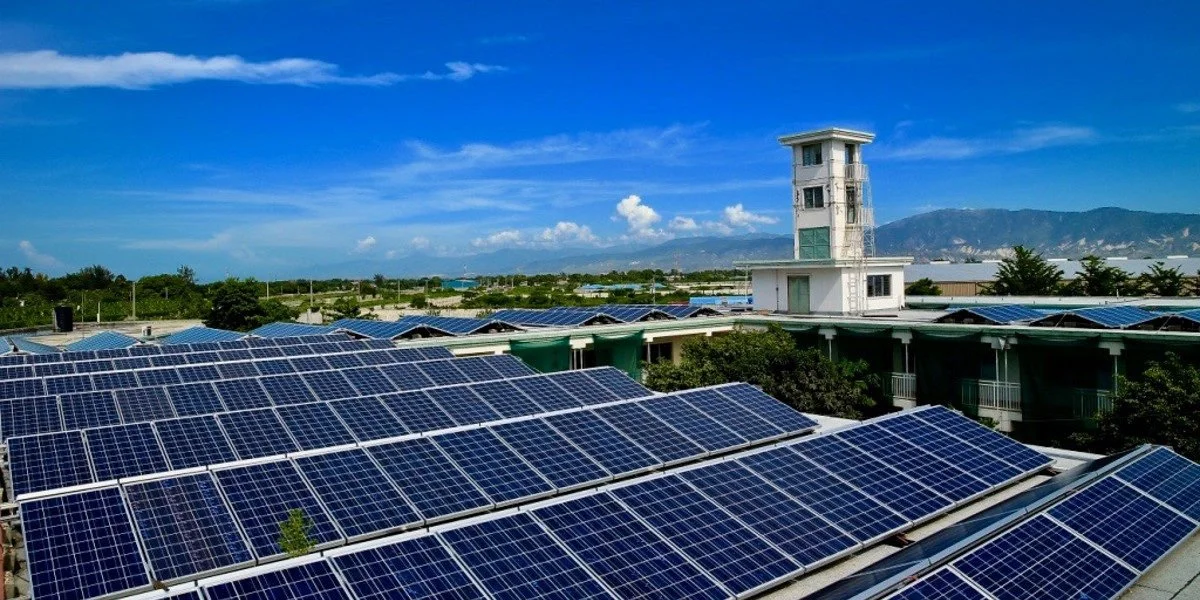
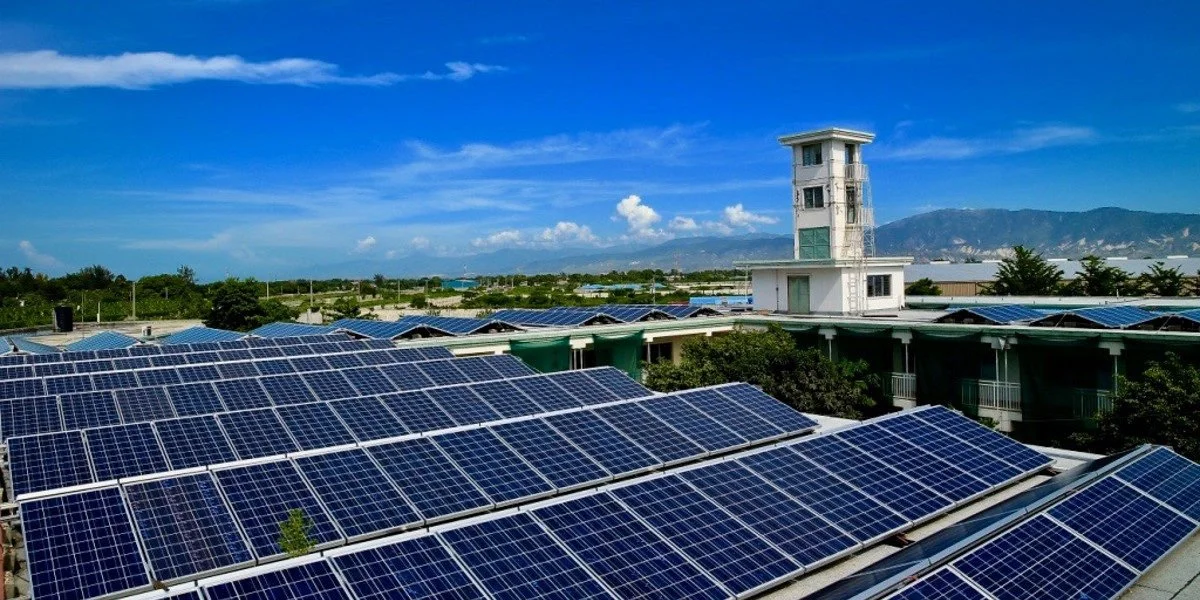
At an international PV conference held in the Haitian capital Port-au-Prince, companies were demanding improvements to the political framework for the development of solar power in the country. Additionally, calls were made for low interest loans for private individuals, to cover initial investment in a PV system.
Haiti’s most important PV entrepreneurs gathered at an international solar conference in Port-au-Prince to call for clear regulations for the liberalization of the Haitian energy market, as well as solar-friendly policies to promote the technology’s potential. The event was organized by relief providers NPH Germany, The St. Luke Foundation and the Biohaus Foundation.Only around 6% of Haiti’s population currently has access to electricity. State owned energy utility Électricité d’Haiti (EDH) has a generation capacity of 245 MW, about 80% of which is made up by diesel generators. The other 20% is supplied by the Péligre Hydroelectric power station in Artibonite, to the north of the capital.Because of the continuous overload and extremely low stability of the state utility’s network, Haiti is registering growing demand for solar technology. Local micro-grids and individual installations are becoming increasingly important.The two largest solar companies operating in the country are now complaining about the lack of political or legislative support from the Haitian state, as well as sluggish cooperation with the state utility regarding the feeding of solar generated power into the public grid.“Theoretically, the state monopoly has long been abolished. The decision was, however, taken in a controversial process, so that its legal status and applications are still unclear,” explains Jean-Ronel Noël, whose company Enersa, founded in Port-au-Prince in 2007, produces solar modules and LED lighting. Enersa employs 30 engineers, and has already installed more than 5000 solar street lights, as well as residential PV systems, micro-grids and industrial facilities.Despite falling prices in the PV market, initial investments for PV technology are still much higher than for diesel generators. Because of the unclear legal situation and lack of state support, potential investors are unsettled, says Noël.Another entrepreneur, Jacques Sylvian, Managing Director at Green Energy Solutions, calls on the government to negotiate access to the World Bank’s Clean Technology Fund, which provides cheap loans to private individuals to cover renewable energy systems.Nicolas Allien, who is responsible for energy in the Haitian Ministry of Infrastructure, Transport and Communications, stressed the government’s intention to promote renewable energy both in terms of feeding into the state and creating micro-grids. One of the biggest challenges in improving Haitian’s access to electricity is upgrading the infrastructure to extend the grid’s capacity. The Haitian Government is currently investigating conditions for implementation of a tax exemption on the import of solar technology, according to Allien.The declared goal is to develop up to 600,000 microgrids drawing power from renewable sources across the country. Currently, around 75% of non-state owned households use charcoal for energy production, which has resulted in increased soil erosion due to the large-scale deforestation.By: Cornelis Wüllenkemper (translated from German) | August 23,2017
Mission Impossible? A Tech Summit Rises From The Rubble In Haiti
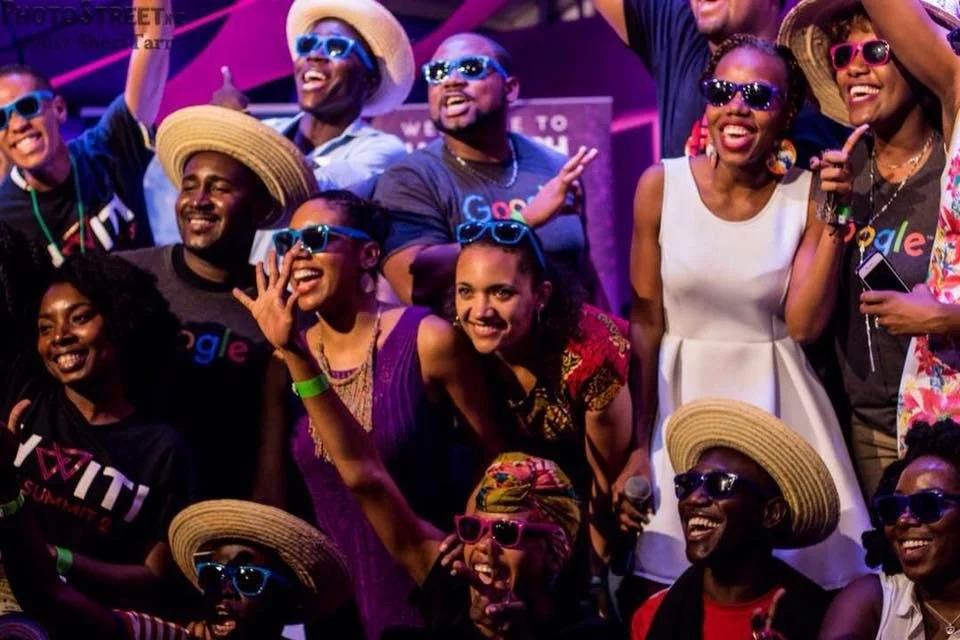
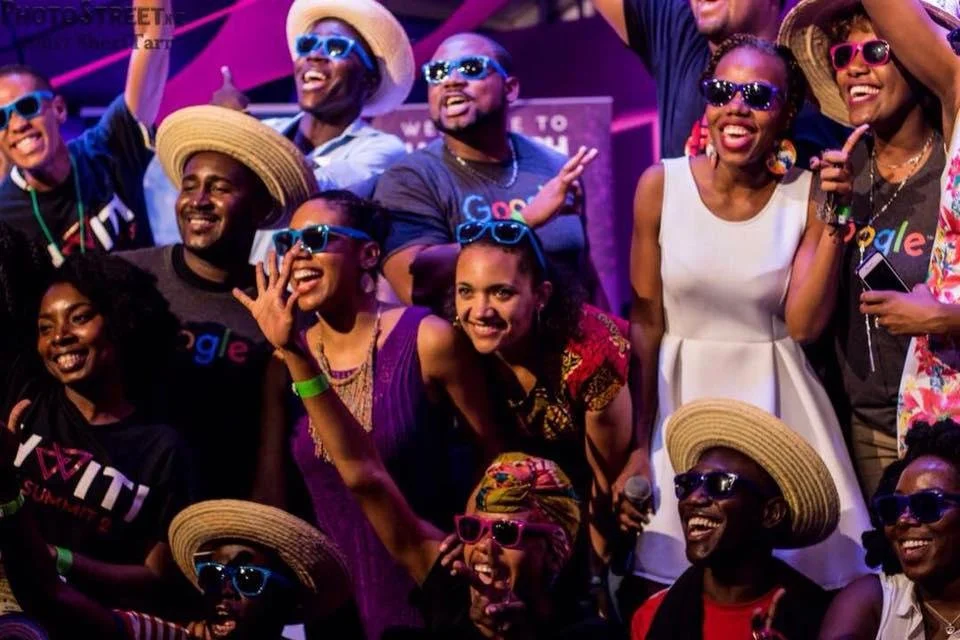
Culturally we’re obsessed with youth, but in business, it’s considered a liability until you prove yourself. Especially if you’re trying to execute an idea that’s never been done before. Faced with these circumstances there are those who retreat and those who push forward.Twenty-eight-year-old Christine Souffrant Ntim, cofounder of Global Startup Ecosystem and a Forbes 30 Under 30, is among those who persist, and as a result she and her team launched the first-ever tech summit in Haiti. I was among the group of 100 speakers to descend upon Haiti along with over 450 attendees, including more than 20 tech companies. (Google, Facebook and AirBnb were in attendance.)Ntim is transparent about the fact that no one thought they could pull it off. Each person on the organizing team of eight is under 30, a symbol of the possibility and potential that lives within the population of Haiti; The average age of a Haitian citizen is 22.It’s been seven years since the earthquake, and about 55,000 people still remain in displacement camps, according to the Huffington Post. Currently, Haiti is home to close to 10.5 million people, and the unemployment rate is slightly above 40%. In addition, 60% of the population lives on $2 a day. And while Ntim, who is Haitian-American, and her team are well aware of the current state of Haiti, where others see problems they see possibility.
“First and foremost we know Haiti can transform itself and be a new global case study for what happens when you get the right influences in the room to transform a nation."This is a 13-year initiative, she added. "This is not happening once. We’re going to be doing this until 2030. 2030 is going to be a revolutionary time for us to evaluate different countries and their standards for UN development goals. Haiti is going to be the case study that everyone is going to try and figure out. How can we replicate what happened in Haiti? You are part of that right now.”In our interview, Ntim shared how she managed to create a summit to serve as a catalyst for disruption and innovation in Haiti, and offers advice to other young people looking to achieve what others deem impossible:Rhonesha Byng: What challenges did you and your team face planning and executing the first-ever Haiti Tech Summit?Christine Souffrant Ntim: There were so many challenges. First, no one believed we could actually source 100 speakers and host an international event in Haiti. As a team of eight people all under the age of 30, potential sponsors and partners could not believe that we had the media connections to source 100 speakers in Haiti. Since major corporations have been unable to do so in the past, our odds were slim. Despite sponsor/partner doubts, my international reputation and networks were strong enough to help me pull in global speakers-many of which - came to Haiti for the first time. Speakers included the President of Haiti- Jovenel Moise, Ben Horowitz and celebrities such as Vicky Jeudy from the Netflix series Orange is the New Black.Second, no one wanted to buy tickets in advance. There’s so much skepticism around event fraud that people wanted to arrive and see if the event truly was happening. During the 2nd to last week of May we had about 200 RSVP’s- half of which were family, friends, volunteers and speakers. I did a series of media interviews on a Monday on radio, TV and in print. It finally clicked with locals that we were coming and the Whatsapp messages and word of mouth spread like wildfire. In two weeks we surpassed 450 in ticket sales and had to shut down the site. At a certain point people who didn’t take us seriously were trying to meet us directly to get tickets. We turned away hundreds on the day of the event because we were filled to capacity.Byng: You mentioned in one interview that “Haiti is not open for business. Haiti is open for disruption." What did you mean by that?Ntim: What I meant by this now infamous statement is that when we look at emerging markets today we evaluate them based on the wrong things. We look at their capacity for formal industry development- like banking, communications, and commerce- despite the fact that formal industries are being overtaken by small startups almost every year. From Airbnb transforming travel hospitality, to Twitter transforming media communication, we should not evaluate countries on standards that are already being challenged.I want the world to think differently with their approach in countries like Haiti. Don’t focus on what we don’t have today- focus on what we can create tomorrow. If we have issues with communication networks - how can your startup change that? If we have a poor transportation infrastructure - how can you think beyond Uber and create an entire new way of travel? And since Haiti has a proud history of resilient, entrepreneurial people, we are the best place to pilot and launch the startups of tomorrow. So come here to disrupt and scale in an entirely new way. The whole ecosystem is excited for it.Byng: What was the main goal of the summit and was that achieved?Ntim: In many ways, yes. Our three goals were simple: change the narrative around Haiti as a brand, spark local startup ecosystem collaboration, and engage international media, investors, tech companies and stakeholders.Byng: Did your team’s age factor into the reception of the summit in any way?Ntim: Yes, what started off as huge skepticism regarding our age turned into huge inspiration. At the end of the event I called the team to the main stage. The crowd cheered - not only because of what we done, but also because many of them jumped at the opportunity to network and connect with older people at the conference discussing the potential of the youth in the room - not realizing that the whole endeavor was the result of engaged youth. I even said “how many young people in your community do you overlook because they don’t have the age and titles that you thought were worthy of a conversation? Well, if you haven’t noticed, our generation is not waiting for tomorrow to make a statement. We are making waves today.”Rhonesha Byng; Women@Forbes - AUG 7, 2017