
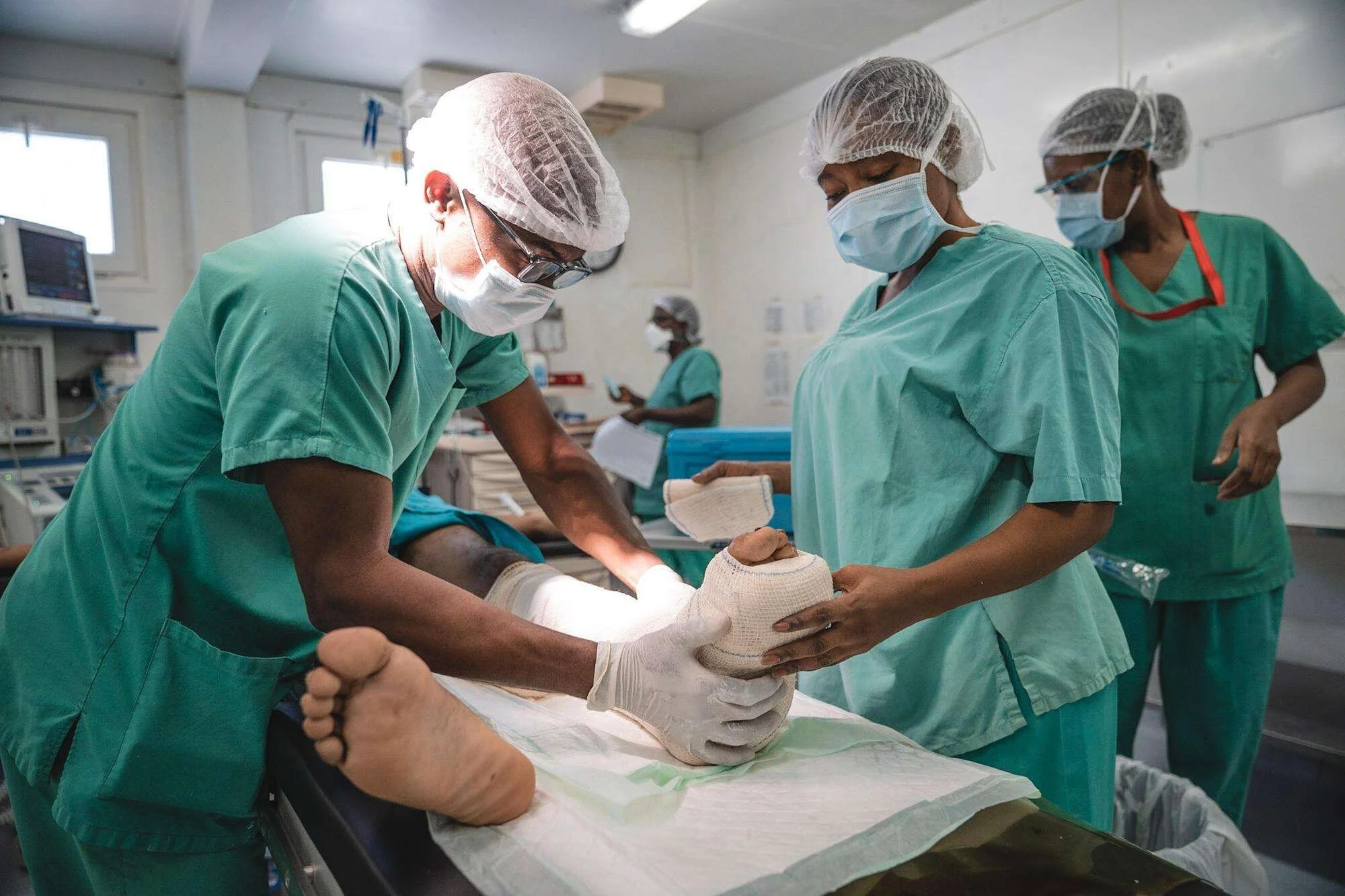
Haiti: MSF fully reopens Tabarre hospital following armed intrusion
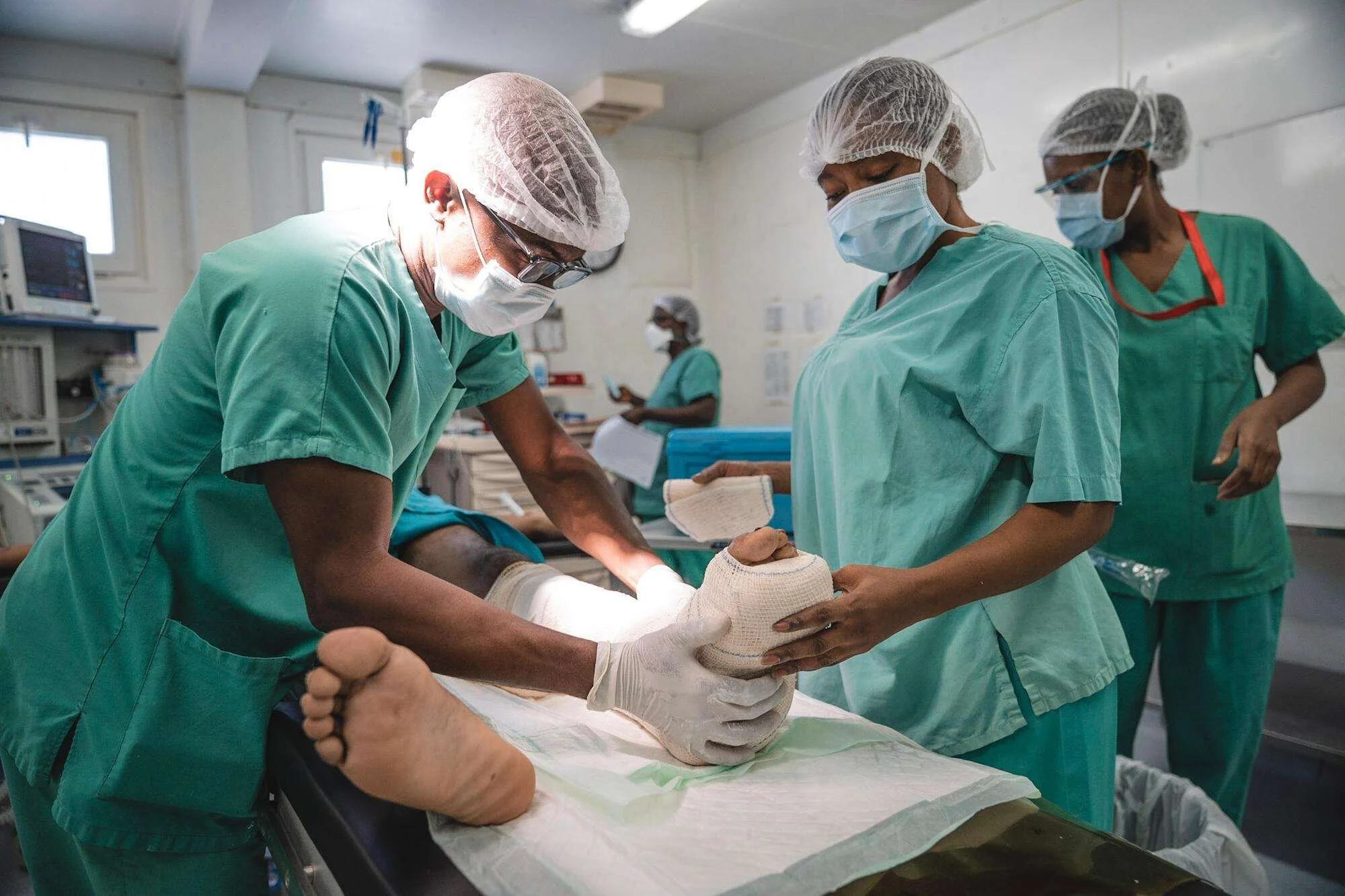
PORT-AU-PRINCE, August 28, 2023—Doctors Without Borders/Médecins Sans Frontières (MSF) is today fully resuming medical services at its Tabarre hospital in Port-au-Prince, Haiti, after an armed intrusion in July caused the organization to suspend admissions in the trauma center.
“We are pleased to resume all activities and be at the service of the public once again,” said Mumuza Muhindo, MSF head of mission in Haiti. “The decision to suspend activities was difficult, given the vital role of this hospital in meeting medical needs in Port-au-Prince. But the decision to re-open was difficult as well because there is no place for violence or weapons inside a medical facility. What happened in July is absolutely unacceptable. We will not be able to work unless the patients and health professionals are respected.”
The Tabarre hospital provides medical care and services for people with traumatic injuries or severe burns. It has a total of 75 beds and an emergency department that received 2,000 people in 2022.
On the night of July 6, 2023, more than 20 armed individuals forced their way into the hospital. They threatened MSF staff members with firearms and forced them to lie on the floor while they abducted a patient from the facility. This armed intrusion led to the closure of the hospital on July 7.
The hospital’s burns and outpatient care departments reopened a few days later, but the hospital did not resume admissions for trauma patients until today.
This is the latest example in a series of violent incidents that forced MSF to either close or temporarily suspend its activities in several facilities in Port-au-Prince. In January, MSF was forced to end its support to the Raoul Pierre Louis Hospital, and an MSF hospital in Cité Soleil has suspended activities repeatedly due to frequent gunfire in the vicinity. It is now operating at reduced capacity.
“MSF is committed to Haiti and its people,” Muhindo said. “That is why we continue to have discussions with all stakeholders and armed groups, including law enforcement forces, to ensure that the conditions allow us to continue our services and work safely in Tabarre. Our message to everyone carrying a weapon in Haiti is clear—that respect for health facilities, patients, and staff is non-negotiable. The survival of the Tabarre hospital will depend on everyone abiding by this.”
About MSF in Haiti
Doctors Without Borders/Médecins Sans Frontières (MSF) is an international medical and humanitarian organization that provides assistance to people in need, irrespective of their origin, religion, creed or political convictions. MSF has worked in Haiti since 1990 and currently provides care for patients with traumatic injuries, burns or emergency medical conditions, care for survivors of sexual and gender-based violence, primary health care and maternity care.
First Blood Drive at Adventist University Helps Ailing Student in Haiti
The fast turnaround of the event makes the generous response even more impressivse.
Dozens of people recently showed up at Adventist University of Haiti (UNAH) to donate blood for a student who was hospitalized with a serious blood condition. Sanderva Judeline Joseph, age 24, a fourth-year business administration student, had recently been diagnosed with aplastic anemia, a rare and serious blood condition that occurs when the bone marrow cannot make enough new blood cells for the body to work normally.
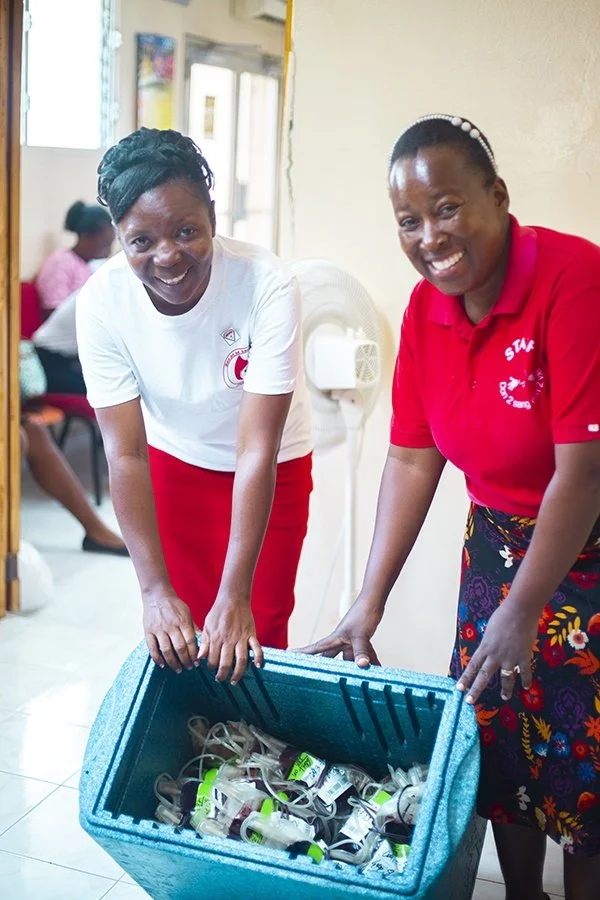
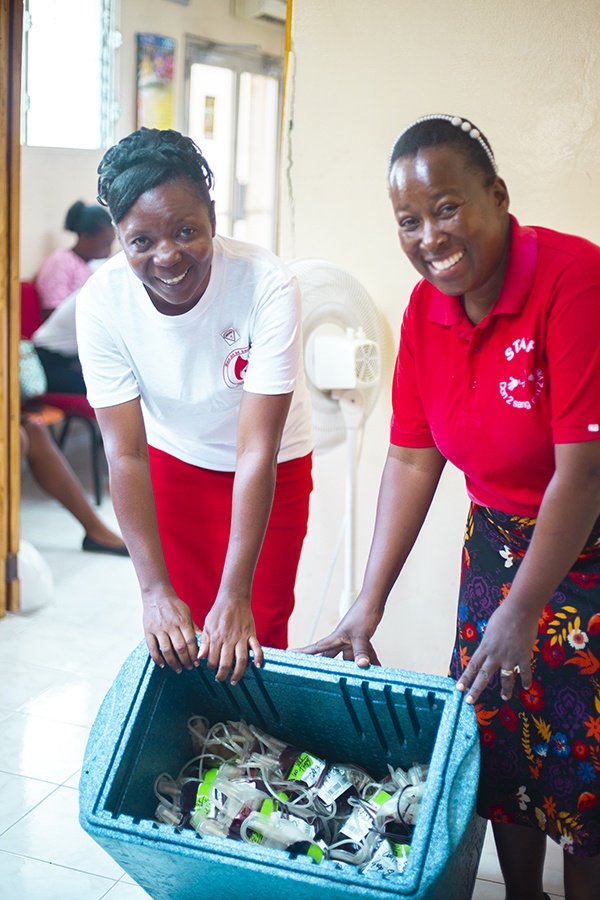
In a matter of days, university officials organized a blood drive in coordination with the Ministry of Public Health, the National Blood Safety Program, and a local blood collection organization called Korbit 100%. The few dorm students remaining on campus, plus faculty, family, and friends, lined up to donate 30 units of blood on August 3, 2023.
![Students from the Adventist University of Haiti, wait their turn to donate blood during the blood drive on Aug. 3, 2023. In less than a week’s notice students and faculty and others donated 30 units of blood to help Sanderva Judeline Joseph. [Photo: Jean Judelin and Jean Judenel Isaac]](https://cdn.adventistcontent.org/images/5df200974469ba078555eb4c/902c5b58722186ad8764b02279fd1b92769d196d/300x/Xzc1692455332267.jpg)
“I would like to thank and congratulate the Adventist University of Haiti family for their love, wisdom, and understanding,” said Jean Gracieuse, assistant to the vice president of Student Affairs at UNAH. “By joyfully donating blood for the speedy recovery of Sanderva, each of you has demonstrated that every drop of blood counts, and every drop will turn into blessings for those donating.”
The blood drive was the first one organized on campus and one that left many baffled by how quickly blood units were collected.
“The Red Cross official told me that it is the first time that a blood drive that was launched in less than a week has drawn so many people and collected so many units of blood,” said Dr. Senèque Edmond, president of UNAH. “‘It took us six months of promoting to collect 40 units of blood, and while in UNAH, you collected near that much quicker,’ she told me,” Edmond said.
![Two medical technicians from the blood drive initiative smiles as they show the units of blood collected to help Sanderva Judeline Joseph on the campus of the university on Aug. 3, 2023. [Photo: Jean Judelin and Jean Judenel Isaac]](https://cdn.adventistcontent.org/images/5df200974469ba078555eb4c/1e7f0155db3cf90dd2a49a074d5a14934953c951/300x/Rh81692455375967.jpg)
Thanks to the faculty of the School of Nursing who helped with vital signs of those donating, the faculty of the School of Theology who provided promotional material, and the many students and faculty who donated their blood, the initiative was a success, organizers said.
Roger’s Heandel Syleverin, a fourth-year theology student, said he had to take a test that same day but was glad to donate because he sees donating blood as a tangible manifestation of the “love thy neighbor” command. “Giving my blood is a concrete way of expressing my compassion for the humanity for which Christ died.”
![Roger’s Heandel Syleverin, a fourth-year theology student, took a few minutes to donate blood before taking an exam to close the school year at the Adventist University of Haiti, Aug. 3, 2023.[Photo: Jean Judelin and Jean Judenel Isaac]](https://cdn.adventistcontent.org/images/5df200974469ba078555eb4c/25e8c70278fac0cd610291116e20aa8a8d19b13f/300x/QBc1692455404173.png)
Despite the strong desire from many participants to donate blood, only 30 persons were able to do so, said Clara O. Sanon Jérémie, dean of the School of Nursing at UNAH. “Ms. Joseph never knew she had that medical condition.” Jérémie explained that Joseph had begun to feel weak and had been hesitant to see a doctor. “When she saw a doctor, she was told to go to the hospital, but she delayed in going, and unfortunately, it was after another illness that Ms. Joseph went to see the doctor again, and her anemia had worsened, going from 3 to 2 grams of blood.”
Moved by so many who showed up to bless her, Joseph, whose mother died of the same blood condition, thanked everyone. “I don’t feel alone. I feel part of a big family that loves me,” she said. “Thank you for showing me your deep love. Thank you to the Lord for putting that in your heart. I will continue to fight and rely on Jesus, who can intervene according to His will.”
![Clara O. Sanon Jérémie, dean of the School of Nursing Sciences at the Adventist University of Haiti smiles at students and teacher waiting in line to donate blood as she assist the coordination of the blood drive on campus for Saderva Judeline Joseph. [Photo: Jean Judelin and Jean Judenel Isaac]](https://cdn.adventistcontent.org/images/5df200974469ba078555eb4c/7b40be7d59fcbe0f2c74c6fda4c963431a6e1b85/300x/ngW1692455482059.jpg)
Because the blood condition has weakened her immune system, Joseph indicated that she requires intensive medical treatment and other medical interventions that are not accessible in Haiti at this time. She will continue to receive blood transfusions as she rests at home.
Students and faculty continue to pray for her condition and for ways that may open for her to receive the appropriate treatments outside the country soon.
Fritz Noel, vice president of academic affairs at UNAH, thanked donors and said he was motivated to propose to the university administration to create a blood donor club on campus. As a thank-you gesture, each donor received a T-shirt, a pin with the word “Hero” on it, as well as a special dinner for their contribution during the blood drive.
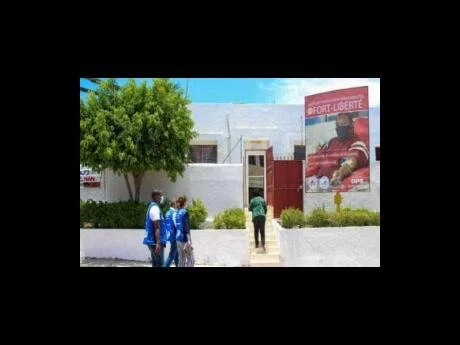
Haiti in dire need of “safe blood”
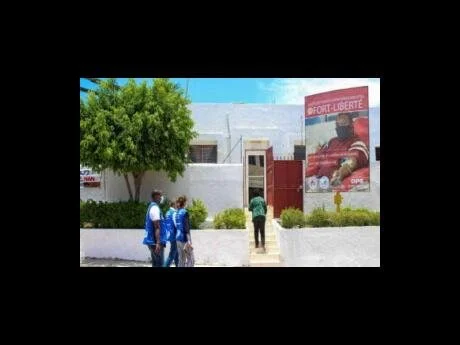
PORT AU PRINCE, Haiti, Apr 6, CMC – Health authorities are urging technical and financial partners to secure funding to support the activities of the National Blood Safety Programme (PNST) amid concerns for the need to increase the production of safe blood in the French-speaking Caribbean Community (CARICOM) country.
“Haiti has an urgent need to increase its production of safe blood, with an estimated annual demand of 60,000 to 80,000 blood bags, compared to the current production of about 20,000 bags,” said the PNST director, Dr. Ernst Noel.
Last weekend national, regional and international health officials participated in a sectoral thematic table to highlight the challenges and constraints of the PNST making an urgent appeal to technical and financial partners for assistance.
The meeting heard that the availability and safety of blood products is a cross-cutting issue in the various health care activities and has a direct impact on the health of Haitians, particularly in the area of maternal mortality, trauma, surgery and diseases such as malaria or other causes of anaemia.
“One of the goals of PAHO/WHO (Pan American Health Organisation/World Health Organisation) in all countries is to improve the coverage, quality, safety, management, appropriate use and timely access to blood and blood products,” said PAHO’s representative in Haiti, Dr. Maureen Birmingham.
PAHO said that the meeting, which was also attended by representatives from the Ministry of Public Health and Population (MSPP),allowed PNST executives to highlight several major challenges facing the programme, including insufficient funding for the operation of its blood transfusion stations, a shortage of human resources, repeated stock-outs of consumables and inputs, non-operational peripheral blood depots, as well as transportation difficulties.
The thematic table thus emphasised the need to decentralise activities, particularly testing, to guarantee rapid access to blood and to have a functional hemovigilance system. The strengthening of existing blood transfusion structures as well as the establishment of sustainable financing and the recruitment of qualified human resources were also identified as key elements.
Participants called for increased support from national and international partners, which would have a direct and significant impact on saving lives, preventing infections and improving health in Haiti. They also commended the efforts of the MSPP and PNST for their leadership and unwavering commitment to this critical program for the health of Haitians.
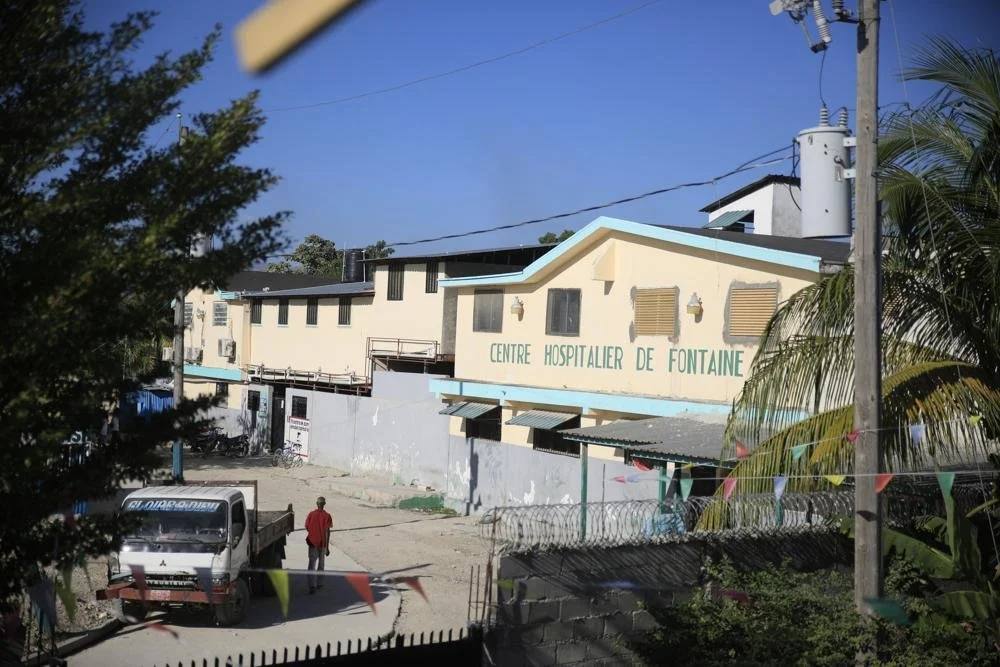
In heart of Haiti’s gang war, one hospital stands its ground
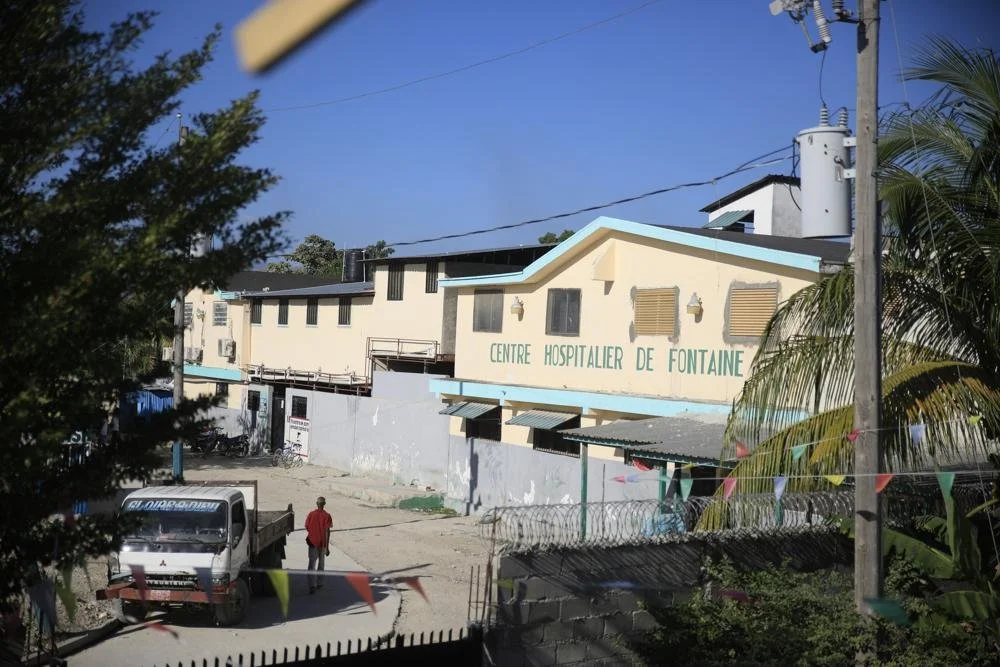
PORT-AU-PRINCE, Haiti (AP) — When machine gun fire erupts outside the barbed-wire fences surrounding Fontaine Hospital Center, the noise washes over a cafeteria full of tired, scrub-clad medical staff.
And no one bats an eye.
Gunfire is part of daily life here in Cité Soleil – the most densely populated part of the Haitian capital and the heart of Port-au-Prince’s gang wars.
As gangs tighten their grip on Haiti, many medical facilities in the Caribbean nation’s most violent areas have closed, leaving Fontaine as one of the last hospitals and social institutions in one of the world’s most lawless places.
“We’ve been left all alone,” said Loubents Jean Baptiste, the hospital’s medical director.
Fontaine can mean the difference between life and death for hundreds of thousands of people just trying to survive, and it offers a small oasis of calm in a city that has descended into chaos.
The danger in the streets complicates everything: When gangsters with bullet wounds show up at the gates, doctors ask them to check their automatic weapons at the door as if they were coats. Doctors cannot return safely to homes in areas controlled by rival gangs and must live in hospital dormitories. Patients who are too scared to seek basic care due to the violence arrive in increasingly dire condition.
Access to health care has never been easy in Haiti, the poorest nation in the Western Hemisphere. But late last year it suffered a one-two punch.
One of Haiti’s most powerful gang federations, G9, blockaded Port-au-Prince’s most important fuel terminal, essentially paralyzing the country for two months.
At the same time, a cholera outbreak made worse by gang-imposed mobility restrictions brought the Haitian health care system to its knees.
The U.N. high commissioner for human rights, Volker Türk, said this month that violence between G9 and a rival gang has turned Cité Soleil into “a living nightmare.”
Reminders of the desperation are never far away. An armored truck driven by hospital leaders passes by hundreds of mud pies baking in the harsh sun to fill the stomachs of people who can’t afford food. Black spray-painted “G9” tags dot nearby buildings, a warning of who’s in charge.
In a February report, the U.N. documented 263 murders between July and December in just the small area surrounding the hospital, noting that violence has “severely hampered” access to health services.
That was the case for 34-year-old Millen Siltant, a street vendor who sits in a hospital hallway waiting for a checkup, her hands nervously clutching medical paperwork over her pregnant belly.
Nearby, hospital staff play with nearly 20 babies and toddlers — orphans whose parents were killed in the gang wars.
Normally, Siltant would travel an hour across the city by colorful buses known as tap-taps for her prenatal checkups at Fontaine. There she would join other pregnant women waiting for exams and mothers cradling malnourished children in line for weigh-ins.
All the clinics in the area where she lives have closed, she said. For two months last year she couldn’t leave the house because gangs holding the city hostage made travel through the dusty, winding streets nearly impossible.
“Some days, there’s no transportation because there’s no fuel,” she said. “Sometimes there’s a shooting on the street and you spend hours unable to go outside … Now I’m worried because the doctor says I need to get a C-section.”
Health care providers told the Associated Press that the crisis has caused more bullet and burn wounds. It has also fueled an uptick in less predictable conditions such as hypertension, diabetes and sexually transmitted infections, largely because of slashed access to primary care.
Pregnant women are disproportionately affected. Gynecologist Phalande Joseph sees the repercussions every day when she leaves her hospital dormitory and pulls on her light blue scrubs.
The young Haitian doctor snaps on a pair of white surgical gloves and makes an incision into a pregnant patient’s belly with a steady hand that only comes with practice.
She works swiftly, conversing with medical staff in her native Creole, when a burst of wailing erupts from a baby girl nurses swaddle in pink blankets.
Operations like these have grown more common, Joseph explains in between C-sections, because the very conditions that have intensified amid the turmoil can turn a pregnancy from high risk to deadly.
This year, 10,000 pregnant women in Haiti could face fatal obstetric complications due to the crisis, according to U.N. data.
Those risks are only compounded by the fact that many of Joseph’s patients are sexual violence survivors or widows whose husbands were killed by gangs. Permeating the struggle is an air of fear.
“If they start having contractions at 3 a.m., they are terribly scared of coming here because it is too early, and they are scared something might happen to them because of the gangs,” Joseph said. “Many times when they arrive, the baby is already suffering, and it is too late so we need to do C-section.”
That became most evident to Joseph last October when four men came rushing to a hospital carrying a woman giving birth stretched out on top of a door. Because of gang lockdowns, the woman couldn’t find any transportation to the hospital after her water broke.
“These four men were not even her family. They found her delivering on the street ... When I heard she lost the baby, it shook me,” she said. “The situation in my country is so bad, and there is not much we can do about it.”
Started as a one-room clinic to provide basic medical services to a community with no other resources, Fontaine Hospital Center was opened in 1991 by Jose Ulysse.
Ulysse and his family have worked to expand the hospital year after year. They fight to keep their doors open, Ulysse said.
Even when firefights arrive at the doors of Fontaine, the hospital reopens few hours later. If it were to close for longer, administrators worry that it could lose momentum and would be hard to reopen.
Today, it’s the only facility to perform C-sections and other high-level surgeries in Cité Soleil.
Because most of the people in the area live in extreme poverty, the hospital charges little to nothing to patients even as it struggles to purchase advanced medical equipment with funds from UNICEF and other international aid providers. Between 2021 and 2022, the facility saw a 70% jump in the number of patients.
The hospital possesses a certain level of protection because it accepts all patients.
“We don’t pick sides. If the two groups face off, and they arrive at the hospital like any other person, we treat them,” Jean Baptiste said.
Even the gangs understand the importance of medical care, he added. Yet the walls still feel like they’re closing in.
Rising carjackings of medical vehicles have made it impossible for Fontaine to invest in an ambulance. When ambulance operators are called from areas like Cité Soleil, they offer a simple response: “Sorry, we can’t go there.”
Fontaine’s mobile clinic can now travel little more than a few blocks outside the facility’s walls.
Doctors worry, but they keep working, just as they’ve always done.
“You say, well, I have to work. So let God protect me,” Jean Baptiste said. “As this situation gets worse, we go out and decide to face the risks. … We have to keep pushing forward.”
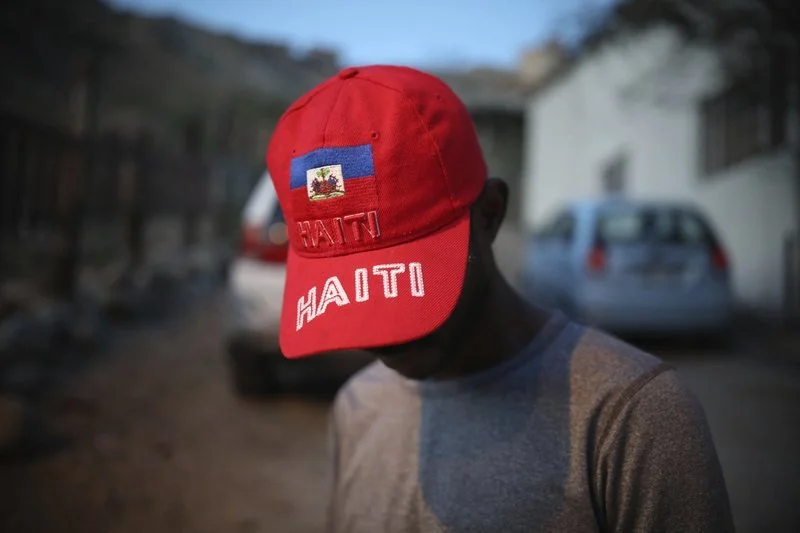
Exclusive: U.S. border authorities warn of food insecurity in Haiti, as Mayorkas defends deportations
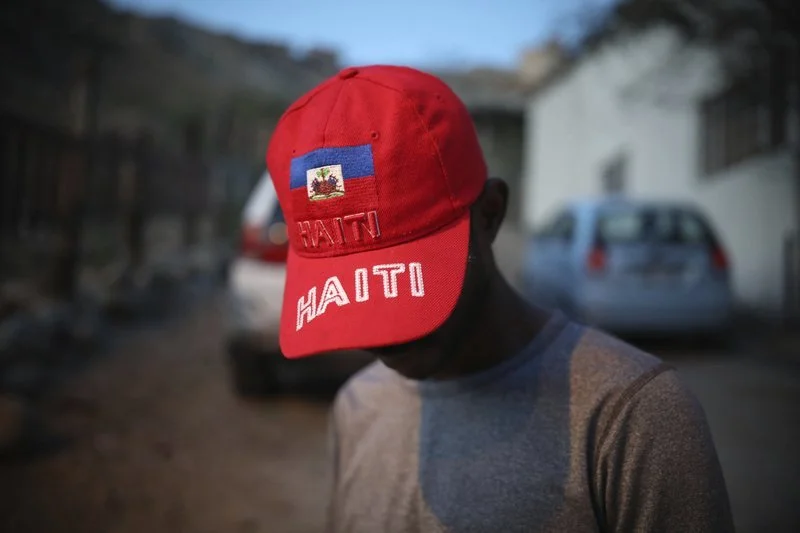
While the Biden administration has defended its decision to deport thousands to Haiti in recent days, internal government documents obtained by Yahoo News suggest U.S. immigration authorities are closely monitoringthe bleak conditions to which Haitians expelled from the U.S. are being forced to return.
On Sunday, U.S. Customs and Border Protection’s office of intelligence highlighted concerns of widespread food insecurity in Haiti in its daily report on current and emerging threats.
“On 24 September, Haitian authorities indicated about 4.3 million people are in a state of serious food insecurity,” reads the CBP bulletin, which was marked unclassified and “Law Enforcement Sensitive.” The alert cites an article from a Spanish-language news site reporting that, according to Haiti’s National Food Safety Coordination agency, “insecurity, poor production, natural disasters and inflation are the main drivers of current levels of severe food insecurity” on the island, while “gang violence has complicated the delivery of humanitarian response to the food crisis.”
Another report produced by the CBP intelligence office on Monday references an Associated Press article on the dire situation for Haitians returning home.
“The deportees join thousands of fellow Haitians who have been displaced from their homes, pushed out by violence to take up residence in crowded schools, churches, sports centers and makeshift camps among ruins,” reads the excerpt of the AP report cited in the CBP alert. “Many of these people are out of reach even for humanitarian organizations.”
The reports highlighted by CBP’s intelligence office seem to contradict public statements made by Homeland Security Secretary Alejandro Mayorkas, who has defended recent deportations of Haitian migrants despite concerns about conditions in the country following the president’s assassination in July and a devastating earthquake in August.
According to the Department of Homeland Security, since Sept. 19 the U.S. has expelled approximately 3,900 individuals to Haiti on 37 flights.
“We have continued to study the conditions in Haiti, and we have in fact determined, despite the tragic and devastating earthquake, that Haiti is in fact capable of receiving individuals,” Mayorkas told reporters at the White House on Friday. “And we are working with Haiti and with humanitarian relief agencies to ensure that their return is as safe and humanely accomplished as possible.”
When asked to comment on the apparent conflict between Mayorkas’s statements and the CBP intelligence reports warning of food shortages and other dangerous conditions in Haiti, a DHS spokesman referred Yahoo News to similar comments made by the secretary on various cable news shows on Sunday.
“We made a determination, based upon the facts, that in fact individuals could be safely returned to Haiti,” Mayorkas said during an appearance on CNN.
The Biden administration has come under heavy criticism for its response to an influx of Haitian migrants who have attempted to request asylum at the southern border in recent weeks.
Last week, several Democrats in Congress, along with a number of civil and human rights organizations, called on the administration to halt deportations to Haiti, raising questions about the country’s ability to repatriate deportees amid multiple ongoing crises.
Back in May, Mayorkas designated Haiti for Temporary Protected Status, citing the country’s “serious security concerns, social unrest, an increase in human rights abuses, crippling poverty, and lack of basic resources, which are exacerbated by the COVID-19 pandemic.” Under the new, 18-month designation, eligible Haitian nationals already living in the United States could apply for protected status, which would shield them from deportation “until conditions in Haiti improve so they may safely return home.”
Two months later, Mayorkas expanded this designation to include Haitians who have continuously resided in the U.S. since July 29 of this year, “in light of recent events in Haiti, including the July assassination of President Jovenel Moïse.”
While Mayorkas has acknowledged his earlier decision that Haitian nationals could not be sent back to the country safely, he insists that is no longer the case — even after the 7.2 magnitude earthquake that struck the country on Aug. 14, killing at least 2,200 people and leaving thousands more homeless.
Yahoo News reported last week that the Biden administration failed to anticipate the latest influx of Haitians at the U.S. border with Mexico, despite tracking Haitian migration for months. Several internal government documents obtained by Yahoo News show that multiple intelligence agencies within the Department of Homeland Security had repeatedly downplayed the potential for mass Haitian migration to the U.S. since as early as March 1.
As of Friday, Mayorkas told reporters that since Sept. 9, nearly 30,000 migrants, most of them Haitian, had been encountered by Border Patrol agents along the Rio Grande in Del Rio, Texas, where up to 15,000 people had gathered at one point in a makeshift encampment under a bridge.
By the end of the week, Mayorkas said that U.S. immigration officials had successfully cleared the Del Rio camp, with over 2,000 migrants placed on deportation flights to Haiti while thousands more had been transported to different parts of the border for processing. While Mayorkas has emphasized that the Biden administration is continuing to use a Trump-era public health order to expel most migrants, including Haitians, who attempt to cross the southern border, he noted Friday that roughly 12,400 of the Haitian migrants apprehended in Del Rio will be allowed to remain in the United States while they make the case for asylum or other protections before an immigration judge.
Internal administration documents obtained by Yahoo News showed there were still migrants awaiting processing in Del Rio on Friday morning. Approximately 2,000 Haitian migrants have been bused to shelters in Houston, and hundreds more have been allowed to board domestic flights in San Antonio, according to a Sept. 24 “Sensitive But Unclassified, For Official Use Only” senior leadership brief produced by the Department of Health and Human Services.
The American Red Cross' 2010 performance in Haiti has become the focus of critics who are urging people not to donate to the organization

- In 2010, a 7.0-magnitude earthquake killed more than 200,000 people in Haiti.
- The American Red Cross raised nearly a half-billion dollars for Haiti after the 2010 earthquake.
- An NPR and ProPublica investigation found that little of the money reached Haitians in need.
A 7.2-magnitude earthquake struck the southwestern peninsula of Haiti on August 14, killing and injuring thousands. As its citizens search for survivors among the rubble, many Haitian Americans, Black activists, and individuals tied to the Haitian diaspora are warning those interested in donating money to recovery efforts to avoid giving to the American Red Cross.
In 2010, hundreds of thousands of Haitians were killed when a 7.0-magnitude earthquake rocked the country, which resulted in an outpouring of nearly a half-billion dollars in donations to the American Red Cross, NPR reported.
Dozens of Twitter users, including many Haitian Americans and individuals with ties to the Caribbean, used their platforms to remind their followers of a 2015 joint investigation by NPR and ProPublica that documented what the two news organizations said was a gap between funds donated to the American Red Cross and what actually went toward directly assisting victims in Haiti after the 2010 earthquake.
Their investigation found "poorly managed projects, questionable spending and dubious claims of success."
Despite the nonprofit's claim that it housed more than 130,000 people in the aftermath of the 2010 earthquake, the investigation revealed it had only built six permanent homes.
The investigation also found that many of the American Red Cross' reported failings in Haiti were of its own making and that less of the money had reached those in need than the charity had stated, according to ProPublica.
Issues that hindered the organization's work in Haiti included "an overreliance on foreigners who could not speak French or Creole," difficulties navigating the country's land title system, and the lack of progress souring relationships with residents.
Haiti's prime minister at the time of the 2010 earthquake, Jean-Max Bellerive, expressed doubt about figures relating to Haitian relief efforts that the American Red Cross used in its promotional materials.
"No, no," Bellerive told ProPublica. "It's not possible."
When asked about the calls on social media to avoid donating to their charity, the American Red Cross provided Insider a financial breakdown of how it spent donations following the 2010 earthquake in Haiti and said it strongly disputes the reporting done by NPR and ProPublica.
"Contrary to accusations, the American Red Cross has made a significant impact in Haiti, including investment in more than 50 hospitals and clinics, safer housing for more than 22,000 families, funding for the country's first wastewater treatment plant, support for Haiti's first-ever cholera vaccination campaign and so much more," a statement from the nonprofit organization read.
"Americans donated generously in the aftermath of the 2010 Haiti earthquake to save lives - which is exactly what their donations did. In fact, we spent nearly one-third of donations on helping to keep people alive in the first six months alone."
When one nonprofit betrays community trust, the whole sector pays for it.
Regina Birdsell, CEO of the Center for Nonprofit Management, said the real focus should be on transparency and whether a nonprofit uses the money to achieve the goals it outlined when soliciting donations. "The really important thing to remember is that [nonprofits] exist to serve the public. So as tax-exempt organizations, the trade-off is that we need to be transparent," she told Insider.
Birdsell said that the nonprofit sector has been debating what percentage of donations is appropriate to spend internally and is concerned that nonprofits don't talk enough about their need to pay staff living wages.
"At the end, we want to make sure that we never have the community feeling like they were misled. That dries up confidence in our sector, and that's not a good thing," Birdsell told Insider.
Nonprofits should proactively implement internal checks and balances before crises happen to ensure they have mechanisms in place to account for and properly disburse all donations, according to Birdsell. Even when billions of dollars are donated in response to a crisis, nonprofits need to be able to function in a dynamic environment and maintain transparency, Birdsell told Insider.
A 2016 Senate Judiciary and Finance Committee report said the American Red Cross spent a quarter of the nearly $500 million it raised for Haiti relief efforts on internal expenses, such as salaries, travel costs, and "oversight."
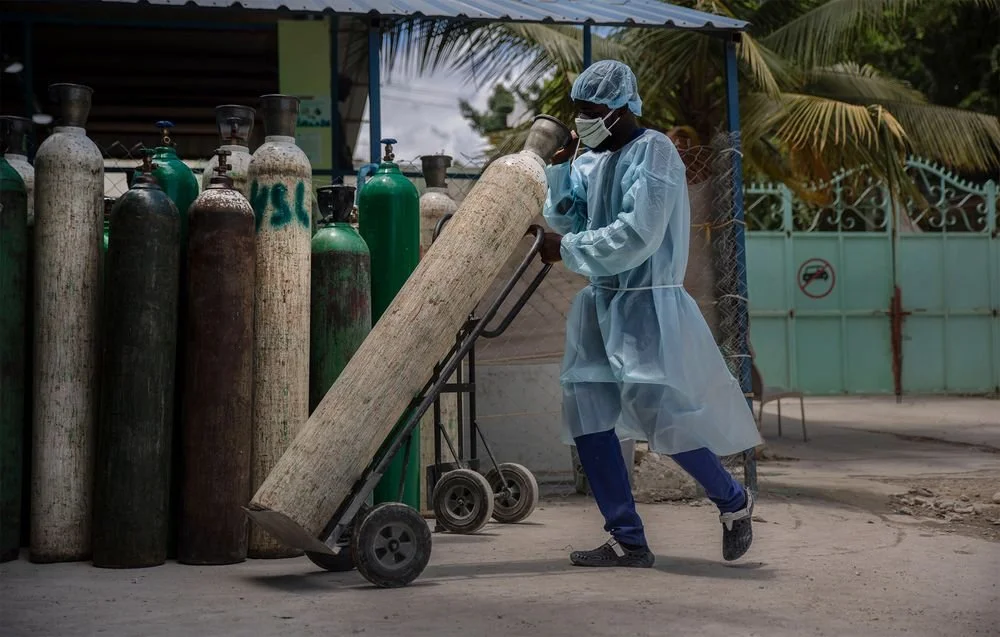
Haiti Is the Only Country in Western Hemisphere Without Vaccines
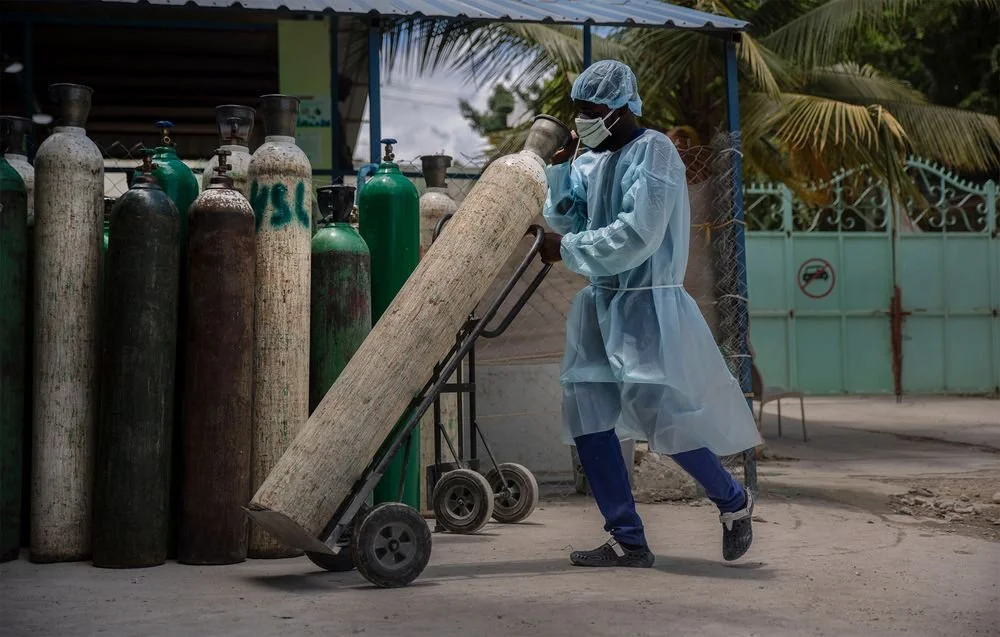
Haiti, the poorest nation in the Western hemisphere, has earned another grim distinction: it’s the only one that hasn’t vaccinated a single resident against Covid-19.
One of a handful of nations worldwide still awaiting vaccines, Haiti was among the 92 poor and middle-income countries offered doses under the Covax Facility. But the government initially declined AstraZeneca PLC shots, citing side effects and widespread fears in the population.
“Haiti did not reject the offer of vaccines from Covax,” Haiti Ministry of Health General Director Laure Adrien said in a telephone interview. “All we asked was that they change the vaccine they were providing us.”
By last month the equation had shifted. Fears about AstraZeneca were subsiding just as Haiti was seeing a surge in cases. When the country finally agreed to receive the doses, production issues in India and a spike in global demand made them unavailable.
The United Nations’ Vaccine Market Dashboard -- which processes information provided by Covax -- has no scheduled delivery date for Haiti. And Adrien said it is unclear when the vaccines will arrive.
Multiple Maladies
The pandemic is just the latest malady to befall the nation of 11.3 million. Haiti has seen months of protests against President Jovenel Moise and a rash of gang violence and kidnappings. Last month, a staff member of Doctors Without Borders, the non-profit that runs several clinics and hospitals in Haiti, was murdered on his way home from work.
Covid, along with the violence, has become one more “huge obstacle” to providing basic health care, said the organization’s mission head, Alessandra Giudiceandrea.
While Haiti has reported 15,435 coronavirus cases and 325 deaths due to Covid-19, the true scope of the problem is obscured by the lack of widespread testing, she said.
“We are seeing a high mortality rate and facilities are overloaded,” she said.
Dominican Republic Plans Border Fence to Keep Haitians at Bay
The dearth of vaccines is all the more striking because neighboring Dominican Republic, with which it shares the island of Hispaniola, has vaccinated almost 20% of its population.
Those vaccines are only available to Dominican citizens and documented residents, leaving most of the estimated 750,000 Haitians living there ineligible.
Father Tomas Garcia, with the Fundacion La Merced, a Dominican aid agency, said vaccinating the vulnerable, regardless of their nationality, should be a priority.
“This is not about saving yourself, this is about saving all of us,” he said. “We’re all in the same boat.”
Adrien, with the Health Ministry, said it’s unclear which vaccines Haiti might receive first, the Covax doses or ones offered to the region last week by U.S. President Joe Biden.
He also argued that there’s a silver lining to the late arrival of the doses. Many Haitians would have declined a shot before now due to widespread hesitancy and the country is better prepared for the cold storage and distribution requirements, he said.
“I don’t think this late onset of the vaccination program will have any impact on the recovery,” Adrien said. “If we started earlier and had a failure in our vaccine program, it would be the same as if we started now and had our program succeed.”
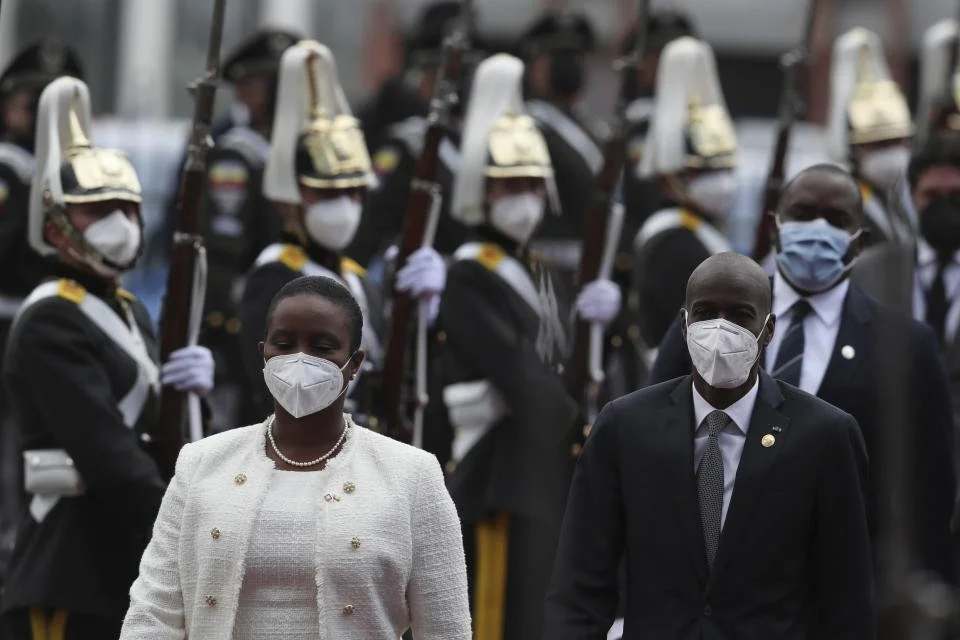
Haiti imposes curfew, orders mask use for pandemic emergency
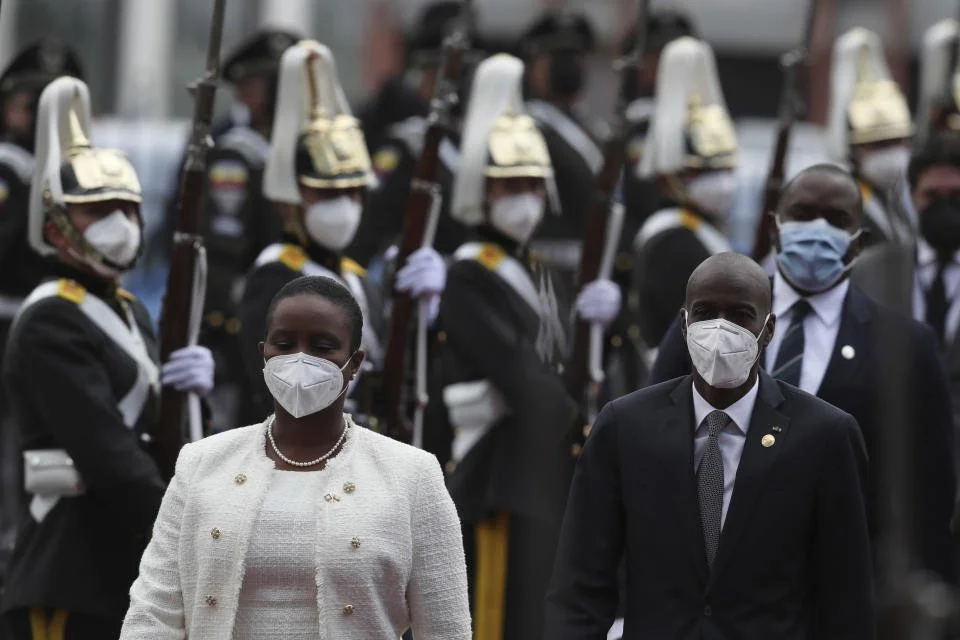
PORT-AU-PRINCE, Haiti (AP) — Haiti’s government imposed a nightly curfew and other restrictions Monday under an eight-day “health emergency" meant to curb the spread of the coronavirus.
All outdoor activity will be banned from 10 p.m. until 5 a.m. under the decree issued by President Jovenel Moise, who was in Ecuador on Monday for the inauguration of that country's new president.
The decree also makes the use of face masks mandatory for anyone out in public, while temperature checks and handwashing stations are required for all public or private buildings such as banks, schools, hospitals and markets. Social distancing in public places is set at 1.5 meters (nearly 5 feet).
The president also ordered public institutions to reduce staff on duty by 50%, while he encouraged that other employees work from home.
Mon, May 24, 2021, 5:39 PM
PORT-AU-PRINCE, Haiti (AP) — Haiti’s government imposed a nightly curfew and other restrictions Monday under an eight-day “health emergency" meant to curb the spread of the coronavirus.
All outdoor activity will be banned from 10 p.m. until 5 a.m. under the decree issued by President Jovenel Moise, who was in Ecuador on Monday for the inauguration of that country's new president.
The decree also makes the use of face masks mandatory for anyone out in public, while temperature checks and handwashing stations are required for all public or private buildings such as banks, schools, hospitals and markets. Social distancing in public places is set at 1.5 meters (nearly 5 feet).
The president also ordered public institutions to reduce staff on duty by 50%, while he encouraged that other employees work from home.- ADVERTISEMENT -https://s.yimg.com/rq/darla/4-6-0/html/r-sf-flx.html
Residents of Port-au- Prince seemed to take little regard of what was expected of them under these new rules as street markets continued to be crowded as was public transportation. Most people were not wearing masks and social distancing was not followed.
According to official government statistics, Haiti has had 13,906 coronavirus cases since the pandemic began in March 2020 and 288 deaths related to COVID-19. But a recent surge in daily cases of contagion has prompted authorities to declare the state of emergency.
Haiti has not yet begun to vaccinate its population against the coronavirus. The government recently announced its expects to begin giving the shots in June.
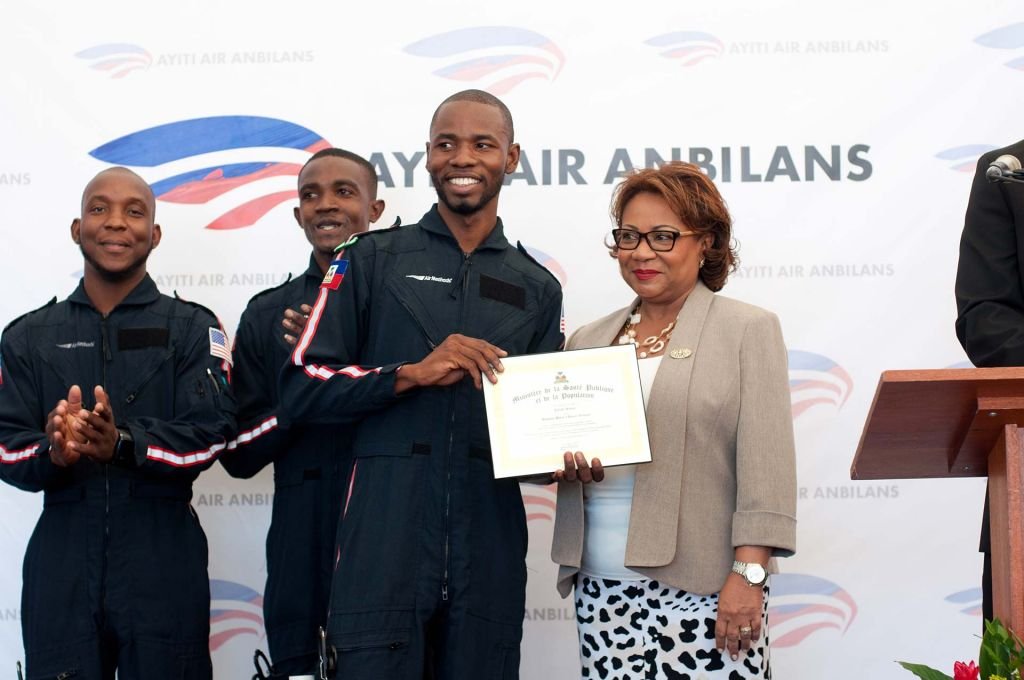
Fundraiser aims to bring trail-blazing Haitian EMT to US for paramedic education
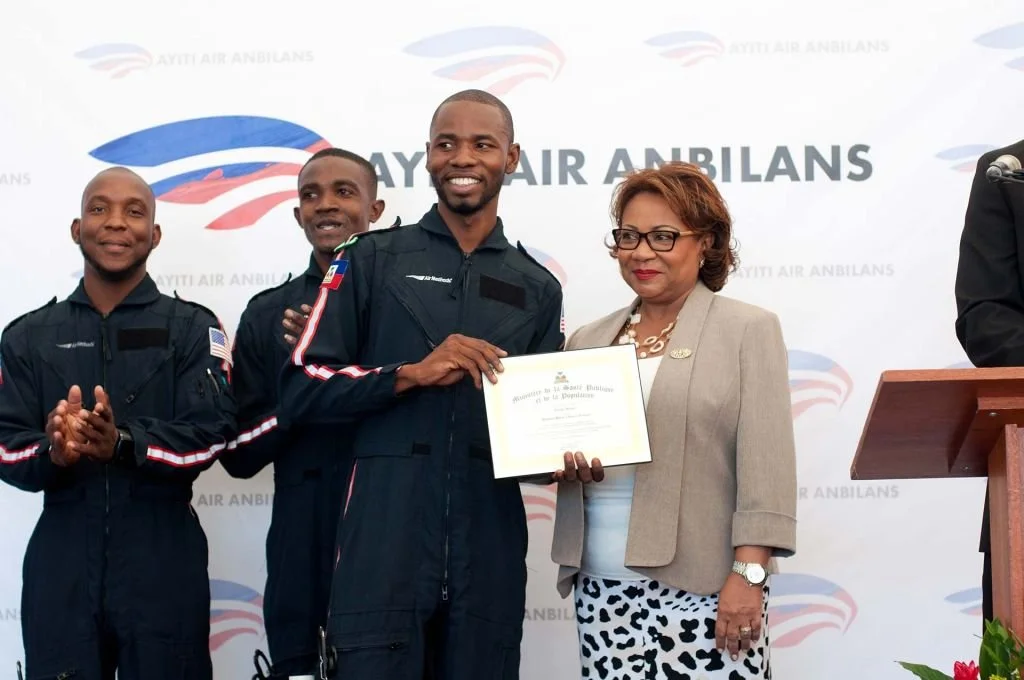
Haiti Air Ambulance EMT Claudel Gedeon aims to become Haiti's first-ever paramedic by completing the program at Dixie State University
ST. GEORGE, Utah — A fundraising effort has been launched to help a trail-blazing Haitian EMT complete his paramedic education in the United States.
Haiti Air Ambulance EMT Claudel Gedeon aims to become the country's first-ever paramedic after attending the program at Dixie State University in St. George, Utah, according to the St. George News. Currently, there are no paramedic programs in Haiti, but Gedeon said he hopes to teach paramedic courses in the country after receiving his certification in the United States.
Gedeon is already an EMS educator, having established EMPACT Haiti in 2012, a non-profit that provides and develops EMS education in Haiti. The fundraiser for Gedeon's paramedic education was started by St. George resident Armadeus Davidson, a fellow medical responder who met Gedeon while providing aid in Haiti after the devastating 2010 earthquake. Gedeon was a high school student at the time and helped translate for the American medical volunteers.
Dixie State University Director of International Student Services Shadman Bashir said the department is working with Gedeon to ensure he meets the prerequisites to apply for the program. Donations will help fund Gedeon's tuition and additional expenses during his time in the United States.
"Claudel has demonstrated the traits of selflessness, commitment to his profession and humanity and asked for nothing in return," Davidson wrote in the description for the online fundraiser, which has so far raised nearly $11,500 of its $20,000 goal.
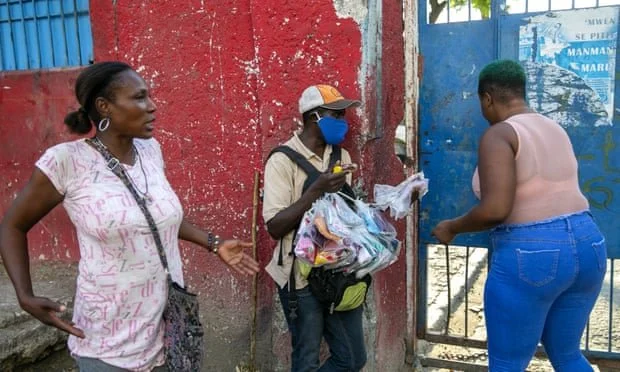
Haiti has no Covid vaccine doses as violence looms larger than pandemic
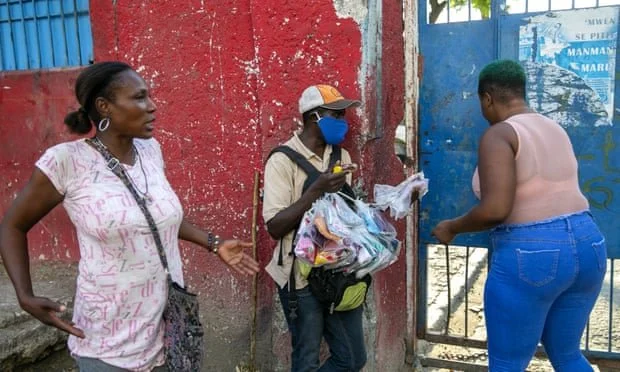
- Caribbean republic’s 11m people have yet to receive a single jab
- Doses due to arrive in May but delays expected
Haiti does not have a single vaccine to offer its more than 11 million people over a year after the pandemic began, raising concerns among health experts that the wellbeing of Haitians is being pushed aside as violence and political instability across the country deepen.
So far, Haiti is slated to receive only 756,000 doses of the AstraZeneca vaccine through a United Nations program aimed at ensuring the neediest countries get Covid-19 shots. The free doses were scheduled to arrive in May at the latest, but delays are expected because Haiti missed a deadline and the key Indian manufacturer is now prioritizing an increase in domestic demand.
The country also didn’t apply for a pilot program in which it would have received some of its allotted doses early, according to the Pan American Health Organization. However, a spokeswoman commended its other pandemic efforts, including reinforcing hospital preparedness.
Meanwhile, a human rights research center cited in a new US state department report found Haiti’s government misappropriated more than $1m worth of coronavirus aid. The report also accused government officials of spending $34m in the “greatest opacity”, bypassing an agency charged with approving state contracts.
Lauré Adrien, general director of Haiti’s health ministry, blamed the vaccine delay on scrutiny of the AstraZeneca shots and concerns that the country lacks the necessary infrastructure to ensure proper vaccine storage, adding that his agency prefers a single-dose vaccine. AstraZeneca requires two doses.
“It’s no secret that we don’t have excellent conservation facilities,” he said. “We wanted to be sure that we had all the parameters under control before we received vaccine stocks.”
Adrien also noted all the money his agency received has been properly spent, but said he could not speak for other agencies. A presidential spokesman did not return calls for comment.
Many poorer countries have experienced long waits in getting Covax vaccines as richer countries snapped up supplies, though most have received at least an initial shipment. Some took matters into their own hands, securing shots through donations and private deals.
Haiti’s lack of vaccines comes as it reports more than 12,700 cases and 250 deaths, numbers that experts believe are underreported.
Ongoing protests and a spike in kidnappings and gang-related killings have some wondering how any vaccine will be administered given the lack of stability coupled with a growing number of people afraid to leave their homes.
Perceptions also remain a big challenge.
While face masks remain mandatory at Haiti businesses, airport closures and curfews have long since been lifted, and other precautions are rare.
“People don’t really believe in the coronavirus,” said Esther Racine, a 26-year-old mother of two boys whose father died in the catastrophic 2010 earthquake.
Racine once worked as a maid but began selling face masks at the beginning of the pandemic, making brisk business with some 800 sales a month. Now, she barely sells 200.
“Look around,” she said, waving at a maskless crowd bustling around her in downtown Port-au-Prince. The only customers nowadays are those who need a mask to enter a nearby grocery store, she said, adding that Haitians have other problems on their mind: “People worry more about violence than the virus.”
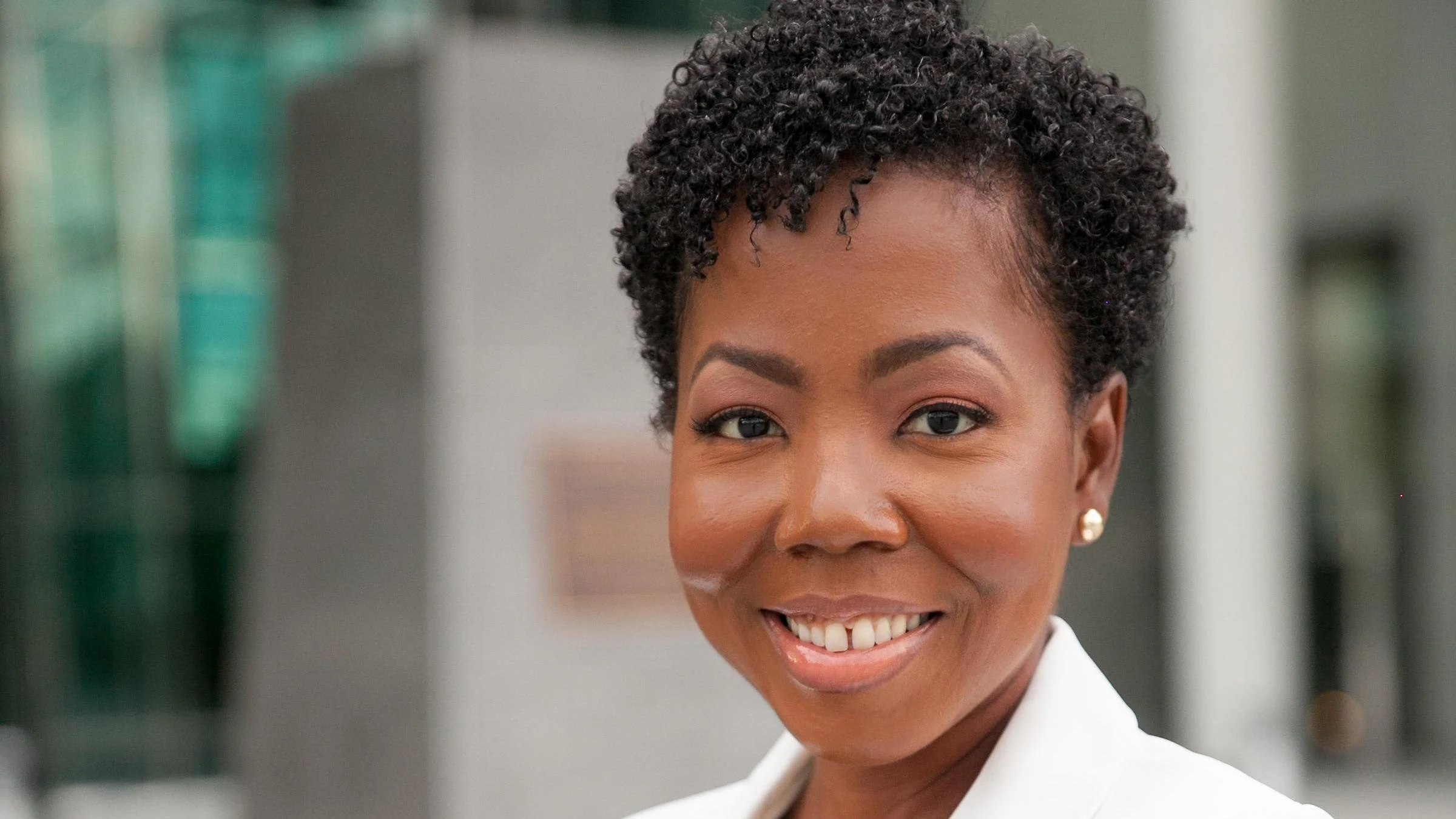
Today’s Faces of Sickle Cell Disease
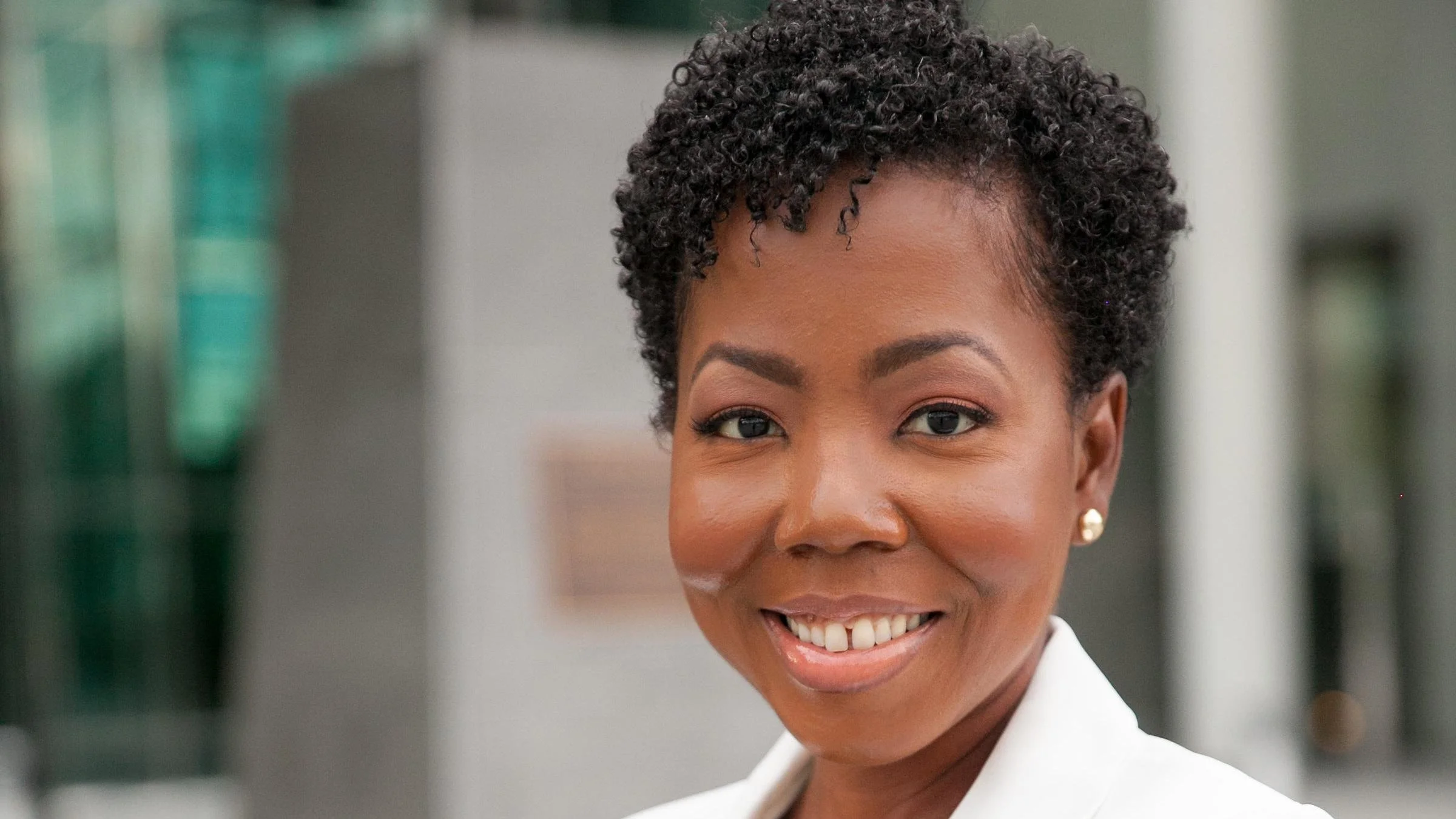
Lawyer, sickle cell patient, COVID-19 survivor
Her story: Natalie Jean-Baptiste, 42, has lived with sickle cell disease her entire life and has forged a successful career as a bankruptcy lawyer specializing in student loan debt. While recovering in March from hip-replacement surgery—the result of a long-term complication from her sickle cell disease—Jean-Baptiste also experienced a severe pain crisis that required multiple hospitalizations. A short time afterwards, she contracted COVID-19. She could not smell or taste anything. She developed a fever. She struggled to breathe. As her condition grew worse, doctors placed her on a ventilator, where she remained for two weeks.
“I never imagined I would get COVID,” Jean-Baptiste recalls. “I had been sick before with sickle cell, but this is the first time I was afraid I might not make it.” Months after being discharged from the hospital, Jean-Baptiste is now recovering at home with the aid of oxygen, oral steroids, and physical therapy.
Biggest challenge: “Having both COVID and sickle cell disease made me the sickest I’d ever been in my life. It’s a miracle that I made it.”
How she stays inspired: “The love of my friends and family motivates me and keeps me going. Also, I find joy and purpose in practicing law and providing debt relief to student loan borrowers.”
Her dream: “I would like the sickle cell community, including caregivers and advocates, to consider more holistic and natural ways to help manage symptoms along with traditional drugs. I think they are often overlooked, but it’s important to use diet and lifestyle changes to manage this disease.”
EDITOR’S NOTE: The U.S. Centers for Disease Control and Preventionexternal link recently announced that having sickle cell disease increases your risk for developing severe illness from COVID-19.

Haiti - Covid-19 : 43 new cases and 4 more deaths in 24 hours

According to the Ministry of Public Health, 43 new cases of Covid-19 would have been confirmed in Haiti in 24 hours (previous +34 in 48 hours) for a total of 8,301 cases throughout the national territory since the first case (March 19, 2020 https://www.haitilibre.com/en/news-30319-haiti-health-origin-of-the-first-2-cases-of-covid-19-in-haiti.html ).
Deaths: 4 new deaths were reported in 24 hours in the Western Department for a national total of 210 deaths.
Healings: : 5,870 people (+ unchanged in 24 hours), previous (+42 in 48 hours)
Healing rate: 70.71% (-)
Active cases: (less deaths and cures) 2,221 cases (+39 in 48h), the day before (-17 in 48h)
Imported cases: 152 cases since the reopening of airports and +43 since the last report dated July 9 (109) https://www.haitilibre.com/en/news-31348-haiti-flash-152-cases-imported-since-the-reopening-of-airports.html (update not available)
Suspicious cases investigated since March 19: 24,220 cases (+158 in 24 hours), previous (+150 in 48 hours)
Cases tested since the start of the pandemic: 24,035 (+356 in 48 hours as of September 1)
People currently hospitalized: (information not available)
People in intensive care currently: (information not available)
People currently treated at home: (information not available)
Cases confirmed by department:
West: 5,687cas (+9 in 24h)
Artibonitis: 487 cases (+2 in 24 hours)
North: 470 cases (+23 in 24h)
Center: 437 cases (+4 in 48h), previous (+4 in 48h)
Southeast: 257 cases (unchanged)
North-East: 237 cases (+5 in 24 hours)
South 226 (unchanged)
Northwest 197 (unchanged)
Grand'Anse 162 (unchanged) previous (+1 in 48h)
Nippes 141 (unchanged)
Location of cases:
West : 5,687 cases (+9)
Delmas : 1,382 cases (+1)
Port-au-Prince : 1,135 cases (+1), previous (+2 in 48h)
Pétion-ville : 852 cases (+2)
Tabarre : 683 cases (unchanged)
Croix-des-Bouquets : 559 (+1), previous (+2 in 48h)
Carrefour : 437 cases (+1)
Petit-Goâve : 148 cases (unchanged)
Cité Soleil : 92 cases (unchanged)
Léogâne : 78 cases (+3)
Cabaret : 72 cases (unchanged)
Kenskoff : 60 cases (unchanged)
Archaie : 46 cases (unchanged)
Gressier 44 cases (unchanged), previous (+1 in 48h)
Anse à Galet : 37 cases (unchanged)
Cornillon : 16 cases (unchanged)
Grand Goâve : 15 cases (unchanged)
Ganthier : 13 cases (unchanged)
Thomazeau : 9 cases (unchanged)
Fonds-Verettes : 6 (unchanged)
Pointe à Raquette : 3 cases (unchanged)
Artibonite : 485 cases (+2)
Saint Marc : 163 cases (unchanged)
Verettes : 116 cases (unchanged)
Gonaïves : 110 cases (unchanged)
Gros Morne : 22 cases (+1)
Marchand Dessalines : 16 cases (unchanged)
Petite Rivière de l’Artibonite : 15 cases (unchanged)
Saint Michel : 11 case (+1)
L’Estère : 10 cases (unchanged)
Desdunes : 6 cases (unchanged)
Marmelade : 6 cases (unchanged)
Ennery : 5 cases (unchanged)
Grande Saline : 3 cases (unchanged)
La Chappelle : 2 cases (unchanged)
Anse Rouge : 2 cases (unchanged)
North : 470 (+23)
Cap Haïtien : 279 cases (+10)
Limbé : 38 cases (+1),
Pignon : 21 case (unchanged)
Milot : 18 cases (+3)
Plaine du Nord : 16 cases (+1)
Grande Rivière du Nord : 16 cases (+2)
Pilate : 15 cases (+2)
Plaisance du Nord : 14 cases (unchanged)
Borgne : 13 cases (+2)
Limonade : 11 case (unchanged)
Port Margot : 11 case (+2)
Quartier Morin : 9 cases (unchanged)
Acul du Nord : 6 cases (unchanged)
Dondon : 3 cases (unchanged)
Bahon : 1 case (unchanged)
Saint Raphaël : 1 case (unchanged)
Center : 437 cases (+4)
Mirebalais : 157 cases (unchanged), previous (+1 in 48h),
Hinche : 154 cases (+3), previous (+2 in 48h)
Boucan Carré : 31 case (unchanged)
Lascaobas : 30 cases (unchanged), previous (+1 in 48h)
Belladère : 20 cases (unchanged)
Thomonde : 14 cases (unchanged)
Saut-d’Eau 7 cases (unchanged)
Savanette : 6 cases (unchanged)
Cerca la Source : 6 cases (unchanged)
Maissade : 5 cases (+1)
Cerca Cavajal : 4 cases (unchanged)
Thomassique : 3 cases (unchanged)
South-East : 257 cases (unchanged)
Jacmel : 192 cases (unchanged)
Côte-de-Fer : 15 cases (unchanged)
Bainet : 13 cases (unchanged)
Anse-à-Pitre : 9 cases (unchanged)
Thiotte : 9 cases (unchanged)
Vallée de Jacmel : 7 cases (unchanged)
Marigot : 6 cases (unchanged)
Belle Anse : 4 cases (unchanged)
Cayes Jacmel : 2 cases (unchanged)
North-East : 237 cases (+5)
Ouanaminthe : 75 cases (+1)
Caracol 41 case (+1)
Fort Liberté : 34 cases (+1)
Trou du Nord : 32 cases (+1)
Mombin Crochu 20 cases (unchanged)
Terrier Rouge : 11 case (+1)
Perches : 5 cases (unchanged)
Mont Organisé : 5 cases (unchanged)
Ste-Suzanne : 4 cases (+2), la veille : (+2)
Carice : 4 cases (unchanged)
Ferrier : 4 cases (unchanged)
Capotille : 2 cases (unchanged)
South : 226 cases (unchanged)
Cayes : 125 cases (unchanged)
Aquin : 26 cases (unchanged)
Saint-Louis du Sud : 12 cases (unchanged)
Les Anglais : 10 cases (unchanged)
Port à Piment : 8 cases (unchanged)
Port-Salut : 8 cases (unchanged)
Torbeck : 7 cases (unchanged)
Chardonnières : 6 cases (unchanged)
Camp-Perrin : 6 cases (unchanged)
Tiburon : 4 cases (unchanged)
Coteaux : 4 cases (unchanged)
Chantal : 2 cases (unchanged)
Île-à Vache : 2 cases (unchanged)
St Jean du Sud : 2 cases (unchanged)
Cavaillon 2 cases (unchanged)
Roche à Bateau : 1 case (unchanged)
Maniche : 1 case (unchanged)
North-West : 197 cases (unchanged)
Port de Paix : 115 cases (unchanged)
Saint-louis du Nord : 25 cases (unchanged)
Bombardopolis : 14 cases (unchanged)
Môle Saint-Nicolas : 12 cases (unchanged)
Jean Rabel : 12 cases (unchanged)
Bassin Bleu : 6 cases (unchanged)
La Tortue : 5 cases (unchanged)
Chansolme : 4 cases (unchanged)
Baie de Henne 2 cases (unchanged)
Anse-à-Foleur : 2 cases (unchanged)
Grand'Anse : 162 cases (unchanged)
Jérémie : 129 cases (unchanged), previous (+1 in 48h)
Anse d’Hainault : 16 (unchanged)
Chambellan : 7 cases (unchanged)
Dame Marie : 3 cases (unchanged)
Pestel : 2 cases (unchanged)
Irois : 2 cases (unchanged)
Bonbon : 1 case (unchanged)
Moron : 1 case (unchanged)
Roseaux : 1 case (unchanged)
Nippes : 141 case (unchanged)
Miragoâne : 66 cases (unchanged)
Fond des Nègres : 20 cases (unchanged)
Baradères : 13 cases (unchanged)
Plaisance du Sud : 10 cases (unchanged)
Anse à Veau 7 cases (unchanged)
Petit Trou de Nippes : 7 cases (unchanged)
Petite Riviere de Nippes : 6 cases (unchanged)
L’Asile : 5 cases (unchanged)
Paillant : 4 cases (unchanged)
Arnaud : 2 cases (unchanged)
Grand Boucan : 1 case (unchanged)
NOTE: "unchanged" means that there is no new data available: it may be no new cases, unreported or incomplete cases or delay in transmission data at the Ministry ...
Distribution of confirmed cases by age group:
0-9 years: 238 (unchanged)
10-19 years: 291 (+1)
20-29 years: 1,651 (+7)
30-39 years: 2,421 (+18)
40-49 years: 1,500 (+7)
50-59 years: 980 (+4)
60-69 years: 734 (+4)
70 years and over: 486 (+2)
Distribution of deaths by age group:
0-9 years: 8 deaths (unchanged)
10-19 years: 3 deaths (unchanged)
20-29 years: 11 deaths (unchanged)
30-39 years: 14 deaths (unchanged)
40-49 years: 24 deaths (unchanged)
50-59 years: 38 deaths (+1)
60-69 years: 44 deaths (+2)
70 years and over: 67 deaths (+1)
41.7% women and 58.3% men (update not available for more than a week)
Deaths: 210 deaths (+4 in 24 hours)
Mortality rate: 2.53% (+)
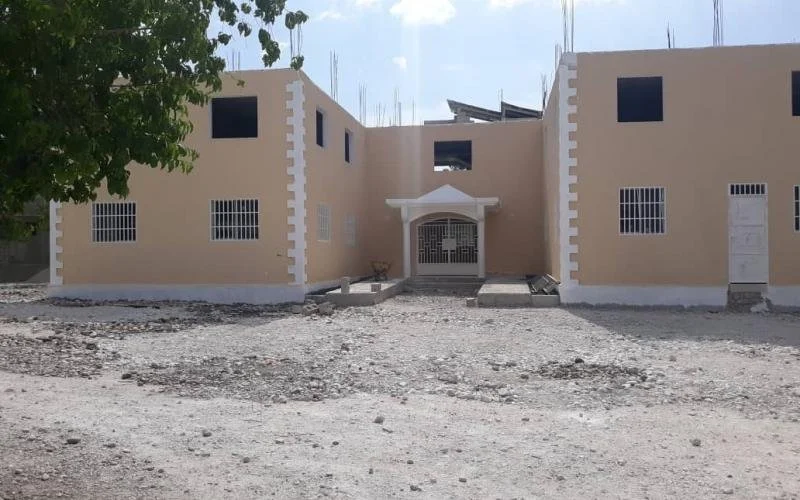
Georgia ministry opens hospital in Haiti
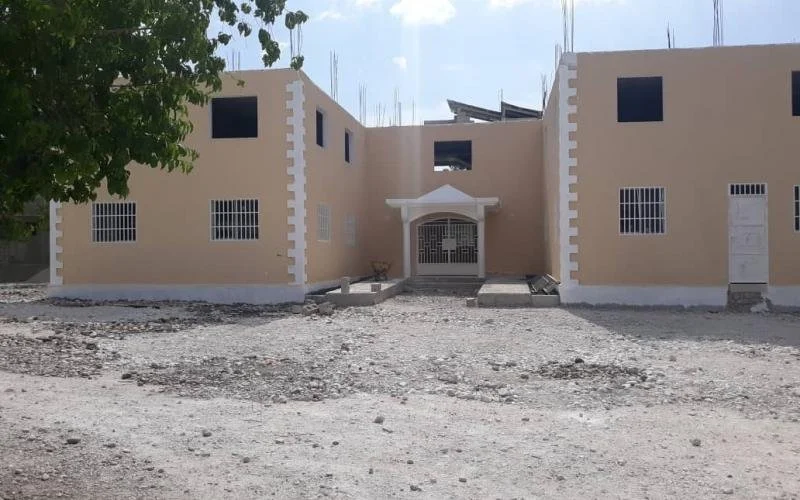
Opening a mission hospital in Haiti while operating out of Northeast Georgia was never going to be easy.
Doing so as a pandemic spread across the globe, hindering travel and the ability to gather groups together, made it even more difficult than Love Him Love Them Ministries co-founder Linda Gunter could have imagined.
But with a truckload of faith, selfless giving from dozens of people, businesses and organizations and a shipping container loaded to the brim with medical supplies, Valley of Hope Hospital is set to open Saturday, Aug. 29 in Gallette Chambon, Haiti.
Gunter admits the daunting task of coordinating the shipment of supplies needed to open the hospital was almost too much to take.
“We almost gave up,” she said.
Medical care in an underserved area of a developing island nation during a pandemic was too important, however, so the opening of the hospital was moved to an earlier date than originally planned.
Travel restrictions were discouraging and raising the money needed to open the hospital and ship supplies was difficult, Gunter said, especially considering the primary fundraiser for Lavonia-based Love Him Love Them, a tour of the Haitian Orphan Choir comprised of youth from the ministry’s orphanages and schools, had to be canceled for 2020.
She soon learned to lean on her faith and let God handle things, Gunter said.
“I really believe God was saying, ‘You think you know what’s going on? I’ve got this under control,’” she said.
Much like the ministry itself, which was born out of desperate need following the 2010 earthquake that ravaged Haiti, Valley of Hope’s opening later this month was spurred by tragedy.
A young woman in labor came to a Love Him Love Them school and church facility in Gallette Chambon on the back of a motorcycle, hoping to find medical care.
The school did not have the resources she needed.
The nearest medical care facility was more than an hour away.
Despite the best efforts of Pastor Maxeau Antoine and others, the woman and her child both died before they could the get the necessary medical attention.
“This was our sign,” Gunter said.
Completing the mission would not be without its challenges.
She and her team knew that, but the Lord had called them to provide the people there a better option, she said.
The Hart and Hall county health departments each had donated items to the ministry previously and still had more to offer.
Love Him Love Them has a storage facility in Lavonia filled with donated supplies and an organization called Missionary Flights International donated even more.
Local doctors from St. Mary’s Hospital and from around the region had provided supplies like a centrifuge and microscopes so the hospital could operate a lab to aid in diagnosing patients.
The Hart County-based organization, Acts 1:8, also got in on the action and set aside some supplies to its orphanage in Haiti.
Now they just needed a way to get it all to Haiti.
Lisa Welshman, executive director of Love Him Love Them ministry, said a group of dozens of volunteers from area counties, including Stephens, Franklin and Hart, showed up ready to load the shipping container bought with donations, but its arrival was delayed that day.
“It was amazing how we got it down there. It was nuts,” Welshman said.
So the team put everything on pallets and organized it all to be prepared for when the container did actually arrive in a few days.
Then the driver from the company Unity on a Mission, who was donating his time to transport the container from Franklin County to Miami, got sick.
A new driver stepped up and a much smaller group of about nine people gathered again at a later date to load the container and see it on its way.
Thankfully, Welshman said, the truck arrived a couple days later in Miami and successfully made it to Haiti.
“It took over 100 volunteers, three trips between Lavonia, Gainesville and Hartwell to pick up supplies, coordination of donations being dropped off at all hours at the office and our storage area,” Welshman said.
“Plus, then truck driver No. 1 gets sick so we have to pray for another driver. That comes through and so he drives from Lavonia to Fort Pierce, Fla., to pick up five donated pallets of medical supplies then heads to Miami to the dock,” Welshman said.
It was enough to get the hospital going, but Welshman said there is still plenty more needed to make it operate as the ministry plans.
“We need major stuff now,” she said, adding that the group still needs beds, ventilators and other more substantial medical care items.
Gunter, who founded the ministry with her husband David, said the hospital opening despite the challenges is a testament to God’s love and power.
“We were literally in a spiritual battle,” she said about the effort to open Valley of Hope. “The big deal of opening the hospital is for spiritual care.”
Patients will come and receive medical care, but in the end, their spirit will be uplifted as well, Gunter said.
“Satan wants us to quit, but we have to keep fighting,” she said.
Gunter said the ministry “literally works off faith,” and relies solely on donations.
To donate to Love Him Love Them Ministries or to learn more about their missions, go to lovehimlovethem.org<http://lovehimlovethem.org> or call Linda Gunter at 706-599-7525.
Haitian mental health needs rise yet again with COVID-19 trauma
‘In Haiti, many of us don’t live; we survive.’
PORT-AU-PRINCE, Haiti
For Delva Fleurjest, the coronavirus has made it even harder for his brother to receive the mental healthcare he needs. Haiti’s two psychiatric hospitals have stopped accepting patients since the pandemic, and Fleurjest makes less money now to pay for doctors or medication.
When he isn’t working as a motorcycle taxi driver, Fleurjest cares for his younger brother, feeding and bathing the 36-year-old, who began hearing voices shortly after the 2010 earthquake that killed between 100,000 and 300,000 people.
“I’m trying to hustle together some money to pay for a consultation with a doctor,” said Fleurjest, who has yet to receive a diagnosis for his brother. “But it’s really expensive.”
Haiti’s investment in health has dropped from 16.6 percent in 2004 to 4.4 percent in 2017, and although the Ministry of Health created a mental health unit in 2011, it receives little funding, its coordinator, René Domersant, told The New Humanitarian. For a country of nearly 11 million, Haiti also only has 23 psychiatrists and 124 psychologists, Domersant said.
Even before the pandemic, Haiti – which has seen 6,948 cases and 145 deaths – struggled to meet basic healthcare needs. Now, many hospitals are full, and only two have testing facilities for COVID-19 cases. The number of cases is outstripping testing capacity.
For a country that has suffered consecutive psychological blows over the past 30 years – the earthquake, hurricanes, floods, a deadly cholera outbreak, coups, crushing poverty, and near-constant political unrest – the pandemic has brought fresh trauma.
Fatigued nurses and doctors are being treated for depression, domestic violence and abuse has increased due to lockdown measures, and anxiety over contracting the virus has risen.
Successive traumas have almost become normalised, said Laetitia Dégraff, a psychologist at the YWCA (Young Women’s Christian Association) Haiti.
“I’m not sure we totally recover from those traumas,” she told TNH. “Resilience is a word that is used often to describe Haitians, but I think it's most often because we don’t have the choice to dwell on what happened to us… because we went through so much already.”
Fresh trauma
More than half of Haiti’s population make less than $2.41 per day. Speaking with a psychologist can cost more than $50 for a one hour session.
“We don’t have a lot of programmes offering mental health support,” said Dégraff. “It’s for the elite to have a psychologist, as it can be costly.”
Because of the stigma around mental health, some often turn to Voodoo healers or practitioners. Some have also turned to Voodoo to treat COVID-19 symptoms.
Although visits to some clinics have decreased due to fears of contracting the virus, calls to hotlines have jumped. The UN’s migration agency, IOM, transformed its hotline to provide psychological assistance and prevention measures against COVID-19. The hotline was created in 2016 to detect cases of human trafficking.
“It’s for the elite to have a psychologist, as it can be costly.”
Within the first week of April, Mercy Corps’ hotline, the international NGO that partners with IOM, received more than 14,000 calls from 2,500 people seeking help, according to Christina Luchetta, a senior communications officer for Mercy Corps.
Since the start of the pandemic, the Haitian Psychology Association has operated a separate crisis hotline. Psychologists are volunteering their time to offer free services to those seeking mental health support, according to the association’s president, Phaidra Laraque.
Medical staff at the University Hospital in Mirebalais have also reached out for support, particularly worried about passing on the virus to their elderly parents.
“We are also trying to provide depression therapy for the medical staff affected by COVID-19,” said Eddy Eustache, the director of the mental health programme run by the Boston-based NGO, Partners in Health. “The work has not stopped.”
The programme began two years after the earthquake, in 2012, with 12 clinical sites in Haiti. Although treatments are free, the clinics are too far away from the capital, Port-au-Prince, for people like Fleurjest to seek help for his brother.
Social violence and natural disasters have been the most traumatic for Haitians, Eustache said, noting that Haiti is one of the most vulnerable countries in the world to natural disasters.
The Caribbean’s hurricane season began in June and lasts through November. In 2016, Hurricane Matthew killed at at least 580 people and displaced more than 35,000.

The earthquake
After the earthquake, non-profit organisations invested in mental health programmes, but much of that funding has now dried up, Domersant says.
Some Haitians are still traumatised by the magnitude 7.0 earthquake and now face additional anxiety because of the pandemic. The earthquake flattened swathes of buildings in Port-au-Prince and displaced more than one million people.
Marie-Thérèse, 33, was selling vegetables in the street when the earthquake shook the ground around her. Her home was destroyed, and she spent more than a month living on the streets with her husband and three-year-old son.
“Every time I remember it, I can’t let it go.”
Each year on the 12 January earthquake anniversary, Marie-Thérèse relives the trauma.
“Every time I remember it, I can’t let it go,” she told TNH, asking that her real name not be used to protect her identity and job. Even 10 years after the earthquake, some Haitians still sleep outside, fearful of structures collapsing around them.
The pandemic has also brought Marie-Thérèse additional worries. She hasn’t returned home in three months for fear she will lose her job as a hotel maid. She works in the suburb of Petionville, but her family lives about 45 minutes away.
Gender-based violence
Since the earthquake, gender-based violence has been increasing in Haiti, but lockdown measures put in place to halt the spread of the virus have meant that some have been trapped inside with their abusers.
Dorice, 21, has not ventured out since March. Sexually abused by her stepfather, she still lives at home with her mother and her abuser.
Prior to the pandemic, she would often spend time at the YWCA where she was given a safe community space and support, but the clinic has remained closed due to the pandemic.
“Because of the confinement, I have to stay at home with this monster,” she said, also asking that her real name not be used to protect her identity. “In Haiti, many of us don’t live; we survive.” Jessica Obert/TNHThe pandemic has also added to the burden of women’s mental health issues. Gender-based violence and abuse has risen amidst lockdown measures, while some clinics and community centres that offered safe spaces for women have had to close.
Médecins Sans Frontières, or MSF, has operated a clinic in Port-au-Prince since 2015, dedicated to supporting victims of GBV with medical, psychological, and social support. The clinic also screens for coronavirus. On average, the clinic sees 80 to 100 cases of sexual violence a month.
Hanna Reinholdz, interim medical coordinator for MSF, said that more than half of the patients coming to the clinic are minors seeking medical care.
“Most are young adolescent girls who have been raped and have lived through multiple traumas already,” Reinholdz said.
The clinic recorded its highest numbers of sexual violence cases to date in the first four months of 2020, although Reinholdz said the numbers were already high in January and February so it was difficult to say whether the increase was linked to the pandemic.
Reinholdz said sexual violence and abuse can often lead to other mental health issues.
The World Health Organisation estimates that 14 percent of the global burden of disease is attributed to mental health disorders.

Despite Covid-19, ‘Car Wash’ parties continue in Haiti

At least one person was killed in Port-au-Prince when police officers clashed with participants at an outdoor street party on Sunday, July 19, and several were reported injured. This gathering, known as a “Car Wash" party, is a popular summer DJ festival for young people in Haiti’s capital, mainly on Rue de l'Enterrement. But due to the continued presence of Covid-19 in Haiti, the government outlawed these parties.
Last week, the Government Commissioner banned Car Wash parties. Under the decree, participants can be arrested for joining the outdoor music festival. Despite the decree, people still assembled this weekend, which led to the police’s intervention.
A participant told the Haiti Standard that the party was calm until Haiti’s National Police (PNH) opened fire on several hundred people participating in the party. Government Commissioner Jacques Lafontant contradicts this claim, saying that it was participants of the party who fired shots. He called for an investigation into the incident.
In this video, people in the crowd from the Car Wash party scream as shots are fired.
“Haitians are living as if the pandemic does not exist.”
Our Observer Niepce Zéphirin first reported this story to the Observers team. Despite the pandemic, people are gathering in large crowds, not wearing masks, and not respecting social distancing.

About a year ago, this phenomenon appeared in the country: a debaucherous activity that attracts a large part of the Haitian youth. In this activity, young people entertain themselves by pouring water over each other to the rhythm of raboday music, a DJ animation with music connected to debauchery and alcohol.
Opinions are divided about holding this weekly activity. For some, it is a means of relaxation and entertainment. For others, it is an immoral activity because young girls dance naked, which undermines modesty.
A week after the announcement by the Haitian government to reopen all activities, the Car Wash party was revived with great fanfare [Editor’s note : gradual reopening began in Haiti on June 30].
Although religious activities are permitted to resume in Haiti, and schools are set to reopen on August 10, gatherings of 10 or more people are still officially banned in Haiti.
For now, there is not a Car Wash party planned this weekend. But Niepce is sceptical that the government’s decree will have much effect in the long term.
“We are facing a situation where the majority of decisions taken by the state are no longer respected.”
There are a total of 7,100 confirmed cases of Covid-19 in Haiti and 151 recorded deaths.
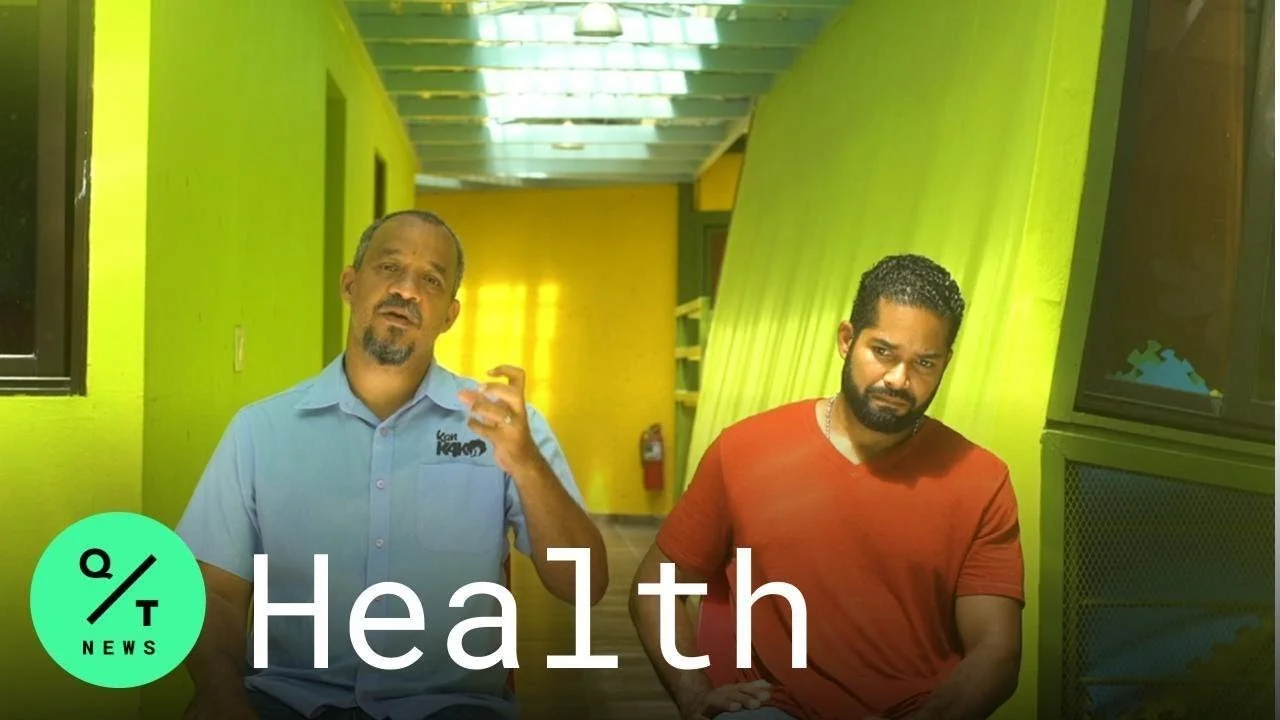
Men Build Hand Washing Stations in Haiti
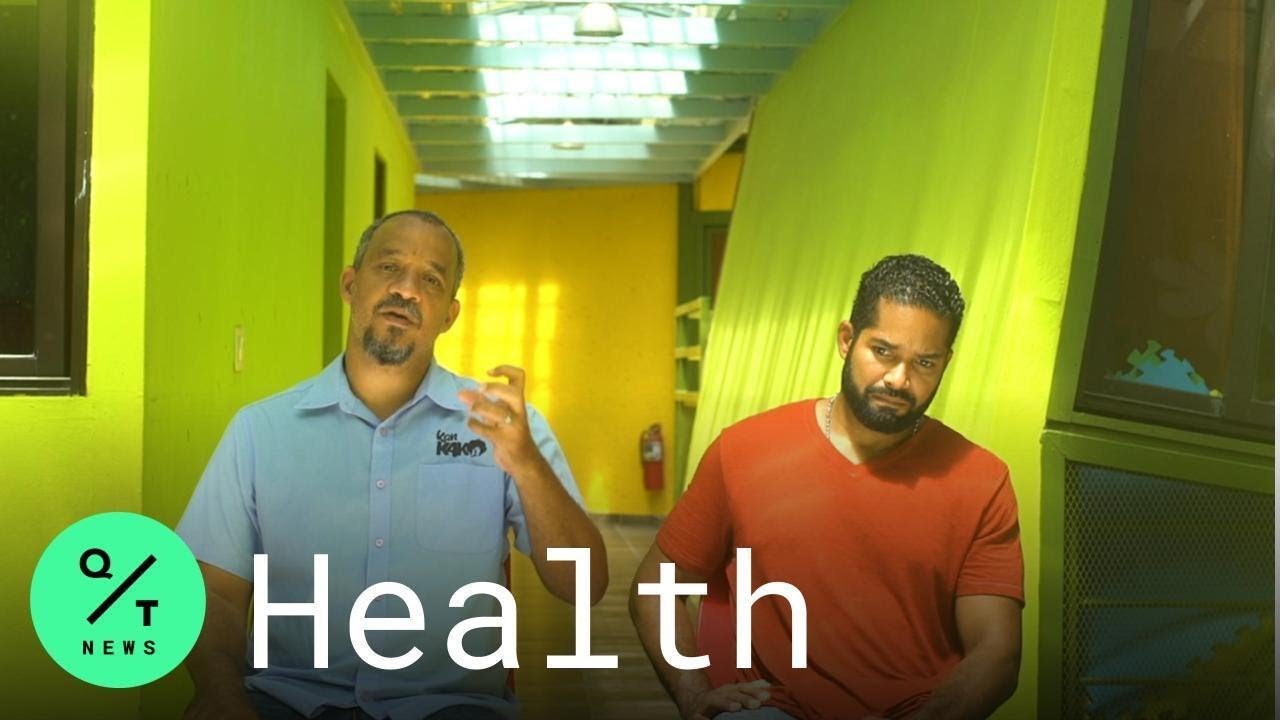
These two men are creating hand washing stations out of repurposed water drums in an attempt to slow the spread of Covid-19 in Haiti. Meet the founders of #DroumLóv
Haiti Reopens International Airports, Borders Amid Pandemic
WASHINGTON/PORT-AU-PRINCE - Haiti reopened its two international airports in Port-au-Prince and Cape Haitian, as well as four official border crossings in Anse-a-Pitres, Malpasse, Belladere and Ouanaminthe on Tuesday.
President Jovenel Moïse announced the news in a national address.
The airports closed to all nonlocal flights on March 16 to stop the spread of the coronavirus, but exceptions were made for some nonlocal flights, including to fly people who were stuck in Haiti back to their home countries.
Safety measures
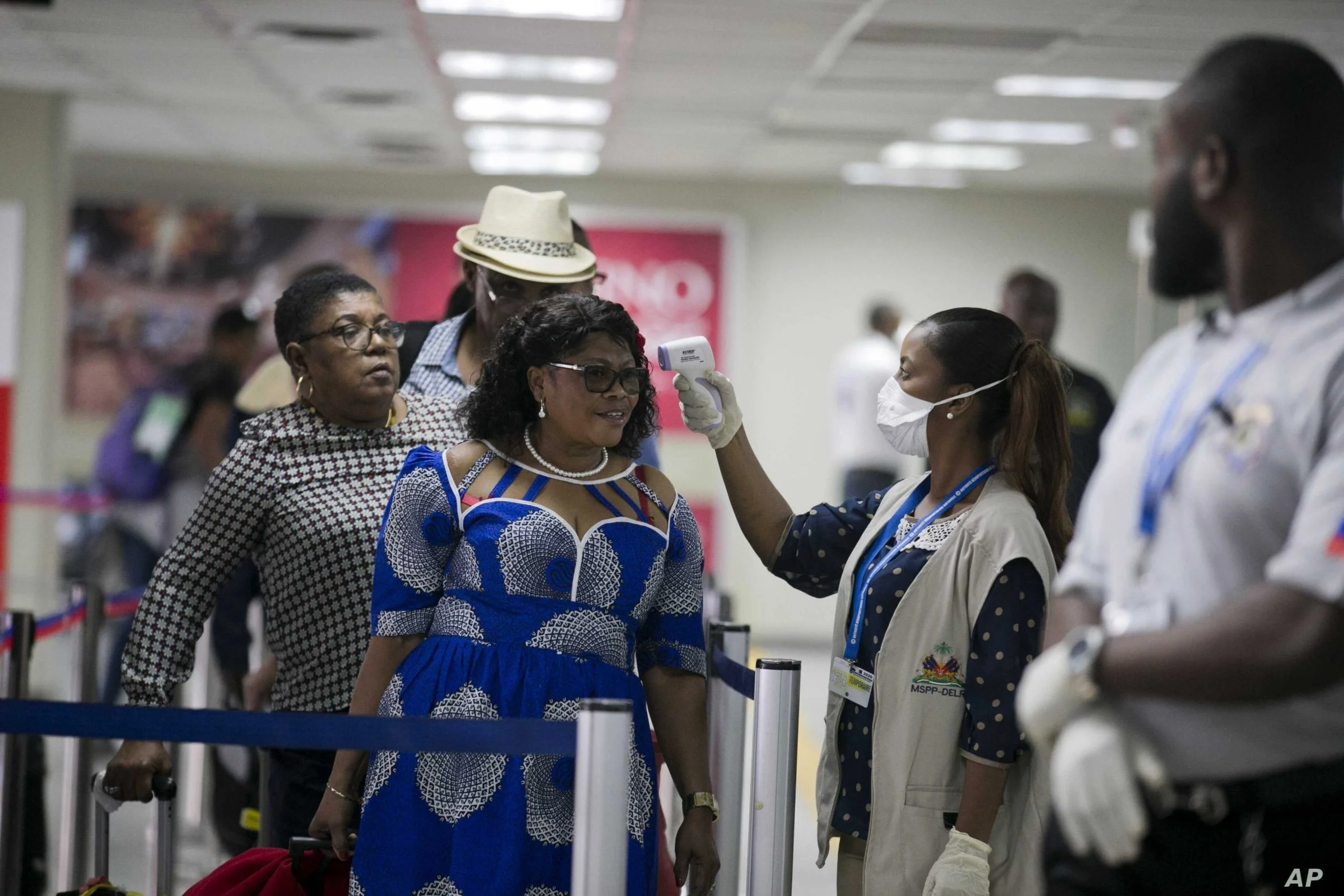
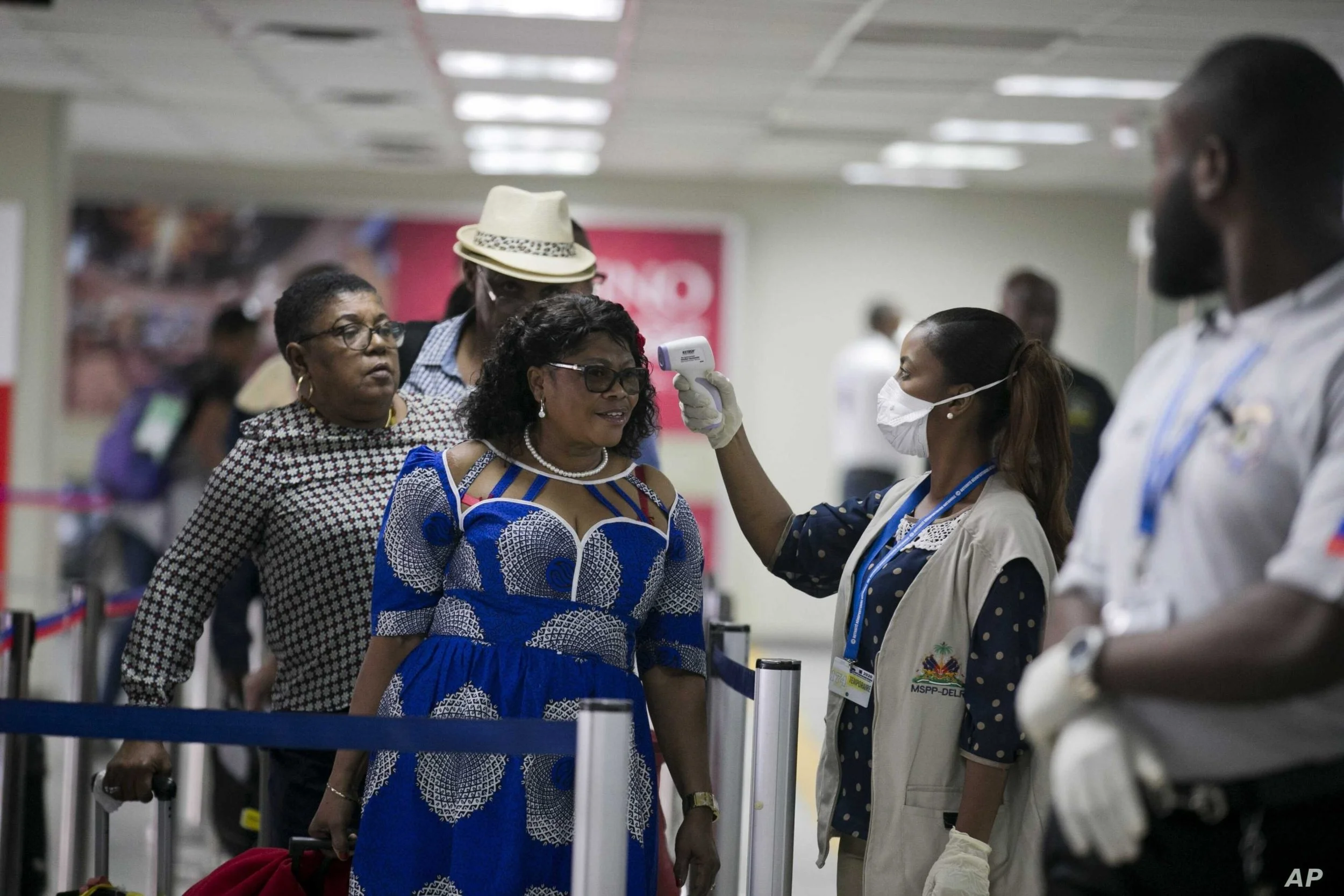
Officials told VOA that safety measures are in place to limit vehicular traffic in and around the airport, with special attention paid to passenger pick-up and drop-off zones. Agents will limit the number of passengers around airline check-in counters and security check points. Face masks are mandatory.
"Security agents will accompany passengers going through immigration, where we placed signs indicating where they should stand in adherence with social distancing measures," Joseph Frantz Sedras, director of equipment for Toussaint Louverture International Airport in Port-au-Prince, told VOA Creole.
Protective glass barriers are in place at all agent counters, and procedures are in place to keep passenger lines moving forward.
Sedras told VOA that social distancing will be mandated at every step of the departure and arrival process and that security agents will search passengers and their luggage before they reach the immigration area. In addition, counters and equipment will be disinfected often, he said.
"When the passenger reaches the departure lounge, he/she will be allowed to occupy every other seat in accordance with social distancing guidelines," Sedras said. "These measures will be mandated throughout the departure lounge."
Hand sanitizer dispensers have been installed throughout the airport for passenger and employee use.
COVID-19 infections
Haiti currently has 5,933 confirmed cases of COVID-19, according to data published by the published health ministry on June 29. That number is an increase of more 1,000 cases since June 20 when the confirmed infection toll stood at 4,916. The current death toll is 105.
Health officials say the hardest-hit regions are the northeast, west and Artibonite departments, but there is speculation that the toll could be higher nationwide, where fear of stigmatization keeps people from seeking medical treatment.

Diaspora travel
Travelers from the Haitian diaspora are essential to the country's economy, according to Prime Minister Joseph Jouthe. During a visit to the Port-au-Prince airport before its reopening, he told VOA Creole he recognizes their desire to tend to property, as well as attending annual religious festivals.
"I can't keep them from coming to dance at the festivals. And if the airport in Puerto Plata (Dominican Republic) is open and we are not, Haitians will find a way to get here somehow," he said.
With regards to the pandemic and its spread, the prime minister said he consulted the country's top health experts on a timeline but was not given an answer.
"Community transmission is an issue. There are many people who say they have a fever or a cold, they insist it's not corona(virus). But we know how Haitians are. I guess if I had it, I would say I didn't, too. So, all we can do is reinforce the security measures and preventative measures already in place," he said.
Jouthe said hand washing and wearing masks are a necessity, even though they are not always comfortable.
Criticism
Opposition Sen. Jean Renel Senatus told VOA that he, too, understands there are people who need to travel to Haiti to deal with important matters, but he doubts the government's information about the current COVID-19 situation.
He also expressed concern about the surge in U.S. cases.
"We've heard that cases are spiking in Miami. And most of the planes arriving in Haiti are coming from Miami, Florida," the senator said.
Scheduled flights
Eleven flights are scheduled to arrive in Haiti on July 1, according to FlightRadar24, a website that tracks air traffic worldwide in real time. Among those, five flights from U.S. carriers American Airlines, Spirit and JetBlue departing from Miami and Fort Lauderdale, Florida and New York City, are due to arrive between 9 a.m. and 1 p.m. local time.
Haiti Becomes CARICOM Country with Highest COVID-19 Cases
PORT AU PRINCE, Haiti – Haiti has become the Caribbean Community (CARICOM) country with the highest number of positive cases of the coronavirus (COVID-19) after the country recorded 77 news cases on Monday.
The Ministry of Public Health said that the new cases bring to 533, the number of people who have tested positive for the virus since the first case in Haiti on March 19.
It said that the death toll also increased by on to 21.
Jamaica had been the CARICOM country with the highest number of positive cases of the virus that was first detected in China last December and blamed for 315, 488 deaths and 4. Million others being infected globally.
Jamaica’s health ministry on Monday said no new cases had been reported and that the total remained at 520 with nine deaths.
On Sunday, Haiti recorded nearly 100 positive cases and the Ministry of Public Health in its latest statement said that the number of active cases now stands at 491 cases with the number of suspected cases followed being 2,120 cases.
It said that the number of people hospitalized is 253 while 1,330 persons remain in quarantine at home.
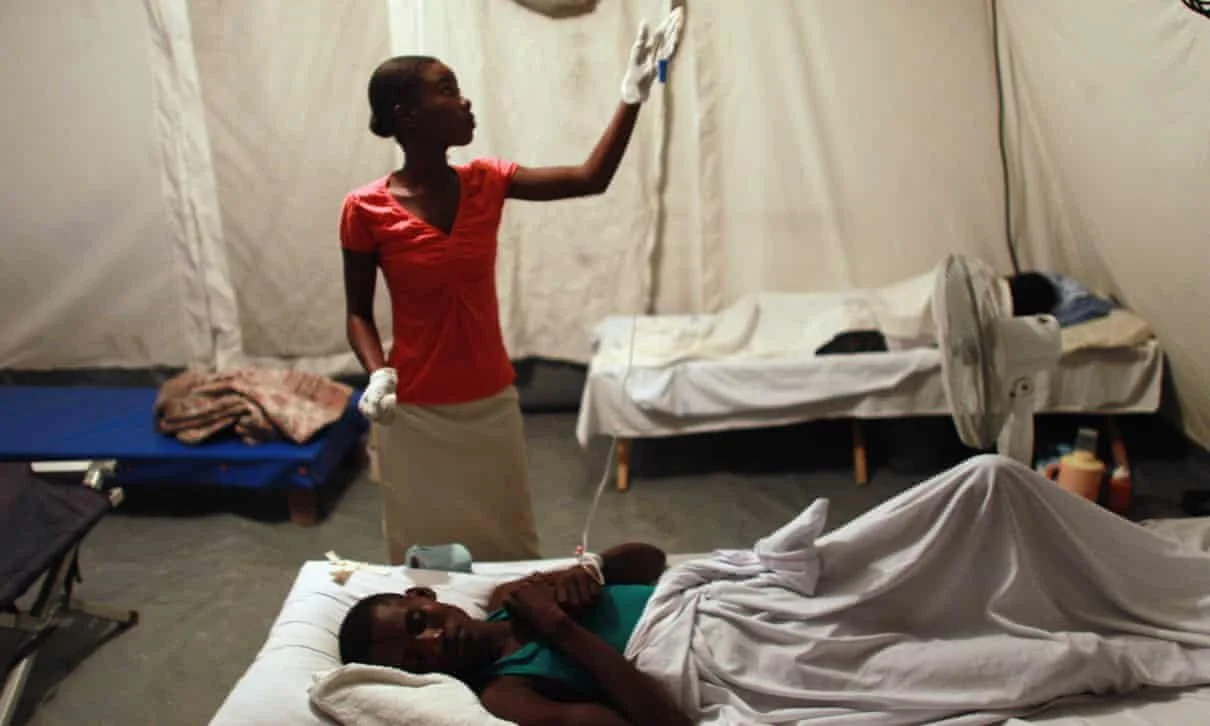
UN response to Haiti cholera epidemic lambasted by its own rights monitors
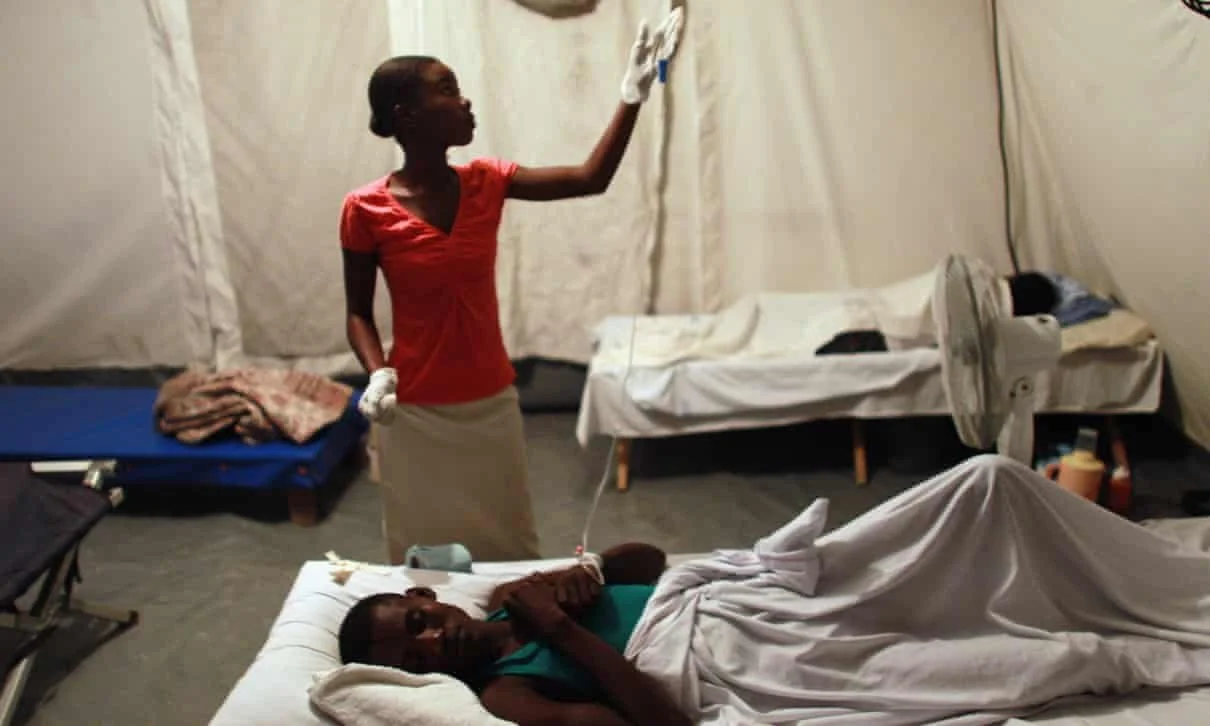
- 13 top officials denounced ‘illusory’ promises to Haitian people
- Disease brought to Haiti by UN peacekeepers killed 10,000
Thirteen UN rights monitors have unleashed blistering criticism of the United Nations for its “deeply disappointing” failure to make amends for having brought cholera to Haiti causing the deaths of at least 10,000 people.
In a letter to the UN secretary general, António Guterres, the independent monitors excoriate the world body for making “illusory” promises to the Haitian people. They note that having pledged $400m for a cholera clean-up mission, the UN has raised just $21m and spent “a pitiful” $3m.
“This is a deeply disappointing showing following the loss of 10,000 lives,” the letter states.
Scientific evidence has conclusively shown that cholera was imported into the country by sick Nepalese UN peacekeepers who were relocated in 2010 to Haiti to help with a devastating earthquake. The UN failed to screen the Nepalese force for the disease, which could have been done before they deployed from Nepal for less than $2,000.
For six years the UN denied any involvement in the transmission of the cholera bacterium. In 2016 it issued a fudged apology, but has continued to resist accepting any legal responsibility or to pay compensation.
Philip Alston, the UN monitor on extreme poverty and human rights who is lead signatory of the letter, told the Guardian that the UN’s failings were put into clear relief by the coronavirus pandemic.
“The world is rightly focused on the horrors of Covid-19 and losing thousands of people. But 10,000 people died in Haiti and there was no response,” he said.
Alston, who prepared a report to the UN general assembly on Haiti’s cholera disaster in 2016, added: “What upsets me most is that the UN has still not acknowledged its responsibility for taking cholera to Haiti.”
Cholera appears to have been halted in Haiti with the last case reported in January 2019. Even then, the bulk of the public health work devoted to root out the illness was carried out by local health workers and aid groups and not by the UN.
In December 2016, the then UN secretary general, Ban Ki-moon, made an apology of sorts, but it was carefully worded to avoid any legal accountability. He said: “We did not do enough with regard to the cholera outbreak and spread in Haiti.”
Alston said: “There continues to be an explicit refusal to accept any formal responsibility, let alone legal responsibility.”
The independent UN monitors who signed the letter include Leilani Farha, special rapporteur on adequate housing; Léo Heller, special rapporteur on water and sanitation; and five members of the working group of experts on people of African descent.
The lack of any compensation for the cholera disaster has had serious consequences for thousands of people in the poverty-stricken country. Many of those who died in the epidemic were the main income earners of their families, and their deaths had catastrophic implications for those left behind.
Alston told the Guardian that having studied the cholera disaster over many years he had concluded that the UN’s reprehensible conduct could only be understood by accepting that “an element of racism is involved here”.
He said: “If this happened to a white community in a country with any standing globally the UN wouldn’t have done – and wouldn’t have been able to do – nothing. But this is Haiti, a country which has largely been written off.”
In a statement, a UN spokesman said: “Since taking office, the Secretary-General has been strongly committed to supporting the people of Haiti and the fight against cholera. He reiterates the UN’s deep regrets for the loss of life and suffering caused by the cholera epidemic.”

Haiti releases over 300 detainees to prevent COVID-19 spread

PORT AU PRINCE, Haiti, Apr. 18. CMC – The Government of Haiti has released just over 300 detainees in the country’s 19 prisons in an effort to control and prevent the spread of COVID-19.
Officials in the National Penitentiary Authority (APN), recently informed the United Nations and non-governmental organizations of its needs in terms of infection prevention and control.
The NPA said this is in accordance with national and global advocacy, adding that 12 children have also been released from detention.
“To date, 322 detainees have already been released from Haitian prisons, including 21 women and 12 minors.”
Most of the detainees were in prolonged pre-trial detention while others were convicted for minor crimes, nearing the end of their sentence, or had co-morbidities linked to the COVID-19.
According to UNICEF, in Haiti, more than 11,000 people are detained in prisons listed – of this number, over 200 are minors.