
LES BOITES NOIRES By Papa Jean

Story of a Haitian Family living in modern day NYC dealing with everyday life. The American born children of this family must try to juggle to fit into their own lives while still trying to survive their parents’ old school, immigrant ways. They all have dreams of living the American dream and push things to the limits at home.
.
The Play is 90 minutes long
.
Feb. 17, 2020 @ 9pm
Feb. 19, 2020 @ 9pm
Feb. 22, 2020 @ 6:45pm
All Shows at the Hudson Guild Theater
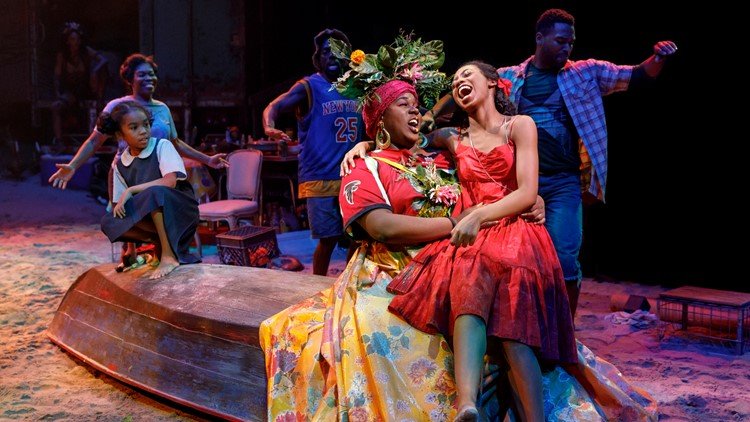
Haitian-inspired musical revival 'Once on This Island' comes to the Twin Cities
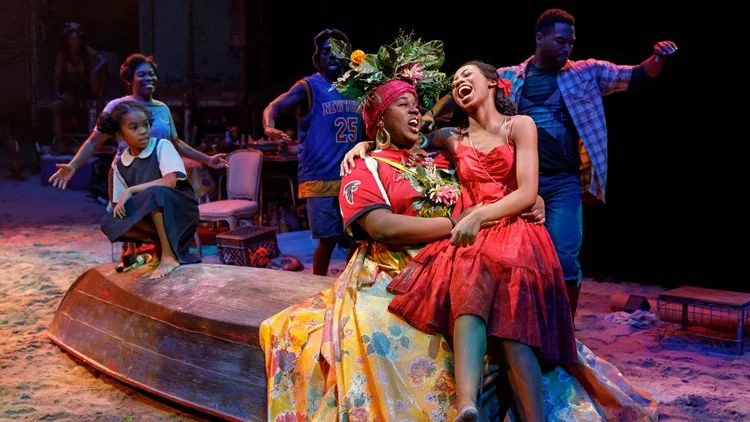
The 2018 Tony-winning musical is at the Ordway through Feb. 9.
A musical inspired by the islands of the Caribbean is now playing at the Ordway in St. Paul.
"Once on This Island" is tale of Ti Moune, a fearless peasant girl in search of her place in the world, who's ready to risk it all for love. Based on the 1985 book, “My Love, My Love,” by Rosa Guy, it is a retelling of Hans Christian Andersen’s “The Little Mermaid.
The show debuted on Broadway in 1990, and won a Tony Award in 2018 for Best Revival of a Musical. The revival was inspired by a trip to Haiti by the director and scenic designer, who witnessed the people of Haiti dealing with the aftermath of the 2010 earthquake and Hurricane Matthew in 2018.
The show includes a few unique features: materials used in set design and costumes are recycled from everyday objects, inspired by the ways the Haitian people survived and thrived in the wake of natural disasters. Also unique for this show: some audience members are invited to sit on stage during the performance, where sand and water is set up in a circle, to help provide an immersive experience.
This is the first time time this touring production of "Once on This Island" has appeared in the Twin Cities.
Performances continue at the Ordway through Sunday, Feb. 9. Ticket details can be found on the Ordway website, or by calling the box office at 651-224-4222.

Olympic qualifying match preview and how to watch: USA vs Haiti

The United States takes on a very young Haiti WNT.
Olympic qualifying is an odd beast. The US women’s national team is the unquestioned juggernaut of Concacaf, and there are going to be some uncomfortably lopsided scores over the next few games. There’s room to both celebrate the excellence of the USWNT and remember that it’s not a level playing field across the region. With that in mind, here’s a preview and how to watch for the first US game of qualifying against Haiti.
The opponent
Haiti recently tied Texas A&M 1-1 in a friendly as part of their Olympic prep. They also tied Canada 1-1 in an earlier friendly through this nicely direct goal (with an assist from a literal defensive slip).
h

There’s not as high a chance that they’ll be able to split US defenders like this, but you never know. Haiti has several players coming from D1F in France as well as a lot of youth players stepping up together from the U-20 level and together, they may be able to exploit a high line or a defensive lapse. Forward Nerilia Mondesir certainly taught the United States U-20s something about keeping an eye on clever balls over and runs behind.
That doesn’t necessarily mean they can hang with the senior US team for all 90, though. The oldest players on their roster were born in 1996, making their veteran players all of 23 and 24 years old. Their youngest player is goalkeeper Madelina Fleuriot at just 16.
Haiti roster
GOALKEEPERS (3): 1-Jonie Gabriel (As Tigresses), 12-Kerly Theus (Aigle Brillant), 18-Madelina Fleuriot (Exafoot)
DEFENDERS (7): 2-Soveline Beaubrun (As Tigresses), 3-Chelsea Surpris (Unattached), 4-Ruthny Mathurin (As Tigresses), 5-Tabita Joseph (As Tigresses), 13-Emeline Charles (Aigle Brillant), 15-Johane Laforte (Anacaona SC), 20-Kethna Louis (Le Havre AC, FRA)
MIDFIELDERS (5): 6-Melchie Dumonay (As Tigresses), 8-Dany Etienne (Fordham University, USA), 9-Sherly Jeudy (Anacaona SC), 14-Phiseline Michel (As Tigresses), 19-Angeline Gustave (As Tigresses)
FORWARDS (5): 7-Batcheba Louis (FF Issy Les Moulineaux, FRA), 10-Nerilia Mondesir (Montpellier HS, FRA), 11-Roseline Eloissaint (As Tigresses), 16-Abaina Louis (As Tigresses SC), 17-Mikerline Saint Felix (Montauban FC, FRA)
Time and TV schedule
USA vs Haiti
Tuesday, January 28
8:30 PM ET / 5:30 PM PT
FS2/TUDN
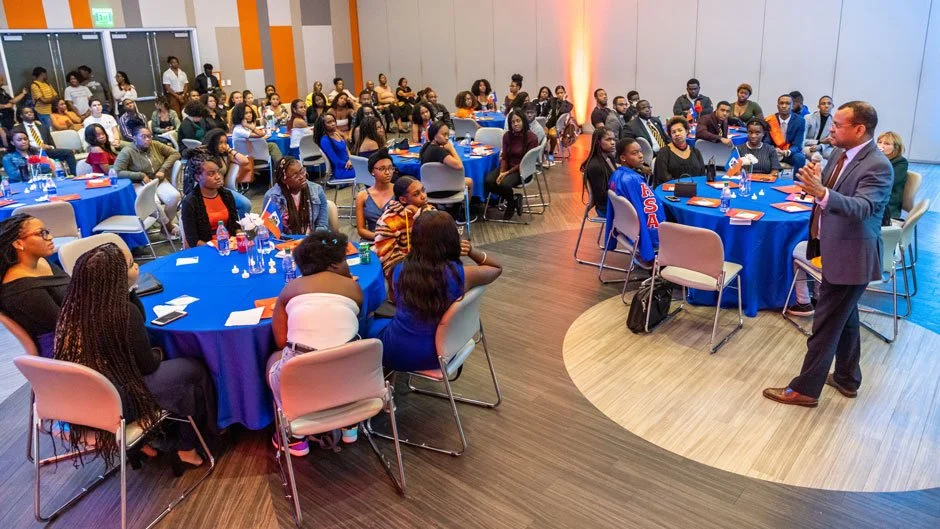
Students honor Haiti earthquake victims
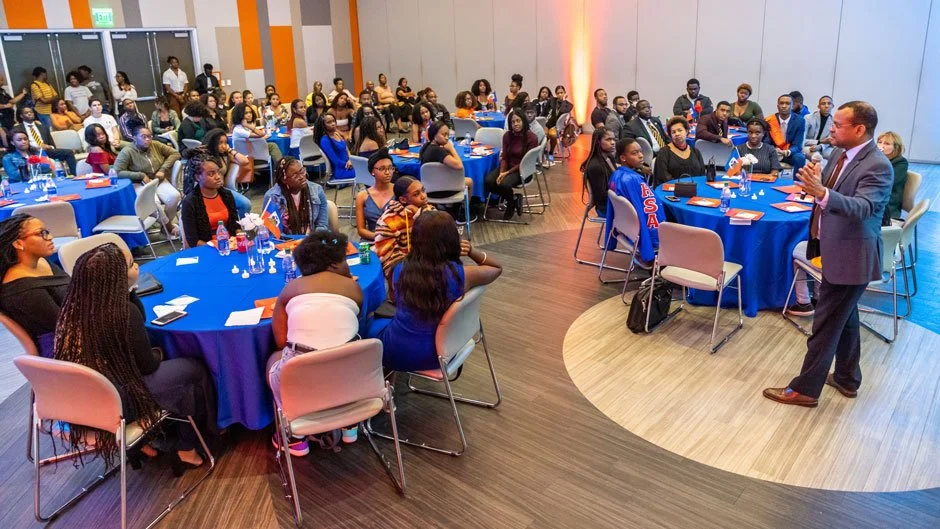
Planet Kreyol and the Office of Multicultural Student Affairs host a remembrance ceremony to salute victims of the 2010 earthquake with songs, poetry, dance, and more.
Ten years ago, a massive earthquake struck Port-au-Prince, Haiti, forever changing the lives of many, including Jordi Polycarpe, a junior at the University of Miami. Her cousin was one of the hundreds of thousands of lives lost in the catastrophic disaster.
“My cousin was just five-years-old,” said Polycarpe, a musicianship, artistry development, and entrepreneurship major. “This time of the year is difficult for my family and I, and it’s just really important to come together and remember the good things.”
On Wednesday, the Haitian student group on campus, Planet Kreyol, hosted 10 Years of Growth, a ceremony commemorating the earthquake and celebrating Haiti’s growth. Students, faculty, staff, and members of the community gathered in the Shalala Student Center ballroom for a program that featured poetic performances, dance selections, and remarks by Patricia A. Whitely, vice president for student affairs, and Louis Herns Marcelin, associate professor in the departments of international studies, anthropology, and public health sciences.
“It kind of feels like an out-of-body experience to be in charge of planning something like this, alongside Sara,” said nursing and psychology major Herveline Saintil, referring to her Planet Kreyol co-president Sara Stjuste. “This is a big deal and it’s an honor to be able to host such an event. It’s something that we do in commemoration and out of respect for those who have fallen.”
Two days before the earthquake destroyed Haiti, Marcelin and three University of Miami students, who called themselves Soley Ini—creole for united suns—were in Haiti for meetings as they prepared to open a youth-to-youth project in Cité Soleil that would provide education programs, cultural activities, and mentoring.
Now a decade later, Haitians are still in turmoil as the country is currently crippled by fuel shortages, scarcity of food, and rising inflation. Marcelin said the island is searching for ways to balance two dynamics that are working against each other.
“Ten years later, the fragility has been compounded, the poverty has been compounded by governance and political issues, an international community has created dependency, and several other disasters have happened in between,” said Marcelin, founder of the Interuniversity Institute for Research and Development. “While at the same time, young people are trying to do what they can and create an environment for their future. Through community-based organizations and social media, they are trying to create hope for the future.”
Despite the country’s history Marcelin still has hope that things will get better. As he wrapped up his keynote speech, he encouraged the youth in the audience to continue supporting research and leadership and to civically engage to help rebuild Haiti.
“You are in a position of power,” he declared. “There are a lot of things that you can do. Think about the leadership you want to see. Your vitality and your knowledge are critical for the future.”
‘Voodoo Is Part of Us’
Inside a religious Haitian soiree in Brooklyn .
In a dark club in Downtown Brooklyn, surrounded by more than 100 people, Agathina Ginoue Nozy took a sip of Haitian rum. She stood near an altar stacked with skulls, lit candles, cigars, rum, coffee and bowls filled with charred salt fish, boiled plantains, cassava and piman (spicy peppers).
“You typically drink white liquor during Fet Gede, but if there is none you drink rum with no ice to feel the heat,” Ms. Nozy said. “Gede is a hot thing.”
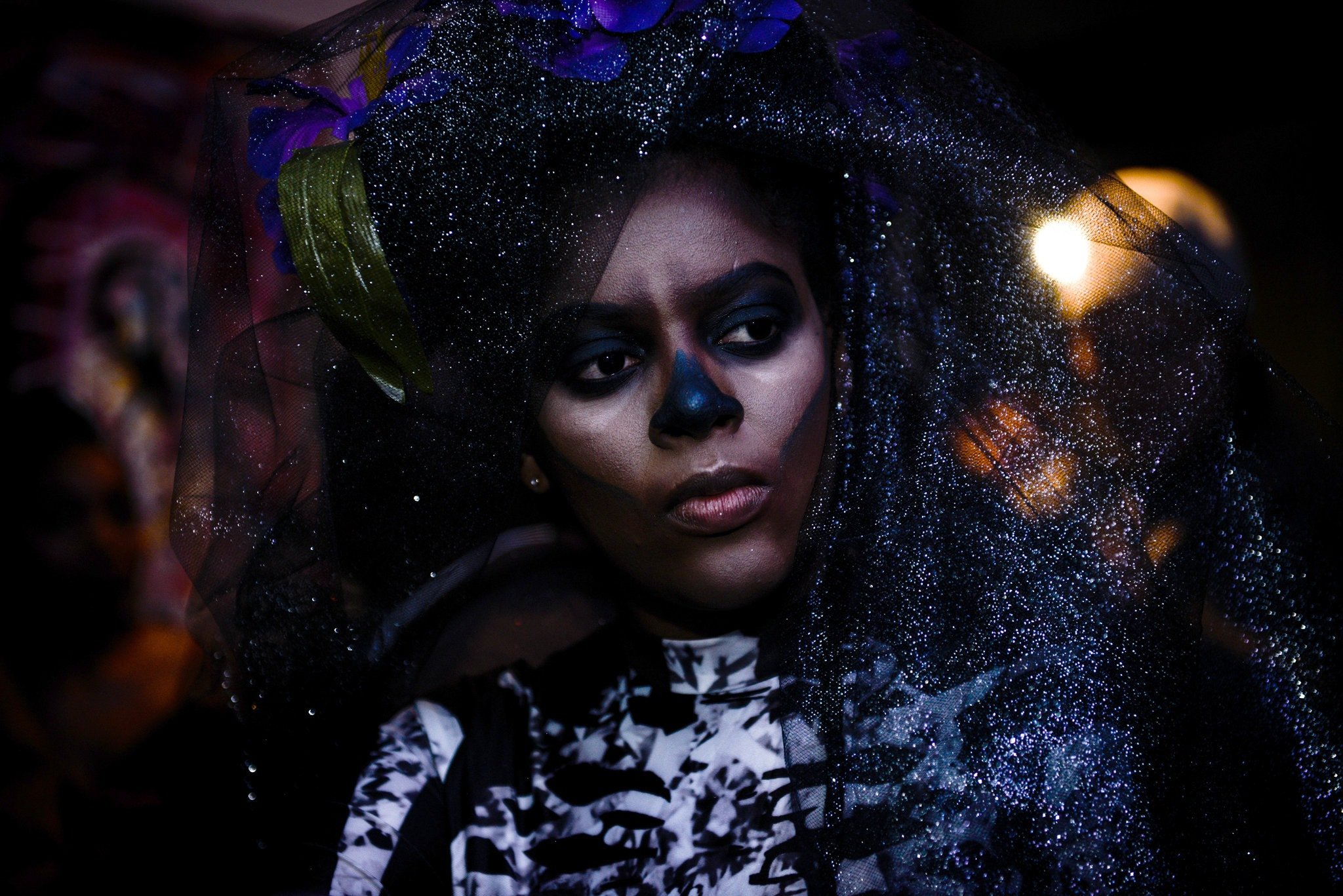
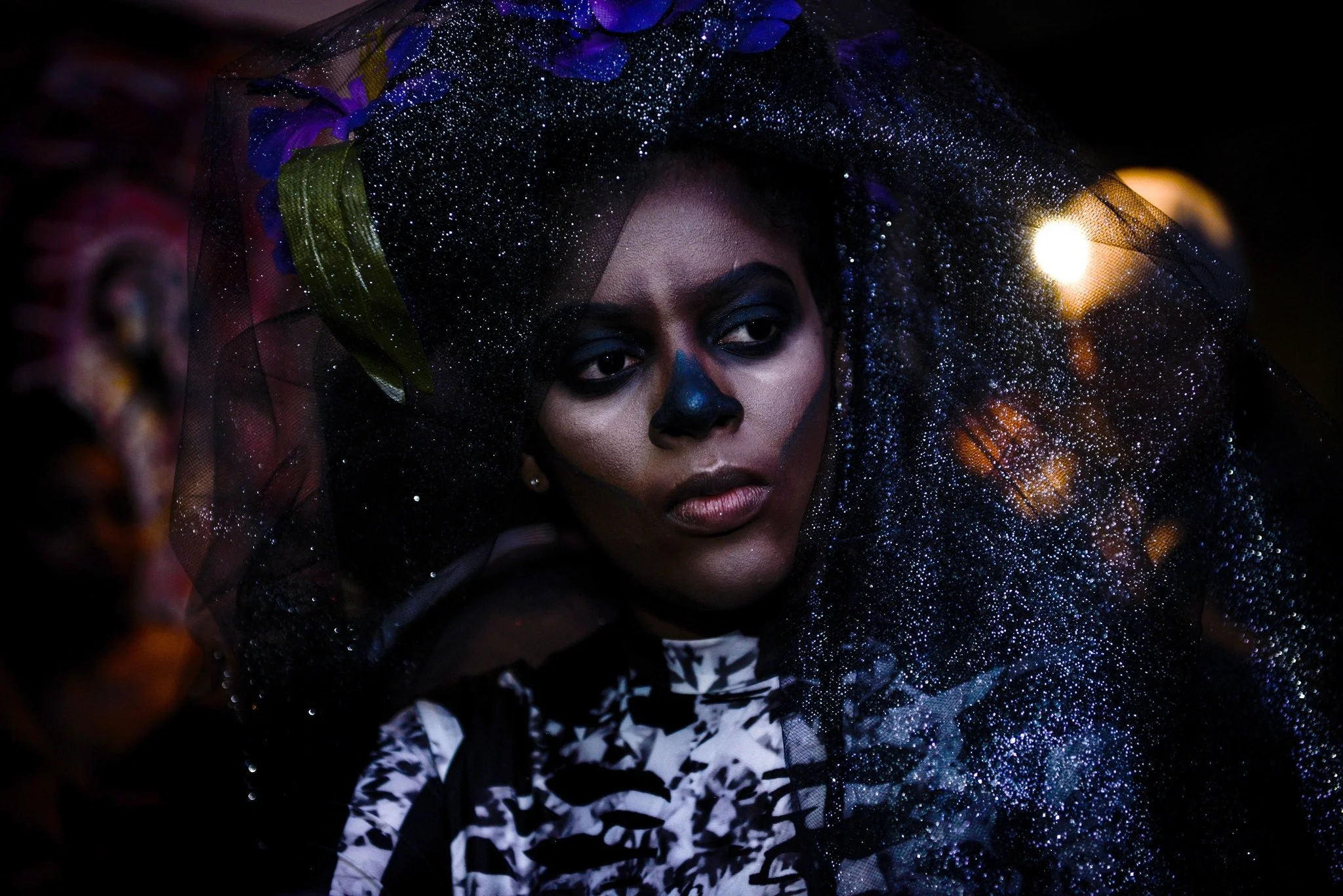
Her face was painted to look hollow, like a skull, and she wore a dark skeleton bodysuit and a black veil. With her fingers wrapped around a smoking pipe and an austere look on her face, Ms. Nozy had become the embodiment of Maman Brigitte, a Haitian lwa (or goddess) of death.
Voodoo believers, Haitians and curious partygoers gathered last Saturday night to celebrate Fet Gede, or the Festival of the Dead.
Similar to Mexico’s Day of the Dead, Gede invites revelers to dress up, eat, drink and dance to honor the lwas and the ancestors who came before them. It is one of the most anticipated celebrations in the Haitian voodoo religious calendar.
Ms. Nozy, a 29-year-old Haitian immigrant who was born and raised in Port-au-Prince, moved to New York City just before she turned 17. As someone who believes in voodoo, she looks forward to the celebration each year, but acknowledges that many people, including Haitians, lack an understanding of what it is.

They believe that the religion “has something to do with black magic,” Ms. Nozy said. “Voodoo is part of us. It’s who we are. It’s the culture. Voodoo is the food that we eat. It’s the language that we speak.”
What voodoo is not, contrary to popular belief, is a dark spell-casting practice full of pin-dolls and demonic prayers, said the party’s organizers, Monvelyno Alexis, 43, and Riva Précil, 30, a husband and wife musical duo who have organized one of the city’s most popular Fet Gede events for the past seven years.
This means that the event of Fet Gede can be somewhat misunderstood, too.
“I know a lot of Haitians that dress up their kids for Halloween. But when it comes to Gede they say I am not interested in that thing,” Ms. Nozy said.
“Our generation is more open-minded when it comes to the voodoo religion,” said Ms. Nozy, who was part of a large crew at the party that night.
At the club, guests were dressed in the official Gede colors — black, purple, and white — and danced to rhythmic drumming. The room was thick with smoke from incense and cigars.
The night kicked off with a rum tasting at the altar, which helped guests get in the Gede mood. As Ms. Nozy and her crew danced, one man splattered Florida Water — a perfume used in voodoo for spiritual cleansing and protection — over their heads, leaving a sweet citrus and floral scent that covered the room. At times, Ms. Nozy and others would scream, throw their hands in the air or slam a wooden cane into the ground.
Fet Gede is observed typically in early November, although it can be celebrated all month.
Rituals include a special Gede dance, Banda, and making offerings to the spirits, the most famous of whom is Baron Samedi, known as the god of death (he is also the husband of Maman Brigitte, the goddess of death), Ms. Précil said. Together, both spirits — the Baron and Maman — revel in eroticisms, obscenities and drinking.


The ancestors, Ms. Précil said, like to party. “They don’t have the same restrictions or rules as we do here on earth,” she said. “They’re very fearless, so it’s a time where we sort of channel their ways and celebrate them by taking on their way of life.”
Haitian voodoo is a religion that emerged out of institutional slavery.
Starting in the mid-1600s, many Africans who had been brought against their will to the Island of Hispaniola (now Haiti and the Dominican Republic) arrived with their own spiritual traditions, eventually integrating them with those of the indigenous people of the island. As a result, voodoo, which means “spirit,” was born.
Voodoo, often spelled Vodou, is still regarded by many Haitians as the spiritual source of the country’s strength, healing and resilience.
Mr. Alexis said that voodoo isn’t something he practices or follows with a strict set of rules; it is more of a connection. He emphasized the importance of working to help Haitians reconnect with voodoo through events like this one.
“Whenever somebody asks us questions we always answer them,” he said. “We want to bring the Haitian way back to Haitians.”

Despite more than 80,000 Haitian immigrants in New York City, Gede celebrations aren’t that common, Ms. Précil said. If her ever-expanding parties are proof, however, she sees a growing interest in the event. The couple has been asked recently to bring their party to parts of Canada and even Haiti.
Music and dance are key for a successful Gede. Last weekend, Mr. Alexis and Ms. Précil each sang, accompanied by a live band, and Ms. Nozy performed a Haitian folklore dance, gyrating and chanting to the drummer’s beat. The energy of the crowd swelled as the room became more congested, everyone trying to inch closer to the show.
Folks could be seen taking shots of liquor and eating different Haitian dishes, including griot (fried pork) or banan peze with pikliz (plantains with spicy pickled cabbage).
There was a tarot card reader and a face painter. At one point there was even a trivia contest, testing partygoers on their knowledge of Gede trivia and traditions.
“This is something that our ancestors left for us and we need to cherish it,” Ms. Nozy said. “Even though you’re not in Haiti, if you’re living in a foreign country, the culture is still alive. And it’s in you.”
10 years after devastating earthquake, Haitian Latter-day Saints welcome friends to nation's first temple
Unimaginable horror fell upon Haiti in the opening month of 2010 when a massive earthquake claimed hundreds of thousands of lives and displaced legions more.
The disaster prompted a world-wide humanitarian response — including tens of millions of dollars from the Church to help fund food, clean water and other disaster aid efforts.
Almost a decade later, the quake recovery continues. But Haitian Latter-day Saints are celebrating this week as they welcome their friends and neighbors to their nation’s first temple.
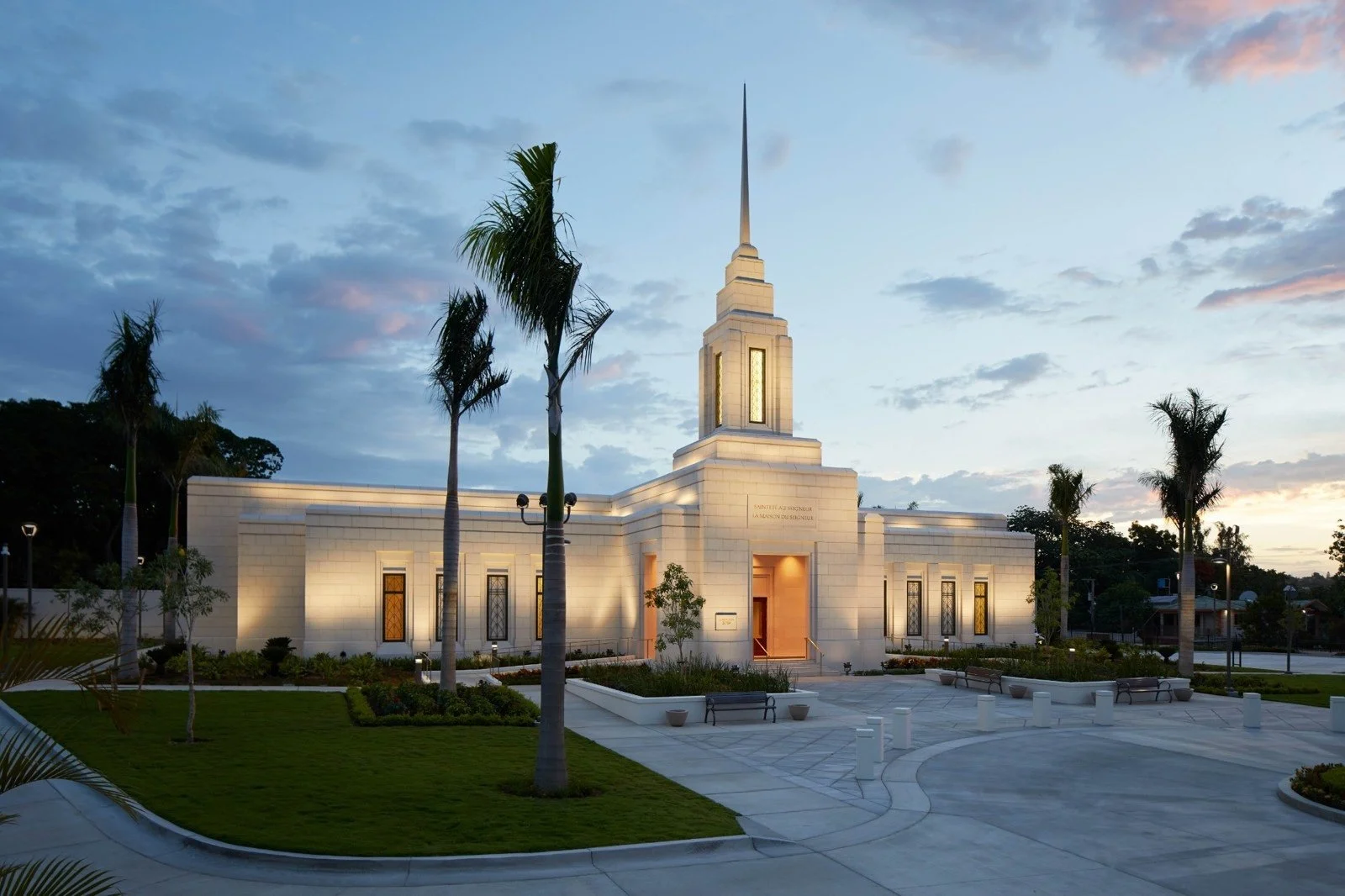
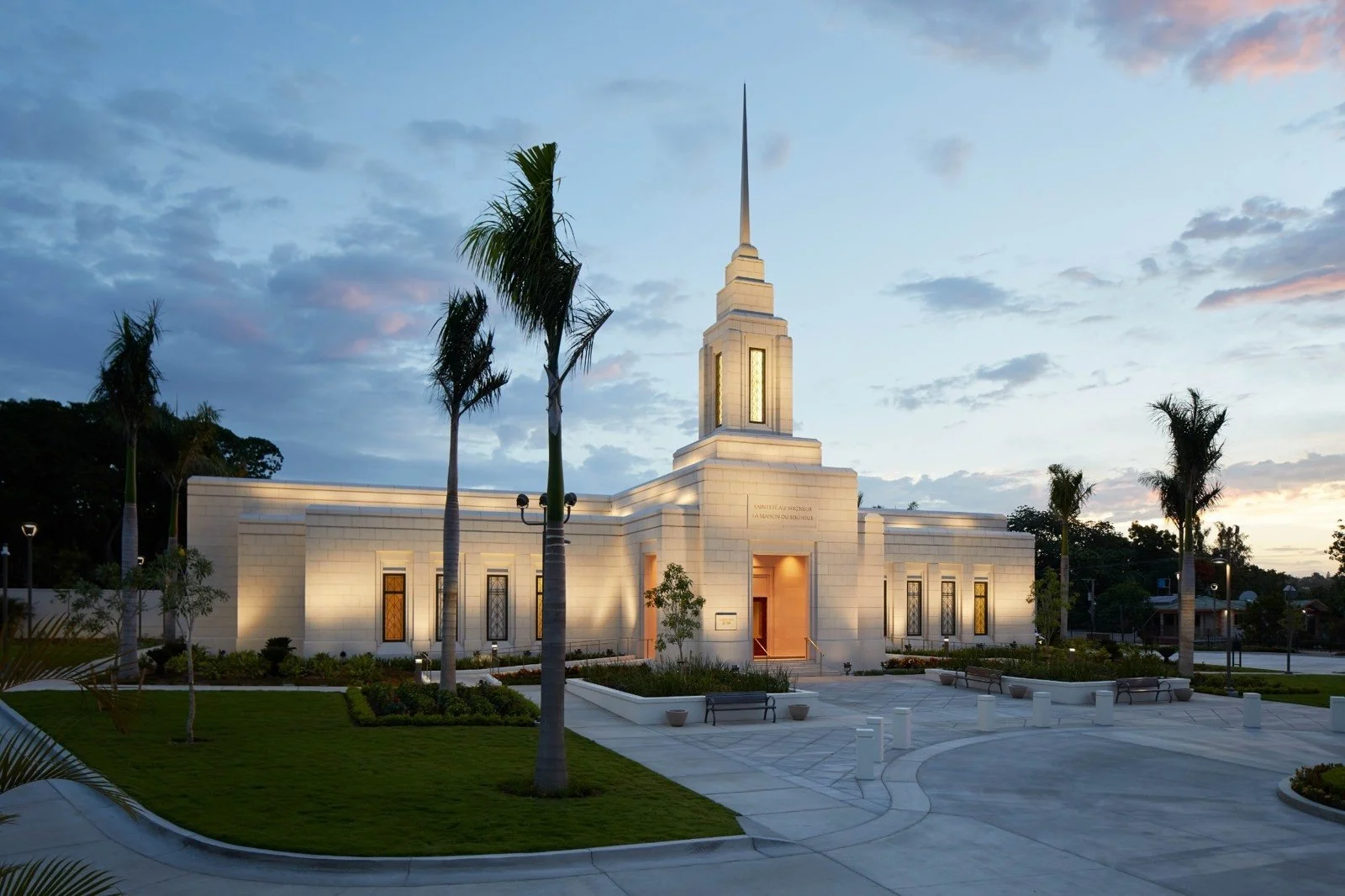
The Port-au-Prince Haiti Temple public open house officially begins on Tuesday, Aug. 6 — although a few visitors have already toured the new edifice, surrounded by lush gardens reflective of Caribbean flora.
“I can’t believe my eyes,” said Michael Paquette, a Canadian who was one of the first international missionaries to serve in Haiti in the 1980s. “I used to walk up and down this road outside the temple, Route de Freres. (That) was in the early days of missionary work; now there are (several) stakes here in Port-au-Prince. Now the temple is here.”
The building’s beauty is amazing, he added. “It is very special for the saints in Haiti.”

Counted among the first visitors to the Port-au-Prince temple was a delegation from the U.S. Embassy. They were hosted by Caribbean Area President Elder José Alonso, a General Authority Seventy, and Elder Bien Aimé Huberman, an Area Seventy and chairman of the temple’s organizing committee.
Elder Huberman noted the historic significance of having a temple operating in his homeland.
"The temple is, first and foremost, important because the members will be able to do their sacred ordinances,” he said.
In the past, the high cost of travel and passports prevented many Haitian Latter-day Saints from worshipping regularly inside temples in neighboring Dominican Republic and other nearby nations.
“(Now) we will also be able to go to the temple in our own country with our friends, family and our own people,” he said. “It is a new day for us, a new program. We are very satisfied. Everyone is excited and we are ready now for the open house to begin."
The Port-au-Prince temple is distinctly Haitian.
Turquoise blue and lime green carpets throughout the interior mimic the neighboring sea and the island’s fecund plant life. It’s patterned after an array of local vegetation — including palm leaves, tropical flowers and the hibiscus, Haiti’s national flower, according to a Church-provided facts report.

Palm leaf motifs are found in several areas of the temple such as the celestial room, sealing room, baptistry and foyer. Palm leaves, of course, were used to celebrate Christ’s triumphant entry into Jerusalem.
Temple visitors will also spot hibiscus-inspired wall plaster patterns in the brides’ room.
Artwork adorning the Port-au-Prince temple includes two original works: “Haiti Palm Trees by the Sea” and “Mountains near Port-au-Prince,” both by Russian artist Emin Zulfugarov, the report noted.
The public open house will continue through Saturday, Aug. 17 — except for Sunday, Aug. 11.
A youth devotional in Haiti will be held on the eve of the Sept. 1 dedication of the Port-au-Prince Haiti Temple. The temple will open for ordinances on Sept. 10.
Haiti is home to more than 23,000 Latter-day Saints.
By: Jason Swensen for churchnews.com | August 5, 2019
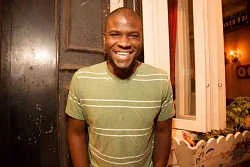
Fun-raising! Comics raise cash for Haiti
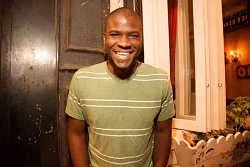
The joke’s on Haiti.A Haitian comedian has recruited three high-profile stand-up stars to join his comedy show benefit for the Caribbean country. The third annual “Jokes for Haiti” at Littlefield on Nov. 11, will feature Caribbean-born Brooklyn comedian Janelle James, “Saturday Night Live” writer Sam Jay, and rising local stand-up Tim Dillon. The show’s organizer and host, Tanael Joachim, says that he is a big fan of all three artists, and that he knows that they will pack the room for the charity event.“These are all funny people that I like and funny people that I know will get attention, and they are all doing great things,” said Joachim.”Joachim created the show after Hurricane Matthew ravaged parts of southern Haiti in 2016. He wanted to help his native country, but was frustrated by reports of wasted money by the Red Crossand similar humanitarian groups, so he wanted to donate to a reputable grassroots organization.“I started this because I wanted to do something and I wanted to find a good charity,” he said. “But I was very careful because a lot of them go down there, and abuse their names and the power they have.”After doing some research, Joachim discovered Nova Hope for Haiti — a New Jersey-based group that organizes medical mission trips and operates two medical clinics in the rural southwest Haiti towns of Cavaillon and Boileau, which supply Haiti’s most vulnerable populations with vaccines and other medication.The group has a proven track record, and it employs healthcare professionals with a direct connection to Haiti, said Joachim.“They only hire Haitian nurses, doctors, and most of their staff is Haitian, and that was even more an incentive for me to support them,” he said.Joachim created the fund-raising comedy show to support the medical group, and also to spearhead a movement against major non-profits in favor of smaller one. And his stand-up set during the show will make light of many organizations that have profited from money intended to help Haiti’s people, he said.“I will definitely be making a jokes about them,” he said. “And this goes beyond the Red Cross. I find that generally speaking when a charity is big, a lot of things get lost in translation and the money goes into too many hands leading to a lot of weird things happening.”The night will not only be a great time, but it will go to a good cause, said Joachim.“People should come first and foremost because it’s good entertainment, it’s high level comedy, and what makes it better is knowing the entertainment you’re getting comes with the added benefit of doing something good,” said Joachim. “The money from the show is going directly to the organization, the community, and the people left behind by the government.”“Jokes for Haiti” at Littlefield [635 Sackett St. between Third and Fourth avenues in Gowanus, www.littlefieldnyc.com]. Nov. 11 at 8 pm. $15 ($12 in advance).By: By Alexandra Simon | Courier's Life Brooklyn Daily | November 1, 2018

Sean Penn, Rainn Wilson And Soleil Moon Frye Launch Digital Recovery Campaign For Haiti

Rainn Wilson and Soleil Moon Frye hosted a special evening on October 11 in conjunction with Sean Penn’s J/P Haitian Relief Organization. Held at Gjelina restaurant in Venice, the intimate occasion included cocktails, dinner and discussion of ongoing disaster relief efforts, including the newly launched campaign, The Long Run For Recovery.
Also present was Wilson’s wife, author Holiday Reinhorn. The couple’s foundation, Lidè Haiti, provides academic support and arts programs to Haitian girls ages 11 to 21. Lidè is one organization partnering with J/P HRO for the Long Run campaign. Additional hosts included Ann Lee, CEO of J/P HRO, and Bill Baumgart, CEO of WRLDX Funds Without Borders, who made the evening possible.
The philanthropic evening’s focus was on The Long Run for Recovery, a virtual marathon throughout Haiti that allows participants to join as digital runners, syncing their personal supporter page to FitBit, MapMyFitness or Strava to track their progress on the virtual course. Funds raised support relief efforts in Haiti and in United States areas recently affected by hurricanes.

Photo Credit: Donato Sardella/Getty Images for WRLDX
Sean Penn founded J/P HRO in 2010 following the massive earthquake that devastated the Caribbean country. The organization has worked tirelessly to improve the situation there, having relocated 60,000 people, administered 4,000 vaccinations, and placed 6,000 students in school programs, among other milestones.
Although not present for the evening in Venice, Sean Penn shared with Haute Living his thoughts on J/P HRO’s progress. “Of course, we’re very proud of what we accomplished in Haiti, in the immediate aftermath of the earthquake, again after Hurricane Matthew, and in years since,” Penn said. “However, we at once recognize that the destruction which disasters inflict is really the symptom of bigger problems that need to be addressed — poverty, inequality, and broken systems. Crises like earthquakes and hurricanes uncover underlying problems that have always been there, and it’s incumbent upon us to address not only the symptom, but also the cause of this suffering.”

Photo Credit: Photo by Donato Sardella/Getty Images for WRLDX
Sean Penn also shared his thoughts on how the American government and American businesses could improve in the approach to assistance, both worldwide and close to home. “In terms of our government’s aid policies, we’d like to see a focus on preparedness,” Penn said. “Every dollar spent on disaster preparedness is six times more effective that post-disaster spending.”
Of this desired emphasis on preparation, not just recovery alone, Penn continued: “At J/P HRO, we want to work with local governments, businesses, and communities to invest in preparedness; so future disasters have less deadly, destructive, and expensive impacts. That’s exactly what we’re piloting in Savanah, Georgia. We’re partnering with local stakeholders to train young people as certified disaster preparedness advocates in their communities.”
Echoing Sean Penn’s remarks that relief efforts in disaster-stricken areas can uncover problems that require long-term aid, hosts Rainn Wilson and Soleil Moon Frye shared with guests their own personal experiences assisting the cause.
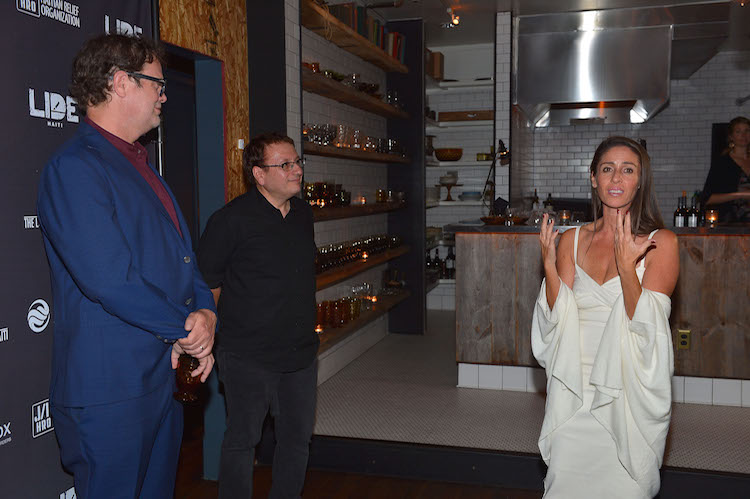
Photo Credit: Donato Sardella/Getty Images for WRLDX
“I first went to Haiti about 10 years ago,” Soleil Moon Frye said, recounting the story of how a conversation with Sean Penn was the catalyst for her involvement. “I bumped into Sean, who had been a lifelong friend of my father’s. And I said, ‘I really want to go see what’s happening.’ And he said, ‘If you’re serious, pack up a suitcase, meet me there on Tuesday.’ And I packed up as much medical supplies as I could find … I didn’t even know what to expect, but I walked into a situation that was unlike any I’ve ever seen — 65,000 people living in a tent city.”
Rainn Wilson also addressed the small gathering at Gjelina, relating how his involvement began long before the 2010 earthquake, through his work with The Mona Foundation, for which he served as a board member. Following the natural tragedy, he and his wife established Lidè, which translates to “leaders.” He said, “[I realized] that education was where my passion was, that I wouldn’t be where I am without the education that I have — the teachers and mentors who stepped in at the right time to show me and help me along the way. And I wanted to give children around the world those same opportunities.”

Photo Credit: Donato Sardella/Getty Images for WRLDX
Wilson says he and his wife were so inspired by the Haitians’ vibrant culture, humor, language and music that they wanted to find more ways to help. At a J/P HRO camp, the couple participated in a United Nations-supported arts workshop for adolescent girls. “It was an extraordinarily powerful experience to see these shy, frail, girls who had no voice utterly transform over the course of 10 days … and these girls had gained confidence and a sense of themselves, a pride in who they were and in their work and we were really struck,” Wilson said.
To close his remarks, Wilson shared a memory of his very first visit to Haiti, when he saw a little girl trying to do her homework by the light of a trash fire. And he stressed the importance of supporting, in particular, female youth in Haiti to encourage positive societal changes. “If you want to impact the world in the best possible way, just micro-target girls’ education, because that transforms communities,” Wilson said.
BY: MARIE LOOK | HAUTE LIVING | CELEBRITIES, NEWS, PHILANTHROPY | OCTOBER 16, 2018
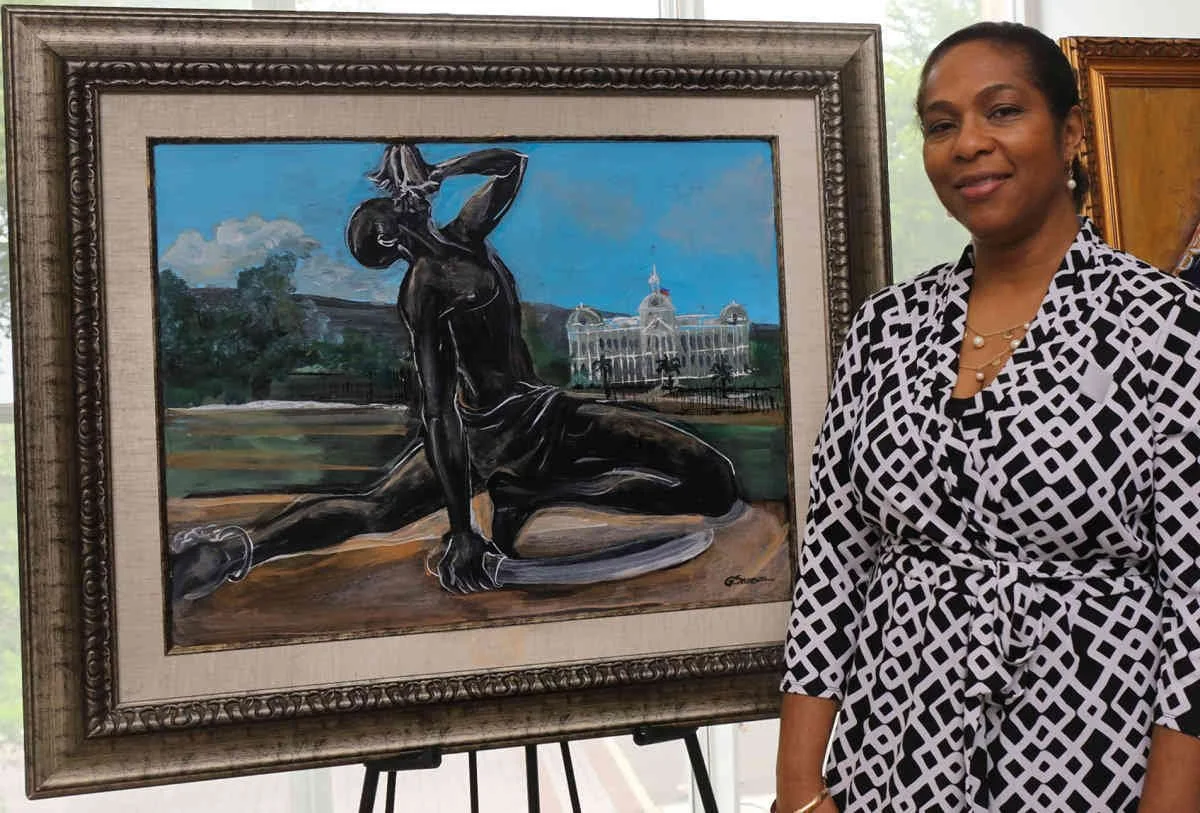
Queens Museum annual symposium on Haiti
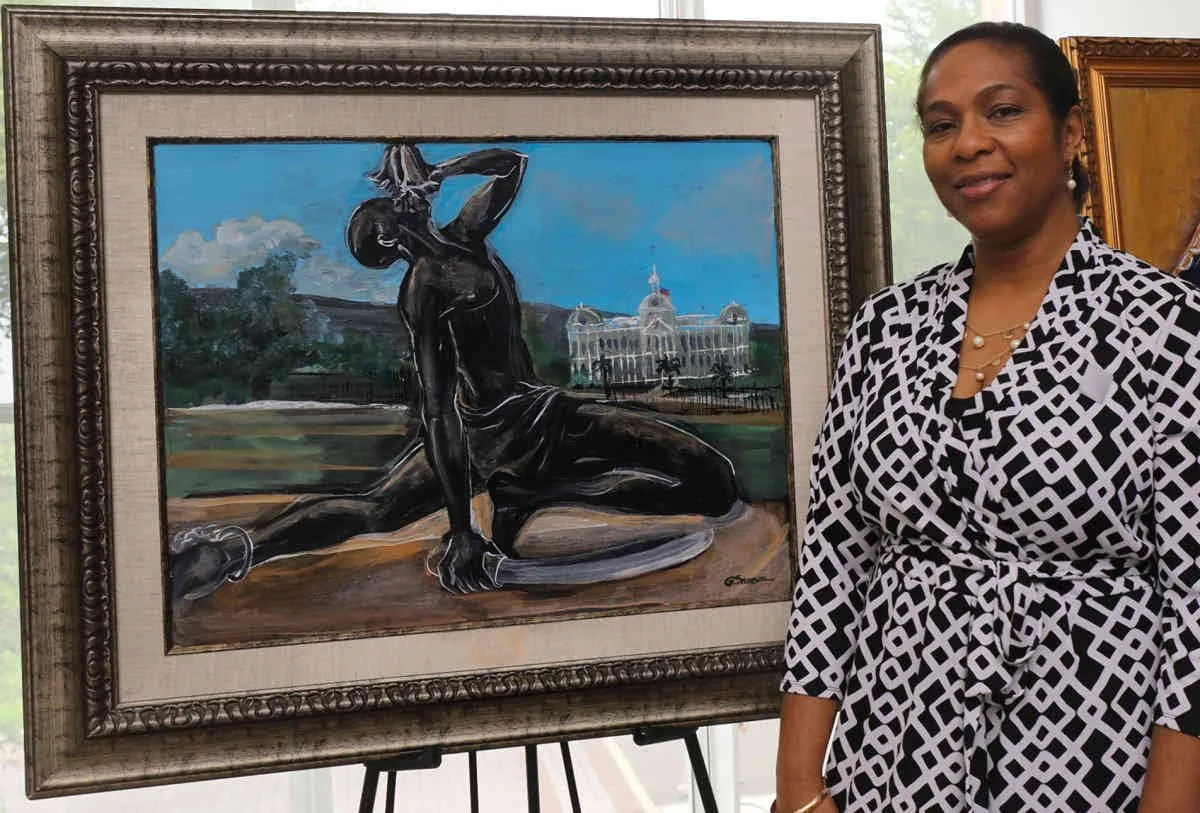
The Queens Museum is a vital partner with the Haitian community and hosting topical symposiums is a good example.Last week’s L’Education du Regard (Educating for Deeper Understanding), an annual event has been held at the museum for more than a decade, initiated by architect and urban planner Etienne Telemaque and later joined in planning by artist Patricia Brintle.“I handle art and architecture and Etienne handles other content,” says Whitestone resident and painter Brintle, who wrangles other artists to participate, so a mini-exhibition is also part of the symposium.Brintle expounded on the topics of years’ past — water systems, electricity, transportation, and sanitation. Historic gingerbread houses with World Monument experts participating were a topic one year. The symposiums all add breadth to understanding the issues.One year, there was a heated discussion on the importance of parks with the focus on Martissant Park; the issue raised: Why put a park in the middle of a slum?Experts reiterated how putting a park in a “terrible area” breathes air (and life) both literally and metaphorically into its neighborhood. It’s also about saving the environment.In the case of Martissant Park, situated in the poor, crowded neighborhood of Martissant, there is a medicinal garden, an educational environment center on the premises, and people can get cuttings from the gardeners there.Peaceful and a conducive environment in the middle of noisy, hectic day-to-day Port-au-Prince streets is where students are also seen on benches and along the paths, books open, intently studying.“Our audience of Haitians and friends are happy that people care and that there are symposiums about these subjects,” says Brintle as she admits, “For a lot, they’re hearing about a particular issue for the first time.”This year’s “Le Champs-de-Mars: A Public Sector to be Preserved Absolutely” focused on an area of Port-au-Prince that is a series of downtown parks split by wide boulevards, almost like the Washington Mall in function.There are also statues of Haiti’s founding fathers: Toussaint Louverture, Jean-Jacques Dessalines on horseback, Alexander Petion, and Henri Christophe, collectively known as Place des Héros de l’Independence (Place of the Heroes of Independence). It is also where the wonderful history museum Musee du Pantheon National Haitien is located and the site of the destroyed-by-earthquake demolished National Palace.Artist and author George Patrick Gaspard spoke of how in his growing-up years Le Champs de Mars (Chanmas, in Haitian Creole) existed as a Sunday park of walking, congregating, children riding bicycles and breathing fresh air.Patrick Durandis, Haiti’s Director General of the Institute of Saving the National Patrimony (ISPAN), cancelled at the last minute so the program became a general discussion with attendees of what needs to be done to restore the area to its former stature in Haiti’s urban life. Preservation is not fostered in the population of Haiti, says Brintle, on the need for education in this regard.Also, during the afternoon, Haitian authors George Patrick Gaspard and Eddy Mesidor, caricaturist Castro Desroches, and poet Janie Bogart sold and signed their books.By: Caribbean Life | June 15, 2018
Haitian Heritage Month (May)
Haitian Heritage Month is not only a celebration of Haitian culture, it also has great historical significance based on the inherited traditions that have been passed on from generation to generation since Haiti's independence in 1804.Over the past few years, Haitians in New York, Florida, Boston, Philadelphia, and New Jersey have celebrated Haitian Heritage Month proudly with parades, conferences, festivals, exhibits, book fairs and the like. It’s a pride-filled month that carries out exciting events within the Haitian community and brings memorable souvenirs, including patriotic songs and the recollection of the history behind the creation of the Haitian Flag.In Florida, Haitian Heritage Month is recognized and celebrated by the School Board of Miami Dade County and supported by the School Board of Broward County. The celebration in Miami includes the largest Haitian festival - Haitian Compas Festival, also known as KompaFest.In Boston, the Annual Haitian American Unity Parade is held annually around May 18th, which is recognized by all Haitians as Haitian Flag Day. This parade features Haitian leaders, state and city officials, marching bands, delegations from schools, colleges and universities. Many youth groups, cultural, professional, and religious associations as well as, community, political and regional organizations and Haitian and American businesses also take part in the festivities.In New York, there is a Haitian Day Parade that usually takes place on the last Sunday of May. Other patriotic and cultural activities are held in Chicago, Georgia, Texas, Philadelphia to acknowledge Haitian Heritage Month with pride and dignity in order to promote and share the Haitian culture.While Haitians never need a reason to "stand-up" and "rep our flag", this year, Haitian Heritage Month definitely comes at a time where perhaps people, including us Haitians, need to be reminded of WHO Haitians are and of our significant contributions to the world, both historically and in present times.
Notable dates in May for Haitian History and Culture
May 1st - Labor and Agricultural Day celebrated in Haiti as a public holiday.May 2nd - Flowers’ Day During the Duvalier era, May 2nd was celebrated as Flowers’ Day. Many cultural activities were held in the capital’s bicentennial plaza, decorated with flowers and the blue and red colors of the Haitian flag. Well known artists and musical groups also took part in the annual celebration.May 18th - Haitian Flag Day - In a pact signed by the Black and Mulatto officers at the May 1803 congress, the officers created the Haitian Flag on the last day of the congress, May 18, 1803. Bearing this newly created Haitian flag with pride, they fought and expelled the French army and thus Haiti became the first Black independent country in the world on January 1st, 1804.May 20th - Toussaint L'Ouverture 's Birthday General Toussaint L'Ouverture, who was born on May 20, 1743, was the mastermind behind the Haitian Slave Revolution. He organized and led the slaves to victory against Spain, Great Britain and France.Last Sunday of May - Haitian Mother's Day In Haiti, Mothers’ Day is celebrated on the Last Sunday of May. On that day, Haitians honor their mothers by wearing a red flower for mothers that are living and a white or purple flower in remembrance of the mothers who have passed away.
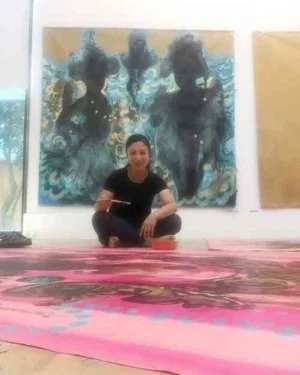
Over the Line: Haitian and Dominican Artists Team Up for Exhibit
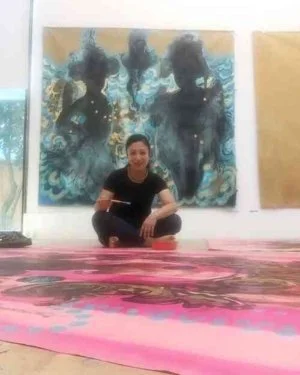
 . . .The exhibit features 40 pieces from 19 artists, and is split into three sections. The first examines the history of the island, the second looks at the border area between the two nations, and the last is a joint multimedia project by Dominican-American artist Scherezade Garcia and Haitian-American artist Vladimir Cybil Charlier. Their section, titled “Memories of a Utopian Island and the Future,” features an animated video and an installation exploring resistance and race.
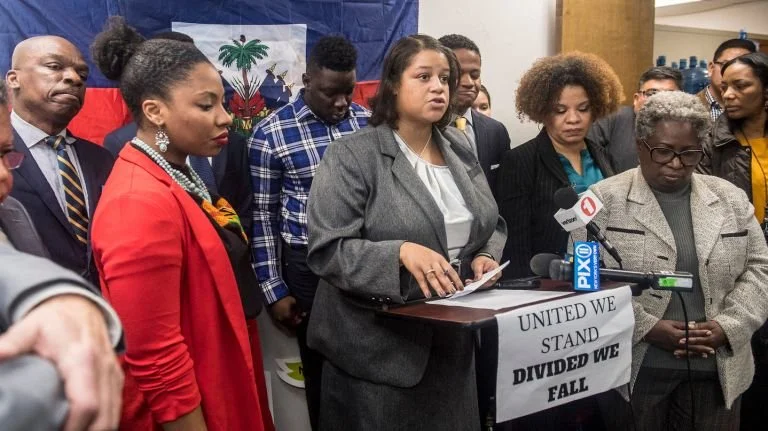
Pols to host Haiti celebration in response to Trump comments
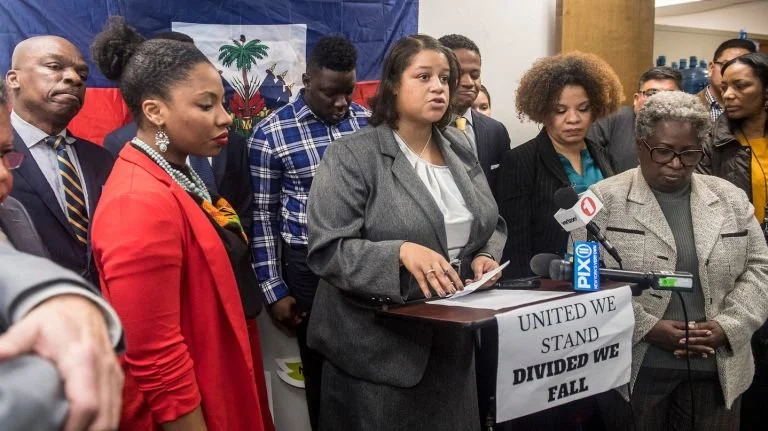
State Assemb. Michaelle Solages and Nassau Legis. Carrié Solages on Wednesday are hosting a cultural and community celebration of Haiti in Elmont after President Donald Trump’s disparaging remarks about the country and African nations last month.Trump, according to media reports, reportedly asked his advisers why the United States should allow immigrants from Haiti and some African countries instead of places such as Norway.“After Trump’s alleged derogatory statements about Haiti, the Assemblywoman decided to host an event to celebrate Haiti’s rich culture and history,” Danielle De Souza, Michaelle Solages’ director of communications, wrote in an email.Michaelle Solages (D-Elmont) was the first person of Haitian descent to be elected to the state Legislature, according to her office’s website. She is the sister of Carrié Solages (D-Elmont).The event, titled “Haiti is Beautiful,” is to be held from 7 to 9 p.m. at the Elmont Public Library, 700 Hempstead Tpk. in Elmont.By: Stefanie Dazio | Newsday | February 27, 2018
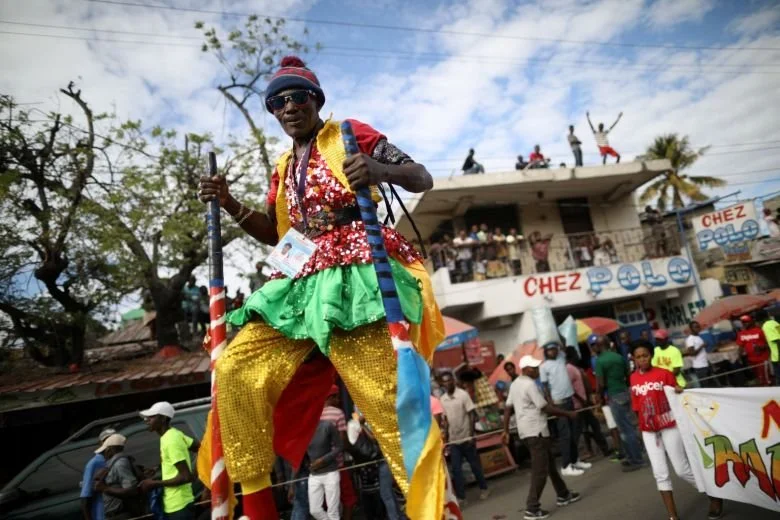
Carnival in Haiti: A unifying release, despite controversies
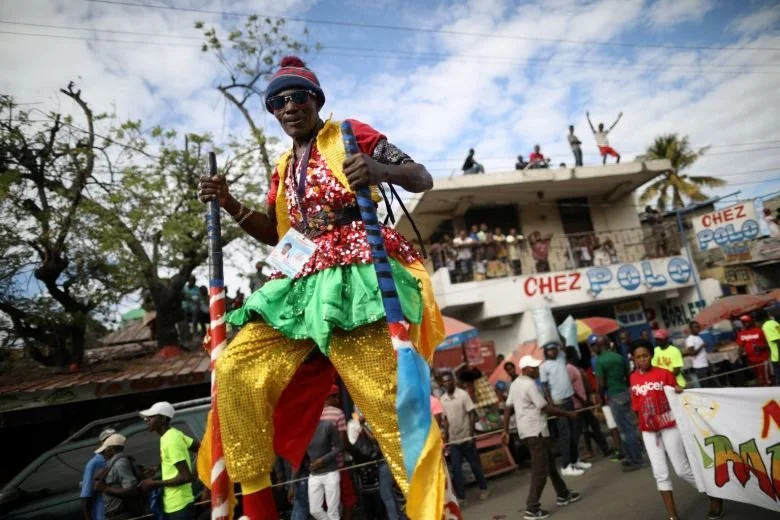
PORT-AU-PRINCE (AFP) - Tens of thousands of people began Sunday three days of watching their favourite musicians and letting off steam in Haiti, forgetting their daily troubles and the controversies the festivities never fail to attract.Under a blazing sun, dance troops paraded all afternoon on the Champ de Mars in Port-au-Prince. At night, a crowd took over the huge public square to follow the floats.Everybody knows when the carnival takes place, but nevertheless, each year it is organised at a snail's pace until the very last minute.It is an effort not helped by the fact that, although it is Haiti's largest cultural event, every year a new provisional committee is appointed to manage the event's finances and artistic aspects."Every year, there are planning difficulties - but every year, we do the same thing again," Emmelie Prophete, spokeswoman for the committee - set up just two months ago - admits with a smile."The difference this year is that we are trying to pull off a carnival without debt. Before, there were always suppliers who were not paid - then the following year, they did not want to work with the committee. But we needed them, the offer of services being very limited," Prophete explained.
"The big bands are chosen because they have been part of carnival for years," Prophete said regretfully."Then, we try to choose the most popular 'meringue' (Haitian dance) musicians to liven up the course. Then, inevitably, politicians will have their say on this or that group. Carnival is very political." The politicisation of carnival has increased since Michel Martelly, known as musician Sweet Micky - a carnival star for two decades - served as president from 2011 to 2016.

The participation of Martelly's group in this year's edition has sparked controversy - as his salacious attitude and tendency to insult critics prompted two cities to ban him from their parades.Despite the protests of some feminist groups, the former president will perform on the Champ de Mars.The carnival spirit of freedom and debauchery delights most - and many of the songs composed for the occasion are not kind to those in charge.

"We say everything we want," said Carel Pedre, an animator who runs a website compiling carnival "meringue" music. So far, the 2018 edition lists over 800 titles."We've received lots of carnival meringues talking about the Petrocaribe case and corruption," Pedre said."They also talk about the big problem we have with garbage. There's even one very popular song that talks about the bad behaviour of our leaders, in their cars, with their sirens."Through all these meringues, you can get a complete view of the situation in the country: of a Haiti that suffers, that has its political problems, but also a Haiti that celebrates and has fun," he added.

But cathartic as the songs may be, they're also a reflection of the dire state of Haiti's music industry."There are no other chances to showcase yourself, especially for young talents. We don't have an awards ceremony, we don't have big national music festivals - so everyone wants to make themselves known during carnival," Pedre said.While Haiti is one of the most unequal countries on the planet, carnival brings together Haitians from all economic and social backgrounds."Whether rich or poor, we dance to the same songs by the same bands," said Pedre. "If we united like this all year round, Haiti would already be a developed country."By: The StraitTimes | PUBLISHEDFEB 12, 2018
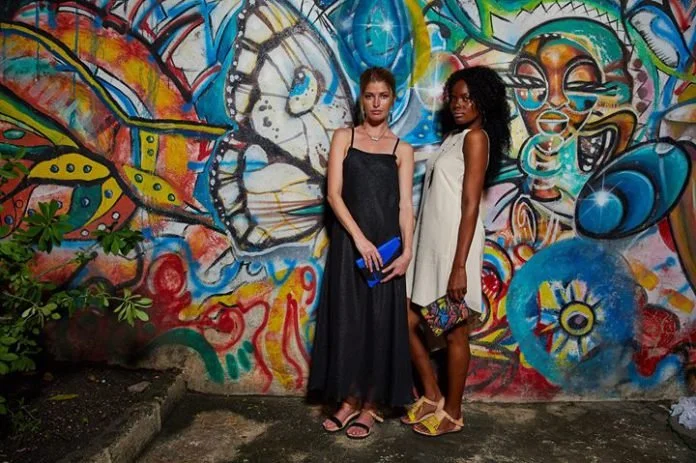
REBUILD GLOBALLY HOSTING RUNWAY TO HAITI FASHION SHOW ON MARCH 8
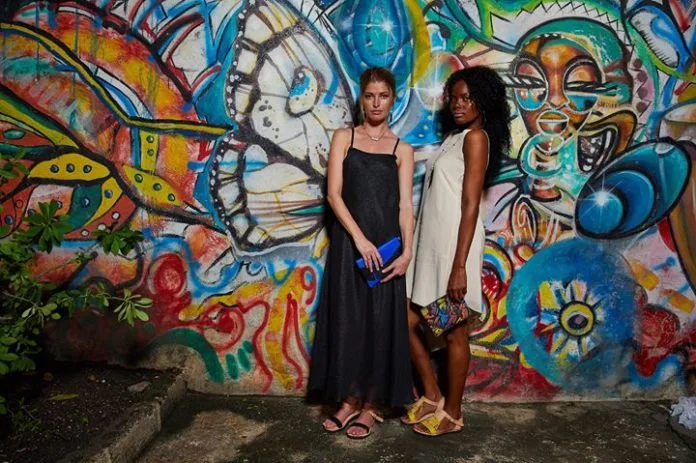
Rebuild Globally is an Orlando-based non-profit focused on alleviating poverty in Haiti via education and providing a more sustainable, entrepreneurial solution for survivors of the 2010 earthquake.Rebuild Globally job training programs are based on a social enterprise model that incubates locally-grown makers and businesses.[embedyt] https://www.youtube.com/watch?v=NW2fO-S2Fq4[/embedyt]Runway to Haiti: A Night of Impact and Ethical Fashion will take place on Thursday, March 8 from 6-8 p.m. at Country Club of Orlando, located at 1601 Country Club Drive. The runway show will highlight the launch of the Spring/Summer 2018 Deux Mains Designs collection, and will feature clothing from Haitian designers.Side Note: March 8 happens to be International Women’s Day.Rebuild Globally and Macbeth Studio will host a pre-event for the upcoming fundraiser on Thursday, February 15 from 3-7:30 p.m. at Macbeth Studio in the Angebilt building, located at 37 N. Orange Avenue, suite 900. Guests will be able to have their photos taken in front of a custom-designed backdrop, created by Haitian artist, Patrick Noze.Tickets are on sale now and can be purchased HERE.By: Brendan O'Connor | Bungalower | February 5, 2018

'Voodoo' tour of Haiti launched to raise development money

Vodou 'a very healing religion,' organizing says, but 'has its negative sides, too'
A P.E.I. tour company is offering Islanders an opportunity this spring to learn more about the religious culture of Haiti, while helping with economic development in the country at the same time.Sagrado Tours has partnered with locals to produce the Sacred Vodou Tour."I lot of people, I think, in North America, mistakenly have a negative view of sacred Vodou," said David MacKay of Sagrado Tours."I've found it, through my study and my experience, a very healing religion, a very positive religion. It's like a lot of religions, I guess, it has its negative sides, too."MacKay said many of the modern negative views of Vodou, commonly known as voodoo in Canada, date from the dictatorships of the Duvaliers in the 1960s and 1970s."Museums, Vodou temples, the waterfall at Saut d' Eau. There's so many nice places that you can visit," he said.
Sustainable development
Guyere Theodore of Léogâne, just south of Port au Prince, will act as cultural interpreter on the tour.Some of the proceeds from the seven-day tour will go toward development in Léogâne. MacKay has been working on development projects in the area for several years."We focus on sustainable development," MacKay said."The backyard poultry is going ahead and they're making money, somewhere around $400 or $500 American a year, which sounds small, but that doubles people's income."
Travel advisory
The tour is scheduled for March 28 to April 4. It is all-inclusive at about $3,500, which does not include airfare to Port au Prince.Haiti is under a travel advisory from the government of Canada. The advisory includes a warning about high crime rates in parts of the country and political tensions, and says Canadians should exercise a high degree of caution.MacKay said he has never felt threatened during his visits to Haiti.Sagrado has plans to offer more culturally themed tours of Haiti in the future.By: Kevin Yarr | CBC News | Feb 05, 2018
Haitian artists give everything to Jacmel carnival
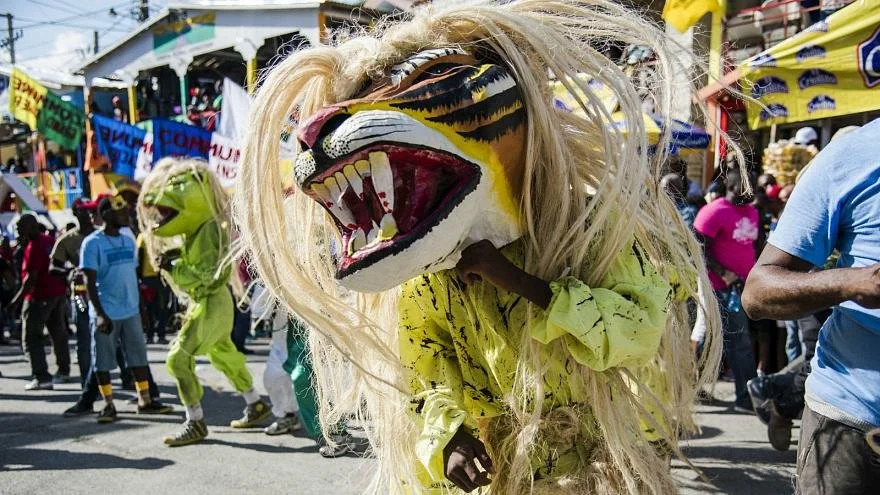
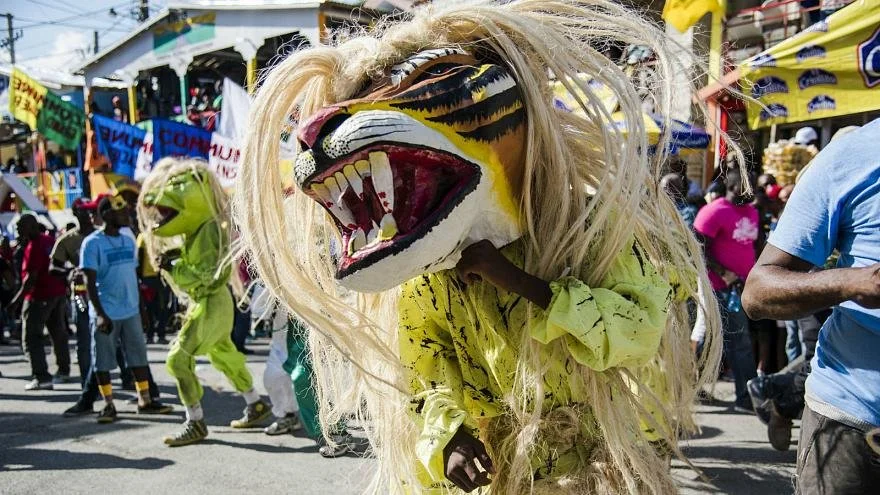
Under the warm midday sun that lit the city of Jacmel on Sunday, a colorful procession of spectacular masks and costumes took over the streets of the Haiti's arts capital.The coastal city turned into a giant 24-hour party, which started at noon and ended the next day, setting the stage for a parade of strange and elaborate artwork.But the event was more than just a street party. Under the theme “Change,” it sought to send a message to the world about the will of people in Haiti to develop the country. The artistic creations expressed the joys, frustrations and hopes of the population.“It is one of a kind it’s like not any other carnival people will see in the world,” said Lee Rainboth, 33, who runs the newly renovated art centre of Jacmel, a space that stopped functioning for a few years after the 2010 earthquake killed its former manager and damaged the building itself. It is now slowly being renovated and expanded, and has become the vibrant hub for artists who go there to exchange ideas, support and inspire each other.“The costumes that are created and the kind of art that you will see in the Jacmel carnival is wild and out of this world,” Rainboth added. “The papier-mâché creations alone are the best that you will see anywhere, they are what makes the Jacmel carnival what it is.”
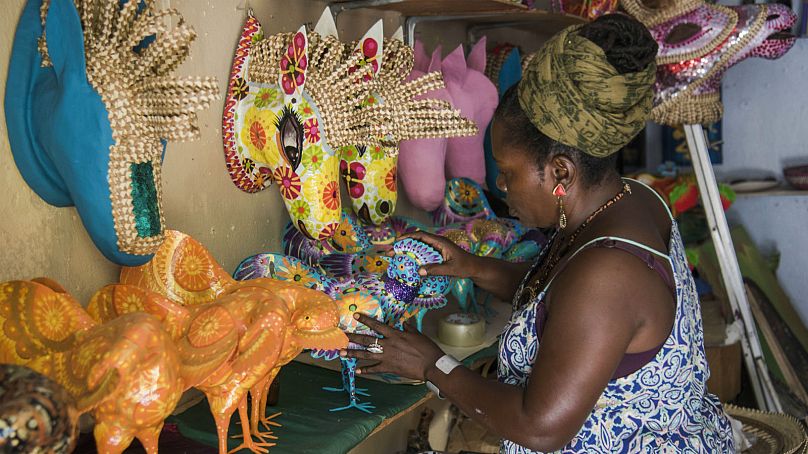
The carnival is a huge occasion in Jacmel, as it gives artists in the city and its surrounding areas the chance to come together to show off their Haitian identity, and denounce slavery and inequality in the poorest country in the Western Hemisphere.The Haitian identity finds its roots in a successful slave rebellion and independence from France in the 19th century. It’s an identity that the people of Haiti cannot dissociate from freedom and resistance and the country’s exceptional resilience to the political instability and natural disasters that have struck countless times.In the days leading up to the carnival, dozens of artists worked tirelessly to finish their pieces on time. Many worked in studios in downtown Jacmel, where pioneering papier-mâché artist Simonis Lionel was based as he earned worldwide acclaim for his pieces some three decades ago.It takes a lot of money and long weeks of intense work to make the elaborate masks and costumes. Some artists get funding from the Haitian government, while others, who aren’t yet known, have to find ways to borrow money to participate with the hope of selling their art to tourists and getting recognition outside of Haiti.“There is some money from the government and the Ministry of Culture, but to access that money, you have to know the right people,” said Rainboth of the art centre. “It’s not available for everybody and it is difficult for many artists to get access to it.”Fanel Saint Hilaire, 37, a father of three, hopes to make enough of a splash at this year’s carnival to make a living through his art.This year, with the help of 12 other artisans, Hilaire worked for two months on several creations including a tractor, which echoes the politics of newly-elected President Jovenel Moise, who has a strong agricultural background and promised to boost the country’s farming industries.
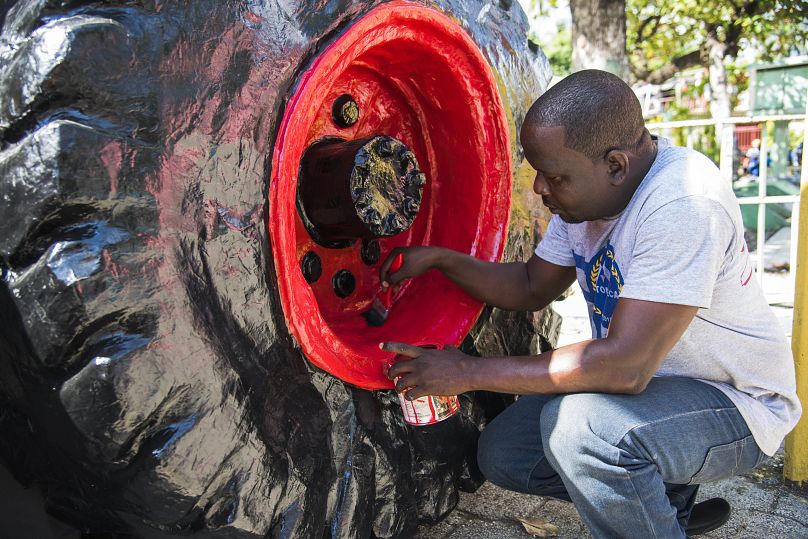
“Change cannot be made without [adequate] infrastructure,” Hilaire said. “The idea of the work I have made is to show the Haitian people’s need for development.”While many consider Jacmel’s carnival to be well-organised and managed, times are hard for the artisans who only get the attention of the world once or twice a year. They say it is difficult for them to get the acclaim their work deserves and they wish they had more support from the Haitian government.Raphael Salnave, a disabled 48-year-old artisan, watched the bustle along Saint Anne Street without much enthusiasm. Salnave is well-known for his carnival creations, but that doesn’t mean he’s made much money from them. This year Salnave says he had to borrow money at high interest in order to participate.“I hope I get the money back but as of now nothing is sure,” he said.Salnave said his creations are being copied by others and he lamented that there is no system to copyright or protect innovative creations. His friend, Charlotte Charles, 48, owns an art shop in downtown Jacmel and has been an advocate for the rights of carnival artists.“We don’t have a market, we don’t have access to show our work abroad,” she said. “We don’t have health insurance. We don’t have anything. We are all on our own.”But despite any reservations, over the weekend, the city was flooded with tourists from all over the country and from abroad who wanted to experience art that celebrates the traditions of the country and the Haitian heritage.
“The carnival is an important opportunity for me,” he said. “It’s the only way for me to make a little bit of money. It’s the only way for me to show my talent.”By: Aida Alami | Euronews | February 5, 2018

Luxe Event Aims to Change Haiti's Image Through Fashion

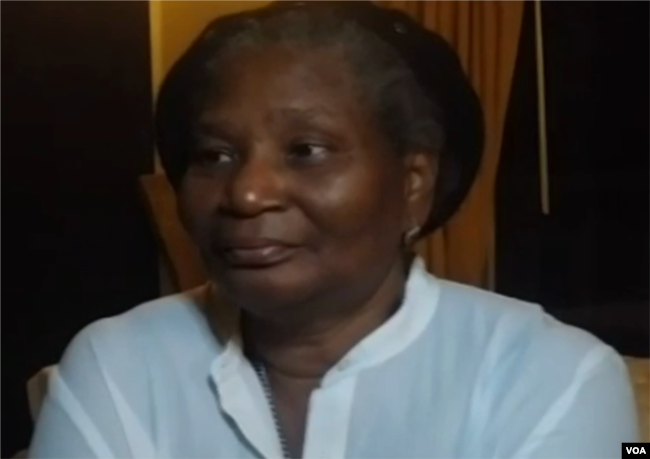
[video width="480" height="270" mp4="http://haitiville.com/wp-content/uploads/2018/02/eb825c9a-745a-4539-bbc2-7b131cc12850_mobile.mp4"][/video]A model showcases a dress featuring colors of Haiti's flag by Haitian fashion designer Immacula Pericles.WASHINGTON/PETIONVILLE — Dozens of designers from Haiti and around the world showcased their spring-summer collections against a lush tropical background during the recent Haiti Fashion Week.The January 28-31 event in Petionville focused on the theme “Innovation” and “haute couture” this year. Event founder Maguy Durce said her main goal was to show Haiti in a positive light, as opposed to negative images usually portrayed by the international media.“Haiti Fashion Week is a cultural event. But we want to use it to respond to President [Donald] Trump — to his negative comments [about Haiti] — because we think if he saw what was happening this week at El Rancho [hotel], he would say, 'Hey, I lied,' or, 'Hey, I was wrong,' or, 'I was misinformed,' " Durce said. Fashion Week founder Maguy Durce. (Photo: Matiado Vilme for VOA)Trump's reported use of a vulgar term to describe Haiti and African nations angered the Haitian-American community and sparked rallies in Port-au-Prince, New York, Palm Beach and Boston to denounce racism. Haiti's ambassador to the United States said the comments about Haiti "hurt the country."The fifth edition of Haiti Fashion Week had been scheduled for November 2017, but was rescheduled after some of the designers said their collections would not be ready in time.
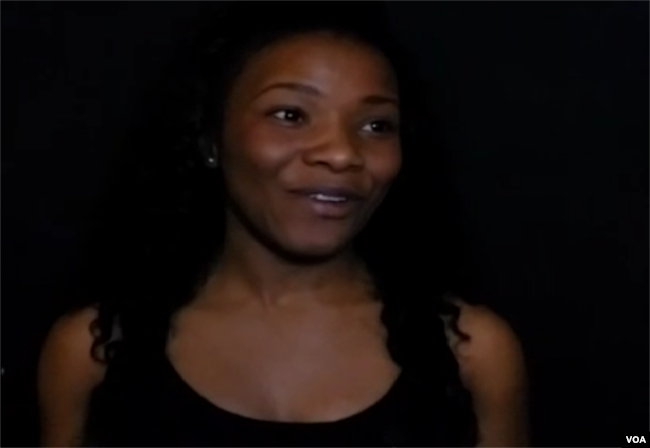
Young Haitian fashion designer Maille Timothee was a first-time participant in Haiti Fashion Week. (Photo: Matiado Vilme for VOA)
Young fashion designer Maille Timothee, whose fashion line is called MAE, presented her designs for the first time this year. She won applause for her colorful dresses made with unconventional textiles.“I wanted to do something unconventional. Something unexpected. So I mixed different fabrics that people would not expect, and even what I’m wearing is an example of that," she explained.Timothee is the daughter of seasoned Haitian designer Immacula Pericles, who runs a highly acclaimed fashion school called Academie Verona. She also participated in Haiti Fashion Week, showcasing a collection of dresses made in the colors of the national flag and representing the natural beauty of the Caribbean country. Her collection wowed the audience.“Well, I’ve been doing these designs for a long time now, so it’s new to some people, but we’ve been around a while," Pericles noted. "The theme of our fashion school is Haiti will survive - so my goal is first to incorporate sustainable materials and second to make the clothing using the same international standards the big fashion houses use so that we can sell our line anywhere in the world.”
Seasoned designer Immacula Pericles also owns a fashion school called Academie Verona. (Photo: Matiado Vilme for VOA)
Pericles said Haiti has huge potential to excel in the fashion world.French designer Marie-Caroline Behue flew from Paris to Port-au-Prince and went straight to work on her collection. A first-time participant in the event, she admitted to being awed by the quality and intricacy of the designs.“I knew nothing about Haiti Fashion Week and I was amazed by the level of detail in the designs," she admitted. "I’ve worked in the French haute couture design houses and I can tell you the designs I saw here meet the bar - and to be honest, what really piqued my interest was the men’s haute couture, because when one thinks of haute couture, they naturally think of women’s fashion, but here in Haiti, I was like, 'Wow! They’re got couture men’s clothing.'”
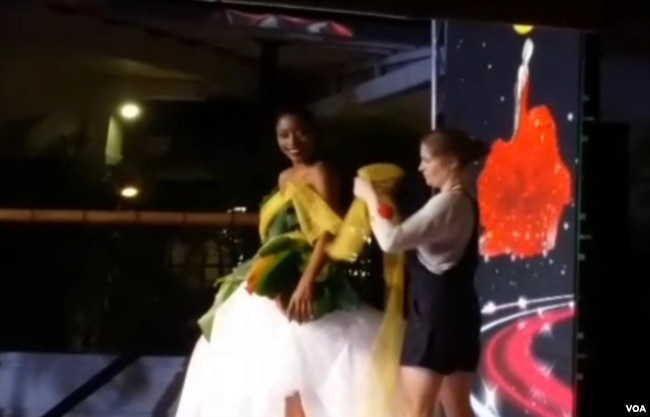
French designer does a live haute couture demonstration on the runway during Haiti Fashion Week. (Photo: Matiado Vilme for VOA)
Haitian-American designer Marcia Roseme, whose collection features bright colored separates matched with muted tones, traveled from New York to show her first collection at Haiti Fashion Week.“It was a great event; there were a lot of different styles that represented many markets. There was a lot of innovation, a lot of creativity and unique styles - I really like that,” she told VOA.
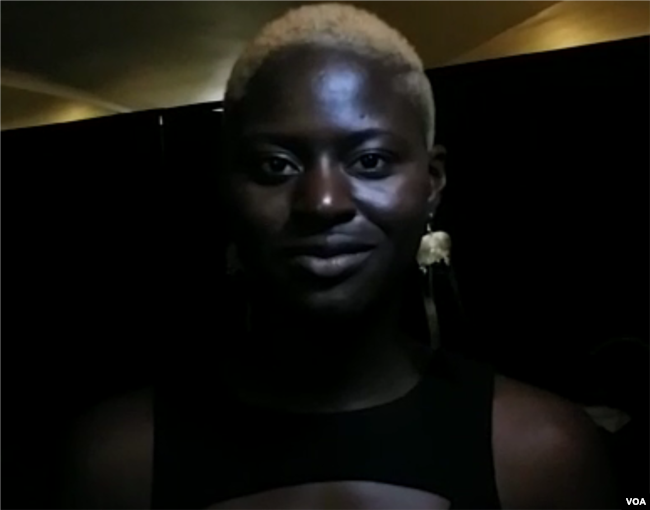
Haitian American designer Marcie Roseme traveled from New York to show her collection at Haiti Fashion Week. (Photo: Matiado Vilme for VOA)
Organizer Durce, who put in many long hours to pull off a culturally rich and diverse showcase of Haitian and international artistry, was pleased with the turnout and the positive reviews from the national and international press.“Africa Fashion TV has been here all four days, broadcasting our fashion shows live, so what we’re doing here in Haiti is being seen in 29 African countries and all over the world. Each time a person tweets or posts something about Fashion Week to Facebook, it raises Haiti's image to a higher level.”Durce said she’s looking forward to the sixth edition of Haiti Fashion Week - to be held in 2019.
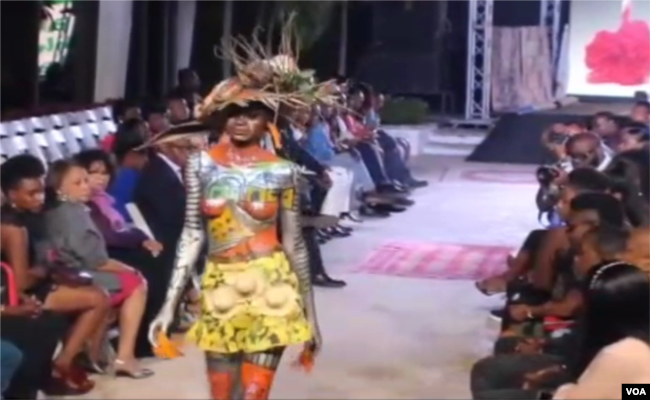
This year, Haiti Fashion Week focused on Innovation and haute couture. (Photo: Matiado Vilme for VOA)

Carnival 2018 : Mayor Chevry apologizes for the change of slogan

Mayor Ralph Youri Chevry of Port-au-Prince "sincerely apologizes" to all those who joined the Municipal Administration on November 10 to determine a slogan and the theme of the Carnival 2018 and informs that "Following the negotiations with the National Carnival Committee, established by the Presidency, we had to give in and adopt their slogan "Ayiti Sou Wout Chanjman" (Haiti is on the road to change)," instead of the slogan decided initially in Port-au-Prince during the first round table "Ayiti Jan L Dwe Ye" (Haiti as it should be).Nevertheless, the mayor said that the artistic activities of Carnival 2018, will develop around the theme of recycling, as it was decided at this round table.The Communal Administration of Port-au-Prince thanks all those who answered his call [among others Ralph Allen, Mario Benjamin, David Charlier, Jean-René Delsoin, Fred Hype, Haze Sylvester, Joseph Merline and Tamara Philippeaux, the Director General of the Town Hall, Anne-René Louis, that of the External cooperation, Alexa Louis and representatives of the diaspora] and hopes to see them again at his discussion table for the Carnival festivities of 2019.HL/ S/ HaitiLibre - January 8, 2018

Haitiville Interviews Jesse Woo | Promise Release Party 2017

[embedyt] https://www.youtube.com/watch?v=0raQaQURoKw[/embedyt]