

Indiana Pacers guard Bennedict Mathurin donates gear to youth in Haiti

Mathurin continues to connect with Haitians
Indiana Pacers guard Bennedict Mathurin is donating Adidas gear to over 300 Haitians.
Today is Dessalines Day, a yearly cultural holiday celebrated in Haiti. It honors Jean-Jacques Dessalines, a critical figure in abolishing slavery in Haiti in the early 1800s.
Mathurin is donating the equipment via an event at the Barbancourt Foundation’s community facility in Haiti.
"Supporting the Haitian community is important to me. I'm grateful to be working with the Barbancourt Foundation and Adidas to provide gear for youth in Haiti," Mathurin said in a statement. "And, to do it on a day that celebrates freedom is even more meaningful. This is just the beginning; I'm committed to making an impact in Haiti and elevating Haitians across the diaspora."
Mathurin has always been in touch with his Haitian roots. His mom flew into Indianapolis last year to cook him a Haitian meal at the Pacers facilities. "Ima be honest, I'm trying to eat as much Haitian food as I can in Indy," the second-year guard said on Tuesday.
"The main thing for me is to give back to the less fortunate," he added when asked about his donation today. "I'm from Haiti, so giving back to my community is obviously a great thing."
The event at the community facility will feature food, music and dancing on top of some basketball drills. Last year, Mathurin provided turkeys and gift cards to Haitian families around Thanksgiving.
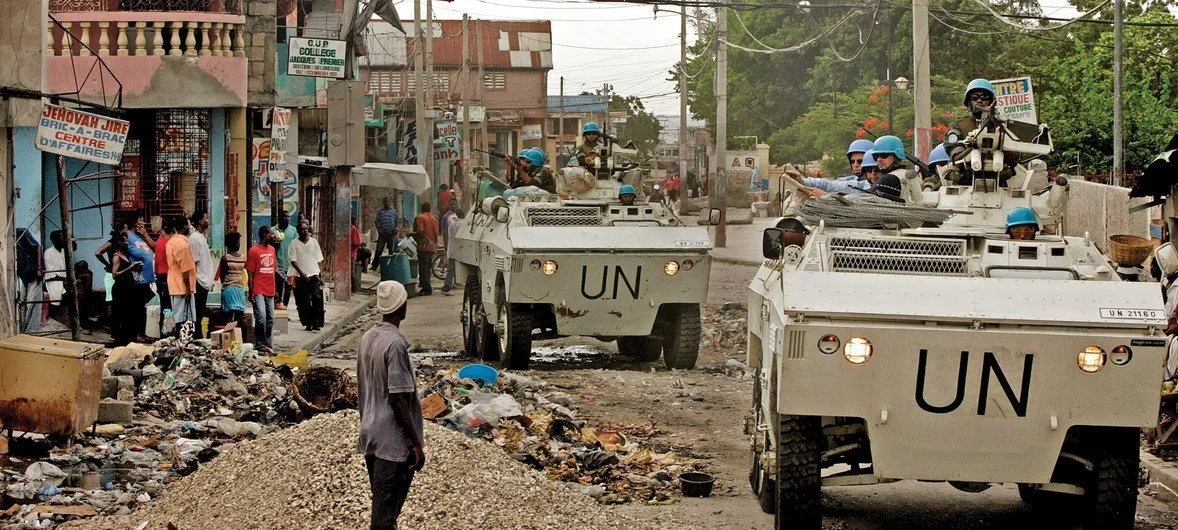
THE KENYAN-LED ‘MULTILATERAL’ INVASION OF HAITI IS A SMOKESCREEN FOR US IMPERIALISM
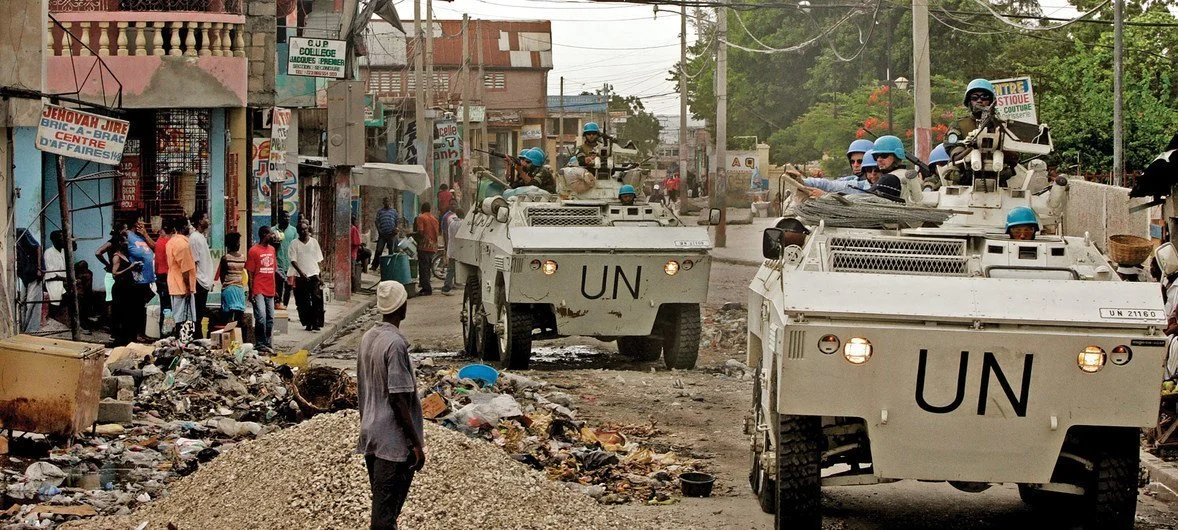
Haiti is about to endure its fourth foreign military intervention in 30 years. While the media reports irresponsibly about ‘gang violence,’ the country’s real issue is a total loss of sovereignty.
n Oct. 2, the UN Security Council voted to approve a “multinational security support mission” in Haiti—ostensibly for the purposes of stopping gang violence and restoring law and order. Led by Kenya, this multinational force will be comprised of security forces from mostly Caribbean and Latin American countries. Despite receiving the blessing of the Security Council, this “security support mission” is not an official UN mission. Rather than being funded by the UN, the mission will be primarily funded by the US, which has already committed $200 million.
This latest military intervention, should it materialize, will be the fourth foreign occupation of Haiti in 30 years. While the UN Security Council, the Haitian elite, and the ever-obedient corporate media spread a lurid narrative of a country engulfed by bloodthirsty gangs, the real situation in Haiti—not to mention the true story of how it got there—is far more complex.
To understand the situation today, we must look back to the role of the US and other countries in the Core Group in dismantling Haiti’s democracy and sovereignty over the past thirty years of military interference. Dr. Jemima Pierre of UCLA and Booker Omole of the Communist Party of Kenya speak with The Real News to break down what’s going on with the latest foreign invasion of Haiti, and why Kenya of all countries has been tapped to helm the operation, at least officially.
Jemima Pierre is Professor of African American Studies and Anthropology at UCLA and a research associate at the Center for the Study of Race, Gender and Class at the University of Johannesburg. She is the author of The Predicament of Blackness: Postcolonial Ghana and the Politics of Race and numerous academic and public articles about Haiti, including a very recent essay originally published in NACLA, and now reprinted at The Real News, called “Haiti as Empire’s Laboratory.” Pierre is also an editor for Black Agenda Report and a member of Black Alliance for Peace.
Booker Omole is the National Vice Chairperson and National Organizing Secretary of the Communist Party of Kenya.
TRANSCRIPT
Ju-Hyun Park: My name is Ju-Hyun Park, engagement editor here at The Real News. Today we’re turning our focus to Haiti, where yet another military intervention is about to take place. This time led, at least officially, by the seemingly unlikely candidate of Kenya.
Yesterday, Oct. 2, 2023, the UN Security Council approved what it is calling a multinational security support mission to Haiti for the duration of one year. 13 out of the 15 members of the Security Council voted to approve this new mission while Russia and China abstained, thereby declining to wield their veto power to stop or at least stall this latest intervention. So far, Italy, Spain, Mongolia, Senegal, Belize, Suriname, Guatemala, Peru, Jamaica, The Bahamas, and Antigua and Barbuda have all pledged equipment, funds, or personnel to the mission. Leading the charge, at least officially, is Kenya, which has committed 1,000 of its police officers to deploy in Haiti.
While the cover of UN approval may give the impression that this intervention is less imperialist than the many interventions Haiti has suffered in the past, the devil is in the details. Officially, the so-called multinational security support mission is not a UN peacekeeping mission because it will not be primarily funded by the United Nations. Instead, funding will be provided by pledges from UN member states, with the lion’s share coming from the United States, which has already committed some $200 million, half of which will come from the Defense Department.
Haiti is no stranger to foreign intervention. As the first Black republic and the only successful slave revolution in history, Haiti has never been allowed to prosper. For two centuries, the Haitian people have fought off invaders from France, Britain, and the United States. Shortly after achieving independence, Haiti was forced to pay France an indemnity on its freedom under the twisted logic that by liberating themselves from slavery, the Haitian people owed reparations to their former masters. This debt and the accruing interest was not paid off in full until 1947.
For the past century, the United States has become Haiti’s primary tormentor. US Marines first occupied Haiti for 19 years, from 1915 to 1934, waging a war of counterinsurgency against the people that killed at least 15,000 Haitians. Since the 1990s, three more foreign interventions have taken place in Haiti: one direct US invasion under Clinton and another two coordinated through the United Nations.
The most recent UN occupation of Haiti began in 2004 after a US-backed coup against Jean-Bertrand Aristide, Haiti’s first democratically elected leader. This occupation lasted until 2019, although the UN continues to have an advisory presence in the country to this day. During this 15-year UN occupation, known as MINUSTAH, systematic violence against Haitian civilians by UN troops were documented, and troops are also known to have been responsible for an outbreak of cholera that claimed up to 30,000 lives. In investigations since the end of MINUSTAH, the UN has additionally admitted responsibility for 29 known cases of underage victims of sexual abuse at the hands of MINUSTAH troops.
It is this legacy that shadows the latest moves by the UN Security Councils to stage yet another armed intervention of Haiti. Under the cover of multilateralism and the willful cooperation of planned governments in the Caribbean, Latin America, and Africa, the US continues its role in masterminding the oppression of Haiti’s people.
Given the history of violent military intervention in Haiti, it’s worth asking why another invasion now? What are the true causes of the present security situation in Haiti? And is the security question really Haiti’s greatest problem or a symptom of something deeper? Is another foreign military intervention really the solution? And what on earth does Kenya have to do with any of this?
To answer these questions and more, I’m joined by Dr. Jemima Pierre of UCLA and Booker Omole of the Communist Party of Kenya. Jemima Pierre is a professor of African-American Studies and anthropology at UCLA and at the University of Johannesburg. She’s the author of The Predicament of Blackness: Post-Colonial Ghana and the Politics of Race, and numerous academic and public articles about Haiti, including a very recent essay, originally published in NACLA and now reprinted at The Real News, called “Haiti as Empire’s Laboratory.” Jemima Pierre is also a research associate at the Center for the Study of Race, gender, and class at the University of Johannesburg.
Booker Omole is the National Vice Chairperson and National Organizing Secretary of the Communist Party of Kenya.
Jemima, Booker, thank you so much for joining us, and welcome to The Real News.
Jemima Pierre: Thanks so much for having me.
Booker Omole: Thank you. And it’s a pleasure to at least have a moment to discuss in The Real News.
Ju-Hyun Park: It’s a pleasure to have you both.
I’d like to begin with some questions for Jemima as our expert on Haiti today, and I’m hoping you can start by giving us an overview of Haiti’s very recent history. In 2003, Jean-Bertrand Aristide, Haiti’s first democratically elected leader, demanded that France pay reparations of $21 billion for the indemnity that Haiti was forced to pay after independence. One year later, Aristide was overthrown in a coup and the UN MINUSTAH force was deployed to Haiti, ostensibly under the auspices of protecting peace and democracy.
Could you describe for us the real impact of the MINUSTAH occupation on the ground and what political purposes it really served in your view?
Jemima Pierre: Yes, the real impact is what we’re seeing today. One of the things that’s been distressing in seeing the news media report on Haiti is the focus solely on gangs, so-called gangs, and not the actual ongoing MINUSTAH occupation.
So thank you so much for giving this background on Haiti. I want to go back to 2003 where you started with this question, because in the winter of 2003, there was a meeting in Ottawa, Canada, and it’s called the Ottawa Initiative, and it was a meeting of leaders from the US, Canada, France, the Organization of American States. It was a secret meeting in Lake Meech in Ottawa where they decided to do something about the Aristide problem. And this was a secret meeting that was reported in one of the Canadian leftist newspapers. And that’s how we found out about it. And they said that they wanted to remove Aristide and replace a malleable government.
And so that was put into play Feb. 28, 29, the night of the 29 where US Marines landed in Haiti, landed and then drove with the US ambassador to the home of the democratically elected president, Jean-Bertrand Aristide, put him and his aide on a plane, and flew them to the Central African Republic.
One of the things that people don’t realize is the way that the US has been using – And I think that’s why Haiti is a big laboratory – Multilateralism, the language of multilateralism, for its imperial ends. And so Haiti was one of the first places where, because France and the US have permanent seats on the Security Council, once they removed Aristide, there were already hundreds of French and US troops on the ground in Haiti by March 1, the next day. They then used their seats on the Security Council to call for an emergency Security Council meeting on Haiti in order to solidify the coup. And so it is through their positions in the UN on the Security Council that they were able to justify this coup and then get buy-in from the entire UN group to actually send military force to Haiti.
Now, the other part I wanted to talk about is the fact that the country that led the military invasion in Haiti with 12,000 soldiers was Brazil under Lula da Silva. And this is a leftist government, and I want to remind people of this because Lula’s back in power. And I’ve written a piece called “Brazil’s Haitian Training Ground” where we talk about how it is that it was Brazil’s soldiers that really created some of the biggest heinous crimes in Haiti: shooting into neighborhoods, murdering people left and right, protestors and so on.
And so what the US did with the removal of Aristide, and this is also the important thing, was the complete destruction of the Haitian state today, there are no elected officials in Haiti. When the US invaded, when the UN and the US invaded Haiti in 2004, we had thousands, thousands of regional local officials. We had senators, we had a Parliament. We have none of that today because they went systematically and dismantled the state. So what happens is they came in 2004, brought in a council of elders, set up the Core Group, which is a group of representatives from Spain, the European Union, the Organization of American States, the UN. And the Core Group, basically, from 2004, has been making every single political decision on Haiti.
So you have that, and then they said they called elections. But the reality is the US, in 2011, during the so-called Arab Spring, after the earthquake in 2010 that killed 300,000 people, the US forced elections and paid for these elections. And during the first round, they removed the most popular party, the Lavalas Party. They did not allow them to participate in the elections. And then they had three people run. Their chosen person, who was a US citizen. The Haitian Constitution does not allow foreigners to run for president.
They were able to change that, give him a Haitian passport to make it seem like he was a Haitian president, make him run for president, this is Michel Martelly, who was a Duvalierist, and Duvalier was our dictator for 30 years in Haiti.
And then Martelly did not win the first round of the elections. Hillary Clinton flew to Haiti from the Middle East and threatened the sitting president with exile if they did not allow them to change the result with the help of the OAS, the Organization of American States. So they changed the results of the first round of elections, and the guy who did not even make the first round of the elections, where we only had 21% of the people voting, supposedly he won the elections.
So once you have Michel Martelly put in place, you start having the dismantling of the state. Because he never ran regional elections, we start losing elected members. By the end of his term, which was marred by corruption and so on, we had lost half the elected officials and he was ruling by decree. And then Michel Martelly put in his puppet – And mind you, there’s always protests. Haitians have been protesting nonstop. You don’t see that because all you hear now is gang violence.
Then the US used the OAS to install Jovenel Moïse in 2016 under terrible conditions with the majority of the people not voting, and under him no more elections of regional and Parliamentary elections. And so we’ve lost everyone. And so by the time Jovenel Moïse was assassinated in July 2021, we only had three elected officials, and now they’re no longer in power.
And one more thing – And I know I’m talking so much, because there’s so much to say – One more thing is to say that when Jovenel Moïse was assassinated, Ariel Henry, the current prime minister, is implicated in that assassination. I have to tell you this, because he’s on record speaking to the main mastermind of the assassination. There was no prime minister because they were in transition. There was so much protest against Jovenel Moïse that he didn’t have a chance to put in a prime minister.
So what did the Core Group, which is our occupiers, our colonizers do? They sent a tweet announcing who the next prime minister would be. This is how Haiti’s supposed current government was chosen, by the Core Group, which has no Haitians in a bunch of outsiders.
So this original 2004 coup d’etat has left us under occupation, and it’s this occupation that’s completely destroyed the Haitian state, which is why we are where we are today. I’ll stop there.
Ju-Hyun Park: Thank you so much for that really expansive overview, and no worries at all about speaking at length. I think there’s a lot of information here to cover. We’re talking about many, many years of history. We’re talking about a very complex situation. So I just wanted to thank you for all of this context that you’re providing for our listeners today.
I think, from what it sounds like, what you’re describing is a process and a pattern where the language of multilateralism, the language of democracy is being wielded by the United States. But in fact, what is happening is really the stripping down of Haiti’s sovereignty. You’re describing a process through which actually existing democracy that was in Haiti under the government of Aristide is slowly being broken down through military force, through foreign intervention, through a process of installing puppet leaders blatantly breaking Haitian laws of acting as if Haiti has no right to decree laws for itself, and it needs to have laws imposed upon it from without. And I think that’s some really crucial context for us to understand how Haiti got to where it is right now.
And I think one other observation I would share is that this timeline we’re talking about, this occupation that begins in 2004 and, at least on paper, wraps up in 2019, that’s roughly parallel with the second Gulf War. And it seems that Haiti and Iraq have really had somewhat comparable experiences, at least in the 21st century. This experience of having their state completely destroyed, completely stripped down by a foreign power, and then having local power brokers empowered by forces from without who do not operate in the interest of the people, who effectively rule in a dictatorial fashion and openly flout the rule of law while you have outside forces claiming that there needs to be more intervention, there needs to be more meddling in the name of protecting peace and democracy.
I wanted to pivot us a little bit to understand a little bit better what the demands are from Haiti’s social movements and Haiti’s people. Because in the last five years, we have seen a growing social movement against foreign intervention, from the presence of foreign troops to the role of foreign NGOs. Can you tell us a little bit more about what these social movements in Haiti are actually demanding? What vision for society is driving them, and does it really gel with the narrative we are fed by the Western press, that all Haitians want is an end to the gang violence that is going on, and that ‘s the only problem in the country?
Jemima Pierre: Right. Well, the Haitian people, you would know. If anyone wants to know, just look at Twitter from 2018, 2019 when you had millions of people in the streets in Haiti demanding that the Core Group leave Haiti, that the UN leave Haiti, that the US stop its meddling in Haiti. So the Haitian people have been protesting no intervention, no meddling, and they want the Core Group to leave. That’s one of the first things that they’ve always said. They said, we don’t need the Core Group.
And the other thing, the most important thing right now is they want the US to take its prime minister that it imposed on us. The only reason Ariel Henry is still in power is because he’s protected by US special forces and the US upholds them in power. So the key thing is Haitians want to be left alone.
Haitian civil society came together in February 2021, and a lot of various groups came together and came up with an accord for a transition plan. This was before the assassination of Ariel Henry. One of the things that the US has decided is that they will not let the mistake that they let happen with Aristide getting popularly elected, they will not let that happen again in Haiti. So they’re going to control elections. I don’t know if even in the resolution, they’re like, we’re going to be there for a year and then we’re going to set up elections because they want to control the elections. And so the people don’t want Ariel Henry, they want the disbanding of the Core Group. They want to be left alone.
And back to the 2021 resolutions that the community groups came with, they had a two-year transition period that the US was completely dismissed and trampled on and supported Henry.
And I wanted to just say something quickly. In 1915, when the US first started occupying Haiti during the first occupation, because the US occupied Haiti from 1915 to 1934, those years are like World War I, the beginning of the League of Nations, Haiti was under occupation, but Haiti was one of the founding members of the League of Nations. And so the US called that sovereignty. They did not want the League of Nations to acknowledge that Haiti was under occupation because they said, well, we have a representative at the League of Nations. So I want to tell you, this goes back more than 100 years of us pretending that what they’re doing is for Haitian sovereignty and can claim that Haitians have sovereignty despite the fact that they’re under occupation. This is the exact same thing that’s happening now.
So anyways, what the people want, they want reparations from the UN for cholera. They want the US to stop supporting Ariel Henry. They want the US to stop dumping arms and ammunition, because we all know that the guns are coming from the US and from the Dominican Republic. There was a truckload of guns and ammunition found at the border of the Dominican Republic just last week.
And we all know that all the ports are owned by five families in Haiti, the oligarchs, the Haitian oligarchs, the non-Black Haitian oligarchs that own the ports, and they’re the ones that actually pay these young men, these paramilitaries to go in and shoot up the neighborhoods. And so they want an arms embargo, which is what China and Russia had asked for, an enforcement of the arms embargo.
And so all these things that people want, the first thing, they just want the US and the UN to get out, and then they want them to take Ariel Henry with them, and then they want them to stop dumping guns.
And I don’t know if people notice every time there’s about to be a UN vote on Haiti the past two years, the violence has swelled. The media, the machinery works on violence and gangs and so on and so forth. This almost as if it’s a planned action to make the world think that there’s nothing else that can help Haiti but more violence from foreigners.
Ju-Hyun Park: Right. The timing of everything is so convenient, and I think the point you made about the arms shipments is so true, because Haiti is not a country that is producing vast amounts of weapons on its own. The weapons must be produced somewhere. They must arrive in Haiti by some means. And I think the situation that you’re describing on the ground is really one where popular forces are demanding the sovereignty and the independence of their country, which is currently lacking, which has been lacking since the 2004 coup. And as you’re describing, has really led to a situation where those with the most wealth, those who control access to the ports, who are able to control not only the flow of commerce but ultimately arms, are able to manufacture situations that are very convenient for their own political aims and goals.
So thank you so much for that description and for really helping us break through some of the propaganda and the myth-making that has gone on around Haiti for so long. Because I think this narrative is something that comes up again and again, at least as rarely as Haiti ever gets mentioned in media, it’s always through this lens of uncontrollable violence, this narrative that for some reason this country is just so tragic. There’s some inexplicable reason for why this continues to happen again and again. When in fact, if we look into the history, we look into the actual conditions, there are very real explanations for why conditions in Haiti are as they are.
Before I pivot to Booker for a moment to talk about Kenya’s role, I wanted to actually circle back to what you mentioned about the role of Brazil and the role of Lula’s government in the original 2004 MINUSTAH occupation. You mentioned that it was Brazilian forces who comprised about 12,000 of those troops who committed some of the worst atrocities during that period of occupation. And I think you’ve pointed out elsewhere in your writing as well that many of these troops then returned to Brazil and ended up becoming Bolsonaro supporters, ended up becoming some of the people who are threatening Brazilian democracy to this day. So could you speak a little bit more generally about the role of anti-Haitianism in subordinating, not only Haiti, but other countries in the Caribbean and Latin America and also in Africa?
Jemima Pierre: I would leave Africa out of this in terms of the anti-Haitianism because I do think one of the things that we forget is how much Haiti is hated for its Blackness and for this revolution. Because part of it is the same way that people in Africa now believe that Haiti has a gang problem, it’s such a mess and we need to go help our brothers and sisters, they’re dying and so on and so forth.
The reality is the media onslaught of images of Haiti during the revolution, there are all these images… I printed out the way The New York Times described Haiti in 1890, especially right after the revolution. It said that they won the revolution by eating the whites, by killing every white person. There’s a New York Times headline that’s like, “A Haitian ate a US soldier,” things like that. This is a New York Times headline from what, 1919, during the occupation, so cannibalism. And then the religion of Voodoo, which the Haitians practice.
And so the Caribbean itself has a lot of anti-Haitian… The Caribbean did not become independent for years after Haiti. So you have the Francophone Caribbean really had bad views of Haiti because a lot of them are still French departments. And the Anglophone Caribbean never really liked Haiti. So CARICOM, which is the Caribbean Community of countries, did not even want Haiti as part of CARICOM until the 90s. And CARICOM just celebrated its 50th anniversary, and it was under P.J. Patterson that Haiti became a member of CARICOM. But the reality is they were always afraid of Haiti. They’re afraid of Haiti’s numbers. Haiti has 11 million people, so if Haiti joins CARICOM, they’re the largest component of CARICOM.
And then you have all the anti-Haitian migration laws in the Caribbean, the Black nation. The Bahamas have some of the worst laws and treatments of Haitians in the Caribbean followed by Jamaica, Barbados. So CARICOM has a way of travel among countries people can go except for Haitians.
And then you have Brazil, with its long history, with the largest Black population outside of Nigeria. They hate Black people already. They hate Haitians even more because our language is different. We speak the Creole, we don’t speak the French that the Francophone do. We don’t speak English. Our religion is different. We’re seen as more African and more Black.
So even Black people don’t like Haiti. And I think that pushes into the anti-Haitianism that you see even among the Black African countries. That’s why it’s so easy for the world to believe these stereotypes that Haiti is like a basket case, because the Black folks believe it about Haiti as well. And I think that’s important.
Brazil was in charge of this vote, this resolution vote. Brazil is in charge of the UN Security Council starting yesterday. And their first vote is on Haiti. This is the same Lula’s Brazil that led the other occupation that put us in this mess.
And so I do think it’s important because I think African countries, people on the continent need to understand how much hatred Haiti has gotten, not only from the white supremacist world, but also from the Black and Brown world. And I always say, in Latin America, people talk about the leftism of the Americas. There’s Lula, there’s AMLO, which is the Mexican government talking against imperialism. AMLO and Mexico were the ones pushing for intervention last summer against Haiti. They’re the ones that wrote the resolution last summer against Haiti. So everyone says, this is great, Lula, AMLO, the only two countries that have not talked against Haiti has been Venezuela under Hugo Chavez, and Nicaragua – And Cuba. I have to say three countries.
And so I think that is important too, because that’s why it’s so easy to turn off any feeling, any sense of solidarity with Haiti because there’s this long history. And this long history really goes all the way back to winning the revolution and destroying France, Spain, the British, and so on and so forth, and asserting our African identity in the Caribbean.
Ju-Hyun Park: Thank you so much for that really valuable framing. I think what you’re lifting up here is that this is really a hemispheric matter. The Haitian revolution sent shockwaves throughout all the countries of the Americas because all of those countries were slave countries, and they were terrified of the prospect that that experience could be repeated within their own nations.
And I think everything that you’re raising about Brazil’s complicity and role about the role of Mexico, even under so-called leftist governments, is really crucial, and indicates how far there really is to go towards achieving this kind of justice, this kind of vision of a more liberated America is that we say throughout the hemisphere that we want, but really has to deal with this question of Haiti’s independence, of respect for Haiti as a nation. And also, I would argue, gratitude for Haiti’s historical role in helping to be a light for the rest of the world and shine a path towards a better future for all, a debt that I think the entire world has yet to even acknowledge or begin to repay by any means. So thank you so much for that background for us.
Jemima Pierre: Thank you.
Ju-Hyun Park: I’m going to pivot now to Booker Omole, who is joining us from Kenya. And Booker, I’m hoping you can speak to us a little bit about the role that Kenya is playing here, and help us situate it within the context of the politics in Kenya at the moment. I think I speak for many people when I say that I was initially a little bit bewildered to hear that Kenya, of all countries, will be leading the charge on this UN intervention. So I’m hoping you can explain what’s the utility of Kenya playing this role from the perspective of the Core Group, and why is the Kenyan government going along with this? What does it stand to gain?
Booker Omole: First of all, thank you very much Ju-Hyun and also Jemima for giving that brilliant context with our solidarity with our brothers and sisters in Haiti.
First of all, it’s important for us to understand that in the history of Kenyan foreign policy, particularly its government, the ruling class in Kenya since the colonial period, we have not had what we call a progressive foreign policy, save for the last 10 years before this current regime. In fact, the government foreign policy, just like the United States foreign policy – Which for us we don’t consider that the United States even having a foreign policy because every time they actually act, it can only expose its bankruptcy in terms of articulating anything that regards a foreign policy.
But remember, the Kenyan government supported the apartheid regime. Remember the Kenyan government is the only government that did not support any liberation movements in Africa. And in fact, even the Kenyan government supported an attack on Uganda by the Zionist forces here. And even today we have seen the Kenyans are fighting war in Somalia and in other African countries, and even bragging of their so-called peacekeeping.
So when we look at the Kenyan situation, we must realize that there is the Kenya government, which is the ruling class, which is really a new colonial capitalist tribal system that dominates us today. But also there is the majority of the Kenyan people. Because the policy of the government is the policy of the minority, is actually the policy that reflects the ruling class in Kenya, which are mainly the comprador class. And this comprador class, they’re even so weak at home, so they have to form alliances of oppression abroad to be able to continue to further their repressive policies even to their local people here.
Now the Kenyan government has coined a policy which they call “economic diplomacy.” Economic diplomacy basically means that in President Ruto’s government, they have no principle. That what they’ll do is wait and see, and they’ll negotiate on how much they can exploit in terms of relating with other nations. They do not want to relate with other nations out of principles.
So such is the history we have. There was a little change in terms of our foreign policy in the last 10 years during the Jubilee administration. But at the moment, the young people that are in government today are, by and large, part of the failed dictatorship during the 1990s, because our current president today was the youth leader of the Moi dictatorship last time. So it’s his policies, or his government policies, are mainly going to form alliances with imperialism.
Now, in the case of Haiti, it also must be said that within the court of public opinion in Kenya, not many people support a deployment of the Kenyan police to Haiti, because they see it as a broader chessboard. Because now the current government, even in Kenya today, lacks its legitimacy at home. Because the purpose that this government actually exists, according to the majority of the people, is to advance the interests of the United States, both at home and abroad.
And the first recommendation even to justify that deployment of a police force of 1,000 people will be beneficial in terms of its economic content and also to provide employment. Because remember, the Kenyan government has been convincing the Kenyan population that they’re looking for jobs abroad instead of creating jobs at home. So you can realize that the particularity of the ruling class, especially within the African context, is that they’re looking for solutions to national issues from the people that control them, which is actually the dominance class in the Northern Hemisphere, the dominance class, particularly in the United States and their European allies.
Indeed, also, it is good to recall that the United States intervention, even within the African context, they keep changing the policy to make sure that they could get another country or even the local population to fight their own wars.
For example, of course, all of us remember the Black Hawk Down, where the United States soldiers were drugged in the streets in Somalia. From there, the policy has always been if we can use another African country to put boots on ground in Somalia.
In terms of Haiti, I also think that it is one of the policies of the United States that, for now, they were going to try to use some Black faces in Haiti to actually further their policy of intervention and to repress the Haitian people. So in our own context, we see that this is an imperialist intervention, and the United States is only using Kenya as a front to continue to dominate that country in terms of their political, social, and economic environment.
Ju-Hyun Park: Thank you so much for providing that really important background on the current Ruto government in Kenya. It’s very apparent that this is an extremely reactionary government. This is a government that serves the interests of a tiny minority who comprise a ruling elite who are really dependent on the power of outside forces. I think not unlike what we see in Haiti with Ariel Henry today.
I think the situation you described with the use of third countries to stage interventions on behalf of Western powers is very important and very cogent for the moment, not only in this case. We just wrapped an interview with the Thomas Sankara Center in Burkina Faso talking about the coups that have taken place in the Sahel, about the threat of the ECOWAS invasion that was very recent. And I think in that context as well we see that same dynamic playing out, where the main imperialist powers are no longer necessarily going to send their own troops on every occasion that they need to crush a peripheral country, but they will turn to these other neo-colonial actors who can then act on their behalf, who can then provide some cover for them in order to allow them to enact their political will, essentially, through violence.
I wanted to delve a little bit into what you were saying about the actual needs and the most pressing issues facing the working people of Kenya today. Because as you’re saying, the decisions that this government is making are not in line with the interests of the working people. And you are from the Communist Party of Kenya, which is a party that I really recommend that anyone listening or watching this check out if they can. The Communist Party of Kenya is doing some outstanding work, very connected to the working masses of that country. It really appears that there is also a lot of youth presence, which is always a really excellent thing to see.
So speaking from your particular position, could you inform us a little bit about what you would identify as some of the biggest problems facing the working people in Kenya today, and what the view of regular people of this intervention really is?
Booker Omole: First of all, most of the Kenyan problems, especially the problems facing the Kenyan working class, cannot be only analyzed within the context of the internal conditions in Kenya. Because I will say that from the 1990s, the policies that have been implemented within Kenya have been influenced mostly by the dominance class, particularly in the global North. So it basically means that the Kenyan masses have not had an opportunity to implement the policies that they see that are beneficial to them. Kenya has suffered heavily in the hands of neoliberal institutions, particularly World Bank and IMF, perfected by the United States.
So that has even exacerbated the problems of the Kenyan working class, because the unemployment rate in our country is rising every day. And in fact, at the moment, we have 60% of the youth population that do not know what to do when they wake up. Forget about meaningful employment. That means they go to school, and the schools are now being privatized, but they do not know what the future holds for them.
And the second element to it is that Kenya has been into a part of deindustrialization. That means the neoliberal policies that have been imposed upon the Kenyan people have reduced us only to a raw material exporter, and there is no meaningful job creation that is taking place. So that means most of the Kenyan jobs are being exported abroad.
And if you look at this President Ruto’s government, the Kenya Kwanza administration, they have been selling a rhetoric, but in terms of implementation, they’re implementing something else. For example, this government, more or less, President Ru’s campaign was anchored on a reality in the Kenyan masses, which was basically the war between the haves and the have-nots. And he made it clear to bring the young people on his side by saying that this country is dominated by a few families. Indeed, those few families have broken the Kenyan people’s future.
But himself, who he actually described himself as somebody who made genuine wealth through rising from poverty, and everybody else knows that he has been a beneficiary of state sponsored corruption. Just the fact that his parents are poor does not mean that, at the moment, he’s not part of the owning class that continues to oppress the Kenyan people. So in actual sense, this rhetoric of the bottom-up economic model that this government has been preaching is nothing but a fallacy.
In fact, they are implementing the trickle-down effect, the neoliberal policies. So every time they want to address the issue of unemployment. Remember a few months ago, the German chancellor was with us here, and they signed a pact to export the Kenyan youth to go and work in Germany. Now they’re saying that he was in the United States and he had a meeting with multinationals like Apple and all that kind, Microsoft. And he’s saying that the majority of the Kenyan people will get jobs abroad. That is the outward-looking policy that this government sees as a possibility to think that they can convince youth that they can provide dignity, including this embarrassment of exporting the Kenyan police to Haiti.
But in actual sense, what the Kenyan people need is a deliberate effort, first of all to address issues to do with land, which is at the core of the Kenyan activism. Because almost 75% of land in Kenya is owned by a few families, and mainly the rich people who continue to hold it on behalf of the multinationals. Once that has been rectified, then they can talk about agricultural land mechanization to go ahead and now start a deliberate policy towards industrialization.
But for now, the president talks about Pan-Africanism. He talks about the need for a new financial architecture. He also talks about the plight of the Black people, but it’s only a lip service. It is a total rhetoric. In actual sense, this government has failed at home and continues to fail abroad through even attacking the most vulnerable.
In fact, the Kenyan police, as we speak, majority of the poor people in Kenya die through extrajudicial killing, more than malaria, any disease that you can think of. So these police forces that they’re trying to deploy in Haiti are actually a killer squad. In fact, we call them thugs in blue here in Nairobi, because they wake up to murder innocent and poor Kenyans, trying to discourage them from even looking for their way of life.
Such a police force cannot say that they can be professionalized to go and have another imperialist intervention to help their Haitian people because the Haitian people all of a sudden have a gang problem, while Kenya’s gangs here are rioting every day, but the Kenya police are helpless. Why don’t they finish our gang at home here and the political militias before they can think of helping Haiti? And in the event that Haiti needed help, who is the Canadian government or the United States government to know who is good for what? Because the United States thinks that this world is their bucket and we are just children so they can move around and perfect and police the world only to their interests.
Ju-Hyun Park: Thank you so much for establishing that. And I particularly appreciate the point about the track record of Kenya’s own police force within Kenya itself. There’ve been a number of voices that have raised criticism, raised contention over this idea that Kenya can suddenly go from having many essentially documented human rights violations within its borders inflicted by its own police, and then suddenly this police force should be trusted to bring peace and stability to Haiti.
And I think another thing I really appreciate about your comments is the very clear parallels, actually, between Haiti’s situation and Kenya’s situation: You have the dominance over the state, the dominance over the economy by a handful of extremely wealthy, well-connected families. You have all these plans that are projected for improving these nations that really have nothing to do with developing them, really have nothing to do with investing in the social development of these countries or in the economic development of these countries, but really only provides the solution as more military intervention, more export of labor rather than the creation of economic possibility and opportunities within the countries themselves.
So I really appreciate the way that your response helps us to thread the needle on this and tie all these different facets together.
Now, to close us out, I’d like to turn back to Jemima for a moment. Could you help us understand how those of us who are not living in Haiti but want to be in solidarity with Haiti and the Haitian people, how can we support Haiti’s defense in this moment? What is most important right now?
Jemima Pierre: Well, what is most important is for people to come together and push back against this ongoing push for intervention in Haiti. I think there’s an onslaught against Haiti from all sides.
One of the things, just quickly, Ruto met with Luis Abinader, who is the president of the Dominican Republic, and it was clear with this meeting that Ruto knows nothing about Haiti. The Dominican Republic has had this fascist relationship with Haitian people because they don’t want to see themselves as Black. And so they’ve been killing Haitians.
In fact, what’s the saddest part about yesterday’s vote was it was the anniversary of the 1937 massacre of 30,000 Haitians by the Dominicans and throwing their bodies into the river, the Massacre River, the same river that Luis Abinader is using right now. And Ruto went and signed a deal with the Dominican Republic president in order for them to provide support for Kenyan troops when they’re in Haiti. Imagine how much of a slap in the face this is for Haitians watching this.
So I do think one of the things that we need to do is push back against the Western media narrative about Haiti around this vote. This vote was not a unanimous vote. It was abstained, the two major permanent members abstained. This is not a UN mission. I hope people go and tell people this is not a UN mission. It’s a US mission being given cover, which means that it’s a mercenary outfit. Kenyan police are acting as mercenaries in Haiti.
And I think people need to really push back against the media narrative about this gang violence. Sure, there’s gangs, but then Mexicans have cartels. No one’s calling right now to send a UN mission to Mexico or Jamaica, which has a bigger gang problem. And I actually think the biggest gangsters in Haiti are the Core Group and the US and BINUH, they’re the biggest gangsters because they’re the ones that are basically acting like gangsters ruling Haiti as if they can get away with everything.
And so I think we need to push back against the narrative. I think we need to talk to our brothers and sisters on the African continent, the masses, and tell them what’s really been going on in Haiti for the past 20 years: that Haiti’s under occupation, that the US is using the UN to push this multilateral imperialism. I think we need to change the narrative and we need to talk to our friends. We need to read, we need to see what’s going on. I think that’s the best thing.
And the most important thing, I think people need to ask their members of Congress to stop funding the Department of Defense, stop funding another imperial intervention using our tax dollars. The US is already losing in Ukraine using all this money, because it’s a proxy war, and we need the US to stop these proxy wars. And we need people to look at Haitians as human beings, not the savages that people present in the media.
Those are the key things. And I think if we did not treat Haiti as so exceptional, we would see the parallels of what happened with Iraq and Haiti. What happened with Libya. The last time China and Russia abstained from a vote, NATO was able to destroy Libya, right? We need to stop exceptionalizing Haiti and see Haiti as empire’s biggest laboratory. And if we see that, then we can see ways we can form solidarity and push back against the US empire.
Ju-Hyun Park: Well, thank you so much for that response. I think that’s a really helpful way for our audience to get a little bit of footing to understand where to go next. To add a little bit to your point, the United States also has something like 40,000, 50,000 gun violence deaths a year, I believe. Where is our UN peacekeeping mission? We can very easily say that any country, most countries around the world, really, have some kind of social problem that we could identify as a reason for intervention, and yet only some countries are repeatedly subjected to this treatment.
I want to pivot back to Booker for a moment. Booker, I’m hoping you can tell us a little bit about what the Communist Party of Kenya is currently doing to resist the Ruto government’s plans to intervene in Haiti. And what, if anything, those of us listening from outside of Kenya can do in order to support your efforts?
Booker Omole: Yeah, thank you very much. First of all, the deployment of the Kenya Police Service to Haiti is illegal even within the national laws in Kenya. So that means the president of the United States, including the president of Kenya, knows this illegality. So the first step is that the Communist Party of Kenya, of course, is going to challenge this within the legal framework of Kenya and to try and hold this government accountable and to expose its bankruptcy. Because every time that the people were saying that we were imposed upon a president, he denied to the hilt that he was never a puppet of the West. But now we can see he’s not just a puppet of the West, but what’s more, he’s only being asked how high he can jump when the West speaks.
The second is, of course, the most powerful court: the court of public opinion. We must continue to prosecute the Kenyan police’s crimes here in the court of public opinion. And also to tell them that probably the issues they’re dealing with here in our country are much more simpler than the Haiti situation. Because I can assure them that it is not going to be a walkover, because Haiti has a long history of resistance. So maybe they could carry more body bags as they head in that direction. And with a very minimal support base at home, the chances of success abroad will be non-existent. And in fact, the issue around the insecurities in Haiti are only going to be worsened by the arrival of a foreign military or a foreign police force on that ground.
So we also, the Communist Party of Kenya is quite happy to join, in fact, to join international solidarity movements against the intervention of the Core Group in Haiti, and also to continue to mount more pressure through street action here at home, and to bring out – And I know for a fact that when the casualties start to arrive from Haiti to Nairobi, there will be a big media to try and downgrade it.
But for us, we think that the Kenyan people should know the truth, that this war that is going to be abroad is actually also to advance the… The imperialists do not like Haiti, for one fact, because without the first slave revolution, probably they would have not inspired more movements across the globe. So the Communist Party of Kenya will just call upon that we are more than willing to be an internationalist party, and we will want to be in solidarity with our brothers and sisters in Haiti, and to tell them that the Kenyan masses are with them. And the ruling class, for a fact, the Communist Party of Kenya do not hide its intentions that our fight here at home is actually to overthrow those people who continue to actually sell out our country, to sell out the local majority population to the interest of capital, mainly the interest of the United States and imperialism.
Some comment also I wanted to make, which I might have forgotten, comrade, is the issue of coups in Haiti. Because we have been talking about coups, but now the United States supports coups in Haiti, but they say they cannot support coups here in Benin, Burkina Faso. Even here in Chad, they support another coup. They support a coup in Libya. So it’s interesting, the hypocrisy of the United States, because for a fact, we know that there are coups that enjoy the popular support of the people, but there are coups that are supported only from external purposes to oppress the general population.
So for us, at least, it’s clear from the Communist Party of Kenya that the United States is a degenerating empire. So they have to choose how they want to fall, because all empires shall fall. So do they want to fall with dignity in a [inaudible] disaster, or do they want to fall by actually accepting that the crimes they have committed is unforgivable, and they try to mend fences with the people they have brutalized for many generations?
That is how we see it. And for the people who think that the United States will continue to hold their hands to oppress their people, like the current Kenya Kwanza regime in our country, we will promise them that they will need more policemen here in Nairobi than to take them to Haiti. Because we are not going to keep quiet to make sure that even the Kenyan people see what actually is the true picture of their Haiti-African relations. Because we cannot be talking about the question of Haiti only on other platforms. But when it comes to our own towns here in Nairobi, we continue to support a backward policy that can only continue to worsen our relationship between our brothers and sisters in other places.
Ju-Hyun Park: Well, thank you both so much, and absolutely amen to that. Empires fall whether they like it or not, and it’s always a matter of time. And those at the seat of empire can always choose if they want to go with a whimper or with a bang, as it’s said.
I want to express really profound gratitude to you both for bringing such extensive knowledge and insight into this conversation. I think this is going to be very, very valuable for our listeners. To wrap us up, where can our audiences keep up with you? What’s the best way to stay abreast of both of your activities? Jemima, maybe you could begin, and Booker can wrap us up.
Jemima Pierre: Oh, yeah. Well, I’m one of the editors for the Black Agenda Report, so that’s where we publish a lot on Haiti. I’m on Twitter, it’s not under my name, but I’ve been outed, so at this point I can say it’s @grosmorne, which is G-R-O-S-M-O-R-N-E. That’s where most of my information, most of my things on Haiti. And of course I publish quite a bit on Haiti, so you could just look on YouTube under my name, and a Google search, and whenever something comes out, you’ll find it. Thank you.
And I have to plug the Black Alliance for Peace, the Haiti Americas Team, which has been the one group that’s kept Haiti on up in conversations, even when all the leftist organizations forgot about Haiti. So I just want to really plug in our organization and our work on Haiti, and I think it’s important for us to continue that work.
And I have to say one quickly for the audience, we have a resource page on Haiti that can actually trace the whole history of Haiti and also the beginning of this time. It’s blackallianceforpeace.com/haiti. And so there’s a page with all, we have a Haiti syllabus, we have zines, we have videos, we have everything that can bring you up to date on what’s happening in Haiti. We have that on that page.
Ju-Hyun Park: Awesome. Well, once again, thank you both so much for taking the time. I’m hoping that we will be able to continue these discussions as needed, and really appreciate having you both on. Thank you so much and have an excellent rest of your days.
Jemima Pierre: Thanks so much for having us on. Really appreciate that. And thanks so much for putting up Haiti, in solidarity with Haiti.

Ben Fountain's 6 favorite books about Haiti
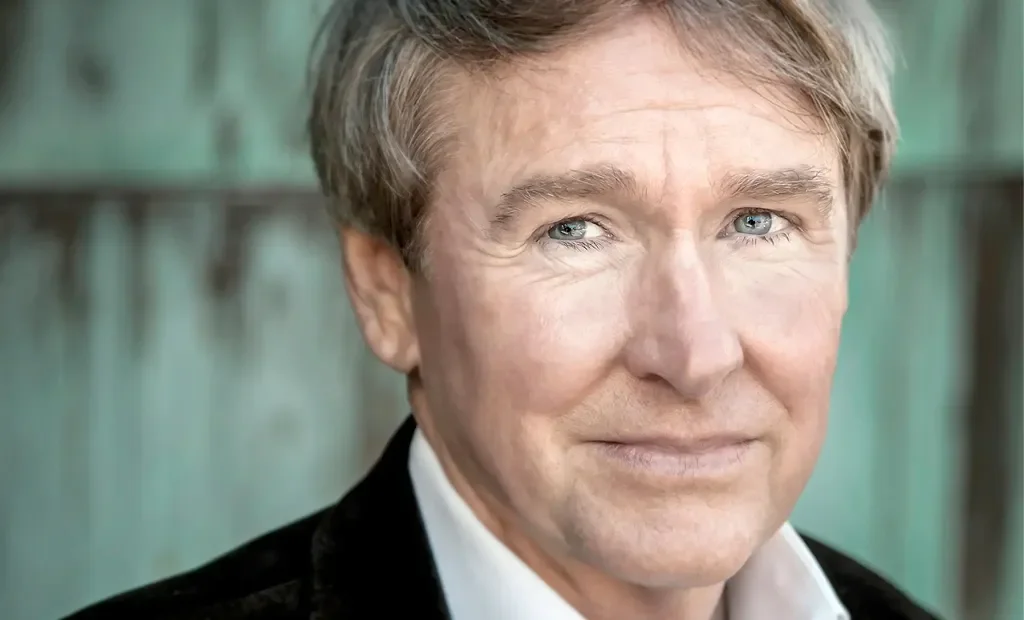
The award-winning author recommends works by Marie Vieux-Chauvet, Katherine Dunham and more
Ben Fountain’s new novel, "Devil Makes Three," is a political thriller set during Haiti’s 1991 coup d’état. Below, the author of "Billy Lynn’s Long Halftime Walk," winner of a National Book Critics Circle Award, recommends other books about Haiti.
'Love, Anger, Madness' by Marie Vieux-Chauvet (1968)
This incendiary trilogy of novellas brought the wrath of the Duvalier regime down on its author, who was forced to flee to New York after the book’s publication. Vieux-Chauvet is unsparing in her depiction of Haiti, presenting characters who are pushed to the limits of sanity by the racism, economic duress and state terrorism that constrain their lives. Buy it here.
'Moonbath' by Yanick Lahens (2014)
Winner of both the Prix Femina and French Voices Award, Lahens' incantatory novel cuts across four generations of a rural Haitian family. Their intergenerational traumas play out in an increasingly chaotic country in which Vodou is the common people’s surest source of strength and sustenance. Buy it here.
'Island Possessed' by Katherine Dunham (1969)
The famous American dancer, choreographer and Vodou priestess first visited Haiti in 1936, and this extraordinary memoir recounts her adventurous early years in the country. Dunham writes vividly about the politics, culture and religion of the island nation that quickly "possessed" her. Especially moving is her affair with the charismatic young parliamentarian who would later become Haiti’s president. Buy it here.
'The Rainy Season' by Amy Wilentz (1989)
Wilentz first arrived in Haiti in 1986, as the Duvalier regime was collapsing, and spent the next three years unraveling Haiti’s complexities. Wilentz’s blend of reportage, history and highly evocative memoir is still relevant — perhaps more than ever — 30 years after its publication. Buy it here.
'Kanaval' by Leah Gordon (2010)
One of several mind-bending books produced by the brilliant artist, curator and founder of the "Ghetto Biennale," held every two years in Port-au-Prince. Gordon’s surreal images will haunt you, the blunt truths of the text no less. Every endeavor of this artist rewards the closest attention. Buy it here.
'Haiti, History, and the Gods' by Joan Dayan (1995)
Advanced Haitianology. Dayan bypasses, blows through and tunnels beneath accepted sources and narratives to get at the truer, more troubling histories found not only in overlooked or suppressed texts and documents, but in Vodou rituals, folk beliefs, songs, and art. The wisdom and insight of this book are inexhaustible. Buy it here.
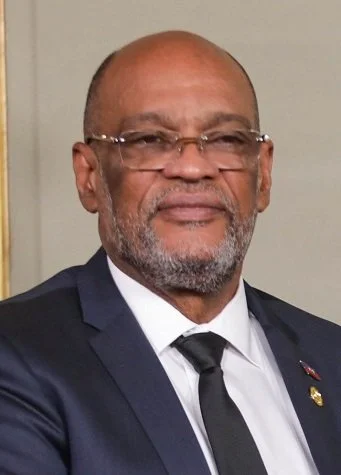
Haitian-American leaders call on Biden to dump Ariel Henry
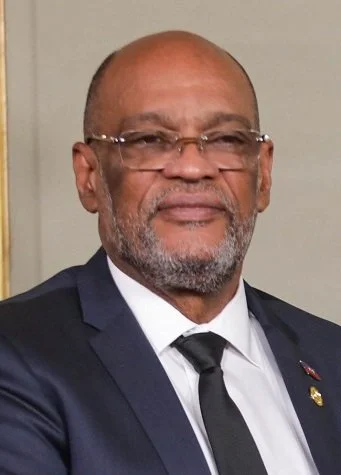
A group of Haitian-American elected officials is calling on President Biden to withdraw support for a Kenya-led peacekeeping mission in Haiti, which they say will bolster acting President Ariel Henry’s grip on power.
The National Haitian-American Elected Officials Network (NHAEON) and Family Action Network Movement (FANM) on Friday wrote Biden and Secretary of State Antony Blinken with the request.
“Any military intervention supporting Haiti’s corrupt, repressive, unelected regime will likely exacerbate its current political crisis to a catastrophic one,” they wrote.
“It will further entrench the regime, deepening Haiti’s political crisis while generating significant civilian casualties and migration pressure.”
Yet the plan to intervene in Haiti under the auspices of the U.N. is barreling ahead.
On Monday, the United States and Kenya signed a five-year defense agreement in Nairobi, and Secretary of Defense Lloyd Austin told Kenyan Defense Minister Aden Duale the Biden administration is working to secure $100 million for the Haiti intervention plan.
Conditions in Haiti have been worsening progressively since the 2021 assassination of former President Jovenel Moïse, which led Henry to take power as acting president and acting prime minister.
Many Haitian and Haitian-American civil society organizations have clamored for the Biden administration to withdraw recognition and support for Henry, which they say is the main factor keeping him and his Haitian Tèt Kale Party (PHTK) in power.
“If your Administration were to withdraw its support for Dr. Henry, he would have been forced to negotiate with Haitian civil society and other groups toward a peaceful solution to Haiti’s current political crisis,” wrote the groups.
Advocacy groups such as NHAEON and FANM have claimed for years that Henry’s government is complicit in gang violence, and is fostering violent conditions to remain in control.
“This regime has dismantled Haiti’s democratic structures while facilitating and conceding control of the country to many gang leaders. The PHTK governments did not run a fair or timely election,” wrote the groups.
“They have created a prevalent culture of corruption that deprives the government of the necessary funds to support the Haiti National Police and provide basic governmental services to the Haitian population.”
But the Biden administration has been mostly unwilling to risk destabilizing Haiti.
“PM Henry is a transitional figure and the head of Haiti’s government. We work with him and his administration on a range of bilateral and multilateral issues, as does the rest of the international community,” a State Department spokesperson told The Hill.
Despite conditions in the country, U.S. officials have continued to deport Haitians back there.
That deportation policy bit back at the administration early on, as Biden’s special envoy, Ambassador Dan Foote, resigned in 2021 with a scathing letter calling the decision to deport Haitians inhumane and counterproductive.
In late 2022, the Biden administration redesignated Haiti for Temporary Protected Status (TPS), a measure that allowed more than 100,000 Haitians to live and work in the United States, a measure advocates had called for.
TPS status is assigned to countries where conditions are too dangerous to humanely repatriate its nationals.
But in designating Haiti, the Biden administration was careful not to criticize the Henry government, and suggested the opposition had been unwilling to negotiate a peaceful path forward.
“The State Department insists that Dr. Henry must be part of any transitional government. Dr. Henry has used the U.S.’s indifference to clinch power and continues to veto any proposed consensus to create an inclusive transitional government without him,” wrote the groups.
The appeal for the United States to take its thumb off the political scale in Haiti is at the center of advocates’ concerns about U.S. policy toward the Caribbean nation.
The United States has a long history of intervention in the country, including an occupation from 1915 to 1934 and three troop deployments over the past 30 years.
Civil society organizations and some Haitian elites are at odds over the need for foreign intervention in Haiti, an exercise that at times has come with disastrous results.
In 2016, former U.N. Secretary General Ban Ki-Moon admitted that United Nations peacekeepers played a role in starting a cholera outbreak in Haiti that led to the deaths of 10,000 people, though Ban did not say the U.N. directly caused the epidemic.
Episodes like that intervention have led civil society and opposition groups to greater distrust of outside measures to pacify the country.
The recurrence of foreign intervention has also led many in Haiti’s civil society to accuse the United States of condescension and paternalism.
The official position of the United States is that conditions on the ground would currently not allow for a free election.
“The State Department believes certain security conditions in Haiti must be met before a free and fair election can take place,” said the department spokesperson.
“A Multinational Security Support (MSS) mission would support the Haitian National Police (HNP) to achieve improved security. We continue to support a Haitian-led, consensus-driven political solution to restore democratic order in Haiti.”
But talks between former rivals in civil society and the opposition have been rendered moot by Biden’s support of Henry, say advocates.
“Over the past three years, groups across the spectrum have gathered, often putting long-running political disagreements aside, to agree on practical, promising plans for a transitional government. But each time, the de facto authorities defeat the promising effort by refusing any compromise,” they wrote.
The groups also called for U.S. authorities to enhance their efforts to avoid weapons trafficking to Haiti.
“Haiti does not manufacture guns and ammunition, but they originate from the U.S. and continue to destroy many lives, including U.S. Citizens. We strongly urge your Administration to effectively investigate armed trafficking to Haiti and provide more resources to the U.S. Customs and Border Patrols to inspect cargo leaving the United States to Haiti,” they wrote.

Dominican president suspends visas for Haitians and threatens to close border with its neighbor
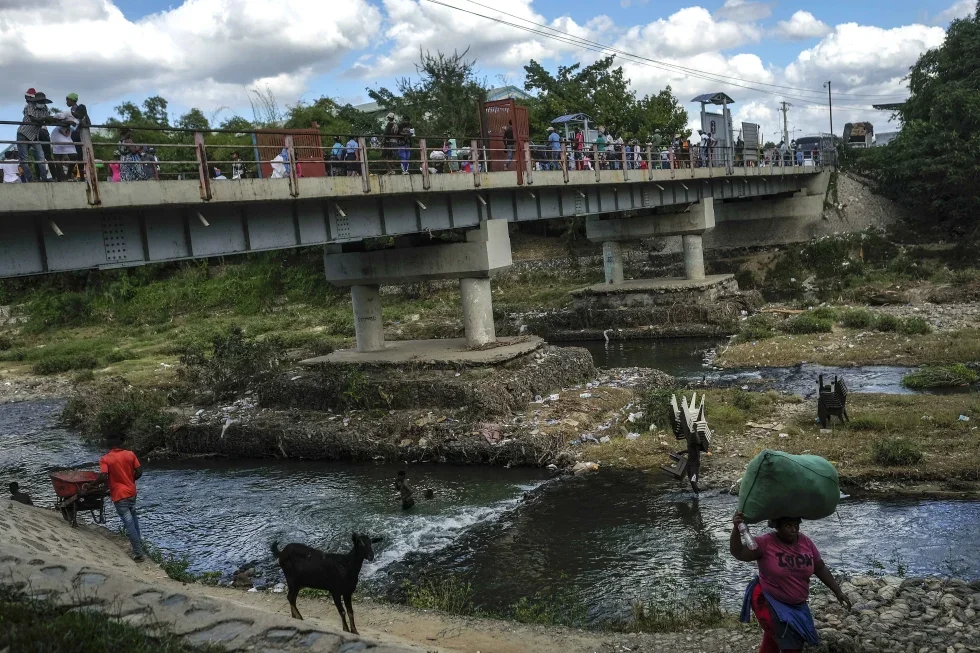
SANTO DOMINGO, Dominican Republic (AP) — The president of the Dominican Republic announced Monday that he has suspended issuing visas to Haitians, and he threatened to shut down land, air and sea traffic between the two neighbors over their latest dispute.
President Luis Abinader’s move follows the recent excavation of a supposed canal in Haiti that Dominican officials argue will divert water from the Massacre River and harm its farmers and the environment. The river, which runs in both countries, is named for a bloody battle between Spanish and French colonizers in the 1700s.
It is not clear who, if anyone, authorized the digging of the canal in Haiti.
“If the conflict is not resolved before Thursday, (officials will) completely close the border to air, sea and land commerce,” the Dominican government said in a statement.
That would be an economic blow to Haiti, which gets much of its imports from the Dominican Republic and where inflation has skyrocketed and poverty deepened amid a surge in gang violence.
It would also hurt Dominican businesses.
A study by the Dominican Republic’s Central Bank said $430 million in informal border trade was conducted in 2017 between the two countries, which share the island of Hispaniola. Of that amount, more than $330 million represented exports to Haiti.
Haiti is also the Dominican Republic’s third biggest partner in formal trade, with $1 billion in exports to Haiti last year and $11 million in imports, according to the Export and Investment Center of the Dominican Republic.
Last week, the Dominican government sent a crew to monitor the construction of the canal from across the border, with officials telling local media that it wasn’t an intimidation tactic but rather an offer to help detain, if necessary, civilians that might be working on the project without permission.
The excavation prompted Abinader last week to shut the border near the northern town of Dajabon, a crucial crossing for Haitians who sell and buy a range of goods there several times a week.
Former interim Haitian Prime Minister Claude Joseph recently defended the construction of the canal and accused critics in the Dominican Republic of being nationalists and racists.
Last year, Abinader banned Joseph from entering the Dominican Republic in an unrelated dispute that heightened the simmering tensions between the two countries.
Abinader has sought to limit the migration of Haitians into the Dominican Republic in recent years and has expelled tens of thousands of Haitians and those of Haitian descen t. His administration also has begun work on a 118-mile (190-kilometer) wall along the Haitian border that Abinader announced early last year.
The last time the Dominican Republic fully closed the border its border with Haiti was in July 2021, after Haitian President Jovenel Moïse was assassinated. Since then, it has occasionally closed parts of the border for security reasons.
Coup plotter, money launderer Guy Philippe to be freed from US prison, deported to Haiti
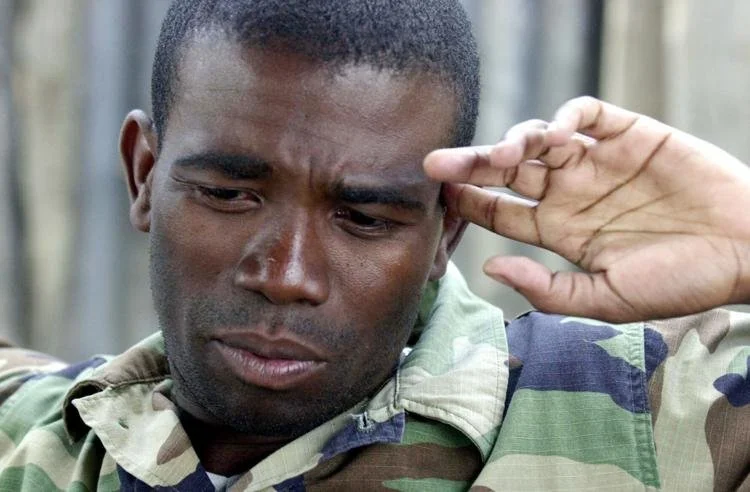
MIAMI — Guy Philippe is a man of many moves.
The former Haitian police commander once led a government rebellion against a president. He was later elected to a seat in the Haitian Senate just before being captured by U.S. authorities who had hunted him down for nearly a dozen years for pocketing more than a $1 million from Colombian cocaine traffickers.
Philippe cut a plea deal with federal prosecutors in Miami, but even then he still tried several times to get his nine-year sentence reduced while representing himself both before and during the pandemic era.
Now, the 55-year-old is scheduled to be released Thursday from a federal prison in Atlanta, transferred to U.S. immigration custody and eventually deported to Haiti, a country reeling from the July 2021 assassination of its president, Jovenel Moïse, and the terror of deepening gang violence since Philippe’s arrest more than four years earlier.
His possible return to Haiti as the United States is trying to stabilize the security situation is fueling concerns about how his presence back in the country might affect an already volatile landscape.
A State Department spokesperson did not want to discuss Philippe’s return to Haiti and directed questions about his deportation to the Department of Homeland Security.
“Mr. Philippe was lawfully arrested by the Haitian authorities and legally extradited to the United States,” the spokesperson said.
Nevertheless, Philippe’s pending return to his volatile homeland is raising questions about U.S. policy regarding Haiti and even has former U.S. diplomats who served in the country and are aware of Philippe’s controversial reputation baffled.
“I’m not close enough to the situation to comment on the facts, but this does seem a particularly bad time to add gasoline to a raging fire,” said Jim Foley, a retired diplomat who served as U.S. ambassador to Haiti between 2003 and 2005, during which time Philippe led a bloody coup against the then-sitting president, Jean Bertrand Aristide.
Luis Moreno, who overlapped with Foley and served as deputy chief of mission in Port-au-Prince from 2001 to 2004, said given how perilous the security situation currently is in Haiti, “it’s incomprehensible how anyone could think this was a good idea. Maybe there is something I don’ t know about.”
“He still has influence. He still has guns. He still has access to narco-trafficking,” Moreno said. “He also has intense political aspirations and ambitions. He wants to be the ruler of Haiti, he wants to be the dictator of Haiti. It has always been his dream and his objective. And that’s dangerous.”
Ahead of his release, Philippe filed a petition with the Inter-American Commission on Human Rights, requesting precautionary measures based on what he says is “a history of persecutions he had previously faced in Haiti and the fear of future harassment; threats and irreparable harm, on account of his political opinions and expressions.”
“Mr. Philippe is petitioning the Commission to actively appeal to the Government of Haiti to provide him with adequate security to protect his rights to life and personal integrity; to adopt the necessary measures so that he can carry out his activities without being subjected to acts of violence, intimidations, threats, or any harassments in the exercise of his daily life,” the petition, obtained by the Miami Herald, said.
Philippe who has passed the time in federal prison by releasing voice notes from prison about his case, refers to his Jan. 5, 2017, arrest by Haitian police as a “kidnapping” and his extradition to the United States on that same day as “illegal” and “politically motivated.”
The seven-member commission, an autonomous organ of the Organization of American States, has not yet ruled on Philippe’s request, stating that it requested information from Haiti on Nov. 17, 2022 but has received no response to date.
Philippe’s next move is anyone’s guess, but in court papers filed last year he expressed “his commitment to return to society as a law-abiding citizen” and “participate in the betterment of his community in Pestel, Haiti,” in the western region of the country.
“He had a vocal group of followers, many of whom are probably waiting for his return to Haiti,” said David Weinstein, a former assistant U.S. attorney who is now a Miami defense attorney. He led a team of prosecutors that brought indictments against Philippe and more than a dozen other Haitian police officers, politicians and business people on drug-trafficking and related money-laundering charges nearly two decades ago.
“The situation in Haiti today is even more fragile than when he was expelled in 2017,” said Weinstein, the former chief of the narcotics section at the U.S. attorney’s office. “The potential remains for him to mobilize his followers and return to a position of power in Haiti.”
Whether Philippe, who refers to himself as a senator, can run for office again in Haiti will depend on the yet-to-be-written electoral law and whether it continues its ban of individuals who have been convicted of crimes.
Philippe’s U.S. conviction
In April of 2017, Philippe pleaded guilty to a money laundering conspiracy charge, allowing him to avoid going to trial on a more serious trafficking charge that could have sent him to prison for the rest of his life. Instead, he faced up to 20 years on the money laundering conviction and got less than half that time from U.S. District Judge Cecilia Altonaga in line with a joint recommendation by prosecutors and defense lawyers.
The sentencing culminated a federal investigation into drug trafficking, money laundering and corruption at the highest levels of Haiti’s government that began in the 2000s when the island of Hispaniola, which Haiti shares with the neighboring Dominican Republic, became a notorious hub for shipping South American cocaine into the United States. For years, Aristide, who was ousted in 2004 in an armed revolt led by Philippe, had been investigated by a Miami federal grand jury for accepting drug bribes. Charges were never filed.
Philippe’s punishment was the result of a deal that became inevitable after Altonaga refused to dismiss the case based on Philippe’s claim of immunity as a senator-elect in Haiti. She also chastised the federal government for not trying harder to arrest Philippe since his 2005 indictment. He was arrested by the Haiti National Police and turned over to the Drug Enforcement Administration in early January 2017, days before his swearing-in.
The timing of his arrest in Haiti allowed the then-government of interim President Jocelerme Privert to govern the country without the looming presence of Philippe, who had threatened to divide the country shortly before Privert came into office. A supporter of Jovenel Moïse, Philippe openly campaigned with him before Moïse became president in 2017. Moïse would name the head of Philippe’s political party, Jeantel Joseph, to an important security post.
In Miami, federal prosecutors agreed to the lower end of the sentencing guidelines — ranging from nine to 11 years — for Philippe’s punishment because they believed the amount of time was in line with other Haitian officials who had pleaded guilty to similar money laundering offenses. They cited two defendants: former national police chief Jean Nesly Lucien and former presidential security chief Oriel Jean.
Lucien was sentenced in 2005 to almost five years after admitting he received $180,000 in drug proceeds as bribes. He did not cooperate with authorities.
Jean, bodyguard for Aristide, was sentenced in 2005 to three years in prison after helping the U.S. attorney’s office as a cooperating witness to convict several Haitians and Colombians of moving tons of Colombian cocaine through Haiti to the United States. He admitted receiving $400,000 in bribes. Jean, who testified in the only Miami trial that ended with the conviction and life sentence of a Haitian drug trafficker, was gunned down a decade later in Haiti’s capital. His assassination remains unsolved.
The U.S. government’s cases were built largely on cooperating witnesses involved in drug trafficking or protection in Haiti. In those cases, prosecutors relied mostly on witnesses and bank accounts rather than seizures of cocaine. The prosecutions of Haitian officials were challenging because the illegal activity happened in an impoverished foreign country where police officers were often on the take and tracing bribes was difficult. Also significant, the cocaine loads shipped from Colombia to makeshift airstrips in Haiti were long gone by the time U.S. investigators uncovered the trafficking through the island.
Philippe’s case was all the more difficult because he had been on the lam for almost 12 years while cultivating a Robin Hood reputation in the western reaches of the country far from the capital. For more than a decade, federal agents, in collaboration with the Haiti National Police, made at least 10 attempts to arrest Philippe: setting up checkpoints, paying informants, launching a U.S. military operation and pursuing him in a foot chase, only to lose him in dense vegetation.
In U.S. custody, Philippe admitted accepting at least $1.5 million in cocaine profits from Colombian traffickers between 1999 and 2003. According to a statement filed with his plea deal, Philippe admitted that he not only shared the bribes from narco-traffickers with fellow officers in the Haiti National Police, but he also wired hundreds of thousands of dollars to the United States to buy a home in Broward County, Florida, and support his U.S.-citizen wife.
Pierre Esperance, a human rights defender in Haiti, said Philippe has been issuing threats from prison, trying to intimidate individuals as he singles them out in recordings that have been shared on social media.
“Guy Philippe is someone who has been judged and condemned for drug trafficking in the United States,” said Esperance, the head of the National Human Rights Defense Network in Port-au-Prince. “I am hoping he is a changed man and has taken a lesson from his incarceration and will rehabilitate himself so he doesn’t continue with the threats, intimidations and what he was previously involved with.
“Even if it’s true that there are problems in Haiti, it is not a savanna that he is returning to,” Esperance said. “And if he continues doing what he was doing before, then his place is in prison.”
Philippe was the last high-profile defendant from a U.S. crackdown on cocaine smuggling through Haiti that yielded the convictions of more than a dozen drug traffickers, Haitian senior police officers and a former Haitian senator. Among them: Beaudouin “Jacques” Ketant, a Haitian narco-trafficker who accused Aristide of turning a blind eye to the cocaine. Ketant, initially sentenced to 27 years in a U.S. prison, was deported to Haiti in 2015 when his term was cut in half after assisting federal prosecutors in their probe.

Preview: Haiti vs. Cuba - prediction, team news, lineups

For the first time since 2019, Haiti and Cuba will clash at the CONCACAF Nations League, with both sides squaring off in Group B action on Friday at Estadio Panamericano in the Dominican Republic.
Both teams gained a return entry in League A of this competition earlier this year, with the Haitians going unbeaten in their group, while Cuba only suffered one defeat on the B side themselves.

After a temporary stay in League B, Les Grenadiers quickly proved they deserve to be back up with the big boys of CONCACAF, having no trouble finishing top of a group which featured Montserrat, Bermuda and Guyana.
A pair of challenging outings to kick off their League B campaign seemed to serve as a wakeup call for Haiti, who began by playing Bermuda to a 0-0 draw, following that up with a narrow victory over Montserrat (3-2), before turning it on down the stretch of the campaign, winning their final four fixtures by a combined score of 19-3.
It will be the first Nations League campaign for Gabriel Calderon Pellegrino as manager, and in his first tournament at the helm, his side could not maintain the early momentum they had from a last-gasp victory over Qatar (2-1), following that up with defeats to Mexico (3-1) and Honduras (2-1).
La Selection Nationale won all three of their League B home matches played in the Dominican Republic last season, notching three or more goals each time.
Haiti never trailed for a single second during their Nations League B campaign, which was rarely the case when they were in League A in 2019-20 as this team battled back to earn a pair of draws versus Costa Rica, leading only once throughout that entire competition, though their 1-0 advantage versus Curacao lasted just 26 minutes, when the two sides played to a 1-1 draw.
Les Grenadiers have won three of the previous four meetings against Cuba, the last one being at the Nations League qualification stage in 2019 when a goal three minutes from the end gave the Haitians a 2-1 win.
Just like their opponents on Friday, Cuba will also be returning to League A this year and searching for their first-ever points in the top tier of this competition.
Their 2019 performances in League A left a lot to be desired, with the Cubans losing all four of their encounters that year by a combined score of 18-0, conceding four or more goals on three occasions.
Topping their League B group in 2022-23 was no easy feat either, as they lost their opening match to Guadeloupe (2-1) but won their remaining games, including a narrow 1-0 triumph at home against Les Gwada Boys on the final matchday.
After a disappointing Gold Cup campaign for Cuba in 2023, where they lost all three of their group fixtures, the federation have decided to go another direction, appointing Yunielys Castillo as the new coach with the goal being to restore some pride in a side who have not performed well in these continental competitions.
Since the beginning of 2022, Cuba have won all but two of their encounters played versus Caribbean opponents, losing twice to Guadeloupe over that span.
Cuba have lost every Nations League group stage encounter in which they had conceded the opening goal, but they also have a 100% record in this competition when drawing first blood.
Haiti form (all competitions):
- W
- W
- W
- W
- L
- L
Cuba form (all competitions):
- W
- L
- L
- L
- L
- L
Team News
© Reuters
Roberto Louima was selected to the Haitian squad for this international window but has not featured for the senior team since 2017, Eliader Dorlus will be seeking his first cap with Les Grenadiers, while Duke Lacroix made his international debut last June, playing the full 90 minutes in a victory over Saint Kitts and Nevis (3-1).
Carnejy Antoine led League B in scoring with five goals during the 2022-23 Nations League campaign, Mondy Prunier had four, Derrick Etienne and Frantzdy Pierrot notched three each, while Alexandre Pierre had two clean sheets and shared another one with Johny Placide.
Pierrot led them with two strikes at the Gold Cup this past summer, with their other goals from them at that tournament coming courtesy of Danley Jean Jacques and Duckens Nazon.
Ismael Morgado, Alejandro Delgado, Rey Angel Rodriguez, Jose Paradela and Christian Valiente were all selected for this international window and will each be seeking to make their first appearances for the Cuban national team.
Romario Torres picked up his first international cap earlier this year in a friendly versus Uruguay, and he made his Gold Cup debut in their final match against Canada, replacing Modesto Mendez for the last 21 minutes plus stoppage time.
Aricheell Hernandez had four goals to lead the Cubans in their previous Nations League campaign, Luis Paradela and Maikel Reyes each notched two, Sandy Sanchez collected three clean sheets, while Raiko Arozarena had one.
Haiti possible starting lineup:
Pierre; Arcus, Dulysse, Seance, Lacroix; Jacques, Sainte; Deedson, Dorlus, Simonsen; Prunier
Cuba possible starting lineup:
Arozarena; Morejon, Cavafe, Piedra, Corrales; J. Paradela, Y. Perez, E. Hernandez, Torres; Reyes, L. Paradela
We say: Haiti 2-0 Cuba
Cuba have yet to show they can compete against the A teams in this region and could find themselves chasing this game against a speedy and well-drilled Haitian squad.
Haiti may be missing some of their best players for this camp, including Fafa Picault, but their cohesion on the field and overall depth should still be enough to earn them three points in this encounter.
For data analysis of the most likely results, scorelines and more for this match please click here.

The US keeps deporting people to a country that it says is too dangerous for travel
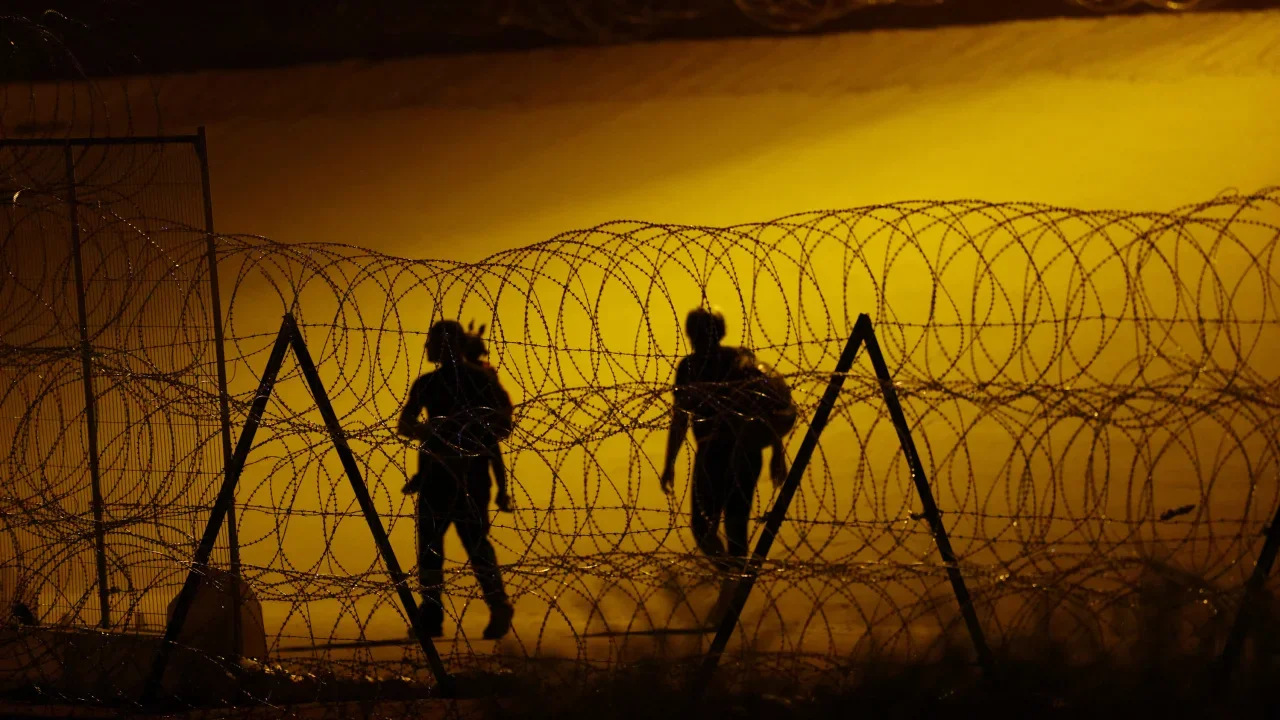
CNN —
The Biden administration has taken mixed positions on its policies involving Haiti – with one federal agency warning that the Caribbean country is too dangerous for US citizens, while another agency deports Haitians back to the violence-torn country.
Violence in Haiti during the second quarter of 2023 jumped almost 14% when compared to the previous quarter, according to a United Nations report released Thursday.
On August 30, the US Embassy in Haiti urged American citizens to leave the country due to the “current security situation.” The next day, US Immigration and Customs Enforcement (ICE) deported an undisclosed number of individuals to Haiti.
With Haiti’s capital Port-au-Prince largely controlled by gangs infamous for kidnapping and murder, experts warn that the deportations could amount to death sentences.
“This act puts lives in danger,” Guerline Jozef, executive director of the Haitian Bridge Alliance, said in a statement. “We urgently call upon President Biden, Vice President Harris, Secretary Mayorkas, and the entire administration to cease all deportations to Haiti.”
Waves of crime and unrest have hit Haiti since the assassination of former President Jovenel Moise in 2021. His successor, Prime Minister Ariel Henry, has struggled to staunch the violence. More than 1,860 victims of killings, injuries, and kidnappings were documented between April 24 and June 30, 2023, the UN report said.
Nevertheless, Haiti was among the top three destinations for charter flight deportations from the US during the 2022 fiscal year, with 125 flights conducted during that time, according to ICE’s annual report.
In recent years, the US has deported more than 2,700 Haitians, with 895 deported in fiscal year 2020, 353 in fiscal year 2021 and 1,532 in fiscal year 2022, according to the same report.
Citing the Biden administration’s expansion of legal pathways for Haitians, a White House National Security Council spokesperson told CNN in a statement that Haitians seeking to enter the United States are urged to do so legally.
The US Departments of State and of Homeland Security “monitor the situation on the ground and coordinate closely with international partners to ensure migrants can be safely returned to Haiti,” the spokesperson also said.
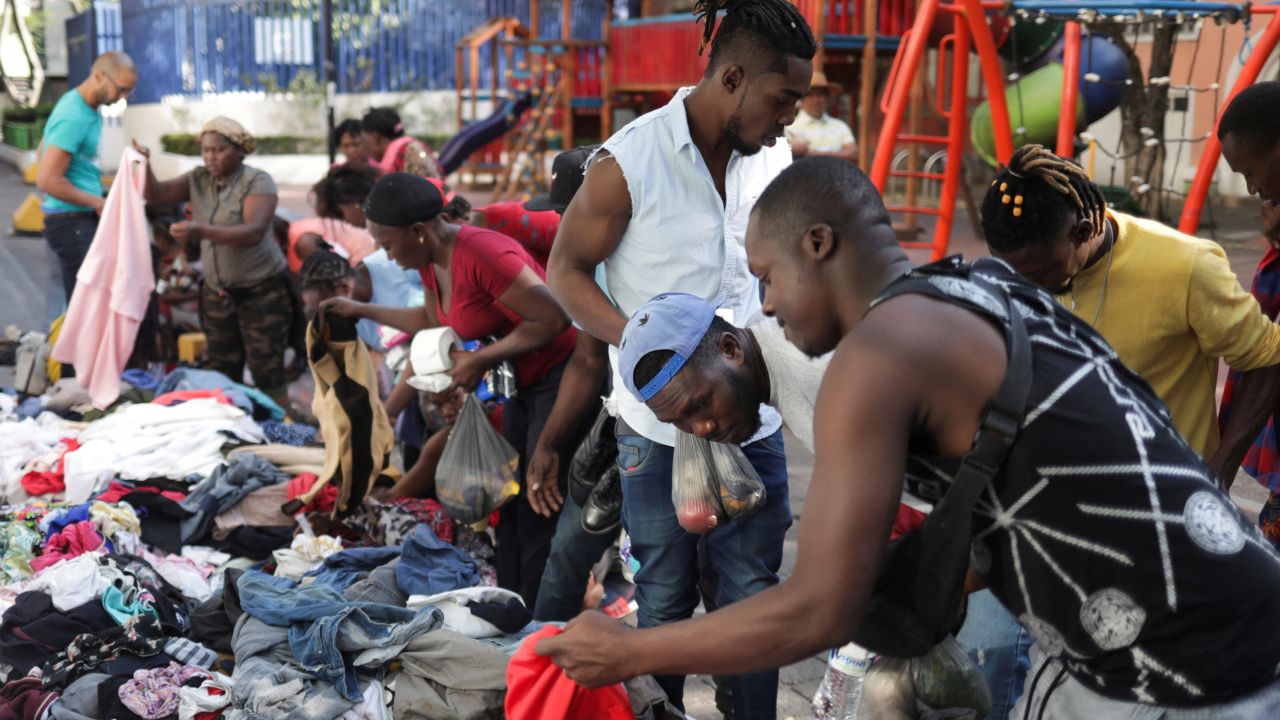
Migrants, mostly from Haiti, collect clothes donated by a group of volunteers, at the Giordano Bruno in Mexico City, Mexico, April 6, 2023.Henry Romero/Reuters
For months, Henry and the United Nations Secretary-General Antonio Guterres have called for a military intervention in the country. But Haiti’s neighbors in the Western Hemisphere have quietly declined a leading role.
In late July, the government of Kenya offered to lead a “multi-national force” of 1,000 police officers to help train and assist Haitian police “restore normalcy” to the Caribbean nation – an idea that has been embraced by the US government.
“The United States commends the Government of Kenya for responding to Haiti’s call and for considering to serve as the lead nation for a multinational force in Haiti to assist in addressing insecurity caused by gang violence,” US Secretary of State Antony Blinken said in a statement in August.
Blinken added he looks forward to advancing the process of Kenya’s involvement through a UN Security Council resolution authorizing a multinational force in Haiti.
During a White House news briefing Tuesday, national security adviser Jake Sullivan said he wouldn’t go into the operational details but reiterated the US’s commitment to “support a multinational force that is fundamentally a policing support mission, not a military mission, and one that is in support of the Haitian National Police, not taking over the sovereign policing capacities from the Haitian National Police.”
Previous UN peacekeeping missions to Haiti have left a bitter legacy, and critics point out that Kenyan security forces’ conduct has raised some rights concerns at home. In 2022, the US Department of State found Kenya had “significant human rights issues,” including credible reports of “arbitrary killings,” “extrajudicial killings,” “forced disappearances,” “torture,” and cases of “cruel, inhuman or degrading treatment”.
According to a White House National Security Council spokesperson, the US is “working closely with the Kenyan government to ensure that any prospective participants in this mission would be well prepared to bring greater security to the people of Haiti and would have a demonstrated commitment to respecting human rights.”
“Additionally, we will work with partners including Kenya to monitor and investigate any allegations of human rights abuses once the mission is deployed,” the spokesperson said.
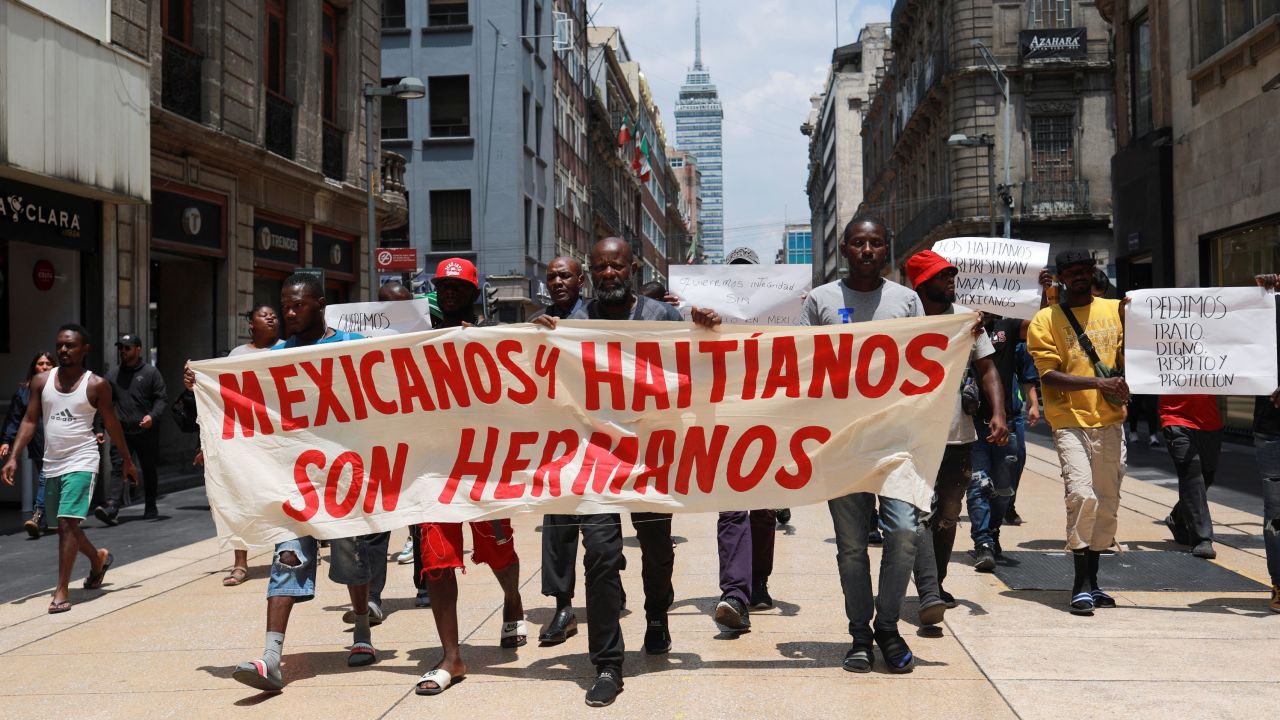
Migrants, mostly from Haiti, take part in a protest with a banner that reads "Mexicans and Haitians are brothers" in Mexico City, Mexico May 29, 2023.Henry Romero/Reuters
The UN Security Council is expected to consider the possibility of a Kenyan-led multinational deployment in the coming weeks.
In the meantime, as the United States creates new immigration programs and hardens its border enforcement policies – including increased deportations, among other tactics – Haitians fleeing the country appear to be looking for alternatives paths.
The Biden administration launched a parole program in January that allowed 30,000 people from Haiti, Venezuela, Nicaragua, and Cuba who pass vetting and had a US based financial supporter to enter the US legally every month. Haitians are the top nationality taking advantage of the program. Of the 181,000 people who have arrived legally from January to July, Haitians make up more than one third (over 60,000) of beneficiaries, CBP data shows.
Panamanian government data shows that since the beginning of the year, the number of Haitians transiting through the dangerous jungle between Panama and Colombia, known as the Darien Gap, has significantly dropped. This year Haitians have also become the top nationality seeking asylum in Mexico.
But many continue to take dangerous risks to reach US shores. From October 2022 to July 2023, more than 5,000 Haitians were interdicted at sea by the US Coast Guard.
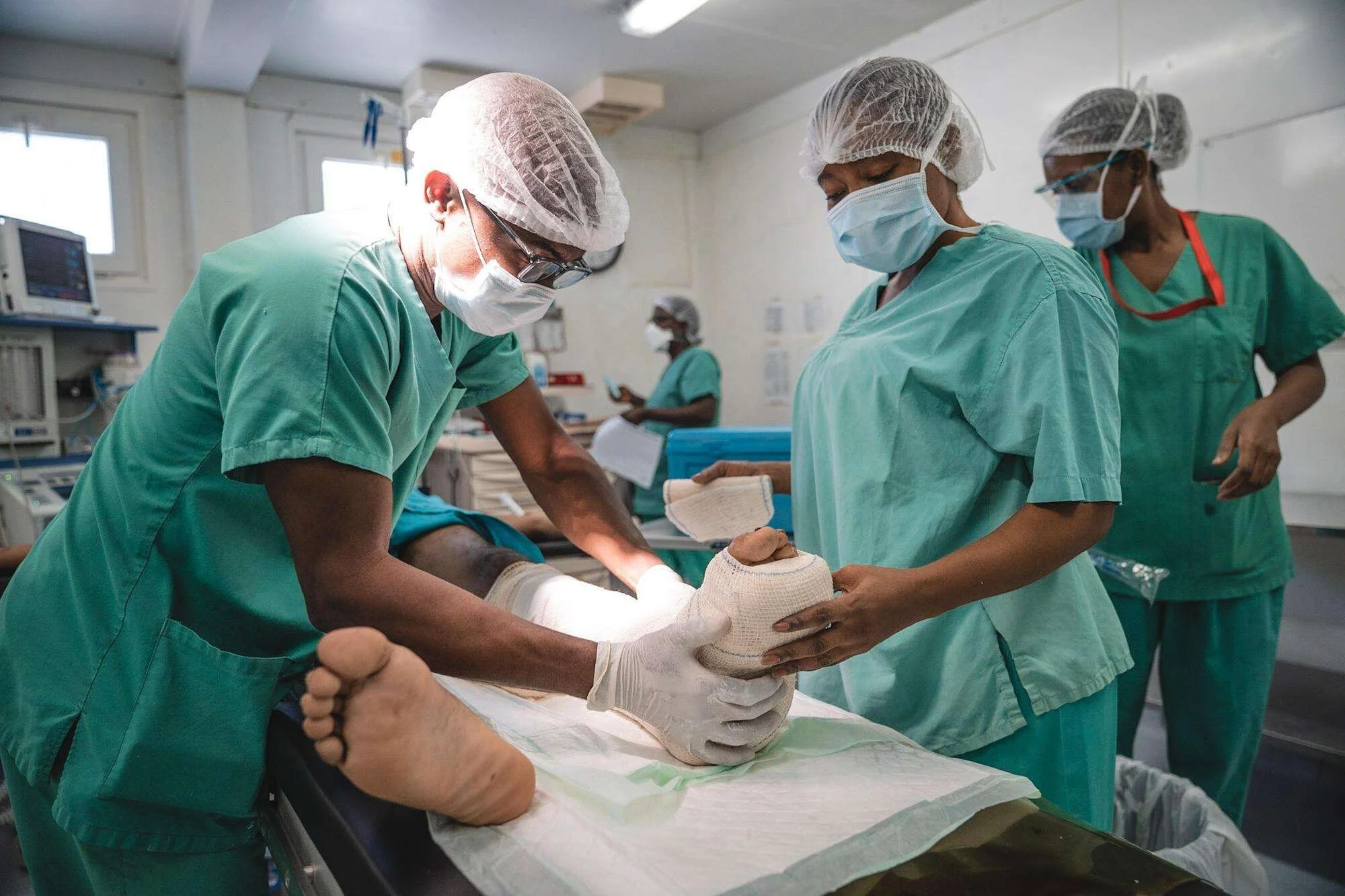
Haiti: MSF fully reopens Tabarre hospital following armed intrusion
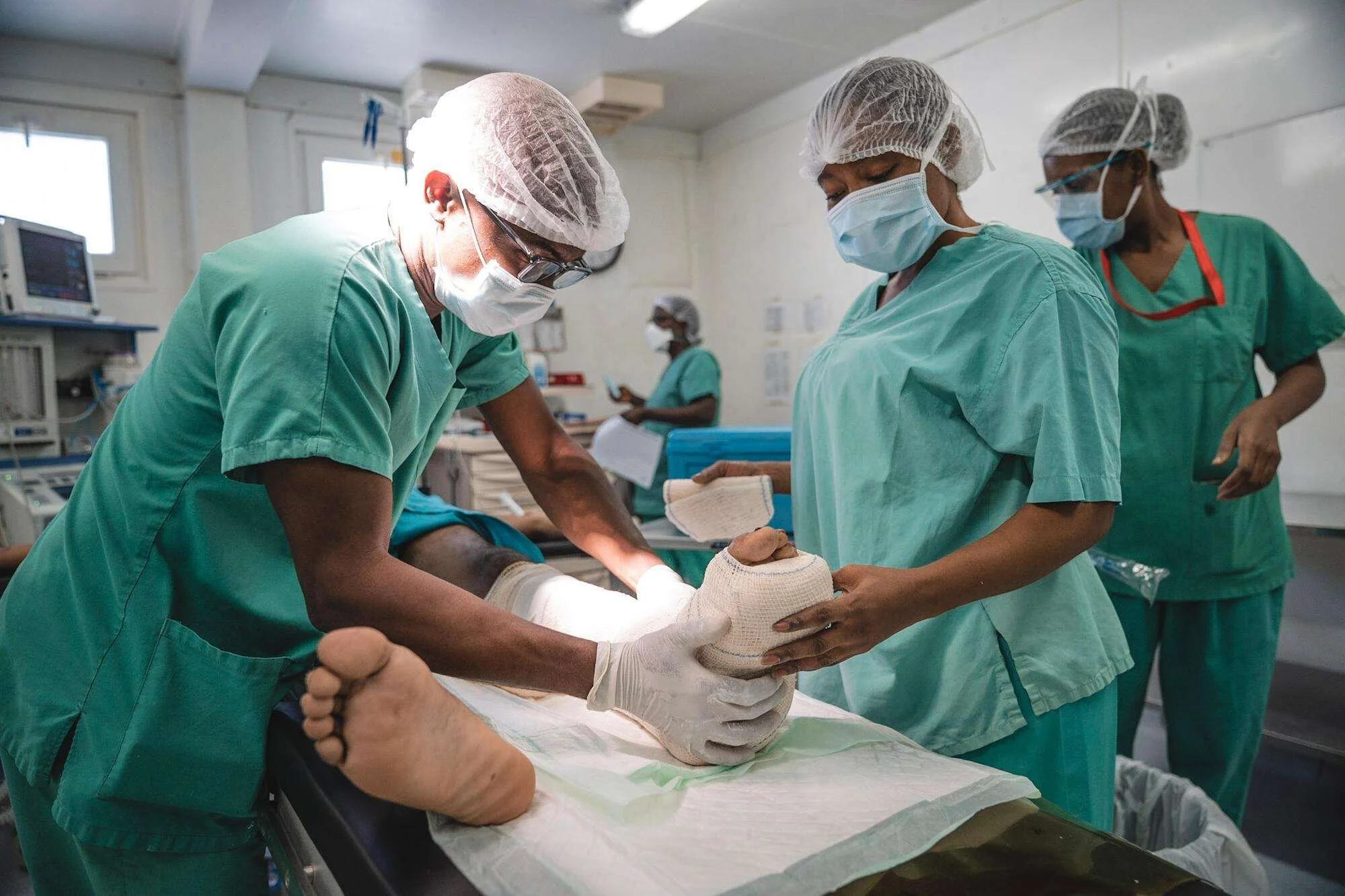
PORT-AU-PRINCE, August 28, 2023—Doctors Without Borders/Médecins Sans Frontières (MSF) is today fully resuming medical services at its Tabarre hospital in Port-au-Prince, Haiti, after an armed intrusion in July caused the organization to suspend admissions in the trauma center.
“We are pleased to resume all activities and be at the service of the public once again,” said Mumuza Muhindo, MSF head of mission in Haiti. “The decision to suspend activities was difficult, given the vital role of this hospital in meeting medical needs in Port-au-Prince. But the decision to re-open was difficult as well because there is no place for violence or weapons inside a medical facility. What happened in July is absolutely unacceptable. We will not be able to work unless the patients and health professionals are respected.”
The Tabarre hospital provides medical care and services for people with traumatic injuries or severe burns. It has a total of 75 beds and an emergency department that received 2,000 people in 2022.
On the night of July 6, 2023, more than 20 armed individuals forced their way into the hospital. They threatened MSF staff members with firearms and forced them to lie on the floor while they abducted a patient from the facility. This armed intrusion led to the closure of the hospital on July 7.
The hospital’s burns and outpatient care departments reopened a few days later, but the hospital did not resume admissions for trauma patients until today.
This is the latest example in a series of violent incidents that forced MSF to either close or temporarily suspend its activities in several facilities in Port-au-Prince. In January, MSF was forced to end its support to the Raoul Pierre Louis Hospital, and an MSF hospital in Cité Soleil has suspended activities repeatedly due to frequent gunfire in the vicinity. It is now operating at reduced capacity.
“MSF is committed to Haiti and its people,” Muhindo said. “That is why we continue to have discussions with all stakeholders and armed groups, including law enforcement forces, to ensure that the conditions allow us to continue our services and work safely in Tabarre. Our message to everyone carrying a weapon in Haiti is clear—that respect for health facilities, patients, and staff is non-negotiable. The survival of the Tabarre hospital will depend on everyone abiding by this.”
About MSF in Haiti
Doctors Without Borders/Médecins Sans Frontières (MSF) is an international medical and humanitarian organization that provides assistance to people in need, irrespective of their origin, religion, creed or political convictions. MSF has worked in Haiti since 1990 and currently provides care for patients with traumatic injuries, burns or emergency medical conditions, care for survivors of sexual and gender-based violence, primary health care and maternity care.

Haitian police announce investigation into deadly church-led protest
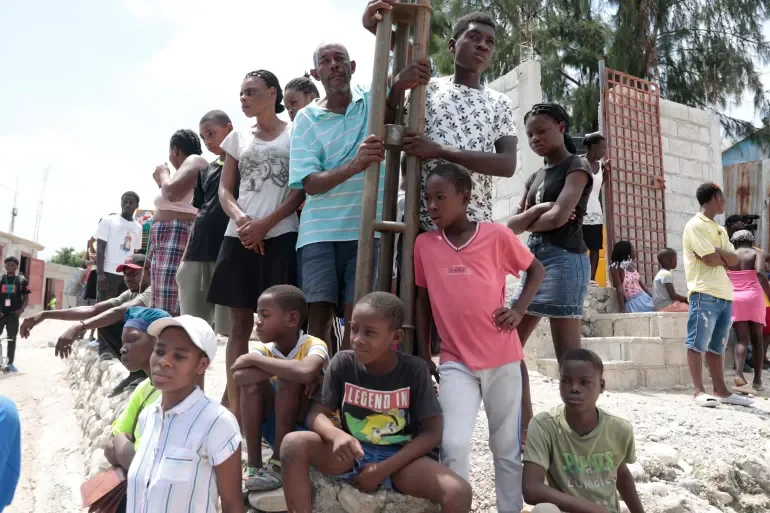
Evangelical leader Marcorel Zidor led ‘hundreds’ of armed protesters into a gang-controlled area of the capital Port-au-Prince.
The Haitian National Police have announced they will open an investigation into those responsible for a deadly incident on Saturday, when a church leader led parishioners on an armed protest through a gang-controlled area of the capital Port-au-Prince.
Frantz Elbé, the director general of the police, said the investigation would help ensure “that such irrational acts never occur again”.
“The National Police condemns this regrettable tragedy and presents its sympathies to the families and loved ones of the victims,” Elbé added.
In a press release on Monday, Elbé described how an “immense crowd” rallied behind religious leader Marcorel Zidor over the weekend, wearing olive-green uniforms and clothes emblazoned with his name.
This “spontaneous demonstration” included hundreds of people, some of whom carried machetes and assault rifles.
“This crowd had the objective of going to dislodge members of gangs based in Canaan,” Elbé explained, referring to a suburb on the northern edge of the Haitian capital.
Once informed, Elbé said the police took steps to avoid “carnage” by erecting a security perimeter and employing spokespeople to dissuade the protesters.
“However, the protesters quickly overcame the security measures established by law enforcement and were nevertheless able to arrive in the areas they desired to confront the members of said gang,” Elbé said.
No official estimate of the fatalities has been released, but police have reported multiple deaths and kidnappings, as the gangs — led by a man known as “Jeff” — clashed with the protesters.
“They opened fire on us with all sorts of guns,” one protester, Francois Vicner, told the New York Times in a video interview.
Vicner also explained that Zidor, the evangelical pastor who led the demonstration, framed the bloodshed as a test of religious devotion.
“The pastor’s followers really believed what he told them,” Vicner said. “He said they were bulletproof, that those who were wounded had no faith.”
Amid outcry over the demonstrations, Zidor appeared on Haiti’s Mega Radio to defend his actions.
“Ninety-five percent of my parishioners were being shot at. None of them got hit,” he said on Monday, according to the news agency Reuters. “Those who died are those who went to hide in the houses.”
Gangs have taken control of large sections of Port-au-Prince, with the United Nations estimating last December that up to 60 percent of the city was under their command.
This has led to widespread violence and instability, with the UN documenting “gross human rights abuses” including murder, sexual exploitation and kidnapping.
Hospitals have shuttered in the wake of gang-led violence and nearly half the population faces “severe food insecurity“, as the worsening security situation impedes humanitarian assistance.
But vigilante groups have sprung up as communities take law enforcement into their own hands.
From late April to mid-August, vigilantes and community members have conducted more than 350 lynchings, according to the UN. While most of the victims were gang members, the UN estimated that 46 were simply members of the public. At least one victim was a police officer.
One vigilante movement — known as the “Bwa Kale” or “peeled wood” — emerged in April when more than a dozen gang members were lynched and burned in the streets of Canapé-Vert, a neighbourhood in southern Port-au-Prince.
Haitian Prime Minister Ariel Henry has appealed to the international community to help subdue the gang violence in the country, a controversial proposal among Haitians sceptical of foreign interference.
On July 29, Kenya’s government offered to lead a multinational force to the country, as well as deploy 1,000 of its police officers “to help train and assist” their Haitian counterparts as they work to “restore normalcy”.
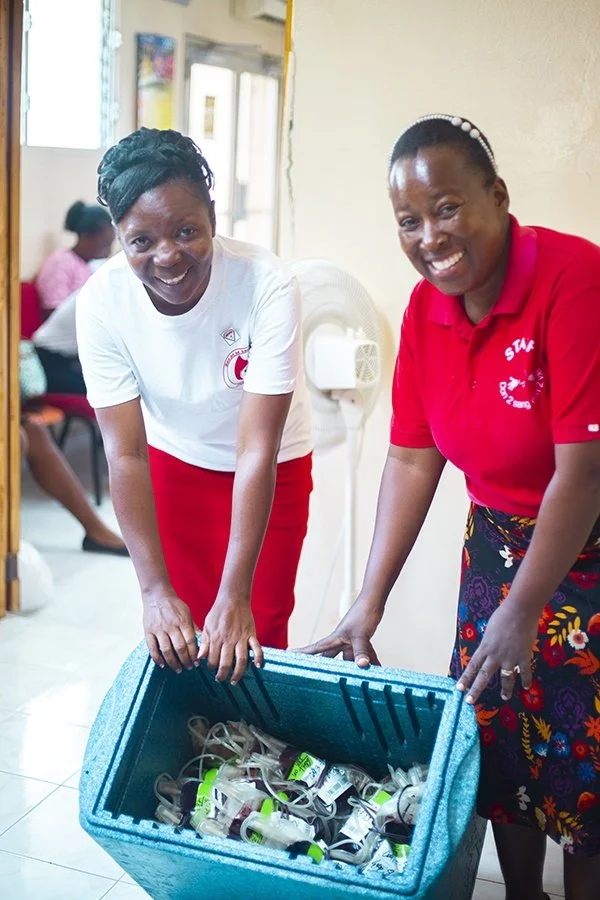
First Blood Drive at Adventist University Helps Ailing Student in Haiti
The fast turnaround of the event makes the generous response even more impressivse.
Dozens of people recently showed up at Adventist University of Haiti (UNAH) to donate blood for a student who was hospitalized with a serious blood condition. Sanderva Judeline Joseph, age 24, a fourth-year business administration student, had recently been diagnosed with aplastic anemia, a rare and serious blood condition that occurs when the bone marrow cannot make enough new blood cells for the body to work normally.
In a matter of days, university officials organized a blood drive in coordination with the Ministry of Public Health, the National Blood Safety Program, and a local blood collection organization called Korbit 100%. The few dorm students remaining on campus, plus faculty, family, and friends, lined up to donate 30 units of blood on August 3, 2023.
![Students from the Adventist University of Haiti, wait their turn to donate blood during the blood drive on Aug. 3, 2023. In less than a week’s notice students and faculty and others donated 30 units of blood to help Sanderva Judeline Joseph. [Photo: Jean Judelin and Jean Judenel Isaac]](https://cdn.adventistcontent.org/images/5df200974469ba078555eb4c/902c5b58722186ad8764b02279fd1b92769d196d/300x/Xzc1692455332267.jpg)
“I would like to thank and congratulate the Adventist University of Haiti family for their love, wisdom, and understanding,” said Jean Gracieuse, assistant to the vice president of Student Affairs at UNAH. “By joyfully donating blood for the speedy recovery of Sanderva, each of you has demonstrated that every drop of blood counts, and every drop will turn into blessings for those donating.”
The blood drive was the first one organized on campus and one that left many baffled by how quickly blood units were collected.
“The Red Cross official told me that it is the first time that a blood drive that was launched in less than a week has drawn so many people and collected so many units of blood,” said Dr. Senèque Edmond, president of UNAH. “‘It took us six months of promoting to collect 40 units of blood, and while in UNAH, you collected near that much quicker,’ she told me,” Edmond said.
![Two medical technicians from the blood drive initiative smiles as they show the units of blood collected to help Sanderva Judeline Joseph on the campus of the university on Aug. 3, 2023. [Photo: Jean Judelin and Jean Judenel Isaac]](https://cdn.adventistcontent.org/images/5df200974469ba078555eb4c/1e7f0155db3cf90dd2a49a074d5a14934953c951/300x/Rh81692455375967.jpg)
Thanks to the faculty of the School of Nursing who helped with vital signs of those donating, the faculty of the School of Theology who provided promotional material, and the many students and faculty who donated their blood, the initiative was a success, organizers said.
Roger’s Heandel Syleverin, a fourth-year theology student, said he had to take a test that same day but was glad to donate because he sees donating blood as a tangible manifestation of the “love thy neighbor” command. “Giving my blood is a concrete way of expressing my compassion for the humanity for which Christ died.”
![Roger’s Heandel Syleverin, a fourth-year theology student, took a few minutes to donate blood before taking an exam to close the school year at the Adventist University of Haiti, Aug. 3, 2023.[Photo: Jean Judelin and Jean Judenel Isaac]](https://cdn.adventistcontent.org/images/5df200974469ba078555eb4c/25e8c70278fac0cd610291116e20aa8a8d19b13f/300x/QBc1692455404173.png)
Despite the strong desire from many participants to donate blood, only 30 persons were able to do so, said Clara O. Sanon Jérémie, dean of the School of Nursing at UNAH. “Ms. Joseph never knew she had that medical condition.” Jérémie explained that Joseph had begun to feel weak and had been hesitant to see a doctor. “When she saw a doctor, she was told to go to the hospital, but she delayed in going, and unfortunately, it was after another illness that Ms. Joseph went to see the doctor again, and her anemia had worsened, going from 3 to 2 grams of blood.”
Moved by so many who showed up to bless her, Joseph, whose mother died of the same blood condition, thanked everyone. “I don’t feel alone. I feel part of a big family that loves me,” she said. “Thank you for showing me your deep love. Thank you to the Lord for putting that in your heart. I will continue to fight and rely on Jesus, who can intervene according to His will.”
![Clara O. Sanon Jérémie, dean of the School of Nursing Sciences at the Adventist University of Haiti smiles at students and teacher waiting in line to donate blood as she assist the coordination of the blood drive on campus for Saderva Judeline Joseph. [Photo: Jean Judelin and Jean Judenel Isaac]](https://cdn.adventistcontent.org/images/5df200974469ba078555eb4c/7b40be7d59fcbe0f2c74c6fda4c963431a6e1b85/300x/ngW1692455482059.jpg)
Because the blood condition has weakened her immune system, Joseph indicated that she requires intensive medical treatment and other medical interventions that are not accessible in Haiti at this time. She will continue to receive blood transfusions as she rests at home.
Students and faculty continue to pray for her condition and for ways that may open for her to receive the appropriate treatments outside the country soon.
Fritz Noel, vice president of academic affairs at UNAH, thanked donors and said he was motivated to propose to the university administration to create a blood donor club on campus. As a thank-you gesture, each donor received a T-shirt, a pin with the word “Hero” on it, as well as a special dinner for their contribution during the blood drive.

Zo Reken review – Toyota Land Cruiser becomes a safe space in conflict-ridden Haiti

Debates on national identity and foreign aid are par for the course for car riders – though this documentary is itself tangled up in the country’s complex power structures
Zo reken” means “shark bones” in Haitian Creole, and refers to a traditional cane liquor purported to increase virility. It is also a local nickname for the Toyota Land Cruiser, a high-powered car that can breezily weather the tough road conditions in Port-au-Prince. Largely shot in the back of one of these vehicles, Emanuel Licha’s documentary is structured around a steady flow of conversations on national identity, political conflicts and foreign intervention.
Emerging from these discussions is discontent at the government of Jovenel Moïse – the country’s former president who was assassinated in 2021 – as well as a distrust of international humanitarian aid. One passenger, for example, laments on the irony of how support from NGOs has had the negative effect of increasing Haiti’s dependence on wealthier countries. Once the funding dries up and the medical volunteers depart, existing healthcare infrastructure is left worse for wear. And while the interior of the “zo reken” feels like a safe space for spirited debate, the camera also peeks through the windows to observe the tumultuous reality outside. Traffic stops are crowded with vagrants, and talk of young men being gunned down emerges from the winding streets.
Used by NGOs as well as the Haitian police, the Toyota Land Cruiser is itself a thorny symbol of power – even oppression. Zo Reken succeeds in dissecting this paradox, though the fly-on-the-wall style evidences a lack of self-interrogation on the film-makers’ part. Like the aid workers, Licha and many of the crew are outsiders, and Zo Reken was also produced with international funding. In other words, the film’s very existence is entangled within the same problematic structures criticised by its Haitian interviewees. If this complex position had been touched upon, this portrait of Haiti might have stretched beyond what is immediately visible in front of the camera.
Zo Reken is available from 18 August on True Story.

Prospect of Kenyan troops in Haiti has sparked concerns – but may also prompt soul-searching across the Americas over lack of action
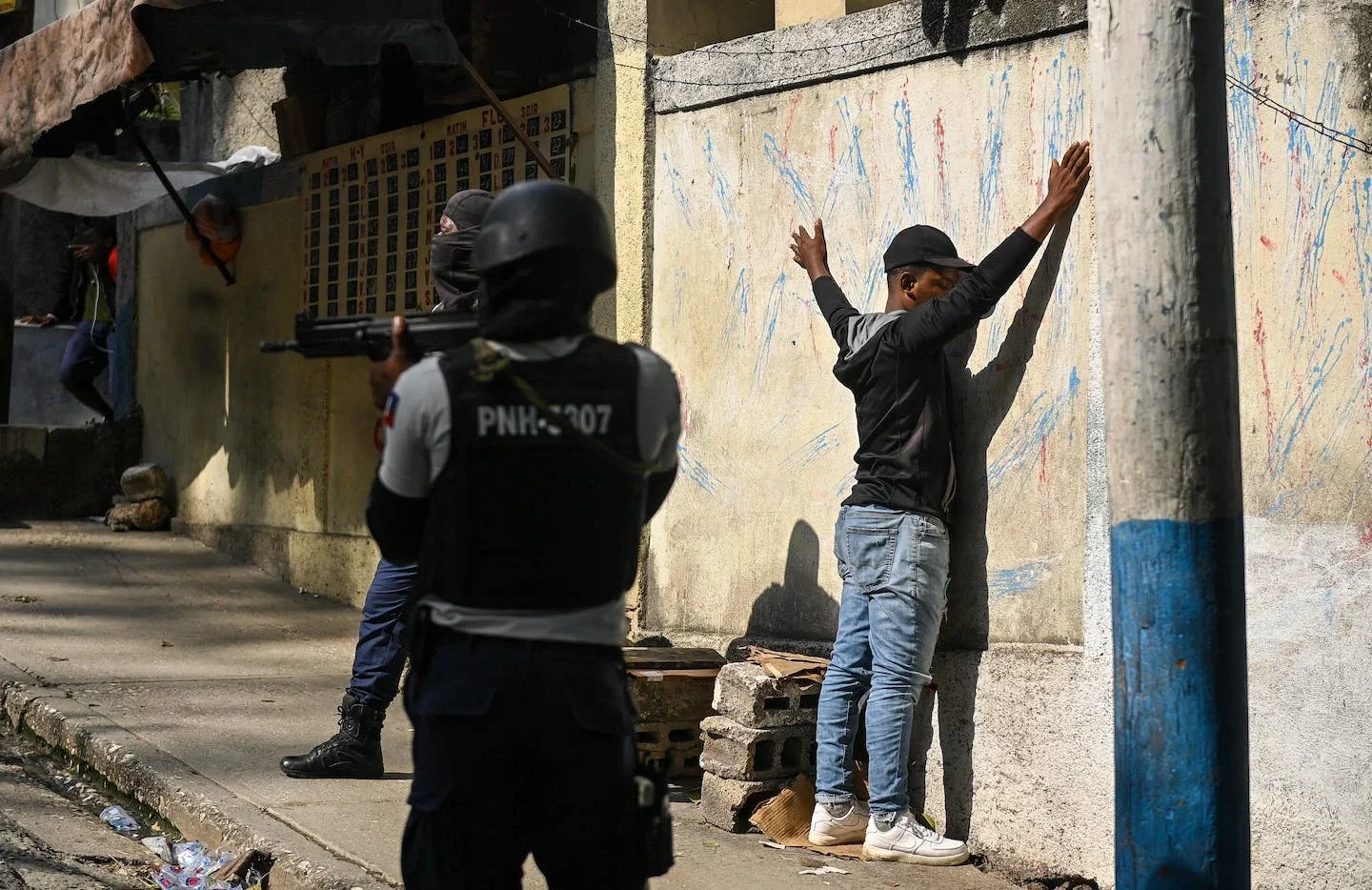
The kidnapping and subsequent release of U.S. nurse Alix Dorsainvil and her young daughter in Haiti in early August 2023 drew brief international attention to crime in the impoverished Caribbean nation.
But the truth is that such kidnappings are commonplace for Haitians, and they rarely receive attention from outside the country itself. Indeed, Haiti has become a forgotten crisis to many international bodies and foreign governments. News that Kenya has offered to lead an international effort to bring order to the country only underscores the lack of action by other nations closer to Haiti.
As someone who has written a book, “Fixing Haiti,” on the last concerted outside intervention – the United Nations’ stabilizing mission (MINUSTAH) – I fear the lack of action by countries in the Americas could increase the risk of Haiti transitioning from a fragile state to a failed one. MINUSTAH was the first U.N. mission formed by a majority of Latin American troops, with Chile and Brazil taking the lead. The prospect of outsourcing that role now to Kenya may have sparked concerns from human rights groups, but it might also lead to soul-searching questions in capitals from Washington to Brasília, as well as at United Nations headquarters in New York.
At the mercy of gangs
Haiti has been falling into chaos for the last two years, ever since the murder of President Jovenel Moïse in July 2021. A subsequent earthquake that struck the southern part of the country only further worsened the plight of Haitians.
Today, the country is not only the poorest in the Americas, but is also among the most destitute in the world. Some 87.6% of the population is estimated to be living in poverty, with 30% in extreme poverty. Life expectancy is just 63 years, compared with 76 in the United States and 72 in Latin America and the Caribbean as a whole.
Meanwhile, crime is so pervasive that it makes it almost impossible to move from one city to another due to the risk of being attacked by gangs, which control almost two-thirds of the country. Things have gotten so bad that the U.S. State Department has evacuated all nonessential personnel and recommended that U.S. citizens leave the country as soon as possible.
Recipe for disaster
International intervention in Haiti has been long overdue. Yet, until now, the attitude of the international community has, from my perspective, been largely to look away.
From a humanitarian perspective and in terms of regional security, to allow a country in the Americas to drift into the condition of a failed state controlled by a fluid network of criminal gangs is a recipe for disaster. Yet governments and transnational bodies in the region are unwilling to step up to confront the crisis directly despite pleas from Haiti and the U.N..
The Organization of American States – which in the past played an important role in Haiti and for which I served as an observer to the country’s 1990 presidential elections – and the Community of Latin American and Caribbean States have been criticized over their slow response to the Haitian crisis. The Caribbean Community, or CARICOM, has held a number of meetings on the Haitian crisis. But that bloc is bound by a strict noninterference policy.
The United States, in turn, having left Afghanistan in 2021 after a tumultuous 20-year occupation, appears reluctant to send troops anywhere.
Rather, Washington would prefer that others take up the role of peacekeeper this time. In response to the offer from Kenya, the State Department said it “commends” the African nation for “responding to Haiti’s call.”
Part of this reluctance in the Americas could also be related to the perception – in my view, a misperception – of how past interventions have played out. The United Nations mission from 2004 initially managed to stabilize Haiti after another rocky period. In fact, the country made significant strides before it was hit by a devastating earthquake in 2010.
There were bad missteps, for sure, after 2010. A cholera outbreak brought to Haiti by infected troops from Nepal resulted in more than 800,000 infections and 10,000 deaths. Sexual misconduct by some of the U.N.‘s blue helmets further tarnished the mission.
But the notion that MINUSTAH was a failure is, in my view, quite wrong. And the end of the mission in 2017 certainly didn’t see improved conditions in Haiti. Indeed, after the mission ended, criminal gangs had the run of the country once again, and proceeded accordingly.
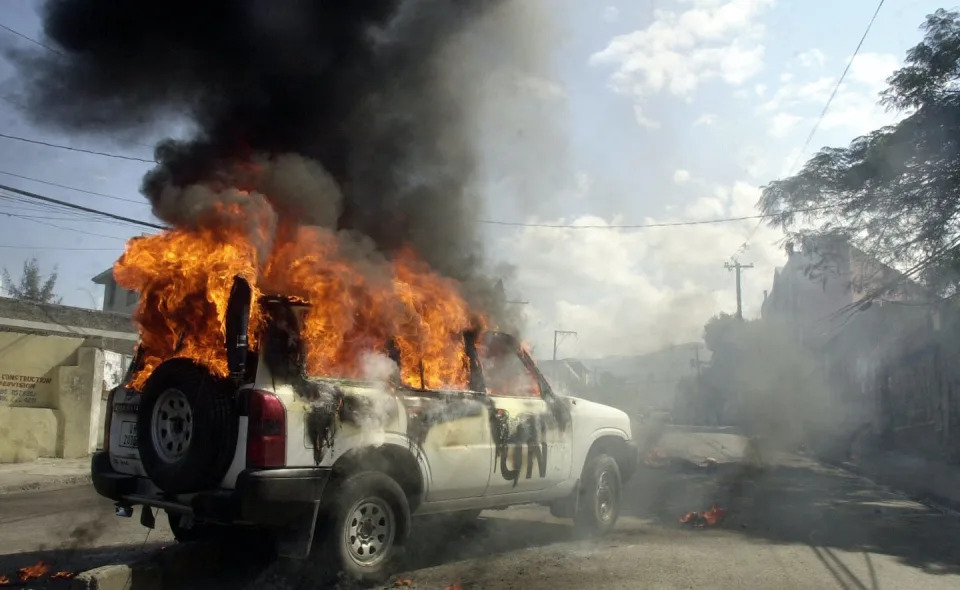
Yet the perceived failure of the U.N. mission has become the basis of a view held by some Haiti watchers that international interventions are not only unsuccessful or misconceived, but also counterproductive.
Such a view forms the backbone of the notion of Haiti as an “aid state” – as opposed to a “failed state.” In this view, international interventions and the inflow of foreign funds have created a condition of dependency in which the country gets used to having foreigners make key decisions. This, the argument goes, fosters a cycle of corruption and mismanagement.
There is no doubt that some previous interventions left much to be desired, and that any new initiative would have to be conducted in close cooperation with Haitian civil society to avoid such pitfalls.
But I believe the notion that Haiti, in its current state, would be able to lift itself up without the help of the international community is wishful thinking. The nation has moved too far down the direction of gang control, and what remains of the Haitian state lacks the capacity to change that trajectory.
A duty to intervene?
Moreover, there is an argument to be made that the international community bears responsibility for the Haitian tragedy and is duty-bound to try to fix it.
To use one example from the relatively recent past: Haiti, until the early 1980s, was self-sufficient in the production of rice – a key staple there. Yet, pressured by the United States in the 1990s, the country lowered its agricultural tariffs to the bare minimum and, in so doing, destroyed local rice production. Former U.S. President Bill Clinton later apologized for the policy, but its legacy still lasts.
Haiti today has to import most of the rice it consumes, largely from the United States. And there isn’t enough of it to go around for all Haitians – the U.N. estimates that nearly half of Haiti’s population of 11.5 million is food-insecure.
Indeed, from its very beginning as an independent nation in 1804, Haiti has suffered the consequences of its unique place in history: It was simply too much for white colonial powers to see Haiti thrive as the first Black republic resulting from a successful slave rebellion.
France retaliated to the loss of what was once considered the world’s wealthiest colony by exacting reparations for a century and a half. Payments from Haiti flowed until 1947 — to the tune of US$21 billion in today’s dollars. The United States took 60 years to recognize Haiti, and invaded and occupied the nation from 1915 to 1934.
However, any thoughts of atoning for past actions seem far from the minds of those looking on as the chaos in Haiti spirals. Rather, many appear to have the kind of mindset expressed in 1994 by current U.S. President Joe Biden when, as a senator discussing the rationale for various interventions, he noted: “If Haiti just quietly sunk into the Caribbean, or rose 300 feet, it wouldn’t matter a whole lot for our interests.”

‘There’s no police or state’: Haitians helpless as violence and brutality soars
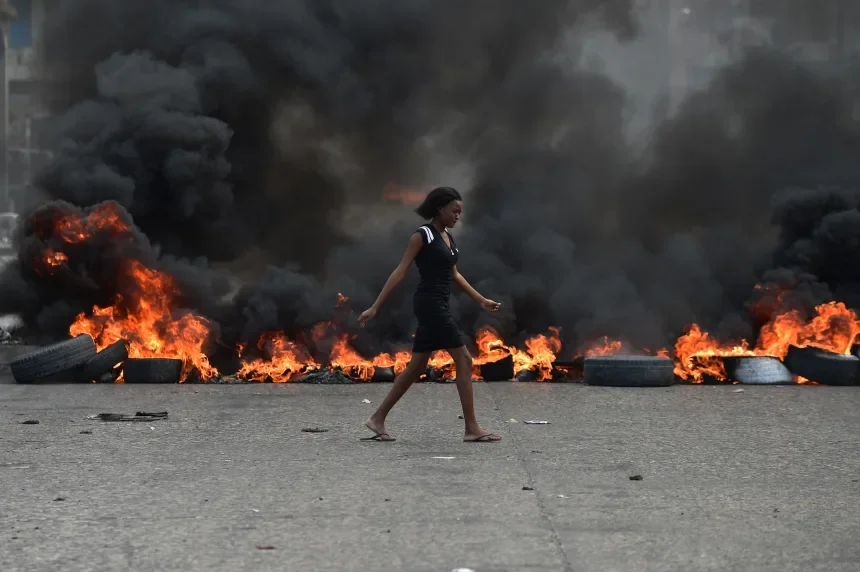
Human Rights Watch says country unable to protect citizens from killing and rape by armed gangs, and floats overseas peacekeepers
Human rights abuses in Haiti are soaring while the Haitian state is almost nonexistent and unable to protect its people from the brutality of armed gangs, Human Rights Watch (HRW) has warned in a new report.
Rival criminal factions now have such a tight grip over the country that international security forces could be necessary to restore order, the rights groups said.
HRW investigators documented 67 recent killings by armed gangs in its report, Living a Nightmare, including the murders of 11 children and 12 women. It also verified more than 20 cases of rape – many of them committed by multiple perpetrators to sow terror among the population.
“Urgent action is needed to address the extreme levels of violence and the palpable fear, hunger and sense of abandonment that so many Haitians experience today,” said Nathalye Cotrino, crisis and conflict researcher at HRW.
Haiti has fallen into chaos since president Jovenel Moïse was assassinated in 2021 and gangs began grabbing control of the country in bloody turf wars.
Harrowing human rights violations have become commonplace, 4.9 million people cannot regularly get enough food to eat, and cholera has returned amid the conflict.
Criminal groups have killed at least 2,000 people and kidnapped more than 1,000 in the first half of 2023, according to the UN.
The explosion of violence is being driven by about 150 gangs who are vying for control of the capital, Port-au-Prince.
The government response to the conflict has been “weak to non-existent”, HRW said, in part because the police and the government have affiliations with the criminals, who receive a steady flow of arms and ammunition from Florida.
“Based on available information, there have been no prosecutions or convictions of those responsible for killings, kidnappings, and sexual violence, or their supporters, since the start of 2023,” HRW said in the report.
The rights body verified accounts of gruesome killings in its interviews, the use of sexual violence as a weapon, and the practice of dismembering of bodies with machetes and setting corpses alight to intimidate rivals.
“They rape us because they are in control, because they have guns, because there is nobody to defend us. There is no police or state,” a survivor of sexual violence in the sprawling Port-au-Prince slum of Cité Soleil told the rights body.
Most of the gangs are affiliated to either the G-Pèp federation or the rival G9 alliance. A recent push by the G9, led by the notorious warlord “Barbecue”, into the G-Pep stronghold of Brooklyn in Cité Soleil has caused the violence to flare.
The rivals called a truce in late June but the ceasefire is flimsy and the two groups continue to abuse local populations.
The police’s inability to fight back means a growing number of Haitians are turning to vigilante groups for protection. Vigilantes, sometimes co-operating with police, have killed more than 200 suspected criminal members as of June, HRW said.
The 97-page report comes days before the UN secretary general, António Guterres, is expected to propose a plan to deploy international peacekeeping forces to Haiti.
Ariel Henry, who became interim leader following Moïse’s assassination, requested assistance from the UN in October last year to restore order. The Henry government has failed to hold elections and now has no single elected official in office.
Kenya proposed leading a taskforce earlier this month with the backing of the US and Canada, though civil society groups raised concerns over the human rights record of police in the east African country.
Nearly all of the civil society representatives interviewed by HRW said the situation is so dire that international forces are now necessary to push back the gangs.
I hope you appreciated this article. Before you move on, I was hoping you would consider taking the step of supporting the Guardian’s journalism.
From Elon Musk to Rupert Murdoch, a small number of billionaire owners have a powerful hold on so much of the information that reaches the public about what’s happening in the world. The Guardian is different. We have no billionaire owner or shareholders to consider. Our journalism is produced to serve the public interest – not profit motives.
And we avoid the trap that befalls much US media – the tendency, born of a desire to please all sides, to engage in false equivalence in the name of neutrality. While fairness guides everything we do, we know there is a right and a wrong position in the fight against racism and for reproductive justice. When we report on issues like the climate crisis, we’re not afraid to name who is responsible. And as a global news organization, we’re able to provide a fresh, outsider perspective on US politics – one so often missing from the insular American media bubble.
Around the world, readers can access the Guardian’s paywall-free journalism because of our unique reader-supported model. That’s because of people like you. Our readers keep us independent, beholden to no outside influence and accessible to everyone – whether they can afford to pay for news, or not.

Haiti News Round-Up: Kenya Offers to Lead Intervention Force
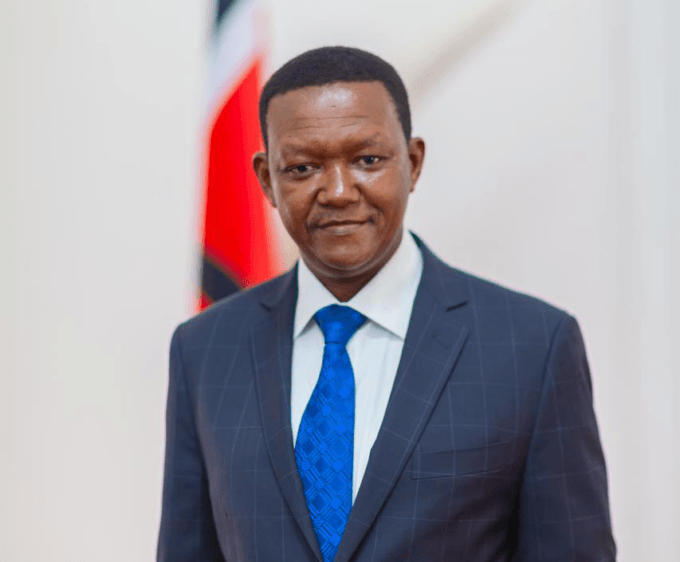
In a statement released on Twitter Saturday, Kenya’s foreign minister Alfred Mutua expressed his country’s intention to lead a multinational force in Haiti — a contingent of 1,000 police officers to “help train and assist Haitian police restore [sic] normalcy in the country and protect strategic installations.” An assessment mission is expected to travel to Haiti in the coming weeks.
The same day, US Secretary of State Antony Blinken spoke with Kenyan president William Ruto to discuss regional security issues, including the offer to lead a multinational force in Haiti. For many years, Kenya has been a key US military ally in East Africa, hosting US military bases and participating in US-backed operations on the continent, including the war against al-Shabaab in Somalia.
Kenya’s announcement comes after a high-level US delegation that included Todd Robinson, the head of the State Department’s Bureau of International Narcotics and Law Enforcement Affairs, traveled to Nairobi last week. Former US ambassador to Haiti Michel Sison, now the assistant secretary of state for international organization affairs, and former head of the UN mission to Haiti Helen Lalime, who now serves as an advisor to Sison, were both reportedly involved in the discussions.
On Monday, State Department spokesperson Matthew Miller said that the United States and Ecuador would draft a UN Security Council resolution to authorize deployment of the international force, though the mission would not be a traditional UN peacekeeping operation. The US is “committed to finding the resources to support this multinational force,” Miller added.
The offer of police assistance was welcomed both by the de facto Haitian authorities, who initially requested such an intervention in October 2022, and by UN Secretary-General Antonio Guterres, who is due to deliver a report to the Security Council this month on “the full range of support options the United Nations can provide to enhance the security situation.” On Tuesday, the Bahamian government, which has been intercepting record numbers of Haitian migrants, announced that it would provide an additional 150 officers for the planned force.
For the last year, countries have been reluctant to lead such a mission to Haiti, in part due to concerns about the mandate of de facto prime minister Ariel Henry and the lack of a broad-based political accord. Canada, which the US had pressured to lead an intervention force, has instead focused on financial and technical assistance to the Haitian police. On Monday, Prime Minister Justin Trudeau, while welcoming Kenya’s offer, appeared frustrated with the pace of reform and lack of political dialogue.
“We’ve been there in Haiti for three decades at different times to help counter the violence, the political instability, an appalling humanitarian situation, and we still find ourselves now in a situation that is among the worst ever,” he said. “We are here to put pressure on the political class in Haiti, which is not taking seriously the responsibility they have to compromise and restore security.”
The issue of foreign forces remains a point of contention for many Haitians. In particular, there are concerns about the Kenyan forces’ reputation. The Associated Press reported that, “as the U.S. government was considering Kenya to lead a multinational force in Haiti, it was also openly warning Kenyan police officers against violent abuses.” Haiti’s ex-prime minister Claude Joseph, a member of the opposition to the de facto authorities, also expressed concern: “Kenya […] is embroiled in its own internal socio-political crisis. […] The anti-government protests against the rising cost of living are violently repressed by the police. Can a police force that is not professional in its own country act as such abroad?”
In The New York Times, Jean Jonassaint, a professor at Syracuse who studies Haiti, questioned the choice of Kenya to lead such a mission, given the language barrier. “I don’t think 1,000 soldiers can solve the problem in Haiti, especially coming from Kenya, because they don’t speak French, don’t speak Haitian Creole and cannot communicate directly to the population,” he said. The US and UN have pledged to learn from previous failed interventions, but the language barrier was also a significant issue in the 13-year MINUSTAH operation, which was led by Portuguese-speaking Brazilian troops.
The announcement of a multinational force also threatens to derail ongoing political negotiations. For months, Haitian civil society organizations have warned that the imposition of a security intervention, without first establishing a more broadly acceptable and legitimate transitional government, would be unlikely to succeed, and would instead simply consolidate the de facto authorities’ power.
Escalation of violence prompts US Embassy to call for evacuation
The US State Department has ordered its nonemergency staff at the US embassy in Port-au-Prince to leave Haiti due to escalating violence. It also reissued its “Do Not Travel” advisory for the country, which advises US citizens to leave the country immediately. Earlier in the week, dozens of Haitians displaced by ongoing violence, and seeking refuge in front of the US embassy, were teargassed by the Haitian National Police (PNH). Those attacked included children and pregnant women.
In a July 26 press release, the National Human Rights Defense Network (RNDDH), condemned the PNH officers’ behavior, and in particular criticized the PNH’s acting director general, Frantz Elbe:
“RNDDH condemns with the utmost rigor the outrageous use of force by PNH agents against a population left alone to fight, who, by going to the premises of the US Embassy in Haiti, were only seeking refuge. RNDDH recalls that the right to seek refuge whenever one’s life, safety, or any other fundamental rights and freedoms are threatened or violated, is recognized for all persons.”
Those who sought shelter outside the embassy had fled violence perpetrated by the Kraze Baryè gang led by Vitel’homme Innocent, who is wanted by the FBI in connection with the kidnapping of missionaries in 2021. In its release, RNDDH accused Innocent of being Elbe’s “protege.” The organization claims that Innocent is known to travel accompanied by state vehicles and that in recent weeks he had met with state officials. Since then, attacks have intensified, RNDDH reported.
On the same day the US issued its travel advisory, a US nurse and her young child were kidnapped in the Cité Soleil neighborhood of Port-au-Prince, where she worked at a local clinic. The case has generated international headlines, President Joe Biden has been briefed, and the US government has said it is working for their release.
After a brief respite — seemingly as a result of the Bwa Kale citizen justice movement — local groups have documented a sharp rise in violence in recent months. RNDDH reported at least 40 people abducted and 75 murdered from May to mid-July.
US Senate holds two Haiti-related meetings
Last week, the Senate Foreign Relations Committee held two hearings related to Haiti. On Tuesday, the committee held a nomination hearing for Dennis Hankins, President Biden’s nominee for the next US ambassador to Haiti. This was followed the next day by a hearing with Assistant Secretary of State for the Western Hemisphere Brian Nichols and a top USAID official. Despite the high-level attention on Haiti and the looming prospect of a US-financed multinational intervention, only two senators showed up to ask questions.
EU amends rules to impose sanctions on individuals and businesses in Haiti
The Council of the European Union amended its sanctions regime in order to allow the EU to autonomously impose restrictive measures on “individuals and entities responsible for threatening the peace, security or stability of Haiti, or for undermining democracy or the rule of law in Haiti.” While no individual or entity has been sanctioned at this stage, the measures are comprised of a travel ban for individuals, as well as a freezing of funds for individuals and entities. In addition, EU entities and individuals will be forbidden from making funds available to those listed, either directly or indirectly.
“With this new framework for restrictive measures, we are sending a clear signal to Haitian gang leaders and their financiers: we know how they operate and there will be no impunity. The EU stands with Haiti and its people,” Josep Borell, EU High Representative for Foreign Affairs and Security Policy stated. The EU joins Canada, the US and the United Nations in issuing sanctions against Haitian individuals and entities.
The EU, however, has been reluctant to take leadership or an active role in the planned multinational force. In conversations with the press ahead of the EU-Latin America and Caribbean Summit, the EU Ambassador to Haiti, Stefano Gatto, said that the bloc could not support Haiti without the leadership of the United States and Canada. “Proposing to engage our security apparatus in Haiti when the Russian army is just 300 kilometers away from the European Union is quite complex,” he said, highlighting that the war in Ukraine had captured the bloc’s attention.
“In the field of security, we could not be at the forefront or take the leadership,” Gatto added. “There are countries much closer to Haiti that can do it on our behalf. Why would the Union help Haiti when countries in the hemisphere such as the United States, Canada, or the Latin American countries, are not doing it themselves? […] We can participate in any initiative if it is led by a country from the American hemisphere.”
Expulsions and deportations of Haiti continue
On August 2, ICE deported some 55 Haitians to Port-au-Prince. The move comes less than a week after US officials ordered the departure of all nonemergency staff, due to safety concerns. According to Witness at the Border, it is the 285th such flight to Haiti since the beginning of the Biden administration, sending a total of more than 27,000 individuals to Haiti.
While welcoming Kenya’s offer of security assistance, Dominican president Luis Abinader pledged to continue with his country’s draconian immigration enforcement. Over the last year, the Dominican Republic deported over 200,000 Haitians, while also building a wall along its border with Haiti.
A long interactive piece in the Washington Post looks at smuggling routes in the Bahamas that are transporting record numbers of Haitians seeking to make the journey to the US. “So far this year, Bahamian authorities have apprehended 1,736 migrants, 1,281 of them Haitian,” The Post reports. Meanwhile, this fiscal year the US Coast Guard has intercepted more than 5,000 Haitians.
Haitians around the globe march for relief
In more than 70 countries around the world, thousands of Haitians marched on July 9 to call for relief for Haiti. In the United States, marches led by pastor Gregory Toussaint in South Florida called on Congress to pass the Haiti Criminal Collusion Transparency Act, which was just approved by the House and is now pending in the Senate. The act would mandate the State Department to regularly report on ties between Haitian elites and criminal gangs and for the US to implement sanctions on those identified. The protesters also requested for the Biden administration’s Humanitarian Parole program to remain open.
The Humanitarian Parole program also remains highly controversial, with many PNH officers applying to leave the country, a disastrous blow to the force when it is already unable to tackle the country’s security crisis. Marleine Bastien, a Haitian community activist and immigration rights advocate in South Florida, called the program “ill-advised and ill-conceived” back in February. Others have argued that the program is further exacerbating the country’s brain drain. Florida governor Ron DeSantis and the leaders of 19 other Republican states are challenging the legality of the program in federal court. According to the Department of Homeland security, some 63,000 Haitians have been approved for travel and more than 50,000 have arrived in the US.
A different march was organized by several Haitian diaspora organizations on July 21 in Washington DC, titled “Haitian Solidarity Day for Change.” In an interview ahead of the protest, one of the organizers said the effort was aimed at telling the White House that they must change their policy toward Haiti and for the international community to stop deciding for Haitians. “The decision of the country is up to the Haitians, we want to be around the table and take charge of the destiny of our country,” they said.
Haiti loses an icon
On July 31, Liliane Pierre-Paul, a long-time journalist and outspoken champion for democracy and press freedom, died of a heart attack. “Liliane will always be remembered for her courage, her determination, her profound beliefs in the democratic ideals so many died for,” Michèle Montas, widow of the slain journalist Jean Dominique, told the Miami Herald. For more on the life and legacy of Pierre-Paul, read the entire Herald article.

An American nurse and her daughter have been freed after being kidnapped in Haiti last month
CNN —
American nurse Alix Dorsainvil and her daughter have been released after they were kidnapped 13 days ago from the community ministry where Dorsainvil works in Haiti, the organization said.
“It is with a heart of gratitude and immense joy that we at El Roi Haiti confirm the safe release of our staff member and friend, Alix Dorsainvil and her child who were held hostage in Port au Prince, Haiti. Today we are praising God for answered prayer,” the statement said.
The organization asked that no one contact Dorsainvil or her family saying, “There is still much to process and to heal from in this situation.”
The US State Department said they “welcome reports of the release of two citizens from captivity in Haiti,” a spokesperson told CNN Wednesday, adding that they “have no greater priority than the safety and security of U.S. citizens overseas.”
Haitian National Police told CNN they couldn’t comment on the matter because it’s still under investigation.
Dorsainvil and her daughter were kidnapped from the community ministry in Port-au-Prince on July 27 – it remains unclear who kidnapped the pair and why.
The abduction – including a man pulling out a gun – unfolded in view of a patient waiting for a medical checkup, the patient told The Associated Press.
“When I saw the gun, I was so scared,” Lormina Louima told AP. “I said, ‘I don’t want to see this, let me go.’”
The same day, the US State Department ordered the departure of nonemergency government personnel from Haiti as the security situation in the country deteriorates.
The order followed a travel advisory from the US Embassy in Haiti advising US nationals to leave the country immediately due to recent armed clashes between criminal groups and police in Haiti’s capital, Port-au-Prince.
Port-au-Prince and surrounding areas have been gripped by a years long kidnapping-for-profit epidemic, with hundreds of Haitians targeted by gangs seeking ransom payments each year.
The majority of victims are local, but foreigners have been seized in the past. In 2021, 17 missionaries from the United States and Canada were taken by a local gang while traveling on the road north of the capital and held for more than a month.
Authorities noted 1,014 kidnappings in Haiti from January to June this year – 256 women, 13 girls and 24 boys – according to a UN report.
Dorsainvil, a New Hampshire native, has been on staff tending to schoolchildren as a nurse since 2020 and married Sandro Dorsainvil, El Roi Haiti’s director in 2021, according to the non-profit.
She first visited Haiti after the 2010 earthquake while she was still in college and “fell in love with the people,” the non-profit said in a statement. She then spent breaks from school and summers visiting Haiti, saving her money and paying her own way back to the Caribbean nation as often as she could.
Dorsainvil’s kidnapping prompted students from El Roi Haiti and other residents to hold a demonstration demanding the freedom of the beloved nurse and her daughter.

Haitian cuisine highlighted in South Shore as a part of Haitian Heritage Month

CHICAGO — The sounds of a good time floated through the streets of South Shore Sunday, as the community came out to enjoy the sunshine at South Merrill Community Garden (SMCG).
“It’s really important for us to feel, taste, eat other people’s culture to generate understanding,” said Iyonna Rivers, cultural coordinator for the SMCG.
Rivers is one of many operating behind the scenes at the SMCG, helping coordinate events like the one seen today, centered around Haitian cuisine as a part of Haitian Heritage Month.
“There’s about thirty-to-forty thousand Haitian Americans in the city,” said Carlos Bossard, director of programs at the Haitian American Museum of Chicago. “And the huge connection is Jean Baptiste [Point] DuSable, the founder [of Chicago] and a Haitian man.”
The Haitian American Museum of Chicago’s goal is to promote Haitian culture throughout the City, which leads then to organize events with ‘walk-through exhibits’ where folks can learn at their own pace, while enjoying food and music like the one held at the SMCG Sunday.
“It’s important how we bridge these various these pieces together,” Rivers said. “So children understand, and Chicago at-large.”
If you would like to learn more about the Haitian American Museum of Chicago’s events, or what’s on the agenda for the South Merrill Community Garden this summer, you can visit their websites below.
Museum: https://linktr.ee/hamoc
Garden: http://southmerrillgarden.org/

In Haiti, a grassroots vigilante movement is fighting back against gang warfare
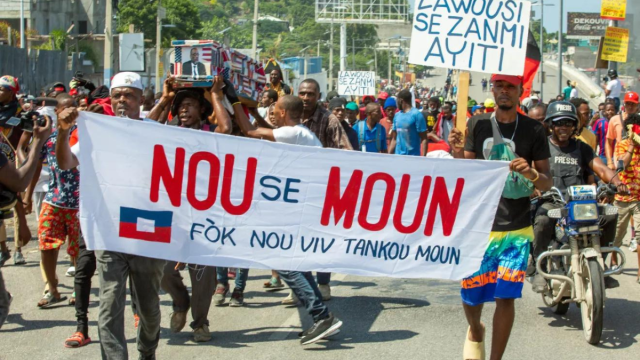
A powerful wave of vigilantism has brought both optimism and fear, leaving governments on the sidelines
Port-au-Prince is as violent as it has ever been, but for two weeks now the fear has also flowed in a different direction — thanks to a phenomenon known as "Bwa Kale."
"Bwa Kale" literally means "peeled wood" in Haitian Creole. It's also a metaphor for an act of swift justice.
While gang members continue their depredations in the east end of the Haitian capital, in other parts they have been forced to flee. Many have been lynched or summarily executed following capture by groups of citizens, sometimes acting alongside police.
Bwa Kale messages and memes are everywhere on Haitian social media, and recording artists like Tony Mix have put out tracks promoting the trend. There is even a Bwa Kale dance.
While many have reservations about the movement and where it might lead, large numbers of ordinary Haitians seem to have found a kind of joyous release in turning the tables on their tormentors.
Burned alive
A spontaneous event on April 24 appears to have been the catalyst for the movement. Police in the Canape Vert area of Port-au-Prince intercepted 13 or 14 members of a gang travelling on a minibus to join with an allied gang in the Dubussy district.
"This party didn't have any long guns with them," said Louis-Henri Mars, director of the Haitian peacebuilding non-profit Lakou Lape. "They only had pistols in their rucksacks, and when they were stopped, the police disarmed them."
A crowd quickly gathered at the scene.
"The police felt the pressure, or they felt threatened by the crowd, and they released those guys to die basically," said Mars. "And the crowd stoned them and burned them to death, and this was the start of it."
Cell videos from the scene show Haitian police holding a group of young men on the ground while civilians pelt them with rocks. Tires are piled over them. Other videos show the men on fire and display their charred remains.

"It dispelled the myth of their invincibility," said Mars. The next day, he added, "the group that they were going to meet in Dubussy was also attacked by the population with the police.
"They scrambled out of where they were and they were pursued and, one by one, killed. Some of them were lucky to get arrested and brought to the police station."
Calls for an "Operasyon File Manchet" (Operation Sharpen Machete) began to circulate on social media in Haiti on April 25. Some evangelical churches also spread the message.
"And so this has created a whole movement all over the city and even the country," said Mars, "a movement of the police in front and the people behind."
A fever of revenge
Subsequent days saw many districts of Port-au-Prince move to a war footing. When gangs entered a neighbourhood, people banged pots and pans to alert neighbours. Most neighbourhoods had just a few handguns to defend themselves from gangs armed with automatic rifles, but civilians took potshots and threw rocks from rooftops. Some were able to repel gang invasions.
Crowds went on the offensive, using their numbers to overwhelm gang safe houses, drag suspected gang members out of police stations and kill them in the street.
The anger in the videos is palpable. Haitian gangs have raped women and girls on a massive scale. They routinely kidnap children and use torture against kidnap victims. They have ruthlessly extorted even the poorest families.
In some instances, gang members have been made to confess to crimes or gang affiliations on video. Many are burned using tires — often while still alive.
Burning with tires is a practice that goes back to the era of President Jean-Bertrand Aristide. It's also meant as retaliation in kind against gang members who have taunted police with videos of indignities done to the bodies of slain officers. Many Haitians involved in Bwa Kale have also shared images of a young man who was burned to death with a tire by criminals for refusing to join their gang.
Governments reduced to spectators
"Canada is deeply concerned by the recent population movement and escalation of violence in Haiti stemming from the increase of killings and executions committed by criminal actors," a spokesperson for Global Affairs told CBC News, adding that Canada's focus is on "bolstering the capabilities of the Haitian National Police in the immediate term."
Haiti's Prime Minister Ariel Henry expressed disapproval of the Bwa Kale movement in his May Day speech.
"The insecurity we live in is appalling," he said. "But don't let bad plans make us play sordid games."
"I ask my compatriots, whatever they may have suffered at the hands of the bandits, to remain calm," he said, adding that Haitians should help police by giving information about suspicious people in their neighbourhoods.
But under Bwa Kale, cooperating with the police goes well beyond giving out tips. Abundant cell phone footage from Port-au-Prince shows police and civilians engaging together in street battles with gang members.
Cooperation between civilians and police is sometimes so close, it completely cuts out the Haitian government.
One neighbourhood's battle
Laboule and neighbouring Thomassin are well-to-do outlying suburbs of Port-au-Prince. In the small Laboule 12 enclave, a gang led by Ti Makak (Little Monkey) killed three police officers last September and a few weeks later ambushed and killed the district's most prominent resident, former presidential candidate Eric Jean Baptiste, together with his bodyguard.
"They started terrorizing the population, killing, shooting, raping, kidnapping, ransoming," the organizer of Laboule 12's self-defence group told CBC News. CBC is not identifying him due to the threat of gang retribution. He said he barely survived an ambush when gunfire struck the bulletproof windshield of his car.
The resident, a lawyer, said the community petitioned the government for help for months before taking matters into its own hands.

"It's as if the government is benefiting from the fact that this country is in limbo," he said. "They still get paid, they're buying brand new 2023 Land Cruisers for government officials. They're running with high security, they are safe, and the rest of the people [are] just abandoned."
He described how his group reached a deal with a local police inspector — they fixed a broken Canadian-made armoured vehicle for about $32,000 US in exchange for a police commitment to use it to defend their neighbourhood.
'It's horrific'
The group also hired private security to guard the approaches to the neighborhood.
A video the group shared showed a civilian checkpoint overlooking a footpath into the Laboule 12. People can be seen fleeing uphill from another neighbourhood, where automatic rifle fire can be heard. A man armed with an AR-15 rifle questions the refugees and makes them raise their shirts to show they are unarmed.
The group also rented pickup trucks to conduct surveillance and prepare ambushes. It all led up to what the resident called a "surge" operation that saw Ti Makak and his brother fatally wounded.
The unnamed resident estimates that at least 50 alleged bandits have been killed in his area since then.

"With that surge the entire population started to say that they had enough," he said. Ti Makak's death "emboldened some of them and they started going after (gang members) and tracking them. Soon it was the majority of the people against the gang and they started killing them.
"As a lawyer myself, it pains me to say, but there were, there was a bunch of summary executions … They were stoned to death and burned with tires, some of them even alive. It's horrific."
CBC News saw video that showed an accused gang member in Thomassin being stoned and burned in a fire.
"We've put back security on some of the territories we lost," said the resident. "So there's a sense of relief even though there's trauma.
"You start to see people coming back, coming out and starting walking again. You have some local shops that are reopening slowly. It's a slow movement, but there's a huge relief."
Innocents caught up
But as with all mob violence, this vigilante movement has claimed some innocent victims.
Police officer Emmanuel Derilien was lynched in St-Louis-Du-Nord on Monday when he was mistaken for a gang member after he shot and wounded two people in an altercation.
Crowds can quickly surround an unfamiliar face and sometimes don't give strangers a chance to justify their presence.
Though it's supportive of police, the Bwa Kale movement appears to pose a threat to the unpopular Ariel Henry government and to undermine Haiti's standing among the nations that back it, including Canada.

Most Haitians see the ruling Pati Ayisyen Tet Kale (Haitian Bald Head Party) as not only ineffective in fighting the gangs but as an accomplice of them — a conclusion supported by human rights groups.
"Whatever Ariel Henry is saying is not going to be listened to by the population because he and his government have not been able to to defend them," said Mars.
"The police, the street officers at least, have suffered quite a bit at the hands of the gangs who've been killing them, and hiding and destroying the bodies of those they kill so that their families would not be able to give them proper burial. So the street officers are also in a lot of ways taking things into their own hands."
New leaders rising
The wave of vigilantism in Haiti is bringing new leaders to the fore, such as Jean-Ernest Muscadin, the "komise" of Miragoane (a role somewhat like a district attorney).
A lanky man of serious demeanour who wears body armour to work and carries a rifle, Muscadin has become a star of Haiti's raucous citizen media channels for making his district an island of relative safety in a sea of chaos.
"I am a missionary. I came to restore order," Muscadin told Haitian reporters recently, adding the state gives him nothing beyond his salary of $445 a month.
Everything else "comes from the diaspora," he said. "You can't talk about the state. The state cannot help itself."
Haitian-Canadians based in Montreal formed a group called the Alexandre Petion Collective which has provided Muscadin with drones, fuel for vehicles and other assistance.
"We are marching with him 100 per cent. He is our inspiration for our collective and the whole Bwa Kale movement in Haiti," a member of the collective told CBC News. (CBC is not identifying this person either, due to the risk of gang retribution; they travel to and from Haiti regularly.)
Muscadin reportedly maintains rigorous control over people and goods moving through his area. Gang members captured in Miragoane can expect to be "shot while trying to escape."
"All revolutions have the potential of birthing that kind of leadership" said Mars. "And sometimes this is dangerous also because you don't know who, when and where and what kind of individual is going to show up on the stage. It's the start of something that could evolve into a very dangerous situation."
Unintended consequences
Self-defence groups formed to combat rampant criminality in Colombia in the 1990s morphed into violent paramilitary groups that stole land, displaced people and trafficked drugs. Mars warns something similar could happen in Haiti.
"In fighting the gangs, you are letting go of the restrictions of propriety, of due process, of state control of violence, and this movement can be the breeding ground for more gangs," he said. "In general, when you have vigilante groups, what happens is that some of them over the over weeks and months become gangs themselves.WATCH | Vigilante movement has swept Haiti:
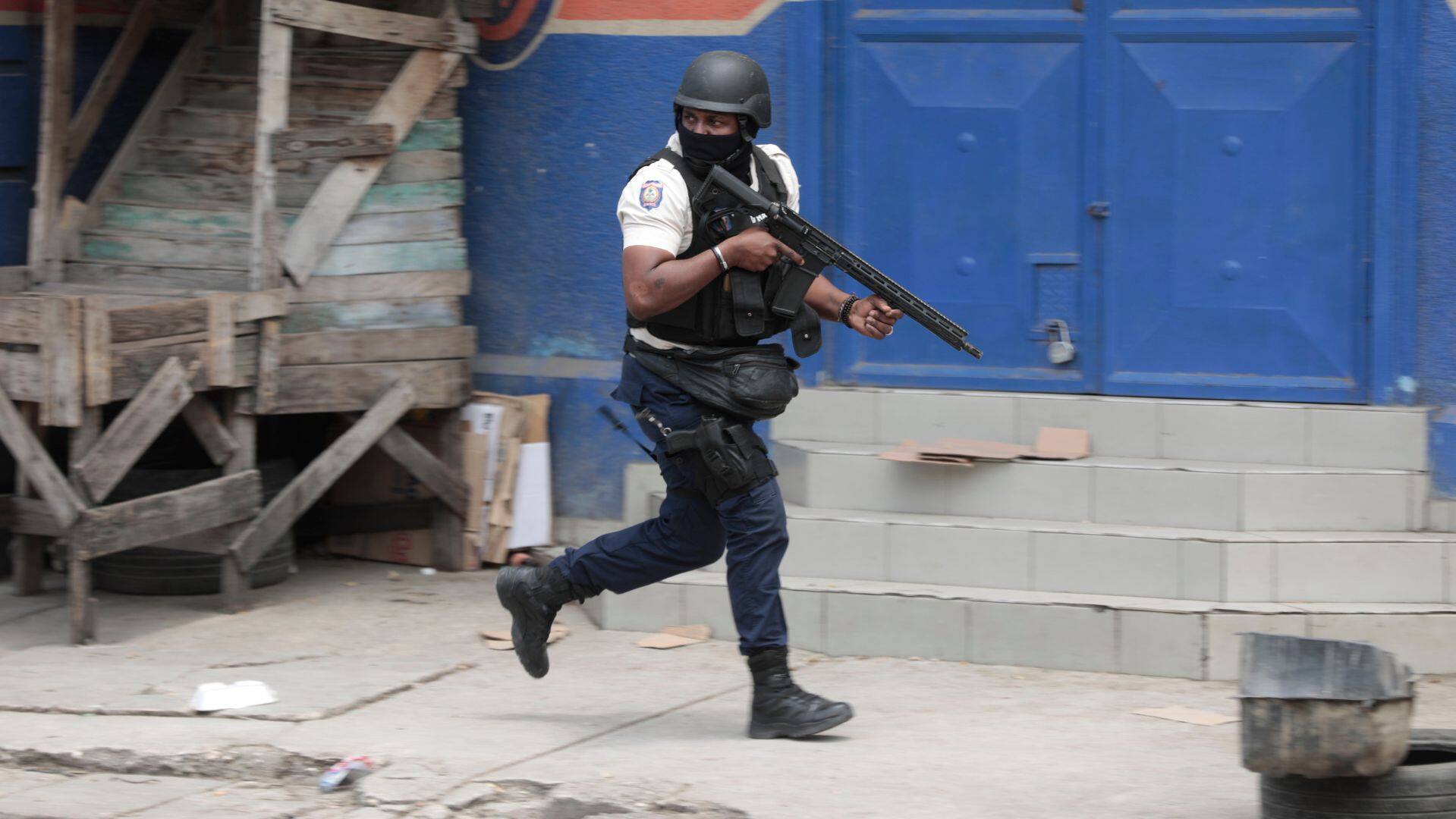
Vigilantes fight back against Haiti's gangs
18 hours agoDuration2:19Warning: Video contains graphic images | A rise in armed vigilante groups has opened an unpredictable new chapter in Haiti’s gang war, as ordinary civilians, tired of being terrorized, take matters into their own hands.
"Since the social situation has not changed, the space is there for the replacement of the present generation by another generation of gangs."
On balance, though, Mars said he shares the sense of optimism that Bwa Kale has brought to the Haitian capital for the first time in years.
"There is something that has changed. There's a window of opportunity that has opened. Now it is up to us Haitians to take this window of opportunity and move in the right direction and not continue to destroy, burn and kill."

Soccer's helping Haiti keep its head up — and keep kids out of gangs
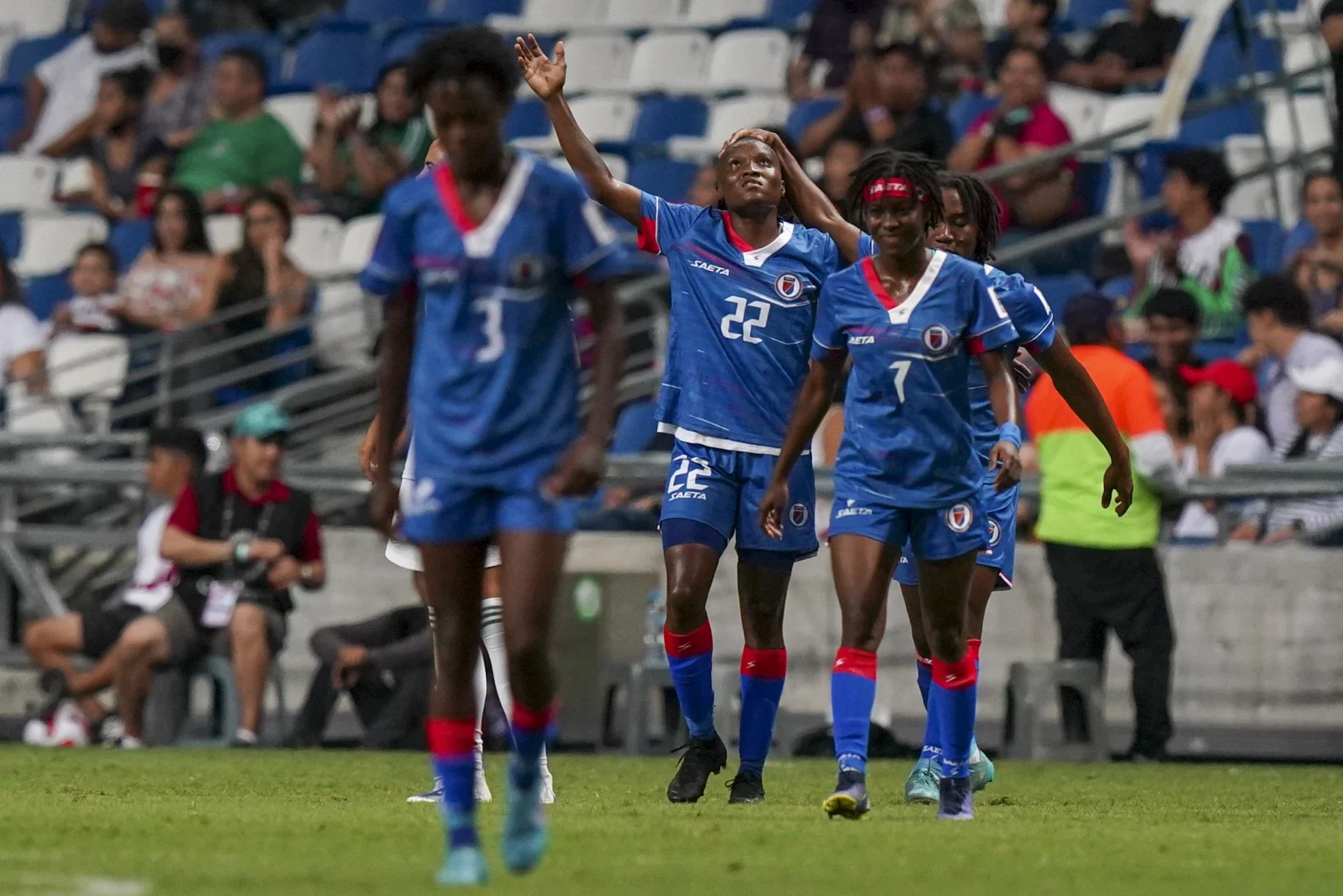
Soccer is standing tall above the catastrophic collapse of Haiti's government and economy. The women’s national team has qualified for the World Cup for the first time. But more important: youth soccer programs in Haiti are looking for more support to help keep kids out of the powerful gangs that are terrorizing the country.
Kids like Jean-Louis, a 14-year-old boy growing up in Cité Soleil, one of the worst slums of Port-au-Prince, Haiti.
Jean-Louis — we're not using his last name for safety reasons — told WLRN by WhatsApp that he hears the sound of gang gunfire in his neighborhood almost daily.
What Haitian kids like him don’t hear enough, he said, is the happier cacophony of the soccer practices he attends, run by a youth support nonprofit called FONDAPS. Thanks to the program, he points out, he wants to be a lawyer someday.
“A lot of times we have to hide under our beds” when the shooting erupts in Cité Soleil, Jean-Louis says. “It’s the only safe place we have. That and the soccer field. That’s where I learn respect for things.”
FONDAPS isn’t new. It’s been around for 16 years — and, in fact, in 2011 its founding director, Haitian businessman Patrice Millet, won a CNN Heroes award for helping thousands of kids rebound from Haiti’s 2010 earthquake.

But the mission for Millet and FONDAPS today is broader and more urgent. It’s about preventing kids from joining gangs. The gangs that control most of Port-au-Prince, and much of the rest of the country. Gangs that terrorize Haitians through murder, kidnappings and hijackings of crucial necessities like food.
“The gangs are worse than the earthquake — much, much worse," Millet told WLRN recently in Miami, where he comes for treatment for the cancer he was diagnosed with 17 years ago. It was that illness that motivated him to start FONDAPS, which stands for La Fondation Notre Dame du Perpétuel Secours, or The Foundation of Our Lady of Perpetual Help, Haiti's patron saint.
FONDAPS teaches kids soccer, of course, but also self-improvement, including community service, civics and study skills. And it gives them food to take home. All of that is critical, Millet says, because so many of them are from communities like Cité Soleil — where gangs rule.
“It’s very difficult to keep a kid out of gangs in Haiti today," Millet says. "If they want to have some money, whatever they want, they have to go into gangs.
"But when a kid goes to the soccer field, there is no violence. And he receives some food, so when he goes back to his family, he comes with something — and he’s very proud. And he will see that the good people are on the soccer field, and the bad people are in the gangs.”
That's not to say schools don't matter in Haiti; they certainly do — even more than soccer programs. But unfortunately,the country's public education system is as wrecked and collapsed as its government is. Meanwhile, the international community can’t agree on how to confront the gangs.
So for now, there’s a growing consensus that there are two main ways to at least weaken Haiti’s gangs: cut off the flow of guns being smuggled to them — especially from U.S. states like Florida — and reduce the flow of children and teenagers they exploit.
As a result, U.S. State Department agencies like USAID and the Bureau of International Narcotics and Law Enforcement Affairs, or INL, are conducting youth support projects inside Haiti, including “learning laboratories” and vocational skills training.
“We’re seeing the gangs doing more and more to try to recruit younger people into their ranks," the Assistant Secretary of State for the INL, Ambassador Todd Robinson, told WLRN last year around the same time UNICEF warned the gangsters had begun to target schools more aggressively.
"And so if we don’t give those youths alternatives, that would be tragedy.”
It's very difficult to keep kids out of gangs in Haiti. But they will see that the good people are on the soccer field and the bad people are in the gangs.
Patrice Millet
Some in the Haitian diaspora, including expat organizations in South Florida, are also recognizing that urgent need for youth support in Haiti. Nonprofit groups like the Ayiti Communist Trust in Miami are sponsoring programs ranging from sports to music to agribusiness.
FONDAPS has mentored several role models for Haitian kids — including Roselord Borgella, the national women's soccer team's leading scorer.
Borgella, who grew up in poverty near Port-au-Prince, spoke to WLRN from Dijon, France, where she plays professionally today and is preparing for this summer's World Cup in Australia and New Zealand.
“When a girl is hungry in Haiti," Borgella says, "that may lead her to do terrible things — like join a gang. So I hope our soccer success will motivate more people to help train more Haitian kids to pursue a dream, any kind of dream, as I was able to do.
"When I came to FONDAPS I was the only girl, but they encouraged me to stay and learn discipline. That's why I am the person I am today. Kids in Haiti need something to occupy their minds even more today than we did back then."
Where being a kid is a luxury
That’s a big reason efforts like FONDAPS are reaching out for reinforcement to U.S. philanthropists like Tracy Gregorowicz of New York, who’s now a big financial supporter.
“The threat of gangs on the well-being of Haitian children is huge," Gregorowicz says.
"Just being able to be kids, you know, it’s a luxury in Haiti. Organizations like FONDAPS are really lifelines — and they are not supported enough, and I don’t really understand why.”
"Not every kid [in FONDAPS] is going to become a professional soccer player, so soccer isn't all we do," one FONDAPS coach, Jean-Francois Stanley, told WLRN from Port-au-Prince via WhatsApp.
"But what we can teach every kid is to become a model citizen, so that, as this violence and insecurity ravages Haiti, we can keep them from falling into it. We do this work because we believe in what it can do for the future, not just soccer."

In Miami's Little Haiti, high school teacher and popular soccer mentor Gomez Laleau says he understands the increasing focus on soccer in Haiti, where he grew up, as a means of filling the gaping education void.
"It's a simple but very effective — and very hopeful — way to get them involved in something besides what they see in the gang-controlled neighborhoods," says Laleau.
Right now, the international fame of the Haitian women’s soccer team may be doing the most to bring more kids out to soccer fields like the two FONDAPS runs in Port-au-Prince. But a lot more fields — and balls and shoes and jerseys and equipment and food — will be needed.

Crowd kills over a dozen suspected gang members in Haiti
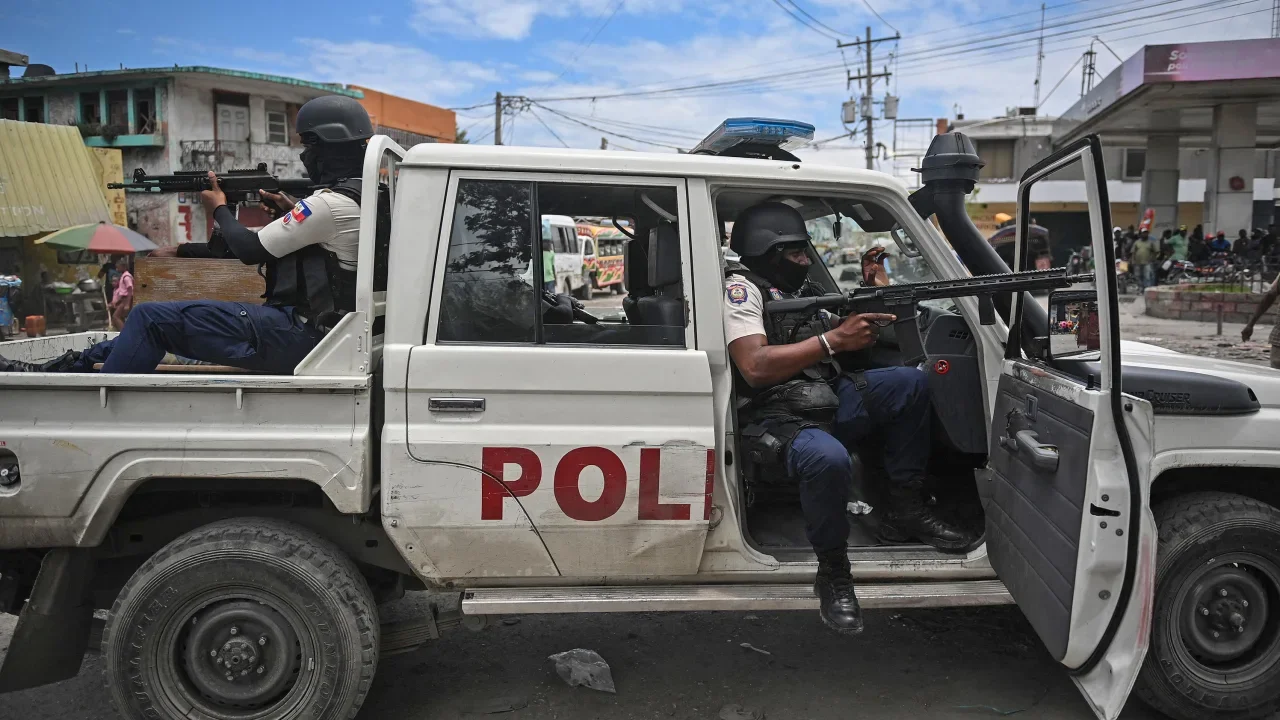
More than a dozen people were lynched by a crowd in Haitian capital Port-au-Prince on Monday, on suspicion of being gang members, according to authorities.
Video from Reuters and AFP showed burning and charred bodies with tires around them, and crowds forming near the area. Residents who spoke to Reuters and AFP on camera said they believed the victims were gang members.
“It was 3 am. The gangs invaded us. There was shooting, shooting. This neighborhood is a peaceful area, all the people in the surrounding area are peaceful citizens,” a local resident told AFP.
Before the killing, Haitian National Police had stopped and searched the victims in a minibus in the neighborhood of Canape-Vert, seizing weapons and other equipment, according to a statement from the Haitian National Police.
“More than a dozen individuals riding on board this vehicle were unfortunately lynched by members of the population,” the statement said.
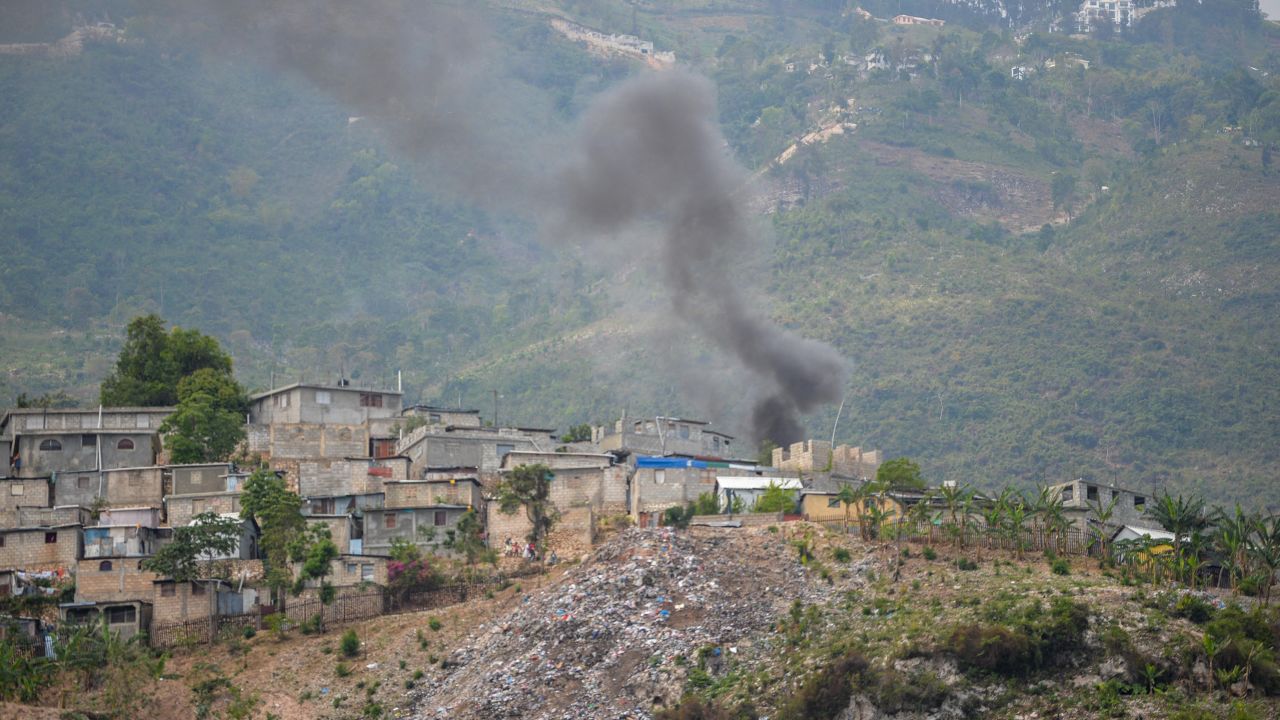
Smokes seen in the Turgeau commune of Port-au-Prince, Haiti, during gang-related violence on April 24, 2023.Richard Pierrin/AFP/Getty Images
“If the gangs come to invade us, we will defend ourselves, we have our own weapons, we have our machetes, we will take their weapons, we will not run away,” a 15-year-old Haitian resident told AFP.
“We don’t ask for a lot. The gang members have invaded the area. We want the police to go ahead and confront them. We’re on our own. We have nothing,” said another. The resident added that suspected gangmembers had “invaded” the neighborhood early Monday morning around 2am.
In a tweet, Haiti’s Prime Minister Ariel Henry applauded the Haitian police on Monday for recent operations toward restoring “order and peace in our cities and neighborhoods.”
“Together, we will solve the problems related to security to move forward,” Henry wrote
Gangs control wide swathes of Port-Au-Prince, plaguing residents with extreme violence as Haitians also grapple with extreme poverty and a humanitarian crisis.