
Haiti mourns the death of «Papa Pyè»
Haiti mourns the death of «Papa Pyè» Limond Toussaint, Minister of Culture, learned with astonishment the news of the death of the haitian actor, comedian and playwright , Jean Claude Joseph, aka "Papa Pye" occurred Wednesday, October 18 in Orlando, United States following his hospitalization on the weekend due to illness. "Papa Pyè has marked his time of an oil stain and leave again happy remembrances in the memory of all those who, one day or the other, had the chance to live a sequence of his famous performances on the National Television of Haiti (TNH), with "La vi nan Bouk", his various scenic performances whether in Haiti or abroad where he immigrated and his involvement in the production of some feature film where he showed his outstanding talent.In this painful circumstance the Minister of Culture bows to the immense talent of this Haitian cultural man and once again pays tribute to him for all his contribution to the radiance and emancipation of the theater of Chez nous, an essential element of Haitian culture.Jean Claude Joseph, Papa Pyè, is one of those pioneers of Haitian theater that has marked a whole generation and transcended all the social strata by telling our daily life with an artistic fluidity without measure. He is the witness of a whole section of history of the Haitian culture which leaves, with its departure for the beyond.The Ministry will never end by thanking and bowing to the immensity of the Intangible Cultural Heritage represented by Papa Pyè, still today [...]While expressing his profound regret, Minister Limond Toussaint sends his sincere sympathies to the whole family of the deceased, to the members of the 'La vi nan Bouk' Troupe and to the cultural actors affected by his brutal disappearance."By: HaitiLibre | October 19, 2017
Haitian Ambassador to Deliver Keynote Address at Caribbean Summit, November 3rd
 United States, H.E. Paul G. Atidor, will deliver the keynote address at the Caribbean Summit. Sponsored by the Division of Continuing Education and Professional Studies, the Summit will be held on campus on November 3. The day will be dedicated to bringing together U.S. and international colleagues to raise awareness about opportunities for business and development in the Caribbean region. Panel discussions will focus on topics including leadership, education innovation, the business of tourism, investment, the arts, and enterprise resiliency and business continuity.Appointed as Haiti's U.S. Ambassador in January 2012, Altidor is known for his innovative and strategic leadership. An economist and international development specialist, he received his undergraduate degree from Boston College, an advanced degree from the Massachusetts Institute of Technology (MIT) and pursued additional graduate studies in law and economics at the University of Paris X, in France. He has an extensive background in the private sector and has been involved in efforts to reset the narrative surrounding Haiti and encouraging people to explore and discover the island nation. Prior to becoming ambassador, Altidor served as vice president of programs and investments for the Clinton Bush Haiti Fund. Created in the wake of the devastating earthquake that hit the Caribbean island nation in 2010, the fund was established with the support of President Barack Obama and co-chaired by former presidents Bill Clinton and George W. Bush."Our diverse community of students and scholars hail from many parts of the Caribbean, making Seton Hall an ideal location for the summit," notes Karen A. Passaro, J.D., event co-chair and dean of the Division of Continuing Education and Professional Studies. "We have a tradition of supporting entrepreneurship, travel and service to the Caribbean and we look forward to working with others to strengthen their ties to this beautiful and resilient region."The Caribbean Summit, which is co-chaired by Reginald Boisrond Canal of Les Cayes Partners, will also examine how organizations can fulfill contractual obligations and maintain business operations in the aftermath of natural disasters.The day begins at 8:30 a.m. with a continental breakfast, plenary sessions and a Caribbean-inspired lunch featuring an address by Ambassador Altidore. Following panel presentations in the afternoon, participants will enjoy networking at the Summit’s closing reception which will end at 5:30 p.m. By Linsda Karten | October 18, 2017
Poverty Prevails on Dominican-Haitian Border
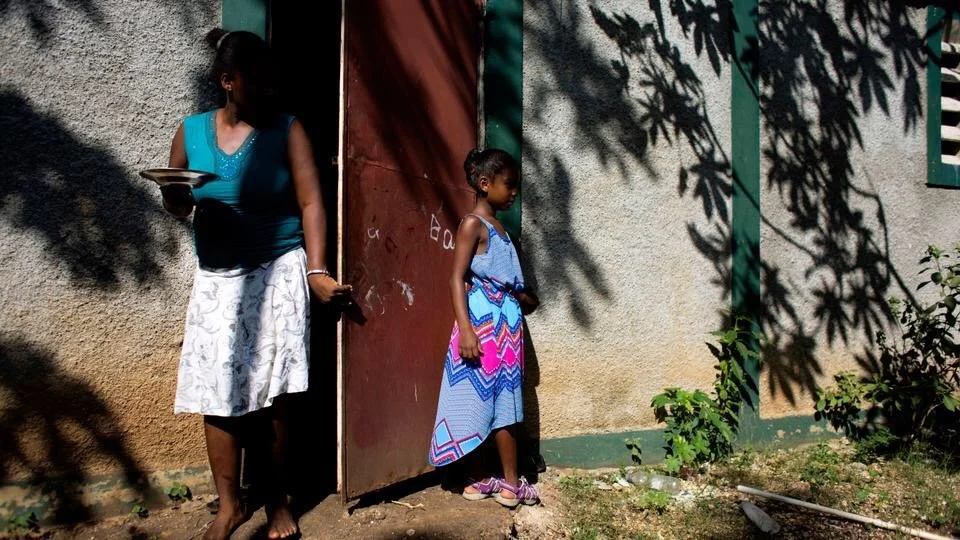
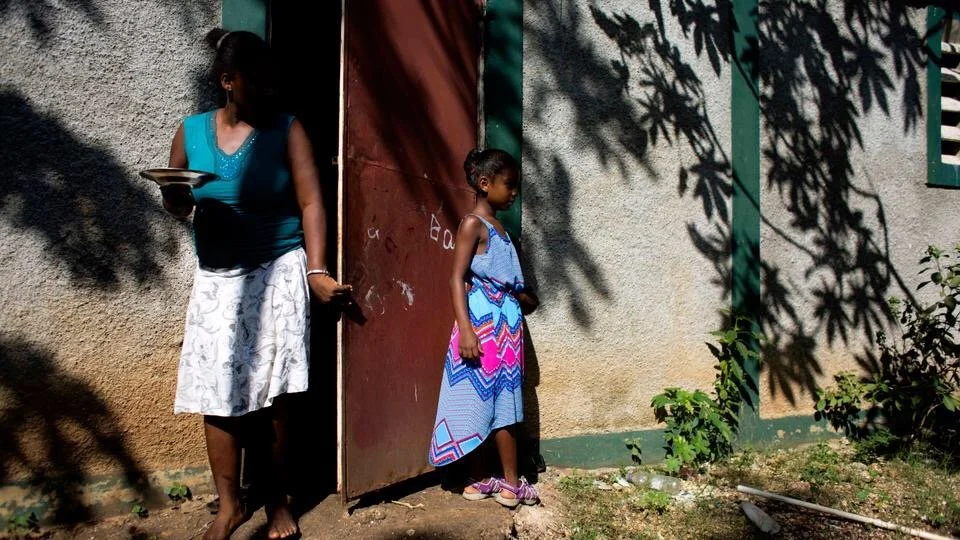
Santo Domingo, Oct 10 (Prensa Latina)On the Dominican-Haitian border, there is great poverty and the lives of its inhabitants are in the midst of precariousness and shortages.During a tour carried out by the press along with authorities of the Ministry of Defense through the border area of the provinces of Pedernales, Independencia and Elias Piña, visitors appreciated how the usual children's joy contrasted with the shy and astonished look of their parents.According to the information, these areas reflect the great geographical contrast between the Dominican Republic and Haiti, on the Dominican side there is vegetation and on the other side, a completely deserted panorama.However, what stands out the most is the desolation and in the distance, in Haitian territory, the presence of small houses built with rustic materials with their latrines and kitchens on the outside where large families make their lives.In the Elías Piña territory, Dominicans live on small conucos, while Haitians survive on informal commerce, selling artisan breads and fruits.Haiti and the Dominican Republic share a border of almost 400km on the Hispaniola island and from time to time the frictions usually aggravated by the presence of undocumented Haitians in Dominican territory.By: Prensa Latina | October 2017
Haiti Seeks TPS Extension for Its Nationals in US
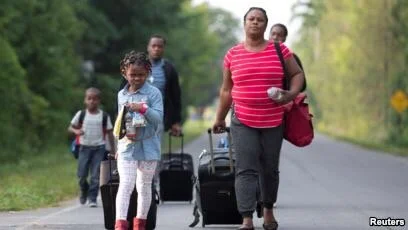
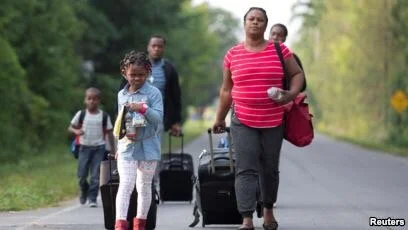
Haiti has formally requested that U.S. immigration authorities grant an 18-month extension to a program of humanitarian aid for Haitian nationals living in the United States.More than 50,000 Haitian immigrants are registered for Temporary Protected Status (TPS), set to expire January 22. TPS, offered after a massive 2010 earthquak struck near the capital city of Port-au-Prince, permits them to temporarily stay in the United States, with work privileges, until conditions improve in their homeland.In May, the U.S. Department of Homeland Security announced it would extend TPS by six months, not the one-year minimum sought by Haiti’s government and some advocates. Fear of deportation sparked an exodus of at least several thousand Haitian immigrants this summer, who illegally crossed the Canadian border seeking asylum in the French-speaking province of Quebec.The Haitian government’s letter requesting the longer TPS extension was submitted to the U.S. Department of Homeland Security on Friday, according to the Miami Herald.Written by Haiti’s ambassador to the United States, Paul Altidor, the letter included an invitation for Homeland Security’s acting director, Elaine Duke, to visit the country before the Trump administration makes its final decision on extending TPS. That’s expected as early as November.During a June visit to Haiti, then-Homeland Security Secretary John Kelly said he thought Haitians’ protection from deportation would end in January."I’d have to look for indicators as to why we might extend it a short period into the future past January," he told a Haitian radio journalist who shared the interview with VOA. The TPS program, Kelly said, "is designed to end and not go on forever."Kelly became chief of staff to President Donald Trump in late July.By VOA Creole Service | October 10, 2017
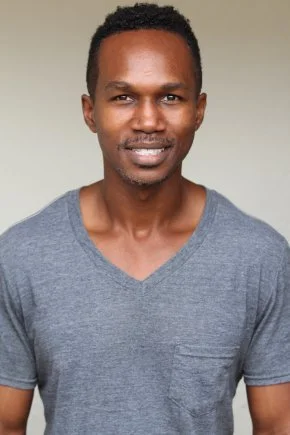
Jacques Derosena, Actor/Hand Model
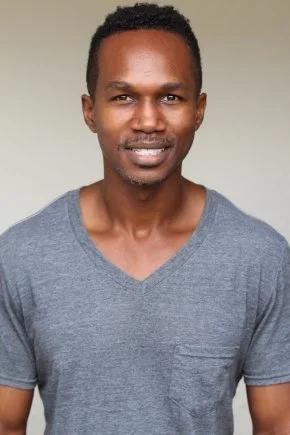
Jacques Derosena is an actor, hand model, and voice over artist working in Los Angeles. While Jacques was born in Boston, he was raised in Haiti and France. Jacques learned to speak English by watching American television programs like All My Children, and dreamed of the long stretches of pristine beaches like the ones he saw on Baywatch. Television instilled in Jacques a magical sense of wonder and awe for America and the entertainment industry.When he finally arrived in the United States, Jacques had no doubt he wanted to pursue a career as an actor. His parents, however, were not convinced that a career in the entertainment industry was the best path for him, and at their insistence, Jacques instead began studying and working in computer engineering. He couldn’t deny his dreams for long though, and eventually he would take the leap towards making his childhood television fantasies a reality.In this episode, Jacques shares how he navigated the entertainment industry as a foreigner in a new country. He recounts booking his first speaking role on a major television program, and how his career was taken to places he never thought possible when, on a whim, he auditioned for a hand modeling job.By: BOBBY GONZALEZ, OCTOBER 9, 2017

Haitian Orphan Choir leads national anthem at Atlanta United match
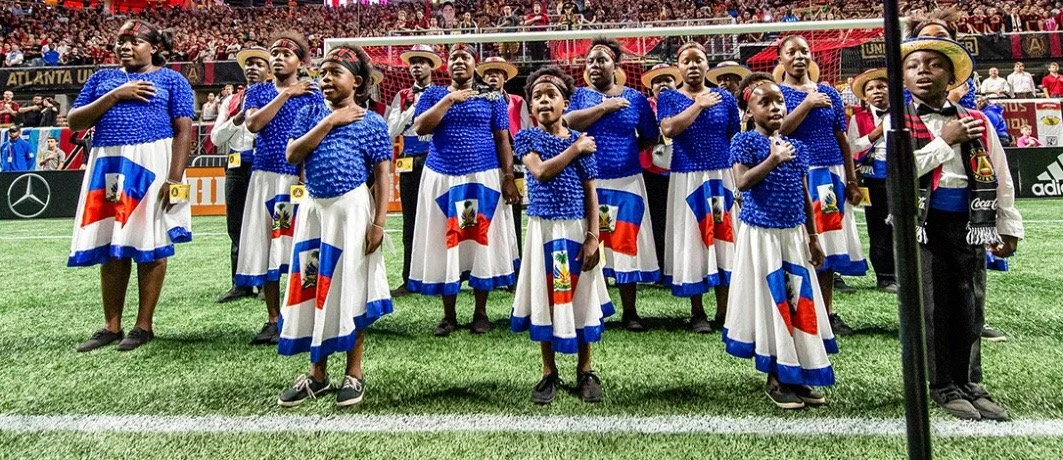
ATLANTA, Georgia, USA (sentinel.ht) – On Tuesday, Major League Soccor club, Atlanta United, brought in the Haitian Orphan Choir to sing the national anthem. They are a group that was born out of the tragedy that was the 2010 7.3 magnitude earthquake that rocked Port-au-Prince, Haiti. Every member of the choir lost their parents in that disaster. Atlanta United writes in a post:
One by one, they showed up to the Paul family household, and they were taken in. Their orphanage possessed next to nothing: several kids to every bed, limited room and supplies and intermittent power and water. But they loved to sing together, and soon it became a hobby and a talent. Now they’ve used that talent to make a difference.With Atlanta-based nonprofit “Love Him Love Them” as their hub in the United States, they’ve also taken their talents on the road. Last summer, the Haitian Orphan Choir raised enough money through singing appearances and performances to completely revamp the local orphanage. They’ve installed solar panels to guarantee electricity and now have running water. Every kid has their own bunkbed and storage locker for clothes. They’ve learnd trades – like how to become bakers and sewers and have learned how to make concrete blocks. They use those blocks for construction of their own but also to sell and boost the local Haitian economy.After returning to Haiti for the school year, they went back on tour this summer, with gospel star Kirk Franklin in front of 85,000 people in Haiti. Their performance at Tuesday’s Atlanta United game was their final appearance of the summer, as they try to raise money to build a small medical facility in their town. Meanwhile five of the students will stay in Georgia to attend Barnes Academy in Hartwell, learning as much as they can to go back and help their hometown.
Ryan Catanese who wrote about the choir’s performance provided a link for information to support the Haitian Orphan Choir. He writes, “there are many different levels in which you can contribute. From clothes to plane tickets, giving a little or a lot will go a long way.”—By: Haiti Sentinel | October 6, 2017
'It's Not Fair': Haitian Teens In Everett Worry About U.S. Residency Decision
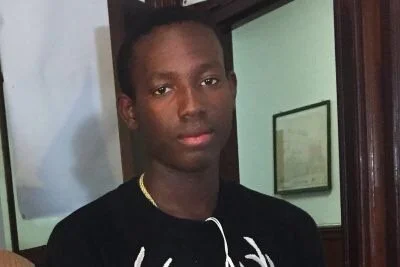
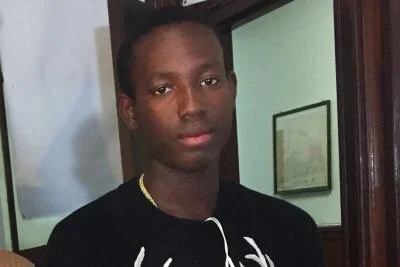
It's been a year since Hurricane Matthew slammed into Haiti, taking hundreds of lives and sending thousands fleeing to the United States.The anniversary comes as Haitians and Haitian-Americans in the Boston area look with apprehension at a decision by the Trump administration next month.That's when the administration has said it would decide whether to end Temporary Protected Status for 58,000 Haitians living and working in the U.S. The status provides legal residency for victims of natural disasters. Many first arrived after a devastating earthquake in 2010.Everett has become a home to a large number of Haitians and Haitian-Americans in recent years. Many are here on TPS. Others are here without the required documents. Many others are permanent residents and citizens, but know people whose legal status is precarious.Every week, high school students from the Haitian community in Everett gather to talk about what's on their minds. These days, the fear of having to leave, or seeing loved ones having to leave, is foremost."I feel sad, because I don't know where I'm going in the future," says one of the students.He is from Port au Prince. He came here when American missionaries got him a scholarship to play basketball in the U.S. He stayed and is now here without legal papers. Because of that, WBUR has agreed not to use his name. He is a senior at Everett High School."It hurts when I'm getting out of school where they're using me for the basketball, which I'm good at, and then I'm walking down the street, but I have fear that somebody might stop me, that I can be deported, not only myself, but a lot of my friends, a lot of youth, a lot of families," he says in Haitian Creole. "It's not fair."Tears come to his eyes."I have had people that have died in my family," he says. "I have never cried. This is the very first time tears have come out of my eyes."Another Everett High senior, Jean-Gandhy Medard, says in French, "Since the new administration, there is conflict, and we are beginning to worry, because not everyone has the right documents."Switching to English, he talks about how, increasingly, he feels judged by the color of his skin."You can't just stop someone because of the way he looks and then to tell: 'Where you come from?' The thing that really affects me is they said: 'Why don't you speak good English? If you don't speak good English, how come you have been here?' "Medard is also from Port au Prince. He came here in 2015 to live with his aunt, who sponsored him for a green card. He's not worried about himself, because he is here as a legal permanent resident, but he is worried about people he knows. He says friends of his have left because police have asked them for documents they don't have. Most, he says, have fled for Canada or the Antilles."For me, it's a catastrophe," he says in French. "It's a disarrangement. It's really something terrible compared to how we used to live, how we used to relate to one another, and how life was before, and now, all of a sudden, because of problems with papers or social pressures, all of that has disappeared. It's really sad."Medard says he knows people who have been here for a long time."And have fortune and they are about to lose everything," he says. "People who have been in this country 30, 40 years, and then they heard they have to leave. It's already their home."To be forced to leave now, he says, is to be forced to make a move you will regret for the rest of your life.By: Fred Thys | October 4, 2017

Wyclef Jean no longer pursuing presidency of Haiti

Wyclef Jean is no longer concerned about running for the presidency of his native Haiti.The former Fugees star, who lives primarily in the U.S., made a bid for Haiti’s presidency in 2010 but was ruled out of the political race as he didn’t meet the necessary residency requirements.At the time, he said he would try again in 2015, but the singer has now admitted to The Associated Pressthat he thinks the current government, which is headed up by President Jovenel Moise, is in a good position and he believes he can make progress by helping in the private sector.“We ran for the urgency. I felt like the government was absent,” he explained. “We don’t feel like (the) government is absent right now. As the country moves forward, as a social entrepreneur, I’m hoping in the future there’s some form of a school we can build. As a social entrepreneur, my true position with Haiti is to work with the private sector and help to bring jobs.”The 47-year-old is currently promoting his latest album Carnival III: The Fall and Rise of a Refugee, which was released last month (Sep17). His old work with Santana also had a resurgence over the summer when a sample of the 1999 song Maria Maria, which Wyclef co-produced, was used on DJ Khaled’s hit Wild Thoughts.“(DJ) Khaled and them called and was like, ‘Yo, you’ve got to clear the sample for me’. A lot of people don’t like it. Santana don’t clear samples. But I’m from a different generation,” he recalled.“When I sampled the Bee Gees (on We Trying to Stay Alive), my whole thing was, don’t forget if you take a piece of someone’s material, they’re going to listen (to) it. When I create something in my brain, it’s my creation. So, who the hell is going to make it better?… That’s why a lot of times it’s hard to clear it.”However, he gave Santana a call and eventually helped Khaled clear the track.By: Hollywood.com - October 2, 2017
Rochester Family Torn Apart After Dad Deported
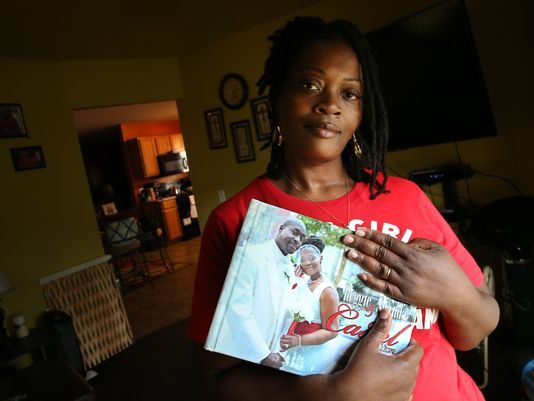
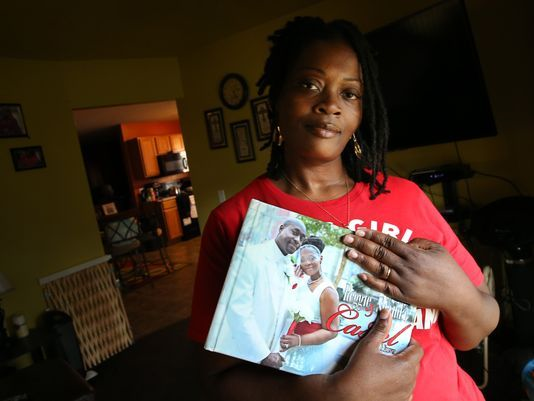
Reginald Castel was deported last Tuesday. The United States government flew him to Haiti in shackles, leaving him on an island he had not seen since he was 8 years old. He does not speak the language of his native country. When the plane landed, he knew no one there.
Castel, 44, went to Gates-Chili High School, sold cars for Vision Hyundai and lived with his family on Bay Street. His sole memory of Haiti was of the house with a metal roof where he lived as a boy. He was in despair as he flew to the island, handcuffed with 12 other Haitians and 49 men from the Dominican Republic.
“I was scared to death,” he said. “I am on the plane just praying to God.”
The plane landed in Haiti’s capital, Port au Prince. The deportees were handed over to Haitian officials who were friendly, at first. When the American officials left, deportees were told to hand over any money in their pockets if they wanted to call someone to pick them up. If no one came, they would be taken to prison.
Castel only had 8 cents, but he was allowed to call his mother in Greece. She had been frantically trying to find a relative or friend to go and get him. She told him that someone had managed to track down his estranged father, whom he had not seen or spoken to since he left Haiti at age 8.
It was his father who arrived to pick him up. “I did not even recognize the man,” Castel said. “One of the officials told me it was my father.”
They hugged each other. His father doesn’t speak English so they were unable to communicate much. Castel said his father pointed to his heart to express love. He pointed to his head to say don’t stress and don’t worry. “He said ‘it has been a long time,’” said Castel. “I understood that.”
They left the facility with Castel’s one bag. It contained the clothes he was wearing when immigration officials took him into custody on Aug. 10, a pack of oatmeal, some legal papers and a 30-day supply of insulin to treat his severe diabetes.
Until Aug. 10, Castel was among more than 900,000 immigrants in the United States living under final orders of removal, or deportation, that had not been enforced. Deportation officials generally focused on people considered to be a threat to national security.
“They didn’t make me a priority under George Bush or Obama,” Castel said, by phone, from a home of his father’s friend in Port au Prince. Under the Trump administration, things have changed.
“With the executive order from President Trump, everybody with a removal order is at risk,” said Wedade Abdallah, program director for immigration for Legal Aid Society of Rochester.
Castel was subject to deportation because he pled guilty to a felony in 1999, after a dispute with his friend Reginald McQueen turned violent. Castel said that McQueen started chasing him with a knife and he ran to his truck to get a gun. “I defended myself,” he said. “I shot Reginald.”
The lawyer did not tell him that a guilty plea, and his lack of citizenship, would make him eligible for deportation. Castel served six years in jail. When he was released, the U.S. Department of Homeland Security picked him up and held him in a detention center for 18 months as he appealed his deportation order.He was granted deferral of removal under the Convention Against Torture act because a judge ruled that his lack of ties in Haiti, combined with his need for daily insulin would likely cause him to die in the impoverished country. He was released in 2007 under an order of supervision.The federal government appealed this deferral and won, reinstating the deportation order against him. In 2011, Castel lost his final appeal. But he was not deported.
U.S. Immigration and Customs Enforcement gave him permission to work legally and required him to check in periodically. Castel built a career, got married, stayed out of legal trouble and never missed a check-in appointment, including one in Batavia on Aug. 10. His wife Lashanda waited for him outside as he went into the meeting. When she saw him next, he was handcuffed in the back of a patrol car. He was not allowed to get out of the car to give her a hug goodbye.
Every time she saw him after that was through glass at immigration detention centers.
“How do they tear a family apart and think nothing of it?” Lashanda Castel asked. “Where is the humanity in this?”
The laws that led to Castel’s deportation have long been on the books. President Donald Trump is just enforcing them, as promised in his campaign. Five days after his inauguration, Trump issued executive orders directing executive departments and agencies "to employ all lawful means to enforce the immigration laws of the United States.”
He criticized previous administrations for failing to remove people with deportation orders. “We cannot faithfully execute the immigration laws of the United States if we exempt classes or categories of removable aliens from potential enforcement,” the president wrote.
In the past undocumented immigrants who had long histories of obeying the law and living quiet lives were not deportation priorities. Trump's executive orders have changed things, said Wedade Abdallah, program director for immigration for the Legal Aid Society of Rochester. “We are seeing a more unpredictable type of enforcement,” she said. "It could be anybody (with a final removal order) at this point." She said she would encourage any immigrant who has a final order of removal to speak to an immigration attorney.
“Make America great,” Lashanda Castel said, with bitterness. “Let’s get the immigrants out of here.” She believes the government ought to make allowances for people like her husband, who has turned his life around and stayed out of trouble for more than a decade.
Reginald McQueen, the man shot by Castel in 1999, agrees. He made a statement in support of Castel that appears in a petition asking Gov. Andrew Cuomo to pardon Castel for his crime. Such a pardon would make it possible to reinstate his green card. “An unfortunate incident occurred that caused me harm and got Reggie arrested. However, it was the result of a personal problem between us and we have become friends again,” McQueen wrote, adding that he does not want to see Castel deported. ”I am satisfied that he has paid his debt to society and to me and I don’t think he should be punished any more for what he did. I have my health back and my life back and I would like Reggie to have his life back, too.”
Castel’s life is now spent in a spare room in the home of his father’s friend, a man who speaks a bit of English. Electricity comes and goes, sometimes for days. Clean drinking water is hard to come by. It is hot. Castel has been warned not to go out alone. His lack of language skills makes him an obvious outsider and easy target for desperate criminals found in a country where people must survive on an average of $2.25 a day.
So he sits in the house, waiting for his father to get out of work. He has time to wonder about another deportee he met on the plane who also had no connections in Haiti because he had grown up in Bermuda. “I am pretty sure he ended up in prison,” he said. He wonders what would have become of him if his father hadn’t been found. And, most painfully, he misses his family. He and his wife have a blended family of seven children. His youngest child, a daughter, has taken the situation very hard. There has not been a time they’ve spoken on the phone that she was not in tears. “They took someone who is loved,” said his wife.
She also cries. But she knows that tears won't help her husband return to the United States. If getting him home proves impossible in the short term, she must find a way to get him a stable supply of insulin. Castel suffers with Type 1 diabetes that his physician assistant at Anthony Jordan Health Center called “severe, chronic and incurable.” It requires daily insulin shots, which are extremely difficult to get in Haiti. Castel's plans to visit the Diabetes Association in Port au Prince have been disrupted by unrest and violence on the streets.
Lashanda Castel is trying to navigate the permits, licenses and fees that would allow her to ship insulin to Haiti. She has applied for her passport so she can visit her husband, though she is concerned about U.S. State Department warnings about the risks of traveling to Haiti, including violent crime, instability and lack of adequate medical facilities.
She is buoyed by a group of local supporters including Rochester City School Board President Van White, who is also an attorney and volunteered to submit Castel's petition for the governor’s pardon. The petition includes statements of support from his boss at Vision Hyundai, the bishop of his church and many friends and family members. Rochester City School Board member Mary Adams continues to rally community activists to fight for his cause and to lobby Gov. Cuomo to pardon him quickly.
Adams was among the people who went to the Buffalo Federal Detention Facility to try to block the bus when Castel was being taken away for deportation. They could not see him through the tinted windows of the bus, but he saw them standing, praying and protesting his deportation. “I felt hopeful,” he said. “I had people in my corner.”
Those people will host an “Updates and Organizing to Support Reggie Castel and Family” meeting at 6 p.m. Sunday at the Freedom School, 630 N. Goodman Street. All are welcome, said Adams, to join the effort to bring Castel home.
For now, he remains in Port au Prince. He has learned how to say “please,” “thank you,” “I’m hungry,” and “water” in Kreyol. His hope for a return to Bay Street remains. His insulin is running out.
By: Erica Bryant | September 29, 2017
Five Noteworthy Facts You May Not Know About Wyclef Jean
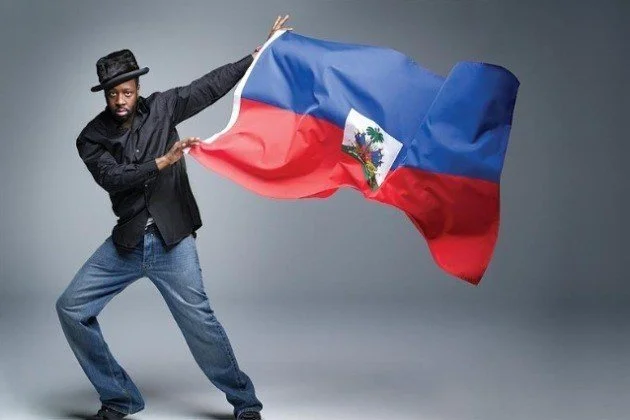
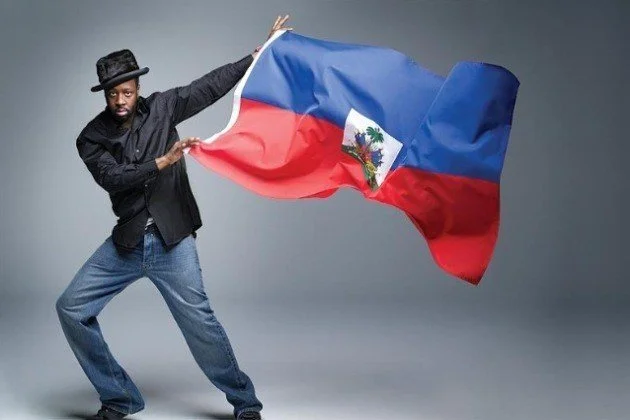
Wyclef Jean is an artist, rapper, producer and musician who, by way of his association with hip-hop supergroup the Fugees, helped transform pop, hip-hop and R&B. When the Fugees (Jean, cousin Pras Michel and Lauryn Hill) released albumThe Score in 1996, it became one of the biggest rap albums of all time by way of its fusion of hip-hop, soul and reggae influences, and as a solo artist, Jean has managed to craft a sound that pulls together his love of Haitian music, reggae, rap and pop that helped influence a generation of artists.With his new record Carnival III: The Fall and Rise of a Refugee now out, there was no better time than our October issue to examine his life's story in our regular Timeline feature. And while you'll have to grab our print edition to read the piece in full, here are five noteworthy facts you may not know about Wyclef Jean, below.1. Jean takes his share of the blame for the dissolution of the Fugees."We're all human and make mistakes. I'll keep it real with you. You can't mix business with pleasure. Sometimes I wish that me and Lauryn had never gotten involved, you dig? You learn. So maybe if I could do it again I wouldn't have gotten involved with Lauryn romantically. But then I don't know that you would have gotten The Score," he tells Exclaim! in 2017. "We never really broke up, by the way, we just stopped talking about getting together to record again. In any case, Pras has made it clear to me that he thinks I'm responsible, and I understand why he feels this. It's because he had to manage Lauryn and me when we became a couple on the road. Every time we fought, he was in the middle, keeping us focused, telling jokes, doing whatever he could to stop things from getting too crazy. Pras was the glue that kept the Fugees together."2. Jean played a key role in the career success of Beyoncé — then known as a member of R&B/pop group Destiny's Child — by producing and making a cameo appearance on platinum-selling single "No, No, No Pt. 2.""I always knew Beyoncé would be great," he tells The Guardian in 2017, "because when Destiny's Child were opening for me on tour, every time they got off stage she would go get changed then stand at the side of the stage and watch my show like a hawk."3. Jean believes Lauryn Hill's first pregnancy might have contributed to the group's breakup."In that moment something died between us," Jean wrote in his 2012 memoir,Purpose: An Immigrant's Story. "I was married and Lauryn and I were having an affair, but she led me to believe that the baby was mine, and I couldn't forgive that." 4. Jean filed to run for president in his native Haiti in 2010. Requirements to run for office, however, include living in the country for the preceding five years, and Jean doesn't meet the requirements. Jean releases an EP titled If I Were President: My Haitian Experience; single "If I Were President" is a moderate hit."It's the continuation of my music and it represents both sides of life: love and hate, war and peace. It's for all my fans. It's for those who love me for 'Gone 'Til November' and 'Hips Don't Lie,' too," he tells Consequence of Sound in 2010.5. He still believes that the Fugees will reunite one day."I believe there will be a day when the Fugees get together, but everyone in the group's gotta be ready. The Fugees are definitely going to get back together. The time will come. You've gotta wait, man," he tells hip-hop site Rap-UP in 2011.Carnival III: The Fall and Rise of a Refugee is out now courtesy of Sony Legacy.By: Ryan B. Patrick - Sep 29, 2017
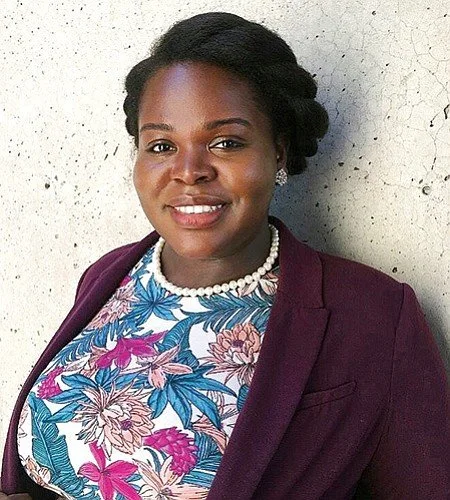
In the news: Roudnie Célestin
Roudnie Célestin was appointed Mattapan neighborhood liaison and citywide liaison for the Haitian community within the mayor’s Civic Engagement Cabinet. In this role, Célestin will work as an advocate to both communities, and will serve as a local representative of the mayor’s office.As the Mattapan and Haitian community liaison, Célestin will serve as the primary contact for constituents looking to connect with the mayor’s office, and will facilitate the delivery of services in collaboration with city departments.Célestin was born in Pétion-Ville, Haiti and has lived in Boston since 2003. She earned a Bachelor of Arts in ethics, social & political philosophy with honors from the University of Massachusetts Boston, after earning an Associate of Arts in communications from MassBay Community College.Prior to joining the Office of Neighborhood Services, Célestin worked in health care as a practice assistant at Brigham & Women’s Hospital, where she assisted the nursing director in strategic operational planning for various programs and clinic flow. She taught Haitian Creole within the African Language Program at Harvard University, where she provided students with literacy skills and cultural training. Célestin also served as a volunteer case manager at the Haitian Multi-Service Center in Boston, where she advocated for clients and helped organize community outreach events. She currently serves as a volunteer language interpreter for the Political Asylum Immigration Representation Project.Célestin has a native fluency in Haitian Creole, French, English, and is conversational in Spanish. Her extensive experience in working with people has prepared her to deliver quality service to the Mattapan and Haitian communities.“I am extremely excited and honored to join the Mayor’s Office of Neighborhood Services,” said Célestin. “Mayor Walsh and his administration provide excellent city services to the Mattapan and Haitian constituencies, and I look forward to ensuring inclusion, access and opportunity for all residents and working for the people of Boston.”The Office of Neighborhood Services encourages and facilitates citizen input and participation through service requests, neighborhood meetings, mailings and emergency responses. To report non-emergency issues to the city, residents are encouraged to connect with BOS:311 by dialing 3-1-1 or by downloading the free BOS:311 app.By: The Bay State Banner | September 28, 2017
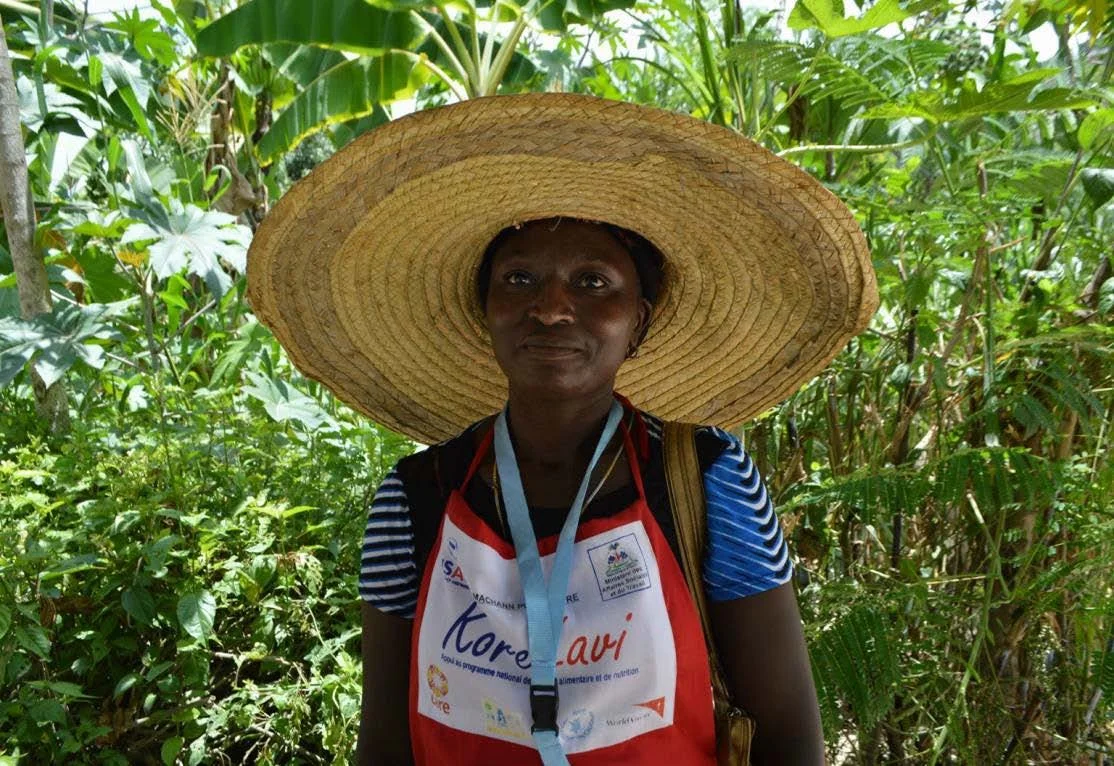
Food Vouchers Strengthen Nutrition and Local Markets in Haiti
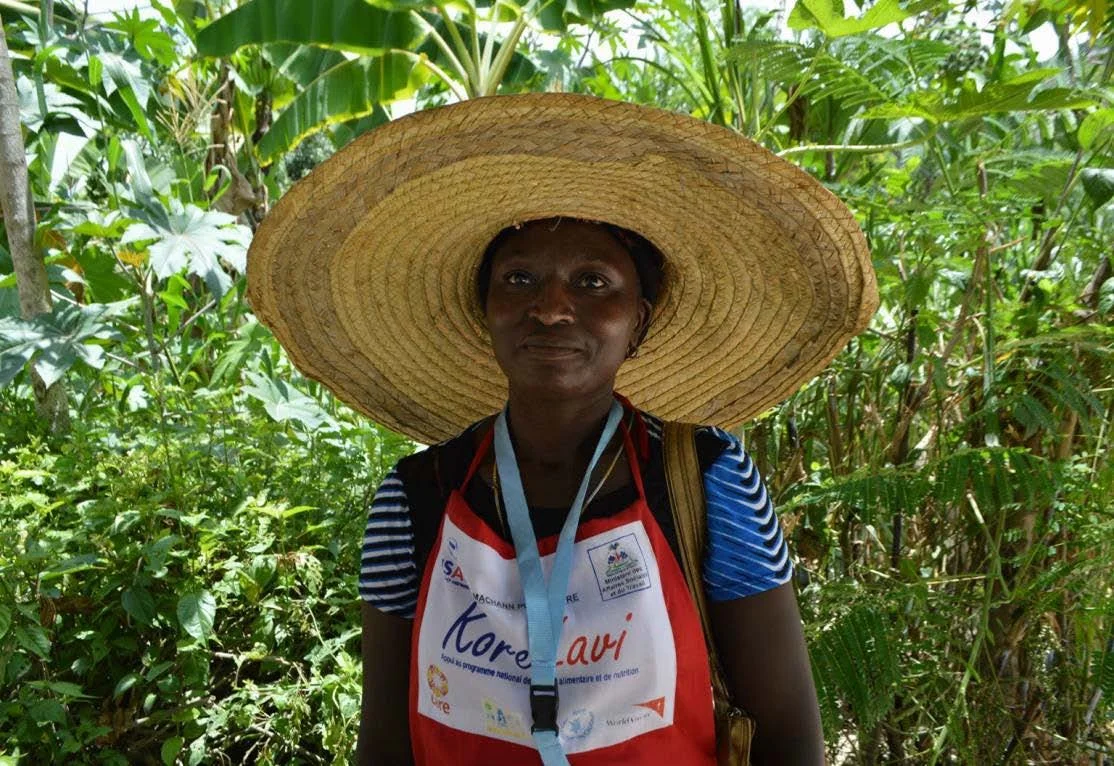
Each week in southern Haiti, Lucamène Chéry puts on her uniform and stocks her market stall with local vegetables. Shoppers filter past, selecting products for their families. In exchange for the produce, Chéry accepts a unique form for payment—food vouchers—which allows the most vulnerable members of the community to access nutritious foods that they would otherwise be unable to afford.Haiti is the poorest country in the Western Hemisphere and half the country’s population lives on less than $1.25 per day. Heavily dependent on food imports, Haiti remains extremely vulnerable to price spikes in the global food market.The country also remains particularly susceptible to natural disasters, including Hurricane Matthew, which hit in October 2016 and continues to drive elevated levels of food insecurity in the worst-affected communities.Since 2013, USAID has collaborated with the Government of Haiti and CARE to establish a safety net system that boosts household food security, reduces child malnutrition and fosters greater household resilience to shocks. The most vulnerable families in five of Haiti’s 10 departments receive food vouchers, which are redeemable for local foods from vendors like Chéry. The vendors then trade in the vouchers for cash.Chéry is part of a network of nearly 1000 Haitian food vendors who supply local agricultural products—such as fruits, vegetables and tubers—to chronically food-insecure families participating in a USAID-supported program.A mother of five, Chéry previously struggled to afford enough food for her family. Now, with a dedicated customer base in the program, Chéry earns a significantly higher income that allows her to support her family while also investing in her children’s future and expanding her business."I’m able to pay the school enrollment fees for my children without difficulty, and I also raise chickens, turkeys, goats and cows," she says.Chéry also belongs to one of the program’s 1,200 community-led village savings groups. These groups provide more than 35,800 program participants—including more than 26,300 women—financial training as well as access to small loans that can be used to improve their businesses.The increase in business has encouraged Chéry’s husband to become more involved in their food vending business. "Now, he accompanies me when I go buy merchandise and he helps me sell it at the market," says Chéry.Each month, the voucher program provides more than 18,150 food-insecure households with access to healthy foods that they might otherwise be unable to afford. Community-managed programs that distribute information on health, hygiene and nutrition complement the vouchers for food.By relying on local vendors selling local products, the program strengthens markets, encourages the development of the country’s private agricultural sector and fortifies community resilience to shocks.By: USAID | September 26, 2017
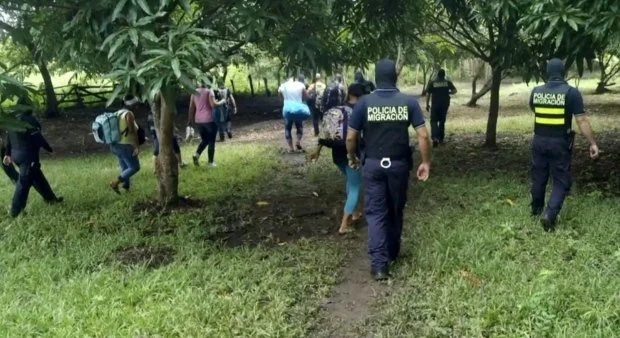
'Anywhere But Haiti': Asylum Seeker Retraces His 15,000-km Odyssey To Canada
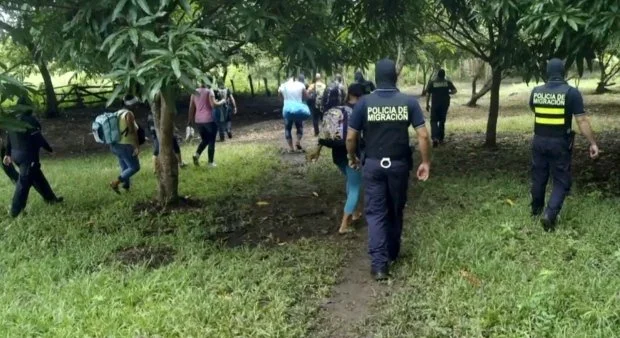
Travelling by boat, bus and on foot, treacherous journey from Brazil ends at Roxham Road, Que.When Pierre left Cap-Haïtien for South America, he never imagined he'd wind up in the woods of upstate New York.But nine years and 10 countries later, he stepped into Canada and was arrested by the RCMP.He had survived a two-and-a-half-month, 15,000-kilometre odyssey from Brazil to Roxham Road with his wife and seven-year-old son, through some of the most dangerous territory in the Americas.By plane, by boat, by bus, taxi or on foot, the destination was always the same: "Anywhere but Haiti."Pierre is not his real name. CBC News has agreed to protect the identities of the 30-year-old Haitian and his family to prevent any potential impact on their asylum claim in Canada.
Building a life in Chavez's Venezuela
A self-described socialist, Pierre left Haiti in 2008 to study in Venezuela. He made a new life for himself in Hugo Chavez's Venezuela, where he worked as a warehouse manager.Pierre left Haiti to study music in Venezuela in 2008, later studying accounting and administration. (submitted by Pierre)When the revolutionary president died in 2013, Pierre went south to Manaus in the Brazilian state of Amazonas.But work dried up, so in 2016 he decided to head north to "conquer the American dream."It's a path countless others have taken — a backwoods channel for waves of undocumented Latin Americans, Africans, South Asians, Haitians and Cubans seeking a better future.It's also a route fraught with exhaustion, fear, robbery, rape and death.
Desperate journey through the Darien Gap
With his wife and child, Pierre set out on June 16, 2016, crossing into Venezuela from Brazil."It wasn't easy to get into Colombia, but with a lot of tenacity we managed," he said.From there the family boarded a bus to the Colombian port town of Turbo, where the South American stretch of the Pan-American Highway ends.There they joined a group of 100 or so other migrants - Cubans, Africans and other Haitians ready to make the same desperate journey."From Turbo, we took a little boat," Pierre recalls. "Many people died because some boats sank. But we arrived at the entrance to the Darien Gap."The Darien Gap is a lush rainforest on the border of Colombia and Panama, thus named because it's a break in the Pan-American highway.Migrants must travel through the untamed wilderness on foot. "Crossing the Darien Gap was a very cruel experience," says Pierre. "I spent six days in the mountains with no food and no water.""So as not to get dehydrated, my family and I had to drink our own urine."The migrants also had to avoid snakes and other wild animals lurking in the dense forest."Many people died," Pierre says. "But we had to go on because otherwise, we'd die too. Whenever my son thinks about it, he cries."This video was taken by other Haitian migrants while crossing the Darien Gap.
Smuggled across Nicaraguan border
After 15 days in Panama and a bus ride to Costa Rica, authorities stopped them at the Nicaraguan border."It was really tough to get across," says Pierre."We had no papers." Stuck at the border and living in tents, Pierre paid smugglers nearly $3,000 US to get him and his family into Nicaragua.
 Others were not so lucky."Some were ripped off and never did get across," he says. "There were many bandits who raped people when they were going through the forests."Once in Nicaragua those that made it took a bus through Honduras and Guatemala to Mexico.Pierre says Mexican authorities gave them passage on the condition they move on to the USA.But arriving at the American border in Tijuana, Pierre was detained and spent nine days in lockup.Upon release, he moved his family to Florida.
Taste of the American dream
 Pierre got a work permit while his U.S. asylum claim was processed, working as a check-in manager at the Orlando airport and at Disney World."I worked and waited for the [asylum] process to run its course," Pierre says. "But when Donald Trump came to power things got complicated."He was worried that without permanent status, he and his family could be deported at any time.Then Prime Minister Justin Trudeau tweeted his support for refugees during Trump's efforts to enact a travel ban from Muslim-majority countries, and Pierre turned his eyes northward.
To those fleeing persecution, terror & war, Canadians will welcome you, regardless of your faith. Diversity is our strength #WelcomeToCanada— @JustinTrudeau
"When [Trudeau] said, 'Canada's ready to welcome refugees,' I said, 'Well, if that's the case, I'll come to Canada,' because I'm looking for a better life."So the family flew to Plattsburgh, N.Y., and boarded a bus to the border, crossing into Canada illegally at Roxham Road and making an asylum claim."When [Trudeau] said, 'Canada's ready to welcome refugees,' I said, 'Well, if that's the case, I'll come to Canada,' because I'm looking for a better life."- Haitian asylum seeker Pierre, 29They spent 24 hours in a temporary camp near the border, then two weeks living in the shelter set up at Montreal's Olympic Stadium.The family now has an apartment, and Pierre is trying to get a work permit while he awaits his Immigration and Refugee Board hearing.
Accusations, beatings and stabbings back home
In his asylum claim, Pierre says he can't go back to Haiti because his family is being targeted by a gang of street criminals. He says the trouble started in 2009 when a woman in his neighbourhood accused his father of witchcraft and threatened to have a gang attack him with machetes.Pierre says his father fled but the gang beat up his mother. He has copies of statements to the local police to help prove his story and a picture of his mother after the beating.He claims the same group of thugs attacked him for his political views in 2010 on a visit home, accusing him of trying to organize an uprising against the government.Then just this year, Pierre says his brother was stabbed by the gang and had to move his family to another part of the country."It's a country with no justice," Pierre says. "If I go back there they'll kill me."
'Such a cruel journey'
Sitting in a coffee shop near Jarry Park in Montreal's Villeray neighbourhood, Pierre sketches out a drawing of his long journey on the back of one the myriad documents and forms that make up his refugee case file.The map fills the page. His home country is conspicuously absent.Pierre sketches his journey from Brazil to Roxham Road."We left the U.S. because we were scared they'd deport us to Haiti," he says."In Haiti most people are unemployed. It's miserable. There are kidnappings all the time."Pierre hopes the Canadian government will give extra consideration to those like him who have come so far."Such a cruel journey," he says. "It was a very hard road to get here."By: Simon Nakonechny | September 26, 2017

10 New York campuses to help establish village in Haiti

Ten campuses in New York's public university system are part of a project to establish a sustainable village and learning community in Haiti.The State University of New York said Monday the campuses will work with five not-for-profit organizations under an $800,000 grant from the W.K. Kellogg Foundation.SUNY says the goal is to develop educational, economic and social programs, resources and other needed services on 40 acres (16 hectares) of land donated by a Nassau Community College professor emeritus. Each campus will bring a specific expertise, such as public administration, public health and performing arts.The University at Buffalo, which will contribute social work expertise, says the project also will provide hands-on training and education for SUNY students.By: Associated Press| September 26, 2017

SPRING 2018 READY-TO-WEAR : STELLA JEAN

Stella Jean’s backstory this season is a goody. The Haitian designer discovered La Paz, Bolivia’s Cholitas luchadores community—and was instantly inspired. The Cholitas are “petticoat wrestlers” or “fighting goddesses” who wear their colorful native dress in the ring and out of it, and have faced discrimination for doing so. As Jean tells it, they’re forbidden to travel by public bus and taxi because they haven’t adopted modern Western dress. Through their visibility in the wrestling ring, they’re bringing awareness to their mistreatment and have become symbols of indigenous pride. “To me,” Jean said backstage, “it’s a message of how fashion can be a powerful tool of independence.”

 This kind of cultural appropriation can be a tricky business for a designer. Jean has wrestled with it in the past, but here, she handled it well, presenting a short video before the start of the show in which a young Bolivian woman discussed her country’s cholas and thanked Jean for shining a light on them. A celebration of their culture an ocean away won’t affect the cholas one way or the other, but it’s a positive development when a designer acknowledges the debt she owes to her source of inspiration.
 The clothes were engaging, too, obviously influenced by the chola culture but not too costumey, despite the surfeit of embroidered ruffles, peasant tops and skirts, and traditional hats. A vivid green tie-dye shirtdress worn unbuttoned over matching shorts was a highlight, along with the patchwork print of ikat weaving used for a trim shirt and cropped pants. Some of the sport-couture combos were a little silly—who’s really going to wear an embroidered duchesse ball skirt with her exercise tank and leggings?—but the Stella Jean Wrestling Team logo shirts nailed the current fashion moment on the head.By: Nicole Phelps | September 24, 2017
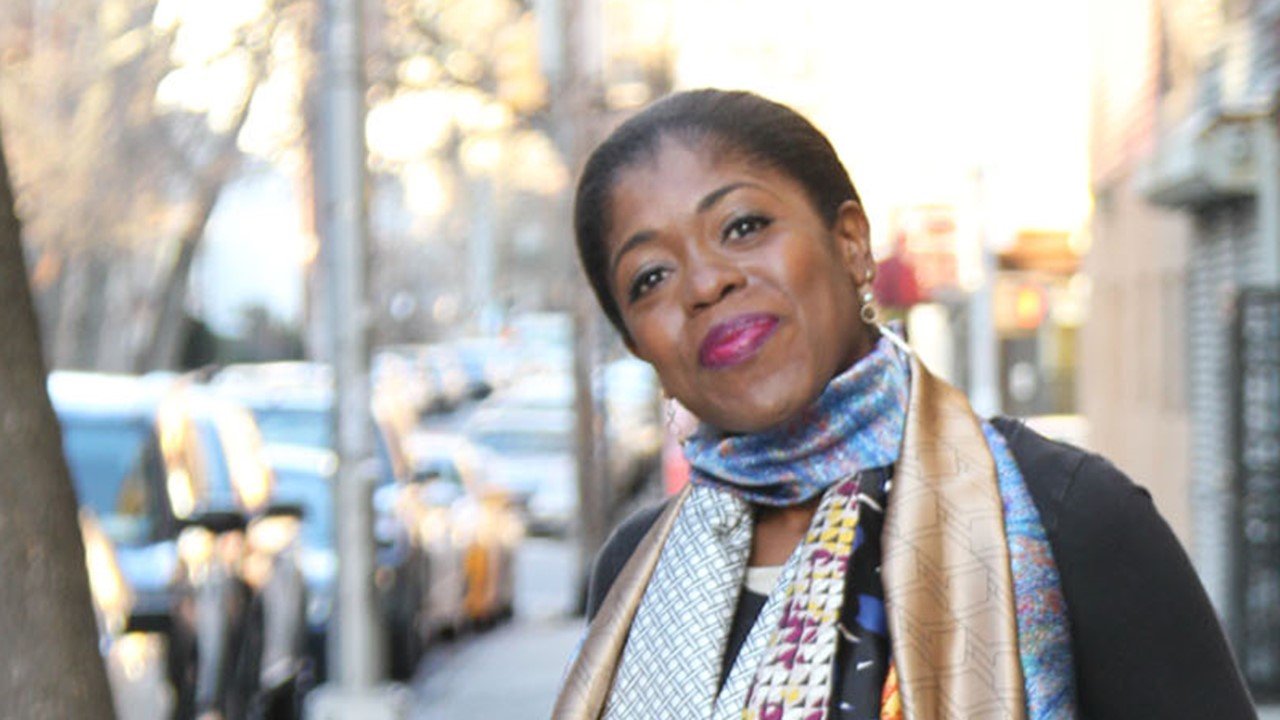
Dayanne Danier: Designer and Philanthropist using her love for clothing to give back to Haiti
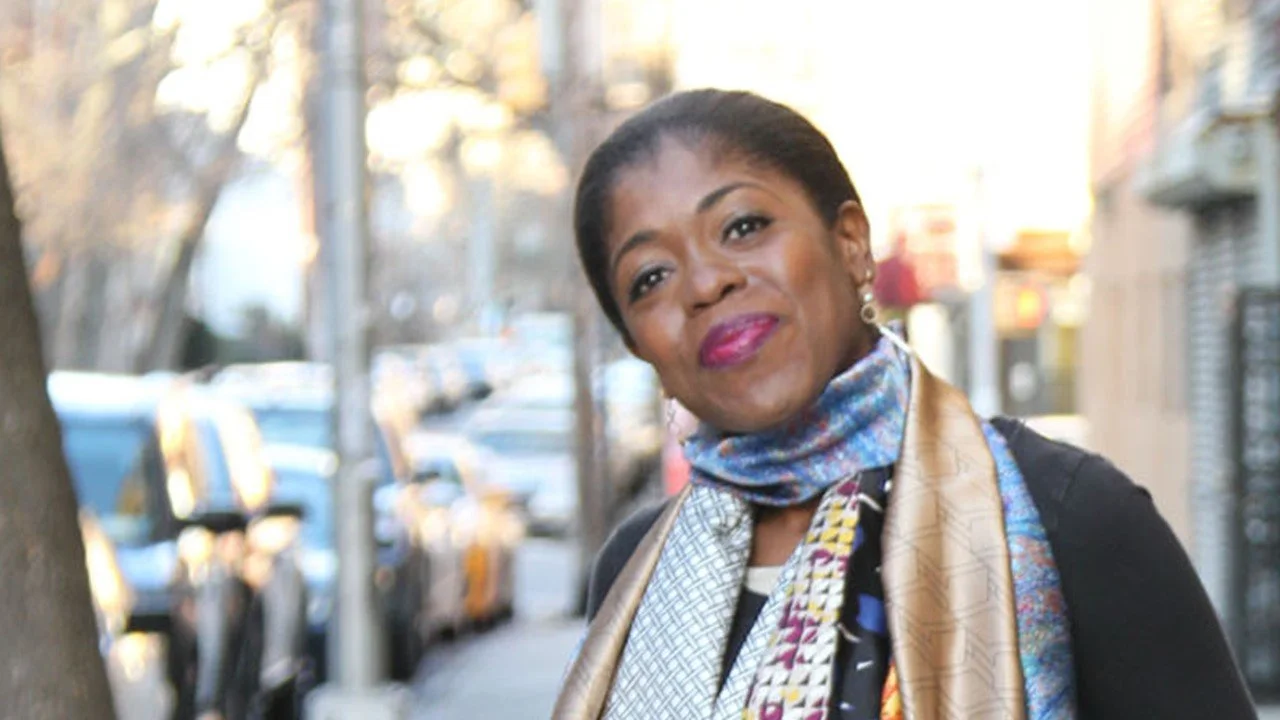
This Boston Born-New York bred Designer and philanthropist is making waves in the fashion industry as she continues to cement her legacy while giving back to her beloved Ayiti. After twenty years spent working in fashion, from designer to retailer, she left one of the top design companies to branch out on her own. Ms. Dayanne Danier is the CEO of Bien Abye (french for Well Dressed), the ready- to- wear women’s brand. Ms. Danier is also the Co-Founder of Fleur de Vie, the non-profit helping to educate young Haitian students in various parts of the country.The Bien Abye brand personifies a simple philosophy: to make women look fabulous at all times effortlessly in S7VEN. Most recently, Ms. Danier hosted a pop-up shop for her brand in New York and Washington D.C. titled, “Les Jardins de la Mode” where she featured her pieces for the world and allowed people to experience the creole essence of the brand. The pop up shop also featured other emerging Haitian brands. The Bien Abye line has been showcased in fashion shows in Boston, New York, Washington D.C., Atlanta, Miami, and Haiti. It is distributed nationwide in retail stores in New York, Boston, Pittsburgh, and Dallas. Items can also be purchased online through the company website.On September 23, 2017, to consistently fulfill the mission of her non-profit, Ms. Danier journeyed to Haiti to host the Fleur de Vie Back to School Recreational Program; the organization’s flagship event. There, she will be distributing school supplies to students while also building health awareness and hosting team building activities. The vision is to support schools through funding school-wide programs like the flagship event, training teachers, and focusing raising the literacy of the population. This partnership has now expanded to four institutions in Haiti. The organization has touched the lives of 1,000 students to date. Ms. Dayanne Danier is a Haitian-American woman on a mission to build an empire while keeping Haiti in her mind and on her heart. Her love for Haiti is evident in all her endeavors. Haitiville: What motivates you?Dayanne Danier: What motivates me is the concept of legacy and having a positive and strong legacy. A spinoff of the concept was engrained in me since I was young whenever my father would tell me, “don’t let people talk [bad] about you”. It reminds me to think about what people would say about me if I were to die tomorrow. I strive to be a unique individual who creates amazing things and brings change. I am a Virgo with a Gemini blood stream because I want to wear two different hats. I love design and I also love to give back to effect positive change.Haitiville: How has the Haitian culture influenced your work?Dayanne Danier: As a designer, the whole essence of Bien Abye is Haitian and Creole centered. I always think about how I look, how my clients look, which is such a Haitian thought. How you present yourself is such a universal concept, but it is also a very Haitian concept.As an artist, the gingerbread architecture is what inspires the motifs and prints I use on my line. The Haitian Gingerbread home, a style of architecture predominant in old Haiti, is a sign of strength and prominence. Gingerbread homes are designed with natural elements yet are decorated in such an ornate way. I take that, and whenever I am designing something, I think, “what element of this piece is like a Gingerbread home”. Haitian culture influences Bien Abye a lot.My culture also influences my philanthropy. Growing up, my family was constantly giving back. My parents were very influential in helping complete cities in Haiti move to America. I always heard the term “commission” which was always about sending things to Haiti. I kept hearing the term so much ever since I was a child that I knew I wanted to give back. In a way, Fleur de Vie is an ode to my parents, my family and an ode to my culture. Fleur de Vie is my commission to Haiti.Haitiville: You use such bright color schemes and palettes. Would you say that’s a Haitian influence?Dayanne Danier: Something that I have been drawn to even in high school was colors. That sense of color is so strong in me. I would say yes, that the color I use stems from my Caribbean roots. The colors that you find on Bien Abye clothes are colors that you find on the islands. Now, I have made it that Bien Abye is so inspired by my creole and Haitian roots that I can be in any place in Haiti and it will influence my line. It does not have to be the typical bright tropical colors, but it can even be just the colors of the landscape. For example, my journey to Hinche one time involved a drive through Mon Cabrit. I loved going there because even the color of the ground was a very gorgeous edible terracotta orange/red. That experience led me to create a collection called “The Earth” where all the shades were very earthy greens, browns, burnt orange, and reds. I really try to bring people into Haiti. Bien Abye ultimately is my culture. I am presenting it to Haitians and non-Haitians and I want people to know that you don’t have to be Haitian to appreciate the concept of Bien Abye, to love the concept of Bien Abye, or to want to buy into the concept of Bien Abye because it is just really rich and captivating.
 Haitiville: Speaking of Fleur De Vie, what is the goal of your non-profit organization?Dayanne Danier: Giving back was important to me, I just didn’t know how or in what capacity.Growing up Oprah was my role model. Fast forward to 2002, when Oprah went to Africa for Christmas where she aired the Oprah show of bringing gifts to African children. Seeing what she did made me feel like that was something that Haiti needed, and I wanted to do that for Haiti. What started off as adopting kids in Haiti, sponsoring children for $120 a month, seemed insufficient once the earthquake of 2010 struck. I did not have Oprah money, but I began by organizing a few activities with Jenny Batista, the co-founder of Fleur de Vie when I took a trip to Haiti after the earthquake. That was the jumping point because on the last day, I asked the kids what they wanted to be when they grow up and these 9 to 14-year-old kids stared at me blankly with no answer. They needed role models. I felt that reaching the children through education and schools had the potential to make a lasting impact. I want the children of the schools to feel like someone is constantly there, and that someone outside of their parents or family members constantly cares.Haitiville: What does growing up Haitian mean to you?Dayanne Danier: I appreciate it more now as an adult than I did as a kid. I always remember that I come from the two best countries in the world. Being Haitian means that I come from the blood of slave liberators. I come from not the 2nd, nor the 3rd independent free black nation, not even 1960, but 1804, you know! That’s my culture and that means so much to me! That is a feeling I have always had. And I don’t care what Haiti looks like. I will always be so proud.
 Haitiville: You have quoted “Fashion is an art, and you are the canvas” As a designer, does this feed the need to the create?Dayanne Danier: Well I am grateful for this question because I do believe that. Fashion is my art, the human body is the canvas, and my medium is fabric, beading, and thread. For Bien Abye, when I think about my garments, I think, “what can you do to a garment that makes it so striking that when she walks into a room, the best way to describe her is captivating.” I recognize that fashion enters the room before you open your lips, so you got ‘a look good! Most of the time, it isn’t the hair or makeup, but rather the clothing that makes someone look captivating- and that is an art. Beyond being captivating, I want it to last. I want my clothes to be timeless, endless, and season-less. That is where architecture comes into play. I design them based on architecture that is timeless, and when you pull out that skirt years after it hit my line, it will still be viewed as captivating. I want a woman wearing one of my pieces to walk into a room, and people look at her and say, “Wow! femme sa Bien Abye [emphasis added] (meaning Wow! That lady is well dressed)”.Haitiville: What is the inspiration behind the Reassemble motif?Dayanne Danier: I had just left my last job at PVH and I wanted to start creating a more positive image of Haiti after the earthquake. To support this project, I knew I wanted to work with a Haitian artist and create a print. I met Patricia Brintle, who I thought was an artist agent. I stated my hopes to her about collaborating with a Haitian artist and she remarked, “I am one”. Then I asked if she had a signature motif, and Ms. Brintle replied that she had a collection called “seasons” that featured Haitian women with their heads wrapped with different fruits and vegetables. I told her to make something that resembled her signature piece because I wanted people to know it was a Patricia Brintle. She brought three sketches and the one I fell in love with was the one that is now a key piece on my line.
 Haitiville: Where do you see yourself in five years?Dayanne Danier: Well, in five years I want there to be the beginning pillars to the Dayanne Danier empire. I want there to be a showroom in New York City that has employees and is functioning consistently and offering amazing clothing. I want there to be an Atelier in Haiti that is making these amazingly constructed clothes. I want to create a pyramid where it gives back, creates jobs, and does good. I want Bien Abye to give back to the community by giving back to Fleur de Vie. I want the kids of Fleur de Vie to be flourishing because their parents are working for Bien Abye. I want to be able to know that tomorrow if I die, that these kids of Fleur de Vie will receive an education because their parents work for Bien Abye.Currently Haiti is the t-shirt capital of the Caribbean. But I want there to be more to Haiti and Haitian stitchers then t-shirts. I want to bring back les petite main (master sewers in a work room who hand craft high end items), and have Ateliers (fashion work rooms). I want to bring back the notion of seamstresses and making fine garments. I like to work with Haitian artisans. While factories are good because they put the masses to work, I envision better for Haitians; a large portion of whom are employed in clothing factories. Bien Abye will be at the center of bringing that vision of mine to life.Haitiville was so glad to have this conversation with a true visionary. Ms. Dayanne Danier’s legacy will undoubtedly be one of making beautiful elegant art and also of selflessly giving to our home country. We know we will see this spotlight again. Stay tuned to Haitiville to see follow up pictures from the Fleur de Vie Back to School Recreational Program.

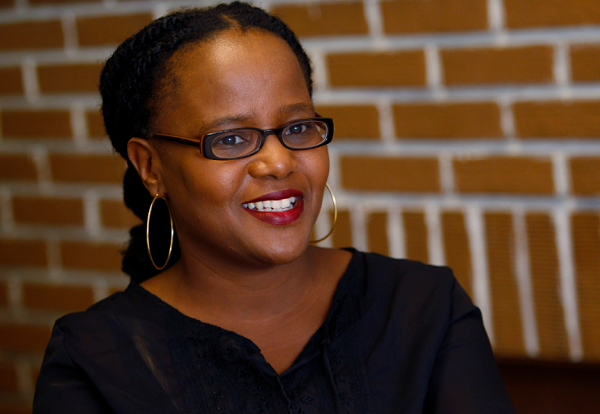
Meditations On Life, Death, And The Haitian Diaspora
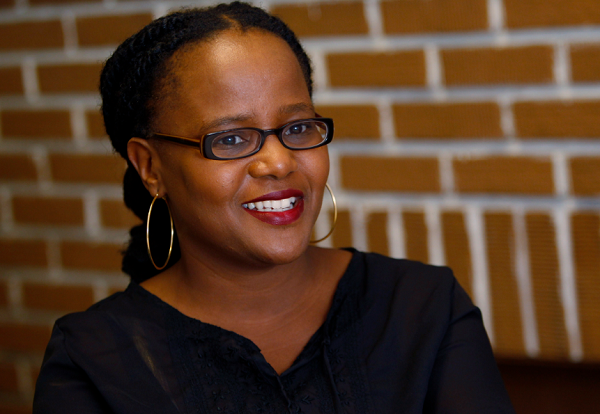
Edwidge Danticat is a renowned Haitian-American writer whose work is rooted in her native country.
 As a child in Haiti, she lived for many years in a state of waiting. By the time she was 4 years old both of her parents had left to work in the United States, but it took 8 more years for her own move to the U.S. to go through. Danticat now writes about Haiti from her home in Miami and thinks about how moving between countries colors the memories and histories that people pass on. Danticat presents the 25th Annual Stone Memorial Lecture on Wednesday, Sept. 20 at 7 p.m. in The Sonja Haynes Stone Center for Black Culture and History at University of North Carolina at Chapel Hill.Host Frank Stasio speaks with Danticat about her recent conversations with DACA recipients and how hurricanes and earthquakes have shaped how Haiti is perceived in the U.S.INTERVIEW HIGHLIGHTSOn the moment her father decided to emigrate from Haiti: He used to tell us the story of working in a shoe shop and the Duvalier's henchmen, the Tonton Macoutes, would come in, and they would want the best shoes from the shop. And then the shop owner – who otherwise would go out of business because, you know, they could not be denied anything – Started having my dad sort of fit them with these cheaper shoes. And my father was always afraid that if one of them caught on that he would shoot him. So he sort of tells that story of being at the foot of a Tonton Macoute trying to fit a shoe on his foot and realizing that he could – you know if anything were to go wrong – lose his life over that one moment. And there were very many moments like that for people living under the dictatorship.On finding a sense of belonging after immigration: Really they are doing it on faith and on their ability to work. And just really they are taking a big gamble, not just with their own lives but with the future of their children at times. So those questions dominate my life – my thoughts – quite a bit because they've been at the center of my life. I've seen them in action. I've seen also the kind of resistance and scapegoating – especially in the time that we live in now – that immigrants get at the same time that they're here. And they're trying to contribute – trying to work – and trying to make better lives for themselves in a way that also intersects with being productive members of this society.On the union between immigrant groups and African-Americans: Toni Morrison wrote a wonderful essay some years ago where she talks about – for a lot of new immigrant groups – the way that they become assimilated is by sort of taking on the [mentality] of racism and superiority. And so this is not part of my purview per se, but I think it's something that as immigrants – newly arrived immigrants – to keep an eye on … There is so much to learn from the African-American experience in this country.On the arrest and death of Danticat's uncle in the U.S.:A couple of years ago my uncle – who had been coming back and forth to visit the U.S. for over 30 years – was 81 years old, and there had been some trouble in Haiti at that time. And when he arrived at the airport in Miami, he was asked how long he would be staying. He tried to explain that he would be longer than the 30-day visa allowed. And so he asked what he [called] temporary asylum, and so he was arrested. He was detained. His medication was taken away, and he died five days later chained to a hospital bed in the prison ward of Jackson Memorial Hospital here. By Laura Pellicer & Frank Stasio | September 19, 2017
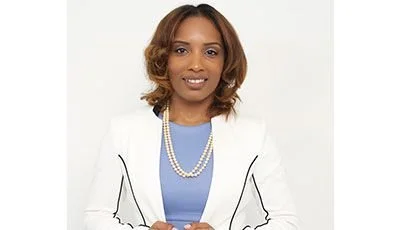
ALUMNI PROFILE: FROM WOMEN IN HAITI TO JUVENILES IN THE JUSTICE SYSTEM, SORAYA DENIS IS COMMITTED TO SERVICE
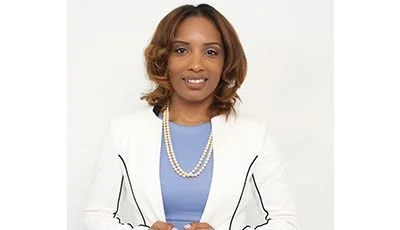
In her professional life, Soraya Denis serves as a senior program coordinator with the NYC Department of Correction (DOC), focusing on juvenile re-entry issues in the Youthful Offender Programming Division. It’s rewarding work, she said, but like many ambitious John Jay alumni, it’s only one part of her commitment to giving back to those groups that helped put her where she is today. Denis is also the founder of Dlo Pou Viv, a non-profit that advocates for clean water and personal hygiene for school-aged children and women in Haiti, and co-founder of Women Who Inspire Women (WWIW), a collective of professional women that promotes sisterhood and mentoring.Those commitments earned her a spot on the Star Network’s “40 Brooklyn Stars Under 40” ranking this year, an award that honors those who exemplify leadership skills not only in their chosen fields, but in their communities as well.“During my high school graduation, Marty Markowitz, then Brooklyn Borough President, said that ‘Brooklyn was the real capital of New York City,’” Denis recalled. “It's the county of Kings and, of course, Queens. I am a Brooklynite in every sense of the word.”That includes having a multi-cultural background. Born in Brooklyn to Haitian parents, Denis lived in her ancestral country for several years before returning at the age of 6. She developed an interest in law early on, and attended both The High School for Legal Studies and Sheepshead Bay High School. As an undergrad at John Jay, Denis majored in legal studies and took courses in the Thematic Studies Program, but eventually found herself torn between pursuing law school or going into law enforcement, for which she had begun preparing by participating in a co-op program with the U.S. Marshall Service.She ultimately followed a path somewhere between the two, graduating in 2006 and obtaining her master’s degree in Criminal Justice Leadership from St. John’s in 2010. John Jay, naturally, played a big role in her decision: “It was social justice hub, we had professors from law enforcement and social justice fields as well as corrections,” she said. “I realized then that I wasn’t tied to just becoming a lawyer and that I had options.”Today, Denis works in the DOC, opening up pathways to employment for young adults between 18 and 21 as they try and return to society after being incarcerated. This involves teaching them the soft and hard skills needed to get decent jobs upon release, as well as providing individualized support services and links to community-based organizations. “What’s rewarding about this work is that I am able to follow up on the young adults who leave DOC custody through our partnerships,” she said.Still, the 34 year old has never forgotten her roots. A visit to Haiti in 2008 convinced her to launch Dlo Pou Viv, Haitian Creole for “water to live”, which has held fundraising drives and conducted on-the-ground field work in an effort to bring international relief to the country’s water crisis. At the same time, she’s played a leading role in WWIW, which hosts an annual women’s history month event to highlight everyday women making strides in their communities.Both of these positions resulted her inclusion on the 40 under 40 list, a distinction she’s not taking lightly. “It serves to remind me that the little girl who moved back to Brooklyn from Haiti at 6 years old lived up to her childhood dreams,” she said.John Jay College of Criminal Justice

Cliff Avril's annual party for Haiti draws a crowd

It's called "Dining to Make a Difference," and Seahawk Cliff Avril's annual event does just that for thousands a world away in Haiti.Cliff and teammates Richard Sherman, Kam Chancellor, K.J. Wright, Earl Thomas, Jimmy Graham, and others gathered at Palisade in Magnolia to serve dinner to a restaurant full of guests.The benefit for the Cliff Avril Family Foundation raisef funds for Cliff's homeland, Haiti. His parents are from the island nation."I'm fortunate that I'm in a situation that I can give back," Cliff said. "And I'm trying to use my platform to do that."Dominican Nelson Cruz was also in attendance. The Mariner superstar says he and Cliff are "island brothers.""We know where we're coming from," Nelson said. "We know the needs. And we appreciate everything we have so far. And we can help."Like last year, Cliff also pledges to build a home for each sack he bags this season."And then there's people around the city of Seattle who pledged to do the same thing," Cliff said. "So last year we actually got to build 25 homes."By: Michael King | September 19, 2017

Gérald Oriol Jr. on tour in the department of Center and Artibonite

Gérald Oriol Jr., the Secretary of State for the Integration of Persons with Disabilities at the head of a BSEIPH delegation, was in the department of the Center last week to evaluate the interventions of his office in the department.During this visit, he met with the mayor of Thomonde, Mathéus Bernadeau and departmental directors of various public institutions in order to encourage a better integration of the needs of people with special needs in their interventions. He also discussed the issue of disability in the department with officials from associations of disabled people. Grant checks and school kits were distributed to disabled people in difficulty during the visit.The next day Gerald Oriol Jr. and his delegation were in the department of Artibonite. During the visit, he met the Mayor of Gonaives Neil Latortue and representatives of public and private institutions such as Caritas and Action Against Hunger to better take into account the needs of people with special needs. Like the day before, Secretary of State Oriol handed out grant checks and school kits to disabled people in difficulty.HL/ HaitiLibre - 19/09/2017