
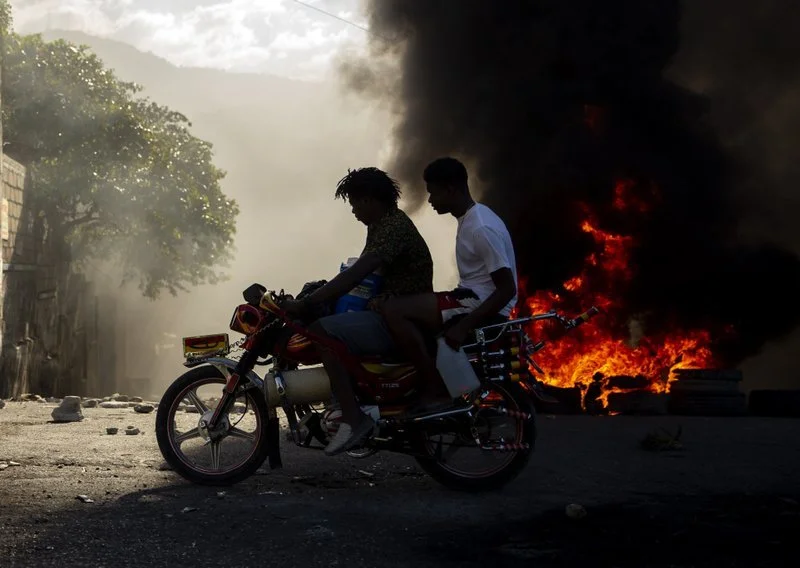
EXPLAINER: Why Haiti’s political strife has worsened
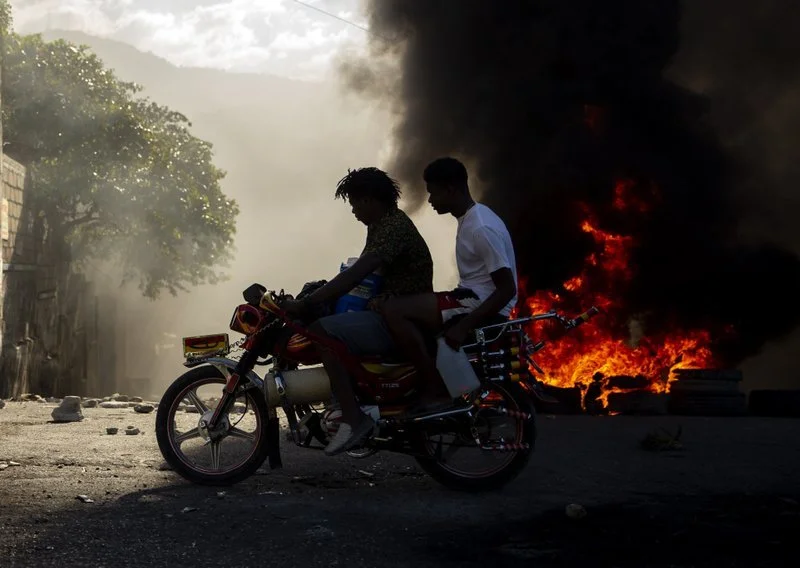
PORT-AU-PRINCE, Haiti (AP) — Political strife in Haiti has deepened as opposition leaders and supporters claim that President Jovenel Moïse’s five-year term has expired, demanding that he step down on Feb. 7. But on that day, Moïse announced that authorities had arrested 23 people accused of plotting an alleged coup to kill him and overthrow his government, including a high-ranking police official and a Supreme Court judge favored by the opposition. Hours after the arrests, the opposition nominated a supposed transitional president that no one has recognized.
The AP explains what is driving the protests and what the ongoing demonstrations and alleged coup conspiracy mean for Haiti.
WHO IS PROTESTING AND WHY?
Opposition leaders from various political parties organized protests in the weeks leading up to Feb. 7, the day they allege that Moïse’s term ended. Hundreds of supporters marched in the streets, often clashing with police as they clamored that Moïse step down. Haiti’s Constitution allows presidents to serve a five-year term, and opponents argue that Moïse already reached that limit. Moïse won after former president Michel Martelly’s term expired in 2016, receiving more than 50% of the vote but with only a 21% voter turnout in a country of more than 11 million people. The elections were so chaotic, though, that it forced the appointment of a provisional president for one year, so Moïse wasn’t sworn in until February 2017. He has repeatedly said he will step down in February 2022 and has called for legislative and presidential elections to be held Sept. 19, with a runoff scheduled for Nov. 21. The administration of U.S. President Joe Biden appears to support Moïse, with a State Department spokesman recently saying that a new elected president should succeed him when his term ends in 2022.
___
WHAT ELSE IS DRIVING THE PROTESTS?
Critics accuse Moïse of amassing more power in recent months, noting that he already has been ruling by presidential decree ever since he dissolved the majority of Parliament in January 2020 after failing to hold legislative elections in 2019 amid political gridlock. Moïse also has approved a decree that created an intelligence agency that answers only to the president and another that limits the powers of a court that audits government contracts and had accused Moïse and other officials of embezzlement and fraud, allegations they have denied. Another recent decree classifies robbery, arson and blocking public roads — a common ploy during protests —as terrorism, leading to heavy penalties. Some of the decrees drew rare criticism from the international community as well. Opponents also are rejecting an upcoming constitutional referendum scheduled for April 25, the first one to be held in more than 30 years. It calls for the creation of compulsory military service for those age 18, would create the position of a vice president to replace that of prime minister and establish a unicameral legislature to be elected every five years to replace the current Senate and Chamber of Deputies. In addition, the draft only states that a president cannot serve for more than two terms; it says nothing about whether they can be served consecutively as is currently prohibited. Experts note that the current Constitution bars changes to it via a referendum.
___
WAS THERE A PLAN TO OUST MOÏSE?
On Sunday, Moïse announced that authorities arrested 23 people accused of a coup conspiracy to allegedly kill the president and overthrow his government. Among those detained is a high-ranking police official and a Supreme Court judge who was one of three judges favored by the opposition to become a potential transitional president. Authorities said they seized several weapons and a copy of the judge’s speech if he were to temporarily replace Moïse, along with a recording with top security officials at the National Palace talking about an alleged plot to arrest the president. The opposition condemned the arrests and noted the judge has automatic immunity as they accused Moïse’s administration of political repression.
___
WHAT’S NEXT?
The opposition named another Superior Court Judge, Joseph Mécène Jean-Louis, as Haiti’s supposed transitional president after Moïse announced the arrests. Jean-Louis, who is the court’s oldest judge, said in a brief statement that he accepted the position. Neither Moïse nor anyone in the international community has recognized him. The normally congested streets in the Haitian capital of Port-au-Prince and elsewhere remain largely empty amid growing political uncertainty as Moïse’s administration continues to face a spike in violence and demands for better living conditions.
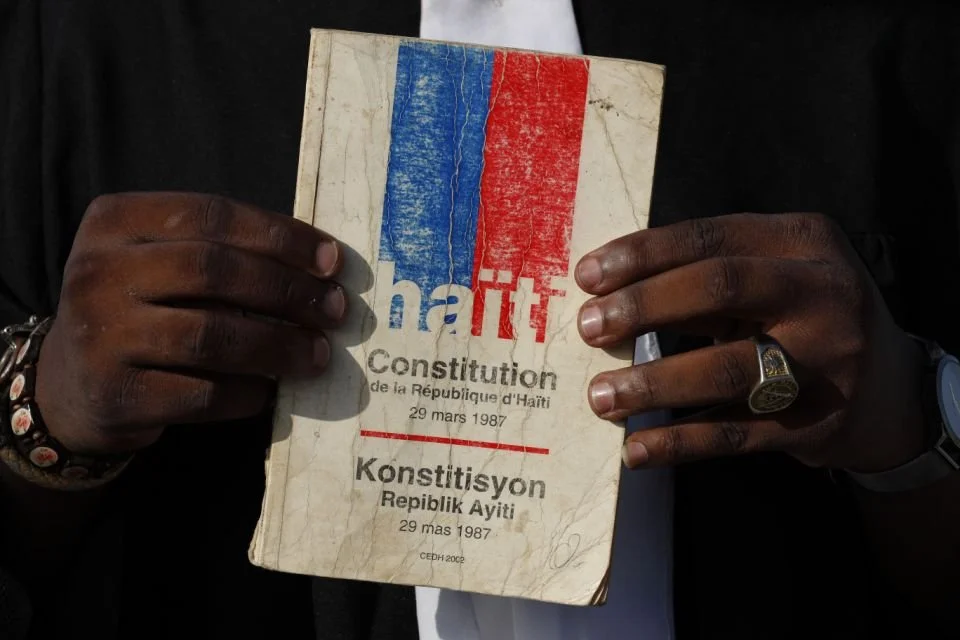
Haiti opens debate on proposed constitutional changes
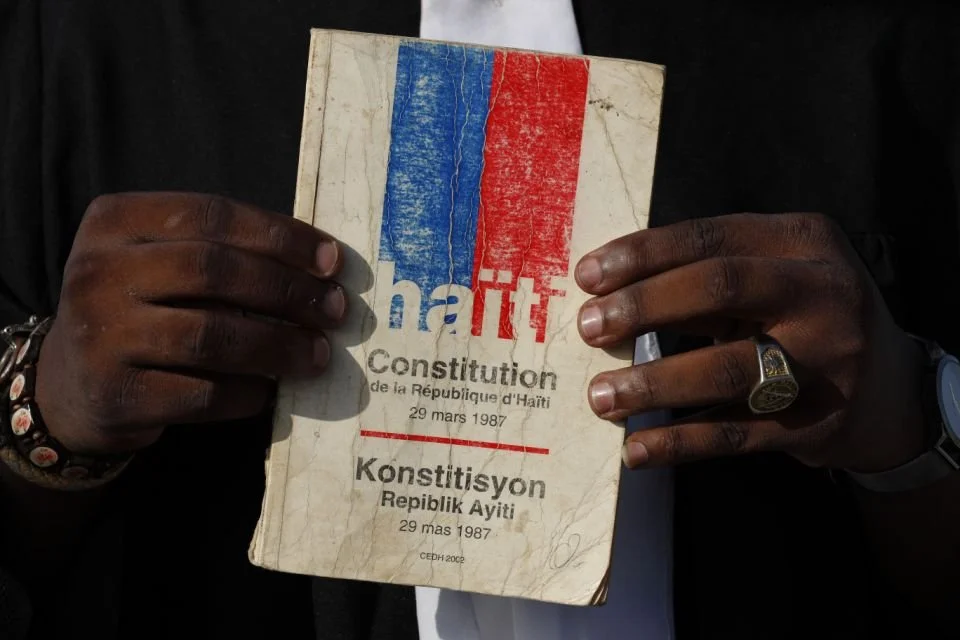
PORT-AU-PRINCE, Haiti (AP) — Haiti has unveiled multiple proposed changes to overhaul the country’s Constitution that officials plan to present to voters starting this week for an upcoming referendum that looms amid growing unrest.
The public meetings are scheduled to be held across Haiti for the next three weeks, ahead of the April 25 constitutional referendum, which would be the first one held in more than 30 years.
One of the biggest changes is an omission in the draft issued by an independent commission tasked with creating the constitutional changes that have generated heated debates. Haiti’s current Constitution bars presidents from serving two consecutive terms, but the draft only states that a president cannot serve for more than two terms; it says nothing about whether they can be served consecutively.
Human rights attorney Bill O’Neill told The Associated Press that his interpretation is that the omission would allow a president to serve two terms consecutively. He noted that those who drafted the 1987 Constitution currently in use were emerging from a 29-year dictatorship under two so-called “presidents for life”: François Duvalier and Jean-Claude Duvalier.
“The drafters were very wary of allowing anyone having too much unbroken time in the Presidency,” he said.
The new draft also drops the requirement that to be president of Haiti, one needs to have lived in the country for five consecutive years prior to the date of general elections. All it says is that one “must have habitual residence in Haiti,” a change that could allow the diaspora to run for the highest offices in Haiti, which is currently banned. The proposed change also would apply to the position of vice president.
Other proposed changes include creating the position of a vice president to replace that of prime minister and establishing a unicameral legislature to be elected every five years to replace the current Senate and Chamber of Deputies, which was largely dissolved more than a year ago when President Jovenel Moïse began to rule by decree following a lack of legislative elections.
Another change also calls for legislators to be elected every five years to match the presidential term since some senators are currently elected every two to six years.
“This requires elections every 18 months on average,” states the document issued by the independent commission. “The difficulty of respecting this binding electoral agenda plunges the country into a chronic institutional crisis.”
Critics of the proposed changes say they see it as a power grab by Moïse, who says he will step down in February 2022 when his five-year term ends. The opposition, however, argues that his term began when that of former President Michel Martelly ended in February 2016, even though Moïse wasn’t sworn in until February 2017 following a chaotic election process that led to the appointment of a provisional president for one year.
Alfredo Antoine, a former legislator, said the changes are simply a proposal at this point and that people have the right to study them. He also said opposition leaders should seek to create a dialogue with Moïse instead of organizing protests as they insist he leave office by Sunday.
“They should not put oil on the fire,” he said.
Opposition leaders could not be immediately reached for comment.
As officials meet with certain sectors of society to discuss the proposed constitutional changes, some are demanding more inclusion. Ulrich Louisma, a 40-year-old air conditioning repairman, said people and officials other than the president should provide input on a potentially new Constitution.
“It can’t be a one-man show,” he said.
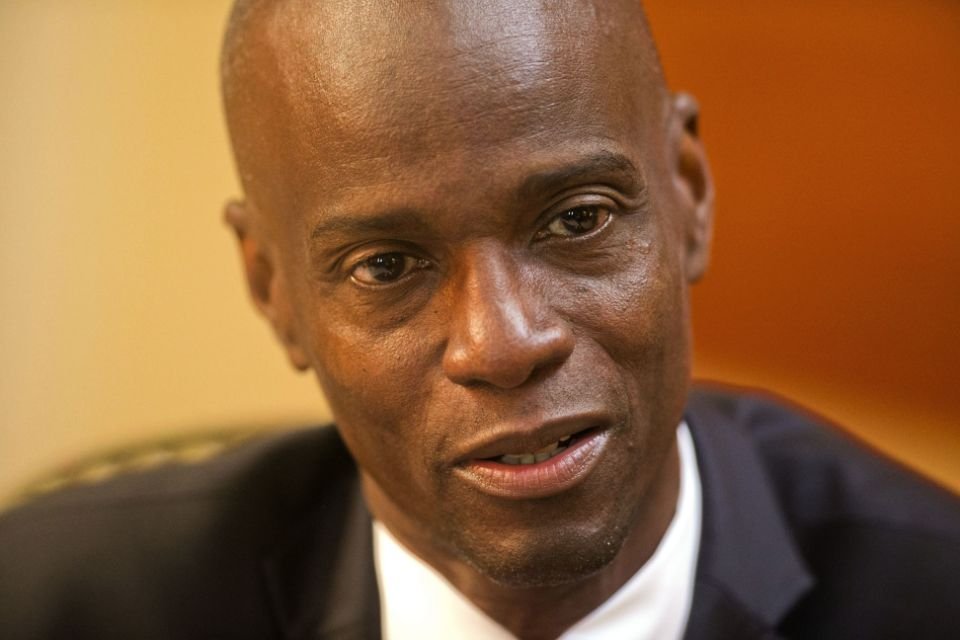
Haiti Opposition Agrees on Plan to Replace President Moise on February 7
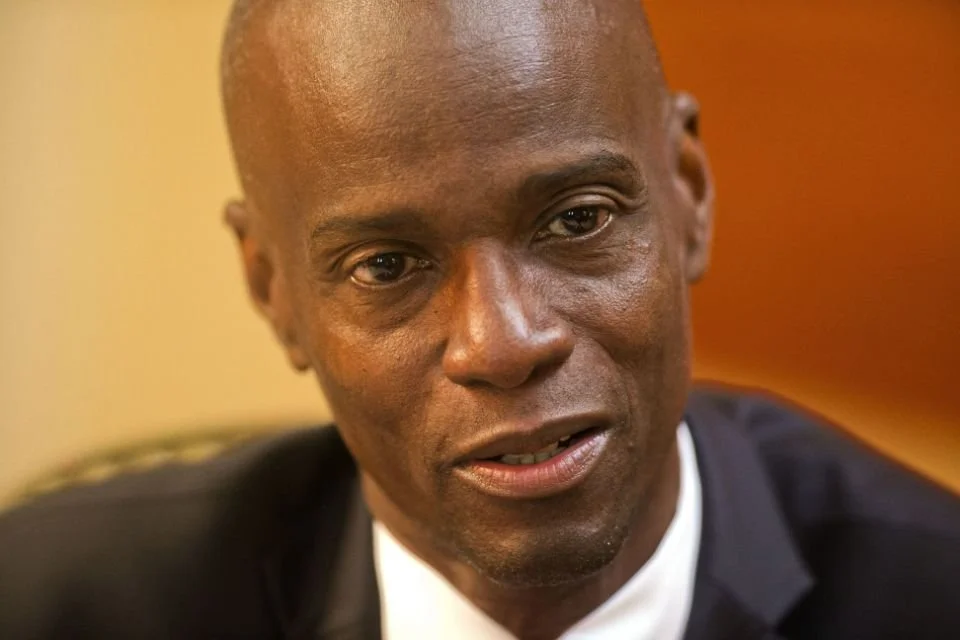
WASHINGTON/PORT-AU-PRINCE - Haiti's opposition leaders have agreed on a plan to replace President Jovenel Moise with a new head of state on Sunday.
They accuse Moise, who has ruled for nearly four years, of being an autocrat who failed to curb the rash of kidnappings that have terrorized the nation. They also criticize Moise for what they regard as his weak response to a crippling economic crisis.
Moise has said he will not step down until February 2022, noting he has one year left of his five-year term.
The opposition agreement, named Ako Final Teras Garden (Terrace Garden Final Accord), creates a commission made up of seven members of civil society and seven opposition leaders. The commission would be tasked with choosing a president to lead the transitional government from members of Haiti's Supreme Court.
The prime minister would be chosen among the opposition politicians, and the heads of government ministries would be selected by the new government.
The opposition is determined to finalize their choices before February 7, they announced Monday.

Moise has said he intends to transfer power to the winner of the general election scheduled for September of this year.
Moise has also said he intends to make changes to the country's constitution. A hand-picked Provisional Electoral Council (KEP) was chosen last year, despite criticism from the opposition that it is not representative of civil society. The KEP announced in January that a referendum on the constitution will be held on April 25.
In an exclusive interview with VOA, Haitian Ambassador Bocchit Edmond said the opposition's plan to form a transitional government has been tried before — and failed.
"It is time for Haiti to leave that cycle — that cycle of using illegitimate people to replace elected officials," he told VOA. "Every time we have elections, we have to reverse the electoral votes. We have to ask the president to go, (only) to be replaced by a transitional government, which has never served the good of the Haitian people."
But the opposition isn't listening. Leaders announced a nationwide mobilization in all 10 departments of the country that began January 28-31, followed by general strikes Monday and Tuesday, and again on February 7 to keep the pressure on Moise, who was a businessman before entering politics, to step down.
Former Senator Jean Charles Moise of the Pitit Dessalines opposition party joined protesters in the streets of Port-au-Prince on Sunday.
"When I was a senator and my term expired, I left the Senate. I was elected to a six-year term, so I resigned. We all know that the constitution states that every five years there must be elections to choose a new president. A president's term lasts five years. That is why we have told President Jovenel Moise that his term is expired," Moise (no relation to the president) told VOA.
Former senator Moise said after February 7, there will be a new "system" governing Haiti and a there will be a transition period.
"The leader will not be a member of the opposition — I want to reassure the people (of Haiti) about that — whether you are living in Haiti or abroad, this time we must liberate our nation, this is our country. (General Jean Jacques) Dessalines did not win the revolutionary war to end up with this result," he said.
Haitian opposition leaders aren't the only ones calling for a transitional government. U.S. Representatives Andy Levin, a member of the Foreign Affairs Committee, Gregory Meeks, incoming chair of the House Foreign Affairs Committee, and Albio Sires, chair of the Western Hemisphere Civilian Security and Trade subcommittee, expressed the need for a transition in Haiti in a joint statement issued in December 2020. The U.S. lawmakers said there was "growing concern" about political events in Haiti.
“Haitian President Jovenel Moïse is pursuing an increasingly authoritarian course of action, issuing a series of recent decrees that include creating an extraconstitutional domestic ‘intelligence’ force,” the statement said. “His latest actions are reminiscent of past anti-democratic abuses the Haitian people have endured, including the run-up to the Duvalier dictatorship. We will not stand idly by while Haiti devolves into chaos.”

Reacting to the statement in December, Ambassador Edmond expressed frustration and said he intended to meet with the congressmen.
“It is really disturbing,” he told VOA. “It saddens us to see democratic officials call for a transitional government. We don’t think that going through a transition again will help Haiti.”
Haiti has had eight provisional governments since the departure of Jean Claude “Baby Doc” Duvalier in 1986.
Last week, Edmond told VOA he had a "lengthy discussion" with Congressman Levin that lasted more than 45 minutes. He said they met virtually due to COVID-19 restrictions.
"We will continue to discuss the situation and show that maybe they had erroneous information. But we will continue the dialogue to make sure they have accurate information. I'm here to answer all their questions and give them any information they ask for," Edmond told VOA.
The ambassador said he plans to speak with Congressman Meeks later this month.
Meanwhile, a general strike announced by Haiti's unions to protest against insecurity and to demand the president resign was observed Monday. The streets of the capital were mostly empty, with only pedestrians and a few motorbikes moving about, according to VOA Creole reporters in the capital.
Most businesses, markets and schools remained shuttered. A second day of strikes is planned for Tuesday.
Matiado Vilme and Florence Lisene in Port-au-Prince contributed to this report.
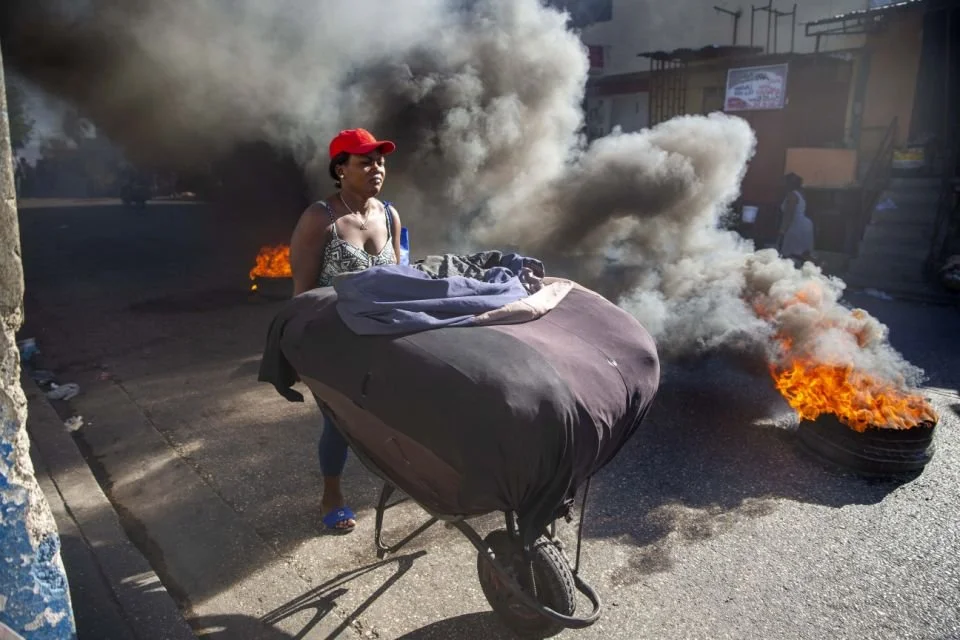
Haiti leader speaks of more power for diaspora amid strife
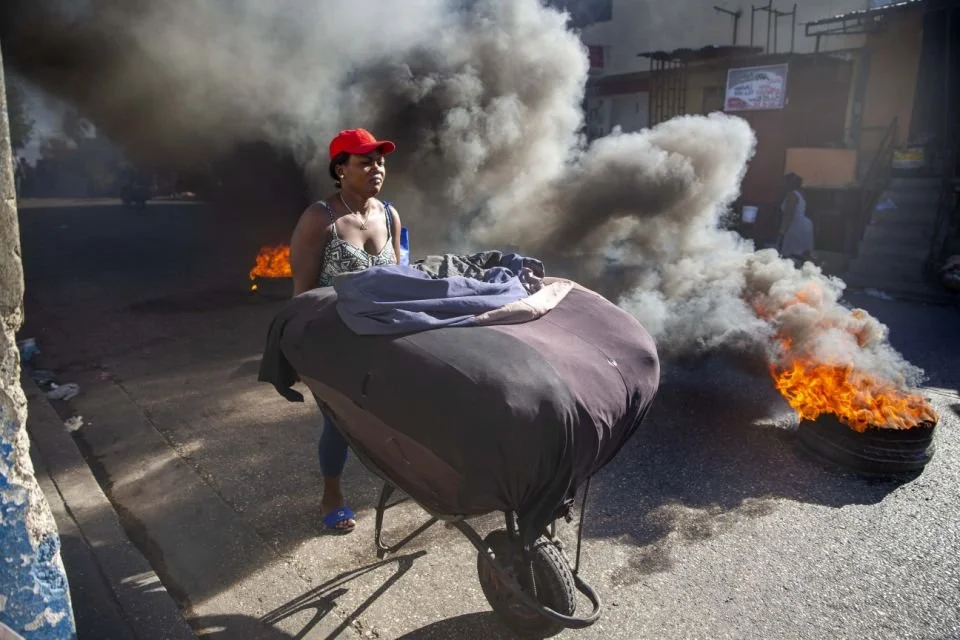
PORT-AU-PRINCE, Haiti (AP) — Haitian President Jovenel Moïse said Monday that proposed constitutional amendments would allow members of the country's diaspora to run for the presidency and other high-ranking offices.
The announcement came during an online public address during which Moïse reiterated that he would not step down until February 2022 and urged Haitians to support the creation of a new constitution, which is due to be voted upon in April.
“It’s time to change it,” he said. “We can’t continue like this. The country is paralyzed.”
Moïse spoke on the first day of a two-day transportation strike that paralyzed parts of Haiti and forced the closure of banks, schools and businesses. Haiti also has been hit by ongoing, often violent protests in recent years against corruption and for better living conditions.
The proposed constitutional changes are expected to be made public this week as opposition leaders step up their demands that Moïse relinquish power on Sunday, arguing that his five-year term began when that of former President Michel Martelly expired in February 2016.
However, a chaotic election process led to the appointment of a provisional president for a year until Moïse was sworn in a year later.
Moïse also pledged to keep fighting a rise in kidnapping, saying he won’t allow gang members to scare people into not participating in the upcoming constitutional referendum or the general elections scheduled for later this year.

9-Year-Old From Haiti Detained by Immigration in Trump’s Final Days in Office Is Released Home to Family

Vladimir Fardin, a 9-year-old boy who was separated from his family and held in a shelter for unaccompanied immigrant children in the final days of the Trump administration has been released and is now back home in Haiti.
Vladimir had flown into the U.S. last Sunday with his older brother, Christian Laporte, a 19-year-old who was going to school at a college in Pleasant Hill, Calif., according to KQED news.
Customs and Border Protection officials at San Francisco airport refused to allow the two to enter the country on their visas, and ultimately put Laporte on a flight to the Dominican Republic while transferring Vladimir to a detention center for unaccompanied immigrant children. CBP officials said the older brother presented a student visa at the airport but was missing other required admissibility documents, and that the 9-year-old was deemed inadmissible due to previous violations of his tourist visa.
Johnny Sinodis, a lawyer with Van Der Hout LLP, the law firm representing the brothers’ family, told The Root that Vladimir’s release was finally secured after the 9-year-old spent over a week in detention by the Office of Refugee Resettlement. Vladimir’s release came about through negotiations between Immigration and Customs Enforcement and his lawyers, said Sinodis, as ORR maintained that the 9-year-old couldn’t be released from their custody until he spent two weeks quarantining in their facility and had two negative COVID-19 tests.
“That policy does not apply to individuals like Vladimir who would not be released into a larger facility at ORR where he would then mix with a larger population of other children,” Sinodis said they told the agency.
After an emergency immigration hearing before a judge in San Francisco where Vladimir’s application to be admitted to the U.S. was withdrawn, the 9-year-old was allowed to board a plane to Haiti and returned home to his family on Wednesday.
“We believe that this case could have been handled differently from the outset,” said Sinodis, who added that it wasn’t necessary for CBP to separate the child from his family and detain him.
Sinodis credited the ultimate release of Vladimir to the headway the law firm was able to make with officials at ICE, but did not discount the idea that the recent shift in federal administration may have helped the process along.
“It’s really hard for me to tell you if this had happened three weeks ago, we would have had the same result,” said Sinodis. “I tend to think we would have had more obstacles. But definitely, the Biden Administration coming into office did not hurt.”
Nearly 70,000 immigrant children were held in federal custody in 2019. President Biden campaigned against the prolonged detention of immigrant children, but according to NBC News, he has delayed executive orders he promised to sign on his first day in office that would establish a task force to reunite children separated from their families by the Trump administration.
Sinodis emphasized that Vladimir spent over a week in government custody, though he had more support than most children in the immigration system do.
“For all the other children that don’t have the benefit of access to counsel and people within their family who have connections within the activist community [like Vladimir], they could be stuck in detention for much longer,” he said. “That’s really the scary part of this.”
Sinodis added that a child psychiatrist who worked on the case told immigration officials that the 9-year-old was traumatized by his experience in detention, as he had never spent any time away from his family.
“He was looking forward to being with his mom again.”
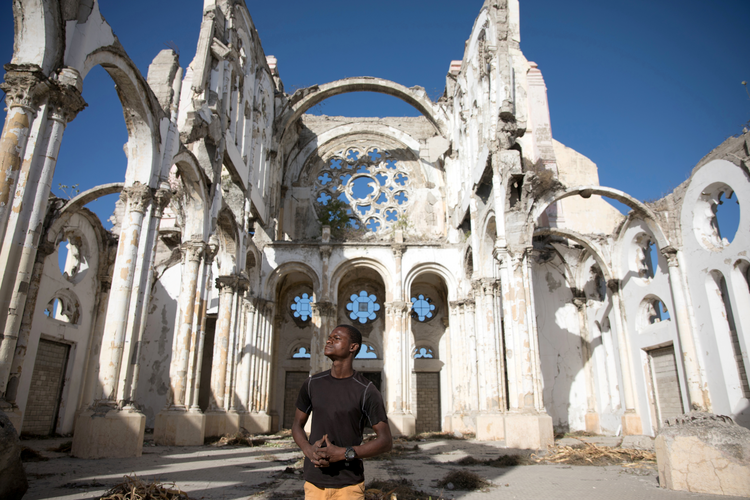
The road to racial justice must also run through Haiti
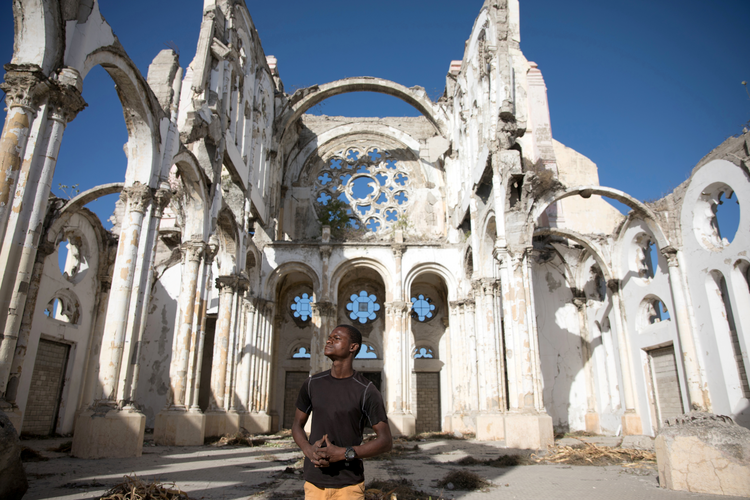
From the inequitable loss of life and livelihood caused by the Covid-19 pandemic to obscene public exhibitions of racial injustice, the events of 2020 have held up a mirror. At times, we saw the best of ourselves. But it is also clear that many of us have continually failed to care for others as much as we care for ourselves. That is, we have for too long failed to see others as ourselves. As a result of this failure of recognition, the groups of people who have been left behind rather than lifted up are too numerous to name.
The pain and suffering—including but not limited to the killings of unarmed individuals in our streets—has given us a new lens through which we may apprehend unconscionable injustices. Nearly 160 years after the end of slavery and 60 years after the height of the civil rights movement, we must finally steel our resolve to correct them.
I help lead an institution operating in two countries, the oldest and second oldest republics in this hemisphere, so it is impossible for me not to appreciate how this work necessarily extends beyond our shores and in particular to Haiti—the most impoverished country in our hemisphere, whose per-capita income is tragically more at home with some of the most impoverished nations on the African continent.
It is often overlooked that Haiti is the birthplace of our entire hemisphere. It is where everything we now know as the Americas, for better and for worse, began in 1492, when Columbus established the first European settlement near what is now the port city of Cap-Haïtien. Haiti was also the first nation to throw off the shackles of slavery, a full 60 years before the United States did.
"Haiti was the first nation to throw off the shackles of slavery, a full 60 years before the United States did."
An auspicious beginning, however, does not guarantee a bright future. European powers, as well as the newly minted United States of America, quickly took steps to marginalize Haiti after it gained independence from France in 1804. Blackness, never mind a nation freed and led by formerly enslaved people, was a threat. The economic success of the United States relied on the oppression and exploitation of Black bodies, and President Thomas Jefferson imposed an embargo on trade with the independent nation. The United States would not formally recognize Haiti until President Lincoln sent a diplomatic representative there in 1862.
Similarly, France did not recognize the country until 1825, and only after Haiti agreed to pay 150 million francs, the equivalent of $21 billion today, to compensate former slaveholders for their “loss of property” during the Haitian Revolution. (For comparison, Haiti’s current annual gross domestic product is just $8.5 billion.) As France made its demands, its warships in Port-au-Prince harbor served as an uncomfortable reminder of Haiti’s new chains.
For the next 200 years, the world’s relationship with Haiti generally ranged from neglect to outright abuse. More recent international support has not been nearly enough to put Haiti back on an equal playing field after centuries of marginalization.
Today, the state of the largest majority-Black country in our hemisphere is disturbingly analogous to the state of Black lives in the United States, where the net worth of a typical white family is nearly 10 times the net worth of a typical Black family. The average G.D.P. per capita of countries in the Western Hemisphere is just over $29,000, dwarfing Haiti’s GDP by a factor of 34.
"Today, the state of the largest majority-Black country in our hemisphere is disturbingly analogous to the state of Black lives in the United States."
As the Biden administration takes shape, there are several things that the United States and the international community can do for Haiti to ensure that the issue of racial justice is being addressed both at home and abroad.
First, give it historical recognition. Give Haiti credit for what it has accomplished in being first country to abolish slavery in the 19th century. Part of continued progress for Black lives means decolonizing the narrative of progress itself. It means reminding the world that slavery was ended first by Black people in Haiti.
Second, the U.S. government (and France, too) should see it as a moral imperative to help bring Haiti in from the margins. Fortunately, the United States has a capable and committed leader on the ground in the current U.S. ambassador, Michele J. Sison, and Haitians are eager to build a just and prosperous country for themselves and their children.
The ambassador should be given the resources she needs to be of service to the Haitian government so that the Haitian government can in turn be of service to its people. If the international community is looking for a starting point, a 10-year program to underwrite a national budget truly capable of supporting an 11-million person country, as my colleague Deacon Patrick Moynihan argued five years after the devastating earthquake of 2010, would create the institutional growth necessary for Haiti to become a thriving, independent nation.
Finally, for all foreign charitable organizations working in the country (and the donors who fund them), education must be the top priority. Haiti needs upstream solutions, not saviorism. It is illustrative to consider that enslaved people were given housing, as deplorable as it was, and access to food and in some cases even medical care—but not education.
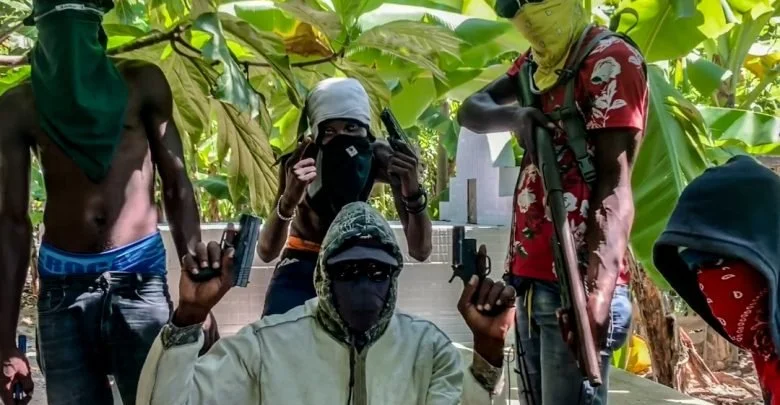
Kidnapping by Government-Backed Gangs Is Surging in Haiti
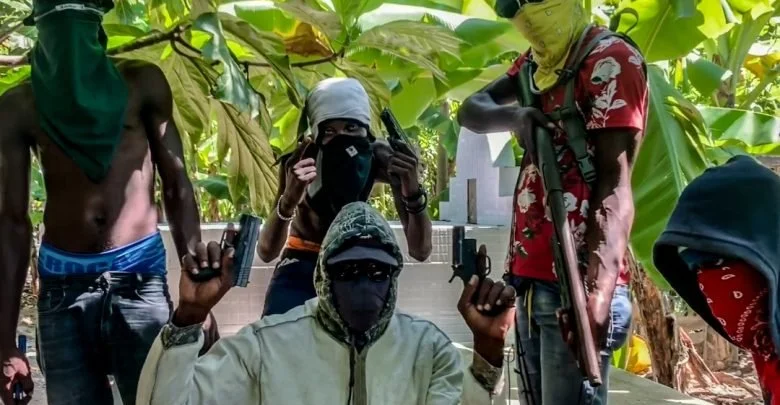
Demanding a ransom can seem an easy money in a country where 60 percent of people live below the poverty line.
Two of the men behind the kidnapping of Evelyne Sincère in Haiti late last year gave different accounts of her final moments in a live interview from police custody on November 9. They exchanged blame for her suffocation, each claiming he played a largely passive role while the other one’s hands encircled her neck.
All three of the men who participated in the crimes that killed the twenty-two year old student were close to tears. One bowed his head, as if to hide from the camera.
“I didn’t want to get into this,” said Obed Joseph, who lured Sincère to a secluded square in Port Au Prince on October 29. Strapped for cash, the three men resolved to kidnap Sincère, who they believed had a wealthy father. Their plan was to drug her so that she would be unable to identify them later, then release her after payment. In reality, Sincère’s father sells small goods on the street. Facing a demand of $8,000, the family could only lump together just over $1,000.
Sincère’s body was discovered by her sister, Enette Sincère, four days after she disappeared, folded inside a metal barrel, perched atop a trash heap.
Kidnappings for ransom have surged in Haiti, from a total of 39 in 2019 to nearly 200 in 2020. At the same time, a spike in gang violence has caused several neighborhoods to go up in flames, murdered hundreds, and left a thousand people displaced. “The gang phenomenon is going to be an issue in a place that has a deliberately underdeveloped state apparatus and deliberately poor and inegalitarian social structure.” Mark Schuller, president of the Haitian Studies Association told VICE World News.
Recent victims of kidnapping for ransom include a prominent surgeon, a guitarist, and the wife of a security guard at the National Palace.
“I was driving when they intercepted me and shot bullets into the air. Six guys with big guns kept me in my car for two days and one night. I still don’t know who they were,” Hans Telemaque, a doctor finishing his residency in Port-Au-Prince, told VICE World News. “My loved ones don’t want to tell me how much they gave for the ransom. Now, I don’t go out often, and when I do, I wear glasses.”
In a country where 60% of the population lives below the poverty line, kidnapping a member of the professional class and demanding tens of thousands of dollars can be a ticket to easy money. In several instances last year, up to a million US dollars were demanded by kidnappers for victims being held captive. “Kidnapping is a very profitable business that does not require a lot of investment in terms of costs to benefits,” said Jean Eddy Saint Paul, director of the Haitian Studies Institute at Brooklyn College.
Though periodic spikes in gang violence are normal in Haiti, the escalation in kidnappings is not. The gangs’ seemingly indiscriminate selection of victims suggests the phenomenon sprouts from political as well as financial motivations. “It’s starting to affect people who are working class- neighborhoods that are strongholds of the [political] opposition. That’s a reason why people are deciding this is political in nature,” Schuller said. This year, kidnappers have begun to demand impossible sums of money from families in impoverished neighborhoods in Port Au Prince like Cite Soleil, a maze of fragile shacks where opposition to President Jovenel Moïse is thick on the ground. With families unable to bring forth the necessary funds, bodies are stacking up.
Since late 2019, Moïse has ruled by decree after the country failed to hold parliamentary elections in October 2019. He has lost public legitimacy while confronted with large-scale protests against his leadership. He has repeatedly refused to call new elections, despite international pressure. In May 2019, thousands of people went on strike and flooded the streets for six months after it emerged that Moïse had embezzled hundreds of thousands of dollars pledged to public programs.
“It is pretty clear that for President Moïse, the source of his power is his close relationship with the United States.” said Schuller.
An unexplained shift to kidnappings in opposition strongholds has led many to believe the government is working with gang members , neglecting official police departments and allowing gangs to serve as de-facto security forces. With collective fear in the air, streets in Port Au Prince are near empty - which is rare, even in the midst of a pandemic. “That is why gangs have become powerful, arrogant, because they are protected by the administration, armed with weapons, money and ammunition, involved in massacres, murders and kidnappings.” said Pierre Esperance of the Haitian National Human Rights Defense Network.
The rise in kidnappings for ransom, which reached a level of nearly one per day towards the end of 2020, could also be a signal that the government has reduced the cash it dispenses to gangs. “Kidnappings have increased since October. That’s because the gangs say the administration hasn’t given them any money since August. The gangs say that’s why they kidnap - to make money,” Esperance said.
“To end this, the living conditions need to improve. Vocational schools need to be set up to help people make money,” said Telemaque.
The Haitian state has created an “enabling environment for further violence” by allowing the demise of the rule of law, according to the UN Security Council. International aid could help remedy the situation, according to the body, although it acknowledged that foreign support, and its culture of post-crisis “short-termism,” has a history of helping aggravate violence, corruption, and social turmoil in Haiti. As recently as last year, hundreds of UN Peacekeepers stationed in Haiti were accused of sexual abuse, and of fathering children with Haitian women, then abandoning them.
Evelyne Sincère’s story embodies the fears of hundreds of other students, who fashioned hand-painted signs and popularized hashtags on social media to build a national movement against kidnapping using her image. President Moïse issued a statement when it became clear her story constituted significant national news, saying “such atrocities are unacceptable.”
For those who hold Moïse’s administration partially responsible for this year’s kidnappings, the words ring hollow. “The state itself is operating as a gang,” Saint Paul said.
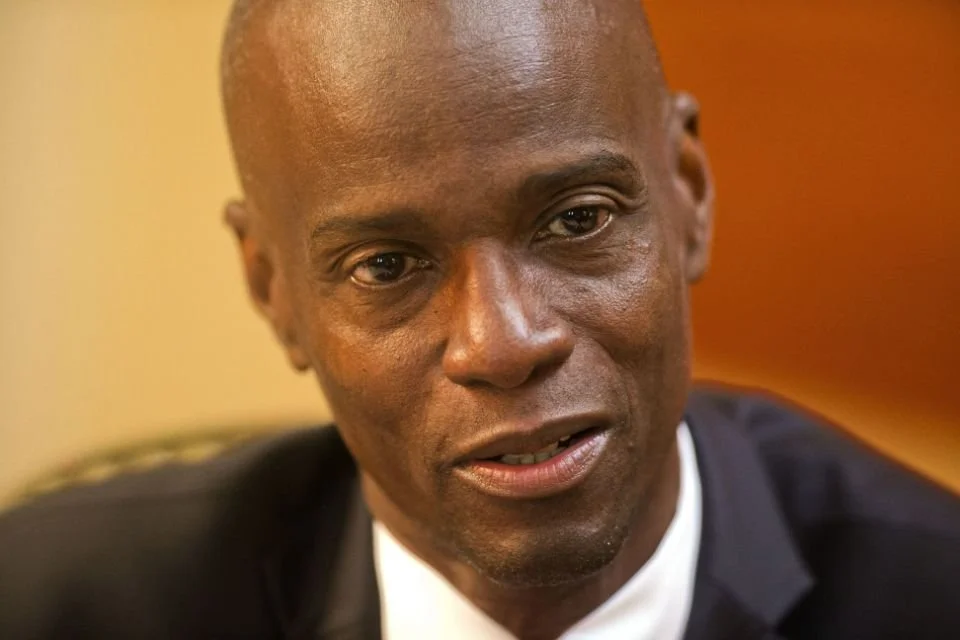
Haiti braces for unrest as opposition demands new president
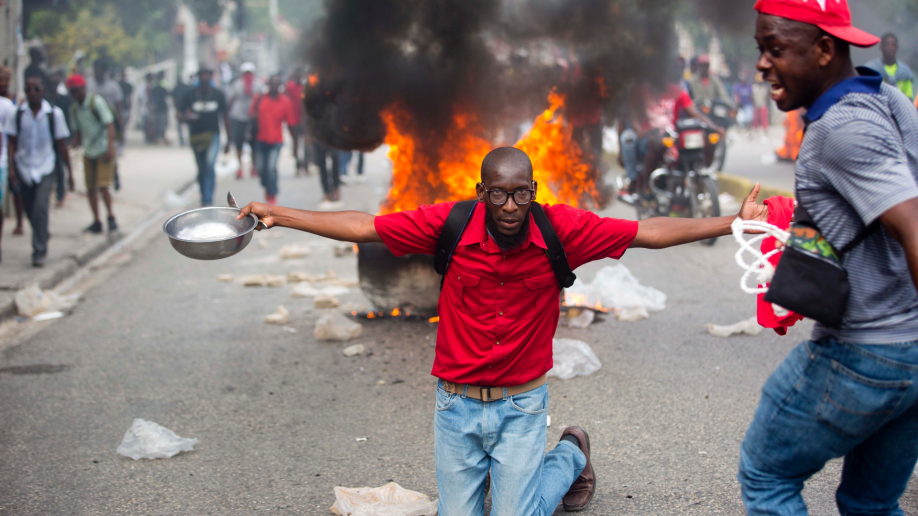
PORT-AU-PRINCE, Haiti (AP) — Flying rocks. Burning tires. Acrid smoke. Deadly gunfire.
Haiti braced for a fresh round of widespread protests starting Friday, with opposition leaders demanding that President Jovenel Moïse step down next month, worried he is amassing too much power as he enters his second year of rule by decree.
“The priority right now is to put in place another economic, social and political system,” André Michel, of the opposition coalition Democratic and Popular Sector, said by phone. “It is clear that Moïse is hanging on to power.”
Opposition leaders are demanding Moïse’s resignation and legislative elections to restart a Parliament dissolved a year ago.
They claim that Moïse’s five-year term is legally ending — that it began when former President Michel Martelly's term expired in February 2016. But Moïse maintains his term began when he actually took office in early 2017, an inauguration delayed by a chaotic election process that forced the appointment of a provisional president to serve during a year-long gap.
Haiti's international backers have echoed some of the opposition’s concerns, calling for parliamentary elections as soon as possible. They were originally scheduled for October 2019 but were delayed by political gridlock and protests that paralyzed much of the country, forcing schools, businesses and several government offices to close for weeks at a time.
Some in the international community also condemned several of Moïse's decrees.
One of those limited the powers of a court that audits government contracts and had accused Moïse and other officials of embezzlement and fraud involving a Venezuelan program which provided cheap oil. Moïse and others have rejected those accusations.
Moïse also decreed that acts such as robbery, arson and blocking public roads — a common ploy during protests — would be classed as terrorism and subject to heavy penalties. He also created an intelligence agency that answers only to the president.
The Core Group, which includes officials from the United Nations, U.S., Canada and France, questioned those moves.
“The decree creating the National Intelligence Agency gives the agents of this institution quasi-immunity, thus opening up the possibility of abuse," the group said in a recent statement. “These two presidential decrees, issued in areas that fall within the competence of a Parliament, do not seem to conform to certain fundamental principles of democracy, the rule of law, and the civil and political rights of citizens.”
Moïse has dismissed such concerns and vowed to move forward at his own pace.
In a New Year’s tweet, he called 2021 “a very important year for the future of the country.” He has called for a constitutional referendum in April followed by parliamentary and presidential elections in September, with runoffs scheduled for November.
“There is no doubt elections will happen,” Foreign Minister Claude Joseph told The Associated Press, rejecting calls that Moïse step down in February. “Haiti cannot afford another transition. We need to let democracy work the way it should.”
Joseph said Moïse remains open to dialogue and is ready to meet anytime with opposition leaders to solve the political stalemate.
He also said the constitutional referendum won't give Moïse more power but said changes are needed to the 1987 document.
“It is a source of instability. It does not have checks and balances. It gives extraordinary power to the Parliament that abuses this power over and over,” Joseph said. “It’s not the president’s own personal project. It’s a national project.”
While officials haven't released details of the referendum, one of the members of the consulting committee, Louis Naud Pierre, told radio station Magik9 last week that proposals include creating a unicameral Parliament to replace the current Senate and Chamber of Deputies, extending parliamentary terms and giving Haitians who live abroad more power.
The referendum and flurry of decrees are frustrating many Haitians, including Rose-Ducast Dupont, a mother of three who sells perfumes on the sidewalks of Delmas, a neighborhood in the capital.
“The political problems in my country have been dragging on for too long,” she said. “They are never able to find a solution for the nation. ... We are the ones suffering.”
The nation of more than 11 million people has grown increasingly unstable under Moïse, who received more than 50% of the vote but with only 21% voter turnout.
Haiti is still trying to recover from the devastating 2010 earthquake and Hurricane Matthew that struck in 2016. Its economic, political and social woes have deepened, with gang violence resurging, inflation spiraling and food and fuel becoming more scarce at times in a country where 60% of the population makes less than $2 a day.
“I don’t have a life,” said Jean-Marc François, who wants Moïse gone. “I don’t have any savings. I have three kids. I have to survive day by day with no guarantee that I’ll come home with bread to put on the table.”
Some days he works in construction; others he does yardwork or disposes of garbage or moves boxes at warehouses, which sometimes pays 500 gourdes ($7) a day.
François said he won't take part in the “circus act” of voting in the referendum or elections.
“We’re talking about voting for a new president? A new constitution? Deputies and senators? They’re all going to be the same,” he said. “This is a country of corruption.”
Moïse has faced numerous calls for resignation since taking office, with protests roiling Haiti since late 2017. The demonstrations have been fueled largely by demands for better living conditions and anger over crime, corruption allegations and price increases after the government ended fuel subsidies.
The most violent protests occurred in 2019, with dozens killed, and some worry about even more violence as the opposition steps up its demands that Moïse resign amid fears that elections will be delayed once more.
“Can the current status quo continue for another year?” said Jake Johnston, senior research associate at the Center for Economic and Policy Research in Washington. “Moïse can announce an electoral calendar ... but what signs are there that that’s going to actually happen?”
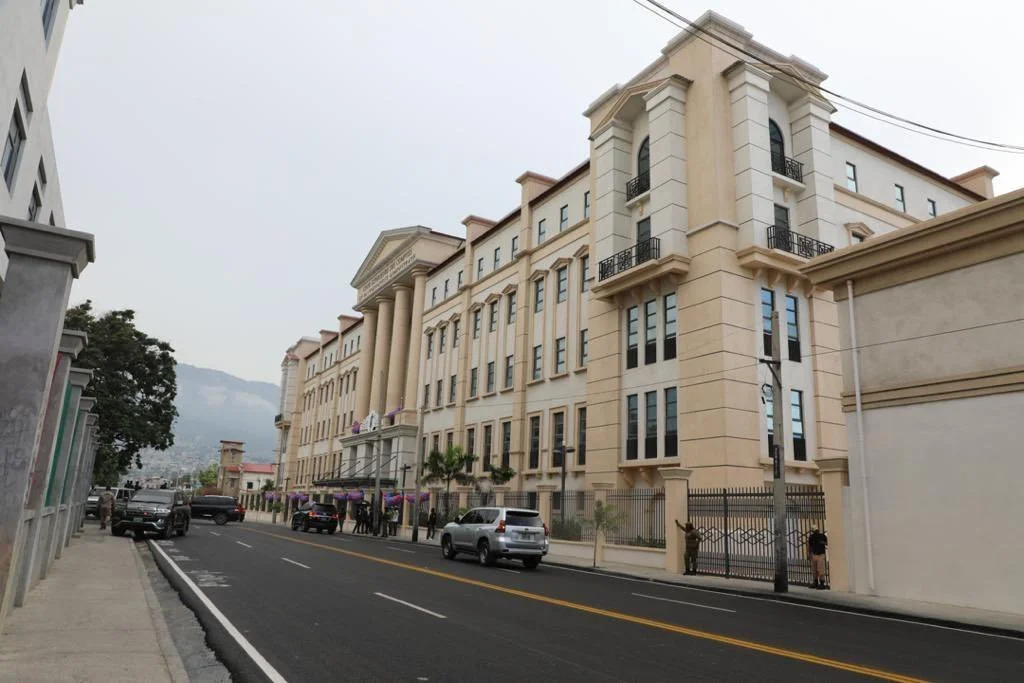
New $31 Million Court Building Opens In Haiti
Haiti’s President Jovenel Moïse inaugurated the new building of the Superior Court of Accounts and Administrative Litigation (CSC/CA) on Tuesday in Port-au-Prince.
The six-story building is about 15,260 square meters, or 164,000 square feet, and cost more than $31 million. The Haitian government and the International Monetary Fund (IMF) financed CSC/CA’s new building.
Haiti’s First Lady Martine Moïse, Prime Minister Joseph Jouthe and CSC/CA’s advisers also attended the inauguration ceremony.
In Pictures: Rubber bullets, tear gas at Haiti protests
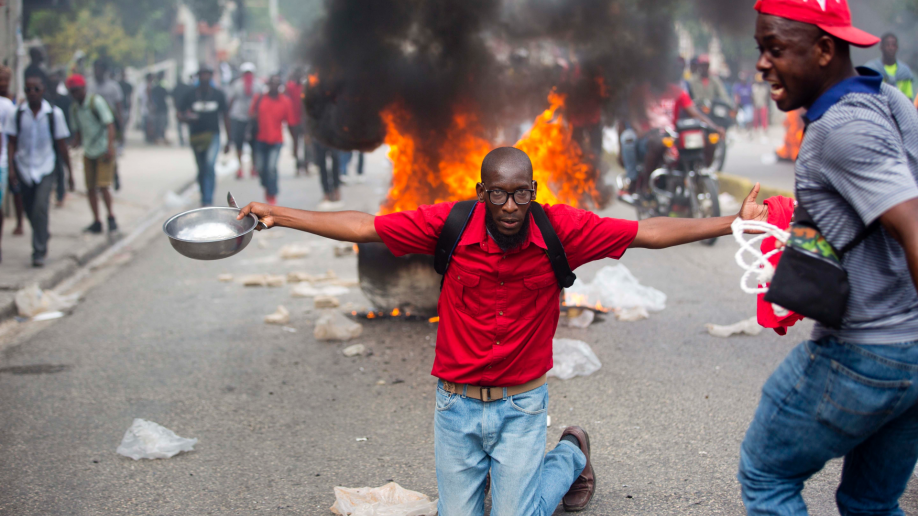
Several people left injured after the latest unrest during more than a year of protests in Haiti.
l Moise, coinciding with the anniversary of the death of independence hero Jean Jacques Dessalines. [Jean Marc Herve Abelard/EPA]18 Oct 2020
Haitian police fired rubber bullets and tear gas to disperse anti-government protesters who blocked roads and set fires in the capital, Port-au-Prince, with several people left injured.
Saturday’s unrest was the latest during more than a year of protests calling for the resignation of President Jovenel Moise over corruption charges.
Haiti is currently experiencing a political impasse without a parliament and is now run by decree under Moise.
Many Haitians criticise the government’s response to the coronavirus pandemic, alleging it has not done enough to provide treatment or offer economic support to those who lost work due to a national lockdown aimed at preventing its spread.
Police have held their own protests this year, demanding better pay and working conditions. In February, police exchanged fire with Haitian soldiers outside the national palace where police were protesting working conditions.
Earlier this year, a scathing United Nations report accused Haitian police of corruption and failing to protect the population.
![Hundreds took part in anti-government protests in Port-au-Prince. [Jean Marc Herve Abelard/EPA]](https://www.aljazeera.com/wp-content/uploads/2020/10/h_56429778.jpg?fit=1170%2C781)
Advertisement
![The country is currently experiencing a political impasse without a parliament and run entirely by decree under Moise. [Dieu Nalio Chery/AP Photo]](https://www.aljazeera.com/wp-content/uploads/2020/10/AP_20291643132907.jpg?fit=1170%2C780)
![The opposition organised the large demonstration against President Moise on the anniversary of the killing of national independence hero Jean-Jacques Dessalines. [Dieu Nalio Chery/AP Photo]](https://www.aljazeera.com/wp-content/uploads/2020/10/AP_20291642696851.jpg?fit=1170%2C780)
![Demonstrators carry a man wounded during the protest in Port-au-Prince. [Andres Martinez Casares/Reuters]](https://www.aljazeera.com/wp-content/uploads/2020/10/2020-10-17T183557Z_1856938009_RC2HKJ9MD4QH_RTRMADP_3_HAITI-ANNIVERSARY.jpg?fit=1170%2C770)
![It was the latest unrest during more than a year of protests calling for the resignation of President Moise over corruption charges. [Andres Martinez Casares/Reuters]](https://www.aljazeera.com/wp-content/uploads/2020/10/2020-10-17T174916Z_302073669_RC2HKJ9KAOYM_RTRMADP_3_HAITI-ANNIVERSARY.jpg?fit=1170%2C780)
![Haitian police fired rubber bullets and tear gas to disperse anti-government protesters. [Andres Martinez Casares/Reuters]](https://www.aljazeera.com/wp-content/uploads/2020/10/2020-10-17T174910Z_702964277_RC2HKJ9QX43R_RTRMADP_3_HAITI-ANNIVERSARY.jpg?fit=1170%2C752)
Advertisement
![Protesters blocked roads and set fires in the capital. [Andres Martinez Casares/Reuters]](https://www.aljazeera.com/wp-content/uploads/2020/10/2020-10-17T174908Z_1371480402_RC2HKJ9KKOHR_RTRMADP_3_HAITI-ANNIVERSARY.jpg?fit=1170%2C768)
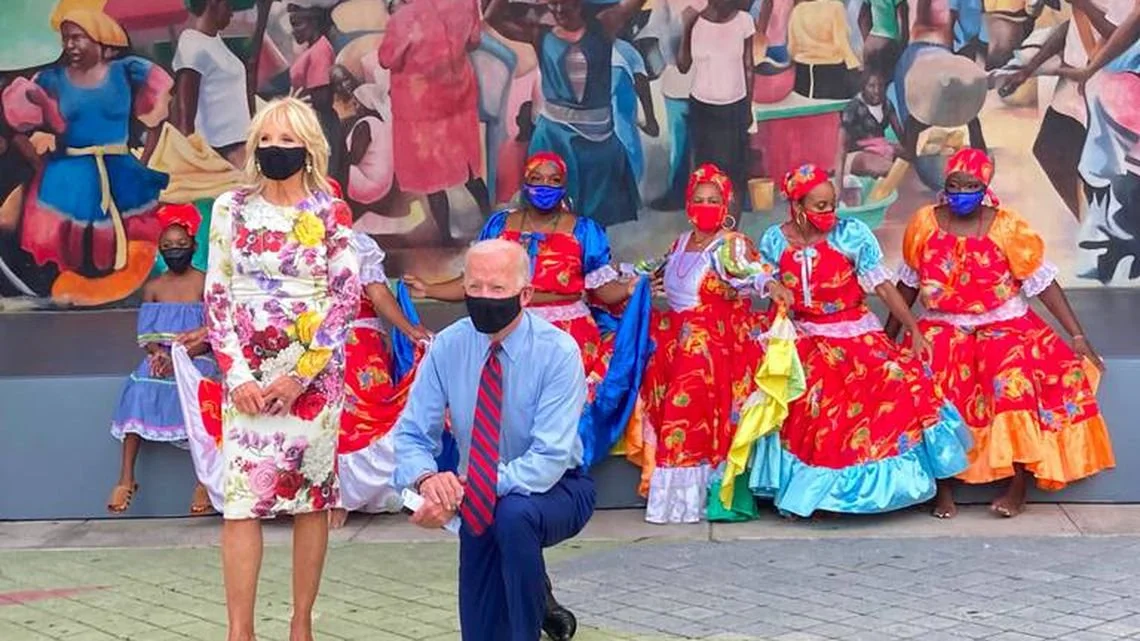
Biden to Florida’s Haitian-American voters: You can make a difference
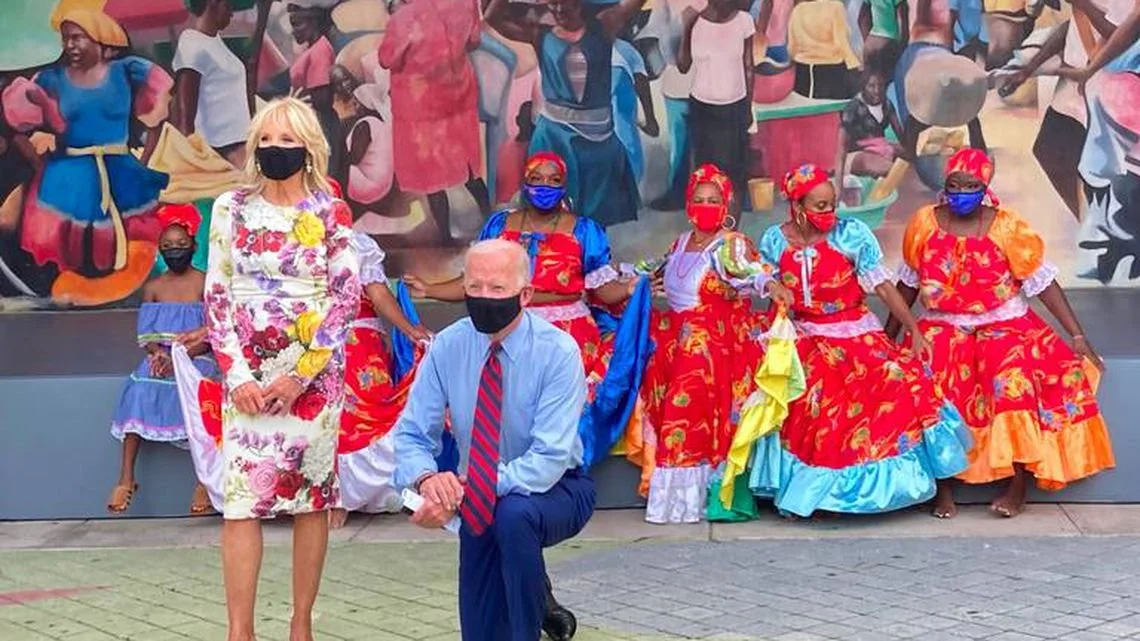
In an address lasting eight minutes, 46 seconds, Biden emphasized the need to have voters, including Haitian Americans, turn out and stressed issues that unite him and the crowd.
MIAMI — The sounds and culture of Haiti served as a colorful backdrop for former vice president and Democratic presidential nominee Joe Biden’s visit to Little Haiti Monday as he courted Haitian-American voters and leaders on the last day to register to vote in Florida.
“It’s all about the spirit, the spirit of this community,” Biden said. “There’s no quit in America. There’s clearly no quit in the Haitian community, there is none. And I promise you there would be no quit on my part as your president making sure that the Haitian community has an even shot and back on its feet.”
During an address lasting eight minutes, 46 seconds, Biden emphasized the need to have voters, including Haitian Americans, turn out and stressed issues that unite him and the crowd.
Biden told the small crowd if the turnout is the same as it was in 2016 when President Donald Trump, whose name he never once mentioned, ran against Democratic rival and former U.S. Secretary of State Hillary Clinton, the Haitian-American community in Florida “by itself” has the potential of determining the outcome of the Nov. 3 presidential race.
“Wouldn’t it be an irony, an irony of all ironies,” Biden said, “if on election eve, it turned out Haitians literally delivered a coup d’etat in this election?”
Biden’s campaign has emphasized that the race in Florida is critical and can be decided by just 1% of the vote.
“You not only have an opportunity. I think you have an obligation to see to it you take care of the folks you care so much about,” Biden said.
In addition to Little Haiti, Biden also stopped in Little Havana to meet with Cuban-Americans before attending an NBC town hall event near downtown Miami.
The Biden campaign has struggled with Haitian-American voters, who have felt neglected as Biden seeks to woo Hispanic voters and after his running mate, Kamala Harris, failed to meet with Haitian-American leaders during a September roundtable discussion with Black leaders at Florida Memorial University.
On Monday, the campaign sought to make up for it. The invited guests, which were intentionally kept small due to the COVID-19 pandemic, consisted of Haitian-American elected officials in Miami-Dade County as well as State Rep. Dotie Joseph, Congresswoman Frederica Wilson, Dr. Larry Pierre and Dr. Jean-Philippe Austin and his wife Magalie. The Austins held a $35,800-a-plate 2011 fundraiser for President Barack Obama during his second presidential bid, and Austin and Pierre have also raised money for the Biden campaign.
Concerned about voter turnout among Haitian-American voters on Nov. 3, the Austins have organized a group independent of the campaign to promote voter engagement and outreach in the Haitian-American community.
Joseph said she hopes the Biden visit will resonate not just with Haitian-American voters, but all voters.
“Our very democracy is on the line,” she said as she alluded to Trump’s Sunday motorcade photo op even as he continues to battle a positive COVID-19 diagnosis. “When we look at what these people want to do and how they want to treat us ... A lot of us have came from countries where you have dictatorships and you have fascism and the things you’re starting to see with this administration; things you would have never imagined, even when you’re dealing with coronavirus; somebody who knows how to protect us and wants to protect us, and the other one just wants to go around exposing people.”
As Biden spoke in the courtyard of the Little Haiti Cultural Center, Haitian-American voters lined up along two city blocks on Northeast Second Avenue and 59th Street hoping to catch a glimpse of him. Even without hearing him, however, some said they were ready to support his presidential bid.
“I’m happy for the visit,” Franklyn Charleston, 60, said amid the waving Biden-Harris posters and traditional Haitian horns playing carnival music, known as rara. “Since this government came into power, life here has just dropped. It was better with Obama and even better with [President Bill] Clinton. This president here has been a trouble-maker and we cannot just let the country go flat.”
Biden said a lot is at stake. The Nov. 3 presidential election, he said, will decide “what kind of nation we’re going to be, who we are, what we stand for. Will we continue to reach out or whether continue to push people away like what’s happened now? Or will we take care of those people, who, through no fault of their own, found themselves among those families, over 205,000 people who have died from COVID without much help at all.”
“This is the most important election,” Biden told the Haitian-American leaders. “The character of the country is literally on the ballot.”
Biden last visited Little Haiti in 2010 when he came to Miami to meet with Haitian community leaders after the January 12 earthquake in Haiti to announce the designation of Temporary Protected Status, or TPS, by President Barack Obama for eligible Haitian nationals because of the disaster, which left more than 300,000 dead. Trump has since tried to terminate the status, which is now the subject of at least a half-dozen federal lawsuits.
Biden opened Monday’s return visit by recalling that 2010 visit, during which a photo of him with Haitian community activist Marleine Bastien was taken. That photo was used during the recent Democratic National Convention.
“This is not the time to lift it,” Biden said of TPS. "This is not the time to end it. "
A devout Roman Catholic, who in 2010 quietly stopped at nearby Notre Dame d’Haiti Catholic Church to pray after meeting with the community, Biden stressed that like Haitians, he too was a man of faith and believed in honoring families.
“Family first,” he said, touching on a cultural heart-string of Haitians. “What we need is faith. We need to have faith....You’ve reached out, you’ve left nobody behind. You made sure that people know they have a home with you. There’s nothing more difficult to deal with, to experience, the loss of family.”
The Little Haiti Cultural Center’s neighboring Caribbean Marketplace was the site of Trump’s 2016 visit, and his promise to the community during his presidential bid to be its “greatest champion” if elected. That meeting was with a select group of Haitians, many of them at the time, frustrated and angry over the involvement of the Clintons in Haiti after the quake.
Biden steered clear of Haitian politics on Monday, and instead appealed to Haitians on what’s happening in America, including the COVID-19 pandemic.
Still, his campaigned emphasized a first by any U.S. presidential candidate: the outlining of specifics of how a Biden-Harris administration would benefit Haitians.
Ahead of Monday’s meeting, the campaign issued a “fact sheet” on the former vice president’s commitment to Haitian Americans, if elected. President Trump, the campaign said, has “abandoned and insulted” Haiti and “has pursued policies that undermine U.S. interests and hurt and disrespect millions of Haitian Americans in the United States.”
The Biden campaign vows to halt deportations for Haitians during his first 100 days, immediately review the Trump administration’s decision to terminate TPS, offer a path to citizenship for TPS holders, and reinstate the Haitian Family Reunification Parole program.
The campaign’s commitments are among a list of priorities that more than 60 Florida-based organizations that service the Haitian-American community are also seeking to get from a Biden-Harris administration in a letter currently making the rounds before being sent off to the campaign.
The letter also requests support for United Nations compensation for cholera victims following the introduction of the deadly disease into Haiti by U.N. peacekeepers 10 years ago this month, and the reinstatement of Haitian eligibility for the H-2A and H-2B temporary worker visas, which Trump also ended.
In Haiti, where there has been frustration over U.S. foreign policy under Trump, the U.S. presidential election is being closely watched in the hopes that a change in administration in the U.S. will also mean a change in U.S. policy toward the country.
Haitian President Jovenel Moïse has been ruling by executive order since Parliament became dysfunctional in January. The Trump administration has taken a hard-line stance against Haitian opposition parties and civil society, expressing concerns over credible elections taking place under Moïse, and has called for elections to be held as soon as it is technically feasible.
Haitians, who have been holding out hope for support by Biden on a transitional Haitian government, may be disappointed to learn that under Biden’s Haiti policy, he, like the current administration, also says he wants elections in Haiti “as soon as possible.”
Several Haitian-American leaders in attendance said they believe the visit will have a positive effect on undecided Haitian-American voters who this time around are not trying to decide whether to vote for a Democrat or Republican like in 2016, but whether to go vote.
“I think whoever in the Haitian community was on the fence, [this] should help them get to the polls,” Miami-Dade County Commissioner Jean Monestime said after the visit. The visit and Biden’s promise to return, Monestime said, “was a step in the right direction.”
North Miami Beach Commissioner Michael Joseph also welcomed the Little Haiti stop. “I believe we can work with this administration; they are looking out for our best interests,” he said.
But Joseph also issued a warning: “Hopefully we don’t fall into the same mistakes as the past.”

FINCA Haiti secures 100 million gourde revolving loan facility from Banque Nationale de Crédit

First local source of funding bolsters microfinance institution’s ability to serve low-income entrepreneurs
WASHINGTON--(BUSINESS WIRE)--FINCA Haiti S.A. (“FINCA Haiti”) announced today that it has secured a $100 million gourde (approximately $1 MM) loan facility with a one-year renewable tenor from Banque Nationale de Crédit (BNC), Haiti’s largest financial institution. This is the first locally-sourced credit line obtained without a parent company credit enhancement in its 30 years of operation and will give FINCA Haiti stable liquidity with the flexibility and cost efficiency of a credit-line and the added protection against foreign exchange fluctuations without costly foreign currency hedging instruments. The credit line will be used for on-lending to support more than 50,000 microentrepreneurs and small businesses across the country via digital financial inclusion and 12 branches.
FINCA Haiti, one of the nation’s first microfinance institutions, executed a remarkable turnaround following Hurricane Matthew in 2016. Since January 2017, FINCA Haiti grew its loan portfolio by 42% to 762 million gourde and its client base by 13% to over 51,500. In 2015, FINCA Haiti partnered with mobile operator Digicel to launch MonCash, an e-wallet solution offering mobile loan repayment and disbursements. Mobile banking now accounts for 57% of all transactions processed by the institution—a critical lifeline for customers with limited transportation options amid challenging infrastructure.
“We appreciate the confidence of Banque Nationale de Crédit, which recognizes the strength and potential of FINCA Haiti to expand access to affordable, accessible financial services,” said Hamidine Bako, CEO of FINCA Haiti. “With this stable source of local funding, FINCA Haiti will be well-positioned to expand our product offerings and provide vital support to businesses and entrepreneurs emerging from the COVID19 pandemic.”
About FINCA Haiti
FINCA Haiti is a microfinance institution that currently serves more than 50,000 customers – 85% of whom are women – across 12 branches and digital services. FINCA Haiti is part of FINCA Impact Finance, a global network of 20 microfinance institutions and banks that provides socially responsible financial services to low-income individuals to invest in their futures. For more information, visit www.FINCAImpact.com or follow us on Twitter @FINCAImpact.
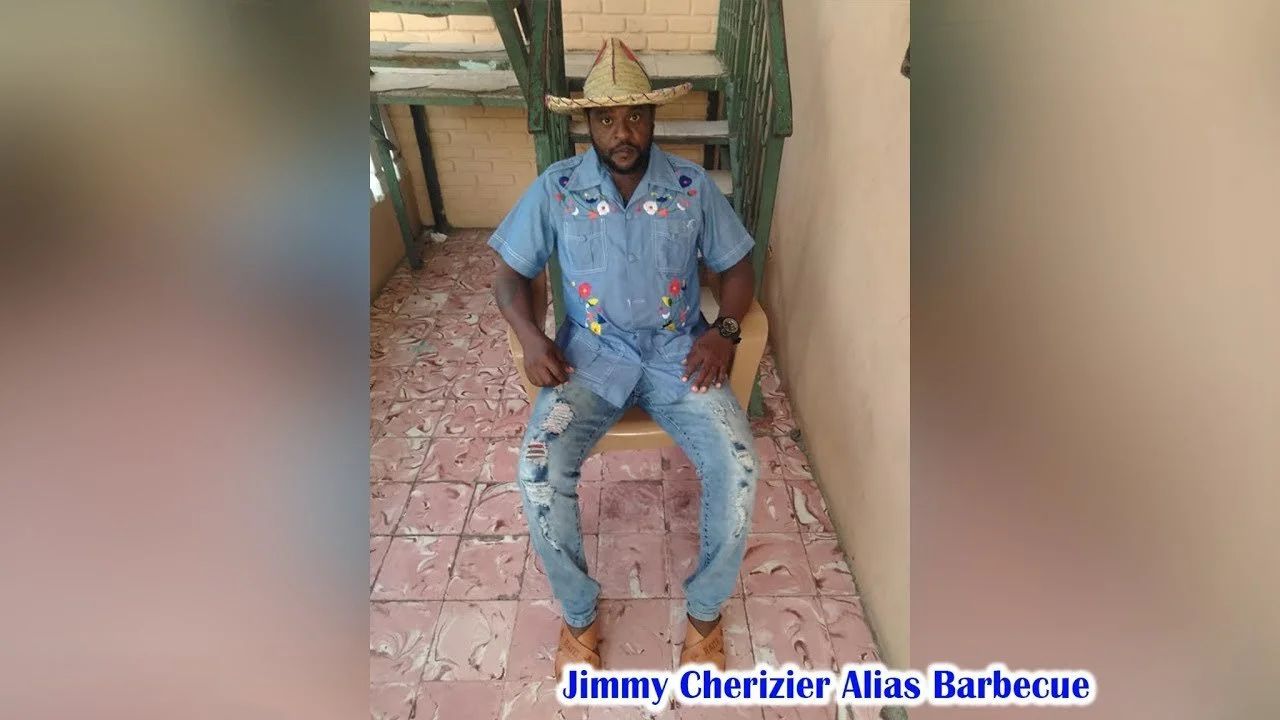
In Haiti, coronavirus and a man named Barbecue test the rule of law
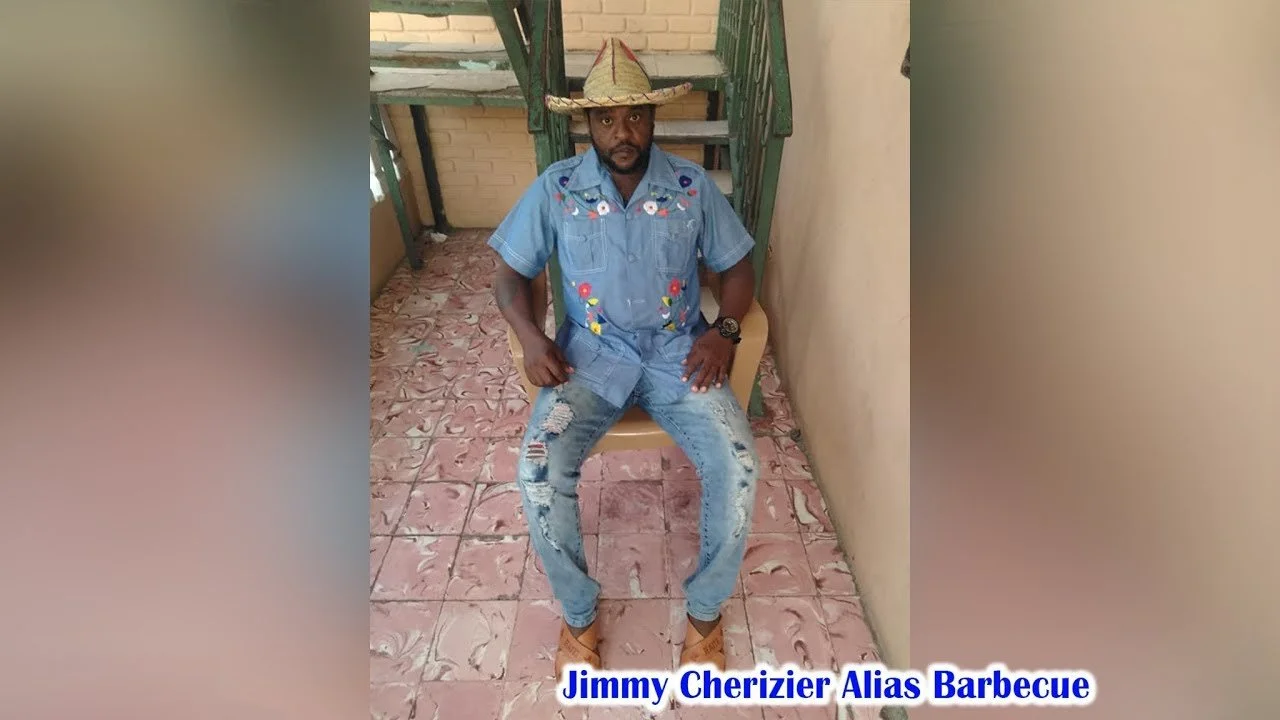

PORT-AU-PRINCE, Haiti — Jovenel Moïse is president of Haiti, but ask the people of the terrified shantytowns who's in charge in this impoverished Caribbean capital, and they'll point to a man called Barbecue.
A former police officer who portrays himself as the savior of the streets, Jimmy “Barbecue” Cherizier has come to symbolize the accelerating erosion of Haiti’s already challenged rule of law during the coronavirus pandemic. Accused of orchestrating massacres that left dozens of men, women and children dead, he has succeeded in accomplishing the once unthinkable: uniting the warring gangs of Port-au-Prince into a powerful new confederation aimed at what he calls “revolution.”
Cherizier announced the alliance on YouTube in June in a powder-blue three-piece suit. His newly formed “G9 Family and Allies” paraded triumphantly through the streets of the capital last month, led by gang leaders and dozens of armed men — both a flagrant violation of coronavirus rules and a warning to all.
On a recent afternoon, Cherizier led a reporter through the run-down neighborhood of La Saline, stomping over festering piles of garbage, barging into one corrugated shack after another, bellowing, “You see the conditions they live in?” as residents cowered.
“This is an armed revolution,” Cherizier told The Washington Post at his headquarters in Delmas 6, a no-go zone where he is hailed as a protector. “We will put guns in the hands of every child if we have to.”

But critics say he’s not targeting the government — he’s going after its opponents. Human rights activists and political opponents say the U.S.-backed Moïse has done little to check the rise of Haiti’s anarchic gangs, at least in part because their growing influence has appeared to serve the president’s interests.
With an apparent goal of becoming the strongman of the streets, Cherizier and members of his consolidated gang are extorting businesses, hijacking fuel trucks and kidnapping professionals and business owners for exorbitant ransoms as high as $1 million.
As he brings Port-au-Prince to its knees, Cherizier is also terrorizing poor neighborhoods where opposition to Moïse runs deep — potentially neutralizing any challenge to his party’s continued rule.
Barbecue expanded his turf through the alliance, controlling all of Port-au-Prince’s downtown and critical cross sections leading to the north and south, and the dense, opposition-dominated slum Cite Soleil that is now living a gang-fueled reign of terror.
Cherizier denies an alliance with Moïse. But in Cite Soleil, victims and human rights groups say G9 gang members have looted and burned down shacks and stalls, systematically raped women, killed at random, and dismembered or torched bodies.
When Cherizier’s men took to the streets in June, witnesses claimed to have seen them ride in the same armored vehicles used by the national police and special security forces. Justice Minister Lucmane Delile denounced the gangs and ordered the national police to pursue them; within hours, Moïse fired him.
Moïse’s office initially agreed to an interview but then did not respond. The president has denied ties to the gangs, which he has described as Haiti’s “own demons.” His government says it is seeking a disarmament accord with them.
“We prioritize dialogue, even in our fight with bandits and gangs,” Moïse said in March. “I am the president of all Haitians, the good and the bad.”
There’s a standing warrant against Cherizier for allegedly possessing illegal arms and failing to report for duty — the reason police gave for firing him last year — but it has not been served. Cherizier denies that his gangs have committed violence in the slums. He has not been charged in a 2018 massacre that left dozens dead in La Saline, or any other killings.

But for his long-suffering countrymen, Cherizier’s G9 is evoking the horrors of the Tontons Macoutes, the government-backed paramilitaries that terrorized Haiti for decades under dictator François “Papa Doc” Duvalier and his son, Jean-Claude.
“The government has said nothing about [Cherizier’s rise], and the international community has turned a blind eye,” said Pierre Espérance, director of Haiti’s National Human Rights Defense Network. “There is no rule of law anymore. The gangs are the new Macoutes. It feels like there is a manifest will to install a new dictatorship.”
Governments across Latin America have used the coronavirus to harass their opposition, delay or manipulate elections, and consolidate power, undermining democracy in a manner not seen in the region in decades.
The right-wing interim government in Bolivia is accused of unleashing an intensifying wave of repression against its political opposition. Critics say Salvadoran President Nayib Bukele is violating civil liberties with mass arrests of quarantine violators and gang members. Courts controlled by the authoritarian government of Venezuelan President Nicolás Maduro have replaced the heads of opposition parties amid a fresh wave of arrests of journalists and social leaders.
“Coronavirus is the perfect excuse for a power grab and authoritarian measures to crack down on political opponents,” said Michael Shifter, president of the Inter-American Dialogue, a Washington-based think tank. “This is a regionwide trend, but the consequences are worse in the countries already facing the most dire situations.”
Moïse, 52, won the 2017 presidential election after a 14-month standoff over alleged fraud in a previous vote. Analysts say his base of support is thin amid allegations of government corruption in the petrodollars that flowed for years from Maduro’s Venezuela.
The former business executive was the target last year of protests by students and opposition groups that led to a three-month Peyi Lok, Creole for “country shutdown.”
Businesses were burned, hotels and restaurants shuttered, and thousands of Haitians left jobless. By January, the underpaid national police joined the protests, burning their own vehicles and blocking traffic on the capital’s main arteries.

Moïse has postponed legislative elections indefinitely. The opposition says his term ends in February, but he says he can stay in office a year beyond that.
“There’s no possibility of holding elections while he’s in power,” says Andre Michel, spokesman for an alliance of opposition parties. The opposition is calling for Moïse to resign and a transition government to be put in place.
U.S. officials have urged Moïse to call new elections. But critics say they’ve largely turned a blind eye to his government’s alleged links to the gangs because they value his support for the Trump administration’s hard-line policy against Venezuela’s Maduro.
Rep. Maxine Waters (D-Calif.) sent a letter to U.S. Ambassador Michele Sison in May denouncing what she called Cherizier’s “politically motivated” death squad.
“There is no real concern for the plight of the Haitians, whether they are being beaten and killed by the president of Haiti,” Waters told The Post. “As long as the president is in our pockets, everything is okay.”
David Mosby, head of the State Department’s Bureau of International Narcotics and Law Enforcement Affairs, met with Haitian police officials this month to discuss the wave of gang violence.
Sison called on “all of Haiti’s actors” to engage in dialogue.
“Rather than pointing fingers,” she told The Post, “our point is to encourage all actors . . . to think about the most vulnerable who continue to bear the brunt of these challenges.”
Few nations are as vulnerable as Haiti. The poorest country in the Western Hemisphere has lumbered through decades of misery, finally shedding the yoke of the Duvaliers in the 1980s only to spiral into a gyre of lost potential and repeatedly failed efforts to lift its population out of dehumanizing poverty.
The 2010 earthquake that killed more than 200,000 Haitians and left 1.5 million homeless crystallized the country’s plight, bringing, for a time, an avalanche of international organizations and promises, finally, of transformative aid. But many of the charities have since departed, the transformation unrealized, leaving a mix of resentment and hopelessness as the country has teetered on the verge of anarchy.
Health analysts feared the coronavirus would devastate Haiti. Most believe numbers are higher than the official count of 7,810 infected and 192 dead, but the country’s relative isolation seems to have spared it the worst of the pandemic so far. Still, the outbreak has made chronically underfunded health care here worse — medical staff, lacking protective gear, have failed to show up for work, leaving hospitals operating shorthanded or closing altogether.

Rumors, particularly in rural areas, that symptomatic Haitians are being used as experiments for unproven vaccines have led some to avoid treatment. Doctors say parents are now rejecting regular vaccines for their children in alarming numbers.
“People fear they are being guinea pigs,” said William Pape, head of the government’s covid-19 task force.
The coronavirus crisis has opened a window of opportunity for Barbecue. As a police officer, Cherizier, whose nickname stems from his mother’s locally famous grilled chicken, allegedly led a feared gang that for years was involved in murder, rape, extortion and kidnapping.
While Haitians were locked down, he helped unify street gangs under the G9 Family and Allies umbrella. Gang members began rolling into anti-government hotbeds in sophisticated armored vehicles with automatic weapons and tear gas. The National Network for Defense of Human Rights and witnesses say homes were torched, weapons fired and at least 111 people killed.
Police say they are unable to explain why their vehicles appear to have been used in the operation. They say they are investigating.
In a narrow alley between ramshackle two-story dwellings, Cherizier paced back and forth, alternately shouting or laughing into a succession of cellphones rushed to him by a posse of eager-to-please youth.
He insisted he was not working for the government but to liberate the Haitian people.
“The bourgeoisie, the opposition, the government, they are the problem,” he said. “They call us gangs — they are the gangs! We’re defending the ghetto. It’s live or die here.”

The alliance pushed last month into Cite Soleil. It was here that Lenese Leo, 38, says she was caring for her 8-month-old daughter on July 12 when bullets slammed into their shanty. When the shooting stopped, she said, the infant lay on the floor, bleeding from the head. She hailed a motorcycle taxi to go the hospital, but the child died in her arms.
In Haiti, family members of gang victims often avoid reporting deaths, for fear of reprisal. But Leo and her partner have instead insisted on an autopsy and shared their grief on social media. She says they now get death threats.
“It’s never been like this,” she said. “I’ve lived here all my life. I have never lived in so much fear.”
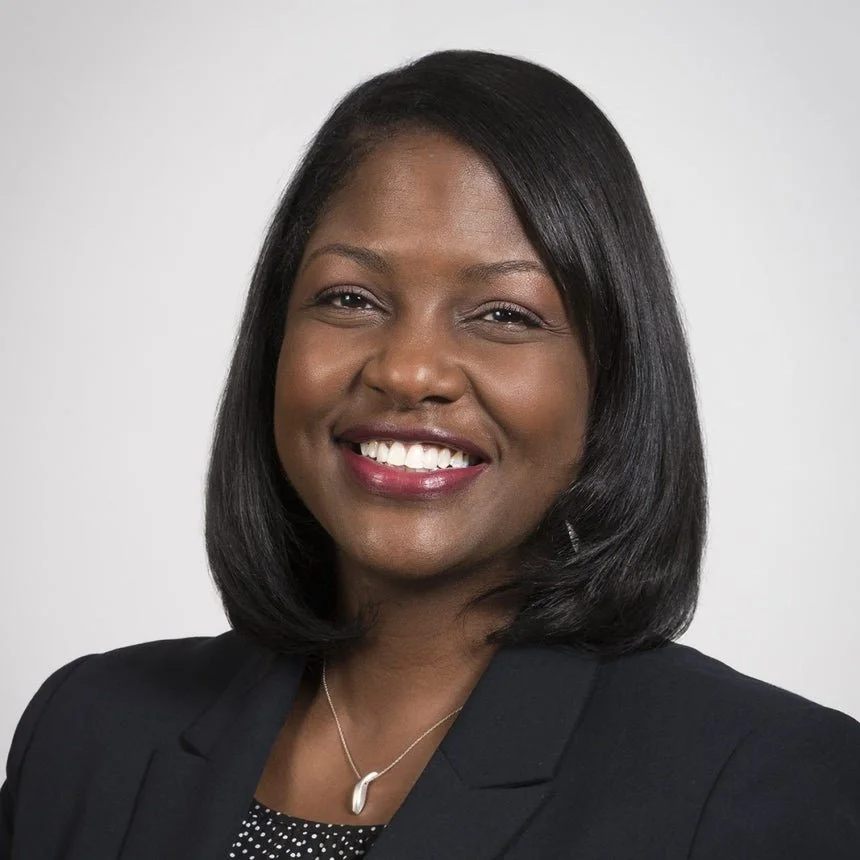
NJ Gov. Phil Murphy Nominates Fabiana Pierre-Louis To The State’s Highest Court
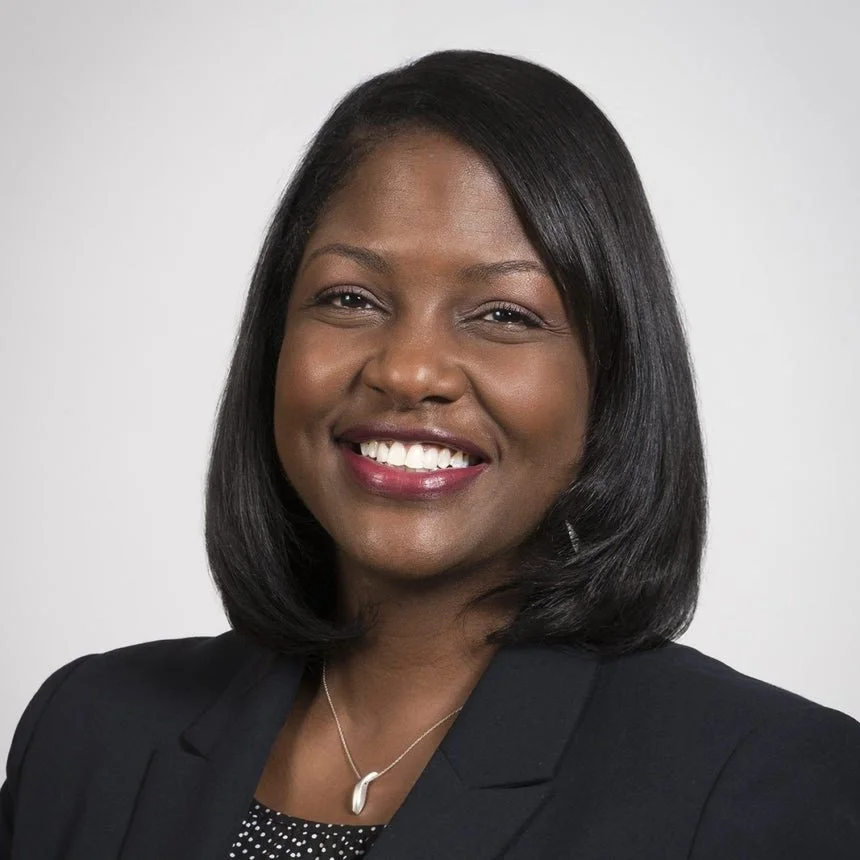
On Friday, NJ Gov. Phil Murphy will announce his first pick for the state’s Supreme Court since taking office, and it will be a historic one.
Murphy will nominate Fabiana Pierre-Louis, a partner at Montgomery McCracken Walker & Rhoads, to be the next associate justice of the state’s highest court. If the state Senate confirms the nomination, Pierre-Louis will be the first Black woman to ever sit on the court.
Pierre-Louis, 39, has not only worked in private practice, but has also worked as a federal prosecutor with the Department of Justice for years.
“It’s hard to put into words the honor that it is to be nominated to the highest court in the state of New Jersey,” Pierre-Louis told ESSENCE. “My goal, particularly as a prosecutor, was always to pursue justice and fairness in the law…It’s just a remarkable opportunity to continue in the very proud tradition of this state’s Supreme Court.”
The daughter of immigrants from Haiti, and a first-generation American, Pierre-Louis believes she will bring a unique perspective to the court if confirmed.
“I am a Black woman. I am the child of immigrants from Haiti. I am someone who is a first generation American citizen here in this country, [the] first person in my family to attend law school, to become a lawyer, someone who’s also lived in a variety of inner cities throughout my life, beginning with my early childhood in Brooklyn, then followed by the remainder of my childhood in Irvington, New Jersey,” she said. “All those experiences bring a unique perspective to the Court that currently is not there.”
To the governor, the nomination was a no-brainer, given his own belief that a judiciary should reflect the diversity in the state.
“A core tenet of my Administration is a commitment to an independent, fair-minded judiciary that reflects the immense diversity of our great state,” Murphy told ESSENCE. “As a first-generation American, Fabiana brings both a sharp legal acumen and the perspective of her own past that will greatly benefit the proceedings of our state’s highest court.”
“New Jersey is a very diverse state,” Pierre-Louis echoing the governor’s statements. “It is extremely important for the judiciary and other government bodies to be a reflection of the community that they serve. So, having people of diverse backgrounds and diverse perspectives sitting on the highest court in these states certainly inspires confidence that the court will rule and have these diverse perspectives in ruling on extremely important cases.”
Pierre-Louis’ own work speaks volumes for her. She graduated from Rutgers Law School with High Honors before going on to clerk for Justice John Wallace Jr. during the 2006-2007 Supreme Court term. From there she went to Montgomery McCracken for about three years, before moving to the U.S. Attorney’s Office for the District of New Jersey in 2010. In 2012, she moved to the Trenton office, and four years later she would be the first woman of color to be Attorney-in-Charge. In that role, she supervised all aspects of criminal matters handled by the office, while also investigating and prosecuting her own caseload, inclusive of matters from child exploitation offenses, to national security matters, to public corruption matters and more.
While in Trenton, Pierre-Louis helped to create the Trenton Reentry Court, which provides assistance to returning citizens to help reacclimating to society.
In 2018, she became the first woman of color to serve as Attorney-in-Charge of U.S. Attorney’s Office in Camden, later returning to private practice in 2019.
“My experience speaks volumes with regard to my ability to take on this position and to successfully execute the duties of an associate justice of the Supreme Court of New Jersey. I’ve practiced in private practice at a law firm doing civil work. I’ve also been a federal prosecutor,” Pierre-Louis said. “I’ve supervised a wide variety of cases and gained the respect of not only the judiciary but of my colleagues and even defense attorneys that I have worked on cases with. And I think my integrity, my open-mindedness, and my ability to communicate well with others is something that has helped me succeed throughout my career.”
If confirmed, Pierre-Louis will be the first Black judge to sit on the court since 2010, when then-Gov. Chris Christie stirred controversy and outrage in the state after failing to renominate then-Justice John Wallace Jr. to a tenured term.
In the New Jersey State Supreme Court, a justice is initially confirmed for seven years. After those seven years, once a justice has served with good behavior and made sound decisions (regardless of who may or may not agree with said decisions), they are typically renominated and reconfirmed for a tenured term, which automatically expires once the justice turns 70, regardless of if that justice was initially chosen by a governor of a different party.
Wallace has been the only justice that has been denied tenure since the state Constitution was adopted in 1947. At the time, he was the court’s only Black justice (and only the second Black person to ever sit on the court), and his tenured term would have automatically expired when he had reached 70 in less than two years.
The fallout was swift, and Christie’s Judiciary Advisory Panel all resigned en masse to protest the then-governor’s decision to replace Wallace. Democrats balked, with the Democrat-led senauntil Justice Walter Timpone was confirmed and sworn in 2016.
It is Timpone’s seat that Pierre-Louis will fill if confirmed, as the justice will reach the mandatory age of retirement in November.
Pierre-Louis’ nomination comes at a time when the nation is in turmoil and many have flooded to the streets demanding justice for Black Lives and accountability from the police, but Murphy stressed that his selection did not come as a result of the current national discourse.
“In addition to her esteemed legal career, Fabiana’s humility, empathy, and character are all traits that make her well-suited to become the first Black woman and the next Associate Justice to serve on New Jersey’s Supreme Court,” Murphy said in a statement.
“I have not chosen to nominate Fabiana because of the current national discussion around race. However, given the challenges which are being brought to the forefront of our society, and the questions which will undoubtedly rise to reach our Supreme Court – core issues of socioeconomic equality and equity – there is no better meeting of an individual and the times,” he added.
Pierre-Louis told ESSENCE that she seeks to be a “fair, open-minded” justice, if nominated.
“I certainly believe that I would…have the ability to listen to all arguments from all sides and make a determination after having done so and looked at the facts and the law before me to make determinations about whether I believe there was an error on the lower court below or not,” she said.
“I think the New Jersey Supreme Court is a perfect model of a very strong court in this country that has historically been very independent,” she added. “I think the role of a Supreme Court justice is to review the cases and ensure that fairness and justice results no matter what the political atmosphere is at the time.”
By: BY BREANNA EDWARDS for Essence.com | June 5, 2020

Biden Campaign Adds Karine Jean-Pierre As Senior Adviser

Joe Biden has hired Karine Jean-Pierre, a veteran African American political strategist, as a senior adviser to his presidential campaign as the presumptive Democratic nominee pivots to the general election campaign.
Jean-Pierre will advise on strategy, communications and engaging with key communities, including African Americans, women and progressives.
“This really is the most important general election in generations,” Jean-Pierre told The 19th, a nonprofit newsroom, in an exclusive interview Monday night. “I’ve known Joe Biden for 10 years now. I believe he’s a man of integrity, he’s a man who knows how to lead, he’s a man who knows how to use the levers of government to help people and he’s the man who could beat Donald Trump in November. For me, as a black woman, I just could not sit this out.”
Jean-Pierre, 43, will begin her role with the Biden campaign next week. She gained prominence in 2008 as the southeast regional political director for then-candidate Barack Obama’s history-making presidential campaign.
She served in the Obama White House as regional political director before working as deputy battleground states director on his 2012 reelection. In the latter role, Jean-Pierre handled political engagement in key states including Ohio, North Carolina, Pennsylvania and Florida.
Born in Martinique to Haitian parents and raised in New York, Jean-Pierre worked on former Maryland governor Martin O’Malley’s 2016 Democratic presidential bid before joining liberal group MoveOn as chief public affairs officer. She is also an MSNBC political analyst.ADnull
Separately, the Biden campaign announced Tuesday that it hired Obama campaign alum Julie Chavez Rodriguez — who previously worked as co-national political director for Sen. Kamala D. Harris’s presidential campaign — as a senior adviser, making her the highest-profile Latina to join the team as Biden struggles to shore up his support with Hispanic voters headed into November.
Biden’s swift rise this spring was fueled largely by black voters — particularly black women, who are regarded as the backbone of the party and seen as key to a winning general election coalition in the fall. Energizing these voters will be crucial to the record turnout needed to topple Trump. Black turnout was down in 2016 from historic highs in 2012 and 2008, when the country elected its first African American president.
Jean-Pierre said her hiring signals that Biden “understands how he became the presumptive nominee.”
“Black voters, black women, have helped him get to this point,” she said. “When everybody was counting him out, black voters spoke out. I am so proud and excited as a black woman watching how black women have exerted their power … we had to say loud and clear this (the actions of the Trump administration) is not okay.”
Valerie Jarrett, former senior adviser to Obama, called Jean-Pierre “a superstar” who shares Biden’s values of equality, fairness and justice.
“She will be able to communicate his agenda in an authentic way that I think will resonate importantly with African American women, but also with the entire country,” Jarrett said in a telephone interview. “It’s a coup for vice president Biden and his campaign.”
By Errin Haines | The 19th and The Washington Post May 20, 2020
This story is part of a collaboration between The Washington Post and The 19th, a nonprofit newsroom covering gender, politics and policy.
Haiti in Canada Health System Link-Up
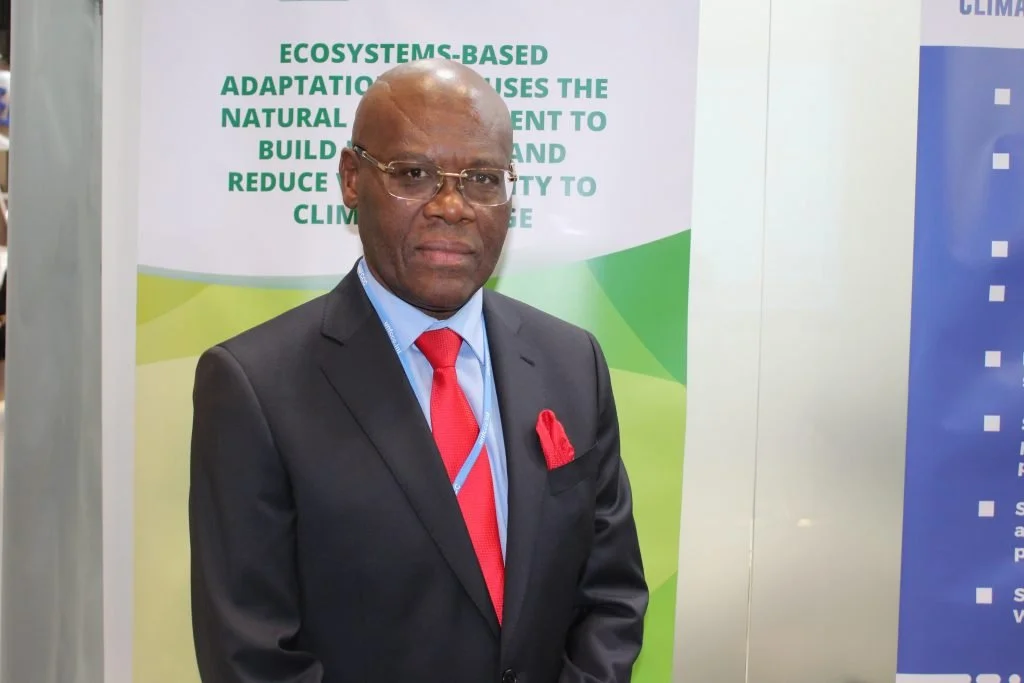
PORT-AU-PRINCE, Haiti – Haiti is seeking to strengthen its health system by developing enhanced cooperation with Canada.
This was one topic discussed during a meeting between Prime Minister Joseph Jouthe and the Canadian Ambassador accredited to Haiti, Stuart Savage.
During the recent meeting, Savage said he was open to any request from the Haitian Government relating to the consolidation and extension of its body of health workers, the need for equipment for health infrastructure in the country.
He stressed that synergy must be developed in order to provide proportional responses to the fight against the coronavirus pandemic.
Jouthe informed Savage that Haiti had already placed orders for more than 400 tonnes of medical equipment and he hopes to acquire powerful sprayers for disinfecting urban spaces.
The Prime Minister also informed the Canadian diplomat that steps were underway with the Minister of Finance to open a solidarity account intended to collect funds from donors, the private sector and citizens wishing to help the country to face the health crisis in which the country engages.
He also mentioned, among other things, the program of distributing food kits to the most vulnerable people in society.
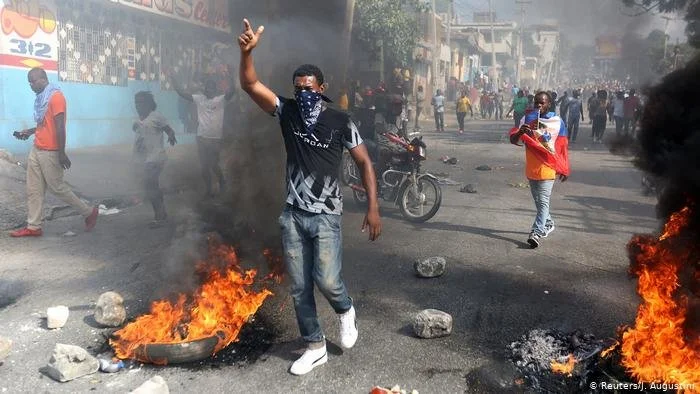
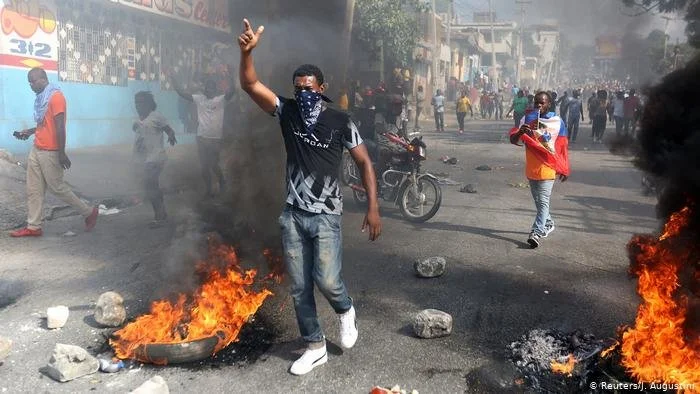
Another Protest In The Capital of Haiti After Journalist Arrestation
PORT AU PRINCE, Haiti – In March 2020, the media reported that the Haitian Government announced the first two cases of coronavirus in Haiti before the cases reached to 16, but however the Haitian Government failed to tell the media and the Haitian population the names of the victims as proof.
Days later after the Haitian Government announced the first two cases in the country, the World Bank and the USAID donated millions of dollars to Haiti to deal with the COVID-19, but unfortunately, some health organizations across Haiti said President Jovenel Moise and Prime Minister Jouthe Joseph failed to release the names of the people infected with the COVID-19.
“They said there are cases of COVID-19 in the country but Ministère de la Santé Publique failed to release the names of the people infected to some health organizations”, said Mr. Evans Jean, a healthcare worker at Hôpital De L’Ofatma located in Port-Au-Prince.
According to a press conference on Thursday, political leaders, journalists, the whole population, even the opposition leaders across the country have doubts about the COVID-19 in Haiti. After the reports of the 16 cases in Haiti, here’s what a political leader in Haiti said about the current situation in the country. He said:
“I don’t think the COVID-19 is a joke but how come President Jovenel Moise and Prime Minister Jouthe Joseph ordered masks from China to give the population in Haiti when everyone knows the COVID-19 is originally from China. Unfortunately, after the Haitian Government reported cases of COVID-19 in Haiti, those 3 questions came in my mind. My first question is, How the COVID-19 arrived in Haiti?, my second question is, Who took it to Haiti?, and the third question is, What are the steps the Haitian Government is taking to stop the COVID-19 from spreading across Haiti since they said there are cases?”, said Mr. Werley Nortreus, a political leader and the founder of Vanyan Sòlda Ayiti and A New Haiti Before 2045 (ANHB 2045).
On Friday, another protest broke out across the capital of Haiti after the arrestation of Mr. Louko Desir after saying a speech on Radio Télé Eclair during his popular radio show called Matin Debat. From some reports, the journalist and the radio host was released from Jail hours later. Although everyone is wondering what are the reasons behind the arrestation of Mr. Louko Desir, however, Mr. Louko Desir believes that he got arrested for saying something on his radio show.
According to local media like Bon Déjeuner! Radio (BDR! Live) and Radio Télé Eclair, Mr. Louko Desir who is a Journalist and the host of Matin Debat at Radio Télé Eclair were arrested after saying the Haitian Government is lying about the COVID-19 in Haiti. After Mr. Louko Desir said that there are no cases of COVID-19 in Haiti, he was arrested shortly after that speech on the radio.
“Pa gen Koronaviris Ayiti vre, epi kale je nou paske nou pa dwe asepte Prezidan Jovenel Moise voye chache mask lachin kote maladi a ye pou vin touye moun tankou poul Ayiti”, said Journalist Louko Desir on Radio Télé Eclair, before he was arrested a day later by the Haitian Government.
After the arrest of Mr. Louko Desir, a protest broke out in the Capital of Haiti and videos show that the protesters took the buckets that were donated by the USAID to the streets then burnt them. From some reports, most of the buckets that were donated by the USAID for the COVID-19 got burnt by angry protesters across the Capital of Haiti.
According to reports, most leaders across the country are against the arrest of Mr. Louko Desir because they said no one deserves to be arrested for simply saying something on his own radio show.
“No one deserves to be put in jail or prison for simply defending the population in Haiti”, said some protesters while burning some buckets that were donated by the USAID for the COVID-19.
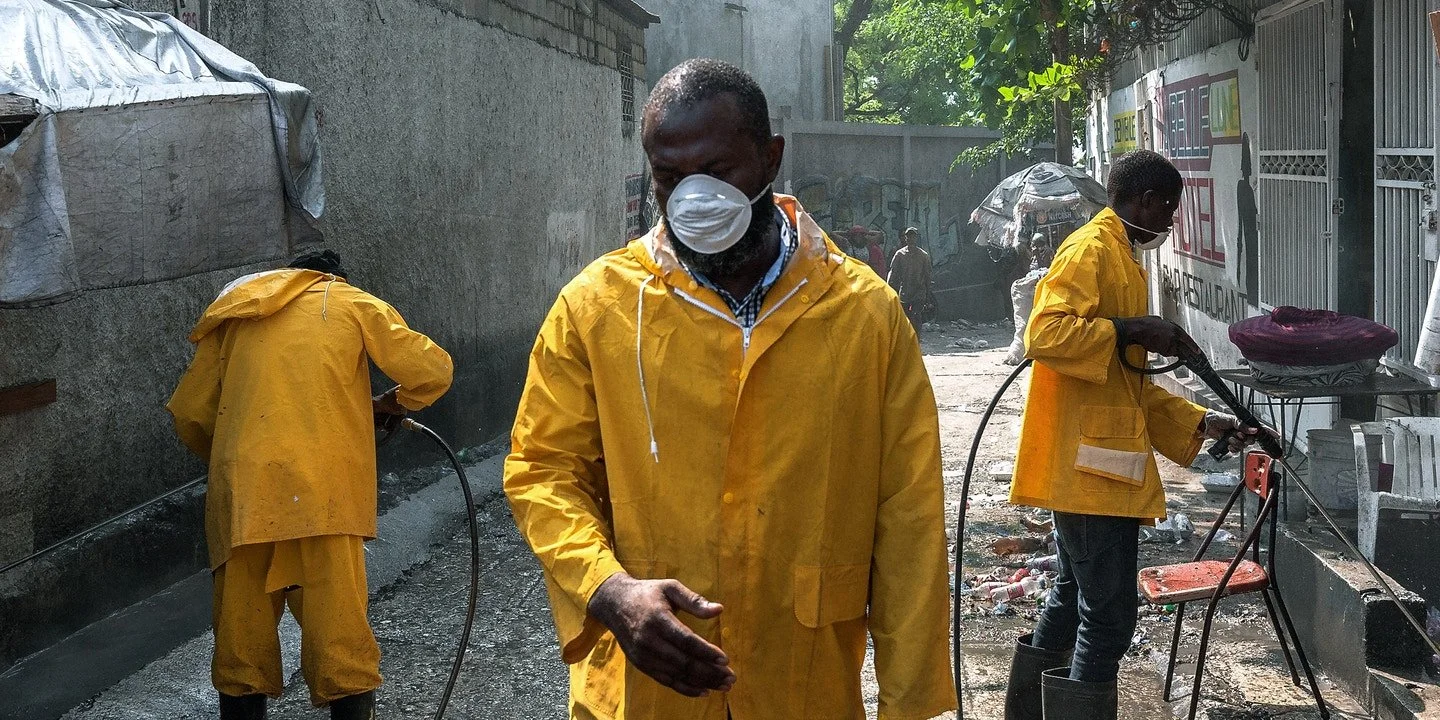
“IRRESPONSIBLE AND DANGEROUS”: U.S. DEPORTS HAITIANS DESPITE CORONAVIRUS RISKS
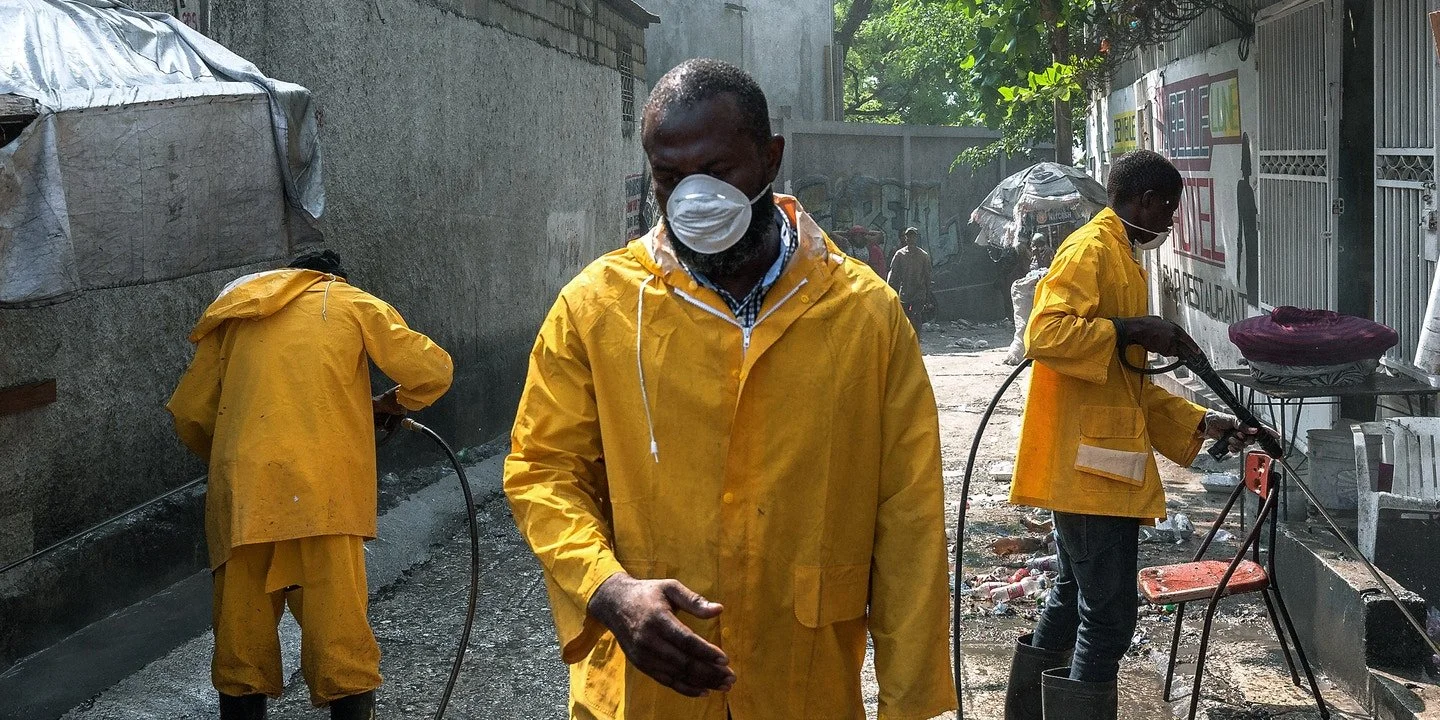
THE UNITED STATES, the new epicenter of the global coronavirus pandemic, deported 61 Haitians on April 7 despite warnings that such deportations could contribute to the spread of the virus in Haiti. Public health experts fear that an outbreak could have particularly deadly consequences for the impoverished island nation, where many people lack access to basic necessities like health care and food.
Haiti lacks the resources to cope with a major outbreak of Covid-19, warned Cate Oswald, chief policy and partnership officer for Partners in Health, a Boston-based global health nonprofit whose Haitian sister organization, Zanmi Lasante, is coordinating with Haiti’s government to respond to the virus. For its population of 11 million people, Haiti has just 124 ICU beds and the ability to ventilate less than 70 patients, according to a 2019 study by the Research and Education Consortium for Acute Care in Haiti. “I’m nervous to see how this new disease has overwhelmed even the better-resourced health care systems,” Oswald told The Intercept.
To prevent the virus’s spread, the Haitian government has closed schools and most factories and is encouraging people to adopt social distancing measures. However, the majority of Haitians live on less than $2 a day and many work in the informal sector. The significant depreciation of the value of local currency and skyrocketing inflation have driven up prices of basic necessities like food. For people already struggling to feed their families, staying home is a luxury few can afford. And in the markets and public transit systems that informal sector workers depend on, it is often all but impossible to adhere to the social distancing guidelines recommended by public health authorities.
The weaknesses of Haiti’s health care system, and the precarious conditions in which many Haitians live, have both been identified as factors in the deadly toll of the cholera outbreak that killed an estimated 10,000 Haitians between 2010 and 2018. Oswald points out that other nations were able to help Haiti respond to the cholera epidemic by sending medical personnel and supplies. She fears that international assistance will be less forthcoming amid the Covid-19 pandemic because governments around the world are already struggling to respond to outbreaks within their own borders.
In this context, Oswald said, U.S. deportations to Haiti are “irresponsible and dangerous from a public health standpoint.” Because none of the 61 migrants the U.S. deported had been tested for the coronavirus, the Haitian government was forced to divert its scarce resources into quarantine measures. “It is certainly adding a strain to the already overburdened system that has been set up,” she said.
While more than 545,000 people in the U.S. have tested positive for the coronavirus, Haiti has reported 33 cases of infection and three deaths from Covid-19. Given how limited testing has been in Haiti — only 365 tests had been carried out nationwide as of April 9 — Oswald suspects that the actual number of cases could be much higher.
A Haitian public servant involved in Haiti’s coronavirus response agreed with this assessment. “There could be a lot of infections and some deaths that are not reported,” the official, who declined to be named over concerns of retaliation, told The Intercept. He warned that in addition to “creating stress on an already vulnerable system,” the U.S. deportations are “creating a very dangerous precedent.”
The deportations, which were carried out via a plane chartered by U.S. Immigration and Customs Enforcement, took place weeks after the Haitian government officially closed its borders in the wake of discovering the country’s first two coronavirus cases.
For its population of 11 million people, Haiti has just 124 ICU beds and the ability to ventilate less than 70 patients.
Haiti’s foreign minister, Claude Joseph, said he pleaded with the U.S. government to suspend the scheduled deportation flight. Partners in Health, which is calling for a moratorium on all deportations amid the pandemic, also mobilized to try to stop the U.S. from deporting the Haitian migrants, as did the Institute for Justice and Democracy in Haiti, a Boston-based human rights group, and several U.S. members of Congress. A lawyer representing one of the Haitian migrants who was scheduled to be deported spoke out about the public health risks, pointing out that his client had been detained in two separate ICE facilities with reported Covid-19 cases.
Despite these concerns, and the U.S. government’s own public advisories, which emphasize the need to “avoid all international travel due to the global impact of Covid-19,” the U.S. deportation flight proceeded as scheduled. Yet seven of the Haitians on board were removed at the last minute. Among those yanked from the plane was the man who was potentially exposed to the virus in ICE custody. ICE did not provide a public explanation for its actions and did not respond to The Intercept’s requests for comment. The man’s wife later reported that he had been taken to another ICE facility where a detainee had tested positive for the virus.
Oswald, who participated in the mobilization to stop the deportations, said the outcome left her extremely frustrated. “It showed me the powers that exist in that system,” she said, and “that we all need to be advocating for an end to deportations during this time.”
South Florida Haitian Leaders Want Trump Administration to Pause Deportations to Haiti During COVID-19
MIAMI – The COVID-19 pandemic has infected nearly 1.5 million people globally and killed at least seventy thousand. Because of this, the Centers for Disease Control and Prevention (CDC) have urged the American public to stay at home when possible in order to safely avoid exposure and curb the outbreak.
Yet, despite the highly contagious nature of this virus, the Department of Homeland Security has continued to detain and deport immigrants.
On April 7th, 2020, at least 68 Haitian nationals were deported to Port-au-Prince. One of them was exposed to coronavirus at two different facilities.
Deporting exposed detainees is incomprehensible. By sending these immigrants to vulnerable nations, The Department of Homeland Security knowingly put the detainees, the officers, Haiti, and neighboring Dominican Republic at risk.
Haiti does not have the capacity to respond to a pandemic of this magnitude. It lacks ventilators, essential medical equipment for workers, and sufficient intensive care units for critically ill patients. The potential outbreak that could emerge would be disastrous for the country.
Marleine Bastien, Executive Director of Family Action Network Movement (FANM) in Miami stated, “If the US government wants to contain the spread of the coronavirus, it will immediately order a halt on all deportations. We have a moral obligation to defeat this virus for the people of Haiti and of the world. Deporting immigrants at this time of crisis is inexplicable and runs contrary to the orders and mandates our own local and state lawmakers have put in place. This must stop now.”
Institute for Justice and Democracy Haiti (IJDH) Policy Coordinator Steve Forester exclaimed, “Recklessly spreading coronavirus, one would think, should be a crime with maximum penalties attached. But that’s what DHS is doing by continuing deportations to Haiti and many other countries as if the coronavirus didn’t exist! All “normal” deportations, like yesterday’s of 68 persons to Haiti, of persons who have been detained in facilities which government officials have acknowledged are breeding grounds for infectious diseases, from a public health perspective, is a catastrophe endangering hundreds of thousands of vulnerable people in foreign lands.”
FANM Board Chair Marie Paule Woodson stated, “ICE’s decision to deport the detained Haitians in spite of the coronavirus concerns is wrong and will only worsen the crisis in Haiti. It is inhuman, barbaric, and insane. The entire country stands the chance of being wiped out knowing the current conditions.”
Prominent Immigration lawyer Ira Kurzban stated, “It is disgraceful that while Haiti is closed to all flights from the U.S., President Jovenel Moise accepts Haitians with the coronavirus in a county of 8 million, many with compromised immune systems resulting from the UN imported cholera epidemic.”
Family Action Network Movement (FANM) urges The Trump Administration to put a moratorium on deportations to Haiti and all other nations in order to stop the spread of the coronavirus in this time of grave crisis. This virus is deadly and the federal government must respond in kind. In addition, all non-criminal immigrants should be freed to ease overcrowding and reduce the risk of contamination.
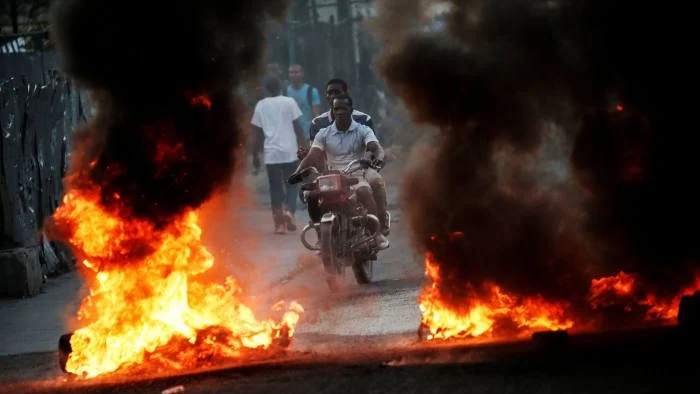
Haiti president fights ‘PetroCaribe’ $2bn oil corruption scandal
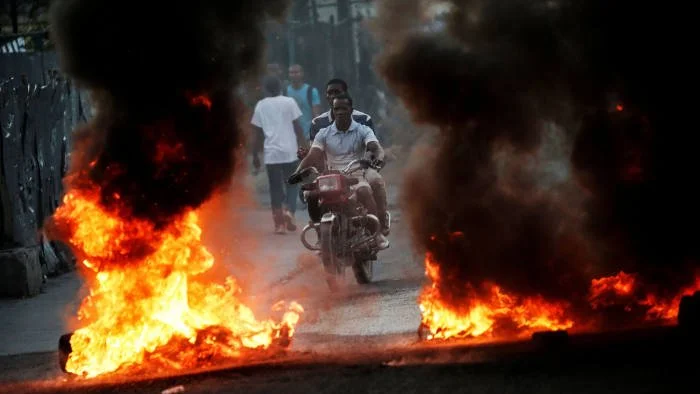
Jovenel Moïse tells FT he is pushing for constitutional changes amid popular anger
Scrawled in Creole on the walls of Port-au-Prince are the words: “Kot Kòb Petwo Karibe a?” — “Where is the PetroCaribe money?” It is a question posed by the protesters who have been trying to oust Haitian President Jovenel Moïse for the past year.
PetroCaribe, set up in 2005 by then-Venezuelan president Hugo Chávez, allowed Caribbean nations to buy Venezuelan oil on favourable terms. The countries were supposed to use the money they saved to improve infrastructure, but more than a decade later Haiti has little to show for it.
Last year, Haiti’s court of auditors reported that officials mismanaged up to $2bn of PetroCaribe cash and that a company managed by Mr Moïse was involved in a questionable road-building scheme. A new report is due within weeks.
In his modest, rented residence in the hills above Port-au-Prince, Mr Moïse, a 51-year-old businessman who made his name as a banana farmer, denied all charges of corruption.
“I was president of a company and that company had a contract with the state,” he told the Financial Times, seated in front of the blue-and-red Haitian flag. “You’re here in Haiti, go and see it if you like. You’ll see there’s a road and it’s 80 per cent built.”
The protests began in 2018 after Haitian film-maker and activist Gilbert Mirambeau tweeted a photograph of himself, blindfolded, holding a sign with the question “Kot Kòb Petwo Karibe a?”
Mr Mirambeau’s tweet went viral and helped spark a movement of self-styled “Petro-Challengers”. They have posted photographs online of the empty shells of buildings they say should have been completed with PetroCaribe savings.

The protests against Mr Moïse’s rule came to a head late last year. Between October and December, Port-au-Prince was in lockdown. Thousands took to the streets, angry not only at the corruption allegations but also spiralling inflation and dire public services. More than 40 people were killed in clashes between demonstrators and the police. “The security forces under the command of President Jovenel Moïse have used excessive force,” Amnesty International concluded.
Since then the city has been calmer but armed gangs roam poor neighbourhoods and locals say kidnapping is on the rise.
“People are afraid,” said Nixon Salomon, a motorcycle taxi-rider waiting for customers in the Carrefour Feuilles area of the city. “They only travel if they have to. You never know when someone is going to pull a gun and shoot you. I’ve already had one motorbike stolen. The situation is really unstable.”
Mr Moïse has responded by calling for a new constitution that will give the presidency more power. That, he said, would halt the constant bickering between the executive and the legislature and allow government to get things done.
But in Haiti, with a history of dictatorship, such talk sets off alarm bells. Mr Moïse’s critics point out that parliamentary elections scheduled for last October were scrapped and congress is no longer sitting. Mr Moïse is ruling by executive order.
The president blamed this on the opposition who had failed to turn up for a crucial vote on a new electoral law. He said the closure of parliament was proof of Haiti’s broken political system rather than his thirst for power, and was nothing new.
“Five!” he said, holding up the palm of his hand, his fingers and thumb splayed. “I’m the fifth president of Haiti to rule without a parliament,” he explained, listing his recent predecessors — Jean-Bertrand Aristide, René Préval, Boniface Alexandre and Michel Martelly. “This suggests we have a problem.”
He said a new constitution would solve that problem and could be drafted quickly. The last one was written in less than five months. Once done, he would put the charter to a referendum, he said. Only then would he call fresh congressional elections and consider stepping down.
“This is not about abolishing parliamentary power,” Mr Moïse said, insisting he would not seek a second term beyond 2022. “It’s about rebalancing power.” Asked when new congressional elections might be held, he said: “I can’t give an exact date but the idea is to do it as soon as possible.”
Political instability in Haiti has been a constant refrain since at least the 1980s and arguably since independence from France in 1804, when it became the first country in the Caribbean to break free of colonial rule and only the second in the hemisphere — after the US — to declare itself a republic.
For nearly 30 years until 1986 it was ruled by father-and-son dictators — “Papa Doc” and “Baby Doc” Duvalier. Since then, it has been rocked by coups, US intervention, hurricanes, a cholera outbreak and the devastating earthquake of 2010.
Even by those standards, the current situation is bad and this time largely man-made. “The political crisis and the social unrest are having consequences,” said Antoine Vallas, of the World Food Programme in Port-au-Prince. “They’re making people more vulnerable.”

The World Bank says 60 per cent of Haiti’s 11.1m population lives below the poverty line on less than $2.41 per day. The currency, the gourde, depreciated 30 per cent in 2019, inflation is nearly 20 per cent and the economy is stagnant. “We’re seeing dramatic levels of hunger,” Mr Vallas said. “Almost 4m people don’t have enough to eat and of those, about 1m are facing severe hunger and need urgent humanitarian assistance.”
For the Petro-Challengers, these are the consequences of years of mismanagement and corruption. They want Mr Moïse to quit and state officials to be brought to trial.
“He should resign. He has so clearly been involved in corruption,” said Emmanuela Douyon, an activist and head of Policité, a new Haitian think-tank. “We’ve had presidents before him. We’ll have presidents after him. He won’t be missed.”
For many ordinary Haitians, constitutional reform seems a world away from their day-to-day reality of crime, poverty, blackouts and water shortages.
“It’s all just talk,” said Jaqueline Joseph, a 32-year-old mother, as she sold second-hand clothes from a pavement in Port-au-Prince. “I have no faith in politicians any more. The only thing they’re interested in is themselves.”