
Haitian protesters, police clash after president moves against top judges
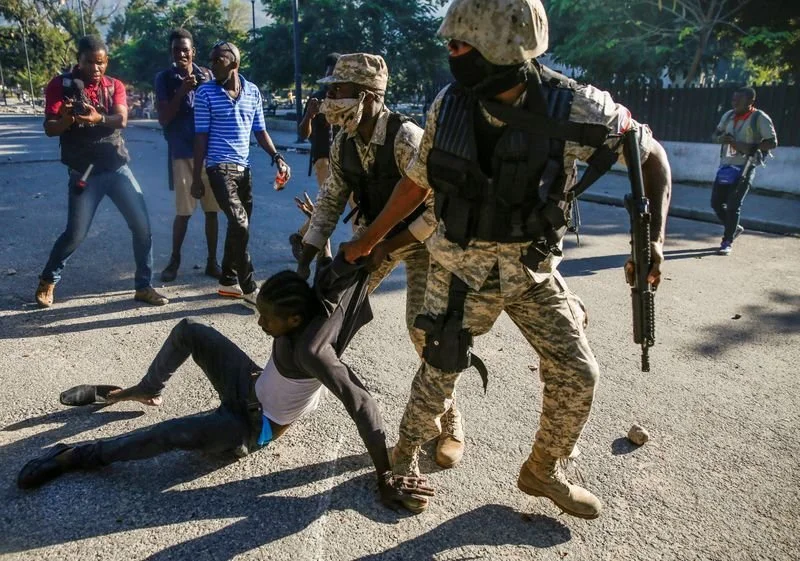
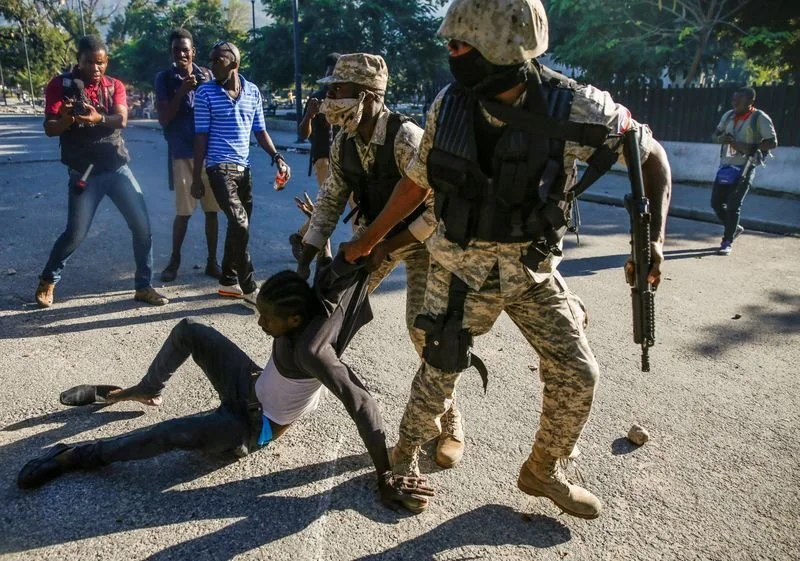
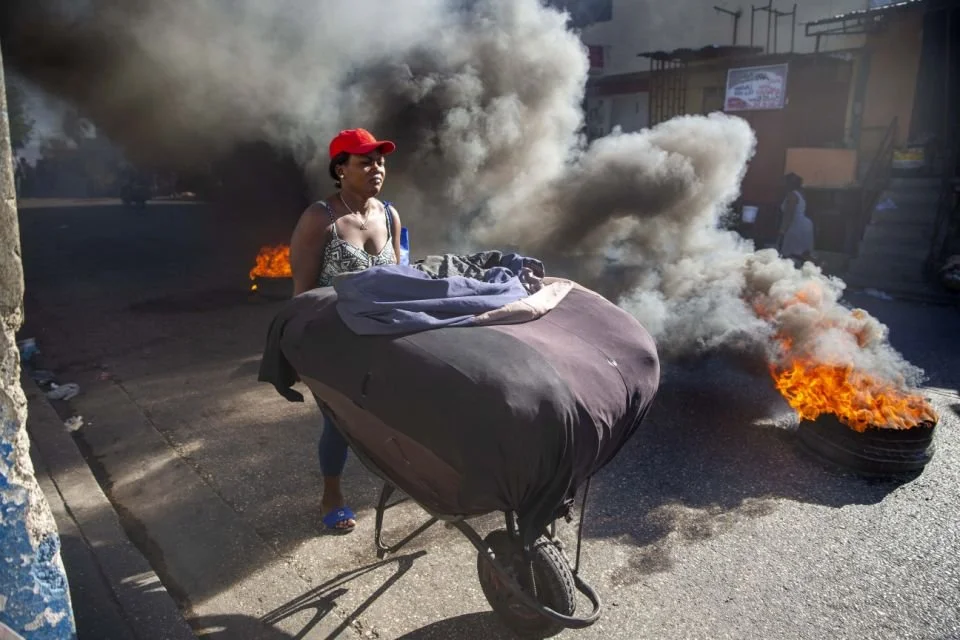
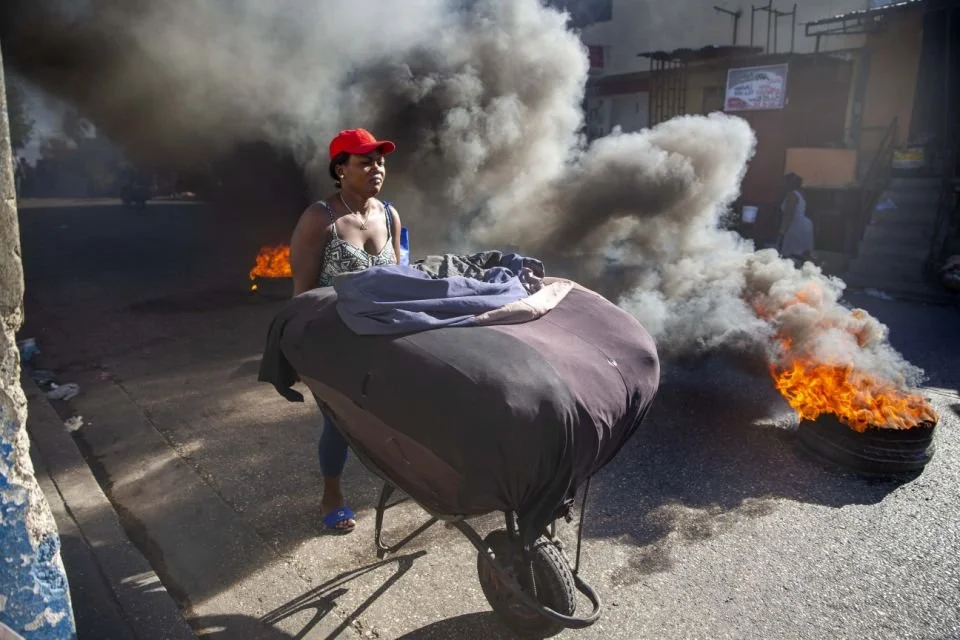
PORT-AU-PRINCE (Reuters) - Haitian police on Wednesday clashed with rock-hurling protesters in the capital Port-Au-Prince amid street demonstrations against President Jovenel Moise after his government retired three Supreme Court judges earmarked as his potential replacements.
Police fired teargas and shot in the air in an attempt to disperse pockets of protesters, who pelted the security officials with rocks, according to a Reuters witness.
"We are back to dictatorship! Down with Moise!" the protesters shouted as music blared from speakers amid chaotic scenes in the poor Caribbean nation of about 11 million people.
The protesters also yelled "Down with Sison," a reference to the U.S. Ambassador to Haiti, Michele Jeanne Sison. Washington has so far backed Moise's claim that he should step down in February 2022 after presidential elections are held this year.
The latest political tumult in the volatile island nation comes amid a crippling economic crisis and a sharp rise in crime, especially kidnappings for ransom.
The opposition is demanding Moise leaves power immediately, accusing him of acting like an authoritarian leader and violating the constitution.
Tensions intensified over the weekend after Moise alleged there was an attempt to overthrow his government. Authorities on Sunday arrested 23 people, including a Supreme Court judge and a senior police official.
On Monday, the government issued an executive decree retiring the arrested judge and two other Supreme Court justices.
All three had been approached by the opposition as possible interim leaders to replace Moise and head a transitional government. In the end, the opposition chose magistrate Joseph Mecene Jean Louis, 72.
The opposition says Moise should have stepped down on Feb. 7, when they say his five-year term in office expired, following disputed 2015 elections.
Moise rejects that, citing a term that began in February 2017 after he won fresh elections in 2016. He has pledged to step down in February next year.
A group of journalists on Wednesday also complained to security officials about heavy-handed policing.
Two journalists covering the protests received minor injuries when the police dropped a tear gas canister into a pickup truck, labeled as media, which was transporting journalists, according to reporters and television footage.
Police could not immediately be reached for comment.
EXPLAINER: Why Haiti’s political strife has worsened
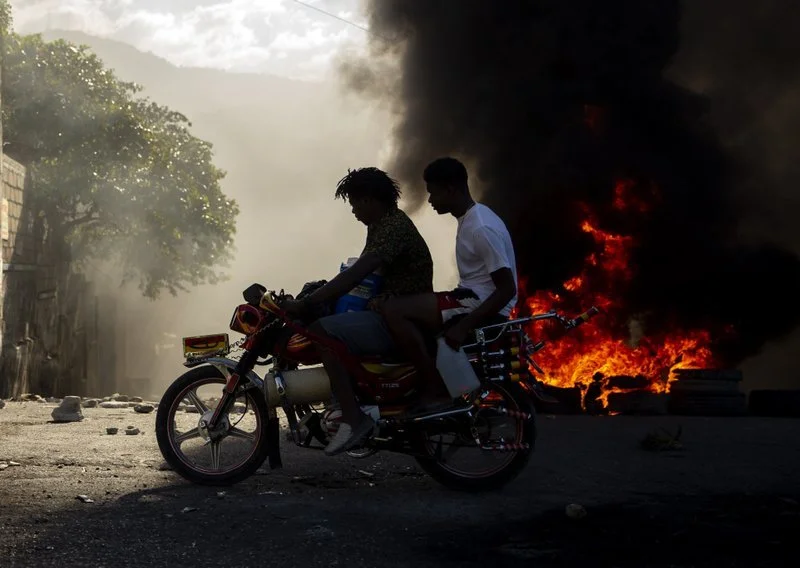
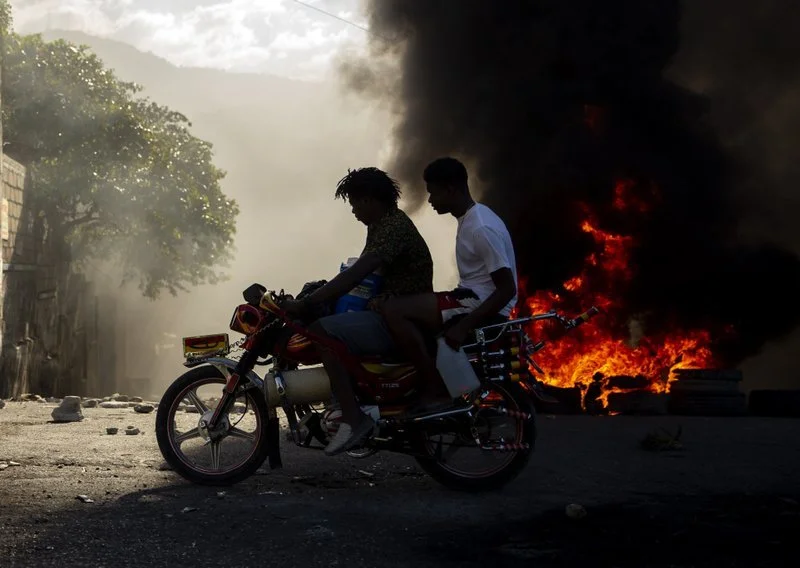
PORT-AU-PRINCE, Haiti (AP) — Political strife in Haiti has deepened as opposition leaders and supporters claim that President Jovenel Moïse’s five-year term has expired, demanding that he step down on Feb. 7. But on that day, Moïse announced that authorities had arrested 23 people accused of plotting an alleged coup to kill him and overthrow his government, including a high-ranking police official and a Supreme Court judge favored by the opposition. Hours after the arrests, the opposition nominated a supposed transitional president that no one has recognized.
The AP explains what is driving the protests and what the ongoing demonstrations and alleged coup conspiracy mean for Haiti.
WHO IS PROTESTING AND WHY?
Opposition leaders from various political parties organized protests in the weeks leading up to Feb. 7, the day they allege that Moïse’s term ended. Hundreds of supporters marched in the streets, often clashing with police as they clamored that Moïse step down. Haiti’s Constitution allows presidents to serve a five-year term, and opponents argue that Moïse already reached that limit. Moïse won after former president Michel Martelly’s term expired in 2016, receiving more than 50% of the vote but with only a 21% voter turnout in a country of more than 11 million people. The elections were so chaotic, though, that it forced the appointment of a provisional president for one year, so Moïse wasn’t sworn in until February 2017. He has repeatedly said he will step down in February 2022 and has called for legislative and presidential elections to be held Sept. 19, with a runoff scheduled for Nov. 21. The administration of U.S. President Joe Biden appears to support Moïse, with a State Department spokesman recently saying that a new elected president should succeed him when his term ends in 2022.
___
WHAT ELSE IS DRIVING THE PROTESTS?
Critics accuse Moïse of amassing more power in recent months, noting that he already has been ruling by presidential decree ever since he dissolved the majority of Parliament in January 2020 after failing to hold legislative elections in 2019 amid political gridlock. Moïse also has approved a decree that created an intelligence agency that answers only to the president and another that limits the powers of a court that audits government contracts and had accused Moïse and other officials of embezzlement and fraud, allegations they have denied. Another recent decree classifies robbery, arson and blocking public roads — a common ploy during protests —as terrorism, leading to heavy penalties. Some of the decrees drew rare criticism from the international community as well. Opponents also are rejecting an upcoming constitutional referendum scheduled for April 25, the first one to be held in more than 30 years. It calls for the creation of compulsory military service for those age 18, would create the position of a vice president to replace that of prime minister and establish a unicameral legislature to be elected every five years to replace the current Senate and Chamber of Deputies. In addition, the draft only states that a president cannot serve for more than two terms; it says nothing about whether they can be served consecutively as is currently prohibited. Experts note that the current Constitution bars changes to it via a referendum.
___
WAS THERE A PLAN TO OUST MOÏSE?
On Sunday, Moïse announced that authorities arrested 23 people accused of a coup conspiracy to allegedly kill the president and overthrow his government. Among those detained is a high-ranking police official and a Supreme Court judge who was one of three judges favored by the opposition to become a potential transitional president. Authorities said they seized several weapons and a copy of the judge’s speech if he were to temporarily replace Moïse, along with a recording with top security officials at the National Palace talking about an alleged plot to arrest the president. The opposition condemned the arrests and noted the judge has automatic immunity as they accused Moïse’s administration of political repression.
___
WHAT’S NEXT?
The opposition named another Superior Court Judge, Joseph Mécène Jean-Louis, as Haiti’s supposed transitional president after Moïse announced the arrests. Jean-Louis, who is the court’s oldest judge, said in a brief statement that he accepted the position. Neither Moïse nor anyone in the international community has recognized him. The normally congested streets in the Haitian capital of Port-au-Prince and elsewhere remain largely empty amid growing political uncertainty as Moïse’s administration continues to face a spike in violence and demands for better living conditions.
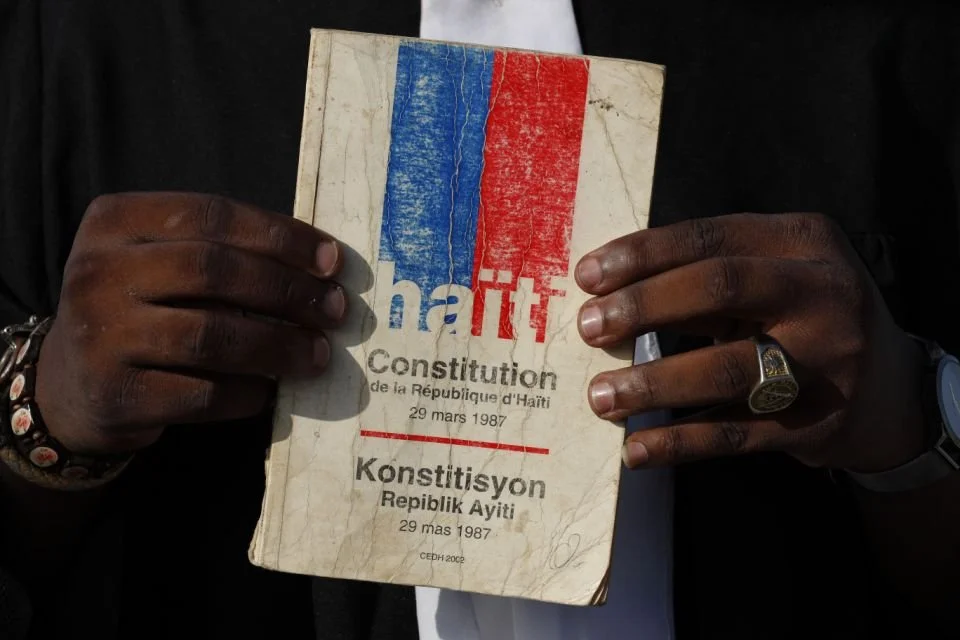
Haiti opens debate on proposed constitutional changes
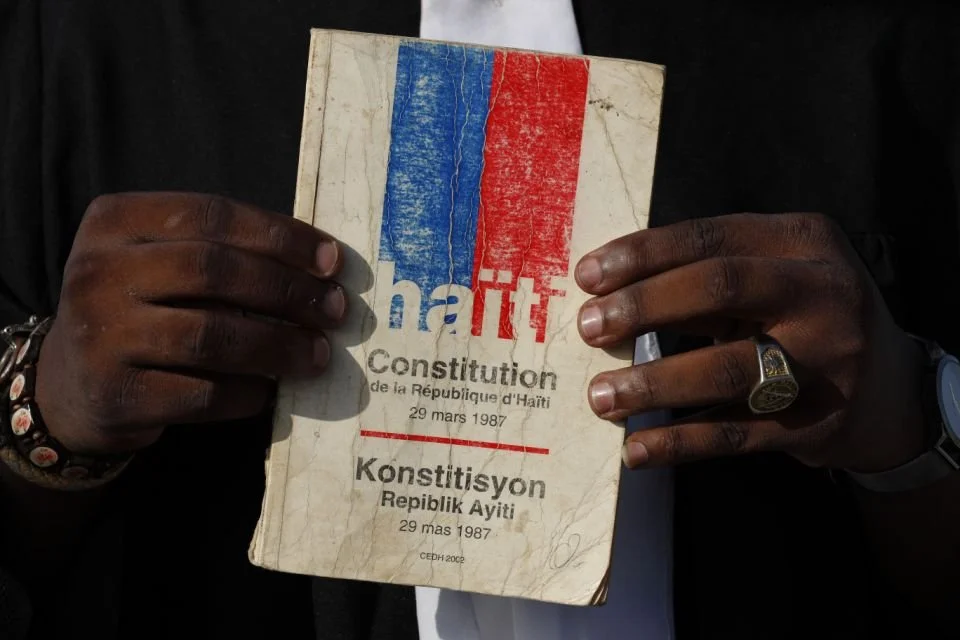
PORT-AU-PRINCE, Haiti (AP) — Haiti has unveiled multiple proposed changes to overhaul the country’s Constitution that officials plan to present to voters starting this week for an upcoming referendum that looms amid growing unrest.
The public meetings are scheduled to be held across Haiti for the next three weeks, ahead of the April 25 constitutional referendum, which would be the first one held in more than 30 years.
One of the biggest changes is an omission in the draft issued by an independent commission tasked with creating the constitutional changes that have generated heated debates. Haiti’s current Constitution bars presidents from serving two consecutive terms, but the draft only states that a president cannot serve for more than two terms; it says nothing about whether they can be served consecutively.
Human rights attorney Bill O’Neill told The Associated Press that his interpretation is that the omission would allow a president to serve two terms consecutively. He noted that those who drafted the 1987 Constitution currently in use were emerging from a 29-year dictatorship under two so-called “presidents for life”: François Duvalier and Jean-Claude Duvalier.
“The drafters were very wary of allowing anyone having too much unbroken time in the Presidency,” he said.
The new draft also drops the requirement that to be president of Haiti, one needs to have lived in the country for five consecutive years prior to the date of general elections. All it says is that one “must have habitual residence in Haiti,” a change that could allow the diaspora to run for the highest offices in Haiti, which is currently banned. The proposed change also would apply to the position of vice president.
Other proposed changes include creating the position of a vice president to replace that of prime minister and establishing a unicameral legislature to be elected every five years to replace the current Senate and Chamber of Deputies, which was largely dissolved more than a year ago when President Jovenel Moïse began to rule by decree following a lack of legislative elections.
Another change also calls for legislators to be elected every five years to match the presidential term since some senators are currently elected every two to six years.
“This requires elections every 18 months on average,” states the document issued by the independent commission. “The difficulty of respecting this binding electoral agenda plunges the country into a chronic institutional crisis.”
Critics of the proposed changes say they see it as a power grab by Moïse, who says he will step down in February 2022 when his five-year term ends. The opposition, however, argues that his term began when that of former President Michel Martelly ended in February 2016, even though Moïse wasn’t sworn in until February 2017 following a chaotic election process that led to the appointment of a provisional president for one year.
Alfredo Antoine, a former legislator, said the changes are simply a proposal at this point and that people have the right to study them. He also said opposition leaders should seek to create a dialogue with Moïse instead of organizing protests as they insist he leave office by Sunday.
“They should not put oil on the fire,” he said.
Opposition leaders could not be immediately reached for comment.
As officials meet with certain sectors of society to discuss the proposed constitutional changes, some are demanding more inclusion. Ulrich Louisma, a 40-year-old air conditioning repairman, said people and officials other than the president should provide input on a potentially new Constitution.
“It can’t be a one-man show,” he said.
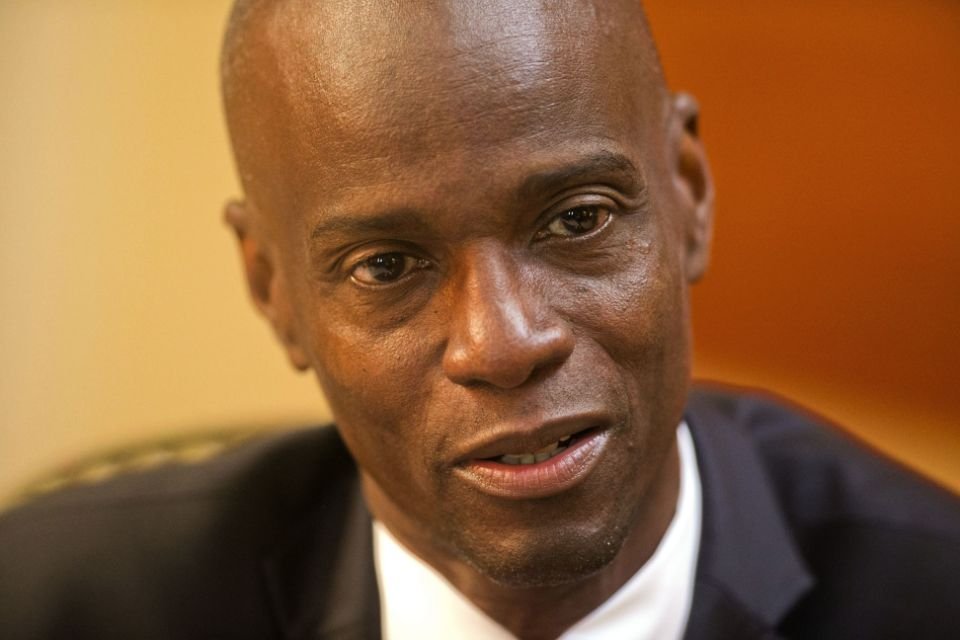
Haiti Opposition Agrees on Plan to Replace President Moise on February 7
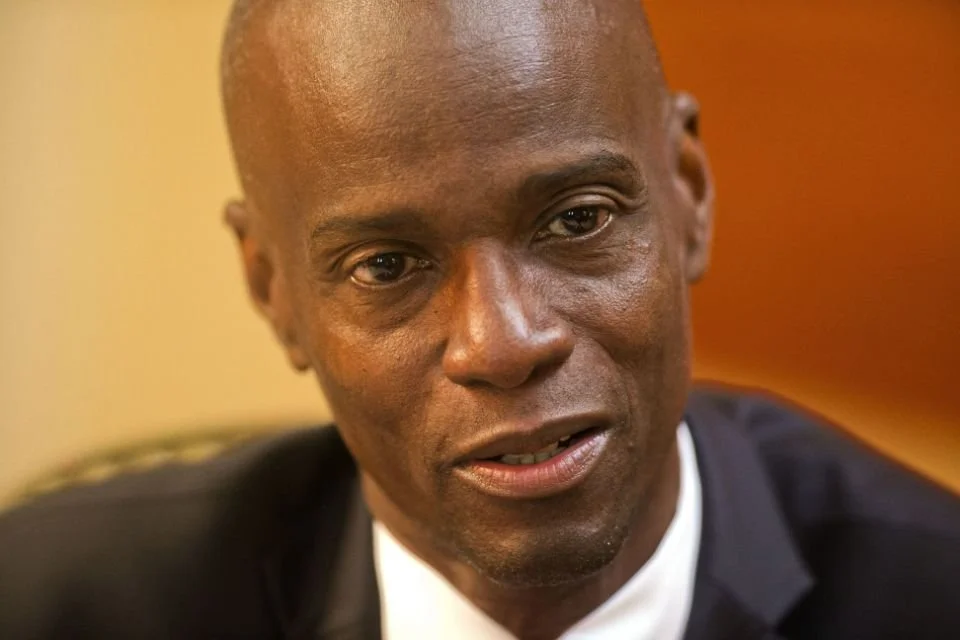
WASHINGTON/PORT-AU-PRINCE - Haiti's opposition leaders have agreed on a plan to replace President Jovenel Moise with a new head of state on Sunday.
They accuse Moise, who has ruled for nearly four years, of being an autocrat who failed to curb the rash of kidnappings that have terrorized the nation. They also criticize Moise for what they regard as his weak response to a crippling economic crisis.
Moise has said he will not step down until February 2022, noting he has one year left of his five-year term.
The opposition agreement, named Ako Final Teras Garden (Terrace Garden Final Accord), creates a commission made up of seven members of civil society and seven opposition leaders. The commission would be tasked with choosing a president to lead the transitional government from members of Haiti's Supreme Court.
The prime minister would be chosen among the opposition politicians, and the heads of government ministries would be selected by the new government.
The opposition is determined to finalize their choices before February 7, they announced Monday.

Moise has said he intends to transfer power to the winner of the general election scheduled for September of this year.
Moise has also said he intends to make changes to the country's constitution. A hand-picked Provisional Electoral Council (KEP) was chosen last year, despite criticism from the opposition that it is not representative of civil society. The KEP announced in January that a referendum on the constitution will be held on April 25.
In an exclusive interview with VOA, Haitian Ambassador Bocchit Edmond said the opposition's plan to form a transitional government has been tried before — and failed.
"It is time for Haiti to leave that cycle — that cycle of using illegitimate people to replace elected officials," he told VOA. "Every time we have elections, we have to reverse the electoral votes. We have to ask the president to go, (only) to be replaced by a transitional government, which has never served the good of the Haitian people."
But the opposition isn't listening. Leaders announced a nationwide mobilization in all 10 departments of the country that began January 28-31, followed by general strikes Monday and Tuesday, and again on February 7 to keep the pressure on Moise, who was a businessman before entering politics, to step down.
Former Senator Jean Charles Moise of the Pitit Dessalines opposition party joined protesters in the streets of Port-au-Prince on Sunday.
"When I was a senator and my term expired, I left the Senate. I was elected to a six-year term, so I resigned. We all know that the constitution states that every five years there must be elections to choose a new president. A president's term lasts five years. That is why we have told President Jovenel Moise that his term is expired," Moise (no relation to the president) told VOA.
Former senator Moise said after February 7, there will be a new "system" governing Haiti and a there will be a transition period.
"The leader will not be a member of the opposition — I want to reassure the people (of Haiti) about that — whether you are living in Haiti or abroad, this time we must liberate our nation, this is our country. (General Jean Jacques) Dessalines did not win the revolutionary war to end up with this result," he said.
Haitian opposition leaders aren't the only ones calling for a transitional government. U.S. Representatives Andy Levin, a member of the Foreign Affairs Committee, Gregory Meeks, incoming chair of the House Foreign Affairs Committee, and Albio Sires, chair of the Western Hemisphere Civilian Security and Trade subcommittee, expressed the need for a transition in Haiti in a joint statement issued in December 2020. The U.S. lawmakers said there was "growing concern" about political events in Haiti.
“Haitian President Jovenel Moïse is pursuing an increasingly authoritarian course of action, issuing a series of recent decrees that include creating an extraconstitutional domestic ‘intelligence’ force,” the statement said. “His latest actions are reminiscent of past anti-democratic abuses the Haitian people have endured, including the run-up to the Duvalier dictatorship. We will not stand idly by while Haiti devolves into chaos.”

Reacting to the statement in December, Ambassador Edmond expressed frustration and said he intended to meet with the congressmen.
“It is really disturbing,” he told VOA. “It saddens us to see democratic officials call for a transitional government. We don’t think that going through a transition again will help Haiti.”
Haiti has had eight provisional governments since the departure of Jean Claude “Baby Doc” Duvalier in 1986.
Last week, Edmond told VOA he had a "lengthy discussion" with Congressman Levin that lasted more than 45 minutes. He said they met virtually due to COVID-19 restrictions.
"We will continue to discuss the situation and show that maybe they had erroneous information. But we will continue the dialogue to make sure they have accurate information. I'm here to answer all their questions and give them any information they ask for," Edmond told VOA.
The ambassador said he plans to speak with Congressman Meeks later this month.
Meanwhile, a general strike announced by Haiti's unions to protest against insecurity and to demand the president resign was observed Monday. The streets of the capital were mostly empty, with only pedestrians and a few motorbikes moving about, according to VOA Creole reporters in the capital.
Most businesses, markets and schools remained shuttered. A second day of strikes is planned for Tuesday.
Matiado Vilme and Florence Lisene in Port-au-Prince contributed to this report.

Playlist: Haitian Rhythms And The Music Of New Orleans

'Kanaval,' a three-part audio documentary, explores Haiti's influence on NOLA
Much of what distinguishes New Orleans today from other American cities can be traced back to French and African influences from Haiti. The cultural ties go back more than 200 years, when 10,000 free and enslaved people left what was then the French colony of Saint Domingue during the country's revolution. NOLA's multi-cultural DNA is its calling card, and it's reflected in the food, architecture, art, and most notably, music. Kanaval: Haitian Rhythms & the Music of New Orleans is a new three-part documentary, hosted by Grammy-winning musician Leyla McCalla, that explores the history of Haiti, and its continuing impact on the music of New Orleans.
Kanaval celebrates the origins, history and influence of Haitian culture, and features interviews and music from Boukman Eksperyans, Paul Beaubrun, RAM, Lakou Mizik, Chico Boyer, Win Butler & Regine Chassagne of Arcade Fire, Bruce "Sunpie" Barnes, Ben Jaffe of the Preservation Hall Jazz Band, and others. Throughout the documentary, historical insights and interviews are provided by Ned Sublette, Duke University professor Laurent DuBois, Loyola University New Orleans professor Angel Adams Parham, award-winning author Edwidge Danticat, Linda Reno and Lori Martineau of the organization Haitianola, and Wesleyan professor Elizabeth McAlister.
"For people who know Haiti and New Orleans, the similarities are endless," says McCalla. "The deep connections between these places really comes alive in the music."
The documentary, premiering on NPR member stations this month, is part of a year-long project including live performances in Philadelphia and virtual events. One of these performances will be McCalla's current project, Breaking the Thermometer to Hide the Fever, that tells the legacy of Radio Haiti, the country's first privately owned Creole-speaking radio station, and the assassination of its owner through McCalla's own Haitian-American lens. The multi-disciplinary performance, featuring original compositions and arrangements of traditional Haitian songs, premiered in March 2020 at Duke University and will be presented in Philadelphia as part of the Kanaval project.
Kanaval: Haitian Rhythms & the Music of New Orleans is supported by The Pew Center for Arts & Heritage with additional funding from the Wyncote Foundation.
Haiti leader speaks of more power for diaspora amid strife
PORT-AU-PRINCE, Haiti (AP) — Haitian President Jovenel Moïse said Monday that proposed constitutional amendments would allow members of the country's diaspora to run for the presidency and other high-ranking offices.
The announcement came during an online public address during which Moïse reiterated that he would not step down until February 2022 and urged Haitians to support the creation of a new constitution, which is due to be voted upon in April.
“It’s time to change it,” he said. “We can’t continue like this. The country is paralyzed.”
Moïse spoke on the first day of a two-day transportation strike that paralyzed parts of Haiti and forced the closure of banks, schools and businesses. Haiti also has been hit by ongoing, often violent protests in recent years against corruption and for better living conditions.
The proposed constitutional changes are expected to be made public this week as opposition leaders step up their demands that Moïse relinquish power on Sunday, arguing that his five-year term began when that of former President Michel Martelly expired in February 2016.
However, a chaotic election process led to the appointment of a provisional president for a year until Moïse was sworn in a year later.
Moïse also pledged to keep fighting a rise in kidnapping, saying he won’t allow gang members to scare people into not participating in the upcoming constitutional referendum or the general elections scheduled for later this year.

9-Year-Old From Haiti Detained by Immigration in Trump’s Final Days in Office Is Released Home to Family

Vladimir Fardin, a 9-year-old boy who was separated from his family and held in a shelter for unaccompanied immigrant children in the final days of the Trump administration has been released and is now back home in Haiti.
Vladimir had flown into the U.S. last Sunday with his older brother, Christian Laporte, a 19-year-old who was going to school at a college in Pleasant Hill, Calif., according to KQED news.
Customs and Border Protection officials at San Francisco airport refused to allow the two to enter the country on their visas, and ultimately put Laporte on a flight to the Dominican Republic while transferring Vladimir to a detention center for unaccompanied immigrant children. CBP officials said the older brother presented a student visa at the airport but was missing other required admissibility documents, and that the 9-year-old was deemed inadmissible due to previous violations of his tourist visa.
Johnny Sinodis, a lawyer with Van Der Hout LLP, the law firm representing the brothers’ family, told The Root that Vladimir’s release was finally secured after the 9-year-old spent over a week in detention by the Office of Refugee Resettlement. Vladimir’s release came about through negotiations between Immigration and Customs Enforcement and his lawyers, said Sinodis, as ORR maintained that the 9-year-old couldn’t be released from their custody until he spent two weeks quarantining in their facility and had two negative COVID-19 tests.
“That policy does not apply to individuals like Vladimir who would not be released into a larger facility at ORR where he would then mix with a larger population of other children,” Sinodis said they told the agency.
After an emergency immigration hearing before a judge in San Francisco where Vladimir’s application to be admitted to the U.S. was withdrawn, the 9-year-old was allowed to board a plane to Haiti and returned home to his family on Wednesday.
“We believe that this case could have been handled differently from the outset,” said Sinodis, who added that it wasn’t necessary for CBP to separate the child from his family and detain him.
Sinodis credited the ultimate release of Vladimir to the headway the law firm was able to make with officials at ICE, but did not discount the idea that the recent shift in federal administration may have helped the process along.
“It’s really hard for me to tell you if this had happened three weeks ago, we would have had the same result,” said Sinodis. “I tend to think we would have had more obstacles. But definitely, the Biden Administration coming into office did not hurt.”
Nearly 70,000 immigrant children were held in federal custody in 2019. President Biden campaigned against the prolonged detention of immigrant children, but according to NBC News, he has delayed executive orders he promised to sign on his first day in office that would establish a task force to reunite children separated from their families by the Trump administration.
Sinodis emphasized that Vladimir spent over a week in government custody, though he had more support than most children in the immigration system do.
“For all the other children that don’t have the benefit of access to counsel and people within their family who have connections within the activist community [like Vladimir], they could be stuck in detention for much longer,” he said. “That’s really the scary part of this.”
Sinodis added that a child psychiatrist who worked on the case told immigration officials that the 9-year-old was traumatized by his experience in detention, as he had never spent any time away from his family.
“He was looking forward to being with his mom again.”

52 Places To Love in 2021

We asked readers to tell us about the spots that have delighted, inspired and comforted them in a dark year. Here, 52 of the more than 2,000 suggestions we received, to remind us that the world still awaits.
South Wales, Wales
“You’re in a place set apart.”


Over the last 20 years I’ve traveled to South Wales about seven or eight times with my wife, and later our children, to visit family in a town near Swansea called Mumbles. (The name is a corruption of the French word for “breasts.”) It sits at the edge of the Gower Peninsula — a beautiful wild place that offers expansive beaches, medieval castles, hilltop trails, horses that graze near Stone Age ruins and picture-book villages with friendly pubs serving Sunday roasts and local ales in dark-wood booths.
Mumbles is homey and welcoming, yet we never saw tourists there. The roads are so small and narrow that getting from one place to another feels like it’s much farther than you actually travel.
Punctuated by weddings, births, graduations, anniversaries and deaths, our trips represented different stages in our lives. But each trip also seemed less like a visit to relatives in the old country than an escape to a secret, beautiful place that only we knew.—OWEN MARTIKAN

Saipan, Northern
Mariana Islands
“An island of hidden caves,
covered in untamed jungle.”


The Saipan Hash House Harriers running club meets every Saturday and full moon, with a designated person — the “hare” — bushwhacking a trail for the rest of the runners.
Saipan is only five miles wide and 12 miles long, but runners showed me parts of the island I never would have found myself. We saw a beautiful B-29 engine from a plane crash in the mountains. Also a staircase cut into a cliff, from the last Japanese command post.
Runners took me boating, diving, hiking, camping, spelunking and golfing. Swimming in a lagoon that dropped toward the Mariana Trench, we marked how far we’d swum with the top halves of three submerged Sherman tanks — a door open, guns sticking out. I was never the hare, but I’m coming back to set a trail.—MEGHAN WEST

SAIPAN, NORTHERN MARIANA ISLANDS

ABOUT THE AUTHOR
Meghan West of Denver, a geophysicist working with the Army Corps of Engineers, traveled to Saipan looking for unexploded ordnance from World War II.
Kaliya Dhrow, India
“If you go, you will get lost and you
will recover something of your own.”


I’m always on the lookout for roads that don’t exist on maps. I talk to locals, get their directions. When the pandemic hit, I kept hearing whispers over cups of chai: Nomadic herders had found kotaro, a Kutchi word for rock formations sculpted by wind and water.
I pinned it down to several villages. Riding along a dirt road, we passed a hill split by nature. On both sides you have water, craggy peaks. This one huge mountain has six peaks, which I named Mahabharata, after the ancient poem in which five brothers share one wife. It was around noon, the sun was beating down and we had been riding for two hours when the road ended. We parked our bikes.
From the rim of a crater, I looked inside this marvelous, endless landscape of red: streaks of crimson, saffron — orange, also. I started climbing down, through the different shades of the setting sun, and I came to a waterfall with fish flying upstream.—VARUN SUCHDAY

KALIYA DHROW, INDIA

ABOUT THE AUTHOR
Varun Suchday, of Bhuj, India, rode a motorcycle to tour the remote landscape near the village of Bhadli with his father and uncles in 2020.
PHOTO CREDITS
Two bottom photographs taken by Kaushik Gor.
Isfahan, Iran
“People see Iran as politically
charged and oppressive. But there
is a lot of beauty and innocence.”


My memories of Isfahan come in snippets: The hiss of the nan panjereh, an intricate funnel-cake dessert, as my grandmother shows me how to dip it into hot oil; the smiling, chattering taxi drivers with their endless questions about America and their playful jabs at my accent; the winding alleyways that reveal hidden nooks and crannies in the Grand Bazaar.
There’s a difference between the people and the government. I wish Americans could see the vibrant curiosity of the people who live here. I used to visit Isfahan every year. I spent long mornings lifting weights in the women-only gyms, and afternoons with my grandfather, watching him lovingly watering the plants in his garden and shooing away stray cats. But divisive politics, and now Covid-19, have made it harder. My grandfather died two years ago. I wasn’t there. I feel my Farsi growing rusty on my tongue.—NEEKNAZ ABARI

ISFAHAN, IRAN

ABOUT THE AUTHOR
Neeknaz Abari was raised in Washington, D.C., and works at a consulting firm in Dallas.
The Llanos, Colombia
“You can kiss your cell service goodbye.”


Beyond Cartagena’s tourist plazas and Bogotá’s urban hubbub, Colombia’s dramatic Andean peaks dissolve into vast, wild eastern grasslands — the Llanos.
Tropical rhythms are replaced by the twangy harp of joropo, and the smell of the sea gives way to that of tallgrass, cattle and smoky barbecue.
As Colombia has attracted more international visitors in recent years, the Llanos have remained relatively untraversed. The Llanos host an alluring combination of pristine biodiversity and traditional ranching culture seemingly lost in time. Anacondas, howler monkeys, capybaras and crocodiles live alongside ranchers, farmers and thousands of cattle. The grasslands once featured some of the wildest battles of the Independence era, and have witnessed the 20th-century horrors of guerrilla violence and drug trafficking. Today, though, like the rest of Colombia, the Llanos are emerging, if unsteadily, as a place of tranquillity.—SAMUEL DULIK

THE LLANOS, COLOMBIA

ABOUT THE AUTHOR
Samuel Dulik, a native of the San Francisco Bay Area, is a management consultant in Bogotá.
Siwa Oasis, Egypt
“This place touches the
deep pools of your soul.”

Siwa haunts my dreams. This oasis, far into the Great Sand Sea of western Egypt, nearly 400 miles from Cairo on lonely desert roads, is a place of infinite vistas and intimate conversations. Only one road goes to Siwa; it’s a valley of figs and palms, hot and cold springs.
Inhabited since Paleolithic times, Siwa is where the past, present and future seem to exist at once. There you’ll find a mountain filled with Ptolemaic tombs and the Temple of the Oracle, both thousands of years old.
When I say it haunts my dreams, I mean it. I frequently find myself in my dreams walking through date orchards at night past the lakes, into the desert, nearly feeling the cool sand in my tired feet as I wonder at the stars. I always awake with a sense of calm and clarity.—CATHERINE LITTEN

SIWA OASIS, EGYPT

ABOUT THE AUTHOR
Catherine Litten of Hyattsville, Md., works as a director of scholarships for an education nonprofit.
Montana’s
‘Golden Triangle’
“Everyone talks about Big Sky Country,
but it’s the land. You could see forever.”

I grew up on a farm 14 miles west of Big Sandy, Mont.
The plowed land closest to our farm held an old buffalo wallow, and there used to be tepee rings in the front pasture. This part of Montana, Lewis and Clark country, is flat and implacable with swells, coulees and hills. Ancient volcanic ranges — the Bears Paw Mountains, the Highwoods, the Little Rockies — sprawl in the middle of enormous wheat fields and acres of rangeland. Every morning when I was a kid, I saw the land first and the world second. It’s astonishingly severe and beautiful.
Light lasts a very long time there, in the summer evenings. There is sort of a constant background of big winds. And so we had a shelter belt, which was rows of trees that are around one corner of the main farm stand. And I would go down there as a kid and make my little world out of the clods of earth that were, and are, part of my soul.
You’re small in that part of the country.—DOREEN STEVENS

MONTANA’S ‘GOLDEN TRIANGLE’

ABOUT THE AUTHOR
Doreen Stevens is retired from nonprofit work and lives with her husband in Arlington, Mass.
The Camino de
Santiago, Spain
“An experience that is more
about the self than the selfie.”

My grandfather and I have walked four routes together on the Camino de Santiago. He is 80 and Catholic; I am 35 and skeptical. Our walks were undistracted opportunities for him to transmit family history and a lifetime of wisdom to me, punctuated by bullfights and tapas.
Our first walk was in 2007 after two of his brothers died. I was not expecting to enjoy it; the idea was that we were offering up our sufferings for our ancestors. Instead, I found myself appreciating both the forced meditation and the fellow travelers we met on the way. We’ve gone back multiple times and brought different members of our family with us. I’ve rethought jobs, relationships and life direction over hundreds of kilometers. When you walk into a town, you really smell, hear and see the gradual changes from rural to urban and back again. My father died recently. My grandfather and I are hoping to go back to the Camino next year, and walk the last 100 kilometers on the French route on his behalf. For my grandfather, completing the Camino would release my father’s soul from purgatory. For me, it would be a chance to reflect, in gratitude, with and for the family I have left.—SAM MICHAUX

THE CAMINO DE SANTIAGO, SPAIN

ABOUT THE AUTHOR
Sam Michaux is from Minnesota and moved to Los Angeles to write novels.
Malpaís, Costa Rica
“The colors of the ocean
were always changing, and
the sunsets were gorgeous.”

I studied abroad in San Jose, Costa Rica in 2005. Every weekend, we’d go explore the country. One of those trips was to Malpaís, a beach on the Pacific Coast. It took so long to get there — a bus to a ferry to a taxi — I remember wondering, “Is this going to be worth it?”
It was so beautiful. At night, everything closed, and it was really dark. I remember being on the beach, looking up, and really seeing the stars. I saw a satellite for the first time. I felt small and big at the same time, like I was connected to everything. When you travel, you’re able to become a different version of yourself. In Malpaís, we slept on hammocks on the beach for a dollar. I felt so free. I’m from New Jersey, where there were always lights and people around. This time in Costa Rica felt like an introduction to me stepping into myself and finding my independence.—KARA HOHOLIK

MALPAÍS, COSTA RICA

ABOUT THE AUTHOR
Kara Hoholik is the chief executive of Social for Good Co., a content marketing agency. She lives on a farm in Western Michigan.
Dakar, Senegal
“The city that refuses to
be like anywhere else.”


I landed in Dakar to the bluest sky I’ve seen, hundreds of sprawling baobab trees, sandy dust and angelic light.
Dakar is a city whose stability has centered me during my shakiest times. It is a place where tradition runs through every corner: the Wolof language, the sharing of meals — especially thieboudienne, or red rice with fish.
Along the Corniche, you’d think the whole city is working out.
I turned 25 in Dakar, a city with such a clear sense of self, ideals and history, a city that refuses to be like anywhere else, a city that taught me the importance of being my own person, a city that made me question what I want to bring to the world, and what I stand for. I felt empowered by Dakar. It stood up for me. I’ve never felt unsafe there — and, as a Black woman anywhere, that’s an amazing thing.—FARIDAH FOLAWIYO

DAKAR, SENEGAL

ABOUT THE AUTHOR
Faridah Folawiyo is an art historian and independent curator from Lagos, Nigeria. She spent two months in Dakar for an artist residency in 2018.
London’s St. James the
Less Church, England
“I yearn to explore again.”


I studied abroad in London in 2000 when I was a junior at New York University, and it was in a class called “The City and Green Spaces” that I discovered this church, St. James the Less. It’s been 20 years but I still vividly remember that from the first time I walked in the building, I immediately felt at home. There are humble brick arches, elaborately painted tilework, and warm, worn wood. There were stars carved into the walls above the windows, and patterns that reminded me of quilts that my grandmother had made. I wrote in my journal that it reminded me of hot cider and fresh bread.
It’s been so important to find those things that feel warm and cozy; to have a place to go in our minds that’s inviting, even if our reality is not. St. James the Less is in that space in my mind, along with endless cups of tea, candles and good books.—SARAH BEST

LONDON’S ST. JAMES THE LESS CHURCH, ENGLAND

ABOUT THE AUTHOR
Sarah Best is a small-business owner and a poet. She lives in Madison, Wis., with her husband.
PHOTO CREDITS
Photograph of the church taken by Rii Schroer/eyevine/Redux.
The Marrakesh
Medina, Morocco
“It’s a place you can’t really
understand until you live in it.”


I left the Marrakesh medina two years ago, and this love letter has been in my heart ever since. I was teaching at a university in Marrakesh, and in my second year I found an apartment that met all my needs: It was deep in the medina, the old city, with a rooftop terrace.
Inside the medina, there’s always this background noise — drumming and dancing and the sound of thousands of people passing through. There were, I think, seven mosques within sight of my terrace, and five times a day the call to prayer would start from each of them a few seconds apart, like a battle of the voices. I learned about the cold of the desert — my house was open, so when it would go down to 40 degrees, I’d basically be camping in my bedroom with sleeping bags. I have a ticket to Morocco in February — I’m not sure I’ll be able to use it yet, but I’m holding onto that ticket with all of my heart.—JENNIFER BORCH

THE MARRAKESH MEDINA, MOROCCO

ABOUT THE AUTHOR
Jennifer Borch lives in Jericho, Vt., where she is the education program coordinator at the U.S. Committee for Refugees and Immigrants.
Nanda Devi
Mountain, India
“I can’t help but long
for its comfort again.”

When I think of Nanda Devi — one of the world’s most storied mountains, worshiped by locals as a living goddess — a sense of comfort comes in the form of a memory: My wife and I are sitting on the steps of a bungalow, spending a quiet moment together watching the sunset.
In front of us is a wide panorama of 23,000-foot peaks, with Nanda Devi dominating the landscape. It was a doomed romance. A few months after we were married, Shoma was diagnosed with cancer. We’d have three years together. I had this fear after my wife passed away: Will I remember Shoma going forward? How she spoke, how she felt, what she said, how she looked? The next time I saw the mountain, I was alone. The first memory that came to my head was of that earlier evening: a golden glow on her face. She looked at peace.—PRAYASH GIRIA

NANDA DEVI MOUNTAIN, INDIA

ABOUT THE AUTHOR
Prayash Giria and his wife, Shoma, visited Nanda Devi, India’s second-tallest mountain, in 2016. Mr. Giria, of New Delhi, returned in 2019.
Laugavegur
Trail, Iceland
“The terrain is so diverse,
every mile is remarkable.”


In 2019, I hiked this 34-mile trek in southern Iceland with my friend Meredith and her mom. This was the first time any of us had planned a trek like this overseas. We definitely did some practice packing sessions beforehand!
We climbed a glacier using crampons, spikes attached to shoes for traction, and hiked through six miles of volcanic ash. On the last day, we climbed over this bridge by a huge waterfall. The mountains were covered in moss and there was a perfect, bluebird sky. I felt privileged that I got to see something so special and beautiful. I’m a plus-sized Chinese woman, and I’ve been told I can’t do things like this. But guess what: I did it, and I did it really well! I’ve climbed an ice wall. I’ve done double-digit river crossings with my pack over my head. This trail taught me how strong and powerful I can be.—STACEY MEI YAN FONG

LAUGAVEGUR TRAIL, ICELAND

ABOUT THE AUTHOR
Stacey Mei Yan Fong is a part-time baker in Brooklyn.
PHOTO CREDITS
Photographs by Meredith Passaro, a friend of the contributor.
Wadi Rum, Jordan
“It’s the silence that really strikes you.”


You should always arrive in Wadi Rum at sunset. The sand will be red, and as the sun slips behind ancient rocks, it will turn a dozen shades of pink and gold. In the light, the mountains do tricks, too, shape-shifting into whales or mystical paintings or the image of Mother Nature herself.
It’s a place untouched for centuries. Your schedule is dictated by sunset and sunrise. In the vastness, you feel close to the center of the universe.
I came back to Wadi Rum as an adult after many hiking trips there as a schoolchild. I had been living in New York and had grown used to so much noise. I realized I had been to these sands so many times before, but had never appreciated their majesty. It needs to be the right moment — both in the sunset, and in your life. But if you arrive on time, Wadi Rum will change you forever.—HASHEM SABBAGH

WADI RUM, JORDAN

ABOUT THE AUTHOR
Hashem Sabbagh, a lawyer turned filmmaker, was born and raised in Amman, Jordan.
Aruba
“San Nicolas is, in my humble
opinion, the most beautiful town
in the world to walk around.”


My mom is from Aruba, and two of my aunts are still there. One aunt bought my grandparents’ house, so we drink wine on the same back porch where I used to play.
While I’m there, I might wake up early one day and go to Arikok National Park, or visit the Guadirikiri and Fontein caves. I go to the beach every day. But one of my favorite things is spending time in San Nicolas, where my family is from. I’ve seen the town shift from a bustling oil refinery-anchored town to a somewhat depressed village when the refinery closed. Now, it’s been reborn thanks to the Aruba Art Fair.
I did 23andMe, the DNA test, and my roots run really deep there. My great-grandmother is descended from the Arawak tribe. Now, so much of the island is built for tourists, but there’s even more to explore on the other side.—ELISE THOMPSON

ARUBA

ABOUT THE AUTHOR
Elise Thompson is a marketing manager who has lived in New York City for 16 years.
Kaohsiung, Taiwan
“This city has a laid-back,
almost island vibe versus the
hustle and bustle of Taipei.”


I spent a year in Kaohsiung as a Fulbright English Teaching Assistant from 2017 to 2018. I had never been to Taiwan; I didn’t even know how to pronounce Kaohsiung before I arrived! The city is truly Taiwan — you don’t hear Mandarin as often as you hear the local Taiwanese dialect. People spend hours at meals; after they eat, they’ll walk to the night market and eat some more and then they’ll take more drinks down to the beach. It’s very easy to access nature, too — there are mountains and beaches right in the middle of the city limits.
My boyfriend came to Taiwan with me, and we weren’t really sure how to navigate queerness in Asia. My only frame of reference was mainland China, which is not exactly welcoming. This was before gay marriage was legalized in Taiwan — but I think that, generally, Taiwanese culture is super accommodating and welcoming. Now, we’ll come across something, usually food, that makes us miss Kaohsiung almost daily.—ANDREW LIU

KAOHSIUNG, TAIWAN

ABOUT THE AUTHOR
Andrew Liu was born in China and raised in the Hudson Valley. He works in immigration law and is currently based in Berlin.
The Scottish
Highlands, Scotland
“Just absolutely magical. I can’t use
that word enough to describe them.”


The Scottish Highlands changed my perception of my own country. I grew up in West Sussex, on the south coast of England, but didn’t really get a chance to explore the region until 2017.
During that trip, we were driving on the NC500 and came upon this vista of snow-capped mountains perfectly reflected in the loch. There are those moments when you’re traveling — I call them 100-percent moments — and this was one of them. As soon as we’re able to safely travel again, the Highlands will be one of the first places I’ll go. I’ll catch the Caledonian Sleeper to Inverness, visit Cairngorms National Park and stay at The Fife Arms. I’ll go to the Isle of Jura’s whisky distilleries, and go on long, blustery walks in the rain. This has been a distressing time, but I hope that we can all learn to really love and appreciate where we’re from.—MORGAN CHARLES

THE SCOTTISH HIGHLANDS, SCOTLAND

ABOUT THE AUTHOR
Morgan Charles lives in Somerset, England, and works in the corporate security department of United Airlines.
Lake Michigan
“The first time we visited, it felt
like we were looking at the ocean.”


When I left Vancouver to study for a Ph.D. in South Bend, Indiana, I thought I had lost the sea, sky and mountains. No one had told me about Lake Michigan.
During my first fall break, my husband and I drove out to see it. The wild dunes, roaring waves and endless horizon stunned me. The next summer, I swam lap after lap in it. Visits to Lake Michigan have gradually taken on increasing seasonal regularity: marveling at ice waves in winter, enjoying April wildflowers, swimming late into autumn. We spent the summer quarantining with family in the Poconos in Pennsylvania so we could have help caring for our son, Jem. Our first week back, I took him up to the lake. He was around three months old at the time. I walked down to the water with him in my arms. I wanted him to experience this thing that has been so profound in my own life.—JILLIAN SNYDER

LAKE MICHIGAN

ABOUT THE AUTHOR
Jillian Snyder is a humanities and English lecturer in Valparaiso, Ind.
Niansogoni,
Burkina Faso
“Trapped between the dry grassland
of the Sahel and the lush Ivory Coast.”


Burkina Faso is a West African country of desert and baobab trees, where over 60 languages are spoken.
I had heard rumors of an abandoned cliff village, like Mesa Verde in the United States, not far from my host community. When a friend came to visit, we set off on a three-day bike tour to visit and view the Niansogoni Cliffs and the Sindou Peaks. While Niansogoni was only around 20 miles away, the road was rough, and, in the middle of the hot season, we arrived dusty and dehydrated. After a change of clothes and a surprisingly cold Brakina beer, our guide led us on a hike up the cliffs. We viewed this abandoned troglodyte village of the Wara people, who in the 14th century fled into the hills to escape the neighboring Senufo tribes. Up top, in the quiet among the baobab trees, at the ends of the earth.—TERESA GOTLIN-SHEEHAN

NIANSOGONI, BURKINA FASO

ABOUT THE AUTHOR
Teresa Gotlin-Sheehan is a high school social studies teacher in Denver. She joined the Peace Corps and lived in Burkina Faso from 2012 to 2014.
Asunción, Paraguay
“It’s a place to go if you believe
the most meaningful part
of travel is meeting people.”

Stepping off the plane in Asunción, the Paraguayan capital, is like opening an oven: The heat fogs up your glasses and the air smells of diesel smoke and grilled meats.
The colorful buses racing through the city, where I lived for two years, inevitably have to slow down for the mango and lapacho trees in the roads — the custom is to pave around them, rather than cut them down.
Paraguay is sometimes seen as a transitional place between the rain forests of Brazil and the Bolivian salt flats. Backpackers tend to skip it for its flashier neighbors. But for me, travel is not about taking pictures of famous things: It’s about the people. And Paraguay is the sort of place where multiple people will offer — if not beg — to drop you off or pick you up from the airport. That embrace can be felt even among visitors.—ABIGAIL WILLIAMSON

ASUNCIÓN, PARAGUAY

ABOUT THE AUTHOR
Abigail Williamson is an English language teacher on Martha’s Vineyard in Massachusetts.
South London
Parks, England
“Most visitors know Hyde Park,
St. James Park or Regent's
Park, but in my opinion, the
true gems lie south of the river.”


In London, the parks have always been a common social gathering place, but they’ve come into their own for me during lockdown. I live in South London, and our local parks are true gems. Clapham Common is the spot for many big, boozy birthday gatherings over the years. We can walk through the rhododendrons in Dulwich Park, and we can get a glimpse of the city from the hills in Brockwell Park.
Early on in the first lockdown, my boyfriend and I went to Battersea Park, which is also where we went on one of our first dates (and where we had one of our first fights). The sun was shining, the flowers were blooming and it almost felt like it was going to be OK. When restrictions started easing, the first thing we did was call some friends and meet in Myatt’s Field Park. We sat six feet apart, and it felt momentous.—SAGE ERSKINE

SOUTH LONDON PARKS, ENGLAND

ABOUT THE AUTHOR
Sage Erskine has lived in London for five years and is originally from Maine. She is a project manager at a creative agency.
Beirut, Lebanon
“It’s the warmth of the
people that will change you.”


Lebanon is often depicted as a country plagued by tragedy — war, corruption, economic collapse. But for me, Beirut, Lebanon’s cosmopolitan capital, is where I have spent nights of dazzling fun, and the mountains and coastline captivate with enigmatic beauty.
When I was six months old, my father, who was born in the village of Sahel Alma, took me to his homeland to be baptized. A generation later, I returned with my own six-month-old daughter in my arms. In the same little church in the coastal town of Jounieh, she received the same sacrament; I wrote her name in the same baptismal book. In the Lebanon I know, my aunts prepare mezze plates that stretch the length of the dining room table while we snack on green almonds. The air is scented with orange blossoms and gardenias from my Teta’s garden. The sun dips into the Mediterranean, and I am offered the ultimate luxury: the embrace of family.—CAROLINNE GRIFFIN

BEIRUT, LEBANON

ABOUT THE AUTHOR
Carolinne Griffin, a writer and editor, lives in Vermont with her husband, two children and dogs.
PHOTO CREDITS
Photographs by Dylan Griffin, the contributor's husband.
Siberia, Russia
“I was curious to see the actual Russia.”


After passing the bar exam to become an attorney, I was craving adventure. The train is such a famous way to travel through Siberia. We spent five weeks getting on and off at little towns. Siberia, in summertime, is bright and blossoming, and so are the people — they were really curious about us, and we were really curious about them.
Our trip unfolded in spontaneous vignettes: A group of off-duty soldiers beckoned us into their compartment, sharing horseradish-infused vodka and communicating via mime and Google Translate. Assigned to the bunk next to me for an overnight leg, a chattering 6-year-old excitedly taught me the Russian words for colors. On the banks of the Kama River, we stumbled upon an outdoor disco party, and at a synagogue in Novosibirsk, a rabbi shared a conversation in bits of broken Hebrew. Siberia is not cold and barren. I found warmth, shared meals and endless points of connection.—BETSY FEUERSTEIN

SIBERIA, RUSSIA

ABOUT THE AUTHOR
Betsy Feuerstein, a lawyer in Washington, D.C., has lived on four continents.
Andros, Greece
“Philoxenia, or hospitality, is at the
heart of everything on this island.”

I first went to Andros, the island where my family is from, in 1992, the summer before I started high school. It was magical. My cousin Yanni and I were just gone, all day and night. We’d wake up in the morning and go swimming, and be out dancing all night with the new friends we’d made. The island was full of life.
I went back in 1996, and Yanni had cancer. And while I remember 1992 like it was yesterday — what I wore, where we went — I can’t really remember that second trip. Yanni was in and out of the hospital, getting chemo. He died a year later.
In 2017, I went back with my children and was relieved to see it mostly unchanged, though there were things I hadn’t noticed before, like a modern art museum and a cinema showing vintage films. It’s this warm, welcoming place, and the air smells like flowers. Now, my kids can’t wait to go back.—MARIA DAL PAN

ANDROS, GREECE

ABOUT THE AUTHOR
Maria Dal Pan is a writer and a founder of Erwin Park Communications. She lives in Montclair, N.J.https://50ab578a6c28702a038e61eb923b1d7f.safeframe.googlesyndication.com/safeframe/1-0-37/html/container.html
Romania
“The sheer beauty of the
land was astonishing.”


Growing up in a Bessarabian Jewish family, I had heard of the Old Country. What we discussed was never anything good. I never heard one thing about the sheer magnificence of the landscape or the bounties it serves up.
We traveled in Bukovina and Maramureș, hard on the border of Ukraine. The muddy back roads, undulating hills, farmsteads, haystacks and horse-drawn wagons showed a vanishing way of life. Romani on the side of the road were selling some brass stills to make plum tuica.
Driving just outside the city of Piatra Neamt, a wrought-iron fence with a Magen David (Star of David) caught my eye. I jammed on the brakes. We walked uphill to a cemetery — no sign. The caretaker, 80 if he was a day, showed us around. Maybe 10, 15 people in town are still Jewish. It was heartwarming to see someone caring for the place. I knew I was going to ask my wife to marry me. Driving from Bukovina — known for its beech trees and painted monasteries — to Maramures, we followed a zigzag mountain path: a place of transition. We reached a lookout. I said, “This is the place.”—IVAN STOLER

ROMANIA

ABOUT THE AUTHOR
Ivan Stoler lives in New York with his wife and works at a manufacturing company. (His family is from Moldova, which once belonged to Greater Romania.)
East Haddam, Conn.
“It’s as if I had to be a tourist
to appreciate this place.”


I never liked being from a small town. Even when I was a kid, I wanted to get away as quickly as I could. As soon as I got a driver’s license, I was zooming to other places.
But last year — a year when the world felt smaller than ever — I felt a connection and longing for my hometown, East Haddam: its rolling hillsides along the Connecticut River; the beautiful Swing Bridge, which opens for boats; the Goodspeed Opera House, where I worked as an usher in high school.
Although I’ve known East Haddam all my life, I finally fell in love with it last summer, when I visited with my boyfriend. We jumped into the waterfall at Devil’s Hopyard State Park; I found myself marveling at the quaint farm stands and picturesque New England churches. It may be small, but it’s home.—CALEY MILLEN-PIGLIUCCI

EAST HADDAM, CONN.

ABOUT THE AUTHOR
Caley Millen-Pigliucci is a graduate student in journalism in New York.
Yarra Ranges National
Park, Australia
“An hour and 20 minutes from
Melbourne you can be surrounded
by mountains and valleys and mist.”


There are few places that I love as deeply as the Yarra Ranges, particularly the old-growth mountain ash. It’s popular in the summer, but it comes into its own in the winter, when it’s covered in snow.
My favorite time to go is when there’s been a heavy snowfall, and the road is closed. I can get around that — it’s about a two-hour trip by public transport, then you walk straight up. Nobody else wants to do that, other than the occasional crazy local. I’ll get this beautiful place to myself, along with the wombats, wallabies and lyrebirds, who mimic everything around them. I’ll literally hear 20 bird calls from one bird who’s doing a little dance to attract a mate.
The first time I went, I couldn’t believe a place like this existed so close to where I live. I’ve gone back almost every winter since.—EDEN ALLEY-PORTER

YARRA RANGES NATIONAL PARK, AUSTRALIA

ABOUT THE AUTHOR
Eden Alley-Porter is a mariner, archaeologist and adventurer who lives in Melbourne.
Bryce Canyon
National Park, Utah
“You can truly feel like you’re
hiking on a different planet.”


I arrived in the afternoon, as part of a solo road trip during quarantine through Utah. I drove the main park road all the way to the top, and then stopped at every lookout on the way down, getting different vistas of the famous hoodoos. The deep red-orange spires of rock look like the castles you would make as a child with wet sand at the beach.
But it was during my two long hikes the next day that I fell in love. The afternoon sun warm, the air clean. I heard only my feet walking through sand, along with an occasional bird, horsefly, or scurrying chipmunk. This year has been wildly lonely and isolating. But at the canyon’s base, the path aggressively inclines, and I stopped. My brain got quiet. For the first time in months, my thoughts weren’t racing. Hiking, I realized, turned forced isolation into chosen solitude. Bryce is the perfect place to be with yourself.—NORA LEWIS

BRYCE CANYON NATIONAL PARK, UTAH

ABOUT THE AUTHOR
Nora Lewis, an assistant public defender, left Miami where she was quarantined alone for a trip through Utah.
Huanchaco, Peru
“A place to lay low for a bit, just relax
and not worry about having to move on.”


Huanchaco was a place that was never on the map for me as I made my way traveling down South America.
I decided to stay for two weeks, three weeks, then that became four months.
As you walk down the main road, you have miles of beach on one side and a small, yet still bustling town on the other. You always hear people: vendors selling jewelry, or people selling different types of food. There’s a meaty, smoky smell in the air. I still smell the picarones (fried doughnuts) and papas rellenas (fried stuffed potatoes). And every single day has an amazing sunset.
Locals and tourists alike have a look at the waves to decide if a sunset surf is in the cards. (It’s good surf every day.) They believe Huanchaco was where surfing was born.
They have these reed canoes they use for fishing called “caballitos de totora.” It’s a symbol of Huanchaco. They say it was the original surfboard.—WILL LOPEZ FLORES

HUANCHACO, PERU

ABOUT THE AUTHOR
Will Lopez Flores is an educational-technology professional and photographer in San Francisco.
Jimmy’s Beach, New
South Wales, Australia
“Where river and sand flow.”

There is a section of Jimmy’s Beach north of Barnes Rocks where the bay loops gently around to a point where the river and sand flow into Port Stephens.
In late afternoon, the light sits on the lapping waves, making beautiful patterns in the soft beige sand.
This is my favorite place for walking my dog: We stop to examine the sea grass and shells (some like long fingernails), while a flock of small terns delight me with their fluttering nose-dives into the water. When I started visiting, submerged trees, now gone, stuck up from the sand — a strange sculpture forest that grew from the evolving landscape of the beach. I also found middens, the piles of shells from ancient Aboriginal feasts. This summer, walking with Diesel, I saw a dingo trotting behind us. With a frisson of anxiety, we hastened our pace until he padded into the bush, and we plunged into the icy water.—SUZIE SHAW

JIMMY’S BEACH, NEW SOUTH WALES, AUSTRALIA

ABOUT THE AUTHOR
Suzie Shaw is a retired high school teacher in Sydney, Australia, where she spent a pandemic lockdown last year.
The University of
Cambridge, England
“I’ve found myself guarding
my memories like a fairy tale.”

I had no specific idea of what Cambridge looked like before I moved there, just an amalgam of images from watching Harry Potter movies and hearing about famous alumni like Isaac Newton.
It was very grand and Gothic, but beyond that, I was struck by the sheer, ritualized extravagance that goes into the substance of life in Cambridge; we had formals every Friday with a three-course dinner and wine pairings, and wine tastings tucked behind massive clocks reminiscent of “The Invention of Hugo Cabret.” I was also lucky to find a community of close friends from around the world. Both made my year at the university’s Trinity College feel like an almost surreal, pristine experience. I’ve found that during times of stress or grief, Cambridge will come to mind as a kind of counterpoint. I feel transported back to that safe, cocooned existence. I have a profound sense of gratitude for my year there; what a privileged time to have had.—PEGGY XU

THE UNIVERSITY OF CAMBRIDGE, ENGLAND

ABOUT THE AUTHOR
Peggy Xu is from Johns Creek, Ga., and is studying law.
Lahore, Pakistan
“Especially in winter, this city nourishes
you. It opens its arms to you, then
feeds you and wraps you in a hug.”


I was 18, and I hadn’t been back to Lahore for 12 years. It was winter. At the open-air Liberty Market, my mother and I wandered the stalls as cloth vendors unfurled bright bolts of fabric, beckoning us to come look. At dusk, with pashmina shawls wrapped around our shoulders, we devoured a bowl of spicy chicken karahi, using piping hot khamiri roti bread to wipe the bowl clean. The food practically sang as it made its way into our mouths.
Pakistan has a bad reputation, and is often overlooked by travelers who come to South Asia. But Lahoris are some of the kindest, most hospitable people. They love to take care of you and feed you. Lahore’s hot summers can feel oppressive, but in winter, in the cool dusk, lights twinkle in the fog. Androon Lahore, the city’s historic core, is studded with monuments from the Mughal era. I love to watch the Punjab locals feasting on terraces of restaurants overlooking the grand Badshahi Mosque — they are just regular people living their regular lives, and they are so alive in the present, while always connected to their past.—HANEEN IQBAL

LAHORE, PAKISTAN

ABOUT THE AUTHOR
Haneen Iqbal is a 29-year-old freelance writer in Toronto, Canada.
Svalbard, Norway
“It’s like you’ve left Earth, hovering
above it in this magical place.”


The Arctic Circle is a world above our world: wrinkles of rock and ice, rare wildlife and vast white swaths stretching out forever into an ice-dotted sea.
The sun would cast rose-colored light over the glaciers, turning them pink, orange and gold. One night a full moon illuminated these mountains across the inlet from where we were anchored. The mountains — glowing white, absolutely phosphorescent — seemed to tumble down to meet inky-black sea.
When I went to Svalbard, I felt as if I’d been told an intimate secret by the Earth in a language that only I and the others on the ship could understand: hearing the loud crack of a glacier calving, ice dust flying, ice chunks splashing into the ocean, ripples getting larger and larger, turning into waves breaking along the shores of the fjord. When we were there, it became a part of us and we became a part of it. And as it shrinks, that part of me also shrinks.—KRYSTEN KOEHN

SVALBARD, NORWAY

ABOUT THE AUTHOR
Krysten Koehn, an art teacher who lives in Hamburg, Germany, spent an artist residency in Svalbard in 2014.
Alberta, Canada
“The mountains feel so close — it’s as
if you can reach out and touch them.”


I immigrated to Alberta, a province in western Canada, as a 9-year-old Kurdish refugee who didn’t quite know where she belonged in the world.
When we first landed in the city of Calgary as a family of six, we weren’t used to the cold, dry climate. Growing up in Iraq, I had only seen snow on TV. But after moving to Canada, I learned what it looked and felt like; I watched the landscape change with the seasons. I could hardly believe that these beautiful mountains and lakes existed in my backyard. I didn’t have any formal schooling back home, but my parents always instilled in me and my siblings the value of education. Alberta is where I earned my bachelor’s degree, which ultimately allowed me to pursue a master’s degree. Alberta is where I learned how hard my parents worked to provide for us, and where I learned how free I could be as a woman.—MAROKH YOUSIFSHAHI

ALBERTA, CANADA

ABOUT THE AUTHOR
Marokh Yousifshahi is a policy analyst in Calgary, Canada.
Santa Rosa, Calif.
“In winter, electric-green grass
crops up beside the native oaks.”


Santa Rosa is full of majesty. Everything is within reach, including the rough, beautiful Sonoma County coastline. The region brings together so many different experiences: manicured vineyards, a wonderful downtown with breweries and coffee shops, dark-green forests and snaking rivers, mountains and big agricultural valleys.
One of my favorite places in Santa Rosa is Trione-Annadel State Park, which, along with other parts of the region, has suffered from wildfires in the last couple of years. People in this agricultural community see the seasons of destruction and renewal up close. They see how the fires hurt the economy and the land. I think of myself as a resilient person; I’ve gone through failures, traumas and upheaval. And I think that’s the ethos for Santa Rosa, too: resilience.—RIA D’AVERSA

SANTA ROSA, CALIF.

ABOUT THE AUTHOR
Ria D’Aversa lives in Santa Rosa, Calif., and is the co-founder of a small natural wine company.
Haiti
“There’s a saying Haitians always
use: ‘We are waiting for you here.’”


I’ve learned so many lessons from people here: lessons in optimism, lessons in Plan B. (Haitians are experts in Plans B and C. Things never go to plan.) Grâce à Dieu — “Thanks to God” — is an expression that fits in every conversation.
Artwork is the pulse of Haiti: Caribbean Craft’s extraordinary papier-mâché, Pascale Théard’s beaded veve work, the beat of RAM’s Haitian drums, the adored songs of BélO, the PAPJAZZ festival every January. I go to Hôtel Montana Haiti from time to time for a drink at the end of the day. It has a beautiful sprawling terrace that overlooks Port-au-Prince. There’s something about the view: the palm trees as the light goes down, the airport’s small landing strip, and, behind that, the mountains.
The mountains are Haiti for me. When the sun starts to set, a slight breeze picks up and the leaves of the palm trees blow, and I just exhale. Everything goes quiet there. I close my eyes — a moment to be grateful: I’m here.—NADIA TODRES

HAITI

ABOUT THE AUTHOR
Nadia Todres, a New York photographer, runs Center for the Arts, a nonprofit organization in Port-au-Prince that brings art and education to adolescent girls.
Ladakh, India
“No one told me ‘the love
of my life’ could be a place.”


When I first flew over the Ladakh region, cradled between the Himalayas and the Karakoram, my heart gave itself to Ladakh.
There’s intimacy at the top of the world. That at-homeness is peculiar for a nonbinary American to feel, but something about me is recognizable to people here. Once, we sat on the cold floor in a shaft of sunlight inside the Mangyu temple complex and felt the continuity of practice held every day for 1,000 years.
Ladakh is my understanding of what heaven would be — grounded in this earth. Every year, I visit Tso Moriri Lake, climbing to 15,000 feet in the dark morning to watch the sunrise. I hear army trucks beginning to move and old prayer flags flapping.
Before Ladakh, I thought being a traveler meant going to new places every year. This region has taught me what can deepen and mature when you return and return, and let a place remake you.—JODY GREENE

LADAKH, INDIA

ABOUT THE AUTHOR
Jody Greene is a Zen Buddhist and literature professor at the University of California, Santa Cruz.
Hokkaido, Japan
“A whole weather forecast is
devoted to the changing leaves —
vivid reds, oranges and golds.”


As the cold winter takes hold, I find myself dreaming of hot baths and nature at Nutapukaushipe Lodge, a remote onsen in the woods, five hours by bullet train from Tokyo, another eight hours by car.
Japan is awash with these geothermal bath houses that many people use in their daily routine. They act as part bath and part social club, where the elderly crowds gather to gossip about local life. Our wooden guesthouse was built into a rocky outcrop, underneath a looming volcano in Hokkaido’s Daisetsuzan National Park. The lodge was cozy: a warm wooden smell, handmade carvings, rugs everywhere, low tables, skiing paraphernalia, books and handmade furniture. In Japan you go in completely naked. (Brits feel horrendously awkward at the thought.) We weren’t ready to get naked in front of each other’s wives — here it’s mixed-sex — we messaged the group to warn of our onsen visit. I will forever think of sliding into the bubbling hot water with cold cans of Sapporo beer, engulfed in steam.—MICHAEL SHERIDAN

HOKKAIDO, JAPAN

ABOUT THE AUTHOR
Michael Sheridan, an engineering consultant from London, traveled with university friends to Hokkaido in October 2019.
The Hudson River’s
Tappan Zee, New York
“Take the time to stop at your
local park or the local bridge
and appreciate the beauty.”

I must have crossed the old Tappan Zee Bridge hundreds of times. The bridge itself always offered a sense of adventure, a glimpse of New York City 25 miles south, the bastion of West Point just north, and always a sense of returning home.
As a kid, the bridge over the Hudson River was always a point of travel. It is a connection point in New York. On a Sunday night in September, I found myself sitting at Pierson Park in Tarrytown, watching the sunset over the Tappan Zee. I thought, “This is a nice moment in time when I get to be here and be peaceful and not worry about what’s next.” I was able to look at things with a new adult eye. The bridge, now called the Governor Mario M. Cuomo Bridge, is brand-new. It’s not the same bridge that was crumbling and falling over from when I was growing up.
I was preparing to move to California after finishing Zoom graduate school, and I became overwhelmed with a feeling that no matter where my life takes me, this three-mile river crossing will always bear a sense of home.—ALEXIS SABOL

THE HUDSON RIVER’S TAPPAN ZEE, NEW YORK

ABOUT THE AUTHOR
Alexis Sabol, a nurse, was born and raised in White Plains, N.Y.
Northern Arkansas
“There’s everything you imagine when
you think of an untouched paradise.”


There’s this little place tucked away in Northern Arkansas called Ponca. Really, it’s the whole region around the Buffalo River that has been my Eden and my escape during the pandemic. Untouched, rolling mountains. The foliage is so lush and densely packed that my family has nicknamed it “the broccoli.” Even in winter, there’s still so much green.
The Buffalo River is less than two hours from Bentonville, and I can’t believe I didn’t know about it until recently. I’m sad that I missed out on the opportunity to share it with my father, who died two years ago. He loved the outdoors, and I feel like I’m in the right place — and at the right time — when I’m there. It’s a place that has allowed me to strengthen my connection to him.—SHAYE ANDERSON

NORTHERN ARKANSAS

ABOUT THE AUTHOR
Shaye Anderson is the director of content strategy at a creative agency. She lives in Bentonville, Ark.
Tagaytay, Philippines
“The peak of Taal was almost
a spiritual experience, like
we were on sacred ground.”


My family has a home in Tagaytay, a town outside of Manila. In January 2018, my cousin, uncle and I decided to climb Taal, a volcano that I’d only seen from a distance but never visited.
We started in the morning, taking a bamboo boat across a tumultuous lake. Our guide, who lived on the island, was hiking in flip-flops. When we reached the top, I felt like I was on Mars — there was this beautiful red rock, and, suddenly, a crater with a lake in it. You could smell the sulfur. I remember feeling so thankful. Taal erupted in January 2020. My memories of this place are peaceful and full of color. Afterward, everything was covered in gray ash, including my family’s home. I want people to know what it looks like underneath the ash. Someday, I’d love to do that hike again.—SELENA PONIO

TAGAYTAY, PHILIPPINES

ABOUT THE AUTHOR
Selena Ponio is a legal analyst who lives in New York City.
Milford Sound,
New Zealand
“I’m not sure what’s the best: the
glorious mountains, the beautiful
water, our joy at the view — or my
relief that we got there and back.”


Milford Sound, a fjord in New Zealand’s South Island, has always been on my “bucket list.” I finally saw it in May 2019 on a trip to the country organized through the University of Alaska, Fairbanks.
One afternoon, I boarded a 12-seater plane and sailed over three snow-capped mountain ranges. When our group descended toward the tiny airport, we couldn’t see the landing strip — all we saw was the water. As we cruised around the fjord on the boat, the crew lined up a rack of water glasses and drove under an enormous waterfall. The glasses filled; the water tasted cold and refreshing. Milford Sound is so far from civilization — from cities, from the built environment — that nothing about it is polluted. It was so soothing to be on the water and watch the world go by.—LAURA LYNN WALSH

MILFORD SOUND, NEW ZEALAND

ABOUT THE AUTHOR
Laura Lynn Walsh is a retired teacher who lives in Fairbanks, Alaska.
PHOTO CREDITS
Top photograph by Kathryn Eidson, the contributor's sister.
Córdoba, Spain
“You can touch history
in this ancient city.”


I was born in Córdoba but was eating hummus in Jerusalem, another city where Jews, Muslims and Christians are bound together, when I finally understood its uniqueness. Tasting a chickpea purée, I recognized the techniques of salmorejo, the garlicky Cordoban purée of tomato and bread.
There is a magical coexistence of Arab, Jewish and Christian culture in Córdoba, and the city has more UNESCO World Heritage Sites than any other. But it’s not just the beautiful buildings that bewitch you. The narrow streets in springtime have the smell of jasmine and orange blossoms, and once a year the city’s residents throw open their home’s inner courtyards, revealing intricate gardens and intimate glimpses of their private lives.
Travelers to Spain often forget to pause here. Tourists go to Barcelona, or Seville to see flamenco. People don’t know the history of Córdoba. For me, the city is a dream come true.—FERNANDO MORENO REYES

CÓRDOBA, SPAIN

ABOUT THE AUTHOR
Fernando Moreno Reyes is a marketing manager who lives in Madrid.
PHOTO CREDITS
Photographs by Irene Sanchez, a friend of the contributor.
Gates of the Arctic
National Park and
Preserve, Alaska
“It’s intense, exhausting and mind-
boggling — the vastness of that space.”


Gates of the Arctic National Park and Preserve, which covers over 8 million acres, is one of the least-visited parks in the National Park Service system. One can only visit the park by taking a small bush plane — traveling over the Arctic Circle — from Fairbanks.
Traversing the tundra, you feel like you’re going to fall into quicksand. And the palette of the landscape in summer — all blues and greens mixed with wildflowers — is also blinding, because it’s the same colors that you see everywhere. Each summer around the solstice, when there is 24 hours of daylight, my family spends time in Anaktuvuk Pass, the Native Alaskan village located entirely in the park. We look forward to the slow pace of life. My son will play with the kids there. It’s really important for me that my son understands what it means to grow up in an Indigenous culture. I want him to understand this place where we are just visitors.—BREE KESSLER

GATES OF THE ARCTIC NATIONAL PARK AND PRESERVE, ALASKA

ABOUT THE AUTHOR
Bree Kessler is a public-space researcher, designer and activist who lives in Alaska with her husband, a law enforcement park ranger, and 4-year-old son.
Con Dao, Vietnam
“A tropical paradise with a terrible past.”


My dad was a journalist, and he was imprisoned on Con Dao, an archipelago off Vietnam’s southeastern coast, from 1961 to 1963. He was in an activist group that was a part of the first coup against South Vietnam’s then-president, Ngo Dinh Diem. He was held in a “tiger cage,” a five-by-nine foot space, with five or six other people. Conditions were terrible. My mom later told me that he survived by doing meditation, and by telling stories.
My father never went back to Vietnam. He died in 2006, and now, when I travel there, I bring his journalist card with me to return his spirit, in some way. Having a refugee background means I have an urgent need to love this place because Dad could not.
I spent three days on Con Dao. I visited a cemetery, where relatives of people who died or suffered in the prison can bring offerings. There’s a marine conservatory, where baby turtles are being raised. On the last day, I was on the beach. As I swam out in the warm, turquoise water, I burst into tears. It’s important that we have these places where we can remember the people we’ve lost. Someday, I’d like to take my children there so they can learn more about their grandfather.—THANG DAC LUONG

CON DAO, VIETNAM

ABOUT THE AUTHOR
Thang Dac Luong is a lawyer and a writer in Sydney.
Northern Kyrgyzstan
“Mountains, grasslands
and crystal-clear lakes.”


I traveled to northern Kyrgyzstan in August 2018. If you grew up in India in the 1970s and 80s, as I did, the presence of the Soviet Union was pretty big. We visited the city of Bishkek, which was an interesting mix of Soviet-era architecture with a liberal, open society. But the city was just a pit stop before we headed off into the hills.
Within a few hours in the mountains, the weather turned bad and it started sleeting. I’m 48 years old, and it was the first time in my life I’d seen something like snow. We would drive three, four hours and not come across another person. We spent four nights in a yurt camp, and the hospitality was mind-boggling. And this was just the northern part of the country! I’d like to go back to explore the rest of it, hopefully soon.—YOGESH MOKASHI

NORTHERN KYRGYZSTAN

ABOUT THE AUTHOR
Yogesh Mokashi is the founder of The Egg Factory, a chain of restaurants in Bangalore, India.
Table Mountain, Cape
Town, South Africa
“It was a moment to pause
and appreciate our
surroundings and one another.”


We were all in transition: breakups, leaving jobs. The trip felt serendipitous — the remedy to all that.
It was a whirlwind: a 14-hour layover in Paris, three days in Cape Town. We did not have a chance to plan anything, and everything we did was right at the moment, adding to the adventure. We took the last cable car to the top of Table Mountain at sunset — the whole mountain glowing with soft light. White Arum lilies were everywhere. It felt like the perfect way to introduce ourselves to South Africa. Enveloped in clouds, we could see just a hint of the city, its lights twinkling in the distance. I love the mountain for how it made me feel: the rush of emotion, the gratitude to share that experience with my siblings. A picture of them looking over the horizon brings me back to how much joy I felt.—DANIELA RADPAY

TABLE MOUNTAIN, CAPE TOWN, SOUTH AFRICA

ABOUT THE AUTHOR
Daniela Radpay, a high school Spanish teacher and university lecturer from Austin, Texas, traveled to Cape Town with two of her siblings.
Turku, Finland
“A lot of life here convenes
around the river.”


I came to Turku in 2016 on a Fulbright scholarship, and I fell in love with the city on my first day. I was walking across a bridge over the Aura River — it was sunny, and the schools hadn’t quite started yet so there were people all along the grassy areas on the riverbank. I remember thinking, “I want to live here forever.”
Nature is so accessible here; there are these tall trees everywhere. It seems like the earth and the sky can almost touch. The river is really my thing. When I’m biking, I’ll go out of my way to ride on the river path. I moved back to Turku this August to be with my now-husband. We haven’t really been going out into the city because of the pandemic, and I almost feel like I’m not really back because I haven’t seen the river yet.—AVANTI CHAJED

TURKU, FINLAND

ABOUT THE AUTHOR
Avanti Chajed is from Illinois and lives in Turku. She is a doctoral student doing work on immigrant family experiences.
The Rawah
Wilderness, Colorado
“Just out of sight sat an entire
world of silent creatures
building unrivaled beauty.”


My fiancé and I have backpacked the West Branch and Rawah Creek trails multiple times. This June, we discovered vibrant microhabitats of mushrooms, fungi, flowers and moss along the melted edges of winter snowbanks.
We marveled together along the creek bed and absorbed the lushness of early summer. And it was all hidden, off the main trail. If we hadn’t stopped, we wouldn’t have noticed it. Unfortunately, the largest forest fire in Colorado’s recorded history, Cameron Peak Fire, which was finally contained in early December, has consumed the Rawah Wilderness. Downed trees from beetle kill fueled the fire, and the smoke clouds exist as harbingers for the West’s desolate future.
The area is still closed and no one’s been up there besides the forest service. But I think we’ll be able to return. The Rawah Wilderness captures the fragility of nature. It’s taught me to say goodbye to the Colorado of my childhood and prepare for an uncertain future.—MICHALA WHITMORE

THE RAWAH WILDERNESS, COLORADO

ABOUT THE AUTHOR
Michala Whitmore, an amateur historian living in Boulder, Colo., loves to hike.
The Methow
Valley, Washington
“Every day there are micro-scale
changes. It’s like a little piece of heaven.”


I spent five years coming to the Methow Valley for cross-country skiing before I saw her in bloom. North Cascades National Park was all blue and green peaks; the valley below was blanketed in yellow arrowleaf balsamroot flowers. I knew then I wanted to stay and watch her colors turn forever.
I closed on my home a few months later, thinking I was a trailblazer with a remote job who was leaving the city behind. That was September 2019. Now I’ve come to know the Methow Valley in all four seasons, and she’s become my refuge in the pandemic. Others have followed, and now this secret spot is something of a Zoom Town. But there is space for all of us: It’s conducive to social distancing here.
The Valley is three towns woven together: Mazama, Winthrop and Twisp, where I head in summer to buy 25 pounds of Roma tomatoes and Dapple Dandy pluots. In fall I hike to the Goat Peak lookout and admire the golden larches.
Methow Valley is small — it’s not like Sun Valley or Park City. But I know it intimately now, and the rhythm of her landscape is a salve. It’s a precious place.—ROSE THOMPSON

THE METHOW VALLEY, WASHINGTON

ABOUT THE AUTHOR
Rose Thompson, 32, lives in Mazama, Wash., with her partner and two dogs.
The World
“Every vacation turned into a
lesson in history, art, language,
culture, food, geography and
geology — whether I liked it or not.”


I was only a few years old in 1965 when my father’s partners at his Brooklyn gas station decided to sell. His next job would change my life.
He was an aircraft mechanic for Pan American World Airways. My middle-class Queens family, whose big vacation meant going to Vermont in the summer, suddenly was taking vacations to places like Mexico City, Moscow, Marrakesh and Kyoto. Doesn’t everyone go to Tokyo for the weekend?
I took my first around-the-world flight alone at 18. All of a sudden this new world just opened up to me. Am I inquisitive by nature or by temperament? Or was it the traveling that really completed that mix? Where everyone else is sitting in a plane, watching a movie, I’m at my window, looking at geologic glacial features that are just so unbelievably beautiful to me. I remember flying over the States and it was just a beautiful day. There was a light layer of snow over a lot of the country as I flew. And I just remember looking down at these open spaces, in these little towns, just thinking to myself about how we’re such little ants on this planet. There are many times when I have even spoken to the person sitting in back of me, saying, “Oh, look at that!”—CARRIE DOVZAK

THE WORLD

ABOUT THE AUTHOR
Carrie Dovzak is a retired geologist living in Berkeley, Calif. She dreams of traveling post-Covid.
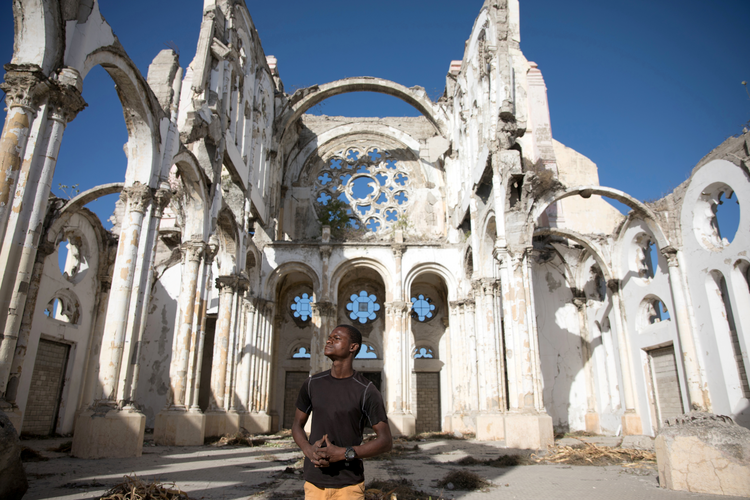
The road to racial justice must also run through Haiti
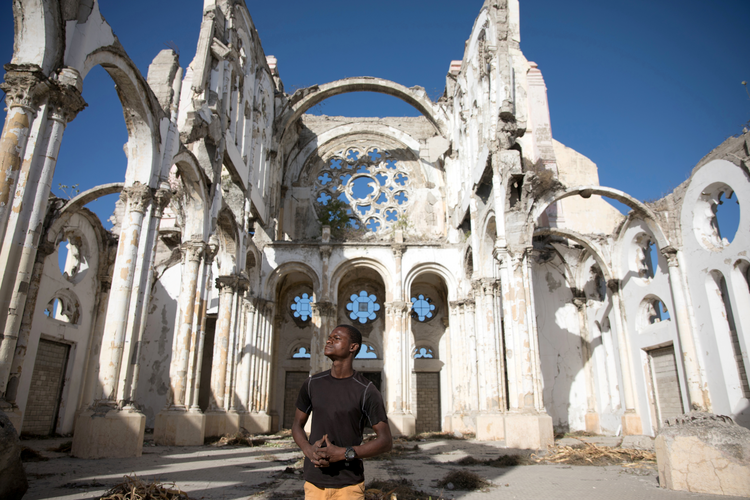
From the inequitable loss of life and livelihood caused by the Covid-19 pandemic to obscene public exhibitions of racial injustice, the events of 2020 have held up a mirror. At times, we saw the best of ourselves. But it is also clear that many of us have continually failed to care for others as much as we care for ourselves. That is, we have for too long failed to see others as ourselves. As a result of this failure of recognition, the groups of people who have been left behind rather than lifted up are too numerous to name.
The pain and suffering—including but not limited to the killings of unarmed individuals in our streets—has given us a new lens through which we may apprehend unconscionable injustices. Nearly 160 years after the end of slavery and 60 years after the height of the civil rights movement, we must finally steel our resolve to correct them.
I help lead an institution operating in two countries, the oldest and second oldest republics in this hemisphere, so it is impossible for me not to appreciate how this work necessarily extends beyond our shores and in particular to Haiti—the most impoverished country in our hemisphere, whose per-capita income is tragically more at home with some of the most impoverished nations on the African continent.
It is often overlooked that Haiti is the birthplace of our entire hemisphere. It is where everything we now know as the Americas, for better and for worse, began in 1492, when Columbus established the first European settlement near what is now the port city of Cap-Haïtien. Haiti was also the first nation to throw off the shackles of slavery, a full 60 years before the United States did.
"Haiti was the first nation to throw off the shackles of slavery, a full 60 years before the United States did."
An auspicious beginning, however, does not guarantee a bright future. European powers, as well as the newly minted United States of America, quickly took steps to marginalize Haiti after it gained independence from France in 1804. Blackness, never mind a nation freed and led by formerly enslaved people, was a threat. The economic success of the United States relied on the oppression and exploitation of Black bodies, and President Thomas Jefferson imposed an embargo on trade with the independent nation. The United States would not formally recognize Haiti until President Lincoln sent a diplomatic representative there in 1862.
Similarly, France did not recognize the country until 1825, and only after Haiti agreed to pay 150 million francs, the equivalent of $21 billion today, to compensate former slaveholders for their “loss of property” during the Haitian Revolution. (For comparison, Haiti’s current annual gross domestic product is just $8.5 billion.) As France made its demands, its warships in Port-au-Prince harbor served as an uncomfortable reminder of Haiti’s new chains.
For the next 200 years, the world’s relationship with Haiti generally ranged from neglect to outright abuse. More recent international support has not been nearly enough to put Haiti back on an equal playing field after centuries of marginalization.
Today, the state of the largest majority-Black country in our hemisphere is disturbingly analogous to the state of Black lives in the United States, where the net worth of a typical white family is nearly 10 times the net worth of a typical Black family. The average G.D.P. per capita of countries in the Western Hemisphere is just over $29,000, dwarfing Haiti’s GDP by a factor of 34.
"Today, the state of the largest majority-Black country in our hemisphere is disturbingly analogous to the state of Black lives in the United States."
As the Biden administration takes shape, there are several things that the United States and the international community can do for Haiti to ensure that the issue of racial justice is being addressed both at home and abroad.
First, give it historical recognition. Give Haiti credit for what it has accomplished in being first country to abolish slavery in the 19th century. Part of continued progress for Black lives means decolonizing the narrative of progress itself. It means reminding the world that slavery was ended first by Black people in Haiti.
Second, the U.S. government (and France, too) should see it as a moral imperative to help bring Haiti in from the margins. Fortunately, the United States has a capable and committed leader on the ground in the current U.S. ambassador, Michele J. Sison, and Haitians are eager to build a just and prosperous country for themselves and their children.
The ambassador should be given the resources she needs to be of service to the Haitian government so that the Haitian government can in turn be of service to its people. If the international community is looking for a starting point, a 10-year program to underwrite a national budget truly capable of supporting an 11-million person country, as my colleague Deacon Patrick Moynihan argued five years after the devastating earthquake of 2010, would create the institutional growth necessary for Haiti to become a thriving, independent nation.
Finally, for all foreign charitable organizations working in the country (and the donors who fund them), education must be the top priority. Haiti needs upstream solutions, not saviorism. It is illustrative to consider that enslaved people were given housing, as deplorable as it was, and access to food and in some cases even medical care—but not education.
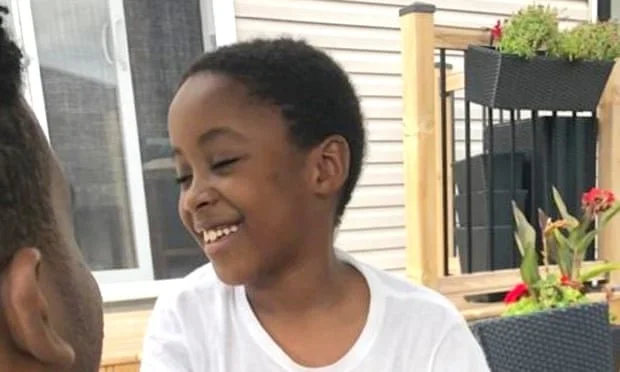
Haitian boy, 9, detained as Trump's family separation policy pursued to bitter end
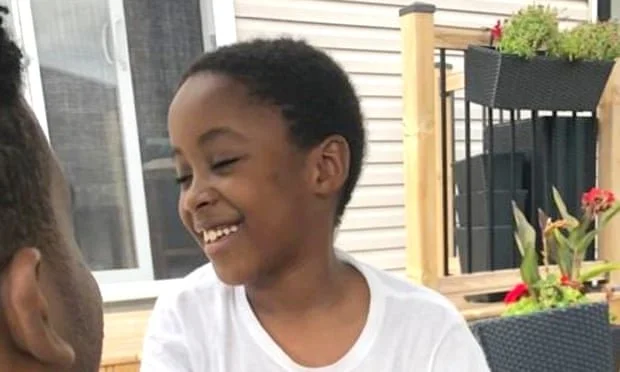
In the final hours of the Trump presidency, immigration officials detained a nine year-old Haitian boy with a valid US visa, separated him from his elder brother and incarcerated him, according to lawyers and activists.
Vladimir Fardin arrived in San Francisco from Haiti on Sunday, on a tourist visa. He was travelling with his 19-year-old brother, Christian Laporte, who has been studying in Diablo Valley College outside San Francisco, and had a valid student’s visa, according to lawyers acting for him.'My neighbourhood is being destroyed to pacify his supporters': the race to complete Trump's wallRead more
The two boys had been on a Christmas vacation with their mother in Santo Domingo in the Dominican Republic, and Vladimir was flying back to California with Christian to spend some time with his elder brother and their godmother, who acts as their guardian in the US.
They were detained by border officials at San Francisco airport and held for two days without being allowed to contact family, lawyers or community organisations. On Tuesday morning, they were separated.
Nine-year old Vladimir was sent to a refugee resettlement facility in southern California as an unaccompanied minor, and Christian was deported to Mexico, apparently because that was where their connecting flight from Santo Domingo was from.
As of Tuesday evening, Vladimir had not been allowed to contact, or be contacted by, his family or any support groups.
“We are extremely worried because Vladimir has never spent time alone,” Guerline Jozef, the head of the Haitian Bridge Alliance community group, said. “He is nine years old, and his older brother has been extremely protective of him and taking care of him. So, this is beyond cruel.”
The Trump administration carried out a policy of separating migrant children from their families, and there are still hundreds of children whose parents have not been found. What makes Vladimir Fardin’s case distinctive is that he was reportedly travelling on a valid visa, with a family member also with a valid visa. The outgoing administration also has a record of targeting black migrants and asylum seekers and deporting them to countries irrespective of the threat to their safety posed by deportation.'We tortured families': The lingering damage of Trump's separation policyRead more
A deportation flight left Louisiana on Tuesday morning to Haiti carrying 25 people, including five children under the age of five. However, three would-be deportees were pulled off the flight at the last moment, including Paul Pierrilus, a 40-year-old financial consultant who is not Haitian and has never been to Haiti.
He had been detained on 11 January, after 35 years in the US and would have been sent to a nation in the throes of intense political violence and lawlessness, if not for the eleventh-hour intervention of lawyers, activists and his congressman from Rockland County, New York, Mondaire Jones.
“My team laboured into the wee hours of the morning, not taking no for an answer,” Jones told the Guardian. “At about 2am, when we were demanding from DHS [Department of Homeland Security] to see an approved travel document, which DHS could not produce for Paul, right before finally the handcuffs were taken off and he was allowed to stay in the United States.”
The Democratic congressman said he had been trying to find out what would happen to Pierrilus now, but had been told officials from immigration and customs enforcement agency (Ice) were unavailable to talk to him, for reasons not specified.
“I certainly expect a report from them as to how it came to be that a man from my district, who has been an upstanding member of our community and who has never even been to Haiti, was going to be unconstitutionally deported to that place,” Jones said.
“This is crazy. It represents the absolute worst of an inhumane racist administration, in the context of immigration.”

Daily Inspiration: Meet Annick Duvivier

Today we’d like to introduce you to Annick Duvivier.
Hi Annick, can you start by introducing yourself? We’d love to learn more about how you got to where you are today?
Haitian-Born, Miami-based, I am a multidisciplinary artist; I started painting with the Haitian Master Ralph Allen when I was 12 years old. That’s when I discovered my passion for art and the power of color. After spending a beautiful childhood and teenage years in Haiti surrounded by happiness and lots of family, I was sent off to Miami as my cousin in Haiti had been kidnapped… I immersed myself in art as a way to cope with loneliness and all the changes; I think it was my first conscious experience with art as a positive form to express my feelings. Art became more than a hobby. By the end of my 12th grade, my self-portrait was hanging at the NSU Museum of Art with the Superintendent’s Advanced Placement studio art exhibit in 2006. They also offered me two weeks of studio classes at the Museum; I had won the arts and humanities award and the art cords for being part of the Art Honors society. I was accepted in the two year Fine Arts program at Altos de Chavon La Escuela de Diseño, in the Dominican Republic affiliated with Parsons in NY. I was reluctant at first because I would have to learn to speak Spanish; I had the best experience of my life. It was intense, but I learned to creatively see and understand head-hand communication, and I felt like a new person. My friendships from that time are still flourishing. It was an amazing experience. Soon after, I became an artist in residence at Festival arts Gallery, Haiti. Alongside Art Historian Dr. Marie-Alice Théard, I organized exhibits for more than 25 prominent Haitian artists. I learned the art business and all the different aspects of running an art gallery, but most importantly, the valuable art and culture of my country Haiti. I stayed there for five years, had my first solo show, and exhibited extensively in group shows, including a women-only exhibit at the Haitian Museum of Art “MUPANAH” as the youngest female artist; I was 22. Fast forward a couple of years, I got married and moved back to Miami; Last September 2019, I graduated with a BFA in Visual Arts at the Miami International University of Art & Design with the best portfolio award. Having learned all the mediums, ceramics, printmaking, digital programs, photography, my artwork is diverse but has recurring themes of identity, fertility, memory, nature, and a fascination for the human body. It’s been 14 years since I decided to become a professional artist and I have been actively working and creating.
Would you say it’s been a smooth road, and if not, what are some of the biggest challenges you’ve faced along the way?
My road has not been smooth, but I am the kind of person who sees the positive in every situation. The struggles I have had to deal with were always major life-changing events that have impacted a lot of people, for example, the earthquake in Haiti in 2010. My life was disrupted. My immediate family members all have miracle stories, but we buried an uncle and many friends. I escaped, Panicked, survived. We lived for three weeks in the garden with my family. During that time, I was observing nature and learned how to be grounded in the garden. This experience has influenced a lot of my botanical artwork. I created the Consumerism collection to share my awareness, my need to protect the environment, and my love of gardening. Current events have a profound influence on my psyche and as a result, on my artwork. The current lockdown due to Covid-19 and the Black Lives Matter protest awoke in me similar feelings of deep anxiety that I had felt before. This painful experience exposed me to uncertainty and growth; I recognized it from miles away. Barefooted in my garden, I was reminded how to be grounded and the importance of being connected to nature, and for that very reason, I decided to go back to nature. The orchids were blooming despite quarantine and setbacks—Miami, Florida, another state that was really affected by Covid-19. I felt scared and really worried about the future. It was difficult to focus and blur the problems. I had to go back to basics in the studio in front of my easel to the creative place that brought me joy. I thought that if I painted a small canvas each day, it would give me a sense of completion. Each day I would only have to think only about the painting of the day. I went back to my garden, another place that gives me a sense of peace. It takes an average of 66 days to build a habit, and I saw myself wanting to be more and more in the studio, painting. And that’s how the 60-day orchid challenge was born.
Appreciate you sharing that. What else should we know about what you do?
I am a multidisciplinary artist and am known for my mixed media paintings. My work is a blend of my memories, my culture, nature, but this year was a trigger to bring light to traumatic events about race. I noticed that there could be a language barrier between people of various backgrounds and cultures. With this new series titled “Dialogue,” it was my attempt to use endangered species, varieties of the monstera plants to showcase the difficulties in communicating. I start by painting intuitively and then I look for references to add the details. I either have a clear idea of what I want to convey or the story comes to me as I am creating the work. When big problems are thrown my way, I figure out a way to meet the challenges. I am focused, determined and passionate about what I do. Quitting is not an option; this definitely sets me apart from other artists. I applied for an open call for MIA Galleries in August 2020, and my painting “Outside Influences” was selected out of 253 submitted artworks. My painting is now part of their permanent collection and will be exhibited at Miami International Airport. I am extremely proud of this accomplishment. I am also proud of the three exhibits during Miami Art Week I had simultaneously for the first time. It was very stressful to prepare all the pieces for the exhibition during a short period. But also so rewarding. Preparing means; the obvious finish the paintings, but also having professional high resolution images of all artwork, creating an image and price list, labeling and signing everything, taking the correct measurements, installing hanging hardware…having your biography and artist statement ready.
I learned all these steps at the Festival Arts gallery, and as an artist, it is so important to be exhibition ready. The three shows are open until February 2021: Local-Global, Global/Borderless Caribbean XII: Focus Miami, Little Haiti Cultural Center, Miami, Florida, Dec 2th 2020 to February 2021. (Painting showcase Consumerism Collection) Disperse – “What is it you don’t understand?” during the Arts and Culture Festival, Miami Urban Contemporary Experience, MUCE Gallery, Miami, FL. Dec 3rd, 2020 to February 2021. (Painting showcase Dialogue Series/ Video Performance) Art Beat Miami, virtual this year, Art Fair, Miami, FL 2020. December 2th 2020 to February 2021. (Ceramic showcase)
Where we are in life is often partly because of others. Who/what else deserves credit for how your story turned out?
Thanked these people who have transformed the student into a professional artist, as it takes communities to build an artist…. My husband and family, the professors, and mentors, the collectors, the buyers, supporters and followers, art lovers each of them play an important role in my career. • My family, my parents Reginald and Hansie Duvivier for believing in me, and my husband Jean Marie Etzwald Ligonde, who constantly encourages me and supports my crazy ideas. • Ralph Allen Haitian master painter, the first painting class, took when I was 12, where I discovered this passion; I loved drawing, but he told me that I had painting abilities. He taught me how to mix colors. • Mrs. Janet Rubinson, Everglades High school Art professor who had a deep impact on choosing art as a career. • My professors at Altos de Chavon, la Escuela de Diseño, affiliated with Parson in NY, specifically Raul Miyar, Sasha De Lemos, Marc Lineweaver. Mr. Steven Kaplan el rector, for teaching me how to see, critical thinking and creative problem solving, art mediums, and the proportions of the human body. Also, what it means to give your word and work with deadlines. • Marie Alice Théard, art historian, and Dr. Jacques Ravix for teaching me about the business of art and the history and culture of my country Haiti. But also work ethics. • My professors at The Miami International University of Art and Design specifically, the head of Visual Arts, Bryan Hiveley, Judith B. King, Mona Mandall, Rebeca Giling, and Adnan Razack, through their positive criticism encouraged and helped me discover my voice. • Ashlee Thomas and Bart Mervil Miami Urban Contemporary Experience, MUCE for giving me the space to exhibit my artwork. • The Greater Miami Convention & Visitors Bureau, GMCVB for all the opportunities and the membership prize. • My collectors, buyers, followers, I would not be here without your continuous support.
Contact Info:
- Email: annickduvivier@yahoo.com
- Website: https://www.annickduvivier.com/
- Instagram: https://www.instagram.com/annickduvivier/ @annickduvivier
- Facebook: https://www.facebook.com/annick.duvivier


Image Credits
Jean Marie E Ligonde

HAITI BABII | NEW ALBUM ‘TRAP ART’ & COMPETITION WITH HIMSELF

Haiti Babii is a go-getter in every aspect of the word. Aside from his double workouts in one day and playing the father figure to his newborn, the remaining hours are spent in the studio perfecting his craft. With his Instagram name reading “Trap Art,” the Guyanese and Haitian rapper, producer, and songwriter embodies the definition of someone who’s in their own lane, carving their own unique sound and style in today’s generation of music.
When it comes to his work ethic, he sets the bar. He states, “You may have better music than me, you may look better than me, you may be taller than me, but I’ll die before I let you outwork me. That's my mindset.”
You may have seen Haiti’s name from his viral moment freestyle on Real 92.3 (which caught the attention of Chrissy Tiegen), or maybe from his breakout single “Change Ya Life.” Either way, Haiti is proud to put Stockton, California on the map, serving as one of the first known artists to come out of his city. Beyond that, he’s followed by the likes of Rihanna and Meek Mill.
Flaunt caught up with Haiti via FaceTime, who was located in Las Vegas preparing for his lady’s birthday. He jokes, “I’m a ladies man.” Read below as we discuss fatherhood, inspo behind “Red Lights,” moving to Los Angeles, learning how to produce, a day in the life, studio essentials, going Gold, Rihanna and Meek Mill cosigns, his new album Trap Art, and more!
How are you holding up during the COVID-19 pandemic?
I’ve been doing great actually, it hasn't stopped nothing. I’ve been having time to myself, to my daughter, understand my baby. Quarantine’s giving me time to focus on me, working, and focus on my family.
How’s fatherhood treating you?
It’s great, it's an experience. Before the baby even was here, I was already motivated to go harder in everything.
What's the best part of fatherhood?
That feeling in your heart you get when you look at her smile. When I see my daughter smile… the worst thing is blown away. I don't see how professional athletes do it when they be on on the road for games. I see how they do it because they get the money but damn, the best thing is being around this person. This little human being laughing and giggling all the time.
“Red Lights” video out now, who or what inspired this one?
I always experiment with my voice and flows, I knew it was the time to give the fans what they wanted. I mastered my craft and realized it's a sample of that. It’s West Coast in it, but I'm singing in melodic ways. When I made “Red Lights,” first off shout out to my producer, Hitamadethebeat, he killed it. Shoutout to my engineer Darrius up at EMPIRE studios in Frisco. I really went home, wrote to the beat, went to the studio and laid it down.
You live in Los Angeles now, when did you leave Stockton?
I left Stockton 2 or 3 months ago. Stockton’s only 5 to 6 hours away from LA, LA’s a second home anyway so it’s not like I’m too far. It's an easy move. I got a lot of family, a lot of people in LA anyway. It's where everything is at so you have to be in LA if you're from the West Coast.
How was it shooting with the snakes in the music video?
Shoutout to DezGreat, she directed the video. She really sat with me one on one and asked me a bunch of questions about what's my ideas, what do I see, what do I want in the video? She really brought it to life, but she put her own oomph into it. The snake part, I love stuff like that because it's stepping outside my comfort zone. I'm comfortable being uncomfortable.
Were the snakes scary at all?
It was my first time with snakes. As a kid, I always told myself I'm scared of snakes. But when I got in front of one, I wasn't scared at all. If it bites me, it bites me. I don't really care. I’ma do this video, that's what my mindset was. When I step into a character, I can do whatever I want. I'm Tom Cruise! I’m Haiti Babii, I step into that mode.
What is it you want fans to get from your story?
Honestly with “Red Lights” usually I don't care what people think but this song, I really was checking out the comments on YouTube. I got a lot of positive reviews. A lot of people said “I found out because of the Riri situation. Yo, Wyclef shouted you out so this is how I found out about you and I realized you make dope ass songs.” People are respecting my songwriting skills now, so I got a lot of good reviews from fans.
What’s your creative process in the studio? (writing & producing)
I literally freestyled one song my whole life. I’ve never freestyled a song, I write everything down. I always go home, find a bunch of beats, I’ll spend hours or days coming up with the best verse, best hook. Erasing, rewriting. I go to the studio and I lay it down. I’m one on one with my producers. You know how somebody work with a lot of writers? I don't have that. I don't work with writers, I work with a bunch of producers and engineers in one room. The best thing to me is the mixing. I co-produce a lot of my tracks, most of my tracks you hear I co-pro.
Have you always known how to produce?
I started when I made “Change Ya Life,” I co-produced my hit record. I've been doing it more so because listening to people like Travis Scott and Kanye, they always say you get the best of your music. That inspires me, I gotta start co-producing so it can sound 100% me. I gotta give it my all.
How’d it feel to go Gold off “Change Ya Life”?
It feels great. I always looked at myself as a superstar artist, a person who’s looking for longevity and not success for a moment. It blew up through TikTok on a fluke. When that blew up, okay the world knows my name. Now I got a reason to keep going, I got my plaque. It’s like getting your first little trophy. Going Gold to me, the feeling was almost as equal as getting a Grammy. Only reason I say that is because I come from so much. I'm from a little city, so going Gold was huge. That’s why I can say stuff like “I’m a king where I'm from,” talk my little shit and get cocky because I'm from a little town. Only people you know from my town outside of artists are Nate Diaz, Nick Diaz, a few NFL players, but the world doesn't know then. For me to make my own name, now I have graffiti of my faces up on the walls in Stockton, it’s dope.
You say “the dream is free the hustle isn’t,” what’s the reality of the grind?
Really when I had my daughter 5 months ago, even before she was born, it’s an extra oomph in my life in general. I was less lackadaisical, I was more intuitive, more on point with everything I'm doing in life. Now I wake up at 4 in the morning to go work out. I wake up at 4 AM, I eat, I get to the gym at 5:30 AM. I go back home, I shower, eat again, play the game for a little bit and go back to the gym about 10 AM. Look I’m going crazy, nobody can stop me. [laughs]
After I go home from my second workout, I eat again but I make sure I don't eat too big. I like to snack so while I'm snacking, I’m writing. I limit my gaming time. I pick a beat or I look for a beat, and I write. I don't even have to like the beat but the fact I can make a whole song to it, I can use those lyrics and adjust them to another track I got. Always making my brain work. I call my writing time my homework. After my homework, I plan a studio session whatever day it is. If we’re talking a non-studio session day, I'm down spending time with my family. I use the whole rest of the day spending time with my babygirl. If you’re talking a studio day, I do all I just said. I leave for Frisco, get to Frisco, record. I’ll be in until 2 AM or 3 AM.
What drives your double workouts? One workout is a lot!
I'm 23 but I’m already an athlete already. I’m an artist, I look at my life like other artists. What’re they doing? Why aren't you getting up at this time? Why are people in New York getting up at this time and we’re not? What are you doing that's that special? Me waking up early makes me feel like I'm outworking the people who they call talented. You may have better music than me, you may look better than me, you may be taller than me, but I’ll die before I let you outwork me. That's my mindset.
Who are you bumping when you work out?
Travis Scott, I listen to that. Young Thug, I listen to that. Drake, listen to him. Kanye. Lately I've been slapping Jay-Z, a lot of Jay-Z on my Spotify playlist. Of course, me. When I slap my music, I critique myself. I'm listening to my old songs like “oh, I coulda said this. Oh, I coulda switched this. Oh, I shoulda turned that down.” Other than that, my workout playlist consists of those artists
Favorite Travis Scott song?
I got so many. I have a new one, it’s brand new. It’s called “WHO? WHAT!” When I first heard it, nah I’ma skip it. I kept skipping it when I’m listening to the album. When I finally played it, this shit slaps! That's my new favorite song by him, period in general. Then “Mamacita” with him, Young Thug, and Rich Homie.
Is Travis your dream collab then?
For sure, I’d call it a dream collab. Anybody who meshes well with me and my craft... I look at the game like this: if you're an artist out there and fans feel we have similarities together, we got the name game and the same flow, I don't want to work with you. You know why, because it’d be a repetitive track. I’d rather build a relationship with you and tell you “yo, your shit’s dope.” If I work with someone like Travis, he’s going to test me. I want to work with somebody who’s going to test my abilities, not just “you’re a rapper, I’m a rapper.” Because that can happen anytime. For instance Sada Baby can come out of anywhere and say “let’s work.” We both go rap on here. With someone like Travis, I have to step my game up. I’m might have to come hard, I might have to sing a little bit. It always differs. I’m a hardworking artist so I like working with everybody at the end of the day.
3 things you need in the studio?
I workout while I’m in the studio, which is crazy. No one knows that unless you’re in my session. I get these 2 little weight bags, nothing but sand in it basically. Use those to hold down light stands or microphone stands. I pick those out to put a piano room, I’ll be in the room listening. I’ll get resistance bands so I need those. As far as food, we can have some Skittles in there. And some Fiji water, need the Fiji water.
Talk about bringing your Haitian culture into your music.
It started like this: California Hatian, I call it an album but it's more of a mixtape. If people listened to it, that really showed the world okay, this is me showing you my Guyanese side. Not just Haitian because I'm more Guyanese than I am Haitan. I'm showing them that side, I can step outside my comfort zone. Stepping into this new album, Trap Art is more for my dominant fans. My original fanbase, the fans that were listening to me when I was dropping those hood tracks, those ratchet tracks. Trap Art, I’m giving them what they want. I'm giving them that street, that hood. I'm not really experimenting with new sounds. Plain and simple: I'm here, this is my year. I’ma talk my shit, I'm still a gangsta. You know what it is. That's how I'm stepping into Trap Art, 2021. Get rich or die trappin’!
Is your sound considered trap?
It’s not trap because trap to the industry is a whole different sound. The trap is where you come from. In an instance, you come from it too because trap is a mindset. Trap doesn't have to be where drugs are sold out of. If you’re trapped once in your mind, you could be in college and feeling like damn what's the next step? You’re trapped. The reason I put art is because art itself is artistic. Whenever you're feeling trapped, draw out a pros and cons list and be artistic with the shit. Be artistic with your life. Sit down and think for yourself, set goals and eliminate boundaries. Do different shit. I named it Trap Art because it's different.
What's crazy about this Trap Art album, I went back to my inspirations when I was a kid. I grew up listening to a lot of 50 Cent, that first Get Rich or Die Tryin' album. That's why I cosign the name Get Rich or Die Trappin’. A lot of Usher for sure, you can hear both of those artists in that album. You can see where I got my inspirations and my ideas. Some Thug in there. Not to disrespect but Thug got it from Wayne, like how I say I got it from some artists. You go here, gotta respect Wayne too. That Hot Boys era.
Talk about Rihanna & Meek following you on Instagram, that’s huge.
Riri found out about me through the radio, she’s like “yo this kid has the look, he has the sound. He’s going to be big one day.” That's riri’s whole impression on me. I have a track with her that's going to be on her album, called “Real High” that I co-produced. Meek found out about me through girls and other people posting me, he’s like “Ima check his music out.” He was trying to sign me, I said I still got a deal with EMPIRE. He said “it’s all good, I’ma support you from the backend. I’m watching, I’ma fuck with you. That's how Meek’s hype was, it's all love. But Wyclef’s been the biggest for me, because I can hit Wyclef right now. I can talk to him anytime, that's unc right there. He’s cool.
What’re you most excited about in the new year?
If everything opens back up, I’m excited to compete. This is a competition to me. I'm not in competition with people in a negative way, I'm using my competition in a positive way to better myself . I can't wait to perform, to shine. I can't wait for the world to see who I am, and hear my music. It’s always going to be about the money for everybody and me too, but it's about respect for me. I want respect, give me my respect because I’m working hard. Y’all see me, that’s where I’m coming from.
Anything else you’d like to let us know?
Let the world know the Trap Art album is going to be the best thing they’ve heard from me and from the West Coast in a long time.
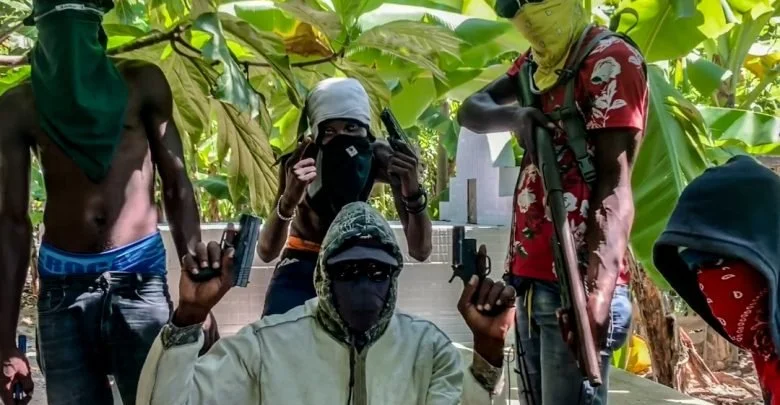
Kidnapping by Government-Backed Gangs Is Surging in Haiti
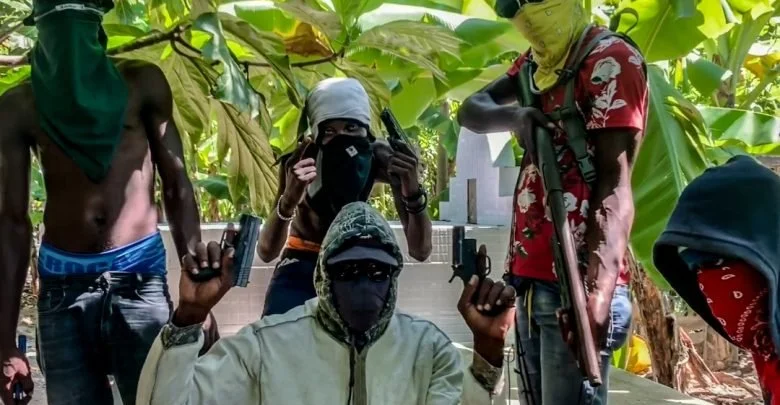
Demanding a ransom can seem an easy money in a country where 60 percent of people live below the poverty line.
Two of the men behind the kidnapping of Evelyne Sincère in Haiti late last year gave different accounts of her final moments in a live interview from police custody on November 9. They exchanged blame for her suffocation, each claiming he played a largely passive role while the other one’s hands encircled her neck.
All three of the men who participated in the crimes that killed the twenty-two year old student were close to tears. One bowed his head, as if to hide from the camera.
“I didn’t want to get into this,” said Obed Joseph, who lured Sincère to a secluded square in Port Au Prince on October 29. Strapped for cash, the three men resolved to kidnap Sincère, who they believed had a wealthy father. Their plan was to drug her so that she would be unable to identify them later, then release her after payment. In reality, Sincère’s father sells small goods on the street. Facing a demand of $8,000, the family could only lump together just over $1,000.
Sincère’s body was discovered by her sister, Enette Sincère, four days after she disappeared, folded inside a metal barrel, perched atop a trash heap.
Kidnappings for ransom have surged in Haiti, from a total of 39 in 2019 to nearly 200 in 2020. At the same time, a spike in gang violence has caused several neighborhoods to go up in flames, murdered hundreds, and left a thousand people displaced. “The gang phenomenon is going to be an issue in a place that has a deliberately underdeveloped state apparatus and deliberately poor and inegalitarian social structure.” Mark Schuller, president of the Haitian Studies Association told VICE World News.
Recent victims of kidnapping for ransom include a prominent surgeon, a guitarist, and the wife of a security guard at the National Palace.
“I was driving when they intercepted me and shot bullets into the air. Six guys with big guns kept me in my car for two days and one night. I still don’t know who they were,” Hans Telemaque, a doctor finishing his residency in Port-Au-Prince, told VICE World News. “My loved ones don’t want to tell me how much they gave for the ransom. Now, I don’t go out often, and when I do, I wear glasses.”
In a country where 60% of the population lives below the poverty line, kidnapping a member of the professional class and demanding tens of thousands of dollars can be a ticket to easy money. In several instances last year, up to a million US dollars were demanded by kidnappers for victims being held captive. “Kidnapping is a very profitable business that does not require a lot of investment in terms of costs to benefits,” said Jean Eddy Saint Paul, director of the Haitian Studies Institute at Brooklyn College.
Though periodic spikes in gang violence are normal in Haiti, the escalation in kidnappings is not. The gangs’ seemingly indiscriminate selection of victims suggests the phenomenon sprouts from political as well as financial motivations. “It’s starting to affect people who are working class- neighborhoods that are strongholds of the [political] opposition. That’s a reason why people are deciding this is political in nature,” Schuller said. This year, kidnappers have begun to demand impossible sums of money from families in impoverished neighborhoods in Port Au Prince like Cite Soleil, a maze of fragile shacks where opposition to President Jovenel Moïse is thick on the ground. With families unable to bring forth the necessary funds, bodies are stacking up.
Since late 2019, Moïse has ruled by decree after the country failed to hold parliamentary elections in October 2019. He has lost public legitimacy while confronted with large-scale protests against his leadership. He has repeatedly refused to call new elections, despite international pressure. In May 2019, thousands of people went on strike and flooded the streets for six months after it emerged that Moïse had embezzled hundreds of thousands of dollars pledged to public programs.
“It is pretty clear that for President Moïse, the source of his power is his close relationship with the United States.” said Schuller.
An unexplained shift to kidnappings in opposition strongholds has led many to believe the government is working with gang members , neglecting official police departments and allowing gangs to serve as de-facto security forces. With collective fear in the air, streets in Port Au Prince are near empty - which is rare, even in the midst of a pandemic. “That is why gangs have become powerful, arrogant, because they are protected by the administration, armed with weapons, money and ammunition, involved in massacres, murders and kidnappings.” said Pierre Esperance of the Haitian National Human Rights Defense Network.
The rise in kidnappings for ransom, which reached a level of nearly one per day towards the end of 2020, could also be a signal that the government has reduced the cash it dispenses to gangs. “Kidnappings have increased since October. That’s because the gangs say the administration hasn’t given them any money since August. The gangs say that’s why they kidnap - to make money,” Esperance said.
“To end this, the living conditions need to improve. Vocational schools need to be set up to help people make money,” said Telemaque.
The Haitian state has created an “enabling environment for further violence” by allowing the demise of the rule of law, according to the UN Security Council. International aid could help remedy the situation, according to the body, although it acknowledged that foreign support, and its culture of post-crisis “short-termism,” has a history of helping aggravate violence, corruption, and social turmoil in Haiti. As recently as last year, hundreds of UN Peacekeepers stationed in Haiti were accused of sexual abuse, and of fathering children with Haitian women, then abandoning them.
Evelyne Sincère’s story embodies the fears of hundreds of other students, who fashioned hand-painted signs and popularized hashtags on social media to build a national movement against kidnapping using her image. President Moïse issued a statement when it became clear her story constituted significant national news, saying “such atrocities are unacceptable.”
For those who hold Moïse’s administration partially responsible for this year’s kidnappings, the words ring hollow. “The state itself is operating as a gang,” Saint Paul said.
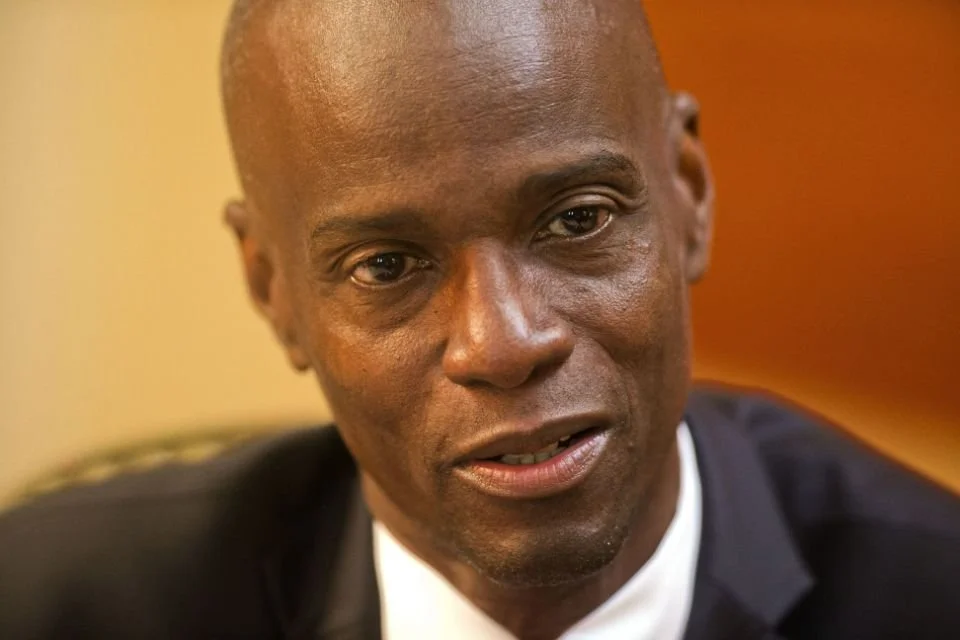
Haiti braces for unrest as opposition demands new president
PORT-AU-PRINCE, Haiti (AP) — Flying rocks. Burning tires. Acrid smoke. Deadly gunfire.
Haiti braced for a fresh round of widespread protests starting Friday, with opposition leaders demanding that President Jovenel Moïse step down next month, worried he is amassing too much power as he enters his second year of rule by decree.
“The priority right now is to put in place another economic, social and political system,” André Michel, of the opposition coalition Democratic and Popular Sector, said by phone. “It is clear that Moïse is hanging on to power.”
Opposition leaders are demanding Moïse’s resignation and legislative elections to restart a Parliament dissolved a year ago.
They claim that Moïse’s five-year term is legally ending — that it began when former President Michel Martelly's term expired in February 2016. But Moïse maintains his term began when he actually took office in early 2017, an inauguration delayed by a chaotic election process that forced the appointment of a provisional president to serve during a year-long gap.
Haiti's international backers have echoed some of the opposition’s concerns, calling for parliamentary elections as soon as possible. They were originally scheduled for October 2019 but were delayed by political gridlock and protests that paralyzed much of the country, forcing schools, businesses and several government offices to close for weeks at a time.
Some in the international community also condemned several of Moïse's decrees.
One of those limited the powers of a court that audits government contracts and had accused Moïse and other officials of embezzlement and fraud involving a Venezuelan program which provided cheap oil. Moïse and others have rejected those accusations.
Moïse also decreed that acts such as robbery, arson and blocking public roads — a common ploy during protests — would be classed as terrorism and subject to heavy penalties. He also created an intelligence agency that answers only to the president.
The Core Group, which includes officials from the United Nations, U.S., Canada and France, questioned those moves.
“The decree creating the National Intelligence Agency gives the agents of this institution quasi-immunity, thus opening up the possibility of abuse," the group said in a recent statement. “These two presidential decrees, issued in areas that fall within the competence of a Parliament, do not seem to conform to certain fundamental principles of democracy, the rule of law, and the civil and political rights of citizens.”
Moïse has dismissed such concerns and vowed to move forward at his own pace.
In a New Year’s tweet, he called 2021 “a very important year for the future of the country.” He has called for a constitutional referendum in April followed by parliamentary and presidential elections in September, with runoffs scheduled for November.
“There is no doubt elections will happen,” Foreign Minister Claude Joseph told The Associated Press, rejecting calls that Moïse step down in February. “Haiti cannot afford another transition. We need to let democracy work the way it should.”
Joseph said Moïse remains open to dialogue and is ready to meet anytime with opposition leaders to solve the political stalemate.
He also said the constitutional referendum won't give Moïse more power but said changes are needed to the 1987 document.
“It is a source of instability. It does not have checks and balances. It gives extraordinary power to the Parliament that abuses this power over and over,” Joseph said. “It’s not the president’s own personal project. It’s a national project.”
While officials haven't released details of the referendum, one of the members of the consulting committee, Louis Naud Pierre, told radio station Magik9 last week that proposals include creating a unicameral Parliament to replace the current Senate and Chamber of Deputies, extending parliamentary terms and giving Haitians who live abroad more power.
The referendum and flurry of decrees are frustrating many Haitians, including Rose-Ducast Dupont, a mother of three who sells perfumes on the sidewalks of Delmas, a neighborhood in the capital.
“The political problems in my country have been dragging on for too long,” she said. “They are never able to find a solution for the nation. ... We are the ones suffering.”
The nation of more than 11 million people has grown increasingly unstable under Moïse, who received more than 50% of the vote but with only 21% voter turnout.
Haiti is still trying to recover from the devastating 2010 earthquake and Hurricane Matthew that struck in 2016. Its economic, political and social woes have deepened, with gang violence resurging, inflation spiraling and food and fuel becoming more scarce at times in a country where 60% of the population makes less than $2 a day.
“I don’t have a life,” said Jean-Marc François, who wants Moïse gone. “I don’t have any savings. I have three kids. I have to survive day by day with no guarantee that I’ll come home with bread to put on the table.”
Some days he works in construction; others he does yardwork or disposes of garbage or moves boxes at warehouses, which sometimes pays 500 gourdes ($7) a day.
François said he won't take part in the “circus act” of voting in the referendum or elections.
“We’re talking about voting for a new president? A new constitution? Deputies and senators? They’re all going to be the same,” he said. “This is a country of corruption.”
Moïse has faced numerous calls for resignation since taking office, with protests roiling Haiti since late 2017. The demonstrations have been fueled largely by demands for better living conditions and anger over crime, corruption allegations and price increases after the government ended fuel subsidies.
The most violent protests occurred in 2019, with dozens killed, and some worry about even more violence as the opposition steps up its demands that Moïse resign amid fears that elections will be delayed once more.
“Can the current status quo continue for another year?” said Jake Johnston, senior research associate at the Center for Economic and Policy Research in Washington. “Moïse can announce an electoral calendar ... but what signs are there that that’s going to actually happen?”
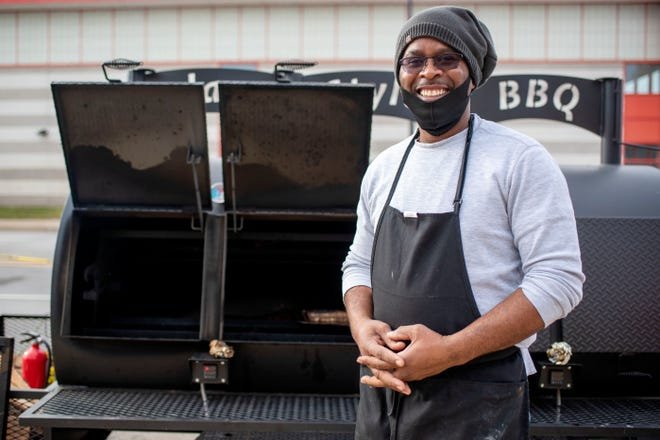
Haitian refugee becomes Battle Creek restaurateur, realizes his American dream
Battle Creek – On a cold Tuesday afternoon, Juliano Jean-Jules was outside Kellogg Arena, where he tended to some cherry wood-smoked brisket and jerk chicken wings on his rotisserie grill.
His sleeves were rolled up and he wore an apron and a knit cap. His mask only partly obscured the joy on his face as he readied the meats before darting inside to a commissary kitchen where he cooked and assembled dishes for curbside pickup.
“I put my heart into it,” Jean-Jules told the Battle Creek Enquirer. “I love doing the cooking. When people come and say it’s good, that pushes me. I do it from scratch. I take my time. If I have to get up early, I will do it, no problem. I have to make sure they get their food. I want my customer to have my food hot and the way they wanted it. If people are happy, I’m happy.”
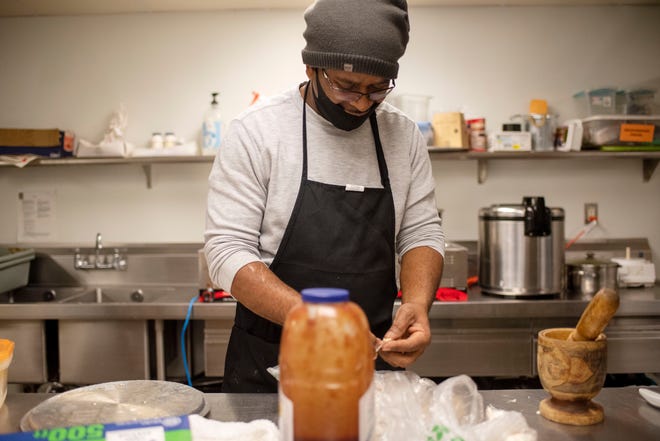
It’s been quite a journey for Jean-Jules to bring his one-of-a-kind blend of Caribbean- and American-style food to Battle Creek. A refugee from Haiti, his opening of Island Style BBQ represents a realization of both his personal dream and the American dream.
Jean-Jules and his wife, Daleth, have lived in Battle Creek for 12 years, where the couple raised their three adult children. His story begins in the port city of Saint-Marc, Haiti, as one of nine children.
“I was the older one in the house. My daddy was a fisherman with my mom. When they would go fishing, after school I would come home to prepare dinner for my sisters and brothers,” Juliano said. “That’s how I know I can cook. When they come home from fishing, I always tried my best for them.”
Jean-Jules said that as a teenager in 1990, he was making money by helping people into boats to flee the island nation after Jean-Bertrand Aristide, the democratically elected president of Haiti, was overthrown in a coup d’état and the military government was persecuting his followers.
One day, Jean-Jules said he “jumped on the boat and came.”
His boat was picked up by U.S. authorities and Jean-Jules subsequently spent over a year at a refugee camp at Guantanamo Bay, where some 50,000 Haitian and Cuban refugees would eventually be held. The naval base known as “Gitmo” has been used as a military prison for alleged enemy combatants since 2002.
“It was tough, but wasn’t locked down,” he said of the camp. “We would play soccer and go to the beach, go fishing. It wasn’t too bad.”
Jean-Jules’ first stop in the United States was in Lansing. He had relatives in Michigan but he did not know them yet, so he said he was homeless for weeks, living at the Lansing Capital Airport until an uncle in Brooklyn, New York sent for him.
Daleth had moved to Brooklyn from her native Guyana in South America when she was 13 and became neighbors with Juliano’s uncle. The couple met at a block party in 1994 and married six months later.
“He’s a charming fellow and there is something about the connection that was made,” Daleth said. “What drew me in was this smile that he’s got. That’s a nice looking guy who can cook and clean and do all this stuff.”
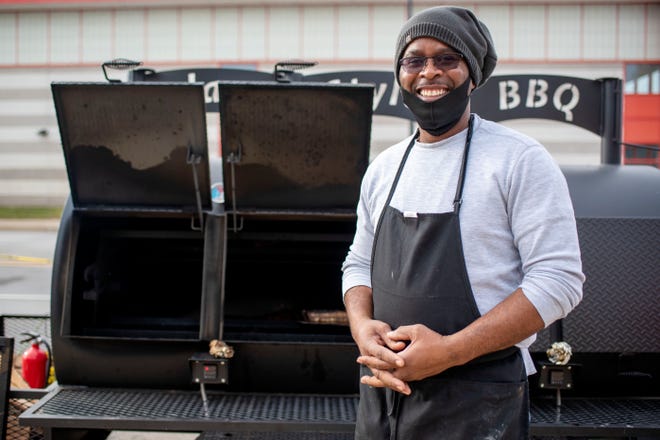
In 1997, the couple moved from New York to Lansing, where they opened a clothing store “that didn’t go very well,” Daleth said. Juliano partnered to open Lil’ BBQ Shack in 2016 before stepping out on his own.
The Jean-Jules family moved to Battle Creek in 2006 after Daleth took a job with the Battle Creek VA Medical Center, where she continues to work as the Homeless Program Manager while helping her husband with Island Style BBQ when possible.
Juliano made a name for himself locally after taking home the Judge’s Choice Award for 2020 Best Startup Pitmaster at the Que the Creek Festival at Kellogg Arena in February.
The genesis for Island Style BBQ began at the family dinner table, according to Daleth.
“He is from Haiti, I am from Guyana, we’ve got some adult kids that are American, first generation. The idea was born out trying to put all three cultures together in this nice collective,” she said. “You have Haitian, Guyanese and American culture in the same household. My husband loves cooking food and has always wanted to do that, so here was this unique opportunity to bring this to Battle Creek. This is my husband’s dream and vision.”
Island Style BBQ is targeting a spring opening of its brick and mortar location. It is operating as a pop-up restaurant during the holiday season, and is available for delivery through Eats BC.
The startup has been aided in its launch by the Battle Creek Small Business Development Office and through its membership in the Second Muse/Morning Light cohort, a six-month entrepreneurship incubator program supported by the city of Battle Creek, the W.K. Kellogg Foundation and other community partners.
While a pop-up restaurant isn’t how Juliano envisioned starting his own business, he’s grateful to be serving his food to a community that has embraced him and his family.
“I appreciate everything I have because life is tough,” Juliano said. “When I come to America, I thought America wasn’t going to be tough like that. But America is tough. The stuff I make, there’s not too many people who have it here. Some people say they have to go to Ann Arbor or Detroit. I can make the same thing as in Ann Arbor or Detroit, maybe even better.”
FANM to Commemorate the 11th Anniversary of Haiti’s 2010 Earthquake
[MIAMI] – Family Action Network Movement (FANM) will host an online memorial event on Tuesday, January 12th, 2021 at 7:00 pm to commemorate the 11th Anniversary of the devastating earthquake in Haiti.
The earthquake killed over 250,000 people and left thousands more wounded and displaced.
Eleven (11) years later, Haiti has yet to recover and the political situation has deteriorated.
After the earthquake, President Obama designated Haiti for Temporary Protected Status (TPS) to protect Haitian nationals in the U.S., allow them to work to provide remittances to their homeland, and to help Haiti recover.
Unfortunately, TPS for Haiti and other nations has been terminated by the Trump administration which triggered a multitude of lawsuits including Saget vs Trump. Now, Haitians hope that President Elect Biden will keep his promise to re-designate TPS and work in tandem with Congress to find a permanent solution.
Today, over 55,000 Haitians have TPS.
Earthquake survivors, elected officials/community leaders, and artists will share inspiring stories of resilience, strength, and courage through songs and prayers while calling for change in Haiti.
Marleine Bastien, Executive Director of Family Action Network Movement (FANM) stated, “We are gathering in solidarity with our brothers and sisters in Haiti to remember one of the worst crises in modern history and to honor those who were killed and wounded as a result. We encourage all to join us to pray for the people of Haiti as they continue to face serious problems including a crippling infrastructure and grave human rights abuses. Let us come together to remember, reflect, and pray for a strong, just, and thriving Haiti!”
This solemn gathering will take place via Zoom, https://us02web.zoom.us/j/86091357635
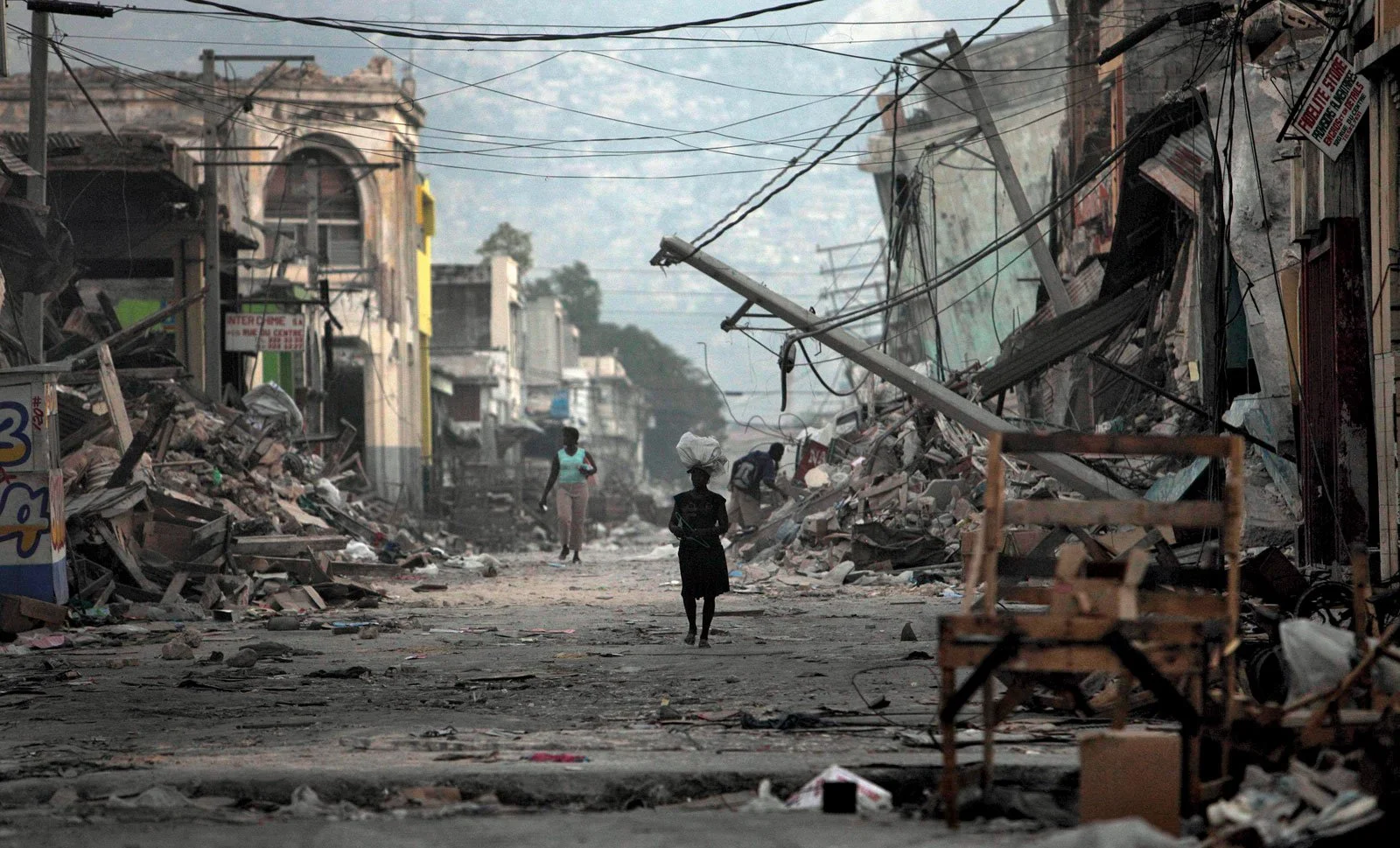
Haiti: 11 years after the earthquake, work continues
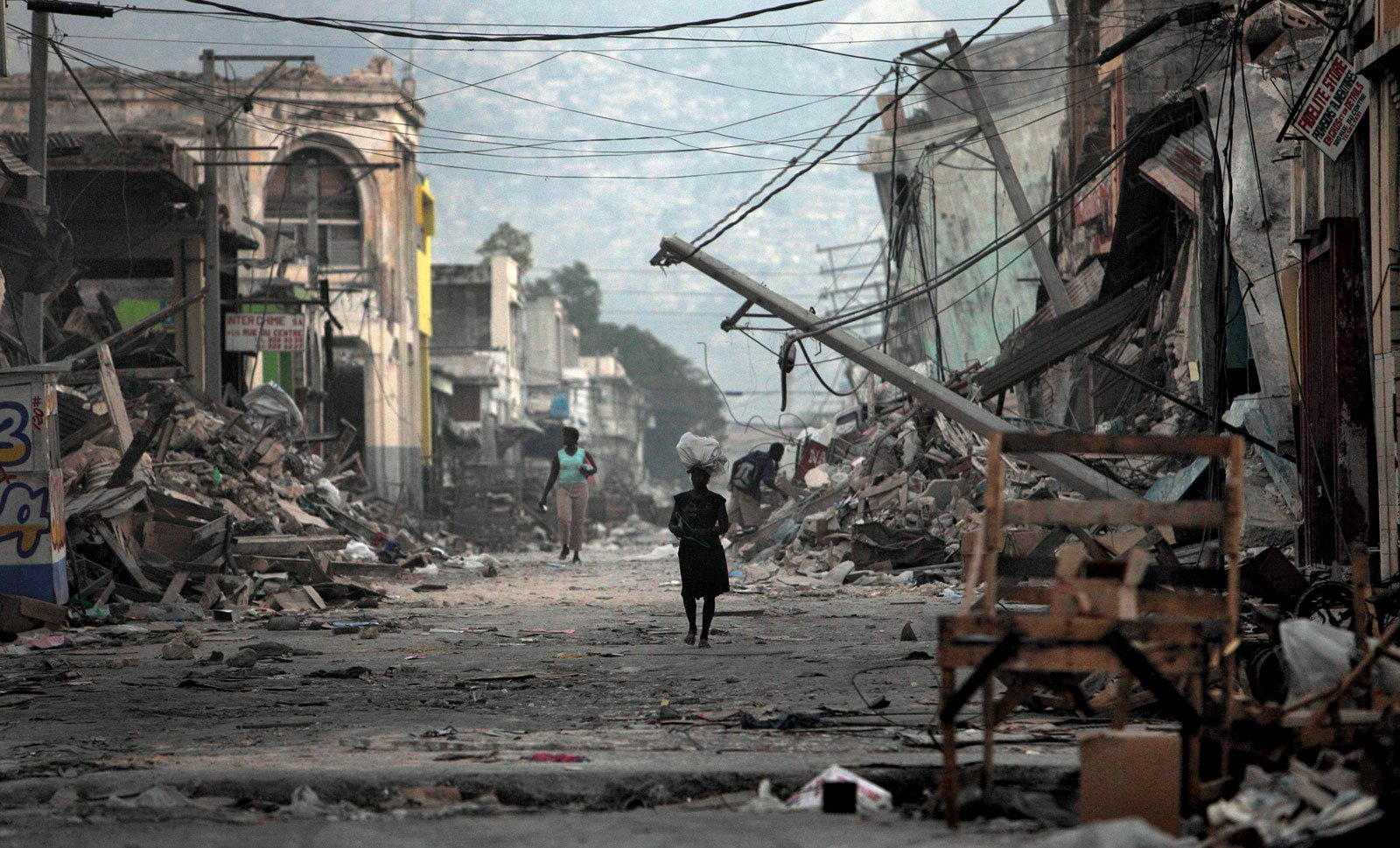
After the earthquake that struck Haiti on January 12, 2010, Humanity & Inclusion (known then as Handicap International) deployed one of the largest emergency response operations in its history. Eleven years later, its work with the most vulnerable people continues.
Haiti was devastated by the earthquake that killed more than 230,000 people and injured more than 300,000. "In 2010, when the earthquake struck Haiti, there was almost no rehabilitation service in the country," explains Sylvia Sommella, Humanity & Inclusion's director in Haiti.
Humanity & Inclusion mobilized hundreds of people and with record levels of donor support deployed unprecedented means to help those affected. In the earthquake's wake, Humanity & Inclusion:
- provided rehabilitation care to 90,000 people;
- equipped more than 1,400 people with assistive devices;
- distributed more than 5,000 wheelchairs, crutches and walkers;
- extended psychosocial support to more than 25,000 people;
- built more than 1,000 temporary homes;
- and delivered more than 20,000 tons of humanitarian aid.
Building capacity in Haiti
Today, Humanity & Inclusion continues to help the Haitian population in executing a long-term disaster response.
"Thanks to the support of Humanity & Inclusion, which launched the first training of rehabilitation technicians following the earthquake, it is now possible to benefit from rehabilitation sessions in different infrastructures," Sommella explains. "Humanity & Inclusion continues to support health structures, strives to make rehabilitation centers accessible to all, and ensures qualified medical staff."
In the first six years following the disaster, Humanity & Inclusion trained 86 new medical experts, who are still working Haiti today. This training was supported by USAID. Training is ongoing for rehabilitation technicians and physical therapists continue to develop their skills through virtual coaching.
Preparing for future disasters
Humanity & Inclusion has made it a priority to work with people living in remote areas, so they can be prepared and protected should disaster strike again. That work includes providing partner organizations with shipping and storage services to ensure humanitarian supplies are available to the most vulnerable families for future natural disasters and emergencies.
In addition to disaster preparedness, Humanity & Inclusion is also working alongside Haitians to create economic and employment opportunities and fight Covid-19.

From Bean to Bar, Haiti's Cocoa Wants International Recognition

PORT-AU-PRINCE, HAITI - Although small in the face of South America's giants, Haiti is slowly developing its cocoa industry, earning better incomes for thousands of farmers and refuting the stereotype that culinary art is the preserve of wealthy countries.
Haiti's annual production of 5,000 metric tons of cocoa pales in comparison to the 70,000 metric tons produced per year by neighboring Dominican Republic, but the sector's development is recent in the island nation.
Feccano, a federation of cocoa cooperatives in northern Haiti, became the first group to organize exchanges in 2001 by prioritizing farmers' profits.
"Before, there was the systematic destruction of cocoa trees because the market price wasn't interesting for farmers who preferred very short-cycle crops," said Guito Gilot, Feccano's commercial director.
The cooperative now works with more than 4,000 farmers in northern Haiti.
By fermenting its members' beans before export, Feccano has been able to target the market for fine and aromatic cocoa.
"Feccano's customers pay for quality: they don't have the New York Stock Exchange as a reference," Gilot said.
Just-in-time collection
Smelling potential, Haiti's private sector began investing in the cocoa industry, which until then had been supported solely by non-governmental organizations and humanitarian efforts.
By setting up its fermentation setter in 2014 in Acul-du-Nord, the company Produit des iles (PISA) entered the market. But the logistical challenges are many.
"The producers we work with farm less than a hectare, often divided into several plots, whereas, in Latin America, a small producer already owns four or five hectares," said Aline Etlicher, who developed the industry at PISA.
"We buy fresh cocoa, the same day as the harvest so the farmer no longer has the problems of drying and storing that they would have if they sold it to an intermediary," the French agronomist said.
In recent months, this just-in-time bean collection from all sites has been more challenging because many roads were regularly blocked because of socio-political unrest.
Maintaining organic and fair-trade certifications for the cocoa is delicate, but the Haitian style has made its mark abroad.
"Today there are bars sold in the United States that are called Acul-du-Nord," Etlicher said.
"With our customers, we are part of the 'bean to bar' movement of chocolate makers who transform the cocoa bean into the chocolate bar," she said, adding that by cutting out the middleman, Haitian producers' revenues have doubled.
And on the other end of the chain, bean processing remains local.
'Plant your cocoa'
For master chocolatier Ralph Leroy, making a rum ganache — Haitian, just like all the products he uses — was not an obvious choice.
After years in Montreal, he returned home to Haiti as a haute-couture stylist.
His shift to cocoa began when he made clothes out of chocolate for a culinary trade show. The training he then underwent for a year in Italy fueled his passion as much as his pride.
"The first week, I think I was insulted when the professor said, 'Chocolate is made for Europe. You there, plant your cocoa, we buy the cocoa and do the work,'" he recalled.
Today, Leroy runs the chocolate company he founded in 2016, Makaya, and the edible sculptures that come out of his workshop are a huge sensation at parties. His company now has about 20 employees who share his passion.
"Even in cooking schools, we don't learn this. I learned everything here and I am very, very proud," said Duasmine Paul, 22, head of Makaya's laboratory.
Echoes of car horns reach the ears of Makaya employees carefully sorting cocoa beans, a side effect of the chaotic traffic that paralyzes Haitian capital Port-au-Prince at the end of the year.
From his workshop, where he also concocts chocolate-based cocktails, Leroy sees as sweet revenge the great marketing of his bars.
"The greatest pleasure is when, before traveling, Haitians come here to buy a lot to offer abroad. It's become their pride. And also when Europeans come and buy all the stock. … I tell myself that I am doing a good job," he says with a burst of laughter.
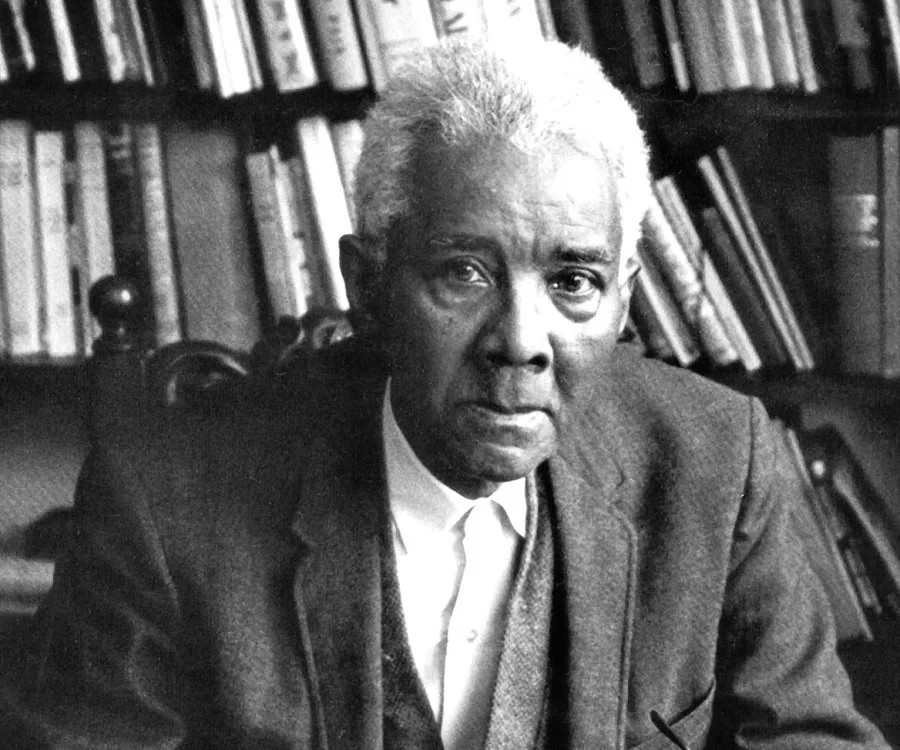
How C. L. R. James Wrote the Definitive History of the Haitian Revolution
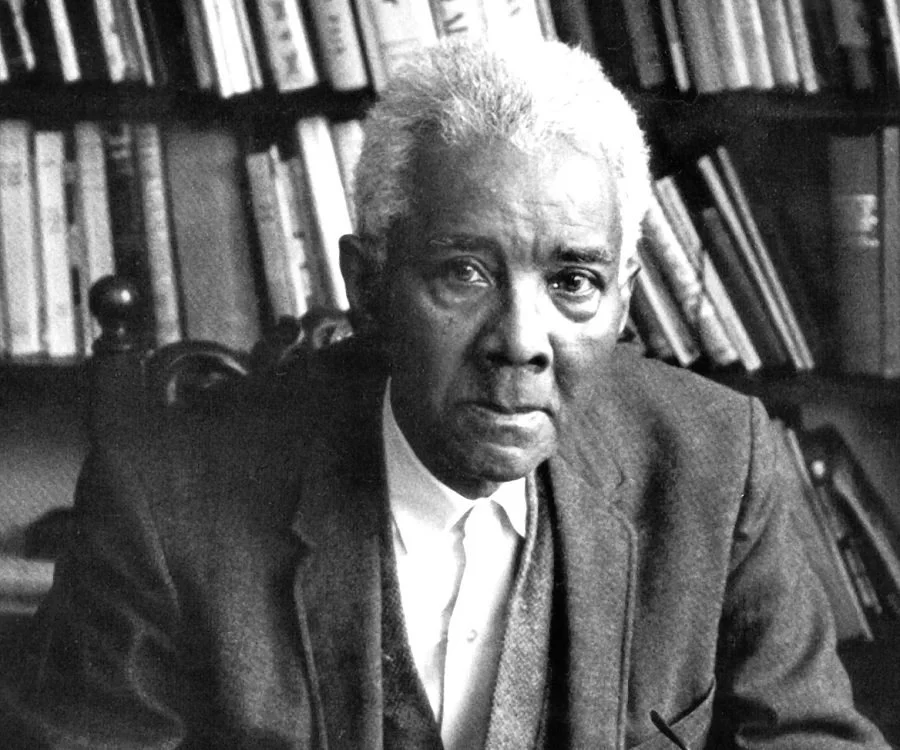
AN INTERVIEW WITHRACHEL DOUGLAS
The socialist historian C. L. R. James was born 120 years ago today. His landmark text, The Black Jacobins, is a majestic account of the Haitian Revolution and is still the authoritative history of a heroic struggle for freedom and dignity.
n a 1980 interview, C. L. R. James stated that he wanted to be remembered above all for his serious contributions to Marxism. In Making the Black Jacobins: C. L. R. James and the Drama of History, Rachel Douglas explores the many facets of the Trinidadian author and offers a fresh interpretation of his unique brand of Marxism.
Douglas’s book traces the development of James’s thought over more than thirty years, from his intellectual activities as a Pan-Africanist in London and Paris in the 1930s to his political militancy as one of the founders in the 1940s of the Johnson–Forest Tendency (born from a split with the American Trotskyist organization, the Workers Party). Douglas also revisits James’s engagement with the Black Power and Civil Rights movements of the 1960s and gives special consideration to his work as a playwright. James’s constantly transforming thought is fruitfully explored through Douglas’s masterly use of archival sources — his main works, manuscripts, notes, as well as interviews and secondary sources are all woven into the author’s rich intellectual portrait.
At the center of Douglas’s book is James’s most renowned work, The Black Jacobins. As the author shows, the evolution of James’s political thought and militancy is deeply bound up with a six-decade-long process of writing and rewriting that classic work of Marxist historical analysis. In tracing the book’s evolution, Douglas also highlights the connections between James’s texts and the emancipatory history of the West Indies and Africa.
To reveal the making of The Black Jacobins, Douglas offers a unique reading that connects James’s Haitian Revolution–inspired plays (1934 and 1967) and successive editions of The Black Jacobins (1938 and 1963). At every point, Douglas carefully reconstructs the dialogue taking place between James’s texts and their surrounding political and social context.
The central argument advanced by Douglas is that Black Jacobins should be understood as a palimpsest — a text that, in the words of the author, consists of “layered repositories of embedded vestiges, meaning that earlier inscriptions remain and are never erased, because ‘these narrative inscriptions become part of the whole.’” In the case of James, this meant that the story of the Haitian Revolution was rewritten through multiple mediums: as articles, histories, and, perhaps most strikingly, through plays. As Douglas argues, by retelling the history of the Haitian Revolution through theatrical representation, James was able to dramatize political conflicts and bring them into sharper focus.
In a masterful stroke, Douglas applies the very historical method pioneered by James to the study of the Trinidadian himself. As the author explains, that approach offered a unique criticism of imperialist historiography, reinvigorated Marxist categories of analysis, and provided a compelling interpretation of twentieth-century anti-colonial struggles.
To commemorate the 120th anniversary of James’s birth, Viviane Magno spoke with the author of Making the Black Jacobins to recall the legacy of C. L. R. James — not just the author of The Black Jacobins, but a giant of twentieth-century Marxism.
VM
Let me begin by saying how much I loved Making the Black Jacobins. In some way, your book helps James’s readers to better understand certain questions that he left open-ended or that seemed a bit enigmatic.
For example, in the preface to the 1938 edition, when James writes, “Yet Toussaint did not make the revolution. It was the revolution that made Toussaint. And even that is not the whole truth.” Not the whole truth?RD
This sentence you quote is a typical James sentence. His sentences often double back on themselves like this. Another example is “Great men make history, but only such history as it is possible for them to make.” Here James echoes the introduction to Karl Marx’s Eighteenth Brumaire of Louis Bonaparte about individuals making history, but only in certain circumstances. What James does is take the correlation of the individual and the circumstances to his biographical model. Yet James shows that we cannot understand history through the personality of one great man, despite the vivid pen portraits he draws of Toussaint Louverture. The twists in James’s preface signal that The Black Jacobins will mainly be a portrait of the revolution through Louverture’s personality, but that the evolving circumstances are also crucial to historical developments outlined by James.

I think you are right to point out that open-endedness is important. He keeps the book of his Haitian Revolution writings open, like the always-open book that is his tombstone in Tunapuna. In Notes on Dialectics, James commented that “a closed book” is “a vile phrase.” James’s rewriting repeatedly acts against fixed, static, and finite forms — qualities he associated with negative Stalinist categories and falsification. Instead, James’s rewriting turns back upon itself like a circle, which has neither beginning nor end. A pattern emerges: James’s writing on the Haitian Revolution can be thought of — following his commentary in Notes on Dialectics — as continually enlarging circles.
On the importance of openness, I was influenced by Umberto Eco’s notion of “the Open Work.” Of particular relevance to James was Brazilian dramatist and political activist Augusto Boal’s ideas about reading unfinished open drafts of a play as the radical opposite of bourgeois finished theater. We can apply this perspective about unfinished openness to James’s writings about the Haitian Revolution as a whole. James’s work on this subject — like the Haitian Revolution itself — can never end neatly and complacently like an image of the complete, finished bourgeois world. Instead, it is always turning back on itself and always in a state of becoming.https://70c16ede5cac237bea7376519d89da2c.safeframe.googlesyndication.com/safeframe/1-0-37/html/container.htmlVM
Staying on the topic of James’s writing process: apart from being a scholar, James was a lifelong Marxist militant. How do you think this influenced his approach to writing history?RD
Only a tiny fraction of what C. L. R. James actually wrote has been published, and James’s working methods were often collaborative. James would have documents typed, annotate them, and then dispatch them to comrades around the world for political discussion and feedback. Notes on Dialectics — which James would later (in 1980) declare his most important work — was originally worked out in 1948 in letter form between James and his Johnson–Forest Tendency comrades Raya Dunayevskaya and Grace Lee [Boggs]. This type of work also led The Black Jacobins to become an “underground textbook” [Marty Glaberman] in the context of apartheid South Africa. There, the book was clandestinely copied and distributed in installments to the next readers. Grant Farred has told of how he first came across the history in just this manner when Richard Owen Dudley — one of the leaders of the Non-European Unity Movement (NEUM) for which James was an important figure — gave him one of those mimeographed chapters for comment.VM
Can you talk a little bit about your own making-of process for Making the Black Jacobins? What drew you to the particular method you chose? What theoretical influences were you drawing on?RD
It all started in Trinidad in 2007 when I was at a seminar, “Haiti Now! Art, Film, Literature,” organized by Elizabeth Walcott-Hackshaw and Martin Munro. While I was at the University of the West Indies – St. Augustine campus, I made a couple of visits to the West Indiana and Special Collections archives at the Alma Jordan library there. I came across a typescript of James’s first Toussaint Louverture 1936 play, which had been annotated. What caught my attention was that a new character had been added in James’s shaky handwriting. This character was Moïse, Toussaint Louverture’s adopted nephew.
From the program of the 1936 London production and other scripts of that play, we know that Moïse did not feature as a character in James’s first play. In the handwritten changes, Moïse went from being completely absent to being Louverture’s main interlocutor. This major change caught my attention, and I wanted to find out why James had changed some of the main characters. I also wanted to find out more about the history of The Black Jacobins. It’s a very famous book and is still considered the classic history of the Haitian Revolution to this day, which is quite a feat considering that it is over eighty years old! I wanted to get to know it better and in particular to find out more about the two plays which bookend the better-known history. It was fascinating to find out more about Paul Robeson’s role and contributions to the first play, which was only performed twice in London in 1936.

What I found was that James’s writings on the Haitian Revolution are in a state of constant motion and change, and this influenced my own process in making the book. Rewriting for James is a dialectical method. James’s own comments about Marx’s writing of Capital can be adapted to James’s Haitian Revolution–related writing. We see how James wrote a draft, then reorganized it completely, and then reorganized that. I tried to follow the process of The Black Jacobins’ own development and its essential dialectical movement as reflected in the form. Rewriting links James’s theory and practice.
In order to approach the history of The Black Jacobins, I drew on the method of genetic criticism, which is a youngish, mainly French methodology for reading and ordering all drafts of a literary work intelligibly. This was a useful model for approaching the dynamics of the long genesis and evolution of James’s plays and history based on the Haitian Revolution. Genetic criticism gave me a how-to guide with which to document the handling of archive boxes, folders, and their dusty contents, fragile manuscript and onionskin typescript pages, the examination of blots and marks.
Some aspects of genetic criticism seemed rather alien to James’s Black Jacobins project, including the method’s usually narrow French-Francophone application — a way of approaching textual genetics that has not traveled so well to other countries outside France. The French-Francophone genetic criticism model needs to be decolonized and politicized in order to confront works like The Black Jacobins. My approach had to take into account that James’s Haitian Revolution–related writings are written from a strongly Marxist viewpoint and guided by clear political ideas and James’s own political struggles and responses to the twentieth century’s most significant events.VM
Speaking of James’s process of rewriting, you draw on the concept of the palimpsest throughout your book. What is the relevance of that method in terms of writing about revolutionary processes? As James says about the new Appendix to The Black Jacobins in a letter quoted in your book: “I intend to show what all previous commentators have ignored, that the past and future of the islands can only be seriously studied in the light of the Haitian development during the revolution and after. . . . the West Indies are a territory that cannot be considered merely as to what extent they approximate or depart from Western patterns. They are territories with a unique history of their own, a West Indian history.”RD
Yes, I think the idea of palimpsests and layers of writing is key because the book tries to look at how James weaves together the multiple relations between past, present, and future. The Black Jacobins can be seen as a palimpsestic, messy editorial object, which is how Marx’s Capital has been described. We can use the model of the palimpsest to connect the multiple versions of The Black Jacobins in play and history form with the memorial sites associated with James. Postcolonial sites of memory can be thought of as palimpsests embedded in physical sites.
James’s writing about the Haitian Revolution can be seen as a palimpsest, with new layers added on top of the vestiges of the previous written traces. James said that its 1938 “foundation would remain imperishable” with the history remaining substantially the same for subsequent editions and the embedded vestiges becoming parts of the new whole. New writing is placed over previous writing, leaving visible traces of the rewriting and transforming the work as a whole. These successive layers of rewriting and the original vestiges can be seen as a palimpsest or layered repository of the Caribbean pasts, presents, and futures that James built up over a period of almost sixty years, as he was writing about the Haitian Revolution. What he produced was a multilayered text network that can be reactivated to change according to the new “future in the present.”
I think this method was a useful tool for James to write about revolutionary processes and independence histories, in relation to the national history of postcolonial countries. This quotation is always what James would say about the West Indians: that they were uniquely “sui generis” and “with no parallel anywhere else.” In fact, when James was chasing this “peculiar” quality of Caribbean identity, he even coined his own doubled expression “of the West Indies West Indian.” James’s The Black Jacobins, particularly in the 1963 version, rewrites the history through a Caribbean lens where the emphasis is on transforming the passive objects of other people’s history and travel writing into the subject and active agent of the Caribbean’s own history and culture by focusing on the Caribbean’s own heroes, history, and culture. That is why the focus on self-fashioning and becoming visible in the Caribbean’s own image is so crucial for the reassembling of The Black Jacobins.VM
Historians have a notoriously difficult time dealing with sources in postcolonial countries. Do you think C. L. R. James developed a method for writing history more adequate to the realities of these countries?RD
Yes, I think James developed a method for writing history more adequate to the realities of postcolonial countries. He reads many sources against the colonial grain and writes back to denigratory accounts of the Haitian Revolution. He also had a Haitian living source who was very important for his interwar research in black Paris in the 1930s: Alfred Auguste Nemours (1883–1955) who was a Haitian general, diplomat, and military historian. James recalled in the 1980 foreword of the Allison and Busby edition of The Black Jacobins that Nemours used coffee cups and books in Paris cafés to bring to life the military skills of revolutionary Haitians. As Stuart Hall reminds us, James’s French linguistic skills were unusual at this time for someone educated in the Anglophone Caribbean. James’s history refers to the French-language pillars of Haitian Revolution historiography. Léon-Gontran Damas, one of the trio of Negritude writers, showed James around the sites of black Paris.
Between the 1930s and 1960s to 1970s, James had a major rethink about the type of sources he wanted to use. In a 1971 lecture with a tantalizing title, “How I Would Rewrite The Black Jacobins,” delivered at the Institute of the Black World in Atlanta, James indicated that if he were to rewrite his history again from scratch, he would focus on different types of archival sources closer to the majority of the ex-slaves, instead of outsider sources. James said about these alternative sources: “I know they are there if you look hard enough.”VM
I think one of the elements you explore so well in your book is the imperialist method of historiography that James also struggled against. Hegel after all once said that Africa is not a historical continent. . .
Could you talk a little bit more about this anti-imperialist historiographic method and the use of sources that James, in a certain way, inaugurates?RD
Yes, writing back to imperialist historians is a major prong of The Black Jacobins. James writes in his bibliography about “suppressio veri” and “suggestio falsi,” and James’s history is written to counter deliberate acts of manipulation, suppression, and falsification in some historical narratives of the Haitian Revolution. Countering historical misrepresentations is a major aim of James’s history writing in The Black Jacobins, where James directly counters the “professional white-washers” of history and “Tory historians, regius professors and sentimentalists.”
One target is T. Lothrop Stoddard’s racialist history The French Revolution in San Domingo (1914). Another is James Anthony Froude’s notorious travelogue The English in the West Indies: Or, the Bow of Ulysses (1888). One crucial source was clearly the famous book-length rebuttal by black Trinidadian schoolmaster John Jacob Thomas, aptly titled Froudacity: West Indian Fables Explained (1889) of English historian Froude’s notorious 1888 travelogue. Indeed, James himself would later in 1969 pen an introduction to Thomas’s Froudacity, correcting at length “Froudacious” Froude. There James would literally rewrite every single racist sentence about Haiti from a single page of Froude, transforming each one from passive to active voice.
Already in 1938, James’s history is writing back to the likes of Froude and Stoddard. Not only this, James’s first publication deploying Haitian Revolutionary leader Toussaint Louverture was his early 1931 article “The Intelligence of the Negro: A Few Words with Dr Harland.” This article was a response to Dr Sidney C. Harland, an English scientist based at the Imperial College of Tropical Agriculture in Trinidad, and his article “Race Admixture.” Here James already sketches out a biographical portrait of Toussaint to show that there is nothing innately inferior about West Indians.VM
One issue present throughout your book is that of the “subject of the history.” At one point in Chapter 1, you state: “Action is therefore not only the subject of the biographical passage, it is also a key constitutive feature of the means of representation.”
Following this argument, you seem to be suggesting that James developed an innovative theory of agency. . .RD
Yes, I argue that the protagonist of The Black Jacobins in its different guises is not a subject, so much as action. James’s early 1931 biographical sketch presents Louverture as the active subject of nearly every single active verb. Toussaint Louverture is here action personified: the ultimate action man.
James lists his hero’s many achievements in the 1931 article, piling actions breathlessly through quick-fire parataxis in short sentences. Strings of active verbs represent the revolutionary springing from one action to the next at a breakneck speed. Action is the subject of the biographical passage, but it is also a key constitutive feature of the means of representation when sketching out the bare bones of Toussaint’s biography. From James’s earliest texts, we see this clear focus on action and agency, as in the capacity to exercise power and struggle.VM
Agency seems like a suitable transition point to discuss James’s Marxism. Obviously, speaking of James’s method is already to talk about his historical-materialist method. More specifically, The Black Jacobins is credited with pioneering the history-from-below approach. You claim: “Already in the 1930s, James envisioned black ex-slaves functioning as a Greek chorus in his 1936 Toussaint Louverture play, and his 1938 history already constitutes a pioneering Marxist history from below avant la lettre of 1960s work by Albert Soboul, George Rudé, E. P. Thompson, Eric Hobsbawm, and others.”
Accepting that James’s history-from-below approach was pioneering, do you not think that it also has its own unique peculiarities?RD
Yes, I would agree with that: his history-from-below approach was not only pioneering but also had its own peculiarities. He focuses on crowds in the Haitian Revolution, although he represents only several faces in the crowd. He also draws attention to alternative protagonists including Moïse (Louverture’s nephew). His protégée Carolyn Fick, whose dissertation James supervised alongside the expert on French revolutionary crowds George Rudé, would drill down even further into alternative popular leaders. James’s history-from-below approach is stamped with his key Johnson–Forest Tendency ideas which include: the rejection of the orthodox Marxist-Leninist concept of the vanguard party, and a focus on the self-activity, self-organization, and mobilization from below of the masses. What James’s second play in particular shows us is that there were Haitian revolutions inside the revolution.VM
Speaking of internal divisions within the colony, there are two questions that seem interrelated: James’s denunciation of authoritarian “black revolutionaries” behaving like white rulers, and the question of Haiti’s real independence.
In other words, do you feel that by thinking in the colonial context, James arrives at a more complex theory of a class division of society?RD
Yes, I think James arrives at a more complex theory of a Marxist dialectical social division. In the colonial context, James shows us that class relations are important, but so are power relations between the colonizer/colonized to do with race. James is also doing this long before Albert Memmi, Frantz Fanon, and Jean-Paul Sartre.VM
Eric Williams is famously credited with drawing the connection between capitalism and slavery in his Capitalism and Slavery (1944). Your book shows that James — Williams’s unofficial mentor — was already drawing out that idea in The Black Jacobins.
Would you agree that James’s hypothesis was pioneering not only in showing that the slave trade was the economic basis for the rise of capitalism, but that the plantation mode of production was a quintessentially modern institution of capitalist exploitation? I’m reminded here of W. E. B. Du Bois, in Black Reconstruction in America (1935): “Black slaves in America experienced the worst and lowest conditions among all modern workers. . .”RD
Yes, those words of Du Bois are very apt. In June 1971, James gave another lecture at the Institute of the Black World which was a comparative analysis of The Black Jacobins and Du Bois’s Black Reconstruction. Both works were born out of almost the same moment.
I agree that James’s hypothesis was pioneering because he made it clear that the Caribbean plantation slavery mode of production was a quintessentially modern institution of capitalist exploitation. James drew the connection between capitalism and slavery earlier than his protégé Eric Williams, who would publish Capitalism and Slavery in 1944. According to James, his research for The Black Jacobins directly spawned the central thesis of Williams’s PhD dissertation and subsequent history book. In his unpublished autobiography, James presents himself “[writing] with [his] hands,” and “[writing] down in 2/3 pages” the subject of Williams’s doctoral thesis.
James’s recollections are clearly colored by his subsequent sharp split with Williams who is presented as a faithful scribe who copies out word for word his mentor’s thesis plan. Williams accompanied James on some of the 1930s’ research trips to Paris, and James discusses how Williams wrote certain footnotes that appeared in The Black Jacobins, whereas James wrote certain lines in Capitalism and Slavery. Both published works fit together. Yet we could also talk about a case of The Black Jacobins versus Capitalism and Slavery. Chapter 12 “The Slaves and Slavery” of Williams’s book is where the two works clearly overlap. But questions have been raised about whether that Chapter 12 even fits into the rest of Capitalism and Slavery, especially by Michael Craton. On the genesis of Williams’s Chapter 12, Selwyn Ryan notes that after being sent the proofs, James told Williams that he had left out the slaves completely. What is clear is that Williams owes a particular debt to James for the formulation of his central thesis. Two Trinidadian calypso masters — Black Sage (Phillip Murray) and Short Pants (Llewellyn McIntosh) — are known for their extempo riffing on the subject of C. L. R. James versus Eric Williams.VM
You point out that one important model for James’s Marxist historical narrative is The Eighteenth Brumaire of Louis Bonaparte. You also signal that James derives much of his method and style from Trotsky’s History of the Russian Revolution and his two main theories — uneven and combined development and permanent revolution. Nevertheless, you show how in the 1960s James began working with new sources that led him to refashion his own Marxism, emphasizing the masses over leadership.
Can you talk about these changes, particularly in reference to Henri Lefebvre’s influential book on the French Revolution? You claim that with that shift in emphasis — from leadership to masses — James’s book would be better titled “Black Sansculottes.”RD
Yes, Trotsky’s History of the Russian Revolution and Marx’s Eighteenth Brumaire of Louis Bonaparte are both key models for James. As for the linked ideas — permanent revolution and uneven and combined development — they are also pivotal to James’s 1938 history where they travel to the colonial contexts of San Domingo plantation slave society and anti-colonial revolution in Africa and the Caribbean, beyond the Russia and China of Trotsky’s examples. Permanent revolution is used in The Black Jacobins as a model for explaining the development of the Haitian Revolution as the only successful slave revolt in history. In the more distant past of the Haitian Revolution, these slaves suffered, according to James, from the “concentrated oppressions of slavery” and responded as “[r]evolutionaries through and through [. . .] brothers of the Cordeliers in Paris and the Vyborg workers in Petrograd.”
Later, after his split with Trotsky, James would fiercely attack the notion of permanent revolution, making it one of his targets in Notes on Dialectics (1948), where he described it as “precisely lacking in life, spirit, colour, content,” and as the idea that always propelled Trotsky toward the Mensheviks and against Leninism (this is quoted in Paul Le Blanc’s introduction to his 1994 book with Scott McLemee titled: CLR James and Revolutionary Marxism). James’s criticism of permanent revolution is less harsh in some later works. However, James would even go so far as to criticize Trotsky’s theory of the revolutionary party as “permanent blunder” or “a fiction,” as noted by Martin Glaberman’s collection of C. L. R. James speeches, Marxism for Our Time (1999).
In the 1950s, ’60s, and ’70s, James started working with new sources, especially where French Revolution historiography was concerned. James purchased Lefebvre’s mimeographed lectures in 1956 from one of the bouquinistes along the banks of the Seine. The Black Jacobins is not only a text of the 1930s, it becomes an active text again in the 1960s. James builds on work by Lefebvre who was one of the forefathers and pioneers of the approach to the French Revolution from below. The revised edition of The Black Jacobins was published in 1963 when the defining histories from below were starting to be published by E. P. Thompson, Albert Soboul, and George Rudé, among others.
In the new footnotes, James roughly sketches out what a history of the Haitian Revolution from below might look like. The two mammoth footnotes of the revised The Black Jacobins history concern Lefebvre’s analysis of the sansculottes. In my book, I suggest that James updates his 1938/1963 statement about Haiti and The Black Jacobins with his 1964 essay, “Black Sansculottes”: “This is now,” James writes in 1964. In his 1971 lectures on The Black Jacobins delivered in Atlanta at the Institute of the Black World, James gives a commentary on the Lefebvre footnotes, indicating: “If I were writing this book again, I would have something to say about those two thousand leaders. I have mentioned a few here and there, but I didn’t do it with that in mind.” In those lectures, James verbally adds Albert Soboul — leading historian of the sansculottes — further indicating the downward shift of James’s own attention toward the black sansculottes.VM
One of the central issues in your book is representation and drama. As you quote James: “There is no drama like the drama of history,” and as you add: “If there is no drama like the drama of history, according to C. L. R. James himself, what was the role of actual drama in shaping his own accounts of the Haitian Revolution across versions of The Black Jacobins?”
One response you offer is: “Drama is used as a means of giving voice to those who have none, or next to none, in the imperial archive, and of making crowds of slaves more audible and visible.” As your book shows, the ex-slaves and their voices of opposition and discontent are represented as “fundamental principles of the chorus in radical theater: conflict, contradiction, clash and combat.”
Thinking about the relationship between politics, history, and drama, how do you understand the vocation of theater in dramatizing politics?RD
James is a fundamentally political person who even introduces himself as “no playwright” in the program notes to his second The Black Jacobins play first performed in 1967. The reason he turns to theater is to bring politics to life on the stage. Relatively few people realize that The Black Jacobins both started and ended life as two very different plays. Toussaint Louverture: The Story of the Only Successful Slave Revolt in History was only ever performed twice at the Westminster Theatre in March 1936, with Paul Robeson in the leading role.
These two performances were notable for the sizable presence of black cast members. In both of his plays, James exploits the resources of drama to show the past of the Haitian Revolution. He was clearly influenced by theaters of the Left and theater movements across Britain and America. As for The Black Jacobins history in both its 1938 and 1963 incarnations, there is page after page of dramatic dialogue, which gives the impression of reading a play. It was interesting to think about the special qualities of theater. David Scott has brilliantly invoked some of James’s history revisions to contrast two modes of historical emplotment: the romance of the 1938 first edition versus the tragedy of the 1963 second edition. Tragedy is, however, also there in the first edition, and the second edition is not devoid of hope. Several commentators refer to the literary feel of The Black Jacobins. What I try to do is analyze the work’s trajectory as actual drama and work of literature.
So close is the relationship between theater and politics that they are often presented as going together hand in hand as second cousins. Theater has been described as the “most public of the arts” and as one of the arts of presentation/representation that, like photography, has a privileged access to truth. This intrinsically political role of theater as a representing machine also strongly connects it with action, as long-dead characters and historical events from long ago can be brought to life by flesh-and-blood actors who perform these deeds in the present tense of theater’s liveness, as if they were happening now.
With pieces of political theater like Toussaint Louverture (1936) and The Black Jacobins (1967), the purpose is both to enact politics and revolution (with the play depicting as it does the plight of the slaves/oppressed who fuel the capitalist economy and their revolution for changing the world) and to provoke the audience to do politics and revolution in their turn by resisting a state of affairs similar to the one resisted in the play. In the history versus the play, it is a case of telling versus showing. Turning the past back into drama allows James to show peoples of African descent “taking action on a grand scale” — a key motivation for James, as he discussed in his 1980 foreword to the history.VM
About the Appendix section “From Toussaint Louverture to Fidel Castro,” you write, “through the addition of the Appendix, The Black Jacobins text-network becomes more than the sum of all its parts (…) the creative dialectical development of the Black Jacobins as a whole — the total changing process of its rewriting — is enacted in the Appendix.”
Can you speak more broadly about this section? At one point you highlight that James felt that what links Louverture with Castro is not the most obvious — that both led revolutions in the West Indies — but, as you say, “he uses these bookends to chart the quest for a national identity…”RD
The appendix is only thirty pages long, but this telescopic essay manages to straddle the style of James’s political pamphlets, composite social commentary and journalism style, literary criticism of West Indian literature, and an account of West Indian political developments, including the breakup of the West Indies Federation and independence movements. Hybridity really marks the form and content of the composite finale to The Black Jacobins that is the Appendix.
This hybridity is appropriate for presenting James’s ideal amalgamated vision of Caribbean federation. This would be far more inclusive than the short-lived political union of the actual Federation of the British West Indies, which lasted from January 3, 1958 to May 31, 1962. James’s ideal Caribbean federation would encompass Martinique, Guadeloupe, Haiti, Cuba, and the former Dutch Caribbean territories, as well as the Anglophone islands of the region. It is really in the Appendix that James shifts the space-time coordinates of The Black Jacobins, as we move from the Africa of the 1930s towards the West Indies of the 1960s in search of an identity. Ultimately, James underlines the hybridity of West Indian identity, which has an unfinished and provisional quality, like The Black Jacobins history project itself.VM
One of the great passages from your book deals with James’s translation, in the Appendix, of Aimé Césaire’s famous poem Cahier d’un retour au pays natal (1939). In closing, can you say a few words about that translation?RD
Césaire’s Cahier and James’s The Black Jacobins were both published on the eve of World War II, and both were subsequently rewritten many times. Little attention has been given to the fundamental importance of James’s Cahier translation published in 1963. At the very centre of the appendix is James’s own translation and extended analysis of Césaire’s Cahier. James’s creative translation makes the poem his own. He rephrases the title as “Statement of a Return to the Country Where I Was Born.”
In large part, the Appendix provides us with James’s own statement on, and perspectives from, his own return to Trinidad to participate in politics there. ‘Statement’ brings to mind a political communication or pamphlet, such as James’s own political pamphlet Party Politics in the West Indies (1962) dealing with his sharp split from Williams and his People’s National Movement, as well as James’s acute sense of disappointment about the break-up of the West Indies Federation. These are, as well as Césaire’s Cahier, the signposts that mark the Appendix. The Appendix incorporates part of the poem, so that the Cahier literally becomes part of The Black Jacobins in the 1960s.
When we compare James’s version of the poem with Césaire’s own, it is then that the extent of James’s creative mis/reading and mis/translation emerges strongly as creative rewriting of the original. What James completely transforms is the sense of the original poem, creating new meaning. To make the poem his own, James starts and ends his translation in different places from Césaire. James initiates a dialogue with Césaire in the Appendix. Speaker pronouns often change as James presents everyone meeting at the ‘rendezvous of victory’, which James presents as the climax of Césaire’s poem. James’s rewriting involves breaking up Césaire’s long lines of prose into a more traditional poetic verse arrangement. In this way, the Cahier is reframed so that the shorter lines now look more verse-like, making the poem’s form stand out more against James’s prose in the rest of the Appendix. When James recenters the poem, what he identifies as being at its center and where he finishes his translation is, in fact, right in the middle of a line in the middle of a stanza.
James ends by translating ‘et il est place pour tous au rendez-vous de la conquête’ as ‘and there is a place for all at the rendezvous of victory’. In French and English, the equivalent words are ‘conquête’ = conquest and ‘victoire’ = victory. If James had sought to translate this more closely, he could have proposed ‘at the rendezvous of conquest’. This change of just one word is very significant. While ‘conquest’ is linked with more negative connotations, ‘victory’ is more positive: it refers to the winners, while conquest refers to the losers. Thus, James changes his ending of Césaire’s poem, which is not the actual ending of the Cahier at all, by rewriting it. This — James’s own rewriting of Césaire — would later become an important landmark in James’s own work. Subsequently, At the Rendezvous of Victory would become the title of a whole 1984 volume of James’s own selected writings. James always quoted from his own Cahier translation, saying “I prefer that to any others, merely because I did it.”
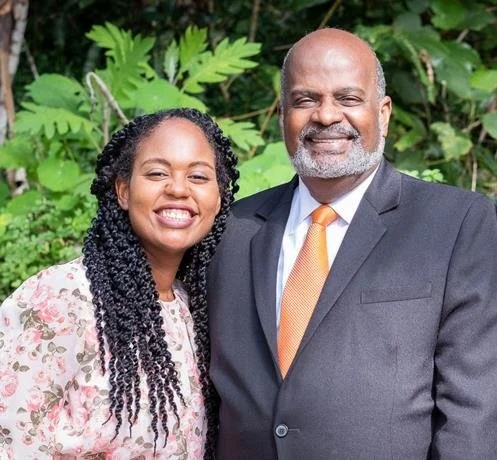
Haitian-American Pastor, Daughter Released By Kidnappers
A Haitian American pastor and his daughter who were kidnapped in Haiti have been released and are now safe.
Pastor Elie Henry, president of the Seventh-day Adventist Church in the Inter-American Division, and his daughter Irma were freed by their kidnappers on Dec. 28, 2020 in Port-au-Prince “and are doing well.”
Pastor Henry and his daughter were the latest victims of a ransom kidnapping wave that has paralyzed Haiti this year. According to Adventist statements, they were abducted in Port-au-Prince on Christmas Eve on December 24th as they left an Adventist hospital.
Haitian media report their kidnappers demanded a $5 million ransom for their release, but the Adventist statement did mention a ransom amount.
Pastor Henry was born in Haiti and is based in Miami, where he heads the Inter-American office for the Adventists, a Protestant Christian denomination. Irma Henry is a physical therapist at the Adventist Hospital in Haiti.