
Haiti maintains ties with Taiwan at Beijing's expense
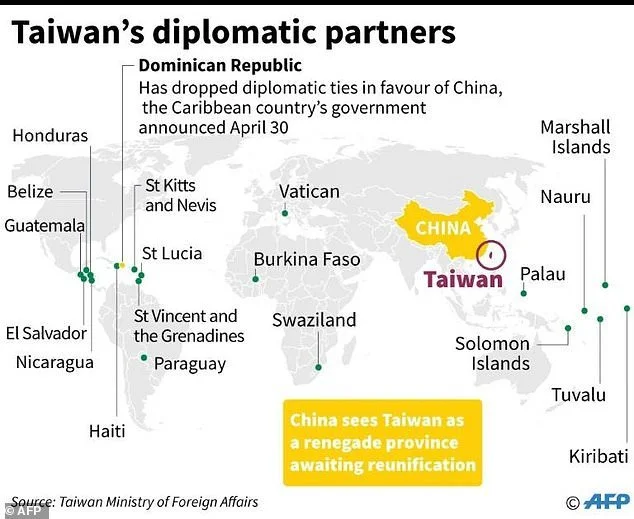
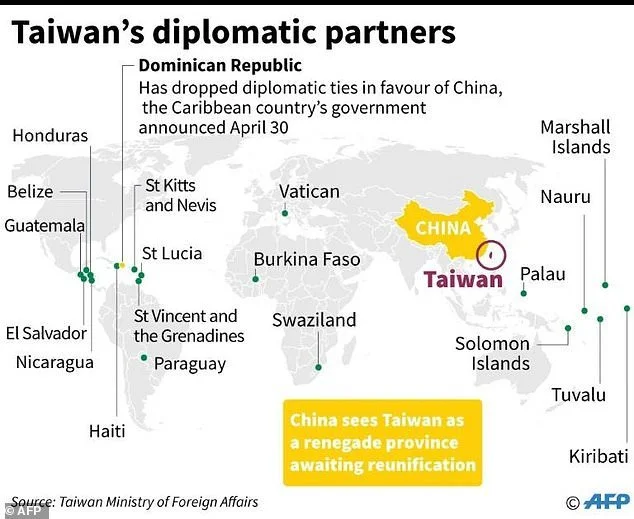
Haiti confirmed Wednesday it would maintain diplomatic ties with Taiwan, a day after the neighboring Dominican Republic established relations with China."Every country is moving in one direction or another, but for now, it is with Taiwan that Haiti has diplomatic relations," said Haitian communications minister Guyler C. Delva in a press conference."Taiwan is a partner that helps us in different areas and we can say that it is a good partner that supports the government," he added.In signing an agreement with China Tuesday, the Dominican Republic broke off its ties with Taiwan -- a prerequisite imposed by Beijing.China and Taiwan have been ruled by rival regimes since the end of the civil war in 1949. The latter is governed autonomously but has never declared independence -- while Beijing considers it a province to be returned to its control.Now, they are locked in a battle of influence often nicknamed "checkbook diplomacy" -- and Haiti's decision to maintain relations with Taiwan raises questions about possible missed development opportunities.Beijing reportedly offered the Dominican Republican investments and loans to the tune of $3 billion -- and to some, Taiwan's $150 million loan to develop rurual power grids in Haiti pales in comparison.The Dominican Republic is the latest nation -- after Gambia, Sao Tome and Panama -- to cut ties with Taipei in favor of Beijing. Meanwhile, Haiti is among 19 countries to officially recognize Taiwan.By: AFP via Dailymail.co.uk | May 2, 2018
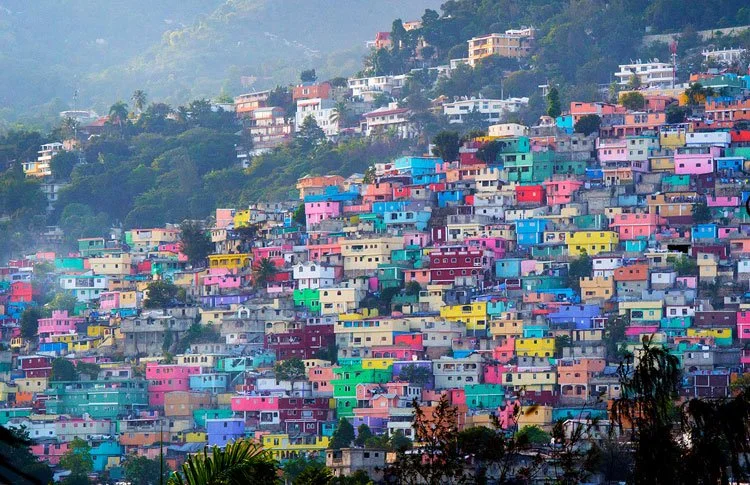
$4.7 Billion Chinese Development Project Advances in Haiti
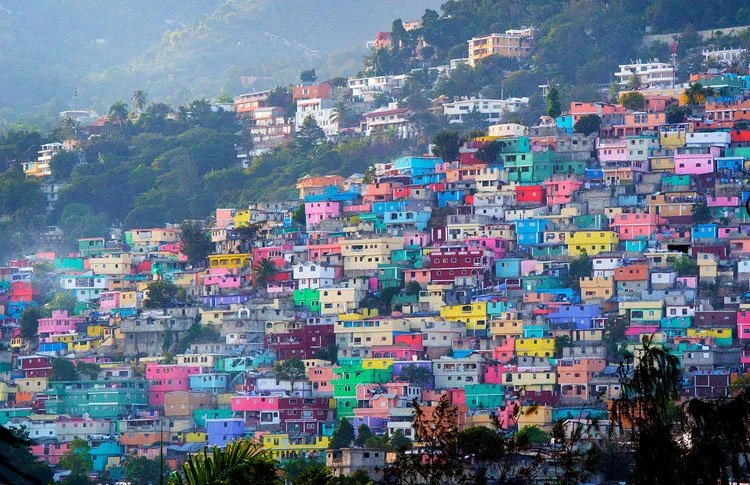
 The promised infrastructure seems almost too good to be true, but let’s hope that dreams can indeed come true for the Haitian people. China has made good on similar projects in its estimated Trillion dollar “Silk Road” initiative, not to mention 30 futuristic infrastructure projects in its own country. Perhaps the future has finally arrived for Haiti, and as a result the Caribbean corridor will be transformed.
 In late July and early August of this year The Haitian Press Agency (AHP) reported that China would invest $30 billion. Bati Ayiti and its Chinese partners signed an agreement for the renovation of Port-au-Prince with the Municipality of Port-au-Prince.
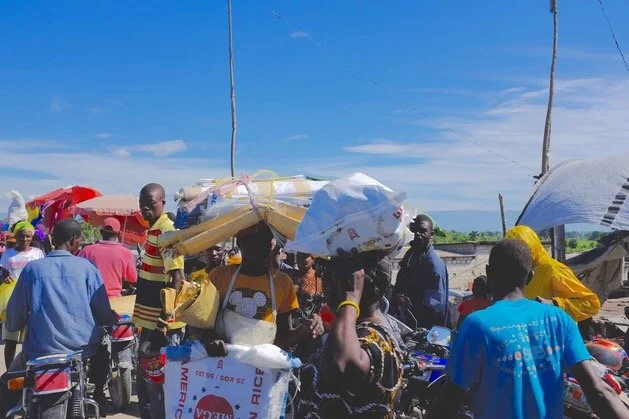
China Extends Her Silk Road To Haiti
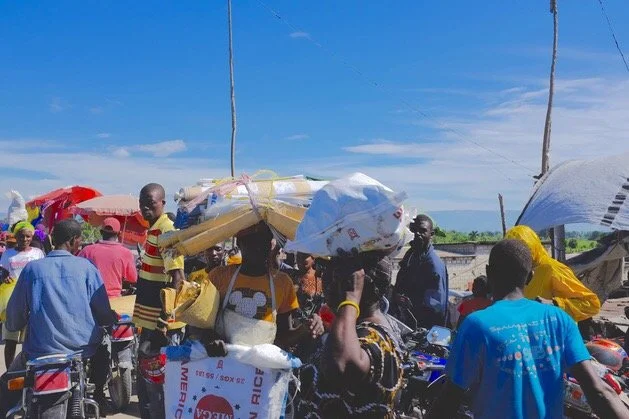
China plans to invest $30 billion in Haiti’s infrastructure according to the Haitian Press Agency (AHP). This week the Mayor of Port-au-Prince, Youri Chevry, hosted the signing of an agreement between the Haitian company Bati Ayiti (Build Haiti), headed by former Senator Amos André, and the Southwest Municipal Engineering and Design Research Institute of China.The agreement includes the construction of a 600 megawatt power plant to electrify Port-au-Prince, the construction of a new City Hall, markets, thousands of apartments, and eventually a railway from Port-au-Prince to the countryside. The center of the discussion was “the reconstruction of the main building of the Town Hall and the construction of several public contracts on the territory of the commune of Port-au-Prince,” according to LoopHaiti.20,000 workers will begin work before the end of 2017, backed by an initial infusion of $5 billion. The Chinese Government has a deadline of September 30, 2017 to unblock the funds. In the meantime, Bati Ayiti, the City of Port-au-Prince and their partners continue to work on the recruitment of staff.Last May, China’s president Xi Jinping hosted the first Belt and Road Forum (“One Belt, One Road”) in Beijing, offering hundreds of billions of dollars to over 100 interested countries for infrastructure projects. Haiti stands to be a beneficiary of the ambitious Chinese initiative, which is modeled on the ancient “Silk Road.” 2,000 years ago China opened up routes of trade that linked the civilizations of Asia, Europe and Africa.China now stands to have influence in the Caribbean corridor stretching from Cuba to Venezuela.Some analysts have compared the One Belt One Road enterprise to the Marshall Plan. After World War II, the United States was such a strong manufacturing entity that it was forced to seek markets for its industrial products. The Marshall Plan required that aid to Europe involve a quid pro quo of U.S. investment and imports.Today, China has an excess amount of industrial capacity. China is exceptionally skilled at infrastructure. Foreign investment provides an outlet for exports of labor and resources.“This accord may finally break the grip that the eternal exploiters of Haiti had for decades on the poor people of Haiti while they greatly benefited from favors and monopolies from corrupt governments,” says Bernard Sansaricq, the former Senate President of Haiti, in an email.Is it also possible that the Chinese initiative is less about altruistic globalization and more about finding markets for its industrial over capacity? Is China trying to lure Haiti into its geo-political orbit? Both motives may work together for the benefit of Haiti.It worked in Rwanda. Figures from the Rwanda Development Board indicate that Rwanda registered 45 Chinese investments from 2010 – 2016.The change in Kigali is stunning over the past 15 years. I have witnessed this transformation myself in multiple visits since 2004. The streets are clean and not a plastic bag in sight. A woman can walk the streets alone at midnight and feel as safe as on a moonlight stroll on Sanibel Island’s beaches.Chinese engineers built the country’s tallest building, Kigali City Tower, “a gleaming 20-story glass skyscraper; the building that houses Rwanda’s foreign ministry; various hotels, schools, and hospitals; and 80% of the country’s roads,” according to an article in Quartz Africa.There are still problems, of course, and outside development offers no guarantee of utopia. Competition for jobs remains fierce.As Ezili Danto of the Haitian Lawyers Leadership network suggests, China can capitalize on the failures of the Clinton Foundation failures in Haiti.“If Trump is too tied up with the Deep State and China leaves a bit of clean water, electricity, and road infrastructure- so be it. But anything done under the illegitimate (left-over Clinton/Bush establishment) government is worrisome. They put Jovenel (the current President) in to keep the status as is — the people too hungry, sick, and weak to fight back,” Danto says.See also this article on the Haiti Mafioso.A power plant to light up the roads certainly won’t be welcomed by the dark forces of the criminal mafias.“I’d have preferred to champion a U.S. government initiative, but it (the China investment) is what it is,” says Danto.HuffPost | August 4, 2017
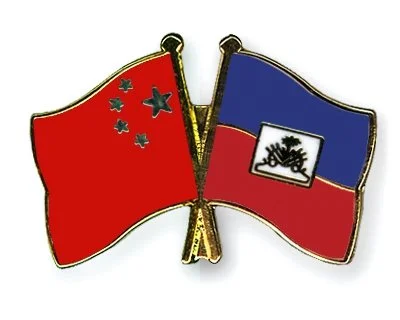
China Donates To Haiti
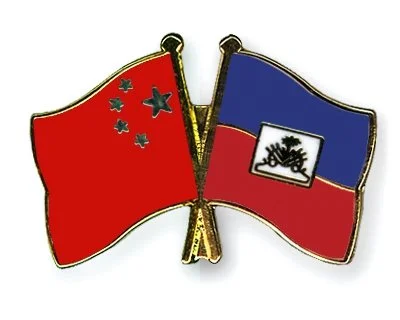
On Wednesday July 5th in the annex of the Ministry of Youth, Sports and Civic Action (MJSAC) to Frères, Mario Florvil the Director General of the Ministry of Youth, Sports and Civic Action, in the presence of the executives of the Directorate of Physical and Sports Activities (DAPS) of the Ministry, received from Ling Jun, the Permanent Representative of the China Trade Development Bureau in Haiti, a donation of sports equipments and materials as part of bilateral cooperation Haiti - People's Republic of China.The donation consisted of 18 lots of sports equipment, including balls, jerseys, football boots, basketball and volleyball, sports socks, nets, trophies.Mario Florvil welcomed China's initiative "This aid comes at a time when the Haitian government through the MJSAC wants to give another direction and a new breath to the sport sector," considering that Haiti greatly needs all the forms of support that can enable it to support sport, whose development represents a priority for the new government, ensuring that its Ministry will make good use of these materials.Ling Jun hopes that these materials will contribute to the improvement of the conditions of training and the physical constitution of the young Haitians. Reaffirming the importance that China attaches to physical and sports development before evoking the Haitian Ministry's desire to return sport to school.HL