
Haiti's 221st Independence Day: Voltaire Asks France to Repay Haiti's Independence Debt
The Haitian government celebrated yesterday, Monday, January 1, 2025, the 221st anniversary of the country's independence.
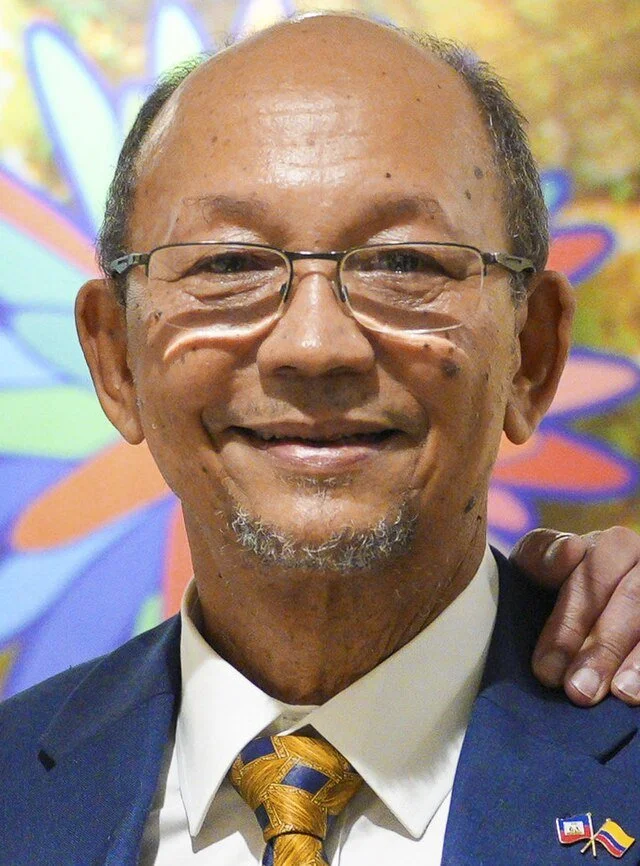
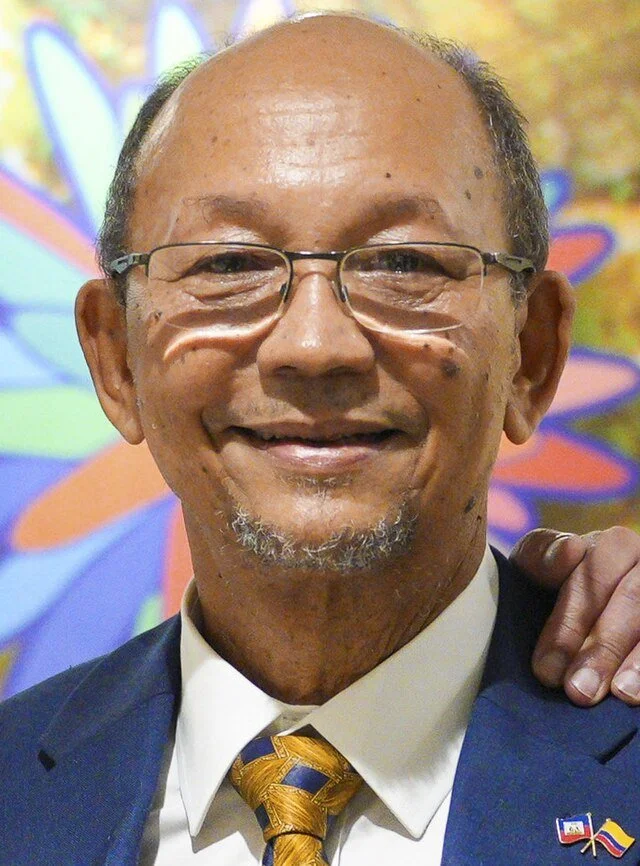
In a ceremony held in the presence of senior government officials, including Prime Minister Alix Didier Fils-Aimé and the coordinator of the Presidential Transition Council, Leslie Voltaire, Haitian authorities commemorated Haiti's independence day in the capital.
In his speech, architect Leslie Voltaire called for peace to be established in the country so that the people can breathe a sigh of relief from the acts of brigandage that are taking place in the country.
Leslie Voltaire reports that the state is at war with gangs that are wreaking havoc in the country and forcing thousands of people to flee their homes.
The KPT coordinator says his patience is running out.
On the other hand, Leslie Voltaire took the opportunity to ask France to repay the debt of independence and reparations for slavery.
We would like to emphasize that the government did not make the trip to the independence site, Gonaives, for the ceremony of honoring ancestors and commemorating independence.
The ceremony took place in Vilacadey, in the capital, Port-au-Prince.
Mother-son duo brings authentic Haitian cuisine to Rose City: 'Put Haiti on the map'
Portland restaurant TapTap Cuisine, operated by Dieuson Alix and his mother, is sharing Haitian culture, one serving at a time.
While many celebrated New Year's Day with champagne toasts, Portland's newest Haitian restaurant marked the occasion by serving up a dish that symbolizes freedom and independence. Jan. 1, Haiti's Independence Day, marks the birth of the world's first free Black republic.
At TapTap Cuisine in Northeast Portland, owner Dieuson Alix and his mother Daniella celebrated the historic day by serving Soup Joumou, a traditional squash soup that carries centuries of meaning.
"When slavery began in Haiti, we weren't allowed to eat pumpkin. The masters were the only ones who could enjoy it," Alix said. "But when we gained independence on Jan. 1, 1804, the best way to celebrate was by making Joumou. It symbolizes freedom, liberty and unity for Haitians."


Credit: KGW
The restaurant's name comes from one of Haiti's transportation systems.
"In Haiti, we have a traditional taxi, a little bus or pickup truck we call Tap Tap," Alix said. "The name comes from passengers tapping the back of the vehicle to signal the driver to stop."


Credit: KGW
Painting of a Haitian TapTap bus: The restaurant's name comes from one of Haiti's iconic transportation system called "TapTap."
After arriving in America in 2016 on a student visa, Alix balanced learning English, working and playing soccer while earning a psychology degree at Bushnell University in Eugene.
In 2023, he opened a food cart on North Williams Avenue. Following months of planning and support from family and friends, he expanded to a brick-and-mortar location on Northeast Sandy Boulevard in October 2024.
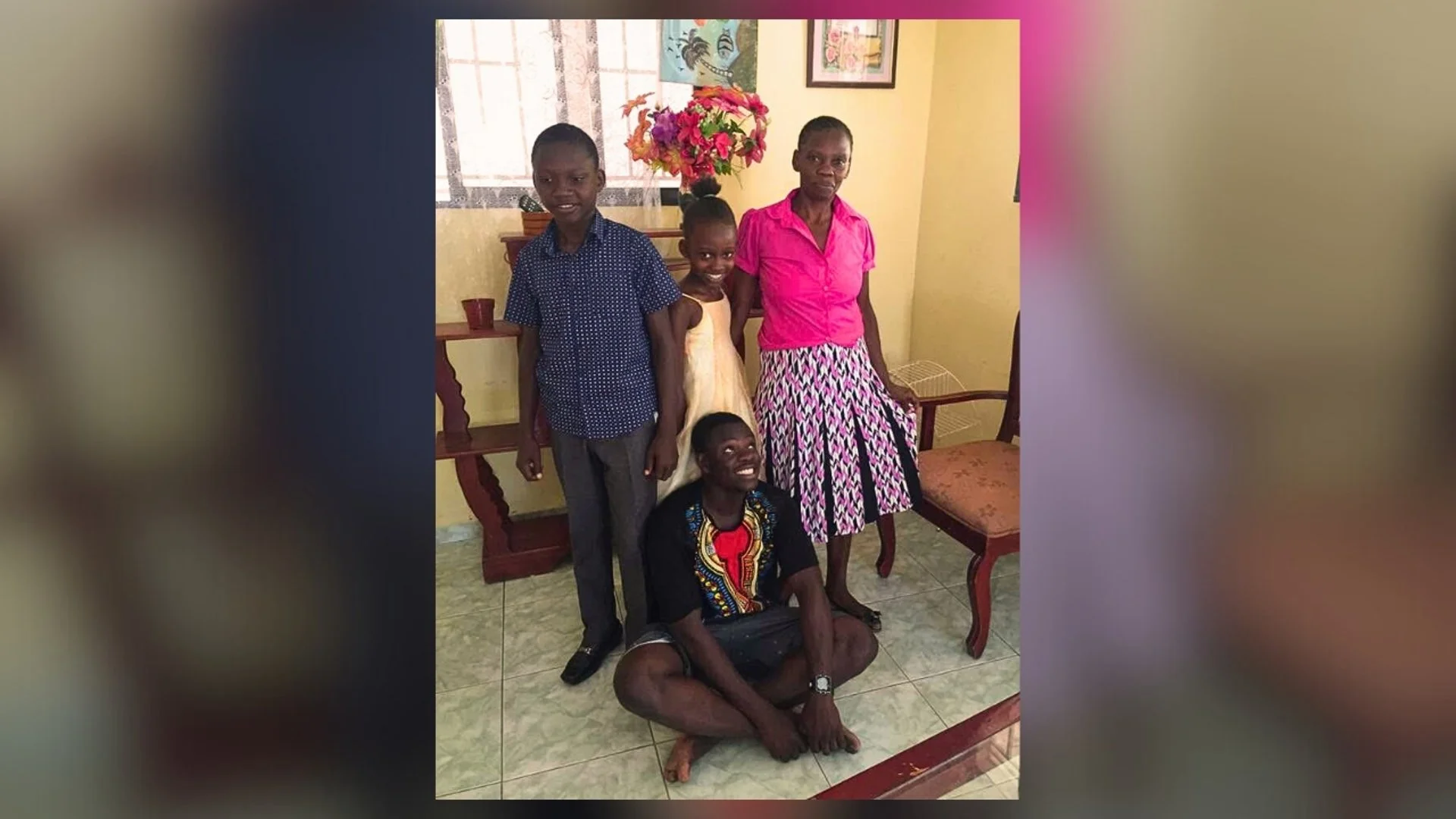
For Alix, the venture is a tribute to his mother's sacrifices in their hometown of Jacmel, Haiti, where he helped his single mother prepare meals that she would sell to support him and his two siblings.
"I saw the struggles my mom faced," he said. "She would cook in big pots, then walk 60 to 70 miles a day to sell her food in the market. She worked tirelessly to provide for us."

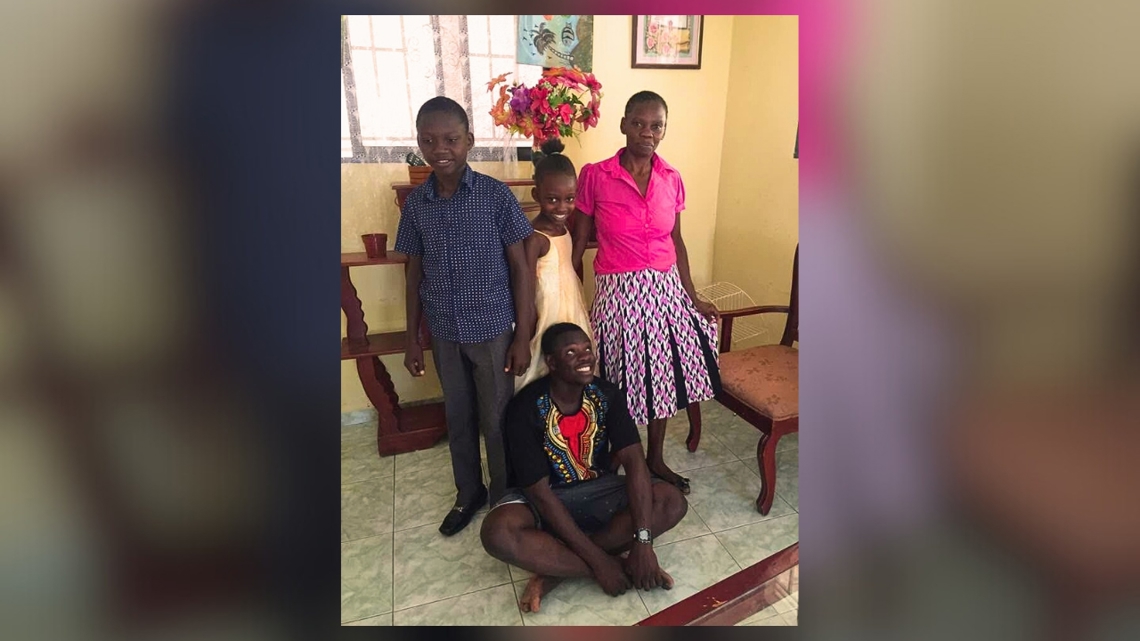
Credit: Dieuson Alix
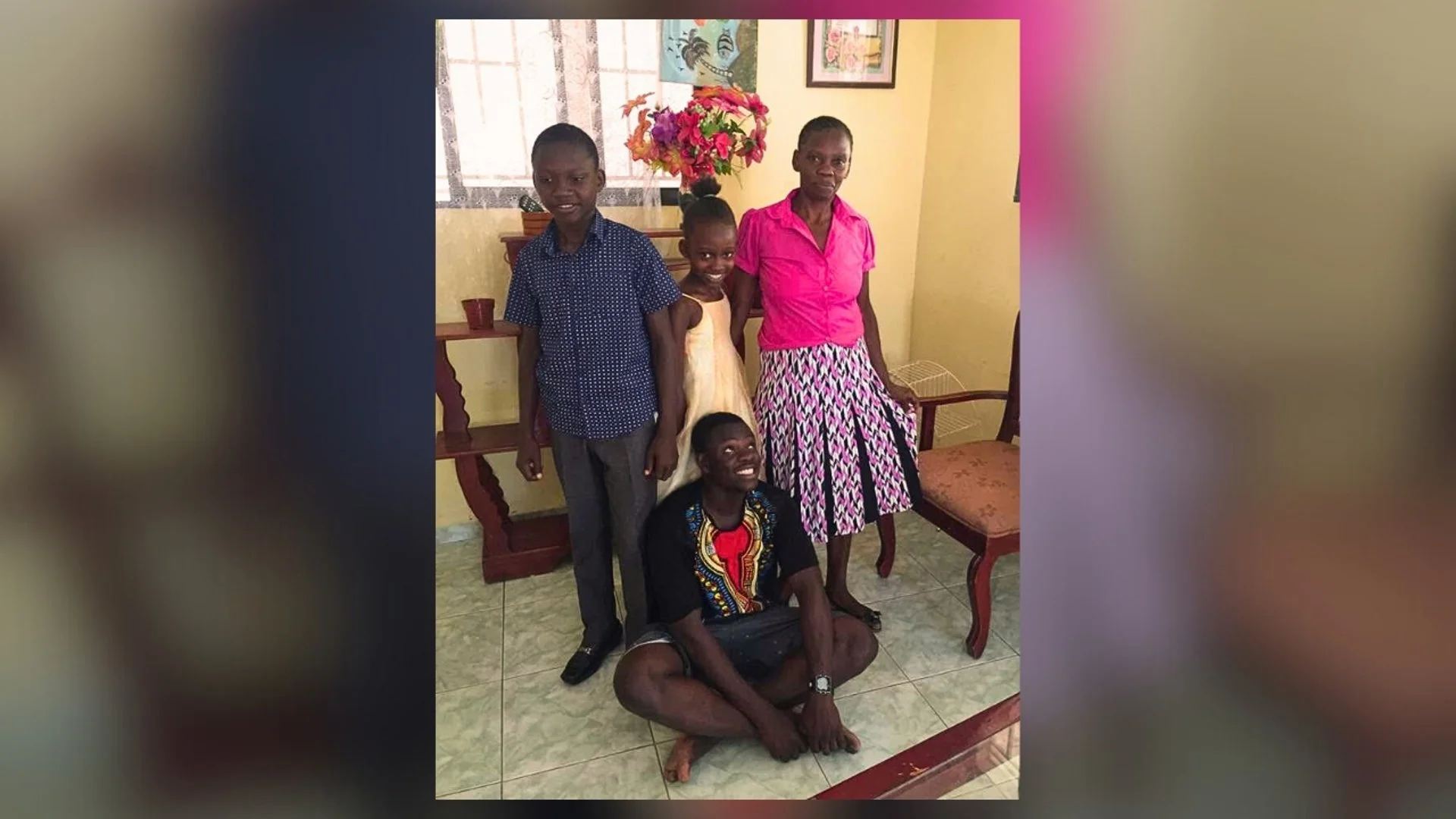
Dieuson Alix alongside his mother and two other siblings back in Haiti.
Despite the success of his restaurant, Alix continues to face challenges, including stereotypes perpetuated on social media. The comments, often offensive and rooted in misinformation, have deeply affected him.
"It hurts me to my soul," Alix said. "As a migrant, as a Black man, you have to work harder than anyone else to make a seat for yourself. But one thing about us Haitians — we are resilient. We have tough skin."
He recently deleted several offensive comments falsely claiming Haitians eat dogs and cats.
"Not too long ago, I had to delete up to 10 comments where people were saying, 'Stop eating dogs, stop eating cats, save the cats,'" he said. "This is not a part of our culture. This is not who we are. We don't eat dog. We don't eat cat."
Alix said Haitian immigrants contribute significantly to American society.
"We are nurses, doctors, journalists, business owners," he said. "It's very disturbing, but we have tough skin."
His mother Daniella, who joined him in Oregon in February after immigration delays, spoke proudly in Haitian Creole: "I'm extremely proud of him choosing to share Haitian food with the Portland community and being proud of his culture."
For Alix and his mother, it's not just about building a restaurant, it's about keeping Haiti's spirit alive, one serving at a time. He said they're committed to making the Haitian restaurant a welcoming space for both Portland's Haitian community and those seeking to learn about the culture.
"Tap Tap means we're moving forward," Alix said. "We're on a journey to a brighter future — not just for us, but for our community. For our culture. We want to put Haiti on the map."
Both locations are open Tuesday through Sunday at various times available on Tap Tap's social media pages.

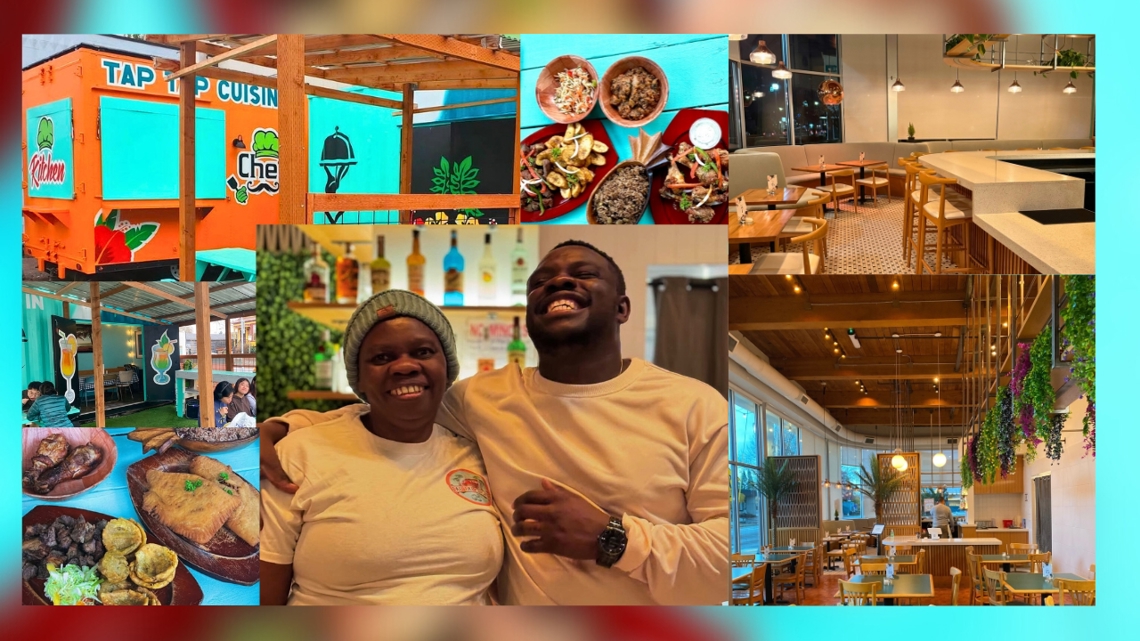
Credit: Dieuson AlixClose Ad

Dominican Republic deported more than 276,000 Haitians in 2024
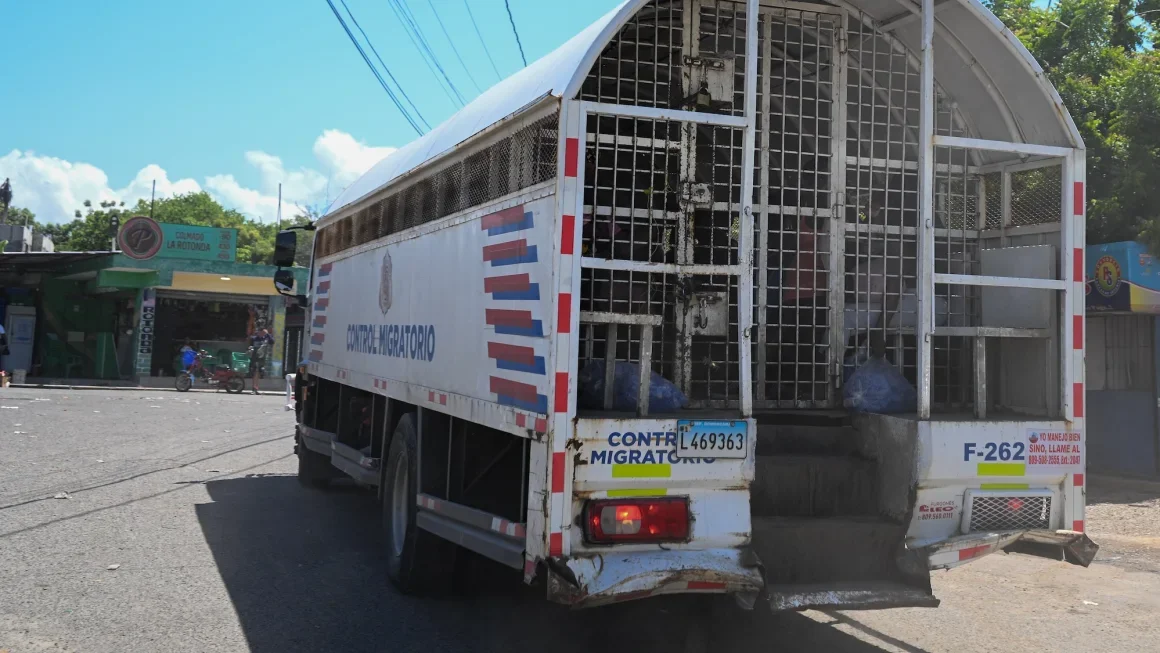
The Dominican Republic deported more than 276,000 Haitians in 2024, the country’s Immigration Directorate said Wednesday.
In the last three months of the year alone, over 94,000 people were deported under a new operation aiming to remove up to 10,000 undocumented Haitians per week, ordered by the Dominican Republic’s National Security and Defense Council headed by President Luis Abinader.
Dominican authorities also deported 48,344 Haitians during the January-March quarter, 62,446 between April-June, and 71,414 from July to September, according to the statement.
Government spokesman Homero Figueroa told reporters in October that the government ramped up deportations to address an “excess” of Haitian migrants in the Dominican Republic, which shares an island with Haiti. The two countries have long seen an informal flow of people across their shared border.
Haiti’s then-Foreign Minister Dominique Dupuy condemned “brutal scenes of raids and deportations,” and demanded justice for “dehumanizing acts” against her compatriots. Dominican authorities maintain that the deportations are carried out in compliance with human rights.
In October, Reuters footage captured dozens of migrants crammed into caged Dominican Republic law enforcement trucks heading to Haiti. Aid organizations have rushed assistance to the Haitian side of the border to assist the thousands of deportees.
The mass deportations come amid a worsening political and social crisis in Haiti; gangs are estimated to control more than 80% of the country’s capital, Port-au-Prince.
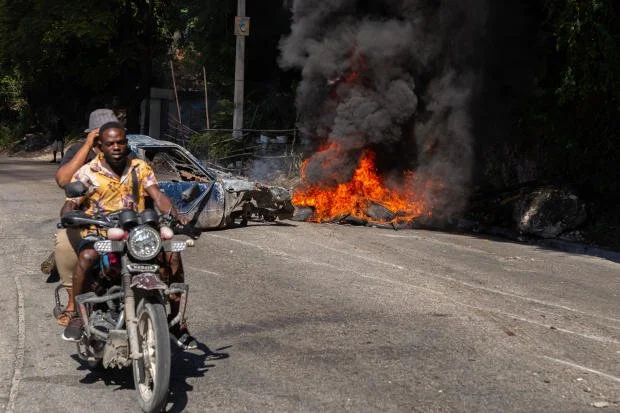
184 killed in Haiti, U.N. says, as gang leader allegedly orders massacre of elderly on voodoo priest's advice
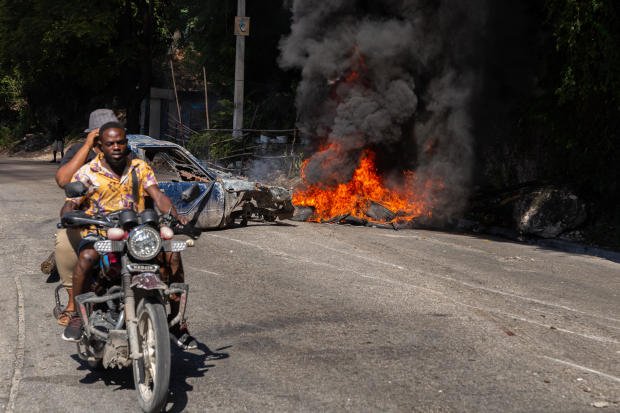
The United Nations human rights chief said Monday that 184 people were killed over the weekend in the Haitian capital, as Port-au-Prince was rocked by a spike in gang violence that pushed the death toll from Haiti's spiraling security crisis to at least 5,000.
"Just this past weekend, at least 184 people were killed in violence orchestrated by the leader of a powerful gang in the Haitian capital of Port-au-Prince, in the Cite Soleil area," Volker Turk told reporters in Geneva. "These latest killings bring the death toll just this year in Haiti to a staggering 5,000 people."
Volker appeared to be referring to a reported massacre carried out by a gang leader in the impoverished Cite Soleil neighborhood who targeted elderly people he suspected of sickening his own child by witchcraft.
The Reuters news agency quoted the National Human Rights Defense Network (RNDDH) as saying on Sunday that Monel "Mikano" Felix, leader of the Wharf Jeremie gang, had ordered the murders in Cite Soleil, and that all the victims of the attack were over 60 years old.
RNDDH said Felix had sought advice from a voodoo priest who told him elderly people in the area had harmed his child, who died on Saturday, leading to members of his gang killing at least 100 people Friday and Saturday with machetes and knives.
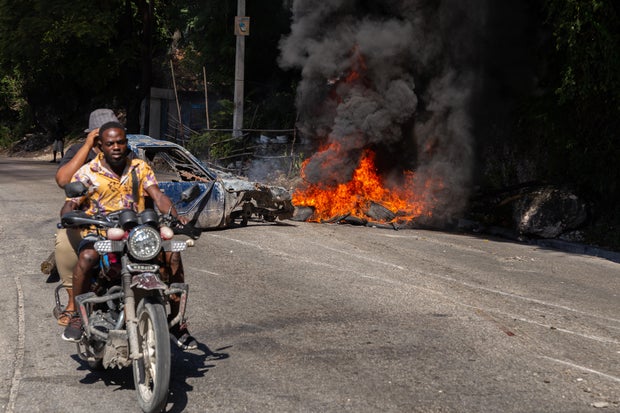
Cite Soleil is a densely populated neighborhood near the port in Port-au-Prince. It's among the most impoverished and violent areas in the small country.
Haiti has been gripped by political chaos for years, leaving room for heavily-armed criminal gangs to seize huge swaths of territory in Port-au-Prince and elsewhere. Much of the capital remains lawless despite hundreds of police from Kenya being sent in to help reassert law and order.
International airlines have largely stopped flying in and out of Haiti amid the chaos and bloodshed, with several U.S. carriers halting flights entirely after planes were hit by gunfire in November. American Airlines said over the weekend that it no longer planned to resume flights from February as previously stated, joining Spirit Airlines and JetBlue Airways in postponing all Haiti routes indefinitely.

FAA prohibits US airlines from flying to Haiti and UN suspends flights after plane was shot by gangs

PORT-AU-PRINCE, Haiti (AP) — The Federal Aviation Administration announced Tuesday that it will prohibit U.S. airlines from flying to Haiti for 30 days after gangs shot a Spirit Airlines flight and the United Nations said it will suspend flights, “obviously limiting the flow of humanitarian aid and humanitarian personnel into the country.”
The bullets hit the plane when it was about to land Monday in the country’s capital Port-au-Prince, injuring a flight attendant. It was part of a wave of violence that erupted in Haiti as the country swore in its new prime minister after a politically tumultuous process.
Life in much of Haiti’s capital was frozen after the wave of violence, which came to a head when gangs shot a Spirit Airlines airplane Monday, forcing the airport to shut down. Photos and videos obtained by The Associated Press show bullet holes dotting the interior of a plane. A number of airlines suspended flights to Haiti through Thursday, but it was unclear how long closures could drag on.
Neither the former interim prime minister, Garry Conille, nor the newly inaugurated Alix Didier Fils-Aimé commented on the violence.
But Luis Abinader, who as president of the neighboring Dominican Republic has cracked down on Haitian migration, called firing on the airplane terrorism.
“This was a terrorist act; the countries that are following and helping Haiti should declare these armed gangs as terrorist groups,” Abinader said in a news conference.
On Tuesday, heavily armed police in armored cars outside the airport checked trucks used for public transportation passing by.
Schools were closed, as were banks and government offices. Streets, where just a day before gangs and police were locked in a fierce firefight, were eerily empty, with few driving by other than a motorcycle with a man who had been shot clinging to the back.
The sounds of heavy gunfire still echoed through the streets in the afternoon — a reminder that despite political maneuvering by Haiti’s elites and a strong push by the international community to restore peace, the country’s toxic slate of gangs kept its firm hold on much of the Caribbean nation.
The United Nations estimates that gangs control 85% of the capital, Port-au-Prince. A U.N.-backed mission led by Kenyan police to quell gang violence struggles with a lack of funding and personnel, prompting calls for a U.N. peacekeeping mission.
The violence comes after a transitional council, tasked with restoring democratic order to Haiti, which hasn’t held elections since 2016, decided to fire Conille, who often was at odds with the council during his six months in office. The council rapidly swore in businessman Fils-Aimé as the new interim prime minister.
Conille originally called the move illegal, but on Tuesday acknowledged Fils-Aimé's appointment in a post on the social media platform X.
“(I) wish him success in fulfilling this mission. At this crucial moment, unity and solidarity are essential for our country. Long live Haiti!” he wrote.
Fils-Aimé promised to work with international partners to restore peace and hold long awaited elections, a vow also made by his predecessor.
But many Haitians, like 43-year-old Martha Jean-Pierre, have little taste for the political fighting, which experts say only give gangs more freedom to continue expanding their control as Haiti teeters on the brink of famine.
Jean-Pierre was among those to brave the streets of Port-au-Prince on Tuesday to sell the plantains, carrots, cabbage and potatoes she carried in a basket on her head. She had no choice, she said — selling was the only way she could feed her children.
“What good is a new prime minister if there’s no security, if I can’t move freely and sell my goods,” she said, nodding to her basket of vegetables. “This is my bank account, this is what my family depend on.”
It was a frustration that appeared to be international players that have pushed for a peaceful resolution in Haiti like the U.N. and the U.S.
On Tuesday, the U.S. State Department lamented that Conille and the council “were unable to move forward in a constructive manner” and called on Fils-Aimé and the council to provide a clear action plan outlining a joint vision on how to decrease violence and pave the path for elections to be held to “prevent further gridlock.”
“The acute and immediate needs of the Haitian people mandate that the transitional government prioritize governance over the competing personal interests of political actors,” it wrote in a statement.

Haiti's prime minister ousted after six months
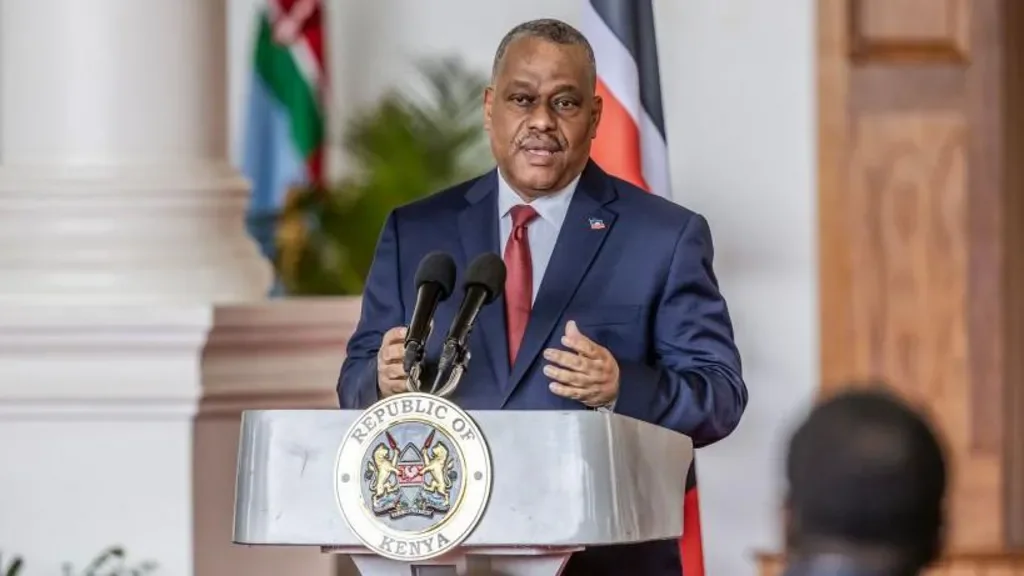
Haitian Prime Minister Garry Conille has been fired by the country's ruling council less than six months after he took office.
An executive order, signed by eight of the council's nine members, named businessman and former Haiti Senate candidate Alix Didier Fils-Aimé as Conille's replacement.
Conille, a former United Nations official, was brought in to lead Haiti through an ongoing, gang-led security crisis and had been expected to help pave the way for the country's first presidential elections since 2016.
He described his ousting as illegal, saying in a letter - seen by Reuters news agency - that it raised "serious concerns" about Haiti's future.
Haiti currently has neither a president nor parliament and, according to its constitution, only the latter can sack a sitting prime minister.
"This resolution, taken outside any legal and constitutional framework, raises serious concerns about its legitimacy," Conille's letter was quoted as saying.
Haiti's transitional presidential council (TPC) was created in April after Ariel Henry, Conille's predecessor, was forced from office by a network of gangs that had taken over parts of the capital Port-au-Prince.
Henry left Haiti to attend a summit in Guyana on 25 February 2024, and gang members subsequently seized the city's international airport, preventing him from returning.
The TPC was tasked with restoring democratic order to the Caribbean country, where such violence is rife.
More than 3,600 people have been killed in Haiti since January and more than 500,000 have had to leave their homes, according to the UN, which describes Haiti as being one of the poorest countries in the world.
Two million Haitians currently face emergency levels of hunger, UN data shows, while almost half the population "do not have enough to eat".
One of the country's most powerful gang leaders, Jimmy Chérizier, also known as Barbecue, previously said he would be prepared to end the violence if armed groups were allowed to be involved in talks to establish a new government.
Presidential elections were last held in Haiti eight years ago, when Jovenel Moïse of the Tèt Kale party was elected.
Since his murder in July 2021, the post of president has been vacant.
Gangs in Haiti have capitalised on the power vacuum and expanded their control over swathes of the country, which has effectively been rendered lawless in places.
Last month, it was reported that hundreds of police officers had been deployed to Haiti from Kenya, with more set to join them in November.
Haiti edges towards holding first elections since 2016

Haitian gang kills at least 70 people as thousands flee, UN says
- Some 3,000 flee Pont-Sonde as international support lags
- Over 700,000 displaced, more than 5 million face severe hunger
- Gang leader says attack intended to worsen food crisis
- No progress on justice for massacres in recent years
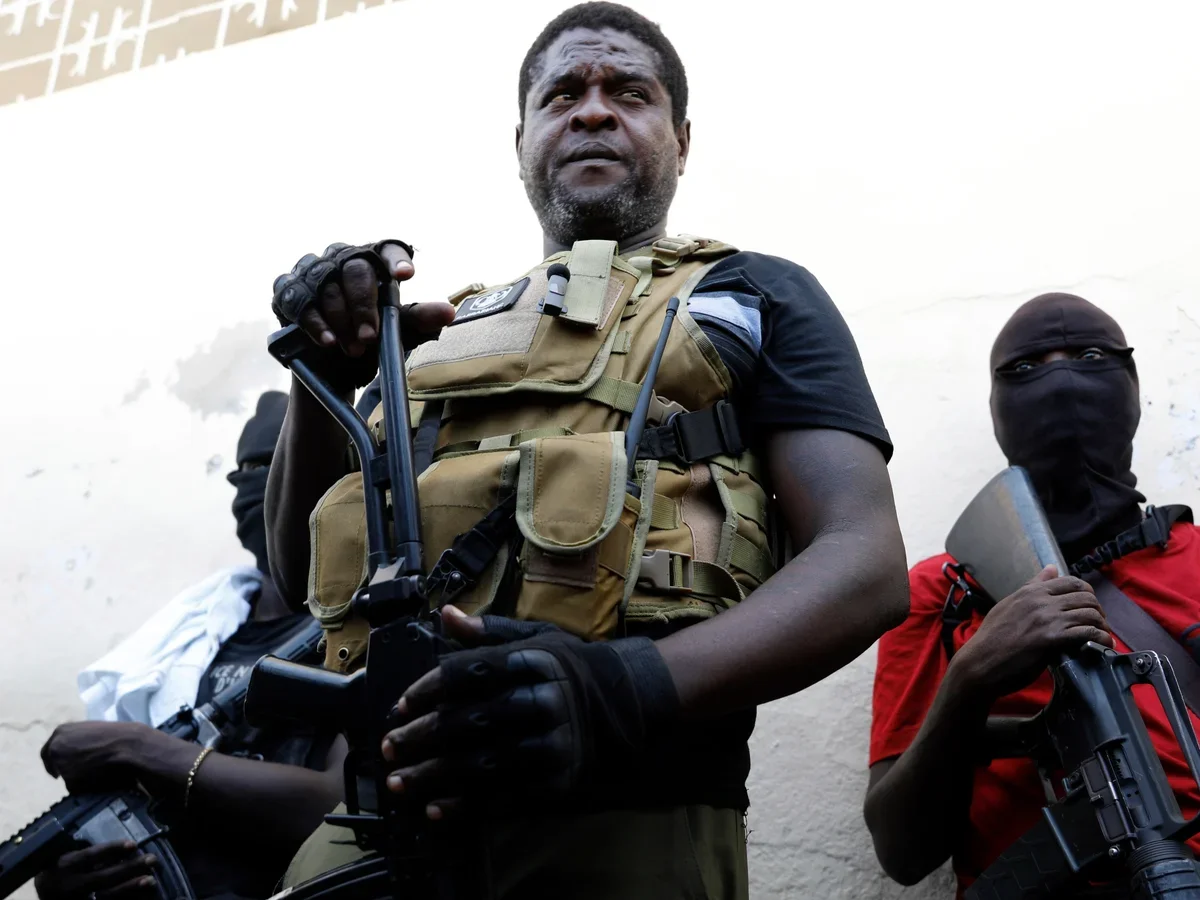
PORT-AU-PRINCE, Oct 4 (Reuters) - Armed men belonging to the Gran Grif gang killed at least 70 people, including three infants, and forced at least 3,000 to flee as they swept through a Haitian town shooting automatic rifles at residents, the U.N. said on Friday.
"We are horrified by Thursday's gang attacks in the town of Pont-Sonde in Haiti's Artibonite department," U.N. spokesperson Thameen Al-Kheetan said in a statement.
At least another 16 people were seriously injured in the attack in the early hours of Thursday, including two gang members hit during an exchange of fire with Haitian police, according to the U.N. The gang members reportedly set fire to at least 45 houses and 34 vehicles, forcing residents to flee their homes.
The killings are the latest sign of a worsening conflict in the Caribbean nation, where armed gangs control most of the capital Port-au-Prince and are expanding to nearby regions, fuelling hunger and making hundreds of thousands homeless, while nearby countries continue to deport migrants back to the country.
"This odious crime against defenseless women, men and children is not only an attack against victims but against the entire Haitian nation," Prime Minister Garry Conille said on X.
Conille added that security forces were "reinforcing their intervention" in the area. His office said the public hospital in nearby Saint-Marc was boosting capacity to treat the wounded.
Haitian online TV showed security forces moving into Pont-Sonde, where a burnt-out vehicle lay on the road and bullet casings were gathered on the ground.
In an audio message shared on social media on Thursday, Gran Grif leader Luckson Elan, who was sanctioned by the U.N. last month, blamed the state and victims for the attacks, accusing residents of remaining passive while his soldiers were killed by police or vigilante groups.
"It's Pont-Sonde residents who are at fault. What happened in Pont-Sonde is the fault of the state," he said.
The U.N. has accused Elan's gang of killings, rapes, mass kidnappings, robbery, destroying property, hijacking trucks and forcing farmers off swaths of land, threatening to kill them if they return.
"Gran Grif has also committed some of the highest levels of child recruitment in Haiti," according to the U.N. Security Council. The U.N. believes Haiti's gangs are armed largely by guns trafficked from the United States.
But Haiti's judicial system has been paralyzed for years. According to the U.N., no progress has been made in the cases of any mass killings committed since 2021, as well as several major massacres since 2017.
Police are alleged to have taken part in some massacres. Gang leader Jimmy "Barbeque" Cherizier, a former police officer was accused by the U.N. of planning and taking part in the 2018 killing of 71 civilians in the capital's port-side neighborhood of La Saline.
The port, a key supply corridor, has been closed since late last month due to gang attacks, worsening the already dire food crisis.
CALL FOR ASSISTANCE
Pont-Sonde is a major rice producer located in Haiti's breadbasket Artibonite region, built around a bridge and important crossing connecting the capital to the north.
The region has seen some of the worst violence outside the capital, compounding a worsening hunger crisis that has seen half the population suffer from severe food insecurity and thousands in Port-au-Prince facing famine-level hunger.
Cherizier, who has acted as spokesperson for an alliance of armed gangs in the capital, said in a video the attack was part of a plan to prevent Artibonite from supplying food to the country.
The number of people internally displaced by the conflict has meanwhile surged past 700,000, nearly doubling in six months despite the partial deployment of a U.N.-backed mission mandated to help under-resourced police restore order.
"We cannot turn a blind eye," said Raouf Mazou, an executive at the U.N.'s refugee agency, on Friday, pointing to shortages in food, medical supplies and blocked humanitarian aid.
Haiti has so far received a fraction of the resources it was promised and been frustrated in efforts to bring in a formal U.N. peacekeeping mission. Many countries made formal pledges of money and troops, but so far only around 400 have arrived, mostly from Kenya.
"We call for increased international financial and logistical assistance" to the mission, Al-Kheetan said, urging an urgent investigation and reparations for the victims, a call echoed by a spokesperson for U.N. chief Antonio Guterres.
Haiti's prime minister warned last month that countries should urgently fulfill their pledges in order to contain the situation.
The U.N. estimated at the end of September that 3,661 people had been killed in the gang violence since January.
Haiti's former government first requested international security support in 2022.
Countries including the United States and the UK, which both hold territories in the Caribbean, have meanwhile continued to organize deportation flights back to Haiti, despite pleas not to do so by the United Nations.
Responding to the "limited" results of the mission more than a year after it was formally approved, neighboring Dominican Republic said this week it would step up deportations of undocumented migrants to up to 10,000 per week.

New York man deported to Haiti, though he's not a Haitian citizen, tells his story

- Since his deportation in 2021, Pierrilus has been working to get back home to Spring Valley, the New York village where he'd lived since he was 5.
- Pierrilus is stateless. He was born in Saint Martin, a French territory, but wasn't made a citizen because his parents weren’t French nationals. He also doesn't have Haitian citizenship.
- Will Pierrilus finally be able to come home to Spring Valley? "As somebody of faith, I believe the right thing is going to happen," he said during a phone call from somewhere in Haiti.
Paul Pierrilus has moved about a half dozen times in the three-plus years since he was deported to Haiti, even though he's not a Haitian citizen and had never been there before his forced removal.
"Some neighborhoods are worse than others. Gangs literally taking over neighborhoods," Pierrilus said via a Zoom call from an undisclosed location. "I try to avoid the danger."
Pierrilus said he knows it's time to move on when the nightly gunfire gets closer.

Kidnappings are "not something that's rare," he said.
"A huge target’s on my back," said Pierrilus, who has witnessed violence and kidnappings. "They can tell you're Americanized. I stick out like a sore thumb."
Since his deportation in 2021, Pierrilus has been working to get back home to Spring Valley, the New York village where he'd lived since he was 5 and worked as a financial planner. He's had support from human rights organizations like Robert F. Kennedy Human Rights, the National Immigrant Justice Center and the Haitian Bridge Alliance, as well as from his family and his home church, the French Speaking Baptist Church of Spring Valley.
Former U.S. Rep. Mondaire Jones, a Democrat, has pled Pierrilus' case in and out of office, including during a recent interview with lohud. A spokesman for U.S. Rep. Mike Lawler said in 2023 that the Republican had not received a request from RFK Human Rights for assistance, but would be willing to help. Jones is challenging Lawler in the November election for the 17th District seat.
There have been developments in Pierrilus' case: Gov. Kathy Hochul in May granted him a pardon for a 2003 conviction of criminal sale of a controlled substance in the third degree. It's a charge Pierrilus said he pleaded guilty to in his early 20s. He's now 43. Pierrilus describes the incident as a one-time mistake for which he took responsibility and served his time.
Hochul's pardon ‒ the product of a detailed investigation by her team ‒ basically provides relief from the criminal record that is cited as the reason for his deportation.
The pardon could help open a pathway for Pierrilus to receive humanitarian parole because his current situation is so precarious, said Sarah Decker, staff attorney at Robert F. Kennedy Human Rights. Pierrilus does not qualify for other special immigration programs that pertain to Haiti.
"He's a person deported from the United States of America, forced to live in hiding," stuck in a country that's not his own, with limited family and network ties, and easily identifiable as American, making him a target for kidnapping and worse, Decker said.
Neither Pierrilus, nor the agencies championing his cause, are anywhere near giving up.
"As somebody of faith," Pierrilus said during a Sept. 19 interview, "I believe the right thing is going to happen."
Stateless and stuck
Pierrilus is literally a man without a country.
He was born in Saint Martin, a French territory in the Leeward Islands. He wasn't automatically a citizen because his parents weren’t French nationals, but were citizens of Haiti at the time. He also didn’t automatically inherit Haitian citizenship through his parents.
He moved with his family to the U.S. when he was 5. They settled in Spring Valley, which has the second-largest Haitian population, per capita, in the country. When his parents eventually earned U.S. citizenship, Paul didn't. But his family had been confused by a complex system and Paul didn't realize he had no status in the U.S. until he filed the standard FAFSA form when ready to attend SUNY Rockland Community College.
Pierrilus, though, didn't have status in any nation.
Being stateless is an unusual situation, but one that didn't really impact Pierrilus for years.
Even when he neared deportation, Pierrilus had repeatedly received documentation from both the French consulate and the Haitian government that confirmed he was not a national of either country. He also visited both consulates, at the behest of U.S. immigration officials, who asked for updated documents. Both countries' paperwork confirmed he was not a citizen of either.
Even on the plane bound for Haiti, he tried showing documents that confirmed his stateless status.
Pierrilus was in the system for years with no issues
After Pierrilus' 2003 guilty plea, he spent six months at Lakeview Shock Incarceration Facility in Chautauqua County, a minimum security "boot camp" that excludes violent or repeat offenders and focuses on treatment and skill-building.
"I did what I did," Pierrilus said. "I did my time."
After his release, Pierrilus was under a federal "Order of Supervision," which is often assigned to non-citizens who have violated U.S. immigration law, or have committed certain criminal acts, even fairly minor ones. OSUP status allows immigration officials to keep track of an individual, who is supposed to check in at certain intervals.
For the next 15 years, Pierrilus said he followed every rule, jumped through every hoop, make every check-in at the offices in downtown Manhattan, waiting hours. He likened the process to going to the DMV. You line up, then you sit. Then you wait. And wait.
"I don’t think somebody making a mistake one time in their life," Pierrilus said, justifies what happened next.
'I'm not from Haiti'
Paul Pierrilus' deportation saga began on Jan. 11, 2021.
But even before that, he had an inkling something was happening. "I got a phone call. I was told I could go a local police station" for his OSUP check-in. He also kept getting a random call from someone with a blocked number. "It felt like something wasn't right," he said.
Since he already had an appointment at the ICE field office in Federal Plaza in New York City, Pierrilus decided just to stick to the normal routine. "I went early in the morning," he recalled. People were being called in for their appointments, but he was left sitting, waiting. By the end of the day, "I was last person in the waiting room."
Finally, Pierrilus was called into the office. The door was closed and locked. Then the officer said to him: “You're no longer on supervision. You’re going home.”
What home, Pierrilus asked? "They said Haiti."
Pierrilus recounted telling the officer, "I’m not from Haiti."
The response: “Well that’s what your file says.”
He was taken to a side room with a cell.
At every step, Pierrilus showed documents from Haiti stating he was not a citizen and would not be accepted. He added that he now believes that Haiti has been used as a dumping ground by U.S. immigration officials, and people of color are the refuse. "There are people from Jamaica, sent to Haiti," he said. "They have no ties, no nothing. It might sound crazy, but what they did is not a one-off situation."
Pierrilus was given the option of being taken to JFK airport and self-deporting. He said no.
Pierrilus said he believes U.S. immigration officials knew the French government would reject his transfer to a French territory and figured that Haiti was unstable and could be persuaded to just accept another deportee.
On Jan. 19, in the dwindling hours of the Trump administration, Pierrilus was being walked to a plane on the tarmac, shackled and surrounded by agents. Then, with no explanation, he was then led back, away from the plane.
The Haitian ambassador lauded the move on Twitter, now X.
Pierrilus was sent to a holding center in Louisiana.
On Feb. 2, with the Biden administration now in office, the deportation again commenced. Was he surprised? Pierrilus, in a reflection that summed up his entire experience, responded: "What they’re supposed to do and what they will do, two separate things."
Pierrilus remembers being placed, shackled, in a van by himself. He said it was stifling and smelly and he was there for hours.
He was placed on a plane with others, including families and babies, being sent to Haiti. Pierrilus again tried to show his travel documents. No one cared.
When he protested, he said, an immigration officer gestured to a straitjacket on the floor and told Pierrilus, "We can do this the hard way or the easy way."
His experience in Haiti
Pierrilus was the last to get off the plane.
He recalled resisting disembarking. He demanded to see the travel documents that authorized him to be sent to Haiti.
Armed with his paperwork that showed he was not a Haitian national, Pierrilus said he was resistant and tried to get back on the plane. Surrounded by Haitian officers, he recalled, "I fall on my face."
"They put a knee on my back, literally choking me. I can't breathe," Pierrilus said. "This is my first experience of getting Haiti."
He said a woman in the crowd yelled "no, no!" for him to stop resisting and calm down. "I have no wins in this situation," he realized.

Everyone was loaded on a trolley. When they got to their destination, a guy on a motorcycle told Pierrilus that he knew his family and was there to help him. "I didn't trust he really knew my family," Pierrilus said. "I’m like questioning and skeptical of everything cuz I don’t know nobody and have been lied to so many times."
His sister, Neomie, was on the phone assuring him that the man was really a family acquaintance sent to help. With the acquaintance was the first place he stayed.
Soon, though, the neighborhood became unstable. He moved. And moved several times more.
Pierrilus said that as a financial planner, he's always advised his clients to keep enough money in savings to get them through six months worth of expenses. He said he had a little more than that. But three years and eight months into his exile, his savings are depleted.
When Pierrilus arrived, he knew very limited Haitian Creole, and he does not speak French.
He relies on family and friends to get by. It would be unsafe to work, so he doesn't spend much time outside his home. Besides, there are no jobs for him in Haiti.
He has faith he'll find a way home
Pierrilus makes clear that Haiti remains dangerous and he's constantly at risk.
Since he's been there, a president was assassinated. Gang violence has spread. Cholera remains a threat. A current informal Kenya-led peacekeeping mission has moved into Haiti, but the United Nations, so far, has failed to establish a full peacekeeping mission.
With a pardon, does Pierrilus see hope that he will be able to return home? Does he believe the outcome of the 2024 presidential election would make a difference?
Pierrilus said it may be a "tougher fight with the Trump administration," citing his deportation saga began during Trump's first administration. But, he noted, he was still "targeted" and his deportation process continued two weeks after Biden took office.
He also takes into account ongoing racism against Haitians in the U.S. "The fearmongering, we see it," said Pierrilus, referring to other residents of Haiti, mentioning the wild fabrication that Haitians are taking people's pets in Ohio and eating them.
'Déjà vu':Haitian immigrants say long history of blame can't curb their success in US
It's ginned up for political purposes now, but history shows it is not new.
Pierrilus recalled marching across the Brooklyn Bridge with his father in 1990 when he was 10 years old to protest the exclusion of Haitians as blood donors in the U.S. under the claim they were a high risk for AIDS. The government reversed the policy.
"Right now what’s going in in Ohio ... that kind of narrative. It’s the same thing," he said. "Using Haitians for scapegoats."
Meanwhile, Pierrilus waits, works with nonprofits and gains strength from knowing "I’ve got a lot of support everywhere, people praying for me."
"As somebody of faith, I believe the right thing is going to happen," Pierrilus said. "One side or the other side, I just hope they do the right thing."

Don't listen to Trump's lies. Haitian chef explains country's rich culinary tradition.

'Haitian food is very rich, flavorful: It's bold, fresh and in your face. It is the heart of what we represent. It's about unity and strength,' Chef Lemaire says.
Based on the headlines this week, it seems too many Americans don’t have any Haitian friends - and certainly don’t understand their rich food culture.
I say this because of the nonsensical, bigoted and tired trope about immigrants eating people's cats and dogs that former President Donald Trump regurgitated during Tuesday's presidential debate with Vice President Kamala Harris. This time, the trope sprang from a social media post about Haitian immigrants in Springfield, Ohio.
It's not just mean and stupid: It's the kind of far-right dog whistle that can also be dangerous.
Anyone lucky enough to have Haitian friends and food in their lives knows about the complex flavors of soup joumou, a Sunday-only squash and beef soup, or the famed citrus-marinated pork shoulder, griot. They know about the spicy deliciousness of the condiment of condiments: pikliz. And they surely know the queen of all rums: Haiti's famed Rhum Barbancourt.
"Po diab pou yo." Too bad for them.
Not one to miss an opportunity to talk about food, I reached out to Miami-based, award-winning chef Alain Lemaire, who has appeared on the "Luda Can't Cook" series on Discovery+ with rapper, actor and restauranteur Chris "Ludacris" Bridges. We talked Haitian food, Haitian families, and what cooking and eating together means to Haitian people.
Chef Lemaire even blessed this column with a recipe at the end.
This interview has been edited for length and clarity. The opinions above are those of Carli Pierson and do not reflect the opinions of Chef Alain Lemaire.
What made you get into cooking and why Haitian food?
It was a necessity to cook for myself: What I wanted to eat and when I wanted to eat. I was born and raised in Haiti. Growing up in the Caribbean in the '80s and '90s, there was a strict policy of "Whatever there is to eat at the house, you have to eat it."

Where in Haiti did you grow up?
Port-au-Prince, in Delmas.
When did you decide to make a career of cooking?
After graduating high school in 2000, I came to Miami.
While I was back home in Haiti, I was trying to decide what I wanted to pursue. In Miami, I had a friend who was going to a culinary program at Johnson & Wales, and when I came I fell in love with the program right then and there.
What kinds of reactions do you see from people trying Haitian food for the first time?
The shocked expressions when they taste our dishes. It's not a unilateral landscape of flavors: It's layers of flavors. Especially if the food is well seasoned. Also, our Haitian cuisine is a mix of African, French, Spanish and even some Middle Eastern flavors. When you talk about the slave trade, the spice trade, migration from Arab countries: Everyone brought their spices and flavors with them.
This is what Haitian cuisine is all about.
What is your favorite dish to cook now if you had to pick one?
That's difficult. It would have to be lalo: It's more dominant in the central part of Haiti. It's a dish made with jute leaves and some people add crabs and beef, also. Traditionally, it's served with white rice and "sos pwa" (pepper sauce).
Trump lies about immigrants hide truth:They pay their share of taxes
What would you like people to know about Haitian food and Haitian people?
Haitian food is very rich, flavorful; it's bold, fresh and in your face. It is the heart of what we represent because food for us is not only about nutrition, but it brings everybody together. Every celebration involves food. It's about unity and strength.
Our food also comes out of struggle, the fight we have to endure and out of making the best of what we have available.
Chef Lemaire's creole chicken with cashews recipe

- Yield: 4 servings
- Prep time: 4 hours
- Cooking time: 45 minutes
- Total time: 4 hours and 45 minutes
Ingredients:
- 4 chicken leg quarters, cut in two
- 6 ounces tomato paste
- 1-quart chicken stock or broth
- 6 ounces epis: Blended thyme, garlic, parsley, scotch bonnet peppers, salt, sometimes oil or citrus, onions and sweet peppers
- 1/2 cup cashew halves, toasted
- 2 tablespoons finely ground cashews
- 1 bouquet garni (wrapped up in a cheesecloth): 3 thyme sprigs, a bunch of parsley stems, 2 heads of scallions, 1 habanero pepper, 5 whole peppercorns, 2 whole cloves and 3 heads of garlic
- 1/2 green bell pepper, julienne
- 1/2 yellow onion, julienne
- canola oil for cooking
- salt and pepper to taste
Method of preparation:
- Season chicken with epis, salt and pepper. Place in a container and let marinate overnight or for 3 to 4 hours.
- Heat a dense pot, add some oil and sear chicken in small batches until golden brown on each side. Remove and set aside.
- In same pan, add tomato paste and cook on low heat until well dissolved. About 2 minutes.
- Pour in chicken stock/broth then mix in cashew powder until well dissolved.
- Add chicken pieces, and bouquet garni. Make sure chicken is at least three-quarters submerged. Adjust seasoning, bring to a boil then let simmer.
- Once chicken has reached an internal temperature of 165°F, and sauce is silky, add cashew halves, onions and peppers.
- Let cook for an additional 7 minutes.
- Serving suggestions: Serve with white rice and avocados.

Haiti - League of Nations : D-Day Haiti will face Sint Maarten (Video)

As part of the Confederation of North, Central American and Caribbean Nations League (CONCACAF), after their 4-1 victory against the "Coqui Warriors" of Puerto Rico, our Grenadiers prepared their second Group match scheduled for this Monday, September 9, 2024 against Sint Maarten at 5:00 p.m. at the "Estadio Centroamericano" in Mayagüez (Puerto Rico), with the firm desire to take the maximum number of points before the next two matches against Aruba (first and second leg CONCACAF dates to be confirmed).
The players most in demand during the match against Puerto Rico participated in recovery activities in the gym and received specific care, while those who played less trained with physical and technical exercises with a ball.
French coach Sébastien Migné spoke about the team's state of mind after the convincing 4-1 victory against Puerto Rico. He also discusses the preparation for the match against Sint Maarten and shares his vision for the team, with an ambitious project that extends to the World Cup qualifiers.

Haiti expands state of emergency to whole country
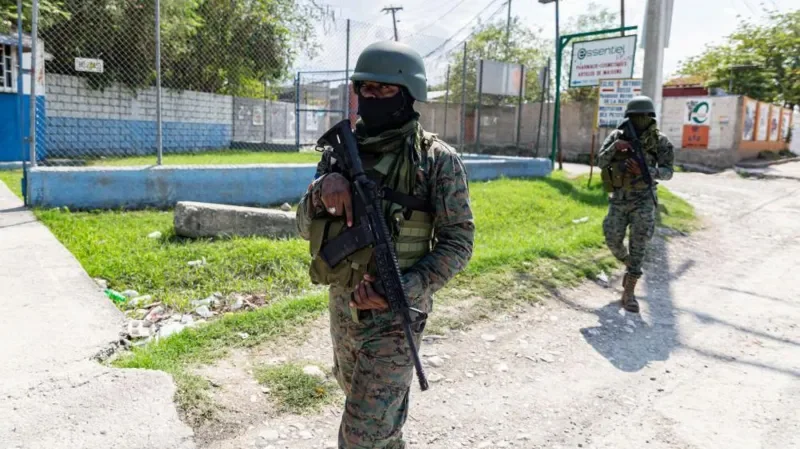
The Haitian authorities have expanded a state of emergency to the whole country as the government battles violent gangs that have taken control of large parts of the capital - and are attempting to move into other regions.
The move comes as the US Secretary of State Antony Blinken prepares to visit the Caribbean nation, where he will meet Prime Minister Garry Conille to discuss “forthcoming steps in Haiti’s democratic transition”.
Mr Conille has been attempting to restore order since the new government was formed three months ago.
Nearly 580,000 people have been internally displaced by conflict, with close to five million facing severe hunger, the United Nations has said.
Mr Blinken's visit comes as more than a million people remain without electricity in the capital Port-au-Prince, after protesters stormed and vandalised a power plant.
The state electricity company said the incident happened on Monday, when a group of people attacked the compound to protest against frequent power cuts in previous days.
The US is the largest funder of a UN-backed security mission aimed at combating gang violence.
In March, armed gangs stormed Haiti’s two biggest prisons, freeing around 3,700 inmates.
The Ouest Department - a region including the nation's capital, Port-au-Prince - was originally put under a state of emergency on 3 March, after escalating violence gripped the capital.
In June and July, a group of 400 Kenyan police officers arrived in Haiti to help combat the violence, the first tranche of a UN-approved international force that will be made up of 2,500 officers from various countries.

Summer Olympics 2024: 10 Of The Most Stylish Uniforms From The Paris Games

Paris has always been the fashion capital of the world, the birthplace of classic trends and designer powerhouses. This year, however, the City of Light is captivating fashion critics for a different reason—the 2024 Summer Olympic Games, taking place from July 26, 2024 to August 11, 2024. This Friday, the Opening Ceremony will once again become a global runway of cultures. From the intricate details that pay homage to cultural heritage and artisanship to the innovative materials that promise both comfort and sustainability, each country's Olympic uniform is an opportunity to put itself on the global fashion map.
Here are 10 countries with the opening ceremony Olympic uniforms that have best managed to balance style, traditional national symbols and colors, sportswear trends and high fashion.
Chinese Taipei
Following the success of his designs for the Tokyo 2020 Olympics, Justin Chou, founder of avant-garde streetwear brand JUST IN XX, is back in 2024 as the official outfitter for team Chinese Taipei, an official Olympic name for Taiwan. The tailored two-piece suits to be worn by the athletes during the Olympic opening ceremony blends sustainability with the crafts of local artisans.

Chou turned the artwork “Mountain Range of Taiwan” by Taiwanese artist Paul Chiang into a beautiful printed fabric for the suits, the blue waves representing the natural beauty of Taiwan’s landscape. Adorning the Olympic opening ceremony looks are lapel pins crafted by flower-weaving artisan Lin Pei-Ying, made up of the Taiwan’s national flowers, the plum and the canola blossoms, serving as a traditional token of good luck for the athletes. Meanwhile, the belt and shoe uppers were made by Artisan Yan Yu-Ying with banana fiber woven fabric, an ancient textile tradition used in Taiwan. Chou also worked with a typography designer Kokia Lin to create a print that through an optical illusion transforms the words “Chinese Taipei” into the words “Cheer On.”
Mongolia
According to the “world’s most ruthless fashion critic” —the social media—this year’s best dressed Olympic team is Mongolia. Label Michel & Amazonka, led by designers Michel Choigaalaa and Amazonka Choigaalaa, caused a stir online when they unveiled the opening ceremony looks on Instagram earlier this month, with fans flooding the comment section with words of praise. “Absolutely stunning. Team Mongolia gets the gold for most incredible uniforms,” wrote one user.

The viral uniforms pay homage to Mongolian culture, with silhouettes inspired by the traditional Mongolian deel, a calf-length tunic. The ivory ensemble features cuffed, billowing sleeves, a pleated skirt, and an embroidered vest, offset by pops of collar in the collar, cuffs and vest. Further nods to Mongolian national symbols can be found in the intricate gold stitching of the vest, showcasing the moon, the sun, and the Gua-Maral, a mythical deer from traditional folklore. According to Michel & Amazonka, each individual uniform took dozens of hours to make–which isn’t surprising given the intricate level of detail.
Haiti
Haiti’s vibrant uniforms were created by Haitian-Italian designer Stella Jean to celebrate Haiti's culture and artisanship while sending a message of hope and renewal in a time marked by the country's political instability.

Jean incorporated the work of local artist Philippe Dodard into the skirt and trousers of the uniform—a bold, colorful print from a painting called “Passage.” For the women, the skirt will be paired with a woven chambray shirt, reflecting the country’s traditional blue-cotton spinning techniques, as well as a belted, sleeveless blazer made from recycled materials. Meanwhile, the men will sport field jackets inspired by the traditional Haitian Guayabera shirt, bearing the Haitian Olympic Emblem.
“I believe that these athletes have already won the most important medal by their very own presence in Paris. The winning category: human sustainability,” said Jean.
Canada
Athleisure giant Lululemon are the masterminds behind Canada’s chic uniforms, blending style and functionality. The brand teamed up with 14 Olympic and Paralympic athletes to ensure the kits meet the needs of the athletes set to compete. And it’s clear designers have listened; every look has a functional purpose to enhance athletic performance. The four-way stretch fabric fosters freedom of movement, while customizable drawcords allow a perfect fit. New pocket shapes and placements provide accessible storage, while SenseKnit technology and sweat-wicking material provide thermal comfort.

That doesn’t mean the brand compromised on style. The red-and-white jacquard bomber jackets are emblazoned with traditional Canadian maple-leaf motifs, reminiscent of edgy street-style pieces you’d spot on a runway. The jackets can be paired with shorts or sweatpants in the same print.
Canada will once again shine at the Olympic opening ceremony as one of the best dressed teams.
USA
When you think of sports, fashion and Americana, only one name comes to mind: Ralph Lauren. This year marks the ninth time in a row that the brand is the official outfitter for Team USA.

The preppy looks are quintessentially American and a classic Ralph Lauren: navy blazers with red and white trimming, striped Oxford shirts, and light-wash denim jeans. And naturally, each blazer features the iconic Olympic logo. Made in the USA, but created with sustainability in mind, using recycled polyester and Oregon-grown Responsible Standard wool from Shaniko Wool Company. “Ralph Lauren has once again created designs that not only capture the essence of American style but also embody the spirit and pride of Team USA,” said Sarah Hirshland, U.S. Olympic & Paralympic Committee CEO.
Sierra Leone
Adidas in collaboration with the London-based fashion label Labrum produced the official Olympic team kit for Sierra Leone. The collection features elements that pay homage to country’s cultural heritage, including windbreakers adorned with a distinctive white and blue print inspired by cowrie shells. Used in commerce as currency before, there unique shells now are often worn as the symbol prestige across many African countries.

Labrum's founder, Foday Dumbuya, has recently received the esteemed Queen Elizabeth II Award for British Design, and with this collection, Labrum and Adidas have created a unified and vibrant visual identity for the Sierra Leone team, one that honors Dumbuya's roots and celebrates the beauty of Sierra Leone culture.
France
The host country of the Summer Olympic Games in Paris will be making a grand entrance, donning custom-tailored tuxedos designed by luxury brand Berluti. “Berluti has brought together the savoir-faire and experience of its artisans to ensure that the French athletes look their very best,” reads an official statement.

Both men and women will sport midnight-blue wool tuxedos with lapels in shades of blue and red, key colors of the French flag. Suit pockets and scarves were created from fabric scraps to prevent waste, while the white shirts were made from cotton-silk blend for luxury and comfort. The expert craftsmanship of each tuxedo underscores the elegance typically associated with French fashion.
Great Britain
British brand Ben Sherman is returning for the third consecutive year to dress Team Great Britain. The opening ceremony uniform consists of a white bomber jacket with navy sleeves and a floral design embroidered on the back. Made up of the rose, thistle, daffodil, and shamrock, the design represents the four nations that make up the United Kingdom, symbolizing their unity and national pride.

The jacket will be paired with a knitted polo featuring a geometric read-and-blue pattern, crafted from an organic cotton blend, as well as oxford trousers with a Union Flag waistband. With a contemporary yet timeless uniform design Team Great Britain will be a stellar team both on and off the Olympic ceremony stage.
The Netherlands
Slouchy, orange tracksuits might be an unexpected choice for the Olympic Opening Ceremony costumes, but Amsterdam-based brand The New Originals gave us a modern nod to the centuries-old Dutch royal color from House of Orange.

The opening ceremony uniform for the Dutch Breaking (break dance) Team is both relaxed and impeccably tailored, featuring white piping detailing and a stiff collar. The tracksuits also come in white and navy, featuring orange piping detailing, a small but powerful homage to the country’s flag. “Ever since we’ve started, our mission was to make ‘performance clothing for creatives,’” wrote the brand on Instagram. They also stated that each tracksuit is unique, slightly altered to fit the distinct styles of each break dancer.
Australia
Australia’s heritage is front and center in the opening ceremony uniforms designed by Sportscraft. Made up of a green blazer with gold buttons, plus green-and-gold ombre skirts for the women and khaki shorts for the men, the country’s national colors are on full display—representing Australia’s beaches, crops, and forests. As a sweet tribute to previous victors, the names of 301 Australian Olympic champions are featured in the lining of each blazer.

Sportscraft also incorporated Indigenous artwork into the looks. The scarf is printed with the work “Walking Together” by Olympic boxer Paul Fleming, while the pocket square features the work “Ngalmun Danalaig” by artist David Bosun.
Where To watch The Summer Olympic Games In Paris Online Or On TV:
Three cheers for fashion, as we prepare to watch the Opening Ceremony for the Summer Olympic Games in Paris this Friday, July 26, 2024. Let us know in the comments which country’s national Olympic uniform stood out the most for you.

- Peacock will livestream every event of the Paris 2024 Olympics, including the opening and closing ceremonies.
- NBC and Telemundo will broadcast sole of the most popular Olympic competitions from 9 a.m. to 6 p.m. ET each day. With additional sports airing on the CNBC, USA Network, E!, and Golf Channel.

Boca Raton swimmer, 14, will represent Haitian heritage at Paris Olympics

By the time she was six years old, Mayah Chouloute was already used to teammates and family chanting her name at swimming pools across South Florida.
But this summer, the 14-year-old from Boca Raton will be cheered from all over the world as she competes at the biggest meet of her life — the Paris Olympics.
Mayah will represent Haiti in the Olympic Games' fastest pool event, the 50-meter freestyle sprint. She told WLRN she is ready to make her family and heritage proud, and introduce her talents to the world stage.
“I think doing that '50 free' will be an opportunity to show how fast I can go in such a short [distance],” she said.
The confident teen, who was born in Palm Beach County to Haitian parents, credits her inspiration to celebrated U.S. athlete Simone Manuel, the first African-American to win a solo gold medal in swimming.
But even she will admit her first Olympic slot came sooner than she expected.
“Let me tell you, it was a big shocker for me. I didn’t think it was going to happen, especially since I’m only 14,” said Mayah, an 8th grader at Boca Raton Middle School.
Her mother, Marjorie Hilaire Chouloute, told WLRN Mayah's quick development in the sport also came as a surprise to the family.
Unbeknownst to Marjorie and her husband, when Mayah was six, she was already practicing her backstroke, breaststroke and butterfly swimming techniques during aftercare swimming classes.
So they were shocked when she told them about an upcoming relay race where she would be taking the butterfly leg.
"I'm like, 'You don't know how to do that! What?' And me and daddy were freaking out," Marjorie said. "And then the relay started and there comes her turn. And I saw her little back coming, flying out," she said. "I had a moment. That's one of the best moments of my life."
Very quickly, a simple hobby turned into Olympic aspirations.
“She wanted to be part of a team. She advocated for that at six-years-old," Marjorie said. “It's really her journey. She started it. She loves swimming. She kind of calls the shot and we're following along.”
Mayah now trains under coach Quinn Cassidy, at Saint Andrews Aquatics in Boca Raton. She flew to Paris this week to prepare for the Olympic Games, which officially open on July 26.
Seven athletes in Haitian delegation

She is one of just seven athletes in the Haitian delegation, selected by the Haitian Amateur Athletic Federation after successfully completing the Olympic standard.
Donning uniforms designed by renowned Haitian-Italian designer Stella Jean and Haitian painter Philippe Dodard, the athletes will compete in five events: judo, boxing, track and field, swimming and artistic gymnastics.
Also joining Team Haiti is Miami-native Emelia Chatfield who attended St. Thomas Aquinas High School in Hollywood. The 22-year-old will be taking part in track and field.
Like Chatfield and Lynnzee Brown, who will be the the first-ever woman gymnast to represent Haiti, Mayah qualified through a Universality Place. These are spots given to Olympic-level athletes to represent countries that have had eight or fewer athletes in the last two Olympics.
Under International Olympic Committee (IOC) rules, after meeting certain criteria, an Olympic athlete is allowed to compete for a country other than the one they were born in.
The Summer Olympic Games in Paris runs July 26 - Aug. 11, hosting more than 10,000 athletes from nearly 200 countries. Mayah Chouloute is set to compete on Aug. 3.

US ambassador announces $60 million in aid and new resources for police during visit to Haiti
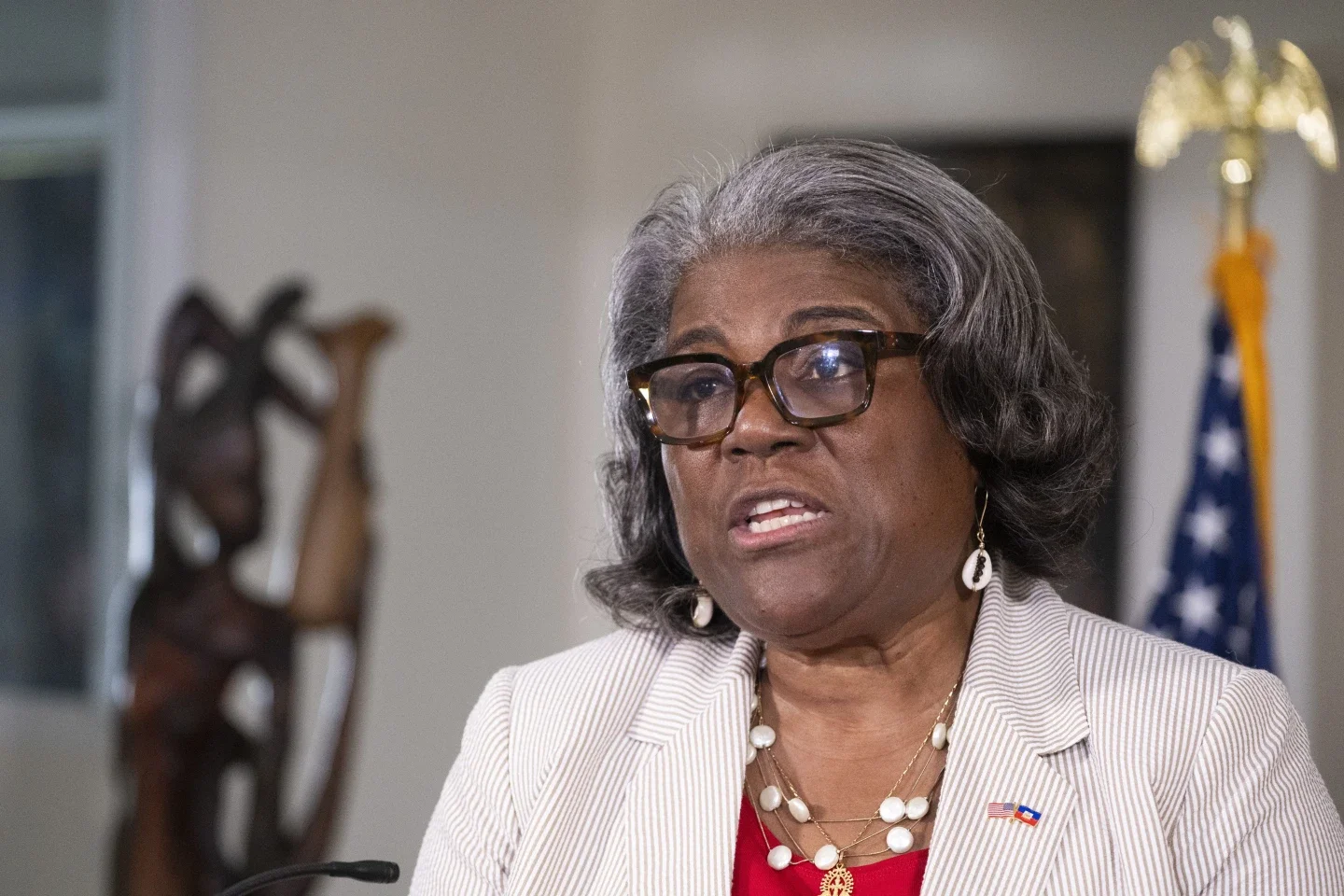
PORT-AU-PRINCE, Haiti (AP) — The U.S. ambassador to the United Nations announced $60 million in additional humanitarian assistance to Haiti during a trip Monday to the troubled Caribbean country.
Ambassador Linda Thomas-Greenfield also said the U.S. Defense Department would provide a “substantial increase” in mine-resistant vehicles to a U.N.-backed, multinational security mission led by Kenya to help Haiti’s national police combat widespread gang violence.
The announcement came nearly a week after a second Kenyan contingent of 200 police officers arrived in Haiti, following the first contingent of 200 officers last month.
“We know that progress isn’t lineal. There will be inevitable setbacks and stumbling blocks, and yet this mission has opened a door to progress,” Thomas-Greenfield said.
She said the USAID assistance, which now totals more than $165 million this fiscal year, would fill gaps in nutrition, food security and shelter; improve water and sanitation services; and provide Haitians with cash to buy basic goods.
Earlier Monday, Thomas-Greenfield met with Kenyan police and leaders of Haiti’s new transitional government as part of a one-day visit to encourage action on Haiti’s humanitarian crisis and political reform leading to democratic elections that have yet to be scheduled.
“This isn’t a naïve sense of hope, but I do have a sense of hope. This has been a remarkable day on the ground,” she said.
There has been wide international support for the new transitional government led by Prime Minister Garry Conille, a former U.N. development specialist who assumed the post in early June. Earlier this month, he told the U.N. Security Council that the Kenyan police will be crucial to helping control the country’s gangs and moving toward democratic elections.
Gangs have grown in power since the July 7, 2021, assassination of President Jovenel Moïse and are now estimated to control up to 80% of the capital and surrounding areas. A surge in killings, rapes and kidnappings has led to a violent uprising by civilian vigilante groups.
According to U.N. agencies, the violence has displaced 580,000 people, more than half of whom are children, and resulted in 4 million people facing food insecurity.
Haiti had asked for the immediate deployment of a foreign armed force to fight gangs in late 2022, and U.N. Secretary-General Antonio Guterres appealed for months for a country to lead the force before the Kenyans came forward.
The multinational force will eventually total 2,500 personnel from Kenya, the Bahamas, Bangladesh, Barbados, Benin, Chad and Jamaica. They will be deployed in phases at a cost of some $600 million a year, according to the U.N. Security Council.
The U.S. has provided over $300 million to the force, whose formation was supported by a U.N. resolution.
The Kenyan police will train the Haitian national police for joint security operations that have not yet begun, the official said.

US judge sentences Germine Joly, former leader of a powerful gang in Haiti, to 35 years in prison

SAN JUAN, Puerto Rico (AP) — A man who once described himself as “king” of a notoriously violent gang in Haiti and is linked to the kidnapping of 16 U.S. citizens was sentenced to 35 years in prison Monday in a federal court in Washington, D.C.
Germine Joly, best known as “Yonyon,” had pleaded guilty in late January to weapons smuggling and the laundering of ransoms related to the U.S. citizens kidnapped in October 2021, bringing his trial to a halt.
The case against Joly is part of an ongoing push by U.S. authorities to stem the smuggling of weapons from the U.S. to Haiti, where gangs control 80% of the capital and have left more than 580,000 people homeless as they continue to pillage neighborhoods in a quest to seize more territory. U.S. officials also are trying to crack down on the kidnapping of U.S. citizens in Haiti, whose ransoms finance the purchase of illegal arms and ammunition.
“The leaders of violent gangs in Haiti that terrorize Americans citizens in order to fuel their criminal activity will be met with the full force of the Justice Department,” U.S. Attorney General Merrick B. Garland said in a statement.
Joly, 31, had asked the judge for leniency and forgiveness, with his attorneys requesting that he receive no more than 17.5 years in prison. The attorneys did not immediately return messages for comment.
Joly was co-leader of the 400 Mawozo, which translates roughly to “400 Simpletons,” one of Haiti’s most powerful gangs. It controls part of Croix-des-Bouquets, a neighborhood in the eastern region of the Port-au-Prince capital and surrounding areas. It also operates along a route that connects the capital with the border city of Jimaní in the Dominican Republic, which shares the island of Hispaniola with Haiti.
The gang is known for its high record of kidnappings as well as trafficking of drugs and weapons, killings, rapes and armed robberies, among other things, according to a U.N. report.
“The 400 Mawazo gang not only wreaks havoc in its own communities but targets innocent Americans living and traveling in Haiti,” FBI Director Christopher Wray said in a statement.
Three shipments containing smuggled weapons and ammunition arrived in Haiti in 2021, shortly before the gang kidnapped 17 missionaries, including 16 U.S. citizens, the U.N. report noted. The weapons alone were estimated to cost roughly $28,000, it added.
“This single case indicates that 400 Mawozo is able to mobilize significant amounts of money to acquire firearms and ammunition,” the report stated.
The gang is still led by Joseph Wilson, best known as “Lanmò San Jou,” which means “Death has no date,” and it is an ally of G-Pep, a powerful gang federation.
Haitian authorities announced a warrant for Wilson in late 2020, but he has yet to be detained.
Meanwhile, Haitian police arrested Joly in 2014, and in 2018, a local judge sentenced him to life in prison, from where authorities said he still directed gang operations, including the October 2021 kidnapping of 12 adults and five minors after they visited an orphanage in the Croix-des-Bouquets area. The group included 16 Americans and one Canadian who worked with Ohio-based Christian Aid Ministries.
The organization said 12 of the captive missionaries escaped, with five others previously freed, although it’s unclear if any ransom was paid.
In 2022, the U.S. government extradited Joly.
Joly’s former girlfriend, Eliande Tunis of Pompano Beach, Florida, had been sentenced earlier this month to 12.5 years in prison. Tunis, 46, had pleaded guilty in late January to the same charges Joly faced.
U.S. federal prosecutors had accused Joly, Tunis and two other suspects of buying and supplying weapons to the 400 Mawozo gang from at least March through November 2021. The weapons included those designed for “military and close-quarters combat” such as AK-47s, AR-15s and a .50 caliber rifle, according to the U.S. Justice Department.
The agency said that Joly, who was in prison in Haiti at the time, directed operations using unmonitored cell phones. He still faces separate charges in another case related to the kidnappings of the U.S. citizens.

Haiti receives first Kenyan officers to battle gang violence
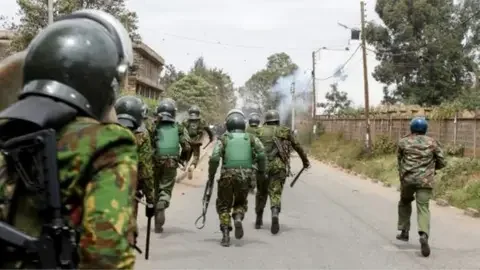
African country will lead coalition aiming to bolster police force overwhelmed by fierce fighting in the Caribbean nation.
The first planeload of Kenyan police officers landed in Haiti on Tuesday morning, marking the beginning of a long-stalled international task force intended to wrest control of the Caribbean country from violent gangs. Kenya had volunteered to lead the UN-authorised operation, known as the Multinational Security Support Mission in Haiti last July, with 1,000 officers. But the rollout was delayed by legal obstacles in the east African nation amid political and humanitarian crises in Haiti. Dozens of officers, carrying rifles and wearing military fatigues, disembarked from a Kenya Airlines jet on the tarmac of the country’s main international airport in Port-au-Prince, according to videos shared by witnesses. On Monday, Kenyan President William Ruto had addressed the 400 departing officers in Nairobi. “Our police officers’ presence in Haiti will give relief to the men, women and children whose lives have been broken by gang violence. We will work with the international community to bring lasting stability in Haiti,” Ruto said. Haiti’s national police force, with approximately 9,000 officers, has struggled to contain about 200 gangs that have grown in power since the assassination of President Jovenel Moïse in July 2021. Gang violence led to the collapse in April of the interim government of Ariel Henry. He was replaced by a transitional presidential council tasked with convening Haiti’s first elections since 2016. Amid the escalating violence, Haiti’s displaced population jumped 60 per cent between March and June, from 360,000 to 580,000, according to the UN. Hospitals have been forced to close due to gang activity, while schools are being used as shelters for refugees. Gangs are estimated to control more than 80 per cent of the capital, Port-au-Prince. The much-anticipated Kenya-led mission is expected to bolster Haiti’s outmatched police force with about 2,500 additional officers, with Caribbean and African nations, including Barbados, Jamaica and Chad, as well as Bangladesh, agreeing to provide personnel. The US state department welcomed news of the deployment at a briefing on Monday. “With the arrival of MSS mission personnel, we hope to see further measurable improvements in security, particularly with respect to access to humanitarian aid and core economic activity,” said state department spokesman Matthew Miller. Ruto is one of the US’s staunchest allies in Africa. Washington is the main backer of the Haiti mission, pledging about $300mn in support, though it has stopped short of sending troops. The deployment had faced legal challenges, and Kenya’s high court blocked it in January. But Ruto managed to push it through after signing a bilateral agreement with Haitian officials in Port-au-Prince in March.
Last month, Ruto — recalling Africa’s ties with Haiti, which is part of the African Union diaspora region — told the FT his country’s forces “have requisite experience to deal with this”, having been part of more than 40 peacekeeping missions, including neighbouring Somalia, the Democratic Republic of Congo and the former Yugoslavia. The deployment to Haiti comes amid turmoil in Kenya, where several people were killed and injured by police gunfire on Tuesday during anti-tax protests, as demonstrators stormed the country’s parliament. Analysts and diplomats say the mission in Haiti is risky. Previous interventions in the country have done little to prevent the resurgence of violence, especially after the 2010 earthquake which devastated the capital. “Everyone knows that in the international co-operation world, people like to repeat what was done before, no matter how bad it was, because it’s convenient,” said Emmanuela Douyon, who runs the Haitian think-tank Policité.

'She's the American Dream': Haiti earthquake survivor becomes East Bridgewater track star

EAST BRIDGEWATER — Sasha Feron says the first-hand memories are fuzzy. She was only 4 years old when her life was met at a crossroads.
But the date January 12, and where she was, are the pinpoint details she clings on to from when the catastrophic Haiti earthquake struck her hometown in 2010.
“I feel like I remember bits and pieces, but I was a kid and didn’t really know what was happening," Feron said. "The building we were in collapsed on us."
Feron recalls a random man from off the street rescuing her and her cousins from the debris. Her family immigrated to the United States later the same year.
All of this time later, Feron stands in a spot she couldn't have ever envisioned: set to graduate from East Bridgewater High as a track and field record-holder and Wentworth Institute of Technology commit.
"She’s the American Dream," said East Bridgewater's shot put/discus coach Jen Dias.
Feron's family followed her uncle, Fender Pierre, to Massachusetts in 2010 as he pursued a college degree from UMass Dartmouth. Together, they lived in an apartment in Brockton and, as time went on, Feron took care of her two infant siblings as her mother, Roseline Pierre, took on a rigorous, round-the-clock work schedule at South Shore Hospital in Weymouth.
Feron learned to change diapers as a student at Davis Middle School. Playing sports, meanwhile, wasn't a focus; not even as she went off to Brockton High as a freshman.
But when Feron transferred to East Bridgewater High as an incoming sophomore, it was the civics teacher Dias who saw a potential shot-put talent in Feron, who took inspiration from her mother's work ethic to dream of pursuing a college career.
"We’re thankful she’s here," Dias said. "I think (the tragedy in Haiti) made her the person who she is today. It’s built her character and integrity. The fact she’s overcome adversity -- as a student-athlete, she’s the role model of what we want to see. The whole package. Top to bottom.”
Feron, a multi-time South Shore League All-Star thrower, broke the school's shot put record with a 35'11" fling against Middleboro on April 9. The previous high mark of 35'7.5" was set in 1996 by Dias, who proudly urges that "Records are meant to be broken."
Feron recorded a 21’4" at the first meet of her career as a sophomore two years ago. Not satisfied, she prioritized weight-lifting every day after school starting her junior year, on top of juggling an honor-roll academic course load, multiple AP classes, playing varsity volleyball and singing at the Haitian Assembly of God in Brockton three times per week.
That's quite the hectic schedule.
“Yeah," Feron said, chuckling. "Very.”
A senior captain, Feron proceeded to finish her final indoor season unbeaten in dual meets with a fifth-place standing at Division 5 states (31-10.75). She set a winter-season school record of 35', a figure that stood atop the school's charts since the early 2000's according to Eaton, who has been involved with the program for 19 years, the last 13 as head coach.
“From Day 1, she’s gotten better and better,” Dias said. “She’s a leader. She’s spunky. You can tell, she’s feisty. She’s confident, super smart and super bright.”
Feron carries a 3.89 GPA and will major in biomedical engineering at Wentworth with hopes of potentially returning to Haiti one day to work in the disease control or prosthetics industries. She hasn't visited her home country since moving to the U.S.
“She just sets goals and goes to get them," EB head track coach Ryan Eaton said. "I’ll run into her in 10 years and she’ll have some awesome job doing what she loves to do. She’s that type of person."
Dias says Feron has "the package to excel" competing at the Division 3 collegiate level due to her strength throwing the shot put in a more stationary power position. Less strong throwers tend to move or glide to generate power, Dias said.
Feron entered the Division 5 state meet weekend ranked No. 2 in the state, behind Martha's Vineyard junior Madison Mello.
“Her competitive edge, maybe as a sophomore, wasn’t there. As a junior, it was ‘Hey, I’m kinda good at this,'" Dias said. "Now, it’s, ‘These are my events.’ It’s changed. That spark is now a fire.”
“People are always going to be talking about her records because we like doing that in sports, but her attitude is the big thing to me," Eaton said. "Win or lose, record or no record, I’ll remember that kid for a long time because of how she is.”

Hundreds mourn gang killings of a Haitian mission director and a young American couple
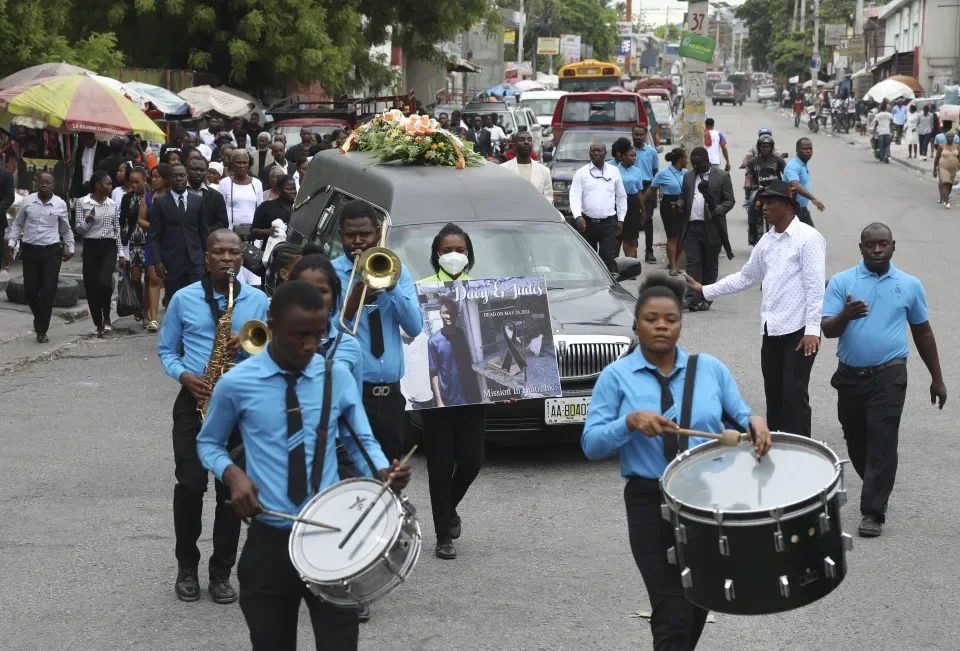
PORT-AU-PRINCE, Haiti (AP) — Hundreds of people packed into a sweltering church in Haiti's capital on Tuesday to mourn Judes Montis, a mission director killed by gang members who also fatally shot an American couple that worked with him.
Wails filled the crowded church during the early morning service as tears streamed down the face of Montis’ wife. The service also honored the lives of Davy and Natalie Lloyd, a married couple in their early 20s who were with Montis when gunmen ambushed them on Thursday night as they left a youth group activity held at a local church.
Montis, 47, leaves behind a wife, two children, ages 2 and 6, and a brother who was present the night that the killings occurred.
“We’ll never forget you or the path you created for others!” cried out one mourner as the crowd dressed in black and white made its way from the church to the cemetery.
The service was held just days after the three were killed in a gang-controlled area in a northern part of Port-au-Prince where Montis worked as the local director of the Oklahoma-based Missions in Haiti, a religious organization founded by David and Alicia Lloyd, Davy Lloyd’s parents.
“We are facing the most difficult time of our life,” Missions in Haiti said in a recent Facebook post. “Thank you for all your prayers and support.”
Montis’ brother, Esuaue Montis, a 43-year-old Spanish teacher with the mission, told The Associated Press that he was nearby during the shootings. He said that he saw the gunmen arrive and he used a truck to block the gate before he started running with several orphans and employees in tow.
The group got separated, and when Esuaue Montis jumped over one wall, he encountered a group of armed men. They pushed him to the ground and stepped on him as one gunman asked people in the area if they recognized him while another said, “He works at the orphanage. Kill him.”
In that moment, his phone rang. It was a friend whom he had called earlier in a frenzy to tell him about the situation.
“This call is going to save you or going to kill you,” he recalled one gunman telling him as he ordered Montis to answer the phone.
His friend lied and told the men that Esuaue Montis didn't work at the orphanage.
“He gave me back the phone and left,” Montis said of the gunman.
He hasn't returned to the organization’s school where he worked and is now looking to flee Haiti.
“How will I be able to continue working in the orphanage, not seeing Jude next to me?” Esuaue Montis said between tears. “My brother checked on me all the time. If I went out in the afternoon, he would call and say, ‘Brother, where are you?’”
Montis said the mission had never been threatened before, adding that gang members in the area had only asked for small handouts on occasion.
While Jude Montis was buried in Port-au-Prince, Missions in Haiti said that the U.S. Embassy is working on obtaining the documents needed for the bodies of the Lloyds to be flown to the U.S., adding that it has relocated its staff and others to a safer location.
A Facebook post from Cassidy Anderson, a spokesperson for the family, on Tuesday stated that “transport has been completely secured,” but that no information would be released because of security concerns.
Natalie Lloyd, 21, is the daughter of Missouri state Rep. Ben Baker. He wrote on Facebook that he spoke by phone Monday with former U.S. President Donald Trump, who called to express his condolences.
“He mentioned how sorry he was that this evil happened to our kids and how beautiful their devotion was to their calling and to the people of Haiti,” Baker wrote.
In a recent interview with the AP, Davy Lloyd’s sister, Hannah Cornett, recalled how they grew up in Haiti because their parents are full-time missionaries, and that her brother learned Creole before he spoke English.
She said her parents run an orphanage, school and church in Haiti, and that she and her brothers grew up with the orphans.
Cornett said that the night of the killings, three vehicles carrying gang members had stopped the Lloyds and Montis, hitting her 23-year-old brother with the barrel of a gun and tying him up at his home as they stole their belongings. As people helped untie Davy Lloyd, another group of gunmen appeared and an unidentified person got shot, she said.
The gunmen then opened fire as the Lloyds and Montis tried to take cover in the house where her parents live, she said, adding that their bodies were set on fire.
Haiti’s National Police condemned the killings in a rare statement, and extended its condolences to the families of the victims, vowing to arrest those responsible.
However, it’s rare for Haitian gangs involved in high-profile kidnappings or killings to be arrested, since the police department is chronically under-resourced and understaffed. Gangs control at least 80% of Haiti’s capital, and violence continues unabated as the country awaits the U.N.-backed deployment of a Kenyan police force that once again has been delayed.
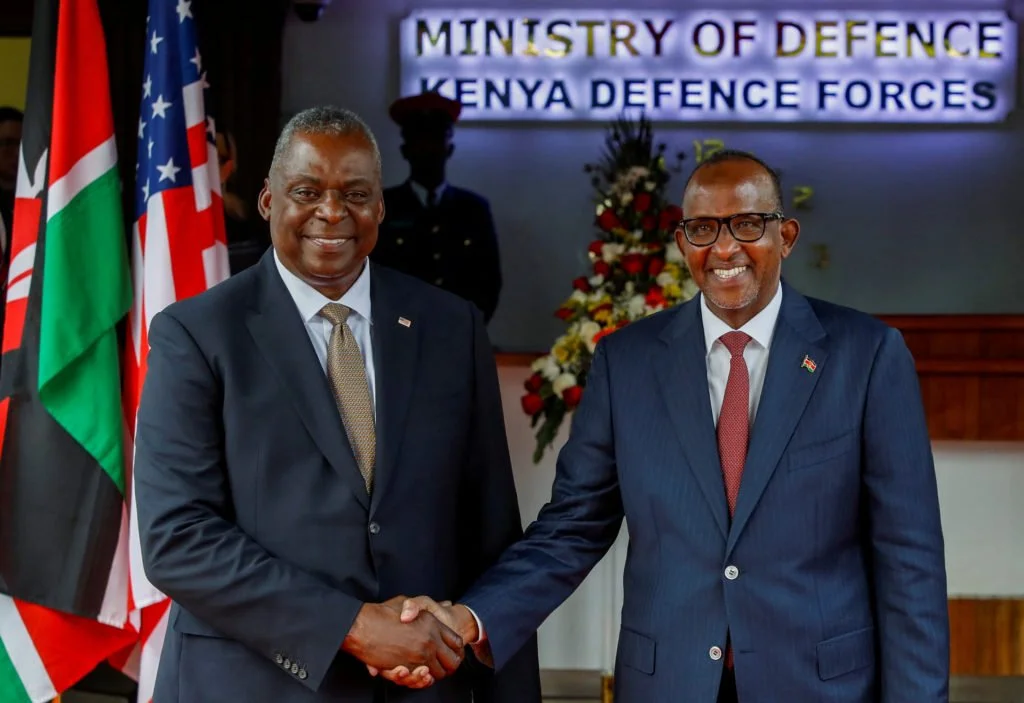
Kenyan special forces police to arrive in Haiti to help combat gang violence
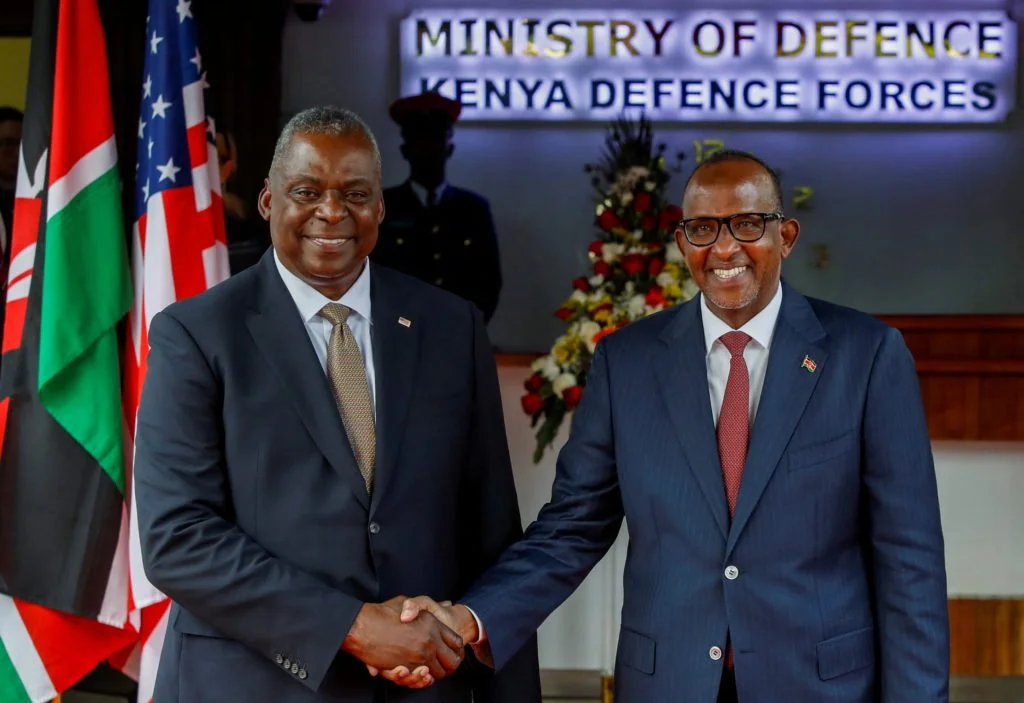
An advance group of Kenyan officers, part of a larger UN-backed ‘support mission’ to stabilize Haiti, landed in Port-au-Prince.
Kenyan special forces police who have spent time battling al-Shabaab fighters in east Africa are expected to arrive in Haiti in the coming days, as the US secretary of state, Antony Blinken, warned the Caribbean country was “on the precipice of becoming an all-out failed state”.
A small advance group of Kenyan officers – part of a larger UN-backed “multinational security support mission” designed to stabilize Haiti after months of mayhem – landed in the capital, Port-au-Prince, late on Monday as the city’s airport reopened nearly three months after a gang uprising forced it to close.
Kenyan media reports said another 200 officers were due to arrive later this week with their deployment coinciding with a state visit the country’s president, William Ruto, is making to the US. A total of about 1,000 Kenyan agents are expected to join the mission, as well as officers from Chile, Jamaica, Grenada, Paraguay, Burundi, Chad, Nigeria and Mauritius.
A senior official from Kenya’s interior ministry told the Geneva-based civil society group Global Initiative Against Transnational Organized Crime that “the first boots [would] hit the ground” in the coming days. “This time we are serious,” the official was quoted as saying.
Appearing in Washington DC before the Senate foreign affairs committee on Tuesday, Blinken claimed there was an “opportunity now” to achieve enduring stability after decades of turmoil.
Blinken said the reopening of Haiti’s main international airport was a clear sign of progress and anticipated US carriers would resume flights there “in the days ahead”.
The first Kenyan officers to arrive will reportedly come from an elite paramilitary unit called the recce squad, the rapid deployment force and members of a police special operation group who have spent time fighting Islamist insurgents on Kenya’s eastern border with Somalia. “They are no strangers to violent armed actors,” reported the Global Initiative Against Transnational Organized Crime.
Some observers have welcomed the long-delayed deployment as a major step towards bringing peace to a country that has lurched deeper into violence since the 2021 assassination of its then president, Jovenel Moïse. Blinken said US support for the multinational mission was critical to restore order and reduce the power of the gangs.
In a recent interview, the UN’s top expert on human rights in Haiti, William O’Neill, said he hoped many of the young gang combatants who have been sowing terror in Port-au-Prince would stand down once a superior fighting force arrived. “A lot of them are teenagers. You’re talking about 15-year-olds, 16-year-olds – and there’s no ideology. It’s not like the Taliban or al-Shabaab,” O’Neill said.
Top gang leaders might resist but their poorly trained foot soldiers were unlikely to resist, O’Neill predicted: “They’re not gonna commit suicide defending the turf. They’re gonna drop the gun and run … The one thing the gangs respect is a bigger force.”
But others are doubtful that yet another foreign intervention will bring lasting peace and point to a succession of botched operations in the century since US president Woodrow Wilson sent in the marines after the 1915 assassination of the Haitian president Jean Vilbrun Guillaume Sam. The most recent such intervention was the 2004-2017 UN stabilization force Minustah.
The Brazil-led mission initially wrested back control from armed groups that hold sway in many of Haiti’s impoverished seaside slums but UN troops later became embroiled in accusations of human rights violations, sexual abuse and importing a devastating cholera outbreak.
Blinken said he understood why some in Congress had concerns about the mission in Haiti, but said US aid was critical and urged Republican leaders to lift their holds on the funding.
“I know some people have concerns about the United States being the ‘policeman of the world’. Well, here’s a situation where Kenya and a number of other countries have stepped up and are willing to take this on but they need support,” he added.
Members of Haiti’s embattled national police force voice frustration that the resources being used to bankroll the latest security mission are not being used to bolster their own perilous efforts to reclaim the 80% of the capital now controlled by gangs.
“Buy ammunition, give us helmets … give us assistance. We can do it,” one police officer said in a recent interview with the Guardian, noting that the Haitian national police didn’t have a single helicopter.
In Kenya, opposition politicians have also attacked sending the country’s police officers into such a dangerous situation. “This mission is a death trap,” Millie Odhiambo told the New York Times.

Haiti’s main airport reopens nearly 3 months after gang violence forced it closed
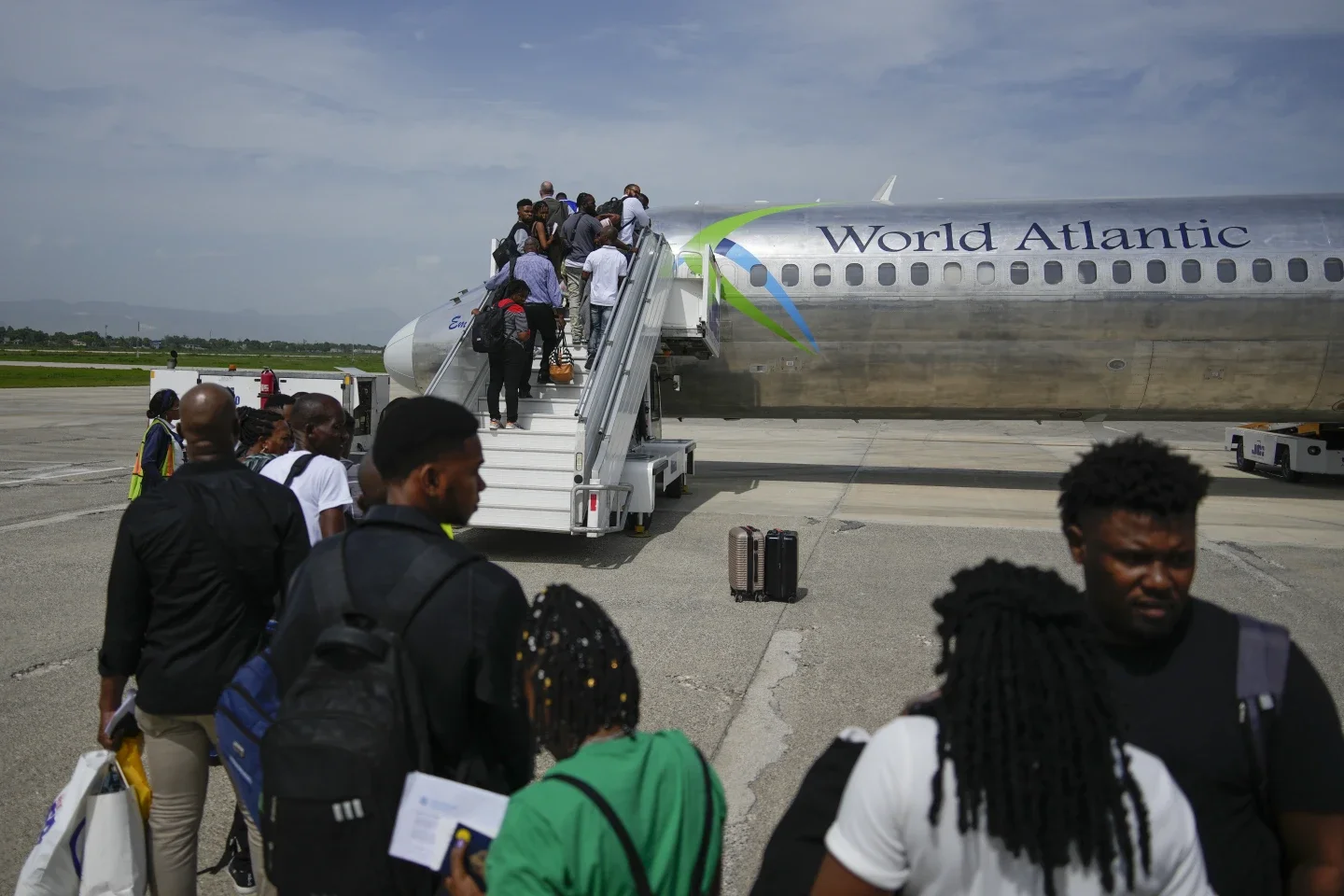
PORT-AU-PRINCE, Haiti (AP) — Haiti’s main international airport reopened Monday for the first time in nearly three months after relentless gang violence forced authorities to close it.
The reopening of the Toussaint-Louverture airport in the capital of Port-au-Prince is expected to help ease a critical shortage of medications and other basic supplies. The country’s main seaport remains paralyzed. Gangs control 80% of the capital.
U.S.-based airlines are not expected to start using the airport until late May or early June.
The first commercial passenger flight since March left for Miami nearly two hours behind schedule, with sweating passengers complaining about the lack of air conditioning until takeoff. Although the flight was organized by local carrier Sunrise Airways, it contracted Florida-based charter airline World Atlantic, which distributed paper towels to drenched passengers.
As the plane hurtled down the runway and took off, one passenger said in a soft voice, “Yes. Yes.”
Before Monday, the sole airport operating in Haiti was located in the north coastal city of Cap-Haitien. It was out of reach for many seeking to flee the country, with roads leading from Port-au-Prince controlled by gangs that have opened fire on cars and buses passing through.
The U.S. government had evacuated hundreds of citizens by helicopter out of a hilly neighborhood in Port-au-Prince, as did nonprofit organizations, as gangs laid siege to parts of the capital.
The attacks began on Feb. 29, with gunmen seizing control of police stations, opening fire on the Port-au-Prince airport and storming Haiti’s two biggest prisons, freeing more than 4,000 inmates.
Gangs since then have directed their attacks on previously peaceful communities, leaving thousands homeless.
More than 2,500 people have been killed or injured in Haiti from January to March, a more than 50% increase compared to the same period last year, according to the United Nations.
At the Couronne Bar near the sole airport gate operating on Monday, 43-year-old manager Klav-Dja Raphael welcomed her first clients. But her smile belied her fear.
“We are scared because they can still attack us here,” she said. “We must come in. It’s our job, but we’re afraid.” She recalled how bullets ricocheted through the airport the day it was attacked.
While the airport provided workers at that bar a month’s wages, she was left unemployed for the rest of the time, relying on friends and family. She is anxious to join her 13-year-old son who lives in Florida with his father.
Other workers, including those at immigration, were all smiles, content to be finally back at work. “That was a long vacation!” one immigration agent said.
Dozens of people lined up hours before the flight.
“I’m very happy, but it hurts that I’m leaving my husband and my son,” said Darling Antoine as her eyes began to water.
She received a visa allowing her to live in the U.S., but the rest of her family is still waiting. They applied because gangs kept encroaching on their neighborhood. “There are heavy gunshots every day,” she said. “Sometimes we have to hide under the bed.”
Jean Doovenskey, a 31-year-old accountant, left unemployed by the violence, said he was notified in early April that he was authorized to live in the U.S. He will live with his aunt in Florida but hopes to return to Haiti one day and live. “I believe in a new Haiti,” he said.
The attack on the airport also left former Prime Minister Ariel Henry locked out of Haiti since he was on an official trip to Kenya. He has since resigned, and a transitional presidential council is seeking a new prime minister. It is also tasked with selecting a new Cabinet and organizing general elections.
In recent weeks, U.S. military planes have landed at the Port-au-Prince airport with supplies as well as civilian contractors to help Haiti prepare for the arrival of foreign forces expected to help quell the gang violence.
On Sunday, Kenya’s foreign affairs principal secretary, Korir Sing’oei, said a plan to deploy police officers from the East African country was in final stages.
“I can tell you for sure that deployment will happen in the next few days, few weeks,” he said.
In March, Kenya and Haiti signed agreements to try to salvage a plan for the country to deploy 1,000 police officers to the troubled Caribbean nation. Other countries expected to back up Kenyan forces include the Bahamas, Barbados, Benin, Chad and Bangladesh. It wasn’t immediately clear when those would arrive.