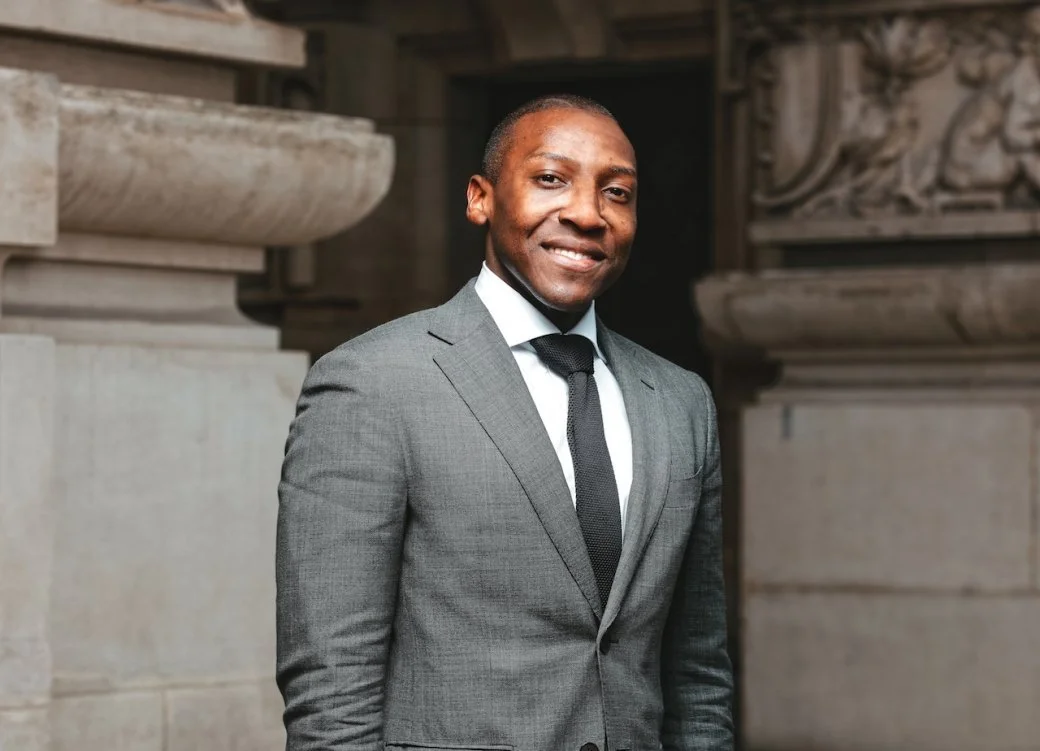
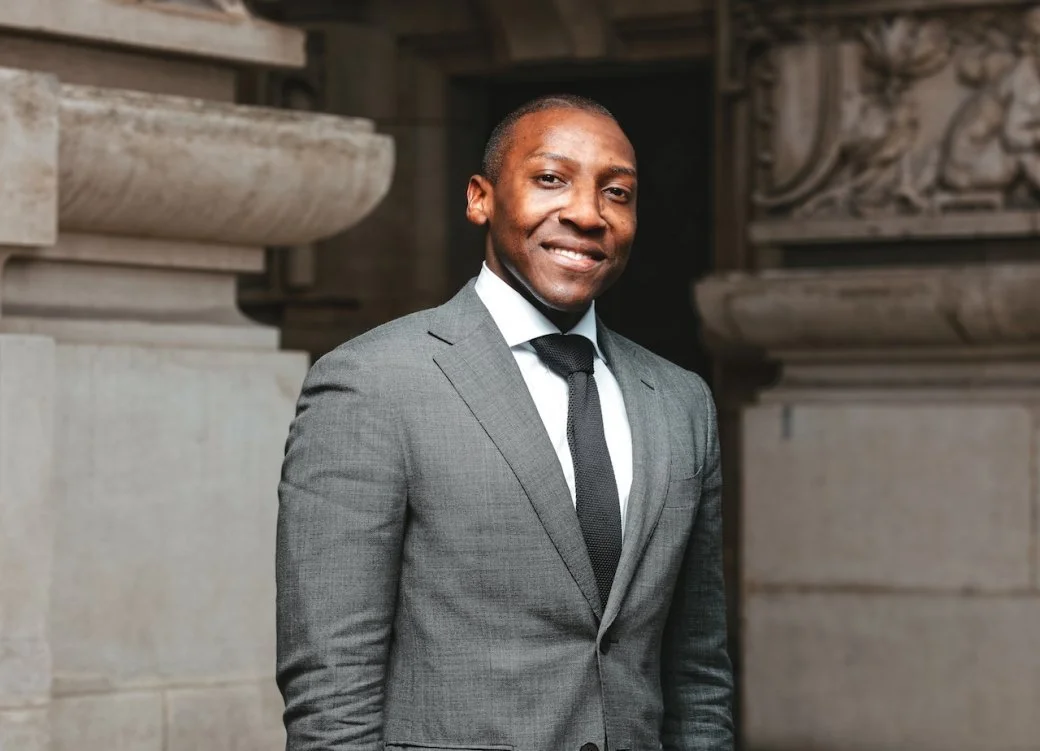
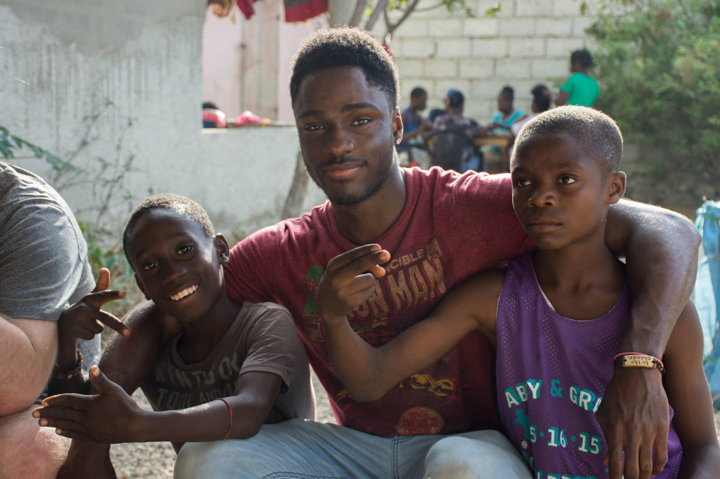
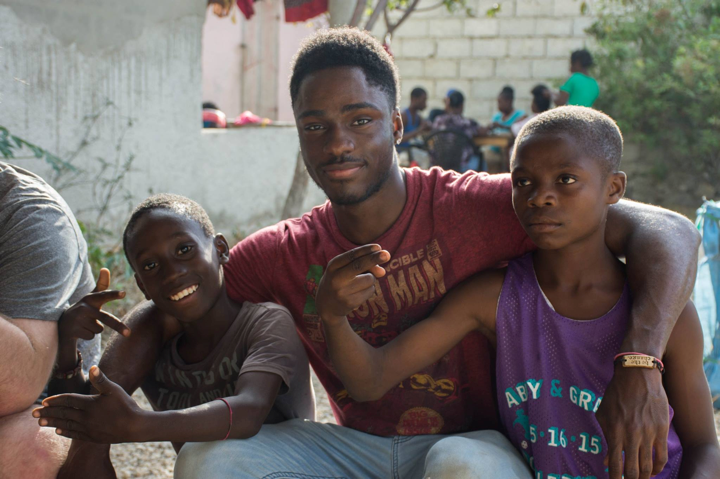
Wesley Laîné MAIPS ’14 has spoken at the Clinton Global Initiative, delivered the graduation speech at the Sciences Po Law School in Paris, and appeared on the front page of the New York Times with his classmates when he participated in Harvard’s first commencement for black graduate students. But if you are to ask him what place or moment in his life matters most, he will always return to his native Haiti.
In the fall of 2012, a student turned a class exercise about a love triangle and alligators into a passionate but playful debate on the morals of intervention and neutrality. The student was Wesley Laîné, and it was his very first day at the Institute; the exercise was a part of new student orientation. Despite the weighty direction of the conversation, the debate never got hostile or contentious, but felt meaningful and open.Laîné lived in Port-au-Prince, Haiti, until he was 12 years old and his family moved to Oklahoma City. His father, a minister who had put himself through law school in the evenings, had deep ties in the community, and the family decision to leave was not an easy one. “He bet on us,” Laîné says. “Like most parents in Haiti, my parents dreamed their kids would have it better than they did.” He says that his family had “crawled” its way to the middle class by the time they left, but violence was increasing, and going to school was a daily struggle, if there was school at all, because of frequent strikes. In many ways, he says, it was the typical immigrant story once they got to the United States: his dad worked lots of odd jobs to make ends meet and made ambitious plans for the children to get quality educations and make better lives for themselves. “My dad worked so much I used to hide his shoes so he wouldn’t have to go.”
Like most parents in Haiti, my parents dreamed their kids would have it better than they did.
Returning to Haiti after the devastating earthquake in 2010, Laîné worked there for two years before enrolling at the Institute. His foundation, Haiti Philanthropy, became heavily involved with clean water projects in the Southeast Department of Haiti as a response to the outbreak of cholera brought by UN peacekeepers from Nepal. The foundation has expanded to include a rainwater harvesting reservoir and projects to help women and children. Last summer he visited many villages where the foundation serves beneficiaries and spent time “bearing witness to the daily struggles.” He adds: “Anyone who aspires to political work has to be aware of what life is really like. It is so easy to get out of touch with what is happening on the ground.”He credits his love of history, politics, and historical figures such as James Baldwin for inspiring him to go to Paris through Middlebury Schools Abroad while he was a student at the Institute. Like the author, he felt the City of Light offered him the chance to “just be a person, anonymous. There is a degree of liberation in anonymity that I craved during this part of my journey.” In the U.S. most of the time, he says, the daily injustices that American society levies on black citizens does not allow for that. “The U.S. is also my home, and I love it, which is why I have strong feelings about the current state of American society. The sad fact is that many of the things Baldwin talked about are still true today.” He particularly hates when people use him as an example in order to turn a blind eye to the systemic injustice that exists today. “In many ways, I am the exception. I feel very fortunate. America’s promises are not available to everyone. If two or three things had gone differently, I would not be here. Many of my friends are stalked by the justice system.”
The U.S. is also my home, and I love it, which is why I have strong feelings about the current state of American society.
Laine lives in Paris now, where he is a lawyer with a top firm. The distance between his home and Oklahoma City, where his family still lives, can seem great, both literally (4,820 miles) and figuratively, the distance traveled reflected in his achievements. Laîné earned two law degrees; his classmates at Sciences Po elected him to give the commencement address, and he was part of the inaugural black commencement at Harvard.“It was truly an affirmation of everything we and our families had gone through to help us get there.” He feels strongly that the only way forward is to face the past.He says that every action, degree, career choice he takes is to lay the groundwork for a political career in Haiti, where he wants to shepherd transformative change for the impoverished country. All of the character traits that served him well that first day at the Institute—a quick wit, nimble intellect, and warm demeanor—are sure to be an asset to him as a politician promoting progress. “Like all Haitian parents, mine are strict and hard to please,” Laîné says with a chuckle, “but this visit my dad told me that I would probably accomplish what I want to do in Haiti.”
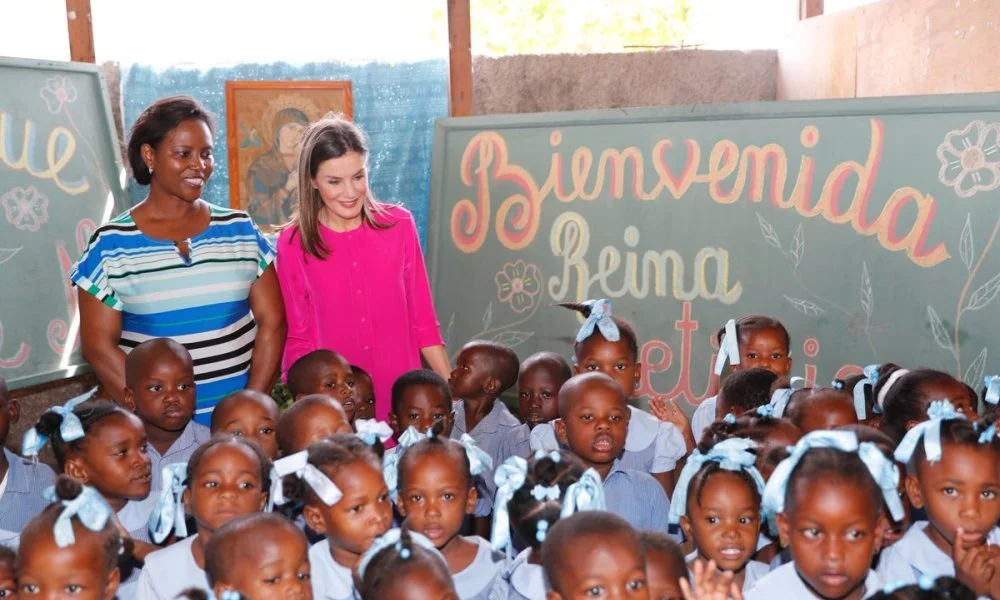
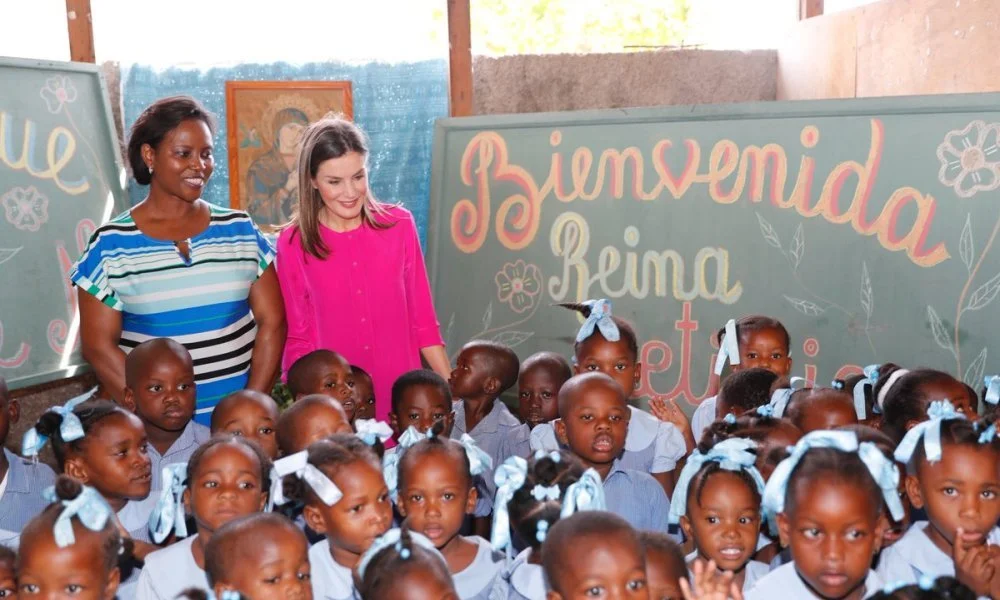
She first travelled to the Cité Soleil neighbourhood where she visited the Educational Centre of the Sisters of St. Vincent de Paul, in which Spanish Co-operation is financing several projects and, in particular, one on the sanitation of the complex.
Afterwards, Queen Letizia was received by the President and the First Lady of Haiti to have an official lunch at the Presidential Palace. The First Lady and the Queen then visited the National Museum of the Haitian Pantheon where the Queen of Spain held a meeting with a group of prominent Haitian women, to learn about the situation of women in that country.
At the Liceo Alexandre Petion, Queen Letizia attended a meeting with students and Spanish teachers, who will perform various performances before the Spanish delegation. This was the last event of the trip as the Queen then departed from Port-Au-Prince to travel back to Madrid.
Haiti is considered as Country of Association by the Spanish Co-operation. The Spanish Co-operation in Haiti focuses mostly on water, sanitation, and education. In addition to these, other essential intervention sectors have been established that have a large volume of funds: Economic Growth for the reduction of poverty, Rural Development and Fight against hunger, Environment, Democratic Governance and Culture, and Development. The Spanish Co-operation has concentrated its interventions in the capital, Port-au-Prince, and in the southeast of the country, especially in the city of Jacmel. During her co-operation trip, Queen Letizia had the opportunity to learn about all of the Spanish Co-operation’s work in both the Dominican Republic and Haiti.This was Queen Letizia’s third co-operation trip since becoming Queen in June 2014. Before that, Queen Sofía was the one taking part in those cooperation trip.By: Heaven Leemiller for Royalcentral.co.uk | May 24, 2018
Haitian Heritage Month is not only a celebration of Haitian culture, it also has great historical significance based on the inherited traditions that have been passed on from generation to generation since Haiti's independence in 1804.Over the past few years, Haitians in New York, Florida, Boston, Philadelphia, and New Jersey have celebrated Haitian Heritage Month proudly with parades, conferences, festivals, exhibits, book fairs and the like. It’s a pride-filled month that carries out exciting events within the Haitian community and brings memorable souvenirs, including patriotic songs and the recollection of the history behind the creation of the Haitian Flag.In Florida, Haitian Heritage Month is recognized and celebrated by the School Board of Miami Dade County and supported by the School Board of Broward County. The celebration in Miami includes the largest Haitian festival - Haitian Compas Festival, also known as KompaFest.In Boston, the Annual Haitian American Unity Parade is held annually around May 18th, which is recognized by all Haitians as Haitian Flag Day. This parade features Haitian leaders, state and city officials, marching bands, delegations from schools, colleges and universities. Many youth groups, cultural, professional, and religious associations as well as, community, political and regional organizations and Haitian and American businesses also take part in the festivities.In New York, there is a Haitian Day Parade that usually takes place on the last Sunday of May. Other patriotic and cultural activities are held in Chicago, Georgia, Texas, Philadelphia to acknowledge Haitian Heritage Month with pride and dignity in order to promote and share the Haitian culture.While Haitians never need a reason to "stand-up" and "rep our flag", this year, Haitian Heritage Month definitely comes at a time where perhaps people, including us Haitians, need to be reminded of WHO Haitians are and of our significant contributions to the world, both historically and in present times.
Notable dates in May for Haitian History andCulture
May 1st - Labor and Agricultural Day celebrated in Haiti as a public holiday.May 2nd - Flowers’ Day During the Duvalier era, May 2nd was celebrated as Flowers’ Day. Many cultural activities were held in the capital’s bicentennial plaza, decorated with flowers and the blue and red colors of the Haitian flag. Well known artists and musical groups also took part in the annual celebration.May 18th - Haitian Flag Day - In a pact signed by the Black and Mulatto officers at the May 1803 congress, the officers created the Haitian Flag on the last day of the congress, May 18, 1803. Bearing this newly created Haitian flag with pride, they fought and expelled the French army and thus Haiti became the first Black independent country in the world on January 1st, 1804.May 20th - Toussaint L'Ouverture 's Birthday General Toussaint L'Ouverture, who was born on May 20, 1743, was the mastermind behind the Haitian Slave Revolution. He organized and led the slaves to victory against Spain, Great Britain and France.Last Sunday of May - Haitian Mother's Day In Haiti, Mothers’ Day is celebrated on the Last Sunday of May. On that day, Haitians honor their mothers by wearing a red flower for mothers that are living and a white or purple flower in remembrance of the mothers who have passed away.
Sabbat x Related in Haiti-Building Connections That Go Beyond Bloodlineshttps://youtu.be/tw1gfEPhMBoVideo via https://youtu.be/tw1gfEPhMBoAmerican fashion designer Luka Sabbat has teamed up with the Los Angeles–based luxury men's undergarment brand Related Garments for a collection to benefit the charitable organization Help Haiti.Luka's father, Clark Sabbat, is a first generation American, born in Haiti, and the father-son duo decided to use this 12-piece collection as an ode to their heritage. The collaboration was inspired by a seven-day trip to Haiti, where they met and interacted with local people. The culture and warm nature of Haiti's residents prompted the collective to seek out Help Haiti as the beneficiary for the project's revenue.The collection contains both men's and women's undergarment pieces, as well as men's socks. On the retail site where the collection is available for purchase, the "Sabbat x Related" line is described as "more than marketing, or the casual exchange of design ideas. For Clark, it means nostalgia and the unbreakable bonds of family. For Luka, it means paying homage. For Mike and David, it means extending the brotherhood of their brand beyond bloodlines."Mike and David, the brother duo behind Related Garments, have looked to create a line of stylish basics for men, and now women as well. The team sought out a charity that would give opportunities to local Haitians, and allow them to find success, and keep that positive momentum going. They eventually decided to partner with Help Haiti, whose mission is to "create, through merit and needs based scholarships, a community of young professionals and leaders who will promote a more just society in Haiti."The collection is available for pre-sale now on Related Garment's website, and 12 percent of the net proceeds will go to Help Haiti.By: Nora-Grayce Orosz for Complex.com | April 23, 2018
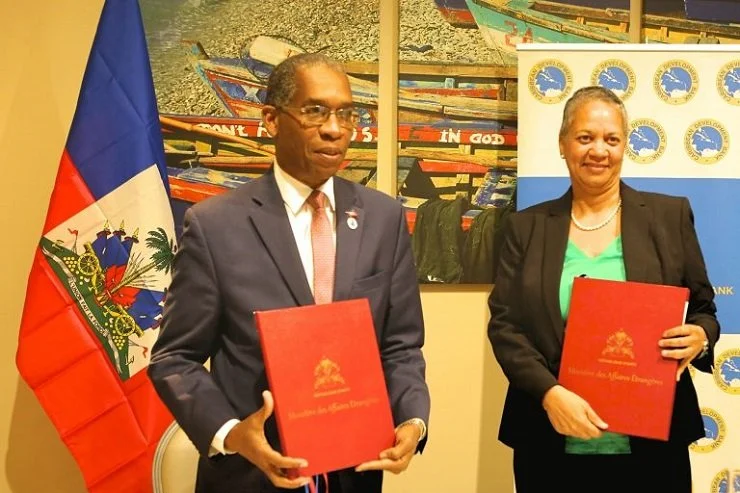
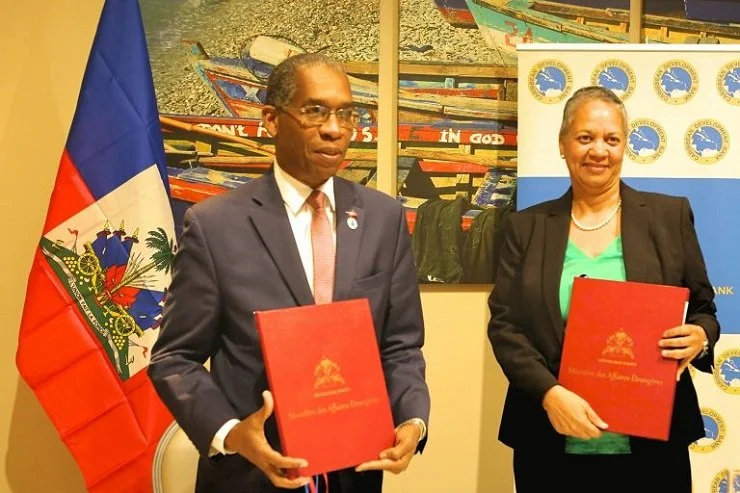
BRIDGETOWN, Barbados, Thursday March 15, 2018 – The Barbados-based Caribbean Development Bank (CDB) will establish its first country office in the Republic of Haiti later this year.Minister of Foreign Affairs Antonio Rodrigue and the Bank’s Vice-President (Operations), Monica La Bennett, recently signed the Country Agreement to pave the way for that to become reality.La Bennett said the signing of the agreement further cements the strong partnership between CDB and Haiti.“Last year, CDB, in collaboration with the Government of Haiti, developed a country strategy plan for the period 2017 to 2021, with an indicative resource envelope of US$100 million to help Haiti meet its development priorities. The strategy focuses on three main themes: agriculture and community development, sustainable energy development and education and training. It is this deepening engagement between CDB and the Government of Haiti that has led us to conclude that there is a need for a country office,” she said.“We expect that this will lead to the development of closer relationships with the Government and the people of this country, enabling CDB to be a more proactive, responsive development partner.”Haiti became a member of CDB in 2007. Since joining the Bank, the country has been allocated grant resources from CDB’s most concessional resource pool, the Special Development Fund (Unified). In 2017, an allocation of US$45 million was approved under the ninth cycle of the Fund.To date, a total of US$133 million has been committed to Haiti. Projects supported included the Education for All Phase II Project; the Technical and Vocational Education and Training Project II; interventions in agriculture and rural development; technical assistance for micro, small and medium enterprise development, and improving the quality of, and access to basic education.CDB’s ongoing work in Haiti includes projects in education, including technical and vocational education and training; climate resilience; and community-based agriculture and rural development. In addition, since May 2013, the Bank has paid the country’s insurance premiums to CCRIF SPC. The payments cover Haiti’s earthquake, tropical cyclone and excess rainfall policies. Under this arrangement, the country has received three major payouts, most recently following the passage of Hurricane Matthew in October 2016.By: Carribean360.com | March 15, 2018
PITTSBURG, KANSAS - Clyvens Exantus is on the cusp of accomplishing two of his life goals in one day. The 25-year-old Pittsburg State student and Army ROTC cadet is set to commission as a Second Lieutenant and earn his bachelor’s degree in political science on Friday.“If you’d have told me this 10 years ago, I don’t think I’d have believed you,” said Exantus. “I’ve have wondered what you were up to, because it probably would have been no good.”Ten years ago, Exantus was living 2,000 miles away in his home country of Haiti. Exantus’ parents moved to the U.S. when he was a child in order to seek a better life for him and his siblings, who stayed behind in Haiti.“I grew up with my grandmother first,” said Exantus. “She passed away when I was about 10. I then was sent to live with my Auntie whose name was Sheila. She put an emphasis on going to school."Because they had moved to the U.S., his parents were able to pay for private school.“That’s a luxury not every kid in Haiti has,” said Exantus. “Now, I just want to emphasize what private school in Haiti is.” He pauses for a chuckle before adding, “It’s not the private school of here, but still, I was able to get an education.”Thanks to his aunt’s insistence on the importance of academics, and his parents’ financial support, Exantus began to see the possibilities an education could provide.“Most of my peers weren’t going to high school,” said Exantus. “My auntie and grandma really wanted me to be different. I guess I inherited their competitive nature. I wanted to do better than the rest of my peers. I had dreams of becoming a lawyer.”After spending his entire childhood away from his parents, Exantus found himself, at the age of 17, moving from Haiti live with them in Maryland.“It was a culture shock,” said Exantus. “There was no uniform to wear, buses came to pick you up and you didn’t have to pay the woman who drove you to school.”Not only did Exantus have to learn a new culture, he also had to reconsider his relationship with his parents — especially his father, who had transformed his own life from math teacher in Haiti to non-commissioned officer in the Army.“I’d never lived with my dad,” said Exantus. “So, I had this picture in my head of a math teacher. But then I came to live with him and here was this incredibly competitive man. He woke up early for P.T. (physical training), and took pride in what he did. His Army friends would come over and I remember thinking, ‘I want that type of brotherhood.’ So, I knew I wanted to join the Army.”His parents would move several times over the subsequent years, eventually settling in Fort Riley, Kansas, where his father currently is stationed. It was at PSU that Exantus was able to combine his two passions, military and academics, into one by contracting in the ROTC program.“I actually Googled colleges in Kansas, and Pittsburg State showed up,” said Exantus. “I saw the Gorilla mascot and thought, ‘Well, this is unique.’ When I toured campus, I was shown the ROTC Hall of Fame and that’s what sold me. I saw the type of people that graduated from here. I went home and told my dad I knew where I was going.”Exantus has made the most of his time while at PSU, and, according to Major Eric Hollingsworth of PSU’s Military Science department, he has a bright future.“He’s a hard worker, and he’s hungry,” said Hollingsworth. “A lot of the cadets haven’t had the trying life experience Clyvens has had. He’s definitely an outstanding example of the type of officer this program is known for producing.”For his part, Exantus understands the tremendous opportunities he’s had from Pittsburg State and the Army.“I can’t say thank you enough,” he said. “Think about it: A kid from the poorest country in the western hemisphere. For me to get an opportunity to come to Pittsburg State and not only graduate college, but to also commission in the United States Army, the greatest fighting force the world has ever seen. It’s beyond my wildest dreams.”Pittsburg State University’s ROTC Commissioning will take place at 10 a.m., on Friday, Dec. 15, in the Dean Family VIP Room at the Bicknell Family Center for the Arts.By: KOAM 7 News Koamtv.com : December 12, 2017
Franklyn Decker started Timoun Kontan as part of his service trip to Haiti, and the organization has turned into an active force in transforming the community there.ranklyn Decker, a neuroscience major at Penn State University, originally from Bowie, MD, created a non-profit organization in Haiti with a group of eight other students from his univeristy. Its name is Timoun Kontan, which means “Happy Kids” in Haitian Creole.Timoun Kontan started as a spring break service trip to Port Au Prince, the capital of Haiti, that was arranged through a sociology class taught by Sam Richards, a professor at Penn State, thanks to his connection to the Caribbean country. “Haiti is where we saw issues we could try to help with,” Franklyn says, explaining why they chose it as the place to start the non-profit. Since then, Timoun Kontan has developed from helping building a home for children during spring break to developing community through providing education to Haitian children and economic assistance to their families. “We are trying to raise the community up and give them the tools they need to become more successful,” Franklyn states.According to the USAID Fact sheet (2016), illiteracy remains one of the key challenge for this country, “75 percent of children at the end of first grade and nearly half of students finishing second grade could not read a single word. Half of the adult population is illiterate.” School enrollment is low, staying at roughly 75 percent, and the average years of schooling hovers around 5 years, which is mostly due to the cost of schooling. “School fees can be prohibitively expensive for low-income families,” the report points out.Another significant key challenge to the development of the community in Haiti is lack of government oversight. “Most schools in Haiti receive minimal government oversight and are expensive relative to average earnings. More than 85 percent of primary schools are privately managed by non-governmental organizations (NGOs), churches, communities, and for‐profit operators,” reported the USAID Fact sheet. At least 90 percent of Haiti’s 15,200 primary schools are non-public, many of which managed by religious organizations, NGOs and communities. This means a majority of Haitian school children rely on organizations such as Timoun Kontan for education.The earthquake that hit Haiti in 2010 further compromised the country’s education system. Thousands of schools were erased, at least 75 percent of which were in Port-Au-Prince. The ones that were escaped the disaster were in dilapidated condition, failing to meet the safety requirement for rebuilding. Charles Tardieu, former education minister of the country, stated, “Let’s face the reality that many schools are never going to be used again, and that we urgently need other ways to revive the system.”
“We are trying to raise the community up and give them the tools they need to become more successful,” Franklyn says.
Students were not only displaced of a place to go and learn, but also of a home. The disaster crushed the dreams of young Haitians under the rubbles of their school along with bodies of their friends, family, classmates and teachers. Michel Renau, director of national exams at the Ministry of National Education, Youth and Sports, mourned the situation, “without education, we have nothing. We’ve been set back very far. But if we pull ourselves together quickly, we’ll go on.”In that dark time, Timoun Kontan, a small non-profit organization, rose to make a huge difference in Haiti: it helps lessen the financial burden of sending children to school. The organization reached out to those kids who may not have a chance of education otherwise and ensured that they are provided with whatever they needed without forcing the family into poverty. “If a child does not have a family that takes care of them, our organization provides a home for them to live in. If a child does have a family, then we help the family support the child monetarily through a food and educational scholarship or stipend.” So far, Timoun Kontan has been able to pay for the education of several kids for the next year and provide them with a month’s worth of food and sanitary supplies.Despite the education issue in Haiti, according to Franklyn, things are not all bad. “Honestly, this experience helped me understand how perspective can drive your outlook on life. Going to Haiti, I foolishly expected everyone there to be suffering and miserable but after arriving and getting to know the people there it put me in a new state of mind.” The effort of the Haitians in changing their life and creating a better community surprised Franklyn, “The people of Haiti are funny, intelligent, kind and loving, which I’ve come to realize are characteristics any human being can embody regardless of the circumstances they face. I really love the people and the country in general.”
‘The people of Haiti are funny, intelligent, kind, and loving which I’ve come to realize are characteristics any human being can embody regardless of the circumstances they face’ (Image courtesy of Franklyn Decker)
Franklyn has already gone back to Port Au Prince for a second time during the summer, and he definitely has plans to continue his work with the Timoun Kontan after graduating from Penn State. “I decided I wanted to become a surgeon after taking an anatomy and physiology class in high school and shadowing a couple of doctors. I’m currently not sure how I would integrate my involvement in this organization with my future profession, but I am excited to see how it all plays out.”Currently, Timoun Kontan is working on a home for the children of Larousse, who are currently living in “a cramped dilapidated home.” Their goal is to place them, primarily orphans and children given away by their families, in a safe environment with free food and education. The organization also strives to reunite those who have been given away with their families. In the mean time, the children’s home will also act as a community center where children of all ages and backgrounds can come together and nurture their dreams, which hopefully will grow into positive changes to their damaged community.
School Games at the Horizon Thanks to the valuable assistance of the Ministry of Youth, Sports and Civic Action (MJSAC), thousands of young people from Thomassin and the surrounding area entertained during the summer holidays 2017 by participating as actors or spectators at the Football Championship organized at the Sport Park of Thomassin from July 16 to August 27, won by the team "Tèt Chaje" of Fermathe at the expense of FC Malik.After the organization of these summer activities, Minister Régine Lamur already has her head turned towards the School Games because, according to her, the return of sport to school is a convinced imperative that "It is the basis of any national selection competitive. None of the sporting disciplines practiced in Haiti can be excluded because a discipline with little or no media coverage can create a prestigious place among the major sports nations."In addition, she also emphasized the brain games that promote concentration and reflection, key factors in the process of creation and development."A better framing of our youth and the exploitation of our sports talents can be a new departure for our country in search of a new image on the international level. However, recognizing that resources are modest and needs unlimited, the Minister wants to build on cooperation and calls on all sectors of national life to unite with the Ministry of Youth, in order to build a new Haiti around of young people.HaitiLibre| September 1, 2017
The working meetings in Washington of the Haitian delegation led by the Minister of National Education, Pierre Josué Agénor Cadet, with the World Bank (WB) and the Global Partnership for Education (SME) in order to find funding for the implementation of several educational projects have been fruitful and open up new opportunities for Haiti in the education sector.According to Minister Cadet, the World Bank has confirmed its support for a donation of 30 million, as it had already done in 2016. These funds will in particular make it possible to maintain and increase the coverage of school canteens for the benefit of children as soon as the next school year scheduled for 4 September.Other additional funds are planned for Haiti. To this end, the total contribution of the World Bank to Haiti will increase by 140 million, from 120 million to 260 million. Education will be particularly beneficiary to this increase.Recall that Minister Cadet was accompanied by Norbert Stimphil, Coordinator of the Education For All (EFA) project, Delima Pierre Director General of the National Office for Education Partnership (ONAPE) and of Communication Director of the Ministry, Miloody Vincent.by: HaitiLibre | August 18,2017