

Mother-son duo brings authentic Haitian cuisine to Rose City: 'Put Haiti on the map'

Portland restaurant TapTap Cuisine, operated by Dieuson Alix and his mother, is sharing Haitian culture, one serving at a time.
While many celebrated New Year's Day with champagne toasts, Portland's newest Haitian restaurant marked the occasion by serving up a dish that symbolizes freedom and independence. Jan. 1, Haiti's Independence Day, marks the birth of the world's first free Black republic.
At TapTap Cuisine in Northeast Portland, owner Dieuson Alix and his mother Daniella celebrated the historic day by serving Soup Joumou, a traditional squash soup that carries centuries of meaning.
"When slavery began in Haiti, we weren't allowed to eat pumpkin. The masters were the only ones who could enjoy it," Alix said. "But when we gained independence on Jan. 1, 1804, the best way to celebrate was by making Joumou. It symbolizes freedom, liberty and unity for Haitians."


Credit: KGW
The restaurant's name comes from one of Haiti's transportation systems.
"In Haiti, we have a traditional taxi, a little bus or pickup truck we call Tap Tap," Alix said. "The name comes from passengers tapping the back of the vehicle to signal the driver to stop."


Credit: KGW
Painting of a Haitian TapTap bus: The restaurant's name comes from one of Haiti's iconic transportation system called "TapTap."
After arriving in America in 2016 on a student visa, Alix balanced learning English, working and playing soccer while earning a psychology degree at Bushnell University in Eugene.
In 2023, he opened a food cart on North Williams Avenue. Following months of planning and support from family and friends, he expanded to a brick-and-mortar location on Northeast Sandy Boulevard in October 2024.
For Alix, the venture is a tribute to his mother's sacrifices in their hometown of Jacmel, Haiti, where he helped his single mother prepare meals that she would sell to support him and his two siblings.
"I saw the struggles my mom faced," he said. "She would cook in big pots, then walk 60 to 70 miles a day to sell her food in the market. She worked tirelessly to provide for us."


Credit: Dieuson Alix
Dieuson Alix alongside his mother and two other siblings back in Haiti.
Despite the success of his restaurant, Alix continues to face challenges, including stereotypes perpetuated on social media. The comments, often offensive and rooted in misinformation, have deeply affected him.
"It hurts me to my soul," Alix said. "As a migrant, as a Black man, you have to work harder than anyone else to make a seat for yourself. But one thing about us Haitians — we are resilient. We have tough skin."
He recently deleted several offensive comments falsely claiming Haitians eat dogs and cats.
"Not too long ago, I had to delete up to 10 comments where people were saying, 'Stop eating dogs, stop eating cats, save the cats,'" he said. "This is not a part of our culture. This is not who we are. We don't eat dog. We don't eat cat."
Alix said Haitian immigrants contribute significantly to American society.
"We are nurses, doctors, journalists, business owners," he said. "It's very disturbing, but we have tough skin."
His mother Daniella, who joined him in Oregon in February after immigration delays, spoke proudly in Haitian Creole: "I'm extremely proud of him choosing to share Haitian food with the Portland community and being proud of his culture."
For Alix and his mother, it's not just about building a restaurant, it's about keeping Haiti's spirit alive, one serving at a time. He said they're committed to making the Haitian restaurant a welcoming space for both Portland's Haitian community and those seeking to learn about the culture.
"Tap Tap means we're moving forward," Alix said. "We're on a journey to a brighter future — not just for us, but for our community. For our culture. We want to put Haiti on the map."
Both locations are open Tuesday through Sunday at various times available on Tap Tap's social media pages.


Credit: Dieuson AlixClose Ad

Haiti's prime minister ousted after six months
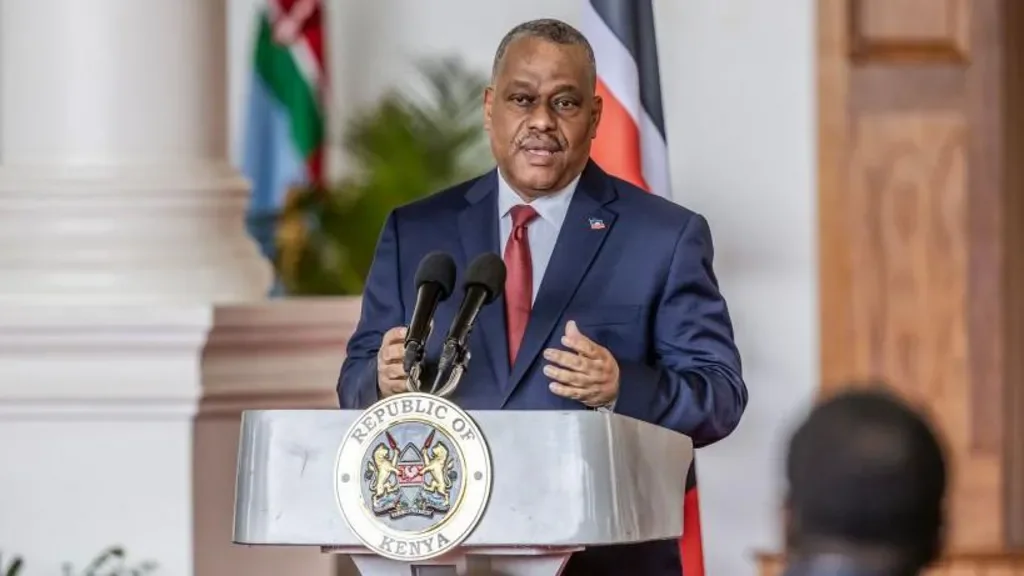
Haitian Prime Minister Garry Conille has been fired by the country's ruling council less than six months after he took office.
An executive order, signed by eight of the council's nine members, named businessman and former Haiti Senate candidate Alix Didier Fils-Aimé as Conille's replacement.
Conille, a former United Nations official, was brought in to lead Haiti through an ongoing, gang-led security crisis and had been expected to help pave the way for the country's first presidential elections since 2016.
He described his ousting as illegal, saying in a letter - seen by Reuters news agency - that it raised "serious concerns" about Haiti's future.
Haiti currently has neither a president nor parliament and, according to its constitution, only the latter can sack a sitting prime minister.
"This resolution, taken outside any legal and constitutional framework, raises serious concerns about its legitimacy," Conille's letter was quoted as saying.
Haiti's transitional presidential council (TPC) was created in April after Ariel Henry, Conille's predecessor, was forced from office by a network of gangs that had taken over parts of the capital Port-au-Prince.
Henry left Haiti to attend a summit in Guyana on 25 February 2024, and gang members subsequently seized the city's international airport, preventing him from returning.
The TPC was tasked with restoring democratic order to the Caribbean country, where such violence is rife.
More than 3,600 people have been killed in Haiti since January and more than 500,000 have had to leave their homes, according to the UN, which describes Haiti as being one of the poorest countries in the world.
Two million Haitians currently face emergency levels of hunger, UN data shows, while almost half the population "do not have enough to eat".
One of the country's most powerful gang leaders, Jimmy Chérizier, also known as Barbecue, previously said he would be prepared to end the violence if armed groups were allowed to be involved in talks to establish a new government.
Presidential elections were last held in Haiti eight years ago, when Jovenel Moïse of the Tèt Kale party was elected.
Since his murder in July 2021, the post of president has been vacant.
Gangs in Haiti have capitalised on the power vacuum and expanded their control over swathes of the country, which has effectively been rendered lawless in places.
Last month, it was reported that hundreds of police officers had been deployed to Haiti from Kenya, with more set to join them in November.
Haiti edges towards holding first elections since 2016

Don't listen to Trump's lies. Haitian chef explains country's rich culinary tradition.

'Haitian food is very rich, flavorful: It's bold, fresh and in your face. It is the heart of what we represent. It's about unity and strength,' Chef Lemaire says.
Based on the headlines this week, it seems too many Americans don’t have any Haitian friends - and certainly don’t understand their rich food culture.
I say this because of the nonsensical, bigoted and tired trope about immigrants eating people's cats and dogs that former President Donald Trump regurgitated during Tuesday's presidential debate with Vice President Kamala Harris. This time, the trope sprang from a social media post about Haitian immigrants in Springfield, Ohio.
It's not just mean and stupid: It's the kind of far-right dog whistle that can also be dangerous.
Anyone lucky enough to have Haitian friends and food in their lives knows about the complex flavors of soup joumou, a Sunday-only squash and beef soup, or the famed citrus-marinated pork shoulder, griot. They know about the spicy deliciousness of the condiment of condiments: pikliz. And they surely know the queen of all rums: Haiti's famed Rhum Barbancourt.
"Po diab pou yo." Too bad for them.
Not one to miss an opportunity to talk about food, I reached out to Miami-based, award-winning chef Alain Lemaire, who has appeared on the "Luda Can't Cook" series on Discovery+ with rapper, actor and restauranteur Chris "Ludacris" Bridges. We talked Haitian food, Haitian families, and what cooking and eating together means to Haitian people.
Chef Lemaire even blessed this column with a recipe at the end.
This interview has been edited for length and clarity. The opinions above are those of Carli Pierson and do not reflect the opinions of Chef Alain Lemaire.
What made you get into cooking and why Haitian food?
It was a necessity to cook for myself: What I wanted to eat and when I wanted to eat. I was born and raised in Haiti. Growing up in the Caribbean in the '80s and '90s, there was a strict policy of "Whatever there is to eat at the house, you have to eat it."

Where in Haiti did you grow up?
Port-au-Prince, in Delmas.
When did you decide to make a career of cooking?
After graduating high school in 2000, I came to Miami.
While I was back home in Haiti, I was trying to decide what I wanted to pursue. In Miami, I had a friend who was going to a culinary program at Johnson & Wales, and when I came I fell in love with the program right then and there.
What kinds of reactions do you see from people trying Haitian food for the first time?
The shocked expressions when they taste our dishes. It's not a unilateral landscape of flavors: It's layers of flavors. Especially if the food is well seasoned. Also, our Haitian cuisine is a mix of African, French, Spanish and even some Middle Eastern flavors. When you talk about the slave trade, the spice trade, migration from Arab countries: Everyone brought their spices and flavors with them.
This is what Haitian cuisine is all about.
What is your favorite dish to cook now if you had to pick one?
That's difficult. It would have to be lalo: It's more dominant in the central part of Haiti. It's a dish made with jute leaves and some people add crabs and beef, also. Traditionally, it's served with white rice and "sos pwa" (pepper sauce).
Trump lies about immigrants hide truth:They pay their share of taxes
What would you like people to know about Haitian food and Haitian people?
Haitian food is very rich, flavorful; it's bold, fresh and in your face. It is the heart of what we represent because food for us is not only about nutrition, but it brings everybody together. Every celebration involves food. It's about unity and strength.
Our food also comes out of struggle, the fight we have to endure and out of making the best of what we have available.
Chef Lemaire's creole chicken with cashews recipe

- Yield: 4 servings
- Prep time: 4 hours
- Cooking time: 45 minutes
- Total time: 4 hours and 45 minutes
Ingredients:
- 4 chicken leg quarters, cut in two
- 6 ounces tomato paste
- 1-quart chicken stock or broth
- 6 ounces epis: Blended thyme, garlic, parsley, scotch bonnet peppers, salt, sometimes oil or citrus, onions and sweet peppers
- 1/2 cup cashew halves, toasted
- 2 tablespoons finely ground cashews
- 1 bouquet garni (wrapped up in a cheesecloth): 3 thyme sprigs, a bunch of parsley stems, 2 heads of scallions, 1 habanero pepper, 5 whole peppercorns, 2 whole cloves and 3 heads of garlic
- 1/2 green bell pepper, julienne
- 1/2 yellow onion, julienne
- canola oil for cooking
- salt and pepper to taste
Method of preparation:
- Season chicken with epis, salt and pepper. Place in a container and let marinate overnight or for 3 to 4 hours.
- Heat a dense pot, add some oil and sear chicken in small batches until golden brown on each side. Remove and set aside.
- In same pan, add tomato paste and cook on low heat until well dissolved. About 2 minutes.
- Pour in chicken stock/broth then mix in cashew powder until well dissolved.
- Add chicken pieces, and bouquet garni. Make sure chicken is at least three-quarters submerged. Adjust seasoning, bring to a boil then let simmer.
- Once chicken has reached an internal temperature of 165°F, and sauce is silky, add cashew halves, onions and peppers.
- Let cook for an additional 7 minutes.
- Serving suggestions: Serve with white rice and avocados.

'She's the American Dream': Haiti earthquake survivor becomes East Bridgewater track star

EAST BRIDGEWATER — Sasha Feron says the first-hand memories are fuzzy. She was only 4 years old when her life was met at a crossroads.
But the date January 12, and where she was, are the pinpoint details she clings on to from when the catastrophic Haiti earthquake struck her hometown in 2010.
“I feel like I remember bits and pieces, but I was a kid and didn’t really know what was happening," Feron said. "The building we were in collapsed on us."
Feron recalls a random man from off the street rescuing her and her cousins from the debris. Her family immigrated to the United States later the same year.
All of this time later, Feron stands in a spot she couldn't have ever envisioned: set to graduate from East Bridgewater High as a track and field record-holder and Wentworth Institute of Technology commit.
"She’s the American Dream," said East Bridgewater's shot put/discus coach Jen Dias.
Feron's family followed her uncle, Fender Pierre, to Massachusetts in 2010 as he pursued a college degree from UMass Dartmouth. Together, they lived in an apartment in Brockton and, as time went on, Feron took care of her two infant siblings as her mother, Roseline Pierre, took on a rigorous, round-the-clock work schedule at South Shore Hospital in Weymouth.
Feron learned to change diapers as a student at Davis Middle School. Playing sports, meanwhile, wasn't a focus; not even as she went off to Brockton High as a freshman.
But when Feron transferred to East Bridgewater High as an incoming sophomore, it was the civics teacher Dias who saw a potential shot-put talent in Feron, who took inspiration from her mother's work ethic to dream of pursuing a college career.
"We’re thankful she’s here," Dias said. "I think (the tragedy in Haiti) made her the person who she is today. It’s built her character and integrity. The fact she’s overcome adversity -- as a student-athlete, she’s the role model of what we want to see. The whole package. Top to bottom.”
Feron, a multi-time South Shore League All-Star thrower, broke the school's shot put record with a 35'11" fling against Middleboro on April 9. The previous high mark of 35'7.5" was set in 1996 by Dias, who proudly urges that "Records are meant to be broken."
Feron recorded a 21’4" at the first meet of her career as a sophomore two years ago. Not satisfied, she prioritized weight-lifting every day after school starting her junior year, on top of juggling an honor-roll academic course load, multiple AP classes, playing varsity volleyball and singing at the Haitian Assembly of God in Brockton three times per week.
That's quite the hectic schedule.
“Yeah," Feron said, chuckling. "Very.”
A senior captain, Feron proceeded to finish her final indoor season unbeaten in dual meets with a fifth-place standing at Division 5 states (31-10.75). She set a winter-season school record of 35', a figure that stood atop the school's charts since the early 2000's according to Eaton, who has been involved with the program for 19 years, the last 13 as head coach.
“From Day 1, she’s gotten better and better,” Dias said. “She’s a leader. She’s spunky. You can tell, she’s feisty. She’s confident, super smart and super bright.”
Feron carries a 3.89 GPA and will major in biomedical engineering at Wentworth with hopes of potentially returning to Haiti one day to work in the disease control or prosthetics industries. She hasn't visited her home country since moving to the U.S.
“She just sets goals and goes to get them," EB head track coach Ryan Eaton said. "I’ll run into her in 10 years and she’ll have some awesome job doing what she loves to do. She’s that type of person."
Dias says Feron has "the package to excel" competing at the Division 3 collegiate level due to her strength throwing the shot put in a more stationary power position. Less strong throwers tend to move or glide to generate power, Dias said.
Feron entered the Division 5 state meet weekend ranked No. 2 in the state, behind Martha's Vineyard junior Madison Mello.
“Her competitive edge, maybe as a sophomore, wasn’t there. As a junior, it was ‘Hey, I’m kinda good at this,'" Dias said. "Now, it’s, ‘These are my events.’ It’s changed. That spark is now a fire.”
“People are always going to be talking about her records because we like doing that in sports, but her attitude is the big thing to me," Eaton said. "Win or lose, record or no record, I’ll remember that kid for a long time because of how she is.”
Coming face to face with Haiti’s most notorious gang leader
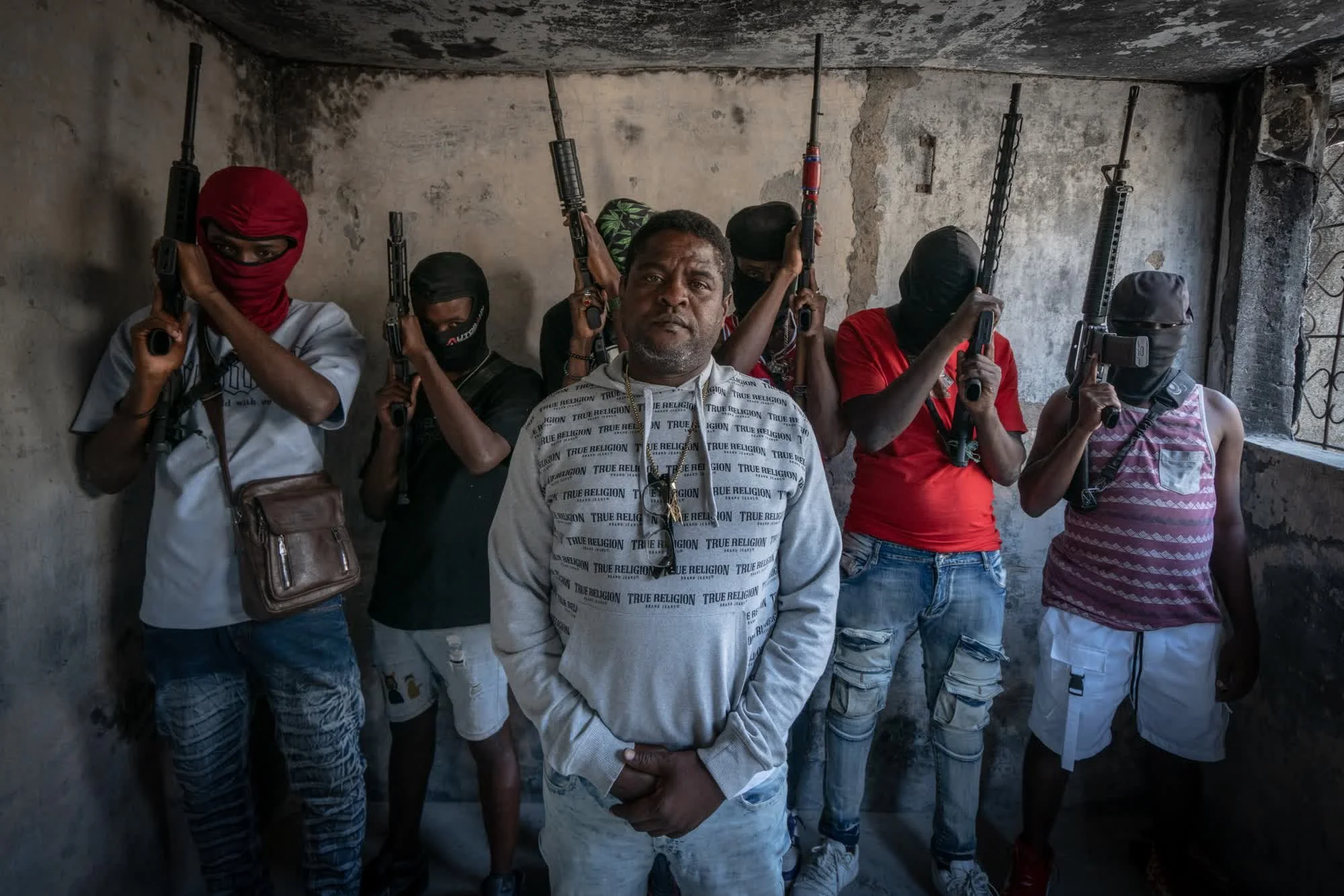
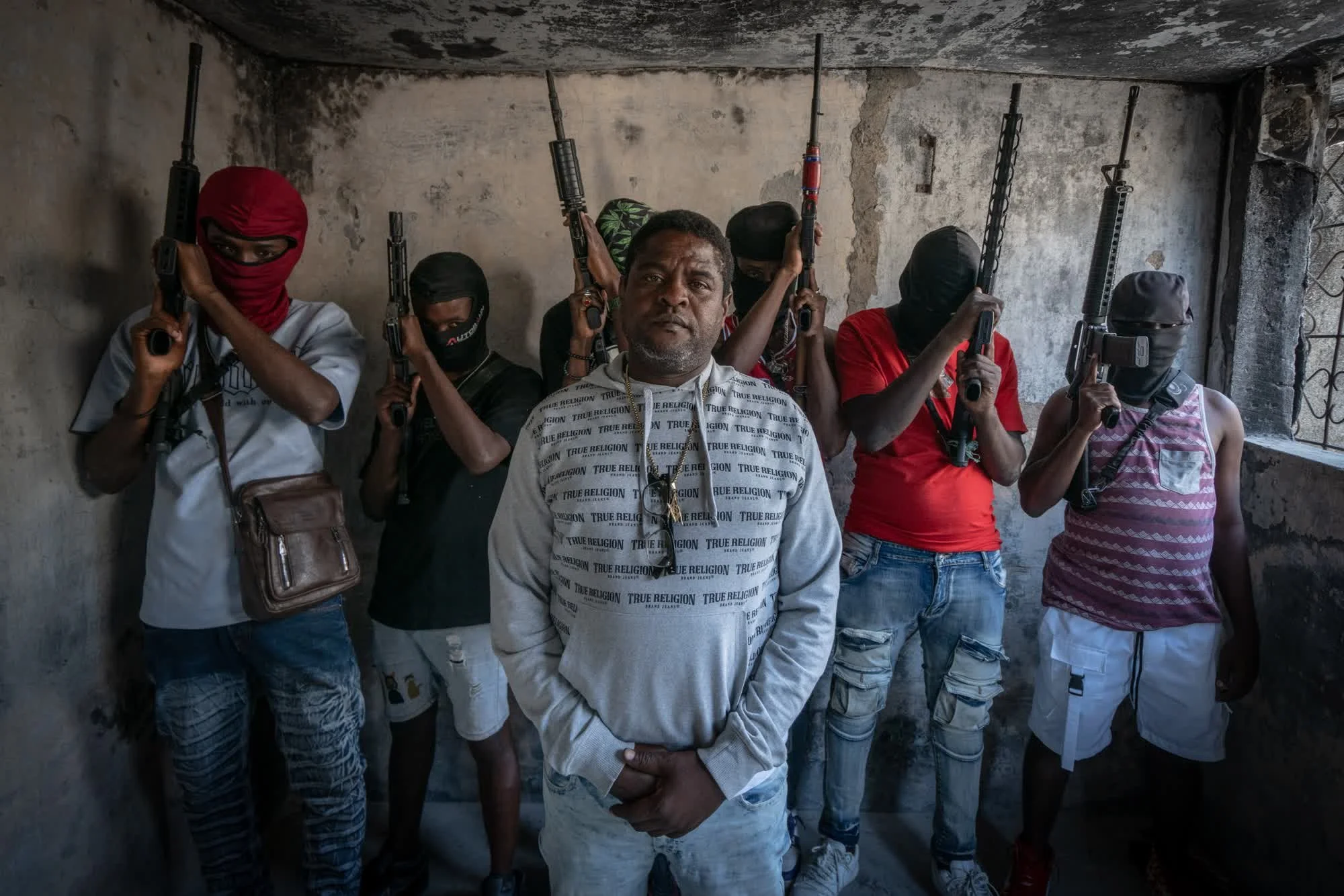
While he was in the Haitian capital of Port-au-Prince, waiting for the chance to interview its most notorious gang leader — Jimmy “Barbecue” Cherizier — Giles Clarke heard semi-automatic gunfire from what felt like just two or three blocks away.
“I looked over at the group of locals, wondering if they might respond, but they barely moved a muscle,” the photojournalist recalled. “It was just another day in (the neighborhood of) Delmas 6, and the constant volley of bullets flying over the nearby building were seemingly nothing unusual.”
Every few minutes, there would be another burst, followed by return fire.
This is life now in Port-au-Prince, where gangs control 80% of the city, the UN estimates, and continue to fight for the rest.


A gang member affiliated with Jimmy “Barbecue” Cherizier’s G9 alliance holds a rifle in Port-au-Prince. Gangs control 80% of the capital, the UN estimates.

Haitian police inspect documents at a checkpoint on a street leading from the city center to the port. It is one of the rare places controlled by police, photojournalist Giles Clarke said.
Haiti has been in a state of unrest for years now, but multiple security sources in the capital have told CNN that the most recent surge of gang violence — which has targeted police stations, the international airport and the national penitentiary — is unprecedented.
Haiti’s government declared a state of emergency Sunday, citing the “deterioration of security” and “increasingly violent criminal acts perpetrated by armed gangs,” including kidnappings and killings of citizens, violence against women and children and looting.
Armed groups attacked the country’s two largest prisons on Saturday, and a United Nations source said around 3,500 prisoners are believed to have escaped the National Penitentiary in Port-au-Prince over the weekend.


Meanwhile, more than 300,000 Haitian civilians have been forced to flee their homes because of the gang violence, according to the United Nations.
“All the displacement sites that I went to back in September have probably doubled in capacity now,” said Clarke, a New York-based photojournalist who has been visiting the Caribbean country on and off since 2011.
Clarke went back last month to document the unrest in Port-au-Prince. He witnessed more distressing scenes, including a hospital where he saw countless people suffering from gunshot wounds.
“Many of them were civilians hit in gang crossfire, and most of them near the markets. It’s people just going about their day,” Clarke said. “Doctors were overwhelmed. There were a lack of supplies.”

Morgues were also overflowing in the city.
“You could smell it on the street,” Clarke said. “I remember I asked (my guide) Joe, ‘What is that?’ And he said: ‘Dead people.’”
Clarke said many of them were victims of gang violence whose bodies hadn’t been claimed by families.
“If you don’t claim them or nobody pays, these bodies are just going to sort of rot,” he said. “There’s very little refrigeration.”


While he was in Haiti, Clarke also managed to come face to face with Cherizier, a former police officer who leads an alliance of gangs in Port-au-Prince.
Cherizier has made it clear that his goal is to bring down the government of Prime Minister Ariel Henry.
He told Clarke the gangs want to change the current system and come up with a new Haiti. While Cherizier’s men wore balaclavas to protect their identities, he did not.
“He’s often the only one not wearing a mask — a defiant face of Haitian resistance,” Clarke said.


Gherisse, 42, recovers at the General Hospital two days after she was caught in gang crossfire and shot in the neck. She was working as a food vendor downtown.

Violet, 63, lies on the floor at the General Hospital after being shot twice in the arm. She says her 34-year-old daughter was killed as two warring gangs swept through their neighborhood just an hour earlier.
Henry, who took leadership of the country after President Jovenel Moise was assassinated in 2021, was supposed to hold elections and transfer power by February 7. But last month he said he couldn’t step down because conditions in the country weren’t safe enough to stage an election.
“My interim government is working hand-in-hand with the police to restore normal life in the country,” he said in an address to the nation. “We are aware that many thing have to change, but we need to make those changes together and calmly.”
That isn’t acceptable to Cherizier, who on Friday reiterated his demand that Henry be arrested.
“We ask the Haitian National Police and the military to take responsibility and arrest Ariel Henry,” he said. “Once again, the population is not our enemy; the armed groups are not your enemy. You arrest Ariel Henry for the country’s liberation. … With these weapons, we will liberate the country, and these weapons will change the country.”


Cherizier has faced sanctions from both the UN and the United States Treasury Department. The UN has accused Cherizier of human rights abuses including the orchestration of deadly attacks against civilians over the years, saying his actions “have directly contributed to the economic paralysis and humanitarian crisis in Haiti.”
Clarke visited him in late February at his somewhat unassuming house on the top of a hill in Delmas 6.
“We actually did the interview in the abandoned building opposite him,” Clarke said. “Word is that he didn’t want lots of people living so close around him.”
After a very brief interview where Cherizier laid out his vision for Haiti, Clarke walked with him through the streets. Clarke remembers how much quieter it was when he was with Cherizier. “There was no shooting because (the men) were all with Jimmy,” he said.


To try to restore order in his country, Henry has called for military assistance. The deployment of a Kenyan-led multinational security force was greenlit by the UN Security Council last fall and Henry recently visited Kenya to finalize the details, but it’s not clear when those troops might arrive.
The United States has agreed to provide $200 million to the mission, with Secretary of State Antony Blinken calling the situation in Haiti “one of the most urgent challenges we face as an international community.”
Henry adviser Jean Junior Joseph told CNN that the government has limited options right now.
“The gangs have more ammunition than us,” he said.


Former rebel leader arrives in Haiti's capital as protests against prime minister gain momentum

A former rebel leader has made a surprise appearance in Haiti’s capital amid large protests across the country for the second consecutive day, demanding the ouster of Prime Minister Ariel Henry.
PORT-AU-PRINCE, Haiti -- A former rebel leader made a surprise appearance in Haiti’s capital on Tuesday amid large protests across the country for the second consecutive day, demanding the ouster of Prime Minister Ariel Henry.
Guy Philippe — who played a key role in the 2004 rebellion against former President Jean-Bertrand Aristide — was briefly spotted in the upscale community of Pétionville in Port-au-Prince, where he shook hands with Haitians at a park in front of a police station before he left. It wasn’t immediately clear where Philippe was going, but dozens of motorcycle drivers, clearly his supporters, tried to track him down across streets blocked by burning tires.
His appearance caused a great commotion because of a video he released Monday, calling for a rebellion to oust the prime minister on Wednesday, or Feb. 7, the date Haitian leaders are traditionally sworn into office.
A growing number of Haitians accuse the prime minister of holding on to power and failing to organize general elections. Henry assumed the leadership of Haiti, with the backing of the international community, shortly after President Jovenel Moïse was killed in July 2021. Since then, he has pledged to hold elections but has noted, as has the international community, that it is currently too unsafe to do so.
Shortly after appearing in Pétionville on Tuesday, Philippe called Radio Télé Éclair in the middle of a live show.
“Tomorrow, I will be out on the streets with my people,” he said, adding that he would be surrounded by security. “The fight is just the beginning.”
Philippe said on the radio show that he has spoken to different political parties, including ones headed by former Prime Minister Claude Joseph and former presidential candidate Moïse Jean Charles, to try to find a way forward for Haiti.
Philippe was believed to have been living far from Port-au-Prince ever since he was repatriated to Haiti in late November.
A few miles away from where Philippe was spotted, nearly a couple thousand protesters gathered in the capital, preparing to march to the prime minister’s office.
“Ariel has to go! Ariel is the leader of the gangs of this country!” the crowd yelled.
As they began marching, police fired tear gas, temporarily breaking up the crowd as protesters — ranging from teenagers to older adults — vowed that they would reach Henry’s office one way or another. About an hour later, they reached the office, prompting police to barricade the area and fire tear gas and live bullets.
Among those protesting was Carl Henry Joseph, a 40-year-old moto driver who said he wants to see Henry dead.
“This is how much hatred I have for him,” he said as he vowed to rejoin protests planned for Wednesday. “Tomorrow we will do whatever it takes to get him out. I’m willing to die if it means he will leave office.”
Fellow protester Jean-Marc Antoine, 35, said he wants to see Henry resign but wonders what a future leader might bring.
“We are tired of this situation,” he said. “Too many people are dying and the country is just going backwards.”
Another protest organized by Moïse Jean Charles, the former presidential candidate, was taking place nearby as a handful of armed environmental protection agents with Haiti's Security Brigade for Protected Areas, which recently clashed with police in northern Haiti, arrived amid cheers from supporters.
Other demonstrations were reported in Haiti’s southern and northern regions on Tuesday, with the biggest protests expected on Wednesday, the date demonstrators have set for Henry to resign.
“If Ariel doesn’t leave office by midnight on Feb. 7, we are not responsible for what happens to him,” said Joseph, Haiti's former prime minister, to a crowd of thousands who cheered in the southern coastal city of Saint-Louis-du-Sud.
Feb. 7 is considered a key date in Haiti. On that date in 1986, former dictator Jean-Claude Duvalier fled for France, and in 1991, Jean-Bertrand Aristide, Haiti’s first democratically-elected president, was sworn in.
The growing number of protests comes as Haiti struggles with a spike in gang violence and deepening poverty, awaiting a U.N.-backed deployment of Kenyan police officers that a court in the east African country recently blocked.
Georgetown couple giving Haiti's orphans a safe place to call home
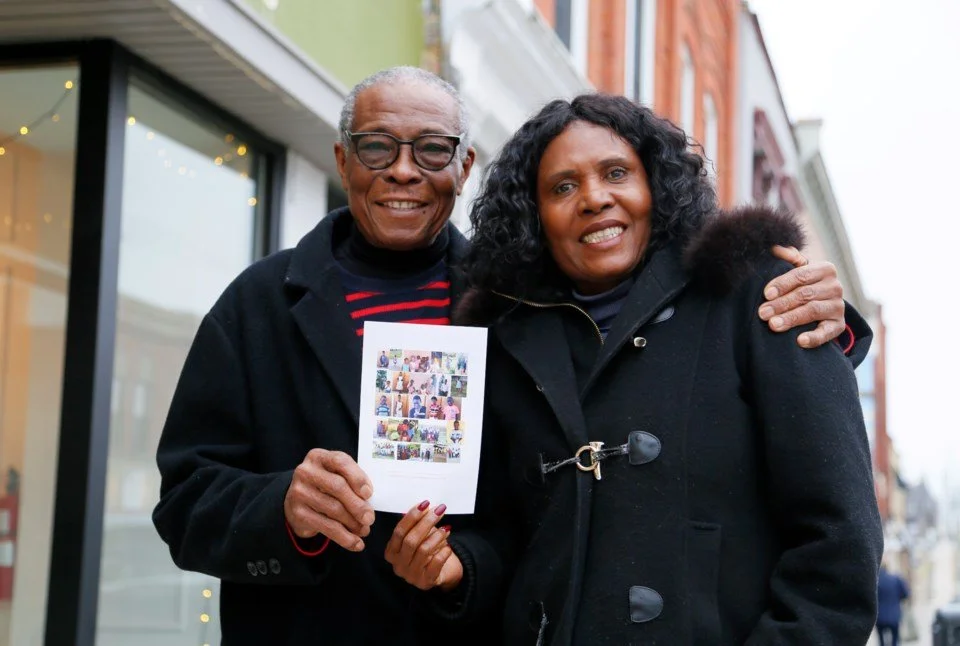
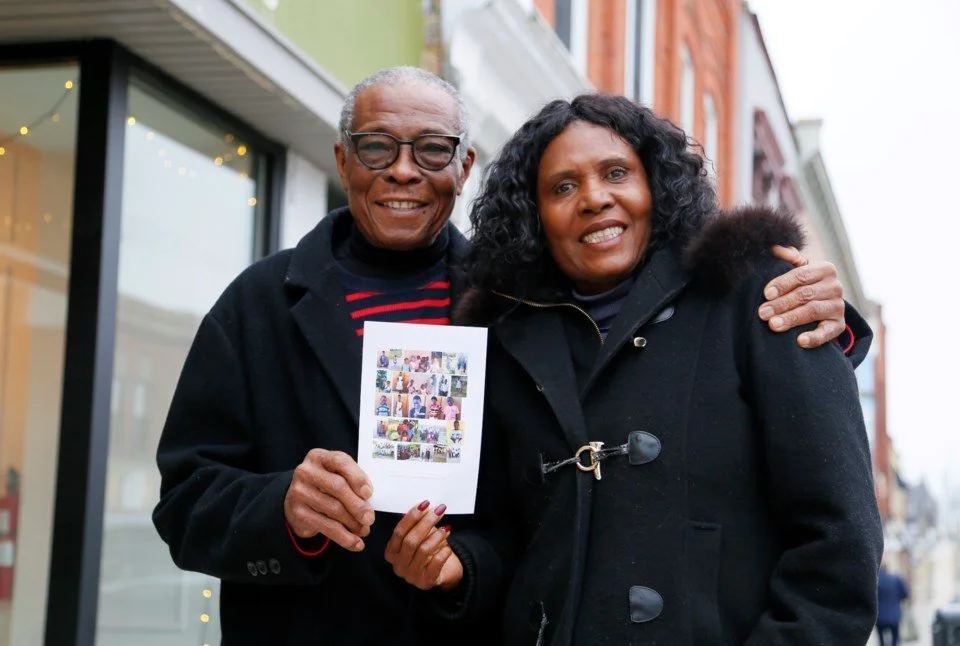
Local woman Camille Otum founded a charitable organization that runs an orphanage in Haiti after a visit to her hometown left her appalled by the conditions.
A Georgetown couple is making a difference in the lives of children thousands of miles away.
Camille and Sam Otum are the faces behind Welcome Home Children’s Centre Inc. (WHCC), which operates an orphanage in Cabaret, Haiti, a municipality about 25 km northwest of the capital Port-au-Prince.
The services the WHCC provides may appear mundane to Canadian eyes, but they are life-changing to the orphans. Their mission is to give abandoned and exploited children housing, schooling, healthcare, access to hygiene and recreation, among many other things.
The end goal of the volunteer-run, donation-funded organization is to provide the children what they've been denied: self-confidence and education.
Camille moved to Canada from Haiti when she was 19 years old. She has lived in Georgetown for over 30 years now. When she went back to her hometown of Cabaret in 2006, she was appalled by what she saw. It wasn’t the Cabaret that she remembered.
“I saw children eating from the garbage. I saw girls younger than my daughter with older white ‘friends,’” she said, explaining the latter is a situation commonly seen when a child is being exploited.
After coming back to Canada, she was determined to make a difference. The ball began to roll on what would become WHCC.
“When my wife wants to do something, she doesn’t stop,” said Sam Otum, president of WHCC.
This determination, with help from her husband, birthed the organization.

It was registered as a charity in 2008, with doors opening to orphans the following year. But the orphanage of today took a little while longer to take shape.
As a temporary measure to start, they used an ordinary home in Cabaret, but it didn't have electricity or indoor plumbing. The Otums were determined to have their kids experience these amenities, which are luxuries in Haiti.
In 2011, they acquired a two-acre property and built the orphanage of today.
The pair envisions developing the orphanage further into a campus of sorely-needed buildings like separate boys' and girls’ housing, a library, a central common gathering place, an administrative building and a kitchen. This second phase had to be postponed due to the pandemic.
Currently, the complex consists of a guest house - where the orphans live - a guard house and solar panels. A wall also surrounds the property to protect the children from the unsafe environment around them.
The situation in Haiti means the children are only safely able to be in three locations: the WHCC property, school and church.
“Even to school, they need a driver. We are a Canadian organization. We have to keep them safe,” Camille said.
The United Nations recently announced a Kenya-led peacekeeping mission to Haiti. The couple is hoping this will create a safe environment for them to return to the country and continue their work.
For further details or to support WHCC, visit WelcomeChildren.org.

Indiana Pacers guard Bennedict Mathurin donates gear to youth in Haiti

Mathurin continues to connect with Haitians
Indiana Pacers guard Bennedict Mathurin is donating Adidas gear to over 300 Haitians.
Today is Dessalines Day, a yearly cultural holiday celebrated in Haiti. It honors Jean-Jacques Dessalines, a critical figure in abolishing slavery in Haiti in the early 1800s.
Mathurin is donating the equipment via an event at the Barbancourt Foundation’s community facility in Haiti.
"Supporting the Haitian community is important to me. I'm grateful to be working with the Barbancourt Foundation and Adidas to provide gear for youth in Haiti," Mathurin said in a statement. "And, to do it on a day that celebrates freedom is even more meaningful. This is just the beginning; I'm committed to making an impact in Haiti and elevating Haitians across the diaspora."
Mathurin has always been in touch with his Haitian roots. His mom flew into Indianapolis last year to cook him a Haitian meal at the Pacers facilities. "Ima be honest, I'm trying to eat as much Haitian food as I can in Indy," the second-year guard said on Tuesday.
"The main thing for me is to give back to the less fortunate," he added when asked about his donation today. "I'm from Haiti, so giving back to my community is obviously a great thing."
The event at the community facility will feature food, music and dancing on top of some basketball drills. Last year, Mathurin provided turkeys and gift cards to Haitian families around Thanksgiving.

Ben Fountain's 6 favorite books about Haiti

The award-winning author recommends works by Marie Vieux-Chauvet, Katherine Dunham and more
Ben Fountain’s new novel, "Devil Makes Three," is a political thriller set during Haiti’s 1991 coup d’état. Below, the author of "Billy Lynn’s Long Halftime Walk," winner of a National Book Critics Circle Award, recommends other books about Haiti.
'Love, Anger, Madness' by Marie Vieux-Chauvet (1968)
This incendiary trilogy of novellas brought the wrath of the Duvalier regime down on its author, who was forced to flee to New York after the book’s publication. Vieux-Chauvet is unsparing in her depiction of Haiti, presenting characters who are pushed to the limits of sanity by the racism, economic duress and state terrorism that constrain their lives. Buy it here.
'Moonbath' by Yanick Lahens (2014)
Winner of both the Prix Femina and French Voices Award, Lahens' incantatory novel cuts across four generations of a rural Haitian family. Their intergenerational traumas play out in an increasingly chaotic country in which Vodou is the common people’s surest source of strength and sustenance. Buy it here.
'Island Possessed' by Katherine Dunham (1969)
The famous American dancer, choreographer and Vodou priestess first visited Haiti in 1936, and this extraordinary memoir recounts her adventurous early years in the country. Dunham writes vividly about the politics, culture and religion of the island nation that quickly "possessed" her. Especially moving is her affair with the charismatic young parliamentarian who would later become Haiti’s president. Buy it here.
'The Rainy Season' by Amy Wilentz (1989)
Wilentz first arrived in Haiti in 1986, as the Duvalier regime was collapsing, and spent the next three years unraveling Haiti’s complexities. Wilentz’s blend of reportage, history and highly evocative memoir is still relevant — perhaps more than ever — 30 years after its publication. Buy it here.
'Kanaval' by Leah Gordon (2010)
One of several mind-bending books produced by the brilliant artist, curator and founder of the "Ghetto Biennale," held every two years in Port-au-Prince. Gordon’s surreal images will haunt you, the blunt truths of the text no less. Every endeavor of this artist rewards the closest attention. Buy it here.
'Haiti, History, and the Gods' by Joan Dayan (1995)
Advanced Haitianology. Dayan bypasses, blows through and tunnels beneath accepted sources and narratives to get at the truer, more troubling histories found not only in overlooked or suppressed texts and documents, but in Vodou rituals, folk beliefs, songs, and art. The wisdom and insight of this book are inexhaustible. Buy it here.

Coup plotter, money launderer Guy Philippe to be freed from US prison, deported to Haiti

MIAMI — Guy Philippe is a man of many moves.
The former Haitian police commander once led a government rebellion against a president. He was later elected to a seat in the Haitian Senate just before being captured by U.S. authorities who had hunted him down for nearly a dozen years for pocketing more than a $1 million from Colombian cocaine traffickers.
Philippe cut a plea deal with federal prosecutors in Miami, but even then he still tried several times to get his nine-year sentence reduced while representing himself both before and during the pandemic era.
Now, the 55-year-old is scheduled to be released Thursday from a federal prison in Atlanta, transferred to U.S. immigration custody and eventually deported to Haiti, a country reeling from the July 2021 assassination of its president, Jovenel Moïse, and the terror of deepening gang violence since Philippe’s arrest more than four years earlier.
His possible return to Haiti as the United States is trying to stabilize the security situation is fueling concerns about how his presence back in the country might affect an already volatile landscape.
A State Department spokesperson did not want to discuss Philippe’s return to Haiti and directed questions about his deportation to the Department of Homeland Security.
“Mr. Philippe was lawfully arrested by the Haitian authorities and legally extradited to the United States,” the spokesperson said.
Nevertheless, Philippe’s pending return to his volatile homeland is raising questions about U.S. policy regarding Haiti and even has former U.S. diplomats who served in the country and are aware of Philippe’s controversial reputation baffled.
“I’m not close enough to the situation to comment on the facts, but this does seem a particularly bad time to add gasoline to a raging fire,” said Jim Foley, a retired diplomat who served as U.S. ambassador to Haiti between 2003 and 2005, during which time Philippe led a bloody coup against the then-sitting president, Jean Bertrand Aristide.
Luis Moreno, who overlapped with Foley and served as deputy chief of mission in Port-au-Prince from 2001 to 2004, said given how perilous the security situation currently is in Haiti, “it’s incomprehensible how anyone could think this was a good idea. Maybe there is something I don’ t know about.”
“He still has influence. He still has guns. He still has access to narco-trafficking,” Moreno said. “He also has intense political aspirations and ambitions. He wants to be the ruler of Haiti, he wants to be the dictator of Haiti. It has always been his dream and his objective. And that’s dangerous.”
Ahead of his release, Philippe filed a petition with the Inter-American Commission on Human Rights, requesting precautionary measures based on what he says is “a history of persecutions he had previously faced in Haiti and the fear of future harassment; threats and irreparable harm, on account of his political opinions and expressions.”
“Mr. Philippe is petitioning the Commission to actively appeal to the Government of Haiti to provide him with adequate security to protect his rights to life and personal integrity; to adopt the necessary measures so that he can carry out his activities without being subjected to acts of violence, intimidations, threats, or any harassments in the exercise of his daily life,” the petition, obtained by the Miami Herald, said.
Philippe who has passed the time in federal prison by releasing voice notes from prison about his case, refers to his Jan. 5, 2017, arrest by Haitian police as a “kidnapping” and his extradition to the United States on that same day as “illegal” and “politically motivated.”
The seven-member commission, an autonomous organ of the Organization of American States, has not yet ruled on Philippe’s request, stating that it requested information from Haiti on Nov. 17, 2022 but has received no response to date.
Philippe’s next move is anyone’s guess, but in court papers filed last year he expressed “his commitment to return to society as a law-abiding citizen” and “participate in the betterment of his community in Pestel, Haiti,” in the western region of the country.
“He had a vocal group of followers, many of whom are probably waiting for his return to Haiti,” said David Weinstein, a former assistant U.S. attorney who is now a Miami defense attorney. He led a team of prosecutors that brought indictments against Philippe and more than a dozen other Haitian police officers, politicians and business people on drug-trafficking and related money-laundering charges nearly two decades ago.
“The situation in Haiti today is even more fragile than when he was expelled in 2017,” said Weinstein, the former chief of the narcotics section at the U.S. attorney’s office. “The potential remains for him to mobilize his followers and return to a position of power in Haiti.”
Whether Philippe, who refers to himself as a senator, can run for office again in Haiti will depend on the yet-to-be-written electoral law and whether it continues its ban of individuals who have been convicted of crimes.
Philippe’s U.S. conviction
In April of 2017, Philippe pleaded guilty to a money laundering conspiracy charge, allowing him to avoid going to trial on a more serious trafficking charge that could have sent him to prison for the rest of his life. Instead, he faced up to 20 years on the money laundering conviction and got less than half that time from U.S. District Judge Cecilia Altonaga in line with a joint recommendation by prosecutors and defense lawyers.
The sentencing culminated a federal investigation into drug trafficking, money laundering and corruption at the highest levels of Haiti’s government that began in the 2000s when the island of Hispaniola, which Haiti shares with the neighboring Dominican Republic, became a notorious hub for shipping South American cocaine into the United States. For years, Aristide, who was ousted in 2004 in an armed revolt led by Philippe, had been investigated by a Miami federal grand jury for accepting drug bribes. Charges were never filed.
Philippe’s punishment was the result of a deal that became inevitable after Altonaga refused to dismiss the case based on Philippe’s claim of immunity as a senator-elect in Haiti. She also chastised the federal government for not trying harder to arrest Philippe since his 2005 indictment. He was arrested by the Haiti National Police and turned over to the Drug Enforcement Administration in early January 2017, days before his swearing-in.
The timing of his arrest in Haiti allowed the then-government of interim President Jocelerme Privert to govern the country without the looming presence of Philippe, who had threatened to divide the country shortly before Privert came into office. A supporter of Jovenel Moïse, Philippe openly campaigned with him before Moïse became president in 2017. Moïse would name the head of Philippe’s political party, Jeantel Joseph, to an important security post.
In Miami, federal prosecutors agreed to the lower end of the sentencing guidelines — ranging from nine to 11 years — for Philippe’s punishment because they believed the amount of time was in line with other Haitian officials who had pleaded guilty to similar money laundering offenses. They cited two defendants: former national police chief Jean Nesly Lucien and former presidential security chief Oriel Jean.
Lucien was sentenced in 2005 to almost five years after admitting he received $180,000 in drug proceeds as bribes. He did not cooperate with authorities.
Jean, bodyguard for Aristide, was sentenced in 2005 to three years in prison after helping the U.S. attorney’s office as a cooperating witness to convict several Haitians and Colombians of moving tons of Colombian cocaine through Haiti to the United States. He admitted receiving $400,000 in bribes. Jean, who testified in the only Miami trial that ended with the conviction and life sentence of a Haitian drug trafficker, was gunned down a decade later in Haiti’s capital. His assassination remains unsolved.
The U.S. government’s cases were built largely on cooperating witnesses involved in drug trafficking or protection in Haiti. In those cases, prosecutors relied mostly on witnesses and bank accounts rather than seizures of cocaine. The prosecutions of Haitian officials were challenging because the illegal activity happened in an impoverished foreign country where police officers were often on the take and tracing bribes was difficult. Also significant, the cocaine loads shipped from Colombia to makeshift airstrips in Haiti were long gone by the time U.S. investigators uncovered the trafficking through the island.
Philippe’s case was all the more difficult because he had been on the lam for almost 12 years while cultivating a Robin Hood reputation in the western reaches of the country far from the capital. For more than a decade, federal agents, in collaboration with the Haiti National Police, made at least 10 attempts to arrest Philippe: setting up checkpoints, paying informants, launching a U.S. military operation and pursuing him in a foot chase, only to lose him in dense vegetation.
In U.S. custody, Philippe admitted accepting at least $1.5 million in cocaine profits from Colombian traffickers between 1999 and 2003. According to a statement filed with his plea deal, Philippe admitted that he not only shared the bribes from narco-traffickers with fellow officers in the Haiti National Police, but he also wired hundreds of thousands of dollars to the United States to buy a home in Broward County, Florida, and support his U.S.-citizen wife.
Pierre Esperance, a human rights defender in Haiti, said Philippe has been issuing threats from prison, trying to intimidate individuals as he singles them out in recordings that have been shared on social media.
“Guy Philippe is someone who has been judged and condemned for drug trafficking in the United States,” said Esperance, the head of the National Human Rights Defense Network in Port-au-Prince. “I am hoping he is a changed man and has taken a lesson from his incarceration and will rehabilitate himself so he doesn’t continue with the threats, intimidations and what he was previously involved with.
“Even if it’s true that there are problems in Haiti, it is not a savanna that he is returning to,” Esperance said. “And if he continues doing what he was doing before, then his place is in prison.”
Philippe was the last high-profile defendant from a U.S. crackdown on cocaine smuggling through Haiti that yielded the convictions of more than a dozen drug traffickers, Haitian senior police officers and a former Haitian senator. Among them: Beaudouin “Jacques” Ketant, a Haitian narco-trafficker who accused Aristide of turning a blind eye to the cocaine. Ketant, initially sentenced to 27 years in a U.S. prison, was deported to Haiti in 2015 when his term was cut in half after assisting federal prosecutors in their probe.

Tastes of Haiti found just outside Burlington

For those looking for a taste of the Caribbean, the culinary delights of Haiti are available just past the Burlington city limit sign in Whitsett.
“We are living the American Dream,” said Djosen Vilnor, who owns King Queen Caribbean Bar & Grill along with her brother, the chef, Hilder Vilnor.
After immigrating from a war-torn and hostile political environment in Haiti, the Vilnors came to North Carolina in 1993, Hilder Vilnor said.
“Where we came from was tough, but we are grateful for our lives here in the US,” he said.
His sister added: “A bag of rice at a store here may cost around $20, but back in Haiti, it will cost around a thousand dollars — and people can’t afford it because there is no work. There is also no threat of roving gangs here. We are lucky to be in America.”
Their family had to learn a new language and learn about a new country, but Djosen Vilnor said, “We wouldn’t be here without God and the community around us here. We are grateful for all of the help that we have gotten.”
Family is an important theme running through King Queen.
“Most days, my sister and I are the only ones here working,” Hilder Vilnor said. “I’m cooking, and coming out to talk to customers, and my sister is taking orders and running food. I even clean the tables.”
They opened the restaurant in 2020 after 10 years of running a food truck, Djosen Vilnor said.
“Unfortunately, it was just a week before North Carolina closed in-person dining. That was tough, but here we are. We are blessed,” she said.
Haitian cuisine may be foreign to some diners, but Djosen Vilnor urges people to give it a try.
“All Haitian food isn’t spicy, but we use spice. It’s called Epis, and it’s just seasoning, but every family’s is different and special,” she said. “I truly love educating diners and getting to know them and learn about them. It is really exciting to me.”
Epis blends fresh herbs, onions, garlic and peppers and is similar to the traditional Caribbean green seasoning as well as Dominican sofrito, according to Simply Recipes.
The restaurant is known for its oxtails, jerk chicken, pineapple bowls and red snapper dishes, she said.
“We spend a lot of time with our food — stewing and roasting. That’s where the love comes in,” she said. “You can really get a taste of our homeland in our cooking.”
King Queen Bar & Grill is at 90 Cape Fear Dr., Suite D, Whitsett. It is open Tuesday-Sunday for lunch and dinner.

Ex-Haiti mayor accused of killing, torture faces civil trial

BOSTON (AP) — Accusations of political violence and terror have followed a former Haitian mayor all the way to a Boston courtroom, where a civil trial began Monday that shines a light on the wider issue of bloodshed and unaccountability in the Caribbean nation’s politics.
Attorneys painted widely different pictures of Jean Morose Viliena during opening arguments in U.S. District Court in Boston. Those included claims of a killing, torture and arson — or a successful mayor who helped improve the town of Les Irois in the late 2000s.
Viliena, who now lives in Massachusetts, is being sued by three Haitian citizens who say they or their relatives were persecuted by him and his political allies.
The suit was filed under the Torture Victim Protection Act of 1991, which allows civil lawsuits to be filed in the U.S. against foreign officials who allegedly committed torture or extrajudicial killing — if all legal avenues in their home country have been exhausted. It was filed by the Center for Justice and Accountability in San Francisco.
The defense said Viliena was not involved in violence and increased services while leading Les Irois, a town of around 22,000 people on Haiti’s westernmost tip, about 140 miles (225 kilometers) from the capital Port-au-Prince.
Viliena’s attorney, Peter Haley told the 12-person jury during opening statements about a farmer’s son who got an education, ran for mayor in 2006 and brought more paved roads, a medical clinic, waste pickup and a better education system — all lacking before his election.
Viliena is a lawful permanent resident of the U.S., and he moved to the Boston suburb of Malden in 2009, drives a truck and is a “very productive member of the community,” Haley said.
Bonnie Lau, an attorney for the plaintiffs, told the jury that Viliena violently suppressed and intimidated his political foes, even after he moved to the U.S.
“This case is about murder, torture, arson and abuse of power,” Lau told the jurors
The plaintiffs — David Boniface, Juders Ysemé, and Nissandère Martyr — lodged legal complaints against Viliena in Haiti, but he was ultimately released and never tried.
Lau said they are bringing suit in the U.S. because they were failed by the corrupt Haitian justice system.
It’s not the first time a former Haitian official has gone before an American court to answer for alleged wrongdoing in their homeland. In 2006, a New York judge ordered former Haitian strongman Emmanuel “Toto” Constant to pay $19 million in damages to three women who said they were gang-raped by paramilitary soldiers under his command.
Viliena was elected as a candidate for the Haitian Democratic and Reform Movement and was backed by the Committee for Resistance in Grande-Anse, which according to the lawsuit dominates regional politics through patronage, threats and armed violence.
Armed paramilitary groups that ally themselves with particular political parties and candidates and function above the law are commonplace in Haiti, said Robert Maguire, an adjunct professor at George Washington University and Haiti expert who testified on behalf of the plaintiffs.
The paramilitary groups provide muscle for the politicians, he said, and in return get material rewards such as motorcycles, jobs, government posts and access to power.
They act with impunity because of Haiti’s weak government and justice system.
“When there’s no police or judiciary to keep you in check, you feel like you can act like you wish,” he said.
Haley, the defense attorney, pushed back, asking Maguire if he was in Les Irois at the time of the alleged violence, and Maguire acknowledged he had never been to the town.
The plaintiffs allege that in 2007 Viliena — a loyalist of former Haitian President Michel Martelly — began a “campaign of persecution” against Boniface, a supporter of the political opposition, after he tried to defend a neighbor who Viliena allegedly assaulted for piling garbage in the street
Viliena allegedly led a group of men armed with guns, machetes and clubs to Boniface’s home. In Boniface’s absence, his younger brother, Eclesiaste Boniface, was dragged out of the house and fatally shot by one of Viliena’s men, the lawsuit says.
“They left his body on the street all night to send a message,” Lau said.
The suit also alleges that Viliena and his men beat and shot Ysemé and Martyr at a community radio station in 2008. Ysemé was blinded in one eye, while Martyr lost a leg, according to the suit.
Nissage Martyr has since died and his son has taken his place as a plaintiff.
The plaintiffs also allege that Viliane’s allies burned down dozens of homes occupied by his political opponents in 2009. Even though Viliena was not present during the arson, his allies acted on his orders, Lau said.
The suit seeks unspecified damages.

Gérard Latortue, former interim Haitian premier, dies at 88

SAN JUAN, Puerto Rico (AP) — Gérard Latortue, a former interim prime minister of Haiti who helped rebuild and unite the country after a violent coup in the mid-2000s, has died. He was 88.
Prime Minister Ariel Henry announced Latortue’s death Monday, saying it was a tremendous loss for the nation. He described Latortue as “a reformer, a convinced patriot, an eminent technocrat, a voice of change, of development (and) a supporter of democracy.”
Latortue was a former exile who was sworn in as interim prime minister in March 2004 following months of bloodshed and political strife that left more than 300 dead and culminated in the ouster of former President Jean-Bertrand Aristide. The turmoil at the time prompted the U.S. military to escalate its mission in Haiti.
In a July 2004 interview with The Associated Press in Washington, Latortue vowed to fight corruption and disarm powerful gangs as he requested $1.3 billion from the international community to help rebuild Haiti after the violent revolt.
In September 2005, he welcomed former U.S. State Secretary Condoleezza Rice to Haiti, where she stressed the need for local officials to accelerate the process to hold general elections.
Latortue said at the time that his administration shared the same concerns as the U.S. government and the international community, and that the administration would honor the results of the upcoming elections.
“This government has no concerns whatsoever as to who will be the next president. Whoever that is, we will greet that person with open arms and pass power on to him or her,” Latortue said at the time.
In February 2006, Haiti held general elections to replace the interim government of Latortue, who was succeeded by former Prime Minister Jacques-Édouard Alexis. The provisional president, Boniface Alexandre, was succeeded by former President René Préval.
On Tuesday, former Prime Minister Jack Guy Lafontant tweeted that Latortue was “a pragmatic politician who knew how, in a very difficult context, to lead the country to free and democratic elections.”
Latortue had previously served as Haiti’s foreign minister, as a business consultant in Miami and as an official with the U.N. Industrial Development Organization in Africa.
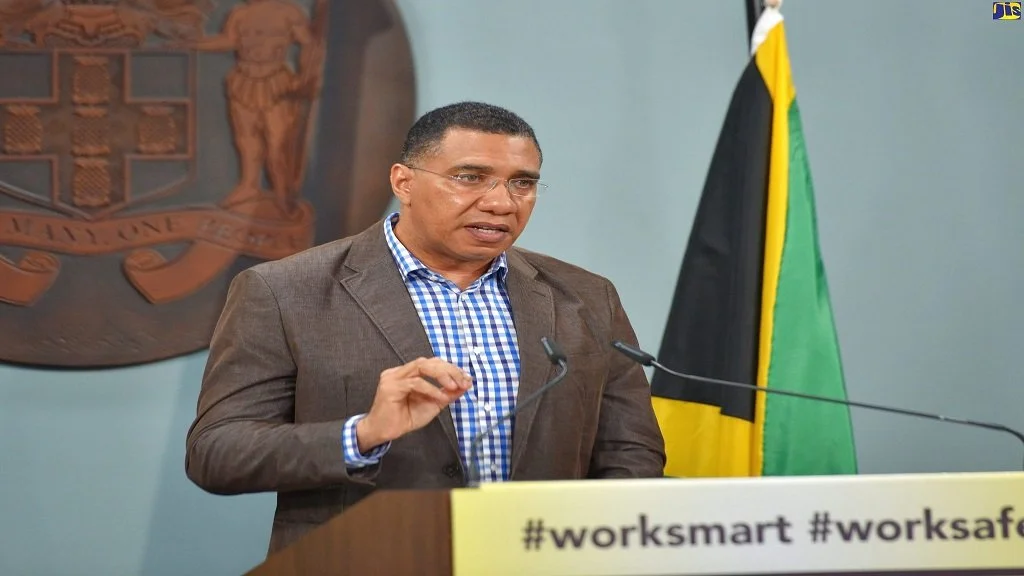
PM Holness leads special CARICOM mission to Haiti
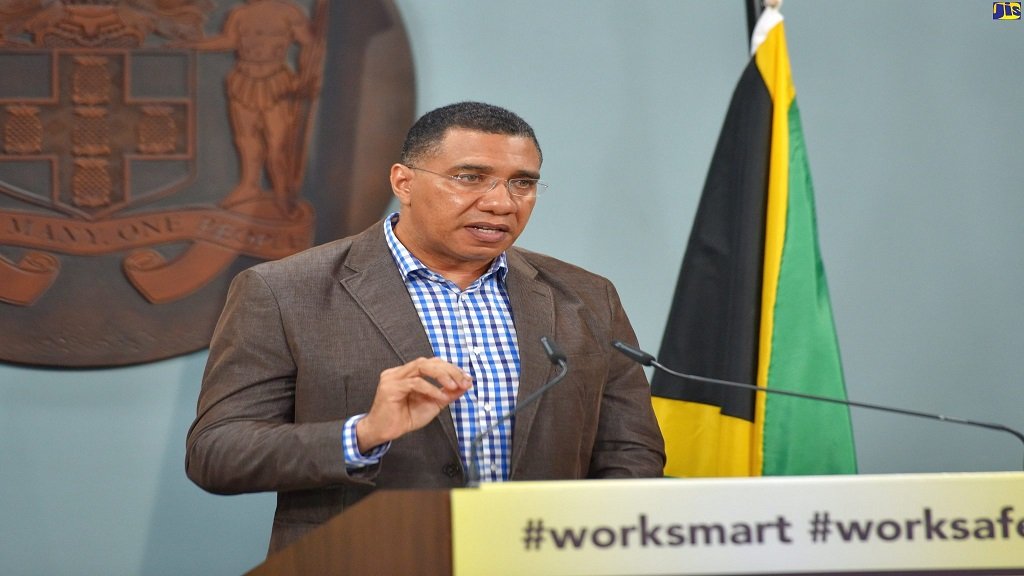
Prime Minister Andrew Holness left Jamaica on Monday morning to lead a special Caribbean Community (CARICOM) mission to Haiti.
Representatives from the Bahamas, Trinidad and Tobago and the CARICOM Secretariat are part of the delegation.
A statement from the Office of the Prime Minister says as part of this mission, members of the CARICOM delegation members are expected to have discussions with several critical Haitian stakeholder groups.
Holness is expected to return to the island later in the evening.
Monday’s mission comes ahead of a planned stakeholder meeting in Jamaica in the coming weeks to discuss the situation in Haiti which is confronted with political turmoil and corruption, and unrelenting gang violence, with armed groups committing murder, rape, as well as kidnappings.
At the end of the 44th regular summit of CARICOM Heads of Government in The Bahamas less than two weeks ago, CARICOM chairman and host Prime Minister Philip Davis said the regional grouping had taken its moral obligation seriously as it relates to resolving the issues in Haiti.
He dismissed the idea of boots on the ground and this stage, saying that the first step would be to see how CARICOM can strengthen the Haitian national police to enable them to restore order and curb the criminal activities on the island.

A Hunger Strike Makes Headlines Before Milan Fashion Week Begins

Stella Jean, one of the few Black designers in Italian fashion, protests her industry’s lack of diversity and inclusion.
The designer Stella Jean has often cut a solitary figure.
Since her debut at Milan Fashion Week in 2013, and with support from Giorgio Armani, the Haitian-Italian designer remains the only Black member of the National Chamber of Italian Fashion. She has often used her platform to address the need for better representation and financial support for design talent of color in the Italian fashion industry — a sector long criticized over instances of racism and cultural appropriation. In recent years, she has undertaken increasingly radical steps to encourage racial equity, co-founding a collective called WAMI, or We Are Made in Italy, after the Black Lives Matter movement in 2020.
Ms. Jean announced she would go on a hunger strike after a dramatic showdown at a news conference on Feb. 8 with Carlo Capasa, the chairman of the powerful national chamber, known officially as the Camera Nazionale della Moda Italiana, which organizes the Milan fashion shows that take place each spring and fall. She accused the chamber of “abandoning” WAMI and its promotion of young designers of color working in Italy, saying that she believed they had cut their support after a speech she made last September highlighting the challenges of being Black and Italian in the industry.
Now, she is taking this extreme step — saying she fears ongoing professional “recriminations” against her and the designers in her collective — to safeguard the less visible members of WAMI, which she co-founded with the African American designer Edward Buchanan, who is based in Milan, and Michelle Ngonmo, who leads the Afro Fashion Association. The Camera had provided financial and institutional support for WAMI members to produce and present three collections as part of Milan Fashion Week. But in an October letter sent to Ms. Ngonmo, Mr. Capasa said that WAMI was “no longer in line with the current strategy,” adding that the Camera would continue to assess support for collections or projects by the collective on an ad hoc basis. Facing a considerable reduction in funding for the project, Ms. Jean said WAMI’s operations would be suspended, citing the “health and well being” of its members.

“After we confirmed the Camera’s abandonment of WAMI without further specifications and assurances,” Ms. Jean said over a video call, “some collective members confided in me that they feared the worst for themselves and their livelihoods as they suddenly found themselves in an extremely critical and time-sensitive situation.”
She added, “I found myself holding the responsibility of the lives of these people who had relied on and believed in WAMI and who at that moment had their lives hanging in the balance. That’s why I offered to swap what little I could. I understood that if I stopped demanding equal opportunity, Mr. Capasa would, in turn, have a guarantee that nothing would ever happen to any of these designers or people working in fashion.”
In an email sent to The New York Times, Mr. Capasa said the Camera Della Moda had not withdrawn its support for WAMI. He said that he had offered the collective a free venue for Milan Fashion Week, which begins on Feb. 21, and that slots on the calendar remained available and at no charge to WAMI designers and Ms. Jean, who announced that she would no longer participate in the show.
“No step backward was taken on our part on the support we offered. Economic support for the production of collections and events for brands is not part of the core of Cameras’s activities. Any additional economic support may be one-off for new brands, especially at the beginning of their journey,” Mr. Capasa wrote. Although there was never a signed partnership, he added, “we are very proud to have always supported WAMI and the Afro Fashion Association projects, adopting different ways depending on the possibilities available at different times.”
Mr. Capasa said that two previous WAMI designers were presenting collections as part of the official calendar in Milan this season, and that there would be a new event, the Black Carpet Awards, to be held on Feb. 24, that would showcase work by Italian-based designers of color.
Ms. Jean previously stepped away from the fashion calendar in 2020, saying that she would not return until there were more Black designers on the schedule. Last season, two non-Italian designers of color — Maximilian Davis and Rhuigi Villaseñor — made debuts at Salvatore Ferragamo and Bally, partly spurring Ms. Jean’s comeback show last September. On Friday, Mr. Capasa added that he regretted that neither Ms. Jean nor several WAMI members would present during the fashion week and he hoped that would change.
While Ms. Jean praised the appointment of Mr. Davis, who is British-Trinidiadian, and Mr. Villaseñor, who is Filipino American, in European fashion houses, calling it “important and symbolic,” she also said that designers of color who might fall under the category of “made in Italy” were “completely ignored.” Talent cannot only be exported, she argued. It must also be homegrown — including by investing in and supporting young talent accessing college placements, internships, jobs or even showing collections on the mainstream calendar.
“Black made in Italy can speak to and tell so many things about the national condition and what happens in this country,” Ms. Jean said.

“I’m mindful of the fact that I arrived with a blue U.S. passport here and a Parsons degree,” said Mr. Buchanan, a co-founder of WAMI who has lived in Milan for two decades. “But if I had a passport from Nigeria or Somalia, it would have likely been a different story.”
He called Ms. Jean’s decision to go on a hunger strike “a personal one,” though he agreed with her statements about the challenges of being Black and working in fashion in Italy. “I can’t say enough about these struggles and difficulties,” he said. “I have had many of them, too, and ultimately I have been within the interiors of the fashion establishment in Italy for 25 years.”
The global fashion industry has been under sustained pressure in recent years to improve representation and racial equity both in front of and behind the camera. But several racist gaffes by Italian fashion houses, including Gucci’s 2019 “blackface” sweater with a mouth cut out and trimmed in red, and Prada’s 2018 keychain of a monkey with inflated lips, has placed Italian fashion under particular scrutiny.
Italy is whiter than most European countries — and does not collect racial data in its population census, nor does it have birthright citizenship, which means that children of immigrants who are born in the country do not automatically become Italian citizens.
In a New York Times investigation published in 2021 that attempted to track representation progress, many Italian brands said regulation prohibited companies from processing data on race, ethnicity, political opinions, religious beliefs, trade union membership or sexual orientation without explicit consent. This meant they were unable to participate in charting whether there were more people of color in their design studios, sales rooms, on their runways and in their campaigns.
For Ms. Jean, the future of minority talent in the Italian fashion establishment remains far from certain. She said her hunger strike felt like a last stand after feeling as though she and her younger peers had been professionally blacklisted for their activism.
“I’m a small independent designer, and I’m the only Black-owned brand in the history of fashion of the Chamber — this does not make me stronger than others,” she said. “I’m always aware of being a flea near these giants and of my perceived inability to put convincing arguments on the table. When I learned that my companions were in such a disparate situation, I had nothing else left to barter with.”
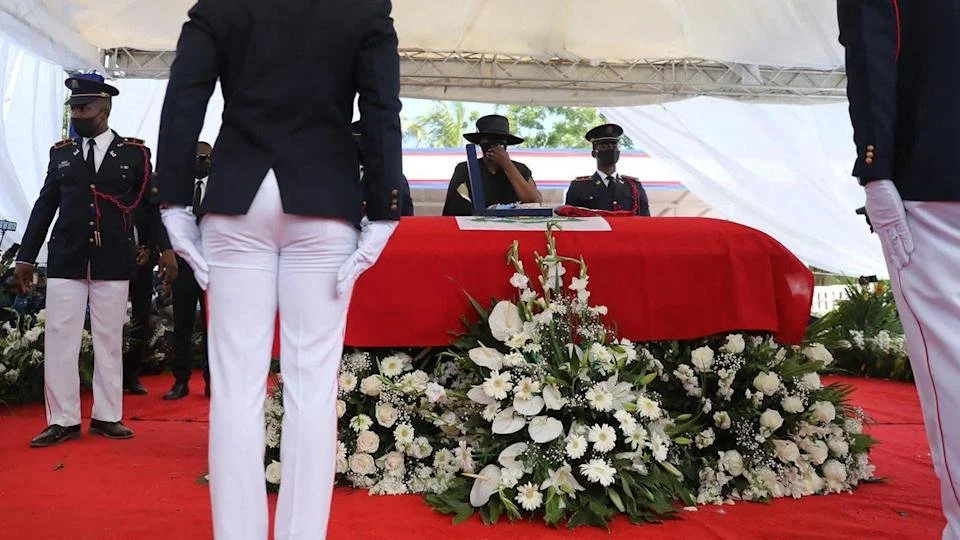
Haitian president's funeral takes place amid violent protests
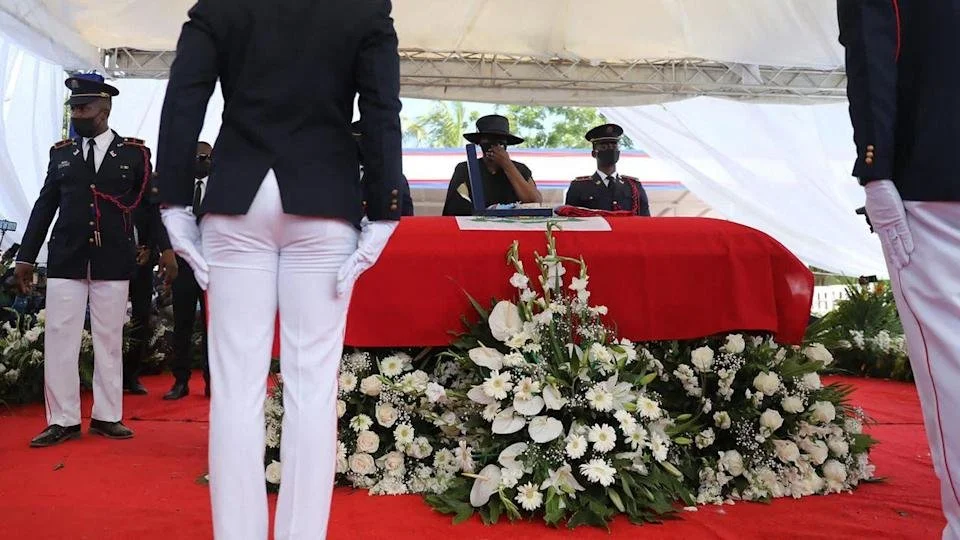
The private funeral for assassinated Haitian President Jovenel Moïse took place on Friday as protests continue to erupt in the country, AP reports.
State of play: At the start of the ceremony, several Moïse supporters stood outside, the residence, shouting, "Justice for Jovenel!" and "Justice! Justice!" as politicians arrived. When León Charles, Haiti's national police chief, arrived, people surrounded him, calling him an "assassin," per AP.
- Protesters clashed with police outside the event, and shots were fired into the air, U.S. officials told AP. There were no immediate reports of injuries and funeral guests were not put in danger, Reuters notes.
- U.S. Ambassador to the United Nations, Linda Thomas-Greenfield, was in attendance, but departed less than a half hour into the funeral, per the New York Times.
- "[T]he presidential delegation is safe and accounted for in light of the reported shootings outside of the funeral," White House press secretary Jen Psaki said at a press briefing on Friday.
- "They’re on their way back to the United States, we are deeply concerned about unrest in Haiti, and this critical moment, Haiti’s leaders must come together to turn a united path that reflects the will of the Haitian people."
- "We remain committed to supporting the people of Haiti in this challenging time."
The big picture: The funeral comes two weeks after Moïse's assassination and the investigation into what happened remains ongoing. Some protesters "were angry that the president would be buried before the investigation into his assassination was completed," the Times writes.
- Several suspects have been arrested in connection to the killing.
- Haiti's Ambassador to the U.S. Bocchit Edmond told CNN earlier this month that "there is no doubt" the assassins had inside help.
What they're saying: "They’re watching us, waiting for us to be afraid," said Martine Moïse, wife of the late president.
- "We don’t want vengeance or violence. We’re not going to be scared."
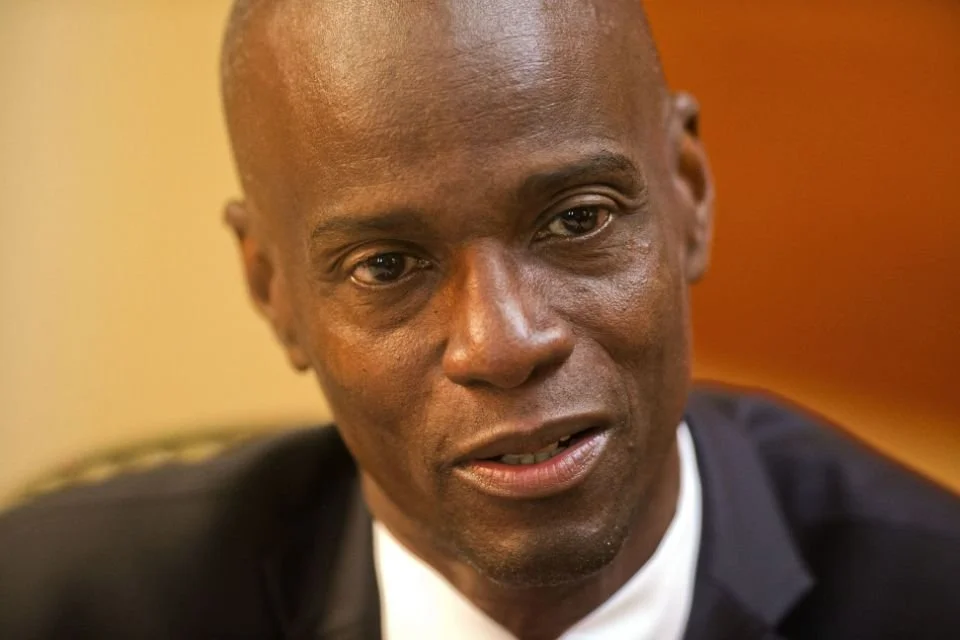
Official: Haiti President Jovenel Moïse assassinated at home
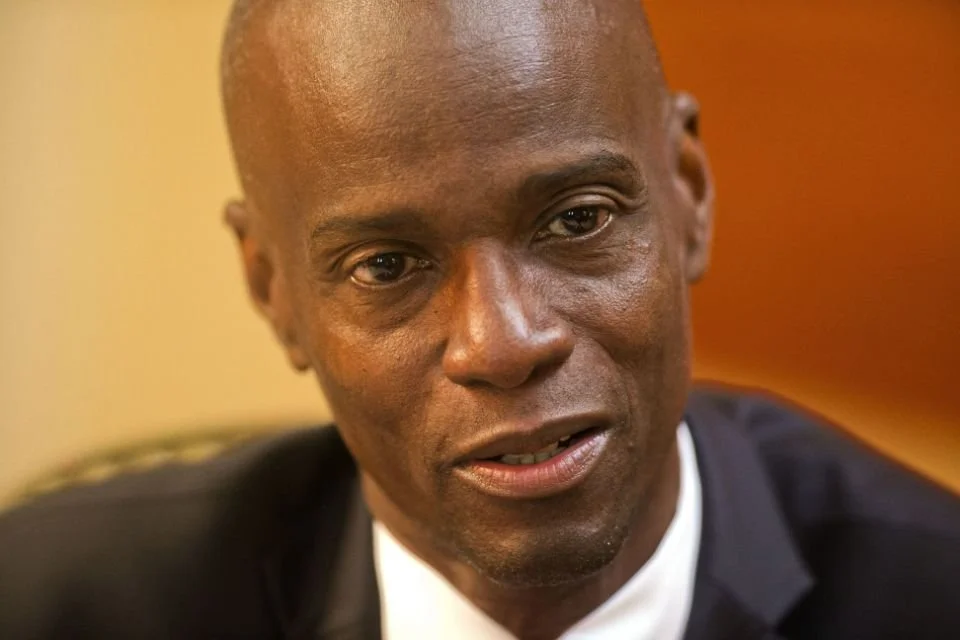
PORT-AU-PRINCE, Haiti (AP) — Gunmen assassinated Haitian President Jovenel Moïse and wounded his wife in their home early Wednesday, inflicting more chaos on the unstable Caribbean country that was already enduring an escalation of gang violence, anti-government protests and a recent surge in coronavirus infections.
Claude Joseph, the interim prime minister, confirmed the killing and said the police and military were in control of security in Haiti, where a history of dictatorship and political upheaval have long stymied the consolidation of democratic rule.
While the streets of the Haitian capital, Port-au-Prince, were quiet Wednesday morning, some people ransacked businesses in one area. The country appeared to be heading for fresh uncertainty ahead of planned general elections later this year. Moïse, 53, had been ruling by decree for more than a year after the country failed to hold elections and the opposition demanded he step down in recent months.
Former President Michel Martelly, whom Moïse succeeded, said he was praying for first lady Martine Moïse, calling the assassination “a hard blow for our country and for Haitian democracy, which is struggling to find its way.”
Joseph said Martine Moïse, 47, was shot and in a hospital. He condemned the president's killing as a “hateful, inhumane and barbaric act.”
“The country’s security situation is under the control of the National Police of Haiti and the Armed Forces of Haiti," Joseph said in a statement from his office. “Democracy and the republic will win.”
In the statement, Joseph said some of the attackers spoke in Spanish but offered no further explanation. He later said in a radio address that they spoke Spanish or English.
A resident who lives near the president’s home said she heard the attack.
“I thought there was an earthquake, there was so much shooting,” said the woman who spoke on condition of anonymity because she fears for her life. “The president had problems with many people, but this is not how we expected him to die. This is something I wouldn’t wish on any Haitian.”
The U.S. Embassy in Haiti said it was restricting U.S. staff to its compounds and that the embassy would be closed Wednesday because of ‘’an ongoing security situation.''
The White House described the attack as “horrific” and “tragic” and said it was still gathering information on what happened. U.S. President Joe Biden will be briefed later Wednesday by his national security team, spokesperson Jen Psaki said during an interview on MSNBC.
“The message to the people of Haiti is this is a tragic tragedy,” she during a previously scheduled interview on CNN. “And we stand ready and stand by them to provide any assistance that’s needed.”
Haiti's economic, political and social woes have deepened recently, with gang violence spiking heavily in Port-au-Prince, inflation spiraling and food and fuel becoming scarcer at times in a country where 60% of the population makes less than $2 a day. These troubles come as Haiti still tries to recover from the devastating 2010 earthquake and Hurricane Matthew that struck in 2016.
Opposition leaders accused Moïse of seeking to increase his power, including by approving a decree that limited the powers of a court that audits government contracts and another that created an intelligence agency that answers only to the president.
In recent months, opposition leaders demanded the he step down, arguing that his term legally ended in February 2021. Moïse and supporters maintained that his term began when he took office in early 2017, following a chaotic election that forced the appointment of a provisional president to serve during a year-long gap.
___
This story has been updated to correct that Moïse ruled by decree for more than a year, not more than two years.

The boy who loved soccer in Haiti grew up to love football in Buffalo

At first Rev. Chuck Whited didn’t understand what was happening. He heard the loud pop of a wall cracking and felt the ground sway.
Then he knew.
The earthquake that struck Haiti in 2010 killed more than 100,000 people and displaced hundreds of thousands more.
Whited is pastor of First Trinity Lutheran Church in the Buffalo suburb of Tonawanda. Some years before the quake, his church had begun doing mission work at the Children of Israel Orphanage in Les Cayes, a seaport 120 miles from Port-au-Prince.
Erik BradyFri, May 7, 2021, 10:32 AM
At first Rev. Chuck Whited didn’t understand what was happening. He heard the loud pop of a wall cracking and felt the ground sway.
Then he knew.
The earthquake that struck Haiti in 2010 killed more than 100,000 people and displaced hundreds of thousands more.
Whited is pastor of First Trinity Lutheran Church in the Buffalo suburb of Tonawanda. Some years before the quake, his church had begun doing mission work at the Children of Israel Orphanage in Les Cayes, a seaport 120 miles from Port-au-Prince.- ADVERTISEMENT -https://s.yimg.com/rq/darla/4-6-0/html/r-sf-flx.html
He and his wife, Susan, adopted two children from the orphanage in 2007, but by 2010 they had yet to take them home; miles of bureaucratic red tape kept preventing it. Chuck and Susan dearly wanted these two to join their four biological children. And each year there would be tears all around when travel visas were denied yet again.

Then the earthquake hit. Chuck and his missionary team, in those frantic moments, led children to the safety of the soccer pitch — a refuge of open space away from buildings. That field had long been a different sort of refuge for his adopted son, Wisken, who had spent many happy hours there playing with the other children.
The human toll of the earthquake remains incalculable, but one glimmer of light is this: Haitian authorities said Lovelie, 11, and Wisken, 7, could at last leave for their new home in the United States. They arrived in Buffalo six days after the quake — and could not believe what they saw.
“This being Buffalo, there was a lot of snow on the ground,” Chuck says of that January day. “They would go to the back door, look at the snow, and just giggle. Then they would go back inside to warm up, and then open the door again and giggle some more.”
Lovelie is 22 now and works in child care. Wisken is 18 and a senior at Canisius High School, the defending Catholic state champion in football. He plays wide receiver on offense, and cornerback and safety on defense — and, on special teams, he kicks off, punts, and kicks field goals and extra points.
“He rarely ever leaves the field,” says Bryce Hopkins, assistant head coach and special-teams coach.
Saturday Canisius will play St. Francis High School in the championship game of the local Catholic league; that will end a truncated spring season, there being no state title game this time.
An American sport wins out
How Wisken got from that soccer field in Haiti to a football field in Buffalo is an American story. Soccer was his first love; all the kids at the orphanage played it. And when he got to the U.S., that love stayed with him, until football won him over.
“No matter what kind of ball we gave him at first — basketball, football — he kicked it like a soccer ball,” his father says. “Everything was a soccer ball.”
Then, as the years rolled on, Wisken could see how much Buffalo loved the Bills. He dearly wanted to try American football. So, as an eighth-grader at Christian Central Academy, he told his parents he wanted to go to Canisius and play football there. His parents liked the Canisius part, for an education grounded in faith, but his mother wasn’t so sure about the football part.
“So many kids get hurt playing football,” she says. “That’s what you hear.”

So Wisken played soccer as a freshman, but never stopped pestering his parents about football until they finally let him try out for junior varsity as a sophomore. He struggled at first, trying to learn the rules and the game’s finer points. But he excelled right away at kicking; he had long known how to do that.
As a junior, Wisken kicked for the varsity team — and emerged as the unsung hero of the state championship game in 2019, which is the last time there was one. Canisius beat Cardinal Hayes of the Bronx, 25-24, in storybook fashion. Quarterback Tyler Baker hit receiver Nik McMillan for a 13-yard TD as time ran out, and fullback C.J. Ozolins crashed in for the winning two-point conversion.
Cardinal Hayes had scored four touchdowns but made none of its conversions. Canisius scored three touchdowns — plus Wisken’s 28-yard field goal and both of his extra points.
“It’s simple math,” Hopkins says. “Three touchdowns doesn’t beat four touchdowns without Wisken.”
Think of Canisius as Kicker High, in the sense that Penn State is Linebacker U. All three placekickers who preceded Wisken went on to play for Division I programs: Michael Tarbutt at Connecticut and Minnesota, Blake Haubeil at Ohio State, and Tristian Vandenberg at Ohio University. And the other day Haubeil signed a free-agent contract with the Tennessee Titans.
“There was a ton of pressure on Wisken last year, following in the footsteps of those guys,” Hopkins says. “But it’s like he doesn’t feel pressure.”
A late start in football
Wisken played sparingly, other than kicking, as a junior. But this spring, as a senior, he emerged as a force. He scored 27 points in a 63-0 win against rival St. Joseph’s Collegiate Institute — nine for nine on extra points plus two touchdowns on receptions and one more on an interception. Canisius is ranked No. 1 in The Buffalo News large-schools poll, and Wisken is the team’s leading scorer.
“I don’t know if we have ever had a kid who started playing football so late who has been this successful,” Canisius coach Rich Robbins says. “It speaks to how hard he works.”
And not only in football. Among the instruments he plays, by his mother’s count, are the saxophone, tenor sax, piano, guitar, ukulele — and the drums for Sunday worship at First Trinity. “God has gifted him with many talents,” she says.
Wisken will go to college at Liberty University, in Lynchburg, Va., where he hopes to walk on to a football team that finished No. 18 in the Amway USA TODAY coaches poll last season. And he has his sights set even higher. Ask him about Greg Rousseau, the Bills’ top draft choice, whose mother and father hail from Haiti, and Wisken has a ready answer.
“That’s pretty cool,” he says. “Hopefully one day that will be me.”
That seems unlikely, as Wisken is 5-11, 180 pounds.
Then again, his whole life has been unlikely.
“I am extremely appreciative for what my parents have done for me,” he says. “I am grateful for them.”
And for his adopted hometown of Buffalo, where he learned to love that other kind of football.

POWER LIST

The 2021 MWBE Power 50
The executives and officials boosting government contracting with women and people of color in New York.
Minority- and women-owned business enterprises, or MWBEs, enjoy increasing support in City Hall and Albany. Both Gov. Andrew Cuomo and New York City Mayor Bill de Blasio have set ambitious targets for awarding government contracts to MWBEs. Cuomo has prioritized MWBE contracting since his first year in office, while de Blasio has moved the needle recently by demanding that each city agency appoint a chief diversity officer as soon as possible.
While sexism and racism continue to pose formidable hurdles for business owners who are not white men, racial and gender disparities are increasingly under public scrutiny. And while the coronavirus pandemic has disproportionately harmed people of color, policymakers have doubled down on their efforts to diversify the pool of city and state government contractors as one way to rectify historical inequities. City & State’s first MWBE Power 50 – compiled in partnership with journalist Leonard Robinson – recognizes the contractors, public officials, industry leaders and advocates behind rising utilization rates for New York’s businesses owned by women and racial minorities.
1. Julissa Gutierrez
Chief Diversity Officer for the State of New York
julissa.jpg
When Julissa Gutierrez was appointed New York’s chief diversity officer last summer, she was tasked with registering more MWBEs and reaching the state’s ambitious 30% MWBE contract utilization goal – which New York nearly did, with the state announcing in December that 29.51% of its contracts had been awarded to firms owned by women or minorities in the 2019-2020 fiscal year. An expert on Latino issues and civic engagement, Gutierrez previously held key roles with the National Association of Latino Elected and Appointed Officials Educational Fund.
2. Jonnel Doris & Dynishal Gross
Commissioner; Deputy Commissioner, Division of Economic and Financial Opportunity, New York City Small Business Services
Jonnel Doris - NYC Department of Small Business Services.jpg
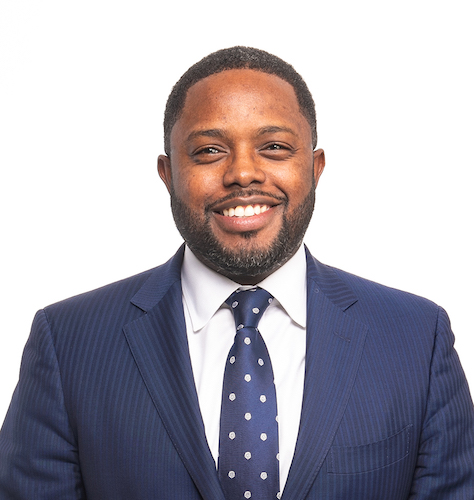
Jonnel Doris ( NYC Department of Small Business Services )
Dynishal Gross.jpg
Dynishal Gross ( Submitted )
Jonnel Doris has been a key advocate for MWBEs long before he was appointed to lead New York City Small Business Services in May 2020, having previously led the Mayor’s Office of MWBEs and having served as chief diversity officer for Gov. Andrew Cuomo’s Office of Storm Recovery. In addition to overseeing the city’s MWBE program at SBS, Doris co-chairs the Small Business Subcommittee of the Taskforce on Racial Inclusion and Equity. His colleague Dynishal Gross, the deputy commissioner for SBS’ Division of Economic and Financial Opportunity, manages the city’s certification of MWBEs while also connecting them with resources for procuring city contracts. She previously worked for members of the New York City Council and was assistant commissioner for business programs in SBS’ Division of Business Services.
3. Michael Garner
Chief Diversity Officer, Metropolitan Transportation Authority
Michael Garner-Pat Cashin.jpg
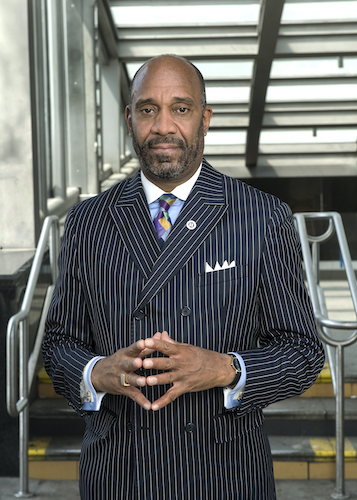
Michael Garner ( Pat Cashin )
As the MTA’s chief diversity officer, Michael Garner has overseen significant growth in MWBE contracting. The transit authority, which has the state’s highest discretionary program threshold at $1 million and assists with lending, appropriated $722 million to MWBE firms in the 2019-2020 fiscal year, the largest amount of any New York agency, and is on track to hit Gov. Andrew Cuomo’s goal of utilizing MWBE firms for 30% of the state’s contracting. Garner previously worked at the New York City School Construction Authority, another agency leading the way on MWBE contracting, and serves as president of One Hundred Black Men of New York, a nonprofit empowering the Black community.
4. Rodneyse Bichotte Hermelyn
Chair, Assembly Subcommittee on Oversight of Minority and Women-Owned Business Enterprises
Rodneyse Bichotte Hermelyn-Office of Rodneyse Bichotte Hermelyn.jpg
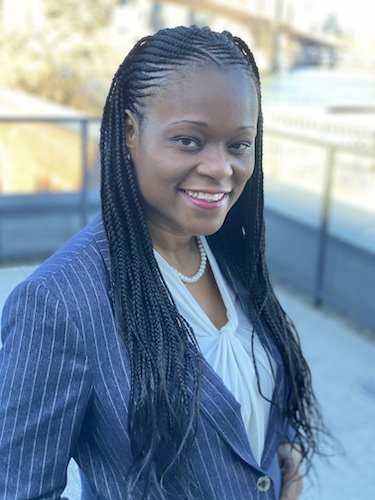
Rodneyse Bichotte Hermelyn ( Office of Rodneyse Bichotte Hermelyn )
Assembly Member Rodneyse Bichotte Hermelyn is a vocal advocate for MWBEs in Albany. As chair of the Assembly’s MWBE oversight subcommittee, the Brooklyn lawmaker has provided legislative support for Gov. Andrew Cuomo’s 30% MWBE contracting target, expanding MWBE lending options and educational resources, pressuring state agencies to collect more data on MWBE firms that seek government contracts and making resources available at the state level for MWBEs and other small businesses impacted by COVID-19. She is a member of the Mayor’s Advisory Council on MWBEs.
5. James Sanders Jr.
Chair, State Senate Committee on Banks
James Sanders.jpg
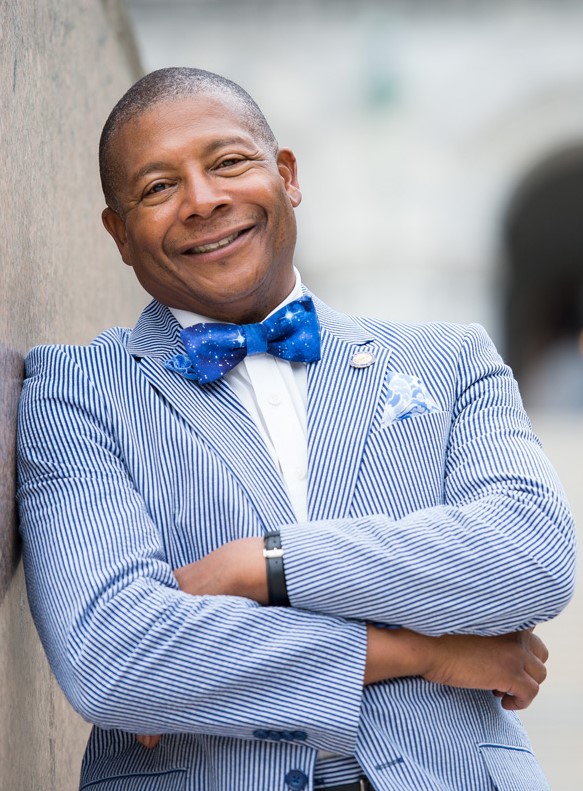
State Sen. James Sanders Jr. has long been a leading voice in Albany for MWBEs. As chair of the Committee on Banks, he has sought to expand lending options, combated predatory lending practices in marginalized communities and ensured access to lending resources during the COVID-19 pandemic. Last May, Sanders and Assembly Member Rodneyse Bichotte Hermelyn hosted an MWBE and small business call to discuss the pandemic’s impact and how to provide resources for inclusion and recovery.
6. Magalie Austin
Senior Adviser and Director, Mayor’s Office of Minority- and Women-Owned Business Enterprises
Maggie Austin last May was appointed to lead the New York City Mayor’s Office of Minority- and Women-Owned Business Enterprises. She has led the city’s MWBE program during a critical period, as the coronavirus pandemic threatened many small businesses and disproportionately affected people of color. In July, as city agencies were required by executive order to appoint chief diversity officers to help reach the city’s goals for MWBE contract procurement, the Mayor’s MWBE office was tasked with implementing the executive order and ensuring compliance.
7. Robert Cornegy
Chair, New York City Council MWBE Task Force
RobertCornegy - Raeshon Robinson.jpg
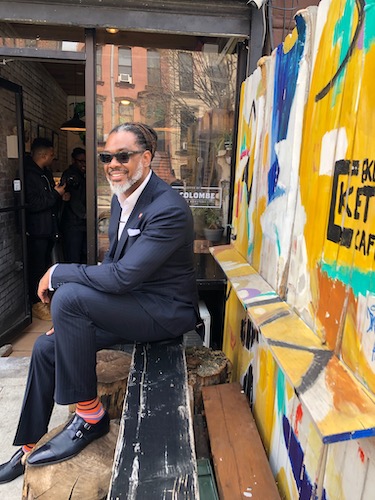
Robert Cornegy ( Raeshon Robinson )
New York City Council MemberRobert Cornegy, who represents Bedford-Stuyvesant and Crown Heights, is seeking to represent all of Brooklyn as he campaigns to be the next borough president. In addition to chairing the Housing and Buildings Committee, Cornegy also leads the New York City Council MWBE task force, which supports efforts to boost MWBE contract utilization and increase the number of minority-owned businesses throughout the city. He is also a member of the Mayor’s Advisory Council on MWBEs.
8. Nina Kubota & Suzanne Veira
President; Chief Diversity Officer, New York City School Construction Authority
Suzanne Veira-Scott Lindeman.jpg
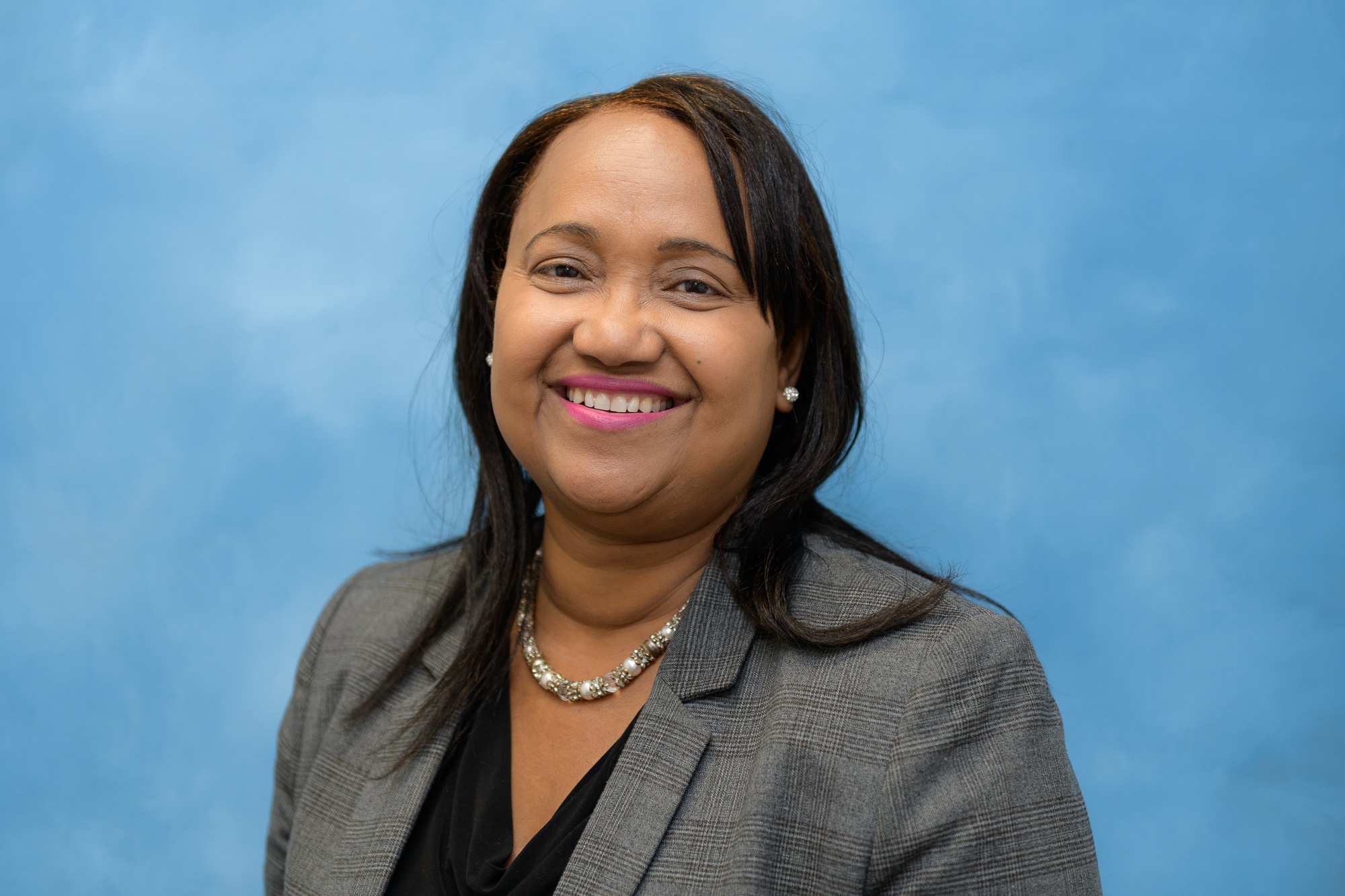
Suzanne Veira ( Scott Lindeman )
After Lorraine Grillo was appointed senior adviser for recovery by New York City Mayor Bill DeBlasio in February 2021, she handed off the reins at the New York City School Construction Authority to Nina Kubota. Kubota, who served as the SCA’s senior vice president for capital plan development and implementation, has big shoes to fill. But she’ll continue to work alongside a fellow SCA veteran in Suzanne Veira, above, the authority’s chief diversity officer, to boost the number of contracts made available to MWBE firms and involve minority communities in dialogue about school construction throughout New York City.
9. Crystal Peoples-Stokes, Inez Dickens & Latrice Walker
Assembly Members
Crystal Peoples-Stokes - Office of Assemblywoman Crystal Peoples-Stokes.jpg
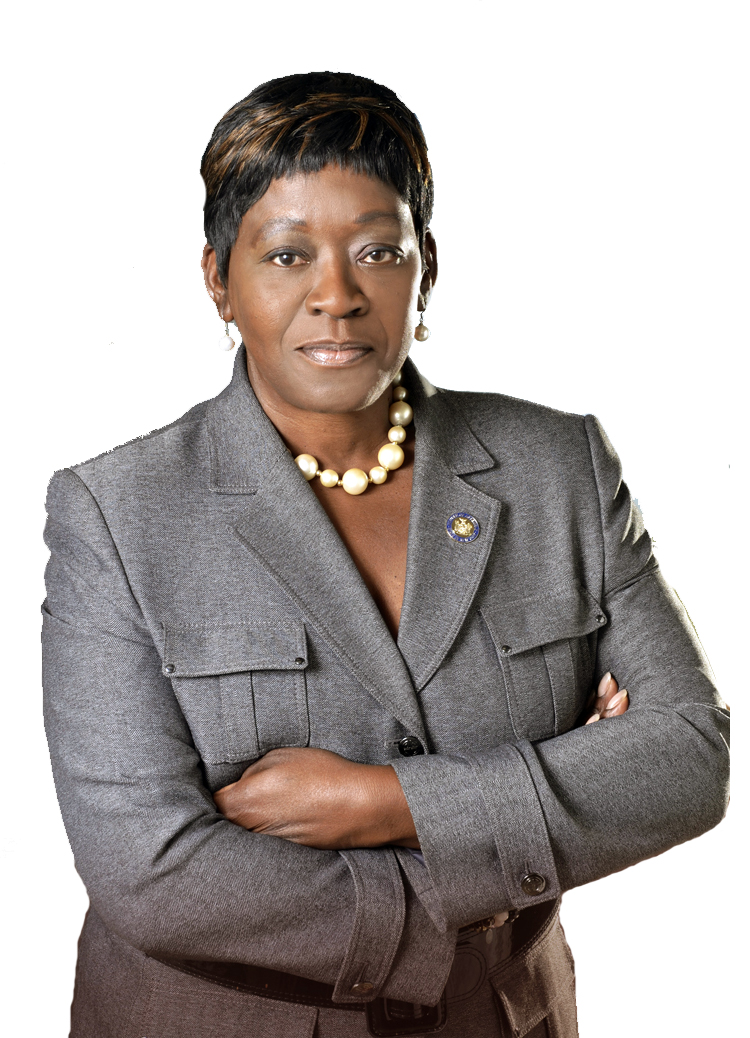
Office of Assemblywoman Crystal Peoples-Stokes
Inez Dickens office pic.jpeg

Inez E. Dickens ( Office of Inez E. Dickens )
latrice-monique-walker-celeste-sloman.jpg
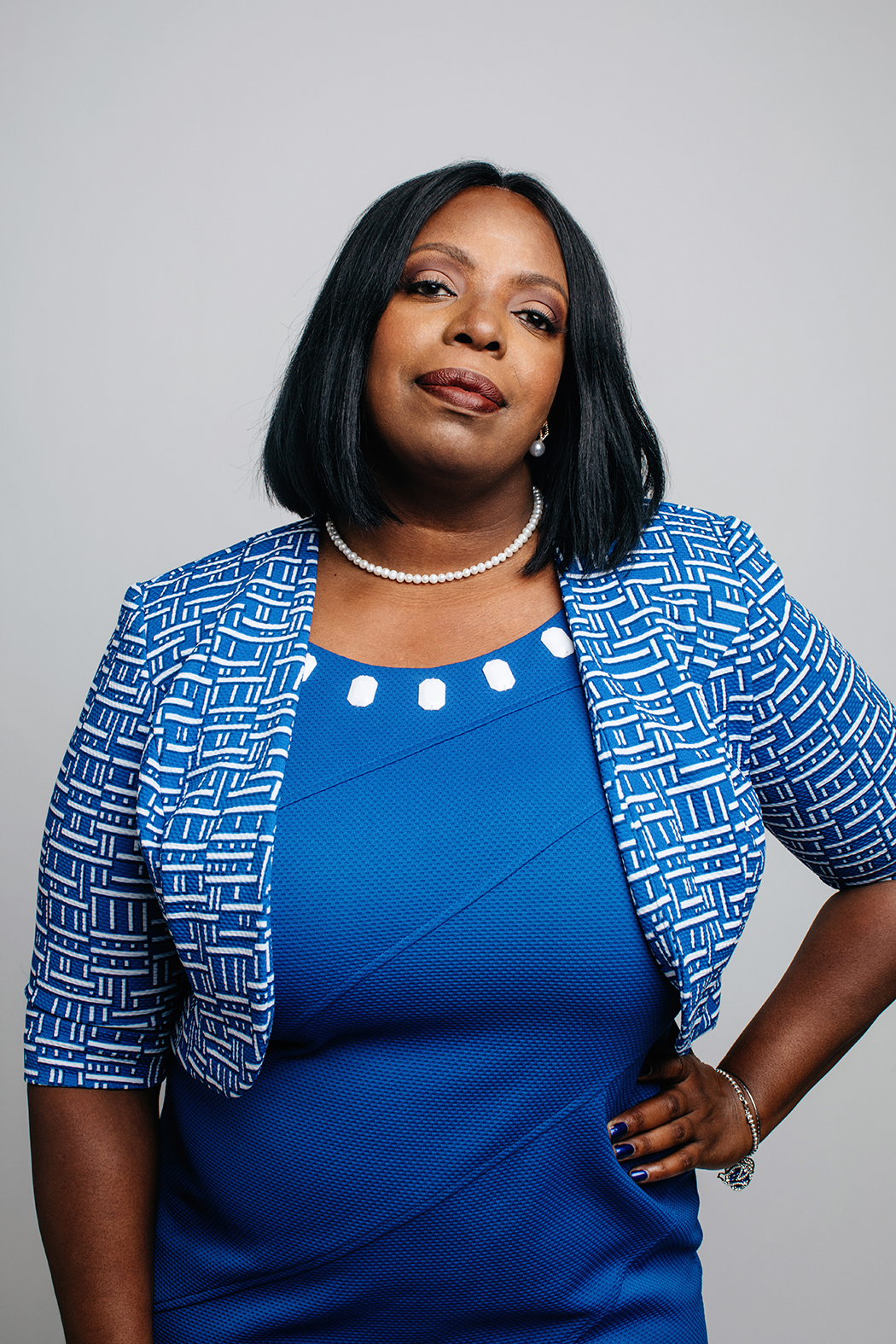
Latrice Monique Walker ( Photo by Celeste Sloman )
Long before she became Assembly majority leader in 2018, Buffalo lawmaker Crystal Peoples-Stokes was an advocate of MWBEs. She served on an MWBE task force Gov. Andrew Cuomo created in 2011, helped create the Assembly Subcommittee on MWBEs and served as its chair for several years starting in 2012, a time when the state began setting more ambitious MWBE contracting targets. This year she notched a big win with the passage of her legislation legalizing recreational marijuana, which includes language ensuring revenue is reinvested in communities of color. Fellow Assembly Member Inez Dickens of Harlem has also supported MWBEs in Albany, supporting a 2019 measure extending the state’s MWBE program. Assembly Member Latrice Walker of Brooklyn has also championed MWBE causes, including efforts to establish a Women of Color in Tech Day last year and eliminate net worth requirements for MWBE certification.
10. Louis Coletti
President and CEO, Building Trades Employers Association
Lou Coletti.jpg
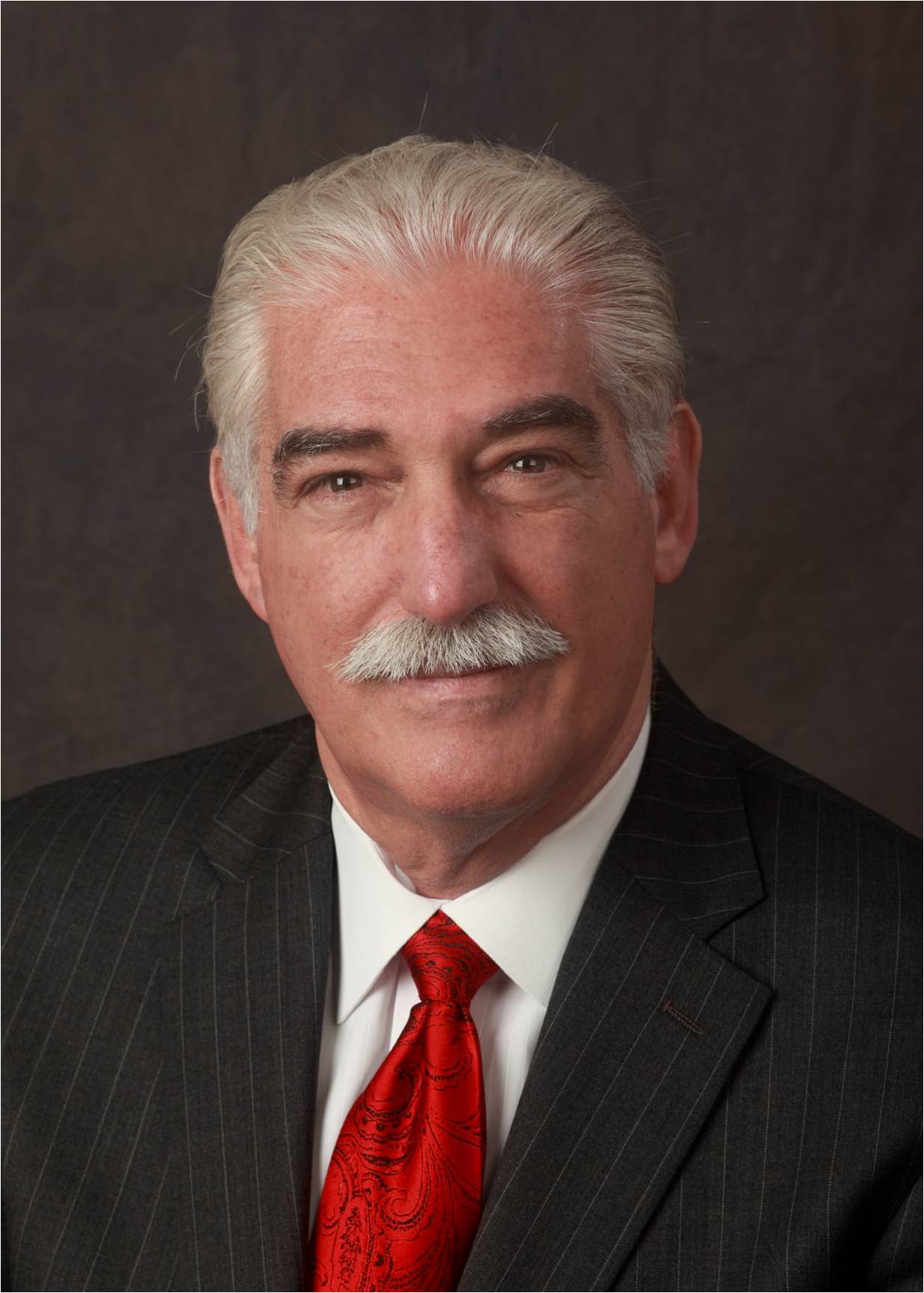
Since 1997, Louis Coletti has served as president and CEO of Building Trades Employers Association, which represents construction contractors in New York and has been an important player in the industry’s local MWBE community. Coletti has spearheaded the BTEA’s MWBE Leadership Council, which meets quarterly to discuss and strategize on MWBE topics in the construction industry. Additionally, Coletti is a member of the New York City Comptroller’s Advisory Council on Economic Growth through Diversity and Inclusion.
11. Wendy Garcia
Chief Diversity Officer, Office of the New York City Comptroller
WENDY GARCIA.jpg

Wendy Garcia ( Submitted )
Wendy Garcia has served for seven years as chief diversity officer for New York City Comptroller Scott Stringer, a mayoral candidate whose office has kept close tabs on MWBE contracting. Garcia leads the Office of Diversity Initiatives, which publishes “Making the Grade: New York City Agency Report Card on Minority- and Women-Owned Business Enterprises,” an annual report assessing city agencies’ progress towards diversity goals. She also runs the Comptroller’s Advisory Council on Economic Growth through Diversity and Inclusion, which aims to increase supplier diversity.
12. Stephanie Burns
President, Women Builders Council
Stephanie Burns is president of the Women Builders Council, a leading New York membership association focused on empowering women in the construction industry. In this capacity, her efforts of implementing programming and strategic planning have proven essential to New York’s construction MWBE community. Her responsibilities have also included building a pipeline of students studying in STEM programs to find careers in construction and engineering. As a vice president at Turner Construction, she leads strategic project and community planning on numerous workforce development projects.
13. Michael Massiah
Chief Diversity and Inclusion Officer, Port Authority of New York and New Jersey
Michael Massiah Headshot.jpg
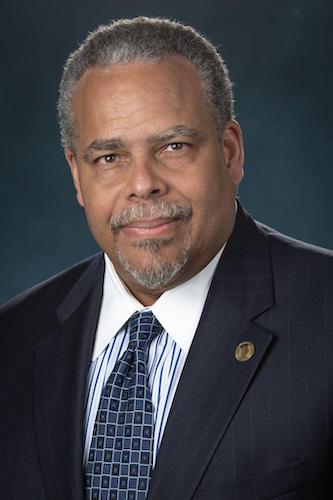
Michael Massiah ( Submitted )
As the chief diversity officer for the Port Authority of New York and New Jersey, Michael Massiah spearheads the authority’s diversity efforts, including awarding more contracts to MWBE firms. The veteran Port Authority official has had a higher target since 2018, when the MWBE contract participation goal was raised to an ambitious 30%, including 20% of contracts going to minority-owned firms and 10% to women-owned enterprises. The authority has reported that two-thirds of the companies it works with are MWBE-certified.
14. Reuben McDaniel III
President and CEO, Dormitory Authority of the State of New York
Reuben R McDaniel III-DASNY.jpg
Reuben R McDaniel III ( DASNY )
Last summer, Reuben McDaniel was confirmed as the president and CEO of the Dormitory Authority of the State of New York, a trailblazer in awarding contracts to MWBEs. McDaniel arrived at DASNY after a career in finance, most recently at Raymond James. McDaniel, who gained governmental experience as chair of the Atlanta Board of Education while still in the private sector, now runs an authority that awarded $184 million to MWBE firms in the 2019-2020 fiscal year, or nearly a third of all its contracts.
15. Elizabeth Velez
President and Chief Contract Officer, Velez Organization
Elizabeth Velez - Greg Morris.jpg
Elizabeth Velez ( Greg Morris )
Elizabeth Velez is one of the leading contractors in the MWBE space, building her construction firm into a heavyweight in an industry dominated by white men while continuing to advocate for smaller operations seeking to follow in her footsteps. Her Velez Organization was launched in 1972 and has built affordable housing in the Bronx and Harlem as well as a portfolio of health care, educational and other large-scale projects throughout New York. A member of the Mayor’s Advisory Council on MWBEs, she was named chair of the New York Building Congress last year.
16. Jacques Andre DeGraff
Chair, Minority Business Enterprise Leadership Summit
Jacques DeGraff- Celeste Sloman.jpg
Jacques DeGraff ( Celeste Sloman )
Rev. Jacques Andre DeGraff has been involved in MWBE coalitions for a quarter century. His role as a spiritual leader of Canaan Baptist Church of Christ in Harlem has placed him on the front lines of numerous social justice efforts, including boosting coronavirus vaccination rates among Black New Yorkers. He is an active member and former vice president of 100 Black Men of New York and helped launch the Eagle Academy for Young Men of Color. DeGraff previously chaired the New York City School Construction Authority Diversity Council.
17. Sandra Wilkin
Founder and President, Bradford Construction Corporation
Sandra Wilkin-Andre Beckles.jpg
Sandra Wilkin ( Andre Beckles )
As founder and former president of the Women Builders Council and a member of the Mayor’s Advisory Council on MWBEs, Sandra Wilkin has been recognized for mentoring other MWBE firms as means to boosting capacity and achieving city and state contracting targets. She has also led successful efforts to use legislation to boost MWBE contracting. Her women-owned Bradford Construction Corporation is also part of the Bravo Group, a partnership with fellow MWBEs Velocity Architecture & Engineering Group, Chu & Gassman Consulting Engineersand Skyline Engineering.
18. Cheryl McKissack Daniel
President and CEO, McKissack & McKissack
Cheryl McKissack Daniel - McKissack & McKissack.jpeg
Cheryl McKissack Daniel ( McKissack & McKissack )
Cheryl McKissak Daniel leads McKissack & McKissack, a minority-owned design and construction firm that dates back more than a century. Her company worked on Columbia University’s expansion, the World Trade Center and the former Atlantic Yards development. A past president of the Women Builders Council, she is a member of Women in Transportation, the New York Building Congress and the Mayor’s Advisory Council on MWBEs. Her sister, Deryl McKissack, runs another construction company named McKissack & McKissack, with a headquarters in Washington.
19. Samuel Padilla
President, Padilla Construction Services
Samuel Padilla-Submitted.png
Samuel Padilla ( Submitted )
Samuel Padilla leads Padilla Construction Services, an MWBE-certified construction firm that quickly established itself after its founding in 1993. Padilla was appointed to New York City Mayor Bill de Blasio’s MWBE advisory board when it was launched in 2015. His construction company has completed projects at the World Trade Center and the United Nations while working with major city and state agencies, including the Metropolitan Transportation Authority, the Port Authority of New York and New Jersey and the New York City School Construction Authority.
20. Nayan Parikh
President, Ashnu International
Nayan Parikh-PNC Photo.jpg
Nayan Parikh ( PNC Photo )
Nayan Parikh started out as a civil engineer in India and is now the owner of a Queens-based construction firm with multiple offices around the country and abroad, and along the way he has become a leader in New York’s MWBE community. Parikh founded Ashnu International as a general contracting and construction management company in 1998, becoming a trusted contractor to federal and state agencies along with clients in the private sector. He serves on the Mayor’s Advisory Council for MWBEs and is executive vice president of the National Association of Minority Contractors and president of NAMC's New York Tri-State Chapter.
21. Christopher Williams
Principal, Siebert Williams Shank & Co.
Christopher Williams-Travis Curry.jpg
Christopher Williams ( Travis Curry )
As board chair at Shank Williams Cisneros & Co. and principal of the affiliated Siebert Williams Shank & Co., Christopher Williams leads one of the largest MWBE financial services firms on Wall Street. Williams, who previously led The Williams Capital Group and Williams Capital Management, merged with Suzanne Shank’s Siebert Cisneros Shank in 2019. Other key executives at the company include former HUD Secretary Henry Cisneros and former New York City Comptroller William Thompson Jr.
22. Anyori Hernandez
Director of Emerging Managers, Office of the State Comptroller
Anyori Hernandez-Office of the State Comptroller.jpg
Anyori Hernandez ( Office of the State Comptroller )
While much attention is paid to how many contracts New York agencies award to MWBEs, another significant source of government funds that minority and women business owners compete for is in the pension fund managed by the state comptroller. State Comptroller Thomas DiNapoli’s Emerging Manager Program has diversified the portfolio of the Common Retirement Fund, with Barclays alum Anyori Hernandez investing more than $20 billion in assets with MWBEs.
23. Ehab Shehata
President and CEO, Bravo Group
Ehab Shehata-Kim Tyler Photography_BRAVO Group.jpg
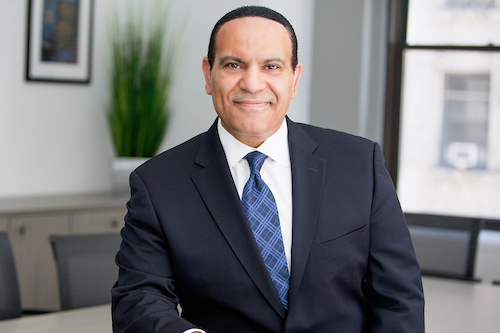
Ehab Shehata ( Kim Tyler Photography/BRAVO Group )
Ehab Shehata heads up Bravo Group, a full service architecture and engineering firm. Spearheaded by Shehata and Sandra Wilkin, Bravo is a collaborative effort of Velocity Architecture and Engineering Group, Chu & Gassman Consulting Engineers, Bradford Construction Corporation and Skyline Engineering, all leaders in construction and engineering. Under Shehata’s leadership, Bravo Group has taken on projects with educational institutions, national organization headquarters, health care facilities, transportation hubs and industrial projects, such as the ongoing restoration work at the Brooklyn Navy Yard.
24. Quenia Abreu
President and CEO, New York Women’s Chamber of Commerce
Quenia Abreu-Niurka Vidal.jpg
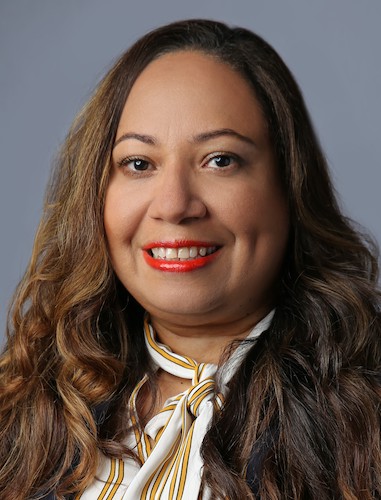
Quenia Abreu ( Niurka Vidal )
Quenia Abreu co-founded the New York Women’s Chamber of Commerce in 2002, when it became the first and only women’s chamber of commerce in the state. Abreu, who previously directed the Women’s Business Centers at the Queens Economic Development Corporation and the Hunts Point Economic Development Corporation, has led the NYWCC since 2004, spearheading its efforts in assisting firms seeking MWBE certification. A member of the Mayor’s Advisory Council on MWBEs, she also launched a women and minority business development center in Upper Manhattan.
25. Thai Lee
President and CEO, SHI
Since SHI was founded in 1989, Thai Lee has been at the helm of the leading information technology firm. The New Jersey-based company, formerly Software House International, has billed itself as the country’s largest minority- and women-owned business, with certifications from the Women’s Business Enterprise National Council, the New York & New Jersey Minority Supplier Development Council and New York City. Lee’s firm is currently the top MWBE contractor in New York City, with more than $100 million received on a $285 million contract.
26. Roly Acosta
President and CEO, JAG Companies
Roly Acosta runs JAG Companies, the New Jersey-based parent company of construction heavyweights such as Northeast Remsco Construction and Caldwell Marine International. The family-owned JAG Companies is one of the country’s biggest Hispanic-owned firms. The company has supported supplier diversity by growing and utilizing their MWBE subcontractor database. Northeast Remsco Construction is currently a top MWBE in New York City, having received $52 million to date this fiscal year.
27. Lourdes Zapata
President and CEO, SoBro
Lourdes Zapata-Kimberly Singh_LOFT.jpg

Lourdes Zapata ( Kimberly Singh/LOFT )
Lourdes Zapata in 2019 took the top position at the South Bronx Overall Economic Development Corporation, or SoBro, a community development organization serving one of the poorest congressional districts in the country. Zapata, the first Latina and woman to hold the position, had previously served as the organization’s director of community development. In between, Zapata served as chief diversity officer under Gov. Andrew Cuomo, a position in which she oversaw increased contracting for MWBE firms.
28. Lloyd Williams
President and CEO, The Greater Harlem Chamber of Commerce
Lloyd Williams - Hubert Williams.jpg
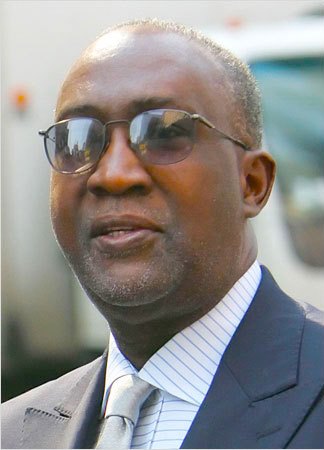
Lloyd Williams ( Hubert Williams )
Lloyd Williams, a lifelong Harlemite and the godson of Malcolm X, is the longtime leader of the Greater Harlem Chamber of Commerce. The organization, which dates back to 1896, aims to improve the lives of Harlem residents, and during the height of the COVID-19 pandemic it delivered hundreds of meals and personal protective equipment each day. Williams, who co-founded Harlem Week and the Harlem Jazz & Music Festival and serves on the board of NYC & Company, has also been an outspoken proponent of MWBEs.
29. Barbara Armand Kushner
President and CEO, Armand Corporation
Barbara Armand-Armand Corporation.jpg
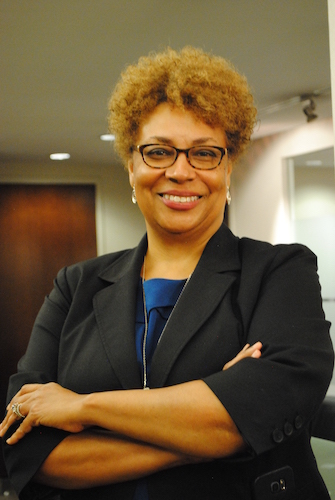
Barbara Armand ( Armand Corporation )
Barbara Armand is the owner and chief executive of Armand Corporation, a program and construction management firm she founded in 1991 that now has offices in New York City, New Jersey and Philadelphia. She is a consultant on MWBE policy and her clients have included large organizations in the private and public sectors, such as the New York City Economic Development Corporation and the New York City School Construction Authority. She’s also the president emeritus of the New York chapter of Professional Women in Construction.
30. Deborah Bradley
President, Deborah Bradley Construction & Management Services
Deborah Bradley launched her construction management firm in 1994 after graduating from Columbia University, her first client. A past president of the Women Builders Council, she formed a partnership with the United Nations to encourage women to enter the construction industry, helped launch student chapters and lobbied New York officials to adopt a 30% MWBE utilization goal. The former accountant is a member of the New York Building Congress and has served since 2019 on the Mayor’s Advisory Council on MWBEs.
31. Bill Howell
President, Howell Industries
Bill Howell-Megan Kelly.jpeg

Bill Howell ( Megan Kelly )
Bill Howell’s company started out in the petroleum business before transitioning to construction work. Howell Industries today mentors small MWBE contractors and contracts with large governmental bodies including the New York City School Construction Authority, Metropolitan Transportation Authority and the Dormitory Authority of the State of New York. It also assists Service Disabled Veteran Owned Businesses through the MTA Small Business Development Program. In 2019, Howell was appointed to the Mayor’s MWBE Advisory Board.
32. Bonnie Wong
Founder and President, Asian Women in Business
Bonnie Wong is the founder and leader of Asian Women in Business, a national membership organization to support Asian women-owned businesses. The nonprofit offers mentorship and networking for Asian women in corporate and legal sectors. AWIB has grown to become a widely recognized organization championing MWBE efforts in New York and nationally. Wong serves on MWBE and diversity boards for both New York City Mayor Bill de Blasio and City Comptroller Scott Stringer.
33. Tunisha Walker-Miller
Principal, Capalino
Tunisha Walker-Miller - Leigh Beckett .jpg
Leigh Beckett
Tunisha Walker-Miller, a principal at Capalino, manages the leading lobbying firm’s MWBE Consulting Group, which has helped procure contracts for firms on both state and local levels across a variety of sectors since 2015. She also founded the Association of Black Lobbyists and Consultants in 2019. She has previously served as executive director of the state Senate Conference of Black Senators.
34. Charles Williams III
Partner, Peckar & Abramson
Charles E. Williams III-Tony David Photography.jpg
Charles E. Williams III ( Tony David Photography )
As a partner at Peckar & Abramson, Charles Williams III practices construction and real estate law, with a special expertise in MWBE regulations and certification. Williams previously served as vice president and general counsel of the New York City School Construction Authority, a leading agency in awarding MWBE contracts, and he also has worked with the Office of the Manhattan Borough President, the New York Department of State and the NAACP. He’s also general counsel for the Building Trades Employers Association’s MWBE Leadership Council.
35. Kenneth Thomas & Jason Cintron
Co-Managing Directors, Minority & Women Contractors & Developers Association
Kenneth Thomas-Sepia Prince.jpg
Kenneth Thomas ( Sepia Prince )
Jason Cintron-Jason Cintron.JPG

Jason Cintron ( Jason Cintron )
Kenneth Thomas and Jason Cintron launched the nonprofit Minority & Women Contractors & Developers Association in 2019, with the goal of empowering MWBE firms and diversifying the real estate and construction industries. MWCDA has been focused on growing its membership and promoting workforce development training. Cintron previously held key staff positions with the New York City Council, while Thomas worked in the real estate industry.
36. Brian Matthews
Senior Consultant, Brown & Weinraub
Brian Matthews-Timothy Raab_Northern Photo.jpg
Brian Matthews ( Timothy Raab/Northern Photo )
After three decades working in state government, Brian Matthews joined top Albany lobbying firm Brown & Weinraub in January and has been helping to build out its MWBE practice. Matthews brings plenty of relevant experience, including as chief financial officer for the state Office of General Services and director of the Bureau of Financial Administration in the Office of the State Comptroller. Matthews recently called for revisions to evaluation standards for government contractors to prioritize the “value of community progress” as much as cost and experience.
37. Rick Miranda
President and CEO, Brooklyn Hispanic Chamber of Commerce
As the longtime leader of the Brooklyn Hispanic Chamber of Commerce, Rick Miranda has driven the membership organization’s efforts to support Hispanic-owned businesses across the borough. A member of the Mayor’s Advisory Council on MWBEs and other diversity boards and councils – and as a small business owner himself – Miranda has helped boost the number of certified MWBEs through a partnership with New York City Small Business Services.
38. Kristin Malek
Director of Business Diversity, CDW
Kristen Malek-Margaret Koukos Photography.JPG

Kristen Malek ( Margaret Koukos Photography )
Since December, Kristin Malek has overseen business diversity initiatives for CDW, an Illinois-based information technology services provider that does significant business in New York. Malek has managed some $2 billion yearly in investments through the company’s supplier diversity program, partnering with hundreds of minority- and women-owned firms. Since Malek joined the company in 2017, it has twice been a finalist for the National Minority Supplier Development Council Corporation of the Year.
39. Justin Nelson & Jonathan Lovitz
Co-Founder and President; Special Adviser, National LGBT Chamber of Commerce
Jonathan Lovitz-Topher Scott.jpg

Jonathan Lovitz ( Topher Scott )
The National LGBT Chamber of Commerce recently reached an agreement with the New York City Department of Small Business Services to certify firms owned by LGBTQ New Yorkers. Supporters say the move connects these firms with city resources, but without undermining official MWBE government contracting efforts. The agreement, which was reached in lieu of passing proposed legislation, is a victory for NGLCC’s Justin Nelson, who is typically more active on the national level, and Jonathan Lovitz, who was previously NGLCC’s New York director and lobbied for the recent local change.
40. Paul Williams Jr.
Founder, Brown Hatchett & Williams
Paul T. Williams, Jr.-Paul T. Williams, III.jpg
Paul T. Williams, Jr ( Paul T. Williams, III )
Paul Williams is a founding partner at Brown Hatchett & Williams, a law firm well-versed in corporate governance, finance and real estate matters. Williams made history in 2008 as the first African American to lead the Dormitory Authority of the State of New York and established DASNY as an innovator in developing new strategies to award contracts to MWBEs. He also chaired then-Gov. David Paterson’s MWBE task force, and continued to lead DASNY under Gov. Andrew Cuomo until 2015. Williams now advises companies on diversity and inclusion.
41. Jacqueline S.L. Williams
Founding Partner and Co-Owner, State & Broadway
Jacqueline S.L. Williams is a fierce advocate for MWBEs in New York. The owner of the lobbying firm State & Broadway served on Gov. Andrew Cuomo’s MWBE task force in 2011 in her capacity as MWBE Coalition coordinator, and she continues to work with firms owned by women and minorities and on broader economic development and labor issues as a top lobbyist in Albany.
42. John Flateau
Professor, Medgar Evers College
John Flateau-NYC Board Of Elections, Annual Report 2019.jpg
John Flateau ( NYC Board Of Elections, Annual Report 2019 )
John Flateau is the co-founder of Medgar Evers College’s DuBois Bunche Center for Public Policy and US Census Information Center. Previously, he served as chief diversity officer at Empire State Development under former Gov. Mario Cuomo, executive director of the New York State Black and Puerto Rican Legislative Caucus and chief of staff to former New York City Mayor David Dinkins. A founding father of New York MWBEs, he played a key role in conducting a disparity study that paved the way for New York City’s MWBE program.
42. Hazel Dukes
President, NAACP New York State Conference
Hazel Dukes.jpg
As a longtime leader with the venerable civil rights organization the National Association for the Advancement of Colored People, Hazel Dukes has spent decades seeking to create social and economic opportunities for New Yorkers of color. Dukes’ consulting firm Hazel N. Dukes and Associates focuses on public policy, health and diversity, and she was appointed to serve on Gov. Andrew Cuomo’s COVID-19 Vaccine Equity Task Force. She’s also a member of New York City Comptroller Scott Stringer’s Advisory Council on Economic Growth through Diversity and Inclusion.
43. Valerie White
Executive Director, LISC NYC
Valerie White-Roger Archer, Phaats Photos.JPG
Valerie White ( Roger Archer, Phaats Photos )
Valerie White took the reins of the New York City office of the Local Initiatives Support Corporation, or LISC NYC, a year ago. White, who previously led Empire State Development’s Division of Minority and Women’s Business Development, now is tasked with continuing initiatives that have pumped $3.1 billion into affordable housing, health care, jobs and business development programs. LISC, which was founded in New York by the Ford Foundation and corporate partners in New York in 1979, now has a presence in 45 states.
44. Liz Neumark
Founder and CEO, Great Performances
Liz Neumark-Great Performances.jpg
Liz Neumark ( Great Performances )
Liz Neumark has led Great Performances for four decades, building it out from a part-time staffing agency for women in the arts into a top-tier catering and events company. In 2019, Gov. Andrew Cuomo announced that Neumark’s women-owned firm was relocating from Manhattan to the South Bronx, while creating nearly 200 new jobs and investing $4.4 million into a 40,000-square-foot space.
45. Jean Kristensen
President and CEO, Jean Kristensen Associates
After a career in private security, Jean Kristensen switched gears to run her own consulting firm, Jean Kristensen Associates. The firm, which is a minority- and women-owned business, assists other small business owners in getting certified with city and state MWBE programs and pursuing government contracts. Government agencies have also consulted Kristensen to identify firms for their supplier diversity programs.
46. Jacqui Williams
Principal, 99 Solutions
Jacqui Williams-TL Holmes_MCG.jpg
Jacqui Williams ( TL Holmes/MCG )
Jacqui Williams is one of New York City’s top lobbyists, specializing in everything from real estate to recreational marijuana to retail and grocery stores, including helping the popular Wegmans Food Markets bring a supermarket to Brooklyn. As the longtime owner of the consulting firm 99 Solutions, she has long sought to assist business owners who are people of color.
47. Larry Scott Blackmon
Founder and CEO, The Blackmon Organization
Larry_Scott_Blackman.jpg

Larry Scott Blackman ( Andrew Morales )
When Larry Scott Blackmon founded his consulting firm The Blackmon Organization, it was the latest stage in a career straddling the public and private sectors. He previously served as vice president of public affairs at FreshDirect, forging relationships with MWBEs in the company’s supplier network and managing government and community relationships. He also worked for the New York City Department of Parks and Recreation and New York City Small Business Services and is an active member of One Hundred Black Men of New York.
Blackmon is a member of City & State’s advisory board, but did not have direct input on this list.
48. Mohammad Razvi
Co-Founder and Executive Director, Council of Peoples Organization
An immigrant from Pakistan and a former businessman, Mohammad Razvi founded the Council of Pakistan Organization five months after the 9/11 terrorist attacks. Now the Council of Peoples Organization, the nonprofit assists low-income immigrant families, primarily of South Asian and Muslim descent, as they adapt to life in New York City. An advocate for minority and immigrant owned businesses, Razvi also serves on the Mayor’s Advisory Council on MWBEs.
49. Stacie NC Grant
Chief Brilliance Officer, C&G Enterprises Unlimited
Stacie NC Grant- Emma Burcusel Photography.jpg

Stacie NC Grant ( Emma Burcusel Photography )
An author, motivational speaker and MWBE advocate, Stacie NC Grant leads C&G Enterprises Unlimited, which provides meeting facilitation, professional development and event services for various community, nonprofit and educational organizations. During the COVID-19 pandemic, the company pivoted to providing decontamination services for small businesses and meeting spaces. Previously, Grant was selected as the facilitator for the JFK International Airport Redevelopment Community Advisory Council, a part of the $13 billion redevelopment project.
50. Everett Perry
President and Founder, Urban EcoSpaces
Everett Perry-Urban Ecospaces, Inc..jpg
Everett Perry ( Urban Ecospaces, Inc )
In 2009, Everett Perry launched Urban Ecospaces, a development and general contracting firm and a certified MWBE. Perry’s firm has worked on major projects with the New York City Department of Design and Construction, the New York City School Construction Authority and the Build It Back program after Superstorm Sandy. Perry is also the fundraising chair for the NYC MWBE Alliance, a diverse coalition of MWBEs that works with city, state and federal agencies and contractors to secure government contracts.

If You Know H.E.R., You Should Know Him: Oscar & Grammy Winning Producer D'Mile

D'Mile was born to make music. The 36-year-old producer, born Dernst Emile II, grew up in a studio-ready household -- his mother a vocalist and father an instrumentalist and producer. "I was like two or three, banging on the piano," he explains. "It was a part of me."
In the last few months, D'Mile has established himself as a force in the award show circuit. "I Can't Breathe" was named song of the year at the Grammys, and about a month later, "Fight For You" from Shaka King's Judas and the Black Messiah took home best original song at the Oscars. Both tracks, brought to life by power team D'Mile, H.E.R. and singer-songwriter Tiara Thomas, center on the relentless racial injustice of the past and present.
While D'Mile's introduction to music was mostly centered in Caribbean and jazz songs, by age 10 he became immersed in R&B/hip-hop by way of The Notorious B.I.G. and Junior M.A.F.I.A. As a burgeoning producer, he began working alongside Rodney Jerkins (a.k.a. Darkchild) for two years, and later collaborated with the likes of Mary J. Blige, J. Lo, Janet Jackson and Justin Bieber. It was during this time with Jerkins that D'Mile met 11-year-old Gabriella Sarmiento Wilson, now known as R&B star H.E.R.
D'Mile was at the studio with Jerkins when H.E.R. arrived, along with her parents and longtime manager, Jeff Robinson. They all spent the weekend together, even attending church, where Jerkins got the young H.E.R. to perform during offering time. "She's on stage killing it on the bass and singing at the same time, and I'm just like, 'Yo, she's a prodigy,'" D'Mile says.
Around that time, D'Mile was noticing a trend in R&B. He says many notable R&B acts like Chris Brown and Rihanna were moving into pop, as R&B's mainstream appeal began to fade. Because pop was in demand, the Brooklyn-raised producer shifted his own focus. "I was doing [pop] so much at one point that I felt like I couldn't even go back to R&B," he explains.
In a matter of a few years, D'Mile found his way back to R&B, and began collaborating with H.E.R., around the time of her 2014 deal with RCA Records. Since his return to R&B, the award-winning producer has also worked with Ty Dolla $ign, The Carters, Charlie Wilson, Lucky Daye and most recently, Silk Sonic, expanding on his already star-studded resume.
Now, as R&B continues its resurgence, D'Mile finds himself at the forefront. Billboard caught up with the Grammy and Oscar award winner to discuss his big wins, the historical importance of "Fight For You" and "I Can't Breathe," and his advice on cultivating the right studio environment to create timeless music.
Less than 24 hours have passed since you won your first Oscar. How’s the day been?
It’s [been] crazy, my phone is hot from everybody just calling and texting and DM'ing me. I still don't know if it's hit me. I have to look at the award and be like, “Yo, that is really here at my house.” Right now, it's just on my dining room table.
What does this Oscar win mean to you?
It means everything. [Judas & the Black Messiah] took place in the '60s, but it still weighs [heavily on] today. Outside of that, to know that my mom and dad are over there watching, and my team, all my friends. I did not think that they were going to call our names, all of it was moving fast. All I heard was when Zendaya said “H.E.R." -- I don’t even think I heard when she said my name.
It means everything to me. I didn't come in expecting to get to the Oscars or the Grammys before that. And for everything to turn out the way it did, it was definitely God's plan.
“Fight For You” is attached to such a monumental historic moment that a lot of people weren’t fully aware of before watching Judas and the Black Messiah. What do you think is the significance of the song today?
I actually was one of those people. I knew about the Black Panthers, but I didn’t know anything about Fred Hampton himself. As the movie was going along and I'm learning this stuff, I'm just like, "Man, this is this is very, very important." It still hits home for a lot of people because we're dealing with some of the same fight. It's not over, so it will always be relevant -- until we get to that place of finally overcoming all the stuff that’s still happening in the world.
How did the song come together?
We were blessed enough to be able to watch [Judas and the Black Messiah] while we were in the studio. I don’t think we had popcorn, but we had M&Ms. Right after we finished watching, we had to come up with something on the spot. H.E.R. had a conversation with the directors and the only direction they gave us was that they wanted something upbeat, uplifting and hopeful. We had to cater to the time of it -- the '60s and '70s -- which is up our alley. Then we just took it from there.
How long have you been working with H.E.R.?
I've known H.E.R. since she was 11. I was at a studio working with Rodney Jerkins (Darkchild) and [H.E.R.] came to see him [with] her mom and dad. She spent that whole weekend with us. At this church, Rodney got her to do a couple of numbers during offering time. She's the on the stage killing it on the bass and singing at the same time, and I'm just like, "Yo, she's a prodigy." We reconnected when she was 16 and did one or two songs around that time. Then we connected four years later and we've been working ever since.
That's my sister. I always was looking out for her. Just seeing her grow up, with the talent that she has, and to become the woman that she is today, and what she stands for and everything, it’s just an amazing thing to see.
After spending 15 years making R&B music, what are the transformations that you’ve seen?
Growing up, the people I used to look up to were the Timberlands and the Pharrells, Quincy Jones, Darkchild. It started shifting around 2008, where Chris Brown’s “Forever” came out and Rihanna’s “Disturbia.” All of the black artists were going pop. I was doing [pop] so much at one point that I felt like I couldn't even go back to R&B. I would get calls to work with certain people and I was just like, "I don't even know how to do R&B music anymore."
Shortly after I was just like, I just want to do what I want to do. If it works, it works. Then Drake comes around. He is responsible for a certain kind of R&B [coming] back and for it to be cool. Childish Gambino for me, with “Redbone” and [Awaken, My Love!] also helped me feel like it was okay to do [R&B] again. History repeats itself. So, everything always comes back one way or another, in a new way.
What is it that always brings you back to R&B music?
To me, [this is] the way I look at it now: When you leave your hometown, let's say you find beautiful places that you love and you may even move. But you always have your hometown to come back to. I feel like R&B is my hometown.
How did your work with Silk Sonic come about?
I met Bruno first, through a mutual friend of ours, James Fauntleroy. It was a mix of Bruno finding me on Instagram and hearing what I did on the Lucky Daye album. Then I get a call from James and he was like, “What are you doing on Friday?” and I’m like, “Nothing.” He said, "Come over to the studio. Bruno wants to meet you and he wants to work with you." Then during that time, Anderson .Paak came in.
Were Bruno and Anderson .Paak already established as Silk Sonic at the time?
[Silk Sonic] wasn’t planned from the beginning -- until one day Bruno called and was like, “Yo, come to the studio and let’s just vibe.” We all worked on one song, it turned into more and turned into Silk Sonic down the line, organically.
As a producer, how do you create an environment where great music happens?
I hate meeting somebody for the first time and getting straight into work. I always get nervous. If we start a conversation, that's very helpful. Plenty of times, I've been in a room with people, and we'll just be talking, then I'll get quiet because now I'm reading the personalities in the room and building something based off of that. That's why I like just creating from scratch, instead of like coming in with tracks already made.
Do you have any advice to rookie producers?
Listen to yourself. Know who you are. If you're in the middle of learning who you are, explore different things. Hone in on whatever it is [you like] and just start. That's how you sharpen your skills -- that's how you find yourself and what gravitates to you. If you’re a religious person, pray. But just don't ever stop.