
As the 2017 hurricane season ends, preparing for storms in years to come
 The power of Mother Nature and the fragility of our relationship with her becomes undeniable each hurricane season, particularly for those with loved ones in affected areas. As this year’s tragic hurricane season draws to a close, we reflect on the destruction that has passed and on the ways we can prepare for hurricane seasons to come.Clearly there is no simple solution for communities that lie in the path of hurricanes and we rightly focus on providing urgent humanitarian assistance for those most dramatically impacted by these devastating storms. We are also wise to consider what measures we can take to help the most vulnerable populations strengthen their defenses. Knowing that these storms will continue to threaten the region, what can be done to protect those communities with the most to lose and the least access to large scale investment as they prepare for next year and beyond?The Colorado Haiti Project is a locally based non-profit organization that has been supporting community leaders in rural Haiti for over 28 years. This year Haiti has been spared, comparatively speaking, but we know from experience how destructive these events can be. As we watch the response unfold in Puerto Rico and beyond, we reflect on our experience in Haiti.Last year, after the devastation of Hurricane Matthew, the Colorado Haiti Project invested in agriculture: planting trees, opening a seed bank, and strengthening agricultural education programs for students. By investing directly in local community agricultural structures, soil was conserved, local food systems were reinforced, and yields increased for farmers, thus putting working capital in the hands of local people as they recovered.Haiti is often portrayed as a troubled and distant land, a world away and rife with intractable problems, a daunting place to invest resources. As someone who has worked there for the past seven years, I can promise you that the short-term hopes and long-term dreams of parents and children in Haiti are not so different than those you’d find in Colorado.The Colorado Haiti Project recently hosted a dinner in Longmont, wherein Brian Coppom, director of Boulder County Farmers Markets, along with a sizeable group of Colorado-based farmers, came together to show their support for small farms in Haiti. Over plates of locally produced food, we saw clearly that while miles apart geographically, there is a great commonality between the priorities of the farmers markets and the Haiti project.The Boulder County Farmers Markets’ website reads: “Our farmers and ranchers grow what they sell. Today, the markets serve as community gathering events, provide nourishment to neighbors, boost sustainable agriculture and support the local economy.”These same values are shared by our local leadership in Haiti. The most significant and most troubling difference is that for most Boulder/Denver residents, the alternative to healthy food is unhealthy food. In rural Haiti, oftentimes the alternative to healthy food is no food.The hopeful reality is that there exists in Haiti a long history of community-based structures, families lending each other labor and resources — a community gardening and co-op system. This type of organizing is what the local food movement we see flourishing here in Colorado is all about. Community gardens, farm-to-table initiatives, the sharing of seeds, and the slow food movement are all working to reinforce our connection to food, to our land, and to each other. I find that the same people who are passionate about local food systems here in the U.S. are also committed to the idea that we are not just a local community but a global one.In the face of Mother Nature and her overwhelming power, it’s promising to realize that her beauty and bounty are part of the solution as well. Sifting through the news stories of today, it can be daunting to consider where to place limited resources. I suggest, quite simply, that we invest in the land and its farmers. Investment in rural Haitian communities is strengthening local defenses against climate events, placing capital in the hands of local families, and putting healthy food on tables. By investing in these strategies, we stand for some of our most important values, creating connection to our food, to our land, and to each other, while also building resilience for when the storms roll in.By Wynn Walent | November 6, 2017
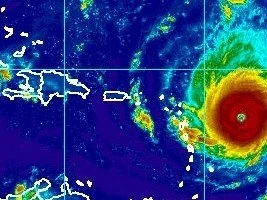
Haiti - FLASH : IRMA in category 4, Haiti in yellow pre-alert
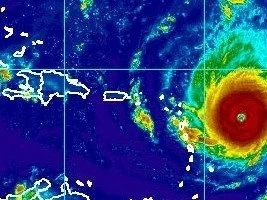
This Tuesday morning Hurricane IRMA with maximum sustained winds at close to 150 mph (240 km/h) and higher gusts went into Category 4 on the Saffir-Simpson hurricane wind scale. IRMA was located this morning at 16.6N 57.0W, 424km east of Guadeloupe and 1.220km southeast of the island of Hispaniola according to the National Oceanic and Atmospheric Administration (NOAA).IRMA is moving westward at nearly 14 km/h and this general trajectory is expected to continue today, followed by a shift towards the northwest this evening. A NOAA Hurricane Hunterplane is scheduled to be in the eye of Irma within the hour.Hurricane force winds extend outwardly up to 45 miles (75 km) from the center and tropical storms force up to 140 miles (220 km).IRMA could reach Haiti's north coast by Thursday to FridayOn Monday in Haiti, the Permanent Secretariat of Risk Management (SPGRD) triggered at midday, the pre-alert phase 1 to the level of yellow vigilance."The IRMA Center could cross the Lesser Antilles on Tuesday," said the Hydrometeorological Unit of Haiti (UHM) in its first bulletin of vigilance "The system should then continue to approach Haiti, retaining its characteristics of major hurricane adding "IRMA hurricane should place the country under the threat of storm winds in about three days. Heavy storms are expected to fall on the northern part of the country before gradually becoming widespread. A stormy sea could overwhelm much of the northern coast of the country."The SPGRD, together with the Directorate of Civil Protection (DPC) and the UHM, "demands that the Haitian population, particularly the inhabitants of areas at risk of flooding and land movements, to prepare and stay tuned to weather reports and safety guidelines that will be broadcast throughout the passage of this dangerous system."By: HL/ HaitiLibre | September 5, 2017