

Haiti - Venezuela : «Haiti continues to be a model for our America» dixit Nicolás Maduro

The Bolivarian Republic of Venezuela, the President of the Bolivarian Republic of Venezuela, Nicolás Maduro Moros, and the Venezuelan people extend their sincere congratulations to the Government and the sister Republic of Haiti to commemorate the 214 years of its independence."Haiti has always been an example of libertarian principles, of advocacy and equality. The steadfastness, perseverance and revolutionary character of its people are historical elements that continue to be a model for Our America and for the world.The homeland of Bolívar and Chávez sends its warmest congratulations on the occasion of this National Day and reaffirms its commitment to honor the Republic of Haiti and the historical legacy of giants such as Alexandre Pétion and Toussaint Louverture; to continue the struggle for equality, sovereignty, social justice and the promotion of integration in Latin America and the Caribbean through initiatives such as Petrocaribe and ALBA."Recalling in his message, that the late leader of the Bolivarian Revolution, Commander Hugo Rafael Chávez Frías (died March 5, 2013 http://www.haitilibre.com/en/news-8024-haiti-flash-president-hugo-chavez-passed-away.html ) had said about Haiti, January 17, 2010 "Haiti, the first black republic of the world and the first Republic of Our America from January 1, 1804, managed to defeat the Napoleonic troops after 12 years of struggle. Haiti: that of the black Jacobins, that of Toussaint Louverture and Alexandre Pétion. Haiti: that of Miranda arrived with his dream of liberating a whole continent and as it will happen with Bolivar which received all the solidarity and the support of the black Jacobins and hoist for the first time our flag on March 12th, 1806.""The homeland of Petión is also the homeland of Bolivar.¡ Que viva Haití !"By: HL/ HaitiLibre.com | January 2, 2018
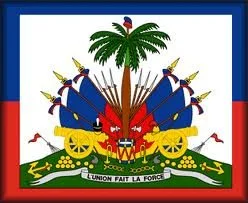
MAY 18 | HAITIAN FLAG DAY
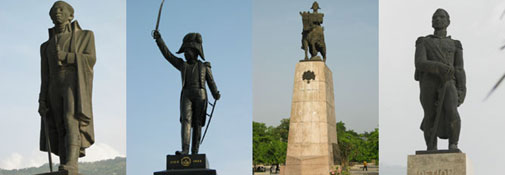
Toussaint Louverture, Jean-Jacques Dessalines, Henri Christophe, Alexandre Petion
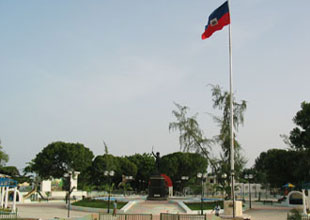
This meeting, known as the Congress of Arcahaie, was set for May 14 to 18, 1803; the agenda had two essential points: the establishment of a united command of the revolutionary army under the supreme authority of Jean-Jacques Dessalines, and the adoption of a flag by the indigenous army. The two principal leaders at this time, Dessalines and Pétion, jointly drew up this agenda. On May 14, 1803, military delegations flocked to Arcahaie; only a few of them were from the south.
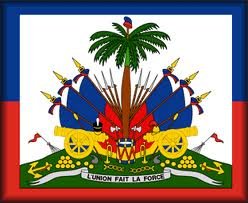
The principal heads of the insurgency did answer the call. The Congress was opened by Dessalines and Pétion May 15, 1803, on the Mérotte plantation in Arcahaie. The two men focused on the military situation, insisting on the need for all forces rebelling against the enemy to unite so that victory would be more rapid and decisive. Curiously, there was not a word about the new Haitian flag; priority was put on new strategies and tactics to thwart the colonial army and also to select a Commander of the insurrection army.Dessalines was appointed general-in-chief of the insurrection army.The question of the new Haitian Flag came up on the last day, May 18. The new Commander General suggested the old slogan "Live Free or Die" be replaced by "Liberty or Death." The debate over the proclamation of the creation of a new Haitian flag lasted a whole day. It was only in the evening that the Congress of Arcahaie definitively adopted the new Flag of Haiti. The white stripe was eliminated, while the remaining red and blue bands were attached together. The removal of the white stripe symbolizes the abolition of the White Man's control and the union of blacks and mulattoes in Haiti. The arms are composed of a palm tree surmounted by the Phrygian cap of liberty and ornamented with trophies with a banner across the bottom saying "L'Union Fait La Force" (through Unity there is Strength). 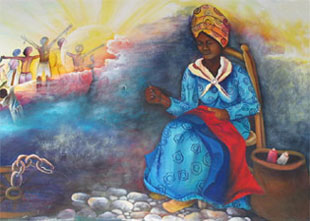 By this gesture, they publicly designated that this country no longer wanted to be recognized as a French territory and that the people who lived on this land preferred to be dead rather than be slaves. "Liberté ou la Mort!" meaning "Liberty or Death" had become the new motto as it had already been embraced at the Ceremony of Bwa Kayiman " held on August 14, 1791.Haiti's first flag was sewn by a lady named Catherine Flon at the Congress


 In 1805 , shortly after Jean-Jacques Dessalines proclaimed himself emperor, the Haitian flag color was changed to black and red bands placed vertically respectively. After the emperor's death, in 1806, the country will be divided into two republics for 14 years. Henri Christophe , in the northern part kept the flag that Dessalines used.In the South and the western part of the country, Alexandre Petion nourished the idea of giving the indigenous army its own flag. He went back to 1804's flag that was blue and red only this time he added the white squared portion that included the country arms and the famous motto " L'UNION FAIT LA FORCE ", meaning that through unity we find strength.This flag was in use till 1964 when Papa Doc Duvalier modified it with the black-red vertical bicolor of Dessalines on which he added a modified version of the arms of the Republic.On February 25 1986, after the fall of Baby Doc and the Duvalier regime, the Haitian flag was again changed with the request of the Haitian people to two equal-sized horizontal bands, a blue one on top and a red one underneath. The coat of arms of the Republic remained in the center. That is the flag used until today.As we celebrate the Haitian flag Day, we need to remember that our ancestors created this bicolor blue and red as a symbol of unity among all of us of Haitian descent to fight colonialism and live free forever.