
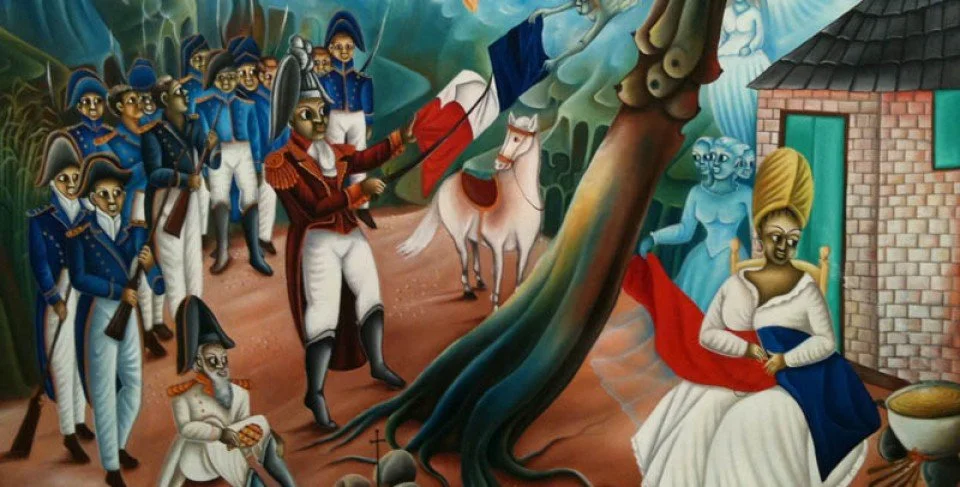
Biography of Haitian Revolution Leader Toussaint Louverture
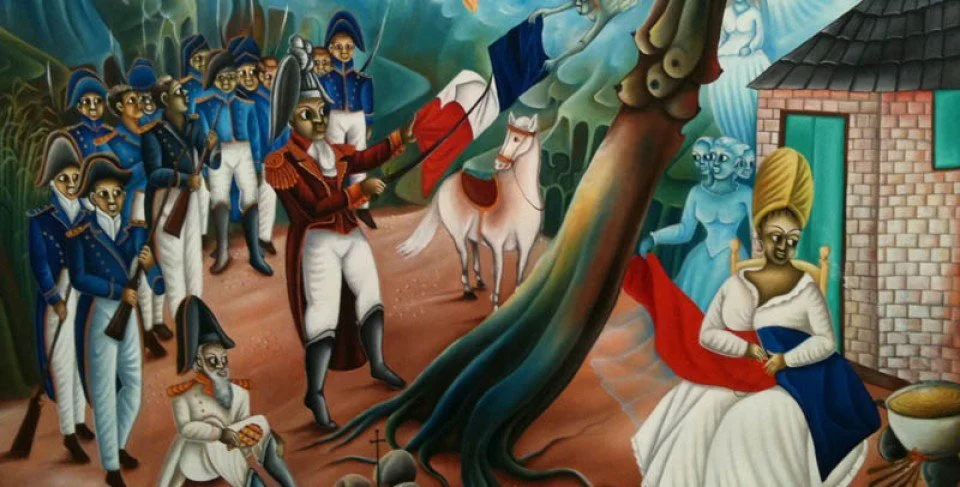
Toussaint Louverture led what is known as the only triumphant mass slave revolt in history. Thanks largely to his efforts, Haiti won its independence in 1804. But the island-nation didn't live happily ever after. Institutional racism, political corruption, poverty and even natural disasters have left Haiti a nation in crisis. Still, Louverture remains a hero to the Haitian people and those throughout the African diaspora. With this biography, learn about his rise, fall and the political prowess that resulted in him leaving an indelible mark on the island-nation once known as Saint Domingue.EARLY YEARSLittle is known about François-Dominique Toussaint Louverture before his role in the Haitian Revolution. According to Philippe Girard, author of 2016's "Toussaint Louverture: A Revolutionary Life," his family came from the Allada kingdom of West Africa. His father, Hippolyte, or Gaou Guinou, had been an aristocrat. Around 1740, however, members of the Dahomey Empire captured his family and sold them as slaves to the Europeans. Hippolyte specifically was sold for 300 pounds of cowrie shells.His once aristocratic family now the property of European colonists, Louverture was not born in West Africa but likely on May 20, 1743, in the city of Cap on the Bréda plantation in Saint Domingue, a French territory. Louverture displayed a giftedness with horses and mules that impressed his overseer, Bayon de Libertat.He also received training in veterinary medicine. His godfather, Pierre Baptiste Simon, likely played a large role in educating him. He may have also received training from Jesuit missionaries and from West African medicinal traditions.Eventually Libertat freed Louverture, although he had no authority to do so, as the absentee slaveholders the Brédas owned Louverture. It is unclear exactly which circumstances led Libertat to free him. The overseer reportedly had him drive his coach and then released him. Louverture was about 33 years old at the time.Biographer Girard points out that it was highly unusual that Louverture was freed. The slave mothers of mixed-race children were most often freed, with men making up fewer than 11 percent of liberated slaves.In 1777, Louverture married Suzanne Simone Baptiste, born in Agen, France. She is believed to have been his godfather's daughter, but she may have been Louverture's cousin. He and Suzanne had two sons, Issac and Saint-Jean. Each also had children from other relationships.Biographers describe Louverture as a man filled with contradictions. He led a slave insurrection but never took part in smaller revolts that occurred in Haiti prior to the revolution. In addition, he wasn't partial to any religious faith. He was a Freemason, who practiced Catholicism devoutly but also engaged in voodoo (in secret). His embrace of Catholicism may have factored into his decision not to participate in voodoo-inspired insurrections that took place in Saint Domingue before the revolution.After Louverture won his freedom, he went on to own slaves himself.Some historians have criticized him for this, but he may have owned slaves to free his family members from bondage. As the New Republic explains:To free slaves required money, and money on Saint Domingue required slaves. As a free man, Toussaint leased a coffee estate from his son-in-law, including the slaves. True success navigating the slave system meant joining the other side. The revelation that the 'Black Spartacus' drove slaves spurred some modern historians to over-correct, speculating that Toussaint was a well-heeled bourgeois by the time of the revolution. But his position was more precarious. The coffee estate failed, and a slave register unearthed in 2013 records his tragic next move: Toussaint resumed his place on the Bréda plantation.In short, Touissant remained a victim of the same exploitative system he'd joined to free his family.But as he returned to the Bréda plantation, abolitionists begin to gain ground, even convincing King Louis the XVI to give slaves the right to appeal if their overlords subjected them to brutality.HAITI BEFORE AND AFTER THE REVOLUTIONBefore the slaves rose up in revolt, Haiti was one of the most profitable slave colonies in the world. About 500,000 slaves worked on its sugar and coffee plantations which produced a significant percentage of the world's crops. The colonists had a reputation for being cruel and engaging in debauchery. The planter Jean-Baptiste de Caradeux, for example, is said to have entertained guests by letting them shoot oranges off the tops of slaves' heads. Prostitution was reportedly rampant on the island as well.After widespread discontent, slaves mobilized for liberty in November 1791, seeing an opportunity to rebel against colonial rule during the throes of the French Revolution. Toussaint’s comrade Georges Biassou became the self-appointed Viceroy and named him general of the royal army-in-exile. Louverture taught himself about military strategies and used his newfound knowledge to organize the Haitians into troops. He also enlisted deserters of the French military to help train his men. His army included radical whites and mixed-race Haitians as well as blacks.As Adam Hochschild described in the New York Times, Louverture "used his legendary horsemanship to rush from one corner of the colony to another, cajoling, threatening, making and breaking alliances with a bewildering array of factions and warlords, and commanding his troops in one brilliant assault, feint or ambush after another."The slaves successfully fought the British, who wanted control over the crop-rich colony, and the French colonizers who'd subjected them to bondage. Both French and British soldiers left detailed journals expressing their surprise that the rebel slaves were so skilled. The rebels had dealings with agents of the Spanish Empire as well. Haitians also had to confront internal conflicts that sprang up from mixed-race islanders, who were known as gens de couleur, and black insurgents.Louverture has been accused of engaging in the very practices for which he criticized the Europeans. He needed weapons to defend Saint Domingue and implemented a forced labor system on the island that was virtually the same as slavery to ensure that the nation had sufficient crops to exchange for military supplies. Historians say he held onto his abolitionist principles while doing what was necessary to keep Haiti secure. Moreover, he intended to free the laborers and wanted them to profit from Haiti's achievements.“In France, everyone is free but everyone works,” he said.Louverture has not only been criticized for reintroducing slavery to Saint Domingue but also for writing a constitution that gave him the power to be a lifelong leader (much like the European monarchs he despised), who could choose his own successor. During the revolution, he took on the name "Louverture," which means "the opening" to emphasize his role in the uprising.But Louverture's life was cut short. In 1802, he was lured into talks with one of Napoleon’s generals, which resulted in his capture and removal from Haiti to France. His immediate family members, including his wife, were captured as well. Abroad, tragedy would befall him. Louverture was isolated and starved in a fortress in the Jura mountains, where he died in April 1803. His wife survived him, living until 1816.Despite his demise, Louverture biographers describe him as a leader who was far savvier than either Napoleon, who completely ignored his attempts at diplomacy, or Thomas Jefferson, a slave owner who sought to see Louverture fail by alienating him economically.“If I were white I would receive only praise,” Louverture said of how he'd been slighted in world politics, “But I actually deserve even more as a black man.”After his death, Haitian revolutionaries, including Louverture's lieutenant, Jean-Jacques Dessalines, continued to fight for independence. They won freedom in January 1804, when Haiti became a sovereign nation. Two-thirds of the French army died in their bid to squash the revolution, most from yellow fever rather than armed conflict.LOUVERTURE'S LEGACYLouverture has been the subject of numerous biographies, including 2007's “Toussaint Louverture” by Madison Smartt Bell as well as biographies by Ralph Korngold, published in 1944; and Pierre Pluchon, published in 1989. He was also the subject of 1938's "The Black Jacobins” by C.L.R. James, which the New York Times has called a masterpiece.The revolution Louverture led is said to have been a source of inspiration to abolitionists such as John Brown as well as the many African nations that won independence in the mid-20th century.by Nadra Kareem Nittle
Chronicles of a Chronic Caribbean Chronicler: Europe and US dodging demands for slavery reparations
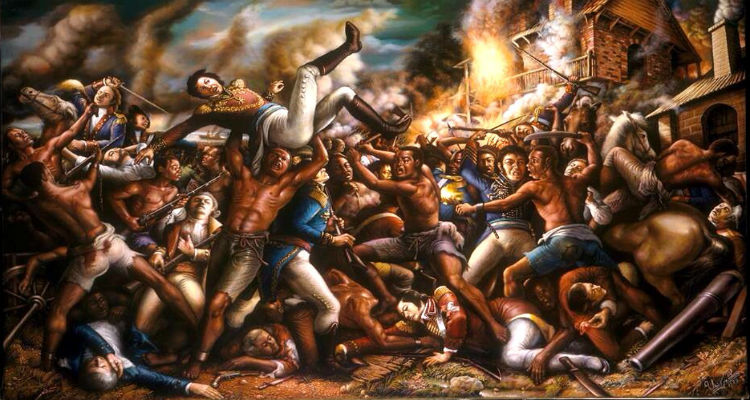
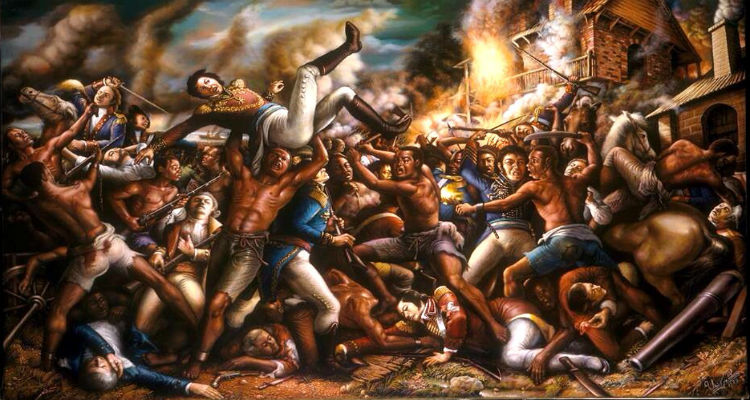
Today, over 180 years after abolition, descendants of African slaves in the Caribbean, North and South America are demanding reparations for slavery from Europe – and the United States.
 |
| Earl Bousquet is Editor-at-Large of The Diplomatic Courierand author of the regional newspaper column entitledChronicles of a Chronic Caribbean Chronicler |
In the Caribbean, the demands include apology and atonement for 400 years of both slavery and native genocide; in the USA it’s about compensation for African American descendants of slaves; and in South America, today’s descendants of Africans (who arrived both as shipwrecked mariners and slaves) are demanding their fair share of recognition, equality and atonement.Africa and the Caribbean experienced the brunt of the brutal slave trade that saw Europeans sail to West Africa, kidnap millions of men and women and ship them like animal cargo to the newly colonized ‘West Indies’ captured through wars of extermination against the original native ‘Caribs’ and ‘Arawaks’.While the focus of British and French slavery was mainly concentrated on the Antillean (Caribbean) islands and mainland territories (including Haiti) that they claimed to own, the Portuguese and Spanish concentrated on South American mainland territories such as Argentina, Brazil, Colombia, Costa Rica, Chile, Ecuador, Peru and Venezuela, as well as the larger islands of Cuba and Puerto Rico.In the case of the USA and South America (except in Brazil), African descendants form small minorities, unlike the 15 Caribbean Community (CARICOM) member-states, where they form an absolute majority, in each case.CARICOM governments have thus easily and collectively agreed to a joint approach to the European Union (EU) member-states that benefited from slavery, inviting them to discuss reparations by way of acknowledgement and atonement.The EU countries have so far resisted engaging the Caribbean in any discussions whatsoever on reparations, the likes of former British PM David Cameron saying during an official visit to Jamaica that traditional aid and assistance given by Britain since independence to the former colonies has sufficed.But the response by the Britain, Denmark, France, The Netherlands, Portugal and Spain, thus far, (or lack thereof) is very much unlike when France demanded reparations after the first African slaves in the Caribbean – and the world -- successfully revolted.Haitian slaves, led by Toussaint L’Ouverture, rebelled in 1791 and declared their independence in 1804. Not even in Africa had a free nation yet been born and the humiliated slave masters enlisted the support of the French government to make the former slaves pay dearly for their freedom.In 1825, France demanded 90 million gold francs to recognize Haiti’s independence -- the same amount demanded in compensation by the former slave masters.Historians and economists agree that this high cost paid by Haiti to France over 122 years (payments continued until 1947) is largely responsible for the country having been almost eternally anchored in poverty.In 2003, Haitian President Jean Bertrand Aristide called on Paris to return the 90 million gold francs, by then estimated at US $21 billion. Soon after, however, he was swiftly and secretly taken hostage by US and French forces and exiled to South Africa.French President Francois Hollande, in May 2015, ahead of a visit to Port au Prince, said Paris “will repay its debt” to Haiti – only to later retract, saying he only meant repaying France’s “moral debt”.The Hollande disappointment notwithstanding, no other concerned EU member-state has even mentioned the possibility of considering paying reparations for slavery – in the Caribbean or North or South America.Same in the USA, where not even President Barack Obama accommodated calls to initiate reparations moves and to pay to survivors the wages of the slaves who built the White House.In 1865, Union General William Sherman set aside thousands of acres of land for newly-freed American slaves, by way of a special field order. But President Andrew Johnson soon returned the titles to the original white owners. Freed slaves were also each promised “40 acres and mule” to start their own lives. But here too they were disappointed.The US Congressional Black Caucus has for the past 28 years backed a bill called HR-40, submitted annually by Michigan Rep. John Conyers, calling for a commission to study “the Reparations Proposals for African Americans Act”. Designed to examine the negative effects of slavery, it also seeks to “recommend appropriate remedies”. But HR-40 has long been referred to the House Judiciary Committee, where it has since remained...US blacks are somewhat divided over what mechanism to use to assess the real costs and value of slave wages and related rates of conversion over the centuries slavery lasted.Likewise, white Americans largely reject calls by blacks for reparations, some seriously arguing that ‘slaves were freed by the Civil War’ and ‘blacks benefited from affirmative action’ government policies over the years.The reparations movement is however gaining traction across the hemispheric horizon.The momentum has just begun in South America, with an International Reparations Conference held in Cali, Colombia in March 2017, essentially to outline a road map for the movement for recognition and inclusion of the African-descended minority across the continent.The African Americans are encouraged by a 2016 report by the Geneva-based United Nations Working Group on People of African Descent, urging US lawmakers to implement reparations, citing “a legacy of colonial history, enslavement, racial subordination and segregation, racial terrorism and racial inequality.”Also, according to an exclusive poll released in March 2017 in conjunction with a new PBS Series ‘Point Taken’, 40 percent of US ‘millennials’ think there should be reparations for African American descendants of enslaved people.Indeed, some of the leaders of the revived reparations movement in the USA are confident enough of the momentum gained thus far to conclude that ‘this could be reparations’ best chance since 1865.’In the Caribbean, the governments’ approach is naturally quite different from North and South America – more diplomatic than agitational, seeking dialogue over confrontation.In March 2014, the CARICOM governments unanimously adopted the ten-point plan to demand “Reparatory Justice for the victims of Crimes against Humanity in the forms of genocide, slavery, slave trading and racial apartheid.” The EU member-states that built their imperial wealth on slavery were also duly informed.A CARICOM Regional Reparations Commission was also appointed (chaired by the vice chancellor of the University of the West Indies Sir Hilary Beckles), with national reparations committees also established in member-states.The Caribbean hasn’t put a price tag on slavery, even though a sum of US $17 trillion is often mentioned. Instead, it’s seeking a mutually agreed CARICOM-EU approach to what forms the atonement will take, to the common and mutual benefit of all the CARICOM states and peoples.Failing this negotiated approach, the Caribbean countries reserve the right to file formal criminal charges against the culprit EU member-states at the International Criminal Court (ICC)).Citing the will of the Western world to proudly acknowledge and atone for the Jewish Holocaust, reparations paid by the US government to Japanese interned during World War II, reparations made to US native peoples and Britain recently being ordered by its own courts to pay reparations to tribal Kenyan ‘Mau -Mau’ independence fighters, CARICOM feels it has a very good case.Those demanding reparations for slavery everywhere are also buoyed by the UN’s declaration of 2015 to 2024 as the Decade for People of African Descent.The CARICOM Prime Ministerial Subcommittee on Reparations (led by Barbados Prime Minister Freundel Stuart) met in late April 2017 to review European responses to their request for a negotiated settlement.In the meantime, the 15 member-states, including Haiti, are preparing their individual legal cases for collective submission to the ICC, should the culprit EU member-states continue to dodge and dither to duck their individual and collective responsibilities for the greatest ‘crime against humanity’ known to mankind.The reparations demands by African descendants in CARICOM, US and South American states do have the backing of regional and international entities, including similar non-governmental Europe-based movements and an increasing level of interest and support from African states and entities, including the African Union (AU) and the Pan African Congress (PAC).The European and American governments today may continue to duck their responsibilities. But the results of the strong reparations demands on them, whether achieved today or tomorrow, also offer added hope to the likes of the Australian Aborigines and New Zealand’s Maori first peoples, who may have received formal apologies, but continue to feel treated less than equal in the lands they first inhabited.Meanwhile, the Grenada ‘slavery and tourism’ discussion is an interesting starting point to revive earlier discussions on the establishment of a national reparations committee (NRC) for Grenada, Carriacou and Petit Martinique.That will not only be in line with the reality of the vast majority of CARICOM member-states (where NRCs exist), but will also facilitate ongoing discussion across the three-island state on reparations and related issues during the UN Decade for People of African Descent, which continues until December 31, 2024.Caribbean News Now