News, Politics News, Politics

Haiti Prepares to Introduce Its Revived Military

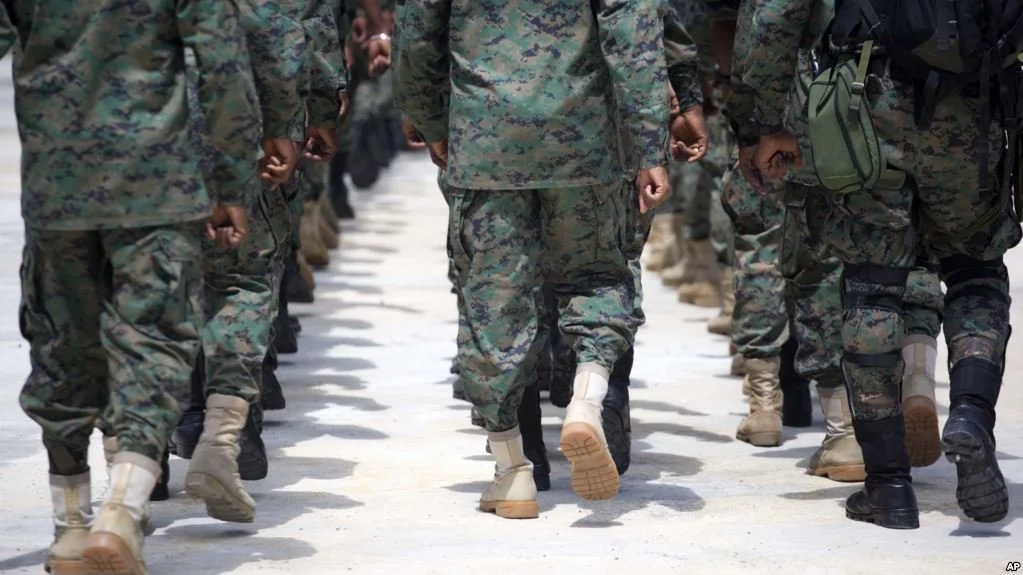
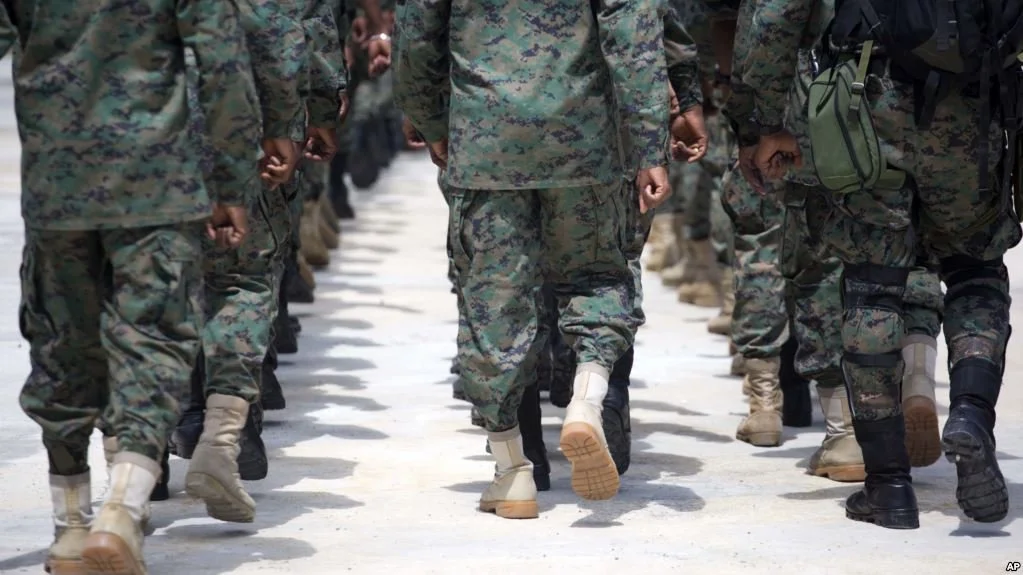
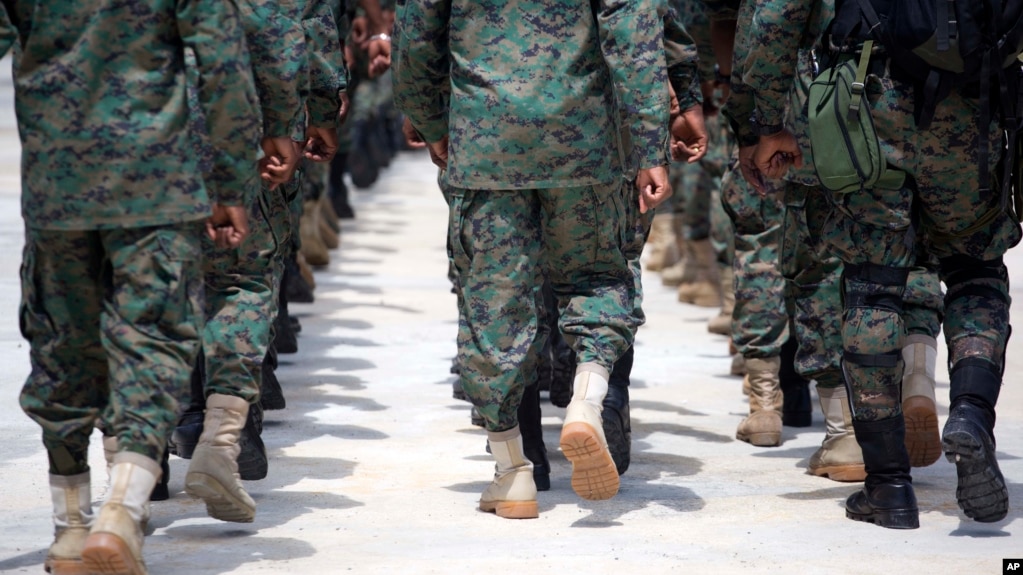
Members of Haiti's new national military force march during training at a former U.N. base in Gressier, Haiti, April 11, 2017. While it's easy to find citizens who strongly support reconstituting a Haitian army, the idea alarms those who vividly remember military coups and oppression. More than two decades after Haiti’s leader disbanded its army, with its history of violent coups, the Caribbean nation is about to unveil a reconstituted military.The Haitian National Army will be formally reintroduced with a parade in this northern port city on Saturday, the anniversary of a decisive 1803 battle [Battle of Vertières] nearby that secured Haiti’s independence from France.“The army I am reinstating for you is a professional one. It is a necessity for our country. It will not be an army of repression,” President Jovenel Moïse, who took office in February, said at a news conference last week. “It will be instead an army that will help out when a hurricane strikes our country. It will help repair roads. This is the army I have promised you.”

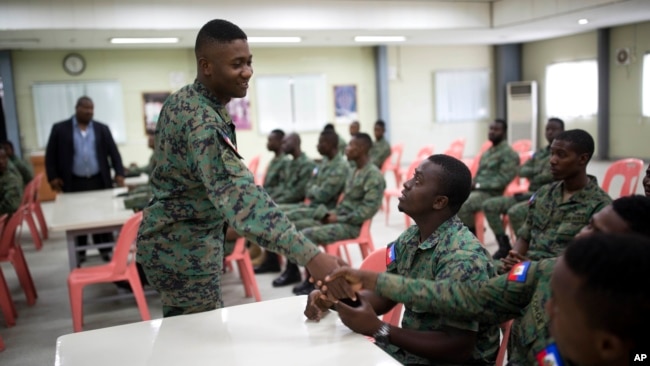
A member of Haiti's new national military force greets a fellow soldier in a meeting room at a former U.N. base in Gressier, Haiti, April 11, 2017.

Civilian forceMoise aims to distinguish it from the military that overthrew Jean-Bertrand Aristide in 1991. When Aristide reclaimed the presidency in 1995, he dismantled the army and put security in the hands of the civilian Haitian National Police. That force now has roughly 15,000 officers.In contrast, the army has at least 150 recruits, young men and women mostly engaged in building up the impoverished country’s infrastructure, Defense Minister Hervé Denis said at news conference Monday. Since their selection in late summer, they have set up a medical clinic in central Haiti and begun fixing roads.Eventually, there could be 3,000 to 5,000 troops, Denis said.“But we know that we cannot have an army of that size the next day” because of budget constraints, he added.

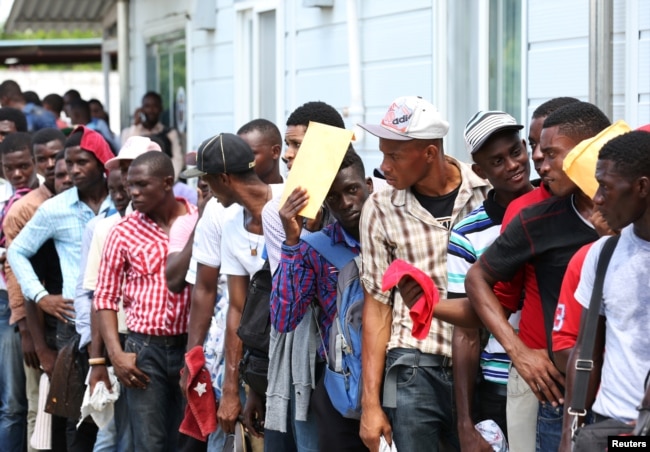
Haitians stand in line as they try to join the country's reformed military in Gressier, Haiti, July 18, 2017.

Haiti’s government has allocated $8.5 million for defense spending in the 2018 fiscal year. Denis acknowledged funding challenges but, according to the Miami Herald, said the armed forces’ patrols could stem annual losses of $200 million to $500 million in contraband coming from neighboring Dominican Republic.The army’s restoration draws mixed reactions at home and abroad.The army offers precious jobs in a poor country whose unemployment rate tops 40 percent.But Wednesday marked the third consecutive day of street demonstrations in Cap-Haïtien, the country’s second-largest city, with hundreds of public high school students protesting spending on a new military when their teachers have gone unpaid for months.Their rallying cry: “We don’t want an army, we want an education!”“The country has other priorities that are more important than the army,” Edouard Innocent, the city’s former mayor, told VOA in a phone interview. He said Moise should “prioritize economic development, education, health. … I think this army is [a means] for the president to secure his power.”Right to an armyCiné Aneus Daneus, a lawyer in Cap-Haïtien, pointed out that Haiti has the constitutional and sovereign right to an army. He called for “a professional army” to protect the country’s borders and provide aid in case of natural disasters. He added, “This force must not be involved in politics.”Nenel Cassy, a Haitian senator, told VOA he worried that the army would strain the national budget and could be used to suppress political dissent. He said its reinstatement created “a chaotic situation.”

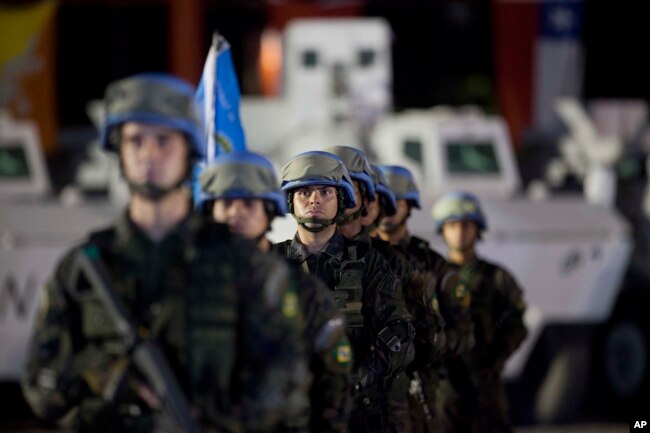
FILE - United Nations peacekeepers from Brazil stand at attention during the end of operations ceremony of the Brazilian battalion and engineering company, from the United Nations Stabilization Mission in Haiti, in Port-au-Prince, Aug. 31, 2017.

The army’s reinstatement comes a month after the end of the U.N. Stabilization Mission in Haiti (MINUSTAH), aimed at steadying the leadership after the 2004 military coup. That effort has given way to the U.N. Mission for Justice Support in Haiti (MINUJUSTH), meant to strengthen the justice system, policing and human rights protections.The United Nations and foreign governments, including the United States, discouraged Haiti from reviving its army. Instead, they supplied financial aid and training for the Haitian National Police.Kenneth Merten, the State Department’s special coordinator for Haiti, said the U.S. government disapproved of a reconstituted Haitian army because of that army’s history of coups d’etat. He told VOA’s Creole Service early this year that the U.S. has “spent a lot of money so Haiti could have a police force that is competent and transparent.”The United States, Haiti’s biggest benefactor, has disbursed at least $3.9 billion in post-2010 quake aid.‘Good reason to be nervous’Given the high degree of international involvement in Haiti, restoring the army brings “a sense of nationalistic pride with certain elements of the population,” Geoff Burt, executive director of the Canada-based Center for Security Governance, told VOA.But “there’s good reason to be nervous,” added Burt, who has explored the issue’s complexities in a report last year for the International Journal of Security & Development.One argument is that rebuilding the army could distract from the “more important priority of building a more effective, accountable police force.”“The big problem isn’t with the army per se, it’s the connection to the political process,” Burt said. “… Will the army become a player in Haitian politics? That’s what everyone would like to avoid.”By: Jacquelin Belizaire, Jean Philippe and Jean-Pierre Leroy  for voanews.com | November 15, 2017.   

Read More
News, Politics News, Politics

UN Peacekeepers Leave Haiti: What Is Their Legacy?

As the controversial 13 year peacekeeping mission in Haiti wraps up, Al Jazeera examines what the mission leaves behind.

A UN peacekeeper argues with a supporters of 2010 presidential candidate Michel Martelly in Port-au-Prince [File: Gulliermo Arias/AP Photo]

PEACEKEEPERS IN HAITI

  • What will be their legacy?
  • Why were they there?
  • What has taken so long?
  • Why are they leaving now?
  • What have Haitians said about the mission?

The United Nations peacekeeping mission in Haiti lowered its blue flag on Thursday, 13 years after it began.While the mission has been credited with helping bring stability to the poorest country in the Western Hemisphere, it has also been mired in controversy.The mission is blamed for bringing cholera to the country, and at least 134 of its peacekeepers have been involved in sexual abuse scandals.As the last of the thousands of peacekeepers who were in the country leave, Al Jazeera answers some of the key questions about why the blue helmets were there and what they are leaving behind.  

What will be their legacy?

The presence of UN troops in Haiti has been a point of controversy on the island since the UN Stabilization Mission in Haiti (MINUSTAH) mission first began in 2004.UN officials have praised the mission for helping to re-establish law-and-order in the country marred by political unrest and bolster Haiti's democratic institutions. MINUSTAH has also helped recruit and train a new civilian police force, something that was virtually nonexistent before their arrival.However, critics argue the mission's forces have done more harm than good, pointing to the peacekeepers' involvement in the country's 2010 cholera outbreak and sex abuse scandals as evidence.Cholera outbreakThe source of the waterborne disease, which killed more than 9,000 people, was traced to a UN base.Al Jazeera's Fault Lines investigated the outbreak in 2010. The film - Haiti in a Time of Cholera - helped further expose the source of the disease on the island, and put additional pressure on the UN to investigate the allegations, and eventually admit its role in the outbreak.In August 2016, the UN for the first time acknowledged that it played a role in the spread of the disease.The UN at the time promised to respond to the epidemic with a "significant new set of UN actions".

A demonstrator spray paints the message in Creole "We demand justice for all cholera victims" on a building outside the UN headquarters in Haiti [File: Dieu Nalio Chery/AP Photo]

In a report, the then UN Secretary-General, Ban Ki-moon, said that "the preponderance of the evidence does lead to the conclusion that personnel associated with [a UN peacekeeping] facility were the most likely source".Ban said the way the UN handled the outbreak "leaves a blemish on the reputation of UN peacekeeping and the organisation worldwide".He added: "For the sake of the Haitian people, but also for the sake of the United Nations itself, we have a moral responsibility to act and a collective responsibility to deliver."Ban created a $400m voluntary trust fund for Haiti's fight against cholera. The fund was also supposed to partially compensate victims of the disease.But earlier this year, The New York Times revealed that the fund only received a few million dollars and was nearly empty.In a statement in June, the UN deputy secretary-general said that "without additional resources, the intensified cholera response and control efforts cannot be sustained through 2017 and 2018".

Rape and other forms of sex abuseUN troops have also been implicated in sexual abuse scandals in Haiti since the MINUSTAH first began.Most recently, a UN report obtained and revealed by The Associated Press in April documented the sexual exploitation of nine children on the island from 2004-2007 at the hands of at least 134 peacekeepers.Al Jazeera later spoke to Maria Kalichi*, who had been raped by a peacekeeper when she was 17 years old. She became pregnant as result of the rape."I want justice by finding the person who did this," she told Al Jazeera."I want to hear what he has to say to me … I am walking around the streets feeling destitute because of the UN."A leaked report in 2015, found that UN peacekeepers in Haiti engaged in "transactional sex". At least 229 women said they traded sex for money and goods likes food and medicine.In 2012, at least two peacekeepers from Pakistan were jailed and fired from the army after raping a 14-year-old boy.Other cases of rape and other instances of sexual abuse have been reported and documented by the UN during the mission's 13-year term.In September, a UN fund to help the survivors of sexual abuse by peacekeepers worldwide grew to $1.5m after more than 10 countries made contributions.

Why were they there in the first place?

MINUSTAH, running since 2004, was the latest installment in a series of UN peacekeeping missions in the country, which shares a landmass with the Dominican Republic.  

After 13 controversial years, the UN's mission in Haiti ends

Peacekeepers first arrived in Haiti, home to 10.8 million people, in September 1993 as part of The United Nations Mission in Haiti (UNMIH).The mission had a mandate to modernise the Haitian army and establish a new national police force two years after Haiti's elected president, Jean-Bertrand Aristide, had been removed from office during a coup d'etat.After Aristide was restored to office in October 1994 following the UN-sanctioned, and US-led, "Operation Uphold Democracy" launched the month before, the mission's mandate was expanded to include helping to stabilise the government.However, UNMIH, which concluded in June 1996, appeared to have failed to deliver long-term stability. A decade later, history repeated itself as Aristide was overthrown for a second time.

Following Aristide's removal, Justice Boniface Alexandre assumed office as acting president.Alexandre appealed to the UN for help in ending the violence that had gripped Haiti in the wake of the political revolt, causing crime and murder rates to spiral.MINUSTAH, launched on June 1, 2004, in response to the crisis, led to the deployment of 6,700 UN-sanctioned troops - and 1,622 UN police - in Haiti.

Why has it taken so long for them to leave?

MINUSTAH was originally set up to support Haiti’s transitional government for a period of six months, with the aim of establishing a stable and secure environment following Aristide's removal.The mission was extended with adjusted mandates in the months and years that followed in order to allow peacekeepers to "adapt to the changing circumstances … and evolving requirements as dictated by the political, security and socioeconomic situation prevailing in the country", according to the UN.By the beginning of 2010, it appeared the mission had achieved its goals as violence had largely been removed from Haiti's politics and the country was experiencing economic growth.However, a devastating 7.0 magnitude earthquake hit the island on January 12, 2010, killing more than 220,000 people.The natural disaster destroyed vast swathes of Haiti's capital city, Port-au-Prince, and decimated the fragile Haitian economy.In response, the UN added additional peacekeepers and police officers to its mission as it sought to support the country in its efforts to rebuild following the earthquake.Force numbers have been gradually reduced in the last seven years, by a series of resolutions.
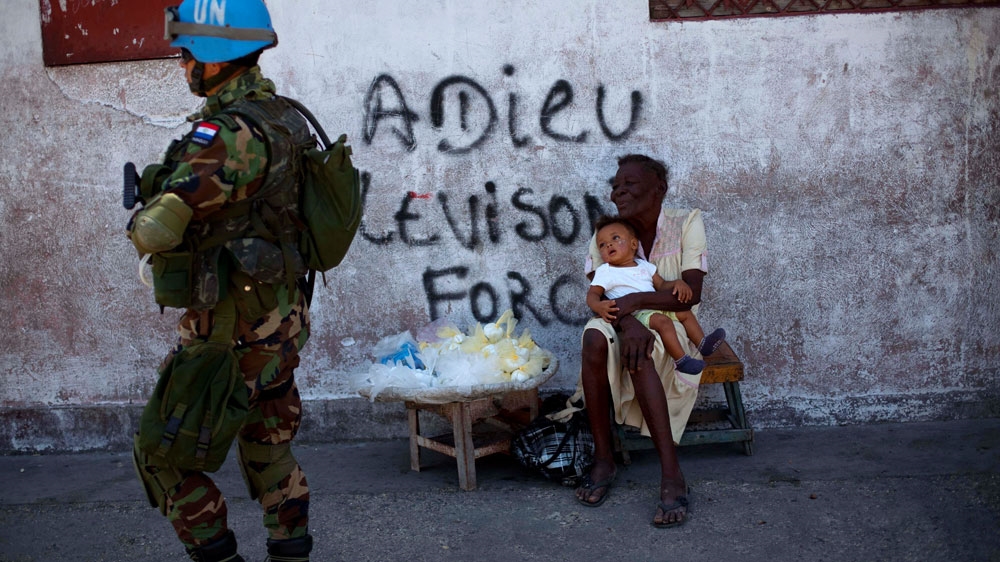
A UN peacekeeper from Paraguay patrols the streets of Port-au-Prince, 2011. [File: Ramon Espinosa/AP Photo]

Why are they leaving now?

The UN Security Council (UNSC) unanimously adopted a resolution in April of this year, ordering the removal of peacekeepers from Haiti by mid-October.The April 13 resolution sanctioned the gradual withdrawal of the 2,370 peacekeepers stationed in Haiti, according to The Los Angeles Times.The resolution was the result of a US-led review into the cost and effectiveness of the UN's current peacekeeping operations.Nikki Haley, the US representative to the UN, told the UNSC prior to the vote that the political context was right for the withdrawal of a military presence in Haiti.

The "peaceful transition of power" demonstrated by Haiti's November 2016 presidential election showed the country had made an "important step towards stability and democracy", she said.As such, developments warranted an amended approach focused on fostering "the independence and self-sufficiency of the Haitian people".The peacekeeping mission will officially end on October 15 when a new UN mission made up of nearly 1,300 international civilian police officers, and about 350 civilians will begin in an effort to help the country reform its political system.In a recent interview with Al Jazeera, Sandra Honore, head of MINUSTAH, said the UN is winding down the mission because it has achieved its aims."It is a vote of confidence in the Haitian people," she said."It is an indication of the recognition by the Security Council that the stabilisation work which was entrusted to the mission did in fact produce positive results."

What have Haitians said about the mission? 

Though February's presidential election seems to demonstrate Haiti is more politically stable now than when MINUSTAH began, a number of Haitians recently told Al Jazeera the mission has done little to improve their lives.Mothers who say they have had children, fathered by peacekeepers, also say they feel abandoned.

"After years of running around and false promises from the UN, nothing has happened,"  Saintil Benite, a mother, told Al Jazeera."They make us do a lot of stuff but there's no results," she said.Another mother, Roselaine Duperval, added that the mission has failed those people it sought to serve."I am very angry that the UN is leaving as it's left us with nothing," she said."They should take responsibility. They know about the kids. They did DNA tests and they told us they're positive but never give us the results."

Children play in the street while UN peacekeepers from Brazil patrol in Port-au-Prince [File: Dieu Nalio Chery/AP Photo]

As peacekeepers leave, Haiti continues to experience political turbulence.Protests last month over the government's new budget plans brought much of the country to a halt.The government has defended its plans, which include increased taxes on fuel and property, saying the money raised will be invested in improving public services and infrastructure.*Name changed to protect identity

By: Al Jazeera and news agencies | October 6,2017
Read More
News, Politics News, Politics

UN Ending 13-year Military Peacekeeping Mission In Haiti

A U.N. peacekeeping mission in Haiti that has helped maintain order through 13 years of political turmoil and catastrophe is coming to an end as the last of the blue-helmeted soldiers from around the world leave despite concerns that the police and justice system are still not adequate to ensure security in the country.The U.N. lowered its flag at its headquarters in Port-au-Prince during a ceremony Thursday that was attended by President Jovenel Moise, who thanked the organization for helping to provide stability. After a gradual winding down, there are now about 100 international soldiers in the country and they will leave within days. The mission will officially end on Oct. 15.Immediately afterward, the U.N. will start a new mission made up of about 1,300 international civilian police officers, along with 350 civilians who will help the country reform a deeply troubled justice system. Various agencies and programs of the international body, such as the Food and Agricultural Organization, will also still be working in the country."It will be a much smaller peacekeeping mission," said Sandra Honore, a diplomat from Trinidad and Tobago who has served since July 2013 as the head of the U.N. mission in Haiti known as MINUSTAH, its French acronym. "The United Nations is not leaving."MINUSTAH began operations in Haiti in 2004, when a violent rebellion swept the country and forced then-President Jean-Bertrand Aristide out of power and into exile. Its goals included restoring security and rebuilding the shattered political institutions. In April, the Security Council deemed the country sufficiently stable and voted to wind down the international military presence, which then consisted of about 4,700 troops.Many Haitians have viewed the multinational peacekeepers as an affront to national sovereignty. U.N. troops are believed to have inadvertently introduced the deadly cholera bacteria to the country and have also been accused of causing civilian casualties in fierce battles with gangs in Port-au-Prince and of sexually abusing minors.But the mission, with additional help from the U.S. and other nations, is also credited with stabilizing the country, particularly after the January 2010 earthquake, and building up the national police force."The job may not be complete but they have essentially done much of what they were originally designed to do in terms of preventing any kind of armed takeover of the state, in terms of increasing the safety of civilians," said Mark Schneider, a senior adviser with the Center for Strategic and International Studies in Washington. "It takes work to maintain that and Haiti needs to maintain that."MINUSTAH, Schneider said, has been key in helping Haiti develop a credible civilian national police from "almost zero" to its current level of about 15,000 officers, which most experts believe is still too small for a country of nearly 11 million. The police force was intended to replace the army, which was disbanded by Aristide in 1995 because of its repeated role in a series of coups and that the Haitian government is now seeking to reconstitute over international objections."Haiti needs an atmosphere of peace so we can take responsibility for ourselves," said Haitian Sen. Jacques Suaveur Jean. "We don't need foreign soldiers."The new U.N. mission will consist of seven police units that can respond to major incidents, in addition to officers deployed throughout the country to advise and assist their Haitian counterparts. Civilians will also be working with the government to improve the country's justice system, which the State Department said in this year's annual human rights report has serious flaws, including severe prison overcrowding, prolonged pretrial detention and an inefficient judiciary.Honore, in an interview ahead of Thursday's ceremony, cited the training and hiring of police officers as one of the U.N. successes.MINUSTAH had already been scaling back before the Security Council voted to end the mission. In the aftermath of the earthquake, which killed 96 U.N. personnel, including former head of mission Hedi Annabi, the number of troops reached more than 10,000. But when Honore arrived there were about 6,200 soldiers from around 20 countries, a figure that dropped again by nearly a third within two years.The cholera outbreak, which started in October 2010 after peacekeepers from Nepal contaminated the country's largest river with waste from their base, killed an estimated 9,500 people and irrevocably damaged the reputation of the organization in Haiti. Many critics felt the U.N. did not adequately respond to the outbreak, something the organization sought to later remedy."It was a fundamental error because it undermined the image not just of MINUSTAH, but of the international community," Schneider said.By: Evens Sanon, Associated Press | October 5, 2017

Read More
Featured, Politics Featured, Politics

Haitian-Canadian Deputy Emmanue Dubourg on the front line.

As part of the Canadian government's efforts to reduce the flow of Haitians illegally crossing the Canadian border to seek asylum, the Liberal Deputy of Parliament, of Haitian origin Emmanuel Dubourg (Bourassa riding) left the Canada for 3 days to Miami, today.Fluent in Creole, French and English, with strong ties to the Haitian diaspora, he was sent to Miami to gives interview with the Haitian media and hold meetings with diaspora leaders to rectify the information erroneous concerning Canada's immigration and refugee policies and attempting to slow down the flow of Haitian nationals to Canada.HL

Read More

Trump Thinks This Is Pro-Life?

PORT-AU-PRINCE, Haiti — When President Trump and his (male) aides sit at a conference table deciding to cut off money to women’s health programs abroad, they call it a “pro-life” move.

Yet here in Haiti, I’ll tell you the result: Impoverished women suffer ghastly injuries and excruciating deaths. Washington’s new women’s health policies should be called “pro-death.”

When women and girls don’t have access to family planning and reproductive health care, they’re more likely to suffer pelvic organ prolapses, in which the bladder, uterus or bowel may protrude from the vagina. Or they suffer a fistula, a childbirth injury that leaves them leaking urine or feces, stinking and ostracized, and sometimes unable to walk. Women with prolapses or fistulas sit in their huts, humiliated, wondering if they are cursed, waiting to die.

In a room here in the Haitian capital, women with cervical and breast cancer wait for nurses to examine their ulcerated bodies. Beyond their almost unbearable physical pain is their mortification that they smell of rotting flesh, and in some cases incontinence. They are heroic in their quiet refusal to give up.

It’s not that these horrific conditions are caused by U.S. policy, but Trump is now halting all funds for many organizations working tirelessly to prevent this suffering. First came the “global gag rule,” ending funding to overseas health aid groups linked in some way to abortion, including counseling that mentions it as an option.

The latest is that Trump just cut every penny the U.S. provides the United Nations Population Fund. This organization has nothing to do with abortions but is a central player in the global effort to fight for women’s health.

“If the U.N. Population Fund has less money, more impoverished women in Haiti will die,” said Holdie Fleurilus, a nurse at Innovating Health International, which runs the cancer center I visited.

Across town, Dr. Raymond Fleurimon, the medical director of the Isaïe Jeanty Maternity Hospital, was equally blunt: “If U.N.F.P.A. is out of the game,” he said, using the initials of the fund’s old name, “this maternity ward will collapse, it’ll be completely dysfunctional, and more women will die.”

“What a nightmare,” warned Dr. Rahel Nardos, a women’s health expert, cautioning that less money for the fund meant more prolapses and fistulas.

Republicans pushed to cut off the money because they think the fund colludes with China’s government in forced abortions there. But I lived in China for years, reporting extensively on the subject — and the critics have it all wrong.

Yes, China has relied on forced sterilizations and forced abortions. The U.N. Population Fund initially was oblivious, and in 1983 it stupidly gave a gold medal to the Chinese official overseeing forced abortions. But that’s history, and for decades the fund has put strong pressure on China to end the coerced abortions.

Moreover, the fund persuaded China in 1992 to switch to a more effective IUD, averting half a million abortions a year. Over the years, that’s 12 million abortions the Population Fund has prevented there. Can any anti-abortion group match that?

Those affected by Trump’s cutoff of funds for women’s health are people like Darling Leonce, a pregnant 16-year-old I met when she showed up for a prenatal exam at a one-day clinic set up in a remote part of southeastern Haiti. The clinic was supported by the U.N. Population Fund, and it was the first interaction Darling had ever had with a doctor or nurse in her life.

Darling never went to school, can’t read or write, and had never heard of birth control. Yet here she received her first-ever physical exam and was encouraged to deliver in a hospital rather than in her village. A nurse coached her on breast-feeding, gave her prenatal vitamins and acquainted her with contraception.

“Choose your partner carefully, and don’t have a kid just because you have a boyfriend,” the nurse advised.

Politicians in Washington don’t have a clue about the hideous things that happen when women are marginalized and health care is unavailable. What the Population Fund does is help girls like Darling avoid unwanted pregnancies and the nightmare of a fistula, a prolapse or cancer. That’s why The Lancet medical journal called Trump’s cutoff of funds “misogyny.”

Oh, and on abortion — one more thing.

When contraception is unavailable, people find ways to get abortions even where it’s illegal, as it is here. On my way back to the capital from the one-day clinic, I stopped at a pharmacy in a small town and asked for misoprostol, an abortion drug. For $15, the sales clerk handed over more than enough pills for an abortion.

The birth control provided by the U.N. Population Fund averted more than 3.7 million abortions last year alone, health advocates say. So if you’re against abortion, you should support the U.N. Population Fund, not try to destroy it.

Yet a group of blundering men in the Trump administration posture as moral leaders, and the result is that women in places like Haiti will suffer fistulas, prolapses and agonizing deaths in childbirth or from cervical cancer. Some of these women will be humiliated by the failures of their flesh, but the real shame belongs to sanctimonious zealots in Washington who don’t have a clue what they’re doing.

And this is pro-life?

Nicholas Kristof | APRIL 22, 2017

Read More
News, Uncategorized News, Uncategorized

UN votes to end Haiti peacekeeping mission in October

The 13-year UN mission began when violence erupted after president Jean-Bertrand Aristide's departure [Andres Martinez Casares/Reuters]The UN Security Council voted unanimously on Thursday to end its 13-year-long peacekeeping mission in Haiti and replace it with a smaller police.The move signals the international community believes the impoverished Caribbean nation is stabilising after successful elections.The peacekeeping mission - one of the longest-running in the world and known as MINUSTAH - has been dogged by controversy, including the introduction of cholera to the island by UN troops that killed thousands of Haitians, as well as sexual abuse claims against them.

UN admits role in Haiti cholera outbreak

The 15-member Security Council acknowledged the completion of Haiti's presidential election, along with the inauguration of its new president, as a "major milestone towards stabilisation" in the Caribbean country."What we now need is a newly configured mission which is focused on the rule of law and human rights in Haiti," British UN Ambassador Matthew Rycroft said."Peacekeepers do fantastic work but they are very expensive and they should be used only when needed," Rycroft said.The shutdown of the $346m mission, recommended by UN chief Antonio Guterres, comes as the United States looks to cut its funding of UN peacekeeping.The US is the largest contributor paying 28.5 percent of the total budget.Al Jazeera's Mike Hanna, reporting from the UN headquarters in New York, said the decision to downsise may be because of American pressure to save money."The US has been demanding that the UN become leaner and meaner in its operation, and has at times threatened to withhold some of the massive funding that it gives the organisation," Hanna said.There are 2,342 UN troops in Haiti, who will withdraw over the coming six months.The new mission will be established for an initial six months, from October 16, 2017 to April 15, 2018, and is projected to exit two years after its establishment. It will be a police force of about 1,000 personnel.

Haiti By Force - Fault Lines

UN peacekeepers were deployed to Haiti in 2004 when an uprising led to the ouster and exile of then-president Jean-Bertrand Aristide. It is the only UN peacekeeping mission in the Americas.Haiti suffered a two-year political crisis until the recent election and inauguration of President Jovenel Moise. It has suffered major natural disasters, including an earthquake in 2010 and Hurricane Matthew last year.But the impoverished Caribbean country has not had an armed conflict in years.UN peacekeepers have been accused of sexual abuse and blamed for the cholera outbreak. Haiti was free of cholera until 2010, when peacekeepers dumped infected sewage into a river.The UN does not accept legal responsibility for the outbreak of the disease, which causes uncontrollable diarrhea. Some 9,300 people have died and more than 800,000 sickened.In late March, the council reduced the size of its peacekeeping mission in the Democratic Republic of Congo, bringing the ceiling down from 19,815 troops to 16,215.Missions in Liberia and Ivory Coast are also set to end, while the joint UN-African Union peace operation in Sudan's Darfur region is also expected to be drawn down.http://www.aljazeera.com/news/2017/04/votes-haiti-peacekeeping-mission-october-170413162903710.html

Read More