

Why You Should Honeymoon in Haiti

[video width="640" height="352" mp4="http://haitiville.com/wp-content/uploads/2018/06/4A935F56-10EA-4144-91B9-FE561A4673E7.mp4"][/video] courtesy of NBC South Florida

Moscow : A look at the Haitian community in Russia

"Are there Haitians in Moscow? The answer is "yes" since the Haitian community is made up of 54 students, most of them studying at the University of Peoples' Friendship in Moscow. Four of them are enrolled in other universities, still in Moscow.Less than a dozen other Haitians live in Russia. Most are children of former compatriots who lived in the communist era or students who married Russian women. It is even said that one of the first Haitian immigrants, René Théodore (Unified Party of Haitian Communists, PUCH) have children living in Russia.Haitian academics study economics, public relations, international relations, agronomy, computer science, engineering and medicine. With few exceptions, Haitian academics score very well in exams.The biggest difficulty faced by our compatriots is learning the Russian language and adapting to the climate. Before starting regular classes, at least 12 to 18 months are necessary to become familiar with Russian, a difficult language, since even after four years, some can not speak it well.The climate in Russia is hard to bear: summer lasts only 2 months, with temperature drops from 30 ° to 16 ° in the space of a few hours. In winter, temperatures of up to 40 ° are scary, breathing becomes difficult and the cold is very intense.While most of the students are past fellows in Cuba, some have applied as 'contractual' with the help of a Boston-based Association and pay only $ 2,000 to $ 2,500 a year. Next year, some twenty young Haitians under the age of 23 must arrive in Moscow to continue their university studies.Although small, the Haitian community is not isolated, as students live on the same campus of the University of Peoples' Friendship and gather to celebrate special occasions, including Haiti's Independence Day. January 1st, or that of the flag on May 18th and sometimes constitute prayer cells.An association has even been created with a view to bringing the two peoples closer together. Although there is still no diplomatic relations between Russia and Haiti, the President of the "Association of the Haitian Community in Russia" the medical student Fabiola Dalvius, said to work towards the establishment of a Haitian Consulate in Moscow and also hopes that more Haitians, like her, will have the opportunity to study in Russia.When one considers the quality of the State University of Haiti which does not even have a real campus and the exorbitant cost of the treatment of the private faculties, it would be necessary to salute the craze of the Haitians to study in Russia.Haitian students do not intend to stay in Russia after graduation. In addition to those who plan to work in other foreign countries, many are planning to return home ; one way, they say, to contribute to the development of Haiti and to renew intellectual and professional resources at a time when many of our brains are being recovered by other nations, Canada in particular."By: Joël Lorquet | HaitiLibre | June 20, 2018
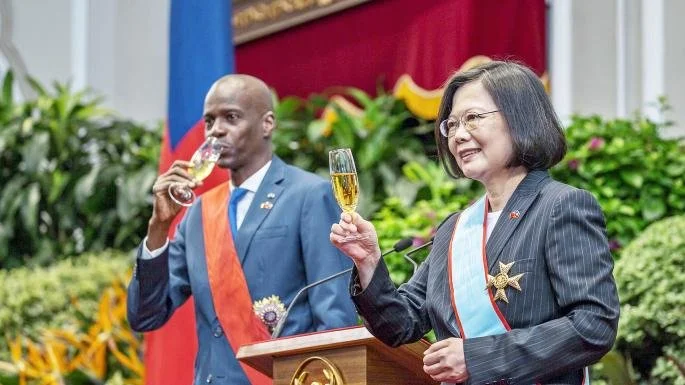
Taiwan to loan ally Haiti $150 million amid China onslaught
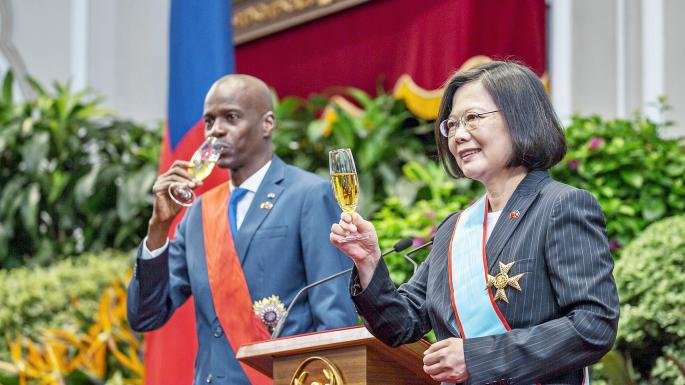
TAIPEI, Taiwan — Taiwan plans to lend ally Haiti $150 million for infrastructure development in a bid to shore up relations amid a renewed diplomatic onslaught by rival China that has stripped it of two foreign allies in the past month.
Foreign Ministry spokesman Andrew Lee said Thursday the aid was aimed at developing rural power grids in the impoverished Caribbean nation that is still recovering from a devastating 2010 earthquake.
“This provides a win-win situation to help a diplomatic ally with a major infrastructure development project and also creates overseas business opportunities for Taiwanese companies,” Lee was quoted as saying by the official Central News Agency.
Haiti is one of just 18 countries that continue to recognize self-ruling democratic Taiwan after the Dominican Republic and Burkina Faso switched ties to Beijing last month.
China claims Taiwan as its own territory and opposes any recognition of the island as an independent state.
Beijing has been steadily increasing pressure on Taiwanese President Tsai Ing-wen over the past two years following her refusal to acknowledge the “one-China principle” under which China defines Taiwan as a Chinese province. The sides split amid civil war in 1949 and China threatens to use force to grain control over the island.
Along with diplomatic pressure, Beijing has cut the numbers of Chinese tourists visiting Taiwan and increased naval and air force patrols around the island in recent months.
Tsai’s administration has remained defiant however, and has received support from Washington in the form of defense assistance and the planned opening this month of a new de-facto U.S. embassy in the capital Taipei.
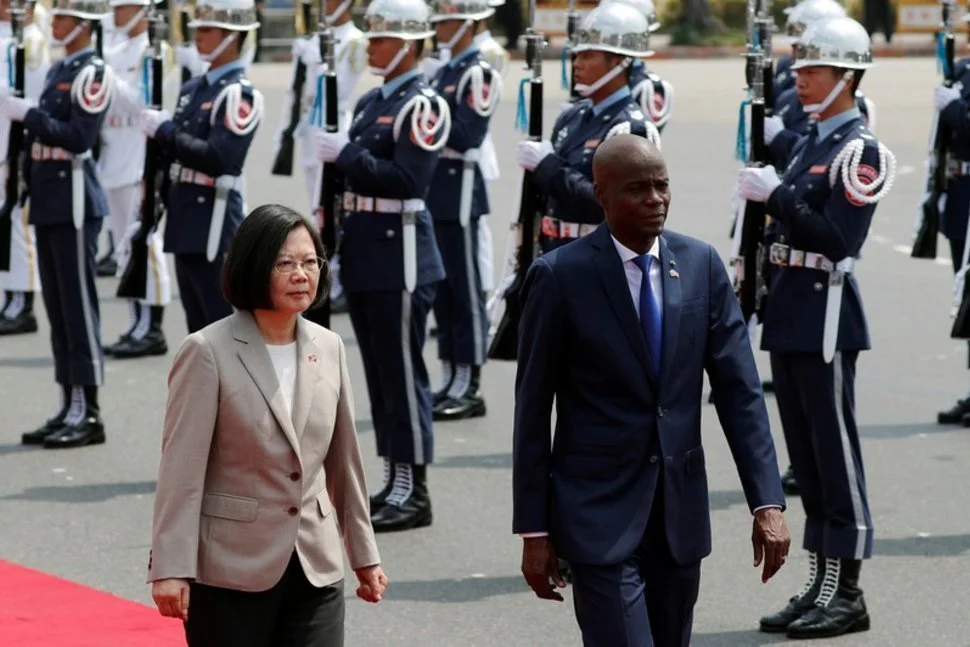
Taiwan Welcomes Haiti President as China Chips Away at Allies
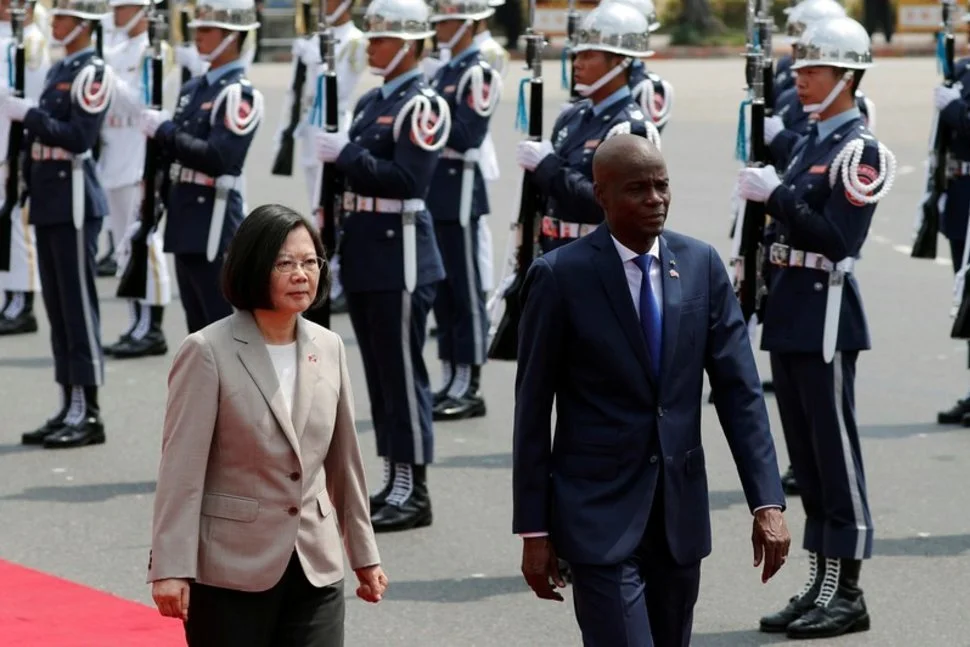
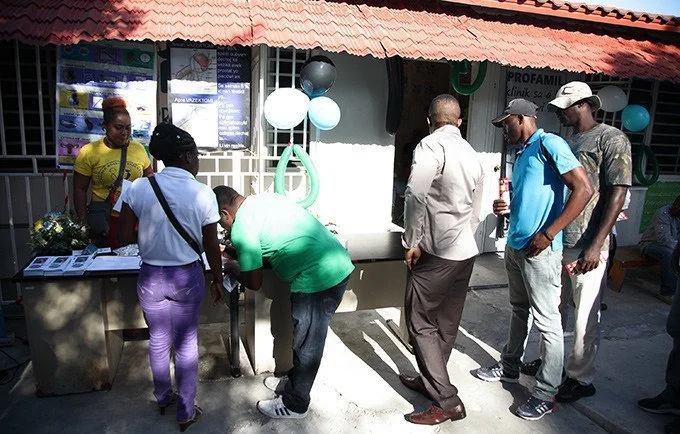
Haiti vasectomy campaign draws over 300 per cent anticipated turnout
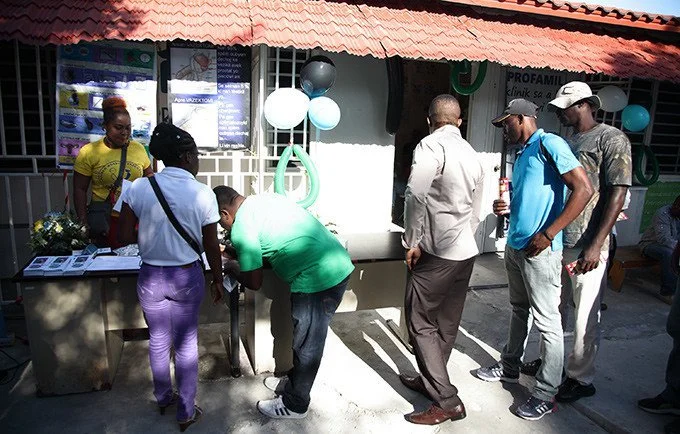
PORT-AU-PRINCE, Haiti – “At 55, I already have four children. I realized that I do not have enough resources to take care of more mouths in my family,” explained Lamour Denis, at a reproductive health clinic in Haiti’s capital, Port-au-Prince. “So,” he added, resolutely, “I decided to do it.”He decided to get a vasectomy.While vasectomies are a relatively common form of contraception in places like the United Kingdom and the Republic of Korea, according to 2017 data from the United Nations, the procedure is much less popular in Haiti.Because of traditional perceptions around masculinity, family planning is widely considered a woman’s responsibility. In 2012, only 0.1 per cent of women surveyed said they relied on a partner’s vasectomy as a form of contraception. Only 5 per cent relied on male condoms.
A press briefing, part of a vasectomy workshop and drive that aimed to increase theavailability of this contraceptive option in Haiti. © Moïse Alex Docteur/UNV
And many women lack access to contraception altogether. It is estimated that only 51 per cent of women in a relationship have their demand for contraception satisfied by modern, reliable methods.Improving information about – and access to – this contraceptive method is essential to empower both men and women to take control of their futures.And, as Mr. Denis’s experience shows, men are increasingly interested in exploring this option.
Increasing interest
The surgery was offered as part of an outreach event for men, supported by UNFPA and conducted by a health clinic run by the Association for the Promotion of the Haitian Family, also known as Profamil.The partnership hoped to reach 25 men. Organizers were stunned when over 100 people registered.“We had three teams of vasectomy surgeons with commodities for 25 people,” recounted Dr. Gianni De Castro, the director of Profamil. “But there were more than 100 people to register, and we had 83 vasectomies, compared to only 18 last year."Dr. De Castro credits improved awareness in the community for the turnout.Television and radio spots for the event drew attention with humour, announcing that the vasectomy procedure takes less time than a traffic jam at Canapé Vert, a suburb east of Port-au-Prince.And there is truth in this advertising: "Fifteen minutes were enough for each of the interventions, which were conducted without scalpel and by two of the leading specialists in this practice," the head of Profamil added. Two international doctors and three local doctors performed the procedures.
Choosing together
Many of the men who signed on for the procedure arrived at this choice with their partners.Mr. Denis, married for 20 years, spoke to his wife, Marlène Louis, about the surgery. They decided together that it was a sensible option for their family.Ms. Louis accompanied her husband to the event. While there, she reflected on the importance of access to family planning for all Haitians."It would be so much better if everyone on their own made arrangements to plan their lives in relation to the number of children they wanted to have," she said.UNFPA works in Haiti, and around the world, to increase the availability and variety of contraceptives, so individuals and couples can choose the methods that work best for them.By: UNFPA | May 15, 2018
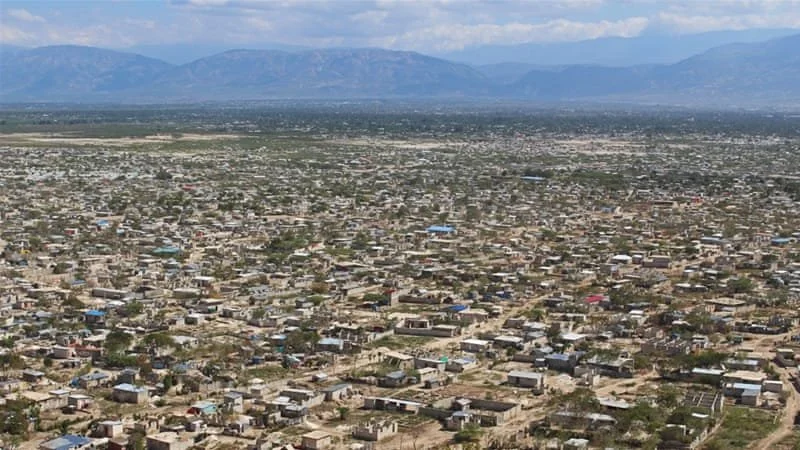
This Ungoverned Haitian City Is Fighting to Stay Alive
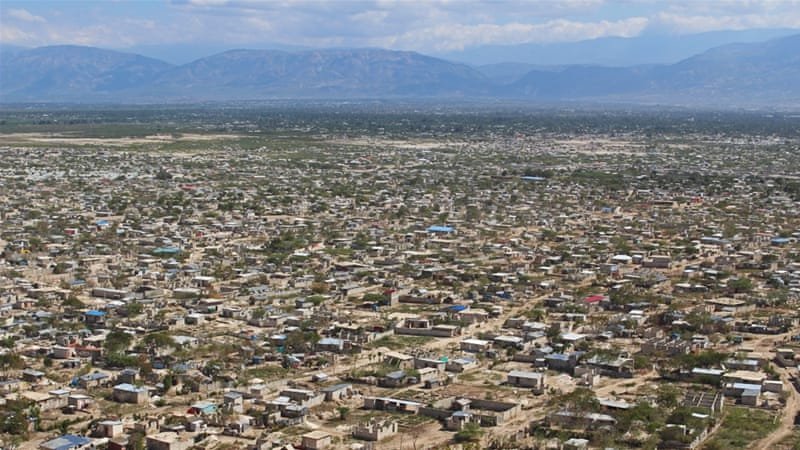
A short drive north from Haiti’s overcrowded capital of Port-au-Prince, a metropolis is rising from a previously desolate landscape. Some 250,000 people have flocked to Canaan in the eight years since an earthquake ravaged Haiti, destroying 100,000 homes. Born out of a disaster, it’s a city without a government, and for many, it’s an experiment in self-determination. But its future is increasingly uncertain.
A man works to level a plot of land in order to begin building a home in the Canaansettlement. Image by Allison Shelley. Haiti, 2018.
Absent any authority, Canaan’s residents must settle disputes on their own. They form committees and negotiate with NGOs to solicit water wells, public plazas and schools. They’ve built houses, shops and small businesses from scratch. Without formal jobs, they work as part-time masons, motorcycle taxi drivers, midwives, handymen and street vendors. In one neighborhood, they’ve set aside space for a cemetery—indicating plans to reside here the rest of their lives, and then some.
Elias Jean Oriel (left) and Regala Laisse Moi turn sand and cement intocinderblocks in the Canaan 2 section of Canaan, Haiti. "There are four types ofblock for different building needs," says Oriel, who is making wall block, known as"type 15," which sells for 25 gourds each (about 50 cents). This particular batchwill go to expand Oriel's own house nearby, which he's been building for the pastfour years. Image by Allison Shelley. Haiti, 2018.
But without roads, transporting goods across the city is a long, expensive trek. The American Red Cross and its partners are preparing to build 2.5 kilometers of paved road that will connect Canaan to the national highway at its perimeter, but Haiti’s government isn’t funding it. In fact, Haiti’s government hasn’t even identified and paid the owner of the land on which the city stands, meaning its appropriation may be legally void. The hundreds of thousands of people living there could someday be evicted.
Residents of the former Mozayik tent camp protest at an event attended by HaitianPresident Michel Martelly commemorating the five-year anniversary of the 2010earthquake, at the St. Christophe memorial, in Canaan, Haiti. The group of 126families has been evicted from a tent camp and now from land they bought title toin Canaan. Their signs ask the president to arrest the men who sold them thequestionable title. Image by Allison Shelley. Haiti, 2018.
After the earthquake, then–President René Préval declared the land public, setting the exodus into motion. Since then, Haiti’s national leaders have allowed the city to exist, but otherwise ignored it. Meanwhile, the three local municipalities over which the city now spans have been fighting with one another for control, while the residents of Canaan form tenuous committees in an attempt to bring order to their communities.


 They came from all walks of life. Some were working-class families with hopes of building their first home. Back in Port-au-Prince, 36-year-old Raphael Philippe paid $130 a month in rent for an apartment that came crashing down in the earthquake. For three years, he and his family lived in a tent before moving to Canaan. “There are nicer places to live. But you take what God gives you, and here we are content,” says Philippe. Six days a week, he and his wife wake up at 5 a.m. to make the two-hour journey on a series of tap-taps — colorfully painted pick-up trucks that ferry commuters—to a grocery store in Port-au-Prince, where they work as cashiers. “It’s far. But it’s better to have a house that is your own.”Other early settlers included religious leaders who saw an opportunity not just to live, but to worship. “First I came to find my own land. And since I’m a pastor, I wanted a church,” says Nazerene Pastor Marc Loumette. He opened a primary school, offering scholarships to kids whose families couldn’t afford the $70-a-year tuition. He teaches his students civics and stresses the importance of a government, planning field trips to Haiti’s National Museum and palace to offer inspiration.


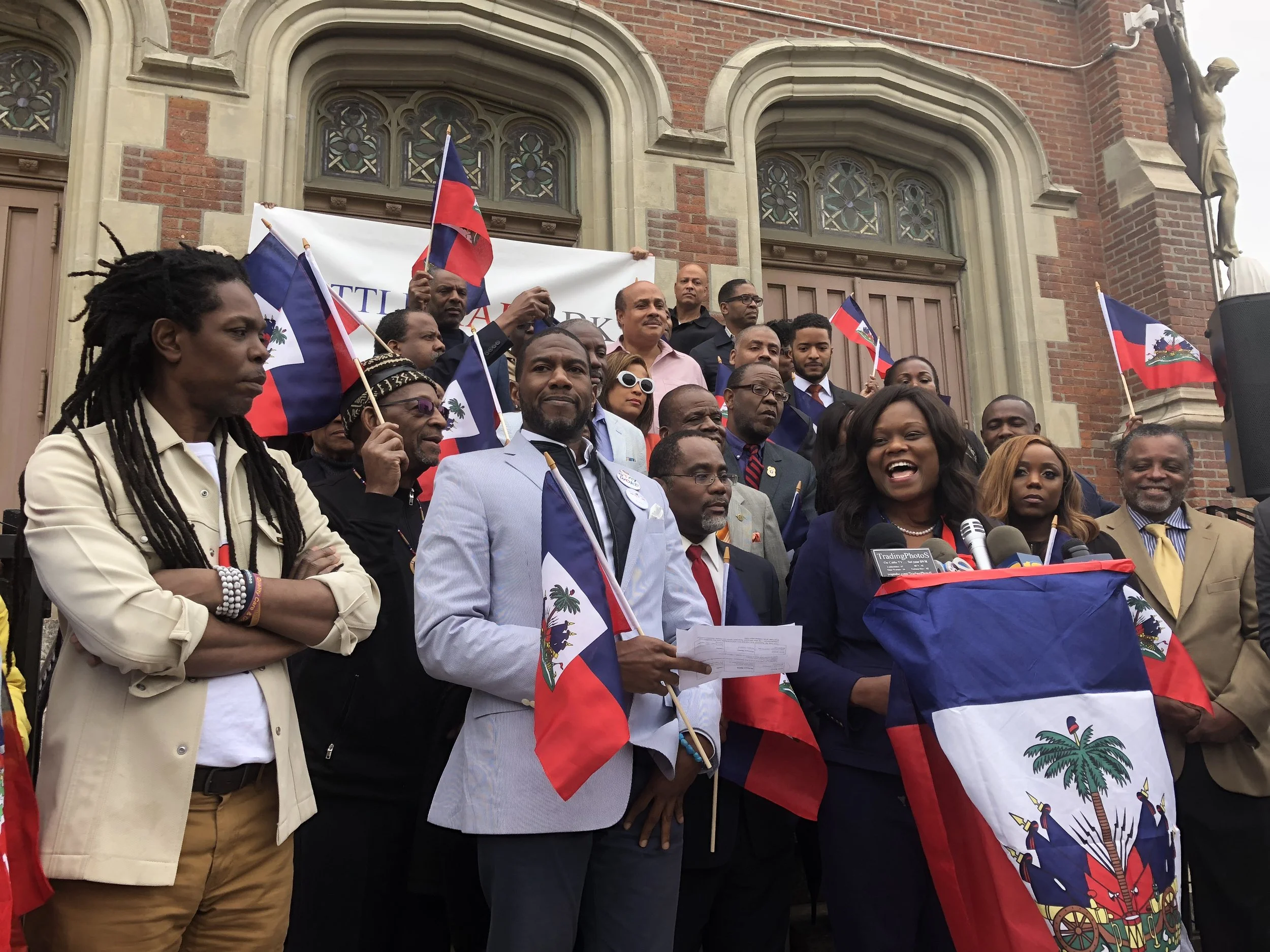
Little Haiti Business and Cultural District Is Coming Soon To Flatbush
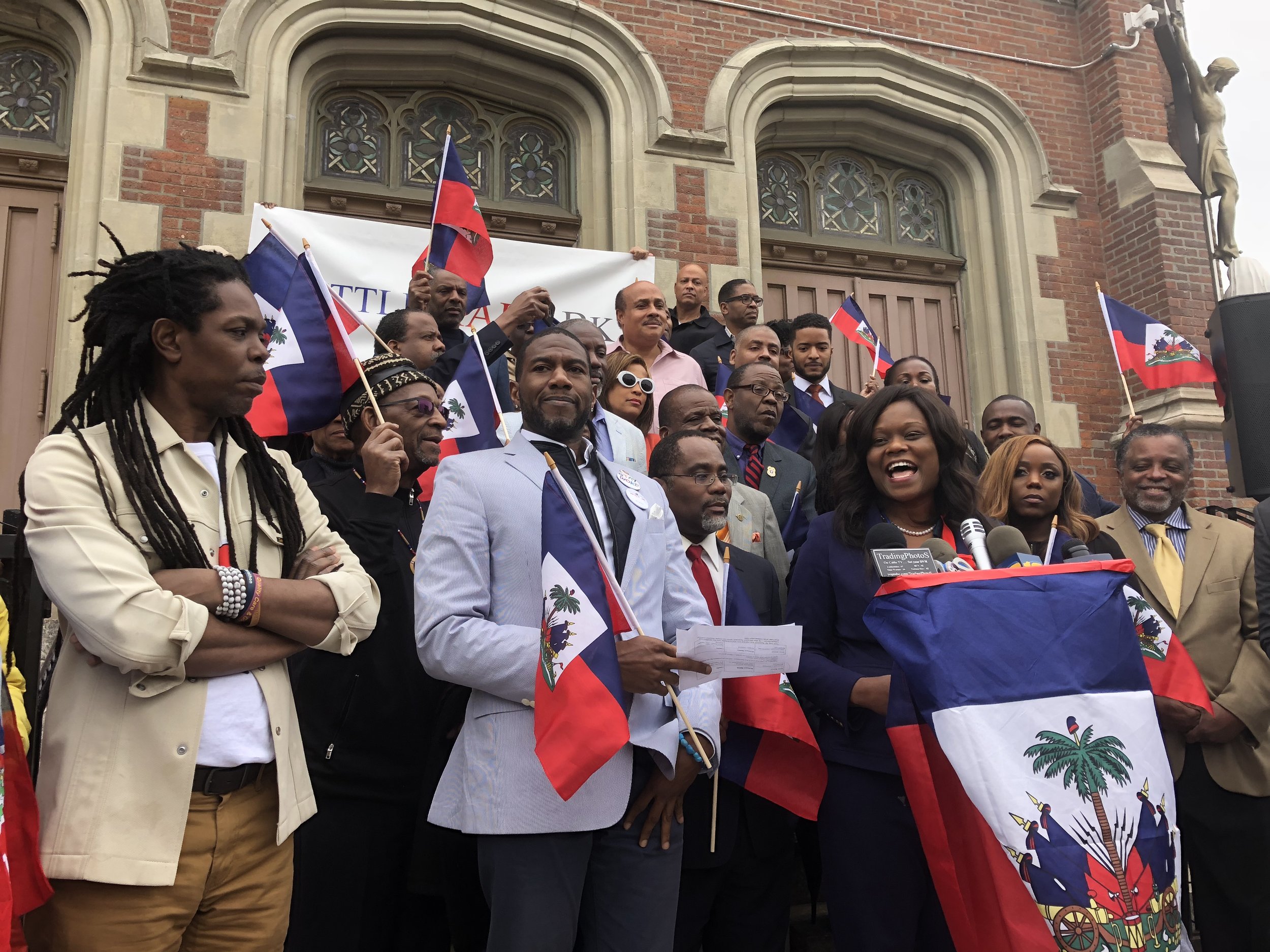
FLATBUSH – Today is Haitian Flag Day and to celebrate, elected officials gathered on the corner of Newkirk and Nostrand Avenues to announce that Little Haiti Business and Cultural district is coming soon. They also unveiled a new sign for Toussaint L’Ouverture Blvd along portions of Nostrand Avenue.The proposed Little Haiti Business and Cultural District (a legislation currently awaiting to pass the City Council) will be defined as the area roughly between Avenue H and Parkside Avenue, East 16th Street and Brooklyn Avenue.

The proposed legislation is expected to go before the City Council early this summer. It is also expected to pass. The proposed area is twice that of and overlaps with Little Caribbean district that is bordered by Nostrand, Flatbush and Empire.“Little Haiti is an idea whose time has come. Brooklyn is the Port-au-Prince of America, and it’s time for the world to know and come experience all we have to offer,” Borough President Eric Adams said. “On this year’s Haitian Flag Day, we raise our voices to make Little Haiti an official designation in the heart of Flatbush.”Flatbush has a high population of Haitians. As per 2013 statistics, Brooklyn has close to 50,000 Haitian-born residents, most clustered around Flatbush. For Assembly Member Rodneyse Bichotte, the first Haitian-American to be elected to the State Legislature from New York City, having a Little Haiti district means very much.“The Little Italy model provided a blueprint of sorts for Little Haiti,” Bichotte said. “And we believe that with this designation we will see an infusion of tourism and business activity similar to the foot traffic seen in the Lower East Side after the designation of Little Italy.”

Council Member Jumaane Williams, who represents the Flatbush area and is running for Lieutenant Governor, spoke about how the Haitian culture impacts Brooklyn.“I’m proud to represent the largest group of Haitians in America, outside of Florida. Haitian culture has been and continues to be extremely impactful and beneficial in this community and in the entire city,” Williams said. “This designation is a great way for… NYC to show the world and the nation that Haitians add a cultural, educational, and economic significance to this country that cannot be ignored.”
After the press conference, a new sign for Toussaint L’Ouverture Blvd, which overlaps portions of Nostrand Avenue, was unveiled. Parts of Rogers Avenue will be co-named after the Haitian Revolutionary leader Jean-Jacques Dessalines.

“Few are aware that Haitians fought in the American Revolution on the side of the founding fathers,” Bichotte said. “In fact, there is a monument to the sacrifice of these Haitians in Savannah, Georgia.”By: Zainab Iqbal | Bklyner. | May 18, 2018
In Brooklyn, Push for a Special Haitian District Hits Resistance
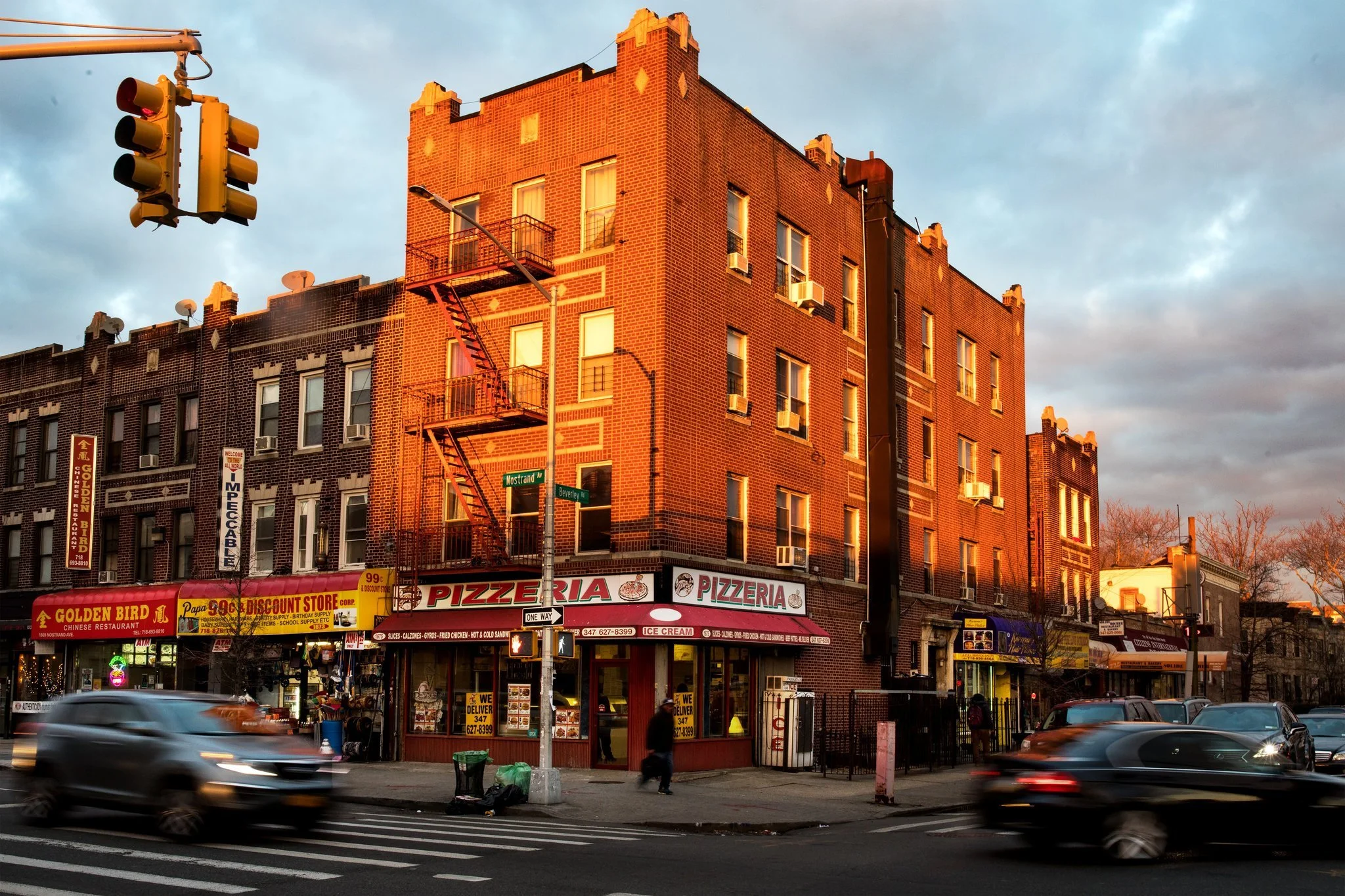
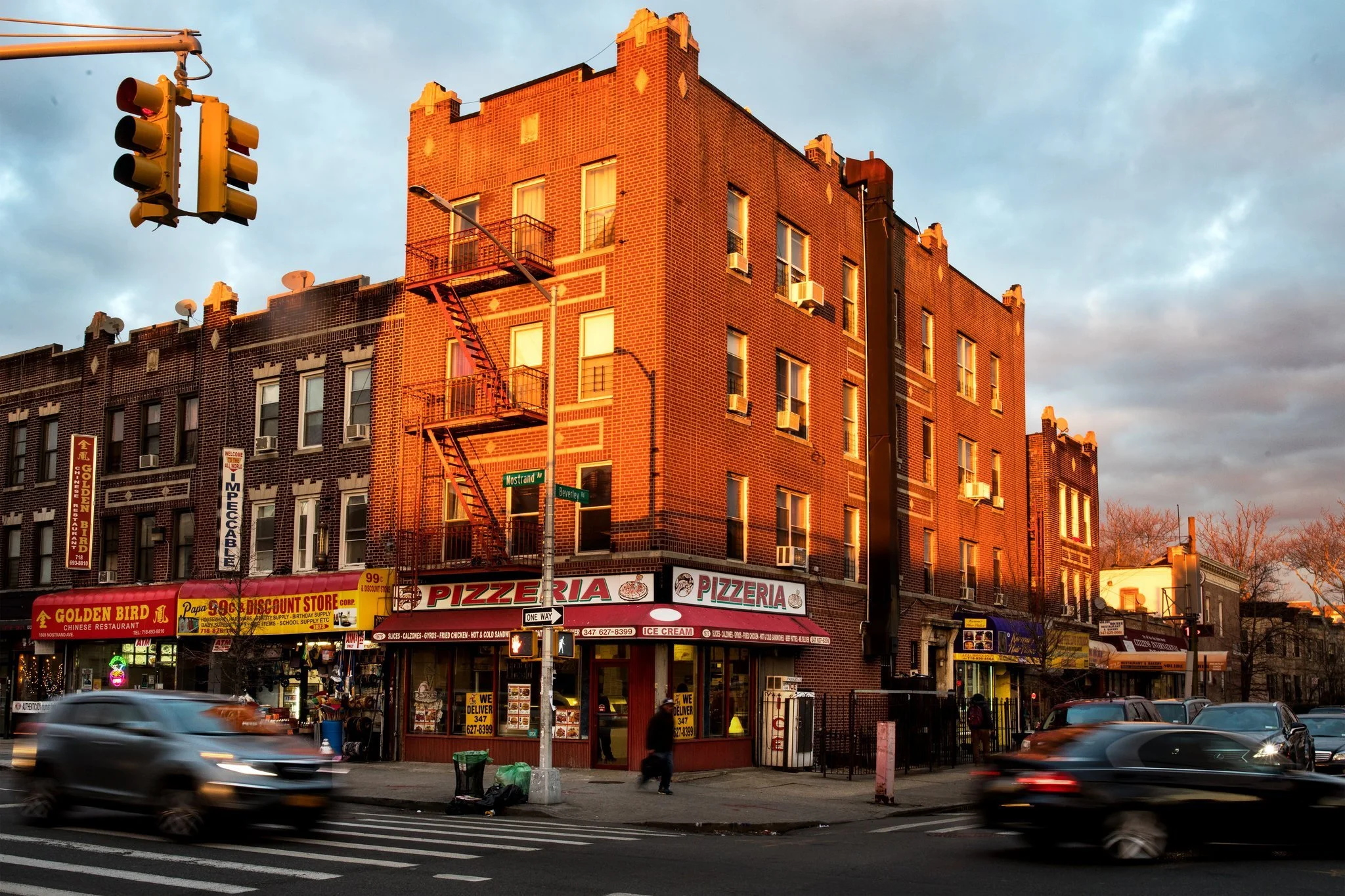
Ben Flambert sat wrapped in an apron at a barber shop on Nostrand Avenue in Brooklyn, listening intently as Assemblywoman Rodneyse Bichotte explained why she was leading an effort to get the city to designate the surrounding neighborhood the Little Haiti Business and Cultural District.

BEN FLAMBERT, 42, LEFT, AT A HAITIAN-OWNED BARBERSHOP IN BROOKLYN, SUPPORTS THE IDEA OF A LITTLE HAITI DISTRICT. “THE HAITIAN PRESENCE OUT HERE IS REAL STRONG,” HE SAID. “IT MAKES SENSE.”
Across the street from the barber shop are a Haitian bakery, a Haitian church and a Haitian restaurant, Ms. Bichotte, the first Haitian-American woman elected to office in New York City, explained. People of Haitian descent make up 20 percent of the Caribbean population in Flatbush and the local Haitian parade used to pass directly in front of the barber shop.
“Miami already has a Little Haiti,” Mr. Flambert, 42, a bus driver for the Metropolitan Transportation Authority, said as he sipped from a miniature bottle of Rhum Barbancourt. “But the Haitian presence out here is real strong. It makes sense.”
Not everyone in the central Brooklyn neighborhood agrees. Last year, an area bounded by Flatbush, Church and Nostrand Avenues was designated the Little Caribbean cultural district, making a separate Haitian district redundant, some local leaders say. Ms. Bichotte says there were plans to name the area Little Haiti dating back more than a decade.
Now, with momentum fueled by anger over recent slights by President Trump, prominent members of the Haitian community in Brooklyn and New York State are hoping the City Council will officially designate Little Haiti in May.
The designation, said members of the nonprofit group Little Haiti BK, is a recognition of the cultural role that Haitians have played in the city and the country, and a sign that the area’s Haitian community is coming-of-age. The resolution would also serve as a formal recognition by the City Council, which organizers hope will make it easier to work with tourism and business improvement officials.
“People are stepping all over us so we’ve got to empower ourselves,” Ms. Bichotte said during a meeting of the Little Haiti BK organizing committee at her district office on Flatbush Avenue.
But even as the push for a designation grows, the area’s Haitian character is already eroding, as gentrification and the movement of Haitians to the suburbs trigger changes. While the number of Haitian-Americans grew to 1.1 million in 2016, from 623,000 in 2000, New York’s place in the Haitian diaspora has been falling. In 2016, 20 percent of the country’s Haitians lived in New York, down from 30 percent in 2000. In contrast, the Haitian population in Georgia and Pennsylvania more than tripled to over 30,000 people each in 2016.
Still, Brooklyn now has more than 90,000 Haitian-Americans, giving it the third highest concentration in the country, according to an analysis by the Migration Policy Institute, a Washington, D.C.-based think tank.
“This is Haitian territory, but it’s changing,” said Ricot Dupuy, director and station manager of Radio Soleil d’Haiti, New York’s first Haitian radio station.
The proposal calls for naming an area bounded by Avenue H, Brooklyn Avenue, Parkside Avenue and East 16th Street the Little Haiti Business and Cultural District to “foster a strong sense of belonging, security, and pride among residents, businesses, nonprofits and community groups in Flatbush,” the group wrote in a letter to members of the City Council seeking their support.
The district is designed to help promote Haitian-owned businesses, but also includes proposals to create a Haitian cultural center, rename streets and erect a monument. Members of the group backing the idea acknowledge that they can’t stop gentrification but want “to leave a legacy behind, something that says we were here and that our ancestors will be proud of,” said Jackson Rockingster, president of the Haitian-American Business Network
 .
.
Ricot Dupuy, 64, is the manager at Radio Soeil d’Haiti. “This is Haitian territory but it’s changing,” he says.
Mr. Trump’s derisive remarks about Haiti and his decision to end the program that allowed Haitians to live and work in the United States after the devastating 2010 earthquake, remind many Haitians of their history of being disparaged in the United States. After they began arriving in large numbers in the 1980s, stereotypes about Haitians committing crime or spreading diseases such as HIV were commonplace.
“This designation is about redefining the narrative,” said Rosemonde Pierre-Louis, chairwoman and co-founder of the Haitian Roundtable, a civic group of Haitian-American professionals. “What has happened over the last couple of months makes it even more urgent.”
Some of those stereotypes about Haitians exist even among other Caribbeans. Last September, Ernest Skinner, a Brooklyn political operative who questioned the need for a Little Haiti, wrote to elected officials that “Sowing division may be why Haiti has never been able to reach its full potential and why it is considered a Fourth World country despite the noble start it gave to the Independence movement among people of color.”
Ms. Bichotte demanded an apology. In an email, Mr. Skinner said he has a “record of strong and unwavering support” for all in the Caribbean diaspora.
Mr. Skinner is a political mentor of Jumaane Williams, a city councilman, who denounced the remarks, is a sponsor of the Little Haiti effort and supports having both a Little Caribbean and a Little Haiti. Mr. Williams, a candidate for lieutenant governor, said that Haiti’s “unique culture” is often maligned.
As a child, Mr. Williams said, his best friend was Haitian and he felt a strong affinity because they were both Caribbean. Mr. Williams’s parents are from Grenada. But Mr. Williams said he soon noticed that his friend often didn’t mention that he was Haitian and used his Anglicized name even among other Caribbeans.

Rodneyse Bichotte, a member of state Assembly, and Jackson Rockingster, of the Haitian American Business Network, are part of the Little Haiti BK organizing committee.
“I slowly realized there was a difference. Haiti is a part of the Caribbean but the hard truth is that it’s sometimes left out when people talk about the Caribbean,” Mr. Williams said.
John Mollenkopf, who directs the Center for Urban Research at the Graduate Center of the City University of New York and studies the political integration of immigrants, said, “There is this pecking order in the Caribbean with Anglophones thinking of themselves as superior to French-speaking Haitians.”
Not everyone agrees with that assessment, either. Shelley Vidia Worrell, founder and chief curator of CaribBEING, a group that promotes Caribbean art and culture and launched the Little Caribbean district, said Haitian culture and businesses are a vital part of the district.
“We see Haiti as very much being a part of the Caribbean. For us, there was never anything that needed to be separated,” Ms. Worrell said.
Jensen Desrosiers, the owner of Tonel Restaurant & Lounge, a well-known Flatbush Haitian night spot on Rogers Avenue, said he and his partners were hoping for a cultural district when they opened five years ago.
“If you have a friend in New York City and you want to give them a taste of Haitian culture, you’d bring them to this neighborhood,” Mr. Desrosiers said as he shared classic Haitian dishes such as pork griot and tassot with Ms. Bichotte, Mr. Rockingster and a local businessman, Fritz Masse Clairvil, after the Little Haiti BK planning meeting.
“Little Haiti is already happening around us,” Mr. Clairvil chimed in.
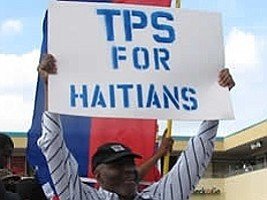
DHS decision to end Haitian immigrant protections questioned
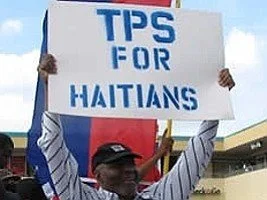
Washington (CNN) - Newly released internal documents are raising questions about the Trump administration's decision to end protections for tens of thousands of Haitian immigrants -- and whether the argument that the protections were no longer merited was valid.
Under President Donald Trump, the Department of Homeland Security has been aggressive in ending a number of temporary protected status designations that have been on the books, in some cases, for decades.
Roughly 300,000 people who have lived in the US with legal permission, most of whom have been here for upward of 15-20 years, could have their status pulled in the coming months as the protections expire. In the case of Haiti, nearly 60,000 immigrants are set to see their status expire next year.
The justification from the administration for ending the protections has been that by law, when the conditions from the original disaster that triggered the protections have improved, they must expire. DHS has been clear that it does not believe it can look at the totality of conditions in the country to factor in its decision making.
But the documents released Tuesday as part of a Freedom of Information Act lawsuit raise questions about whether DHS was accurately interpreting information in drawing those conclusions.
The documents suggest DHS contradicted its own staff assessment of Haiti when it opted to end TPS for the country, which was put in place after the devastating 2010 earthquake. The documents also include email correspondence showing Haiti's deep concern about ending TPS for the country.
While many of the documents are redacted, the release includes a report prepared by staff about the conditions in Haiti, which was included as part of a recommendation by the director of US Citizenship and Immigration Services.
Director L. Francis Cissna wrote in several instances that conditions in Haiti have improved enough from the 2010 earthquake to lift TPS. But the attached report in many cases paints a much more dire picture than the data points Cissna highlighted. Both documents were sent to then-acting Secretary Elaine Duke and resulted in her decision to end the program with an 18-month wind-down period.
In one example, the staff report stated: "Many of the conditions prompting the original January 2010 TPS designation persist, and the country remains vulnerable to external shocks and internal fragility."
The report closed with the conclusion that given a number of conditions -- including economic difficulties, a cholera epidemic, a housing crisis and food insecurity -- recovery has been severely hampered:
"Due to the conditions outlined in this report, Haiti's recovery from the 2010 earthquake could be characterized as falling into what one non-governmental organization recently described as 'the country's tragic pattern of 'one step forward, two steps back.' '"
Cissna, though, wrote to the secretary: "Haiti has made significant progress in recovering from the 2010 earthquake, and no longer continues to meet the conditions for designation."
The report did note that much of the recovery was exacerbated by Hurricane Matthew in 2016, which DHS maintains is not relevant to the earthquake and cannot be factored in.
DHS has made similar decisions about protections for hundreds of thousands of Central Americans, despite the Bush and Obama administrations both extending the renewable TPS designations in most cases.
In response to the documents, Cissna maintained that the government's review concluded that the 2010 conditions that prompted the status no longer exist.
"The decision to terminate TPS for Haiti was made after an inter-agency review process that considered country conditions and the ability of the country to receive returning citizens," Cissna said in a statement, saying the review included an "extensive outreach campaign: for others' input. "Based on all available information, Acting Secretary Elaine Duke determined that the extraordinary and temporary conditions that formed the basis of Haiti's TPS designation as a result of the 2010 earthquake no longer exist, and thus, pursuant to statute, DHS concluded the current TPS designation for Haiti should not be extended."
Separately from the report, email correspondence released as part of the FOIA suit showed that Haitian officials repeatedly reached out to the US government about their concerns over ending TPS, requesting that the program be extended for "at least another 18 months," per Ambassador Paul Altidor. DHS did opt to delay the official end date of TPS for 18 months, but did not formally renew the program.
The documents are the result of a lawsuit brought by the The National Immigration Project of the National Lawyers Guild, a pro-immigrant group.
"DHS' decision to terminate TPS for Haiti is manifestly contrary to the evidence reflected in this report," project Legal Director Sejal Zota said in a statement.
DHS will make a decision in May about another roughly 80,000 immigrants from Honduras protected by TPS. The agency has been sued by advocacy groups who allege racial motivations for ending Haiti's TPS.
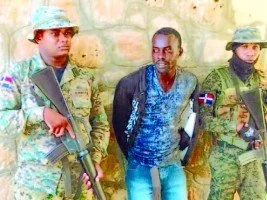
Haitians attack Dominican soldiers at the border
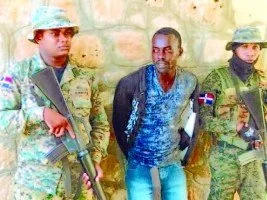
On Wednesday in El Paso de Nonón, in the municipality of Bánica, a van and a minibus from the Dominican Navy Ministry, occupied by soldiers on patrol on the banks of the Artibonite (along the border) were victims of throwing stones, launched by Haitians.A report prepared by Colonel Wilson Castillo González, Commander of the Third Brigade, said that when the two vehicles arrived on the site, several Haitians who were on the other side of the Artibonite began throwing stones, forcing the military to withdraw.Colonel Castillo González indicates that during the return of the troops of the JD-2 of the Dominican army (ERD), led by the first lieutenant Antonio de los Santos, in charge of the Direction of the Drones, they manage to capture on the Dominican territory one of the Haitian attackers, identified as Wilson Santomon, he was arrested and taken to thefortress "José María Cabral", a base of the 3rd brigade in San Juan de la Maguana, where he was incarcerated while waiting to be put in the hands of justice.The Colonel also recalled that the intelligence agencies, informed the 3rd brigade that Haitians throw stones at the drones that were put into service for the surveillance of the border to try to destroy them. In response to a question, Colonel Castillo Gonzalez stated that the aggression of Haitians against the military as well as attempts to destroy the drones, could cause regrettable events "[...] imagine, we do day activities and at night, these drones we must take care of them, but even more of our men and if there is an incident and the Haitians attack our soldiers with stones, they can not let themselves be killed and they must preserve their life..." leaving imagine between the lines, the potential risks and consequences of a replica of the military in such a situation of aggression...By: HaitiLibre | 4/6/2018
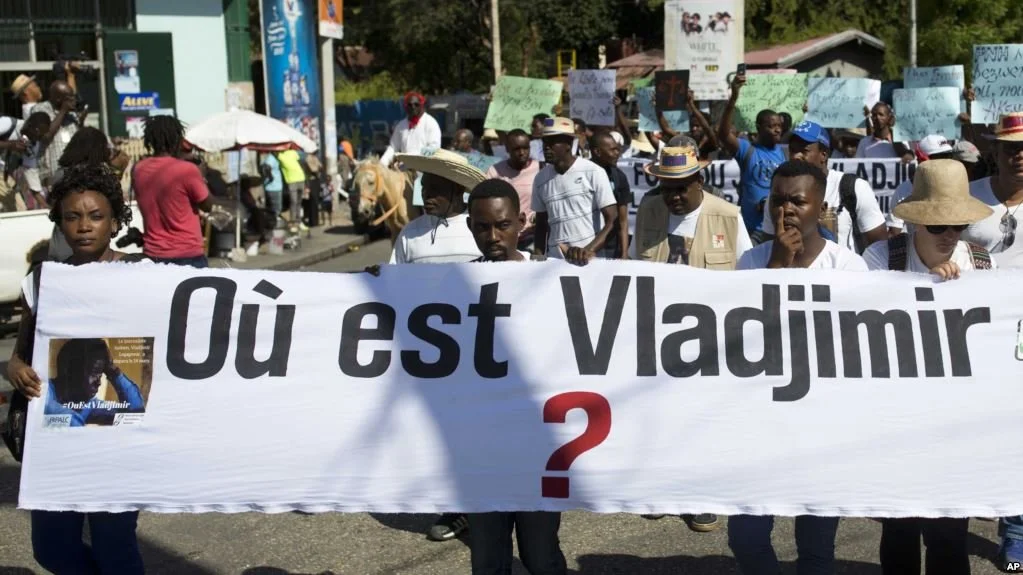
Haiti Police Arrest Suspects Who Say They Murdered Journalist Legagneur
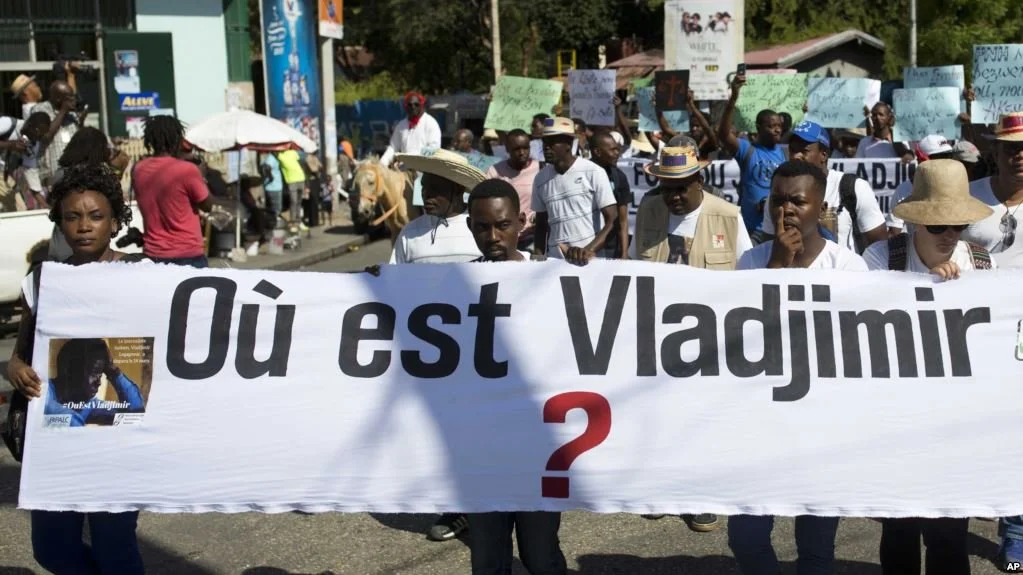
PORT-AU-PRINCE — Haiti's National Police spokesperson told VOA Creole Friday that they have two suspects in custody who say they were involved in the murder of journalist Vladjimir Legagneur, who disappeared on March 14.Legagneur left home on a reporting trip in Grand Ravine that day — a poor Port-au-Prince neighborhood known for its violence and gang activity. He was never heard from again.Frantz Lerebours told VOA Creole police went to the area where the journalist was last seen to verify information it had received on his disappearance. Lerebours said skeletal remains and a hat were found, collected and brought back to Port-au-Prince to be examined by a forensics team."They were pretty fresh," he said, referring to the evidence collected. He said police would try to identify the remains to determine whether or not they belong to journalist Legagneur.The police spokesman said Legagneur's wife, Fleurette Guerrier Legagneur, confirmed the hat was the one her husband was wearing on the day of his disappearance. Lerebours also said police will be ready to make more arrests as soon as they have the results of the forensics and DNA tests.
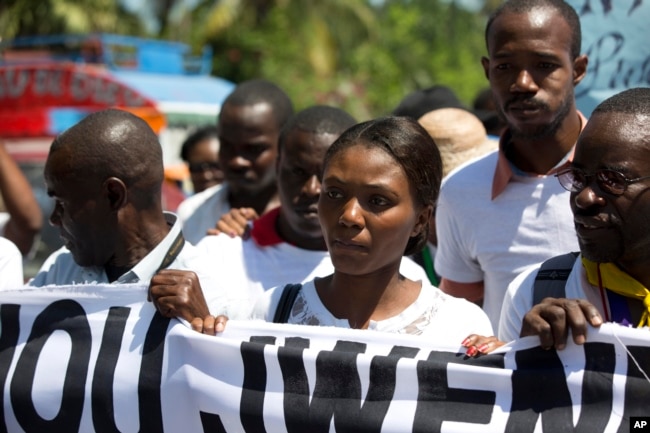
According to Fleurette Guerrier Legagneur, Vladjimir Legagneur had received a phone call the day before that resulted in an assignment on which he set out the following morning."I was really worried," she told Le Nouvelliste newspaper a few days after his disappearance, recalling her conversation with her husband about the assignment the morning of his disappearance."But I know this is his profession," she added. "I can't keep him from doing his job. So, I talked to him about it, and he was determined to go out and report the story. And before leaving home that morning, he gave me a phone number that he said I could call in case his personal phone did not respond."When Vladjimir Legagneur failed to return home that night, Fleurette Guerrier Legagneur reached out to his journalist colleagues."I've heard a lot of rumors about that day," she said. "Some people say the neighborhood was very active. There was a fight between two gangs. Then, others tell me there was nothing. Other people tell me a person died in the neighborhood, but it was a gang member. You know, everyone has information to give that you can't even verify. I have no way of knowing whether it's true or a lie."
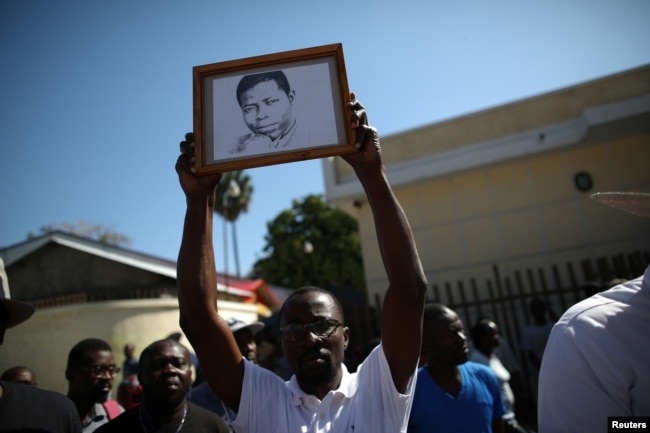
The Ministry of Communication has expressed solidarity with the journalist's family and hopes to find out what happened to Vladjimir Legagneur.On March 28, hundreds of journalists participated in a protest in Port-au-Prince to ask police to do more to find their missing colleague.Meanwhile, the Haitian Journalist Association (AJH), the Association of Haitian Media (ANMH), and other members of the local media have also publicly expressed concern about the disappearance. The Caribbean and Latin American branch of the International Federation of Journalists (IFJ) posted a message on its website expressing concern, as well.By: Sandra Lemaire | VOA Creole service | April 06, 2018
Solving the sanitation situation in Haiti
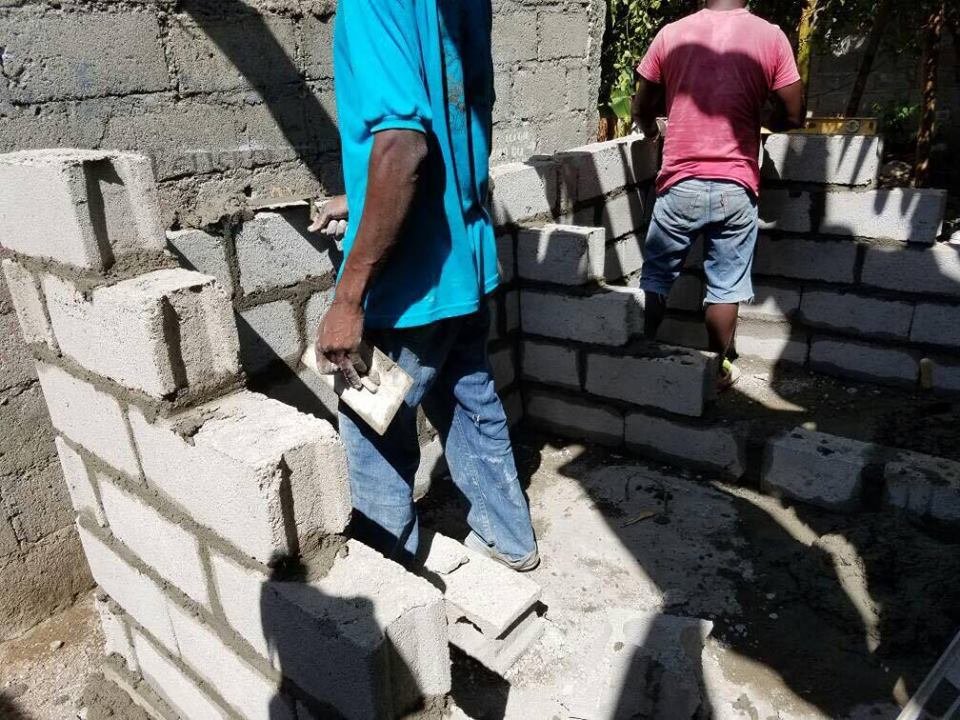
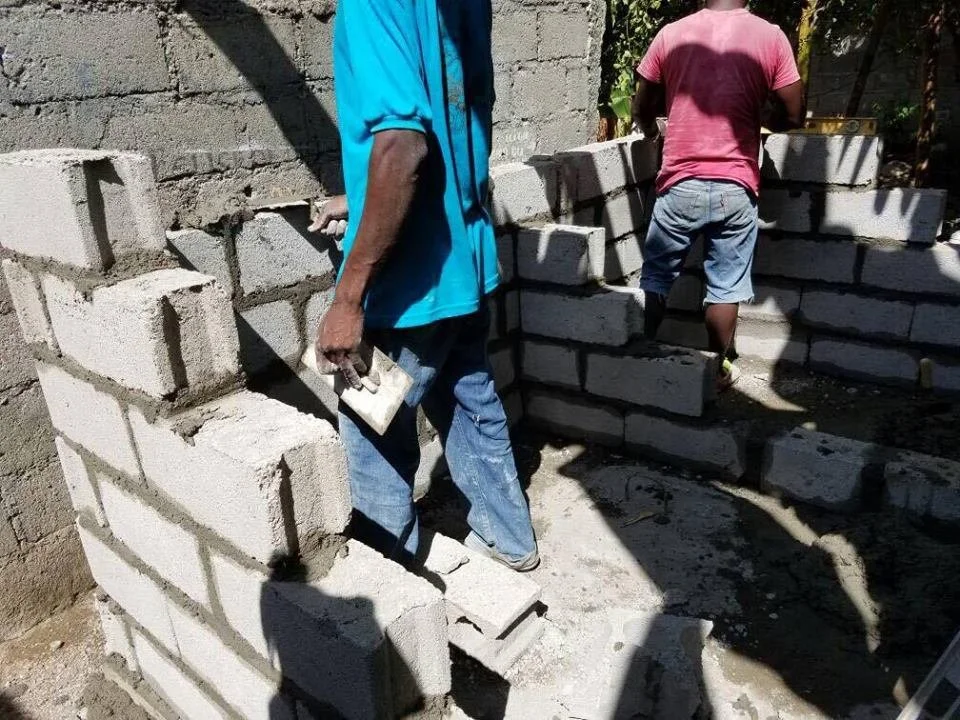
Haiti (MNN) — Few things are easier to take for granted than toilet paper, but what about people who don’t have bathrooms in the first place?According to Eva DeHart of For Haiti With Love, sanitation is virtually unheard of in the streets of Haiti.“If, in the capital of Port-au-Prince, they have a flushing toilet, you can know that they’re catching water on the roof, and anything that goes into those toilets is going straight out onto the streets,” she says.And that’s a best-case scenario. “If you’re lucky, it goes into canals or rivers and ends up in the ocean,” DeHart says. Everyone else defecates somewhere outside. Sometimes, but not always, they’ll go into bags, but even that only goes so far when they simply throw the bags as far as they’ll fly.“When you have entire communities who have no sanitary system at all, and most of them have no outside latrine, they’re defecating on the ground,” DeHart says. “This is a very unhealthy situation.”That’s why For Haiti With Love is building latrines.
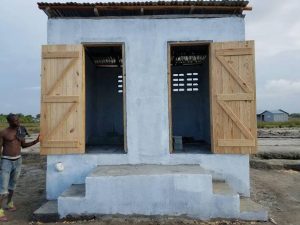
Photo Courtesy For Haiti With Love
For $3,500, they can help set up a community latrine to help provide sanitation needs for indigenous people. So far, their projects have been met with great success, and interest is quickly growing.“The people were so excited about the last one we built that they wanted to know if they could have a three-hole rather than just a two-hole community latrine, and they were willing to forfeit what we would pay them in labor to help build it.”As more latrines go up, more villages are asking for help.“We’ve got a long list of communities now who are willing to set aside enough land to make this happen because they really, really want these projects,” DeHart says. ”We’ve got the land, the workers, the time- all we need is money, materials, and expertise.”And it’s not just about sanitation. These latrine projects give missions workers a chance to share the hope of Christ during construction.“They understand who they work for,” DeHart says. “Jesus will get the glory.”Want to help? Consider giving your time, resources, and prayer to one of the latrine projects.“Jesus uses his people. We need his people to listen to the problem, come forth, and be touched.”By: Alex Anhalt | Mission Network News | March 30, 2018
Human Trafficking from Haiti to Chile
In Chile, as in every other country that has historically embraced slavery, there are numerous racists. It is equally fair to say that, like all countries with a similar history, the fraction of those who are appalled by the persistence of slavery in their lifetimes well exceeds the proportion of racists. And when well-meaning people, who seek to expose what they perceive to be human trafficking, are accused of racism by those who do not understand a situation or want to sow confusion, this is a grave injustice. Haiti has been at the forefront of the Chilean news since mid-February, when a video of the nighttime disembarkation of about 140 Haitians, published by Santiago’s RD Herald and disseminated by various other sources, went viral. The video was shot and narrated by an airport employee even as he received messages on his work radio, which were audible. What caught the imagination of many Chileans was not the number of Haitians or their skin color, about which much has been made since, but the details of this curious airport arrival, which many Chileans have interpreted as a case of human trafficking.
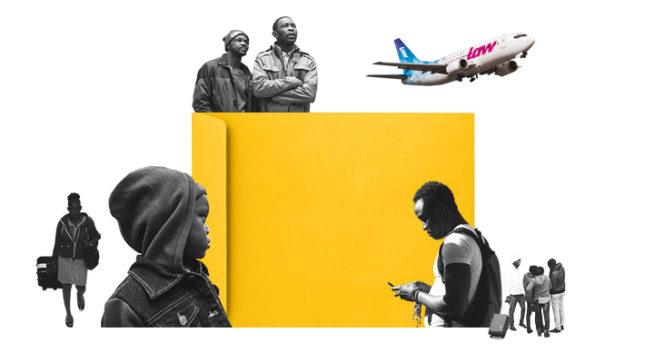 In this video, a large group of Haitians descend single file from a Boeing 767 at Comodoro Arturo Merino Benitez International Airport, also called Santiago International Airport, and are led to four waiting buses as the narrator observes, “This plane just arrived at 21:00 full of Haitian immigrants. They are all stepping down, many with the typical yellow envelope…. It is a charter aircraft. It only carries a license plate, no logo that says which airline it belongs to….”He explains that the Haitians being put on the buses are about to be transported to places where they will be “subjected to heavy work at very low cost. There are between 135 and 145 Haitian passengers doing this; this is every day, all days.”[embed]https://youtu.be/XQhEg9iyGio[/embed]However one might spin the video evidence, some facts cannot be denied. First, every Haitian who stepped off of the airplane did indeed have in hand a yellow envelope: “sobre amarillo,” as this scandal is called, identical to those of his neighbors, front and back. Secondly, the volume of Haitian migration to Chile has been astounding. According to Chile’s Investigative Police (Policía de Investigaciones, PDI), between 2016 and 2017 the number of arriving Haitians climbed from 47,027 to 111,746: a 138 percent increase in one year! This hemorrhage from Haiti is all the more remarkable when one considers that the country’s population is only about 10 million and about 80 percent of the travelers are young men between 18 and 30 years old. Finally, such flights are quite frequent. Three carriers regularly deliver Haitians to Santiago: Latin American Wings (LAW), ONE, and COPA. The plane shown in the video was from LAW.
 According to official documents, LAW carried 14,000 Haitians to Chile in the 10 months from January to October 2016 alone! It transported another 55,000 Haitians to Chile in 2017 from Haiti and the Dominican Republic. It had already brought four loads of Haitians to Santiago in 2018. A former executive of the company confided to journalist Gonzalo Cifuentes of BioBioChile that the airline, which was founded in 2016, had decided that its “business was no longer vacation, but ethnic.” Since the Haitian passengers were required to buy round-trip tickets to justify their status as tourists, the LAW flights made a profit of about $40,000 each, despite leaving Santiago on every return trip essentially empty.
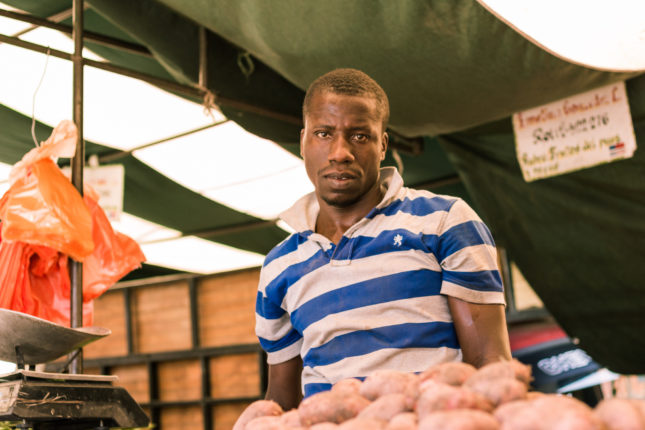
 Attempts to rationalize the unmarked planes and yellow envelopes have painted an unintended picture of a human trafficking business on an unprecedented massive scale. Possibly the best explanation has come from Fre Foundation Executive Director, Jose Maria del Pino, who told journalist Consuelo Ferrer Duran of Emol that a series of “travel agencies” have sprouted that specialize in migration. “What comes in the yellow envelope is all the documentation for the trip, plus the cash that is required of any tourist entering the country” who lacks a bank account or credit card, del Pino explained. The planes are unmarked because the agencies hire charter flights. The passengers buy an air package for which payment plus interest are due as remittances after they arrive in Chile. Enforcers in Chile and Haiti make sure the payments get made. “We have information on migrants who have told us directly that their families are being threatened in Port-au-Prince. In exchange for this, they have to pay remittances and the money they have been given to remove the threat that weighs on their families,” del Pino added.
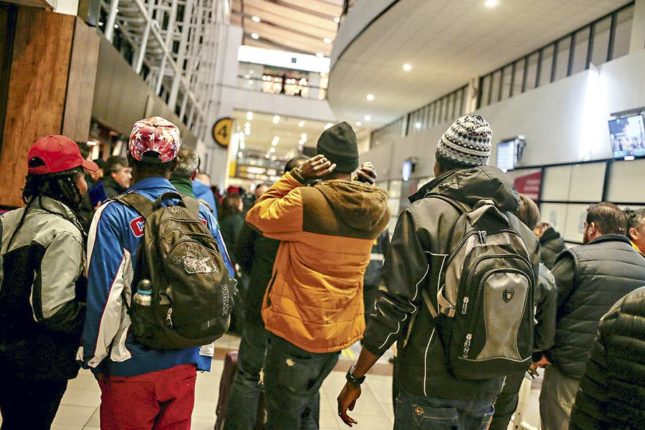
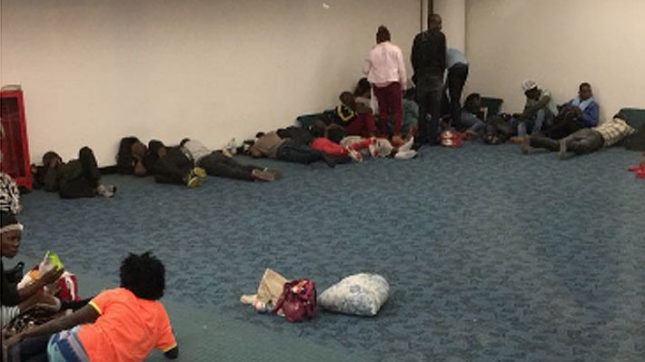
 The notoriety of the sobre amarillo affair has forced officers at Santiago International airport to check more closely the documents from supposed Haitian tourists on flights from LAW, ONE, and COPA airlines. According to an article in La Tercera, on Friday, March 2, 2018, out of a total of about 230 passengers, entry was denied to 90 passengers from ONE, 62 from LAW, and 17 from COPA, after they were found to carry invalid reservations to the same hotel. LAW flights were suspended for 15 days. The unfortunate migrants were kept in one room from early Friday morning until Tuesday afternoon, without food or a bath, after which they were put on return flights to Port-au-Prince. While it is true that those Haitians were treated more poorly than animals during their 90 hours in the airport terminal room, one must also consider that they were probably spared a worse fate with their traffickers for much longer. Since they had no hotel reservations, where would they have stayed? How would they have been forced to support themselves? What will happen to them and their families in Haiti when they cannot pay their traffickers?
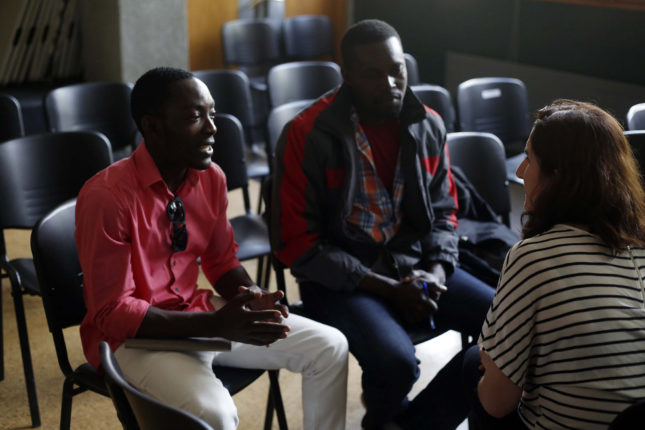 People of Haitian ancestry, and all those who want to punish the sordid practice of human trafficking, would do well to make common cause with the Chileans who are clamoring for an investigation into sobre amarillo. Haitian and Dominican human traffickers have previously been exposed and imprisoned in Chile, but instead of slowing down, the traffic of Haitians has been expanded and formalized. The sobre amarillo affair probably involves highly placed Haitians who want to increase the intake of government remittances as they discard their potentially troublesome population of educated and unemployed young men. An investigation into sobre amarillo might also expose Chilean business owners who order and exploit the cheap Haitian labor, as well as Chilean officials who, for years, have ignored the incongruities in this massive influx of supposed Haitian tourists. These employers and officials are probably racist, but that is a distraction and not the point.
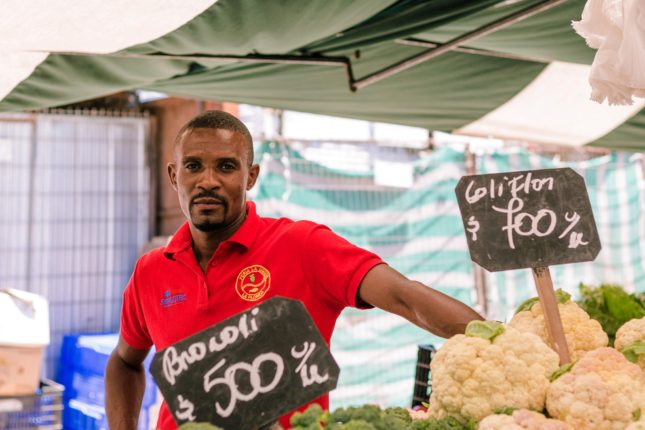 Haitian brothers and sisters: as dire as conditions might be in Haiti, it is vastly worse to be enslaved by human traffickers in a country where one does not fluently speak the language and has no citizenship rights or family members. There is no El Dorado. There is nowhere better to go. The time has come to fight in place for your birthright.By: Dady Chery | News JUnkie Post | March 8, 2018
Caribbean Development Bank To Open Haiti Office
At the 29th Intersessional Meeting of the Conference of Heads of Government of the Caribbean Community in Haiti, the country’s Minister of Foreign Affairs Antonio Rodrigue signed an agreement with the Caribbean Development Bank’s Vice-President (Operations), Monica La Bennett, to establish CDB’s first country office in Haiti.The agreement comes after the CDB and Haiti’s government developed a 100 million dollars country strategy plan for 2017 to 2021. La Bennett says this agreement will help Haiti meet its development priorities and further reinforce the country’s relationship with the CDB: “The strategy focuses on three main themes: agriculture and community development, sustainable energy development and education and training. It is this deepening engagement between CDB and the Government of Haiti that has led us to conclude that there is a need for a country office. We expect that this will lead to the development of closer relationships with the Government and the people of this country, enabling CDB to be a more proactive, responsive development partner,” she said.Haiti joined the CBD in 2007 and has since been allocated 45 million dollars in grant resources from the Special Development Fund.By: Coralie Saint-Louis | The Haitian Times | March 5, 2018
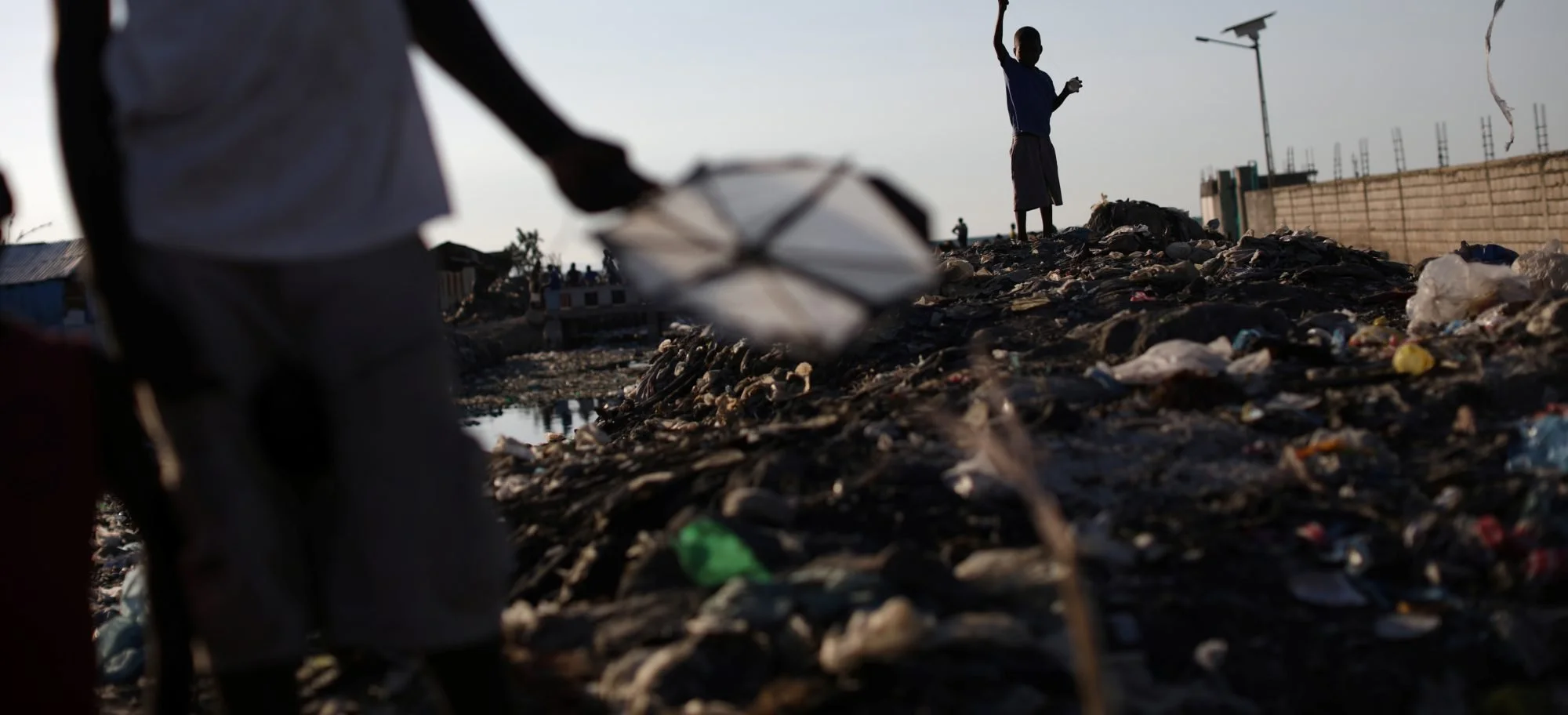
Haiti Aims To Improve Image With Better PR
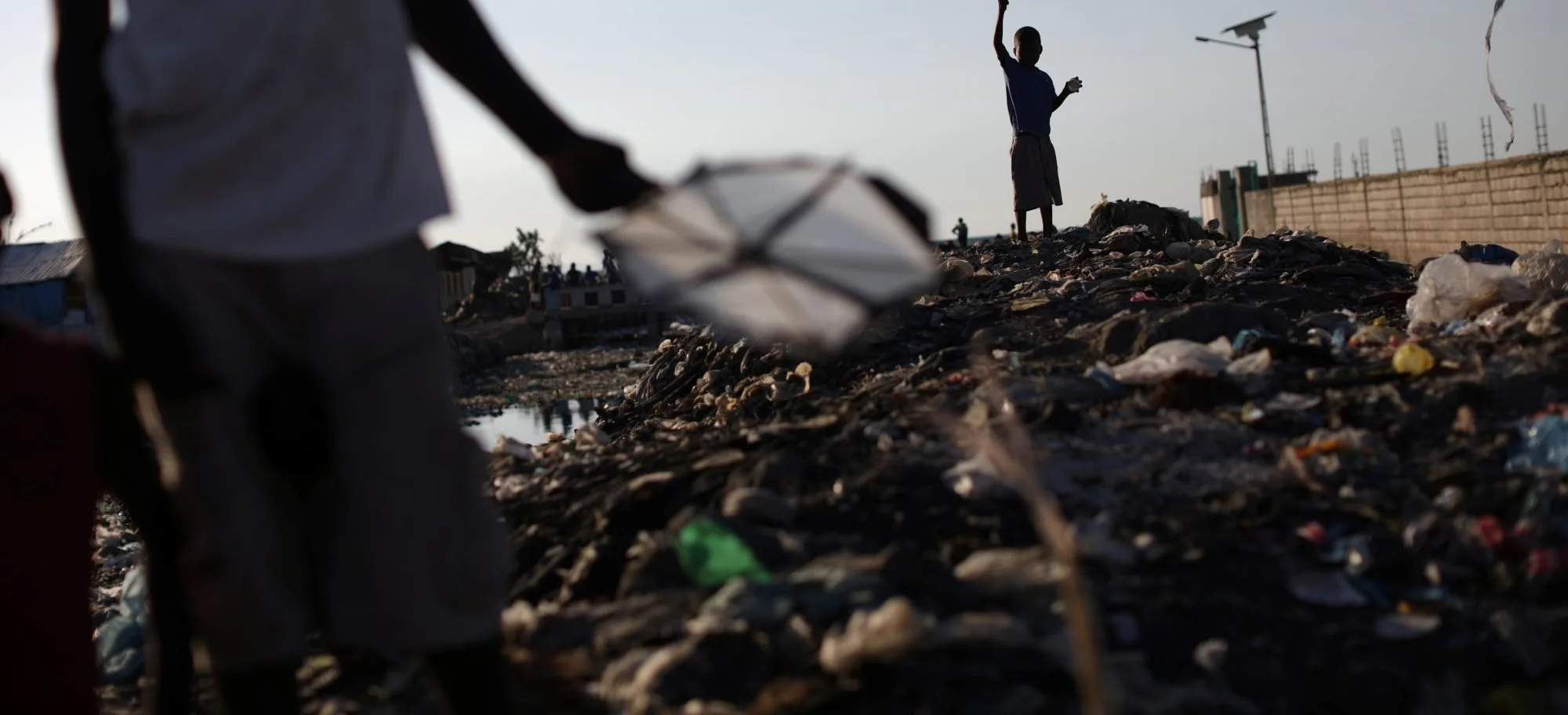
Whether President Trump actually called it a “shithole” country or not, Haiti has hired Mercury Public Relations to provide a diplomatic facelift for one of the poorest countries in the Western Hemisphere.As The Hill reports, Mercury filed notice of its work on Haiti’s behalf with the Department of Justice.In its filing to the DOJ, Mercury indicates that it will massage Haiti’s “print, television, radio, and digital media presence by crafting their narrative and amplifying their message … [and] placing stories, booking media appearances, preparing talking points/media advisories.”The contract stipulates that Mercury will only be doing PR work on behalf of Haiti and “shall not include any lobbying activities (national or local) whatsoever.”Fulton Armstrong, who represents the Center for Latin American and Latino Studies at American University, told The Hill that Haiti is seeking “image survival more than anything else during the Trump administration.”Trump denied making any reference to shithole and Haiti in the same breath, but other reports suggest that Haiti is far from Trump’s favorite travel destination. At one White House meeting in 2017, Trump allegedly claimed that all 15,000 Haitians who visited the U.S. that year “all have AIDS,” according to a New York Times report. The administration said there was no mention of AIDS in the discussion.But the controversy really erupted in January when the president was examining the countries of origin of the many immigrants who seek to come to the U.S. and allegedly asked why so many were coming from “shithole countries” like Haiti, El Salvador and many African nations.“Why do we need more Haitians?” Trump said, according to a Washington Post source. “Take them out.”Trump addressed issue, assuring readers that he had “never said anything derogatory about Haitians other than Haiti is, obviously, a very poor and troubled country. Never said ‘take them out,'” alleging that Democrats fabricated the comments. “I have a wonderful relationship with Haitians.”By: DAVID KRAYDEN | The Daily Caller | March 7, 2018

New military reinforcements, long-range UAVs and cameras on the border
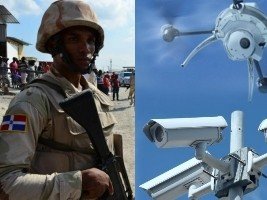
President Danilo Medina, confirmed at the 174th anniversary of the independence of the Dominican Republic (February 27) the establishment of a new security plan on the border with Haiti, including a set of measures to prevent thge massive entry of illegal Haitians in Dominican territory declaring "Dominicans have their own national project, which is neither better nor worse than those of other countries, but it is ours and our responsibility is to strengthen it and to work for it [...] We understand that to be good neighbors we must respect and even collaborate, but we must also know where a house starts and where the other ends [...]"He thus indicated that 900 military trained in the academies of the country, will offer a professional monitoring service of the border, both in terms of formal and informal crossing points, will be sent as reinforcement. He also announced the addition of 30 new off-road vehicles [in addition to the 60 already in operation], 1 additional helicopters [in addition to the 2 already in operation]Medina also mentioned the strengthening of the crossings where there is the greatest flow of people emphasizing "We will coordinate all the institutions that work at the border: brigades of the army, navy and army of CESFRONT and the Directorate General of Migration (DGM) so that they can effectively apply the Dominican law on the border. "As part of the technological means involved in the surveillance, President Medina said that a fleet of long-range UAVs and infra-red detection systems for night surveillance, will be deployed as well as hundreds cameras that will be added to some 200 surveillance cameras already deployed at the border.On Friday, March 2, Lieutenant-General Rubén Darío Paulino Sem, Minister of Defense declared "The Dominican Republic has put in place a new security plan on the border with Haiti" explaining that the 900 soldiers announced by President Danilo Medina for control the illegal migration arrived Thursday at the border to be deployed there. Indicating that these reinforcements are in addition to the 4,500 soldiers already deployed along the border, bringing the total number of soldiers to 5,400 military TO which are added the CESRONT men and the Marine and Air Force units as well as the staff of intelligence and migration (DGM)He also said that the increase in surveillance at the border other than land, will also be provided by air and sea (coastal), including between Montecristi (North-West) and Puerto Plata (North), and Pedernales and Barahona (South West).With more than 10,000 Haitians in irregular migration, deported from the Dominican territory or returned to the border on average each month, more and more moderate political observers no longer hesitate to qualify the situation of "peaceful invasion". Even the high Dominican religious authorities call on the Medina Government to take control of the situation with respect and transparency...By: HaitiLibre | March 5, 2018
Haiti’s Maternal Health Crisis
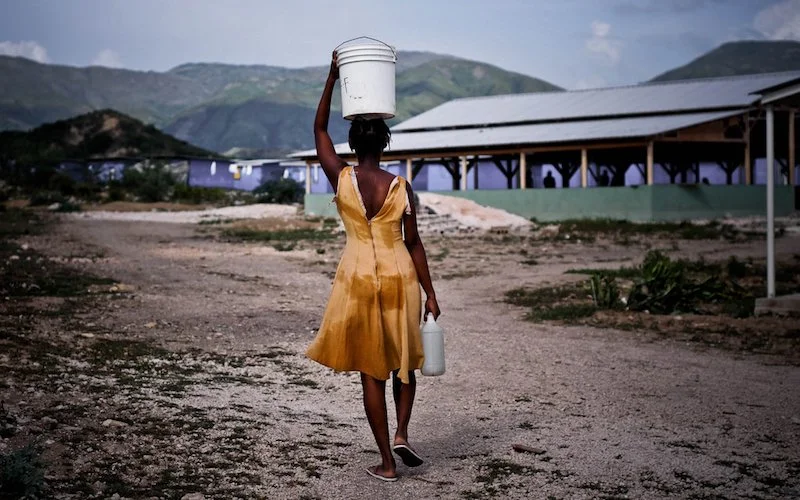
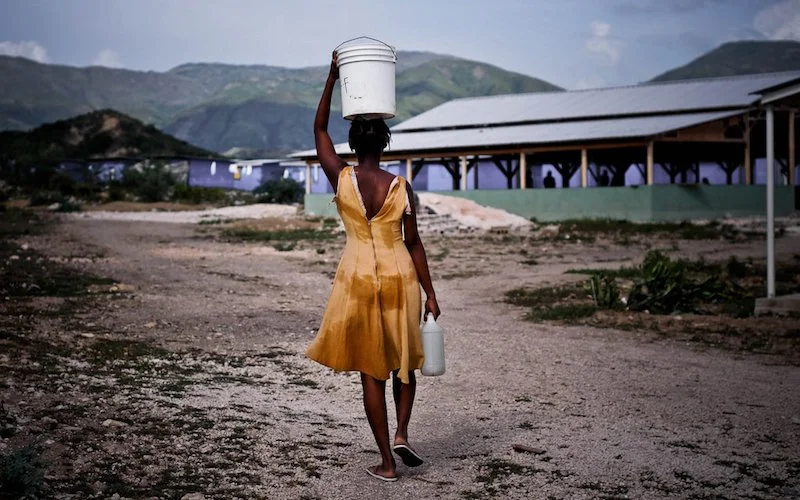
Imagine instructing your mother in Haiti over the phone on how to deliver your cousin’s baby. In 2012, Winfred Tovar’s cousin, Rose Annette, not realizing she was pregnant, suffered a seizure and stroke while delivering twins in her home. Rose Annette believed that she was menopausal and consequently was unaware that her ill symptoms correlated to an unplanned twin pregnancy. Following the delivery, Winfred could hear the agony in his cousin’s voice as she suffered a postpartum hemorrhage. The excessive bleeding was increasingly worrisome and he knew her life was at risk.This experience taught Winfred Tovar, M.D, an important lesson: in the developing world, maternal mortality remains unacceptably high. Expectant mothers in poorer communities experience high-risk pregnancies due to the lack of resources and are in jeopardy of suffering hazardous complications during and following pregnancy and childbirth. Statistics show that 99% of all complications result from lack of prenatal care, often because the ratio of patients to doctors in third-world countries is so high that most women choose to stay home instead of visiting a hospital or a clinic. Consequently, 75-80% of women defer to untrained individuals for home births with no knowledge of underlying complications that may kill them.A former attending physician at St. Barnabas Hospital in NYC, Winfred’s close connection to his mother, strong belief in female empowerment, and desire to invest in humanitarian medicine has inspired him to launch and serve as Executive Director of Mimsi International (Modification In Mother-Baby Mortality Statistics Initiative). Mimsi, a nonprofit organization, is a community-powered organization that provides training and pregnancy care to women in remote, rural areas of the developing world via mobile technology.The Mimsi process sets up mobile clinics, so that community volunteers can enter the home of the expectant mother with the materials needed to transform the patient’s home into a clinic. Mimsi trains young women and men to enter one of three programs: a two-year Pregnancy Care Provider Program to master prenatal care for members of the inner Haitian community, a one-year Ultrasound Provider Training Program or a one-year Postpartum Care Provider Program. The objective of these programs is to provide didactic and hands-on education to members living in disenfranchised, rural areas of Haiti and to transform these underserved areas into fully functioning clinic spaces to serve patients. Volunteers are trained to weigh the pregnant mother; to measure her vitals and blood pressure; to measure fundal height and fetal heart rate; to perform obstetrical ultra-sounds to establish due dates and evaluate the baby’s development; and to engage in preventative measures such as screening for STDs that could adversely affect both the mother and baby.When the members enter the patient’s home, they input all the information about the mother’s vitals into a prenatal mobile application, which is then uploaded to the Cloud and returns with possible diagnoses. In cases where a woman receives a critical diagnosis suggesting she is at high risk of a complication, a community volunteer will accompany her to a nearby hospital to seek medical care. Women in labor or with complications receive assistance in paying hospitalization fees and in obtaining free medication and medical supplies. Expectant and new mothers are also provided social services and support in collecting clothes, linens, sanitary items, and newborn articles for their new family.When Winfred started Mimsi, he felt inclined to pay homage to his family and beloved Haiti. Currently, Haiti has the highest maternal mortality rate in the Western Hemisphere. Every 20 minutes, a woman dies from childbirth in Haiti, a statistic that captures the grave nature of maternal mortality. According to estimates by United Nations Population Fund (UNFPA), a woman over her lifetime in Haiti has a one in 83 chance of dying due to pregnancy or childbirth, compared to a region-wide risk of 1 in 510. Poverty, flawed healthcare infrastructure, and lack of access and education are among the biggest contributing factors to this tragic statistic. Winfred aspires to convert the economically depressed villages into facilities that will ensure safe deliveries and available care to expectant mothers. As a result of Mimsi’s objectives and widespread presence in over 60 rural villages in Southern Haiti, the maternal mortality rate has decreased to 1 in 1,300. The mission continues to increase services with the ultimate goal to decrease and—hopefully one day—eliminate maternal mortality rates.By: Pooja Shah | INTERNATIONAL POLICY DIGEST | 03.03.18
IMF Staff Reaches Staff-Level Agreement with Haiti on a Staff-Monitored Program
An International Monetary Fund staff team led by Chris Walker, IMF Mission Chief for Haiti, visited Port-au-Prince from February 20-25, to carry out discussions with the Haitian authorities on a Staff-Monitored Program (SMP).At the conclusion of the mission, Alejandro Werner, Director of the IMF’s Western Hemisphere Department, met with President Jovenel Moïse, Minister of Economy and Finance, Governor of Central Bank and Senior Officials to mark the accord and discuss Haiti’s development strategy and continuing engagement with the IMF. Mr. Werner hailed the agreement as an important sign of commitment to improving the living conditions and increasing the economic opportunities of the Haitian people.President Moïse shared his vision for development of Haiti with the IMF delegation. He asked the IMF to play a leadership role in bringing together the country’s development partners to support his reform and development plans, including strengthening the social safety net.Mr. Walker issued the following statement at the end of the visit:“Following extensive discussions, the IMF team has reached a staff-level agreement with the authorities on an SMP covering the period of March-August, 2018. The government of Haiti, under the leadership of President Moïse and Prime Minister Lafontant, and with support of the Minister of Finances and the Central Bank Governor, is committed to carry out economic and structural reforms to promote economic growth and stability, and alleviate poverty, in Haiti. The international community and key donors welcome the government’s resolve to implement reforms to ensure sustainable and inclusive growth.“Under the SMP, fiscal policy will focus on mobilizing revenues and rationalizing current expenditure, to make room for critical public investment in infrastructure, health, education and social services. This will include measures to improve tax collection and efficiency, and to eliminate excessive subsidies, including on retail fuel. Other reforms will focus on stemming the losses of the public electricity company (EDH), which in recent years have amounted to a sizeable portion of the public deficit, by improving the efficiency of billing, and by reforming contracting practices. Fiscal reforms also aim to increase the transparency of public accounts. These reforms are to be accompanied by a substantial package of mitigating measures to protect the most vulnerable members of society.“The Central Bank of Haiti (BRH) will continue to protect international reserves and preserve exchange rate flexibility, while acting as necessary to contain disorderly market conditions. Under the SMP, the authorities will limit recourse to monetary financing of the government deficit, and BRH will align monetary policy to keep inflation in check, while maintaining an adequate flow of credit to the private sector.“IMF staff will work closely with the authorities to monitor progress in the implementation of their economic program. The IMF will also continue to provide technical assistance to support Haiti’s capacity-building efforts and structural reform agenda. The SMP is designed to help the authorities build a credible track record, and successful implementation of the program will catalyze critical flows from development partners as well as support a future request for an Extended Credit Facility (ECF) arrangement.”By: International Monetary Fund | February 25, 2018

Oxfam apologises to Haiti over sex abuse allegations

Oxfam issues its first direct apology to Haiti over prostitution scandal that has shaken the charity.Oxfam has apologised to Haiti's government after its staff was accused of sexual misconduct during a mission after the 2010 earthquake in the country."We've communicated that to the minister and we've given as best we can explanations as to what happened in 2011," Simon Ticehurst, Oxfam's regional director, told reporters on Monday, after meeting Aviol Fleurant, Haiti's minister of planning and external cooperation."We are open to collaborate as much as we can, in further investigations, as necessary with the Haitian government," Ticehurst said.Earlier this month, reports surfaced that Oxfam employees paid sex workers while on an aid mission following Haiti's devastating earthquake in 2010.According to a 2011 internal probe by Oxfam, released earlier on Monday, seven employees left the organisation as a result of the investigation.Four staff members were fired, and three others, including former country director Roland van Hauwermeiren, were allowed to resign over the allegations, the report revealed.The internal inquiry also said that a witness during the investigation may have been physically threatened by three of the men suspected of abuse.
Possible cover-up
Fleurant told reporters on Monday that his government was investigating a possible cover-up."Oxfam admits the use of prostitutes by their staff in 2011, they admitted with all the evidence," Fleurant said."They even used their offices for such activities. Now we are working to see if there was a cover-up, because their report never made it to the Haitian authorities," he added.The scandal has dealt a devastating blow to the reputation of the organisation, and threatens to complicate the work of other charities.Oxfam's funding in the UK is currently under review.On Tuesday, its executives were questioned by UK politicians over the charity's handling of the allegations.Mark Goldring, the charity's chief executive, said he was "sorry for the damage Oxfam has done both to the people of Haiti, but also to wider efforts for aid and development, by possibly undermining public support".Goldring also said that the charity has received allegations of 26 new misconduct violations since the scandal broke out. He added that 16 relate to international programmes.By: AL JAZEERA NEWS | February 20, 2018
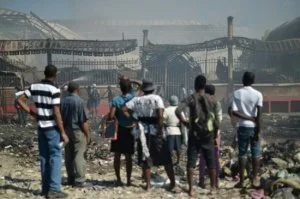
Haiti merchants fear for livelihood after market blaze
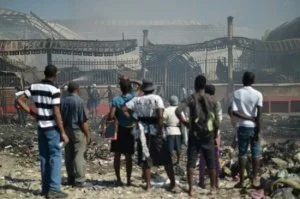
PORT-AU-PRINCE: Fire ravaged a historic market in the Haitian capital early Tuesday, leaving burned-out merchants fearing for their livelihoods in the impoverished nation.Citizens joined firefighters still working around midday to extinguish the blaze that destroyed one of two halls at the 19th century Iron Market.Dozens of vendors lost their inventories in the blaze, which left them gathered in the market courtyard pondering an uncertain future."Without help to restart my business I am going to die on my feet because I never had anything else and, at my age, there's nothing else I can do," said Jacqueline Innocent, 75, who worked in the market her whole life.Innocent said she lost 10 pots of djondjon, a type of Haitian mushroom, worth about US$100, (RM400)."All of it burned," she said.With no insurance and, for most of the vendors, no bank account, the fire means the loss of their meagre fortunes in a country where only a quarter of the people have access to "improved" latrines to avoid contamination and more than half of rural residents lack access to potable water.A weeping Marie-Yousselande Remy, 52, said that the small profit she made at the market allowed her to send her eldest son to university in the neighboring Dominican Republic."What am I going to tell him now ? To stop his studies and come back here to end up like me without a job?"Residents said the fire began in a garbage bag.The market was previously damaged by fire in 2008 and then destroyed in Haiti's 2010 earthquake before being rebuilt under supervision of the Haitian agency in charge of protecting historic buildings.The Sun Daily | February 2018