
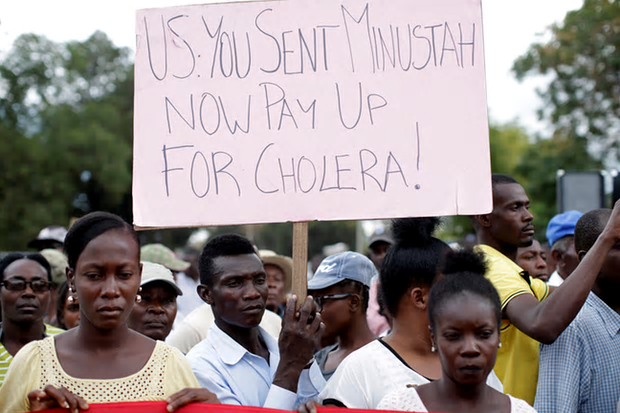
In June, the UN secretary general, António Guterres, asked member states to allow him to repurpose $40.5m (£30m) of leftover money to the Haiti cholera fund, which he said could have an “immediate impact in saving lives”.The appeal to reallocate unspent money designated for Haiti in 2015-16 has met with strong resistance from major donors. None of the five UN security council’s permanent members, which includes the US and the UK, approved the proposed funding reallocation. The UN Haiti cholera multi-partner trust fund, which gathered more than $2m, now lies almost empty.Brian Concannon, executive director of the Boston-based Institute for Justice and Democracy in Haiti (IJDH), said: “We have had conversations with the UK about cholera for years. They have been saying, ‘This is a matter of principle and we need to expect the rule of law.’”“Now that the money is on the table, the fact that the UK is not reallocating it is very concerning. No one else is going to step up.”Concannon, who was in the UK this week to meet the all-party parliamentary group on Haiti, said: “We’re asking the UK to take a leadership role in the UN security council. All the [permanent security council members] spend hundreds of millions of taxpayers dollars on the UN. But the UN is flouting its legal responsibilities towards the people of Haiti on cholera.”The UN only admitted its role in the outbreak last year. Former UN secretary general Ban Ki-Moon issued a carefully worded apology and said that the UN and member states had a “moral obligation” to relieve the Haitian suffering. The agency promised to raise $400m from member states to provide assistance to the Haitian victims. Since the fund was set up, however, only about $2.6m has been collected. The UK has donated $623,000 to this fund. Its share of the unspent $40.5m would be more than double that amount, at $2.3m.The IJDH works with thousands of cholera victims through the Bureau des Avocats Internationaux, a Port-au-Prince based human rights law firm. A lawsuit the groups filed on behalf of 5,000 cholera victims in a New York federal court in 2013 was dismissed by a judge, on the basis of UN immunity. After an appeal, the UN second circuit court of appeals in New York upheld the decision in 2016.Concannon is also working with the US Senate, to mobilise support for reallocating the funds. Democratic and Republican lawmakers have in the past criticised the Obama administration and the UN for failing to ensure Haiti’s victims were helped.Concannon said it was “shameful” the UN couldn’t come up with even a tenth of the amount originally promised. “The underspend idea wasn’t supposed to be the end result, but low-hanging fruit.“People in the UK or the US can forget about people in Haiti, but the people in Haiti cannot forget people in the UK or US.”Mario Joseph, a lawyer with BAI, said: “Imagine what would have happened if the Nepalese had brought the disease to the UK? What would be the reaction here – would there be the same disregard as people have shown the people of Haiti? For that reason alone, the UK should take a leadership role.”A Foreign and Commonwealth Office spokesperson said: “The UK recognises the devastating impact that cholera has had on the Haitian people, and we welcome the crucial role the UN is playing to eradicate it. The UK is the fourth largest donor to the UN trust fund, in addition to other contributions to tackling cholera in Haiti.“It is for each UN member state to decide how to use returned unspent peacekeeping funds. We call on all countries to volunteer contributions to the UN trust fund from whatever source is appropriate for them.”By: Karen McVeigh for TheGuardian.com | November 2, 2017
UN eyes transition of Haiti role from peacekeeping to development
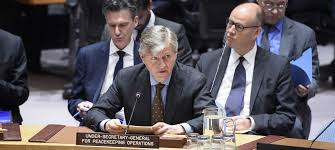
The United Nations has already started to prepare for a post-peacekeeping presence in Haiti, a senior UN official said Tuesday, stressing there are many reasons to be optimistic that the country’s progress towards stability is now irreversible.
Haiti, U.N. Clash Over Probe Into Alleged Misuse of Petrocaribe Funds
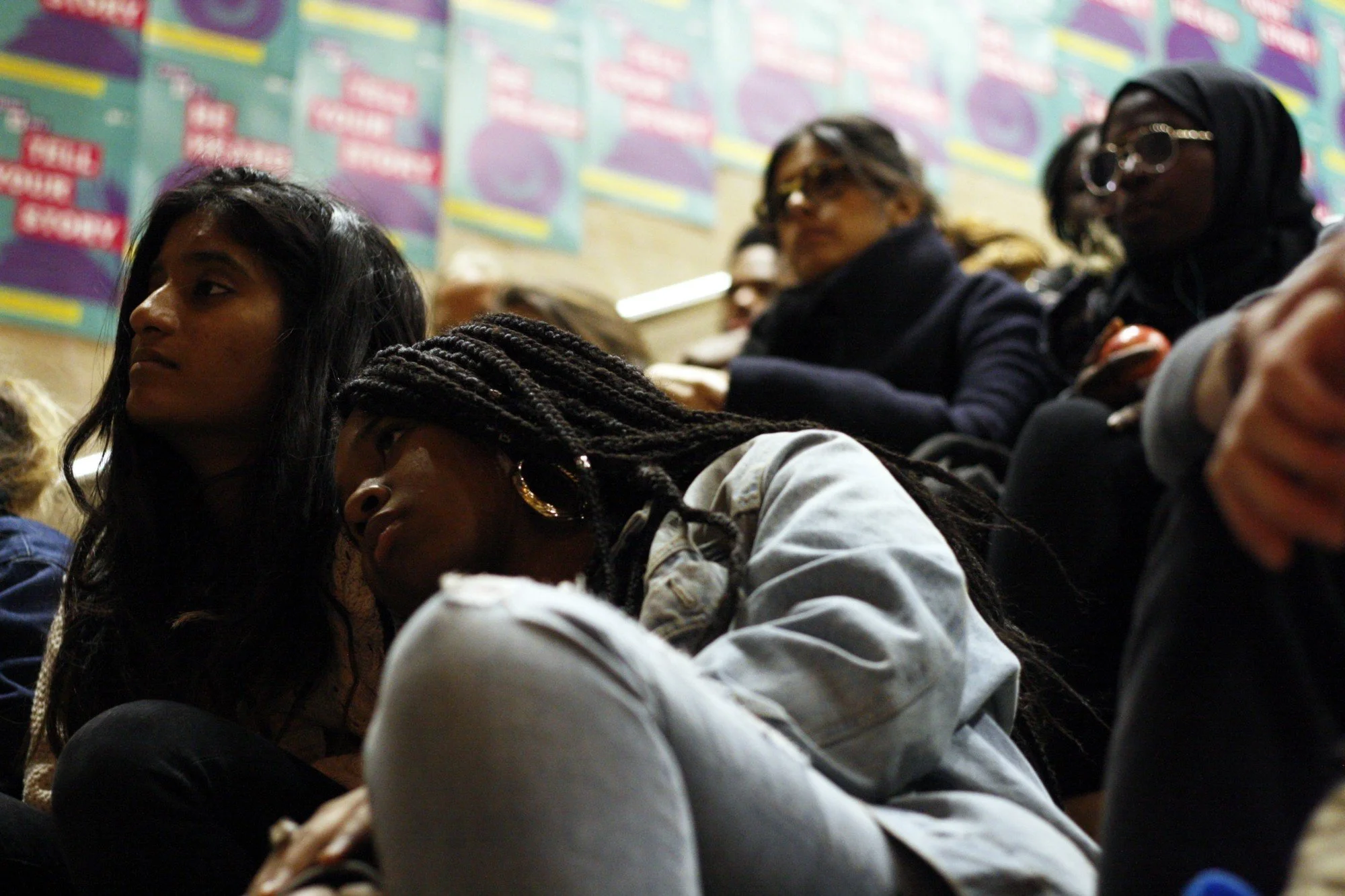
Haitian American Students Association Holds Sit-In After Trump Administration’s TPS Decision
“So even if I’m here and I feel good my friends are aware of this I’m still bitter, very bitter.”
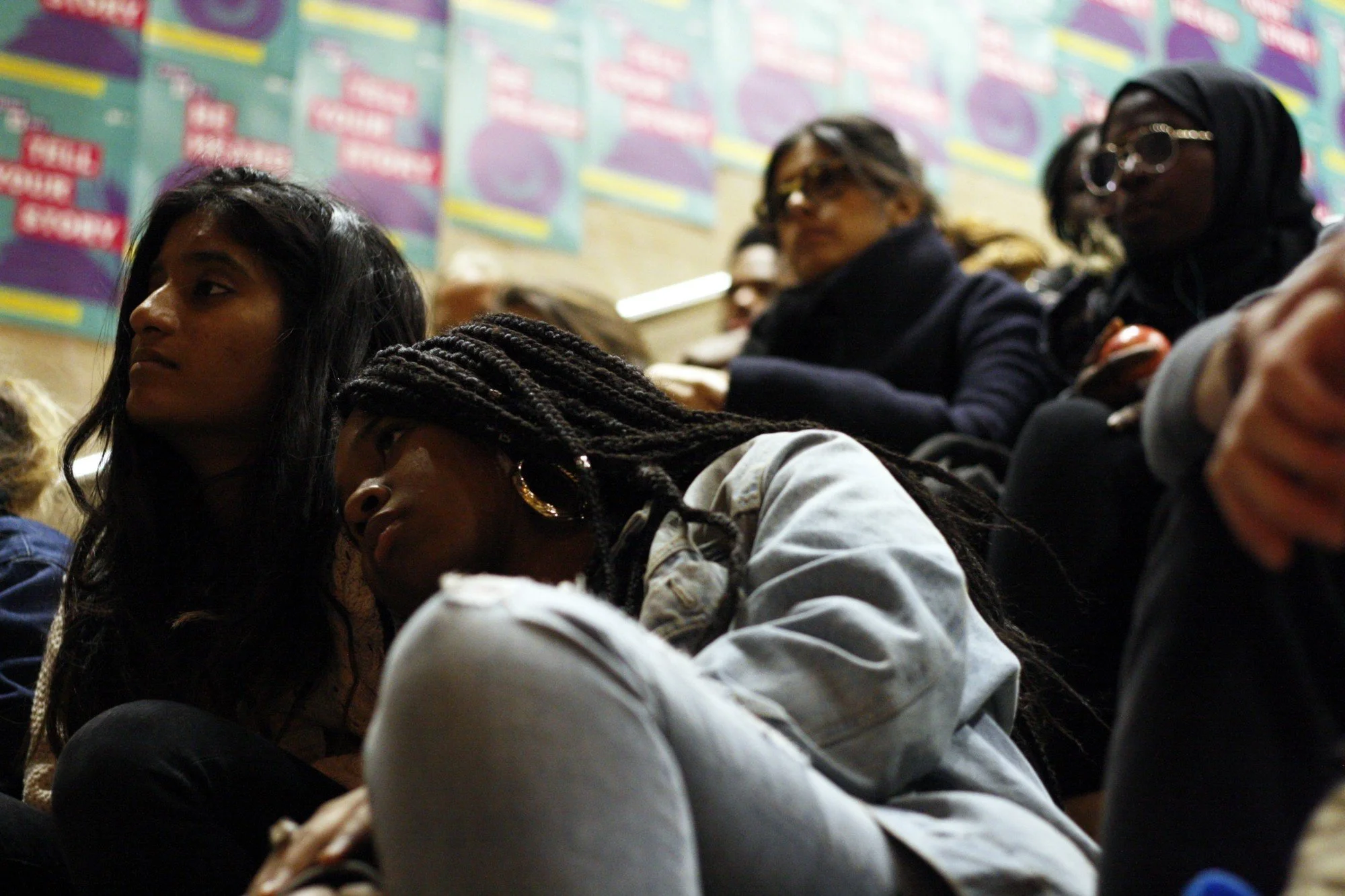
“When I say Haiti, you say ‘Rise Up,’” Mathania Toussaint, the PR chair for Haitian American Student Association (HASA), instructed the group of students and allies gathered on the steps of Kimmel Thursday night. Toussaint lead them in the chant, which swelled with each call and response.
This was the scene from the sit-in, organized in response to the Trump administration’s recent decision to strip immigrants of their Temporary Protected Status (TPS). HASA said it was necessary to bring attention to the move, which will affect immigrants from Honduras, Nicaragua, Sudan and Haiti, because they believe the issue has been overlooked in discourse regarding immigrant struggles.
“After we first found out about the decision, HASA was kind of scrambling because we found out about it over Thanksgiving break and had a planned meeting,” Toussaint said. “So we flipped everything because this is more important. We need to talk about TPS. Trump has systematically removed immigrants of color from the U.S., it’s been group by group.”
Initially, Toussaint expressed qualms about the prospect of organizing the demonstration because she hadn’t planned a protest before. But the reaction from students, especially Haitian students like sophomore Fatima Julien, made it abundantly clear her decision to highlight this issue was necessary.
“After finding out about the TPS removal, I was like ‘Shit, what are we going to do…What can I do?’” Julien said. “Then finding out about the sit-in I harassed all my social media followers saying ‘Come: if you’re a social justice type I’m taking attendance.’”
“Being here, especially during the chant,” Julien continued, “I got a little emotional but it was good. It feels nice to be able to say that I was here and that my friends know about it.”
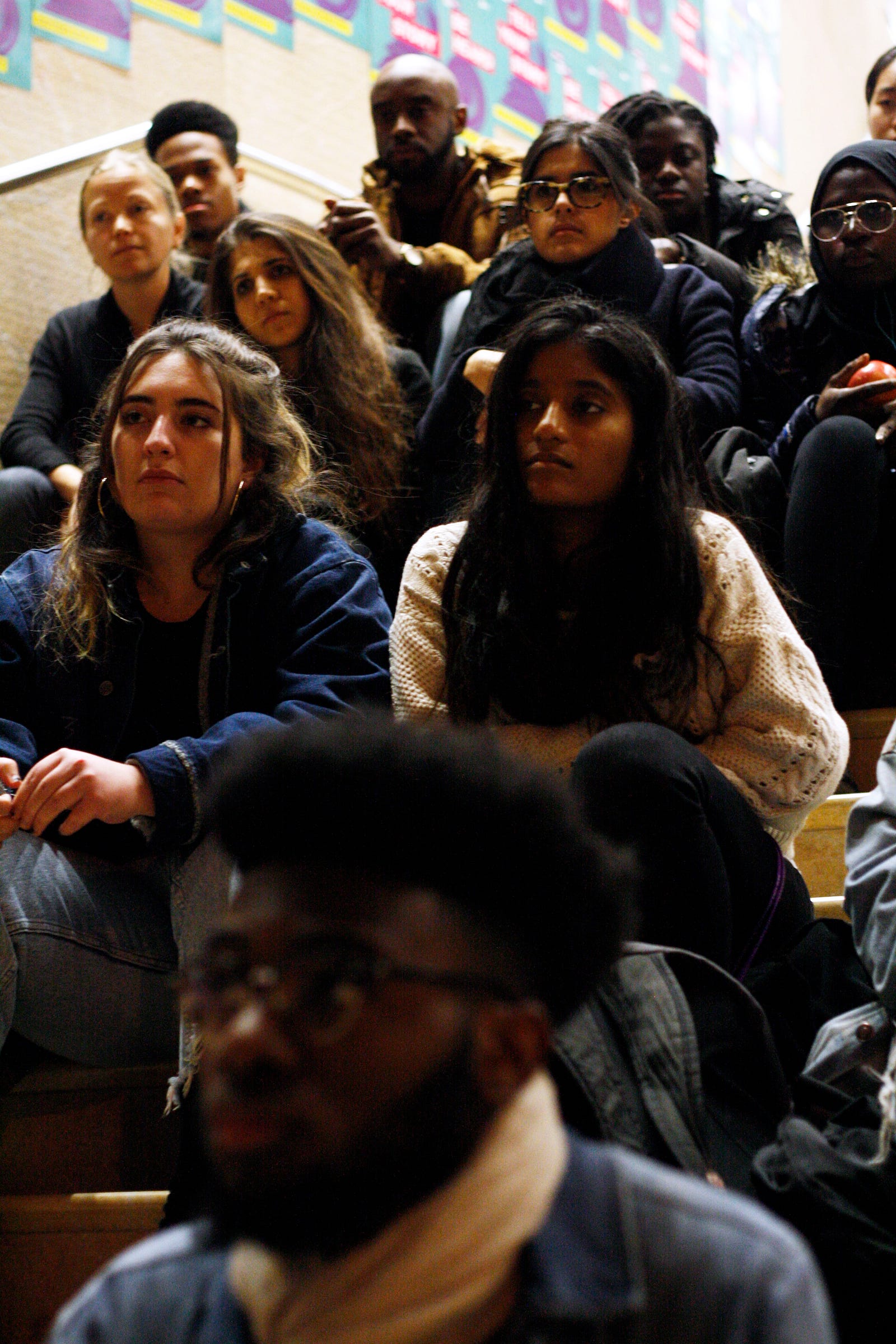
Julien, who immigrated to the U.S. two years ago, has family members who will be directly affected by the decision: a sister will have to return and cousins that were trapped under the rubble of the massive 2010 earthquake, will also be forced out of the U.S. In light of their trauma, Julien expressed trepidation about them returning to Haiti.
Despite those fears, she also made it clear she and her family would continue fighting to ensure everyone remained in the states.

The sit-in was planned to operate with the goals of bringing attention to the TPS matter and educating attendees on ways to help those affected going forward. Albert Saint Jean, the New York organizing fellow at the Black Alliance for Just Immigration (BAJI) and Ellie Happel an NYU Law graduate, both provided information on the latter.
Saint Jean recommended students reach out to organizations such as Haitian Women for Haitian refugees, Haitian Americans United for Progress and, the one he’s a part of, BAJI. “Because we’re actually in the communities doing work, helping people to get legal access,” he explained.
He added that often the help impacted communities need isn’t complex and can be as simple as assisting a family with filing paperwork.
Similarly, Happel suggested that helping the Haitian community could be very doable right here at NYU — with NYU Law and undergrads collaborating to monitor what’s happening in Congress, in Haitian neighborhoods and responding accordingly.
After the sit-in’s moment of silence for Haitians affected by the cholera epidemic the nation is still recovering from, attendees began to gather their belongings to leave. HASA president, Fabrice Juin, left those gathered with a final message.
“I personally only see things like these — sit-ins — as beneficial and productive if every single one of you leaves the space with more knowledge and ready to help physically and tangibly,” Juin said. “Thank you for showing up but I also want to let you know pay attention and ask yourself ‘What can I do in my own way to help the cause?’”
By: Arimeta Diop for NYUlocal.com | December 11, 2017
UN to Haiti: 'Proof is in the pudding' on Corruption
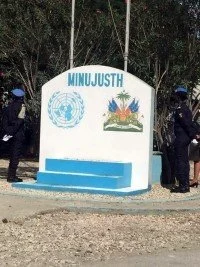
PORT-AU-PRINCE, Haiti (AFP) — The United Nations, which last month launched a fresh mission to promote long-term development in Haiti, has had it with nice words: when it comes to corruption and human rights, "the proof is in the pudding.""They have said they want to fight corruption, so they have to take responsibility," insisted Susan Page, who is heading the UN Mission for Justice Support in Haiti (MINUJUSTH)."I'm going to take them at their word, but I'm also going to help them if that is really what they want," the American career diplomat said.Elected president after an electoral crisis that paralyzed the country for two years, Jovenel Moise insists he is going to use his time in office to clean up Haitian politics."Corruption, in all its forms, eats away and atrophies the economy, it profoundly weakens the political foundations and destabilizes society's social tissue: corruption is a crime against development," the president, who took office earlier this year, told the UN general assembly in New York in September.The concern is that his words are taking their time in being translated into action. In late August, a minister was sacked over corruption allegations, but no legal action has yet been taken.The new UN mission starts just as one of the symbols of financial waste in Haiti resurfaces: on Thursday, the Senate will debate a parliamentary report accusing a dozen former ministers, who held office between 2010 and 2016, of "fraud on a grand scale.""We'll see how they react, not just in regard to the report but in general," said Page, pointing to Haitian institutions in charge of fighting corruption and money laundering."Will they strengthen the capabilities of agents in these organizations? Really put investigations in place which they will then pursue to the very end? Will they bring people to justice? We will see."Gnawed away by corruption, the country's justice system is notoriously slow-moving. Its prison population, 400 percent above capacity, is one of the highest in the world.Maintaining the rule of law also demands a real commitment to improving conditions in detention centers, but there, too, MINUJUSTH will not take the lead."It's an age-old problem that the Haitians will have to sort out themselves," said Page. "We are here to support, not to do it for them. They need to have the political will to do it."Restoring the UN's image in Haiti during this new mission will prove almost as big a task as overhauling its justice system.The 13 years of the preceding UN mission, known as MINUSTAH, were blighted by sex crimes perpetrated against Haitian woman and children by UN police and peacekeeping troops, as well as a cholera epidemic sparked by Nepalese peacekeepers that has already claimed 10,000 lives.MINUJUSTH is the UN's sixth peacekeeping mission in Haiti over the past 25 years, a country where there is very little risk of civil war, regional conflict or terrorist attacks. The label "peacekeeping" exasperates many Haitian politicians, who may support the drive against corruption but also want a debate to redefine the UN mandate.Aware of that debate, Page prefers not to take sides: "The UN Security Council considers it necessary to keep a certain level of stability here and to tackle the great challenges which threaten long-term development... that is not a mandate for development – that is to enable a transition between a peacekeeping mission and a lasting development."
By: Jamaicaobserver.com | November 29, 2017
UN 'Will Walk With Haiti' On Path Towards Sustainable Development, Senior Official Pledges

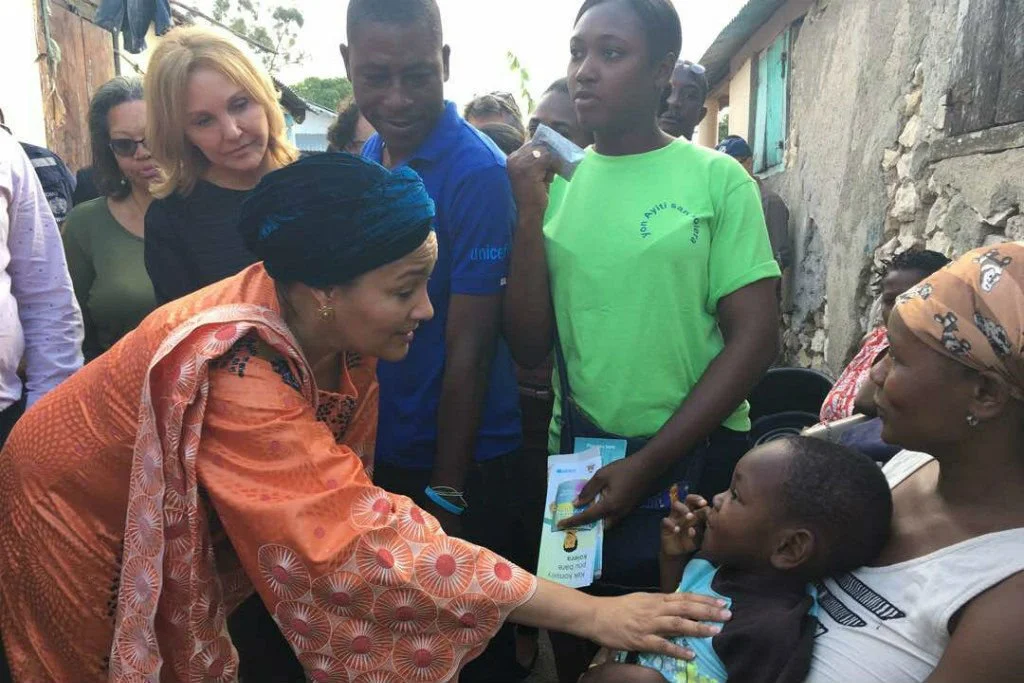
United Nations Deputy Secretary-General Amina Mohammed and UN Special Envoy for Haiti Josette Sheeran wrapped up a three-day visit to the island on Sunday, pledging more help to defeat cholera and assist the Government in achieving the broader aims of the UN 2030 Agenda for Sustainable Development.“The UN will walk this path with Haiti,” Ms. Mohammed said on Twitter, referring the work under way inside Haiti towards becoming an emergent country by 2030, the finish line agreed by all nations to achieve of the Agenda and its landmark 17 Goals, knows as the SDGs.The high-level delegation was dispatched by Secretary-General António Guterres to reaffirm the commitment of the United Nations to the Haitian people in a “new spirit of partnership.”In an opinion piece late last week in the Miami Herald, the UN chief said the partnership would stretch across the UN's work on the island – including to continue addressing Haiti's cholera challenge and the “unacceptable incidents” of sexual exploitation and abuse by UN personnel – and aims to help Haiti move “from an emergency approach to durable solutions, from assistance to investment support, from handouts to hand-to-hand cooperation for sustainable development, to democracy and dignity for all Haitians.”On Saturday, Ms. Mohammed echoed the “new spirit of partnership” set out by Mr. Guterres, saying: “We come to try to find another way to do things better; because in the past, we have fallen short. We were not able to do what we had planned,” she said in a joint press conference with Haitian President Jovenel Moise in the capital, Port-au-Prince.The visit of the two UN officials comes just after the appointment of Susan Page, of the United States, as the Special Representative of the Secretary-General and Head of the UN Mission in Support of Justice in Haiti (UNMIJUSTH), which succeeded the UN Stabilization Mission, known as MINUSTAH, on 16 October.The role of the new UN mission is to assist the Haitian Government to strengthen the rule of law institutions, to continue to develop the capacity of the national police and to promote human rights.
UN reaffirms commitment to eradicating cholera
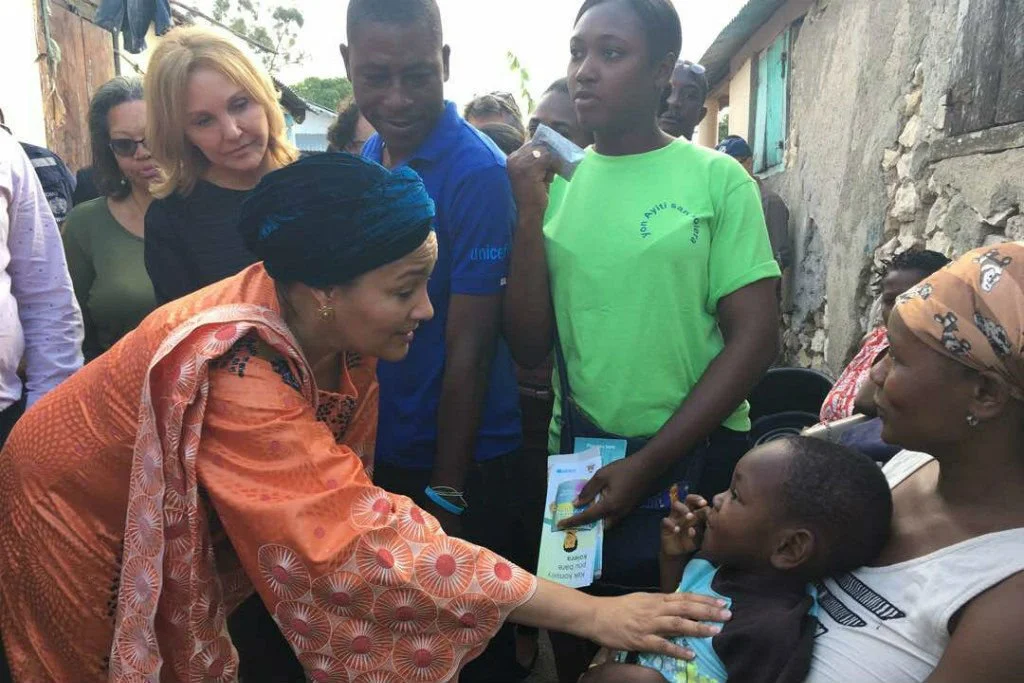
As a key part of the visit, the two UN officials met families affected by cholera and coping with lack of access to water and sanitation.Ms. Mohammed and Ms. Sheeran also co-Chaired a High-Level Cholera Committee meeting (HLCC) alongside Haitian Prime Minister Jack Guy Lafontant. The Haitian Government and the UN representatives jointly expressed their determination work in partnership to achieve zero transmission of cholera. They further expressed their commitment to achieving the SDGs, including improving access to water, sanitation and healthcare.While cholera transmission has dropped dramatically, from over 18,000 new cases per week at the onset of the epidemic in 2010, to 250 per week this year, success will require more funding to maintain the highly effective work of emergency response teams, and commitment to the fight against cholera in the medium and long-term, the officials jointly agreed.Urging UN Member States and partners to provide comprehensive support, the Deputy Secretary-General emphasized during the meeting that “addressing the root causes of cholera in Haiti is critical to achieving the Sustainable Development Goals (SDGs). Additionally, in the immediate term, we urgently require funding to ensure continued operation of the rapid response teams; failure to do so risks losing the gains achieved to date.”The Deputy Secretary-General and the Special Envoy also witnessed the efforts of the “many heroes” working to eradicate the disease. Their visit was also an opportunity to learn about successful cholera control programmes, including in communities that ended open defecation, mobilized to build toilets, and raised awareness of the importance of sanitation.By: UN News Centre | November 5, 2017
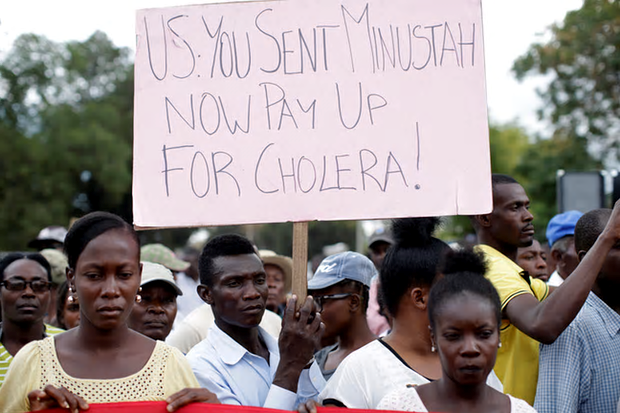
'Shameful': UK and US Under Fire Over Blocked Funds For Haiti Cholera Victims
China, France and Russia also among major UN donors resisting appeal to spend $40m of UN money on victims of cholera epidemic, claim lawyers
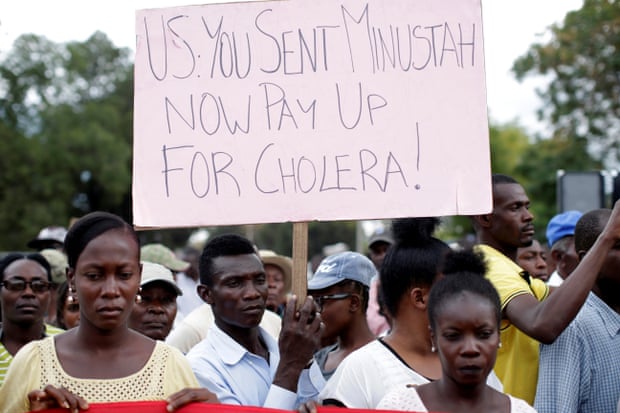
Minustah Leaves Haiti Only to Be Replaced by a New UN Mission
The latest mission, which has a six-month renewable term ending April 15, 2018, is being met with much skepticism from some quarters in the Carribean country. The U.N. mission in Haiti, MINUSTAH, which ran from 2004 until Oct. 5, has quickly morphed into a deployment of the U.N. Mission for Justice Support, Minujusth, described as an effort to bolster Haiti's police force, democracy, justice system and other institutions. The latest mission, which has a six-month renewable term ending April 15, 2018, is being met with much skepticism from some quarters in the Carribean country.Former Haitian presidential candidate Eric Jean-Baptiste criticized Haitian President Jovenel Moise for pulling out the red carpet for Minujusth. "The country should expect nothing positive from this new mission which is only a tactic to continue with the occupation that the Haitian people have rejected," he said.Jean-Baptiste went on to argue that the new mission weaves an external "social contract" between elected officials and the people.A strong rebuttal of the mission was also offered by another former presidential candidate and retired Army Colonel Himmler Rebu.The UN stabilization mission has been here for the past 13 years and they have done nothing, except for preventing armed thugs from taking over the presidential palace," he said.Mamdou Diallo, acting head of the new mission and deputy special representative of the U.N. Secretary-General in Haiti, said the new mission's aim is to build upon the work done by Minustah.Of the previous mission, however, most Haitians recall the controversies and scandals, including allegations of sexual abuse by U.N. troops and the introduction of cholera, which led to thousands of deaths in the country.A total of 1,276 U.N. police will incorporate into the Minujusth mission and are tasked with training Haiti's police force.By teleSUR | October 24, 2017
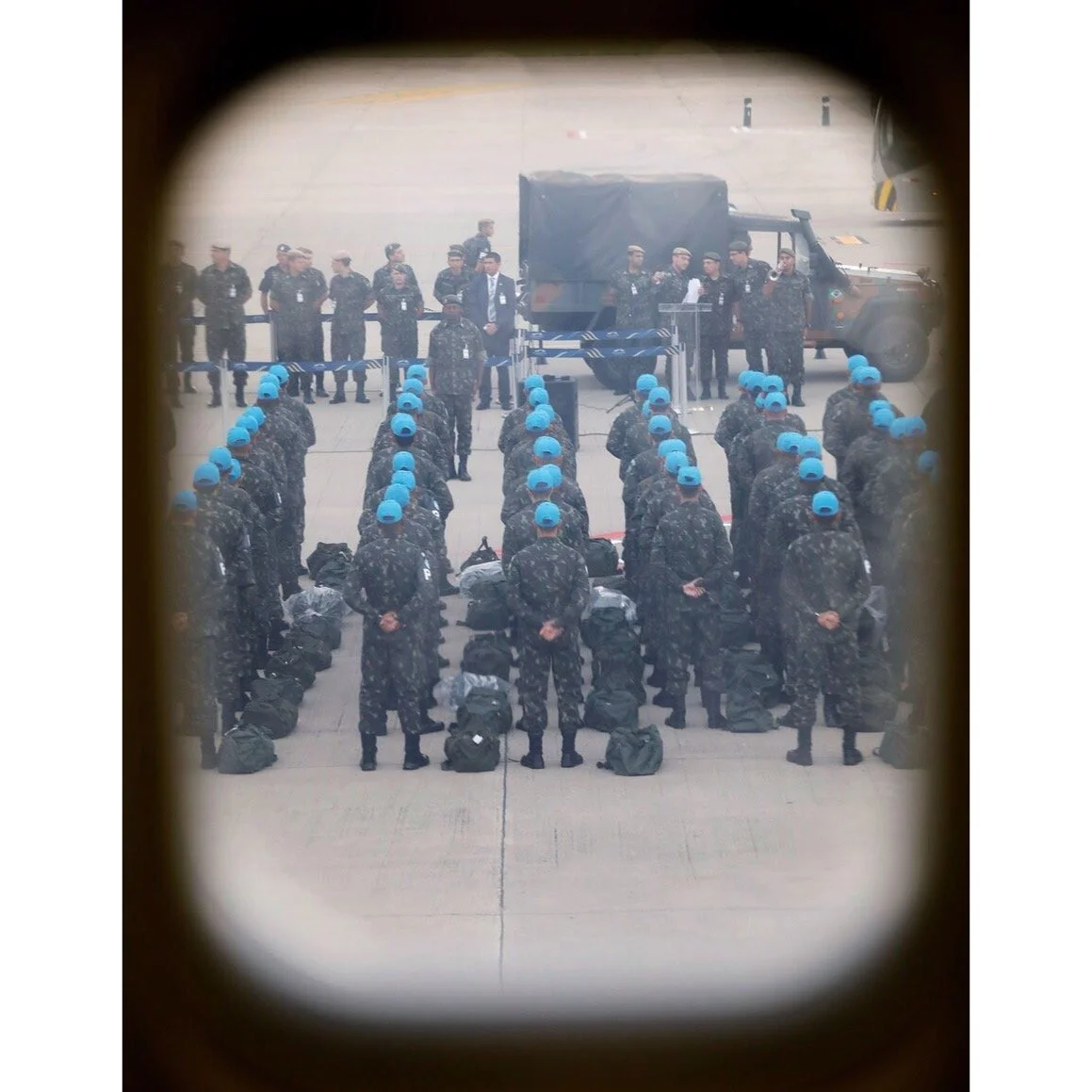
A New Chapter for the Disastrous United Nations Mission in Haiti?
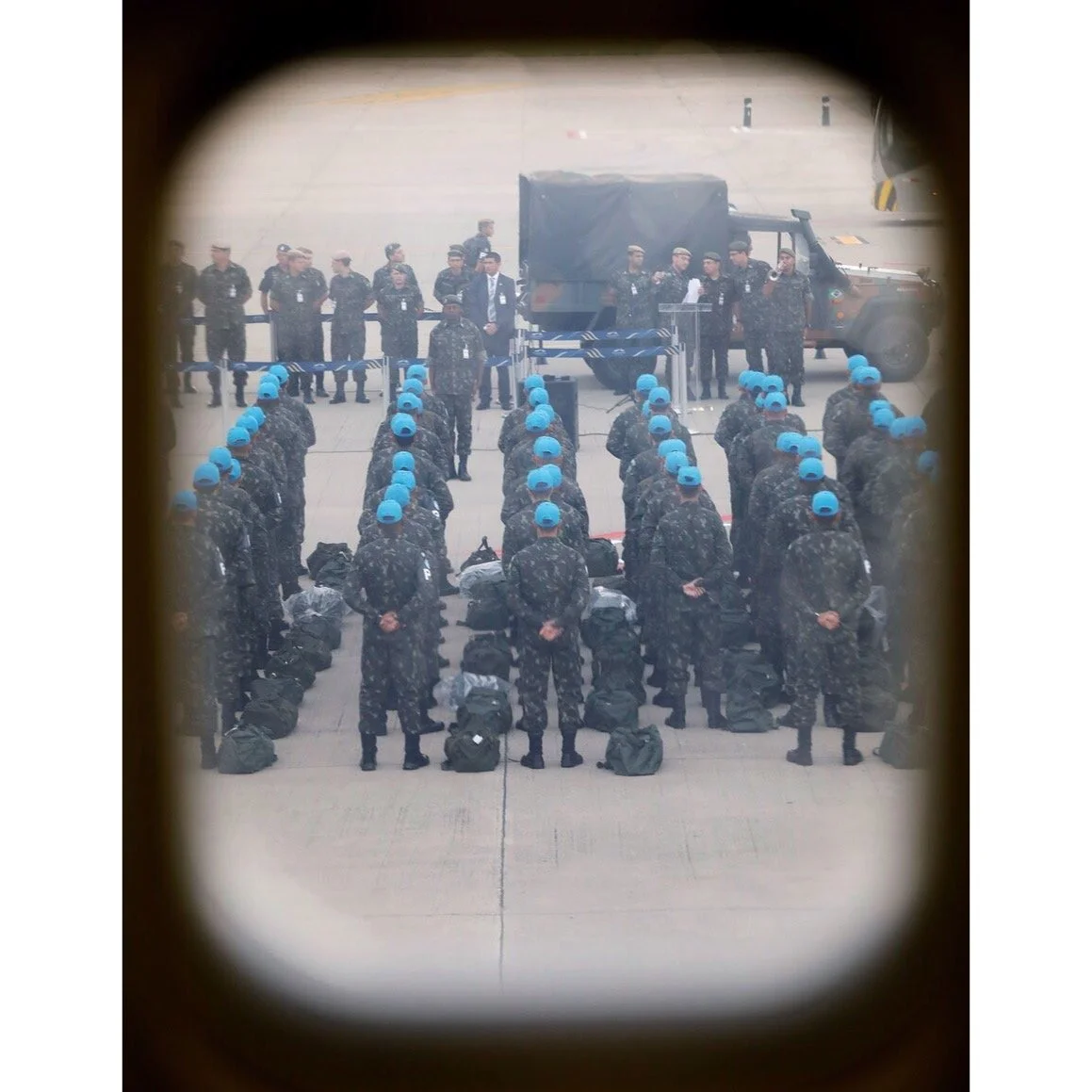
The year the United Nations Stabilization Mission in Haiti (MINUSTAH) came to the country was a deadly one for my family. In February of 2004, Haiti’s first democratically elected President, Jean-Bertrand Aristide, was forced out of office for a second time, having been reinstated, and then reëlected, after a 1991 military coup. This time, Aristide was replaced by Gérard Latortue, a former United Nations official, who called those who took up arms against Aristide “freedom fighters.” (Their leader, Guy Philippe, is serving a nine-year sentence in a U.S. prison after pleading guilty to receiving multimillion-dollar bribes from cocaine traffickers.)
That April, claiming that the situation in Haiti constituted “a threat to international peace and security in the region,” the U.N. Security Council passed Resolution 1542, establishing the Brazil-led MINUSTAH. The mission, which officially began in June, 2004, lasted thirteen years and five months, and cost more than seven billion dollars, before officially ending this past Sunday.
Part of MINUSTAH’s mandate was to assist the transitional government in insuring “a secure and stable environment.” This is where my loved ones and others came into the mission’s crosshairs.
I spent the first twelve years of my life in an impoverished neighborhood in Port-au-Prince called Bel Air, where many Aristide supporters live. My eighty-one-year-old uncle, a minister, had called this neighborhood home since the nineteen-fifties, and was there on September 30, 2004, when protests began on the thirteenth anniversary of the first coup d’état. In response, the Haitian national police and MINUSTAH soldiers conducted joint raids in Bel Air that led to dozens of mostly unreported injuries and deaths. The following month, U.N. soldiers and Haitian riot police climbed up to the roof of my uncle’s church and killed some of his neighbors below. My uncle was forced to flee to Miami, where he died in the custody of U.S. immigration officials after being denied asylum.
Bel Air was not the only area subjected to these raids. During one of their bloodiest operations in Cité Soleil, another poor and densely populated neighborhood in the capital, MINUSTAH used more than twenty-two thousand bullets and seventy-eight grenades, among other artillery, to kill seven alleged gang members. No other deaths were acknowledged despite further raids until early 2007, when the mission head at the time, Edmond Mulet, brushed off such killings as collateral damage. This combat terminology was not incidental. MINUSTAH was a continuous military operation in a country in which there was no war.
There would be more collateral damage. In October, 2010, nine months after an 7.0-magnitude earthquake nearly flattened Port-au-Prince and the surrounding areas and killed more than three hundred thousand people, and while more than a million people were still displaced or living in makeshift tent camps, Nepalese peacekeepers stationed in the north of Haiti allowed raw sewage from their base to leak into one of Haiti’s largest and most intensively used rivers, causing a cholera epidemic. The U.N. at first refused to investigate the source of the outbreak and instead blamed Haiti’s lack of sewerage and water-treatment facilities. More than ten thousand people have died from cholera since 2010, and more than eight hundred thousand have been infected.
It took the U.N. six years to acknowledge its role in the cholera epidemic, and even though the former Secretary-General, Ban Ki-moon, declared last December that the U.N. needed to “do the right thing”, the U.N. continues to reject victims’ legal claims by citing immunity. The U.N. has also failed to deliver on Ban’s promise of a four-hundred-million-dollar fund to halt the spread of cholera and compensate the “most affected” victims. The fund has only raised $2.7 million, and the current U.N. Secretary General, António Guterres, seems unwilling to provide direct payments to the cholera victims and their families, many of whom have lost their sole breadwinner.
Neither the U.N.’s impunity nor the lack of accountability would surprise the women and boys and girls, many as young as twelve, who have told of being raped—one boy says that he was gang-raped—by MINUSTAH peacekeepers, who, according to the Associated Press, have used sex rings, offers of food, and other methods to trap their victims. Unacknowledged “MINUSTAH babies” and their destitute mothers are treated as though they do not exist. Though MINUSTAH rapes remain underreported, those who have come forward have had to confront the same type of repudiation faced by the initial cholera victims. Their rapists were rarely punished. They were simply sent home.
MINUSTAH has now been replaced by MINUJUSTH, a smaller mission which began on Monday. MINUJUSTH , the United Nations Mission for Justice Support in Haiti, has a mandate to “help the Government of Haiti strengthen rule-of-law institutions, further develop and support the Haitian National Police and engage in human rights monitoring, reporting and analysis.” MINUJUSTH, which will will consist of twelve hundred and seventy-five officers and support personnel, seems like a rebranding effort, an attempt by the U.N. to give itself a clean slate and erase MINUSTAH’s past. But if the U.N. were serious about justice and human rights in Haiti, it would wind down its presence in the country by having MINUJUSTH also investigate the damage done to both individuals and entire communities by MINUSTAH. Or, better yet, assign an independent body to do so, then offer the warranted compensation for the extrajudicial and civilian killings, the sexual assaults, and the introduction of cholera.
Haiti’s current President, Jovenel Moïse, whose two heavily contested election cycles are often touted as a MINUSTAH success, told the Miami Herald in an interview this month that “the conversion of MINUSTAH to MINUJUSTH is the recognition of the progress made by our country in recent years. Today, Haiti is no threat to regional and global peace and security.” To fill in the gap being left by MINUSTAH, Moïse plans to revive the defunct Haitian Army, whose history of human-rights abuses, the coup d’état against Aristide, in 1991, and its subsequent reign of terror led to an earlier United Nations mission, UNMIH, in 1993.
Moïse’s proposed budget for 2017, which calls for new tariffs and increased taxes on goods and services, has been a subject of mounting protests in Haiti. MINUJUSTH, like its predecessors, will likely find itself facing angry Haitians, or training those who do. Why should Haitians trust another group of U.N. “peacekeepers” who claim to promote the same human rights, justice, and rule of law that have been so blatantly violated by their colleagues? The U.N. may want to leave MINUSTAH’s dark chapter behind, but Haitians will have to suffer the consequences of the group’s actions for generations to come. And no new mission, under whatever acronym, will change that.
Edwidge Danticat is the author of many books, including, most recently, “The Art of Death: Writing the Final Story.”
By: Edwidge Danticat, The New Yorker | October 19, 2017
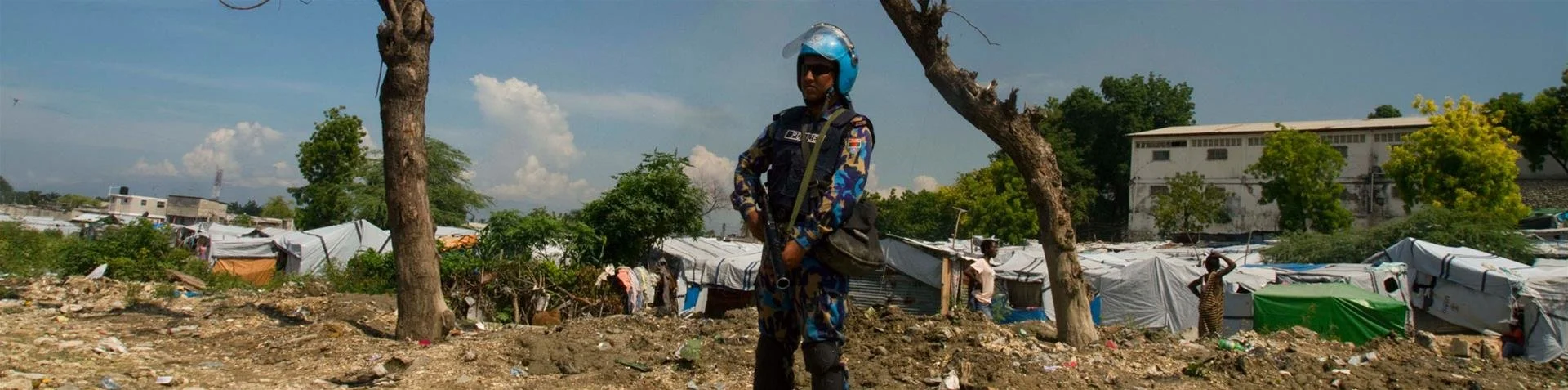
UN Peacekeepers Leave Haiti: What Is Their Legacy?
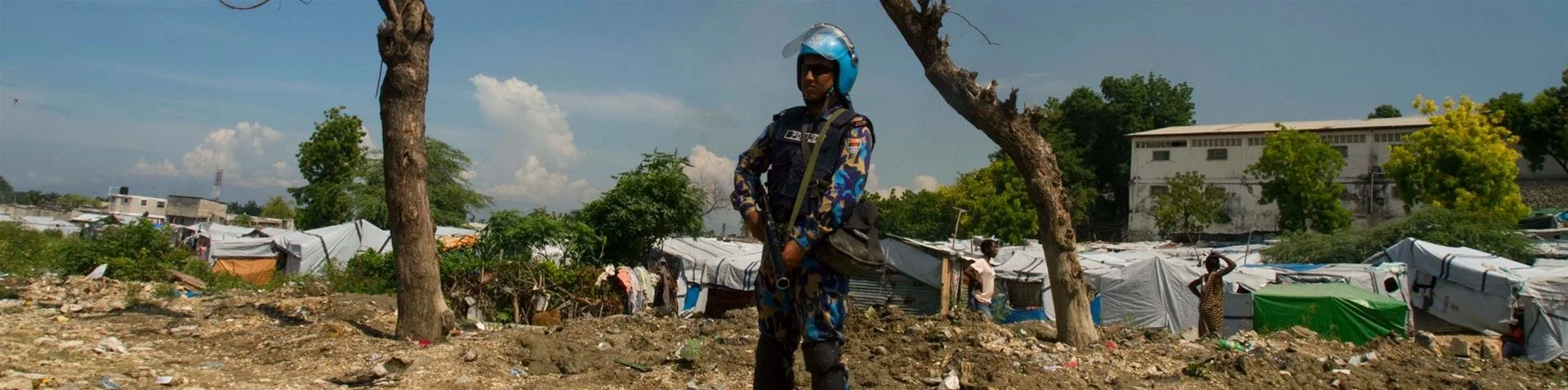
As the controversial 13 year peacekeeping mission in Haiti wraps up, Al Jazeera examines what the mission leaves behind.
![A UN peacekeeper argues with a supporters of 2010 presidential candidate Michel Martelly in Port-au-Prince [File: Gulliermo Arias/AP Photo]](http://www.aljazeera.com/mritems/imagecache/mbdxxlarge/mritems/Images/2017/10/5/93b587f0214543e6a5c044dc19ff741b_18.jpg "UN peacekeepers leave Haiti: What is their legacy?")
PEACEKEEPERS IN HAITI
- What will be their legacy?
- Why were they there?
- What has taken so long?
- Why are they leaving now?
- What have Haitians said about the mission?
The United Nations peacekeeping mission in Haiti lowered its blue flag on Thursday, 13 years after it began.While the mission has been credited with helping bring stability to the poorest country in the Western Hemisphere, it has also been mired in controversy.The mission is blamed for bringing cholera to the country, and at least 134 of its peacekeepers have been involved in sexual abuse scandals.As the last of the thousands of peacekeepers who were in the country leave, Al Jazeera answers some of the key questions about why the blue helmets were there and what they are leaving behind.
What will be their legacy?
The presence of UN troops in Haiti has been a point of controversy on the island since the UN Stabilization Mission in Haiti (MINUSTAH) mission first began in 2004.UN officials have praised the mission for helping to re-establish law-and-order in the country marred by political unrest and bolster Haiti's democratic institutions. MINUSTAH has also helped recruit and train a new civilian police force, something that was virtually nonexistent before their arrival.However, critics argue the mission's forces have done more harm than good, pointing to the peacekeepers' involvement in the country's 2010 cholera outbreak and sex abuse scandals as evidence.Cholera outbreakThe source of the waterborne disease, which killed more than 9,000 people, was traced to a UN base.Al Jazeera's Fault Lines investigated the outbreak in 2010. The film - Haiti in a Time of Cholera - helped further expose the source of the disease on the island, and put additional pressure on the UN to investigate the allegations, and eventually admit its role in the outbreak.In August 2016, the UN for the first time acknowledged that it played a role in the spread of the disease.The UN at the time promised to respond to the epidemic with a "significant new set of UN actions".
 |
| A demonstrator spray paints the message in Creole "We demand justice for all cholera victims" on a building outside the UN headquarters in Haiti [File: Dieu Nalio Chery/AP Photo] |
In a report, the then UN Secretary-General, Ban Ki-moon, said that "the preponderance of the evidence does lead to the conclusion that personnel associated with [a UN peacekeeping] facility were the most likely source".Ban said the way the UN handled the outbreak "leaves a blemish on the reputation of UN peacekeeping and the organisation worldwide".He added: "For the sake of the Haitian people, but also for the sake of the United Nations itself, we have a moral responsibility to act and a collective responsibility to deliver."Ban created a $400m voluntary trust fund for Haiti's fight against cholera. The fund was also supposed to partially compensate victims of the disease.But earlier this year, The New York Times revealed that the fund only received a few million dollars and was nearly empty.In a statement in June, the UN deputy secretary-general said that "without additional resources, the intensified cholera response and control efforts cannot be sustained through 2017 and 2018".
|
|
Rape and other forms of sex abuseUN troops have also been implicated in sexual abuse scandals in Haiti since the MINUSTAH first began.Most recently, a UN report obtained and revealed by The Associated Press in April documented the sexual exploitation of nine children on the island from 2004-2007 at the hands of at least 134 peacekeepers.Al Jazeera later spoke to Maria Kalichi*, who had been raped by a peacekeeper when she was 17 years old. She became pregnant as result of the rape."I want justice by finding the person who did this," she told Al Jazeera."I want to hear what he has to say to me … I am walking around the streets feeling destitute because of the UN."A leaked report in 2015, found that UN peacekeepers in Haiti engaged in "transactional sex". At least 229 women said they traded sex for money and goods likes food and medicine.In 2012, at least two peacekeepers from Pakistan were jailed and fired from the army after raping a 14-year-old boy.Other cases of rape and other instances of sexual abuse have been reported and documented by the UN during the mission's 13-year term.In September, a UN fund to help the survivors of sexual abuse by peacekeepers worldwide grew to $1.5m after more than 10 countries made contributions.
Why were they there in the first place?
MINUSTAH, running since 2004, was the latest installment in a series of UN peacekeeping missions in the country, which shares a landmass with the Dominican Republic.
|
|
Peacekeepers first arrived in Haiti, home to 10.8 million people, in September 1993 as part of The United Nations Mission in Haiti (UNMIH).The mission had a mandate to modernise the Haitian army and establish a new national police force two years after Haiti's elected president, Jean-Bertrand Aristide, had been removed from office during a coup d'etat.After Aristide was restored to office in October 1994 following the UN-sanctioned, and US-led, "Operation Uphold Democracy" launched the month before, the mission's mandate was expanded to include helping to stabilise the government.However, UNMIH, which concluded in June 1996, appeared to have failed to deliver long-term stability. A decade later, history repeated itself as Aristide was overthrown for a second time.
Following Aristide's removal, Justice Boniface Alexandre assumed office as acting president.Alexandre appealed to the UN for help in ending the violence that had gripped Haiti in the wake of the political revolt, causing crime and murder rates to spiral.MINUSTAH, launched on June 1, 2004, in response to the crisis, led to the deployment of 6,700 UN-sanctioned troops - and 1,622 UN police - in Haiti.
Why has it taken so long for them to leave?
MINUSTAH was originally set up to support Haiti’s transitional government for a period of six months, with the aim of establishing a stable and secure environment following Aristide's removal.The mission was extended with adjusted mandates in the months and years that followed in order to allow peacekeepers to "adapt to the changing circumstances … and evolving requirements as dictated by the political, security and socioeconomic situation prevailing in the country", according to the UN.By the beginning of 2010, it appeared the mission had achieved its goals as violence had largely been removed from Haiti's politics and the country was experiencing economic growth.However, a devastating 7.0 magnitude earthquake hit the island on January 12, 2010, killing more than 220,000 people.The natural disaster destroyed vast swathes of Haiti's capital city, Port-au-Prince, and decimated the fragile Haitian economy.In response, the UN added additional peacekeepers and police officers to its mission as it sought to support the country in its efforts to rebuild following the earthquake.Force numbers have been gradually reduced in the last seven years, by a series of resolutions.
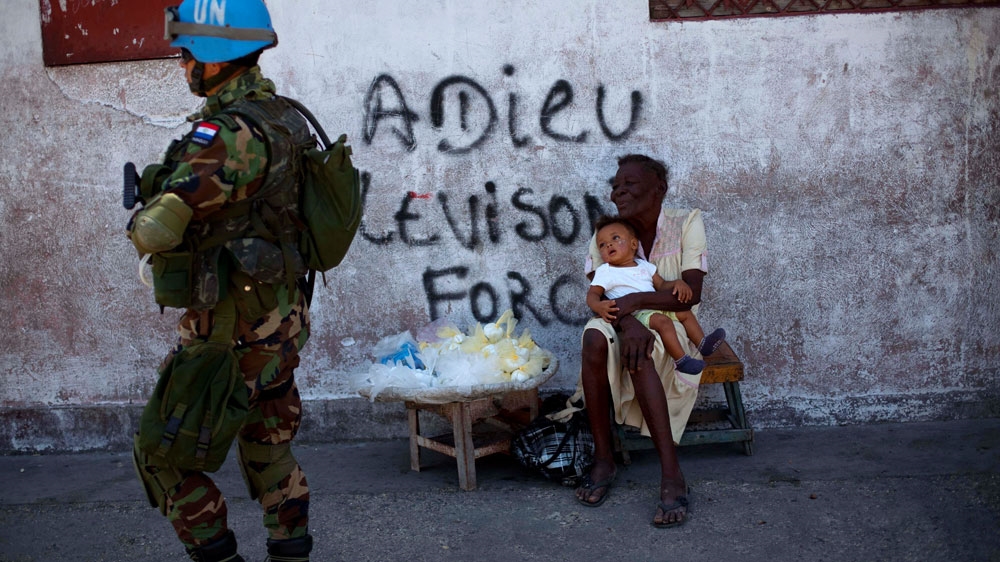 |
| A UN peacekeeper from Paraguay patrols the streets of Port-au-Prince, 2011. [File: Ramon Espinosa/AP Photo] |
Why are they leaving now?
The UN Security Council (UNSC) unanimously adopted a resolution in April of this year, ordering the removal of peacekeepers from Haiti by mid-October.The April 13 resolution sanctioned the gradual withdrawal of the 2,370 peacekeepers stationed in Haiti, according to The Los Angeles Times.The resolution was the result of a US-led review into the cost and effectiveness of the UN's current peacekeeping operations.Nikki Haley, the US representative to the UN, told the UNSC prior to the vote that the political context was right for the withdrawal of a military presence in Haiti.
The "peaceful transition of power" demonstrated by Haiti's November 2016 presidential election showed the country had made an "important step towards stability and democracy", she said.As such, developments warranted an amended approach focused on fostering "the independence and self-sufficiency of the Haitian people".The peacekeeping mission will officially end on October 15 when a new UN mission made up of nearly 1,300 international civilian police officers, and about 350 civilians will begin in an effort to help the country reform its political system.In a recent interview with Al Jazeera, Sandra Honore, head of MINUSTAH, said the UN is winding down the mission because it has achieved its aims."It is a vote of confidence in the Haitian people," she said."It is an indication of the recognition by the Security Council that the stabilisation work which was entrusted to the mission did in fact produce positive results."
What have Haitians said about the mission?
Though February's presidential election seems to demonstrate Haiti is more politically stable now than when MINUSTAH began, a number of Haitians recently told Al Jazeera the mission has done little to improve their lives.Mothers who say they have had children, fathered by peacekeepers, also say they feel abandoned.
"After years of running around and false promises from the UN, nothing has happened," Saintil Benite, a mother, told Al Jazeera."They make us do a lot of stuff but there's no results," she said.Another mother, Roselaine Duperval, added that the mission has failed those people it sought to serve."I am very angry that the UN is leaving as it's left us with nothing," she said."They should take responsibility. They know about the kids. They did DNA tests and they told us they're positive but never give us the results."
 |
| Children play in the street while UN peacekeepers from Brazil patrol in Port-au-Prince [File: Dieu Nalio Chery/AP Photo] |
As peacekeepers leave, Haiti continues to experience political turbulence.Protests last month over the government's new budget plans brought much of the country to a halt.The government has defended its plans, which include increased taxes on fuel and property, saying the money raised will be invested in improving public services and infrastructure.*Name changed to protect identity
|
|
By: Al Jazeera and news agencies | October 6,2017