News News

Hotel dishwasher awarded $21 million after boss made her work on Sundays

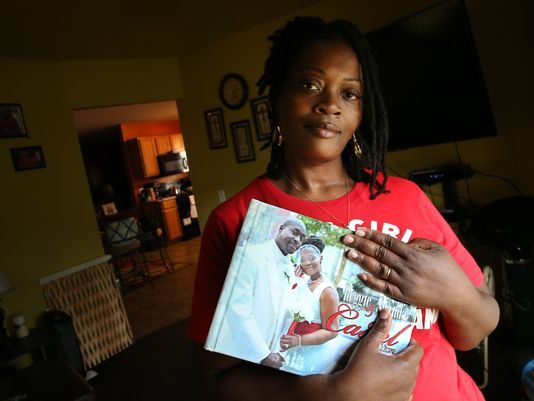
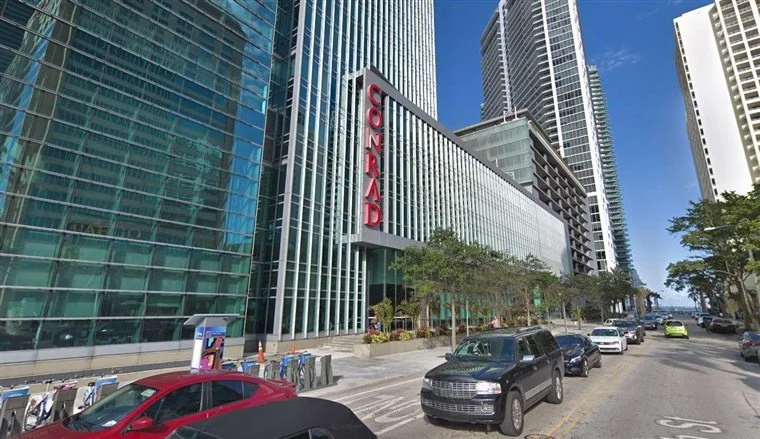
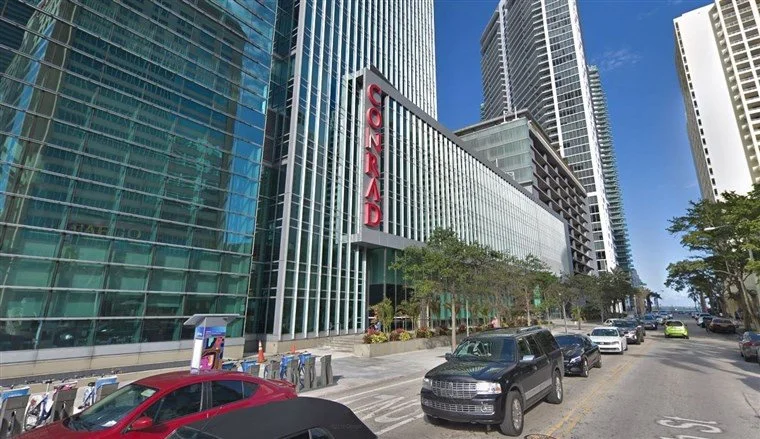
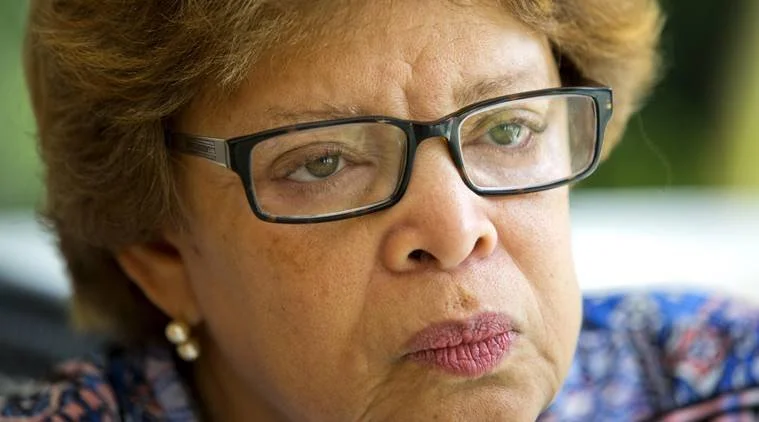
The jury also found she was due $35,000 in back wages and $500,000 for emotional pain and mental anguish.But a cap on punitive damages prevents her from receiving anywhere close to that amount.Marie Jean Pierre, who worked as a dishwasher at the Conrad Miami, sued Virginia-based Park Hotels & Resorts, formerly known as Hilton Worldwide, in 2017 for violations of the Civil Rights Act of 1964. The landmark law bans employment discrimination on the basis of race, color, religion, sex or national origin.The award was filed on Tuesday with the U.S. District Court in Miami. The jury also found she was due $35,000 in back wages and $500,000 for emotional pain and mental anguish.Pierre, 60, is a mother of six and a member of the Soldiers of Christ Church, a Catholic missionary group that helps the poor, her attorney Pierre said in the lawsuit that she informed the Conrad Miami from the beginning of her employment that she could not work Sundays because of her religious beliefs.Her lawyer, Marc Brumer, said Hilton argued in court that it was unaware Pierre was a missionary, and never knew why she always wanted Sundays off.In 2009, she alleges the hotel scheduled her to work on a Sunday, according to the lawsuit. She says she told her employer she would have to resign, but in an effort to persuade her not to quit, they accommodated her request until 2015.Sometime in 2015, the kitchen manager at the Conrad Miami, "demanded" Pierre work Sundays, the lawsuit states and for a short time allowed her to swap shifts with other coworkers to have the day off.On March 31, 2016, Pierre says she was fired for alleged misconduct, negligence and “unexcused absences,” according to the lawsuit.Although there is a cap on punitive damage awards in federal court, Pierre's attorney said he expects she will receive at least $500,000."I asked for $50 million, knowing that I was capped at $300,000," Brumer told NBC News on Wednesday. "I didn't do this for money. I did this to right the wrongs."The jury was unaware that the law caps the amount of punitive damages she could receive.Hilton said it was "very disappointed by the jury's verdict, and don't believe that it is supported by the facts of this case or the law.""During Ms. Pierre's ten years with the hotel, multiple concessions were made to accommodate her personal and religious commitments," a spokeswoman said. "We intend to appeal, and demonstrate that the Conrad Miami was and remains a welcoming place for all guests and employees."By: Janelle Griffith for NBCnews.com | January 16, 2019

Read More
News, Politics News, Politics

Haiti PM Shuffles Cabinet After Ultimatum

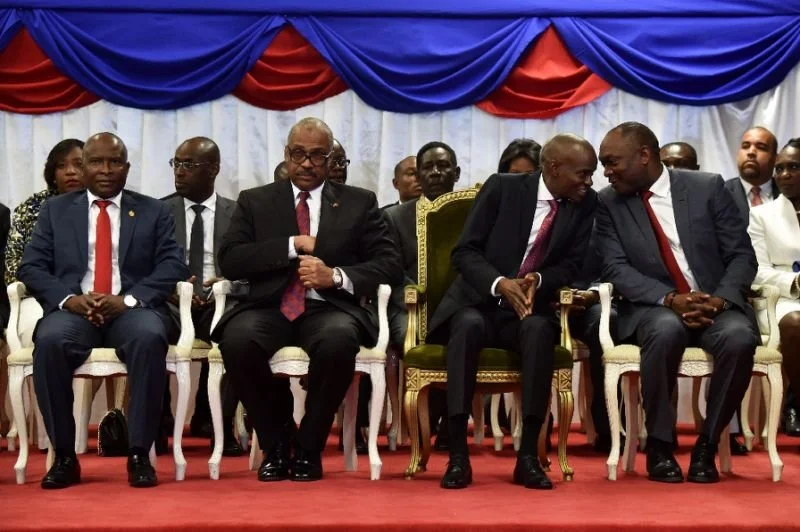
Port-au-Prince (AFP) - Haitian Prime Minister Jack Guy Lafontant, a political novice just over a year into governing the impoverished Caribbean country, has made his first cabinet shuffle after pressure from legislators.

Following his appointment in February 2017, Lafontant, a doctor by profession, nominated his first cabinet of 18 ministers overnight Monday, including five women.

They lack political experience except for a few technocrats.

On Thursday, a lawmaker who backs President Jovenel Moise -- a banana exporter who is also a newcomer to politics -- issued a 72-hour ultimatum for him to make ministerial changes.

The demand came after more than a month of pressure from lawmakers who publicly support the president.

Moise's spokesman had said Friday that the president was not acting "under either pressure or threat from another power," but in the end a shuffle took place.

State television overnight broadcast a recorded message from Lafontant announcing the cabinet changes, but there was no official explanation as to why the reshuffle occurred.

The changes are:

- Jean-Marie Reynaldo Brunet named minister of interior and territorial community. Until 2016, he was an acting mayor appointed by former president Michel Martelly in the absence of local elections.

- Jean Roody Aly appointed justice minister. He was previously the ministry's director general.

- Joubert Angrand, who was coordinator of the national coffee institute, became agriculture minister.

- Guy Andre Junior Francois was named minister responsible for Haitians abroad. He is a former consul in Miami, which is home to most of the diaspora.

- Guyler C. Delva, a journalist, will head the Ministry of Culture and Communication, where he served as secretary of state for communication between 2012 and 2013.

Haiti is still recovering from Hurricane Matthew, which struck in 2016, and almost 40,000 people remain in makeshift camps eight years after an earthquake killed more than 200,000 people.

Since 2010, about 10,000 people have died from a cholera epidemic in Haiti.

By: AFP.com | April 24, 2018

Read More
News, Politics News, Politics

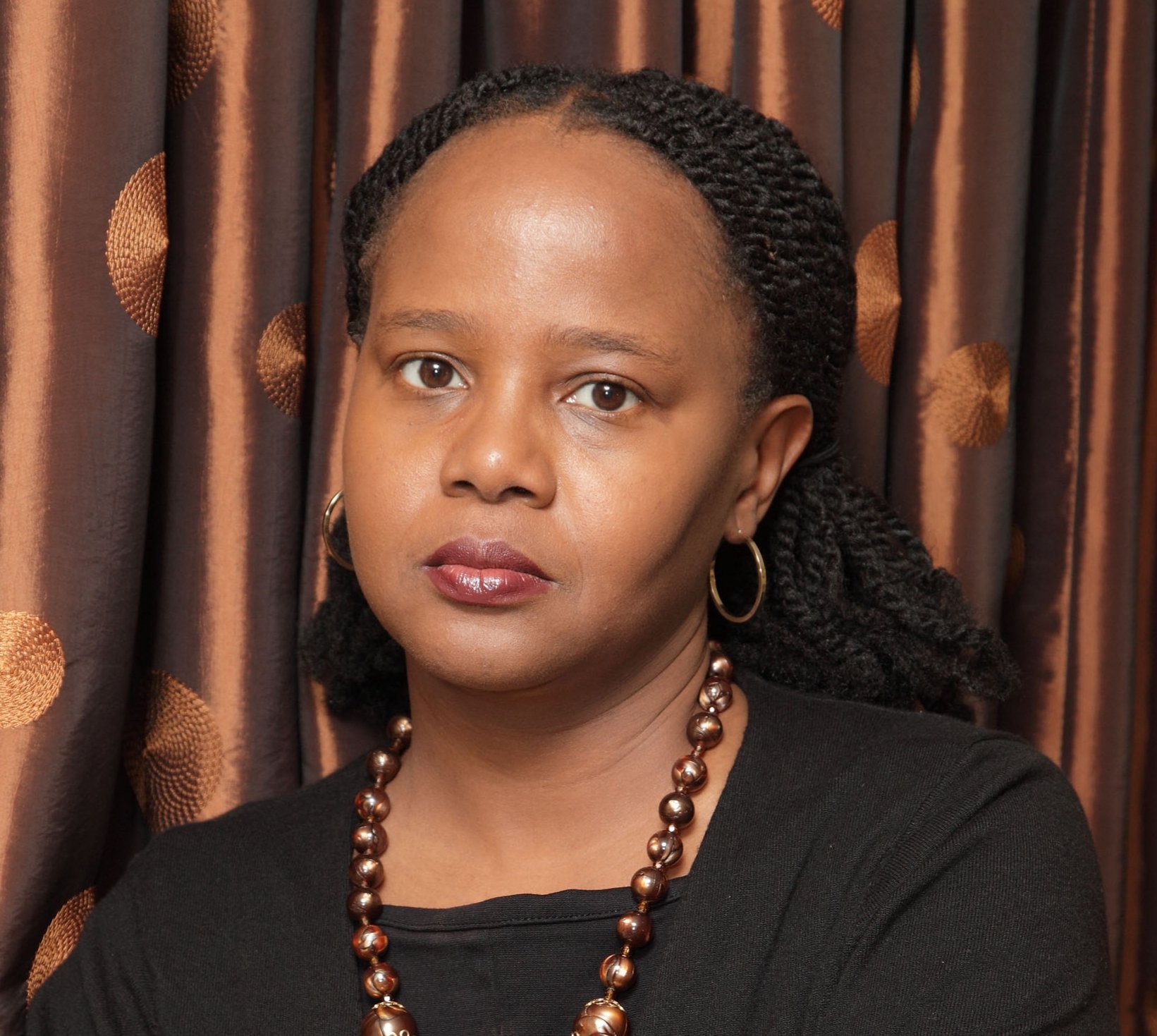
Edwidge Danticat's Message To Us All On The Anniversary Of The Earthquake

Today We Mourn, Tomorrow We Fight

"Today, like many of my fellow Haitians and Haitian-Americans, I planned to mourn the dead. I planned to do my mourning quietly and in small doses. I planned to stay busy so I wouldn’t spend the whole day in pain. I planned to check on the children in my family who lost their father and baby brother in the catastrophic earthquake eight years ago. I planned to write notes to friends and family members who were rescued from the rubble by their neighbors. I planned to get through a panel at a literary festival without breaking down in tears. I planned to hold my two daughters a little bit tighter tonight, especially my youngest who was the baby I kept in my arms to keep myself from curling up in a fetal position each time I saw a child being pulled from under a school or house on my television screen.  Instead, because the President of the United States, who seems determined to insult Haitians every chance he gets, has said that Haiti--along with “Africa”--is a shithole, I must also lament yet another insult to our dignity.
A few weeks ago, it was “All Haitians have AIDS.” This week we are from a shithole country. Haiti is not unacquainted with racists or white supremacists. We defeated our share of them in 1804 when we became the world’s first black republic. Haiti is not a shithole country.  It is a country that, for example, if France hadn’t grown tired of fighting, it would have never sold 828,000 square miles of land to the US, from the western banks of the Mississippi River to the Rocky Mountains, nearly doubling the size of this country. Alexander Hamilton said that the Louisiana Purchase would have never happened were it not for the “courage and obstinate resistance of the black inhabitants” of Haiti. We are also the country that the United States has invaded several times, preventing us from consistently ruling ourselves. If we are a poor country, then our poverty comes in part from pillage and plunder. In the 1980s, the US government--claiming that Haitian pigs had swine fever--participated in the extermination of nearly every native black pig, which represented some families’ entire life savings. These same farmers were then “encouraged” to buy the pampered pink pigs of US farmers. This is only one of many examples I could list.
We are also a country where great art, music, and literature have risen from these and a slew of other woes. We are entrepreneurs, big and small, dreamers, workers. We are a country that created people like my father, who drove a taxicab in Brooklyn, sometimes sixteen hours a day, so that my three brothers (two teachers and an IT specialist) and I could have a better life. We are the country that eight years ago lost over 300,000 people whose lives and memory we should be commemorating today, rather than trying to hold our heads up wherever in the world we happen to be.  Apparently, the President’s remarks came out of a discussion about Temporary Protected Status, during which he is reported to have said “Why do we need more Haitians? Take them out.” Mr. President, so many have tried to take us out before. Eight years ago, the earth itself tried to take Haiti out. Yet the courage and obstinate resistance of Haitians remain. We survive, and when given the opportunity, we THRIVE.  To borrow a slogan that many Americans of different backgrounds have been using since the beginning of this presidency, today we mourn, tomorrow we fight." - Edwidge Danticat


Read More
Uncategorized Uncategorized

Venezuela and Haiti Sign New Bilateral Deals

The agreements will see Venezuela and Haiti deepen their collaboration in agricultural production as well as in joint infrastructure projects

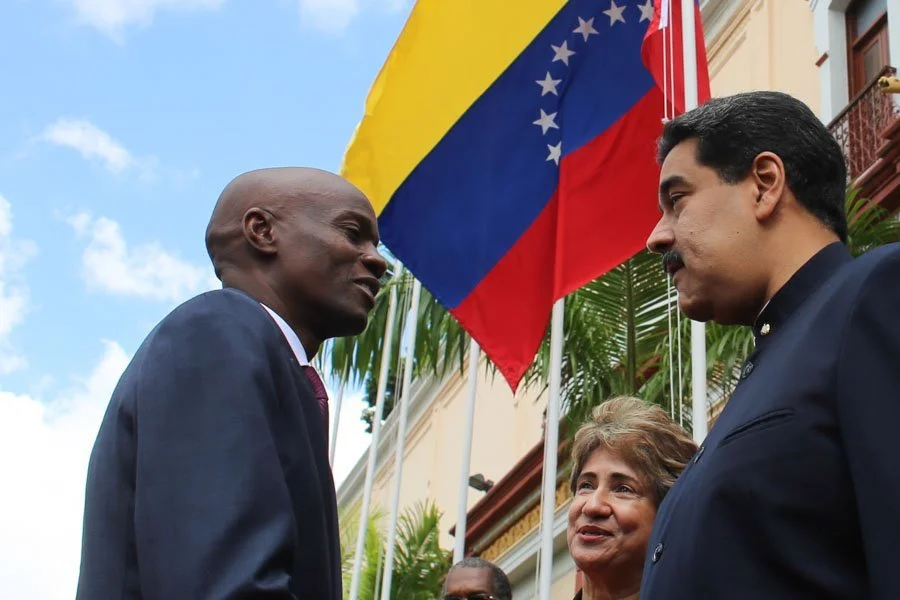
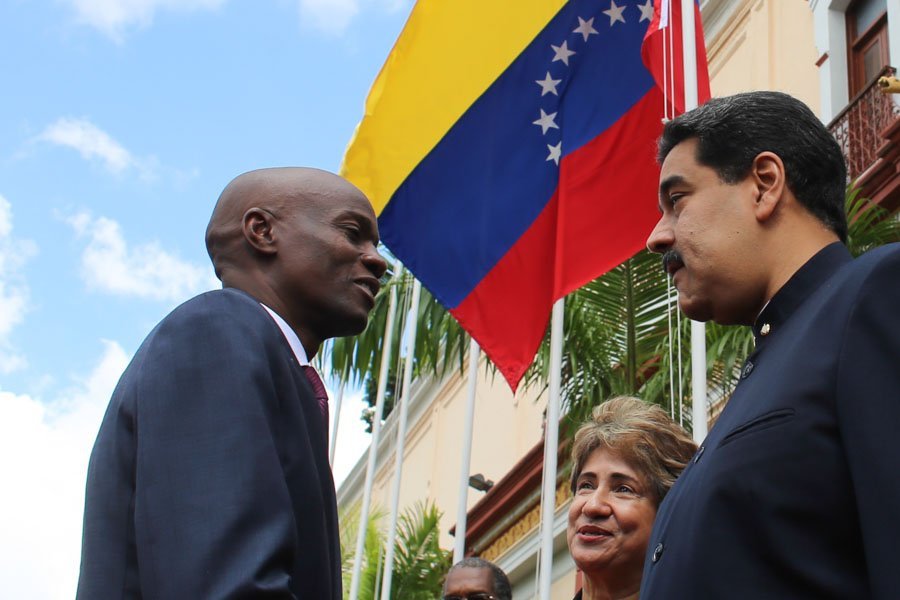
Caracas, November 28, 2017 (venezuelanalysis.com) – Venezuelan President Nicolas Maduro and his Haitian counterpart, Jovenal Moise, held bilateral talks in Caracas Monday where they signed fresh agreements in the areas of energy and agriculture.Known as the Energy and Agriculture Cooperation Agreement, the deal will see Venezuela and Haiti deepen their collaboration in agricultural production as well as in joint infrastructure projects. Further details have yet to be released.Both leaders also reaffirmed their governments’ commitment to the PetroCaribe program, an initiative created by former President Hugo Chavez Frias which sees Venezuela export oil to Haiti and other Caribbean and Central American nations at 40 percent of the market cost, with the remainder payable via 25-year low interest loans.The trip marks President Moise’s first visit to Venezuela since taking office in February on behalf of the right-wing "Bald Heads" (PHTK) party. The businessman was elected to office last November to replace fellow PHTK member, Michel Martelly, as president - though the elections were marred by accusations of fraud.Speaking during a meeting at Miraflores Presidential Palace, the Haitian leader paid tribute to the historic bonds uniting the two countries.“We have been in permanent partnership since the beginning of our history and we thank the people and the Venezuelan president,” he said, alluding to Haiti’s support for Venezuelan independence leader Simon Bolivar, who subsequently abolished slavery in the South American country.President Maduro, for his part, pledged his solidarity with the Caribbean island, which has been rocked by severe natural disasters in recent years.“We will always be together, Haiti and Venezuela. I ratify all of our support, love, and solidarity [for the Haitian people],” he declared.Under the leadership of Chavez and Maduro, the Venezuelan government has moved to strengthen ties with Haiti in recent years via PetroCaribe and other regional integration initiatives. Nonetheless, bilateral agreements between the two countries have been dogged by reports that the Haitian government has embezzled millions of dollars in Venezuelan aid.Between 2011 and 2014, Venezuela helped finance 234 projects in Haiti to the tune of US$1.2 billion.By: Lucas Koerner for Venezuelanalysis.com | November 28,2017
Read More
News, Politics News, Politics

UN to Haiti: 'Proof is in the pudding' on Corruption

PORT-AU-PRINCE, Haiti (AFP) — The United Nations, which last month launched a fresh mission to promote long-term development in Haiti, has had it with nice words: when it comes to corruption and human rights, "the proof is in the pudding.""They have said they want to fight corruption, so they have to take responsibility," insisted Susan Page, who is heading the UN Mission for Justice Support in Haiti (MINUJUSTH)."I'm going to take them at their word, but I'm also going to help them if that is really what they want," the American career diplomat said.Elected president after an electoral crisis that paralyzed the country for two years, Jovenel Moise insists he is going to use his time in office to clean up Haitian politics."Corruption, in all its forms, eats away and atrophies the economy, it profoundly weakens the political foundations and destabilizes society's social tissue: corruption is a crime against development," the president, who took office earlier this year, told the UN general assembly in New York in September.The concern is that his words are taking their time in being translated into action. In late August, a minister was sacked over corruption allegations, but no legal action has yet been taken.The new UN mission starts just as one of the symbols of financial waste in Haiti resurfaces: on Thursday, the Senate will debate a parliamentary report accusing a dozen former ministers, who held office between 2010 and 2016, of "fraud on a grand scale.""We'll see how they react, not just in regard to the report but in general," said Page, pointing to Haitian institutions in charge of fighting corruption and money laundering."Will they strengthen the capabilities of agents in these organizations? Really put investigations in place which they will then pursue to the very end? Will they bring people to justice? We will see."Gnawed away by corruption, the country's justice system is notoriously slow-moving. Its prison population, 400 percent above capacity, is one of the highest in the world.Maintaining the rule of law also demands a real commitment to improving conditions in detention centers, but there, too, MINUJUSTH will not take the lead."It's an age-old problem that the Haitians will have to sort out themselves," said Page. "We are here to support, not to do it for them. They need to have the political will to do it."Restoring the UN's image in Haiti during this new mission will prove almost as big a task as overhauling its justice system.The 13 years of the preceding UN mission, known as MINUSTAH, were blighted by sex crimes perpetrated against Haitian woman and children by UN police and peacekeeping troops, as well as a cholera epidemic sparked by Nepalese peacekeepers that has already claimed 10,000 lives.MINUJUSTH is the UN's sixth peacekeeping mission in Haiti over the past 25 years, a country where there is very little risk of civil war, regional conflict or terrorist attacks. The label "peacekeeping" exasperates many Haitian politicians, who may support the drive against corruption but also want a debate to redefine the UN mandate.Aware of that debate, Page prefers not to take sides: "The UN Security Council considers it necessary to keep a certain level of stability here and to tackle the great challenges which threaten long-term development... that is not a mandate for development – that is to enable a transition between a peacekeeping mission and a lasting development."

By: Jamaicaobserver.com | November 29, 2017

Read More
News, Politics News, Politics

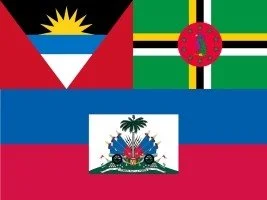
Haiti - Humanitarian : $250,000 donation from Haiti to Antigua and Barbuda and Dominica

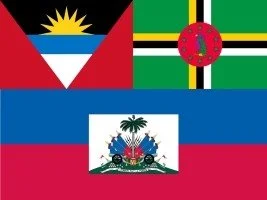
After providing urgent humanitarian aid to Turks & Caicos Islands, badly affected by the passage of hurricanes Irma and Maria (630 generators, 1,000 sheets of plywood, 4,500 tarpaulins, 2,000 gypsum boards and 4,000 sheets among others). Permanent Representative of Haiti to the UN, Ambassador Denis Regis at the last high-level donor conference for the Caribbean in New York, announced Haiti's assistance to the Antigua and Barbuda Islands and Dominica $ 250,000 each.In his speech, Ambassador Regis explained "[...] The Republic of Haiti, having been hit hard by a series of deadly natural disasters over the last 10 years, [...] knows from experience the multiplicity of obstacles to which is faced the reconstruction and rehabilitation of critical infrastructure, especially in countries such as ours or structural handicaps are legion and the public investment capacity is so precarious [...][...] in response to the recent call by the CARICOM countries, I have the honor to announce that the Government of Haiti, despite the difficult economic and financial situation of the country, but fully involved in international solidarity is pleased to contribute US $ 250,000 to the reconstruction efforts of each of the sister nations of Antigua and Barbuda and Dominica, so hard hit by hurricanes Irma and Maria [...][...] These contributions, although modest, are nonetheless a testimony of friendship and fraternity, in the tradition of mutual aid and regional solidarity of the Caribbean Community, and in the spirit of international cooperation [...]"By: HL/ PI/ HaitiLibre | November 30,2017

Read More
Health, News Health, News

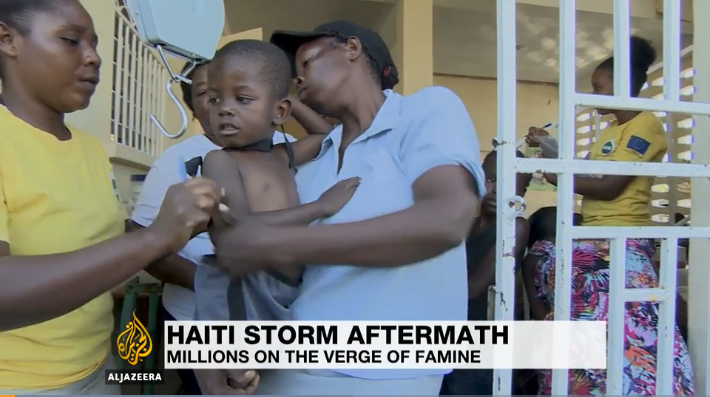
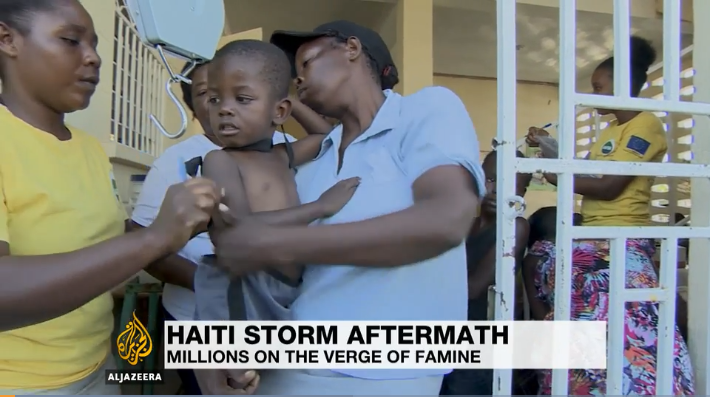
Millions at risk of famine in post-hurricane Haiti

It's been almost a year since southern Haiti was devastated by Hurricane Matthew.It has also been almost eight years since an earthquake killed more than 300,000 people and left hundreds of thousands homeless.But a recent visit to a UNICEF treatment centre in the south shows everything continues to go wrong in the country.Dozens of malnourished children visit the centre daily, struggling against diseases and the endemic poverty that is so deeply entrenched in Haiti.Half of the country's population is malnourished. According to the World Food Programme, 1.32 million people are in Phase 3 Crisis, which means they are severely food insecure. Additionally, three million people are in Phase 2 Stress, which mean they are food insecure.Unfortunately, this is nothing new.Haiti has been struggling to feed its people for years. It is one of the poorest countries in the world.Natural disasters only deteriorate the situation. Hurricane Matthew had a devastating effect on food production. Agricultural plots, seeds and irrigation systems were destroyed.One year on, not much has changed.Everyone we spoke to repeated the same phrase over and over again: "I used to have … but now it's gone."It was very little, but at least some had a business, or seeds, or nets and other sources that would help them feed themselves. But they were destroyed by the hurricane.The UN has some small programmes assisting farmers, and is currently working on long-term development ones. But that's not enough to get people out of the current crisis.The UN appealed for more than $56m for food security. I have been told that less than 50 percent of that was provided by donor countries.

Political issues

But that's not the only problem. Nine months ago, Haiti's new President Jovenel Moise took office, with the promise to increase support to the country's agricultural sectors.Farmers denounce that only 6.9 percent of next year's budget has been assigned to assist communities in desperate need of help. Moise has also raised taxes and that's why demonstrations have been ongoing in the capital for months.The president was elected in an electoral process in which only 20 percent of the population voted."Moise has very little support. The only ones that are keeping him in power are the United States, France and the international community," a source told me in Port-au-Prince.And the budget?"It's been designed to benefit the elite and to continue strangling the poor," said economist Camille Charlemers."It is what keeps us dependent on foreign aid. Without food production, Haiti needs to import almost everything."And of course there is massive corruption. A recent investigation showed how politicians, including the presidents and prime ministers, allegedly embezzled around $2bn from a Petrocaribe deal with Venezuela.Haiti is currently paying off that debt while millions are going hungry.Some historians have said that the country has been condemned since it was born, adding that the first black republic was a bad example. They say that 'slaves' were not supposed to have a nation and that's why a brutal embargo was imposed by France, Spain, the US and the UK.Over 200 years later, Haiti continues to struggle, a victim of the ruling elites that profit from the enormous poverty rates in the country, and of an international community that, for whatever reason, continues to fail.By: Teresa Bo for Aljazeera.com | November 28, 2017

Read More
News News

Air Force Reservists Deliver Humanitarian Aid to Haiti


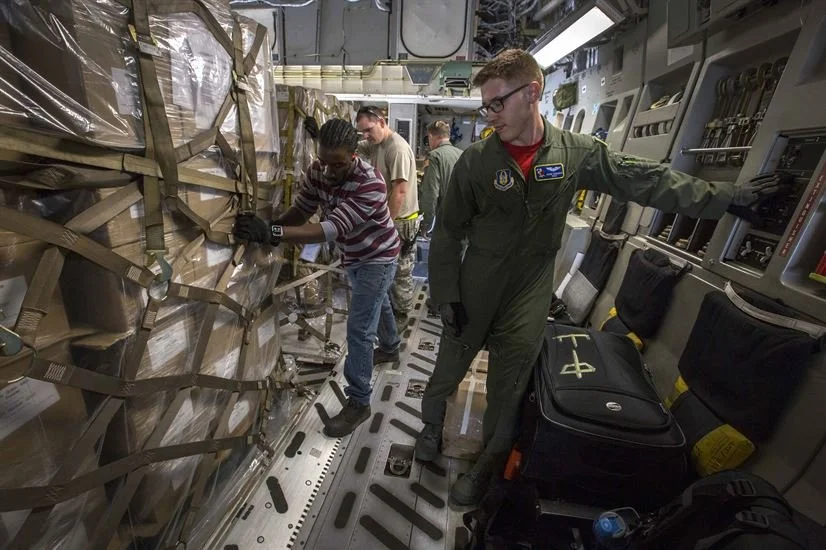
PORT-AU-PRINCE, Haiti, Nov. 27, 2017 — What can 15 airmen and a C-17 Globemaster III aircraft do on a Denton Program mission? A lot, if they're from the Air Force Reserve Command's 514th Air Mobility Wing.


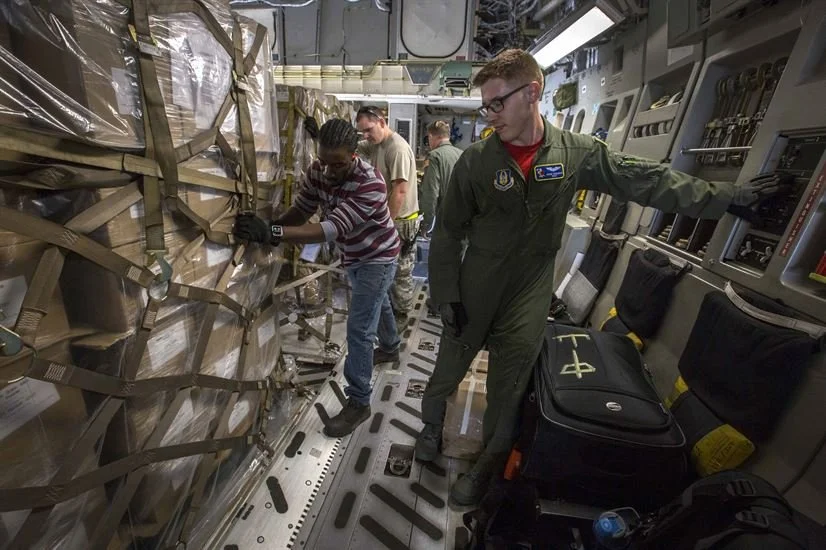
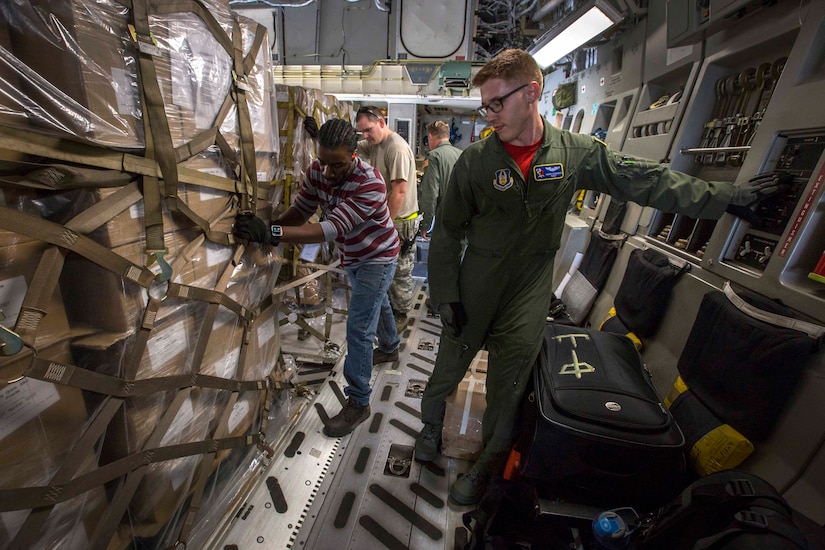
Air Force Staff Sgt. Adam D. Van Horn, C-17 Globemaster III loadmaster assigned to the 514th Air Mobility Wing's 732nd Airlift Squadron, locks a cargo pallet in place at Joint Base Charleston, S.C., Nov. 17, 2017. Air Force photo by Master Sgt. Mark C. Olsen

On Nov. 18, four pilots and a loadmaster with the 732nd Airlift Squadron, a loadmaster and two crew chiefs with the 514th, three Phoenix Raven Team members, and four 514th Security Forces airmen delivered 15 pallets of food, weighing 76,410 pounds, to Haiti."It's a high priority to get food down there," said Air Force Senior Master Sgt. Shawn R. Reynolds, a C-17 loadmaster with the 514th Air Mobility Wing. "Just the sheer volume of food we moved was impressive."The humanitarian mission, accomplished through the Denton Program, delivered fortified rice and soy protein and barley grass juice powder to Haiti. This was Reynolds' fifth Denton mission."That food will be used for a nutrition program for orphans and school children," said Jean Lubin St. Marc, executive director of Mission of Hope. "We appreciate the U.S. military that bring Denton cargo to us."Deliveries Began after 2010 EarthquakeSince a 2010 earthquake in Haiti killed more than 100,000 people, the 514th has delivered supplies and equipment through the Denton Program to Haiti. The program was an amendment to the Foreign Assistance Act of 1987, and it is named in honor of U.S. Sen. Jeremiah Denton, a former Navy pilot and Vietnam prisoner of war."Delivering relief supplies is one of the more rewarding missions we do," said Air force Lt. Col. Samuel F. Irvin, a C-17 pilot and the commander of the 732nd Airlift Squadron.Irvin has been on more than a dozen Denton missions during the past 10 years.The program is jointly administered by the U.S. Agency for International Development, the State Department and the Defense Security Cooperation Agency. It enables Americans and U.S. based nongovernmental organizations to use available space on military cargo aircraft to transport humanitarian goods -- agricultural equipment, clothing, educational supplies, food, medical supplies and vehicles -- to countries in need."This is the first time it has been strictly food," said Air Force Maj. Lee C. Schmeer, a 732nd Airlift Squadron C-17 pilot. "Usually it has been a mixed bag -- tractors, forklifts, trailers, and flatbed trucks, along with food."To give some perspective on how much cargo a Globemaster can handle, it can carry an M1A2 Abrams tank, which weighs 130,000 pounds, and still have room for 40,000 pounds more cargo.Cargo HubThe crew received the cargo at Joint Base Charleston in South Carolina, which is the cargo hub for the Denton Program. In 2016, Joint Base Charleston supported 85 missions to 10 countries delivering 609 pallets of cargo and 22 vehicles."We're in a position to help and we're happy to help," Schmeer said.While the Denton Program helps countries and people in need, it also serves military personnel. Aircrews that need to get qualified or have their qualifications updated volunteer for a Denton mission, and additional training will be scheduled during the mission."We schedule training at the bases we visit for our aircrews," Irvin said.During this mission, which began Nov. 16 and ended Nov. 19, the 514th Security Forces Squadron's combat arms training and maintenance team trained four C-17 pilots and two loadmasters at the pistol range at Naval Air Station Pensacola in Florida."By using our training time, it's a win-win for everyone," Reynolds said.Delivering the supplies was a team effort. In this case, the security forces airmen pitched in, helping to unload cargo."Moving Denton cargo is satisfying for me," Reynolds said. "We are moving something that matters."By: Air Force Master Sgt. Mark C. Olsen 514th Air Mobility Wing for the US Department of Defense | November 27, 2017

Read More
News, Politics News, Politics

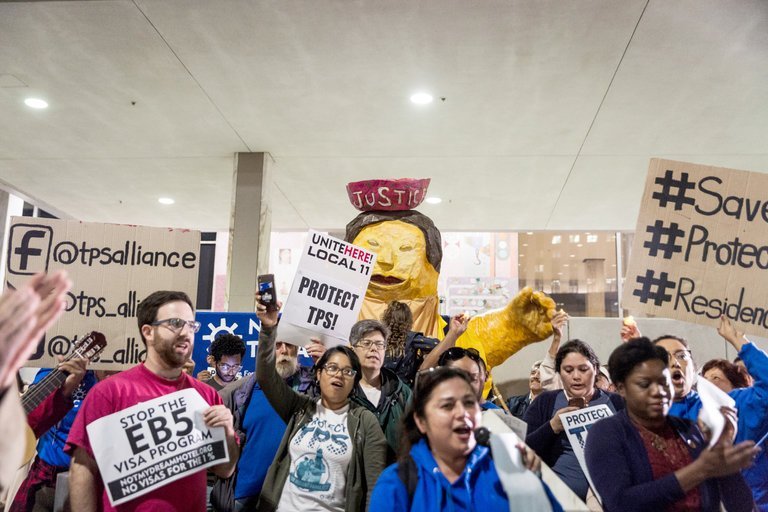
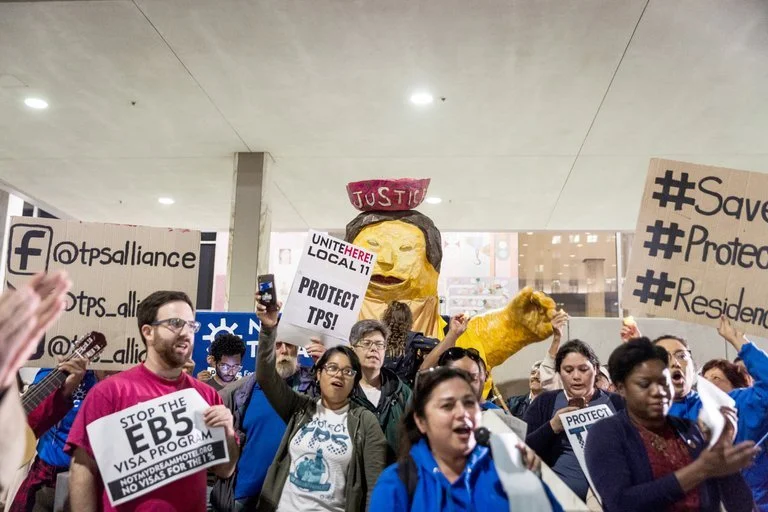
Trump Administration Ends Temporary Protection for Haitians

The Trump administration is ending a humanitarian program that has allowed some 59,000 Haitians to live and work in the United States since an earthquake ravaged their country in 2010, Homeland Security officials said on Monday.

Haitians with what is known as Temporary Protected Status will be expected to leave the United States by July 2019 or face deportation.

The decision set off immediate dismay among Haitian communities in South Florida, New York and beyond, and was a signal to other foreigners with temporary protections that they, too, could soon be asked to leave.

About 320,000 people now benefit from the Temporary Protected Status program, which was signed into law by President George Bush in 1990, and the decision on Monday followed another one last month that ended protections for 2,500 Nicaraguans.

Haiti, the poorest country in the Western Hemisphere, is still struggling to recover from the earthquake and relies heavily on money its expatriates send to relatives back home. The Haitian government had asked the Trump administration to extend the protected status.

“I received a shock right now,” Gerald Michaud, 45, a Haitian who lives in Brooklyn, said when he heard the news. He has been working at La Guardia Airport as a wheelchair attendant, sending money to family and friends back home. He said he feared for his welfare and safety back in Haiti now that his permission to remain in the United States was ending.

“The situation is not good in my country,” he said. “I don’t know where I am able to go.”

Haitians are the second-largest group of foreigners with temporary status. The protection is extended to people already in the United States who have come from countries crippled by natural disasters or armed conflict that prevents their citizens from returning or prevents their country from adequately receiving them. The government periodically reviews each group’s status and decides whether to continue the protections.

The Obama administration renewed the protections for Haitians several times, after determining that conditions in Haiti remained precarious. But the Trump administration, which has sought greater controls on immigration, has said that the program, which was intended to provide only temporary relief, has turned into a permanent benefit for tens of thousands of people.

In a statement, the Department of Homeland Security said that after meeting with Haitian government officials and Haitian communities in the United States, it had decided to let the protections end.

“Since the 2010 earthquake, the number of displaced people in Haiti has decreased by 97 percent,” the statement said. “Significant steps have been taken to improve the stability and quality of life for Haitian citizens, and Haiti is able to safely receive traditional levels of returned citizens.”

The protection for Haitians was most recently extended in May, by John F. Kelly, the Homeland Security secretary at the time. He allowed only a six-month extension, a shorter one than is typical, saying that the Haitians “need to start thinking about returning.”

The decision on Monday by Elaine Duke, the acting secretary, set a termination date of July 2019 to give people time to make arrangements to leave.

The largest group of Temporary Protected Status beneficiaries, nearly 200,000 people, are from El Salvador. The Department of Homeland Security is scheduled to announce next month whether it will rescind or renew protection for that country, which is plagued with gang violence and high unemployment. The protection applies to Salvadorans who were in the United States without permission on Feb. 13, 2001, and was granted after deadly earthquakes in their home country.

Though Ms. Duke ended protections for Nicaraguans last month, she continued, at least for now, protections for Hondurans despite pressure from Mr. Kelly, now President Trump’s chief of staff, to end them.

Others who now benefit include people from Nepal, Somalia, Sudan, South Sudan, Syria and Yemen. In 2016, the Obama administration decided to end temporary protection for citizens from three West African countries that had been devastated by the Ebola virus several years ago.

The United States offered the protection to Haitians after the earthquake in January 2010 that killed hundreds of thousands of people, displaced more than a million and led to a cholera outbreak. Haitians who entered the United States within a year of the disaster qualified for the status.

A variety of American groups, including the Congressional Black Caucus, the United States Chamber of Commerce and immigrant advocacy organizations had urged the Trump administration to extend the protections again. On Monday, Senator Bill Nelson, Democrat of Florida, called the decision “unconscionable.”

“There is no reason to send 60,000 Haitians back to a country that cannot provide for them,” he wrote on Twitter. “I am strongly urging the administration to reconsider.”

Ileana Ros-Lehtinen, a Republican congresswoman from South Florida, said on Twitter that she had traveled to Haiti after the earthquake in 2010 and after Hurricane Matthew in 2015. “So I can personally attest that Haiti is not prepared to take back nearly 60,000 TPS recipients under these difficult and harsh conditions,” she said.

Those with temporary protection constitute about half of the estimated 110,000 Haitians living in the United States without permanent permission, according to the Pew Research Center. Since Mr. Kelly signaled that Haiti might lose its special designation, thousands of Haitians have crossed the border between the United States and Canada to apply for asylum in Quebec.

Nearly 30,000 children have been born in the United States to Haitians with protected status. Those children are citizens and entitled to stay. Some of their parents may seek to avoid deportation by claiming it would cause extreme hardship to a United States-born child, but that option is limited.

Most will soon have to make a wrenching decision: take their children back to Haiti; leave them with relatives or guardians in the United States; or remain in the country illegally and risk arrest and deportation.

Mark Silverman, an attorney and director of policy at the Immigrant Legal Resource Center in San Francisco, said that if they are arrested, they would be entitled to deportation hearings. And contesting their cases “gives them at least seven to 10 years,” he said, because of the long backlogs in the immigration courts.

The decision is sure to be felt in Haiti, where remittances from the Haitian diaspora totaled $2.36 billion in 2016, an increase of 7 percent over the previous year, according to the World Bank. That money represented more than one-fourth of the country’s national income.

But Dan Stein, president of the Federation for American Immigration Reform, which lobbies for restrictions on immigration, said the cancellation of temporary protections for Haitians was “long overdue.”

“The notion that this would be reflexively renewed again and again is a corruption of the entire concept,” said Mr. Stein, adding, “it’s not a refugee program or an immigration program.”

“It’s supposed to be reviewed and it’s supposed to be temporary,” he said.

One of the younger beneficiaries of the program, Peterson Exais, barely survived the earthquake. He arrived in the United States when he was 9 years old to receive emergency medical care after surviving for days under the rubble. He endured more than a dozen surgeries and has become a promising dancer at a magnet school in Miami.

Now 17 years old, he dreams of pursuing studies at the Juilliard School.

“This is very devastating for me,” he said on Monday. “I might not be able to give all that I could give back if I went back to Haiti.”

By: Mariam Jordan for Nytimes.com | November 20,2017

Read More

UN 'Will Walk With Haiti' On Path Towards Sustainable Development, Senior Official Pledges

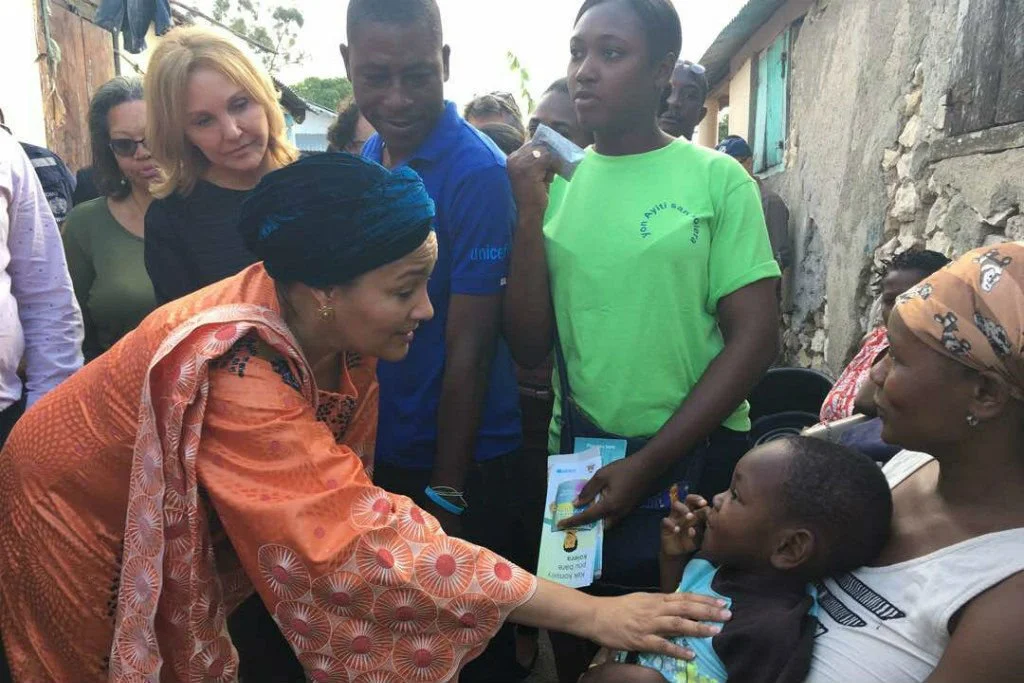
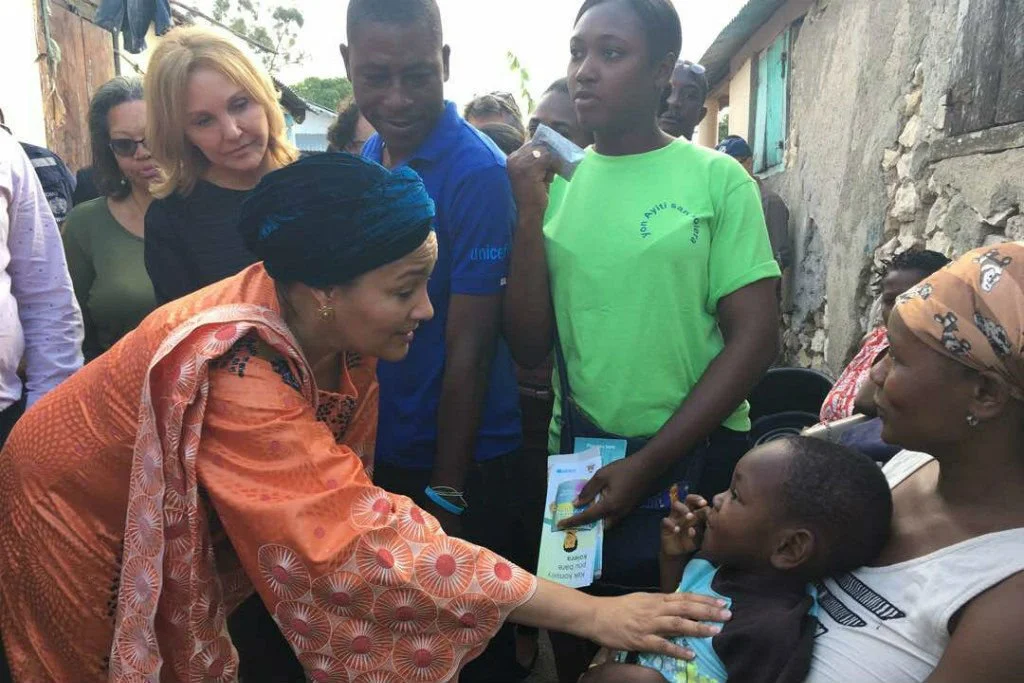
United Nations Deputy Secretary-General Amina Mohammed and UN Special Envoy for Haiti Josette Sheeran wrapped up a three-day visit to the island on Sunday, pledging more help to defeat cholera and assist the Government in achieving the broader aims of the UN 2030 Agenda for Sustainable Development.“The UN will walk this path with Haiti,” Ms. Mohammed said on Twitter, referring the work under way inside Haiti towards becoming an emergent country by 2030, the finish line agreed by all nations to achieve of the Agenda and its landmark 17 Goals, knows as the SDGs.The high-level delegation was dispatched by Secretary-General António Guterres to reaffirm the commitment of the United Nations to the Haitian people in a “new spirit of partnership.”In an opinion piece late last week in the Miami Herald, the UN chief said the partnership would stretch across the UN's work on the island – including to continue addressing Haiti's cholera challenge and the “unacceptable incidents” of sexual exploitation and abuse by UN personnel – and aims to help Haiti move “from an emergency approach to durable solutions, from assistance to investment support, from handouts to hand-to-hand cooperation for sustainable development, to democracy and dignity for all Haitians.”On Saturday, Ms. Mohammed echoed the “new spirit of partnership” set out by Mr. Guterres, saying: “We come to try to find another way to do things better; because in the past, we have fallen short. We were not able to do what we had planned,” she said in a joint press conference with Haitian President Jovenel Moise in the capital, Port-au-Prince.The visit of the two UN officials comes just after the appointment of Susan Page, of the United States, as the Special Representative of the Secretary-General and Head of the UN Mission in Support of Justice in Haiti (UNMIJUSTH), which succeeded the UN Stabilization Mission, known as MINUSTAH, on 16 October.The role of the new UN mission is to assist the Haitian Government to strengthen the rule of law institutions, to continue to develop the capacity of the national police and to promote human rights.

UN reaffirms commitment to eradicating cholera

As a key part of the visit, the two UN officials met families affected by cholera and coping with lack of access to water and sanitation.Ms. Mohammed and Ms. Sheeran also co-Chaired a High-Level Cholera Committee meeting (HLCC) alongside Haitian Prime Minister Jack Guy Lafontant. The Haitian Government and the UN representatives jointly expressed their determination work in partnership to achieve zero transmission of cholera. They further expressed their commitment to achieving the SDGs, including improving access to water, sanitation and healthcare.While cholera transmission has dropped dramatically, from over 18,000 new cases per week at the onset of the epidemic in 2010, to 250 per week this year, success will require more funding to maintain the highly effective work of emergency response teams, and commitment to the fight against cholera in the medium and long-term, the officials jointly agreed.Urging UN Member States and partners to provide comprehensive support, the Deputy Secretary-General emphasized during the meeting that “addressing the root causes of cholera in Haiti is critical to achieving the Sustainable Development Goals (SDGs). Additionally, in the immediate term, we urgently require funding to ensure continued operation of the rapid response teams; failure to do so risks losing the gains achieved to date.”The Deputy Secretary-General and the Special Envoy also witnessed the efforts of the “many heroes” working to eradicate the disease. Their visit was also an opportunity to learn about successful cholera control programmes, including in communities that ended open defecation, mobilized to build toilets, and raised awareness of the importance of sanitation.By: UN News Centre | November 5, 2017

Read More
News, Politics News, Politics

A New Chapter for the Disastrous United Nations Mission in Haiti?

The year the United Nations Stabilization Mission in Haiti (MINUSTAH) came to the country was a deadly one for my family. In February of 2004, Haiti’s first democratically elected President, Jean-Bertrand Aristide, was forced out of office for a second time, having been reinstated, and then reëlected, after a 1991 military coup. This time, Aristide was replaced by Gérard Latortue, a former United Nations official, who called those who took up arms against Aristide “freedom fighters.” (Their leader, Guy Philippe, is serving a nine-year sentence in a U.S. prison after pleading guilty to receiving multimillion-dollar bribes from cocaine traffickers.)

That April, claiming that the situation in Haiti constituted “a threat to international peace and security in the region,” the U.N. Security Council passed Resolution 1542, establishing the Brazil-led MINUSTAH. The mission, which officially began in June, 2004, lasted thirteen years and five months, and cost more than seven billion dollars, before officially ending this past Sunday.

Part of MINUSTAH’s mandate was to assist the transitional government in insuring “a secure and stable environment.” This is where my loved ones and others came into the mission’s crosshairs.

I spent the first twelve years of my life in an impoverished neighborhood in Port-au-Prince called Bel Air, where many Aristide supporters live. My eighty-one-year-old uncle, a minister, had called this neighborhood home since the nineteen-fifties, and was there on September 30, 2004, when protests began on the thirteenth anniversary of the first coup d’état. In response, the Haitian national police and MINUSTAH soldiers conducted joint raids in Bel Air that led to dozens of mostly unreported injuries and deaths. The following month, U.N. soldiers and Haitian riot police climbed up to the roof of my uncle’s church and killed some of his neighbors below. My uncle was forced to flee to Miami, where he died in the custody of U.S. immigration officials after being denied asylum.

Bel Air was not the only area subjected to these raids. During one of their bloodiest operations in Cité Soleil, another poor and densely populated neighborhood in the capital, MINUSTAH used more than twenty-two thousand bullets and seventy-eight grenades, among other artillery, to kill seven alleged gang members. No other deaths were acknowledged despite further raids until early 2007, when the mission head at the time, Edmond Mulet, brushed off such killings as collateral damage. This combat terminology was not incidental. MINUSTAH was a continuous military operation in a country in which there was no war.

There would be more collateral damage. In October, 2010, nine months after an 7.0-magnitude earthquake nearly flattened Port-au-Prince and the surrounding areas and killed more than three hundred thousand people, and while more than a million people were still displaced or living in makeshift tent camps, Nepalese peacekeepers stationed in the north of Haiti allowed raw sewage from their base to leak into one of Haiti’s largest and most intensively used rivers, causing a cholera epidemic. The U.N. at first refused to investigate the source of the outbreak and instead blamed Haiti’s lack of sewerage and water-treatment facilities. More than ten thousand people have died from cholera since 2010, and more than eight hundred thousand have been infected.

It took the U.N. six years to acknowledge its role in the cholera epidemic, and even though the former Secretary-General, Ban Ki-moon, declared last December that the U.N. needed to “do the right thing”, the U.N. continues to reject victims’ legal claims by citing immunity. The U.N. has also failed to deliver on Ban’s promise of a four-hundred-million-dollar fund to halt the spread of cholera and compensate the “most affected” victims. The fund has only raised $2.7 million, and the current U.N. Secretary General, António Guterres, seems unwilling to provide direct payments to the cholera victims and their families, many of whom have lost their sole breadwinner.

Neither the U.N.’s impunity nor the lack of accountability would surprise the women and boys and girls, many as young as twelve, who have told of being raped—one boy says that he was gang-raped—by MINUSTAH peacekeepers, who, according to the Associated Press, have used sex rings, offers of food, and other methods to trap their victims. Unacknowledged “MINUSTAH babies” and their destitute mothers are treated as though they do not exist. Though MINUSTAH rapes remain underreported, those who have come forward have had to confront the same type of repudiation faced by the initial cholera victims. Their rapists were rarely punished. They were simply sent home.

MINUSTAH has now been replaced by MINUJUSTH, a smaller mission which began on Monday. MINUJUSTH , the United Nations Mission for Justice Support in Haiti, has a mandate to “help the Government of Haiti strengthen rule-of-law institutions, further develop and support the Haitian National Police and engage in human rights monitoring, reporting and analysis.” MINUJUSTH, which will will consist of twelve hundred and seventy-five officers and support personnel, seems like a rebranding effort, an attempt by the U.N. to give itself a clean slate and erase MINUSTAH’s past. But if the U.N. were serious about justice and human rights in Haiti, it would wind down its presence in the country by having MINUJUSTH also investigate the damage done to both individuals and entire communities by MINUSTAH. Or, better yet, assign an independent body to do so, then offer the warranted compensation for the extrajudicial and civilian killings, the sexual assaults, and the introduction of cholera.

Haiti’s current President, Jovenel Moïse, whose two heavily contested election cycles are often touted as a MINUSTAH success, told the Miami Herald in an interview this month that “the conversion of MINUSTAH to MINUJUSTH is the recognition of the progress made by our country in recent years. Today, Haiti is no threat to regional and global peace and security.” To fill in the gap being left by MINUSTAH, Moïse plans to revive the defunct Haitian Army, whose history of human-rights abuses, the coup d’état against Aristide, in 1991, and its subsequent reign of terror led to an earlier United Nations mission, UNMIH, in 1993.

Moïse’s proposed budget for 2017, which calls for new tariffs and increased taxes on goods and services, has been a subject of mounting protests in Haiti. MINUJUSTH, like its predecessors, will likely find itself facing angry Haitians, or training those who do. Why should Haitians trust another group of U.N. “peacekeepers” who claim to promote the same human rights, justice, and rule of law that have been so blatantly violated by their colleagues? The U.N. may want to leave MINUSTAH’s dark chapter behind, but Haitians will have to suffer the consequences of the group’s actions for generations to come. And no new mission, under whatever acronym, will change that.

Edwidge Danticat is the author of many books, including, most recently, “The Art of Death: Writing the Final Story.”

By: Edwidge Danticat, The New Yorker | October 19, 2017

Read More
News, Politics News, Politics

UN Peacekeepers Leave Haiti: What Is Their Legacy?

As the controversial 13 year peacekeeping mission in Haiti wraps up, Al Jazeera examines what the mission leaves behind.

A UN peacekeeper argues with a supporters of 2010 presidential candidate Michel Martelly in Port-au-Prince [File: Gulliermo Arias/AP Photo]

PEACEKEEPERS IN HAITI

  • What will be their legacy?
  • Why were they there?
  • What has taken so long?
  • Why are they leaving now?
  • What have Haitians said about the mission?

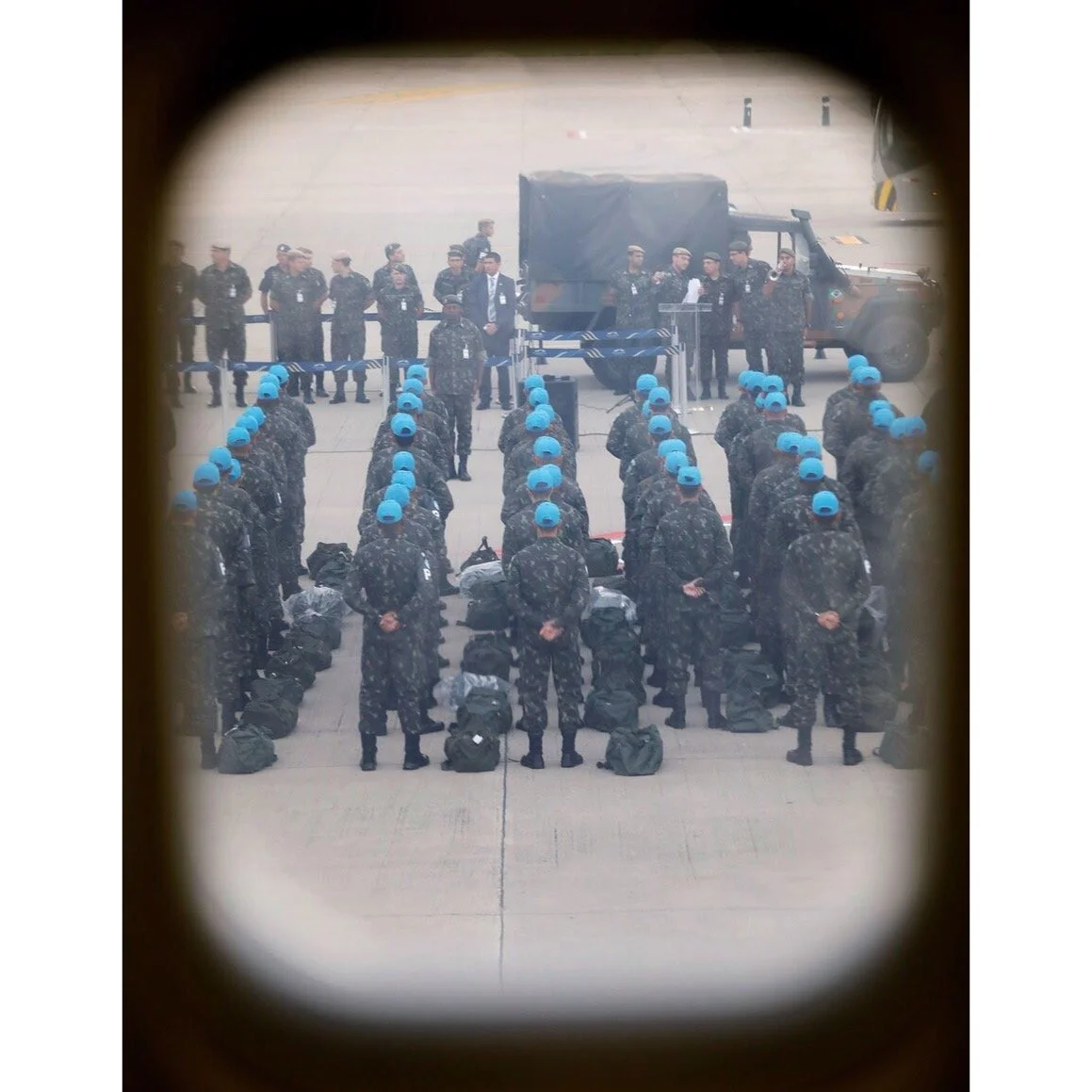
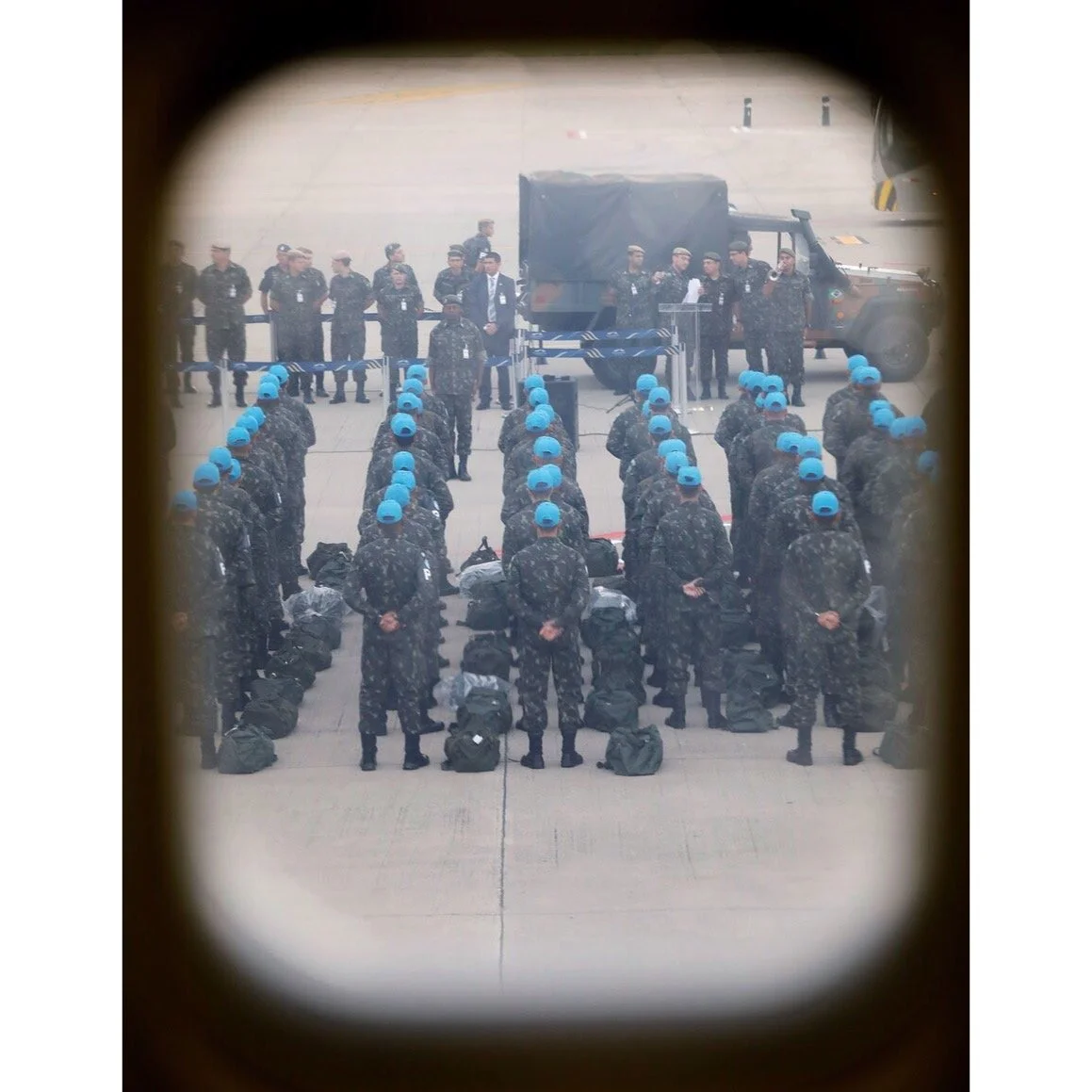
The United Nations peacekeeping mission in Haiti lowered its blue flag on Thursday, 13 years after it began.While the mission has been credited with helping bring stability to the poorest country in the Western Hemisphere, it has also been mired in controversy.The mission is blamed for bringing cholera to the country, and at least 134 of its peacekeepers have been involved in sexual abuse scandals.As the last of the thousands of peacekeepers who were in the country leave, Al Jazeera answers some of the key questions about why the blue helmets were there and what they are leaving behind.  

What will be their legacy?

The presence of UN troops in Haiti has been a point of controversy on the island since the UN Stabilization Mission in Haiti (MINUSTAH) mission first began in 2004.UN officials have praised the mission for helping to re-establish law-and-order in the country marred by political unrest and bolster Haiti's democratic institutions. MINUSTAH has also helped recruit and train a new civilian police force, something that was virtually nonexistent before their arrival.However, critics argue the mission's forces have done more harm than good, pointing to the peacekeepers' involvement in the country's 2010 cholera outbreak and sex abuse scandals as evidence.Cholera outbreakThe source of the waterborne disease, which killed more than 9,000 people, was traced to a UN base.Al Jazeera's Fault Lines investigated the outbreak in 2010. The film - Haiti in a Time of Cholera - helped further expose the source of the disease on the island, and put additional pressure on the UN to investigate the allegations, and eventually admit its role in the outbreak.In August 2016, the UN for the first time acknowledged that it played a role in the spread of the disease.The UN at the time promised to respond to the epidemic with a "significant new set of UN actions".

A demonstrator spray paints the message in Creole "We demand justice for all cholera victims" on a building outside the UN headquarters in Haiti [File: Dieu Nalio Chery/AP Photo]

In a report, the then UN Secretary-General, Ban Ki-moon, said that "the preponderance of the evidence does lead to the conclusion that personnel associated with [a UN peacekeeping] facility were the most likely source".Ban said the way the UN handled the outbreak "leaves a blemish on the reputation of UN peacekeeping and the organisation worldwide".He added: "For the sake of the Haitian people, but also for the sake of the United Nations itself, we have a moral responsibility to act and a collective responsibility to deliver."Ban created a $400m voluntary trust fund for Haiti's fight against cholera. The fund was also supposed to partially compensate victims of the disease.But earlier this year, The New York Times revealed that the fund only received a few million dollars and was nearly empty.In a statement in June, the UN deputy secretary-general said that "without additional resources, the intensified cholera response and control efforts cannot be sustained through 2017 and 2018".

Rape and other forms of sex abuseUN troops have also been implicated in sexual abuse scandals in Haiti since the MINUSTAH first began.Most recently, a UN report obtained and revealed by The Associated Press in April documented the sexual exploitation of nine children on the island from 2004-2007 at the hands of at least 134 peacekeepers.Al Jazeera later spoke to Maria Kalichi*, who had been raped by a peacekeeper when she was 17 years old. She became pregnant as result of the rape."I want justice by finding the person who did this," she told Al Jazeera."I want to hear what he has to say to me … I am walking around the streets feeling destitute because of the UN."A leaked report in 2015, found that UN peacekeepers in Haiti engaged in "transactional sex". At least 229 women said they traded sex for money and goods likes food and medicine.In 2012, at least two peacekeepers from Pakistan were jailed and fired from the army after raping a 14-year-old boy.Other cases of rape and other instances of sexual abuse have been reported and documented by the UN during the mission's 13-year term.In September, a UN fund to help the survivors of sexual abuse by peacekeepers worldwide grew to $1.5m after more than 10 countries made contributions.

Why were they there in the first place?

MINUSTAH, running since 2004, was the latest installment in a series of UN peacekeeping missions in the country, which shares a landmass with the Dominican Republic.  

After 13 controversial years, the UN's mission in Haiti ends

Peacekeepers first arrived in Haiti, home to 10.8 million people, in September 1993 as part of The United Nations Mission in Haiti (UNMIH).The mission had a mandate to modernise the Haitian army and establish a new national police force two years after Haiti's elected president, Jean-Bertrand Aristide, had been removed from office during a coup d'etat.After Aristide was restored to office in October 1994 following the UN-sanctioned, and US-led, "Operation Uphold Democracy" launched the month before, the mission's mandate was expanded to include helping to stabilise the government.However, UNMIH, which concluded in June 1996, appeared to have failed to deliver long-term stability. A decade later, history repeated itself as Aristide was overthrown for a second time.

Following Aristide's removal, Justice Boniface Alexandre assumed office as acting president.Alexandre appealed to the UN for help in ending the violence that had gripped Haiti in the wake of the political revolt, causing crime and murder rates to spiral.MINUSTAH, launched on June 1, 2004, in response to the crisis, led to the deployment of 6,700 UN-sanctioned troops - and 1,622 UN police - in Haiti.

Why has it taken so long for them to leave?

MINUSTAH was originally set up to support Haiti’s transitional government for a period of six months, with the aim of establishing a stable and secure environment following Aristide's removal.The mission was extended with adjusted mandates in the months and years that followed in order to allow peacekeepers to "adapt to the changing circumstances … and evolving requirements as dictated by the political, security and socioeconomic situation prevailing in the country", according to the UN.By the beginning of 2010, it appeared the mission had achieved its goals as violence had largely been removed from Haiti's politics and the country was experiencing economic growth.However, a devastating 7.0 magnitude earthquake hit the island on January 12, 2010, killing more than 220,000 people.The natural disaster destroyed vast swathes of Haiti's capital city, Port-au-Prince, and decimated the fragile Haitian economy.In response, the UN added additional peacekeepers and police officers to its mission as it sought to support the country in its efforts to rebuild following the earthquake.Force numbers have been gradually reduced in the last seven years, by a series of resolutions.
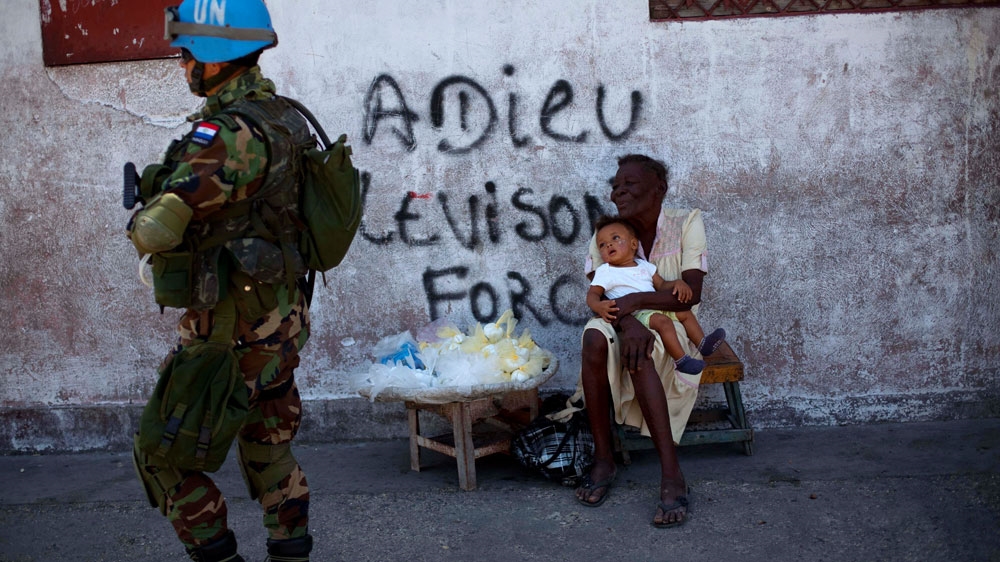
A UN peacekeeper from Paraguay patrols the streets of Port-au-Prince, 2011. [File: Ramon Espinosa/AP Photo]

Why are they leaving now?

The UN Security Council (UNSC) unanimously adopted a resolution in April of this year, ordering the removal of peacekeepers from Haiti by mid-October.The April 13 resolution sanctioned the gradual withdrawal of the 2,370 peacekeepers stationed in Haiti, according to The Los Angeles Times.The resolution was the result of a US-led review into the cost and effectiveness of the UN's current peacekeeping operations.Nikki Haley, the US representative to the UN, told the UNSC prior to the vote that the political context was right for the withdrawal of a military presence in Haiti.

The "peaceful transition of power" demonstrated by Haiti's November 2016 presidential election showed the country had made an "important step towards stability and democracy", she said.As such, developments warranted an amended approach focused on fostering "the independence and self-sufficiency of the Haitian people".The peacekeeping mission will officially end on October 15 when a new UN mission made up of nearly 1,300 international civilian police officers, and about 350 civilians will begin in an effort to help the country reform its political system.In a recent interview with Al Jazeera, Sandra Honore, head of MINUSTAH, said the UN is winding down the mission because it has achieved its aims."It is a vote of confidence in the Haitian people," she said."It is an indication of the recognition by the Security Council that the stabilisation work which was entrusted to the mission did in fact produce positive results."

What have Haitians said about the mission? 

Though February's presidential election seems to demonstrate Haiti is more politically stable now than when MINUSTAH began, a number of Haitians recently told Al Jazeera the mission has done little to improve their lives.Mothers who say they have had children, fathered by peacekeepers, also say they feel abandoned.

"After years of running around and false promises from the UN, nothing has happened,"  Saintil Benite, a mother, told Al Jazeera."They make us do a lot of stuff but there's no results," she said.Another mother, Roselaine Duperval, added that the mission has failed those people it sought to serve."I am very angry that the UN is leaving as it's left us with nothing," she said."They should take responsibility. They know about the kids. They did DNA tests and they told us they're positive but never give us the results."

Children play in the street while UN peacekeepers from Brazil patrol in Port-au-Prince [File: Dieu Nalio Chery/AP Photo]

As peacekeepers leave, Haiti continues to experience political turbulence.Protests last month over the government's new budget plans brought much of the country to a halt.The government has defended its plans, which include increased taxes on fuel and property, saying the money raised will be invested in improving public services and infrastructure.*Name changed to protect identity

By: Al Jazeera and news agencies | October 6,2017
Read More
News, Politics News, Politics

Bichotte Blasts Caribbean Activist For Disparaging Remarks Against Haitians

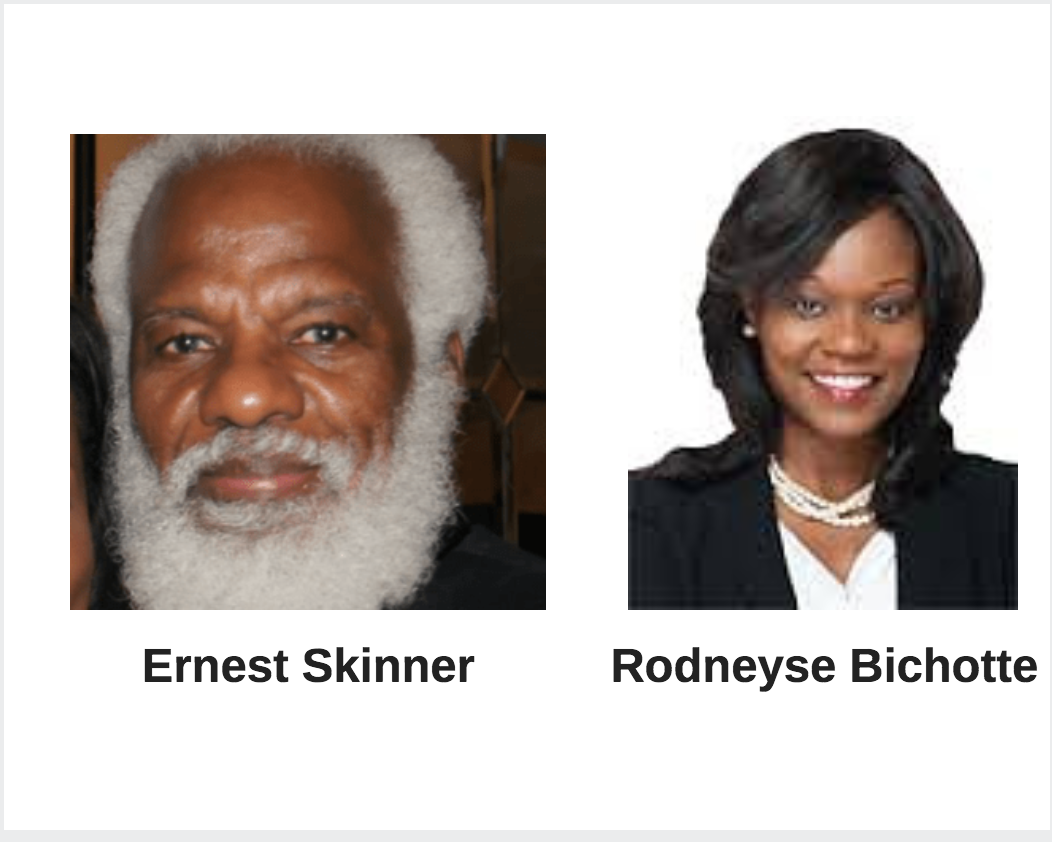
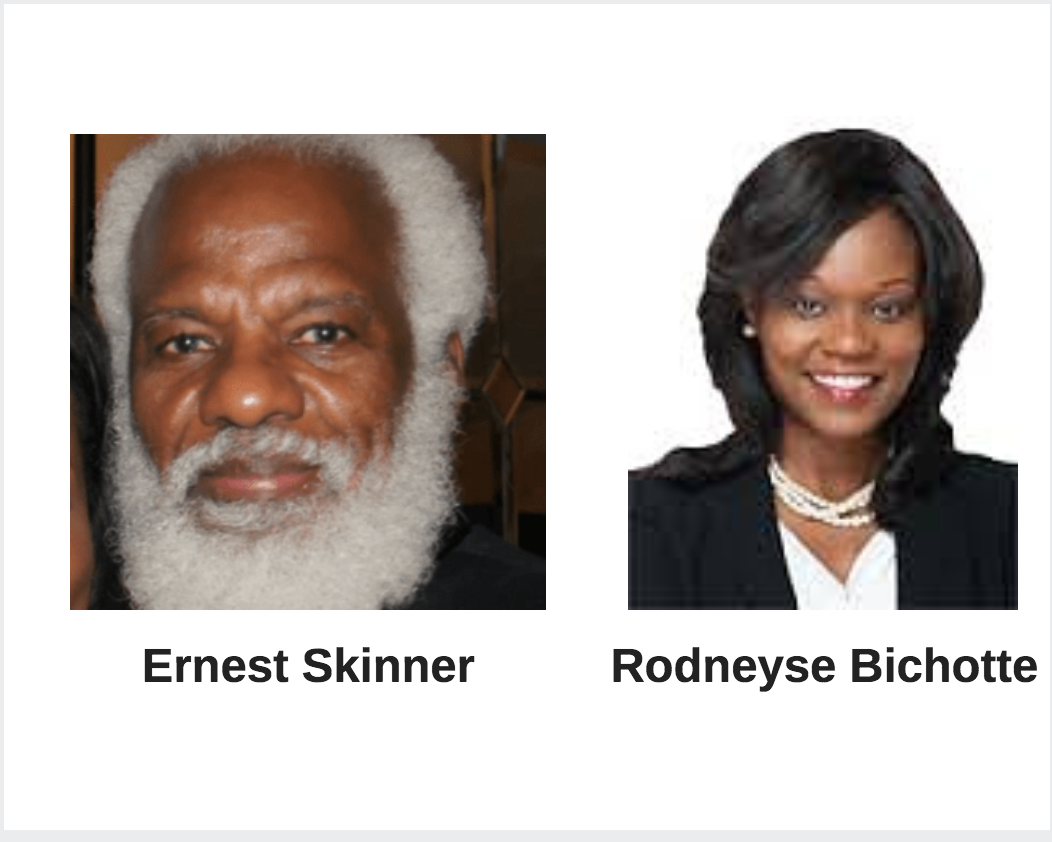
Assemblymember Rodneyse Bichotte (D-Flatbush, Ditmas Park) today demanded an apology from a noted Caribbean activist/political operative and close associate to City Councilmember Jumaane Williams for emailing her and her staff a note containing disparaging remarks against the Haitian community.

Assembly Member Rodneyse Bichotte

The brouhaha comes over the escalating controversy surrounding the recent designation of the Flatbush/Prospect Park-Lefferts Gardens/East Flatuch corridor as the “Little Caribbean.” Bichotte, who is Haitian-American and a number of other notable Haitian-Americans feel there should be a double designation and part of the corridor should be dubbed “Little Haiti.In a follow-up to the controversy, Ernest Skinner, who heads the Earnest Skinner Political Association Democratic Club, and is the staff photographer for Williams office and a longtime family friend, fired off an email to Bichotte asking when did Haiti stop being part of the Caribbean?

“This is the same insularity which sunk the fledgling Caribbean Federation. Sowing division may be why Haiti has never been able to reach its full potential and why it is considered a Fourth World country despite the noble start it gave to the Independence movement among people of color,” wrote Skinner.

Longtime Civic and Political Activist Ernest Skinner

“In Brooklyn, for many years now there has been TALK of a Little Haiti along lower Nostrand Avenue. What have you Haitians done to advance THAT?” he added.Bichotte replied in a letter back to Skinner yesterday saying she found Skinner’s comments not only highly disrespectful, but ill-informed and she demanded an apology.Bichotte penned back, “The fact of the matter is that there is a “Little Haiti” that has been in the making for decades that covers a wide geographical area including Nostrand Avenue. The Haitian community has accomplished a number of things leading up to the designation of “Little Haiti” such as the:

  • street naming of Toussaint L’Ouverture Boulevard on Nostrand Avenue
  • annual Toussaint L’Ouverture Symposium and Business Expo (2005)
  • Haitian parades down all of Nostrand Avenue (10 years)
  • Haitian Flag Day
  • Haitian Unity Day (Albany)
  • Haitian Selebrayson Week
  •                                                                     Haitian street fairs
  •                                                                   establishment of the Haitian Studies Institute (HSI) (Spring 2015)
  •                                                                       designation of Haitian Day (October 7, 2016)
  •                                                                passage of a civil rights resolution (New York State)
  • introduction of legislation for Haitian Creole-speaking poll workers and translators and for the translation of voting materials into Haitian-Creole
  • certification of a number of Haitian-owned businesses as Minority and Women-Owned Business Enterprises
Bichotte wrote that many in the area already refer to the neighborhood around Nostrand Avenue, Clarendon Road, Flatbush Avenue, Church Avenue, and Ocean Avenue in East Flatbush/Flatbush, as “Little Haiti.” East Flatbush/Flatbush has one of, if not the largest, Haitian populations in the country.

“As previously stated we acknowledge that Brooklyn is diverse and we do not advocate for “Little Haiti” in opposition to a Little Caribbean designation,” she wrote.

“We support the Caribbean community. We are part of the Caribbean community. In recognition and in support of our heritage we advocated for placing the Haitian Studies Institute at Brooklyn College; not instead of “Little Haiti,” but in continuance of cultivating “Little Haiti’s” foundation.”
Williams, who has Caribbean roots  – as does Skinner, clearly sided with Bichotte in the dispute.

“My office is looking forward on working to pursue both an official “Little Caribbean and a “Little Haiti. The words in the letter were hurtful; I understand the community’s concern and I certainly hope an apology is forthcoming, and deservedly so,” said Williams. 

Sources in the greater Flatbush community were split with one saying Bichotte often is unduly divisive, and it hurts her as an elected official and the community at large.

“Rodneyse has had a long history of being combative for no reason, beginning after she was first elected when went on Talkline Communications [a Jewish radio show] and said these Jews didn’t vote for me,” said a prominent Flatbush activist.

But another political source said is doesn’t make sense for Skinner insulting the Haitian community considering the viscous discrimination against Haitians in the area dating back to the 1980s and 1990s, when many alleged openly that it was Haitian-American spreading AIDS.

The source said there are much bigger issues to confront such as affordable housing and the increase of gentrification along the corridor.

“It doesn’t make sense for people to be insulting each other’s culture. Let’s just have both designations and move on,” said the source.

By: Stephen Witt | October 5, 2017

Read More
News, Politics News, Politics

UN Ending 13-year Military Peacekeeping Mission In Haiti

A U.N. peacekeeping mission in Haiti that has helped maintain order through 13 years of political turmoil and catastrophe is coming to an end as the last of the blue-helmeted soldiers from around the world leave despite concerns that the police and justice system are still not adequate to ensure security in the country.The U.N. lowered its flag at its headquarters in Port-au-Prince during a ceremony Thursday that was attended by President Jovenel Moise, who thanked the organization for helping to provide stability. After a gradual winding down, there are now about 100 international soldiers in the country and they will leave within days. The mission will officially end on Oct. 15.Immediately afterward, the U.N. will start a new mission made up of about 1,300 international civilian police officers, along with 350 civilians who will help the country reform a deeply troubled justice system. Various agencies and programs of the international body, such as the Food and Agricultural Organization, will also still be working in the country."It will be a much smaller peacekeeping mission," said Sandra Honore, a diplomat from Trinidad and Tobago who has served since July 2013 as the head of the U.N. mission in Haiti known as MINUSTAH, its French acronym. "The United Nations is not leaving."MINUSTAH began operations in Haiti in 2004, when a violent rebellion swept the country and forced then-President Jean-Bertrand Aristide out of power and into exile. Its goals included restoring security and rebuilding the shattered political institutions. In April, the Security Council deemed the country sufficiently stable and voted to wind down the international military presence, which then consisted of about 4,700 troops.Many Haitians have viewed the multinational peacekeepers as an affront to national sovereignty. U.N. troops are believed to have inadvertently introduced the deadly cholera bacteria to the country and have also been accused of causing civilian casualties in fierce battles with gangs in Port-au-Prince and of sexually abusing minors.But the mission, with additional help from the U.S. and other nations, is also credited with stabilizing the country, particularly after the January 2010 earthquake, and building up the national police force."The job may not be complete but they have essentially done much of what they were originally designed to do in terms of preventing any kind of armed takeover of the state, in terms of increasing the safety of civilians," said Mark Schneider, a senior adviser with the Center for Strategic and International Studies in Washington. "It takes work to maintain that and Haiti needs to maintain that."MINUSTAH, Schneider said, has been key in helping Haiti develop a credible civilian national police from "almost zero" to its current level of about 15,000 officers, which most experts believe is still too small for a country of nearly 11 million. The police force was intended to replace the army, which was disbanded by Aristide in 1995 because of its repeated role in a series of coups and that the Haitian government is now seeking to reconstitute over international objections."Haiti needs an atmosphere of peace so we can take responsibility for ourselves," said Haitian Sen. Jacques Suaveur Jean. "We don't need foreign soldiers."The new U.N. mission will consist of seven police units that can respond to major incidents, in addition to officers deployed throughout the country to advise and assist their Haitian counterparts. Civilians will also be working with the government to improve the country's justice system, which the State Department said in this year's annual human rights report has serious flaws, including severe prison overcrowding, prolonged pretrial detention and an inefficient judiciary.Honore, in an interview ahead of Thursday's ceremony, cited the training and hiring of police officers as one of the U.N. successes.MINUSTAH had already been scaling back before the Security Council voted to end the mission. In the aftermath of the earthquake, which killed 96 U.N. personnel, including former head of mission Hedi Annabi, the number of troops reached more than 10,000. But when Honore arrived there were about 6,200 soldiers from around 20 countries, a figure that dropped again by nearly a third within two years.The cholera outbreak, which started in October 2010 after peacekeepers from Nepal contaminated the country's largest river with waste from their base, killed an estimated 9,500 people and irrevocably damaged the reputation of the organization in Haiti. Many critics felt the U.N. did not adequately respond to the outbreak, something the organization sought to later remedy."It was a fundamental error because it undermined the image not just of MINUSTAH, but of the international community," Schneider said.By: Evens Sanon, Associated Press | October 5, 2017

Read More
News, People News, People

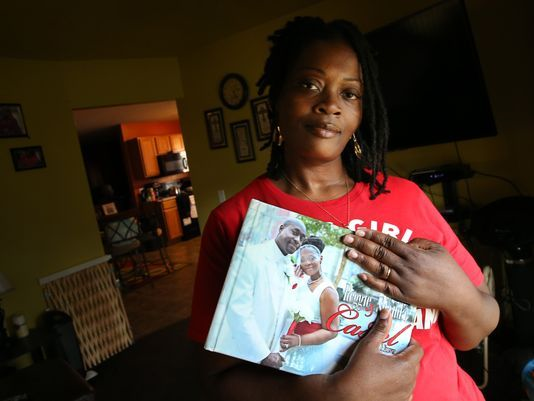
Rochester Family Torn Apart After Dad Deported


Reginald Castel was deported last Tuesday. The United States government flew him to Haiti in shackles, leaving him on an island he had not seen since he was 8 years old. He does not speak the language of his native country. When the plane landed, he knew no one there.

Castel, 44, went to Gates-Chili High School, sold cars for Vision Hyundai and lived with his family on Bay Street. His sole memory of Haiti was of the house with a metal roof where he lived as a boy. He was in despair as he flew to the island, handcuffed with 12 other Haitians and 49 men from the Dominican Republic.

“I was scared to death,” he said. “I am on the plane just praying to God.”

The plane landed in Haiti’s capital, Port au Prince. The deportees were handed over to Haitian officials who were friendly, at first. When the American officials left, deportees were told to hand over any money in their pockets if they wanted to call someone to pick them up. If no one came, they would be taken to prison.

Castel only had 8 cents, but he was allowed to call his mother in Greece. She had been frantically trying to find a relative or friend to go and get him. She told him that someone had managed to track down his estranged father, whom he had not seen or spoken to since he left Haiti at age 8.

It was his father who arrived to pick him up.  “I did not even recognize the man,” Castel said.  “One of the officials told me it was my father.”

They hugged each other. His father doesn’t speak English so they were unable to communicate much. Castel said his father pointed to his heart to express love. He pointed to his head to say don’t stress and don’t worry.  “He said ‘it has been a long time,’” said Castel. “I understood that.”

They left the facility with Castel’s one bag. It contained the clothes he was wearing  when immigration officials took him into custody on Aug. 10, a pack of oatmeal, some legal papers and a 30-day supply of insulin to treat his severe diabetes.

Until Aug. 10, Castel was among more than 900,000 immigrants in the United States living under final orders of removal, or deportation, that had not been enforced. Deportation officials generally focused on people considered to be a threat to national security.

 “They didn’t make me a priority under George Bush or Obama,” Castel said, by phone, from a home of his father’s friend in Port au Prince. Under the Trump administration, things have changed.

“With the executive order from President Trump, everybody with a removal order is at risk,” said Wedade Abdallah, program director for immigration for Legal Aid Society of Rochester.

Castel was subject to deportation because he pled guilty to a felony in 1999, after a dispute with his friend Reginald McQueen turned violent. Castel said that McQueen started chasing him with a knife and he ran to his truck to get a gun. “I defended myself,” he said. “I shot Reginald.”

At the time, Castel was a permanent resident with a green card, having come to the United States with his mother at age 8. He was eligible for citizenship, but hadn’t filled out the paperwork. His public defender advised him to plead guilty to assault to avoid risking the lengthy prison sentence that could result from being found guilty in a trial.

The lawyer did not tell him that a guilty plea, and his lack of citizenship, would make him eligible for deportation. Castel served six years in jail. When he was released, the U.S. Department of Homeland Security picked him up and held him in a detention center for 18 months as he appealed his deportation order.He was granted deferral of removal under the Convention Against Torture act because a judge ruled that his lack of ties in Haiti, combined with his need for daily insulin would likely cause him to die in the impoverished country. He was released in 2007 under an order of supervision.The federal government appealed this deferral and won, reinstating the deportation order against him. In 2011, Castel lost his final appeal. But he was not deported.

U.S. Immigration and Customs Enforcement gave him permission to work legally and required him to check in periodically. Castel built a career, got married, stayed out of legal trouble and never missed a check-in appointment, including one in Batavia on Aug. 10. His wife Lashanda waited for him outside as he went into the meeting. When she saw him next, he was handcuffed in the back of a patrol car. He was not allowed to get out of the car to give her a hug goodbye.

Every time she saw him after that was through glass at immigration detention centers.

“How do they tear a family apart and think nothing of it?” Lashanda Castel asked. “Where is the humanity in this?”

The laws that led to Castel’s deportation have long been on the books. President Donald Trump is just enforcing them, as promised in his campaign. Five days after his inauguration, Trump issued executive orders directing executive departments and agencies  "to employ all lawful means to enforce the immigration laws of the United States.”

He criticized previous administrations for failing to remove people with deportation orders. “We cannot faithfully execute the immigration laws of the United States if we exempt classes or categories of removable aliens from potential enforcement,” the president wrote.

In the past undocumented immigrants who had long histories of obeying the law and living quiet lives were not deportation priorities.  Trump's executive orders have changed things, said Wedade Abdallah, program director for immigration for the Legal Aid Society of Rochester. “We are seeing a more unpredictable type of enforcement,” she said. "It could be anybody (with a final removal order) at this point." She said she would encourage any immigrant who has a final order of removal to speak to an immigration attorney.

“Make America great,” Lashanda Castel said, with bitterness. “Let’s get the immigrants out of here.” She believes the government ought to make allowances for people like her husband, who has turned his life around and stayed out of trouble for more than a decade.

Reginald McQueen, the man shot by Castel in 1999, agrees. He made a statement in support of Castel that appears in a petition asking Gov. Andrew Cuomo to pardon Castel for his crime. Such a pardon would make it possible to reinstate his green card. “An unfortunate incident occurred that caused me harm and got Reggie arrested. However, it was the result of a personal problem between us and we have become friends again,” McQueen wrote, adding that he does not want to see Castel deported. ”I am satisfied that he has paid his debt to society and to me and I don’t think he should be punished any more for what he did. I have my health back and my life back and I would like Reggie to have his life back, too.”

Castel’s life is now spent in a spare room in the home of his father’s friend, a man who speaks a bit of English. Electricity comes and goes, sometimes for days. Clean drinking water is hard to come by. It is hot. Castel has been warned not to go out alone. His lack of language skills makes him an obvious outsider and easy target for desperate criminals found in a country where people must survive on an average of $2.25 a day.

So he sits in the house, waiting for his father to get out of work. He has time to wonder about another deportee he met on the plane who also had no connections in Haiti because he had grown up in Bermuda. “I am pretty sure he ended up in prison,” he said. He wonders what would have become of him if his father hadn’t been found. And, most painfully, he misses his family. He and his wife have a blended family of seven children. His youngest child, a daughter, has taken the situation very hard. There has not been a time they’ve spoken on the phone that she was not in tears. “They took someone who is loved,” said his wife.

She also cries. But she knows that tears won't help her husband return to the United States. If getting him home proves impossible in the short term, she must find a way to get him a stable supply of insulin. Castel suffers with Type 1 diabetes that his physician assistant at Anthony Jordan Health Center called “severe, chronic and incurable.”  It requires daily insulin shots, which are extremely difficult to get in Haiti. Castel's plans to visit the Diabetes Association in Port au Prince have been disrupted by unrest and violence on the streets.

Lashanda Castel is trying to navigate the permits, licenses and fees that would allow her to ship insulin to Haiti. She has applied for her passport so she can visit her husband, though she is concerned about U.S. State Department warnings about the risks of traveling to Haiti, including violent crime, instability and lack of adequate medical facilities.

She is buoyed by a group of local supporters including Rochester City School Board President Van White, who is also an attorney and volunteered to submit Castel's petition for the governor’s pardon. The petition includes statements of support from his boss at Vision Hyundai, the bishop of his church and many friends and family members. Rochester City School Board member Mary Adams continues to rally community activists to fight for his cause and to lobby Gov. Cuomo to pardon him quickly.

Adams was among the people who went to the Buffalo Federal Detention Facility to try to block the bus when Castel was being taken away for deportation. They could not see him through the tinted windows of the bus, but he saw them standing, praying and protesting his deportation. “I felt hopeful,” he said. “I had people in my corner.”

Those people will host an “Updates and Organizing to Support Reggie Castel and Family” meeting at 6 p.m. Sunday at the Freedom School, 630 N. Goodman Street. All are welcome, said Adams, to join the effort to bring Castel home.

For now, he remains in Port au Prince. He has learned how to say “please,” “thank you,” “I’m hungry,” and “water” in Kreyol.  His hope for a return to Bay Street remains. His insulin is running out.

By: Erica Bryant | September 29, 2017

Read More
News, Politics News, Politics

Uncertain Future For Haitian Immigrants

Demonstrators demand continued protection for Haitians who fled crises that still afflict the nationHolden Pierre, a 17-year-old Haitian immigrant, has spent the last ten years of his life growing up America. This January, he may be required to return to a country he has not lived in since he was 7—a country that is still struggling to recover from severe environmental and health crises.Over the course of his decade in the U.S.—more than half his life—Pierre has worked in community organizations such as the Mattapan Food and Fitness Coalition, earned a bachelor’s degree in business management from UMass-Boston, and now is employed at an organization focused on growing small businesses in low- and moderate-income communities.Pierre is one of about 58,000 Haitians who are living, working and studying in the U.S. under a program called Temporary Protected Status. Haitians beneficiaries of that protected status will see it expire on Jan. 22, 2018, unless the Trump administration moves to extend the program, something John Kelly, then-Secretary of Homeland Security, said in May is not guaranteed.Temporary Protected Status Temporary Protected Status allows immigrants meeting certain requirements to live and work in the U.S. if they cannot do so safely in their originating country due to conditions such as a civil war, epidemic or environmental disaster. While TPS is not a path to permanent residency, recipients may apply for such status while they hold this protection. In 2010, TPS was extended to Haitians following a devastating earthquake. To qualify, recipients had to demonstrate they had continually lived in the U.S. since January 2011 and continually been physically present since July 2011. The temporary status was extended since as further disasters hit the country. U.N. troops sparked a cholera outbreak that continues to cause fatalities today, and several hurricanes have taken a toll.State House rally On Wednesday last week, Haitian-Americans United, Inc. and the Institute of Justice & Democracy in Haiti held a rally on the State House steps, with a speaker list that included Pierre. Many speakers called for a deeper reworking of the immigration system to extend permanent residency to Haitians protect by TPS, noting that seven years is long enough that many have families and businesses here and are entrenched in their communities.“They are part of our society,” Congresswoman Katherine Clark said at the rally. “Now is not the time to uproot families, business owners and people who contribute to our economy.”Deportation would mean economic damage as well as the splintering of families, many said.“[TPS means we can] serve the communities we now call home,” Pierre said. “[Without it we] leave behind younger siblings who then are forced to make tough decisions like dropping out of school to support their families.”Roxana Rivera, vice president of SEIU 32BJ, said TPS recipients liable to be deported in January are good actors, who have followed the rules, including paying taxes and any fees asked of them and submitting to any requested background checks.A number of local elected officials support prolonging TPS, including Rep. Russell Holmes and City Councilor and mayoral contender Tito Jackson, who both spoke at the rally. In May, Mayor Martin Walsh urged federal officials to extend protected status for Haitians. In his letter, he noted that families would be split as deported parents are likely to leave behind U.S.-born children rather than bring them to nation already struggling to meet its residents’ basic needs.Following the rally, many attendees turned out to Gov. Charlie Baker’s office to deliver a message urging him to advocate for renewal of TPS for Haiti.Renewal? Several speakers also said that Haiti is still plagued by the kinds of issues that had led to the granting and repeated extensions of TPS. Brian Concannon Jr., executive director of the Institute for Justice & Democracy in Haiti, said Haiti’s cholera epidemic continues to be among the worst in modern times, killing about 1,000 people per month, and that hurricane-related rains are expected to exacerbate the disease’s spread.Rally organizers stated on their Facebook event page that Haiti has yet to fully recover from the 2010 earthquake, cholera epidemic or effects of last year’s Hurricane Matthew or this month’s Hurricane Irma, and cannot safely incorporate 50,000 more residents.In May 2017, Kelly extended Haitian TPS for six months, advising recipients to be prepared to return. He said Haiti demonstrated improved conditions, citing that many of the camps serving those displaced by the earthquake had closed, the Haitian government had declared plans to rebuild the president’s residence and the U.N. had withdrawn its stabilization mission. He said at the time that he expected the six months would allow TPS recipients and the Haitian government to prepare for repatriation.According to Haitian-Americans United, Inc., the Trump administration is expected to decide by Oct. 23 whether to extend TPS for Haitians past the Jan. 22, 2018 expiration date. TPS recipients from other countries such as El Salvador and Honduras also faced deadlines on their status.

By: Jule Pattison-Gordon | September 28, 2017

Read More
News News

Haiti-Based Sunrise Airways Expands Fleet

Fast-growing Haiti-based airline Sunrise Airways has continued its fleet expansion with a new Boeing 737.The 168-seat aircraft is being acquired through a wet lease agreement with Czech Republic-based Travel Service.Sunrise will deploy the new aircraft on its routes from Orlando and Miami to Port-au-Prince, Haiti.Sunrise is launching its new Orlando service Oct. 18, with Miami flights set to launch Nov. 14.

Sunrise will be flying the Boeing on its new Haiti flights from Orlando and Miami.

“Our continued fleet expansion speaks to the tremendous potential we see in growing our route network within and beyond the Caribbean region, while also providing our customers with the very best inflight services and amenities in the skies,” said Philippe Bayard, President of Sunrise Airways.”The Boeing 737 will features business and economy service, with 18 seats in Business.By: the Caribbean Journal staff

Read More
News, Politics News, Politics

Marchers Demand Haiti's President Step Down

PORT-AU-PRINCE, Haiti (AFP) — Thousands took to the streets of Haiti's capital Wednesday to demand President Jovenel Moise step down following the publication of a national budget viewed as unfavorable to the country's poor."We do not agree with what Jovenel does: he is crushing the country," said Jean-David Senat, among a throng of demonstrators stretching down a main avenue."He said he would put money in our pockets, he did not. He said he would put food on our plates; we do not even have dirt to eat. So he and this team of thieves must leave," the protester said, referring to the president's campaign slogans.Since it was released in July, opposition lawmakers have decried the budget for fiscal year 2017-2018, saying it would balloon the debt of the poorest country in the western hemisphere.On Tuesday, protesters brought parts of Port-au-Prince to a standstill, setting vehicles alight and damaging local businesses.Protesters directed their anger toward senators who voted for the 2017-2018 budget last week and the deputies who approved it Saturday.Despite popular opposition, the government published the document in the official gazette late Tuesday.The lack of dialog has infuriated demonstrators.That the president "published the budget is a provocation to the Haitian people and to us the political leaders," said Moise Jean-Charles, an opposition leader who spearheaded the demonstration."The people will decide his fate," he said."An alternative is being prepared," Jean-Charles said. "This time we take our fate in our hands.""No one will be able to divert our movement to satisfy the bourgeoisie."The Haitian leader left the country Sunday to attend the UN General Assembly in New York and was due to deliver his speech Thursday and return to Haiti the following day.New anti-government demonstrations are already planned for Thursday and Friday in the capital.By: Jamaica Observer | September 20, 2017
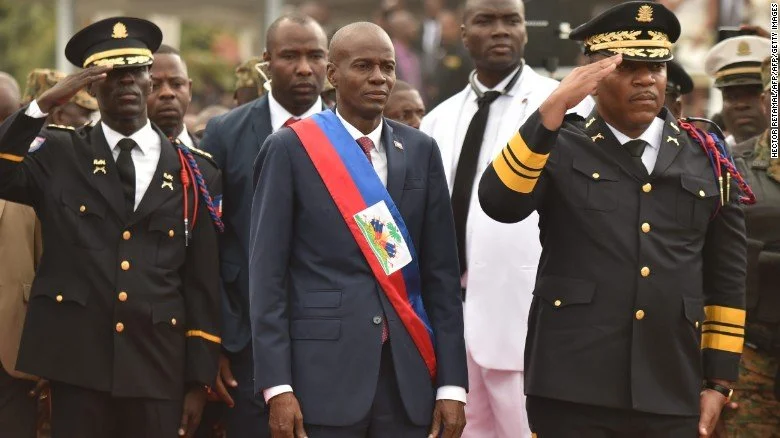
Read More
Featured, News, Politics Featured, News, Politics

The Financing of the new Haitian Parliament

Youri Latortue Senate President announced the reconstruction of the Parliament at the cost of about 3 billion Gourdes ($48 million). The new parliamentary complex will consist of 3 buildings, a 10-story building for the offices of parliamentarians including the working and meeting rooms of the Standing Commissions and the offices of the administration. The second one will comprise of three large hemicycles (Chamber of Deputies, Senate, and National Assembly), and finally the 3rd will include a four-story closed parking lot for parliamentarians and visitors...On Friday Sep. 15th, 2017, President Moïse wished to silence criticisms relating to the high budget of Parliament by stating that 50% of the 7.2 billion gourdes allocated to senators and deputies in the budget would be used for the reconstruction of Parliament in his message to the Nation regarding the publication of the budget.However, in reality, it is stated in the budget that the 7.2 billion Gourdes of the Parliament are divided 50/50 between the Senate and the Lower House, ie 3.6 billion for each Chamber. For the Senate 2 billion are devoted to the functioning and an "investments" heading has an envelope of 1.5 billion which will be allocated to the reconstruction of the Parliament. As for the budget of the lower chamber, it is essentially devoted to functioning and does not include any heading "investments". This means that only 50% of the estimated costs of reconstruction of Parliament will come from Parliament's budget and not all as Moïse said and the other 1.5 billion gourdes to complete the cost of the work, will have to come from other items in the State budget...If Senator Latortue evokes an amount of about 3 billion Gourdes for the new parliamentary complex, Clément Bélizaire, the Director of the Unit of Construction of Housing and Public Buildings (UCLBP) shows more reserved "We do not know yet how much will cost Parliament nor the firm that will carry out the work because adjustments have been requested," specifying that there will be no traditional call for tenders for the construction of the Haitian Parliament.SL/ HaitiLibre

Read More
Featured, News Featured, News

U.S. Department of State - Haiti Travel Warning

 The Department of State warns U.S. citizens to carefully consider the risks of traveling to Haiti due to its current security environment and lack of adequate medical facilities and response.  The Department of State also warns U.S. citizens to carefully reconsider travel to Haiti due to Hurricane Irma, a category 5 storm projected to impact Haiti.  This storm may bring significant rainfall and wind that may result in life-threatening flooding, flash flooding, mudslides, and storm surge.  Disruptions to travel and services are likely throughout the country.  On September 5, the Department authorized the voluntary departure of U.S. government employees and their family members due to Hurricane Irma. This replaces the Travel Warning dated May 22, 2017.

Rates of kidnapping, murder, and rape rose in 2016. While there is no indication that U. S. citizens are specifically targeted, kidnapping for ransom can affect anyone in Haiti, particularly long-term residents. Armed robberies and violent assaults reported by U.S. citizens have risen in recent years. Do not share specific travel plans with strangers. Be aware that newly arrived travelers are targeted. Arrange to have your host or organization meet you at the airport upon arrival or pre-arranged airport to hotel transfers. Be cautious when visiting banks and ATMs, which are often targeted by criminals. Fewer incidents of crime are reported outside of Port-au-Prince, but Haitian authorities' ability to respond to emergencies is limited and in some areas nonexistent. U.S. Embassy employees are discouraged from walking in city neighborhoods, including in Petionville. Visit only establishments with secured parking lots. U.S. Embassy personnel are under a curfew from 1:00 a.m. to 5:00 a.m. Embassy personnel must receive permission from the Embassy security officer to travel to some areas of Port-au-Prince and some regions of the country, thus limiting the Embassy’s ability to provide emergency services to U.S. citizens.Protests, including tire burning and road blockages, are frequent and often spontaneous. Avoid all demonstrations. The Haitian National Police’s ability to assist U.S. citizens during disturbances is limited. Have your own plans for quickly exiting the country if necessary.The U.S. Embassy remains concerned about the security situation in the southern peninsula departments of Grand Anse and Sud following the devastation of Hurricane Matthew. Embassy employees are not permitted to travel to those departments without special approval for and official trips only.Medical care infrastructure, ambulances, and other emergency services are limited throughout Haiti. Check that your organization has reliable infrastructure, evacuation, and medical support in place. Comprehensive medical evacuation insurance is strongly advised for all travelers.This travel warning informs U.S. citizens that on September 5, the Department authorized the voluntary departure of U.S. government employees and their family members due to Hurricane Irma. This replaces the Travel Warning dated May 22, 2017.For further information:
  • See the State Department's travel website for the Worldwide Caution, Travel Warnings, Travel Alerts, and Haiti’s  Country Specific Information.
  • Enroll in the Smart Traveler Enrollment Program (STEP) to receive security messages and make it easier to locate you in an emergency.
  • Contact the U.S. Embassy in Port-au-Prince, located at Boulevard du October, Route de Tabarre telephone: 509-2229-8000; after hours emergency telephone: 509-2229-8000; fax: 509-2229-8027; e-mail: acspap@state.gov; web page: http://haiti.usembassy.gov.
  • Anyone who missed a scheduled American Citizen Services appointment at the U.S. Embassy due to Hurricane Matthew is welcome to call 509-2229-8000, 509-2229-8900 or send us an email at the acspap@state.gov to reschedule your appointment. For Immigrant or nonimmigrant visa cases, please contact the call center at 509-2819-2929 or by email at support-Haiti@ustraveldocs.com.
  • Call 1-888-407-4747 toll-free in the United States and Canada or 1-202-501-4444 from other countries from 8:00 a.m. to 8:00 p.m. Eastern Standard Time, Monday through Friday (except U.S. federal holidays).

By: US Department of State. | September 11, 2017

Read More