
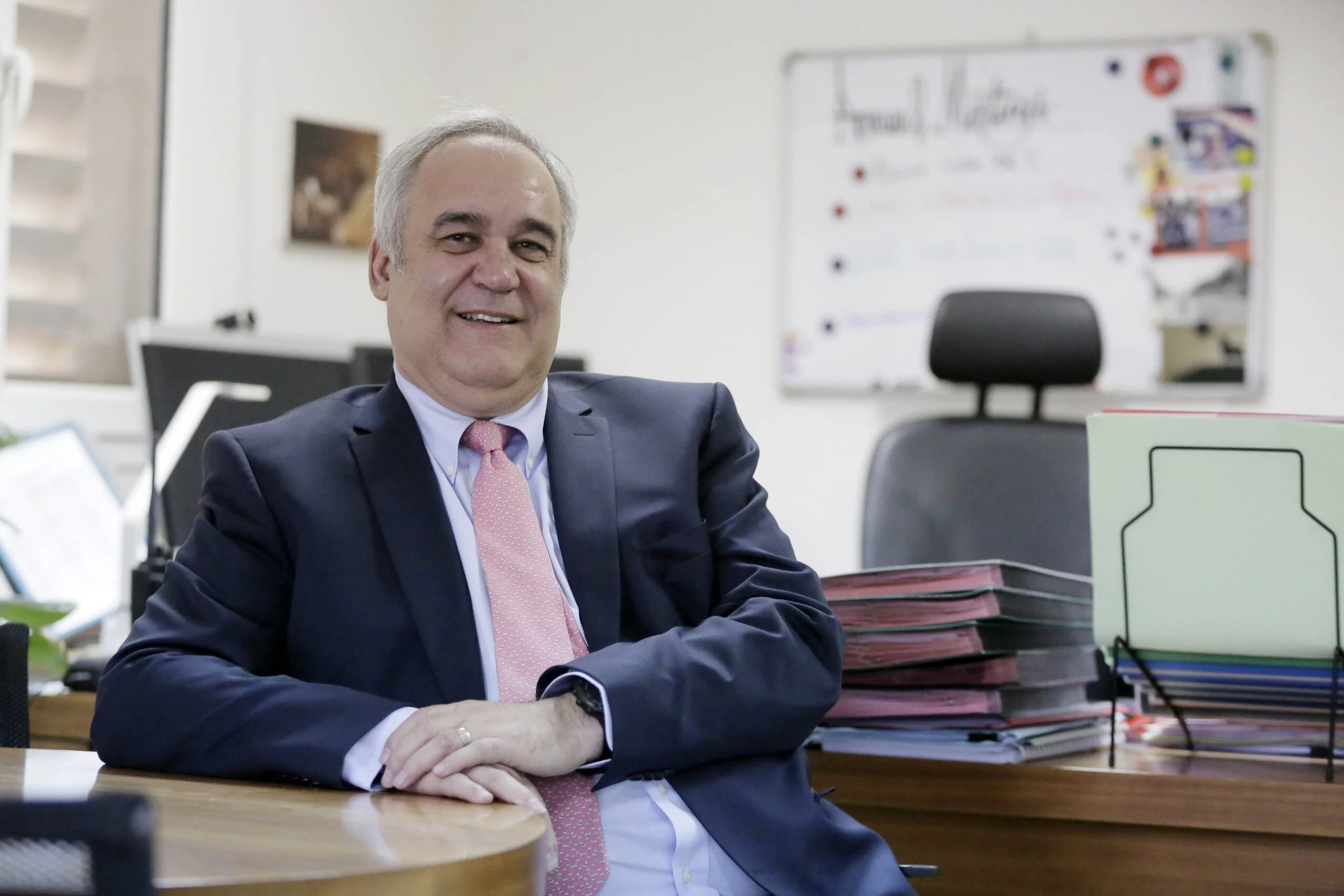
Laurent Msellati Appointed Country Manager for Haiti
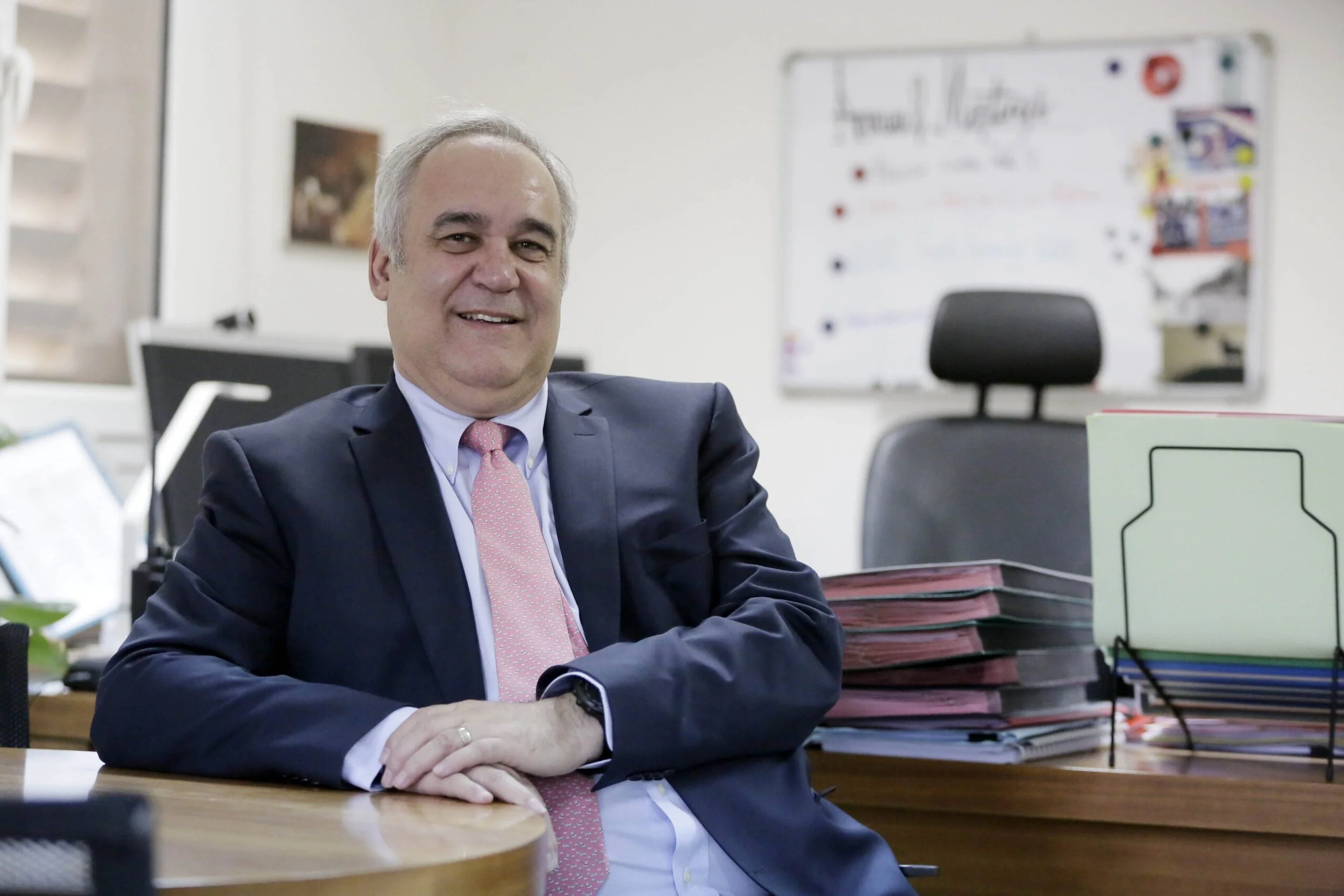
PORT AU PRINCE, April 1, 2021 – Laurent Msellati, a French national, has been appointed as the World Bank’s new Country Manager for Haiti, effective April 1, 2021. He will be based in Port au Prince.
In this new role, Mr. Msellati’s top priorities will be to lead the World Bank’s engagement with the Government of Haiti, work closely with key development partners and stakeholders, manage the country program and team, and support staff in the Haiti Country Office.
“Haiti has experienced several challenging years, and the social and economic impacts of the COVID-19 pandemic have been severe. I look forward to continuing our work to support the Haitian people, focused on inclusive growth, and building resilience. I will work closely with stakeholders across Haitian society to support the country’s development priorities, and provide support for the most vulnerable,” said Laurent Msellati.
Since joining the World Bank in 1991, Mr. Msellati has held several positions in the Africa, Middle East and North Africa, East Asia and Pacific, and Latin America and the Caribbean regions. He recently served as World Bank Country Manager for Mauritania and has also been Practice Manager of the Agriculture Global Practice in Latin America and the Caribbean region. Mr. Msellati holds a Master’s in Business Administration in Finance and Economics from the Università Commerciale Luigi Bocconi (Italy), and a Doctorate Degree in Veterinary Medicine from the Ecole Nationale Vétérinaire de Nantes (France).
Mr. Msellati will lead the implementation of the World Bank’s program in Haiti, which includes an active portfolio of 20 projects worth about US$915 million, financed by the International Development Association and trust funds. Project areas include transport, energy, agriculture and food security, health, education, water supply and sanitation, finance, governance, macroeconomics, social protection and jobs, and digital development.
Fritz Daguillard, immunologist who studied art and Haitian history, dies of covid-19
To those who knew him, Fritz Daguillard was a man driven by curiosity. He reveled in the culture of his native Haiti, loved studying its history and also collected artwork that viewed the accomplishments of Black people through the eyes of European artists.
But the doctor, who died of covid-19 at Suburban Hospital on Nov. 30, 2020, could point with equal pride to a remarkable career in medical research. He was 85.
In the 1970s, Daguillard founded one of the first schools in the field of immunology at Laval University in Quebec and served on the Canadian Medical Research Council.
Later, at the Hôpital des Enfants-Malades in Paris, the world’s oldest pediatric hospital, he studied severe combined immunodeficiency (SCID), the genetic condition that causes children to live as “bubble babies” in a plastic-cocooned, germ-free environment.
“He was proudest of his work on the T cell; he was one of the first researchers to identify its involvement in immune response,” said his wife, Rita. “He also organized one of the earliest leukocyte conferences in 1972 at La Malbaie in Quebec.”
His work with UNESCO and the World Health Organization in the 1980s took Daguillard to sub-Saharan Africa at the height of the AIDS epidemic. He continued his study of HIV, the virus that causes AIDS, when he came to the District in 1985 to lead the AIDS evaluation clinic for the D.C. Department of Health.
In the last two decades, after his retirement from medicine, Daguillard zealously focused on historical research and art collecting, teaching a course on the Haitian Revolution at Benedict College in Columbia, S.C., and serving on the Committee for the Celebration of the Haitian Revolution.
His collections formed the basis of three art exhibits sponsored by the Haitian Embassy, one on the abolitionist Sen. Charles Sumner of Massachusetts and his efforts to gain U.S. diplomatic recognition for Haiti; a bicentennial celebration of the Haitian Revolution; and “Enigmatic in his Glory,” an exploration of the frequently contradictory likenesses of revolution leader Toussaint L’Ouverture in artwork. Daguillard returned several times to his native land to lecture on L’Ouverture and the Haitian revolution and even used his medical background to explore the controversies surrounding the Haitian liberator’s death and autopsy.
“He expressed pride that he was a medical professional who had interests outside his work,” his son Robert said.
Daguillard began acquiring sketches, prints and paintings in the 1960s, but the avocation really took hold during a Paris sabbatical. By the 1980s he had cultivated innumerable relationships in the Parisian art world, not only with galleries and dealers but often with the artists themselves.
French informalist painter and sculptor Jean Messagier gifted him a sketch of civil rights icon Angela Davis. He purchased several portraits of renowned American jazz musicians by Polish painter and poster artist Waldemar Swierzy and later commissioned a portrait of the Rev. Martin Luther King Jr. from Swierzy.
Fritz Daguillard was born June 1, 1935, in Les Cayes, Haiti. His father owned an import-export business. He received a medical degree from the University of Haiti in Port-au-Prince and came to the United States in 1963 for a residency at Albert Einstein Hospital in Philadelphia. He received a master’s from Harvard Medical School and, after moving to Canada, a PhD from McGill University in Montreal.
Daguillard and wife Rita, an attorney who has retired from the U.S. Transportation Department, were married for 53 years and lived in Bethesda.
John Lawrence, a retired curator with the Historic New Orleans Collection, worked with Daguillard on an exhibit about the Haitian migration to Louisiana before the Louisiana Purchase. He recalled how devoted the doctor was to chronicling the story of his people.
“He was always a student,” Lawrence said. “He never stopped learning.”
“That’s what makes a good collector,” he added. “You’re never at the point where you know it all. It’s having a great eye and a sharp mind and passionate pursuit for the material coupled with a willingness to share it — the ability not only to present these things but to tell the story and also state where the objects drive the narrative.”

Haitian Roots Osaka Is New Queen Of Women’s Tennis

MELBOURNE, Australia, Mon. Feb 22, 2021 (Reuters) – Haitian Roots tennis star Naomi Osaka has cemented her standing as the new queen of the women’s game of tennis.
Osaka crushed Jennifer Brady 6-4 6-3 to secure her second Australian Open title on Saturday. The one-sided win over the 22nd-seeded American in the final at Rod Laver Arena gave the Japanese Haitian juggernaut her fourth major crown, with her career still budding at the age of 23.
She joined Monica Seles and Roger Federer as winners in their first four Grand Slam finals, marking her out as the ultimate big match performer.
“My reaction is that that’s very amazing company,” Osaka told reporters, sitting next to the winner’s Daphne Akhurst Memorial Cup.
“I hope that I can have one grain of how their career has unfolded. But you can only wish and you can only just keep going down your own path.
“But it’s definitely something crazy to hear.”
More major trophies surely await if she can convert her irresistible hardcourt form to French Open clay and grass at Wimbledon.
Having humbled Serena Williams in the semi-finals, a victory that reinforced a changing of the guard, Osaka was untroubled by Brady in the clash of power hitters.
She romped to a 21st straight win in completed matches, a streak dating back more than a year.
Fans hoping for a repeat of the pair’s engrossing U.S. Open semi-final last year were left disappointed as Brady froze in the spotlight of her first Slam final.
U.S. Open champion Osaka was also short of her best tennis, joining Brady in producing a dour, error-strewn first set.
But she settled to clinch six straight games, roaring to a 4-0 lead in the second before serving out the match to love.
A big serve sealed it, causing Brady to fire a forehand return long, and Osaka held her racket over her head, beamed and gave a little leap in an understated celebration.
“Tonight I felt like was (it) more of a mental battle,” said Osaka who also won the 2019 title.
“Of course, I can’t speak for her, but I was extremely nervous. I honestly just told myself before the match, I’m probably not going to play well.
“I shouldn’t put that pressure on myself to play perfectly but just go out there and fight for every point.”
EARLY NERVES
On a cool and breezy night at Rod Laver Arena, Osaka warmed up with two aces but the fast start fizzled out in a stream of errors from both players.
A nervous Brady was especially culpable, spraying 18 unforced errors in the opening set.
Both players dropped their serve before Brady breathed some life into the contest at 4-4, luring Osaka in with a drop-shot, then scrambling forward to retrieve and lob her for break point.
Osaka cancelled it nervelessly with an imperious forehand winner fired from the baseline and hung tight until Brady gifted her the lead.
Serving to stay in the set at 5-4, Brady slapped a wild forehand over the baseline to cough up set point then stepped in to pound a would-be forehand winner straight into the net.
The crowd groaned and Brady went to her chair ashen-faced.
Osaka seized the momentum, breaking Brady again in the second game of the second set with a sumptuous crosscourt backhand winner.
She rolled on to a 4-0 lead before Brady belatedly conjured some resistance to break Osaka.
The American clawed back to 5-3 but bowed out as she started, smashing wild returns to allow Osaka to serve out the match without trouble.
It was a forgettable display from Brady’s racket but she had a remarkable run in Melbourne, after being one of the 72 players unable to train during their two-week hard quarantine in the lead-up.
“I think she’s human like the rest of us in this room,” Brady told reporters of Osaka. “She just brings out her best in the big moments.
“But I don’t think, you know, she’s God,” she added with a smile. “I think maybe Serena is. Maybe she’ll get there, I don’t know.”
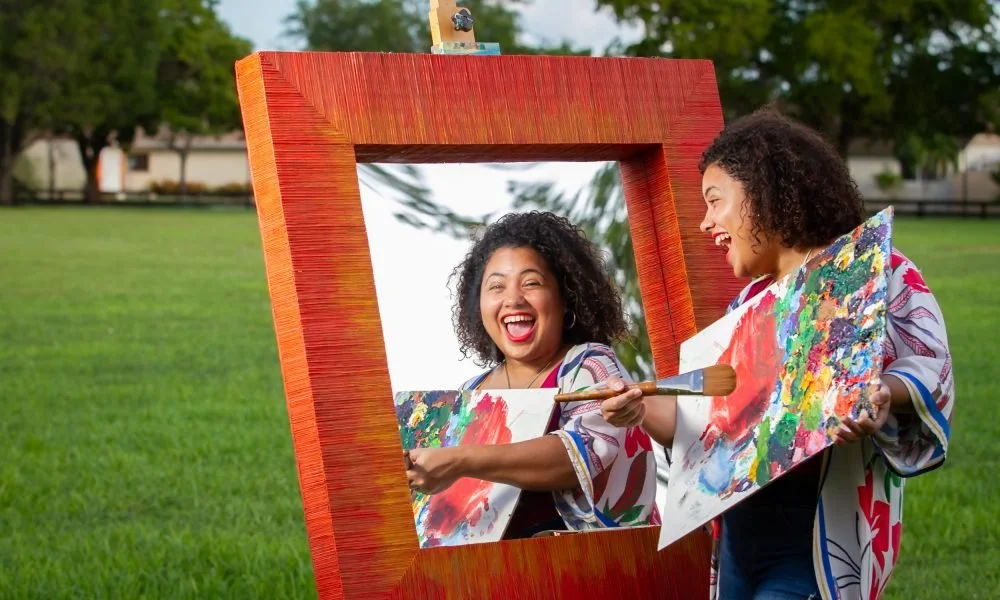
Daily Inspiration: Meet Annick Duvivier
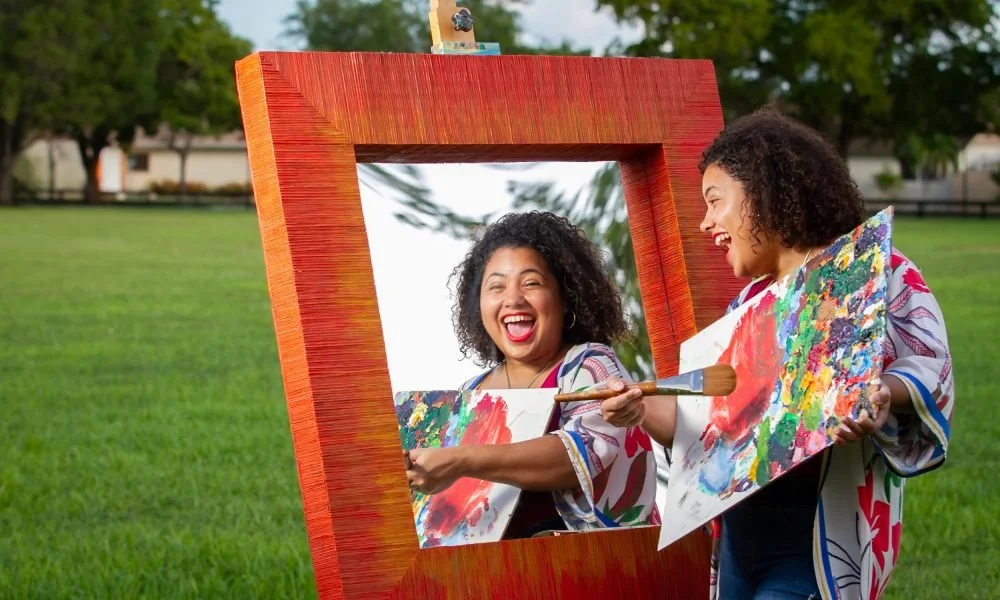
Today we’d like to introduce you to Annick Duvivier.
Hi Annick, can you start by introducing yourself? We’d love to learn more about how you got to where you are today?
Haitian-Born, Miami-based, I am a multidisciplinary artist; I started painting with the Haitian Master Ralph Allen when I was 12 years old. That’s when I discovered my passion for art and the power of color. After spending a beautiful childhood and teenage years in Haiti surrounded by happiness and lots of family, I was sent off to Miami as my cousin in Haiti had been kidnapped… I immersed myself in art as a way to cope with loneliness and all the changes; I think it was my first conscious experience with art as a positive form to express my feelings. Art became more than a hobby. By the end of my 12th grade, my self-portrait was hanging at the NSU Museum of Art with the Superintendent’s Advanced Placement studio art exhibit in 2006. They also offered me two weeks of studio classes at the Museum; I had won the arts and humanities award and the art cords for being part of the Art Honors society. I was accepted in the two year Fine Arts program at Altos de Chavon La Escuela de Diseño, in the Dominican Republic affiliated with Parsons in NY. I was reluctant at first because I would have to learn to speak Spanish; I had the best experience of my life. It was intense, but I learned to creatively see and understand head-hand communication, and I felt like a new person. My friendships from that time are still flourishing. It was an amazing experience. Soon after, I became an artist in residence at Festival arts Gallery, Haiti. Alongside Art Historian Dr. Marie-Alice Théard, I organized exhibits for more than 25 prominent Haitian artists. I learned the art business and all the different aspects of running an art gallery, but most importantly, the valuable art and culture of my country Haiti. I stayed there for five years, had my first solo show, and exhibited extensively in group shows, including a women-only exhibit at the Haitian Museum of Art “MUPANAH” as the youngest female artist; I was 22. Fast forward a couple of years, I got married and moved back to Miami; Last September 2019, I graduated with a BFA in Visual Arts at the Miami International University of Art & Design with the best portfolio award. Having learned all the mediums, ceramics, printmaking, digital programs, photography, my artwork is diverse but has recurring themes of identity, fertility, memory, nature, and a fascination for the human body. It’s been 14 years since I decided to become a professional artist and I have been actively working and creating.
Would you say it’s been a smooth road, and if not, what are some of the biggest challenges you’ve faced along the way?
My road has not been smooth, but I am the kind of person who sees the positive in every situation. The struggles I have had to deal with were always major life-changing events that have impacted a lot of people, for example, the earthquake in Haiti in 2010. My life was disrupted. My immediate family members all have miracle stories, but we buried an uncle and many friends. I escaped, Panicked, survived. We lived for three weeks in the garden with my family. During that time, I was observing nature and learned how to be grounded in the garden. This experience has influenced a lot of my botanical artwork. I created the Consumerism collection to share my awareness, my need to protect the environment, and my love of gardening. Current events have a profound influence on my psyche and as a result, on my artwork. The current lockdown due to Covid-19 and the Black Lives Matter protest awoke in me similar feelings of deep anxiety that I had felt before. This painful experience exposed me to uncertainty and growth; I recognized it from miles away. Barefooted in my garden, I was reminded how to be grounded and the importance of being connected to nature, and for that very reason, I decided to go back to nature. The orchids were blooming despite quarantine and setbacks—Miami, Florida, another state that was really affected by Covid-19. I felt scared and really worried about the future. It was difficult to focus and blur the problems. I had to go back to basics in the studio in front of my easel to the creative place that brought me joy. I thought that if I painted a small canvas each day, it would give me a sense of completion. Each day I would only have to think only about the painting of the day. I went back to my garden, another place that gives me a sense of peace. It takes an average of 66 days to build a habit, and I saw myself wanting to be more and more in the studio, painting. And that’s how the 60-day orchid challenge was born.
Appreciate you sharing that. What else should we know about what you do?
I am a multidisciplinary artist and am known for my mixed media paintings. My work is a blend of my memories, my culture, nature, but this year was a trigger to bring light to traumatic events about race. I noticed that there could be a language barrier between people of various backgrounds and cultures. With this new series titled “Dialogue,” it was my attempt to use endangered species, varieties of the monstera plants to showcase the difficulties in communicating. I start by painting intuitively and then I look for references to add the details. I either have a clear idea of what I want to convey or the story comes to me as I am creating the work. When big problems are thrown my way, I figure out a way to meet the challenges. I am focused, determined and passionate about what I do. Quitting is not an option; this definitely sets me apart from other artists. I applied for an open call for MIA Galleries in August 2020, and my painting “Outside Influences” was selected out of 253 submitted artworks. My painting is now part of their permanent collection and will be exhibited at Miami International Airport. I am extremely proud of this accomplishment. I am also proud of the three exhibits during Miami Art Week I had simultaneously for the first time. It was very stressful to prepare all the pieces for the exhibition during a short period. But also so rewarding. Preparing means; the obvious finish the paintings, but also having professional high resolution images of all artwork, creating an image and price list, labeling and signing everything, taking the correct measurements, installing hanging hardware…having your biography and artist statement ready.
I learned all these steps at the Festival Arts gallery, and as an artist, it is so important to be exhibition ready. The three shows are open until February 2021: Local-Global, Global/Borderless Caribbean XII: Focus Miami, Little Haiti Cultural Center, Miami, Florida, Dec 2th 2020 to February 2021. (Painting showcase Consumerism Collection) Disperse – “What is it you don’t understand?” during the Arts and Culture Festival, Miami Urban Contemporary Experience, MUCE Gallery, Miami, FL. Dec 3rd, 2020 to February 2021. (Painting showcase Dialogue Series/ Video Performance) Art Beat Miami, virtual this year, Art Fair, Miami, FL 2020. December 2th 2020 to February 2021. (Ceramic showcase)
Where we are in life is often partly because of others. Who/what else deserves credit for how your story turned out?
Thanked these people who have transformed the student into a professional artist, as it takes communities to build an artist…. My husband and family, the professors, and mentors, the collectors, the buyers, supporters and followers, art lovers each of them play an important role in my career. • My family, my parents Reginald and Hansie Duvivier for believing in me, and my husband Jean Marie Etzwald Ligonde, who constantly encourages me and supports my crazy ideas. • Ralph Allen Haitian master painter, the first painting class, took when I was 12, where I discovered this passion; I loved drawing, but he told me that I had painting abilities. He taught me how to mix colors. • Mrs. Janet Rubinson, Everglades High school Art professor who had a deep impact on choosing art as a career. • My professors at Altos de Chavon, la Escuela de Diseño, affiliated with Parson in NY, specifically Raul Miyar, Sasha De Lemos, Marc Lineweaver. Mr. Steven Kaplan el rector, for teaching me how to see, critical thinking and creative problem solving, art mediums, and the proportions of the human body. Also, what it means to give your word and work with deadlines. • Marie Alice Théard, art historian, and Dr. Jacques Ravix for teaching me about the business of art and the history and culture of my country Haiti. But also work ethics. • My professors at The Miami International University of Art and Design specifically, the head of Visual Arts, Bryan Hiveley, Judith B. King, Mona Mandall, Rebeca Giling, and Adnan Razack, through their positive criticism encouraged and helped me discover my voice. • Ashlee Thomas and Bart Mervil Miami Urban Contemporary Experience, MUCE for giving me the space to exhibit my artwork. • The Greater Miami Convention & Visitors Bureau, GMCVB for all the opportunities and the membership prize. • My collectors, buyers, followers, I would not be here without your continuous support.
Contact Info:
- Email: annickduvivier@yahoo.com
- Website: https://www.annickduvivier.com/
- Instagram: https://www.instagram.com/annickduvivier/ @annickduvivier
- Facebook: https://www.facebook.com/annick.duvivier


Image Credits
Jean Marie E Ligonde

HAITI BABII | NEW ALBUM ‘TRAP ART’ & COMPETITION WITH HIMSELF

Haiti Babii is a go-getter in every aspect of the word. Aside from his double workouts in one day and playing the father figure to his newborn, the remaining hours are spent in the studio perfecting his craft. With his Instagram name reading “Trap Art,” the Guyanese and Haitian rapper, producer, and songwriter embodies the definition of someone who’s in their own lane, carving their own unique sound and style in today’s generation of music.
When it comes to his work ethic, he sets the bar. He states, “You may have better music than me, you may look better than me, you may be taller than me, but I’ll die before I let you outwork me. That's my mindset.”
You may have seen Haiti’s name from his viral moment freestyle on Real 92.3 (which caught the attention of Chrissy Tiegen), or maybe from his breakout single “Change Ya Life.” Either way, Haiti is proud to put Stockton, California on the map, serving as one of the first known artists to come out of his city. Beyond that, he’s followed by the likes of Rihanna and Meek Mill.
Flaunt caught up with Haiti via FaceTime, who was located in Las Vegas preparing for his lady’s birthday. He jokes, “I’m a ladies man.” Read below as we discuss fatherhood, inspo behind “Red Lights,” moving to Los Angeles, learning how to produce, a day in the life, studio essentials, going Gold, Rihanna and Meek Mill cosigns, his new album Trap Art, and more!
How are you holding up during the COVID-19 pandemic?
I’ve been doing great actually, it hasn't stopped nothing. I’ve been having time to myself, to my daughter, understand my baby. Quarantine’s giving me time to focus on me, working, and focus on my family.
How’s fatherhood treating you?
It’s great, it's an experience. Before the baby even was here, I was already motivated to go harder in everything.
What's the best part of fatherhood?
That feeling in your heart you get when you look at her smile. When I see my daughter smile… the worst thing is blown away. I don't see how professional athletes do it when they be on on the road for games. I see how they do it because they get the money but damn, the best thing is being around this person. This little human being laughing and giggling all the time.
“Red Lights” video out now, who or what inspired this one?
I always experiment with my voice and flows, I knew it was the time to give the fans what they wanted. I mastered my craft and realized it's a sample of that. It’s West Coast in it, but I'm singing in melodic ways. When I made “Red Lights,” first off shout out to my producer, Hitamadethebeat, he killed it. Shoutout to my engineer Darrius up at EMPIRE studios in Frisco. I really went home, wrote to the beat, went to the studio and laid it down.
You live in Los Angeles now, when did you leave Stockton?
I left Stockton 2 or 3 months ago. Stockton’s only 5 to 6 hours away from LA, LA’s a second home anyway so it’s not like I’m too far. It's an easy move. I got a lot of family, a lot of people in LA anyway. It's where everything is at so you have to be in LA if you're from the West Coast.
How was it shooting with the snakes in the music video?
Shoutout to DezGreat, she directed the video. She really sat with me one on one and asked me a bunch of questions about what's my ideas, what do I see, what do I want in the video? She really brought it to life, but she put her own oomph into it. The snake part, I love stuff like that because it's stepping outside my comfort zone. I'm comfortable being uncomfortable.
Were the snakes scary at all?
It was my first time with snakes. As a kid, I always told myself I'm scared of snakes. But when I got in front of one, I wasn't scared at all. If it bites me, it bites me. I don't really care. I’ma do this video, that's what my mindset was. When I step into a character, I can do whatever I want. I'm Tom Cruise! I’m Haiti Babii, I step into that mode.
What is it you want fans to get from your story?
Honestly with “Red Lights” usually I don't care what people think but this song, I really was checking out the comments on YouTube. I got a lot of positive reviews. A lot of people said “I found out because of the Riri situation. Yo, Wyclef shouted you out so this is how I found out about you and I realized you make dope ass songs.” People are respecting my songwriting skills now, so I got a lot of good reviews from fans.
What’s your creative process in the studio? (writing & producing)
I literally freestyled one song my whole life. I’ve never freestyled a song, I write everything down. I always go home, find a bunch of beats, I’ll spend hours or days coming up with the best verse, best hook. Erasing, rewriting. I go to the studio and I lay it down. I’m one on one with my producers. You know how somebody work with a lot of writers? I don't have that. I don't work with writers, I work with a bunch of producers and engineers in one room. The best thing to me is the mixing. I co-produce a lot of my tracks, most of my tracks you hear I co-pro.
Have you always known how to produce?
I started when I made “Change Ya Life,” I co-produced my hit record. I've been doing it more so because listening to people like Travis Scott and Kanye, they always say you get the best of your music. That inspires me, I gotta start co-producing so it can sound 100% me. I gotta give it my all.
How’d it feel to go Gold off “Change Ya Life”?
It feels great. I always looked at myself as a superstar artist, a person who’s looking for longevity and not success for a moment. It blew up through TikTok on a fluke. When that blew up, okay the world knows my name. Now I got a reason to keep going, I got my plaque. It’s like getting your first little trophy. Going Gold to me, the feeling was almost as equal as getting a Grammy. Only reason I say that is because I come from so much. I'm from a little city, so going Gold was huge. That’s why I can say stuff like “I’m a king where I'm from,” talk my little shit and get cocky because I'm from a little town. Only people you know from my town outside of artists are Nate Diaz, Nick Diaz, a few NFL players, but the world doesn't know then. For me to make my own name, now I have graffiti of my faces up on the walls in Stockton, it’s dope.
You say “the dream is free the hustle isn’t,” what’s the reality of the grind?
Really when I had my daughter 5 months ago, even before she was born, it’s an extra oomph in my life in general. I was less lackadaisical, I was more intuitive, more on point with everything I'm doing in life. Now I wake up at 4 in the morning to go work out. I wake up at 4 AM, I eat, I get to the gym at 5:30 AM. I go back home, I shower, eat again, play the game for a little bit and go back to the gym about 10 AM. Look I’m going crazy, nobody can stop me. [laughs]
After I go home from my second workout, I eat again but I make sure I don't eat too big. I like to snack so while I'm snacking, I’m writing. I limit my gaming time. I pick a beat or I look for a beat, and I write. I don't even have to like the beat but the fact I can make a whole song to it, I can use those lyrics and adjust them to another track I got. Always making my brain work. I call my writing time my homework. After my homework, I plan a studio session whatever day it is. If we’re talking a non-studio session day, I'm down spending time with my family. I use the whole rest of the day spending time with my babygirl. If you’re talking a studio day, I do all I just said. I leave for Frisco, get to Frisco, record. I’ll be in until 2 AM or 3 AM.
What drives your double workouts? One workout is a lot!
I'm 23 but I’m already an athlete already. I’m an artist, I look at my life like other artists. What’re they doing? Why aren't you getting up at this time? Why are people in New York getting up at this time and we’re not? What are you doing that's that special? Me waking up early makes me feel like I'm outworking the people who they call talented. You may have better music than me, you may look better than me, you may be taller than me, but I’ll die before I let you outwork me. That's my mindset.
Who are you bumping when you work out?
Travis Scott, I listen to that. Young Thug, I listen to that. Drake, listen to him. Kanye. Lately I've been slapping Jay-Z, a lot of Jay-Z on my Spotify playlist. Of course, me. When I slap my music, I critique myself. I'm listening to my old songs like “oh, I coulda said this. Oh, I coulda switched this. Oh, I shoulda turned that down.” Other than that, my workout playlist consists of those artists
Favorite Travis Scott song?
I got so many. I have a new one, it’s brand new. It’s called “WHO? WHAT!” When I first heard it, nah I’ma skip it. I kept skipping it when I’m listening to the album. When I finally played it, this shit slaps! That's my new favorite song by him, period in general. Then “Mamacita” with him, Young Thug, and Rich Homie.
Is Travis your dream collab then?
For sure, I’d call it a dream collab. Anybody who meshes well with me and my craft... I look at the game like this: if you're an artist out there and fans feel we have similarities together, we got the name game and the same flow, I don't want to work with you. You know why, because it’d be a repetitive track. I’d rather build a relationship with you and tell you “yo, your shit’s dope.” If I work with someone like Travis, he’s going to test me. I want to work with somebody who’s going to test my abilities, not just “you’re a rapper, I’m a rapper.” Because that can happen anytime. For instance Sada Baby can come out of anywhere and say “let’s work.” We both go rap on here. With someone like Travis, I have to step my game up. I’m might have to come hard, I might have to sing a little bit. It always differs. I’m a hardworking artist so I like working with everybody at the end of the day.
3 things you need in the studio?
I workout while I’m in the studio, which is crazy. No one knows that unless you’re in my session. I get these 2 little weight bags, nothing but sand in it basically. Use those to hold down light stands or microphone stands. I pick those out to put a piano room, I’ll be in the room listening. I’ll get resistance bands so I need those. As far as food, we can have some Skittles in there. And some Fiji water, need the Fiji water.
Talk about bringing your Haitian culture into your music.
It started like this: California Hatian, I call it an album but it's more of a mixtape. If people listened to it, that really showed the world okay, this is me showing you my Guyanese side. Not just Haitian because I'm more Guyanese than I am Haitan. I'm showing them that side, I can step outside my comfort zone. Stepping into this new album, Trap Art is more for my dominant fans. My original fanbase, the fans that were listening to me when I was dropping those hood tracks, those ratchet tracks. Trap Art, I’m giving them what they want. I'm giving them that street, that hood. I'm not really experimenting with new sounds. Plain and simple: I'm here, this is my year. I’ma talk my shit, I'm still a gangsta. You know what it is. That's how I'm stepping into Trap Art, 2021. Get rich or die trappin’!
Is your sound considered trap?
It’s not trap because trap to the industry is a whole different sound. The trap is where you come from. In an instance, you come from it too because trap is a mindset. Trap doesn't have to be where drugs are sold out of. If you’re trapped once in your mind, you could be in college and feeling like damn what's the next step? You’re trapped. The reason I put art is because art itself is artistic. Whenever you're feeling trapped, draw out a pros and cons list and be artistic with the shit. Be artistic with your life. Sit down and think for yourself, set goals and eliminate boundaries. Do different shit. I named it Trap Art because it's different.
What's crazy about this Trap Art album, I went back to my inspirations when I was a kid. I grew up listening to a lot of 50 Cent, that first Get Rich or Die Tryin' album. That's why I cosign the name Get Rich or Die Trappin’. A lot of Usher for sure, you can hear both of those artists in that album. You can see where I got my inspirations and my ideas. Some Thug in there. Not to disrespect but Thug got it from Wayne, like how I say I got it from some artists. You go here, gotta respect Wayne too. That Hot Boys era.
Talk about Rihanna & Meek following you on Instagram, that’s huge.
Riri found out about me through the radio, she’s like “yo this kid has the look, he has the sound. He’s going to be big one day.” That's riri’s whole impression on me. I have a track with her that's going to be on her album, called “Real High” that I co-produced. Meek found out about me through girls and other people posting me, he’s like “Ima check his music out.” He was trying to sign me, I said I still got a deal with EMPIRE. He said “it’s all good, I’ma support you from the backend. I’m watching, I’ma fuck with you. That's how Meek’s hype was, it's all love. But Wyclef’s been the biggest for me, because I can hit Wyclef right now. I can talk to him anytime, that's unc right there. He’s cool.
What’re you most excited about in the new year?
If everything opens back up, I’m excited to compete. This is a competition to me. I'm not in competition with people in a negative way, I'm using my competition in a positive way to better myself . I can't wait to perform, to shine. I can't wait for the world to see who I am, and hear my music. It’s always going to be about the money for everybody and me too, but it's about respect for me. I want respect, give me my respect because I’m working hard. Y’all see me, that’s where I’m coming from.
Anything else you’d like to let us know?
Let the world know the Trap Art album is going to be the best thing they’ve heard from me and from the West Coast in a long time.
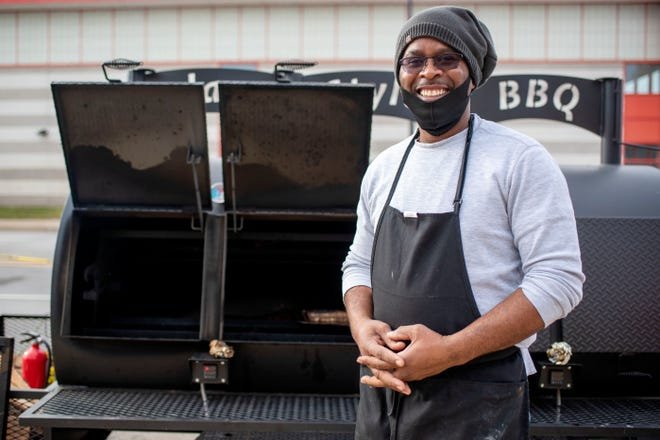
Haitian refugee becomes Battle Creek restaurateur, realizes his American dream
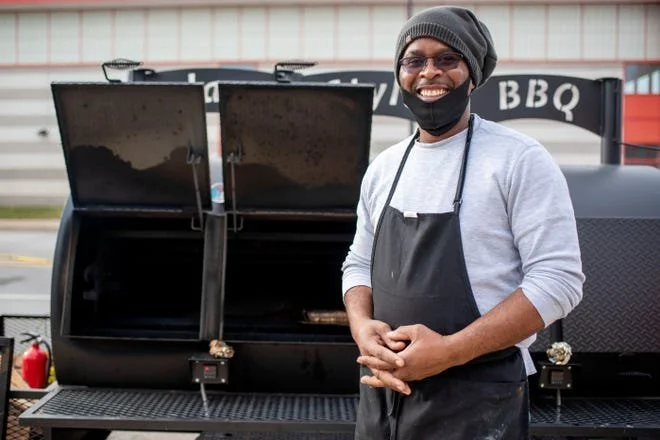
Battle Creek – On a cold Tuesday afternoon, Juliano Jean-Jules was outside Kellogg Arena, where he tended to some cherry wood-smoked brisket and jerk chicken wings on his rotisserie grill.
His sleeves were rolled up and he wore an apron and a knit cap. His mask only partly obscured the joy on his face as he readied the meats before darting inside to a commissary kitchen where he cooked and assembled dishes for curbside pickup.
“I put my heart into it,” Jean-Jules told the Battle Creek Enquirer. “I love doing the cooking. When people come and say it’s good, that pushes me. I do it from scratch. I take my time. If I have to get up early, I will do it, no problem. I have to make sure they get their food. I want my customer to have my food hot and the way they wanted it. If people are happy, I’m happy.”
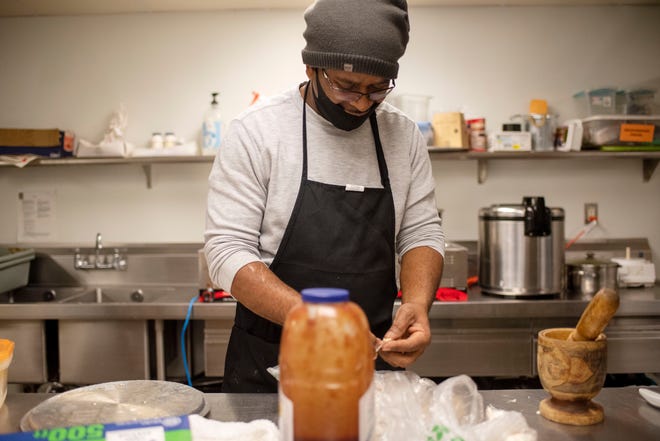
It’s been quite a journey for Jean-Jules to bring his one-of-a-kind blend of Caribbean- and American-style food to Battle Creek. A refugee from Haiti, his opening of Island Style BBQ represents a realization of both his personal dream and the American dream.
Jean-Jules and his wife, Daleth, have lived in Battle Creek for 12 years, where the couple raised their three adult children. His story begins in the port city of Saint-Marc, Haiti, as one of nine children.
“I was the older one in the house. My daddy was a fisherman with my mom. When they would go fishing, after school I would come home to prepare dinner for my sisters and brothers,” Juliano said. “That’s how I know I can cook. When they come home from fishing, I always tried my best for them.”
Jean-Jules said that as a teenager in 1990, he was making money by helping people into boats to flee the island nation after Jean-Bertrand Aristide, the democratically elected president of Haiti, was overthrown in a coup d’état and the military government was persecuting his followers.
One day, Jean-Jules said he “jumped on the boat and came.”
His boat was picked up by U.S. authorities and Jean-Jules subsequently spent over a year at a refugee camp at Guantanamo Bay, where some 50,000 Haitian and Cuban refugees would eventually be held. The naval base known as “Gitmo” has been used as a military prison for alleged enemy combatants since 2002.
“It was tough, but wasn’t locked down,” he said of the camp. “We would play soccer and go to the beach, go fishing. It wasn’t too bad.”
Jean-Jules’ first stop in the United States was in Lansing. He had relatives in Michigan but he did not know them yet, so he said he was homeless for weeks, living at the Lansing Capital Airport until an uncle in Brooklyn, New York sent for him.
Daleth had moved to Brooklyn from her native Guyana in South America when she was 13 and became neighbors with Juliano’s uncle. The couple met at a block party in 1994 and married six months later.
“He’s a charming fellow and there is something about the connection that was made,” Daleth said. “What drew me in was this smile that he’s got. That’s a nice looking guy who can cook and clean and do all this stuff.”
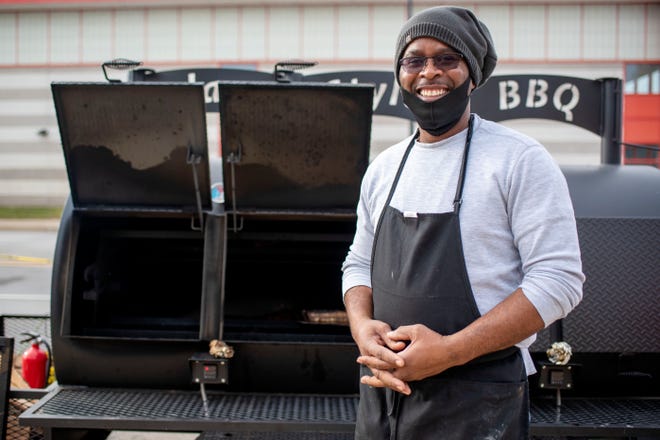
In 1997, the couple moved from New York to Lansing, where they opened a clothing store “that didn’t go very well,” Daleth said. Juliano partnered to open Lil’ BBQ Shack in 2016 before stepping out on his own.
The Jean-Jules family moved to Battle Creek in 2006 after Daleth took a job with the Battle Creek VA Medical Center, where she continues to work as the Homeless Program Manager while helping her husband with Island Style BBQ when possible.
Juliano made a name for himself locally after taking home the Judge’s Choice Award for 2020 Best Startup Pitmaster at the Que the Creek Festival at Kellogg Arena in February.
The genesis for Island Style BBQ began at the family dinner table, according to Daleth.
“He is from Haiti, I am from Guyana, we’ve got some adult kids that are American, first generation. The idea was born out trying to put all three cultures together in this nice collective,” she said. “You have Haitian, Guyanese and American culture in the same household. My husband loves cooking food and has always wanted to do that, so here was this unique opportunity to bring this to Battle Creek. This is my husband’s dream and vision.”
Island Style BBQ is targeting a spring opening of its brick and mortar location. It is operating as a pop-up restaurant during the holiday season, and is available for delivery through Eats BC.
The startup has been aided in its launch by the Battle Creek Small Business Development Office and through its membership in the Second Muse/Morning Light cohort, a six-month entrepreneurship incubator program supported by the city of Battle Creek, the W.K. Kellogg Foundation and other community partners.
While a pop-up restaurant isn’t how Juliano envisioned starting his own business, he’s grateful to be serving his food to a community that has embraced him and his family.
“I appreciate everything I have because life is tough,” Juliano said. “When I come to America, I thought America wasn’t going to be tough like that. But America is tough. The stuff I make, there’s not too many people who have it here. Some people say they have to go to Ann Arbor or Detroit. I can make the same thing as in Ann Arbor or Detroit, maybe even better.”
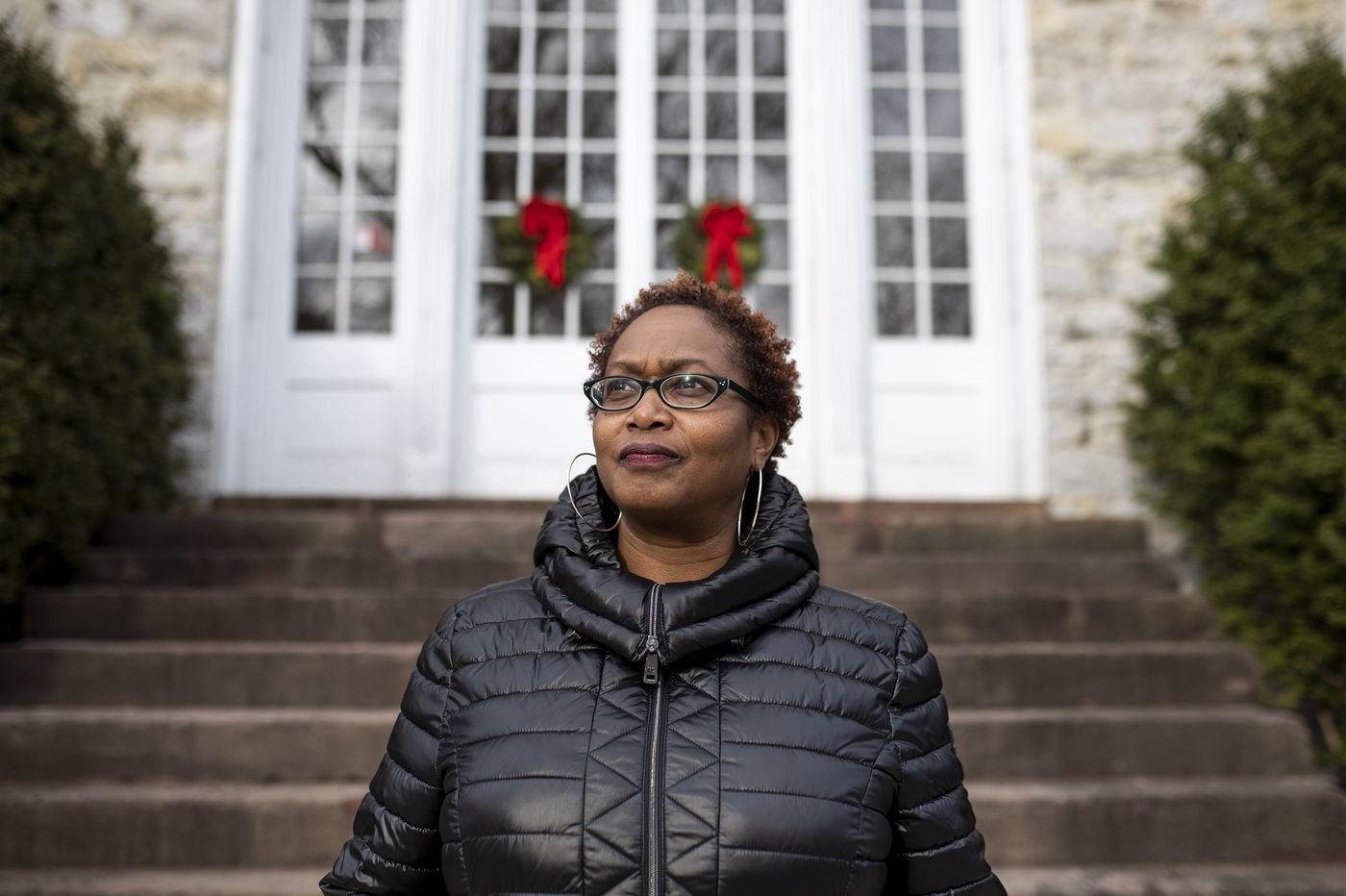
This award-winning Dickinson professor is rethinking how Black artists show death
an Studies professor at Dickinson College in Carlisle, Pa., looks at not only how artists show death as part of life, but also how Black people experience that morbidity that surrounds them. She draws on a mix of knowledge from sociology to vodou iconography.
Philogene points to the work of Harvard sociologist Orlando Patterson, who coined the term “social death” to describe how society did not extend humanity to enslaved people. Today, Black people are still fighting for humanity, she said.
She first began her line of research after the catastrophic 2010 earthquake in Haiti.
“Basically, the camera would just pan across these multiple bodies,” Philogene recalled. “And I thought, ‘Wow, like, how incredibly disrespectful,’ but also there was a sense of displacement as if these individuals were not human. And then I started also thinking about [Hurricane] Katrina, the same issue — how these bodies that were dying, dead, or in the process of death, were again seen as just these objects.”
In this state without humanity, Philogene explained, Black people “have no soul, they have no agency, they have no authority, they exist in this liminal vacuum space.”
“We live in that kind of condition. But how do we also find that moment, that condition as empowering?” asked Philogene, who considers George Floyd’s killing a moment of social death. “How can we, even in this moment of death and trauma, think about how we live [and] the possibility of life?”
Philogene won an Andy Warhol Foundation Arts Writer grant last month. Her $50,000 award will support her forthcoming book, The Socially Dead and Improbable Citizen: Theorizing Visual Transformations of Haitian Citizenship.
The book will explore how artists of the Haitian diaspora, like Jean-Michel Basquiat and Myrlande Constant, explore depictions of death and memorial. It will also trace the influence of Haitian traditions on other Black artists, like Kerry James Marshall and Ebony Patterson. The Inquirer spoke to Philogene about her research and how she’s rethinking death and how we see it. This interview has been edited and condensed for length and clarity.
Could you speak about how vodou theology and its perspectives on death inform your research?
There are these, what we call “lwa,” the spirits that guide you in life but also guide you through the process of death. And one of the main lwa of Ghede, which is the lwa of death, is Baron Samedi, who is the person who kind of sits at the crossroads.
He’s mischievous. He is funny. He is proud, but he’s also someone who guides you and helps you live in death. So even if your body is no longer, your spirit is still alive. So for vodouists, those who believe and practice vodou and honor Baron Samedi, he allows you to live even if you’re living in misery.
There are other lwas, but he is the main one who allows you to think about how do you live in the space of death and live in a kind of, I don’t want to say celebratory fashion, but in a fashion that renders you human, that gives you humanity.
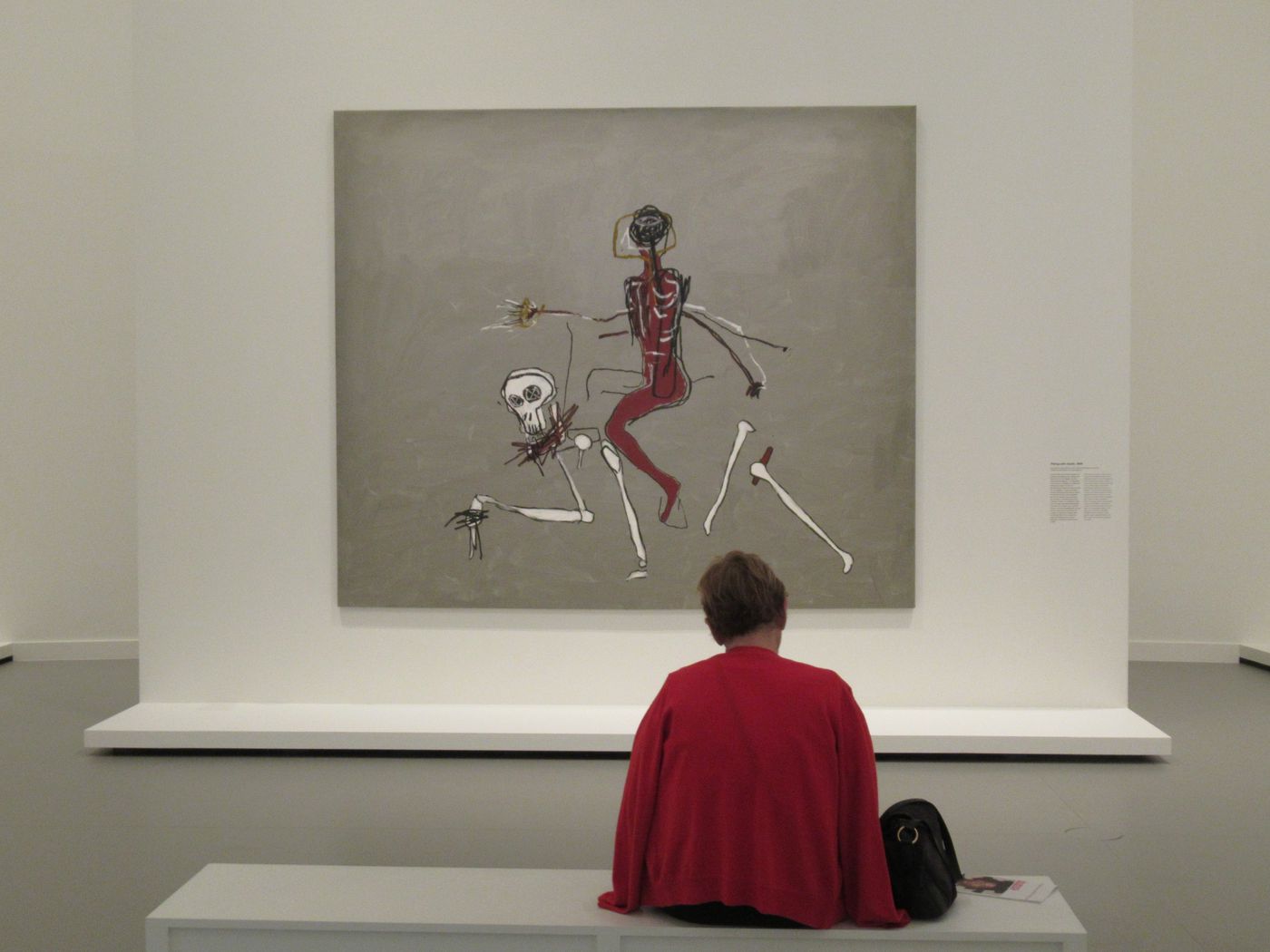
You speak about social death and then also the condition that Black folk with enslaved ancestors around the diaspora are experiencing today. How are you conceptualizing the way that Black artists are looking at this feeling of precarity you described, looking at this feeling of living within death?
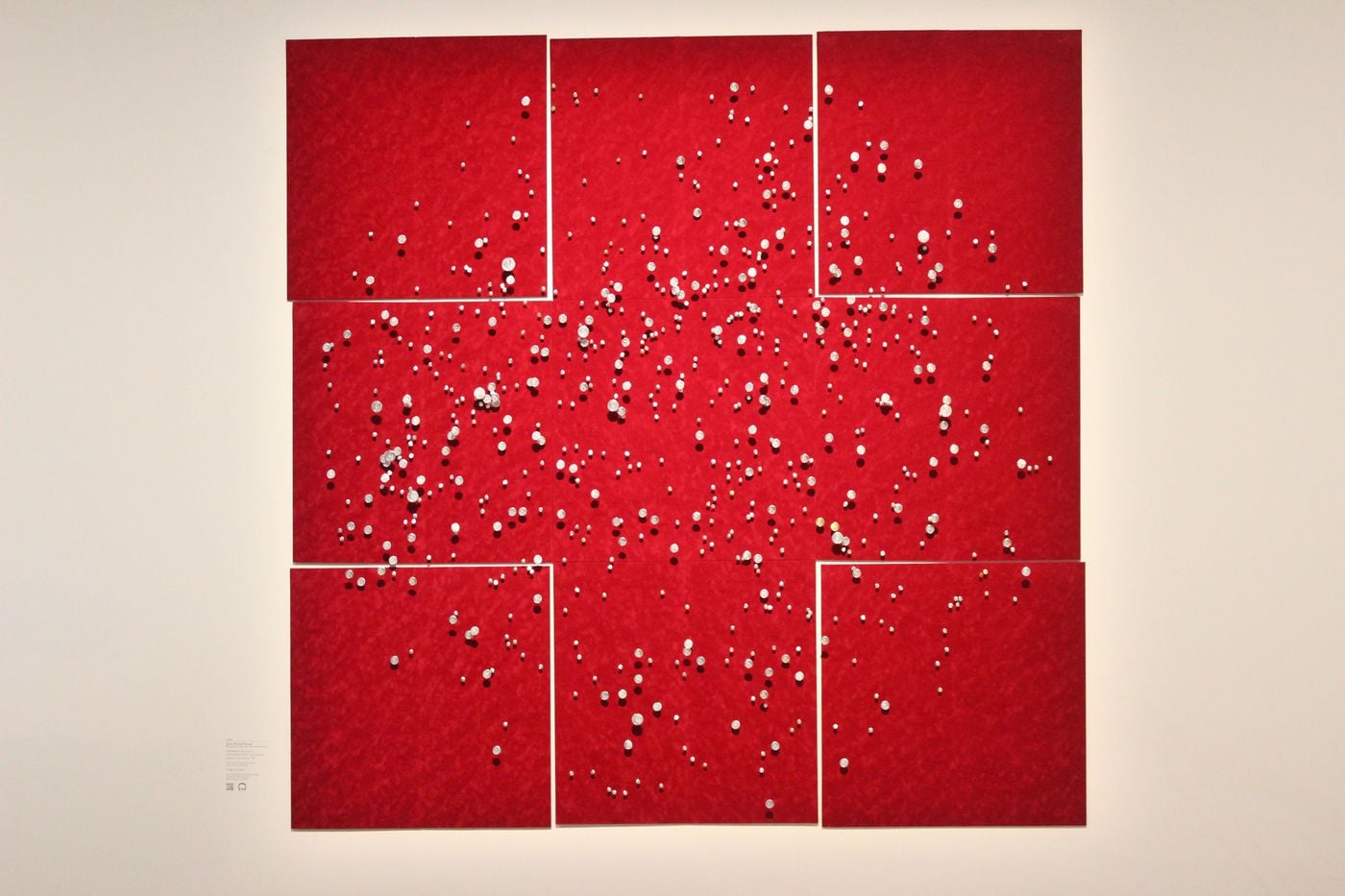
In a variety of different ways. So one of the artists I look at, his name is Jean-Ulrick Désert. He is a Haitian artist who lives in Germany. And there’s one piece in particular that I look at. It is this beautiful wall installation that is covered with 750 stars and planets. It’s the stars and how they were aligned exactly at the moment in which the earthquake happened. So, in a conceptual fashion, the piece is evoking this moment of death. But there is something incredibly beautiful about the piece, because it is this rich velvet background. It [has] these small embossed stars that have the image of Josephine Baker stamped onto the image.
This wall installation memorializes these bodies, these bodies that were at one time just left on the ground to bake in the hot sun of Haiti. In this moment of impossible pain and possible death, there is something that rises out of those ruins.
You’re thinking through what it means to be human in your work. Where are you at with that now?
So I’m still trying to figure that out. But for me, in the book, I am arguing that humanity, our humanity, as Black people is one that we take, is one that we demand. And it’s one that is our right.
Has the pandemic made you think about your work differently? And if so, how so?
In one sense, it’s made me appreciate the fact that we actually see what America really is, it has shown us that deep within the ground, there is all this discontent and hatred.
But what is more exciting for me is the way that Black people, people of color, allies have fought against some of that. We’ve seen the hatred and the discontent, the lies, but we also see the moments of empowerment, of agency, of fighting. for This is, again, what my book is about: How can we make this livable?

Kanye West Planning To Build A 'City Of The Future' In Haiti

Last month,Kanye West visited Haiti to meet up with its president, Jovenel Moïse. The two then went to visit Tortuga Island and Labadee to see a plant breeding center, according to the Haitian Tourism Board.
When West initially landed in the airport, he also met up with tennis superstar, Naomi Osaka. This trip came after criticism a week before for being in Jamaica without a mask on. At the time, no one knew why West wanted to see this breeding center but now, there are some answers.
Kanye To Boost Different Sector's Of Haiti's Economy With New City

Kanye West- 'Follow God' music video
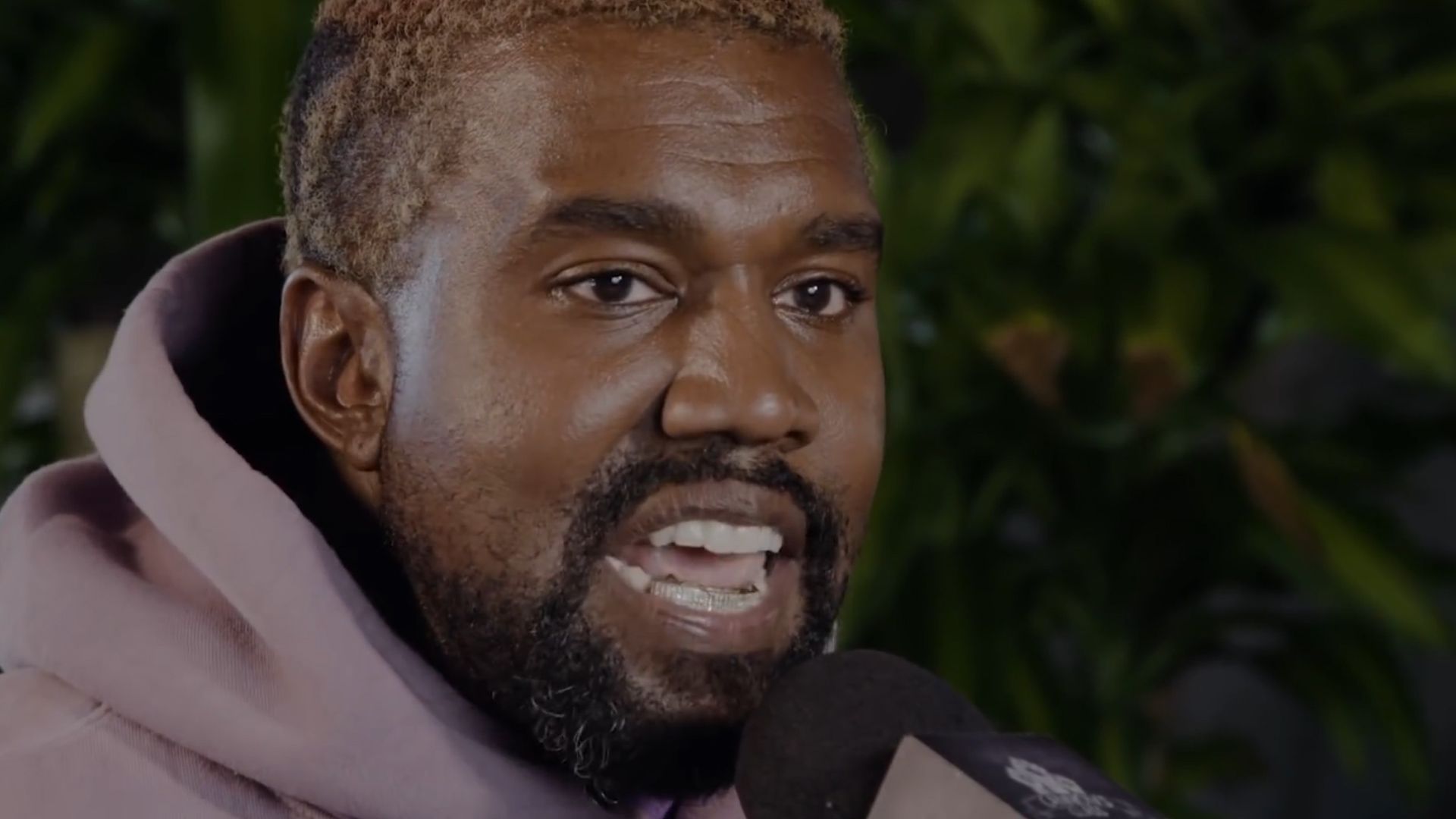
West took to Twitter this morning to share his plans of building a "city of the future in Haiti." This is after discussions with the government in the country to help boost different sectors of its economy such as farming and fishing.
"Just to be CLEAR: WE ARE IN ENGAGED WITH HAITI’s GOVERNMENT to make a transformational INVESTMENT to bring JOBS, DEVELOPMENT, HELP SUPPORT LOCAL FARMERS and FISHERMEN and Build a new « CITY OF THE FUTURE » in a very beautiful country.
Latest Move In Haiti Comes After Building Yeezy Christian Academy
Nick Cannon's 'Cannon's Class' podcast
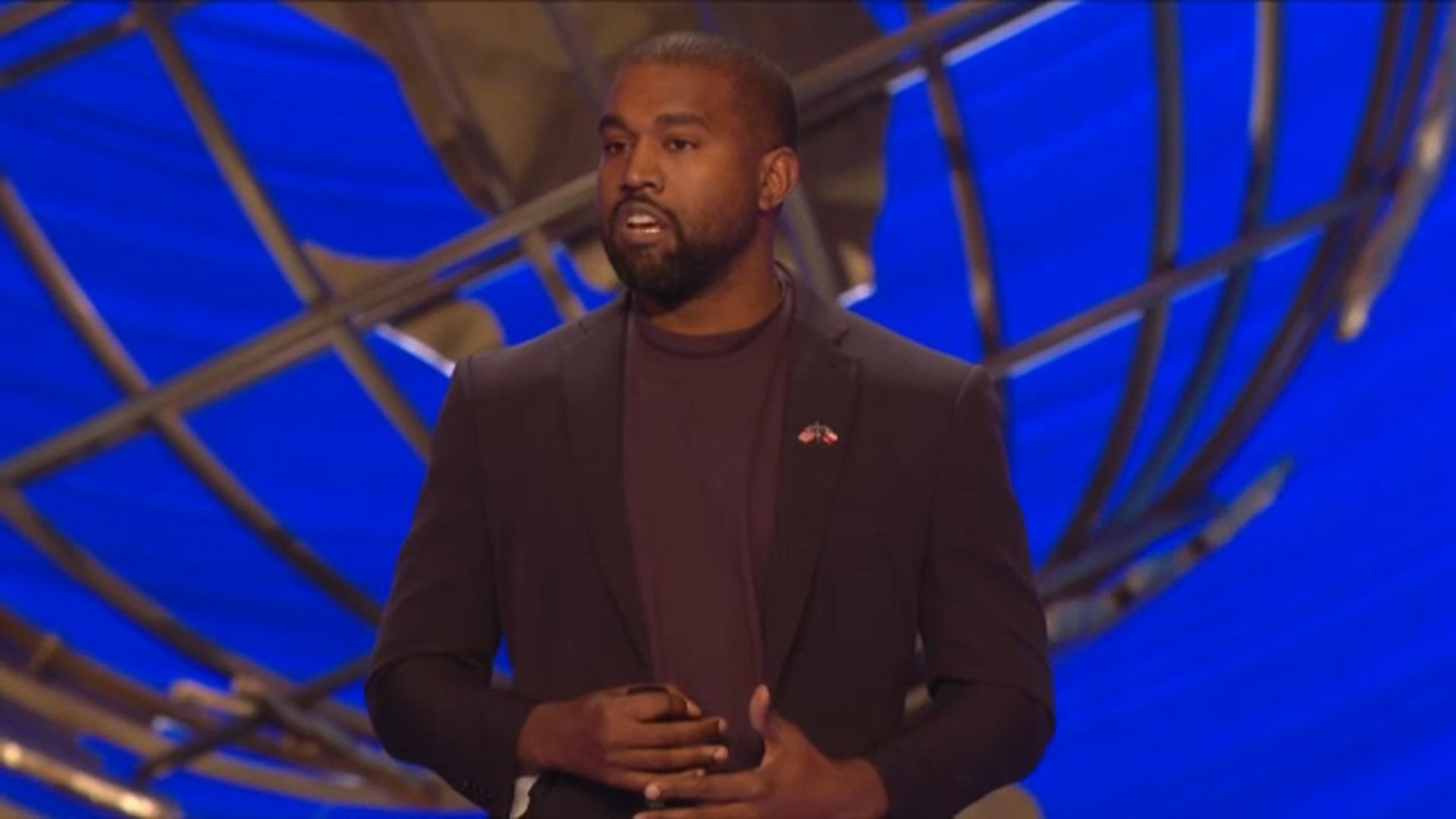
West also recently build a Yeezy Christian Academy as its goal is to teach the "five founding pillars." The school also displays the message of "everything in the school exudes Christianity. All faculty share the faith and walk the walk. Bring Jesus to the world through our students."
Additional pillars being taught are music, communication, collaboration, and creativity. That came after Ye said on Twitter that he wants to start educating people about Jesus on TikTok through an alternative app called "Jesus Tok."
Kanye West Still Encourages People To Vote For Him As President In 2020 Election
Joel Osteen- Twitter
Meanwhile, West is also sticking to his plans of running for president despite him not having any chances to win the presidency. This is after failing to appear on states' ballots after missing deadlines and or sending invalid signatures. In states such as California where he is on the ballot, he isn't listed as a presidential candidate but instead, is listed as a VP candidate that is running with Roque "Rocky" De La Fuente. Both men didn't even agree to run together.
Kanye Also Made Claims He Wants To Buy Universal Music Group For $33 Billion

Kanye West- Twitter
West said on Twitter last month that he wouldn't release any new music until his contracts at Sony and Universal were up. He also recently appeared on Joe Rogan's podcast where he explained how he wanted to buy his masters from Universal. He is thinking bigger though as he wants to buy the record label for $33 billion.
“I was thinking about buying my masters [but] I realized that was too small of a thought. I’m going to buy Universal. [Universal is] only a $33bn organization. I’m one of the greatest product producers that ever existed. And I’m a child; I’m 43 years old. I was $53m in debt four years ago. Now it’s proven that I’m the new Michael Jordan of products.”
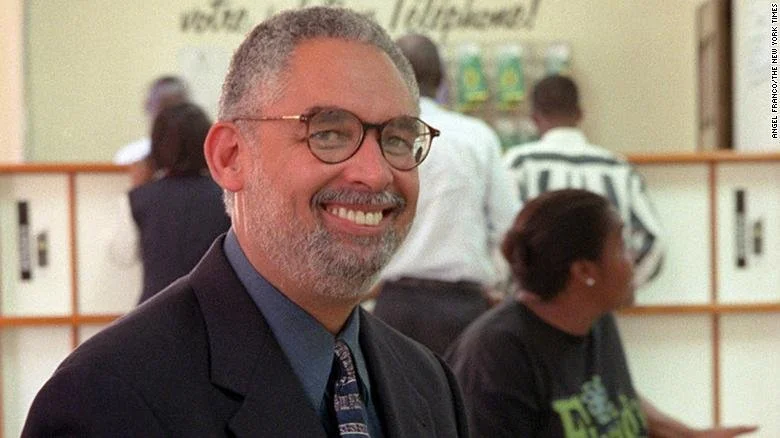
Remembering a refugee who founded a center for those forced to flee like him
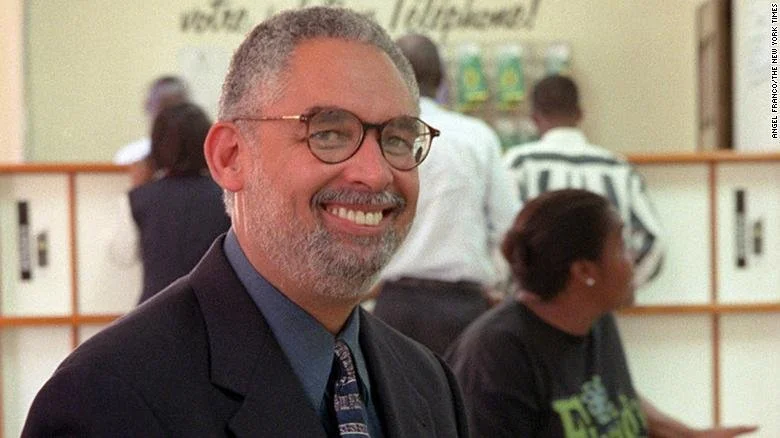
Bernard Fils-Aimé dedicated his life to helping other Haitians."Being Haitian defines my identity and self-confidence," Fils-Aimé, an activist and entrepreneur, told Florida State Rep. Dotie Joseph in a Q&A on Facebook in May. "We fought for and won our freedom; and our culture has a depth and beauty of which any knowledgeable person could only admire and be in awe."When Fils-Aimé moved to Florida as a refugee in the late 1970s, he co-founded the Haitian Refugee Center in Miami -- and quickly became a leader in the Haitian American community. He offered legal services, and helped others who fled Haiti navigate life in the US.In 1995, after he eventually moved back to his home country, he took his efforts to help his community a step further by launched Haiti's first cellular network Communication Cellulaire d'Haiti or ComCEL, now Violà.
Last month, Fils-Aimé died at age 67 from coronavirus, leaving his friends, family and community mourning the loss of a pillar to the Haitian American community."My dad spent his life trying to improve the world," his son Karl Fils-Aimé told CNN. "He was proud of his community and culture. He saw the best in people."
Remembering his legacy
Fils-Aimé was born on May 24, 1953, in Port-au-Prince, Haiti, to Uranie Gabriel, a teacher, and Camile Fils-Aimé. His father, Camile, died around the time of Bernard's birth, according to his son Karl Fils-Aimé.
Fils-Aimé as a young organizer in New York. CNN has obscured portions of this image to protect people's identities.
At the age of 13, he and his mother fled Haiti due to opposing views of President Francois Duvalier, known as "Papa Doc." Duvalier was notorious for punishing anyone who vocally opposed him.
A few years after arriving to New York, Fils-Aimé attended Columbia University where he became an activist. During his first two years there, he participated in many student protests and met his wife, Marise Piverger, while organizing an event.

Fils-Aimé standing with his three children, Karl, Gerard and Erica.
They moved to Miami, Florida in the late 1970s and later married. The couple had three children Karl, Gerard and Erica.While in South Florida, he wanted to focus his work on Haitian refugees and created the Haitian Refugee Center to support migrants that had fled Haiti. He later finished college and earned a Masters degree in education at Florida International University before working at Miami-Dade college in the early 1990s.

Fils-Aimé in his office at Miami-Dade College.
"I participated in developing educational programs designed to give young men and women from disadvantaged backgrounds access to higher education in South Florida as assistant dean of students at Miami-Dade College" said Fils-Aimé to Florida Rep. Dotie Joseph in May.
Karl Fils-Aimé said his father's passion for education was instilled in him at a young age.
"His mother, my grandmother, was a school teacher and so, you know, he was always instilled with some foundational values that really defined what he did for the rest of his life," Karl Fils-Aimé told CNN, "and those values were around the value of education.
"In 1995, Fils-Aimé moved back to Haiti to help launch the country's first cellular network, Communication Cellulaire d'Haiti, or ComCEL, according to Karl Fils-Aimé.
Then, after retiring in 2010, Fils-Aimé focused on philanthropy. He served as chairman of the board of Haitian Education & Leadership Program or HELP, which provide access to higher education to student from disadvantaged areas in Haiti.
"He was an amazing man, he touched a lot of people's lives," Karl Fils-Aimé said.
'He was my best friend'
In July, Fils-Aimé tested positive for Covid-19, after experiencing a cough and fever, his son said.
"At first, he was at home, things were okay," Karl Fils-Aimé said. But a few days later, his father's symptoms became worse.
Fils-Aimé entered the hospital after having trouble breathing. Initially, the hospital treatment seemed to be working and he was stable. The day before he was expected to return home, things took a turn for the worst, his son said.
Bernard Fils-Aimé died at the University of Miami Hospital on August 8. He is survived by his wife of 41 years, Marise, their three children Gerard, Erica and Karl and his five grandchildren.
"He was a huge presence in my life, he was my best friend," Karl Fils-Aimé said.He remembers his father as someone who always had a smile on his face, and tried to make everyone feel important in a special way.
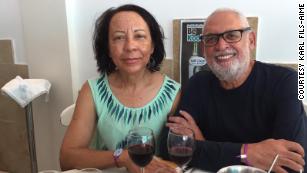
Fils-Aimé smiling with his wife, Marise."He was taken from us too soon," Karl Fils-Aimé said.

Naomi Osaka takes a surprise visit to Haiti, her father's homeland

A big but satisfying surprise for many Haitians.
Three-time major champion Naomi Osaka has arrived in Haiti this Monday, September 21, for a very surprise and discrete visit. Osaka, 22, is accompanied by a few members of her family, according to our sources.
After her arrival in Toussaint Louverture's airport, the tennis player of Japan has landed in Jacmel, hometown of her Haitian father Léonard François. Osaka is also expected to visit the famous Citadelle Laferrière, in Milot (North), official from the Haitian Ministry of Sports said.
The winner of the 2019 Australian Open, is reportedly in Haiti to film a documentary series directed by Netflix and dedicated to her life as a successful athlete.
In February, Netflix had announced the documentary series. But there has been no title and release date announced yet.
"The docuseries will follow the multiple times Grand Slam champion in the high-pressure year running up to the 2020 olympics in Tokyo", Netflix wrote on its website.
father's homeland
WILNER BOSSOU CREATED : 21 SEPTEMBER 2020ENGLISH CORNER
Japan's Naomi Osaka poses with her US Open trophy. Photo: AFP / Matthew StockmanShare to FacebookShare to TwitterShare to LinkedInShare to WhatsAppShare to MessengerShare to EmailShare to TelegramShare to More
A big but satisfying surprise for many Haitians.
Three-time major champion Naomi Osaka has arrived in Haiti this Monday, September 21, for a very surprise and discrete visit. Osaka, 22, is accompanied by a few members of her family, according to our sources.
After her arrival in Toussaint Louverture's airport, the tennis player of Japan has landed in Jacmel, hometown of her Haitian father Léonard François. Osaka is also expected to visit the famous Citadelle Laferrière, in Milot (North), official from the Haitian Ministry of Sports said.
The winner of the 2019 Australian Open, is reportedly in Haiti to film a documentary series directed by Netflix and dedicated to her life as a successful athlete.
In February, Netflix had announced the documentary series. But there has been no title and release date announced yet.
"The docuseries will follow the multiple times Grand Slam champion in the high-pressure year running up to the 2020 olympics in Tokyo", Netflix wrote on its website.

This is the third visit of the world number 3 in Haiti. The last time she came to the caribbean country was in 2018 after defeating Serena Williams in the 2018 US Open finals.
At that time, she was received by the Haitian President Jovenel Moise, who honoured her.
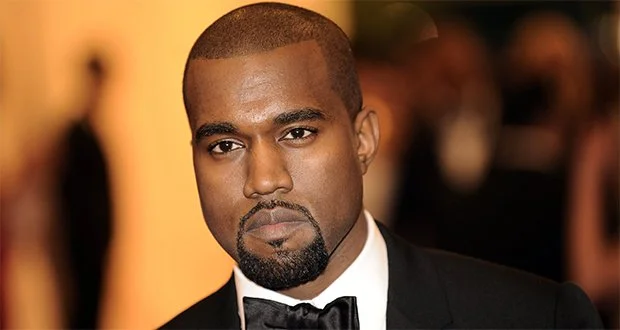
American rapper and billionaire Kanye West lands in Haiti
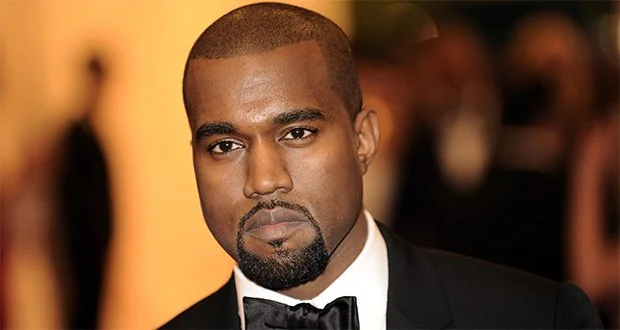
American rap star Kanye West landed in Cap-Haitien (Haiti) this Friday, September 25, to everyone's surprise.
Another big surprise for Haiti this week. Rapper and billionaire Kanye West, 43, has landed at Cap-Haitien international airport on Friday morning. Le Nouvelliste's Gérard Maxineau shared the news on Facebook, first via a post, then in a live video showing West entering the diplomatic lounge.
The President of the Republic, Jovenel Moïse, should meet the rapper and candidate for the American presidential election, in the country's second city, in the coming hours, according to Maxineau, reached by phone by Loop Haiti's newsroom.
https://www.loophaiti.com/content/american-rapper-and-billionaire-kanye-west-lands-haiti
For now, the journalist can not give us more details about the objective of this meeting or what will be the subjects of debate between the two characters.
But after their meeting, West and Moise should go to Labadee, one of the most known and visited beaches in the Nord department, then to Ile de La Tortue (Northwest), Maxineau told us.
After Naomi Osaka, who has come by surprise Monday for the filming of a Netflix documentary dedicated to her career, Kanye West is the second international star to visit Haiti in less than a week.
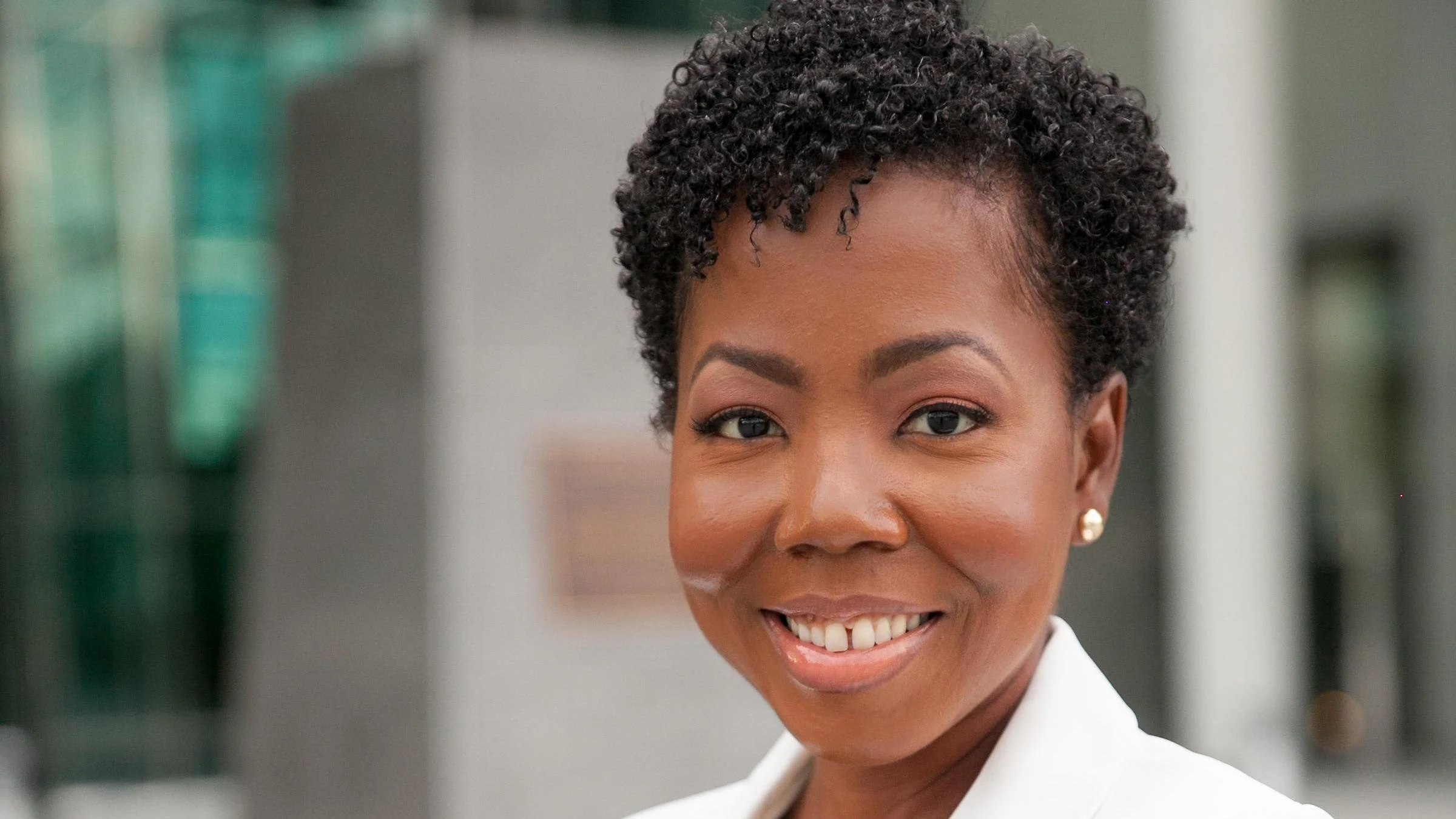
Today’s Faces of Sickle Cell Disease
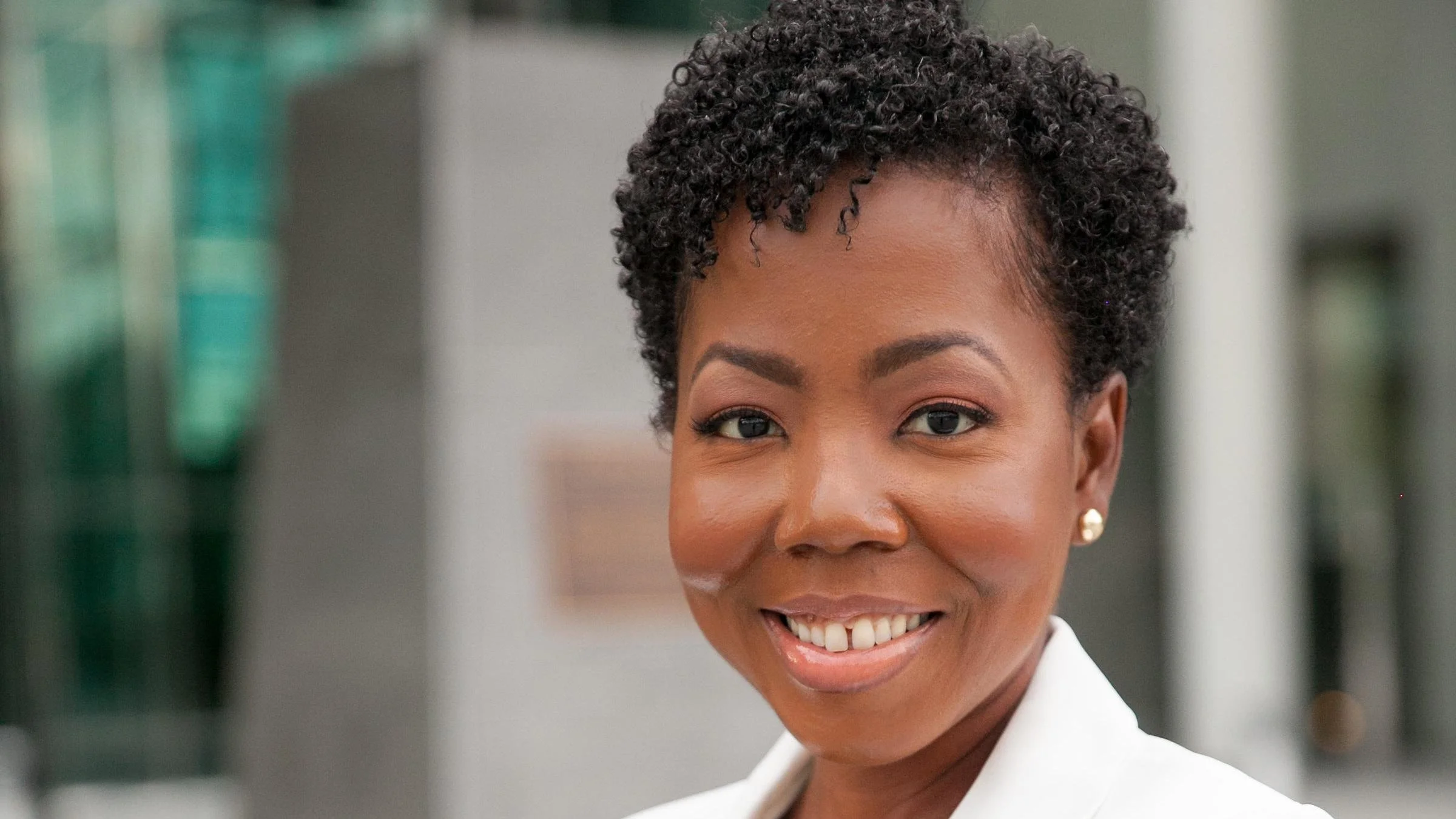
Lawyer, sickle cell patient, COVID-19 survivor
Her story: Natalie Jean-Baptiste, 42, has lived with sickle cell disease her entire life and has forged a successful career as a bankruptcy lawyer specializing in student loan debt. While recovering in March from hip-replacement surgery—the result of a long-term complication from her sickle cell disease—Jean-Baptiste also experienced a severe pain crisis that required multiple hospitalizations. A short time afterwards, she contracted COVID-19. She could not smell or taste anything. She developed a fever. She struggled to breathe. As her condition grew worse, doctors placed her on a ventilator, where she remained for two weeks.
“I never imagined I would get COVID,” Jean-Baptiste recalls. “I had been sick before with sickle cell, but this is the first time I was afraid I might not make it.” Months after being discharged from the hospital, Jean-Baptiste is now recovering at home with the aid of oxygen, oral steroids, and physical therapy.
Biggest challenge: “Having both COVID and sickle cell disease made me the sickest I’d ever been in my life. It’s a miracle that I made it.”
How she stays inspired: “The love of my friends and family motivates me and keeps me going. Also, I find joy and purpose in practicing law and providing debt relief to student loan borrowers.”
Her dream: “I would like the sickle cell community, including caregivers and advocates, to consider more holistic and natural ways to help manage symptoms along with traditional drugs. I think they are often overlooked, but it’s important to use diet and lifestyle changes to manage this disease.”
EDITOR’S NOTE: The U.S. Centers for Disease Control and Preventionexternal link recently announced that having sickle cell disease increases your risk for developing severe illness from COVID-19.
Steven Baboun, star sur TikTok
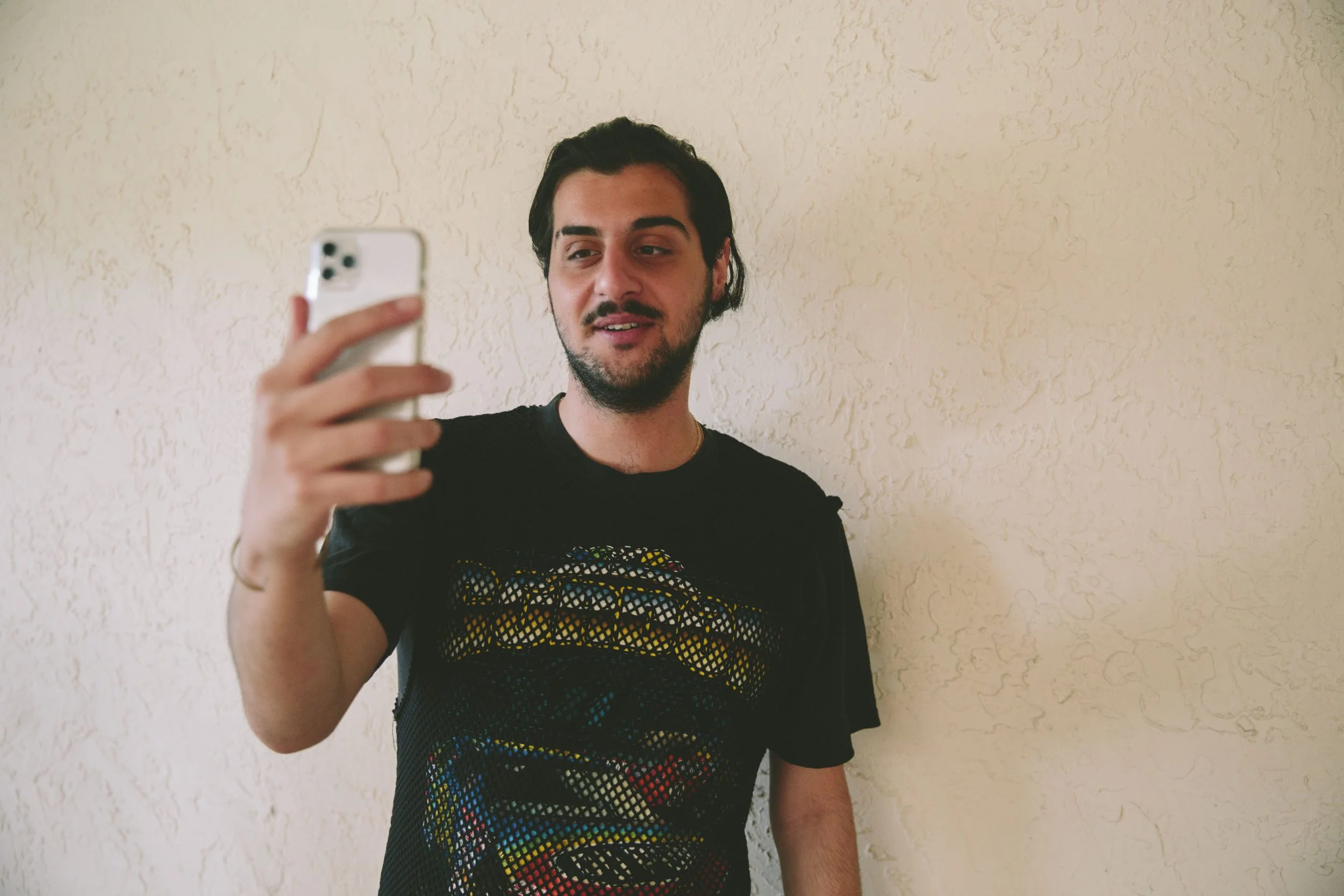
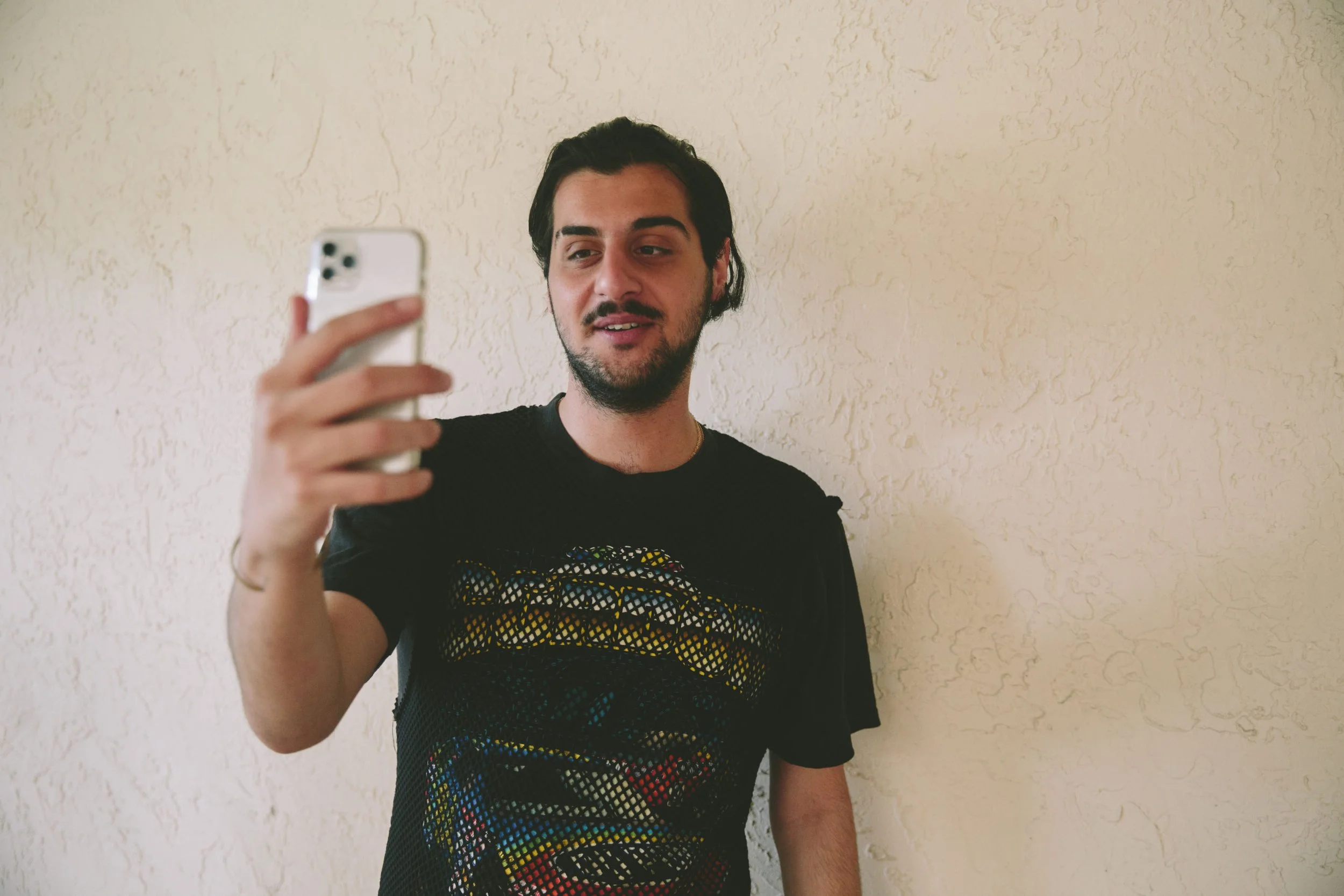
Steven Baboun, photographe engagé, explique que ses gags sur TikTok ne sont en fait qu’un prolongement de ses activités artistiques initiales. Avec un filter façon grande gueule (littéralement) comme seul artifice, Steven Baboun incarne tour à tour une « gran fanm » qui tente de planifier que la veille un voyage à Paris tandis que le billet est à « seulement » 2 000 dollars, une hôtesse de l’air antchoutchout d’American Airlines qui annonce l’arrivée imminente de l’appareil dans une zone de turbulences, ou encore un agent de l’immigration haïtienne particulièrement familier…
Son personnage principal, Marie-Claude, est inspiré de plein de personnes que la vie lui a permis de connaître. « C’est parfois une de mes tantes, une professeure du primaire, une amie de ma mère ou ma mère elle-même », confie Steven qu’on a présenté dans les colonnes de Ticket il y a deux ans comme un photographe à l’œil artistique. Il y aussi Chantal, l’amie souffre-douleur de Marie-Claude, un autre personnage plus subtil.
Si l’arrivée de Steven Baboun sur TikTok est récente, soit au mois de juin 2020, son contact avec l’humour remonte à plus loin. Dès 2016, pour amuser ses potes, il leur faisait parvenir en DM sur Snapchat des gags hyper-loufoques. Ces derniers, emballés par leur pertinence, l’encouragent à les ouvrir au grand public. Mais le jeune homme n’avait pas encore senti ce besoin.
...Mais c’était sans compter sur le coronavirus. Tout seul dans son appartement de New York, le confinement va l’affaisser mentalement. « J’ai perdu mon job. Je ne pouvais pas sortir. Je ne pouvais même pas regagner mon pays pour être avec ma famille. J’ai eu mon master en ligne… C’était loin d’être cool », nous révèle-t-il. C’est donc au fort de cette tempête que l’humour s’est pointé à l’horizon comme un rayon de lumière.
TikTok étant la hype de l’heure, il s’y embarque et très vite il se fait connaître. Avec 48 000 followers, ce n’est pas le fan base de Jason Derulo sur la plateforme, mais ce n’est pas rien dans le contexte haïtien. Si Steven ne s’entête pas à monnayer ses publications, des entreprises se dirigent pourtant vers lui pour lui demander de faire connaître leurs activités ou produits via son grand nombre de followers. C’est le cas de Lisa Loto, de la Maison Handal, entre autres.
L’artiste lance un épisode chaque deux jours en général. Au-delà de l’objectif de faire rire, il y a sa volonté de toucher des points qui lui tiennent à cœur comme les crises socio-politiques, la nonchalance de nos hommes politiques. Il est adepte du castigat rirendo mores (corriger les mœurs en riant). « Mon activité sur TikTok n’est pas parallèle à celle que j’ai en tant que photographe, c’en est plutôt un prolongement », précise-t-il.
Des comptes TikTok ou Instagram qu’il affectionne ? « Il y a celui de Zuzu Girl, mais aussi celui de Timoumoun », cite-t-il. Et la possibilité d'un stand-up un jour ? L'artiste répond par l’affirmatif tout en précisant qu’il se gardera de forcer le ton, d’aller trop vite. Pour le moment, sa plus grande satisfaction c’est de lire des commentaires de parents, enfants sur son sit-com. Il y en a qui lui disent qu’ils peuvent passer la journée à regarder l’ensemble des épisodes tandis que d’autres lui témoignent combien ça illumine leur vie… À tous ceux-là et à tous ses abonnés en général, Steven Baboun promet d’autres gags tout en leur demandant de toujours rester branchés à son compte !
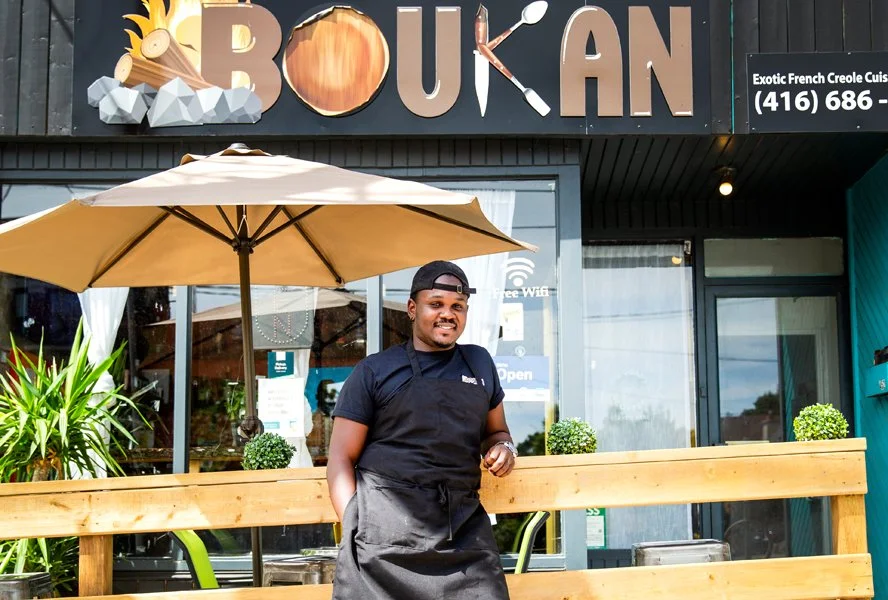
A Haitian Chef Reveals the Secret Ingredient to His Toronto Restaurant’s Success (Even During COVID)
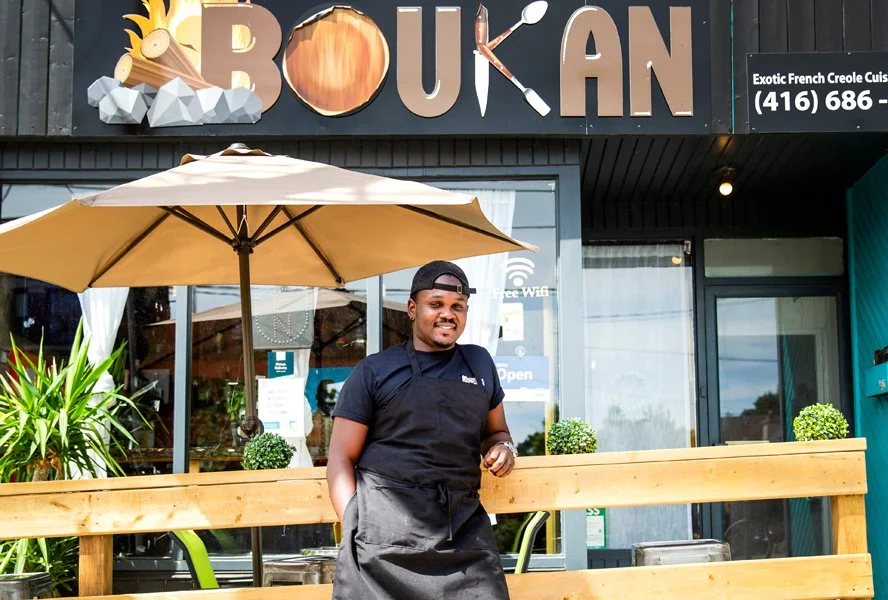
Like most great chefs, Marc-Elie Lissade jumped at the opportunity to fill a global food gap in a major metropolis. After leaving Haiti at age 11, Lissade spent some time living in the United States before setting down roots in Toronto in the hopes of opening his own restaurant. And that’s when, in December 2019, Boukan was born – a Haitian food joint offering French-Creole street fare.
“Street food works in Toronto because it’s open to many styles of cuisine,” he says. “And we don’t already have a lot of Haitian or Creole cuisine here.”
Lissade excels at Haitian comfort foods (think: deep fried and delicious). Boukan is a vibrant space packed with eye-popping colour located on Toronto’s Kingston Road. The walls, dedicated to the work of local artists and signatures left behind by satisfied customers, illustrate the importance of ancestral ties and community.
His passion for food comes from his close bond with his grandma, a bona fide chef in her own right. Growing up, it was she who taught him many of the homemade seasonings and recipes that make Boukan such a hot spot destination for foodies.
It’s hard to deny how Lissade’s attention to history, family meals and community have become the main ingredients to his restaurant’s success (FYI: he also has his own catering company called Black Apron Events and garnered the top award from 2018’s Taste of the Caribbean!).
A Place in History
Given his penchant for connecting with family through food, it comes as no surprise that Lissade turned to his ancestral roots when brainstorming a restaurant name – in particular, a groundbreaking moment in Haitian history.
The Haitian Revolution is widely considered one of the most significant moments in the history of the Atlantic World. It lasted for more than a decade, beginning in August 1791 before concluding in January 1804 with the self-liberated slaves exerting independence over French colonial rule in Saint-Domingue (now Haiti). The event bears the distinction of being the only slave uprising to result in a state led entirely by non-white rulers and former captives.
Prior to the revolution, enslaved Haitians would gather around a campfire (boukan) to shares stories, dance and enjoy food together. It’s that specific aspect – a community coming together – that ultimately inspired Lissade to take a page from his ancestors’ history book for the name of his restaurant. “After 1804, Haitians were [finally] able to celebrate,” he says. “For me, Boukan is our culture and it represents history and a place of celebration.”
Family Ties
If one were to map out Lissade’s career trajectory, from his catering company Black Apron Events to Boukan, it would start with his grandma. At only eight years old, Lissade was a chef in training, assisting his grandma with her catering company – running around grabbing the ingredients and cookware she needed. Even now, any reference to his grandma will take Lissade on a trip down memory lane.
“I remember every Saturday night we’d have fritay [pronounced free-tie, a general term for fried food] and griyo [deep fried pork]. We’d sit down and she’d tell us stories,” he recalls. “We always looked forward to that.” (Griyo also happens to be his favourite recipe to make with his grandma, which Boukan customers can find on the menu).
Every family has its own fiercely guarded kitchen secrets that are passed on through generations. When asked if there’s a specific tip or secret ingredient that his grandma taught him over the years, Lissade gives a reluctant laugh. “Yes. It’s really about the process of [prepping] the food,” he says. “She taught me to cook with three senses: smell, sight and texture. When you’re cooking, you’re always running around tasting different things, so your taste buds change. [Slowing down and paying attention to] those senses is what helped her become a better cook. Now, at 32, I understand why she was cooking that way.”

A Place to Gather
There’s a real sense of community woven into the very fabric of Boukan, from the rotating work by local artists featured on the walls to recipe-sharing with fellow chefs.
“I wanted the place to be open to everybody,” he explains. “We all get stronger through collaboration with others.” And that collaboration takes on many forms.
For starters, Lissade rotates the artwork featured in his restaurant roughly once a month to make room for new pieces and local talent. “I don’t want to go to a restaurant where the same artwork has been on the wall for 15, 20 years,” he says. “Yes, this is a restaurant, but it’s also an art gallery where I open it to all local artists in Toronto. People can purchase it and it is full commission to them. I don’t take money from it because I know how hard it can be – unless you’re a Picasso.”
Even the story behind one of Lissade’s favourite “secret ingredients” has a communal backstory. “I have a close friend who lives in Miami and she’s a Haitian chef,” he says, citing her influence on one of the most popular recipes he’s crafted for the menu. “When I was opening Boukan I thought it’d be a crazy idea to offer a vegan burger. We [Haitians] love meat, but I wanted to be different.”
The result was the wildly popular Burger Boukanye featuring a plant-based patty, pickled onions, vegan Creole mayo and, the secret ingredient, djon djon – a rare black mushroom only found in northern Haiti. “I’m not vegan, but I thought it was so good,” Lissade says of his collaboration with his friend. “The seasoning in it is the one I learned from my grandma, so you can’t find it anywhere else.”
As for the global pandemic that shuttered the vast majority of businesses around the world, there was no way to predict the fallout for a restaurant as young as Boukan. “I was very worried,” he says. “We’re not even a year old, so when COVID happened I didn’t know what to do. We weren’t eligible for help from the government because we’d only been open for a few weeks last year.”
Enter: the very community he’s sought to bring together through food. “Thank God for the support of the Haitian community and our neighbours – they supported us like there’s no tomorrow. If it wasn’t for them, I think we would have been closed by now.”
To learn more about Boukan Owner and Executive Chef Marc-Elie Lissade, tune into the @AmexCanada #ShopSmallStories Twitter episode here. The Twitter Original series was created in partnership with American Express Canada in support of their Shop Small program, a national movement, backed by a Cardmember offer, to encourage Canadians to get behind their local small businesses and help revive communities.

Prominent lawyer in Haiti is shot and killed at his home

PORT-AU-PRINCE, Haiti — A prominent lawyer in Haiti was shot and killed at his home, police said Saturday.
Monferrier Dorval, head of the bar association in the capital, Port-au-Prince, was attacked on Friday night, police spokesman Garry Desrosiers said. He said an investigation was underway.
Haitian President Jovenel Moïse denounced the killing, saying on Twitter that it was a “great loss for the country.”
Prime Minister Joseph Jouthe said Dorval’s killing followed attacks on other Haitian citizens in recent days and that authorities will work to bring the perpetrators to justice.
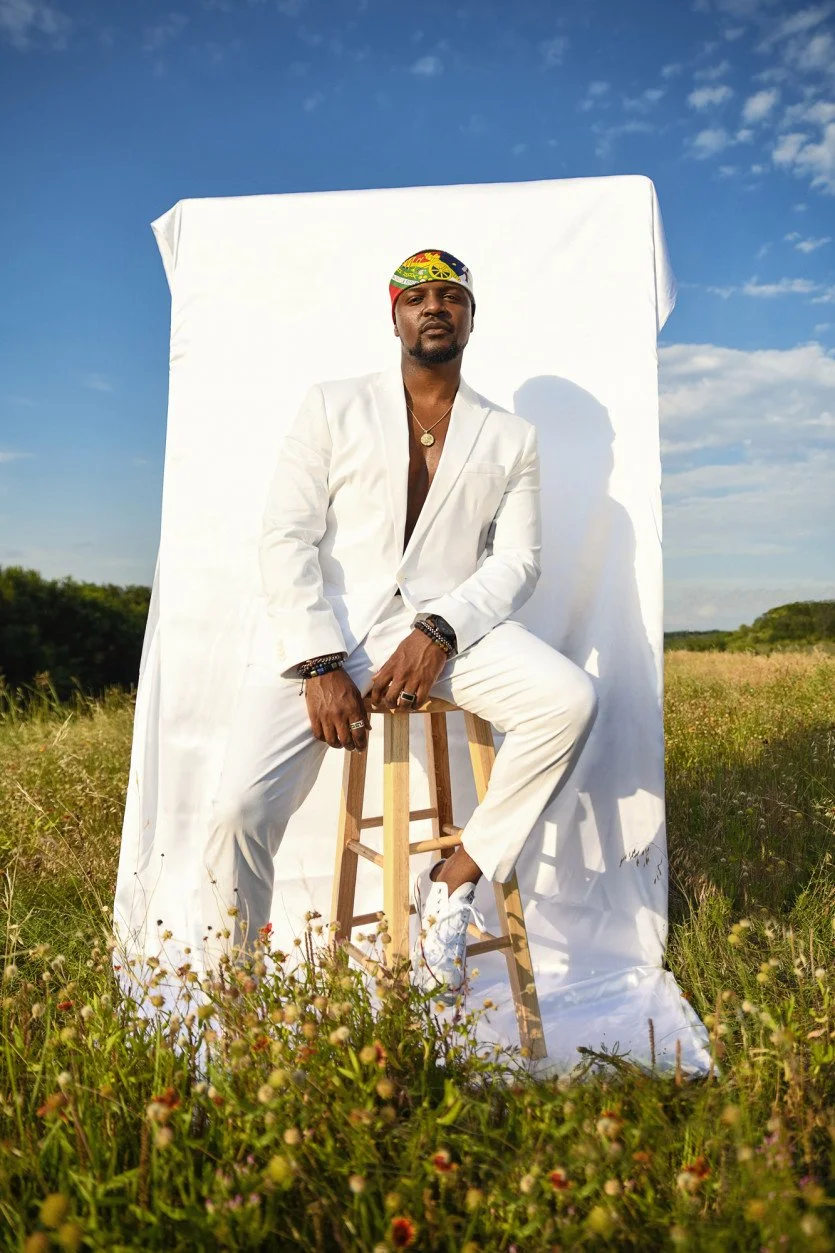
VENNY ETIENNE ON HIS NEW COLLECTION AND DESIGNING FOR BEYONCÉ’S “BLACK IS KING”
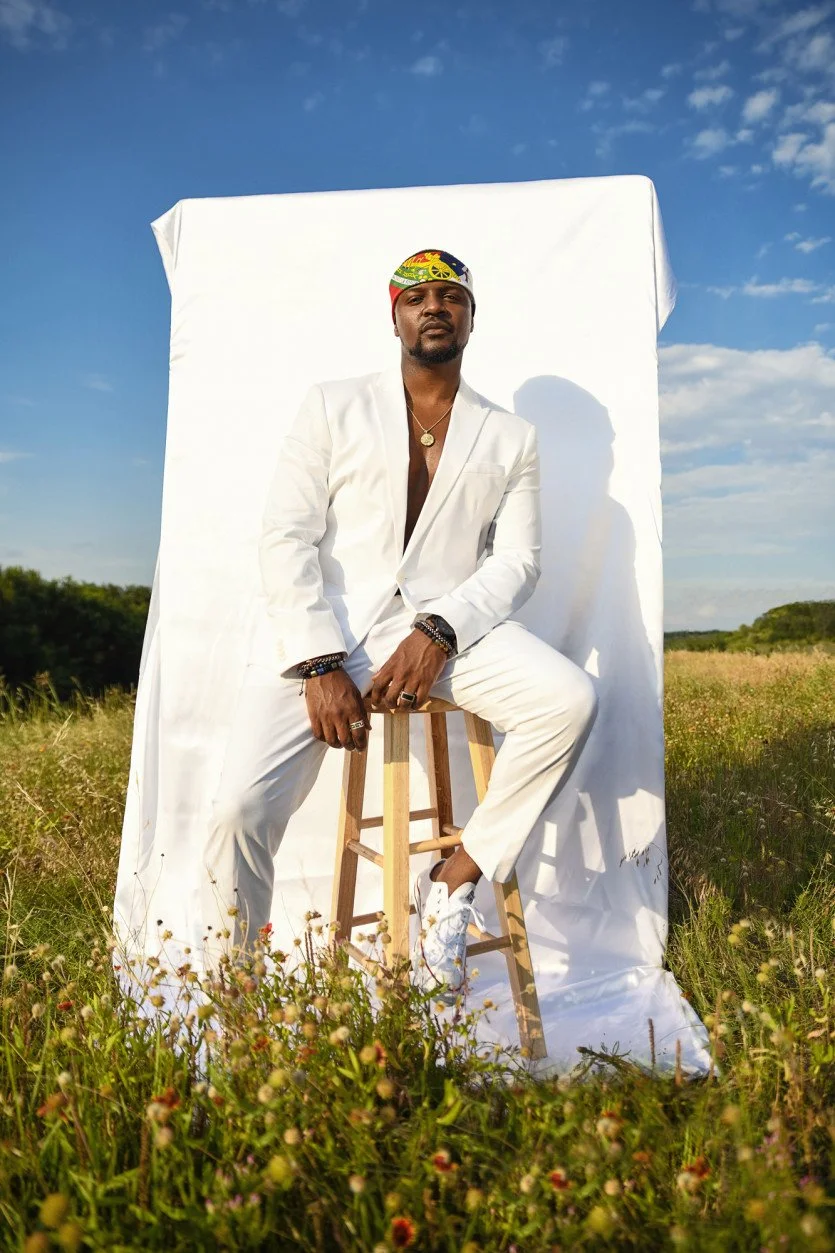
We can’t get enough of his edgy yet feminine designs.

Manifest has become a trendy word lately, sparking people to almost believe their dreams into existence. Fashion designer Venny Etienne is proof that if you combine that with hard work, it may actually work. The young Black creative set his sights on Beyoncé years ago, posting on Facebook in 2015, “(Speaking in existence) Beyoncé WILL wear one of my garments by 2020.” Right on target, you can catch Beyoncé in her “Already” video donning a floral jacket that looks like a cross between armor and a sundress, designed by Etienne himself.
Born of Haitian descent, Etienne grew up in Brooklyn designing clothes for church fashion shows. He counts Alber Elbaz, formerly of Lanvin and Tom Ford, as inspiration, reminiscing on watching their fashion shows on Full Frontal. “I was amazed with the effect of what garments can do and how you can have a ‘moment’ with clothes,” says Etienne. Post fashion school, he studied under haute couture experts in Paris and Milan-based designer and pattern maker Shingo Sato.
Fast-forward a few years, and after a stint on Project Runway that landed him in the final seven, Etienne has designed for clients including Cardi B, Niecy Nash, and most recently, Beyoncé. He debuted his latest Collection #003 at New York Fashion Week, sponsored by Essence magazine, earlier this year. His line LEVENITY emphasizes the contrasting nature of modern women who are simultaneously strong yet soft. The coat Beyoncé wore, which actually inspired his current collection, Etienne describes as “the summary of [his] aesthetic.”

Can you tell us a little bit about your career trajectory?
“I was born and raised in Brooklyn, New York. My parents are from Haiti and they migrated here. I grew up in the church, and really that’s where I started with fashion. The church that I went to, we would have fashion shows and I was a part of creating the shows. The pastor would give us funds, and we would purchase things from, let’s say, H&M that were of a modest point of view because, you know, it’s a church. We would be our own models, and once the fashion show was over, we would donate the clothes. The organizer or the one who created the show asked who amongst us wants to go ahead and do their own clothes. I knew that I kind of wanted to do something because I would look at all these fashion shows and all that stuff, so I volunteered. My mom and I went to the Salvation Army and bought a couple of sports jackets and blazers—we would deconstruct them, add some fabrics to the lapel or to the pocket. We would make these paper-bag-waist skirts, which was in at the time. The response from the audience kind of made me feel like I could actually make this into something that could be more long-term.”
What would you describe as the aesthetic of your collection?
“Sophisticated and edgy are always the two words that pop up in my head, in terms of the type of clothes that I like to create. I love architectural lines. I love sophisticated structure. I love outerwear. I love wovens. I love sportswear and separates for a strong woman who has a nice, soft touch.”
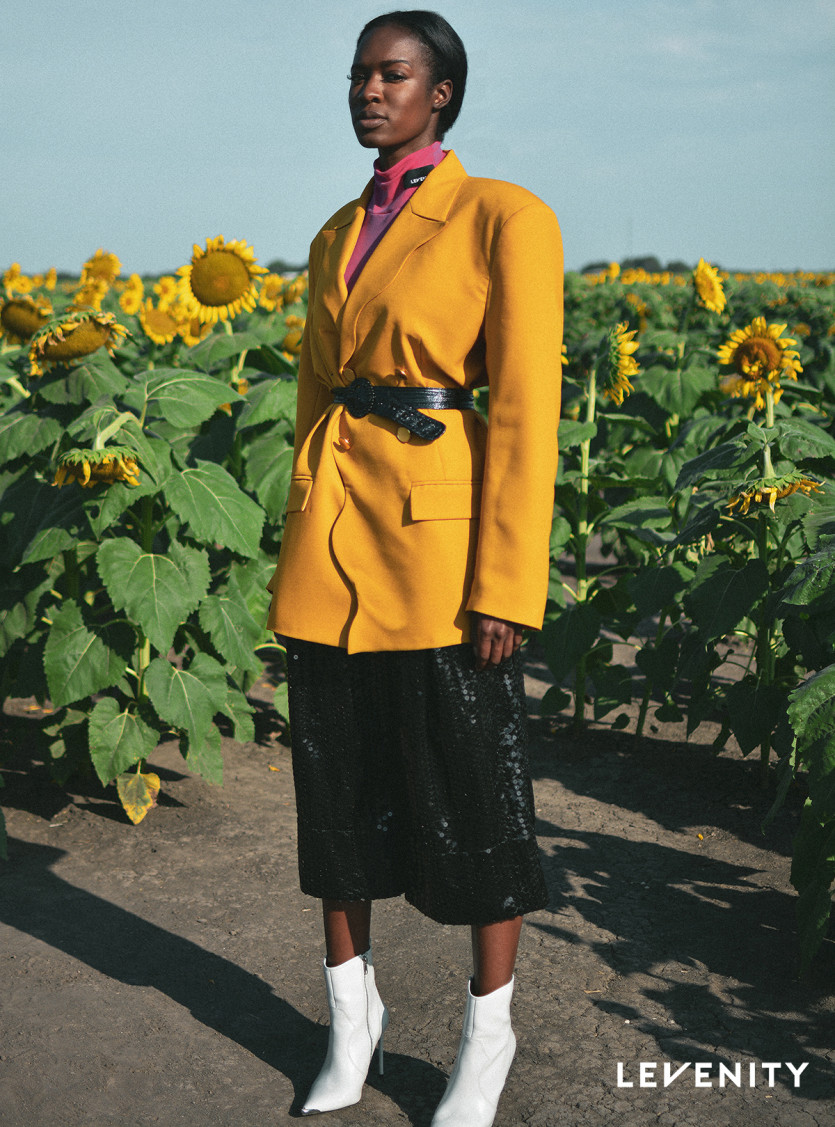
Where did the name LEVENITY come from?
“So, my name is Venny Etienne. LEVENITY is really just a mixture of my name intertwined. It has all the letters of my name except the L. The L makes it feminine. It’s basically just saying who I am encoded in the brand.”
So Beyoncé’s stylist calls you and says she wants a coat. Where did you go from there?
“I submitted a couple of sketches to see where Zerina was in terms of what she wanted. She said she wanted something strong, something with an exaggeration, whether it’s the hips, the shoulder, the arm. I’m an ’80s baby—I love the ’80s. A strong shoulder is always great. Then it was time for me to source what fabrics. Zerina said something floral, something in the lavender field. It was hard because I’m sourcing here in Dallas. New York or L.A. are much more accessible in terms of choices, but I only had like, a week. This is how fashion is—you only have like, a couple of hours. There’s no excuses.
“When I was constructing it, I still was kind of shy in terms of how extended she wanted the shoulders, but then she was just saying, ‘No, we need it bigger.’ So I kept it bigger. That’s when I reached out to a good friend of mine, Garo, who was also on Project Runway. He is much more knowledgeable in terms of garments that have this understructure that’s outside of the normal figure. It took a total of 68 hours for me and my team to complete. Those hours in the beginning, I was up 48 of those hours—like, I didn’t sleep. I used two five-hour energy drinks. I was listening to Beyoncé the whole entire time, and it was good.”
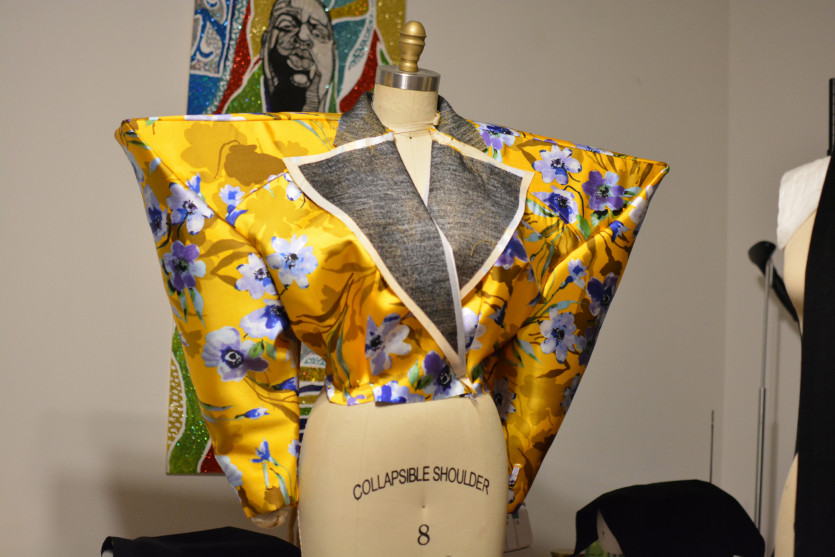
The contrast of the purple and yellow in the coat’s design is so interesting:
“If I had to summarize my aesthetic, it’s that coat to [a] T. In the beginning, when I first started as a designer, I didn’t really understand the power of color. A lot of my collections, they’re almost all black. I didn’t want to delve into the color part of creating looks because I didn’t want to mess it up. Now, for the past two years, I’ve been playing with color. I’ve been playing with texture. This particular coat is like the summary of my aesthetic because it’s a strong shoulder, it’s a very flirty, feminine flounce bottom, and it’s a floral print, but whoever wears it still feels strong, still feels feminine.”
What did it mean to see Beyoncé in one of your pieces?
“Oh my gosh—I had a couple of crying moments, of course. Any designer would. I’m a Christian, so I’m a very firm believer in faith and seeing things through. We had to submit garments [for consideration], just like when Jason Wu was waiting to see who Michelle wore for the inauguration ball. He didn’t know if she was going to wear it, so he was just waiting. That was me, too. I’m pretty sure every designer experiences that. It was amazing to realize that they aired it—that’s when the tears just started flowing. If you look at any articles that I’ve always been on, when someone asks who is the person that you want to dress, it was always Beyoncé. Always Beyoncé.”
How did your time on Project Runway prepare you for your current experiences?
“Project Runway was definitely a learning process for me. It was also amazing. The reason I loved it so much was because it showed me discipline. It showed me how I could really push myself. When you think you have all the time in the world, you use all the time in the world. But when you don’t have all the time in the world, you’ve got to get shit done. I really loved the relationships that I was able to get from the show. So me and Elaine, if ever I need advice or if I need to reach out to someone, she’ll sometimes even help me and reach out to that person for me. Brandon Maxwell, we communicate. Also, all of the contestants, we have this group text where we always check in on each other. It’s just great to have that support system, especially in this industry where it’s kind of hard because everyone’s busy trying to get there, you know, that we could have this little family.”

Barcelona's U.S. youngster Konrad de la Fuente signs contract extension until 2022

United States youth international Konrad de la Fuente has signed a new contract with Barcelona, committing his future to the Spanish champions until 2022.
De la Fuente's new terms include a €50 million release clause that will rise to €100m if he is promoted to the first team before the expiration of the deal.
He will form part of the club's B team next season, who are playing in the third tier of Spanish football but could be promoted to the second division later this summer.
They are preparing for the playoffs, which take place in July across several locations in the south of Spain. De la Fuente, who started the season with the under-19s, is already part of the squad.
Barca had to work hard to convince the young winger to stay at Camp Nou after a number of clubs showed an interest in him with his contract set to expire this summer.
De la Fuente, 18, looked set to move to German side Hertha Berlin in December, but Barca managed to persuade him that he would get chances to progress at the Catalan club.
The Miami native moved to Barcelona with his parents when he was 10 and was incorporated into Barca's La Masia academy in 2014.
He has since progressed through the youth teams and has already made five appearances for the B team. He scored the winning goal in February in a 2-1 win against AE Prat.
His development has seen him called up to train with the first team on occasions, where he has brushed shoulders with six-time world player of the year Lionel Messi.
"It's not that I'm used to [seeing Messi now] but I still get a little starstruck [when I see him]," De la Fuente told ESPN in April.
"The first time I trained with the first team, I got into the locker room and I turned to go into it and run into someone. And I looked and I see it's Messi.
"I said, 'Hi,' and shook his hand and everything. And then as I walked past him I said, 'Oh my God, I just [ran into] Messi.' But there was just that moment and that's it. And then it was just normal."
De la Fuente has represented the U.S. youth teams since under-16 level. He was part of the side that reached the quarterfinals of the U20 World Cup in 2019, beating France in the round of 16 before losing to Ecuador.
He has set his sights on not only making the senior squad in the future, but forming part of a generation that can lead the country to World Cup success.
"My goal with the national team is to win a World Cup," he said in April. "That's my personal goal. Everyone has their own, and for me, it's to win a World Cup.
"I definitely think it can happen. If we continue to grow in our clubs in Europe, I think we can do something special."
Paul Beaubrun's Album 'Rasanbleman (Red Moon)' Is A Celebration Of Haitian Music
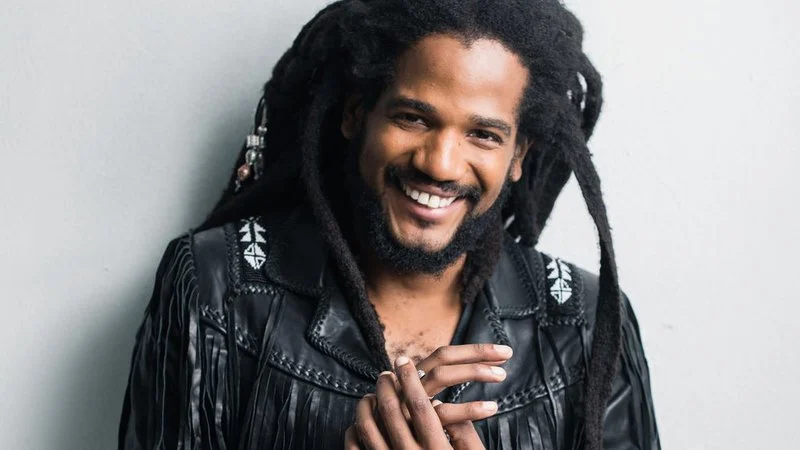
New York-based singer-songwriter Paul Beaubrun was born into the legendary musical family behind Boukman Eksperyans, one of Haiti's most famous bands. But in recent years, Paul has also made a name for himself as a solo artist thanks in part to two stellar albums under his own name and through collaborations with artists like Jackson Browne, the Preservation Hall Jazz Band, Jenny Lewis and Arcade Fire.
Paul Beaubrun's latest record, released in April, is called Rasanbleman (Red Moon). That's Haitian creole for "a large gathering." It's a reference to the group of nearly 30 musicians and artists who got together for the album's recording sessions in Jacmel, a picturesque beach city on the southern coast of Haiti. The group included some of Paul's family members and other celebrated Haitian artists like DJ Michael Brun, pop star J Perry and up-and-coming MCs TROUBLEBOY HITMAKER and Kanis.
The 10 joyful and ecstatic studio recordings on Rasanbleman are steeped in the sounds of rock and reggae and punctuated with Haitian drums and rhythms. For the World Cafe, Paul tells the cosmic story behind the album's parenthetical subtitle, Red Moon, talks about the Haitian musical terms he wants listeners to learn and suggests that the current period of crisis and self-isolation is actually a time for gathering together.
"You can rasanble," Paul says. "You can get together spiritually. You can get together mentally. This is the time to get together actually, this is the time to look at the real relationship we have with ourselves and the relationship we have with others, with people that we love, people that we appreciate. Let's look at these relationships and try to make them better."
KANAVAL: Haitian Rhythms and the Music of New Orleans has been supported by The Pew Center for Arts & Heritage.

NJ Gov. Phil Murphy Nominates Fabiana Pierre-Louis To The State’s Highest Court

On Friday, NJ Gov. Phil Murphy will announce his first pick for the state’s Supreme Court since taking office, and it will be a historic one.
Murphy will nominate Fabiana Pierre-Louis, a partner at Montgomery McCracken Walker & Rhoads, to be the next associate justice of the state’s highest court. If the state Senate confirms the nomination, Pierre-Louis will be the first Black woman to ever sit on the court.
Pierre-Louis, 39, has not only worked in private practice, but has also worked as a federal prosecutor with the Department of Justice for years.
“It’s hard to put into words the honor that it is to be nominated to the highest court in the state of New Jersey,” Pierre-Louis told ESSENCE. “My goal, particularly as a prosecutor, was always to pursue justice and fairness in the law…It’s just a remarkable opportunity to continue in the very proud tradition of this state’s Supreme Court.”
The daughter of immigrants from Haiti, and a first-generation American, Pierre-Louis believes she will bring a unique perspective to the court if confirmed.
“I am a Black woman. I am the child of immigrants from Haiti. I am someone who is a first generation American citizen here in this country, [the] first person in my family to attend law school, to become a lawyer, someone who’s also lived in a variety of inner cities throughout my life, beginning with my early childhood in Brooklyn, then followed by the remainder of my childhood in Irvington, New Jersey,” she said. “All those experiences bring a unique perspective to the Court that currently is not there.”
To the governor, the nomination was a no-brainer, given his own belief that a judiciary should reflect the diversity in the state.
“A core tenet of my Administration is a commitment to an independent, fair-minded judiciary that reflects the immense diversity of our great state,” Murphy told ESSENCE. “As a first-generation American, Fabiana brings both a sharp legal acumen and the perspective of her own past that will greatly benefit the proceedings of our state’s highest court.”
“New Jersey is a very diverse state,” Pierre-Louis echoing the governor’s statements. “It is extremely important for the judiciary and other government bodies to be a reflection of the community that they serve. So, having people of diverse backgrounds and diverse perspectives sitting on the highest court in these states certainly inspires confidence that the court will rule and have these diverse perspectives in ruling on extremely important cases.”
Pierre-Louis’ own work speaks volumes for her. She graduated from Rutgers Law School with High Honors before going on to clerk for Justice John Wallace Jr. during the 2006-2007 Supreme Court term. From there she went to Montgomery McCracken for about three years, before moving to the U.S. Attorney’s Office for the District of New Jersey in 2010. In 2012, she moved to the Trenton office, and four years later she would be the first woman of color to be Attorney-in-Charge. In that role, she supervised all aspects of criminal matters handled by the office, while also investigating and prosecuting her own caseload, inclusive of matters from child exploitation offenses, to national security matters, to public corruption matters and more.
While in Trenton, Pierre-Louis helped to create the Trenton Reentry Court, which provides assistance to returning citizens to help reacclimating to society.
In 2018, she became the first woman of color to serve as Attorney-in-Charge of U.S. Attorney’s Office in Camden, later returning to private practice in 2019.
“My experience speaks volumes with regard to my ability to take on this position and to successfully execute the duties of an associate justice of the Supreme Court of New Jersey. I’ve practiced in private practice at a law firm doing civil work. I’ve also been a federal prosecutor,” Pierre-Louis said. “I’ve supervised a wide variety of cases and gained the respect of not only the judiciary but of my colleagues and even defense attorneys that I have worked on cases with. And I think my integrity, my open-mindedness, and my ability to communicate well with others is something that has helped me succeed throughout my career.”
If confirmed, Pierre-Louis will be the first Black judge to sit on the court since 2010, when then-Gov. Chris Christie stirred controversy and outrage in the state after failing to renominate then-Justice John Wallace Jr. to a tenured term.
In the New Jersey State Supreme Court, a justice is initially confirmed for seven years. After those seven years, once a justice has served with good behavior and made sound decisions (regardless of who may or may not agree with said decisions), they are typically renominated and reconfirmed for a tenured term, which automatically expires once the justice turns 70, regardless of if that justice was initially chosen by a governor of a different party.
Wallace has been the only justice that has been denied tenure since the state Constitution was adopted in 1947. At the time, he was the court’s only Black justice (and only the second Black person to ever sit on the court), and his tenured term would have automatically expired when he had reached 70 in less than two years.
The fallout was swift, and Christie’s Judiciary Advisory Panel all resigned en masse to protest the then-governor’s decision to replace Wallace. Democrats balked, with the Democrat-led senauntil Justice Walter Timpone was confirmed and sworn in 2016.
It is Timpone’s seat that Pierre-Louis will fill if confirmed, as the justice will reach the mandatory age of retirement in November.
Pierre-Louis’ nomination comes at a time when the nation is in turmoil and many have flooded to the streets demanding justice for Black Lives and accountability from the police, but Murphy stressed that his selection did not come as a result of the current national discourse.
“In addition to her esteemed legal career, Fabiana’s humility, empathy, and character are all traits that make her well-suited to become the first Black woman and the next Associate Justice to serve on New Jersey’s Supreme Court,” Murphy said in a statement.
“I have not chosen to nominate Fabiana because of the current national discussion around race. However, given the challenges which are being brought to the forefront of our society, and the questions which will undoubtedly rise to reach our Supreme Court – core issues of socioeconomic equality and equity – there is no better meeting of an individual and the times,” he added.
Pierre-Louis told ESSENCE that she seeks to be a “fair, open-minded” justice, if nominated.
“I certainly believe that I would…have the ability to listen to all arguments from all sides and make a determination after having done so and looked at the facts and the law before me to make determinations about whether I believe there was an error on the lower court below or not,” she said.
“I think the New Jersey Supreme Court is a perfect model of a very strong court in this country that has historically been very independent,” she added. “I think the role of a Supreme Court justice is to review the cases and ensure that fairness and justice results no matter what the political atmosphere is at the time.”
By: BY BREANNA EDWARDS for Essence.com | June 5, 2020


The 22-year-old Japanese tennis player racked up $37 million in earnings in the past year, more than any other female athlete in history.
Naomi Osaka was only a year old when Serena Williams won her first Grand Slam title in 1999. Nineteen years later, Osaka beat Williams at the U.S. Open final to win her first Grand Slam. It was one of the most controversial matches in Open history, involving three code violations called against Williams. Now the 22-year-old ace has beaten her legendary rival once again, this time for bragging rights as the highest-paid female athlete in the world.
Osaka earned $37.4 million the last 12 months from prize money and endorsements, $1.4 million more than Serena, setting an all-time earnings record for a female athlete in a single year; Maria Sharapova previously held the record with $29.7 million in 2015.
Osaka ranks No. 29 among the 100 highest-paid athletes while Williams is No. 33. It’s the first time since 2016 that two women have made the ranks of the 100 highest-paid athletes, with the full 2020 list set for release next week.
“To those outside the tennis world, Osaka is a relatively fresh face with a great back story,” says David Carter, a sports business professor at USC’s Marshall School of Business. “Combine that with being youthful and bicultural, two attributes that help her resonate with younger, global audiences, and the result is the emergence of a global sports marketing icon.”
The ascension puts an end to a decisive winning streak for Williams, who has been the world’s highest-paid female athlete each of the past four years, with annual pre-tax income ranging from $18 million to $29 million. The 23-time Grand Slam champion has collected almost $300 million during her career from endorsers that have swarmed the 38-year-old star.
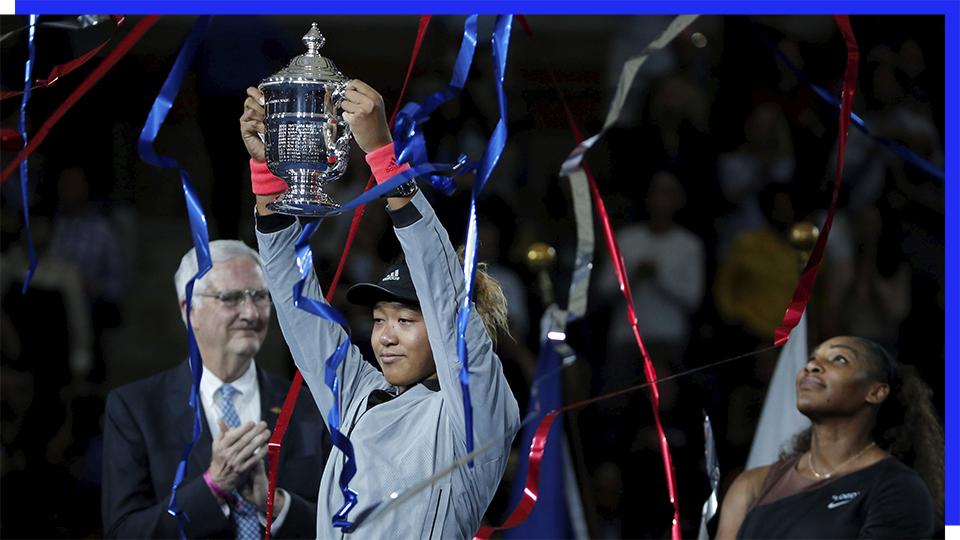
Osaka’s rise to the head of the charts was a perfect convergence of several factors. She first proved herself on the court, with back-to-back Grand Slam titles at the 2018 U.S. Open and the 2019 Australian Open. That plus her heritage—a Japanese mother and a Haitian-American father—helped separate her from the pack; at only 20 when she won her Open title, she had a cool factor and an engaging personality.
Osaka’s roots are crucial to her endorsement stardom. She was born in Japan. When she was 3, she and her family moved to the U.S., settling on Long Island and then heading to Florida; her older sister, Mari, also plays on the pro circuit.
She turned pro in 2014, a month before her 16th birthday. She cracked the WTA’s top 40 in 2016 and won her first title in March 2018 at Indian Wells. In the 12 months that followed, she became the first Japanese player to win a Slam, and the first Asian tennis player ever to be ranked No. 1 in the world.
Osaka held dual citizenship growing up but made the wise choice to represent Japan ahead of the Tokyo 2020 Summer Olympics, now postponed to 2021. The decision made her an even hotter commodity for Olympic sponsors, like Procter & Gamble, All Nippon Airways and Nissin, which signed endorsement deals with Osaka to use her around marketing for the Games. She is expected to be one of the faces of the Olympics, which had triggered unprecedented levels of excitement among the Japanese public before the coronavirus outbreak.
A Decade Of Highest-Paid Female Athletes
Tennis has been a winning strategy for the highest-paid female athletes. Before Naomi Osaka arrived on the scene, Maria Sharapova and Serena Williams were the top-earning women of the decade, holding the top spot for five and four years, respectively.
The last top-earning female athlete outside of Williams and Sharapova was Serena’s sister Venus in 2003. Tennis remains the only route for women to rank alongside the top-paid male sports stars. Sharapova, Li Na, Serena Williams and now Osaka are the only women to rank among the 100 top earners in sports since 2012. The highest-paid female athlete every year since Forbes started tracking the data in 1990 has been a tennis player, with Steffi Graf and Martina Hingis the top earners for most of the 1990s.
Tennis players are walking billboards in the only major global sport where men and women have some level of equality in their paychecks, thanks to similarly sized audiences tuning in to watch tournaments. Prize money at the four Grand Slam events has been even since 2007, although men still earn more at lower-level tourneys.
The demographics of the tennis fan make sponsoring top players attractive for brands. At the U.S. Open last year, attendance skewed in favor of women by a ratio of 56 to 44, a rarity at big-time sporting events; 78% held at least a bachelor’s degree versus 35% for the U.S. overall; the average household income was $216,000. This is a group with significant disposable income, ready to buy apparel, sporting equipment, cars, watches and financial services.
Steering Osaka’s brand is powerhouse tennis agency IMG, which leaned on its history with breakout female tennis stars when Osaka started blowing up, having represented Sharapova and Li. Stuart Duguid is her lead agent at IMG.
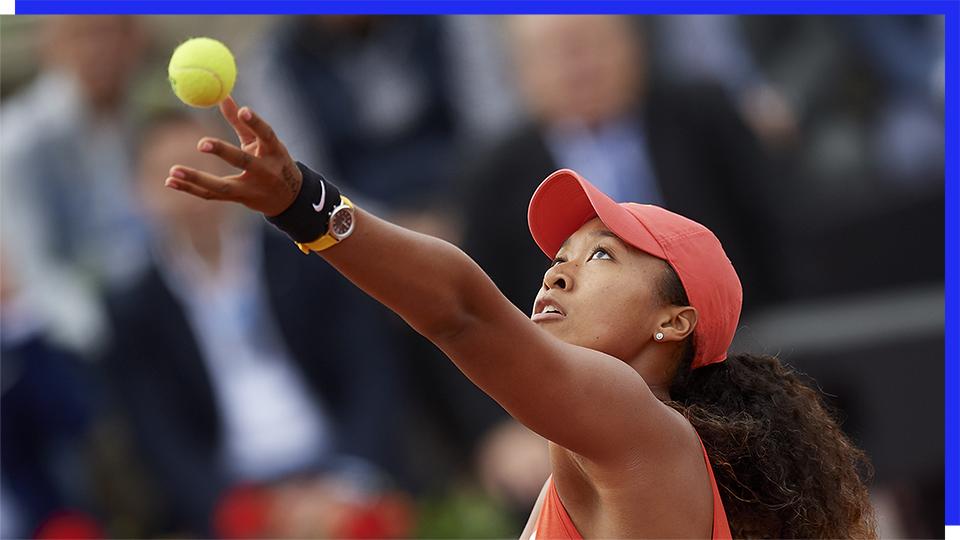
The apparel deal is almost always the biggest endorsement for tennis stars, and Osaka’s timing was perfect there as well as she hit the open market just after winning two Grand Slams. It triggered a free agency bidding war between Nike and Adidas—her previous apparel sponsor. The Swoosh emerged on top and paid her more than $10 million last year in an agreement that runs through 2025.
Osaka secured an extremely rare but lucrative provision in her Nike contract. The sportswear giant always requires its tennis players to be clad in Nike gear from head to toe, without any other logos on their shirts or hats. This is lucrative real estate for marketers because cameras focus closely on the player as they serve or get set to return serve.
Nike never made an exemption for Williams, Sharapova, John McEnroe, Andre Agassi or any of the other marketable tennis stars in its stable. The only exception until last year was China’s Li; Osaka became the second, thanks to massive leverage with Sharapova headed for retirement and Williams turning 39 this year. Her “patch” deals are with All Nippon Airways, MasterCard and ramen noodle maker Nissin Foods.
Nike plans to launch an Osaka streetwear line in Japan in the fourth quarter, featuring hoodies, leggings and shirts, as well as a new collection each season. There will not be any tennis apparel.
Osaka now has 15 endorsement partners, including global brands like Nissan Motor, Shiseido and Yonex, whose tennis racquets she has used for more than a decade; almost all are worth seven figures annually.
Sharapova was 17 when she defeated Williams to win the 2004 Wimbledon crown. IMG quickly mobilized to lock up lucrative long-term deals for the Russian, who ranked as the highest-paid female athlete for 11 years before injuries and a suspension for taking a banned substance dented her earnings.
IMG got an education on marketing a female Asian tennis star with China’s Li. She became the first Grand Slam singles champion from Asia, man or woman, when she captured the 2011 French Open at age 29. IMG quickly secured seven multimillion-dollar deals, pushing her off-court earnings from $2 million to $20 million. She challenged Sharapova as the sport’s top earner until her retirement in 2014.
IMG used its expertise in Japan with Kei Nishikori, who has never won a Grand Slam but is the most successful Japanese male player ever, resulting in an endorsement portfolio worth $30 million a year.

Sharapova, Li and Nishikori paved the way for Osaka’s marketing breakthrough. “We were fortunate to have a very sophisticated office in Tokyo that already had the experience with Kei,” IMG’s head of tennis Max Eisenbud told Forbes last year. “The relationships in that region are important.”
With plenty of endorsement cash, Osaka partnered with several brands last year, with significant equity components, including emerging sports drink BodyArmor and Hyperice, which makes recovery and movement products.
BodyArmor marketing exec Mike Fedele says Osaka was one of the inspirations for its “Only You” ad campaign launched this week. “Naomi is fiercely dedicated to perfecting her game on the court and a huge part of that is what she does off the court with her training, nutrition and hydration,”he says.
“I’m really interested in seeing a young business grow and adding value to that process,” Osaka told Forbes last year. “I tasked my team with finding brands that align with my personality and my interests.”
Brands are lining up to get into the Naomi Osaka business.