

Over the Line: Haitian and Dominican Artists Team Up for Exhibit

 . . .The exhibit features 40 pieces from 19 artists, and is split into three sections. The first examines the history of the island, the second looks at the border area between the two nations, and the last is a joint multimedia project by Dominican-American artist Scherezade Garcia and Haitian-American artist Vladimir Cybil Charlier. Their section, titled “Memories of a Utopian Island and the Future,” features an animated video and an installation exploring resistance and race.
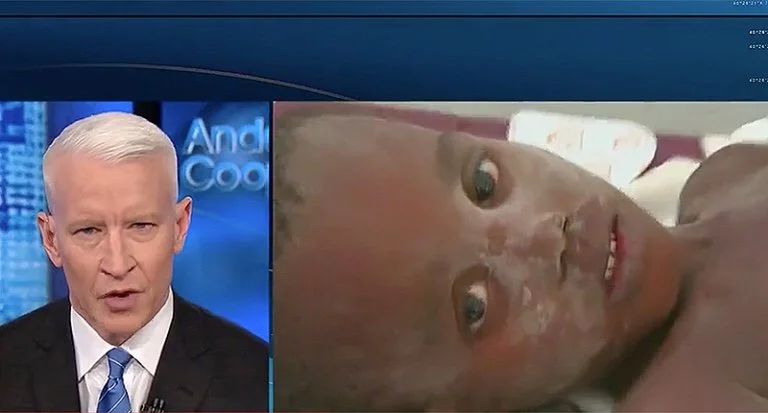
Anderson Cooper breaks down while defending the dignity of Haiti: ‘A dignity many in this White House could learn from’
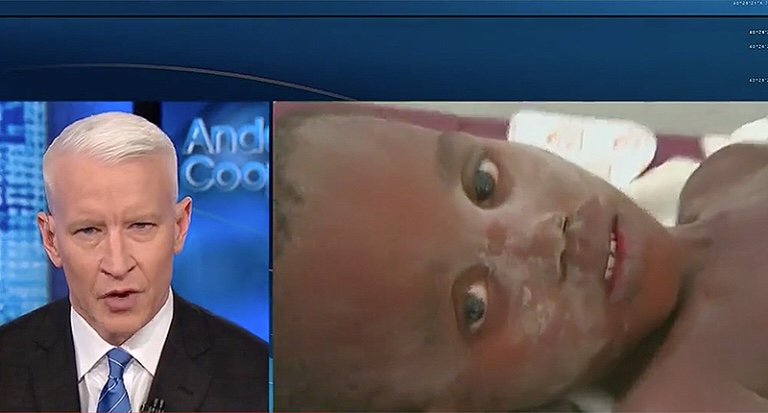
In a commentary about the remarks President Donald Trump made about the people of Haiti, Anderson Cooper spoke about those he encountered while covering the earthquake in Haiti in 2010.Cooper talked about the way people slap your hand when they shake it. “They look you in the eye,” Cooper said. He talked about the heart and soul of a people determined to overcome the worst moments of their lives.eople dug through rubble “with their bare and bloody hands to save complete strangers, guided only by the cries of the wounded and the dying,” Cooper said.“I was there when a young girl named Bee was trapped in rubble for nearly a day was rescued by people who had no heavy equipment. They just had their God-given strength and determination and their courage,” Cooper continued.“I was there when –” Cooper paused, his voice cracking. “When a 5 year-old boy named Mowgli was rescued after being buried for more than seven days. Do you know what kind of strength it takes to survive on rain water, buried under concrete? A 5 year-old boy, for seven days.”“They stand tall and they have a dignity,” he closed. “It’s a dignity many in this White House could learn from. It’s a dignity the president with all his money and all his power could learn from as well. On the anniversary of the earthquake, when this president has said what he’s said about Haitians, we hope the people in Haiti who are listening tonight, in Port-au-Prince and Jacmel in Miami and elsewhere we hope they know our thoughts are with them.”Watch below:[embedyt] https://www.youtube.com/watch?v=rjIsrpAg3JE[/embedyt]Video courtesy of CNN.comBy: Sarah K. Burris for rawstory.com | January 11, 2018

Reggie 'Combat Jack' Ossé, Hip-Hop Journalist And Podcaster, Dies At 48

 Reggie Ossé, better known to the hip-hop world as podcast host Combat Jack, has passed away from colon cancer. Chris Morrow, Ossé's friend and his co-founder of Loud Speaker Networks, confirmed his death, telling NPR that he died this morning at Mount Sinai Beth Israel Hospital in New York. Ossé was 48 years old.In October of this year, Ossé shared that he had been diagnosed with an aggressive form of colon cancer with his fans online.Ossé was born and raised in Brooklyn. Before Combat Jack, he worked as music attorney, representing the likes of Jay-Z and Capone-N-Noreaga during the fledgling stages of their careers. In 1989, Ossé switched from entertainment law to entertainment journalism. He would go on to work for MTV Networks before launching his own Internet radio show titled The Combat Jack Show in 2010.The Combat Jack Show started on a lark — with a crazy crew of sidemen including Dallas Penn, Premium Pete, an occasional Just Blaze, DJ Benhameen and producer A-King — on its way to becoming a pioneering hip-hop podcast. The show scored some of the rarest and rawest hip-hop interviews of an era when rap's center of gravity started its move toward the Internet. Ossé was able to get gems out of otherwise reserved or reclusive rappers by employing a type of interview style many emulate today. From Scarface playing guitar live and proclaiming his love for Pink Floyd to Prodigy detailing his own childhood kidnapping to J. Cole telling the story of how he wanted to sign Kendrick Lamar, listeners knew they would always get something special out of a Combat Jack interview.Ossé co-founded the Loud Speakers Network, a family of podcasts, in 2013. Before his passing, Ossé produced and hosted groundbreaking podcast Mogul: The Life & Death of Chris Lighty earlier this year. Produced in conjunction with Gimlet Media, the series about the life and death of the notable hip-hop industry executive Chris Lighty became hip-hop's first serial narrative podcast when it debuted on Spotify. "For Reggie to bring back the legacy of my brother Chris through the Mogul series was monumental for me and the culture of hip-hop," Chris's brother Dave Lighty tells NPR.In an interview with NPR Music earlier this year, Ossé explained why he felt it was necessary to champion Lighty's work ethic and accomplishments."Our culture is so rich — not just in hip-hop but [black culture]," Ossé said. "We have been the creators of culture since we hit this land. Let's look beyond the parameters that we already know and just really try to expand the dimensions of telling our stories."By: Sidney Madden for NPR.com | December 20, 2017
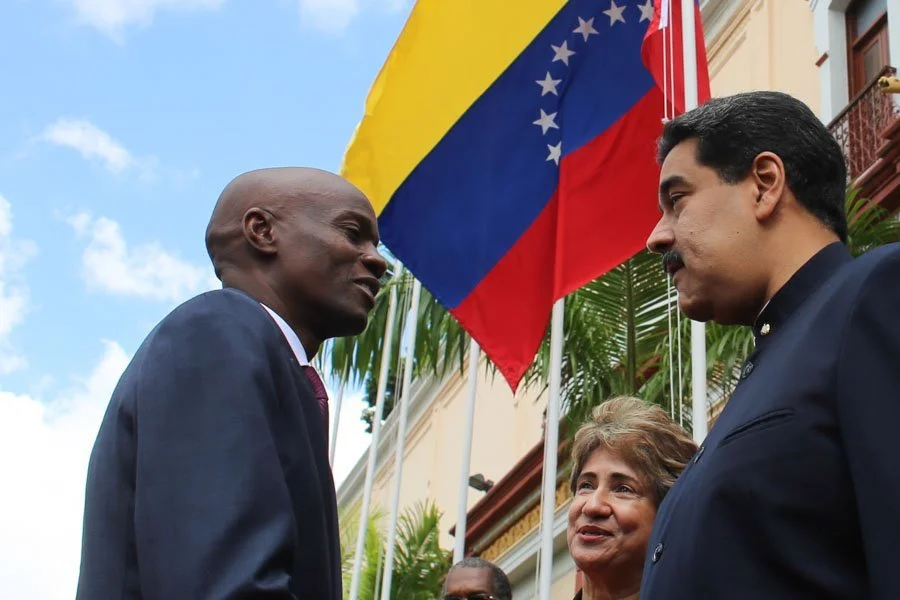
Venezuela and Haiti Sign New Bilateral Deals
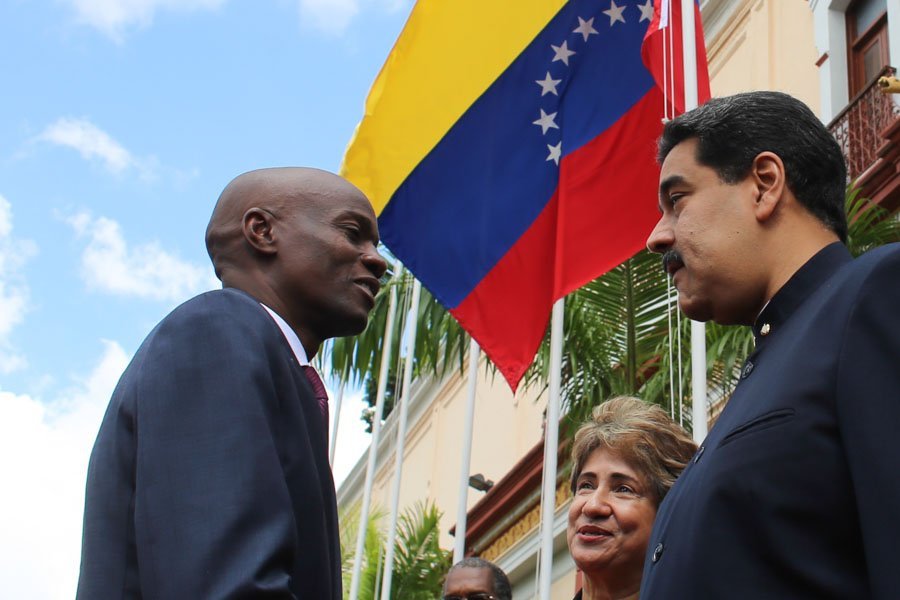
The agreements will see Venezuela and Haiti deepen their collaboration in agricultural production as well as in joint infrastructure projects

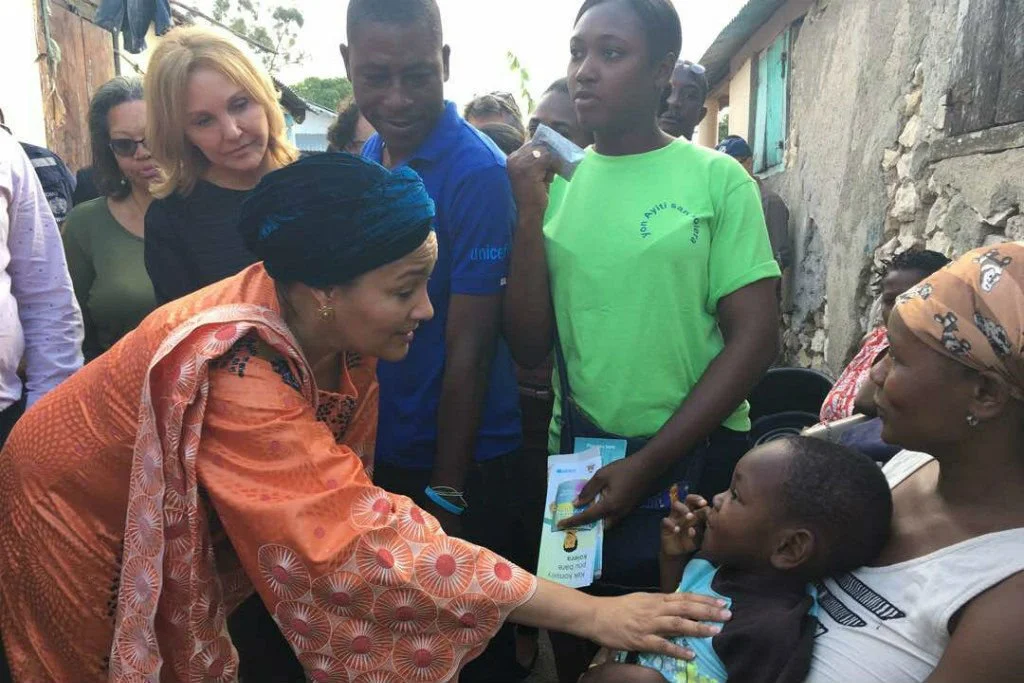
UN 'Will Walk With Haiti' On Path Towards Sustainable Development, Senior Official Pledges
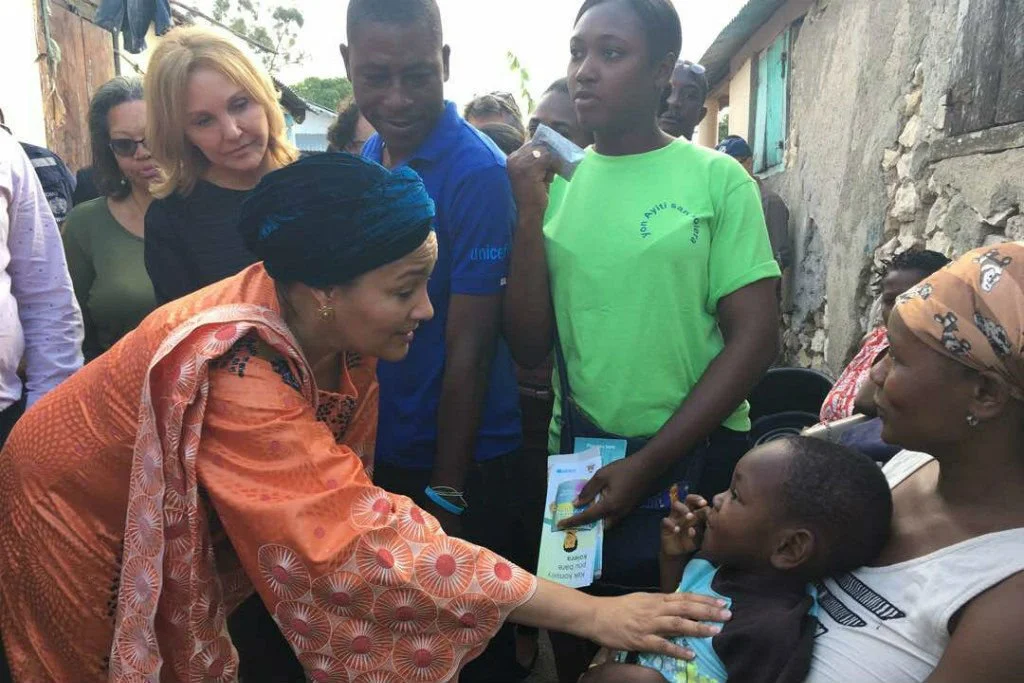

United Nations Deputy Secretary-General Amina Mohammed and UN Special Envoy for Haiti Josette Sheeran wrapped up a three-day visit to the island on Sunday, pledging more help to defeat cholera and assist the Government in achieving the broader aims of the UN 2030 Agenda for Sustainable Development.“The UN will walk this path with Haiti,” Ms. Mohammed said on Twitter, referring the work under way inside Haiti towards becoming an emergent country by 2030, the finish line agreed by all nations to achieve of the Agenda and its landmark 17 Goals, knows as the SDGs.The high-level delegation was dispatched by Secretary-General António Guterres to reaffirm the commitment of the United Nations to the Haitian people in a “new spirit of partnership.”In an opinion piece late last week in the Miami Herald, the UN chief said the partnership would stretch across the UN's work on the island – including to continue addressing Haiti's cholera challenge and the “unacceptable incidents” of sexual exploitation and abuse by UN personnel – and aims to help Haiti move “from an emergency approach to durable solutions, from assistance to investment support, from handouts to hand-to-hand cooperation for sustainable development, to democracy and dignity for all Haitians.”On Saturday, Ms. Mohammed echoed the “new spirit of partnership” set out by Mr. Guterres, saying: “We come to try to find another way to do things better; because in the past, we have fallen short. We were not able to do what we had planned,” she said in a joint press conference with Haitian President Jovenel Moise in the capital, Port-au-Prince.The visit of the two UN officials comes just after the appointment of Susan Page, of the United States, as the Special Representative of the Secretary-General and Head of the UN Mission in Support of Justice in Haiti (UNMIJUSTH), which succeeded the UN Stabilization Mission, known as MINUSTAH, on 16 October.The role of the new UN mission is to assist the Haitian Government to strengthen the rule of law institutions, to continue to develop the capacity of the national police and to promote human rights.
UN reaffirms commitment to eradicating cholera
As a key part of the visit, the two UN officials met families affected by cholera and coping with lack of access to water and sanitation.Ms. Mohammed and Ms. Sheeran also co-Chaired a High-Level Cholera Committee meeting (HLCC) alongside Haitian Prime Minister Jack Guy Lafontant. The Haitian Government and the UN representatives jointly expressed their determination work in partnership to achieve zero transmission of cholera. They further expressed their commitment to achieving the SDGs, including improving access to water, sanitation and healthcare.While cholera transmission has dropped dramatically, from over 18,000 new cases per week at the onset of the epidemic in 2010, to 250 per week this year, success will require more funding to maintain the highly effective work of emergency response teams, and commitment to the fight against cholera in the medium and long-term, the officials jointly agreed.Urging UN Member States and partners to provide comprehensive support, the Deputy Secretary-General emphasized during the meeting that “addressing the root causes of cholera in Haiti is critical to achieving the Sustainable Development Goals (SDGs). Additionally, in the immediate term, we urgently require funding to ensure continued operation of the rapid response teams; failure to do so risks losing the gains achieved to date.”The Deputy Secretary-General and the Special Envoy also witnessed the efforts of the “many heroes” working to eradicate the disease. Their visit was also an opportunity to learn about successful cholera control programmes, including in communities that ended open defecation, mobilized to build toilets, and raised awareness of the importance of sanitation.By: UN News Centre | November 5, 2017
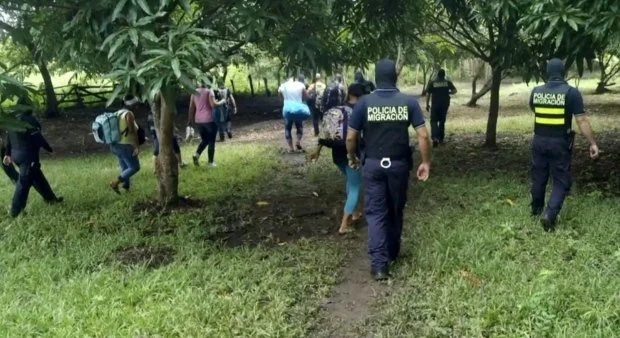
'Anywhere But Haiti': Asylum Seeker Retraces His 15,000-km Odyssey To Canada
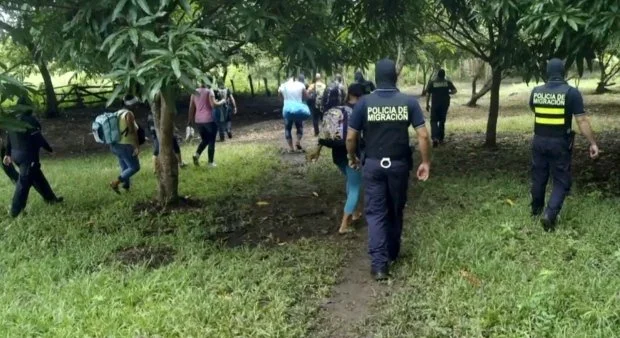
Travelling by boat, bus and on foot, treacherous journey from Brazil ends at Roxham Road, Que.When Pierre left Cap-Haïtien for South America, he never imagined he'd wind up in the woods of upstate New York.But nine years and 10 countries later, he stepped into Canada and was arrested by the RCMP.He had survived a two-and-a-half-month, 15,000-kilometre odyssey from Brazil to Roxham Road with his wife and seven-year-old son, through some of the most dangerous territory in the Americas.By plane, by boat, by bus, taxi or on foot, the destination was always the same: "Anywhere but Haiti."Pierre is not his real name. CBC News has agreed to protect the identities of the 30-year-old Haitian and his family to prevent any potential impact on their asylum claim in Canada.
Building a life in Chavez's Venezuela
A self-described socialist, Pierre left Haiti in 2008 to study in Venezuela. He made a new life for himself in Hugo Chavez's Venezuela, where he worked as a warehouse manager.Pierre left Haiti to study music in Venezuela in 2008, later studying accounting and administration. (submitted by Pierre)When the revolutionary president died in 2013, Pierre went south to Manaus in the Brazilian state of Amazonas.But work dried up, so in 2016 he decided to head north to "conquer the American dream."It's a path countless others have taken — a backwoods channel for waves of undocumented Latin Americans, Africans, South Asians, Haitians and Cubans seeking a better future.It's also a route fraught with exhaustion, fear, robbery, rape and death.
Desperate journey through the Darien Gap
With his wife and child, Pierre set out on June 16, 2016, crossing into Venezuela from Brazil."It wasn't easy to get into Colombia, but with a lot of tenacity we managed," he said.From there the family boarded a bus to the Colombian port town of Turbo, where the South American stretch of the Pan-American Highway ends.There they joined a group of 100 or so other migrants - Cubans, Africans and other Haitians ready to make the same desperate journey."From Turbo, we took a little boat," Pierre recalls. "Many people died because some boats sank. But we arrived at the entrance to the Darien Gap."The Darien Gap is a lush rainforest on the border of Colombia and Panama, thus named because it's a break in the Pan-American highway.Migrants must travel through the untamed wilderness on foot. "Crossing the Darien Gap was a very cruel experience," says Pierre. "I spent six days in the mountains with no food and no water.""So as not to get dehydrated, my family and I had to drink our own urine."The migrants also had to avoid snakes and other wild animals lurking in the dense forest."Many people died," Pierre says. "But we had to go on because otherwise, we'd die too. Whenever my son thinks about it, he cries."This video was taken by other Haitian migrants while crossing the Darien Gap.
Smuggled across Nicaraguan border
After 15 days in Panama and a bus ride to Costa Rica, authorities stopped them at the Nicaraguan border."It was really tough to get across," says Pierre."We had no papers." Stuck at the border and living in tents, Pierre paid smugglers nearly $3,000 US to get him and his family into Nicaragua.
 Others were not so lucky."Some were ripped off and never did get across," he says. "There were many bandits who raped people when they were going through the forests."Once in Nicaragua those that made it took a bus through Honduras and Guatemala to Mexico.Pierre says Mexican authorities gave them passage on the condition they move on to the USA.But arriving at the American border in Tijuana, Pierre was detained and spent nine days in lockup.Upon release, he moved his family to Florida.
Taste of the American dream
 Pierre got a work permit while his U.S. asylum claim was processed, working as a check-in manager at the Orlando airport and at Disney World."I worked and waited for the [asylum] process to run its course," Pierre says. "But when Donald Trump came to power things got complicated."He was worried that without permanent status, he and his family could be deported at any time.Then Prime Minister Justin Trudeau tweeted his support for refugees during Trump's efforts to enact a travel ban from Muslim-majority countries, and Pierre turned his eyes northward.
To those fleeing persecution, terror & war, Canadians will welcome you, regardless of your faith. Diversity is our strength #WelcomeToCanada— @JustinTrudeau
"When [Trudeau] said, 'Canada's ready to welcome refugees,' I said, 'Well, if that's the case, I'll come to Canada,' because I'm looking for a better life."So the family flew to Plattsburgh, N.Y., and boarded a bus to the border, crossing into Canada illegally at Roxham Road and making an asylum claim."When [Trudeau] said, 'Canada's ready to welcome refugees,' I said, 'Well, if that's the case, I'll come to Canada,' because I'm looking for a better life."- Haitian asylum seeker Pierre, 29They spent 24 hours in a temporary camp near the border, then two weeks living in the shelter set up at Montreal's Olympic Stadium.The family now has an apartment, and Pierre is trying to get a work permit while he awaits his Immigration and Refugee Board hearing.
Accusations, beatings and stabbings back home
In his asylum claim, Pierre says he can't go back to Haiti because his family is being targeted by a gang of street criminals. He says the trouble started in 2009 when a woman in his neighbourhood accused his father of witchcraft and threatened to have a gang attack him with machetes.Pierre says his father fled but the gang beat up his mother. He has copies of statements to the local police to help prove his story and a picture of his mother after the beating.He claims the same group of thugs attacked him for his political views in 2010 on a visit home, accusing him of trying to organize an uprising against the government.Then just this year, Pierre says his brother was stabbed by the gang and had to move his family to another part of the country."It's a country with no justice," Pierre says. "If I go back there they'll kill me."
'Such a cruel journey'
Sitting in a coffee shop near Jarry Park in Montreal's Villeray neighbourhood, Pierre sketches out a drawing of his long journey on the back of one the myriad documents and forms that make up his refugee case file.The map fills the page. His home country is conspicuously absent.Pierre sketches his journey from Brazil to Roxham Road."We left the U.S. because we were scared they'd deport us to Haiti," he says."In Haiti most people are unemployed. It's miserable. There are kidnappings all the time."Pierre hopes the Canadian government will give extra consideration to those like him who have come so far."Such a cruel journey," he says. "It was a very hard road to get here."By: Simon Nakonechny | September 26, 2017
Two killed as protests continue against budget proposals
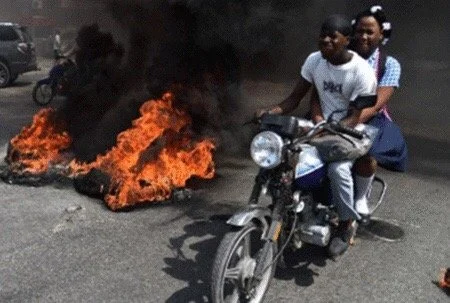
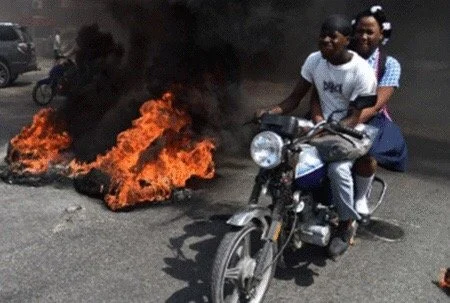
PORT AU PRINCE – At least two people were killed and 12 people arrested as protests action continued in this French-speaking Caribbean Community (CARICOM) country over the new budget presented by the Jovenel Moise administration.The National Police of Haiti (PNH) also confirmed that at least four vehicles had been burnt during the protest while dismissing reports that an arrest warrant had been issued for former Senator Moïse Jean-Charles, in connection with the anti-governmental demonstrations.Haitian motorcyclist rides past burning debris“The PNH has no arrest order against former Senator of the North,” said the PNH spokesman Frantz Lerebours, saying that the police were engaged in a routine check after a warning issued against the driver of a vehicle, which turned out to be that of the former legislator.Meanwhile, Jean Charles has announced four days of demonstrations here starting on Monday to protest the fiscal measures contained in the budget.He described the meeting between President Moise and leaders of some political parties here as “a huge joke” adding that “Moïse is deaf to the demands of the population”.The organisers said that transport workers have already signalled their intention to support the demonstrations.President of the Association of Haitian Owners and Drivers (APCH), Mehu Changeux, said that a national strike has also been planned for Monday to force President Moïse to recall the budget that was ratified by both Houses of Parliament last week.Several trade unions have already confirmed their support for the strike criticising the government for not taking any measures to improve the living conditions of the population, but on the contrary to increase the tax burden on the most disadvantaged strata of the population.Secretary General of the Council of Ministers Reynald Lubérice confirmed that the Executive would publish the budget 2017-2018 in the official newspaper “Le Moniteur” and that street demonstrations will not change anything.The authorities have also denied an increase in the cost of obtaining a Haitian passport, saying it still remains valid for 10 years.On Thursday, President Moise, accompanied by Prime Minister Jack Guy Lafontant met with political leaders at the National Palace, on various issues including the financing of political parties in Haiti.President of the Fusion of the Haitian Social Democrats (FUSION) Edmonde Supplice Beauzile, said he believes it is not the right time to talk about financing of political parties, while the government’s draft budget is the subject of street demonstrations.In the meeting Moise stressed the difficulties faced by political parties in Haiti.“In some countries, political life is organized and stabilized around two or three major poles. The choice of voters is facilitated because the political offer is reduced inviting the political parties to exert a leadership by their capacity to grasp the stakes for the Haitian society.”He said that he expects various obstacles to complete such an undertaking.“This system of institutionalized parties because funded properly will not happen without sacrifices. But such an initiative is worthwhile in terms of the expected results for the democratic health of our country,” he added.CMC | September 16, 2017
Violent Street Protests Break Out In Haiti Over Tax Hikes
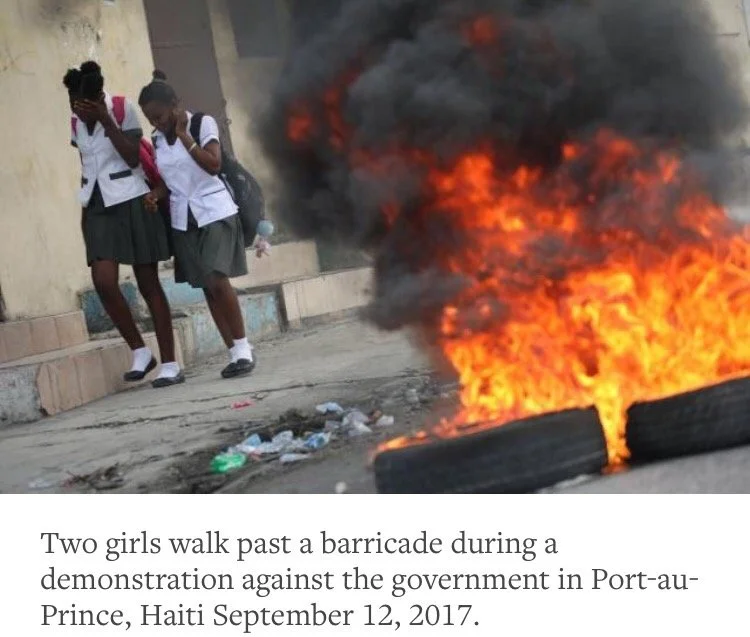
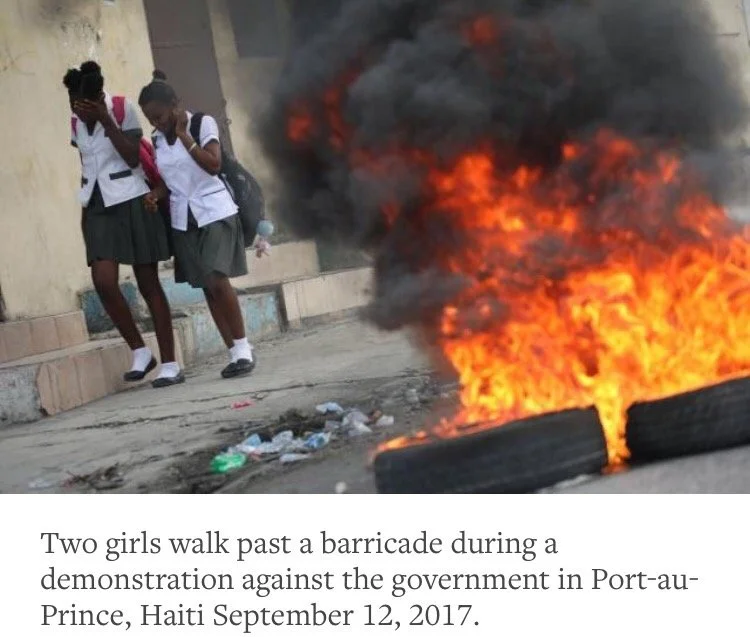
PORT-AU-PRINCE (Reuters) - Protesters in Haiti damaged commercial buildings in the capital city and set cars on fire on Tuesday, angered by government tax hikes that
The Port-au-Prince protest, called by former presidential candidate Jean-Charles Moise, took many by surprise and represents the biggest outcry against the administration of President Jovenel Moise since he took office earlier this year.
“The revolution has just started. Jovenel Moise will have to retract his taxes or he will have to leave immediately,” said Jacques Menard, a 31-year-old protester. “And this is a warning because the next phase can be very violent.”
Protesters took to the streets in separate groups in several districts in the metropolitan area of Port-au-Prince, erecting flaming barricades, blocking traffic, and confronting riot police, who fired tear gas and warning shots in the air.
Several people were arrested, the police said, but there were no reports of any deaths or serious injuries.
Lawmakers last weekend approved an unpopular budget that raises taxes on products including cigarettes, alcohol and passports.

At the same time, foreign aid to Haiti is slowing. The country is one of the poorest in the Americas and suffered a devastating earthquake in 2010 and the worst of hurricane Matthew last year.
“If Jovenel Moise is intelligent, he should refrain from publishing the budget, otherwise he will have to face a series of street demonstrations that will further complicate the situation,” Jean-Charles Moise said on local radio.Government officials were not immediately available for comment, but Economy and Finance Minister Jude Alix Patrick Salomon defended the budget over the weekend.
 “There are people who are blaming many things on the budget that are not true,” Salomon told reporters shortly after the spending plan was approved. “There are people manipulating the public opinion.”

Guidance from the Haitian Embassy to Haitians in DR

 Wednesday in a note, the Embassy of Haiti in the Dominican Republic informs the Haitian community that in anticipation of the passage of hurricane IRMA which will touch, on Thursday, September 7, much of the Dominican territory, an emergency unit composed of diplomatic officials was created to meet its needs.Emergency Cell Phone Numbers : (829) 259-0579, (829) 885-3133, (809) 617-7376, (829) 443-8994The Embassy recommends that you prepare an emergency kit for 7 days :"Water, provide at least 3 liters per day per person, plan a stock for 3 to 7 days;Consume non-perishable food (mainly canned), consider the specific needs of infants and the elderly;Kitchen utensils: a can opener, plastic plates and cutlery and other kitchen utensils...;First-aid kit: anti-bacterial product, pair of scissors;Hygienic products;Torch, oil lamp, candles, matches and battery;Mosquito repellent;Portable radio with new batteries;Cash (some banks may remain closed or not replenished for several days),Disinfectant tablets for water;Toys, books, games;Important documents (insurance, medical records, bank, passport, birth certificate, etc...)Gas bottles, Blankets, pillows, Clothes (seasonal, boots, raincoats)For your animals (water, food, cage, leash, muzzle, etc...)"HaitiLibre | September 7, 2017

Kagie 22 presents ‘Haiti Royalty’

Three sections will display “Haiti Royalty” in Kagie 22’s production this Labor Day Carnival.
Band leader Haitian American Karine Gilles told Caribbean Life that the all-female band will comprise 75 masqueraders altogether in the three sections: Haiti Queen, Princesses Azia and Haiti Princess Amor Toussaint.
She said besides Haitians, masqueraders are Trini-Haitian Americans and Martiniquans.
Gilles, who has been participating in the West Indian American Day Carnival Parade since 2003, said masqueraders can expect “more colorful designs and good music” this year.
She added that Kagie 22 will play “outstandingly” as well.

The production is assisted by Moise Desir, Guetary Roche, Rosena Destin, Pedine Nazaire, Yvener Leon, Michelle Bastien Archer, Kettelie Innocent, Kagie 22 TV staff, Radio Independence, Elegance, Planet Musical, Bebe Fritay, Yoyo Family, Tambour Universel.
Gilles said she founded Kagie 22 in 2002 as a TV show “to touch base with the community and [to] create linkage with organizations that can fulfill communities’ needs.
“Many times, our people need to know how to participate in mas camps,” she added, stating that some members are unaware of the expectations of WIADCA and the rules to be “an active camp” in the West Indian American Day Carnival Parade.


Gilles said playing in the parade is a “very productive, competitive and rewarding concept for children and adults.”
She said masqueraders will sway to the beat of Sweet Micky and DJazz New York.
Gilles can be reached at (917) 348-6488 or at Kagie22@aol.com.
By Nelson A. King | August 29, 2017
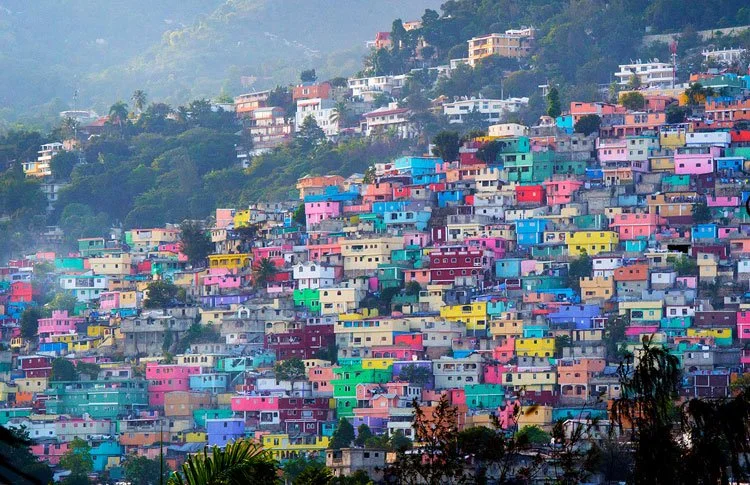
$4.7 Billion Chinese Development Project Advances in Haiti
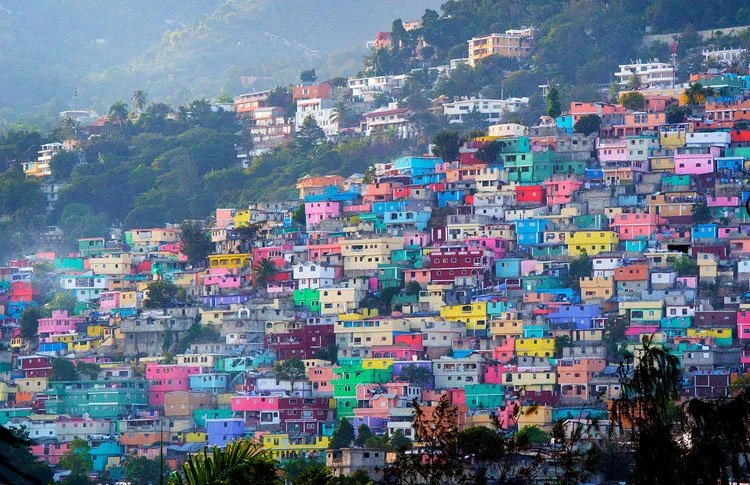
 The promised infrastructure seems almost too good to be true, but let’s hope that dreams can indeed come true for the Haitian people. China has made good on similar projects in its estimated Trillion dollar “Silk Road” initiative, not to mention 30 futuristic infrastructure projects in its own country. Perhaps the future has finally arrived for Haiti, and as a result the Caribbean corridor will be transformed.
 In late July and early August of this year The Haitian Press Agency (AHP) reported that China would invest $30 billion. Bati Ayiti and its Chinese partners signed an agreement for the renovation of Port-au-Prince with the Municipality of Port-au-Prince.
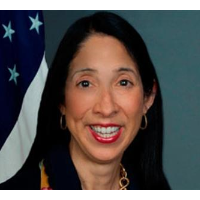
Ambassador to Haiti: Who Is Michele Sison?
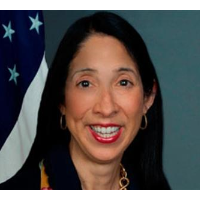
 Michele Sison was nominated to be U.S. ambassador to Haiti by President Donald Trump on July 20, 2017. Sison, who has been deputy permanent representative to the United Nations since December 2014, succeeds Peter Mulrean, who served in Port-au-Prince from October 2015 to February 2017.In her role at the United Nations, just a month before her nomination, Sison made it clear that the Trump administration did not intend to contribute to a UN trust fund to fight Haiti’s cholera epidemic because the U.S. had already contributed more than $100 million to the anti-cholera effort. It is widely believed that cholera was inadvertently introduced into Haiti by UN peacekeepers from Nepal in October 2010.Born May 27, 1959, in Arlington, Virginia, Michele Jeanne Sison is the first Filipino-American ambassador from the United States. Her mother is Veronica Travers Sison. Her father, Pastor Bravo Sison, originally from the province of Pangasinan in the Philippines, earned a master's degree from Harvard Law School and eventually spent 25 years with the World Bank, retiring as director for public affairs in its Asia Division. She has two sisters, Victoria and Cynthia. Sison earned her BA in Political Science from Wellesley College in 1981 and also studied at the London School of Economics.Sison joined the State Department in 1982 and served early career postings as a consular official in Port-au-Prince, Haiti, from 1982 to 1984; Lomé, Togo, from 1984 to 1988; Cotonou, Benin, from 1988 to 1991; Douala, Cameroon, from 1991 to 1993; and Abidjan, Côte d’Ivoire, from 1993 to 1996. Sison served as consul general at the U.S. consulate in Chennai, India, from 1996 to 1999.She was deputy chief of mission and chargé d’affaires at the U.S. embassy in Islamabad, Pakistan, from 1999 to 2002. Just one month before the terrorist attacks of September 11, 2001, Sison met with Taliban officials to try to secure the release of American aid workers who had been arrested in Afghanistan for allegedly showing a Christian video to an Afghan family. The following March, Sison was out jogging and waved to embassy employee Barbara Green and her 17-year-old daughter, Kristen Wormsley, who drove by on their way to church. Shortly thereafter, the two were killed in a grenade attack on the church.In Washington, Sison served as principal deputy assistant secretary in the Bureau of South Asian Affairs from 2002 to 2004, after which she was appointed ambassador to the United Arab Emirates (UAE), where she served from July 2004 to January 2008, putting a strong emphasis on promoting trade with the Dubai dictatorship, a strategy she referred to as “massive corporate diplomacy.”From the UAE she went to Lebanon, serving in Beirut as chargé d’affaires ad interim starting in February and as ambassador from June 2008 to August 2010. Her tour in Lebanon was a demanding one right from the start, as she had to deal with numerous controversial issues. For example, in April 2008, she sent a cable to the State Department explaining that Lebanon’s telecommunications minister, Marwan Hamadeh, had complained that Hezbollah (which held elected seats in the national legislature and a cabinet position) had set up its own fiber optic telecom network, which, in Sison’s words, “covers the Palestinian camps, and the Hezbollah training camps in the Bekaa, and is penetrating deep into the Christian Metn and Kesrwan areas.” On June 18, 2008, she was involved in a particularly unpleasant incident, when her motorcade in the southern Lebanon town of Nabatiyah was stoned by anti-American pro-Hezbollah militants.After her tour in Lebanon, Sison served as assistant chief of mission for Law Enforcement and Rule of Law Assistance in Baghdad, Iraq. She also served stateside as director of Career Development and Assignments in the Bureau of Human Resources from 2010 to 2011.Sison returned to South Asia to serve as U.S. Ambassador to Sri Lanka and Maldives from September 2012 to December 2014.As U.S. deputy representative to the United Nations, Sison again found herself in the thick of the action, particularly in 2016 when the Obama administration clashed with the Russian government over the war in Syria. In March 2017, she accused the government of South Sudan of conducting a “scorched earth campaign” that used man-made famine as a tactic in that country’s civil war.Sison has two daughters, Alexandra and Jessica; she and their father, Jeffrey J. Hawkins, are divorced. She speaks fluent French, basic Haitian Creole, and Arabic.By: David Wallechinsky, Matt Bewig | August 23,2017
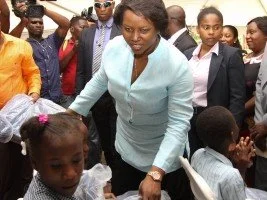
Martine Moïse Distributes School Kits
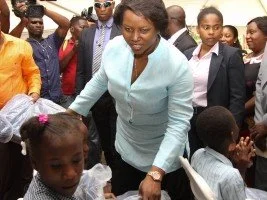
 Tuesday, at the Municipal Palace of Delmas, in order to help the most disadvantaged parents to prepare in better conditions, the back to school, the First Lady, Martine Moïse, accompanied by Régine Lamur the Minister of Youth, participated in a distribution of school kits and shoes to more than 2,000 students from national schools Canada and Pierre Labritie.In her speech, Martine Moïse insisted on the importance of education as a tool to build new citizens capable of participating in the project of national reconstruction. While reiterating her will to accompany the needy children, the First Lady has called on all players in the system to play their score in order to make the academic year coming, a total success.The First Lady promised to be with the children throughout the school year and insisted on a set of measures adopted to relieve parents and students during the year including free transportation of students and provision of a daily hot meal to students as part of the National School Canteen Program (PNCS).She also referred to the strengthening of the programs "Tout pou ti moun yo" and "Konte m, mwen konte", recalling that these programs aim, respectively, to increase the number of childcare centers in the country for children from 0 to 5 years and allow children from birth to have identification documents.Speaking to parents, Minister Régine Lamur stressed that the collective development of society and personal fulfillment, promote schooling and the need to work to provide children with a healthy learning environment. Considering teachers as essential actors in the development of the country, the Minister took the opportunity to congratulate them and encourage them to work to improve the level of education in Haiti.By: HaitiLibre | August 23, 2017
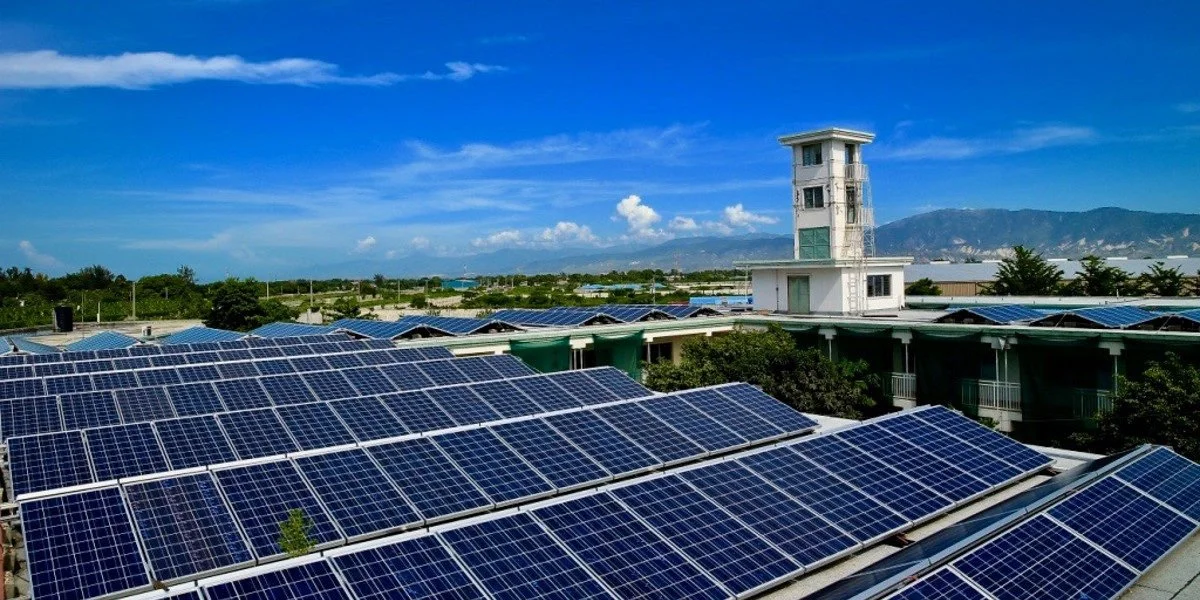
Haitian Energy Entrepreneurs Call For Investment Security
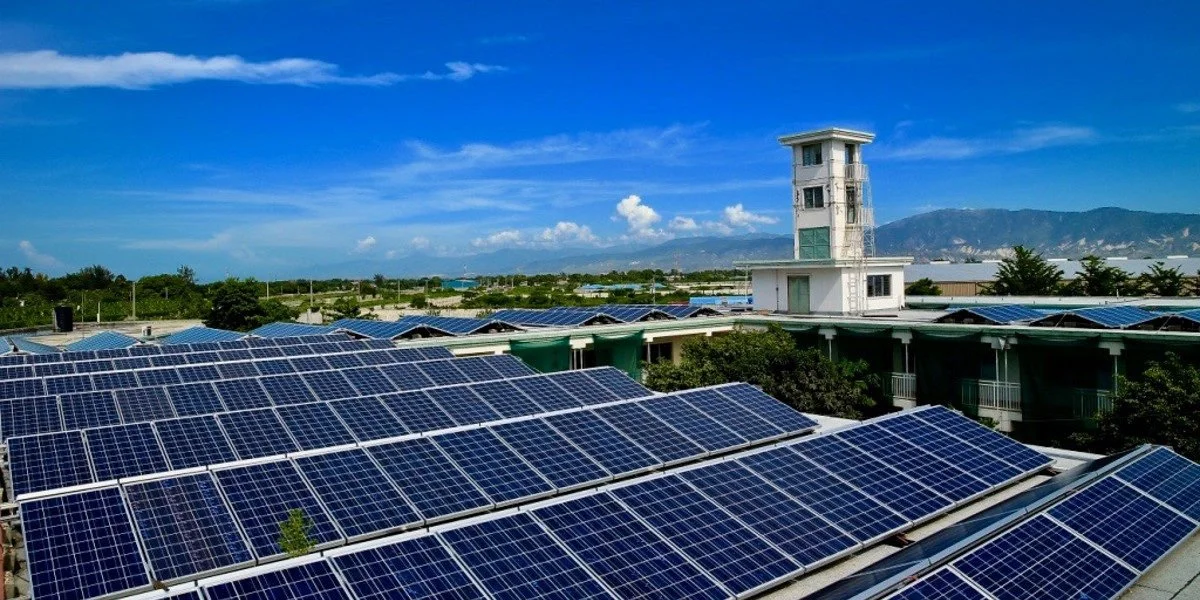
At an international PV conference held in the Haitian capital Port-au-Prince, companies were demanding improvements to the political framework for the development of solar power in the country. Additionally, calls were made for low interest loans for private individuals, to cover initial investment in a PV system.
Haiti’s most important PV entrepreneurs gathered at an international solar conference in Port-au-Prince to call for clear regulations for the liberalization of the Haitian energy market, as well as solar-friendly policies to promote the technology’s potential. The event was organized by relief providers NPH Germany, The St. Luke Foundation and the Biohaus Foundation.Only around 6% of Haiti’s population currently has access to electricity. State owned energy utility Électricité d’Haiti (EDH) has a generation capacity of 245 MW, about 80% of which is made up by diesel generators. The other 20% is supplied by the Péligre Hydroelectric power station in Artibonite, to the north of the capital.Because of the continuous overload and extremely low stability of the state utility’s network, Haiti is registering growing demand for solar technology. Local micro-grids and individual installations are becoming increasingly important.The two largest solar companies operating in the country are now complaining about the lack of political or legislative support from the Haitian state, as well as sluggish cooperation with the state utility regarding the feeding of solar generated power into the public grid.“Theoretically, the state monopoly has long been abolished. The decision was, however, taken in a controversial process, so that its legal status and applications are still unclear,” explains Jean-Ronel Noël, whose company Enersa, founded in Port-au-Prince in 2007, produces solar modules and LED lighting. Enersa employs 30 engineers, and has already installed more than 5000 solar street lights, as well as residential PV systems, micro-grids and industrial facilities.Despite falling prices in the PV market, initial investments for PV technology are still much higher than for diesel generators. Because of the unclear legal situation and lack of state support, potential investors are unsettled, says Noël.Another entrepreneur, Jacques Sylvian, Managing Director at Green Energy Solutions, calls on the government to negotiate access to the World Bank’s Clean Technology Fund, which provides cheap loans to private individuals to cover renewable energy systems.Nicolas Allien, who is responsible for energy in the Haitian Ministry of Infrastructure, Transport and Communications, stressed the government’s intention to promote renewable energy both in terms of feeding into the state and creating micro-grids. One of the biggest challenges in improving Haitian’s access to electricity is upgrading the infrastructure to extend the grid’s capacity. The Haitian Government is currently investigating conditions for implementation of a tax exemption on the import of solar technology, according to Allien.The declared goal is to develop up to 600,000 microgrids drawing power from renewable sources across the country. Currently, around 75% of non-state owned households use charcoal for energy production, which has resulted in increased soil erosion due to the large-scale deforestation.By: Cornelis Wüllenkemper (translated from German) | August 23,2017
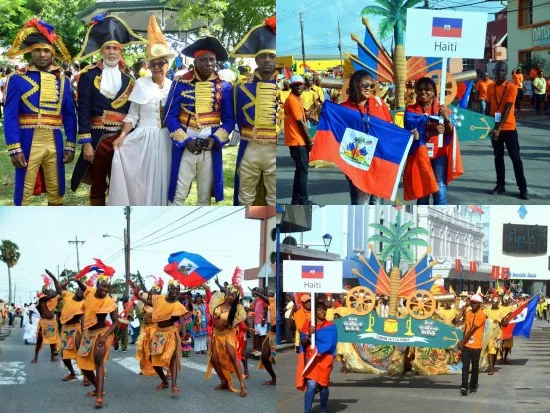
Haiti - XIII CARIFESTA : Haitian dance troupes have seduced the public
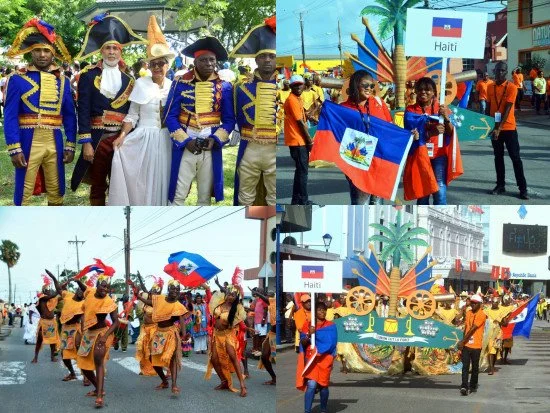
Sunday in Bridgetown, Barbados, in front of more than 10,000 spectators gathered at the Kensington Oval stadium, Haiti and more than 20 other Caribbean Common Market (CARICOM) nations, took part in the official opening ceremony of the 13th edition of the Festival of the Arts of the Caribbean (CARIFESTA) which will be held until Sunday, August 27, 2017.This opening ceremony was preceded by an artistic parade during which the dance troupe "Nègès Fla-Vodou" and those of the National Ethnological Office and the National Theater, highlighted all the skill of the Haitian cultural creators in the performing arts. But the residents were especially attracted by the beauty of the costumes.By HaitiLibre | August 21,2017
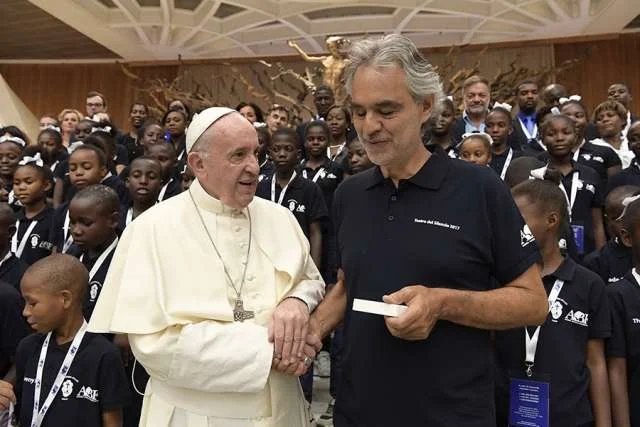
Haitian children, Andrea Bocelli sing for Pope Francis
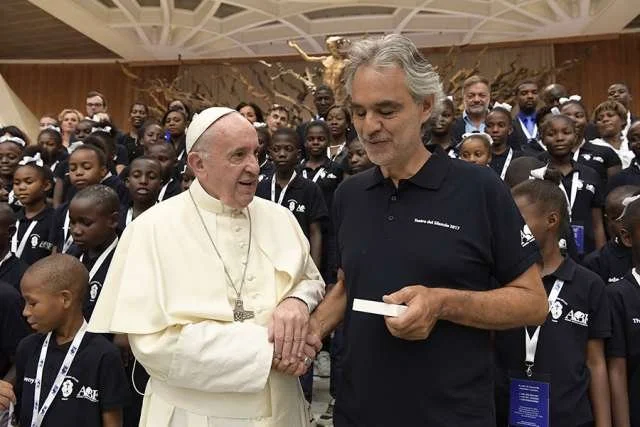
A choir of children from Haiti led by world-renown opera singer Andrea Bocelli sang for Pope Francis after his weekly general audience on Wednesday. The choir, called “Voices of Haiti,” is made up of youth ages 9-15 from the poorest areas of Haiti and are in Rome for their two-week-long European tour.
ROME - There was a special surprise at the end of Pope Francis’s general audience on Wednesday - a performance by acclaimed Italian tenor Andrea Bocelli and a choir of 60 children from the poorest areas of Haiti.The choir, called “Voices of Haiti,” sang three songs with Bocelli, including ‘Amazing Grace’ and ‘Ave Maria,’ following the general audience in the Vatican’s Pope Paul VI hall Aug. 2. After the performance the children and world-renowned singer were greeted by Pope Francis.The performance was part of a nearly two-week-long European tour of the children’s choir, made up of youth ages 9-15, coming from some of the poorest areas of Port-au-Prince Haiti. Besides Rome, the tour included stops in Pisa, Florence and Lajatico, Italy, Bocelli’s birthplace.In Lajatico they will perform with Bocelli in front of 15,000 people for the 12th edition of his annual concert at the famous Teatro del Silenzio. In Florence they sang for the inauguration of a foundation dedicated to the Italian director Franco Zeffirelli.According to a press release, the project, “offers the opportunity to children and young Haitians coming from extremely disadvantaged situations to enhance their talent thanks to a highly specialized training, benefitting also of a wealth of opportunities, precious for their future.“Grown up in a context of extreme poverty, thirsty for beauty, eager to learn, through a highly professional educational path, the young singers have reached a great understanding, have become aware of discipline, passion, love for music and of the joy of sharing. Therefore, what they can convey through their singing is pure joy.”The children of the choir and related projects come from the Citè Soleil slums where over 300,000 people live in tin shack houses, without access to water and sanitation.The project has been ongoing since January 2016. The children participate in weekly rehearsals on Saturdays, which include breakfast, lunch and game time in addition to vocal exercises, music therapy and song rehearsal. Buses pick them up and bring them home after.They learn both folk Haitian and international music and perform throughout the year in local celebrations in their community, such as Easter and the end of the school year. In September 2016 they traveled internationally for the first time, performing in New York City.“Voices of Haiti” is a project of the Andrea Bocelli Foundation. In addition to the choir, the foundation also introduces music into the 30 schools supported by the local St. Luc Foundation in Haiti.They also help to provide education, food, and health assistance to thousands of children, water and electricity to remote and poor communities, solar panels and libraries.According to their website, “because all the students come from poor economic and social backgrounds, through music they have been able to find a way to consolidate discipline, cooperation, and have moved away from the misery brought on by the grip of poverty.“Music becomes an additional means for social and intellectual development, not only personal, but for entire communities.”“Voices of Haiti” is directed by Malcolm J. Merriweather, a professor at Brooklyn College Conservatory in New York, and is run by a team of Haitian collaborators made up of musicians, teachers, and administrators.Why a choir? Because “music is the soul’s voice, its strength and beauty open minds, and develop thoughts…” the website continues.“From the secret melodies of celestial bodies to the beat of the fruit fly wings, creation is a sound metaphor of its Creator, and every element contributes, imperceptibly, but effectively to universal harmony, that with immeasurable perfection rules life and expresses a poetic, amazing synonym of God.”By: Hannah Brockhaus | August 2, 2017
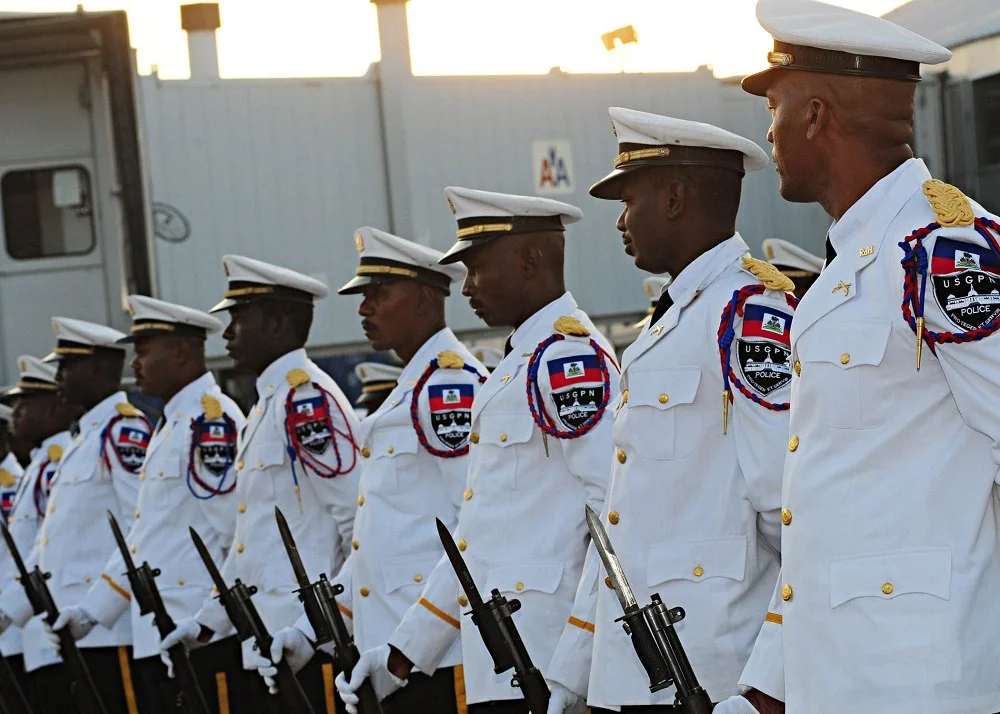
Haiti's Revived Military Could Pose More Security Risks Than Solutions
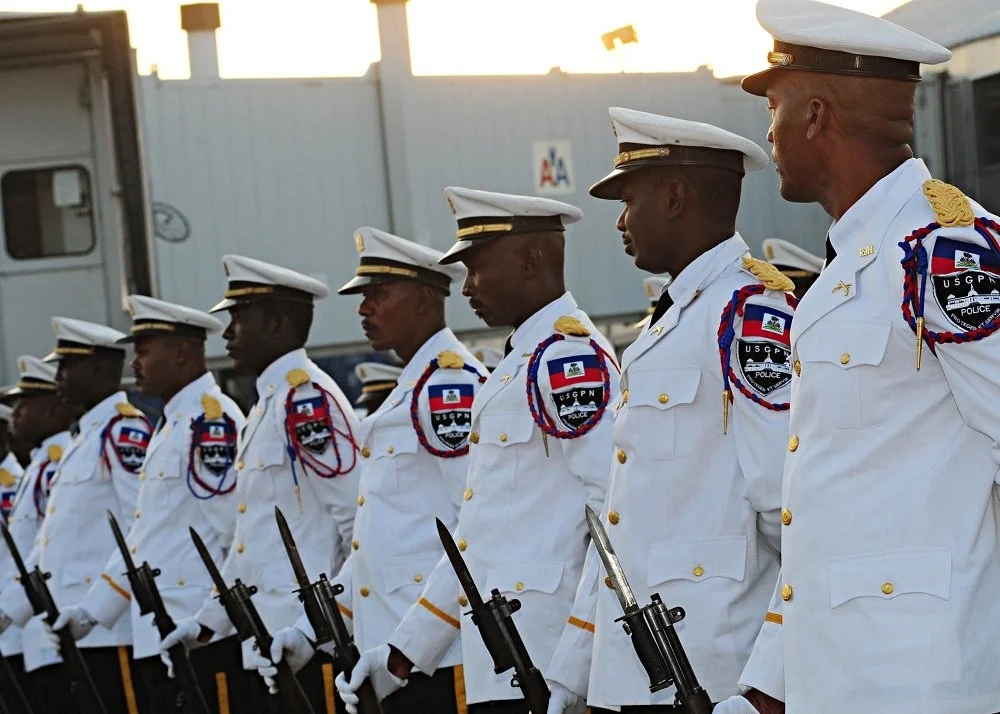
Haiti is reconstituing its previously disbanded army after more than two decades, amid concerns about growing insecurity as a United Nations peacekeeping force is set to withdraw later this year. And while politicians have justified the move as a step toward combating contraband trafficking, the real motivations behind the decision may be political.The recruitment effort for the new army was announced by the Defense Ministry in early July and has seen more than 2,200 candidates sign up in the first round, reported Haiti Libre. Due to budget constraints, the force will have fewer than 500 members.Defense Minister Hervé Denis said the army's mission would be to fight against contraband smuggling and provide relief in case of natural disasters, according to the Miami Herald. The minister argued that the cost of the force will be outweighed by its impact on smuggling from the Dominican Republic, which he estimated causes lost tax revenues for Haiti of between $200 million and $500 million per year.However, critics have said that the recruitment process has lacked transparency and has been conducted in the absence of a command structure for the force, reported AlterPresse.Others have questioned the logic of investing in an army instead of dedicating increased resources to Haiti's 15,000-strong National Police. An August 2016 report by the UN Secretary General noted significant shortcomings in planned improvements to the force, including ramping up its border control capabilities.
InSight Crime Analysis
 Several experts consulted by InSight Crime raised concerns about the potential efficacy of the army in terms of the proposed anti-contraband efforts, while pointing to possible political motivations for re-establishing the force. And all warned of the risk that the violent and abusive history of Haiti's military repeat itself."Sending a poorly-trained, underpaid military to the border to confront a massive corruption scheme appears destined for failure," said Jake Johnston, a research associate at the Center for Economic and Policy Research (CEPR) who has done extensive research and reporting on Haiti.Indeed, an inadequate fiscal framework and corruption within an inefficient customs agency are the two primary drivers of contraband along the border -- not the lack of a military presence."The push to restore the military is not a rational one based on Haiti's needs, but an ideological one," he told InSight Crime."This is a party with close connections to the old Duvalierist and militarist clique that had ruled Haiti for decades and whose power and influence was threatened by previous governments. It would be difficult for the government to turn its back on its source of power now that it is in office," the CEPR researcher said, referring to the governments of François "Papa Doc" Duvalier and his son Jean-Claude, also known as "Baby Doc." The authoritarian political dynasty, which lasted from the 1950s to the 1980s, was associated with the use of armed forces as a tool of political repression -- a fact that contributed to the decision of then-President Jean-Bertrand Aristide to disband the army in 1995.Johnston's comments echoed those of Brian Concannon, the executive director of the Institute for Justice and Democracy in Haiti advocacy organization."I have seen nothing that would indicate that the army would do a better job of policing the borders or responding to natural disasters than civilian police," Concannon said.He added that other examples of militarized security initiatives across the Americas suggest a better course of action may be to strengthen the civilian police rather than create a new, military institution."That is especially true considering the Haitian army's history of corruption and professional misconduct," the human rights advocate told InSight Crime.Concannon also pointed to political motives at play, arguing the army would help the government "exert control over its political opponents," evidenced by "the initial army proposal of [former] President [Michel] Martelly that specifically included spying on journalists and others, to the current efforts to recruit soldiers before there is even much structure."Interestingly, both Concannon and Johnston noted underlying socioeconomic factors behind the public's support for the army and the seemingly widespread interest in the recruitment effort."This has gained some additional traction because of the high level of youth unemployment, where any opportunity for steady pay is welcome. Also, given the high proportion of Haiti's population which is quite young, many lack the historical experience that others have of the Haitian military and its repressive actions," Johnston explained."People are signing up because they are desperate for jobs and meaning," Concannon added, and warned that "once [members of the new army] have the position, they will do what they need to do to preserve that status."By Tristan Clavel

Subcommittee on the Church in Latin America Awards nearly $6 Million in Grants to Projects Including Pro-Life Centers, Hurricane Matthew Affected Areas

 WASHINGTON—The U.S. Conference of Catholic Bishops' (USCCB) Subcommittee on the Church in Latin America awarded nearly $4 million in funding in the form of 244 grants to support the pastoral work of the Church in Latin America and the Caribbean, and nearly $2 million in funding for continued reconstruction in Haiti after the 2010 earthquake. The grants were approved at the Subcommittee's meeting on June 12 in Indianapolis, Indiana.Projects that received funding include:Argentina, GRAVIDA—Centro de Asistencia a la Vida Naciente: This network of diocesan centers in Argentina works to promote, care for, and defend life from the moment of conception and promotes the dignity of parenting. These centers are located in 21 dioceses across the country and care for pregnant women at risk of having an abortion as well as with men to help them understand the value of fatherhood. The centers provide education and formation about the dignity of human life and conduct solidarity and awareness campaigns.Haiti, Catechetical Formation: This project will provide formation for 400 pastoral agents from four parishes that were impacted by Hurricane Matthew. The formation will be centered around the theme of the Christian family, and will take place over the course of three days. Seminars, workshops and group discussions will be facilitated, along with opportunities for prayer and daily Mass.In addition, the first grant to help rebuild churches on the western part of Haiti after Hurricane Matthew was approved. More of these requests will be considered at future meetings of the Subcommittee."I am continually inspired by all of those who support the Collection for the Church in Latin America," said Bishop Eusebio Elizondo, auxiliary bishop of Seattle and chairman of the Subcommittee on the Church in Latin America. "The generosity of Catholics across the United States makes a difference in the lives of countless people in Latin America and the Caribbean. This generosity reflects the love and compassion of God. I can see this especially in the response we received to help the victims of Hurricane Matthew. With that help, we not only fund pastoral projects, but help rebuild churches in some dioceses of Haiti."Other areas of funding include lay leadership training, seminarian and religious formation, prison ministry, and youth ministry. Grants are funded by the annual Collection for the Church in Latin America, taken in many dioceses across the U.S. on the fourth Sunday in January. The grants to Haiti are funded by the Special Collection for Haiti, which occurred after the 2010 earthquake. These reconstruction efforts are managed through the Partnership for Church Reconstruction in Haiti (PROCHE).The Subcommittee on the Church in Latin America oversees the collection and an annual grant program as part of the USCCB Committee on National Collections. It allocates revenue received from the Collection for the Church in Latin America as grants across Latin America and the Caribbean. More information about the Collection for the Church in Latin America and the many grants it funds, as well as resources to promote it across the country, can be found at http://www.usccb.org/catholic-giving/opportunities-for-giving/latin-america/index.cfm.By: United States Conference of Catholic Bishops | July 31, 2017

Mais Moulin (Corn Meal)


Ingredients
1 cup corn meal4 cups water1 minced garlic clove½ finely chopped onion1 tsp. thyme1 tsp parsley1 tbs. oilsalt, black pepper, and hot pepper for flavor
Directions
1. Sauté garlic and onion in oil.2. Add water and bring to a boil in a medium pot sauté garlic and onion in oil.3. Combine remaining ingredients4. Must stir mixture repeatedly to avoid clumps and lumps5. Serve this dish with fresh avocado slices on the side.(You can also add sauce pois- as seen in the picture)

Griot (Fried pork)


Ingredients
3 lbs of pork shoulder (cut into cubes/pieces)3 cloves2 garlic cloves1/4 cup of parsley1/2 cup onions2 teaspoons salt2 teaspoons black pepper1/4 cup green pepperpaprika2 lime (cut in half & juiced)1 or 2 habanero peppers3 to 4 cups of water4 to 5 cups of vegetable oildeep fryer2 sheets of paper towel
How to clean and Marinate Pork
Blend habanero pepper, parsley, onion, cloves, garlic and paprika into a paste with about 1 tablespoon of lime juice, then set aside. In the sink, rub pork with limes rinse with cold water. In a medium sized bowl, add pork, lime juice, paste of ingredients and mix with hands. Cover and refrigerate for 45 minutes to 24 hours.
Directions
In a saucer pan, add water, marinated pork and boil until tender, probably 30-45 minutes. Heat oil in deep fryer. Separate pork for liquid and set pork aside, do not discard liquid. Separate pork into batches for frying and fry until a light dark brown color. Set aside on paper towel. Once all the batches are completed you can used liquid as sauce for the rice or fried plantain.
Garnish with pikliz!
Enjoy
(Pikliz recipe is up)