

Soccer's helping Haiti keep its head up — and keep kids out of gangs
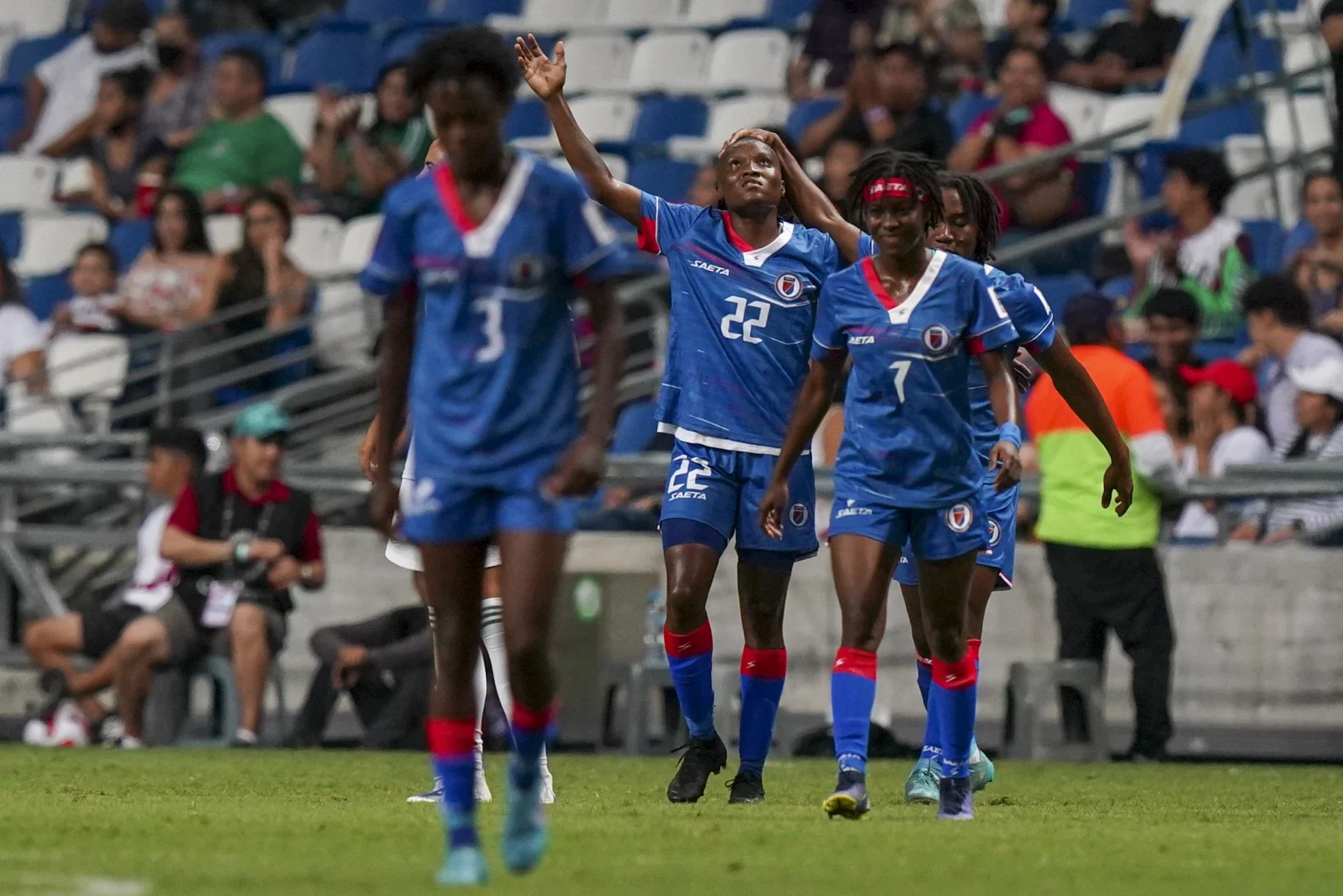
Soccer is standing tall above the catastrophic collapse of Haiti's government and economy. The women’s national team has qualified for the World Cup for the first time. But more important: youth soccer programs in Haiti are looking for more support to help keep kids out of the powerful gangs that are terrorizing the country.
Kids like Jean-Louis, a 14-year-old boy growing up in Cité Soleil, one of the worst slums of Port-au-Prince, Haiti.
Jean-Louis — we're not using his last name for safety reasons — told WLRN by WhatsApp that he hears the sound of gang gunfire in his neighborhood almost daily.
What Haitian kids like him don’t hear enough, he said, is the happier cacophony of the soccer practices he attends, run by a youth support nonprofit called FONDAPS. Thanks to the program, he points out, he wants to be a lawyer someday.
“A lot of times we have to hide under our beds” when the shooting erupts in Cité Soleil, Jean-Louis says. “It’s the only safe place we have. That and the soccer field. That’s where I learn respect for things.”
FONDAPS isn’t new. It’s been around for 16 years — and, in fact, in 2011 its founding director, Haitian businessman Patrice Millet, won a CNN Heroes award for helping thousands of kids rebound from Haiti’s 2010 earthquake.

But the mission for Millet and FONDAPS today is broader and more urgent. It’s about preventing kids from joining gangs. The gangs that control most of Port-au-Prince, and much of the rest of the country. Gangs that terrorize Haitians through murder, kidnappings and hijackings of crucial necessities like food.
“The gangs are worse than the earthquake — much, much worse," Millet told WLRN recently in Miami, where he comes for treatment for the cancer he was diagnosed with 17 years ago. It was that illness that motivated him to start FONDAPS, which stands for La Fondation Notre Dame du Perpétuel Secours, or The Foundation of Our Lady of Perpetual Help, Haiti's patron saint.
FONDAPS teaches kids soccer, of course, but also self-improvement, including community service, civics and study skills. And it gives them food to take home. All of that is critical, Millet says, because so many of them are from communities like Cité Soleil — where gangs rule.
“It’s very difficult to keep a kid out of gangs in Haiti today," Millet says. "If they want to have some money, whatever they want, they have to go into gangs.
"But when a kid goes to the soccer field, there is no violence. And he receives some food, so when he goes back to his family, he comes with something — and he’s very proud. And he will see that the good people are on the soccer field, and the bad people are in the gangs.”
That's not to say schools don't matter in Haiti; they certainly do — even more than soccer programs. But unfortunately,the country's public education system is as wrecked and collapsed as its government is. Meanwhile, the international community can’t agree on how to confront the gangs.
So for now, there’s a growing consensus that there are two main ways to at least weaken Haiti’s gangs: cut off the flow of guns being smuggled to them — especially from U.S. states like Florida — and reduce the flow of children and teenagers they exploit.
As a result, U.S. State Department agencies like USAID and the Bureau of International Narcotics and Law Enforcement Affairs, or INL, are conducting youth support projects inside Haiti, including “learning laboratories” and vocational skills training.
“We’re seeing the gangs doing more and more to try to recruit younger people into their ranks," the Assistant Secretary of State for the INL, Ambassador Todd Robinson, told WLRN last year around the same time UNICEF warned the gangsters had begun to target schools more aggressively.
"And so if we don’t give those youths alternatives, that would be tragedy.”
It's very difficult to keep kids out of gangs in Haiti. But they will see that the good people are on the soccer field and the bad people are in the gangs.
Patrice Millet
Some in the Haitian diaspora, including expat organizations in South Florida, are also recognizing that urgent need for youth support in Haiti. Nonprofit groups like the Ayiti Communist Trust in Miami are sponsoring programs ranging from sports to music to agribusiness.
FONDAPS has mentored several role models for Haitian kids — including Roselord Borgella, the national women's soccer team's leading scorer.
Borgella, who grew up in poverty near Port-au-Prince, spoke to WLRN from Dijon, France, where she plays professionally today and is preparing for this summer's World Cup in Australia and New Zealand.
“When a girl is hungry in Haiti," Borgella says, "that may lead her to do terrible things — like join a gang. So I hope our soccer success will motivate more people to help train more Haitian kids to pursue a dream, any kind of dream, as I was able to do.
"When I came to FONDAPS I was the only girl, but they encouraged me to stay and learn discipline. That's why I am the person I am today. Kids in Haiti need something to occupy their minds even more today than we did back then."
Where being a kid is a luxury
That’s a big reason efforts like FONDAPS are reaching out for reinforcement to U.S. philanthropists like Tracy Gregorowicz of New York, who’s now a big financial supporter.
“The threat of gangs on the well-being of Haitian children is huge," Gregorowicz says.
"Just being able to be kids, you know, it’s a luxury in Haiti. Organizations like FONDAPS are really lifelines — and they are not supported enough, and I don’t really understand why.”
"Not every kid [in FONDAPS] is going to become a professional soccer player, so soccer isn't all we do," one FONDAPS coach, Jean-Francois Stanley, told WLRN from Port-au-Prince via WhatsApp.
"But what we can teach every kid is to become a model citizen, so that, as this violence and insecurity ravages Haiti, we can keep them from falling into it. We do this work because we believe in what it can do for the future, not just soccer."

In Miami's Little Haiti, high school teacher and popular soccer mentor Gomez Laleau says he understands the increasing focus on soccer in Haiti, where he grew up, as a means of filling the gaping education void.
"It's a simple but very effective — and very hopeful — way to get them involved in something besides what they see in the gang-controlled neighborhoods," says Laleau.
Right now, the international fame of the Haitian women’s soccer team may be doing the most to bring more kids out to soccer fields like the two FONDAPS runs in Port-au-Prince. But a lot more fields — and balls and shoes and jerseys and equipment and food — will be needed.

Crowd kills over a dozen suspected gang members in Haiti
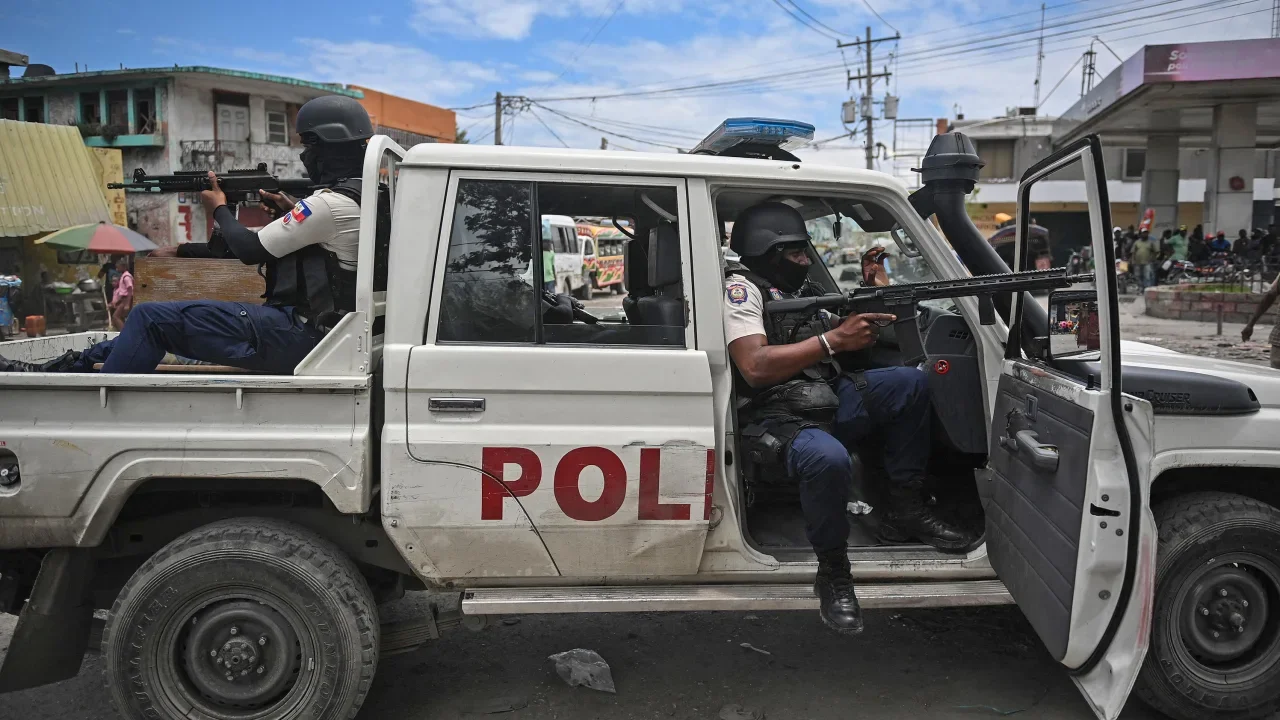
More than a dozen people were lynched by a crowd in Haitian capital Port-au-Prince on Monday, on suspicion of being gang members, according to authorities.
Video from Reuters and AFP showed burning and charred bodies with tires around them, and crowds forming near the area. Residents who spoke to Reuters and AFP on camera said they believed the victims were gang members.
“It was 3 am. The gangs invaded us. There was shooting, shooting. This neighborhood is a peaceful area, all the people in the surrounding area are peaceful citizens,” a local resident told AFP.
Before the killing, Haitian National Police had stopped and searched the victims in a minibus in the neighborhood of Canape-Vert, seizing weapons and other equipment, according to a statement from the Haitian National Police.
“More than a dozen individuals riding on board this vehicle were unfortunately lynched by members of the population,” the statement said.
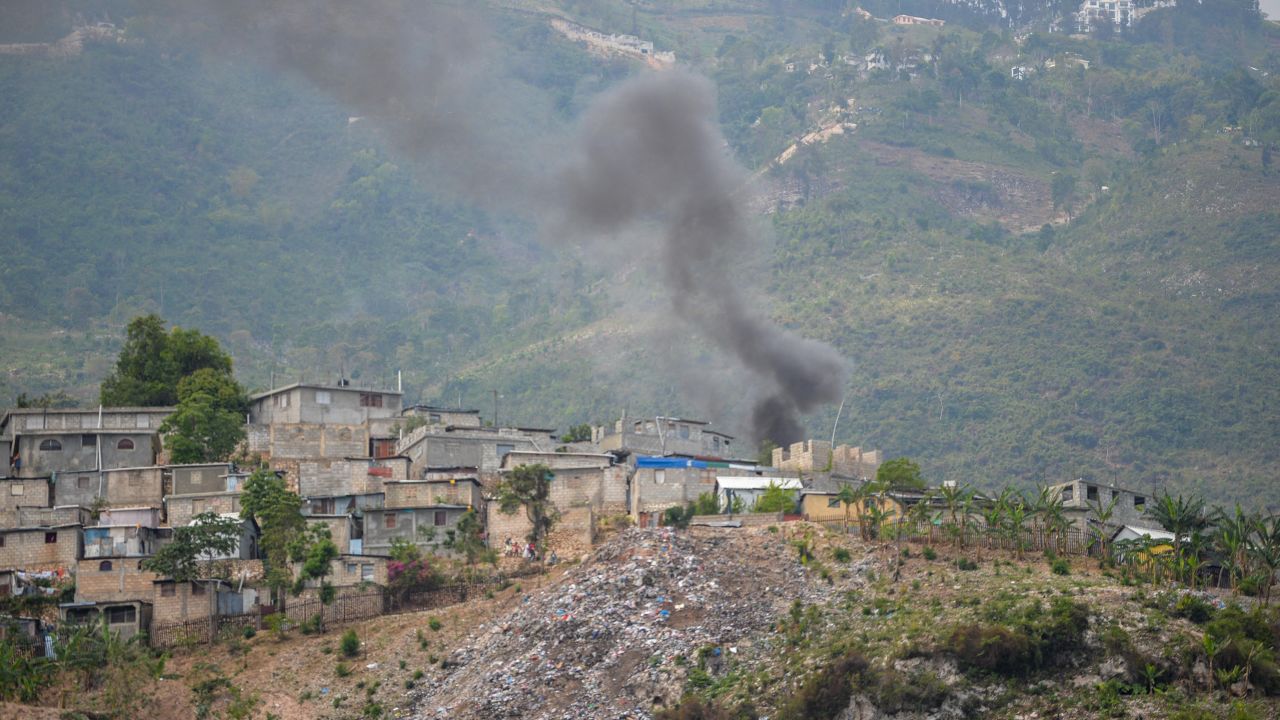
Smokes seen in the Turgeau commune of Port-au-Prince, Haiti, during gang-related violence on April 24, 2023.Richard Pierrin/AFP/Getty Images
“If the gangs come to invade us, we will defend ourselves, we have our own weapons, we have our machetes, we will take their weapons, we will not run away,” a 15-year-old Haitian resident told AFP.
“We don’t ask for a lot. The gang members have invaded the area. We want the police to go ahead and confront them. We’re on our own. We have nothing,” said another. The resident added that suspected gangmembers had “invaded” the neighborhood early Monday morning around 2am.
In a tweet, Haiti’s Prime Minister Ariel Henry applauded the Haitian police on Monday for recent operations toward restoring “order and peace in our cities and neighborhoods.”
“Together, we will solve the problems related to security to move forward,” Henry wrote
Gangs control wide swathes of Port-Au-Prince, plaguing residents with extreme violence as Haitians also grapple with extreme poverty and a humanitarian crisis.

Brooklyn's Brave New World Rep Presents A Haitian Spring Celebration in Little Haiti

Brooklyn's Brave New World Repertory Theatre (BNW) announces A Haitian Spring Celebration, a mix of dance, song and spoken word, set to take place on Earth Day, April 22, in the heart Little Haiti on an historic landmark block in Brooklyn.
The free outdoor celebration will feature performances of "Mister Wa," a traditional Afro-Haitian folk tale, and will take place in the middle of the East 25th Street Historic District throughout the afternoon at 3:30, 4, and 4:30pm.
Brave New World's mission is to bring site-specific theatre to the doorstep of Brooklyn communities, says BNW's producing artistic director Claire Beckman, "so the natural next step is bringing the work of BNW company member Sheila Anozier to our neighbors in Little Haiti. Sheila has choreographed dance for BNW Rep since 2007; starting 2019, she oversaw the addition of traditional Haitian dance and song to our Shakespeare on Stratford spring festival. We're pleased now to grow that into a Haitian Spring Celebration, set on East 25th Street between Clarendon and Avenue D, a block with the same tree-lined charm as Stratford Road."
Folktales are one of the most important aspects of Haitian culture, says Anozier, who conceived, choreographed and directed BNW's Haitian Spring Celebration. "'Mister Wa'" is my adaptation of the Haitian Folktale, 'Misye Wa'. It tells the story of a princess who attempts to find love with a debonaire stranger she meets one day while strolling among her subjects. Steeped in the beauty of their oral tradition, family and friends still gather at night to tell stories, and trade riddles and proverbs. The storyteller will yell out 'Krik?', and if one is willing to partake, they respond 'Krak!' These intergenerational gatherings are a source of distraction and entertainment, inspiring conversation, and education, passing knowledge from generation to generation. They also provide a safe place for children to confront their fears."
She says, "In true Haitian fashion, the Haitian Spring Celebration ends with drums and dance with the audience in remembrance of our time spent together in communion."
The setting for the Haitian Spring Celebration is perfect, says Beckman. The block of pristine, century-old row houses on East 25th Street in East Flatbush is the neighborhood's first-ever historic district; the designation by the city's Landmarks Preservation celebrates both the "unusually intact and cohesive" strand of 56 Renaissance Revival row houses along the stretch. The houses' ownership reflects Flatbush's increasing diversity, especially the growth of its African-American and Afro-Caribbean communities. Many homeowners on the block also maintain superb front yard gardens, which has led the Brooklyn Botanic Garden to name it the "greenest block in Brooklyn" four times, more than any other block in the borough.
Next up on Brave New World's calendar is the American premiere of Arthur Miller's 1947 screenplay, "The Hook," a site-specific production performed on the Waterfront Museum Barge in Red Hook. The first preview is June 8, with the opening June 9. It will run for three weekends through June 25. More details on BNW's website.

State Farm Stadium to host Gold Cup match between Mexico, Haiti

The 2023 CONCACAF Gold Cup match schedule came out on Tuesday, and State Farm Stadium will host two group-stage contests on June 29.
Team Mexico will take on Haiti at 7 p.m. after Honduras-Qatar at 4:45 p.m. in Group B.
State Farm Stadium has hosted games in the tournament — held every two years to decide the champion of North America, Central America and the Caribbean — in 2009, 2015, 2017, 2019 and 2021.
The home of the Arizona Cardinals hosted Mexico, Qatar, Honduras and El Salvador in 2021, with the Mexico-Honduras game seeing a crowd of 64,211 people.
Other host cities this year include Cincinnati, St. Louis, Los Angeles, San Diego, Las Vegas, Chicago and Toronto.
The U.S. defeated Mexico in the final for its seventh Gold Cup in 16 tournaments in 2021. Either Mexico or the U.S. has won every Gold Cup title since 2000.
Valley soccer fans will get an opportunity to see international play at State Farm Stadium on Wednesday, as Team USA will take on Mexico in an exhibition at 7 p.m.
Haiti in dire need of “safe blood”
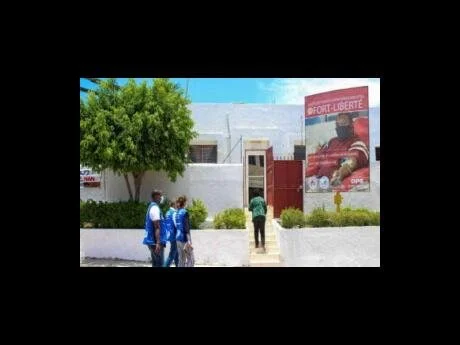
PORT AU PRINCE, Haiti, Apr 6, CMC – Health authorities are urging technical and financial partners to secure funding to support the activities of the National Blood Safety Programme (PNST) amid concerns for the need to increase the production of safe blood in the French-speaking Caribbean Community (CARICOM) country.
“Haiti has an urgent need to increase its production of safe blood, with an estimated annual demand of 60,000 to 80,000 blood bags, compared to the current production of about 20,000 bags,” said the PNST director, Dr. Ernst Noel.
Last weekend national, regional and international health officials participated in a sectoral thematic table to highlight the challenges and constraints of the PNST making an urgent appeal to technical and financial partners for assistance.
The meeting heard that the availability and safety of blood products is a cross-cutting issue in the various health care activities and has a direct impact on the health of Haitians, particularly in the area of maternal mortality, trauma, surgery and diseases such as malaria or other causes of anaemia.
“One of the goals of PAHO/WHO (Pan American Health Organisation/World Health Organisation) in all countries is to improve the coverage, quality, safety, management, appropriate use and timely access to blood and blood products,” said PAHO’s representative in Haiti, Dr. Maureen Birmingham.
PAHO said that the meeting, which was also attended by representatives from the Ministry of Public Health and Population (MSPP),allowed PNST executives to highlight several major challenges facing the programme, including insufficient funding for the operation of its blood transfusion stations, a shortage of human resources, repeated stock-outs of consumables and inputs, non-operational peripheral blood depots, as well as transportation difficulties.
The thematic table thus emphasised the need to decentralise activities, particularly testing, to guarantee rapid access to blood and to have a functional hemovigilance system. The strengthening of existing blood transfusion structures as well as the establishment of sustainable financing and the recruitment of qualified human resources were also identified as key elements.
Participants called for increased support from national and international partners, which would have a direct and significant impact on saving lives, preventing infections and improving health in Haiti. They also commended the efforts of the MSPP and PNST for their leadership and unwavering commitment to this critical program for the health of Haitians.
Tastes of Haiti found just outside Burlington
For those looking for a taste of the Caribbean, the culinary delights of Haiti are available just past the Burlington city limit sign in Whitsett.
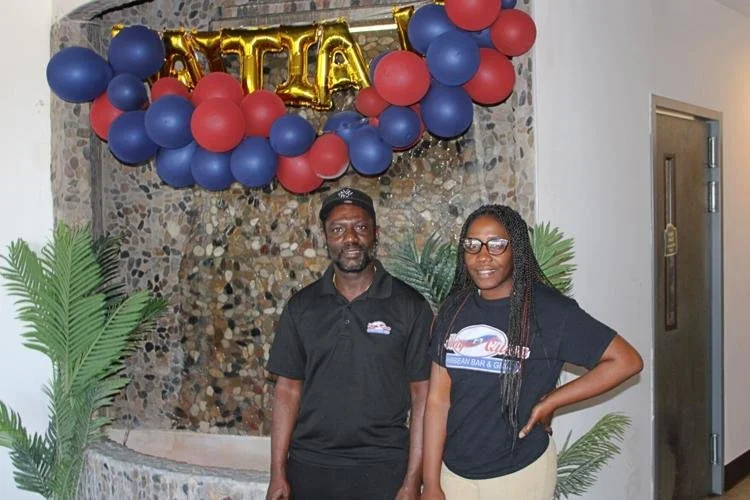
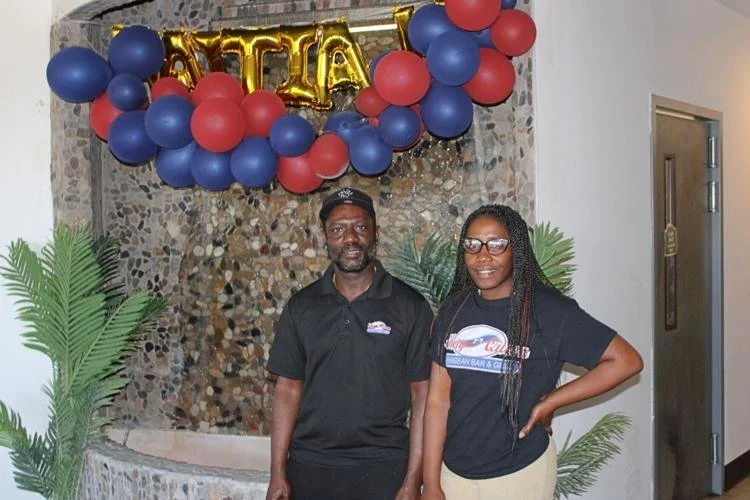
“We are living the American Dream,” said Djosen Vilnor, who owns King Queen Caribbean Bar & Grill along with her brother, the chef, Hilder Vilnor.
After immigrating from a war-torn and hostile political environment in Haiti, the Vilnors came to North Carolina in 1993, Hilder Vilnor said.
“Where we came from was tough, but we are grateful for our lives here in the US,” he said.
His sister added: “A bag of rice at a store here may cost around $20, but back in Haiti, it will cost around a thousand dollars — and people can’t afford it because there is no work. There is also no threat of roving gangs here. We are lucky to be in America.”
Their family had to learn a new language and learn about a new country, but Djosen Vilnor said, “We wouldn’t be here without God and the community around us here. We are grateful for all of the help that we have gotten.”
Family is an important theme running through King Queen.
“Most days, my sister and I are the only ones here working,” Hilder Vilnor said. “I’m cooking, and coming out to talk to customers, and my sister is taking orders and running food. I even clean the tables.”
They opened the restaurant in 2020 after 10 years of running a food truck, Djosen Vilnor said.
“Unfortunately, it was just a week before North Carolina closed in-person dining. That was tough, but here we are. We are blessed,” she said.
Haitian cuisine may be foreign to some diners, but Djosen Vilnor urges people to give it a try.
“All Haitian food isn’t spicy, but we use spice. It’s called Epis, and it’s just seasoning, but every family’s is different and special,” she said. “I truly love educating diners and getting to know them and learn about them. It is really exciting to me.”
Epis blends fresh herbs, onions, garlic and peppers and is similar to the traditional Caribbean green seasoning as well as Dominican sofrito, according to Simply Recipes.
The restaurant is known for its oxtails, jerk chicken, pineapple bowls and red snapper dishes, she said.
“We spend a lot of time with our food — stewing and roasting. That’s where the love comes in,” she said. “You can really get a taste of our homeland in our cooking.”
King Queen Bar & Grill is at 90 Cape Fear Dr., Suite D, Whitsett. It is open Tuesday-Sunday for lunch and dinner.
How Anthony Duclair wants to bring hockey to Haitian community
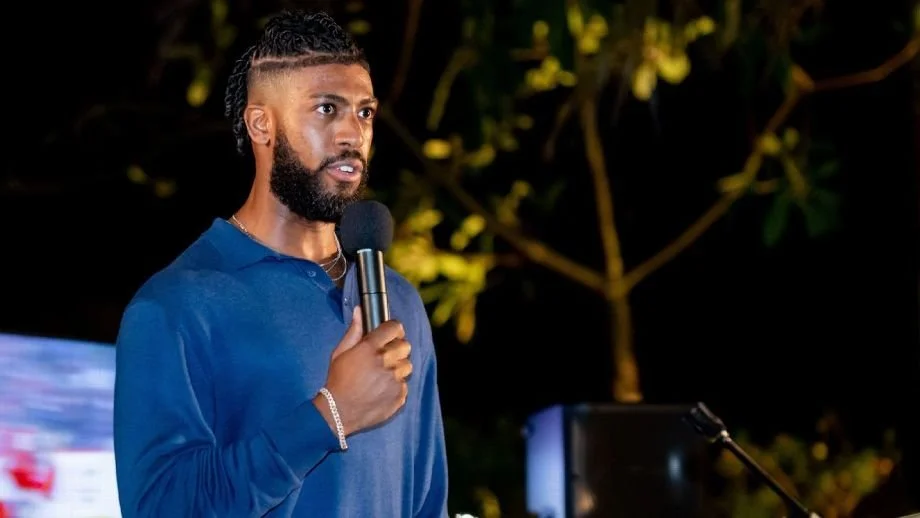
FORT LAUDERDALE -- Anthony Duclair said it hit him right in the heart.
It was May 2021. Duclair was in his first season with the Florida Panthers, the sixth team of his NHL career. He was scrolling through social media on his couch when he saw a tweet from Imran Siddiqui, who had taken his 6-year-old son, Musa, to a Build-a-Bear Workshop. Musa, a Panthers fan, chose a stuffed toy and dressed it as a hockey player.
Musa named the bear Duclair. He told his father it was "because he's brown and plays hockey, like me."
Duclair had seen young fans express their admiration for him before. This hit differently.
"It was just ... chills," Duclair said. "This hit me right in the heart."
That moment was one of many -- some good, some regrettable -- that led the 27-year-old NHL player to create the Anthony Duclair Foundation with the goal of bringing hockey to underserved, diverse communities starting with those in the Panthers' market.
"We have a lack of representation in this league right now. It's tough to grab onto something when you don't know that it's there," Duclair said. He timed the debut of his foundation to NHL All-Star Weekend in South Florida and the start of Black History Month.
"This isn't just going to be another player foundation. I'm going to be really hands-on with this. I'm going to be there as much as I can, and make sure that I'm present for these kids," he said.
While he wants to bring hockey to everyone he can, Duclair said he especially wants to help it grow in south Florida's Haitian community. Both of his parents are from Haiti originally.
Duclair has visited the Little Haiti neighborhood of Miami. He wants to build ball hockey rinks there, hold hockey camps and potentially subsidize the cost of ice hockey for young players in the community.
But, most of all, he wants to have a personal presence doing it.
"I want to do something tangible. Not a one-off," he said. "I look forward to building a relationship with these kids. To hear their stories when I tell them my story."
Duclair's story begins in Montreal, where, he said, "you're put in skates whether you like it or not." His father put him in skates at 2 years old. Duclair found that he didn't just like hockey -- he loved it.
"Whatever sport you're playing, you just want to play. Make yourself happy. Make others proud. For me, that was hockey," Duclair said.
Duclair would be the only Black player on his youth hockey teams. His family would frequently be the only Black fans in the stands.
"As a kid, you don't see color. Until you're reminded of it," he said. "Being Black and being Haitian and playing hockey -- which is a predominantly white sport, as we all know -- I have a lot of great memories. It's opened up so many doors for me and my family. With that being said, it came with a lot of pain. Some of the worst memories I carry with me to this day. Experiences that have haunted me for life."
Like when Duclair was 8 years old and parents at youth games would make monkey gestures toward him. Like when opposing players would use racial slurs against him.
"That kind of thing gets in your head. It leads to a lot of sleepless nights," Duclair said. "As Black people, we learn to internalize things. You feel like you can't relate to anyone. That you can't go to anyone to talk. For me, that's how my childhood was. As much as I loved hockey, there was a part of me that was absolutely disgusted by it. And I know that I'm not the only one."
Duclair hopes sharing his story will let young players of color know that they're not alone.
"Parents tell me that their kids want to quit hockey because of incidents that I went through and that my little brother went through," he said. "I want to make sure that other kids know that I've overcome that and it's possible for them to overcome that to go where they want to go in life. To not be stopped by racial gestures and stuff like that."

Duclair started planning out the foundation during last offseason, although the idea had been running through his head for years. The Panthers' Brett Peterson, the first Black assistant GM in the NHL, came to him last August and said they had to do something for Black History Month, especially with the All-Star Game being held in Sunrise.
"My mind started rolling and starting my own foundation was a no-brainer. To help the next generation and to tell my story," Duclair said.
He reached out to Thomas Eugene Jr., the senior director of diversity, equity, inclusion and multicultural affairs for the Panthers. Eugene suggested a handful of communities on which to focus the foundation's efforts: Little Haiti, North Miami and Liberty City among them.
Duclair had time to work on his vision because of some unfortunate circumstances. After a breakout 31-goal season in 2021-22 -- a career high -- Duclair had surgery in July to repair an Achilles tendon injury. He has yet to appear in a game during the 2022-23 season, although Florida expects him back in the lineup soon. During his recovery, Duclair hunkered down to find ways to execute plans for his foundation.
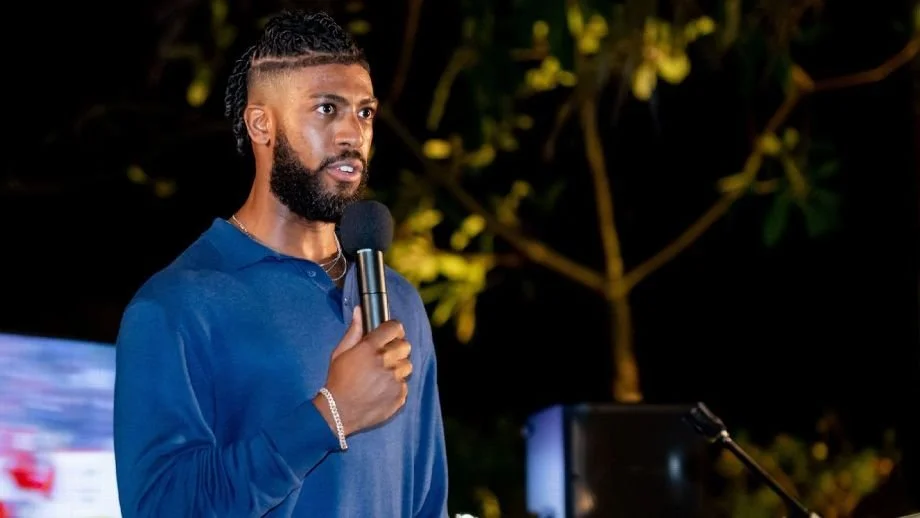
The night before the NHL All-Star Game skills competition, Duclair hosted a cocktail gala on the roof of a Fort Lauderdale hotel to launch the foundation. Teammates, friends and fundraisers were in attendance. So were members of the Hockey Diversity Alliance, a player-led organization formed to "eradicate systemic racism and intolerance in hockey." Duclair is one of its founding members.
The launch was a success. The Panthers donated $100,000 to Duclair's foundation. The NHL Players' Association donated $50,000 in funds and equipment from the NHLPA Goals & Dreams program.
"This guy leads with his heart," the NHLPA's Chris Campoli said of Duclair. "That's clear. I work with industry growth and youth hockey in partnership with the NHL. South Florida is a place where we can do a lot."
Duclair hopes to organize a hockey camp at the Panthers' IceDen practice facility this summer. Meanwhile, he's scheduled to have a camp with Bokondji Imama of the Arizona Coyotes at a rink in Pierrefonds, Quebec, where he skated as a young player.
Whether it's Canada or Florida, Duclair said it's vital to give young athletes opportunities to learn the game -- and to know they're not alone if they experience some of the things he did.
"So many communities and so many ethnicities don't know anything about hockey. These are underserved communities that I want to reach out to and lend a hand," he said. "And let them know that they're loved. And that they're supported."

Family of US couple kidnapped in Haiti pleads for release

SAN JUAN, Puerto Rico (AP) — Nikese Toussaint was at church, so she didn’t see the text message from her sister.
All she knew at that point was that their brother and his wife, who live in the U.S., had landed safely in Haiti to visit ailing relatives and prepare for Rara, a colorful and boisterous festival born out of the dark days of slavery.
It wasn’t until Toussaint got home and her sister followed up the unread text with a phone call that she learned her warnings had materialized: their brother, an accountant; his wife, a social worker; and another person were snatched off a public bus amid a surge in gang-related kidnappings.
Toussaint took a deep breath. Not again, she thought.
Seventeen years earlier, gangs had kidnapped two of her cousins in the capital of Port-au-Prince. They were eventually released but remain traumatized.
This time, the gang that kidnapped her brother, wife and another person is demanding $200,000 — each.
“How are we ever going to come up with that money?” Toussaint told The Associated Press in a phone interview Monday from the U.S.
The kidnapping occurred March 18, and since then, her brother, Jean-Dickens Toussaint, has been allowed to make only two brief calls.
All his family knows is that he and his wife, Abigail Michael Toussaint, are tied up. The phone calls are too brief to find out if they are being given food or water or treated generally well, Nikese Toussaint said.
The couple were on their way to Jean-Dickens Toussaint’s hometown of Leogane, which many Haitians believe organizes the country’s best Rara festival. Three pandemic years had gone by since he last led a Rara band through those streets, and the 33-year-old accountant was excited to resume his role as “colonel.”
Rara is similar to a carnival, with drums, bamboo instruments and metal horns accompanying singers as they parade through the town behind band leaders like Toussaint in an homage to the slave revolution that led Haiti to become the world’s first Black republic.
But the celebration was cut short.
The Toussaints, who are from Tamarac, Florida, never made it to Leogane.
Gangs stopped the public bus they were on as it tried to cross Martissant, considered ground zero for ongoing violence that has worsened since the July 2021 assassination of President Jovenel Moïse.
The gangs apparently noticed the suitcases in the bus and zeroed in on the couple and the person accompanying them on the trip, Nikese Toussaint said.
The family paid someone they trusted $6,000 to give to the gang, but the money vanished. It’s not unusual for gangs in Haiti to refuse to release kidnapping victims even after they’ve been paid, but Toussaint believes it was a scam.
“That’s when we said, ‘Uh, oh, we have to get help,’” she recalled. “We didn’t know what to do at that point. We don’t want to take any more risks.”
Toussaint said her family is in touch with the FBI, which is helping with the case.
“To the gangs, I want to say, we want our family back. We are not rich over here,” Nikese Toussaint said.
A statement from the U.S. State Department said the agency was aware of reports of two U.S. citizens being kidnapped and was in regular contact with Haitian authorities.
The kidnappings are the latest to target U.S. citizens, although most victims are Haitian, ranging from wealthy business owners to humble street vendors. At least 101 kidnappings were reported in the first two weeks of March alone, with another 208 people killed in gang clashes during that period, according to the U.N.
The ongoing violence in Port-au-Prince and beyond also has displaced at least 160,000 people as warring gangs set fire to neighborhoods in their bid to control more territory.
More than a week has gone by since the Toussaints were kidnapped. Their family is trying to stay strong because the couple have a son who turns 2 on Tuesday.
“We’re trying to smile,” Nikese Toussaint said of their video calls with the boy. “We have to smile with him, and give him love, and at the same time we get a little smile (from him), and that’s when the pain gets a little harder.”

Haiti's Notorious Gang Leader, Vitel'Homme Innocent, Named in Presidential Killing

Away from the besieged center of Haiti's capital, Port-au-Prince, one gang leader has gained notoriety for attacks in the city's suburbs. Now he's being linked to the murder of former President Jovenel Moïse.
A spokesperson for the Haitian National Police (Police Nationale d'Haïti -- PNH) named gang leader Vitel'Homme Innocent as a suspect in the July 2021 assassination of President Moïse during a March 10 interview with Radio Télévision Caraïbes. Police did not clarify Vitel'Homme's alleged role in the killing.
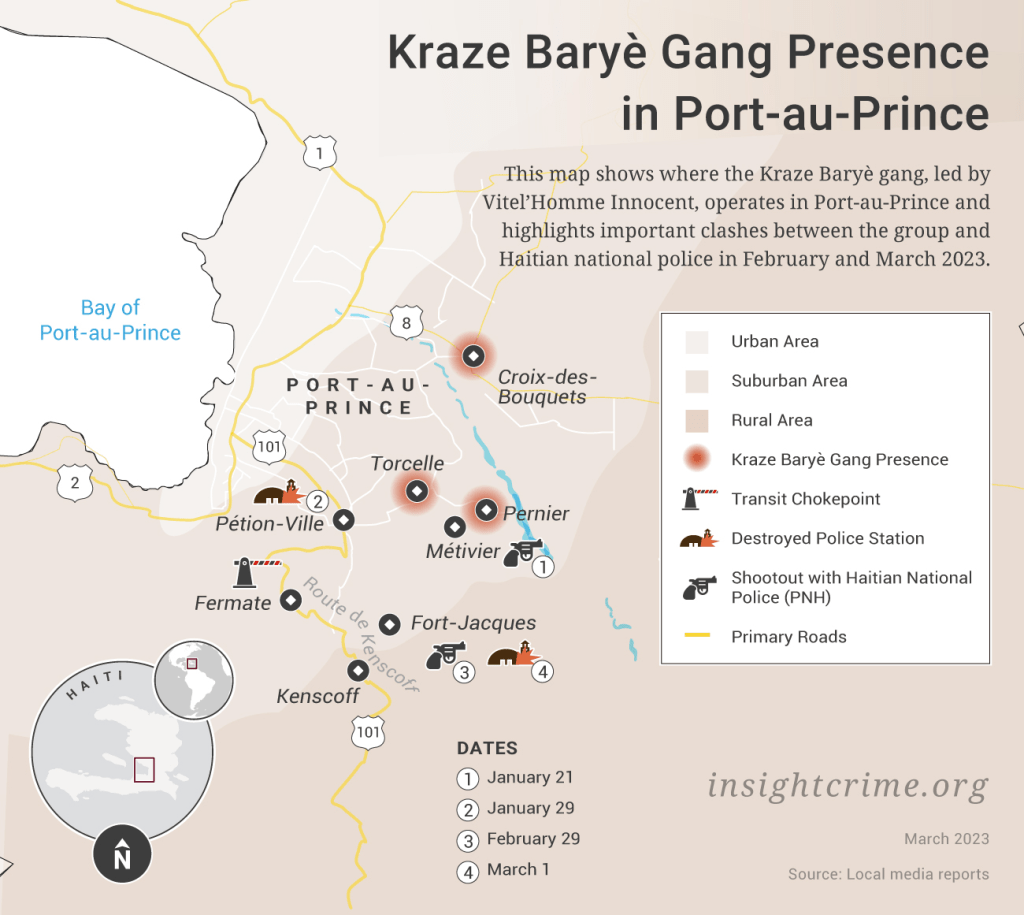
Vitel'Homme has made a name for himself in recent months as the leader of the Kraze Baryè gang, orchestrating a string of attacks on police and residents of towns on the outskirts of Haiti's capital.
The Kraze Baryè gang attacked a PNH police station in Fort-Jacques, a wealthy suburb south of Port-au-Prince, on March 1, stealing guns and bulletproof vests, and then setting fire to the station, Haiti Libre reported.
A month earlier, on February 29, the gang reportedly shot and killed four people, including a PNH officer, again in Fort-Jacques. The same day, Vitel'Homme's men burned down a police station in Pétion-Ville, while on January 21, the gang engaged in a shootout with PNH officers in Métivier, killing at least four.
In response to the attacks, the PNH announced "Operation Tornado 1," targeting Vitel'Homme and members of Kraze Baryè in the gang's traditional strongholds of Torcelle and Pernier, areas east and northeast of Port-au-Prince, Alter Presse reported.
Kraze Baryè's attacks have marked an increase in gang activity outside of the crime-ridden capital city, whose economy is "dead," according to Eric Calpas, a gang researcher in Haiti, who spoke to InSight Crime.
Up to 30 gangs now operate around Pétion-Ville, a suburb south of the capital, where the capital's financial and economic activity is now centered, Calpas added.
InSight Crime Analysis
The accusations of the Vitel'Homme's involvement in the murder of Moïse remain murky. What is more apparent is that Haiti's dire security situation permits smaller gang leaders to quickly grow in prominence.
Originally a political activist, Vitel'Homme turned to crime as an alternative route to gain political capital but has maintained ties to grassroots political movements and actors, Calpas explained.
The Kraze Baryè leader previously claimed he has direct connections with Ariel Henry, Haiti's prime minister and acting president, as well as the director general of the PNH, Frantz Elbé. Neither the government nor PNH has confirmed his claims, though links between criminal and political leaders are well-established in the country. The United States, Canada, and the United Nations have imposed sanctions against multiple former and current politicians for their links to a litany of criminal activities and crime groups.
These most recent attacks in Port-au-Prince suburbs are not Vitel'Homme's first connection to serious crime. The US Federal Bureau of Investigation (FBI) accuses him of involvement in the kidnapping of 17 US and Canadian Christian missionaries in October 2021. It is offering a $1 million reward for information leading to his capture.
According to the US State Department, Vitel'Homme worked with the 400 Mawozo gang, one of the largest criminal groups in Haiti, to carry out the kidnappings of the North American missionaries. He also provided weapons and made ransom demands during the kidnappings, as well as serving as a bodyguard for Joly Germine, a senior leader of 400 Mawozo, the US State Department claims.
The Kraze Baryè gang has carried out kidnappings in the past, delivering victims to allied gangs in exchange for weapons and ammunition, with the other groups receiving the ransom payments, according to Calpas.
Now, with the gang increasing its presence in Fort-Jacques, and other suburbs like Fermate, Vitel'Homme and his men should have ample opportunities for kidnapping and associated crime.

Ex-Haiti mayor accused of killing, torture faces civil trial
BOSTON (AP) — Accusations of political violence and terror have followed a former Haitian mayor all the way to a Boston courtroom, where a civil trial began Monday that shines a light on the wider issue of bloodshed and unaccountability in the Caribbean nation’s politics.
Attorneys painted widely different pictures of Jean Morose Viliena during opening arguments in U.S. District Court in Boston. Those included claims of a killing, torture and arson — or a successful mayor who helped improve the town of Les Irois in the late 2000s.
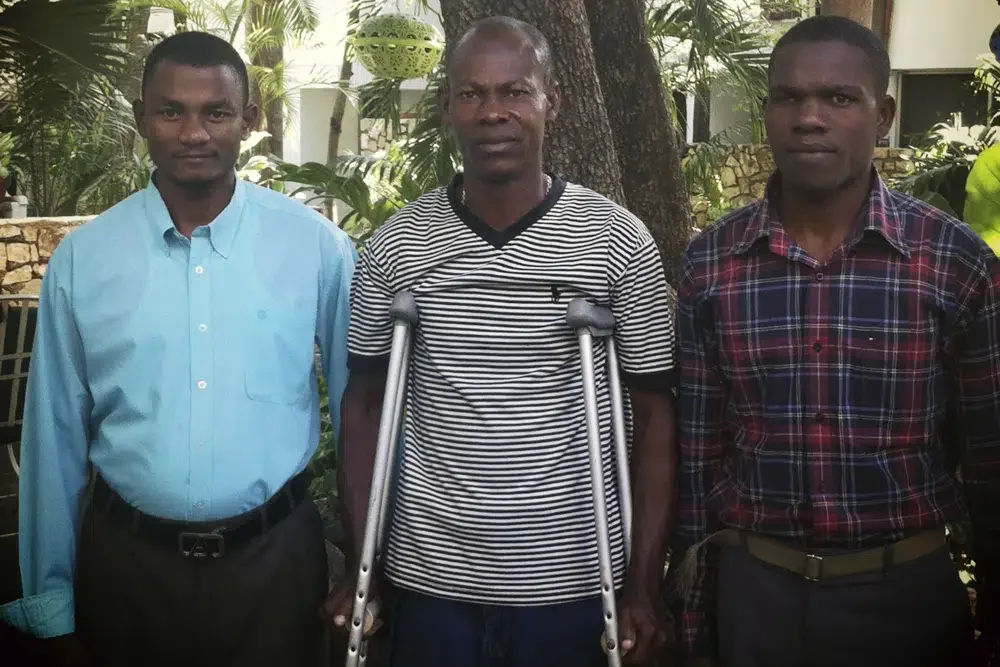
Viliena, who now lives in Massachusetts, is being sued by three Haitian citizens who say they or their relatives were persecuted by him and his political allies.
The suit was filed under the Torture Victim Protection Act of 1991, which allows civil lawsuits to be filed in the U.S. against foreign officials who allegedly committed torture or extrajudicial killing — if all legal avenues in their home country have been exhausted. It was filed by the Center for Justice and Accountability in San Francisco.
The defense said Viliena was not involved in violence and increased services while leading Les Irois, a town of around 22,000 people on Haiti’s westernmost tip, about 140 miles (225 kilometers) from the capital Port-au-Prince.
Viliena’s attorney, Peter Haley told the 12-person jury during opening statements about a farmer’s son who got an education, ran for mayor in 2006 and brought more paved roads, a medical clinic, waste pickup and a better education system — all lacking before his election.
Viliena is a lawful permanent resident of the U.S., and he moved to the Boston suburb of Malden in 2009, drives a truck and is a “very productive member of the community,” Haley said.
Bonnie Lau, an attorney for the plaintiffs, told the jury that Viliena violently suppressed and intimidated his political foes, even after he moved to the U.S.
“This case is about murder, torture, arson and abuse of power,” Lau told the jurors
The plaintiffs — David Boniface, Juders Ysemé, and Nissandère Martyr — lodged legal complaints against Viliena in Haiti, but he was ultimately released and never tried.
Lau said they are bringing suit in the U.S. because they were failed by the corrupt Haitian justice system.
It’s not the first time a former Haitian official has gone before an American court to answer for alleged wrongdoing in their homeland. In 2006, a New York judge ordered former Haitian strongman Emmanuel “Toto” Constant to pay $19 million in damages to three women who said they were gang-raped by paramilitary soldiers under his command.
Viliena was elected as a candidate for the Haitian Democratic and Reform Movement and was backed by the Committee for Resistance in Grande-Anse, which according to the lawsuit dominates regional politics through patronage, threats and armed violence.
Armed paramilitary groups that ally themselves with particular political parties and candidates and function above the law are commonplace in Haiti, said Robert Maguire, an adjunct professor at George Washington University and Haiti expert who testified on behalf of the plaintiffs.
The paramilitary groups provide muscle for the politicians, he said, and in return get material rewards such as motorcycles, jobs, government posts and access to power.
They act with impunity because of Haiti’s weak government and justice system.
“When there’s no police or judiciary to keep you in check, you feel like you can act like you wish,” he said.
Haley, the defense attorney, pushed back, asking Maguire if he was in Les Irois at the time of the alleged violence, and Maguire acknowledged he had never been to the town.
The plaintiffs allege that in 2007 Viliena — a loyalist of former Haitian President Michel Martelly — began a “campaign of persecution” against Boniface, a supporter of the political opposition, after he tried to defend a neighbor who Viliena allegedly assaulted for piling garbage in the street
Viliena allegedly led a group of men armed with guns, machetes and clubs to Boniface’s home. In Boniface’s absence, his younger brother, Eclesiaste Boniface, was dragged out of the house and fatally shot by one of Viliena’s men, the lawsuit says.
“They left his body on the street all night to send a message,” Lau said.
The suit also alleges that Viliena and his men beat and shot Ysemé and Martyr at a community radio station in 2008. Ysemé was blinded in one eye, while Martyr lost a leg, according to the suit.
Nissage Martyr has since died and his son has taken his place as a plaintiff.
The plaintiffs also allege that Viliane’s allies burned down dozens of homes occupied by his political opponents in 2009. Even though Viliena was not present during the arson, his allies acted on his orders, Lau said.
The suit seeks unspecified damages.



In heart of Haiti’s gang war, one hospital stands its ground
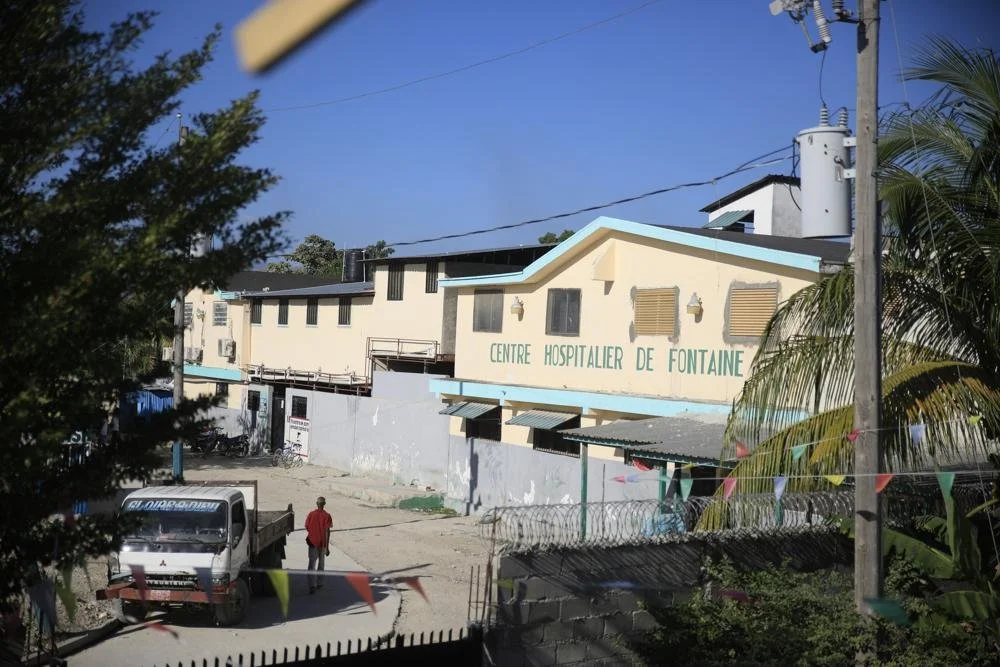
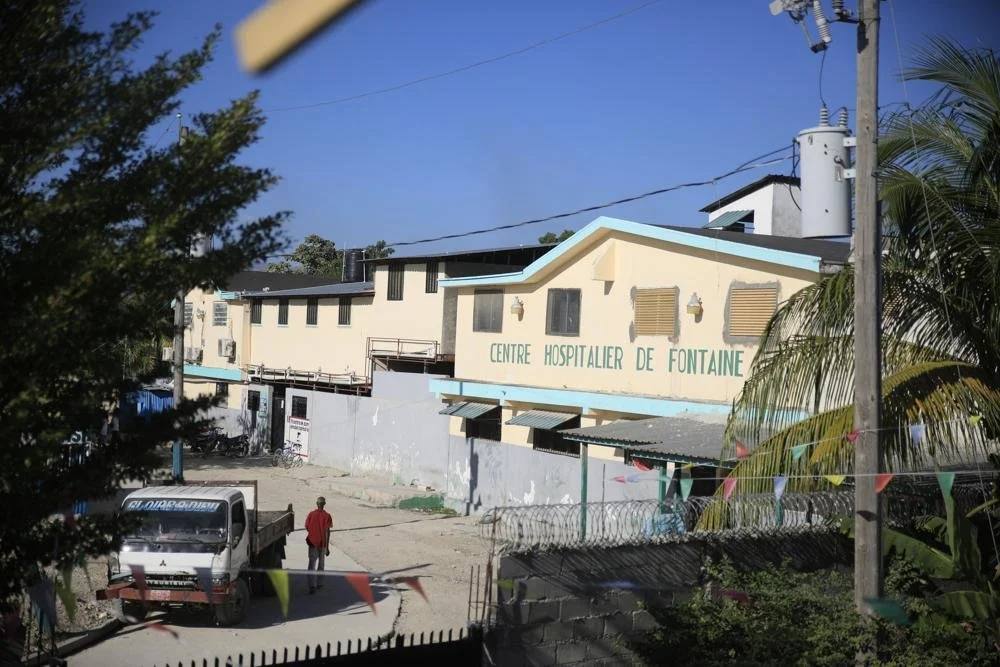
PORT-AU-PRINCE, Haiti (AP) — When machine gun fire erupts outside the barbed-wire fences surrounding Fontaine Hospital Center, the noise washes over a cafeteria full of tired, scrub-clad medical staff.
And no one bats an eye.
Gunfire is part of daily life here in Cité Soleil – the most densely populated part of the Haitian capital and the heart of Port-au-Prince’s gang wars.
As gangs tighten their grip on Haiti, many medical facilities in the Caribbean nation’s most violent areas have closed, leaving Fontaine as one of the last hospitals and social institutions in one of the world’s most lawless places.
“We’ve been left all alone,” said Loubents Jean Baptiste, the hospital’s medical director.
Fontaine can mean the difference between life and death for hundreds of thousands of people just trying to survive, and it offers a small oasis of calm in a city that has descended into chaos.
The danger in the streets complicates everything: When gangsters with bullet wounds show up at the gates, doctors ask them to check their automatic weapons at the door as if they were coats. Doctors cannot return safely to homes in areas controlled by rival gangs and must live in hospital dormitories. Patients who are too scared to seek basic care due to the violence arrive in increasingly dire condition.
Access to health care has never been easy in Haiti, the poorest nation in the Western Hemisphere. But late last year it suffered a one-two punch.
One of Haiti’s most powerful gang federations, G9, blockaded Port-au-Prince’s most important fuel terminal, essentially paralyzing the country for two months.
At the same time, a cholera outbreak made worse by gang-imposed mobility restrictions brought the Haitian health care system to its knees.
The U.N. high commissioner for human rights, Volker Türk, said this month that violence between G9 and a rival gang has turned Cité Soleil into “a living nightmare.”
Reminders of the desperation are never far away. An armored truck driven by hospital leaders passes by hundreds of mud pies baking in the harsh sun to fill the stomachs of people who can’t afford food. Black spray-painted “G9” tags dot nearby buildings, a warning of who’s in charge.
In a February report, the U.N. documented 263 murders between July and December in just the small area surrounding the hospital, noting that violence has “severely hampered” access to health services.
That was the case for 34-year-old Millen Siltant, a street vendor who sits in a hospital hallway waiting for a checkup, her hands nervously clutching medical paperwork over her pregnant belly.
Nearby, hospital staff play with nearly 20 babies and toddlers — orphans whose parents were killed in the gang wars.
Normally, Siltant would travel an hour across the city by colorful buses known as tap-taps for her prenatal checkups at Fontaine. There she would join other pregnant women waiting for exams and mothers cradling malnourished children in line for weigh-ins.
All the clinics in the area where she lives have closed, she said. For two months last year she couldn’t leave the house because gangs holding the city hostage made travel through the dusty, winding streets nearly impossible.
“Some days, there’s no transportation because there’s no fuel,” she said. “Sometimes there’s a shooting on the street and you spend hours unable to go outside … Now I’m worried because the doctor says I need to get a C-section.”
Health care providers told the Associated Press that the crisis has caused more bullet and burn wounds. It has also fueled an uptick in less predictable conditions such as hypertension, diabetes and sexually transmitted infections, largely because of slashed access to primary care.
Pregnant women are disproportionately affected. Gynecologist Phalande Joseph sees the repercussions every day when she leaves her hospital dormitory and pulls on her light blue scrubs.
The young Haitian doctor snaps on a pair of white surgical gloves and makes an incision into a pregnant patient’s belly with a steady hand that only comes with practice.
She works swiftly, conversing with medical staff in her native Creole, when a burst of wailing erupts from a baby girl nurses swaddle in pink blankets.
Operations like these have grown more common, Joseph explains in between C-sections, because the very conditions that have intensified amid the turmoil can turn a pregnancy from high risk to deadly.
This year, 10,000 pregnant women in Haiti could face fatal obstetric complications due to the crisis, according to U.N. data.
Those risks are only compounded by the fact that many of Joseph’s patients are sexual violence survivors or widows whose husbands were killed by gangs. Permeating the struggle is an air of fear.
“If they start having contractions at 3 a.m., they are terribly scared of coming here because it is too early, and they are scared something might happen to them because of the gangs,” Joseph said. “Many times when they arrive, the baby is already suffering, and it is too late so we need to do C-section.”
That became most evident to Joseph last October when four men came rushing to a hospital carrying a woman giving birth stretched out on top of a door. Because of gang lockdowns, the woman couldn’t find any transportation to the hospital after her water broke.
“These four men were not even her family. They found her delivering on the street ... When I heard she lost the baby, it shook me,” she said. “The situation in my country is so bad, and there is not much we can do about it.”
Started as a one-room clinic to provide basic medical services to a community with no other resources, Fontaine Hospital Center was opened in 1991 by Jose Ulysse.
Ulysse and his family have worked to expand the hospital year after year. They fight to keep their doors open, Ulysse said.
Even when firefights arrive at the doors of Fontaine, the hospital reopens few hours later. If it were to close for longer, administrators worry that it could lose momentum and would be hard to reopen.
Today, it’s the only facility to perform C-sections and other high-level surgeries in Cité Soleil.
Because most of the people in the area live in extreme poverty, the hospital charges little to nothing to patients even as it struggles to purchase advanced medical equipment with funds from UNICEF and other international aid providers. Between 2021 and 2022, the facility saw a 70% jump in the number of patients.
The hospital possesses a certain level of protection because it accepts all patients.
“We don’t pick sides. If the two groups face off, and they arrive at the hospital like any other person, we treat them,” Jean Baptiste said.
Even the gangs understand the importance of medical care, he added. Yet the walls still feel like they’re closing in.
Rising carjackings of medical vehicles have made it impossible for Fontaine to invest in an ambulance. When ambulance operators are called from areas like Cité Soleil, they offer a simple response: “Sorry, we can’t go there.”
Fontaine’s mobile clinic can now travel little more than a few blocks outside the facility’s walls.
Doctors worry, but they keep working, just as they’ve always done.
“You say, well, I have to work. So let God protect me,” Jean Baptiste said. “As this situation gets worse, we go out and decide to face the risks. … We have to keep pushing forward.”

Gérard Latortue, former interim Haitian premier, dies at 88

SAN JUAN, Puerto Rico (AP) — Gérard Latortue, a former interim prime minister of Haiti who helped rebuild and unite the country after a violent coup in the mid-2000s, has died. He was 88.
Prime Minister Ariel Henry announced Latortue’s death Monday, saying it was a tremendous loss for the nation. He described Latortue as “a reformer, a convinced patriot, an eminent technocrat, a voice of change, of development (and) a supporter of democracy.”
Latortue was a former exile who was sworn in as interim prime minister in March 2004 following months of bloodshed and political strife that left more than 300 dead and culminated in the ouster of former President Jean-Bertrand Aristide. The turmoil at the time prompted the U.S. military to escalate its mission in Haiti.
In a July 2004 interview with The Associated Press in Washington, Latortue vowed to fight corruption and disarm powerful gangs as he requested $1.3 billion from the international community to help rebuild Haiti after the violent revolt.
In September 2005, he welcomed former U.S. State Secretary Condoleezza Rice to Haiti, where she stressed the need for local officials to accelerate the process to hold general elections.
Latortue said at the time that his administration shared the same concerns as the U.S. government and the international community, and that the administration would honor the results of the upcoming elections.
“This government has no concerns whatsoever as to who will be the next president. Whoever that is, we will greet that person with open arms and pass power on to him or her,” Latortue said at the time.
In February 2006, Haiti held general elections to replace the interim government of Latortue, who was succeeded by former Prime Minister Jacques-Édouard Alexis. The provisional president, Boniface Alexandre, was succeeded by former President René Préval.
On Tuesday, former Prime Minister Jack Guy Lafontant tweeted that Latortue was “a pragmatic politician who knew how, in a very difficult context, to lead the country to free and democratic elections.”
Latortue had previously served as Haiti’s foreign minister, as a business consultant in Miami and as an official with the U.N. Industrial Development Organization in Africa.
PM Holness leads special CARICOM mission to Haiti
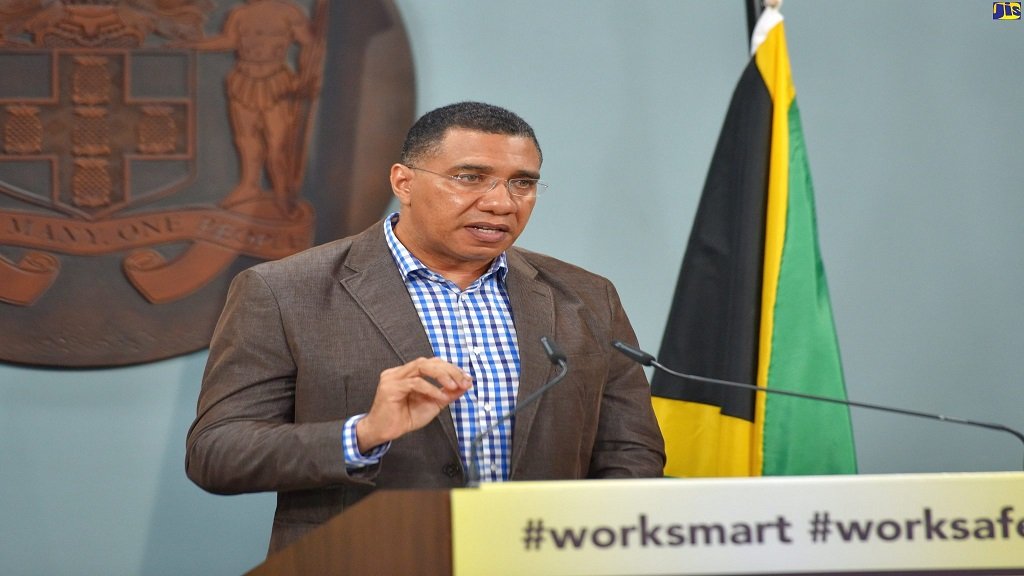
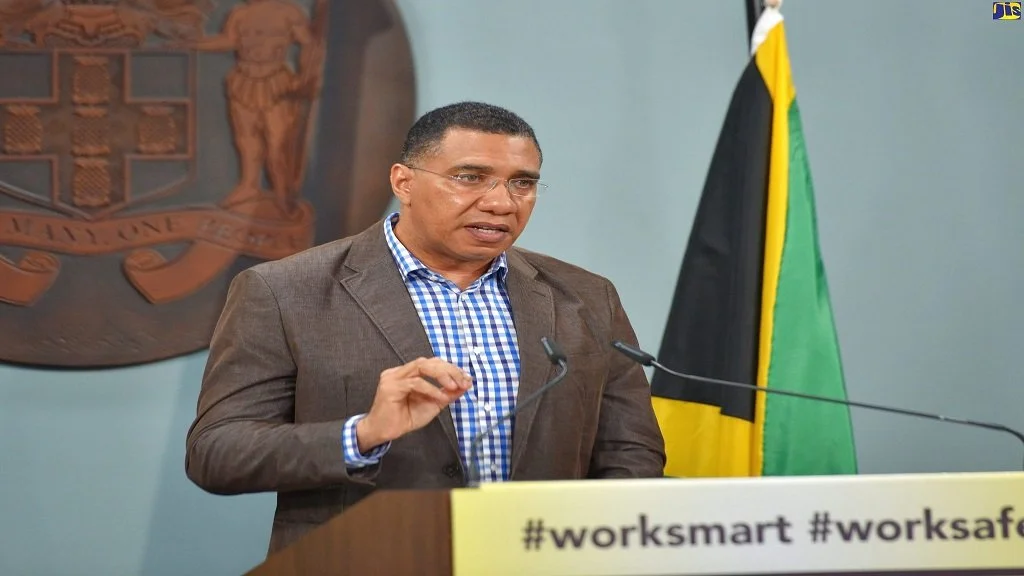
Prime Minister Andrew Holness left Jamaica on Monday morning to lead a special Caribbean Community (CARICOM) mission to Haiti.
Representatives from the Bahamas, Trinidad and Tobago and the CARICOM Secretariat are part of the delegation.
A statement from the Office of the Prime Minister says as part of this mission, members of the CARICOM delegation members are expected to have discussions with several critical Haitian stakeholder groups.
Holness is expected to return to the island later in the evening.
Monday’s mission comes ahead of a planned stakeholder meeting in Jamaica in the coming weeks to discuss the situation in Haiti which is confronted with political turmoil and corruption, and unrelenting gang violence, with armed groups committing murder, rape, as well as kidnappings.
At the end of the 44th regular summit of CARICOM Heads of Government in The Bahamas less than two weeks ago, CARICOM chairman and host Prime Minister Philip Davis said the regional grouping had taken its moral obligation seriously as it relates to resolving the issues in Haiti.
He dismissed the idea of boots on the ground and this stage, saying that the first step would be to see how CARICOM can strengthen the Haitian national police to enable them to restore order and curb the criminal activities on the island.

Shaggy - Time for Caribbean-styled Grammy awards
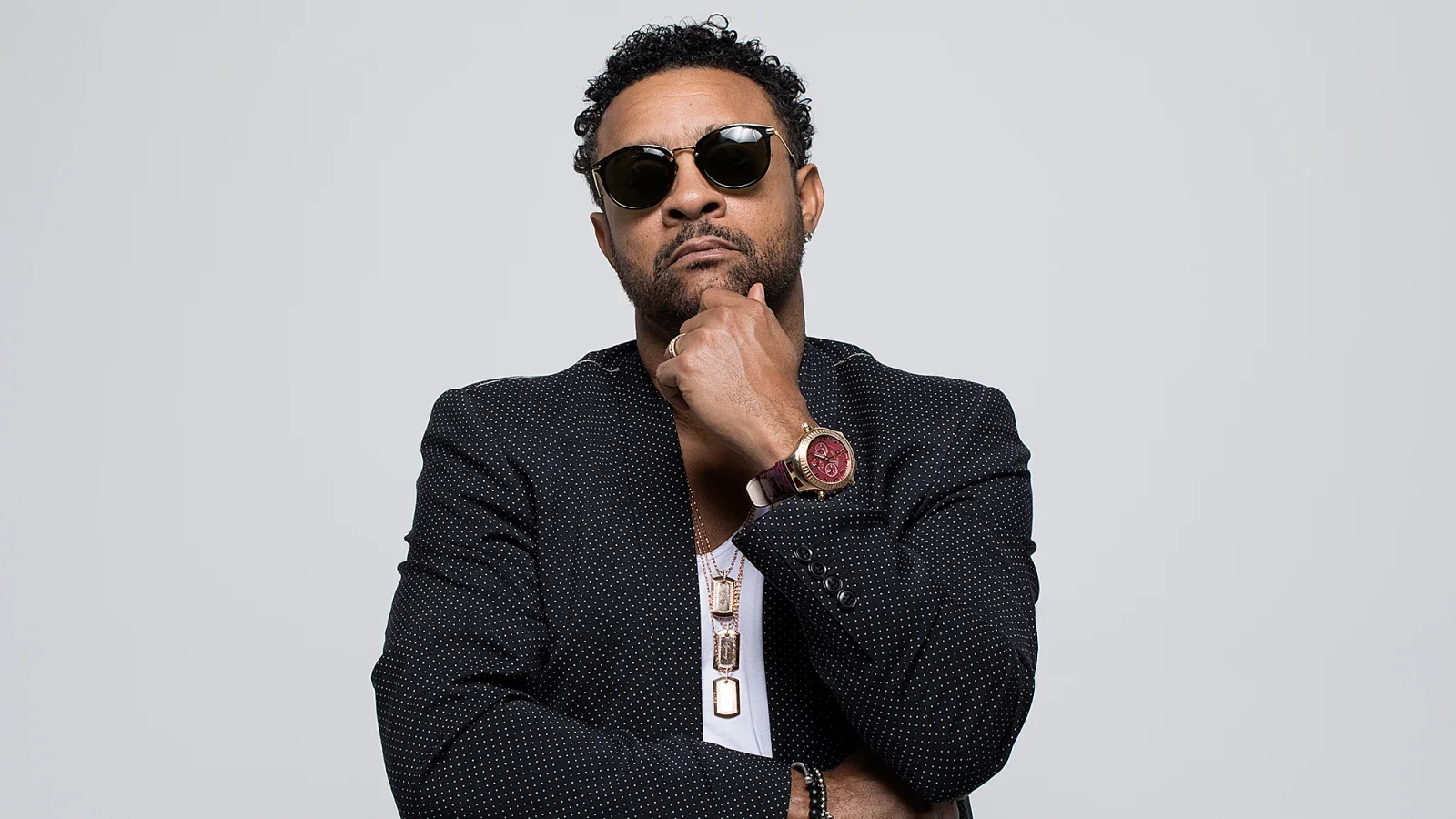
Jamaican reggae and rap star, Shaggy, believes the Caribbean must build its own Grammy awards to honour and recognise regional artistes. In a one-on-one interview with Guardian Media yesterday, Orville Richard Burrell, who is popularly known by his stage name, Shaggy, also said the time has come for soca to no longer be a seasonal genre of music.
Last week, soca artiste Machel Montano said he believes he has the key to taking soca to the Grammys and other international award shows. When asked about the potential of such an undertaking, Shaggy told Guardian Media it is certainly not impossible but pushed the idea of the Caribbean honouring its own artistes.
He said, "We should get to a point where we start doing our own Caribbean-type Grammy following in the same footsteps as the Latin guys where they created what is known as a Latin Grammy. Within the Latin culture, there are different styles. There is reggaeton, bachata and all these different styles of music. I think if we come with a Caribbean-style Grammy instead of a dancehall Grammy, reggae Grammy or soca Grammy and instead just create a Caribbean Grammy where our music will be able to compete instead of just one style of music."
As soca returned in scintillating style this year following two years of no carnival activities due to the COVID-19 pandemic, Shaggy warned the local industry the genre must transform from something that is right now too seasonal.
Shaggy, who was awarded the Order of Distinction in Jamaica in 2007, said, "I think one of the big things that has become a ceiling for soca music is that seasonal type of thing where they feel it's only in a season. So when we did Mood with me and Kes, I was in that feel good mood cause this is the land and the culture of feel good and that should not be a season, it should be year-round. You don't have to feel good just for a season, and the minute we move that whole seasonal thing from soca, I think you definitely have a shot of doing crossover success."
He emphasised that Caribbean artistes have to work harder than those in developed countries to make it internationally and that is something not to be underestimated.
Shaggy explained, "These majors are spending around $100k or $5m, so to speak, on a roll out on any one particular act. We don't have that privilege so we have to make up our mind as Jamaican and Caribbean artistes to really realise if we really want our music to go we have to work 10 times harder with 10 times less and get 10 times less sleep and make music 10 times better, just to even have a shot. And once we have that mindset then we're certainly on our way."
Shaggy featured as part of Kes' IzWE concert that took place on Tuesday night at the Brian Lara Cricket Academy. Having enjoyed his performance in the southlands, Shaggy is now looking forward to relaxing in the twin-island a bit before leaving.

Haiti, Portugal qualify for Women's World Cup for 1st time
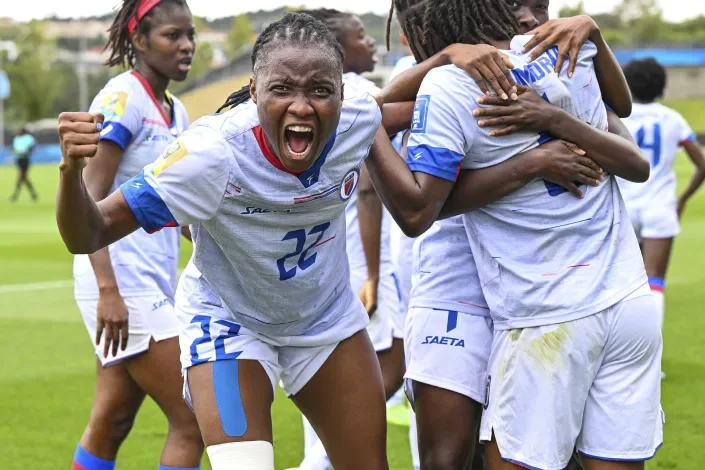
AUCKLAND, New Zealand (AP) — Haiti and Portugal qualified for the FIFA Women's World Cup finals for the first time after winning playoff matches Wednesday in New Zealand.
Carole Costa scored a 94th-minute clincher in Portugal's 2-1 win over the Cameroon “Lionesses” who have reached the round of 16 at the last two World Cups.
Haiti beat Chile 2-1 earlier Wednesday in an historic match it hopes will bring joy and “a breath of fresh air” to a strife-torn homeland.
Melchie Dumornay scored twice to ensure 55th-ranked Haiti will return to the southern hemisphere in July to play in Group D of the Women's World Cup alongside England, China and Denmark.
Haiti and Portugal have taken two of the last three places at the World Cup which will be decided at the this 10-team inter-continental playoff in New Zealand. Paraguay will play Panama Thursday for the last place in the 32-team tournament which will be co-hosted by Australia and New Zealand in July and August.
Haiti's Dumornay recently was signed by seven-time Champions League winners Lyon and showed why with two pieces of slick finishing. She won the race to a through ball from Roselord Borgella in first-half stoppage time to give Haiti a 1-0 lead at the break.
Dumornay then seemed to make the game safe in the eighth of 11 minutes added on by the referee after Chile captain Christiane Endler had saved Nerilia Mondesir's attempt from the penalty spot.
But Maria Jose Rojas scored in the 11th minute of stoppage time to keep Chile’s hopes alive and make the final moments nerve-wracking for Haiti’s Les Grenadiers, who held on to claim an historic victory.
Players shed tears of joy when the final whistle blew, reflecting on success attained in the most difficult of circumstances.
Haiti’s Les Grenadiers had to win two matches in New Zealand to qualify for their first World Cup. They beat Senegal 4-0 in their opening match and then beat 38th-ranked Chile for their first ever win over a South American opponent.
Prior to the tournament midfielder Danielle Etienne told ESPN “there’s a lot of unhappiness in the country and football is the joy."
“Being able to qualify to the World Cup would be major," she said at the time. "We want that for the country as a whole, to have a breath of fresh air and kind of step aside from anything going on.”
While Portugal's win was sealed late it came at the end of a dominant performance. Portugal had 20 shots on goal, most of which were comfortably saved by Cameroon's 16-year-old goalkeeper Cathy Biya who was promoted after Ange Bawou was sent off against Thailand.
Diana Gomes gave Portugal the lead after 22 minutes and the match seemed to be heading to extra time when Ajara Nchout Njoya equalized for Cameroon in the 89th minute.
But an Estelle Johnson hand ball was spotted after a VAR check and Costa scored from the penalty spot.

A Hunger Strike Makes Headlines Before Milan Fashion Week Begins

Stella Jean, one of the few Black designers in Italian fashion, protests her industry’s lack of diversity and inclusion.
The designer Stella Jean has often cut a solitary figure.
Since her debut at Milan Fashion Week in 2013, and with support from Giorgio Armani, the Haitian-Italian designer remains the only Black member of the National Chamber of Italian Fashion. She has often used her platform to address the need for better representation and financial support for design talent of color in the Italian fashion industry — a sector long criticized over instances of racism and cultural appropriation. In recent years, she has undertaken increasingly radical steps to encourage racial equity, co-founding a collective called WAMI, or We Are Made in Italy, after the Black Lives Matter movement in 2020.
Ms. Jean announced she would go on a hunger strike after a dramatic showdown at a news conference on Feb. 8 with Carlo Capasa, the chairman of the powerful national chamber, known officially as the Camera Nazionale della Moda Italiana, which organizes the Milan fashion shows that take place each spring and fall. She accused the chamber of “abandoning” WAMI and its promotion of young designers of color working in Italy, saying that she believed they had cut their support after a speech she made last September highlighting the challenges of being Black and Italian in the industry.
Now, she is taking this extreme step — saying she fears ongoing professional “recriminations” against her and the designers in her collective — to safeguard the less visible members of WAMI, which she co-founded with the African American designer Edward Buchanan, who is based in Milan, and Michelle Ngonmo, who leads the Afro Fashion Association. The Camera had provided financial and institutional support for WAMI members to produce and present three collections as part of Milan Fashion Week. But in an October letter sent to Ms. Ngonmo, Mr. Capasa said that WAMI was “no longer in line with the current strategy,” adding that the Camera would continue to assess support for collections or projects by the collective on an ad hoc basis. Facing a considerable reduction in funding for the project, Ms. Jean said WAMI’s operations would be suspended, citing the “health and well being” of its members.

“After we confirmed the Camera’s abandonment of WAMI without further specifications and assurances,” Ms. Jean said over a video call, “some collective members confided in me that they feared the worst for themselves and their livelihoods as they suddenly found themselves in an extremely critical and time-sensitive situation.”
She added, “I found myself holding the responsibility of the lives of these people who had relied on and believed in WAMI and who at that moment had their lives hanging in the balance. That’s why I offered to swap what little I could. I understood that if I stopped demanding equal opportunity, Mr. Capasa would, in turn, have a guarantee that nothing would ever happen to any of these designers or people working in fashion.”
In an email sent to The New York Times, Mr. Capasa said the Camera Della Moda had not withdrawn its support for WAMI. He said that he had offered the collective a free venue for Milan Fashion Week, which begins on Feb. 21, and that slots on the calendar remained available and at no charge to WAMI designers and Ms. Jean, who announced that she would no longer participate in the show.
“No step backward was taken on our part on the support we offered. Economic support for the production of collections and events for brands is not part of the core of Cameras’s activities. Any additional economic support may be one-off for new brands, especially at the beginning of their journey,” Mr. Capasa wrote. Although there was never a signed partnership, he added, “we are very proud to have always supported WAMI and the Afro Fashion Association projects, adopting different ways depending on the possibilities available at different times.”
Mr. Capasa said that two previous WAMI designers were presenting collections as part of the official calendar in Milan this season, and that there would be a new event, the Black Carpet Awards, to be held on Feb. 24, that would showcase work by Italian-based designers of color.
Ms. Jean previously stepped away from the fashion calendar in 2020, saying that she would not return until there were more Black designers on the schedule. Last season, two non-Italian designers of color — Maximilian Davis and Rhuigi Villaseñor — made debuts at Salvatore Ferragamo and Bally, partly spurring Ms. Jean’s comeback show last September. On Friday, Mr. Capasa added that he regretted that neither Ms. Jean nor several WAMI members would present during the fashion week and he hoped that would change.
While Ms. Jean praised the appointment of Mr. Davis, who is British-Trinidiadian, and Mr. Villaseñor, who is Filipino American, in European fashion houses, calling it “important and symbolic,” she also said that designers of color who might fall under the category of “made in Italy” were “completely ignored.” Talent cannot only be exported, she argued. It must also be homegrown — including by investing in and supporting young talent accessing college placements, internships, jobs or even showing collections on the mainstream calendar.
“Black made in Italy can speak to and tell so many things about the national condition and what happens in this country,” Ms. Jean said.

“I’m mindful of the fact that I arrived with a blue U.S. passport here and a Parsons degree,” said Mr. Buchanan, a co-founder of WAMI who has lived in Milan for two decades. “But if I had a passport from Nigeria or Somalia, it would have likely been a different story.”
He called Ms. Jean’s decision to go on a hunger strike “a personal one,” though he agreed with her statements about the challenges of being Black and working in fashion in Italy. “I can’t say enough about these struggles and difficulties,” he said. “I have had many of them, too, and ultimately I have been within the interiors of the fashion establishment in Italy for 25 years.”
The global fashion industry has been under sustained pressure in recent years to improve representation and racial equity both in front of and behind the camera. But several racist gaffes by Italian fashion houses, including Gucci’s 2019 “blackface” sweater with a mouth cut out and trimmed in red, and Prada’s 2018 keychain of a monkey with inflated lips, has placed Italian fashion under particular scrutiny.
Italy is whiter than most European countries — and does not collect racial data in its population census, nor does it have birthright citizenship, which means that children of immigrants who are born in the country do not automatically become Italian citizens.
In a New York Times investigation published in 2021 that attempted to track representation progress, many Italian brands said regulation prohibited companies from processing data on race, ethnicity, political opinions, religious beliefs, trade union membership or sexual orientation without explicit consent. This meant they were unable to participate in charting whether there were more people of color in their design studios, sales rooms, on their runways and in their campaigns.
For Ms. Jean, the future of minority talent in the Italian fashion establishment remains far from certain. She said her hunger strike felt like a last stand after feeling as though she and her younger peers had been professionally blacklisted for their activism.
“I’m a small independent designer, and I’m the only Black-owned brand in the history of fashion of the Chamber — this does not make me stronger than others,” she said. “I’m always aware of being a flea near these giants and of my perceived inability to put convincing arguments on the table. When I learned that my companions were in such a disparate situation, I had nothing else left to barter with.”

Gang Wars In Haiti Leave Young Women, Girls Vulnerable To Sexual Assault
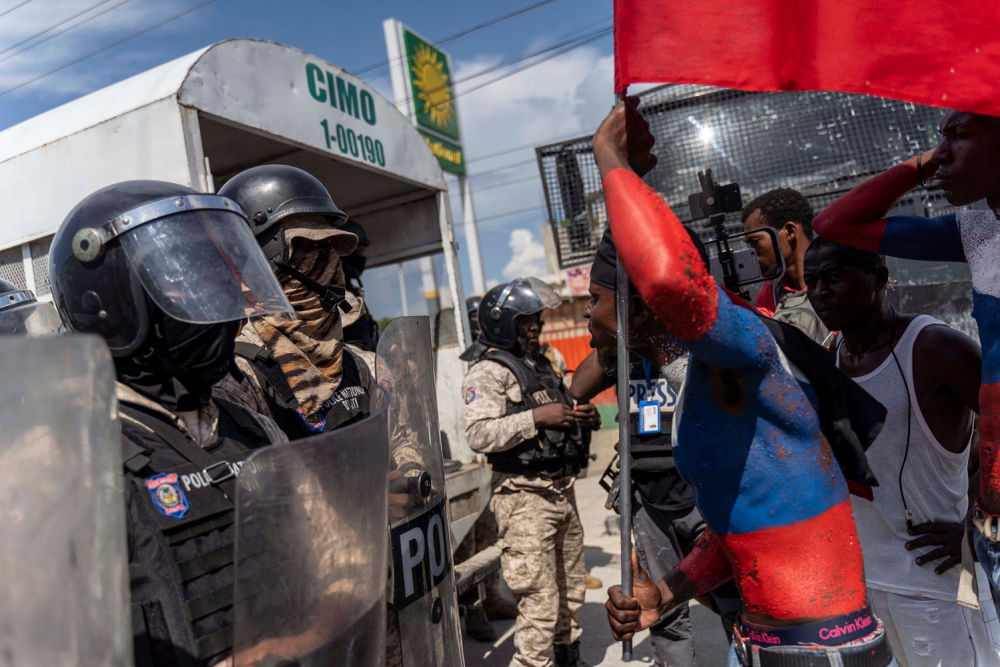
‘Gruesome testimonies’ from victims show the need for urgent action, U.N. official says.
Gangs in Haiti are increasingly using sexual violence against women to terrorize and control people and territory on the impoverished Caribbean island.
According to a disturbing United Nations human rights report, the gangs are even targeting children as young as 10, elderly women and sometimes men in an explosion of violence in the capital Port-au-Prince.
A 19-year-old woman, using the pseudonym “Nadia,” told The Associated Press that she became pregnant after a group of men dragged her into a car when she was walking home from school in the capital city. They held her for three days, during which she was beaten and gang-raped. She struggled with the idea of terminating her pregnancy but decided to keep her daughter, now three months old. Nadia now lives in fear for herself and her baby.
“Gangs use sexual violence to instill fear, and alarmingly the number of cases increases by the day as the humanitarian and human rights crisis in Haiti deepens,” Nada Al-Nashif, the Acting Human Rights Chief said.
“The gruesome testimonies shared by victims underscore the imperative for urgent action to stop this depraved behavior, ensure that those responsible are held to account, and the victims are provided support.”
Indeed, Nadia’s experience has become all too common. Sexual violence in Haiti typically happens in the context of kidnappings, according to the U.N. report published in October 2022. The kidnappers have used video of the rapes to extort money from their victims’ families who usually can’t afford to pay.
“They’re running out of tools to control people. They extort, but there’s only so much money that can be extorted from people that are really poor. This is the one thing they have they can inflict on the population,” Renata Segura, deputy director for Latin America and the Caribbean for International Crisis Group, told The AP.
Like Nadia, scores of rape victims decide not to report the attacks out of fear of gang retaliation and the ineffectiveness of the local police. Underreporting makes it impossible to know the full extent of the problem.
Haitian officials declined The AP’s request to comment on how they are addressing the issue. But the U.N. has documented 2,645 cases of sexual violence in 2022, a 45 percent increase from the year before.
Security in Haiti has deteriorated sharply since the assassination of President Jovenel Moïse inside his private residence in July 2021.
In July 2022, the U.N. announced that it documented 934 gang-related killings from January to June of that year. There were 680 kidnappings across the capital during that six-month period. And over a five-day period, from July 8 to 12, at least 234 more people were killed or injured in gang-related violence in the Cité Soleil area of the city.
“We are deeply concerned by the worsening of violence in Port-au-Prince and the rise in human rights abuses committed by heavily armed gangs against the local population,” a U.N. statement said about the skyrocketing violence.
“We urge the authorities to ensure that all human rights are protected and placed at the front and center of their responses to the crisis. The fight against impunity and sexual violence, along with the strengthening of human rights monitoring and reporting, must remain a priority.”
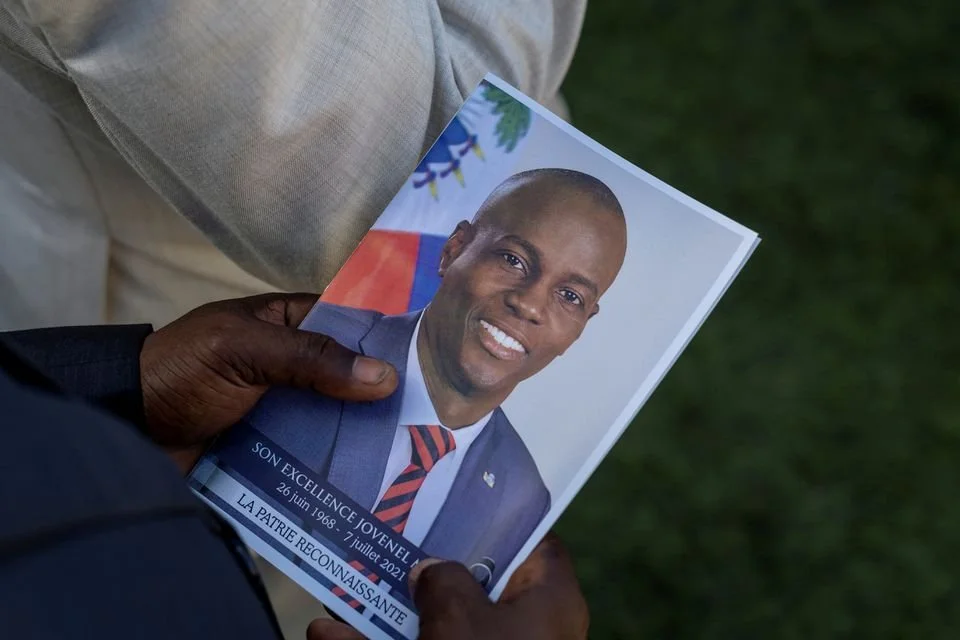
U.S. Arrests Three Americans in the Assassination of Haiti’s President
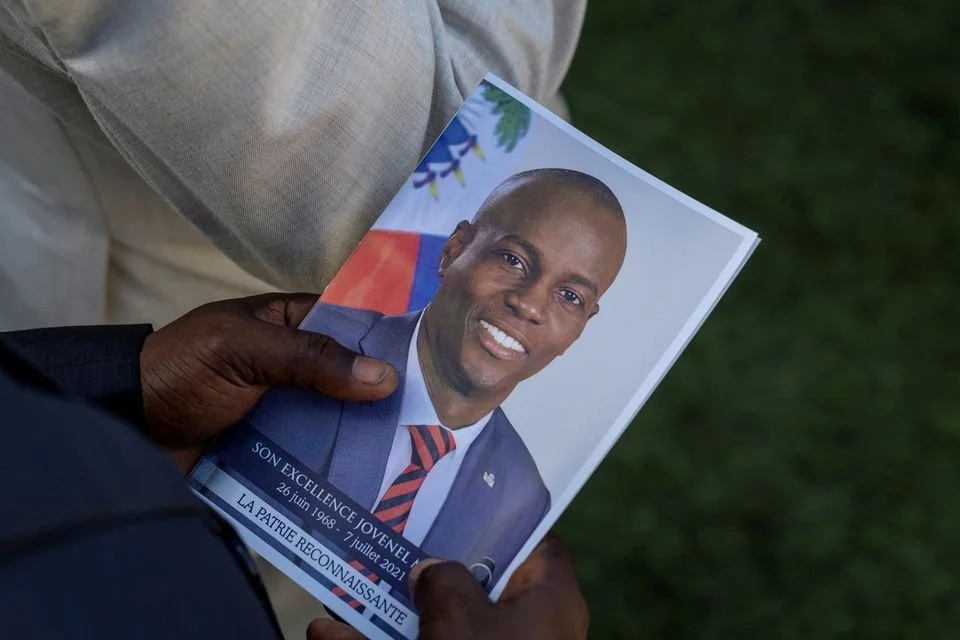
Antonio Intriago, a Venezuelan American businessman, and Arcángel Pretel, a Colombian American citizen, are the owners of a Florida-based security company that has been tied to the 2021 killing.
Federal agents on Tuesday arrested the owners of a South Florida security company with ties to the assassination of Haiti’s former president, according to one of their lawyers, the latest step in an investigation that has implicated several American citizens.
The suspects, Antonio Intriago, a Venezuelan-American businessman, and Arcángel Pretel Ortiz, a Colombian American citizen, were detained in South Florida and were expected to appear in court later on Tuesday, a lawyer for Mr. Intriago said.
Their company, CTU Security, based in Doral, Florida, recruited some 20 former Colombian soldiers who helped storm the home of the Haitian president, Jovenel Moïse, the night of his assassination in July 2021. Lawyers for Mr. Intriago previously admitted that CTU recruited the men.
“I can confirm that Intriago was arrested this morning and has been in Miami for the course of the investigation,” Joseph Tesmond, Mr. Intriago’s lawyer, said. “He intends to enter a not guilty plea at his bond hearing this afternoon.”
Mr. Tesmond also confirmed the arrests of Mr. Pretel and a third suspect: Walter Veintemilla, an American citizen and financier living in Florida, who lent $172,000 to CTU Security to finance their operations in Haiti, according to Haitian authorities.
Understand the Assassination of Haiti’s President
President Jovenel Moïse was killed on July 7, 2021, in an attack at his private residence on the outskirts of Port-au-Prince.
- What Happened: Before his murder, Mr. Moïse took a number of steps to fight drug and arms smugglers. Some officials fear he was killed for it.
- The Attack: Martine Moïse, the president’s widow who was struck by gunfire during the attack, recounted the nighttime raid.
- The Aftermath: Haiti, which has struggled with a legacy of corruption, violence and political paralysis, plunged into further crisis after the killing.
- Murder Investigation: The United States, which assumed a leading role in investigating the death, has charged a former Colombian commando, a Haitian businessman and several other men, including three Americans, with the assassination.
On July 7, 2021, assailants entered Mr. Moïse’s home outside Port-au-Prince and shot him 12 times, leaving him dead and wounding his wife. The murder accelerated Haiti’s spiral into unchecked violence, as gangs stepped in to to fill the power vacuum and now control most of Port-au-Prince, the nation’s capital.
While about two dozen suspects have been arrested in Haiti and Miami, authorities in both countries have struggled to identify the plot’s masterminds. There were no immediate details on the charges against the three men arrested on Tuesday.
Mr. Intriago released a statement shortly after Mr. Moïse’s murder saying he was unaware of the plans to assassinate the former president. Initially, he said, the plan was to arrest Mr. Moïse and force him to step down, replacing him with a Haitian American pastor named Christian Emmanuel Sanon.
CTU Security recruited the Colombian mercenaries and looked for funding from Mr. Veintemilla to finance the operation to arrest Mr. Moïse. The firm hoped to provide security for infrastructure projects in Haiti that Mr. Sanon intended to undertake once he became president of the country.
But just a few weeks before the assassination, the plan changed and Mr. Sanon was no longer seen as a viable candidate to lead the country. The plot morphed from a plan to arrest Mr. Moïse to assassinating him, according to the Justice Department.
The South Florida security firm is also accused in another plot to assassinate a political figure, President Luis Alberto Arce Catacora of Bolivia, about a year before Mr. Moïse’s murder.
Representatives from the security firm — including Mr. Pretel — traveled to Bolivia in October 2020, and allegedly plotted with the defense minister to assassinate Mr. Arce and prevent him from winning the election, according to the Bolivian government.
In the United States, the Justice Department has so far charged seven suspects in connection with Mr. Moïse’s assassination, including four last month.
Three of the four are accused of conspiracy in the killing: James Solages, 37, and Joseph Vincent, 57, who are dual Haitian American citizens; and Germán Alejandro Rivera García, 44, a Colombian accused of leading the group of mercenaries on the ground in Haiti.
The fourth, Dr. Sanon, 65, was charged with counts related to smuggling, though was not charged with conspiracy to commit murder. All four are set to be arraigned and enter pleas on Feb. 15.
The Justice Department had previously charged three others in the assassination, including a Haitian businessman, a former Colombian soldier and a former senator of Haiti.
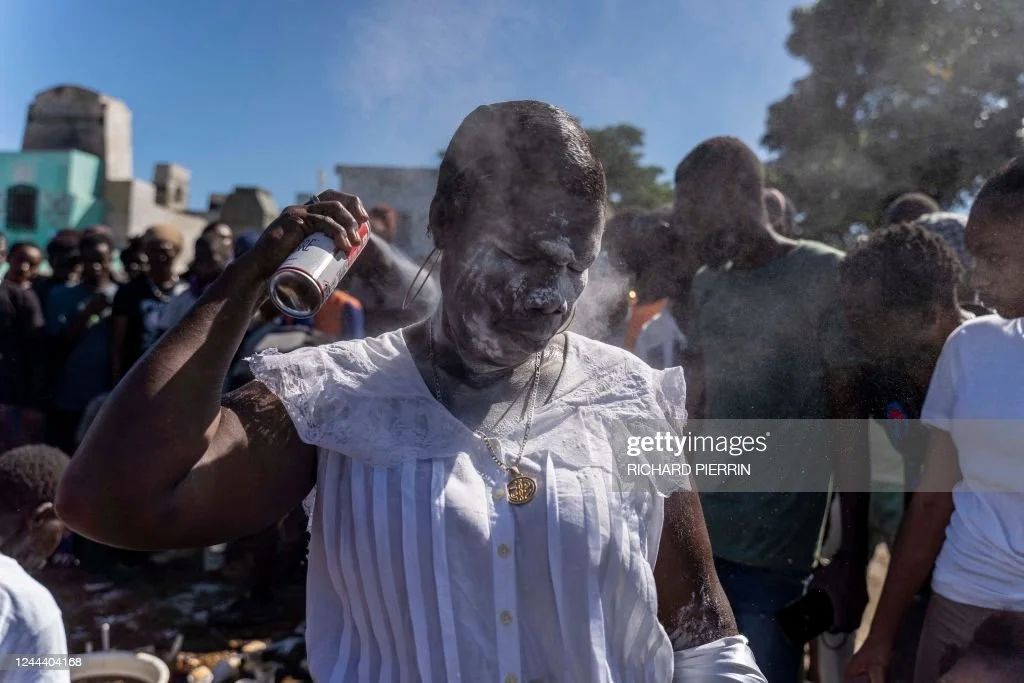
Haitians Celebrate Annual Festival Of The Dead
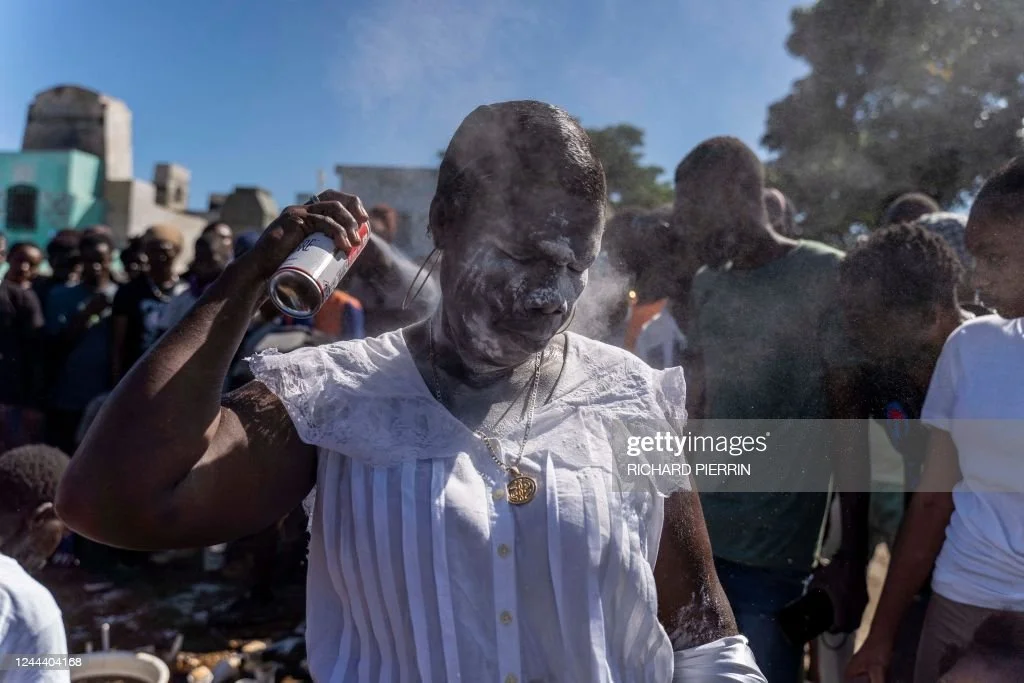
Haitians today marked Fèt Gede, the Festival of the Dead, at the National Cemetery in Port-au-Prince.
Fèt Gede is an annual tradition when practitioners of voodoo parade and believe they are possessed by the spirits of the dead. Fête Gede which is also Festival of the Ancestors, is one of the most important celebrations in the Voodoo religious calendar. It is a time when Vodouisants celebrate the ancestral dead which is equivalent to the Mexican Day of the Dead and Halloween, all in one.
People dress up, take to the streets, dance their communion with the ancestors, and walk in processions to the graveyards where they feed their ancestral dead with the gifts of their own table. In this way, spirits are honored, and their protection is gained for the coming year. The festival shares calendar space and ideology with the Roman Catholic Day of the Dead, or All Souls Day but Fet Gede can be more accurately said to derive from African traditions preserved largely unchanged through the centuries.
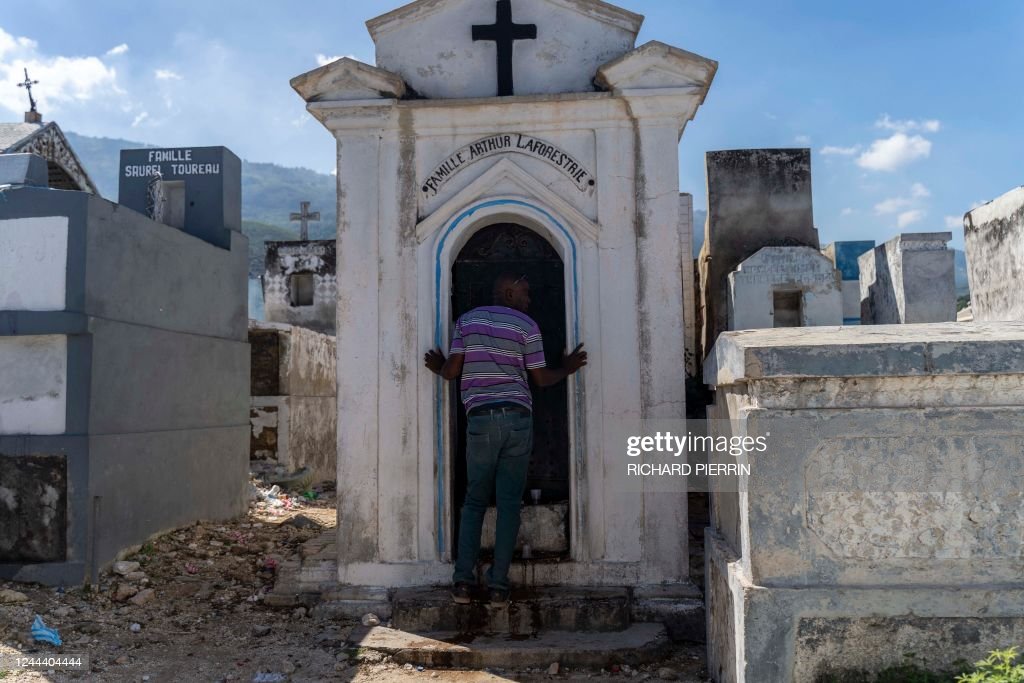
Vodouists come in a spiritual pilgrimage to the cemetery to pay their respect to the dead, but first, permission of passage has to be obtained. The grave of the Papa Gede, the first man who ever died. Papa Gede is a psychopomp who waits at the crossroads to take departed souls into the afterlife, although he does not take a life before its time.

Ancestral services are held at this ‘crossroad’, considered to be the bridge between life and death. Kwa Baron is the Lwa guardian of the cemetery and head of the Gedes. Believers converge on the Haitian capital’s main cemetery to honor the Gede and the father of them all, Baron Samedi. They lay out gifts such as homemade beeswax candles, flowers, food and, to warm the Gede’s bones, bottles of rum stuffed with chilli peppers.
The festival comes amid gang warfare and police killings in Haiti that has left a journalist and an opposition party leader dead in recent days.
Haiti’s National Police says it’s been ordered to launch an investigation into the death of journalist Romelson Vilsaint, who witnesses say was struck in the head by a police tear gas canister.
The Association of Haitian Journalists also accused police of beating up several journalists and confiscating their equipment and other belongings, condemning what it called “anti-democratic acts of repression.”
“The safety of media and free movement of journalists are essential for the full and complete enjoyment of freedom of the press, freedom of thought, freedom of expression and the right to information that make up democracy,” it said.
Haiti has been grappling with myriad crises that have escalated across the nation over the last month. Widespread gasoline and diesel shortages have emerged after armed gangs blocked the nation’s main fuel terminal, and these gangs have also severed access to clean water, food and other essentials as Haiti also deals with a deadly cholera outbreak.
The “triple threat” of cholera, malnutrition, and violence, which affects more than a million children in Haiti, has prompted the UN Committee on the Rights of Children to call on the international community to take “immediate action.” Since the start of the academic year in Haiti on October 3rd of last year, the committee claims that the increase in insecurity in the Caribbean nation has prevented the majority of children from attending school.
According to reports, the nation is currently dealing with a cholera outbreak that threatens “the health, well-being, and lives of 1.2 million children living in the affected areas,” despite the fact that there had not been one for the previous three years. In terms of hunger, UNICEF estimates that nearly 100,000 Haitian children under the age of five are severely acutely malnourished. This issue has recently gotten worse as a result of the country’s unrest and economic issues. It has also urged the Haitian government to uphold its responsibilities under the Convention on the Rights of the Child, which include preventing children from being exposed to pornography, human trafficking, or any other form of involvement in armed conflict.