
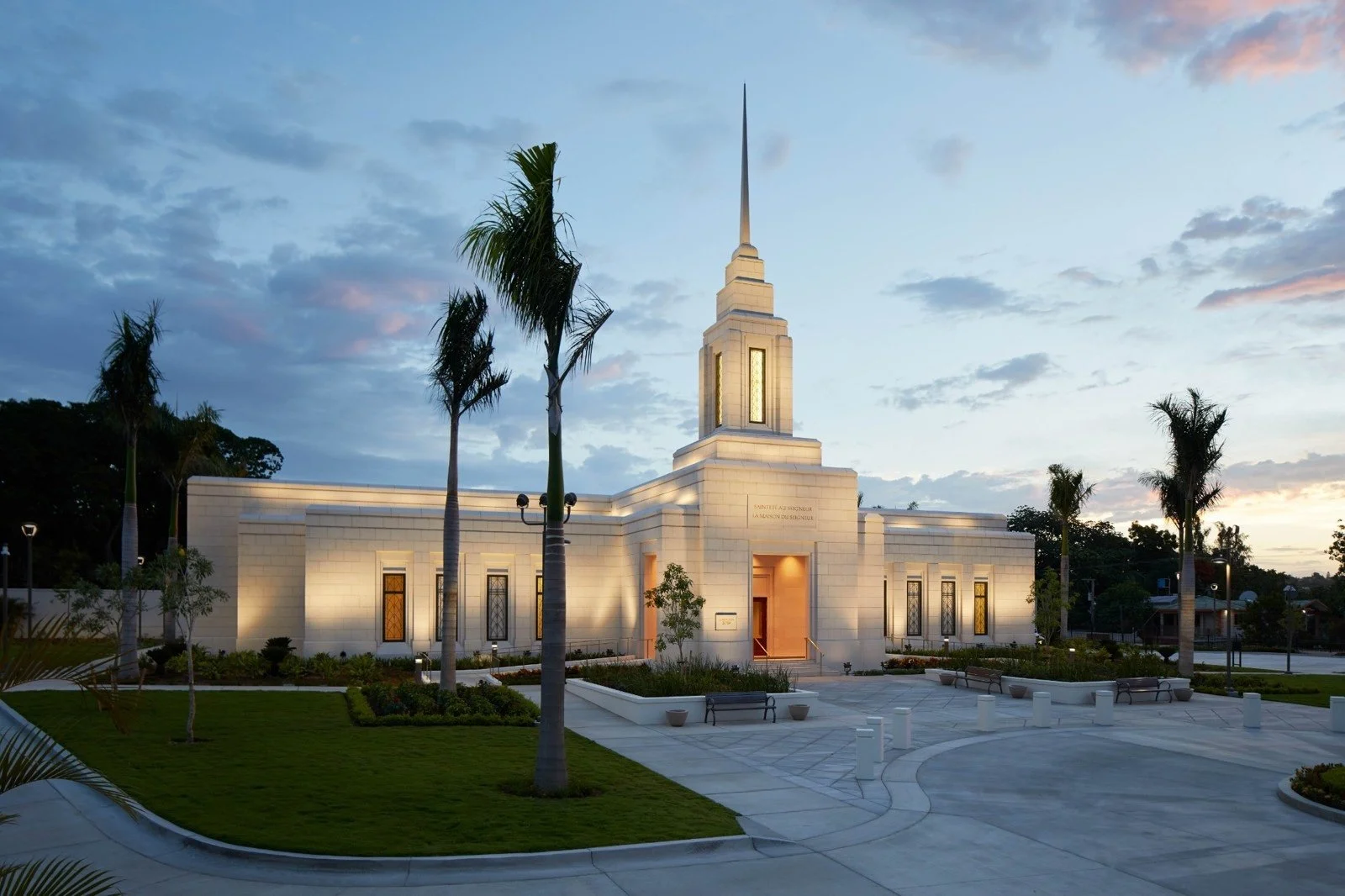
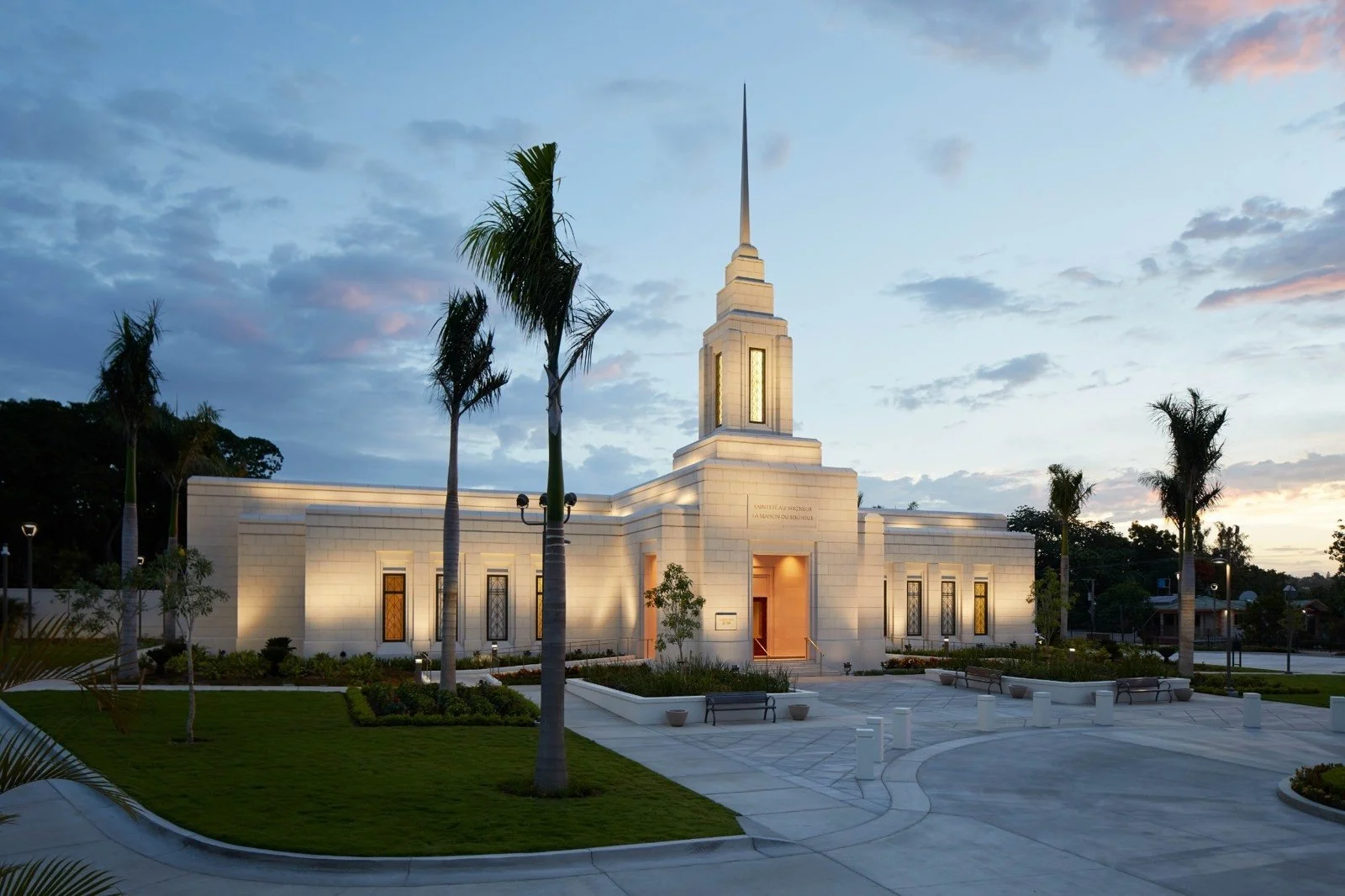
10 years after devastating earthquake, Haitian Latter-day Saints welcome friends to nation's first temple
Unimaginable horror fell upon Haiti in the opening month of 2010 when a massive earthquake claimed hundreds of thousands of lives and displaced legions more.
The disaster prompted a world-wide humanitarian response — including tens of millions of dollars from the Church to help fund food, clean water and other disaster aid efforts.
Almost a decade later, the quake recovery continues. But Haitian Latter-day Saints are celebrating this week as they welcome their friends and neighbors to their nation’s first temple.
The Port-au-Prince Haiti Temple public open house officially begins on Tuesday, Aug. 6 — although a few visitors have already toured the new edifice, surrounded by lush gardens reflective of Caribbean flora.
“I can’t believe my eyes,” said Michael Paquette, a Canadian who was one of the first international missionaries to serve in Haiti in the 1980s. “I used to walk up and down this road outside the temple, Route de Freres. (That) was in the early days of missionary work; now there are (several) stakes here in Port-au-Prince. Now the temple is here.”
The building’s beauty is amazing, he added. “It is very special for the saints in Haiti.”

Counted among the first visitors to the Port-au-Prince temple was a delegation from the U.S. Embassy. They were hosted by Caribbean Area President Elder José Alonso, a General Authority Seventy, and Elder Bien Aimé Huberman, an Area Seventy and chairman of the temple’s organizing committee.
Elder Huberman noted the historic significance of having a temple operating in his homeland.
"The temple is, first and foremost, important because the members will be able to do their sacred ordinances,” he said.
In the past, the high cost of travel and passports prevented many Haitian Latter-day Saints from worshipping regularly inside temples in neighboring Dominican Republic and other nearby nations.
“(Now) we will also be able to go to the temple in our own country with our friends, family and our own people,” he said. “It is a new day for us, a new program. We are very satisfied. Everyone is excited and we are ready now for the open house to begin."
The Port-au-Prince temple is distinctly Haitian.
Turquoise blue and lime green carpets throughout the interior mimic the neighboring sea and the island’s fecund plant life. It’s patterned after an array of local vegetation — including palm leaves, tropical flowers and the hibiscus, Haiti’s national flower, according to a Church-provided facts report.

Palm leaf motifs are found in several areas of the temple such as the celestial room, sealing room, baptistry and foyer. Palm leaves, of course, were used to celebrate Christ’s triumphant entry into Jerusalem.
Temple visitors will also spot hibiscus-inspired wall plaster patterns in the brides’ room.
Artwork adorning the Port-au-Prince temple includes two original works: “Haiti Palm Trees by the Sea” and “Mountains near Port-au-Prince,” both by Russian artist Emin Zulfugarov, the report noted.
The public open house will continue through Saturday, Aug. 17 — except for Sunday, Aug. 11.
A youth devotional in Haiti will be held on the eve of the Sept. 1 dedication of the Port-au-Prince Haiti Temple. The temple will open for ordinances on Sept. 10.
Haiti is home to more than 23,000 Latter-day Saints.
By: Jason Swensen for churchnews.com | August 5, 2019
Utah Symphony Message to Haiti Musicians: We Are With You and Your Country
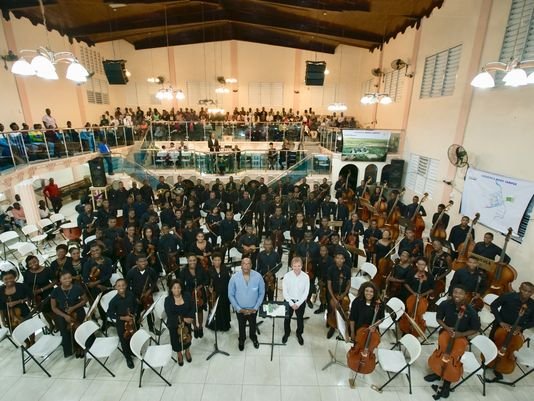
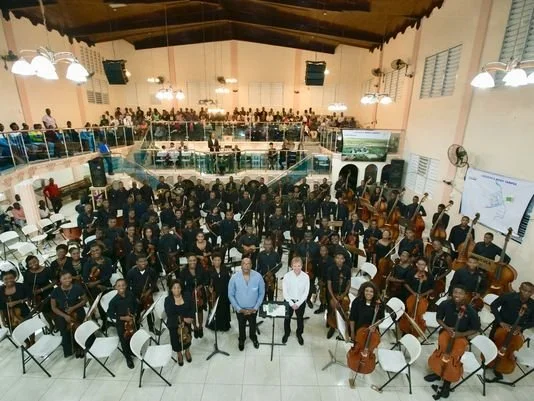
(Utah Symphony music director Thierry Fischer (right) and Haitian conductor Pierre Leroy with participants in the National Orchestra Institute, March 30, 2018, Cap-Haitien, Haiti.(Photo: Colby Bryson)
We are one orchestra, one American organization in Utah, sharing our music to show support for Haiti. We hope our actions will inspire U.S. political leaders.
About 20 of us from the Utah Symphony recently spent a week in Cap-Haitien, in the north of Haiti. It’s about an hour-and-a-half flight from Miami. Close and yet so very, very far.
We were there for the National Orchestra Institute, a partnership with Building Leaders Using Music Education. For the second year in a row, BLUME had brought together about 100 Haitian musicians for a week of intensive training.
I’m the conductor of the Utah Symphony and I first learned about the institute last year when John Eckstein, one of our cellists, told me in an email that “we just want you to know that 17 of us are going to Haiti on our week off to teach music.” The musicians were volunteers raising their own funds for the trip from private donors, he explained, and added, “you might want to think about supporting this institute…” But I didn’t even get that far. I was already thinking to myself, “Am I free that week? I want to join them.”
This year, I was even more determined to go after recent unfortunate comments attributed to our president about Haiti and other parts of the world. I was thinking that if we can show our Haitian counterparts that we are with them and not against them, or worse, ignoring them, then we have made a difference. Even if we are just a drop of water in an ocean.
So there we were, professional musicians prepared to talk about technique and intonation to people (some of them with no electricity, very little clean water) who are taking care of sick parents and struggling to have access to education.
Their instruments were often in disrepair. We had brought many with us, violins, violas, bows, a horn, trombones, music books and scores to give them. We also brought a luthier and bow maker so they could be instructed on how to repair their own stringed instruments.
My initial reaction was to go easy — to take into consideration the way they live and the obstacles they face. But then very quickly I realized, absolutely not. They didn’t need to feel apologetic because of their current level of playing, and I didn’t need to feel sorry because some of them don’t have a proper house. Art is not just about perfection, it’s about the experience and what that experience can bring. Art can create solidarity and fraternity, as opposed to divisiveness.
I was very demanding (in French, since I'm Swiss!) but also very patient. They have said they want to create a National Orchestra of Haiti one day, so they deserved to know what it means to be an orchestra. They were so hungry to learn. For many of them, this week is the highlight of the year.
They worked hard. They had four hours of lessons with Utah Symphony musicians in the morning and three more in the afternoon with me. Our musicians instructed them on their own playing and on how to teach their instruments to others. They also led section rehearsals to prepare them for the concert that would cap our week.
As a conductor, I had much to tell them. Nobody had ever shown them how to tune as an orchestra, so that took a few minutes. And in an ensemble, you have to listen to each other so precisely — with this idea that playing exactly together, they can create a wave of beauty. You have to give them encouragement and be very patient. But they are so committed, it is beautiful to watch. Honestly, when you see them achieve the right tone, it’s breathtaking. You know that you have opened doors, and that these doors will lead them to even more discoveries. They don’t need to tell you — you see it in their eyes, in their smiles, in their body language.
They just want to work, to learn, to be better.
The last evening they performed Tchaikovsky's Symphony No. 5, and after the concert we had a celebratory meal together. I made a little speech at the end. They kept telling us how grateful they were. But I told them they absolutely don’t realize how much we receive and learn from them with their genuine desire just to know more — about everything. Our commitment is our way to show them we love them.
It’s one thing to make yourself feel collaborative by making a donation, but it’s a completely different thing to give your time. To take the initiative and be prepared to be confronted by a different world and to give of yourself. The minimum we can do as artists is to share what drives us every day. A week a year to share and to translate what the notion of art can bring to life in general, it’s not too much.
I am so proud of the musicians of the Utah Symphony for bringing us there in the first place. We are an orchestra — just one American organization, committed to both our work in America and in developing countries like Haiti, and to the notion of sharing what sounds can bring. We hope to inspire our leaders through our actions.
Thierry Fisher is the music director of the Utah Symphony, principal guest conductor of the Seoul Philharmonic, and a frequent guest on international podiums.
By: Thierry Fisher for USAToday.com | April 30, 2018

Doctors To Join in Medical Mission to Haiti

Two physicians who practice at Community Hospital in Grand Junction expect to join in a medical mission to Haiti.
Drs. Adam Baker and Katie McKee-Cole plan to travel to Haiti April 28 to May 5 to join a team from Thomas Jefferson University in performing free surgeries. The program is sponsored and coordinated by Chance, a not-for-profit organization that works to improve lives.
“We are incredibly honored to participate in this important mission trip to Haiti,” Baker said. “My first mission to Haiti was at St. Luc hospital in Port Au Prince in 2015. We traveled to Haiti as part of a pilot mission, and the Chance program has been very busy since then. I am very much looking forward to returning to help those in need.”
Drs. Baker and McKee-Cole both provide ears, nose and throat services. Baker specializes in facial plastic surgery and reconstruction, while McKee-Cole specializes in pediatric otolaryngology. For more information, call 644-3800 or log on to www.yourcommunityhospital.com/ENT.
By: TheBusinessTimes.com | April 24, 2018Video and image courtesy of KJCT8.com
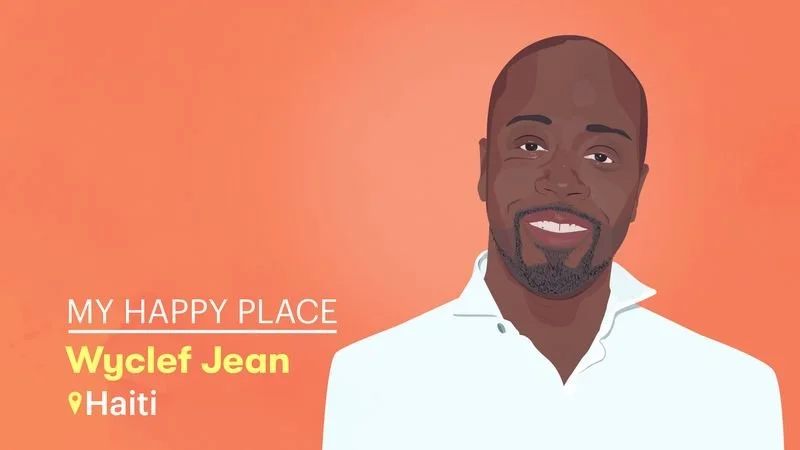
My Happy Place: Wyclef Jean Reveals His Hidden Paradise In Haiti
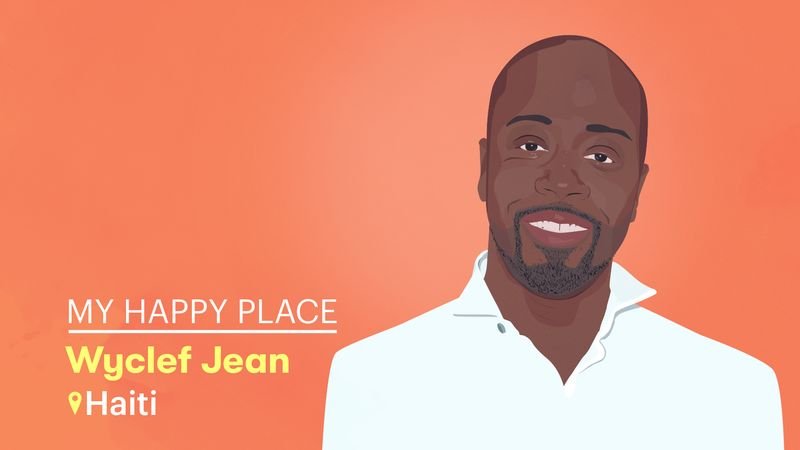
In My Happy Place, we talk to some of our favorite people about their emotional connection with an unforgettable destination.
Wyclef Jean is one the biggest musical names to ever come out of the island nation of Haiti. His star first rose as a member of the famed hip-hop group the Fugees and continued to climb as Jean pursued a career as a solo artist, collaborating with everyone from Shakira to Young Thug. A three-time Grammy award recipient, Jean has never forgotten his home country of Haiti and regularly extols his love for the country through his music. Mic caught up with Jean at an October benefit for VH1’s Save the Music Foundation, which is dedicated to bringing instrumental education to U.S. public schools.For Jean, there’s one place in Haiti that he can’t forget. "It’s like a magical river. It’s called Saut d’Eau," he said. Saut d’Eau is the name of a town and 100-foot waterfall about 60 miles north of Haiti’s capital, Port-au-Prince.

Saut d’Eau -- or Sodo in Creole -- is a place where natural beauty and Haiti’s rich history meet. The towering waterfall was created by an earthquake in the mid-1800s. According to local lore, shortly after a man saw the Virgin Mary appear near the waterfall. Saut d’Eau became a sacred site, and now, as Jean explains, "they have great ceremonies" every year.

The annual festival at Saut d’Eau occurs in mid-July, when Haitians, tourists and members of the diaspora travel to the waterfall to take part in the festivities. Attendees bathe in the water, hoping it will rid them of sicknesses or bring them good fortune. Both the Virgin Mary and her Vodou analog, the Haitian spirit Erzulie Dantor, are associated with the waterfall.Vodou -- more commonly spelled as "voodoo"-- is a key part of Haitian culture, and stems from its colonial history. When French colonizers made African slaves in plantation colonies like Haiti practice Catholicism, many combined the religion with indigenous African gods, giving birth to Vodou. That’s why Vodou spirits, like Erzulie are often so similar to Catholic religious figures like the Virgin Mary.

Music is woven into the yearly Saut d’Eau festivities. "You go out there, a lot of music is played," Jean said. "The style of the music is called rara. Rara is the roots." During the festival, rara musicians lead a procession from a church in Saut d’Eau to the waterfall. The main instrument used in rara is a bamboo or metal cylinder called a vaksen, which is accompanied by drums and other percussion instruments.
Rara is also played during Easter and Haiti’s equivalent of Mardi Gras, Carnival, which happens every year in the weeks leading up to Lent.

Jean hasn’t always had such a rosy relationship with his home country. After a catastrophic earthquake upended Haiti in 2010, his charity Yéle was accused of overspending on travel and luxury office expenses, as well as not fully paying its contractors. Jean responded to criticism in 2010 saying, "I never would ever take money for my personal pocket when it comes to Yéle," and that he has "always been committed to the people of Haiti." Despite being roiled by the Yéle controversy, Jean remains dedicated to uplifting his country, and he released a song named "Lady Haiti" in February 2017. For Jean, the synesthetic combination of music, nature and religious ceremonies make the Saut d’Eau waterfall and festivities one of the most treasured pieces of Haiti. And at the end of the day, it sums up what Jean loves so much about his native home: "You chill. You meditate. You enjoy nature."By: Benjamin Moe for Mic.com | November 6, 2017

Haitian Energy Entrepreneurs Call For Investment Security

At an international PV conference held in the Haitian capital Port-au-Prince, companies were demanding improvements to the political framework for the development of solar power in the country. Additionally, calls were made for low interest loans for private individuals, to cover initial investment in a PV system.
Haiti’s most important PV entrepreneurs gathered at an international solar conference in Port-au-Prince to call for clear regulations for the liberalization of the Haitian energy market, as well as solar-friendly policies to promote the technology’s potential. The event was organized by relief providers NPH Germany, The St. Luke Foundation and the Biohaus Foundation.Only around 6% of Haiti’s population currently has access to electricity. State owned energy utility Électricité d’Haiti (EDH) has a generation capacity of 245 MW, about 80% of which is made up by diesel generators. The other 20% is supplied by the Péligre Hydroelectric power station in Artibonite, to the north of the capital.Because of the continuous overload and extremely low stability of the state utility’s network, Haiti is registering growing demand for solar technology. Local micro-grids and individual installations are becoming increasingly important.The two largest solar companies operating in the country are now complaining about the lack of political or legislative support from the Haitian state, as well as sluggish cooperation with the state utility regarding the feeding of solar generated power into the public grid.“Theoretically, the state monopoly has long been abolished. The decision was, however, taken in a controversial process, so that its legal status and applications are still unclear,” explains Jean-Ronel Noël, whose company Enersa, founded in Port-au-Prince in 2007, produces solar modules and LED lighting. Enersa employs 30 engineers, and has already installed more than 5000 solar street lights, as well as residential PV systems, micro-grids and industrial facilities.Despite falling prices in the PV market, initial investments for PV technology are still much higher than for diesel generators. Because of the unclear legal situation and lack of state support, potential investors are unsettled, says Noël.Another entrepreneur, Jacques Sylvian, Managing Director at Green Energy Solutions, calls on the government to negotiate access to the World Bank’s Clean Technology Fund, which provides cheap loans to private individuals to cover renewable energy systems.Nicolas Allien, who is responsible for energy in the Haitian Ministry of Infrastructure, Transport and Communications, stressed the government’s intention to promote renewable energy both in terms of feeding into the state and creating micro-grids. One of the biggest challenges in improving Haitian’s access to electricity is upgrading the infrastructure to extend the grid’s capacity. The Haitian Government is currently investigating conditions for implementation of a tax exemption on the import of solar technology, according to Allien.The declared goal is to develop up to 600,000 microgrids drawing power from renewable sources across the country. Currently, around 75% of non-state owned households use charcoal for energy production, which has resulted in increased soil erosion due to the large-scale deforestation.By: Cornelis Wüllenkemper (translated from German) | August 23,2017

DID YOU KNOW: ÎLE-A-VACHE IS FEATURED IN THE ASSASSIN'S CREED VIDEO GAME SERIES

Île à Vache
Île à Vache is a Caribbean island located in the Baie de Cayes, just south of Haiti. During the Golden Age of Piracy, it served as a French trading post.During his time in the West Indies, the pirate Edward Kenway visited the island to accept two assassination contracts via pigeon coop. He later returned to the island in 1721 with the Assassin Mentor Ah Tabai, Adéwalé, and his new quartermaster Anne Bonny, to begin his search for his first major assassination target, Woodes Rogers. Besides a harbormaster's station, the island was also home to a tavern, named "Vino A Vache".
Trivia
- Île á Vache translates to Cow Island. True to the name, several cows can be seen freely roaming about the island.
Reference
- Assassin's Creed IV: Black Flag

Miss Haiti 2017: Meet the 15 Top Finalists!

 Name: Christelle YoubinAge: 26International Relations

Name: Gredeline Rousseau
Age:24
Legal Sciences
 Name: Madjolah PierreAge: 23Social Communications
Name: Marie Gerline Moreau
Age 22
Accounting

Name: Junnie MichelAge: 23Administrative Assistant

Name: Weendy Legerme
Age: 25
Psychology
 Name: Alise Murielle JosephAge: 23International Relations
Name: Alexandra Eloisier
Age: 24
Political Science
 Name: Chrystel DufourAge: 24Psychology/Communications

Name: Joanne Shirley Delbeau
Age:24
Sociologist
 Name: Cassandra CheryAge: 21Model

Name: Daphnee Brutus
Age: 25
Hostess
 Name: Caroline Minerve BegeinAge: 22Administrative Assistant
Name: Sophonie Basquin
Age: 20
Management Systems
 Name: Wheytnie AlexandreAge: 26Medical Student
These are the top the top 15 finalists for the Miss Haiti title. 
Photos and information from Miss Haiti Organisation.
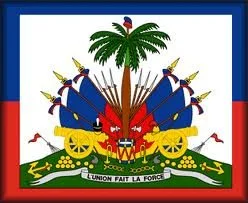
MAY 18 | HAITIAN FLAG DAY

Toussaint Louverture, Jean-Jacques Dessalines, Henri Christophe, Alexandre Petion

This meeting, known as the Congress of Arcahaie, was set for May 14 to 18, 1803; the agenda had two essential points: the establishment of a united command of the revolutionary army under the supreme authority of Jean-Jacques Dessalines, and the adoption of a flag by the indigenous army. The two principal leaders at this time, Dessalines and Pétion, jointly drew up this agenda. On May 14, 1803, military delegations flocked to Arcahaie; only a few of them were from the south.
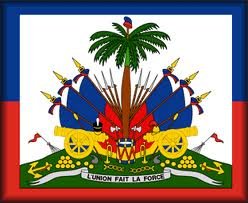
The principal heads of the insurgency did answer the call. The Congress was opened by Dessalines and Pétion May 15, 1803, on the Mérotte plantation in Arcahaie. The two men focused on the military situation, insisting on the need for all forces rebelling against the enemy to unite so that victory would be more rapid and decisive. Curiously, there was not a word about the new Haitian flag; priority was put on new strategies and tactics to thwart the colonial army and also to select a Commander of the insurrection army.Dessalines was appointed general-in-chief of the insurrection army.The question of the new Haitian Flag came up on the last day, May 18. The new Commander General suggested the old slogan "Live Free or Die" be replaced by "Liberty or Death." The debate over the proclamation of the creation of a new Haitian flag lasted a whole day. It was only in the evening that the Congress of Arcahaie definitively adopted the new Flag of Haiti. The white stripe was eliminated, while the remaining red and blue bands were attached together. The removal of the white stripe symbolizes the abolition of the White Man's control and the union of blacks and mulattoes in Haiti. The arms are composed of a palm tree surmounted by the Phrygian cap of liberty and ornamented with trophies with a banner across the bottom saying "L'Union Fait La Force" (through Unity there is Strength). 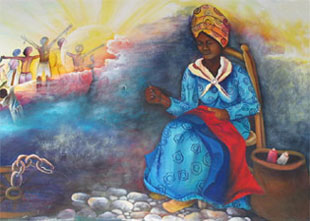 By this gesture, they publicly designated that this country no longer wanted to be recognized as a French territory and that the people who lived on this land preferred to be dead rather than be slaves. "Liberté ou la Mort!" meaning "Liberty or Death" had become the new motto as it had already been embraced at the Ceremony of Bwa Kayiman " held on August 14, 1791.Haiti's first flag was sewn by a lady named Catherine Flon at the Congress


 In 1805 , shortly after Jean-Jacques Dessalines proclaimed himself emperor, the Haitian flag color was changed to black and red bands placed vertically respectively. After the emperor's death, in 1806, the country will be divided into two republics for 14 years. Henri Christophe , in the northern part kept the flag that Dessalines used.In the South and the western part of the country, Alexandre Petion nourished the idea of giving the indigenous army its own flag. He went back to 1804's flag that was blue and red only this time he added the white squared portion that included the country arms and the famous motto " L'UNION FAIT LA FORCE ", meaning that through unity we find strength.This flag was in use till 1964 when Papa Doc Duvalier modified it with the black-red vertical bicolor of Dessalines on which he added a modified version of the arms of the Republic.On February 25 1986, after the fall of Baby Doc and the Duvalier regime, the Haitian flag was again changed with the request of the Haitian people to two equal-sized horizontal bands, a blue one on top and a red one underneath. The coat of arms of the Republic remained in the center. That is the flag used until today.As we celebrate the Haitian flag Day, we need to remember that our ancestors created this bicolor blue and red as a symbol of unity among all of us of Haitian descent to fight colonialism and live free forever.

Eklà Beauté - More than a salon....it's an Experience!!!

 Eklà Beauté is a beauty salon like no other.
 Owner, Christina Fils-Aimé, had a vision. She wanted to offer professional service, excellent hair care and a truly one on one experience; All of that while inviting you into the peaceful, serene and calm environment of her studio.Christina, left Haiti at the age of 18 and moved to New York. There, she became a hair colorist and makeup artist and worked in many hair salons. At 30 years old, she moved back to Haiti and left the hair and makeup business. However, her love for fashion and hair care pulled her back to the hair business. Its her passion; And it shows in the results.She works by appointment only to give each client the time and care they expect, need and deserve. Her goal is simple: "I want it to be 100% about my clients. I want them to walk out feeling good about themselves and with a smile on their faces. That’s what I enjoy most of my job, to be able to put a smile on my clients’ faces”, she says. Eklà also offers manicures, pedicures and makeup services for a one stop shop to pamper yourself.The décor has a zen feel and the relaxing ambiance with soothing music is sure to please.
 If you're looking to escape the chaos of everyday, check them out for your beauty needs. Eklà is located at 46 Rue Rebecca, Petion-Ville, Haiti. You wont be disappointed!
Source: FashionAyiti, pagespro
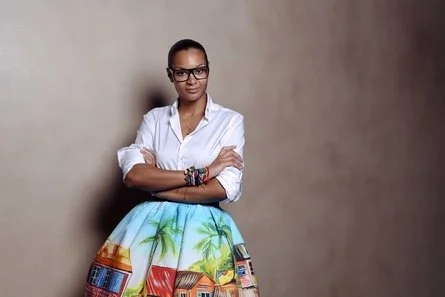
Why This Italian-Haitian Designer Loved by Beyonce, Rihanna and More Should be On Your Radar
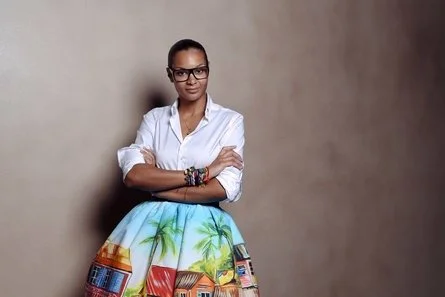
 This Rome-based fashion star opens up about her Haitian roots and how clothes can be a cultural connector.ESSENCE: What inspires your creations?STELLA JEAN: My own story—my roots and background have always inspired my work. I'm half-Haitian and half-Italian. Haiti influences my creativity. The sociocultural fusion I bring in my collections is perfectly represented by a country like Haiti and in line with my fundamental need to convey a new concept of multiculturalism. Fashion can be a cultural translator; we can reestablish the proportion among symbols, stories and different worlds through style.ESSENCE: How would you describe the Stella Jean woman?S.J.: Women who are confident, curious, audacious, not afraid to experiment and who cherish family memories, plus have a pinch of irony—all of which makes every look personal and unique.ESSENCE: Who are your favorite designers?S.J.: Dries Van Noten, who mixes different cultures in a tasteful and respectful way. And Etro, who sums up a blend of tradition and innovation.ESSENCE: What are your go-to beauty products?S.J.: Kreyòl Essence 100% natural Haitian black castor oil, pure organic moringa oil (from the southern coast of Haiti) by Ayiti Natives and MAC's In Extreme Dimension mascara.By Bridgette Bartlett Royall (for Essence.com) | Apr, 26, 2017

Haitian Black Castor Oil Now Available at Whole Foods Market

Haitian Black Castor Oil Now Available at Whole Foods Market
 Kreyol Essence is excited to be the first company to launch Haitian beauty products at Whole Foods Market and the first Haitian company to bring Haiti’s beauty treasure to the mainstream U.S. & Canadian market! Haitian Black Castor Oil aka Lwil Maskriti is the Liquid Gold of the Caribbean. We have known for centuries how this indigenous oil promotes hair growth, moisturizes hair and skin, and is a staple for medicinal purposes.Having our products at Whole Foods is a testament to our quality and commitment to social impact in Haiti. We are launching in over 95 stores in Pennsylvania, New Jersey, Virginia, Maryland, Washington DC, Ohio, Kentucky, Florida, Canada, and are working on additional locations every day. If you want the best black castor oil and to help create work for women and farmers, purchase your bottle of oil at any of the Whole Foods Stores listed below and tell a friend to do the same. Check our website frequently for additional store addresses.
 KENTUCKYLexington – Lexington, KYMARYLANDBethesda – Bethesda, MDColumbia Maryland – Columbia, MDHarbor East – Baltimore, MDMount Washington – Baltimore, MDSilver Spring – Silver Spring, MDOHIOChagrin- Beachwood, OHPENNSYLVANIA Philly Center City – Philadelphia, PAPittsburgh – Pittsburgh, PAWexford – Wexford, PANEW JERSEY Cherry Hill – Cherry Hill, NJVIRGINIAArlington VA -- Arlington, VACharlottesville – Charlottesville, VAVirginia Beach, Virginia Beach VANewport News — Newport News, VAOld Town -- Alexandria, VAShort Pump – Glen Allen, VATysons, Fall Church, VAWASHINGTON DC Foggy Bottom – Foggy Bottom, DCGeorge Town – Washington, DCTenleytown – Washington, DCP Street – Washington, DCH Street— Washington, DC
- March 03, 2017
- Kreyol Essence
Kreyol Essence | March 3, 2017