
Street Is Renamed in Flatbush, to Joy and Controversy
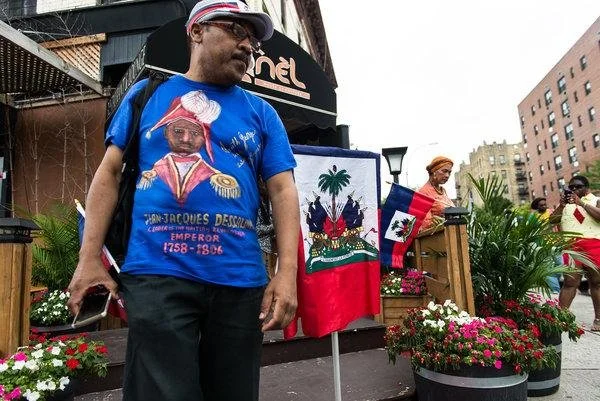
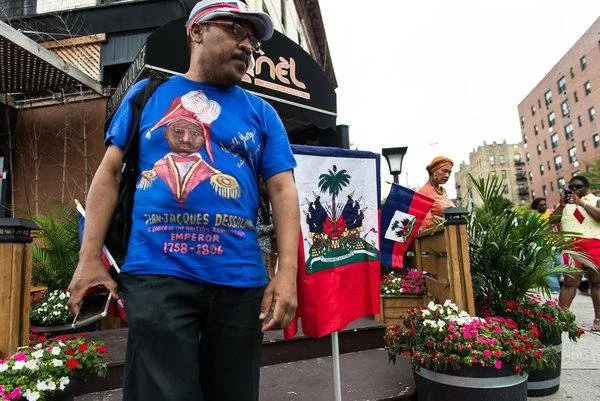
Stephania Casimir, a first-generation Haitian-American, remembers her parents talking about Jean-Jacques Dessalines, a former slave who became one of Haiti’s founding fathers, but not all of the details.
They came flooding back on Saturday on a street corner in the Flatbush neighborhood of Brooklyn as speakers explained why a stretch of Rogers Avenue was being co-named in honor of Dessalines, who declared Haiti’s independence after helping lead the revolt against France.
“This moment means so much to the Haitian community,” said Ms. Casimir, 26, a social worker. “It shows we are strong and powerful.”
As the paper bag covering the new street sign was removed by Assemblywoman Rodneyse Bichotte, the crowd began singing the Haitian national anthem. Those gathered said the decision, along with the recent ceremonial City Council resolution that designated Flatbush Little Haiti, meant that Haitians’ contributions to New York will not be forgotten.
“These street co-namings are the equivalent of placing your flag in the neighborhood,” said Laurie Cumbo, the City Council majority leader. “We have placed a Haitian flag in this neighborhood today for people here and the future to always know that this is a Haitian community.”
But the naming of Jean-Jacques Dessalines Boulevard — along Rogers Avenue between Farragut Road and Eastern Parkway — and the neighborhood designation were not without complications.
Some felt Little Haiti was redundant because the area had previously been christened Little Caribbean by another group. And the street co-naming was delayed because of Dessalines’s controversial history.
After Haiti’s victory against France, Dessalines became Haiti’s first emperor in 1804. Aware that the French wanted to re-enslave the country, Dessalines called for the slaughter of all remaining white Frenchmen. Thousands of white people were killed in the massacre, historians believe.
Historical figures are being re-evaluated across the United States, with several Southern cities removing Confederate monuments in recent years, and Mayor Bill de Blasio establishing a commission to examine statues in New York. In that climate, the City Council committee that vets street co-namings flagged the Dessalines name as possibly offensive.
“Everything is political,” Councilwoman Inez Barron of Brooklyn said. “This was not something that was done in the usual manner and passed with ease. This was a fight and a struggle.”
After a hearing, more research and behind-the-scenes pressure, the City Council approved the co-naming.
“The Council leadership team moved forward with the street renaming after a review of the issue and engaging with the community,” said Jennifer Fermino, a spokeswoman for Corey Johnson, the City Council speaker.
Ms. Bichotte, the assemblywoman, noted Dessalines’s contributions to world history: He helped Haiti become the second country in the Western Hemisphere to free itself from colonial rule and inspired other nations to pursue freedom. The Constitution that Dessalines created advocated equality and more equal distribution of wealth.
The massacre, supporters say, must be viewed in the context of war and is no different than historical acts that the leaders of other countries committed that would now be considered differently.
“As narrators, we get to define the narrative,” said Ms. Bichotte, the first Haitian-American woman elected to office in New York City. “No longer will the Haitian Revolution be a fluke, a historical accident or a nonevent. No longer will Jean-Jacques Dessalines be disregarded or portrayed merely as a tyrant.”
Not everyone supported honoring Dessalines. Street co-namings should be limited to local people who affected life in New York City, said Seth Barron, associate editor of City Journal and project director of the NYC Initiative at the Manhattan Institute.
“It seems like at a time when we are being careful about who we celebrate and commemorate, the question remains of why him?” Mr. Barron said. “I don’t know why New York City has to name a street for someone who is obscure to most Americans.”
Organizers say they hope the street will help educate the public. Flatbush is a center for Haitian culture in the United States, and Brooklyn has 90,000 Haitians, the third-highest concentration in the country, only after two counties in South Florida, according to an analysis by the Migration Policy Institute, a Washington-based think tank.
But gentrification is changing Little Haiti, which is bounded by Avenue H, Brooklyn Avenue, Parkside Avenue and East 16th Street. It is still full of restaurants and retailers that cater to Haitians, but many Haitian business owners and residents are facing the pressures of rising rent.
In 2000, 30 percent of the country’s Haitian population lived in New York State, many of them in Flatbush. That number fell to 20 percent in 2016.
Little Haiti BK, the group that organized Little Haiti, wants to use the designation to help small businesses remain in the neighborhood, erect a monument and build a cultural center.
The designation means more than ever, speakers said on Saturday, given recent slights by President Trump against Haitians and his decision to end a temporary program that allowed Haitians to live and work in the United States following the devastating 2010 earthquake.
“Our human dignity is under assault,” Representative Yvette Clarke said.
Marie Prosper, 35, a security analyst, saw the street co-naming as a chance to come together in spite of recent political developments.
“This corner is where the history of Haiti and the history of the United States meet,” Ms. Prosper said. “It represents the power of our ancestors and their strength.”
By: Jeffery C. Mays for nytimes.com| August 18, 2018
New York City Council Approves Co-Naming Street In Honor Of Former Haitian Leader
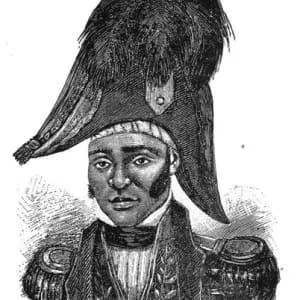
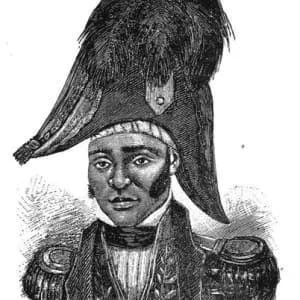
NEW YORK, Aug. 9, CMC – New York City Council on Wednesday approved a proposal from Caribbean American Council Member Jumaane D. Williams for the co-naming of a street in Brooklyn in honor of Jean-Jacques Dessalines, the first leader of independent Haiti.Williams – the son of Grenadian immigrants, who represents the 45th Council District in Brooklyn, said a section of Rogers Avenue in Brooklyn will be co-named Jean-Jacques Dessalines Boulevard.He said Jean-Jacques Dessalines Boulevard will span along Rogers Avenue, from Farragut Road to Eastern Parkway, within the Little Haiti Business and Cultural District.Last month, the New York City Council ceremonially designated a section of Flatbush, Brooklyn as “Little Haiti” “in recognition of the profound impact and continued presence of Haitian culture in the area,” said Williams, who is also a candidate for New York State Lieutenant Governor.He said “Jean-Jacques Dessalines Boulevard will be set just a few blocks from Toussaint L’Overture Boulevard,” which is located on Nostrand Avenue between Glenwood Road and Flatbush Avenue in Brooklyn.“The two Haitian leaders are celebrated in Haitian-American culture for their roles in establishing a free and independent Haiti,” Williams said.On May 18, Haitian Flag Day, Williams joined New York State Assembly Member Rodneyse Bichotte, the daughter of Haitian immigrants, and other elected officials and advocates in unveiling a new sign for Toussaint L’Overture Boulevard. They also announced the proposed co-naming for Dessalines.L’Overture and Dessalines are two celebrated leaders of the Haitian Revolution.“Jean-Jacques Dessalines is one of the founding fathers of Haiti, having taken charge of the Haitian Revolution and leading them to victory in defeating the French Napoleon Army in 1804,” the legislation states. “The Haitian Revolution became the first slave revolt in modern history to result in an independent nation.”Williams said Dessalines was declared “Emperor of Haiti” in 1804 and “advocated many progressive policies during his time leading Haiti.”He said Dessalines today “remains a very popular symbol of Haitian nationalism.”Brooklyn is home to the largest percentage of foreign-born Haitian residents in New York State, with more than 40 percent of the foreign-born population residing in Flatbush, Williams said.According to 2015 data by the Migration Policy Institute, Brooklyn had the second highest concentration of Haitians in the United States, with an estimated 156,000 Haitian Americans residing in New York City.“Jean-Jacques Dessalines was a revolutionary who fought for his people and overthrew an oppressive regime who brutally enslaved and persecuted the Haitian people.” Williams said. “This revolutionary spirit, to fight for independence and against oppression, burns bright in Haitian Culture today.“Haiti and its proud people are an intrinsic part of my district, and it is only right to honor that spirit with this co-naming,” he added. “I thank Assembly Member Bichotte for her fierce advocacy on this issue, as well as Little Haiti BK [Brooklyn] and the Haitian community I am proud to represent.”“Jean-Jacques Dessalines is one of the greatest heroes of the modern world,” said Bichotte, who represents the 42nd Assembly District in Brooklyn.“As one of the leaders of the first successful slave rebellion to result in the first Black republic and second country after the United States in the Western Hemisphere, Jean-Jacques Dessalines’ remarkable leadership impacted countries around the world in gaining their independence, and strengthened the United States by leading to the Louisiana Purchase, which doubled its size,” she added.“We are grateful that the City Council has recognized Dessalines’ contributions not only to the Haitian community but to all of New York City and the United States,” Bichotte continued.She said the City Council’s passage of the Jean-Jacques Dessalines Boulevard “will allow the community to proudly acknowledge and remember Jean-Jacques Dessalines’ contributions to Haitian and American history, as well as spark interest in learning about his influence as a leader."By: trinidadexpress.com | August 9, 2018
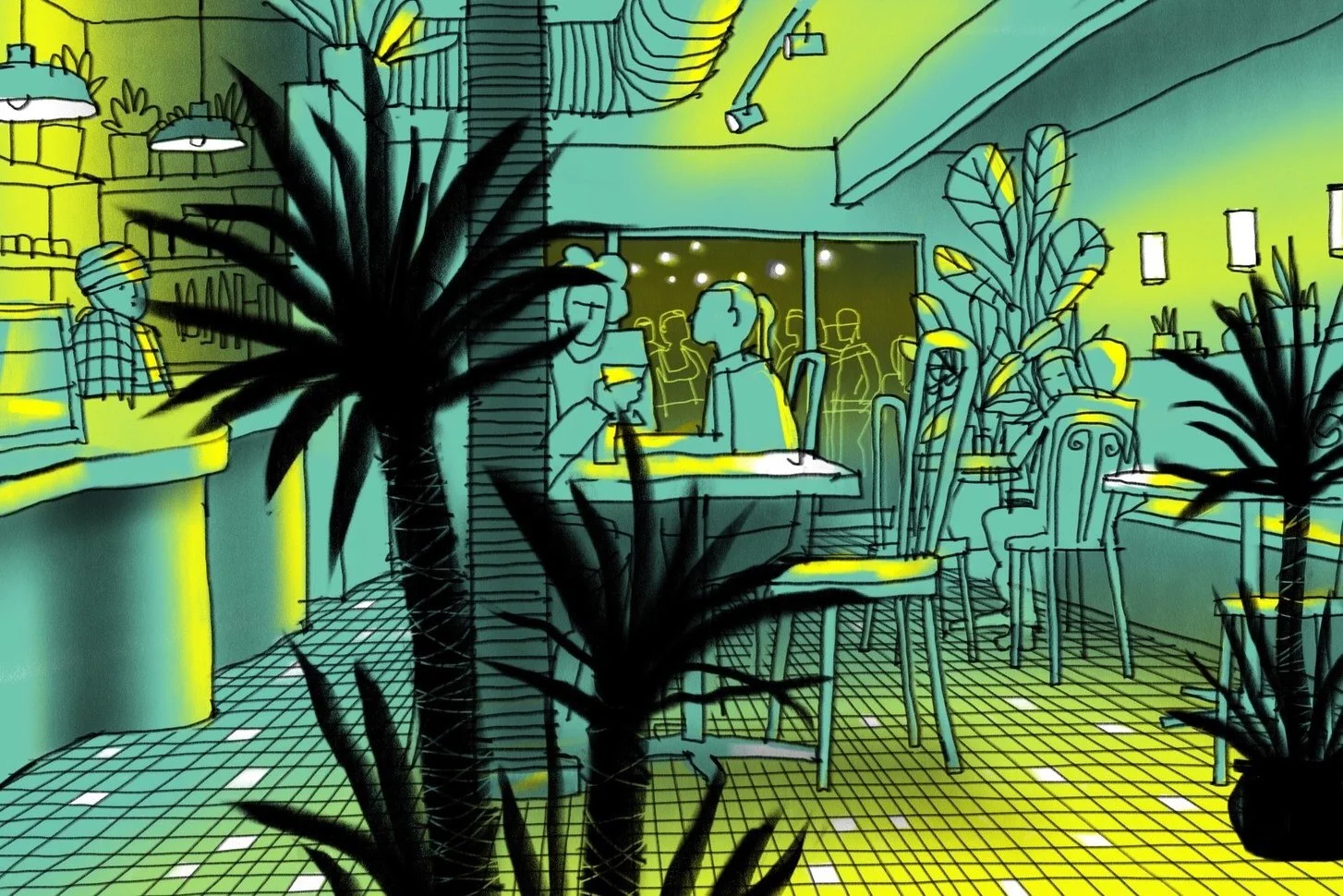
Cafe Erzulie’s Haitian Spirit of Love
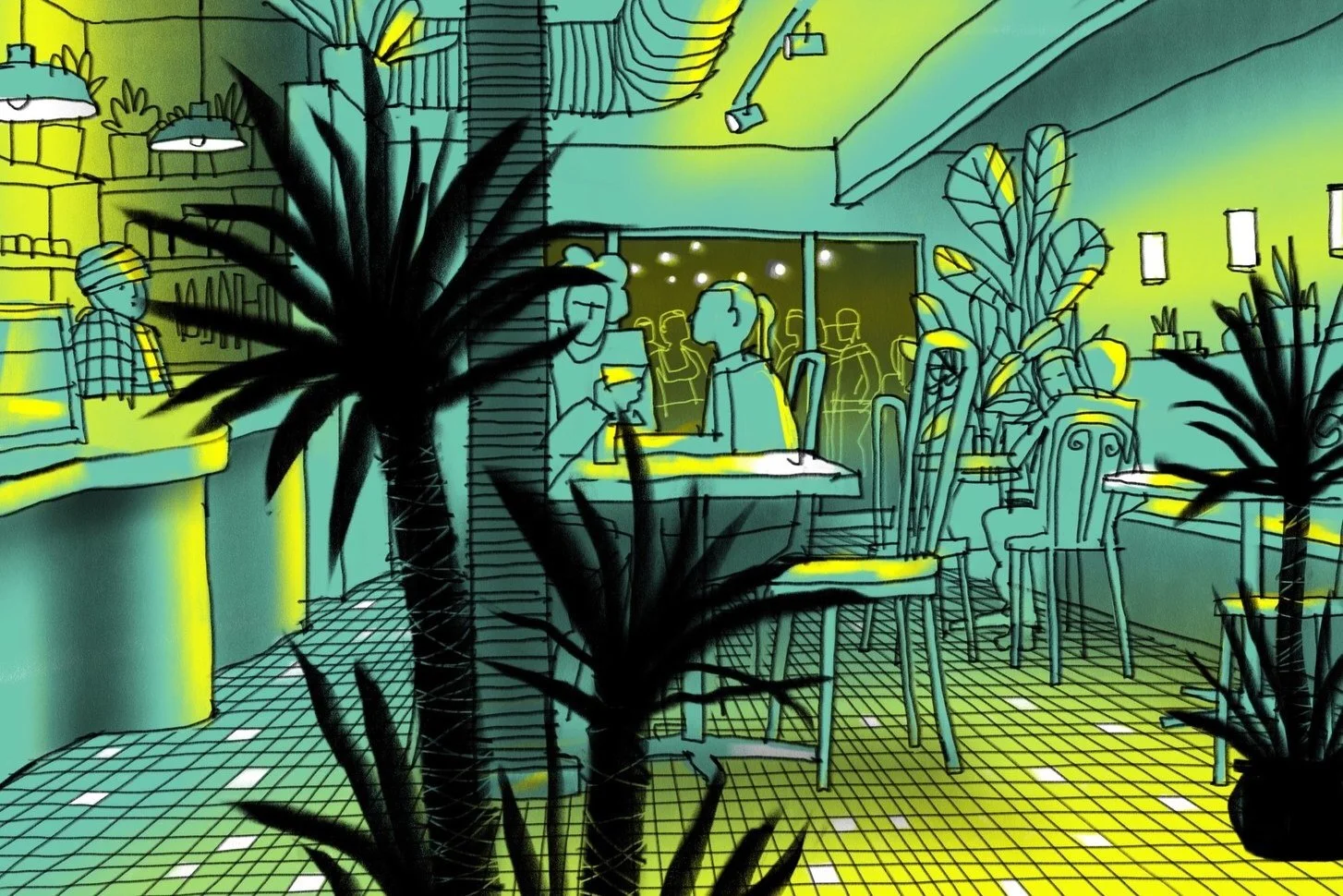
On any given night at this bar, named after the vodou goddess, there might be events like Afrofuturist lecturers, lobster festivals, or live jazz.Erzulie, the Haitian spirit of love and beauty, holds Thursdays sacred. After reading a longer list of her preferences, it may seem that the vodou goddess had a hand in more than just the name of this new café-cum-cocktail-lounge in Bushwick. Erzulie likes pink and light blue (the color of the floor tiles), sweet-smelling flowers and sparkling wine (provided in the form of the bubbly Kir de Jacmel), and small cakes (sticky buns are sold at the counter). The storefront is also home to Flowers by Leslie, a fifteen-year-old plant shop that was struggling to make rent. Instead of displacing it, the Erzulie owners preserved it as a business, and as a drink. Now patrons can browse the lilies and the basil for sale near the front on their way to grab a Flowers by Leslie cocktail, a pleasantly sour medley of vodka, mint, and St. Germain with crescents of cucumber. If they move farther along, to the back patio, they may chance on an event that would make Erzulie smile: on any given night, there might be Afrofuturist lecturers, a Jamaican lobster festival described as “Kingston meets Kennebunkport,” or live jazz. One evening, a steel-drum player, backed by a snare and an electric bass, performed an instrumental cover of Sam Cooke’s “Bring It on Home to Me.” Around eleven, as the musicians started tapping out the notes to “Signed, Sealed, Delivered,” a listener in red jeans and a blue button-down leapt up to become their vocalist, singing through the chorus about a dozen times. When the song finished, she twirled over to the band and asked if they knew her. They did not. “It’s all good!” the mysterious singer said. “I’ll see you next Thursday!” Was it the goddess herself? Perhaps. Thursday, after all, is her holy day. By Neima Jahromi | October 30, 2017
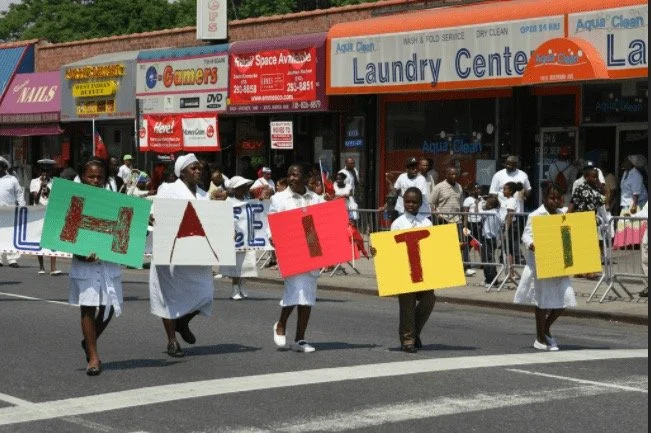
Brooklyn Official Calls For Designation Of “Little Haiti” In Flatbush
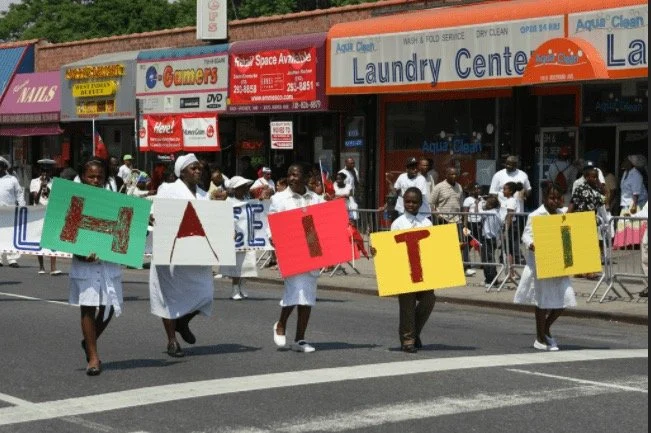
 BROOKLYN, NY — An effort to name parts of the Flatbush section of Brooklyn “Little Haiti” plunged into controversy last week when a local political operative blasted the idea as divisive and misguided.Haitian community members and leaders called on support from the mayor for the establishment of “Little Haiti” in the same area that was designated “Little Caribbean” last week.Little Caribbean would begin at Brooklyn College and run along Flatbush Avenue to Empire Boulevard.“The Haitian community supports the designation of both ‘Little Haiti’ and ‘Little Caribbean,'” said Assemblymember Rodneyse Bichotte, the first Haitian-American to be elected to the State Legislature from New York City. Bichotte represents the 42nd Assembly District which encompasses the communities of Ditmas Park, Flatbush, East Flatbush and Midwood.
 While the proposal has garnered support from some in the community including the Haitian American Caucus, Haitian American Business Network Chamber of Commerce and Haiti Cultural Exchange, the proposed “Little Haiti” has also been met with criticism.In an email to Bichotte and a host of other elected officials, including Council Member Mathieu Eugene and Rep. Yvette D. Clark, Ernest Skinner, a local community organizer and activist, condemned Bichotte’s efforts to co-name the Flatbush area “Little Haiti.” He called the move “misguided” and one of “division.”“When did Haiti stop being part of the Caribbean? This is the same insularity which sunk the fledgling Caribbean Federation,” he said in the email. “Sowing division may be why Haiti has never been able to reach its full potential and why it is considered a Fourth World country despite the noble start it gave to the Independence movement among people of color.”Bichotte has since sent a letter to Skinner calling for a public apology.“We support the Caribbean community. We are part of the Caribbean community,” the letter reads. “Although you have supported Haitian Americans and Haitian initiatives in the past, your statement clearly shows that your heart was not in it and thus erases any and all efforts.”The letter, which was signed by 11 Haitian community leaders and groups, including the Haitian Roundtable and Assemblymembers Michaelle Solages and Kimberly Jean-Pierre, emphasizes the various Haitian-related initiatives that highlight the history and culture of Haiti. She lists the street co-naming of Nostrand Avenue with Toussaint L’Ouverture Boulevard, the annual Haitian parades on Nostrand Avenue and the establishment of the Haitian Studies Institute (HSI) housed at Brooklyn College.“We were taken aback by the lack of engagement that has been shown to many of the elected officials and key stakeholders within the Haitian community throughout the overall process,” Bichotte said.The designation for “Little Caribbean” was initiated by Flatbush native Shelley Worrell, founder of CaribBEING, a Brooklyn-based organization dedicated to showcasing Caribbean culture. She has been working on the designation for roughly two years and saw it as an opportunity to support the existing businesses in the area, as well as, position the area as a tourist attraction.Councilman Jumaane D. Williams is the designating councilman for the initiative and is encouraging “more fruitful dialogue” to mitigate tensions.“My office is looking forward on working to pursue both an official ‘Little Caribbean’ and a ‘Little Haiti,'” said Williams. “The words in the letter were hurtful; I understand the community’s concern and I certainly hope an apology is forthcoming, and deservedly so.”There were conversations about a “Little Haiti” long before there was one for a “Little Caribbean,” Bichotte said in a letter to Mayor Bill de Blasio.The idea for a “Little Haiti” emerged several years ago. Bichotte and Williams, whose districts encompasses one of the largest Haitian constituencies in New York, discussed the matter but temporarily tabled talks on the designation to focus on advocacy for HSI.The plan was to revisit the idea after HSI was off the ground.According to Bichotte, the decision to name Flatbush Avenue “Little Caribbean” was done without community support or involvement.“Haiti has had a unique position within the Caribbean — it is in the Caribbean, but not of the Caribbean,” said Bichotte. “Although Haiti is geographically part of the Caribbean, the Haitian community has historically been singled out and excluded as a member of the greater Caribbean community, which is why Haitians have had to build separate communities and organizations in order to survive.”When Haitians migrated to Brooklyn in the 1970s and 1980s, many faced discrimination from Black and Caribbean Americans who lived in the area. Cultural tensions between the French-Creole speaking immigrants and their English-speaking counterparts spurred division within the greater West Indian community.Old wounds have been opened as the voices of the community and elected officials have not been engaged throughout the designation process,” Bichotte said. “Although, the journey to unity has come a long way between island politics and differences, having both designations would be ideal to acknowledge the Haitian people’s struggle. If all goes well, the designation of ‘Little Haiti’ would be established first in order to be encapsulated within the designated area of the ‘Little Caribbean.'”For Samuel Pierre, co-founder of Haitian American Caucus, the idea of a “Little Haiti” is welcomed but should also help put a light on other issues in the community. The nonprofit provides personal and professional development opportunities for the Haitian community and operates out of Flatbush.“Designating the Flatbush area as ‘Little Haiti’ speaks to the vibrancy that the Haitian community has added to Brooklyn. At the same time, we must use this renewed attention to raise awareness on socioeconomic issues that are barriers to success for many of our people.”By Vania Andre | October 2017
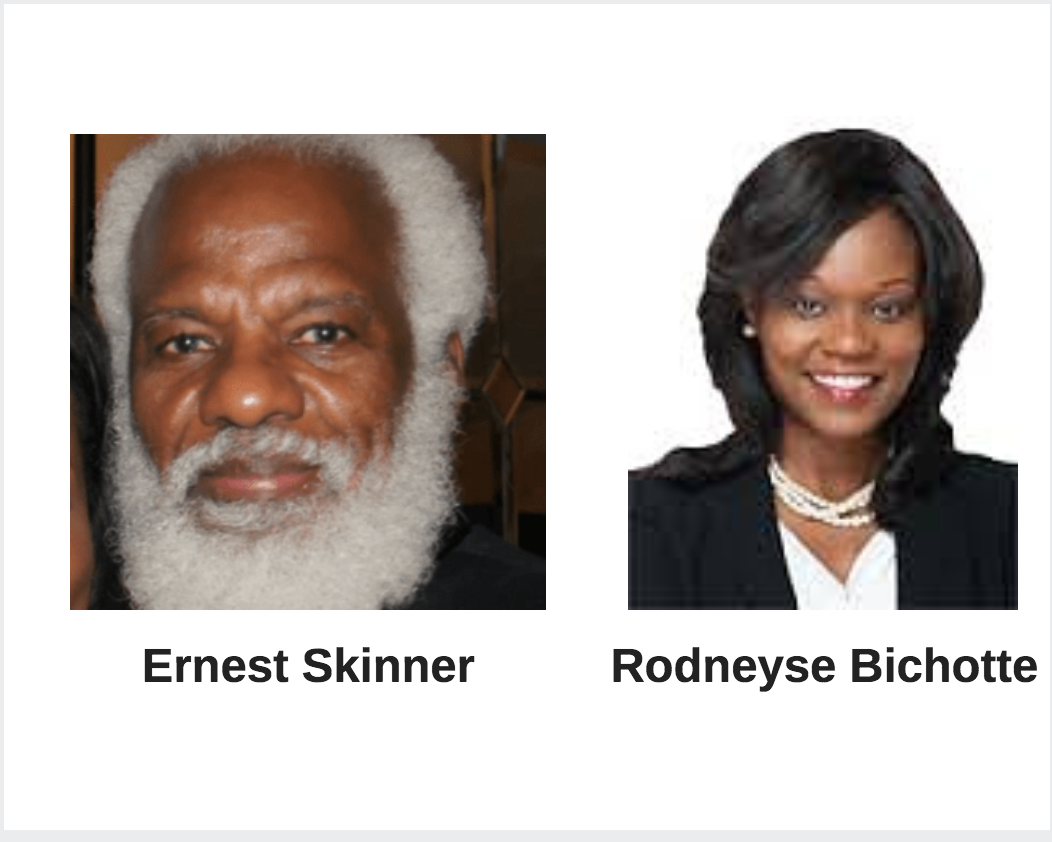
Bichotte Blasts Caribbean Activist For Disparaging Remarks Against Haitians
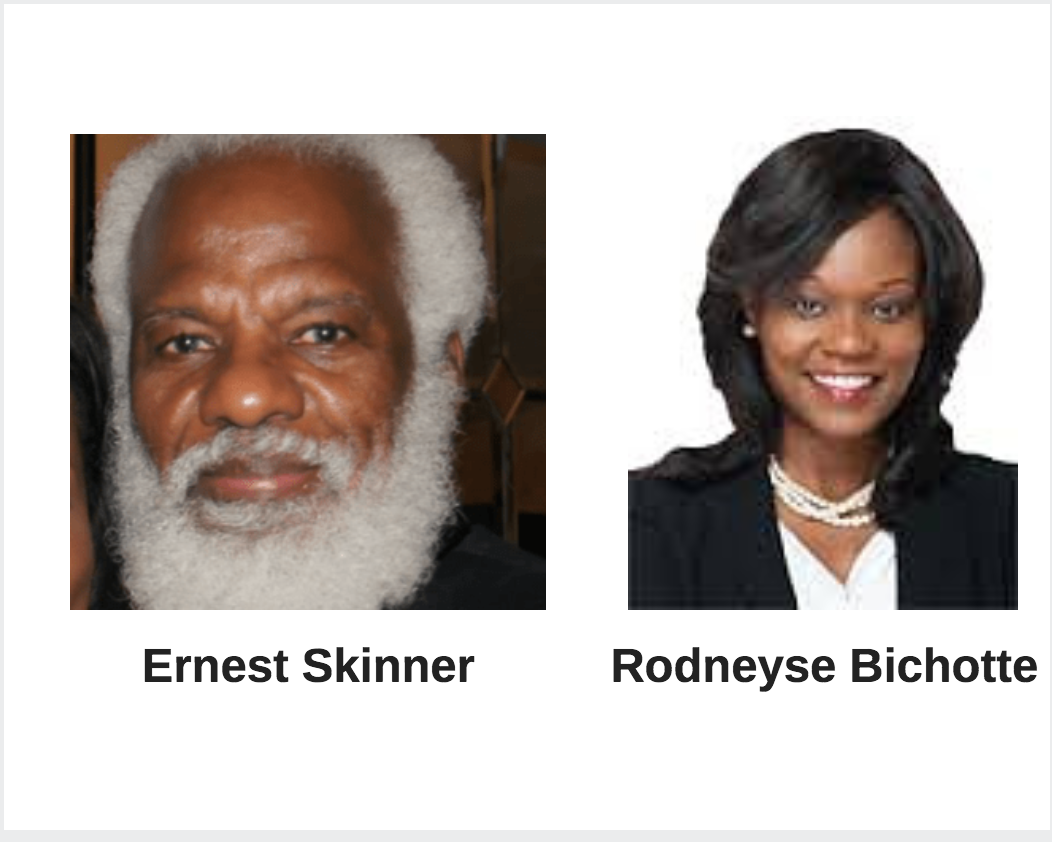
Assemblymember Rodneyse Bichotte (D-Flatbush, Ditmas Park) today demanded an apology from a noted Caribbean activist/political operative and close associate to City Councilmember Jumaane Williams for emailing her and her staff a note containing disparaging remarks against the Haitian community.

Assembly Member Rodneyse Bichotte
The brouhaha comes over the escalating controversy surrounding the recent designation of the Flatbush/Prospect Park-Lefferts Gardens/East Flatuch corridor as the “Little Caribbean.” Bichotte, who is Haitian-American and a number of other notable Haitian-Americans feel there should be a double designation and part of the corridor should be dubbed “Little Haiti.In a follow-up to the controversy, Ernest Skinner, who heads the Earnest Skinner Political Association Democratic Club, and is the staff photographer for Williams office and a longtime family friend, fired off an email to Bichotte asking when did Haiti stop being part of the Caribbean?
“This is the same insularity which sunk the fledgling Caribbean Federation. Sowing division may be why Haiti has never been able to reach its full potential and why it is considered a Fourth World country despite the noble start it gave to the Independence movement among people of color,” wrote Skinner.

Longtime Civic and Political Activist Ernest Skinner
“In Brooklyn, for many years now there has been TALK of a Little Haiti along lower Nostrand Avenue. What have you Haitians done to advance THAT?” he added.Bichotte replied in a letter back to Skinner yesterday saying she found Skinner’s comments not only highly disrespectful, but ill-informed and she demanded an apology.Bichotte penned back, “The fact of the matter is that there is a “Little Haiti” that has been in the making for decades that covers a wide geographical area including Nostrand Avenue. The Haitian community has accomplished a number of things leading up to the designation of “Little Haiti” such as the:
- street naming of Toussaint L’Ouverture Boulevard on Nostrand Avenue
- annual Toussaint L’Ouverture Symposium and Business Expo (2005)
- Haitian parades down all of Nostrand Avenue (10 years)
- Haitian Flag Day
- Haitian Unity Day (Albany)
- Haitian Selebrayson Week
- Haitian street fairs
- establishment of the Haitian Studies Institute (HSI) (Spring 2015)
- designation of Haitian Day (October 7, 2016)
- passage of a civil rights resolution (New York State)
- introduction of legislation for Haitian Creole-speaking poll workers and translators and for the translation of voting materials into Haitian-Creole
- certification of a number of Haitian-owned businesses as Minority and Women-Owned Business Enterprises
“As previously stated we acknowledge that Brooklyn is diverse and we do not advocate for “Little Haiti” in opposition to a Little Caribbean designation,” she wrote.
 “We support the Caribbean community. We are part of the Caribbean community. In recognition and in support of our heritage we advocated for placing the Haitian Studies Institute at Brooklyn College; not instead of “Little Haiti,” but in continuance of cultivating “Little Haiti’s” foundation.”
Williams, who has Caribbean roots – as does Skinner, clearly sided with Bichotte in the dispute.
“My office is looking forward on working to pursue both an official “Little Caribbean and a “Little Haiti. The words in the letter were hurtful; I understand the community’s concern and I certainly hope an apology is forthcoming, and deservedly so,” said Williams.
Sources in the greater Flatbush community were split with one saying Bichotte often is unduly divisive, and it hurts her as an elected official and the community at large.
“Rodneyse has had a long history of being combative for no reason, beginning after she was first elected when went on Talkline Communications [a Jewish radio show] and said these Jews didn’t vote for me,” said a prominent Flatbush activist.
But another political source said is doesn’t make sense for Skinner insulting the Haitian community considering the viscous discrimination against Haitians in the area dating back to the 1980s and 1990s, when many alleged openly that it was Haitian-American spreading AIDS.
The source said there are much bigger issues to confront such as affordable housing and the increase of gentrification along the corridor.
“It doesn’t make sense for people to be insulting each other’s culture. Let’s just have both designations and move on,” said the source.
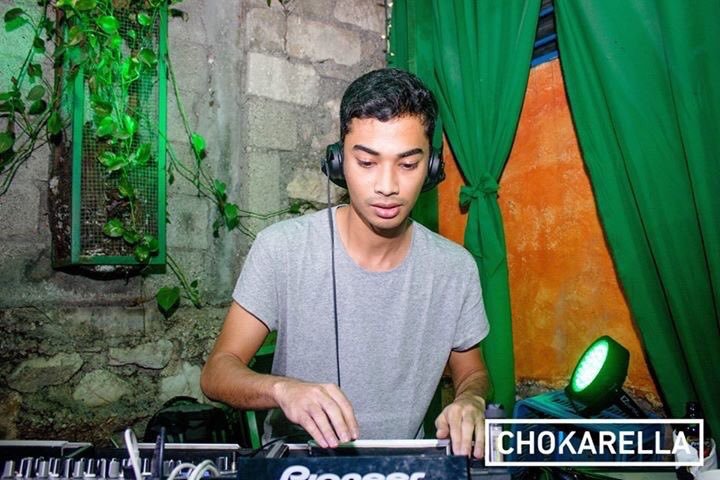
Michael Brun Brings New Haitian Concept to Brooklyn
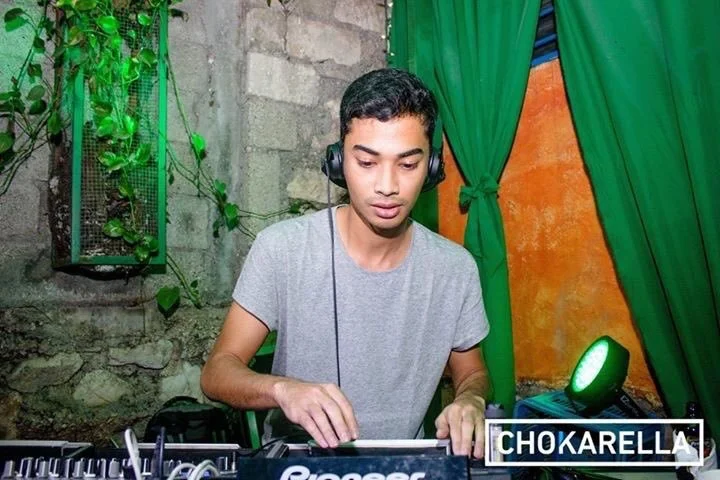
 Electronic DJ and producer Michael Brun is regarded as one of “the biggest things to come out of Haiti in the 21st century”. Now the “Haitian sensation” is spreading his country’s music and culture by bringing a new concept to Williamsburg, Brooklyn. The new concept by Brun is called Bayo which means “to give” in Haitian Creole. Bayo is based off impromptu street parties accompanied with mobile sound systems and lively Haitian rhythms. Bayo parties, previously thrown in Haiti by Brun, have revitalized Haitian culture by allowing DJs a platform to perform, communities to come together, and new music to be heard.Brun has brought Bayo to America when he hosted a block party in Little Haiti in Miami. He plans to bring his culture’s music to the Music Hall of Williamsburg on November 24 and the Brooklyn Bayo party will include artists such as J Perry, rapper Baky, guitarist Paul Beaubrun, and house DJ Gardy Girault. The scene of the event will be ornamented by Haitian street art and custom made production.This is an exciting and big undertaking for the already accomplished DJ. He is only 25 years old and has done a number of philanthropic activities for his home country. In 2016 he created the song ‘Wherever I Go’ which became a hit in Haiti. All the proceeds of the song went to Audio Institute School of Music in Haiti who helped him create it. A non-profit festival named after the song was also thrown by Brun.
 Brun has also created official remixes for some of the industry’s biggest artists including Calvin Harris, Alicia Keys, Tiësto, and One Republic. In 2014 he played on the mainstage at Ultra Music Festival and created the Kid Coconut label. In recent years he has collaborated with artists such as Dirty South and Rune.The Sounds of Haiti will be brought in the form of Bayo on November 24. New York will be the home of this event and pre-sale tickets can be purchased here on Wednesday.By Saad Qureshi | September 26, 2017
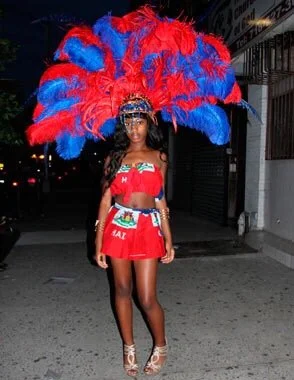
Kagie 22 presents ‘Haiti Royalty’
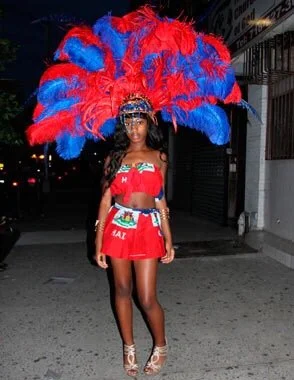
Three sections will display “Haiti Royalty” in Kagie 22’s production this Labor Day Carnival.
Band leader Haitian American Karine Gilles told Caribbean Life that the all-female band will comprise 75 masqueraders altogether in the three sections: Haiti Queen, Princesses Azia and Haiti Princess Amor Toussaint.
She said besides Haitians, masqueraders are Trini-Haitian Americans and Martiniquans.
Gilles, who has been participating in the West Indian American Day Carnival Parade since 2003, said masqueraders can expect “more colorful designs and good music” this year.
She added that Kagie 22 will play “outstandingly” as well.

The production is assisted by Moise Desir, Guetary Roche, Rosena Destin, Pedine Nazaire, Yvener Leon, Michelle Bastien Archer, Kettelie Innocent, Kagie 22 TV staff, Radio Independence, Elegance, Planet Musical, Bebe Fritay, Yoyo Family, Tambour Universel.
Gilles said she founded Kagie 22 in 2002 as a TV show “to touch base with the community and [to] create linkage with organizations that can fulfill communities’ needs.
“Many times, our people need to know how to participate in mas camps,” she added, stating that some members are unaware of the expectations of WIADCA and the rules to be “an active camp” in the West Indian American Day Carnival Parade.


Gilles said playing in the parade is a “very productive, competitive and rewarding concept for children and adults.”
She said masqueraders will sway to the beat of Sweet Micky and DJazz New York.
Gilles can be reached at (917) 348-6488 or at Kagie22@aol.com.
By Nelson A. King | August 29, 2017
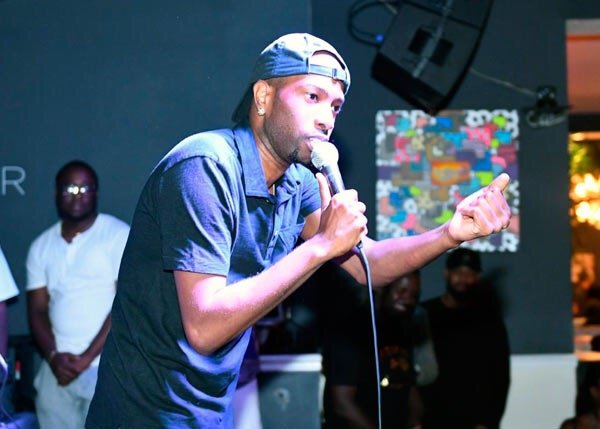
Comedy Show Rings In Haitian Heritage Month
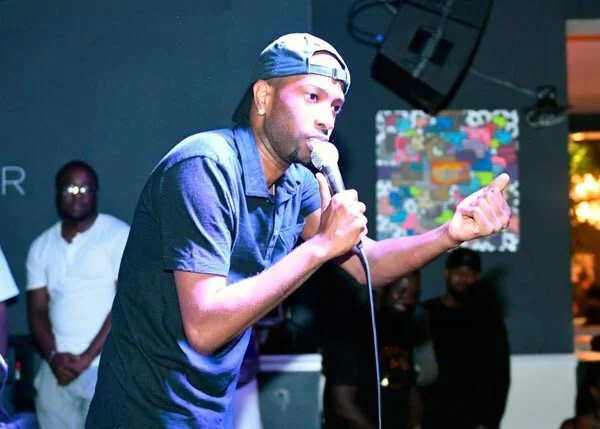
A comedy show is pitting viral and stand-up Haitian comedians to kick off the celebration of Haitian Heritage Month at Loft172 on May 12. “Haitian Bad Boys of Comedy: North versus South” will have the popular jokers battle out to decide which region has the funniest comics. With Haitian flag day around the corner, what better way to celebrate that than with some interactive team challenges with some well-known faces online, said the organizer.“This is a flag day celebration through comedy, but this time we’re doing something different than regular stand-up,” said Moses Merisier, organizer of the event. “A lot people are into social media and stand-up and we wanted to combine that and do a North versus South battle with the comedians.”The show is set to be about two hours and is introducing popular games that will be done with a Haitian style of comedy, according to Merisier. A family feud-like game and a segment similarly modeled after the popular MTV show, “Wild’ N Out,” are a few of the games the jokesters will partake in and this element of the show is relatively new to most Haitians, he added.“We’re going to have a lot of different challenges, a lot of improvisation and impersonations, and a lot of these have never been done in the Haitian community before,” he said.Two teams of five comedians are going to be divvied up to represent their regions, and towards the end of the show the audience decides which team was the funniest. Comedians include Haitian Jonas and Chelo Chelo, who will act as team captains for both regions respectively. Besides the final judging, guests can participate in the challenges because it will be very interactive, said Merisier.He said the show is more than a party and highlights the adamant champions of Haitian culture, which is important to him because throughout the year these comedians are uplifting the culture and keeping it alive with humor, said Merisier.“I try to choose comedians who are really funny and also dedicated to Haitian culture, because I find it very important to do this around Haitian flag day,” he said. “During this time of the year I like to give back and this is a way for us to show who is doing that.”Most of the show will be done in English with little references in Haitian Creole, according to Merisier. But non-Haitians and kids under 18 who come with adults, are invited to the show.“If you’re Haitian and have Haitian pride this is one of the best events to come to and one of the few moments where we celebrate our culture with laughter,” said Merisier. “We have a family-oriented show and besides the regular comedy, we’re doing something everyone can laugh at and all generations are invited.”“Haitian Bad Boys of Comedy — North versus South” at Loft172, 172 Classon Ave. between Myrtle and Park avenues in Bedford-Stuyvesant. May 12 at 7 pm. $30 ($75 VIP). By Alexandra Simon, May 4, 2017