

An investment opportunity for Haiti’s Diaspora

A Brooklyn-based Haitian-American entrepreneur is on a mission to lead her fellow country folk living abroad to invest in the city of Cap-Haitien, commonly known as Okap — Haiti’s bustling northern city. Maritza Boudoir spearheaded “Thriving Okap,” — an initiative that encourages the economic revitalization of her home city from other Haitians interested in investing in the Caribbean nation. She says the city is open for business and if Haitians wanted to seek out a location in Haiti outside of Port-au-Prince.“There are lots of opportunities for Haitians in the Diaspora to get involved. Okap has a rich history and a growing tourism industry which could be very lucrative for the local economy and entrepreneurship,” said Boudoir. “There are risks but the opportunities are also there, with hard work, faith, dedication, and tough skin — we can thrive as a community.”Thriving Okap aims to present the issues and possibilities the city have, connect prospective investors with major players in the city, and analyze the various industries and find ways those problems can be resolved with business creation. And the prospects the country overall can offer is abundant.“The land in Haiti is very fertile so there are opportunities to expand in several areas such as agriculture, environment, and manufacturing,” she said.To jumpstart on bringing the initiative’s efforts forward, she connected with fellow Haitian-American and founder of the Haitian cultural site L’Union Suite, Wanda Tima. She says the pair share similar aspirations on Haiti’s improvement, and Tima’s influence within the Haitian Diaspora could raise awareness about the project.“We are both from Okap and I always admired her work in promoting our culture and her drive as a social entrepreneur, so when I had the intention of launching “Thriving Okap,” I knew she would be an effective media partner,” said Boudoir. “Her company does a fantastic job at bridging the gap between the locals and the Diaspora.”Other than Okap being Boudoir’s place of birth, she chose the city as the location for this initiative because of it being the country’s urban hub in the north, its fascinating past, and her established connection to it.“Okap is the second largest city and it’s rich in history, and as we are talking about Haiti being the first black independent nation — most of that history stems from the north,” she said. “‘Why Okap? Why not Okap?’ I had to start somewhere so I went with what I love and know best. If there’s any social, cultural and economic revolution to take place in Haiti, Okap is definitely the nucleus.”She says very often Haitians living abroad show little interest in going back to create economic development because they may view the country’s problems as challenges, but Boudoir wants to shift those attitudes and show that there are favorable options.“I am an entrepreneur at heart and a woman who is deeply connected and committed to her country, and instead of focusing on the problems, I decided to focus on the possibilities which is why I launched Thriving Okap,” she said.One of Okap’s biggest economies is self-employment through the strong presence of vendors, according to Boudoir. And the existence of such an industry shows the desire the city’s locals have finding work for themselves. She said that other emerging industries such as technology is growing rapidly and helps ease the way business owners connect.With Thriving Okap, Haitians interested in starting a business in Haiti should make visits to the city to assess what is there, and the team will make contact with established businesses they are in collaboration with, to determine the avenue one can delve into.Boudoir added that Okap was like any city across the globe and with an uptick in investment and job creation, the city will grab more interest that will benefit its growth.“Part of the reason the economy of any country works is when people have the opportunity to buy, and part of that is creating jobs, and in order to create jobs, we need thriving businesses. With “Thriving OKAP,” the focus is on local entrepreneurship,” she said. “When we create jobs, we decrease poverty and elevate the standard of living. But if we can educate people, we can change their mindset, and let them know that they are valued because feeling valued is at the core of every human being.”By: ALEXANDRA SIMON | Caribbean Life | August 21, 2018
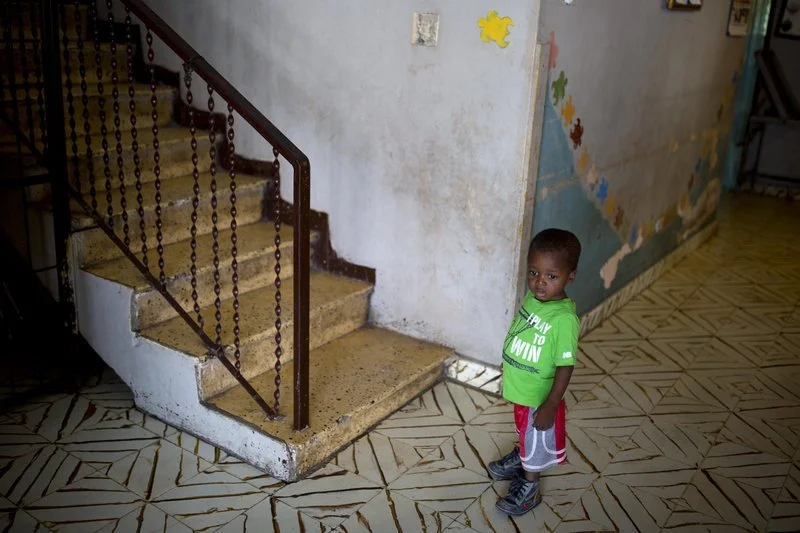
Haiti grapples with helping its vulnerable children
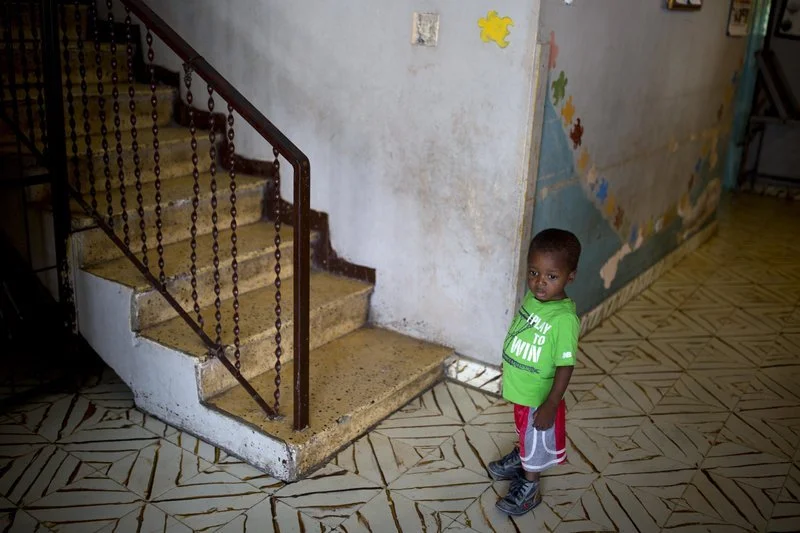
PORT-AU-PRINCE, Haiti (AP) — Like roughly a quarter of Haiti’s children, 11-year-old Franchina has spent much of her short life without parents.Her mother dead, her father in prison, Franchina was placed in a state-run orphanage as a toddler, remaining illiterate year after year and seemingly destined for a hard life in the Western Hemisphere’s poorest nation.But this year, Franchina’s fortunes took a hopeful turn.She has benefited from the newfound resolution of Haiti’s government to improve the deplorable status of the country’s children, and more specifically from a partnership between the state child welfare agency and several international child-service organizations.In a country and region with no tradition of formal foster-care systems, they are recruiting and training Haitians who buy into the idea that being a foster parent is a noble mission.“There’s a certain satisfaction to it,” said Jeannes Pierre, 61, a Baptist pastor in Port-au-Prince who is now Franchina’s foster father. “It’s doing something extraordinary.”In her orphanage, Franchina shared a bunkroom with many other children. Now she has a bedroom to herself, small and simple but enlivened by a colorful stack of books. To her delight, her foster parents taught her how to read within weeks of her arrival.“It’s like removing the darkness from the eyes of a child,” Pierre said.The Pierres do not know how long Franchina will be with them. “We want to keep her as long as possible,” Pierre said. And Franchina, it seems, would agree.Asked what she likes best about her new life, at first she was too shy to respond.Then she confided: “I like everything.”

Many of Haiti’s youths live on the streets; hundreds of thousands are domestic workers in other families’ homes. Franchina was among the 30,000 or so consigned to orphanage-like institutions ranging in quality from adequate to abominable.By itself, foster care won’t come close to resolving the plight of Haiti’s children. Long-term solutions are needed that for now are beyond the government’s financial reach — notably, better educational opportunities and social supports so poor families don’t feel compelled to place their children in orphanages or domestic servitude in the first place.But the new program is cited by Haitian and foreign experts as evidence of the government’s determination to modernize and strengthen an array of child-oriented policies and practices — and lessen reliance on foreign-based charities and mission groups.“There’s no magic bullet, no one solution,” said Marc Vincent, who heads UNICEF’s operations in Haiti. “But it’s important to recognize the steps the government is taking — it is passionate about making things better.”Some of the changes derive from the island’s devastating 2010 earthquake, which fueled a surge of international adoptions, primarily to the United States. Some Haitian children were airlifted to the U.S. even though they were not approved for adoption; an Idaho church group leader was convicted of arranging illegal travel after trying to take other children out of Haiti without government approval.Such incidents prompted Haitian authorities to sign an international convention setting ethical standards for international adoptions. Regulations were tightened and the number of international adoptions from Haiti fell sharply, from more than 1,300 a year to around 300 or 400.The child welfare agency — known by its French initials, IBESR — also is trying to beef up oversight of Haiti’s roughly 750 orphanages. Most are privately run and financed, operating with little or no government regulation to rein in abuse and neglect.Thus far, just a few of the orphanages have been shut down, but IBESR officials say about 400 are targeted for closure unless they meet a deadline for swift improvements. Large-scale closures will increase pressure on the government to reunify affected children with their biological parents, and to find foster homes when reunification proves impossible.“We can’t go on placing kids in institutions,” said Vanel Benjamin, IBESR’s foster-care coordinator. “The answer is family.”UNICEF estimates that 80 to 90 percent of the children in orphanages have one or two living parents. Lumos, the nonprofit founded by Harry Potter author J.K. Rowling, is among several groups seeking to reunite some of those children with their biological families, but the work is slow and the orphanage operators — often recipients of donations from well-meaning foreigners — are not always cooperative.

“They don’t want to change,” said Eugene Guillaume, the Haiti program manager for Lumos. “Orphanages are their business.”Even at competently run orphanages accredited by IBESR, heartbreak is the norm, as Dallye Telemaque Bernard, director of the Nest of Hope home in Port-au-Prince, makes all too clear.She oversees the care of about 50 children, ranging in ages from 5 months to 13 years. Some are brought in by government social workers, or by police who find them in the streets. But most are dropped off by their impoverished parents.“Some children come here very sick, from families in very bad economic situations,” said Bernard. “Ideally, there should be a program to help the children stay with their own families, but there isn’t.”Sections of her orphanage are cheerful, including a courtyard where children take art classes around brightly colored plastic tables. But the upstairs bedrooms, with sets of four or five bunk beds lining the walls, are spartan — including one bedroom set aside for infants.Bernard said the babies generally arrive from Port-au-Prince’s largest shantytown, Cite Soleil, dropped off by heartbroken mothers.“It’s difficult for them,” she said. “But they don’t have a choice.”Over the years, the goal for most children at the orphanage has been to arrange their adoption by families in Europe or North America. On a bulletin board in the entryway, there are photos of children posing with their adoptive families in France, Canada and elsewhere.With Haiti now cutting back on such adoptions, Bernard wishes there were ways to reunify more children with their biological families — and she’s also intrigued by the new foster-care program.One recent visitor was a 23-year-old woman from Cite Soleil who had placed her son in the orphanage six years ago, when he was 2. He was adopted by a family in France last year, and the mother, Kenia Tunis, came by to see some photographs of her son sent to Haiti by his new family.Tunis began to cry as she told her story, glancing at the photographs. Someday, she said, she hoped she might see her son again in person.

Would she have preferred him to be adopted by a Haitian family? She chose not to reply.The foster-care program began three years ago in Port-au-Prince and the southern city of Les Cayes. This month, at a modest resort hotel, about 100 government officials and social-service providers gathered to extend the program into the northern region around the city of Cap Haitien.“Today is a day of victory,” declared Antonio Jean Louis of Children of the Promise, a Christian-oriented mission. “There’s now an option besides international adoption.”Among the attendees was IBESR’s Vanel Benjamin, who said the program will keep expanding to other regions of Haiti, with a goal of having 200 foster families accredited by the end of this year.International adoption “should be the last resort,” he said. “Foster care is a better alternative.”In the United States, there’s a constant struggle to recruit foster parents even though they’re generally paid many hundreds of dollars a month. In Haiti, the plan is to build a foster care system exclusively with parents willing to take on the task at their own expense.One of the groups recruiting and training foster parents is Bethany Christian Services, which for decades has been a leading adoption agency in the United States. Recently, it has helped countries such as Ethiopia and Haiti develop their own foster-care systems.Bethany’s recruiting in Haiti focuses on a network of Protestant churches where pastors extol foster-parenting as a Christian act of love.“People in the churches have responded positively even if they don’t have a lot of financial resources,” said Vijonet Demero, head of Bethany’s Haiti operations. “For them, it’s a calling, not a job.”Jeannes Pierre and his wife Nelia have an adult daughter who recently became a physician. Over the years, they have provided a temporary home to other children on an informal basis. Never had they received the type of formal training that was required to become foster parents.As the foster-care program took shape, some advocates for children expressed concerns related to Haiti’s huge population of child domestic workers. UNICEF estimates that roughly 400,000 children — called “restaveks” by many Haitians — live away from their parents in households where they’re expected to perform work on a regular basis in return for lodging and food.Some of these children are treated well and included in the family life of the home; others suffer various forms of abuse, prompting some advocacy groups to depict such arrangements as “child slavery.”

Aspiring foster parents are screened to ensure they’re psychologically and economically capable of caring for foster children without exploiting them. Demero said the foster families recruited by Bethany are visited at least every three months — and in some cases every week — by social workers from Bethany or IBESR.Terre des Hommes, a Swiss-based nonprofit also working on the foster-care program, said the lack of payment to the foster parents complicates recruitment efforts but serves as a deterrent to families who otherwise might sign up for financial gain.Even in the absence of regular payments, foster families can be provided with emergency funds to meet medical needs or cover the costs of school uniforms and supplies.Among the earliest batch of new foster parents were Ezekial Isme, 32, and his wife, Guerna, who heard about the program at their Port-au-Prince church, where Vijonet Demero is pastor.“Our hearts were opened,” said Ezekial Isme, who teaches at a church-run school.Two and a half years ago, when the Ismes took in a girl from a troubled orphanage being closed by the government, they had no children of their own. They now have two sons, 1 and 2 years old, along with Michelene, who’s now 10.According to Isme, Michelene was 3 when her parents gave her to the orphanage. She was the youngest of her family’s nine children.When Michelene arrived in her new foster home, she was very withdrawn and had a bothersome skin disease. With attentive care, she’s healthy now, and doing well at school, although still not up to the normal grade level for her age.The Ismes would be willing to adopt Michelene, but don’t know if or when the government would allow that sometimes difficult process to begin.“She’s our girl — she feels at home with us,” Isme said. “Our hearts have already adopted her.”By: DAVID CRARY, Associated Press | July 26, 2018
The opposition announces 3 days of national demonstrations
Monday, the coalition of opposition democratic organizations, including Pont, VERITE, "Pitit Dessain", "INITE démocratique", "PALMIS", "Kore N", Rally of Arcahaie, Lavalas and the opposition senators, announced 3 days of demonstration, on 28, 29 and 30 September, against the controversial budget 2017-2018 in order to force the Head of State to reverse his budgetary decisions.Me André Michel, one of the spokespersons for the Rally of Arcahaie, announces that the "battle is underway" and a vast mobilization movement in Port-au-Prince, in the Central Plateau, in Jacmel, Petit-Goâve, in Cap-Haitien, Saint marc and Léogâne, "the whole population will stand to denounce this budget which will further impoverish the Haitian population."For his part, the former President of the Senate and former Minister of the Environment, Dieuseul Simon Desras, urges the population not to be manipulated by speeches suggesting that the government will revise the budget, referring to Article 35 of the a universal declaration of human rights which states that "when a government violates the laws of its country, the only way out of the people is insurrection." He also denounced a plan aimed at assassinating opposition leaders, reminding members of the Government who would act "that they will be liable to the International Criminal Court."By: TB/ HaitiLibre - 26/09/2017
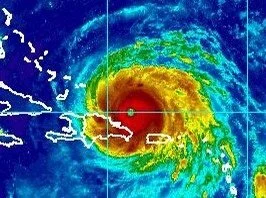
IRMA 415 km from Cap-Haitien - flights canceled
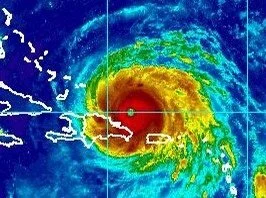
This morning at 5:00 am, the center of Cat. 5 Hurricane Irma on the Saffir-Simpson Hurricane Scale, was located near latitude 20.0 North, longitude 68.3 West, or 160 km north of the eastern tip of the Dominican Republic and 415 km north-east of Cap-Haitien. Irma is moving toward the west-northwest near 17 mph (28 km/h), and this general motion is expected to continue with some decrease in forward speed for the next couple of days. On the forecast track, the center should pass north of the coast of Hispaniola later today, be near the Turks and Caicos and southeastern Bahamas by this evening, and then be near the Central Bahamas by Friday, according to the National Oceanic and Atmospheric Administration (NOAA).Maximum sustained winds are near 180 mph (285 km/h) with higher gusts. Irma is a category 5 hurricane on the Saffir-Simpson Hurricane Wind Scale. Some fluctuations in intensity are likely during the next day or two, but Irma is forecast to remain a powerful category 4 or 5 hurricane during the next couple of days.Hurricane-force winds extend outward up to 50 miles (85 km) from the center and tropical-storm-force winds extend outward up to 185 miles (295 km).The combination of a life-threatening storm surge and large breaking waves will raise water levels above normal tide levels by the following amounts within the hurricane warning area near and to the north of the center of Irma. Near the coast, the surge will be accompanied by large and destructive waves on the North Coast of Haiti and the Gulf of Gonâve where floods are to be feared...Hurricane conditions are expected to begin within the hurricane warning area in the Dominican Republic and Haiti today, with tropical storm conditions beginning in the next few hours.Irma is expected to produce the following rainaccumulations through Saturday in the Northern Dominican Republic and northern Haiti...4 to 10 inches (10 à 25 cm),isolated 15 inches (37cm).In the Southern Haiti 1 to 4 inches (2,5 à 10 cm) of rain is excepted.Flights canceled :Port-au-PrinceLe vol de Jet Blue 1510 à destination de Fort Lauderdale a été annuléLe vol de Jet Blue 1509 en provenance de Fort Lauderdale a été annuléLe vol de Jet Blue 1835 en provenance de New York a été annuléThe flight Jet Blue 1510 to Fort Lauderdale was canceledThe flight Jet Blue 1509 from Fort Lauderdale was canceledThe flight Jet Blue 1835 from New York was canceledCap-HaïtienThe flight American Airlines 2732 from New York was canceledHaitiLibre | September 7, 2017