

Luka Sabbat Partners With Related Garments for Collection to Benefit 'Help Haiti'

Sabbat x Related in Haiti-Building Connections That Go Beyond Bloodlineshttps://youtu.be/tw1gfEPhMBoVideo via https://youtu.be/tw1gfEPhMBoAmerican fashion designer Luka Sabbat has teamed up with the Los Angeles–based luxury men's undergarment brand Related Garments for a collection to benefit the charitable organization Help Haiti.Luka's father, Clark Sabbat, is a first generation American, born in Haiti, and the father-son duo decided to use this 12-piece collection as an ode to their heritage. The collaboration was inspired by a seven-day trip to Haiti, where they met and interacted with local people. The culture and warm nature of Haiti's residents prompted the collective to seek out Help Haiti as the beneficiary for the project's revenue.The collection contains both men's and women's undergarment pieces, as well as men's socks. On the retail site where the collection is available for purchase, the "Sabbat x Related" line is described as "more than marketing, or the casual exchange of design ideas. For Clark, it means nostalgia and the unbreakable bonds of family. For Luka, it means paying homage. For Mike and David, it means extending the brotherhood of their brand beyond bloodlines."Mike and David, the brother duo behind Related Garments, have looked to create a line of stylish basics for men, and now women as well. The team sought out a charity that would give opportunities to local Haitians, and allow them to find success, and keep that positive momentum going. They eventually decided to partner with Help Haiti, whose mission is to "create, through merit and needs based scholarships, a community of young professionals and leaders who will promote a more just society in Haiti."The collection is available for pre-sale now on Related Garment's website, and 12 percent of the net proceeds will go to Help Haiti.By: Nora-Grayce Orosz for Complex.com | April 23, 2018
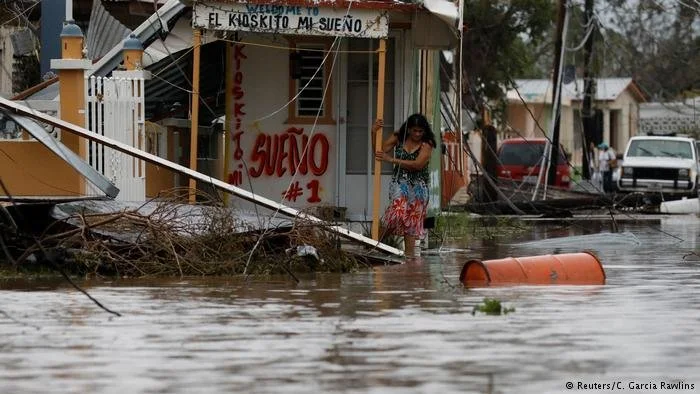
Lessons from Haiti for Puerto Rico: Charity Is A Poor Tool For Rebuilding A Country
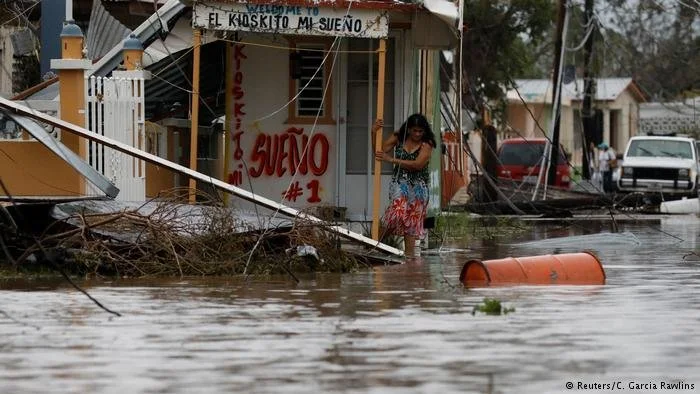
Charitable aid solves immediate problems, but long-term recovery needs to address root problems, too.
When an earthquake shattered the capital of Haiti in 2010, they learned the hard way that charity is a great tool for disaster relief but an often very poor one for rebuilding countries. After seven years and over $3 billion dollars in charitable aid deployed, post-earthquake Haiti has come to serve as the standard for what not to do in disaster relief. In the wake of the hurricanes that devastated Puerto Rico, St. Thomas and other islands, Haiti offers critical lessons about how to rebuild the region in a sustainable way.
Finance has largely been a destructive force in the Caribbean — especially in the case of Puerto Rico. But ironically, finance may also have just the right elements that can enable the island to rebuild in a way that doesn’t just recreate the same level of inequality and fossil fuel dependency present before the hurricane.
When it comes to rebuilding a country, not all resources are created equal. Charity and donations can help in the short-term, but harm the economy over the long-term. Private capital can help local businesses get back on their feet, but also perpetuate entrenched inequality. Rebuilding efforts can seem beneficial, but end up going to waste when they don’t account for the needs of communities. Finance and private capital can play a huge role in rebuilding Puerto Rico, but we must draw key lessons from what went wrong in Haiti to ensure that this time, we get it right.
Charity solves immediate problems, but not root problems. In the case of Puerto Rico, it’s easy to point to the hurricane as an “act of God” and look to aid to try to return to “business as usual.” But business as usual was not working so well in Puerto Rico long before the storm hit. As The Atlantic reported, 65 percent of Puerto Rico’s electricity grid was down this summer, with hundreds of millions in deferred maintenance, far before Hurricane Maria accelerated its permanent demise. The main problem here isn’t natural disasters, it’s that extractive finance has become the norm, and communities get left behind. Rather than making investments that build community wealth and renewable infrastructure, finance favors the quick and easy options that provide quick money but don’t fuel long-term development. Charity can rebuild torn-down bridges, but it’s not enough to rebuild a full economy — especially one that is based on an extractive financial model.
Aid is external, but recovery is local. After the disaster settled and Haiti started to find a new normal, the prevalence of imported food items sustained the decline of the local economy. Donated clothes, materials, food and medical supplies — all sent with good intentions by charitable organizations — inundated the country, and local vendors, both micro and commercial, could not compete. Even donated services, such as volunteer doctors, shifted the balance and eventually made it very hard for local doctors to get jobs in hospitals. Why hire the local doctor when the foreign doctors work for free?
If Puerto Rico can learn anything from Haiti, it would be to take ownership of their own recovery and get local businesses back on their feet. So far, some communities have mobilized to support each other and are leading relief efforts by coordinating efforts and mapping needs. Now businesses need help re-opening their doors and finance can help fill this gap in more ways than one. Small local businesses need some small working capital to get moving again, and private investment can play a critical role here. Larger businesses with track records and histories can be supported in rational, non-extractive ways.
Let’s get the charitable dollars flowing to address immediate needs in Puerto Rico — and then invest in a more sustainable future. Just as private citizens are stepping in to address the lack of charitable action from the U.S. government to its own people, private capital can do the same. But rather than cementing the extractive practices of the past, we can invest in the creation of a more sustainable future. Puerto Rico’s power grid was in shambles before the storm; while short-term repairs are crucial in order to restore power to citizens, this is an opportunity to invest in the creation of a renewable energy infrastructure similar to states like Hawaii. Rather than further the expansion of U.S. mainland chains that pay low wages with minimum benefits, investors can support local businesses that focus on quality job creation and expanding local ownership. Let’s not rebuild the old economy — let’s start investing in the new economy; one that is sustainable, generative and just.
We missed this opportunity in Haiti — let’s not miss it in Puerto Rico.
By:Morgan Simon, Isabelle Clerie for Salon.com| November 6,2017

Brattleboro Business Supplies Diapers to Children in Haiti

BRATTLEBORO — Cloth diapers are better for babies. That's what Karen Amidon believes, and she's built a business around it.Green Mountain Diapers is a small family-owned business based in Brattleboro. It sells all sorts of cloth diapers and accessories, and while it can't afford to run its own subsidized cloth diaper program, it donates to nonprofits dedicated to giving cloth diapers to families in need.One of those organizations is Jake's Diapers based out of Fox Valley, Wis.Six years ago, Stephanie Bowers, Jake's Diapers' founder, went on a women's mission trip to an orphanage in Peru where she said adults were reusing disposable diapers on the orphans.Diapers, Bowers said, are a precious resource in developing and remote countries. In Haiti, after the 2010 earthquake, things were especially bad. Bowers said worms and chronic diarrhea were a big problem for babies, who often times sit on the ground without diapers. Many homes don't have floors."They were praying for diapers," Bowers said.So Bowers started Jake's Diapers, a nonprofit dedicated to providing cloth diapers to children and families living in extreme poverty.The goal of this project is "to help the babies and their families not only survive but thrive."Bowers hopes that providing babies with diapers will allow families to spend money on other crucial items like food.In the areas Jake's Diapers serves — Haiti, Guatemala, Ecuador, Peru, Democratic Republic Congo, Ethiopia, Tanzania, Wisconsin and Papua New Guinea — healthcare is not always available to families."Maternal health care, or any health care, in Haiti is pretty much nonexistent," Bowers said.Walking to clinics can take days, she said. Baby mortality rates are under-reported but, Bowers said, 30 to 40 percent of babies are reported to die. She said Haiti has the highest infant mortality rate in the world. The maternal mortality is also high, she said."It takes only $115 in the U.S. to provide babies with cloth diapers for life," she said.Providing babies with diapers is a mission that Bowers is passionate about."This is a calling for me," she said, adding that she was deeply affected visiting developing nations. "It's a level of poverty that we cannot even comprehend," she said. "I start to lose words because the concept is challenging but real. They're just like you and me. I was born in Albany, N.Y. These babies were born in Haiti."Jake's Diapers only uses cloth diapers, which Bowers said are more economical and practical for families living in extreme poverty. Many areas don't have trash service and cloth diapers are reuseable, so tend to be cheaper for some families.Green Mountain Diapers donates diapers the company doesn't think it can sell, but that are still usable. The company doesn't sell in-store, but products are available for pick up. Amidon has a similar passion for diapers. Rather than discovering her passion while abroad, Amidon's interest in cloth diapers came from necessity, while at home taking care of her two children.Amidon believes cloth diapering is what's best for children because cloth diapers are softer and more natural for babies. She tried cloth diapering with her first child, but it proved disastrous. Eventually, Amidon solved her cloth diapering woes. She and her husband, Doug Amidon, opened Green Mountain Diapers to offer more products to the cloth diapering industry.Elizabeth Ellis, the customer support handler, started working for Green Mountain Diapers when Amidon asked her for help. Ellis was a stay-at-home mom who knew Amidon from church.Along with handling customer relations and support, Ellis is in charge of coordinating the company's donations.Green Mountain diapers also donates to The Rebecca Foundation, Giving Diapers Giving Hope, Share the Love, Cover Your Bum and Cloth for Everybum."We want to see babies who need cloth diapers to be in cloth diapers," Ellis said. "We know not everyone can afford it."When Ellis started cloth diapering she assumed it would be more economical. Not all cloth diapers are cheap, though. Many new parents are attracted to the all-in-one diapers that have the diaper and diaper cover attached, but they're the most expensive diapers the company sells.The diapers donated to places like Jake's Diapers are foldable. They're the sort of diapers used about 50 years ago, Ellis said. She showcased the Cloth-eez Flat Birdseye diapers, which come in one large size and can be folded multiple times. "They're easy to wash, so they're good for orphanages," Ellis said. She said they could be intimidating to newer parents, who are scared of the folding process, but for many moms they are therapeutic.Cloth-eez is a brand designed by Amidon. Prefoldable diapers used to just come in infant and large, but Amidon designed newborn, small, medium, large and extra large. "They're effective and easy to wash," Ellis said. "They're middle of the road on price."Green Mountain Diapers recommends that parents have about 36 diapers that fit their baby and about six to eight diaper covers.Jake's Diapers takes new or used cloth diapers and monetary donations. To donate to Jake's Diapers, go to www.jakesdiapers.org.Harmony Birch | August 1,2017

Rihanna Partners With Donna Karan, The New School’s Parsons School of Design | The collaboration will benefit Haitian artisans and the singer's Clara Lionel Foundation.

 Rihanna’s impact on the fashion world is indisputable. Now the singer has revealed that she will further strengthen her ties to the industry by collaborating with The New School’s Parsons School of Design, Donna Karan’s Urban Zen Foundation and Haitian artists to develop a line of merchandise.Sales of the product will help support the Grammy winner’s Clara Lionel Foundation, which was founded in 2012 to benefit impoverished communities worldwide in areas like health care and education.Select students of the art and design school will have the opportunity this summer to work with local Haitian artists at the Design, Organization, Training Center in Port-au-Prince. Karan, Parsons and designer Paula Coles founded the center as a creative meeting place offering vocational training and materials to the Haitian artist community.“We are ecstatic that our students will have the opportunity to work with and develop a merchandise line for Rihanna’s Clara Lionel Foundation, that, like Parsons, shares a strong commitment to creating positive social change,” explained Alison Mears, director of the Healthy Materials Lab at Parsons who was instrumental in launching D.O.T.On May 22, Rihanna will be honored at the Parsons Benefit in New York City and will reveal the winners of the Design Fellowship program, which sends three Parsons students to Haiti for six to eight weeks beginning in early June.By Andrew Nodell | May 5, 2017