
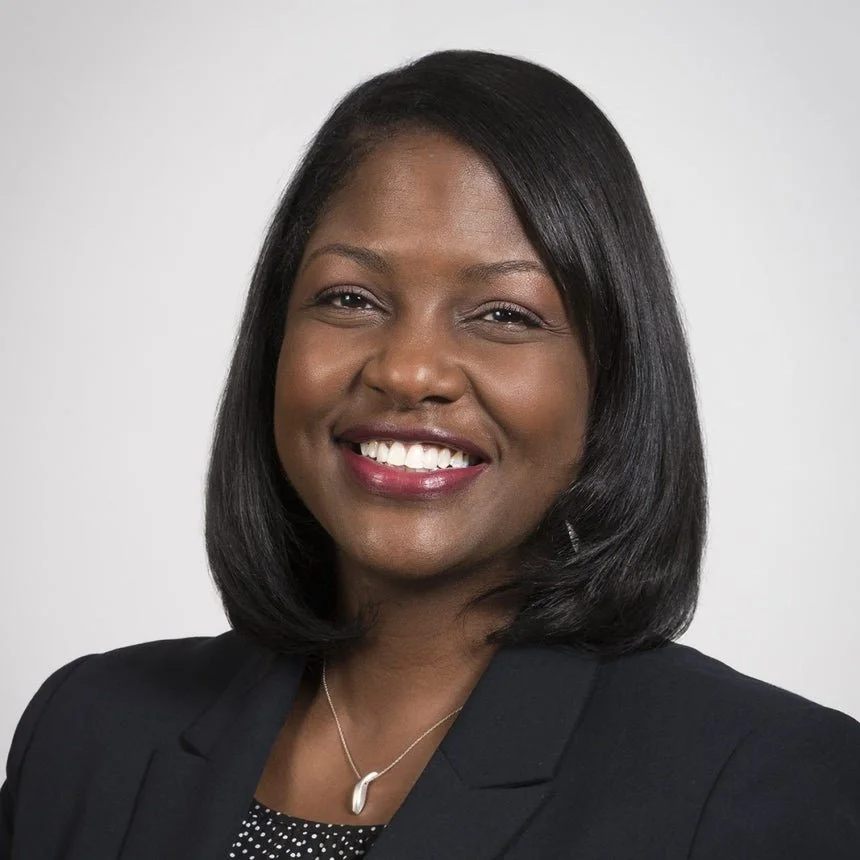
NJ Gov. Phil Murphy Nominates Fabiana Pierre-Louis To The State’s Highest Court
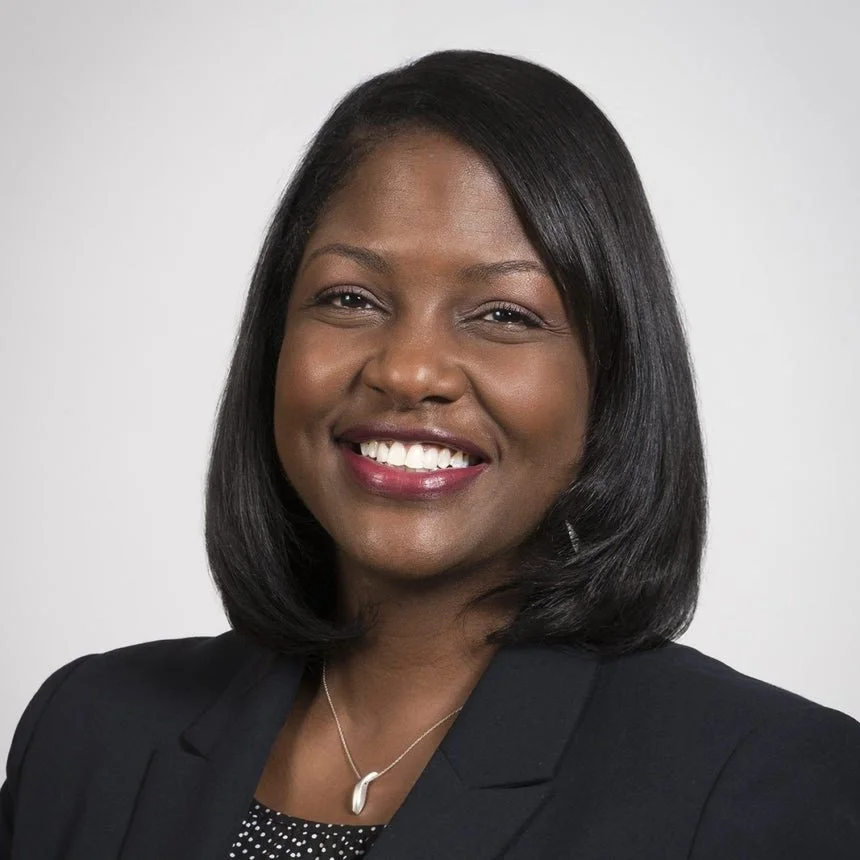
On Friday, NJ Gov. Phil Murphy will announce his first pick for the state’s Supreme Court since taking office, and it will be a historic one.
Murphy will nominate Fabiana Pierre-Louis, a partner at Montgomery McCracken Walker & Rhoads, to be the next associate justice of the state’s highest court. If the state Senate confirms the nomination, Pierre-Louis will be the first Black woman to ever sit on the court.
Pierre-Louis, 39, has not only worked in private practice, but has also worked as a federal prosecutor with the Department of Justice for years.
“It’s hard to put into words the honor that it is to be nominated to the highest court in the state of New Jersey,” Pierre-Louis told ESSENCE. “My goal, particularly as a prosecutor, was always to pursue justice and fairness in the law…It’s just a remarkable opportunity to continue in the very proud tradition of this state’s Supreme Court.”
The daughter of immigrants from Haiti, and a first-generation American, Pierre-Louis believes she will bring a unique perspective to the court if confirmed.
“I am a Black woman. I am the child of immigrants from Haiti. I am someone who is a first generation American citizen here in this country, [the] first person in my family to attend law school, to become a lawyer, someone who’s also lived in a variety of inner cities throughout my life, beginning with my early childhood in Brooklyn, then followed by the remainder of my childhood in Irvington, New Jersey,” she said. “All those experiences bring a unique perspective to the Court that currently is not there.”
To the governor, the nomination was a no-brainer, given his own belief that a judiciary should reflect the diversity in the state.
“A core tenet of my Administration is a commitment to an independent, fair-minded judiciary that reflects the immense diversity of our great state,” Murphy told ESSENCE. “As a first-generation American, Fabiana brings both a sharp legal acumen and the perspective of her own past that will greatly benefit the proceedings of our state’s highest court.”
“New Jersey is a very diverse state,” Pierre-Louis echoing the governor’s statements. “It is extremely important for the judiciary and other government bodies to be a reflection of the community that they serve. So, having people of diverse backgrounds and diverse perspectives sitting on the highest court in these states certainly inspires confidence that the court will rule and have these diverse perspectives in ruling on extremely important cases.”
Pierre-Louis’ own work speaks volumes for her. She graduated from Rutgers Law School with High Honors before going on to clerk for Justice John Wallace Jr. during the 2006-2007 Supreme Court term. From there she went to Montgomery McCracken for about three years, before moving to the U.S. Attorney’s Office for the District of New Jersey in 2010. In 2012, she moved to the Trenton office, and four years later she would be the first woman of color to be Attorney-in-Charge. In that role, she supervised all aspects of criminal matters handled by the office, while also investigating and prosecuting her own caseload, inclusive of matters from child exploitation offenses, to national security matters, to public corruption matters and more.
While in Trenton, Pierre-Louis helped to create the Trenton Reentry Court, which provides assistance to returning citizens to help reacclimating to society.
In 2018, she became the first woman of color to serve as Attorney-in-Charge of U.S. Attorney’s Office in Camden, later returning to private practice in 2019.
“My experience speaks volumes with regard to my ability to take on this position and to successfully execute the duties of an associate justice of the Supreme Court of New Jersey. I’ve practiced in private practice at a law firm doing civil work. I’ve also been a federal prosecutor,” Pierre-Louis said. “I’ve supervised a wide variety of cases and gained the respect of not only the judiciary but of my colleagues and even defense attorneys that I have worked on cases with. And I think my integrity, my open-mindedness, and my ability to communicate well with others is something that has helped me succeed throughout my career.”
If confirmed, Pierre-Louis will be the first Black judge to sit on the court since 2010, when then-Gov. Chris Christie stirred controversy and outrage in the state after failing to renominate then-Justice John Wallace Jr. to a tenured term.
In the New Jersey State Supreme Court, a justice is initially confirmed for seven years. After those seven years, once a justice has served with good behavior and made sound decisions (regardless of who may or may not agree with said decisions), they are typically renominated and reconfirmed for a tenured term, which automatically expires once the justice turns 70, regardless of if that justice was initially chosen by a governor of a different party.
Wallace has been the only justice that has been denied tenure since the state Constitution was adopted in 1947. At the time, he was the court’s only Black justice (and only the second Black person to ever sit on the court), and his tenured term would have automatically expired when he had reached 70 in less than two years.
The fallout was swift, and Christie’s Judiciary Advisory Panel all resigned en masse to protest the then-governor’s decision to replace Wallace. Democrats balked, with the Democrat-led senauntil Justice Walter Timpone was confirmed and sworn in 2016.
It is Timpone’s seat that Pierre-Louis will fill if confirmed, as the justice will reach the mandatory age of retirement in November.
Pierre-Louis’ nomination comes at a time when the nation is in turmoil and many have flooded to the streets demanding justice for Black Lives and accountability from the police, but Murphy stressed that his selection did not come as a result of the current national discourse.
“In addition to her esteemed legal career, Fabiana’s humility, empathy, and character are all traits that make her well-suited to become the first Black woman and the next Associate Justice to serve on New Jersey’s Supreme Court,” Murphy said in a statement.
“I have not chosen to nominate Fabiana because of the current national discussion around race. However, given the challenges which are being brought to the forefront of our society, and the questions which will undoubtedly rise to reach our Supreme Court – core issues of socioeconomic equality and equity – there is no better meeting of an individual and the times,” he added.
Pierre-Louis told ESSENCE that she seeks to be a “fair, open-minded” justice, if nominated.
“I certainly believe that I would…have the ability to listen to all arguments from all sides and make a determination after having done so and looked at the facts and the law before me to make determinations about whether I believe there was an error on the lower court below or not,” she said.
“I think the New Jersey Supreme Court is a perfect model of a very strong court in this country that has historically been very independent,” she added. “I think the role of a Supreme Court justice is to review the cases and ensure that fairness and justice results no matter what the political atmosphere is at the time.”
By: BY BREANNA EDWARDS for Essence.com | June 5, 2020

Biden Campaign Adds Karine Jean-Pierre As Senior Adviser

Joe Biden has hired Karine Jean-Pierre, a veteran African American political strategist, as a senior adviser to his presidential campaign as the presumptive Democratic nominee pivots to the general election campaign.
Jean-Pierre will advise on strategy, communications and engaging with key communities, including African Americans, women and progressives.
“This really is the most important general election in generations,” Jean-Pierre told The 19th, a nonprofit newsroom, in an exclusive interview Monday night. “I’ve known Joe Biden for 10 years now. I believe he’s a man of integrity, he’s a man who knows how to lead, he’s a man who knows how to use the levers of government to help people and he’s the man who could beat Donald Trump in November. For me, as a black woman, I just could not sit this out.”
Jean-Pierre, 43, will begin her role with the Biden campaign next week. She gained prominence in 2008 as the southeast regional political director for then-candidate Barack Obama’s history-making presidential campaign.
She served in the Obama White House as regional political director before working as deputy battleground states director on his 2012 reelection. In the latter role, Jean-Pierre handled political engagement in key states including Ohio, North Carolina, Pennsylvania and Florida.
Born in Martinique to Haitian parents and raised in New York, Jean-Pierre worked on former Maryland governor Martin O’Malley’s 2016 Democratic presidential bid before joining liberal group MoveOn as chief public affairs officer. She is also an MSNBC political analyst.ADnull
Separately, the Biden campaign announced Tuesday that it hired Obama campaign alum Julie Chavez Rodriguez — who previously worked as co-national political director for Sen. Kamala D. Harris’s presidential campaign — as a senior adviser, making her the highest-profile Latina to join the team as Biden struggles to shore up his support with Hispanic voters headed into November.
Biden’s swift rise this spring was fueled largely by black voters — particularly black women, who are regarded as the backbone of the party and seen as key to a winning general election coalition in the fall. Energizing these voters will be crucial to the record turnout needed to topple Trump. Black turnout was down in 2016 from historic highs in 2012 and 2008, when the country elected its first African American president.
Jean-Pierre said her hiring signals that Biden “understands how he became the presumptive nominee.”
“Black voters, black women, have helped him get to this point,” she said. “When everybody was counting him out, black voters spoke out. I am so proud and excited as a black woman watching how black women have exerted their power … we had to say loud and clear this (the actions of the Trump administration) is not okay.”
Valerie Jarrett, former senior adviser to Obama, called Jean-Pierre “a superstar” who shares Biden’s values of equality, fairness and justice.
“She will be able to communicate his agenda in an authentic way that I think will resonate importantly with African American women, but also with the entire country,” Jarrett said in a telephone interview. “It’s a coup for vice president Biden and his campaign.”
By Errin Haines | The 19th and The Washington Post May 20, 2020
This story is part of a collaboration between The Washington Post and The 19th, a nonprofit newsroom covering gender, politics and policy.
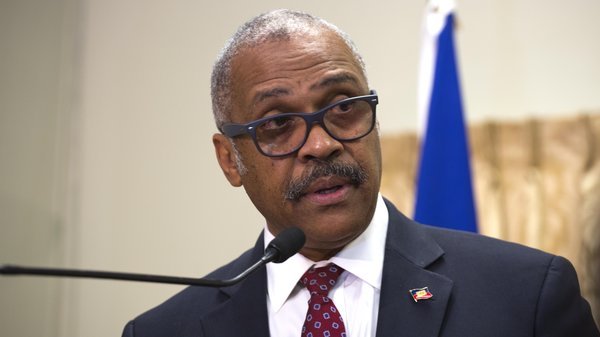
Haiti's Prime Minister Resigns After Riots Over Fuel Price Hike
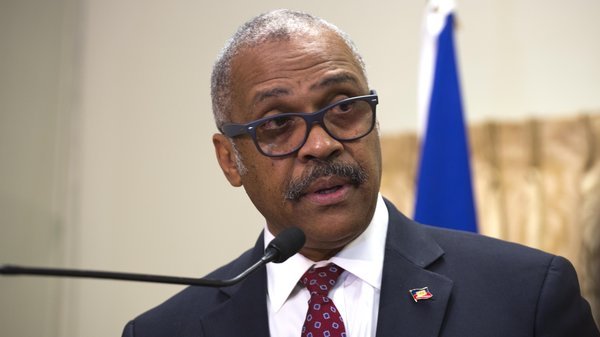
Haiti's Prime Minister Jack Guy Lafontant resigned Saturday after days of riots sparked by a plan to raise prices on fuel.Haitian President President Jovenel Moïse said on Twitter that he had accepted Lafontant's resignation as well as members of his cabinet. Moïse said he would work to choose a new prime minister.Lafontant, a doctor who only took up the job of prime minister in early 2017, resigned shortly before a no-confidence vote was to be called in Haiti's parliament, which could have led to his removal from office.Reports differ on how many people have been killed in riots — at least two, three or seven — that happened over the last weekend. Demonstrators reportedly blocked roads, burned tires and vandalized shops.The government announced on Friday, July 6 that prices would go up the following day by 38 percent for gasoline, 47 percent for diesel and 51 percent for kerosene.By the following day, Lafontant said the price rises would be suspended, and said the government "strongly condemns the acts of violence and vandalism" that happened after the initial announcement was made.The price increases were part of an agreement with the International Monetary Fund, which often requires countries to implement economic reforms in exchange for access to funds. The Haitian government signed an agreement earlier this year with the IMF to gain access to $96 million in loans and grants, according to the Miami Herald.The Herald reports that for the past week, Lafontant "had refused calls to step down from business and opposition groups, which accused the government of mishandling the double-digit fuel increase that its ministers announced with little notice."Haiti's government subsidizes the cost of fuel in the country. The World Bank said in a report last year that the richest 20 percent of Haitians were receiving 93 percent of the subsidies and that the country was spending 2.2 percent of its GDP on subsidies in 2014.But the price hikes were too much to bear for many in one of the world's poorest countries. The World Bank says the majority of Haitians, about 59 percent, make less than the equivalent of $2.41 per day.The IMF said Thursday that it still supports removing subsidies as a way to give the government funding for social services, but advised doing so more gradually.The U.S. State Department issued a "do not travel" warning for U.S. citizens on July 9 over what it called "widespread civil unrest and violent demonstrations in Haiti. Protests, tire burning, and road blockages are frequent and unpredictable."By: James Doubek for NPR.org| July 15, 2018
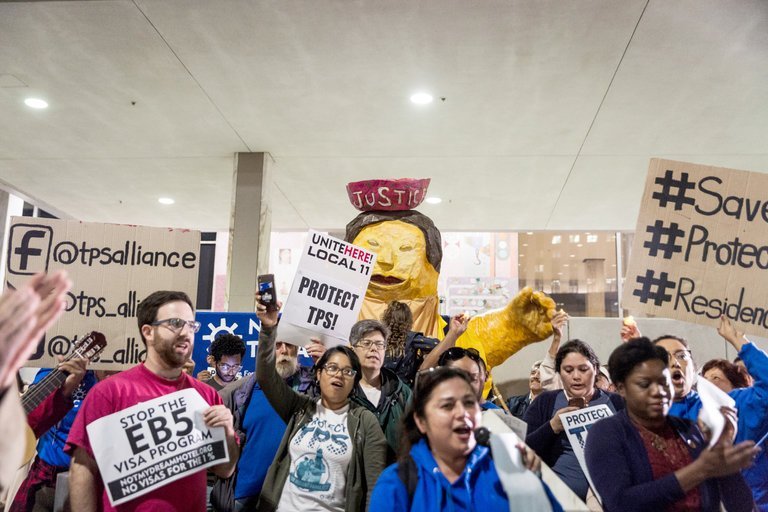
Trump Administration Ends Temporary Protection for Haitians
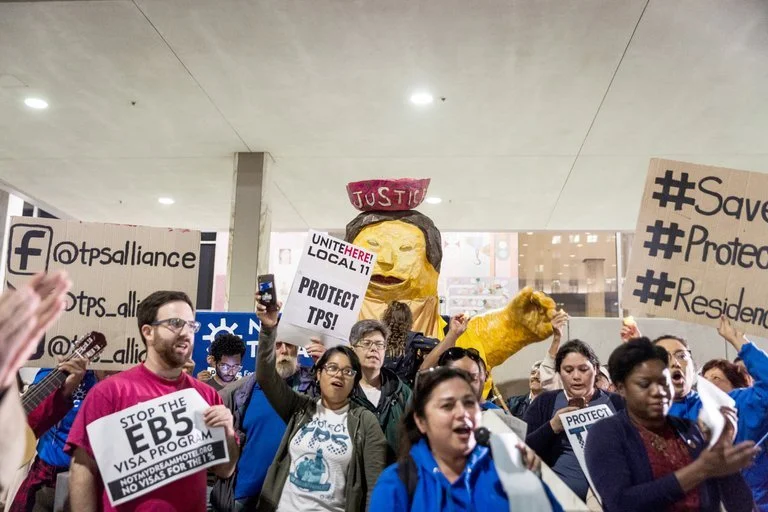

Haitians with what is known as Temporary Protected Status will be expected to leave the United States by July 2019 or face deportation.
The decision set off immediate dismay among Haitian communities in South Florida, New York and beyond, and was a signal to other foreigners with temporary protections that they, too, could soon be asked to leave.
About 320,000 people now benefit from the Temporary Protected Status program, which was signed into law by President George Bush in 1990, and the decision on Monday followed another one last month that ended protections for 2,500 Nicaraguans.
Haiti, the poorest country in the Western Hemisphere, is still struggling to recover from the earthquake and relies heavily on money its expatriates send to relatives back home. The Haitian government had asked the Trump administration to extend the protected status.
“I received a shock right now,” Gerald Michaud, 45, a Haitian who lives in Brooklyn, said when he heard the news. He has been working at La Guardia Airport as a wheelchair attendant, sending money to family and friends back home. He said he feared for his welfare and safety back in Haiti now that his permission to remain in the United States was ending.
“The situation is not good in my country,” he said. “I don’t know where I am able to go.”
Haitians are the second-largest group of foreigners with temporary status. The protection is extended to people already in the United States who have come from countries crippled by natural disasters or armed conflict that prevents their citizens from returning or prevents their country from adequately receiving them. The government periodically reviews each group’s status and decides whether to continue the protections.
The Obama administration renewed the protections for Haitians several times, after determining that conditions in Haiti remained precarious. But the Trump administration, which has sought greater controls on immigration, has said that the program, which was intended to provide only temporary relief, has turned into a permanent benefit for tens of thousands of people.
In a statement, the Department of Homeland Security said that after meeting with Haitian government officials and Haitian communities in the United States, it had decided to let the protections end.
“Since the 2010 earthquake, the number of displaced people in Haiti has decreased by 97 percent,” the statement said. “Significant steps have been taken to improve the stability and quality of life for Haitian citizens, and Haiti is able to safely receive traditional levels of returned citizens.”
The protection for Haitians was most recently extended in May, by John F. Kelly, the Homeland Security secretary at the time. He allowed only a six-month extension, a shorter one than is typical, saying that the Haitians “need to start thinking about returning.”
The decision on Monday by Elaine Duke, the acting secretary, set a termination date of July 2019 to give people time to make arrangements to leave.
The largest group of Temporary Protected Status beneficiaries, nearly 200,000 people, are from El Salvador. The Department of Homeland Security is scheduled to announce next month whether it will rescind or renew protection for that country, which is plagued with gang violence and high unemployment. The protection applies to Salvadorans who were in the United States without permission on Feb. 13, 2001, and was granted after deadly earthquakes in their home country.
Though Ms. Duke ended protections for Nicaraguans last month, she continued, at least for now, protections for Hondurans despite pressure from Mr. Kelly, now President Trump’s chief of staff, to end them.
Others who now benefit include people from Nepal, Somalia, Sudan, South Sudan, Syria and Yemen. In 2016, the Obama administration decided to end temporary protection for citizens from three West African countries that had been devastated by the Ebola virus several years ago.
The United States offered the protection to Haitians after the earthquake in January 2010 that killed hundreds of thousands of people, displaced more than a million and led to a cholera outbreak. Haitians who entered the United States within a year of the disaster qualified for the status.
A variety of American groups, including the Congressional Black Caucus, the United States Chamber of Commerce and immigrant advocacy organizations had urged the Trump administration to extend the protections again. On Monday, Senator Bill Nelson, Democrat of Florida, called the decision “unconscionable.”
“There is no reason to send 60,000 Haitians back to a country that cannot provide for them,” he wrote on Twitter. “I am strongly urging the administration to reconsider.”
There is no reason to send 60,000 Haitians back to a country that cannot provide for them. This decision today by DHS is unconscionable. And I am strongly urging the administration to reconsider. Ultimately, we need a permanent legislative solution. https://t.co/Ft0bE0itf6— Bill Nelson (@SenBillNelson) Nov. 21, 2017
Ileana Ros-Lehtinen, a Republican congresswoman from South Florida, said on Twitter that she had traveled to Haiti after the earthquake in 2010 and after Hurricane Matthew in 2015. “So I can personally attest that Haiti is not prepared to take back nearly 60,000 TPS recipients under these difficult and harsh conditions,” she said.
I travelled to #Haiti after the earthquake in 2010 and after hurricane Matthew in 2016. So I can personally attest that #Haiti is not prepared to take back nearly 60,000 #TPS recipients under these difficult and harsh conditions.— Ileana Ros-Lehtinen (@RosLehtinen) Nov. 21, 2017
Those with temporary protection constitute about half of the estimated 110,000 Haitians living in the United States without permanent permission, according to the Pew Research Center. Since Mr. Kelly signaled that Haiti might lose its special designation, thousands of Haitians have crossed the border between the United States and Canada to apply for asylum in Quebec.
Nearly 30,000 children have been born in the United States to Haitians with protected status. Those children are citizens and entitled to stay. Some of their parents may seek to avoid deportation by claiming it would cause extreme hardship to a United States-born child, but that option is limited.
Most will soon have to make a wrenching decision: take their children back to Haiti; leave them with relatives or guardians in the United States; or remain in the country illegally and risk arrest and deportation.
Mark Silverman, an attorney and director of policy at the Immigrant Legal Resource Center in San Francisco, said that if they are arrested, they would be entitled to deportation hearings. And contesting their cases “gives them at least seven to 10 years,” he said, because of the long backlogs in the immigration courts.
The decision is sure to be felt in Haiti, where remittances from the Haitian diaspora totaled $2.36 billion in 2016, an increase of 7 percent over the previous year, according to the World Bank. That money represented more than one-fourth of the country’s national income.
But Dan Stein, president of the Federation for American Immigration Reform, which lobbies for restrictions on immigration, said the cancellation of temporary protections for Haitians was “long overdue.”
“The notion that this would be reflexively renewed again and again is a corruption of the entire concept,” said Mr. Stein, adding, “it’s not a refugee program or an immigration program.”
“It’s supposed to be reviewed and it’s supposed to be temporary,” he said.
One of the younger beneficiaries of the program, Peterson Exais, barely survived the earthquake. He arrived in the United States when he was 9 years old to receive emergency medical care after surviving for days under the rubble. He endured more than a dozen surgeries and has become a promising dancer at a magnet school in Miami.
Now 17 years old, he dreams of pursuing studies at the Juilliard School.
“This is very devastating for me,” he said on Monday. “I might not be able to give all that I could give back if I went back to Haiti.”
By: Mariam Jordan for Nytimes.com | November 20,2017

Violent demonstration in Petit-Goâve

Thursday, was held a violent demonstration of the members of the PHTK and allies of Petit-Goâve to demand their integration in the civil service and the departure of the Director of the APN of Petit-Goâve, Mrs. Carole.Early Thursday, November 9, 2017, after a few days of truce, activists of PHTK and allies of Petit-Goâve have resumed service. They invested the macadam to express their eternal namely : their appointment in the public offices and the Revocation of the Director of the APN Mrs. Carole, a close friend of Deputy Germain Alexandre Fils.The protesters demonstrated violently by burning the main barrier of the Petit-Goâve Customs with the help of inflamed tires.Activities are completely blocked at the offices of the Customs and APN.By Guyto Mathieu | Nivember11, 2017

Haitian Government Will Build About 2,000 Houses

Port-au-Prince, Nov 8 (Prensa Latina) The Haitian government is implementing today a program to build social housing for the victims of Hurricane Matthew, which hit the country in 2016.Over 2,000 houses will be built in the departments of Nippes and Grand'Anse, as part of the Caravan of Change project promoted by the President Juvenel Moise, thus fulfilling one of his campaign promises.According to a government statement, the construction work has already begun Fond Rouge (department Grand'Anse) in which 600 houses will be built, while another 600 will be built in Nippes and 800 in the south of the country.Hurricane Matthew left in Haiti a material loss valued at over two thousand 700 million dollars, and some 175,000 people lost their homes.By PLEnglish | November 8, 2017

Government purchases $123M of heavy equipment

The Government signed discreetly, 3 contracts for the purchase of 490 heavy equipment for public works totaling more than 123 million US dollars (123,372,025), an average cost per equipment of about 250,000 dollars.3 companies will supply these equipments: Auto Plaza S.A, (295 equipments) Auto and Mechanical S.A. (100 equipments) and Haytian Tractor (95 equipments).These equipment payable on credit over 48 months (in Gourdes, rate fixed by the Central Bank) will be delivered in a little more than 10 monthsContracts after analysis received a favorable opinion from the National Commission for Public Contracts and the Superior Court of Auditors and Administrative Litigation, which found no irregularities.By: HaitiLibre | October 4, 2017
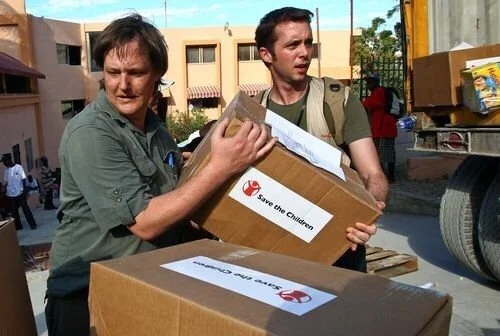
Government strengthens its control over NGOs
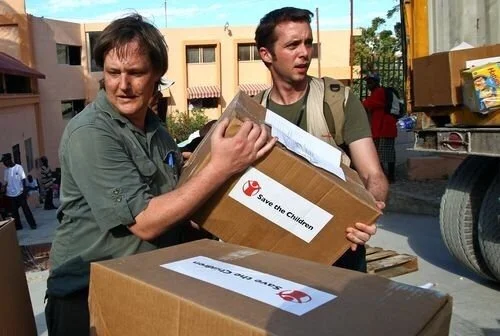
In order to seek effectiveness and synergy in the actions of the Government and NGOs, the Ministers and General Coordinators must now inform the Prime Minister in advance of all technical cooperation actions as well as offers of financing and commitment to spend relative.The Ministers and the General Coordinators will have to ensure the conformity of the offers of financing and commitment of expenses with the conventions and international agreements governing the matter, signed and ratified by the Haitian State, the laws in force and the roadmaps of the responsible concerned.Pursuant to Article 3.5 of the Order of 25 January 2009 on the Organization and Functioning of the Office of Management and Human Resources (OMRH), the coordination of technical cooperation programs implemented at the level of Ministries, of technically devolved services and autonomous administrative, cultural and scientific bodies in the areas of institutional strengthening and management of the civil service, is entrusted to OMRH.Interventions were made and workshops organized by the Government for Haiti's traditional partners, donors and non-governmental organizations to highlight the need to respect the guidelines and priorities of the Haitian State in the framework of cooperation.Thus, all administrative and legal provisions have been taken to guide the actions of NGOs operating in Haiti, in line with the Government's development objective.By: HL/ HaitiLibre | October 2, 2017

Adoption in Council of Ministers: Bill on Legal Assistance!

The bill on the creation and organization of a National Council of Legal Assistance (CNAL) was adopted in the Council of Ministers, confirmed on Tuesday July 4th by the Secretary General of the Council of Ministers.In order to make justice accessible to the economically disadvantaged and the vulnerable in our society, the Government has drafted this Bill in accordance with the requirements of the Universal Declaration of Human Rights and other international conventions and agreements signed by Haiti on the matter.This bill proposes to create a National Council of Legal Assistance, offering counseling and advocacy services to the poor, irrespective of gender, age and political opinion, with administrative and financial autonomy under the supervision of a Board of Directors chaired by the Minister of Justice.Recall that legal assistance is recognized throughout the world as a fundamental human right, without which one can not speak of a system of fair justice nor of respect for the rule of law. It should also be noted that this public service proposed in this draft law has been inspired on the basis of observations and experiences already made in Haiti.HL/ HaitiLibre